
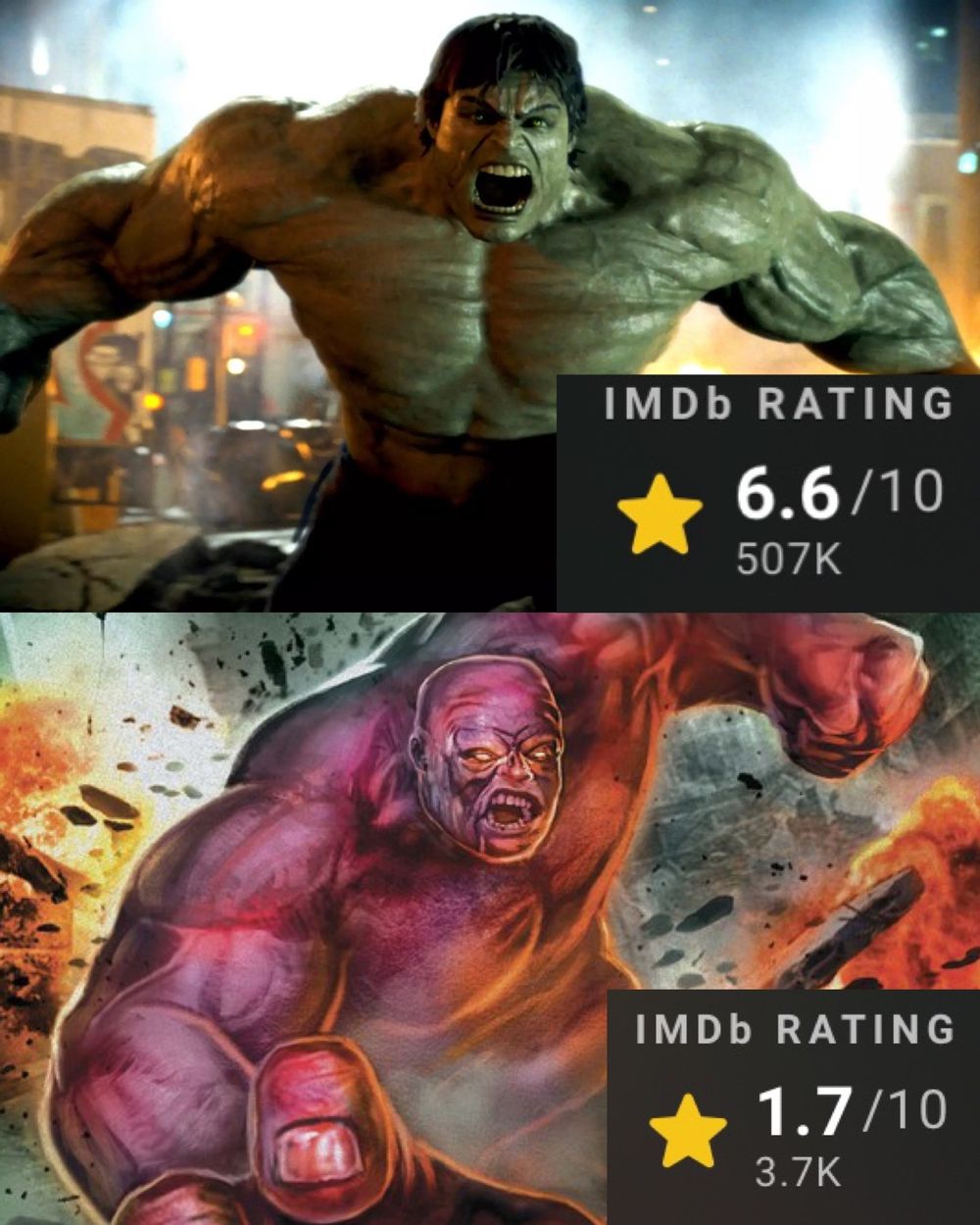
There's a high demand for innovation and new ideas, so if a new work has similarities to an older or more popular one, expect those similarities to be the dominant subject in discussion about the work, even if they're entirely superficial. Some people go on to say that if you can't come up with an original idea, don't even bother trying to make the work, despite the fact that most original works get ignored because of lack of advertising or that it's just not something publishers recognize and they're afraid to give it a chance. It's often a Catch-22 when genuine attempts to shake up the market are ignored, whereas Strictly Formula works fly off the shelves because of the familiarity, despite the criticisms of lack of originality.
Of course, many times creators do borrow ideas from another work as inspiration to create new stories and concepts. Considering that just about everything has been done, it's difficult to properly think of something new and fresh. This is not always the case, however, as sometimes creators deliberately try to copy a particular franchise as soon as its success becomes evident. They will immediately try to make something to compete — and most of the time it will fail miserably because it was rushed or just implemented poorly. Other times it might come up with a really cool and ingenious new spin on the idea, and still never reach the same kind of popularity as its competition because somehow being too much like the original is deplorable.
The error here is the automatic assumption that just because something is similar, it can't have any value on its own merits. If everything that was derivative was that bad, it wouldn't be done so much. Some can actually be quite good on their own.
This assumption can be infuriating to creators of products that are similar to products being designed simultaneously. Their options are to either reduce the quality of your work in order to get it out first or be written off as a cheap imitation of the competitor's product (which they probably watered down to be first out of the gate). Many "ripoffs" were in fact in development at the same time, but due to the development window for most modern media, could be released months or even years apart. This can also make the fans of the more "popular" feature look really hypocritical if the alleged victim of ripoffs wasn't all that original to begin with. In extreme cases, an older, lesser-known work is accused of copying the more popular work that borrowed from it. This is often a huge Berserk Button for fans of the original and the original creator. Has also been known as "The Hydrox Effect" because people assumed that Hydrox was a knock-off of Oreo, even though Hydrox came out in 1908 and Oreo, which came out in 1912, was inspired by Hydrox.
The absurd extreme of this is when old-timers show off their long memories by dismissing new shows as rehashes of older productions which a lot of the times undermine the vast history of things that came before it outside of Small Reference Pools. The idea this trope exists as much in the modern era is a little sad. Putting it bluntly, if you have the time to be reading this page and having a bad reaction to it, perhaps it's time to learn a little more. The examples below could very well be a nice place to start.
You'll notice that sometimes this trope is invoked not only by rival fans and trolly haters, but people who actually aren't fans of the genre, even so much as hating it in its entirety. You'll notice that when people are typically not fans of a genre or series, similar to its cousin It's the Same, Now It Sucks!. The two almost go hand-in-hand, this way, since a non-fan would not really notice how many subtle differences since, after all, they see it and aren't looking for that stuff, that is, if they actually see the work they're invoking this trope, on. Sometimes people are actually calling out things based upon meta-concepts of the genre. Expect to see criticisms of this type in the form of a list comparing the two works using broad generalizations.
Compare Older Than They Think. Compare and sometimes contrast with Once Original, Now Common when the original suffers due to the amount (and sometimes the quality) of similar works released later. Contrast Not-So-Cheap Imitation, when the "copying" work ends up being regarded as superior to its inspiration. Not to be confused with They Changed It, Now It Sucks!, where a sequel or an official adaptation changes an aspect of an original work for better or worse. Also not to be confused with It's the Same, Now It Sucks!, the polar opposite.
See also It's Been Done and Better by a Different Name. Related to Plagiarism, which takes this trope to its logical extreme by directly ripping off entire unchanged portions of another work. And that's a sucky thing to do. Not to be confused with Shoddy Knockoff Product and The Mockbuster, which is for works which do copy other works and do suck.
Examples
- Pokémon Ranger and the Temple of the Sea is probably more well known nowadays as rehash of the Misty and Togepi arc from Pokémon: The Original Series, with Manaphy regarding May as its mother throughout the movie.
- Gungrave's anime adaptation is often derided as a "poor man's Hellsing" by those who have only seen the first episode. Many of them don't realize that the supernatural gunslinging/monster-slaying elements that are introduced in that episode aren't the main focus of the series, nor do they stick around to see the crime drama storytelling direction that the series takes.
- Funnily enough, Hellsing's own main character has been criticized for "stealing Vash The Stampede's outfit". While the author has admitted to borrowing the color scheme and glasses, he otherwise looks much different from Vash.
- Show the trailer for Last Exile to any random stranger, and they'll likely respond with either "Looks like a steampunk Final Fantasy." or "Looks a lot like Star Wars in steampunk flavor."
- Lady!! is frequently called a Candy♡Candy ripoff.note Even the author admits to being a huge fan of Candy♡Candy and stated it inspired her to write the manga.
- It had this issue in being compared to Yu-Gi-Oh! for a good while, and Yu-Gi-Oh! itself is scoffed at by fans of Magic: The Gathering. Which is interesting, because the author of Yu-Gi-Oh! stated on a website that he based the card game in his series on Magic the Gathering.
- And the Duel Masters card game (yes, there really is such a thing) is in turn produced by Wizards of the Coast, the makers of Magic: The Gathering...which makes a kind of sense since the game really does have more in common with Magic than with Yu-Gi-Oh!. And, of course, the Duel Masters manga is actually about Magic...which is what got Wizards interested in the property in the first place.
- There was also that TV show called Mutant X, where Mutant X was the name of a team of young adult mutant with superpowers (such as cat-like agility, Super-Strength, telepathy, density shifting, the ability to throw lightning), formed by a scientist to defend the mutants and work for their integration in human society while an evil government conspiracy tried to capture or eliminate them and study them. Sound familiar?
- Push gets similar treatment, despite having far fewer similarities. Most people seem to ignore the fact that superpowers were around before X-Men.
- Darker than Black also gets a lot of this. Though in this case, the show seems to own up to it. For instance, many fans have noted that April looks a lot like Halle Berry's portrayal of Storm.
- Some people hate Pakdam Pakdai due to it basically being a cheaper version of Oggy and the Cockroaches. On that note, Pakdam Pakdai takes major inspiration from Oggy due to the latter being popular in India, the country Pakdam Pakdai comes from.
- The Little Cherry 2008 cartoon from China has been accused of copying Chibi Maruko-chan for its character names and premise. The former's name in Chinese (Xiao Ying Tao), which has been used since the comics' beginning a decade earlier, is very similar to the latter's name (Yingtao Xiao Wanzi). However, the former has been distinguished by its popular culture references, slapstick, adult jokes in the preceding Flash animation adaptation, and fantasy settings in the later seasons and comics.
- The Chinese cartoon Miracle Star has been accused of copying The Amazing World of Gumball due to its use of an identical art style and even recreating scenes from actual Gumball episodes. When the original creators found out, they got their own back by making the episode "The Copycats", where Gumball and his family encounter their Miracle Star counterparts.
- Some feel that Pleasant Goat and Big Big Wolf is a rip-off of Tom and Jerry (due to sharing the same concept of Sapient Eat Sapient with slapstick humor) and/or The Smurfs (due to the main characters having similar personalities) and does the formula worse due to Black-and-White Morality.
- Flower Angel gets some flak since, at least in its first season, it exhibits a number of similarities to Cardcaptor Sakura in its episode formula (a magical girl protagonist and her cute non-human sidekick go around capturing cards/fairies).
- Many viewers accuse Balala the Fairies of being a ripoff of Pretty Cure. Seeing as some parts of the Transformation Sequences are copied frame-by-frame from several Precure seasons' own transformation sequences, the accusation is not exactly baseless.
- Captain Marvel from Marvel is somehow accused of ripping off Captain Marvel from DC because they have the same name.
- Don't get anyone started on Namor and Aquaman.
- Or Hawkeye and Green Arrow.
- Or Ghost Rider and Spawn (who is more a composite of the rider and Spider-Man villain Venom).
- The Captain Marvel thing has led to several lawsuits back and forth between DC and Marvel. This is part of the reason that DC's Captain Marvel's comic is called SHAZAM! with the well known unfortunate consequences.
- Before DC owned the "Shazam!" Captain Marvel, they successfully sued Fawcett Comics on the grounds that they invented the caped Flying Brick. That Cap was a very different character beyond that didn't occur to them until they owned him, and suddenly realised there was room for both Big Blue and Big Red in the same universe.
- The X-Men are sometimes called a rip-off of Doom Patrol, as both series feature a group of superpowered "freaks" put together by a man in a wheelchair. However, the X-Men debuted only three months after the Doom Patrol. Some like to argue that the long publishing lead times comics had during that era makes any similarities coincidental but considering the Doom Patrol had obvious similarities to the older Fantastic Four, it's just as likely DC decided to crib from Marvel and Marvel cribbed right back.
- Many of Rob Liefeld's works were clearly "influenced by" similar Marvel and DC properties. This—among other things—gave Liefeld haters just that much more ammunition.
- Youngblood (Image Comics) is the remnant of a Teen Titans spin-off Liefeld had created. The character of Shaft is clearly a Captain Ersatz of Green Arrow's sidekick Speedy. That said, Marvel properties also found themselves duplicated in the pages of Youngblood and it doesn't take much that Cougar is essentially a repaint of Wolverine or that Sentinel is either Iron Man or War Machine without the helmet.
- Then there's Glory: Wonder Woman with white hair.
- His Fighting American reboot went so far as to recycle art and character designs from his short-lived Heroes Reborn Captain America run. You can guess how the critics reacted.
- One of the criticisms of Avengers Arena is it's pretty blatantly trying to cash in on The Hunger Games. Not that it's the only criticism. The covers of the early issues were homages to works like Battle Royale, Hunger Games, and Lord of the Flies, and Arcade even flat-out states in-universe that he stole the idea from a book.
- Royal Roy was Marvel's answer to Harvey Comics' Richie Rich. Other than the title character being a prince of some fictional kingdom, the similarities between Roy and Richie was so much it prompted Harvey to sue Star Comics for copyright infringement.
- Combining with Self-Plagiarism, many detractors have said that Scott Snyder and Greg Capullo's Batman: Endgame is more or less a reheat of their earlier story Death of the Family, including both stories having The Joker as the Big Bad. Both stories feature the Joker scaring everyone, dispersing Joker Venom in a fashion that infects many people in Gotham (this time as a virus), having Batman's allies Jokerized and used as weapons against him (The Bat-Family in DotF, the Justice League in Endgame), invading the Batcave, doing all of this out of a Ho Yay sense of Woman Scorned (and being It's All About Me, rage quitting because of the events of DotF), being pretty much unstoppable for a good chunk of the story. Both also have a bittersweet ending (DotF ending with the Bat-Family disbanding, Endgame ending with Batman missing and presumed dead)
- Devin Grayson's Nightwing arc known as "Nightwing: Alone". Or—as its detractors call it—Born Again 2: Electric Boogaloo. Not that lifting Born Again wholesale in and of itself was the problem. It was that, possibly save Superman himself, Nightwing was the least-suited A-list character in the DCU to do that kind of storyline, and Grayson did not adjust the story at all to account for that. For instance, Kingpin expy Blockbuster threatened to destroy all of Dick's loved ones. Those loved ones included Starfire, a Flying Brick who cold turn Blockbuster into dog food and Batman himself.
- Back in the days when the concept of intellectual property was non-existent in communist Vietnam, there was a comic book series known as Dũng sĩ Hesman
 , a ripoff of the Voltron franchise. This ripoff is blatantly, unapologetically bad: it's exactly Voltron, rebranded as "Hesman", "reimagined" by way of bastardizing, and commercialized without permission or even knowledge of the IP owners. One notable distinctive quality about Hesman is that he was hilariously vulnerable to water despite being a futuristic hi-tech robot and all.
- Bloom County took a lot of flak for its many similarities to Doonesbury early on, before Berke Breathed established his own unique style.
- Buckles has gotten this reaction from most comic strip readers, who believe it copied Calvin and Hobbes.
- Aladdin and The Thief and the Cobbler are both accused of ripping off the other one. The latter went through Development Hell (and Aladdin itself wasn't exactly sitting in Development Heaven, so that's saying something), so it was only released after Aladdin, and in a heavily meddled-with cut at that, making it look like the rip-off to people who didn't know that it was in production long before Aladdin was.
- American Dragon: Jake Long sometimes gets called a Danny Phantom rip-off, even though all they had in common was that they are about a Half-Human Hybrid with supernatural powers. If that wasn't crazy enough, the American Dragon: Jake Long fans then began to accuse The Life and Times of Juniper Lee of being a rip-off, though at least that had the excuse that the two shows actually shared a premise and aired roughly the same time. For the record though, it's purely a coincidence—those who worked on The Life and Times of Juniper Lee had never even heard of American Dragon: Jake Long until the rip-off complaints came in.
- Atlantis: The Lost Empire would also have produced less ranting if Disney had simply admitted (with no shame required really) that their character concepts were based from Nadia: The Secret of Blue Water. There was a counter-argument that Nadia itself had characters and concepts copied from other shows, including western shows. Atlantis, from start to finish, was also like the Stargate movie. The creators have admitted to taking a good deal from 20,000 Leagues Under the Sea.
- Cars received some mild bashing for being Doc Hollywood with automobiles—not enough to dent Pixar's track record, though. Probably because it wasn't original when Doc Hollywood did it. It's a standard Hollywood formula.
- Coco has received some rather unfair hatred from a lot of people who accuse it of being a ripoff of The Book of Life solely because both films are set during Día de los Muertos (Day of the Dead) and feature music-loving protagonists. Nevermind the fact that Coco was already in production when The Book of Life came out and that director Jorge Gutierrez has stated to be excited for the film.
- Dinosaur bears glaring similarity to The Land Before Time with Dinosaur's gorgeous GGI animation being one of the only characteristics that distinguishes it from the latter. The main characters of the film include a sauropod, a ceratopsian, and a mute armored dinosaur who decide to stay with one another (and avoid predators) while migrating to a greener place following the destruction of their home. Critic Desson Howe of The Washngton Post had the following to say in his review of the film:
Howe: Okay. So they spent good money, used up disc space and took their time mounting the awesome special effects. And awesome they are. We're talking very realistic, raging, screaming, tail-whiplashing creatures.But all they did for the script, apparently, was to download "The Land Before Time." As with the Don Bluth movie, a group of dinosaurs escapes carnage and destruction for the promise of lush, green nesting grounds. End of story. Basically, "Dinosaur" depends entirely on its scaly stars, technical glitz and BIG LOUD SOUND EFFECTS for entertainment value.
- Some have accused Gravity Falls of being like The Grim Adventures of Billy & Mandy or Scooby-Doo due to the idea of kids meeting supernatural for the former and the kid's mystery show of the latter. Gravity Falls is generally more serious than Billy And Mandy while also darker than Scooby-Doo (though Scooby-Doo! Mystery Incorporated comes close).
- Despite good critical reception, The Incredibles was scoffed at for being a ripoff of the Fantastic Four (rather than as it was clearly intended, an affectionate pastiche), considering three of the family members have the same powers save for Dash. The costumes in the film have also been noted for looking similar to Freakazoid!. In fact, Syndrome himself is said to bear some resemblance to the title character (mostly with the hairstyle). On the other hand, given the negative reception of the Fantastic Four movies, it is often joked as the best Fantastic Four movie ever made.
- Inside Out did not do as well in Japan as it did in other countries because many Japanese netizens thought that it was a rip-off of Poison Berry in My Brain, which had a movie adaptation come out two months earlier.
- Just a Thought, a short made for Disney's Short Circuit program, has been criticized for plagiarizing In a Heartbeat using a straight couple instead of a gay couple.
- There's a rather large controversy on the (Internet regarding whether or not The Lion King (1994) is a rip-off of the classic anime series Kimba the White Lion. This was even referenced in The Simpsons in which Mufasa appears in the clouds to Lisa and says, "You must avenge my death, Kimba...I mean—Simba." (It Makes Sense in Context) One of the arguments against this being that it's more Hamlet with lions.
- This viewpoint is discussed and criticized by Adam of YourMovieSucks.org in the video about the "Kimba Crowd" that bashes The Lion King (1994) for supposedly copying elements from Kimba the White Lion. It argues that the comparisons between the two works are misleading (and in several cases poorly researched)—the "plagiarized" elements are just superficial similarities and common tropes that both of the works happen to use. He also argues that the accusations of plagiarism are not just an insult to the talented people who worked on TLK, but also a disservice to Kimba—they give the impression that Kimba is so much like TLK that it's not worth checking out if you've already watched TLK. Of course, this didn't stop people from accusing TLK to be a rip-off of Kimba anyway.
- This viewpoint is discussed and criticized by Adam of YourMovieSucks.org in the video
- Many people compare Raya and the Last Dragon to Avatar: The Last Airbender simply by virtue of it being an Asian-inspired fantasy work, as if that alone were enough to make it a ripoff. But even if one ignores the shared cultural aspects of the two works, there are a number of uncanny similarities between them—the world being divided into multiple nations that once lived in harmony, the wildlife consisting of Mix-and-Match Critters, one of which is the main character's mount, plus a comic-relief creature resembling a monkey, a magical being who once kept the balance between the nations and is the Last of Their Kind, a villain who seeks said magical being but does a Heel–Face Turn, and a little girl who is secretly a Pint-Sized Powerhouse. Many Avatar fans therefore consider Raya to be a second-rate imitation of the series, held back by its adherence to Disney's formula and missing the maturity and nuance that made Avatar good.
- A common complaint against The Lone Ranger is just that it's simply Pirates of the Caribbean in The Wild West. Tonto is Jack, The Lone Ranger is Will Turner, The Royal Navy replaced by the U.S Cavalry, etc. As in "Johnny Depp is Johnny Depp" and "Virtually every movie with Depp becomes a comedy about him".
- Defied with Newt, a planned film that Pixar cancelled due to its premise being too similar to Rio.
- WALL•E has been accused of copying the premise of the film Idiocracy, while portraying a future where mankind has become obese and indolent. In addition, for some people, the design of the protagonist would have been copied from the robot Johnny 5 of the movie Short Circuit.
- Some westerners deride Nu, Pogodi! for being a Soviet knockoff of Tom and Jerry, due to following a similar chase formula. The creators of Nu, Pogodi! deny this, noting that none of them could see Tom & Jerry behind the Iron Curtain.
- Super Smash Bros: The Animated Series very obviously rips off SMG4, except without any of the humor value.
- Beowulf was wrongfully accused of trying to rip off 300 because of the main character's signature phrase "I AM BEOWULF!" is somehow similar to "THIS IS SPARTAA!!!" How that becomes ripoff material is beyond some people. Let's also recall that we have an entire page full of examples of people yelling that way, and that Beowulf was filmed first, anyway.
- DreamWorks Animation was commonly seen this way early on in its history; the worst offenders were Antz and Shark Tale, respectively seen as copies of Disney/Pixar's A Bug's Life and Finding Nemo (it didn't help that the former examples came out in the same year). Comparisons between Bee Movie and Ratatouille, Shrek and Beauty and the Beast (or Monsters, Inc.), Monsters vs. Aliens and The Iron Giant (the latter is a Warner Bros. film, of course), and even Megamind and The Incredibles are also common. This eventually faded, however, as DreamWorks developed its own identity and shook off its reputation of being a maker of Disney and other animation studios rip-offs, with How to Train Your Dragon being a Spiritual Successor to Lilo & Stitch (right down to sharing directors). This has shown some signs of coming back with Ruby Gillman, Teenage Kraken being accused of being derivative of Turning Red (right down to the central family in the former film claiming to be Canadian whereas that of the latter actually are) and Luca (given that they both star sea monsters who are disguised as humans).
- The Hunchback of Notre Dame (Golden Films) has been widely panned for many reasons. One of them is that the villain is a carbon copy of Gaston from Beauty and the Beast.
- Penguins of Madagascar was accused of copying the plot of Despicable Me 2: In both films there was a villain whose plot involved turning friendly characters into monsters, using a potion for that. Still, the North Wind Organization was seen as a rip-off of the Anti-Villain League.
- The Emoji Movie has actually become infamous for this. It's been criticized for blatantly ripping off Inside Out, Wreck-It Ralph note , The LEGO Movie note and even Life Is Strange note .
- The direct-to-video Joseph: King of Dreams was often disregarded as a cheap foreign knock-off of The Prince of Egypt, until audiences realized that it was made by the same production company, and moreover received good reviews. The Ben Affleck vehicle was simply a result of DreamWorks' success with Prince of Egypt giving them the ability to run a much lower-budget, higher-margin sequel in Joseph.
- Luck (2022): One of the biggest criticisms aimed at the film from critics and viewers was how it tried a bit too hard at replicating Pixar and their films in terms of its themes and setting, right down to having an identical art style. It didn't help that the film came out at a point in which animation studios were starting to divert away from replicating Pixar's style in favor of more unique and experimental styles that have been very well-received across the board, making Luck's attempts at channeling Pixar all the more egregious. Of course, much of this can be boiled down to the film being done by several former staff members at Disney/Pixar, on top of Skydance Animation being headed by former Pixar head honcho John Lasseter.
- The Secret Life of Pets was ridiculed during its advertising phase as a bland Toy Story clone. While they do share certain plot and premise similarities, the overall tone of the films are actually rather different. Secret Life of Pets, for example, uses a lot of Black Comedy, where Toy Story has hardly any.
- Sing was in some circles accused of being a ripoff of Zootopia as the films were released mere months apart from each other, even though the only true similarity between the two is that they both take place in a World of Funny Animals. And Sing's production was far more consistent compared to Zootopia's, which had a tendency to change its premise and character focus repeatedly, so the possibility of the former taking ideas from the latter seems pretty slim.
- Avatar, so much so that they once had an entire section dedicated to this trope on the Trivia page.
- Cool World by Ralph Bakshi, had been riddled with bad reviews for mainly trying to copy Who Framed Roger Rabbit because it used the same real-world/cartoon integration special effects.
- George A. Romero's Diary of the Dead had the misfortune of being released barely three months after the Spanish film [REC], which was also was about a zombie outbreak shot in POV-style that was done very effectively. It also had to compete with the POV monster film Cloverfield, released barely a month before.
- All three have the misfortune of being released nine years after box-office hit The Blair Witch Project, the film which against nearly all point-of-view and "found footage" movies are judged.
- DC Extended Universe
- Some viewers noticed that Man of Steel followed Batman Begins's steps way too closely, as it not only imitated said films path for its hero (such as traveling the world to find one's self) but also elements such as the anachronistic order, the Well-Intentioned Extremist villain who attacks the hero's home (Gotham/Earth) with a device that alters the environment, the function of Lois Lane and Rachel Dawes and the relationship between the hero and the Government (specially between the trustworthy Gordon/Hardy and the skeptical Loeb/Swanwick). It doesn't help that both films share a screenwriter (David Goyer) and a producer (Christopher Nolan).
- The secondary villain of Wonder Woman 1984, Barbara Minerva/Cheetah, is a nerd who becomes fixated on the hero, only to be consumed by jealousy and become their enemy once they gain powers—just like Catwoman in Batman Returns, the Riddler in Batman Forever, Syndrome in The Incredibles, Electro in The Amazing Spider-Man 2 and Killian in Iron Man 3. Even the Playing Against Type casting of Kristen Wiig (a comic actor) is similar to Jim Carrey playing the Riddler or Jason Lee playing Syndrome.
- Thanks to its very similar plot and the casting of Tommy Lee Jones, most reviews of Double Jeopardy compared it to The Fugitive, and not in a flattering way.
- The 2000s Fantastic Four movies have been accused of ripping off Sam Raimi's Spider-Man Trilogy, notably for copying the grounded yet campy tone of Raimi's films and changing the character Doctor Doom into a Norman Osborn knock-off.
- The Forrest Gump vs. The Curious Case of Benjamin Button debate. Both are written by the same screenwriter and detail the life of men with some sort of handicap that have similar story elements (chasing after the woman of their dreams, encountering various people, the possibility of having a child with a similar handicap and feature innovative Special Effects. Both have their individual merits.
- One of the most common criticisms regarding the first American remake of Godzilla was that the plot was essentially a rip-off of The Beast from 20,000 Fathoms (IE: Giant reptile goes to New York to breed) with hints of King Kong, Jurassic Park and Aliens thrown in for good measure rather than, well, a Godzilla movie. The biggest source of criticisms in this regard are Godzilla's offspring, which look and act extremely similar to the raptors in Jurassic Park.
- With the release of The Hunger Games movie comes the inevitable comparisons to Battle Royale. It's relatively rare to find Battle Royale compared to the earlier The Running Man because then we'd have to acknowledge that it's possible for a work to be good without being especially original. And somehow, practically nobody notices the plot elements borrowed from Soylent Green (the starvation and overpopulation thing, not the "it's made from people!" thing, which wasn't the main point of the film and wasn't a plot point at all in the original novel). This went the other way around when other YA Dystopia novels started getting adaptations. The Maze Runner and Divergent got a large amount of hate for similarities to The Hunger Games.
- The Island (2005) is frequently accused of ripping-off the extremely obscure TV movie Clonus, mostly known for being featured on Mystery Science Theater 3000. After MST3K fans compiled a list of a hundred similarities between the movie, Clonus producer Robert S. Fiveson would sue Dreamworks and a court would rule that he had a prima facie case of infringement. Before the case went to trial, Dreamworks would settle privately out of court.
- Do not ever start drawing comparisons between the new James Bond series (starting with Casino Royale) and the Jason Bourne films in front of a large group of Bond fans. Half will agree with you and the other half will unleash the fury. Quantum of Solace is a particular sore point, as those who don't like the movie will point out it feels like a Bourne masquerading as a 007 movie.
- Then there's Frank Martin, described by one reviewer as "a sort of third-party international man of mystery for those who think James Bond is too effete and Jason Bourne just doesn't have enough chest hair."
- While on Bond, the unofficial Never Say Never Again, which as The Agony Booth's Mr. Mendo put:
"If this looks like a ripoff of a better Bond film... it's because it is!" - Any movie whose scenes remotely resemble "Bullet Time" after The Matrix suffer from this:
- A lot of people figured The One was just a rip off of The Matrix, only with Jet Li and more bullet time sequences. Considering that it came out practically soon after the first Matrix film and uses many of the same conventions, it was bound to be met with a little negativity, regardless of the fact that the two movies could not be more different.
- In the DVD commentary for Blade it's pointed out (tongue-in-cheek) that they used a Bullet Time scene first, so these should be regarded as Blade rip-offs.
- When The Matrix was new, there was a small but vocal minority that dismissed it due to some thematic and aesthetic similarities with Dark City.
- The Gun Kata fighting style, the themes of anti-conformity, and the Neo-like wardrobe of Christian Bale's character in Equilibrium made many reviewers draw comparisons to The Matrix.
- Leviathan (1989): The chief criticisms of the film is the fact the basic plot is Alien meets The Thing (1982), except underwater, with little originality beyond that. The fact it came out very close to two other underwater sci-fi movies, The Abyss and DeepStar Six, definitely did not help, leading it to be critically thrashed and become a Box Office Bomb.
- Thousands of people wrote off the 2009 horror film Orphan for ripping off The Good Son, acting as if a beloved, many decades-old classic had been violated. This hilariously overlooked the fact that The Good Son was an obscure, poorly received film except for those who made joking Home Alone references to it because Macaulay Culkin played that film's villain. But when Orphan came out, suddenly people began acting as if The Good Son was one of the most popular and beloved films of all time, and that Orphan was some kind of abomination. What these people overlooked was that both films are predated by The Bad Seed (1956), which came out literally decades prior, and that all subsequent "Evil Child" films are derivative of that film, and that Orphan, in fact, is probably the most original of them, and that the similarities between the films are completely undone by Orphan's twist ending. The likely explanation is that the trolls responsible had little knowledge of cinema predating the late '80s-'90s, and thus, remembering The Good Son, thought they were making a brilliant discovery and were eager to become "famous" for pointing it out.
- Gus Van Sant's remake of the horror classic Psycho got this response by critics and fans. The was because the film was a shot by shot updated version in color with no difference at all from the original film unlike most remakes which have some things different or changed from the original. Also, Vince Vaughn, who played Norman Bates was not nearly as creepy or convincing as Anthony Perkins in the original film. There is a reason you hardly hear anything about the remake of the film.
- The Jude Law action vehicle Repo Men has drawn some rather unhappy comparisons to Repo! The Genetic Opera.
- Reservoir Dogs has been accused of being rather similar in terms of plot, dialogue, and characters to the film City On Fire. However, this is rather debatable if you compare scenes from both movies back to back.
- The movie Safe Haven has been accused of ripping off Sleeping with the Enemy due to some very similar elements—heroine catching a bus away from her abusive husband during a rainstorm, taking refuge in a small, picturesque town, her husband finding her and stalking her through the local festivities, etc.
- For that matter, Enough has received criticism for the same reason regarding its similarities to the latter film (wealthy, abusive Control Freak husband, housewife going on the run, she changes identity, she falls for someone else who helps her, an ultimate showdown with the husband where he ends up dead, etc.) Not helping anything is the fact that both films air routinely on Lifetime.
- Shakespeare in Love was accused of being an unacknowledged adaptation of the mid-20th-century novel No Bed For Bacon by Caryl Brahms and S J Simon.
- Smile (2022) was noted for its plot regarding a fatal curse being heavily reminiscent of It Follows and The Ring. Even the "entity makes its presence known with creepy smiles" had appeared a few years prior in Truth or Dare (2018).
- Star Trek Into Darkness's first movie poster was accused of being a rip-off of posters for The Dark Knight Trilogy. After the film came out many Star Trek fans were upset with how much this film tried to replicate previous Star Trek stories "Homefront", "Paradise Lost" and the beloved Wrath of Khan.
- The 2011 movie The Tall Man is about a tall, humanoid figure that kidnaps children. There's (perfectly plausible) rumors going around that this movie's concept actually came before Slender Man, but don't expect any of his fans from /x/ to hear a word of it.
- 13 Going on 30 has often been criticized for ripping off Big—completely disregarding the fact that the former has Time Travel in it, while the latter didn't. It'd be overly generous to say this means the two are nothing alike, but several other movies have also used the Overnight Age-Up plot (obviously, seeing how it's a trope), and one of them even came out the same year as Big. Its title, incidentally, was 14 Going on 30.
- The Robin Williams movie Jack was accused of ripping off Big as well. This was mostly by people who never saw the actual movie, just the trailers. Big is a comedy about a kid becoming an adult through magic, Jack is a drama about a kid who ages very rapidly because of a disorder.
- Zathura had been scoffed at largely as a Jumanji ripoff. Presumably then, the people who think this didn't know both films were based on books written by the same person, and then in the Zathura novel the Zathura game was found in the same box as the Jumanji game. Of course, even if not a rip-off, it is still Recycled In Space.
- Cracked listed this among the 6 Common Movie Arguments That Are Always Wrong (#4).
- Despite parody movies having been done back in the dawn of cinematic history, a lot of the newer ones are long forgotten for trying to cash in on Scary Movie.
- For a time, anything that was in the Sci-fi genre was automatically considered to be a rip-off of Star Wars. Regardless of whether if it was the least bit deserving or not. Amusingly, Star Wars itself is explicitly based on the The Hero Cycle, a pattern of storytelling that has been observed occurring in independent cultures for thousands of years, so even Star Wars isn't all that original.
- Name a movie, and the odds are that someone has derided it for elements it shares with another film (even if both were being shot concurrently and thus couldn't copy each other). For example, the train fight in Batman Begins is accused of being a rip-off of the one in Spider-Man 2, and many Disney films are accused of plagiarizing from anime, the latter of which is ironic because Walt Disney's style inspired early anime and manga and that Disney has "plagiarized" from many other sources that hardly get fussed over.
- Pacific Rim:
- It received a lot of flack from anime fans due to similarities to the plot of Neon Genesis Evangelion (both are about emotionally-damaged pilots using giant robots to fight off invading aliens). These criticisms tend to ignore that Eva was not the first anime to have that basic premise (and was explicitly inspired by works like Mazinger Z and Space Runaway Ideon), and that Guillermo del Toro has stated that he's never even watched Evangelion.
- Many mainstream audience members also called the movie a rip-off of the Transformers franchise, despite having literally nothing in common with those movies other than having robots in some capacity.
- This collage of print screens of online comments◊ shows newer casual audiences comparing it to Transformers, newer anime audiences comparing it to Attack on Titan, older anime audiences comparing it to Evangelion, older casual audiences comparing it to Robot Jox and Hispanic audiences comparing it to the anime Mazinger Z (it is hugely popular there). Talk about The Generation Gap. At the bottom right, surrounded by anime screenshots as reaction to the ignorance of the other comments shows Guillermo del Toro's answer to an online Q&A about Pacific Rim stating he cites many works as his influences but Evangelion is not one of them.
- The 2007 movie Disturbia was criticized by some as being a rip-off of the Alfred Hitchcock classic Rear Window, even leading to a copyright infringement lawsuit by the copyright holders of the original source material for Rear Window. While the film was never expressly marketed as a direct remake of Rear Window, in interviews executive producer Steven Spielberg and lead actor Shia LaBeouf admitted they both studied Rear Window extensively in preparation for the film.
- The Wayans brothers' Little Man, a movie about a pint-sized criminal who masquerades as a baby to retrieve a diamond he had stolen that ended up in the hands of an unsuspecting couple, has been accused of ripping off the plot of a Bugs Bunny cartoon, "Baby Buggy Bunny". As a result, the movie ended up winning a Golden Raspberry Award for Worst Remake/Rip-Off.
- Pick a Slasher Movie. The Cinema Snob even says that calling a slasher "Halloween rip-off" is like comparing all movies with killers in the jungle to Friday the 13th.
- Snow White & the Huntsman got some criticism for allegedly copying Princess Mononoke, although the only real similarity is that a white stag appears as a representation of the forest spirit. The director is actually a fan of the anime, which served as a visual reference for the film, and the stag scene is a direct Shout-Out to it.
- A rare example of this getting actual legal backing involved the 2012 SF action movie Lockout, which was widely criticised for its Recycled In Space similarity to Escape from New York. John Carpenter, the writer-director of the earlier film, successfully sued the Lockout producers in France for copyright infringement.
- The Roommate was criticised for copying Single White Female. The director denied this was the case, but it's hard to take this seriously when at least one scene is lifted frame for frame from the latter.
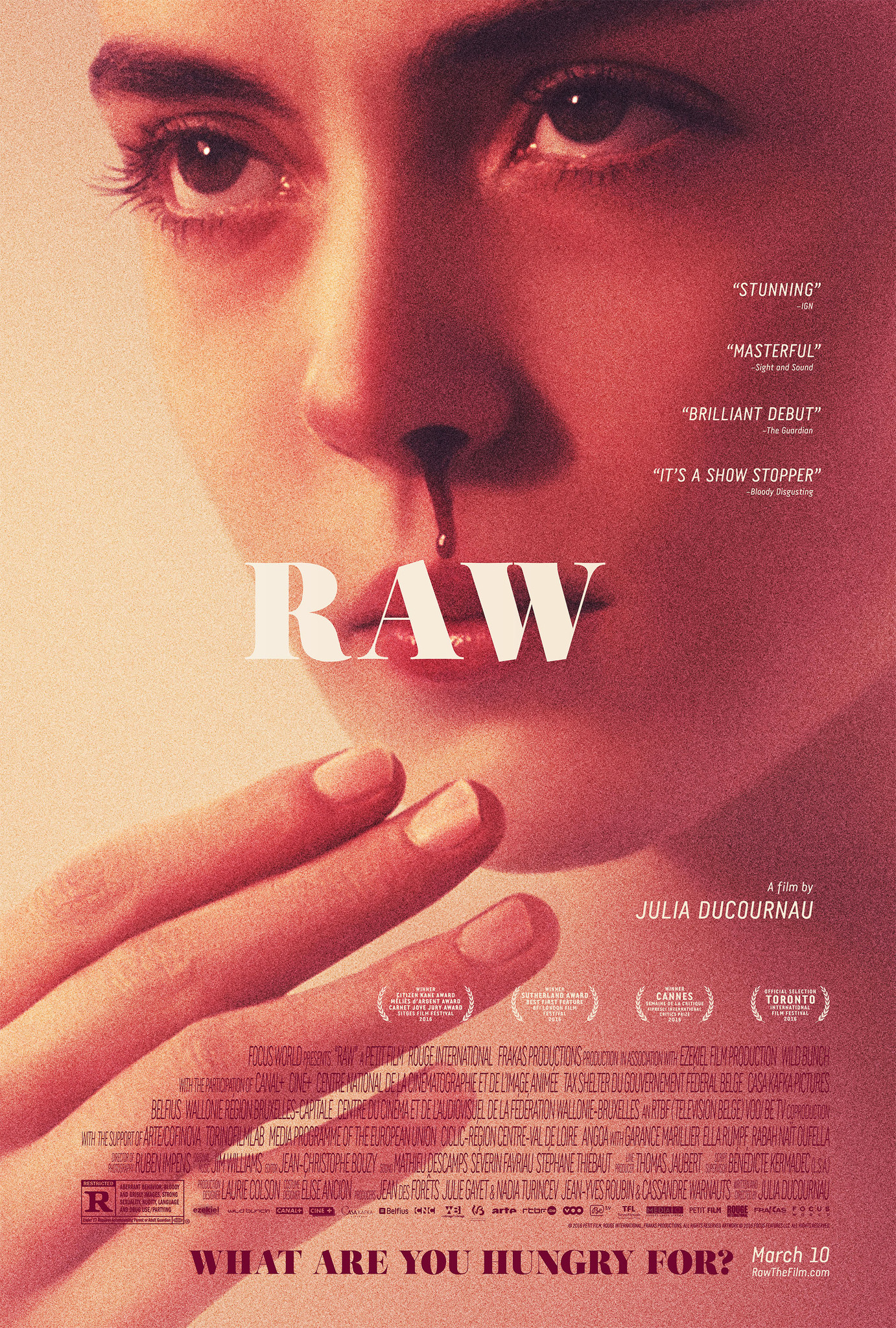
- Some viewers have accused Bloodthirsty of being a ripoff of Raw, with the premise of a vegan/vegetarian developing a thirst for blood and flesh and a reveal that It Runs in the Family (though Bloodthirsty protagonist Grey's is more supernatural), all the way down to identical◊ posters◊.
- A common criticism of Bullet Train is that it's too reminiscent of the styles of Quentin Tarantino and Guy Ritchie (Pulp Fiction, Kill Bill, and Snatch. are the most common films used for comparison), with several critics comparing it to the movies made by the many Tarantino wannabes and imitators that dominated the film festival circuit in the late 90s.


- One complaint that some readers of The Cold Moons have is that it's too close to Watership Down. They're both about British wildlife running from human danger, but one is about badgers and the other is about rabbits.
- Mentioning The Host (2008) in Animorphs or Stargate fan circles is generally a bad idea.
- How Opal Mehta Got Kissed, Got Wild, and Got a Life is an extreme example. It initially sold well until readers started to notice many similarities between the plot and prose to previously published books, including Megan McCafferty's Jessica Darling series, Tanuja Desai Hidier's Born Confused, Meg Cabot's The Princess Diaries, Sophie Kinsella's Can You Keep a Secret? and even a Salman Rushdie book. The author admitted she had read some of these books as a teen and may have been subconsciously influenced by them. However, upon analysis it was found that whole sentences or even entire passages were identical or near-identical to other authors' works, which to many people - including Opal Mehta publisher Little, Brown and Co. - looked too suspicious to be a mere coincidence. Readers and critics rapidly turned on the book, resulting it being recalled by the publisher and all remaining shelf copies destroyed. Although not mentioned much during the initial controversy, several readers have also noted Opal Mehta bears a lot of similarities to Mean Girls and She's All That (with one Goodreads review even describing it as "a less good Mean Girls").
- You're bound to see The Hunger Games compared to Battle Royale all the time. Many hipsters claim the whole thing is a ripoff that tries and fails to copy Battle Royale. Of course, by this logic, Battle Royale is just a rip-off of The Running Man, which rips off the Roman Coliseum, which rips off the Labyrinth at Knossos. Stephen King himself acknowledged that the Deadly Game plot of The Hunger Games isn't original (citing Royale, Running Man, and another of his books, The Long Walk), but that isn't a bad thing.
- A common criticism of the Inheritance Cycle is that the series, though especially the first book, is very similar in terms of plot, characters and setting to other fantasy or speculative fiction series, in particular The Lord of the Rings, Star Wars and Dragonriders of Pern, while doing little to add original ideas to these elements. The later books arguably get better about this, but some people still see the Cycle as a blatant rip-off of these other series.
- By far the biggest criticism of The Iron Tower trilogy is that it's clearly The Lord of the Rings with the Serial Numbers Filed Off, with some arguing it's even more blatant about this than the original Shannara books. It's hard not to notice the similarities (Warrows are basically Hobbits, the Evil Overlord's standard is a burning red ring on a black background, the protagonists' journey through Kraggen-Cor is very similar to the trek through the Mines of Moria, and the battle of Challerain Keep is almost beat-for-beat the same as the Siege of Minas Tirith, to name just a few). To be fair, it's been said that the author originally planned for the The Silver Call duology to be a sequel to The Lord of the Rings, only to realize how messy it would be to get the legal rights and so had to come up with a (mostly) new backstory for the duology that was different enough from The Lord of the Rings that he wouldn't get in trouble for plagiarism, which ended up being expanded into The Iron Tower trilogy. Some still enjoy the books in spite of the obvious influence of The Lord of the Rings, while others dismiss it as an inferior knock-off.
- The King's Avatar features a male Experienced Protagonist, an expert at a Massively Multiplayer Online Role-Playing Game with vast knowledge and incredible skills about the In-Universe title, while alienating himself from his peers. Unfortunately, this description also fits Sword Art Online protagonist "Kirito" just as well, thus its fans will label The King's Avatar as another Chinese knockoff, not knowing that whereas Sword Art Online dabbles into Science Fantasy with Deadly Game elements, The King's Avatar focuses its narrative on Professional Gaming with no Science Fiction subject matter at all. However, because The King's Avatar began releasing as a web novel in 2011, a year before Sword Art Online started airing its Animated Adaptation, to some fans of the latter, this would have been long and popular enough to rip off.
- Turned on its head in the Jorge Luis Borges short story, "Pierre Menard, Author of the Quixote". The title character starts off attempting to translate Cervante's Don Quixote, but decides to go further and so thoroughly immerse himself in the text that he can recreate it, word for word, in the original 17th century Spanish. In effect, Menard literally republishes a classic novel (or just the first few chapters—he dies before he can finish it) under his own name. And the literary community absolutely loves him for it. The narrator of the short story, a critic himself, rapturously describes how this new version of the Quixote is packed with so much more meaning than the original, even though both texts are identical.
- Betsy Cornwell's YA fantasy Mechanica has received some backlash for "ripping off" Marissa Meyer's Cinder, since both are Cinderella retellings where the Cinderella character is a mechanic. Even though they have almost nothing else in common, they even draw on different genres (Cinder being Sci-Fi while Mechanica is Steampunk), and Cornwell started work on Mechanica well before Cinder was published.
- The Mortal Instruments:
- A not-insignificant number of people accuse Cassandra Clare of plagiarizing several other works, most notably Harry Potter and Star Wars.
- There's actually some logical basis in this—Clare copied large amounts of texts from other sources without citing them in The Draco Trilogy: a Harry Potter fan fiction she wrote before City of Bones was published. In fact, the fics were taken down and the trilogy is largely a reworked and renamed version of the fic. Her fans argue that Clare learned her lesson from that and that the elements Clare is accused of copying weren't invented by the people she 'copied' them from.
- It's been pointed out that some parts of Throne of Glass, though especially the final book Kingdom of Ash, appear to be lifted straight from The Lord of the Rings (in particular the films) with only minimal changes. Some of this ranges from similar-sounding names and lines, all the way to scenes and plot points that appear near-identical to The Lord of the Rings (Manon summons allies to war by starting a beacon-lighting chain across mountains much like Pippin in Return of the King, the siege of Anielle is similar to Helm's Deep, the dam scene resembles the Ents' attack on Isengard and so on). Even people who otherwise enjoyed the books picked up on the similarities, while detractors criticize it as yet another high fantasy story trying to ride on the coattails of The Lord of the Rings and barely even trying to disguise this.
- This is a common critical reaction to large, 'experimental' novels. Most often it is said 'like Ulysses, but why bother?', though that started changing to 'like Infinite Jest, but why bother?' Older Than They Think, though—even the 'first' overtly experimental, digressive novel, Tristram Shandy, was panned for being a derivative of earlier works.
- Warrior Cats has gotten some flak from Tailchaser's Song for its similarities, including an orange tabby protagonist, similar naming scheme, and usage of cats living in "clans".
- American Tokusatsu: Basically every Henshin Hero show in this genre to come out since Power Rangers (be they original American shows, American adaptations of Japanese tokusatsu or American dubbed Japanese tokusatsu).
- Masked Rider, VR Troopers, Superhuman Samurai Syber-Squad, Big Bad Beetleborgs and Kamen Rider Dragon Knight are just a few examples of adaptations.
- The Mystic Knights of Tir Na Nóg would be an original show example.
- Ultraman Tiga and Ultraseven would be dub examples. However, Ultra Series English dubs had been around before Power Rangers, as Peter Fernandez's Ultraman dub had aired on syndicated TV in the US for years until the rise of cable.
- It should be noted that Masked Rider, VR Troopers, Beetleborgs, and Mystic Knights were all produced by Saban, the creators of Power Rangers itself, trying to replicate their own success. And that's not even counting the whining that fans of the American adaptations get from the fans of the Japanese originals, some of whom don't seem to understand that American companies actually licensed the footage from Japan to make their shows and didn't just plagiarize it behind their backs.
- There's an important thing to remember here, in many ways, Japan likes Power Rangers. From a business standpoint, licensing fees bring a good stream of revenue to Toei (it's actually believed that the increasing prevalence of Gotta Catch 'Em All in Super Sentai was being caused by trying to replace the diminishing revenue from the Disney Era with more merchandising.) Furthermore, Power Rangers is dubbed and broadcast in Japan, and is still watched (In fact, when Lost Galaxy was brought to Japan, it outperformed its source material Gingaman.)
- Any pair of young, male presenters on British television will be compared to Ant and Dec and accused of trying to copy them. Ironically, many of the comparisons aren't by Ant and Dec fans, but by people who dislike them and therefore conclude that anyone remotely similar to them is exactly like them.
- In the early years, Babylon 5 was widely accused of copying Star Trek: Deep Space Nine, as DS 9 premiered a month earlier than the B5 pilot film, and a whole year earlier than the B5 series. But J. Michael Straczynski then publicly stated that he'd pitched an early version of Babylon 5 to Paramount before DS 9 was in development, which meant B5 fans started to publicy accuse DS 9 of actually copying B5. Though the invective can get heated between two camps of fandom, there are plenty who enjoy both shows. As well, numerous Trek creative personnel have encouraged Trek fans to check out Babylon 5, while numerous B5 writers and crew have professed their love for Star Trek in general, and even DS 9 specifically.
- Nickelodeon series Taina is very similar to the later Nick series Victorious. Bringing up the latter to a huge fan of the former can be a problem because Taina was cancelled quite early while Victorious was Adored by the Network for several years.
- Charmed got vilified by a few Buffy the Vampire Slayer fans for being a Feminist Fantasy about young women who fight demons. Hilariously enough, the two shows shared a few cast members, the most notable of whom was Charisma Carpenter—regular on Buffy and recurring part on Charmed. But then again there were plenty who were fans of both.
- Dinosaurs was thought by many to be a ripoff of The Simpsons (only with animatronic puppets on a live-action set rather than an animated series). Seeing as how the former takes place in prehistoric times, this could even be in the same vein as The Honeymooners and The Flintstones. One episode of The Simpsons was a not-so-subtle Take That! featuring the characters watching the show with Bart saying, "It's like they saw our lives and put it up on screen". A Dinosaurs episode also had Earl complain that the reason there's no originality on TV is that once an original show becomes popular, every network decides to play Follow the Leader and create rip-offs of said original show, with Baby saying, "Don't have a cow, man".
- Downton Abbey:
- The series premiered in the same year as the Upstairs Downstairs reboot. "Upstairs, Downstairs" co-creator Jean Marsh was quoted as saying, "Maybe it's coincidence, and maybe I'm the Queen of Persia".
- The original "Upstairs, Downstairs" had a Scottish butler named Hudson. "Downton Abbey" had an English butler named Carson alongside a Scottish housekeeper named Mrs. Hughes.
- “Upstairs, Downstairs” had a nasty, scheming chauffeur named Thomas. “Downton Abbey” had a nice chauffeur named Tom, and a nasty, scheming under-butler named Thomas.
- Fifth Gear is often accused of being a rip-off of Top Gear (UK).
- The American Sherlock Holmes Setting Update Elementary has has this problem in comparison to BBC's Sherlock. Many accused it of being a blatant ripoff because they were released a few years apart. This issue has since waned, with both being popular successes, but there's still a heavy Fandom Rivalry between Elementary and Sherlock fans.
- When Firefly first showed up, word among anime fans was that it was a Live-Action Rip-Off of Outlaw Star, primarily due to the 'naked girl in the box in the first episode' and the Cool Ship. The two shows turned out to be very different, not in the least because Outlaw Star had 26 episodes and Firefly had 13 (and a movie). Then, as seen above, Outlaw Star got this too.
- Friends was constantly being accused of being a Seinfeld ripoff. However, anyone who actually follows both shows realizes that they have very different styles of humornote . In turn, every new sitcom soon after Friends became popular was automatically accused of being a Friends ripoff, apparently just on general principles. Drew Carey has a whole section in his book Dirty Jokes and Beer about how this happened and even his own sitcom, which he said was much more like Roseanne, was not exempt from the accusation.
- Friends is considered a Living Single ripoff. To wit, the latter show was brought to NBC in 1993, one year before the former show was conceived, but was rejected. Many believe that they stole the idea to create it and it became a source of much controversy due to it outlasting the first show and having much more advertising and awards while Living Single is erroneously accused of being a ripoff of it. This was made even worse when Friends star David Schwimmer said in a 2003 interview that their should be a Black Friends only for fans to justifiably get angry about how Living Single was a preexisting Black Friends and for claiming ignorance about the show.
- HEX was called by critics "British Buffy".
- Hyperdrive is a sitcom about a bunch of incompetents on a spaceship. Although that's as far as the similarities with Red Dwarf go, a few insist it's a blatant rip-off.
- I Dream of Jeannie obtained suspicious similarities to Bewitched that led to this. Notably one writer crossed over from Bewitched to work on Jeannie and pulled a few Retcons to match—such as Jeannie suddenly being from a family of genies instead of a cursed human, her and Tony getting married like Darrin and Samantha, Jeannie having an Evil Brunette Twin, etc.
- Little Britain is frequently accused of ripping off The League of Gentlemen and The Fast Show. In turn, The Catherine Tate Show gets flak for copying Little Britain.
- Coupling is considered a Friends ripoff, because it has six leads (and one girl is weird, and one guy is a Handsome Lech who is also dumb), divided perfectly by gender. And a Local Hangout where they sit on the only sofa. And the general humour comes from sexual situations and observations. So obviously there are some similarities, but the tone, style, and types of jokes told are often completely different.
- And The Drew Carey Show, mainly as the show focused on, well, a bunch of friends.
- Inverted in E4 trailers for How I Met Your Mother, which uses this as a selling point: "It's basically new episodes of Friends without boring ruddy Ross."
- Mister Ed was quite similar to a few films with Donald O'Connor and " Francis the Talking Mule."
- When Password became a hit on CBS, NBC countered with You Don't Say!, using names instead of regular words. It was identical to the set up which had host Tom Kennedy's lectern in the middle of the panel. Threatened with a lawsuit from Goodson-Todman, the company moved the lectern to the left. Regardless, it had a nice six-year run.
- In Psych, Shawn walks up to a police department desk and identifies himself as a psychic. "Like The Mentalist only not fake."
- Once Upon a Time takes much of its basic premise from Vertigo Comics' Fables, although the series is much more action-oriented and campy soap-opera than the book it copied from.
- For most late '50s-early '60s private eye shows, expect complaints that they seemed too similar to Peter Gunn.
- Rhyme and Reason was ABC's answer to Match Game '75 on CBS.
- A possible case is Robin of Sherwood and the later Robin Hood. The second series of Robin of Sherwood ended with Robin's death, and there is speculation that the second season finale of Robin Hood chose to kill off Maid Marian in the attempt to emulate what the creators' believed was the "shock value" of the preceding series, except of course that they killed Marian instead of Robin. The key difference was that the former series had to write around Michael Praed's decision to leave the show, whereas Marian's death in the later series was a creative decision and had nothing to do with actress Lucy Griffith (despite later attempts to blame the decision on her). Although Robin of Sherwood brought in a "new" Robin Hood, neither series survived more than one more season without their leads.
- There are people who watch Saturday Night Live who seem completely incapable of enjoying any sketch that has a premise that's even remotely similar to another sketch from a previous season. Since the show has been on for more than 30 years, this means there aren't very many sketches they can enjoy.
- The Shield and The Wire endure this, as far as the showrunners unknowingly aping the other show as they progressed. The Wire gave us Marlo Stanfield, a decidedly Shield-like villain, Carcetti (whose political ambitions mirrored Shield character Acaveda's political ambitions), a convoluted fake serial killer storyline that came across like something Vic Mackey would have thought up as part of a crazy scheme. The Shield meanwhile, in it's final seasons, began aping The Wire-themed issues about police work such as crime stats (something the show had largely downplayed) hanging over the head of the Farmington District, the elimination of beloved character Lem (which paralleled the death of Stringer Bell, who was killed off in spite of his popularity for the sake of the story being told), and an ending that had MAJOR elements from the final fate of Marlo Stanfield. as far as what happened to the Strike Team.
- Splatalot's rather short run on Nickelodeon in America led to people accusing it as a medieval-themed kid-friendly Wipeout rip-off.
- A newer example that will likely only get worse: there is a good deal of ire directed at Stargate Universe by people claiming it's a rip-off of Battlestar Galactica.
- The original Battlestar Galactica still gets much criticism today for ripping off A New Hope. No wonder the Darker and Edgier remake received rave reviews as it strayed from being a typical show about a space colony as far as possible.
- Star Trek: Voyager was released around the time when Red Dwarf was becoming very popular and received accusation of copying it... Being lost in space, a holographic character... (They even had "Blue Alert")
- Inverted with Stargate Universe, which from the moment it was announced was mockingly referred to as Stargate: Voyager.
- Supertrain easily fell victim to this—and for good reason, too, because almost everybody who saw it quickly realized that it was a big rip-off of The Love Boat.
- The Talk on CBS was immediately panned because it's The View for moms. With six women instead of five. In the middle of the afternoon. In Los Angeles.
- Top Gear on the American History Channel is a direct spin-off from the successful British Top Gear, copying the latter series' use of three presenters, The Stig, silly themed segments, style of cinematography and auto reviews, and cramming celebrities into a small car.
- Unhappily Ever After was so strikingly similar to Married... with Children because both were co-created by Ron Leavitt. Word of God says it wasn't their intention to be so similar to Children, but it simply turned out that way.
- This happens a great deal with Singaporean television, especially the children's programming. My Classmate Dad is a "Freaky Friday" Flip sitcom that basically is the actual Freaky Friday with a lower standard of spoken English. Cosmo and George is about an alien who befriends a human who shows him the ropes of living on earth, mimicking the concept of Mork & Mindy. The Chinese-language drama serials aren't exempt from this respect. CID is CSI, The Time Machine copies (even by name) The Time Machine, Baby Blues copies the strip of the same name, Beach. Ball. Babes. is Dead or Alive (specifically volleyball tournament game), and Mrs P.I. is Scarecrow and Mrs. King.
- When a Belgian watches Dutch television you can expect this trope to come up. A good example of this is the Dutch investigative journalism TV show Rambam, which Belgians say is a rip-off of one of their shows called Basta and not as well-done as Basta. A lot of Dutchmen usually agree with them though.
- Schitt's Creek was dismissed by a lot of critics as an Arrested Development knockoff, since both shows are satirical single-camera comedies about an Ambiguously Jewish family that loses its fortune and has a Lady Drunk matriarch. However, after a few episodes Schitt's Creek differentiated itself by having a much more sentimental and kind tone and ongoing Romantic Comedy stories for the two adult children. Both shows have strong, passionate cult followings, and they even share a lot of fans who can respect both approaches to comedy.
- The 2020 Nickelodeon series The Astronauts got a lot of backlash for ripping off Among Us because they both have astronauts, but The Astronauts was greenlit way before Among Us hit the mainstream.
- The fifth season of Masterchef Australia was considered to be the Audience-Alienating Era of the series because they changed their usual tone and style to put a greater emphasis on the contestants' loud personality to copy its rival cooking reality show series, My Kitchen Rules. MKR had a greater viewership than Masterchef, though most of the same viewers admits to only "hate-watch" the former out of Bile Fascination, and the latter is generally agreed to be the more superior cooking show. Suffice to say, the change caused ratings tanked for Masterchef that year.
- Control Z: After the trailer was made available, some fans complained that the upcoming third season was a Latin rehash to I Know What You Did Last Summer.
- Aerosmith got a lot of bad press for (allegedly) copying The Rolling Stones. They got over it, though. They have also been frequently compared to Led Zeppelin and The Yardbirds, with the latter comparison making a lot of sense since Aerosmith are big fans of The Yardbirds.
- Any new R&B female singer will get compared to Beyoncé, and before she came out it was Janet Jackson.
- Most pop-punk bands since the mid-2000s will be unfavorably compared to Fall Out Boy at some point. This is mainly because a lot of the lead singers of these bands have similar voices. The most famous victim is All Time Low, despite the fact that they were started before Fall Out Boy was famous. Also, people accuse Fall Out Boy of being a rip-off of blink-182, and less commonly, Green Day.
- British band The Horrors were often accused of being a rip-off of Australian post-punk band The Birthday Party. This subsided once they changed their sound completely on their second album.
- Hampton The Hamster, originally known for being the name behind “The Hansterdance Song” was turned into a group featuring him and new characters. Many have noticed this being too similar to Alvin and the Chipmunks and it did not preform well commercially as opposed to the original song it was intended to be based around.
- Lady Gaga gets this quite a bit from haters, who say she copied countless artists, among them Madonna, David Bowie, Britney Spears, Cyndi Lauper, among others. For the record, she has outright admitted to having been inspired by many of the artists she allegedly copies.
- Even though Michael Jackson clearly learned a lot from James Brown's dancing style, many pop artists since the 1980s have been accused of copying Jackson's dancing moves.
- Following his debut album (which scored major hits but was tepidly received by critics), Bruno Mars discovered his true calling as a Genre Throwback artist, scoring hits from directly pastiching everything he's a fan of, from The Police, to Prince, to 70's-style funk, to 90's-style New Jack Swing, and more. This shift got him way more respect from critics, but it consequently invited criticisms of unoriginality—even when he's being praised as a performer, especially cynical takes dock points from him because he doesn't attempt to reinvent the wheel or make it his own unique sound.
- Mr. Bungle fans will frequently tell you that Faith No More is a watered-down version of Mr Bungle, despite the fact that Mike Patton is in both bands so they're mostly fans of both anyway. Mr Bungle fans will also try to tell you Red Hot Chili Peppers copied Mr Bungle, missing the point that Red Hot Chili Peppers released several records before Mr Bungle did (not counting demo tapes). Red Hot Chili Peppers had a long-lasting rivalry with Mr Bungle/Faith No More's singer Mike Patton in which Patton did some things he later apologised for. Red Hot Chili Peppers Fan Dumb will often still proclaim their hatred for Mike Patton nonetheless.
- Muse are frequently accused of copying Radiohead, despite having much more of a progressive-classical-rock mentality.
- Ozma have never quite shaken the Weezer comparisons, due to being a Power Pop group with a geeky image who prominently use New Wave-influenced keyboard melodies. It's not always negative though—it seems that for every one person who dismisses them as too derivative, there's someone else who's a fan of both Weezer and Ozma. The fact that their debut came out a few months after Weezer's base-breaking third album may have even contributed to their popularity, and it's notable that their earliest big break came from being voted in by Weezer fans to be an opening act for a 2001 tour.
- These days, any alternative rock band with a female singer will be accused of trying to steal the spotlight from Paramore. The most common victim is Hey Monday—likely the reason why Cassadee Pope left the group and began a country career.
- The German band Rammstein is often (and probably justified) accused of
copyingbeing inspired by Slovenian band Laibach's style. Laibach's reaction? That's alright, because art is inherently unoriginal.- Along with a little bit of a Take That! when they said "Rammstein is Laibach for kids, and Laibach is Rammstein for grown-ups."
- It is impossible to be a fan of both Sarah Brightman and Katherine Jenkins, at least if you read either singer's forums.
- Any gothic metal band with a female singer will be compared to Lacuna Coil, Within Temptation, or Evanescence. If the vocalist occasionally screams they'll get compared to Arch Enemy.
- The deathcore genre often has this criticism leveled at it, possibly due to the almost copycat-like nature of most of the bands within the genre.
- Usually whichever band is the oldest mocks whoever is newest, never mind that they all are more or less emulating The Birthday Party and there's nothing wrong with that.
- Especially in the early to mid-1960s a lot of rock groups looked and sounded like Beatle clones: The Rolling Stones, The Monkees, Herman's Hermits, The Dave Clark Five,... Some bands eventually created their own sound, but others have been forgotten as being nothing more than pathetic attempts to cash in on the Beatles' success.
- Extremely prevalent in music fandom/journalism. How many times have you heard "______ is just doing the same thing The Beatles did in the '60s"?
- Silverchair:
- Early in their career, they were referred to as a shitty knockoff of Nirvana, or Pearl Jam. "Nirvana in Pyjamas" was occasionally used as an epithet (also referencing their youth and Australian background). With every preceding album, the band began experimenting with softer, more progressive sounds, which tended to stop these comparisons.
- Post-Grunge receives a lot of flak from many people due to many bands' overexaggerated attempts to sound like Nirvana, Pearl Jam, and Alice in Chains. Parodied in this MADtv (1995) sketch.
- Nirvana themselves get flak for sounding like The Pixies (even though Kurt Cobain openly acknowledged their debt to the band), for the riff to 'Teen Spirit' sounding like Boston's "More Than A Feeling" (also acknowledged at the time by the band), and a huge amount of Hype Backlash from people discovering that there were "Alt rock" bands before Nirvana and thus declaring Nirvana to be Mudhoney / Black Flag / Dinosaur Jr., etc. ripoffs.
- It would take no less than a miracle of God to get critics not to use this argument against Sean Lennon or any other musician related to The Beatles.
- Jakob Dylan has the same problem. Hilariously lampshaded in The Axis of Awesome's "4 Chords".
- After Tupac Shakur was murdered, many future Hip Hop artists were accused of copying him. Some of the more famous examples include DMX and Ja Rule.B
- Go to any Slipknot or Mushroomhead music video on YouTube and you'll often see Flame Wars between fans about which band is better, and about which band ripped the other one off.
- In succession, Britain revealed several white women with a soul inspiration (Joss Stone, Amy Winehouse, Duffy, Adele) which led to them getting their originality questioned—even if not only there was a Genre Throwback, but they were doing covers of old songs.
- The 19th-century music critic Hans von Bülow joked that Richard Wagner's early opera Rienzi was "Meyerbeer's best opera."
- This is the source of 99% of the hate Owl City gets, due to the similarities to older act The Postal Service. Owl City's Adam Young denied their direct influence in early interviews, but also noted that, since The Postal Service put out one album and split up, there was room for another act to become a Spiritual Successor.
- Think of any modern crooner who specializes in singing songs from (or songs reminiscent of) The Great American Songbook, from Michael Bublé to Harry Connick Jr to pop and rock musicians who occasionally dabble in the style like Rod Stewart or Robbie Williams. Whether they consciously or subconsciously borrow from the sound, image, or style of classic crooners like Frank Sinatra, Dean Martin, Nat King Cole, Johnny Mathis, or Tony Bennett or not, they will be compared positively or negatively to them.
- It is hard to find press discussing male piano-playing singer-songwriters without comparisons to Elton John, Billy Joel or Ben Folds, or females not compared to Carole King, Tori Amos or Nina Simone.
- Tori Amos herself was dogged during her early career by accusations, especially from British people, that she was a Kate Bush copyist. One early reviewer out and out claimed that the only reason Amos had a career was because of Bush's glacial working pace and reluctance to play live.
- One reason a lot of critics weren't initially too fond of Blue Cheer was because they sounded like a cruder version of The Jimi Hendrix Experience.
- In their early years, Marillion were often accused of ripping off Genesis, with their then-frontman Fish being labeled as a "Peter Gabriel clone" and their song "Grendel" getting unfavorably compared to Genesis' "Supper's Ready" (both being long songs that go through distinct sections with different musical styles). This seems to have died down quite a bit as time went on, though.
- Garbage have frequently been accused of ripping off Curve, due to their similar musical styles and similarities between the personas of the groups' lead singers. Curve alleged that Garbage's founding member Butch Vig started the group after Curve rejected his application to produce them.
- 5 Seconds of Summer detractors bring up the fact that they keep ripping off their inspirations, mostly All Time Low, rather than trying to form an effective identity for themselves. It's one of the reasons they've garnered as big a hatedom as they have so fast.
- A massive backlash against Greta Van Fleet was formed due to them being perceived as copying Led Zeppelin without having any unique spin on the older band's sound. The band consistently dismisses these claims.
- Kingdom Come were also dogged by Led Zeppelin comparisons throughout their career, with Jimmy Page himself even claiming that they went beyond simply using a similar style by "actually ripping riffs right off". The band dismissed the comparisons and claimed that their primary influences were AC/DC and The Beatles—in one interview vocalist Lenny Wolf went so far as to say he'd never heard of Led Zeppelin before he started the group.
- As an operatic composer, Bedřich Smetana was accused of following Richard Wagner too closely, a fact that persuaded him to initially write his most famous stage work, Prodaná nevěsta, with spoken dialogue. Richard Strauss was also accused in his early career of following Wagner.
- Talk Talk's first two albums were frequently criticized by the press and public for sounding too much like Duran Duran, who were one of the hottest names in British Synth-Pop in the early '80s. The band's subsequent three albums, which ditched the synths in favor of organic instruments and became exponentially more experimental with each new release, are much more beloved.
- Radiohead's first album, Pablo Honey, is widely viewed as the black sheep of the band's catalog, and a big reason for that is its perceived similarities to Nirvana. The fact that Thom Yorke appeared to consciously model his appearance and public presence on Kurt Cobain during this time didn't help matters. Similar criticisms are often directed at other material that Radiohead put out during this time, most prominently the non-album single "Pop Is Dead". The Bends is often regarded as Radiohead's Growing the Beard moment in part because it discarded the Nirvana influences in favor of a more atmospheric sound.
- Sting's Crow inspired gimmick gets hate from some fans for this reason. His angle with the new World order was also seen as too similar to The Undertaker's (then)old MO.
- TNA has been mocked as "WWE Lite" due to its occasional gimmicks and storylines similar to those used by "that promotion up north." At its core, it is a Replacement Scrappy for WCW.
- They also hire many former WWE talents, such as Kurt Angle, Kevin Nash, Mick Foley, Tazz, Booker T, Scott Steiner, Tara (Victoria), Team 3D (The Dudley Boys), Bobby Lashley, Elijah Burke, Stevie Richards, Matt Morgan, Rhino, and Shiek Abdul Bashir (Daivari), most of whom get booked stronger than "homegrown" talent or wrestlers who otherwise did not make a name for themselves in WWE (or ECW, or WCW).
- Current Roster, add in what they've siphoned from the WWE development, previous referees/commentators, copied gimmicks...if TNA even signs a guy who's been looked at by a WWE employee wrestling fans will complain.
- From the wrestler's point of view, it makes sense to go to TNA after the WWE sent you walking. It's the next biggest wrestling promotion after all. Still, it seems that every time the WWE fires or releases a wrestler it takes less than a month for them to resurface in TNA. It also doesn't help that some of the time TNA has the wrestlers do their same WWE gimmicks but under another name (Team 3D being the biggest).
- "Less than a month" is generally an exaggeration, given that the typical No-Compete clause (which prevents a released performer from appearing with another company) in a WWE contract has a 90-day window.
- Additionally, Team 3D legally can't call themselves the Dudley Boyz anymore due to WWE just as they own the rights/names/gimmicks to previous wrestlers (i.e. "Fake Diesel," "The Real Double-J.")
- Others mockingly refer to TNA as WCW 2: Electric Boogaloo, since they took on a lot of former WCW staff (both performers and creative staff) and generally see it as heading down the same road WCW did.
- New Japan Pro-Wrestling bringing in Brock Lesnar got complaints that they were simply copying All Japan Pro Wrestling, who had brought Goldberg out of his self-induced obscurity earlier.
- LayCool got some hate in their early days for being a rip-off of TNA's The Beautiful People. Possibly in response to this, LayCool began to move past the Mean Girls-esque character traits and played up the Les Yay between Layla and Michelle, plus their backstage pull with Vickie Guerrero. Showing how this trope can really change, TNA later got this when they had Gail Kim and Madison Rayne as a Les Yay duo who had backstage pull in the form of Karen Jarrett. What makes this hilarious is that they feuded with one of the former members of the Beautiful People (Velvet Sky)—and Madison had been part of the group for a while too.
- The Riott Squad (Ruby Riott, Sarah Logan and Liv Morgan) being made up of a punk, a generic brunette, and a pretty blonde led to accusations that the group was simply a copy of Paige's team Absolution, with Sarah and Liv serving as the clones, respectively, of Sonya Deville and Mandy Rose.
- Does your Simulation Game feature real-life aircraft, trench run missions, a plot where two factions are at war with each other, and the ability to customize your aircraft? If so, then consider your game to be a rip-off of Ace Combat.
- Any conversation amongst enthusiasts involving Angry Birds that doesn't include some offhand remark about the game being a Crush the Castle knockoff will inevitably include one about Boom Blox instead.
- During its heyday, Art of Fighting was often mocked as a rip-off of Street Fighter II, despite the numerous gameplay differences that set Art of Fighting apart from it. The accusation has persisted over 20 years later, as of this writing, with many still dismissing AOF as a cheap SF II imitator. The irony being that the Street Fighter franchise has borrowed more from AOF than the what AOF is believed to have done.
- Artery Gear: Fusion has received frequent comparisons with Epic Seven due to extremely similar turn-based gameplay, presentation and character kits.
- 2005 Russian game Brigade E5: New Jagged Union is an exceptionally bad rip-off of the 1999 cult classic Jagged Alliance 2.
- Is your game set in modern conflict, adheres to Real Is Brown rule, and has class customization and RPG elements in the multiplayer? Then someone is bound to call it a clone of either Call of Duty or Battlefield.
- Given the Fandom Rivalry between the Call of Duty and Battlefield series, Call of Duty: WWII has been accused of ripping off Battlefield 1. WWII features many mechanics like bayonet charging, specialized classes, and gas grenades that are seen as directly lifted from Battlefield 1. Notably, the War mode of WWII has drawn unfavorably comparisons to the Operations mode of BF1 for its asymmetric, team-focused, objective-based design. Even the basic premise of WWII is seen by some as a blatant attempt to recapture the success of BF1's historical throwback angle. Amusingly, this went the other way from previous accusations—before BF1, most Battlefield campaigns were seen as poor knock-offs of Call of Duty campaigns, often lifting wholesale setpieces, events and characters with nary an understanding of why they worked in Call of Duty. Battlefield: Bad Company 2 was the first to jump on the bandwagon, but it got a pass for being one of the earliest (coming out just a few months after Modern Warfare 2, the point after which copying Call of Duty became an epidemic in the shooter genre, and for still having original elements (most notably the destructibility of the environments and taking the piss out of MW2 at every chance)—later games, whose stories were almost entirely built off of ripping off Call of Duty plot points, not so much.
- Anyone who ever talks about the unlicensed NES game Caltron/Myriad 6 in 1 will justify its low score on the sole basis that all the games on the cartridge are total rip-offs of other games.
- Castlevania: Lords of Shadow is declared God of War's ripoff due to their similarities in combat mechanisms. To the lesser extent, Castlevania games on PS2 are compared with Devil May Cry because of their battle systems and white-haired protagonists.
- Inverted with the clone games on early computers such as the Commodore 64 and the ZX Spectrum. Whenever a game managed to be a total rip-off of a popular arcade title it was considered worth getting (and in certain cases those clone games would even be considered as the best games you could buy for that computer, didn't matter how much of a blatant rip-off it was).
- Cold Fear plays with this trope. Most people quickly wrote it off as a carbon-copy of Resident Evil 4 and forgot about it. However, anyone who's actually played it, while admitting it basically is a complete rip-off, views it as an underrated masterpiece and one of the greatest horror games ever made.
- Many 3D Collectathon Platformers, such as Spyro the Dragon and Ty the Tasmanian Tiger, have been derided as Banjo-Kazooie clones due to their similarities. Banjo-Kazooie itself was accused of ripping off of Super Mario 64 when it was new, due to it being the first popular game after Super Mario 64 to have collectathon mechanics, though this died down after the aforementioned subgenre took off and became popular.
- Conan was also widely accused of ripping off God of War, which among other things, was a major factor in the lukewarm critical reception it received.
- Dead Space was accused of being a ripoff from Resident Evil 4 just because it used the "same" shoulder camera.
- The original Dark Cloud game was compared to Zelda. Its sequel was, however, much more well-received—although this actually wasn't thought of as a bad thing by some magazines.
- Sometimes, Digimon has the issue of being compared to Pokémon, though there aren't that many similarities. Pokémon itself ended up being accused of ripping off Digimon with post-Ruby and Sapphire games allegedly having "Digimon-like" designs for new Pokémon and the Mega Evolutions from Pokémon X and Y supposedly being taken from Mega-level Digimon.
- The most common criticism leveled against Donkey Kong Country is that it is a Mario clone, though both were created for Nintendo.
- Some fans dislike the fact Dragon Age II copied Mass Effect's dialogue wheel wholesale. Yep, BioWare plagiarized themselves.
- This trope holds true for even individual aspects of monster-collecting games. See Dragon Quest Monsters — with its in-depth breeding system — which released in Japan in 1998, more than a full year prior to Pokémon Gold and Silver... yet it still catches a lot of flak for copying breeding from Pokémon. The Dragon Quest series had already dabbled in the monster recruiting arts in its fifth and sixth installments, though the Nintendo DS remake of the latter replaced that feature with the ability to learn moves typically used by monsters (the remake of the former on the same system still has the monster recruitment feature, though).
- In his review of Drake of the 99 Dragons, ProJared had this to say:
Jared: Hold on, now... Drake has two pistols, a trenchcoat, can run on walls, and go into Bullet Time. And this game came out in 2003, the same year that the last two Matrix movies were in theaters. [Beat] I'm sure they weren't trying to capitalize on that market at all.
- Enchanted Portals got a ton of hate when it was announced, due to its artstyle and gameplay being extremely similar to Cuphead. The design of the bosses was specifically noted to be so close that it could count as plagiarism.
- Fortnite gets a lot of hate for copying mechanics from its competitors, though this has since cooled off. PlayerUnknown's Battlegrounds fans and the developers accused the game of being a rip-off since it too is a 100 player Battle Royale game, though even Epic Games themselves fully admitted that the "Battle Royale" mode was wholly inspired by that game. Likewise, Apex Legends fans weren't too pleased when the game added a ping system and a teammate respawn mechanic just a month after the release of their game (the former Ping system would also be integrated in games like CS:GO not long after either). It's also compared to Team Fortress 2, due to both being free-to-play multiplayer shooters with goofy humor and more colorful graphics.
- Whenever a game that features driving and shooting set roughly in the modern day is released, it is automatically compared to Grand Theft Auto or even considered a GTA rip off.
- The first Mercenaries is probably one of the best examples of this. Despite the obvious differences that Mercenaries takes place in a warzone with little in the way of law enforcement to speak of, and with a heavier emphasis on blowing stuff up as opposed to car chases. It didn't help matters that the game was released roughly the same time as Grand Theft Auto: San Andreas. So several reviewers dismissed Mercenaries while giving glowing reviews to San Andreas.
- And yet GTA 3 is itself an aversion of this trope; the Leader it ripped off, Driver, is sadly forgotten. In fact, GTA threw out everything unique to its franchise in order to emulate a game that is now as mired in obscurity as GTA 1&2.
- Ironically, the later Driver games tried to be more like Grand Theft Auto, however they languished in the marketplace. Driver: San Francisco, the fifth entry in the series, ditched the GTA elements for a new framing device (you switch between cars by "possessing" their drivers—it's a long story) and has, as a result, gotten at the very least critical acclaim for it.
- When it was announced that Bethesda would be making Fallout 3, many long-term Fallout fans decried the new game as merely "Oblivion with guns". They must have hit on a good formula, though, as despite (or maybe because of) the similarities, the Elder Scrolls and Fallout series have both become flagships for Bethesda.
- Some may say that Fate/EXTRA is just Persona 3 with Fate/stay night characters and concepts. The fact that two ex-Atlus employees worked on the developing team doesn't help.
- Final Fantasy:
- Lightning, of Final Fantasy XIII, is often accused of being a gender-swap of Cloud from Final Fantasy VII. It doesn't help that the director of FFXIII specifically asked for Lightning to be designed to be "like a female version of Cloud," and that the opening of FFXIII is similar to FFVII's.
- Final Fantasy XIV tends to be dubbed as the Final Fantasy version of World of Warcraft due to the game having similar interfaces, pacing, and mechanics. The producer behind Final Fantasy XIV admitted to being a big fan of World of Warcraft and had his team play it and other MMORPG games to fully understand how the genre works before they were allowed to develop the game.
- Thanks to the epic remixes of the song "O Fortuna" (despite that it's not actually a video game song outside of Dracula Unleashed) as well as the song "One-Winged Angel" and its various remixes, you'll have to try very hard to use a song with Latin lyrics (especially if they mean something) without someone saying it's a ripoff of these two. This fate seems to have fallen "Born Anew" in Final Fantasy XIII, which would have gotten a free pass if it was composed by Nobuo Uematsu. The lyrics for "One-Winged Angel" were all ripped from "O Fortuna" anyway.
- Any Beat 'em Up that is similar to Final Fight is basically doomed to be called a "Final Fight clone".
- Final Fight: Streetwise was accused of trying to cash in on the Grand Theft Auto franchise.
- F-Zero fans occasionally consider WipEout a rip-off.
- The trailers for HAVE Online looked almost ridiculously similar to popular game Team Fortress 2. Not just similar, people were finding exact shots ripped off from TF2's trailers. The Chinese FPS: Final Combat is receiving the same reception from Team Fortress 2 fans for having a very similar style, gameplay, maps, and trailers. More of the same was directed at the game as more promotional material appeared online...though it wasn't for unoriginality, but theft, as Final Combat was caught using Team Fortress 2 models and animations, and maps from both Team Fortress 2 and Battlefield Heroes. It's flagrant enough that Valve is considering legal action. Being unoriginal really is bad when it's demonstrably stealing.
- Ib has received some flak as an apparent rip-off of Yume Nikki, when, in truth, the games differ on several points (the biggest being that Ib has a more linear plot and Multiple Endings, while Yume Nikki is extremely open-ended), and are only similar in that both games star a young, brunette girl as their protagonist, and both rely on Surreal Horror over Gorn to unsettle the audience.
- Fans of Rhythm Games are divided over whether In the Groove is this and had it coming for being too DanceDanceRevolution-like or a quality Follow the Leader game that shouldn't have had its life cut short.
- Killer Instinct was accused of this for trying to be like Mortal Kombat.
- Several Action-Adventure games are mentioned as being like The Legend of Zelda, in some cases being called ripoffs, like Alundra, Illusion of Gaia, and even Brave Fencer Musashi. And they're RPG-like games that borrow very little from Zelda. The PlayStation 4-exclusive (console-wise) Genshin Impact got hit bad by this in its own native country (China) for being a clone of The Legend of Zelda: Breath of the Wild. The Hype Backlash (it is the spotlight of the show) surrounding this got so bad during its announcement in ChinaJoy 2019 that Chinese Nintendo fans raised their middle fingers to said announcement and one particular angry fan smashed a PS4 in front of Sony's booth.
- LittleBigPlanet: People who are too lazy to create levels will just go to the Cool Levels page and look for any copyable levels. This is why the community has been flooded with multiple copies of the same level by different people, and sometimes even the SAME people will take a level and publish it 20 times. Case in point, here's what you get if you search "The Best Mortal Kombat Level Ever" on lbp.me. The arrows at the bottom of the screen will be there for a while.
- Limbo of the Lost gets most of its flak for stealing copyrighted assets from games like Thief, The Elder Scrolls IV: Oblivion, Painkiller, Return to Castle Wolfenstein and Unreal Tournament, among others. Incredibly, this is largely averted by many reviews: despite the literal copying, this is often only one of many criticisms of the game's overall perceived quality.
- When the original Max Payne was released, it was accused of only having Bullet Time as a gameplay mechanic in order to capitalize on the popularity of The Matrix. In fact, the game had gone into development well in advance of The Matrix being released.
- Microsoft has likewise been getting a lot of this, such as with their version of Nintendo's Miis.
- Microsoft has been fielding similar accusations from Apple's faithful for years, who seem to honestly believe that Apple invented the WIMP (Windows, Icons, Menus, Pointers) interface paradigm. For the record, Apple stole it from the Xerox PARC laboratory.
- The Kinect was called a "Wii Wannabe" as well.
- Minecraft:
- Some people would think that Roblox is a ripoff of Minecraft, but Roblox came before MC. In fact, almost any game that involves mining blocks and moving them around, Item Crafting, and/or some form of Survival Sandbox feature is going to get slammed with this, the most blatant being Fortress Craft.
- Terraria also gets accused of being a Minecraft clone, though the games have nothing in common besides having pixelated graphics and having mining and crafting as core mechanics.
- In turn, Minecraft is frequently accused of "ripping off" other games like Dwarf Fortress and Infiniminer (though the creator of Infiniminer, Zachary Barth, doesn't like being asked if he feels ripped off and that inspiration is all part of the creative process) , as shown in this video.
- Any fighting game where you can kill your opponent at the end of a match will have a splendid time beating the "Mortal Kombat ripoff" allegations.
- M.U.G.E.N has what we call "spriteswapped" characters. These are basically what you get when somebody takes a character and swaps all the sprites with their own, leading to a "new" character that plays almost exactly like the old one. Among the community, this is very much frowned upon as it not only shows laziness but also shows a lack of respect for the original character's author.
- A strange inversion with most Multiplayer Online Battle Arena games — it doesn't tend to be, "You copied Defense of the Ancients, so you suck," it tends to be more, "You didn't copy Defense of the Ancients, so you suck."
- Some people have noticed that MÚSECA's controller bears a striking resemblance to that of another rhythm game, Neon FM, and have accused Konami of copying it while happily shutting down clones of the eAMUSEMENT network and DanceDanceRevolution look-a-like In the Groove.
- Nickelodeon All-Star Brawl and Multi Versus got a mix of both this trope and "They copied it, therefore it's meant to kill Super Smash Bros.", due to features these games have that Super Smash Bros. Ultimate doesn't like NASB's more Melee-esque gameplay that Sakurai is known for being hesitant to go back to, and MVS having an increased focus on team battles and being Free-to-Play. The fact that they didn't kill Smash (to be fair they weren't meant to in the first place) makes people not into these games lean more into thinking they're just this trope.
- In a reversal, Ōkami was released a couple of months before The Legend of Zelda: Twilight Princess, as Link turned into a wolf and the similarities between the games many said Nintendo had stolen the idea despite the fact that both games were developed in the same time frame (from 2004 to 2006), making any deliberate plagiarism impossible.
- Okiraku/Family Kart 3D gets this for being similar to Mario Kart.
- The popularity of Overwatch means that any Hero Shooter released in its wake will draw immediate comparisons to Blizzard's game regardless of merit. Both Battleborn and LawBreakers flopped because general audiences dismissed them at face-value as Overwatch knock-offs, especially with Battleborn since it too has a cartoony art style and was released in the same month as Overwatch. Likewise, Paladins was seen as Overwatch with a High Fantasy setting despite the fact that Paladins was in development first. Even Apex Legends (a gritty battle royale game) and Valorant (a hardcore tactical shooter) received flak from some hardcore Overwatch fans just because they too have a colorful cast of heroes with unique abilities.
- It didn't take too long for Palworld to receive flak for its creatures being too similar to Pokémon. Furthermore, a number of players and reviewers have criticized it for being too derivative of other open-world survival games or Mons Series, creating a game that's soulless, uncoordinated, uninspired and lacking a proper identity in their eyes.
- PAYDAY: The Heist gets some flak for being similar to Left 4 Dead because it's cops VS robbers to survivors VS zombies and that's where the similarities end.
- Almost any JRPG with Relationship Values released nowadays will be compared to any Persona game after 2, regardless of how much else the game has in common. Unless a game had them in previous entries in its series, in which case it may be overlooked.
- An In-Universe example happens in Phoenix Wright: Ace Attorney – Spirit of Justice with The Plumed Punisher, a Khura'inese ripoff of The Steel Samurai that the creators insist is totally original. We get to see how the cast's two biggest Steel Samurai fans react to this: Maya loves both shows and wishes to see a Crossover made, while Edgeworth is absolutely furious.
Edgeworth: It's an outrage! Especially the theme song!
- PlayStation All-Stars Battle Royale frequently gets accused of being a ripoff of Super Smash Bros., even though the gameplay really isn't all that similar. (The offense has much more in common with Marvel vs. Capcom than Smash, the maneuverability options are different, there's no directional influence, and the killing method is completely different) Not helping is Sony's infamous decision to put Super Smash Bros. onto the tags of the YouTube trailers, showing that either the ripoff was intentional or Sony is just pimping out the video with tags that they know will generate more traffic.
- Discussed by the Pickford Brothers, creators of Plok. One of the reasons why they don't plan on reintroducing Plok is that they imagine it would be hard for them to convince people that their limb-throwing hero isn't a ripoff of Rayman, despite Plok preceding Rayman by two years.
- A meta-example. During the development of Quake II and Unreal, members of id Software and Epic Games's teams would often sling mud at each other in their public .plan files, which reached the point of one of Unreal's staff members openly accusing the team at id of stealing ideas from Unreal. His justification? "Unreal has a bald guy and a girl with a ponytail. Quake II has a bald guy and a girl with a ponytail."
- One of the biggest complaints surrounding the original Robopon is that most of its assets were copied and pasted from the Game Boy Pokémon games, with many of the sprites being noticeable edit jobs of existing Pokémon sprites, and the gameplay format being hardly any different. Thankfully, Robopon 2 would go against these notions by not only polishing the gameplay to be something new and unique, but also making its own art style completely distinct from Pokémon.
- Rock Band fans often claim Guitar Hero stole any number of ideas, the most notable one being full band play. The less-informed will argue the opposite, not realizing (or ignoring) that Guitar Hero 1 & 2 were made by Harmonix (Forbes gets it wrong in this article). Meanwhile, Guitar Hero is inspired from Guitar Freaks in Japan, but that game only had three frets, no hammer-ons, and Konami seemed pretty determined to deprive non-Japanese gamers of it.
- Despite Rumble being an arcade feature at the time, the controller design coming from the Vectrex, the sticks coming from the Atari 5200 (historically, the first games system with analogue joysticks), and connectivity coming from the Dreamcast. Nintendo rips something off, Sony does it twice.
- The original Saints Row, while not terribly received, was considered by-and-large to be a copy of Grand Theft Auto: San Andreas. The series grew its beard with Saints Row 2, which helped distinguish it from GTA as being a more comedic game than its more serious contemporary, with each game subsequent going further and further off the rails.
- The Shin Megami Tensei series gets dismissed as "Pokémon with demons" quite a bit overseas. Particularly interesting, considering MegaTen created Mons gameplay nearly a decade before the first Pokemon game was even out.
- A rather unusual case, again involving SNK, that involved a character: K9999 got a lot of flak in his debut in The King of Fighters 2001. Why? Everything he did, Tetsuo Shima from AKIRA did first. SNK agreed with said criticism, and proceeded to violently suppress everything pertaining to the character for a while before redesigning and reintroducing him in The King of Fighters XV.
- The obscure Genesis platformer Socket received mixed reviews at the time of release due to taking so much from the Sonic the Hedgehog series. The UK-based Sega Zone magazine gave the game a score of zero on the very basis of this trope.
- Sonic the Hedgehog:
- When Sonic Colors was initially revealed, some people, going by just a couple short CG trailers, compared it to Super Mario Galaxy. As more information was revealed, the comparison was further extended by the presence of the Luma-like Wisps, Sweet Mountain Zone and the drill power. Ironically, when Super Mario 3D World came around, it got some flak for World Bowser being a theme park late in the game, specifically for looking a lot like the first world in Sonic Colors.
- Sonic Lost World got even more flak for looking even more like Super Mario Galaxy, as its stage design seems to borrow a lot of the gravity gimmicks that Galaxy had. Even though it's equally likely, if not more so, that the design takes ideas from the Sega Saturn Vaporware game Sonic X-Treme.
- One of the criticisms against Sonic Shuffle was the game taking after Mario Party, never mind that the game was co-developed by the same developer.
- Averted by Sonic & Sega All-Stars Racing, which unabashedly borrows from the Mario Kart series, but does it so well that few complain.
- Make a game that looks and plays too much like Sonic the Hedgehog, and Sonic fans will soon mercilessly tear into it for their similarities. This happened to both Freedom Planet and Spark the Electric Jester for "playing too much like Sonic", and it's created a Fandom Rivalry between fans of Sonic games and fans of Sonic-inspired games with very little overlap.
- Several people note that Sony's peripheral devices are rip-offs of Nintendo's controllers. From the SNES-like design, to the rumble, the control sticks, and the motion sensor technology and connectivity between consoles and portables, Sony has been accused of being a copycat. Reportedly, PS Move has actually been in development since before the Wii was even announced (cost being the main reason it didn't launch with the PS3 itself, as the system cost enough to manufacture as it was [1]). While this doesn't quite disprove the idea of Sony having Spies in Nintendo to steal from them, it does highlight the silliness of the issue.
- Spider-Man: Shattered Dimensions was accused of being a shameless rip-off of Batman: Arkham Asylum due to some similarities in Noir's gameplay and his final boss segment.
- Because of the use of High Fantasy elements and Elijah Wood, many of the older Spyro Fan Dumb bashes the Legend series for being a The Lord of the Rings rip off. Considering that the Legend series doesn't even have the Standard Fantasy Races, has Steampunk elements, and no rings involved.
- StarCraft gets a crapton of hate from Warhammer 40,000 fans for perceived similarities. The two fans often argue that the other game practically stole everything from them, and the similarities between the Tyranids and Zerg especially remain a huge point of contention between the two note . Hell, it's taken to such an extent that the 40K side promotes an Urban Legend of Zelda that says StarCraft was born from a botched game development deal between Blizzard and Games Workshop to produce a 40k RTS game. Similar sentiments exist between Warcraft and Warhammer fans as well.
- Stardew Valley has had this issue amongst Story of Seasons (and Rune Factory) fans. While many like the game as a fun alternative, others see it as too close for comfort and essentially just being an indie knockoff with not much original. It doesn't help that Stardew Valley was originally a Story of Seasons Fan Game.
- Many people accused Star Fox Adventures of trying to be too much like a Zelda game.
- When the Street Fighter series got popular with the second installment any 2-D fighter that anyone ever heard of during the early to mid-'90s was automatically deemed a rip-off to Street Fighter II regardless of whether it was actually deserving or not. The only ones who remotely escaped this were Mortal Kombat (due to digitized actors and the Graphic Violence, though not the first) and Samurai Shodown (Weapons based fighter, though not the first). While this attitude was starting to fade during the late 90s and the 2000s it was a rather popular sentiment for the genre back then.
- The Data East fighting game Fighter's History plays with this trope a bit. Sure there might be someone thinking "Okay not all 2-D fighters were rip-offs of Street Fighter II but if anything deserved to be a called a rip-off then this game was it!" and Capcom agreed to that. While Capcom called Fighters History "overly inspired from Street Fighter II", one of the reasons why Capcom lost that case is because Data East called the original Street Fighter a rip-off of the original arcade version of their 1984 fighter Karate Champ. Even though Kunio-kun and Double Dragon creator Technos Japan actually developed it while Data East only released it, Technos Japan was founded by three former Data East employees. A little-known Japanese website in English known as Jap-Sai considers it to actually be a tribute and not a 'direct copy'.
- Oddly enough, some people still believe to this day that Art of Fighting ripped off Street Fighter despite the fact that the gameplay is significantly different in every aspect. Of course, a main character named Ryo and a Guile-like army dude probably didn't remotely help.
- Ryu is to Oswald the Lucky Rabbit what Ryo is to Mickey Mouse; same creators, but for different companies.
- Fatal Fury, even though both it and SFII were in development at the same time.
- Fatal Fury 2 is "Street Fighter 2 with some Fatal Fury 1 elements tossed in", as well as four-button layout instead of SFII's six-button layout, though.
- And Time Killers is the Fatal Fury of Mortal Kombat; both it and MK were in development at the same time.
- The King of Fighters XII came out right after Street Fighter IV. Claims of Follow the Leader were made even though King of Fighters XII was in development as early as 2006, far before Street Fighter IV was revealed to the public.
- Same for Super Fighter who was also accused of copying Street Fighter II, although it's an MS-DOS exclusive.
- The Data East fighting game Fighter's History plays with this trope a bit. Sure there might be someone thinking "Okay not all 2-D fighters were rip-offs of Street Fighter II but if anything deserved to be a called a rip-off then this game was it!" and Capcom agreed to that. While Capcom called Fighters History "overly inspired from Street Fighter II", one of the reasons why Capcom lost that case is because Data East called the original Street Fighter a rip-off of the original arcade version of their 1984 fighter Karate Champ. Even though Kunio-kun and Double Dragon creator Technos Japan actually developed it while Data East only released it, Technos Japan was founded by three former Data East employees. A little-known Japanese website in English known as Jap-Sai
- Thrill Drive, a popular game that ran contrary to Burnout concept of taking out other cars in a violent matter had a 4th installation that ran contrary to everything that made Thrill Drive the game it was with Power-Up items, a system that encourage maximum carnage as well as Boost Pad, Japanese fans were not too amused
- There have been accusations of Tiki Towers being a ripoff of World of Goo, despite using slightly different gameplay mechanics.
- Touhou Project:
- There are Touhou fans who, not aware of the Shoot 'Em Up genre's history, complain that other Bullet Hell games are Touhou ripoffs.
- Mrs. Estacion is heavily inspired by Touhou, being a Bullet Hell game with a similar style, a female cast and (most controversially) some bullet patterns that arguably look a little too similar to patterns found in Touhou. These factors contributed to its negative reception in Japan, where it was dismissed as a Touhou rip-off.
- Some Touhou fans dislike the Len'en series and accuse it of being a Touhou rip-off because of its similar genre, style and setting. Even the developer's blog has described it as "similar to a certain shrine maiden danmaku shooting game, but if you try it you may think it's pretty different... but it's really nothing more than a rip-off of Touhou"-type danmaku shooting game.
- The Wii U's controller gets some hate for looking too similar to the iPad.
- "Like World of Warcraft but..." syndrome has begun to really invade MMORPGs, due to said game's amazing economic success. In particular, user interfaces and tutorial zones tend to be described as World of Warcraft in SPACE or transplanted to other fantasy series (occasionally even other games that came out first). This isn't always a bad thing—World of Warcraft wouldn't have been successful if it had a bad UI or especially boring early quests—but a lot of reviewers spend two or three days in a new game and advocate sticking with the precursor.
- World Dai Star Yume No Stellarium got this right out of the gate from Project SEKAI players due to its gameplay being quite similar to that of the latter, right down to the variable-width notes and 12-lane hallway-perspective gameplay. It does have some notable differences such as hold notes with flick notes within them, the release of hold notes not being timed, accuracy scoring being the main scoring system outside of Audition mode (which is very unusual for gacha idol rhythm games, as many of them solely use scoring systems based both on player performance and card parameters, resulting in a Bribing Your Way to Victory situation), and a dedicated difficulty for multi-finger charts, but it hasn't stopped many Project Sekai players from protesting the game as a "ProSeka ripoff", resulting in a Fandom Rivalry between the two games' player bases.
- This is Yo-kai Watch's number 1 issue. It's a Cash-Cow Franchise in Japan but outside of its home country it can't escape the stigma of being a "Pokémon ripoff". A large number of Nintendo-focused fans and reviewers scoff at it purely for being a kid-friendly mon JRPG that isn't Pokémon.
- Foamstars saw its reveal trailer get hit with the universally observation that it was clearly an Alternate Company Equivalent to Nintendo's Splatoon series. Almost shamefully so, as fans of the latter quickly poked fun at how all of the specials showcased in the trailer have direct counterparts in Splatoon. While this sentiment would lessen somewhat once more details emerged and it became clear how Foamstars would differentiate itself — with many also coming to like the idea of "Splatoon-likes" becoming a thing — there are still plenty who dismiss it as being little more than a ripoff.
- Danganronpa V3 follows along with the same structure for murder cases as the first two games, with an important or easily dislikable character getting killed, someone killing another due to an important connection to a past life, two victims on opposite ends of the sliding scale of silly and serious, a sacrifice pact to save the remainder of the students, and a murder that establishes how violently the mastermind wants to battle against the remainder of the participants with main characters becoming the blackened and the victim. V3's final battle is also the same, as the protagonist works with everyone else to defy the mastermind and survive as a remainder in spite of the circumstances the mastermind has positioned them in; the reveal of the environment being a Truman Show copy having confusing execution enforced those who were already disappointed by the repeated formula and never wanted to associate themselves with Danganronpa ever again. Reception from the formula being done a third time included people calling the story "dull" and the formula "generic," despite it actually being completely unique to Danganronpa's forte.
- The Silverio series of visual novels from Light frequently get hit by this as it is often seen as a half baked copy of fellow Light and more successful author Takeshi Masada's works such as the Shinza Bansho Series. Most notably it uses a similar complex prose and long and intricate chants, yet is often seen as failing to understand and capture what makes Masada's works so beloved.
- Some people think that Our Little Adventure is a knockoff of The Order of the Stick, despite the former's plot, characters, world and deities being completely different. The only trait they share is the same genre and some visual similarities in character design. Our Little Adventure isn't even a stick figure comic. This is lampshaded back in the prologue strip.
Quizmalia: ...And yes, we are aware that this kind of looks like Rich Burlew's 'The Order of the Stick'. It was an inspiration and a starting point in design. We're just hoping certain fanboys won't attack it simply because it looks similar.
- Many Abridged series are dismissed just for copying LittleKuriboh, regardless of whether they have different jokes or even parody the series differently. This can come off as a bit hypocritical, given Kuriboh's own heavy reliance on pop culture references. Naruto Abridged made fun of this.
You're copying Little Kuriboh! He said the word "the", and you so said it in your last episode!
- Don't ever do ranting reviews on YouTube, unless you want to be labeled an AVGN ripoff. Even when your topic has NOTHING to do with video games. And there are videos on YouTube calling the AVGN a Seanbaby ripoff. This is because Seanbaby predates AVGN, and made fun of NES games for the same reasons. Some of his lines are even almost exactly the same. Also, legions of overzealous fans will call for your blood if you decide to review a game or film that some other critic has also reviewed. Apparently, no two critics may review the same work EVER.
- Many people on DeviantArt are just eager to pounce on people that copied (just short of actually taking the person's work) artwork off someone else or made a similar picture, whether by accident or on purpose. Even putting characters in similar poses will get many people flamed because "true art" is original. The mentality can get so bad that all it takes is one artist making a journal crying that someone ripped off his or her work and the people responding go and flame the hell out of the target.
- One art thief actually tried to use this to her advantage. Jen "Spunkywulf" Seng is a very popular artist and animator, especially in the Furry Fandom. An artist named "Mochi" may have traced her art and that of others. After Jen and her friend tried to discuss it privately, Mochi wrote a journal entry making Jen out to be some sort of elitist who was begrudging Mochi being "inspired" by her work, presumably expecting Jen to be cowed by the flames of Mochi's few hundred fans. Unfortunately, Jen herself has thousands of fans, and she was perfectly willing to call Mochi out.
- One of the more hilarious aspects of DA is how the Whiteknighting sometimes backfires against the artists themselves. Let's say you want to draw things your parents/relations wouldn't agree with too much. Perhaps you're even a squeaky clean artist who wants to throw a couple boobies into your work to avoid people FROM work from finding out and getting you canned. So you make a new name, and upload new works to that, and gain fans. Eventually, one of your thousands of old fans finds the new account and starts watching...And then they notice minor similarities like how you draw hands and how the new account has no signature on pictures. Cue mass reporting spree for art theft.
- Despite the fact that many people do not like copying of styles, some artists actually encourage other artists to mimic their style. One mention should go to Razzek, a woman who pressingly tells people to draw characters (whether original or Fan Art) in her style. Being how she is both on DA and on other sites, some people have actually given in to her demands and it has resulted in a lot of various characters being nearly "rip-offs" of the artist's style.
- Five Nights at Freddy's: The Dark Fate has been accused of copying Five Nights at Freddy's: The Stories and to some extent Five Nights at Freddy's: Forgotten Events due to its identical premise and its characters, especially Toy Bonnie who in this series is essentially a Spear Counterpart of Toy Chica from The Stories.
- For Happy Tree Friends fans:
- There's London Mobile Buddies. Both feature colorful cartoon characters who mostly have pie-shaped eyes and buck teeth and can suffer from bloody and gory injuries and deaths, with the latter show's cast being what can be described as "living mutant phones" according to the creator. If that's not enough, LMB has characters that are pretty much blatant rip-offs from not only HTF itself, but also other shows/franchises like Family Guy, Pokémon (he even made up an evolutionary line of few of his characters, whose mid-form and final form usually end up being blatant rip-offs on their own), and a few others. Even several of its shorts are plagiarized from other sources. A notable one is "Wikky's Restaurant", which is "Flippin' Burgers".
- What makes this worse is that the creator managed to press the Berserk Button of various fans due to his recent tendency of drawing his characters beating up/killing the characters that are they're based on (for example, Bulkey vs. Cuddles) in an attempt to make them more hardcore. He has, so far, managed to piss off not only HTF fans but also MLP fans and possibly South Park fans (this one has only a single artwork, which depicts Kenny being killed by Merio). He probably also angered FNAF fans by featuring an artwork of Bulkey beheading Freddy by kicking the latter's head off, especially with the artwork having part of title like "What a piece of Animal Junk".
- Several people outside of Japan compare MAD Videos and other similar videos mostly found on Nico Nico Douga (NND) to YouTube Poop, though Know Your Meme researchers found that MADs were created as far back as 1978, 28 years before YouTube Poop was created. Some people outside of Japan refer to MADs as YouTube Poop Music Videos (YTPMVs).
- Every gaming webcomic that isn't Penny Arcade has been accused of ripping off the same. Penny Arcade itself summed the trope up: the difference between "derivative" and "Homage" is "Whether or not I liked it."
- Any YouTuber playing a Horror Game with facecam will be accused of ripping off PewDiePie. Actually, anyone who does a Let's Play runs this risk, even though there have been Let's Plays long before PewDiePie came onto the scene.
- Make any kind of science (or destruction) channel in the veins of MythBusters or Brainiac and you get this.
- Do any kind of chemistry experiment? You're just copying Nurd Rage. Even if your channel is tied to that of a university.
- Do any kind of philosophy/science videos and you're copying V Sauce, even though they started out doing video game humour.
- Make a microwave show? You're just copying Is It a Good Idea to Microwave This?, even if you've been microwaving things on YouTube since before "the original and best" got their start in May of 2007.
- Do anything with "will it" in the title? You're just ripping off Will It Blend?, or if you're Will It Blend?, then you're just ripping off David Letterman's "Will It Float?"
- Do any kind of smashing video and you're a copycat of The Smash Doctor or Garret Claridge.
- YouTube beauty gurus are in a Catch-22. They copy each other so much that people say that all beauty gurus are the same, not just in their topics or what kinds of videos they do, but in their mannerisms down to how they speak, their word choices when describing things, their actions, everything. However, they almost have to do this to get views and subscribers since originality doesn't seem to attract the kind of audience that make up a majority of beauty guru viewers, females between ages 11 and 23. Beauty gurus that have refused to adopt the fake "beauty guru" persona and use/review products they like instead of following trends often get overlooked (even if, for example they do unboxing, review, outfit of the day, and tutorial videos) while you see teenage girls getting thousands of subscribers in months just by copying popular beauty channels, and other girls seeing this and following suit. Despite this, these channels will often get hate comments about copying others.
- Too Loud!, a web cartoon on YouTube made by Dreamworks TV of all people, has been accused of being a ripoff of The Loud House... even though the only things they have in common are that one of Too Loud's main characters bears a striking resemblance to Lincoln Loud, and that of course the web cartoon has "loud" in its name.
- The Mysterious Mr. Enter was accused by a few of his critics for stealing the term "Animated Atrocities" from another reviewer, "BigManX" since the latter brought the term up back in 2012.
- Angel's Friends was accused of being a rip-off of Winx Club, which was accused of being a rip-off of W.I.T.C.H., which was accused of being a rip-off of Sailor Moon, which was accused of being a rip-off of Wonder Woman. God, that's alot of rip-offs...
- Some Marvel fans feel the efforts to make Avengers Assemble closer to the Marvel Cinematic Universe are excessive (such as quoting it), to the point the show feels more like a promotion of the movies rather than its own thing.
- Coconut Fred's Fruit Salad Island was hated by many for being a ripoff of SpongeBob SquarePants. It doesn't help that the main character's voice actor felt this way as well.
- Cow and Chicken is sometimes accused of being a ripoff of The Ren & Stimpy Show due to its similar humour, art style, and the personalities of the titular duo (with Cow being perceived as too much like Stimpy and Chicken being too much like Ren). This is rather ironic, seeing as how Cow And Chicken is actually John Kricfalusi's favorite cartoon from the 1990s.
- Similar to Pleasant Goat and Big Big Wolf, Oggy and the Cockroaches got panned on the Internet due to some people seeing it as a Tom and Jerry rip-off, due to many similarities — both use the Road Runner vs. Coyote formula even though they're still fundamentally different, and The Ren & Stimpy Show due to sharing similar artstyles and slapstick humor. Not that it stops people from becoming fans of the show anyway.
- Detention was often panned for being a rip-off of Recess. This was during a time when One Saturday Morning was beating Kids' WB! in the ratings, so WB had to make their own series. It lasted 13 episodes.
- Johnny Test has its haters for being a rip-off of Dexter's Laboratory. Think about it: It's about two ingenious sisters that make experiments for their brother Johnny. His sisters are redheads with horn-rimmed glasses, and Johnny is blonde. The only difference between the two shows is that the lab rat is the star instead of the genius. It's also accused of being a knock-off of The Fairly OddParents! due to similar plots and character designs, and it doesn't help much that Scott Fellows (creator of Johnny Test) used to work on The Fairly OddParents! as a writer.
- Rainbow Butterfly Unicorn Kitty is frequently accused of being a Unikitty! knockoff, due to them both being vaguely Merchandise-Driven comedies where the main character is part unicorn and part cat.
- Every adult animated series after 1990 copied The Simpsons. Some, like Capitol Critters, Family Dog, The Oblongs, and Fish Police, were canceled just as quickly as they premiered; others, like South Park, Family Guy, and American Dad! are still around, while others, like Daria, King of the Hill, and Futurama were Long-Runners that suffered ups and downs in quality thanks to Characterization Marches On, Flanderization, and/or Executive Meddling, but managed to be entertaining from beginning to end. In fact, The Honeymooners, The Flintstones, and Wait Till Your Father Gets Home (an obscure late 1960s animated Dom Com set up as a cartoon version of All in the Family) are the real inspirations behind The Simpsons, a fact lampshaded on The Simpsons itself when in court deciding who owned the rights to Itchy and Scratchy. Roger Meyers pointed out shows that owed their existence to earlier shows, naming The Flintstones and The Honeymooners, then asking the judge, "If you take away our right to steal ideas, where are they going to come from?" He then points to Marge, whose best "original" idea for a cartoon is "Ghost Mutt."
- In return for Family Guy being compared to The Simpsons, Daniel Tosh's cartoons are frequently accused of copying not only Family Guy, but also South Park due to their overuse of Vulgar Humor and Black Comedy (the two shows even have a very similar artstyle to Family Guy).
- Ever since Family Guy became popular, there have been people accusing The Simpsons of taking pages from that show. One example is when "Homer the Moe" reused the same jukebox gag from "Let's Go to the Hop", only with more blood.
- When American Dad! first came out, many people wrote it off as a more politically hamfisted Family Guy (to the point that The Simpsons had a gag about it in "The Italian Bob"). Though American Dad! has found its own identity since then (as well as becoming far less Anvilicious), it still occasionally gets this accusation.
- In return for Family Guy being compared to The Simpsons, Daniel Tosh's cartoons are frequently accused of copying not only Family Guy, but also South Park due to their overuse of Vulgar Humor and Black Comedy (the two shows even have a very similar artstyle to Family Guy).
- Sindy The Fairy Princess is hated by Barbie fans because the titular character is accused of being a ripoff of Barbie (being a blonde-haired blue-eyed doll who's kind-hearted and sings). The movie itself has many similarities to Barbie as Rapunzel and it's predecessor films. Even the parent company behind Sindy faced a lawsuit over it's similarties to Barbie.
- Squirrel Boy gets this, as the haters blame Rodney and Andy for copying Mac and Bloo. This also happens with My Gym Partner's a Monkey. The centerpiece of the controversy is that all three shows revolve around an Only Sane Man boy who has a Jerkass non-human for a best friend.
- Super Robot Monkey Team Hyperforce Go!—The one review online accuses it of being a ripoff of The Powerpuff Girls, despite the fact there was barely anything similar.
- Hanna-Barbera gets hit by this trope on the Internet. Mostly by non-fans as to why they "ruined animation". Due to their nature to copy everything, including themselves. Most of their characters were based on actors from the '50s and '60s and they created so many Scooby-Doo clones that Boomerang ran a block called "Those Meddling Kids". The most Egregious example that doesn't have to do with Scooby-Doo is The Partridge Family 2200 AD, which is The Jetsons with the Partridge Family in place of the titular family. Which makes sense, because it was originally supposed to be a Jetsons sequel series with the family a few years older but the network bought the show under the demand they substitute the Partridges for the Jetsons.
- In the 1930s every animation studio tried to copy Disney, often resulting in incredibly bland, saccharine characters and storylines.
- In the 1940s and 1950s many animation studios tried to copy Looney Tunes and Tex Avery by creating wild characters, aggressively violent gags or fourth wall breaking jokes. Even plots were copied: compare Tom and Jerry's The Cat Concerto with Bugs Bunny's Rhapsody Rabbit (that one actually resulted in Warner Bros. and MGM accusing each other of plagiarism) or Tex Avery's Bad Luck Blackie and Tom and Jerry's The Bodyguard. Not even Disney was above borrowing Looney Tunes style humor for their shorts, but they made a point to always make their antagonists (usually Donald or Pluto) the instigators.
- Certain gags have been recycled as well, including the famous Painted Tunnel, Real Train joke.
- The earliest Looney Tunes cartoons had an odd relationship with this trope. On the one hand, Foxy is such a blatant copy of Mickey Mouse that not only is he the page image for Captain Ersatz, but Disney himself sued Harman and Ising over it. On the other hand, the Merrie Melodies just happened to have a tall dog character called Goopy Geer, who is often accused of copying Goofy, but actually predates him by about a month (even then, Goofy was called Dippy Dawg in his first appearance).
- Even before it hit the airwaves, cartoon fans were accusing Sanjay and Craig of copying the humor and art style of Regular Show and/or Adventure Time. It's also been criticized for copying Bob's Burgers, although that one is at least justifiable as Jay Howell is the character designer of both shows. Other shows feel Sanjay and Craig's pain, as well. Almost any show with two usually male main characters having crazy misadventures made since Regular Show, including Breadwinners, Clarence, Welcome to the Wayne, and, at least before it aired, even Gravity Falls has been accused of copying Regular Show's style at some point.
- ThunderCats (1985) fans have accused Legends of Chima of being a shamelessly blatant rip-off. Promos of it airing shortly after The remake's cancellation certainly didn't help.
- ChalkZone has been accused by some of being a copycat of an older cartoon from Britain called Simon in the Land of Chalk Drawings, which has an almost identical premise. However, Word of God is that ChalkZone creators Bill Burnett and Larry Huber were not even aware of the latter cartoon until years after their show ended.
- Around Fall 2023, The Daily Wire announced the release of their new animated children's cartoon, Chip Chilla. Ever since they posted the preview, the show received flack for being near-identical to the popular Australian children's cartoon Bluey, down to the similar character designs and premises (both are about a family of anthropomorphic, blue animals). Chip Chilla itself has been described as boring and lackluster in comparision to it's Aussie counterpart.
- Famous Studios is often accused of copying other cartoon studios, in particular Warner Bros. and Metro-Goldwyn-Mayer cartoons.
- Finnegan's Flea imitates Chuck Jones' classic short One Froggy Evening. This opens with a bum standing in a frozen stupor in a bar where the bartender tends to his nourishment needs. He explains to a patron that the guy—Finnegan—had become acquainted with a singing flea, and together they worked their way up to successfully secure a career in show business. They go to said bar to celebrate, where the bartender sees the flea and swats it dead. That caused Finnegan to become frozen in his stunned stupor.
- Herman and Katnip gets a lot of vitriol for being a clone of Tom and Jerry, only with more Family-Unfriendly Violence and sadism heaped on.
- My Little Pony: Friendship Is Magic:
- Filly Funtasia and the toyline it was based on, was often accused by bronies of ripping off Friendship is Magic, as both franchises were about magical horses and since Filly toys outsold My Little Pony toys in Germany considerably from its introduction in 2007 to circa 2016.
- Many people have compared both the show and the toys to the Care Bears franchise due to their surprisingly similar concepts, and a few have even accused the former of being outright taking/reworking ideas from the latter. note
- Littlest Pet Shop (2012) was perceived by some bronies as an attempt by Hasbro to replicate their earlier Periphery Demographic-drawing traits of Friendship is Magic.
- Combined with They Changed It, Now It Sucks!, when the trailer for My Little Pony: Pony Life appeared it did not get a warm reception from fans who felt it was ripping its tone and art style straight from Denser and Wackier reboots like Teen Titans Go! and Thundercats Roar and, given how utterly divisive such works have been, feared the absolute worst. Ironically when it came out it got an okay reception and has actually been described as "Teen Titans GO done right".
- Robotboy is rather controversial in some circles for being very similar to My Life as a Teenage Robot. They ran around the same time and both featured robot youth who spent time amongst humans while fighting evil.
- Pinky Malinky has already gained the vitriol of fans of The Amazing World of Gumball for being suspiciously close to the latter's concept (a mischievous kid in middle school and his quirky sidekick [he even wears an orange jacket] have weird adventures) and using a similar mixed media look with the only truly noticeable difference being the humor which goes for something that is obviously not satire. Only time will tell if Pinky Malinky ends up decent since it's staff previously worked on Gumball.
- Welcome to the Wayne has already gathered heat from people who see it as a Gravity Falls ripoff, given that two of the main characters (Olly and Saraline Timbers) have a fairly lot in common with Dipper and Mabel Pines. Many people point to this as a contributing factor as to why the show died an early death.
- Jimmy Two-Shoes gets a lot of flak by some who feel that it's nothing more than a cheap ripoff of SpongeBob SquarePants due to similarities between the main characters (a Wide-Eyed Idealist and Pollyanna with a Fat Idiot Best Friend and genius female friend while annoying a Jerkass who hates him).
- Mirette Investigates has received flak for its similarities to Miraculous Ladybug, including but not limited to the crime-fighting protagonists' names and appearances not being far apart, a feline-themed partner they're attached to (a boy in a cat-themed outfit in Miraculous vs. a pet cat in Mirette), and Paris being the protagonists' home. This is likely coincidental, as the protagonist of Miraculous was created in 2005, five years before the show was announced, while Mirette is based on a book series that began in 2008.
- Even Harvey Beaks has been accused of being a ripoff of The Amazing World of Gumball before it even aired, due to the fact that Harvey, Fee, and Foo have the same color scheme as Gumball, Anais, and Darwin. Of course, anyone who has ever seen either show will tell you they have absolutely nothing in common.
- From the pilot alone, Victor and Valentino received accusations of copying Gravity Falls due to their similar premises that involve a pair of siblings (or half-siblings in the case of Victor and Valentino) spending the summer with an elderly relative in a town that has more than meets the eye.
- Voltron: Legendary Defender has an episode suspiciously similar in premise and execution to an episode of Ergo Proxy: In both instances, the episode opens with the main protagonists of the show inexplicably on a game show, and it's quickly evident that they are as confused as you, the viewer, as to what they are doing there or how they got there; the entire concept of being on such a show is completely out of context for the setting and tone of the series and continuity with where the previous episode left off. Yet one thing is clear: the host of the show seems to have godlike power over his own tacky little gameshow universe and the protagonists are his complete playthings in his surreal game—and severe consequences are promised for failure to play the game well, or refusal to play it at all. But while at first the premise seems nightmarish, as the episode wears on, it becomes obvious that there is more to the host and the game: increasingly, the way he poses his questions begins to take the form of Exposition Dumps that contain very interesting information—information that is incredibly valuable to our protagonists, who have been struggling to understand a mystery for ages that this bizarre omnipotent game show host is now just busting open—in a way that bends, but doesn't quite break, the Fourth Wall. The episode plays out with some tension, with it never quite being clear whether the host is sadistic and insane or some kind of benign benefactor, but ultimately the heroes all survive the ordeal and are returned to their regular world/continuity—shaken, but with a better understanding of the threats they face next. So...not exactly an episode premise that is likely to have repeated too closely without the second case occurring with some "inspiration" from the first.
- Rocko's Modern Life occasionally had the issue of being compared to The Ren & Stimpy Show due to the former premiering two years after the latter on the same network and having generally mild similarities (mostly gross-out humor and demographically inappropriate humour), even though the two were otherwise pretty different (for example, Rocko did a better job at being subtle in its adult humor and featured much more satire).
- The Shnookums & Meat Funny Cartoon Show was often compared unfavorably with Ren & Stimpy, not helped by the use of a cat and dog as its main characters. However, it also had some key differences: not only did the series have supporting segments in the form of Pith Possum and Tex Tinstar (by contrast, the most Ren and Stimpy had were a few shorts starring side characters, most prominently Powdered Toast Man), it also had a largely different sense of humor. Ren and Stimpy relied on gross-out gags, Black Comedy, and even some psychological elements, while Shnookums and Meat, gross-out jokes aside, was more of a traditional slapstick gag comedy.
- CatDog has its detractors claiming the show is Ren & Stimpy, except Ren is the cat, Stimpy is the dog, and the characters are attached to each other. While the show did have a few gross-out gags, it was predominantly a Sadist Show and put a heavier emphasis on Black Comedy and Kafka Komedy. It didn't rely on Demographically Inappropriate Humour as much, either.
- Fangbone! is frequently accused of copying Star vs. the Forces of Evil, but with the Magical Girl replaced with a Barbarian Hero. This isn't helped by the fact that both aired on Disney XD in the United States. However, this is not true—Fangbone! was originally a book series from 2012, and the Animated Adaptation was set to premiere in 2014, a year before Star vs. the Forces of Evil came out. However, the show was held back until 2016 after DHX Media got ahold of the distribution rights. Taylor Abrahamse, Fangbone's voice actor, has stated that aside from the similar premise, the two shows have little in common.
- Several PAW Patrol fans have accused the Disney Junior show SuperKitties of being a shameless ripoff the minute it was announced, since both shows involve a group of animals (puppies in PAW Patrol and kittens in SuperKitties) helping and/or rescuing the residents of the city they live in. It doesn't help that the announcement was made around the same time PAW Patrol itself introduced a heroic team of cats called the Cat Pack.
- Scaredy Squirrel has a number of haters who accuse it of copying SpongeBob SquarePants. The reality is that the show is based on a book series of the same name (albeit In Name Only), and the two shows don't really have much in common anyway aside from the characters having vaguely similar personalities.
- When Molly of Denali was new, it was accused of being a ripoff of Dora the Explorer. Apart from Molly and Dora looking somewhat similar, the two shows have absolutely nothing in common. It was even accused of ripping off Wild Kratts at one point, which is ironic because the two shows eventually had a crossover episode.
- Adult series Ugly Americans has sometimes been accused of being Futurama but with demons and monsters instead of aliens and robots. Both are set in an alternative version of New York and star a fish-out-of-water human main character who adapts soon enough to the bizarre new world, and who also has a non-human girlfriend and best buddy. Though Mark Lilly is a white collar worker instead of a delivery boy like Fry, and is smarter, more driven and cynical than him.
- Copying other people's ideas was the very essence of H.J. Heinz's business strategies. (Yes, that Heinz, whose company now controls the ketchup market.) Possibly averted, due to his insistence on always one-upping the competition when he imitated something. For instance, he added vinegar and thickened ketchup to extend its shelf life; ketchup was previously rather mild in flavor and quite runny.
- Denis Leary obviously borrowed a lot of his style and jokes from Bill Hicks, to the point that many people call him a blatant rip-off. It doesn't help that Hicks himself claimed that Leary stole from him and their friendship ended after Hicks thought this.
- In their memoirs, Silent Movies actresses Lillian Gish and Miriam Cooper both mentioned their distaste for Carol Dempster, who became D.W. Griffith's leading lady in the 1920s after Gish and Cooper had moved on. They both claimed that Dempster was not a true actress because—according to them—she imitated their acting styles and the acting styles of other actresses, including Gish's sister Dorothy. (They did not consider this to be the Sincerest Form of Flattery.) While Dempster was no shining light of the silent screen—partly because Griffith's creativity seemed to run out of steam after his A-list stars left him—her films were somewhat popular at the time. This also shows a rather different attitude to acting to today's—seeing as now, being able to mimic and change one's acting style radically would usually be considered artistically superior to having an 'acting style' that someone could replicate obviously enough to be recognised!
- Romans liked to copy Greek art, often making perfect replicas in marble. Among artistic communities, it's often thought that this copying made the Romans less worthy, artistically speaking. Of course, even today with complicated techniques and high-tech tools, it's very hard to make an exact copy. It's interesting to learn that early artists were not sure how to portray the Buddha. They started off using a symbol (a footprint with a wheel inside) and moved on from there. Many earlier sculptures of the Buddha feature flowing robes and other elements borrowed from Greco-Roman sculpture, and it took quite a while before the present-day image of Buddha became canon.
- Carlos Mencia has been accused of ripping-off so many comedians that Joe Rogan even interrupted one of his stand-up acts to call him out on it.
- When the third-generation Hyundai Coupe was released it was criticised for looking like a Ferrari. As Jeremy Clarkson said, "Some criticise it for looking too like the Ferrari 456 but isn't that like being criticised for painting like Turner?"
