

Occasionally, when two creators are striving to fill the same niche or appeal to the same demographic, one will end up creating characters and stories that bear a more-than-passing resemblance to the other's.
For instance, Marvel and DC, being the most prominent producers of superhero comics, have led a sizable rivalry, sometimes friendly, sometimes not. This is sometimes reflected in the creation of characters. You could argue that, given the sheer number of characters in comic books, certain superpowers will overlap. Occasionally a new character, even one who appears for a short time, seems suspiciously similar to another.
Usually, this is done as overt parody or homage. If not, it can be seen as one ripping off the other; however, occasionally it happens by pure coincidence, and the characters become fondly remembered equivalents. When the rival creators both fully embrace this trope, it may be hard to sort out the original characters from the Captain Ersatzes.
A Sub-Trope of Expy (where a character is based on another character) and Captain Ersatz (which is basically a character with his/her name changed and a few other aspects to distinguish that character from the original). When this happens to TV shows, video games or movies, you have Dueling Shows, Dueling Games and Dueling Movies, or a case of Follow the Leader. Contrast Corrupted Character Copy, when a character is a deliberate Take That! towards another character. Compare Virtuous Character Copy, when a character is a Shout-Out to another character but has a nicer personality.
Compare Serial Numbers Filed Off.
Examples
- Not unlike Donald Duck, Toucan Sam has a trio of identical nephews who go on adventures with him. Even their names — Puey, Susey, and Louis — sound an awful lot like Huey, Dewey, and Louie from the Disney Ducks Comic Universe.
- Near the turn of the millennium, 4Kids Entertainment dubbed Pokémon: The Series, which aired on Kids' WB!. Saban Entertainment dubbed Digimon, which aired on Fox Kids. It even applied to the movies, with Warner Bros. releasing the first three Pokémon films, and 20th Century Studios distributing Digimon: The Movie. This even applied up until 2016, though to a much lesser extent. Pokémon aired on Cartoon Network, with reruns of older episodes airing on sister network Boomerang. Beginning in 2017, Pokémon aired on Disney XD exclusively before moving to Netflix in 2020. Meanwhile, Digimon Fusion briefly aired on Nickelodeon; the rest of the series, and reruns of the earlier installments, aired on Nicktoons. Interestingly, years before Pokémon aired on Disney XD, Digimon aired reruns, and later Digimon Data Squad, on the Jetix block of Disney XD's predecessor Toon Disney.
- In Latin America, however, there's an averted example: Digimon and Pokémon used to be broadcast in those respective channels, until 2014, when Digimon Fusion aired on Cartoon Network alongside some seasons of Pokémon. As of 2017, Pokémon still airs on Cartoon Network in that region, but no Digimon anime is currently airing in any channel. At least, there's Yo Kai Watch airing on Disney XD also like it happens in North America.
- During The Golden Age of Hollywood, film stars and other talent were normally contracted to a single studio. Sometimes one studio lent a performer or director to another studio, but in other cases, studios sought out performers in hope of replicating other studios' successes.
- In response to 20th Century Fox's success with child star Shirley Temple, Warner Bros. signed and cultivated Sybil Jason.
- Samuel Goldwyn brought Soviet film actress Anna Sten to Hollywood in 1932, intending her to compete with Metro-Goldwyn-Mayer's Greta Garbo and Paramount's Marlene Dietrich. Sten failed to match these women's successes, albeit she did appear in a notable film by King Vidor, The Wedding Night and she also played Grushenka in The Murderer Dimitri Karamasoff.
- The Incredibles is often considered the only good Fantastic Four movie: both are about a team of four superheroes who shares a familial bond with each other. Bob, like Ben, has Super-Strength; Helen, like Reed, is a Rubber (Wo)man; and Violet, like Sue, has the combination of Invisibility and force fields. Fragile Speedster Dash is also similar to Johnny in personality, while baby Jack-Jack has Johnny's powers, and several others. Word of God says these were just Personality Powers and the similarities weren't intentional.
- Descendants is the Disney equivalent of Ever After High. They both feature the children of various fairy-tale characters going to high school. Their two leads, Mal and Raven, are the Perky Goth daughters of the most evil villain in the series, but neither are evil like their mother. Descendants started out as a live-action film, unlike Ever After High's animated films, but it has expanded into books and toys like its counterpart series. A year after Descendants came out, Mattel put Ever After High on a "hiatus" to focus on its other properties.
- As an Affectionate Parody of superheroes, Megamind has several equivalents of DC Comics characters.
- Metro Man is a clear Superman Substitute, with all of Superman's powers and moments of classic Superdickery.
- Hal Stewart, like Jimmy Olsen, is a red-haired nerdy photographer, although his being given Metro Man's powers after the hero's "death" makes him an equivalent to Superboy. Him turning evil makes him equivalent to Superboy-Prime.
- Megamind himself is a nod to Brainiac, being another bald alien invader, but he later becomes a sendup to Batman of all characters by becoming a caped, black-clad gadgeteer hero after his Heel–Face Turn.
- Willy's Wonderland is more or less the Screen Media Films version of Five Nights at Freddy's as both works have a silent protagonist who works the night shift at a Suck E. Cheese's pizza restaurant with a dark past and has to fight off the hostile animatronics out to kill him. Both works even share the same plot point of a serial killer transferring his soul to an animatronic robot after death.
- The Yuuzhan Vong have a striking similarity to the Borg (i.e. seemingly overwhelming scary dogmatic alien invaders with radically different technology), albeit somewhat inverted at the same time (biotech-using religious zealots who condemn all mechanical technology as "abominations," as opposed to coldly logical all-assimilating cyborgs).
- Star Trek and Doctor Who have a similar relationship with their monsters, most notably with the Cybermen and The Borg. Star Trek fans sometimes complain that Doctor Who ripped off their ideas for an evil race of cybernetic humans. Doctor Who fans just laugh at this and then ignore them.
- When NBC attempted to run a TV series based on the movie Ferris Bueller's Day Off, Fox countered with the much more successful Parker Lewis Can't Lose.
- When ABC aired a TV series based on Animal House, NBC countered with Brothers and Sisters
 and CBS countered with Co-Ed Fever.
- Parodied on The Daily Show. When Jim Cramer went on various NBC shows to defend himself against attacks from Jon Stewart, Stewart countered by inserting himself onto various Viacom shows. This included Dora the Explorer and MTV's Real Life.
- The Tonight Show has a CBS equivalent in The Late Show. Similarly, CBS's The Late Late Show can be seen as equivalent to NBC's Late Night.
- Fridays, an early 1980s sketch show, was specifically made to be ABC's answer to Saturday Night Live, complete with popular music guests of the day, celebrity hosts (though they were called "special guests"), a Weekend Update-style fake news segment, wacky recurring characters and sketches, a cast of unknown comedy stars (some of which became famous years later, like Larry David, Michael Richards, Melanie Chartoff, Bruce Mahler, and Rich Hall), and humorous sketches that skewered everything from pop culture to the (at the time) current political climate.
- Disney Channel and Nickelodeon:
- Bizaardvark has a premise eerily similar to iCarly, but also one eerie similarity to Victorious, in how it inadvertently gave rise to one of the biggest celebrities of The New '10s in one of its main actors (but who wasn’t the lead). A more contemporary counterpart to a Nickelodeon show could be, Game Shakers, which also revolved around two teenage girls who work at a content creation studio.
- The Suite Life of Zack & Cody as a response to Drake & Josh, and by extension, Jessie to iCarly, both of which were vehicles for female stars from the previous show.
- iCarly itself can be seen as Nick's response to Hannah Montana.
- Big Time Rush is essentially Nickelodeon's answer to Jonas LA. Later, Nick tried to promote One Direction as their successor, but they became way too big for them to control.
- Shake it Up to Victorious, right down to Zendaya's rise to superstardom mirroring that of Ariana Grande, and Bella Thorne floundering like Victoria Justice.
- Nickelodeon's twin superhero sitcoms The Thundermans and Henry Danger may have been created in response to Disney XD's success with Lab Rats and Mighty Med.
- Nicky, Ricky, Dicky, and Dawn is essentially Nickelodeon's successor to The Suite Life of Zack & Cody (right down to having Brian Stepanek in a major role), but it also debuted shortly before Disney Channel launched their own show with a lead female character named Dawn: Kirby Buckets.
- Stuck in the Middle is widely seen as the counterpart to 100 Things to Do Before High School, namely their respective stars Jenna Ortega and Isabela Merced. Stuck in the Middle has also been called the live action version of The Loud House due to their similar premises.
- I Am Frankie to Andi Mack.
- So Random! appears to have been created not only to continue Sonny with a Chance, but also in order for Disney to create a kid-friendly version of Saturday Night Live (and/or have a counterpart to Nickelodeon's All That.
- Polish sitcom Świat Według Kiepskich (eng. "The World According to Kiepscy", where "kiepski" is name of main family and means "of poor quality/performance") was designed to be Polish equivalent to Married... with Children (to the point the title was referencing Polish title of that show) but with time it both grew in popularity and its episodes became increasingly more bizarre and nonsensical. Having been running since 1999, nowadays it is seen as the Polish live-action equivalent of The Simpsons, with a popular joke being that if you tried to translate a sentence involving the name of the show's bumbling dad, Ferdynand Kiepski, to English, Google Translate would change it to Homer Simpson.
- Toho has twice tried producing their own versions of Toku shows owned by Toei. The first, Seven Star Fighting God Guyferd, was effectively their own take on Kamen Rider with a martial arts twist. The next one was a Sentai series called the Chou Sei Shin Series and was successful enough to run for three seasons.
- Due to Disney Channel and Nickelodeon having affiliations with some record labels (Walt Disney Records/Hollywood Records for the former and Sony Music/Columbia Records for the latter), this is inevitable. Examples include:
- The Jonas Brothers or Allstar Weekend to Big Time Rush and The Naked Brothers Band.
- Selena Gomez and Demi Lovato to Miranda Cosgrove and Victoria Justice, respectively.
- The Disney song "When You Wish Upon a Star" is compared to the Jim Henson song "The Rainbow Connection". This is pointed out in the TV special The Muppets at Walt Disney World.
- In the late 1920s MGM had a musical revue with a hit song, "Singing in the Rain". Warner Bros., on the other hand, had a hit song called "Singing in the Bathtub". Both would be immortalized later on, MGM's song through its use in the Gene Kelly movie with that name, Warner's song through its use in numerous Looney Tunes cartoons.
- Super Sonico of Nitro Plus came to be seen as one for Vocaloid centerpiece Hatsune Miku in the virtual idol department, with the former debuting one year earlier. While they both get the bulk of figurines and other merch, Sonico serves as both a gravure idol and a Girl Group member while Miku tends to be a solo act.
- Metallica's "The Mechanix" (from when Dave Mustaine was in the group) got rewritten as "The Four Horsemen", whilst Mustaine's group Megadeth recorded "The Mechanix" at a faster tempo with a new intro. The similarities didn't stop there—the Mustaine era Metallica's "When Hell Freezes Over" was reworked into "The Call Of Ktulu" by Metallica and later "Hangar 18" by Megadeth. Metallica's "Motorbreath" had very similar riffs to Megadeth's later "FFF". Megadeth's "Go To Hell" and Metallica's "Enter Sandman" both quote "now I lay me down to sleep". Megadeth's "When" is also based on Mustaine-era Metallica's arrangement of Diamond Head's "Am I Evil?". There are numerous other examples, though Metallica took inspiration from Megadeth's return to thrash form since the critical failure of St Anger compared to Megadeth's The System Has Failed.
- In the late 1960s, the major record labels in Europe, EMI, Decca Records, Philips Records and Pye Records founded imprints to cater to the "hippie" market with Psychedelic Rock, Hard Rock, and Progressive Rock: Harvest Records, Deram Records, Vertigo Records and Dawn Records.
- Crypton Future Media spun off of Yamaha's VOCALOID software following the release of VOCALOID5, expressing interest in keeping the iconic "machine-like" sound that their characters have been using since the peak of their popularity as opposed to Yamaha's push for more realistic voice synthesis. To this end they have created a line of voicebanks known as "NT (Newtype)" based on their Piapro Studio software, formerly a company-developed plug-in for VOCALOID and developed in collaboration with Yamaha, and rebranded their characters under the official title of "VIRTUAL SINGERS". To date only one voicebank for the line has been released, Hatsune Miku NT.
- The ancient Greeks and Romans loved to find equivalent deities in every nation that they encountered's religions, using interpretatio graeca in which a foreign deity was equated with a Greek one or interpretatio romana in which a foreign deity was equated with a Roman one (they were under the impression every culture worshiped the same gods under different names). For example, the Semitic Astarte was taken as the equivalent of Greek Aphrodite and the Egyptian Amon was taken as the equivalent of Roman Jupiter. Sometimes syncretic temples were consecrated to the fusion of both gods into a single cult. For example, during the Roman period in Egypt, temples were built to Jupiter-Ammon. How accurate these comparisons were heavily varied, depending on how well the Greek or Roman in question knew the foreign deity and what their criteria were for what they perceived as similarities. Equating Aphrodite with Astarte was pretty dead-on; equating Osiris with Dionysus less so, especially since the basis for this seemed to rest on one myth and what happened to these two gods within it. Dionysus' myth isn't very well-known today, making the connection even more baffling if you don't know it. Aside from this one detail, the gods didn't have anything in common.
- Such equivalencies are the source of the English names for the days of the week. These derive originally from the Classical gods (or more precisely, the planets). Monday (moon day) for dies lunae and Sunday for dies solis are relatively straightforward, but Mars', Mercury's, Jupiter's, and Venus's days (dies Martis, dies Mercurii, dies Jovis, and dies Veneris) were converted into Tuesday (Tiw's day), Wednesday (Woden's (Odin's) day), Thursday (Thor's day), and Friday (Frigga's day), as these gods were regarded through interpretatio romana as equivalent to the Roman deities. Saturday is a mystery and may be because there was just no good Germanic equivalent for Saturn.
- Most Indo-European mythologies have very similar gods, either as the result of them having their origins in a single ancient religion or because both are personifications of the same concept. Some examples (most of which have some sort of scholarly consensus behind them):
- Nyx, Nott, and Ratri were all personifications of night.
- Eos and Ushas were dawn goddesses. Some scholars theorize the Weaver Girl and Ame-no-Uzume are related and were adopted by non-IE cultures.
- Pan and Pushan were pastoral gods associated with goats.
- Thor, Taranis, Perun, and Perkunas were thunder gods with a weapon. Jupiter, Zeus, and Indra were the result of mixing the PIE thunder god with other deities, thus they have similarities and discrepancies with the aforementioned deities. Further, Thor, Perun, and Indra were all described as having red beards (though you'll hardly see them portrayed with them in the modern day).
- Nuada from Celtic Mythology is very similar to Tyr from Norse Mythology. Both are war gods that lost a hand, have ties to canines and get succeeded by spear-welding deities as rulers of their pantheons (Odin for Tyr, Lugh for Nuada). Unlike other examples, this is theorized to be because the Celts and Vikings had similar roots and a lot of interactions before the spread of Christianity.
- Most IE cultures had at least one spinning fate goddess, most often they were three, but seven and only one have been recorded. In fact, the only tradition where they aren't directly attested seems to be the Vedic.
- The Germanic Wayland the Smith has similarities with both Hephaestus and Daedalus of Greek myth. He was crippled like the former, but imprisoned by a king and forced to escape by flying away like the latter.
- Anahita and Saraswati are both river divinities who bring fertility to the land, and probably derived from the same goddess in proto-Indo-Iranian religion. (Note that Anahita might not be properly considered a goddess, since Zoroastrianism is arguably monotheistic, but is a yazata or being worthy of worship nonetheless.)
- Sometimes gods have equivalents in other cultures despite not being related or having any contact with each other. Examples include Hades and Tuoni and Apollo and Freyr.
- Inanna/Ishtar/Astarte/Aphrodite was the Middle/Near Eastern counterpart, as far as being a love/sex goddess, to the Indo-European Hausos.
- Thanks to cultural syncretism, and on rare occasions, complete coincidence, Christianity shares many similarities with various other (older) religions.
- Egyptian Mythology and Japanese Mythology both have myths where a terrifying, near-unstoppable threat is defeated very similarly. Sekhmet and Yamata-no-Orochi were terrorizing the country and feeding on innocent people; they were eventually stopped when they were tricked into getting drunk. The details couldn't be more different though. Sekhmet was a goddess sent on a rampage, but after Ra changed his mind, he had to devise a way to stop her without hurting her. Orochi was just a monster and was thus killed by the god Susano'o.
- The stories of Orpheus and Eurydice and Izanami and Izanagi are so surprisingly similar that it's been the subject of debate for quite a while. Both involve a husband and wife living happily until the wife dies (the circumstances differ there), followed by the husband descending into the underworld (Hades or Yomi, depending) to retrieve her. Both men find it too dark to see and are told to walk in front without looking back, and both do shortly before leaving the cave that led to the afterlife. The results also differ there, though both women end up condemned to the underworld afterward.
- Buddhism inherited many deities from Hinduism, although they were renamed multiple times as Buddhism spread further east. In Japan, many major kami were interpreted as local aspects of boddhisattvas. The most famous example of this is the God of Wealth, Kubera (Hinduism) -> Vaiśravaṇa (Buddhism) -> Píshāmén Tiān (Chinese Buddhism) -> Bishamonten (Japan).
- Two of the playfields in Digital Interactive's Pinball Dreams are direct copies of Physical Pinball Tables from Williams Electronics—"Steel Wheels" is a copy of Bad Cats, while "Nightmare"/"Graveyard" is a copy of Terminator 2: Judgment Day.
- Many early computer pinball games were near-direct copies of arcade pinball machines:
- Raster Blaster is a digital copy of Firepower.
- David's Midnight Magic is a digital copy of Black Knight.
- Night Mission Pinball is largely derived from Flight 2000, though there are some notable differences.
- The Pinstar conversion kit Gamatron is essentially a copy of Stern Electronics' Flight 2000, using the same software and a minor variant of the playfield. Justified in that Pinstar's president used to run Stern Electronics.
- The layout and design of Data East's Jurassic Park is highly reminiscent of that for Williams Electronics' Whirlwind. The rule set is much like that of Williams' The Addams Family.
- Similarly, Data East's Lethal Weapon 3 bears many resemblances to Williams' Terminator 2.
- The entire Epic Pinball series for MS-DOS computers is an Alternate Platform Equivalent to the Pinball Dreams series on the Amiga.
- Some players see the "Tower" table of Ruiner Pinball is Atari's equivalent of Devil's Crush.
- Four months after the release of Williams Electronics' not-quite-a-pinball Shoot 'Em Up Hyperball, Bally released Rapid Fire, a nearly identical game with minor aesthetic changes. Williams employees internally derided it as "Operation Xerox".
- Obsession Pinball is an obvious attempt to replicate Pinball Dreams, down to including little seams and screws in the playfield pieces.
- The Washington Commanders in the National Football League and the Cleveland Guardians in Major League Baseball have been considered this to each other, as both had spent decades being Overshadowed by Controversy due to their former Native American-based names and mascots (Redskins and Indians, respectively) becoming less acceptable over time. Both teams finally dropped these names in 2020 and 2021 respectively.
- Nippon Professional Baseball is the Japanese equivalent to Major League Baseball in more ways than just being in another country.
- Like MLB, NPB is divided into two leagues, in its case the Central and Pacific Leagues. The CL and PL operate as separate entities, much like the American and National Leagues did for the most part until MLB abolished the separate league offices in 2000.
- NPB's two leagues differ in use of the designated hitter—the PL uses it and the CL doesn't. Before MLB adopted the universal DH in 2022, the AL had used it since 1974, while the NL didn't (except in the COVID year of 2020).
- NPB brackets its postseason in the same manner as MLB (as well as the other major US/Canada sports leagues) — i.e., each league or conference has its own playoff bracket, with the championship series always featuring the champions of the two first-level divisions. The AL and NL champions contest the World Series, and the CL and PL champs play in the Japan Series.
- Jerry Lawler has been described as the Ric Flair of Memphis. Similarly, Ray González has been called the Ric Flair of Puerto Rico.
- All Japan Pro Wrestling's Giant Baba to New Japan Pro-Wrestling's Antonio Inoki, that latter outright encouraging this method of thinking. There is also a Captain New Japan for Marvel's Captain America. And in turn a Captain All Japan and Captain NOAH.
- Demolition were an Alternate Company Equivalent version of The Road Warriors. Amusingly both teams ended up in the WWF in 1990 resulting in Demolition matches with the Legion of Doom. The Powers of Pain, initially created as Evil Counterparts of the Road Warriors in 1987 for Jim Crockett Promotions, were quietly split up in the meantime.
- Sting in WCW and Ultimate Warrior in WWF. Both were frequent main event players who often played second bananas to the top guy of their promotion (Ric Flair in WCW and Hulk Hogan in WWF) but held the torch for a period of time. Ultimate Warrior and Sting started off as a tag team before they got into the major leagues, and were well-known for their face paint and overly toned and tanned physiques. Both men kept these traits in their major companies. Sting's initial WCW gimmick was that of a surfer while Ultimate Warrior's orange skin, long hair, and frequent use of the word "dude" implied he was some sort of surfer type. Their early theme songs are even both take offs of "Seek and Destroy" by Metallica. Sting eventually became known more as an agile technical wrestler after being mentored and groomed by Flair while Ultimate Warrior was a power wrestler who would allegedly get tired after doing his trademark entrance of sprinting to the ring. Ultimate Warrior would come to WCW for a short stint and inherited Sting's penchant for gaudy trench coats. They would reunite for a tag team match against Hulk Hogan and Bret Hart making for a great contrast of their styles, such as Sting's more simple red and black clothes and Ultimate Warrior's vaguely military tie-dye attire. After taking on his Crow persona, Sting became this to The Undertaker.
- Sting can also be considered the equivalent to Shawn Michaels, as they were the two biggest names on each side of the Monday Night Wars that had never at any point worked for the other side. (The other two biggest names would be The Rock and Goldberg, neither of whom were active until the MNW had already started, which also makes them an ACE of the other.) This continued even through Michaels' "retirement", WCW closing, Michaels' return from his "retirement", and Michaels' actual retirement before Sting finally joined WWE in 2014. They finally met in the ring for a few moments at WrestleMania 31 when Michaels interfered on behalf of Triple H during Triple H's match against Sting.
- More so alternate region equivalent, since they were both tied to the National Wrestling Alliance but the original plan for the promotion that came to be known as Ring Warriors was to be an Americanized version of New Japan, though it ended up as something much different. The World Wrestling League has a straighter example in New Boriquén Pro Wrestling.
- When Goldberg made his WCW debut, he was denounced as an Expy of "Stone Cold" Steve Austin due to the fact that he had a bald head, goatee and wore black trunks and boots like Austin.
- Buff Bagwell was WCW's equivalent of Shawn Michaels. His gimmick was his attractiveness to ladies (as expressed in his theme song "Buff Daddy", which like Michaels' "Sexy Boy" is partly sung by him and a female vocalist) and his muscles, and his propensity for red tights. Like Michaels, he'd also experienced Breakup Breakout from his tag team "American Males", where his partner Scotty Riggs faded to obscurity after the team split (like Marty Jannetty). Furthermore, he remained in the higher end of the roster due to his own propensity for backstage meddling and ego. Also like Michaels, he took a few years out from wrestling before returning. Bagwell's ego, however, did get him fired from the WWF as soon as the Invasion happened. Bagwell was a omnipresent feature of mid to late 90s WCW, but is not as well remembered today due to his inability to follow up his career in that company.
- Taka Michinoku's success in WWF in 1997 caused WCW to hire Kaz Hayashi in 1998. Both of them had been part of the stable Kai En Tai in Japan, and both wore very similar blue tights. Likely feeling the need for a Japanese Wrestler themselves, ECW hired Yoshihiro Tajiri. Whilst Taka and Tajiri both enjoyed popularity in their respective companies, Kaz was the victim of poor booking in squash matches (as with many in WCW at the time) and only appeared with the WWF once during the invasion era before asking for his release and returning to Japan.
- Originally AAA's La Parka Jr. was the Alternate Company Equivalent of WCW's La Parka (though the latter started in AAA, and thus they owned the mask). When WCW's La Parka joined CMLL, he was forced to become L.A. ParK, Alternate Company Equivalent to the now Jr-lacking La Parka.
- La Super Muerte is the Bolivian equivalent of La Parka.
- WWF's D-Generation X were created to rival WCW's New World Order. The popularity of the nWo meant that WCW was beating WWF in the ratings, and Vince McMahon couldn't let that happen. The main creative players behind the nWo, Kevin Nash and Scott Hall, are best friends with the main guys who came up with DX, Triple H and Shawn Michaels. They were all originally in WWF together as a backstage group known as The Kliq. As a result, both groups had some similar mannerisms such as the crotch chops, the wolf hand signal, and leaning on the 4th wall, referencing their counterparts.
- Abyss can be considered the NWA-TNA version of Kane and Mankind.
- Initially known as "Nise Onita" in the year 2000, Rocky Santana eventually became known as the Mexican Onita. That Onita being Atsushi, who founded Frontier Martial Arts Wrestling, the trope namer for Garbage Wrestler.
- Unintentionally, AJ Styles and John Cena. Both made their national television debut in 2002, were the faces of their company, wore colourful attire and had a career degeneration in 2012 and a revival in 2013.
- AJ and Michelle McCool are sort of Distaff Counterparts. Both wear hooded robes to the ring and Michelle began using the Styles Clash as her finisher (renaming it the Faith Breaker), after her heel turn at the end of 2008. Both are also devout Christians in Real Life.
- As far as wrestling style goes, AJ has also been compared to another WWE contracted wrestler, John Morrison. After AJ left TNA and Morrison left WWE, the two would meet in Family Wrestling Entertainment.
- Jeff Hardy had been frequently compared to Teddy Hart (talented, but weird and with Spot Monkey tendencies) even by wrestlers themselves.note This became oddly prophetic, as Hardy would later make appearances in former Teddy Hart venues ROH and TNA.
- The Lost stable in 3CW, led by Sean David and The Age Of The Fall in Ring of Honor, led by Jimmy Jacobs, were purposefully set up to be alternate company equivalents of each other, with The Lost looking to spread across Europe and Age Of The Fall looking to spread across the Americas, or at least the USA to fight its health care system.
- Austin Aries and Bryan Danielson use many of the same moves, both have bridging submissions in the Last Chancery and Cattle Mutilation, are both vegans and were both lauded as Ring of Honor World Champions before being scooped up by WWE and TNA, where they are both overwhelming popular to the point they basically owe their careers in both companies to fans demanding they show up (Aries) or be rehired (Danielson).
- Jaider Lee has been called the Bolivian Shawn Michaels. He's also similar to Hard Gay, except that he's not an exotico, nor a Gorgeous George.
- By being inept wrestlers and shown to be good lawyers, Joseph Parknote and David Otunganote have become this in TNA and WWE.
- A blonde bombshell who was formerly a member of a stable consisting of Ms. Fanservices, better known for her looks than her talent, first target of any heel, and divides the wrestling community on whether or not she's a competent wrestler. Are we talking about Kelly Kelly or Velvet Sky?
- TNA's Jeff Jarrett has been compared to Triple H due to both of them carrying their respective world titles for a long period of time, and have major influence over their bookings (Jarrett with Vince Russo, Triple H with Stephanie McMahon). As a result, fans sometime refer to Jarrett as "Triple J" (short for "Jackass Jeff Jarret").
- New Japan Pro-Wrestling 's Hiroshi Tanahashi has been called the "John Cena of NJPW" by fans. Both are ace babyfaces at the top of card that are booked to be strong, rarely ever putting an opponent over clean. And a strong female fan base, can't forget that.
- Monster Pain and his valet...retainer...Mistress Glenda Lee were among the initial top stars of the World Wrestling League, an effort to bring pro wrestling feds, lucha libre or otherwise, across Latin America and the Caribbean together to better showcase talent and create dream matches. AAA was a major contributor. Catrina and Mil Muertes were among the initial top stars of Lucha Underground, an effort to familiarize pro wrestling fans in the US with the lucha libre genre. AAA was a major contributor. Catrina proved to be worse than Glenda however, as while Glenda had people sent to the hospital, personally in the case of Los Dioses del Olímpico's valet Habana, Catrina had people sent to the grave and personally left actual wrestlers like Ivelisse Vélez as bloody messes. Also, Monster Pain was more a force of random violence without Glenda's influence, unlike the more consciously malicious Mil Muertes, so Pain turned face once abandoned, while Muertes and Catrina faked a split to deceive their rival Fenix. The irony was that Muertes, as Mesias, had been fairly important to WWL before Lucha Underground popped up and proved to be a more reliable source of bookings.
- Catrina drew in three more luchadors after Mil Muertes on Lucha Underground, calling them(Barrio Negro, El Siniestro de la Muerte and Trece) "The Disciples Of Death", while Mistress Glenda Lee associated with a Voudun/Catholicism inspired cultist stable in The World Wrestling League, which included the ghostly Power Trio "Legio"(Kronya, Spectro and Vassago). This was coincidental, but after The Disciples Of Death feuded with the Son Of Havoc-Ivelisse-Angelico trio, some of WWL's own fans accused them of copying Lucha Underground when La Perla Negra Allison replaced Justin Dynamite as White Shadow Mark Davidson and Brown Sugar Daddy Excellent Mantel's partner in "Los Favoritos" trio as they feuded with Legio, complete with the same internal friction to overcome among the baby faces (Ivelisse dating Son of Havoc, Allison dating Mark). The irony was that Ivelisse had been fairly important to WWL before Lucha Underground popped up and proved to be a more reliable source of bookings.
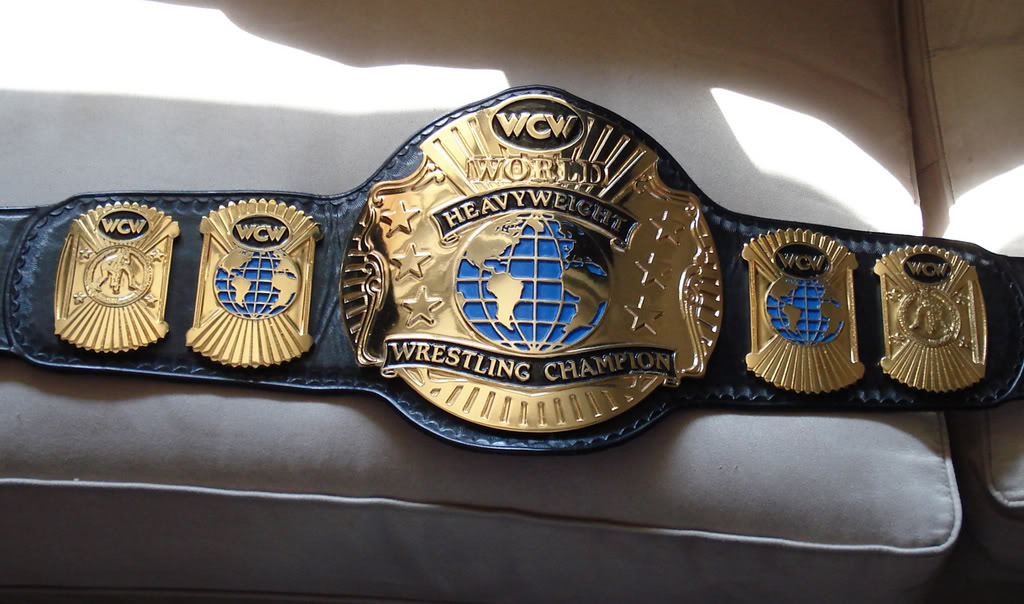
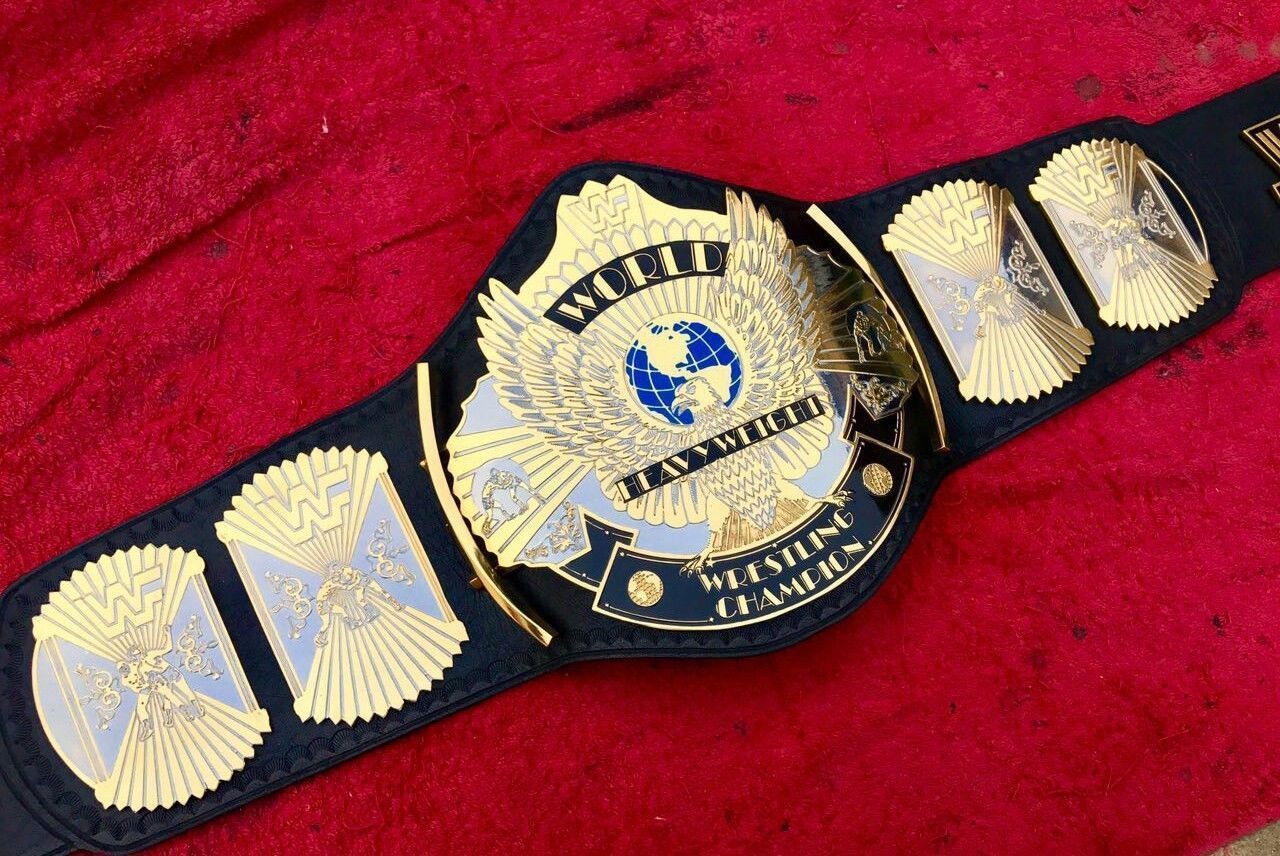
- The WCW World Heavyweight Championship belt◊ that was used in the early 90s after Ric Flair took the Big Gold Belt to WWF looks very similar to the design of the WWF Championship◊ at that time (nicknamed the "Winged Eagle" belt), especially the side plates. This is largely because both belts were made by the same professional wrestling belt maker Reggie Parks.
- Dungeons & Dragons and Warhammer Fantasy Roleplay share a bit of pararell histories that allows to place few games as each other's equivalents in a context:
- Both 4th Edition of D&D and 3rd Edition of WFRP were basically completely different rulesets, which put off many fans unwillingly to make such drastic change to the point of almost becoming their respective Franchise Killer. In each case the edition that follwoed - D&D 5e and WFRP 4e - are seen as an Author's Saving Throw that saved the brand and also raised it to a new heigh of financial success.
- Due to the above, first edition of Pathfinder, a game closely based on rules of Dungeons & dragons 3rd Edition, but made by another company, has an equivalent in Zweihänder, an RPG based on the classic WFRP rules, but made by another company. In both cases the game's success could be seen as largerly thanks to the fans of respective edition of D&D/WFRP who would rather try something similiar than a completely new ruleset.
- Finally, Lancer is mechanically a Spiritual Successor of D&D 4e, but placed in a science-ficiton setting, while Star Wars: Roleplaying Game took the rules of 3rd Edition WFRP and repurposed them for the Star Wars setting.
- Disney Theme Parks:
- Disney's Hollywood Studios (originally MGM Studios) was created as one for Universal Orlando Resort, which opened nearby in Orlando.
- Disney's Animal Kingdom was opened as one for Busch Gardens Tampa.
- Disney Quest was pre-emptively opened as one to a proposed Dream Works collaboration.
- Downtown Disney was opened as one to Universal's City Walk.
- Universal Studios:
- Universal's Islands of Adventure was created as one for Disney's Magic Kingdom, though it eventually grew into a composite Alternate Company Equivalent of it and Animal Kingdom.
- Disneyland in particular inspired several Alternate Company Equivalents, including Six Flags over Texas, AstroWorld, Kings Island, Kings Dominion, and Dutch Wonderland, all of which took design cues from Disneyland, including themed areas and a central hub.
- Cedar Point's Disaster Transport was a pre-existing bobsled coaster being crudely retrofitted into an Alternate Company Equivalent of Space Mountain, though it didn't work.
- Bandai's Machine Robo line of Transforming Mecha (later licensed to Tonka as the Gobots) to Hasbro/Takara's Transformers. Made even more confusing by the fact that Hasbro later acquired the Gobots license, but not the one for the original Machine Robo.
- To make matters more confusing, since Hasbro's acquisition of Tonka, Go-Bots occasionally show up in Transformers: Cy-Kill and Scooter were both killed by Jhiaxus, Cop-Tur and Leader-1 are Minicons (possibly homages rather than ACES), and Crasher (under the name Fracture, sometimes) has officially crossed over and leads a squad of Decepticons, and even has a toy out.
- A number of companies tried to make their own equivalents to Mattel's Barbie:
- One notable example is Hasbro's Maxie. Although Jem predated her, she was primarily music themed, with Jem mainly shown as a singer (although Hasbro had planned to have Jem "branch out" at one point before the toyline was discontinued). Maxie is a much closer equivalent as a girl featured in many different roles (although she is mainly a high school student), though not as many as Barbie.
- Bratz sort of counts, but their main feature is removable feet, so they can wear different shoes. There's also the Moxie Girlz from the same company.
- Takara's Licca-chan has often been called "the Japanese Barbie". She's just as famous in Japan as Barbie is in the U.S.. Another doll made by Takara, Jenny, actually started out as Barbie before she got renamed sometime in the 1980s.
- Pedigree Toys' Sindy is the UK equivalent, especially in The '80s. When she was first launched in The '60s, she had a design that suggested she was the same age as the child playing, rather than the 17-year-old Barbie, but was later aged into a teenager. The 2000's Sindy doll from New Moon has returned to that.
- Plastic-bricks-that-click-into-each-other construction toys other than LEGO:
- Lego actually started as one to Kiddicraft's Interlocking Building Cubes and Self-Locking Building Bricks. It actually led to an out-of-court settlement where Lego paid Kiddicraft £45,000 before eventually purchasing the company outright.
- Mega Brand's Mega Bloks.
- Kre-O from Hasbro, including Kre-O versions of other Hasbro properties like Transformers and Dungeons & Dragons, and the license for Star Trek.
- Character Building, from the UK company Character Options, with licensed sets for Doctor Who, Ben 10, and the British armed forces.
- Tyco Super Blocks. Not only that, but they could also work with Lego blocks.
- Back when Nintendo still made toys, they made of line of Lego-like blocks called "N&B Block"note . They are even referenced in a Mario Zone stage in Super Mario Land 2: 6 Golden Coins.
- Mattel's DC Multiverse (formerly DC Universe Classics and DC Superheroes) line was launched as their answer to Hasbro's Marvel Legends line, just with The DCU characters instead of Marvel Universe ones. Bandai's Dragon Stars and Hasbro's own Star Wars: The Black Series lines also replicate the same idea, but with characters from Dragon Ball Super and the Star Wars, respectively.
- Barbie and the Rockers was Mattel's answer to Hasbro's Jem and the Holograms. Both star hit 80s pop-stars and had animated adaptations. While Jem had a full-length 65-Episode Cartoon, Barbie only received two direct-to-VHS specials. Despite this, it seems like the job worked because Jem was Cut Short due to poor merchandise sales.
- The popularity of the American Girl line of dolls led to a number of imitators such as Target's Our Genration brand of 18-inch dolls made by Battat as well as Walmart's My Life As, both of which are largely compatible with clothes and accessories made for American Girl dolls. Going on a more moral direction, there is also Dolls from Heaven, a faith-based line of American Girl-esque dolls modeled after Catholic saints and biblical figures.
- This shows up in many Fighting Games:
- For example, we have Mai, Yuri, Chun-Li and Sakura, the first two from SNK's The King of Fighters series note and the latter two from Capcom's Street Fighter series. A great deal of lampshading is done in the pre-fight conversations of SNK vs. Capcom: SVC Chaos, as the characters who resemble each other comment on the similarities.
- Dan Hibiki of the Street Fighter series was created as a parody of Ryo Sakazaki and Robert Garcia, with some of Yuri's mannerisms thrown in. Similar to the above example, Dan is frequently mistaken for Robert in the crossover games due to a pronounced (and intentional) resemblance, and is also considered a counterpart of fellow goofball Joe Higashi.
- Of course, Dan was a response to Ryo and Robert, who were originally made as A.C.E.s of SF's Ryu and Ken. This isn't particularly surprising, considering that the men behind Art of Fighting (Hiroshi Matsumoto, Takashi Nishiyama) were also responsible for Street Fighter in the first place. (Furthermore, Ken's wealth and kick-happy style was established long after Art of Fighting came out, whereas Robert was always like this.)
- SNK vs. Capcom: Match of the Millennium goes one step further; picking one character (ex. Ryu) will result in you fighting your Alternate Company Equivalent (ex. Kyo) just before the final match. At least one of them is even a case of Distaff Counterpart (Guile and Leona).
- Many of the equivalent characters (Ryu and Ryo, Chun-Li and Mai, Ken and Terry, Sakura and Yuri, Zangief and Raiden, Sagat and King, etc.) have special pre-fight intros when facing each other in Capcom vs. SNK and Capcom vs. SNK 2.
- The similarities between Sakura Kasugano and Shingo Yabuki, both being headband-wearing high schoolers who idolize the main hero and emulate their fighting style, are so pronounced, that with the year and a half gap between their respective debuts, it wouldn't be surprising if Shingo was deliberately designed to be Sakura's Spear Counterpart.
- Moe Habana from the King of Fighters EX series could also be considered Sakura's counterpart. Like Sakura, Moe is a teenage girl of Japanese descent who was deliberately designed to be the Distaff Counterpart of her series' protagonist. She even uses the same stance as Kyo and has a similar fighting style, much like Sakura does for Ryu.
- The King of Fighters XIV then introduced Alice Nakata, a Terry Bogard fangirl who learned how to fight by studying his moves, basically making her the Sakura of the Fatal Fury corner of the SNK universe.
- All these years later, and Capcom and SNK are still doing this. Back in 2000, SNK introduced Vanessa, a single Fiery Redhead mom with noticeable assets who works as an Action Girl secret agent. Fast forward nine years later, and Capcom introduces Crimson Viper... A single Fiery Redhead mom with noticeable assets who works as an Action Girl secret agent.
- The recursive example of Iori-Remy-Ash Crimson. Remy, from Street Fighter III, was plainly designed to resemble SNK characters, Iori Yagami in particular, but given charge-based moves to differentiate him/establish him as III's Guile counterpart. Then KOF 2003 saw the debut of Ash Crimson, an effeminate Bishōnen with charge-based moves who is clearly designed to resemble Remy. Both characters are from France as well, adding another parallel.
- SNK's Garou: Mark of the Wolves (1999) to Capcom's Street Fighter III (1997-1999). Both are critically praised, well-balanced, highly technical fighters known for pushing the technological capabilities of 2D fighters at the time and their soundtracks. In addition, many of the mainstays from previous games were Put on a Bus (but still made cameos) to emphasize the new roster (III only had Ryu and Ken at first, followed by Akuma in 2nd Impact and Chun-Li in 3rd Strike, while Terry Bogard was the only returning Fatal Fury character in Garou; both games, however, featured analogues to previous fighters). The two games even featured similar defensive concepts: Parrying (Blocking in Japanese) and Just Defending.
- Both games also happened to feature an Afro-Brazilian martial artist introduced in a "Next Generation" meant to also serve as the representative for the prominent mainstay fighting style: Sean Matsuda (Ansatsuken/"Shotokan") and Marco Rodriguez (Kyokugenryu Karate), respectively.
- Few know that Art of Fighting 3 had done it before either of them (although it lacks the Time Skip factor present in both Garou and SFIII, as well as the aforementioned defensive maneuvers).
- Marvel vs. Capcom 2 introduced Ruby Heart, a universe-hopping female Sky Pirate. The King of Fighters XIV would later include Love Heart, a universe-hopping female sky pirate, though in that case, she actually originated in one of SNK's pachinko games.
- SNK's Silber from Buriki One has been noted to be very similar to Capcom's Akuma, with both characters being gruff, spiky-haired Blood Knights who travel the world in search of strong opponents. They even have similar Badass Back poses.
- Less than a year after SNK introduced Isla, a spray paint wielding young female fighter with blue streaked hair in The King of Fighters XV, Capcom introduced Kimberly, a spray paint wielding young female fighter with blue tipped hair in Street Fighter 6. Needless to say, fans were quick to point out the similarities, with some suggesting the two girls would be perfect counterparts in a future SNK vs. Capcom game if one ever gets made.
- Street Fighter 6 also saw the debut of Manon, a beautiful French grappler who combines elegant movements with grabs and throws. Add to that her prominent bangs and high fashion sense of style, and she comes across like Capcom's answer to Shermie from King of Fighters.
- Arcana Heart has a few blatant ones, as far as movesets go. The most blatant is lead Heart Aino, who has half of Ryu's moveset herself, and the other half on her default Arcana. As of Arcana Heart 3, her moveset (sans arcana) mirrors Ragna the Bloodedge closely enough that the pair has been spotted on a date in an official April Fools crossover (not to mention the former becoming a Guest Fighter in BlazBlue: Cross Tag Battle).
- Lucia Morgan from the Final Fight and Street Fighter series has been compared to Blaze Fielding from Streets of Rage. Both are young female cops (ex-cop in Blaze's case) who wear revealing outfits and utilize a fighting style that emphasizes kicking. Interestingly, when a fourth Streets of Rage was announced in August 2018 (24 years after the third game was released), Blaze was revealed to have undergone some Costume Evolution, wearing a black version of her SOR1 jacket over the bra-and-skirt look she's favored since SOR2—essentially making the resemblance between her and Lucia even more noticeable. (That is, until Lucia appeared in Street Fighter V: Arcade Edition almost a full year later, sporting a more modest redesign emphasizing her status as a Metro City police officer, though her original Final Fight 3 attire is featured as a Nostalgia Costume.)
- The King of Fighters XIII roster welcomed squeaky, half-insane Muay Thai asshole Hwa Jai, right after the Super Street Fighter IV roster welcomed squeaky, half-insane Muay Thai asshole Adon. Although Adon was introduced before Hwa, Hwa was already pretty unhinged in his debut in 1991 whereas Adon became so by way of his Street Fighter Alpha redesign in 1995.
- Street Fighter's Ibuki and Tekken's Ling Xiaoyu. Both debuted in 1997 and are short of stature, school age female characters who use finesse for victory. Both debuted in the third installment of their respective series in a time both franchises were trying out new characters and both were romanced with the lead male of the new series (Alex for Ibuki and Jin for Xiaoyu). However, Xiaoyu ended up being more important to the story of her own franchise and was officially paired with Jin while the initial pairing of Alex and Ibuki has all but been forgotten about and Ibuki is firmly a side character.
- Body Blows: This game (and its sequels) owes its existence due to complaints of Amiga owners in regard to the first port of the original Street Fighter II. Commodore, the company that owned the Amiga brand of computers, decided that rather than going through the hassle of reattempting a better version of that game, they would contract British based developer Team 17 to create their own equivalent fighting game for their Amiga brand of personal computers. In terms of particular characters, Danny and Nik are shotoclones with similar moves to Ryu and Ken, but having designs and backstories more like those of the Bogard brothers and Ryo Sakazaki and Robert Garcia, while Junior and Kossak are equivalents to Balrog and Zangief respectively. Inferno and Warra, introduced in the sequel Body Blows Galactic, are equivalents of Scorpion and Sub-Zero from Mortal Kombat.
- Rival Schools' Roy Bromwell is pretty much Terry Bogard as a Foreign Exchange Student with a grudge against the Japanese thanks to his grandfather's bitter stories about WWII. He borrows several of Terry's attacks, complete with liberal use of Gratuitous English such as "Touchdown Wave" being short-ranged version of Terry's "Power Wave" and "Touchdown Spike" BV being essentially the same as Terry's 'Triple Geyser'/"Overshoot Geyser".
- The King of Fighters XIV: Luong's personality, Tae Kwan Do, color motif and stances make her a dead ringer of Juri Han from Street Fighter IV, a character who ironically enough was joked about as being an SNK-style design.
- In December 2008, Bandai Namco Entertainment brought us Lars: a main character of an Updated Re-release (Tekken 6: Bloodline Rebellion) with a spiky hairstyle and a close connection to a female who is now technology (Alisa), and who is the Token Good Teammate of a corrupt organization (Tekken Force). Three months later, in February 2009, SNK brought us Nameless: a main character of an Updated Re-release (The King of Fighters 2002: Unlimited Match) with a spiky hairstyle and a close connection to a female who is now technology (Isolde), and who is the Token Good Teammate of a corrupt organization (NESTS). Sound familiar?
- Jago from Killer Instinct is the series' equivalent of Street Fighter's Ryu, being a stoic, dedicated warrior with very similar special moves (including a fireball, rising uppercut and advancing kick). He even possesses his own corrupted alter ego, Shadow Jago, who in turn acts as the equivalent to Evil Ryu.
- Sega's Virtua Fighter series has a few examples:
- Main character Akira is often seen as VF's answer to Ryu, the protagonist of Street Fighter, as both characters are stoic Japanese warriors who wear headbands and white outfits (though Akira's is black in certain entries). VF director Yu Suzuki even acknowledged the strong resemblance in the official Street Fighter 25th anniversary documentary, though he claims he didn't consciously copy Ryu's design. A key difference, however, is that despite looking like Ryu and being his series' mascot, Akira is not a Shotoclone, instead practicing the Chinese martial art Bajiquan.
- Likewise, Pai Chan is highly similar to Street Fighter's Chun-Li, being a beautiful Chinese Kung-Fu practitioner who primarily wears blue and yellow. The two even get some unique interactions in the crossover game Project × Zone, where they're partnered with fellow Anime Chinese Girl Ling Xiaoyu from Tekken.
- Jean Kujo has some similarities to Capcom's Ken Masters, being a cocky mixed-race karate practitioner in a sleeveless red gi. Sega even did an April Fools' Day video for Virtua Fighter 5: Final Showdown that spoofed their competitor's Super Street Fighter IV by showing Jean performing Ken's trademark Hadouken, Shoryuken and Hurricane Kick. The same clip also had the aforementioned Pai using some of Chun-Li's special moves, making the parody even more obvious.
- TGL's (Technical Group Laboratory) Advanced V.G. series has several characters, who drew clear inspiration from Street Fighter and The King of Fighters:
- Yuka Takeuchi is their tomboy equivalent of Ryu, sharing the same basic moveset and mentality in that she lives to test herself against worthy opponents and strives to learn more about herself as a martial artist. Likewise, she's the series' protagonist.
- Her best friend, Satomi Yajima, is similar to Ken, being her old sparring partner/rival. In terms of fighting style, however, she's V.G's tomboy equivalent of Kyo Kusanagi instead. She borrows several of his attacks, along with his "Ore no..!" catchphrase, and her moves are even themed named similarly to his. note
- Tamao Mitsurugi is their version of Sakura, complete with the same backstory: both first saw their heroes on television, are primarily self-taught by emulating their role models' fighting style, and seek to be trained by them. Her moves are also the same as Sakura's, right down to having a short-ranged projectile.
- While Saki Shinjo is a mashup of Rugal Bernstein, Iori Yagami, and Vice, in terms of character design and personality. Her moveset consists of moves borrowed from each of them including Rugal's Genocide Cutter, Iori's claw swipes and Dark Plume finisher, and Vice's Negative Gain command throw.
- Ryoko Kanno from Fighter's History and Ryoko Izumo from World Heroes are both cute, teenage female judo practitioners from Japan, and even share the same first name. This is because they were both inspired by Ryoko Tamura (later Ryoko Tani), a young female judoka who was popular in Japan during the early 90's.
- Midway gave us Mortal Kombat vs. DC Universe, an Intercontinuity Crossover which features the alternate major comic book publisher and major fighting game franchise of The '90s to the Marvel vs. Capcom series. Later happened when they made Injustice: Gods Among Us, which, while not a crossover as it features DC characters (and one Mortal Kombat character), can be seen as an answer to Marvel vs. Capcom 3, being released as the latter is played in tournaments and was made with the competitive scene in mind, which Marvel vs. Capcom 3 is a big part of. They're both seen as superhero fighting games and the cover of Injustice features Batman fighting Superman over Green Arrow's dead body. However, Green Arrow's hood is up and the metallic hue of his skin make him resemble Doctor Doom, a commonly played Marvel vs. Capcom character in the competitive scene, giving the illusion that they're fighting over the dead body of the franchise they're rivaling.
- Tekken's Asuka Kazama and her rival Emilie "Lili" de Rochefort draw frequent comparisons to the above Sakura and her rival from Street Fighter Alpha 3, Karin Kanzuki. Because both rivalries involve two aspirant street fighters who happen to be high school students, with the second party being a wealthy heiress who loses to the first and obsesses over settling the score, only to come to value the other girl's friendship (although Asuka and Lili are currently at the Vitriolic Best Buds stage, with some additional subtext on Lili's part), several fans feel it's more than a coincidence. If Sakura defeats Lili in Street Fighter X Tekken, her win quote even lampshades the similarities between Lili and Karin.
Sakura: You remind me of one of my friends. She also rides around in limousines and stuff. Same laugh, too.
- Dark Reign is a near equivalent of Command & Conquer, even if both games are very different in several ways. Company of Heroes is analogous to Command & Conquer: Generals at first, though now people are comparing it to Men of War.
- Though their gameplay styles are very different (almost polar opposites, in fact), the BioShock and Fallout series could be said to be counterparts of each other. Both have a similar style, playing off the culture and sci-fi visions of the future of early to mid-20th century "Golden Age" America while at the same time depicting what a hateful, nasty, paranoid mess it really was, one taking place in the past, the other in a future where said culture reached its logical conclusion; both are sequels or Spiritual Successors to hit computer games from The '90s; both have soundtracks full of classic period music and their Aesops, reflected by their gameplay and story, are mirror opposites of each other, the former being a linear narrative about slavery and the inevitability of fate while the latter is an open world with various different options and Multiple Endings, showing how one person can change history. On a smaller scale, while Fallout: New Vegas's Robert House is mostly based on Real Life industrialist Howard Hughes, Obsidian makes no secret of the fact that he's partially inspired by Andrew Ryan, even giving you an achievement if you kill him with a golf club. Amusingly, they're even both played by actors whose most famous roles were opposite each other on Star Trek: Deep Space Nine.
- On that note, Singularity and BioShock. Both are FPS/RPG's where superpowers are utilized through the left arm, set in crumbling, mutant-haunted wastelands. However, 2K Entertainment's Bioshock is set in a faux-America, and Raven Software's Singularity in an alternate-timeline USSR. Bioshock's powers come from direct Bio-Augmentation of the protagonist himself, and Singularity's come from a Soviet Superscience gizmo called the "Time Manipulation Device," or "TMD" for short. Heck, Singularity can be considered an honourary 'Shock title if you apply the criteria of City (KATORGA-12 Research Facility)-Lighthouse (Barisov/Demichev Reactor)-Man (Adrian Renko) set down in BioShock Infinite.
- Sega had Congo Bongo as their answer to Nintendo's Donkey Kong. The game was even programmed by Ikegami Tsushinki, the contractor Nintendo had hired to program the arcade version of Donkey Kong.
- The Battlefield franchise has been around since the early 2000s, but more recently has been aggressively marketed as EA's answer to the Call of Duty franchise, with Medal of Honor presumably there to pick up the slack in odd-numbered years. Likewise, Titanfall was funded by EA as a counterpart to Activision and its Call of Duty franchise.
- EA in general has been playing up many of its franchises as competitors to to Activision Blizzard's. Besides Battlefield, other counterparts include Rock Band to Guitar Hero for rhythm games, Skate to Tony Hawk's Pro Skater for skating games, and Star Wars: The Old Republic to World of Warcraft for MMOs. Apex Legends was intended to compete in the Battle Royale subgenre but it unintentionally became a competitor with Overwatch since it too is a Hero Shooter.
- Dark Cloud was seen as Sony's answer to The Legend of Zelda series when it first came out, as with Killzone and Halo.
- PlayStation All-Stars Battle Royale was Sony's crossover fighter equivalent of Nintendo's Super Smash Bros., even acknowledging their inspirations and using the latter game's name as YouTube tags in pre-release videos. Jump Super Stars is another answer to Super Smash Bros., except with manga/anime characters from Shonen Jump.
- The Kingdom Hearts series introduced Yen Sid as the Big Good and revealed he was a Keyblade Master. They then introduced another Keyblade Master, Master Eraqus, as Square's counterpart to Yen Sid, his name being a corruption of Square backwards (as Yen Sid is Disney backwards) and had him resemble an eastern samurai-archetype as opposed to Yen Sid's western wizard-archetype, and had him resemble Final Fantasy series creator Hironobu Sakaguchi.
- After the smashing success of the Wii's motion-based controls, Nintendo's competitors set out to make motion-based games for their systems as well. While the PlayStation Move bombed, the Kinect is a relative success with games that follow the mold of the Wii series: Wii Sports has Kinect Sports, Wii Fit has Nike + Kinect Training and so on.
- After Nintendo saw success with their Nintendo Entertainment System and Super Nintendo Entertainment System Classic mini consoles, Sony followed suit with the PlayStation Classic, a similar mini console that comes preloaded with games from the system's library.
- Gameloft has every game from their parent company Ubisoft copied.
- In a case where the company is just the developer, Naughty Dog and Insomniac Games frequently are matching each other in their current developments (it helps both companies even shared the same building for a while).
- PlayStation era: mascot platformers (ND: Crash Bandicoot; Insomniac: Spyro the Dragon)
- PlayStation 2 era: platformers focused on a duo (ND: Jak and Daxter; Insomniac: Ratchet & Clank)
- PlayStation 3 era: Darker and Edgier action games (ND: Uncharted, The Last of Us; Insomniac: Resistance)
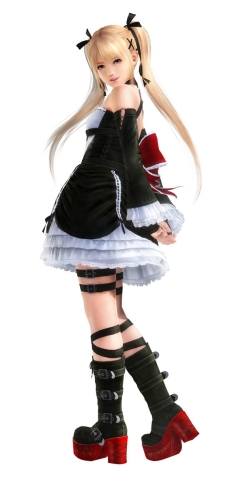
- You could definitely make the argument that Lucky Chloe,◊ one of Tekken 7's new fighters, is this to Dead or Alive 5: Ultimate Arcade's Marie Rose◊ (who came first). Their behavior and general aesthetic both seem to swing for the same Moe archetype. Conversely, Street Fighter V's new fighter, Rashid, has a distinct tinge of Tekken 7 newcomer Shaheen in him, being a Saudi Arabian fighter with a traditional Middle Eastern outfit.note Likewise, Laura Matsuda, another SFV newcomer, can be likened to T7's Katarina Alves: both are sassy, provocative loudmouths who hail from Brazil and favor rather revealing clothing styles. To a lesser extent, Laura also invites a few comparisons to Josie Rizal, though Josie is Filipino and something of a crybaby.
- Lightseekers,note A Kickstarter success from a company called Play Fusion, has been compared to Activision's Skylanders franchise due to its similar "toys-to-life" mechanics. note Play Fusion insists that Lightseekers is not "toys-to-life", but rather "connected play".
- Disney Infinity was note a more direct answer to Skylanders with similar gameplay and a similar NFC device for scanning the figures into the game.
- LEGO Dimensions is another "toys-to-life" game, although unlike the Skylanders and Disney Infinity, you actually have to build the portal yourself, though it still uses NFC note technology.
- Most characters from Freedom Force and Freedom Force vs. 3rd Reich are analogues of famous Marvel/DC characters. We have Minuteman (Captain America), the Ant (Spider-Man), Quetzalcoatl (Thor with a little Captain Marvel), Law and Order (Cloak and Dagger), Bullet (The Flash), Tombstone (Ghost Rider + the Punisher+ Deadman) and many others. Villains also fill in this trope with Time Master (Galactus), Pan (Loki), and Blitzkrieg (Leader/Red Skull).
- Although Time Master is probably closer in look and deed to Kang the Conqueror.
- Word of God says that Tombstone is their Batman, but his biggest influence seems to be The Spectre.
- Early in the life cycle of the NES, two of the games released by Square were fairly derivative of popular Sega arcade games. For Sega's Space Harrier, Square made the similar The 3-D Battles of WorldRunner, and for OutRun, there exists Rad Racer. They even have touted 3D modes, just like the Master System ports of those two Sega games.
- Dual Blades and its sequel, Slashers: The Power Battle, by a team of Turkish-based developers note is basically an equivalent to SNK's Samurai Shodown series though set in Europe and the Middle East instead of Feudal Japan. They even have a Stance System mechanic called the "power combining system" that is similar to the Samurai Shodown's Slash/Bust system.
- A completely coincidental example, as they debuted mere weeks from each other: Street Fighter V has G, who was revealed just 20 days before Soulcalibur VI's Azwel. Both are mysterious, highly eccentric, self-styled global leaders obsessed with uniting humanity for their own deranged purposes. Even in terms of gameplay, they have unique styles that are completely unusual within their respective games. They even have similar titles, with G being the "President of Earth" and Azwel being the "Leader of Humanity".
- Nero from Devil May Cry could be considered an ACE to Raiden of the Metal Gear series. Both have white hair, both replaced the original series' hero much to the fandom's ire, both then got Rescued from the Scrappy Heap and became cyborgs.
- The Hollow Knight from the titular Hollow Knight has been compared a lot to a similiar character from a similiar game, Artorias the Abysswalker from Dark Souls: A tragic Fallen Hero that was corrupted by the Big Bad of the story that has a BFS, fights with only one arm, has a strong connection with the darkness and an abyss, was an important warrior of the God-Emperor of light of their kingdom, and despite their glory days are long gone, they are still able to pull a good fight, using some powers of The Corruption too (and ironically, they were tasked of stopping said corruption). All of this can applied to both characters.
- Yo-kai Watch World is the Yo-kai Watch version of Pokémon's Pokémon GO. They're both mobile spinoff titles to mon games and they both involve walking to find the monsters in the real world.
- Master of Darkness plays like Sega's own take on a Castlevania game, what with a vampire as the antagonist, collecting power-ups by striking a floating source (masquerade masks instead of candles), sub-weapons with limited ammo, and similar platforming and stair navigation.
- Make Mega Man (Classic) into a female witch and you get Magical Doropie by Vic Tokai. Doropie (or Francesca, as she's called in the North American localization, The Krion Conquest) can duck as well as charge her shots before Mega Man could, but by and large, it's very similar run-and-gun gameplay against robotic antagonists.
- Jaleco's Game Tengoku series could be seen as this to Konami's Parodius series, since both are goofy Crisis Crossover games featuring each company's respective games coming together in a shoot-em-up. The main difference here is that Game Tengoku is a vertical-scrolling game, whereas Parodius is a horizontally scrolling one.
- Classic game systems from the Atari 2600 generation of games had their equivalents of popular games that were only available for one system, if they weren't direct ports of those games. Mattel Electronics' Armor Battle for the Intellivision, for example, was their counterpart to Atari's own Combat (Tank game variations only) for the 2600.
- Ninja Gaiden could be seen as Koei Tecmo's answer to Capcom's Devil May Cry:
- The respective protagonists (Ryu and Dante) are superhuman warriors who fight evil demons. Both posses an Ancestral Weapon (The Dragon Sword for Ryu, the Sparda sword for Dante).
- Both Ryu and Dante's allies include a superstrong buxom, blonde, demonic woman in black leather (Rachel and Trish, respectively) and a raven-haired human woman dressed in white (Momiji and Lady, respectively).
- Both Ryu and Dante have an evil relative who sought to transcend humanity and served as the Big Bad in a prequel game (Murai for Ryu, Vergil for Dante).
- As pointed out in this video, Ninja Gaiden Black and Devil May Cry 3: Dante's Awakening follow very similar story beats.
- Both are prequel games starring the main hero in his younger years.
- The hero is descended from a legendary bloodline known for defending humanity from powerful demons.
- The hero becomes embroiled in the villains' scheme when they send their minions to destroy his home.
- The villain plots to obtain a legendary sword containing incredible demonic power that will allow them to transcend humanity.
- Along the way, the hero allies with a female demon hunter who is seeking to kill a relative who became a demonnote . She acts coldly towards the hero, but warms up to him as they work together to defeat the villains. Towards the end, her signature weapon becomes available for the hero to use. The huntress becomes a trusted companion from here on, serving as the odd man out among the hero's playable superhuman alliesnote .
- The story ends with a relative of the hero discarding his human companion and obtaining the sword. The hero defeats him with the sword he inherited from his father, ensuring that the sword will never fall into evil hands as his relative falls into darkness.
- Nero and Nico could be argued to be this to Yaiba and Ms. Monday from Yaiba: Ninja Gaiden Z:
- Both Nero and Yaiba are Contrasting Sequel Protagonists in their respective franchises. Both are more foul-mouthed and temperamental than their predecessors and both fight against them. Devil May Cry 5 also sees Nero gain a cybernetic arm just like Yaiba has. It should be noted that Nero debuted before Yaiba and that while Nero is a hero, Yaiba is a Villain Protagonist.
- Nico and Ms. Monday are NPC supporting characters in their respective games who serve as sidekicks to the aforementioned Nero and Yaiba respectively. Both are snarky genius scientists who have tattoos, wear glasses and are Ambiguously Bi. Just as Nico designed Nero's cybernetic arm, Ms. Monday rebuilt Yaiba as a cyborg.
- Speaking of Nero, Viola from Bayonetta 3 has been heavily compared to him as well. Both are new protagonists with a punk rock personality and design, are cruder and more emotional than their respective predecessors (Dante and Bayonetta), and have a more limited arsenal. They're even both biologically the next generation of the hero's lineage, with Nero being Dante's nephew and Viola being Bayonetta's daughter.
- The first Aleste came about when Sega asked Compile to develop exclusive software for the Sega Master System console. As such, Aleste is basically Compile's previous NES hit Zanac in all but name (this was at a time where Nintendo held strict anti-competitive clauses that forbade third-party developers from porting their NES games to other systems), being a vertically-scrolling shoot em up with similar weapons, a lot of Cores-and-Turrets Boss and a focus on a adaptative Dynamic Difficulty. Its sequels would soon develop their own identity.
- Forza Motorsport was explicitly designed from the beginning to be Xbox's answer to Sony's Gran Turismo.
Kiki Wolfkill: We are targeting Gran Turismo with this game on Xbox, and I think we've been very focussed on that. We have a lot of respect for Gran Turismo, which helps drive that desire to beat them.
- The PlayStation 4 and PlayStation 5 have Foamstars to compete against Nintendo's Splatoon franchise. Notably, nearly every person who plays Foamstars seems to be a Splatoon fan, which seems to indicate that rather than grow the audience for the new game, it instead seems to be merely pulling in a small subset of people who are already fans of its competitor series.

- World War II: As this series is effectively a sequel to The Great War with the same format and host but a different production company, TimeGhost has had to rename some of the reused concepts such as "Out of the Trenches", a series about answering viewer questions, becoming "Out of the Foxholes" and Indy's Chair of Wisdom being replaced by the Chair of Infinite Knowledge.
- In-universe examples frequently appear in Defunctland, where someone (usually Michael Eisner) tried to create a theme park attraction based on something a competitor had, with varying results. The aforementioned Disney Quest, Astro World, and Disaster Transport were all Alternate Company Equivalents featured in Defunctland episodes.
- Ben 10. Will Harangue is a news anchor who is clearly based of J. Jonah Jameson for his Irrational Hatred for Ben, except he would try to attack Ben if he could. He also openly supports The Incurseans when they banished Ben from Earth, and still call them heroes when they are clearly there to occupy Earth with an army of giant aliens who will destroy Earth should Ben ever return.
- Cartoon Network's The Life and Times of Juniper Lee can be seen as this to Disney Channel's American Dragon: Jake Long. Both are animated series about a Chinese-American teenager with supernatural abilities who is tasked with defending the human and mystical worlds. Both series had a talking dog as a supporting character. The protagonists of both series had a grandparent who served as a mentor and was the hero's predecessor. Jake and Jun both have an Annoying Younger Sibling in Haley and Ray Ray respectively. Jun even had her own equivalent of the Huntsclan in the form of H.A.M. (Humans for the Abolishment of Magic). Both Jake and Jun have the same initials for the first and last name.
- Common in Real Life armed forces. Happens with guns, tanks, jets, even nukes. If it isn't at least based on another country's stuff, it's the original to be copied for some other country's stuff.
- The success of the M16's smaller 5.56mm round was copied by the Soviets for the 5.45mm AK-74 (not to be confused with the earlier AK-47, which it is derived from), and eventually the Chinese 5.8mm round.
- The American F-86 Sabre is the counterpart of the Soviet MiG-15.
- The Imperial German A7V was made to counter the British Mark I tank in World War I.
- The equally iconic (and long-lived) Messerschmitt Bf.109 and Supermarine Spitfire fighters of World War II.
- Perhaps the most flagrant example in military aviation history is the Soviet Union's first nuclear-capable bomber, the Tupolev Tu-4, NATO Code Name "Bull", which was directly reverse-engineered from American Boeing B-29 Superfortresses that made forced landings in (ostensibly "friendly" at the time) Soviet territory during the closing phases of World War II. Although slightly heavier on account of everything being respecified in metric with a duly conservative margin for error, and armed with Soviet cannons instead of the U.S. originals as defensive armament (mounted in exact copies of the original American remote-controlled turrets), the Tu-4 is externally -and for the most part internally- virtually indistinguishable from the B-29.
- Global satellite navigation systems fall into this as well. The first was the USA's GPS, with the first satellite launched in 1978 and global coverage attained in 1994. Next came the USSR/Russian GLONASS (1982/1995), China's BeiDou (2000/2018), and most recently the EU's Galileo (2011/2022).
- Happens a lot in the soft drink industry, since everyone wants to be able to round out the standard set of varieties carried in vending machines and affiliated restaurants: cola, lemon-lime, orange, root beer, and whatever the heck Dr Pepper is. (Contrary to popular belief, there are three major companies in the US: Coca-Cola, PepsiCo, and the guys who make 7-Up and Dr Pepper, whose name has changed at least five times since we were in seventh grade but is currently known as Keurig Dr Pepper.)
- Cola: Coca-Cola and Pepsi, and also Royal Crown (Keurignote ).
- Diet colas: Diet Coke and Coke Zero Sugar; Diet Pepsi, Pepsi Zero Sugar, and Pepsi Max; Diet Rite (Keurignote )
- Dr Pepper-flavored: Dr Pepper (Keurig), Mr. Pibb (Coca-Cola)note , Mr. Green (PepsiCo).
- Lemon-lime: Sprite (Coca-Cola), 7-Up (Keurig in US, PepsiCo and affiliates elsewhere), and Starry (PepsiCo; replaced Sierra Mist in 2023).
- Citrus (actually grapefruit): Squirt (Keurig), Fresca (Coca-Cola).
- The other citrus, which tends to be caffeinated: Mountain Dew (Pepsi), Sun Drop (Keurig), and Mello Yello (Coca-Cola).
- Orange and usually other fruit flavors: Fanta (Coca-Cola) and Crush/Sunkist (both Keurig); PepsiCo affiliates and vending machines in the US usually carry Sunkist, but outside the US, PepsiCo makes Mirinda in this category. Also Tango (Britvic), but as the company name implies, only really in the UK.
- Root beer: A&W (Keurig, though they also own Hires and IBCnote ), Barq's (Coca-Colanote ), and Mug (PepsiCo).
- Outside the realm of carbonated beverages, PepsiCo has Gatorade and Coca-Cola has Powerade; Coca-Cola's NOS energy drink competes with PepsiCo's Rockstar; and for bottled water, Coca-Cola has Dasani (among others) and PepsiCo Aquafina (among others).
- Third party knock-offs will usually have names that make their origin blatant; for example, Walmart's answer to Dr Pepper is Dr Thunder. (In fact, just about any company or supermarket will have a drink of some sort called "Dr ___________" or "________ Pepper").
- A large number of casual-dining chains in the US are owned by four major companies: Darden Restaurants, Bloomin' Brands, Brinker International, and Landry's Restaurants. They all have a good number of chains that are basically equivalent to each other, each reflecting a different restaurant style (or, as their critics would have it, The Theme Park Version of a restaurant style). These are:
- Italian-American: Olive Garden (Darden), Carabba's Italian Grill (Bloomin'), and Maggiano's Little Italy (Brinker). Brinker also used to own Romano's Macaroni Grill, also in this style, but has since sold control to an outside group of investors (albeit retaining a minority share).
- Themed steakhouse: LongHorn Steakhouse (Darden, Texas-themed), Outback Steakhouse (Bloomin', "Australian"-themed), Chili's (Brinker, "Southwestern"-themed), and Saltgrass Steak House (Landry's, Texas-themed again).
- Seafood: This one's a bit odd, since it's divided into two tiers:
- Mid-price tier: The major player here is Red Lobster, which Darden used to own but has since been sold to outside investors.note Also operating in this space are the Bubba Gump Shrimp Company and Joe's Crab Shack, both owned by Landry's.
- High-end tier: Eddie V's Prime Seafood vs. McCormick & Schmick's again sees Darden vs. Landry's (with Darden giving no suggestion they'll ever give up Eddie V's).
- Meanwhile, Bloomin' has a foot in each camp: Bonefish Grill situates itself between the Red Lobster market and the higher-end one.
- High-end steakhouse: The Capital Grille (Darden), Ruth's Chris Steak House (bought by Darden in 2023), Fleming's Prime Steakhouse Wine Bar (Bloomin'), and Morton's The Steakhouse (Landry's). Unlike the other offerings from these companies, these and the high-end seafood places are generally seen as being good-quality, if not as good or interesting as more traditional restaurants in their markets. A common joke about them is that they survive primarily on payments from corporate expense accounts. Put another way: Take your business meeting to The Capital Grille, nobody will bat an eyebrow (though they also won't praise your hosting skills). Take your business meeting to the Olive Garden, you'll be laughed at.
- When you get right down to it, even the staffs at both DC and Marvel are pretty similar to each other.
- The Editor, who are often blamed for issues: Dan Didio and Joe Quesada.
- The head writer in charge of most of the ongoing works: Geoff Johns and Brian Michael Bendis.
- The weird guy from the UK that indulges in postmodernism: Grant Morrison and Warren Ellis.
- The legendary artist who became a big wig: Carmine Infantino and John Romita Sr.
- The once loved writer that became a bit reviled after suffering Creator Breakdown, that nonetheless is put on popular titles: James Robinson and Jeph Loeb.
- The Cool Old Guy: Adam West and Stan Lee, though both have now passed on.
- Gunbroker is an auction site devoted to firearms and related accessories, created because eBay prohibits the sale of such.
- Done by pharmacy companies all the time. Whichever company develops the new drug gets the trademark and the patent for a certain number of years; when that expires, generics are available and other companies can market their variant of the same base drug. (This is why first-run brand-name drugs are so much more expensive, especially before the patent expires; the company that develops the drug has to pay an arm, a leg, and possibly several organs to get government approval, and they have to recoup it somehow.) See, for instance, the OTC painkiller ibuprofen, trademarked under several dozen names all over the world, most notably Advil, Motrin, and Nurofen.
- A number of jokes have been made about how various (usually store-brand) companies try to copy the "I Can't Believe It's Not Butter" margarine. Some examples include "Butter It's Not!" (Kroger), "Wow! I totally thought it was butter" (Great Value/Walmart), and "You'd Butter Believe It!" (Asda).
- The Swiss company Nestle released the "Wonder Ball" (originally the "Magic Ball") in 1990. They are chocolate balls with stickers, small toys, and later hard candy inside. This makes it similar to the 1970's Italian "Kinder Surprise" candy. America banned the Kinder Surprise in 1997,note however Wonder Balls lasted until 2007. They were later brought back in 2016.
- Juan Posadas and Miguel Serrano for political ideologies, to some degree. Both were from South America. Serrano was a Nazi and Posadas was a Communist. Posadas started a movement which was akin to an apocalyptic UFO cult claiming that Communists are supported by Aliens, and the world is waiting for an apocalyptic third world war. Miguel Serrano started a movement similar to an apocalyptic UFO cult claiming that the Nazis were supported by Aliens and the world is waiting for an apocalyptic third world war.
- If we swap out "taxonomic group" for "company", Nature does this all the time via convergent evolution. Organisms with similar lifestyles come to develop similar features suited to their needs, even if their lineages are only minimally related, e.g. sharks, ichthyosaurs and dolphins all share a similar body shape, and aardvarks, anteaters, pangolins, and echidnas all sport similar features used to prey upon insect nests.
