
Pikachu from Pokémon
Yu-Gi-Oh!'s duel mons
Oyama Nobuyo as Doraemon
Yes, in this world many different kinds of mons are known to exist."
A Monnote is a creature, generally summoned by magic or sufficiently advanced science means, which fights on behalf of its summoner. This allows characters to fight each other without actually fighting themselves; instead, they conjure a proxy—perhaps a beast or a machine—that fights for them. Sometimes only one side will have Mons, so the characters on the other side directly fight the Mons. Wild Mons—those uncontrolled by anyone—are also known to appear.
Mons range up and down the scale in terms of intelligence, power, and appearance. Some are almost mindless, while some are far, far smarter than their so-called "masters." Likewise, whether they're servants, partners, or just another race depends on the series.
Good relations with Mons are recommended, as The Power of Friendship usually serves to make your Mon more powerful and loyal to your cause. Apathetic or cruel treatment, on the other hand, may cause them to run away, turn on you, or even (if they are powerful enough) bring about The End of the World as We Know It.
Expect the majority of Mon works showing the human barely doing any contribution to the fighting while hogging all the Character Development, with the Mons in question being Satellite Characters. Contrary to popular belief, the focus is on the humans for the most part, not the titular Mons, no matter how interesting and sapient the latter are.
The types of Mons tend to vary series to series, but there are some common themes:
- Mons are analogous to ordinary (if super-powered) animals, sometimes being found as wildlife. Humans in the setting use them in various types of hobbyist activities, such as collecting all species of Mons and/or using them in sporting tournaments, in order To Be a Master. The number of Mons usable is often unlimited and storable in special items, although their owners may especially favor one Mon or a number of them over the rest. This version tends to appear most often in games, such as the Pokémon, Monster Rancher, and Dragon Quest Monsters series.
- Mons are fully sapient beings, with distinct personalities and societies, who partner with humans to fight a Big Bad and Save the World. They usually work in pairings of one Mon per human, with exceptions rarely going much higher, which allows for (or even requires) mutual development in order to learn how to live and fight together. As the premise lends itself to complex stories, at least some drama is ensured. Anime series, like Digimon, Monster Rancher, and Jewelpet, tend to use this type. The Pokemon games sometimes edge into Type 2, especially with the various evil teams.
- Mons are spirits or Familiars, often summoned exclusively to fight and remaining away or invisible the rest of the time. Usually, only humans with unique abilities are capable of summoning Mons or persuading hostile ones to join their side, and generally only use them in order to accomplish their own personal goals, which might be heroic or not. They are often used in fantasy settings, like Tales of Symphonia: Dawn of the New World and Final Fantasy XIII-2, although they can also appear in media set in the real world, such as JoJo's Bizarre Adventure and Persona.
- A Deconstruction of the above: Mons are Living Weapons or Literal Gods enslaved to human masters. This leads to Crapsack Worlds where they're used for Beastly Bloodsports, or cause mass chaos, death, and destruction as humans abuse their newfound power, like in Shadow Star or Devil Survivor.
May overlap with Our Monsters Are Weird if the roster of creatures is big enough. Also a type of Attack Animal. Occasionally, some Mons may get an Inconvenient Summons (no pun intended). The first Mon that a character gets is a Starter Mon. Jarringly-powerful Mons are Olympus Mons, while totally pathetic ones are Com Mons. Mons often feature Elemental Powers used in Elemental Rock-Paper-Scissors gameplay and general exploration. A character's main Mon is their Signature Mon.
Compare and Contrast Summon Magic. See also The Beastmaster and Bond Creatures. May function as a Guardian Entity. Contrast with Kaiju, giant monsters defined by not being under the control of humans or other summoners.
For an index of works based around this trope, see the Mons Series index. For those who want to start their own, we have a handy guide on writing one right here.
Not to Be Confused with mon, a historical currency in Japan, mon, a Japanese symbol similar to a coat of arms in European heraldry, a Belgian city, a language spoken in Myanmar, or the mons veneris, for that matter. Also, nothing to do with a stereotypical Caribbean accent.
Here are a bunch of Mon Tropes:
- Capture Balls: Mon storage item.
- Com Mons: The first Mons you encounter in a Mons work.
- Elemental Powers: A common trait in these works.
- Gotta Catch Them All: A goal of catching all Mons is common.
- Hu Mons: Mons that look like people.
- Infinity +1 Element: An element better than the rest.
- Magikarp Power: A weak Mon that becomes strong shows up in basically every Mons work.
- Mon Mode: Humans transforming into mons.
- Mons as Characterization: One's choice of mons reveals their inner character.
- Mons Series: A genre that centers around mons.
- Mon Tech: A device made to interact with mons that includes Capture Balls.
- Olympus Mons: The most powerful of mons, often with World-Destroying capabilities. And yet, human children still capture them.
- Phonýmon: A mon series satire (usually, as the name implies, riffing on Pokémon due to its comparatively gigantic media presence).
- Signature Mon: The main Mon of one particular character.
- Starter Mon: The Mon you start with, often rare, sometimes even one-of-a-kind.
Examples:
- Bakegyamon: One of the rules of the game is that the contestants are able to summon monsters that can battle each other and aid the contestants in their pursuit of winning the game. Sanshiro's first Mon is a trio of living mud balls.
- Mon Colle Knights has several, including chimeras, forest elves, lizardmen and dragons.
- Duel Masters, besides Pokémon: The Series and Digimon, is one of the examples most likely to be familiar to Westerners.
- Many of the fighters in Zatch Bell! resemble humans, but have a mon-ish flavor to them.
- Yu-Gi-Oh! is a rather weird example, in that the monsters in question are holograms rather than living creatures — and indeed, some of them really stretch the definition of "monster", looking more like humans or even machines. The Duel Monster Spirits, or simply Duel Monsters/Spirits, introduced in Yu-Gi-Oh! GX are a more traditional example.
- My-HiME is an example of a series with Mon intended for an older audience.
- Shadow Star viciously deconstructs the genre by showing in rather graphic detail just what could happen if misfit teenagers suddenly found themselves controlling awesomely powerful Mons.
- In the series The Familiar of Zero — set in another world where the nobility are Harry Potter-esque magi — a hapless yet haughty mage named Louise accidentally summons a computer science student from Earth as her familiar. All the other mage familiars are Mon.
- Gigantor is quite possibly the earliest example of this trope, where the Mon is a Humongous Mecha — the very first of the genre.
- The Angels in Angelic Layer could be somewhat identified with Mon.
- Beyblade has a difficult relation with its mon-ism. The first series, Bakuten Shoot Beyblade has mon named bit-beasts (English) or holy beasts (Japanese), but focuses less on them and more on the humans who wield the eponymous beyblades. All series following drop the gimmick in that the mon are still there, but just never acknowledged.
- Speaking of shamanism above, Shaman King has this, albeit with the spirits of the deceased and nature taking over mon duties.
- Summoning mystical, talking animals is one of the many varieties of Ninjutsu magic used in Naruto. However, the series as a whole doesn't focus on them, and most of the characters use other techniques to fight, making it only a borderline example at best.
- Bistro Recipe, AKA Fighting Foodons, was a mons series where all the monsters were living food items.
- An Affectionate Parody in Hell Teacher Nube —a priest, who is a friend of Nube's, comes across a box full of capsules with miniature yokai sealed within. He then sells them as capsule toys to the children, who use them to battle exactly in the same manner as Pokémon. Too bad one of the sealed monsters actually was a real threat and starts devouring all the others, threatening the entire neighborhood.
- Bakugan, the spiritual successor to Beyblade and the less successful B-Daman, and from the same studio that did Tiny Toon Adventures, but without the top-notch animation due to bad outsourcing. Zoobles is a Spin-Off.
- Jewelpet combines this with the Magical Girl genre.
- Cardcaptor Sakura combines elements of this with the Magical Girl genre.
- In Magic Knight Rayearth, there's Ascot who can summon all kinds of Mons he calls his friends.
- Blue Dragon's spinoff manga Ral Grad is mostly focused on monster-to-monster combat, being that these particular mons are parasitic. There is plenty of human-vs-monster action, however.
- The RPG Guranbo◊, released only in Japan in late 2001, innovates little from the theme. It's quite close to Digimon.
- JoJo's Bizarre Adventure becomes a sort of Mon series from Part 3 and onward, with many characters having their own creature that is basically a manifestation of their soul which they control.
- Because part 3 of the manga, Stardust Crusaders, predates most of the examples in this category it can be considered the Ur-Example for anime and manga as the original purpose of the stands was just to have a more creative way to show psychic powers.
- Medabots, where the mons are customizable robots powered by medals.
- Live on Cardliver Kakeru is a semi-Mon series fairly similar to Yu-Gi-Oh!, with cards to summon the familiars, done by TMS of Bakugan fame.
- In Magi: Labyrinth of Magic, djinn are Type 2, with the magic lantern or other artifact acting as a "Pokéball" rather than trapping them as such.
- The "Giant Warrior" from Nausicaä of the Valley of the Wind qualifies as Type 4.
- Flint the Time Detective revolves around collecting Time Shifters from different time periods.
- The Hench of the Mix Master series.
- Cencoroll, a Reconstruction of the genre.
- Buster Keel! has quite a few, like Lavie's flying pig Mippy.
- Sekirei takes a very unusual direction with this, combining it with the Harem Genre through the use of Human Aliens with many of the hallmarks of the Type 4 Mon. The Sekirei instinctively seek out and form a bond with a human master, becoming their partner in a secret tournament. The Ashikabi's role involves standing back, and occasionally giving their Sekirei orders or encouragement while they duel to the death. This is even lampshaded by the character of Mikogami Hayato, a bratty teenager that wants to Catch Em All and gets excited at the prospect of being able to capture one of the main characters because he's a super-rare natural element and a fire type!
- The cards of Battle Spirits Shonen Toppa Bashin and its sequels.
- In Fairy Tail, celestial spirit mages, such as Lucy, Yukino, and Angel, summon spirits from the Spirit World, who then fight for them.
- Marvel Disk Wars: The Avengers does this to roughly half the Marvel Universe, using an experimental system for containing Supervillains as the framing device.
- Tomodachi × Monster is a Black Comedy parody of the idea. The series focuses on kids fighting each other to the death with their "friends" (the titular tomodachi monsters).
- Dragon Drive is a Mons story where all the Mons are dragons.
- Kiba is a very dark example of this genre, possibly a deconstruction, as many character die, go insane, or suffer horrible trauma. In the setting of Kiba, Mons, which are called spirits are used for war between several factions. When not in use the spirits exist as small spheres called shards which the characters pull from somewhere on their body. Unlike other Mon shows, the masters also fight each other at the same time using lightsaber-like weapons and spells that are also stored in spheres, instead of just standing around and giving commands to their spirits. The various villains of the series are trying to collect the six key spirits''.
- Mazica Party involves wizards and witches catching, collecting, and training wierd creatures known as mazins.
- Can Even a Mob Highschooler Like Me Be a Normie if I Become an Adventurer? has adventurers forming a party with monsters summoned from monster cards that came as a loot drop from defeating a monster of the same species, with all the monsters introduced to date being clearly self-aware and sapient, but bound to the one who summoned them and have no agency aside from being summoned monsters who fight on behalf of their owner. Maro's mon's are clearly blessed as they have an owner who treasures them to the point he would put himself in peril to fight on their behalf, unlike the norm who treat monster cards as disposable resources, at best.
- My Daemon: Is set in a future where a nuclear disaster caused monstrous Daemons from Hell to come to Earth. These Daemons come in a large variety of shapes an sizes, and not all of them are dangerous as long as they are left alone. Humans consider them at best a weapon to be exploited or at worst vermin that must be exterminated. Some humans named Daemon Experts have captured and enslaved a Daemon to fight for them.
- Depending on the writer, Johnny (and Jakeem) Thunder's Thunderbolt is more Mon than magical servant, though the distinction is subtle.
- The eponymous Capture Creatures are about as Mon as the Pokémon are.
- Cénit's little devil in Diablo (Chile) qualifies, although it's also her Mascot.
- Unohana's shikai is portrayed as this in Downfall taking the form of both a flying manta creature with therapeutic stomach juices and a fifteen-foot cylopean monstrosity with massive claws.
- Tokimeki PokéLive! and TwinBee is basically Pokémon, but with School Idols mixed with a lighthearted slice of life/romantic tone similar to Tokimeki Memorial, but with shoujo-ai/yuri instead of straight pairings.
- Sonic: Evil Reborn Zero takes this path when it's revealed that Chaos and Serdist Wraiths can be harnessed and given physical forms, which leads to battle between them.
- The Guardians of the Lost Code, a Mexican movie from the year 2010, features the Brijes, some sort of magical guardian resembling small animals.
- The Paramount Animation film Rumble is about a world where "monster wrestling" is a popular sport and focuses on a human protagonist who becomes a manager for a monster.
- Jellyfish Eyes, the debut film of the famous visual artist Takashi Murakami, is about a group of kids who are able to communicate with and control a group of fantastic creatures.
- Very creepily used in And the Ass Saw the Angel, a novel written by Nick Cave, when Euchrid starts collecting wild animals in cages and teaching them to fight. He eventually unleashes them on the town, killing many.
- In the Jim Butcher series Codex Alera, Furies serve a somewhat similar role to Mons. Indeed, he admitted he was inspired by Pokémon in writing it. Only earth and fire furies manifest physically most of the time though, and it is truly Serious Business since the entire world's technology and culture has evolved around the use of Furies.
- The demons of the The Bartimaeus Trilogy.
- His Dark Materials has daemons, the physical manifestation of one's soul as seemingly ordinary animals (though most of them can talk and they can even change their apparent species as long as the person they're attached to is still a child). Here, the focus is not so much on them battling (though they occasionally do so) as it is as embodying a kind of personal creativity and free will that is frowned upon by organized religion (separating a child from his/her daemon is shown as traumatic and is explicitly likened to abusive religious practices).
- The Materials in The Unexplored Summon://Blood-Sign, supernatural beings from another world that summoners use to fight. The Materials themselves aren't physically summoned; rather, a summoner calls in the Material to possess their vessel's body, transforming the vessel into the Material. Materials don't remain in the human world - once a summoning battle is over, they return to their original world. This means that any summoner is equally capable of summoning any Material (at least in theory). Materials are divided into three categories: Regulation-Class; Divine-Class, and the titular Unexplored-Class.
- The demons in The Summoner Trilogy by Taran Matharu. Demons (which, in this universe, include a number of magical creatures such as minotaurs, griffins, and salamanders) are native to an alternate dimension called the Ether. Battlemages use magic to control demons and then summon them to use in battle (with controlled demons being stored within the battlemage and providing mana to fuel their magic). The demons show several other traits of typical Mons; all summoners and demons have a magical value known as a "fulfillment level," with summoners limited to actively directing a demon or group of demons with a total level less than or equal to their own, and they can choose to either give mental commands or directly take control of their demons. Humans and orcs also have access to different areas of the Ether thanks to the runes they use, meaning they have different demons at their disposal. Salamanders are also shown to "evolve" into a more powerful type of demon called drakes when submerged in lava, and drakes apparrently evolve further into dragons, providing an interesting example of Dragons Are Demonic. Because only one dragon appears at the climactic point of the series's "final" battle, and the book states the dragon's fulfillment level is enormous, it acts as an Olympus Mons.
- Kamen Rider series, starting with Ryuki, use this in varying degrees. In some, the heroes draw power from a contracted (Ryuki) or sealed (Blade) Monster of the Week to use their unique traits. Hibiki has the Disc Animals, which mostly play the trope straight. Den-O and Kiva have the interesting spin of having the "Mons" (the good-guy Imagin and the Arms Monsters, respectively) being regular characters in their own right who can merge with the Riders to power them up, taking control of the body to boot.
- However, Ryuki's example is a deconstruction. The monsters are not friendly and will eat their owner the moment their contract is broken, their body parts are used as weapons, and a few of the riders use their monsters to attack and kill citizens.
- Kamen Rider Decade takes this trope, and runs it as the main plot element. The two main Riders, Decade and Diend are, respectively, a Mega Man and a Pokémon Trainer, fighting by way of a Duelist from Yu-Gi-Oh!.
- Kamen Rider Gaim also deconstructs the trope with the Inves. At the start of the show they're treated much like Pokémon, but early on they're revealed to be creatures from another plane of existence (hence the name, a contraction of "invasive species") and are vectors of a disease that spreads across Zawame City like a plague and turns the townsfolk against the kids who participate in the Inves Game. At one point, The Rival even summons his Inves when an Angry Mob comes after him. Then the whole thing gets broken down even further when it's revealed that Inves are actually creatures — including some humans — who ate the fruit from the Inves' home dimension and mutated. And that they have leaders who want to wipe out humanity.
- Ultra Series
- In Ultraseven, when Dan Moroboshi was unable to transform into Ultraseven for whatever reason (like his Transformation Trinket has been stolen by the Alien of the Week), he would pull out a tiny capsule that carried a Kaiju to do the fighting in his stead. We get to know three of them in the series run: Miclas, a horned ogre; Windam, a robot; and Agira, a Triceratops-like beast. It's also worth mentioning that Satoshi Tajiri, the creator of Pokémon, confirmed the Capsule Monsters inspired the idea of Pokéballs.
- Ultraman Leo added a fourth Capsule Monster named Sevengar, a robot stored inside a football-shaped capsule called a "Monster Ball" (keep in mind that this was some 20 years before Pokemon!). He proved to be pretty strong, but had a 1 minute time limit and a 50 hour recharge time, which is probably why he's never reappears in the series again, at least until Ultraman Z.
- In Ultraman Mebius, they had Maquette Monsters made to assist Mebius and the attack team in defeating the Monster of the Week. They only exist for a minute before vanishing and having to recharge. Miclas and Windam return as the team's maquettes.
- Ultra Galaxy Mega Monster Battle is Ultra Series meets Pokémon! To elaborate, the many races (humans included) of the Ultra Series universe have individuals called reionics. Reionics carry special technology called battlenizers which allows the user to control up to three kaiju and call them in to battle rampaging kaiju or other reionics. Fighting wild kaiju is as fun as it sounds, not so much when fighting another reionics since the rules of reionics battling say that the master dies with his monsters at the end of the battle! Why? Because reionics are unwittingly carrying out the agenda of a long-defeated Humanoid Abomination who seeks to find a replacement who is as capable of controlling monsters as he is. There's also the Giga Battlenizer, the original battlenizer once owned by said Humanoid Abomination, which can control up to 100 monsters and aliens!
- Ether Saga Odyssey makes the player capture pets to aid them in their journey through some of the aftermath of Journey to the West. Essentially, its a type II. Many monsters you fight can be captured, allowing a lot of variety for which ones can fight by your side. It has been described as Pokémon meets Journey to the West.
- The battle system in Wizard101 is largely based on this, especially focused within the Myth school, where the crux of their combat is summoning powerful creatures and beasts of legend to help them in battle, though most other schools rely heavily on this as well.
- Phantasy Star:
- Phantasy Star Online Episodes I and II sort of has this with the mag. Mags are a race of living computers that are freely distributed to new hunters/rangers/forces, but more can be found in other places such as the mines in Ragol. When they are new, all mags share the exact same form except for their color (which they have a handful of options), and are almost widely useless for anything except to use up extra mates/fluids when they take up too much space in your pack. The mon part? If you feed them certain mates/fluids/cures/etc. or a combination of them that typical mag can quickly change its form into many other different and unique models (sometimes even changing back to a previous form, not including the infant model) and learn different combinations of photon blasts (up to three). Their transformations are based around their levels, their stats and a few other tricks (such as the owner's Section ID or other rare event items), and if the stats are tweaked the right way by the time they cap their level, they can make a permanent change into a very rare model of mag. While they aren't used to directly fight in battle (unless you count some of the photon blasts) and while the player has few reasons to go out hunting extra mags, some of the rarer mags can perform valuable techs aside from the photons, including reviving their owner if they die or temporarily boosting their attack and defense. Not to mention that their stats directly affects the players and also adds significant boosts to them for as long as that model is equipped (which can really shoot high with some more clever tweaking). They also have intelligence and feelings to watch for as well as a damage meter, the two formers of which are affected by their "food", such as if they like it or if it's good for them, or (for synch) whether or not you give them mates/fluids/cures/so on quick enough when they're hungry (the latter charges up energy for the photon blast the more hits you/they take). Ironically, although the game also makes an effort in a few missions to make it clear how mags are living creatures that try to protect and serve you well in exchange for care, and they made it also clear that every Hunter (and Ranger and Force) gets one upon becoming hunters (part of the Hunter's Guild/government on Pioneer 2, not just the class), there are only a small number of characters (besides player made ones) whom have one or were seen with one (Elenor comes to mind and supposedly Ult).
- Summoners are frequently considered the black sheep of Phantasy Star Online 2. They don't play by the same rules as the other classes, lacking common mechanics and abilities in favor of their own system that invokes this trope. Their power curve is the only one in the game that can best be described as "parabolic" (in contrast to Linear Warriors, Quadratic Wizards), and they are considered resource-intensive in the early game but extremely cheap to gear in the endgame.
- Grand Chase has the "pets" who get to attack with you during dungeons and pvp.
- MapleStory allows players to collect cards dropped by most monsters and set them as their familiar, which provides a passive bonus (increased meso drops, increased item drops, increased movement speed, immunity to environmental Damage Over Time effects, etc.) and provides combat support. A familiar can only be summoned if it has enough Vitality (indicated by a red orb), in which case the player can summon another familiar while its Vitality recharges. If you use more than one of that monster's card it will increase its Vitality up to a maximum of three orbs, allowing you to have it out longer.
- World of Warcraft introduced a Mons system in the Mists of Pandaria expansion, using the non-combat pets that before now have always been mostly there to look cool. It is constantly referred to as "Pokémon" rather than the official "Pet Battle System" by fans, though rather calling it that is a Take That! or not depends on the individual person's opinion. It's mostly for fun, offering no real rewards that affect the main game, though winning pet battles grants experience for the character.
- Dragons Prophet has this as a primary mechanic, regardless of class, making it one of the few MMOs to do so. Your mounts and summons all consist of a number of dragons that you capture and train. The "gotta catch 'em all" aspect of the mons genre is downplayed here; at the start you can only have four dragons, being a F2P MMO, you can use real-world currency to purchase room for twelve.
- The Korean MMORPG T-Crew was a casual online game in which creatures called Crews assist the player and have evolution methods like that to Pokémon.
- Temtem is an MMORPG designed to be a Spiritual Successor to Pokémon that stands out as being the biggest example of how the style would translate into that genre.
- The Chinese MMORPG Roco Kingdom is literally Pokemon if it were set in a fantasy kingdom, even going as far as to copy a lot of designs from Pokemon and have them fight with the same elements. Interestingly, Roco Kingdom actually has more Mons than Pokemon - the latter has 890 of them as of Sword and Shield whereas the former has over 2,000.
- Imagine Dragons parodies the genre in the video for the song "Radioactive", where muppets and plush toys are forced to fight to death in a way which resembles cockfighting.
- The Big Eyes, Small Mouth supplement Cute and Fuzzy Cockfighting Seizure Monsters is presented (as can be inferred from the title) as something of an Affectionate Parody of the genre. Or a mean-spirited one, it's a fine line.
- Creepy Freaks, an obscure collectible figures tabletop game distributed by Wizkids in 2003. Featuring Monsters Under the Bed, undead cats that spit hairballs, and various other gross Ugly Cute, strange, and humorous creatures. It supposedly was supposed to be its own show (a disk with the pilot episode is included in the starter pack), but for some reason or another, it never got off the ground.
- Project Nephilim introduces CthulhuTech's own take on the anime genre, with genetically engineered mini-mecha horrors that have to be kept under control by psychic handlers. There's also a plethora of spells which allow sorcerers to summon various Eldritch Abominations, usually to serve as assassins or bodyguards.
- The elementals of the "Storm Summoners" sample magic system for Fate (contained in the Fate System Toolkit) have strong shades of this — calling them up relies on a Summoning Ritual, but once successfully summoned and bound they remain so for at least a week and the bond can be potentially extended indefinitely as long as the summoner keeps making the required periodic rolls for that purpose. There's even an optional specialization for training "wisps", the least powerful type of elementals, specifically for tournament fights and the like for entertainment.
- Small-scale games of Privateer Press's War Machine and HORDES tend to be duels between two opposing magic users and a handful of either steam-powered robots or giant angry monsters on each side. As the games scale up, though, the robots and monsters stop being Mon so much as units in a larger military force.
- Played somewhat straight with the Warjacks - if a specific 'Jack is used by a Warcaster frequently for a long period of time, they can gain a level of personality. This is likely what has happened to Stryker's faithful Ironclad Ol' Rowdy and Haley's special Lancer Thorn. Drago could also be viewed as this to Vladimir Tzepeci, and Beast 09 for Sorcha is most definitely this. Likewise, said Warcasters can also get very defensive about particular 'Jacks as well (case and point - this is the reason Haley refuses to have Cygnarian Mechanics "examine" Thorn).
- The Magi-Nation franchise, which is basically Magic: The Gathering meets Pokémon. It also has a loose Animated Adaptation of the same name produced by Cookie Jar Entertainment.
- MajiMonsters is an RPG set in a fantasy world where you play as a binder, someone with the ability to bind monsters to your service by capturing them in specially prepared crystals. Sort of a cross between Dungeons & Dragons and Pokémon.
- Monsters and Other Childish Things presents a setting in which the mon are things like dark and malevolent forgotten gods and Lovecraftian abominations against the order of our reality. Unlike some examples, it has a strict "one monster per kid" rule, so there's no collecting or catching.
- The Mutants & Masterminds supplement based on Japanese media, Mecha and Manga, has a chapter devoted to this concept.
- Mystical: Kingdom of Monsters is a setting for Dungeons & Dragons 4th Edition and Pathfinder that focuses on capturing and training Mons, even allowing you to play as one.
- Pathfinder has the Summoner class, which operates on the "one Mon per person" route (barring a certain archetype that uses many weak versions of them to Zerg Rush the enemy). This class is essentially a type of mage who specializes in Summon Magic, along with their signature ability to summon a specific type of outsider known as an Eidolon. Their class gimmick is based around forming and utilizing a personal summoned ally that they are bonded to, as well as spending Evolution Points that they gain to strengthen and versify said ally. The base creature can be anything from an angel to even a dragon.
- Let's not forget Pokéthulhu: Mons with a Mythos spin.
- Started with the Shin Megami Tensei series of JRPGs, where the main characters recruit demons, angels, Cosmic Horrors and Physical Gods to fight alongside them, only for everything to go horribly wrong because of it.
- Trope Maker Digital Devil Story: Megami Tensei back in 1987. Interestingly, both the original novels (yes, the series is based on novels) and the game are themselves viewed as Deconstructions in retrospect, making the Mon trope Unbuilt.
- The spinoff Persona series features Anthropomorphic Personification Olympus Mons that come from inside your head. Persona 5 also allows you to directly recruit enemies to your cause, rather than picking up card versions of them first.
- Devil Survivor offers a horrific Deconstruction of Mon games that sprang up in the wake of Shin Megami Tensei, as it features all the trappings of Pokemon type games, but then goes on to demonstrate how kids and adults being able to call deadly creatures out of handheld devices would inevitably lead to mass chaos and death.
- On the other side of the coin, the earlier Devil Children games were SMT games cut from the same cloth as Pokémon and intended to be Lighter and Softer for kids to discover the franchise. Though the Japanese-only Red, Black and White Books had stories that were more-or-less about angels turning human children into soul-less killing machines to wage war against the demons.
- Shin Megami Tensei if... meanwhile featured high school students wreaking havoc on each other with demons and spirits after a Jerkass sends them all to Hell.
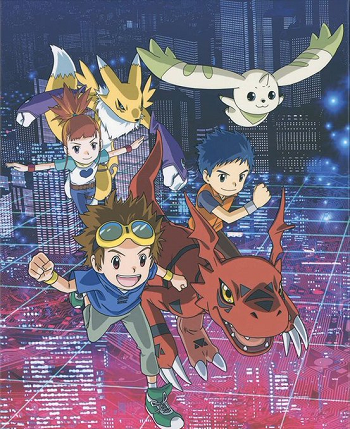
- Pokémon, Digimon, and Monster Rancher are the flagship Mon series, in part due to all being licensed and released around the same time in North America and all having "mon" in their name (not to mention have/had their own Anime). Comparing the three shows the diversity of the genre. Pokémon came out the victor in terms of popularity, which led the others to be thought of as "Pokémon knockoffs".
- This trope is very popular in online games from China. One notable example is Taomee's Seer, a browser MMORPG with a Pokémon inspired battle system, which started a string of similar games.
- The Summons in the various Final Fantasy games occasionally resemble Mons, particularly in VIII and XIII where GFs/Eidolons are both closely tied to the characters and play a notable role in plot. There are a few games in particular that go deeper with this idea though.
- Final Fantasy XII: Revenant Wings has most of your troops being summoned monsters. The main characters also fight, but the main point is using these summoned monsters that you steadily gain a better selection of by recruiting them from a ring with auracite.
- Final Fantasy XIII-2 makes use of a Pokemon-esque gameplay feature that involves capturing and training the random battle monsters that usually plague you out in the field and then using them as a de facto third character alongside Serah and Noel. Using downloadable content, you can even have them fight alongside playable characters from the previous game, though the gameplay mechanic still treats them like summoned monsters. This can result in Serah telling her own fiancee "You deserve a treat!"
- World of Final Fantasy is filled with this pretty much from the start and the Mons are known as "Mirages" here. Many of them are familiar Final Fantasy creatures and mascots, and part of the game's gimmick is that you can "stack" them in battle. Also, the game opens with it being stated that the main characters actually had "caught 'em all" in the past, but then lost 'em.
- Fate/stay night is a Visual Novel set in the Nasuverse where the main characters summon and command "Servants" (the souls of former heroes, now in various RPG-esque classes) and battle it out Highlander-style for the Holy Grail.
- Taken to its ultimate conclusion with Fate/Grand Order where now, you can literally get them all.
- Nintendo has also taken some of its JRPG's in this direction; Fire Emblem Heroes allows you to collect and summon various heroes from the Fire Emblem universe, while Xenoblade Chronicles 2 does the same thing with its Blades, but as a non-monetized single-player system.
- Medabots and CustomRobo are both Robot versions of the standard Mon design. Medabots anime and games being a cross between Yu-Gi-Oh! and Pokémon when it comes to making fighting Robots for Children Serious Business.
- Medabots somewhat justified it as the Medabots are ARMED WITH ACTUAL ARMATURE, especially the game and the manga.
- Custom Robos started as tools for work and toys to play with, but they became very hard to combat conventionally once effective weapon systems were developed for them.
- In Onmyōji (2016), Mons are called shikigami.
- Geomon is a mobile phone based game where you catch spirits using GPS.
- The Chrono Trigger DS remake allows you to raise a monster which can become pretty much any enemy in the game, although sadly you can only own one per save state.
- The Chao of the Sonic the Hedgehog series in the first two Adventure games. Collected as eggs ingame or online, raised with fruit to eat and small animals/drivers to influence stats and looks, can be bred, grow up and change appearance based on stats and looks, and used for contests like racing and sparring. If raised correctly, Chao can evolve into Chaos Chao, immortal beings with superb stats.
- Azure Dreams is a game where a human takes monsters with him to fight other monsters in a tower. You need monsters as your stats reset every time you return to town. It is a more hands on form of this genre.
- Although it's not a Mon series, per se, both Summon Night and its spinoff Swordcraft Story have elements of it, as in the setting, humans can't use magic directly, and have to rely on various summoned creatures to provide it.
- In the Mega Man Battle Network series, Net Navis are intelligent computer programs relied upon for using the internet and fixing or utilizing all manner of electronic equipment, as well as a battle game with its own special equipment. It functions basically as a Type 2.
- In the third installment, you can collect viruses that can be summoned to perform a single attack while in battle. The sixth installment, however, goes all the way with it, implementing a virus battling minigame and having you find special viruses to use for it as rare Random Encounters throughout the net.
- All of this was later continued in Mega Man Star Force.
- Yo-kai Watch has the player finding, defeating and collecting youkai-themed mons with the help of a wrist-mounted device that renders them visible.
- Even Dragon Quest got into the Mon craze by releasing the Game Boy games known as Dragon Quest Monsters, where one can capture and raise many of the enemies in the game, including an entire family based on the Slime... although even before this — and before Pokémon — Dragon Quest V and Dragon Quest VI let you recruit and train monsters.
- Dinosaur King is this with dinosaurs.
- Predated by Kouchuu Ouja Mushiking from the same company (built around insects, hence "Mushi")
- Mushiking was popular enough to have some clones, like Culture Brain's Konchuu Monster series, arcade game Konchuu DASH!! or Rocket Company (of Medabots fame)'s Kabutomushi Kakuto: Mushi-1 Grand Prix.
- Konchuu Fighters was a Bug Catching-themed Pokemon clone that debuted a year earlier than the Mushiking franchise.
- Ditto Fossil Fighters.
- And Disney's Spectrobes, although they're a straighter example in that they aren't based on real creatures.
- Billy Hatcher and the Giant Egg has you hatch various creatures called Egg Animals to assist you in your adventure. Some of these animals can even be ridden.
- Oddly enough, Bomberman also did this with Charaboms, which also acted as living power-ups for Bomberman during normal gameplay. Started in the Game Boy Color games called Bomberman Max.
- Mario Party 3 has a Duel Map Mode where each character essentially has one of the various iconic Mario enemies as their mon.
- Folklore, where the captured Mons are actually forest spirits.
- Jade Cocoon, which was partially designed by Studio Ghibli artists.
- The little remembered Dokapon, which had a "Blind Idiot" Translation but was kind of interesting. When the series was revived on the Wii/DS, though, it came back as a mon-free RPG with Party Game elements.
- Dragonseeds, a Follow the Leader version of Monster Rancher/Farm. Most of the monsters didn't look anything like dragons, with some being animated coffins, shakōkidogū, or owlmen. Monsters were created by scanning other PlayStation save files.
- Tales of Symphonia: Dawn of the New World includes a monster-pact system which is pretty much Tales of Symphonia meets Pokémon. However, the cast of the previous game shows up often enough that there are really only a few bosses and dungeons where you have to make use of the system, if you don't like it.
- Unfortunately, the Symphonia characters are also Crutch Characters who only level up at specific points in the plot (and stop leveling up around level 50.)
- Geneforge. Shaping your own army of creatures, from cute mascot-like tiny dragons to acid-spitting worms to lightning coatl to full-fledged drakes and giants. Almost every character type depends on them in some way or another, and the few types that are designed for operate solo can still make use of them. They can develop along with the character, augmented with more essence, or have their essence reclaimed to build stronger monster types. Under certain circumstances they may go rogue. Different factions have their own ideology regarding their rights to life and freedom, but they never really demonstrate any personality of their own (as of Geneforge 4.)
- The semi-obscure RPG series Robopon is like Pokémon with robots!
- Enchanted Arms has golems you can collect by finding and defeating Pre-existing Encounters. All the game's random enemies and some of the bosses are acquireable. Unfortunately the Arbitrary Headcount Limit makes the golems more or less useless as soon as all four human party members have joined.
- Titans from Huntik. They're summoned from amulets using the summoner's own magical energy. Some are unique, like Metagolem or Garghoul, while others are common, like Hoplites (lion-centaur-Spartan things) or the Redcaps and Mindrones the Organization mooks use.
- Touhou Puppet Play (also known as Touhoumon), a Touhou Project ROM Hack of Pokémon, has you using the girls of the Touhou series much like Pokémon. The ROM Hack got a standalone spiritual successor, Touhou Puppet Dance Performance.
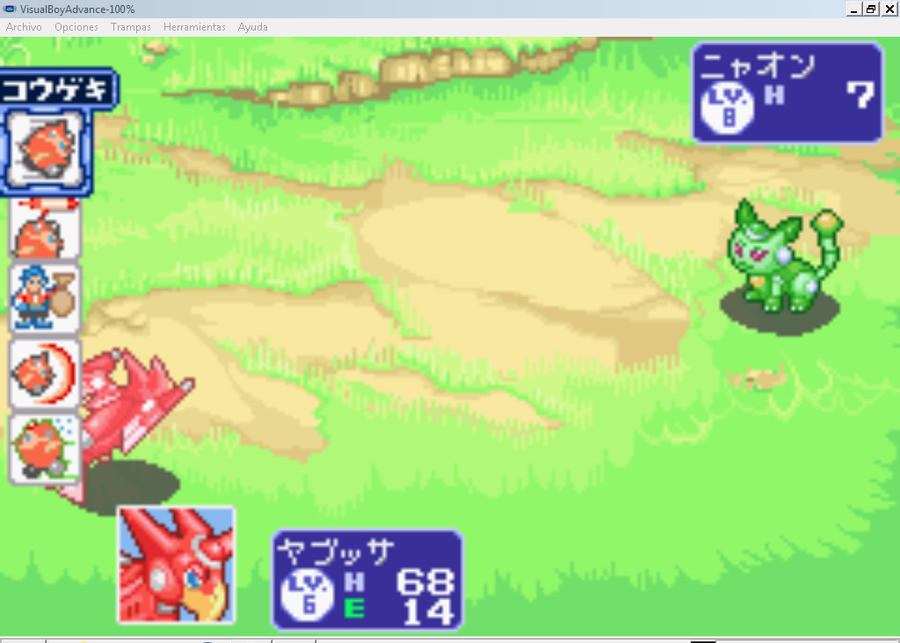
- Telefang was a Game Boy Color/Game Boy Advance release loosely based off Pokémon, although it has some Digimon elements to it. The series is most well-known for the mediocre bootlegs of the original games that actually tried to pass themselves as Pokemon games.
- Culdcept is one of the few mon games/manga where the humans fight just as hard as the monsters.
- Disgaea has elements of mon games, in that you are able to create monster units if you've killed at least one of that type, though unlike most RPGs featuring monster allies, they're treated more like full-fledged characters, being able to equip weapons and armor, and possessing unique abilities to make up for the ones they lack in contrast to the humanoids.
- Ni no Kuni features Familiars, which fight alongside the human characters. In the PS3 version of the game, they do all of the fighting in their owner's place while they're active, but as manifestations of their owner's fighting spirit, any harm that comes to them affects the owner, too.
- Ni no Kuni II: Revenant Kingdom does away with most of the Mon aspect because of it's switch to an Action RPG style approach but still has something akin to this in the form of Higgledies, tiny sprite-like creatures that are the Anthropomorphic Personification of elements. They either found throughout the world or crafted through a mid-game shop. They offer a wide variety of effects, be it temporarily creating areas that give passive effects, applying buffs to the player characters or healing them, or carrying out special attacks when commanded to by a player character.
- inviZimals attempts to bring Mons into Real Life by way of camera.
- Eternal Eyes is a mons-based strategy RPG. The monsters are magical puppets.
- Lil' Monster and its Japan-only prequel Kandume Monster, though the prequel was also rather "traditional RPG"-ish in its way.
- Golden Sun has Djinn. While your characters do most of the fighting, the Djinn provide passive stat bonuses, as well as a variety of attacks.
- Monster Galaxy and Outernauts, two Facebook games.
- Pocket Frogs is apparantly this with frogs. Which hatch as miniaturized adult frogs instead of tadpoles.
- Kingdom Hearts 3D [Dream Drop Distance] has these in the form of the spirit Dream Eaters, brightly colored creatures based on real and mythological animals who exist to rid their dream world of their evil counterparts, the Nightmares. They fight alongside you, provide you with new abilities, and can be a huge source of Video Game Caring Potential thanks to their adorable reactions to being pet and poked. As is usual for Mons, they can also be battled against each other in the Flick Rush minigame.
- Monster Racers is a rare example of a non-combat oriented Mon video game, centering in, well, racing.
- Monster Traveler is an obscure Japan-only RPG made by Taito, where you explore a star system alongside monsters called Cosmon (short for Cosmic Monsters) in search of the secret to how they once communicated with the ancients, while avoiding the local bad guy team Dogma Darks.
- Viva Piñata is more of a simulation-style game where you collect strange pinata creatures in a magical garden. Generally, you don't want them fighting each other.
- Bugsnax is in a similar vein - while it's mostly an adventure game, the campy aesthetic, puzzles, and Gotta Catch Them All strongly take after Pokemon, complete with Pokémon Speak and a system based on Pokémon Snap.
- Familliars from Kingdom of Loathing have a shade of this, being mostly pets who randomly use a unique attack or other benificial effect. They are not, however, the focus of the game, and you can only watch them dog-fight in a certain area (however, a noncombat adventure where it looks like you may obtain a large number of rare familliar larvae has your character extatic, and some players may adopt a Gotta Catch Them All attitude), and the Pastamancer-exclusive Pasta Guardians go the one-per-person route (although their nemesis quest gives you an item that lets you switch PG's without nuking your progress with your first one). There is also Pokëmann, a parody of Pokemon, which is a set of figurines that your Pen Pal (if you have one) randomly sends you.
- The Sega Dreamcast game Kiteretsu Boy's Gangagan has a total of 144 different Mons (or kotodamashi) with some derived from Japanese Mythology figures. A unique factor for this game is a bundled microphone that must be spoken to during battles, with the mons shouting Japanese words to the opponent to inflict damage. You play as your kotodamashi in a minuscule size in different environments to find, battle and capture other mons.
- Dragon Island Blue is basically Dragon Quest Monsters for the iPhone. Differs by being a Type 4, however - mons are considered living weapons and tightly controlled by the Trainers Guild, with the tools necessary to capture and control monsters (special, magical cards) available only to properly-licensed trainers. Sadly, at some point, the Trainers Guild has turned into The Empire, and now they enforce their edicts with armies of powerful monsters led by top-ranked Trainers... resulting, of course, in the forming of La Résistance, who sell stolen or bootlegged Cards on the Black Market and encourage Guild Trainers to wake up to the Guild's tyranny and defect. Guess which side you are on.
- The World Ends with You features Noise, which are ultraterrestrial manifestations of negative soul energy in the form of animals such as frogs, hedgehogs, and elephants. Though naturally forming, Reapers (and, with the right pins, Players) can create Noise. Because of this, most of the game is Player vs. Mons, but once you get Rhyme's pin, battles can become Mons vs. Mons and Mons. vs Opponent (though it's a tad difficult to aim the Noise).
- Brave Frontier has them in the form of summons. They may be either collected in a form of defeated enemies or obtained through Honor Summon and are usually used in battles, if not as a fusing or evolving ingredient.
- Sega's smartphone game Dragon Coins is based around collecting mons which fight using a coin dozer battle system.
- Like Brave Frontier mentioned above, Summoners War: Sky Arena also has it as the core mechanics of the game. In fact, many have noted the similarity of the game with Brave Frontier.
- The mobile game My Singing Monsters replaces combat with musical performance.
- In Elemental Story, the characters that the players collect are called monsters and they function as such.
- Mail Order Monsters, for the Commodore 64, was a surprisingly early Western example.
- In Moco Moco Friends, the monsters are adorable plushies that you can befriend after battle.
- The mobile RPG ZENFORMS: Protectors has ZENFORMS as Mons. However, unlike Pokemon, they evolve based on how you train them stat-wise.
- An early Western example is the Wizardry game Wizardry IV: The Return of Werdna, in which the eponymous Werdna must rely on monsters summoned at pentagrams found throughout the levels to survive against her adversaries.
- Blender Bros is a game with a side-focus on mons instead of them being the main aspect. The main character, Blender, can collect small creatures called Mini Bros (who are said in some places to be beneficial cute robots) which act as powerups for him. They can also evolve by... listening to music.
- Vantage Master is a subversion - while you can summon monsters to fight for you, you're also on the field, so you can be attacked yourself.
- In Dragonica, you can create miniature versions of monsters to accompany you, and, with the help of equipment, have them fight with you.
- The Astromons of Monster Super League.
- Shi Kong Xing Shou is a Chinese bootleg of Pokémon, but the monster partners that can only be used by their assigned human companion idea comes from Digimon.
- In Puzzle & Dragons, defeated monsters can be collected by the player and used on his own team.
- Subverted in Metal Walker - you can't catch the Busters, although your Walker can evolve.
- The Doodles of Magic Pengel. Uniquely, you get to design your own monsters, although the game does provide presets if you so wish.
- The Denpa Men has an unconventional take on this, as you catch the Denpa Men in real life using the 3DS's AR camera around radio waves.
- In Sphinx and the Cursed Mummy, you can capture monsters and release them later to perform an attack against other monsters.
- Monster Sanctuary is a game that combines this genre's typical gameplay style with Metroidvania platforming.
- In Monster Strike, you assemble a team of monsters and use them as marbles in order to attack enemies by colliding with them.
- In Catcha Beast, you can use the handheld device to locate invisible beasts, hook them, reel them in until they appear on screen, then battle them in order to train them or exchange them with friends.
- Evo Creo is a monster collection/ battling game which takes place in the world of Zenith, a world populated with monsters called Creos. The game is similar to Pokémon, but emphasizes deeper gameplay and monster customization.
- Monster Hunter: Stories puts this spin on the popular Monster Hunter franchise. In this game, Riders use special stones to form bonds with monster eggs, hatching them into stunted versions of their adult forms that they can ride into battle and teach powerful attacks. True to the genre's Lighter and Softer reputation, the game features cel-shaded graphics and much younger protagonist and supporting characters than are found in the mainline series.
- Bakutsuri Bar Hunter is a Nintendo 3DS game where players use a camera to scan barcodes for "bar soul" lifeforms which live in the "barcode ocean", then use a fishing rod add-on to capture the creatures.
- One of the mechanics of Sakura Dungeon is the 'capture' mechanic, which enables the player to capture monster girls they encounter and add them to their party.
- The Miasmon of Taming Dreams.
- In Planet Centauri, the player can capture and tame monsters to fight by their side.
- The Guadias of the "Guadia Quest" mini-game in Retro Game Challenge. They're pretty limited compared to most other examples, however: each one has a fixed level of strength, you can only have one at a time and they mostly exist to give you an additional attack, heal or stat increase every few turns.
- The Sushi Sprites of Sushi Striker: The Way of Sushido.
- The pets of Fantage, although they can't be used to battle.
- Monsters in Rainbow Skies sometimes leave eggs behind once they've been defeated, and the monsters which hatch from said eggs can then join the party.
- Rhapsody: A Musical Adventure allows you to capture monsters as well as having you command various puppets you collect throughout the game to do battle.
- ARK: Survival Evolved could be considered a Western example, albeit one with more emphasis on survival and combat than on bonding with the creatures themselves. The premise still fits, since you tame wild creatures— some based on real animals, some fictional— and use them for combat and other purposes.
- Azur Lane dances around this trope with sapient summoned beings, with Starter Mon shipgirls who are selected at the start as Commanders progress through the story, collect more ships, and challenge other Commanders with their own fleets in PvP exercises. The shipgirls themselves are just ships manifested as humans, but the Commander has authority over even ships acknowledged as royalty. The Kizuna AI collaboration event explicitly notes that Kizuna herself must've been a commander with her own set of ships that are fought later in the event, cementing this trope.
- The Yabi from Aola Star - it IS a Pokémon knockoff.
- The Boku no Natsuyasumi series, although primarily 1970s summer vacation simulators, features Bug Catching (Pokemon's inspiration) as one of its main characteristics: a few of them, mostly beetles, can be pitted in sumo matches on a makeshift dohyō ring (usually a tambourine). The fourth entry, set a decade later, adds kinkeshi-like eraser toysnote that "fight" on a cardboard box tapped by the children until one of them loses balance.
- Alternate Company Equivalent Houkago Shounen, as a city-based game, pushes the toy collecting theme further with menko cards / milk caps and supercar keshigomu toys (the kinkeshi craze's predecessor) that can compete in ballpoint pen-powered races or sumo matches.
- In a unique twist to the typical Photon Blast mechanic commonly featured in the Phantasy Star series, Phantasy Star Nova features a pseudo-Mon mechanic where the gigantic, towering boss monsters that serve as the focus of the game's plot can also be captured by the heroes and used as the Limit Breaks instead. They come in numerous different forms and types and each boast unique effects that can turn the tides of battle. As opposed to raising a Robot Buddy to power up your Limit Break, you strengthen the effects by capturing higher level bosses.
- Space Station Silicon Valley is unique in that the mons consist of animal robots that you can possess through a robotic chip, although you'll usually need to battle them until they break down to do so. Every creature has its own set of stats and abilities, and some even possess upgraded variants.
- Dragon City is a mobile game about, as one might guess it, a game about dragons. And there's a treasure trove of variety to go around to boot!
- The developers of Monster Crown claim that it's a "Monster Taming Game with True Crossbreeds". While there's not an infinite number of permutations, players can indeed breed the monsters they tame and end up with creatures that have appearances and elemental affinities that represent both of their parents.
- In Nexomon, the titular creatures can be captured using devices called Nexotraps and trained to fight other Nexomon. Many of them can also evolve into stronger forms when they reach certain experience levels. The player character is a Nexomon Trainer.
- Nexomon Extinction is the third game in the Micromon series developed by MOGA.
- Coromon is a series in which the player takes the role of a mon researcher, tasked with studying the six elemental Titans scattered across the continent.
- Xander The Monster Morpher is a top-down action RPG where the player can catch and play as every enemy monster, right down to the final boss.
- Homestar Runner's anime-style 20X6 mirror universe turns the Cheat into the "Cheatball", who later appeared as a character in a Pokémon-inspired Collectible Card Game.
Stinkoman: Uh, did I win? Does anyone know how this game works???
- The Pokémon card game was parodied again in Two More Eggs with "Qblepon". In this case we get to see a dozen of its very bizarre characters, though very little can be gleaned about the gameplay.
- Alien Dice is a webcomic that advertises itself as being Pokémon IN SPACE!, but it's actually a deconstruction, showing the brutal side effects of having evolving monsters, self-aware sentient creatures as slaves, and the side effects of being captured and imprisoned in an itty-bitty dice would have on your body and your psyche. It's particularly anvilicious since the main character is a Dice.
- But I'm a Cat Person is another deconstruction. The Mon owners have jobs, other hobbies, and personal issues to deal with aside from fighting, and not all of them are sure they want to participate in the first place. Well into the third chapter, there's only been one battle, and it was entirely off-panel.
- Monster Pulse plays with the genre. On paper it's a coming of age story about kids and their mons. The twist being that said monsters are made from the organs and body parts of the main characters.
- Not to mention, said kids and monsters are being searched for by the organization that created the monsters for reasons unknown. Given the world the series is set in, their intentions are ambiguous.
- Hi to Tsuki to Hoshi no Tama is about three magical girls with "beads" which turn into mons.
- Homestuck has Fiduspawn. It seems to revolve around monsters that reproduce similar to the Xenomorph from Alien. There are also cards, but how they factor in is never explained.
- The kreatures of the Not Safe for Work comic Battle Kreaturez.
- In El Goonish Shive, the Grace-A-Monsters! storyline is a parody of Pokémon Red and Blue featuring variations of Grace as all the mons.
- Bogleech's Mortasheen is this, combined with copious amounts of terror.
- Neopets, but In-Universe, it is more of a constructed world, since the Mons are the "humans" of Neopia, and owners... well, they don't exist in the storylines on the site.
- 4chan has an ongoing Forum Game by the name of "/v/ermin" (as it started on the website's video game board /v/). People create /v/ermin by hand drawing them and assigning them stats of "Lifes", "Muscle", "Blast", "Guard", and "Fast" plus a special ability. From there, tournaments are hosted on the weekends. What makes /v/ermin unique is that every tournament is hosted by someone that has made their own automated battle simulator and as such every tournament is different. Some even break away from standard turn based battles and host eating contests, races and card game tournaments (wherein the /v/ermin themselves are the ones playing cards, of course).
- Marapets.
- Parodied on Atop the Fourth Wall. In the "Silent Hill: Dying Inside #5" review, Linkara captures the first Pyramid Head in a Pokeball after weakening it with his cluestick. ("*bong* Word! To! The! Wise! Wearing! A! Huge! Freaking! Echo! Chamber! On! Your! Head! Is! Not! Very! Smart!" *bong*)
- Petscop: The game appears to have a focus on collecting strange creatures referred to as Pets.
- The Jinlins of Battleclaw.
- The BEAST in Beast Keeper, like some other examples of this trope, humans can merge with them to become powerful hybrid warriors.
- In Chaotic, the creature scans don't possess sentience, but players do use them to become the creatures for the match and battle with them. Creatures in Perim are not animals but beings that form distinct societies and, of course, wage wars.
- The Scrammers of Nelvana's D.N. Ace are heavily inspired by this trope (to the point where the animation studio behind Pokémon: The Series served as a production consultant for the show). While they are artificial creatures created by Ace using his Descrambler, the Scrammers are still Mons in how they are unusual and varied creatures with special powers that Ace trains and bonds with while also having them battle in tournaments (albeit with robots as the enemies) or against villains.
- On another Nelvana series, Di-Gata Defenders, all Stone Casters (except Malco) have a Guardian, a creature that they can summon with a certain word or phrase to aid them in battle. They are usually houses in a Guardian Stone but some like Mel's Guardian Draykor can be stored in other objects like a necklace. The heroes' Guardians have been shown to have smaller, cuter forms that they can manifest in outside of battle. Later, Seth, Mel and Rion gain the power to Fusion Dance with their Guardians.
- Ling-ling of Drawn Together is a parody of Pikachu that was apparently abused by his trainer who captured him using a bear trap, turned him into a sociopathic killing machine, and took his dance shoes.
- The Ancient Guardians in Gormiti: The Lords of Nature Return, at least in the first season.
- The titans from Huntik: Secrets & Seekers.
- Monsuno featured people battling monsters created with alien and animal DNA and sending them out to duel by throwing small hourglass-shaped devices called Cores.
- The experiments in Lilo & Stitch: The Series could be considered this — many of them have special abilities, and the heroes have to hunt them down.
- The Dream Creatures from Magi-Nation are summoned to do battle or clear obstacles, akin to normal applications of this trope. Unusually, they have a parallel world they go to when recharging their energies.
- The Love, Death & Robots short "Sonnie's Edge" is a different kind of Deconstruction of this genre. The monsters are just mindless, bioengineered Meat Puppets that are remote controlled by the trainers... except for the protagonist, who is not a person controlling a monster. She's a monster controlling a person; her mind was uploaded into her monster after she suffered fatal injuries, and her now brain-dead body is implanted with the same technology used to control the monsters to give the illusion she's still human. This ends up making her a better player than anybody else; unlike all the other trainers, she's actually fighting for her life in every match and acts accordingly.
- Slugterra features people using small creatures called slugs, with different powers, and firing them from guns to duel. Slugs fired from these guns transform into bigger stronger forms, and corrupted slugs called ghouls are present, being the primary tools of the Big Bad. They're basically Mons as Abnormal Ammo.
