

Comedian: It came true. You're lookin' at it.
Ah, the Seesaw Seventies/Sordid Seventies: A time when love was free, peace was the sign of the times, people were shouting "me, me, me" through self-esteem, self-discovery and individual identity, and polyester was the fabric of choice. A period in history where the men wear polyester leisure suits with flaring trouser cuffs and huge ties while sporting heavily sprayed and styled hair, sideburns included. Not to be outdone, the women wore feathered, Farrah Fawcett hair above their slinky dresses with no bras underneath. Black people sported a huge, poofy afro as a Take That! to past straightening practices. Heck, even white people had afros if they could grow them! Most people spent at least 92 percent of their waking lives at the disco or behind the wheel of a car
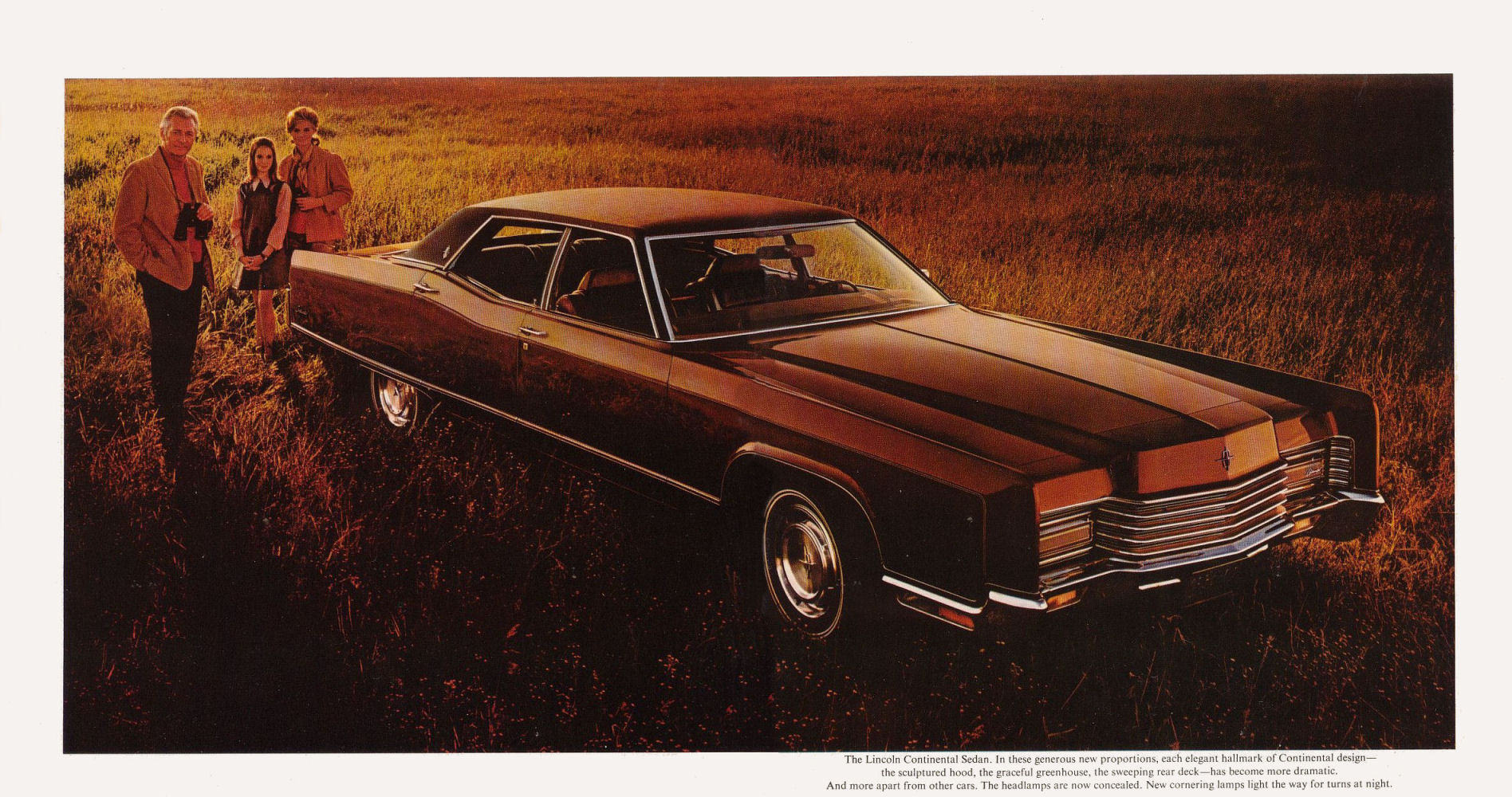 ◊ big enough to tow the RMS Titanic.
Disco music with a tense "waka-chu-waka" beat often plays during chase scenes, or on pornos.
◊ big enough to tow the RMS Titanic.
Disco music with a tense "waka-chu-waka" beat often plays during chase scenes, or on pornos.
Elsewhere, Western Terrorists (and the Arab ones) are trying to blow up people, the United States is still losing in The Vietnam War, and the Summer Blockbuster is invented twice through Jaws and Star Wars. Media Technology reaches a turning point, as 8-track audio cassettes and the first versions of the VCR (U-matic in 1971, Betamax in 1975 and VHS in 1976) appear, as does the original LaserDisc (1978), the very first optical disc storage medium, and the very same technology that would later make CD, DVD, Blu-Ray and online possible. However, despite the new media technology, the old media technologies, namely the LP and film stock, are both still king as they had been for most of the 20th century. Movies like The Godfather's (I & II), Taxi Driver and Hardcore begin to deal with subjects once considered taboo due to the repealing of The Hays Code at the tail end of the preceding decade, and pornographic film becomes legal in the States. The world learns the meaning of Kung Fu thanks to a tough little guy from Hong Kong named Bruce Lee, while Evel Knievel Ramp Jumped everything from cars and trucks to double-decker buses and river canyons.
The first hints of a digital revolution touching mass markets appear during the mid-1970s, with the introduction of inexpensive microprocessors. Video games, personal computers, digital wristwatches, and pocket calculators are commercialized by a host of companies old and new. Incumbents in amusement arcades, companies like Williams and Gottlieb, rush to update their pinball games and other electromechanical games to incorporate the new solid state technologies. By the end of the decade numerous categories of machines are reinvented with electronics, changed from gears and chimes and clicking wheels to beeps and buzzes and digital readouts or video displays. "Memory storage" is a hot feature of many electronics. Larger computers, meanwhile, are a hot topic for researchers in all fields— the possibility of harnessing more data processing power is irresistible, and the decade proves to be a twilight for groundbreaking computer science, as later decades focus mostly on commercialization and diffusion of pre-1980 research.
The late 1970s are a good time to be a nerd if you're handy with a soldering iron, and if you aren't, you might be playing Dungeons & Dragons or reading Heavy Metal Magazine or The Silmarillion - it's a vibrant time for a whole cross-section of fandoms. Alternately, you might instead be interested in health and fitness. The idea of "jogging" for one's health is still relatively novel and unusual in this decade, but Vic Tanny "fitness clubs" had already been around for several decades, promoting the idea of "toning and strengthening" with machines. Bodybuilders like Arnold Schwarzenegger and Lou Ferrigno became more represented in the media through film and television roles, although leading men in action films were typically along the lines of Charles Bronson.
Television is changed forever by such ground-breaking shows as All in the Family, M*A*S*H, The Mary Tyler Moore Show, Saturday Night Live and Monty Python's Flying Circus. Meanwhile gentle family shows like The Waltons, Little House on the Prairie and The Life and Times of Grizzly Adams found their own audience while The Fonz was ruling the kids' imagination while giving Robin Williams his big time start as the master comedian in Mork & Mindy, and Star Trek: The Original Series is Vindicated by Cable and develops a sizable fanbase, spawning a juggernaut franchise that would not die for... well, ever. While the kids have made the best of The Dark Age of Animation with Saturday Morning Cartoons like Superfriends and Scooby-Doo, they at least had PBS's breakthrough kids shows, Mister Rogers' Neighborhood and Sesame Street in their vibrant glory of its youth before they graduated to The Electric Company (1971), Zoom and Big Blue Marble. Traditional TV genres like the variety show had their last hurrah like Sonny & Cher and Donny And Marie while The Muppet Show became a universally hailed worldwide success. Game Shows become huge once again (after the 1950s quiz show scandals nearly became a Genre-Killer), with shows like The Price Is Right, Match Game, Family Feud and The Hollywood Squares becoming huge amongst people from all walks of life, with many others becoming either fondly remembered, or (due to tape erasure or Executive Meddling, typically) cult classics amongst game-show fanatics.
The Bronze Age of Comic Books begins, featuring death, politics, and "ethnic" superheroes for the first time ever since The Comics Code crippled the medium in the 1950s. That happened when Stan Lee wrote a government-requested anti-drug Spider-Man story, which the code was dumb enough to refuse to authorize because it portrayed drugs, forcing Lee to diplomatically defy them to considerable praise.
Punk Rock and Disco, two genres of music which continue to influence music to this day, come out during this decade, as does the first primitive Electronic Music under such bands as the German Kraftwerk, Yellow Magic Orchestra from Japan and Suicide from New York City. The break-up of The Beatles however was the defining moment of the music era, as it created a power vacuum for any aspiring musician to make it big. Nonetheless, the early years of the decade are considered to be the zenith of Hard Rock (and rock music, in general), as easy listening was off the charts and modern pop music wouldn't drive rock from the top 40 until 1976. Alternative Rock, Heavy Metal and Rap Music took their first steps here too.
While this began late in The '60s, the 1970s really solidified the changes that would shape the world to this day. The Cold War slowed down as American and Soviet relations improved for the first time since 1945. American distrust for authority, while brewing during the war, began to really take form in the wake of the Watergate scandal. Crime and grime were on the rise and respect for law and order — from both criminals and their victims — began to decline in favor of the good old-fashioned "heads blown off" method. Furthermore, liberals and conservatives ended up at each other's throats more violently than ever before in the wake of events like Vietnam and Watergate, with western society becoming socially and politically polarized to a level never again reached until the emergence of the Tea Party in 2009 and (more notably) the political rise of Donald Trump in the mid-2010s.
The botched Apollo 13 mission (1970) (although the feat of getting the astronauts home alive was hailed as an achievement for NASA), the Munich Olympics massacre (1972), the Oil Crisis of 1973 and the American defeat in Vietnam (ended in 1975) broke forever the sense of security and confidence Westerners had had from 1946, although it arguably really began to crumble with the assassinations of John F. Kennedy (in 1963), Martin Luther King Jr. and Robert F. Kennedy (both in 1968). Munich was notorious for introducing mass awareness of terrorism (soon thereafter the IRA would begin its bombing campaign in the UK) and the fallibility of basic security, and it was just the beginning. The energy crisis had Westerners running out of gasoline for the first time, showing the world just how dependent we all are on the Middle East, thus the post-war economic boom that dominated The '50s and The '60s ended in a recession, turning the American manufacturing Belt into the "Rust Belt". The welfare state-based economy that begun with the New Deal lost support and was replaced by the next decade with the laissez-faire "New Economy", heavily dependent on the banking industry, with its effects of mass speculation making finances more exciting — and riskier.
The environmental movement gained rapid speed as a result of the fuel shortages. In 1970, the first Earth Day was held, and in 1971, Greenpeace was founded. Many people worried that the world was on the edge of an environmental catastrophe. Among other things, people went informal with ties and suits being thrown away (except for going to work: "Casual Fridays" began in The '90s) and fashion rules being eliminated, stating that "there are no rules in fashion"; the animal rights movement also had its origins during this period. Political correctness is born along with Moral Guardians raising their voice; single parenthood transitions from taboo to become (sort of) commonplace while gay rights gain steam; women become an important part of the workplace; divorces quickly begin to outgrow marriages (although to be fair, many had married under the "sexual revolution" of the 1960s, especially the young) and couples begin to live together without marrying at all.
Covers roughly the period from the Kent State Massacre on May 4, 1970 to both the Presidential inauguration of Ronald Reagan and the end of the Iranian hostage crisis 20 minutes later on January 20, 1981 politically (replace with Margaret Thatcher if you're British). Culturally, roughly speaking, it started with the Tate-Labianca murders on August 8 and 9, 1969, the Altamont Free Concert on December 6, 1969 and the breakup of The Beatles on April 10, 1970 and ended with Disco Demolition Night on July 12, 1979, the murder of John Lennon on December 8, 1980, and the launch of MTV on August 1, 1981. The most representative years are 1972 through 1978; the years before that still have some baggage left over from the 1960s (and, in some cases, even the 1950s), while in about 1977 the tropes begin to shift — the sideburns got shorter, mass entertainment (movies especially) moved in the direction of pure escapism for the first time since the mid-1960s, the "women's lib" movement went mainstream and lost most of its earlier radicalism, and the (then) avant-garde musical styles of punk, New Wave, heavy metal, Industrial and (to a lesser extent) rap started to slowly eclipse the more proletarian or petit bourgeois styles of hard rock, R&B, and soft pop. Much of the sleaze and cynicism of the earlier part of the decade also began to fade by this time: while disco is sweeping the nation, the Watergate legacy is repudiated by the election of the almost ridiculously idealistic and pure-hearted Jimmy Carter as President, and the rise of the Moral Majority within fundamentalist and evangelical Christian sects does a creditable job of rolling back (for a time, and to a degreenote ) the sexual carnival of the 1960s. But, needless to say, neither lasted beyond 1979 (the Carter administration, if not dead on arrival, clearly died with the Iranian hostage crisis), setting the bases for the turbulent 1980-1985 period.
A convenient Butt-Monkey or Hate Sink for modern observers, being with the 2000s the decade everyone loves to hate (or hates to love), although some consider The Roaring '20s, The '50s and The '80s to be Old Shames as well. It doesn't help that other "uncomfortable" eras like The Great Depression and The '60s have had redeeming qualities. In later decades however, there have been attempts to rehabilitate the time period in the public mind by portraying more of its liberalism and cultural diversity. Creators who grew up in this decade, such as Quentin Tarantino, have also played a role in reviving nostalgic interest in the culture of the era.
See Also: The Roaring '20s, The Great Depression, The '40s, The '50s, The '60s, The '80s, The '90s, Turn of the Millennium, The New '10s, and The New '20s.
Popular tropes from this time period are:
- '60s Hair: Hairstyles of the first few years of the decade still had holdovers from the counterculture movement. Some women like Princess Anne Royal still sported beehives and bouffants well into the decade. New Wave acts such as The B-52s brought back beehives in the limelight later in the decade.
- '70s Hair: Naturally. Some of the most famous hairdos of the decade included shags, Farrah Fawcett's feathery layered cut, afros for black men and women, curly perms, and thick mustaches for the men.
- '80s Hair: Many hairstyles most associated with the 1980s already began in the late 1970s, such as mullets, ultra-poofy side-combed perms and the rebellious, spiky, colorful, androgynous haircuts of the Punk subculture that would become mainstream by rockstars and New Wave musicians in the next decade.
- The Alleged Car: Pollution control systems were in their infancy, so cars stalling, sputtering, and backfiring were often the order of the day. Lemons: The World's Worst Cars makes note that during the seventies, "quality control" took a nose-dive. Noted auto journalist Peter Egan once dismissed the entire decade as The Era of Stupid Design while Dave Barry theorized that the first generation of American subcompacts were a Batman Gambit to discredit the very concept of a non-aircraft-carrier sized car.
- Audience-Alienating Era: Considered to be this from The '80s to late into The '90s and the Turn of the Millennium.
- Awful British Sex Comedy: While these originated in France, the Brit Percy and Confessions series became the Trope Codifier for low-budget softcore comedies, which also sparked imitators in Italy, Spain and Argentina. The hard-R comedies of the late '70s and early '80s, such as Animal House, were Hollywood's response.
- Barbarian Longhair: After long hair on men had been stigmatized for most of the 20th century (even moreso after it became associated with hippies) the 70s saw men growing out their hair return to mainstream appeal, as rock and especially early metal musicians showed that men with long locks could be very manly and handsome indeed.
- Be Yourself: The main driving force of The Me Decade.
- Boyish Short Hair: While long hair was ideal in this decade, some women, from feminists to housewives and from disco divas to punks, opted for and rocked the short hair, with styles like shags, pageboys, and spiky pixie cuts at the forefront. There were even short hair variants of retro coifs, afros and feathered Farrah-esque flips.
- Buccaneer Broadcaster: Illegal radio stations operating on boats to avoid prosecutions were still popular, but new government laws caused many of them to shut down. Many left to join mainstream radio stations, who'd already started to play more pop music that young people would enjoy.
- But Not Too White: Bronzed skin was at its peak as a beauty standard, at least until the public awareness of the health risks such as skin cancer. Though cosmetic companies quickly jumped on this opportunity to market fake tans. The main reason tanning halted in the '80s was the trend of neon makeup, which shows up brighter on pale skin.
- Commune: News about young people joining communes and being brainwashed by religious cults were still in the news, with the Jim Jones cult and the hundreds of deaths that it caused as the most disturbing example.
- Cryptid Episode: With all things New Age and paranormal fashionable, cryptids were a popular subject for books and pseudo-documentaries, most famously The Legend of Boggy Creek.
- Dance Sensation:
- A staple early in the decade, reaching its peak with 1975's "The Hustle", one of the songs which popularized disco music.
- In the later part of the decade, hardcore punks started to stomp and slam at one another in concerts, and the concept of moshing was conceptualized.
- Darker and Edgier: Zigzagged (see Lighter and Softer below). The 1970s are usually seen as the hangover after the happy expectations everybody had during the golden sixties. The seventies were dominated by terrorist bombings, the Watergate affair, serial killings and the economic crisis. This was also the decade when people realized pollution was becoming a serious threat to nature. The happy peace loving hippie movement slowly petered out and was replaced by more commercialized trends like Glam Rock, Arena Rock, bubblegum pop and Disco. Crime rates were also on the rise, with cities such as New York City becoming major crime hubs during this decade. More drug-related deaths were reported, with Jimi Hendrix (d. 1970), Janis Joplin (d. 1970), and Jim Morrison (d. 1971) as the most famous examples. The death of Elvis Presley in 1977 also proved that the old Rock & Roll genre was now officially dead. Punk Rock came in as a nihilistic reaction against all this stuff, but even they quickly became commercialized as New Wave Music and Post-Punk made their entrance. The movies of this era were also a lot darker than the more colorful campy films of the 60s, from gritty crime epics to intense dramas that often ended badly for the main characters.
- Double Feature: Two movies for the price of one was a mainstay in popular culture.
- Every Car Is a Pinto: The Trope Namer was produced from 1971 to 1980.
- Exploitation Film: Examples existed in earlier decades, but the genre is associated most with the 1970s, when entire new subgenres came into existence, like biker movies, cannibal movies, nunsploitation movies, slasher films, etc.
- Blaxploitation: Exploitation movies targeted at the Afro-American market became cult successes, usually involving cool black people getting back at "the man" and white racists. They were the American Cyclic National Fascination of the moment.
- Cannibal Film: Many cannibal exploitation horror movies came out in the late 1970s, with Cannibal Holocaust as the most infamous example.
- Disaster Movie: Very popular during this era, with Airport, The Towering Inferno, Earthquake and The Poseidon Adventure as prime examples.
- Giallo: Italian splatter horror movies are closely associated with the 1970s.
- Nazisploitation: A subgenre in the exploitation film craze mixing Those Wacky Nazis, Girls Behind Bars and Torture Porn. Ilsa: She-Wolf of the SS is one of the most well-known.
- Slasher Movie: The Texas Chain Saw Massacre, but especially Halloween popularized the genre, but it would become really huge during the 1980s.
- The Fashionista: As stated in a Vogue 1970 issue, there are no rules in fashion, and following the failure of the midi skirt as the de facto fashion statement, and a battle Fashion Show where American designers curb-stomped their French rivals at the Palace of Versailles in 1973, a fashion storm that embraced diversity started, and left a mark for future designers with different flavors of style in the catwalk, then leaving a disaster on the next decade.
- Foreign Culture Fetish:
- For Americans and much of the West, everything that is Chinese stepped into the scene after China slowly reopened its doors to the world, and President Nixon visited the country in 1972. The country brought forth stir-fried noodles, qipaos, chopsticks, pandas, Buddhism, Confucian and Taoist thoughts, acupuncture, and most especially, kung-fu!
- The decade defined this trope regarding the embrace of ethnic diversity. Everyone daring enough would have worn clothing with African, Asian, Native American, Middle Eastern, or Eastern European motifs in it. Some would wear their respective motifs to embrace their heritage, and others would share each others motifs as a sign of globalization and openness.
- For non-Americans, America, especially New York, was the financial and cultural hub of the decade.
- The Fundamentalist: Far right wing Christians mobilized and organized in response to a case decided by the Supreme Court in the early 70s. No, not Roe v. Wade; it was the IRS v. their schools. They argued, and SCOTUS agreed, that if you refuse to serve half the community then you can't be said to serve the whole community and therefore don't deserve tax exempt status, thus bringing taxation to all of the private religious schools that opened up in the aftermath of Brown v. Board. The abortion thing came later when they realized "We want segregation." wasn't a good look in the mid-70s and focused on the least objectionable bit of eugenics (no abortions for white women) after observing the Catholic Church's positive press opposing it. The result was the Christian Coalition and it paved the way for Reagan and the flavor of the culture wars we've seen since.
- Funny Afro: Hairstyle worn by many black people.
- Gaze: A filmography theory that originated in this decade and serves to categorize how media is meant to be observed.
- The Generation Gap: Still prominent, with younger Boomers clashing with their Silent Generation parents over social and political issues.
- Germans Love David Hasselhoff: The short period of stability, economic growth, and liberalism from the end of The '60s onward in the Communist Bloc allowed a bit of openness to Western media, which made a lot of East Europeans adopt the fashions of the age (Russian Humour also stabbed with the sharp point of irony the fashion of flaring bellbottom trousers and '70s Hair), but they clung to them even 30 years too late, inasmuch as an average Russian from the early 2000s may think outfits with knitted sweaters and ties, jeans with fringes, checkered coats with elbow patches and handlebar mustaches, homes with bizarre pattern furniture, bars with pinball machines and nightclubs with disco balls are perfectly acceptable. Only by the mid-2000s did the middle-aged generation gradually abandon them.
- Girliness Upgrade: After the 60s trends of mini skirts, countercultural looks, and space age designs, and inbetween the women's lib movement and the punk and metal scene, stood the soft feminine look, with the discourses on femininity, the refinement and polishing of the hippie styles and lifestyles, the resurged interest in handcrafting, and wearing long flowy dresses with fashions heralded by the pastoral frocks of Laura Ashley, the old Hollywood glam of Biba, the romantic rendezvous of Yves Saint-Laurent, the demure drapes of Halston, and the casual wraps of Diane von Furstenberg.
- Glorious Mother Russia: With every man a KGB agent and every woman a Brawn Hilda, with a few Sensual Slavs thrown in for good measure.
- Granola Girl: Concerns about health and the environment led to the inception of "healthy products", although this would not really take off until The '90s.
- Gratuitous Disco Sequence: How do we spice things up? By having people do some disco dancing halfway through, of course.
- Greaser Delinquents: The subculture essentially died out in the last years of The '60s, save for a few holdouts in the Midwest, and what was left of that died out in the early 1970s. However, portrayals of greasers in fiction and pop culture start to pop up during this decade as nostalgia for The '50s starts to set in. The most famous greaser delinquent in fiction, The Fonz, became one of the most important pop culture icons of the decade.
- The Great Depression: The 1970s have an oddly nostalgic lens for the "Dirty Thirties", and for The '40s to an extent, as the economic downturn of the 1970s echoed that of the economic downturn of the 1930s. Big band jazz was revived, Art Deco got a reappraisal, curly permanent waves got a groovier reinvention, women's skirts became longer and high heeled shoes became higher, women donning red lipstick again and plucking their eyebrows to look like the starlets of old, and movies such as Chinatown and The Day of the Locust have a gritty take behind the glitz and glamour of Old Hollywood. Even the first Star Wars film was a nod to the space opera serials like Buck Rogers and Flash Gordon.
- Holiday in Cambodia: The 1970s was not a fun time for most of Southeast Asia, with one country being ravaged by war, another having its people being decimated by its government, two countries ruled by their respective iron-fisted dictators, and one city-state, after being kicked out by a federal monarchy, managed to rise on top socio-economically and would continue for decades to come. Nevertheless, Hollywood would produce media based on the horrors of the Vietnam war, such as The Deer Hunter and Apocalypse Now (which is set in Vietnam, but filmed in the Philippines).
- Hotter and Sexier: They're not referred to as "The Saucy Seventies" for nothin', baby. In fact, the sexual revolution of the late 60s only took hold beginning in 1970.
- It's All About Me: Well, it's not called The "ME" Decade for nothing. Tom Wolfe, coining the term, said that the '70s were the "Third Great Awakening." People acted more out of self-interest, contrasted with the pulling together for the common good of The Great Depression and World War II generations, the conformity of The '50s and the idealism (and later, the counter-cultural communitarianism) of The '60s.
- I Was Quite a Fashion Victim: Period pieces for this decade certainly have a goldmine to choose from. Leisure suits and bell bottoms are the biggest targets.
- Jiggle Show: Practically every American TV show airing in the late 1970s certainly had some fanservice in it (Happy Days and Little House on the Prairie being the only exceptions), but shows like Charlie's Angels and Three's Company were quite blatant about it, their only reason for existing being to show the beautiful female stars in skimpy or otherwise form-flattering outfits.
- Jive Turkey: Black people speaking in jive were a staple of popular culture back then.
- LGBT Fanbase: A phenomenon making its public revival after the beginning of the modern gay rights movement and the easing of mandatory media/postal censorship.
- Lighter and Softer: The earlier years of the decade were a welcome breath of relief from all the tensions that marked the late 1960s. Similarly, the years 1977 and 1978 became this after the middle of the decade was marked by political fallout and economic stagnation.
- Limited Animation: Most of the worst products of The Dark Age of Animation would come out during this decade, and were strictly kids stuff, except for the occasional odd exception, like Ralph Bakshi's films (along with international and independent animation from Sally Cruikshank, NFB, Will Vinton, anything made in Japan etc)
- Manly Man: This decade established the "alpha male"/"macho" archetype as the one way a real man was supposed to be.
- Martial Arts Movie: Kung fu movies broke to the mainstream thanks to the success of Bruce Lee.
- Messy Hair: Many people wore long windblown hair throughout the decade.
- Modesty Bedsheet: Actually, a new unisex bedsheet was introduced during the decade, mainly for Fanservice, during bedroom/sex scenes in R-rated movies; unlike the L-shaped His 'n' Hers Bedsheet that falls to the man's waist and covers up the woman's bust, the unisex version also falls to the woman's waist and leaves her bust uncovered.
- Moral Guardians: In the U.S., Focus on the Family was founded in 1977 and the Moral Majority was founded in 1979. Meanwhile in Britain, Mary Whitehouse's "Clean Up TV" association had one of the largest membership numbers in the country. There was also the New Right movement, which cleaned up the excesses and debauchery of the decade, only to make their own excessive messes by the following decade.
- Music of the 1970s: Continuing with the last decade's move on experimentation, this decade gave out two styles: loudness and glamour, which would give out a crazy yet effective blend by the following decade. What we got are:
- Afrobeat: The genre originated in the 1960s, but became very popular in the 1970s.
- Disco: Became an underground hit in gay Afro-American night clubs, until it hit mainstream with Saturday Night Fever, which completely invented a lifestyle to it that had nothing in common with the original disco culture. By 1980 the disco fad ran out in the USA, creating the trope Disco Sucks.
- Funk: Still very popular, with James Brown and Sly and the Family Stone as frontrunners and new groups like Parliament, Funkadelic, Earth, Wind & Fire taking Afro-American culture by storm.
- Glam Rock: Between 1970 and 1976, with David Bowie, Lou Reed, T. Rex, and Sweet as the major examples.
- Goth Rock: A protoform of it emerged from the British Punk Rock scene. By 1979 it had started to take hold with the creation of London's Batcave Club and the release of Bauhaus' debut single "Bela Lugosi's Dead."
- Hard Rock, which started as heavier and louder Blues Rock grows in style and popularity in the 1970s. Sometimes it gets lumped together with other genres, especially Heavy Metal, and they shared many fans. It was its own thing. Alice Cooper and Aerosmith were popular for this music in the 70s.
- Heavy Metal: Though it originated in the late 1960s, it became more prominent in this decade. Especially Black Sabbath, and Judas Priest.
- Heävy Mëtal Ümlaut: Blue Öyster Cult inspired many other heavy metal bands to use umlauts in their names.
- Epic Riff: Heavy Metal and hard rock contributed many iconic riffs that are still played by musicians fifty years later, with Deep Purple's "Smoke on the Water" being the first riff many aspiring guitarists learned.
- Hip-Hop: Near the end of the 1970s the genre became notable, with The Sugar Hill Gang's "Rapper's Delight" (1979) as the first mainstream rap hit.
- Industrial: In the late part of the decade, musicians that felt punk was not as effective a means of expressing true rebellion decided to abandon punk and move towards Electronic Music, but rather than embracing the mainstream electronica of their time, however, they drew inspiration from bands like Suicide and strove to combine electronic music with a punk mentality. Throbbing Gristle could be considered the Trope Codifier, with their label, Industrial Records, providing the name for the genre.
- Jazz: Came back with a modest surge of popularity due to 1920s/1930s nostalgia, even more complex improvisations, and blending in with other genres such as Rock, Funk and Soul.
- J-Pop: First began here with artists like Candies and Miyuki Nakajima.
- New Wave Music: Emerged alongside punk rock (see below).
- Progressive Rock: Started in the 1960s, but is closely associated with the early 1970s, until Punk Rock completely made it unhip, pretentious and ridiculous.
- Proto Punk: Started in the late 1960s, but only started getting more popular when Punk Rock broke to the mainstream and its influence on the genre was acknowledged.
- Psychedelic Rock: Lost its popularity quite rapidly around the mid-1970s, when Punk Rock and New Wave Music came about.
- Punk Rock: Started as a movement at large during this decade.
- Reggae: Still only popular in the Caribbean at the start of the decade, but it finally caught on in the rest of the world thanks to the enormous success of Bob Marley.
- Ska: Experienced an unexpected revival in the United Kingdom, with British bands like Madness and The Specials adapting the style.
- Soul: The popularity of soul started fading out near the mid-1970s, when Disco became the new fad.
- New-Age Retro Hippie: Hippies were very prominent in the early 1970s, but after 1974 they became less noticeable.
- No Fame, No Wealth, No Service: When it came to clubs like Studio 54.
- Pædo Hunt: Until the 1970s, most people were totally ignorant about pederasty, until the Paedophile Information Exchange in Britain made it very clear that the only goal in the lives of their members was to have sex with children.
- Pimped-Out Dress: Every article of clothing was really pimped-out during this decade no matter what fashion designer, brand, or style you're into; whether you're into the light and free hippie, the glittery Disco, the frivolous Glam Rock, the edgy Punk, the exotic and ethnic, or the glamorous retro scene.
- Porn Stache: The stereotypical '70s man had either that or a full beard.
- Pretty in Mink: Aside from the pimp coats, sheepskin and white rabbit jackets for ladies became popular.
- Real Is Brown: The palette for the decade is generously filled with browns, oranges, and earth-tones; a middle ground for the space-agey hues of The '60s and the hi-contrast neon shades of The '80s.
- The Roaring '20s: Not all nostalgia was for The '50s. Even the days of jazz and bootleg booze got their slice of the cake in this heavily nostalgic decade. One may relate open shirts and bell-bottoms to disco... but both styles were originally popular from that decade.
- Romanticism Versus Enlightenment: The decade mostly veered on nostalgic romanticism (inherited from the hippie movement) in reaction to 1960s-era enlightenment-induced modernist idealism.
- Serial Killer: Several of the more infamous ones (Ted Bundy, David Berkowitz, John Wayne Gacy, BTK, The Zodiac Killer, The Yorkshire Ripper, etc.) became active during the decade.
- Sexy Sweater Girl: Being a experimental and a sexually liberal decade, tight sweaters came back from The '50s with a vengeance that was further emphasized with the braless look, and increased interest of knitwear and handmade knitting and crocheting made braless mesh sweaters possible.
- Shared Universe: The decade is the Ur-Example. Super Sentai debuted in 1976, though it won't be The 'Verse until two decades later. Likewise, Dallas debuted in 1978 and its Spin-Off Knots Landing debuted the following year, making them the first American series with a shared continuity.
- Sliding Scale of Idealism vs. Cynicism: Although it is remembered as a mostly cynical decade, the 70s was quite capable of being quite idealistic at the same time.
- Spoon Bending: A popular magic trick popularized in the 1970s, now associated with psychics and the paranormal.
- Trope Makers: With TV and a reformulated Hollywood still influencing media, we got:
- Angels Pose: A Stock Parody introduced by the popular 1976 TV series Charlie's Angels.
- Bohemian Parody: The popularity of Queen's music video for "Bohemian Rhapsody" inspired countless homages and parodies.
- Charlie and the Chocolate Parody: While the novel dates from the 1960s, it was the 1971 film Willy Wonka & the Chocolate Factory that made a Whole-Plot Reference to this film a Stock Parody, but not until the 1990s.
- Crying Indian: A 1970s-era environmentalist PSA featuring a crying Indian soon became a Stock Parody.
- Cyberpunk: Though it would not be codified until the next decade, John Brunner's 1975 novel The Shockwave Rider is commonly cited as the starting point for the genre.
- Exorcist Head: The rotating head of The Exorcist became a Stock Parody thanks to this film.
- Funny Bruce Lee Noises: Bruce Lee's popularity made funny noises during kung fu battles mandatory.
- "Have a Nice Day" Smile: In a decade that often seemed crappy, this smiley became prominent during the decade to lighten up the mood, and it was everywhere ever since whether used ironically or genuinely.
- I Love the Smell of X in the Morning: A Stock Parody inspired by Apocalypse Now.
- "Jaws" Attack Parody: A Stock Parody inspired by the theme music and film poster of Jaws.
- Jeopardy! Thinking Music: Jeopardy! introduced this often-parodied instrumental tune, but it only really picked up use in this decade (despite the original run ending in 1974 amidst NBC exec's Lin Bolen's screwing attempts, and a short-lived revival in 1978 performing poorly, resulting in the show's hibernation until the next decade).
- The Joy of X: A Stock Parody inspired by the title of Alex Comfort's 1973 non-fiction book The Joy Of Sex.
- May the Farce Be with You: The success of Star Wars spawned off numerous spoofs and parodies of the franchise, making it one of the most overdone stock parodies.
- Mumbling Brando: Already a Stock Parody since the 1950s, but became more prominent in pop culture after Brando's comeback with The Godfather.
- An Offer You Can't Refuse: A Stock Parody popularized by The Godfather.
- Pimp Duds: Popularized by Blaxploitation films.
- Psychic Strangle: A Stock Parody popularized by Star Wars.
- "Staying Alive" Dance Pose: A Stock Parody popularized by the film poster of Saturday Night Fever.
- Stockholm Syndrome: Captives sympathizing with their captors has been around, but it only became prominent with the Norrmalmstorg robbery in 1973 (also the Trope Namer), and was first applied when Hearst heiress Patty Hearst was kidnapped by and joined the Symbionese Liberation Army in 1974.
- Streaking: Began on college campuses in 1973.
- Threatening Shark: Popularized by the successful 1975 film Jaws.
- We Can Rebuild Him: A Stock Parody popularized by The Six Million Dollar Man.
- You Talkin' to Me?: A Stock Parody made iconic by Taxi Driver.
- Two Decades Behind: Nothing says The Seventies like nostalgia for The '50s, as evidenced by the popularity of American Graffiti, Grease and Happy Days, and a slew of other shows.
- The trope would repeat itself in a similar way when nostalgia for the '70s became all the rage in The '90s, even if this time it was little more than an excuse to get closer to the '50s (except for the occasional Disco Dan).
- The New '10s have featured a somewhat more sincere nostalgia for this decade, and with '90s nostalgia becoming Serious Business, will likely bring the trope to a full circle.
- Unkempt Beauty: Continuing from the late 60s, the hippie-influenced bare-faced healthy tan look was the mainstream look for many women after being fed up with makeup as an essential part of feminine beauty. In response, the cosmetics industry not only created products that resemble the bare-faced look, but also products suitable for darker skin tones. Of course, heavy, glittery makeup would be reserved for evenings at the disco. Or for punks. Or for the next decade.
- Vapor Wear: Bras were out. Visible nipples were in.
- World of Badass: The decade defined Badass.
- Afro Asskicker: The hairdo don't impede in kicking ass on Blaxploitation films.
- Badass Bookworm: Usually paired with a Cowboy Cop.
- Bruce Lee: The man who made Kung-Fu a worldwide obsession.
- Carpet of Virility: A necessary accessory for manly men in open shirts.
- Cowboy Cop: A loose cannon paired with a Badass Bookworm to keep check.
- Evel Knievel: A Real Life example of a badass.
- Everybody Was Kung-Fu Fighting, at least in the movies.
- Hunk: The nigh-mandatory look. Extra points if you have a Carpet of Virility.
- Wuxia: Became more popular in the West.
Works that were made in this time period:
- Anime and Manga of the 1970s
- Comic Books of the 1970s
- Early Video Games
- Fanfics Pre-2000
- Films of the 1970s
- Literature of the 1970s
- Music of the 1970s
- Radio of the 1970s
- Series of the 1970s
- Theatre of the 1970s
- Western Animation of the 1970s
- Blake and Mortimer. First appeared in September, 1946.
- Legion of Super-Heroes. First appeared in April, 1958.
- The Earthwar Saga: Storyline started in July, 1978.
- Conan the Barbarian. Adaptation of the literary character. First appeared in October, 1970.
- De Generaal. Series began in 1971.
- Jan, Jans en de Kinderen. First appeared in 1970.
- Jommeke. Series began in 1955.
- Lucky Luke. Series began in 1947.
- Nero. Series began in 1947.
- New Gods. Series started in February-March, 1971.
- Paulus de Boskabouter. Series began in 1946.
- The Pertwillaby Papers. Series began in 1971.
- Piet Pienter en Bert Bibber. Series began in 1951.
- Spirou & Fantasio. Series began in 1938.
- Supergirl. First appeared in 1959.
- Starfire's Revenge: Storyline started in February, 1971.
- Demon Spawn. Published in July, 1972.
- Supergirl (1972). Supergirl's first solo book. First appeared in November, 1972.
- Strangers at the Heart's Core: Storyline began in June, 1977.
- Superman. Series began in 1938.
- The Immortal Superman. Storyline started in February, 1970.
- Kryptonite Nevermore. Storyline began in January, 1971.
- Must There Be a Superman?: Storyline published in January, 1972.
- Superman vs. the Amazing Spider-Man. Published in January, 1976.
- Who Took the Super out of Superman?: Started publication in February, 1976.
- Krypton No More storyline, appeared in Januay-March, 1977.
- The Great Phantom Peril: Storyline started in May, 1977.
- The Plague of the Antibiotic Man: Storyline started in May, 1977.
- The Other Side of Doomsday: Story published in July, 1977.
- Superman vs. Shazam!: Storyline published in 1978.
- World of Krypton: The first series was published in 1979.
- Let My People Grow!: Story came out in May, 1979.
- The Life Story of Superman: Story came out in October, 1979).
- Suske en Wiske. Series began in 1945.
- Tintin. Series started in 1929.
- Tintin - Tintin and the Picaros (1976).
- Tom Poes. Series began in 1941.
- Yoko Tsuno. Series started in September, 1970.
- Man-Thing. First series started (as Savage Tales) in May, 1971.
- Avengers: The Kree/Skrull War. Began in June, 1971.
- The Defenders. First series started in December, 1971.
- Dracula (Marvel Comics)
- The Tomb of Dracula. Series started in April, 1972.
- Dracula Lives!. Series started in August, 1973.
- Luke Cage: Hero for Hire. Series started in June, 1972.
- Etrigan. First series started (as The Demon) in August, 1972.
- Werewolf by Night. First series started in September, 1972.
- Swamp Thing. First series started in October-November, 1972.
- The Scrameustache. Series started in 1972.
- Yakari. Series started in 1973.
- Morbius. First series (Vampire Tales) started in June, 1973.
- The Night Gwen Stacy Died storyline, appeared in June-July, 1973.
- Prez (1973). Series started in August, 1973.
- Avengers/Defenders War. Began in September, 1973.
- Ghost Rider. First series started in September, 1973.
- Superman Family. Series started in May, 1974.
- O.M.A.C.. First series started in September, 1974.
- Papyrus. Series started in 1974.
- Douwe Dabbert. Series started in 1975.
- Richard Dragon, Kung-Fu Fighter. May, 1975 - December, 1977.
- The Green Team. First series in May, 1975.
- Uncanny X-Men. Revived in May, 1975.
- The Invaders (Marvel Comics). The first series started in August, 1975, though it was a period piece set in The '40s.
- Batman Family. Series started in October, 1975.
- Iron Fist. First series started in November, 1975.
- Hercules Unbound. November, 1975 - September, 1977.
- Omega the Unknown. Series started in December, 1975.
- Howard the Duck. Series started in January, 1976.
- The Warlord. First series started in February, 1976.
- Freedom Fighters (DC Comics). First series started in March, 1976.
- El Eternauta: Segunda Parte. Series started in 1976.
- American Splendor. Series started in 1976.
- Storm (Don Lawrence). Series started in 1976.
- Karate Kid. April, 1976 - August, 1978.
- The Eternals. First appeared in July, 1976.
- Nova. First series started in September, 1976.
- Ragman. First series started in September, 1976.
- Captain Britain Weekly. Series started in October, 1976.
- Ms. Marvel (1977). Series started in January, 1977.
- Red Sonja. First series in January, 1977.
- De Kiekeboes. Series started in February, 1977.
- 2000 AD. Magazine launched in February, 1977.
- Judge Dredd debuted in the second issue.
- Savage. First appeared as Invasion! in February, 1977.
- Strontium Dog started a year later, in May 1978.
- ABC Warriors first started in 1979.
- Harlem Heroes
- What If?. The series started in February, 1977.
- Jonah Hex. First series started in April, 1977.
- Thorgal. Series started in March, 1977.
- Albany & Sturgess. Series started in April, 1977.
- Black Lightning. First series started in April, 1977.
- Star Wars (Marvel 1977). Series started in April, 1977.
- Shade, the Changing Man. First series started in June, 1977.
- Godzilla, King of the Monsters (1977). Series started in August, 1977.
- Cerebus the Aardvark. Series started in December, 1977.
- A Contract with God, the first Graphic Novel, was published in 1978.
- Omaha the Cat Dancer. First published in 1978.
- ElfQuest. Series started in Spring, 1978.
- The Korvac Saga. Began on January 1978.
- Firestorm (DC Comics). First series started in March, 1978.
- Spider-Woman. First series started in April, 1978.
- DC Comics Presents. Series started in July, 1978.
- Micronauts (Marvel Comics). Series started in January, 1979.
- Aria (1979). Series started in August, 1979.
- Rom: Spaceknight. Series started in December, 1979.
- Broom Hilda. Debuted in April 1970.
- Doonesbury. Started in October, 1970.
- Love Is.... First published in January 1970.
- Zippy the Pinhead. First appeared in March, 1971.
- Funky Winkerbean. Started in March, 1972.
- Hägar the Horrible . Started in February, 1973.
- Heathcliff. Started in September, 1973.
- Herman. Started in 1975.
- George and Lynne. Started in 1976.
- Jon. Started January, 1976.
- Cathy. Started in November, 1976.
- Life in Hell. Started in 1977.
- Shoe. Started in 1977.
- Garfield. Started in June, 1978.
- For Better or for Worse. Started in September, 1979.
- Supernatural Law. This Webcomic began as a comic strip titled Wolff and Byrd, Counselors of the Macabre in 1979.
- Chuck E. Cheese
- Apple Computer got its start during this time too, although it wouldn't be a serious competitor to IBM until the mid-'80s.
- Nike adopted its iconic "swoosh" logo in the closing years of the decade.
- McDonald's brought fast food to the masses, introducing breakfast items on its menu for the first time and opening its first foreign restaurants (first McDonald's in Great Britain in 1974). The Big Mac hamburger (introduced in 1968) first became popular at this time. Ronald McDonald (who had gotten a classy makeover in 1967 with the now-familiar yellow jumpsuit and striped socks) was joined in McDonaldland by his friends Birdie, the Hamburglar, the Grimace (originally an octopus-like creature who loved milkshakes) and the Fry Kids. Mayor McCheese is a relic of this era, nowadays only turning up in parodies.
- Adventures of Captain Vrungel
- Adventures of Mowgli
- 38 Parrots
- Cinderella (1979)
- Fantastic Planet
- Firing Range
- Foam Bath
- Gustavus
- Hedgehog in the Fog
- Hungarian Folk Tales
- Icarus and Wisemen
- I Shall Give You a Star
- Its Just Fashion
- „Kérem a következőt!”
- A Kitten Named Woof
- Johnny Corncob
- Leopold the Cat
- Lúdas Matyi
- Malek Khorshid
- Mézga család
- Mr Krbec and his Animals
- Pat and Mat
- Piesek W Kratkę
- Pomysłowy Dobromir
- The Rabbit with the Checkered Ears
- Vízipók-Csodapók
- High Times. Started in 1974.
- Hustler. Started in 1974.
- National Lampoon. Started in April, 1970.
- OWL. Started in 1976.
- Playgirl. Started in 1973.
- Soldier of Fortune. Started in 1975.
- Disco
- Glam Rock. Musical style hugely popular in the UK in the 1970s.
- Punk Rock
- Heavy Metal was invented in the late 1960s/early 1970s.
- Hard Rock also flourished in the 1970s, sometimes causing arguments over whether a band was hard rock or heavy metal.
- Hip-Hop was invented in 1973. It was an offshoot of disco.
- Soft Rock, on the other hand, also flourished in the 1970s, especially the Soul, Jazz Fusion, and R&B-influenced sub-genre, yacht rock.
- Airborne Avenger, 1977.
- The Atarians, 1976.
- Captain Fantastic And The Brown Dirt Cowboy, 1976. Based on Elton John's album and the movie Tommy.
- Centigrade 37, 1977.
- Eight Ball, 1977.
- El Dorado, 1975.
- Evel Knievel, 1977.
- Fireball, 1971.
- Flash, 1979.
- Future Spa, 1979.
- Genie, 1979.
- Gorgar, 1979.
- Harlem Globetrotters On Tour, 1979.
- Hercules, 1979.
- Joker Poker, 1978.
- Kiss (Bally), 1979.
- Mata Hari, 1978.
- Meteor, 1979.
- Middle Earth, 1978.
- Paragon, 1979.
- Playboy (Bally), 1978.
- Sapporo, 1971.
- Sinbad, 1978.
- The Six Million Dollar Man, 1978.
- Space Invaders, 1979. Based on the hit video game (sorta).
- Space Riders, 1978.
- Spirit of 76, 1976, appropriately enough.
- Star Trek (Bally), 1979.
- Stellar Wars, 1979.
- Superman, 1979.
- Wizard!, 1975.
- The Firesign Theatre
- Jasper Carrott
- Billy Connolly
- Jim Davidson
- Mike Harding
- Bernard Manning
- Monty Python
- Abdullah the Butcher
- Chris Adams. Debuted in 1978.
- Adrian Adonis. Debuted in 1974.
- General Skandor Akbar. Debuted in the 1960s, became a manager in Texas in 1977.
- Captain Lou Albano. Started his managing career in 1970.
- André the Giant. Debuted in the 1960s, but made his Japan debut in 1970 and started with the AWA and WWE in this decade.
- Giant Baba. Founded All Japan Pro Wrestling in 1972.
- Bob Backlund. Debuted in 1973.
- "Outlaw" Ron Bass. Debuted in 1971.
- Paul Bearer. Debuted in 1974.
- Brutus Beefcake. Debuted in 1977.
- Jerry Blackwell. Debuted in 1974.
- Freddie Blassie. Started his managerial career in this decade.
- Bobo Brazil
- Bruiser Brody . Debuted in 1973.
- Haystacks Calhoun
- Riki Choshu. Debuted in 1974.
- Allen Coage/Bad News Allen/Bad News Brown. Debuted in 1977.
- The Crusher
- Ted DiBiase. Debuted in 1975.
- Dick the Bruiser
- James J Dillon
- Dynamite Kid. Debuted in 1975.
- Paul Ellering. Debuted in 1978 as a wrestler.
- The Fabulous Moolah
- Jackie Fargo
- Ed "The Sheik" Farhat.
- Howard Finkel. Debuted in 1975.
- Pampero Firpo
- Ric Flair. Debuted in 1972.
- Tatsumi Fujinami. Debuted in 1971.
- Dory Funk Jr.
- Terry Funk. Debuted in 1965, became one of the top wrestlers in the world in the 1970s.
- Giant Haystacks/Loch Ness
- Karl Gotch
- "Superstar" Billy Graham. Debuted in 1970.
- Eddie Graham.
- The Grand Wizard
- Stan Hansen. Debuted in 1973.
- Jimmy Hart. Debuted in 1974.
- Bobby Heenan. A top manager for the American Wrestling Association throughout the 1970s.
- Hercules Hernandez: Debuted in 1979.
- Hulk Hogan. Debuted in 1977.
- Honky Tonk Man. Debuted in 1978.
- Sir Oliver Humperdink. Debuted in 1973.
- King Curtis Iaukea
- Antonio Inoki. Became popular in the 1970s.
- The Iron Sheik. Debuted in 1972.
- Rocky Johnson
- Paul Jones
- Junkyard Dog. Debuted in 1977.
- Leilani Kai. Debuted in 1975.
- Kamala. Debuted in 1974.
- Killer Khan. Debuted in 1973.
- Ivan Koloff
- Jerry Lawler. Debuted in 1970.
- Mark Lewin
- Rick Martel. Debuted in 1972.
- Chief Wahoo McDaniel
- Vince McMahon. Debuted in 1969, took on lead announcer role in 1971.
- Meng. Started as Prince Tonga in 1978.
- The Missing Link.
- Mr. Fuji
- Gorilla Monsoon
- Pedro Morales
- Don Muraco. Debuted in 1970.
- "Mean" Gene Okerlund. Debuted in 1970.
- The One Man Gang. Debuted in 1977.
- Paul Orndorff. Debuted in 1976.
- Bob Orton Jr.. Debuted in 1972.
- Iceman King Parsons. Debuted in 1979.
- Ken Patera. Debuted in 1973.
- Roddy Piper. Debuted in 1969, first made his name in the Mid-Atlantic and Los Angeles territories in the 1970s.
- Lanny Poffo. Debuted in 1973.
- Harley Race
- Dusty Rhodes
- Jake Roberts. Debuted in 1975.
- Antonino Rocca
- Johnny Rodz
- "Playboy" Buddy Rose. Debuted in 1973.
- Jim Ross. Debuted as a referee in 1974.
- Jacques Rougeau. Debuted in 1977.
- Tito Santana. Debuted in 1977.
- Randy Savage. Debuted in 1973.
- Larry Sharpe. Debuted in 1974.
- Iron Mike Sharpe. Debuted in 1977.
- Sgt. Slaughter. Debuted in 1972.
- Davey Boy Smith. Debuted in 1978.
- Jimmy Snuka. Debuted in 1969.
- Gordon Solie
- Stan Stasiak
- Ricky Steamboat. Debuted in 1976.
- George Steele
- "Exotic" Adrian Street
- Big John Studd. Debuted in 1972.
- Kevin Sullivan. Debuted in 1970.
- Genichiro Tenryu. Debuted in 1976.
- Lou Thesz. His last decade as a regular competitor.
- Jumbo Tsuruta. Debuted in 1973.
- Uncle Elmer
- Greg Valentine. Debuted in 1970.
- Jesse Ventura. Debuted in 1975.
- Nikolai Volkoff
- Koko B. Ware. Debuted in 1978.
- Boris Zhukov. Debuted in 1978.
- The Blackjacks. Team formed in 1973.
- The Bushwhackers
- The Fabulous Kangaroos
- Von Erich Family. Kerry, Kevin and David all debuted during this decade.
- The Wild Samoans. Debuted in 1973.
- All Japan Pro Wrestling. Established in 1972.
- New Japan Pro-Wrestling. Established in 1972.
- WWE. Became the World Wrestling Federation in 1979, a name they will be known for until May 2002.
- Car Talk. Began on local Boston radio in 1977.
- CBS Radio Mystery Theater. Began in 1974.
- The Foundation Trilogy. Aired in 1973.
- Phoenix (1954)
- A Prairie Home Companion. Began in 1974.
- Royal Canadian Air Farce. Began in 1973.
- America Sings. Opened in 1974.
- Animal Actors. Opened in 1970.
- Big Thunder Mountain Railroad. Opened in 1979.
- Country Bear Jamboree. Opened in 1971.
- Space Mountain. Opened in 1975.
- Arduin (1977)
- The Creature That Ate Sheboygan (1979)
- Dungeons & Dragons (1974)
- Original Dungeons & Dragons (1974-1976)
- Basic Dungeons & Dragons (1976-1991)
- Advanced Dungeons & Dragons 1st Edition (1977-1985)
- Empire of the Petal Throne (Tékumel) (1975)
- The Fantasy Trip (1977)
- Traveller (1977)
- RuneQuest (1978)
- Action Park opened in 1978.
- Busch Gardens: The Old Country (later renamed Busch Gardens Williamsburg) opened on May 16, 1975.
- SeaWorld Orlando opened in 1973.
- Walt Disney World opened on October 1, 1971.
- Micronauts. Toyline launched in 1976.
- Stretch Armstrong. Toyline launched in 1976.
Works that are set (but not made) in this time period are:
- Copernicus Breathing
- Shouwa Genroku Rakugo Shinjuu
- As mentioned below, xxAbarenbou Kishi!! Matsutarou'' is based on a '70s manga but was animated over 40 years later.
- The Astro City story arc "The Dark Age" is largely set in the '70s, with the suspicion and cynicism in society playing a big part in the narrative. The story begins in the late '60s and ends in the early '80s. It also includes thematic elements from '70s movies such as The Godfather, Serpico, and assorted martial-arts films.
- Fantastic Four: Life Story: The second part of the 2021 mini-series is set throughout the decade.
- The final issues of the 1980s series The New Adventures of Superboy suggested that Smallville had finally reached the 1970s. The remainder of the book's run saw a plot (unfinished thanks to the book's cancellation) about Smallville's businesses, including the Kents' general store, being threatened by the construction (under shady circumstances) of its first shopping mall. The last issue of the run also sees Lana Lang ask Clark to go with her to see a concert by the Carpenters. Shortly after the title's cancellation, 1985's Superman: The Secret Years (a miniseries telling how Superboy finally changed his name to Superman) had a flashback to Clark's final year of high school, explicitly set in the early '70s. The miniseries itself sees a college-age Clark asked by a roommate to go with him to see the "new Woody Allen film" Annie Hall.
- Be Kind, My Neighbor is set in 1973 and is drawn in a heavily 70s-inspired psychedelic style. It also deals with topics like psychedelic drugs, free love, and cults.
- Bookhunter (published in the mid 2000s) is set in 1973—in an alternate universe where books and libraries are Serious Business.
- The story of Persepolis (published 2000–2004) begins in the 1970s, continuing into the '80s and '90s.
- The Sunny Series starts in August 1976 and progresses through the latter half of the decade.
- The second part of Spider-Man: Life Story (published in 2019) is set in 1977—in an Alternate Timeline where The Vietnam War is still going.
- Stray Bullets
- Sunny Side Up, published in 2015, takes place in the 1976 and serves as a fictionalized Autobiography of its author, Jennifer L. Holm. Its sequel, Swing It Sunny, was published in 2017 and still takes place in 1976.
- Wonder Woman '77. Published from 2015 to 2016 but set in the later half of the seventies.
- Wonder Woman: Black and Gold: "Espionage" was published in 2021 and takes in place in 1970.
- The Marvel Universe story FIRE! (DarkMark) is set in 1973.
- The Rod Squad transfers Chip 'n Dale: Rescue Rangers ten years into the past with all that comes with it from Gadget's platform shoes to Chip's necktie that's so wide it doubles as a surfboard to Dale and Foxy Glove's Funny Afros to a funk soundtrack to boogeying everywhere in a dune buggy to the backlash against disco that becomes the Rod Squad's case. It helps that the author is old enough to have experienced the '70s himself.
- Something New: The beginning of this Team Fortress 2 fanfic takes place in the late '70s (1977-79) while the rest takes place in The '80s.
- 20th Century Women: Made in 2016, set in 1979.
- 54: Made in 1998, story stars off in 1979.
- '71
- Ali: Made in 2004, set from 1964-1974.
- All Eyez on Me: 2017 Biopic about Tupac Shakur, flashbacks to his childhood set in this decade.
- Almost Famous: Made in 2000, set mostly in 1973 plus the epilogue in 1974.
- American Gangster
- American Hustle
- The Amityville Horror (2005): Made in 2005, set in 1975 plus a prologue in 1974.
- Anchorman: The Legend of Ron Burgundy
- Apollo 13
- Argo: Made in 2012, film begins in 1979.
- The Assassination of Richard Nixon: Made in 2004, set mostly in 1972-1973.
- August In The City: August and Clem were secretly dating in 1978. It was made in 2016.
- Avengers: Endgame: Made in 2019, two of the main protagonists briefly time traveled to 1970.
- The Baader Meinhof Complex
- Bat*21
- Battle of the Sexes: 2017 Billie Jean King Biopic set from 1970-1973.
- Behind the Candelabra: Made in 2013, story starts off in 1977.
- Black Christmas (2006): Parts of the prologue takes place in 1970 and 1975.
- Black Dynamite
- BlacKkKlansman: Made in 2018, set in 1972.
- Black Mass: Made in 2015, set in 1975.
- Blast from the Past: The second quarter of the film shows The Hero's childhood while growing up in an underground shelter since his birth in 1962/1963.
- Blow: Made in 2001, part of the story takes place in 1976.
- Bob Marley: One Love: Made in 2023, takes places from the mid-1970s to 1981.
- Bohemian Rhapsody: Made in 2018, first half of the film set from 1970-1977.
- Boogie Nights: Made in 1997, story begins in 1977.
- The Box: Filmed in 2007 (released in 2008), the story is set over Christmas 1976.
- Breakfast on Pluto
- Breaking the Waves: Released in 1996, set in an unspecified point in the 1970s.
- Bronson: Made in 2008, set mostly in 1974.
- The Butler: Made in 2013, part of the film happens during Richard Nixon's presidency.
- Captain Marvel (2019): Made in 2019 and set in 1995, but flashbacks to the eponymous protagonist's early teenage years set in the early parts of this decade.
- Carlito's Way: Made in 1993, set in 1975.
- The first half of Casino.
- Chappaquiddick: 2017 Ted Kennedy Biopic.
- Christine (2016)
- City of God: Made in 2002, middle part set in this decade.
- Click: Made and set in 2006, the protagonist travels back to his childhood set in this decade.
- The Colony (2016) is about Pinochet's dictatorship and the infamous Colonia Dignidad.
- The Color of Friendship: Made in 2000, set in 1977.
- The Conjuring Universe
- The Conjuring: Made in 2013, set in 1971.
- The Conjuring 2: Made in 2016, set in 1977.
- Control: 2007 Biopic of Joy Division front man Ian Curtis, the story starts off in 1975.
- Coonskin
- Crooklyn: Made in 1994, set in 1973.
- Cruella: 2021 prequel of the 1996 film 101 Dalmatians and its 2000 sequel.
- The Curse of La Llorona: Made in 2019, set in 1973.
- Curse of the Zodiac
- The Diary Of A Teenage Girl: Released in 2015, set in 1976.
- Dark Shadows
- Dazed and Confused
- The Debt parts of the film take place in 1970.
- Detroit Rock City
- Dick
- The Dirt: 2019 Biopic of Mötley Crüe, story begins during Nikki Sixx's teenage years in 1973.
- Dolemite Is My Name: 2019 film about the creation of the 1975 film Dolemite.
- Donnie Brasco
- The second half of The Doors, concluding with Jim Morrison's death in 1971.
- The second half of Dreamgirls
- Driving Miss Daisy: Made in 1989, final arc of the film takes place from 1971-1973.
- Duke of Groove: 1996 film set in 1969-1970.
- Eddie the Eagle: 2016 Michael Edwards biopic; while it includes his upbringing (he started skiing at age 13 in the mid-70s), the key events took place in 1988.
- Elvis (2022): 2022 Elvis Presley Biopic set in 1997 with a Framing Device that tackles events from 1947-1977.
- The made-for-TV movie Elvis Meets Nixon comically imagined the events leading up to the meeting of two major players from The '50s who fell off the radar in The '60s only to get big again at decade's end.
- The Emperor's Club: Made in 2002, the story kicks off in 1972.
- End of Days: Made and set in 1999, prologue set in 1979.
- Everybody Wants Some!!
- The Eyes of Tammy Faye: 2021 Tammy Faye Messner Biopic.
- Fandango: Made in 1985, set in 1971.
- Fear and Loathing in Las Vegas: 1998 film set in 1971.
- Fear Street Part Two: 1978: Made in 2021, set in 1978.
- Float Like A Butterfly: Made in 2018, most set in July 1972.
- Forrest Gump: Made in 1995 and set in 1981, the eponymous protagonist tackles what he did during this decade.
- The Founder: 2016 Biopic about McDonald's, the story concludes in 1970.
- Free Fire
- Frost/Nixon
- A Futile and Stupid Gesture: Made in 2018, set from 1964 to 1980.
- Get On Up: Made in 2014, part of the film takes place in 1973.
- Golda: Made in 2023, set mostly in 1973 with a 1974 Framing Device and an ending in 1978.
- Goodfellas: Made in 1990, film set from 1955-1980.
- Gotti: 2018 John Gotti Biopic.
- The Hanoi Hilton (partially).
- Heavy Traffic
- Hoffa: 1992 Jimmy Hoffa Biopic.
- House of 1000 Corpses
- Hulk: Made in 2003, large part of the prologue takes place in 1971.
- Hunky Dory takes place during the summer of 1976, and the characters perform cover versions of famous Glam Rock songs.
- I, Tonya: Made in 2017, the film gives the eponymous protagonist A Minor Kidroduction set in the middle part of the decade.
- The Ice Storm
- Inherent Vice: Made in 2014, set in 1970.
- Invincible (not related to the comic)
- The Irishman: 2019 Frank Sheeran Biopic.
- The Iron Claw: 2023 Von Erich Family Biopic mainly set from 1979-1993, with the epilogue set sometime after Kevin Von Erich's retirement in 1995.
- It! The Terror from Beyond Space is a 1958 sci-fi film set in the future year of 1978.
- Jacob's Ladder: Made in 1990, set in 1971.
- J. Edgar: Final arc of the film set during Richard Nixon's presidency.
- Jobs: Made in 2013, the story kicks off in 1974 during Steve Jobs' time in college.
- The Killing Fields
- Knife and Heart: Made in 2018, set in 1979.
- Kong: Skull Island: Made in 2017, set in 1973.
- The Last Bus Home: 1997 film that begins in 1979.
- The Last King of Scotland
- Late Night with the Devil: The movie was filmed in 2022; Jack's career takes place over the 1970s. It begins in 1971, and the night in question is Halloween, 1977.
- Licorice Pizza: Made in 2021, set during this decade.
- The Life and Death of Peter Sellers: 2004 Peter Sellers Biopic.
- Lords of Dogtown
- Lovelace: Made in 2013, set mostly in this decade.
- The Lovely Bones: Made in 2009, set in late 1973.
- Madame Web (2024): Made in 2024, starts in 1973 before skipping to 2003.
- Magic Beyond Words: The J. K. Rowling Story: 2011 J. K. Rowling Biopic detailing her childhood up to the release of the first Harry Potter movie in 2001.
- Mamma Mia! Here We Go Again: Made in 2018, half of the story takes place in 1979.
- Man on Wire is about daredevil tightrope walker Philippe Petit, who walked (and ran, and danced) on a wire strung between the two towers of the World Trade Center in 1974.
- The Many Saints of Newark: 2021 film set from 1967-1972.
- Mask: Made in 1985, set in 1978.
- The Mighty Macs: Filmed in 2007 but not released until 2009; set in the early 1970s, starting with Cathy Rush's 1971 hiring as head women's basketball coach at Immaculata College (now "University") and ending with the college's first national championship in 1972.
- Milk
- Miracle: Herb Brooks Biopic set during the buildup in 1979 to the actual eponymous game at the 1980 Winter Olympics.
- Mommie Dearest: The Film of the Book was made in 1981 and concludes with Joan Crawford's death in 1977.
- Munich
- My Girl
- The Nice Guys
- Nixon
- Now and Then
- On the Basis of Sex: 2018 biopic of Ruth Bader Ginsburg.
- Once Upon a Time in High School: 2004 film set in 1978.
- Patty Hearst
- Pawn Sacrifice: 2014 biopic of Bobby Fischer, leading up to the 1972 World Chess Championship.
- The People vs. Larry Flynt: Made in 1996, the second act of the film takes place from 1975-1978.
- Pete's Dragon (2016): Made in 2016, prologue set in 1977.
- Poltergay: Starts in 1979, and features the ghosts of five '70s gay French party animals.
- The Post
- Puberty Blues
- Radio
- Remember the Titans
- Riding in Cars with Boys: Made in 2001, the middle of the film is set from 1972-1974.
- The Rise and Fall of Idi Amin: Made in 1981, set from 1971 to 1979.
- Rocketman (2019): A 2019 Elton John biopic.
- Roll Bounce
- Roma: Made in 2018, set from 1970-1971.
- Rovdyr
- The Runaways
- Rush (2013)
- Saint Laurent: Made in 2014, primarily takes place from 1971-76.
- Scotland, PA
- Season of Miracles: Made in 2013, mostly set in 1974.
- Secretariat: Made in 2010, mostly set from 1972-1973.
- Semi-Pro: Few things are more emblematic of the '70s than white guys with afros playing ABA basketball.
- SHAZAM! (2019): Made and set in 2019, prologue set in 1974.
- Silkwood: Made in 1983, set in 1974.
- Southern Comfort
- Space Jam': Made in 1996 and set mostly before Michael Jordan's NBA comeback in 1995, but not before getting A Minor Kidroduction in 1973.
- The Spirit of '76: Made in 1990, set in 1976. Claims to be the first '70s retro movie.
- Summer of Sam
- Super 8
- Suspiria (2018): Made in 2018, set in 1977.
- Swinging Safari
- Terminator Genisys: A flashback happens to the murder of Sarah Connor's parents in an altered 1973.
- The Theory of Everything: The second quarter of the film takes place in this decade, particularly the birth of Stephen Hawking's younger children in 1970 and 1979.
- tick, tick... BOOM!: 2021 film set in 1990 and 1992, with flashbacks to 1968 and 1975.
- Tinker, Tailor, Soldier, Spy (2011)
- Together: Made in 2000, set in 1975.
- The Trial of the Chicago 7: 2020 film set from 1968-1970.
- Troop Zero: Made in 2020, set in 1974.
- Trumbo: Made in 2015 and set mostly in The '50s and The '60s, but the film concludes in 1970.
- Unbreakable: A flashback is set in 1974 showing the Big Bad's childhood.
- Uncle Frank: 2020 film set in 1973.
- Velvet Goldmine (partially)
- Vice (2018): Made in 2018 and set from 2001-2009, plus a flashback during Richard Nixon's reign.
- Vysotsky. Thank You for Living is a very good recreation of Soviet Seventees.
- The Walk: Made in 2015 and is a fictional account of Philippe Petit's famed walk between the Twin Towers in 1974.
- Watchmen: Made in 2009 and is set in 1985, but the flashback of the titular group's official dissolution happens during Richard Nixon's presidency.
- We Are Marshall: 2006 film set in 1971, depicting Marshall University rebuilding their football team following the tragic plane crash that killed the previous team the year prior.
- When Harry Met Sally...: Prologue set in 1977.
- Part of X-Men: Days of Future Past takes place in 1973, complete with the Porn Stache, Richard Nixon, bell-bottoms and polyester.
- Most of Youth 2017 is set in 1970s China.
- Zodiac.
- Minions: The Rise of Gru is set in 1976
- The Adventures of Stefón Rudel: Takes place in an alternate version of 1970.
- The Julie Albright stories of American Girl are set in San Francisco in 1974 (as well as the video games Julie Finds a Way for Nintendo DS and Julie Saves the Eagles, a PC CD-ROM game).
- American Pastoral: Made in 1997, set mostly from 1947-1970.
- Are You There God? It's Me, Margaret.; both the book and the film are set in 1970.
- The Big Book Of The 70s (referred to as "the decade where nothing happened", although the chapter on the birth of terrorism is particularly harsh in hindsight)
- Daisy Jones And The Six: Made in 2019, set mostly in 1970-78.
- Dancing Aztecs: Made and written during the time period.
- A great deal of The Dark Tower series by Stephen King.
- Dekada '70, from the Philippines, which—per its title—covers most of the decade, defined in that country by the Martial Law regime of Ferdinand Marcos (also applies for the movie adaptation).
- Fyra systrar by Solveig Olsson-Hultgren.
- The unnamed Harry Potter prequel, which takes place three years before Harry's birth, thus was set in 1977.
- I Think I Love You: The first half is set in 1974.
- The Kite Runner: The first part of the book takes place in early 1970s' Kabul and transitions into the second part when the Soviets invade Afghnistan.
- List of the Lost: Made in 2015, set during an unspecified time in the '70s.
- The Lost Honour of Katharina Blum.
- The Lovely Bones: Made in 2002, set in late 1973.
- Ravensong: The epilogue is set twenty-five years after 1954, a.k.a in 1979.
- Replay - spans 25 years. Several times.
- Stranger Things: Darkness on the Edge of Town: The main story is set in July 1977.
- The Virgin Suicides: Made in 1993, set in the middle of the decade.
- Whateley Universe: Multiple stories:
- The Island of Dr. DNA Has a scene set on April 27th, 1974.
- Wednesday Morning, 5AM has scenes set in 1975-6.
- The Island of Dr. DNA
- American Horror Story: 1984: Made in 2019 and set in the titular year, but the prologue is set in 1970.
- Arrowverse:
- Legends of Tomorrow: The first time period the titular group traveled to was 1975. They returned to this decade twice several episodes later; first in 1972 to prevent one of their members from being erased from existence, then back to 1975 in the Season Finale in an effort to kill the first season Big Bad.
- Supergirl (2015): The prologue is set during Krypton's explosion in 1979.
- Charmed (1998): Flashbacks to the death of the eponymous Charmed Ones' mother is specifically set in February 28, 1978.
- Candy (2022): 2022 Candy Montgomery Biopic set from 1978-1980.
- Cobra Kai: Flashbacks to Johnny Lawrence's chaildhood set during the decade.
- The Continental: 2023 miniseries set in an alternate 1970s New York amidst the Garbage Strike.
- Creepshow: In "Public Television Of The Dead" going by the dress/hairstyles (especially Claudia's afro and bellbottoms) plus Norm being a Vietnam veteran, this is most likely set in the early to mid 70s.
- The Crowded Room: Made in 2023, set 1979.
- The Crown (2016): The third season ends in 1977 during Queen Elizabeth's Silver Jubilee, while the fourth season opens in 1979.
- Dahmer – Monster: The Jeffrey Dahmer Story: Though Dahmer was born in 1960, the earliest flashbacks show him as a Troubled Teen and young adult in the early/mid-1970s.
- The bulk of Daisy Jones & The Six is set in 1970s Los Angeles and focuses on the music scene at the time.
- The first season of Daredevil (2015) flashes back to the Big Bad's troubled childhood and Start of Darkness set somewhere in this decade.
- The Deuce: Made in 2017, first two seasons set from 1971-1977.
- Dark Winds: Made in 2022, while the first season starts c. 1971.
- Doom Patrol (2019): Made in 2019, flashback to Kay Challis' backstory happened in 1976.
- The second season of Fargo takes place in 1979. One of the themes of the season is the death of the The '70s and the changes that brought to America.
- Fellow Travelers: Released in 2023, episode 7's Flashbacks unfold in May 1979.
- The First Lady: The Fords' time in the White House from 1974 to 1977.
- The second half of Fosse/Verdon is mostly set in this decade.
- Freaks and Geeks: Technically set in 1980, but the '70s hadn't quite worn off yet as disco is still around.
- The Get Down: Made in 2016, set in 1977-1978.
- The Grimleys
- Hunters: Made in 2020, set in 1977.
- Much of the first season of Ikaw Lamang is set from 1975 to 1979.
- I Love The70s on VH1.
- Interview with the Vampire (2022): One scene in "Like Angels Put in Hell by God" is set in 1973.
- The Kids Are Alright (2018) is set from 1972 to 1973.
- The Legend of Bruce Lee: 2008 Bruce Lee Biopic.
- Life on Mars (2006): Set in 1973, before disco.
- Life on Mars (2008): American remake of the above, set in the same year.
- The Little Drummer Girl: The entire show takes place in 1979.
- love & death (2023): 2023 Candy Montgomery Biopic set from 1978-1980.
- Mad Men: The last few epiodes were set in this decade.
- Mindhunter: Made in 2017, story starts off in 1977.
- Mrs. America: 2020 Mini Series about the Equal Rights Amendment movement from 1971-1980.
- Our Friends in the North: A nine episode miniseries that chronicles thirty years in the life of four friends. Episodes 4, 5, and 6 are respectively set in 1970, 1974, and 1979.
- Prime Suspect 1973: A prequel to the original series.
- Puberty Blues
- Red Riding: Made in 2009, first part is set in 1974.
- Revenge: Made and set in 2012 onwards, flashback to the Big Bad's Start of Darkness happened in 1972-1973.
- Sandglass: 1995 series set in the mid-1970s to early 1980s.
- The Serpent primarily takes place during the mid-1970s.
- The Seventies: An NBC TV miniseries that was a follow-up (not a sequel) to the previous NBC miniseries The Sixties.
- The Spoils of Babylon: 2014 miniseries set in 1976 with flashbacks to The Roaring '20s up to The '60s.
- Swingtown
- That '70s Show. What did you expect?
- This Is Us: The series alternates between the present day in the 2010s, the 1980s and the 1970s. The storylines of the Pearson parents take place in the 1970s.
- Treadstone: Parts of the show is set in 1973 in East Germany.
- Trust: Made in 2018, set in 1973.
- Utopia: Made in 2014, flashbacks to the Big Bad's backstory is set in this decade.
- Vinyl: Set in the music scene of the decade.
- The Winchesters: 2022 prequel series to Supernatural from 2005-2020, with its story beginning in 1972.
- Winning Time: 2022 Biopic about the Los Angeles Lakers during Magic Johnson's tenure from 1979-1991.
- The Wonder Years. During the later seasons, anyway. The first two seasons were set during the end of The '60s.
- blink-182: The music video for their 2001 single "First Date" is set during the middle of the decade.
- Damnation Decade: the players join the action on July 3, 1976.
- Spirit of '77
- Attack of the Friday Monsters! A Tokyo Tale: Set in the summer of 1971.
- The various installments of Boku no Natsuyasumi all take place over the course of the month of August, 1975. Only the fourth main installment breaks this trend by being set in August, 1985.
- Cleaning Redville: Set in 1976.
- Command & Conquer: Red Alert 2: Takes place in an alternate 1972.
- Destroy All Humans!
- Destroy All Humans! Big Willy Unleashed: Set in 1975
- Destroy All Humans! Path of the Furon: Set in 1979
- Driver:
- Driver: Parallel Lines: The first half of the game is set in 1978.
- Driver 76: Set in 1976.
- Evil Genius: 2004 game set in an alternate 1960s-1970s.
- The Flower Collectors: Set in September 1977 (where everyone is a talking bipedal animal) during Spain's political unrest.
- Graviteam Tactics: Shield of the Prophet: Set in July 1979.
- Hotel Dusk: Room 215: Very borderline. It's set just mere days before 1980.
- Interstate '76: A different 1976 anyways.
- Kona: Set in October 1970.
- Metal Gear Solid:
- Metal Gear Solid: Peace Walker: Set in late 1974.
- Metal Gear Solid: Portable Ops: Set in 1970.
- Metal Gear Solid V: Ground Zeroes: Takes place almost immediately after Peace Walker.
- Rising Storm 2: Vietnam: Several maps take place in the later part of The Vietnam War from the early to mid 1970s, such as Quang Tri and Saigon.
- Roundabout: Set in 1977, with rotating limousines!
- Shadow of Destiny: The player can Time Travel to late 1979.
- The Silent Age: Set in 1972.
- Siren: Blood Curse: Flashback to what happened on a village in 1976 is the game's driving force, plus one of the characters time travels to 1972.
- Sunset (2015) is set in 1972.
- Team Fortress 2: While its Myth Arc spans over a century, the main setting is your bog standard Black Comedy Spy Drama... filtered through the lens of an incredibly warped Raygun Gothic, Dieselpunk version of the late 1960s and early 1970s, featuring Mad Science, Magic, the supernatural, and anachronisms out the wazoo.
- Vigilante 8: An alternate 1975.
- Vigilante 8: 2nd Offense: An alternate 1977 with Time Travel elements thrown in.
- The Warriors: Set in 1979.
- Xenonauts: Set in an alternate 1979.
- Encased RPG: Set in an alternate 1978.
- The series When Heaven Spits You Out starts in 1971, and uses significant events throughout the decade to set dates as the story progresses.
- The films at the center of Shea Scientific Films are from a now-defunct studio that operated in at least 1972.
- Welcome Home (Clown Illustrations): The last known episode of the eponymous In-Universe Puppet Show aired in 1973, and the patterned clothing, big hairstyles, and color palettes all evoke this era.
