

The Fabulous Fifties: An era of identical pink pressboard suburban houses filled with smiling, apron-clad housewives. All the men wear slippers and fedoras and smoke pipes, all the girls are teenaged and wear poodle skirts, and all the boys are cute, freckle faced scamps with slingshots in their pockets. Parents sleep in separate beds and only kiss each other on the cheek.
Anyone who isn't any of these characters are either greasers, Beatniks, gas station attendants, or Elvis (who, in this era, wouldn't be caught dead in a rhinestone jumpsuit). With the possible exception of the gas station attendants, everyone on that list is a direct threat to the upright morals and values of the era and will not be afforded a spot in the basement bomb shelter when the Reds drop The Big One. Meanwhile, Martin Luther King Jr. and the burgeoning Civil Rights Movement stride across the United States, slowed down only by the occasional Smalltown Tyrant. The birth of rock 'n' roll took place in this era, to the horror of Moral Guardians, which also showed a resurgence in popularity.
That's the popular view of the Fifties, at least. In media, there are three versions of The Fifties. The first is the Fifties Fifties, i.e. how the time was portrayed in works that were actually made then. In this version, The Fifties were a suburban paradise where everyone was always happy, either forgetting the bad events that happened during the last decade or reminiscing the prosperous times of previous decades, and there were no problems except for all those juvenile delinquents running around. Unless the local college had some commies spreading un-American values or the flying saucers are landing. The fifties uptightness was linked to real world anxieties and atom-bomb jitters, after all. Don't expect the civil rights movement to show up. Hell, seeing actual black people is a bit of a crapshoot. The Fifties Fifties are in contemporary times a popular subject of The Parody.
The next version is the Nostalgic Fifties of The '70s and The '80s. By that time, there were a huge number of adults nostalgic for the "simple times" of their youth and Hollywood obliged. The biggest difference between this version and the Fifties Fifties is that the rebellious teenagers are now the heroes. We learn that all the teenagers back then liked to hang out at the local Malt Shop, where a jukebox played Nothing but Hits. The girls were only seemingly wholesome and both sexes were experiencing their own Coming Of Age Stories while necking down at the Drive-In Theater and watching Robot Monster like the unabashed B movie fans they were.
Finally, there are the Historical Fifties from The '90s to the Present Day. The Nostalgic Fifties are now starting to die out, replaced by other decades as there are becoming fewer and fewer writers in Hollywood who remember the Fifties... and many of these writers are the children of those former "rebellious teens", and take a somewhat more jaundiced view of their parents' upbringing. Therefore, the time period, as portrayed by Hollywood, is becoming more the textbook version. Films about The Fifties today tend more to deal with the political issues of that era (civil rights, McCarthyism, etc.) and less with its teen culture. Which is not to say it is necessarily any more accurate of course, merely that the decade is now filtered more through a political/ideological lens than a nostalgic one and teenagers aren't the only people that matter. During this period, there were currents that anticipated trends from later decades but because of the repressiveness and censorship of the culture, they were on the margins rather than the mainstream, so modern views are more informed from this perspective.
For a glimpse of what (some) Americans actually living in the Fifties thought of their world, read the Time Travel stories of Jack Finney. His heroes are generally lonely, frustrated, unhappy bachelors eager to escape from their conformist gray-flannel-suited world, usually into The Gay '90s. Likewise actual 50s film are also a good depiction, not only Hollywood but also independent films such as Shadows by John Cassavetes (actually shot in 50s New York and dealt with working-class African-American characters). Film Noir was a major genre during the Fifties, that doesn't easily fit in with any of the mainstream versions of the decade listed above, even if many 50s Film Noir actually dealt with the underbelly of crime and represented it in this period and indeed one of the key period films depicting this time is of course Goodfellas (Henry Hill's childhood and teenage years). This includes modern noir set during the Fifties like L.A. Confidential (1997) or The Black Dahlia. The other popular genres in this decade are The Musical, The Western, the B-Movie, the Epic Movie, widescreen cinema. Formerly the 50s was considered a weak era for Hollywood, these days a growing contingent considers it the greatest period of Hollywood's Golden Age.
Speaking of movies, this was the first decade when Hollywood was old enough to reflect upon itself, gazing fondly (or not) on the Silent Era. See movies like Singin' in the Rain for comedic takes on the subject, and Sunset Boulevard for dramatic ones.
The political decade of the fifties began with V-J Day on August 15, 1945, the start of The Korean War on June 25, 1950 and the election of Dwight D. Eisenhower as President on November 4, 1952 ending two decades of Democrat dominance in Washington and ended with the March on Washington on August 28, 1963 and the Kennedy assassination on November 22, 1963. Culturally speaking, it started with the mass production of TV sets in 1946 and the premiere of I Love Lucy on October 15, 1951 and ended with the theatrical release of Psycho on September 8, 1960 and the American debut of The Beatles on The Ed Sullivan Show on February 9, 1964. In many ways it is one of the longest cultural "decades" since, when looking at the furthest possible endpoints, it covers the whole period between V-J Day to the start of The British Invasion (1945-64). Shifts in this period include 1955-57 as TV ownership reached a tipping point, tailfin cars got REALLY wild, women's skirts got shorter in reaction against the neo-Victorian "New Look" that had started in the late '40s, Rock & Roll started getting serious radio play and the first wave of Baby Boomers reached Junior High. Another shift was the October 1957 launch of Sputnik which launched the Space Race, the point where the decade's futurism and science-fiction dreams went into government policy.
Interestingly, the decade has triggered highly contradictory reactions among people who do not remember it well since the 1970s. Fifties cars are still admired aesthetically (in some areas, you can still find them on the street), Fifties clothes are enormously popular for costume parties, and Fifties music (at least, the sort that doesn't sound like holdovers from the Forties) will probably never be thought unfashionable. In addition, many seem to view the decade, with much sadness, as a forever-vanished idyllic time that was infinitely more conservative and family-friendly (although this is not what people actually living through the decade necessarily thought). At the same time, the 1950s is often treated as a sort of historical Butt-Monkey; an all-purpose dartboard on which anyone who is irritated by social repression — especially if it concerns sex — can feel free to take out their frustrations. (Whenever you hear of someone described as having "Fifties values," it usually isn't intended to be a compliment.)
But those who wish to Flanderize an entire decade should know that the 1950s were actually marked by great strides forward in social progress, sexual and otherwise, even if they still existed mostly on the theoretical level. And in any case, they were a lot less repressed than the eras that preceded them. The decade was also a period of relative stability and unprecedented optimism, both probably enhanced by comparison since the period was bracketed by the horrors of World War II and the upcoming turbulence of The '60s. This was particularly prevalent in the US, which had not only triumphed in the war but, more importantly, was just about the only major nation to come out of the conflict with its infrastructure intact. With no rebuilding to do, the focus was on innovation; there was a strong belief in the prospect of limitless progress through science and industry, which led to a lot of gee-whiz science fiction that's now covered with Zeerust. It's no coincidence that the ultimate embodiment of optimism, Disneyland, opened in 1955, with its cornerstone of Tomorrowland, promising a "great big beautiful tomorrow." Compare Aluminum Christmas Trees.
For more information, see our swell Useful Notes page.
Compare The Gilded Age across the pond, a similar era of prosperity with similar underlying problems (conformity, stratification, classism, and limited roles for women) - although as with the the 1950's, people were struggling for progress, as evidenced by the labour movement gaining steam and increasing demands for women's suffrage.
See Also: The Roaring '20s, The Great Depression, The '40s, The '60s, The '70s, The '80s, The '90s, Turn of the Millennium, The New '10s, and The New '20s.
Fifties slang. If you want to talk like it's the Fifties, be sure to use these words:
- "Swell" - Say this a lot, especially if you're a teenage girl and you're talking about something you like (usually a boy). Be sure to say it in an extra cutesy and/or sweet way. The more affected it sounds, the better. ("Oh, that's just swell!") The word actually dates to The Roaring '20s, but it continued to be used in popular media until about the mid-Sixties, making it an early example of Totally Radical.
- If you get tired of "swell" try "keen" or "neat" instead, but don't say "neat-o" or "cool" unless you're a beatnik.
- "Gee whiz" - Be sure to say this every two seconds if you're a boy under twelve. It can be used in any situation since it's a Gosh Dang It to Heck! version of Jesus and Golly for "god". "Golly" can essentially serve the same purpose.
- "Square" - Someone dull, out of it or otherwise not "in". Usually used to refer to a nerd, since the Fifties were before Nerds Became Sexy and long before nerds were hardcore.
- "Dreamboat" - If you're a girl, use this word to refer to your crush.
- "Baby" - If you're a guy, this is what you call your girlfriend. Be sure to add the word "hey" before it whenever you address her, or start with "hello", but the second syllable should be of much lower tone. If you're The Big Bopper you can elongate both words. This is a great way to cover up if you can't remember her name (after all, all girls back then seemed to have names like Peggy Sue or Mary Lou, so it's easy to get them mixed up). If that doesn't work, call her the name of a candy, confection or anything else that tastes sweet. Fifties girls like to think that they remind you of what causes cavities.
- "Dolls/Dames" - Girls/women collectively. If you happen to be a private detective, use it whenever you can justify it.
- "Get with it, kid" - What you say to a square.
- If you're a dad, call your teenaged daughter "Kitten" and your preteen son "Sport".
Popular tropes from this time period are:
- '50s Hair: Hair was groomed and wavy in this era, so get your combs, brushes, and pomade ready should a single strand gets out of place.
- The All-American Boy: Aw gee, that's swell!
- Audience-Alienating Era: The decade had this reputation back in the 60s and most of the 70s. Even today it often rivals decades such as the 70s and the 80s for this crown.
- B-Movie: B-movies become more prominent, with Special Effects Failure and outlandish stories about alien invasion or giant monsters attacking the city as the main reason why young people went to watch them.
- Babies Ever After: The post-World War II Baby Boom continued unabated throughout the decade. People born in the second half of the decade only stopped being called "Baby Boomers" when people noticed that they, largely immunized from polio at birth, with TV in their homes from earliest living memory, too young to go to Vietnam with their adolescence well into The '70s and at the start of The New '10s still a decade or more from retirement with kids just starting High School, are really a generation unto themselves.
- Badass Biker: James Dean and Marlon Brando.
- Beatnik: The original Hipsters, man. Britain and Soviet Russia have their own respective equivalents like the Teddy Boys and the Stilyagis.
- Cool Car: the late 1940s to early 1950s marked the beginning of the car culture as modern people understand it, very much unlike the age of the Ford Model T.
- Cut-and-Paste Suburb: Technically the proliferation of standardized housing started in The '40s when all those veterans came home and started housekeeping, but The Fifties is when this trope really came into prominence.
- Dad the Veteran: Of World War II and/or The Korean War, naturally.
- Deliberately Monochrome: In many call-backs to the decade.
- Dirty Communists: Many people in the West feared Communism, especially when Cuba too became a Communist state.
- Disney Theme Parks: Disneyland opened in 1955.
- Drive-In Theater: Young people took their dates to see a cheesy B-movie from the comfort of their own car. The logical combination of the above tropes B-Movie and Cool Car.
- Foreign Culture Fetish:
- Hawaiian and Pacific Islander stuff continued to be popular to the West, to the point where a Norwegian explorer named Thor Heyerdahl led an expedition to the Pacific Ocean upon the Kon-Tiki in 1947, and Hawaii became the 50th state of the US in 1959. While the teens hanged out on malt shops, the adults occasionally hanged out on tiki bars. Tiki bars popped up everywhere from cities, to suburbias, to even the middle of nowhere where travellers could stop over and grab a Mai Tai.
- Paris was the buzzword for sophistication in this decade. Following its liberation, the city immediately went back to business as if the Germans never invaded the city at all. With cafés filled to the brim with writers and intellectuals, fashion boutiques displaying the cutting-edge "New Look" dresses, films always showing la Tour d'Eiffel wherever they're set, and people walking with their poodles on the street.
- Rivaling France for sophistication is Italy, with its dolce vita vibe, scenic landscapes of fields and beaches, cities like Venice, Naples, and Rome, fashion houses like Gucci and Prada, Sophia Loren, and Sword and Sandal epics never ceases to captivate anyone. Plus, the country brought us the greatest thing in the world: pizza.
- The Generation Gap: Starts to take root in this era before heading full swing in The '60s and The '70s.
- The end of the Golden Ages of film, animation and comic books. Film and animation in the USA finally got First Amendment free speech protection during this decade for the first time in generations while comic books experienced the exact opposite.
- Girliness Upgrade: After the war, many of the Wrench Wenches settled down with their boyfriends and husbands and became housewives.
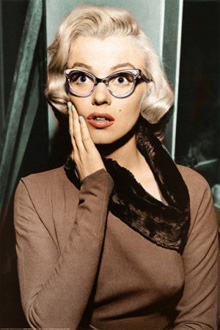
- Glasses Are Sexy: After decades of rounded glasses, came the cat-eye glasses, which added a sense of sex-appeal for women wearing them, even by women without vision problems, like Marilyn Monroe
 ◊ on How to Marry a Millionaire.
- Gosh Dang It to Heck!: Vulgar language isn't in vogue in this decade, so everybody speaks in family friendly swearing.
- Greaser Delinquents: Young men wear leather jackets, grease their hair and drive a motorbike or a cool car, while being badass.
- Hell-Bent for Leather: The teenage greasers in their leather jackets.
- High-School Dance: The natural conclusion of any high school story set in the 1950s.
- High-Class Gloves: Everyone from Queen Elizabeth II to girls going to the prom, would include fancy gloves with their fancy dresses. The Fifties were the very last era in which gloves (such as Opera Gloves) were considered a standard part of a woman's outfit. Everything after that was either a special occasion (like a fancy dress ball or a wedding) or fetish-wear.
- Jive Turkey: Classic radio skits from The Forties.
- Limited Animation: While this technique wasn't invented in this era, it did help cement the usage of it in the industry. At first, they were used in a more stylistic choice, thanks to United Productions of America becoming more popular, popularizing the trend. As time goes on, though, thanks to the Fall of the Studio System, animation Studios either had to cut their budgets or closed their units, and by the end, only three with consistent quality remained; Disney with their Classic Disney Shorts, and even then the quantity of them had declined over the decade as Walt Disney moved to TV, Universal, and Warner Bros. with their Looney Tunes series. By the time Hanna-Barbera came, it became a necessity for those studios to cut their animation budgets for any sort of revenue.
- Malt Shop: A common 50s setting (though it also shows up in 30s and 40s movies a lot).
- Music of the 1950s: As the world was starting to calm down a bit despite the tensions after a worldwide conflict, a new sound suddenly pulled in the youth, and caused a great sensation that would leave its mark on history. Genres include:
- Doo-wop: Became very popular, with groups like The Platters as the most well known example.
- Doo-Wop Progression: Many songs, even those who aren't doowop have this kind of progression.
- Jazz: Still a very popular genre, at least for the adults. The sound of was much cooler, simplistic, and more sophisticated after the complex improvisations of bebop. In Brazil, the music style evolved into Bossa Nova.
- R&B: Became popular under the Afro-American community, with Doo-wop and early Soul as its most popular components.
- Rockabilly: Became popular during this decade, until its Spiritual Successor Rock & Roll surpassed it.
- Rock & Roll: Without any doubt the major musical and sociological development. Bill Haley & His Comets, Chuck Berry, Jerry Lee Lewis, Little Richard and Elvis Presley gave teenagers their own music genre, one that parents and Moral Guardians hated and feared and would prove to become the Cult Soundtrack to a lot of major changes in society. Though it can be argued that the original rock and roll already ran out of steam by 1959, when Elvis had joined the army and Buddy Holly died in a plane crash along with Ritchie Valens and The Big Bopper.
- The New Rock & Roll: Well... the original Rock & Roll.
- Nostalgia Filter: Throughout The '70s and The '80s, and even into The '90s, the 1950s were the go-to decade for nostalgia in the media, as well as the retro movements of the '70s and '80s. That being said, during the 1950s, the eras synonymous with nostalgia were The Edwardian Era and The Roaring '20s.note That being said, during the 2000s and especially the 2010s, The '80s has replaced The Fifties as the nostalgia filter era, namely because Generation X is replacing the Baby Boomers (kids of The Fifties and The '60s) and Silent Generation (kids born in The Great Depression and The '40s).
- Nuclear Family: The classic unit was established in this time. The father goes to work, the wife stays at home, and the kids get screwed up.
- Nuke 'em: The USA and USSR threatened one another with the prospect of dropping the Big One, which scared a lot of people.
- Of Corsets Sexy: Corsets came back with a vengeance. At least the fashionable 50s lady can only manage to tighten it by only 24 inches and can still breathe due to the elastic materials. For pin-ups and fetish art, it can go well with Stocking Filler.
- Old-School Dogfight: Every film set During the War.
- Pimped-Out Dress: From sharp suits with slinky pencil skirts to wide circle skirts with poodle appliqués to pretty cocktail dresses to white dresses with pleated skirts voluminous enough to be blown away by the subway vents to the loose sack-like dresses reminiscent of flapper frock to stunning strapless evening wear made by world-class designers like Dior, Balenciaga, Balmain, Fath, Chanel and Givenchy, topped it all off with stiletto heels, it was a decade of high fashion.
- The mentioned designers have their trademark silhouettes copied by fellow designers, tailors and housewives everywhere, like:
- Christian Dior's ultrafeminine New Look, debuting in 1947 relieving wartime austerity fashions;
- His contemporary, Spanish designer Cristobal Balenciaga, with his Spanish-style aristocratic chic and in 1955, his sack dresses;
- Pierre Balmain, co-introducing the postwar full-skirted silhouette, having royalty and famous film stars as his clients, therefore, he had a more pimped-out look in his designs;
- Jacques Fath, despite imitating the styles of Dior and dying in 1954, his unique designs are more focused to the American market;
- Coco Chanel, who reopened her shop in 1954, introducing her simplistic and modified jersey suits; and
- Hubert de Givenchy, known for his elegant simplicity, and having Audrey Hepburn as his top model.
- Hollywood designers Edith Head and Helen Rose deserve mentions as well, giving film an inspiration to fashion.
- The mentioned designers have their trademark silhouettes copied by fellow designers, tailors and housewives everywhere, like:
- Pretty in Mink: It seemed every housewife wanted a mink wrap. A common accessory for teenage girls going to dances was a white fur shoulder wrap, especially white rabbit with two puff balls on either end.
- Real Men Cook: Stereotypically in the '50s, while the household kitchen was reserved for the women, the grill was reserved for the men. Barbecuing and grilling started to become widespread in every American household and every diner in this decade.
- Real Women Have Curves:
- Many sex symbols of this era had slightly fuller figures with "curves in the right places," such as Bettie Page, Jayne Mansfield and of course Marilyn Monroe. Weight-gain supplements were even being marketed to skinny girls. The slender Audrey Hepburn was actually an exception to the buxom ideal at the time.
- After three decades of focusing on the legs, the back, and the shoulders as the erogenous zones, the decade went on focusing the hips, whether padded or not, and whether it's wearing a circle skirt, a pencil skirt, or even pants.
- Alongside huge hips, breasts were the erogenous zone, and with the focus on maternity, scientific discoveries, and rockets, bullet bras are a notable article during the decade. Sometimes, this made the breasts pointed enough to stab any potential suitor
- Red Scare: You really don't understand the Red Scare hysteria of this period until you get the "bomber gap": the perception that the Soviets had thousands of nuclear-armed bombers ready to unleash fiery death on American cities, largely caused by an atrocious quality of the American intelligence, which the Soviets managed to fool parading the same few bombers around.note
- Retro Rocket: The design theme for the whole decade, fins and all.
- Seemingly-Wholesome '50s Girl: By day, teenagers and young women of the suburbs are sweethearts. By night, they go wild.
- Sexy Sweater Girl: Tight sweaters (often white or off-white) were a common item in ladies' fashion during the decade, as a way of emphasizing the bust (especially if worn over a bullet bra) without showing any skin.
- Standard '50s Father: Smokes a pipe, wears slippers, fedoras and greets his wife with the phrase: "Honey, I'm home" in sitcoms.
- Stay in the Kitchen: Women, at least in Western countries, were expected to be housewives; jobs expected for them were secretaries, clerks, telephone operators, seamstresses, and the then-hotly demanded flight attendants. Women in the Eastern Bloc went to work no matter what, and were still expected to be homemakers after work.
- Stepford Smiler: Everybody is so happy... on TV.
- Stepford Suburbia: See above.
- Suburbia itself
- Teens Are Monsters: Moral Guardians fear that teenagers are led to rebellion by comics and Rock & Roll.
- Teen Idol: From Elvis to Frankie Avalon.
- Trope Makers / Trope Codifiers: Since the rise of television, we got tropes like:
- Attack of the 50-Foot Whatever: While tales of giants had been around before that, tales of giant, sometimes nuclear-powered animals rampaging through cities like Godzilla, Them!, and the eponymous Attack of the 50 Foot Woman had been popularized, at least on B Movies, in this decade
- Beach Kiss: Popularized by From Here to Eternity (1953).
- Chess with Death: A Stock Parody popularized by The Seventh Seal.
- Klaatu Barada Nikto: A Stock Parody popularized by The Day the Earth Stood Still (1951).
- Marilyn Maneuver: The Seven Year Itch popularized this Stock Parody.
- "Mister Sandman" Sequence: Mister Sandman was a popular mid-50s hit, thus fueling the trope in nostalgia flicks.
- Mock Cousteau: As Jacques Cousteau starting making more underwater ocean documentaries his accent became a Stock Parody.
- Mumbling Brando: The fame of Marlon Brando made his voice a popular target for spoofs.
- Notzilla: The Godzilla franchise made the monster a Stock Parody in itself.
- Pink Means Feminine: Color coding for girls and boys with pink and blue respectively started out after World War II when they were the other way around prior to that, and the trope was firmly established following the pink dress that First Lady Mamie Eisenhower wore for her husband's inauguration in 1953. Jayne Mansfield further solidified pink as an ultrafeminine color when she wore a lot of pink dresses and accessories and had her whole mansion painted in pink. Lipsticks in shades of pink or coral started to be formulated in this decade, and became popular with teenagers who were too young to wear red lipsticks.
- Spaghetti Kiss: A Stock Parody popularized by Lady and the Tramp.
- Spoofing in the Rain: Gene Kelly dancing in the rain became a Stock Parody thanks to Singin' in the Rain.
- Louie the Fly. Began in 1957.
- Trix Rabbit. Began in 1959.
- Wilkins Coffee. Advertising campaign began in 1957.
Anime & Manga
Comic Books
- Tintin. Series started in 1929.
- Tintin: Land of Black Gold (1950).
- Tintin: Destination Moon (1953).
- Tintin: Explorers on the Moon (1954).
- Tintin: The Calculus Affair (1956).
- Tintin: The Red Sea Sharks (1958).
- Spirou & Fantasio. Series began in 1938.
- Superman. Series began in 1938.
- The Super Dog from Krypton. Published in March, 1955.
- The Super-Duel in Space. Published in July, 1958.
- Tom Poes. Series began in 1941.
- Comic Cavalcade. Series began in 1942.
- Suske en Wiske. Series began in 1945.
- Paulus de Boskabouter. Series began in 1946.
- Blake and Mortimer. First appeared in September, 1946.
- The Yellow "M" (1953)
- Nero . Series began in 1947.
- Lucky Luke. Series began in 1947.
- Piet Pienter en Bert Bibber. First appeared in 1951.
- Disney Ducks Comic Universe
- The Junior Woodchucks. First appeared in February, 1951.
- The Beagle Boys. First appeared in November, 1952.
- Gyro Gearloose. First appeared in May, 1952.
- April, May and June. First appeared in February, 1953.
- Glittering Goldie O'Gilt. First appeared in March, 1953.
- Flintheart Glomgold. First appeared in September, 1956.
- Little Helper. First appeared in September, 1956.
- Argus McSwine. First appeared in July, 1957.
- Grandpa Beagle/Blackheart Beagle. Composite Character based on two different depictions of the Beagle Boys' founder.
- Blackheart Beagle. First appeared in August, 1957.
- Grandpa Beagle. First appeared in March, 1958.
- General Snozzie. First appeared in June, 1958.
- Dennis the Menace (UK). First appeared in March, 1951.
- Archie Comics
- Midge Klump. First appeared in April, 1951.
- Miss Bernice Beazley. Appeared c. 1957.
- Mr. Svenson. First appeared in July, 1958.
- Rex the Wonder Dog. First appeared in January, 1952.
- MAD originally started as a comic book, with it's first issue debuting in August, 1952. It later converted to a magazine format by issue twenty-four in order to appease Harvey Kurtzman and keep him on as editor.
- The Phantom Stranger. First appeared in August-September, 1952.
- Richie Rich. First appeared in September, 1953.
- Red Skull /Albert Malik is established as a Communist agent. First appeared (in this role) in December, 1953.
- Chlorophylle. First appeared in 1954.
- Mickey Mouse Comic Universe
- Gilbert. First appeared in May, 1954.
- Scuttle/Weasel. First appeared in February, 1957.
- Superman's Pal, Jimmy Olsen. Comic launched September/October, 1954.
- Krypto the Superdog. First appeared in March, 1955.
- Jommeke. First appeared in October 30, 1955.
- Martian Manhunter. First appeared in November, 1955.
- The Topper. Comic launched in February, 1953.
- The Beezer. Comic launched in January, 1956.
- Showcase. Comic launched March, 1956.
- Batwoman/Kathy Kane. First appeared in July, 1956.
- The Flash
- Flash/Bartholomew "Barry" Allen. First appeared in October, 1956.
- Showcase #4
- The Flash (1959). Comic launched March, 1959.
- Kid Flash/Wallace "Wally" West. First appeared in December, 1959.
- Flash/Bartholomew "Barry" Allen. First appeared in October, 1956.
- Gaston Lagaffe. First appeared in 1957.
- El Eternauta. First appeared in 1957.
- Superman's Girl Friend, Lois Lane. Comic launched March/April, 1958.
- Legion of Super-Heroes. First appeared in 1958.
- The Legion of Super-Heroes!. First story, published in April, 1958.
- Brainiac. First appeared in July, 1958.
- Adam Strange. First appeared in November, 1958.
- Mr. Freeze. Firs appeared in February 1959.
- Batmite. First appeared in May 1959.
- Supergirl/Kara Zor-El/Linda Lee Danvers. First appeared in May, 1959.
- The Supergirl From Krypton (1959). Published in May, 1959.
- "Supergirl's Super Pet". Published in December, 1959.
- Suicide Squad. Debuted in August-September, 1959. Later stories established that the Squad was founded during World War II.
- Green Lantern/Hal Jordan. First appeared in October, 1959.
- Lana Lang. First appeared September/October 1950.
Comic Strips
- German comic Nick Knatterton. First appeared in 1950.
- Beetle Bailey. Started in 1950.
- Peanuts. Started in 1950.
- Rasmus Klump. Started in 1951.
- Dennis the Menace (US). Started in 1951.
- Hi and Lois. Started 1954.
- Marmaduke. Started 1954.
- Andy Capp. Started in 1957.
- Jucika. Started in 1957.
- Cebolinha, which evolved into Monica's Gang, started 1959.
Eastern European Animation
Films — Live-Action
- See also Films of the 1950s
- The golden age of Science Fiction films, including:
- The Day the Earth Stood Still (1951), a film about the human race being punished for the foolishness of the Cold War.
- Invasion of the Body Snatchers (1956), a horror movie (with at least one good remake in The '70s) about conformism.
- Marlon Brando made his name threatening the status quo as a bikers in:
- The Wild One (1953)
- Creature from the Black Lagoon (1954)
- Godzilla. The film series started in 1954.
- James Dean made his name threatening the status quo as a greaser in Rebel Without a Cause (1955)
- Several films by Marilyn Monroe, including The Seven Year Itch (1955), the film that launched a thousand skirts.
- A lot of B-Movies
- Attack of the Crab Monsters (1957)
- The Brain from Planet Arous (1957). It came from Planet Arous... with a taste for Earth Women!
- Invasion of the Saucer Men (1957)
- The Eye Creatures (1967) is a remake of the above.
- Plan 9 from Outer Space (1959)
- Pleasantville (1998) is a deconstruction.
- West Side Story (1961)
Literature
- See also: Literature of the 1950s
Live-Action TV
Music
Music Genres That Started in the Fifties- Doo-wop
- Exotica
- Rockabilly
- Rock & Roll
Radio
- The Archers
- Bold Venture
- Dimension X
- The Goon Show
- Hancock's Half Hour
- My Friend Irma
- The Stan Freberg Show
- X Minus One
Theater
- See: Theatre of the 1950s
Pro Wrestling
- Abdullah the Butcher. Debuted in 1958.
- Captain Lou Albano. Debuted in 1953.
- Freddie Blassie
- Bobo Brazil. Debuted in 1951.
- Haystacks Calhoun. Debuted in 1955.
- The Crusher. Debuted in November 1949, made his TV debut in Chicago in 1954.
- Dick the Bruiser. Debuted in 1954.
- The Fabulous Moolah. Debuted in 1950, won the NWA Women's Championship in September 1956, from which descends the lineage of the WWF/E Women's Championship.
- Jackie Fargo. Debuted in 1953.
- Ed "The Sheik" Farhat. Debuted in 1949.
- Pampero Firpo. Debuted in 1953.
- Eddie Graham
- Masahiko Kimura. Debuted in pro wrestling in the decade.
- Mark Lewin. Debuted in the early 1950s.
- Gorilla Monsoon. Debuted in 1959.
- Pedro Morales. Debuted in 1959.
- Rikidozan. Debuted in 1951.
- Antonino Rocca
- "The Nature Boy" Buddy Rogers
- Bruno Sammartino. Debuted in 1959.
- Stan Stasiak. Debuted in 1958.
- "Exotic" Adrian Street. Debuted in 1957.
- Lou Thesz
- George Wagner/Gorgeous George
- Mae Young
- The Fabulous Kangaroos. Formed in 1957.
- Von Erich Family. Fritz debuted in 1953.
- WWE. Established in 1952/1953 (but called "Capitol Wrestling Corporation" until 1963).
Video Games
Western Animation
- Limited Animation became popular, first as a stylistic choice, reflecting the modernist aesthetic of the period, and only later as a cost-saving measure. UPA Studios produced:
- Popeye and other animated shorts still appeared in theatres, the only place you could see in color.
- Despite that most cartoon studios were in decline during this decade, Looney Tunes reached its heyday under the direction of Chuck Jones, as their most acclaimed shorts came out in the Fifties (though only three years into the next decade and the studio would be shut down).
- Looney Tunes in the '50s
- The Scarlet Pumpernickel (1950)
- Rabbit of Seville (1950)
- Rabbit Fire (1951)
- Ballot Box Bunny (1951)
- Feed the Kitty (1952)
- Rabbit Seasoning (1952)
- Duck Amuck (1953)
- Duck Dodgers in the 24½th Century (1953)
- Bully for Bugs (1953)
- One Froggy Evening (1955)
- Ali Baba Bunny (1957)
- The Three Little Bops (1957)
- What's Opera, Doc? (1957)
- Looney Tunes in the '50s
- MGM was another cartoon studio that was still going strong through most of the Fifties, though they began to cut more corners and use more Limited Animation as time went on, to the point where the later Tom and Jerry shorts look a lot like Hanna-Barbera's 1960s television work (they were both done by the same people).
- Tom and Jerry
- Cue Ball Cat (1950)
- Little Quacker (1950)
- Safety Second (1950)
- Jerry and Jumbo (1953)
- Droopy
- Magical Maestro (1952)
- Tom and Jerry
- The Dark Age of Animation began as studios used the techniques of limited animation as an excuse to crank out productions faster. Many Dark Age TV shows through the late '60s depicted a Nuclear Family straight out of The Fifties, with the rare subversive cartoon (including fifties animated shorts themselves, that hadn't been told what the decade was about.)
- The Adventures of Paddy the Pelican (1950)
- Baby Huey debuted in 1950.
- Humphrey the Bear debuted in 1950.
- Adventures in Music Duology debuted in 1953.
- Speedy Gonzales debuted in August 1953.
- Chilly Willy debuted in December 1953.
- Shhhhhh debuted in 1955.
- Gumby debuted in 1956. Received his own series in 1957.
- Tom Terrific debuted in 1957.
- Sidney the Elephant debuted in 1958.
- Clutch Cargo debuted in 1959.
- Hashimoto-san debuted in 1959.
- The Hanna-Barbera studio was launched in this period and created some of its earliest characters:
- The Ruff & Reddy Show (the first animated series made specifically for television)
- The Huckleberry Hound Show (the first half-hour animated series)
- Yogi Bear
- Quick Draw McGraw
- Woody Woodpecker:
- Linus the Lionhearted debuted in 1959.
- Superboy (1949) #171 (January 1971) saw his time era moved from being stuck in the 1930s to perpetually 15 or so years behind the then-present. Thus, 70s Superboy stories often featured nostalgic 1950s elements (Lana Lang interested in hula hoops, Clark pondering rock and roll, etc.).
Fan Works
- A Very Kara Christmas: Written in the early 00's and set in 1959, it leans more in the nostalgic side, although the period is not depicted as a trouble-free time.
Films — Live-Action
- The version of 1955 seen in the Back to the Future films has elements of both the Nostalgic Fifties and the Historical Fifties, but seems to generally lean more in the direction of the Nostalgic Fifties.
- Bad Times at the El Royale: 2018 film set in 1969, but the prologue is set ten years earlier.
- The John Waters movie Cry-Baby is more like an Affectionate Parody of the fifties and juvenile delinquent movies, but it still counts.
- Distant Voices, Still Lives (1988). The second part of the film is set in this decade.
- Flipped: The Film of the Book is set from 1957-1963, instead of the canonical 1994-2000.
- Grease
- It (1990): Made in 1990, set in 1959.
- The films making up the Mihmiverse mimic the aesthetics of 1950s Sci-Fi Horror B Movies and many of them are set during the 1950s as well.
- Ollie Hopnoodle's Haven of Bliss: No date is given, but the newest car seen on the road is a 1956 Chevrolet.
- Peggy Sue Got Married (technically 1960, but it might as well still be the '50s)
- The Last Picture Show is bit more complicated than some on this list, in that it is both a rather bittersweet version of the period and one set unusually early (in 1951) which means it predates a lot of the standard decade tropes like rock 'n' roll or B-Movies. It's also set in a Dying Town in rural Texas, placing it at some remove from the middle-class "mainstream" of the era. (The teen characters listen to country and western songs and watch cowboy flicks!)
- The Porky's movies were a particularly sex-crazed version, or maybe just riding the coattails of a Seventies trend.
- Diner
- Though the decade is never properly defined, Fido is set in a kind of alternate-history Fifties where a Zombie Apocalypse nearly wiped out humanity approximately twenty years before, and survivors live in fortress-like Stepford Suburbias surrounded by zombiefied wasteland.
- Matinee (1993), though technically set in 1962 during the Cuban Missile Crisis, attempts to pinpoint on film the moment when a town full of adorable scamps and movie lovers left The Fifties and entered The '60s.
- It's a very Troperrific rendition, complete with the protagonist's bratty younger brother who is obsessed with The Lone Ranger and carries around die-cast pistols everywhere, "the Love Interest in poodle skirt" who his best friend is afraid to ask out to the dance, and the love interest's "abusive greaser ex-boyfriend".
- Mischief: Made in 1985, set in 1956.
- Roadracers is a hilarious greaser movie.
- The Shawshank Redemption: Made in 1994, middle of the film set in 1954.
- Stand by Me (set in 1959 and featuring an all-star soundtrack) attempts to do the same thing (mark the transition from The Fifties to the Sixties, from Innocence to Experience) on a smaller scale, reflecting the coming of age of four
MaineOregon youths (and the youths of director Rob Reiner and author Stephen King). - Fade to White, an Alternate History short story by Catherynne M. Valente is set in a post-World War III United States where the government maintains a facade of The Fabulous Fifties as deliberate policy so people can avoid thinking about how it's a Crapsack World in reality.
- A Running Gag in the 2002 Australian comedy Crackerjack about the elderly members of a lawn bowls club.
"How about we have a fancy dress party, and we all come dressed like our favourite decade?""We tried that before, and everyone dressed like the Fifties."
- Hoosiers, about a small-town high school basketball team in 1951 Indiana (and very loosely based on a real 1954 team from that state), employs a subtler version of this than most films.
- My Favorite Year: Made in 1982, set behind the scenes at a live television Variety Show in 1954 and centering around a fictionalized version of Errol Flynn, it sort of straddles the line between the Nostalgic and Historical depictions of the era.
- Next Stop, Greenwich Village: Made in 1976, set in 1953.
- The Whales of August: A 1987 film about two elderly sisters reflecting on their lives.
- Wish You Were Here (1987): 1987 film set in 1951.
Live-Action TV
- Happy Days: home of Fonzie, America's favorite greaser!
- Laverne & Shirley: Spun off from Happy Days. Both shows had technically moved into The '60s by the time they ended.
- Sha Na Na
- Hi-de-Hi!
- Brooklyn Bridge
- Community: In the "Regional Holiday Music" episode, Troy and Abed lure Pierce into the glee club with their song "Baby Boomer Santa":
Music
- "American Pie", written and recorded by Don McLean in 1971, is in part a nostalgic look back at the more innocent Rock & Roll music and culture of his youth in the 1950s... and, of course, memorializing Buddy Holly's plane crash in "The Day The Music Died".
- "Crocodile Rock", by Elton John.
Pinballs
- Eight Ball, complete with Malt Shop and transplanted Happy Days characters.
- Creature from the Black Lagoon is centered around teens attending a drive-in, complete with hits on the radio, stealing kisses in the car, and the Creature IN 3D!
- Attack from Mars is an Affectionate Parody of the B-Movie about Alien Invasions, complete with theremin music and America Saves the Day (or at least builds the Atomic Blaster).
Theater
- Bye Bye Birdie. Quite possibly the Ur-Example of the Nostalgic Fifties, having been written in 1960.
- Grease, of course.
- Memphis is another combination of the nostalgic and historical fifties. It's a musical, but it's also a drama about an interracial romance in a segregated America.
- Sunset Boulevard (1993): The second half of the musical adaptation, as well as its Book Ends, takes place at the start of 1950, and you may know how it's going to end...
- Blacksad. A Furry comic about a feline private detective. The series features a Film Noir-influenced version of the 1950s. But the storylines feature interracial violence, racial discrimination (based on fur color), the Red Scare, and McCarthy-style persecution of leftist intellectuals.
- DC: The New Frontier. The classic superheroes of DC set in an era of McCarthyism, Super Registration Acts, and Cold War tensions.
Films — Animation
- The first part of the The Incredibles takes place in 1955, which coincides with the collapse of The Golden Age of Comic Books.
Films — Live-Action
- 71: Into the Fire: 2010 film set in The Korean War.
- 8 Women: Made in 2002, set in the fifties.
- All the King's Men: Made in 2006, set in the early part of the decade.
- Annabelle: Creation: Made in 2017, set in 1955.
- The Nun: Made in 2018, set in 1952.
- The Nun II: Made in 2023, set in 1956.
- Asteroid City: Made in 2022, set in 1955.
- A Beautiful Mind: Made in 2001, parted wood tropes of the film's first half takes place in this decade.
- Big Eyes: Made in 2014, story starts off in 1958.
- Big Fish: Made in 2003, part of the film is set during The Korean War.
- Big Night: Made in 1996, set somewhere in this decade.
- Black Book: Made in 2006, the last part of the film takes place in 1956 and concludes during the beginning of the Suez crisis.
- Blow: Made in 2001 and set mostly in The '70s, the story begins in 1952.
- Bridge of Spies, a historical thriller about the trial of a Soviet spy in America, while at the same time an American spy is captured in the USSR.
- Brooklyn: A 2015 film about an Irish immigrant set during 1951-1952.
- The Butler: Made in 2013, the eponymous protagonist gets hired in 1957 during Dwight D. Eisenhower's presidency.
- Capote.
- Carol is a lesbian romance set in 1952.
- Celia: Released in the late 1980s, set somewhere in the 1950s.
- Che: 2008 Bio Pic of Che Guevara.
- Clue. Earlier than most examples, as it was made in the mid-eighties, but the Fifties of the movie revolves around the post-WWII/early Cold War politics of that decade, which it plays for laughs.
- Desert Hearts is a lesbian romance set in 1959.
- Devotion (2022): Set in The Korean War.
- The Devil's Playground is set in Melbourne, Australia in August 1953.
- Ed Wood: Made in 1994, story kicks off in 1952 when the eponymous protagonist's career is beginning to take off.
- Elvis (2022): 2022 Elvis Presley Bio Pic set in 1997 with a Framing Device that tackles vents from 1947-1977.
- Forrest Gump: 1994 film, the flashback to the titular protagonist's childhood is set in 1951.
- The Founder: 2016 Bio Pic about McDonald's, the story kicks off in 1954.
- Friday the 13th (1980): Prologue set in 1958.
- The Front. A comedy-drama about the Hollywood blacklist era in the early part of the decade.
- The Front Line: 2011 film set at the end of The Korean War.
- Get On Up: Made in 2014, part of the film takes place in 1956.
- Good Night, and Good Luck.. A true story about Edward R. Murrow, the intrepid TV journalist out to expose the hypocrisy of Senator Joe McCarthy (as himself), who preyed upon Americans' fears of Communist infiltration for his own political gain.
- Goodfellas: Made in 1990, film set from 1955-1980.
- Great Balls of Fire!: Made in 1989, film set from 1956-1958.
- Hoffa: 1992 Jimmy Hoffa Bio Pic.
- Hollywoodland: 2006 Bio Pic of George Reeves.
- Hoosiers: Filmed in 1985, released in 1986. Like The Last Picture Show in the "Nostalgic Fifties" folder, it's a bit more complicated than some on this list. It's also set in 1951 (thus predating a lot of the standard decade tropes), with the real-life event on which it was very loosely based having occurred in 1954. Its rural Indiana setting also places it at some remove from the middle-class "mainstream" of the era.
- Hounddog: Made in 2007, set in 1956.
- I Saw the Light: 2015 Hank Williams Bio Pic.
- The Imitation Game: Made in 2014, mainly takes place in 1952.
- Inchon: 1981 film set in The Korean War.
- The Irishman: 2019 Frank Sheeran Bio Pic.
- The Iron Claw: 2023 Von Erich Family Bio Pic set from 1979 to sometime in the late 1990s, but the prologue is clearly set in late 1959 seeing the matriarch is obviously pregnant with Kerry (who was born in February 1960).
- Joker (2019): 2019 film set in 1981, but an important flashback to 1951 is shown.
- The Killer Inside Me: Made in 2010, set during 1952.
- L.A. Confidential (1997): Made in 1997, set in the early part of the decade.
- The Last Emperor: Made in 1987, it shows the eponumous protagonist's release from political prison in 1959.
- Loving (2016): 2016 Bio Pic about the passing of the Loving v. Virginia act.
- Maigret: 2022 film set in early 1950s France.
- The Majestic: A 2001 comedy-drama set in 1951 and featuring the Hollywood blacklist as a subplot.
- M*A*S*H: 1970 film set in The Korean War.
- The Master: Made in 2012, the story is about a World War II veteran who's having PTSD a decade after the event.
- Mona Lisa Smile: Made in 2003, set in 1953. A feminist teacher gets a job teaching at a college of girls vying for an MRS Degree, and encourages them to be independent and defy the expectations of women in the era (which was to Stay in the Kitchen).
- The Motorcycle Diaries: 2004 Che Guevara Bio Pic.
- The Mountain: Made in 2018, about a young man who assists a traveling lobotomist as they travel across America in the 50s.
- My Week with Marilyn: Made in 2011, set during the Troubled Production of The Prince and the Showgirl in 1957.
- Newsfront (1978): Set between 1948 and 1956.
- Novitiate: 2017 film about the Second Vatican Council from 1962-1965 which gave the protagonist A Minor Kidroduction in 1954.
- Nowhere Boy: 2009 Bio Pic of John Lennon.
- On the Basis of Sex: 2018 biopic of Ruth Bader Ginsburg.
- Operation Chromite: 2016 film set in The Korean War.
- Order No. 027: 1986 film set in The Korean War.
- Pawn Sacrifice: 2014 biopic of Bobby Fisher.
- Philomena: Made in 2013 and set during the early 2000s, but occasional flashbacks to 1951-1955 occur.
- Queen and Country: Released in 2014 and set on a British army base in 1952-53.
- Quiz Show. Based on a True Story about the rigging of the game show 21.
- Raging Bull: Made in 1980 and set in 1964, but is a Whole Episode Flashback which eventually shows events from 1951-1958.
- Revolutionary Road. A great wardrobe and a nice kitchen are no substitute for one's soul in a Marriage Half Empty.
- Rocketman (2019): A 2019 Elton John biopic.
- School Ties is set in the fifties, as evidenced by the 'uncivilized' rock music the kids listen to (that to a modern ear sound extremely boring, but to their contemporary audiences were quite wild). Also there's the rampant antisemitism for that special period touch.
- Stan & Ollie: Made in 2018, story mostly set in 1953 onwards.
- Taegukgi: 2004 film set in The Korean War.
- Trumbo: 2015 Biopic of Dalton Trumbo.
- War Hunt: 1962 film set in The Korean War.
- Watchmen: Made in 2009 and set in 1985, but also has several flashbacks to this decade. Dr. Manhattan's Super Hero Origin, in particular, happened in 1959.
- Welcome to Dongmakgol: 2005 film set in The Korean War.
- White Hunter, Black Heart: A 1990 based on the filming of The African Queen in 1951. Explores some interesting ideas about what masculinity meant in the '50s.
- West Side Story: Doesn't apply much for the 1961 film, but it does for The Remake of 2021.
- The Wife: Made in 2017, prologue set in 1958.
Literature
- The Man in the Grey Flannel Suit, one of the most popular and influential books in the 1950s, Trope Codified (and attacked!) the whole concept of '50s conformism.
- American Pastoral: Made in 1997, set mostly from 1947-1970.
- The Devil All the Time: 2011 novel set from the end of World War II up to The '60s.
- 11/22/63, which tells the story of Jake Epping, a man from the 2010s who steps through a portal to 1958 in order to prevent the Kennedy assassination, is partly a supernatural thriller and partly a very well-researched history lesson about the time period, commenting on both the good and the bad (it helps that author Stephen King grew up during this decade and would've been a teenager when the assassination took place). On the positive side, Jake finds that the food tastes better, a little money goes a longer way, the cars are more luxurious, and people are generally more polite and trusting; on the negative side, the air stinks because of the pollution from unregulated factories and rampant smoking, blatant racism, homophobia and sexism is around every corner, and everyone lives in perpetual fear of nuclear war breaking out any day.
- A Confederate General from Big Sur, a famous Richard Brautigan novel, is set in 1957. It was first published in 1964.
- Last Night at the Telegraph Club is set in 1950s San Francisco and deals with the threat of Red Scare paranoia and deportation, and the risks in being queer in such a time.
- Ravensong: Set along the Pacific Northwest Coast in the 1950s, tells the story of an urban Native community devastated by an influenza epidemic.
Live-Action TV
- American Horror Story: Freak Show: Set in 1952 Florida.
- Arrowverse
- Legends of Tomorrow: The titular team time traveled to this decade quite a few times. In the first season they traveled here three times; first was in 1958, then in 1950 to prevent one of their members from being Ret-Gone'd, and finally back to 1958 to defeat the season's Big Bad. In Season 2, a few of them plus two Guest Star Party Members traveled to 1951 to prevent an Alien Invasion. In Season 3, they went to 1954 to fix an anachronism.
- Invasion! (2016): The aforementioned event in which few of the Legends and two of their Guest Star Party Members traveled to 1951. It coincides with the USAF's investigations of alleged UFO sightings during this time.
- Call the Midwife. Series 1-3 are set from 1957-59 in London's East End.
- Club 57 is partially set in 1957.
- The first seasons of The Crown (2016), about the first decade of Queen Elizabeth II's reign (she was crowned in 1952).
- The Doctor Blake Mysteries. Set in 1959 Australia.
- Doom Patrol: Flashback to Rita Farr's Super Hero Origin happened sometime in this decade.
- Fellow Travelers: Released in 2023, the Flashback scenes in episodes 1-5 are set in 1952-1954, while episode 8's transpire in 1957. The past sequences in episode 6 that revolve around the early stage of Hawkins and Lucy Fuller's marriage must have occurred in the mid-1950s, but the exact year isn't specified.
- Forever (2014): The flashbacks that are set in this decade show Henry and Abigail’s married life and them raising their adoptive son Abe.
- The Hour. Set in 1957-58 Britain, the Suez Crisis is the backdrop for season one, and the Cold War/Space Race is the backdrop for season two. The fashion runs the gamut from Marnie's stereotypical skirts and pearls and Hector's grey flannel suit to Lix's Katherine Hepburn suits and Freddie's beatnik look.
- The Jacksons: An American Dream: Jackson 5 Biopic.
- Lovecraft Country: Released in 2020, set in the 1950s.
- Maigret: The book series stretched from the 1930s to the early 1970s, but most adaptations prefer 1950s France as setting.
- Maigret (2016): set during the middle part of the decade.
- The Marvelous Mrs. Maisel: Made in 2017, story begins in 1958. There's a bit of the Nostalgic Fifties too though, because being centred around New York City's generally privileged, urbanite Jewish families, the show doesn't always delve too much into the social or political milieu of the time; the cast are just as much depicted going through general everyday life and drama.
- M*A*S*H. The show either takes places in the Historical Fifties or else in a Present-Day Past.
- Masters of Sex. Set in late '50s/early'60s St. Louis.
- Padre Coraje. Set in the Argentine Fifties.
- Project Blue Book: Series that premiered in 2019 set during the USAF's investigations of alleged UFO sightings during the early 50s-late 60s.
- Project UFO: 1978-1979 series set during the USAF's investigations of alleged UFO sightings during the early 50s-late 60s.
- The Queen's Gambit begins with Beth Harmon's childhood in an orphanage c 1957, where she learns chess for the first time.
- Roots (1977): The last quarter of sixth chapter of Next Generations takes place starting Christmas Eve 1950.
- The Sarah Jane Adventures: In "The Temptation of Sarah Jane Smith", Sarah Jane, Luke and Rani travel back to 1951 and meet Sara-Jane’s parents. Sarah Jane herself was only a baby at that time.
- Why Women Kill: The second season epilogue ends in 1950 after the story's events in 1949.
Music
Other
- Thousand-Week Reich and it's game mod adaptation start in an alternate 50s where America and Nazi Germany are locked in a cold war after the end of World War II, only for Adolf Hitler to die in 1952 with Hermann Göring succeeding him. Soon, Germany plunges into civil war when Heinrich Himmler and the SS launch a coup attempt against Göring in 1958.
Theater
- Death of a Salesman, though released in 1949, is the archetypal play about the aforementioned Man in a Grey Flannel Suit who suffers a nervous breakdown. "Attention must be paid!!"
- Evita: The film begins with the eponymous protagonist's death in 1952 and then a series of flashbacks leading to it.
- Jersey Boys: 2005 play about the origins of Frankie Valli and the Four Seasons.
Video Games
- Blacksad: Under the Skin, like its namesake, follows a cat detective during the '50s, showcasing the dark sides of it consisting of racism, racial profiling, sexism, corruption, the Mafia, prostitution rings, drug trades, persecution to communism and so on.
- Harvester is set during the decade, with the inventory saying Spring 1953. Communism is feared, several mothers are identical-looking housewives, and attitudes to gays and foreigners are negative. The game mocks the setting relentlessly, like it does with many other things.
- Mafia II plays in the '50s. It does however also show the dark sides of the '50s beyond Suburbia, like racial segregation, corruption, the black market, slums, and the Mafia. But hey, at least you can encounter every 1950s stereotype known to man:
- The charming housewife returning from her local Piggly Wiggly (after visiting the opium house),
- The friendly next-door neighbor with the tie and the suitcase who scratched your car the other day,
- The friendly gas station attendant after robbing him and blowing up his petrol pump,
- The greasy radio host who ends every sentence with "folks" and promotes cigarette smoking,
- The no-nonsense, deep-voiced radio host who will piss off commies and promotes family values,
- The old grumpy hag who runs the local diner and still has problems with fitting her hairnet,
- The shoeshine guy who shines shoes,
- The newspaper guy who begins and ends every sentence with "Extra!",
- The good-hearted Irish police officer who will most likely shoot you on sight,
- Those greasers who always hinder your black trade because you're in their territory, and
- The bomber jacket-clad African-Americans who do the same thing, only on the other side of
Hudson BayEmpire Bay.
- The Clue! is set in the British '50s, but invokes many similar tropes in terms of slang and character types.
Web Animation
- Meet the Millers is set in the '50s.
Anime & Manga
- The Daughter of Twenty Faces takes place in 1953 where some of the characters are reeling from World War II.
- Mouryou No Hako is set in 1953.
- The Miyazaki films My Neighbor Totoro and Kiki's Delivery Service both take place in the 1950s, with the former taking place in Japan, and the latter taking place in a fictional version of Europe that wasn't devastated by World War II.
- Yuureitou takes place in 1954.
Comic Books
- The Silver Age of Comic Books began in this period, following the red-baiting and obscenity hysteria fueled by the publication of Dr. Frederick Wertham's book Seduction of the Innocent, which helped end the E.C. Horror Comics catalog that had supplanted superhero comics through most of the 1950s with grotesque and Weird Tales from the Crypt. The only E.C. comic to survive was...
- MAD Magazine, which defied the image of '50s conformity by satiring and skewering pop culture with a countercultural Manhattanite wit.
- The League of Extraordinary Gentlemen: The Black Dossier is set in a... somewhat skewed version of 1950s Britain. (It doesn't help that Nineteen Eighty-Four has just happened.)
- Red Fog begins in 1951, with a group of Nazis resurrecting their 6th army in Stalingrad as zombies.
- While the portion of Wonder Woman (1942) published during the '50s is theoretically set in them, there's an awful lot of time and space travel.
Comedy
- Lenny Bruce, the infamous comedian who broke free of "obscene language" taboos in the 1950s, got his start doing stand-up comedy in strip clubs in the heart of Los Angeles' middle-class suburban mecca of San Fernando Valley in the early 1950s.
- Bob & Ray, who themselves fit into the Historical Fifties as a result of spoofing the media conventions inherent in the Fifties Fifties.
- Stan Freberg
- Omaha! (1958)
Films — Animation
- The Iron Giant is mainly a deconstruction of Fifties alien invasion movies, but it also has large dollops of nostalgia (the director was born in 1957, the year the movie was set) and delves into some of the issues of the day, particularly Cold War paranoia, as personified by Kent Mansley.
- Encanto is set in a rural Colombian city during the '50s.
Films — Live-Action
- Indiana Jones and the Kingdom of the Crystal Skull could easily fall in several of the above categories.
- The Golden Age of Hollywood wound down during the Fifties, drifting into formulaic musicals, Hays Code-approved thrillers, and big production numbers, leading to more adventurous directors refining their technique in romantic films and character dramas.
- An Affair to Remember. Yes, that's right: a Fifties Hollywood blockbuster and critically acclaimed romantic film about an affair on a cruise ship with a woman on the way to her wedding. Inspiration for The '90s film Sleepless in Seattle.
- The Ten Commandments (1956) with Charlton Heston, possibly the biggest film of the 1950s, aside from the similar Ben-Hur.
- John Wayne codified the genre of film set During the War (World War II, of course!) with a slew of films. Every boy who didn't collect baseball cards, collected toys and books about Old School Dogfighting.
- This was also the golden age of The Western:
- Shane
- The Searchers, the original revisionist Western
- Marlon Brando made his name in films as the original and most intense Method Actor, including:
- A Streetcar Named Desire, a film about a play set in the 1930s-1940s in steamy depression-era New Orleans, where he plays the archetypal sexually-threatening working class schmuck in a wife-beater shirt. "STELLLAAAAAA!"
- On the Waterfront, a film that established the Hoboken of Joisey trope, immortalizing the town where Frank Sinatra grew up as a seedy place of gangsters and palookas and shattered dreams, verges on Film Noir. "I coulda been a contender!"
- Frank Sinatra himself proved He Really Can Act, and codified the Brainwashing Commies trope, in The Manchurian Candidate, a classic Cold War thriller which came out in 1962 at the end of the period.
- The Musical still dominated the landscape. Costume Drama classics and Sword and Sandal pics began to dominate at the end of this period as film budgets got bigger.
- Singin' in the Rain, the classic musical about musicals.
- The 5,000 Fingers Of Dr. T (1953) the only live-action film by Dr. Seuss, possibly the most bizarre film made in the Fifties itself. Its child star, Tommy Rettig, went on to star in Lassie (see above). Think Return to Oz meets Leave It to Beaver meets Willy Wonka & the Chocolate Factory meets The Rocky Horror Picture Show (you know... for kids!)
- Little Shop of Horrors is set on Skid Row in an indefinable period between the early 50s and the Motown era. Elevated trains rumble overhead and working-class men stumble to work in grey flannel suits. The hero and heroine dream of escaping to the pastel suburbs.
Audrey: I'll cook like / Betty Crocker / And I'll look like / Donna Reed!
- The Hudsucker Proxy is set in the same indefinable period, in a sort of comic-book version of the Mad Men universe. Pneumatic Tubes are, in this version of an art deco metropolis, the dominant means of communication. The film centers around the creation of the classic '50s icon the hula hoop.
- Akira Kurosawa legitimized Japanese film in the West and created classic Lost in Imitation films which were influenced by, and in turn influenced, the development of The Western.
- Rashomon (1950), the original "Rashomon"-Style plot.
- Seven Samurai (1954), later remade as The Magnificent Seven: see also Magnificent Seven Samurai.
- The Godfather (set 1945 to 1955) and The Godfather Part II (mostly set 1958 to 1959) are set in the Fifties and are rich with period detail, but the focus is so removed from conventional depictions of the decade that is difficult to pigeonhole them.
- Film Noir in general (see above) was inspired by the depression and urban decay of the prewar and postwar years, especially in the years 1945-1949. Which is what prompted many Americans to abandon the city in the first place...
- Heavenly Creatures is based the outrageous-for-its-time 1950s murder of a mother by her daughter and the girl's best friend, but it doesn't seem make a huge deal about the era aside from the "homosexuality is just a phase/mental illness" thing.
- The Red Balloon
- Stilyagi looks at the rebellious youth in the Soviet Union, which was even more regimented and conservative than the U.S.A. until the Khrushchev Thaw.
- Cool And The Crazy, produced for Showtime's Rebel Highway series.
- The prologue of Godzilla (2014), where humans first try to kill Godzilla, takes place in 1954.
- Babylon’s Distant Finale takes place in 1952.
- Hail, Caesar! is about a Hollywood fixer who has to rescue one of the studio's biggest stars after he is kidnapped while shooting a big Sword and Sandal epic called "Hail, Caesar".
- Parents takes place in 1958 and centers around a boy who suspects his parents are cannibals.
Literature
- Bill Bryson's The Life And Times of the Thunderbolt Kid, an autobiographical and historical account of 1950s and early 1960s America, when he was a child.
- Lolita was not only written in the 1950s, it was set in Nabokov's idea of a typical American community and helped inspire the later concept of "dark pathology hidden behind a facade of '50s conformity".
- Time Out of Joint by Philip K. Dick is a deconstructive Mind Screwdriver of an apparently realistic novel, written in 1959 and apparently set in 1959, but as the book goes on, the characters find apparent anomalies, such as ancient and water-damaged magazines with the previous year's date and featuring a photograph of a supposedly famous actress called "Marilyn Monroe" who they've never heard of, etc. Gradually it becomes clear that the year is 1998, and a war is going on between Earth and its plucky underdog colonists on Mars. The hero is actually a senior military stategist who's suffered a psychotic breakdown; the military machine wants him to continue his war work, so they've preserved his stability by building a "Fifties" Fifties small town just like the town he grew up in, complete with friends and neighbours (some of whom have been given Fake Memories), where he and nearly everyone around him thinks that he's just playing and winning a newspaper competition, but in fact he's predicting Martian attacks.
- Shutter Island
- Spränga gränser by Solveig Olsson-Hultgren takes place in 1956. It has a Nostalgic Fifties look at the then current teenage culture, but the protagonist (Cecilia) is not a naive girl in a suburban paradise. Her mother is not a housewife, her father is almost out of work, and we also get a lot of Historical Fifties references to current events of the time.
Live-Action TV
- The Adventures of Superman was made in the fifties, but its first season, at least, was also far from "suburban paradise", and not just because it was set in a major city. The first season, shot in black and white, had major Film Noir influences, albeit toned down for a children's television series. Clark Kent, although called a "mild-mannered reporter" in the opening narration, came across much more as a hard-boiled tough guy; when he was Superman, interestingly, he came across much more as the "big blue boy scout". The villains were typically gangsters and hoodlums. The subsequent seasons, shot in color, were more typically Fifties-Fifties, with a more sci-fi than noir sensibility.
- Dragnet was a Police Procedural that ran from the late Forties through the Sixties. While there is Fifties conformity scattered throughout the series, the show is not completely clean, showing the ugly side of society as they solve each week's crime. Was somewhat made in response to the negative view of the police force during the time period.
- The Honeymooners was made in the fifties, but it's far from "suburban paradise": it features a married couple, who live in a crappy, cold-water walk-up apartment, can't afford a TV or a vacuum cleaner, and fight all the time. This was, of course, typical for many Americans at the time.
- Legion: Because the main character David Haller is an Unreliable Narrator due to being mentally ill, the series takes place in an Ambiguous Time Period. However, the Season 3 scenes which feature his biological parents, Charles Xavier (a World War II veteran) and his wife Gabrielle (a Romani Holocaust survivor), are set in the 1950s, which is corroborated by the fashion, hairstyles, décor and level of technology. As is the social norm for young married couples who want to start a family in that decade, they reside in Suburbia. Gabrielle is seen holding the 1955 children's book Harold and the Purple Crayon, which suggests that their infant son David was born in the same year.
Theater
- Rhinoceros by Eugene Ionesco, an absurdist play about stultifying conformism. Everyone transforms into Kafkaesque rhinoceroses.
- Waiting for Godot, the classic absurdist masterpiece about Those Two Guys in a World Gone Mad, waiting interminably for a man (friend? employer? supervisor?) who never comes.
Webcomics
- Dear Children takes place mostly in 2015, but Chapter 3 includes a short Nested Story set mostly in the mid-1950's, relating the depradations inflicted on Hearthbrook by The Crooked Saint. The flashback is however told to Gabe by two people who were probably born after those events, and presumably first heard the story from older friends or family member.
Video Games
- Destroy All Humans!
- Grand Prix Legends: The 1955 F1 mod has the cars, tracks, and drivers of that year's F1 championship.
- PAGUI is set in 1954 Taiwan, roughly a decade after the CCP civil war.
- Stubbs the Zombie A parody of the '50s mindset with large doses of cold-war hysteria and obsession with The Future.... as envisioned by someone from that era.
- The Fallout series not only is a throwback to 1950s sci-fi, it also have many parodies of that time period — such as a virtual reality '50s simulator with kids and adults repeating those same phrases at the beginning of the page. It also touches on the political aspects a bit, and what little information there is about the pre-Great-War world suggests that America got so bad becoming a radioactive hellscape is actually an improvement.
- One of the simulations used in Saints Row IV is Steelport set in this time. Bright, sunshiny, whimsical track. Driving is done safely, at the speed limit. And no swearing or violence. The game's base genre is crime Wide-Open Sandbox. No points for guessing what the Boss does when he/she is snapped out of it.
- Tyler: Model 005 is set in this decade.
Western Animation
- Moral Orel has no set time period, but its characters are blatant '50s' stereotypes, a lot of '50s architecture and technology is present, and there's an omnipresent theme of hiding away your sins and mistakes.
- Hey Good Lookin' deconstructs greaser culture in '50s Brooklyn.
- Jakers! The Adventures of Piggley Winks is set in a grandfather pig's flashbacks of his boyhood in 1950s rural Ireland. Other than that, there's not much '50s.
- Astro Boy. First appeared in April, 1951. Set in the Turn of the Millennium.
- Princess Knight: First appeared in January, 1953. Set in a Medieval European Fantasy world.
Comic Books
- Ang Barbaro, set in the 19th century, Spanish-colonial Philippines.
- Piet Pienter And Bert Bibber. First appeared in April, 1951.
- Johan and Peewit. Series started in September, 1952. Set in The Middle Ages.
- Sargento Kirk First appeared in September 1953. Set in The Western.
- Black Fury. First appeared in May, 1955. Set in The Wild West.
- Viking Prince. First appeared in August, 1955. Set in The Middle Ages.
- Jommeke. Series started in October, 1955.
- Legion of Super-Heroes. Debuted in April, 1958. Their tales were set in The Future.
- The Smurfs. First appeared in October, 1958. Set in The Middle Ages.
- Ompa-pa the Redskin. First appeared in 1958. Set in the 18th century.
- Sgt. Rock. First appeared in April, 1959. His series was set in World War II.
- Asterix. First appeared in October, 1959. Set during The Roman Republic.
- Barbe-Rouge. First appeared in October, 1959. Set during The Cavalier Years and The Age of Sail.
Comic Strips
- B.C.
- Dan Dare. First appeared in April, 1950. Set in The '90s.
- Scamp. Series started in October, 1955. A spin-off of Lady and the Tramp, a film set in the The Edwardian Era.
Films — Animation
- Cinderella (1950). Set in the nineteenth century.
- Alice in Wonderland (1951). Set in the Victorian era in which the book was written.
- Peter Pan (1953). Set in The Edwardian Era (although Never-Never Land appears to be stuck in some time Before Steam).
- Lady and the Tramp (1955). Set in The Edwardian Era (if you're willing to ignore those jazz-singing pound dogs, of course).
- Sleeping Beauty (1959). Set, as one character admits, in "the fourteenth century."
Films — Live-Action
Literature
Live-Action TV
- The Adventures of Robin Hood
- Bonanza
- Flash Gordon (1954)
- Gunsmoke
- The Rifleman
- Rocky Jones, Space Ranger
- Space Patrol (US)
- The Untouchables
- Wagon Train
- Zorro
Magazine
Radio
Theater
- See: Theatre of the 1950s
Theme Parks
- Busch Gardens: The Dark Continent (later renamed Busch Gardens Tampa) opened on March 31, 1959.
- Jungle Cruise (1955)
- Tweetsie Railroad: Established in 1957, centered around The Wild West and Appalachian history.
