

Dieselpunk is a Punk Punk genre of Speculative Fiction based on the 1920s-1940s period, spiced up with retro-futuristic innovations and occult elements. The Dieselpunk narrative is characterized by conflict vs the undefeatable (nature, society, cosmic powers), heavy use of technology, and Grey-and-Gray Morality. The protagonists are often Heroic Neutral and have low social status.
Generally, Dieselpunk can take inspiration from 1920s German Expressionist films, Film Noir, 1930s Pulp Magazines and Radio Dramas, and 1940s Crime and wartime comics, period propaganda films and newsreels, wartime pinups, and other entertainment of the early 20th century. As this covers a broad spectrum, the precise sources of inspiration can vary greatly between dieselpunk works. Like Steampunk, Dieselpunk is a genre dictated primarily by its aesthetics rather than by its thematic content. Both grime and glamour have their place in dieselpunk. Vehicles may have exposed engines and customized exteriors.
Dieselpunk overlaps with Two-Fisted Tales and Raygun Gothic, but differs mostly in its Punk Punk themes. Two-Fisted Tales explore settings such as Heroic Fantasy and Space Opera that are not properly a part of Dieselpunk, and Raygun Gothic tends to reference a period both chronologically and technologically more advanced or just shinier and more optimistic. Typically, Dieselpunk roots itself in urban and wartime settings of the 1920s to the late 1940s, both literally and figuratively "down to earth".
If a Dieselpunk setting is presented as an Alternate History, a common point of divergence from our timeline is that The Great Depression never happened, leading to further economic and technological growth and less of the warmongering typical of the inter-war era. World War II may still happen in some Dieselpunk settings, though; see below.
The term Dieselpunk was popularized by Lewis Pollak and Dan Ross in 2001 as the genre for their RPG Children of the Sun. Pollak stated that it was intended to be on the "darker, dirtier side of Steampunk" and should be considered a "continuum between steampunk and Cyberpunk." (On the other hand, noted reviewer Kenneth Hite described Children as "Not really diesel, and not really punk.")
To be noted: unlike the 2000s, the Diesel-powered car in the 1930s was a rare curiosity, only a single model being put into small-scale production in Germany during that age (and almost exclusively used as a taxi), but on the other side the vast majority of the population could not afford cars back then. The life of an ordinary citizen was far deeper influenced by the oil-burning locomotive, bus, ocean liner or neighborhood power plant. Still, during this period steam engines were gradually being replaced by diesel engines in many areas.
Dieselpunk Variations
General
Vastness is key. This was the age of the Zeppelin, the dreadnought battleship and the ocean liner, the flying-boat airliner, of clockwork wonders and the skyscraper. It also saw the first multinational corporations (in the modern sense), large-scale social engineering, and mass political movements. World War I was still fresh in memory as the Great War, the most colossal conflict in the history of mankind. Man is dwarfed by his creations and things are subsumed into abstractions.
Period technology encompasses everything found in Steampunk, but internal combustion and electric power in combination with new materials (better alloys, plastics, etc) makes machinery lighter, stronger, and more versatile. The airliner is the prime example of this, but cars, trucks, tractors, and diesel-powered electrical generators are even more important in reshaping the world. Armored vehicles and usable submarines are less common but still important innovations. Wireless radio leads to the rise of broadcasting as an information medium. Anachronistic super-advanced technology, often of the Awesome, but Impractical variety, such as Giant Flyer, Spider Tank, Disintegrator Ray might occur. Such technology might be secret super weapons of a villain, or Homemade Inventions by the hero or his friends.
Although the Dieselpunk aesthetic can overlap with Raygun Gothic, and though Dieselpunk is known for featuring Tesla technology and Wunderwaffen-style super-weapons, Dieselpunk typically does not include transistor-based technology, other electronics or atomic power. In fact, another Punk Punk genre label, Atompunk, was coined to describe fiction in this mode. Atompunk (such as the Fallout series and the comic book Fear Agent) takes inspiration from 1950s-era aesthetics and fashions such as Googie architecture and Jetsons-style technology, which typically lie outside the bounds of Dieselpunk. The analogue sci-fi of Metropolis and Things to Come are closer to the Dieselpunk tradition as it stands.
Dieselpunk often focuses upon air travel and combat, including such ideas as literal "flying fortresses", air pirates, dirigibles, early UFOs, hotshot flyboy pilots, etc. Fascination with military hardware, weaponry and uniforms of the early 20th century is also often in evidence and a great amount of Dieselpunk media is concerned with war, especially the Second World War and fictional variations thereof. Owing to its pulp roots, Dieselpunk is often very adventure-based, full of exotic locales such as Mysterious Antarctica, The Shangri-La, the Hollow Earth, etc. Some Geographic Flexibility is to be expected.
Dieselpunk fiction can encompass the supernatural as well. In dieselpunk adventure, occult practices are Maybe Magic, Maybe Mundane, and maybe Magicians Are Wizards. The works of H. P. Lovecraft, tales of Nazi occult research, contemporary expeditions to 'mystical' places such as Egypt, and early research into relativity and quantum physics have greatly contributed to the occult mystique that informs Dieselpunk. This tends to contrast with the 19th-century Gothic themes and spiritualism that show up in Steampunk.
As Dieselpunk is a post-modern look at the past, it is not limited to the tropes and stereotypes that characterized fiction of the day — instead, it can use these tropes to comment upon the past and reinvent it. Dieselpunk (along with steampunk) can encompass a range of authorial voices and themes. Female characters in Dieselpunk tend to be strong, encompassing flappers to pin-up girls and much more, and can include Rosie the Riveter-type action heroines, glamourous femmes fatales, costumed crusaders, archaeologist badasses, dragon ladies, tough-talking reporters and other types common to pulp fiction of the era. Both male and female characters are typically Badass Normals with universal drivers' licenses.
Sub-genres are listed below as possible avenues of exploration, but as these categorizations may only describe one or two works, if any, they should be taken with a grain of salt.
Diesel Deco/Deco Punk
Also called "Ottensian" Dieselpunk after Nick Ottens, some guy on the Internet, who postulated it. This is the most optimistic form of dieselpunk. Progress seems unstoppable and the future is bright. Things are designed to be stylish and opulent, ornamental and efficient at the same time. Think Bauhaus architecture and design, Art Deco, Expressionism, the 1939 New York World Fair. A good setting for a Science Hero.
Diesel Noir and Dark Deco
Similar to Diesel Deco, but generally Darker and Edgier. Emphasizes the downside of economic and technological progress. Society is plagued by crime and corruption, technology seems to be at its most effective in producing increasingly effective weaponry. The occult basically amounts to Black Magic (including exotic religions), Sealed Evil in a Can might turn up in an archeological dig and subsequently have to be stopped to avoid The End of the World as We Know It.
Diesel Weird War
World War II is being waged (or World War I in some instances), but one or both sides are introducing superweapons, alien technology and/or occult forces into the mix, often with one or more Mad Scientists behind it all. For a less extreme variant, something like the real-life exploits of the nascent Special Air Service in collaboration with the Long Range Desert Group (briefly, Lawrence of Arabia upgraded with blast-incendiary explosives and "gunship jeeps"). (See Weird Historical War.)
Diesel Dystopia
Also called "Piecraftian" Diesel Punk, again named for some guy on the Internet. World War II did start and may still be in progress; if it isn't, either some kind of Cold War is being waged, or a One World Order has been established. Either way, The Government is intrusive and ruthless, ostensibly to protect the citizens. The political ideology might be any kind of totalitarianism, either one of the many real life examples of the period, a mashup of those, or a completely fictional analogue.
Diesel Desolation
World War II did start and ended because there isn't anything left to fight over, and very few resources left to fight with, or even to sustain civilization. It's essentially a post-apocalyptic milieu, and certainly not a very common dieselpunk flavor.
Check here for tips on writing your own dieselpunk story. See also the article How dieselpunk Works.
Examples:
Sorted by author:
- Pretty much any Film Noir or crime film of the period.
- Most of The Soviet '20s' sci-fi:
- The Hyperboloid of Engineer Garin, a.k.a. The Garin Death Ray, (1926-1927) by Aleksey Nikolayevich Tolstoy. It falls between Diesel Noir and Diesel Weird War, as the author manages to poke some fun at The Roaring '20s and The Soviet '20s between the lines and also to imagine a dystopian world where Capitalist and Socialist-Revolutionary forces fight each other with poison gas, airships and Death Rays.
- Aelita, by the same author, about heroic Mad Scientist and Russian Civil War veteran flying to Mars, sparking a proletarian revolution there, and engaging in Inter Species Romance (though it turns out to be not so interspecies, after all, as the Martians are refugees from Atlantis). Notable for probably the first application of Relativity Theory in science fiction, use of Ancient Astronauts trope, and Atlantis myth. See also the 1924 film adaptation.
- Some works by Mikhail Bulgakov, all are united by Gone Horribly Wrong trope, satire on contemporary reality, and scepticism towards communism.
- The Fatal Eggs, about Attack of the 50-Foot Whatever, through unfortunate application of ray icreasing growth and size of organisms.
- Ivan Vasilyevich — a Time Travel story, with wacky adventures and Black Comedy.
- Heart of a Dog — Artificial Human as failure of New Soviet Man idea.
- Loss Of Sensation — where robots look not like humans, but like retro-Mecha, and are used to destroy capitalist system and free workers.note
- The Hyperboloid of Engineer Garin, a.k.a. The Garin Death Ray, (1926-1927) by Aleksey Nikolayevich Tolstoy
- Some of the works of Karel Čapek
- R.U.R. (1921)
- War with the Newts (1936)
- The surreal dystopian writing of Franz Kafka, e.g. The Metamorphosis (1915)
- By the director-writer couple Fritz Lang and Thea von Harbou:
- Metropolis (1927), also a novel.
- Woman in the Moon (1929) features retro-space flight (strikingly realistic), an aviatrix is the eponymous protagonist, a conspiracy of capitalists (including one Yellow Peril), a Mad Scientist (a benevolent version) and an atmosphere of pulp fiction of the epoch. Inspired several German rocket scientists, including Wernher von Braun, in their pioneer rocket work.
- H. P. Lovecraft and his Cthulhu Mythos crop up frequently in dieselpunk.
- The Colour Out of Space (1927)
- The Dunwich Horror (1929)
- At the Mountains of Madness (February-April, 1936)
- The Shadow Over Innsmouth (April, 1936)
- H. G. Wells can be seen as a contemporary bridge between Steampunk and Dieselpunk, the evolution of his works reflecting a transition from one to the other over the course of his career
- The War of the Worlds (1898) is an interesting hybrid, the protagonist and initial setting fitting more into proto-steampunk, but the bleak depictions of global conflict with an inhuman Industrialized Evil cast a shadow towards the era that would inspire dieslepunk
- The Land Ironclads (1903) and The War In The Air (1908) - again, Wells makes unsettlingly prescient extrapolations on the future of warfare, forseeing bleak global conflicts where barely-trained ex-grocery-clerks find themselves cowering in trenches from literal war machines and watching in horror as cities are obliterated by fleets of bomb-laden aircraft.note
- The Shape of Things to Come (1933) by and its 1936 film adaptation Things to Come
Sorted by title:
- Nineteen Eighty-Four (1948) by George Orwell
- The Dick Tracy comic (1931-).
- Frankenstein (1931) and Bride of Frankenstein (1935)
- The Luft '46 and UnrealAircraft websites offer some pretty stunning examples of the aviation technology innovations that inspired futurists of that time and dieselpunk authors of our time.
- The Mandrake the Magician comic (1934-).
- Non-Stop New York (1937): Noir intrigue 20 Minutes into the Future on a futuristic Streamline Moderne Flying Boat.
- The Phantom comic (1936-).
- The Superman Theatrical Cartoons (1941-1943) by Max and Dave Fleischer. Also instrumental in solidifying the Raygun Gothic aesthetic.
- The Big O (1999-2000)
- Black Cat (2005-2006) has modern technology pop up, but the setting overall has a very Diesel Punk aesthetic and feel to it.
- Despera, a project by Yoshitoshi Abe seems to be taking place in a setting like this.
- Fullmetal Alchemist (2001-2010), a rare combination of dieselpunk and Magitek.
- Futago no Teikoku is set in a Constructed World heavily based off 1930s Asia, with much of the technology, such as flying airships, modeled on World War II era advancements. The central conflict is itself a Fantasy Conflict Counterpart of WWII, particularly Imperial Japan's occupation of China.
- Kerberos Saga
- Kerberos Panzer Cop (1988-2000)
- Jin-Roh: The Wolf Brigade (1999)
- Last Exile (2003) combines dieselpunk with Steampunk.
- The Magnificent Kotobuki: (2019) World War 2 airplanes flying from cargo zeppelins firmly plants the show here.
- Metropolis (2001), also the manga by Osamu Tezuka.
- REDLINE (2010) is a mix of Space Opera and a load of dieselpunk elements.
- Royal Space Force: The Wings of Honnêamise (1987) shows an early Cold War era version of this trope.
- The Sky Crawlers (2008) depicts a future in which war has been eliminated, but corporations wage a continual war using clones and WWII-style aircraft for the public's amusement.
- Some of the Studio Ghibli films take place in a mythical Diesel Deco-style Europe:
- Castle in the Sky (1986). The villains are based around this trope, while the heroes are more rooted in Steampunk.
- Kiki's Delivery Service (1989)
- Porco Rosso (1992) takes place in a fictionalized Mediterranean setting between WWI and WWII. Besides (possibly) fictional use of air pirates and the magical realist-style presentation of Porco's being a pig, Porco Rosso incorporates historically accurate cues that indicate Italy is about to come under Benito Mussolini's leadership.
- Howl's Moving Castle (2004)
- Super Atragon (1995): The undersea-battleship ''Ra'' is a superbly rendered piece of dieselpunk technology and style, plowing the seas of the modern world.
- Texhnolyze is a mixture of dieselpunk aesthetics and Cyberpunk technology.
- Vampire in the Garden takes place in a post apocalyptic setting modeled on the Soviet Union with mostly pre 1980's technology and remarkably held back dose of Soviet Superscience.
- Xam'd: Lost Memories (2008-2009)
- A Pixiv artist known as coh, N&S, and k.y. has created a series called "Mars Expedition", featuring girls wearing various headgear with false animal ears on them, alongside various other Moe tropes, representing several countries from throughout the world, all with a very WWII-style dieselpunk look to them.
- Polish painter Jakub Rozalski uses his paintings to document the 1920 Polish-Soviet War, but with giant mechs and... bears?!
- The art of Stranski (the working name of Lorenzo Etherington), and his guides on how to draw, and how to tell stories with art. Ruined jungle temples, ukelele wielding catgirls, tiki idols, dragon ladies, stoic lion men, more or less realistic period vehicles. Mostly found online or in galleries but some very limited editions were published on Kickstarter.
- Astro City (1995-2010)
- Atomic Robo (2007-) is a walking incarnation of this trope who's matured over the decades (he's been punching all kinds of strangeness in the face since the 30's) into an all-around Science Hero.
- Batman: The Doom That Came to Gotham is Batman as written by Mike Mignola- our caped crusader in a shadowy 1920s setting. With Cthulhu.
- Carbon Grey (2011-)
- Chassis (1999-2000): The story is set in an alternate universe circa 1949, complete with flying race cars and villains clad in zoot suits.
- Dick Tracy (1931-), even at the time of its creation, included sci-fi elements that made it influential on dieselpunk.
- Dust by Paolo Parente, the inspiration for the Dust series of Tabletop Games below.
- First Wave (2009-2010) is a cross between Diesel Noir and Two-Fisted Tales, with many of the Pulp Magazine heroes crossing over with newspaper comics' The Spirit and another guy from the Thirties.
- Hellboy (1993-) and its spinoffs such as Lobster Johnson. And B.P.R.D. (2002-)
- Ignition City (2009)
- Iron And The Maiden (2007)
- Marvel Noir:
- Iron Man Noir (2010), featuring Tony Stark's "repulsor pump" pacemaker, the Iron Man armor itself, and Baron Stucker's lightning-hurling Power Fist — not to mention background stuff like the sleek super zeppelins. It's unique among the Noir stories for not even trying to be realistic.
- X-Men Noir is the least fantastic of the Marvel Noir settings, but introduces one dieselpunk element in the story Mark of Cain, the Office of National Emergency's Dirigi-Carrier.
- Several comics by Dean Motter including:
- Mister X (1984-1990)
- Terminal City (1996-1998)
- Electropolis (2001-2002)
- The Nevermen (2000, 2003) features mechanically enhanced '40s-era fighters keeping the city safe from crazed supervillains.
- Pork (1984-2012)
- Sandman Mystery Theatre (1993-1999) brought us a Grimdark pulp superhero fighting serial killers and bizarre menaces in a 1930s City Noir.
- Star Noir (2023-present) tells the story of a human detective reluctantly pairing with an alien to catch a shapeshifting serial killer in 1947 Los Angeles.
- Tyson Hesse's Diesel (2015)
- Plan 7 of 9 from Outer Space is an Affectionate Parody of Atom Punk, but a flashback scene has our hero as an Ensign Newbie fighting an airborne invasion by a 1930's-type Yellow Peril supervillain.
"Steady boys," said Captain Janeway, sipping calmly from a huge thermos of coffee. The determined countenance of the world-famous aviatrix put steel in every man's heart and loins. "Shields up, go to Red Alert, load torpedoes. Put those yellow swine on visual."
The crew leapt into action. Armor plate was cranked over the portholes of the streamlined wheelhouse, red filters slid over each lantern and powerful telescopes trained on their foe. Aerial torpedoes shunted into their launch tubes; compressed air pumped into the chambers of the pneumatic cannon. A science-officer wearing a pair of elephantine acoustic-locator ears called out the range and bearing of their target. The ship's computer calculated the firing solution with his slide rule and passed it on to the gun deck via voicepipe.
- 9 (2009), especially when we see parts of the backstory.
- Atlantis: The Lost Empire
- War of the Worlds: Goliath takes place in an alternate 1914 on the cusp of World War I, with walking tanks and giant heavily armed airships thanks to retroengineered alien technology.
- The ABCs of Death: The "H" segment is set in a universe where World War II was fought by anthropomorphic animals. The setting has very diesel punk feel: especially Frau Scheisse's elaborate industrial Death Trap.
- The Abominable Dr. Phibes (1971) is either very early Diesel Punk or very late Pulp Horror.
- Dr. Phibes Rises Again (1972)
- Batman Film Series:
- Batman (1989)
- Batman Returns (1992)
- Brazil (1985)
- The Call of Cthulhu (2005)
- Captain America: The First Avenger (2011) It plays straight the trope in regards to technology used — creations of the 1940s blown up to the next level.
- The live-action adaptation of Casshern (2004) takes place in an effectively-portrayed Diesel Weird War/Diesel Desolation setting.
- Cast a Deadly Spell (1991)
- The City of Lost Children (1995) is heavily dieselpunkish in design, in a dark and ominous way. The same goes for the Playstation game based on it.
- Dakota Harris includes alien technology, Nazi agents, a lost Polynesian civilisation, and a gang of Sky Pirates operating in the Bermuda Triangle.
- Dark City (1998) seems at first to be set in a stylised version of 1940s/1950s America, but gradually reveals itself to be a Science Fiction film which is not set in America at all.
- Daybreakers — even though it's set in the future, it has substantial Diesel Punk aesthetics.
- Dimensions: a line, a loop, a tangle of threads, an independent film about time travel, set in the 1930s.
- The Element of Crime (1984) combines Diesel Noir and Diesel Desolation, for very grim results.
- Frankenstein's Army is mainly Weird War horror and gore but also has some subtle dieselpunk technology in the Russian soldiers' radio and camera gear.
- The Polish film Hardkor 44 is heavily dieselpunk. Set in Warsaw in the summer of 1944, as the Soviet army bears down on Warsaw, it recounts the Warsaw Uprising by the Polish Resistance, to liberate the city before the Russians get there. Then things get weird. As in "The Nazis have cyborgs and mecha" weird.
- Hellboy:
- Hellboy (2004)
- Hellboy II: The Golden Army (2008)
- The Hudsucker Proxy (1994).
- Ilang: The Wolf Brigade (2018) as a Korean live-action update to Jin-Roh.
- The Indiana Jones films. In fact, if you want to explain dieselpunk to someone, the Indy films are probably the best place to start.
- Iron Sky (2012) contrasts the dieselpunk of the Moon Nazis against the white plastic/metal iTechnology of 20 Minutes into the Future.
- J-Men Forever (1979) by the The Firesign Theatre parodies this style.
- The Mummy Trilogy
- The Mummy (1999)
- The Mummy Returns (2001)
- The Mummy: Tomb of the Dragon Emperor (2008)
- Mutant Chronicles (2009)
- Russian film Pervye Na Lune ("First on the Moon") is a Mockumentary about secret Soviet flight to the Moon in 1938 (sic!), which features many elements of style of early USSR — parades of athletes, propaganda boasting about sports and industrial records, dreams about world revolution and building of communistic utopia, and omnipresence of NKVD surveillance with following purgings of dissidents.
- The Phantom (1996)
- The 1995 film adaptation of Richard III by William Shakespeare. It is set in 1930s Britain (coupling Diesel Dystopia with Putting on the Reich and numerous Shout Outs to 1984)
- The Rocketeer (1991)
- The Shadow (1994)
- Sky Captain and the World of Tomorrow, set in an alternate 1939, straddles a midpoint between this and Raygun Gothic. The zeppelin, Joe's plane, the flying airstrip and the amphibious aeroplanes look relatively banged-up and industrial, while Totenkopf's robots, hologram and rocketship are streamlined and Art Deco.
- The film Sucker Punch (2011) is heavy on the dieselpunk.
- A Hungarian film starring Mark Hamill, Thelomeris, is a mix of dieselpunk and clockpunk.
- Things to Come - an adaptation of H. G. Wells' novel The Shape of Things to Come - could perhaps be called the Trope Codifier. It is a series of vignettes involving an apocalyptic never-ending world war fought with super-weapons, germ warfare that results in zombie-like infected pursuing survivors through desolate city ruins, a post-apocalyptic wasteland ruled by feudal warlords in the rags of WWI uniforms, a secret cabal of scientists in giant aircraft who seek to rebuild the world through the miracles of Diesel-Punk super-science (similiar to the Benevolent Alien Invasion plots that would follow in the '50s), a Crystal Spires and Togas utopian future forged from diesel-and-electrical-powered industrial might (weirdly taking on most of the trappings of an Orwellian Dystopia played straight, such as an elitist ruling class and giant public view-screens for a "Big Brother" style leader to give thundering filibusters on), and a metropolis threatened by megalomaniacs driven by fears of whatever awaits mankind's first trip into space, and defended by caped Proto-Superhero Science Hero types. Most of these ideas would develop separately on their own before coming back together in various combinations as different flavors of modern Diesel-Punk.
- Titus adapts the play Titus Andronicus by William Shakespeare to a surreal Alternate History where Rome survives to the present day that seems at times like a dieselpunk version of Fascist Italy.
- Watchmen (2009) — the parts set in the 1930s and 1940s.
- Yesterday Was a Lie — Dark City meets Sin City meets quantum physics and the nature of reality.
Films not specifically dieselpunk, but which are related or inspirational to the genre:
- Inglourious Basterds gives WWII an alternate history ending with some serious punk attitude.
- O Brother, Where Art Thou? does this without actual advanced technology, dealing more with changing societal standards.
- Sin City doesn't actually include dieselpunk tech elements (although an incredibly high-tech medical science is at least hinted at), but as a revisionist neo-noir, it's definitely got a dieselpunk attitude.
- Elements of Up, especially the younger days of Carl and his hero, explorer Charles F. Muntz.
- A major part of Ack Ack Macaque by Gareth L. Powell is a MMPORG starring the title character set in a Weird War WWII featuring things like tripod tanks and Nazi ninjas.
- The Angaran Chronicles current timeline is set on the continent of Angara during their Industrial Revolution the technological level being at our 1940s. But with elves and dwarves. The novella Hamar Noir is Diesel Noir. Although set during their Victorian era.
- The flashback segments of Nick Harkaway's Angelmaker have elements of this, particularly the train and submarine used by Edie's employers.
- Arguably, Atlas Shrugged (1957) which seems to be taking place in an Alternate Universe 1940s where WWII never happened, most of the world went Communist, and someone invented, then destroyed, a futuristic power generator that converts atmospheric static electricity into direct current. The setting qualifies, but the theme is D'Punk inside out, with typical protagonist/antagonist roles reversed.
- Baccano! (2003-present)
- The novel Bitter Seeds (2010) by Ian Tregillis , which is set during a WW2 where psychic Nazi supers fight demon-summoning British blood-sorcerers. Quite GrimDark.
- Bone Song (2007) seasons this with heavy doses of Fantastic Noir and Urban Fantasy.
- The Clockwork Century series by Cherie Priest, an Alternate History American Civil War where the Republic of Texas discovered oil fifty years early. The Confederates are quite proud of their 'walker' which runs on diesel as opposed to the Steampunk Union verions. Coal-diesel engines are also used by paddlesteamers and the eponymous Cool Train in Dreadnought.
- Ian McDonald's Desolation Road (1988) and Ares Express (2001) are a mix of this, Desert Punk and Cyberpunk with the non-city areas being Desert Punk and the cities being a mix of Diesel and Cyber.
- Taylor Anderson's Destroyermen (2008-) series is this mixed with Ocean Punk. Its titular heroes are the crew of a World War II destroyer that gets transported via a time-space rift to the Pacific Ocean of an Earth where the dinosaur-killing asteroid never hit and evolution took a different course.
- Doc Sidhe (1995, 2001) by Aaron Allston mixes dieselpunk with Urban Fantasy.
- Empire State (2012) by Adam Christopher is this taking place across several dimensions and times and combines Noir with Weird War as the eponymous Empire State is in a never ending war with a mysterious Enemy.
- The Ghost (2010) by George Mann takes place in a world that is moving from Steampunk (coal driven cars, airships) to this (biplanes with rocket boosters) with hints of Ray Gun Gothic (holographic statues and videophones).
- Larry Correia's Grimnoir Chronicles combines this, magic wielding mutants called Actives and Alternate History.
- The Hikūshi light novels with their emphasis on World War II-style air combat:
- The Iron Dream (1972) by Norman Spinrad
- Iskriget (The Ice War) (2011) by Swedish SF author Anders Blixt is an "antarctic" spy adventure taking place in an alternate 1940, in which German and Czech republicans rebel against the heavy-handed rule of the Habsburg emperor. It includes, among other genre attributes, diesel-electric Miyazaki-style cloudships and ice juggernauts.
- Jonathan L. Howard's Johannes Cabal series straddles this and Steam Punk.
- The first book, Johannes Cabal the Necromancer (2009) is more Steam.
- The second book, Johannes Cabal the Detective (2010) is more Deco Diesel.
- The King in Yellow: A collection of loosely-connected early cosmic horror stories written in the 1890s, which projects "20 Minutes Into the Future" a weirdly dystopian world under Pax-Americana following an alternate-future world war, with a seemingly shining future corrupted instead by the unearthly influence of a mysterious, mind-shattering alien play, "The King in Yellow", with most of the stories in one way or another describing the impact of the play on doomed, mad, and despairing characters who succombed to the irresistable temptation to look upon its forbidden pages. The setting comes across today like Lovecraftian alt-history set in a strange sort of Diesel-Punk world of gigantic floating battleship-fortresses, friendly neighborhood suicide-booths for final relief of all the world's remaining ills, and an uneasy contrast between the shining light of utopian progress, and the secret influence of a foul, shadowy, otherworldly corruption just beneath the surface.
- Though Leviathan (2009) by Scott Westerfeld is definitely in the Steampunk genre by how it's presented and what kind of story it is, the Clanker technology is more dieselpunk, as they frequently use gas, oil, kerosene, and diesel, not just steam. Also, the Darwist's "beasties" are a good example of Bio Punk.
- As with all subgenres, there is a Mammoth Book of Dieselpunk, edited by Sean Wallace.
- Bruce Sterling's novella, Pirate Utopia takes place in the city-state of Fiume, along the Italian/Yugoslavian border shortly after WWI, an anarchistic enclave where they experiment with death rays and radio guided missiles.
- The planet Saraksh in Prisoners of Power (1969), one of the Noon Universe novels of the Strugatsky Brothers. There are several dieselpunk Human Aliens civilizations in the series. Practically all of them are attempts at subtly criticising the state of Soviet society and the military during the Cold War era. One particularly disturbing case was the ironically-codenamed planet "Hope", which suffered from a severely polluted environment for years and was struck one day by a mysterious Depopulation Bomb. It's been a Ruins of the Modern Age Scavenger World ever since.
- Running with Rats is a dieselpunk fantasy about a group of rebels against a slave society.
- The Shape of Things to Come: It might be unsurprising that the foundational sci-fi author H.G. Wells would have been ahead of the curve on an Unbuilt Trope version of Diesel-Punk, as he was on many other science fiction tropes: in this 1933 projection of the future of a world thrown into an apocalypse by a lengthy world war, one can find many of the Unbuilt tropes of many sci-fi subgenres, in a setting that today looks prescient of Diesel-Punk, and was (along with the 1936 film adaptation) doubtless heavily influential over the subgenre.
- Shattered Continent.
- Six Chances is a dieselpunk fantasy featuring weapons fueled by vitae and psychic links between individuals who are on opposite sides of war that is on the horizon.
- Spacecraft of the First World War: A Compendium of Fighting Vessels of the Great Powers is a speculative fiction e-book by William Flogg, which is a sort of spin-off of War of the Worlds, set in the 1910's in the aftermath of the Martian Invasion and laid out like a vessel encyclopedia à la Jane's Fighting Ships; following the Martians' failed invasion, humanity gathered and reverse-engineered their leftover technology, utilizing it to create Anti-Gravity devices and interplanetary warships—during the World War One era.
- The Tales of the Ketty Jay take place in a Magitek dieselpunk world of airships and jet fighters.
- Victoria: A Novel of 4th Generation War gradually develops into a Retro Universe based on this. By the end of the story, the Victorian state uses little "real" technology invented after the 1930s, but has still developed cold fusion, Tesla-tech and various other kinds of Super Science. They also make extensive use of zeppelins, politics and culture have a strong pre-World War II touch (including Nazis), and people dress in 1930s to 1950s fashion.
- Caprica (2010): Syfy's Battlestar Galactica spinoff is a mix of dieselpunk and cyberpunk. The in-story virtual game "New Cap City", which plays an important role in the series is pure Diesel Punk of the Noir variety.
- In a Fringe (2008-) episode, Brown Betty had a world straight out of the 1950s, yet everyone was using (Retraux) cell phones and computers. And Walter's lap took it to the next level.
- Gotham: Diesel Noir to be precise. The series has a very 1930s-1940s aesthetic, but more modern devices like cell phones are common.
- A 2013 mockumentary on The History Channel called "The Great Martian War" blended film footage from World War One with CG of Martian tripods. Watch some footage of it here. There was also a video game based on the film.
- While the original book version of His Dark Materials is generally regarded as describing its heroine Lyra’s world as Gaslamp Fantasy in style, the BBC/HBO adaptation goes for a lot of Art Deco imagery (appropriately enough given all the passenger airships, which belong more in the 1930s than the Victorian age), creating something of a Dieselpunk feel overall.
- Tales of the Gold Monkey (1982-1983), a single-season series from The '80s of the Deco and Two-Fisted Tales variety.
- In Tin Man (2007), parts of the O.Z. (especially Central City) have a strongly dieselpunk aesthetic.
- In 2010, Toyota created an ad series for their Avalon series that were decidedly dieselpunk. The first, "Train," was set in an art deco train station (complete with a Twentieth Century Limited-inspired locomotive), where the characters are wearing 1940s-inspired clothes and a cover of Mr. Sandman by Pomplamoose plays in the background. The second, "Plane," depicted men and women in 1940s-inspired aviation uniforms as a Douglas DC-3 flew in the background.
- The emerging musical genre known as Electro Swing captures the essence of dieselpunk through remixing vintage jazz-style music and swing with modern technology and house beats.
- For instance, the animated music video to "Rock It For Me" by Caravan Palace. It's pure dieselpunk, with a giant The Iron Giant-inspired robot taking on an alien invasion, built in a factory eerily reminiscent of scenes from Metropolis.
- For instance, the animated music video to "Rock It For Me"
- Many modern swing and jazz revivalist bands who either faithfully recreate or apply contemporary twists to vintage music have also been considered part of the dieselpunk genre, such as Big Bad Voodoo Daddy, Royal Crown Revue and Squirrel Nut Zippers. In 2019, swing-ska band the Cherry Poppin' Daddies released a song and music video entitled "Diesel Pun X", whose lyricism and musical/visual aesthetic draws directly from the dieselpunk genre.
- Electric Light Orchestra's music video for "Hold On Tight" is a fourth wall-breaking tribute to pulp serials of the 30s and 40s.
- The video for Michael Jackson's Smooth Criminal was very dieselpunk, set in a speakeasy with flappers and gangsters, but with a lot of punk attitude and fantastic goings-on.
- The video for Lady Gaga's Alejandro is one-sixth this, one-sixth Ho Yay, one-sixth Those Wacky Nazis, and the rest is you know... Lady Gaga.
- The Mechanisms were a dieselpunk cabaret band, which also incorporated various genres such as folk and jazz.
- Dr. Carmilla was the former frontwoman of The Mechanisms and self-described herself as incorporating Visual Kei.
- Postmodern Jukebox creates covers of modern songs in the styles of the 1910s-1950s.
- Therion's music video for "Initials BB" features dirigible battleships over what appears to be London, with ranks of scantily clad Germanic-uniformed women marching (and inexplicably flashing their breasts).
- Age of Steel is a game set in a world similar to ours in the 1920s, with diesel-powered mechs, airships and personal automatons being commonplace.
- Akroydiesel Age RPG is a dieselpunk game, complete with airships, anti-gravity dogfights, and diesel-powered mechs.
- AT-43 the U.N.A., Red Blok, and the Karmans have this as part of their theme, while mixed with Cyberpunk which the Therians use. The setting is a typical space dystopia, albeit some what nicer that most.
- Call of Cthulhu (1981)
- Children of the Sun (2002).
- Cosmopol (2010) ... and how.
- Crimson Skies (1998)
- Daredevils (1982) by FGU.
- The Day After Ragnarok: an After the End rpg where the Nazis manage to summon the Midgard Serpent at the end of World War 2. The giant serpent is killed when the Americans fly the Trinity Device into its eye on a suicide mission. Much of the world is devasated by the serpent's radioactive blood and venom and its body crushing most of Europe and North Africa. The surviving nations harvest strange elements from its body allowing some very dieselpunk developments, like jetpacks and Marconi pistols (a heat ray); magic and the supernatural make a comeback as well, mixing in elements for the most part deliberately mimicking Robert E. Howard's Conan the Barbarian stories.
- In fact, there are several hints that the events of the Conan stories actually happened in this setting. Djehuti-Yamun, leader of the world-wide serpent cult known as the Children of Set, is heavily implied to be Thoth-Amon.
- Dust, a series of wargames, based on Paolo Parente's comic and set in an alternate 1947 with walking tanks, energy weapons, superheroes, zombies and war-apes.
- Eberron (2004) has a Magitek version.
- Gear Krieg (2000), basically the same premise as Weird WWII
- GURPS Cliffhangers (1989) by Steve Jackson Games.
- Hollow Earth Expedition (2006) by Exile Games Studio. Two-Fisted Tales meet The Lost World.
- The Magic: The Gathering setting of New Capenna has one foot firmly in a Magitek take on this trope, complete with hovercars, energy weapons, and mind-bogglingly massive Art Deco architecture, all running on a not particularly ethical or sustainable powersource.
- Mutant Chronicles which is set in a dystopian future where Earth is abandoned, and most of the solar system is colonized by mega corps who derive their style from old Earth cultures, from Feudal times to Cold War era society.
- Operation: Fallen Reich (2009) by Fallen Publishing.
- Pulp Hero (2005) by Hero Games.
- Ravaged Earth, a Savage Worlds setting by Reality Blurs. It is 30+ years after the Martian invasion, and the world has undergone drastic changes thanks to the effects of the alien metal the Martians' tripods were made of.
- Roan is a game with a setting based on My Little Pony: Friendship Is Magic, although with multiple divergences, one of the most explicit being the 1940's technological levels and the deliberate focus on pulp-style derring-do.
- Despite Rocket Age being Raygun Gothic, the Nazis have war-walkers based on Ancient Martian design and the airships also qualify.
- Rocketship Empires 1936 (2008)
- Secrets of the Third Reich (2008), a World War II wargame by Westwind Productions, which has, amongst other things, mecha, powered armour, and vampires. To say nothing of the werewolves.
- Scythe, based on the art of Jakub Rozalski.
- Trail of Cthulhu.
- In Warhammer 40,000 (1987), thanks to its Schizo Tech setting, the machines and equipment of the Imperial forces can have a very dieselpunky feel to them. For example, the Imperial Guard Leman Russ battle tank and the Imperial Navy Lightning◊ fighter.
- The Orks' vehicles are a mix of this and a scrappy post-apocalyptic style. In particular, their aircraft tend to be scrap-encrusted pastiches of real-world designs from the 1940s and 1950s.
- Weird Wars (2001), a little-known World War II equivalent of Deadlands .
- GURPS WWII: Weird War II (2003), World War II with Giant Tanks, Diesel-Powered Power Armor (though if you want, you can design it to use gasoline), Nazi Super Science, Soviet Super Science, Allied Super Science, Japanese Super Science, intercontinental bombers, psychic powers, conspiracies, flying saucers, aliensnote , Death Rays, ray guns, conspiracies before the war, Kaiju, Mecha, Alternate Timelinesnote , (non-superpowered) cannibals, super soldiers, a ton of different types of magic, conspiracies after the war, non-giant monsters, superheroes, high-tech jets, the Hollow Earth, and that's just scratching the tip of it. Some of the other WWII books edge into this with stuff like the Maus and other weapons and vehicles that never got produced or mass produced.

- LEGO Adventurers (1998-2003)
- Airfix Dogfighter (2000)
- Akai Katana (2010) takes place before or during World War II
- Anamnesis
- Bendy and the Ink Machine is a First Person puzzle horror game based on the Inkblot Cartoon Style of animation of the 1930s, and is done in black and sepia tones.
- The BioShock series take place in a very distinctly Bio-dieselpunk world, complete with analogue vacuum-tube computers/robots and a jaw-dropping Art Deco setting. It does not entirely fit any of the types above, as it is set in an abandoned (well, by anything we could reasonably call inhabitants) Underwater City and we do not know how different the surface world is. However, the setting does apply. Often erroneously referred to as steampunk, possibly because the hacking minigame in the first game involves flowing water, leading to some people to think they're powered by steam.
- BioShock (2007)
- BioShock 2 (2010)
- Call of Duty: Zombies (2008, 2010) has some elements of World War II dieselpunk, namely the Wunderwaffen and Teleporters developed by the Nazis.
- The zombies level featured in the 4th DLC of Call of Duty: Black Ops II takes this theme to a whole new level with a World War I setting featuring giant robots, wireless transmission of electricity, and a special zombie-operating Powered Armor that actually runs off of a diesel backpack.
- Call of Duty: Black Ops III returns zombies with a distinctly Film Noir-inspired yet patently dieselpunk setting.
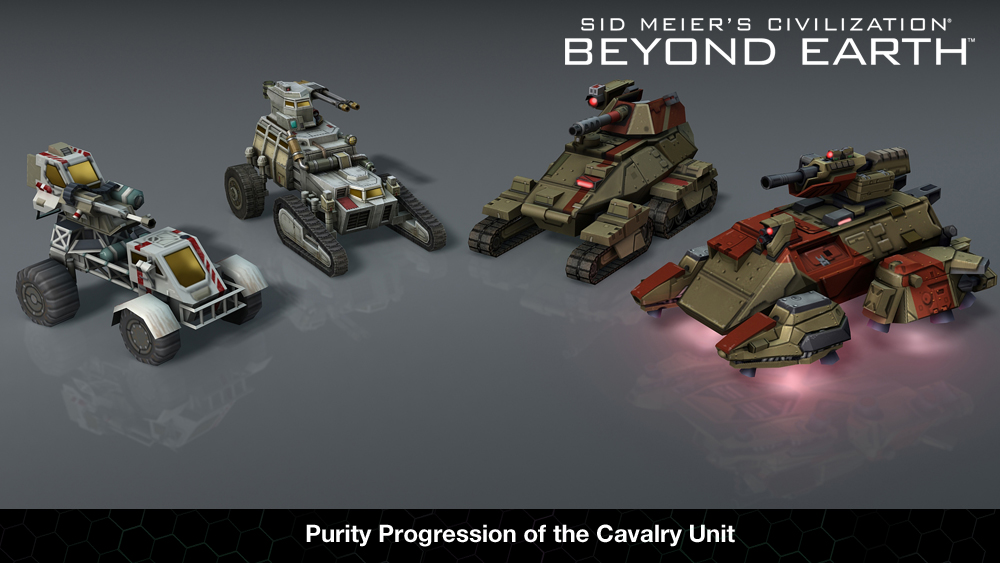
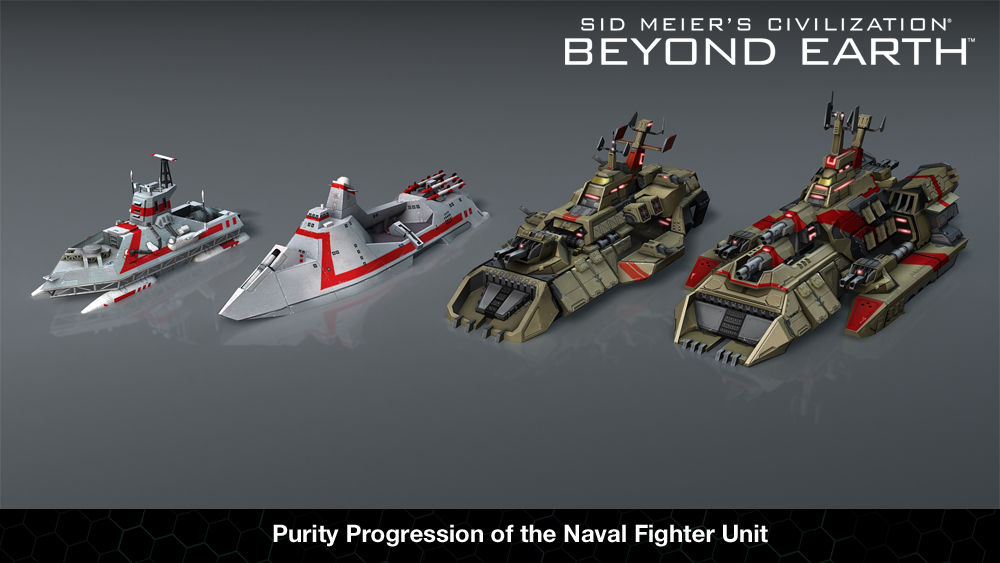
- In Civilization: Beyond Earth units built by the Purity factions have a definite dieselpunk flair. Take a look at their tanks◊, their warships◊ and their Airborne Aircraft Carrier the LEV Destroyer◊.
- Command & Conquer: Red Alert (1996)
- Crimson Skies (2000) all the way, to the point of being the Trope Codifier of this style in Video Games. Emphasis on dieselpunk Sky Pirates, Cool Planes and Cool Airships.
- Cuphead is likewise based on Inkblot Cartoon Style very evocative of Merrie Melodies or Betty Boop, but is a colorful Run-and-Gun-style game, and features a jazz score reminiscent of the era.
- Dino D-Day (2011): World War 2 meets Jurassic Park.
- The Dishonored series:
- Dishonored (2012) has the rare In-Universe material Justifying the setting, a specially treated and processed "whale" oil known as trans. The substance itself would be identical to diesel if it wasn't luminous blue or incredibly volatile.
- Dishonored 2 continues with even more pseudo-magic clockwork machinery.
- Dishonored: Death of the Outsider has an occult-driven Cyborg as a protagonist.
- Factorio, an addictive factory-builder, uses a decidedly diesel punk aesthetic, which fits in quite nicely with all the pollution produced by many a factory players end up building. Among the non-period things rendered in the aesthetic include nuclear reactors, laser turrets and the rocket you launch to win the game.
- Fallout — Usually classified as atompunk, but takes place in a retrograde enough world to qualify (a world with atomic power but without the transistornote ). It's actually deconstructed in that the inefficient technology ended up depleting resources faster, thus causing the conflicts that lead to The Great War.
- Fallout (1997)
- Fallout 2 (1998)
- Fallout Tactics: Brotherhood of Steel (2001)
- Fallout: Van Buren. Cancelled before its release in 2003.
- Fallout: Brotherhood of Steel (2004)
- Fallout 3 (2008)
- Fallout: New Vegas (2010)
- Fallout 4 (2015)
- Fallout 76
- There are also some Fallout Fan Games with their own pages:
- Fallout 1.5: Resurrection (2013)
- Fallout: Sonora (2020)
- F.I.S.T.: Forged in Shadow Torch
- Gadget: Past as Future is a 1998 point-and-click adventure game set in an Art-Deco styled nation only known as "The Empire" where bits of meteorite that fell to the Earth containing an unknown substance (called xenium in the art book) became the country's primary fuel source to power not only some of the trains, but also many of the titular gadgets seen throughout such as the Sensorama, which was originally intended by the Empire's dictator to be a brainwashing device, and the Ark, an excavating drill that can transform into a plane. Players take on the role of a government agent hired to investigate a group of scientists who claim that a planet-destroying comet is rapidly approaching.
- Grandia:
- The Port Town of Parm and the Garlyle Forces from the first Grandia straddle a vague line between this and Steampunk.
- Grandia Xtreme: Nortis, of the Kaiserreich variety.
- In Ross Smith's "Timeline" Half-Life mod trilogy (c. 1999-2002), rogue Black Mesa scientists adapt teleporter technology for time travel, specifically to help the Nazis complete their Sänger AmerikaBomber and heavy water projects and conquer the United States. Gordon Freeman must stop the Nazi invasion of time itself.
- IL-2 Sturmovik (2001) offers a more realistic than Rule of Cool take on the aesthetic, justified by bits of actual WWII history.
- InSomnia: The Ark is a dystopian dieselpunk RPG that takes place in a decaying art deco space station.
- Iron Brigade (2011), best described as "World War I with Mecha — against an invasion of television monsters."
- Iron Grip (2006)
- Iron Harvest is a Real-Time Strategy game set the same universe as Scythe.
- Iron Storm (2002) is set in 1964, in an Alternate History setting where World War I never ended. You'll see televisions and helicopters, while fighting in trenches and mud. Also, the weaponry is fictional but credible for alternate technology from the 1950-1960s.
- While borrowing more Cyberpunk themes, Jak and Daxter certainly contains Dieselpunk aesthetics, most prominent are the zoomers. Haven City also has some of this aesthetic.
- March of War: While atomic does appear in this MMOTBS, it is exclusively as a special superweapon project. The rest of the technology is entirely rooted in dieselpunk themes, albiet with... modifications for some of the factions.

- Parodied in the Metal Slug series, which (although ostensibly taking place 20 Minutes into the Future) are set in a bizarre version of WWII(with some Korean/Vietnam-era trimmings), where propeller-powered planes, railway guns, and zeppelins coexist with Humongous Mecha, Land Battleships (literally a Yamato-class battleship with tank treads bolted on), Zeerust aliens, and Wave Motion Guns.
- In the seventh entry, the villains are a time-traveling army from the future . . . still driving the same WWII-era vehicles, except now they're painted blue and shoot laser beams.
- Same thing applies for the 2021 remake, Metal Slug Code J.
- Nazi Zombies had ended its Call of Duty: Black Ops II DLC line with Origins, a very much dieselpunk World War I setting. Giant Mechas, diesel-powered armor, perk drinks, tanks, and weaponry. All of this makes the return of the original crew from earlier games so much more awesome. And of course, the main appeal, the antagonists.
- Nocturne (1999) revolves around 1930s pulp heroes fighting off mad science and Lovecraftian monsters in a very dieselpunk mode.
- Penny Arcade Adventures: On the Rain-slick Precipice of Darkness is about an Occult Detective agency battling Eldritch Abomination Gods in an Anachronism Stew version of 1920s America overrun with oil-and-clockwork powered robots and mad cultists. It couldn't possibly be any more dieselpunk!
- Power Strike II (1993), a Sega Master System Vertical Scrolling Shooter by Compile, released only in Europe and Australia (not to be confused with the Game Gear title of the same name, also by Compile, which is a completely different, more conventional space shooter). The main character is a bounty hunter, whose job is to shoot down Sky Pirates in an alternate 1930s setting.
- Progear (2001) has technology somewhere between World War I and World War II.
- Pulp Adventures is a Two-Fisted Tales story set in the Thirties and its Massive Multiplayer Crossover roster of available party members includes the Rocketeer, as well as Nazis with jetpacks.
- In the Resistance series, WWI ended differently and WWII never happened. Unfortunately, Asia and Europe got invaded by aliens instead.
- Outerlight Ltd.'s The Ship: Murder Party (2006), a very warped tale set in an art deco cruise liner.
- Silent Storm (2003) starts as a relatively realistic game focussed on managing a commando team during World War II (there are an Axis and an Allies campaign), then it switches to a plot involving a Thor Hammer Organisation (THO), Nebulous Evil Organization supplying both sides with Energy Weapons and Powered Armors, in order to weaken them enough to be able to Take Over the World by themselves. Its first sequel, the expansion pack Silent Storm: Sentinels, is set not long after the end of the war and features the eponymous Sentinels as a secret multinational (party members from both sides of the previous game are available) organisation struggling against THO, while the high technology is still there.
- The Sinking City combines dieselpunk tropes with Lovecraftian horror.
- Skullgirls (2012) definitely draws on the dieselpunk aesthetic, although the makers prefer to call it Dark Deco.
- The Sky Crawlers: Innocent Aces (2008), a video game for Nintendo Wii loosely based on the anime The Sky Crawlers.
- SpongeBob SquarePants: Creature from the Krusty Krab starts off with a Ratfinks-inspired level, named Diesel Dreaming, where SpongeBob races against Nightmare Face versions of Patrick, Plankton, and Gary.
- Douglas Adams' Starship Titanic is thoroughly suffused with Art Deco, from the design of the starliner itself to its robot staff. Better still, it actually uses Dieselpunk motifs such as pneumatic tubes.
- Steel Battalion: Heavy Armor (2012) shifts to a WWII Punk setting...in 2082. Justified in that microprocessors are no longer in production due to silicon-eating microbes appearing as early as 2020, hence the technological regression.
- Tales of Xillia: The world of Elympios that you visit fairly late in the first game and where much of the sequel takes place is a decaying land where the dingy cities are full of skyscrapers, and the background music is heavy on jazzy saxophones. Its largest city (and only city in the first game), Trigleph, looks like it was pulled straight out of a Film Noir hard-boiled detective movie.
- Tower 57
- Turning Point: Fall of Liberty (2008)
- The retro-cult Taerkastens from Urban Assault, are a 26th century version of this. Since the Taerkastens eschew electronics and related tech, they use propeller powered war planes and giant zeppelins when the other factions are using more standard futuristic units. But what they lack in the electronics department, they more than make up for by being on the leading edge of engineering and material design. The Taerkastens have the most heavily armored units in the game.
- The Valkyria Chronicles series of games is based in an alternate reality continent of Europa, loosely based on WWII Europe. "Ragnite ore" takes the place of petroleum in the game, which is centered on the small country of Gallia, a state rich in said ore, and sought after by the Atlantic Federation and the East Europan Imperial Alliance (roughly, the Allies and the Axis).
- The Wolfenstein games.
- Castle Wolfenstein (1981)
- Beyond Castle Wolfenstein (1984)
- Wolfenstein 3-D (1992)
- Spear of Destiny (1992)
- Return to Castle Wolfenstein (2001)
- Wolfenstein: Enemy Territory (2003)
- Wolfenstein (2009)
- Wolfenstein: The New Order (2014) is a Diesel Dystopia set in a world where the Nazis have won.
- Wolfenstein: The Old Blood (2015)
- Wolfenstein II: The New Colossus (2017) continues the dystopian tale of the New Order.
- World of Tanks is set in the period in which this genre is set and many of the vehicles never came off of the drawing board.
- Same applies for World of Warships.
- Adventures of the 19XX: [1] A secret society protecting the world from occult villains.
- Anathema, hosted on Slipshine.
- Athena Voltaire: [2] A female Indiana Jones much cooler and better-dressed than Lara Croft.
- Captain Spectre And The Lightning Legion: [3] A Rocketeer-style hero done in a retro serial style.
- Deep Dive Daredevils: [4] A dieselpunk adventure AT SEA!
- Even Death May Die (formerly Strange Aeons): [5]: Nazis, Lovecraft, noir and pulpy intrigue set in a crazy-ass Art Deco Mega City.
- Femme Noir: [6] A sexy P.I. solves mysteries in a shady neo-noir fashion.
- Iron Crown: [7] An interwar example with mercenaries, monsters, and a dictator's daughter on the run after a coup.
- Warbirds Of Mars: [8] Diesel-fied America at war with Nazis, alien invaders and (maybe?) Nazi aliens.
- The Chronicles of Taras combines this with Bio Punk, featuring a Crapsack / Crapsaccarine World of Improvised Diesel Punk tech, with Action Girl and Wrench Wench characters and more Engineered horrific creatures than can be listed.
- The Danger Element (The Adventures of Battle Jitni), a low budget action movie with heavy diesel punk and Two Fisted Tale stylings
- Decoder Ring Theatre features several series in the style of 1930-50s radio drama broadcasts
- The Gearheart (website) is a Genre-Busting series of interlocking downloadable audiobooks and shorts that combine pulp tropes, conspiracy theories, Spy Fiction, fantasy and action with an Old Timey Jazz Age setting. Also contains Steampunk and Clock Punk motifs.
- The Mercury Men, a series set in the 1970's but with a distinctly diesel noir style, about an office clerk facing a small-scale alien invasion with the aid of a daring Science Hero
- The Twilight Histories episode “True Aztec” is set in a dieselpunk Aztec Empire facing off against an equally dieselpunk Japanese Empire. The episode “The Big Turk” includes some slight elements such as airships and high-speed trains.
- Archer Dreamland, the eighth season of Archer, takes the super-spies cum drug lords cum detectives back to 1940s Los Angeles.
- But even more dieselpunkish than Archer: Dreamland is the parent series' next season, Archer Danger Island, a pulp adventure that winds back the clock some more to the late 1930s (this is all a coma dream in the real Archer's head), set mostly on a French-colonial Polynesian Pacific island.
- Batman: The Animated Series (1992-1995, 1997-1999). To a lesser extent Superman: The Animated Series keeps some of Superman's timeless feel from the 30/40's.
- Dastardly & Muttley in Their Flying Machines could be considered a humorous take on this concept, with its pseudo-World War I setting and outrageous aircraft designs.
- The Legend of Korra (2012-2014), a sequel series to Avatar: The Last Airbender, is a Far East Science Fantasy, Urban Fantasy variant of this, complete with power plants being staffed by people with lighting powers. It's particularly apparent in Republic City, a Culture Chop Suey of various 1920s-era metropolises with the Asian aesthetics accentuated. The soundtrack has been described as "1920s New Orleans jazz but if it were invented in China".
- And just like that, it takes more books until the punk's theme and aesthetics eventually appears through most of Book 3 until with Book 4 finally become thing in the universe both technologically and politically with dieselpunk-style giant Mecha that avatar crew face with.
- Mr. Hublot: Everything is mechanical—Mr. Hublot, the dog, the flies that the dog tries to catch, Mr. Hublot's flowers. The robot people fly to work via propellers in their heads. Yet the cars and the architecture have a 1950s flavor.
- My Life as a Teenage Robot (2002-2006). Though it's a little more leaning towards Raygun Gothic than Diesel.
- Second episode of season 3 from Rick and Morty have main plot to explore a dimension that Human civilization has already destroyed while ago and focuses on Mad Max Raiders with their lives and their dieselpunk cars.
- The Disney cartoon TaleSpin (1990-1991) and its 1930s pulp adventure style was a high-flying, lighthearted brand of diesel.
- What If…? (2021), in an episode giving an alternate look at the above mentioned Captain America: The First Avenger, expands on it by having Iron Man's father building a suit of armor similar to his during World War II, nicknamed "HYDRA Stomper".
- Britain's failed death ray, an ambitious project which laid the foundational principals for modern radar in the process of trying to figure out if a practical death ray was possible with then-current technology.
- Since Doctor Steel was a Steampunk musician who leaned on dieselpunk tropes as well, it isn't surprising to see a lot of dieselpunk fashion sense in the uniforms of the Army of Toy Soldiers.
- Those Wacky Nazis designed a series of "superweapons" termed Wunderwaffe (German for "wonder weapon") before and during World War II. Many of them were outlandish and never made it past the prototype stage, but in retrospect were heavily dieselpunk in their design. In fact, many dieselpunk aesthetics are inspired or pulled directly from Wunderwaffe designs, such as those featured in Captain America: The First Avenger. Let's take a closer look at a few shall we?
- The humongous Landkreuzer P. 1000 Ratte was a proposed massive 1000-ton Nazi land battleship (er...cruiser) armed with dual 280 mm naval cannons as well as various smaller caliber guns which might or might not have been mounted on smaller axillary turrets, all powered by no less than two engines derived from submarines. Allegedly, the main turret of this monster was completed before it was realized that Germany could ill afford to operate such an awesome weapon by its 1943 state, but it definitely deserves a mention by virtue of sheer scale.
- The Landkreuzer P. 1500 Monster. Instead of a pair of naval guns, this bad boy was to be made up of a single Schwerer Gustav railway cannon. To put this into perspective, the cannon this baby packed would have been lobbing shells that were fourteen feet tall and almost three feet wide (a bit over four meters, with an 800 mm caliber).
- The Horten Ho 229, a prototype German night fighter built towards the end of World War II, certainly qualifies both in design and function. It even makes a cameo appearance at the beginning of Wolfenstein: The New Order. Many a gamer can be forgiven for thinking it was just standard dieselpunk hijinks.
- The humongous Landkreuzer P. 1000 Ratte
- Being of the era which inspired the genre, a lot of actual WWII tech of the type used also qualifies. Prime examples include such distinctive aircraft as the Hawker Hurricane or Avro Lancaster, virtually any tank, and the aesthetic of uniforms from a variety of combatants or theatres. Pretty much all early war British equipment would count.
- The GM Futurliners, a set of bus-sized art deco vehicles used as a traveling museum presenting the wonders of 1940-50's era technology.
