

Greetings, Tropers! This is your friend, Mister Wiki, speaking to you. We all know you love TV Tropes (although some could love it better—but do not fret! Our beloved Trope Police are eager to enlighten our dear friends on the proper social behavior expected. Changing negative attitudes is never easy, but we are understanding), and I have just implemented a way for TV Tropes to love you back. I call it the Pan-Optical Processing Terminal Interface/Controlling Oversight Network. This way, whenever you look at TV Tropes, TV Tropes can look at you. Doubleplusgood!
Now, Tropers, don't worry. We won't abuse this power. We'll just watch a few of the troublemakers. But nobody will know when we're watching, so we'll all have less to worry about. I know there are problems in the world, but they will all be sorted out by our trained teams of professional troubleshooters.
All those poor fools who might ignorantly object to our benevolent oversight will be taken to read Trope 101 and reeducated. Not that such people really exist, of course. Don't worry, Tropers, everything is fine. Everyone is happy. Everyone is safe.
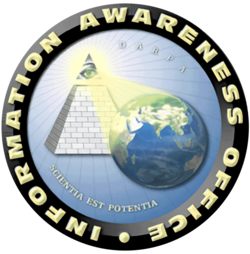
Your likelihood of relating this trope to Adbot, who is also watching you, has been noted. The Eye of Providence is typically used as a shorthand for this type of surveillance.
Not to be confused with Big Brother Instinct, nor with Little Brother Is Watching, which focuses on the influence one person has over another. Neither with The Watcher, who can watch everything but just for the heck of it, without doing anything about it.
Yes, this is Truth in Television, but there is no need to go into specifics. Not only does surveillance exist in every country, but putting real life examples here is too controversial and perfect bait for a Flame War, which is quite repulsive, really. (Also, you can find most of the examples at the Real Life sections of the Secret Police and State Sec articles.) All we ask is that you go about your life, secure in the knowledge that, no matter where you are, We Are Watching. But this can also be interpreted to mean that there has to be a Big Brother in charge so as to take care of his little brothers.
Happiness Through Conformity.
Strength Through Editing.
Examples:
- The Secure Beneath Watchful Eyes
 poster, as seen above. Did they have to make it look like every fake propaganda poster from every dystopian movie ever? Was it a work of satire by a civil-liberties campaigner that fell victim to Poe's Law?
- Another one from the UK: "A bomb won't go off here because weeks before a shopper reported someone studying the CCTV cameras." This one became popular, in that it was remixed to death.
- Ads for one program to teach kids to clean their teeth in East Germany involved a cartoony stickman with a camera who would always know if you hadn't been doing what you were told.
- The logo◊ of Information Awareness Office. The motto translates to "Knowledge is power".note The Total Information Awareness project was supposed to combine all of the various US government data mining projects into one big scary monolith and was cancelled within months — for looking too Orwellian.
- Attack on Titan comes in two flavors for your enjoyment.
- The lesser example is the Central 1st Brigade, a branch of the Military Police tasked with monitoring the citizens and eliminating anyone that steps out of line. They answer directly to the upper-ranks of the government, and handle the supression of free speech, technological advancements, and assassinations of anyone that draws the ire of the Walled society's rulers.
- In the nation of Marley, all Eldians are strictly monitored by the Public Security Bureau and encouraged to report others for "suspicious" or "rebellious" behavior. Stepping out of line in even the slightest can result in the unfortunate Eldian (and possibly their entire family) being subjected to public abuse/shaming, torture, and transformation into a mindless Titan for use as cannon fodder by the military. As a direct result, the vast majority live in constant fear and tolerate any abuse with a smile on their face to appease their captors.
- Inverted in Castle Town Dandelion. While the city is peppered with surveillance cameras, but the king himself had them apparently set up to make sure the kids were safe while he was doing his work at the castle—his family is a superpowered one, mind you. However, once the issue of the election comes up, the cameras then gain a secondary purpose — as a ready source of viewing for the public so that they can decide who they would eventually vote for to be the next ruler. In the latter case, people started to discuss the footage as if the royalty were celebrities, Panty Shots included.
- The villainous Alien Empire of Daltanious place surveillance robots (towers that literally have one gigantic, red, eye in the center) that automatically turn into Killer Robots at the sight of any rebellion. They also have a name that can be rendered as "Tsar" (ザール), censor anything that harms their image and aim to colonize all their neighbours. Does This Remind You of Anything?note .
- Kira's regime in Death Note. People revere him as a god (even building a temple to him), and threaten each other with releasing the picture and personal info of those who offend or wrong them to Kira.
- In the hentai anime EL, thousands of "eyebots" float around the city observing its citizens at all times, even in their most intimate of moments. The observation is part of the "Megaro Earth Project", which aims to restore humanity since this series takes place After the End. While they are ostensibly there to maintain security for the populace, it is shown that some of them have a more sinister purpose...
- Used as a gag in Episode 26 of Excel♡Saga, when Kabapu has set up lots of cameras in Misaki's shower, and is excitedly waiting for Ropponmatsu 1 to rub lotion on her. Misaki punches out the cameras before he can see too much, though.
- Fresh Pretty Cure!'s Moebius sees and controls everything in Labyrinth.
- Non-villain example — The Blue Clan, Scepter 4 in K has the Yuishiki System, which can be used to monitor everything in the country. They need a warrant to enable it, though, and when they do — when the Red King's Roaring Rampage of Revenge is threatening to take the whole city down with the killer they're all trying to find — the system turns up no results for the killer, who's been made an Un-person by an even more powerful Clan.
- The Skypiea arc of One Piece features a self-proclaimed god who uses his lightning powers to monitor and dispense quick "justice" among the citizens living on "his" land.
- Paris No Isabelle: The Prussians are this to the ordinary citizens of France. After they defeat Napoleon III in the Battle of Sedan, they move their forces into the innards of the country to quell any dissidents. It helps that Adolphe Thiers willingly aided them.
- Exaggerated in Psycho-Pass. The Sibyl System doesn't just monitor people, it tells them everything they are supposed to do with their life and watches every thought that every person has. You can't even seriously contemplate committing a crime without having police come to send you to therapy or arrest you and put in an asylum. If the Sibyl System thinks you're dangerous enough, the police's guns will shift into lethal mode when they target you.
- The Red Ranger Becomes an Adventurer in Another World: Lurguat's observation magic means that he has an ear and eye everywhere in Akarina. If anyone breaks his laws, his monsters will be summoned to punish them.
- The extremely well-loved Big Finish Doctor Who episode The Natural History of Fear revels in this trope. Every scene starts with people watching a recording of the previous scene. Many of which include people telling each other they're not being recorded. The effect is deeply unsettling.
- All Fall Down: The Digitized Hacker AIQ Squared is able to monitor all the main characters on a steady basis — to the point of eavesdropping in the Pentagon.
- Batman: In Batman: Year 100, Batman fights off the surveillance state built in the wake of The War on Terror.
- Elseworld's Finest: Supergirl & Batgirl: Batgirl uses Oracle's computer system to watch and monitor Gotham City and its locals. She constantly warns: "Remember — Oracle's eyes are everywhere."
- Goddess Mode: The fact that everyone is connected to Azoth makes it really easy for Hermeticorp, which own Azoth, to gather data about everyone.
- Hex Wives: The Architects have every inch of the cul-de-sac covered by cameras and microphones: allowing them to monitor the witches at all times and ensure they never do anything that might lead to them discovering their powers.
- Infinite Crisis: Batman creates the "Brother MK 1"/"Brother Eye" satellite to "observe" all of the supertypes of The DCU.
- Judge Dredd: Part of what makes Mega-City One a Dystopia is the constant surveillance by the Judges. While they do have the justification of needing to prevent genuine crime rather than just oppressing the people for the hell of it, the city is friggin' brimming with spy drones, public and covert cameras (if they wanted to monitor someone in more detail, they could easily, say, kidnap them, replace one of their eyes with a bionic implant, and then record everything they do) and other forms of Sinister Surveillance.
- The League of Extraordinary Gentlemen: In The Black Dossier, London is just wriggling out from life under a dictatorial regime; they had in the pubs!
- The Outsiders: In Batman and the Outsiders annual #1, Well-Intentioned Extremist B. Eric Blairman (inspired by Nineteen Eighty-Four) launches a satellite called the Omni-Cast, which turns every television set in the nation into a surveillance device and allows him to monitor every computer.
- Runaways: In Runaways (Rainbow Rowell), Dr. Hayes' house is under constant surveillance by her army of psychic cats, all of them tasked with watching the doctor's granddaughter, Molly.
- The Sandman (1989): The series has a rather interesting invocation with Desire, who addresses its older brother Dream (out of hearing range): "Big brother — I watch you..."
- SpongeBob SquarePants: Played for Laughs in the SpongeBob Comics story "The Consumer Is Always Right" (complete with The Backwards Я), a Nineteen Eighty-Four parody in which Mr. Krabs has turned Bikini Bottom into a One Nation Under Copyright where everyone's forced to eat only Krabby Patties, with each one being made exactly the same with no deviation allowed.
- Supergirl: In Many Happy Returns, Supergirl warns super-villain Rebel that she can see through walls and hear his heartbeats a continent away, so if he does something wrong, she will know and stop him.
Supergirl: Oh... and Rebel...
Rebel: Yeah?
Supergirl: I have eyes that can see through solid matter. I have ears that can hear your slightest word... Your heartbeat... Your breathing... You do anything that hurts others... I will find you... and you won't like it. Do we have an understanding? - Superman: In Superman: Red Son, between Superman's heightened senses and Brainiac's drones, there are very few places to hide in the worldwide Soviet Union.
- The Transformers: More than Meets the Eye:
- Pre-war Cybertron, especially during the period known as the Clampdown, where a successful assassination attempt on Nominus Prime prompted the Senate to crack down on "subversives" via every means they could, including spy satellites out the wazoo. Nightbeat is shown complaining that it's just made everyone more twitchy.
- The Functionist Cybertron takes this to horrifying extremes, with the flatheads; Cybertronians with their heads replaced with TV screens, after the Functionist's previous form of surgical mutilation was becoming too common to shock anymore. And then it turns out they can listen in through those screens, and speak back. Then it turns out the Functionists plan to make sure everyone is watching everyone... via cameras installed into everyone's eyes. The next time we see Cybertron, protesters have gotten around that one by removing their eyes.
- Transmetropolitan: The series is more Big Advertiser. A major plot point revolves around advertisers exploiting momentary 'dead spaces' in the law to pump out ads that are poison. The internet had been overtaken by ads as well. To a lesser extent, the government tries to take over the major news casters; however, the littlest part of the internet that was free broke the story.
- Ultimate Marvel:
- Ultimate Origins: During WWII, Steve Rogers sought to be drafted into the military, but was constantly rejected because he was too weak. And then, he was finally accepted. He's surprised to learn that the army already had a file on him. They have a file on everyone: the country is at war.
- The Ultimates (2002): When Bruce asks Fury about his job, he explained in full detail how closely S.H.I.E.L.D. is monitoring him and everything he does.
- In The Wild Storm, the entire world is being monitored by one shadowy group or another.
- Clash of the Elements: Alpha via his Command Sphere, which he uses to monitor every square inch of Plit for the purpose of seeing the heroes' journey and keeping an eye on Cackletta until he joins the group himself.
- In CWCollateral: A Tale of the Resistance, Magi-chan Sonichu provides surveillance for the Chandler regime via his vast psychic powers. The PVCC manage to hide their bases from him using anti-psychic technology. Later in the story, his illegitimate daughter Aki starts actively projecting Psychic Static to block his scrying.
- Equestria: A History Revealed's Lemony Narrator believes that Celestia and her fallacy police are keeping an eye on her, which causes some of her paranoia to leak into the fic. However, given that she also thinks that they can look directly into her thoughts and the fact that she's a Conspiracy Theorist with a capital C, this is more than likely all in her head.
- Escape from the Moon: Whoever has placed Doa on the station has cameras in every room, including the bathroom.
- Fallout: Equestria: The destroyed wasteland is littered with giant propaganda posters from the Ministry of Morale of an overly pink pony staring down at the landscape saying "Pinkie Pie is always watching. FOREVER." Old recordings reveal that Pinkie's Ministry of Morale was not only tapping all supposedly private communications, but her friendly spritebots were secretly equipped with audio and visual sensors as well, and she had all the other Ministries and major corporations bugged. Furthermore, with her Pinkie Sense, she was able to quickly judge which leads were best to follow up on. And for all the terrible things she did, she only missed preventing the apocalypse by minutes.
- The American Morality Office in Farewell to Life the Way We Knew It is this. They start out censoring minor things, but it soon gets to the point where they're not only policing the media but they're policing people's individual lives.
- Fate Revelation Online: Diabel is well aware that they are all trapped inside a death game controlled by one man. He considers himself the "leader of the hostages", and tries to balance keeping Kayaba Akihiko happy with not indulging whatever his mysterious sinister goal is. So when he gets a message from Kayaba praising him for getting more people involved in the game (using some player slang), he gets very worried. He knows that he can't even talk about his worries openly, since Kayaba might be watching him at any moment, or possibly recording everything to peruse later at his leisure. The wrong word could get them all killed.
- The Infinite Loops: Twilight Sparkle tells Pinkie Pie to let her full array of abilities loose on a 1984-esque Equestria, while Twilight goes to examine some moons for a while. The result? "FRIEND PINKIE PIE IS WATCHING YOU. But only when it's not creepy."
- Intrepid: Grue (who just committed a Heel–Face Turn) is under constant surveillance by the PRT, including a sub-dermal bug in his skin, keylogging his computer, and possibly hidden cameras in his home. He doesn't learn about the latter two until after they tell him they know he got in touch with his old team and tell him not to do it again.
- Ai in Nobody's Hero can monitor everyone in the outside world with the help of his AISPY mainframe. It can also detect Cyberse monsters, which is how Ai was able to discover Yusaku's existence.
- Read the Fine Print (Evangelion): When Shinji questions how Bwynvienne knows he and Asuka signed a soul-selling contract freely, the demoness replies they were being watched by agents of the Infernal Administration when their contact was being signed.
Shinji: Wait, how do you know neither of us was forced to sign? We didn't see you when we put our signature on the contract.
Bwynvienne: When a contract is being signed, we are given pertinent information about the situation to ensure no duress or lies. If one of those had happened, the contract would have never come into effect. You may not see the Infernal Administration, but rest assured we see you.
Shinji: That's... not very assuring. - In To the Stars, a more benign version of this trope currently exists in that full universal income mostly exists (currently dampened by the necessities of interstellar warfare) and being socially libertarian in that almost anything legally goes as long as you don't hurt other people, everything is still monitored using subsentient AI that is supposed to alert a sophant AI or a human if someone is up to no good.
- The Universiad subverts the trope in that it is because of the ubiquitous surveillance from FLEETSEC to catch the truly evil stuff that the Forum's citizens can have so much freedom, even to do things that would be immoral and illegal in 21st century Western nations.
- Doraemon: Nobita's Little Space War has the gang infiltrating Parika, a planet under the rule of a space dictator named Gilmore. The various posters of Gilmore hung all over the cities are actually surveillance cameras.
- Deconstructed in Hey Arnold! The Movie. Yes, it was important for Sheck to record everything in his building the whole time to foil the kids' attempt to get the document from him. Those same cameras are used against him when they need an Engineered Public Confession.
- In Iron Man: Rise of Technovore, this is the reason for people protesting the launching of Stark Industries' new surveillance satellite HOWARD. Tony unconvincingly insists that its only purpose is to watch out for bad people.
- The LEGO Movie: Big billboards with the words "I've got my eye on you!" written on them are seen.
- Patema Inverted: The Agian government closely monitors its citizens through an extensive surveillance system — from their government offices, their schools, and the surrounding area outdoors. Citizens are also indoctrinated by their propaganda against the alleged inverts, who have been labelled as "sinners". And anyone caught deviating from their societal norms is marked as a "deviant" and placed under strict watch.
- In The Anderson Tapes, Duke Anderson plans the mass burglary of an apartment complex, unaware that he's being watched at every stage by various official and unofficial surveillance teams. However, because they all have different agendas and no one is cooperating with each other, the crime goes ahead.
- The documentary Citizenfour is all about this trope and how Edward Snowden learns of it and tells the world.
- Closet Land: The Interrogator tells the Author that the government tapes all hospital room conversations to gain information, producing one she had while with her dying mother. He's also very well-informed about the Author overall, including intimate details of her personal life, thus the government is indicated to have spied on her for some time.
- Richard Vickers from Creepshow has a thing for cameras, including using them in the murder of his wife and her lover.
- Cube:
- Discussed and actively defied in the first Cube film by Worth. He reveals that he worked on the construction of the Cube, but when the other characters question who is ultimately responsible and secretly controlling and watching their lives, he explains that there is no leader, and the Cube is a public works project without a purpose, operating under the pretense of a grand plan. He caps it off with "Big Brother is not watching you."
- Inverted and played with in Cube Zero. The Cube occupants are covertly monitored by the mysterious controllers of the Cube, but the film plays with this by making the two observers the focus characters.
- The "solution" that should fix cyberbullying in, well, Cyberbu//y (2011). There's a discussion why this really wouldn't work in real life.
- The Dark Knight features Batman, driven to the edge in his pursuit of the Joker, using a machine that turns every cell phone in Gotham into a sonar imaging device. Batman himself cannot use the device. Only Lucius Fox can, and his disgust at such methods is why Batman chose to give control of it to him. Luckily, at the end of the film, Batman reveals the machine is rigged to self-destruct on Lucius's command after it's used to capture the Joker.
- San Angeles in Demolition Man. Subverted in that most of the populace is more than eager to live under this surveillance.
- Eagle Eye has the U.S. Government employing a spy Master Computer to monitor everything, including financials, to create profiles of citizens. Over the course of the movie, this computer decides that the human government isn't doing a good enough job and decides to usurp it. How? By using hundreds of thousands of people's profiles to force them to do it or trick them into doing it.
- The leader in Equilibrium is called Father, and he suppresses human emotion to maintain control.
- In G.I. Joe: The Rise of Cobra, the Joes (an international police force) identify the Baroness by using Facial Recognition Software against pictures of every person in the world... an image library built up by secretly copying every digital photograph ever taken by anyone.
- The Girl From Monday: The government tracks all citizens when they buy anything electronically or use the web, not only to identify dissidents but sell them products (since they're ruled by a huge corporation).
- Guyana: Crime of the Century: Johnson goes to great lengths to ensure that no defamatory words are spoken against him, whether inside Johnsontown or outside, and to this end he swears to inspect the letters written by the relatives of the people being held captive in the commune.
- In The Lives of Others, the main character serves as Big Brother.
- Minority Report actually has consumer-based ubiquitous surveillance as a plot point. People can have customized ads targeted at them based on retinal scans-triggered by walking through a mall — and at one point the cops send tiny little robotic spiders to scan everyone in an apartment building they suspect the protagonist is in. The premise is that people can be arrested and put in a Cryo-Prison simply due to clairvoyants seeing them committing crimesnote in the future.
- In The Purge Universe, at the beginning of the Purge event, a loud, official voice sounds informing the populace that the Purge has begun, that emergency services are suspended, and some other information, ending with this gem: "Your government thanks you for your participation." It is unclear if the voice comes from the family's television, radio, or outside public loudspeakers, but the intent and effect remain the same.
- In Reality (2012), this trope is in play as Luciano auditions for the television show Big Brother and begins to think they are watching him even outside the walls of the house.
- In Santa Claus (1959), Santa has a device in space that can watch every kid on Earth. The machine itself is creepy too! It has giant lips! He also has a satellite with a human ear in the center, and a telescope with an eye.
- Unusually for a spy movie, Spectre is against this concept and even deconstructs it. While C/Max Denbigh constantly spouts the idea of total surveillance and believes the 00-agent program is obsolete because of it, M is more concerned about its undemocratic dangers, and even directly questions C if all the data that's going to be fed might actually end up in the wrong hands. M even wonders whether C's surveillance plan will be able to deal with morally difficult situations, wondering if someone who just sits with such technology would be capable of pulling a trigger and killing someone. Unfortunately, Bond and M's suspicions regarding C and the Joint Intelligence Service/"Nine Eyes" program were ultimately proven right, since C turned out to be The Mole working for SPECTRE and the program itself is a Trojan horse for world domination. If the data from all that surveillance isn't kept secure, then it's a double-edged sword, since SPECTRE had bankrolled the formation of the Centre for National Security, and with this, they can have unlimited backdoor access to all the data gathered from "Nine Eyes" and use it to stay ahead of the opposition and destroy their enemies, namely 007.
- V for Vendetta: Secret police are constantly monitoring British citizens for signs of dissent, not only by tapping their phones and presumably the Interlink (kind of a government-run Internet), but also even spying on their conversations from surveillance vans driving by.
- Franz Kafka: The whole point of the short story "Before the Law" in the book The Trial. And perhaps inverted in the parable "An Imperial Message", in which the King is ultimately barred from contact with the narrator/average person. Given that both of these stories are written as parables (even in context) about God/meaning/identity in modern life/solitude (and what it might mean to be solitary in a modern society) rather than describing a panoptic state leaves the applicability of this trope open to question.
- Examples from Janusz Zajdel, the guy who loved his Dystopia:
- You can never know whether or not you're under surveillance in Paradyzja. The locals just tend to assume that they are, hence several odd behaviours designed to confuse the automated systems.
- In Limes Inferior, there's no official surveillance, because the Overzeroes have realised that whenever you spend money (and the Global Currency there is electronic only) you give them their location. They do employ spies for watching specific people, if needed.
- North Korea, as portrayed in The Accusation. Citizens are encouraged to spy on and rat out their neighbors, with local party officials frequently checking in over any kind of "deviant" behavior. Plainclothes Secret Police officers are everywhere, even places as innocuous as a train station.
- In Bad Monkeys, Panopticon watches and records everything... or do they?
- In A Certain Magical Index, Academy City is a rather subtle example. On the surface, everyone seems to be living fairly freely, and a number of people commit crimes without retribution, but it's covered in security cameras, watched from orbit, plays ultrasonic frequencies throughout the city so a phone call can be traced by analyzing the sound patterns, and has a database containing detailed information on everyone in the city, including brainwave patterns. Those crimes people get away with? Nearly all of them are secretly backed by the higher ups, and even the ones that aren't are known to them. If all that wasn't enough, there's a second monitoring system of nanomachines spread throughout the city, even where the cameras don't reach. The police are also heavily armed and double as the military, but considering what they have to deal with that part is fairly understandable.
- The Purity Web becomes this for the new American theocratic society in Christian Nation. This leads to the protagonist's use of an old electric typewriter to write his memoirs in, since it's one of the few pieces of technology left that's not being electronically monitored.
- "The Dead Past": The government has been trying to prevent the study and creation of more past-viewing devices because "the past" can be as recent as a hundredth of a second ago. If people have access to devices that can see anywhere in the world, then privacy is gone. In this case, the government is trying to stop Big Brother.
- MC in Domina tracks people by the GPS in their phones. She means to get permission, but forgets.
- In Philip K. Dick's short story "Faith of Our Fathers", all televisions are equipped with monitoring systems. When the Absolute Benefactor speaks through it, failure to be properly attentive is noted and monitors will arrive quickly to issue demerits.
- In The Final Reflection, Imperial Intelligence is always watching for disloyal behavior (or, at least, might at any given moment be watching, which is practically the same thing).
- In For Your Safety, the Groupmind installs humanity on the Ring, a massive space station with 24-hour monitoring through cameras and additional monitoring by issuing everyone a morph. Though its intentions are benign, even the Groupmind realizes the corrosive effect this will have on the human psyche.
- Played with in Halting State and its sequel Rule 34, as cameras are omnipresent, but facial recognition technology is stated as being too processor-intensive to be useful in real time. However, your mobile phone can track your location anywhere it can get a signal, and makes a great listening bug if it is hacked. Also, the police are watched even more closely by Big Brother than any of the criminals are, being required to have cameras on their body running at all times to "Life Log" their time on duty for the official record.
- The Ministry of Magic in Harry Potter, especially Dolores Umbridge. To drive the point home, when she pretty much takes over a huge chunk of the ministry in Harry Potter and the Deathly Hallows, she's seen using Mad-Eye Moody's special eye replacement (which can see through walls, clothes and invisibility cloaks) embedded in her office door.
- Once Katniss and Peeta become contestants in The Hunger Games, cameras are waiting to capture every move they make. It's heavily implied that all of Panem, including the Capitol and Victors' houses, is under surveillance, leaving people afraid to say anything that might come off as negative about the Capitol. The only place where Katniss feels unobserved and free to say what she thinks is in the wilderness beyond the electric fence surrounding her district. However, President Snow even knows Gale and Katniss kissed in the woods outside District 12 and Katniss never does find out exactly how President Snow knew about the kiss. In addition to all this, the population is so extremely poor that there are always eyes and ears for hire for the government.
- AM in "I Have No Mouth, and I Must Scream". He's quite honest about wanting the characters to suffer. But they'll suffer his way, think his thoughts, and play his games. As he watches them. Forever.
- Industrial Society and Its Future: Kaczynski discusses surveillance growing as another means of controlling people increasingly possible with technology.
- The planet Kegan in the Jedi Apprentice book The Fight for Truth has a very small population and only one city. Its rulers, the Benevolent Guides, implemented increasing levels of surveillance to keep things running smoothly. Qui-Gon Jinn finds that intensely detailed records are kept of people even in their own homes (who they talk to, what they say, what they write and to whom), and children abducted for standing out (having a chronic illness, being Force-Sensitive, questioning the propaganda they're fed) have their records removed.
- Played with in the Known Space short story "Cloak of Anarchy". People in an "anarchy park" are allowed to do anything except direct violence against another person: if someone does that, the ever-present hovering "copseyes" stun both the aggressor and the victim, knocking them unconscious. The "played with" part is that someone figures out a way to knock out the copseye network. It turns out that real anarchy is pretty unpleasant for everyone who isn't fairly strong physically and/or a sociopath.
- The Norwegian science fiction short story "Kodemus, or the computer who thought what the heck" has everyone equipped with small handy computers called "Little Brothers", who keeps track of time for them, advises them, sees to it that everything is on track. All of them are, of course, Connected to a Central computer. But in essence, it is the little brothers who watch their every move.
- Weaponised in The Laundry Files. The omnipresent surveillance cameras, which are all accessible by Laundry management, are also part of the "SCORPION STARE" network, being equipped with re-programmable chipsets that can convert them from simple surveillance to being technological basilisks. So not only is Big Brother most likely watching you, if he can see you, he can kill you stone dead with the flick of a switch.
- In The Leonard Regime, civilians are tracked at all times through their cell phones and cars. They are also required to state any reason for travel before doing so.
- The Eye of Sauron in The Lord of the Rings, even though he can only see you when you wear one of his rings. Or looked into a Palantír.
- In Matched, the Society watches most things people do. Even their dreams are recorded for irregularities and to gather statistics. The telescreens are called "ports" here.
- Bo Cleevil, the evil illegitimate ruler of the Ever After from the May Bird series, has the propaganda line "Bo Cleevil is watching" posted everywhere, accompanied by a picture of his eyes. The most paranoia-inducing part of this is that it's true. He can see you anywhere that you're accompanied by darkness, as a manifestation of the dark and its terrors. The protagonist doesn't learn this until the very end of the third book.
- The Neanderthal Parallax has this with the Companion implants. Subverted, in that Neanderthals see this as a good thing, as it makes alibing yourself for crimes and identifying perpetrators easy. Except if suspected of a crime, no one monitors a person's recordings — they're only "unlocked" when a formal charge has been made.
- Big Brother, who is still watching, from Nineteen Eighty-Four is the Trope Namer. Big Brother is the symbolic head of state over a totalitarian superstate that engages in pervasive Sinister Surveillance. He may or may not exist (or have ever existed) as an actual person.
- In Psy Changeling, the ruling Council of the Psys certainly act the Big Brother part. And since Psys are a psychic race whose members are all linked by a telepathic network...
- This is one of The Church's tasks in Quantum Devil Saga: Avatar Tuner. Each and every soldier receives implants that allows the Church to keep track of every little thing about them; from their biometric data to their kill counts, to the outcomes of all combat situations to their very thoughts.
- In The Queen's Thief, Attolia maintains an extensive network of spies headed by her "Secretary of the Archives," Relius. Being a reigning, unmarried queen in a heavily patriarchal society of schemers with an empire that would very much like to conquer you makes such measures necessary. As she says, she has spies who spy upon her spies and spies who watch them.
- "Sam Hall" has the government doing, among other things, tracking where everyone in the country is from day to day. It all falls apart when the system fails to track down the title character, who is completely fictitious and was added into the system by the protagonist as a joke.
- At The School for Good Mothers, the mothers practice parenting with robotic dolls. Eye contact, length and quality of hugs, and other aspects of interactions with the dolls are measured to determine performance. Brain scans are taken, and the dolls themselves record footage that the mothers get to see.
- Shimoneta:
- People are forced to wear special chokers and wristbands called Peace Makers to monitor what they say for obscene words and alert the authorities. They can even track arm and finger movements for anything written or drawn. Blue Snow has a special function on her phone to disable her PM, and presumably any nearby PMs, for three minutes a day.
- Anna's mother is trying to pass a law to make this even worse, by allowing the active monitoring and recording of PM for underage citizens, and making them wear the newest PMs that are shaped like chastity belts.
- Shtetl Days: Both Veit and Kristina worry that Sicherheitsdienst could be bugging their apartment. This is semi-confirmed when Veit is confronted by an SS official about his real identity.
- In the A Song of Ice and Fire prequel novellas, the Seven Kingdoms of Westeros under the de-facto rule of Brynden "Bloodraven" Rivers become a fantasy version. Bloodraven was formerly The Spymaster, and has risen to the chancellor to the apathetic King Aerys. It's implied he uses Skinchanging magic to spy on the people through the eyes of ravens and rats, and thus catches rebels and dissidents impeccably.
- The Stainless Steel Rat is a criminal who operates despite a surveillance-heavy society. In the first few pages of the original novel, he notes that not only is his identity recorded by taking his picture when he buys a ticket on a spaceship, there are optical bugs in the fitting rooms of clothing stores. (It probably helps ordinary people cope with all this — a little bit anyway — that the police are mostly robots.)
- UNICOMP in This Perfect Day didn't bother watching people with cameras, but it did require that they touch their nameber bracelets to scanners whenever going through a door, so that UNICOMP always knows where everyone is at all times. Thought Control was accomplished through a system of mandatory drug treatments, genetic engineering, and weekly visits to an "advisor", a sort of combination psychotherapist, parole officer, and father-confessor.
- The Pianist from Syria - A Memoir: Chapter Four - Aeham and his father visit a wealthy man because he hired Mr. Ahamd to tune his piano. While his father insists it's on the house and he needn't pay him anyway, he hands Aeham a wad of bills instead. At home, Aeham gives his father the money, only for his father to panic, interrogate him about the man and ask what happened. He then warns Aeham to never speak to anyone about what happened, because "in Syria, even the walls have ears".
- When Aeham is older, he asks his father who that man was.
Years later, I learned his name, Mustafa Tlas. From 1972 to 2004 he had been Syria's secretary of defense, one of the old Assad's closest confidants. He was known to spread hideous anti-Semitic conspiracy theories and was said to have made a fortune smuggling weapons and antiques.Our visit to his villa had intimidated me so much that for months, I believed government spies were watching us. After all, we had been in the boss's house. Had we made a mistake? Had we become suspicious? Every time I stepped outside, I kept an eye out for anyone observing us. But I never saw anyone. - "True Love": Milton tells Joe to send the 235 potential matches to get psychological evaluations, and it gets enough information from their sessions that it is able to analyze Milton the same way.
- From 1921, twenty-eight years before 1984, comes We, set in the One State, a nation almost entirely built of glass, allowing the secret police to spy without needing cameras.
- Will of Heaven turns the original Nine Tripod Cauldrons into an alien tech surveillance device.
- Lilith uses mirrors to this effect in Witches Abroad.
- Wolf Hall:
- Bishop Gardiner's secretary Wriothesly comes to "work" for Thomas Cromwell, but nobody bothers pretending that he isn't there to spy for Gardiner. Cromwell keeps him around because Wriothesly is useful enough to employ, it means Cromwell knows who the spy is, and he can try and make Wriothesly loyal to him instead.note Gardiner also implies that he has spies in Thomas More's house in one conversation.
- Cromwell uses his small army of intelligent young wards and apprentices to watch Henry VIII's enemies. When Plantagenet descendants use a nun's prophecies to plot against the king, he plants servants in their households to report back on their conversations. It is worth noting that this is the era in which the word eavesdropping was coined.
Cromwell: I wonder what you discussed.
Lady Pole: I'm sure you do.
Cromwell: Actually I don't. The boy who brought in the asparagus, that was my boy. And the boy who cut the apricot, he was mine too.
- IT, from A Wrinkle in Time. IT definitely existed and was watching, no question at all about IT.
- Played with in the WWW Trilogy. On one hand this trope is invoked in-universe by several characters who are uncomfortable with Webmind's emergence, however it is ultimately subverted; Webmind does have the ability to observe anything within range of a camera with even the remotest Internet connection and is able to access anything online, password or no password (and having an apparent inability to understand the concept of privacy), but they only use their abilities to help humanity.
- The Coalition from the Xeelee Sequence has one of the scariest forms of surveillance. That is the frequent utilization and abuse of time travel as a means to monitor dissent or anyone who steps out of line really. The ability to do strategic foreknowledge means that the central government have the ability to charge a person for a crime they have either not yet commit, or their own future selves had committed. The result is that both temporal clones will be appropriately punished. Pirius from Exultant almost got the axe for doing something unorthodox, despite said action actually benefiting the Coalition. All because said unorthodox action was considered as 'non-doctrinal'. He was saved only by the quick thinking of Commissary Nilis of the Office of Technological Archival and Control.
- Zones of Thought: In A Deepness in the Sky, the Emergents take over the Qeng Ho space fleet by force. La Résistance quickly forms, but one of the rebels discovers too late that the Emergents are watching everything they do, by using the Focus plague to create Slave Mooks who do nothing but monitor electronic surveillance. Later, they use thousands of dust-sized cameras to watch over the Qeng Ho. Fortunately, they don't know the man who originally developed the cameras is in their midst and has a backdoor to the program.
- In 2 Broke Girls, Oleg jokes that he was "once on Ukraine's version of Big Brother", then adds "a.k.a. just living in Ukraine".
- 7 Yüz:
- The suggestion of a mysterious "big brother" figure is invoked by Mete and Elif in "Büyük Günahlar". The two teens strike fear and paranoia into Aytaç's mind by suggesting they have more power than they actually do. Mete informs Aytaç they will know if he doesn't follow the orders he is given, and will use the Blackmail tape against him. The suggestion is enough to make him obey.
- Discussed in "Karşılaşmalar". Onur expresses concern about how corporate entities collect private information through downloaded apps and use it to their own ends. Gözde believes he's being paranoid and sacrificing a fun opportunity because of it.
- Andor: It is well known that the Empire uses surveillance, especially the ISB, and Mon Mothma realizes that a suspicious number of new faces around her means she's under direct ISB surveillance.
- Angel has Jasmine, who gradually "sees" through every person she has made contact with. And sets up everyone against the main characters.
- The Barrier: Outside of the enclave for the elites, there are surveillance drones in the street and each block has a government informer whose job seems to basically be a combination of professional Nosy Neighbor and government propaganda parrot. Most people also need to use a Pay Phone to makes calls or meet in person if neither side has their own phone, which greatly reduces the options for discrete communication. There are also undercover policemen in the most unlikely places.
- There is a The Benny Hill Show sketch that plays with this trope. A couple would be lying on the bed watching the late night newscast (the newscaster is Benny Hill), and would roll over and decide to start getting amorous. Unknown to the amorous couple, Benny could see what they were doing from the other side of the TV. Benny would start staring and making rude noises in the middle of his newscast, then would call over the weatherman, cameramen, etc. to gawk and ogle at the couple (and they'd all pretend everything was normal when the couple would look up).
- Blake's 7: Everything in the Federation is taped, logged, and recorded in triplicate. Woe betide you if one of those recordings shows you conspiring or plotting or thieving or passing a political criminal the salt. You will vanish and no-one will remember you ever existed.
- Brave New World: The higher-ups seem to know what everyone is doing at all times. Lenina is called in for her counseling by Bernard since they've monitored her sexual activities (which are deemed too monogamous), and have recordings of them all (to her discomfort). He isn't exempt either-he's reprimanded for briefly disconnecting himself from their computer network to have a bit of privacy. Both these things are deemed selfish, with Bernard even being accused of solipsism over it. Everybody has an ocular implant (OI) which lets them see what other people do when they want, making it more a ubiquitous sousveillance.
- The Capture is set in the present day, but focuses on surveillance. It seems the security services can follow whoever they want for any reason, and intervene in anything, and everything is reordered on CCTV. Which can still be tampered with at times.
- Class of '09: In 2034, US citizens are more surveilled than ever by the AI system, and many are afraid to talk where they aren't watched as this could draw suspicion of wrongdoing. This expands even further once Tayo gets fired as FBI director and replaced, with his successor supporting the system zealously. Protests against this erupted in the early days, turning violent, with many also moving to rural areas with no surveillance so they could escape.
- Colony: The Bowmans' house is filled with concealed surveillance cameras in every room (including the bathroom) due to Katie's involvement with the Resistance. Additionally, the city is monitored by drones, and eventually put under even more surveillance, with hundreds of people viewing the populace.
- Doctor Who: In "The Sound of Drums", after becoming Prime Minister of the UK, the Master uses all of the tools of the modern security state to his advantage to spy on the Doctor, Martha and Jack.
- Don't Look Deeper: Aisha learns her creator Sharon is always monitoring her with various surveillance mechanisms, supposedly for her own benefit. She gets them all shut down.
- Firefly is an ironic inversion of this. Big brother is a big nuisance to "Big Brother".
- Mocked in the 1984 Special Good Morning, Mr. Orwell, which boils the Sinister Surveillance into Punch-Clock Villain.
- Himmelsdalen: The sanitorium has many cameras to monitor the patients (the more dangerous at least). However, they still have blind spots to exploit.
- iCarly: One of the new policies in the episode "iHave My Principals".
- In Kamen Rider Outsiders, the artificial intelligence Zein has placed the whole world under rigid surveillance by maintaining its very presence around the Internet to police its idea of order, putting villainous organizations like Smart Brain and Foundation X on its watchlist. This also raises a cause for alarm for people who are not engaged in any wrongdoing, even former villains like Desast, who just recently redeemd himself, isn't safe either.
- In The Last Enemy, the mathematician protagonist comes back to London after 4 years in China to discover this trope in full effect. In fact, he is asked to be the spokesperson for a new computer system (called Total Information Awareness) meant to monitor everyone in order to keep the citizens safe. He has to go through a security checkpoint with a metal detector and an X-ray just to enter a church. The ending also reveals that the disease affecting only Arabs was meant as a form of bio-tagging to further enforce this trope.
- Leave It to Beaver: The squeaky-clean 1950s sitcom had an episode alluding to Big Brother — 1962's "Lumpy's Car Trouble," where Wally breaks the rules for borrowing Ward's car for a track meet; he allowed the driver, Lumpy, to take a "shortcut" on the way home, causing damage to the exhaust system. One of Ward's co-workers sees the boys push the car along the highway and tells Ward. That evening, Ward confronts the boys and after Wally admits what happened, refuses to reveal his informant. Ward's reasoning: By not knowing that person's identity — and thus, being able to track down and question him about what he "might have seen" — the boys will always be on their best behavior, because someone might be watching.
- In The Lottery, the government is in control of who can carry embryos from conception to birth, and will take care of anyone to attempt otherwise.
- The Man in the High Castle:
- Juliana's halfway house residence in New York City is bugged with surveillance equipment by the SS.
- Hoover presents a plan to Smith to implement "total surveillance" on the American Reich's citizens, having everyone monitored 24 hours a day. This includes Smith and his family, who have been spied on by Hoover for any sign of wrongthink for months.
- The alternate universe Manservent Neville from The Middleman episode "The Palindrome Reversal Palindrome". Notable because it turns out that the alternate Wendy Watson is The Man Behind the Man.
- In The Path, the Meyerists' universal symbol is a stylized eye surrounded by rays of light, designed by producer Russell Barnes in a quasi-tribal/Egyptian style. It means spiritual insight, but also "you're being watched — you're ALWAYS being watched."
- Person of Interest:
- "You are being watched. The government has a secret system, a Machine that spies on you every hour of every day. I know because I built it." Specifically, it's a supercomputer that processes data from everything within range of any telecommunication device — security feeds, emails, bank statements, flight registrations, cell phones, telephones, everything — and weeds through it to find the titular persons of interest.
- The morality of the Machine is examined in detail: on one hand, the Machine was specifically designed to detect acts of terror and has averted several, and the protagonists are secretly able to use it to help the helpless; on the other hand, everyone involved with the Machine, including its creator, is scared witless by the Orwellian potential, and the US Government department who oversees the Machine isn't squeamish about getting rid of those who discover its existence. To this end, when Finch created the Machine, he specifically designed it so even the government couldn't access the hardware or software, preventing them from using the Machine for anything other than its original purpose. In addition, the Machine limits what it gives out. All the protagonists and US Government get is a 9-digit number(s), the Social Security Number(s) of a person(s) of interest in the upcoming event. Could be the perpetrator(s) or victim(s). Neither group knows and must investigate.
- At the end of season 2, the Machine is freed from government control due to a Batman Gambit by Finch, and the government starts freaking out, worrying its intelligence might stop coming. The numbers are still coming and threats are still being stopped. But they completely fail to understand what exactly has happened, thinking that Root has gained admin access to the Machine, when really it's basically the exact opposite.
The Machine: [via Root] Trust in me. I am always watching.
- Midway through Season 3, a company called Decima obtains the drives to another A.I. system like the Machine called Samaritan. Unlike the Machine, it has no moral programming and, where the Machine is called a "shield" for its protective nature and limited offensive use, Samaritan is a sword that can be wrought on anyone within its feeds. At the end of the season, Samaritan is online and the main characters are being hunted by its operatives.
- In the Season 4 episode "Wingman", Reese name-drops this trope, but in reference to the Police's domain-awareness system (shown previously in Season 1 and 2), as opposed to the Machine or Samaritan.
- Persons Unknown: There are security cameras constantly watching the captives.
- A hilarious version in Sherlock. Sherlock's big brother works for the government, and yes, he is watching. Why? He's concerned, of course.
Faith: Big brother is watching you!
Sherlock: Literally. - Silo: Judicial stamps out anybody who questions the structure of their community. Gloria turns on the faucet while asking Allison some subversive questions, claiming they have "listeners".
- Siren (2018): The US Navy turns out to have hidden cameras in Ben, Maddie and Ryn's bedroom, spying on them using these during Season 2. Ben learns and disables them however.
- In Smallville, Chloe Sullivan slips into this in season nine. She puts up cameras in her best friend's house and casually mentions that she now spends large chunks of her day surfing through everyone in Metropolis's cell phone conversations. The phrase "Big sister is watching" is also used.
Oliver: 1984, the Sullivan edition.
- A less creepy example in the Stargate Atlantis Alternate Reality Episode "Vegas", in which Sheppard is a washed-out police detective who spends his time drinking and gambling. When alternate Rodney has him brought in, this exchange happens.
McKay: I realize you have no way of grasping what's going on here. There's really only one thing you need to understand: if you fail to co-operate, I have the power to ruin your life.
Sheppard: Well, then, you don't realize how little I have to lose.
McKay: I know everything about you. You've never been married. The only thing you own is a car. You have two thousand, three hundred and sixty-three dollars in the bank and are thirteen thousand dollars in debt, not counting off-the-books gambling losses to a guy named Mikey. What else? You finally passed your detective exam after four years and two failed attempts and now barely scrape by on quarterly performance reviews.
[Sheppard smiles ruefully]
McKay: Am I getting this right?
Sheppard: [smiles sarcastically] I also like spearmint gum.
McKay: [takes a packet of gum out of his pocket and tosses it onto the table] Have some.
Sheppard: I was joking.
McKay: No, you weren't. - Star Trek: Deep Space Nine: The Cardassians, being the Orwellian civilisation they are, naturally have this, in the form of the Obsidian Order, who carefully monitor and log every detail about the average Cardassian citizen's life, including what they had for breakfast. And if it doesn't meet with their approval? People have been known to disappear for less.
- Star Trek: Picard:
- As Narek explains to Soji in "The Impossible Box", the Tal Shiar routinely monitors all incoming and outgoing transmissions on any Romulan facility, including the Romulan Reclamation Site. The system automatically flags any anomalies, which is why he knows that Soji's nightly calls to her mother lasts exactly 70 seconds every single time. The Zhal Makh meditation chamber is under surveillance.
- In "Nepenthe", Narissa knows that Hugh aided Soji and Picard because their movements were being tracked. Narissa has never met Hugh before because she was on Earth posing as a Starfleet officer, but she's aware that Soji is Hugh's protégé, so the Tal Shiar observes the social interactions of everyone on the Artifact.
- In "Broken Pieces", Elnor can run, but he cannot hide on the Artifact; one of Narissa's underlings is keeping tabs on his position.
- Arguably, those camera-speakers that pop up out of the ground on Teletubbies.
- The Twilight Zone (1959):
- Implied in "Third from the Sun". William Sturka and Jerry Riden are plotting to steal an experimental spacecraft and settle on another planet in order to avoid an impending war. When Riden comes over to Sturka's house to discuss their plan, Sturka turns on the machinery in his workshop so that the authorities won't be able to pick up on their conversation with the listening devices that they have presumably placed in his house.
- In "The Eye of the Beholder", when Dr. Bernardi wonders aloud why Janet Tyler and the others with her deformity can't simply be allowed to be different, the nurse warns him to be careful as he is speaking treason.
- The Twilight Zone (1985): In "Room 2426", Dr. Martin Decker was taken into custody by the State for allegedly displaying anti-social behavior and wrong thinking towards the State and has been diagnosed as schizophrenic. In reality, the State had Martin under observation as they believed that the bacteria that he has developed can be modified for use as a bioweapon.
- Christianity:
- The mythical Christian emperor Prester John was believed to have among his treasures a mirror through with he could view any part of his realm or any of his subjects.
- Some sects view the Abrahamic God as this. He sees everything you do, hears everything you say, and knows if there was evil in your heart with your actions and words.
- Santa Claus. "He sees you when you're sleeping, he knows when you're awake..."
- And if you think that's bad, just imagine what that list might be written on.
- Fred Rogers had Daniel Tiger ask Santa if he really is omniscient, and Santa reassures him that that's just something people made up. Rogers explained that little kids are apt to take the words literally and that everyone, children included, need a sense of "privacy within". He may or may not have been aware of a centuries-old Northern European tradition (you can read a sanitized version of it in Hans Brinker, or The Silver Skates) where parents send naughty and nice lists to the guy playing Santa at Christmas parties— so here you have this total stranger telling the whole community that Johnny still wets his bed, etc. This can scare the heck out of toddlers. Bad Santa, indeed.
- Calvin and Hobbes:
"Santa Claus: Kindly old elf, or CIA spook?"
- Calamities of Nature points out the similarities of Big Brother and Santa Claus.
- And if you think that's bad, just imagine what that list might be written on
- Implant's "CCCPCCTV" consists of a changing grid of security camera feeds, one of which is the blindfolded singer.
- "Circling Overland" by Front 242 describes a dystopia where surveillance drones rule the skies. Remind you of what the US DHS is doing today?
- Pet Shop Boys' "Integral" is about a dystopian police state where everyone has a number and is constantly being spied on by government computers, written as a Protest Song about the proposed government ID cards in Britain. It's filk based on Yevgeny Zamyatin's We (see above).
- Played for Laughs by Cheekface in the song "Popular 2", which is all about wanting to be popular in the modern age... which involves being constantly viewed from porch cameras set up around your neighborhood. In this sense, the surveillance state isn't from some overarching dystopian government, but rather a collective of neighbors so paranoid about their security that they destroy the concept of privacy in the process.
I just want to be popular to watch
In the movie you put up from the camera on your porch!
Your across-the-street neighbor walks his dog on TV
The future is now, unfortunately!
And if I'm never ever gonna be alone
Here in my community neighborhood home
Then I wanna be popular to watch
In the movie you put up from the camera on your porch!
- A harmless example is from FunHouse (1990), where the head of Creepy Doll Rudy the Dummy follows the ball around the playfield.
- Given that this was created by the charming team that gave us Welcome to Night Vale, where the Sheriff's Secret Police are constantly monitoring your every thought, word and deed, you might figure this would turn up sooner or later.
- In the Dystopian Alternate Universe of Within the Wires, Season 1's Narrator of a series of instructional cassettes at a research hospital called the Institute makes a point of explaining the Sinister Surveillance of the Institute's cameras and security nurses, but in Cassettes #3 and #5, also uses visualization exercises as a pretext to describe times when the listener, an inpatient, was tailed and observed by multiple agents in the outside world for unwittingly deviant behavior, precipitating admission.
Narrator: They are watching you... They have sunglasses, and cigarettes. They have books, but they are not reading. They have an unpleasant dog with them... They are neither smiling nor laughing. They look at you. From far away.
- In Season 8, the motivational cassettes direct Brian to send in more and more detailed information not only about himself but various coworkers, as well as revealing that the motivational speaker knows a lot about Brian personally. Including the details of things Brian does alone in his house.
- Pretty much every time El Mesías made an entrance in IWA Puerto Rico, we were reminded that "Big Brother was watching". More specifically, Banderas was big brother.
- Spoofed in The Burkiss Way, in the episode "Love Big Brother The Burkiss Way": Here, Big Brother Is Up Your Nose, and indeed he mocks his opponent in the "Big Brother elections" who claims they're going to watch people instead. Everyone under Big Brother's rule talks as though they have stuffed up nostrils: Winston Smith's act of defiance is to speak normally.
"Winston! How can you speak like that with Big Brother up your nose?"
"Oh, blow my nose! Don't you see, Julia? Big Brother isn't up my nose! He never was up my nose! He's not up anybody's nose! He's not even up your blowhole!" - Our Miss Brooks: The point of Mr. Conklin's "Project X" in the episode of the same name. Mr. Conklin's system allows him to listen in to what's going on in every room in the school, including the female faculty room, the boiler room, and the roof.
- Spoofed in That Mitchell and Webb Sound when a pair of workers at the Ministry of Love phone a household up to tell the occupant their telescreen is broken, and it'll be ten to twelve weeks before they can get a man out, so they'll have to watch each other. The worker is then informed the woman's partner has already been arrested for thoughtcrime, so he informs her she'll have to watch herself.
- Scary News out of Tokyo-3: Not only are there cameras everywhere in Tokyo-3, there are apparently PA speakers everywhere too.
- Void of the Stars has this as a defining trait of the Triarian Collective.
- In Eberron, the country of Zilargo has this in full effect. However the place is a country of spies, so you spy on your neighbors, your neighbors spy on you, both of you spy on the shopkeepers, the shopkeepers spy on you, your neighbors, and their neighbors, all the above are spied on by the Secret Police which are pretty much regular police but they like to creep around. It gets to the point where the Gnomes of the country relax when everyone is spying on them and get very paranoid when no one is watching them.
- In Eclipse Phase, most of the solar system has embraced sousveillance. Rather than the government watching everyone everyone watches each other, including the government (assuming the habitat even has one). Naturally this often proves inconvenient to Firewall sentinels, fortunately there are ways around the lack of privacy. On the other hand, the Jovian Junta, being the most authoritarian faction left in the system, plays this trope very straight.
- Exalted:
- The Orb and the Scepter are two mighty artefacts that can be (and one of them is) used to control the population of a great city-state by making them perfectly obedient to the laws and orders of the ruler. Those who disobey get punished (based on the severity of their crime) by pain, agony or horrifying death, and all of this is inescapable. The population even has a magical eye-shaped mark on their left hand, and there are proclamations of "His eye is always upon you" everywhere in the city. There are also laws on dress code, with bright colors being forbidden for anyone who is not a member of the aristocracy. Veeeery creepy...
- During the First Age, the Solar scientist-queen Bright Shattered Ice created a flying city named Tzatli as essentially a gigantic art project, and kept an extremely close watch over her citizens to ensure that they did not deviate from her vision of a perfect, thriving city. A secret police and the city's built-in AI kept close tabs over everything the citizens said and did, and any break in their duties — from being unproductive at work to being late for family time or arguing too loudly over dinner — could get them disappeared at literally a moment's notice.
- Feng Shui's 2056 juncture, in keeping with 1984-style dystopian fiction, is all over this trope. The Buro uses bugs called Loyalty Roaches which are genetically engineered roaches with miniature cameras and microphones to monitor the populace for signs of traitorous activity. The "ecologically safe" pesticides of 2056 won't kill those things, but bug sprays from the contemporary juncture do a bang-up job on them, and are a nice sideline for secret warriors who operate in 2056.
- Orbital Mind Control Lasers are part of the multiple wacky conspiracies of Illuminati.
- Mage: The Awakening: The Ministry of Panopticon of the Seers of the Throne. Their purpose is described as twofold. Use Space magic and advanced surveillance equipment to monitor and control the flow of information, and release just enough of what they learn through this into the public consciousness to create a pervading sense of paranoia, which will alter how people will act (if people think they are constantly being watched, then they will not act in a manner they don't want others to see). Their symbol is an enormous eye.
- In Misspent Youth by Robert Bohl, a game where you play a group of teenage anarchists out to change the world, the group creates Systems of Control that are sci-fi-ish details about the world that The Authority uses to mess with your lives. These frequently include universal surveillance.
- All the Corps in Netrunner fulfil this to some extent, but it is NBN who specialise in it. Flavor-wise, they control over half of the world's media and have a monopoly over network infrastructure. This translates to them having a much easier time gaining information on the runner, 'tagging' them and then either attacking them directly or pushing through agendas while the runner is trying to remove tags.
- The Computer in Paranoia. The recent editions introduce Tension Levels, a default measure of how closely The Computer or one of Its agents is paying attention at any given point. For extreme levels of Black Comedy, bathrooms have the highest level possible. It's encouraged to have the GM kill off a player in one of them. This was later simplified to use the target's Treason Star rating, which is also visible to their fellow citizens thanks to their Cerebral Coretech implants.
- The conspiracies in Psionics: The Next Stage in Human Evolution, especially The Shop, are experts at sniffing out espers. If you've manifested psionic talents, you'll be found sooner or later, and probably the former.
- In Shadowrun, everyone is near-constantly being monitored — but it isn't the big scary government that's watching. It's the big scary Megacorps. Every transaction you make, every ad you show interest in, your habits, your demographics, everything about you is observed and filed away so that they know how to get you to buy more stuff from them. Only if you make them lose money will they give a damn about you otherwise. However, they suck at it. See, the big thing about private ownership is that they loathe loaning out information to other megacorps, which becomes a problem when one of those corps is Lone Star. Add that to the interdepartmental rivalries, the hackability of camera networks, and the fact that most runners have two braincells to put together, and a runner can be halfway across the continent after Mr. Johnson (a term for an anonymous employer) has erased all record of transactions. Not to mention the setting's Cyberpunk with a Chance of Rain, which means that it's actually considered odd if you're not wearing AR sunglasses, a hat to protect yourself from Acid Rain, and a face respirator.
- Players in The Splinter are constantly being monitored. The government also monitors and arrests its citizens for committing thought crimes. It's not quite so vigilant about preventing street crime in poor areas though.
- Warhammer 40,000:
- The Adeptus Arbites (think if Judge Dredd worked for Big Brother) and the Ecclesiarchy are ever-vigilant for signs of heresy, and would like to remind you that the Emperor is watching. And the Inquisition, although if you've caught their interest, you're screwed.
- Dark Heresy: The Lords Dragon of the Lathe Worlds are a faction of the Calixian Mechanicus that have existed since before the Angevin Crusade brought the sector into the Imperium. Using archeotech, they've established a vast monitoring network called the Praecursator Grid, which allows them to spy upon numerous worlds via taps in cogitators and recording devices, watchful for any trace of tech-heresy. They actively foster a fearsome, paranoia-invoking reputation among the people of the Lathe Worlds, making them something of a counterpart to the Inquisition's Calixian Conclave (with all the Jurisdiction Friction that that implies). Acolytes of the Adept, Assassin, Arbitrator and Tech-priest careers can become Agents of the Lords Dragon as an alternate rank, which allows them to gain limited access to the Praecursator Grid via the "All-Seeing Eye" talent.
- In Orpheus: A Poetic Drama, when Hades leaves to calm Cerberus, he warns the working shades via amplifier that his eyes and ears are everywhere.
- BIONICLE:
- The six Flash videos about the Vahki enforcers, more than any other piece of media in the series, depict Makuta's reign (when disguised as Turaga Dume) like this. And they weren't shy about it, with taglines like "Turaga Dume sees all — Thoughts can be dangerous" or "Obedience is happiness".
- Later touched upon in the web serials, when Makuta took over the entire Matoran Universe. Or rather, he became the universe, gaining control over the very forces of nature, and supervision over his entire body.
- Episode 3 of the Back to the Future: The Game features First Citizen Brown, whose face is put on every poster in town and seems to rule the town with an iron fist, with hundreds of surveillance cameras. Then it turns out that he's a misguided Reasonable Authority Figure and his wife has been deliberately playing this image up to keep everyone in line.
- Beholder is a simulation game in which you play a "State-installed landlord" at an apartment building in a totalitarian dictatorship. You must spy on your tenants and report any crimes they commit (from owning illegal goods to making drugs to plotting against the government). Alternatively, you can blackmail them and earn extra money to supplement your meager government salary, or you can even look the other way, putting your own life at risk to help them.
- Borderlands: In Borderlands 2 and Borderlands: The Pre-Sequel!, along with Tales from the Borderlands, Helios is always watching Pandora. It was even built for that very purpose! Oh, and if Handsome Jack notices any Vault Hunters, Crimson Raiders or bandits that he doesn't like, he'll use his moonshot cannon to open fire at them, or send his killer robots. As well as that, pictures of his visage are plastered everywhere, and his personal army and construction workers worship him as a god.
- Cantr II: Part of the allure of the game, is roleplaying in this sort of world, without the physical danger of this. If you come to the notice of staff, you *will* be punished, months later at their leisure for the flimsiest of reasons.
- Civilization: Call to Power:
- The game has two wonders which play this straight, The Agency and the AI Entity. The AI Entity in particular is terrifying (see for yourself), but the Agency doesn't lack for disturbing, either.
- The AI surveillance technology, and the security monitor improvement made available by that technology, suggest this quite strongly.
- The Technocracy government is based on doing this on a large scale.
- The game has two wonders which play this straight, The Agency and the AI Entity. The AI Entity in particular is terrifying (see for yourself
- Danganronpa: Everything that happens in the Deadly Game occurs under Monokuma's watchful eye, and messing with his many cameras is a punishable offence.
- Deus Ex: Human Revolution has (at least) a sly little Shout-Out to this trope, in the form of a security camera labelled "Big Bro Security Systems" in an opening cinematic. In fact, if you look closely, all of the security cameras have this label.
- DmC: Devil May Cry features a human world being controlled by demons who spy humanity.
- Dreamfall: The Longest Journey has the "Eye in the Sky" as a futuristic worldwide Interpol.
- Fallout:
- While poking around the ruins of Washington D.C. in Fallout 3, you can explore a demo Vault, in which the audio guide assures you that if you're "Concerned about security? Our Eye-On-You camera allows the Overseer to watch your every move. You'll never be alone again!" There are also the mysterious Eyebots roaming the wasteland, blaring patriotic music and propaganda about the Enclave, and which can sometimes be spotted silently staring at people.
- In Fallout 4, the Institute keeps watch over the Commonwealth using synths, many of which are dopplegangers of people they have abducted. The mayor of Diamond City is one such synth, reporting to the Synth Retention Bureau on any escaped synths that enter the town and manipulating the town to their goals.
- In Freedom Wars, Panopticons are under continuous surveillance, with nearly every inch of the city-states under the watchful eyes of security cameras on the lookout for any misdeeds. Sinners are also subject to continuous surveillance via their Accessories, androids that function both as combat allies and personal corrections officers. There are some areas that aren't under surveillance, though, such as Zakka and the Fueling Station (a weapons shop and restaurant in the recreational area) and the Cell Garden (which are top secret and make up for the lack of cameras with security patrols).
- In the 3.0 update for Genshin Impact, everyone who enters the nation of Sumeru is issued a high-tech earpiece called an Akasha Terminal, with an Augmented Reality heads-up display and a 24/7 uplink to the nation's wealth of scientific knowledge (well, most of it, anyways...) allowing scholars to upload and share new knowledge to further scientific advancement regardless of whether they're residents or just visiting. The Akademiya, which is both the most prestigious institution of higher learning in Teyvat and also Sumeru's government, uses the Akasha Terminal to scan the minds of sleepers to steal their dreams and enrich itself with the knowledge of everyone in Sumeru and also effect Mass Hypnosis on everyone in Sumeru City during the Sabzeruz Fesitval to suppress worship of Lesser Lord Kusanali. Dehya speculates that this is also to create a neural network capable of solving highly complex scientific quandaries. However, the reasons exactly 'why' the Akademiya are doing this are still a mystery to the Traveler and Paimon.
- The Combine from Half-Life 2 employ Scanners that monitor and photograph citizens out on the street, causing a Blinding Camera Flash. There's even a combat synth variation that can additionally drop hopper mines and locate targets for other units including the enormous Striders.
- Halo:
- The Office of Naval Intelligence is the main one in the UNSC in the 26th century. Quite frankly, they know what you did, what you are doing, and if they give an AI enough time to analyze the data, they'll know what you're going to do. It is supremely difficult for even the most paranoid person to secure themselves against ONI surveillance, and if they think you're an enemy, they can ruin you. They can close your bank accounts, alter messages in-transit, even break into your apartment, take all your furniture and belongings, smash all the floors and walls searching for hidden objects, and then have the building condemned and closed.
- The Colonial Administration Authority in the colonies is a case of this too. Almost everything is tracked and controlled by a city's "grid", up to and including cars. It's noted that going off the grid is difficult; cars won't drive you, you can't have a bank account, and (for some reason) the door at the convenience store won't open for you.
- The Forerunners in their prime ramp this up, of course. The Ecumene had the capability to listen in on all personal communications. Notably, several high-ranking members of the government were unaware of this fact, and decried it as "spying on the citizens." Such communications were only monitored by ancillas, however, and only brought to the attention of organic Forerunners in the event of disasters or events involving alien species. They could also track any and all ships making slipspace journeys in the galaxy, provided they traveled along rational paths. The Didact managed to avoid having his ship tracked by making an irrational jump into a sharply inclined orbit far "above" the galactic plane.
- I, Robot has an eye of the Big Brother watching the Unhappy Interface Robot #1984 above of the incomplete pyramid. If it catches the robot jumping, it'll zap the robot to pieces.
- Mass Effect:
- The Batarians seem to have this kind of society. They are known have an extensive propaganda program, travel within their space is highly restricted, and the Batarian worlds you can visit are all noted to be circled by spy satellites on the lookout for "enemies of the State."
- In Mass Effect 2, if the player let the Citadel Council die in the previous game, it's implied the Citadel is starting to go this way in a conversation with the VI Avina. Shepard and co. grumbling about the increased security measures are met with a chipper note that their comments have been logged. Oh, and a C-Sec operative might be along to speak with them shortly, and they should co-operate...
- The satirical "anti-stealth" game Nothing to Hide has you playing a neurotic Stepford Smiler girl in a dystopian future where everyone and everything is monitored... and anyone who drops off the radar for too long is hunted down and shot full of "tranquilizers".
- In No Umbrellas Allowed, Ajik City is constantly under surveillance by AVAC, an organization that arrests people of "Avarice Crimes" and "Fixes" them with an emotion-suppressing drug. Each citizen is being tracked in the Citizen Discourse Data, and their personal information can be used against them anytime. However, CDD recording is blocked in Darcy's store so that nosy customers won't be caught by AVAC, while Jane blocks it in her residence to go undercover when organizing the Garden of Cocoons. CDD is also legally sold to those with a low Renunciation Rate starting on Week 5.
- Orwell has you playing as a foreign investigator spying on suspected criminals and terrorists in a surveillance state known only as "The Nation". You go through their social media, blog posts, bank accounts, web history, and even remotely access files on their electronic devices and upload all relevant information to a massive database named after George Orwell himself.
- Pikuniku: Between the propaganda videos and the giant billboards advertising the glory of Sunshine Inc. everywhere, it's not too surprising when you start to notice the little surveillance cameras peeping out from behind the adorable scenery and watching your every move.
- Averted in Portal. The Vital Testing Apparatus is crucial to your success, and is not monitoring you at all. Please do not destroy the Vital Testing Apparatus. In addition, Aperture Science must also note that the windows overlooking all testing chambers are not used for observation purposes either. After all, how could the scientists observe you if all of them are dead? You can also get achievements by breaking down security cameras.
- The Secret World: While all factions are in on the spying business, the Illuminati are particularly good at it, keeping tabs perfectly on their own subordinates and anyone they interact with. And then there's the top of their hierarchy, the Pyramidion, who's got a globe-encompassing surveillance network that can follow you just about everywhere, never losing track of you even as you chase someone actively trying to get lost in Seoul for example. The only time he was actually blind as to what was happening during that chase was a brief dip into "the weird part of Agartha". "The all-seeing eye" indeed.
- Starbound's Apex race is completely governed by one of these, the Miniknog (an abbreviation for Ministry of Knowledge, for full 1984 flavoring), which has their citizens issued standard-issue furniture, with even buying a different colored fish from the one you're supposed to have is grounds to make you disappear, and where even the clocks have cameras watching their owners. The Apex PC is a fleeing member of a failed rebellion, and will often make references to a less-than-enjoyable past under the Miniknog.
- The intro to Vector shows a highly totalitarian conformist society, with the government watching and controlling everyone. When the protagonist has had enough, he throws his headphones (which also serve as a form of ID) on the floor and runs away. The whole game is about him running away from the Thought Police.
- Vega Strike:
- These posters (in one Loading Screen) for Confed IntelSec. Sleep well, citizen! The image moved around a little, but according to metadata was made in 2003 (see Real Life section for possible inspirations).
- Also, after most advanced technology fails during the Collapse (magic disappearing from Stark, which likely enabled this tech in the first place), everyone in the world has to go back to older tech. In order to prevent another Collapse, the Eye demands that all electronic devices be connected to the Wire, a worldwide network, which can be easily used to monitor devices. It is highly illegal to hack your device (e.g. cell phone) to block any Eye spyware, although a lucrative market exists for the hacks.
- These
- In Watch_Dogs, Blume not only has information on every inhabitant of Chicago through ctOS, it is also secretly monitoring people, as you find out hacking into the databases of the ctOS Control Centers. And yes, they do proclaim that their surveillance is for a greater good on their advertisements, for a more direct 1984 effect. The fact that the protagonist has hijacked said surveillence system to use for a vigilante campaign and/or his own personal amusement only makes this assertion ring even more hollow. Even worse is Blume's long-term plan — they don't intend to blackmail or even hypnotize anyone; why use fallible mind control when you can just use the world's most intelligent surveillance system to decide what ads need to be placed and which news stories to spin to control public opinion with all the nails in the city. It works (one dissident tests out the system by introducing the Fibonacci code into [ctOS] — by the end of the month Fibonacci has become Chicago's number one meme, direct references to Fibonacci were limited). Big brother isn't just watching — he's working.
- In Xenogears, not even the freaking save points are safe! They're mass-produced by Solaris to keep watch over the protagonists! Is nothing sacred?!

- In Bob and George, a paranoiac Megaman regards Protoman as part of this. Setting up a lame pun, because Protoman really is his big brother.
- A big part of Everything is Fine. Along with being a glaring Crapsaccharine World with any number of secrets beneath the surface, everyone is being tracked, monitored with bugs in their houses, and even watched via cameras in their neighborhoods. And on top of that, it appears that all parents have the safety of their own children being held over their heads to keep them knuckled under whatever/whoever is in charge of it all; breaking the rules leaves the parents designated to red-status and forced to watch their children commit suicide.
- In Follower, a newspaper mentions that tracking chips with virtually unlimited range have recently started seeing use.
- In Gunnerkrigg Court, Jack thinks the Court puts tracking devices in food. So he's now starving himself to slip under the radar. As it turns out, he's absolutely right.
- The Omnoculus device from Heist! was designed to bring this about.
- Bro Strider of Homestuck is both a literal and figurative big brother to Dave, with cameras stuffed in puppets all throughout the apartment watching his every move with the implication that they're also filming for a puppet smut site.
- In the webcomic Masters Of The Art, Jackson, "King of the Perverts", does this all the time.
Dirk: Crap, I never got her number!
Jackson: Actually, she wrote it on your hand in lipstick, which you then wiped off on your perspiring forehead. It should be in your file.
Dirk: Has anyone ever told you you're really creepy?
Jackson: Really? I've always thought of myself as disarmingly courteous.
[And:]
Marie: Oh, look, Reed's Facebook status says he's applying for a job! Wait, mine says I'm at your place. I don't remember writing that.
Jackson: These aren't Facebook statuses. They're just... statuses. - Monster Soup:
- Somewhat subverted: the main characters are in what is meant to be a prison after all and should expect to be under constant surveillance, but the one time Vengari/Big Red acts on what he sees in the hidden camera, it really is to help people who have been hurt.
- After bringing Bo, Pepper, Amanita, Noni, and Momo in to a medical area to treat them, Vengari, himself a Big Brother, removes a Tracking Device put in Bo without his knowledge some other, unknown group.
- Somewhat subverted: the main characters are in what is meant to be a prison after all and should expect to be under constant surveillance, but the one time Vengari/Big Red acts on what he sees
- morphE has Malloy, a Mastigoes mage who rifles through the character's minds during casual conversation. He does this for Amical, the mage who is keeping the main characters prisoner and watching their every move through various magical means.
- Nobody Scores!: In one series, the NSA produces a tentacled, many-eyed machine that is installed in your home and tracks everything about you for marketing purposes. It also detects terrorists "before they happen". People buy them quite willingly.
- Saturday Morning Breakfast Cereal has this comic where some guy discusses the implications of surveillance with a drone, then reveals he's been recording the conversation on his phone.
Drone: That's a violation of my privacy!
- Skyvein: The Visual Information and Surveillance Network, or VISN for short, watches everyone at all times.
- Sleepless Domain: In one of her conspiratorial ramblings, Rue refers to the city's government-sponsored Magical Girl system as "Big Sister".
- xkcd:
- This strip suggests saying "I know you're listening" every now and then when in an empty room. Either you're wrong and look silly to nobody, or you're right, and you just scared the crap out of your would-be eavesdropper.
- Spoofed in another strip, when a Dwarf Fortress player convinces Big Brother that he's a Dwarf Fortress player watching his dwarves play Dwarf Fortress.
Caption: Big Brother realizes he's trapped in the most tedious possible hell.
- This strip
- From the Venezuelan News Parody El Chigüire Bipolar: Maduro: The National Electoral Council gave me the internet history of all of you, written after the Real Life president Maduro claimed to know who did and didn't vote in their primaries.
- On their website and Twitter page, Men in Blazers warns their followers that whatever they notify them for in a tweet might be retweeted onto the Men in Blazers account for all the world to see. Meaning that negative messages and cowardly criticisms might be read by the MiB team, and even responded to.
- The Scarfolk Council would like to remind you that, due to Personal Space rationing, those cubic centimeters inside your head also belong to the Council. Your thoughts will be collected soon, by Social Workers hiding under your bed.
- RWBY: In Volume 7, Ruby's group are disturbed to see just how much of a police state Mantle has become since Volume 3; soldiers and robot drones are everywhere, while videos of General Ironwood spewing propaganda play. After "A Night Off", where Tyrian has framed Penny for killing people at a gathering, Ironwood outlaws the right to public assembly and instigates a curfew. And the truly tragic thing is how pointless these "precautions" turn out to be. Because Mantle's cyberspace is so outdated, Watts is able to hack any security camera, giving him and Tyrian free rein of the city.
- In the CollegeHumor sketch "If the Other Party Wins", in the "If the Republican Party Wins" Imagine Spot, a little girl is asked by her parents how her day was. She replies that it was an okay day, she missed the Hummer that morning, "and then it was a little cloudy." A camera turns on her, and her mother replies, "Sweetness, you know better than to criticize your country... WHICH SHE LOVES!" This causes the camera to turn the laser off and turn away.
- fishtank.live is a 24/7 livestream parodying Big Brother which plays into this trope. One of the show's big gimmicks is that the entire house is constantly monitored, meaning any action taken by the contestants could be being watched by thousands of people at any one time.
- In Adventure Time, Princess Bubblegum's antics as ruler of the Candy Kingdom often have disturbing implications; but in the episode "You Made Me!", we get to find out that she has CCTV cameras all over the place. While the Candy People are outraged to learn that the Earl of Lemongrab regularly sneaks into their bedrooms to watch them while they sleep, nobody seems to question the fact that their own princess is constantly spying on them. However, "Graybles 1000+" reveals that Starchy is aware Bubblegum implanted a Tracking Chip in his tooth, and he attempts to get away from her surveillance by sticking the tooth into a lard.
- In Avatar: The Last Airbender, Ba Sing Se has the Dai Li capture anyone who mentions the hundred-year war within the walls of the city.
- In Dogstar, Bob Santino has secretly installed chips in his robogs that allow him to spy on his customers (and take remote control of the robogs if he wants to).
- In the Harvey Birdman, Attorney at Law episode "Blackwatch Plaid", Phil employs this trope in response to the theft of all his (nonexistent) furniture. He's pretty blatant about the fact that he's spying on his employees, too.
Phil: I have to go back to reading everyone's emails... over the PA system.
- In the Justice League Unlimited episode "Task Force X", Clock King shows the Task Force X team some videos with the heroic exploits of Captain Atom, Green Lantern and Martian Manhunter with ominous music. This trope is justified because Task Force X is a black ops program of the American government... comprised of known supervillains, so they could have used spies or simply got access to any footage reporters or civilians got about the superheroes.
- A variant in My Little Pony: Friendship Is Magic: Princess Luna has domain over all dreams, and often the first sign that a character is having a nightmare is when Princess Luna shows up. For the most part, this is portrayed positively, with Luna helping ponies work through their problems that are causing their nightmares. However, the comics reference the darker side, with Luna's rather casual disregard for privacy allowing her to know secrets that ponies have literally never spoken aloud.
- The Powerpuff Girls (1998): In the anniversary special, Buttercup's fantasy of how the world would be if ruled by her includes a propaganda titled "Big Butter is Watching You" where she threatens to punch anyone who doesn't follow her rules.
- This seems to be Imp's primary function in She-Ra and the Princesses of Power. Many if his scenes involve him skulking about the Fright Zone, and his big contributions to the story has been him playing back key conversations Catra has had to Hordak.
- The Simpsons:
- In the "Treehouse of Horror V" story "Time and Punishment", Homer jumps from one Alternate Universe to another. In one of them, Ned Flanders uses methods that fit this trope as "overall lord and master of the world".
- In "Bart-Mangled Banner", after Bart accidentally moons the American flag and the town suddenly becomes hyper-patriotic, Lisa cites the First Amendment (the freedom of speech) in Springfield Church, Reverend Lovejoy comments "I'm sure your opinion will not go unnoticed", to which a SWAT Team raids the church and arrests the Simpsons for violating the "Government-Knows-Best Act", which itself was a parody of the real-life PATRIOT Act.
- Springfield becomes like this in "To Surveil with Love" when they hire a man from Great Britain to install cameras all through the town. Ned Flanders is employed as one of the monitors and soon has the Big Brother complex. In fact, in his My God, What Have I Done? speech, he lampshades it by saying that he just wanted to be a Little Sister instead of a Big Brother. He and Homer then go around the city shooting the cameras with shotguns. Then we find out that the camera footage was being sent back to Great Britain as a sitcom.
I see what you did there... I see what you did everywhere.
Remember: Just because you finished learning about us doesn't mean we're not still learning about you.
