Harry: Sorry, no.
Hagrid: No? Blimey, Harry, didn't you ever wonder where your mum and dad learned it all?
Harry: Learned what?
Hagrid: You're a wizard, Harry.
Starting in 2001 and finishing in 2011, each of the seven main Harry Potter books by J. K. Rowling was put to film. The films star Daniel Radcliffe as Harry, Rupert Grint as Ron Weasley, and Emma Watson as Hermione Granger. The entire series spans eight movies (as the final book was split into two), and held the record for the highest aggregate box-office gross by a film series in history until being overtaken by the Marvel Cinematic Universe.
The films vary greatly in tone and style, as pretty much everything except the main cast was changed at least once over the decade-long process of making the films — the director, the screenwriter, the composer, the sets, the costumes, the lighting and visual effects, the actor who played the central villain, the maturity of the child actors, and the level of deviation from the books.
The first two films, directed by Chris Columbus, place more emphasis on plot than characterization and are generally faithful to the books save for some added magical action scenes. Columbus was succeeded by Alfonso Cuarón, who decided to reverse that emphasis with his Prisoner of Azkaban, an approach which had a great influence on future installments. Mike Newell came next, following more-or-less in Cuarón's footsteps but with a larger eye for spectacle and adventure, though his Goblet of Fire (somewhat necessarily) left a lot of stuff out.
British TV director David Yates followed, helming Order of the Phoenix and all subsequent films, combining the Cuarón and Newell approaches in terms of style while emphasizing the increasingly dark and grim tone of the later novels. The sixth film, Half-Blood Prince, downplayed the flashbacks and textbook reading that comprised much of the book, instead focusing on the more cinematic present-day events. The seventh book, Deathly Hallows, was split into two separate films in an attempt to encompass as much of the final book's content as possible.
The first five films were made and released as the final three books were being written. The film of Philosopher's Stone came out a year after the book Goblet of Fire was published. The final book in the series, Deathly Hallows, was published one week after the film of Order of the Phoenix was released in theaters. The completion of the book releases enabled heavier foreshadowing to be implemented in future films, as the end of the story was finally known.
Harry Potter is the third-most financially successful film series of all time. The eight films have earned a combined 7.7 billion dollars in revenue, falling just shy of a billion dollars per film. The films were a Star-Making Role for Daniel Radcliffe, Rupert Grint and Emma Watson, and boasted an All-Star Cast that reads as a who's who of the British acting scene, including Richard Harris, Maggie Smith, Alan Rickman, Gary Oldman, Kenneth Branagh, David Thewlis, Julie Walters, John Hurt, Michael Gambon, Robbie Coltrane, Jim Broadbent, Emma Thompson, John Cleese, Helena Bonham Carter, Bill Nighy, Timothy Spall, Ralph Fiennes, Ciarán Hinds, David Bradley, Warwick Davis, Julie Christie and Brendan Gleeson.
On September 12, 2013, Warner Bros. announced that they were developing a new spin-off movie series set in the Potter universe, Fantastic Beasts, initially based on the defictionalized book Fantastic Beasts and Where to Find Them. The first two films are written by Rowling alone, but Steve Kloves (who wrote all of these other than Order of the Phoenix) is given credit as a co-writer on the third installment. The series starts in 1926, sixty-five years before Harry stepped foot in Hogwarts, and its protagonist is famed Magizoologist/scribe of the textbook Newt Scamander.
In 2022, to celebrate the 20th anniversary of the film franchise, HBO Max released Harry Potter 20th Anniversary: Return to Hogwarts — a retrospective reunion special bringing together many of the stars (including Radcliffe, Watson, and Grint) and the directors to discuss the films' production.
In April 2023, a new set of live action Harry Potter adaptations was announced for the Max streaming service. The new series is planned to adapt all seven books, with J. K. Rowling serving as executive producer.
Warning: High chance of unmarked spoilers!
Film pages:
- Harry Potter and the Philosopher's Stone (2001)
- Harry Potter and the Chamber of Secrets (2002)
- Harry Potter and the Prisoner of Azkaban (2004)
- Harry Potter and the Goblet of Fire (2005)
- Harry Potter and the Order of the Phoenix (2007)
- Harry Potter and the Half-Blood Prince (2009)
- Harry Potter and the Deathly Hallows, Parts 1 and 2 (2010, 2011)
Tropes that apply to the films in general:
- Abandoned Catchphrase: Harry had the habit of saying "Don't mention it" whenever he helped someone. It wasn't heard again after Chamber of Secrets, when the films took a much darker tone.
- Actionized Adaptation: The books are mostly concerned with the day-to-day of school life, with action scenes few and far in-between. The movies, on the other hand, tend to downplay the character moments (Hermione's pet cat seemingly eating Ron's rat was a big deal in the book, while the movie glosses right over it) and play up the action set pieces (Harry and his friends are attacked and barely escape from a werewolf twice in that same movie, which never happened in the original novel).
- Adaptational Attractiveness: Has its own page.
- Adaptational Badass: The films are slightly more action-packed than the books, and the main characters tend to be able to hold their own against adult wizards.
- In particular, Harry's able to hold his own during a protracted duel with Voldemort during the climax of the eighth film. He does struggle quite a lot, barely deflecting spells and instinctively firing off Priori Incantatem, and nearly got choked to death... but even that struggle would be completely beyond him in the books, where Voldemort held off multiple veteran wizards simultaneously.
- Somehow, even Dumbledore gets upgraded some in the sixth film. In the book, the ring of fire he summoned was barely big enough to circle both him and Harry and had to accompany them as they moved within the tiny island. In the film, it's a spectacular firestorm raging through the entire cave.
- Hermione benefits from this, as early as Chamber of Secrets. In the book, after Lockhart releases the cage full of pixies, Hermione is shown recapturing two or three of them at a time by using "a clever freezing charm". In the movie, once Lockhart flees, Hermione takes out the entire classroom full of pixies with a single spell. She also seems to be able to fly a broom as well as Harry and Ron, as seen in Deathly Hallows – Part 2, when in the books she's an atrocious flyer.
- Ginny in the eighth film. Before Molly takes over in the book, Bellatrix is seen duelling Ginny, Luna, and Hermione at the same time. In the films, Ron and Hermione are busy with the snake and Luna is otherwise indisposed. Thus Ginny is trying to hold off Voldemort's second-in-command alone. Maybe her dad, who was in the background, was helping her (which would count as this trope as well), but George seemed to be facing away, only turning around when he hears the noise from Ginny nearly getting fried.
- Non-verbal magic. In the books, this is difficult to do at all, and requires much practice and mental discipline (and wasn't even taught until the sixth year)... while in the films - especially the later ones - virtually everyone throws these around just as regularly as the spoken versions, if not more so.
- Adaptational Heroism:
- Happens inadvertently to Narcissa Malfoy. The films keep her worrying for her son's life and betraying Voldemort at the end but leave out scenes showing her haughty racism and general rich bitch attitude before her Heel–Face Turn.
- Although Rufus Scrimgeour was never a villain, in books six and seven he's treated as something of an opportunistic antagonist who really only wants to work with Harry to make himself look good. In the film series he's introduced briefly in the seventh movie, where he cryptically tells Harry and the gang that he doesn't know what they're up to, but that they can't fight Voldemort alone. And then he dies off-screen.
- In the books, Severus Snape is a Jerkass, plain and simple. In the movies, he's still unpleasant and occasionally mean, but many of his nastier moments are toned down or removed, and he also has a few Pet the Dog moments, such as shielding Harry, Ron and Hermione, the three students he despises, from werewolf Lupin, putting his own life at risk in the process.
- Adaptational Late Appearance: Several fairly minor but overall important characters don't appear in the movies until well after they've been introduced in the books. These include but are not limited to Narcissa Malfoy, Bill Weasley, Mundungus Fletcher, and Aberforth Dumbledore.
- Adaptational Villainy:
- Unlike his counterpart in the books, who was definitely under the Imperius Curse, Pius Thicknesse is implied to have joined the Death Eaters and Voldemort of his free will.note
- In the books, Grindelwald and Dumbledore were lovers as teenagers and Grindelwald redeems himself by lying to Voldemort about the Elder Wand. In the movie, basically all of that subplot is cut out, and so is his lying to Voldemort.
- Adaptational Wimp: The films have been accused of doing this to Ron to make his friends look better. As summarized in this video, moments in the books where Ron demonstrated his bravery and smarts kept going to his co-stars to make Hermione look smarter and Harry look more The Hero, while Ron got stuck with the Bumbling Sidekick role.
- Adaptation Distillation: For the Half-Blood Prince and Deathly Hallows films, the It's Not You, It's My Enemies subplot between Harry and Ginny is removed entirely, since it has no bearing on their Official Couple status by the end of the series. They simply remain faithful to each other even when Harry withdraws from school.
- Adaptation Explanation Extrication: Has its own page.
- Adaptation Induced Plothole: Has its own page.
- Adaptation Personality Change:
- Cho Chang was excessively jealous and clingy when dating Harry in the books, but none of this is shown in the movies.
- The films made Ginny noticeably more soft-spoken, in contrast to the Fiery Redhead she was in the books.
- Narcissa Malfoy has her Rich Bitch and haughty racism tendencies dropped from the films.
- Gambon plays Dumbledore as a bit more of an angry Genius Ditz than he is in the book.
- Adaptation Species Change:
- In the Harry Potter books, Hagrid's dog Fang is described as a boarhound, which is an old term for a Great Dane. In the movies, Fang is played by a Neapolitan Mastiff. Downplayed as this is a change of breed rather than species.
- In the first movie the species of the snake is changed from boa constrictor to Burmese python.
- Nagini's species isn't specified in the books, but we do know she's some kind of venomous snake. In the movies, she's also a (non-venomous) python. As of Fantastic Beasts: The Crimes of Grindelwald, we learned that she was once a witch.
- Adapted Out: Quite a few characters are cut from the books, likely to save on runtime. For the most part, they are very minor characters, but some more prominent omissions include Peeves the Poltergeist, Professor Cuthbert Binns, Ludo Bagman, the Gaunts, and Winky the House Elf, none of whom appear in the films at all. Some other characters have their roles written out of specific instalments, but not the entire series, such as Dobby's appearances in books 4, 5, and 6, and Colin Creevey's role beyond book 2.
- Age Lift: A retroactive example. As the ages of Harry's parents, and consequently, classmates Severus Snape, Peter Pettigrew, Sirius Black, and Remus Lupin, had not been given in the books when the films were developed, the roles were cast with middle-aged actors. The later books revealed that James and Lily only lived to 21 (in the novel canon, 1960-1981), which would put their present-day classmates in their 30s, much younger than the actors who were cast in those roles.
- Ambiguously Gay:
- Gambon portrayed Dumbledore as slightly effeminate and flamboyant and increasingly did so as the films wore on. However his backstory and the implications about his relationship with Grindelwald that came along with it are big victims of Adaptation Explanation Extrication, making his sexuality more ambiguous in the films. Rowling told various actors and crew different things about characters before they were revealed note so Gambon may have known all along and intentionally played him that way.
- Both Alfonso Cuarón and David Thewlis were under the impression Lupin was gay in Prisoner of Azkaban and specifically drew on that in crafting the character. Cuarón specifically told Thewlis to play him like a "gay junkie". However, Thewlis changed his performance in the later films after it was revealed that Lupin wasn't gay.
- Anachronism Stew: The films are established as taking place in the same era as the books (1991-1998) but the younger characters usually dress in 2000s era Muggle fashions in the later films. We also see things like Oyster card readers (not introduced until 2003) and in Half-blood Prince the Death Eaters blow up London's Millennium Bridge — which, as the name suggests, wasn't completed until 2000, and wasn't actually put into constant use until 2002.
- Arc Number: When Prizoner of Azkaban came out, Rowling said she was surprised at a few parts of the film which unknowingly foreshadowed future books. In retrospect, one was staring us in the face - POA established player numbers in Quidditch, and Harry's was 7. We wouldn't be learning about horcruxes until the book of Half Blood Prince came out a year after POA, and it would be another three years until we learned that Harry was the seventh horcrux. So, while it wasn't really an arc number in the books, it was in the films.
- The Artifact: There are several instances where the dialogue is lifted straight from the books but doesn't match the continuity of the films. In Half-Blood Prince, Slughorn claims that he "comes by the stuffing naturally" when disguising himself as an armchair, which makes no sense because he is decidedly not the round, portly man he is in the books. In Deathly Hallows Part 1, Mundungus Fletcher describes Umbridge as having a bow, which she frequently wears in the books, but is not once seen with one in the films, including in the picture Mundungus is talking about in the first place.
- Artistic Licence – Biology: Nagini is described as being venomous in the books, but portrayed as a reticulated python in the movies, a species of giant constrictors that are non-venomous.
- Artistic License – Engineering: Hogwarts Castle contains multiple architecturally impossible features, like the headmaster's office being three turrets stacked on top of each other and a pointy tower on the middle of the Great Hall's roof with nothing to support it. Possibly intentional; it is a magic school, after all.
- Ascended Extra:
- From Half-Blood Prince onward, the character of Blaise Zabini takes over Goyle's role, while Goyle takes Crabbe's, because the actor playing Crabbe had troubles with the law and was unable to reprise his role for the final films.
- Ginny zig-zags through this depending on what film it is. She has one scene in the first film, is a big part of the plot of the second, has two scenes in the third, gets a lot more screen-time in the fourth, is featured but has few lines and a Meaningful Background Event in the fifth, is a big part of the sixth, is Demoted to Extra again in the seventh, and then is quite important in the eighth.
- In the books, Scabior is featured in only two scenes, while in the seventh film he receives significantly more screen time, appearing as early as the first Malfoy Manor scene. The film also seems to treat him as a Death Eater rather then the snatcher that he is in the book.
- Ash Face: Seamus Finnigan seems to be subjected to this an awful lot. It's even lampshaded in the final film.
- Author Appeal: Screenwriter Steve Kloves' favourite character is Hermione. Guess which character gets a lot more feature time?
- Ax-Crazy:
- Bellatrix Lestrange.
- Barty Crouch Jr. Nothing says Ax-Crazy like David Tennant's expressiveness and psycho face.
- Backported Development: Both Richard Harris and Michael Gambon as Dumbledore have scenes that take place before the first film, creating a timeline that would imply Dumbledore switched between his two forms multiple times.
- Back-to-Back Badasses
- Harry and Ron during the spider attack in Chamber.
- Harry and Ginny vs. the Death Eaters in Prince.
- Beam-O-War: Multiple times during the films, despite the first one being the only instance that made sense in-universe. Then again, the films never actually explain what priori incantatem is, so as far as the audience is concerned it's basically a magical colour-coded version of arm-wrestling.
- Big Eater
- Ron.Hermione: Do you ever stop eating?
Ron: (his mouth full) What? I'm hungry! - Crabbe and Goyle, as shown in Chamber of Secrets(Crabbe and Goyle waddle down Great Hall, each carrying a huge pile of sweets)
Harry: (whispering, to Ron) You ready?
Ron: (whispering) Yeah. (Clears throat) Wingardiu—
Harry: (cutting Ron off) You know what? Better let me do it.
Ron: Uhh... right.
(the scene then cuts to the Great Hall, where a pair of cupcakes start to rise and hover above the ground as Crabbe and Goyle walk closer. Crabbe notices the cupcakes, and, still holding the wad of food, takes them out of the air and hands one to Goyle. The two each take a bite, chewing for a few seconds before falling back on the floor, unconscious)
Ron: (with a grimace) How thick can you get?
- Ron.
- Binocular Shot:
- The Quidditch matches in the first two films both have these.
- The Quidditch World Cup in Goblet of Fire. Briefly, there is a shot of Harry looking through the omnioculars at Krum while Ginny and George introduce him through dialogue.
- Bloodless Carnage: Played straight as spells don't leave bulletholes, but averted for effect on other occasions:
- In "Chamber of Secrets", after stabbing the basilisk through the head with the sword, the sword is covered in blood, and the blood is still there even after they get to Dumbledore's office.
- In Half-Blood Prince, Harry uses the Sectumsempra curse on Malfoy.
- In Deathly Hallows – Part 2, Voldemort walks across a floor strewn with blood and the bodies of the guards and goblins who let Harry steal his Horcrux from Gringotts.
- Body Horror:
- In a departure from the books, every time a Horcrux is destroyed, Voldemort is weakened. He realizes what's going on after the Cup has been destroyed — and once he's left with only two anchors to keep him alive, his body starts necrotizing...
- Whatever in the hell Molly did to Bellatrix when she killed her.
- Lupin's werewolf transformation is quite painful to look at. It's pretty accurate to the real werewolf transformation in mythology.
- Book Ends
- A musical variation: The ending of Deathly Hallows – Part 2 plays the exact same music that the first film ended with.
- Harry's life with the Dursleys: when he was 1, Hagrid brought him to the Dursleys riding Sirius' bike. When he leaves the Dursleys, it is Hagrid who takes Harry... riding Sirius' bike. Hagrid even mentions this.
- Call-Back
- In Stone, when Harry lands after saving the Remembrall, a background student is heard saying "That was wicked, Harry!" When Harry lands Buckbeak in Prisoner, the exact same line is clearly heard.
- In Chamber, when Dobby emerges from the closet after being tossed in by Harry to hide from his Uncle Vernon, he finds a blue sock dangling from his head, which he nonchalantly tosses to the side. Near the end of the film, Harry, when returning the damaged shell of Tom Riddle's Diary to Lucius Malfoy, has managed to sneak one of his socks within the covers. When Lucius angrily shoves the tattered remains to Dobby, he notices the article of clothing within, which resulted in Harry, through Lucius, freeing Dobby.
- When the Weasleys save Harry from the Dursleys, Harry asks why they're there and Ron replies "rescuing you, of course." When the Order saves Harry from the Dursleys in Order, Moody says the same thing.
- Harry says "You're lying, Dolores... and you mustn't tell lies!" in Deathly Hallows – Part 1, calling back to a similar scene in Order of the Phoenix.
- The toy knights that Harry played with in the first film are still there seven years later.
- A running gag is Seamus's tendency to set things on fire or make something explode, such as somehow adding an ingredient to make a supposed Draught of the Living Death explode in the sixth film. In the final film, Professor McGonagall suggests enlisting him to set up explosives because of this.
- In the third film, before Sirius departs on Buckbeak he rests a hand over Harry's heart, saying that's where their loved ones could always be found. In the eighth, when Harry is using the Resurrection Stone, Harry asks his lost loved ones whether they'd be able to be seen by Voldemort — to which Sirius responds "No. We're here, you see", pointing to Harry's heart.
- In the eighth film, when Harry is in the Room of Requirement trying to get a hold of Ravenclaw's Diadem, he climbs a mountain of stuff and accidentally knocks over a small cage. A second later, Cornish pixies, who were last seen in Professor Lockhart's classroom in movie two, are flying in every direction.
- Rupert Grint had a trademark grimace he used often in the first two films. Then his acting abilities matured and we didn't see it. However in the scene in movie 8 when he's yelling at Harry and Hermione to run from the fiendfyre he's making that face.
- The scene in Deathly Hallows – Part 2 where Albus Severus enters platform 9 3/4 is almost identical to the scene of Harry entering the platform in Philosopher's Stone.
- The first and last lines of the series are both spoken by a character named Albus.
- The Cameo
- At least three of the four directors like these:
- Chris Columbus cast his own children in various nonspeaking background roles. Most famously, his daughter Eleanor is Susan Bones, who is seen in nearly every crowd scene in the first two films. And then, of course, disappears for the rest of the series. (Amusingly, Susan is a slight Chekhov's Gunman character in the books and she ends up having a small role late in the series, although one minor enough that the film versions probably would have cut it anyway. Her name does appear on the list of D.A. members in the fifth movie, however. The fifth video game includes Susan, voiced by a British actress, but physically resembling an older version of the character Eleanor Columbus played.)
- In the third film, there's a portrait of a mother and a baby next to the Fat Lady's portrait. That's Alfonso Cuarón's wife (at the time; they are now divorced) and their then-newborn baby.
- Ian Brown, of 90s britpop band The Stone Roses fame, appears for a brief moment in Prisoner of Azkaban, magically stirring his drink in the Leaky Cauldron.
- Jarvis Cocker appears as the frontman to The Weird Sisters in Goblet of Fire.
- At least three of the four directors like these:
- Casting Gag
- The first time Harry sees Sirius, Harry thinks that his gaunt appearance makes him look like a vampire. In the film version of Prisoner of Azkaban, Sirius is played by Gary Oldman, who played the most famous vampire ever in Bram Stoker's Dracula.
- In Half-Blood Prince, Rufus Scrigmeour is (according to Luna, who read it in The Quibbler) is actually a vampire. In the film version of Deathly Hallows, Scrigemeour is played by Bill Nighy, who played vampire clan leader Viktor in the Underworld trilogy.
- Post-werewolf attack (Book 6), Bill Weasley is said in the book to bear "a distinct resemblance to Mad-Eye [Moody]." Enter Film 7, where Bill finally makes an appearance. He is played by Domnhall Gleeson, the son of Mad-Eye's actor Brendan Gleeson.
- Camp Unsafe Isn't Safe Anymore: This is said of Hogwarts in three separate films, starting in Chamber of Secrets. In Half-Blood Prince, Harry says it.
- Catchphrase
- Harry uses "Brilliant!" a lot.
- Ron says "bloody hell" a lot.
- Hagrid has "I shouldn'ta told ya that." and "I shouldn'ta said that".
- Chekhov's Gunman
- Regulus Black is mentioned casually as one of Slughorn's favourites in the sixth film.
- Mafalda and Runcorn appear briefly in the seventh film before they are actually needed. Runcorn is seen with Umbridge and Thicknesse when the Ministry is taken over, and Mafalda is shown on a newspaper with Umbridge. Even better, Mafalda was the one who sent the letters to Harry after Dobby framed him for using magic outside of school in front of Muggles in the second movie.
- Chewing the Scenery
- From Philosopher's Stone: "TROLL IN THE DUNGEON!"
- Half-Blood Prince
- Daniel Radcliffe, during the entire Felix Felicis scene, Dan proceeds to eat as much scenery as he can.
- Ron, after accidentally drinking a love potion. (Notice how both scenes are "under the influence"?)
- Chiaroscuro: Applied in steadily increasing amounts as the series progresses.
- Chuck Cunningham Syndrome:
- One really wonders how Hogwarts can let all these disappearances go unchecked with all the high-intensity security measures it has taken over the course of the series - Madam Hooch after Philosopher's Stone, Nearly Headless Nick after Chamber of Secrets, The Fat Lady after Prisoner of Azkaban, Moaning Myrtle after Goblet of Fire, Grawp after Order of the Phoenix...
- Colin Creevey after Chamber of Secrets. This was due to his actor, Hugh Mitchell, going through an impressive growth spurt, to the point where the filmmakers didn't believe he could reasonably portray a character who was supposed to appear small and mousy. He is, for all intents and purposes, replaced by the character Nigel.
- Narrowly averted Professor Sprout, who was brought eighth films respectively after having been absent since the second.
- Where Padma Patil and Gregory Goyle appear in the final film, Parvati Patil and Vincent Crabbe (who was supposed to get Goyle's death scene) vanish without explanation.
- Percy plays a fairly important role in the first movie, only to drop out of existence thereafter. He appears occasionally in background shots, but any storyline about him is just removed entirely, to the point one might wonder why his parents never talk about that son they once had hanging around their house.
- Dobby, at least in the film adaptations of Goblet of Fire and Order of the Phoenix, where the crucial information he provides is instead revealed by Neville. Unlike Nick, Dobby does make a reappearance.
- Classically-Trained Extra: The
 All-Star Cast has an impressive amount of Shakespearian Actors.
 - Colour-Coded for Your Convenience: The ties and lapels of Hogwarts uniforms are in the colours of the student's house. Red and gold for Gryffindor, Black and Gold for Hufflepuff, blue and silver for Ravenclaw, green and silver for Slytherin.
- Composite Character: The boy identified in the later films as "Nigel" seems to be a composite of Colin and Dennis Creevey from the books; reportedly, the actor playing Colin had grown up something fierce and no longer looked boyish enough next to Daniel Radcliffe.
- Compressed Adaptation: Every film from Prisoner of Azkaban on cuts a significant amount of scenes, characters, and sub-plots from the books. Can't really be helped, though: there's just too much plot to stuff into a movie.
- Continuity Nod: In Deathly Hallows, the scene where the Room of Requirement burns (the hide-everything version where Ravenclaw's diadem is hidden) features sets and props from the other films, such as Philosopher/Sorcerer's Stone's giant chess pieces.
- Cowardly Lion: Ron's persona seems to cater this more so than in the books. He gets freaked out pretty often, but it's obvious he more than has the skill to do what needs to be done on more than one occasion.
- Creative Closing Credits: From Prisoner of Azkaban to Half-Blood Prince.
- Creator Cameo
- Averted by choice. For the Mirror of Erised scene, Chris Columbus offered Rowling a cameo as Lily Potter. Jo politely refused, saying that it was best left for a real actor, and she didn't want people to think she had written some Self-Insert Fic. A rumour that she was the witch who, in Chamber of Secrets, approaches Harry in Knockturn Alley ("not lost, are you my dear?") was quashed by Rowling on her website, where she confirms that she was only ever offered the part of Lily. However, it does appear that she reversed the decision come film 6, where she can be seen on the cover of the magazine Dumbledore takes from the house due to the "knitting patterns."
- Alfonso Cuarón is the man seated holding two lit candles when Harry enters Madame Rosmerta's tavern.
- In Goblet, Mike Newell's voice is heard on the radio in the opening scene with Frank Bryce.
- Averted by choice. For the Mirror of Erised scene, Chris Columbus offered Rowling a cameo as Lily Potter. Jo politely refused, saying that it was best left for a real actor, and she didn't want people to think she had written some Self-Insert Fic. A rumour that she was the witch who, in Chamber of Secrets, approaches Harry in Knockturn Alley ("not lost, are you my dear?") was quashed by Rowling on her website
- Culture Equals Costume: In Goblet of Fire, Cho Chang wears a silver Cheongsam-style dress to the Yule Ball. The Patil twins wears saris. In Order of the Phoenix and Deathly Hallows – Part 1, Kingsley Shacklebolt wears a daishiki.
- Darker and Edgier: The later films get increasingly dark both in terms of the subject matter and of cinematography. The first two films were full of warm golds and reds, while the later films favour cold blues, and Deathly Hallows is, rather artfully, almost black and white. To further hammer this fact in, "Hedwig's Theme", which introduces each film, sounds slightly more eerie, shriller and more discordant in each consecutive film. At some parts in the final three films, the action, which is easy to see when watching in a dark cinema or room, is hard to see in a bright room with sunlight shining in.
- Death by Adaptation
- Poor Griphook, Bogrod and Pius Thicknesse in Deathly Hallows – Part 2. Bogrod's fate is left ambiguous in Deathly Hallows during the Gringotts break-in, but in the final film he is seen roasted by a dragon.
- People were probably cheering when Fenrir and Scabior got taken out too, though.
- Goyle replaces Crabbe as the one to be killed by the Fiendfyre in the Room of Requirement.
- Word of God confirmed that Lavender Brown DID die after having her neck chomped on by a werewolf.
- Amycus and Alecto Carrow, who are quite possibly killed by a Blasting Curse during McGonagall's duel with Snape, while in the book, they are merely trapped in a net by McGonagall and hung in the Ravenclaw common room.
- Deliberately Monochrome
- Tom Riddle's memory in Chamber of Secrets.
- The Pensieve Flashbacks in Half-Blood Prince. Averted during the other ones, however.
- Disney Villain Death
- The dragon in Goblet of Fire, which falls to its death after smashing into a bridge and being dragged down by the rubble.
- Fenrir and Scabior. Neither were killed in the book.
- Goyle, to an extent. He falls into the fire.
- Distant Sequel: About seventy years go by between the events of Fantastic Beasts, which take place in the 1920s, and the main series.
- Does This Remind You of Anything?
- The Death Eaters' pointed hoods give them a strong resemblance to the Ku Klux Klan, although with the opposite colour scheme, of course.
- In Half-Blood Prince:
- Cormac inquires about Hermione to Ron, while brandishing his quite large Quidditch broomstick.
- A bathrobe-clad Ginny points out to Harry that his shoelace is untied, and drops down to a knee, at first out of frame. To tie his shoe, of course!
- Ron is wiping a lot of things off Hermione's lips... like toothpaste and butterbeer foam...
- Deathly Hallows – Part 1:
- The scene where Hermione is tortured by Bellatrix Lestrange. It happens offscreen in the book, but you get to see plenty of it in the film adaptation, and it strongly resembles rape.
- The Nazi-esque posters and pamphlets being printed, Bellatrix scarring Hermione's arm with the word "Mudblood", which is very reminiscent of the serial numbers tattooed onto the forearms of interns in concentration camps, and Albert Runcorn, the man Harry polyjuices into, wears a leather jacket and an outfit that makes him look like a Gestapo officer.
- From Deathly Hallows – Part 2:
- In another Nazi-esque reference, Both Bellatrix and Lucius have Azkaban numbers tattooed on their necks.
- Ron opens the door to the Chamber of Secrets with some Parseltongue.Ron: I learnt that from Harry — he talks in his sleep, did you know that?
Hermione: (looking a bit flustered) No... of course not!
- Dramatic Pause: Alan Rickman as Snape... loves... these.
- Dub Pronunciation Change:
- The Hungarian dub of the films change the pronunciation of several names. Notably, the protagonist's family name is pronounced with a longer "t" than in English (as double consonants in Hungarian are always pronounced longer than single consonants), and Hermione's name is pronounced as "Her-mee-o-neh" instead of "Her-my-nee".
- The Italian dub also pronounces Hermione's name as "Her-mee-o-neh". This actually caused a small flub as the Italian translation of Harry Potter and the Goblet of Fire has Krum mispronouncing Hermione's name in a way similar to the one used in the movie dub while she corrects him with the original English pronounce.
- Eerie Pale-Skinned Brunette: Bellatrix Lestrange, Severus Snape and young Tom Riddle.
- Epic Movie:
- Deathly Hallows. So big, they needed an entire extra movie for the last ten chapters. The two halves feel very different; Part 1 is very grim while Part 2 has more fantasy.
- The trend started with the first movie, which had an $125 million budget (unprecedented for a children's film), wall-to-wall A-list actors, and a 2.5 hour running time.
- "Eureka!" Moment
- Those twin girls from the sixth movie were meant to set up one in which Harry realizes the Vanishing Cabinet has a twin. The scene got cut, but it's included in the deleted scenes on the DVD. Thus, the twins' appearances throughout the finished film might count as The Artifact.
- Hermione gets one in Deathly Hallows – Part 1 while she's cutting Harry's hair.
- Everyone Must Be Paired: Towards the end of the series, Harry & Ginny and Ron & Hermione get together. The eighth movie also includes a scene which implies Neville and Luna are developing a romance. It all ends with a 19 Years Later epilogue scene, in which both main couples are given children, as well as Draco and his wife.
- Evil Slinks:
- House Slytherin (pronounced "Slither in") is an invocation of the trope, since, while it is considered the house of ambitious wizards, it also has the unfortunate reputation of being the house to produce evil wizards.
- Professor Snape, the better to Red Herring with, slinks more than the Big Bad does.
- Fake Nationality: The Patil twins are British Indian Hindus of Gujurati descent. Their actresses Afshan Azad and Shefali Chowdhury are British Bamgladeshi Muslims. Azad being English Bangladeshi and Chowdhury being Welsh Bangladeshi.
- Fantastic Racism: Voldemort and his Death Eaters to all Muggle-Borns. The Malfoys employ this egregiously to anyone Muggle-born, who associate with Muggles, the entire Weasley family, and, judging from the reaction Lucius gave when entering Hagrid's hut in Chamber of Secrets, anyone who was not rich. A sort of unifying brand of racism goes through the Death Eaters, the Malfoys, and Dolores Umbridge in regards to members of other magical species as well.
- Geographic Flexibility: Present in the books, but less noticeably. The books give it a Hand Wave which is alluded to with the shifting staircases.
- Gory Discretion Shot
- Severus Snape's death. Even then it's a Nothing Is Scarier moment as we see only a view through a dirty window, but can hear clearly the sound of the snake striking him again and again.
- Inverted and played straight with the discovery of Bathilda Bagshot's body in Deathly Hallows – Part 1. While you don't see her body, as it is being used by Nagini like a suit, the indication that Bagshot was brutally murdered is the rather large and gruesome pool of blood dripping from the ceiling of her house.
- Group-Identifying Feature: In the movies, you can tell what house someone is in by the colour of their scarves. Gryffindors wear red scarves, Slytherins green, Ravenclaws blue, and Hufflepuffs yellow.
- Holier Than Thou:
- Draco certainly cops this attitude through films 2-5.
- Dolores Umbridge, in spades.
- Irish Explosives Expert: A Running Gag throughout the movies is Seamus Finnegan's projects exploding.
- Ironic Echo
- In both the book and movie versions, Harry is continuously forced by Umbridge to write "I must not tell lies" in his own blood. In the movie version, after leading Umbridge on a wild goose chase into the woods, she's captured by the centaurs, and begs Harry to tell them she means no harm, at which point Harry replies, "I'm sorry, Professor. I must not tell lies." This occurred in the book, but those lines between Harry and Umbridge were left out. In the film version of Deathly Hallows, Harry once again uses the "must not tell lies" line on Umbridge while in the Ministry.
- In Deathly Hallows, when Griphook asked Harry where he got the Sword of Gryffindor, Harry said "It's complicated." Griphook gave the same answer when Harry asked him why Bellatrix thought the sword would be inside the Lestrange vault.
- Jitter Cam
- Done very subtly within the first ten minutes of Philosopher's Stone: As the thousands upon thousands of letters begin to shoot down the Dursley's chimney, the camera begins to shake rather wildly to indicate that the house is being bombarded by scores of Hogwarts admittance letters.
- David Yates is a fan of Jitter Cam, apparently, as it's used in Order during some scenes in the Ministry, in Prince when Harry is pursuing Bellatrix in the field outside of the Burrow, and in in Deathly Hallows – Part 1, particularly in the scene where Ron fights with Harry in the tent and leaves.
- Large Ham
- Snape, Lucius Malfoy, Lockhart, Voldemort... Of course, Lockhart was a Large Ham even on the page.
- A rumour exists that when Kenneth Branagh was selected to play Lockhart, he, Alan Rickman (Snape) and Jason Isaacs (Malfoy) competed to see who could deliver the most porktacular performance that would make it into the final cut of the film.
- Jessie Cave as Lavender Brown hams it up, especially in the scene in the hospital wing.
- Mad-Eye Moody"CONSTANT VIGILANCE!"
- Bellatrix Lestrange. Helena Bonham Carter completely does justice to her name in her portrayal of Bellatrix.
- Lampshade Hanging
- The sixth film:McGonagall: Why is it that whenever something happens, it's always you three?
Ron: I've been asking myself that same question for the past six years. - Earlier in the film:Dumbledore: You're probably wondering why I brought you here this evening.
Harry: Actually, sir, after all these years, I tend to just go along with it. - In the eighth film:Hermione: We've got to plan, we've got to figure it out!
Harry: Hermione, when have any of our plans ever actually worked? We plan, we get there, all hell breaks loose.
- The sixth film:
- Last-Minute Hookup
- There is a build-up between Hermione and Ron in the books, but the movies downplay the Slap-Slap-Kiss and build them up as a couple earlier, averting the trope. It also manages to avert it for Harry and Ginny in the film version of Prince by giving Ginny more screen time and giving them more scenes together and not having them break up at the end as they do in the book, making their being Happily Married in the epilogue a bit more believable.
- In the final movie Neville declares that he's crazy about Luna, which is contrary to what J.K. had happening to the two characters. That said, both Neville and Luna's actors stated they imagined Neville and Luna would only dated for a short time before realizing they were better as friends.
- Lecherous Licking:
- Barty Crouch Jr. definitely seems to idolise Voldemort a bit too much. It's taken to the extreme Goblet of Fire, when Barty actually wipes blood off Harry's arm, saying that his blood now runs within the Dark Lord, before appearing to lick it off his finger.
- In the fifth film, Bellatrix licks her Dark Mark when she gets busted out of Azkaban.
- Leave the Two Lovebirds Alone
- In Order of the Phoenix, the DA does this for Harry and Cho at their last meeting before Christmas.
- In Half-Blood Prince, Dumbledore does this for Ron and Hermione while Ron is in the infirmary.
- Meaningful Background Event:
- In Order of the Phoenix when Cho asks Harry to stay behind in the room of requirement, you can see Ginny stop disapprovingly in the background before continuing out the door.
- In Deathly Hallows Part II just before McGonagall animates the stone knights to defend Hogwarts you can see behind her Professor Slughorn drinking something. He's the potions master, it was undoubtedly something helpful like Felix Felicitis.
- Menacing Hand Shot: This shot appears multiple times in the films:
- In Harry Potter and the Goblet of Fire, after Victor Krum enters the maze in the third trial, he becomes bewitched and starts hunting Harry, Cedric, and Fleur. The first shot we see of him is his wand held at his side like a dagger as he stalks through the maze.
- Harry Potter and the Deathly Hallows:
- A heroic example happens in part I. Just before Harry (disguised as Runcorn) confronts and then Stupefies Umbridge, the focus shifts to his right hand as he drops his wand out of his coat sleeve and catches it.
- In part II, just before Harry's Disney Death, as the music begins to swell the camera focuses on the Elder Wand in Voldemort's right hand as he starts to lift it to cast the curse.
- Mr. Fanservice:
- Daniel Radcliffe had a few shirtless scenes scattered here and there.
- Even though he didn't show an ounce of skin, Jason Isaacs in a blonde wig seemed to be more than enough for many people.
- Mood Whiplash
- The Training Montage in Order Of The Phoenix going to the D.A.'s Christmas lesson, with Harry and Cho's kiss, to the group practicing Patronus Charms and being raided by Umbridge's Inquisitorial squad, to her and the Ministry confronting Dumbledore and his departure is enough Mood Whiplash to give any Potter fan severe neck injury.
- In Half-Blood Prince, the scene goes from funny with Ron being under the influence of the love potion to him convulsing and frothing at the mouth after drinking a poisonous tonic.
- In Half-Blood Prince, the Felix sequence is quickly sidelined by the sad story of Francis the fish.
- Mythology Gag
- Most of the chapter titles on the films' DVD releases are taken straight from their correlating chapters in the books.
- This exchange from Goblet of Fire:Rita Skeeter: (throwing Harry into a tiny broom closet) Well, now, isn't this cosy?
Harry: Um, Miss Skeeter, it's a broom closet.
Rita: Well, then, you should feel right at home.note - In the fifth film, when they find the Room of Requirement, Ron queries whether it would appear as a bathroom if you really needed it. In the books, the first mention of the Room was when it appeared to Professor Dumbledore as a room full of chamberpots in Goblet of Fire (which didn't make it into the film version).
- A Nazi by Any Other Name: The "Death Eaters = Nazis" allegory is made quite clear in the books, but emphasized with the posters and pamphlets printed for the anti-Muggle, anti-Muggleborn campaigns; low-grade miserable looking workers in gray striped robes in the Ministry; and the Ministry's elite guard wearing blue Nazi-styled uniforms (arm-scarf included!) in Deathly Hallows.
- Never Trust a Trailer
- Goblet's trailer shows Harry spitting out his water upon seeing girls from Beauxbatons when it's really Cho he's looking at!
- A good majority of the ads for the sixth movie consisted of wacky modern dance music in the background while trying to imply that it will be nothing but a wacky magical teen romantic comedy movie, which is half-right, but that still doesn't excuse there being about... one commercial made that made any mention of, you know... Voldemort. Justified in that Voldemort is an outside presence in the film, just like the source material.
- A small and rather cruel one for the seventh film. There was a shot of Harry setting Hedwig free, implying that she wouldn't die like she did in the book. However, she ends up reappearing during the chase scene and tries to save Harry's life, but is hit with a killing curse. However, test screening viewers warned fans about this ahead of time.
- This was done rather sneakily with a few lines in trailers for the seventh and eighth film: most noticeably with some of Voldemort's lines:
- "I have seen your heart, and it is mine", which in both the book and film is Voldemort's locket Horcrux speaking to Ron, is used out of context to make it seem like Voldemort is talking to Harry.
- The frequently used sound byte "Bring him to me!" is always used with a shot of Harry, while in Deathly Hallows – Part 2 proper, it's Voldemort ordering Lucius to give him Snape.
- There's NYEEEEAAAAH! which was used only once by Voldemort in Deathly Hallows – Part 1 (after the Seven Potters chase), but shows up very frequently in the trailers for Part 2.
- The trailers for Part 2 were partial to using Voldemort's line "Only I can live forever." during shots of the final showdown with Harry. It's actually what Voldemort says right before cutting Snape's throat and ordering Nagini to attack.
- Obviously Evil: Absolutely no-one who is with the Death Eaters seems like they would fit in anywhere else. You have the guy with a snake face, the grovelling servant, the Ax-Crazy witch, the sneering rich blonde, and the guy who likes screaming and flailing his tongue around.
- Of Corsets Sexy
- Bellatrix
- Hermione when she impersonates Bellatrix in Deathly Hallows – Part 2, complete with Cleavage Window.
- Offscreen Moment of Awesome: Adaptation Distillation led to quite a few.
- The other contestants in the first round in Goblet of Fire, though you have to wonder just how boring they were if Harry's round helped him
 Win Back the Crowd.
- The other contestants in the first round in Goblet of Fire, though you have to wonder just how boring they were if Harry's round helped him
- Oh, Crap!
- In Deathly Hallows – Part 1, when Umbridge realizes Runcorn is really Harry in disguise, just before he stupefies her.
- In Part 2, Neville has a an Oh Crap look on his face when the barrier around Hogwarts fades, and hundreds of Voldemort's mooks come rushing towards the bridge he's guarding.
- Neville is prone to these: He gets one in Goblet of Fire during the second Triwizard Tournament challenge, after Harry fails to surface for air after taking the Gillyweed for a certain period of time, believing that he killed Harry.Neville: (turning around, grabbing clumps of his hair) Oh my God! I've killed Harry Potter!
- Yet Neville turned this around at the final battle during Part 2, on Voldemort nonetheless, when he slew Nagini with Gryffindor's sword. The deadlock between Harry and Voldemort ceased momentarily, and Voldemort, his face saying it all, realized that he doesn't have any Horcruxes left to rely on.
- The look on poor Colin's face in Chamber of Secrets, when he realizes that he is in the direct path of Dobby's cursed Bludger can only be described as this.
- Snape, when he realizes that Voldemort believes that Snape is the true master of the Elder Wand and thus Voldemort must kill him to gain the wand's allegiance. It ends badly for him.
- O.O.C. Is Serious Business: In the eighth film, when gentle Cloudcuckoolander Luna Lovegood yells "Harry Potter! You listen to me right now!", you know she really means it.
- Palm-Fist Tap: Ron does this.
- Pre-Asskicking One-Liner
- The seventh film gives Harry an absolutely glorious one just before knocking Umbridge cold and stealing the locket horcrux back.Harry: You're lying, Dolores. And one mustn't tell lies.
- The eighth film has Molly's famous line before she kills Bellatrix, who was attacking Ginny:Molly: Not my daughter, you bitch!
- The seventh film gives Harry an absolutely glorious one just before knocking Umbridge cold and stealing the locket horcrux back.
- Pretty Boy: Lucius and Draco Malfoy, Tom Riddle.
- Punctuated! For! Emphasis!: About half of Snape's lines feature him emphasizing every word.
- Putting on the Reich
- Deathly Hallows – Part 1 features a private police force stationed in the Ministry of Magic after Voldemort takes over. They all wear red armbands. Subtle. Not to mention all of those anti-Muggleborn propaganda pamphlets.
- Albert Runcorn's leather trench coat, when combined with his duties and demeanour, give him the appearance of a Gestapo operative.
- From the seventh film, Bellatrix carves "mudblood" into Hermione's arm, much like how the Nazis tattooed numbers onto the skin of Jews during the Holocaust. You know, just in case the allegory was still too subtle at that point.
- The way the students at Hogwarts are marching at the beginning of the eighth movie evokes this. The students. Some of whom are eleven.
- Real Is Brown: After Chris Columbus stopped directing, the films all took a noticeably bleaker colour palette. Especially once David Yates took over in Order of the Phoenix (and stayed on as director for the remaining three films), all the movies seem to have been shot with a greyish-brown lens over the camera, symbolising the characters' loss of innocence and feelings of pain and loss.
- Red/Green Contrast: To fit the colouration that fits the Gryffindor and Slytherin Houses, magic used by the protagonists in the films is usually portrayed as being red, while dark magic used by the Death Eaters and Voldemort is portrayed as green.
- Red Right Hand: Aside from the Malfoys, who are Obviously Evil for different reasons, most of the primary villains have some physical deformity or other to mark their low morals. Voldemort is a monstrous snake man. Bellatrix is a dishevelled madwoman with crooked teeth. Wormtail is the Igor every Igor aspires to be. Barty Crouch Jr. has a twitching tongue constantly lancing his lips and erratic, mad eyes (pun unintended). The Carrows are a pair of gremlins, and Greyback's disgusting face breaks the masquerade even harder than Voldemort's. Even less threatening antagonists are often given some grim blemish – like Captain Wood's opposite on Slytherin's Quidditch team, who's a sneering raspy-voiced man with hilariously overpronounced British Teeth – just so you know who not to cheer for.
- Robe and Wizard Hat: Averted for the most part. Although these clothes are described as regular attire for wizards in the books, they aren't really worn in the movies. The adults wear more 19th century inspired costumes and Professor McGonagall is the only character who consistently wears a witch's hat. The kids are never seen wearing traditional robes and hats outside of the first movie. Hogwarts uniforms are typical school uniforms with a cloak and when out of class, they were Muggle clothes. According to Chris Columbus, every attempt at trying to incorporate costumes more similar to the books via test screenings and further market research found that general audiences don't like the robes.
- Rule of Cool
- In Half-Blood Prince, when Snape appears in the Astronomy Tower and tells Harry to be quiet.
- One must imagine this is why the "The Tale of the Three Brothers" was animated/CGI.
- Running Gag
- Seamus Finnigan making everything explode (including his cauldron and a feather) in classes. Acknowledged / lampshaded in Goblet of Fire, where he mentions he doesn't do it on purpose, it just happens a fair bit, and in Deathly Hallows – Part 2, when McGonagall tells Neville to rig the wooden bridge to blow, and she suggests he enlist the help of Seamus and his talent for pyrotechnics.
- Filch prematurely firing off the cannon before/during each round of the Triwizard Tournament in Goblet of Fire.
- Sad Battle Music
- "Courtyard Apocalypse" from Deathly Hallows – Part 2, accompanied by watching the Death Eaters and the Order of the Phoenix fight to the bitter end.
- "The Death of Sirius" in movie 5.
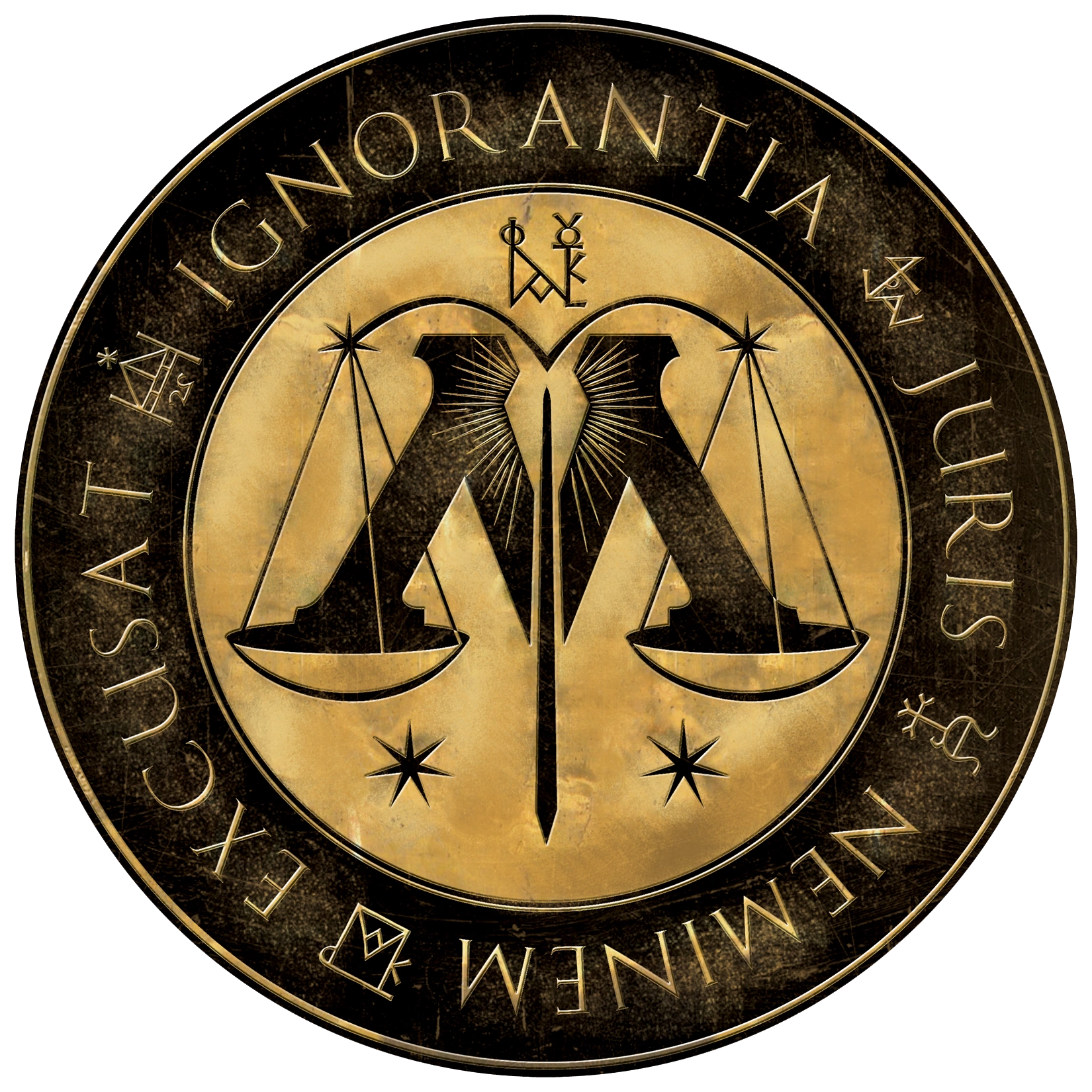
- Scales of Justice: The Wizengamot note seal in the Harry Potter films posses a set of scales with what appears to be a wand as the beam.
- Scare Chord
- In the second film, the hand. You know the one.
- Holy crap, Half-Blood Prince. You can be forgiven for throwing your drink in the air when the inferi show up!
- Deathly Hallows – Part 1. The post-Bathilda Nagini coming from downstairs after being "killed".
- Scars Are Forever
- Harry's, of course.
- Dumbledore's to some extent.
- Lupin has two long, thin scars across his face.
- As of Deathly Hallows, Hermione has a pretty distinctive scar herself.
- As of Deathly Hallows, Bill Weasley's facial scars from Greyback's attack.
- Harry's, of course.
- Scenery-Based Societal Barometer: As with the books, the Harry Potter series doesn't often stray far from Hogwarts School Of Witchcraft and Wizardry, so the school's decor and atmosphere frequently reflects the state of magical Britain as a whole. Usually, everything seems bright and cheerful, but...
- In Prisoner of Azkaban, the society-wide fear of the escaped Sirius Black has spread to Hogwarts, first resulting in the Dementors being called in as security, then - after an apparent break-in - forcing the students to sleep in the great hall for their own safety while massive locking mechanisms begin clamping down around the castle.
- In Order Of The Phoenix Cornelius Fudge's authoritarian crackdown on any mention of Voldemort's return prompts sweeping changes at Hogwarts at the direction of Dolores Umbridge: by the end, the walls are covered with framed declarations of newly-instituted rules, the animated paintings are being forcibly evicted, and it's not uncommon to see Umbridge patrolling the corridors, smugly inspecting her handiwork.
- When Voldemort seizes control of Britain, Harry and co wisely avoid major population centres, so the changes to society are reflected at Hogwarts in Deathly Hallows Part 2: the castle now seems tinted a sickly grey, the students only travel in orderly regiments, and the air above Hogwarts is under the watchful eyes of the Dementors.
- Scenery Porn
- Much of Prisoner of Azkaban, especially the outdoor scenes and the shots of the spiral staircase. (Maybe not so much scenery porn per se as cinematography porn — but as that isn't yet a recognized trope, this trope comes closest.)
- The swooping shot of the sea cliff in Half-Blood Prince.
- Several scenes in Deathly Hallows while Harry, Hermione, and Ron are on the run. The movie really loves long shots of the trio's campgrounds.
- The route of the Hogwarts Express is the West Highland Railway from Craigendoran via Fort William to Mallaig, Scotland, considered one of the most beautiful railway journeys in the world (and you can even ride behind a steam locomotive in the summer), with the Glenfinnan Viaduct a particular favourite of the film directors.
- Seeing Hogwarts for the first time in Philosopher's Stone, with the camera panning up from the students' point-of-view on the lake, and again at the end of Chamber of Secrets when the camera zooms out from the Great Hall.
- Shapeshifting Excludes Clothing:
- In the first movie, Quirrell collapses to dust, leaving his clothes to fall empty to the floor.
- In the third film, Pettigrew leaves behind his clothes after turning into a rat. Which is weird, seeing how Animagi always have clothes on when they turn human and McGonagall's cat form is noted to have markings around its eyes which resemble her glasses. In the book, this occurs at a different point, also with Pettigrew. After he framed Sirius for his death and turned into a rat, it's mentioned he left behind a pile of clothes and one finger. So... was he naked in the Shrieking Shack? Maybe they just conjure clothes when they turn human since they are wizards, after all.
- She Is All Grown Up:
- Helloooo Hermione.
- Ginny pops up only here and there for a few movies, leading to her being introduced as a young woman to be a bit of a shock.
- Shirtless Scene
- In Goblet, when Harry uses the bath to figure out the secret of the egg.
- The Deathly Hallows films feature several over their course:
- Part 1: Harry (several times over) during the clothes-changing in the "everyone Polyjuices into Harry" scene, and when he strips down to jump into the pond to get the sword. Ron also has one right after the trio escapes from the Ministry, but it flies straight into Fan Disservice when we see that his shoulder's laid open to the bone.
- Part 2: Harry and Ron changing into dry shirts after the trio emerges from the lake.
- Shout-Out
- During the reading of dead wizards and witches over the radio in Deathly Hallows – Part 1, there is a dead witch named "Ebony Raven".
- The scene in the prelude of the Battle of Hogwarts with McGonagall enchanting the castle's "statues" and armoury is reminiscent of the climax of Bedknobs and Broomsticks.
- One of the posters has Harry and Voldemort's heads staring at each other with a wand between them, à la the Freddy vs. Jason poster.
- Shout-Out to Shakespeare
- The song "Double Trouble" in the third film uses lines chanted by the three witches in Act IV, Scene 1 of Macbeth.
- A meta-example from the same movie: Gary Oldman and Timothy Spall had both previously played the character of Rosencrantz.
- Smooch of Victory
- Ron and Lavender in the sixth film after Gryffindor wins the Quidditch cup.
- Averted from the books with Harry and Ginny. They still kiss, but under different circumstances.
- Ron and Hermione finally snog after destroying the cup Horcrux. After being drenched by a tsunami.
- Snow Means Love:
- Harry Potter and the Prisoner of Azkaban adds an Innocent Innuendo to a snowy, wintry scene between Ron and Hermione.Hermione: Do you want to get closer?Ron: Huh?!Hermione: To the Shrieking Shack?Ron: No, I'm good.
- One of the few times we see a picture of James and Lily Potter, they're dancing in the snow.
- Harry Potter and the Prisoner of Azkaban adds an Innocent Innuendo to a snowy, wintry scene between Ron and Hermione.
- Social Semi-Circle:
- Averted mainly with the use of rows of long tables in the Great hall. Sometimes, the camera necessitated going between the rows and showed the backs of the characters in the rows while dialogue between characters took place.
- Also averted in the only scene with a round table. In Harry Potter and the Half-Blood Prince, Ginny comes in late to the Slug Club dinner and sits at one of the seats facing away from the camera.
- Spared by the Adaptation:
- Subverted. In Deathly Hallows – Part 1, Hedwig looks like she'd be about to get this, when Harry lets her fly away, where in the books, she got hit by a stray curse while in her cage. Subverted when she flies back and takes a blow for him. However, test screening viewers told fans what would happen, so it wasn't unexpected when it did.
- Deathly Hallows played it straight for some:
- Wormtail is spared (he survives Part 1, and doesn't appear at all in Part 2).
- Vincent Crabbe's actor wasn't available for the movie, so Goyle was the one to die by Fiendfyre.
- Voldemort does not kill Grindelwald, who tells him where the Elder Wand is unlike in the book.
- The film version of Goblet of Fire seems to spare Barty Crouch Jr., as we do not see what happens to him after the interrogation scene and he is never seen again. In the book he is given the Dementor's Kiss.
- Special Effect Branding:
- When Apparating, Death Eaters are dark smoke and Order members are streaks of white light. Don't ask why (as the more standard one from the books also appears), but it looks cool. Also falls under Colour-Coded Characters.
- The (Slytherin to a man) villains tend to use a lot of green Avada Kedavra spells, while the (almost entirely Gryffindor) heroes stick to red Expelliarmus and Stupefy spells.
- Spider-Sense:
- Harry's scar is somewhat used as this, as in each film, the pain it inflicts indicates that Voldemort is particularly angry/happy.
- In the eighth movie, Harry seems to use this to recognize horcruxes. This plugs the Plot Hole caused by cutting out the dialogue where Dumbledore theorized what they might be.
- Sphere of Power
- The Protego Maxima shield charm that envelops Hogwarts in Deathly Hallows – Part 2, which not only deflects bombardment for a while, but actually disintegrates humans that try to breach it.
- The maximized version of the Patronus charm, as cast by Harry in Prisoner of Azkaban and Aberforth during Deathly Hallows – Part 2 to ward off mass quantities of Dementors, also has this visual effect.
- Stock Footage
- Harry's memories in the fifth film are footage from earlier scenes in that same film and from the previous four instalments.
- Snape inserts himself Forrest Gump-style into the Mirror of Erised scene from the first movie. And in a nice moment between Harry and Sirius, to which he says, "I may vomit."
- In the eighth movie, scenes from the other seven are used for Horcrux flashbacks and Snape's Pensieve memories.
- Sword Cane: A variation. Lucius Malfoy has his wand concealed in his cane.
- Teleport Spam: Apparition is given a more offensively oriented smoke-like form that plays a major role in the climaxes of the David Yates films.
- Terrible Trio: Malfoy, Crabbe, and Goyle (based off the books). Although in the final film, Crabbe is replaced by Zabini.
- Timeshifted Actor: Baby Harry in the first and last movies; the various actors to play Tom Riddle (with 16-year-old Voldemort played by two different actors); the young Marauders, Snape, Lily, and Petunia.
- Tiny Schoolboy: Harry ends up the shortest in his trio of friends because Daniel Radcliffe grew to be 5'5".
- Trailers Always Spoil
- The Half-Blood Prince trailer spoils just about every major plot point, excluding Horcruxes and Dumbledore's death.
- The first teaser trailer for the two Deathly Hallows movies starts with the part where Harry is by himself confronting Voldemort and his followers in the Forbidden Forest and Voldemort using the "Killing Curse" on him!
- The trailer for Deathly Hallows – Part 2 shows Ron crying over his brother Fred's dead body while Harry's V.O. says "I never wanted any of you to die for me."
- Another trailer shows Harry in the Forbidden Forest talking to his mother, father, Sirius, and Lupin, who are all supposed to be dead, but now brought back to life by the Resurrection Stone!
- The fourth showed that Harry's name comes out of the goblet.
- For the third, the trailer with Harry shouting "expecto patronum" very loudly likely makes obvious what is going to happen for those far enough into the movie to have already heard Harry's quieter "expecto patronum" shouts.
- Urban Fantasy: It's easy to forget, but these movies takes place in 1990s Britain and feature a magical community interacting with muggles to at least some degree.
- We Can Rule Together:
- Toyed with near the end of the fifth movie when Voldemort "coaches" Harry on how to use the Cruciatus Curse on Bellatrix.
- Used near the end of the first when Voldemort tries to turn Harry in an attempt to get the Sorcerer's/Philosopher's stone."CinemaSins Narrator: Voldemort offers an Empire, but Harry strikes back."
- World of Ham: Just about damn near EVERY adult actor.
- In Chamber of Secrets, Alan Rickman, Jason Isaacs, and Kenneth Branagh were apparently embroiled in a contest to see who could "out-ham" the others the most.
- Jason Isaacs recalls sitting next to Branagh in their makeup chairs one day and he asked Isaacs how he was doing. Isaacs confessed his acting may have been "too big." Branagh replied "Look up at my heels."
- Radcliffe demonstrated his own potential to unleash the Hog in Half-Blood Prince.
- It's pretty damn clear with every line she speaks in Deathly Hallows that Helena Bonham Carter is now the undisputed ruler of Ham World! Except for the sequence where she pretends to be Hermione's poor impression of Bellatrix, where she does a good job of being Emma Watson pretending to be someone else, who is pretending to be someone else.
- For only appearing for five minutes in Goblet of Fire, David Tennant holds his own ground as incredibly hammy as a fellow psychopath. Especially his facial expressions.
- In an interview with Entertainment Weekly, Helen McCrory joked that all of the adult actors hammed it up as revenge for having their subplots cut.
- In Chamber of Secrets, Alan Rickman, Jason Isaacs, and Kenneth Branagh were apparently embroiled in a contest to see who could "out-ham" the others the most.
- What Happened to the Mouse?
- Fudge's resignation is never mentioned.
- Lockhart is not heard from again after accidentally casting the memory charm on himself in Chamber of Secrets. In a later novel, Harry and co bump into Lockhart when they visit Arthur Weasley at St Mungo's, where he spends his days signing autographs, though he doesn't remember why.
- Wormtail's death is cut from Deathly Hallows – Part 1, but Wormtail doesn't appear at all in Part 2. Timothy Spall was originally intended to reprise the role in Part 2, suggesting that he was intended to be killed off anyway, but his part ended up being cut. Some believe Dobby's attack killed him, or that he is among those killed by Voldemort at the beginning of Part 2 after the Gringotts scene.
- Crabbe fits this trope when he doesn't appear in Deathly Hallows – Part 2 (where Goyle does), although there was a reason the filmmakers cut him out (his actor Jamie Waylett was arrested for possession of drugs). Still, it wouldn't have been too hard to at least give mention to him in the Room of Requirement scene.