

Scenery porn is the emphasis on luscious backgrounds with great detail, lovely lighting or both. It means that the makers put in extra effort for something that might not have direct influence on the plot. Of course, there are extra points to be earned when the scenery actually enhances the plot in some sort of symbolic fashion.
In live-action movies, scenery porn is in effect when extra effort is put into emphasizing a beautiful surrounding, usually wide-open landscapes. Stage productions can have copious amounts of this trope with elaborate sets and backdrops. A main characteristic is that the scenery is almost treated as a character in its own right, either as a passive onlooker or with a more active role, depending on the setting of the show (if the scenery is literally a character with a mind of its own, then it's a Genius Loci). Awesome Music makes it all the better..
In literature, scenery porn manifests itself as long paragraphs that go into more detail about the setting than necessary, such as describing at length the mountains of the Swiss countryside, or name-dropping all the streets in Chicago as the character turns on them. It's the author's way of proving that they're familiar with the setting in real-life, and while it's a great bonus for people from the area, it can be seen as Filler to just about everyone else. On the extreme end of this, some works are popular entirely because they are nothing but Scenery Porn.
Often used to show that The World Is Just Awesome. Compare Shoot the Money. This can be distracting in video games when part of an Empty Room Psych, though with the advent of higher and higher-powered consoles and computers, ever-increasing levels of scenery detail are now possible. Silent Scenery Panel has a high chance being this. When the landscape evokes horror or despair rather than wonder, it's Scenery Gorn. If a video game is using a single moment of this as a trick to make the game feel vaster than it really is, it's a Video Game Vista. Also compare Costume Porn, Gun Porn, Description Porn, and its Super-Trope, Awesome Art. Not to be confused with when someone "knows" the scenery.
Compare Real-Place Background.
Examples:
- Air New Zealand Safety Videos: If you've never heard of the Cook Islands before, you'll want to go there after seeing the white beaches and turquoise water in "Safety in Paradise".
- Drambuie Extraordinary Bar: The desert landscape with the fluffy clouds that looks like Salvador Dalí's paintings.
- 7 Seeds has the lower layer of Sado as the first, real and gorgeous scenery porn in the series. While previous locations could range from looking quite interesting and well-maintained, the fact that it could not be denied that it was actually the opposite took away from the majesty of it.
- Adekan: It's ridiculously rich in detail, beautifully drawn and makes the reader want to fall straight through the pages right into it... Then again... maybe not...
- Ah! My Goddess has a spectacular amount of this. Kosuke Fujishima is a huge fan of highly-detailed, perfectly-rendered buildings, often drawing vast scenes of a town market or technological district, not to mention Keiichi and Belldandy's amazing Temple/House. It extends to his love of vehicles as well.
- Akage No Anne: Daisies, lillies, Cherry Blossoms, roses, wildflowers, mayflowers, tulips, peonies and petunias are only some of the pretty flowers that fill up the background. It's no surprise that Hayao Miyazaki storyboarded this anime.
- Both OVA adaptations of Ai no Kusabi go out of their way to beautifully depict the sci-fi futuristic world of Amoi. The 2012 OVA especially with all of it's CGI shots of the landscape and sky.
- Aldnoah.Zero has some
 ◊ truly◊ spectacular◊ backgrounds.◊
- In Amanchu!, Kozue Amano again showcases her ability to draw lovely backgrounds, which was already the trademark of her highly successful other work, ARIA.
- Angel Beats! practically spits them out. The opening has several and the whole season has a background which really highlights the mood of the show.
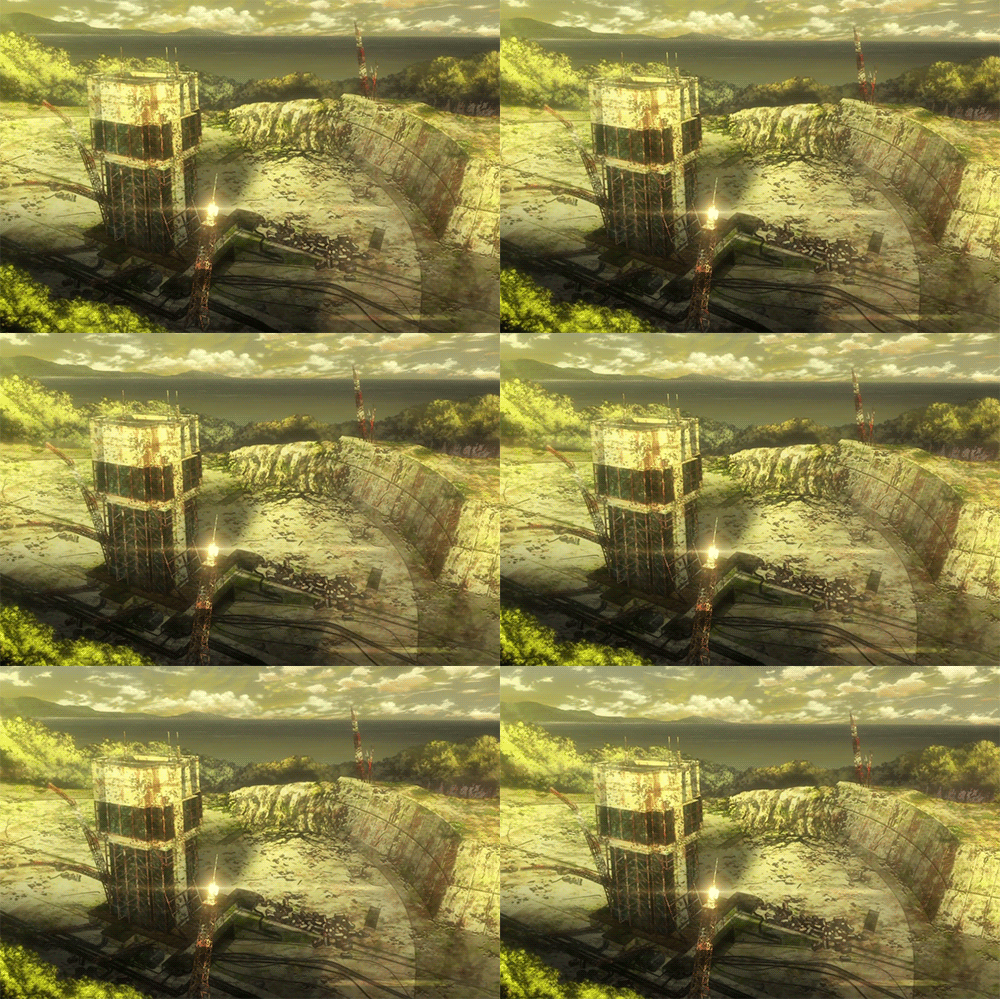
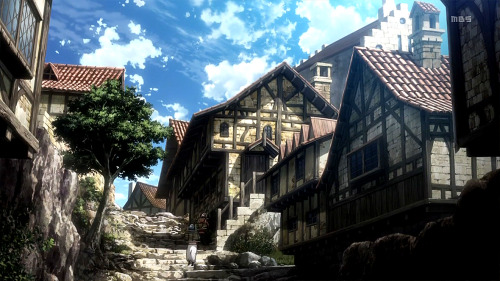
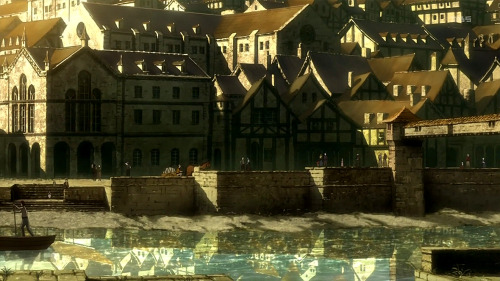
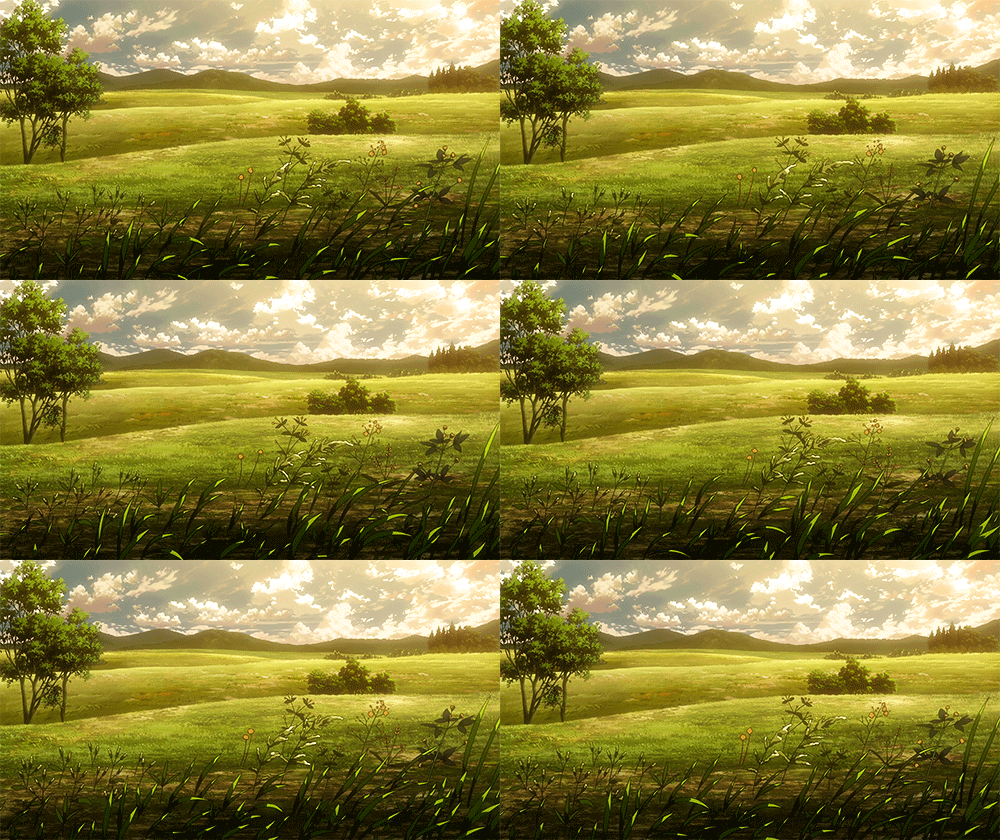
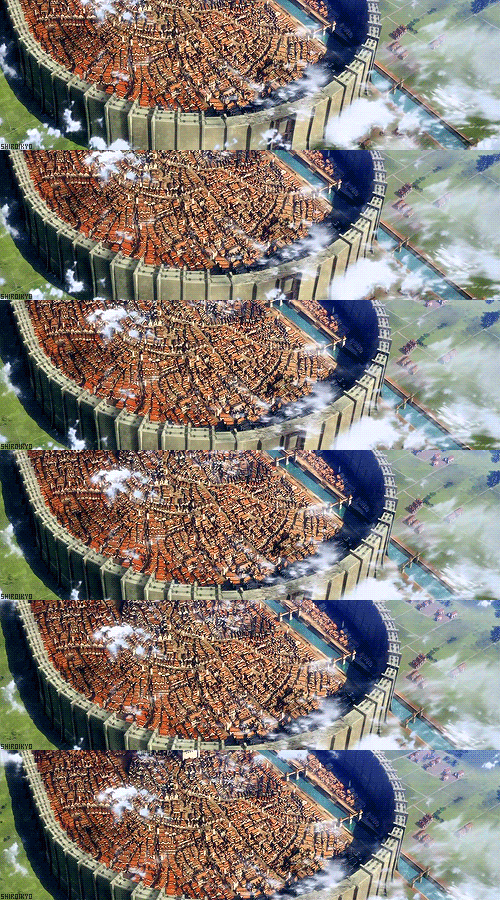
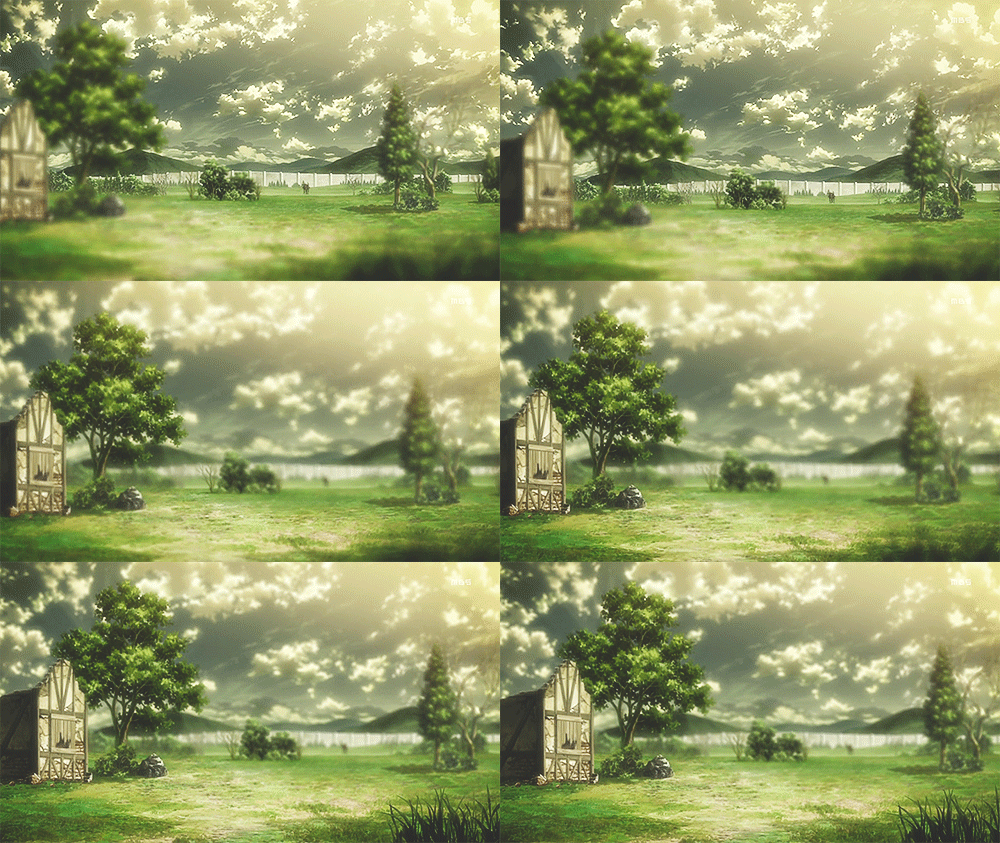
- The Attack on Titan anime is absolutely◊ full of it◊ in almost◊ every◊ single◊ scene.◊
- Basquash! treats the viewers to some very pretty shots of a shabby cityscape.
- You could say Scenery Porn is largely responsible for the snail's-pace at which chapters of Berserk are released.
- Binchou-tan blends the moe-aesthetic with lots of lovely shots of the hill and the town at its foot. Whether this is a match made in heaven or hell is up to debate.
- The first episode of Black Lagoon gave a nice glance at the scenery in the South China Sea. Black Lagoon in general goes pretty far with lavish scenery all the time. Just most of it is the craptown of Roanapur rather than the South China Sea, but it's still full of incredible detail.
- Blame! is a unique version of this trope. It obviously lives and breathes Scenery Porn, but it is much less "pretty backgrounds" and more amazingly-detailed, gritty, futuristic architecture... and it works.
- Blood+ definitely qualifies. Then again, what do you expect from an anime where the main cast travels around the world hunting Chiropterans? Hell, there are even instances where the animators sneak in this trope during fight scenes of all times.
- Blue Drop contains many beautifully animated sceneries, usually involving lots of seabirds or Hagino's spaceship standing in for a submarine.
- The Case Study of Vanitas features brilliant, panoramic views of Paris from the sky: [1]◊. The intricacy of the steampunk airships and French catacombs are also notable.
- Le Chevalier d'Eon. The animators in this series like to use many types of cinematic shots and camera pans that are more associated with live-action than anime, and it results in many GORGEOUS shots of Paris and Versailles.
- CLAMP have made some good manga examples of this, which may or may not carry over to the animated adaptations. Present more or less in all their works but mostly in Tsubasa -RESERVoir CHRoNiCLE-, where some of the background art is truly spectacular (Rekort, Outo and Piffle, anyone?).
- Both Cowboy Bebop and Samurai Champloo (or really, any anime directed by Shinichiro Watanabe) feature this in spades.
- Den-noh Coil has beautifully rendered shots of the town and the virtual environments mixed with it.
- Diamond Daydreams is rife with beautiful shots of Hokkaido, Japan's northern-most island—so much, that it sometimes feels as if show has been sponsored by the Hokkaido Tourism Organisation.
- A Dog of Flanders (1975): The accidental Dutch-inspired setting leads to this anime being one of the most gorgeous looking WMT entries to date, with beautiful tulips, serene skies and pretty rural scenery. Nello works as a milk delivery boy so we get to see the many gardens and natural beauty of Belgium, and it's also alleged that the architecture depicted in the series were modeled after the Bokrijk open-air museum.
- Dragon Ball is also rife with breathtaking establishing shots (that more often than not get blown up in the course of fight scenes) — it helps that Akira Toriyama has a small army's worth of assistants to draw in all the windows of a skyscraper.
- Eden of the East does this, even with Washington DC where particular attention was paid to Dulles and the White House. The entire◊ frikkin'◊ show◊. Magnificent◊.
- Eyeshield 21, One-Punch Man, and pretty much anything else drawn by Yusuke Murata is sheer artistic smut.
- Fate/kaleid liner PRISMA☆ILLYA's anime adaption has so, so much. Especially during episode 6, where Saber makes a beautiful waterfall by using Excalibur. If the video is on 1080p, it's possible to see the gravel being thrown in the dust by attacks.
- Fist of the Blue Sky has lots of this, compared to its Scenery Gorn predecessor, Fist of the North Star.
- The scenery in From the New World is nothing short of beautiful. It's clear that A-1 Pictures puts a lot of time, money, and effort into the series, as every bit of detail for the village and its surroundings are well illustrated.
- The Garden of Sinners may be a subversion, as it features incredible artwork and attention to detail, but in a very gloomy, run-down city setting. Not the second movie though, you get a very beautiful city for at least a good half.
- Ghost Talker's Daydream: We could easily say the manga in its entirety, due to the painstaking attention to detail in each scene. But these two scenes from chapter 12 is where it really shows.
- Great Pretender has a unique background style where the backgrounds are made of broad, heavy strokes of color, in a style reminiscent of Expressionism, with extremely vibrant colors that lend it a late 80's/early 90's pop feel. Naturally, it employs lots of aerial shots of its various urban locales to show off the style.
- Laura, the Prairie Girl: Grassy fields, fiery suns, flora and fauna and beautiful skies are prominently featured, especially any scene involving the characters Down on the Farm.
- Hal Film Maker seems to be really good at this with their Slice of Life work.
- ARIA, the Trope Namer, has magnificent backdrops◊ for something that is basically just a simple Slice of Life show. Some reviewers even argue that the city of Neo Venezia actually plays the main role.
- Sketchbook ~full color'S~ has several shots of hilly landscape around the town, and of the town itself.
- In the anime of Someday's Dreamers II: Sora: If you just quickly look past it, you might think that the background is photographs inserted into anime, instead of actual drawing.
- Uta∽Kata has a lot of emphasis on the Japanese town of Kamakura, with its historic sites and pretty beaches. The dream sequences are also beautifully rendered.
- Tamayura never misses a chance to show beautiful shots from the seaside town in which it is set, living up to its role as spiritual successor to Kamichu!.
- ARIA, the Trope Namer, has magnificent backdrops
- Hanasaku Iroha is very, very beautiful to look at, with the background almost reaching movie level. Many of the scenes are so photo-realistic that screen captures taken into photo shop and adjusted with the automatic "levels" tool don't change at all!
- The azure oceans, brilliant skies and white sands of Okinawa's beaches seen in Harukana Receive are stunning, conveying the sense of warmth and tropical air that Okinawa is known for.
- Hayate the Combat Butler has some pretty stunning scenes. Sakura petals, cityscapes, giant Ferris wheels... pretty much all of the background work (of the manga) is impressive.
- Hello! Sandybell 's stills look right out of a watercolour painting. See here◊ and here◊.
- Hetalia: Axis Powers has the beautiful depiction of major cities.
- Hokkaido Gals Are Super Adorable! is one part Romantic Comedy, one part Hokkaido travelogue. As such we are treated to many examples of glorious artwork featuring various places in Hokkaido.
- Ie Naki Ko Remi: On par for World Masterpiece Theater works, this anime has many beautiful background and foreground shots. See here and here.
- JoJo's Bizarre Adventure has each Story Arc starting with a passing shot of the setting's incredibly detailed art and shots in exceptional quality towards bringing the scenery to its fullest depiction.
- Every Kekkaishi volume cover is breathtakingly pretty in some way, to say nothing of the scenery within the manga itself.
- Kamichu! has a lot of gorgeous, lingering shots of Onomichi, the seaside town where the main characters live, emphasizing the hilly landscape and shoreline.
- The works of Katsuhiro Otomo, such as AKIRA, whose formal education was in the field of architecture, is known for his painstakingly rendered urban landscapes. You will say holy shit. This is noticeable even in his earlier works, which take place in a city in the seventies and not in any magnificent Neo-Tokyo.
- Ken Akamatsu loves this trope.
- See (don't worry, it's Work Safe) the title page◊ from one of his early doujins. Yes, he even puts Scenery Porn into actual porn.
- Negima! Magister Negi Magi is infamous for its beautiful backgrounds which were made on a computer. Most of the tankoubon volumes actually have appendices showing off the models, and listing the real-world architectural influences they draw upon. Many people complain that they look out of place, what with the character models being simplistic to the point of Only Six Faces, although they certainly add a great deal to the atmosphere, especially once the Magic World arc gets started.
- While it isn't as advanced or as noticed, Ken Akamatsu's previous series, Love Hina, had its backgrounds similarly developed.
- See (don't worry, it's Work Safe) the title page
- Kimini Todoke's anime adaptation is saturated with beautiful, pastel-colored backdrops.
- So imagine just what Kunihiko Ikuhara was able to do later with the truckloads of money he got for Penguindrum! See: the Takakura home◊, Himari's room◊, the gates to Ringo's school◊, Ping Seven◊, the lingerie shop◊, the building where Ringo lives with her mom◊, the Natsume mansion◊, etc.
- Kurozuka does this with everything from flowers to blood and dystopian cities.
- Productions from Kyoto Animation exhibit beautiful scenery that were often inspired by real world locations. Among them include:
- AIR, where the beautifully rendered sea and blue sky with white clouds serve as symbols in both the game and the anime series. The town is also depicted with great detail.
- The Melancholy of Haruhi Suzumiya pays a surprising amount of attention to its backgrounds, a small city and the local high school, despite the fact that these locations will initially seem mundane. The locations were inspired by Nishinomiya. Sharp-eyed viewers will also witness the five planes of motion illustrating such exciting activities as Kyon walking to school and the background in the Asakura vs. Yuki fight.
- Kanon and CLANNAD were also inspired by real-world locations and are depicted beautifully.
- K-On! takes a leaf from other Kyoto Animation works and features spectacular scenery, whether it be the sunsets and sunrises the girls see, or local parks and rivers.
- In Laid-Back Camp, the landscapes surrounding Mount Fuji are intricately and beautifully rendered, bringing the natural surroundings that Rin and her friends frequent to life.
- A Little Snow Fairy Sugar does this to show off the tourist-bait preserved medieval German village where the series is set.
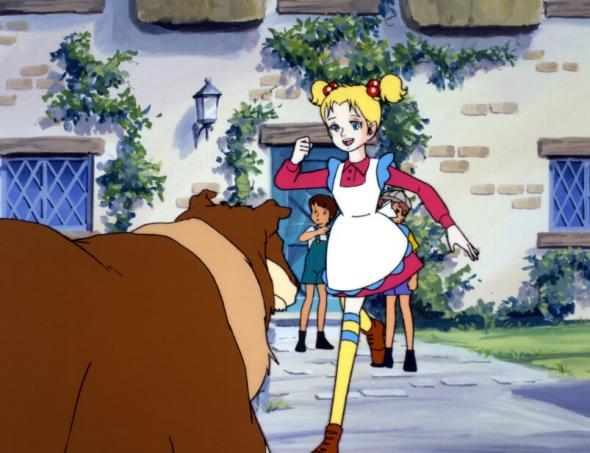
- Lucy-May of the Southern Rainbow takes place in the 1800s and is about a British family settling in Australia to run a farm. Many scenes center around animals. Australian Wildlife and pretty countryside farmland.
- Lupin III uses scenery porn to set the tone of the work, and showing the audience how well-off Lupin is doing at this time. He's varied from abandoned warehouses to ritzy hotels. The Castle of Cagliostro stands out as an example because it was directed by Hayao Miyazaki, and his Creator Thumbprint impacted the movies that followed.
- The Macross universe as a whole has this. Macross Zero, Macross: Do You Remember Love?, and Macross Frontier are standouts.
- Macross Frontier did it wonderfully with the first several episodes showing off the beauty of the Frontier fleet. One episode is mostly Sheryl exploring the fleet in amazement at gorgeousness that rivals her own. But over the course of the series and their conflict with the Vajra, those shots steadily turn into Scenery Gorn. The last scene in the series, of their new home, is full of Scenery Porn though.
- Made in Abyss starts out with very vivid mountain scenery, than gradually the scenery turns darker and more surreal, until it's shifted to something more like Scenery Gorn than Scenery Porn. It's still pretty, in a Creepy Cute sort of way.
- Magic Knight Rayearth likes to have the Power Trio stop and admire the beauty of Cephiro, a land maintained in harmony and lacking in natural disaster through the efforts of the Pillar. It's very lush and green, with an opening shot of a vast sparkling sea, a floating island, and a cool volcano. It makes the subsequent decay into Scenery Gorn more powerful.
- Makoto Shinkai is considered by many to be one of anime's greatest purveyors of the trope, as breathtaking sceneries, both real and surreal, are basically his hallmark.
- Voices of a Distant Star, one of his earliest works, still feature backgrounds of incredible quality in spite of being a one-man project.
- 5 Centimeters per Second, which provides the image on the main page, has absolutely every single background done to incredible detail, especially the scenes with the Cherry Blossom. The page image itself is a dream skyscape, turning the surrealistically awesome sceneries up to eleven.
- The Garden of Words is frequently noted for its incredible depiction of the garden and the real world environment that surround it.
- Your Name continues with this creator hallmark with its depiction of a surreal scene on a crater at twilight.
- Children Who Chase Lost Voices has been compared to works by Studio Ghibli. The trailer for the official US release features stunning vistas and a sweeping musical score.
- Masashi Kishimoto of Naruto has become a master of this as the series goes on. From the panoramas of Konoha, to the other villages, to various battlefields.
- Melody of Oblivion's watercolor-style backgrounds are very beautiful, although because of the rich symbolism, they often are important to the plot.
- To be fair, a number of anime JCStaff worked on (things like Honey and Clover and Nodame Cantabile to name a few) have that great watercolor background going on. Sometimes, it goes to the detriment of actual animation quality, but the backgrounds are plain beautiful.
- Mitsuboshi Colors brings Ueno Park and its surroundings to life with detailed backgrounds. Even the commercial districts.
- In Mokke the characters are often placed in shots that offer a good view of the hilly surroundings around the main characters' village. Yes, the Japanese really love their hills.
- Mononoke (not that one) has very detailed, stunning backgrounds similar to ukiyo-e art, particularly in the earlier arcs.
- Although "that one" is no slouch in the scenery porn arena, either.
- Monster has a good bit of this, with many Real Life locations being painstakingly drawn. To some extent this can be said for every Manga written by Naoki Urasawa. Pluto is especially fond of this as well.
- Monster Rancher was animated by TMS Entertainment in their prime and is very well-animated. If it's raining, for instance, the characters get a soft, fuzzy outline. Ditto with effects for fire and energy beams.
- Moribito: Guardian of the Spirit has the lush Ghibli Hills of their "real world" and the strange, spectacular Spirit World, both shown in eventless, lingering shots and accompanied by the proper soundtrack. Moribito's Scenery Porn might as well be X-rated. It's that damn good!
- Mouryou No Hako has lovely background animation with vibrant colours and gorgeous shots of flowers, trees, riverbanks, picturesque little villages and the like.
- The makers of Natsuiro Kiseki make sure the viewer never forgets that the town of Shimoda is located on Japan's extremely scenic Izu peninsula.
- For a wacky Slice of Life series, KyoAni's adaptation of Nichijou has a lot of realistic, beautifully-drawn backgrounds of city scenes. Many of its eyecatches are almost pure scenery porn with maybe a character wandering by in the distance.
- Noir does this for some of its locales, in particular Paris◊ and the Alps.
- Now and Then, Here and There has some amazing sunsets and vistas.
- Nura: Rise of the Yokai Clan always does sweeping shots of their massively detailed scenery. The shot often also moves into the main house as though a camera were gliding through. Add in the impressive CGI cherry blossoms that sway in the wind magnificently and you can see that it is fuelled by this trope. Both of the opening credits are also amazing in this respect.
- Eiichiro Oda's detailed drawings of backgrounds and buildings in recent volumes of One Piece (especially the Thriller Bark arc) may qualify: although they don't distract from the story or the foreground, careful attention is still paid to them and they are one of the reasons for the more cinematic quality of the anime of late. Also, whenever the characters visit a new locale in the manga, a good page and a half is almost always dedicated to giving readers a good view the place.
- One Stormy Night never disappoints with the shots of the mountains and the plains, it's so idyllic and peaceful, makes you want to live there forever!
- Origin: Spirits of the Past is completely this, to the point where the characters and plot only get in the way.
- Osamu Tezuka, the grandfather/deity of manga and anime, loved to do this. Many of his serious works, like Buddha and Phoenix, devote a noticeably large number of pages to showing gorgeously drawn vistas and photorealistic architecture. His works often devote entire pages to such beautiful scenery for nothing more than an establishing shot. There is also a huge contrast between Tezuka's simplified and cartoony character designs and the detail put into the full-page landscape art; it creates an effect that makes the characters stand out by visually separating humans and animals from inanimate objects and greenery.
- Patema Inverted could just as easily be renamed: "Scenery Porn: The Movie", as each scene is picturesque and often includes use of dramatic lighting and camera angles.◊ The movie's soundtrack sets the tone for each shot, further enhancing the effect.
- Anything made by P. A. Works qualify. True Tears, Hanasaku Iroha, Tari Tari, Nagi-Asu: A Lull in the Sea, up to Charlotte.
- Primitive Boy Ryu: A lot of shots of the anime focus on the son and the lush forestry that comes with the pre-modernization caveman-era setting, especially with suns and oceans.
- Pokémon: The Series:
- Every single movie has at least one positively epic set piece in full CG. And they are gorgeous.
- You're also likely to see that set piece get absolutely trashed at some point when the local Olympus Mons get pissed.
- The movies also tend to open with gratuitous, sweeping shots of wild Pokémon. These are also typically gorgeous.
- The entire three part mini arc with the resolution of Team Galactic, from Hunter J's ship getting sucked up with water to the Spear Pillar...whoa. Just whoa.
- The regular series isn't too bad, either. The backgrounds have gotten a lot better: just compare the forests as seen in the Orange Islands arc to those in Black and White. The trees, riverbeds, and cliffsides are more meticulously painted, and so are some of the city areas.
- The city of Alto Mare in Pokémon Heroes. Based on Venice, Italy and absolutely beautiful. Hell, you could say this for all the Pokémon movies. Every one of them opens up with a gratuitous, sweeping shot of the environment, and every one of them has some kind of ridiculously epic set piece that will probably get messed up pretty bad. It's become a joke among fans that the studios use research for movies as an excuse to go on a vacation.
- Samiya, the Sea Temple from the Ninth Movie is similarly gorgeous◊.
- Puella Magi Madoka Magica takes this to up to eleven not just with the breathtaking shots of a futuristic Japan (just look at Madoka's house in the first episode!), but also with the witches' barriers, which combine Deranged Animation and Design Student's Orgasm to make for some surreally beautiful environments.
- The OVA adaptation of Record of Lodoss War is very famous among old-school anime fans for its breathtaking hand-painted backgrounds.
- Rebuild of Evangelion, being a retelling of Neon Genesis Evangelion using modern computer-rendered animation and CG, has a fair share of this. One notable example is an Establishing Shot in 2.0 depicting the day-by-day movement of Tokyo-3 in a calm morning. The shifting buildings, the moving solar-power thingies, train lines and such, all well animated and scored by a fitting soundtrack. The original series also has its moments, specially every time Shinji runs away.
- Red Line takes this to downright perverse levels, combining with Technology Porn before the pair begin making sweet love to your eyeballs, and then the race begins...
- Revolutionary Girl Utena has one of the most unbelievably beautiful schools ever. Both versions are extremely unlikely, but the quality and gorgeousness of the scenery makes it well worth it. Amazing in that Utena was a budget series.
- Kenichi Sonada's Riding Bean and Gunsmith Cats (both anime and manga versions) are set in Chicago. Sonada took a tour of Chicago before Gunsmith Cats was drawn, and took copious photographs and notes. As a result, it's not only possible for natives of the city to pinpoint where the action sequences take place, but also when, as Sonada happened to be visiting the city during a major face-lift being given to the Field Museum—and his animators faithfully reproduced the scaffolding that framed the building for a significant period of time.
- In Sailor Moon Crystal, the Creative Closing Credits feature a particularly scenic nighttime vista, panning over painterly cliffs with multiple waterfalls, a moonbow and a shooting star. A detailed skyscape is likewise featured as a reflection in water, with a gigantic full moon, sparkling stars, and even a few nebulae.
- In the Saint Beast anime there is a lot of time spent panning over the peaceful scenery of heaven.
- Sayonara, Zetsubou-Sensei has this in spades, with some of the most mind-blowing scenes also beautifully rendered.
- Most Studio Shaft works also apply, using flat, shiny surfaces for most of their backgrounds that somewhat resemble stained glass and Pop Art. See the entry on Puella Magi Madoka Magica below.
- The Secret Garden: Unsurprising for a show centered around a garden - if you like seeing flowers and greenery, this anime's for you. Many episodes are about Ben Weatherstaff teaching Mary how to properly care for the titular Neglected Garden so it can be beautiful again. Especially prominent in the Grand Finale, where are there are so many pretty shots of the titular garden's flowers that it can rival a wedding. The anime's openings and EDs also prominently feature roses centering around Mary.
- Shelter: The virtual world Rin lives in isn't restricted by real world physics or geography, leading to gorgeously rendered landscapes and detailed scenery.
- The manga Shonen Note: Boy Soprano by Yuhki Kamatani has many artsy scenes with luscious backgrounds.
- Silver Nina, like many Slice of Life series set in small, rural towns, gets a great deal of this along with the seasons and various festivals that take place within it.
- Sound of the Sky's city of Seize is beautifully illustrated, and even the desolate No Man's Land is breathtaking in its own way.
- Anything produced by Studio Bones ever, especially when it comes to space and/or starlit skies. Though everything else they do is absolutely amazing too. A few examples:
- Blood Blockade Battlefront represents Hellsalem's Lot (read: New York City) beautifully. From the grandness of the city skyline in the intro to even the mundane items like the subway and delights in showing this to the viewer. Episode 6 of the anime is a stunning example as it heavily features several real locations in Central Park that are animated with a level of detail rarely seen anywhere.
- Star Driver features absolutely gorgeous sunsets (of which there are plentiful in this anime), but the real beauty is Zero Time, which, despite being featured in nearly every single episode, never looks the same twice and adds different elements to the background as the series progresses. Once it even rains in there. And then it also features a painter whose landscape paintings are their very own type of Scenery Porn, but that's no wonder if you have all these fantastic sceneries right in front of your nose.
- Captain Earth keeps up the tradition. Of special note is the very last scene of the anime, featuring one of the most amazing starry skies ever seen in anime. "I like the view from this planet most", indeed.
- Sunday Without God's anime adaptation, being animated by Madhouse, has some beautiful scenery, emphasizing the melancholy world that Ai and her friends travel.
- Suzy's Zoo: Daisuki! Witzy is made of pure scenery porn, with the series successfully capturing the watercolor and color pencil art of the original artist despite being CGI.
- The anime adaptation of Sweet Blue Flowers has a lot of it, exploiting Kamakura's eye-catching sceneries.
- The anime adaptation of Sword Art Online. Everything literally screams how well-produced and high quality this show is. Just look at the title-image of the novel's main site. It doesn't matter if it's Aincrad, Alfheim or the real world, The Scenery Porn is very strong in this adaption.
- Tanaka Yutaka is known for well-illustrated manga with at least a few pages of Scenery Porn, but his Mimia Hime turns it up to eleven.
- Tari Tari is set in the seaside resort town of Enoshima, Japan and the stunning backgrounds are at a level of detail that make you feel like you are looking at pictures of the town.
- Tekkonkinkreet is chocked full of these. Nearly every background, inside and out, are painstakingly detailed, yet still manage to retain a soft, hand-drawn appearance. This even applies to scenes that incorporate CGI, which also uses textures that are hand-drawn.
- Time of Eve and it's precursor Aquatic Language both feature sumptuously lit, gorgeously filmed coffee houses (with interesting clientele).
- Any manga written by Ueshiba Riichi largely consists of Scenery Porn. You can spend hours examining all the details he put into backgrounds.
- While Mysterious Girlfriend X is loved by many, the only reason most can form into words is the beautiful backgrounds.
- Umi Monogatari has plenty of lovely shots of the seaside town in which the story takes place.
- The Walking Man: Taniguchi's backgrounds are almost obsessively detailed, yet they still fit perfectly with his relatively simply drawn people.
- The Wandering Son anime. Even for all its faults with the manga fans, you can't help but notice how high-quality and gorgeous the anime is. There's not a moment of Off-Model, the anime team payed attention to detail, and the series overall looks like an anime movie rather then a 12-Episode Anime. It's especially noticeable at the end of the first episode, with the Sakura◊ Blossom◊ scene.
- The Wonderful Adventures of Nils: Sweden looks gorgeous — and the anime series does it justice.
- Yokohama Kaidashi Kikou is positively awash with it, both in the manga and in the anime. There is no chapter or episode without some beautiful landscape thrown in, and there are a lot of chapters consisting of NOTHING ELSE than Scenery Porn. It is also should be considered as epitome of the grass Porn.
- Arguably a lot of Yotsuba&! is devoted to stunningly realistic and gorgeously detailed drawings of Yotsuba's ordinary Japanese suburb, including several beautiful shots of the surroundings.
- YuYu Hakusho has a nice moment of this, when, during a tournament held on an island, one fighter flies (he's one of the few in the series who can) up high over the island to get a good look at the ocean and feel the sunshine and the breeze; understandable, he's from the Demon World.
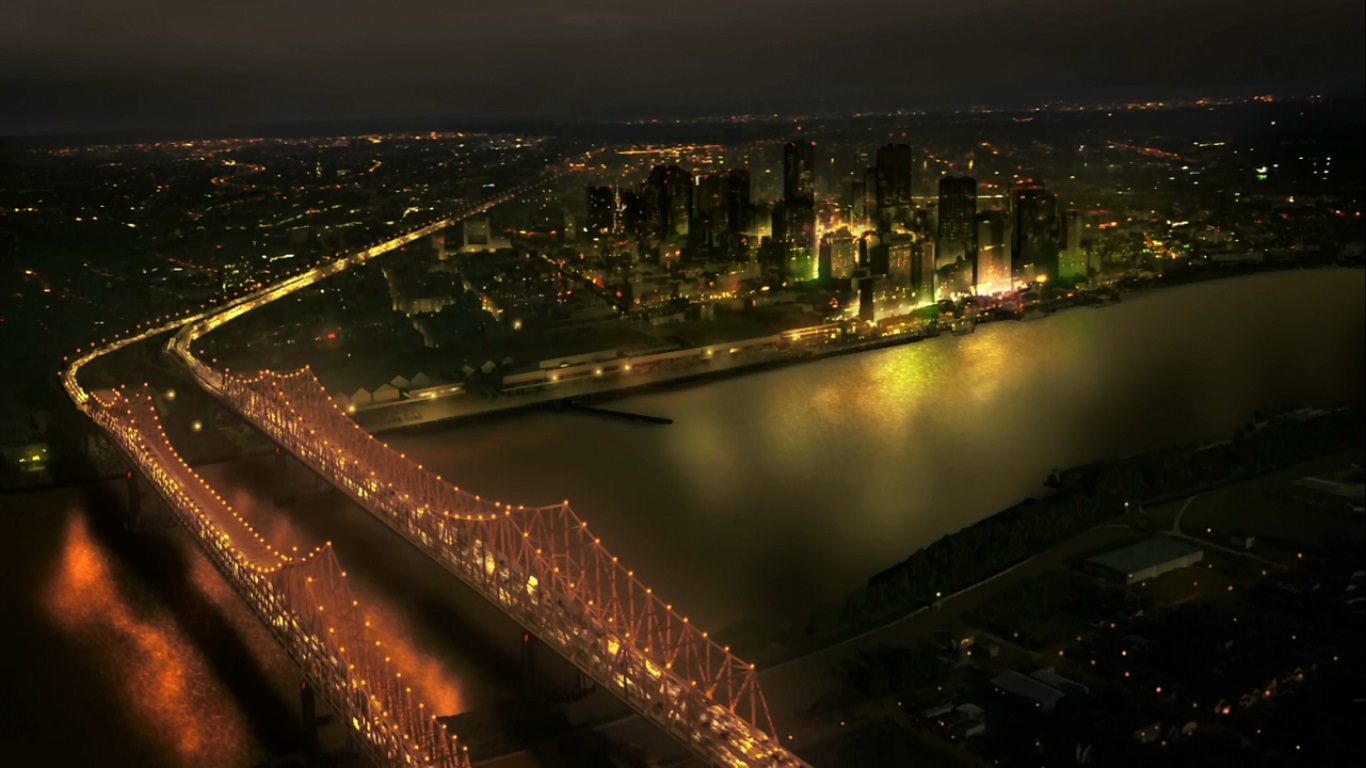







- North America: Portrait of a Continent: This kind of imagery abounds - mountain ranges, forests, canyons, waterfalls, volcanoes, and cityscapes, going from the hoodoos of Bryce Canyon National Park to Big Sur in California to Mt. Thor in Nunavut to the Palouse River of Washingtion to the White Mountains of New Hampshire, and so, so much more.
- Wanderer above the Sea of Fog: The painting is rendered in exquisite detail, in the artist's usual somber style. The landscape is draped in rolling fog, giving an impression of an ocean, but mountains and forests are visible through the fog, and the landmarks of Saxony and Bohemia (which Friedrich sketched in the field) are clearly recognizable. The light source is coming from below the rock that the man is standing on, illuminating the fog and silhouetting the foreground ridge.
- Magic: The Gathering: Many of the Land cards are pretty impressive.
- Particularly notable are Mirrodin's metal fields, Ravnica's city-scapes and Zendikar's impossible rock formations. This is particularly noticeable with the full-card art variants for basic lands.
- Many of the newer land cards from blocks go together with other like-blocked, same colored, lands to make large, overly detailed pieces of art.
- The Invasion basic lands are particularly impressive, with all of the five basic land types having at least one example each of what could be considered the "definitive" Plains/Swamp/whatever.
- Pokémon: A lot of the backgrounds in the card illustrations are gorgeous, especially in the Holon series.
- Kazu Kibuishi's Amulet has far more interesting scenery than characters, at least so far. His Copper strips, on the other hand, have both.
- Archie Comics were prone to this, especially if Bob Bolling was behind the desk. Just look.
- Brandon Graham's comics have weird and wonderful environments full of imaginative bizarreness and Funny Background Events.
- Bryan Talbot is a master of this:
- Luther Arkwright: Both Luther Arkwright and its coloured sequel Heart of Empire clearly had a lot of thought put into the Steampunk backgrounds, which were usually flooded with references to other issues, Victorian culture, Science Fiction, or random statues of Luther (after he died).
- The Tale of One Bad Rat has gorgeous images of the Lake District of England, and had its genesis as a celebration of the landscape.
- Cerebus the Aardvark: The series features intricate pen-and-ink backgrounds rendered by artist Gerhard. The trade paperback covers are even more impressive.
- Dreamkeepers has absolutely AMAZING scenery, beyond what most would expect from a comic book.
- Moritat the main artist for the Elephantmen series has his work often compared to Blade Runner's fantastic Cyberpunk sets.
- Geof Darrow, hands down. Though his work can also enter into Scenery Gorn due to squick, like when the main character in Hard Boiled wonders through the red light district.
- George Pérez and his attention to detail are notorious in the industry. He fills out pretty much any scene he draws, even if he hurts himself in the process.
- Jack Kirby liked to create so many distinct and strange fantastic machines and cities that Kirby Tech is practically a trope in and of itself. And then of course there are the vast and vibrant space vistas he could create, creating splendid backdrops in works like his Fourth World epic or his 2001: A Space Odyssey comic.
- Mœbius, is quite the master of this trope, ranging from the Arcadian forests of The Adena cycle, the strange alien worlds of Arzarch and the futuristic metropolises of many of his sci-fi stories.
- Philippe Druillet takes this to insane heights with his multiple page spreads of epic, near-surreal landscapes. Now, if only one could figure out what the stories meant...
- Even people criticizing Red Hood and the Outlaws have praised Kenneth Rocafort's art, especially the backgrounds. Issue 6 takes scenery, character, and costume design to a whole new level.
- The 1908 scenes in Sasmira are nicely drawn. The chateau in said scenes also looks considerably better than its present day form.
- Sky Doll puts great effort in settings that will only be shown for few panels. It helps that one of the creators is an architect.
- Superlópez: The comic's cartoony style is combined with an astoundingly realistic attention to detail: if you want to know what a typical Spanish city looked like during The '80s, you need only look at a Superlopez story of the period.
- In Archie Comics' Teenage Mutant Ninja Turtles Adventures series, the Turtles' world tour arc is kicked off with some breathtaking artwork of the cliffs of Tibet.
- The series Top 10 is a good example of this trope in comics. Every bloody panel is filled with incredible detail of the city of Neopolis, as well as no less than three visual Easter Eggs per page.
- Bryan Hitch. His Triskelion in The Ultimates is a sight to behold.
- James Stokoe's comics like Wonton Soup have heavily detailed backgrounds full of Easter Eggs.
- Roger Leloup of Yoko Tsuno fame loves drawing very complicated backgrounds of all kinds.
- Calvin and Hobbes sometimes does this when Calvin plays in the woods, or during the "Spaceman Spiff" strips. (Though arguably this served the plot in each instance to emphasize the natural world as a trope in Calvin's life — contrasting it with his television watching habits — or to emphasize the expanse of his imagination.) Incidentally, most of the alien desert scenery isn't made up — they're basically Bill Watterson's sketches of beautiful desert scenery in southern Utah.
- The Perishers, as drawn by Dennis Collins in its heyday, had highly detailed background art. While not exactly beautiful — the strip was set in a fairly mundane British suburb — it's still pretty impressive.
- Pogo has some fantastic scenery.
- Prince Valiant is known for some of the best comic strip art of all time, especially regarding the landscapes.
- Some Sundays, Rick O'Shay would have the characters admire gorgeous Western mountain landscapes.
- The Wacky Adventures of Pedro has some rather colorful and abstract backgrounds.
- Austraeoh spends entire chapters in-between the main storylines showing of the beautiful landscapes Rainbow flies through, particularly the first few chapters before she comes into contact with Windthrow.
- Child of the Storm usually features the reverse trope, when looking to emphasis darkness and horror, but sometimes it slips into this when discussing the landscape of Hogwarts and its grounds, and Asgard.
- Gallifrey in the Wholock TARDISode "A Moment's Diversion". The mini episode utilizes the "virtual-reality-Gallifrey-in-the-TARDIS" trope that's not uncommon in Who fic... as one of the locations that Sherlock Holmes and Beth Lestrade happen upon while touring the TARDIS. Beth wonders how real the breathtaking landscape is, and Holmes decides that it's very real. How, though, is left unexplained.
- Maikaze did a great job with the landscaping in their portrayal of Gensokyo.
- The Revolutionary Girl Utena and Penguindrum crossover fanfic Seinen Kakumei Utena achieves this via the elaborate narration in various scenes.
- The Yu-Gi-Oh! fic A Game of Masques has a scene where Yugi's apartment bathroom is described in loving detail. Oddly, the rest of the fic generally doesn't describe its settings at all.
- The 2004 Appleseed movie, particularly the flyby of Olympus in the beginning. The sequel Ex Machina does this better still.
- Angel's Egg is Yoshitaka Amano's and Mamoru Oshii's visual poem. With only about five minutes of dialog in its seventy minute run time the absolutely gorgeous visuals carry the film's elegant, surreal and poignant "narrative".
- In The Book of Life, San Angel in 2D and 3D is lovely, but wait until you see the riot of color and energy in the Land of the Remembered.
- Coraline is this trope mixed with plot. The garden and mouse circus scenes in the other world are beyond breathtaking, especially in 3D. All done in stop-motion.
- Cloudy with a Chance of Meatballs has some very elaborate backgrounds made entirely of food.
- Disney Animated Canon is prone to this, especially during the early films, and "Disney Renaissance" that started with The Little Mermaid (1989):
- Snow White and the Seven Dwarfs (1937): Especially during an early scene (just before the creepy forest scene) of Snow picking flowers in the forest.
- Pinocchio (1940): What a pretty town!
- Bambi (1942) was Scenery Porn, with a little bit of story thrown in. The midquel kept to the tradition, even going as far as reusing modified scans of the original film's background art in some places.
- A surprising example is provided by obscure war-time Disney movies Saludos Amigos (1943) and The Three Caballeros (1944). Both have some truly amazing background art, mainly thanks to the artistic influence of designer Mary Blair. In fact, any animated Disney film with Mary Blair's influence can be considered this such as Make Mine Music, Melody Time, the Sleepy Hollow segment from The Adventures of Ichabod and Mr. Toad, Cinderella, Alice in Wonderland, and Peter Pan.
- Sleeping Beauty (1959). Not only are the backgrounds meticulously and beautifully painted, the animation is flawless and the foregrounds are no less breathtaking. There's a reason this movie almost bankrupted Disney.
- The Little Mermaid (1989). The underwater shots (especially during the opening credits and "Part of Your World") are gorgeous.
- The little-remembered The Rescuers Down Under (1990) had some amazing shots of the Australian Outback, and the New York scenes were pretty stunning as well.
- The ballroom scene in Disney's Beauty and the Beast (1991) is a brief bit of Scenery Porn. The background was done digitally, while the characters dancing were hand-drawn. As a rule, when the camera flies backwards in a widening spiral with a rotating viewpoint through a massive and detailed candelabra while the room is spinning in one direction and the dancers spin in the opposite direction and there are no mistakes, you know two things: 1) this was done with computer graphics, and 2) this is goin' on the ol' résumé. Disney still uses this clip to blow the socks off of viewers.
- Aladdin (1992) is full of Scenery Porn, drawn from reference photos of actual Islamic architecture (almost all of it 16th- and 17th-century Iranian, as that's where the photos were taken.)
- The Lion King (1994) in its gorgeous shots of African plains and jungles.
- Pocahontas (1995) - literally painting with all the colors of the wind.
- The Hunchback of Notre Dame (1996) made medieval Paris look absolutely beautiful.
- Hercules (1997) also has a lot of this, in its very artistic portrayal of ancient Greece.
- The shots of the Chinese countryside and the Imperial City in Mulan (1998) were fabulous, especially during "A Girl Worth Fighting For".
- Tarzan (1999) had a lot of it.
- Disney's Dinosaur is this with a little story thrown in. In fact, just ignore the storyline and concentrate on the stunning visuals.
- Atlantis: The Lost Empire (2001) is conspicuously guilty of this — although there are plenty of us who would have died to see more. Do you have a dollar?
- Lilo & Stitch (2002) was the first Disney Canon movie since Dumbo to feature watercolor backgrounds. This should tell you more than enough.
- Treasure Planet (2002) begins with a shot of a spaceport shaped like a crescent moon, displaying every building and ship, and when zoomed in enough, the inhabitants. The visuals build up from there.
- Brother Bear. Just look at it! Makes you wish it'd never become civilised.
- Home on the Range, character and story issues notwithstanding, boasts a beautiful color palette, and the Western landscapes are suitably breathtaking.
- The Princess and the Frog was intended to show off exactly what hand-drawn animation was capable of, and it shows. Lush colors everywhere, and the various color schemes (gold, purple and green) have a large role in the movie.
- Tangled is continuing the tradition. For those curious, this is a real-life example of the film's lantern scene.
- Winnie the Pooh (2011) tends to be overlooked, but it truly marvels in showing off the Hundred Acre Wood, 2011 style. Underwater scenes especially stand out.
- Wreck-It Ralph. Sugar Rush qualifies due to the sheer amount of detail and lushness to the candy. Basically, imagine a world holding all the tracks of Mario Kart, animated in CGI and themed to look like candy. One can see it if coming back to the movie after playing Sweet Sweet Canyon in Mario Kart 8.
- Frozen rightfully earns its place here, thanks to its beautifully animated ice and snow sequences. Several programs were developed by Disney here to ensure realism in capturing movement of characters in the snow. They even made a program just to make sure that each individual snowflake was unique!
- Frozen II in 2019 earns a spot of its own for showing such gorgeous landscapes that if it weren't for Anna, Elsa, Kristoff, Sven and Olaf in the frame, you'd be forgiven for thinking that was a real life photograph. Also, water is depicted almost photorealistically, using the same rendering techniques learned in Moana.
- Big Hero 6 features the beautiful city of San Fransokyo in breath-taking detail.
- Zootopia has Judy Hopps' train ride, which shows off each region of the animal city in its full glory. It's incredible how immersed you can get due to the amount of detail that went into making each area function correctly for every mammal that could live there.
- Moana offers breathtaking glimpses of brilliantly rendered water and wildlife all throughout the movie, with the wonders only escalating from there.
- Encanto: The Madrigals might not talk about Bruno, but we could talk about the incredible visuals all day long, which bring to life the beauty of South America.
- The Dragon Hunters movie is this :World in the Sky and loads and loads of ancient ruins flying apart. this troper thinks this is the greatest animation sceneries ever.
- DreamWorks Animation:
- The "Plagues" sequence in The Prince of Egypt is the wrath of God made manifest. It looks awesome. Most of the movie falls into this category, honestly. From simple dialogue scenes showing the vast majesty of the Egyptian empire, to Moses walking out his front- er, tent flap to be greeted with sweeping mountain landscapes, to the crossing of the Red Sea, the movie is pretty much a scenery porn extravaganza.
- Spirit: Stallion of the Cimarron has the beginning scene where the eagle is flying over canyons, forests, and deserts. Just the shots of Spirit's home, the Wild West, and the Lakota village are breathtaking.
- Kung Fu Panda. Even if you don't count the opening two minute dream sequence storyboarded and overseen by the respected and famous James Baxter (whom you may have been introduced to via Beauty and the Beast, The Lion King, or Spirit: Stallion of the Cimarron), just about every shot of the Valley of Peace counts as this... and the Jade Palace... and Chorh-Gom in the Mongolian mountains... and the suspension bridge where Tai Lung fought the Furious Five. Talk about luscious!
- Gongmen City in the sequel takes it even further. Just look at all those buildings.
- How to Train Your Dragon: Berk is gorgeous.
- All over the place in Rise of the Guardians. Highlights include each of the guardians' main base of operations - the first walkthrough of North's workshop, the flight to Tooth's palace, various shots of Bunny's warren and even the first visit to Pitch's lair.
- The Road to El Dorado is no slouch in the visual department, from the bustling Spanish ports to the glittering titular city of gold, which has heavy influences from Mayan and Incan architecture, to the colorful South American jungle.
- Once The Croods set out on their road trip, practically every stop is great to look at, especially the hidden oasis in the rock labyrinth.
- Final Fantasy VII: Advent Children has the settings of Edge and Midgar for the battles with Bahamut Sin and Sephiroth, respectively.
- Every production released by Hayao Miyazaki (and Studio Ghibli by extension) manages to pull at least a long sequence of very pretty scenery. The early scenes of My Neighbor Totoro, for instance, are less about character development than about exploring a traditional Japanese farmhouse and the forest surrounding it. (Given Miyazaki's love of flying, it's no surprise that every work has at least one extended aerial sequence.)
- The Rankin & Bass adaptation of The Hobbit does a fine job of this in its scenic shots, as is only proper for an adaptation of Tolkien's work.
- Edinburgh has never looked so lovely as from The Illusionist (2010).
- The LEGO Movie's scenery may be built with CGI LEGO, but that doesn't stop it from looking gorgeous, particularly the ocean shots. What's more, the film absolutely nailed the brickfilm (stop-motion LEGO) aethetic, to the point of looking incredibly photorealistic.
- The Little Nemo: Adventures in Slumberland animated movie perfectly captures the jaw-droppingly virtuoso style of artwork that made Winsor McCay's original comic strip so memorable. Even the movie's infamously scary scenes are rendered lushly, with a large amount of fine detail.
- Most of Makoto Shinkai's work. Shinkai, in fact, will focus the camera on the Scenery Porn in the middle of important scenes with his characters. 5 Centimeters per Second is the epitome of cloud Porn.
- The Nightmare Before Christmas: Both Halloweentown and Christmastown are very beautiful to look at.
- The animated film Patlabor 2: The Movie has a large amount of Scenery Porn. The apex of this is the "boat scene" in which two characters have a long, extremely philosophical conversation while riding a small boat down a waterway. As the conversation goes on, the camera view focuses on old buildings, factories, and other features of a near-future Tokyo.
- Pixar is very good at this:
- The vault where the doors are stored in Monsters, Inc.
- WALL•E. Earth as a desolate wasteland is ironically the most beautiful-looking thing in the film.
- Cars has a long scene at the start and finish that is pretty much all Scenery Porn.
- And its sequel, Cars 2, takes it up to eleven with new settings and colorful environments. At some points it looks a little too realistic for a universe made of Cars.
- Further improved in Cars 3, where pretty much every scene looks beautiful. Special mention should go to the Florida 500 near the end.
- In The Incredibles, Mr. Incredible's second arrival at Syndrome's island pretty much existed to show off how awesome the island was.
- Finding Nemo has some very impressive underwater scenes.
- A Bug's Life and Toy Story 2 both feature the same tree (to different levels of detail and mood).
- Up has some amazing shots of the jungle, ranging from rocky terrain to lush foliage and everything in between. But it's not only that — even the cityscape and the sky can be counted in this trope.
- Brave has this from the poster. The film itself beautifully captures the Scottish Highlands.
- The Good Dinosaur may be highly divisive amongst critics, but there's one thing they all agree on - the scenery is absolutely beautiful. Some have compared the visuals to those of Hayao Miyazaki's films, while others have mistaken them for live-action backgrounds with CG characters, a la Dinosaur.
- Coco has the Land of the Dead, a brilliant world of seemingly endless night that's illuminated by countless rainbow colored lights in thousands of buildings and is connected to the Land of the Living with a bridge made of marigold petals. If you've studied Color Theory, this movie will leave you drooling.
- Turning Red makes the city of Toronto look like something out of Sailor Moon with buildings in pastel colours. According to executive producer Dan Scanlon, "It feels more like a very soft, colorful, magical, idyllic, almost youthful version of the city".
- While The Original Series had its moments, Rebuild of Evangelion takes this to non-stop, Nerdgasmic levels of Scenery Pornography. Seriously, just watch the second movie's trailer.
- Every animated film by René Laloux, director of obscure French weirdness like Fantastic Planet, Gandahar, and Time Masters. Bizarre but beautiful alien worlds that look straight out of a Salvador Dalí painting. Fantastic Planet is a particularly bizarre example; wallowing in strange crystalline structures and surreal images. It's Scenery Porn on drugs.
- Rio is FULL of this. There are gorgeous scenes of the jungle, but then you get to the flight scenes where we see them overhead, and oh boy! The parade also looks amazing, with dancers in great costumes and beautiful floats. A float featuring a scarlet macaw stands out in particular.
- The Irish/Belgian/French film The Secret of Kells. It toys with perspective masterfully in some scenes, and others are simply jaw-dropping.
- Much of The Sky Crawlers is devoted to featuring the beautiful vistas of Ireland and Poland, as well as the incredibly detailed indoor settings.
- Sonic OVA had dozens of different environments, combined with some of the best background detail for a 90s Anime.
- The 2009 Space Battleship Yamato film is a mixture of this and Technology Porn, with grand Space Opera battles and detailed spacecraft interiors and exteriors.
- Steamboy. The film took sixteen years to make, and boy does it show.
- The Super Mario Bros. Movie: Illumination Entertainment gives us a wonderful cinematic take on the world of Super Mario Bros. The Mushroom Kingdom get special mention for using aspects from many games such as the mobile platforms, colorful structures, and of course Princess Peach's castle. Bowser's Castle gives us a terrifyingly awesome dark aesthetic much like in modern games like Super Mario Galaxy, in which not only does the lava makes it awesome but it also captures Bowser's evil image.
- Surf's Up has very realistic backgrounds with moving waves, trees, foliage, shadows, etc. It barely has a single static shot.
- The Thief and the Cobbler's Recobbled Cut. The whole thing's on Youtube. To use another troper's example, Imagine Aladdin on marijuana and cough syrup. It was made BEFORE CGI was invented.
- Most of Ben Howard's videos, especially 'Keep Your Head Up', 'The Wolves' and 'Old Pine', filmed in the English countryside.
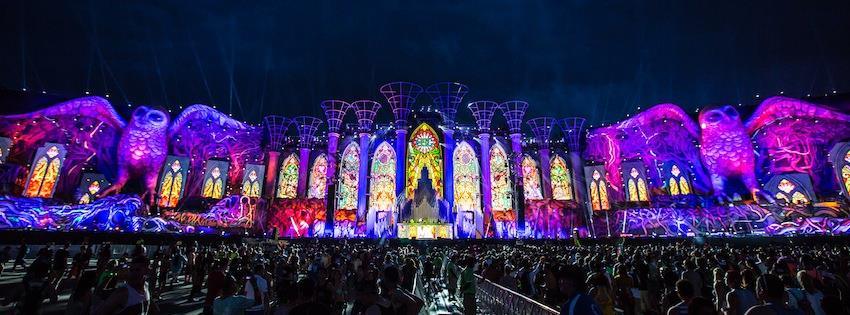
- Electronic music festivals have been trying to one-up each other in the stage department for years now. Bonus points go to ones with fairy tale-inspired atmospheres; EDC Las Vegas went from a generic bank of screens to a giant animatronic owl◊ in the course of a year.
- Sequel Escalation was played straight for EDC 2014: a cathedral, two giant owls, and a neon pipe organ.◊
- Sequel Escalation was played straight for EDC 2014: a cathedral, two giant owls, and a neon pipe organ.
- The Gorillaz videos Feel Good Inc. and El Manana have the floating island, which looks like something straight out of Studio Ghibli. Butterflies flicking around, modest wildflowers and rolling grassy fields make the place stunning, especially when contrasted to the debauchery and filth of the Feel Good Tower.
- Guillemots' video for We're Here is made up of this.
- Many of iamamiwhoami's videos depict the natural beauty of the Swedish landscape- as is fitting for a conceptual series of videos about a Nature Spirit. Dark and snowy forests, fields, and rivers have all made prominent appearances.
- Imagine Dragons' "Roots" video features this as Dan Reynolds explores various parts of New Zealand, such as Auckland and Great Barrier Island.
- Kanye loves this: "Diamonds from Sierra Leone" and "Amazing" were excuses to show off Prague and Hawaii respectively, "Stronger" showed off a pseudo Akira-inspired version of Japan and "Power" was what one imagines he imagines happens when he walks through his living room in the morning.
- Lots of Lindsey Stirling's videos are filmed in wild and beautiful locations, and the camera makes full use of this; it's part of the reason for the Orbital Shot in her Lord of the Rings medly.
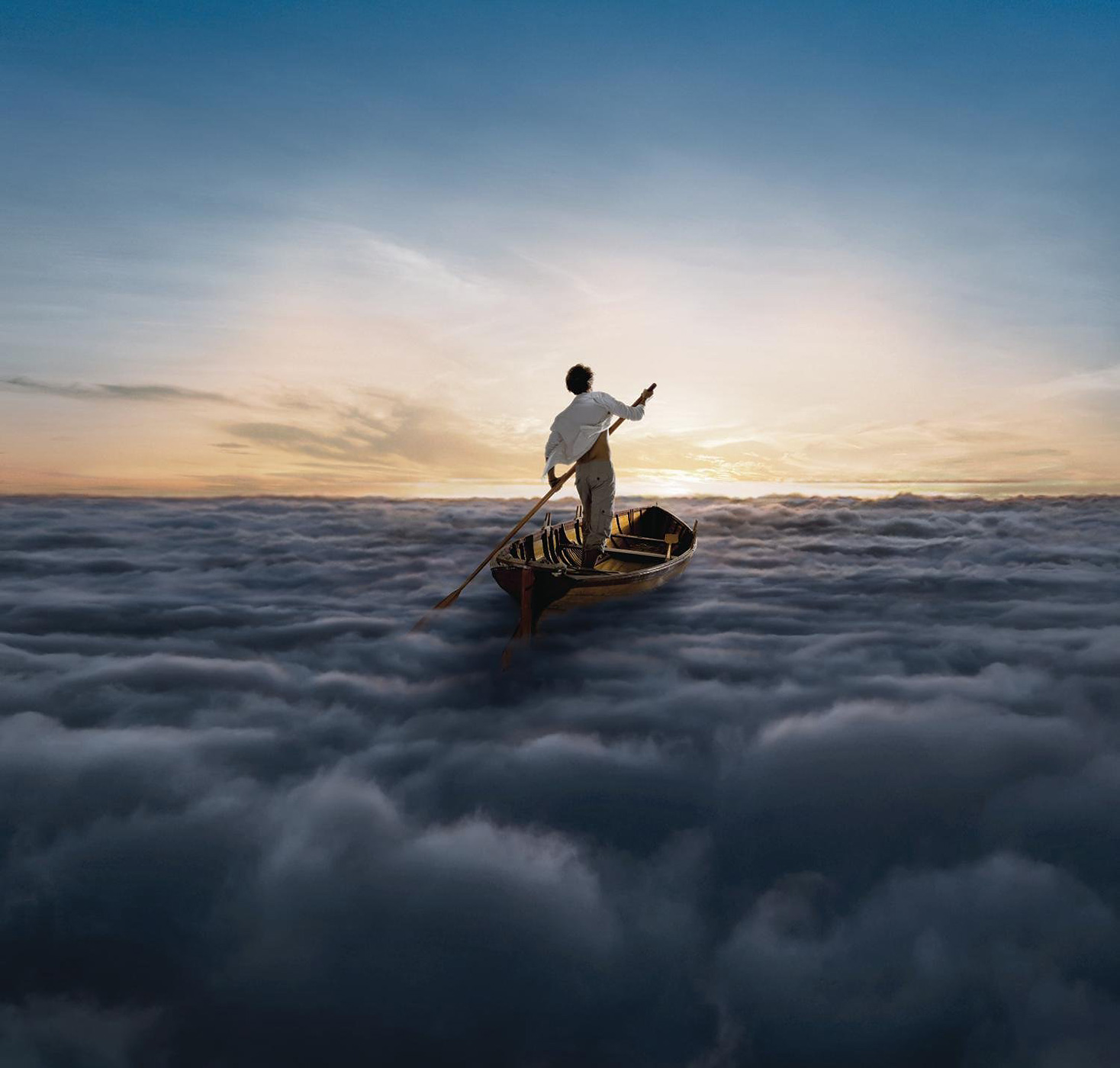
- The album cover◊ for Pink Floyd's The Endless River, designed by members of Hipgnosis. Also used in the music video for "Louder Than Words".
- Just about any album cover painted by Roger Dean, notably his work with Yes and Asia.
- The cover art for Simple Minds' debut album "Life In A Day."◊ Although their label at the time didn't seem to like it.
- Snoop Dogg's video for "Beautiful" would be nothing but a stereotypical bootyshaking rap video if not for the breathtaking scenery of Rio De Janeiro. In fact, the last shot of the video is a panorama of the city with "Obrigado Brasil" ("Thank you Brazil") at the bottom of the screen.
- Any music video by Studio Killers most notably this: [2] and this: [3]
- Tears for Fears:
- The picturesque forest and lake seen in the "Mad World" music video are located in Knebworth Country Park, Hertfordshire, England. The band loved it there so much that they even brought some of their family and friends along.
Smith: It is a dark song, but it brings back happy memories. When we made the video in a country estate on the cheap, we bussed all our friends and family up from Bath and had a fun day. The woman who's having the birthday party in the video is my mum.
- The "Shout" music video was filmed at Durdle Door in Dorset, England, which has spectacular rocky cliffs and a stunning coastline.
- The picturesque forest and lake seen in the "Mad World
- The "Making Of Together Alone" promo video for Crowded House features many gorgeous shots of New Zealand's Kare Kare Beach, where the album was recorded.
- U2 tour stages. The most obvious examples would be the Trabant-lit, widescreen-adorned Zoo TV stage, the neon-filled Popmart stage with its gigantic LCD screen, and the current 360 "Claw" stage, but the relatively minimalistic heart-shaped Elevation stage deserves a mention. Their stage designer, Willie Williams, does this in many of his works.
- Bono pointed out in a Rolling Stone piece that the 360 stage has been compared to that of David Bowie's Glass Spider Tour in 1987 — can you blame them? Bowie was one of the first rockers to use this trope, starting with 1974's Diamond Dogs Tour with its giant "Hunger City" set — so big and expensive that it eventually had to be dropped (complaints from the band and backup singers, who were all obscured by it for most of the show, probably didn't help). The 1990 Sound+Vision Tour substituted giant projections of Bowie and other performers for physical setpieces. Bowie averted this trope in other tours, such as the 1976 Isolar Tour that used only lighting to set scenes/moods... and even that was limited to white lights.
- Bono pointed out in a Rolling Stone piece that the 360 stage has been compared to that of David Bowie's Glass Spider Tour
- All of Grimes music videos for Art Angels are this, since the videos were all self-directed while she was on tour in scenic places in Europe and Asia, such as Swiss mountaintops in "Belly of the Beat," Chepstow Castle in Wales and the Millennium Bridge in London for "World Princess part II," the Marina Bay Sands in Singapore for "Realiti," and some beautiful Italian gardens in "Butterfly."


- Silverball Mania is remembered for its detail-filled all-chrome artwork.
- The Walking Dead (Zen Studios) is shaped and surrounded by 3-D miniature scale models of various locales from all of the game's five episodes. If you're not playing it in virtual reality, the table environment stretches out without the walled confines of a typical pinball table, making it all the more beautiful.
- Starting in the early 90’s a lot of baseball stadiums have been built with this trope in mind for most of the crowd. These parks lowered the outfield seating which meant the majority of the crowd could have a great view to the scenery beyond the field.
- Pittsburgh’s PNC Park looks over the Allegheny River to the downtown skyline.
- San Francisco’s Oracle Park looks out over the Bay. A long enough home run to right field lands in the bay where Kayakers await a souvenir.
- St. Louis’ Busch Stadium has a great view of downtown, and of course the iconic arch.
- Petco Park in San Diego provides great views of downtown.
- There are many minor league parks that can boast this as well. They have an added advantage as they are smaller.
- Richmond County Bank BallPark on Staten Island looks out over New York Harbor and to the iconic Manhattan skyline.
- A running joke in Indianapolis is that they don’t even need a team, people will pay to just sit and look at downtown from Victory Field.
- Admiral Fetterman Field in Pensacola sits directly on the bay.
- ONEOK Field in Tulsa provides a great view of downtown.
- Modern Woodmen Park in Davenport Iowa sits directly on the Mississippi river and right next to the iconic Centennial Bridge.
- Fifth Third Field in Toledo Ohio sits in a district of renovated warehouses and provides a great view of downtown.
- MCU Park in Brooklyn overlooks Coney Island.
- Truist Field in Charlotte provides viewers with an amazing view of downtown.
- American Football Stadiums and Soccer Stadiums have a more difficult time doing this since the configuration of a stadium can make it difficult to provide good viewing, and great scenery beyond the field. Nevertheless there are a few notable exceptions where at least a significant portion of the crowd gets an amazing view.
- Seattle’s Lumen Field is regarded as Football’s most scenic stadium with the north end looking up the hill to downtown.
- Pittsburgh’s Heinz field provides fans in the west grandstand great views across the Ohio River to downtown and fans in the east grandstand great views over the river and to the Bluffs on the other side.
- Indianapolis’ Lucas Oil Stadium has a retractable roof. But it also has an enormous window at the north end which can also be opened and either way provides many fans with a great view of the downtown skyline. The stadium was even built at an angle to maximize the view.
- Cleveland’s Firstenergy Stadium provides fans in the north grandstand a great view of downtown.
- LaVell Edwards Stadium on the campus of BYU in Utah has great views of the nearby mountains.
- Memorial Stadium on the Campus of Indiana University used to provide a gorgeous view of the rolling hills of Southern Indiana, which was particularly beautiful in the fall (football season). But sadly and to the disdain of many fans in 2007 they built an extension that enclosed the north end and ended the amazing view.
- The Float at Marina Bay in Singapore looks out over a soccer pitch on a floating platform in the marina bay of the Central Region.
- Some stadiums, particularly smaller ones, have the advantage of sitting among beautiful natural scenery.
- Victoria Stadium in Gibraltar provides a great view of the iconic Rock of Gibraltar.
- Roy Emerson Arena in Gstaad Switzerland has gorgeous views of the by surrounding Alps.
- HPCA Stadium, a Cricket Grounds in the Himalayas of India.
- Newlands Cricket Grounds in Cape Town South Africa has spectacular views of Devil’s peak.
- Svangaskard Stadium on the Faroe Islands
- Estadi Comunal in Andorra
- Rheinpark Stadion in Liechtenstein
- Hasteinsvollur in Iceland.
- Changlimithang Stadium in Bhutan
- Some people watch golf just for this reason.
- Augusta National hosts the Masters every April. The tournament is strategically timed to coincide with the blooming of the azaleas and many other beautiful flowers.
- Pebble Beach is on the famous Monterey peninsula along the California coast and hosts the U.S. Open about once a decade.
- The Winter Olympics has always benefited from having many viewers who enjoy watching the scenery just as much as the competition.
- The Tour de France chooses it's course to maximize the scenery for both the live and TV audience.
- Tales from the Loop features plenty of gorgeous environments thanks to the art of Simon Stålenhag, which both inspired the game and is prominently featured in the gamebooks.
- Similarly 42nd Street, also meant to evoke the Follies, as well as the movie musicals of Busby Berkley. Where did they get all those costumes in Depression-era New York anyway, especially since it appeared to only be the first rehearsal?
- American Idiot's set is deceptively simple — they have set pieces that move, tip over, and make amazing use of projections (particularly in \"Boulevard of Broken Dreams\" and \"Wake Me Up When September Ends\").
- The 2013 Charlie and the Chocolate Factory stage musical is, aptly, packed with fairytale eye candy: An ever-moonlit junkyard, colorful mini-sets within a huge TV that achingly contrast with the gray, ramshackle Bucket residence... and that's just Act One. Act Two, set within the titular factory's Amazing Technicolor World, has projections that turn the stage into ever-twisting hallways to dash through on the way to giant sets for such locales as the Chocolate Room and the Department of the Future (where Mike Teavee gets his comeuppance). The climactic scene turns the stage into a starlit sky for the Great Glass Elevator to literally ascend into.
- Theatre's dual champs of Scenery Porn could be Cirque du Soleil's "O" and KA, in Las Vegas. The theatres were specifically built for them, which is standard for all non-touring Cirque troupes, but these take it to a whole new level. (Of course, other Cirque shows also boast amazing set design — turntables, ascending/descending stage sections, projections, etc. — and mindblowing acrobatics.)
- City of Angels calls for 19 or 20 scenes in each of its two acts. A lot of the sets are Deliberately Monochrome, however, as they belong to the Show Within a Show.
- In the Heights has an amazing set. The set designer had an eye for detail. There are so many little things that really make it amazing. During the actual show there are people in the apartments doing things.
- The Broadway Screen-to-Stage Adaptation of The Lion King also qualifies. The opening number alone is worth the price of admission.
- Opera is a huge fan of this trope. When a minimalist director is not in charge, the set designs in operatic productions can reach astoundingly lavish levels. These can range from fairy tale forest◊ sets to fancy ballrooms◊. Sometimes the stage is so bedecked in finery that you have to pull out your opera glasses just to find the singers heads bobbing in a sea of set design. Operas based on Oriental themes often take this to extreme levels. Such as in Lakme◊ and Turandot◊.
- The Phantom of the Opera includes a few sequences designed to make you "ooh" and "aah" just from all the pretty effects they exhibit. The regenerating theater at the beginning, boat scene, bridge and, of course, the chandelier all fall under this. This and other examples of style over substance are a big reason the show has a lot of haters.
- After intermission, the musical version of The Producers brings out an identical set to the office, except painted completely white (even the windows and desks) for little more than a cheap gag and to show us how much money they spent.
- She Loves Me, a musical adapted from the play Parfumerie (also the source for The Shop Around the Corner and You've Got Mail), features a perfume shop set that hinges open and closed like a doll's house.
- Shrek: The Musical recreates a fairy-tale world complete with swamps, forests, castles, towers, lakes of lava, etc.
- Lampshaded in Spamalot, with references to King Arthur and Patsy being lost in \"A Very Expensive Forest\", complete with flashing dollar signs on the obviously-cardboard trees.
- Sunday in the Park with George has both a straight example and a subversion. Act I involves the actors and a few flats, recreating a famous painting almost perfectly onstage. Later, in Act II, they put on an impressive laser light show, and then make a deal out of it being all flash and no substance.
- Speaking of Sunday, the recent revival recreated both of the above effects with a set made entirely of giant computer screens.
- The musical version of Sunset Boulevard exhibits this in several of its effects, including one where the stagehands actually built a ''split screen\", with Norma Desmond's famous staircase on the top and a party scene on the bottom. This eventually proved to be the original production's downfall, as it was too expensive to run with anything less than capacity audiences.
- Tanz Der Vampire has so much Scenery Porn. There are several gorgeous sets, but if the scene of Sarah coming into Krolock's castle for the first time doesn't have your chin in your lap, then nothing ever will. The second you realize that the chorus is being sung by the portraits — which until that moment anyone would have sworn were actual paintings.
- The London production of Voyage, the first in Tom Stoppard's exhausting trilogy of plays about Russian thinkers The Coast of Utopia, utilized a backdrop of photorealistic video imagery projected on a massive white semi-circular screen that curved around the stage. During scene changes, the video would pan and scan to the next frame - for example, from the yard to the manor. Overall, the effect was pretty stunning.
- Wicked's Clock of the Time Dragon. Not to mention the climax of "Defying Gravity".


- Soarin', in either its older Soarin' Over California form or its new Soarin' Over the World form.
- Two words: Tokyo DisneySea. Just looking at photos and videos of it alone can be overwhelming, especially with its breathtaking iconic view of an old observatory just at the foot of Mount Prometheus.
- Many Universal Studios attractions feature incredibly lavishly themed queue lines, such as Harry Potter and the Forbidden Journey, Harry Potter and the Escape from Gringotts, E.T. Adventure, and Kongfrontation.
- BIONICLE, especially in its early years, was very fond of showcasing grandiose sceneries, most of which have been meticulously designed by the Danish creative agency Advance. Perhaps most notable are the backgrounds in the Mata Nui Online Game I and II, where the player had to traverse an entire island, often clicking through dozens of screens to get from one location to the other.
- Most everything in the Colour My Series is drawn with great detail, even rooms or machines with little to no interactions.
- Elephant's Dream. The sheer level of detail that was put into the machine is simply astounding.
- One of If the Emperor Had a Text-to-Speech Device's episodes starts with some beautiful shots of Holy Terra and the Imperial Palace before the story proper begins.
- Although some of it isn't in the webcomic, Ava's Demon features the occasional shot of beautiful scenery, such as here and here.
- Beneath the Clouds: Parts of the journey along the Tokaido Road, especially Mount Fuji.
- Bits Fair features a lot of absolutely gorgeus enviroment art. Exhibit A. Exhibit B. Exhibit C.
- Charby the Vampirate's backgrounds are quite stunning, especially in the forest.
- Clockwork includes wide Establishing Shots of the area with most scene transitions. Considering the level of detail and use of color in the art, these range from nicely atmospheric to just plain gorgeous.
- Outside scenes in Cwynhild's Loom are usually very detailed. Interior scenes often are as well.
- Darths & Droids plays with this trope a couple times. Particularly here and here.
- The Demon Archives has absolutely stunning scenery, which then promptly gets blown to bits in a war zone.
- Derelict — though there's very little dialogue, about half the pages have stunningly detailed and beautifully painted backgrounds. Most backgrounds are rusty ruins, though, so the "porn" part is up for debate.
- Say what you want about Drow Tales, but the art, especially the art from the remakes, is fantastic.
- The Dreamland Chronicles does this from time to time, especially when establish new scenes, such as Astoria (continued on the next page) or Ashendel (also a double page).
- Besides lots of nudity, the unfinished and currently offline CG webcomic Dreamwalk Journal (and its ongoing and very much online Spin-Off Nightshade the Merry Widow) depicts vast exterior and interior vistas on the insect-dominated world of Cyeatea. You don't suppose James Cameron was a fan, do you?
- Dresden Codak, one of the few webcomics you'd actually want to hang on a wall. Artist Aaron Diaz actually draws the comics on the computer. When sold as prints, they are between four and six feet tall, sometimes bigger. They look amazing hung on a wall.
- Erika and the Princes in Distress : The first volume treats the readers to an absolutely gorgeous full-page view of the Floating Island. Doubles as Food Porn given that it is entirely made of sugar and pastries.
- Family Man (Dylan Meconis). Observe. Another example, complete with an accurate depiction of the sky during medieval times.
- Fine Sometimes Rain uses many lush garden scenes found around the heroine's house, as well as some fairly detailed interior shots.
- There are lots of beautiful detailed scenes of basalt structures, cableways, etc. in Gifts of Wandering Ice. Sometimes they occupy the whole page.
- Gunnerkrigg Court's urban landscapes are beautiful and foreboding. And the scenery has only improved over time.
- Homestuck may start with sparse black-and-white backgrounds, but as the story continues the art becomes more elaborate and colorful. Especially the players' various lands.
- Kill Six Billion Demons has incredibly detailed artwork as seen here. Go ahead and zoom in.
- Lackadaisy has some really beautiful sepia tone backgrounds. In general, Lackadaisy has really careful and detailed art, and the shading on the backgrounds is especially good.
- The Less Than Epic Adventures of TJ and Amal does great things with its Real Place Backgrounds and magnificently detailed artwork. Being a Road Trip Plot, this is somewhat to be expected.
- The Meek has some beautiful and distinct backgrounds in each of its three Rotating Arcs, from a tropical jungle to a government building to an oasis. While those links are all safe, a fair bit of the rest of the site is NSFW. Just a heads up.
- MegaTokyo, with intricate buildings and weapons. Probably due to the artist actually being an architect originally.
- Minor example but every Amical's manor background in morphE contains at least one Amical painting (including some which only show up in C Gs). The reason for the trope is that every painting is a full sized image which is resized and skewed to be mostly impossible to see in the comic proper. The background artist drew them in livestream for the amusement of herself and the audience present. Examples to date include: Amical streaking through a field, Amical skiing past the Ski Free Yeti and Amical as a mermaid. Good luck spotting those details in the comic proper and to date no version has been shared outside of the live event.
- Nature of Nature's Art occasionally indulges in this. It's even more impressive when you realise that the art's done entirely in oekaki.
- Nexus has a lot of beautifully detailed cityscape shots.
- Off-White has some impressive backgrounds.
- Outsiders: Many views of New York and the surrounding American countryside as Ebony and Siobhan go about their various jobs.
- The Property of Hate features many beautiful (and trippy) backgrounds, especially once the story reaches the fantasy world.
- Twilight Sparkle And The Big City likes to indulge in landscapes of Manhattan.
- Question Duck has many gorgeous backdrop. Which have, of course, nothing to do with the question the duck asks.
- A Redtail's Dream is by the same author-artist as Stand Still, Stay Silent and offers stunning walks through highly varied dreamscapes. Even the downright scary ones happen to be very pretty. In their own way.
- Rice Boy and Order of Tales actively revel in this, having entire pages that are beautiful sweeping landscape drawings or are lots of little no-dialogue panels just showing the characters moving through the environment. This is much less of a problem than you'd think, since the comic generally updates with multiple pages at a time.
- Sarilho: as time progresses, scenery shots become more common in the comic. A lot of scenic shots of the Duero Valley, Salamanca and Coimbra.
- Slightly Damned indulges in this when the characters arrive in the city of St. Curtis. Rhea is impressed too.
- The opening view of Sherbourg in Snow By Night does a good job of laying out the beautiful details of the colony.
- Stand Still, Stay Silent has gorgeousness all through it, in whatever backdrop the characters happen to find themselves. From stunning natural landscapes and crumbling, Romantic-ethos ruins of the apocalypse... to drool-worthy, working, Schizo Tech environments with complex floorplans: it's all good.
- Space Boy: Wide shots almost always tend to be this. The first panel of Episode 7 is a good example.
- To really appreciate String Theory (2009)'s background art, view at them at full size on the comic's sketchblog. Note that the linked image only a small panel from this page.
- In Thistil Mistil Kistil, traveling brought them by this sunrise.
- In What's Shakin', many large panel scenes are drawn this way to emphasize something dramatic going on. Or transitional pages to help break the mood, like THIS one.
- Randall from xkcd will occasionally play with this trope, most notably seen here.
- In Yokoka's Quest, the backgrounds generally look great anyway, but this is especially the case for the splash panels which cover their entire two-page spreads, featuring mainly scenery with minimal dialogue or action. Some examples: (1) (2) (3).
- Vápnthjófr saga takes place in northern Sweden (Jämtland, to be precise) and features many, many silent scenery panels of the areas scenery: Mountains, rivers, lakes, forests, etc.
- Zoophobia has some gorgeous scenery, most notably this (which was done as a collaboration with artist, Kyra a.k.a. CircusTent), this and this page.
- Colossal Cave (the original text-only Interactive Fiction game) has a long description for room 126, as given on the quotes page.
- Demoscene productions. Just skim through them and there's a lot which make you say "wow".
- This trope is more or less the sole reason that Google Earth exists.
- This livejournal community contains quite a lot of this.
- Most contributions on the [[Reddit subreddit]] page, Imaginary Mindscapes, are all about this.
- Go to the TerraGen website and look through the photo gallery.
- Matthew Mercer, as the DM, describes all the scenery in Critical Role with amazing flair. Of particular note so far is the field of glass and bone from episode 8 and K'varn's stronghold in episode 10. He has a similar touch for describing particularly good kills and Non Player Characters. Double props in this case: because Critical Role is a tabletop campaign, he builds his images entirely verbally, and at least some of them on the fly.
- Many videos on YouTube featuring serene music will accompany the music with gorgeous visuals that don't necessarily have anything to do with the song itself, either because there's no companion music video or simply because there are no performers to show; this happens with songs ranging from Pachelbel's Canon in D to more obscure electronic music.
- Strangely enough, [adult swim] has recently spiced up its bumpers with spectacular scenery.
- Despite the simplistic art style, Adventure Time has some incredibly beautiful scenery, with cell-shaded landscapes drawn great detail.
- Avatar: The Last Airbender
- Avatar: The Last Airbender has plenty of pan-shots of huge and largely detailed locales. Ba Sing Se is a goldmine for this kind of thing. Sokka once took some swordsmanship lessons that included landscape painting of a valley and a waterfall◊ (based of a real one in Iceland)... that he got to look at for all of three seconds. His picture was ... nothing to write home about. The Fire Nation royal palace is pretty nice, too.
- The Legend of Korra follows up well, even moreso with an Animation Bump. Oh yeah◊.
- Avatar: The Last Airbender has plenty of pan-shots of huge and largely detailed locales. Ba Sing Se
- Batman: Gotham Knight did this with the first of its six shorts — the backgrounds are very beautiful and detailed, in contrast to the character designs, which are very simple and jagged.
- Though some of it hasn't aged amazingly, both Beast Wars and Beast Machines deserve mad props for this.
- Boo Boom! The Long Way Home: The show features gorgeous animation overall, which it uses to great effect to depict the various Italian landscapes the protagonists travel through.
- The backgrounds on Chowder look like they came out a Moroccan and Indian influenced Dr. Seuss book. The end results are gorgeous, as shown in this opening shot◊ from the Knishmas special.
- Code Lyoko should be the posterchild for this trope. The lead background painter by the name of Frédéric Perrin created meticulous backgrounds which were utilised in almost every scene in the non-3D sequences of the show; Indoor, Outdoor, Industrial, Urban, Nature, you name it. Check out his work for yourself.
- In any episode of the French cartoon Dragon Hunters and especially in its full-length 3d-prequel you may enjoy this trope with full conscience.
- The animated series Dungeons & Dragons (1983) features quite a bit of Scenery Porn, especially when showing what formidable landscape the teens had wandered into that week.
- Of all shows, Family Guy can do this when they want to. It's usually when they're trying to make the setting romantic or just pretty, for whatever reason. A more specific example would be the walk on the beach Adam West had with Lois' sister.
- The Fleischer brothers were absolute masters at this. They had little 3D model sets that fit perfectly into their cartoons, and sometimes they seamlessly matched them up with their hand-painted backgrounds (i.e. during a cut in "Protek the Weakerist"). This was long before computers, mind. See Popeye the Sailor Meets Sindbad the Sailor for example.
- In just the second episode of Futurama, they managed to do this with the Moon.
- The show takes it up to eleven with the switch to High Definition in Season 5.
- Coupled with a kickass Instrumental Theme Tune, Gravity Falls has one of the most beautiful animated intro themes for any cartoon show in recent memory, especially considering that it's from the Disney Channel. Even the animation within each episode conveys the show's setting in the Oregon countryside to a tee.
- Hanna-Barbera might've had low budgets for their cartoons but many of their late-fifties and early-sixties cartoons have beautifully painted backgrounds. John Kricfalusi talks about the paintings here.
- Harvey Beaks has beautiful backgrounds, which are messy watercolor paintings with an excellently blended palette.
- Hilda, as the series usually have transitions, which are magnificent scenes of the wilderness filled with monsters and creatures, or the city that feels alive with humans live in it.
- The House of Mouse Prop Room (an extremely large basement that's supposed to house different props and backdrops for (almost) every animated Disney movie ever made), which for some reason, looks like something drawn by Mike Mignola of all people! Guess which Disney movie Mignola was involved in!
- The animated If You Give a Mouse a Cookie series looks like a picture book brought to life and in particular has some very gorgeous backgrounds, like of sunsets or the starry night sky. There's also plenty of colorful detail to be observed on things such as tents and flowers.
- My Little Pony: Friendship Is Magic manages to pull this off in its Sugar Bowl of a Flash cartoon (take this shot◊ for example). The color, fluidity and amount of tiny details crammed into general shots are impressive. Some episodes use backgrounds that have never been seen before and are unlikely ever to be seen again, like the Training Montage in "Call of the Cutie", the fall foliage in "Fall Weather Friends", and the Wild West scenery throughout "Over a Barrel". There's also the pegasus city of Cloudsdale, an entire city made of clouds and rainbows. Its a pretty Sugar Bowl! In fact, Cloudsdale◊ looks very similar to Mount Olympus◊ from Disney's Hercules (which also falls under this trope).
- Miraculous Ladybug is set in the heart of Paris, and while the writing may avoid Gay Paree stereotypes, the visuals fully embrace the fact that it's a superhero show set in the City of Light, with Parisian landmarks regularly featured (and destroyed) as either the sites of battles or just because.
- Motorcity manages to make a desolate, run-down, subterranean Detroit look absolutely gorgeous.
- Ōban Star-Racers is recognizable for its stunning, picturesque backgrounds. Special note must be taken of the alien vistas in the Oban arc.
- While not exactly unimaginably detailed, the backgrounds from the Looney Tunes Wile E. Coyote and Roadrunner shorts were◊ very◊, very◊ pretty◊ and had gorgeous colors.
- Over the Garden Wall is filled with beautiful digitally-painted backgrounds showcasing the rural setting.
- Some of the backgrounds on Peter Rabbit, such as seen in this video here are absolutely stunning.
- Postman Pat: The series contains lots of beautiful artwork of English countryside and villages.
- The animated series Samurai Jack indulged in this on many occasions. Special mention should go to the episodes "Jack and the Three Blind Archers" and "Jack Remembers the Past".
- The Simpsons: "The City of New York vs. Homer Simpson" has a few examples of this, including the obligatory leaving-Manhattan-via-a-bridge ending (and "camera" zoom out).
- And let's not forget Bart's Imagine Spot about Utah in "Little Big Girl''.
- Skyland has to be one of the most beautiful After the End television shows out there. Most of the set pieces for the Floating Continent world they live in are rendered in exquisite detail.
- South Park, of all cartoons, manages to do this with its minimalist art style beginning with Season 7.
- The animation of Star Wars: The Clone Wars is very beautiful with very expressive faces, smooth movements, visually appealing character designs, beautiful art style, and downright gorgeous action sequences.
- The animation quality of the Pilot Movie and first season was debatable (especially with the early production episodes), but it was still decent for an all-CGI program. As The Clone Wars progressed, the animation quality improved and the characters moved more naturally. Even in the early episodes, the action scenes were impressive and the environments very detailed (including some extras most wouldn't notice on the first watchthrough of an episode), and by the second season and onwards, the animation quality and of detail were very visually appealing and near-cinematic.
- Of particular note is the Mortis trilogy, with the titular eerie planet amply demonstrating wonder of the Force.
- Star Wars Rebels is also known for some particularly striking scenery, both because and despite the Art Evolution from The Clone Wars, making it both more cartoonish and more artistic - of particular note is the imploded star field in Legends of the Lasat, which dials The Starry Night up to eleven.
- Steven Universe has pretty impressive background art as well, as seen here. Just look at Pearl's Room or the Communication Hub.
- Sweet Sea was animated by TMS Entertainment, and the special effects, hair movements, and painted backgrounds are very pretty to behold.
- Sym-Bionic Titan does this with certain shots of the city of Sherman◊, the woods◊ surrounding it and of Galaluna◊.
- The Teenage Mutant Ninja Turtles (2003) episode "The Ancient One" is full of these, once Leo arrives at the hidden land, where the backgrounds, instead of being in the series' usual style, are painted in a manner reminiscent of Avatar: The Last Airbender.
- Terrytoons, surprisingly for a studio of it's unfortunate reputation, have some of the most beautiful background art of all the Golden Age cartoons, with gorgeous composition, and beautiful rendering and color styling. Even their B&W films have slick, attractive looking backdrops, but the stunning backgrounds really become obvious once the studio started making color cartoons ("String Bean Jack", their first color cartoon in 1938, perfectly demonstrates this, with very atmospheric, rich backdrops, and amazing perspective work).
- Thomas & Friends, particularly in the first five seasons. You can tell a lot of love and care went into making the sets as realistic as possible.
- A Thousand and One... Americas: In each episode, as Chris begins reading his late grandfather's book about a particular topic related to a pre-Columbian civilization (sometimes with his voice being replaced by that of his grandfather), the series shows a prolonged shocase of the lush landscape where the episode's events will take place, including natural actions from the endemic life, the impressive architecture built by the local civilization, and/or the daily activities of the townsfolk Chris will meet in person soon.
- ThunderCats (2011), is flush with many exquisitely rendered, unique environments jam-packed into each episode, detailed (and spoiled) here.
- The Tom and Jerry theatrical short Mouse in Manhattan.
- The look of Toot & Puddle is gorgeous and many of the backgrounds are extremely lush and detailed. It's also clear that a lot of effort has gone into things like lighting and shadows.
- Tumble Leaf has a gorgeous setting, in a forest with mossy stumps, fountains, colorful fuzzy flowers, and a wrecked ship on the beach that protagonist Fig the Fox lives in.
- The French animated series Wakfu takes a few cues from anime... including gorgeous artwork. While this devArt page offers more characters than background, those backgrounds you do see with the characters are the barest sample.
- What If…? (2021): This trope normally wouldn't apply to a person, but the show features several landscape shots with Uatu silently looking on in the background, creating a rather striking effect.

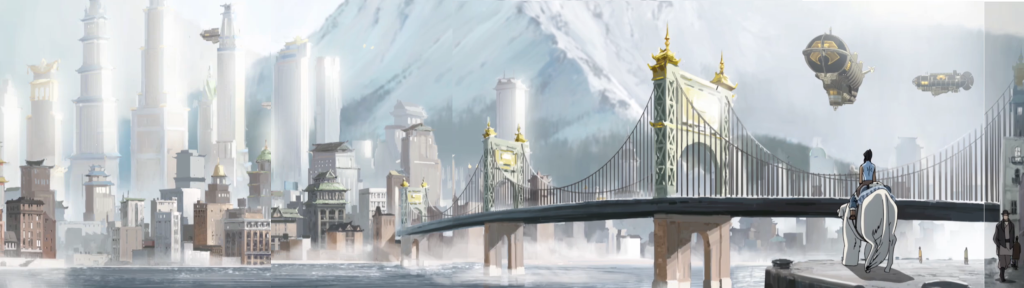


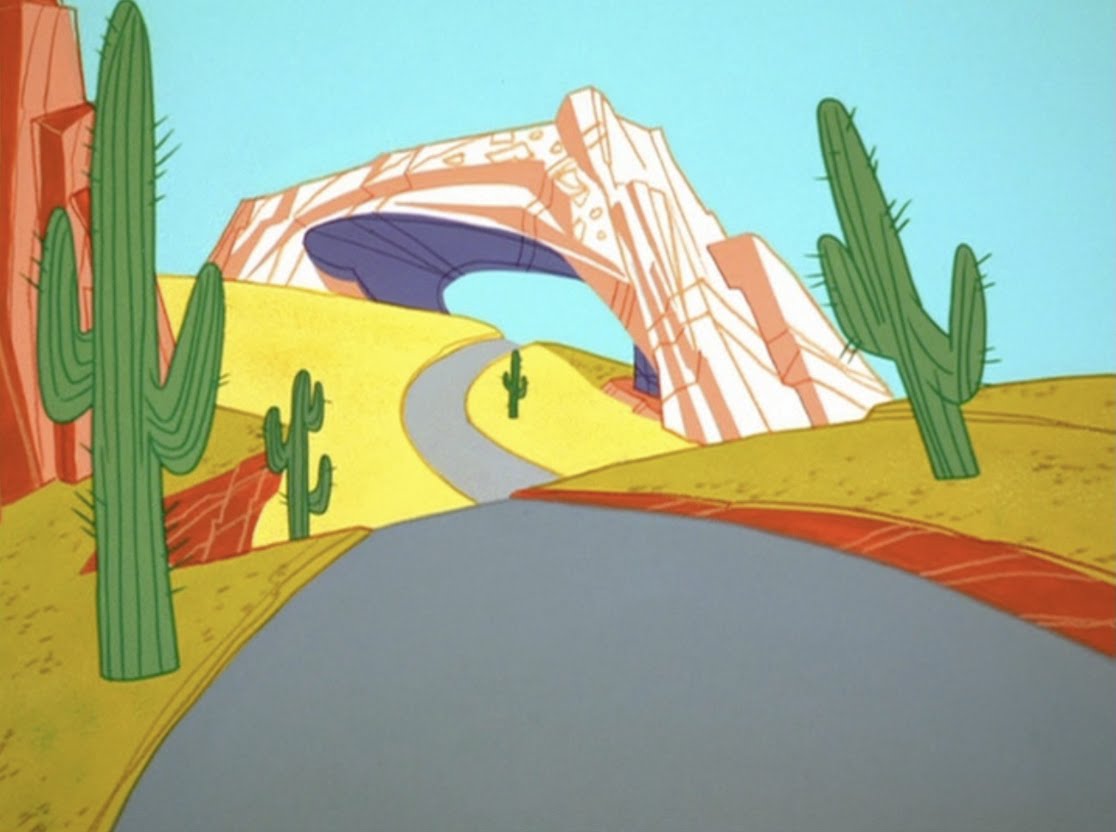
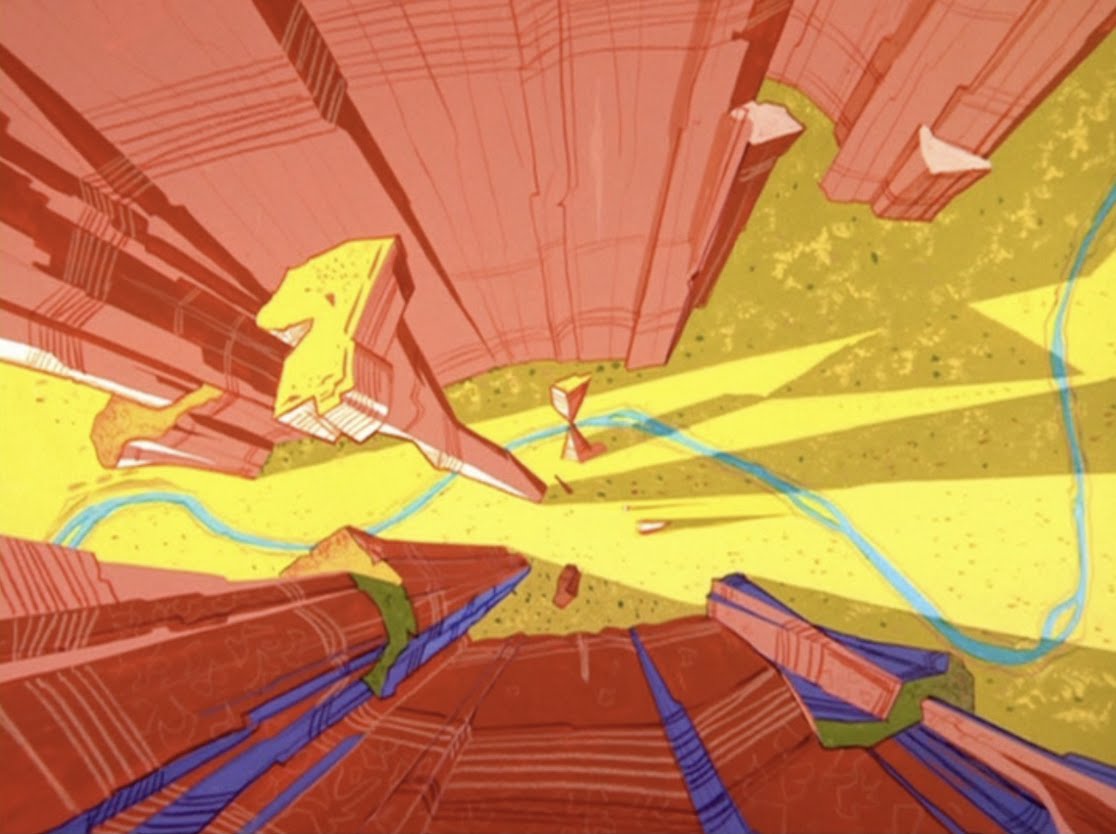
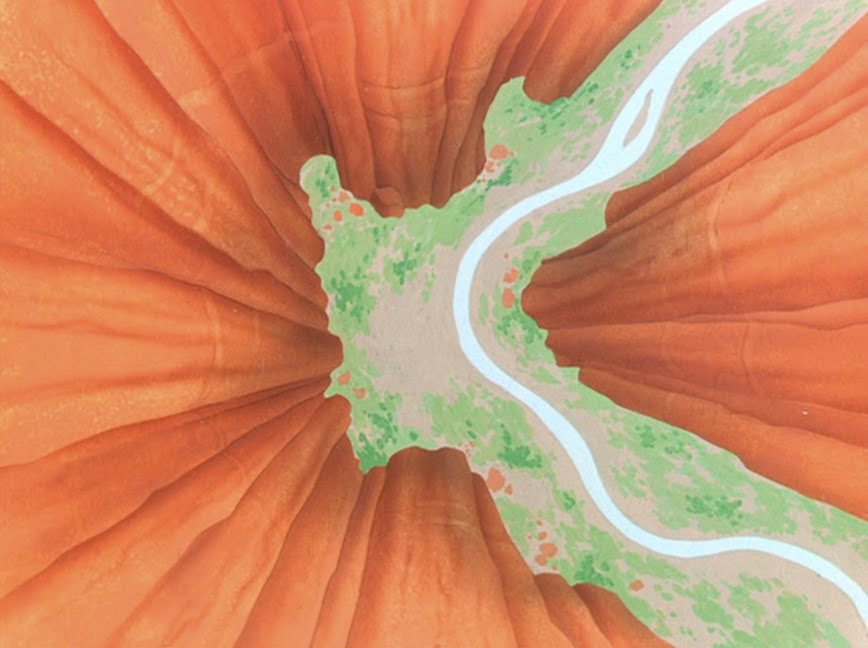
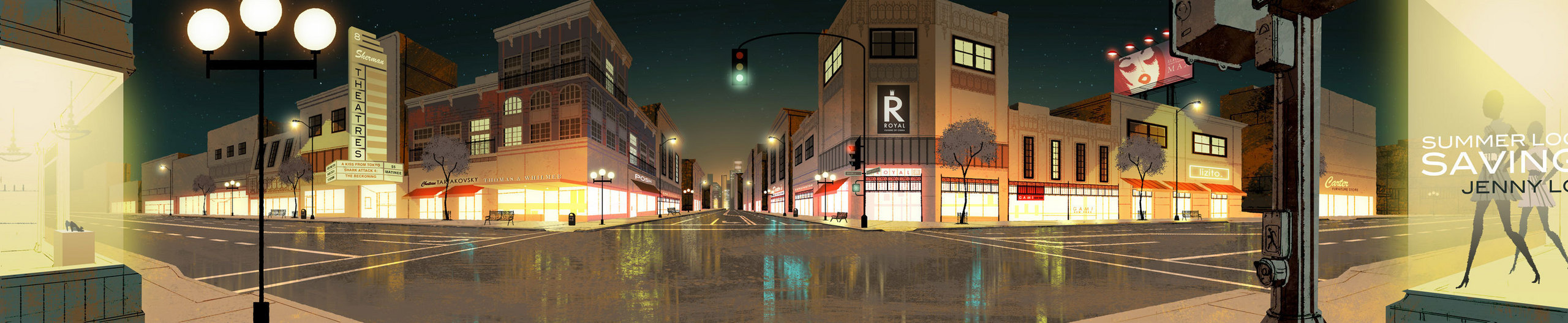


- Reddit has a Subreddit named "Earth Porn" that is devoted entirely to real photographs of brilliant landscapes. [4] Related are the Subreddits City Porn, Space Porn, Village Porn, Water Porn, and Abandoned Porn — though that last one is more like Scenery Gorn.
- High-definition subscribers to Oceanic Time Warner Cable in Hawaii get a channel (#1000) titled "Scenic Hawaii," which runs a 6-hour loop of mostly high-definition panoramas and aerial shots of the Hawaiian Islands.
- Wikimedia's featured image category for Natural places and Panoramas.
- The Great Sphinx and Pyramids of Giza are still a striking sight today, but in ancient times they were even more so. The Sphinx was once brightly painted in bold colors (some traces are still present around the ear) and the Pyramids were originally covered in smooth white plates of limestone that were polished until they shined. In the bright desert sun they must have looked spectacular and would have been clearly visible for miles.
- List of National Parks of the United States
- The screensaver on the Chromecast. If you switch to it on your TV, but don't cast anything the screensaver will show up, only instead of the stuff you might be familiar with from your computer, it will show some magnificent scenery porn with the image changing about once every minute or so. Depending on your tastes, this may be better than whatever you were thinking of casting in the first place.
- AT&T's Uverse has started doing this, too.
- Polymathically's photography gallery runs almost entirely on this.
- The short film "Wanderers" shows what human space colonization might look like using digital recreations of real places in the solar system, but mostly it amounts to Scenery Porn IN SPACE!
- Windows 10 and Windows 11 have some very beautiful lock screens.
