
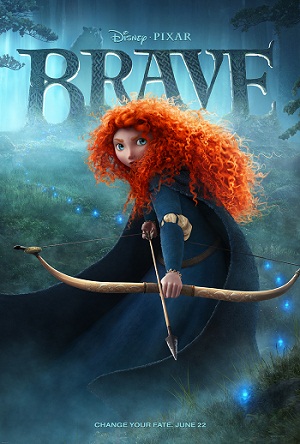
Elinor: But are you willing to pay the price your freedom will cost?
Brave (2012) is Pixar's 13th feature-length film, their first journey into the Fantasy genre, and their first film with a female protagonist.
It tells the tale of a Rebellious Princess named Merida (Kelly Macdonald) in the mythical Scottish kingdom of DunBroch, who wants only to live as freely as she desires. Her father, the rough and boisterous King Fergus (Billy Connolly), has an eternal grudge against all bears since he lost his left leg to a demon bruin named Mor'du. Her mother, the restrained and graceful Queen Elinor (Emma Thompson), wants her to marry the eldest son of the head of one of the three neighboring clans, all brought together under her rule. When mother and daughter have a falling out, Merida encounters a mysterious witch in the forest and buys a spell to change her mother, hoping to reverse her decision on the marriage. Said spell has unforeseen consequences for Merida and her family, leading to a race to undo it before the damage becomes permanent.
While in development, the film was called The Bear and the Bow, and was originally directed by Brenda Chapman (The Prince of Egypt), but she was replaced by story artist Mark Andrews and Steve Purcell. Chapman, who is Pixar's first female director, has a co-directing credit.
Ran in theaters along with the Pixar short La Luna.
On May 3, 2022, the film would receive a sequel novel titled Bravely, written by Maggie Stiefvater of The Raven Cycle fame.
Brave provides examples of:
- Accidental Aiming Skills: Twice:
- During the tournament, Wee Dingwall handles the bow as if he's never touched one before the tournament. When Fergus gets tired of making fun of him, he screams for him to "Shoot, boy!" and Dingwall jumps and looses his arrow — into a perfect bull's-eye. Everyone is understandably shocked.
- When Merida recounts the story of the four lords banding together to save Scotland from invaders.Merida: And we all know how Lord Dingwall broke the enemy line—
Macintosh: With a mighty throw of his spear!
Dingwall: I was aiming at you, you big tumshie!
- Action Dress Rip: Merida during her archery contest. Rather than the skirt, it's the shoulders and back that get ripped when she deliberately flexes to overcome the restrictive clothes. It gets further shredded after she is thrown off Angus and runs through the forest.
- Actor Allusion: This isn't the first time that Emma Thompson has played a Proper Lady named Elinor.
- Actually Pretty Funny: During the archery tournament, Fergus and Merida exchange quips about the princes and their performance. Elinor tells them to knock it off, but you can see her smirking.
- Actually, That's My Assistant: A humorous example occurs with Wee Dingwall and a buff Dingwall clansman when Lord Dingwall is introducing his son.
- Adventurous Irish Violins: Adventurous Scottish Violins, befitting the ancient Celtic setting, the musical score of Brave contains this trope.
- Aesop Enforcer: The witch serves as an Enforcer to both Merida and Mor'du. Considering how Mor'du's story wound up, she either thought that granting Merida's request would release Mor'du and end well for her or just didn't care.
- Agony of the Feet: During a caber-tossing game, a man has a caber land on his foot, making him scream in pain.
- Also, just as King Fergus has restored order during the brawl between Clans MacGuffin, MacIntosh and Dingwall, the boys drop a mace on Lord Dingwall's foot and his scream of pain starts the whole bloody thing up again.
- All of Them: Merida offers to use her expensive necklace to buy all the woodcarvings from the witch under the condition of also purchasing a spell.
- Altar Diplomacy: A variation in which the Arranged Marriage isn't to form an alliance, but to maintain one. The four Gaelic tribes hate each other, but formed a temporary alliance to fight off Vikings and made King Fergus their leader. Once that threat ended, they wanted Merida, Fergus's daughter, to marry the son of one of the other tribes' chiefs to solidify their alliance. Merida eventually convinces them to keep the alliance without anyone being forced to marry.
- Ambiguous Situation: At the end, did Elinor transform back to a human because the sunlight had to shine on the tapestry before it'd work ("mend the bond" literally), or did she transform because Merida finally acknowledged that she was the cause of her mother's predicament and tearfully told her she loved her ("mend the bond" metaphorically?) Or were both needed?
- Amplified Animal Aptitude: Regular example: Merida's horse Angus seems to understand everything she says. The other examples were magically enhanced: the witch's crow can hold a conversation, Mor'du the demon bear is incredibly strong and ignores any attacks against him, and the enchanted Queen Elinor, also a bear, has more realistic strength but retains her human intelligence.
- Anachronism Stew: Where to begin? The film is meant to portray a medieval fantasy Scotland, so The Time of Myths can be easily invoked. That being said, there are references to recently fighting both the Romans (a 5th century at the latest) and the Vikings (8th-11th century), and there's a hodgepodge of features (clothing, weaponry, and the like) from a wide range of eras.
- The tartan (15th-16th century), kilt (18th century)note and woad warpaint (Iron Age); forks and tea (didn't make landfall in Britain till mid-17th century); bagpipes (14th century)note ; the carnyx (Iron Age) and bears (extinct in Scotland since the 9th-10th century at the latest) at the same time. Admittedly, the only bears we actually see are transformed humans.
- The sleeves on Merida's dresses are too tight to have existed before sewing technology developed in the 14th century (unless she sews them up each morning), and the slashes on the shoulders and elbows are a fashion of Renaissance Italy.
- One mainly justified through Rule of Funny: the witch uses a welding mask when making the spell.
- The castle has features not introduced until the very end of the medieval period, yet looks like it's been there for centuries.
- The language spoken throughout the film is primarily Modern English with a faint Scots accent and is easily understood by most Anglophones. The exceptions to this are the occasional Gaelic word or phrase, Young MacGuffin who speaks in Doric, and an improvised line borrowed from Oor Wullie, all Played for Laughs.
- Animal Motifs: The DunBroch clan symbol is three black bears. King Fergus hunts them for sport, too.
- Every single carving the witch has made is a bear. Justified because she advertises it as bear-themed carving.
- Animal Nemesis: Mor'du the bear, for Fergus (and eventually Merida) ever since the bear attacked his family.
- Animal Reaction Shot: Angus serves as silent and slightly sarcastic commentary throughout the film.
- Animation Bump: The film is technically very impressive and improves on several aspects of Pixar's already impressive 3-D technology. They even rewrote their entire animation system for the first time ever.
- Animorphism: Merida purchases a spell from a witch that will "change" her mother ... into a bear.
- Annoying Arrows: Merida's arrows don't do much to Mor'du, who has arrows and weapons sticking out of his skin from all the other warriors he has faced. Mor'du isn't just a normal bear.
- Appropriate Animal Attire: Played with. After the mother turned into a bear she covers herself in a blanket. Merida notes that this is unnecessary as she is covered with fur.
- Arranged Marriage: The sons of the three lords compete in the Highland Games for Merida's hand in marriage. She prefers her freedom and does not want to get married yet, so she sabotages their chances by entering and winning the archery contest. And at the end of the movie the three suitors reveal that they weren't exactly thrilled at the idea of getting married just yet either. It's not so much Merida doesn't want to marry at all as she doesn't want to get married now at fifteen and she doesn't want to marry a stranger. It turns out that her potential husbands feel exactly the same way. The idea of getting acquainted with Merida first clearly appeals to all three.
- Arrow Catch: The big guy from Lord Dingwall's entourage does this when the clans are arguing in the main hall.
- Ate the Spoon: The cauldron full of goop from which the witch's spell-cake is made dissolves the instrument she used to make it. No wonder she doesn't like brewing it.
- Badass Family: Merida is a peerless archer, Fergus a seasoned warrior and leader, and the boys are a team of cunning ninjas. Elinor seems to be the odd one out as her strength is in communication, then you see her Strolling Through the Chaos.
- Badass Fingersnap: The Witch does all of her non-potion related magic with snaps, up to, and including, summoning a horde of flying knives, axes, and other sharp implements to threaten Merida.
- Bar Brawl: The three lords and their clans gather at the castle for the Highland Games, in which their sons will compete for the right to Merida's hand in marriage. At some point, a massive fight breaks out (including biting and at least one purple nurple). Fergus makes a feeble attempt to defuse the situation before diving into the fray, leaving Elinor to restore order.
- Bears Are Bad News: The demon bear Mor'du, who is described by Pixar as "Moby-Dick on land". The curse threatens the kingdom by changing Elinor into a bear — and a target for those aware of this trope.
- Beary Funny: The triplets, when turned into bears, still remain comic relief characters.
- Be Careful What You Wish For:
- Wishing for "the strength of ten men" or something to "change my mother" both result in the same thing. Judging by all the carvings, it's possible that changing people into bears is the only spell the witch knows.
- Elinor spends her life trying to make Merida her eventual successor and maintain the peace between the volatile clans. Unfortunately for her, this ultimately leads to her miming what Merida needs to say when the clan leaders are at war.
- Bedsheet Ladder: The men escape from a tower by tying together their kilts. And since they are true Scotsmen, this means we're treated to unsightly glimpses of their bare butts.
- Beware the Nice Ones: Elinor — polite, genteel, formal, a diplomat who abhors weapons and violence, always seeking to unite the clans and bring peace and prosperity to Scotland. But when you threaten her daughter...
- Big Damn Heroes:
- Merida and the triplets save Elinor from being hunted like a bear.
- Elinor rescues Merida by bursting free from the ropes tying her down and fighting Mor'du when said demon bear is busy threatening her daughter.
- The Big Damn Kiss: Fergus and Elinor do this near the end of the movie... right in front of Merida and all the clans, no less!
- Big "NO!":
- Young Macintosh's reaction to not hitting a perfect bulls-eye is to throw a fit and yell "No".
- Fergus yells "No" when Bear Elinor hurts Merida due to rage.
- Big "SHUT UP!": Used a few times, first by Fergus, later by Merida.
- "SHUT IT!!!"
- Big, Thin, Short Trio: The three Lords Macintosh (Thin), Macguffin (Big), and Dingwall (Short) and their sons.
- Big "WHAT?!": Lord Macintosh does this when his son reveals that he doesn't want to compete for Merida's hand because it is a big surprise.
- Bilingual Bonus:
- Castle DunBroch, where the family lives, translates to Castle Castle Castle.
- In Scots Gaelic "mòr" means big, and "dubh" (pronounced "du") means black — an apt description of the demon bear Mor'du.
- Merida's name in Hebrew means "to rebel".
- Blasting It Out of Their Hands: How Merida disarms her father in the climax before he makes a dark mistake.
- Bloodless Carnage: None of Mor'du's wounds bleed and none of the huntsmen he attacks even receive any visible wounds.
- Both Sides Have a Point: One of the main points of the movie; Queen Elinor insists that having Merida do an Arranged Marriage with one of the clan lords' sons is necessary for the recently-formed kingdom's growth and stability. While being a bit forceful about it, she still has a point, especially when Merida's Loophole Abuse nearly launches the clans into war. She also points out that sometimes it DOES go pretty well and can blossom into a genuinely loving relationship (like Elinor and Fergus' did). At the same time, Merida is righteously upset that she wasn't told about the betrothal until the day before it happened, doesn't want to be seen as a prize to be won, and she doesn't feel like she is ready for marriage. Added to the fact that Merida is downright terrified of the idea, it's hard to blame her for her attempt to get out of it. A key factor in their reconciliation and freeing Elinor and the triplets from the curse, is mother and daughter both realizing that the other has legitimate points about their views on both the matter, and their ways of solving conflicts. The diplomacy skills that Elinor taught Merida during the princess lessons allows her to pacify the clan lords and restore peace, while the fighting and survival skills Merida taught Elinor in bear form allows her to defeat Mor'du for good. Furthermore, Elinor allows Merida to break tradition by suggesting that the firstborn sons of the clans should be allowed to choose to marry whoever they want when they're ready for it, something which the clan lords consent to.
- Bows and Errors: Justified. Considerable research was put into the bow and arrow physics, and when mistakes are present in how characters use bows these are intentionally there to show their lack of experience. Of note is the archery competition where the contestants make common mistakes in their form; Young MacGuffin has inadequate draw strength, Young Macintosh lets go of the drawstring with too much flourish, and Wee Dingwall pinches his arrow and would've missed if not for a lucky accident. They're followed by Merida who displays perfect form, and even draws attention to the tremendous strength needed to use a bow when she tears her dress to give herself the flexibility to draw.
- Braids of Barbarism: Many of the men sport braids in their hair while also being strong, able fighters.
- Brave Scot: They're Scots. And they're brave! And the movie is called Brave! Certainly, they're not shy about fighting bears.
- Brick Joke:
- Early in the movie, Merida says she will buy all the carvings in the witch's house. After the credits, the witch's crow comes up to deliver all of them. The shocked guard who receives the delivery is the same one the boys were picking on earlier when they cut off his mustache. And once again, he's sleeping on the job.
- After Elinor's turned into a bear and struggles to cover herself with something, Merida rolls her eyes and tries to assure her mom that she's fine. Merida points out that, since Elinor's now a bear, she's covered with fur and (technically) isn't naked. But at the end of the movie, when the curse is lifted and Elinor's turned back into a human, she and Merida realize that [Elinor's] not wearing anything under the tapestry — Elinor then has to gently break the news to Fergus that she's naked under her blanket.
- At the beginning of the film, there is a short scene where Fergus is shown adjusting to his new wooden leg by fighting. In that scene, a man swings his sword at the wooden leg, only for the leg to stop the blade. in the climax, Merida does the same move, although this time it is successful.
- Bright Castle: Castle DunBroch
 ◊ is magnificent, though it looks more like a fortress than the traditional fairy tale variety. It helps that when the team at Pixar went to Scotland, they made sure to study Scottish castles, which Castle DunBroch is a near picture perfect recreation of in terms of building style; less extravagance, more utility.
 - Buy or Get Lost: the shopkeeper in The Little Shop That Wasn't There Yesterday (who insists that she's a woodcarver and not a witch) says to Merida "If you're not going to buy anything, get out!" and tries to shoo Merida out the door with levitating knives. Merida quickly buys all the woodcarvings under the condition of also purchasing one spell.

- Can't Get Away with Nuthin': A more comedic version—Merida's little brothers never get caught during pranks while Merida can never catch a break.
- Carrying a Cake: If there are sweets in the area, the triplets will steal them.
- Cassandra Truth: Fergus doesn't believe in magic. Nor does he believe Merida's belated explanations that the bear in the castle is actually his wife until it's almost too late.
- Celestial Deadline: The witch's spell becomes permanent by the second sunrise if one doesn't "mend the bond torn by pride".
- Central Theme: Reconciliation. It's the focus of the Curse Escape Clause, at the center of the personal conflict between Merida and Elinor, and also the key to the climax between the four clans.
- Chairman of the Brawl: A variant, as Young MacGuffin slams a bench, not a chair, into his opponent.
- Chasing a Butterfly: In the opening scene, a young Merida follows the wills-o'-the-wisp into the forest, where she is attacked by Mor'du the bear.
- Chekhov's Gun:
- When Elinor as a bear accidentally runs into one of the standing stones, it cracks and wobbles. This is later used to kill Mor'du.
- The tapestry may or may not qualify, depending on whether one interprets the witch's instructions as telling Merida to repair the tapestry and/or her relationship with Elinor.
- Chekhov's Gunman: The last prince from Elinor's story is eventually revealed to be Mor'du.
- Chekhov's Skill:
- Merida uses some of her hated lessons (public speaking and history) to excellent effect late in the film.
- One of Merida's not-so-hated skills, archery, is used to help Elinor survive in the wilderness, proving archery's value.
- Also, the ability to climb stone walls while wearing a heavy woolen dress. Anyone who had tried simply WALKING in one of those things can appreciate just how much of a skill this truly is especially when they are being chased by a demon bear.
- Knowing how to sew for the climax with the tapestry, while riding horseback, at night, and in the rain.
- Child Marriage Veto: Merida doesn't want to be married, so she pulls some Rules Lawyer stuff to get out of it by choosing a feat of Archery marksmanship as the contest, and then entering the contest, in which only the firstborn of each clan may compete. Fortuitously, she's firstborn and also a master archer. Later in the film, the three suitors reveal that none of them were keen to marry a stranger either, and they happily agree with her suggestion that the tradition be changed.Merida: I am Merida, firstborn descendant of Clan DunBroch, and I'll be shooting for my own hand!
- Chronically Killed Actor: Billy Connolly downplays this trope; his character isn't killed by the bear attack at the beginning of the film, only crippled.
- Circle of Standing Stones: Merida keeps being drawn to an area with several stone columns forming a circle, and encounters Will-o-wisps. Angus is so spooked by the place he refuses to go through it. It is also where the curse on Elinor and Mor'du is broken.
- Color-Coded Characters: The four lords have green (MacGuffin), blue (DunBroch, Merida's clan), red (Macintosh), and yellow (Dingwall) tartans.
- Comic Role Play: Fergus helps Elinor practice patching things up with Merida by saying "Pretend I'm Merida, what would you say?" and then mimics Merida in falsetto:Fergus: [falsetto] I don't want to get married, I want to stay single and let my hair flow in the wind as I ride through the glen firing arrows into the sunset!
- Company Cross References: Merida's archery style, including her winning tournament shot, is patterned off that of Disney's own Robin Hood.
- Compressed Hair: It is nothing short of miraculous how Queen Elinor manages to tuck all of Merida's profusely curly, waist-length hair under a small wimple that barely bulges and, when Merida reveals herself at the archery tournament, her hair flows as freely as if it had never been subjected to the accursed wimple.
- Continuity Cameo: The royal family appears in car form on a tapestry inside a pub in Cars 2. Here◊ is the pic as it appeared in Cars 2, and here◊ is how it looks in Brave.
- The Pizza Planet truck makes an appearance inside the Witch's hut◊. Watch closely while she's carving wood, it flashes by pretty quickly.
- The ball from Luxo Jr. is also hidden in the rubble.◊
- The ball from Luxo Jr. is also hidden in the rubble.
- And just like Cars 2 referenced Brave, Brave has a carved◊ Sulley.
- The Pizza Planet truck makes an appearance inside the Witch's hut
- Cool Boat: The three lords each have one of these and use them to cross the loch to reach Castle DunBroch. As soon as they notice each other they basically start up an impromptu drag race.
- Creator Cameo:
- Co-director Steve Purcell voices the witch's crow familiar.
- Composer Patrick Doyle voices Martin (one of the guards).
- Crouching Moron, Hidden Badass: Wee Dingwall appears dim at best, but when the fights break out he's a fierce and almost psychotic fighter. Almost like a berserker in fact. The name comes from the words for "bear shirt" (that is, the clothing they wore into battle), which means it just might be intentional.
- Cue the Sun: Played with. The sun rising after the terrible, stormy night is symbolic of the defeat of Mor'du and the end of his curse but it's also a moment fraught with worry because of the need to change Elinor back before it happens. So it's both a relief and suspenseful.
- Curse: A "beastly curse" is unleashed on the land as a result of Merida's wish, specifically Queen Elinor being transformed into a bear.
- Curse Escape Clause: Aside from the Celestial Deadline of breaking the spell before the second sunrise, there's an actual rhyme whose meaning Merida must puzzle out. "Fate be changed / Look inside / Mend the bond / Torn by pride."
- Interestingly, in a short film on the DVD, the witch explains more of the back-story for Mor'du and how he was given a similar clause. She made a drinking horn for him, which he could use to gain the strength of ten men as he wanted, or he could instead use it to heal the rift he caused within his family. As you can probably guess, he chose the former, slaughtered his brothers, and then his own men either turned on him or fled in fear because they only saw a beast, not their leader. So unlike Merida, he ended up destroying his kingdom due to his wish to change his fate.
- Damsel in Distress: Merida, despite being pretty active and fearless, needs rescuing several times in the movie. Sometimes while trying to save someone else or just after escaping from some other danger.
- Darker and Edgier: Lee Unkrich has described the film as a "very gritty adventure", darker and more mature in tone than the typical Disney Princess movie. The trailer also breaks Pixar's tradition with funny gag-based teaser trailers, setting the audience up for a story akin to that of a traditional High Fantasy. Still, they're mind-bogglingly aimed at the youngest crowds, choosing to focus on the comic relief and completely hiding the true premise of the movie, possibly because of its darker and edgier roots.
- Death Glare: Merida and Elinor glare at each other right after the last arrow hits the bulls-eye.
- Death of Personality: Merida and Elinor must Race Against the Clock to break the spell that gave Elinor a bear's body or she will lose her humanity and become like any other non-sentient bear.
- Decon-Recon Switch: The film actually reminds us what power the queen wields, but the wild Rebellious Princess protagonist is not exactly wrong in not wanting to go through an Arranged Marriage.
- Deconstructed Trope:
- Deconstructs Screw Destiny. So Merida wants to totally defy tradition, without back-up plans or thoughts of how this could affect her and others? Her mother Queen Elinor and her three little siblings shall forcibly be transformed into bears when she asks a very mischievous witch for help to "change her mom" without specifying anything. And for worse, when a Reasonable Authority Figure like Elinor disappears, then the clans that she and Fergus held together start fighting against each other, and that means war will start soon... with one of the reasons being Merida's "Plucky Girl" action of "winning her own hand", which the noblemen saw as a massive insult from their royalty. So it's up to Merida to go into a quest not just to prove her worth as a person, but to rescue her bear-ized mother and siblings and fix up the massive mess that has been left - alongside becoming physically, mentally and emotionally stronger on the way.
- In regard to the Tomboy Princess trope itself... Merida's frustration at society's expectations of her is treated sympathetically, as her distress doesn't come out of nowhere and you can understand her fear of being seen as just a pawn in her family's plans through the prospect Arranged Marriage. However, as said above, the negative consequences of her headstrong and selfish backlash are what set the plot in motion, forcing her to atone for her actions and find a compromise between her desires and her responsibilities. Actually admitting that she was too proud for her sake is the catalyst for the spell breaking.
- Dedication: When Mor'du is killed towards the end of the film he turns into a will o' the wisp and we realize that they are the spirit of the dead. During the credits, a will o' the wisp appears over the credit "dedicated with love and gratitude to Steve Jobs, our partner, mentor, and friend."
- Defrosting Ice Queen: Elinor may be a non-romantic version of this trope for Merida. A lot of their problems was that Elinor is very prim and proper and exceedingly frustrated that Merida isn't; both of them have to change by the end but Elinor is notably much more relaxed in the end.
- Deliberately Monochrome: The scene in the Ancient kingdom, complete with Splash of Color.
- Department of Redundancy Department: "Dun" and "broch" are, respectively, the Gaelic and Scots words for "fort". Therefore, "Castle DunBroch" could be translated as "Castle CastleCastle". It's Truth in Television for a surprising number of places...
- Deuteragonist: Although it's not given in the advertising, the movie's tale is just as much about Elinor learning to understand her daughter's perspective as it is about Merida learning to own up to her actions and face her (eventual) duties.
- Did Not Get the Girl: Refreshingly, this is a Disney Pixar film in which the princess doesn't want to be "got" and succeeds in remaining single.
- Did Not Think This Through: Merida demands a spell from the witch that will change her mother, Elinor in order to make Elinor forget about Merida's betrayal. Merida doesn't even give herself time to consider the actual consequences for the spell. She can't even assume that she's asking for a spell that would transform her mother into an animal or creature. Without heeding the witch's warning, Merida jumps straight to her conclusion.Witch: You're sure you know what you're doing?
Merida: I want a spell to change my mom. - Disney Death: A variation where instead of physically dying it looks like Elinor has permanently become a bear in addition to her mind becoming bestial. Of course, everything turns out okay at the end thanks to The Power of Love. note .
- Double Standard:
- The men nearly starting a war due to their own poor impulse control is Played for Laughs. Merida nearly starting a war due to her own poor impulse control is Played for Drama.
- Likewise, Fergus is shown to be just as bad at running affairs of state as his daughter Merida (since she takes after him), but while he has the luxury of pawning off his royal duties to his wife and enjoy all the perks of being king (endless hunting, feasting, fighting, etc.) while dealing with few to none of the responsibilities, Merida has no such luxury, and is forced by her mother and the narrative, to suck it up and learn the responsibilities hoisted on her by her birth and gender, whether she likes it or not.
- Does This Remind You of Anything?:
- Wee Dingwall has...difficulties with his bow and arrow.
- Elinor's reaction upon seeing Merida's scratches mimic a human parent realizing s/he's become abusive.
- Do Not Taunt Cthulhu: In the climax, Fergus punches the immortal demon bear in the face, but this only serves to enrage the beast. The one who finally takes him down is Elinor.
- Dramatically Missing the Point: Up until the last few seconds, after Elinor seems to have turned permanently into a bear in body and mind, Merida assumes that the tapestry is what needed to be mended as "torn by pride", and not her relationship with her mother and changing her attitude toward the situation from blaming the witch to blaming herself. Although it may be worth noting that the transformation back didn't happen until the sunlight actually fell across the re-stitched tear in the tapestry... and this, in turn, happened right after Merida's change and declaration. Whether this was a mere symbolic coincidence or if there really was a connection between the tapestry and Merida's actions is up to the viewer to decide. It's true metaphorically inasmuch as Merida repairing the tapestry to save her mother's life made her realize that in spite of everything, she still cared about her mother and desperately wanted to repair the relationship between them, but how much of which was necessary for the magic is not stated.
- Dub Pronunciation Change: The Italian and Brazilian dubs had the pronunciation of Merida's name from Mérida (Meh-readah) to Merída (Meh-ree-da), presumably to avert sounding similar to "merda", which means "shit" in both languages.
- Dying Declaration of Love: When mending the tapestry to reverse the spell doesn't seem to work, and Elinor will be a bear forever Merida reaffirms her love for her.

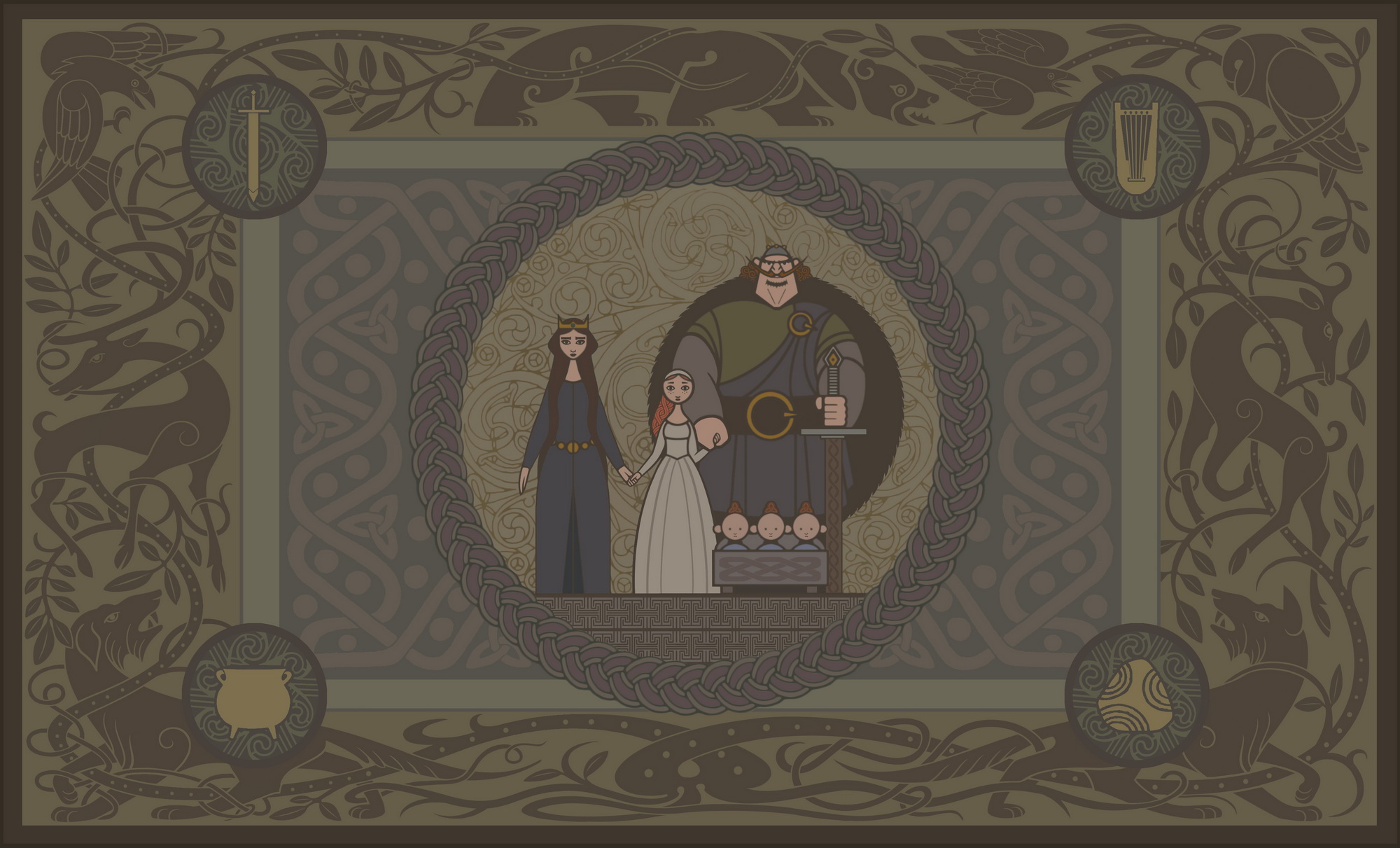


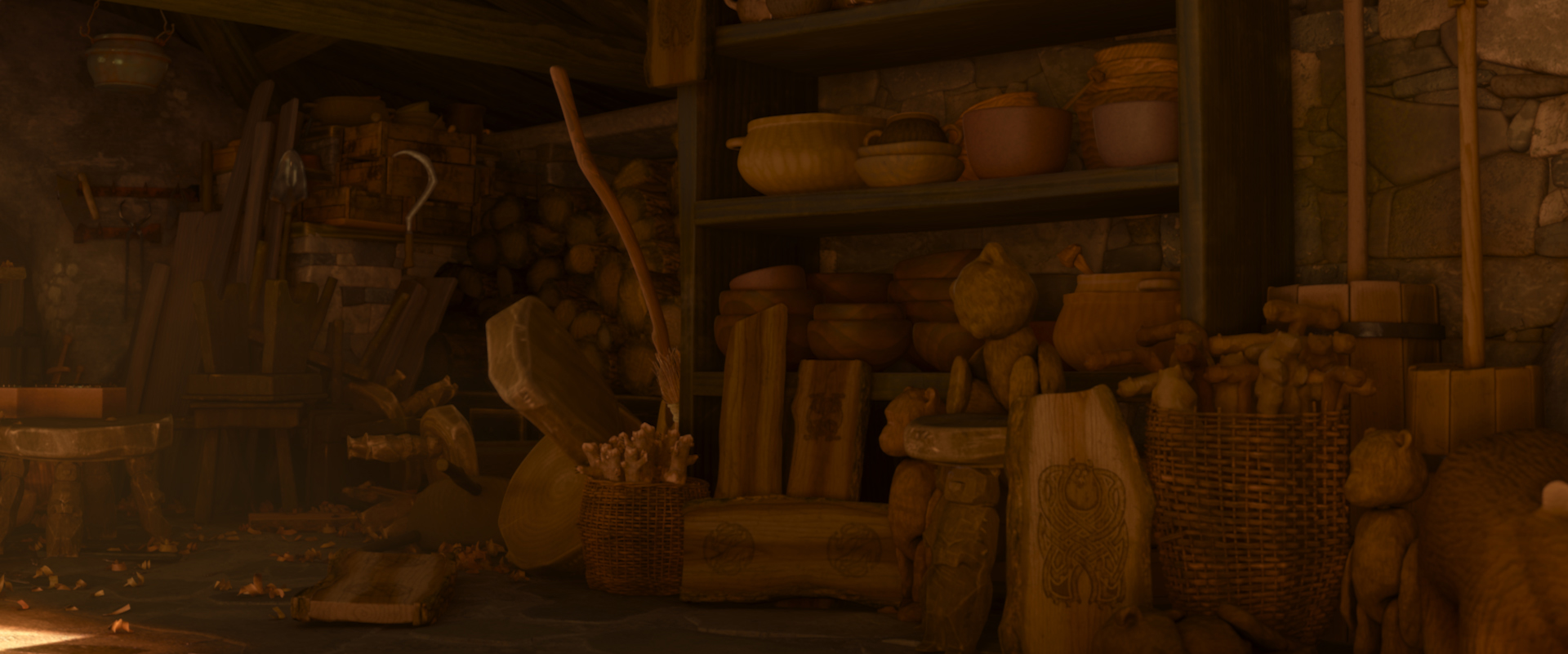
- Ear Ache: The High Queen Elinor breaks up a fight by simply Strolling Through the Chaos and dragging the instigators (her husband and the three clan lords) out by their ears.
- Early Personality Signs: Younger Merida is shown begging for a bow and being happy to receive one for her birthday. Now, she's an archer.
- Eat the Camera: Done with Mor'du in the beginning of the movie when he attacks Fergus and chews off his leg. After the camera reaches the dark void (or inside Mor'du's stomach), the title card is shown.
- Enchanted Forest: The woods outside the town are home to a witch and spirits and an old abandoned castle.
- Empathic Environment: The climax of the movie where Mor'du is faced once and for all (and Merida works to break the spell on her mother) takes place during a violent, fairly frightening thunderstorm, which ends after he is killed, just in time for the (fateful) sunrise.
- Empty Piles of Clothing: After the spell takes effect, Elinor's torn robes are left on the floor of her room. When Fergus eventually discovers this, he goes ballistic.
- Enemy Mine: The quest to find Elinor and hunt down Mor'du unites the four hostile clans.
- Enemy Rising Behind: After Merida realizes the prince from her mother's legend is Mor'du, she then realizes that said bear has appeared behind her.
- This concept art poster◊, which makes it appear that Merida is hunting while being stalked by a bear. She's actually protecting it.
- This concept art poster
- Engagement Challenge: There's a longstanding tradition where the first-born children of the local clans compete for the princess in a challenge of her choosing. But since Merida has no interest in marrying anyone and happens to be her own clan's first-born, she chooses archery (which she's very good at) and shows up to compete for her freedom. After quite a bit of arguing, it turns out that none of her would-be suitors are interested in marriage, either, so the clans decide to break tradition and let them marry in their own time.
- Escapism: Merida rides her horse, practices her archery, and does anything she can to keep her mind off what she considers the boring lessons her mother is teaching her regarding etiquette and managing a kingdom. Things come to a head when time catches up with her and she has to actually deal with matters head-on.
- Everything's Louder with Bagpipes: The pipers strike up whenever the lords start fighting. One even casually dodges a bench that flies at him.
- Exact Words:
- Merida wished for her mother to "change" without specifying in what manner; the prince of the legend asked for "the strength of ten men". This led to a transformation that neither of them wanted.
- Merida takes advantage of this when the contest for her hand is declared among "the first-born of each clan".
- Explain, Explain... Oh, Crap!: Merida has this moment when she and her mother stumble across the ruins of an old castle. When Merida finds the ruins of the throne room, she sees a stone tablet depicting four brothers, one split off from the rest. Remembering the story of the four princes that her mother had told her, Merida comes to the terrifying conclusion that not only is the legend true, but the spell that transformed her mother has happened before, and the eldest prince from the legend is none other than Mor'du. And to make matters worse, he's standing right behind her.Merida: The spell... it's happened before. "Strength of ten men"... "Fate be changed"... Changed his fate. Oh, no! The prince became... [turns around, seeing a very monstrous but familiar face] Mor'du!
- Expository Hairstyle Change:
- When Elinor dresses Merida for the presentation, she shoves her hair into a wimple. It's fairly bursting at the seams, just like Merida's personality. When she defies her mother, she ditches the wimple and announces herself by pulling her hood off and revealing her wild, loose locks.
- By the end of the movie, Elinor has let her hair down from its former tight braid into hanging loosely down her back. This is a subtle indication that she's mellowed out.
- Extremely Short Timespan: Excluding the prologue, the movie is set over a period of three days.
- Eyes Always Shut: Lord MacGuffin appears like this, through a combination of Big Ol' Eyebrows and smaller eyes.
- Facepalm: Lord MacGuffin facepalms after his son's arrow misses the bulls-eye.
- The Fair Folk: The Wisps are supernatural folk. They're said to have the power to change fate. They're frequently shown leading Merida away from danger. Twice they lead her away from Mor'du and towards help before she even knows he's there. They also lead her to the ruined castle so she can learn the truth about the legend of the princes, and the true danger of the spell, and in the end, they lead her back to the stone circle so she can save her mother. If not benign, they are at least fairly neutral.
- Feminine Mother, Tomboyish Daughter: Queen Elinor is a very tradition-following mother who is bothered by her daughter Merida being more interested in archery and other physical activities than in marriage (specifically the political wrangling and administration involved in such marriages).
- Feminist Fantasy: The film stars Merida, a Rebellious Princess that is something of a tomboy. She's an exceptional archer, as well as skilled at horseback riding and rock climbing, and constantly battles with her strict, traditional mother. The story focuses on the relationship between mother and daughter, as an arrange marriage and a curse forces them to work together and begin understanding one another better. Merida comes to see her mother's quiet strength, and the heavy responsibility she shoulders as both a mother and a Queen. Meanwhile, Queen Elinor comes to respect her daughter's independence and decides against forcing her into a political marriage. As a literal Mama Bear, she faces down and defeats a monster bear in order to protect her husband and children. The curse is lifted once Merida is able to accept her mistakes and reconcile with her mother. The political marriage is called off, with both Merida and her suitors declaring that they want to Marry for Love and the relationship between Elinor and Merida strengthened considerably.
- Feuding Families: The three lords don't get along with each other and are the leaders of their respective clans. It's up to the royal family to keep the feuding from escalating into war.
- Flashback Cut: When Merida falls into the ruined cave and learns about Mor'du's past, there is a quick flashback to the scene where she tore the tapestry.
- Flirtatious Smack on the Ass: In the first scene, as Elinor berates Fergus for giving Merida her first bow, he distracts Elinor with a swat on the rump, causing her to jump briefly in surprise and giggle. Clearly, they are still... interested in each other after their firstborn.
- Food as Bribe: Merida gets her brothers to help her and Bear Elinor get out of the castle by offering to let them have all her desserts for three weeks. When this is met with a hard look, she revises the offer to a whole year of her desserts. They help her out after that.
- Forced Transformation: Queen Elinor and the triplets are turned into bears, just as previously happened to the prince that became Mor'du.
- Foreshadowing:
- "You're a beast!"
- At the abandoned castle, Bear Elinor knocks over a large rock to keep Mor'du from getting her daughter.
- When Merida is leading her mother upstairs after feeding her the enchanted cake, there is a shot where the two of them are framed right behind the stuffed bear Fergus was using for target practice on the throne.
- The three bear sculptures the witch tries to sell Merida all foreshadow the following major events of the story:
- The sculpture of two bears playing with a box that the witch describes by saying, "Add a touch of whimsy to any dark chamber" represents the comedic "whimsy" of Elinor moving through the castle immediately after she turns into a bear.
- The second sculpture of a bear catching fish represents the scene in which Merida teaches Elinor to fish.
- The third sculpture of bears recreating "The Creation of Adam" from the Sistine Chapel represents Mor'du and Elinor both reaching their paws toward Merida as she tries to escape the ruins.
- Also this:Merida: Did he get what he wanted?
Witch: Oh, yes. - In the legend of the four princes, when you see the last one turning on the others, he gives a roar that sounds very much like a bear.
- At the very beginning when Elinor is playing with Toddler Merida "I'm gonna gobble you up!", which later on she as a non-sentient bear attempts.
- For Inconvenience, Press "1": The witch leaves a recorded message on her cauldron when she has to go to Stornaway, complete with "pour in the first vial" options.Witch: If you'd like to inquire about portraits or wedding cake toppers, pour vial 1 into the cauldron. If you'd like the menu in Gaelic, vial 2. If you're that red-haired lass, vial 3. To speak with a live homunculus—
- Four Is Death:
- The four princes in the legend eventually become zero princes of #4.
- The four (present-day) lords can't get along at all. "You saved me!" "I was aiming for you!" (laughter)
- Averted with Merida and her three younger brothers. They are all shown to be very close and loving with one another if a little manipulative when it comes to desserts, which is in direct contrast with the four princes of legend.
- Four Legs Good, Two Legs Better: Played for Drama, as Bear Elinor spends most of her time on two legs (and acting human) but reverts to Running on All Fours whenever she starts losing her humanity and becoming a "bear on the inside".
- Freeze-Frame Bonus: If you look at the title closely, you can see Merida hidden in the letter B, and Elinor in the letter E.
- Friendly Enemy: The boys from each clan don't hate each other personally; they're loyal to their fathers but are civil to their rivals. You can see them sitting with each other and talking before Fergus's "bear hunt".
- Fridge Logic: In-Universe, when Fergus leads the lords on a bear hunt through the castle and they all end up on the roof, one of the lords realizes that a bear in the castle "doesn't make sense, it can't open doors, it's got big giant paws."
- Funbag Airbag: One of the bear cubs dives into Maudie's chest to get a key which Fergus gave her to keep Merida from escaping and she stuffed down her dress to keep it from them.
- Funny Background Event:
- Every time the big muscular guy is in the shot, keep an eye on him.
- Just after the throne room brawl between clans, a sheep flies through the air behind Lord Fergus's shoulder.
- When Lord Dingwall's son hit the bulls-eye, Lord Dingwall does a victory dance ending with him mooning the other two lords... and two little kids next to their mother in the crowd, causing the little girl to put her face into her mother's dress and start to cry.
- Futile Hand Reach: Merida, while locked into her room by her father, reaches from her window towards her mother as the latter flees the castle.
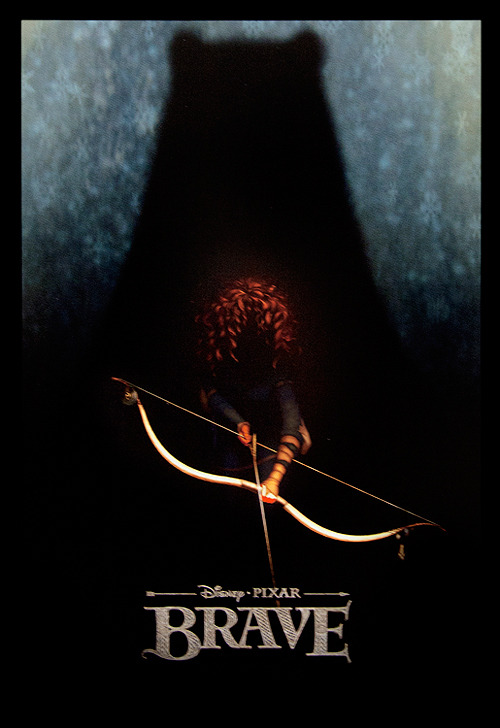
- The Genie Knows Jack Nicholson: If you freeze-frame during the witch's "just a woodcarver" montage, you'll see that one of her carvings is a pickup truck (specifically, the Pizza Planet truck).
- Glad I Thought of It:
- When Merida goes back to the stone circle, only to fail to find any wisps, her mother immediately begins following the direction Merida said she'd gone to reach the witch's cottage, logically assuming that, barring magic being used to conceal the path, it should still be there. Once Merida begins recognizing landmarks, she immediately acts as if physically retracing her steps was her idea, and upon finding the cottage again cries, "I did it, I found it!" Her mother's expressions throughout all these are priceless.
- When Merida gives Elinor's decision to let her marry for love instead of station, Lord Macintosh starts to exclaim how stupid the idea is. After everyone else agrees it's a wonderful idea, he changes his tune and claims "I'm glad I thought of it".
- Gray Rain of Depression: It is storming during the night in the ruins of the witch's cottage, after Merida has learned her rash act of obtaining a spell to change her fate has possibly doomed her mother to live forever as a bear.
- Guys Smash, Girls Shoot: Played straight for most of the movie where Merida's weapon of choice is the bow and arrow, while male characters mostly use swords. There is one scene, though, which shows Merida is a pretty good swordfighter, too. Also, Elinor mixes it up in her bear form.
- Head Desk:
- One of the triplets drops his head on the dinner table while listening to Fergus retell his encounter with Mor'du. It would seem that the king is more impressed with the story than his sons are.
- When Bear Elinor discovers that the berries she got were nightshade berries and the water was full of worms, she drops her head on the makeshift table, causing it to go flying.
- Heroic BSoD: Merida goes through a brief one when Elinor destroys her bow to the point that she pulls a Screw This, I'm Outta Here.
- Heroic Resolve: During the climax, Elinor in her bear form is helplessly tied down by Fergus' men but once she sees Mor'du attacking Merida, she goes into Mama Bear mode providing her with the extra strength to break herself free to save her daughter and Fergus from the dreaded bear Mor'du.
- Hidden Depths: Wee Macintosh, the Drama Queen Large Ham suitor, is the first of all of them to say that he thinks that it's a grand idea to break tradition and have the suitors court Merida on her terms. He says that it's not fair they all have to prove themselves when they are all so young, and lack a choice in the matter. While the ending shows he's trying and failing to impress Merida, having the choice to not do so matters to him.
- Holding the Floor: In order for Bear Elinor to get into the castle and retrieve the torn tapestry, Merida has to distract her father and the lords, who are all at the point of starting a war. She essentially fills in for the queen by giving an eloquent speech that ultimately restores peace; Bear Elinor helps Merida out a lot by Miming the Cues. Merida even channels her mother a bit when she strides in like she owns the place and everyone stops fighting.
- Hollywood Cuisine: "Boys! Don't just play with your haggis!"
- Hunk: The only other guy Merida seems impressed with at all if only because of his sheer size, is a guy who looks like this. Too bad he's not really Lord Dingwall's son. Also, that guy ends up being interested in Maudie, the maid.
- I Ate WHAT?!: Elinor is horrified to learn that the berries she's eating are poisonous nightshade berries and the water she's drinking is worm-infested.
- I Can See My House from Here: When the triplets lure the men hunting the bear in the castle to the top of a tower, someone in the group says "I can see my hoose from here".
- I Kiss Your Hand: It's played for laughs at the end. Wee Dingwall kisses Merida's hand — and she looks none too comfortable with it since he won't stop.
- Implausible Deniability:
- The witch, who continually insists her shop is a normal store, that her carvings do not have magic spells enchanted in them and that she is most certainly not a witch.Merida: [gleefully] You're a witch!
Witch: [furiously grinding on a lathe] Wood-carver! - Merida has a few Implausible Deniability moments of the Never My Fault variety. She keeps saying it's not her fault that Elinor became a bear, but she finally takes the blame during the Holding the Floor scene.
- The witch, who continually insists her shop is a normal store, that her carvings do not have magic spells enchanted in them and that she is most certainly not a witch.
- Improbable Aiming Skills:
- Merida is never shown to miss (after the Time Skip) and makes the shot of the century in the archery contest.
- Fergus, who taught her, is no slouch either, he puts an arrow in each of a stuffed bear's nostrils, one between its eyes, and sticks it with various thrown axes and spears.
- Improbable Weapon User: During the Bar Brawl, Young MacGuffin uses a long bench as a weapon.
- Inciting Incident: If Merida and Elinor had just taken the time to listen to each other, Elinor's tapestry and Merida's bow wouldn't be destroyed, Merida wouldn't have ran off into the forest to change her fate, Elinor wouldn't have transformed into a bear, and Merida ultimately wouldn't have caused a war between the other clans.
- Inexplicable Cornered Escape: In the prologue, little Merida plays hide & seek with her mother. In one scene we see her hiding underneath a table but when the mother checks there a second later, Merida is gone. The next shot reveals Merida hiding in another spot that required Offscreen Teleportation to reach.
- Informed Ability: We're told that Fergus, the clan lords, and their heirs are great warriors who won great battles against Vikings. What we see of their combat abilities mostly consists of mosh pit antics and getting flung around by bears. Maybe they're rusty.
- Insistent Terminology: She's not a witch, she's a woodcarver. A witch. Woodcarver! Witch! WOODCARVER!
- Intimate Artistry: At the start of the film, Queen Elinor is sewing a family tapestry of herself, King Fergus, and their daughter Merida. Merida splits the tapestry with a sword when she and Elinor fight, symbolizing their conflict and separation, and she stitches it back together when she is attempting to repair their relationship.
- I Resemble That Remark!: A self-inflicted case: a frustrated Elinor complains to Fergus that Merida inherited her stubbornness from him. Oh, really, Elinor?
- Ironic Echo:
- "A princess should not have weapons in my/your opinion."
- "How do you know you don't like it if you won't try it?"
- "...Which is not my fault" / "This is all my fault!"
- "You were never there for me" / "You were always there for me."
- It Tastes Like Feet: Believing that Merida baked the enchanted cake, Elinor tries to be polite about how it tastes, describing it as "tart"... and then "gamey". There's something wrong with any cake described as "gamey"...
- Jaw Drop: The triplets, along with the mounted deer head they were playing with, upon seeing Bear Elinor for the first time.
- Jerkass Has a Point:
- Merida's opposition to the arranged married may prove irrefutably selfish and troublesome, but she does recognize that marriage isn't a "Happily Ever After" to rush into when one is still so young, especially to a complete stranger.
- While he's in the heat of the moment and not thinking clearly, Fergus is very correct when in a Papa Wolf moment he shouts that none of the suitors are worthy of his daughter while engaged in a petty argument with their fathers. They may be skilled in fighting — we see that in a real crisis Wee Dingwald, MacGuffin, and Macintosh can fight to protect their family or hunt down a bear — but with the exception of Wee Dingwald, they failed in the test that Merida set with archery. What's more, Merida beat them laughably easily when earning her own hand, showing they couldn't measure up to her standards. She's also not attracted to them, except maybe to Wee MacGuffin, so there isn't even the promise of a Perfectly Arranged Marriage. The suitors surprise their fathers by agreeing in the sense that none of them are ready for marriage, and they would prefer to court Merida on their own terms, for love rather than politics.
- Just Hit Him: Mor'du often chooses to only throw the huntsmen away instead of using his paws for much more devastating attacks. Given that the only person he really wants to be killed is himself, this makes sense in retrospect.
- Karmic Transformation: The legend implies Mor'du wasn't the best person, so his transformation could be considered karmic retribution. If the spell is the same one Merida used, it's clear the spell is a karmic response to the pride/ego of the requester — only upon "mending the bond broken by pride" can the spell be reversed. Since Mor'du killed his brothers, mending the bond wasn't possible for him, so his curse stuck.
- Kidnapping Bird of Prey: After Fergus and the lords end up on the roof (with no bear) after a bear hunt through the castle, this trope is discussed when one of the lords sarcastically suggests that the bear was "carried away by a giant birdie".
- Landmark of Lore: The circle of standing stones is loosely based on the Callanish Standing Stones on the Isle of Lewis◊, with a bit of Orkney's Ring of Brodgar thrown in.
- Last-Second Word Swap: When Merida sees the witch's broom move by itself, the witch assures her she's mistaken: "You can't magically imbue wooden objects with life, and I should know, I'm a wi— a whittler. Of wood."
- Late-Arrival Spoiler: The trailers and official website go to great pains to hide a number of details about the plot, but the toyline and at least a handful of pins (including one for Father's Day) are quite clear about the fact that Elinor and the boys are turned into bears.
- Left the Background Music On: During the Bar Brawl scene, there's a whole group of bagpipers who start playing as soon as the fight breaks out. They stop when it stops and start again when it starts again.
- Lessons in Sophistication: The film shows us Merida's impatience with her princess lessons and her clear preference for archery and horseback riding. However, her indifference is shown as somewhat immature, with the movie going to some lengths to help her see her mother's side of things.
- Letting Her Hair Down:
- This happens at the end of the movie as a symbol of how much Elinor has changed.
- In the tapestry Elinor works on, Merida is shown with her hair in a neat braid, her head under a coif — completely unlike the wild mane we see her sporting. This also happens when Elinor forces Merida's hair under a coif to present her to the heads of the clans; it's bulging out under the cloth and Merida performs a minor version of this trope by tugging out a lock of her fringe to hang in front of her face as a minor act of rebellion. However, Merida's hair is portrayed as wild and curly in the new tapestry Elinor and Merida sew together at the end of the film, showing, again, how Elinor's opinion of her daughter has changed considerably.
-
 Licensed Game: Which follows a very different plot involving Merida traveling across the land to cleanse all the waystones corrupted by Mor'du in order to break the curse on her mother.
 - The Little Shop That Wasn't There Yesterday: Played with; the witch's cottage is still there later when Merida and her mother return, but the place is abandoned, with no stock, and the witch has gone off "to the Wicker Man festival." note Merida even says "It Was Here, I Swear!"! Then it blows up. So, it won't be there tomorrow, either.
- Locked into Strangeness: Elinor retains a thread of gray hair after her transformation back to human form.
- Loophole Abuse: The first-born of every clan competes for Merida's hand in a contest of her choosing. Merida's the first-born of her clan and is really good at archery. She uses these facts to her advantage. (It ends up being pretty pointless, since, despite the fact that Merida won the competition, her mother invokes Rule Zero, essentially telling her "tough luck", though she later invokes Rule Zero in favor of breaking tradition.)
- Loyal Animal Companion:
- Merida is joined by a bear in her quest — it's loyal because she's her now-cursed mother.

- Made of Iron: Everyone who fights Mor'du and doesn't die, especially Fergus. Even with a broken peg leg, he still tries to take him on, and survives being hurled against a huge rock at full speed without any noticeable injuries. Mor'du himself is peppered with scars and broken arrows from old encounters.
- Magic Potion: Merida asks the witch for a spell that'll change her mother, Elinor. Merida likely meant change, as in less overbearing and insistent, but the potion the witch proffers actually changes Elinor into a bear.
- Man Bites Man: Wee Dingwall, of all people, does bite Lord Macintosh during the Bar Brawl scene, which certainly makes him look like a berserker.
- Man in a Kilt: Justified as the setting is the Scottish Highlands from where the kilt originated, albeit about 800 years too early.
- Manly Facial Hair: There is a good number of boisterous bruisers in this movie and lots of them sport beards or mustaches, a good example is King Fergus.
- Marriage Before Romance: King Fergus and Queen Elinor most definitely love each other and, at one point, he playfully grabs her butt. While they have completely opposite personalities as a Violent Glaswegian and a Proper Lady, they still have a working marriage. When he has her pretend that she's speaking to their rebellious daughter, Merida, she accidentally reveals to Fergus that she has had misgivings about the betrothal at first. His surprised look reveals that he had no idea.
- Match Cut: In the epilogue, the shot of Fergus throwing one of the naked triplets in the air becomes him catching him clothed back at Castle DunBroch.
- Meaningful Name:
- Lord Dingwall, though his official profile makes him seem more like The Napoleon.
- MacGuffin and Macintosh are most likely puns on MacGuffin (a plot device) and Apple Macintosh (a reference to Pixar co-founder Steve Jobs).
- The name of the bear Mor'du comes from the Scottish Gaelic "mór dubh" (pronounced the same way), meaning "large and black." 'Mordu' is also French for 'bitten' which is a fitting bear name.
- In Danish, Norwegian, and Swedish "mord" means "murder".
- Medieval Morons: Look no further than the scene at the royal court where almost everyone is fighting like children.
- The Middle Ages:Mark Andrews: It's actually a non-period in Scotland ... Between the 8th and the 12th centuries.
- Miming the Cues: Elinor does this to help Merida give a speech to the clans — she can't give the speech herself, after all, since she's a bear.
- The Mind Is a Plaything of the Body: A problem with Queen Elinor, and the prince much earlier, is the longer the curse runs, the less humanity they retain.
- A Minor Kidroduction: Merida appears in the first scene as a child before it switches to her as a teenager. This shows her relationship with her mother before the Lessons in Sophistication caused friction between them.
- Mistaken for Own Murderer: Fergus stumbles upon Elinor's torn dress and then on her bear-self attacking Merida. He tries to kill her in vengeance for his wife.
- Moby Schtick: Fergus's grudge against Mor'du, and bears, stems from the loss of his leg.
- Mood Whiplash: A heartwarming and hilarious scene of mother-daughter bonding as they catch fish together turns into Bear Elinor nearly attacking Merida as she reverts to animal instincts.
- Morphic Resonance: Averted with Elinor, though she tries vainly to keep her regal posture in bear form and insists on wearing her coronet for a while.
- Most Writers Are Male: John Lasseter on why Pixar hasn't had a female main character before: "We're a bunch of guys."
- My God, What Have I Done?:
- During a huge fight between Elinor and Merida, the former tosses her daughter's bow into the fire. Merida leaves the castle in tears. When she hears the bowstring snap from the burning, Elinor suddenly realizes what she's done and desperately tries to dig it out of the fire before it's destroyed. Elinor holds the singed bow, her daughter's most prized possession nearly destroyed by her own hand, and collapses to the floor in tears. Before that, if you listen closely, you can hear her whisper, "What have I done?"
- Later in the movie, Elinor gets it again when she snaps out of acting like a bear, only to discover that she's hurt not only her daughter but also Fergus.
- The latter half of the movie is one long case of this for Merida herself, as she fully realizes what her own actions through the movie have brought to everyone and herself.
- Naked People Are Funny: Downplayed with only lower clothing missing, but the result of the clans climbing down from the top of the roof using their kilt cloths as a makeshift ladder is indeed comical.
- Names to Run Away from Really Fast: The giant "demon bear" is named Mor'du.
- Never Trust a Trailer:
- This Japanese trailer tries really, really hard to make this movie into Pixar's Princess Mononoke by implying the renegade prince and Merida broke "the law of the forest." The only similarity to Princess Mononoke/Studio Ghibli films is a female protagonist, the wisps/forest spirits in appearance, and a forest setting.
- The trailers never seemed to meet a middle ground on what the film was truly about:
- Some of the trailers try to play up the "epic adventure" aspects of the story by focusing on natural panoramas, shots of Merida wandering through the wilderness, and taglines about taking journeys. In reality the farthest that Merida ever travels is to the witch's cottage (which isn't even that far from the castle), and there's far less action in the movie that the trailer seems to suggest. The bulk of the story is about Merida's conflict with her mother.
- Some of the trailers emphasized Shrek-like slapstick, subversive humor (in the form of setting up for something epic and grandiose and making a lowbrow joke out of it for laughs), and comedy rather than the personal story of mother and daughter that it is. Some Christmas DVD advertising used almost every single appearance by the triplets getting up to mischief, plus a few token shots of Merida, to make it look like a "girl struggles to babysit her tearaway siblings" movie.
- This Japanese trailer
- Nice Job Breaking It, Hero: Twice by the same person
- Merida brings the kingdom to the brink of war by competing for (and winning) her own hand in marriage.
- Merida makes a wish that turns her mother into a bear, almost leading to her death.
- Nobody Here but Us Birds: One of Merida's brothers uses a bird sound to signal an all-clear to the others.
- Nobody Here but Us Statues: Bear Elinor pretending to be the stuffed bear.
- No Delays for the Wicked: After the bear is discovered, it takes no time at all to throw together a group of huntsmen and launch a chase.
- Noodle Incident: "Here we go, another hunt through the castle!"
- No Peripheral Vision: When Elinor as a bear sneaks into the crowded ballroom by backing against the wall and tip-toeing, Merida distracts everyone by having them focus on her. No one — not even those who face her — notice Elinor moving around in her large form and occasionally even actively waving to draw Merida's attention, even though she should be in their cone of vision. The only person who gets suspicious is a guard who has his back to the wall and even he believes her to be a stuffed bear when she poses as one. Even King Fergus, who has it out bad for any bear, and was facing in that direction, fails to see her.
- Not This One, That One: Merida and her parents assume the big strong guy Lord Dingwall is pointing at is his son (and one of her possible suitors) when he's really pointing at the scrawny kid hiding behind him.
- Of Corset Hurts: Merida didn't like being laced up, and complained that she can't breathe.
- Offscreen Moment of Awesome: The fight between Fergus and Mor'du became a legend, yet the scene cuts away at the beginning of this epic event. Mor'du's jaw has clearly been broken at some point.... Think about that!
- Oh, Crap!:
- Queen Elinor gets several:
- She gets one after an explosive argument when she realizes that the bowstring of Merida's bow has just snapped in the fireplace She barely salvages the bow, though — cue My God, What Have I Done?.
- She gets one when she realizes she's become a bear, especially when she looks at the mirror.
- When she sees she's lashing out as a permanent, feral bear, especially near the climax, after her husband, not realizing that the bear is his wife, spots her and Merida and attacks her.
- Merida gets some of these moments too:
- In the trailer, at the circle of standing stones, she senses Mor'du.
- When she sees her furious mother marching towards her before she torches her prized bow.
- She gets another when Mor'du is revealed as the eldest prince who destroyed the ancient kingdom.
- Another one during this scene is when Mor'du is about to attack her.
- When Mor'du shows up after she defends Bear Elinor from her husband.
- Finally, she gets one when the second sunrise begins to show up.
- Fergus gets one when he spots Merida and Bear Elinor, whom he thinks is Mor'du, but has actually lapsed into a wild bear.
- Queen Elinor gets several:
- One-Word Title: Brave is presumably named for the emotion, displayed by its protagonist, Merida, given the Title Drop:Merida: Fate lives within us, you only have to be brave enough to see it.
- Out of Character Is Serious Business: It becomes quite clear there is something wrong with Elinor when she gets out of the river and leaves her crown behind.
- Orange/Blue Contrast: Merida's red hair contrasts the blue-green background of the movie poster.
- Parents Are Wrong: Merida is approached by three suitors and her mother says that she has to marry one of them, in keeping with tradition. Merida turns them all down, insisting that marriage should be her own choice. Eventually, Merida's mother agrees to break tradition for Merida's sake.
- Le Parkour: Right before Merida's day out on horseback, she does a couple of very traceur-like moves, which underscores her athleticism.
- Parody Commercial:
- "Kilt. Are you brave enough to wear one?"
- "Royalty Records presents 19 of the greatest bagpipe hits ever collected on one LP! Freedom Broch!"
- "Kilt. Are you brave enough to wear one?"
- Plot Parallel: Mor'du's backstory mirrors the one of Merida and her mother only that he did not choose as wisely and ended up locked in his bear form.
- Poor Communication Kills: After Merida and her mother understand what has happened, Merida could've conspicuously drawn her father aside and told him just what had happened so that he would not freak out and that nobody would unintentionally cause harm. Instead, they choose the option of first trying to hide and then outright escaping the castle — the place with the greatest safety potential for them given that they were its rulers. When they have to get back inside the castle after escaping, once again they choose to try and sneak in on their own and (again) not tell Fergus anything beforehand. Finally, when Fergus does locate them in the castle, the only thing Merida tells him is meaningless drivel — right until it's already too late to convince him of anything and prevent him from making any dramatic bad decisions. It's all somewhat justified in that Fergus doesn't believe in magic and might have simply gone ballistic sooner, but that the two never even discuss this is still bad.
- The Power of Love: The "bond torn by pride" was actually the bond between Merida and Elinor which was torn apart by their arguing, and Merida apologizing to her is what breaks the spell and returns Elinor to normal.
- Practice Target Overkill: Merida fires an arrow that goes straight through the target and into the wooden support behind it.
- Primal Scene: Downplayed at the end of the movie, when Merida witnesses her father and naked mother kissing fairly passionately in front of her. Oooops.
- Princess Protagonist: Princess Merida was the first Pixar character to be a "Disney Princess". You can say, she's the first "Pixar Princess". She is something of a Rebellious Princess, refusing to marry a man just because he won a contest, which one has to admit is not a good method to find a suitable husband for your daughter. She makes everything better for the princes of the neighboring countries, who weren't very keen on marrying a stranger because of "tradition", either.
- Protector Behind Bars: Near the climax, Fergus locks Merida in the tapestry room to protect her from a bear who he thinks killed Elinor. However, the bear he and the lords are trying to kill is Elinor, and Merida already has attempted to convince her father, but he doesn't believe in magic. With Merida locked up and stuck in the tapestry room, she is helpless and unable to aid her mother.
- Race Against the Clock: Merida has to break the curse before "the second sunrise" or else it's permanent.
- Rank Scales with Asskicking: King Fergus and the three lords; all four in charge, all can hold their own in a fight.
- "The Reason You Suck" Speech: Merida gives one to Elinor during their arguement, stating that Elinor only cares about her own wishes and traditions rather than what Merida wants, and accuses Elinor of trying to make Merida be like her.
- Recurring Extra: The Hunk from Clan Dingwall appears several times.
- Red Herring: At first, Merida believes the "bond torn by pride" to be "mended" before the second sunrise is the family tapestry she ripped apart during her argument with Elinor. It turns out to be the torn bond between mother and daughter, and her apology is what reverses Elinor's curse.
- Resignations Not Accepted: Merida was born a princess, therefore she is obligated to learn the diplomatic and ceremonial duties of a future queen (or at least a noble's wife, should one of her brothers rule instead), and steel herself for a future political marriage. She can't opt out since her parents (especially her mother) won't let her.
- Revenge Ballad: At one point Fergus sings a song about how he swears to kill Mor'du the bear as revenge for biting his leg off.
- Revenge Before Reason: Fergus, who is so set on bringing down Mor'du, and later the bear he thinks killed his wife, that he won't listen to Merida trying to tell him the bear is his wife. In his defense, it's a bit much to believe out of nowhere.
- Rewatch Bonus: Upon second viewings, once you know the actual reason behind "mend the bond torn by pride", it sets the spell's antidote in a new light.
- Royals Who Actually Do Something: The royal family of DunBroch qualifies as a whole: Elinor is shown in the opening meal scene receiving letters of many sorts, thus implying she is the one handling matters of state. Merida is being trained by Elinor to fill her shoes someday but she has fighting skills from her father. Said father, Fergus, was explicitly chosen as their king after he led the other clans to victory against invading Vikings, and whether it's evil monster bears or invading armies he takes care of it. Even the toddler triplets are crafty tricksters capable of distracting an entire castle to prevent diplomatic incidents. The other clan leaders and their heirs are also involved in the kingdom's defense.
- Rube Goldberg Device: The witch uses such a contraption to activate her Magic Cauldron the second time Merida visits her hut. She's not present to do it herself after all.
- Rule of Symbolism: There's a lot of it.
- The rent tapestry/shattered carving of the four princes shows the bonds rent by pride.
- Merida tearing her dress to win the archery tournament (just as she wants to tear free of her role/tear through the expectations) — a dress she earlier said made it so she "couldn't breathe".
- The scene where Elinor tells the legend of the four princes using a chessboard and pieces to illustrate it.
- The ruined castle of the fallen kingdom versus Bright Castle DunBroch (both are located on suspiciously similar peninsulas above a loch).
- Bear Elinor taking her crown off to indulge in bear feeding habits, then leaving it behind as she regresses.
- Rule of Three:
- The Three Lords, the three failing suitors, and Merida's identical triplet brothers who only she's able to tell apart (even when they're bear cubs!).
- Elinor: "Weapons off the table." "Weapons off the table!" As a bear: "Grrr-rrrr rrrgh RRR!"
- Merida after discovering she turned her mother into a bear: "It's not my fault." "It's not my fault!" "I'm so sorry, it's all my fault!" which breaks the curse.
- Same-Sex Triplets: Merida's brothers, "wee devils" as she calls them.
- Say My Name: Fergus screams "ELINOOOOORRRRRR!" when he finds her torn dress and believes she's been killed by a bear.
- Scary Shadow Fakeout: Invoked when Merida's little brothers use a plucked chicken to make a shadow which looks like a bear to help lead the adults on a wild goose chase looking for the bear in the castle.
- Scenery Porn: Pixar is animating the beautiful Scottish Highlands. Just◊ look◊ at◊ the concept art.
- The animation was so complex that Pixar had to completely rewrite their animation software, something that they haven't done in 25 years.
- Secret Path: Merida and Bear Elinor sneak back into the castle via the sewers.
- Sentimental Music Cue: Starts to play in the background when Merida gives her speech to the three lords and her father on resolving their conflicts. It even features bagpipes!
- Shapeshifting Excludes Clothing: Elinor's clothes are torn and fall off when she turns into a bear.
- Shout-Out:
- To Finding Nemo: Aside from the "rebellious child and strong-willed parent learn to appreciate each other after a crisis" plot, there's Bear Elinor's pupils widening into Black Eyes Of Animal-ity when she becomes a "real" bear, just like Bruce the great white shark's eyes go black when he goes into feeding frenzy mode.
- "Sorry, I don't speak bear."
- The Witch's answering cauldron says she's gone to The Wicker Man festival in Stornoway.
- Clan Macintosh's sigil looks suspiciously Art Nouveau.
- There's also the fact that their name is, well, Macintosh, given the close history between Pixar and Apple. Especially so given that the film is dedicated to the memory of Steve Jobs.
- The shot of The eldest of the four princes with a human body and Mor'du's head is a reference to Porco Rosso.
- In a moment of frustration, Merida shouts out "Jings, crivvens, help ma Boab!", a trio of catchphrases from the beloved Scottish comic strip Oor Wullie.
- Merida sabotages a competition where she is the prize by entering said competition herself. Her fellow Rebellious Princess Calla of Disney's Adventures of the Gummi Bears did the exact same thing in the episode "Girl's Knight Out." Calla's tournament also included an archery portion (although it also had others).
- Merida must have been taking archery lessons from Robin Hood; their style, skills, and even their winning tournament shots are very similar.
- Shown Their Work: According to this article, the mistakes made by Merida's suitors in the archery contest are all legitimate errors inexperienced archers can make. In addition, Merida is shown wearing her quiver of arrows at her side not on her back, a mistake dating back to The Adventures of Robin Hood.
- Siblings Share the Throne: In the backstory, there used to be an ancient kingdom, where the king decided to split the kingdom's rule between his four sons, believing that their unity would make their kingdom stronger. Unfortunately, the eldest son didn't agree with his father's vision and wanted the throne all to himself, which escalated to civil war, the collapse of the kingdom, and the eldest son's transformation into Mor'du.
- Single Woman Seeks Good Man: The only suitor that Merida seems to like is Wee MacGuffin. He's The Dutiful Son, and Gentle Giant and Endearingly Dorky, with how he's loyal to his father but otherwise won't show violence or Drama King antics. What's more, he's the only one to express that if Merida doesn't want an Arranged Marriage, then it's not fair to her and says it should be her choice. It also helps that he's the one that she did pick in pre-production as seen in the art book and deleted scenes.
- Sir Not-Appearing-in-This-Trailer: The Witch did not appear in any of the trailers and had a few seconds in featurettes at most.
- Sistine Steal: Of all things, this appears in the witch's cottage among her carvings. With bears, of course.Witch: Here's a conversation starter!
- The Smurfette Principle: The film has a 1:3 female-to-male ratio. However, this is Pixar's first movie with a female protagonist.
- Spit Take:
- Fergus spits out his ale at the dinner table, when his wife firmly tells him he has "something to discuss" (her incoming betrothal) with Merida.
- Justified when Bear Elinor spits out worm-infested water upon being informed about the worms.
- Splitting the Arrow: Merida splits Dingwall's arrow in the archery contest because he shot the only bull's eye and she wanted to make crystal who really won.
- Stab the Picture: Merida spitefully slashes Elinor's tapestry of the family with her sword.
- Stealth Pun: ACXIII. note
- The Stinger: Merida arranged to buy all the witch's woodcarvings if she got some magical help. As promised, after the credits they are delivered to the castle by the crow — to the surprise of the guard ("Sign here, please").
- Strolling Through the Chaos: The Queen does this impressively during the Bar Brawl scene which immediately dissipates said Bar Brawl scene. Then Merida does it equally well, later on, to stop all-out war.
- Stumbling in the New Form: When Elinor first turns into a bear, she has trouble walking without bumping into anything because she's so big.
- Symbolically Broken Object: The tapestry Merida slices in anger explicitly represents the broken bond between her and her mother. Later, we see a carving of the four princes that has been similarly broken.


- Take My Hand!: Bear Elinor tries to do this to Merida when Merida leaps away from an attacking Mor'du. It works.
- Talking Animal: The witch's crow can talk (sassily), and is implied to be her familiar.
- The Tape Knew You Would Say That: The facsimile the witch leaves behind for Merida in the cauldron rolls its eyes in exasperation and repeats itself when Merida fails to understand the cryptic advice.
- Tears of Remorse: Elinor sheds these after destroying Merida's bow. After Merida runs out of the room in tears, Elinor realizes what she's done as the bowstring snaps in the fire, digs it out, but sees it has been ruined and breaks down sobbing.
- Tempting Fate: When Merida tries to sneak Bear Elinor out of the castle, she notes that "It's not like anyone's gonna see you!". Cue Fergus and his men coming up the stairs.
- Theme Music Power-Up: Merida displays some awesome mounted archery skills when "Touch the Sky" starts playing in the background.
- This Was His True Form: Mor'du's spirit rises from its body in the form of the human prince he used to be.
- Those Two Guys: A pair of castle maids, usually seen with Maudie, don't have any other characterization.
- Thrifty Scot: Downplayed when Merida chooses to open King Fergus's private reserves after telling the clans of Dingwall, MacGuffin, and Macintosh that their sons should be able to choose love for themselves in due time. A perturbed Fergus decides to use the small drinking vessels.
- Throw the Dog a Bone: Maudie lucks out at the end of the movie by hooking up with the Hunk from Clan Dingwall.
- Thwarted Coup de Grâce: During the climax, when bear Elinor is tied down and Fergus is about to deal her a finishing blow, an arrow from Merida blasts the sword out of his hand.
- Time to Step Up, Commander: With only a modicum of sign coaching from her mother, Merida manages to pacify the tribes about to declare war on one another over her unwillingness to go through with the Arranged Marriage. It helps that the heirs of the tribes aren't keen on the union either, as clearly stated by Young MacGuffin.
- Title Drop:Merida: Fate lives within us, you only have to be brave enough to see it.
- Trademark Favorite Food: The triplets love pastries a lot. Too bad the bear-change-spell was in one of them.
- A Tragedy of Impulsiveness:
- Merida's impatience, along with her and Elinor's refusal to listen to each other's feelings, results in the situation that the former has to fix in the first place.
- Fergus rushes off to confront Elinor in her bear form after he mistakes her for dead without listening to Merida's pleas. Merida and the triplets barely prevent him from accidentally killing his wife.
- Trailers Always Spoil:
- As beautiful as the "Mother's Day" trailer is, the trailer may have given away a few of the ending shots of the film at the (pun intended) tail end of it.
- Some other trailers and in-movie shots also show Merida walking with, saving or jumping to the rescue of a bear, which is pretty spoilerish when the first trailers show the main antagonist, or one of the main antagonists, of the movie to be a giant grizzly. Apparently, sources have already revealed the smaller, more timid looking bear that's seen with Merida to be her transformed mother.
- Several movie tie-in books were released before the movie itself, too. Naturally, reading them spoils the whole plot of the movie.
- A toy commercial also completely spoiled the bear transformation.
- The movie is being distributed with trailers for a video game that offers minor spoilers.
- Transformation Discretion Shot: When Elinor turns into a bear, she is not seen onscreen and is only visible as a growing shadow. The same is done when she turns back to normal in the end.
- True Blue Femininity: Invoked. Elinor, who resents Merida's tomboyish nature and wishes for her to be more ladylike, puts her in a tight turquoise silk dress as part of her royal attire before and during the contest. Merida doesn't take it well, preferring her darker and less restrictive dress. The end of the movie sees both of them in a dress of a similar shade, indicating that they've accepted each other's differences and similarities.
- Two Scenes, One Dialogue: Between Merida and Elinor in the beginning, including quite a few cases of Finishing Each Other's Sentences. It shows how well they know each other and how alike they still are.Elinor [repairing the tapestry] Merida, all this work, all the time spent preparing you, schooling you, giving you everything we never had. I ask you, what do you expect us to do?
Merida: [in the stables] Call off the gathering! Would that kill them? You're the queen. You can just tell the lords the princess is not ready for this. In fact, she might not ever be ready for this, so that's that. Good day to you. We'll expect your declarations of war in the morning.
Elinor: I understand this must all seem unfair. Even I had reservations when I faced betrothal. But we can't just run away from who we are.
Merida: I don't want my life to be over. I want my freedom!
Elinor: But are you willing to pay the price your freedom will cost?
Merida: I'm not doing any of this to hurt you.
Elinor: If you could just try to see what I do, I do out of love.
Merida: But it's my life, it's... I'm just not ready.
Elinor: I think you'd see if you could just...
Merida: I think I could make you understand if you would just...
Elinor: Listen.
Merida: Listen. - Victoria's Secret Compartment: Entrusted with a key, Maudie hides it in her bosom.
- "The Villain Sucks" Song: The Song of Mor'du, a song that King Fergus and the other men sing detailing how Fergus fought and overcame the bear that ate his leg.
- Violent Glaswegian: All the tribes enjoy having a go at each other after a brief exchange of insults, with King Fergus finding it all immensely entertaining. Fergus manages to calm them down, but after the princes get them going again with a sneak attack, it takes Queen Elinor calmly walking through the fray and corralling the lords and her king to get them to behave themselves.
- Wanted a Gender-Conforming Child: Queen Elinor has been pressing weaving, manners, and other elegant pursuits on her Tomboy Princess daughter, Merida, to little avail. This causes a great deal of strain in their once-close relationship since Merida hates her mother's controlling nature in her life.
- Was Once a Man:
- It's revealed Mor'du is in fact the centuries-old rogue prince from the tale described by Elinor, having used the same spell that turns Elinor into a bear on himself, and been permanently transformed into the monstrous Demon Bear because he failed to "mend the bond torn by pride".
- Elinor herself is at risk of suffering this fate after turning into a bear if she isn't changed back before the transformation becomes permanent, with the implication that her episodes of temporarily regressing into actual bear behavior will become perpetual after the Celestial Deadline.
- When All You Have Is a Hammer…: The witch's bear motif is noticeably prevalent in all her professional dealings. The only spell she seems to know is turning people into bears.
- "Where? Where?": In the scene where Elinor turns into a bear; Merida screams, Elinor turns and sees a bear's shadow on the wall, and attempts to shield Merida with her body because she hasn't realized yet that she is the bear.
- White-and-Grey Morality: Both due to the main focus of the story being a mother-daughter conflict where both have their reasons, and the villain per se being a wild animal — though a vicious one who used to be human, and is implied to regret his actions — there aren't any real black morality villains in this piece.
- Why Don't You Just Shoot Him?: At one point, Mor'du has a completely defenseless Merida at his mercy, and yet he only drags time and roars at her until Elinor can enter the fight and save her daughter. Possibly justified by the trapped remnants of Mor'du's humanity being an apparent Death Seeker.
- Will-o'-the-Wisp: The Wisps appear as glowing blue lights and apparently have the power to lead people to their fate and encourage them to change it. They are based on Scottish lore of will o' the wisps that lead people to treasure or doom. It's shown at the end of the movie that some of not all Wisps are the souls of the deceased.
- Wimp Fight: Young McIntosh and Wee Dingwall fight one-another in such a way during the throne room brawl, and it's especially comical given how much of a jock with a penchant for immaturity the former prince is.
- Winged Soul Flies Off at Death: Mor'du's ghost, in human form, rises regally from the corpse of his crushed ursine body, nods respectfully to Merida and her mother, and then turns into a Wisp and departs.
- Wizard Workshop: The witch's hut contains variety of magical implements, potions in bottles, her crow familiar, and a huge cauldron for mixing new potions.
- You Go, Girl!: An interesting Deconstructed example. At the archery contest, Merida proves her superior archery in front of the men but all this accomplishes is humiliating the clans and leading to her falling out with her mother.
