
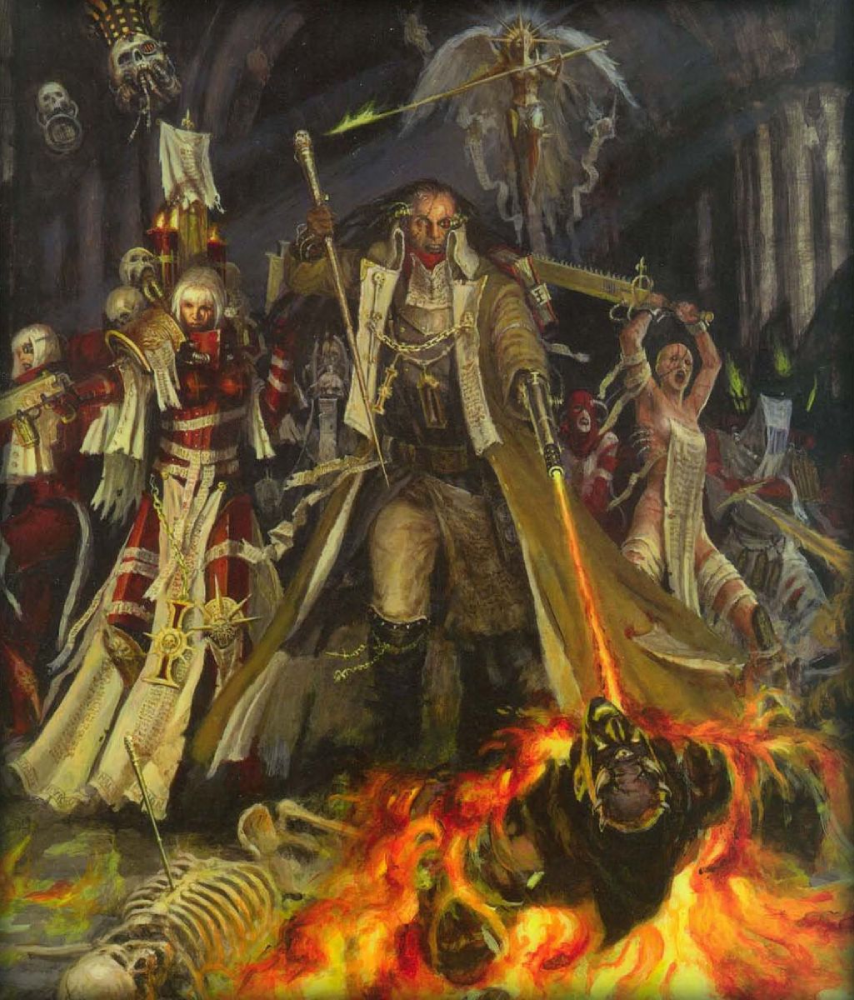

When Prometheus handed Homo sapiens the gift of fire, he did not just give humanity the light of science, reason, progress, invention, technology, and ergo the power to rival God, but also the means to dispatch just about any monster imaginable. Considering how Greek Mythology is a Fantasy Kitchen Sink full of all kinds of abominations, that was a good thing. The symbolism behind this has to do with fire's associations with purification and light, and partly because it represents humanity's dominion over the natural world. More literally, a burning stick was humankind's first effective defence against nocturnal predators, with an added bonus of extermination of parasites in food. The fact that burn pain is one of the strongest kinds of pain a human being can experience probably doesn't hurt either.
Also, in a pinch, it can still burn things, or at least scare them off. Arrows on Fire, Flaming Swords, Molotov Cocktails, flamethrowers, or good old Torches and Pitchforks can work wonders when dealing with everything from Frankenstein's Monster to a Monster House.
This is prevalent not just in myth and fiction or games based on it, but also in works that are completely new and unrelated. For example, the Hydra and Trolls demonstrate one of the most frequent, and logical, applications for anti-monster fire: It prevents regeneration. In the case of The Undead, usually they're too dumb and slow to put it out (zombies), it reminds them of the sun (vampires), or they're already walking kindling (mummies). Other times it's used to make sure whatever just got killed stays that way. Aliens, of course, can be Immune to Bullets, but will burn up nicely in a fire. Witches and heretics for a long time were considered to be in league with evil as well, and so it was a common myth that they were dealt with in the same manner. And, needless to say, it's a very good strategy for When Trees Attack.
You know what the best part of Kill It with Fire is? It works on regular people wearing masks too. Kind of like decapitation (which also works on most things) and a Wooden Stake through the heart.
If something's too big or tough for a regular fire, you can always use plasma or Hurl It into the Sun. This has also been subject to Memetic Mutation, as an alternative name for Brain Bleach.
A character who's a little too enthusiastic about using this can become a Pyromaniac. A character may try in vain to use this trope, but be faced with a Hard-to-Light Fire.
A Super-Trope to Matchstick Weapon and Fire Keeps It Dead. See also Incendiary Exponent, Man on Fire, Burn Baby Burn, Fire-Breathing Weapon, Burn the Undead, Homemade Flamethrower, Burn the Witch!, Fanatical Fire, Gasoline Dousing, Weak to Fire and Hellfire (for when mundane fire doesn't do the job). Compare Stuff Blowing Up and Playing with Fire — for when someone has fire as a superpower, and Murder by Cremation — when an ordinary person is lit on fire. When this just makes things worse, see Infernal Retaliation. May also overlap with A Molten Date with Death if lava is involved. The less-used opposite is either Kill It with Water or Kill It with Ice, or even Heal It With Fire. Contrast Immune to Fire.
If you were looking for the video game by the same name, you'll find it here.
NOTE: Due to the above-mentioned Memetic Mutation, the name of this trope has become associated with anything that someone finds abhorrent and wishes to not have witnessed. This trope is not about those things. Please redirect all potholes using this trope in said context to Brain Bleach or a similarly appropriate trope.
Example subpages:
Other examples:
- Berserk:
- When Guts is attacked by several small fairy demons during the Rosine arc, he kills them by leaping into the fire he recently started. Guts is like that.
- Schierke, during the battle in the city against the Kushan demon soldiers, proceeds to incinerate a whole bunch of them by summoning a giant fire wheel to set them ablaze.
- Farnese's role as the figurehead of the Holy Iron Chain Knights is to investigate reported miracles for the Holy See... which directly translates to "burning people who don't believe or don't believe enough in the Holy See's religion at the stake." And getting off on it. Plus, her history with pets and servants that didn't please her.
- Claude "Torch" Weaver, A.K.A. The Crazy Flamethrower Mormon, from Black Lagoon's "Greenback Jane" arc.
- Bleach:
- Reserved only for captain-rank criminals who have bound them to the gallows on Soukyoku Hill, is execution via activating the Spear of Soukyoku, the most powerful zanpakutou ever created. It transforms into a huge firebird to incinerate the criminal's soul via purification fire. It's the only known non-Quincy method for destroying a soul. Given that destroying souls can disrupt the Balance of Souls, threatening existence itself, this execution method is only used in truly exceptional circumstances.
- Yamamoto's plan to counter a Master of Illusion: incinerate the entire surrounding area. If the opponent is close enough to affect him with his mirages, he'll be close enough to be caught by the blast.
- In the fourth film, the only way to kill Taikon and Gunjo is to submerge them in a pool of lava.
- In the Cowboy Bebop episode "Toys in the Attic", Spike attempts to kill the Blob Monster with a blowtorch/flamethrower. It's still alive afterward, but it was a valiant effort.
- In Delicious in Dungeon, this is the go-to way to kill undines. Which is kind of odd, considering they're water spirits.
- The Dragon Knight of Fire in Dragon Knights, Rath Illuser, tends towards this when a sword won't do.
- Durarara!!:
- In one of his... less stable moments, Izaya sets his whole game board on fire. Also, Walker sets the Blue Squares leader's van on fire with molotovs when he and the rest of the gang rescue Saki.
- Walker's preferred fighting method seems to be lighting people on fire. Later on, he uses flammable fluid as a method of intimidation, a spray can and a lighter to defend himself from rogue Dollars members, and he sets Ran Izumii on fire again. Twice.. It's especially ironic because of his day job as an ice sculptor.
- And in Volume 8 Mikado ends up setting someone on fire. On purpose.
- In one of his... less stable moments, Izaya sets his whole game board on fire. Also, Walker sets the Blue Squares leader's van on fire with molotovs when he and the rest of the gang rescue Saki.
- Excel♡Saga: Hyatt catches on fire, horrifying Excel and Elgala and leaving them wondering if burning could kill her. It doesn't, but her incinerated skin just flakes off, revealing a pristine Hyatt beneath it.
- In Fairy Tail, burning people to death is Zancrow's go-to method to deal with both his enemies and the "trash" of his own guild that's too weak. He nearly inflicts this fate on Natsu (who's normally immune to fire) and Makarov before Natsu figures out the trick to nullify Zancrow's fire and use it against him.
- Flame of Recca: Guess what the protagonist's superpower is...?
- Fullmetal Alchemist: There is a reason why Roy Mustang is known as the Flame Alchemist. How did he become a war hero in the Ishvalan Civil War? He used his unique flame alchemy, which utilizes the oxygen in the air and special spark-gloves to throw MASSIVE STREAMS OF FIRE.
- One of his most triumphant fights is with Lust. Roy is mostly useless when water is used against him; however, using Havoc's lighter and the hydrogen in the water, he was able to create a devastating fire attack that took her by surprise. Then there is the end-fight for Roy; he seared his wound to stop bleeding to death, carved a transmutation circle directly upon his hand, and with a lighter, incinerated Lust multiple times until she finally died.
- Roy's "fight" with Envy later in the manga; Roy pinpoints his attacks to vulnerable spots like the tongue and eyes to make Envy's death as painful as possible, and eventually his rage becomes so strong that he starts spamming massive fire blasts while Envy screams in agony. Word to the wise: don't piss Roy off.
- GEAR Fighter Dendoh: The titular mecha's Dragon Flare data weapon is a gigantic flamethrower which blasts a massive stream of fire.
- Horus: Prince of the Sun: Since Grunwald's powers are ice-based, flaming arrows and bonfires contribute a lot in the final battle. The power of the sun is what wins it.
- King of Thorn:
- Some particularly tough octopus-like monsters prove vulnerable to good old-fashioned incineration.
- Likewise, this is how Alice deals with the Medusa virus when it takes the form of Laloo. However, the smoke from the fire is what likely caused the virus to spread.
- In Rumiko Takahashi's Mermaid Saga, there are three ways to kill immortals: decapitation, a very particular poison, and burning them down to ashes.
- In Moribito: Guardian of the Spirit, this turns out to be Ra Runga's weakness.
- In Moriarty the Patriot, this seems to be William's preferred way of subtly killing people so the evidence is hidden and the crime can be passed off as an accident. So many people are set on fire.
- Subverted in Mushishi. When a village and their resident mushishi finally decide to burn a parasitic plant mushi, but after doing so discover that the mushi intentionally takes over like kudzu in order to be burned so the mushi can enter its even more dangerous adult form. After some time spent contemplating the results, Ginko eventually determines that the better option is to hoist it by its own petard, using the adult form to kill the plant form.
- My Hero Academia: Fire is the only established way to nullify the Super Regeneration quirk that all black Nomu seem to have. Twice, Endeavor has killed them by burning their heads with fire hot and concentrated enough to incinerate them beyond the ability to heal.
- Naruto:
- The Uchiha Clan are renowned for their fire-based jutsus. Then there is Uchiha Madara himself. He can create Fire Release Jutsu so wide and powerful they require dozens of Alliance Water Release Jutsu users to dispel, or Mei Terumi the Mizukage (arguably the strongest currently living Water Release user) to counter.
- As are Jiraiya and Hiruzen Sarutobi, both have extremely powerful Katon (Fire Release) jutsus. One that Jiraiya created, with the help of Gamabunta, was so large it filled in the entire valley that they were fighting in, and one that Hiruzen created needed the Second Hokage, Tobirama Senju to extinguish. In Sage Mode Jiraiya's Katons, now regularly empowered by oil become so strong he can reduce a target to ash with Senpo: Goemon (with the help of Fukasaku and Shima), which sends a wave of fiery oil at the target.
- Last not least, the black fire, Amaterasu, that Itachi and Sasuke use, bursts forth at the focus of the user sight and can never be extinguished, until the thing it targets is incinerated... even if the target is fire itself.
- In Nausicaä of the Valley of the Wind, the people of the Valley of the Wind force their conquerors to give them flamethrowers so they can expunge an invasive outcrop of poisonous spores. Then, they turn around and use them to drive out their conquerors.
- Negima! Magister Negi Magi: Evangeline's hunters have attempted to kill her this way. It didn't work.
- In Parasyte, the eponymous aliens are almost completely defenseless against fire. Ditto with acids. Due to said aliens' Bizarre Alien Biology, anything that humans shouldn't get on their skin can be turned into a somewhat effective weapon.
- In Rurouni Kenshin, the government grew wary of Makoto Shishio because he knew too much about their seedier operations since he was Kenshin's replacement as Manslayer. Unlike Kenshin, Shishio was also ambitious enough to use that knowledge against the government while Kenshin became a Technical Pacifist wandering atoner. They tried to preempt a coup by dousing Shishio in oil and set him on fire. Shishio survived though his entire body was covered in horrible burns. Years later, he does attempt to overthrow the government. Though the initial attempt to burn him to death failed, the permanent damage done to his body ultimately does kill him during his final battle with Kenshin.
- In Sailor Moon's first season penultimate episode, Sailor Mars destroys two of the DD Girls in succession with her Fire Soul attack. The first she kills while trapped in an ice dome by the second. The second electrocutes her and leaves her for dead... then Mars grabs her and, with the last of her power, ("Fire...SOUL!!!") obliterates her before dying.
- In Tiger & Bunny, Lunatic is a '90s Anti-Hero who eschews other heroes' ideals of justice in favor of using his NEXT powers over fire to burn criminals to a crisp.
- The titular character in Tomie is nigh unkillable and apparently immortal, able to heal from any wound and regenerate From a Single Cell (always with copious amounts of Body Horror). If she's chopped up, the pieces will all form into separate Tomies (including the blood), and she can seemingly survive completely submerged or encased forever; the only method of killing her that has any lasting effect is to burn her remains into a crisp.
- The Tower of Druaga: Fatina's weapon is some sort of flamethrower.
- Variable Geo: In the OVA adaptation, Satomi gains her own rendition of Kyo Kusanagi's 'Ura 121 Shiki Ama no Murakumo'. Meaning, she incinerates everything that's in front of her with massive plumes of flame that are 2-stories high and spread outward along the ground at high-speed. Which she used to end her match with Yuuki.
- Voltes V's weapon Grand Fire is a flamethrower located in the robot's belt. It emits what look like missiles made of fire, and create enough pressure to move Beast Knights.
- Yaiba: After acquiring the Legendary Orb of Fire from Mount Aso, Yaiba's answer to any threat becomes "Toss a Giant Fireball at them".
- Yu-Gi-Oh!: During the first duel between Jonouchi and Dinosaur Ryuzaki, Dinosaur monsters are weak to fire for some reason, giving Jonouchi an advantage for a while with his Flame Swordsman. This being an Early-Installment Weirdness, this weakness never comes up again.
- Yu-Gi-Oh!: Capsule Monsters: Yami Yugi is able to easily destroy a group of Trent (which are tree monsters) with his newly acquired Hinotama Soul. Since this isn't Duel Monsters, but Capsule Monsters, the elemental weaknesses are an essential part of the game. Hinotama Soul being a Fire monsters has an advantage over Wood monsters.
- Magic: The Gathering:
- This is the classic endgame strategy of mono-red: when the opponent builds an army and all other colors' offenses would stall, the red mage points a spell at the opponent's face and torches him to death directly.
- In the game's infancy, Red's strategy was Kill it with Lightning.
- Mid-game, it's also helpful to wipe out an opponent's creatures with cards like Incinerate, Fireball, and Inferno.
- Then there's the character of Jaya Ballard, who's this trope. She's appeared on the flavor texts of over a dozen red spells, including Incinerate and Inferno, and her own card pays homage to these spells.
"Some people have said there's no subtlety to destruction. You know what? They're dead."
"Of course you should fight fire with fire. You should fight everything with fire."
"Yes, I think 'toast' is an appropriate description." - Chandra Nalaar seems to be the new Jaya Ballard.
- Chandra was even taught by Jaya that, "When in doubt, use the biggest fire spell you know." Given that her ultimate abilities are some of the biggest explosions ever seen in red, she's learned quite well.
- And like Ms. Ballard, she has a few good one-liners of her own on the subject:
"Who'd want to ignite things one at a time?"
"Spontaneous combustion is a myth. If you burst into flame, someone wanted you to." - In-story, Chandra has done possibly the biggest "Kill it with fire!" feat so far: burn two of the Eldrazi titans to death.
- Doesn't work out so well for her in Amonkhet when she tries it against Nicol Bolas. Bolas calls her an idiot for trying to use fire against a dragon.
Nicol Bolas: "Fire? Is that your only trick, Chandra?"
- Chandra was even taught by Jaya that, "When in doubt, use the biggest fire spell you know." Given that her ultimate
- Sarkhan Vol fights fire with dragonfire.
- Ugin the Spirit Dragon uses ghostfire, which is both colorless and invisible.
- For a long time in Pokémon TCG, Charizard was the most powerful and valuable card. It destroyed almost every opponent in one hit and had the most HP ever seen. Unfortunately, the ability is quite expensive leading you to "burn away" your deck, though some strategies center around this.
- "Burn" techniques are a good way of reducing your opponent's LP to cinders in Yu-Gi-Oh!, and for some time, Fire was the designated type for burn damage.
- Amulet: Whilst hot on the trail of Emily & Co, when Luger and his soldiers come across the glade of sentient Gadoba trees, this ensues.
- In Batgirl storyline The Attack of the Annihilator, the titular villain attempts to burn his former co-workers to ashes during one of his rampages.
- Black Moon Chronicles: When the end of the world comes knocking, the dragons get rid of all their dragon knight servants/partners/protectors by burning them all.
- Empowered:
- Willy Petenote kills anything that gets near him with fire, as he's a "goddamn fire elemental" whose body burns hotter than the surface of the sun and who's been shown to produce a mind-bogglingly massive amount of flame. Those who aren't afraid of him tend not to learn that they should be until it's far, far too late.
- At one point in the seventh volume, Thugboy provides a lecture about the power of fire when dealing with superheroes in combat: as he puts it, no costume is truly fireproof, only fire-resistant. Furthermore, capes and long hair are particularly susceptible, and many costumes are made of synthetic material, which, if it catches fire, will melt, sticking to the hero in question and giving them some nasty contact burns. And given the existence of incendiary grenades to take down Fragile Speedster-types and napalm to blind Mighty Glacier-types, it's also quite versatile in its application. Perhaps not coincidentally, the only superbeing that Thugboy has ever shown real fear of is Willy Pete.
- This backfires in spectacular fashion in Fables. When Fabletown is attacked by a horde of wooden puppet-men, they have the battlefield strafed with a bit of dragonfire. When Pinocchio sees this, he desperately tries to point out that they're made out of hardwood, and that while they will burn and die eventually in the meantime they've now got an army of nigh-unkillable flaming puppet men to deal with.
- In Flashpoint (1999), Vandal Savage incinerates J'onn J'onnz with flames, reducing him to bones.
- In the Godzilla (2014) tie-in comic Godzilla: Awakening, the only way to kill Shinomura is to destroy each and every cell, the most effective way? Burn it. The nuke that was used on Godzilla in 1954 was also used to kill what was left of it.
- In Mike Mignola's Hellboy and B.P.R.D. comics, it seems like every encounter with the Lovecraftian underlings of the Ogdru Jahad ends with pyrokinetic Liz Sherman burning the Thing(s) to cinders. Subverted in the most recent case, as it's been revealed that burning Katha Hem to dust didn't quite put him to rest.
- In Judge Dredd, the undead villain Judge Death can at least be hampered by any Judge considering his current body can typically be burnt away by incendiary ammunition, a clip of which is standard in a Judge's Lawgiver sidearm.
- In Legion of Super-Heroes storyline The Great Darkness Saga, Wildfire burns a Servant of Darkness to ashes with a virulent burst of anti-matter fire when the Servant threatens Dawnstar.
- Martian Manhunter:
- J'onn J'onzz generally has powers on par with Superman, plus a few extra—but he's not fireproof. DC seems to keep going back and forth on whether this is a physical vulnerability or a psychological problem.
- It also applies to the evil White Martians. And Batman took a good◊ advantage◊ on this.
- When the revivers of Revival are reunited with their Passenger, both go out in a literal blaze of glory.
- Spider-Man: Aside from sonic weapons, fire is the only other weapon generally effective against symbiotes like Venom that give Spider-Man such a hard time.
- Superman:
- Krypton No More a crook tries to torch Superman with a flamethrower. It would seem it is his standard operating procedure since he holds that it always works and he is actually shocked when Superman doesn't get burned.
- In War World, Superman gets forced to fight Martian Manhunter, and although he doesn't want to kill J'onn, he knows fire weakens Martians, so he uses his heat vision to ignite the ground around them, and then he punches J'onn out.
- In Supergirl (1982) issue #23, a pyrokinetic mutant attempts—and fails—to burn Supergirl to ashes.
- In Who is Superwoman?, villain Reactron sets on fire several guards who had been unlucky enough to bump into him.
- Subverted in Two for the Death of One: Syrene attempts to burn Lord Satanis alive several times, but every time Satanis deflects her attacks while warning he cannot be killed by mere fire spells.
Syrene: The Stone and its powers are mine! And with it I shall kill the man who slew my father!
Satanis: Not with flame you won't! - In Red Daughter of Krypton, Supergirl gets rid of Worldkiller-1 -a nearly-invincible biological sentient weapon- by dumping it into the Sun and burning it to ashes with solar fire.
- Superman vs. Shazam!: When Supergirl and Mary Marvel storm his stronghold, Karmang casts a fire spell to try to burn them to ashes.
- The Hunt for Reactron: In a flashback sequence, Kara and Thara are attacked by a giant bird of prey during a hiking trip. Thara splatters a Blood Blossom plant, whose juices are inflammable, on the bird's back, and Kara uses her soldering tool to set it on fire.
- In The Leper from Krypton, Superman is infected with an incurable and highly contagious alien disease. In order to not spread it, Superman builds a rocket and sets course for the hottest star in the universe, where he expects to be cremated together with his germs.
- Tif et Tondu: In a story, a Mad Scientist created giant armored knights which were impervious to artillery shells, so they were finally destroyed with napalm bombs dropped from air bombers.
- Ultimate Marvel:
- Ultimate Spider-Man:
- In order to dispose of the Venom sample and Carnage (not at the same time), Peter drops them down a smoke-stack.
- Johnny Storm tries this when dealing with the Green Goblin. Unfortunately, it not only doesn't work, it temporarily makes Norman stronger.
- The Ultimates: When the team goes to confront Thor, they bring flamethrowers. All it does it burn his hair.
- Ultimate Spider-Man:
- Vampirella:
- In "The Resurrection of Papa Voudou", the zombified Papa Voudou cannot be harmed by bullets or melee attacks, so Vampirella kills him again with the fire on a brazier.
- In "She who Waits" the Cobra Queen is killed when Pendragon uses his brandy as fuel for a fire.
- Wonder Woman:
- Wonder Woman (1987): When a tapestry come to life with superpowered figures starts attacking Wonder Woman in the museum The Phantom Stranger gives Helena Sandsmark a bit of inspiration to grab a lighter and light them up, and the figures prove remarkably flammable with their quick destruction preventing further damage to the museum.
- Wonder Woman: Odyssey: Di and Hippolyta realize that the boss of the mooks was forged by the goddesses in fire, and thus that is what can destroy him.
- In Wynonna Earp: Home on the Strange, Wynonna uses a flamethrower to destroy the Postmonster General and his zombie mailmen.
- In X-Men story The Brood Saga, burning them down with his fire is Lockheed's preferred method of dispatching the Brood.


- Garfield: Apparently, Garfield thinks this is the best way to deal with the horrors that lurk in Jon's fridge.
- The Death of Koschei the Deathless: Prince Ivan burns Koschei to ashes to try to ensure that the immortal Evil Sorcerer will not hound his wife again.
- In some variants of tale type ATU 425, "The Search of the Lost Husband" (e.g., from Iran, Afghanistan, Romania, Hungary and the Sápmi), the heroine marries an enchanted prince in animal form and secretly destroys his animal skin by throwing it in an oven. This causes their separation and the heroine's search for her lost husband.
- In "The Drummer" -a variant of "The Swan Maiden" folktale collected by The Brothers Grimm-, the lead character throws the old witch into a bonfire to save the three maidens from her curse.
- "The Frost, the Sun, and the Wind": The Sun declares he will scorch the traveler in retaliation for his slight, but the Wind retorts he will keep the man cooled.
- Abraxas (Hrodvitnon): The only sure way to kill the Many's cells, due to which Rodan and Godzilla actively and respectively use their fiery Breath Weapons to kill as much of the Many's infected tissue as possible.
- Alternate Tail Series: After the incident with the Jiggle-Butt Gang, Carla takes the jumpsuit they made Kagura wear and has Levy burn it. Unfortunately, it does nothing to erase the image of her partner wearing it.
- Adopted Displaced: In Wily's Wittle Wub, during the arc based on Mega Man 4, Toad Man does a certain... impression (personality-wise, he's essentially a mix of Hexxus and Dr. Frank N Furter). Mega Man's response is to freak out, fire an endless barrage of charged shots, and then namedrop this trope and somehow summon a flamethrower. Toad Man doesn't survive the ensuing attack.
- Batman Beyond Revisited:
- The way that Jake defeats the demon Charlie Charlie.
- Chainsaw later tries this with Inque, but it’s turned against him.
- Better Angels has Shane Walsh emulating Rick's actions during the Zerg Rush at Hershel's farm by setting the barn on fire, roasting the Walkers trapped inside.
- Examples from The Calvinverse:
- The MTM can do this.
- Brainstorm's Servant Ray also fires it.
- Hobbes tries this on the Shadowfax in Retro Chill, but it doesn't work - it's the Spacers' weakness, and the Shadowfax actually love it.
- Shadow (from the Calvin & Hobbes: The Series TV movie "Thunderstorm") can also do this with the two laser cannons in his palms.
- The Recursive Fanfic The Pez Dispenser and the Reign of Terror shows that the PEZ 6,000,000 can also fire it (as well as ice).
- Children of an Elder God: In chapter 1 billions of spiders -whose sizes range from spawned by an Eldritch Abomination are flooding the city. As Shinji and Misato are running from them, Shinji sees a man setting himself on fire to burn away dozens of spiders clinging to his body.
- This is invoked in Episode 17 of Dragon Ball Z Abridged by Bulma upon seeing Zarbon's beastly transformation. This interrupts her gushing over how sexy his normal form was.
Bulma: We're going to have a penthouse suite, and he'll drive a Corvette, and we'll make love every single—(Zarbon finishes transforming)—KILL IT WITH FIRE!
- Inner Demons: Part of Queen!Twilight's crossing of the Moral Event Horizon involves this. After a very cruel Sadistic Choice (see that page for details) she locks Applejack, Fluttershy, Pinkie Pie, and Rainbow Dash inside Sugarcube Corner and sets the building on fire. Fortunately, the Elements of Harmony protect them.
- In Luminosity, as in the text it's based on, this is the only way to consistently kill a vampire.
- Naru-Hina Chronicles Mini-sodes: Naruto receives a letter from Nanami that comes with several pictures of her. One of them is a folded up one that makes Naruto blush upon seeing it. When Hinata sees it, she makes a Comical Angry Face and angrily yells "BURN IT! BURN IT!!"
- Neon Genesis Evangelion: Genocide: The final enemy -a clone of Kaworu tries to burn Rei down. It doesn’t work: he sets fire to her clothes but she remains untouched.
- Averted in The Immortal Game. During their rematch in the latter half, Celestia attempts to incinerate Terra, but Titan intervenes and prevents it.
- Averted again during the second battle of Ponyville; Twilight tries to kill Terra with a concentrated beam of molten iron, but it runs out before she can finish her off.
- In A Growing Affection, Naruto wants to make sure an Akatsuki base and its resources are unrecoverable. So he sets it on fire. With a jutsu. That he learned from the Nine-Tails. Without the demon properly explaining how the technique works. He ends up engulfing the base in a roughly one-mile diameter circle of napalm.
- In the climax of Fever Dreams Light holds the Death Note in the fire until it burns to ash even though his hands are burning along with it.
- Near the end of Bad Alert: The Extreme, Courtney Gears gets hit by a firebomb off-screen, courtesy of Hades, right in front of Ratchet and Clank (and, through an unknown force, Aqua).
- In System Restore, the second murderer traps their victim in their own cabin and sets it on fire.
- In Delenda Est, Harry makes a habit of using Fiendfyre, to the point that Voldemort considers it his trademark.
- In this Crisis Core fanfic/recipe set, we learn that Genesis has some very strong opinions as to what qualifies as "actual" bread:
"In Genesis' universe, square bread is a skin-crawling abomination against nature and must (like many other things) be promptly cleansed with fire."
- In the Slender Man fic By the Fire's Light, it is not the heroes but the Slender Man itself who uses fire to kill things and cleanse the Earth of things it finds abhorrent (which is everything).
- In Home Is Where the Haunt Is, Dipper defeats Mr. Mason this way, by burning down the house, after discovering that Mr. Mason's soul was actually the living house itself.
- In Game of Touhou, House Fujiwara, led by Mokou, have this philosophy that enemies must burn. Selenion, Yorihime's pet dragon, can breathe fire and uses it to kill everything that crosses his path.
- Ferris: This is done repeatedly. Chryssalids have a vulnerability to flame in this universe, just like they do in XCOM Enemy Within.
- In Origins, a Mass Effect/Star Wars/Borderlands/Halo Massive Multiplayer Crossover, dealing with the Flood is best done with either extreme cold or extreme heat. Most handheld weapons are changed to use incendiary ammo as a result, and Aria burns whole sections of Omega in an attempt to control the problem. The heat energy conveyed by turbolasers is also noted to be particularly effective.
- The Parselmouth of Gryffindor shows Fiendfyre to be one of the only things that can harm Dementors. Barty Crouch Jr (and Hermione herself) don't have to be told twice.
- In Promstuck, Eridan comes to the conclusion that arson is the only way to get rid of the chaperones, and convinces Nepeta to help. Nepeta winds up burning down everything, killing everyone. Cue restart.
Eridan: wwhen all else fails use fire nep are you gettin wwhat im glubbin aboat here
Nepeta: >:(( < you know what i am drunk and i am not at all afurraid of the police
Nepeta: >:33 < lets do it - Subverted in Bungle in the Jungle: A Harry Potter Adventure. Inferi are weak against fire, which means anyone using them to protect something include traps that are activated by fire. According to Bill, flammable gas is the most common. Comes up again in the sequel when Harry points out that Draco's answer of using a fire spell to hold off an inferius doesn't actually defeat it, merely either makes it someone else's problem or causes it to eat you after you exhaust yourself holding it off.
- The Pieces Lie Where They Fell:
- Blazen Sun's specialty. He once killed a dragon with fire via his sun-based magic.
- Rex mentions one of his old packmates believed in this - apparently, Rufus was known to have said: "There is no problem that cannot be solved with copious amounts of fire."
- In one Friday the 13th fanfic, Pamela Voorhees kills Claudette by stabbing, dousing her with gasoline and burning down the cabin. 24 children also died in the blaze. Mrs. Voorhees then tells Claudette why she's doing this to her:
Pamela: You went off to make love while my son almost drowned. He could have died because of you. You weren't paying any attention! You should have been watching him! Every minute!
Claudette: Please...please.
Pamela: You are going to join your boyfriend in Hell. [Pamela pours a gas can and pours it on the floor, on the bed and then over Claudette]
Claudette: No...no...please. Please don't do this...
Pamela: Oh, sweety. I have to. You have to be punished for your sins. And deep down you know you deserve to be punished for your sins. - With Strings Attached:
- Well, being a wizard who specialized in fire, Sapsa tries to Kill Paul with Fire. He certainly reduces the table Paul is holding to ash. But Paul's only response is, "That was lovely! Do it again!" Had Sapsa known that Paul had cheerfully endured dragon fire earlier in the book, he might not have made the attempt...
- In a straighter example of this trope, George's dragon fire and the Hunter's flaming BFS were the only things that permanently destroyed the zombies and skeletons mobbing the four on the Plains of Death. Otherwise, the bits and pieces of broken undead simply reformed and started attacking again.
- This is Sunset Shimmer's default combat strategy in The Witch of the Everfree. It's made easier by the fact that she enchanted herself to be fireproof, allowing her to light her surroundings on fire without needing to worry about getting burned herself.
- JoJo's Bizarre Adventure Abridged: Avdol has learned that the only way to defeat this trope... is to BURN it!
- Suggested as an alternative to submitting to Ukefication during this sporking of the infamous Kingdom Hearts fanfic, "Naga Eyes."
Sora: Plan A: Getting the hell out of this nightmare and pretending it never happened.
Riku: Plan B: Getting the hell out of this nightmare.
Kairi: Plan C: Getting the hell out.
Axel: Plan Awesome: Death by fire! - Enemy of My Enemy: Have a Scarab problem? Lure it to a fuel refinery, set a few well-placed charges, and torch the bastard. Just don't be surprised if the resulting fire goes out of control and consumes a sector of the very city that you were trying to stop the Scarab from destroying.
- In Tantabus Mark II, Rainbow Dash gleefully does this to the singing flowers from her nightmare in Do Princesses Dream of Magic Sheep. Sometimes the only difference between a good dream and a nightmare is the presence of a flamethrower...
- Walfas, a Touhou Project fan flash and fan webcomic site, has a Running Gag in Reimu's spell card "Hax Sign -Burn Everything-," which sets random things and people around her on fire.
- In Yet again, with a little extra help, it is heavily implied that one of Sarutobi's last acts before his second retirement was to burn down the Hokage Tower, after finally allowing himself to snap over the decades of paperwork he's had to do. This was not unexpected — the ANBU had an ongoing betting pool over when he'd finally break, supported by him muttering in an unstable manner while doing paperwork. Even Konohamaru knew it was coming, having seen his grandfather sleep-talking about "burning it all".
- This is Harry's preferred attack in Child of the Storm once he gets the hang of wandless magic, though he does have plenty of other moves in his repertoire. Like the other Harry, this sometimes works well and sometimes...not so well.
- This is Zhuge Liang's go-to strategy in Farce of the Three Kingdoms.
- Better Left Unsaid: During the Chunin Exam Finals, Sasuke traps Dosu Kinuta in a situation where his only options are to die by fire (straight from Sasuke), die by fire (from the fiery pit he formed around Dosu)... or surrender. Dosu proceeds to choose the first option.
- In Hellsister Trilogy, Satan Girl gets destroyed by getting doused with anti-matter fire, one of the very few things she isn't invulnerable to.
- In Ace Combat: Equestria Chronicles this is Aigaion's way of disposing of his enemies.
- The Secret Return of Alex Mack:
- In addition to several pyrokinetics having this as their default attack, the SRI calls in Mark-77 incendiary airstrikes on larger targets like the giant tarantula.
- Subverted with the Downingtown Blob. Fire can hurt it, but since it will immediately consume the damaged cells, it doesn't lose much. It's eventually disposed of in a high-temperature incinerator, but only after it was already disabled.
- Your Alicorn Is in Another Castle: In the second chapter, to deal with an unwanted object:
Twilight stared at the card for a while. There didn't seem to be much else a sensible individual could do with it, especially as the room contained nothing suitable for setting it on fire.
- The World is Filled with Monsters: Moonfire, a kind of extremely dangerous and volatile magical flame capable of consuming anything, is used to great effect against the spiders. It's later used to attempt to take down Blightweaver. In this, it fails miserably.
- In With this Ring... (Green Lantern), Star Sapphire finally gets rid of her evil split personality the Predator by burning it into oblivion.
A purple burst of light cleaved through the roof of the throne room, smashed into the force-ball, and crushed it into the Predator's body.
A light of terror went on in his eyes as he shouted, "NOOOOO!", before finally and totally combusting out of existence. Small flaming embers of him fell towards the floor. They smouldered in green and purple fire for a few seconds before going out. - In OSMU: Fanfiction Friction, Basil Valentine, Ambrosia and Nectar are all killed this way when the abandoned house they're staying in burns to the ground and takes them with it, producing a horrific screeching sound in the process. How the house catches fire is never explained, but it's implied that it has something to do with the villain trio not being human.
- A Bug's Life: "FLAMING DEATH!" Which P.T. Flea uses on a "bird" that he sees.
- Ratatouille: After Linguini takes over Gusteau's and cancels the frozen foods, the crew celebrates by burning them (and the promotional billboards) out back.
- Played with at the beginning of Shrek: One member of the angry mob waves a torch in Shrek's face, hoping to scare him. Shrek licks his fingers and calmly snuffs the flame out.
- 1408: This is how the room is finally destroyed.
- The xenomorphs in the Alien films have an aversion to fire. Furthermore, flamethrowers prove to be the best weapons against them in close quarters since it largely avoids spilling the creature's blood, which is dangerously corrosive.
Ash: Most animals retreat from fire, yes?
- Aftershock: The prisoners do this twice. Once, one uses a Molotov cocktail to murder a police officer. Later, another kills Gringo by lighting him on fire after he'd gotten doused with alcohol.
- In the climax of Anaconda, they try to kill the largest Anaconda by setting it on fire after it's trapped in a factory pipe. This ends in a bit of Infernal Retaliation as it still goes after them while it's on fire before it slinks away in the water. Even that doesn't kill it, and it takes a pick-axe to the skull for the Anaconda to ultimately die.
- In Apocalypse Now, Kilgore leads his men into battle in a formation of helicopters in order to storm a beach with "Ride of the Valkyries" playing to intimidate the enemy, all so that they could surf on the beach for that day. Naturally the Vietnamese suffer plenty of fire from the helicopters and the men on the ground but the climax of the battle comes when Colonel Kilgore calls in a massive air strike that obliterates the opposition. As Kilgore watches this he famously expresses how much he loves to kill things with fire, even going so far as to reminisce about a massive air strike he witnessed during an earlier battle during the Vietnam War where he marveled at all the destruction that the bombs caused, remarking to Captain Willard and Private Lance:
Colonel Kilgore: You smell that?
Private Lance: What?!
Kilgore: Napalm son. Nothing else in the world smells like that. I love the smell of napalm in the morning. You know one time we had a hill bombed for 12 hours and when it was all over I walked up. We didn't find one of 'em, not one stinking dink body. The smell... you know that gasoline smell. The whole hill. It smelled like... [sniffs the air, pondering for a moment] victory. [mortar strike goes off behind him, Colonel Kilgore doesn't even flinch] Someday this war is gonna end. - In Art of the Dead, Father Mendale tells Kim that the only way to destroy the cursed paintings is to gather them together and burn them.
- At the start of Baghead (2023), Owen attempts to destroy Baghead with fire. This ends badly for him and he is the one who is burned to death.
- In Bats, the Plucky Comic Relief uses a home-made flamethrower to (quite gleefully) burn several bats when they come to attack the school the heroes turned into their headquarters.
- Subverted in The Beast from 20,000 Fathoms. The giant dinosaur could be killed with fire, or with most other things, but fire would carry its diseased particles all over the world and we'd all die anyway.
- Bit: A vampire's heart must be burned to kill them. In some cases, like the very powerful Vlad, even that won't work.
- In the first Blade film, Blade uses fire on one of his enemies. This doesn't kill Quinn (who is a vampire) but it probably makes him wish it had, at least for a while. Funnily enough, Blade probably only set him on fire as a new form of bullying Quinn.
Blade: Quinn, I'm getting a little tired of chopping you up. I thought I might try fire, for a change.
- Brahms: The Boy II: In the film's climas, Jude destroys Brahms by throwing him into Heelshire Mansion's furnace, which has a fire in it.
- An aging JFK (Ossie Davis in a wheelchair) and Elvis (Bruce Campbell, natch) use fire to vanquish the mummy in Bubba Ho-Tep.
- In The Burning, Cropsy is killed with his shears, an axe, and his flamethrower.
- Cain Hill: Chester Lockhart kills Michael by chaining him to a wall, pouring lighter fluid all over him, and then setting him on fire. The rest of the cast find his charred corpse later, and Mary places a cloth over his head.
- Subverted in Child's Play (1988), where the protagonists burn devil doll Chucky to a crisp. It only makes him angrier and freakier-looking.
- Conan the Barbarian (1982): Attempted, to no avail. Conan is having sex with a Hot Witch when she changes into some kind of demon and tries to kill him. He's able to escape by throwing her into the fireplace, but she then changes into a fireball and shoots off into the woods giving an Evil Laugh.
- In The Crawling Eye, the titular alien creatures are destroyed when the Air Force napalms the mountainside where they had gathered. Whether such techniques were necessary aren't really known, though, since it was the first thing the humans had tried.
- In Dagon fire seems to work well on the fish men and their cult.
- In Dawn of the Dead (2004), they burn a group of zombies behind a fence trying to get through by pouring petrol over them. Later they use gas canisters to knock over and kill zombies to get through the masses. On the DVD extras, however, one character says that Molotov cocktails don't do anything but make them smell like burnt meat... and make him hungry.
- Dog Soldiers: At least three of the werewolves, who have Nigh-Invulnerability, are killed by a gas explosion.
- Don't Listen: After discovering the corpse of the witch who's ghost is haunting the house in the Torture Cellar, Germán states that people found guilty of being witches were burned at the stake. He then states that to stop the haunting, they need to burn the corpse.
- Dr. Terror's House of Horrors: Fire turns out to be the one thing the Man-Eating Plant in "Creeping Vine" is afraid of. The final shot, of the vine batting out the flames left behind by the humans, leaves open the question of whether the plant is truly defeated.
- The Elite Squad has the drug dealers using a Truth in Television technique known in Rio as "microwave" and internationally as "necklacing" - the victim is put inside a pile of tires, which are then set on fire (during the filming of that scene, the criminal "consultants" had to remind the ones being burned to scream horribly).
- Subverted in Evolution (2001); the military plots to destroy the largest sample of the alien entity with tons upon tons of napalm. However, as the scientists find out right as the plan is about to be carried out, fire makes the thing reproduce even faster; a small sample in a petri dish exposed to the flame of a lit match is enough to make it overtake one wall of the room they were in. Instead, the day is saved with
dandruff shampooHead & Shoulders. - Final Destination
- Final Destination 3: Tanning bed death. You know the one.
- Final Destination 4: Carter, the racist tow truck driver who tries to burn a cross on the black lead's lawn, winds up getting dragged to his death and set on fire, all while War's "Why Can't We Be Friends?" is playing on the radio.
- Fire Twister: Not directly this, but the only way to finish off the fire twister is by using an explosive object that's strong enough. This is first attempted unsuccessfully by Anthony with fuel canisters while driving a car, leading to his death. Scott, Carla and Barbie later take Anthony's method with a fire engine truck and a C4 bomb; the only difference is that they jump off from the truck before it touches the twister, thus surviving.
- Frankenstein (1931) ends with the Monster being trapped in a burning windmill, and (presumably) killed. As we find out in Bride of Frankenstein, it didn't quite do the trick...
- Godzilla:
- In Godzilla vs. Hedorah, hippies partying on a mountain try attacking Hedorah by throwing torches. It obviously doesn't work and the ones that aren't the main human characters die very quickly.
- Also, in Godzilla vs. Destoroyah, when the military realized that fire is super effective against Destoroyah's aggregate forms, they use heat weapons from thereon. However, it's less that fire is effective, more that extreme temperatures of both hot and cold are effective.
- MonsterVerse:
- In Godzilla (2014), Ford kills the MUTO clutch by knocking the valves off a fuel truck, setting them on fire, and running very fast. And Godzilla's atomic breath, which takes the form of a blue-hot fire stream. Godzilla later force-fed the female MUTO his atomic breath.
- Kong: Skull Island: Since giant monsters are Immune to Bullets, fire is really the only thing mildly effective the humans can use to damage them. A small (relatively speaking) Skullcrawler is killed by lighting up a gas vent underneath it and Kong is knocked out by being napalmed.
- In Godzilla: King of the Monsters (2019), King Ghidorah is finally killed for good by the empowered Burning Godzilla, who subjects Ghidorah to a barrage of increasingly powerful nuclear pulses which reduces everything but a single head to ash on contact with extreme heat.
- Gone (2012): Jill kills her abductor this way, pouring kerosene onto him then setting it on fire.
- In Gremlins 2: The New Batch, Gizmo kills the spider gremlin with a flaming arrow made from a pencil and a bottle of white-out corrective fluid.
- The Howling: Other than silver, fire is the werewolves' Achilles heel.
- The Howling (1981): Karen and Chris deal with many of the werewolves by locking them in a barn and torching it.
- Howling II: Stirba: Werewolf Bitch: Stefan and Stirba burn together at the end.
- Howling IV: The Original Nightmare: The Werewolves in this film are defeated by being sealed in a burning church.
- The Howling Reborn: The reborn Werewolf army is destroyed by being sealed in a burning school.
- Inglourious Basterds. Shosanna fills the theatre with Nazis and burns it to the ground.
- James Bond:
- Diamonds Are Forever: In the last scene, Bond sets Mr. Kidd, who was holding fiery shish kabobs, on fire by splashing wine all over him.
- Live and Let Die: Bond kills a snake with a makeshift flamethrower.
- Licence to Kill: Bond sets the Big Bad on fire using a lighter (though said villain was covered in gasoline, so it's plausible).
- King Kong (1976): During the climax at the World Trade Center, a couple of soldiers (acting against orders) show up with a flamethrower and use it against Kong in an attempt to carry out the trope. King retaliates by throwing a couple of pieces of stuff at them, culminating in tossing a fuel tank that successfully carries out the trope when it explodes and burns them up.
- In The Last Witch Hunter, the hunters in the prologue destroy the Plague Tree by burning it down, and Kaulder's sword can be set on fire for witch hunting. It's even in Axe and Cross' motto, "by iron and fire".
- Averted in Life (2017). When the creature first breaks out of its case into the containment lab, a crewmember detaches the incinerator unit from the case and uses it as an improvised flamethrower. This not only has no effect; it also activates the fire suppression system enabling the creature to escape through the spray vents before they can be shut off. Its adaptability is such that the crew believe it might well survive the space station burning up in the atmosphere.
- In most zombie films, only a headshot will terminate the walking dead. In The Living Dead at Manchester Morgue, also known as Let Sleeping Corpses Lie, zombies are primarily killed with fire. And they go up pretty easy.
- In Long Weekend, Peter pours petrol over the dugong corpse he thinks is stalking him and sets fire to it. It is not clear if the dugong really is stalking him, or if this is just a delusion of his.
- Nightbooks: Much like Hansel and Gretel, Alex and Yaz kill the original witch by luring her into a furnace and trapping her inside, roasting her.
- This was the original solution to the Freddy Krueger problem in A Nightmare on Elm Street. Partially subverted, considering he just came back as a dream demon with horrible burn scars.
- At the beginning of Night of the Living Dorks, a zombie is seen threatening a family in Haiti, before a woman comes along with a flamethrower and torches it into ashes.
- In Outbreak, this is the government response to a local outbreak of a deadly virus. (More specifically, using the fire caused by a fuel-air bomb to starve the place of oxygen. No oxygen, no hosts; no hosts, no virus.)
- In Outlander, the Moorwens were driven to the brink of extinction by the firebombing of their homeworld. Kainan replicates this in ancient Norway, by luring the solitary Moorwen into a pit filled with whale oil and lighting it on fire. It only succeeds in singeing and ticking off the creature.
- The final airstrike in Platoon, in response to a request by The Captain to "expend all remaining ordnance on my pos", includes plenty of napalm mixed in with regular bombs. The firestorm almost obliterates everything and everyone left.
- What ultimately happens (probably by accident) to the Third Castle in Ran, preventing Lord Hidetora's seppuku by driving him insane. Well, that and the broken sword.
- The Return of the Living Dead:
- Both applied and subverted: because the zombies in that movie can't be brought down with simple headshots, the only way to destroy the first one is to incinerate it... but that just causes more problems, because the ashes get into the clouds and the next good rain soaks the land with Trioxin, which carries the virus on. Cue the Zombie Apocalypse! Electricity is shown to do the job later.
- Speaking of the first film, Burt Wilson is making last-minute arrangements for the yellow zombie, which he and his employees cut up earlier when Removing the Head or Destroying the Brain doesn't kill it, to be completely obliterated by the oven.
Burt Wilson: You're absolutely certain that this is gonna get rid of everything and do the trick? I mean, nothing left?
[Ernie shakes his head]
Ernie Kaltenbrunner: Nothing but a little-bitty pile of ashes.
Burt Wilson: We don't even want the ashes!
[Ernie smiles and leans over the metal grate]
Ernie Kaltenbrunner: Then I'll turn it up higher, and we'll burn up the ashes, too.
[Ernie slides the zombie into the oven]
Ernie Kaltenbrunner: Dust to dust.
- Rim of the World: The aliens' potent Healing Factor, which allows them to survive things up to and including being shot by fighter jets and being torn in half, is negated by fire — the alien "dog" is roasted by the landing pod's rear jet, and the alien itself dies when Alex sets off a test rocket when it's standing in front of its exhaust.
- Rituals: Mitzi is killed when Matthew ties him to a tree and sets him on fire.
- The last resort of The Rock, should The So-Called Coward and the Gentleman Thief fail to recover the weaponized phlebotinum, involves the Air Force drenching the island in thermite. For those of you who don't know, thermite is fire squared.note
- In Savaged, the only way Dane can find to release Zoe from her Revenant Zombie state is to burn her to ashes.
- During the D-Day sequence in Saving Private Ryan, Miller's squad flanks a Nazi pillbox and lights them up from behind with a flamethrower. The burning Germans desperately try to crawl out of the gun slits as a commanding officer orders his troops not to mercy kill them.
- In Sonic the Hedgehog 2, Sonic and Tails are nearly tossed into a fireplace at a Siberian Bad Guy Bar. Tails gets out of this by challenging the patrons to a Dance-Off, with the fireplace being the penalty for losing.
- Star Wars:
- Boba Fett has a flamethrower mounted on his gauntlet. His tendency to disintegrate bounties with it is lampshaded by Darth Vader.
Darth Vader: No disintegrations.
Boba Fett: As you wish. - Apparently, Jango Fett gets this in his armor's gauntlet as well... which he used to try and disintegrate Mace Windu.
- The First Order makes use of Stormtroopers equipped with heavy armor and flamethrowers during their assault on Lor San Tekka’s village in The Force Awakens.
- Boba Fett has a flamethrower mounted on his gauntlet. His tendency to disintegrate bounties with it is lampshaded by Darth Vader.
- In The Street Fighter's Last Revenge, Terry deals with a Yakuza mook in a mariachi costume at a funeral home in this manner after a fight that leaves one table knocked over, a brick wall mildly crumbled, a casket's lid shattered, and the casket itself in poor condition by the time the mariachi finds himself inside the oven.
- Sunshine: A literal case of fighting fire with fire occurs when a fire breaks out in the garden that supplies the spaceship's oxygen the Master Computer predicts it will burn for hours, endangering the entire ship. The decision is made to flood the garden with oxygen, causing a flash fire which consumes all the oxygen at once, thereby extinguishing the fire. This just leads to more problems.
- The Swarm (2020): When Karim finds Virginie's neighbour's half-eaten corpse covered in flesh-eating locusts in one of the tents she keeps them in, he's so horrified he decides he has to kill them, which he attempts by dowsing the tents in gasoline and setting them on fire. He ends up freeing them instead.
- In Tarantula! the only way to destroy the eponymous giant spider is for the Air Force to napalm it.
- Subverted in The Terminator, when destroying the titular indestructible death-robot's gasoline truck seems to work for a little bit, but his creepy-ass metal endoskeleton just gets up again after a few seconds, despite the fact that all its skin just got burned off. When fire just isn't hot enough, you can always try molten iron, as in the second film.
- The giant radioactive ants in the classic monster movie Them! (1954) are hunted through the Los Angeles storm drains by the protagonists armed with flamethrowers.
- In The Thing (1982), the smallest part of the alien life form is capable of mutation and assimilation, so the only sure way to destroy it completely is with fire. But even then, it's not even particularly flammable. Fire is the only way to do it, but it's still not a very good way. However, this was subverted in The Thing from Another World. Fire could kill the alien, but since it burned slowly and did not feel pain it could easily escape and douse itself, setting fire to anything it touched along the way.
- This Is the End: Jonah Hill — while under a Demonic Possession — gets burnt alive when James Franco's house ends up in flames.
- Completely averted in, Tomie: Another Face, one of the movie adaptations of the manga, Tomie, where the eponymous Nigh-Invulnerable Body Horrorific teenage girl is burned in the incinerator by the Doomed Protagonist. However, her burned ashes gather up and create her face in the air, reminding the protagonist that she will never die and that every single one of her ashes will become a new Tomie.
- Torture Garden: In "The Man Who Collected Poe", Wyatt frees Poe from the burden of his unwanted immortal existence by setting fire to Poe's study with Poe inside it.
- Tragedy Girls: Sadie and McKayla kill their entire class on prom night with a fire they engineer to happen while in the auditorium, locking them all inside.
- In Transformers, Agent Simmons tries this on Frenzy. Doesn't work though.
Simmons: BURN SUCKER! BUURRRRRRNN!!
- InTransylvania 6-5000, Mayor Lepescu and Inspector Percek attempt to incite the Torches and Pitchforks mob into burning the Frankenstein Monster at the stake.
- In True Lies, Harry turns a fuel truck into a hilariously effective flamethrower by shooting the nozzle.
- Turkey Shoot: The guards force a prisoner into playing a cruel version of football with gasoline jugs. When he loses, he's burned alive.
- Under the Bed: Neal left his home to spend two years with his aunt after, it's implied, starting a fire in the house that took the life of his mother. The truth is that he started the fire to try and kill the monster living under his bed. As you can guess, his plan didn't work.
- The Wasteland (2021): At the end of the movie, after shooting the beast, Diego decides to make sure it's dead by burning his house down, with the beast still in it.
- In Westworld, Richard Benjamin's character attempts to do this to the Yul Brenner Gunslinger robot. Doesn't quite work, though.
- In The Windmill Massacre, Jennifer interprets Takashi's vision as meaning that they can kill Miller Hendrik by burning down the mill. This works, and Miller Hendrik bursts into flame when the mill catches fire. Although it proves to be only temporary for both Hendrik and the mill.
- Montag of The Wizard of Gore has magically summoned fire and... the fiance runs in and pushes him into the fire, where he burns to death horribly. The fiance claims that he was going to force everyone to walk into the fire. Except that the talk show host states that it makes no sense for him to hypnotize a TV audience, and then to create the fire in that one location.
- A subplot in Zeppelin involves the British racing to develop an incendiary bullet that will enable Britsh soldiers armed with regular rifles to shoot down zeppelins.
- In The Almighty Johnsons, destroying things and people with fire is one of Loki's favored tactics.
- American Horror Story:
- In Murder House Tate attempts to murder Larry by setting him on fire.
- The witches from Coven sentence traitors to death by fire.
Myrtle Snow: BALENCIAGAAAAAAAAAAAA!
- The practice returns in Apocalypse.
- Pyrokinesis is also one of the seven major powers that a witch or warlock can have (collectively known as The Seven Wonders) or as a spell in its own right (known as Ignis).
- Buffyverse:
- One of the ways to kill vampires. From "Beneath You":
- Then there was the time Angel became the Big Bad, killed Jenny, then set up the body to get off on how the heroes would react to her murder. That was too much for a distraught Giles, and the former Ripper loaded up with a bowgun, fuel bombs and a freaking flaming baseball bat.
- In Season 8, Renee lures a vampire before Buffy attacks it, then flicks a lighter and gives a Psychotic Smirk as Willow douses him in petroleum. After Buffy interrogates him he pleads for his life, saying he answered her questions, she has to let him go.
Buffy: I never promised that.
- In Season 9, Angel and Faith fight demons who can regenerate, so they use a flamethrower to burn their whole bodies into ash.
- "A Hole in the World", Wes and Fred went after a demon nest with blowtorches, setting the whole thing ablaze.
- Sometimes however vampires can put themselves out before being incinerated.
- Averted in "Home" when Wesley burns Lilah Morgan's employee contract which binds her to Wolfram & Hart for eternity. A duplicate contract immediately appears in the drawer.
Lilah: Flames wouldn't be eternal if they actually consumed anything.
- How Spike disposes of The Anointed One in "School Hard".
- Control Z: The avenger attempts to murder Luis's mother using a fire bomb (Molotov cocktail) in Season 2.
- Doctor Who:
- There was at least one classic episode that showed the Daleks' ability to shoot fire from their plungers.
- "Planet of Fire" ends with the Doctor trying this on the Master. He gets better. As usual.
- "The Eleventh Hour": The Atraxi threaten to "incinerate the human residence" (read: Earth) if Prisoner Zero is not turned in soon.
- "Time Heist": The Bank of Karabraxos has rows of flamethrowers to incinerate any potential thieves that fail the security checks.
- "The Ghost Monument": The Doctor and company destroy a horde of killer ribbon-creatures by igniting a pocket of acetylene gas in the atmosphere of the Death World they're on with a self-lighting cigar.
- "Resolution": The Dalek recon scout is defeated in this fashion three times.
- First, it's eventually revealed that the 9th century armies were able to beat it the first time by tying it down and roasting it alive inside its armour.
- The Doctor and her friends somewhat replicate this by destroying its Improvised Armour with repurposed microwave parts, although the creature inside escapes.
- Finally, the Doctor straight-up hurls it into a supernova to be rid of it.
- But this backfires in "Village of the Angels". When an Angel manifests as a projection through a drawing, the Doctor quickly crumbles the paper to break the projection, then chucks it in the fireplace and sets it on fire to destroy any trace of the image. As the burning paper unfolds in the flames, the Angel reappears as a flaming projection, so the Doctor has to douse the flames to get rid of it permanently.
- Not necessarily fire, but Sebaceans on Farscape go into horrendous unrecoverable comas if their body temperature gets too high (and at levels that would be on the high end of tolerable for most other races, too), making deserts, low fevers, and oversized bonfires potentially deadly. Given just how badass Aeryn is when not suffering heat delirium, it might count.
- Scarrans, who have the power to project their body heat into deadly beams, love using this against their enemies — especially Sebaceans.
- Ditto the fire-breathing Sheeyangs.
- Doom Patrol (2019): What Laura recommends Larry do to his space parasite. He ignores her advice.
- Game of Thrones:
- The Mad King apparently loved this trope. It was his favourite way to get rid of his enemies. His enemies including women and babies that the voices in his head told him to destroy. His last words were even 'burn them all,' which he repeated for hours.
- The Wildlings are shown to immediately burn any dead body to prevent them from becoming thralls of the White Walkers.
- Also used to devastating effect against Stannis Baratheon's forces during the Battle of Blackwater Bay.
- The Mad King's daughter Daenerys Targaryen's solution to every problem, though averted with her even-more-brutal execution of Doreah and Xaxos. She uses fire to kill Mirri Maz Duur, Pyat Pree, and Kraznys mo Nakloz and many other slavers of Astapor. She also does this to every single Khal of the Dothraki in Season 6. No one's mourning them. Her dragons have been known to do this, too, because, well, they're dragons. Once her dragons are large enough to fight, she can do this whenever she wants, though dragons aren't a prerequisite for this, as the khals found out. And in Season 8, she does this to the city of King's Landing.
- In the Season 6 finale, Cersei sets off one of the Mad King's Wildfire caches beneath the Sept of Baelor, destroying it and killing most of her political enemies (the Sparrows, the Tyrells, and most of the Small Council) in one fell swoop.
- This seems to be the only easy way to get rid of the wights (the other is to stab them in the head with dragonglass, which is more dangerous and time-consuming).
- Joffrey also speaks of Aerion "Brightflame" Targaryen who died from drinking wildfire.
- The Night's Watch uses flaming barrels of oil to kill several Wildlings and drive off the mammoth at their gate in "The Watchers on the Wall."
- Stannis Baratheon has those of his subjects (even his brother-in-law) who won't convert to the Lord of Light burned at the stake. This appears to be the preferred method of execution for the Lord's enemies, according to Tyrion Lannister at least. Later, Mance Rayder is also burned at the stake when he refuses to accept Stannis's authority, though Jon Mercy Kills Mance while he is burning to put him out of his misery. Finally, Stannis sacrifices his own daughter this way to the Lord of Light on the advice of his Red Priestess Melisandre so the snows will clear and he can attack Winterfell.
- Benjen Stark knows this is the best way to kill wights and comes prepared.
- House of the Dragon:
- Upon facing Death by Childbirth, Laena Velaryon orders her dragon Vhagar to incinerate her (and the baby that's still in her womb). The dragon hesitates then obliges.
- Larys Strong hires a bunch of criminals in prison and has them cause a fire at the castle of Harrenhal in order to kill his father Lyonel and brother Harwin.
- In the series Legend of the Seeker (as well as its book counterpart), the only way to permanently kill a baneling is to burn the body so it cannot be revived. A method the resident wizard Zedd uses proficiently.
- On Lost, Kate burned her drunk and abusive father (and his whole house) to the ground.
- In the Season 5 finale, the Man in Black kicks a dying Jacob into a firepit to finish him off.
- And then there's The Others in 1954 who use a storm of flaming arrows to kill off a large number of 815 survivors.
- The Magicians: Shade-less Julia solves the problem of a recalcitrant sapient forest by burning it down.
- The Mandalorian: Moff Gideon brings in an Incinerator Stormtrooper to burn our heroes out of cover in the first season finale. The Child uses the force to turn the flames back on the trooper, causing his fuel tank to explode.
- Midsomer Murders: The fate of David Whitely in "Death's Shadow". Troy is visibly shaken by it.
- The Outpost: Yavalla is set on fire by Talon and Zed (which only slows her down, given her incredible healing ability).
- An episode of Stargate Universe has the crew using flamethrowers to hold back a very aggressive alien parasite that seems to creep along the ground like a fungus. How flamethrowers got aboard Destiny is anyone's guess. Greer states that he made them in his spare time, thinking they might become useful.
- Star Trek:
- Star Trek: The Original Series:
- In the second pilot "Where No Man Has Gone Before" the Captain of the Earth ship Valiant destroys his ship with his crew aboard to keep one of his crew mutated by the galactic barrier from escaping. Later on when the Enterprise crosses the barrier and Gary Mitchell begins to rapidly advance Kirk decides to maroon him on Delta Vega before realizing it was too dangerous to leave him alive. Kirk goes off to hunt down Mitchell, telling Dr. Piper if they don't hear from him in 12 hours to leave for the nearest Starbase with Kirk's recommendation that the entire planet be bombarded with lethal neutron radiation to keep Mitchell or Dehmer from escaping the planet.
- In "Operation Annihilate" the USS Enterprise finds that the mass insanity infecting various star systems reached the Federation colony on Deneva was caused by neural parasites who forced their victims to build ships to carry them on to other systems. Realizing that his command responsibilities require him to not allow the parasites to spread any further in to the Federation, Kirk prepares to destroy Deneva by Orbital Bombardment. Ultimately he does not have to destroy the colony when it's found ultra-violet light harmless to most species is deadly to the parasites, and is able to use an array of such lights to free the Denevans from the parasites.
- "Whom Gods Destroy:" Fleet Captain Garth attempted this against the people of Antos IV but was stopped by his own crew.
- In the Star Trek: The Next Generation episode "Unnatural Selection" the USS Enterprise finds the USS Lantree adrift in space with her crew dead of Rapid Aging. After determining the Lantree crew was infected by a retrovirus that caused the aging, the Enterprise destroys the Lantree to prevent any possibility of the retrovirus from being spread further.
- In one episode of Star Trek: Enterprise, an alien race is seen using flamethrowers on people who have been infected by a disease that effectively turns them into another alien species.
- Star Trek: The Original Series:
- Stranger Things: One of the more effective ways to dispatch the creatures and growths of the Upside Down. A milder version is used to exorcise the Mind Flayer out of Will. And a visually spectacular version in Season 3 when the party uses a cart full of fireworks to attack the Mind Flayer's earthly form. In Season 4's finale, Murray barbecues the Demodogs in the prison with a flamethrower, and Robin and Steve use molotovs to set Vecna alight.
- Supernatural:
- "Salt and burn the body" is the standard solution to malevolent spirits and such. If the body's already been cremated, the boys need to find an alternate solution. Sometimes this means finding the little bit of the body that wasn't burned ( a preserved lock of hair, or something the ghost handled a lot when alive which will have their DNA traces on it) and setting fire to it.
- Also, in the episode "Metamorphosis", this is the only way to kill a Rugaru. And a Wendigo. It's also part of the process of killing a Lamia or a Bisaan.
- It's heavily implied this trope is the express reason why hunters burn their own dead.
- Angels and more powerful supernatural beings have killed other entities by causing them to burst into flame or burn from the inside-out. It's also how the angels before the Apocalypse sentenced their underlings to death — Zachariah says, being fired is "pretty damn literal" among angels.
- Mary Winchester and Jess both died by a demon telekinetically pinning them to a bedroom ceiling and causing them to burst into flames.
- After the events of "ScoobyNatural", Daphne starts taking up this view on dealing with ghosts, and she quotes it in verbatim. The Winchesters manage to bring the gang back to relative normalcy before she starts implementing it.
- Sweet Home (2020): Setting the monsters on fire is the best way to get rid of them.
- With a twist in Terminator: The Sarah Connor Chronicles. They don't actually kill Terminators with fire, but when they do manage to take one out with other methods, they have to burn and melt the endoskeleton with thermite to prevent bits of future-tech falling into the wrong hands and being used to reverse-engineer SkyNet.
- In Torchwood: Miracle Day Category Ones, people who are so injured or sick they should be dead are burned. Not that that actually works.
- In The Vampire Diaries, Stefan killed Ben with a freaking flamethrower! Also how they disposed of the incapacitated tomb vampires. Bonnie threatens Damon with this — and nearly goes through with it. Damon tries this with Elijah but fails.
- In The Walking Dead (2010), a flashback shows the army dropping napalm on Atlanta in a (futile) attempt to contain the outbreak.
- The War of the Worlds (2019): The Martian spheres and tripod walkers have the ability to make people burst into flame from a distance somehow.
- Episode three of Wolf Hall depicts the trials and execution of James Bainham, an associate of Cromwell's. He refuses Cromwell's offer to pull strings for his release since his beliefs would compel him to keep reading Tyndale's Bible, but he's shown in his cell putting his hand in a candle in terrified anticipation. The episode ends with him being burnt at the stake with Cromwell watching the jubilant crowd in disgust. (Later, when More is imprisoned, Cromwell accuses him of torturing Bainham so badly that he had to be carried to the scaffold.)
- Ice Cube's "We Had to Tear This Motherfucker Up" is about the L.A. riots. Including the rash of arsons. It's from the point of view of a rioter.
- In his diss track "No Vaseline," he actually entertained the thought of doing this to Eazy-E:
With no vaseline
Just a match and a little bit of gasoline
Light 'em up, burn 'em up, flame on
Till that Jheri curl is gone
- In his diss track "No Vaseline," he actually entertained the thought of doing this to Eazy-E:
- In the video for “That’s What I Like” by Kelsi Luck she fantasizes about murdering her boyfriend by burning him alive in an old muscle car.
- Amon Amarth has numerous songs about the fires and fire god of Ragnarok. "Gods of War Arise" describes Vikings burning down a sleeping village.
- P!nk has a single — Funhouse - that seems to relate the story of killing Monster Clowns with fire. A perfectly reasonable response, wouldn't you say?
This used to be a funhouse,
But now it's full of evil clowns.
It's time to start the countdown
I'm gonna burn it down, down, down
I'm gonna burn it down. - The Prodigy seem to like this trope a lot. Songs include "Fire", "Firestarter", "Fuel My Fire", "Spitfire", "The Heat the Energy" and "World's on Fire". In the same let's-burn-the-world vein you could probably also include songs like "Molotov Bitch" and "Hotride".
- In Rammstein's "Rosenrot" video, Till's character is burned at the stake.
- And in a later video, Haifisch, when Schneider daydreams about killing Till, this is his method of choice.
- Erase This by Evanescence
"Burn it till there's nothing left"
- Perish In Fire by Monster Magnet
- "The roof. The roof. The roof is on fire. We don't need no water, let the motherfucker burn. Burn, motherfucker, burn."
- Swedish industrial metal band Raubtier: "Låt napalmen regna ner!" (Let the napalm rain down!)
- Usher's song, "Let it Burn".
- Swedish heavy metal band Sister Sin's Food For Worms advocates killing everyone you dislike with fire "because fire's fucking cheap."
- Sodom, a German thrash metal band, has in its album M-16 -an album about the Vietcong- a song named Napalm in the Morning that begins with that Apocalypse Now's famous quote by Col. Kilgore.
- Arthur Brown (1968) liked to play with fire on stage too: "I am the God of Hell fire and I bring you..." (No, not the pizza. Guess again.)
- "Burn MF" by Five Finger Death Punch invokes this, with gratuitous usage of Cluster F-Bombs and a couple of Atomic F-Bombs for good measure.
- The Bible is typically fond of this.
- After discovering that the citizens of Sodom and Gomorrah were willing to rape angels, God told Lot, the Only Sane Man, to leave the city. After Lot did what he was told, taking his family to escape, God did exactly what this trope says — a rain of hellfire and brimstone reduced both cities to ashes.
- He did something different in Egypt, where He used burning hail — in other words, ice that is on fire.
- Aaron's sons Nadab and Abihu burn incense in a censer when God hadn't told them to. "And fire came forth from the LORD and consumed them; thus they died before the LORD."
- This seemed to be Elijah's M.O. Just ask those soldiers from 2 Kings 1
- Nebuchadnezzar's preferred method of execution in the Book of Daniel.
- There is Fire and Brimstone Hell if you want your gratuitous fire usage. The Book of Revelation describes the damned as thrown into a "Lake of Fire". One of the words translated as "Hell" is Gehenna (Γέεννα), which was the name of a place where Human Sacrifice by fire was preformed by Pagan Israel - Jesus used Gehenna as an analogy for the polar opposite of the Kingdom of Heaven, which is probably where Fire and Brimstone Hell came from. Rabbinic literature uses Gehenna roughly in the same way Jesus did.
- In Judges 18 the Danites while looking for land massacred the people of Laish and "...burned down the town."
- Under Mosaic law, fire was the standard, final "treatment" for garments or buildings that had been infected with disease/mold/etc. First, you were supposed to try water. If that worked, great. If it didn't, burn it.
- Also under Mosaic law, burning was the penalty for many sex-related crimes, such as incest or bestiality. (Others, such as adultery and premarital sex, were punished by public stoning.) And, yes, homosexual sex was included in that list of burnable offenses.
- In Classical Mythology, Heracles used fire to cauterize the Hydra's stumps before it could grow new heads. Or to be precise: Heracles smashed the heads with his club, his nephew Iolaos cauterized them. This technically didn't kill the Hydra, since one of its heads was immortal. He just buried it under a rock afterward.
- Many of the admittedly extremely varied world folklore about vampires feature either an aversion to fire, or immolating the vampire's remains as the final step in destroying it for good.
- In Plants vs. Zombies Pinball, the Torchwood Pea turns your pinball into a fireball, while the Jalapeno sets a lane on fire, burning all the zombies in it.
- Dungeons & Dragons (1987): The dragon uses this to attack the adventurers after its hoard.
- Dice Funk: Anne's suggestion for the evils plaguing the Pickman Academy.
- In The Fallen Gods, the dust golems that the party is attacked by are highly susceptible to fire, allowing them to be destroyed easily once they light some things on fire. Except for the one that Tuatha cleaned, leaving it just a swirling core of magic.
- In one episode of The Magnus Archives, such is Timothy Hodge's horror at the infestation that suddenly appears in his bedroom that he immediately sets the place on fire.
- After costing The Undertaker the WWE Championship against Shawn Michaels in a Casket Match, Kane and Paul Bearer locked him in the casket and dragged it out front of everyone. Kane used an ax to chop holes in the casket. Then he doused it with gasoline and set it on fire with a book of matches provided by Bearer.
- Randy Orton – Twice:
- He and his father, "Cowboy" Bob Orton, tried to do burn the Undertaker after defeating him in a handicap Casket Match in 2005. Their success was short-lived.
- At the 2020 Tables, Laders & Chairs pay-per-view event, Orton set "The Fiend" Bray Wyatt on fire in the ring at the end of their Firefly Inferno Match. Earlier in the match, Orton had set the Fiend's back on fire during a backstage brawl, winning the match, but the action was just getting heated up (no pun intended). The Fiend, while still on fire, chased Orton into the ring, where an RKO knocked the Fiend unconscious. Then, Orton took a gasoline can, doused Fiend's body, and set him on fire, laughing evily as he posed on the stage. note
- After Hulk Hogan defeated Ultimate Warrior with the help of his nephew Horace Hogan in their infamous match, Horace attempted to do that to Warrior by dousing him with lighter fluid.
- During the Anarchy in the Arena match at AEW Double or Nothing 2022, Eddie Kingston, who had been hit by a fireball weeks earlier by Chris Jericho, doused Jericho in gasoline and was about to set him alight before his own teammate, Bryan Danielson, grabbed the matchbook out of Kingston's hands and threw it away.
- Bleak Expectations: Pip Bin manages to accidentally burn down parliament, thanks to all the MPs and the Speaker for the House of Commons drinking day-in, day-out, meaning the entire building is soaked in alcohol. Not a good mix with fire.
- Rock, Paper, Anything: Fire is used quite frequently as a counter.
- Arduin RPG, The Compleat Arduin Book 2: Resources
- One of the few ways to permanently destroy a mummy is to chop it to pieces and burn the pieces to ashes.
- In order to permanently destroy a zombie and set its soul free to go to its destination, it must be burned to ashes and buried in consecrated ground.
- In Ars Magica this trope sums up Flambeau's magical philosophy (at least prior to 5th edition).
- In the board game The Awful Green Things From Outer Space, if the crew-player is lucky, they will find a weapon that does this to the Things; canisters of Rocket Fuel are especially nice, as they are area-effect weapons and can be tossed through hatches.
- BattleTech. Battle Mechs can be equipped with flamers and inferno missiles. Both of these weapons are designed to damage 'Mechs not by burning them, but rather by overheating them. However, they can quickly and gruesomely annihilate infantry teams and any of the few types of battle armor or vehicle that isn't specifically shielded against fire attacks.
- Call of Cthulhu adventure Terror from the Stars, insert "Field Manual of the Theron Marks Society". The Manual says that you can use an "Indian Water Pump" filled with gasoline as an improvised flamethrower. Just spray the monster with gasoline, then set it on fire.
- Crimson Skies has an aircraft in it called the Blackflag Firestorm. The plane earned that particular name when one of the first prototype fighters' guns were loaded with magnesium rounds and it spread so much fire across the sky that onlookers had thought the air itself had burst into flames.
- Dungeons & Dragons:
- Fire, alongside acid, is one of the only things that will counteract a troll's powerful Healing Factor. Based on the Hercules example, it's necessary to cauterize the hydra's stumps so new heads don't grow. (Save for fire-breathing hydras. They need ice.)
- Fire is also extremely useful against most undead, who are often immune to a wide variety of other forms of damage.
- Cave fisher blood contains enough alcohol to be flammable, giving the creatures a weakness to fire damage once they're injured enough to bleed noticeably. The creatures have an intense fear of fire as a result, which is used by some trainers to keep them in line.
- In general, when wizards start to cast Fireball is the point where they begin to outshine the fighters in combat, and most of the high level, high damage spells tend to be fire.
- Apocalypse from the Sky is a ninth-level spell from the Book of Vile Darkness. It isn't too damaging for a ninth-level spell (10d6 to all in the radius, which is available seven levels previously), but it has a radius of ten miles per caster level. The weakest person who can cast this spell would be destroying small countries and almost everything in them, and all of it would be through FIRE.
- The psionic version: the Pyrokineticist. Always chaotic, rarely good, invariably fire-heavy. They are so fire-happy that a prestige class prerequisite is "must have set fire to a structure of any size simply to watch it burn".
- Searing Spell is a feat you can apply to Fire spells to make them ignore Fire resistance, and partially BYPASS FIRE IMMUNITY! It burns so hot it can burn things that can't be burned!
- 4th edition gives us the Irresistible Flame feat. An epic-tier infernal warlock or pyromancer can simply burn straight through fire resistance. Not as useful as the previous edition's Searing Spell, but still fun.
- And Dragon Magazine for the same edition gives us Burn Everything, which does the same thing from heroic tier. Less powerful than Irresistible Flame, but available to any arcanist from the first level on.
- Early editions of the game had flasks of oil that could be set alight and hurled at monsters, like weak Molotov Cocktails. Now there are flasks of Alchemist's Fire with more or less the same effect. They burst into flame on impact.
- Clerics get to take a piece of the action with Flame Strike, a spell that manifests as a column of fire coming down from the sky. It deals half of its damage as fire damage, while the other half is dealt as "divine energy", sometimes called radiant damage.
- In Dungeons Of Drakkenheim, one of the factions fighting over the titular city are the Silver Order, a militant branch of the Church of the Flamekeepers. Their opinion has become that the titular city, which was annihilated when a meteor of Delerium smashed into it and is now populated by insane mutant monsters and toxic crystals that will transform anyone exposed to them into more insane mutant monsters, has to be completely purged, and the best way to do that is to revive an ancient church-aligned golden dragon and have it raze the city with its Breath Weapon.
- Exalted has the flame piece and firewand, and their First Age brethren liked the plasma tongue repeater. The Righteous Devil and Golden Exhalation martial arts styles let you do things like triple these weapons' (usually limited) range or do bonus damage. Fear the Exalt who masters both of these styles and is able to use a Charm to produce ammunition — especially since the martial arts skills required to reach the higher levels of those charm trees mean that they can still kick your arse if you disarm them.
- Among the many religious or mystical denominations in Fading Suns, the Templar Avesti are the most prone to a Kill It With Fire approach. Their church's symbol is a holy flame. Avestite inquisitors and zealot monks wear fire-retardant robes with breathing masks and carry flame throwers when they do battle with mutated monstrosities.
- Averted in a review of F.A.T.A.L.. "To say that this game should be burned is an insult to fire."
- In GURPS: Magic you can create "Essential Flame" which will actually burn water elementals. A pyromaniac mage actually has a lot of fun options, besides the ever-popular "Explosive Fireball" there is "Burning Death" which incinerates target from the inside out even if they're magically protected from fire.
- The devout menites of the Protectorate of Menoth from Warmachine LOVE to kill things with fire. Many of their warjacks, warcasters, and other warriors have fire-based attacks and abilities.
- It extends into the RPG, as well, where "death by burning" is considered an acceptable punishment for no less than eleven crimes, including burglary, smuggling, tax evasion and improper speech.
- Fire deals aggravated damage (much harder to heal) to every creature in the Old World of Darkness (the primary exception is demons). In the new one, fire just deals lethal damage (painful, but not "OW MY VERY BEING IS RENDED" like with aggravated) to mortals and those not vulnerable to it. Vampires, Prometheans, and mummies receive aggravated damage from it, however (Vampires and mummies because they're desiccated corpses held together and made lively by magic, and Prometheans because the "Divine Fire" that gives them life overloads when exposed to fire).
- In the Old World of Darkness, the vampires of the Setite clan were especially weak to fire, taking double damage from it (still aggravated). In the new one, their Spiritual Successor, the Mekhet clan, has inherited the weakness.
- The Vampire: The Masquerade / Mage: The Ascension crossover supplement "Time of Thin Blood" saw the Technocracy respond to the rising of the Ravnos antediluvian in Bangladesh by declaring Code Ragnarok... and then beating the shit out of the ancient vampire by setting him on fire with orbital mirrors after nuking him from orbit with nukes enhanced by Awakened Science. Up to that point, everything else that various supernatural groups (i.e. Garou werewolves, Asian vampires) had thrown at Ravnos had been ineffective. So, yes, on that day, the much-maligned Technocracy saved the world. Take That!, mages.
- A vampire can heal lethal damage (swords, etc.) at the rate of one Vitae per point. This isn't bad: most vampires can just abduct some random passer-by, drain him dry, and be peachy. It takes three days and only slightly less blood than the average person contains to heal a single point of aggravated damage.
- In the Hunter: The Vigil, Task Force: VALKYRIE has a flamethrower available to them specifically made for taking out vampires.
- Surtr from Scion 's MO.
- When, in Shadowrun, Ghostwalker scoured the city of Denver, he did it in the most literal fashion, as is fitting because he's a dragon. This works as either Dragons Are Divine (if you're a 'runner and know just why he did it) or Dragons Are Demonic (if you didn't know, don't care, or were one of those who maybe should have been scoured.)
- Stormbringer. In the Stormbringer Companion supplement the Kyrenee monster has only one weakness: flame. If it is set on fire it will shred into many fragments and dissolve, returning to its own plane of existence.
- A Touch of Evil: Against the Scarecrow in the Advanced Game, you can discard items with the Fire keyword to gain extra Fight dice for one round during the Final Battle.
- Warhammer 40,000's Imperium of Man's state church has a ...Church Militant's more militant arms serving as their own armed forces, the Sisters of Battle, who specialize in this in-game. These ladies have a significant percentage of their troops being armoured women carrying huge flamethrowers, and sometimes. Sisters of Battle Seraphim can even dual-wield flame throwers.
- The other races can be prone to this—almost every race has some sort of flamethrower equivalent; while most are used as specialist weapons, certain notable units wear this hat proudly. Orks are sometimes prone to pyromania, and these "Burnaboyz" combine a flamethrower and an armour-cutting blowtorch in one device. They generally tend to be constantly working on deconstruction, lest they get bored and make other Boyz "do the burny dance."
- See also the Cult of the Red Redemption, in Necromunda. While the Sisters of Battle manage a healthy 0.2-0.8:1 flamethrower-to-soldier ratio in their various squads, virtually all Redemptionists carry a flamethrower, flamethrower pistol, underslung single-shot flamethrower on their rifle, or all of the above. Even their giant chainswords have a flamer built onto them.
- The Imperium's military as a whole gives us flamethrower pistols, full-sized flamethrowers, vehicle-mounted flamethrowers, even Humongous Mecha-sized flamethrowers, plasma guns, and the meltagun, which is an anti-tank microwave.
- Prior to their 5th Edition Update, the Grey Knights' Incinerator weapon was the idea of this trope taken up to 11; its blessed flames were so hot that even immaterial forcefields were useless against it. Since Flamer template weapons automatically ignored all cover saves as well, this means that the only thing safe from the Incinerator was extremely tough armor. Good thing it only had an AP value of 4, otherwise even Space Marines would be crying in face of it.
- Not to be outdone, the Eldar don't just bring flamethrowers - they bring a weapon that creates a wave of flame-like stuff that is actually torn space leading into hell. It rips through even the strongest armor, as Hellfire should, and can even carry those it wounds into hell, never to be seen again. Not so much "Kill it with fire" as "replace the space where it's standing with solar-core-hot fire".
- Daemons and their servants are often capable of using Warpfire, which is evil fire drawn from the warp. It's chiefly the domain of Tzeentch (whose daemons are little more than living flamethrowers) and Khorne (whose daemons often brandish weapons wreathed in warpfire). Oddly enough, since they are Chaos, their warpflames might also have the effect of freezing enemies instead (so hot they wrap around and go into negative temperatures) or do something else altogether. The effects are generally spectacular, though.
- However perhaps the supreme masters of this trope in the setting are the Marines of the Salamanders legion, almost their entire ranged weapons arsenal is made up of flame throwers and meltaguns, even their tanks.
- Also prevalent in Warhammer. Games Workshop, in general, seems to like this trope.
- Confronted by Treemen? Fireball. Being attacked by mummies? Burning Gaze. Taking on anything else? Conflagration of Doom. There's one lore of magic that is based entirely around killing it with fire, plus the various versions of the Lore of Tzeentch (which MUTATES it with fire).
- There's a category for Breath weapons, and a special rule for Flaming Attacks. They are often combined. Case in point, dragons, and the Salamanders of Lustria, who are living dinosaur flamethrowers.
- And then there's the Dwarf and Skaven entries... the Dwarf Flame Cannon and the Skaven Warpfire Thrower. Skaven being Skaven, it's rare for the Warpfire Thrower to be used consistently on the enemy.
- This is also useful to deal with Skaven Hell Pit Abominations, since killing them with fire inhibits regeneration and prevents them from rolling on the aptly named "Too Horrible to Die" table. Said table can involve them spitting out rat swarms, or standing back up with damage restored and a temper.
- At Universal Studios:
- Miseria is killed in The Eighth Voyage of Sindbad when the title character sets her on fire.
- Voldemort in Harry Potter and the Escape from Gringotts sends a living skull-like fireball towards the guests, only for it to be destroyed at the last second by the fiery breath of the dragon that the main trio ride on.
- The finale of Shrek 4D has Lord Farquaad's ghost being destroyed by one of Dragon's fireballs.
- In 2011, a fire broke out at Walt Disney World's Enchanted Tiki Room: Under New Management, but for the most part only damaged an Iago animatronic beyond repair note , resulting in the much-criticized attraction being overhauled into an abridged version of the original show. Many Disney fans jokingly attributed it to divine intervention from the actual Tiki Gods.
- The Alton Towers roller-coaster Wicker Man (not to be confused with the 1973 horror film of the same name), has the riders go through a flaming wicker man effigy thrice. Thankfully, the fire can't actually touch them.
- Subverted in BIONICLE, in which Tahu defends himself from Nektann by using his fire powers to melt most of his enemy's armour off and incapacitate him — but making a clear point of not killing him in the process.
- Monster Prom: This is Damien Lavey's preferred method of destruction. One event has you go on a date with him which consists of the usual dinner and a movie, but with arson included.
- The way to pacify the Screaming Author in Spirit Hunter: NG is using incense to burn it alive, a fate (if you performed the necessary action beforehand) it outright enjoys after all its time spent agonizing within the Miroku mansion.
- Near the end of Adage's path of Steam Prison, Adage douses Priscilla with flammable liquid and sets her alight to destroy her past salvaging and break Glissade's delusion that she's still alive. In the ending "Sacrificing Myself," this puts a permanent end to both Priscilla and Glissade, who burns to death trying to save his creation. In the ending "Flickering, Fading," Glissade manages to douse the flames and immediately starts over via draining Cyrus of her blood.
- Frollo uses this to solve a fair deal of his problems through pyrokinetic magic on The Frollo Show.
- Homestar Runner: Strong Bad's creation "Trogdor the Burninator" is a fire-breathing dragon notorious for "burninating the countryside, burninating the peasants / burninating all the peoples and their thatched roof cottages!"
- Tactical Noobs presents this as being the best way to deal with homosexuals.
- Black Mage's spells in 8-Bit Theater tend to be heavily into fire, with a side order of lightning. This being Black Mage, it's rare for him to use them reliably against the enemy; if anything, they're more reliably used against innocent bystanders, small animals, Red Mage, the scenery and Fighter. Red Mage also attempts it at one point when Black Mage has set him on fire, insisting that he wants to keep burning because it gives him a high-damage hug attack.
BM: Red Mage is the best damn kindling this team has ever had!
- Axel's method of choice in Ansem Retort. Zexion almost quoted the trope name verbatim when Axel decided to kill everyone that didn't tell him where Larxene was quickly enough.
- While lycans in Blonde Sunrise are normally incredibly hard to even hurt, let alone kill, they are very weak to fire. This is why out of all the witches they fear the Fire Witch the most.
- Cry 'Havoc' seems to like this trope. Faustus is burned alive, giving him an arm that is possessed... or something. and then the Vatican drops a fuel air bomb on him.
- Kria from Dan and Mab's Furry Adventures points out that fire is also useful for making sure something you've killed in another way stays dead.
Kria: The (resurrection) ritual requires a full body. And someone seems to keep putting one in the ground. Cremation, Daniel. It works wonders.
- From the same author plus a few more, The Rant for this Darths & Droids strip discusses how fire is the most fun and threatening of the elements.("Seriously, which enemies would cower in their tracks if you appeared in front of them and proclaimed yourself to be a great water wizard?")
- Girl Genius: In the Death Montage of the traitor Beausoleil's bodies one is depicted as being set violently alight.
- El Goonish Shive:
- Elliot blows up the first Goo by setting it on fire with a lighter.
- Damien, being a bit of a Pyromaniac, was also fond of this, necessitating someone to make a Laser-Guided Tyke-Bomb.
- Elliot blows up the first Goo by setting it on fire with a lighter
- Kyros from Irregular Webcomic!. His obsessiveness to "sort out" any problems he faces by casting a huge fireball, killing everything in his path (usually including himself) is a Running Gag.
- Maliki: When her Wooden Chicken coop get infested by Red Lice, Maliki try everything to get rid of them, but the parasite keeps surviving all her efforts. She eventually burns the thing and gets a Pvc-built coop.
- In No Rest for the Wicked, for witches.
- The Order of the Stick:
- Belkar attempts it here.
Belkar: It's as true today as when I started adventuring: when in doubt, set something on fire.
- And later the Death Knight when fighting Chang's group of soldiers.
Chang: Surrender!
Death Knight: Burn.
- Belkar attempts it here
- In Roza, she sets the stables on fire using her magical blood.
- Schlock Mercenary:
- Schlock's plasma cannon emits massive amounts of high-temperature plasma, enough to melt through deck plates. While it is extremely powerful, it is generally considered old-fashioned and inflexible. Most people use kinetic weapons with variable high-tech ammunition. Fire is also one of the relatively few things that can actually hurt Schlock, making it an ironic choice of weapon for him.
- The use of fire or plasma is also the go-to tactic for dealing with hostile Nanomachines; due to the Square-Cube Law, even the toughest of nanites are simply incapable of conducting away the extreme heat. Most soldiers carry incendiary grenades for this purpose, but the heroes typically use Schlock's plasma cannon.
- In Sluggy Freelance this is the only way Oasis is able to beat Bun-Bun.
- Bun-Bun also tried this strategy himself at one point. It didn't work quite as well.
- Bun-Bun also tried this strategy himself at one point. It didn't work quite as well.
- That's how you deal with trolls, beasts and giants in Stand Still, Stay Silent. First, you burn all the land, then you blow up everything still standing, then you leave it to freeze in the winter, and after such treatment, you burn it again, just to make sure. Believe it or not, it's not overkill.
- Sunbird: Sunbirds can combust at will. The Serenthian Hierarchy uses them and the humans bonded to them as living weapons.
- In Tales of the Questor, the ratlike Wights swell and explode when exposed to a candle flame... later on, Quentyn uses magically amplified torchflame to kill a swarm of Redcaps (with messy, gory, tick-poppy type results.)
- In Three Jaguars, Business Manager uses it to deal with bad contracts. (Then you can toast marshmallows on the blaze.)
- In Trope Overdosed The Webcomic, while doing some Level Grinding, Alice has burned lots of zombies.
- Unholy Blood: One of the only effective ways of killing a vampire is burning it, but vampires who've had enough blood can resist fire unless you throw them into a blast furnace. This is how the police execute vampire criminals.
- Unsounded:
- Duane used spelled fire to burn the Wandering Root when it attacked and nearly killed Sette. He also used it to burn the bodies inside once it was deceased.
- Lemuel burned the unarmed and restrained rebel prisoners to death because one of their number killed his friend in battle. He later blamed the Crescians for it.
- An epic Cake Wreck.
- In the Creepypasta Mr. Tattersome the narrator tries to use this to kill the titular entity. Its heavily implied that Mr. Tattersome was killed, or severely injured.
- Deadcoders Reviews' interpretation of XANA: "AHH! KILL IT! KILL IT WITH FIRE! actually, SCREW FIRE, KILL IT WITH FIRE, ORBITAL BOMBARDMENT, DEATH LASERS, CAPTAIN JANEWAY'S CYBERNETIC SPIDERS, ARMIES OF ROBOTS, THE POWER OF STEPHEN KING NOVELS, WEATHER, ELECTRIC TAR, AND ANYTHING ELSE THAT COMES TO MIND!"
- From John Dies at the End:
Amy said, "So, you're making a flame-thrower?"
"Amy, we gotta be prepared. We don't know what we'll find in that place, but for all we know it could be the devil himself."
"David, what possible good is that thing gonna do?"
"Oh, no, you didn't hear me. I said it's a flame-thrower." Girls. - In Orion's Arm, this is one of the best ways to deal with nanotech attackers. The tiny robots can't shed heat effectively and will rapidly disintegrate when heated.
- The last line of the available chapter of the epic tale of Site Kilo-29: "Flamethrower." He said. "Fuck Yeah." (don't worry, it's finished) and he survives!
- Protectors of the Plot Continuum use fire as a weapon of choice, either dealing with paperwork, Sues, or general boredom.
- SCP Foundation:
- SCP breach containment procedures sometimes include flamethrowers, particularly where bullets would be ineffective.
- SCP-165 ("The Creeping, Hungry Sands of Tule"). The Foundation's Mobile Task-Force Epsilon-9 used flame accelerator (flame thrower) units to reduce the sand SCP-165 lives into glass and thus destroy the SCP-165.
- SCP-229 ("Wire Weed"). Because of SCP-229's nature (a mass of power lines and cables), incineration is recommended as the best way of destroying it.
- SCP-299 ("Infectious Tree")SCP-299 ("Infectious Tree"). If any examples of SCP-299 are discovered in the wild they are to be destroyed by firebombing them into charcoal.
- SCP-354 ("The Red Pool"). SCP-354-2 was a bear-sized creature covered with razor-sharp spines. After it came out of SCP-354 it proved to be Immune to Bullets and had to be destroyed with napalm.
- SCP-363 ("Not Centipedes"). SCP-363 is scared of fire, and Foundation troops are issued flamethrowers to use against them. After one containment breach, the site where SCP-363 was being held was firebombed in order to destroy them.
- SCP-378 ("Brainworm"): SCP-378 are Creepy Centipedes that are almost invulnerable to attack. The only thing that can even incapacitate them is fire. Fire is also effective in suppressing a victim/host's Healing Factor.
- SCP-420 ("Aggressive Skin Condition"). When a person who drank SCP-420-1 reaches the sixth stage of infection they start growing rapidly and must be incinerated before something horrible occurs.
- SCP-466 ("Mobile Veins"). If SCP-466 breaches containment it is to be suppressed using flame weaponry (e.g. flamethrowers).
- SCP-492 ("Animated Cloth Dummy"). SCP-492 is made of cloth, so it is highly vulnerable to fire and can be easily destroyed by flame.
- SCP-593 ("Contagious Innumeracy"). SCP-593 is a virus that causes measles-like symptoms. The containment procedures recommend incineration of all materials that anyone infected with it may have touched.
- SCP-630 ("Black Glacier"). The strange ice known as SCP-630 can stand temperatures up to 1500 °C. The best way to destroy it is to burn it with a mixture of aluminum and sodium hydroxide.
- SCP-692 ("Revives the Colours"). When clothing is animated by exposure to SCP-692, security personnel are armed with flamethrowers so they can incinerate it if it goes out of control.
- SCP-906 ("Scouring Hive"). SCP-906 can be destroyed by incineration, and personnel are allowed to use flamethrowers to do so.
- SCP-967 ("Infinite Scrapyard"). When the primitive robots that exit SCP-967 break apart into their component pieces, the Foundation burns them to ashes and puts them back inside SCP-967 so their presence outside SCP-967 doesn't cause it to expand.
- SCP-1262 ("Seed of Destruction"). SCP-1262 is immune to most types of radiation and high pressure. Heat of 180+ ºF (such as that caused by fire) is one of the few ways to destroy it. In the only known case of SCP-1262 getting loose on Earth, it was destroyed by causing an eruption and burying it in molten lava.
- SCP-1368 ("Aegides"). SCP-1368 can only be completely destroyed by incineration: any other type of damage can be regenerated by its Healing Factor. Any Foundation personnel affected by SCP-1368 are to be burned.
- SCP-1381 ("Cats' Cabinet"). The creatures created by the Cabinet (known as SCP-1381-01 and SCP-1381-02) are Immune to Bullets but not to flamethrowers.
- SCP-1506 ("Aerial Arachnid"). If one of the giant floating spiderweb clouds containing SCP-1506 spiders threatens to attack humans and can't be diverted, it will be destroyed by a combination of flamethrowers and Fuel Air Explosive incendiary bombs.
- SCP-1537 ("Akul'hil"). Because their Shapeshifting ability gives them resistance to physical damage, the only known way to kill SCP-1537-A is to immolate them.
- SCP-1576 ("Edisonian Afterlife Communicator"). When a human being listens to SCP-1576 they become instances of SCP-1576-1: their brain dissolves and is expelled from their nostrils by sneezing. Breathing in the dissolved brain tissue has the same effect. The bodies of SCP-1576-1 instances are destroyed by incineration to prevent spread of the effect.
- SCP-1583 ("It Only Makes Us Stronger"). The tentacle released by the opening of SCP-1583 can be destroyed by extreme heat, such as fire.
- SCP-1361 ("Animal By-Product"). If it becomes necessary to destroy SCP-1361, Foundation personnel are to use incineration to make sure it's destroyed.
- SCP-1936 ("Daleport"). One of the creatures infesting Daleport is a sheet of mobile skin in the shape of a fractal. It is Immune to Bullets, but a flamethrower severely chars it and renders it incapable of moving.
- SCP-1961 ("Transformation Booth"). SCP-1961-1 and SCP-1961-2 are more resistant to trauma and hostile environments than human beings. Fire is recommended as one means for destroying them if necessary, so personnel guarding them are issued flamethrowers.
- SCP-2009 ("Thomas Hoang"). Even tiny amounts of SCP-2009-02 spores are highly contagious. In order to ensure its destruction, SCP-2009 must be disposed of by incineration.
- SCP-2102 ("Got Shoggoth?"). The only way to prevent SCP-2102 from expanding is to cauterize it with fire. The Foundation believes that SCP-2102 could be destroyed (if necessary) by the destruction of its soft tissues by flame.
- SCP-2756 ("Surreal Landscaper"). Burning has been found to be the most effective way to destroy victims of infection by SCP-2756. Once each month, at least fifteen members of the Foundation containment site use flamethrowers to burn hostile SCP-2756 victims.
- The Global Occult Coalition, a UN backed organization that works to destroy dangerous paranormal object or entities, lists incineration as the most reliable way to terminate Post-Mortem Reanimators.
- The recommended◊ approach to 'em Trolls.
- Uncyclopedia refers to fire as "nature's weapon attachment".
- Warren Ellis's approach to grilling: MAN COOK MEAT WITH FIRE. Not "man show fire to meat and then eat it while it still squirts and pulses." KILL IT DED WITH FIRE YUS. "Medium rare" = "good vet could get it up on its feet in an hour or two." That's not cooked with fire. That's THREATENED with fire. I do not season steak. Start seasoning steak and before you know it? You're French.

- In The Angry Video Game Nerd, the Nerd was so fed up with the Amiga CD32 that he actually hauled the system outside and set it on fire with his Boring Company Not-A-Flamethrower.
- "Hello, and welcome to Atop the Fourth Wall, where bad comics burn." Interestingly enough, he's only ever burned five comics: Superman: At Earth's End, JLA: Act of God, The Dark Knight Strikes Again, One More Day, and Holy Terror. He notes in his "Mightily Murdered Power Rangers" review how this phrase has become The Artifact and tells the comic not to tempt him to change that.
- Ritchie/The Arsonist take this trope to heart in Door Monster's The Guards Themselves.
- Familiar Faces: Referenced during CR's Let's Play of Story of the Blanks after encountering the Nightmares: "Dear Princess Celestia: Today I learned there's just some things you shouldn't be friendly with. Things that just need to burn. Sincerely yours, Apple Bloom"
- In SMPLive, Schlatt and Connor attempt to burn Michael alive because they're scared he's Herobrine.
- Dr. Stuart Ashen is a reviewer of tat (read, cheap plastic knockoff junk found in discount stores) who often comes across lousy toys or disappointing blind bag collectibles. He used to use a hammer on them, but ever since he somehow obtained a blowtorch, he's given this treatment to various things that displease him, including Draco Malfoy, a superdeformed snowtrooper, and Woody.
- During Vegeta's play through of Broforce, when he gets to playing as B.A. Baracus (who is equipped with a flamethrower) Vegeta simply races through the level laughing maniacally as mooks attempt (and fail) to flee while he sets everything in sight on fire.
- Avatar: The Last Airbender: Fire Lord Ozai decides this trope is an appropriate response to a recalcitrant Earth Kingdom. Why bother with normal methods of subjugation when you can just set the continent on fire? Azula suggested it.
- In the Darkwing Duck episode, "Night of the Living Spud", a redneck decides to test how flammable a vampire is.
Zeke: [strikes a match] Zack... get the diesel fuel.
- Gravity Falls:
- In "Headhunters", Dipper and Mabel defeat the evil wax dummies by melting them, with Mabel throwing some of them in a fire for good measure.
- In one segment of "Bottomless Pit!", Dipper has his voice changed to sound much deeper. Soos' first response when hearing it is to beat Dipper with a broom and yell "Kill it! Kill it with fire!"
- In "Soos and the Real Girl", Soos destroys Giffany by throwing the game disc that she originated from into an oven at a Suck E. Cheese's.
- In "Golden Hook", from Captain Jake and the Neverland Pirates, Captain Hook uses a golden hook that turns everything and everyone he touches to gold. Captain Jake's solution is to claim it using his magic sword, which has its own magic and is therefore immune to the effect, then toss the sucker into a volcano. Upon its destruction, the magic is reversed and everything that was turned to gold changes back, including Smee and Hook's other bumbling lackeys, Sharkey and Bones.
- Korgoth of Barbaria: Scrotus threatens to show Korgoth a new spectrum of pain, and Korgoth responds by tearing a substantial amount of Scrotus's skin off, dousing him with strong alcohol, and lighting him on fire.
- Inverted in the My Little Pony: Friendship Is Magic episode "Equestria Games". Spike's fire presumably saved some lives near the end.
- In the Phineas and Ferb episode "It's No Picnic", Baljeet and Buford argue over whether the former's vindaloo is better than the latter's bitterballen and end up mixing them together. Baljeet suggests that they could taste great together, but Buford says that they should kill the resulting combination with fire and Baljeet agrees.
- The Simpsons:
- "Treehouse of Horror IX" has Maggie suddenly lose her legs and grows tentacles. They take her to Dr. Hibbert, who prescribes "fire, and lots of it". This is apparently his cure for everything.
- In "Bart Carny", a father/son carny team takes over the Simpson house. In trying to think of a way to take back their house, Bart, Lisa, and Homer are each keen on fire as an option - one that Marge keeps vetoing.
Bart: I say we set fire to the house, kill them that way.
Marge: We don't want to kill them, we just want our home back!
Lisa: Well... if we did set fire to the house..
Marge: No fires!
Homer: I've got it!
Marge: No fires! - In "Lisa's Sax" when Marge shows Homer a picture an upset Bart drew:
Marge: Homer, I want you to look at this drawing Bart did.
Homer: [watching TV] Oh, it's beautiful! Oh, oh, let's put Bart's beautiful drawing up on the fridge!
Marge: Homer, stop. Will you please look at the drawing?
Homer: Oh, all right. What... [looks at drawing] ...aaah!! Burn it! Send it to hell! - In "The Frying Game", Homer has to take care of an endangered caterpillar. Lisa researches the species and discovers that it is "sexually attracted to fire". Homer concludes that God must want the species to die.
- In the Sonic Boom episode "Two Good to be True", when alternate dimension Knuckles arrives in the normal dimension, Sticks gets startled and we get this:
Sticks: Yaah! Kill it with fire!
Tails: Calm down, it's just Knuckles!
Sticks: Oh... kill Knuckles with fire! - Star Wars: The Clone Wars. Season 2 Trailer. Geonosians charging? Break out the flamethrowers.
- This seems to be the only way of doing any sort of decent damage to Madam Rouge in Teen Titans. She's damn near invulnerable to any kind of physical attacks.
