
troperville

tools

toys

SubpagesImageLinks
Laconic
Main
Quotes

main index

Narrative

Genre

Media

Topical Tropes

Other Categories

TV Tropes Org
random
Burn the Witch!

"Thou shalt not suffer a witch to live."
Exodus 22:18, The Bible, King James Version (KJV)

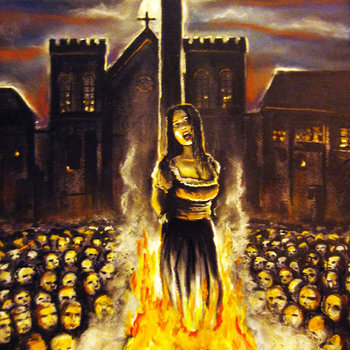
When a community with a superstitious mindset suspects someone of magical or otherwise unusual powers, especially if unexplained stuff (such as kids disappearing) has been happening in the community, their response will usually be to root out the so-called witch and burn her at the stake (and it's usually a her in these situations, though male witches are by no means unthinkablenote ), and most of the time, they will trot out some form of the above Bible quote as justification — despite the fact that the Mosaic Law of which it was a part isn't exactly relevant to people who aren't pre-Christian Israelites. Most of the time, this gets stopped by the Big Damn Heroes arriving just in time to save her. (Or she could just use her magic and make the flames ticklish harmless fiery-looking things.)

This trope is often the climax of a classical Witch Hunt in media, with plenty of Torches and Pitchforks to go around. Such portrayals are often not historically accurate, depicted in places and times when there were no witch-hunts, or misrepresenting ones that did occur. In particular, one of the most famous episodes of witch-hunting, the Salem witch trials, featured no burnings at all (the convicted were hanged — and indeed, those who "confessed" were held to answer more questions and freed when the hunt was stopped). In reality, in England and in English colonies (including Massachusetts), burning at the stake tended to be reserved for women who killed their husbands, even in self-defense (the legal name for the crime was "petit treason") and for heretics (it was popular during the Reformation and Counter-Reformation), but there was some overlap as heretics were often accused of witchcraft. In addition, the vast majority of people accused of witchcraft in England were acquitted. Better to let a witch live (and later take her punishment in Hell anyway) than kill an innocent woman, especially if you did burn them, as wood was valuable. On the other hand in Continental Europe witches were often burned to death, especially in the Germanic areas, to the point of becoming a tradition and the witch swapped for a mannequin.note 

The "swimming" of witches, one of the most famous methods of interrogating a suspected witch, had the virtue of being both pointless and redundant. Popular belief makes it out as a Morton's Fork, saying that if the 'witch' floated, they'd pull her out and kill her. If the "witch" drowned, on the other hand... well, they were still dead, they just weren't a witch. Actually she would be tied to a rope: if she did float, they would pull her out, and the fact would be regarded as incriminating; if she sank, they would pull her out all the same, but cleared of charges. The ducking stool is an unrelated, non-lethal device of punishment where a woman was ducked in cold water for being a public nuisance of some sort.

In pretty much every single usage of this trope, the person set to be burned is either innocent, or they are of course a good and/or harmless witch who actually only wanted to help the townsfolk that are even now setting her ablaze, making it a Van Helsing Hate Crime. And if this isn't the case, it's probably a parody or deliberate aversion. The "actual witch who is accused by evil bigoted townsfolk" is likely the most popular variant. This tends to ignore that if witches actually did the things that they were historically reputed to do (y'know, little things like killing entire flocks and crops, inflicting horrible withering sickness on people, selling their souls to Satan), you can kind of understand why a small town full of people probably barely clinging to a sustainable life as it is might have a bit of a bad reaction. However, attempting to burn a real, powerful witch has a chance to turn out badly.

This one's much like All of the Other Reindeer only with fiery lynch mobs, or, if parents are involved, Why Couldn't You Be Different?. A subtrope of Kill It with Fire, and sometimes a Public Execution.

Oh, and since you probably want some hard facts: Nowadays the number of victims is estimated to be around fifty thousand (for all of medieval and early modern Europe). Bad enough, though far lower than the number of several millions which were made up by as heterogeneous groups as some enlightenment writers (who simply wanted to throw some dirt on their enemy, the church) or The Nazis (who claimed that a Jewish/Freemason-controlled church wanted to eradicate wise Germanic women).

As a Death Trope, all Spoilers will be unmarked ahead. Beware.


Examples:

    open/close all folders 

    Anime and Manga 
  • Going by the flashbacks, the eponymous Witch Hunter Robin (with firestarter powers) was a normal, devout girl who got burned at the stake for being a witch. Or maybe that mysterious old lady was just messing with Robin's mind. In modern times (in Japan) they just get captured and shipped off... and, as the heroes learn to their disgust, drugged, put into People Jars and used to make the anti-witchcraft drug. Either way, it all apparently stems from a long-standing prejudice against them, even though most people have forgotten where it came from to begin with.
  • Code Geass has this when a mystical trap causes Lelouch to see images of C.C.'s past, including multiple gruesome "deaths" — one of which was, of course, burning at the stake. Justified in that C.C. is both immortal and ageless, meaning she did indeed live through the time when people were doing this sort of thing. It doesn't help matters that official sources both inside and outside the anime call her a witch.
  • This almost happens to Casca in the Berserk manga during the Conviction arc after her corrupted child summons several ghosts to protect her from Bishop Mozgus's Cold-Blooded Torture at the Tower of Conviction, which drained him in the process. She's rescued by Isidro, who later becomes one of Guts's new set of True Companions.
  • Minoru Murao's manga Knights opens with an attempted witch burning, as a corrupt priest is accusing the 13 year-old Nina of witchcraft. He fails, and Nina is rescued by the Black Knight and his might-as-well-be-naked companion. Later, the protagonist (and knight-in-training) Mist reveals it was merely a plot to seize her noble family's assets, since the Church is entitled to a witch's property without justification or investigation.
    • And if a priest gets to burn enough people he/she becomes a saint with super powers. So the only people in the setting who have anything to do with magic are the church.
  • Evangeline in Mahou Sensei Negima! says that despite being a vampire, she often had to escape such burnings during the middle ages, occasionally getting caught. She laughs about it as something highly amusing these days (the listeners were understandably horrified).
    • There is also Asuna threatening to expose Negi early in the manga.
  • Vincent narrowly escapes getting hung for witchcraft in Bizenghast. Later, we get Maphohetka, who definitely had some kind of supernatural ability, as evidenced by her surviving being stabbed in the chest, and is an antagonist to Dinah. In her defence, Maphohetka may be innocent of whatever she was accused of (since the exact nature of Bizenghast's misfortune is never revealed) and the townspeople do actually verge on the "evil and bigoted" side (keeping up their witch lynching traditions well into the late 19th-early 20th century).
  • Dark Magical Girl Sally Schumars almost went through this in the Weiss Kreuz CD dramas.
  • In The Tarot Cafe, Pamela's mother (a midwife) was accused of witchcraft after the baby she was delivering and the child's mother both died. She confessed to witchcraft just so that she could plead for her daughter's safety and was burned at the stake. Pamela was later accused of witchcraft because she could see the future and because she rejected a creepy old priest's advances on her. Because she'd been exposed to the blood of a dragon, she was immortal and survived. A later story has her kidnapped by a group of religious fanatics who use her tarot cards as proof that she's a witch and try to kill her. Seeing as she's immortal, they don't succeed.
  • In Soul Eater, there is only two kinds of witches, the stereotypical doomsday witches which are hunted down due to their destructive nature, and the cute friendly witches, which are also hunted down due to their destructive counterparts.

    Comic Books 
  • Agatha Harkness, babysitter for the Fantastic Four and the most powerful member of a Witch Species, has this happen. It's only a minor inconvenience, though, and she goes around as a ghost for a while before eventually resurrecting herself.
  • Almost happens in an old Mickey Mouse comic where Mickey and Gyro Gearloose are transported back to Puritan times and Gyro uses uses his lighter to start a fire, getting him and Mickey accused of using witchcraft.
  • Nightcrawler of the X-Men has this (actually, he's about to be staked, but it's the same principle) happening to him in his very first appearance - though the crowd thinks he is a demon, not a witch, due to his blue fur, pointed ears, fangs, and barbed tail.
    • Also, a number of their children had recently been murdered.
    • As it turned out by Kurt's step-brother Stefan, a magic-user seduced by evil, whom Kurt eventually had to kill.
  • A bleak story from the Tales of the Slayers collection features a reluctant Slayer who nonetheless saves her town from an army of marauding vamps... and for her pains is burned for witchcraft by the townsfolk.
    • The townsfolk pay for their stupidity when the Slayer's Watcher, out of revenge, opens the town's gate, letting the remaining vampires in for the slaughter.
  • In Fables, Hansel (of "Hansel and Gretel") develops an obsession for burning witches after shoving the one from the story into her own oven. When he escapes to the Mundane world he is disgusted to find the witch survived, and the amnesty laws prevent him from doing anything to her. So, he travels to Europe and spearheads dozens of 'witch-burnings' because he can't do anything about the real ones in the world.
    • Eventually he goes completely nuts and brutally kills Gretel when he finds out she was taught a little magic.
    • It's also implied he finds witch burning more than a little simulating...
  • Then there's the Scarlet Witch, who was mistaken for an actual witch when her mutant hex power first manifested and would have been burned at the stake by Balkan villagers along with her brother Quicksilver if not for timely intervention of Magneto. (Who much later was revealed to be their father).
    • An issue of Avengers West Coast shows an alternate reality where Scarlet Witch and Quicksilver were captured by the villagers and burned at the stake.
  • Parodied in an issue of the Futurama comic book when Bender gets sent back through time into a Salem-esque area where townsfolks are rounding up robots. They try the 'floating in the river' test - when the woman lives, they try to burn her but fail due to the river putting out all the fires.
  • In one story arc in Madame Xanadu, flashbacks reveal how Madame Xanadu's lesbian lover was burned as witch by the Spanish Inquisition. The executioner takes pity on her and snaps her neck before lighting the pyre.
  • In issue 72 of Superman Batman, a group of crazed religious fanatics kidnap Lois Lane and attempt to burn her at the stake. They think Superman is God, and seek to punish Lois for "rejecting" Superman for the "mere mortal" Clark Kent and thus failing in her "duty" to give birth to The Messiah. Fortunately, she is rescued by The World's Finest.
    • And even before Superman and Batman show up, Lois pulls the stake out of the ground, walks out of the fire, and kicks the crap out of one cultist.
  • In Le Scorpion, Armando's mother was burnt as a witch by the Inquisition for misdirecting a priest from the church and his Christian duties.
  • In a Sabrina the Teenage Witch comic, Sabrina thinks that her aunts had a great life in the "good old days" and as a result is given a magic mirror that can let her go back in time to colonial Salem. This trope is pretty much averted while there. Sabrina first comes across a witch stuck in the stocks and releases her. Sabrina is then put in the stocks herself for not stopping the witch's escape and is released by a perverted dude who demands a kiss for saving her. She's caught turning him into a toad and has to escape an angry mob that calls for her to be hanged.

    Film 
  • Dark Shadows: Invoked by Barnabas, as an (empty) threat against Angelique. She is really a witch. But she is also a Villain with Good Publicity, and now living in an age where witches are no longer persecuted... unlike murderers, such as the vampire Barnabas.
  • The (pseudo)historical/horror movie Witchfinder General, which definitely played fast and loose with history.
    • Justified, in that burning was something new that Matthew Hopkins was trying out. The most common form of execution is hanging.
    • Witchfinder General is actually more realistic than most, as noted above; it makes no effort to portray witchcraft as real and in fact portrays Matthew Hopkins, the title character (who decides to try burning near the end), as more concerned with money than God's work.
  • Parodied in an old Disney movie, An Astronaut in King Arthur's Court, wherein the eponymous astronaut is to be burned at the stake. His space suit protects him, but the heater is accidentally turned on and he must sweat it out until his bonds burn through.
  • In Conan the Barbarian, Conan throws the witch into a fire and she instantly bursts into flames.
  • Done in the Silent Hill movie twice on screen, and another one is mentioned. The ones on-screen were an adult and a 8 year old girl, and the burning of the 8 year old (and her surviving) is what sets off the plot of the movie. What's even worse is that they don't bother to put her burned, half-alive body off-screen.
  • Highlander: When Connor MacLeod first discovers he is an immortal back in ancient Scotland, he's proclaimed a witch, and burning is mentioned as an option. (In the end he's just run out of town by a howling mob instead.)
  • Averted, of all places, in the movie Hocus Pocus, where the the three witches are hanged by the townsfolk just as they would have been in 17th Century Salem. They get better, of course, but it's a little jarring to see historical accuracy of any sort in a movie about cartoonishly wacky witches. Those three same witches are also locked in a room and set on fire. The oven is a reference to "Hansel and Gretel". The Nostalgia Chick notes how the heroes are slightly too happy about this 'burning people alive' thing. They recover in one night and go back to terrorizing the heroes. In fact, the thing that finally kills them is sunlight because the potion that brought them back only worked for the night of Halloween.
  • Averted in Practical Magic, which begins with the (failed) hanging of the main characters' ancestor.
  • Played straight in the MSTed movie Touch of Satan, where the heroine's sister is nearly burned at the stake after being accused of witchcraft - in 19th century California.
  • Full Moon Entertainment's movie version of The Pit And The Pendulum, taking place during the Spanish Inquisition, naturally invokes this trope a couple of times. Of particular note is a scene where an old woman, soon to be burned at the stake, manages to ingest some conveniently placed gunpowder before hand. This results in a very messy explosion once she catches aflame. In Real Life, sacks of gunpowder were sometimes tied around the necks of those condemned to the stake as an act of mercy.
  • All together now: "What do you burn apart from Witches?" Monty Python and the Holy Grail subverted as well as parodied it, as after the scales show she weighs as much as a duck the witch actually confesses: "It's a fair cop."
  • Played ridiculously straight in Metropolis. During the revolt, the workers burn Robot!Maria at the stake, since they decide she's to blame for the revolution ending badly. They were right... sort of. On a pyre made of burning automobiles, no less!
  • Used straight - and to hideously appropriate effect - in Mark Of The Devil. Within that film, several "witches" (all clearly innocent) are slowly burnt alive. This film presents various period tortures in historically accurate ways, which makes it rather disturbing...
  • Subverted in Agora, where the philosopher Hypatia, after being caught by the Christians who considered her a witch, was only burned after she was dead. Note that there is still some debate whereas RL Hypatia was burned alive or stoned to death, though the general view is the one shown in the movie, that first she was stoned and then burned.
  • In The Name of the Rose, Brother Salvatore and Brother Remigio are burned at the stake as scapegoats by Father Bernardo Gui, leader of the Inquisition. Gui also tries to burn a local peasant girl, but she is rescued by rebellious peasants who manage to kill Gui in the resulting chaos.
    • Unfortunately, her two fellow "heretics" don't get rescued. Adso was a trifle specific in his prayer.
    • In the book, Gui prevents this from happening by simply having the three of them transported away and executed elsewhere, where no rescue attempts can occur.
  • This is basically what started the terror for the series A Nightmare On Elm Street. The families of Elm Street, justifiably, hunted down a child-killer and general bad guy who got Off on a Technicality only to have him come back later; rather upset about all of it.
  • In Ghostbusters II a judge laments that he is not able to sentence them to be burned at the stake, which he sees as an "illustrious, sterner justice".
  • Averted in Season of the Witch which shows three accused women being hung off a bridge, then lowered into the water to drown just in case they survived the Neck Snap. Unfortunately for the priest carrying out the ritual, one of them is Not Quite Dead.
  • Subverted in Solomon Kane. The villagers attempt to burn the witch, but the witch uses magic to not only survive, but burn the village and its inhabitants.
  • In Black Death, Ulric saves a woman from this fate by giving her a mercy-kill. This serves as his Establishing Character Moment.
  • In the '80s-'90s Icelandic film The Juniper Tree, the mother of two little girls, Margit and Katla, is burned to death for witchcraft.
  • According to Hansel And Gretel Witch Hunters, fire is the most reliable method for killing witches, and the antagonists are looking to produce a potion that will make them fireproof.
  • From Scooby Doo Curse Of The Lake Monster, happens to Wanda Grubwart when she was alive in the 1800s.
  • In Red Riding Hood, everyone thinks Valerie is a witch because she can understand the Wolf and everyone thinks the Wolf only wants her, so she is offered up as a Human Sacrifice.
    • Poor Claude is stuffed and killed for no other reason than because he is an oddity. It is heavily implied that he is simply mentally challenged and has a fascination with card tricks. It is sadly Truth in Television because many were persecuted for being misunderstood or exhibiting strange behaviours that were unexplainable at the time.

    Literature 
  • The rather cynical and materialistic philosopher Hobbes, for one, asserted in one of his treatises that "Witches are justly punished." He didn't actually believe they had any supernatural powers to carry out any of the crimes they'd allegedly committed, but he was certain they believed they did, and therefore were guilty of attempting to use those powers on others for nefarious purposes. In other words, they were guilty of attempted murder in much the same way as someone who tries to shoot somebody dead with a gun that turns out to be unloaded.
  • In Neil Gaiman's The Graveyard Book, one of the ghosts Bod befriends was killed as a witch for tormenting the town. They were partly right: she was a witch, but she hadn't hurt anybody... until they killed her, that is.
  • Diana Wynne Jones uses this trope in her book Witch Week. The main characters are all afraid of being outed as witches, and one even goes to the lengths of burning himself with a candle to remind himself to be careful not to use magic.
  • Referenced in the first chapter of Harry Potter And The Prisoner Of Azkaban. On the rare occasions where Muggles managed to catch a real witch, they used a flame-freezing charm to protect themselves — then pretended to be dying in agony. It was noted that the charm made the flames 'ticklish', such that some wizards would purposely allow themselves to get caught repeatedly.

    On the flip side, The Tales of Beedle the Bard mentions that a wizard or witch could be killed if they lost their wand. Specifically, it was stated that the ones most at risk were young magical children who hadn't yet learned to control their abilities. In his annotation to "The Wizard and the Hopping Pot", Dumbledore notes that during the European witch hunts, witches and wizards considered using magic to help Muggle neighbors like "volunteering to fetch the firewood for one's own funeral pyre".
  • Agnes Nutter was burned at the stake in Good Omens but, in a twist, filled her underwear with as much gunpowder and nails as she could, causing an explosion which destroyed the whole village.
    • Witchfinder Sergeant Shadwell is asked by the angel Aziraphale if he has ever read The Bible. The only part Shadwell has read is the above verse.
    • That's not quite true—he started to read the next verse, about laying down with beasts, but decided that wasn't in his jurisdiction.
  • From Terry Pratchett's Discworld novel Carpe Jugulum:
    Oats: Well... your colleagues keep telling me the Omnians used to burn witches...
    Granny: They never did.
    Oats: I'm afraid I have to admit that the records show —
    Granny: They never burned witches. Probably they burned some old ladies who spoke up or couldn't run away. I wouldn't look for witches bein' burned. I might look for witches doin' the burning, though. We ain't all nice.
    • I Shall Wear Midnight, sadly, proves that Granny's surmise is incorrect: The Cunning Man, at least, did successfully capture and condemn at least one genuine witch in his lifelong career. She pulled him into the fire to die with her. Too bad that wasn't the end of the matter...
    • According to other Tiffany Aching books, this also used to happen in some parts of the Chalk. The suspected witch in the barony was just kicked out of her cottage and left to starve. It may bear mentioning that this incident inspired Tiffany to become a witch herself to make sure nobody dared try that again.
    • In some other areas they follow the advice in the Maganevatio Obtusis (Witch-hunting for Dumb People) and drown them... after supplying them with soup, a good night's sleep, and a cup of tea and a biscuit. The book was written by traveling witch (and strong swimmer) Miss Tick.
    • Played with in A Tourist's Guide To Lancre, which notes that "It's not a proper Witch Trial without a big bonfire afterwards"... meaning of course, that once witches have demonstrated their skill in an organised competition, it's nice to have a bit of a carnival atmosphere and baked potatoes.
  • Averted just where you might expect it most in The Crucible, because, in fact, the real Salem Witch Trials didn't see one suspected witch burned at the stake. Plenty got hanged, though, and one man, Giles Corey, was crushed to death with stones for refusing to confess.
  • Played with in Robert A. Heinlein's Job A Comedy Of Justice. In an Alternate Universe where the dominant religion is Wicca, the young Wiccan convert rejects the flame her parents worship because "fire means the way they kill us."
  • During his apprentice years, the wizard Raistlin Majere from the Dragonlance Chronicles was almost burned at the stake by a bunch of enraged and superstitious villagers after he had tried to expose a fake cleric as a charlatan. He was rescued just in time by his twin brother, the fighter Caramon, and the rest of the main characters. That incident didn't really help improve Raistlin's cynical nature.
  • In Hermann Hesse's Narcissus and Goldmund, which takes place during The Black Death, a young woman who nearly had this fate is found by Goldmund.
  • K.A. Applegate's short-lived Everworld series gives a reason for why witches are burned or hanged in the eponymous alternate world: their blood is poison to crops, which means no one can really afford a beheading.
  • In Patricia C. Wrede's Daughter Of Witches, the main character's parents are burned as witches. Understandably, this gives her serious issues about her own magical powers.
  • In the Deptford Mice book The Crystal Prison Audrey Brown is nearly burned for witchcraft. The village leader begs the mice not to do such a barbaric thing... so they agree to hang her instead. She's saved at the last minute by Twit.
  • In Wizard's First Rule, a mob confronts Zedd, Richard, and Kahlan, attempting to burn Zedd on charges for witchcraft. After the obligatory "men are warlocks, women are witches" reference, Zedd invites the mob to mention exactly what they think a warlock is capable of doing. After several relatively innocuous suggestions, such as the ability to turn a cow's milk sour, the mob begins to embellish its examples when its earlier ideas did not seem sinister enough. After over an hour of this, Zedd puts a stop to it, applauding the mob's courage for daring to confront what must surely be an unstoppable Faustian demigod who kills by the hundreds and drinks blood by the liter. The mob meekly apologizes and attempts to flee, but not before Zedd convinces them that he's made their privates disappear. They got better.
  • Partially justified in H. P. Lovecraft's "The Festival", by the revelation that the unburned corpse of a wizard (or, presumably, a witch) can give rise to a walking humanoid mass of worms, which collectively become host to the dead spellcaster's mind when they consume its rotting flesh. Why it's necessary to burn such people alive is not explained, however.
  • In Rudyard Kipling's The Second Jungle Book, the villagers, having driven out Mowgli as a witch, decide that his adoptive parents are also witches.
    But meantime the village had got hold of Messua and her husband, who were undoubtedly the father and mother of this Devil-child, and had barricaded them in their own hut, and presently would torture them to make them confess they were witch and wizard, and then they would be burned to death.
    • Buldeo, the village hunter, discusses this with some charcoal-burners that he meets (while Mowgli listens from concealment):
      But, said the charcoal-burners, what would happen if the English heard of it? The English, they had heard, were a perfectly mad people, who would not let honest farmers kill witches in peace.
  • In Aunt Dimity and the Village Witch, as the villagers get involved in the story of the seventeenth-century "witch" Margaret Redfern, the spectre of this is discussed, including the popular belief that the "swimming" of witches, was a Morton's Fork. The vicar's wife Lilian Bunting also describes other methods of interrogation/torture, condemns the very idea of torturing other people for such specious reasons, and is visibly distressed at the prospect that the villagers will learn that such was Margaret Redfern's fate.
  • Sorcha from Juliet Marillier's Daughter Of The Forest nearly falls victim to this trope very nearly; her husband only manages to get her off the stake at the last possible second).
    • Note that she is in no way, shape, or form a witch, but evil Uncle Richard has it out for her...
  • The perpetrator of Never Burn A Witch only burned one Witch at the stake, but he also hanged one, drowned another, and tried to kill the narrator, a practicing Witch himself, by hanging.
  • At first averted in His Dark Materials, as in Lyra's world the prejudice against witches doesn't seem to go beyond considering them evil (in fact some witches did join the church), though in the second book its implied that, in other worlds, witches are in fact burned.
  • In The Dresden Files in White Night Harry and Murphy encounter someone who is using the passage in the Book of Exodus which says "Thou shalt not suffer a witch to live" to justify killing magic-users. Harry tells Murphy (accurately) that the original phrase in Hebrew meant "someone who casts harmful spells," or, in other words, only kill people who use dark magic, but that King James changed it to just witches in general when he translated the Bible because he didn't like them. It's probably worth noting that the White Council of Wizards' own approach to people who use black magic is completely in line with the older meaning - their punishment for a first offense is usually decapitation, and ignorance of the laws of magic or having good motives is no excuse. It's possible to be spared, but only if another wizard speaks up for them, agrees to train them and ensure it never happens again, potentially at the cost of their own life if they do relapse, and convinces the Senior Council to allow it. They're pretty hard to convince too.
  • Averted in Gallows Hill by Lois Duncan. The protagonist is actually writing a paper about the Salem Witch Trials at her new high school. She learns through research and visions that in a former life she was Betty Parris, the delightful little child that set the trials in motion. And all her new classmates? The reincarnated souls of all the innocent women she accused, which were hanged.
  • In Anne Rice's The Witching Hour, Lasher, the spirit that haunts the Mayfair family for centuries, is orignally conjured by a woman in a small Scottish town. When the locals attempt to burn her for a witch, she unleashes Lasher on them, who wrecks the town and kills the inhabitants.
  • In Devonsville Terror by Ulli Lommel the only actual witch of the three women killed suffers that fate.
  • Inverted in John Varley's Gaea Trilogy, where the Coven, a space colony founded by lesbian separatists, adheres to an extreme offshoot of witchcraft: one grown so intolerant, in its isolation, that suspected Christians are burned at the stake.
  • In Mika Waltari's The Wanderer, the protagonist's wife is accused of witchcraft. She is the first woman he's ever met who loved him (back), but being a rather naive 16th century man, he doesn't dismiss the possibility of her being a witch until he witnesses the trial, which is a turning point for his life and he becomes more cynical. The trial itself plays this trope straight, although instead of the swim test, they use more conventional torture methods. And of course, she gets burned in the end, but only after "confessing" that her accomplice was the witch catcher who caught her. (Which causes a chain reaction as the witch catcher "confesses" that pretty much everyone he's had troubles with is an accomplice and a servant of Satan.)
  • In Robert E. Howard's Conan the Barbarian story "The Hour of the Dragon", Orastes nearly met this in the Back Story.
    I was cast forth from my order because of my delving in Black Magic. But for Amalric there I might have been burned as a magician.
  • In The Red Tent, a midwife named Inna loses a (very young) woman and her child during delivery, despite her best efforts. The father went berserk and accused Inna of being a witch killing his wife and child For the Evulz, and strangled her, threatening to take her to the village elders. Inna flees, knowing that despite being the most respected midwife in the area, it won't go well with the elders because their leader has a beef with her for refusing to marry his son. To prevent being executed as per this trope, she joins up with her apprentice Rachel and leaves the village.
  • In Laurell K. Hamilton's early Anita Blake books, where the supernatural is known to exist, there is occasional mention of the last time a witch was burned in the U.S. - in the 1950s. It was captured on photograph, and the photographer got a Pulitzer Prize out of it. Anita wonders if a Pulitzer makes the nightmares easier to live with. Possibly justified, as popular assumption might have been that witches were burned in that universe, much as it is in ours.
  • A subversion occurs in A Swiftly Tilting Planet when a Native American woman who has married a Welsh settler in Puritan America is denounced as a witch and sentenced to be hanged. The evidence against her: that she didn't scream during childbirth.
  • In A Song of Ice and Fire, Daenerys Targaryen burns the witch Mirri Maz Dur alive. Unusually, Mirri Maz Dur was actually guilty of the crimesnote  she was accused of (although she may have been justified). Also, the choice of burning as a punishment was not based on the traditional method of killing witches, but rather Dany's family affinity for fire.
    • The trope is then inverted from Book 2 with the introduction of Melisandre, a fire-worshipping witch that burns the efigies of what she deems "false gods", as well as the "heretics" that speak against her and her beliefs.

    Live Action TV 
  • In the Firefly episode "Safe," River incurs the wrath of the settlers of Jiangyin when her mind-reading powers are misunderstood as witchcraft. Interestingly, the village elder doesn't believe in witchcraft but he tries to kill her to shut her up, as she finds out that he killed the previous elder. She is about to get burned at the stake along with her brother Simon when the Big Damn Heroes show up in the moment that named the trope. Amusingly, Mal agrees with the townfolk that River's a witch. His objection is that she's also part of his crew.
    Mal: Yes, but she's OUR witch. [KA-CHINK!] So cut her the hell down.
  • Played with in an episode of Sabrina the Teenage Witch. Sabrina's class visits Salem; everyone was given a little slip saying if they were a witch or not, and were supposed to find the witch. Sabrina loses hers without reading it. After all the predictable accusation hijinks goes down, the teacher announces that nobody had a slip that said "witch", as a lesson to the class about crazy witchhunts. Sabrina finds her slip on the bus home, which says "witch" on it. Salem... is not a good place for witches. It's also worth noting that when Jenny is "found guilty" of being a witch, Mr Pool says "you can pretend we hanged her" instead of burning. He was with the history teacher after all.
  • In Highlander: The Series, Duncan MacLeod escaped being burned. His also-immortal buddy was not so lucky. Apparently, when you can regenerate, being burned continually for hours is enough to drive you Ax Crazy.
  • In one Star Trek: The Original Series episode, Captain Kirk is declared to be a "witch." (That's what you get for appearing out of thin air and talking to a disembodied voice called "Bones".)
  • Parodied in the Star Trek: Voyager episode "False Profits" when the townspeople decide to honor their three deified Sages by sending them back up to Heaven on "wings of flame" as the prophetic poem central to their religious canon instructs them.
  • An episode of the first season of The Dead Zone television show had Smith going through a small town where a murder with satanic vibes had been committed, since he displays knowledge of the crimes via his powers they think he did the murder, they put him on trial for witchcraft so he can't leave the town while they search for evidence to pin him with, an angry mob ends up carrying him out of the court room to burn him at the stake for the murder because a child and her mother was involved, and another girl was missing.
  • There was a whole episode of Midsomer Murders about burning witches; at the end Barnaby comments that they never actually burned witches, they just hanged them. Hanged, hanged, hanged. In England at least, burning was strictly reserved as a punishment for men committing Heresy. However, for centuries it was on the statute books that for capital crimes women should be put to death by burning whereas men should be hanged.
  • In the Buffy the Vampire Slayer episode "Gingerbread," Buffy, Willow and Amy are almost burned at the stake in a Witch Hunt organized by Buffy's own mother because of a demon posing as two dead children who reappear every fifty years to use More than Mind Control to convince a town to kill the "bad girls" (witches). The demon is European so the burning is actually accurate. Oddly enough, the (averted) burning takes place inside the city hall. Apparently the ventilation system is really good. And has really big air vents. Of course the demon that was orchestrating the whole thing didn't care if its mob asphyxiated itself. The more dead, the better.
    • Anya, a former vengeance demon who was alive during the actual Salem witch trials, notes that real witches could use their powers to escape. "So, really, it was only bad for the falsely accused - and, well, they never have a good time."
    • Averted in the episode "The Witch", but a deleted line in the shooting script had Giles consulting his books on the best way to find a witch, only to come up with the drowning test. He admits that his texts are somewhat outdated.
  • An episode of Charmed, "The Witch Is Back", had the Halliwell sisters' ancestor burned at the stake in Salem. To quote Lex Luthor, "WRONG!"
    • The same mistake is made in the second or third episode, in a documentary that Piper watches on TV.
    • Another episode, "Morality Bites", had the Halliwells traveling forward in time to keep Phoebe from being burned at the stake after they did something that would have led to massive witch hunts in the future.
    • Subverted in "All Halliwell's Eve" when the sisters are sent back in time to colonial Virginia. When they are accused of being witches, they are hanged.
  • In an episode of Bewitched, the characters are transported back in time to old Salem. Someone ends up tied to a stake with kindling piled around their feet before the episode is out. Ironically, it was Darrin who ended up accused of witchcraft for having used a match.
    • Bewitched actually spent several episodes in Salem, either 4 or 8. It was a sizable chunk of that season.
  • The Black Adder episode "Witchsmeller Pursuivant" had loads of fun with this trope. Turns out there really was a witch running around, but she's Edmund's Mother!
    • The witchhunter is the real witch, since when he is killed, the King recovers and everything goes back to normal (for the show.)
  • In the Doctor Who story "The Dæmons", The Doctor is nearly burnt at the stake by Morris Dancers.
    • Ironically he's saved by the local 'white' witch.
    • Tegan is nearly burnt at the stake as a sacrifice in the Doctor Who serial "The Awakening". By Civil War recreationists.
  • In Voyagers, Bogg winds up tied to a stake when he shows up during the Salem Witch Trials (or a variant thereof), but the judge explicitly states that this is "without precedent in these colonies"; the other accused are sentenced to imprisonment and hanging.
  • In Merlin, people who are suspected of being witches are either burnt at the stake or beheaded. The best example of the trope is in "The Mark of Nimueh", in which Gwen is falsely accused of witchcraft, and has to be saved by the other characters.
    • As of Series 2, the best example is the episode The Witchfinder, where Gaius is almost burnt at the stake.
  • In the BBC series of Robin Hood the midwife/healing woman Matilda is accused of witchcraft and dunked in the village pond. Somewhat subverted in that her accusers don't really believe she's a witch, but in fact want her to use her healing abilities to save the life of a political enemy. She refuses, and into the water she goes...
    • In a later episode, the outlaws are deemed heretics and nearly burnt at the stake.
    • In the audiobook The Witchfinders Kate is nearly burnt as a witch.
  • QI skewers this, with Alan expressing the opinion that witches were burnt, and Stephen Fry explaining that, regardless of what you might have read in books - "and I use the term 'books' very loosely" - like The Da Vinci Code, two people may have been burnt for witchcraft, ever, and most accused witches were found not guilty.
  • Smallville's fourth season features the story of Margerite Isobel Theroux, a witch burned alongside two accomplices in 17th Century France. She comes back to possess her descendant, Lana Lang, to exact vengeance against the descendants of the woman who sentenced her to death. Which involved Kryptonian artifacts, for whatever reason.
    Isabelle [in Lana]: We don't have time for this.
    Madeleine [in Chloe]: Time is the only thing we do have. Isn't that what you said right before the angry mob set us on fire?
    Isabelle [in Lana]: You're really not gonna let that go, are you?
  • Subverted in Robin of Sherwood where a suspected witch is sentenced to be hanged rather than burnt (and it is made quite clear that this is not a normal punishment but is Guy of Gisbourne rigging the evidence against her as revenge for her refusing his advances).
  • The original-series Survivors has the community start down this road in the episode "The Witch", but, mercifully, saner heads rein in the hysteria before the (innocent if slightly strange) victim gets tied to a stake.
  • The Cruel Twist Ending of the Outer Limits revival episode "A New Life".
  • In the first few episodes of Stargate SG-1 season 9, this happens to Vala twice and Daniel once. Luckily it was just their minds inhabiting host bodies, so they came out of it ok for various reasons. The first time, to Vala alone, wasn't even for any good reason, either. She forgot a prayer and was accused of being possessed. Things sort of went downhill for the duo (and the galaxy) after that.
    • Vala, after being chastised for forgetting the prayer, snaps and tells the lady exactly what she should do with her prayer book. No wonder she's declared to be possessed.
  • Xena: Warrior Princess season 6: Elijans (expy Roman Catholics in Ancient Grome) burn Xena's mother as a witch due to her tavern being haunted.
  • A friend of Peggy in Mysterious Ways survives what should have been a fatal motorcycle accident in Uganda, where she is trying to convince the local population to use modern medicine instead of witch doctors and the like. She is accused of being a witch because of her miraculous survival and blamed for a disease that threatens to destroy the village. The witchcraft accusation is mostly a smokescreen to get rid of her since the more traditional members of the tribe do not agree with her attempts to change their ways); Declan, Peggy, and Miranda travel to Uganda to save her from her fate.
  • On True Blood, the villainess Antonia is the ghost of a witch burned at the stake during the Spanish Inquisition thanks to vampires within the Catholic Church.
  • When someone starts murdering members of a coven in the Rizzoli And Isles episode "Bloodlines", the first victim is burnt at the stake.
  • Spoofed in this sketch from Horrible Histories called "Wicked Witches". The sketch is an advert for Witch-finders Direct who claim to find some innocent woman and blame your misfortunes on her and have her burnt to death. They might also send witches' cats to prison.
    Witch-finder: Do you have a cat?
    Old woman: Yes.
    Witch-finder: Then thou art a witch!
  • Discussed in The X-Files episode "Chinga" which is set in New England and the Salem trials receive a Shout Out. Jane, a former Sadist Teacher who was sacked, would very much like to invoke this trope for Polly's mother and burn her at the stake — for being an attractive woman and having an autistic daughter who Jane sees as a Creepy Child. Jane, Jane... it was Polly's Perverse Puppet that was the real problem.

    Music 
  • Witchfinder General, "Burning a Sinner". Also, "Witchfinder General".
  • "Am I Evil?" by Diamond Head (and covered by Metallica), in which the singer's mother is burned as a witch, setting him on a Roaring Rampage of Revenge that ultimately consumes him.
  • "The Curse", intro track to Running Wild's Black Hand Inn opens with a trial where a man is condemned to be a heretic and is subsequently burned at the stake.
  • "Burn" from King Diamond's solo album The Eye depicts a burning of alleged witch. The eponymous pendant from the title is later found from her ashes.
  • "The Curse of Jacques" from Grave Digger's Knights of the Cross, which is about Last Grandmaster of Knights Templar Jacques de Molay who was burned at the stake during the order's downfall.
  • Venom's "Don't Burn the Witch" from Black Metal.
  • "Deathaura" by Sonata Arctica. The Bittersweet Ending helps to soften the emotional blow, however.
  • "Burn the Witch" by Queens Of The Stone Age.
  • "The Dead Can't Testify" by Billy Talent is about being burnt as a witch for being different, possibly for being an athiest.
  • "Burning The Witches", the title track from the debut album by Warlock, released in 1984.
  • "Burn Witch Burn" by Ego Likeness.
  • The Vocaloid song "Witch", sung by Megurine Luka and a few other Vocaloids, has this happening to Luka's character.
    • In "Flames of Yellow Phosphorus," Rin's character is burned at the stake for killing her father.

    Tabletop Games 
  • The majority of Warhammer magic users — and Warhammer 40000 psykers — end up in this manner. Unusually for this trope, many of the witches actually are in contact with malign supernatural beings.
    • Though there's probably still a lot of wastage. Even in the comparatively Lighter and Softer Warhammer one inquisitor's position is: "The question is not how to separate the innocent from the guilty. The question is how many I can burn."
    • Another inquisitor offered a nice quick death from his sword (practically considered a wonderful gift in this Crapsack World) to a host of accused already bound on their pyres if any one of them would confess — unfortunately none did, or even could, as he had drugged every single one beforehand. They burned to death, and the inquisitor just made a passing thought about how he was saving their souls. Bastard.
      • Wasn't that the one who had an entire hillside-full of the accused grouped together, and ignited them with an incendiary tank shell?
    • One witch hunter burns a 6 year old girl at the stake because her parents went to a mad scientist to heal her broken leg and ended up mutated as a result. The witch hunter got her drunk because he knew that she was an innocent who just had the misfortune to have the traveling doctor be an insane lunatic, but she couldn't be allowed to live because of the mutations.
    • Hell, in 40K, if the witch is deemed dangerous enough, they'll burn the whole planet just to be safe.
    • All this being said, it ought be noted that in 40k at least, human psykers are in all cases a total liability. Most groups that use psykers, and most psykers, accept they'll eventually get caught out by something on the other side of the reality rip their minds create and have to be put down. The only ones with a chance in the long run, really, are the Space Marine Librarians and Inquisitors who happen to be Psykers- and all the worse for it, since they can do incalculable damage on the rare occasions they do fall, become possessed, or get corrupted.
  • The Ravenloft module Servants of Darkness gives PCs the opportunity to derail this trope, proving an accused woman's innocence by exposing the evil fey creature which is truly to blame for the misfortunes plaguing a Tepestani village.
  • The generic Dungeons & Dragons module "The Apocalypse Stone" has a sort of subversion. As part of a, the player characters come upon a town where they are about to "burn the witch". They must (to pass a test of character they don't know about, anyway) find out the truth about her guilt. At first it appears she is innocent, and the missing child she's accused of killing can be found elsewhere - but looking into it more carefully reveals that yes, she is still a witch who's into human sacrifice and worships a devil. Mind you, even if the burning takes place, the local good-aligned community leader intends to quickly strangle her under the cover of smoke instead, so that's another aspect that's subverted.
    • Played straight with the Order of Seropaenes from the sourcebook Tome of Magic, with the binder playable class standing in for the witch.
  • This is the core concept of the party game Werewolf. There are monsters hiding in the village and killing people at night, but you can't tell them from the innocent villagers by looking at them. What's the solution? Grab a pitchfork or a torch, form a lynch mob, and tie a rope to the old hanging tree.
  • Hunter The Reckoning implies repeatedly that the Salem and Inquisitorial witch hunts were both justified and effective. Of course, in the Old World of Darkness, that's not entirely ridiculous.
  • The Fighting Fantasy gamebook Spellbreaker contains a notable subversion in that the witch hunters are the good guys, fighting against an evil coven of witches and warlocks that are trying to free a powerful demon from its mystic prison. The reader can even encounter a supposed witch-burning, although the young woman about to be burned is actually innocent, and the warlock is actually the inquisitor who's about to burn her, having framed her as a way of throwing suspicion off himself.
  • House Karanok in Forgotten Realms burns every arcane caster they can get their hands on. Presumably they haven't yet gotten their hands on Elminster.

    Theater 
  • Wicked's "March of the Witch Hunters" is pretty self-explanatory. The citizens of Oz hunt for Elphaba, egged on by Madame Morrible.
  • In Finian's Rainbow, Sharon is charged with using witchcraft to turn a white man black, and her lover Woody of aiding and abetting her, in accordance with a 17th-century state law against witchcraft ("Don't you think it's a little obsolete by now?"). The pair are saved from the flames by the Just in Time reversal of her wish.
  • The Crucible, a play which has as its running theme the Salem witch trials, and was written, very tellingly, during the communist witch-hunts in America, is actually an aversion - they don't burn the witches, instead hanging them, as was actually done in the trials. Impossible to say much without giving huge chunks of plot away, but... yeah. Never have the words of Friedrich Nietzsche been spoken in a more justifiable circumstance.
  • Il Trovatore by Verdi, anyone? Everything began with a witch burning...
  • The Lady's Not for Burning by Christopher Fry. The evidence against her is laughable, but the town's officials can see she's well-to-do, and if they convict her, they can confiscate her property. But there's that pesky ex-soldier who insists he murdered the man she supposedly bewitched....
    "Though we administer persuasion with great patience, she admits nothing. And the man won't stop admitting. It really makes one lose all faith in human nature."

    Video Games 
  • In the Interactive Fiction H. P. Lovecraft-inspired Anchorhead, the founder of the American Verlac clan, Croseus, got his entire family accused of witchcraft, and only he and his youngest daughter escaped being burned. The latter half of the trope is averted in that Croseus really needed to be burned.
  • The backstory of Partinias, the Arcana of Love in Arcana Heart, talks about how she was burned as a witch in the middle ages because she criticized violence and tried to spread compassion during a time when Europe was covered in war.
  • Maybe not a witch per se, but Baldur's Gate II: Shadows of Amn features a mob threatening to burn Viconia at the stake in the middle of Athkatla. As the protagonist, you can choose either to save her (incurring the ire of the mob in the process), or to be a jerk and let her die.
    • It was originally part of an initial decision for Viconia to be infected with Lycanthropy, but they still went with it after they scrapped the werewolf idea. Since she's still a drow elf and a priestess of very nasty goddess Shar, they have a pretty natural reason to try to burn her.
    • There is a +4 magical staff in the game which is stated to be the remnant of a stake at which a powerful witch was burned. It is stated that with her last breath, the witch caused the fire to burn down the entire village
  • An achievement in Banjo-Kazooie Nuts & Bolts called "Burn the Witch" involves shooting the antagonist Gruntilda in the town square with the laser you get near the end of the game. Naturally, since you have to fight her later, the laser doesn't do anything except irritate her.
  • Very present in the Castlevania series, especially in the 1470s stories.
    • As detailed by Symphony of the Night, Lisa's burning at the stake inspired Dracula to destroy humanity.
    • When a similar fate struck a woman named Rosaly, Hector was inspired to seek revenge in Curse of Darkness.
    • Julia from the same game was a witch in hiding.
    • As was Sypha from Dracula's Curse, who went so far as to take up the Sweet Polly Oliver approach.
    • Take heart. Later games in the series suffered witches more politely, and by the time of the Sorrow games, one of them directly works for the church.
      • It gets more confusing. If the Castlevania Judgment bios are to be believed, Sypha was in the church herself! (But not making it known that she was a witch.)
  • In theTheX-Files video game, one storyline features Mulder and Scully travelling to small town to prevent several girls' execution in this manner.
  • In Drakengard 2 Manah, is accused of being a witch, and she did break one of the seals, so she's captured by the hero, and who he's working for burns her. She does have magic, however, and escapes, and later joins you.
  • Not completely true to the trope, but when Final Fantasy VIII's Rinoa is discovered to be a Sorceress, she is sentenced to put into stasis. Of course, just to be saved by the hero at the last moment.
  • Jeanne d'Arc, naturally (see Real Life example below.) In a twist, however, it is not Jeanne who suffers this fate, as she's currently missing and presumed dead. Rather, it is Liane, who had been forced to impersonate her friend by the French commanders in order to keep morale up.
    • Rather ironically Liane's stat growth would have made her your primary magic user(and still quite a good one even after a true "Mage" type character shows up) for quite some time.
  • Referenced in Left 4 Dead, an achievement titled "Burn the Witch" is obtained by setting fire to the Witch boss zombie. It's also arguably one of the most effective ways of dealing with one if you have someone to run.
  • The Big Bad of Legaia 2: Duel Saga was the victim of a witch hunt, which is what made him into the monster he became. You visit his home village later on in the game, and the place still bears the mark of his retaliation.
  • The Suffering reveals that while it was still settled by the Puritans, Carnate Island suffered a spate of witch-burnings that began when three little girls accused several of their fellow villagers- as a joke. Centuries later, these three children live on as the Infernas, the personification of all those on the island that were burnt at the stake. Lampshaded by Consuela, who notes that burning was non-existant among Puritans in other parts of America.
  • In Tales Of Symphonia, half-elves are scorned for existing and are pretty much blamed for everything that goes wrong in the world. This is not without some merit, though, as the game's antagonists for the first 20 or so hours, a group known as the Desians, are comprised mostly of half-elves.
  • In Quest For Glory IV, the suspicious townsfolk go on a Witch Hunt after the gravedigger goes missing, capturing a gypsy and accusing him of being a werewolf. If you don't set him free in time, he gets burned at the stake, but not before he curses you and the entire town, causing game over. If you free him, you find out that he really was a werewolf, although innocent of what he was charged with.
  • Used almost exactly by angry mob in the outskirts area of The Witcher (the first real area in the game). The witch in question is most likely harmless, although her exact morals are certainly questionable (especially if you have the uncensored version, in which she appears nude and smeared with blood on her card), and the player has the choice of sleeping with her and allowing the villagers to kill her, or sleeping with her (a redundant theme in the game which actually becomes something of a side-quest) and saving her. In the latter case, the player later has to fight off most of the important villagers (while fighting a hell hound variant).
  • The MMORPG Shadowbane had the Temple of the Cleansing Flame, whose sole purpose was to save humanity by burning up large portions of it and every elf they could find.
  • In Eternal Champions, this was the cause for Xavier's death. There's even a smoldering stake in the immediate background of his stage that you knock your opponent into.
  • Just one of the many things the Inquisitors of the Citadel in Adventure Quest Worlds like to do to people. One of your quests on the chain involves rescuing witches who have been put to the torch.
  • In the backstory of the Dragon Age games, Andraste was burned at the stake after her husband betrayed her to the Tevinter Imperium. The leader of the Imperium, Archon Hessarian, felt pity for Andraste in her final moments and drove his sword into her heart so she wouldn't suffer any longer. He became the first convert to the Chant of Light and helped spread it over Thedas. The Blades of Mercy are enchanted replicas of Hessarian's sword and are considered badges of honor in the Imperium. An inversion, as Andraste was burned by witches (well, mages).
  • Conquests Of The Longbow: Invoked by the Abbot towards Marian. You will have to rescue her from this. How well you handle this determines the ending you get.
  • In the backstory of the 2010 version of Splatterhouse, Dr. West's wife (who Came Back Wrong thanks to his experiments) was strapped into a Wicker Man-esque effigy to be burned as a witch by the citizens of Arkham. Then the Corrupted interfered and things got out of hand.
  • In Heroes of Might and Magic IV, a necromancer named Gauldoth is wrongfully accused of being a child murderer, and a town guard named Mardor attempts to have him burned. Gauldoth flees the town, returns several months later with an army, besieges the town and captures it. One of the first things he does is have Mardor arrested... and executed by being burned at the stake.
  • Invoked in Dangan Ronpa. When Celestia "Celes" Ludenberg is proved to be the one who first manipulated Hifumi into killing Ishimaru and then killed him, she is sentenced to execution via being burned at the stake. This is actually the perfect way to die in Celes's opinion, as Word Of God said that she wanted a very romanticized and dramatic death like those in the novels, so she is rather gleeful (atleast publically) as the pyre is lighted under her feet and she waits for the fire to consume her, hands steepled and looking up dramatically... But since her executioner is Monobear after all, he then subverts the trope via summoning a huge firefighter truck at the very last moment and ramming it into Celes's pyre, killing her.

    Web Comics 
  • In No Rest for the Wicked, the villagers blame Clare for their disappearing children and intend to burn her.
  • In Something Positive, a young woman boasts of having been burned to death in Salem in another life for being a Wiccan, but that she died praising Wicca and the Goddess. Davan, of course, tears her story apart. In three panels.
    • And yet he fails to mention that no witches were actually burned in Salem...
      • This particular omission is likely because that would have required an entire extra panel, especially since most places burned witches — alive or merely as corpse disposal — because they were wary of what might come of burying a witch. (See the Lovecraft example in the Literary section.)
      • Second panel. "Not about witchcraft at all!" That says it quite plainly.
  • In Girl Genius, it is stated that minor Sparks in rural areas were often treated as witches and burned. Then again, considering the fact that a Sparky "witch" could probably make those herbal concoctions work, and that Sparkyness equals insanity, they were probably on the money as often as not.
    • Also subverted. Early in the story, the protagonist is told that girls with the Spark are especially vulnerable, and tend to disappear more quickly than boys. We later find out that, rather than being killed as witches, most of them were probably kidnapped by Sturmhalten soldiers as soon as their Spark developed, so that Prince Aaronev, a Spark himself, could use them for his experiment to bring back the Other. Including his own daughter.
  • A variation occurs in this comic from Scandinavia and the World, in which Denmark and Norway sit Sister Finland ("the witch") on a burning maypole as part of midsummer celebration.
  • In Our Little Adventure, Angelo's Kids do this to their opponents.
  • In Tales Of Wyre, this is the Inquisition's preferred punishment for heretics.
    Brey: As unrepentant apostates, heretics, idolaters and blasphemers, ...I am authorized to inform you that the entire adult population of Trempa will be condemned to burn.

    Web Original 

    Western Animation 
  • In the Disney movie, The Hunchback of Notre Dame, Esmerelda almost suffers this fate at the hands of Frollo after she refuses to submit to him. (She is not accused of being a witch in the original book.)
  • Sam is captured and almost burnt on the stake in Danny Phantom for no reason other than the possibility that her Gothic appearance looks much like the witch type. Vlad, disguised as a pilgrim eggs on the crowd which doesn't help her cause at all.
  • The Scooby-Doo episode "To Switch a Witch" features the gang going to Salem, MA, on Halloween, and ending up having to save a friend who is accused of being a witch. A mob of townspeople forms and wants to burn the accused witch at the stake, and this was what, in the 1970s? Not at all creepy to have that in a kids' show, no.
    • Even funnier when you know that the real Salem, Massachusetts is now the opposite: an insipid tourist trap complete with gift shops filled with witch-based trinkets.
    • In The Witch's Ghost movie they believe the title character was a mistaken Wicca practitioner. She was actually a witch.
  • Played for laughs in The Simpsons. During a news report, we learn that Springfield has the lowest science scores in the country. Cut to angry mob surrounding Principal Skinner who is tied to a stake:
    Skinner: I'm telling you people, the Earth revolves around the Sun!
    Grampa Simpson: Burn him!
    * a photographer snaps a picture of Grampa Simpson*
    Grampa Simpson: You've stolen my soul!
    • This is a common occurrence on The Simpsons. After the town was nearly destroyed by a comet:
      Moe: Let's burn down the observatory so this never happens again!
      • Unfortunately, Moe sort of has a point. The town was never in danger, because the comet was too small to not burn up in the atmosphere. But because of the general hysteria the town community went downhill (err... further downhill). Still... observatory's main utility is not "comet watch."
    • There was also a Halloween special that took place in the time the Witch Hunt happened and Marge and other women were accused of witchcraft and were tied to the stake. Lisa pointed out that if they were witches, they could use their powers to escape. She quickly shuts up when Homer threatens to add her to the pyre. Of course, they really were witches. It's that kind of episode.
    • A group of Wiccans were accused of blinding people in Springfield, and were going to be drowned in a lake. It turns out the reason people turned blind was because Homer and some rednecks threw moonshine into Springfield's water source.
  • Family Guy: You hear that? A girl solved a math problem. You know what that means? A WITCH!
  • Home Movies - at the Medieval Faire, McGuirk is talking on his cell phone - faire organizer Lynch swipes it away from him. McGuirk starts yelling "He has a PHONE! BURN him!!!" Several faire goers advance on Lynch with torches.
  • In the Jonny Quest The Real Adventures episode "Ice Will Burn," the people from the underground caverns threaten to throw Jessie and Katrina to the smoldering lava as Human Sacrifices, thinking they are witches.
  • Lampshaded in Rango when the Cargo Cult water pipe fails to produce water — the first reaction of one of the townfolk is to point to Rango and shout "Burn the witch!"
  • Batman The Brave And The Bold: The Cavalier attempts to burn Batman and Green Arrow at the stake in "Bold Beginnings!". Not that he actually thinks they are witches, but it is a Death Trap in keeping with his criminal motif, which is The Cavalier Years.

    Real Life 
  • An utterly bizarre example occurred with the death of the two last Great Auks; apparently the last two individuals were killed because their capture occurred at the same time a storm came, leading the sailors to think the birds were witches.
  • Older Than Print: Saint Joan of Arc was burned at the stake. Though the charge was witchcraft, what the English really burned her for was leading the French to freedom in men's clothes. And heresy, can't forget heresy. It was also probably coerced crossdressing, at least while in prison. Before her capture by the English she had been wearing men's clothing and this was one of the things she was condemned for. After her abjuration she had to wear women's clothing. It's suspected that one day her guards took all her clothes away and left some men's clothing in their place. She had a choice between going naked and risking being raped (repeatedly) or putting on the men's clothing. She chose to put on the men's clothes and this was perceived as evidence that she was no longer repentant and so should be burned.
  • In Real Life the methods for dealing with suspected witches varied greatly between areas and eras. During the Middle Ages proper witchcraft wasn't a major crime — malevolent magic was treated essentially as subsection of poisoning, and punished accordingly, death-leading "magic" with death, though not burning one, while lesser offenses could only lead to a fine. Only with The Late Middle Ages and the publication of the infamous Malleus Maleficarum did the mass witch hunts begin, and after the Reformation they gained rapid popularity on both sides of the fence, as religious paranoia rose to ridiculous degrees. In England and America witches were usually simply hanged, and sometimes burned post mortem to prevent them from coming back as undead, but in the continental Europe burning alive was a very popular method of execution for witches and heretics alike — the distinction between the two was often narrow to say the least. The Spanish Inquisition was better than its reputation as far as those accused of witchcraft were concerned — the Grand Inquisitor himself pronouncing the tales of mass "sabbats" unlikely and unsupported by any evidence — and most accused survived with "minor" torture and fairly small official punishment, as the Inquisition was more concerned about Moors (Spain having only regained control of the last Outpost of Granada in 1492 with various rebellions by Muslims in Southern Spain occurring on and off for the next hundred years) than peasant superstitions. Most of the witch-trials were performed by secular courts or minor clergy with little idea how to perform any actual investigation, though in Protestant countries even higher levels of clergy sometimes got themselves involved. Martin Luther was recorded saying something to the effect of: " I would gladly burn them myself". Interestingly enough, getting convicted of witchcraft didn't mean an automatic death sentence. In England and Wales, the vast majority of those accused of witchcraft were pardoned. Apparently people liked a good trial, but couldn't be bothered to actually carry out the sentence. Thank you, Stephen Fry.
  • Sadly, the practice continues today in various African countries.
  • In Iceland, from 1625-1683, 21 people were executed by burning after being accused of witchcraft (which could include just keeping magical talismans in their homes). All but two of these people were male, as men were believed to be the only people capable of being witches in Icelandic society. There's an interesting, albeit somewhat cheesy, museum dedicated to Icelandic witchcraft in the 17th century in the town of Holmavik, in the West Fjords.
  • A common misconception, even in Massachusetts, is that the victims of the Salem Witch Trials Hysteria of 1692 were burned, when in fact, most were hanged, with the exception of Giles Corey, who was pressed to death (i.e., had a large board the size of a door laid on top of him and then rocks were piled onto the board, till he suffocated. He got special treatment because he refused to enter a plea and was found in contempt of court. He just told them to add more weight).
  • Urbain Grandier, a French Catholic priest in Loudun who is accused of diabolical pact and causing a whole convent of nuns to become possessed. His case is notable in having inspired a book by Aldous Huxley (The Devils of Loudun), a film by Ken Russell (The Devils), and an opera by Krzysztof Penderecki (Die Teufel von Loudun).
  • In Sweden, about 300 "witches" were burned between 1668 and 1676. Most of them admitted to having committed witchcraft, and were rewarded by being decapitated before the burning. The only one to be burned alive was Malin Matsdotter, to whom this was punishment for refusing to admit anything. Before she was burned alive she noticed that one of her daughters (the one that had accused her) stood in the crowd and told her and everyone present that her daughter now belonged to the devil. She (reportedly) did not scream when she was burned. It was probably due to a sack of gunpowder being placed around her neck out of mercy.
    • The trails ended with the church, who ironicly where against the trials from the beginning but forced to prosecute the accused due to the sheer number of accusations, declearing that all witches had forever been exorcised from Sweden. They then proceeded to publicly torture and burn some of the accusers (most of which where in their teens!) saying that they where the last remaining witches. Karmic Death death much?
  • In Germany, the trial of the Pappenheimer family, considered to be the worst witch trial in German history. Don't read the article if you have a weak stomach.
  • The Würzburg witch-trials were this trope taken Up to Eleven. Over the course of six years, nine hundred people were burnt as witches in Germany, including many children, some as young as four. Today, the incidents at Wurzburg would be classified as a war crime rather than a case of superstition run amok. Of course, the Protestants did the same thing...
  • Interestingly, the passage quoted at the top of this page is actually a rather iffy translation. The term "witch" is a more recent invention of the English language, and of course no particular method of execution was prescribed. The word used in the original language roughly translates to "sorceress" with "one who twists the minds of others for personal gain" connotations. Therefore, only people who specifically mess with other people's heads via possibly supernatural means should die; Manipulative Bastards, lawyers and psychiatrists might qualify....
  • While in the Continental Europe majority of the witches burned/otherwise executed were women, in Scandinavia, and especially Iceland, accusing men of witchcraft was much more common.
  • Before the witch-burnings proper there were still several ways to end on a stake: heretics were sometimes burned as example for others, and during the Black Plague Jews were burned under the belief that they had poisoned the wells. The legal punishment for an unfaithful woman was also death by burning for example in England, and many other parts of Europe. Also worth clarifying is that the vast majority of the burnings were post-mortem; even when someone was specifically being burned at the stake, the method of execution usually employed was first to burn greenwood and leaves so that the victim would die of smoke inhalation. Then the executioners would allow the fire to finish its job as the victim's funeral pyre.
  • One of the first recorded convictions of witchcraft in Europe occurred in Ireland in 1324 and involved Alice Kyteler, a wealthy four-time widow accused by the local bishop and gossips of poisoning her former husbands for their estates, sacrificing animals to demons, heresy, sorcery and having sex with an incubus. In reality, she was probably only guilty of moneylending, which piss-poor Middle Ages folk would have deeply resented. Something of an aversion, in that it was Kyteler's servant, Jack Bauer'd into giving a possibly false confession, who was burned at the stake, while Kyteler herself fled to Europe and promptly disappeared from history. Her former house, in which authorities allegedly found such items as "body parts of an unbaptized infant; evil powders; communion wafers imprinted with satanic images; the fingernails and toenails of corpses boiled in the skull of a robber; candles made of human fat", is now a popular local pub.
  • Recent goings-on in Papua New Guinea


Book Case PassageIndex of Gothic Horror TropesChess with Death
Blind ObedienceThe Only Righteous Index of FanaticsCategory Traitor
Armor and Magic Don't MixWizards and WitchesCats Are Magic
    Public ExecutionImpaled with Extreme Prejudice
Burial In SpaceDeath TropesBury Me Not On The Lone Prairie
Burning with AngerThis Index Is On FireCigar Fuse Lighting

random
TV Tropes by TV Tropes Foundation, LLC is licensed under a Creative Commons Attribution-NonCommercial-ShareAlike 3.0 Unported License.
Permissions beyond the scope of this license may be available from thestaff@tvtropes.org.
Privacy Policy
146884
1