
This is a trope sheet for the cast of Final Fantasy IV and Final Fantasy IV: The After Years.
NOTE: Because of the age of the original game, many spoilers will be unmarked.
Debuting in the original game
The Heroes


Cecil is a Dark Knight of Baron and captain of the Red Wings airship fleet, torn between loyalty to his kingdom and qualms about ransacking other nations. Eventually, he decides he's had enough and speaks up to the King, whereupon he's demoted to errand duty and sent to the neighboring valley of Mist. The parcel he's carrying contains living explosives that eradicate the locals (the King considered the Summoners of Mist a threat), and Cecil defects from Baron. With the help of some newfound allies, Cecil cleanses his sins at Mt. Ordeals to become a Paladin. So endowed, he pledges to stop Baron, which is secretly being manipulated by his replacement in the Red Wings. Near the end of the game, Cecil discovers the truth about his origins and how it ties him closer to the game's events than he thought. At the end of the game he's crowned King of Baron and rules the kingdom into The After Years, marrying Rosa and fathering a son, Ceodore.
He and Golbez appear in the Dissidia series as representatives of IV. Cecil is one of three representatives of his game in the Spin-Off Theatrhythm Final Fantasy. He also made a non-canonical appearance as a shopkeeper in Secret of Evermore. He likes to reminisce about his adventures in IV, and he'll repair the Hero's Bazooka for free.
- Action Dad: In The After Years, he is one of these to Ceodore.
- All There in the Manual: Japanese guides give his full name as Cecil Harvey, which was retained in 3D releases.
- And I Must Scream: After he's freed from the Mysterious Girl's control in The After Years, we learn that Cecil was aware of what was happening but couldn't do anything to stop it.
- The Atoner: Mainly for the atrocity he knowingly committed in Mysidia and unknowingly in Mist.
- Battle Couple: With his wife, Rosa. He fights and protects her while she heals and supports him. Several times in both games when Cecil tries to order her away from danger, she stays by his side to aid him.
- BFS: Hard to tell in the 2D releases, but in the DS release, some of his swords are thicker than his arms and longer than he is tall save for the head. Of course, this is probably due to the Chibi art style, because his official renders show him wielding swords of standard sizes.
- Big Good: He becomes this in The After Years game as he marries Rosa and have a son together and they rule over Baron together.
- Big "WHY?!": He lets out an absolutely anguished one in the DS version as he realizes he was sent to destroy Mist.
- Black Knight: His initial class is the Dark Knight.
- Black Swords Are Better: As a Dark Knight he can use three dark weapons: the Dark Sword, the Shadowblade and the Deathbringer. The last one has a small chance to kill any non-boss enemy in one-hit, making it a (very brief) Disc-One Nuke. You will definitely notice the difference on your way back to Mysidia when Cecil can't use it anymore.
- Brainwashed and Crazy: He's taken control of by the Mysterious Girl in The After Years and made a puppet king for her to control Baron with.
- Cain and Abel: The noble and good-hearted Abel to the brooding and treacherous Kain, who is jealous of Cecil's life. Kain isn't his biological brother but might as well be since they were raised together and adopted by the King of Baron. Also a blood-relative version with Golbez, his actual older brother.
- Can't Drop the Hero: Cecil is the only character who is playable throughout the game.
- Cast from Hit Points: The Darkness ability absorbs HP from Cecil.
- Casting a Shadow: His Dark Knight ability, Darkness, or Dark Wave. In the original SNES version, this attack sends waves of dark energy to attack all foes. In the DS version, this amplifies his attack power on a single target.
- Childhood Friend Romance: With Rosa, who he's known since he was a child. By the time the game starts, they've been in a relationship for quite some time. Likewise, Rosa choosing Cecil was what spurred Kain's rivalry.
- The Chosen One: He is the prophesied Chosen One mentioned in the The Mysidian legend destined to ride the world of all evil because he wields the Mythgraven Blade.
- Classically-Trained Extra: His seiyuu is Shizuma Hodoshima, who's not a name to know in anime... Bit of a different story, though, if you're looking to put on a Shakespeare production.
- Compressed Hair: Once Cecil ditches the Dark Knight armor for good, his impressive snow white locks are put on full display.
- Conflicting Loyalty: At the beginning of the game he knows what he's doing for Baron is wrong, but carries out his orders anyway. He decides to turn against Baron and fight for what he believes is right.
- Cool Sword: His Sword of Plot Advancement, the Mythgraven Blade. It has runes of an ancient legend inscribed on it, was gifted to him by a spirit of light, and can be reforged into one of his best weapons, Excalibur. There's also his ultimate weapon from the Lunar Ruins, the Lightbringer.
- Dark Is Not Evil: Played with here, as Dark Knight Cecil is a fair and noble man (although a few lines in the DS version imply he fears his personality is slowly being altered by his dark equipment) and while he did do some evil work for the King of Baron it was with misgiving and he quickly turns against him and attempts to use his dark sword in the service good. However against Golbez's dark army of fiends, monsters and undead the power of Darkness is a very poor match up (since they themselves are empowered by it) and Cecil quickly finds himself hitting a wall in Fabul where his fight against Golbez's forces goes terribly. It's only after he gives up the Dark Knight path and becomes a Paladin that Cecil is truely able to start making headway against the enemy. So in this case Dark is not evil but it's also not a great tool to fight against an enemy also using Darkness.
- Defector from Decadence: Cecil turned against Baron when he realized the king was going too far in his quest for power, and led a rebellion against him. Turns out that it was just Cagnazzo impersonating the king anyways.
- Discard and Draw: Cecil ditches everything when he abandons the dark sword and becomes a Paladin — even his levels! Fortunately, among the benefits of paladin-hood are much better defensive stats as well as the ability to wear much better armor and weapons, and that's before Cecil starts learning White Magic spells and sees his attack power rocket above what his pinnacle as a Dark Knight was.
- Dude Looks Like a Lady: But it only became obvious after 1) technology developed to the point that we could clearly see what he looks like, and 2) the series became popular enough for Yoshitaka Amano's artwork for it to be gathered up into artbooks (
 as usual, happening later for the anglophone world than Japan).
 - Easily Forgiven: Averted at first, since he and Kain did accidentally murder Rydia's mother. After Cecil defends her from some Baron guards, she warms up to him and by the time she's all grown up she doesn't blame him at all.
- Experienced Protagonist: At the start of the game Cecil is the commander of the Red Wings and is widely recognized as "the dark knight of Baron"; this is reflected with him starting at level 10 instead of level 1.
- Expy: One in a Composite Character way, with him as a Dark Knight, looking very much like Leon, and adapting, and extending the first Dark Knight's character arc, while his look as a Paladin, takes a lot from the Warrior of Light's artwork by Yoshitaka Amano. Cecil's sprite as a Paladin also looks quite much like a lighter version of the Knight Job from Final Fantasy III.
- Four-Star Badass: Lord Captain of the Red Wings, making him Baron's military commander. The King of Baron strips Cecil of his station at the beginning of the game for questioning orders and showing concern for the people of Mysidia that he recently besieged, and it is unclear if Cecil ever regains his position following his coronation.
- Get a Hold of Yourself, Man!: To Edward, giving him a wallop before telling him to quit crying over his dead fiancee and Dare to Be Badass.
- The Good Captain: He does try to blame his men for questioning the king, but that was also when he still described himself as a coward. He gets better after his Character Development.
- Good Costume Switch: Loses the helmet and goes from black armor to white.
- The Good King: In the sequel, he's King of Baron, and is loved around the world for being a great and noble war hero as well as an effective king.
- Hair Color Dissonance: Purple? White? Blond? Yes?
- Half-Human Hybrid: His mom was a human named Cecilia, his dad was a Lunarian named Kluya.
- Happily Married: Come the end of the original game, he marries Rosa and takes her as his queen. Seventeen years later, their devotion and love is as strong as ever.
- Heavy Equipment Class: Capable with a high number of swords and axes along with access to Heavy Armor.
- Heel–Face Turn: Much earlier than most Punch Clock Villains, after performing the second evil act under orders from his king.
- Helmets Are Hardly Heroic: Played straight when he transitions from a dark helm as a Dark Knight to a nice headband as a Paladin.
- The Hero: He grows into the role after abandoning Baron for its atrocities.
- Heroes Prefer Swords: Just like most Final Fantasy heroes, he specializes in swords. Though he can also use bows and axes, all of Cecil's best weapons are swords.
- Heroic BSoD: Suffers from this in The After Years due to the Mysterious Girl's prolonged control of him. Although you can use him during his BSOD, his stats are absolutely pathetic and he's a blubbering, incoherent mess. It's not until he sees his dark side either kill his brother Golbez or about to kill Ceodore that he snaps out of it and returns to being the ass-kicker we all know.
- Hero with Bad Publicity: By the time he returns to Mysidia, he is understandably scorned by everyone he comes across for his attack on the city.
- He Who Fights Monsters: Warned of this several times before renouncing the dark sword. Both the King of Fabul and Elder of Mysidia tell Cecil he cannot hope to defeat Golbez if he relies upon the power he gained following the path of the Dark Knight, and the latter clearly spells out that, in hunting monsters, Cecil runs risk of becoming one himself should he continue to let his soul be tainted by darkness.
- Honorary Uncle: Yang asks him to be Ursula's godfather during her birth.
- How Do I Shot Web?: After the Paladin transformation, he's reset to Level 1, with the damage capability he had at the beginning of the game. (Fortunately, he gains levels extremely quickly.) His holy-element Mythgraven Blade/Sword of Legend helps him be effective while he's re-leveling on the way down Mt. Ordeals.
- Ideal Hero: Grows into it along with becoming a Paladin. He's a noble, upstanding man who only draws his sword when needed and fights to uphold morality and honor the world over.
- Just Following Orders: His reasons for taking the crystal from Mysidia. Much of the first act of the game is questioning this mindset and eventually abandoning it.
- Knight in Shining Armor: As a Paladin, naturally (and hands down at that), but it's also implied that he was this as a Dark Knight.
- Lawful Stupid: Subverting this trope is actually a plot point for him, as he worries that he's becoming a tool of Baron without any morality in the beginning of the game. The decision to subvert this is also what causes him to turn against his homeland.
- Left-Handed Mirror: Well, Right Handed Mirror
- To Kain. Both are orphans raised by the King, both rose high in the Baronian ranks, both vow to fight against Baron. But right-handed Cecil stays the course and becomes a Paladin, while left-handed Kain ends up Brainwashed and Crazy and working for Golbez.
- To Golbez. They turn out to have very similar pasts, and it is only through luck that Cecil did not end up in Golbez's villainous role.
- Leitmotif: "The Red Wings."

- The Load: Unusual for the main character, he becomes this on the way up Mt. Ordeals — his Dark Knight swords and abilities heal undead, and over ninety percent of the encounters there are undead. He ends up focusing on healing while Palom and Porom use their abilities to win fights. In fact, he's better off fighting the undead with his bare hands since dark swords only hit for 1 damage point.
- Magic Knight: Ends up as one of these, primarily of the Combat Medic variety. He's got White Magic and sword skills in tandem, but his magic isn't anywhere near as powerful as Rosa's. The 3D versions are better about this trope by giving him Protect, Shell, and Raise, so his magic is much more effective.
- Multi-Melee Master: Once he becomes a Paladin Cecil gets a surprisingly wide equipment draw, not just swords, but also daggers, staves, axes and the bow and arrow. However this mostly will be overlooked because swords are his best weapons in almost all situations. This does come in handy in the Lodestone Cave/Magnetic Cavern however, as the magnetic field will make it so using a sword will paralyze him. In this case giving Cecil a staff or bow is the only way he'll be able to put up any fight.
- My God, What Have I Done?:
- His reaction to attacking the Mysidians and inadvertently burning down Mist and killing Rydia's mother.
- Has the same reaction in The After Years when he remembers everything he's done under the Mysterious Girl's control, but especially when he realizes he's given Edward a Carnelian Signet (aka Bomb Ring), the very same thing that he inadvertently destroyed Mist with 17 years prior.
- Not Allowed to Grow Old: Cecil is pushing age forty by the sequel, but looks little older than he did in the original game. This may have something to do with the longevity of the Lunarian race if his father and uncle are any indication.
- Offered the Crown: At the end of the original game, as the King of Baron had no biological heirs or blood relatives at the time of his death, leaving Cecil, his adopted son, as the only legitimate successor remaining in the kingdom. It helps somewhat that the King already gave his blessing to Cecil after testing his strength (and Rydia's) in the guise of Odin.King of Baron: "You've grown as strong as you are valiant, Cecil. The future of Baron—no, the world itself—rests in good hands. I pray that I might help protect that world with you."
- Official Couple: Cecil and Rosa are established as a romantic couple from the very beginning of the original game. They marry at the end, and the sequel games all have them still as devoted to each other as ever.
- The Paladin: The climax of his Character Development is when he becomes one, after his ascent up Mt. Ordeals to shed himself of his darkness.
- Papa Wolf: One of the factors that broke Cecil out of his Heroic BSoD is when his dark side attacked Ceodore.
- Punch-Clock Villain: He's never evil, but he does assault a sovereign nation without provocation and steal their national treasure because his king orders him to. He then becomes a delivery boy for an object that kills almost all of the summoners for similar reasons, at which point he quits his position.
- Purple Prose: The DS version had him dabble in some of this during his angsty moment with Rosa.
 After that, he starts speaking much more normally, oddly enough.
 - Sibling Yin-Yang: With Golbez. Like Porom, Cecil is quiet, polite and dutiful, whereas Golbez is considerably less so, to the point of being as boastful and arrogant as Palom.
- So Long, and Thanks for All the Gear: Pulls off the rare feat of doing this despite being A) the main character and B) not leaving the party — when the Dark Knight class is removed, all of the gear Cecil was wearing disappears. Nobody else can equip it, but you can get extra cash by removing it and selling it when you get back to a town. Averted in the Pixel Remaster, though, as his class change to Paladin has all his dark equipment automatically removed from his body and ended up in the inventory, which makes the potential of selling it much easier.
- The Stoic: Something lost in many of the English translations, though Cecil struggles greatly with expressing himself and opening up to others. He overcomes it to a certain extent for the sequels.
- Sudden Principled Stand: Having already spent his time up to that point agonizing over his sacking of Mysidia and having reservations about where Baron's rapid militarization is leading the kingdom, Cecil's unwitting hand in the destruction of Mist is the absolute last straw for him, marking the point where Cecil openly denounces his king and begins to fight back against Baron. Especially pronounced is his reaction when Kain reminds Cecil that King Baron ordered the execution of every single villager, Rydia included.Kain: "You'd betray your king?"Cecil: "Betray him? Any man who'd wish for this is no king of mine."
- Sword of Plot Advancement: The Mythgraven Blade, received on Mt. Ordeals to signify his class change to Paladin.
- Taking the Bullet: His Cover ability allows him to step in for whoever he designates to protect. If he doesn't actively pick a target, he'll also automatically step in to take blows for anyone currently at critical health.
- Tomato in the Mirror: Cecil never really knew his father, so the fact that his father was actually a Lunarian took him by as much surprise at it did everyone else.
- Trauma Conga Line: Cecil has a crisis of conscience after being ordered to commit an immoral act for the King of Baron. Then he gets demoted for questioning the king and manipulated into carrying out another immoral act, which results in the destruction of an innocent village and the apparent death of his best friend Kain.
- Unwitting Pawn: At the beginning of IV, Cecil is tricked by Cagnazzo, disguised as the King of Baron, into stealing the Water Crystal from Mysidia and destroying Mist.
- Warrior Prince: Although he does not officially bear the title of Prince, he is King Baron's ward and heir.
- When All You Have Is a Hammer…: Enforced in the first US localization, which removed the Darkness ability from Cecil's Dark Knight menu, meaning all he could do was swing his sword or use items.
- Wouldn't Hurt a Child: The idea of having to kill a young Rydia is where Cecil draws the line and officially betrays Baron, kickstarting his Character Development.
- You Killed My Father: In this case, "You Killed My Brother." One of the factors that Cecil broke out of his Heroic BSoD is when his dark side succeeds in killing Golbez in his stead if Rosa and Ceodore aren't present in battle.
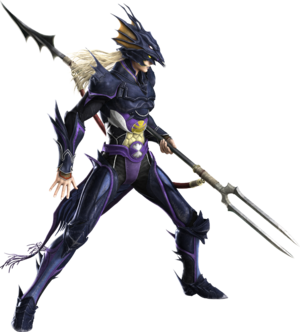

Cecil's long-time ally and commander of Baron's Dragoons. He's involved in a Love Triangle with Cecil and Rosa, and is on the losing end of it. His jealousy of Cecil and his love for Rosa allow Golbez to mentally dominate his mind, turning him into Golbez's right-hand man. Tellah's Meteor breaks the hold over Kain, who then seeks to atone for his dark impulses. At the end of the game, he leaves Baron to go train in solitude. Come The After Years, no one has seen or heard from him in years.
He appears in the sequel to Dissidia as one of the main characters to the new plot and appears as a playable, unlockable sub-character in Theatrhythm Final Fantasy.
- All Love Is Unrequited: He loves Rosa, but she doesn't return his affections.
- All There in the Manual: Japanese guides give his full name as Cain Highwind, which was retained in 3D releases.
- Always Someone Better: Feels this way about Cecil. Supplementary materials establish it isn't just him getting Rosa over Kain that fuels Kain's jealousy, but Cecil has also had a more successful career, being made captain of the Red Wings while the Dragoon Corps are fading from power, and the king favored Cecil over Kain while they were growing up.
- Ascended Glitch: A bug in the original Japanese release of FFIV causes Kain to repeat the last move another character makes when he equips a certain weapon in the final battle. Apparently, more than one person on the dev team thought this was awesome and in the next game, created a job class based on it: the Mime.
- The Atoner: He decides he cannot return to Baron with his soul still stained by the evil he did under Golbez's control.
- Badass Cape: As the Hooded Man.
- Barbarian Long Hair: Seventeen years later, he still rocks his mane.
- Big Brother Mentor: To Ceodore in the sequel.
- Boring, but Practical: Compared to the other party members who get magic spells or other fantastical abilities, Kain's special ability is to simply jump and leave the battlefield for a little while and deal increased damage upon his return. However, because Jump renders Kain effectively invincible, it can be properly timed to avoid heavy hitting attacks or status ailments cast on the party. His battle against Lunar Bahamut relies on this specific tactic. In some versions Kain can jump and avoid Golbez's initial attack that knocks out every party member except Cecil as well. Jump isn't flashy but if used correctly it can turn the tide of any fight in the game.
- Brainwashed and Crazy: The main reason for his Heel–Face Revolving Door trope. Over the course of the game's various remakes, his out-and-out brainwashing has been phased out in favour of More than Mind Control; especially in the DS version.
- Breakout Character: His popularity in the fanbase meant that Kain gets the most screentime of any other character in IV in later works, save for Cecil and Golbez, The Protagonist and the Big Bad. Kain is a central character in The After Years and plays a major role in the story, and he was made playable in Dissidia 012 where he also plays a major role. Tetsuya Nomura is a self-admitted Kain fanboy and tried really hard to get him in the first Dissidia, at one point even considering featuring him as IV's representative villain instead of Golbez. In other crossover titles, if there is a third character from IV besides Cecil and Golbez, it's probably going to be Kain (or Rydia).
- Cain and Abel: The Cain to Cecil's Abel (his name is literally "Kain"), he's brooding, troubled, and jealous of Cecil getting more glory and Rosa's affections. The Advance version even names his Infinity +1 Sword "Abel's Lance," and he receives it when he refuses the temptation to kill Cecil.
- The Captain: Leads the Dragoon Corps, which are tasked with defending Baron Castle in the wake of the rising prominence of the Red Wings. Kain does not like this one bit. In The After Years, once Kain returns to Baron in the epilogue, he is instead given command of the Red Wings.
- Childhood Friend Romance: He formed a Two Guys and a Girl trio with Cecil and Rosa when they were small.
- Combat Medic: In The After Years, when he becomes a Holy Dragoon, he gains some white magic spells. Although he leans more of the combat than medic.
- Compressed Hair: As the epilogue, The After Years, and Dissidia 012 show, Kain's helmet is quite spacious when it comes to his surprisingly long hair.
- Death from Above: His "Jump" ability causes him to leap high into the air and come down a few turns later. When he does, Kain deals a large amount of physical damage to his target. During this jump, Kain also can't be targeted by allies or by enemies.
- The Dragon: He's Golbez's right-hand man when controlled.
- Dragon Knight: Not the first, but easily the most famous and recognizable of the entire series. The After Years sees Kain become a Holy Dragoon, his equivalent to Cecil's Paladin class.
- Dragon Rider: He is a Dragoon, although the only mention of his pet wyvern is in supplemental materials.
- Easy Levels, Hard Bosses: While the other characters' Lunar Trials involves completing various tasks, Kain's is instead a murder mystery that requires little input from the player. The only way to fail here is to give the wrong answer to a choice given at the very end. Contrast the true challenge of the Trial: a Duel Boss with Lunar Bahamut, which can be devastating unless the player knows how to time Kain's Jump with Bahamut's countdown to Mega Flare (or has Lunar Curtains to spare).
- Enemy Without: Dark Kain in IV Advance and Kain? in The After Years, born from the darkness in Kain's heart.
- Good Costume Switch: When he becomes a Holy Dragoon, his armor turns blue and white.
- Green-Eyed Monster: Kain hints back in the destruction of Mist about his jealousy of Cecil over Rosa, although Cecil is ignorant of it (and how strong it is) until it's used to put Kain under Golbez's control.
- Hair of Gold, Heart of Gold: It takes a while for him to get there. His shoulder-length blond hair comes into play when he becomes truly noble in his heart, turning into a Holy Dragoon.
- Heavy Equipment Class: Proficient with spears, axes, some swords and heavy armor.
- Heel–Face Revolving Door: The most common perception of him, though in truth he only is brainwashed twice, and he notably fights off another attempt at brainwashing without even letting the struggle show on his face. Some versions of the game reduce the number from two to one, with Golbez intentionally allowing him to briefly rejoin Cecil to steal the last Dark Crystal but never really giving up his control over Kain. Still, he is the only character to have three separate stints as a party member (albeit his first stint is basically a glorified tutorial run).
- Heroes Prefer Swords: Averted, as while Kain is a capable swordsman and can equip all but the Paladin exclusive Holy Swords he is best sticking to spears as swords do not do additional damage with the Jump command. Though this comes in handy when he's trying to hide his identity in the After Years as he does use swords exclusively as the Hooded Man until he becomes a Holy Dragoon and gets his ability to use spears back. Although he CAN now use Holy Swords as a Holy Dragon, he's still best sticking with spears to get the most out of his jumping.
- His Own Worst Enemy: Kain's guilt over his vices of jealousy and envy, as well as what they led him to do over the course of the original game, spurs the Dragoon to live a life of isolation atop Mt. Ordeals, feeling he's unworthy to face his friends until he's properly atoned. Had it not been for the actions of his Enemy Without in The After Years, there's a good chance Kain might not have come down from the mountainside at all.
- Hopeless Suitor: He's in love with Rosa, but she only has eyes for Cecil. It's implied that she never even realized Kain felt that way about her until he admits it directly atop the Tower of Zot.
- Hunk: By Japanese standards, he looks manlier than Cecil.
- In a Single Bound: Jump, a powerful physical attack causes Kain to leap so high into the air that it takes a few turns for him to come down. During this jump, he can't be targeted by anything, friend or foe, enabling him to avoid some attacks by just jumping out of the way.
- Inconsistent Spelling: Was written as "Cain" in the Japanese manual, but the SNES translation changed it to "Kain." The English spelling has stuck ever since in English regions.
- Inconvenient Attraction: Kain's love of Rosa is kept secret because he doesn't want to make things complicated and he's well aware she's in love with Cecil. Zemus exploits these feelings by controlling his mind with his unrequited love of Rosa as the main catalyst.
- I Want My Beloved to Be Happy: He hides his feelings for Rosa for her and Cecil to avoid harming his friendship with the two. By the end of the game he's accepted he will never have her.
- Journey to Find Oneself: Departs on one at the end of the game, mirroring Leon.
- The Lancer: This is both his class name and his role within the story, serving as Cecil's Foil and rival.
- Left-Handed Mirror: Has a similar backstory to Cecil but different outcomes in the short term. His role as the Lancer is a reflection of this.
- Leitmotif: "The Theme of Suspicion."
- Lightning Bruiser: In The After Years, he is flat out the best party member in the game by pure stats — his HP, Strength, and Stamina are among the best in the game, but unlike a lot of other party members who can say the same, he has Speed rivaling the Eblan Four ninjas, and that's not getting into his White Magic which includes Haste, Blink, and Esuna. The only catch is you need to keep him at Level 15 as the Hooded Man so he can get the full value of his Holy Dragoon stat growth, but all you lose if you don't is lose out on some max HP, and he's still going to get the Strength and Speed regardless of level.
- Long Haired Prettyboy: He has long blonde hair, and Depending on the Artist it may dangle out of his helmet or have it all tucked inside it. Not to mention that beneath the helmet he's gorgeous◊.
- Love Makes You Evil: His unrequited love for Rosa and jealousy of Cecil were the main reasons he was able to be turned to The Dark Side.
- Magic Knight: In The After Years due to his class change to a Holy Dragoon. Sprites◊ Dummied Out from the original game suggest that Kain would have had this ability all along at one point.
- Magically Inept Fighter: In the base version of the game, Kain never learns magic, and his MP remains at a flat zero throughout the entire story. He makes up for it with high physical stats and the powerful Jump ability, which does a lot of physical damage to one enemy. Kain does get some magic ability in the DS version with Augments, but he's still not as effective as dedicated spellcasters, even when he can use magical abilities. The After Years rectifies this upon his promotion to Holy Dragoon, though his White Magic is less effective compared to more specialized casters/healers such as Rosa or Porom, much like Cecil when he became a paladin.
- Manly Tears: Teach him Cry in the DS version and try it out.
- Multi-Melee Master: While he primarily uses spears, he can equip axes and certain swords.
- Murder the Hypotenuse: He tries it while serving Golbez. His "Lunar Trial" in the GBA version's bonus dungeon focuses entirely around this concept and Kain overcoming the temptation (or not, which causes a Nonstandard Game Over). In The After Years, his Enemy Without plans to do it, but the real Kain is able to stop him.
- Mythology Gag: Starting with the Dawn of Souls remake for Final Fantasy II, the boy that Ricard Highwind (the series' first Dragoon and bearer of the surname Highwind) adopts is named Kain. This was brought full circle when remakes of IV had Kain mention that the name of his father (who died note ) was Ricard, although it's highly unlikely due to age—Kain tells the 17-year-old Ceodore that he was about his age when he heard news of his father's death whereas the Kain seen in II is merely a child, never mind an old (and dubiously canon) Japanese guide stating the games to be a century apart.
- Name of Cain: The only instance of it for Final Fantasy and an iconic example of it.
- Papa Wolf: In The After Years, he takes a particularly paternal stance towards Ceodore - fitting, given that Kain is essentially the boy's uncle in all but blood.
- The Rival: He's Cecil's greatest sparring opponent.
- Rival Turned Evil: Cecil's rival that was turned to evil by Golbez's mind control, enabled by Kain's negative emotions about said rivalry.
- Romantic Runner-Up: Despite being a handsome, powerful, noble man in his own right, Cecil is the one who gets Rosa's love because he's just more of those things.
- A Sinister Clue: Zig-Zagged. Kain is left-handed (except in the DS version, where laterality was eliminated), and he ends up brainwashed into villainy due to his own envy, but he's not actually a villain when he's acting of his own free will.
- Troubled, but Cute: He might be fixated on Rosa, but if he ever did decide to move on, he wouldn't have much trouble finding someone.◊
- Unrequited Love Lasts Forever: In The After Years, he still holds a candle for Rosa, despite not having seen her in seventeen years.


Cecil's girlfriend and a White Mage. Tender and caring, she vowed to stay by Cecil's side even if he doubts his own motives. She is abducted by Golbez early in the game and joins Cecil upon being freed, proving invaluable as a healer and emotional support. At the end of the game, Rosa becomes Queen of Baron when she and Cecil marry, and they have a son named Ceodore.
- Action Mom: In The After Years, she jumps back into the action alongside her teenage son.
- All There in the Manual: Japanese guides give her full name as Rosa Joanna Farrell or Rosa Farrell, which was retained in 3D releases. Her middle name apparently comes from her mother.
- Battle Couple: With Cecil, though the "battle" part comes a wee bit later.
- Childhood Friend Romance: With Cecil, who she's known since they were kids, along with Kain.
- Combat Medic: She's a healer who's also able to deal out reasonable damage with her archery.
- Damsel in Distress:
- The first time she comes down with Desert Fever, requiring Cecil to go searching for some rare medicine. The second time, Golbez invokes it by abducting her and holding her hostage. After this point, she ceases being rescued.
- She gets kidnapped again in The After Years by Dark Kain.
- Demoted to Extra: Downplayed in The After Years. While she has her moments of prominence, Rosa remains as the only party member from the original final party to not get their own Tale. She also gets this treatment in spin-offs; Theatrhythm Final Fantasy, for example, included Cecil, Kain, and Rydia as recruitable party members. Curtain Call then added in Edge, with Rosa being included too... as DLC.
- Dude Magnet: Cecil and her are already the game's Official Couple, Kain is secretly pining for her, and Edge briefly hits on her before moving onto Rydia.
- Fairytale Wedding Dress: As per the DS remake, Rosa opts for a modest silver gown during her wedding ceremony and coronation.
- Generation Xerox: Invoked. She wished to become a White Mage and fight alongside her lover, much like her mother did. The only difference is that Mrs. Farrell's husband was a Dragoon, and Cecil's a Dark Knight/Paladin. In another vein, her middle name is her mother's name.
- Girlish Pigtails: A flashback to Rosa's childhood with Cecil and Kain in the DS version shows her with this hairstyle.
- Guys Smash, Girls Shoot: Her love is a stout warrior that favors swords and axes; she's a back-row caster that specializes in archery.
- Hair Color Dissonance: Sometimes portrayed as more of a strawberry-blonde.
- Hair of Gold, Heart of Gold: She is sweet, kind, and loves Cecil deeply.
- Happily Married: At the end of the game, she and Cecil wed and live happily together.
- The Heart: The party's moral center. The Hero's love interest. The Lancer's unrequited crush. The healer. Rosa defines this trope.
- The High Queen: Rosa becomes Cecil's Queen when he's crowned King at the end of the original game.
- Holy Hand Grenade: Her endgame Holy spell, which attacks enemies with sacred energy.
- Informed Attractiveness: Downplayed. While certainly beautiful, her reputation as the ultimate beauty seems a slight stretch when the other female party members in the two games are also quite attractive.
- The Ingenue: She's pure of spirit, although she's not naive or stupid.
- Kicking Ass in All Her Finery: Particularly in The After Years, where Rosa trades in the leotard for more formal regalia.
- Lady of War: She eventually grows into this. She's gentle and graceful, and after getting rescued she serves as the archer to the team when she's not healing allies.
- Leitmotif: "The Theme of Love." Doubles as a Breakaway Pop Hit, at least in Japan (where it is taught to music students).
- Leotard of Power: Although the DS remake makes it resemble Underwear of Power, since it's an entirely different color from the top.
- Light Is Good: She has blonde hair, wears white and gold, and she can attack with Holy Spell.
- Mage Marksman: Can use a bow in addition her White Magic.
- The Medic: Rosa is known in story as a master of Healing Hands.
- Official Couple: She's in a romantic relationship with Cecil from the very beginning. By the end of the original game, she's married to Cecil and becomes his queen.
- Out of Focus: She doesn't get much focus in The After Years relative to her importance in the original game, lacking her own chapter and having relatively few lines.
- Pimped-Out Cape: In the remake, her cape has a lace cape over it.
- Pregnant Badass: In the original release of The After Years, Ceodore is 17. The After Years takes place 17 years after the original game, implying she was possibly already pregnant during the game. There is one scene where she and Cecil are alone in her room and it ends with a fade to black, which many players took as the scene where Ceodore is conceived. The Complete Collection re-release de-aged Ceodore to 15, but included the -Interlude- chapter where she's playable for part of the chapter and later explicitly states she's pregnant.
- Silk Hiding Steel: She is physically frail but has an unyielding will.
- Spikes of Villainy: Uhh... Well, now we know who the Warrior of Light takes fashion advice from.
- Stripperiffic: Though nowhere near as much as Rydia. Her outfit has a very low neckline, and she wears sheer tights that show off most of her legs. In The After Years, after becoming queen, Rosa switches to wearing a full-length robe with, of all things, shoulder spikes.
- Tamer and Chaster: In the original game, her outfit is one that shows off her chest and legs, but in The After Years she wears a long white robe that covers her chin to toe.
- Team Mom: Rosa assumes this role after being rescued from Golbez.
- Took a Level in Badass: For the first chunk of the game, she's very much the Damsel in Distress. After getting rescued, however, she eventually grows into her own as a full-blooded Lady of War.
- White Mage: Inspired by her mother, who also fell in love with her husband while healing on the battlefield.
- White Magician Girl: In terms of personality and story role, Rosa is one of two candidates for the Trope Codifier.
- World's Most Beautiful Woman: Widely known as the most beautiful woman in the kingdom in-game, and in the sequel at age 36, and with a son named Ceodore, she's just as attractive as she was in the original. Though see Informed Attractiveness above.
- Xenafication: It takes a while, but after shifting away from the Damsel in Distress role, she officially joins the fight and refuses to stay behind. Her late-game bows can do damage comparable to the frontline fighters like Cecil and Kain, and once she learns her Holy spell, she'll out-damage them.
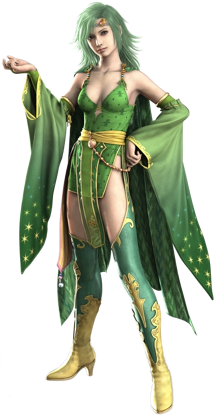

A young girl from Mist, the valley where mages train in Summon Magic. When Cecil unwittingly destroys her home, Rydia is left as the only survivor. She is taken in by Cecil who slowly earns her trust. At one point the party is attacked by Leviathan at sea and Rydia is washed overboard and presumed dead. In reality, Leviathan attacked the ship in order to abduct Rydia and take her to the Feymarch, the home of the Eidolons. There Rydia trains under the King and Queen of Eidolons to hone her powers, the time difference between dimensions causing her to age many years by the time she reunites with Cecil in the Underground. In The After Years, she's in the process of rebuilding Mist.
She appears in the Dissidia Spin-Off Theatrhythm Final Fantasy as an unlockable, playable sub-character.
- Adaptational Attractiveness: Rydia's original concept art implied she was virtually a Wild Child, with a large messy mane of hair and robes made from different materials and haphazardly worn (though it's worth noting that the sprites in the SNES version didn't resemble this at all). When the DS release came out, her look was refined into the render shown in her profile here, which makes her a far more conventionally attractive character, which also matched the tone of the SNES sprites a little better (while incorporating their own changes).
- Badass Adorable: If you level her sufficiently, she can one-hit desert creatures with her little Ice Rod.
- Bag of Spilling: In earlier releases, Rydia will forget any of the optional summons that she learned as a child when she returns. If you're lucky, you might find them again. And in all versions, she completely (and permanently) loses the ability to use white magic when she gets her Plot-Relevant Age-Up, for seemingly no reason other than to not intrude on Rosa's niche in the party.
- Big Damn Heroes: One of her iconic scenes is showing up as an adult (supposedly killed by a sea serpent a few weeks earlier at age 7), after everyone is about to die, and kicking Golbez's ass. This was a guy who took a Meteor spell to the face and walked it off.
- Black Magician Girl: As a child, since she only has access to the Chocobo summon (and possibly Goblin if you find the item).
- "Blind Idiot" Translation: A common (and likely) rumor is that her name was supposed to be Lydia, but she fell victim to common Japanese-to-English transliteration problems and subsequent releases kept the name since it's now iconic for her.
- Breakout Character: Much like Kain, Rydia's popularity has netted her increased prominence after the original game. The Eidolons and Rydia's quest to free them are major subplots in The After Years, and the Big Bad is an Evil Counterpart of Rydia. She joins Cecil and Kain in Theatrhythm Final Fantasy, and is IV's sole representative in the original release of World of Final Fantasy (with Cecil being added in with the Maxima update).
- Child Mage: It's stated that children tend to be better summoners because they are pure of heart.
- Curtains Match the Window:
- Debatable: In Nomura's artwork she has green◊ eyes,◊ but in her other◊ appearances◊ she has blue eyes.
- This all stems from the original SNES release, where her child battle sprite had prominent green eyes... and her adult sprite has blue.
- Debatable: In Nomura's artwork she has green
- Cutscene Power to the Max: When she's first introduced, she attacks Cecil and Kain by summoning Titan, but in the party she's not able to summon him until much later.
- De-power: In The After Years, Rydia loses her summoning ability at the start of the game.
- Deadpan Snarker: She shows signs of this as an adult in the original SNES translation, although that could be chalked up to the localization team's efforts to voice her "inner child" due to the Plot-Relevant Age-Up. Subsequent rereleases tend to focus on the "childlike innocence" angle in her dialogue.
- Depending on the Artist:
- Rydia's a bit famous for running into this often; her exact eye color and the details of her outfit vary between different games, artists and graphical styles. Since the DS release her appearance has mostly stuck, but eye color still shifts around, usually between green and blue, with the occasional dip into grey.
- The most notable and oft-remarked-on divergence, though, stands between Kazuko Shibuya's sprites of Rydia as a child and most other depictions (including Yoshitaka Amano's own concept art of her). Across both the original battle sprites (in the SNES and GBA versions) and the Pixel Remaster, Shibuya consistently depicts child Rydia as wearing a knee-length blue dress, trimmed with golden yellow, with a matching yellow cape-slash-cloak, a pair of sandals with purple-pink lacing (which matches her armbands and hair decoration, thanks to palette limitations) and a somewhat messy bobbed haircut that ends right about at the nape of her neck. The Pixel Remaster even takes pains to ensure that the new Rydia field sprite matches the battle sprite precisely, which the origial SNES one could not for complex technical reasons. The DS version of Rydia (and the PSP sprites and other various derivative pieces based off that), meanwhile, depicts child Rydia with much longer hair (going past her shoulders), a yellow sash, similar to a sarong, around her waist, fully foot-enclosing slippers, a short green capelet... and a blue-and-green leotard for the outfit's centerpiece. While this is technically a little closer to Yoshitaka Amano's original concept art, it has, for obvious reasons, been somewhat contentious as an aesthetic choice for a seven-year-old ever since it debuted.
- Determinator: After she forgives and joins up with Cecil, she refuses to show angst over any setbacks the party encounters- even becoming The Heart to pull everyone back together after Rosa is captured. The one time she breaks is when it looks like Edge is about to throw his life away while the very-recent Heroic Sacrifice actions of Yang and Cid are still fresh on everyone's minds. The DS version exemplifies this during the party thoughts after she learns Fire where everyone is thinking about how hard that must have been for her, while her own thoughts are about how she's going to make her mother proud.
- Discard and Draw: Sacrifices her meager White Magic during her time in the Feymarch so that she can utilize her Black Magic to its fullest extent.
- Disney Death: She falls off the ship after Leviathan attacks, but shows up again alive and well, and much more older too.
- Easily Forgiven: Forgiveness from Rydia was surprisingly fast for Cecil. Neither game addresses if she forgives Kain, but Rydia gives a Hand Wave on her return that it's been years for her and she knows there are bigger things to deal with before she starts doling out blame for what happened at Mist.
- Elemental Powers: Courtesy of her summons, she has an Eidolon for every element in the game.
- Elite Tweak: Whyt, an Eidolon exclusive to the DS version of the game *. By playing mini-games, Whyt's stats can be increased, and he can be customized to use Augment Abilities available to the current party.
- Fountain of Youth: In her post-game trial in the GBA/PSP version, she reverts back to her child appearance.
- Gameplay and Story Segregation: In some versions of the game, with impractical amounts of Level Grinding, Rydia can eventually learn the third-level Fire spell before the cutscene where she gets over her fear of fire (which left her unable to learn the first-level Fire spell up to that point).
- Get A Hold Of Yourself Man: Infamous for delivering one of these speeches to Edward in the aftermath of the bombing of Damcyan, due to the fact that he was a grown man and she was still prepubescent.
- Glass Cannon: Capable of hitting the damage cap by the game's end, and easily the best damage-dealer after she rejoins the party. However, she can barely take a few hits before she goes down.
- Happily Adopted: Growing up in the Feymarch, she seems to regard the Eidolon king and queen as her new parents. The feeling's mutual.
- The Heart: She takes the deaths (and "deaths") of teammates the hardest, despite not knowing them for nearly as long as the rest of the party did. Her breaking down in sobs over their loss is what motivates Edge to swallow his pride and accept the party's help.
- I Choose to Stay: The ending for the original game implies Rydia chose to stay in the Feymarch and live with Asura and Leviathan. The After Years zig-zags this a bit — Asura and Leviathan send her back to live in Mist because she's still a human, and despite growing up in the Feymarch (and despite genuinely loving her back), they believe it's best for her to be with her own kind.
- Implausible Hair Colour: Rydia stands out from pretty much every other cast member in the original game for her bright green locks.
- Interspecies Adoption: After Rydia is taken in by Leviathan and Asura, they come to see each other as family. Rydia going on to adopt Cuore in turn is an ambiguous example, as the Maenads are Artificial Humans made in Rydia's likeness.
- Lady of Black Magic: As an adult, she's one of the most iconic examples.
- Last of His Kind: Thanks to Cecil and Kain, she's the last summoner. Though going back to Mist and talking to the survivors shows that Rydia is just the last woman. The After Years has her adopting a Maenad and training her to be a summoner.
- Leitmotif: "Rydia's Theme."
- Leotard of Power: Both as a child and an adult. She wears a skirt or sash over it.
- Little Miss Badass: When she first joins the party as a child.
- Magikarp Power: Downplayed but present. When she joins the party she's Level 1 with no spells, only enough MP to summon Chocobo once, and only 30 HP so she's easily killed. Once she starts gaining levels, she'll learn Blizzard, Thunder, Cure, and her pitiful stats will start growing. By the time you get to Damcyan, she's probably at least on-par with Cecil for competence. After her Plot-Relevant Age-Up, she becomes the magical powerhouse of the game, with better stats than the other maxed-out Black Mages (Tellah and Fusoya) and several times more MP. note
- Ms. Fanservice: One of the earliest examples in the series. Given the only female characters to predate her were Princess Sarah, Maria, Leila, Princess Hilda, Princess Sara, and Aria, Rydia could almost be the Ur-Example if not for Maria.
- Navel-Deep Neckline: Though not as much as some, her outfit leaves the skin between her breasts bared.
- Parental Abandonment: Her mother is inadvertently killed due to Cecil and Kain's actions and her father is never mentioned.
- Parental Substitute: By the epilogue of The After Years, Rydia serves as a mother figure to Cuore, the last surviving Maenad, in the rebuilt Mist, though Cuore's familiarity with Edge and eagerness to play with him suggests Edge also plays a role in raising her.
- Plot-Relevant Age-Up: Hand Waved by a time flow difference between the regular world and the Feymarch. While only a week or so passed for everyone else, a decade passed for her. This is a conceptually popular target for fan fiction, as the game glosses over it (due to space limitations on the original cart), but seriously, a decade. One has to imagine a lot happened for her!
- Random Effect Spell: Summoning Asura is a bit of a gamble, as she'll cast either Curaga, Raise, or Protect (Cura in the Easy Type) on the whole party, with no way to influence which effect you receive.
- Randomly Drops: She has four summons that are randomly dropped at a very low probability (1/256) by certain random encounters, so rare that most players will never see them. Goblin is a Joke Character and Mindflayer is only so-so, but either Bomb or Cockatrice can be a Disc-One Nuke if you get them early enough.
- She Is All Grown Up: Returns to the party about a decade older than when she left. The time skip was very kind to her.
- Squishy Wizard: Her summons will blast your enemies into oblivion, but Rydia by far has the lowest health of any of the group. If not sufficiently leveled by the time you've reached the Final Boss, it's likely he'll have her face down on the floor half the time.
- Stripperiffic: As an adult. It's probably because she was raised by summons, who aren't known for their modesty (when they're humanoid at all). Even more so in The After Years, just this side of Fran for being as revealing as possible while still wearing enough to be called "clothing." The outfit gets bowdlerised in the English version and more closely resembles actual cloth. The original is restored in the PSP version.
- Summon Magic: The first named Summoner in Final Fantasy.
- Took a Level in Badass:
- Before Rydia goes to the Feymarch, she's a marginally effective spellcaster and summoner. She returns from the Feymarch as a demon-calling fire-spewing death-machine. Not only does she have a massive arsenal of devastating demons to summon, but she also has access to the best Black Magic spells in the game.
- She takes another between the original game and The After Years when her stance and posture when invoking a Summon changes from slightly bent over and raising both hands forward in the original to one of power and confidence by standing straight and raising one arm behind her in The After Years.
- Vague Age: The first game doesn't state precisely how long she was in the Feymarch, though it's evident that it's about a decade. But in the seventeen years between then and The After Years, she has been living at least some of the time in the Feymarch before Asura banishes her. It's therefore unclear exactly how old she is now, since the only noticeable change to her appearance is her clothes.
- Whip of Dominance: The adult Rydia wields a whip as her weapon of choice, to reinforce her role as a summoner who has command over magical beasts. And while she can wield whips to deal physical blows, her usual low physical stats means it's generally the worst offensive option for her in any fight and it's almost always better to just focus on her summon magic instead.
- Why Did It Have to Be Snakes?:
- Rydia is unable to cast Fire, and is afraid to cast it at first because Cecil and Kain unknowingly destroyed her hometown with Bombs (the monster, not the explosive device).
- Her fear of fire carries into her depiction in World of Final Fantasy wherein she joins the twins in venturing into the fiery Valley Seven and has a panic attack when a wall of fire erupts in front of the party.
- You Killed My Mother: When Cecil accidentally confesses that he was responsible for the death of Rydia's mother, she angrily attacks him and refuses to even speak to him until he protects her from some Baron guards.
- You Kill It, You Bought It: All of her optional summons are acquired by defeating the monster in battle first, as their code of honor states not to answer the summons of a Summoner who hasn't proven him/herself worthy of controlling them. The Sylphs are an exception, but they volunteer their aid to Rydia out of concern for Yang trying to accompany the party despite the life-threatening injuries he received destroying the Tower of Babil's cannon.
- Younger than She Looks: In her World of Final Fantasy profile, her age is listed as 16, although her appearance makes Rydia looks more like a woman in her early to mid 20s.


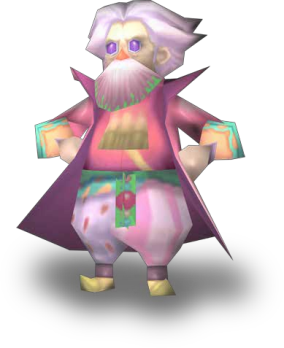
A crusty sage who has mastered the arts of both White and Black Magic. He meets Cecil in an Underground Waterway and joins him on his journey to Damcyan, intent on finding his eloped daughter Anna and dragging her home. When he discovers Anna was killed in Golbez's assault on the kingdom, Tellah swears vengeance and seeks the ancient, forbidden magic of Meteor, which will undoubtedly destroy Tellah even if it kills Golbez in the process.
- The Archmage: At least by human standards. Sages are rare in the world of FFIV, so Tellah's mastery of both forms of magic makes him kind of a big deal. Still, Tellah has his limits (his attempts to cure Palom and Porom with Esuna fail miserably, for starters, though this is also because they willingly turned themselves to stone), and his advanced age doesn't help matters.
- A Taste of Power: Once he gets his spells back, he'll have access to almost every spell in the game (balanced by his MP pool never growing past 90), making him invaluable for the next few dungeons. His magic comes in handy in the first dungeon you meet him in, as well. You'll eventually get casters who learn more spells in both Black and White Magic, but it'll take a while before both are in your party and they have the resources to match Tellah's magic versatility.
- Blessed with Suck: Tellah just learned nearly every spell in the game! Oh, but he only has 90 MP. And sometimes, leveling up will cause a few of his stats to go down.
- Cast from Lifespan: He dies by casting multiple powerful spells in a row, then follows that up by casting Meteor. Not only do those first set of spells completely drain his MP, but Meteor casts 99 MP to use, and Tellah normally has a maximum of 90 MP. Even if he had enough MP to cast it, Tellah drained all of his reserves first, so he spends what's left of his life to cast the ultimate black magic spell.
- Cool Old Guy: That magic of his can be pretty potent, especially after he remembers the spells he forgot.
- Crutch Character: Of a sort; Tellah can easily solo the dungeon you initially find him in, and it's easy to start relying on him without preparing for his inevitable departure right after. Later, when he regains his memory, Tellah can easily two shot major boss characters, provided only you get him there at full MP... which makes it awfully painful when you're suddenly thrust into a major boss fight after he leaves the second time.
- Dangerous Forbidden Technique: He seeks the ancient power of Meteor, the ultimate magic that was sealed for being too dangerous. Other characters warn him that in his advanced age, casting the spell needs so much energy he's unlikely to survive it. Note that this is only a forbidden technique for Tellah personally because he has lost too much stamina due to age. Black Mages with more vigor, such as the far more youthful Rydia and Palom as well as the longer living Lunarians can use it just fine.
- Death Seeker: He's fully aware that trying to fight Golbez at his age will not end well for him, putting aside that trying to cast Meteor will kill him for the energy needed to power the spell. He doesn't care, as long as he has his vengeance.
- Feeling Their Age: Besides the factors listed elsewhere on this page (an inability to naturally increase his MP, stats randomly decreasing when he levels up, the price for casting Meteor being Tellah's life itself), the DS version makes this more readily evident; Tellah's level up celebration is cut short by his back popping out of place.
- Four Is Death: He's the fourth party member (after Cecil, Kain, and Rydia) to join in the fourth iteration of the franchise. He's practically marked for death from the get-go. Despite what several other characters go through, he's the only one who joins the party that dies and cannot be resurrected.
- Gameplay and Story Integration: Storyline-wise, Tellah just doesn't have the strength to use Meteor without killing himself. Gameplay-wise, Tellah isn't able to cast Meteor due to it costing 99 MP, and he only has 90 max. Before casting Meteor against Golbez, Tellah also casts four spells with a total cost of 110 MP. Unless you obtained an obscene amount of MP-boosting items and gave them all to Tellah, he will always expend more MP than he has in this cutscene. It's technically possible in some releases to boost Tellah's MP high enough that this shouldn't result in a Cast from Lifespan scenario, but you'd have to know what's coming and be actively trying to subvert it. And even then, the cutscene which follows the Meteor cast plays out the same no matter what you do.
- Grumpy Old Man: Justified. First his daughter married against his wishes, then she dies.
- Inconsistent Spelling: The Japanese instruction manual gives his name, in English, as "Tella" (which also appeared in other material).
- Killed Off for Real: Tellah is the only player character whose death is permanent. For everyone else, Death Is Cheap.
- Large Ham"I am ready to face Golbez! I am DOOM ITSELF!"
- Mis-blamed: In-universe. For some reason he realises Anna is dying and decides it's all Edward's fault.
- Old Master: Tellah did know almost all the spells in existence, once. He's just forgotten most of them in his old age. He later gets his memory back.
- Papa Wolf: Just ask Edward and Golbez how vicious Tellah gets when Anna is harmed.
- Parental Marriage Veto: Tellah refused to let Anna marry Edward, so they eloped.
- Random Effect Spell: Of a sort — before he officially regains his memory, Tellah has access to a command that will randomly cast one spell that's on his final spell list that he can't fully remember. Which one is cast is completely random — anything from a timely Level 3 spell that the boss is weak towards to casting a buff to magic defense against a purely physical enemy. What's interesting is that this random spell is always cast on all enemies or allies, regardless of whether the spell in question is actually a single-target spell or not.
- The Red Mage: Particularly at first, when all he can remember are the low-level spells for both White and Black Magic schools, and his stats are such that he can tank most of the encounters found when he first joins Cecil. He even primarily wears red. However, subverted later on, as remembering all of his spells, his stats actually decreasing as he levels, and his equipment not keeping up with what foes can do, he fully grows into a Squishy Yin-Yang Bomb.
- Revenge: He wants to kill Golbez in retaliation for the death of his only daughter, Anna.
- Revenge Before Reason: After pelting Golbez with spells that cost far beyond his MP capacity to cast safely, he then blasts Golbez with Meteor, despite the party's pleas for him to stop. It costs Tellah his life from the strain.
- Senseless Sacrifice: Played with when he finally confronts Golbez. His Meteor spell fails to kill him, but it does wound Golbez enough that he loses control of Kain, allowing the party to rescue Rosa before she's killed by a giant blade. Kain in turn tells the party the full extent of Golbez's plans and provides the MacGuffin needed to continue the game. He fails at doing what he intended to do, but Tellah's actions serve to help win the greater battle nonetheless.
- Squishy Wizard: Like the other mages in your party he will die quite quickly in the front row.
- Yin-Yang Bomb: Is a Sage, which means he can cast both high-level White and Black Magic.


The foppish, lovestruck Prince of Damcyan. Tellah's daughter Anna eloped with him after he visited her town disguised as a bard. Tellah was salty about this, since he didn't know Edward's true identity at the time, and he blames Edward for indirectly causing Anna's death. Though Edward is cowardly and unfit for battle, he cannot let himself stand by and do nothing, so he helps however he can, playing his harp to inflict various status effects. He is one of the most infamous characters in the series both due to his uselessness in battle (his "Bardsong" works 25% of the time) and being the subject of a mistranslated line which produces the biggest unintentional laugh in the game. In The After Years he has rebuilt Damcyan and is using its money to help fund reconstruction worldwide, but still pines for Anna.
- Adaptational Badass: In the original release he was a Joke Character with weak weapons and abilities. Re-releases and the sequel buff both so he can hold his own in battle and is perfectly viable.
- All There in the Manual: Japanese guides give his full name as Gilbart Chris von Muir, which was retained in 3D releases. His name and the currency of the game (Gil) are related.
- Badass Cape: He dons a cape in The After Years, signalling his transition from prince to king.
- The Bard: Both his class and what he does. He would disguise himself as a traveling bard to get out of Damcyan and see the world, and passes the time by strumming his harp. In battle, his weapons are harps and he can use the Sing command to various effects.
- Beware the Silly Ones: In The After Years, he applies: he'd rather spend his days playing his harp and is generally easy-going compared to the anxious Chancellor and more by the book Harley, but he's also scarily good at playing the political game and is tough enough to travel across a continent alone to save Harley's life.
- Brown Note: He plays a song that severely weakens the Dark Elf.
- Combat Medic: With his Salve ability to use healing items on the entire party at once, he can heal just as well as dedicated White Mages, and with his higher-power Harps hits much harder than them. It makes him a bit of a Money Sink, however, since you need to keep your item stock up for him to actually keep using five items at a time.
- Cowardly Lion: Despite his physical weakness, he doesn't leave Cecil's side until injury from the shipwreck forces him to, and even then he endures severe pain to play his lute to help him later.
- Dub Name Change: Edward's name in the original Japanese version is Gilbert.
- Fragile Speedster: Both in the original and the sequel he's pretty fast, but has mediocre HP. Once he's trained up, however, he becomes a Lightning Bruiser.
- Guest-Star Party Member: His stint with the party is a relatively brief one, lasting only for the very short Antlion Cave, Mt. Hobs, and the gauntlet at Fabul. He also never rejoins your party after he leaves. Averted in the GBA version, in which he does join for the end of the game, as well as the sequel where he's a full party member.
- Harp of Femininity: Edward the feminine Prince of Damcyan is a master harpist.
- Heartbroken Badass: The "badass" part is debatable, but you can bet yer ass that Anna's death hit him hard. Her Rousing Speech to him did ease his pain a bit, but he's still mourning 17 years later.
- Inconsistent Spelling: His name in the Japanese manual is "Gilbert," but this got mangled into Gilbart later down the line.
- Instrument of Murder: His harps act as a projectile, with musical notes instead of arrows. They have infinite ammo, unlike arrows (which have to be restocked), and can inflict status ailments for no MP cost.
- Item Amplifier: Salve. Outside of the US/AUS version (which embarrassingly nerfed him even further), he can combine healing items to treat multiple characters in a single turn. He is a competent healer, but he will burn through his inventory at an alarming rate.
- King Incognito: Before the fall of Damcyan, he was rumored to regularly go out in disguise and perform for people. He did this to woo Anna, and Tellah had no idea that the bard who had wooed away his daughter was the crown prince of the kingdom until she told him on her deathbed.
- Leitmotif: "The Melody of Lute."
- Lethal Joke Character: Edward's abilities aren't as straight-forward as other party members and his weapon of choice is embarrassing, but if you know how to use his strengths he can be very effective.
- Lightning Bruiser: What he ultimately becomes after his Magikarp Power kicks in in the games where he can get into higher levels. He may not get the best attack stat, but his speed is through the roof, so while characters like Cecil are hitting for a large amount of damage, Edward is hitting for less but sometimes lapping them in amounts of turns, and if his equipped weapon happens to be advantageous against the enemy in question, well...
- The Lost Lenore: The death of his beloved Anna weighs heavily on him for a long time. His character arc involves him coming to terms with her loss.
- Magic Music: He can cast buffs and status effects with his music.
- Magikarp Power: After Level 70, his stats skyrocket. This is only really applicable in the GBA version, though.
- Musical Assassin: Well, none of his songs actually inflict damage, but they can turn things into toads for easier disposals by the others. He also uses harps as weapons.
- Nerves of Steel: Eventually grows some balls of steel in The After Years, where he is a far cry from his old cowardly and weak self, demonstrating that he became quite cunning (outwitting possessed Cecil) and able to hold his own in battle.
- No Sympathy: On the receiving end of this following the massacre at Damacyan Castle by the Red Wings. Mere seconds after Edward mourns Anna's demise, Rydia and Cecil verbally tear him a new one for wanting to remain by his beloved's side because he was too much of a coward to protect her, with Cecil going so far as to smack some sense into Ed. On one hand, they're not exactly wrong: Edward is the crown prince and needs to be strong for the sake of his country, so grieving can come later, especially when the party needs to keep moving to alert the other kingdoms of Baron's foul play. On the other hand, when Rydia experienced the death of a loved one, she was so overcome with emotion that she summoned Titan in a fit of anger to bulldoze Cecil and Kain yet finds the sight of a grown man crying for his dead lover to be pathetic and selfish. (On the other other hand, Rydia is only a child of seven at the time, and learning to see the world from the perspective of her newfound allies is part of her character arc.)
- Older Than They Look: In The After Years, he still retains◊ his Bishōnen appearance, even though he's 41 years old.
- Quirky Bard: Trope Namer back when the trope was named after Tellah's infamous insult.
- Sheltered Aristocrat: Edward isn't fond of court life or the politics he is expected to perform as Prince either, but he grows into his position as a The Good King by The After Years.
- Spirit Advisor: In the form of none other than his departed love. After successfully curing Rosa's desert fever with a sand pearl, Edward goes outside that night to grieve Anna with a lament played on his harp. He is promptly ambushed by a Sahagin, only to be visited by Anna's ghost. Before she fully moves on to the afterlife, Anna asks Edward to be brave without her and believe in himself, telling him, "You are stronger than you know." Along with Tellah, Anna continues to keep watch over her lover post-mortem, even continuing into The After Years.
- Support Party Member: Before getting powerful weapons nothing he can do will actually hurt the enemies that much, but he can help the party a great deal with Bardsong and Salve.
- This Looks Like a Job for Aquaman: In the original SNES game, Edward's musical talents are fairly useless most of the time, especially against bosses. But there is one part of the game where his musical skill saves the entire party, ironically after he's no longer in it. This happens when he uses a harp to disable the magnetic field in the Dark Elf's cave.
- Took a Level in Badass: The original versions of the game notwithstanding, both the GBA and DS remakes, as well as The After Years, have seen Edward discard his Joke Character status quite triumphantly. In the case of the latter, it's more evident in the story, but the Spoony Bard has come quite far.
- Wandering Minstrel: It was during his travels that he met Anna.


An indestructible monk from the kingdom of Fabul, Yang is noble, disciplined, and a beast in combat. He joins the party when they journey to Fabul to defend their Crystal from Golbez. When he's washed over their ship by Leviathan's attack, he is found amnesiac by Baron soldiers and conscripted into their ranks until Cecil beats him to his senses. Yang seemingly sacrifices his life at the Tower of Babil to save the dwarves from the tower's cannons. He survives, yet again, and returns near the end of the game to help. In The After Years Yang has been made King of Fabul and has a daughter, Ursula, but still trains rigorously to keep in shape. However, despite her wishes he refuses to train Ursula, believing a Princess has no need for martial arts.
- Action Dad: In The After Years. He may have a teenage daughter but he is still perfectly capable of kicking ass, in tandem with her to boot.
- All There in the Manual: Japanese guides give his full name as Yang Fang Leiden, which was retained in 3D releases.
- Bare-Fisted Monk: He can also add claws for status or elemental damage.
- Dual Wielding: Yang uses hand claws in each hand.
- Disney Death: Probably the mother of all examples. When he is re-encountered unconscious in the Sylph Cave, the lead Sylph tells you that he was found at the mouth of the cave, which means that he a) survived an explosion that was meant to destroy a castle; b) somehow broke through a collapsed wall that none of your party could budge; c) fought his way through several levels of a monster-infested tower and finally d) swam across a sea of molten lava to collapse at the cave entrance. Alternatively, the explosion blew him halfway across the underworld, and he survived the landing. Either way, Yang's survival is one of the most ridiculous occurrences of the trope in the franchise.
- Easy Amnesia: Briefly suffers this after Leviathan's appearance and works as a Baron troop. He gets his memory back after the party beats him up a bit.
- Establishing Character Moment: The party first meets Yang when he's surrounded and outnumbered by monsters. He casually dispatches most of them on his own before the party steps in to help him beat their leader.
- Happily Married: To his wife Sheila, who is apparently as badass as he is.
- Hard Head: His reaction to getting smacked by the Frying Pan of Love is to groggily wonder if it's time to train.
- Leitmotif: The theme music for Fabul doubles as his.
- Magically Inept Fighter: Throughout the original game and The After Years, Yang is, along with Cid, the only character to have no magical attacks or magically-derived techniques. And even Cid gets some weapons infused with spells. However, when it comes to physical combat, Yang is an absolute beast.
- Papa Wolf: He clearly loves his daughter and doesn't want to see her get hurt. His resulting overprotectiveness can come off a little as Stay in the Kitchen, however...
- Real Men Wear Pink: His above-shown CGI render shows that his pants have pink polka dots... which have smiley faces drawn inside. He's also the Bare-Fisted Monk of the group who, in a team of mages and weapon users, can kick as much ass with his bare fists.
- Royals Who Actually Do Something: In The After Years, he's King of Fabul and not only joins the fight again, but is known to still be actively involved in the training of the other Fabul monks.
- Silver Fox: Not many people can still pull off a Shirtless Scene past the age of fifty.
- Stay in the Kitchen: Always tells Ursula to stay behind while he's off fighting or exploring in The After Years. She never listens.
- Walking Shirtless Scene: He does get a sash in the sequel but that still only covers about half of his impressive chest.
- Warrior Monk: Fabul is a kingdom full of warrior monks, and he's the best.
- Wolverine Claws: His weapon is various claws he wears on his hands, adding status or elemental properties to his attacks. Yang is notable, however, in that unlike later Monks, he doesn't need a weapon. His claws give him stat boosts, but the raw attack power is all Yang's, so he can go barehanded and deal just as much damage as with his claws on.


A Black Mage from Mysidia, he's impulsive, hot-headed, and arrogant, referring to himself as "the Mysidian Genius". However, he has the talent to back up the talk. Palom idolizes Tellah and wants to be a great Sage like him someday, but lacks the personality demanded to achieve such a lofty title. In The After Years he's continued to pursue his study of magic in the hopes of achieving his goal, but it's hinted he's recognizing it's a lot harder than he thought as a kid.
- Ambidextrous Sprite: In the original game, he and his sister notably averted it - their world map sprites have ponytails/topknots, and Palom's always leans towards his left.
- Ascended Extra: In The After Years. While a lot of party members have individual Tales, Palom arguably has the most fleshed-out role outside the final five party members of the original game, not only getting his own Tale, but Porom's Tale contains two flashbacks expanding on his growing maturity over the time skip and his quest to become a Sage during it.
- Badass Adorable: Look at that cute button nose.
- Black Mage: In The After Years, he's the strongest Black Magic user of the cast with the highest MP and Intelligence of them, surpassing Golbez, a Lunarian.
- Black Magician Girl: Gender Flipped, but otherwise played straight.
- Bratty Half-Pint: He's always cracking wise and disrespecting his elders.
- But for Me, It Was Tuesday: In The After Years, he barely remembers boasting to a young girl in FFIV's ending. Said young girl, Leonora, has to remind him when he reunites with her 17 years later and doesn't recognize her.
- Butt-Monkey: He's often subjected to Porom's head bonks. The After Years then adds in a Band, Palom in the Sky, where he's thrown into the enemy army and electrocuted repeatedly.
- Character Development: The Elder wants to force Palom to do this in The After Years. He thinks that teaching magic can grant Palom some maturity. In fact, Palom does learn that he's not cut out to be a sage due to training Leonora.
- Child Mage: A powerful Black Mage at the age of five.
- Color-Coded Characters: Wears green with an orange cape to Porom's orange with a green cape. In The After Years, Palom has traded it in for a blue robe, contrasting Porom's new pink outfit.
- Combination Attack: Before anyone else was using Bands, Palom and Porom had Twincasting as their signature move, setting off a small number of hard-hitting attacks after a sizable delay. In The After Years, Twincasting is reprogrammed as a Band during the twins' flashback. They actually lose the Band as they grow up and apart, but regain it during the final chapter, stronger than ever.
- Coordinated Clothes: With Porom. They've grown out of this by the time of The After Years, but still share a fondness for stripes and gemstones.
- Deadpan Snarker: Grows into a very dry and sarcastic wit in The After Years.
- The Dividual: With Porom. At the beginning of The After Years, it seems that he and Porom might be growing apart, but they've reconciled by the end of the game and seem content to spend the rest of their lives as a unit.
- Guest-Star Party Member: Palom and Porom don't last long, staying with the party for only two dungeons (Mt. Ordeals and then the Sewers-Castle Baron). They never rejoin either, even after they're cured of their petrification. Averted in the GBA version, where they join along with all of the other guest party members (sans Tellah) near the end of the game. They're both permanent party members in the sequel, however.
- Half-Identical Twins: He and Porom are palette swaps of each other in the non-DS games; the DS version takes this one step further, and depicts them as having identical facial features. The heavy resemblence is emphasized by the fact that they dress alike. While the twins have developed different styles by the time that ''The After Years'' rolls around, they still have very similar facial features and statures, so they never escape this trope completely.
- Hand Behind Head: Done to display his cocky nature and youthful spirit.
- Heroic Sacrifice: The twins petrify themselves to save the party from a trap. However, it turns out that their master was able to restore them to life. He does the same trick in The After Years to try to keep the Crystal from the Mysterious Girl, but Leonora isn't having it and restores him, then berates him for being so quick to show off by attempting it.
- Insufferable Genius: Palom in The After Years has let his Bratty Half-Pint tendencies mature into this, trading his hilarious boasts for a constant air of superiority. He's not going around declaring himself Mysidia's greatest Black Mage anymore, he just acts like it, and while it's entirely true, he's no less infuriating for it.
- Jerk with a Heart of Gold: He constantly gives lip to everyone and is in a sour mood a good portion of the time, but a lot of it has a kindness behind it, such as when he tells a ship captain who's supplicating himself to Palom to cease with the sucking up, as the captain is decades older and shouldn't be lowering himself. He also is very loyal to Cecil in The After Years, refusing to believe Cecil would ignite another war for the crystals without something being very wrong with him.
- KidAnova: In the original game. It comes back to haunt him in The After Years, when Luca is pining for him and Leonora is aware of his reputation and doesn't care for his attitude much. "Palom In the Sky" is likely their revenge for his ways as a kid.
- Left-Handed Mirror: He wields rods in his left hand, contrasting Porom being right-handed and using staves. In the original game, they each had ponytails/topknots, and these were similarly mirrored for them both (Palom's on his left, Porom's on her right).
- Leitmotif: "Palom and Porom.", shared with his twin sister.
- Love Triangle: Gets in one with Luca and Leonora in The After Years, much to his chagrin.
- Mentor Archetype: In The After Years. And a surprisingly good one. How many other Final Fantasy characters have explained so clearly to anyone how mages work, and used that knowledge to tutor a novice on how to use a new school of magic?
- Misaimed Fandom: In-universe. He idolizes Tellah and wants to be a Sage just like him, but he doesn't really understand what that means beyond "master both White and Black Magic." Porom has to explain to him that it isn't just mastery of magic that makes you a Sage; it's using your magic to help the people of the world, and Tellah traveled the world for decades to earn the title before he settled in Kaipo. Palom takes the news heavily but decides to keep going, though in the present there's hints he's realized he's not as cut out for it as he thought.
- The Mole: The twins reveal, when Cecil finishes his trial at Mt. Ordeals, that they weren't sent to help him; they were sent to spy on him, because the Mysidians wanted to find out what he was up to and didn't believe that Cecil had made, from their standpoint, a Heel–Face Turn. When it's clear that he has, they come clean and start to genuinely help.
- Polar Opposite Twins: Porom is the more rational twin while Palom is the impulsive one.
- Red Oni, Blue Oni: The Red to Porom's Blue. In The After Years he literally wears blue to further the point.
- Status Buff: His Bluff ability can power his own spells further.
- Taken for Granite: The twins turn themselves to stone to save the rest of the party.
- Theme Twin Naming: With Porom, obviously.
- The Unfavorite: A mild example. The people of Mysidia openly voice their frustration with him and preference for Porom, but it does't seem to faze him.
- Wonder Twin Powers: Shares the Twincast ability with Porom which grants access to some quite powerful spells.


A White Mage from Mysidia, she's mature, polite, and disciplined, and keeps her brother Palom in line by smacking him around when his mouth gets away from him. As the two grow older and Palom begins training as a Sage, Porom tries to lecture him on the way to go about it, to limited success. In The After Years she's jealous of her brother being able to travel the world honing his skills while she remains in Mysidia, but places her duties to the town and the aging Elder above her personal desires.
- Ambidextrous Sprite: In the original game, she and her brother notably averted it — their world map sprites have ponytails/topknots, and Porom's always leans towards her right.
- Badass Adorable: Sugar and spice and everything nice, unlike her brother.
- Beneath the Mask: As an adult, Porom is concerned that she lacks Palom's drive and fears that one day, he will leave her and she'll be alone.
- Child Mage: Like her brother, she's only five.
- Cloudcuckoolander's Minder: She's reluctantly accepted the burden of being the sensible twin between her and Palom.
- Color-Coded Characters: Wears orange with an green cape to Palom's green with an orange cape. In The After Years, she wears pink to Palom's blue.
- Combination Attack: Twincast.
- Coordinated Clothes: With Palom. They've grown out of this by the time of The After Years, but still share a fondness for stripes and gemstones.
- Crocodile Tears: As a child, she weaponizes her tears against enemies, which either inflicts Confuse all enemies (SNES, GBA, PSP) or reduces their defense and magic defense (DS). It's replaced with Rosa's Pray ability in The After Years, however.
- The Dividual: With Palom. At the beginning of The After Years, it seems that she and Palom might be growing apart, but they've reconciled by the end of the game and seem content to spend the rest of their lives as a unit.
- Dope Slap: Regularly smacks Palom in the back of the head when he acts up. And once to prevent Palom from revealing that they were sent to spy on Cecil.
- Note that "acting up" includes wooing Leonora and Luca. In the case of the latter (in the DS version), Porom clonks her brother extra hard and further humiliates him by dragging Palom by his hair.
- Every Proper Lady Should Curtsy: While introducing herself to Cecil in the DS remake. As with many things, the differences in temperament between the twins are easily distinguishable.
- Gameplay and Story Segregation: In The After Years, she saves Rydia and her companions from Titan's attack by casting the Float spell on them, she doesn't learn the spell until level 40 and by that time she'll more than likely be in her mid-to-late twenties.
- Guest-Star Party Member: Palom and Porom don't last long, staying with the party for only two dungeons (Mt. Ordeals and then the Sewers-Castle Baron). They never rejoin either, even after they're cured of their petrification. Averted in the GBA version, where they join along with all of the other guest party members (sans Tellah) near the end of the game. They're both permanent party members in the sequel, however.
- Half-Identical Twins: She and Palom are palette swaps of each other in the non-DS games; the DS version takes this one step further, and depicts them as having identical facial features. The heavy resemblence is emphasized by the fact that they dress alike. While the twins have developed different styles by the time that ''The After Years'' rolls around, they still have very similar facial features and statures, so they never escape this trope completely.
- Heroic Sacrifice: As with Palom, she petrifies herself to save the party from Cagnazzo's trap. Later, she is back to normal.
- Leitmotif: "Palom and Porom.", shared with her twin brother.
- Little Miss Badass: A White Mage, but not many kindergartners could survive a mountain full of zombies.
- The Mole: Same as Palom, she was spying on Cecil for the Mysidian Elder, to make sure his Heel–Face Turn was genuine.
- My Beloved Smother: In The After Years. Her efforts to mentor Palom frequently cross the line from 'helpful' to 'overbearing and intrusive,' which eventually prompts Palom to push her away.
- Polar Opposite Twins: In magic and personality. Palom uses Black Magic and is an arrogant loudmouth, Porom uses White Magic and is humble and polite.
- Promotion to Parent: Since they're orphans, Porom tries to guide and correct Palom in the same way a mother would. He is not very appreciative of her efforts, however.
- Red Oni, Blue Oni: The Blue to Palom's Red. Her pink outfit in The After Years really drives the trope home.
- Rose-Haired Sweetie: In The After Years, she inexplicably has changed hair color from brown to light pink, but it fits her sweet and mature personality.
- She Is All Grown Up: She's gotten very beautiful by the time The After Years rolls around. Cid even commented Porom could give Rydia a run for her money, which she denies, saying she could never reach Rydia's level.
- Stripperific: Porom in The After Years wears a nearly see-through outfit and no real hint of underwear under it. In Japan, this is to represent her purity, Her outfit was modified to be less see-through for the American release, but it's still quite gratuitous.
- Taken for Granite: The twins turn themselves to stone to save the rest of the party.
- Theme Twin Naming: With Palom, obviously.
- Twin Desynch: By The After Years, Palom essentially looks like an adult version of his childhood self, while Porom has dyed her hair pink and completely changed her style, as noted above.
- White Mage: Similar to Palom, Porom has the best Spirit and MP in The After Years, making her the best White Mage, though without Leonora's Black Magic and Rosa's archery skills to give her offensive potential other than the game's strongest Holy. She also has no means of restoring her own MP due to lacking Osmose or Miracle, so while she is the strongest, she has the worst staying power.
- Wise Beyond Their Years: She's precocious enough that the Elder decides to use her and her brother as spies on the man who viciously attacked their town.
- Wonder Twin Powers: Her Twincast ability with Palom allows them to combine their powers to cast powerful spells.


Cid is a master engineer and the mechanical mind behind Baron's airship fleet, though he resents them being used for warfare. He's the oldest friend Cecil, Rosa and Kain have, having known them all their lives. When he hides his latest airship, the Enterprise, on Baron grounds and refuses to let the king use it, he's imprisoned and rescued by Cecil; Cid joins the party and bestows them the Enterprise. He leaves the party eventually but continues to provide invaluable aid by upgrading their vessel with new tools to explore the world. Come The After Years, he's still hard at work building and inventing despite pushing past 70 years old.
- Action Dad: He has a daughter of adult age in the first game, but doesn't let it slow him down. In The After Years, he has a grandson, Mid, but still fights just as hard.
- All There in the Manual: Japanese guides give his full name as Cid Pollendina, which was retained in 3D releases. He was also said to be the creator of the airships based on his findings on ancient ruins (possibly Lunarian), but this was eliminated in the DS version.
- Boisterous Bruiser: He's loud, hammy, and enjoys life to the fullest.
- Cool Old Guy: Especially in The After Years, when he's 71 years old and actually has a grandson. Still doesn't stop him from grabbing his hammer and jumping back into the fight.
- Determinator: When he gets roused to do something, he doesn't back down until the job is done. He storms Castle Baron by himself over the abuse of its air force's power, and he only stops because Cecil took care of the problem first. Later, his response to two nurses trying to stop him from upgrading an airship to help Cecil? Press-ganging the nurses into helping him finish the job.
- Enemy Scan: Cid has the ability to do this without magic, which outside of the 0 MP cost is functionally identical to the Libra spell. In the 3D versions and The After Years, it targets all enemies, making it a bit more useful.
- Expy: He is the "Cid" of the game.
- Gadgeteer Genius: Almost anyone named "Cid" in a Final Fantasy game will be good with tools to some extent. This guy is no exception.
- Genius Bruiser: He's a genius when it comes to airships, building and designing them for a living, and can easily beat things to death with his hammer.
- Gonk: Especially when compared to most of the male party members, who are outright Bishōnen.
- Heavy Equipment Class: Can use the same heavy armor as Cecil and Kain with hammers and axes for offensive options.
- Legacy Character: On a meta level. He's Final Fantasy IV's version of the recurring character Cid and the first playable Cid in the series.
- Leitmotif: "Hey, Cid!"
- Magically Inept Fighter: He swings a mean hammer but has no magical aptitude.
- Mighty Glacier: He's really powerful, stronger and tougher than any other character by sheer stats, but not that handy on the speed front.
- Out of Focus: He doesn't get much focus in The After Years relative to other characters, lacking his own chapter and having few lines... though it's not quite as notable as Rosa, since his role in the original story wasn't as big, either.
- Parental Substitute: The PS1 version had some lines of dialogue that imply he sees himself as one for Rosa.
- Shipper on Deck: Likes to tease Edge about his crush on Rydia. Not to mention how much he ships Cecil x Rosa.
- Taking You with Me: What Cid theoretically attempts to do by jumping off the Enterprise to collapse the hole to the Underworld, causing a cave-in to take out Golbez's forces while Cecil makes an escape. Of course...
- Unexplained Recovery: Somehow survives detonating a bomb in his hand that manages to collapse a chunk of the earth's crust. While freefalling. Over spikes and lava. While he was being shot at.
- When All You Have Is a Hammer…: Literally. His special ability? A non-MP-consuming version of the Libra spell. He finally got new moves in later ports/sequels — Upgrade, which makes his hammer attack elemental, and Risk Strike, which is a more powerful hammer attack.


Ninja prince of Eblan, another kingdom who were wiped out by Golbez, which forced the survivors underground. When his parents are abducted by one of Golbez's Four Fiends, Edge recklessly stages a raid on the Tower of Babil to rescue them, though he's too late to prevent their deaths. Mortally-wounded during the melee, he's healed by the party and joins them out of revenge. In The After Years, he and the survivors of Eblan have returned to their castle and rebuilt their legacy.
- All Love Is Unrequited:
- He has feelings for Rydia. She doesn't seem too interested.
- Humorously, this almost backfires for him in the remakes during Cecil and Rosa's wedding. Trying to look "cool," Edge decides to pretend he hasn't noticed Rydia when she arrives to greet the newlyweds, only to recant when Rydia goes out of her way to gingerly address him as well.
- Lampshaded in their Band, Broken Heart, where Edge sends a heart towards Rydia only for her to shoot him with arrows.
- All There in the Manual: Japanese guides give his full name as Edward "Edge" Geraldine, which was retained in 3D releases. Not to be confused with the other Prince Edward, who was given a different name.
- Badass Cape: Along with a Scarf of Asskicking. His artwork for The After Years implies he's wearing Rubicante's Cloak of Flame, which can be obtained as equipment for him in the game.
- Bare-Fisted Monk: Not as good as Yang at it, and certainly not as good as using katanas, but Edge is capable of just using his fists effectively.
- Battle Boomerang: Can use them instead of katanas if you like.
- Casanova Wannabe: Despite his reputation as a flirt, Edge has horrendous luck with his female traveling companions. Rydia lets him down lightly (for the most part) while Rosa, who is already spoken for, simply doesn't react.
- Character Development: Out of all the cast, it's between Edge and Palom for the most noticeable shift in characterization between the original game and The After Years. The interval does a lot to cool Edge's temper and make him a wiser and more mature man, if still reckless and informal.
- Dual Wielding: Edge wields two weapons in battle, usually katanas. For this reason he has more "ultimate" equipment than other characters, since he needs two weapons instead of one.
- Duel Boss: The player can opt to duel Rubicante 1-on-1 with Edge in The After Years, which nets him the Archfiend's Cloak of Flame in the process.
- Fire, Ice, Lightning: His early Ninjutsu spells consist of Flame, Flood (ice-elemental in the 2D games, water-elemental in 3D) and Blitz (lightning-elemental attack).
- Glass Cannon: He will spend a lot of time face-down in the dirt, even when buffed up, but his damage output is almost as good as frontline fighters like Cecil and Kain and he has much higher speed than them. This can be averted by equipping him with the long range Boomerang (x2) and placing him in the back row for double defence and evasion. In The After Years, however, his HP is much better, making him more of a Lightning Bruiser.
- Good Scars, Evil Scars: Picks up a vertical one running over his right eye at some point between the original game and The After Years.
- Hand Behind Head: A semi-regular quirk of his, done either out of bashfulness or a desire to not emote. One of the most notable instances comes in the sequel when he disbands the Eblan Four so that they can live their own lives, but the group chooses to continue serving him from the shadows. Edge tries to pass it off with a disaffected "Whatever, people," but he clearly appreciates the gesture.
- Highly-Visible Ninja: You don't find many ninja who dress in pale lilac. Likely this is because Eblan is located in a desert, which both requires different colors to match the landscape and ensures that wearing black will cause you to overheat and die, but that doesn't explain why he keeps wearing the same outfit everywhere else...
- Hot-Blooded: Very eager to charge at his enemies, and he knows how to use the Power of Anger, too.
- Ice Magic Is Water: Reversed to the trope name in the 2D games. Flood, his Ninjustu Spell, seems like a water attack, but is ice-elemental.
- Jerk with a Heart of Gold: A brash, egotistical womanizer with a kind heart and a fiery sense of justice.
- Katanas Are Just Better: His favoured weapons are these.
- Late Character Syndrome: Played with as while he doesn't even appear until the game is practically half over and is somewhat underpowered he makes up for it with his extremely varied skillset, strong personality and the fact that in most versions Edge is the only character that joins Cecil that remains with him for the rest of the game. Except in versions where you can change your final party, Edge is with him till the end.
- The Load: For a while at least. Edge is massively underlevelled when he joins your party, his weapons are weak, his armor is almost nonexistent, and his one spell is useless against the enemies you initially face.
- Master of All: Compared to the Elban Four in the After Years Edge is basically this, as he can use all the forms of Ninjitsu while the Four have only mastered one or two skills each and refine their skills around the ones they can use instead. Some of the Bands show that Edge is even capable of using some of their special techniques not part of his regular skill list such as Zangetsu's kite tricks. Makes sense as he's their trainer as well as King and was one of the few master Ninjas of the previous generation not killed during Rubicante's attack, having over a decade to refine his skills since.
- Misplaced Retribution: Despite the fact that Dr. Lugae is the person actually responsible for the death of his parents, and Rubicante is shown to be appalled by this act, Edge is still fine with killing Rubicante for it. Justifiable, as Lugae had been already killed by Cecil and his party before they ever met Edge and Rubicante made the mistake of chiding humans for being ruled by their emotions in front of Edge before the shinobi had enough time to properly mourn their deaths, leading to the quote at the top of this section.
- Ninja: His character class, and the tradition that Eblan is known for. Thanks to the kingdom being decimated, Edge is the last ninja, and in The After Years is trying to rebuild the ranks and make sure the teachings are not lost.
- Only Known by Their Nickname: Not too well known in English fandom, but "Edge" is just an alias — his real name is Edward Geraldine. We think most of us would go by Edge in that case. This is also because there is already another character named Edward.
- Royals Who Actually Do Something: Helps his people evacuate underground and tries to take on Rubicante himself.
- Self-Made Orphan: Subverted. When Dr. Lugae turns his parents into fiends, Edge tries to reach out to them. They regain their lucidity, but knowing it is only a matter of time before they succumb to their maladies, the king and queen then decide to kill themselves. Being the monarchs of a country full of ninja, Edge's parents essentially committed seppuku.
- Shooting Superman: He really should have known better than to attack the Archfiend of Fire with... fire. Then again, this turns out to be a viable strategy when the party faces Rubicante for real, so maybe Edge was onto something. It's also never made clear that Edge knew about Rubicante's status as the Autarch of Flames (or even what an elemental lord is).
- Small Name, Big Ego: He's skilled, no doubt, but he's far more boastful than warranted. Not to mention he seems to think he's more valuable than Rosa and Rydia when they're ordered off the Lunar Whale.
- Spot the Imposter: In -Interlude-, Cecil meets up with "Rydia" in the Sealed Cave and has her in his party for some time while they travel through the Tower of Babil. But when the group meets up with Edge, as soon as he sees her he can immediately tell she's a fake.
- Stepford Smiler: In the DS remake, specifically the Lunar Subterrane. Edge is as outwardly cocky as ever, but his inner thoughts are more or less utter terror about where he is and what they are doing.
- Throwing Your Sword Always Works: He has the Throw command to hurl weapons at enemies for high damage.
- Too Awesome to Use: Thrown unique swords cannot be retrieved and are gone from the game for good. This limits the ability to use this method.
- Undying Loyalty: Other than Cecil, Edge is the only character who never leaves the party after he joins.
- Unstoppable Rage: It gives him the power to create one epic "Crowning Moment of Awesome".
- Video Game Stealing:
- He's the one party member capable of taking items from a still-living foe. As he could steal unlimited items in earlier releases of the game, he also stands out as the best at it — enough patience, and he can get 99 of whatever the foe is holding.
- This overlaps with Impossible and Intangible Theft when, come the final battle with Zeromus, it turns out Edge can pilfer Dark Matter. That's right, he can somehow get his hands on a theoretical concept that has yet to be directly observed in the universe. Edge is just that good.
- Warrior Prince: As mentioned before, a ninja.
- Wolverine Claws: Generally a poor equipment choice (you very quickly acquire katanas that are better than the best claws shortly after recruiting Edge), but Edge can also use these.
- Worthy Opponent: It's hinted in The After Years that Edge has begun to make peace with and respect Rubicante if he fights him in the True Moon's Subterrane.
- Wouldn't Hit a Girl:
- In The After Years, Edge whacks Yang awake with Sheila's frying pan, but is hesitant about using Sheila's ladle to whack Ursula awake. He gets Rydia to do it instead.
- Averted for the Mysterious Girl. -Interlude- has him revealing that the Rydia that Cecil was travelling with was an impostor and doesn't hesitate at all fighting against her.

An old sage and brother to Kluya, the Lunarian who gave magic and airships to the people of Earth. He joins the party when they travel to the Red Moon seeking aid to stop Golbez. He reveals several major plot twists that shock Cecil greatly, and operates as a foil to Zemus, an evil Lunarian.
- 11th-Hour Ranger: Joins the party on the moon, which is quite a ways into the game.
- The Artifact: When you fight the CPU, he advises you to destroy the Defense Node, as it will heal the CPU. This is good advice in the 2D games, as the Node heals several thousand damage a turn, while the Attack Node's attack is easily managed by Rosa's healing. In the DS version, though, this information is suddenly completely backwards — the Defense Node can't even heal a thousand damage a turn now, but the Attack Node's Laser Barrage deals over 2,000 damage to the entire party, making it the bigger problem.
- Big Good: Fusoya is this along with the Elder of Mysidia. He is a very wise Lunarian who possesses knowledge of magic and the universe far beyond anyone in the game, he even uses his powers and knowledge to help the party on their quest to stop both Golbez and Zemus.
- Combination Attack: He combines his magic with Golbez to perform Double Meteor. They keep the technique in The After Years and diversify it into Double Firaga, Double Thundaga, and Double Blizzaga.
- Cool Old Guy: He's one of the oldest characters in the game (and possibly in the franchise), but is still very affable and magnanimous, as well as being a very powerful wizard.
- Crutch Character: He'll fall down with two strong hits. His faint animation in the DS version literally vaporizes him into his clothes. And even if you do manage to grind enough to gain levels with him, his stat growths are pitiful (and in the DS version, virtually nonexistent). On the other hand, he knows all spells in the game, and unlike Tellah, has enough MP to cast Meteor twice. This allows him to fill a gap in the party for his brief tenure with Cecil's crew. He also can come in handy in the original version's in the one optional area you can explore with him Bahamut's Lair Since the boss requires you to reflect his attack onto him or get wasted, having two people that can cast Reflect in the party (him and Rosa) makes it even easier to get everyone shielded when it's time compared to coming back later to fight with Kain in the party instead. Not really an issue in the versions of the game where you can select your final party instead though, as you can swap Porom back in as well.
- Good Counterpart: To Zemus.
- Guest-Star Party Member: His stint with the party ends extremely quickly; he pretty much only joins for the battle inside the Giant of Babil. There's only one other dungeon he even can explore with the party, and it's both short and optional — Bahamut's Lair. In the Advance version and Complete Collection, where your final party isn't fixed and you can use most of the party members you've had throughout the game, he's one of only two party members you've had the other being Tellah because he's dead that you can't add back into the final party, as he's required elsewhere due to the plot.
- This is true in the After Years as well. Although he's permanent for his chapter of the game, he's the only major character that doesn't come back for the final chapter.
- Inconsistent Spelling: Is it FuSoYa, Fusoya, or Fu-So-Ya? KluYa experiences a similar problem.
- Luke, I Am Your Father: He explains to Cecil that he is his uncle, since Cecil's father Kluya was his brother. He also reveals that Golbez is Cecil's brother.
- Papa Wolf: One of his main motivations is to help his nephews, which forces his hand into personally going into battle alongside one to help free the other.
- Purple Is Powerful: In The After Years, he swaps his white robe for a purple one.
- Really 700 Years Old: Fusoya claims he was there when the Lunarians first visited Earth and found the humans too un-evolved to live in harmony with them. Depending on how you take this statement and how he means "evolved," Fusoya could be anywhere from a few centuries to a few million years old.
- The Red Mage: He's apparently another Sage.
- Squishy Wizard: Of the three late-game casters, the squishiest — he has less hit points and defensive options than either Rosa or Rydia, neither of whom are known for their durability in the first place.
- Suspiciously Similar Substitute: Fits the same character mold as Tellah, joining the party with all the spells in the game but with mediocre HP and too low MP to get a lot of usage out of his abilities.
- What Happened to the Mouse?: His fate in The After Years is left up in the air. There's a Sequel Hook that allows a chance to explore it, but so far it hasn't been followed up on.
- Yin-Yang Bomb: Even more so than Tellah — not only does he have every White and Black Magic spell in the game (there were a couple of missing of each from Tellah's spell list), but he even has the MP to safely cast Meteor (okay, only once, but still).
- You Shall Not Pass!: Teleports Golbez to safety in The After Years, staying behind to fight Zeromus's revived spirit. His fate is left unclear, with Golbez vowing to look for Fusoya and the other Lunarians in the ending.
The Villains
Golbez / Theodor Harvey


A warlock who takes command of the Red Wings when Cecil is dismissed from his post, but he had the King of Baron killed and replaced with one of his Elemental Lords some time beforehand, making Golbez the true controlling force of Baron. However, he holds no loyalty to Baron and only took control of the nation to use their airship fleet to seize the Crystals, believing they are the key to acquiring ultimate power. Golbez's true motives for gathering the Crystals are unknown, and a late-game twist subverts everything players think they know about him.
While Golbez is gone in the sequel The After Years, his presence still lingers in the memories of the world, and when the events of the first game seem to repeat and a second moon appears in the sky again, some take it as an ominous omen that perhaps Golbez has returned.
He plays a pivotal role in the plot of the Dissidia Final Fantasy, where he appears as the villain representing Final Fantasy IV.
- And Now for Someone Completely Different: He’s briefly playable during his flashback sequence in the remake.
- Anti-Villain: He's characterized as this in Dissidia. The After Years and his actions in the prequel Dissidia 012 move him to firm Anti-Hero territory now that he's acting under his own will in both games.
- The Atoner: He's hugely remorseful after Zemus's control is broken and is willing to die to make up for it.
- Badass Cape: Golbez's iconic attire demands he always wear a black cape.
- Barbarian Hero: As the Man in Black. He even uses a BFS called the Ebony Blade.
- Barrier Change Boss: As a boss in the 3D version, Golbez uses Barrier Shift to make himself weak to one element and absorb all others. He recasts it every time his weakness is successfully struck.
- Big Brother Instinct: He's this towards Cecil upon being freed from Zemus' control, especially during The After Years.
- Big Bad: He's the game's main antagonist. Actually, he's the Brainwashed and Crazy Dragon.
- Black Knight: Black armor. Black helmet. Black cape. Black Mage. Concept art◊ for The After Years even shows Golbez with a ginormous black sword strapped to his back, presumably his exclusive Ebony Blade, but he's long since ditched the armor by then.
- Brainwashed and Crazy: He's the one who pulls this on Kain and is a victim himself. For the great majority of his life he has been Zemus's puppet in destroying humanity.
- Breakout Villain: Golbez is the signature villain of IV and one of the most iconic villains of the franchise, far eclipsing the actual Big Bad Zemus in both popularity and prominence. Remakes of the original game, The After Years, and Dissidia, each devote a lot of time to expanding and growing his character.
- But Now I Must Go: In the original game's ending he leaves with Fusoya to go into slumber. Then The After Years has him take the Lunar Whale and depart to the moon to search for Fusoya.
- Cutscene Boss: Nearly all of the times Golbez is engaged in battle play out as a cutscene. The one exception is the second half of the encounter with Golbez at the Dwarven Castle, signified by his leitmotif being replaced by "Battle with the Four Fiends." Then there's the time he and Fusoya join forces to fight Zemus on the True Moon, only Golbez himself is pit against a Cutscene Boss for a change. One that is killed in a matter of minutes, only to rise up again and brush his attackers to the side so that the party can face it.
- Crutch Character: In The After Years. When you first set out to the True Moon, he's just shy of 3,000 HP, probably has at least an extra thousand health on everyone else and has Firaga, Blizzaga, and Thundaga. This, in tandem with Taunt to draw enemy attacks, makes him an excellent meat shield and Black Mage. As well, many monsters on the moon are plain immune to lower-level magic, and Palom and Rydia won't learn those "-aga" spells until Level 41, making Golbez pretty much the only offensive spellcaster you have until you level them up another ten-fifteen levels. However, around the level where you're likely to end his scenario, he stops gaining spells and HP until everyone else has caught up and, in the case of spells, he's eventually surpassed by dedicated casters.
- Dark Is Evil: He wears black armour and clothes, in addition to being a Black Mage, and is the Big Bad. becomes a case of Dark Is Not Evil after its revealed he's been brainwashed, and becomes The Atoner.
- Death Seeker: Implied in The After Years. Golbez has a nightmare where Cecil kills him, and the Dark Knight accuses him of wanting to die at Cecil's hands to atone for his sinful life. Golbez might succeed in this, sacrificing himself to save Cecil from the Dark Knight, or if he survives, he seems to get over it, telling Cecil he cannot hide anymore and saying he's ready to confront his past.
- Depending on the Artist: His armor is either bright blue, dark blue, or black, and the lining of his cape is either blue or red. In the Super NES release, his boss sprite had dark blue armor with a blue cape, but his player character sprite had bright blue armor with a red cape. In his DS render seen above, he has black armor and a blue cape, but his in-game model has black armor with a red cape. His Dissidia appearance reconciles these discrepancies by making his default outfit (based on his original concept art) dark blue with a blue cape, and his alternate outfit gives him black armor with a red cape. As Dissidia codified a lot of characters' designs, unless a spin-off is purposefully evoking the designs of the original game, Golbez tends to go with the blue armor and blue cape as his usual design now, with bits of black creeping in.
- The Dragon: Zemus's chief servant on Earth.
- Establishing Character Moment: After being mentioned a lot beforehand, Golbez makes his on-screen introduction during the siege of Fabul. He reprimands Kain for hesitating to kill Cecil, blasts Edward and Yang back with lightning when they try to stand up to him, and orders Kain to get the Crystal. When Rosa calls out to Kain and Cecil tries to stop her, Golbez takes note he cares for her and takes Rosa with him, leaving Kain to grab the Crystal and follow. And all of this is while evil Ominous Pipe Organ music is playing, complete with chords taken directly from Toccata and Fugue in D minor. This immediately lets players know Golbez is an intimidating and powerful No-Nonsense Nemesis.
- Evil Counterpart: To Cecil; they're both Red Wings commanders and are Black Knights, but Cecil leaves Baron uncomfortable with their methods while Golbez takes control of the kingdom for his own ends. In The After Years, they use opposing schools of magic, both have abilities that rely on drawing enemy attacks from allies, and Golbez's unique sword, Ebony Blade, draws a parallel to Cecil's Holy swords. In the original game, Cecil even reflects that since they share the same heritage, it could easily have been him that Zemus chose to control instead of Golbez. And also, just look at their renders.
- Expy: Aside from Darth Vader, he also has elements of Garland from the first Final Fantasy game, being the bad guy clad in heavy armor who controls the Four Fiends and is seeking the power of the Crystals. That said, it's the real Big Bad of the game, Zemus, who transforms into a monster, so this may be a case of Decomposite Character.
- The Heavy: He is the primary antagonist for most of the game, though a mere pawn of Zemus.
- Heroic Sacrifice: Intercepts a Black Fang intended for Cecil in The After Years, and may not survive it if you don't have the proper party setup.
- Hidden Depths: A meta example, remakes of the original game and his appearances in Dissidia and The After Years have turned him into one of the more complex characters in the Final Fantasy IV universe, while in the game's original release he was little more than a generic Tin Tyrant Evil Overlord. Even after his stint of Brainwashed and Crazy ended, he didn't show much personality besides hints of The Atoner in the original Super NES release. The After Years takes this further during his final moments with his former henchmen, the Elemental Lords. In particular, Scarmiglione notes that even though he was hideous, Golbez looked past that and invited him into his ranks, hinting that even while brainwashed, Golbez still held some goodness in his heart.
- Hunk: In the sequel, it's revealed that Golbez is, in his own way, no less good-looking than his little brother under his own dark armor.
- Inconsistent Spelling: Japanese materials tend to call him Golbeza. Likely shortened due to character limit.
- Laser-Guided Amnesia: As a result of his contact with Zemus, Golbez lost many of his childhood memories. It is only once Fusoya breaks Zemus's hold on Golbez's mind that he fully remembers who he is.
- Late-Arrival Spoiler: Courtesy of Dissidia Final Fantasy, which centers Cecil's storyline on the fact that Golbez is Cecil's brother, and Dissidia 012 casually reveals he's the Man in Black in The After Years. They used to be plot twists, now it's almost common knowledge thanks to the promotional materials for the games treating it as such.
- Left-Handed Mirror: To Cecil. Beyond being just the main protagonist and antagonist, they are siblings and it was only luck of the draw that it wasn't Cecil in Golbez's shoes.
- Even more so in The After Years, as Golbez' abilities (warrior-level fighting power, Black Mage spells, a Taunt mechanism that forces enemies to attack him and Pressure, which functions like the Hold spell) are collectively a mirror of Cecil's Paladin powers. And while Cecil is right-handed, Golbez isn't.
- Leitmotif: "Golbez, Clad in Darkness."
- Luke, I Am Your Father: It's revealed that Golbez is Cecil's older brother.
- Magic Knight: In The After Years, he has a huge equipment draw including most of the mage-type robes and rods along with the knight-type swords, shields, and heavy armor. He also learns more Black Magic than Cecil, Ceodore, or Kain learn White Magic, including Flare and Meteor, so Golbez is perfectly capable as an attacker or mage. The only disadvantage he has compared to other Black Mages like Rydia and Palom is that he doesn't learn the Status Effects spells they do.
- The Man Behind the Man: While nominally subordinate to the King of Baron, he is obviously the real force in charge from the moment he's first mentioned. And of course, he himself is being controlled by Zemus.
- Master of None: Golbez is not as effective a physical fighter nor mage as the other, more dedicated characters, but his high HP and his Taunt ability make him an effective tank as well making him one of the most versatile characters in the game.
- Meaningful Name: His original Japanese name "Gorubeeza" is the Japanese transliteration of Golubaeser, also known as the Golubac Fly, a black fly named for a town in Serbia. According to the legends, the flies were born from the body of a decomposing dragon, reflecting his fate and likely tying into Golbez's pet Shadow Dragon. In the DS remake and The After Years, Zemus takes the symbolism further by calling him "an insect birthed from womb of dragon's corpse," twisting the Mysidian Legend to refer to the Golubac Fly.
- Mr. Fanservice: He is absolutely shredded underneath that armor, and The After Years showcases his physique very nicely.
- My God, What Have I Done?: After he's freed from Zemus' control. Particularly the bit about leaving his baby brother Cecil to die in the wilderness.
- Near-Villain Victory: Came very close to succeeding — his plan went off almost without a hitch. He gathered all eight Crystals and did exactly what he planned to do with them. The party just stopped him as that goal was in progress.
- No-Nonsense Nemesis: Golbez avoids many of the typical Villain Ball traits; he invokes Why Don't You Just Shoot Him? several times, stays focused on his goals and how to best achieve them, repeatedly manipulates the party into helping him, and recognizes threats and makes moves to neutralize them, preferably before they can act against him. He's also not above going about business himself when he has to, avoiding Orcus on His Throne. His only real lapse of logic is when he leaves the party alive at Fabul, but even that is defensible. note The sum result of all this is his plan succeeds — despite the best efforts of Cecil and his allies, Golbez gets all the Crystals and summons the Giant of Babel.
- Ominous Pipe Organ: His Leitmotif, "Golbez, Clad in Dark(ness)." Notably, Golbez was the first villain to get his own foreboding theme.
- Practical Taunt: In The After Years, he gains the Taunt command, which draws aggro onto him.
- Promoted to Playable: In The After Years, he's a party member.
- Red and Black and Evil All Over: Depending on the Artist. Subverted when he turns out to just be brainwashed.
- Redemption Equals Death: In The After Years, Golbez eventually redeems himself, but it may cost him his life depending on the player's actions. The novelization makes his survival the canon scenario.◊
- The Resenter: According to the DS remake, his mother Cecilia dying from giving birth to Cecil, coupled with the earlier death of their father Kluya, clouded Theodor's mind with anger towards his infant brother, who he was previously excited to welcome into the family. Zemus promptly capitalized on the boy's negative emotions, influencing Theodor to abandon Cecil outside of Baron and become Golbez.
- Shock and Awe: His signature attack is shooting lightning from his hands, and when you fight him, he uses Thundaga. Once he's Promoted to Playable, he retains this spell.
- Shoulders of Doom: You'll seriously wonder how he walks in those things.
- Sibling Yin-Yang: Golbez and his brother could not be more different in personality or fighting style.
- A Sinister Clue: Like Kain, he's officially left-handed (thus, preceding Sephiroth), but this tends to most come across as an Informed Ability due to his status as a mage. Also, his status as such wasn't revealed until The After Years where he's on the side of the good guys. If you hacked him into the party on the original SNES version via the player side version used briefly in one cutscene however it shows he is indeed left handed even back then.
- Spikes of Villainy: On his shoulders.
- Squishy Wizard: A most notable inversion on the "squishy" part, which probably comes from his armour. It says a lot about how durable he is gameplay-wise that the team needed Meteor to beat him. And even then, it doesn't work! He could qualify as a magical Lightning Bruiser if he was a bit quicker.
- The Stoic: In The After Years, unless the topic of discussion is Cecil, the Crystals, or the Mysterious Girl, don't expect much more than the very occasional off-hand comment. He only softens up—to an extent—when dealing with the Elemental Archfiends, his loyal (former) subordinates. It probably doesn't help that he spent most of his life under Zemus' control, leaving not a lot of space for his own personality.
- Stripperific: A male example in The After Years, his attire is nothing but a cloak around his shoulders and waist, and several bracelets and anklets.
- Summon Magic: His Shadow Dragon. Unfortunately, it seems to have been lost to Redemption Demotion when he joins in The After Years. Then again, Rydia might have killed it off for good with her super effective Mist Dragon during her Big Damn Heroes moment at the Dwarven Castle.
- Taking the Bullet: In the battle with Cecil's Dark Knight side in The After Years, Golbez takes a fatal blow aimed for his brother, finally rousing Cecil out of his Heroic BSoD. If Rosa and Ceodore aren't also in the party, he won't survive the battle.
- Tin Tyrant: Is clad head to toe in imposing black armor. You don't get to see what he looks like underneath until the ending.
- Trauma Conga Line: His Start of Darkness came about because of a nasty one in the DS remake. His father died from injuries at the hands of Earthlings he shared his knowledge of magic with, followed shortly by his mother, likely already weak with grief for her husband, passing away after the birth of her second son. In both cases, Theodor is helpless to save either of them because he had failed to master the Cure spell. Then along came Zemus...
- Used to Be a Sweet Child: Notably, flashbacks to his youth in the 3D versions show Theodor assuring his dying father that he was right to teach magic to humans, even if those very same humans were responsible for his death.
- Villainous BSoD: Implied to be the reason why he retreated after first fighting Cecil. Attacking his little brother and being ordered to finish him off seemingly shook Zemus's control, and Golbez appears to temporarily regain his senses and recognize Cecil before he retreats and lets him live.
- Walking Shirtless Scene: As the Man in Black in The After Years.
- Walking Spoiler:
- He's Cecil's older brother, Theodor. This twist is one of the most well-spoiled in the franchise, especially since spin-off titles mention it without warning and make it critical to Golbez's character.
- In some capacity, Golbez has a presence in The After Years., but how is another big reveal that also spoils the above reveal.
- Walking the Earth: More like Traveling the Galaxy. If he survives The After Years, he heads out in the Lunar Whale to search for the Red Moon and Fusoya.
- When He Smiles: He's a borderline Perpetual Frowner in The After Years, however in the epilogue he smiles warmly to Ceodore before departing the Blue Moon.


The Elemental Lords/Archfiends are Golbez's loyal servants: four particularly-brutal monsters who represent the four elements. He uses them for high-profile tasks as needed.
Universal Tropes
- As Long as There Is Evil: In New Game Plus for the DS version of FFIV and its ports, their malice lives on in the form of optional Superboss Geryon, a being that appears as an amalgamation of the Four Archfiends (Rubicante's head and torso, Cagnazzo's arms, and Scarmiglione's bone growths, with Barbariccia's hair as its "legs") and has all of their powers at its disposal.
- Back from the Dead: True to form with the original Four Fiends, they're revived near the end of the game to plague you again. They return a second time in The After Years, revived on the True Moon by the Crystals — though not of their own accord.
- Classical Elements Ensemble: Scarmiglione is associated with Earth because of his link to the undead (those buried in the ground), though notably he doesn't have any Dishing Out Dirt attacks. Cagnazzo is a turtle-like creature associated with Water who uses Making a Splash attacks, Barbariccia is associated with Wind and has Blow You Away abilities, like a signature ability to create a wind barrier, and Rubicante is associated with Fire and uses Playing with Fire attacks.
- Color-Coded Elements: Earth-themed Scarmiglione = yellow/brown, Water-themed Cagnazzo = blue, Wind-themed Barbariccia = green, and Fire-themed Rubicante = red/orange. Their physical color schemes also generally fall within this guideline.
- Death Seeker: In The After Years, they thank the party for defeating them, allowing them to rest in peace once more.
- Dying as Yourself: Despite not coming back in one piece and being unable to do anything about it, the Elemental Lords regain their sense of self and agency moments before they're returned to their slumber near the end of TAY. They even thank the party for helping restore them to a rightful state of mind, and the Elemental Lords of Wind and Fire go a step further by casting their strongest spells on themselves to expedite the task.
- Elite Four: The quartet ranks among Golbez's strongest monsters and are personally tasked with important jobs throughout the story.
- Heel–Face Turn: The Elemental Lords are far more benign toward the heroes in The After Years than they were in the past, and are forced to fight against their will this time around. Words from Rydia and Scarmiglione suggest that the four are not only the living embodiment of their respective elements, but the Blue Planet's very essences of nature, implying this was their true personality all along. Like Golbez, it is likely Zemus's influence corrupted them into the characters seen in the original game.
- Legacy Character: To the original Four Fiends of Final Fantasy. They're actually given the same name as the Four Fiends in the Japanese games (see Four Is Death). The English localization for the DS established them as the "Archfiends" to differentiate them from the original Final Fantasy Fiends, and it's stuck into references to them in spin-offs like Dissidia. The Pixel Remaster, however, renames them once again as "Elemental Lords".
- Power Echoes: In the DS version. Cagnazzo and Rubicante simply have a reverb effect when they speak while Scarmiglione and Barbariccia go full-on Voice of the Legion.
- Recurring Boss: Each of the Four Fiends are fought twice in the first game; they're first fought individually as the game progresses, and then all four are fought together in the Giant of Babil.
- Theme Naming: They're named after the Malebranches in the 8th Circle of Hell in Dante's Divine Comedy. Their "offspring" Geryon is something of an Odd Name Out, taken from a different monster in the same work.
- Undying Loyalty: To Golbez and Zemus by extension, though not by choice. Their fealty to their former liege remains many years later, as seen when Golbez interacts with the quartet in TAY, all of whom are delighted to see him once more.
- Unwanted Revival: They're brought back to life in TAY, and none of them are pleased about it. Some of them will even damage themselves in an attempt to help you.
- Villainous Friendship: Despite the fact that they're really underlings of Zemus, not Golbez, the kind regard they show Golbez in the sequel gives the impression that the Elemental Lords enjoyed a genuinely positive relationship with their master. It's unclear if the camaraderie was real from the start of their service or a case of Becoming the Mask.
- Villain Teleportation: Some members, like Rubicante, make a habit of appearing out of nowhere in a whirlwind of their personal element to challenge the party, and all four of them employ this ability when making themselves known at the Giant of Babil for the rematch.
Scarmiglione/Milon

An undead monster and first of the Elemental Lords. He is dispatched to Mt. Ordeals to prevent Cecil from completing his trial to become a Paladin.
- Because You Were Nice to Me: In The After Years, he thanks Golbez for having accepted him despite his freakish appearance, implying that this may be the reason why he chose to work with the back then brainwashed Golbez.
- Black Cloak: Hides his deformity with a long brown robe that includes a hood. This leaves only the light of Scarmiglione's eyes visible.
- Body Horror: As can be clearly seen above, Scarmiglione's ghastly appearance includes hideous protrusions of bone extending from both sides of his torso.
- Deceased and Diseased: He's associated with poison and other status ailments. The Hyadain remix notes this, with one line going, "I'm called Scarmiglione of Earth, but I thought I was Scarmiglione of Poison?"
- Dishing Out Dirt: Only in a thematic sense; despite being Elemental Lord of Earth, he doesn't have any earth-elemental attacks. In fact when you fight him throughout the series (including games where he could be given Earth attacks), all he ever uses for offensive is physical attacks, status attacks, and Thunder magic.
- Elemental Embodiment: Of Earth, though as explained above, he doesn't actually have any Earth attacks.
- Expy: Although the Elemental Lords in general are a tribute to the Four Fiends, Scarmiglione is noted as being especially similar to the Lich, both being undead magic users, and fiends of earth, who like thunder spells.
- Freakiness Shame: He gets to be the target of this from Cagnazzo. In The After Years, he hints that he suffered from this himself, and is grateful to Golbez for accepting him despite his freakish appearance.
- The Friend Nobody Likes: The other Elemental Lords look down on him, especially Cagnazzo, due to a slight Improbable Power Discrepancy and a dislike of his ugly mug.
- Inconsistent Spelling: "Scarmiglione" was shortened to Milon prior to the Dawn of Souls port.
- Kill It with Fire: His weakness is fire, as with all undead.
- Man of Kryptonite: Golbez sends Scarmiglione to impede Cecil's ascent up Mt. Ordeals because Dark Knights are ineffective against the undead. What he didn't seem to account for was Cecil having backup in the form of twin mages Palom and Porom.
- Night of the Living Mooks: Brings along some zombies to help.
- Not Quite Dead: Thought you'd seen the last of him when you killed him the first time? Think again.
- Red Baron: The Blighted Despot.
- Shock and Awe: His main offense is Thunder. In The After Years, he upgrades to Thundaga.
- Sssssnaketalk: Speaks with a serpentine hiss, oftentimes drawing out his s's.
- Status Effects: He inflicts Curse and Poison on the party.
- Trick Boss: He ambushes your party from behind moments after you defeated his somewhat easy first boss form. Hope that you inverted your party formation and healed, because he's a lot tougher the second time around.
- The Undead: Commands a legion of zombies, and his true power is unleashed when you kill him and he returns from the grave.
Cagnazzo/Kainazzo

The second of Golbez's Elemental Lords who has been impersonating the King of Baron all this time. He is slain when the party returns to Baron Castle.
- Bald of Evil: Hasn't a hair on his bright blue head.
- Elemental Embodiment: He's the Elemental Lord of Water, and attacks with tidal waves.
- Evil Mentor: It's implied he's been impersonating the King for a long time, and ordered Cecil and the others to train with the Dark Sword to make them vulnerable to evil influence.
- Fake King: When the party meets him, he's impersonating the King of Baron. He reveals he killed the real king and took his place long before the game even started.
- Inconsistent Spelling: Cagnazzo, Caignozzio, or Kainazzo.
- Kick the Dog: Though Cecil was the unwitting gopher boy, this guy is the reason Mist suffered such horrific losses.
- Logical Weakness: Being based on a reptilian animal type, once could assume he's cold-blooded, explaining his weakness to ice.
- Making a Splash: Fitting for the Elemenalt Lord of Water, he can gather up water to send down as a crashing wave on the party with his Tsunami technique.
- Nice Job Fixing It, Villain: Being the one who ordered Cecil and Kain to deliver a certain package to the village of Mist, Cagnazzo sets off the chain of events leading to Cecil's defection from Baron and his quest for atonement. That, in turn, leads to Cagnazzo's eventual defeat at Cecil's hands.
- No Cure for Evil: Averted. He can restore his health once withdrawn into his shell.
- Puppet King: Although he plays the role of King of Baron, he's really carrying out the bidding of his nominal subordinate, Golbez.
- Red Baron: The Drowned King.
- Slasher Smile: His sprite has one, which gets more monstrous with each graphical upgrade. Even his Super-Deformed artwork in Theatrhythm has it.
- Small Role, Big Impact: Though Cagnazzo is a secondary villain with limited screen time, he is personally responsible for motivating Cecil's change of allegiances and decision to renounce the ways of the Dark Knight—a fact players don't even learn until right before his Boss Battle.
- Taking You with Me: In his dying breaths, Cagnazzo collapses the walls of the throne room's antechamber, forcing Palom and Porom to turn themselves to stone in order to save the party.
- Yellow Eyes of Sneakiness: While Cagnazzo's eyes were originally monochrome, his updated spritework starting with the PSP version gave him this color instead (as seen above). Very appropriate, seeing as he masquerades as the King of Baron.
Barbariccia/Valvalis

The third of Golbez's Elemental Lords and the only female in the group. She first appears in the Tower of Zot, backed up by her Quirky Miniboss Squad, the Magus Sisters.
- Adaptational Modesty: Zig-zagged with the 3D releases. The FMV intro for the remakes shows Barbariccia wearing a long-sleeved (and possibly sheer) dress and a medium-length skirt◊ when seen during a Team Shot with Golbez and the remaining Elemental Lords. In-game, however, Barbariccia sports her usual bikini with a few cosmetic touch-ups.
- Blow You Away: Uses wind attacks like Maelstrom and Tornado.
- Curtains Match the Windows: Not always, but whenever her hair is depicted as more of a yellowish-green, her eyes are the same hue, best seen with her sprites and Dawn of Souls artwork.
- Cute Monster Girl: Technically speaking, yes, she is a monster the same as the other Elemental Lords. She's still very nice to look at.
- Depending on the Artist: Her eyes, though usually green, are subject to change colors in various spin-offs and crossovers, including purple (Theatrhythm Final Fantasy), citrine (Guardian Cross), and milky white (Lord of Vermillion II). Barbariccia's 3D model in the remakes instead opt for black/brown, straying closer to Amano's original artwork. Her nail color isn't too terribly consistent either, usually green (dark or light), purple, or brown.
- Elemental Embodiment: Of Wind, embodied by her tornado spin and her wind-themed attacks.
- Elemental Hair Colors: Barbariccia's golden tresses are wispy in nature, much like air. When shielding herself, she whips up her mane into a twister that shrouds every part of her body save for her head.
- Femme Fatalons: The lady's got some long fingernails. Certain games, like Theatrhythm and Lord of Vermillion II, go the extra mile and further exaggerate their length.
- Gender Flip: The original Barbariccia was a serious and powerful male demon whose name means "curly beard" and is second-in-command of the Malebranche. Here, she's a blond, seductive avatar of wind with long, flowing hair.
- Inconsistent Spelling: Barbariccia, Valvaliccia, Valvalecia, or Valvalis.
- Load-Bearing Boss: Her death causes the destruction of the Tower of Zot, which was held aloft in the sky by her great power. (Fans assume the debris harmlessly fell into the sea.) Overlaps with Taking You with Me, as Barbariccia hoped to trap Cecil and his friends in the crumbling edifice.
- Ms. Fanservice: Aside from Rydia, she's the primary source of eye candy in the two games. The girl's "attire" consists of little more than a bra and a thong with a loincloth.
- Prehensile Hair: In a rare spin on the trope, Barbariccia uses her ability to manipulate her hair exclusively for defensive purposes.
- Red Baron: The Empress of the Winds.
- Shock and Awe: As an extension of her control over air, the DS remake gives Barbariccia access to the powerful Lightning spell.
- Shout-Out: To both Dante's Divine Comedy and Barbarella.
- The Smurfette Principle: The sole female of the Four Elemental Lords. That said, she's second only to Rubicante for good reason — she's a literal force of nature not to be trifled with in battle.
- Spin to Deflect Stuff: Her primary form of defense is wrapping herself in a tornado that renders all direct attacks null. Unfortunately, it doesn't protect her from attacks coming straight down, and you just joined up with a Dragoon who knows Jump.
- Stripperiffic: No shoes. Minimal clothing. You should get the picture.
- Taken for Granite: Has a petrifying Stone Touch.
- The Vamp: A trait that is only lightly emphasized in FFIV itself. Dissidia's Summon Compendium describes Barbariccia as "beguiling," whereas her CollectaCard in Theatrhythm calls to attention to both how she rules the hearts of men and her "proud cruelty."

Rubicante/Rubicant

The fourth and least-evil of the Elemental Lords, sent by Golbez to wreck the kingdom of Eblan. He wears a special cape to compensate for his natural weakness to water-based attacks.
- Affably Evil: He doesn't appear to hold any ill-will towards the party, nor does he gloat at them. In fact, Rubicante is famous as one of the most personable villains of the franchise.
- Almighty Janitor: Despite being Golbez's subordinate, he's actually a stronger boss than him. Justified when the Elemental Lords are revived by Zemus, implying they serve him and were just helping Golbez on his orders.
- Anti-Villain:
- In the first game, Type I. He's obviously working a villainous agenda, but is a personable and honourable character who despises redundant acts of villainy and enjoys fights with capable opponents. He also has respect for those with courage.
- In The After Years, Type IV. He enables Edge and Rydia to use his signature Inferno ability to defeat Ifrit, and is only fought in the final dungeon because, like all the Elemental Lords and other characters resurrected by the Crystals.
- Artificial Stupidity: In the DS remake and PSP port, if you hit him with certain types of attacks (such as summons) while his cloak is closed, he'll cast Blizzara on himself to heal himself. If you use those same types of attacks while his cloak is open... he'll still use Blizzara on himself, which will only damage him further. It's very easy to exploit this.
- Badass Cape: Serves a purpose in battle — ice attacks only hurt him when his cloak is open, when he wraps it around himself they heal him instead.
- Cloak of Defense: Rubicante is weak to Ice and Water attacks, but wears a cloak which heals him if he is hit by those elements.
- The Dragon: While all of the group's members are dutifully subservient to Golbez and Zemus, Rubicante is presented as the "main" enforcer—especially once Kain comes back to his senses—due to being the strongest Elemental Lord and their de facto leader.
- Duel Boss: It's optional, but in The After Years, you can fight him using only Edge. Doing so wins his cloak as equipment for Edge.
- Elemental Embodiment: Of Fire
- Elemental Rock-Paper-Scissors: Notable because he goes out of his way to subvert it with proper equipment.
- Even Evil Has Standards: Detests and chastises Dr. Lugae for his horrific experiments on Edge's parents.
- Fair-Play Villain: He heals your party completely before both battles he participates in during the original game. Rubicante believes there's no point fighting weakened opponents.
- Femme Fatalons: Rare male example, but his are about as long as Barbariccia's.
- Inconsistent Spelling: Rubicante or Rubicant.
- Kill It with Fire: His strategy. While the other Elemental Lords have at least some versatility in their attacks, Rubicante just bombards you over and over with fire.
- Let's Fight Like Gentlemen: Rubicante believes in fairness, and he completely heals your party before you fight him (both times) so you can fight with all your power. In a case of Gameplay and Story Integration, he does this during the fight, too — casting Fire spells while his cloak is down will heal him, and he'll respond by casting a curative spell on the party.
- Noble Demon: Portrayed as honorable despite considering humans inferior. The scene in which he fully heals the party before they face off serves as the trope's image.
- Not Me This Time: Though he did lay waste to Eblan, Rubicante is quick to correct Edge when accused of killing the kingdom's matriarch and patriarch, saying he had no part to play in Lugae's "perversities."
- Person of Mass Destruction: Personally responsible for the destruction of Eblan, earning him Edge's wrath.
- The Power of Friendship: In a sense. After being defeated by Cecil & co., Rubicante notices that teamwork with his fellow Elemental Lords is a more viable strategy for besting the heroes than all of them attacking individually. You'd expect a rematch against the entire group, with the quartet whipping out Combination Attacks left and right, but it's really nothing more than an impromptu Boss Rush, mainly due to the fact that the four Elemental Lords are too giant to all fit on the screen at once. They have a modicum of coordination, though: the order they are assembled into means that if an Elemental Lord dies before one of your weakness-hitting attacks connect, the attack will heal (or provoke a counterattack from) the following Fiend.
- Red Baron: The Autarch of Flame.
- Spirit Advisor: In The After Years.
- Villain Respect: Rubicante doesn't just view his foes with respect, he makes sure to show it. Several lines of dialogue (including his last words in the original game) are genuine demonstrations of praise Rubicante has for Cecil and friends.
- Violation of Common Sense: Strangely, despite being the Autarch of Flame, it's never a bad idea to cast Fire spells on him. If his cloak is down, he'll respond by healing you. If his cloak (which inverts his elemental resistances and weaknesses) is up, Fire spells harm him.
- Worthy Opponent: Sees Edge as such. When Edge challenges him and is downed in one hit, Rubicante just notes he's brave and strong, but not strong enough, and invites him to try again once he's become stronger.

The embodiment of Kain's repressed jealousy of Cecil, he wishes to act out Kain's buried desires to kill Cecil and claim Rosa for himself. He appears in The After Years to torment Kain with this temptation.
- Animal Motifs: Dragons, even more so than the original Kain. His Dragoon armor has scale patterns on it, and in the Lunar Trial Dark Kain transforms into Lunar Bahamut.
- Ascended Extra: Dark Kain only took part in a short sidequest exclusive to the Advance release, but became a major antagonist as "Kain?" in The After Years.
- Black Cloak: How Dark Kain appears in Kain's Lunar Trial.
- Climax Boss: The fight with him occurs immediately after The Reveal that the Hooded Man is Kain and this guy is an impostor.
- Cutscene Power to the Max: He makes his introduction to Porom by slicing apart an entire pack of enemies in one hit. Immediately after this, he joins the party, and said skill is nowhere to be found.
- Death from Above: He retains Kain's Jump attack.
- Depending on the Artist: In his CG renders for the PSP release of The After Years, he does indeed look exactly like Kain with just minor differences to his armor. In his artwork, however, he wears blue and red armor that looks nothing like anything Kain wears in any of his prior depictions.
- The Dragon: To the Mysterious Girl. He's also a Dragon with an Agenda, as he actively cares nothing about her goals and only helps her because she's promised to let him duel Cecil in exchange for retrieving the Crystals for her.
- Duel Boss: He and Kain fight one-on-one. In both games.
- Enemy Without: He's Kain's inner darkness made manifest to act out the selfish desires he won't act upon.
- Even Evil Has Loved Ones: He retains Kain's love for Rosa. Although far more selfish about it than the real Kain, it's implied his feelings are just as strong (if not as pure); during his fight with her and Edward, any attempts to damage her will always miss, showing that at his core he just doesn't have it in him to hurt her physically.
- Evil Gloating: See his page quote, delivered as he returns to Baron with Rosa to kill Cecil.
- Evil Knockoff: The name should be a clue.
- Evil Laugh: Lets out many when he finally has Rosa in his grasp.
- Expy: Given Riku is an Expy of Kain, Dark Kain becomes an Expy of the Riku Replica in The After Years. He's presumed to be the real Kain for most of the story, and acts in the same manner Kain did in the original game but with exaggerated villainy. He even has a similar moment as the Riku Replica upon being defeated, where he lays dying and wonders what will happen to him once he's gone, and is implied to be absorbed back into the original being.
- Guest-Star Party Member: For Porom's Tale in The After Years.
- I Have You Now, My Pretty: A picture is worth a thousand words. Not shown in that image is the Psychotic Smirk he flashes a second later.
- In a Single Bound: Retains Kain's Jump skill.
- Interface Spoiler: The game devs seem to have taken some pains to avert this and hide his ultimate status as a temporary character while designing him for Porom's Tale, such as capping his level at 40 (the ordinary cap for temporary characters in the Tales being 20), and giving him MP growths even though he has no Bands or skills to spend MP on.
- Lightning Bruiser: Much like the real thing in The After Years, he's got a lot of HP and Strength, and the Speed to make usage of it. Porom's Tale slightly emphasizes it — he's going to fill his ATB gauge, attack, and have it fully charged again by the time one of your other party members gets a turn.
- Love Makes You Evil: As evidenced by his reluctance to hurt Rosa, deep down he's still motivated by Kain's love for her.
- Murder the Hypotenuse: His goal is to kill Cecil and claim Rosa for himself.
- Not So Stoic: When Cecil and/or Rosa are the topics of discussion, the ham comes out. Just see above under Evil Gloating.
- Pet the Dog: He's not totally evil, as evidenced when he rescues Porom and her party for no benefit to himself, and later tells some brainwashed guards to value their lives in spite of being controlled.
- Purple Is Powerful: In Kain's Lunar Trial, Dark Kain dons a purple version of Kain's armor, and Lunar Bahamut is primarily purple.
- The Reveal: The "Kain" you've been seeing all game in The After Years is actually "Kain?", and the real Kain is the Hooded Man.
- Scaled Up: After spending Kain's Lunar Trial framing him for the murders around Baron, when Kain finally confronts him directly, Dark Kain transforms into Lunar Bahamut.
- A Sinister Clue: He's left-handed like Kain, but is much more evil.
- The Stoic: Being Kain's dark side, he's just like the real thing in this regard...
- Weredragon: In Kain's Lunar Trial, Dark Kain's true form is that of Lunar Bahamut.
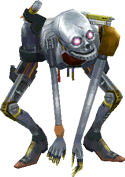
A weirdo scientist (later revealed as a cyborg) who answers directly to Rubicante. His most sinister act was turning Edge's parents, the King and Queen of Eblan, into chimerae.
- Adaptation Name Change: His monster form is called "Lugaborg" in the PS1 release, compared to just being called "Dr. Lugae" in other releases.
- Bungling Inventor: Lugae's "prized" creation Barnabas isn't exactly a model of engineering. When Lugae orders Barnabas to attack, the thing clobbers Lugae himself before Lugae clarifies that he's supposed to attack Cecil and company. Barnabas also requires a constant supply of oil, or he'll blow up. Not to mention Lugae's bright idea to install a self-destruct function...
- Ditzy Genius: Aside of his robotics and mechanical engineering prowess, Lugae is capable of Creating Life in the form of Barnabas and can convert humans, including himself, into fiends (of both the organic and techno-organic varities), suggesting extensive knowledge in the realm of alchemy. Yet, he doesn't seem to understand how his own creations work, as evidenced by his outfitting of Barnabas with a self-destruction button—an act he was completely unaware of.
- The Dragon: Despite working under Golbez, the story frames Lugae as something of a personal servant to Rubicante, though he only appears to defer to Rubicante as a way to stay in the Elemental Lord's good graces.
- Everything's Deader with Zombies: His monster form.
- Evilutionary Biologist: Performs his experiments with the intent to create superpowered monsters.
- Femme Fatalons: In Amano's artwork.
- Four Eyes, Zero Soul: His eyes are completely obscured by his spectacles and Lugae just so happens to be a madman whose brand of science disregards all sense of ethics or morality.
- Frankenstein's Monster: His creation, Barnabas.
- Fusion Dance: If Barnabas is destroyed before Lugae, and Lugae isn't defeated very soon after, he'll merge with Barnabas to become Barnabas-Z, which is significantly stronger than Lugae or Barnabas alone.
- Inventional Wisdom: He includes a button on Barnabas that he doesn't remember putting on. It's the Self-Destruct Mechanism.
- Labcoat of Science and Medicine: He is a doctor, after all.
- Mad Scientist: The original example in Final Fantasy.
- My God, What Have I Done?: It's implied in The After Years that after his death, Lugae has begun to regret his terrible misdeeds. It's enough for some party members to almost feel sorry for him.
- Not-So-Harmless Villain: He seems like a bumbling comical villain when you fight him. Then you later find out what he did to Edge's parents.
- Professor Guinea Pig: Implied due to the fact that he can turn himself into a cybernetic zombie.
- Sinister Schnoz: Has a long, pointed nose.
- Sympathy for the Devil: He comes close to getting this in The After Years, with Golbez wondering about Lugae's potential if he had taken a different path in life.
- Time-Limit Boss: Barnabas requires regular oiling in order to continue functioning. If Lugae is defeated first, then Barnabas has to be defeated within a certain time frame or it'll explode from lack of oiling, heavily damaging the whole party. Downplayed if Barnabas is destroyed first; if Lugae isn't defeated quickly enough after Barnabas' defeat, he merges with his creation to become Barnabas-Z to continue the fight, starting with a new health bar and more powerful attacks. Finally, if neither Lugae or Barnabas are defeated within a certain timeframe, Lugae presses a button that he doesn't remember installing on Barnabas that blows everything up, similar to if Lugae is beaten first.
- What Does This Button Do?: If the battle goes on long enough without defeating either Lugae or Barnabas, Lugae asks this, despite the fact that he made Barnabas. It's the self-destruct button.
- You Could Have Used Your Powers for Good!: Golbez wonders whether Lugae could have been a boon to the world rather than a monster if he had put his genius to use elsewhere.

A knight in the service of King Baron. He is utterly devoted to the kingdom, even when Cecil is not. When Cecil returns to Baron, however, he discovers Baigan is another one of Golbez's minions in disguise.
- Bad "Bad Acting": According to Palom and Porom when they sense something was off about Baigan.
- Cognizant Limbs: Both arms become snakes, which can persist even after his death.
- The Dragon: To the King of Baron.
- Eye-Obscuring Hat: Or helmet in the case of the remakes.
- Hat of Authority: As part of his unique appearance reflecting his station as The Captain of the Guard, Baigan wears a fancier than normal goldenrod helmet in the DS version.
- Interface Spoiler: The party is already at maximum when he "joins." Also, in versions that gives certain characters portraits in their dialogues, he doesn't have one when he talks like other party members.
- The Quisling: Joins Golbez when he takes over Baron.
- Sixth Ranger: Played with. He declares he shall join Cecil and help him stop Golbez, complete with a message saying he's joined the party and the accompanying fanfare. Then seconds later, Palom and Porom realize he's a monster and he attacks.
- Undying Loyalty: To the point of snitching to the king that Cecil is beginning to have doubts about Baron's rapid militarization and attacks on otherwise defenseless kingdoms early on in the story. In all likelihood, he had already been turned by Golbez and was serving Cagnazzo in the guise of the king of Baron, as the true king would have not begun said attacks in the first place.
- Voluntary Shapeshifting: Assumes a monstrous form to attack Cecil.
- Was Once a Man: The return to Baron heavily suggests Baigan was granted the ability to turn into a fiend by Cagnazzo and/or Golbez. Cecil is the only one fooled by his ruse, whereas the other party members comment on the evil aura surrounding Baron while picking apart Baigan's bad acting and foul stench. Yang muses he might've become just like Baigan had he remained under Baron's brainwashing spell.

A sextet of dolls owned by Luca that were somehow controlled by Golbez to infiltrate the dwarf castle and find the Crystal, they attack the party to stall for time while Golbez makes off with the Crystal. The dolls consist of three males called "Calca" and three females called "Brina." In The After Years, mechanical versions of Calca and Brina built by Luca join as party members.
- A.I. Is a Crapshoot: They malfunction and turn on the party in The After Years. May also explain their actions in the original game, too; it's ambiguous if the originals were robots as well.
- Ascended Extra: From a Giant Space Flea from Nowhere boss fight in the original name, to party members in The After Years.
- Combination Attack: Though everyone gets Band abilities in the game, Calca and Brina's Bands specifically rely on them combining into Calcabrina.
- Creepy Doll: Intensely so. Their design in the original game is very creepy to behold and it's not helped by their theme music.
- Dance Battlers: Calca uses Jive, and Brina uses Dance.
- Giant Space Flea from Nowhere: When the party enters the Crystal Chamber, there's inexplicably a bunch of evil dolls there that attack you on orders from Golbez. The only indication of their existence beforehand is Luca making an offhand reference to her missing dolls.
- Guide Dang It!: Unless you manage to obtain a Mythril Nut, Mythril Bolt, and Mythril Spring from a Quatro Puppet, Luca will be forced to scrap their bodies to repair the Falcon and the two are Permanently Missable as party members. Averted in the 3D versions of the game, as the game forces you to collect those items before proceeding.
- Lethal Joke Characters: They have horrible abilities, few Band skills, and the worst stats in the game, including the lowest HP growth. However, a determined player can farm Phase Equipment from end-game enemies, their exclusive equipment. The Phase Equipment pieces have the best defensive stats in the game, the Phase Cutter weapon has power equal to Cecil's Ragnarok, and between the five pieces, you're looking at +20 to all stats including Speed — and if you want to leave out the Phase Body for the Clown Clothes, you lose their 20 point Stamina boost but get a second 20-point boost to Speed. Hello, Lightning Bruiser!
- Magic Dance: In the sequel, they dance to cast magic. Calca's Jive uses random Blue Magic on the enemy party, while Brina's Dance casts random White Magic on the player party.
Zemus/Zeromus
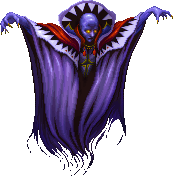

Zemus is a Lunarian who believes humanity should be exterminated so that the Lunarians can colonize Earth. He was too fanatical to be allowed to roam free, so he was forcibly put into a deep slumber by Fusoya. However, Zemus's mental powers were too great to be contained even in sleep, and he reached out to Golbez years ago, turning him into a puppet. His goal in controlling Golbez is to gather the Crystals and summon the Giant of Babel to Earth, where it will destroy all life and pave the way for the Lunarians. After Fusoya frees Golbez from his brainwashing, the pair journey ahead of the party and confront Zemus on the Red Moon. Zemus is no match for their combined forces and goes down without much of a fight, but his hatred manifests as Zeromus, which easily overpowers them and forces Cecil to intervene.
- All-Encompassing Mantle: Zemus' cloak conceals his entire body save for his hands and head.
- And I Must Scream: After his plans to eradicate the human race off the face of the Earth was shot down, he was forced into hibernation by Fusoya. Only problem is, Zemus's mental powers were so strong that he couldn't actually sleep, so his only option was to be trapped for countless years in isolation and left to stew in his own hatred until, finally, he found a pawn he could control/influence in Golbez.
- As Long as There Is Evil: Trope Namer. Zeromus claims that as long as there is darkness in the hearts of man, he will never truly die and can someday return. In The After Years, it turns out he meant it.
- Back from the Dead: In the first game, from Zemus to Zeromus. In The After Years, he returns as Zeromus' Malice.
- Badass Arm-Fold: He strikes this pose in the 3D games.
- Bait-and-Switch Boss: After Zemus is revealed as the villain and the party heads to the core to destroy him, they find Golbez and Fusoya have beaten them there and kill Zemus themselves. Then his corpse starts to move and Zeromus speaks...
- Bald of Evil: Sports a magnificent chrome dome.
- Big Bad: He's the real villain of the game, manipulating Golbez to accomplish his goals on Earth.
- Contrasting Sequel Antagonist: Unlike the past main antagonists in the series who are from a world that is or similar to earth, Zemus is an alien from another planet, who wants to destroy mankind so his people can colonize the planet and uses Mind manipulation to control people and turn them into his followers, unlike the past main villains who had followers that willingly followed them or didn’t have any.
- The Corrupter: Turned Golbez to evil. Some translations also imply it was actually Zemus who was controlling Kain, not Golbez.
- Cutscene Boss: Your party heads down to the center of the moon to help Golbez and Fusoya defeat the Big Bad Zemus, only to arrive just in time to see them easily dispatch the villain. Cue Zeromus, who proceeds to absolutely flatten everyone. Zeromus is no Cutscene Boss; it's the Final Boss.
- Eldritch Abomination: Zeromus is a writhing misshapen mass of pure hatred and evil.
- Evil Counterpart: To Fusoya. Both are Lunarians and both are alien sorceror’s that use extremely powerful magic. But while Fusoya believes both humans and Lunarians can coexist together in peace, Zemus wants to destroy humanity for his kind to colonize the planet.
- Evil Sorceror: Described as one and looks the part, though it never comes into play since the first time you see him, he's busy getting killed.
- Final Boss: As Zeromus, he is the last opponent of the original game.
- Flat Character: There's not a whole lot to Zemus other than being an evil moon-man controlling Golbez from afar. He's not even mentioned until about 90% of the way through the game and his only appearance is for the final battle. Even then, he barely says anything and doesn't exhibit any personality other than being a Final Boss to fight.
- Greater-Scope Villain: He is one to Golbez, since he manipulated him by using his mind manipulation to turn him into his servant, he doesn’t fully take on the Big Bad role until his reveal as the true mastermind.
- High Collar of Doom: Behold! It's even taller than his head!
- Human Aliens: As with other Lunarians, he looks like a normal human, sprite proportions not withstanding.
- Kill All Humans: His goal is to do just this, so the Lunarians can seize the Earth.
- Made of Evil: Zeromus is hatred incarnate.
- The Man Behind the Man: The manipulator behind Golbez's schemes.
- Mind Rape: He did this to Golbez while Golbez was still a child.
- More than Mind Control: In the DS version, it's implied he wasn't directly controlling Golbez, but instead exploited and cultivated the growth of his negative emotions to turn him evil. It's also hinted that, possibly in addition to this, he impressed his thoughts and goals onto Golbez's mind like they were his own, in a sense merging their minds instead of just controlling him.
- My Death Is Just the Beginning: Says as much to Golbez and Fusoya after they first kill him. And sure enough, his hatred manifests itself as Zeromus mere moments after his death.
- One-Winged Angel: He starts as a bald, blue floating guy, changes to an indistinct blue smokey ghost, to a massive, freakish crustacean insect... thing.
- Oni: His initial Zeromus form is a ghostly entity with a demonic visage, long horn-like appendages and a mane of wild hair which resembles a classical Oni representation. Furthermore, it is fueled by hatred and grudge, feelings usually associated to Oni in folklore.
- Our Centaurs Are Different: In the Easy Type version of the game, his One-Winged Angel form is an enormous, crustacean-like centaur that wields a sword. This version would be recycled in later versions of the game as Zeromus EG.
- The Paragon Always Rebels: He is said to be the cream of the crop among the Lunarian sages, which is why even after he was forcibly sealed in stasis his mind is awake and (more importantly) dangerous.
- The Power of Hate: Zemus's intense hatred for mankind is what transforms him post-mortem into the Eldritch Abomination Zeromus. There are also a pair of enemy types in the final dungeon that are implied to have been spawned from his malice.
- Physical God: As Zeromus his powers skyrocketed to the point where he proclaims himself as Zemus’ hatred and the attacks used by Fusoya and Golbez did nothing to him.
- Psychic Powers: His immense mental abilities are how he controls Golbez.
- Puny Earthlings: He is the last of the radical sect of the Lunarians who believed it was not worth waiting for the inferior humans to evolve to the same level of Lunarians so they might coexist.
- Sealed Evil in a Can: His physical body is this for the majority of IV. His malice was sealed by the Lunarian crystals after IV, then set loose by the actions of the Mysterious Girl in The After Years.
- Signature Move: Big Bang. It deals considerable damage to every member of the party and inflicts the "Sap" status. The Zeromus Esper in the Ivalice games inherits it.
- Superior Species: Part of his entire motivation.
- Voice of the Legion: Zeromus speaks with a lot of echo in the DS version.
- When All You Have Is a Hammer…: Zeromus' AI script in non-3D versions of the game is very simple; spam his Big Bang attack over and over, occasionally swapping in another Black Magic attack every few turns. Being that Big Bang hits tremendously strong, it's all he needs to do to be formidable.
- Would Hurt a Child: Zemus took advantage of Golbez's then-fresh bereavement of both of his parents and rage towards Cecil to bring him under his thrall, all while Golbez was only a child.
- You Could Have Used Your Powers for Good!: Commented on by Fusoya; if Zemus had used his incredible powers for good, he could have been a great man.
Other Characters

- Action Girl: She can hit as hard as people like Cid and Cecil, and she's always up for going on monster patrols.
- Ambiguously Brown: She's also the only dwarf whose face isn't obscured by a beard or helmet, showing this skin tone.
- The Apprentice: She's studying airship engineering under Cid.
- Art Evolution: Her appearance in the sequel is quite different from the base game.
- Ascended Extra: A minor character in the original game, she is upgraded to a playable character in the sequel.
- Berserk Button: Do not touch her dolls. Even when they've gone haywire and are attacking her, she gives Rydia an order not to harm them — she'll deal with them alone.
- Expy: Of a certain other Gadgeteer Genius named Lucca. Though, this is a bit of an odd example, as Luca appeared in FFIV before Chrono Trigger existed, but had little personality and no combat abilities until The After Years.
- Gadgeteer Genius: According to Cid, Luca is even more proficient with machines than he is — and consider all he does for you in the base game!
- Goggles Do Nothing: She has a pair hanging around her neck, likely for protection when doing mechanical work.
- Hopeless Suitor: For Palom. She adores him thanks to him flirting with her as a kid, but he's grown to the point he's just put off by her advances.
- Mighty Glacier: She's very slow, but has a lot of power.
- Odd Friendship: In The After Years, the Wrench Wench princess of the dwarves forms a Platonic Life-Partners dynamic with Rydia, the summoner from Mist.
- Our Dwarves Are All the Same: Averted, she looks and acts quite different from both the other in-game dwarves and from what fictional dwarves are usually depicted like.
- Pint-Sized Powerhouse: As a dwarf she's smaller than a lot of your party members. She still hits harder than many of them.
- Rebellious Princess: Of a sort. Giott seems to have no problem with her choice of life path, but it's a far cry from the typical royal upbringing he would have chosen for her himself. She may be a Princess, but she kicks a lot of ass.
- Royals Who Actually Do Something: Like a lot of your party.
- Stone Wall: Slow but very tanky. It's not uncommon to see her take 1 HP of damage.
- Throwing Your Sword Always Works: Big Throw involves throwing her hammer at an opponent. Some of her weapons are thrown normally, like the Tomahawk.
- Wrench Wench: She's a master mechanic and airship pilot, and also creates and maintains her robotic dolls.
The leader of the town of mages and caretaker of Palom and Porom. He's initially suspicious of Cecil when he returns claiming to have done a Heel–Face Turn, but recognizes he truly wishes to reform and sends him to Mt. Ordeals to seek the holy light of the Paladin. When Cecil returns carrying a sword engraved with an ancient Mysidian legend, the Elder recognizes this as a sign that prophecy is in motion and begins praying to bring the next part of the prophecy to pass.
- All There in the Manual: The Japanese-exclusive novelizations of Final Fantasy IV give him the name "Minwu" (referencing the character of the same name from Final Fantasy II).
- Big Good: Along with Fusoya, he is the major leader of the forces of good in the game.
- Clap Your Hands If You Believe: Leads other characters in a round of hopeful prayer for aid against the villains. Twice. It works both times too.
- Everyone Calls Him "Barkeep": "Elder". Even when he's temporarily playable in The After Years, he has no actual name.
- Guest-Star Party Member: He is playable for exactly one battle in The After Years...
- Parental Substitute: In lieu of actual parents, he raises Palom and Porom.
- Reasonable Authority Figure: Unlike the other Mysidians who spit at the sight of him, the Elder is willing to hear Cecil out and give him a chance at redemption. He's also not so stupid as to instantly believe Cecil is reformed and sends two mages with him to spy on him and make sure he's sincere.
- White Mage: When he takes the field in The After Years, he only knows White Magic.
- Our Dwarves Are All the Same: He's not much different from other dwarves aside from his robes.
- Reasonable Authority Figure: He's instantly accepting that Cecil is here to help, readily aids him however he can, and sends his forces to aid the party in attacking the Tower of Babil.
- Wham Line: When Golbez seizes the last Crystal, Giott claims they're all doomed. Unless the legend of the Lunar Whale comes true.
- Action Mom: When forced into action, that is.
- All There in the Manual: Originally, Japanese guides gave her name as "Ursula", which was later given to her daughter.
- Frying Pan of Doom: It can keep away a legion of monsters.
- She gives it to the party in The After Years to force Yang to wake up. A ladle is also provided for her daughter.
- Happily Married: Hints of frying-pan related violence aside, she and Yang are happy together.
- Minored in Ass-Kicking: She may not be a Bare-Fisted Monk like Yang and Ursula, but Sheila can be deadly when the situation calls for it.
- Mundane Utility: She gives the party the strongest thrown weapon in the game: a simple kitchen knife.
- No Name Given: In the original game, she was just "Yang's Wife"; it wasn't until TAY that she received a proper name.
- Pregnant Badass: She may have already been pregnant with Ursula when she was smashing mooks with her frying pan during the invasion of Fabul.
- Southern Belle: She's given this characterization in the PSOne, GBA and PSP versions of FFIV. This is a clever way to render the easygoing yet headstrong speech pattern she has in Japanese into English, but stands out as being very out of place given that she lives in Fabul. Appropriately, she doesn't talk this way in any other rendition of the game.
- Anti-Hero: He never does anything particularly ambiguous, but Biggs is very hard on Ceodore, and at one point slaps him hard across the face. Downplayed in that he's really being Cruel to Be Kind.
- Ascended Extra: They are the two soldiers who questioned Cecil about taking the Water Crystal from Mysidia at the beginning of the original game. In The After Years they got names and personalities.
- Black Mage: Biggs knows several basic Black Magic spells.
- Combination Attack: They introduce the concept of Band abilities by showing off their own, Vibra Edge.
- Crutch Characters: While they're a much higher level than him, they don't gain XP during Ceodore's initial dungeon; they're just there so the kid doesn't need to fight his way through the dungeon alone.
- Drill Sergeant Nasty: Biggs, so very much. His Establishing Character Moment is to snap at Ceodore that his royal bloodline is meaningless and he won't be considered a knight until he passes his trial of knighthood, and then to hit Ceodore for agreeing with him.
- Foils: Biggs is an aggressive Drill Sergeant Nasty who thinks Ceodore's royal blood is worthless and uses Black Magic; Wedge is polite and friendly, believes Ceodore's lineage makes him more likely to succeed and uses White Magic.
- Guest Star Party Members: They're only around for the first chapter.
- Heroic Sacrifice: Biggs covers Ceodore when their ship is taken down and uses his last words to order him to return to Baron.
- Magic Knight: Both of them know some basic magic as well as being physical fighters. Wedge is also a Combat Medic since his spells are curative.
- Mauve Shirt: Right up until their deaths and long afterwards, they contribute barely anything to the major overreaching plot but prove important to Ceodore's personal Character Development.
- Mentor Archetype: To Ceodore, as the commanding officer during his Rite of Passage and his Number Two.
- Mythology Gag: Named after the recurring pair of characters in the series. And in true tradition, they don't make it to the credits alive.
- Nature Versus Nurture: Biggs tells Ceodore upfront that as far as he's concerned, the prince's royal blood is worthless and he won't be considered a Red Wings soldier until his actions prove him worthy. Wedge, on the other hand, is quick to praise Ceodore, and actually considers him more likely to succeed because of his parentage.
- Nice Guy: Wedge is polite, gentle and quick to praise Ceodore.
- Personality Powers: Biggs and Wedge's choices in magic spells are apt indicators of their contrasting personalities outside of gameplay.
- Sensitive Guy and Manly Man: Wedge the Sensitive Guy and Biggs the Manly Man.
- Shout-Out: While their names are part of a Running Gag, guess where they ultimately came from.
- What the Hell, Hero?: They are the formerly-unnamed soldiers who objected to taking Mysidia's crystal's in the original game.
- White Mage: Wedge comes with Cure and Cura.
Debuting in The After Years
Heroes

The son of Cecil and Rosa, Ceodore is a new recruit into the Red Wings. He wants to prove himself his own man without relying on his royal blood or title to get by in life, and feels it's a burden having to live up to the great deeds of his parents.
- Character Catchphrase: "Huh?"
- Childhood Friends: With Ursula, partly because of their fathers' friendship and the fact that Cecil is Ursula's godfather. It doesn't get explored much.
- Combat Medic: He's a powerful fighter and also has support and healing spells like Protect, Shell, Haste, and Curaga.
- Deadly Upgrade: After Awaken wears off or after the battle ends, whichever comes first, Ceodore's HP drops to single digits.
- Decoy Protagonist:
- In the game as a while, he is often one of the front runners of the cast, the game starts off with his tale, and is shown prominently in promotional material and the cinematic opening. In the game, he's no less of a Pinball Protagonist, and towards the end, it's Kain, Rydia, and to a lesser extent Cecil who get more of the central focus.
- This is true for his chapter as well. His tale itself seems like it's about him (which makes it look like he gets two chapters, since the prologue is focused on him as well), but by the end it's clear that "his" chapter is actually about Kain.
- Determinator: Even when it's clear he's outmatched, Ceodore never gives up.
- Heroic Spirit: His Awaken ability manifests as this; pushed to the brink of defeat, Ceodore's true potential awakens to restore his health and power up his stats. However, this is only temporary, and once it wears off his HP is left in the single digits.
- Humble Hero: Just like his parents, he wants no special treatment because of his station and wants to prove himself on his own merits.
- Jack of All Stats: Ceodore is very balanced with speed, strength, and magic, and has a very large amount of Bands to choose from as well. This is at the cost of being a Master of None outclassed by more specialised characters, but allows him to fit into just about any party formation.
- Locked Out of the Loop: The Hooded Man stops him from encountering Brainwashed Cecil in his story to shield him from what's happened to him.
- Misery Builds Character: He seems far more interested in learning from and being instructed by Biggs than Wedge, though he obviously still cares about the latter.
- Modest Royalty: Ceodore insists on being treated like any other soldier would.
- Multi-Melee Master: Like his father Ceodore has a large variety of equipment options despite defauting to swords most of the time. He can also use daggers, staves, bows, axes and unlike Cecil can use spears as well. Unlike Cecil, some of these are potentially worth looking into as Ceodore can be pretty effective with a spear or axe.
- Overshadowed by Awesome: As noted under Jack of All Stats, Ceodore is a well-rounded party member who would fit comfortably into any party combination, but more specialised characters who excel at their particular niches get more love than him as a rule because in the end, they wind up being more powerful, most of them were playable in the first game (whereas Ceodore just happened along for the sequel) and for some, their character arcs all get better explanation and more emotional weight than his.
- Pinball Protagonist: While he goes from place to place and develops in both character and skill, he really has very little effect on the situations he finds himself in.
- Post-Victory Collapse: Happens after he defeats the boss in his knighthood trial. Justified because he has just used his Awaken ability for the first time, and is understandably exhausted.
- Rite of Passage: Not literally, but his test of knighthood is treated this way.
- Royals Who Actually Do Something: He's not content to sit around getting through life due to his heritage; he wants to earn his way in the world.
- Scarf of Asskicking: Wears a striped scarf around his neck to contrast his father's cape.
- Self-Made Man: Not really, but he sure wants to be. At first, Ceodore wants to be judged by his own merits and accomplishments or lack thereof, and holds little pride in being the son of the king and queen of Baron. As part of his Character Development, Ceodore learns that pride in his heritage and wanting to be his own man are not mutually exclusive, and decides to change his approach, striving to be his own person while acknowledging and respecting his parentage.
- Ship Tease: With Ursula, thanks to a campfire scene at the moon, which gives them a a Band attack.
- Shout-Out: His Cross Slash attack used by slashing the enemy with the help of the Hooded Man was previously used by Crono and Frog in Chrono Trigger.
- Sole Survivor: Ceodore is the only person to survive the airship crash after returning from his Knight trial.
- Spin-Offspring: The son of the heroes of the original game is the hero of the sequel.
- Supporting Protagonist: While advertised as The Hero of the sequel, he plays a much smaller role in the events concerning the Mysterious Girl and the Crystals than the other characters. Not helped by Kain, a top contender for the actual main protagonist of the sequel, accompanying Ceodore early in the game and being the one to drive most of his actions. Were the game to be told from Kain's perspective rather than Ceodore's, little would change in terms of narrative structure.
- Uneven Hybrid: 3/4 human, 1/4 Lunarian via his paternal grandfather.
- Warrior Prince: Wants to prove himself as this.
- White Magic Knight: More so than Cecil or Kain, since rather than being a paladin or a Holy Dragoon, he's a warrior who also has White Magic, along with his unique Awaken ability.
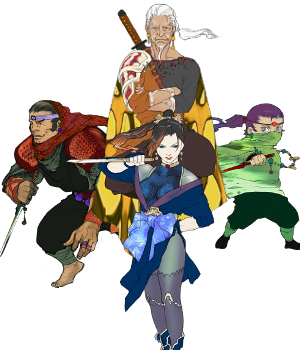
Edge's four apprentices; Gekkou of Fire, Zangetsu of Lightning, Izayoi of Water, and Tsukinowa as Wind. They are Edge's four star students in training at the rebuilt Eblan. When Edge becomes concerned over the state of world events, he dispatches the four to the other major nations of the world to make sure everything is peaceful on other fronts. When the Mysterious Girl arrives, the four return to Edge to help him investigate the Tower of Babil.
- All Your Colors Combined: Two of their Band abilities: Wheel of Elements, where the four combine together, and Ultimate Art: Advent of Phoenix, where they all combine with Edge. The latter even comes with a chant. However, Wheel of Elements is thematically closer, since it actually consists of the four using their elemental powers in sequence, while Advent of Phoenix just uses fire.
- Ass-Kicking Pose: They all strike one in unison with Edge following Ultimate Art: Advent of Phoenix.
- The Cameo: Zangetsu and Gekkou appear in the special PSP Interlude chapter assisting Edge as his new recruits, without the other two. Only the senior members appear as the story being set only a year after the original game, Izayoi was still a little girl and Tsukinowa wasn't even born yet.
- Color-Coded Characters: Gekkou wears red, Izayoi wears blue, Tsukinowa wears green, and Zangetsu wears yellow and orange.
- Cool Old Guy: Zangetsu is old, but he's still a kickass fighter.
- Death from Above: Zangetsu, via Kite Riding.
- Dual Wielding: Tsukinowa is the only one of the Eblan Four who can Dual Wield just like their master, making ninja swords or boomerangs the best weapon options for him.
- Elemental Powers: They each have their own set.
- Blow You Away: Tsukinowa.
- An Ice Person: Izayoi
- Making a Splash: Izayoi.
- Playing with Fire: Gekkou.
- Shock and Awe: Zangetsu.
- Fantastic Fighting Style: Due to Competitive Balance, they have varied stats.
- Izayoi is a Combat Medic, having balanced stats with a focus on healing Ninjutsu. She is also the only one of the four who can wield bows and whips as well as the female-exclusive equipment, and has the most Band options with other characters.
- Tsukinowa is a Fragile Speedster, with the highest Speed in the game but being very weak otherwise. He is the only one of the four capable of Dual Wielding, and can also wield boomerangs.
- Zangetsu is a Magic Knight with high Intelligence and still respectible Strength and HP. He is the only one of the four who can wield spears.
- Gekkou is a Mighty Glacier, boasting high HP and Strength but very low Speed and MP. Fittingly, he is also the only one of the four who can wield axes and hammers.
- Five-Man Band: They form one with Edge. He's The Leader, his second-in-command Zangetsu is The Lancer, the physically powerful Gekkou is The Big Guy, the trickster Tsukinowa is The Smart Guy, and Izayoi is as the sole woman among them.
- Flat Character: Their individual personalities don't get a lot of time to shine through, as they individually receive equal focus in Edge's Tale, which doesn't last long, and once Edge's Tale is complete, they contribute nothing to the plot save for a scene deep in the final dungeon.
- Somewhat lampshaded in The Very Definitely Final Dungeon; if one of them is the 5th party member in the cutscene where Cecil returns to normal and Golbez survives, Cecil has no idea who they are and his only comment on them is that they must be working under Edge.
- It happens again during the "Where Are They Now?" Epilogue — if they all make it to the end of the game, Edge offers to let them go their separate ways, but they just reassert their loyalty to him because they seem to have no idea what to do with themselves otherwise.
- Invocation: As mentioned above, the Ultimate Art: Advent of Phoenix Band involves the Eblan Four reciting a Magical Incantation alongside Edge before unleashing their ninjutsu spell.Zangetsu: "Endless night, lit by fiery wings..."
Izayoi: "Bound by the darting, dancing sword..."
Gekkou: "Let it slice the encompassing dark..."
Tsukinowa: "And sound the tolling bell of tomorrow!"
Edge: "Now! We call forth Eblan's ancient technique..."
All: "Advent of Phoenix!" - Killed Off for Real: If you let them die during their recon missions. Luckily, these are Save Scummable. And also in the 3D versions, they're permanent party members and Gekkou restrains himself from helping the monks at the end of his mission.
- Kite Riding: Zangetsu uses this as his special ability, a variant of Kain's Jump.
- Master of Disguise: They each disguise themselves when undercover and no one sees through them. Except for Gekkou, who never disguises himself as a monk despite spending time in Fabul.
- Master of Illusion: Izayoi's unique ability is Illusion, which functions like a no MP cost Confusion spell.
- Ninja: Naturally. Izayoi is a kunoichi, and insists on being treated as a ninja, not a woman.
- Personality Powers: Although they get little time to showcase their individual personalities, their powers are intended to line up with their personalities, but in a more nuanced way than usual. Gekkou is a warm-hearted Gentle Giant; Izayoi is calm, collected, efficient and defined by her job; Tsukinowa is quick-witted, cunning and restless; and Zangetsu is aspiring and spritely.
- Pint-Sized Powerhouse: Despite being pre-pubescent and able to pass for a regular boy, one should never consider Tsukinowa useless.
- Satellite Character: Outside of their mini-quests in Edge's Tale, where being on their own they talk little, all their dialogue is them talking to Edge. This is underlined if they're the fifth character taking part in Cecil's battle with the Dark Knight, as Cecil has no idea who they are.
- The Smurfette Principle: Izayoi, the lone female member, but just as capable in combat as the men are.
- Theme Naming: All of their names have something to do with the moon. "Tsukinowa" means "moon halo," "Gekkou" means "moonlight," "Izayoi" means "full moon," and "Zangetsu" means "morning moon." Additionally, Tsukinowa's alias during his recon in Mysidia, "Lapin," means, "Moon Rabbit."
- Video Game Stealing: Tsukinowa's unique ability among the Eblan Four is the Steal ability.
- Younger Mentor, Older Disciple: Zangetsu is an old man and a student to the much younger Edge.

The daughter of Yang and Sheila and Princess of Fabul. She wishes to be trained as a monk by her father, but needs to get past his overprotective streak first. As she learns, it's more he's concerned with why she wants to train than actually training her; does she have the spirit and discipline to use his teachings for the right reasons. Ursula rivals Luca as the most action-oriented female in the IV world.
- Anime Chinese Girl: Wears a qipao, sports odango hair, and is a martial artist. Yep, she fits.
- Attack Its Weak Point: Tenketsu may deal an automatic critical hit, or deal elemental damage the target enemy is weak to.
- Ursula even learns the ability while rendering a supposedly invincible enemy vulnerable. It is this act which finally convinces Yang to teach her.
- Awesome by Analysis: Yang has not officially given her any training when the game begins, but a flashback shows she's been watching him train the other monks in Fabul her entire life and has picked up on a lot of his techniques.
- Bare-Fisted Monk: Her job class is Monk, and like Yang she beats enemies up with martial arts.
- Breakout Character: After Ceodore, who is The Hero, Ursula is the character from The After Years most likely to appear in spin-offs like Record Keeper and Opera Omnia, and in those specific cases is the only character from the sequel besides Ceodore to be included (until Leonora was added in Opera Omnia).
- Childhood Friends: With Ceodore. The -Interlude- reveals that she's also the older of the two.
- Combat Medic: With her Chakra ability she can heal herself and get back to fighting shape, or help an ally off the ground.
- Cute Bruiser: She's adorable, and she's still a physical brawler trained by one of the most famous Monks in the world.
- Establishing Character Moment: When she runs off to Mt. Hobs alone, Yang and his Monks go after her, worried she'll be hurt. They find her copying Yang's Establishing Character Moment from the original game, taking out a force of Domovois on her own before Yang and his Monks join with her to fight the Mom Bomb. This princess will not be a Damsel in Distress.
- Flowers of Femininity: She wears a flower in her hair, showing that she still has some poise and femininity despite her hands-on fighting style.
- Foil: To Ceodore. While he attempts to avoid becoming Generation Xerox and has to learn to take pride in his parentage rather than rejecting it, Ursula is actively locked out of the family business until Yang finally realizes she's worthy of his time.
- Lady of War: She's graceful and poised and a total badass.
- Lightning Bruiser: Her standout stat is her Speed, third-highest outranked only by Edge and Tsukinowa. While her physical stats and HP are outranked by most of the dedicated physical fighters, they're still much higher than the mages of the group and she can still deal a good amount of damage even before she gets equipment that makes up the difference.
- Pressure Point: Her Tenketsu ability delivers the Touch of Death by virtue of this trope.
- Princesses Prefer Pink: She wears a pinkish-red dress.
- Rebellious Princess: Completely defies Yang's wishes at every turn. since he's so overprotective. He eventually accepts his daughter has to be allowed to have some freedom in her life.
- Royals Who Actually Do Something: Her character arc is that she wants to be this, but Yang doesn't think a princess has a need for combat training. Ursula doesn't listen, and he eventually relents and agrees to take her on as a proper disciple.
- Warrior Monk: Becoming this trope is her character arc. Yang fears that Ursula only wants to learn to fight because she wants to be an asskicker just like him, but it's the spirit of the teachings that hold more value than the physical part; you learn the ways of the Monk to protect people and defend yourself, not to hurt others. When Ursula defends her bodyguards from a monster in spite of being outmatched, Yang realizes she has this spirit within her and finally agrees to give her proper training.
- Wolverine Claws: Like her father she can equip them to give her normal attacks elemental or status properties.
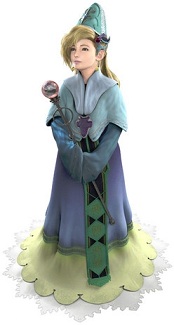
An Epopt in training, since one of the eight has recently fallen ill, and a student of White Magic. Recent events have convinced the Epopts of the need for their members to be able to defend themselves, and so she begins training under Palom to master Black Magic. Between her own personality quirks and the difficulty in mastering both schools, it's slow-going, but she shows great potential.
- The Apprentice: She studies Black Magic under Palom.
- Ascended Extra: She was in the first game, it turns out. She's the random NPC girl Palom was boasting to in the ending. When she tells him, Palom admits he had no idea that was her and that he barely remembers the incident.
- Beware the Nice Ones: She appears to be your typical shy and kind girl who cannot complete a sentence without stuttering, but get to know her more and she proves that she is a lot more assertive than she lets on. She takes Palom's Jerkass nature in stride when she trains under him, but the moment she hears him insult the Epopts to her face, she's quick to tell him off without a single stutter.
- Black and White Magic: She already knows White Magic, but wants to train in Black Magic.
- Cowardly Lion: Despite her nervousness and stuttering, she's just as capable of (and willing to) doing battle as anyone else.
- Hair of Gold, Heart of Gold: She's a kind, humble, and compassionate young woman.
- Inept Mage: At first. Hell, her first Black Magic spells are even weaker than 1st tier Black Magic (Fire? Blizzard? Thunder?).
- Magic Wand: Wields one in her artwork.
- Magikarp Power: Taken to the point it's Awesome, but Impractical. With patience and level grinding, Leonora will be the only end-game party member to learn both schools of magic, and can use Dualcast to boot. The problem is that because of her split focus she learns her spells much slower. She doesn't get Curaga until Level 45 (by which time other White Mages will have Curaja), Holy until Level 70, learns the three "-aga" spells at Levels 78, 80, and 82, and finally gets Flare at Level 85. For the record, all other magic-using characters will finish learning all their spells by Level 60, at the latest. The result of this is that by the time you finally put in the effort to grind her up to that high level, you could have just done everything else worth doing in the game with other characters.
- The Red Mage: She can learn both White Magic and Black Magic, but does not learn every Black Magic spell.
- Shrinking Violet: In Palom’s tale, she is introduced as a shy, humble and quiet lady.
- Squishy Wizard: The squishiest — at Level 99 she's one of only three party members with less than 4,000 HP, and the other two are Calca and Brina. And then, if the random factor in HP gain doesn't like her, she can flat have the worst HP of all.
- Teacher/Student Romance: Has a Ship Tease with her mentor Palom. She has feelings for him, but she doesn't come forward with them. Not to him, anyway. Though in a scene in the Lunar Subterrane, she admits them to Luca, and he overhears her saying it.
- Took a Level in Badass: She stutters a lot and is respectful of Palom initially, despite him being a Jerkass. Once he insults the Epopts, though, she's had enough and tells him off, at which point for most of the rest of the game the stuttering stops. This event coincides with the completion of the Tower of Trials, and thus she begins to learn Black Magic as she levels up from now on.
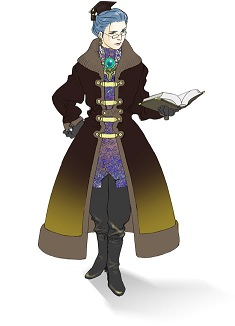
Edward's assistant. She originally desired to be a scholar, but one day she heard his voice, and so abandoned her plans to become his secretary. While Edward dodges responsibility for his kingdom, Harley is one the actually running things on his orders, and tries to motivate him to take command and be a good ruler like she believes he can be.
- Badass Bookworm: Subverted, in that she is well-read, but sadly not worth too much in battle.
- Badass Longcoat: Her long brown scholar's coat is cool at least.
- Crutch Character: She's useful enough as an extra sword arm (or whip arm, as it were) during Edward's chapter to help bolster some damage output (especially in the Challenge Dungeon), and her Gil Toss ability is fairly powerful, but once the main heroes all reunite, she's best relegated to the reserves. That said, with specific equipment options she is capable of outdamaging Ceodore.
- Girl Friday: Edward's personal secretary and assistant, and able to defend herself (although not well).
- Hidden Depths: She eventually reveals she's done a lot of research and knows some comparatively obscure facts about the events in the original game. Edward is surprised to learn this.
- Further, in an event within the Lunar Subterrane, she reveals that she lost her parents to the conflict in Final Fantasy IV, and Edward's music helps her to cope with the loss.
- Hypercompetent Sidekick: Lots of other characters comment that she's really the brains behind Damcyan's governance.
- Item Amplifier: Dummied out content indicates she was to have the "Knowledge" ability that would double the effectiveness of healing items, but instead she joins the party with the Economical Ring accessory, which does the same thing.
- Joke Character: Harley has the dubious honor of being almost entirely useless in battle. Her abilities are practically worthless, her Bands except for Feast of the Land need multiple party members to skip their turn to use, of those Bands one has random effects, two more require specific equipment set ups, and all of them require questionable party configurations to use. If not for Calca and Brina, she would be the flat worst party member in the game, and at least they have equipment to turn them into Lethal Joke Characters; Harley does not.
- The Load: Harley's sole major contribution to the plot is to get sick, dragging out gameplay another hour while Edward gets a cure for her. This is after she insists on accompanying him, saying "I'm certain I will be of use". To her credit, she admits it's her own fault and she should have just listened to Edward and stayed behind.
- Money to Throw Away: Has the Gil Toss ability, letting her throw money to damage enemies.
- Overshadowed by Awesome: Poor Harley does try to be a helpful member of La Résistance and has good combat skills for a civilian, but ultimately she's a normal human woman surrounded by a group of mages, knights, monks, ninjas, and Edward. There's only so much she can do to contribute when they all bring something more substantial to the mix.
- Plucky Girl: Bless her, she at least attempts to be helpful and insists on travelling with Edward and his knights.
- Prim and Proper Bun: Her hairstyle tightly ties her hair into a bun.
- Subordinate Excuse: She became Edward's secretary because she was uplifted by his music after losses in the family during the events of the first game.
- Weapon Specialization: Her main weapons are whips, and most of the Band abilities she's involved in call for her to be equipped with one.
The After Years Villains

The main villainess of The After Years, who shows up to steal the Crystals from the people of Earth, deeming they are unworthy of their power. She resembles Rydia and is somehow able to command Eidolons, but her origins and motives are a complete mystery.
- Artificial Human: She turns out to have been created by the Creator, as a pawn to gather the Crystals.
- Big Bad: She sets off the major events of The After Years and is the central antagonist. Until it turns out she has a boss.
- Bond Villain Stupidity: Badly. If she actually killed off the heroes when she had the chance, only half of them would have survived to the final tale. However, it's justified from her perspective: In most of her confrontations with the heroes she deals a Curb-Stomp Battle to them using an Eidolon, so she is fairly correct in viewing them as "inferior species" that pose no serious threat to her. In the later tales when the heroes have proven to be repeated thorns in her side, she gets over this problem.
- Boss Remix: Her character theme is the basis for her battle theme.
- Bullying a Dragon: Not more than five minutes after her appearance and she reveals she's forcefully taken control of Bahamut. Save all the Eidolons later in the game, and it will completely backfire on her. See Oh, Crap! for more.
- Character Catchhrase: "Incomprehensible."
- Clone Army: It turns out there are several "Mysterious Girls" around, acting independently of each other to gather the Crystals as one, explaining why she's able to appear in every single storyline. If one happens to die, another just picks up where she left off.
- The Dog Bites Back: When the Creator begins to go haywire, she destroys it.
- Emotionless Girl: Mostly; arrogance and contempt are there, but that's about it.
- Evil Cannot Comprehend Good: Most of the girl's dialogue is expressing confusion regarding the nature of "inferior species". In a scene with some Fabul monks, she flat-out states that the idea of "honor" is foreign to her, as is the idea they'd fight her because of it knowing she'll kill them for their effort.
- Evil Counterpart: Bears a great physical resemblance to Rydia, even being mistaken as her by Cecil initially, and is also able to control Eidolons. -Interlude- reveals it's because the Creator made the Maenads in Rydia's image after gathering data on her through a Crystal.
- Everyone Calls Him "Barkeep": Justified, as there's no way of knowing her real name until the last five minutes of the game. And even then, "Maenad" is just the name given to her race as a whole.
- Fantastic Racism: Frequently insults humans and Lunarians as "inferior species."
- Giving Someone the Pointer Finger: Her battle sprite.
- The Heavy: She's the only major villain to appear for a long time.
- Heroic Sacrifice: The entire species hold out against the Creator in order to allow the party to escape the True Moon.
- Hive Mind: Implied in the Depths, complete with referring to themselves in the plural.
- Identical Stranger: Resembles Rydia but bears no other relation to her.
- Invincible Villain: Appears in a number of Tales since there's an army of them, and whenever she does it ends with the protagonists failing to stop her. It's not until the "Lunarian's Tale" where she FINALLY suffers a defeat, more than half way through the story and almost immediately it's revealed that there's more than one of her.
- Jerkass: Extremely arrogant and condescending to everyone she meets, deeming them "inferior species."
- Lack of Empathy: Believing all of the Blue Planet's inhabitants to be beneath her, she cares nothing for who she hurts, kills, or enslaves to get what she wants.
- Last of His Kind: A young Maenad, later named Cuore, is entrusted to the party for safekeeping as the remaining Maenads pull a You Shall Not Pass! on the Creator in order to help the heroes escape the True Moon.
- Light Is Not Good: Wears a long white dress and evil, cold, and rude.
- Karmic Death: Is killed by Odin after using him to try and kill the party. The one that controls Bahamut suffers the same fate.
- The Man Behind the Monsters: She controls an army of monsters to take over Baron, and still uses them on occasion after switching over to relying on Baron's military instead.
- No Name Given: She is only referred to as the "Mysterious Girl" and Maenad is the name of her species. As mass-produced members of a Hive Mind, it's likely that they don't have individual identities. Averted for the young Maenad raised by Rydia, who is named Cuore.
- No-Nonsense Nemesis: Her only objective is obtaining the Crystals and she focuses all her efforts and attention on doing so, only taking time out to do things like enslave Baron and the Eidolons to more efficiently get the Crystals. Much like Golbez, in the end she succeeds and gets all of them, and despite their best efforts the party never had a serious chance at stopping her. She's also relentless in battle, able to use high-level magic and Eidolons to defeat her enemies and using the Eidolons as shields to defend herself.
- Oh, Crap!: After an entire game of talking down on and disregarding most of the party as a threat, her composed, high-and-mighty demeanor immediately turns into fear once Rydia, Leviathan, and Asura free (a now very angry) Bahamut from her control. She tries to cast Reflect to defend herself, but the Dragon King roasts her with Mega Flare before she finishes.
- One-Gender Race: The Maenads are an all-female species.
- Power Glows: Her battle sprite shows her surrounded by a sky blue aura.
- Pragmatic Villainy: She's after the Crystals only. Unless one of the heroes is directly obstructing her, she doesn't care about them. On the other hand, if they prove themselves useful, she's willing to make deals with them.
- Punch-Clock Villain: The Maenads you find on the True Moon are just standing around waiting for orders.
- Recurring Boss: You fight her several times throughout the game, though some of them are unwinnable.
- Redemption Equals Life: In the case of the one Maenad adopted by Rydia (Cuore), the only surviving member of her race. The rest of the race falls victim to Redemption Equals Death since they die helping the party escape the Creator.
- Summon Magic: As part of her status as an Evil Counterpart to Rydia.
- Supernatural Gold Eyes: Official art and the 3D version depict her with amber eyes, and she is an exceedingly powerful sorceress.
- Traveling at the Speed of Plot: She seems to get around the world very fast to feature in multiple tales, sometimes within minutes of each other. Turns out this is because there's more than one of her.
- The Worf Effect: To drill in just how powerful Golbez and Fusoya are, when they fight her in the penultimate chapter, they kill her. Twice, even.
- You Have Outlived Your Usefulness: She uses those very words before attempting to kill the party after Cecil returns to his senses. Subverted in that the party never helped her do anything.


The real Big Bad of The After Years, it is the sole surviving member of an alien race that prospered itself into extinction. It designed the Crystals and sent them to various planets to spur evolutionary growth in the hopes of discovering where its species went wrong. However, so far all its experiments were deemed failures and it exterminated the planets it had helped evolve. Now it's come to the Blue Planet and has made the same judgment, and sends the Maenads to gather up its Crystals so it can destroy the planet.
- Ambiguous Gender: Although the Maenads refer to it as their "father", the Creator's gender is left deliberately ambiguous.
- Apologetic Attacker: Towards the whole world. It's sorry, it really is, but you didn't evolve to its liking and it's time to die.
- Big Bad: It's the real antagonist of the game.
- Blue-and-Orange Morality: Its mindset and standards are beyond comprehension.
- Clipped-Wing Angel: The fights against it as the party escapes its lair, in which it hurts itself more than the party and several Maenads also attack it.
- Eldritch Abomination: Definitely its last form, and the trope is present to lesser degrees for its other forms too.
- Everyone Calls Him "Barkeep": Somehow, "the Creator" doesn't seem like an actual name.
- Evilutionary Biologist: It performs its experiments on races in the hopes of understanding the processes of evolution better.
- Expy:
- In an original flavor version, to Zemus, as the true Big Bad revealed near the end of the game to be manipulating the person you thought was the Big Bad into gathering the Crystals for them.
- Also one to Garland from Final Fantasy IX, who was himself reminiscent of Zemus, as they both served as keepers of a doomed space-faring race looking for new worlds to inhabit, the difference being the Terrans that Garland belonged to weren't all dead yet.
- Also one for the "Firstborn" from the 2001: A Space Odyssey books, both being Sufficiently Advanced Aliens who seeded planets with life by sending mysterious objects to them.
- Also resembles the Anti-Spiral, being a god-like being from a failed race that decides to drop a moon on Earth because s/he decides they aren't worthy of evolution.
- The outer shell it is encased in resembles Lavos, and both entities were Evilutionary Biologists.
- Finally, its final form is an obvious stealth homage to Neo-Exdeath.
- Final Boss: It's the last enemy of the game.
- God Is Evil: More like "God has gone mad", but while it's not exactly a supernatural Creator of the whole universe, it still more or less served the purpose of God of sorts for the worlds of FFIV, and it's long gone off the deep-end of the kill-happy spectrum.
- Go Mad from the Isolation: A leading theory is that the Creator was driven mad by becoming the Last of His Kind.
- Greater-Scope Villain: It created the world of FFIV and possibly the Lunarian race as well, so even Zemus was nothing to it. note
- Last of His Kind: All other members of its race are dead.
- Mad Scientist: It's much more subdued than other examples, but is clearly not in its right mind anymore.
- The Man Behind the Man: The controlling force of the Maenads.
- Meaningful Name: It created the Crystals, the True Moon, and the Maenads, but as noted above it's probably not the creature's real name.
- Mr. Exposition: It's a good thing it’s so talkative during its successive fights with the party, because otherwise you'd know nothing about who and what it is, or why it does what it does.
- My God, What Have I Done?: It seems to regret its actions in its final moments and thanks the party and the Maenads who attacked it with its last words.
- One-Winged Angel: As the battle against it progresses, it turns into increasingly bizarre forms, with the last vaguely resembling Neo Exdeath from Final Fantasy V.
- Omnicidal Maniac: Its goal is to destroy the world and all life on it. Emphasis on "maniac" since it intends to start over but between it's ancient age, it's evident madness and it's tendency to populate and destroy worlds over and over again, it's likely that the extinction of all life everywhere would be a side-effect of it's futile efforts rather than the ultimate goal.
- Physical God: Ironically it’s the being who created the entire universe, it’s also said that it’s powerful enough to destroy the universe and recreate it.
- Shout-Out: Several of the bosses in its lair are from other Final Fantasy games, implying they're other monsters it engineered.
- Sufficiently Advanced Aliens: So advanced it can create Crystals. It has dozens of them around the Depths. Those MacGuffins that the Final Fantasy franchise centers around? It can casually make them at its whim.
- That's No Moon: The True Moon is the remains of its species' grand space fleet amalgamated into a single craft.
- Time Abyss: It performs biological experiments on a macroevolutionary timescale, and there's no information volunteered as to exactly how old it is or how long it's been doing all this.
- Walking Spoiler: As you likely noticed above, its entire existence is a giant spoiler for the end of the game.
- Woobie, Destroyer of Worlds: The Creator is a more literal example than most; although it's responsible for attempting to destroy the Blue Planet and may have successfully annihilated other worlds it helped evolve, it's also the Last of Its Kind and a case can be made that the loneliness drove it mad.
- You Have Failed Me: Its attitude towards the planets it destroys.
