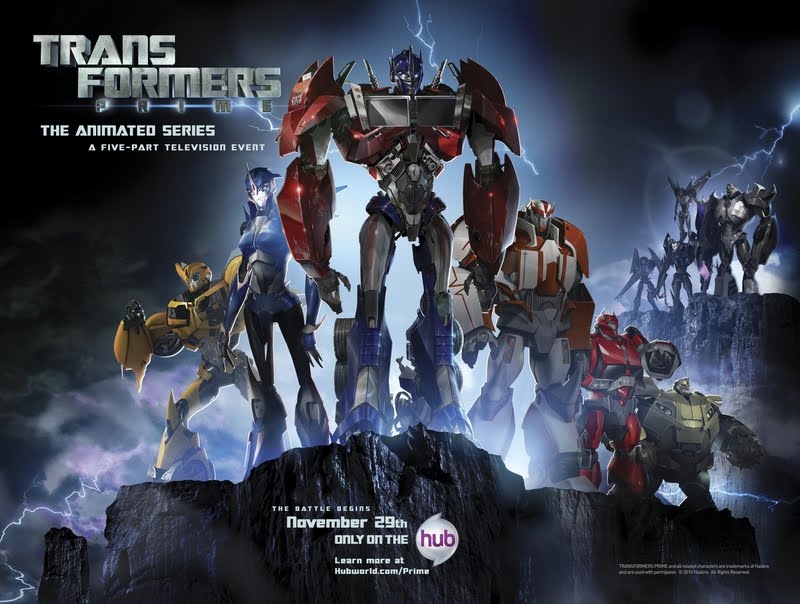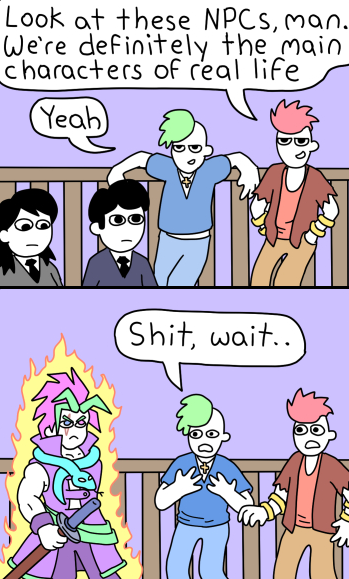
So you're reading a story featuring Alice, the obvious main character. Oh, she doesn't exactly have a flashing neon sign over her head that reads "HERO," but you've read a lot of this kind of story and you know what to expect. It's clear to you that Alice is predestined to save the day, get the guy (or girl!), and live happily ever a—
Alice just got bitten in half by a mutant T. rex?!
One reliable way to subvert the audience's expectations is to offer a Standardized Leader and then dispatch them just when everyone is convinced the story is going to be about them. This can be Played for Drama: there are few more effective ways to showcase Anyone Can Die than by taking out the apparent protagonist. (Plot Armor? What Plot Armor?) But it can also be Played for Laughs, revealing that the person who thought they were the protagonist was just a glorified bit player. Sometimes the Decoy Protagonist will even turn out to be the antagonist.
Intro-Only Point of View frequently is used to emphasize their importance before The Reveal.
What happens next is the person we perceive as The Lancer, Sidekick or even a fringe loner takes center stage as the real protagonist (maybe even Hero). Usually they reveal a much greater level of personal integrity and strength of will than previously thought.
Note that this does not necessarily involve the death of the initial protagonist, although that is often how this trope expresses itself. If the target dies, they're often a Sacrificial Lion. If the character truly was The Hero (but not the protagonist, maybe), see Take Up My Sword. Also see Dead Star Walking. Compare Quickly-Demoted Leader, when the secondary character does the heavy lifting only for the hero to take control.
In video games, this can overlap with And Now for Someone Completely Different; compare First-Person Peripheral Narrator, where the narrator is obviously not the protagonist. For the villainous version of this trope, see Disc-One Final Boss. If the Decoy Protagonist had been more interesting than the person who replaces them, expect to hear people say that they were Too Cool to Live and that They Wasted a Perfectly Good Character.
Contrast Passing the Torch, Red Herring Shirt, Disc-One Final Boss, The Unchosen One, Supporting Leader, Non-Protagonist Resolver.
Many a Survived the Beginning stunt (when the story begins with a cast massacre and the few who survive get some Plot Armor) set up a doomed character as a decoy protagonist.
Not to be confused with Supporting Protagonist, which is simply that the focus is on another character than the hero, or Fake Ultimate Hero, who doesn't appear to be the protagonist.
As this is frequently a Death Trope, beware of spoilers.
Examples:
- Despite featuring an Ensemble Cast, Naoki Urasawa's 20th Century Boys has Kenji Endo at the center of the story for the first five volumes or so, when he apparently dies in an explosion. One Time Skip later the focus shifts to his teenage niece Kanna as she attempts to finish what he started. However, in a surprising twist, Kenji comes back at the start of the third act.
- The initial protagonist of the Fourth Side Story in Alice in Borderland appears to be Tsuyaruki Hatta, an amateur boxer. He, along with almost everyone else, quickly dies, leaving newcomer Akane Heiya as the only survivor of the Seven of Spades.
- Takashi of All Rounder Meguru is clearly the star of the prologue, and his storyline is the heaviest and most dramatic element of the series, but Meguru's the one with his name in the title.
- Arachnid begins with Kumo the assassin kidnapping an orphan named Alice to make her into his apprentice. She soon comes to respect and regard him as her father, only to be forced into a fight to the death because Kumo actually wanted her to kill him and inherit his abilities.
- The first chapter of Arata: The Legend and its debut cover page on the magazine it's serialized in would have you believe that Amawakuni Arata is the main character, but he isn't - it's Hinohara Arata, who's not even on said cover.
- Attack on Titan:
- In a way, Eren is this to Historia. Not only is she the true heir to the monarchy of the walls; but the very powers Eren possess rightfully belong to the Reiss bloodline to begin with. Meaning his powers were meant for her. This leads to his Heroic BSoD as he starts to think himself as worthless and in the way of what should have been Historia's quest of slaughtering Titans and not his, until she snaps him out of it.
- Although subverted again in regards to Historia- if she'd gotten the powers he has, she'd have become possessed by the will of her ancestor, forced to abandon any quest of killing titans, and probably would have erased the memories of anyone who knew about her powers to ensure the cycle continued. In a way, Eren having these powers saved Historia, and allowed her to become a hero of her own.
- In an overall sense, even after coming back as a Titan, Eren has been mostly out of focus and he mostly seems to serve as The Big Guy and the MacGuffin Super-Person. The cast seems to function more in an ensemble with plenty of different view points just as important (if not more) as Eren's. This turns out to be a very important plot point, as Eren becomes disgusted with the humans outside of Paradis, especially the Marleyans who have a huge hate-on for every Eldian both on and off the island and want them all wiped from the face of the earth. And later on, with his half-brother Zeke's help, he manages to fully unlock the Founding Titan's power and triggers the Rumbling to Kill All Humans outside his homeland, becoming the final Big Bad of the story. And sure enough, an alliance between the remnants of Paradis's Scout Regiment and Marley's Warriors team up to stop Eren, with Armin engaging him in a Final Battle and Mikasa landing the ultimate killing blow.
- However in a sense, all of what is explained above is massively subverted to some degree, as Eren orchestrated all of these events, including the Final Battle, his death, and even the events prior to the two via paths. All so that he could pull off a Thanatos Gambit in taking the fall for Eldia's retaliation, leading to a scenario where his friends would be hailed as heroes to the rest of the world, while at the same time, Paradis Island is ensured its safety, ultimately resulting in the conflict ending in peace. So in some way, Eren has been the main character all along; he just took a more unorthodox approach regarding the role close to his final moments.
- Baccano!:
- Lampshaded and discussed by the Vice President of the Daily Days Newspaper and his aide Carol. In trying to put together the events of the story for their newspaper publication, they try to figure out who the "main character" of it would be. Carol insists that Firo is the protagonist because he's "main character-ish." Given the deliberately disjointed nature of the series (in the anime anyway, the source books are much more chronological), as well as the ridiculously huge cast of "main" characters, she manages to be completely right and way off the mark at the same time.
- If one defined "main character" based on screen time alone, Isaac and Miria would fit. They are also the only ones to show up in every single timeline (except for 1711). However, this doesn't hold true in the novels past the anime, since - starting as early as Volume 5, the first volume past the anime's adaptation - there are entire volumes in which Isaac and Miria simply don't appear at all, maybe save for occasional prologue/epilogue cameos. This serves to only further dilute their presence in the story and bring it more or less down to par with how much screentime everyone else in the story has, making for a true Ensemble Cast.
- In Basara, everyone thinks that a boy named Tatara is The Chosen One—he fits the prophecy to a T—until the king he’s supposed to overthrow hears about him, rides in, and takes his head from his shoulders. Tatara's twin sister Sarasa, who grew up in her brother’s shadow and has basically been forgotten about by almost everyone, rises up to take his place. Literally.
- Aaaaand while we're on Urasawa, Billy Bat now has the death of Kevin Yamagata, after which Kevin Goodman takes over as the true protagonist.
- The sequel to Black Butler sets up Alois Trancy and Claude Faustus as the new Master and Butler duo, until Sebastian comes back, and Ciel is brought back to life. All in the first episode.
- Blassreiter: This guy got a lot of screen-time. He's great. His life is wrecked, but he should not give up. He got The Virus but clearly has enough of Heroic Willpower — look, he doesn't kill when even non-infectee could be tempted a lot! He must be the protagonist! Right?.. Oops, he turns out to be but one more deadman, who just kept the horror scenes of imminent Ninja Pirate Zombie Robot Apocalypse from being looked upon as A Million Is a Statistic.
- Waku from Bokurano is presented in a way that couldn't be mistaken for anything other than the classic Hot-Blooded shonen Kid Hero. At least until he dies after piloting the robot in the second episode (first volume of the manga). The focus shifts between the characters whose turn it is to pilot Zearth and die after their battle, but Ushiro, the final pilot, is probably the true protagonist, given that he gets the most focus and Character Development.
- In Nobuhiro Watsuki's Crescent Moon in the Warring States, the protagonist is actually Isshinta, not Hiko Seijuro as many readers believe.
- In The Daughter of Twenty Faces, the audience is lead to believe that the main characters are the crew of sympathetic thieves that Chizuko hooks up with. Then comes Episodes 6 and 7, where most of the thieves are killed and Chizuko is sent back to Japan. It's there that we meet Chizuko's real supporting cast; Shunka and Tome.
- Dead Mount Death Play: The prologue frames its characters in such a way that when one of them is reincarnated into the modern day as a boy named Polka, it's assumed to be The Hero Calamity Crusher. Only later is Crusher revealed to be still alive and it's his nemesis, Corpse God, who has reincarnated as part of a Thanatos Gambit.
- Dorohedoro: Played with in regards to Kaiman, while he is a very central character for the first third of the series, as the mystery of his murder is the central hook of the story, but with the story progressing, the narrative becomes much less focused on him and starts giving the multiple factions involved similar amounts of screentime. During the second third of the series, he vanishes due to his original personality coming back, and he doesn't return until the final part of the story, by which point he is arguably only one of multiple protagonists, though he is still the one to fight the main Big Bad.
- Gohan from Dragon Ball is this to his father, Goku:
- In the Buu Saga, it's established that Gohan has taken over his father's role as the key protector of the world (as the finale of the Cell Saga supported). In the manga, the beginning of the Buu saga even starts off with Master Roshi saying that the series will continue "just a while longer" with Gohan as the main character, while in the anime, the intro and outro sequences for the Buu saga focuses on Gohan as the lead protagonist. A good chunk of the Buu arc either focus directly on Gohan or a good amount of side-character stalling while Gohan trains on the Kai Planet to awaken his dormant powers, presumably arriving at the last minute to save the day much like how Goku was previously portrayed, and indeed Gohan does arrive and one-sidedly beats Buu into the ground. However, Buu applies some clever thinking and manages to power-up enough by absorbing said side-characters to turn the tables on Gohan, and when Goku arrives to provide assistance Gohan himself ends up being absorbed by Buu to invoke the Darkest Hour, leaving his father to take over as The Hero once more (with Vegeta returning as The Lancer) for the remainder of the arc and even into the next series.
- Gohan seemed to regain, at least, a solid Deuteragonist status during the Universe Survival saga, being made The Leader of his team, getting a lot of buildup to the regaining of his powers, and even being the one to finish off Universe 10 in a big character moment for him. One of the Universe Survival EDs even ended on the note of him and his father standing side by side and charging forward. When the saga actually gets down to the U7 vs U11 endgame, however, after a single episode he's eliminated while fighting Dyspo due to Frieza's running out of stamina to keep up the cage, necessitating that he takes himself down with him as the endgame continues to focus on Goku, Vegeta, Frieza, and most shockingly 17. After defeating Universe 10, he didn't have all that much to do until that point, either, besides team up with Piccolo to defeat Universe 6's final members.
- Dr. STONE:
- The series starts following Taiju Ooki, a hot-blooded yet dimwitted high school student who wakes up thousands of years in the future after every human was turned to stone, only finding his friend the hyper-intelligent Senku, who plans to rebuild society with his immense knowledge of science. After two volumes and freeing Taiju's love interest and the main villain, Taiju goes undercover in the latter's group and the manga now focuses on Senku as he shows a village of cave-people various forms of science. So not only is Taiju not the protagonist, he's not even the deuteragonist.
- The first four chapters of Dr. STONE reboot: Byakuya are about Byakuya and the astronauts' return to earth. The rest of the story focuses on Rei and its efforts to keep the ISS in orbit until Byakuya fulfills his promise of coming back.
- From the same author of Baccano!, Durarara!! has Mikado Ryuugamine who may look like he's the protagonist because he was the focus for the first episode. You might be thinking "huh, so we get to see Ikebukuro from the eyes of a Naïve Newcomer". Until you see his biggest secret. Word of God says that Celty is the protagonist of the series, not Mikado.
- Emerging: Since she appears on the cover and since the first chapter revolves around her, it's very easy to mistake Akari for the series' protagonist. She gets infected with the disease at the very beginning of the story, and from then until the very end does nothing except lying in her hospital bed looking miserable. Her family doctor becomes the hero.
- The first episode of the anime The Eminence in Shadow is from the point of view of a School Idol who was traumatized by the press attention after being previously kidnapped. Currently back in school, she is kidnapped again and saved by a mysterious vigilante. Said vigilante, who turns out to be the main character, then delusionally runs himself into a truck, with the story following his reincarnation from there.
- The demon-hunting squad you're introduced to in the first episode of Ga-Rei -Zero-. They're all distinctive, have some interesting chemistry and seem like a skilled bunch. They all die by one of the actual main characters, who just completed her Start of Darkness. At the end of that very same episode. They were included on promotional material.
- Genma Wars opens with a young man named Katsu fighting in a tournament to join the Genma tribe and manages to win, but then his father the Maoh King arbitrarily executes him For the Evulz. The poor dude doesn't even make past two minutes before dying. The series is about the the king's other children and given Katsu isn't featured in the opening credits, it makes sense he is the Decoy Protagonist.
- Ginga: Nagareboshi Gin started out with Daisuke as the protagonist and was your typical A Boy and His X story. Eight episodes in it had a Genre Shift when the attention changed to his dog, Gin, and Gin ran off to join a pack of feral dogs. Daisuke doesn't appear again until the tail end of the series and is nowhere in the sequel anime.
- Goblin Slayer infamously has the Greenhorn Trio. After giving each a backstory and a little characterization, they set off with a Priestess on their first goblin hunt... and they get horrifically slaughtered, poisoned, molested, or raped. Just when the goblins have poor Priestess cornered and are ready to do the same thing to her, Goblin Slayer, the real protagonist, arrives, rescues Priestess and then shows her how real goblin slaying is done, taking her under his wing from that moment on.
- Henrietta is very obviously the main character for Gunslinger Girl. As the series goes on, however, Triela is given noticeably more and more spotlight while Henrietta becomes more of a side character. Henrietta is in fact the second major girl to die and Triela is the last.
- This trope is played with in the first season (Question arcs) of Higurashi: When They Cry where the central protagonist switches from character to character. It is only in the second season (Answer arcs) where it is revealed that the real main character is actually Rika Furude. The partial reboot Gou has a variation where it plays as a straight reboot for the first episode, and then the beginning of the second episode hits to tell you who the real main protagonist is (to Rika's horror).
- In Jewelpet Kira☆Deco!, Retsu seems like the typical hero: he's Hot-Blooded, he's the leader of his Sentai team, he's front and center, he gets the color red, he's the first to introduce himself. But it's Pink, The Heart and the one girl, whom the story revolves around.
- JoJo's Bizarre Adventure: Hirohiko Araki's book; Manga in Theory and Practice: The Craft of Creating Manga, references East of Eden and Roots (1977) as inspirations in handling JoJo's generational storyline. Jonathan Joestar was originally marketed as the protagonist, but he is the lead only in the manga's first Part, titled Phantom Blood (Originally titled Jonathan Joestar: His Youth). After the end of his Story Arc, he is succeeded by his descendants who all inherit his nickname, JoJo, after he is killed by Dio Brando's disembodied head.
- In Joker Game, everyone thought Lt. Sakuma would be the protagonist, largely owing to his personality being a fairly standard one in works portraying the WWII era. However, he disappears from the story after episode two, having refused Lt. Col. Yuuki's invitation to join the D Agency, and is only mentioned again once in passing. Inasmuch as this series has a protagonist, it's probably Lt. Col. Yuuki.
- Kengan Ashura's sequel, Kengan Omega begins with Koga, a cocky martial artist who has been expelled from multiple dojos for his troublemaking tendencies, looking for a more challenging fight, and getting involved in the Kengan matches through Yamashita, and being recruited as his company's potential replacement fighter after Ohma apparently dies at the end of the first series. However, just before the big Kengan Association vs Purgatory matches rolls around, he and Yamashita get ambushed by several Worm Agents, and Koga gets severely injured in the process. This makes him realize that he's nowhere near the level he needs to be to fight in the underground matches, and with Ohma returning to take his spot, Koga quickly gets sidelined in favour of the other fighters.
- Keyman is the title character in Keyman: The Hand of Judgement, but he gets killed by the end of the first chapter. For the rest of the story we follow Detective Alex, an anthropomorphic T. rex, as he tries to solve the murder case.
- Legend of the Galactic Heroes has two main characters: Reinhard von Lohengramm of the The Empire and Yang Wenli of The Alliance. While Yang Wenli IS the most important character of the democratic cast, he's assassinated three-quarters of the way through - completely changing the dynamic of the show. Yang's protégée Julian succeeds him in the last season while Reinhard is a protagonist throughout.
- Maria no Danzai: The entire first chapter is shown from Kiritaka Nagare's perspective, making him appear to be the typical protagonist, but at the end of the chapter, he is killed by a truck. Giving way to the real protagonist, his mother Mari.
- For the first few episodes of Mobile Suit Gundam SEED Destiny, Shinn Asuka was clearly the main character. He got the most focus, piloted the classic-inspired Mobile Suit (and later the Destiny Gundam), and was front and center on promotional art. However, he was very quickly Demoted to Dragon and either Kira Yamato or Athrun Zala, members of the cast of the preceding Mobile Suit Gundam SEED, take center stage. While Shinn is still present in the series, he's Out of Focus for much of it, being a static character who would occasionally pop up to be angry or do something, only getting a bit more focus later in the show. It's to the point that the initial part of one of the openings features Kira and Athrun without Shinn! Athrun could be considered the true main character of the show, as he has the most screen time out of the three main characters, the most consistent plot relevance and the TV movies were narrated from his perspective. However, official sources still identify Shinn the main character all the way through the series.
- In Modern Magic Made Simple, Yumiko has the focus in the first episode until it's shown that Koyomi is the main character.
- In the Moldiver episode "Metamorforce!", Hiroshi Ozora in his Moldiver 1 form appears in the opening sequence. His development of the Mol unit and battle with the Machinegal Dolls's mecha at the race queen contest takes up a major part of the episode's first half. However, it's all to set up his younger sister Mirai as the true protagonist of the series.
- Molester Man has a decoy deuteragonist. Miss Understanding seems like she'll be the Love Interest and deuteragonist for the first 3 chapters. Chapter 4 reintroduces Kansai and she quickly takes hold of the bulk of the chapter. By Chapter 5, Kansai takes center stage and from then-on, Miss Understanding is relegated to being a background character.
- Richard Braun is this for Monster. Not an entirely straight example, because he isn't this way for the series as a whole, just for an arc that takes up volumes 5-9. Still for that arc, this trope definitely applies.
- The prologue episodes of Muv-Luv Alternative: Total Eclipse follow Yui Takemura, before episode 3 switches to Yuuya's viewpoint.
- One Piece:
- Paulie is a decoy Arc Hero in the Water 7 Arc. The Straw Hats have come to Water 7, home of the world's best carpenters, in search of a shipwright for their crew, and Paulie happens to be the best shipwright at the largest shipwright company on the island. He has a very well-developed fighting style involving the use of rigging ropes and the amusing personality quirk of being constantly in debt. We learn of a better shipwright, Franky, who supposedly betrayed the company, but he's set up as the arc's villain, making it a surprise when, as the arc proceeds, he receives a tragic past, a connection to the series' Myth Arc, and a quirky fighting style of his own. Guess who ends up joining?
- Vivi also counts as a Decoy Crew member. She travels and adventures with the Straw Hats for over three story-arcs, is even given her own theme song and commercial eyecatcher, but at the end of the day it's the previous villainess Nico Robin who joins as they leave Vivi behind to rule her country. Now that's a plot twist.
- Amatsuyu from Oresuki believes he is the shy, pure everyman protagonist of a harem story. He is in a harem story, and we do follow it from his point of view, however as he soon finds out to his horror that he's just a side character and his best friend is the real protagonist. At least for a while. Then some of the harem starts warming up to Amatsuyu instead...
- Oshi no Ko does this twice over; at first it appears the doctor who Ai came to to deliver her babies is set to be the protagonist. Then an obsessive stalker of Ai's murders him, making it seem Ai will be the protagonist instead. Then Ai's babies are born, and the doctor and a girl that was also a big fan of Ai's when alive turn out to have been reborn as Ai's kids, and share the protagonist role going forward. As an added cruel twist, the stalker proceeds to murder Ai as well.
- And back to Urasawa, Pluto tells the story mostly from Gesicht's point of view for the first six volumes - up until his murder. Epsilon and then Atom take on the mantle of the hero, though Gesicht's memories play a role in the final confrontation against Pluto.
- An odd example during the first episode of Pokémon: The Series: The show opens with a Pokemon battle occurring between two trainers, even replicating the opening of the first game. Could one of them be the protagonist? No. Instead, we are quickly introduced to Ash, who is watching the battle from his home in Pallet Town. We never even learn the names of the two trainers, or which one of them won the battle, for that matter.
- The first episode of Popotan starts out with Daichi discovering the real protagonists' mansion as he explores a field. He walks inside... It's dark, and lit only by a Christmas tree... Suddenly, "UNA!" He runs into the hallway, having been startled by Unagi, and runs into the bathroom door as Ai comes out wearing only a towel. It's from here on that we meet all the real protagonists as he frantically attempts to flee the house. He is present during the last minute of the episode, after the girls leave, but is only ever seen again in episode 7 (as an adult, except for flashbacks) and the last episode (when Ai travels back to the time she and her sisters first met him).
- Psycho-Pass has Shinya Kougami heavily featured in the promotional videos and openings as if he's the protagonist mostly ignoring Akane in favor of featuring him with Makishima in photos. While he's still the main character alongside Akane, he takes quite a backseat to her, who grows significantly more as a character and ultimately receives the most spotlight.
- Puella Magi Madoka Magica:
- This trope gets played with all over the place. Despite being the title character, Madoka is more like the Muggle Best Friend to Sayaka, who becomes a Magical Girl and has a personality much more commonly associated with protagonists; according to Word of God, she is the hero of the story. This becomes muddled as Sayaka grows darker, becomes a Witch and is Mutual Killed by Kyoko. From episode 10 on the story is more focused on Homura, with Madoka's role as a Living MacGuffin making her important to the finale.
- Gen literally says "I think the human protagonist is actually Homura." in an interview.

- Puella Magi Madoka Magica The Movie: Rebellion is more of a straight example. The film follows Madoka at first, but then Homura takes over the plot right when things start happening.
- Puella Magi Oriko Magica had an odd case. For starters, the title character isn't even on the cover of the first volume. In fact, it's an Antagonist Title; Oriko is the villain. The real protagonists, at least in the first volume, are Kyouko and Yuma, the girl who actually was on the cover. Mami functions as a secondary protagonist. And then in the second volume, Homura becomes the protagonist.
- Puella Magi Suzune Magica sets up Arisa as the protagonist and Suzune as the villain and follows on this premise for the first two volumes. Then Volume 3 happens where the actual Big Bad Kagari shows up to interrupt Arisa and Suzune's showdown when it looks like Arisa will win to murder the former and revealing she manipulated the latter this whole time as part of a convoluted Revenge scheme for her own entertainment. At that point, secondary character Matsuri steps up in the protagonist role to stop her insane sister and save Suzune. Interestingly enough, Word of God has it that Arisa was supposed to be the sole protagonist until they started to give Suzune more of a POV, and then Executive Meddling hit hard when they were asked to expand the plot beyond two volumes, which added Kagari and her arc.
- Scott Pilgrim Takes Off: The trailers and first episode made it seem as though the anime is a straight adaptation of the comics, only for Scott to be apparently defeated and killed by Matthew Patel at the end of the first episode. The majority of the series focuses on Ramona Flowers, as she discovers Scott is still alive and sets out to find the person responsible for his disappearance. Of the remaining seven episodes, Scott is only in the last three (and only shows up at the very end of the sixth).
- Serial Killer Reincarnated In Another World has The Goddess reincarnate The Isekai Killer into a new body so he can carry out his mission. The next panel of the manga shows Ouga who is set up as an absurdly powerful reincarnated person with a dark, homicidal side, making us believe he is the Isekai Killer. However as he began killing his party members for no rhyme or reason, it turns out one of them, the low-level, cheatless priestess Shirukyi, was revealed to be The Isekai killer and made swift (and brutal) work of Ouga.
- The First Episode of Shiki follows Megumi as the central character and her life around the village. She's dead by the end of the episode
- Sket Dance begins with Teppei's first day in his new school and meeting the eponymous Sket-dan. Then the chapter ends and he never appears again aside from a few cameos.
- Symphogear featured Fiery Redhead Kanade Amou in the promotional material, and the beginning of the first episode implies that she's the main lead, being an Idol Singer Magical Girl Warrior. She gets Killed Off for Real in the middle of that same episode, and the focus shifts to the true protagonist, Naïve Newcomer Hibiki Tachibana.
- In the second "season" of Takemitsu Zamurai, a bandit leader named "Glass-eyed Tetsuzo" is set up to be the new antagonist after landing in jail. Unfortunately he's Too Dumb to Live and kicks previous antagonist Kikuchi awake. The next morning, Tetsuzo is found with his head twisted off and Kikuchi is now the owner of a pretty marble, which he eventually uses to burn the prison down and escape.
- Talentless Nana: In the very first chapter, we're led to believe that Nanao Nakajima is the protagonist and title character; he doesn't seem to have any talents or powers as the title states, and we get an in-depth look at his backstory. By the end of the chapter, he is pushed off a cliff by the real protagonist, Nana Hiiragi. Roughly 50 chapters later, it transpires he's Not Quite Dead and has pulled a Face–Heel Turn, becoming one of the manga's main antagonists instead while Nana herself has ironically mellowed out into a more geniune The Atoner hero.
- Most of the plot of Tekken: Blood Vengeance revolves around a character who is supposedly immortal due to being experimented on by the Mishima Zaibatsu. In the last fifteen minutes of the movie; Heihachi, Kazuya and Jin all literally burst into the room he is standing in, Heihachi unceremoniously kills the allegedly immortal guy, and the climax of the movie is a huge three-way fight between the Mishimas.
- Tengen Toppa Gurren Lagann: Kamina has all of the markings of a typical Super Robot protagonist; Hot-Blooded, charismatic, and serves as founder and The Leader of La Résistance. He dies less than halfway into the series and the focus shifts towards Kid Sidekick Simon for the remainder. This isn't as blatant as most examples however as Simon is clearly the main viewpoint character (the series starts with his inner monologue) and was at least a Supporting Protagonist before Kamina's death.
- Double subverted in The Tower of Druaga. Neeba is shown to be the leader of his group early on with Jil showing up as a mysterious badass... who then gets knocked out within five seconds of first encountering an enemy and has a sort of goofy flashback for most of the first episode about how his journey started... which turns out to be a dream while the rest of his party saves him. His brother, Neeba is seems to be the real hero, for much of the early show. Then his brother turns out to be the Fake Ultimate Hero, and the second arc supplants him with Jil.
- Tsubasa -RESERVoir CHRoNiCLE-:
- For the first dozen volumes of the manga and all of the anime, the series seems to be a typical shounen series about strength and determination, centering on typical shounen hero Syaoran with the other characters in supporting roles. However, that changed when Syaoran turned out to be a clone and puppet of the Big Bad, splitting off from the party and going to wreak evil havoc. At that point the focus of the series switched to former motivational love interest Sakura, at least until SHE died several volumes later.
- Clone Syaoran can still be considered to be the main protagonist for the first half.
- In Vexille, the first half of the movie is spent with Vexille, who's part of a force that's about to stage a covert operation against an isolationist nation. The second half of the film reveals the protagonist to be Maria, a character who wasn't introduced in the first half. Indeed, pretty much everything Vexille was trying to do didn't matter at all. Maria's the one who knows what the stakes are, has devised a plan to thwart the villain, and has gathered together a group of people to execute said plan. She has a direct and personal connection to the villain, as well as people on her side who she has to work against to gather resources and manpower to pull off her scheme. The story in the second half continues to be told from Vexille's point of view, yet her main contribution is to have things explained to. And to pilot the Mecha.
- In The World Is Mine, we meet the two Villain Protagonists Toshiya and Mon driving down the highway, with Mon having sex with a flashy-looking high school girl. She describes herself to the audience as if she'll be the protagonist ("My name is Miho, seventeen years old, love sex!") and is then pushed out of the car into oncoming traffic. The real female protagonist is a plain-looking girl and one of the few people that Mon doesn't want to rape or kill (Mon actually curls up into her lap and falls asleep like Berserker Rage Ranma).
- YuruYuri: A running joke is the 'main character' Akari worrying constantly about her complete lack of screen time, character traits, and presence. Although she leads the opening segment, she's always interrupted, ignored, or distracted by something. Once or twice, she only appears to tell the audience that she won't be in the rest of the episode.
"I'm Akaza Akari and I'm still the protagonist!"
- Sistine Chapel: A casual viewer of “The Temptations of Christ” would have you believe the beautiful young man in the center would be, well, Christ. But turns out that viewer's less observant than a blind corpse, because everything surrounding the center of the painting shows Jesus in the background refusing old man Satan and his advances. (The person in the foreground is a healed leper, showing himself to the Jewish High Priest in order to certify the cure.)
- In the first episode of the children's audio series, The Hanna Jo Stories, it appears that Edward is being set up as a potential main character for the series. But at the end, it turns out that it is actually Edward's brother Allen (who had only a small part in the first episode) who ends up traveling with Hanna Jo and becoming the series' second lead. Edward remains simply a recurring guest star.
- In a third act switch, Archangel Cameron in Archangels: The Saga. He's the main character for the first seven issues and for the epilogue of the 9th, but in Issues 8 and 9, the famous archangel Michael is summoned by God to issue the Big Bad's final defeat and he becomes the new focus character.
- Avengers: The Initiative: The first issue opens by introducing the reader to three young heroes who end up at an Initiative-run boot camp: Cloud 9, MVP, and Armory. The first is a Naïve Newcomer who got forced to join when she was caught flying around, the second is the great-grandson of Dr. Abraham Erksine (the guy that gave Captain America his powers), and the last is an Ascended Fangirl who's eager to sign up. Looks like we've got our main characters, right? Nope; Cloud 9 is the only one who stays past the first issue, while MVP is killed in a training accident and Armory (the one who killed him) is forcibly stripped of her powers and thrown in an asylum.
- The first Azrael miniseries begins with what appears to be the title character being shot and killed in the first few pages. As it turns out, this was the main character's father and the mantle is a Legacy Character. Batman himself also serves as one, as despite having top billing in the original miniseries and having most of the focus for the first half, he is captured halfway into the story by LeHah and the remainder of it focuses on Azrael joining forces with Alfred to rescue him.
- Bitch Planet #1 follows Marian Collins as she is transported to the titular prison for "non-compliant" women...until her death at the end of the issue, which brings the real protagonist of the series into focus.
- Like a lot of comics, Neil Gaiman's Black Orchid lampshades Bond Villain Stupidity. Unlike most, the Mook really does shoot the main character in the head. He doesn't know that she can regenerate, but he sets her on fire to be absolutely certain she's Deader than Dead. Given this is on the second page of the first issue, it's a good thing Me's a Crowd.
- Double Subverted by Black Science. First, the perspective shifts from Science Hero Grant to Action Hero Ward when the former is put out of commission. Then, after Ward is killed, the perspective shifts back to Grant... who is himself killed off two issues later. The real protagonist so far seems to be Kadir, who was introduced as a stock Corrupt Corporate Executive villain.
- Bloodquest has a particularly tragic and brutal example of this trope: Leonatos is the leader of the Blood Angels' squad on a quest to retrieve their chapter's relic after it was lost. He pulls a Heroic Sacrifice to save the last two remaining members of their group so they could return the relic while he stood behind in the Daemon World to make his last stand. The two survivors - Lysander and Cloten - become the new protagonists and embark on a quest to rescue Leonatos... Who is revealed to have been possessed and turned to Chaos.
- The Bojeffries Saga introduces us to the titular family through the eyes of a rent collector trying to get back rent from them. He gets turned into a geranium plant at the end of the first arc.
- Curse of the Mutants is a storyline revolving around the X-Men as they fight against vampires lead by Dracula's rebellious son Xarus, who lead a coup to depose him. However, the prologue of this event doesn't follow any X-Man, but rather Dracula's other son Janus, who observes the coup up close and attempts to defy his brother to no avail. He doesn't have anymore relevance in the plot beyond the prologue, not appearing again except in a short supporting role, as the X-Men are the real focus of the story.
- Department of Monsterology:
- A non-fatal example: we are initially introduced to Emma Hampton and Team Challenger and are led to believe that they are going to be the main protagonists (with The Hero being the Naïve Newcomer Emma Hampton). However, after their initial scene, one of them mentions Team Carnacki who then become the main protagonists, with Team Challenger being Demoted to Extra afterwards.
- The two body-jumping villains appear to be set up as the Big Bad Duumvirate, or at least as major antagonists. They ultimately turn out to be Decoy Antagonists, and are defeated by the end of the initial story arc.
- Green Arrow has a unique case for its second volume that began in 2001. For most of the first storyarc, "Quiver," the reader is following the newly resurrected Green Arrow, but with a large chunk of his memory removed, as he doesn't remember anything since his "Hard Traveling Heroes" period with Green Lantern. As it turns out, we've only been following Oliver's Soulless Shell, while his soul elected to remain in the afterlife. It isn't until "Quiver's" final chapter where Oliver's soul returns to his body and he's truly back in both mind and body.
- Guardians of the Galaxy: A non-fatal example with the first story. Astronaut Charlie-27 is the introductory character and gets most of the page time, but every story about the original Guardians from then on tends to revolve around the entire team, with Major Victory as front and center protagonist. Charlies does remain a main character, just not the main character.
- The first story of the comic Hieronymus Bosch starts with a murder mystery, with who appears to be the butler as the culprit who flees from the scene. Near the end of the story, it's revealed that he's actually the title character, a paranormal investigator who's chasing the real killer.
- The Mask is a very good example of this. Stanley may be the first person to wear the Artifact of Doom but he is not the main character. It is debatable after the 2nd series of books whether the wearer of the mask is the main character or if it is Kellaway (the Sympathetic Inspector Antagonist). And Big Head is just the Big Bad.
- In Noob, being the player whose Day in the Life is shown at the beginning doesn't guarantee being the focus for the rest of the comic.
- Used to great effect in Origin, in which it turns out that the kid who looks like a young Wolverine, is nicknamed "Dog", and has the surname "Logan", isn't the one who grows up to be Wolverine. The real young Wolverine is actually James Howlett, who starts out as a sickly rich kid living in a manor house in Alberta—though Dog is heavily implied to be his half-brother (and may or may not be connected to Sabretooth in some way).note
- Radiant Black had a strange case of this. The first handful of issues focused on Nathan Burnett, a struggling writer who is forced to move back home with his parents, who eventually gained superpowers as Radiant Black. However, after running into his Starter Villain, Nathan is sent into a coma and the powers pass on to his best friend Marshall Ward, who becomes the true main character, with concept art released later even indicating he was always intended to be the main character. However, mixed reception to Marshall and some fans wanting Nathan back resulted in Nathan waking from his coma and both sharing the powers, at least for a time, before a real-life vote decided who would be Radiant Black... which was defied again by the series releasing dual-stories across separate issues, with one story focusing on Nathan keeping the powers while the other focused on Marshall keeping them.
- Raptors: Vicky Lenore is the actual protagonist, but Drago and Camilla are featured on all the covers and are basically a Spotlight-Stealing Squad.
- Reborn opens with Harry Black being murdered by a crazed shooter and his soul being transported to a fantasy afterlife realm where he and others fight against the forces of darkness. The focus then immediately changes to his widow Bonnie, who is the comic's actual protagonist.
- Runaways, though focused on a team, set up the leader Alex Wilder as the overall protagonist of the series. He was the one who lead the other kids to discover their parents were supervillains as the Pride, helped the team acquire/discover their artifacts and powers, was made to look like he'd be an official couple to Nico Minoru, was the Audience Surrogate as the only member with no powers or special gadgets, and led the overall charge to end the Pride once and for all. Then, as it turned out, Alex was loyal to the Pride the whole time, and was plotting to use the others to fulfill his plans to undermine the Deans and the Hayeses, the two non-humans that planned to betray the others, and actually succeeded... only to be killed off not long after by the Gibborim. For the record, this was at the end of the first arc in a series that has ran over fifty issues. Afterwards, there's not really a protagonist, though Nico fits closest as the new leader.
- The Sandman (1989) gave us a Decoy Antagonist with Roderick Burgess, the warlock who imprisons Dream in the first issue. He seems to be set up as the Big Bad, or at least as a major antagonist. Then it turns out that the first issue spans 70 freakin' years. By the end of issue #1, Burgess has died of old age, and his son Alex is a harmless, senile old man. After Dream escapes, he leaves him in a permanent nightmare and never sees him again.
- Grant Morrison's Seven Soldiers series begins with a member of the original Seven Soldiers, the Vigilante, forming a new team consisting of himself, a new Whip, Gimmix, Boy Blue, Dyno-Mite Dan, and I, Spyder (a seventh member "got cold feet"). They all die at the end of their issue, paving the way for the real protagonists: Shining Knight, the Guardian, Zatanna, Klarion, Mister Miracle, Bulleteer, and Frankenstein.
- Shakara:
- The comic begins with a human thinking he's the Last of His Kind after the Earth is destroyed. He's killed on page 3 by a much larger alien right before the real protagonist, Shakara the Avenger, is introduced.
- A later issue introduces two tomb raiders who team up to find the lost treasure of the Shakara homeworld. After facing many perils, they're unceremoniously shot by Buggerian mercenaries.
- Southern Bastards builds up Earl Tubbs as the protagonist of the series for the first few issues, focusing on him being the only man to stand up to crooked Coach Eustass Boss and his cronies. He's killed by Boss at the end of the first storyarc, who takes over as the Villain Protagonist of the whole story.
- James Robinson's Star Man series had a similar opening with a superhero being killed in the first two pages, only for his brother to take up the mantle.
- Steam Wars makes us think that it'll focus on the Luke Skywalker Expy, Beauregard Baron, will be the main character. In truth though it's actually the Princess Leia Expy, Duchess Imoen.
- The DC Rebirth era Superwoman series was promoted as a series following the New 52 Lois Lane after she got some of the New 52 Superman's powers. She dies at the end of the first issue and the real central character is Lana Lang, who got a different powerset.
- Switch (2015), Stjepan Sejic's teenage take on Witchblade, introduces its heroine in this manner:
"A new bearer was ready. The time was right. Witchblade knew that the this bearer was to be an exceptional woman. (Close-up shot of a beautiful red-headed woman) A paragon of courage, exceptional willpower and most likely great beauty. (Frame pulls away from the redhead to focus on a goth-looking girl behind her) So why did it choose me?"
- Touch (2004): Rory Goodman (Coop's first hero) is the main focus of the first book before Coop takes away his powers after he makes the agency look bad (Rory later comes back looking for revenge).
- Transformers: Wings of Honor: Follows Metalhawk's group (with The Hero being the Naïve Newcomer Dion), and Onslaught's in their war against the growing Decepticon uprising lead by Deathsaurus. In the final few comics, Onslaught's team reneges, and kills half of Metalhawk's team, with Dion defeating their combined form. Then the protagonist switches to Magnum, the leader of the Elite guard which Onslaught and his men wiped out. He and the rest of the survivors, including Dion, fight Deathsaurus and beat him. Deathsaurus turns out to be a Decoy Antagonist, and is beaten and overthrown by the true antagonist Megatron. Megatron leads an attack on the Autobots, fatally shooting Dion and Magnum. Alpha Trion takes them, and rebuilds Ultra Magnus from one of them, while the other dies, and Ultra Magnus welcomes the true hero of the war, Optimus Prime.
- Trailcutter, a minor character in the first season of Transformers: More than Meets the Eye was given a promotional card in the lead up to the book's second season along with some of the other major players and called "The Catalyst". He is killed off shortly into the season by an ungrateful member of the Decepticon Justice Division. However his act of kindness has repercussions that impacts the rest of the book and carry over into its successor.
- Über: Patrick O'Connor has all the markings of The Hero, being a brave American soldier that volunteers for the process to become a Super-Soldier and fight against the Nazis just like Captain America. He then goes up against Sieglinde and gets killed in the most horrible manner imaginable. Due to the Anyone Can Die nature of the story, no character whom the audience may feel like is the protagonist seems safe.
- Ultimate Marvel:
- The Ultimates: Ray Connor, the kid who takes up the Daredevil identity after the death of Matt Murdock in Ultimatum. We're given an issue dealing with his origin and background and the book makes it seem like he's being positioned as a major character in the mold of previous Legacy Characters...but then at the end of said issue, he gets bitten by a vampire.
- Ultimate Marvel Team-Up: The role of Spider-Man in the Punisher and Daredevil arc is minimal. It may be argued that he's there just because he's supposed to be the protagonist, because his role could have been completely avoided.
- Spider-Men II: On paper, this is a team-up of both Spider-Men. Actually, it's the story of the adult Miles Morales, with both Spider-Men thrown in. They have little actual weight in the plot. They never even find out where the portal leads to, nor there is an eye-to-eye meeting of both Miles.
- The 2016 Venom series opens with a former soldier named Lee Price becoming the new Venom after encountering the symbiote. Lee serves as the protagonist for the first arc, after which he is arrested and stripped of the symbiote, who remerges with Eddie Brock.
- X-23: Innocence Lost tells the story of X-23's creation and provides the groundwork for how she became the Broken Bird Dark Action Girl she's best known as. However, Laura herself is not the main character, and in fact isn't even born until roughly halfway through the book. The story actually focuses on Dr. Sarah Kinney's attempts to create her, the events that lead to her decision to free Laura from the Facility, and her accidental death at Laura's hands.
- The first issue of the Peter Milligan / Mike Allred era of X-Force introduced an entirely new cast of characters, with the main PoV character being the team's leader Zeitgeist. All but two of the team were then violently killed off at the end of the issue, including Zeitgeist, establishing the Anyone Can Die dynamic that the run would have.
- The Last Firebender (sinistercinnamon): The author jokes that Momo is the real protagonist. He hangs out with Zuko and helps him out during Zuko's point of view chapters, and once the POV switches to Azula Momo starts hanging out with her instead.
- In 72 Hours, Nick Savini and Tamyra Carpenter are set up as the protagonists and the main couple...up until the fourth chapter, where Nick unwittingly blows himself up and Tamyra gets shot in the heart.
- Alternative Class Despair: Since Chiaki served as the protagonist in the Killing School Life, you'd expect her to be the protagonist of the Future arc as well. Instead, she ends up taking Kyoko's Heroic Sacrifice Disney Death role midway through, with Chisa serving as the protagonist of the Future arc instead.
- Danganronpa R1 starts in the point-of-view of Makoto Naegi, the protagonist from Danganronpa: Trigger Happy Havoc. However, he dies from blood-loss after being injured when the door to the AV Room is broken down. The rest of the series follows Sayaka Maizono as the protagonist. And that's before the reveal that none of the students were the real Class 78 students.
- In Danganronpa Class Swap - Hope's Peak Academy we have a Decoy Deuteragonist with Hiyoko Saionji. She is Mahiru's primary assistant in the first investigation and they have a strong bond with one another. Hiyoko ends up as the victim of the second chapter (and to add more insult to injury she wasn't even the killer's intended target), and the true Deuteragonists turn out to be Hajime and Mikan.
- Forest Of Despair: Akita Yamazaki serves as the narrator and viewpoint character up until she becomes the first victim.
- Where Talent Goes on Vacation: Akira Azuki, the Ultimate Actress, serves as the protagonist for the first two class trials. Then during the third trial, she realizes she's the Accidental Murderer during it, resulting in her being Akamatsu'd while the true protagonist, Chiyuri Nagato takes her place as the chief mystery solver.
- Letting Go Of Hate: While Kiara serves as the protagonist of Act I, Act II switches over to Zira.
- A Brighter Dark: According to the author notes released after they abandoned the story, outlining their plans for the rest of the series, Corrin would have died in Mokushu, at which point Nyx, Xander and Sakura would have taken over driving the story forward.
- There is an entire community of Harry Potter fanfic authors out there who believe that Harry Potter himself is actually the Decoy Protagonist of the series and that the True Hero of the story is Hermione Granger. They refer to Harry as a "front kick" (that is, a sidekick who is presented as the hero), and are huge fans of the Ron the Death Eater trope, usually making Ron Weasley either stupid, evil or stupidly evil.
- The machinima The 54th Hunger Games (which can be viewed here) initially appears to be setting the female tribute from District 10 up as the protagonist. However, though she survives the bloodbath, she doesn't make it to the end of the first day in the arena. Instead, she is killed by the District 1 girl less than fifteen minutes into the film. The actual protagonist is the girl from District 6.
- The 91st Annual Hunger Games initially opens up focusing on Wesley Togsiala, before Act 2 opens up and the POV suddenly shifts to his sister Aveline. Given the nature of the Hunger Games, it's no mystery as to why this happens.
- Heir of the Nightmare: In the first part of the story follows Twilight learning about being the daughter of Nightmare Moon, and her attempts to stop her mother's wrath. Horrified by her mother's brutality, Twilight tries to summon the Elements of Harmony, only to lose and end up brainwashed. From them on, the story follows Luna attempts to cure Twilight of being brainwashed after being horrified by what she turned Twilight into.
- Team 8: Kurenai is often the viewpoint character early on, the mentor of the titular team, and her actions and guidance drive and direct much of the plot. However, Naruto and Hinata soon take up more focus, especially following Kurenai's sudden death at Itachi's hands.
- Pip in Time: The first chapter is completely dedicated to Caleb Wittebane and Evelyn, showing how they first met and became good friends (soon destined to become romance) despite the fact Caleb is a witch hunter and Evelyn is a witch. The second chapter continues this developing relationship... up until Part 3, where the POV switches to Caleb's younger brother, Philip "Pip" Wittebane. By the halfway point of the chapter, Pip accidentally falls through a Time Pool and lands in the 21st century of the Boiling Isles where he meets Luz, Eda, and King. It is at this moment the story establishes itself as an AU focusing on Pip's journey to mature as a better person, as his future self is none other than Emperor Belos.
- In Fairly English Story, it's eventually revealed that the story is actually being narrated by Minato's Shadow, not Minato themselves.
- Spring of Hope gradually shifts focus away from Kazuto towards Kazumi Tsukino.
- Marty in No Antidote. He's only really there to tie the Pokemon in his team (including the real protagonist, Bulbasaur) together.
- Pokémon Story: Sinnoh Journey: Dawn is the focus character for the first couple of chapters. Then, the focus suddenly shifts to Aaron. Ash gets a little bit in his three-part battle with Aaron. All in all, the story spends more time developing Aaron and then Ian than it does Dawn. If that disappoints you, the sequel should help.
- Broddigan "Longbow" Quarles from What Lies Beyond the Walls is set up as being the story's main viewpoint character, and there's even a good chunk of information given about his background. Then a weasel comes by and slices his neck open while he's sleeping before the first chapter's even one-third of the way finished.
- Jaune Arc in Jaune Arc, Lord of Hunger. He's the titular character, most of the fic is told from his POV, and the plot mainly focuses on his slow descent into the Dark Side. About a third of the way into Act III, Darth Nihilus hijacks control of his body, leaving Jaune's role as the protagonist to be passed down to Pyrrha and Ruby.
- Connor Russell starts as our first viewpoint protagonist in By the Fire's Light, but dies in short order. He ends up being replaced by Detective Carl Rourke and Mira Grolinsky.
- Robb Returns: Unusually for a time traveler in a Fix Fic (especially given that he is the title character), Robb is not the protagonist, or even the primary protagonist of the Stark plotlines. His main role is to pass his future knowledge on to his father in the opening chapters, after which Ned, who has a much better idea as to what to do with this intelligence due to his greater political experience, takes the lead.
- The End of Ends focuses on Beast Boy for a while before he runs away and gets killed. Then it focuses on the Titans and Doom Patrol in their fight against Count Logan who, to hardly anyone's surprise, is actually Beast Boy.
- Total Drama Comeback Series has a What Could Have Been example: Ezekiel, the main-est character in the Ensemble Cast, was actually supposed to be voted off about halfway through the first story. The author kept him on because of how well fans were responding to his Ship Tease with Heather.
- Glitchtale - when it grows a plot in season 2 - distinguishes itself from nearly every other AU by killing Sans in the second episode. Okay, to be fair, he comes back briefly during a climactic fight. But then he immediately dies again.
- Paradoxus: The third and fourth chapters make it seem as if Bloom is The Protagonist or, at least, the first main character until her daughter Altalune takes over the role. Especially as Bloom is introduced investigating a string of attacks by the Burning Legion on Eraklyon; her magical bonding with Galadwen not helping matters either. Alas, it's her daughters whom the plot revolves around; in the fifth chapter, we go back to Altalune's P.O.V. and it's revealed that the main plot unravels from her and her sister's travel back in time.
- A deleted opening for Atlantis: The Lost Empire was actually going to make a team of Vikings the main characters of the movie. Cue the Leviathan sinking their ship, killing said Vikings, and causing the Shepherd's Journal to float away into the Atlantic Ocean...
- Batman: Soul of the Dragon is a downplayed example. Batman is still an important character to the film and he gets top billing in the promotional art and has his name in the movie title. However, Richard Dragon is the one character who takes center stage in the narrative, being the first of the heroes to be introduced and being the only one of the four to defeat a possessed O-Sensei in the final battle. At the end of the day, Batman: Soul of the Dragon could be more accurately described as a Richard Dragon movie with Batman as a supporting Deuteragonist.
- From the beginning of the The Croods, we're led to believe Eep is the main protagonist, as she is the one who narrates the intro, features most in the marketing, and the only one in the family who wants more to life than just day-to-day survival. However, the story gradually shifts to her father, Grug, as the main protagonist for the majority of the film.
- The first few minutes of Delhi Safari follow Sultan and his family of leopards. But he's killed off very quickly by hunters, which triggers the real protagonists into heading to Delhi.
- The LEGO Movie 2: The Second Part: Emmet actually spends this movie playing The Dragon to the real Big Bad, Rex Dangervest, with Lucy/Wyldstyle being the one who brings about Finn's own Heel–Face Turn and finally overcomes the negative Opinion Myopia elements of his imagination that Rex represents In-Universe.
- My Little Pony: Equestria Girls – Rainbow Rocks appeared to have Twilight Sparkle as the focus, both for the film's promotional material and in-universe to other characters. However, the film ultimately follows Sunset Shimmer, who saves the day in the end. Sunset would go on to be the focal point character for the remainder of the Equestria Girls franchise. This is joked about in the film's commentary, where the writer notes that earlier drafts gave Sunset little importance before she realized Sunset's character arc would be more interesting than a standard "Twilight saves the day" story.
- Pixar
- Cars: Lightning McQueen gets this in the Cars sequels.
- Cars 2 kicks off with Lightning taking his talents to global levels with the World Grand Prix, however it's all too clear that Tow Mater is the real protagonist when he gets caught up in an unexpected spy mission regarding a grander scheme.
- Cars 3 gets a little more dramatic with Lightning, who despite trying so hard to reclaim his glory by beating the up-and-coming Jackson Storm, eventually gets surpassed by his trainer, Cruz Ramirez. Accepting his inevitable fate and wanting to give the younger Ramirez a chance to follow her dreams, he installs her in the race and becomes her crew chief; Ramirez becomes the one who beats Jackson Storm (albeit not without Lightning's help), and ultimately becomes Lightning's successor as the face of the Dinoco-acquired Rust-Eze.
- Incredibles 2: One would quickly assume that Mr. Incredible would be the protagonist once again, considering he was The Hero of the last film, and is the face of the Parr superhero family. Then Winston Deavor chooses Elastigirl on the mission against Screenslaver and Bob is mostly regulated to parenting duties. You get the idea.
- Cars: Lightning McQueen gets this in the Cars sequels.
- Spider-Man: Into the Spider-Verse: The original Spider-Man of Miles' universe. He starts off narrating the movie, and a portion of the first thirty minutes of the film involves him, but he ends up killed in action, setting up Miles's heroics later, and the alternate Peter's entrance in the plot.
- Both Tom and Jerry in Tom and Jerry: The Movie. Their new human friend Robyn Starling is the actual main character.
- The Transformers: The Movie:
- The first act of begins with a focus on the '84 cast. Then Optimus, Megatron, and many others are destroyed in the Battle of Autobot City. The rest of the movie and following season then follows the characters introduced in the movie.
- On his deathbed, Optimus Prime chooses Ultra Magnus as his successor to carry the Matrix of Leadership and thus become the new Autobot leader. Ultimately, Magnus finds himself incapable of activating it, and the Matrix ends up being carried by The Chosen One, young Autobot Hot Rod.
- Area D: The first chapter of the series starts by following Soutaro and only much later introducing Jin, who seemed to become the Deuteragonist or his Mentor, after that, however, it's clear that Jin is the real protagonist and Soutaro is just a member of the main cast.
- The music video for "Weird Al" Yankovic's "White and Nerdy" (parody of Chamillionaire's "Ridin'") started out with two black gangsters riding a car (in reference to the music video of "Ridin'") before they meet a nerd mowing his lawn. From there, the focus was on the nerd.
- The promotional video for Orange Range's "O2" (the first opening of the second season of Code Geass), is also this. The story follows a Samurai in love with his lord's Geisha and having a secret relationship with her, with the band members guest starring as a Ragtag Bunch of Misfits just going about their everyday lives. The samurai saves her the first time from a group of thugs through some quick thinking, but when actually forced to fight, he didn't possess the strength to save her. It fell onto the band to save them ala Big Damn Heroes and using a variety of skills from their careers (Hiroki's a thief with Super-Speed, Yoh's a skilled ronin, ect.) The video ends with Orange Range as the heroes and implies that the geisha broke it off with the samurai afterward since he wasn't her Knight in Shining Armor after all.
- The first two verses and choruses of "Sk8er Boi" by Avril Lavigne center on a girl that rejected the titular character, but when the bridge comes around, it's revealed that the singer is actually the protagonist and also the boy's girlfriend.
- Jay-Z's "The Story of O.J." isn't a narrative directly about O. J. Simpson, but it starts off referencing his infamous claim of "I'm not black, I'm O.J.", in turn his well-documented proclivity to disavow his black heritage in light of his rise to superstardom, treating his race as shameful. Jay uses this as a springboard to discuss how black communities further categorize and segregate themselves, which he then transitions into a discussion on generational wealth, advising listeners to spend and invest wisely.
- The Bible:
- Adam and Eve were supposed to be this for the entire Bible, a given as they were the first humans created by God in the Book of Genesis. Then, they disobey God by following the serpent, and it all goes downhill from there. A series of events following up in the Old Testament leads to the coming of Jesus, and Romans 5 even goes all the way to express how Jesus succeeded what Adam failed.
- Acts of the Apostles at first focused on the Apostles, particularly Peter, before switching to the exploits of Paul in chapter 13.
- There are two Books of Samuel, which feature the prophet Samuel. He dies before the first one is over; the books are mainly about King David, whom Samuel appoints on God's command.
- In the Irish mythological text The Wooing of Étaín, the early part of the story is primarily concerned with the upbringing of Óengus, son of The Dagda, who performs great feats of strength and industry in order to win the hand of Étaín for his foster father Midir. Once Étaín is transformed into a fly and spirited away by the witch Fuamnach, the focus shifts to Midir himself, although Óengus remains in the story as a minor character.
- The hosts of Mom Can't Cook! decide that Alex is this in Alley Cats Strike, as Todd is actually the sympathetic character who goes through an arc supported by the film.
- Very common in the assorted SOTF Mini universes, as due to the game's function a character may end up dying abruptly even if they've been built up as a big deal and actually originally intended as a protagonist, but invoked specifically and intentionally in the second version of SOTF-TV with Davis Todd, whose story goes out of its way to set him up as a prospective hero only for him to get maimed in his first fight, and then finished off a short while later as the very first death of the game.
- In general, sometimes a Player needs to go through multiple low-level Player Characters (especially in Paranoia) before they find one that is skilled, lucky, and won't be abandoned by their Player for being unlikable. And the player needs to live and learn enough of the game that they stop making stupid mistakes.
- The D&D adventure Vecna Lives! famously pulled this one. The players start in the roles of the Circle Of Eight, the most powerful archmages in the world— guys who have spells in the rulebook named after them. But the very first encounter is a Hopeless Boss Fight, all the archmages end up dead, and the players must switch to a less-powerful backup team and still save the day.
- Lead actors in ancient Greece often preferred to show off their versatility by switching among multiple roles, so there are many Greek tragedies in which a particular character is at the center of the action for the first third or half of the play, only to die or disappear and be replaced by a new character (who would have originally been played by the same actor in a new mask).
- In the classic Greek Antigone, the titular character seems to be our main until... Well, she is a Tragic Hero. Creon, the only character to have appeared in all of the Theban plays, takes the spotlight. Ergo, the trope is Older Than Feudalism.
- The Book of Mormon begins with charming, handsome Elder Price setting off to change the world with Elder Cunningham as his Plucky Comic Relief sidekick. By the end of Act 1 Price has abandoned his mission and Cunningham decides to step up and lead the people. Price still remains a main character, but the action is more focused on Cunningham's actions from then on.
- While the first 30 or so minutes of Ang Huling El Bimbo focus mainly on Emman, Anthony, and Hector, Joy is the true protagonist of the musical, as the main theme is how she went from a sweet, innocent teenage girl to a single mother who, as she nears middle age, still prostitutes herself and works as a drug mule in order to provide for her aunt and daughter.
- Jaller was one of these twice in BIONICLE—once for Takua/Takanuva (in-universe more than to the audience, since everyone else thought that he was The Chosen One aside from himself and Takua), and the other for Matoro. The first time, he got killed (but got better), and the second time was something of a subversion as Matoro performed a Heroic Sacrifice, causing the real hero to die instead of the decoy.
- In Alphabet Lore, G rallies the other letters into stopping F, gains a Love Interest in P, and is the most proactive character outside of F in the series. Then focus is put on N's insecurities of being the weakest in his group, he gets a flashback explaining his backstory, and is revealed to have a past with F. The last few episodes incapitate the surviving letters, leaving N alone to have the final showdown.
- Etra chan saw it!:
- This video starts from Akane's perspective in regard to being estranged from her husband Kuroki, but switches to Kuroki's within seconds, as he deals with her going insane from her guilt for cheating on him.
- This video starts off with Kuroki as the main character having to put up with his bad-tempered boss, Akamatsu. Later, the focus shifts to Hiiragi's perspective when he takes Akamatsu to a ramen place and tricks him into insulting the owner, leading him to getting beaten up by the offended gang members, all as revenge for splashing his mother with hot tea. The episode even ends with Hiiragi's character intro like it did for Kuroki at the beginning.
- This story starts from Yuri's perspective about how she sees her emotionless husband Tachibana and son Kuroki who was bullied by Akamatsu until the latter was admitted into a hospital because he was attacked by someone else, causing her to worry if Tachibana was the culprit when he was questioned by the police. Then, the perspective switches to Tachibana as he witnesses Akamatsu being beaten up by Hiiragi, an unemployed man who got rejected from various universities. However, he decides to not save him because he thinks he deserved it for bullying Kuroki.
- This story starts from Karin's perspective as she is forced to meet Hiiragi who has a lot of expectations for her to become his wife. Unsurprisingly, she rejects him for his unrealistic expectations. One year later, Karin finds out that Hiiragi is marrying Yuzuriha, though she doesn't care much about them. Later, the perspective changes to Yuzuriha when she accepts Hiiragi's marriage proposal so she can force him to change himself for the better, although it is also because she is after him for his money.
- This video
- Wolf Song: The Movie sets up Alador to be the pure of heart and Arrow to be the one to slay the Death Alpha, however with Alador, the pure of heart is actually his sister, which he reveals in his dying breath to her, while Arrow does face the death alpha… and dies abruptly because of him. Sure Kara, the real protagonist does fight and beat back the Death Alpha, he is still alive despite being stabbed towards the end of the film.
- Aikonia: the first chapter centers on two students of a magic school investigating strange events at the school. It ends with both of them dead an one's body used as host by a demon.
- Aurora begins by presenting Vash, the god of the city bearing his name, as the hero of the story. This is quickly subverted when his soul is sucked out of his body. The real protagonist turns out to be the guy inhabiting his body after this, a consciousness who spontaneously comes into existence in the absence of Vash's soul.
- Cashmere Sky: The story starts with Abram Cashmere, who is even featured on the cover, and is presented as the protagonist who is most connected to the main plot involving Lockridge's conspiracy. He gets killed right before the end of Volume 1 and the focus shifts over to his two children post-Time Skip, Enzo and Arlo.
- Dracula Everlasting: The story starts with Nicholas, until Dracula takes control of him via vampirism. After that, the perspective shifts between Jill, Kate, and Dracula. Subverted Trope when Nicholas regains control, allowing him a Heroic Sacrifice to eliminate Dracula.
- The first chapter of Furry Fight Chronicles makes it seem like Fenny would be the protagonist of the story or a mentor figure to Muko. In reality, her purpose was just to inspire Muko to take furry fighting by showing how one match looks like.
- In the first chapter of Gosu, a martial artist (who looks strikingly similar to Gang Ryong) is released from prison for an impressive feat and continues to be the focus of the chapter until he gets taken out by the leader of a group of bandits. Cue the revelation that it was the tubby delivery boy who is actually Gang Ryong! A curb-stomping quickly ensues.
- Homestuck:
- Even though the focus of the story changes constantly and John is absent through most of the story (as the focus shifts to other characters or even his own companions), later events in the story have put him back in the spotlight, and characters will often refer to him as the de facto protagonist of the story even though he keeps getting put in the background of everyone else's plans and actions that drive the story.
- Played straight with Jane, who was set up to be the Tritagonist of the post-Scratch session. In the end, though, the one who ends up being more involved with the main plot is Roxy.
- For only the first panel of Legend of Legendary Mighty Knight, to be exact- a finely clothed knight is shown parading before an adoring crowd on a horse-like mount, with the heads of several monsters skewered on their sword. Given the title, one is led to believe that this is the eponymous mighty knight. But below the bridge that the knight is riding on is another knight, a smaller individual wearing only a helmet atop their giant slug-cat mount, the cat balanced in the gorge beneath the bridge so the knight can reach some berries. It is this smaller knight who appears alongside the title card.
- In Mitadake Saga, we're initially led to believe that Zaraki Yagami is the protagonist. He's the first character we focus on, and the first chapter is about him getting a weapon to defend himself with. Then, just as he's done so, he suddenly drops dead of a heart attack, showing the real protagonist, Zero Nanaya, the true weight of the situation.
- Shin-Wu from Noblesse plays a red herring until the supporting protagonist Raizel shows up. While Shin-Wu is still prominent in the Noblesse S lite novel, he has been relegated to the background of the comic as comic relief and Distressed Dude.
- While Schlock Mercenary is named after Schlock, and he's usually involved, he's receded a fair bit into the background, with the actual protagonist role typically going to a human character (Tagon, more often than not). It's notable that on the comic's Character page, he's something like a third of the way down the page, despite, again, being the title character!
- By all initial appearances and the conventions of the Magical Girl Warrior genre, Tessa is the protagonist of Sleepless Domain; she's The Leader of Team Alchemical, is color-themed bright pink, and wields the Infinity +1 Element aether. Then a monster abruptly kills three of Tessa's teammates and mortally wounds the fourth, Undine, and Tessa Depowers herself with the energy expenditure required to heal her. From then on, Undine has to set out and fight monsters on her own, eventually befriending (and eventually smooching) another solo magical girl, Kokoro (aka Heartful Punch). While most chapters after focus on Undine (featuring water-themed titles to match) and Kokoro (featuring heart-themed titles), Tessa remains the tritagonist, receiving a later chapter focused on her (Chapter 12, Penumbra), while Chapter 18 (Distributary) involves both Undine and Tessa's perspectives. (At the end of Chapter 18, Tessa fuses with The Purple One as the result of a Despair Event Horizon, becoming a Dark Magical Girl and likely antagonist.)
- Invoked in Sluggy Freelance here. A Captain Kirk parody claims that he will be the last one standing and the one to stop the alien's rampage, boasting that he's "the handsome masculine lead." When Torg, the actual main character of the webcomic, insists that he and Riff are more interesting characters compared to the Captain's "shallow stereotype," the Captain asks if they think it's "a sci-fi thriller or some goofy buddy movie." The alien later known as Aylee then eats the captain, who's promptly forgotten about.
- In Sonichu, it seems like Sonichu would be the main character, but the attention quickly shifts to the creator Chris Chan himself. Almost every adventure Sonichu and his friends go on is something that happened in Chris's life. The comic is basically a big metaphor for how Chris wishes he could go back and do things differently.
- Springtrap and Deliah: Despite being one of the title characters, Deliah ultimately features very little in the story, compared to Springtrap. In fact, she's Locked Out of the Loop for most of the plot and her side-story about receiving nightmares by the dead children never really goes anywhere.
- Played straight in Tails Gets Trolled. Sonic the Hedgehog shows up as the friend of the title character, as one might expect, just as one might expect. The story is mostly told from his perspective, and four chapters later, he gets his head ripped off.
- Welcome To Spud: The first comic stars Tag Positron (whose name is an anagram of “protagonist”). He, being too cool to wear a hazmat suit on a planet where the environment is naturally toxic, shortly dies from internal bleeding.
- White Angels Have No Wings: Downplayed with Song Ayeon. She features heavily on the cover arts of the manhwa and is focused on in the first few chapters as the object of Baek Yeonhwa's affections. However, while she is a major character, the central conflict mostly involves how Yeonhwa interacts with Yang Dahye. Dahye herself is closer to a protagonist than Ayeon is since her character arc gets more attention. The cinching factor is the fact that Dahye is the protagonist of the sequel series White Angels Get No Rest in which Ayeon does not appear and is barely mentioned except in passing.
- In the first episode of Wonderlab, we're presented a team of newly-introduced personnel. Parker, The Leader, ends up being lured into the Containment Unit of an Abnormality known as "Dingle Dangle" by the end of the episode, where they are killed by Catt, the true member of the comic's Power Trio, in an attempt to suppress Dingle Dangle. The episode after introduces Narae, an Agent who is in charge of another Abnormality called "My Sweet Home", along with their counselor, Taii. An episode after that, Narae is consumed by My Sweet Home and Taii becomes part of the main cast.
- In Just Another Fool, there is Logan. After a while, he goes missing and his friend Josh takes over the blog. Then Logan returns... but now, he's gone just a little unhinged.
- The prologue chapter of The Pirates Covered in Fur takes place on an island away from the story's main setting and follows a goat who's trying to prevent Captain Lyle and his pirates from stealing a dangerous weapon. She's killed at the end, and the pirates acquire the weapon despite her efforts.
- The first entry in the Smirvlak Trilogy, Smirvlak's Stone, mostly focuses on Nickolas Corveel as he tries to strengthen his bond with his estranged brother, Gnekvizz. Along his journey, Nick learns how to be a Combat Pragmatist, he grows closer to his brother, discovers that the world can be both beautiful and despairing, and even goes as far as killing the Disc-One Final Boss. Then it's revealed that Gnekvizz was Evil All Along, and shortly afterwards, he murders Nick, thereby illustrating that Nick had no bearing on the trilogy as a whole.
- The first chapter of T.O.T. focused entirely on Mark and Maximus Slade. Mark is also the one who informs his friends about the werewolf and that they're in trouble. Mark is also the one who got the police involved (or tried to at least). Mark is also the one who receives a large amount of development, and the story is written to set Maximus to be Mark's Arch-Enemy, and that he'll ultimately be the one who saves the day. Despite all of this, Mark is killed two-thirds of the way into the story and is surprisingly the first main character in the story to die.
- The sequel to Cool Guy Has Chill Day begins with new character Mr. Funk doing similar things to Cool Guy in the original, and plays a sweet saxophone solo... then Cool Guy shows up and kills him about halfway through the video, proceeding to bury his body to his Leitmotif.
- Hero House has an extremely elaborate example, with Nightwing serving as the main protagonist throughout all of season one. This all changes, however, due to his murder.
- Marble Hornets had Jay, who was shown as the main protagonist for 80 out of the 87 entries. Wanna know what happened in the 80th entry? He was shot and killed by Alex. For the remaining entries, Jay's "sidekick" Tim had to take the reins and settle the conflict once and for all.
- hbomberguy believes this to be a failing of Fallout 3 (relevant portion of his review): both the pre-game hype and in-game narrative holds the player up to be important (and their choices of great consequence), but in the end they end up being more of a spectator to the player's father, and he feels annoyed at having been lied to.
- Smosh's series, Part Timers, began with the manager, Lori, introducing the newly hired ascended fanboy Scooter to his new job at Pork E. Pine's. Scooter gives a small speech about how he's thrilled to be working there... And then he is very promptly killed when Ian accidentally hits him in the head with a ski ball. The next scene has Lori bringing in the new employee, Pete, who becomes the main character throughout the series.
- Viral Texts: Sally appears to be the protagonist in the first part of this story, however the real protagonist is actually her ex-husband, Dave.
- The Adventure Time finale. Most of the promos, commercials and official artwork featured Finn, the main character of the show, as the one who will stop the war between Princess Bubblegum and her uncle Gumbald, as well as the one who will save the world from GOLB. While he manages to stop the war, he doesn't do much during the battle against GOLB and ends up Eaten Alive alongside Simon and Betty by the evil god. Instead it's BMO, with the help of Princess Bubblegum and Marceline, who ends up helping everyone during the final battle and Betty, who ends up fusing herself with GOLB to save Simon and the world. Not only that, but he has barely any relevant scenes during the ending montage, with Marceline, Bubblegum and Simon having more scenes than him, who has only one scene at the end.
- Æon Flux: "War" is built around this trope. It begins by following Aeon Flux, who is quickly shot to death. The story then follows a quick succession of new "protagonists," each displaying typical lead character traits before getting unceremoniously killed. According to Word of God, it's meant to be a commentary on how easily audience sympathy can be manipulated; each new protagonist is on the opposite side of the war than the one before.
- Hays Code-era Betty Boop shorts are similarly notorious for this. Like with Mickey, (see below), the opening titles will claim Betty is the main character, only for the short to be mostly about Grampy or Pudgy. Popeye The Sailor, the animated debut of Popeye, is a rare pre-Code example; he's the main character even though it is a Betty Boop cartoon according to the titles.
- Centaurworld: "Hello Rainbow Road", the pilot, opens with a vague narration with camera angles that imply Rider is the one speaking. Then she begins to sing, and her voice is very different from the one in the narration, minutes before Horse arrives in Centaurworld and it's revealed she was the one narrating.
- The Darkwing Duck episode "Battle of the Brainteasers" is about a trio of hat-like alien criminals who take over people's bodies by jumping on their heads. The three take over Honker, Darkwing, and Launchpad's bodies and hijack a missle base, leaving Gosalyn as the only one left to stop them. However, in the last act Gosalyn is able to free Honker from the control of Flarg, the aliens' leader, only for Flarg to take over Gosalyn's body instead, leaving Honker, the real hero of the episode, as the one who must stop the three and save the world.
- The Dreamstone: The pilot episodes establishes Rufus' role as assistant to the Dream Maker and he Took a Level in Badass to stop Zordrak. While some early episodes still play with this idea, the spotlight slowly drifts towards the Urpneys and Rufus' competence and pathos dwindle in favor of making him a Hero Antagonist no more significant than the other residents of the Land of Dreams.
- DuckTales (2017):
- The opening for the show primarily focuses on Scrooge leading his family on a chase to recover his No. 1 Dime, and the pilot's main focus is Scrooge coming out of retirement to become a worldwide adventurer again. The rest of the series primarily focuses on the kid characters, with Dewey and Webby getting the meat of it.
- This happens to Scrooge again in the second season. Early on, a plotline is established of Scrooge and Glomgold making a bet with each other. Louie ends up being the one to win it in the end, after being Out of Focus for most of the middle of the season.
- The Family Guy episode "Our Idiot Brian" began with Meg getting Brian to take the SATs for her only for him to fail, and the rest of the episode revolves around his lost intelligence. The shift of focus to him is lampshaded by an extra.
"Thank God! I thought this was gonna be a Meg-centric episode."
- In the Gravity Falls episode "Northwest Mansion Mystery'', Dipper deals with much of the problem. However, he is taken out in the climax and it falls to the episode's true hero, Pacifica, to stop the ghost. Pacifica also undergoes major Character Development throughout the episode and while Dipper does catch the ghost the first time, Pacifica is the one who gets rid of it.
- In the Canadian short Hot Stuff, the caveman who received first is thought to be the main character, but then he dies halfway through and passes on the fire to future generations.
- King of the Hill:
- Subverted in the episode "Aisle 8A". Bobby is the main character for the first act, then the focus shifts to Hank for the second act, and finally back to Bobby in the third act.
- "Hank and the Great Glass Elevator" starts with Hank dealing with the guy's antics in a trip to Austin for Bill's birthday, then it's set up for the episode to focus on him when he moons Ann Richards (It Makes Sense in Context). After this, Bill take the blame and the rest of the episode focuses on him.
- We are led to believe that 1964's Looney Tunes short "Dumb Patrol" stars Porky Pig as he (as pilot Smedley) is chosen to puruse the villainous Baron Sam Von Shpamm. But as he's readying for combat, he is knocked out cold...by Bugs Bunny, who replaces Smedley who Bugs says has a family to support. (This is handwaved in its CBS telecasts where Bugs' image is shown on the title card.)
- Mickey Mouse in Pluto's Judgement Day. Despite the short claiming that Mickey is the main character, it's actually his dog Pluto who is the main focus of this short. Mickey actually punishes Pluto for chasing a cat around his house, and as a result, the dog starts to have a nightmare about him going to Hell.
- In fact, Mickey ends up being this in a lot of his shorts due to the supporting characters being more popular and having personalities that work better for comedy. Notable examples include "Orphan's Picnic" (Mickey only appears in two scenes early on and most of the short involves Donald dealing with the orphans stealing his food) and "Hawaiian Holiday" (where Mickey is only a background character for most of the short, with most of the focus given to the rest of the cast).
- An extreme example of this is the cartoon Donald and Pluto. According to the opening titles, it's a Mickey Mouse cartoon, yet he is nowhere to be seen! (It can be assumed that it takes place in his house, but that's pure conjecture.)
- My Little Pony Tales downplays this for Starlight. She is listed first in the Theme Tune Roll Call, and is The Leader of the group, both common conventions for a kid’s show protagonist. In reality, the show goes for an Ensemble Cast, so the rest of the group are intended to be just as important as her. If anyone in the show could be considered as a true protagonist, it would be Patch (listed fifth out of seven in the roll call), due to her having the most spotlight episodes, and also tending to star in the more unique plots of the show.
- This trope is part of the premise of Penn Zero: Part-Time Hero, with the titular character and his friends having the job of "heroes" in any given dimension where the ones who are supposed to inhabit the roles are unable to accomplish the task.
"Wherever good is threatened, heroes rise to the challenge and always save the day! Except when they don't..."
- Rick and Morty: In "Mortyplicity", we spend the entire episode rapidly shifting between literal decoy Smiths who we are lead to believe are the real Smith family but are always abruptly killed off by another Smith family and then it moves on to the next set of decoys, again and again, until it ends with a massive bloodbath of decoy families with nobody sure if any of them are the real ones. Only at the very end does it (seemingly) turn out the real Smiths were off-world the entire time.
- Early marketing for The Simpsons tended to focus heavily on Bart Simpson, promoting him as the show's lead and launching a massive merchandising bonanza around him, often called "Bartmania". However, while the first season did largely focus on him (though not exclusively), by the time the second season rolled around, Homer was codified as the de-facto protagonist and Bart, while still a major character, got pushed to the side somewhat.
- Occasionally, an episode starts out with a plot that seems to be going one direction, but then a side detail creates a new plot that may focus on different characters. For instance:
- The episode "A Milhouse Divided" starts out centered on Milhouse's parents' divorce, but when Homer and Marge begin to have similar marital troubles, the narrative changes to revolve around them instead.
- In "Blood Feud," when Mr. Burns is dying, only Bart has a matching blood type to transfuse to save him. Later, Bart is sent only a thank you note and Homer steals the rest of the episode when he objects to Mr. Burns' minimal reward and sends an insulting letter to his boss. From then on, Bart becomes nothing more than his dad's sidekick and doesn't do anything significant except for a prank call to Moe's Tavern.
- Though "Trilogy Of Error" depicts the events of Homer, Bart and Lisa’s day, it is actually a Marge episode as she is the one who holds everything together and makes everything happen. She kicks off everything with breakfast, cuts off Homer's thumb (by accident), starts up the 123 Fake Street which leads to Bart's undercover storyline, does all the driving for both Homer and Lisa, and it's her fault that Homer has to hitchhike and then walk. And it’s ultimately she who saves the day by tossing Linguo into the fire.
- The first few minutes of "Homer's Odyssey" are focused on Bart as his school takes a bus ride and goes on a class field trip the the power plant. Once they leave, the focus shifts more to Homer, with Bart only having minor roles in the episode afterwards and having nothing to do with the conclusion of the plot.
- "Homer the Moe" begins with Bart obsessively digging a hole in the backyard, drawing the attention of the Chinese military. This is revealed to be a drunken, rambling story Homer is telling his friends at Moe's, and the story shifts to Moe taking break from running the bar and Homer taking over.
- Occasionally, an episode starts out with a plot that seems to be going one direction, but then a side detail creates a new plot that may focus on different characters. For instance:
- Titan Maximum did this with the promos, where both Spud and Gibbs were shown as part of the cast. But in the first episode, Spud was Killed Off for Real and Gibbs had a Face–Heel Turn. Their team roles on the actual show were taken by The Hero's younger brother and the monkey.
- The second season of Total Drama does this twice. The first few episodes are heavily Trent and Gwen-centric, and the two are even captains of their teams...but by the seventh episode, they are both eliminated from the show. Following their eliminations, Lindsay, along with Duncan, is setup to reach the finale as she's the one who step up to lead her team (despite failing to succeed), having interacted with almost everyone and had a heated rivalry with the season's antagonist. However, she was eventually eliminated in the final six, with her best friend being the one to reach the finale with Duncan.
- Promotional artwork◊ for Transformers: Prime showed a team of six Autobots. One of them, Cliffjumper, was the star of the comic released before the show debuted, and was also announced to be voiced by fan-favorite Dwayne Johnson. The first five minutes of the show follow Cliffjumper as he finds the Decepticons have arrived on Earth...and then he gets stabbed through the chest by Starscream. The other bots end up being a traditional Five-Man Band.
- The Venture Bros. appears to be named for Hank and Dean and their various hi-jinks and perspectives throughout the first season. However, they are killed in the first season finale (and revived as clones shortly afterwards), and the show revolves around a large ensemble cast from that point forward. Even during the first season, the show focused more on their father Rusty Venture, the fallout of his life as a scientist/former boy adventurer, and his rival The Monarch. The end of the show confirms that Rusty and The Monarch are also a pair of Venture Brothers, which was heavily foreshadowed throughout the show. In a more literal case, Jonas Jr. and Dermott are also Venture Brothers, and the third of each set.
- Voltron: Legendary Defender: It's easy to be misguided into thinking that Lance is The Hero, seeing as he gets a lot of focus in the very start of the first episode and is the first one to obtain his lion. However, this is soon proven wrong as the show is much more of an Ensemble Cast, with the protagonist role often leaning more towards Keith, Shiro, or Allura.
- Wander over Yonder: Craig McCracken mentioned in an interview that he feels the show is really about Lord Hater.
He's the character that has the most to learn over the course of this show and is the one who most needs to grow. [...] I mean, Wander has some flaws. But he's really the guy who's guiding Hater to his future or wherever he's going to end up.
- When the Day Breaks: The rooster seems like he'll be the protagonist, as the cartoon opens with him getting ready and starting his day. But he's killed less than a third of the way through and it turns out that the real protagonist is the pig, who has to deal with her feelings after seeing the rooster killed by an oncoming truck.
- From episode 1, Xiaolin Showdown sets up Omi as The Hero. For a while, this is undoubtedly the case; his face is in the logo, he is the most skilled, gets the most attention, and gets the most opportunities to save his teammates. As the series goes on, he still gets the most attention (including special training from Season 2's Big Bad), plus the ego to show for it and the most Nice Job Breaking It, Hero moments, so that by the start of Season 3 he's the one being saved, and Raimundo is The Hero in all but name. Subtly played, but quite a few viewers saw the finale and Raimundo being named team leader coming a season away.
- The Alternate Continuity sequel series, Xiaolin Chronicles also begins with a focus on Omi, but the show ends on a story arc that sees Kimiko as the first Xiaolin Dragon of their generation to become a Dragon Rider, using her new powers to save the day.