

Dark is associated with evil, ugliness, scary monsters, and super creeps. This is the reason for the naming of The Dark Side and why Evil Counterpart characters and certain Underground Monkeys often have 'dark' in front of their names.
The logic behind the trope is as follows: most humans fear the dark, at least to some degree; our sight is the sense we depend on the most, and we cannot see well in the dark, therefore a lack of light makes us feel very vulnerable to danger.note Furthermore, the fact that it's so hard to see in the dark (well, for humans, anyways) has caused some of us to associate dark with deception. Evil is associated with deception, fitting in with darkness. If you want to be even more obvious about it, give the bad guy a name that has something to do with dark, shadows or the color black.
Enforced in many movies because all those CGI monsters need to look real. It's easier to cheat realistic CGI in a dark scene where you're not able to scrutinize every single pixel of the creature.
Why Evil Is Not Well-Lit, and why having the sun vanish is a bad sign. See also Light Is Good, Light/Darkness Juxtaposition, Bad Powers, Bad People, Obviously Evil, Darkness Equals Death, Nice Day, Deadly Night, and White Is Pure. That said, stories where Dark Is Evil and Light Is Not Good are commonplace to show that the light can be just as foul as dark, if not eviller. Dark Is Not Evil is the inversion and the good counterpart of this trope. Another one is The Sacred Darkness, where Dark may or may not be evil, but is just as important as Light.
A Super-Trope to Evil Wears Black. Black is the favorite color of the Card-Carrying Villain, as it is associated with the color of death in the western world. Vampires, witches and necromancers are also traditionally seen in black garb. Dark purple is also often lumped together in this trope as Purple Is the New Black. That being said, a character doesn't have to wear black to qualify for Dark is Evil. A Evil Sorcerer that whose magic is rooted in shadows and dark, still qualifies even if he wears a white costume.
Contrast Mysterious Purple if the dark color is a shade of purple and the morality or evilness of the character/place/object is more ambiguous. If a character has dark-based powers, see Casting a Shadow.
Examples:
- Berserk:
- The Godhand are the Big Bads of the series. All of them are known as Black Angels (or Demons).
- The white-haired and morally ambiguous Griffith turns into the black-winged demon Femto when he gives himself completely to evil. Although he appears in his old human body as Griffith, with various connections with the light, Femto is his true form underneath this mask.
- The Beast of Darkness, the entity that constantly pressures Guts towards acts of inhuman butchery, is a monstrous hound made out of black shadows that lives in the darkest part of Guts's subconscious.
- Black Clover:
- The devils are malicious beings from the underworld who desire to sow destruction and suffering wherever they go. They appear as black, horned beings and serve as the Greater Scope Villains after the elves.
- The Spade Kingdom's Dark Triad and their Dark Disciples are this. They are all dressed in black and use the powers of devils, with higher percentage use manifesting horns and dark demonic wings.
- Bleach:
- Fourth Espada Ulquiorra Cifer is highly associated with darkness and the color black. His hair is black, and when he transforms into his Resurrección, he gains a pair of black wings and his Reiatsu turns from dark green to jet black with a green outline. He can fire a jet black colored Cero called Cero Oscuras, though Ulquiorra implies that any Espada can use it when in Resurrección. In his Resurrección: Segunda Etapa, his lower body is covered in dark fur, his arms are colored black, and a dark substance pours down from his Hollow hole.
- Kugo Ginjo dresses in all black, has black hair, is manipulative, rude and brutal and freely admits he makes a cliched villain. He is eventually revealed to be the true Arc Villain and that Tsukishima is following his orders. His true personality shows him as a malicious and sadistic individual. During the climax of the arc, he becomes clad in black and white skeletal armor.
- The Quincy have a preference towards cladding themselves in all white. The Big Bad, Yhwach stands out among his men due to being the only Quincy that wears dark clothing; in particular, a dark maroon cloak which he wears over his white uniform. It makes him look like he's permanently enclosed in shadow. It is also very fitting with his dark, ruthless nature as a being who thrives on violence and death to prolong his own life. He commits a brutal slaughter on Seireitei with many Soul Reapers, including Captain-Commander Yamamoto, losing their lives. He cares for his men not as people, but rather as fuel sources to extend his life when their use innevitably expires. It's strongly implied that the reason the Quincies' war with the Shinigami is solely his doing, rather than it being a natural thing for the two sides to do. After absorbing Mimihagi and the Soul King, his body becomes shrouded in darkness that oozes around him, and he forgoes all of the Quincy's "holy" attacks in favor of mauling his opponents with globs of dark energy. In the final battle of the series, he is bisected by Ichigo, but uses The Almighty to revive himself as a living mass of darkness that attempts to swallow all of Seireitei in dark Reiatsu.
- Death Note: Unlike the Villain Protagonist Light Yagami, Misa Amane fits this trope. So do most of the Shinigami, especially Ryuk.
- Digimon:
- The Always Chaotic Evil Virus Attribute Digimon tend to have a copious amount of either black or red in their color schemes, but more often than not black. There are multiple Evil Counterparts to normally heroic Digimon that are simply just the base form painted black, nine times out of ten with "Black" added as a prefix to their names (Saberdramon and MetalGreymon-Virus being rare exceptions) as well.
- Dark Evolutions in the anime generally invoke this trope by making the heroic Digimon turn into either dark or very monstrous versions of the the Digimon and they often have the Virus Attribute. Agumon either Dark Evolves into the giant skeletal beast SkullGreymon or the giant dark-blue MetalGreymon rather than his usual orange version of the latter. ShineGreymon's Dark Evolution is a dark version of its Super Mode called Ruin Mode, with black flames being its most prominent feature in contrast to the Burst Mode's crimson flames. GulusGammamon is a black version of BetelGammamon and acts as a Superpowered Evil Side to Gammamon. Megidramon takes the cake, which is Guilmon's Dark Evolution in form of a a giant, monstrous and edgy-looking dragon capable of destroying the Digital World by merely existing, and the evolved form is so extreme that Rapidmon comments on that even for a Virus Digimon, he didn't expect Guilmon to end up looking like that. The heroic equivalent of Megidramon is a Knight in Shining Armor called Dukemon, which is probably the most notable contrast between a Dark Evolution and a heroic evolution.
- The corrupted Spirits of Darkness turn the wielder into Duskmon and Velgrmon. The former being a black knight with a skull theme, has multiple eyes on his body and has swords instead of hands. The latter is gigantic dark-red bird with three eyes that can create a giant swear of darkness that swallows everything. The true Spirits of Darkness, however, go the Dark Is Not Evil route, where the Human Spirit and Beast Spirit have far more heroic appearances despite being all black (the lion theme that helps).
- Dragon Ball:
- Most of Frieza's abilities either have references to darkness or are dark-colored. He even goes as far as to have a Black-colored transformation that is strong enough to one-shot Goku and Vegeta in their strongest forms.
- Goku Black introduced in Dragon Ball Super, Goku's Evil Twin, is probably the best example, heavily associated with the color black. His outfit is black, his Ki Manipulation and Battle Aura are black, and he can seemingly assume a Living Shadow form. His nickname comes from his clothing, after all.
- In Fairy Tail, there are villainous characters that use the Black Arts and dark related magic for evil.
- Zeref is the biggest example here, not called "Black Wizard" for nothing; along with other, more common dark magics, he could create his own demons and magical objects that were designed to kill people. He himself wasn't that bad of a guy, though; the evil part came much later.
- Acnologia is a black dragon and no friend to humans. He's also indiscriminately destructive, seeing both humans and demons to be beneath him. He also seeks to destroy every living this in the world and will not rest until everything and everyone is killed in his wake.
- Brain/Zero is another, his spells are depicted with a Sickly Green Glow, and most of them even begin with the word "dark".
- Hades/Precht the Guild Master of Grimoire Heart is the self proclaimed master of the Black Arts developed and preformed by Zeref himself, he has many spells that are part of the Black Arts and created his own spell called the Grimoire Law and behind his eye patch is the Devils Eye which increases his already immense magic power.
- Everyone in the Taraoros guild is this since they are demons created by Zeref and they use curse power instead of magic power.
- Bloodman of the Spriggan 12 dresses entirely in blood red and black, and is one of the most ruthless villains in the series.
- In Hellsing, Alucard the vampire has darkness powers. He's also COUNT DRACULA himself.
- JoJo's Bizarre Adventure:
- During the events of Phantom Blood, Dio Brando wears dark colored clothing, has the ability to create zombies, and has a number of traits in general that make him a Satanic Archetype.
- From Diamond is Unbreakable, there's Yoshikage Kira's Stand, Killer Queen, due to its skull motif and the way it materializes itself in a black blur. Kira himself, however, is a case of Light Is Not Good.
- Golden Wind:
- Similarly to Kira, Polpo himself is more of a case of Light Is Not Good (the exception being his completely black sclera), while his Stand, Black Sabbath, is a Living Shadow that wears a near completely black hat and robe.
- Risotto Nero wears mostly black clothing, has Black Eyes of Evil, and his last name is even the Italian word for "Black".
- Stone Ocean: Enrico Pucci is a Sinister Minister who felicitously wears a black robe as carries out an Evil Plan to recreate the world as he sees fit.
- JoJolion: Toru's Wonder of U is coded with darker shades of reds and yellows, while he himself is the leader of the Rock Humans that's been operating in Morioh.
- Magical Girl Lyrical Nanoha A's:
- While the Book of Darkness herself is a textbook case of Dark Is Not Evil, the Darkness of the Book of Darkness is an Omnicidal Maniac Eldritch Abomination.
- Ditto with the Ruler of Darkness, Hayate's completely Evil Twin that was formed from the remnants of the Darkness of the Book of Darkness during the climax of the Battle of Aces video game.
- In My Hero Academia, most villains are this:
- All For One is one example, he wears dark clothes, has a black helmet, has dark colored Quirks, and is the most powerful villain in the series.
- Shigaraki’s preferred attire color is black, which serves to emphasize his malice. After the Paranormal Liberation War, Nana's hand, the sole remaining Creepy Souvenir from his family, is scorched black by Endevour's flames when he's trying to overtax Tomura's Healing Factor, and placing it on his face awakens Toura's instinctual Unstoppable Rage when the villains are backed into a corner... and facilitates All for One starting to possess him as the stronger Tomura's anger, the more All For One's grip on his mind and body grows, fulfilling the trope even more.
- Kurogiri is an obvious one since it’s understandable that a walking mass of dark fog would be one of the villains, in addition he can create dark-colored portals for him and the other villains to go through.
- My-Otome: the main antagonists use dark-themed GEMs. Nina Wang has an Ultimate Black Diamond, which is said to be representative of her "extreme and mostly selfish" bonds with Sergay and Arika, which is the opposite of the selfless bond between Master and Otome exemplified by the original Pure White Diamond. Tomoe and the rest of the Valkyries use Cursed Obsidians of the Darkness, and Schwartz, named after the German word for black, is evil.
- Naruto:
- A cursebite that Orochimaru leaves on Sasuke during the Chunin exams is black, and the expanded marks when he wakes up are also black.
- The Akatsuki members, for that matter, wear black garbs.
- Black Zetsu is a pitch-black shadow thing responsible for all of the suffering throughout ninja history.
- In general, darkness is used as a metaphor for villainy and strong negative emotions, such as hatred, nihilism, and despair. As a result it's strongly associated with villains such as Sasuke, Tobi (by Konan), and Madara.
- One Piece: Both men who have Dark-related Devil's Fruit powers, Blackbeard (Darkness ala Black Hole) and Gecko Moria (Shadows) are, indeed, not pleasant people.
- Onegai My Melody: the Big Bad is simply called "The Spirit of Dark Power", and anyone possessed by it will say the word "dark" as a Verbal Tic.
- Pokémon: The Series:
- Dark-type Pokémon are common with antagonists and a rarity amongst the protagonists, though Ash does own a Scraggy and a Greninja (both part Dark-types). Zig-Zagged as despite the Dark-type being known as "Evil" in Japan, it's established early on in the series that few Pokémon are outright evil, with ones owned by antagonists simply being loyal to their masters.
- Played straight with the Iron-Masked Marauder's Dark Balls in Pokémon 4Ever.
- Pretty Cure: In each season, the Big Bad always has a darkness motif that puts Ansem, Seeker of Darkness! to shame; to the point that the first Big Bad was often put in Fansubs and the short-lived English dub as the Dark King. note . Though that does not rule out some Dark Is Not Evil allies (mostly those through Heel–Face Turn), like Cure Passion and Cure Beat. A few Big Bads have different motifs, however, though some are still dark based. Dune has motifs based off deserts and sand, for example.
- Sailor Moon has The Dark Kingdom and the Black Moon Clan both of whom are Obviously Evil. There’s also the Malefic Black Crystal which is outright said to be Malefic.
- Saint Seiya has the Black Saints, plus Hades and his Specters.
- Space Patrol Luluco: The Blackholians, a race with black holes for heads (as dark as you can get) that set the entire series in motion so that they could break Luluco's heart For the Evulz.
- Yu-Gi-Oh! GX: Invoked by Darkness/Nightshroud. Since darkness in the Yu-Gi-Oh universe is stated to be a form of raw potential that is easily moulded by human hearts, Darkness/Nightshroud is implied to have been created from The Sacred Darkness specifically because humanity thinks that Dark Is Evil.
- In Alexandre Cabanel's The Fallen Angel, Lucifer's wings are starting to turn black, starting from the outside. This signifies his fall from grace and his becoming the prince of Hell. Additionally, shadows pool on his face and the clouds below him are black.
- The Last Supper: Judas, the traitor Jesus is alluding to, is framed in shadow to distinguish him from the just apostles in the light.
- It's easy to find where Judas is in the Sistine Chapel's version of the Last Supper, you just need to pick out the apostle with the black beard, dark clothes, and shadow-framed face.
- The Sin: The Obviously Evil snake is black and dark-grey that blends into the darkness of Eve's hair and the shadow she is hiding in.
- In Pleasant Goat and Big Big Wolf, the wolves are all villains, and either live or at least meet up in a dark castle.
- Magic: The Gathering: Black follows traditional "evil" aspects, like death, necromancy, demons, betrayal, poison, plague, etc. However, the staff puts a lot of effort stating that Black itself isn't evil, and many of the things it embodies are, context depending, neutral (decay to make way for new growth, shadows) or actively desirable (free will, as opposed to Green's surrender to fate and White's conformity). It's just that 90% of the things associated with it and a lot of Black-aligned characters are kinda awful, though in recent years things are getting more nuanced. Perhaps as a consequence to this, many recent Magic villains have had other mana-alignments, including "good" colors like Green and White.
- The DCU:
- Darkseid (pronounced "dark side") is one of the most utterly and wholeheartedly evil and dangerous beings in the setting.
- One of Doctor Fate's villains is a man named Ian Karkull who can control shadow magic.
- Among the various differently colored forces in Green Lantern, there are several who tend to favor evil methods, such the Sinestro Corps, the Red Lantern Corps, and Agent Orange. However, the worst by far is the Black Lantern Corps, an army of Zombie Mooks who can all regenerate From a Single Cell. Their ultimate goal is The End of the World as We Know It, with "the world" in this case being every living thing in the universe. They are so evil that every other color, good and bad, teamed-up to stop them. Though Geoff Johns has described the Black Lanterns as being Above Good and Evil. To them, they're simply fighting off the light, which they see as intruding in the universe.
- In Wonder Woman: The True Amazon, Diana's outfit for the Contest is all-black, and she ends up unleashing monsters and inadvertently killing her fellow Amazons to win.
- 2000 AD:
- In the Strontium Dog "Max Bubba" story, Bubba's Vikings all wear black armor. The (somewhat) more good Vikings that side with Johnny have rather paler armor and weapons.
- Judge Dredd: The Dark Judges are undead lawmen from an Alternate Universe who are obsessed with destroying all life. When they took over Mega City One during the "Necropolis" arc, their allies the Sisters of Death blacked out all sunlight in the city to make it as cold and dark as their black hearts.
- Marvel Comics:
- Doctor Strange: Dormammu and Umar, rulers of the Dark Dimension. It's been implied that the Dark Dimension is something of a Fisher Kingdom, however, and millennia of Dormammu's rule has made it into the nasty place it is today. Despite the name, the Dark Dimension is a colorful Acid-Trip Dimension.
- The Incredible Hercules: Amatsu-Mikaboshi's true form is a mass of infinite darkness, specifically the Primordial Chaos kind that preceeded all of reality, and is an Omnicidal Maniac.
- Blackheart, the "son" of Mephisto. He's a monstrous jet-black abomination spawned from the collected evil of a Wretched Hive.
- Astro City: Invoked in "The Dark Age", when a dark energy from another dimension enters people's minds as they revel in Darker and Edgier behavior.
- The Smurfs: In "The Smurf Menace", the Gray Smurfs wear darker clothes to show that they are Evil Twin versions of the original Smurfs.
- In Amethyst, Princess of Gemworld, Eclipso's strength and powers only work in the dark, and he is a cruel villain who generally operates by taking over their opponents.
- Usagi Yojimbo: Jei-san. Let's see: black wolf, black kimono, the blade of his spear is black... yeah, definitely not a good guy. As if to emphasize this, any blade he touches turns black.
- Abraxas (Hrodvitnon): In this Godzilla MonsterVerse fanfiction; the underground and darkness are associated with the antagonists. When the Many and Keizer Ghidorah do come to the surface, they darken the skies with apocalyptic thunderstorms. Inverted by Monster X: they have near-black flesh from their second form onwards (in contrast to Ghidorah's and its other "children's" gold), but this fic's incarnation of Monster X is very much one of the good guys.
- The Black Stallion: Black ponies hold a heavy stigma in a culture where most come in shades of the rainbow. Their lack of color is seen as a lack of a soul:
In the ponies' culture, black foals were despised. The color black was the absence of color, a sign that the Rainbow was not with the child. To have a black body was crime enough, but to have no shred of color on your person like the black stallion was unspeakable. Such an equine was labeled a demon-foal. Most did not survive past foalhood. When they did, they were outcasts. So went the ways of the herds.
- Subverted in A Boy, a Girl and a Dog: The Leithian Script: Although Morgoth is called the Dark One by other Ainur, he is able to manipulate darkness, and his servants wear black, darkness isn't evil per se. The same as Light, Darkness was created by the Children of Eru's pleasure before being usurped by Morgoth, which is because Luthien declares she isn't afraid of reclaim their birthright.
- Calvin & Hobbes: The Series:
- Thunderstorm, one of the most competent villains in the series' largely-harmless Rogues Gallery, wears a black lab coat and has jet-black hair. It's even lampshaded:
Socrates: Wow, this guy is obsessed with black.
- Ironically, the negative figment of Socrates (faced inside his mind) also fits this trope.
- Thunderstorm, one of the most competent villains in the series' largely-harmless Rogues Gallery, wears a black lab coat and has jet-black hair. It's even lampshaded:
- In Hellsister Trilogy, Satan Girl wears black clothes, in contrast with her blue-clothed and heroic genetic template, and is a murderous, remorseless psychopath. Also, when the Legion of Super-Heroes travels to Hell to stop Mordru, the Essence of Evil is depicted as an endless mass of jet-black energy.
- Lux-Umbra Magna Auguratricis is more or less all about this: The main antagonists are Shadows, they come from cores of Darkness, There's a creature similar to Gemini named Divisu who's a black Gemini with golden eyes, The Lux Auras have evil counterparts in the Umbra Auras, who also have black uniforms and golden eyes, and so on.
- The Night Unfurls:
- The main antagonists of this fanfic are the Black Dogs. After betraying their contract to Eostia, the mercenary group devolves into an Army of Thieves and Whores that would gladly engage in Rape, Pillage, and Burn, for the purpose of creating a Sex Empire. As the story progresses, said army includes not just mercs, but also standard "evil" fantasy races like orcs and goblins, as well as Mooks of many mutations and deformations.
- Olga Discordia is also known as the Dark Queen, a Lady of Black Magic and the catalyst for the centuries-old war that has caused untold bloodshed. In order to strengthen her position in said war, she once sacrificed one of the cities under her reign to the Always Chaotic Evil orcs in exchange for their allegiance. Even after her defeat and Heel–Face Turn, people in general still hate her guts due to what she did in the past.
- Ojamajo Doremi: Rise of the Shadows: The Shadows are dark in nature and come from a realm hidden in the darkness. They are portrayed as evil and self-serving.
- PMD: Another Perspective: The Rocket grunt becomes the Dark-type Purrloin during her mission to the world of Pokemon, and she retains her mindset that Pokemon exist primarily for Team Rocket to profit off of.
- In Pokémon Strangled Red, Steven's face turns jet black after he tries to bring Miki back from the dead.
- In the Turning Red fic Turning Red: Secrets of the Panda, the PCA, a group dedicated to hunting down the giant red pandas, are dressed entirely in black and all have black sedans.
- Howl's Moving Castle: Howl's night-black bird-monster form is said to be wrecking his soul, even when he does have a good reason to fight.
- Disney Animated Canon:
- Fantasia: Pictured above is Chernabog. Appropriately enough, his name means "Black God".
- Snow White and the Seven Dwarfs: One of Queen Grimhilde's potion ingredients is the black of night.
- Sleeping Beauty: Maleficent, calls upon the powers of Hell and turns into a black dragon for her One-Winged Angel.
- The Black Cauldron: The Horned King, a skeletal figure who lives in a dark and foreboding castle.
- The Little Mermaid: Ursula is a Witch that uses Black Magic.
- The Hunchback Of Notre Dame: Judge Claude Frollo, and it's not just the uniform alone that makes him that dark.
- Hercules: Hades is a stereotypical demonic figure, dressing in black, possessing a sallow grey complexion and living in a gloomy underworld.
- Dr. Facilier/The Shadow Man from The Princess and the Frog is associated with shadows.
- Mother Gothel of Tangled is often shown blocking out the tower's natural light sources and snuffing out candles Rapunzel had lit during her Villain Song.
- Yokai from Big Hero 6, who dresses up in black and uses dark-colored robotic swarms, that make him look as if he controls darkness itself.
- Likewise, some of Don Bluth's villains (at least those that don't go extravagant): Jenner is the only ostensibly black furred rat and wears purple clothes (though strangely other characters embody Dark Is Not Evil), Sharptooth is of a very dark green/bluish hue and spends most of the movie in poorly lit conditions, the owls from Rock-A-Doodle want to snuff out the Sun, Gnorga wears black and purple and has evil purple magic, Rasputin blatantly claims to use dark magic, et cetera. Even the Drej, beings made of pure light, have a very dark blue colour.
- Epic (2013): The Boggans are dark coloured and associated with death, as opposed to the light-associated protagonists.
- The Secret of Kells: The Vikings are presented as nothing more than black silhouettes with eyes, and are vicious, murderous raiders sacking and devastating their way through Ireland.
- While Princess Mononoke thrives on Grey-and-Gray Morality, darkness is still representative of the gods' worst side. Gods who fall to fear or hatred become demonic creatures covered in purple or black worms (who can infect humans and manifest as dark energy on them), the apes are black with red eyes, and the Shishigami becomes a creature made of darkness once his head is ripped off. There are no positive spiritual aspects of darkness seen on screen.
- Pitch Black a.k.a. the Boogeyman of Rise of the Guardians has power over darkness and fear, wears black, it's even in his name, and he is the Big Bad who gives children nightmares, gives Breaking Speeches like candy, wants to take the Guardians' power, kills one of them, and tries to murder a child during the climax.
- In the first segment
 of Allegro non Troppo, all the animals are brightly colored and cartoony, except for those jerk-face apes with red eyes and black sclera who wreck the planet as they become human but remain vicious animals on the inside. Averted in the beginning with the black proto-blob, unless evolving out of human trash counts as evil.
- Revolta from Scooby-Doo and the Ghoul School has ivy green hair, dresses in black, and is a Card-Carrying Villain who is Obviously Evil.
- The Incredibles introduces Syndrome (who used to be Buddy Pine, a.k.a. Incrediboy), who plans on faking heroism in front of the public by continuously eliminating supers and then using the Omnidroid v.10 in Metroville to implement such heinous purpose of his.
- Aliens: The Xenomorphs are predatory aliens that hide in the shadows to attack the crew of the Nostromo.
- Angels & Demons has a rather ironic example. The Camerlengo Patrick McKenna plans to make everyone in the world turn against science so that they could be more devoted to religion, where it involves eliminating certain members of the Catholic Church (including the now-former Pope Pius XVI), using an antimatter bomb and the Illuminati label as a form of global threat towards everyone, and having to be elected as the new Pope himself.
- Attack the Block: The ferocious alien creatures have near-vantablack fur. If not for their glowing blue teeth, it'd be impossible to even tell which way they're facing.
- The Dark Knight Trilogy: Surely, a group called the League of Shadows will do nothing but good deeds, right? Right...?
- The titular Death Ship, a former Nazi POW transport, looks dark and ominous and is evil all over, being controlled by the malevolent ghosts of its former crew.
- Dracula (1931): Dracula himself wears clothing that is as dark as he is diabolical, namely, a black cape, a tailcoat with matching pants, and black shoes. The only articles he wears which are not black are his white shirt, and white bow-tie.
- In Erik the Viking, Halfdan the Black got his nickname from being evil.
- In How to Murder Your Wife, Jack Lemmon's Italian bride stays up late watching American movies on TV and keeps asking "Which are the good guys, the white hats or the black hats?"
- Jurassic World: Fallen Kingdom:The Indoraptor is a black hybrid dinosaur with gold strips down its sides, that more closely resembles a Veliociraptor, and in contrast to the Indominus, shows a sadistic pleasure in playing with its prey before killing it.
- Legend (1985): The demonic villain Darkness is a personification of the concept and wants to extinguish all life so he can subsist in the dead icebound world.
- Little Dead Rotting Hood: The wolves in the movie have pitch black fur, and are responsible for the deaths of numerous townsfolk. Out of their wolf forms, the werewolves wear black clothes.
- In Madame Web (2024), Ezekiel Sims' spider-suit resembles a black Spider-Man suit, and he's the villain.
- Malcolm X: Deconstructed. In the prison library scene, Charles Dutton's character gives a monologue about the implicit association of darkness with evil and lightness with good in the English language, which has a profound effect on the man who would later name himself X.
- Maleficent: The eponymous character initially plays the trope straight, but simultaneously fluctuates between it and Dark Is Not Evil. She ultimately pulls a Heel–Face Turn and goes with the latter.
- Mandy (2018): The Black Skulls are a gang of extremely sadistic bikers high on a really nasty drug, and there are implications that they may not even be human anymore. They wear almost completely black uniforms and are always in shadow or silhouette against a blue, blinding red or fiery background.
- In Man of Steel, all of Zod's technology is a metallic black.
- MonsterVerse: The Stinger of Kong: Skull Island uses this trope when images of ancient cave paintings of the next movie's four main Kaiju are shown: whereas the benevolent Godzilla and Mothra's paintings are light-colored, Rodan and Ghidorah's paintings are black, signifying their malevolent nature (Ghidorah especially).
- Nosferatu has a pale villain, but he needs darkness to survive. It's from this film that all modern legends of vampires and daylight not going together stem. In the original novel, Dracula was able to walk around in human form in the daylight.
- Once Upon a Time in the West: Frank is the Trope Codifier for classic westerns, along with Angel Eyes. Frank always wears a black hat, and sometimes a black coat, something very typical for villains in western movies.
- In Prehistoric Women, the brunettes are cruel, wicked people (although the dialogue indicates that they are, to some extent, repaying the treatment they recieved when they were the slaves of the fairhaired people).
- Star Trek Into Darkness:
- The bad guys' starship, the Vengeance, has a jet black hull.
- The villainous Harrison dresses in black clothing.
- Star Wars: The Dark Side, the Force's generally corrupting and destructive aspect. Darth Vader wears a dark costume in the original trilogy and Darth Sideous wears a cloak so his face is in shadow. Word of God is that Luke wears a light costume and it gets progressively darker as he goes from innocence to accepting the dark side as something that exists and overcoming it as opposed to avoiding or destroying it. In the prequels, Anakin favors darker clothing than the rest of the Jedi Order, even before his turn to the Dark Side.
- Thor: Love and Thunder uses juxtaposition of Thor and Jane Foster, heroes wearing colorful and shiny armor, against the dreary, washed-out and bleak shades of Gorr the God Butcher and his shadow monsters. A crucial signifier of the villain's might is the Shadow Realm, a black and white, colorless world of shadows, where he is so strong the darkness allows him to beat the heroes.
- Unbreakable: Deconstructed. Elijah Price (played by Samuel L. Jackson) lectures a buyer in his comic art gallery on the appearance of a supervillain as opposed to a superhero, including the Dark is Evil trope. After The Reveal where Elijah turns out to be a mass murderer, the implication is that Elijah convinced himself he was a supervillain because of how he resembled this and other Villain Tropes.
- Under the Skin: Played with in the (very Mind Screw) movie adaptation. The aliens (who kidnap humans and remove their insides, leaving only the skins) are throughly associated with darkness: the room to which the men are lured is black, the liquid that traps and processes them is a black oil, most of their illumination comes from red lights, and their real forms are black skinned humanoids with yellow eyes. However, it's also subverted, as not only does the protagonist seem to develop a conscience, but she also only reveals her real form at the very end, well past her ostensible Heel–Face Turn.
- Upside Down: The Up Top Transworld employees tend to wear darker colors. Subverted by Bob Boruchowitz.
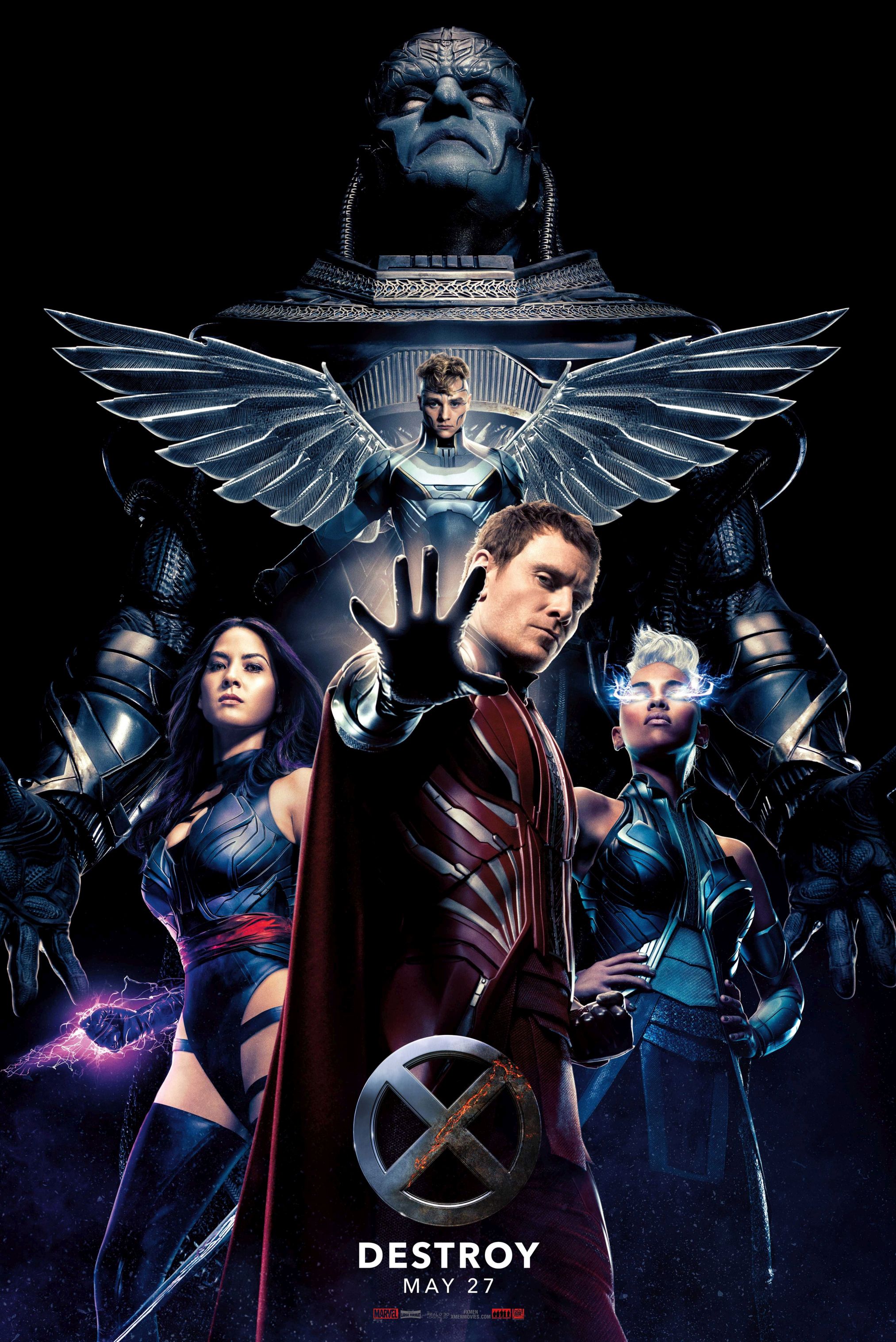
- X-Men: Apocalypse: The black background of the "Destroy" poster◊ (which promotes the villains) signifies this.
- Pops up often in An Outcast in Another World. Rob has a very literal fear of the dark due to being traumatized by his passage through the void, and as such he despises complete darkness. Additionally, the skies above the Blighted lands are unnaturally dark and signify that you really, really shouldn’t go there.
- The Bad Unicorn Trilogy: The Maelshadow, and most of the characters who work for it. Even the place where the Maelshadow is from, a world called the Shadrus, is this.
- Cthulhu Mythos: Among the many avatars of the evil god Nyarlathotep are the Black Man and the Black Pharaoh. No, not someone with an African appearance. His skin is described as looking pitch black, like the light was sucked out of it.
- The Divine Comedy: The final circle of Hell, the most fundamental representation of evil, is first referenced as the "più oscuro" (darkest) circle just before Dante has to have his eyes closed to survive Medusa's glare. When he actually reaches the Ninth Circle, he describes himself shivering in that "l’etterno rezzo," a term meaning "eternal shadow."
- Thud!!: Discworld Dwarfs, spending so much time underground, have a whole mythology around spirits of darkness, some of which are evil and some of which aren't — and the Big Bad of the story is the Summoning Dark.
- An Ember in the Ashes: Is it any coincidence that the Nightbringer is the greatest threat to the Scholar nation?
- In Book III of The Faerie Queene, Prince Arthur goes on a monologue detailing how night is a corruption from Hell. He blames it for hiding the crimes of sinners, obscuring the beauty of God's creation, and giving the wicked rest while leaving the scrupulous turning in bed in fear, guilt, and sorrow.
- Forest Kingdom: The Darkwood, a demon-infested blot of absolute darkness. Later in book 1 (Blue Moon Rising), it expands to cover everything.
- The Genesis Code: Umbra Domini (Latin for "The Shadow of the Lord"), a right-wing reactionary Catholic group whose members are the main antagonists.
- The Great Zoo of China: The black dragons are the ringleaders of the dragon revolt, and as the final confrontation with the superking and superemperor shows, they're the only dragon subspecies to be actively malicious towards humans instead of just predators following their instincts.
- Gone: The Big Bad is sometimes called "the Darkness".
- Harry Potter: Voldemort is referred to as the Dark Lord, and the in-universe category of dark creatures or "demons" (as explained in Fantastic Beasts and Where to Find Them) consists of any creature that can use magic and mainly uses said magic for malicious intent. Dementors are the most promenent members in the books.
- James Herbert:
- The Dark: Demolition of Beechwood House, site of macabre occult ritual, unleashes, across London, concentrations of darkness. A psychic assertion of humanity's capacity for evil, the Dark drives people sadistically, murderously insane.
- Once: While the faerfolkis are generally benevolent, maliciously inclined ones work their mischief by night.
- The Secret of Crickley Hall: The ghost of Augustus Cribben appears in dark silhouette.
- Ash (2012): Malignant spectral orbs, roused by none other than the daughter of Unity Mitford and Adolf Hitler, drain light from around them.
- John Carter of Mars: The First-Born, who can only be described as drow ON MARS, are a dark-skinned race of pirates and raiders that regularly enslave outsiders and also practice cannibalism. Interestingly, their archenemies are the White Martians (who represent Light Is Not Good) and both factions are introduced as antagonists but once John Carter dethrones the First-Born's mad tyrant, they become friendlier.
- Tolkien's Legendarium:
- In The Lord of the Rings, the Dark Lord Sauron is the most powerful and evil entity in the Third Age of the world, casting a shadow over all the lands his armies corrupt and raze.
One for the Dark Lord on his dark throne
- The Silmarillion: Before him was his own master, Morgoth. Some of Tolkien's unpublished writings imply that dark is associated with evil because Morgoth's ultimate goal is to tear down the world until it is reduced to the original primordial void.
- Averted with Tolkien's Dark Elves, the Moriquendi. While "Dark Elf" has come to mean evil in nearly every subsequent High Fantasy, the Moriquendi are simply Elves that never went to Aman and never saw the light of the Two Trees of Valinor. They're no worse than any other group of Elves.
- In The Lord of the Rings, the Dark Lord Sauron is the most powerful and evil entity in the Third Age of the world, casting a shadow over all the lands his armies corrupt and raze.
- Last Mage: Some of Rhianna's minions are black otherworldly things, others are shadows, and her own black dresses are described lovingly.
- Madeleine L'Engle uses this trope in several of her books, starting with A Wrinkle in Time where the Black Thing covers the world of Camazotz and threatens the planet Earth. In later books, the Echthroi (repeatedly refered to as "the powers of darkness") also gain an association with a horrible sound and a disgusting smell.
- In Doctor Who novel Matrix, the London of an alternate 1963 is permeated with a coalescence of airborne shadows. It feeds on the turmoil sown by a near-century of militia-ruled poverty; and inhabits corpses to shred the living.
- The Old Kingdom series is an example of both Dark Is Evil and Dark Is Not Evil, as necromancers and the Sealed Evil in a Can that they represent are the main antagonists, but then again, the protagonists also use Free Magic (which tends to be pretty nasty) to fight it.
- Paradise Lost: The primary imagery for Satan and other demons is unadulterated darkness.
No light, but rather darkness visible
- Conan the Barbarian: In "The Phoenix on the Sword", the high priest, having deduced the story of a demon is not All Just a Dream, calls on Mitra to guard them against the powers of darkness.
- In The Quest of the Unaligned, Darkness is one of the two "supra-elements", surrounding and infusing the four elemental magics. The dark aspect of each mage's power tempts him or her to abuse it, and must be mastered with training and meditation. On top of that, it is possible to become a hoshek, a mage aligned with Darkness itself. This grants access to all four elements, but With Great Power Comes Great Insanity.
- In The Rape of the Lock, Umbriel (whose name means "Shadowy") goes to the Underworld (the pit of Ill-Humor) to bring up a bag of temper tantrums to create even more chaos.
- Shaman Blues: The villain has all the walls in her house painted black, and no windows to shine light into. And all this dried blood from the sacrifices.
- Shattered Twilight: Played with; in the backstory (before the Shattering), the god of night was a benevolent and powerful ally in holding evil at bay. In the current age, however, his total disappearance during or after the Shattering has made night incredibly dangerous. The setting also has a strong association between darkness and demons, which are portrayed as writhing, moving darkness.
- In Sunshine, by Robin McKinley, the vampires. Their influence on their prey is even called the dark.
- Warhammer 40,000: In Dan Abnett's Gaunt's Ghosts novel Blood Pact, the presence of the blood wolf causes the street lights to go out as it races by.
- Warrior Cats:
- When villains die, they go to a forest of pure darkness. And when they fight the Clans, there is a prophecy that describes the Dark Forest/Place of No Stars as "the darkness that lasts forever".
- Also, most of the main villains have been dark brown tabby toms, for some reason. Even Thistleclaw, a gray and white cat, accidetally got described as dark brown a couple times. Once fans pointed this out, villains began to have different pelt colors: Sol and Mapleshade are torties and Dark Forest cat Snowtuft is white.
- Also seen with the characters' names: Darkstripe is evil, Darktail is evil, Blackstar starts out as evil, and Blackclaw isn't a particularly nice cat and tends to support Hawkfrost. ShadowClan cats have the worst record for having evil cats, and Secrets of the Clans made their founder Shadow the aggressive and unpleasant one of the original four leaders, though Warriors Dawn Of The Clans makes it more complicated.
- In The Wheel of Time, the Big Bad is called the Dark One (there are also other names, but Dark One is the most common one) and the evil side, i.e. everyone and everything associated with the Dark One is referred to as Shadow. Human servants of the Shadow are called Darkfriends, one name for the creatures that command the universe's Orc-equivalents is Shadowmen, and...yeah, maybe you get the point by now.
- Wicked Lovely: The Dark Faery court, although this is possibly a subversion — they are more cruel than evil and need to be to survive. They are essencially emotional parasites, but Irial truly loved Niall and Leslie (although he was very cruel to them, using Leslie as an emotional conduit and stripping her of emotion and free wiil and allowing his servants and guards to both phsically and sexually abuse Niall), and although Gabriel comes into the "abusing Niall" category, although only physical, he was NOT one of the fey who raped Niall - this is a common misunderstanding — and can be incredibly kind to his halfling children. Niall himself comes more under Dark Is Not Evil, although the injustices of the past push him more and more towards the moral grey area Iri and Gabe occupy.
- In Wings of Fire, even the nocturnal and darkness-associated [NightWings] think that Dark is Evil, meaning that when Arctic complains about Foeslayer's name for her son (Darkstalker) being Names to Run Away from Really Fast, she responds that it shows him as a hero fighting the darkness. The NightWings themselves can vary.
- Shades of Magic: The Big Bad of the trilogy is the "Shadow King" Osaron, a Living Shadow that consumed one world and has set his sights on another. His name even means "Darkness" in the dead Antari tongue. Best exemplified when he merges with the magical river in Red London, turning it inky black and summoning a dark fog that mind-controls people who breathe it.
- This is a major element of the setting in Shadow of the Conqueror alongside Light Is Good. The de facto religion of Hamahra, Lightseeking, seems to be based on this.
- The Black Spider: The titular creature is a big, black demonic monster which rampages through a valley, killing both humans and animals indiscriminately.
- My Next Life as a Villainess: All Routes Lead to Doom!: Dark magic is actually a state secret because of how bad it can be. You can't use it unless you perform a human sacrifice and it allows you to alter the emotions or memories of anyone you're in physical contact with. It can do significantly more dangerous things than this as well. That being said, neither of the dark magic users we see are 100% evil.
In General:
- In a TV movie on the making of the Vietnam Memorial in DC, people kept objecting to it because it's black and therefore bad and makes their sacrifice seem bad. A black army officer stands up and reminds him of his years of service and that if anyone makes another comment on how "black is bad" they are going to take it outside.
By Series:
- It comes with Unfortunate Implications that the dark-skinned Eartha Kitt in Batman (1966) is by far the meanest puddytat of the three actresses.
- In Babylon 5, the Psi Cops wear all-black uniforms, the Nightwatch wear black armbands, and the Shadows' ships are blacker than the darkest night. Londo's costume also subtly darkens as he becomes more involved with the forces of chaos.
- On Buffy the Vampire Slayer, the outfits of many vamps take on this trope. Also, The Bringers, servants of the First Evil, all wear black robes.
- Daredevil (2015): Wilson Fisk primarily wears all-black suits for the first part of season 1. He later starts wearing an even fancier gray suit after he begins a relationship with Vanessa, who is often wearing a white dress to contrast Fisk. Likewise, Fisk is fond of a painting of a white background which he says embodies his loneliness. This is averted when he embraces his evil and becomes the Kingpin, whereupon he's always shown wearing white.
- Doctor Who:
- The White Guardian and the Black Guardian. The White Guardian is the epitome of good and dresses in white clothing, the Black Guardian is the epitome of evil and dresses in black clothing.
- "Silence in the Library"/"Forest of the Dead" plays with it: The Vashta Nerada living in the Library kill people by stripping them to skeletons, and outright state that they are "not kind". However, the Doctor points out that the aggressiveness of the swarm in the Library is unusual, as on most worlds they're largely benign and live off roadkill.
- Game of Thrones:
- House Bolton members dress themselves in black and grey armor, in contrast to their book counterparts who dress in pink and red. Their sigil is a red flayed man in a black background, rather than pink like in the books.
- Tywin Lannister favours black leather even though his family colours are red and gold. His daughter, Cersei, adopts his style of dress when she, an already unpleasant person, descends over the Moral Event Horizon and into complete irredeemable evil and kills hundreds of people in the burning of the Sept of Baelor.
- Drogon has black-and-red scales and is the most aggressive and blood-thirsty of the three dragons. Subverted, in that he serves the heroic-leaning Daenerys Targaryen.
- Glee, obviously, makes use of this, although with an interesting variation; every single male character who is an asshole wears black. The only exceptions are the jock bullies, who wear typical jock attire, and the occasional Anti-Hero. The (usually) unambiguously heroic Kurt Hummel does wear dark purple, but he does so less and less, so the Dark Is Not Evil factor probably decreased.
- On Lexx, His Divine Shadow might as well wear a placard around his (black-clad) neck announcing that he is an Evil Overlord. Between the title, the black robe, and the decor of his planet-sized Evil Tower of Ominousness, it's pretty obvious.
- Lost: An extremely blatant example — Jacob wears white and the Man in Black/smoke monster wears black.
- Lost Girl: Played with. The two factions of Fae given the series are the Dark Fae and the Light Fae. And while both sides are manipulative show Fantastic Racism towards humans, the Dark Fae have far worse policies when it comes to humans, and an over darker morality. On the other hand, several Dark Fae are shown to be decent people, and don't display any evil characteristics.
- The Night Agent: Assassins Dale and Ellen both wear dark clothing usually. They also have dark hair and olive skin.
- Star Trek:
- The Borg, probably the most powerful enemy on the franchise, not only are Borg Cubes very dark save for the Sickly Green Glow, they also wear dark colors.
- In the Mirror Universe, Terran ships are darker than their Federation counterparts. This is explain in Star Trek: Discovery as the Terrans are not just an alternate universe "evil" version of our universe's humans, but they're a different species with some minor biological difference which causes more sociopathic behavior and sensibility to bright lights.
- Klingon ships are also generally presented as much darker. The first time the interior of a Klingon ship is shown was on the TOS-era movies, by Star Trek: The Next Generation the Klingon are allies but still use internally dark ships.
- In Star Trek: Deep Space Nine the Terok Nor space station was considerably darker during the Cardassian control of it. Why was this is never explained as Cardassians are said to like hot temperatures but nothing has been said about darkness. All other time we see the interior of Cardassian ships, stations and buildings the lighting is normal (if a little blue-ish).
- Van Helsing (2016): In Season 4, Dracula is revealed. she materializes as thick black smoke, wears a black dress, and has Black Eyes of Evil.
- Black Metal bands that don't have Satan or Religion Rant Songs as their main lyrical theme tend to find a way to invoke this trope in a different matter, either through misanthropy or dark myths.
- "Dark Light" from Kiss' Music from "The Elder" combines this with Light Is Not Good.
- In Zoroastrianism, The Anti-God Angra Mainyu is often associated with darkness.
- The Bible:
- Hell is described as the "outer darkness" in Matthew 8:12.
- Inverted with Satan/Lucifernote , aka the Morning Star. As well as by (the false idol?) Moloch, which is appropriately identified as a solar deity.
- A borderline example occurs in the synoptic Gospels' (Matthew, Mark and Luke) descriptions of the crucifixion, with the sky darkening as Jesus dies.
- In Kakos Industries, they play this trope as satirically as possible. They regularly hold a Darkest Universe Festival in which they use collective Evil thoughts to lure someone into commiting an atrocious act and apparently everything is made out of a material called Dark Mega.
Corin Deeth The III:They say there's no use crying over spilled ink because everything you own is black anyway.
- The Magnus Archives: Shows up, along with most [fears, here, especially where the People's Church of the Divine Host are concerned. Although, to them, Dark Is Not Evil and Light Is Not Good. One of the People's Church's followers was a profilic Serial Killer.
- Dawn of a New Age: Oldport Blues:
- Downplayed with Simon, as his black hair and clothes indicate that he's a jerk rather than evil. Played straight with his alter ego, the Dark Dragon, who's fully evil and shows it with an all-black ensemble.
- Played With in regards to Sebastian. He has an eldritch spirit living inside him that grants him the ability to control shadows. Sebastian is a nice person, but said spirit is always encouraging him to take the most pragmatic course of action, which includes murder, and she believes that he's the cast member most likely to come to terms with having to kill.
- One study found that National Hockey League teams that wore black were more likely to be penalized for aggressive fouls. The same likely applies to other sports.
- Canadian figure skater Beres Clements performed to the Angels & Demons soundtrack for his long program during the 2020-2021 competitive season, and the black part of his costume represents the demons in the title.
- Dungeons & Dragons:
- The drow ("dark elves"), distinguished by their coal-black skin, are the cruelest and most evil of the elven races, living in a society founded on slave labor and rampant treachery and regularly engaging in raids and warfare against other species.
- Black dragons are far and away the most evil and foul-tempered of the dragons, far more so than even the other habitually evil chromatic dragons.
- Across the myriad settings are multiple examples of malevolent gods associated with night, darkness or shadow. One of the more well-known examples is Shar, from the Forgotten Realms, who embodies the primordial darkness from before creation began and who calls upon her faithful to snuff out hope, joy, trust and love wherever possible, ultimately seeking to annihilate all that is and bring back the endless darkness of before.
- The Church of the Sacred Flame believes that the Shadow Cults, those who worship the Exalted Darkness, the cosmic opposite to their own Sacred Flame, are universally evil. And, in fairness, many of the dark spirits collectively lumped together under the term are malevolent monsters who desire to snuff out all light, either spiritual or literal.
- Warhammer Fantasy: The Dark Elves are the High Elves' crueler kin, living in a society founded on slavery and the worship of the god of war and murder and regularly raiding other species for wealth and fresh slaves.
- Warhammer 40,000:
- The Dark Eldar are cruel, sadistic, murderous raiders and rightly feared throughout the galaxy for their vicious raids and the terrible tortures they inflict on their prisoners.
- The Black Legion of traitor Space Marines belonged to the Primarch Horus, and was the first to follow him in his fall.
- An Invoked Trope with the Night Lords. Even before they fell to Chaos, their renegade behaviour and shocking psychopathic and sadistic tendencies earned them summary destruction.
- Exalted: The Ebon Dragon. A fifty-mile-long dragon made of the shadows of everything, he's also the inventor and embodiment of the concept of being a treacherous, sadistic, needlessly cruel scheming asshole. In his case, Dark is so evil that it even predates the codified concept of Evil (which in Exalted is best described as 'acting like the Ebon Dragon'). Before becoming the Ebon Dragon, he existed as an entity referred to as the Dragon's Shadow.
- VOR The Maelstrom: Inverted in the beliefs of the Zykhee — being evolved from a nocturnal species, their culture believes that that Dark Is Good and Light Is Evil.
- Vampire: The Masquerade gives us the Lasombra, the clan that leads the Sabbat and has the unique Discipline of Obtenebration. Not only is the darkness most often wielded by wicked people, but it's implied to be wicked itself — the clan's founder, a right bastard himself, is said to have merged with the Abyss that powers Obtenebration, and things can occasionally be called out of it that serve as twisted mirrors of a vampire's sense of morality.
- Princess: The Hopeful has both this trope and Light Is Good in full effect in its naming schemes. The eponymous Hopeful draw their power from the Light, a Sentient Cosmic Force that embodies virtue, hope, and the desire to make the world a better place, while their chief enemies are the minions of the All-Consuming Darkness, a force that embodies despair and malice and everything that the Light is not. And many of the powers wielded by creatures of the Darkness are tied to or invoke physical darkness and cold.
- Similarly, the five Courts of Princesses that have fully repented from their former failings are known as the Radiant Courts, while the three Courts whose philosophies still incorporate fundamental moral compromises are referred to as the Twilight Courts.
- Ars Magica: The infernal aura of Unholy Ground becomes one point stronger while the sun is down, which can be enough to create more overt and dangerous manifestations of evil.
- Res Arcana: Among the colour-coded essences, Death is the black-coded one. It's associated with many evil-flavoured cards, like the Corrupt Altar, Gates of Hell, Cursed Forge, and almost everything related to Demons.
- In Poseidon's Fury at Universal's Islands of Adventure, darkness can be expected whenever the attraction's villain, Lord Darkenon, shows up (as his name would imply). In contrast, Poseidon always carries a bright aura around him.
- BIONICLE plays this straight, but also subverts it: every character in the Matoran Universe has an inner balance of light and shadow. Those characters that tap into their dark side or are drained of their inner light turn evil as a result, gaining shadow-based powers and becoming darker in their coloration. At the same time, thanks to Color-Coded Elements, some element-based good guys also sport dark colors and a handful are almost completely black.
- ANNO: Mutationem: C, the Big Bad, is shown to wear a black suit while he's scheming to acquire an Artifact of Doom with world-threatening repercussions. In the last battle, his One-Winged Angel form takes the appearance of a demonic dragon entirely made of darkness.
- Bayonetta:
- The titular character along with the Umbra Witches, avert this, but the demons they work with play it straight. In fact, every witch makes a pact with a demon in order to gain power, but when the witch dies Inferno claims their soul.
- The Angels of the franchise are just as bad as the demons. So in hindsight, BOTH light AND dark are evil! Though the Lumen Sages have been on good terms with the Angels and at least one of them is good.
- The Binding of Isaac: Demons are associated with darkness, almost always being black in color instead of the usual rednote and some of the more powerful ones being able to darken the screen. Especially powerful monsters such as the Shadies or Mom's Shadow appear black all over with glowing red eyes. This is even reflected with the home turf of the demons: Sheol looks like a black cave, and one of the most dangerous locations is called the Dark Room, a series of platforms floating about in a stormy void. With the exception of the beggars and some of the demon player characters, all demons seen in the game are hostile and are trying to kill Isaac.
- BlazBlue:
- While Ragna follows the opposite of this trope, the Black Beast responsible for the Crapsack World and the source of Ragna's power embodies it. In Jubei's own words, it was "evil, the likes of which the world has never seen".
- In Continuum Shift, it is revealed that Hazama / Yuuki Terumi is this as well by virtue of his nice, black suit. Mu-12, who calls people by expository titles, refer to Hazama as "The True Evil", indicating that he is even worse than the Black Beast itself. (Those who have played the story up until that point probably gloss over this as a Late-Arrival Spoiler, though, because they've already seen what Hazama is capable of firsthand.) It's pretty noticeable when Terumi re-assumes his true form after taking back the Susanoo unit in the fourth game, and it's pitch black in every area with the only alternate colors being his green highlights.
- The Hel element in Boktai is always evil. Period. While it can be used for good, it's implied to be much weaker (since it is the power of hatred), and there is the constant chance that it will corrupt its user for good which only gets higher each and every time it's used.
Sabata: The dark gives me power... but it hurts me... eats away at my soul...
- In Chicory: A Colorful Tale, the corruptions that stole colors away are depicted as inky black darkness.
- Dark Souls:
- Zig-Zagged in Dark Souls. The Darkwraiths of Kaathe act as the polar opposite of the helpful Warriors of Sunlight, but the Darkmoon Covenant opposes the wraiths as well. Likewise, the looming apocalypse to be prevented is the Age Of Dark though if Kaathe is believed, it will actually be a golden age for humankind, and is being postponed by the dying (former) Lord Of Sunlight. The Abyss and it's connection to humanity/Humanity is generally unclear, though typically inconceivably horrific. The "Artorias of the Abyss" Downloadable Content reveals just how bad things get if humans lose control of their inner darkness aka humanity. As in, Humans Are Cthulhu bad.
- Dark Souls II doesn't make things any less ambiguous. While the Children of the Dark spawned from the fragments of Manus' soul are horrific abominations that are anathema to all life, players can now wield the power of darkness themselves in the form of Hexes. The Gravewarden Fenito Agadyne claims that humans once lived in peace in the dark, until the gods forced them to live in the light.
- Meanwhile, Dark Souls III comes in with the boss Aldrich, Devourer of Gods as well as the Ringed City DLC. Aldrich is - in the context of the Dark Souls universe - both subverting this trope and playing it straight. This is because, unlike other characters introduced so far that were consumed by the dark (including Aldrich's followers), he has been able to maintain his sanity, even after melting into a maggoty pile of sludge and bones. Fortunate for him, but not so for everyone else, considering Aldrich was a psychopathic cannibal that ate even women and children, and is currently eating Gwyndolin by the time we meet him. The Ringed City DLC, on the other hand, also dances around this trope. It shows us the location where the Dark Soul of Man itself was kept contained, and while its newly-introduced lore tells us that dark was originally not evil and that it was only after Gwyn tried to imprison it that things got out of hand, it also ends with a bossfight with Slave Knight Gael, who consumed the Dark Soul knowing that it would drive him insane.
- Darkest Dungeon uses this trope extensively, right down to the title. It's even a core gameplay mechanic: the monsters get stronger when your torch is doused (though you also get more rewards). In the lore, The Corruption around the manor is strongly associated with darkness in the Ancestor's dialogue, and the Big Bad Eldritch Abomination is called the "Heart of Darkness".
- All of the Prime Evils and Lesser Evils of Diablo are this. They are all full of evil and that is just a topping.
- The Leader of the Angiris Council and Archangel of Death Malthael is darker than Diablo and is considered more sinister than any of the Demons by Blizzard itself.
- The Darkspawn of Dragon Age. The Taint that created them originated from the corrupted Golden City in the Fade, now known as the Black City. Subverted slightly in Awakening with the appearance of intelligent Darkspawn, but even then, the more antagonistic faction of the awakened Darkspawn wear black armor.
- Dragon Quest:
- Dragon Quest III: When he's first encountered, Zoma's protected by a shroud of pure darkness, so potent that it renders him Nigh-Invulnerable to all forms of assault. Only the Ball of Light, an artifact that quite has the potency to restore vibrancy and vitality to the entire world, can nullify it to even the odds.
- Dragon Quest VIII: Rhapthorne, the ancient Lord of Darkness. Not only is it evil, but it makes anyone who so much as glances it evil.
- Dragon Quest IX: Barbarus uses dark energy and has a dark appearance that fits his appearance with the Gittish Empire.
- Dragon Quest XI:
- Mordegon is a demonic sorcerer who calls himself the Lord of Shadows who attempts to take over Erdrea.
- Jasper. While he dons a white armor, he primarily uses Zam-type spells (Darkness Spells) in both cutscenes and boss fights to highlight his sinister nature.
- Tyriant uses explicitly Zam-type spells and hates light with undying passion.
- The Gloomnivore is a dark-purple beast with a demonic voice that tortures his victims.
- The Elder Scrolls
- From the series' primary Creation Myth comes Padomay, The Anti-God personification of the forces of change, chaos, and darkness. He is the twin brother to Anu, the God of Gods personification of the forces of stasis, order, and light. While not an inherently evil force, Padomay was jealous that Nir (the female personification of "creation" who came to be out of Anu and Padomay's interplay) favored Anu. Padomay killed Nir and shattered the 12 worlds she created. Anu would wound Padomay and then put the pieces of the worlds together to create one world: Nirn. Padomay returned and wounded Anu, so Anu pulled Padomay and himself outside of time to end Padomay's threat to creation.
- Sithis, referred to as a "great void", is a force representing chaos, change, and limitation. In some religious traditions, Sithis is related to or may even be what is left of Padomay. Sithis is associated with darkness and is described as a "great void", and those who worship him are almost universally seen as evil or at the very least extremely amoral.
- The Dark Brotherhood is an illegal organization of assassins whose membership mostly takes a sadistic glee in killing and who practice a Religion of Evil in which they worship Sithis. Their their outfits also tend to contain a lot of black and red.
- As a whole, the Daedric Princes, associated with the darkness of Padomay, are Above Good and Evil, operating within their own spectrum of Blue-and-Orange Morality. Still, they range from being considered "evil" to being considered Jerkass Gods to most civilizations throughout Tamriel. However, a few of the malevolent Daedric Princes fit this reputation, such as Molag Bal (Daedric Prince of Corruption and the closest thing the series has to a true God of Evil) and Vaermina, the Daedric Prince of Nightmares, who may only be second in brutality to Molag Bal himself. For more on the Daedric Princes, see the series' "Daedra" subpage.
- Mannimarco is an infamous and highly dreaded Lich/Necromancer who appears in several games in the series. He is quite recognizable in each appearance as Obviously Evil - wearing a black Badass Long Robe (often with skull motifs) and leading the Order of the Black Worm, who as the name suggests, dress all in black as well.
- Alduin the World Eater is a colossal black dragon who it is said will "eat the world" at the end of the current cycle of time. He serves as the Big Bad of Skyrim, returning in an attempt to rule the world rather than eat it.
- EXTRAPOWER: Attack of Darkforce: The Yami Clan. Dark Force, with his all-black design and Dark Force Army composed of pitch black assault ships and harnessing Dark Energy, is a subtle example.
- The first Fable has this in spades, with dark clothing giving you evil points and bright clothing giving you good points and evil characters morphing to have darker features. The sequels ease up on it, but it's still present.
- Fallout 3
- The Enclave. Unlike the Brotherhood of Steel, who are in grey power armor, most of theirs are black.
- Zigzagged with the Brotherhood outcasts. While they left the Brotherhood of Steel to form their own group, and painted their armor black and red, they are more on the gray scale.
- The Talon Mercs that hunt down the player should he/she have good karma as well, they have black clothing.
- Falskaar: What makes Yngvarr stand out so much as the Big Bad is his unique form of Ebony armour, an all-black metal (in the Scrolls-verse, Ebony is a mined metal, not a form of wood) suit with ominous spikes.
- The Fatal Frame series almost always involve some failed ritual releasing an evil, corrupting presence known simply as the "Malice" or the "Dark".
- The Final Fantasy series uses this along with its sister trope.
- Final Fantasy II has the Emperor of Hell, though the emperor of Heaven isn't any better.
- Final Fantasy III gives us the Cloud of Darkness, but it's actually a subversion. Part of the game's backstory is how there was a flood of overwhelming light 1,000 years ago, requiring four Warriors of the Dark to save it.
- Golbez is a Black Knight who serves as the main antagonist in IV. Not really. He's Brainwashed and Crazy and under the control of the true Big Bad, who plays this trope straight.
- This deserves further clarification—the original IV equates dark-elemental abilities with The Dark Side, even having the dark-elemental protagonist's "Spirit" score drop as he levels up and becomes more hardened. As part of the plotline, he's eventually required to give up his powers and Level Drain with light-elemental abilities. Final Fantasy IV: The After Years goes a more balanced route—having been unable to completely purge his dark side, the hero is ultimately forced to accept and control it. Dissidia Final Fantasy takes this all the way to Dark Is Not Evil.
- Exdeath has The Power of the Void.
- In Final Fantasy VI, God!Kefka qualifies. Though depicted as an angel, he has purple skin, and underneath the angel wings are a pair of demonic wings.
- Final Fantasy VII:
- Sephiroth. He wears black and has a black wing. In Dissidia Final Fantasy, he has dark-based moves, such as Shadow Flare and Octaslash. However, in a strange subversion, his true form, Safer Sephiroth, is the inverse.
- The Black Materia is a Weapon of Mass Destruction that summons Meteor, whose herald will bring The End of the World as We Know It. Its counterpart is the White Materia, which summons Holy, the only spell capable of dispelling Meteor.
- While there is talk about maintaining the Balance between Light and Dark in Final Fantasy XIV, the actions taken by the Ascians who worship the god of Darkness Zodiark have caused so much bloodshed and sorrow throughout history that it's hard to see them as anything but evil.
- In Fire Emblem: Three Houses and its spin-off Fire Emblem Warriors: Three Hopes, dark magic is primarily the domain of the game's main antagonist faction, those who slither in the dark. All of the playable characters who can wield dark magic have been in contact with them in some way, whether being victimized by their experiments (Edelgard, Lysithea, Hapi, Monica, and possibly Shez) or reluctantly conspiring with them (Hubert and Jeritza).
- Gift: Little Darks and darkness that can kill Gift. Also the non-deadly darkness where Little Clears can live.
- Grow Island: The character gets darker if they hurt the environment by cutting down a forest or by leaving their trash in nature.
- The Half-Life 2 Game Mod Black Snow takes things to extremes: light, warm areas keep out the thing that's chasing you around the research center. It turns out that the thing is a predatory strain of fungus that can thrive in any environment but well-lit ones.
- Agent 47 from the Hitman series is defined by his signature black suit and red tie. It can be changed via disguise, but it's that suit which makes him most iconic. Indeed he's a very dark character, who can kill effortlessly and get away with it without batting an eye.
- Hollow Knight: The player character and their siblings fall under Dark Is Not Evil, but the Deepnest residents play this trope straight. They are a tribe of spiders that reside in a Blackout Basement near the edge of Hallownest and are extremely hostile to any outsiders.
- In the Jak and Daxter series, Jak is an Anti-Hero with a Superpowered Evil Side, but that's the extent of any Dark Is Not Evil overtones. The world's magical Psycho Serum is black and purple DARK Eco, Precursors corrupted by it become DARK Makers, Metal Heads live off of it, and the first game's Big Bads turned into Omnicidal Maniacs after being exposed to it for too long. Out of the five people who underwent the Dark Warrior Program, only Jak got out alive... because he's special. Both Jak and Daxter's dark alter-egos are Ax-Crazy.
- Kingdom Hearts:
- The Heartless are the manifestations of the darkness in capured hearts.
- Even after Riku reverses his Face–Heel Turn and uses darkness in heroics, his darkness is, thematically, the "Way to the Dawn".
- While the series as a whole explains Dark Is Not Evil, Xehanort is a practitioner of dark powers, tempts others to darkness to weaken their hearts, and considers darkness a source of true power and knowledge.
- Klonoa: Door to Phantomile: The Big Bad of the game, Ghadius, is a nightmare creature intentioned to destroy all of Phantomile, himself included. He is also known as the King of Darkness.
- Knights of Ambrose: In Timeline 2, Lilith somehow loses her angelic nature and becomes a demon, trading her light-elemental skills for dark-elemental skills. She's also much more malicious as a demon than as a mindless angel, since she's acting on her jealousy and spite towards Helen.
- League of Legends: Morgana is a fallen angel, in contrast with her sister, Kayle.
- Katarina wears black. She makes no secret of the fact that she's a villain, and enjoys it.
- Nocturne. He'd give Pokémon Mystery Dungeon's Darkrai a serious run for his money.
- Viegar may or may not be a Harmless Villain, but he certainly fits the bill, due to use of Darkness spells and the wearing of Purple and Black.
- Malzahar, like Exdeath of Final Fantasy V, uses a variation of the Void.
- While Swain doens't wear any dark colors, he does turn into a Demonic Crow.
- And Zed. Controls shadow minions, has an Evil Laugh, wields two double bladed serrated wrist blades and is dedicated to destroying the order preserving balance on Ionia.
- Lorwolf: In the nightmare you/your wolves have at the beginning of the campaign quest to join a given pack, you are surrounded and attacked by dark tendrils until a light in the color of your chosen pack appears.
- LunarLux: The Murks are typically dark-colored with bright, cybernetic-styled outlines. They are also feral antimatter beings who attack humans on instinct. Later, it's revealed that they were once humans, but their current forms amplify their negative emotions, and most of them are filled with rage towards Saros and Lunex Force for betraying their trust.
- Manafinder: Illia is the Goddess of the Night who seeks to destroy all manastones to keep humanity from becoming dependent on the gods, whether humans want that outcome or not. During her Final Boss fight on Frederick's route, she uses Endark to add a dark elemental magic hit to her attacks.
- Mega Man Battle Network: In the fourth game, after Mega Man is forced to use a dark chip in order to defeat Shade Man, a dark soul is created inside him. Mega Man is then tempted with the possibility of using dark chips throughout the game, corrupting him further and making his dark soul stronger. In the final area, Duo extracts the dark soul from Mega Man and forces him to fight it as a test of humanity.
- In Minecraft, enemies spawn in any dark areas (whereas non-enemy animals spawn on grass in the light).
- Mortal Kombat:
- Shinnok is a pale skinned fallen Elder God of Death who uses dark energy blasts and necromancy and rules the Netherealm.
- In the new timeline, Sindel keeps dressing in purple and black outfits that would befit a villainess more, and 11 reveals that she is much more black-hearted that never had the intentions to be good no matter what.
- Nintendo loves this trope.
- Giygas from EarthBound (1994) is a swirling skull looking creature made out of red lines and the background behind It is black.
- While the Fire Emblem series typically goes for Dark Is Not Evil, there are some examples:
- Nearly every game in the series has at least one Evil Sorcerer who acts as a major antagonist and uses dark magic as their weapon of choice. The only exception is Fire Emblem: The Binding Blade, which has no such villain.
- In Fire Emblem: Genealogy of the Holy War and Fire Emblem: Thracia 776, dark magic and the people who use it include the games' Big Bad, bent on resurrecting their dark god in order to bring an era of suffering upon the continent. However, in Thracia 776 you can recruit an ex-clergyman.
- In Fire Emblem: Awakening, the villains are all a purely evil cult that worships a Fell Dragon and uses dark magic. Even the playsable characters that can use dark magic are the Token Evil Teammates.
- In Fire Emblem: Three Houses and its spinoff Fire Emblem Warriors: Three Hopes, while there are several sympathetic characters who use dark magic, all seven playable characters (eight if you count the Warriors: Three Hopes Secret Character Arval) who wield it have some connection to "those who slither in the dark", the main evil faction. Lysithea and Hapi survived brutal experiments at their hands, Hubert and Jeritza are reluctantly allied with them in order to facilitate their own ambitions, Edelgard fits both of the previous statements, Monica was kidnapped by them with the intention of killing her to steal her identity and use it to infiltrate Garreg Mach Monastery, and Shez is the vessel for Arval, an artificial creation of those who slither in the dark made to destroy Sothis.
- Kid Icarus generally follows this trope, perhaps Anviliciously, with the majority of the villains including the likes of Hades, Medusa and other underworld-associated baddies with often dark in their name and many appropriately dark-themed abilities. It is downplayed with Dark Pit in Kid Icarus: Uprising, however: while he starts out antagonistic towards Pit and fights him at different points of the game, he never works for the Big Bad or does much that could really be called evil and describes himself as "Servant to nobody but myself". That said, Dark Pit is still an angel and has no shadow powers. Later in the game, he even joins the battle against Hades since he finds his actions beyond atrocious, down to fighting alongside Pit directly and becoming playable himself to save Pit's life.
- Kirby Final Bosses Dark Matter, Dark Mind, and Dark Nebula. Other antagonists Nightmare and Necrodeus are also associated with darkness, particularly the latter.
- Dark Link is an evil counterpart of Link in The Legend of Zelda. Ganondorf also spells this trope to full effect in both Ocarina of Time and Twilight Princess.
- The shadow in Twilight Princess turns Link into his wolf form, which has to be combated by the holiness of the Master Sword when Link gets cursed by Zant.
- Metroid Prime 2: Echoes has Dark Aether. The planet itself is a darkly-lit dimension whose very atmosphere is toxic to things from the light dimension, while its shadowy Ing inhabitants are Always Chaotic Evil. The Metroid Prime Trilogy also has Dark Samus, though ironically, her design from Metroid Prime 3: Corruption is noticeably less dark in appearance despite her being even more evil in that game.
- Pokémon:
- Dark, the English name of one of the 18 elements in the series, was localized directly from "Evil", as the type is known in Japanese (hence why many Dark moves involve doing immoral things like stealing or lying or having "bad thoughts"). It's frequently subverted, though, as Dark-types are shown to be capable of being good natured, contrary to what their Pokédex entries may imply*. They do, however, often require more effort to max out their happiness than some other species of Pokémon. note
- Dark-type Pokémon are commonly used by evil teams, and are often a Big Bad's trump card (such as Ghetsis's Hydreigon and Lysandre's Mega Gyarados).
- The GameCube Pokémon entries, where the ongoing focus of the stories are the Shadow Pokémon (called Dark Pokémon in Japan) created and wielded primarily by the villain organization of Cipher. Regular Pokémon who've undergone a process involving "shutting the door to their hearts" that leaves them as emotionless fighting machines, Shadow Pokémon retain their ordinary typings, but they're shown to be surrounded by a dark purple aura and use all manner of deadly Shadow-type attacks that are super-effective on every type. This is especially true of Gale of Darkness' mascot XD001, aka Shadow Lugia, whose corruption gives it a dark purple color scheme complete with red eyes.
- The concept, or at least very similar concepts of Shadow Pokémon have gone on to also appear in Pokkén Tournament and Pokémon GO, in the former case with a corrupted Shadow Mewtwo acting as final boss of the campaign and in the latter case being similarly created and used by an evil team, in this case Team GO Rocket.
- In the Japanese version of Pokémon Mystery Dungeon: Explorers of Time/Darkness/Sky, the main story's Big Bad is known as Darkness Dialga. The US version instead translated it as Primal Dialga. The Bad Future is also distinctly associated with darkness. Then it turns out there's a Man Behind the Man Darkrai, who is very much the opposite of many of the species' main series portrayals.
- A few examples from the Super Mario Bros. series. Dark enemies in Paper Mario are more evil and powerful, Bowser's Super Mario Bros. 3 castle is located in Dark Land, Super Mario Sunshine's Shadow Mario is evil, etc., etc..
- Super Smash Bros. Ultimate has you dealing with Dharkon, who takes over after Galeem is defeated. By this point, you not only have to fight the dark, but also the light.
- Opoona follows this quite heavily, to the point that most people can't even enter true darkness without serious damage to their mind and body. Justified in that it's actually The Corruption, created by the ultimate Big Bad of the setting, though not the game itself.
- Ori and the Blind Forest: Kuro, whose name is the Japanese for "Black", is a subversion of this trope. It's eventually revealed that she's not evil, merely driven mad by grief after the Spirit Tree accidentally killed her children. She believes (not without merit) that Ori is a threat to her sole surviving unhatched egg.
- Phantasy Star: A running theme of the quadrilogy: dark is evil and is likely responsible for humanoid races doing irrational things. In Phantasy Star IV, a Guest-Star Party Member who uses wide arrays of dark magic (in a setting where no good guy is capable of doing so) turns out to be more than he seems.
- Shantae and the Pirate's Curse introduces to the series the concept of Dark Magic, the source of power of the Pirate Master, a Humanoid Abomination who was the Scourge of Sequin Land before the genies sealed him in the past. In addition to being inherent to the Pirate Master, Dark Magic could also be created from Light Magic if the latter was used for evil.
- The Simpsons Hit & Run:
- Subverted with the black vans in the first level. Burns reveals at the end of the level that they're just pizza delivery vans.
- Played straight with the black sedans that appear starting from Level 3, which actually are part of the villains' plans and repeatedly show up to follow after the Simpsons family. They must be destroyed or avoided whenever they show up. It is later revealed that they are drones from the aliens.
- Sonic the Hedgehog:
- Shadow the Hedgehog. Subverted in that he's more of an Anti-Hero (most of the time).
- Played straight with Mephiles the Dark, as his name indicates, he is an Obviously Evil Demon that seeks to end the world.
- Street Fighter:
- M. Bison is the most well known user of Psycho Power and is often described as the dark side of the soul. His power feeds of the evil anger and hatred of others.
- Akuma uses the power of the Satsui no Hado and is a master of it. He utilizes this power against his opponents and to preform incredible feats of with this dark hado. When Akuma uses this power he loses his humanity and compassion, develops a negative and cold outlook on life as well as a obsessive, dark, murderous desire to battle.
- Terraria: Both Evil Biomes are associated with darkness, having Souls of Night drop from enemies, Dark Shards drop from their infected Deserts, and their material being used to create the Night's Edge. The Corruption is much more tied to darkness than the fleshier Crimson, turning everything purple and black and having more shadow-themed tools and enemies.
- Tsioque: The Wizard is actually pitch black and evil, his only features appearing being his eyes and his mouth when he speaks.
- Warriors of Might and Magic:
- You can't learn Dark spells, and the few swords imbued with the dark element aren't really strong. Furthermore, Skeletons, Ghouls, Undeads, Wraiths, and Demons have the Dark Element with them.
- The RPG series notes that Dark magic isn't evil as such — it is how you use it that is important — but it includes spells whose casting can be called evil no matter the circumstances (sacrificing a hireling for a temporary advantage!) and is associated with the Path of Dark, a religion/philosophy that nigh-universally seems to attract cruel people that want to do bad deeds.
- Also Daria, Alleron's evil sister has dark hair and dark sexy clothes.
- The Wolf and the Waves: Whenever the player character shapshifts, there's a puff of white smoke. Except when you die and transform into a zombie, the smoke puff is black.
- World of Warcraft:
- The Void is associated with darkness in all its forms. Voidwalkers represent the darkness of space, with Void Lords acting like black holes, while the Old Gods are the darkness of the night sky and the deep places of the world. Y'shaarj is even called the "Darkest Shadow". Those Void creatures that are not just living shadows often resemble subterannean or abyssal animals: the n'raqi look like deepwater squids, and the aqir like insects.
- Deathwing is another example he’s a Draconic Abomination with black armor that holds himself together due to his body being torn apart by his own power and insanity.
- XenoGears: Grahf, one of the main villains, wears red and black, his theme is called "Grahf, Emperor of Darkness", and his mech is entirely coated in black.
- The Dark Elves are the evil guys in ZanZarah: The Hidden Portal, though there is an additional distinction between Darkness and Chaos and The Man Behind the Man is of the Light Is Not Good variety.
- Chadam: In addition to living in the shadows, everything about Viceroy is dark: he has dark gray skin, black clothing, black tentacles, and uses black and purple magic against Chadam.
- Dreamscape:
- Unlike Keela, Kaila's demonic look and powers are played straight.
- The Master of the Dammed, being the one who created Kaila and gave Keela her powers, is an obvious example. He's a living skeleton who rules over the Unworld and can turn people into demons.
- The Beast Legion: the villain Dragos and his Shadow Nexus embody darkness.
- Bird Boy: the villain stole all the light in the world.
- The Imprint Chronicles main villain dresses in an all-black tuxedo. The scene gets considerably darker when he appears, and his name is Mr. Black.
- In Impure Blood, the Mooks wear black armor. (And are killing people and have already destroyed one town.)
- Debugging Destiny has Osborne, who can generate shadows. He uses this power to avoid fights. As for being evil, he's a humanitarian.
- In Monster Lands, one of the villains is Exris. He's a black, shadowy creature in a dark purple robe.
- It's still up in the air where Sinfest falls in regards to this—devils aren't always evil, but the capital-D devil definitely is, and his influence is highly corruptive. (Then again, Light Is Not Good is in effect as well—the most moral characters are the ones who seek some form of balance.)
- In The Adventures of Shan Shan, the monster, except for its Glowing Eyes of Doom, is pitch black.
- In Soul Symphony, the villain Tom Mustaine is always seen wearing a black shirt, black wristbands, and sunglasses. But that may just be because he's a Metalhead.
- In The Red Star, Marcus's instincts cry out the something is wrong with the Psychopomp who appears to him. What we see is that he is dark and the being who appears to appears to dispute for his soul is bright.
- In Alice and the Nightmare, the man-eating, Always Chaotic Evil Nightmares are pitch black.
- Daughter of the Lilies: Hell is pitch-black with Drath wandering around complaining and begging, and huge centauroid statues/guards off in the distance. In the physical world, Drath without hosts manifest as Living Shadows.
- The Guy Upstairs: Adam has black hair and tends to wear black or dark clothing, and he's a serial killer.
- Muted: The Severin family is very strict and oppressive, and they usually wear dark clothes and have black feather birds as familiars.
- The Slender Man Mythos: The Slender Man wears a pitch-black suit, is nigh-invisible in the dark (and most of the time, the day too) has black Combat Tentacles and about as much expression as The Question. It surprises no-one at all that he's evil.
- Amphibia: The Core is a Mechanical Abomination that first appears with a dark sphere-like body. After it takes possession of Marcy, it wears a black suit of armor.
- The Legend of Vox Machina: Umbrasyl is a black dragon who enjoys raining down or breathing acid on his unfortunate victims.
- The main villain of Samurai Jack, Aku, is essentially a giant shadow demon, and things under his control are often artistically depicted as being wrangled by black veins. There's another element to his darkness as well, with robot enemies having black thick oil instead of blood, and his effect on the corrupting effect on the world is a pollution of it in some cases. Aku takes it to the logical extreme in that he is essentially dark and evil itself incarnate. This actually serves as a weakness for him: He's completely incapable of doing anything remotely good, to the point that it makes him predictable and bites him in the behind when doing good would have benefited him more yet he couldn't help but be evil.
- She-Ra and the Princesses of Power: Played With. The Horde has the Black Garnet, which controls shadows, and which they use for their magic and world domination plans. On the other hand, it's not that the Runestone itself is evil, just that overuse of one Runestone throws the others out of balance, and the Horde has been abusing its powers heavily. When Adora activates the Runestones in the climax of the first season, it throws off the Horde tech siphoning from it.
- Also, the Horde's fashion sense (in those that seem to express one) trends towards dark colors. The princesses prefer pastels or bright colors and the two that don't (Entrapta and Scorpia) went Horde.
- Averted with Horde Prime, whose chief colors are white and bright green, and who is the most evil person in the series. When Adora exorcises him from Hordak, however, he appears as a black mass with various eyes.
- Zigzagged with Raven from Teen Titans (2003). She's not evil, but she is part demon, and that's the side of the family her powers come from. This means she has to maintain incredibly strict self-control, especially while using said powers, lest she lose control of them or, worse, unleash her Superpowered Evil Side.
- Avatar:
- In Avatar: The Last Airbender, this is the first clue Jet (synonym for "black") is not such a good guy.
- From The Legend of Korra, there are the dark spirits and Vaatu, who is, as of The Guide, the true Big Bad of book 2.
- In American Dragon: Jake Long: The Dark Dragon, is listed as the only dragon to have gone bad, and is listed as the #1 threat to the magical world. For comparison, the Huntsman, the Big Bad of most of the show, is listed as #3.
- Nightmare Moon from My Little Pony: Friendship Is Magic played this very straight, being a jet black Mad God who usurped Princess Celestia and plunged the world into eternal night. While her true self, Princess Luna, isn't evil, Word of God confirms that the rest of Equestria is still afraid of her partly because of her actions as Nightmare Moon and partly because they still believe in this trope. King Sombra takes this trope even further. He is described as having a "heart as black as night" and was able to subjugate an entire empire on his own with dark magic. Even then, the comics show that he actually Used to Be a Sweet Child, but his constant treatment by the other Crystal Ponies and his discovery of being an Eldritch Abomination eventually made him snap and invoke Then Let Me Be Evil.
- The Pony of Shadows, a creature of legend and the main antagonist of "Shadow Play", can be marked down as the literal interpretation of the trope. The Pony of Shadows is actually a small unicorn by the name of Stygian but bonded with a mysterious destructive force that is Made of Evil, formed of shadow energy and made powerful by Stygian's anger over being rejected by the ponies he thought were his friends. Stygian himself has no want of being a monster but the dark force that has consumed him forces him to be such and by the end he is saved by Twilight and the other ponies while the shadow is banished to the Limbo realm without him.
- In The Super Hero Squad Show episode featuring Chthon (a grey, wrinkled, vaguely demonic man with claws, pointy teeth, and glowing eyes)...
Iron Man: So, what's your prognosis, Doctor?
[Doctor Strange sizes up Chthon, who is cackling and rubbing his hands]
Doctor Strange: He's evil...? - In Thunder Cats 2011, Big Bad Sorcerous Overlord Mumm-Ra is usually a grey, red-eyed, withered little Humanoid Abomination in Shapeshifter Default Form, but his personal tank and the weaponry and armor he possesses in One-Winged Angel form are deep black and chased with Tron Lines.
- Ben 10:
- Kevin Levin, who wears dark colored clothing, however after his Heel–Face Turn as a teenager in black, this trope is more like Dark Is Not Evil.
- Ghostfreak, Ben's scariest alien, turns out to be evil with a mind of his own and becomes an Enemy Without. When it's only Ben in control, however, he's just Creepy Good.
- In Winx Club, practically every major villain is a dark magic practitioner.
- The Trix have darker color schemes and use dark magic frequently. It's even Darcy's specialty. They wish to take over the Magic Dimension by using the powerful Dragon Flame.
- Lord Darkar's body is pure black, and he's encased in dark red armor. He wants to take over the Magic Dimension with the power of the Realix, and is willing to hurt anyone is his way.
- The Wizards of the Black Circle, in addition to having black in their group name, all wear black or dark grey clothes. They wish to take over Earth and imprison all the Earth fairies.
- Darkness is a rather large motif in Over the Garden Wall, where its associated with despair, callousness, cruelty, and the show's Big Bad, a monster framed in shadow called The Beast.
- Pibby: The Eldritch Abomination terrorizing the multiverse takes the form of a black ink-like blob with glitches. A guideline for the show refers to it as "The Darkness," and it's called "DArkn∊∬" [sic] by the description of the show's YouTube trailer.
