Yes, Lamarck Was Right. But this is getting silly.
Not only has our hero discovered his Secret Legacy and realized that, due to his Superpowerful Genetics, he's inherited all of Mom and Dad's abilities (including the ones courtesy of Charles Atlas)... he's found out that he's destined to live out a replay of their lives.
This trope takes "following in your parent's footsteps" to a whole new level. The character hasn't just inherited their parents' character traits and superpowers — they've inherited their entire life story.
They will meet the same people their parents met, or, if this isn't possible, they will have an equivalent. If Mandy's best friend when she was a child was Polly the Soapbox Sadie, her daughter Mindy will befriend Paula the Soapbox Sadie on her first day of school. Sometimes it's just a coincidence when the child seems to gravitate towards the same type of people as their mom and dad were, but often the new associate will have some direct tie to the parent's past or be a Generation Xerox themselves. Even Love Interests and relationships tend to get copied whole cloth, whether as the descendants of two Star-Crossed Lovers or the child of the Official Couple from a Love Dodecahedron becoming the target of the new generation of Cupid's Arrows.
Often, certain key events will happen exactly as they did in the past. Turn Out Like His Father is most likely to fail when crossed with this trope. In many plotlines, however, the outcome will change at the last moment since The Hero has heard the story from their parents and had the time to work out what went wrong and how to change it.
Mentors who become parental figures will also tend to pass on their life story, although karma rather than genetics will be held responsible for the resulting deja vu.
See also In the Blood, Villainous Lineage, Heroic Lineage, Secret Legacy, Superpowerful Genetics, Real-Life Relative, and Legacy Character. Often this leads to Parental Hypocrisy. Opposed Mentors will have opposed students who will become mentors themselves etc.
When it's only the appearance that's the same between generations, it's likely an instance of Strong Family Resemblance. If the similar appearance is sustained over a lot of the family tree, rather than just parent and child, it's Uncanny Family Resemblance. If this is done by using the exact same actors to portray both ancestors and descendants, you have an Identical Grandson. If only the parents' name are inherited, then it's the case of Ancestral Name.
Examples
- Progressive has a series of commericals
 where Dr.Rick tries to help several recent homeowners from becoming their parents, and usually failing
- Fruity Robo: Pineapplello got sent to the Three Kingdoms Era in Season 3, where he meets the team’s ancestors. They don’t look any different from their descendants at all.
- All-Star Squadron: While many DC Comics characters have descendants who intentionally take up their mantles, Libby Lawrence, the original Liberty Belle, was unknowingly the descendant of Bess Lynn, who took the name Miss Liberty during The American Revolution.
- American Vampire: Gus McGogan mirrors his father Cash in the most tragic way: Both were orphaned at an early age, both were unwanted children until someone nice enough adopted them. Gus is also a vampire, just like his adoptive grandfather and namesake, though the difference is that Gus the elder was a Gaelic vampire, while the younger is an American Vampire.
- Aquaman: The basic theme of Peter David's The Atlantis Chronicles, and further explored in his work on Aquaman (1994). Aquaman and Ocean Master are just the latest generation of feuding royal brothers, dating back to the founding of Atlantis.
- Asterix:
- There's one Pilote one-shot in which Goscinny and Uderzo's Author Avatar characters visit the Undefeatable Little Village in the present day and meet the distant descendant of Obelix, who retains Obelix's basic appearance, his personality — even his very 50BC-specific fondness for menhirs and wild boar — and his artificially-acquired Super-Strength. He shows the authors his family tree, which is full of similar identical descendants who were all great warriors in different eras of French history, including a knight who fought the English at the Battle of Hastings, a Crusader, a privateer, a Napoleonic ship captain, and so on. Several of the bits of history about these descendants include cameos from the descendants of the pirate characters who routinely appear.
- Asterix and Obelix also both look a lot like their fathers.
- Batman: Batman (Grant Morrison) had Dick Grayson as Batman and Bruce's son as Robin, with Flash Forward stories revealing that Damian Wayne will eventually be Batman himself. It seems to have gone down a bit better this time.
- Black Canary: The Pre-Crisis and Post-Crisis versions are mother and daughter. They're both named "Dinah", both wear more-or-less the same superhero costume, both use the same superhero alias, and both have black hair naturally. The main difference is the modern Canary has her Canary Cry powers while her mom was a Badass Normal. (Out of universe, the reason is that they were the exact same person before being hastily Retconned into two when it created a continuity issue.)
- Black Panther: Ulysses Klaw and his father, Fritz Klaue. Both men are obsessed with vibranium, both tried (unsuccessfully) to overthrow Wakanda, and both lost a hand only to have it replaced with a high-tech prosthesis.
- Captain America: Baron Heinrich Zemo and his son, Baron Helmut Zemo, right down to their faces being disfigured at the hands of Captain America. The major difference was that Heinrich was a Nazi, while Helmut eventually renounced his father's racist ideology and became a villainous Well-Intentioned Extremist. The Avengers / Thunderbolts shows that Helmut shares his more self-destructive tendencies (namely his massive ego and complete inability to deal with anything less than unanimous praise) with Harbin Zemo, the original Baron Zemo from 1480. Harbin's tale is used as a Book End to parallel Helmut's own fall from grace.
- Captain Marvel: Genis-Vell takes after dear old dad, the first Captain Marvel. Not only did he inherit Mar-Vell's costume and Nega-Bands, but also his "Cosmic Awareness" and connection to Rick Jones. And like his father, he ended up dying a rather tragic death.
- Criminal (2006): The series is all over this trope. Particularly in the case of Tracy Lawless, who like his father Teeg, is a war veteran who robbed the wrong person and ended up in service to Sebastian Hyde.
- The DCU: A very simple example in the Green Lanterns and Flashes of The DCU, who are always friends. Alan Scott and Jay Garrick from the Golden Age, Hal Jordan and Barry Allen of the Silver Age, and Kyle Rayner and Wally West from the modern age (although they were more Vitriolic Best Buds than their predecessors). Jesse Quick and Jade, Distaff Counterpart to Flash and Lantern respectfully, are also shown as pretty close friends when the two are on the Justice League together.
- In The Multiversity, there's an alternate universe where that Earth's Green Lantern and Flash analogues are lovers.
- This also extends to the Green Arrows and Green Lanterns, with Oliver Queen regularly teaming up with Hal, and his successor Connor Hawke doing the same with Kyle Rayner.
- Similar to the Green Lanterns and Flashes above, there's the Batman family and the Flashes. Every generation that has both a male Bat-character and a Flash will end up being close friends. Bruce Wayne and Barry Allen are close friends because of their shared interest in science and dead parentsnote , Dick Grayson and Wally West are best friends and grew up together, Tim Drake and Bart Allen are best friends, and Wallace West was the Rebirth Titan most likely to side with Damian Wayne in the team's many disputes.
- Then, to a lesser extent, Wonder Woman is good friends and teammates to Barry and Bruce, founding the Justice League together. Diana's sister and former Wonder Girl Donna Troy grew up together with Wally and Dick in the Teen Titans and sees them as like her brothers. Her Legacy Character Cassie Sandsmark did the same with Bart and Tim in Young Justice, and even briefly dated Tim.
- Doctor Fate: Kent V. Nelson, the great-nephew of Kent Nelson, the original Doctor Fate, also became Doctor Fate. And he also has a sort-of-relationship with a woman called Inza, which isn't exactly a common name.
- The Flash: Outside of their friendships and what-have-you, the Flash maintains a few odd similarities in each generation, despite not being blood-related. Jay Garrick was a scientist and had a sense of humor. Barry Allen was also a scientist, though lacked the sense of humor; Wally West lacked the scientist (though he was a rationalist who had some interest in the field but never studied it), but he very much had the sense of humor. Bart Allen's scientific knowledge is Depending on the Writer, but he was easily the most Fun Personified of the Flash fam. Both Barry and Wally also married reporters, Barry dating Iris West (and through her met and mentored Wally), while Wally married Linda Park, and both couples had twins (Don and Dawn Allen, 'the Tornado Twins', and Irey and Jai Park-West).
- Hellblazer: John Constantine's 19th-century ancestor, Lady Johanna Constantine, is a suave, dashing sorceress with a tendency to doom her loved ones to horrible fates. The immortal Hob Gadling also met an Elizabethan warlock called Jack Constantine, who came to a nasty end in a graveyard.
- Jonah Hex: In All-Star Western, the Lord of Thievery in 19th century Gotham's Church of Crime is the cat-loving Lorna Kyle.
- Dr. Terrance Thirteen, The DCU's most famous Flat-Earth Atheist, is introduced to New 52 continuity as an 1880s skeptic and debunker in an All-Star Western backup strip. The more familiar Present Day version subsequently appears in The Phantom Stranger as his descendant.
- Judge Dredd: In Paul Cornell's Judge Dredd Megazine strip "Deathwatch" one of the members of Psi-Judge Dee's Elizabethan Judge squad is Celibacy Steel, ancestress of Judge Treasure Steel from Dave Stone's Armitage and Judge Becky Steel from Pan-African Judges
- The League of Extraordinary Gentlemen: In Century: 1910, Macheath from The Threepenny Opera is the descendant of Macheath from The Beggar's Opera. Since The Threepenny Opera was essentially The Remake of The Beggar's Opera, the two Macheaths presumably had nearly identical lives.
- Marvel Comics 2: In Spider-Girl, and various related series like A-Next, most of the characters are awfully similar to their parents, mentors, or inspirations. The next generation of superheroes has different demographics, however, as a disproportionate number of daughters fill their fathers' shoes, with there being some more racial diversity as well. In their favour, they often have different personalities and motives, just similar career and fashion choices.
- Spider-Man —> Spider-Girl; Spider-Woman —> Spider-Man; Captain America —> American Dream; Ant-Man —> Stinger; Black Cat —> Scarlet Spider; Daredevil, Ghost Rider, and Ben Reilly —> Darkdevil; Quicksilver —> Blue Streak; The Falcon —> Ladyhawk; Juggernaut —> J2; Wolverine and Elektra —> Wild Thing; etc, etc.
- Polly and the Pirates: Implied by Claudio's father, who states that Meg Malloy used to trick him often (as Polly bested Claudio). Polly also becomes a pirate just as her mother was.
- Runaways: Both played straight and subverted for all it's worth, as each of the titular characters has inherited something from their parents, whether a tactical mind or technology to some form of superpower, but the Runaways for the most part are determined not to be villains like their parents.
- Superman:
- An early Legion of Super-Heroes in Action Comics #267 story had Supergirl join a Legion who said they were the children of the Legion Superboy joined. This was never referenced again, and Superboy and Supergirl were members of the same Legion from then on. L.E.G.I.O.N. sometimes plays with this, with ancestors of the LOSH characters having similar stories.
- Used (and to an extent invoked) in Geoff Johns's Superboy run, when Conner was living in Smallville with the Kents in a deliberate attempt to duplicate Clark's childhood. Since he befriended a Teen Genius-slash-Mad Scientist In Training and met a girl with the initials LL who kept trying to learn his secret identity, he was pretty successful. (Both of these have twists—Simon Valentine never actually turned evil that we saw, and Lori did discover Conner's secret ... oh, and she's Luthor's niece.)
- During The '60s, DC Comics introduced the Superman of the 30th Century (later changed to 25th so it didn't contradict the Legion of Super-Heroes continuity) and the Batman of the Future (which starred Dick Grayson and Bruce Wayne, Jr. as Batman and Robin).
- Tintin: Captain Haddock looks very much like his 17th-century ancestor, François de Hadoque. Their personalities are much alike too, both of them being hot-blooded alcoholic seafarers.
- Viz features Biffa Bacon, who is a bully, but who himself is bullied by his parents constantly, and occasionally his uncle too. The character was based on a father joining in a fight their son was having with someone (it was never clear whether what this person had done to make the person fight them, or if it was a random assault).
- Warlord of Mars: Dejah Thoris and her mother Heru. They are Red Martian princesses with a knack for getting in distress and both of them fell in love with Earthmen. Their resemblance to each other is so great that Heru's old flame mistook her daughter for her.
- Wolverine: In Wolverine's own history this is the case. In Origin, the miniseries that detailed Logan's formative years, writer Paul Jenkins intentionally invoked characters from Logan's future.
- Rose, the Irish redhead who Logan develops a crush on, is blatantly supposed to be this to Jean Grey, and is even the catalyst for Logan liking Jean.
- Smitty, the guy in charge of a camp the two stay at, is a tough-but-fair no-nonsense leader who actually ends up with Rose, and while Logan doesn't like the guy, he respects him. Logan's relationship with Smitty mirrors his later relationship with Cyclops.
- And finally, Dog Logan, Logan's half-brother, is someone who nurses a deep, irrational grudge against Wolverine for an ungodly amount of time, and seeks him out for revenge and is larger than him, just like Sabretooth. This one was so spot-on that many readers thought Dog was supposed to be Sabretooth!
- Wonder Woman:
- Wonder Woman (1942): (Earth-Two) Long before Diana won the contest to become the Amazons' champion in the wider world meant to help people wherever they call on her Hippolyta won the contest and acted as the Amazons' champion.
- In Wonder Woman (1987) Steve Trevor is not the first member of his family to be a daredevil pilot that ended up washed ashore on Themyscira, the first was his mother who ended up dying there helping the Amazons defend Doom's Doorway.
- X-Men:
- Rachel Summers is perhaps the prototype of this among the X-Men, being in many ways a carbon-copy of her mother in terms of appearance and power-set (with an additional temporal component), right down to claiming the name and powers of the Phoenix. This is occasionally lampshaded. However, their relationships with the Phoenix and their personalities are quite different... not entirely surprising, given that Rachel was trained as a mutant-hunting Hound and raised in a concentration camp.
- Emma Frost has the Stepford Cuckoos, a group of quintuplets (later brought down to triplets) with powers similar to her. Turns out that they're genetically her daughters as well.
- Likewise, one could argue that Prodigy is the current-gen counterpart of Synch from Generation X.
- Wolverine is trying his best to make sure that X-23 doesn't fall into this. It's not really working.
- Similarly, in Ultimate X Men Wolverine had a son with his same powers (or very similar), Jimmy Hudson. He gave them to the Hudsons to Give Him a Normal Life. But when his powers manifest, at a time when mutants were killed on sight because of Ultimatum, that was no longer an option.
- X-Statix: The 2019 revival brings back about half of the original team, with the rest of the group rounded out by Legacy Characters. One of them is the new U-Go Girl, Katie Sawyer, the now-teenage daughter of Edie Sawyer, the original U-Go Girl (who was killed off in the previous series).
- Young Avengers: Played with. Stature plays it straight (size-changing powers, daughter of Ant-Man); Speed plays it pretty much straight (speed powers, nephew of Quicksilver); Hawkeye and Vision avert it (Hawkeye uses equipment from the original Hawkeye, Mockingbird, and Swordsman, but has no relation to any of them; Vision is the operating system of the original in a new body, making them separate entities); Iron Lad, Hulkling, and Wiccan subvert it (Iron Lad is a young Kang with no connection to Iron Man, Hulkling is the half-Skrull son of Mar-Vell with no connection to the Hulk, and Wiccan—who patterns himself after Thor—is the son of Scarlet Witch); and Patriot is just all over the place (he's the grandson of a Captain America, but not the Captain America, he gets his powers from a mutant drug instead of his heritage, and his costume is based on Bucky anyway). Furthermore, nobody except Stature had met the people they're following in the footsteps of before they became superheroes.
- A possible future shows Hulkling becoming the new Captain Marvel. Patriot and Speed also take on their predecessors' identities, Stature takes the identity of Stinger, and Wiccan ... is apparently the new Sorcerer Supreme, with a costume modeled after Doctor Strange. There's also a new character named Samantha, who has taken over the identity of The Falcon, and a young boy named Steve, who has become the new Bucky.
- The new recruits from the Marvel NOW! relaunch also avert this. Miss America is not connected to Captain America or Patriot in any meaningful way (or for that matter, Madeline Joyce, the original Miss America), and fills their role in a purely thematic manner (she even has completely different abilities). Marvel Boy has nothing in common with Captain Marvel or Carol Danvers outside of a shared Kree heritage, and like Miss America, has completely different abilities from his adult counterparts. Then Prodigy bucks the entire trend by being the first Young Avenger to not have any adult analogue, with the closest thing maybe being Wolverine, since they're both mutants. And Loki, while arguably a Thor analogue, is well...Loki.
- A possible future shows Hulkling becoming the new Captain Marvel. Patriot and Speed also take on their predecessors' identities, Stature takes the identity of Stinger, and Wiccan ... is apparently the new Sorcerer Supreme, with a costume modeled after Doctor Strange. There's also a new character named Samantha, who has taken over the identity of The Falcon, and a young boy named Steve, who has become the new Bucky.
- Coco:
- Miguel is rebellious, stubborn, and loves Coco and music, just like his great-great-grandfather.
- Elena is dominant, hates music, and uses her shoe as a weapon, just like her grandmother Imelda.
- Rosa is quiet, sarcastic, somewhat socially detached, thin, and wears glasses, like her great-aunt Victoria.
- Benny and Manny are younger Single-Minded Twins brothers to a stern sister, like their great-great-granduncles Óscar and Felipe.
- The Lion King II: Simba's Pride: Deconstructed with Kovu. Although he looks exactly like a younger Scar (he even ends up with an identical eye scar) and shares some similar mannerisms (like being a Deadpan Snarker), ultimately, he's a good cub who's nothing like Scar in personality... but try telling Simba's PTSD that.
- In The Little Mermaid II: Return to the Sea, Melody's story is pretty much the same as her mother Ariel's except it's about a land princess wanting to live under the sea instead of a sea princess wanting to live above on the shore. Melody's story also has less of a focus on romance since she is a few years younger than Ariel was in the original movie. Ariel has also grown to pick up the same overprotective fantasy forbidding traits of her own father/Melody's grandfather. The new villain is even directly related to the old villain and also wants to steal King Triton's scepter to take over the sea!
Sebastian: It's Ursula's crazy sister!
- In Turning Red, Mei is raised to be just like her mother down to experiencing the same Generational Trauma. Fortunately, Mei breaks the cycle by the end of the movie.
- After Earth: After the death of his Ranger sister, Kitai wants to become a Ranger (and possibly a Ghost too) so that his father has someone to be proud of.
- The Back to the Future trilogy
- George McFly in the first film is bullied by Biff Tannen; his grandson Marty McFly, Jr is goaded into crime by Griff Tannen. Both characters' escape from their respective tormentor was catalyzed by Marty McFly, Sr, who is himself (initially) goaded into crime by Douglas Needles (not a Tannen, but he fills the same Jerk Jock/Corrupt Corporate Executive role as Biff).
- Marty Sr is reluctant to send his demo tape to a record producer because he "couldn't handle that kind of rejection". George (in the original history) won't send his manuscript to a publisher for the same reason.
- Great, great grandfather Seamus McFly in Part III, who was one of the many people harassed by Buford "Mad Dog" Tannen in 1885, echoing Biff's line with:
Mad Dog: McFly, I thought I done told you never to come in here!
- On a sillier note, as provided by this trope image, Tannen family members have tendencies to crash into a pile of manure. Even the Wiki has the page for it.
- Surprisingly this is inverted in Big Bully where the main character returns to work at his old high school with his Schoolyard Bully All Grown Up. Both of them now have sons the same age but the victim's son is a violent and mean child and picks on the bully kid who is a nice and kind boy. The main character is actually seen bonding with his former tormentor's son over their shared experience with bullies. Big Bully is pretty much a deconstruction of the "schoolyard bully" stereotype. In keeping with this, the inversion continues with the kids realizing the benefit in one another's company and becoming friends. When the dads realize this at the end of the film, they decide to put their own past behind them and follow their kids' example.
- Invoked by the henchman Deacon from Blue Iguana (2018), who hero worships his dead father to the point of copying his mullet and wearing his denim jacket everywhere, despite mockery from other characters.
- In Korean film The Classic, the parallels between the daughter and her mother (whose story is told in flashbacks) are very similar. Both of them meet a boy and when it began to rain, the two couples happen to run under the same tree for shelter. And both couples meet hardships in the form of a Love Triangle and an annoying friend who interferes with their relationships. In the end, the mother wasn't able to get together with the boy and married someone else. Said boy also married someone else. But for the daughter, her crush returned her feelings and they then found out that the boy was the son of her mother's old crush.
- The Duchess seems to be a determined attempt to present the life of Georgina, Duchess of Devonshire, as a foreshadowing of her collateral descendant Diana, Princess of Wales.
- The titular Dr. Victor Frankenstein of Frankenstein's Army is the grandson of the famous one from Switzerland, although he already *knows* how to create life from reading his Grandpa's books, and instead of making one grumpy Artificial Zombie, makes a horde of nightmarish undead cyborg Super Soldiers to get revenge on the Nazis for sending him to a concentration camp.
- Ghostbusters: Afterlife features the grandchildren of Egon Spengler, Phoebe and Trevor. Both of them have dark curly hair like their grandfather and Phoebe wears glasses with a similar style to his. Trevor shows an aptitude for car repair and maintenance (like how Egon had made and maintained all of the original Ghostbusters equipment) while Phoebe is a science obsessed Child Prodigy and has the same personality as her grandfather, even down to having a suddenly explosive temper. Both of them end up taking on the mantle of being Ghostbusters themselves to finish off Egon's work.
- In The Hobbit, the films highlight how similar Thorin is to his grandfather Thrór, a little too much for his own good. Both have issues and a dislike of the elves and become obsessed with gold to the point of madness and irrationality. They also both fight Azog, which would ultimately lead to their deaths. Thorin to some degree is aware of this but refutes the truth when it's pointed out to him by Balin.
- In Horse Girl, Sarah's character arc parallels her grandmother's life story: becoming increasingly delusional and paranoid, and ultimately being institutionalized. Sarah seizes on this as evidence not that she should seek help, but that she literally is her grandmother or a version of her through some kind of cloning or time travel.
- The Hunger Games: Katniss looks like Mr. Everdeen, has inherited his hunting abilities and talent for singing and, like him, will marry someone from the town. Prim looks like Mrs. Everdeen and has inherited her passion for healing. Also, Mrs. Everdeen was close friends with Katniss' friend, Madge's mother, as a teenager and the father of Katniss' love interest Peeta had a crush on Mrs. Everdeen.
- Henry Jones and his son, Indiana. At first, the two seem night and day: Indy is a whip-cracking Nazi-punching Adventurer Archaeologist, while Henry is a doddering old professor. But while Indy has modeled his look and his attitude on a badass tomb robber who bested him as a youth (and actually showed him some respect for it), he's got far more in common with his father. They're both archaeology professors, they're obsessed with antiquities, they're ladies' men—in one case, it's even the same lady, they both wear a nice hat (Indy's iconic fedora and Henry's bucket hat), carry a surprisingly useful tool (Indy's whip and Henry's umbrella), have a phobia centering around an animal (Indy has snakes and Henry has rats) and they're both pretty useful in a crisis. Aside from the choice of hat, Indy's teaching outfit — tweed and a bow tie — is identical to his father's outfit. The main difference between them is that, unlike his son, Henry doesn't have a costumed secret identity and doesn't seek out dangerous adventures or occult villains.
- India Sweets And Spices: Alia, like her mother was, is a social justice activist who defies her community to do what she feels is right. Unlike her mother though, she keeps on doing so. However seeing her inspires her mother to stand up for herself more too, encouraging Alia to keep up with her activism.
- In the Bollywood Krrish movies (well the second and third ones), Hrithik Roshan plays both the titular character and his dad, Dr. Rohit Mehra.
- Mamma Mia! has a mild version: Sophie's relationship with her best friends Ali and Lisa is identical to that of her mother Donna and her best friends Tanya and Rosie - both groups have their own friendship chants and the similarity is lampshaded in a later scene when both groups unwittingly have a near-identical conversation.
- Marvel Cinematic Universe:
- The various Iron Man films (and others where he appears, as well as Agent Carter) reveal that like Tony, Howard Stark is a charming, rogueish, often-arrogant, emotionally unavailable playboy — which Tony ironically resents, despite showing the same characteristics, because they do not make for good father figures. Only time will tell if Peter Parker, the younger Stark's son-figure, will turn out the same way.
- What little we see of Tony's daughter shows that she takes after her father. Even as a four-year-old, Morgan is a dark-haired, dark-eyed tech prodigy with attitude and a gift for trouble.
- Guardians of the Galaxy Vol. 2 shows that Star-Lord's father, Ego, the Living Planet shares many of the same personality traits as Quill. However, where Quill has a (general) sense of what's right and wrong, his father shows no qualms about molding the universe in his own image.
- Baby Groot is so similar to his father, Groot, that it took Word of God to clarify that they are in fact, different people.
- By the denouement of Thor: Ragnarok, Loki replaces his deceased mother Frigga as the crafty, beautiful, graceful, Master of Illusion royal family member who assists the King of Asgard in ruling and defending their subjects. In Avengers: Infinity War, Loki shares the same fate as his mother — both die protecting another person, both briefly use illusions, both attempt to take on a much stronger foe with a short sword/dagger, both have their quick attack repulsed, and both are Defiant to the End: "I'll never tell you" / "You will never be a god."
- The eventual fates of Hatsumomo and Mameha of Memoirs of a Geisha were similar to their apprentices, Pumpkin and Sayuri. Pumpkin became bitter and hateful like Hatsumomo, degrading herself, holding a grudge against Sayuri for ruining her future. Sayuri, on the other hand, became like Mameha, successful and was able to survive the worst of World War II and still maintain the gracefulness that they once had when they were prosperous.
- The Princess Diaries: It's implied that many of Mia's initial awkwardness with new protocol is similar to what her grandmother Clarisse went through when she was first starting out, though admittedly for different reasons: Mia is royal by blood and was kept from her heritage for most of her life, while Clarisse had married into royalty. The sequel amps this up further with Mia's marriage to Andrew had it happened. Clarisse's marriage to Mia's grandfather Rupert was an Arranged Marriage, and they were quite fond of each other — she considered him her best friend. That being said, she didn't love him, as least not as a wife would love her husband. Mia and Andrew's relationship is very much the same. They hit it off and come to care for each other deeply, but there are No Sparks.
- Princess of Thieves: Gwyn, as is noted repeatedly, has many of her father Robin's character traits and faces much the same situations. Both of them fight the evil Sheriff of Nottingham and Prince John to have a good king reign, at first separately but then together.
- Happens over no less than four generations in Sacha Guitry's Remontons les Champs-Elysées with the professor's paternal forebears, all played by Guitry himself. His great-grandfather, King Louis XV, met the love of his life at 54, had a son by her and died ten years later; so did his grandfather and his father. As noted by the professor, who is entering his sixty-fourth year and has been married to the love of his life for ten years, "while it is quite nice to know that I will live sixty-four years, it is quite annoying to know that I won't go any further".
- Star Trek:
- In Star Trek (2009), we learn that Captain Kirk had a father who looked almost exactly like him, and was even Captain of the USS Kelvin (though only for 12 minutes).
- Lampshaded by Captain Kirk in Star Trek: Generations when he meets the helmsman of the newly-commissioned Enterprise-B: Ensign Demora Sulu, daughter of Kirk's former helmsman, Captain Hikaru Sulu.
Kirk: It wouldn't be the Enterprise without a Sulu at the helm.
- It gets even better when, according to supplementary information, Demora Sulu becomes a captain, just like her father. And for bonus points, her Enterprise is a variant of the Excelsior, which her father commands.
- Star Wars:
- The Skywalker twins resemble the same-sex parents in terms of looks and career choice, but their personalities and temperaments are more reminiscent of the opposite-sex ones. Luke, like Padme, grows to see the good in Vader and show compassion for everyone. Leia, like Anakin, is strong-willed and not as forgiving, as well as being quite the snappy snarker.
- In The Force Awakens, it turns out that the villainous Kylo Ren is actually Ben, Anakin's grandson. Like Anakin, he was seduced by the Dark Side of the Force and slaughtered his fellow Jedi, and wears a black outfit complete with a mask. This is actually intentional, as Ben consciously models himself after Darth Vader, whom he idolizes to a truly unhealthy degree.
- By The Rise of Skywalker, Ben Solo can truly be said to have repeated his dear old grandpa Anakin's life story beat-for-beat, right down to sacrificing his life for his loved ones.
- Also when Kylo becomes Ben again, he can be seen making some 'oh s**t!' facial expressions very similar to his dear old dad.
- Many jokes have been made about how whiny and angsty the Skywalker men are (especially in comparison to the Skywalker women), although Luke arguably grows out of it. This trait is even observable in Kylo Ren.
- Arguably taken a step further in the old Expanded Universe, in which Luke decides there's no such thing as a 'light side' and 'dark side', only the Force, henceforth using the force entirely as he sees fit. Later, after a certain incident, he comes to the rapid conclusion that he's made a terrible mistake, and cuts himself off from the unsavory elements of the Force. In some ways, reflecting how Anakin came to embrace the Dark Side, only to repent and slay the Emperor. Anakin's grandson follows exactly the same path as Vader, all the while ironically looking back at history so he did not make the same mistakes, which he did. The conclusion was arguably inverted as he ended up not repenting before his death.
- It depends on what you qualify as "repenting". Moments before his sister Jaina kills him, he seems to realize that he was as much of an idiot as his grandfather was. Unfortunately, he only realizes this at about the same time he's stabbed through the chest because he had left himself open while sending a psychic message to his former lover that their daughter's life was in danger.
- In the Young Jedi Knights series, Jaina is described as looking a lot like Leia, but her personality more resembles Han. Leia, meanwhile, shares her mother's affection for interesting hair arrangements.
- Luke Skywalker's eventual wife Mara Jade was once one of his greatest enemies (she once served as Emperor Palpatine's Hand) until they fell in love and got married. In Fate of the Jedi, Luke's son Ben Skywalker fights Sith Lady Vestara Khai several times and then a mutual attraction begins. Luke lampshades the parallel.
- Top Gun: Maverick: Rooster is an elite fighter pilot with a bird-themed callsign, sports a glorious pornstache, and he even plays "Great Balls of Fire" on the piano... in short, he's practically a carbon copy of his father Goose, Maverick's Guy in Back from the first film. It's implied that Rooster's similarities to Goose are a driving factor in the tension between him and Maverick, who still blames himself for Goose's death and sabotaged Rooster's application to join the Navy at his mother's behest. During the climax, when the two of them are stuck behind enemy lines and have to steal a Tomcat to escape, Rooster steps into the role of Maverick's Guy in Back, although he struggles with it at first (as the plane is massively outdated and Rooster's more used to being the guy in front).
- In Tremors 4: The Legend Begins, Burt's 19th-century ancestor encounters the Graboids.
- Where Hands Touch: Kerstin and then her daughter Leyna both fall in love with and are impregnated by someone society disapproves of due to it being an interracial relationship. Then, they lose their lovers tragically with only their child left as Someone to Remember Him By.
- Frederick Frankenstein from Young Frankenstein is a physician trying to distance himself from his grandfather's shadow, down to pronouncing his surname differently... but then he finds Victor's secret lab and journals and decides to continue the family legacy and making his own Artificial Zombie. His assistant Igor is also the Identical Grandson of the hunchback who helped make the first monster.
- The Offspring's "Way Down the Line" is entirely about this trope.
There is a chain that's never brokenYou know the story it's sad but trueAn angry man gets drunk and beats his kidsThe same old way his drunken father didWhat comes around, well it goes around...
- Harry Chapin's song "Cat's in the Cradle":
And as I hung up the phone it occurred to meHe'd grown up just like meMy boy was just like me
- Andrew Gold's "Lonely Boy" is about a boy who grows up feeling neglected in favor of his younger sister until he leaves home. The final verse states that the sister also grew up, married, and had a son of her own. The singer then repeats the lines from the first verse ("they dressed him up warmly, they sent him to school"), implying that his childhood will be the same.
- The They Might Be Giants song "I Palindrome I" is about a guy waiting for his mother to die so he can inherit her fortune; the last verse of the song implies his own kids end up giving him the same treatment.
Someday Mother will die and I'll get the money
Mom leans down and says "My sentiments exactly"
See the spring of the grandfather clock unwinding
See the hands of my offspring making windmills - Level 42's "Running in the Family" is all about kids making the same mistakes and getting into the same trouble as their dad, despite his best efforts.
We ran / Though we knew it couldn't lastRunning from the past / From things that we were born to beLooking back it's so bizarreIt runs in the familyAll the things we areOn the back seat of the carWith Joseph and EmilyWe only see so farand we all have our daddy's eyes
- Dream Theater's song "Someone Like Him" plays around with this. It's part of a bigger, 24-minute long song (yes, really!) about being trapped in patterns, and Someone Like Him discusses a character who's trying very hard to beat this trope and carve a different niche to his father's cushy lifestyle. He changes his mind.
As far as I could tell there's nothing more I needBut still I ask myself could this be everything?And all I swore that I would never be was now...So suddenlyThe only thingI wanted to becomeTo become someone like him
- Implied in "In The Ghetto" by Elvis Presley from his album From Elvis in Memphis: The song is about a baby being born in the Chicago ghetto, then growing up in poverty and turning to crime to survive, before breaking away, and dying, as another baby is born, implying that if we ignore the issue of poverty, he will suffer the same fate of the young man who just died.
- "It Runs In The Family" by Amanda Palmer is a song about how your genetics can shape your life.
- The first verse of "1941" by Harry Nilsson starts off "In 1941 a happy father had a son. And in 1944 the father walked right out the door." The final verse starts "In 1961 a happy father had a son. And in 1964 the father walked right out the door."
- Brazilian singer Elis Regina's "Como nossos pais" ('Like our parents') comments on this in the chorus: the lyrics tell about how the singer realizes that their generation lives like their parents.
- Barry Windham to his father, even forming a "New Blackjacks" tag team modeled after his dad's team.
- Yinling's daughter in Fighting Opera Hustle, Newling. She even looked just like her mother.
- This trope is exhaustively covered in the Wrestling Family article.
- Subverted in the Stanley Baxter's Playhouse episode "The King's Kilt", when Miss MacEvoy, descendent of the kindly landlady from Walter Scott's The Chronicles of Canongate, turns out to be a nasty, bad-tempered woman, who is insanely suspicious of the guests at her B&B. However, it's double subverted when it's revealed the original Janet MacEvoy was just as bad but was blackmailing Sir Walter into his portrayal.
- Yu-Gi-Oh!:
- Daigusto Synchro Monsters is similar to that of Dragunity Knights in terms of appearance, consisting of rider and its mounts (Winged Beast and Dragons for "Dragunity" and Psychic and Winged Beasts for "Gusto", respectively). "Daigusto Sphreez" is the only exception, since she does not have a mount. This is probably referencing to the partnership between "Mist Valley" and "Dragunity" in the past. According to the Duel Terminal story, Gusto tribe are the Mist Valley tribe's descendants who inhabited the region after Trishula's rampage. This relationship is later adopted by Lavals in the form of Lavalval Dragun.
- Pirika appears to be related to "Reeze, Whirlwind of Gusto", based on her hair color. She also has odd-numbered Level among the non-Synchro Psychic-type Gusto monsters (being Level 3), while Reeze is Level 5.
- The Gishki are the descendants of a defecting faction within the Ice Barrier clan. They also use rituals like the Ice Barrier, but for wicked purposes.
- Prior Walter, the protagonist of Angels in America has an extensive family history; the Walters go back for centuries, and Prior is an old family name. Not too long after discovering he is suffering from AIDS, Prior is visited by the ghosts of two of his ancestors, both of whom were also named Prior, and both of whom also suffered from fatal diseases and (as is implied might happen to Prior) died alone.
- Ace Attorney:
- Despite not being related by blood, in Phoenix Wright: Ace Attorney: Trials and Tribulations case 4, when a young Edgeworth appears in a flashback, he looks disturbingly similar to his mentor, Manfred Von Karma, even copying a few of his trademark gestures (like the finger wave).
- Franziska, Manfred's daughter by blood, takes this to greater levels. Not only does she dress in a similar style, when she gets annoyed she folds her arms and bunches her fingers in her sleeve exactly as her father does in his frustrated animation. In the final case of Justice for All, she even gets shot in the shoulder like her father, although one presumes she didn't carry the bullet around for fifteen years.
- The prequel/Spin-Off series The Great Ace Attorney stars Ryunosuke Naruhodo, a newbie defense lawyer who while a Butt-Monkey, over time becomes a Crouching Moron, Hidden Badass who stands for finding the truth and bringing justice to light. Unsurprisingly, he's the ancestor of defense attorney Phoenix Wright (Ryuichi Naruhodo).
Western release Announcement Trailer: Being an Ace Attorney... runs in the family, it seems. - Used and invoked in Ever17:
- Tanaka Youbiseiakikana is specially raised by her mother Youbiseiharukana to be her perfect copy, including making her believe that her father has mysteriously disappeared. (You'aki doesn't really have a father, as she is You'haru's clone)
- In wider sense of "generation", people in 2034's accident are brought together to resemble 2017's party: Tsugumi comes to LeMU again, Sora stays the same, You'aki is You'haru's clone, Kaburaki takes Takeshi's appearance and behavior, and Hokuto loses his memory like Kaburaki did.
- In an unfortunate example, Hokuto and Sara end up sharing the same fate as their mother, Tsugumi, being captured by Leiblich and experimented on for a good portion of their lives due to their Cure/Sapiens-Cure status.
- Nasuverse example: "Let us tell a story of a certain man. The tale of a man who, more than anyone else, believed in his ideals, and by them was driven into despair." Kiritsugu? Or his foster son Archer, aka Shirou?
- Inverted in Spirit Hunter: NG with Akira and his mother. Satomi had a weak constitution and so took to reading to pass the time. Akira is the complete opposite — a physically fit young man who hates books and gets headaches when he tries to research.
- Red vs. Blue:
- The Blood Gulch Chronicles: It's heavily implied that Grif and Sister/Kaikaina's mom was just as lazy as the former and promiscuous as the latter.
- The Chorus Trilogy: A variant not involving actual children. During Season 12, when Tucker, Grif, Simmons, and Caboose all join the New Republic Army, they're each promoted to the rank of Captain and tasked with overseeing squads of Rebel soldiers. The Lieutenants in charge of each squad have the personality (more or less) of their corresponding leader during the first five seasons of the show before their respective Character Development. In practice, it basically becomes Meet Your Early-Installment Weirdness for the squad overseers in question (much to their consternation), though each Lieutenant is still given noteworthy differences from their counterpart in the Reds and Blues.
- Like Tucker, Palomo is a laid-back Casanova Wannabe that nonetheless loves to be the center of attention. However, Palomo's friendlier, goofier, and more of The Ditz than Tucker ever was. Palomo's also quite Sarcasm-Blind, while Tucker's very sarcastic.
- Like Grif, Bitters is a lazy, snarky, and cynical Sour Supporter. Amusingly, Grif gets so frustrated by Bitters' laziness that he starts to treat him like how Sarge treats him (much to his own horror).
- Like Caboose, Andersmith has Undying Loyalty towards a man who doesn't match his mental image at all. They also both have a Charles Atlas Superpower, and are the most civil members of their respective teams. However, Caboose is almost completely divorced from reality, whereas Andersmith always tries to come across as a professional soldier.
- Finally, like Simmons, Jensen is a wimpy and empathetic nerd that knows lots of science facts and is also a veritable wizard with advanced technology. That being said, Jensen is also shown to be in more legitimate awe over Simmons and the other Reds and Blues while Simmons was both a Professional Butt-Kisser and The Starscream.
- Akuma's Comics: Both Fan-Created Offspring TJ and Jenny Wily are child prodigies as smart, if not more so than their parents Tails and Dr Wily. TJ even looks just like his father, and while Jenny doesn't look like her dad she has his rivalry with Mega Man, even if she's not as evil.
- Better Days actually has a chapter called "Father's Footsteps." Which reveals that the stories told to Fisk of his father's life were a lie. Instead of the honorable war hero he had believed his father to be, Jim was actually a hitman working for a secret underground operation who fought terrorists on a "more direct front" to defend the U.S., using Vietnam as his cover. One of the characters who explain this met Fisk in his adolescence earlier in the comic and was Jim's friend. Aside from one question accompanied by a frown, Fisk doesn't seem at all angered, dismayed, or even shocked by this groundbreaking discovery. He of course hastily agrees to begin training for this new venture even though Beth was expecting him to come live with her and lead a more domestic life once his army contract expired.
- In Girl Genius, this is happening on two different levels one with the previous generation and two hundred years ago.
- All three have a Love Triangle.
- A Guile Hero Noble falls in Love with a Heterodyne Girl who also has a relationship with a Spark associated with flying machines. Is this Andronicus/Euphrosynia/Ogglespoon or Tarvek/Agatha/Gil. (Though to date the only place that "Ogglespoon" has been mentioned is in an opera whose relationship to actual history is very much open to question, and may even have been revived as explicit anti-Wulfenbach propaganda.)
- A beautiful female spark has two suitors. One is morally ambiguous and quite willing to Kick the Dog, the other is a more outwardly heroic man who loses it when it's believed that she is dead. Lucrezia/Klaus/Bill or Agatha/Tarvek/Gil?
- There's also a lesser version with Itto, one of the children on board Castle Wulfenbach.
Lakya: He says he was alone.
Klaus: Yes, that's just what I would expect the son of Jurgen Wheelwright to say.
Itto: It was all me, Herr Baron.
Klaus: I'm sure it was.
- All three have a Love Triangle.
- Surma sends her daughter Antimony to the same school as she herself attended — Gunnerkrigg Court. It seems as if Annie's parents were the only members of that generation who moved away from the court, since Annie runs into most of her parents' social circle (who are now teachers), befriending the daughter (Kat) of Surma's friends. She also meets another acquaintance of Surma's — Reynardine. Instead of walking up to her and saying "Hello, I knew your mum," however, Reynardine comes crashing through Annie's ceiling — and she's the only student in the entire dorm to see him.
- Given her Secret Legacy, it also appears that Annie is destined to acquire Surma's role in the Court, as well as her powers.
- One flashback has shown that Surma, who looks exactly like an older Annie, appeared to have had an almost identical relationship to Kat's mother as Annie has to Kat.
- As it turns out, in Antimony's case at least there's a very good reason for this.
- Given her Secret Legacy, it also appears that Annie is destined to acquire Surma's role in the Court, as well as her powers.
- Homestuck:
- This trope is built into Alternian society itself. Although, thanks to Bizarre Alien Reproduction, trolls don't have parents in any conventional sense, they have "ancestors" — trolls from the past with the same blood color and symbol. Young trolls are then encouraged to seek out information about their ancestors and follow in their footsteps; even if they don't, their personalities and roles in society wind up being eerily similar. In the comic, the degree to which the modern trolls and their ancestors match varies — for instance, the Dolorosa's maternal bond with the Signless manifests as a close friendship between Kanaya and Karkat, the Signless and Disciple's deep love only appears as Nepeta's one-sided crush on Karkat, and the Condesce's possessive affection for the Helmsman darkly mirrors Feferi and Sollux's mutual fondness.
- A bizarre semi-example shows up in Act 6 with the Scratched universe. In this universe, the pre-Scratch ectobiological parents/guardians are now the players and vice versa. The result is something like this trope. This appears to actually be a standard feature of Sburb.
- Dad Egbert is romantically interested in Mom Lalonde while John has Ship Tease with Roxy Lalonde the post-scratch version of her.
- The alternate versions of the ancestors introduced in Act 6 tend to be similar to their counterparts among the playable trolls... mainly because Andrew Hussie based most of them off fan stereotypes unless he had a better idea for what they should be like, so Cronus flanderizes Eridan's pathetic and sleazy traits, Meulin is Nepeta except she thinks about shipping and nothing else, Mituna is basically Sollux with literal brain damage, and Horuss has Equius's sweat, super-strength, and creepy horse fetish and not many other traits. Others are more like Foils; both Karkat and Kankri like the sound of their own voices but Karkat is a Jerk with a Heart of Gold who constantly berates and insults the people he cares about to hide his true feelings, while Kankri is a Holier Than Thou Hypocrite who pretends to care about the plights of various oppressed groups by giving patronizing and condescending sermons that end up drowning out the voices of members of the groups in question.
- This trope is built into Alternian society itself. Although, thanks to Bizarre Alien Reproduction, trolls don't have parents in any conventional sense, they have "ancestors
- Karin-dou 4koma: The Heavenly trio are looking for successors and find a trio of friends of exactly the right types and even similar backgrounds: Shigure —> Ran (former vengeful ghosts), Rindou —> Tamaryu (blue dragons), and Sachi —> Shizuki (miko foxes).
- The Order of the Stick:
- Elan's entire family is susceptible to this. Elan, Nale, and their father Tarquin are drawn exactly the same, with the only differences between them, besides clothing, being Tarquin's gray hair and Nale's goatee. Furthermore, Elan and Tarquin both share their genre savviness and love of drama, and Nale and his and Elan's mother (Tarquin's first wife) share a love of needlessly complex plans; however, each twin gets their outlook on life from the opposite parent (Elan and Elan's mother are Good, while Tarquin and Nale are Evil). Lampshaded by V.
V: Heredity is a cruel mistress.
- Subverted by Haley and her father, Ian Starshine. After the death of Haley's mother, Ian ingrained in her mind that family was the only people who could be trusted, and anyone else was out to get her — effectively making her a copy of him. While this is seemingly sound advice for a family of thieves, it leads to massive trust issues down the road for Haley. When she eventually calls him out on it, he thinks that Elan has somehow brainwashed her and even refuses her rescue attempt, believing it to be a trap by Tarquin (somewhat justified, considering that Elan's father, Tarquin, is the Shadow Dictator of the Empire of Blood and has been for a long while).
- Also subverted with Roy and Eugene Greenhilt. Despite Eugene's wishes (who wanted Roy to be a Wizard like him), Roy grew up to be a Fighter like his grandfather. As it turns out, Eugene wanted him to be a Wizard because of his unresolved Blood Oath with Xykon, and he believed a Wizard to be better equipped to take on an Epic-level Sorcerer Lich than a Fighter (even after Roy defeats Xykon for the first time). This leads to a lot of unresolved conflict between them, and most of the beginning of Don't Split the Party is Roy and Eugene snarking at each other in the Celestial Realm, because, as Eugene (rightly) points out, being a Wizard would have prevented Roy's death and maybe even turned the tide of the battle in the Order and Azure City's favor.
- Interestingly enough, Eugene *also* defied this trope with his own father, who was a Fighter just like Roy. In other words, the one thing that Roy and Eugene have in common is that they don't have anything in common with their respective fathers. Roy and his grandfather, on the other hand, play it pretty straight; it helps that Roy deliberately chose to embrace the legacy.
- Elan's entire family is susceptible to this. Elan, Nale, and their father Tarquin are drawn exactly the same, with the only differences between them, besides clothing, being Tarquin's gray hair and Nale's goatee. Furthermore, Elan and Tarquin both share their genre savviness and love of drama, and Nale and his and Elan's mother (Tarquin's first wife) share a love of needlessly complex plans; however, each twin gets their outlook on life from the opposite parent (Elan and Elan's mother are Good, while Tarquin and Nale are Evil). Lampshaded by V
- One of the running jokes in Precocious is that Autumn Pingo is doomed to follow her parents down the road of library science; between this and the strong resemblance between all three family members, the rest of the cast likes to joke that the Pingos reproduce by cloning. Despite Autumn's protests that she won't fall into the trap, she certainly has the talent and inclination for her parents' field. Her mother Ivy also seems to share much of her mischievous and scheming nature.
- The entire premise of Sire. The whole cast are Generation Xeroxes of classic literature characters, more or less. Whether or not they learn the "morals" of their sires and dams decides whether they get a "happy ending" or suffer major Death by Irony.
- Riff of Sluggy Freelance seems to be following in his father's footsteps of reckless science, exploration, and demonism. This is impressive because they last saw each other when he was in kindergarten. Meanwhile, he's dating a woman as controlling and evil as his mother (slightly less cruel, but more interested in exterminating humanity). Until Oasis killed her.
- Anon: Candace and Ryan's storyline started out very similar to how Candace's mother Chelsea's storyline was at the start (Chelsea/Candace caught between nice guy Kyle/Ryan and troubled bad boy Tucker/Logan). Candace is also held hostage in Season 8 at the same hotel that her parents were in Season 4.
- Cool Kids Table:
- The children of Luigi and Daisy in the game Here We Gooooo! are Duigi and Dario. Like their father and uncle, they are a Big Guy, Little Guy duo, and Dario looks just like Daisy but with a plumber outfit and Luigi's mustache. Not to mention their names are combinations of "D" (from Daisy) and their father/uncle's names.
- T. Yoshisaur Munchikoopas the 52nd is this in spades, as he's identical to the OG Yoshi (and all other green Yoshis) except for his shoes being blue instead of red.
- In the official Doctor Who webcast "The Descendents of Pompeii", Evie has noticed that the same professions seem to keep recurring in her family: Evie herself is a writer like her grandmother, her brother Quin is a doctor like their grandfather, their father is an architect like their great-grandfather, and their mother is a policewoman like their great-grandmother. She wonders how far back this goes; the viewers know that Quin's profession at least dates back to the first century and his ancestor Quintus Caecillus. The others are less clear, but architecture could be derived from Lobus Caecillus being a marble dealer with a taste for artwork, a writing career from Evelina's powers of prophecy, and the police possibly from Metella's worship of a police box as a household god.
- Pokémon Legends Neo: Ghetsis: Like his grandfather Red before him, Auburn is a dour-faced young man from Pallet who happens to be the protagonist.
- Both Bruce Lee and his son, Brandon Lee, died under weird circumstances, leaving half-finished films behind that would later be completed posthumously (Bruce Game of Death, and Brandon The Crow). The similarities between their deaths led to a number of conspiracy theories involving the Triads and other Asian organized crime associations.
- In an interesting inversion, Abraham Lincoln's son, Robert Todd Lincoln, was saved from nearly being killed by a train by the brother of John Wilkes Booth, Edwin Booth. Ironically, Robert would go on to be at the train station next to James Garfield when he was shot, as well as arriving in Buffalo right when McKinley was shot. Weird. Robert himself was aware of this weirdness and apparently didn't like it. When invited to a presidential function after the incident with McKinley, he refused, saying "No, I'm not going, and they'd better not ask me, because there is a certain fatality about presidential functions when I am present."
- Eleanor Of Aquitaine married King Louis VII of France at the age of 15. Their marriage was annulled and she subsequently married Henry the Second of England. Eleanor ruled England as regent for their son, Richardthe Lionheart, who spent most of his reign on crusades and other conflicts. Toward the end of her life, Eleanor arranged the marriage of her granddaughter, Blanca of Castile, to the Dauphin of France. Blanca (known as Blanche to the French) would rule France as regent for her own crusading son, Louis IX (aka St. Louis).
- Tsar Peter III of Russia was a staunch Prussophile militarist, had a personality which oscillated between Cloud Cuckoolander and Ax-Crazy, hated his wife Catherine the Great, and led an erratic and inconsistent internal and foreign policy. He was deposed in a palace coup orchestrated by Catherine and then murdered in prison. His son Paul I was a staunch Prussophile militarist, had a personality which oscillated between Cloud Cuckoolander and Ax-Crazy (with hints of Bunny-Ears Lawyer), hated his mother Catherine the Great (and tried to undo many of her reforms) and led an even more erratic and inconsistent internal and foreign policy. He was murdered in a palace coup tacitly supported by his estranged son Alexander I, who, after assuming the throne, promised that "everything will be done as it used to be done by my grandmother". Unsurprisingly, both Peter and Paul are subject to lots of Alternative Character Interpretation and Vindicated by History.
- Camilla Parker Bowles was the longtime mistress of Charles III before they married in 2005, echoing Camilla's great-grandmother Alice Keppel, who was the longtime mistress of King Edward VII, the great-great-grandfather of Charles, beginning when he was also Prince of Wales.
- A strangely endemic situation in the Philippines, owing to the existence of warlords and political dynasties. Many present-day figures tend to either be children of, or at least descended from, long-standing families like the Cojuangcos, Macapagals, and even the Aquinos. Or, in the case of the late president Benigno "Noynoy" Aquino III, a child of two of these families (his late mother Corazon, also a president, was born a Cojuangco).
- Patrick Swayze and his father Jesse both died at age 57. Patrick died from pancreatic cancer, and Jesse died from a heart attack.
- Bill Bryson writes in I'm a Stranger Here Myself about his son reading Bryson's own The Lost Continent a book where the author recalls the various dull habits of his father (like reading out license plates of other cars when on holiday) — and his son's reaction;
"But this is dad!", meaning of course me. I have to admit it, I have become my father. I even read license plates.
- Lord Randolph Churchill was a rising star maverick in the Conservative Party who repeatedly switched factions, commanded the support of the public with his wit and charisma, suffered controversy, and eventually became Chancellor of the Exchequer before blowing it with a political misjudgment that ended his career. His son Winston had exactly the same career path...the only difference being that he lived long enough to make the awesome comeback that is the only part anyone now remembers.
- Bill Cosby has called this "the curse", in that problematic children will have kids of their own that behave just like their parents in order for the problematic children to understand just what they put their parents through.
- Peter Sellers and his son Michael, who was also an actor, both died from heart attacks at almost the same age exactly 26 years apart. Peter was 54 when he died, Michael was 52.
- Three US presidents were direct descendants of previous presidents: John Quincy Adams was the son of John Adams, Benjamin Harrison was the grandson of William Henry Harrison, and George W. Bush is the son of George H. W. Bush. Among unsuccessful presidential candidates there have been a few fathers and sons, as well as sons of presidents: George and Mitt Romney, Ron and Rand Paul, Pat and Jerry Brown, Robert Taft (son of President William Howard Taft), Jeb Bush (son of President George H.W. Bush).
- Musician Laura Nyro and her mother Gilda (who was an amateur musician) both died from ovarian cancer at exactly the same age. Both were 49 when they died.
- Buddy Ryan is a now-deceased NFL coach known for being an awesome defensive coordinator, but having limited success as a head coach. His son Rex Ryan had great success as a defensive coordinator for the Ravens and has masterminded great defenses with the Jets, but has overall been an underwhelming coach. Rex's twin brother Rob has been very successful as the defensive coordinator for several different teams. All three men have been instrumental in crafting the defense of an NFL championship-winning team (Buddy with the 1985 Bears, Rex with the 2000 Ravens, and Rob with the 2001 and 2003 Patriots).
- John Lennon's parents abandoned him at an early age, and he was left with his Aunt Mimi for most of his childhood. He had a tumultuous relationship with his father Freddie, who only returned to his son after John became famous. His mother Julia returned to John for a short while in his childhood but just as they were beginning to mend their relationship, Julia was hit and killed by a drunken off-duty policeman in a hit-and-run accident. Similarly, John, who had a rocky relationship with his first wife Cynthia and son Julian during the days of Beatlemania, abandoned them to live with Yoko Ono. Julian and John's relationship was only beginning to mend in the last five or six years of John's life before John was shot to death in New York City in 1980.
- Two famous drummers had drummer sons of their own: Led Zeppelin's John Bonham with Jason (who even played with dad's bandmates in 2007), and The Beatles' Ringo Starr with Zak Starkey (who played in his father's All-Starr Band for three years and would even join famed Beatlesque group Oasis).
- Paula Yates, wife of Bob Geldof, died in 2000 of a heroin overdose. Her daughter Peaches Geldof died in 2014 of the same cause.
- Dianna De La Garza, Demi Lovato's mother, has admitted in an interview that she too was secretly suffering from bipolar disorder and an eating disorder at the same time as Demi, with both keeping their struggles secret from each other, hence she couldn't have helped her child at the time. In fact, Demi temporarily separated from their mother and had her sent to rehab, partly as Dianna's habits were threatening to set a poor example for Demi in their recovery. Demi's estranged biological father, Patrick Lovato, was also discovered to have had bipolar disorder; he and Demi were only beginning to mend their relationship again the year before he died. (Demi then set up the Lovato Treatment Scholarship Program in his honor.)
- North Korea has had reigns of terror from the father-son-grandson dynasty of dictators Kim Il-Sung (1972-1994), Kim Jong-Il (1994-2011), and Kim Jong-Un (2011-present).
- Ethel Gumm, her daughter Judy Garland, and her granddaughter Liza Minnelli all married closeted gay men.note
- Queen Isabella II ascended to the throne of Spain in 1833, at the premature age of 3. Obviously, she played no part in politics during her earliest reign, but as she grew older her unwelcome, conservative-bent interferences became too common. Eventually, she alienated too many people and opted to leave the country in 1868 when a liberal revolution broke against her rule. While in exile she abdicated her claim on her son Alfonso, who returned to Spain while it was embroiled in a civil war in 1874 and was proclaimed king by coupist general Martínez-Campos. The now king Alfonso XII then died in 1885, leaving the throne to his son, an even more premature Alfonso XIII, who in fact had not been born yet.note Obviously, he played no part in politics during his earliest reign, but as he grew older his unwelcome, conservative-bent interferences became too common. Eventually, he alienated too many people and opted to leave the country in 1931, when local elections were won largely by pro-republican parties. While in exile he abdicated his claim on his son Juan, who returned to Spain while it was embroiled in a civil war in 1936 and was... promptly expelled by coupist General Mola, who had no intention of restoring the monarchy.
- Justin Trudeau has followed in his father Pierre's footsteps by becoming first leader of the Liberal Party, then Prime Minister of Canada in 2015.
- They are still behind the Papandreou family in Greece, who had three generations of prime ministers: grandfather Georgios, father Andreas Georgios, and son/grandson Georgios Andreas (called "George" in English media to distinguish between him and his grandfather).
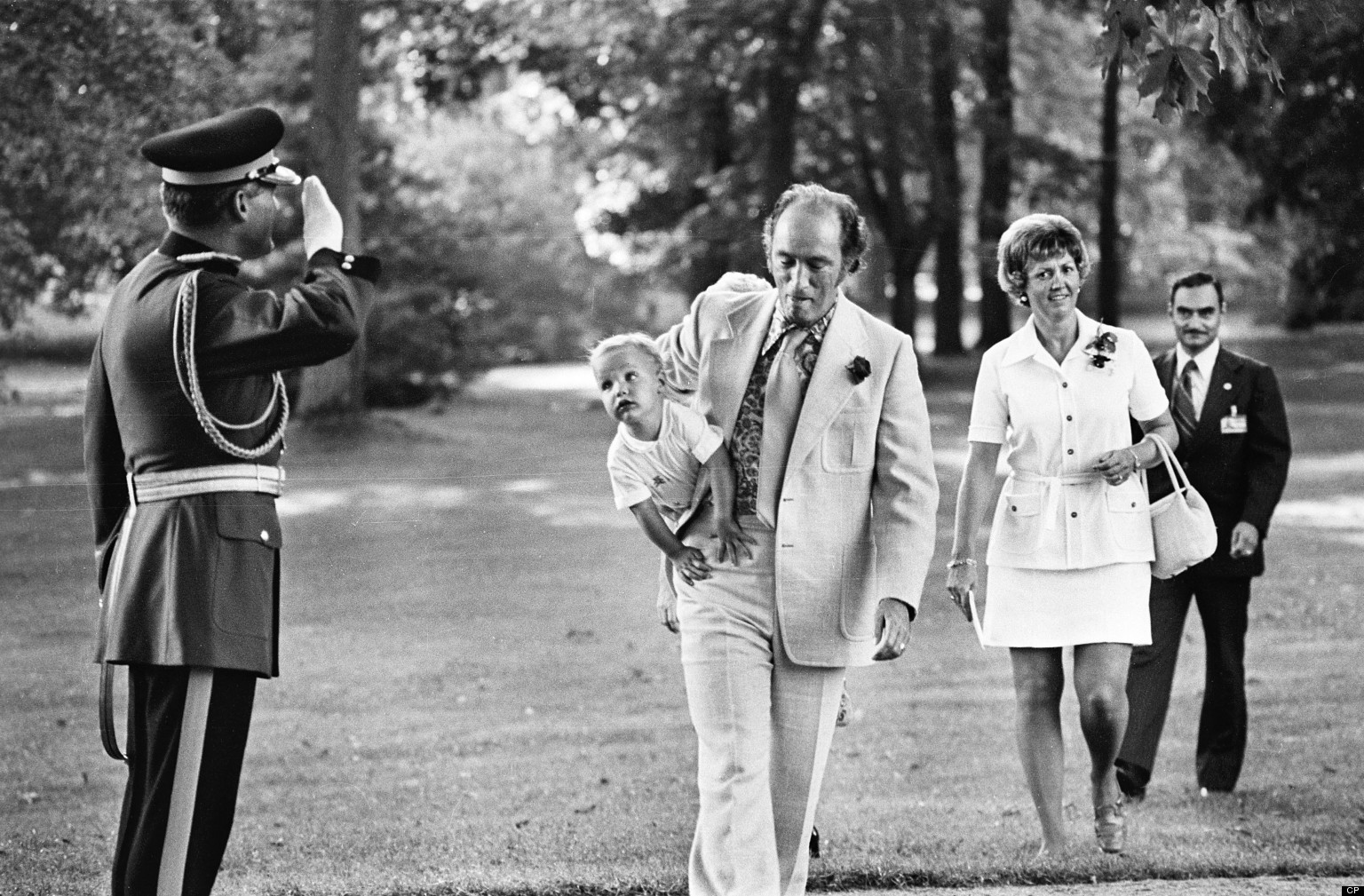
- There's an iconic 1973 photograph◊ of Pierre Trudeau carrying a young Justin with RCMP Insp. Denis Ling saluting them. 40 years later, in 2013, Justin met Ling's son, Jeffrey, who followed in his own father's footsteps by becoming a policeman, too.
- They are still behind the Papandreou family in Greece, who had three generations of prime ministers: grandfather Georgios
- Jean-Marie Le Pen is a French politician and founder of the right-wing populist National Front party who advanced to the presidential runoff in the 2002 election but lost in a landslide to the moderate incumbent President Jacques Chirac. His daughter, Marine Le Pen, later took over the party and in the 2017 presidential election advanced to the runoff, but similarly lost in a landslide to the moderate candidate Emmanuel Macron.
- Too many professional athletesnote to count are the children of other pros, usually (but not always) in the same sport. Cesare Maldini and his son Paolo take the cake in this regard. Both were soccer players who had played as defenders. Both were famous players who spent most/all of their professional careers with AC Milan as well as the Italian national team in which both of them had captained during their playing days.
- Additionally, many famous actors are descended from other famous actors (Ben Stiller, Drew Barrymore, Dakota Johnson, etc). Exaggerated by American film actor Tyrone Power, whose distant 19th-century ancestor was an Irish stage actor also named Tyrone Power.
- King John II of Castile and his son, Henry IV, were both weak-willed monarchs dominated by their prime ministers, married twice, and fought a battle against an aristocratic rebellion... in the same town, but 22 years apart.
- Crown Prince Rudolf and his daughter, Archduchess Elisabeth Marie of Austria. Both were born at Laxenburg Castle and were much more liberal than their family/period. note They had initially good relationships with their family which deteriorated later on. note They openly had affairs after their first marriage. Both died in the vicinity of Vienna (the Mayerling hunting lodge was in the Vienna Woods, and Erzsi's villa is on the outskirts of the city).
- British mountaineer Alison Hargreaves died climbing K2 in 1995. Her son, Tom Ballard, died in 2019 while climbing Nanga Parbat, also in the Himalayas.
- At the Battle of Sullivan's Island during the American Revolutionary War, Sir Peter Parker, 1st Baronet, was shot in the thigh by American militiamen. Years later, at the Battle of Caulk's Field during the War of 1812, his grandson, Sir Peter Parker, 2nd Baronet, was also shot in the thigh by American militiamen. Unlike his grandfather, however, the wound proved fatal and he died from a severed femoral artery.
- Historically, it is easy enough to find examples of military personnel whose parents or kids were military personnel. This can sometimes lead to concerns regarding nepotism (it's easy enough to find examples of general officers whose parents or grandparents were also general officers). Ever since the United States shifted to an all-volunteer force, there have also been concerns about sociological trends regarding military service, namely that people are more likely to serve if they had family who served, and that the inverse is also true: Those who don't have family who served are less likely to serve. Over the course of several generations, you end up with something resembling a military caste, with limited interaction between military and civilians, resulting in what is referred to as the Civil-Military Divide.
- Musician Hank Williams died tragically in 1953 when he was only 29 years old from heart failure in combination with other health issues. Sixty-seven years later, in 2020, his granddaughter Katherine Diane Williams died tragically at the age of 27 in a car accident.
- When Theatre of Blood was adapted for the stage, Diana Rigg's role was filled by her daughter Rachael Stirling.
- Doctor Who:
- Patrick Troughton's son David played the Second Doctor in a few Big Finish audio plays.
- Jon Pertwee's son Sean Pertwee dressed a photo◊ of him cosplaying as the Third Doctor.
- Following Elisabeth Sladen's death, her daughter Sadie Miller took on the role of Sarah Jane Smith in Big Finish audio plays.
- Sean Connery played Robin Hood in Robin and Marian and his son Jason would later replace Michael Praed as the lead in the final season of Robin of Sherwood.
- Patrick Troughton was the first actor to play Robin Hood on British television in 1953. His grandson Sam Troughton would later play Much the Miller's Son in Robin Hood.
- Ivan Reitman's son Jason Reitman grew up on movie sets, such as Ghostbusters (1984). He would later become a director in his own right and directed Ghostbusters: Afterlife.
- Voice acting legend Maurice LaMarche and his son Jonathan have both dealt with the loss of a loved one due to a murder. Maurice's father was shot to death by a one-time family friend in March 1987. Years later, Jonathan LaMarche became a close friend of Christina Grimmie and played bass in her band. She would tragically lose her life at the hands of a deranged fan in June 2016.
- Errol Flynn's son Sean starred in The Son of Captain Blood, the sequel to his father's breakthrough film Captain Blood.
- Rod Hull's son Toby brought Emu out of retirement for the first time since his father's death during the 2003 pantomime season, appearing in Cinderella at the Theatre Royal, Windsor. Toby Hull and Emu appeared in their own series on CITV.
- James Gandolfini's son Michael Gandolfini played his father's iconic role of Tony Soprano in The Sopranos prequel film The Many Saints of Newark.
- On The West Wing, the younger version of Jed Bartlett was played by Martin Sheen's son Emilio Estevez. On a similar note, when Charlie Sheen was cast as the President of the United States in Machete Kills, there were immediate comparisons to his dad's famous role.
- Pierre and Marie Curie were both physicists and chemists who studied radioactivity, which earned them the Nobel Prize in chemistry of 1911 for the discovery of polonium and radium. Their daughter, Irène, became a chemist as well, married Frédéric Joliot-Curie and, together, they earned the Nobel Prize in chemistry of 1935 for the discovery of inducted radiation. And since science decidedly runs deep in this family, both ofs Irène's children and all of her grandchildren became scientists themselves. More darkly, both Marie and Irène died from leukemia due to their exposure to radiation during their research.
- In Straight Outta Compton, Ice Cube was played by none other than his son O'hea Jackson Jr.
- Gary Busey appeared in Predator 2. In The Predator, his character's son was played by none other than Jake Busey.
- Judy Garland's most iconic role was Dorothy Gale in The Wizard of Oz. Her daughter Liza Minnelli voiced the character in Journey Back to Oz. She's also performed "Over the Rainbow". Unsurprisingly, they both have huge LGBT fanbases.
- Giancarlo Giannini starred in the original Italian Swept Away, while his son Adriano starred in the American remake.
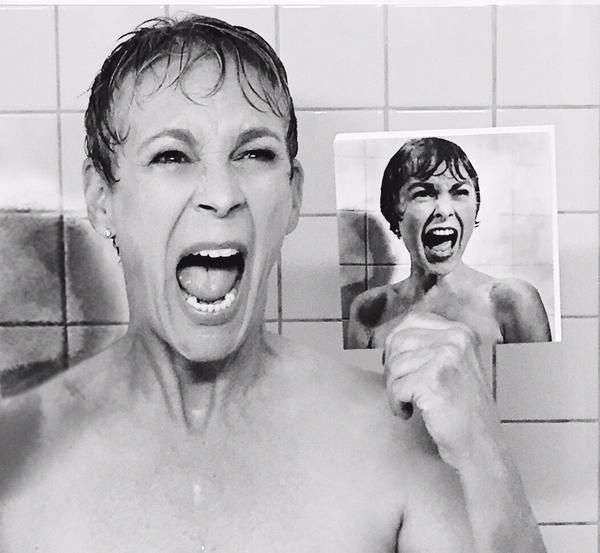
- Jamie Lee Curtis re-enacted◊ her mother Janet Leigh's iconic Shower Scene from Psycho. She later dressed as Marian Crane.
- James Bond:
- The series was co-produced by Albert R. Broccoli. It is currently overseen by his daughter Barbara Broccoli.
- Eunice Gayson played Sylvia Trench in Dr. No and From Russia with Love. Her daughter Kate appeared in the casino scene in GoldenEye.
- Pedro Armendariz played Kerim Bey in From Russia with Love. His son Pedro Armendariz Jr. played President Lopez in Licence to Kill.