
 in Trope Talk.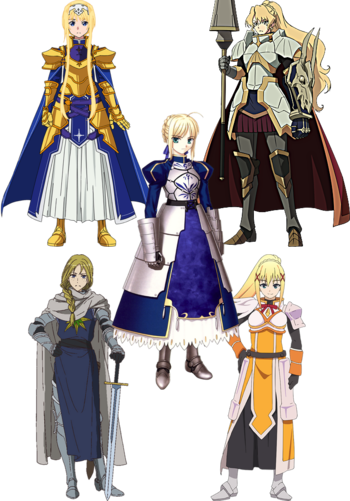
Who cuss like me; who just don't give a fuck like me
Who dress like me; who walk, talk, and act like me
And just might be the next best thing, but not quite me!
A character who is so popular and impactful that many other characters created afterwards are heavily inspired by it. They share even more than its Archetypal Characters, they are its expies — basically the same old character recycled, with some minor changes to make it fit into the new setting. The original one gives inspiration not just for their basic Characterization Tropes, but for parts of their relationship dynamics, personality, and appearance.
While too many authors using the same obvious expies could be considered a worrying trend in terms of originality, it isn't an inherently bad thing. As a longer time passes, creators might be more and more likely to make bigger changes to the character, eventually growing it into a whole new Character Archetype trope on its own. In other cases, it's possible that the resulting characters are too different even for that: Talented writers can explore certain aspects of a character with an expy, and other aspects with another expy, in a way, that if you would compare the two expies, they wouldn't even appear that similar to each other. While it's possible that a Fountain of Expies also serves as a Trope Codifier for the character's most fundamental tropes, other times the shared similarities are more vague.
In the following "subtropes" list, only add trope pages whose descriptions are explicitly based on the idea of collecting Stock Characters that are based on a first one. There are other tropes that were more indirectly started or codified by certain characters, but these should not be referenced.
Expy refers mainly and solely to characters drawn from pre-existing fiction. For characters derived from historical figures (this includes any real life person that has passed away), please see No Historical Figures Were Harmed. Celebrities go under No Celebrities Were Harmed.
See also Alternate Company Equivalent, which is when a character or product from another brand resembles its competitor.
A Sub-Trope of Follow the Leader. See also Whole-Plot Reference when it's the plot, not the character, that's being referenced. See also Cast of Expies and All-Stereotype Cast. See also No Celebrities Were Harmed and No Historical Figures Were Harmed, where it's a fictional character/organization that is based on a real-life person or group.
Subtropes:
General- Captain Ersatz
- Corrupted Character Copy: An expy that is much less friendly than the original character.
- Overused Copycat Character: When a work jokes about how many times a certain character has been copied.
- Virtuous Character Copy: An expy that is much nicer than the original character.
From Advertising
- Insane Proprietor (Crazy Eddie, in turn based on Madman Muntz)
From Anime, Manga, and Light Novels
- Astro Clone (Astro Boy)
- Phlebotinum Girl (Lalah Sune)
- Rei Ayanami Expy (Rei Ayanami)
- Sailor Senshi Send-Up (The Sailor Guardians)
- Stock Light-Novel Calamity Princess (Rias Gremory)
- Stock Light-Novel Hero (Kirito and/or Rudeus Greyrat)
- Stock Shōnen Hero (Goku)
- Stock Shōnen Rival (Vegeta)
- Stock Shoujo Heroine (Usagi Tsukino and/or Tsukushi Makino)
From Comic Books & Comic Strips
- Batman Parody (Batman)
- Captain Fishman (Aquaman and Namor the Sub-Mariner)
- Captain Patriotic (Captain America)
- Captain Space, Defender of Earth! (Flash Gordon and Buck Rogers)
- The Commissioner Gordon (James Gordon)
- Creepy Family (The Addams Family)
- Electric Black Guy (Black Lightning)
- The Fantastic Faux (Fantastic Four)
- HULK MASH!-Up (The Incredible Hulk)
- Practically Joker (The Joker)
- Spider-Man Send-Up (Spider-Man)
- Superman Substitute (Superman)
- Teenage Mutant Samurai Wombats (Teenage Mutant Ninja Turtles)
- Trenchcoat Brigade (John Constantine)
- Wolverine Wannabe (Wolverine)
- Wonder Woman Wannabe (Wonder Woman)
From Fan Works
- Adventurer Archaeologist (Indiana Jones)
- Attack of the 50-Foot Whatever (Attack of the 50 Foot Woman or The Amazing Colossal Man)
- Classical Movie Vampire (Bela Lugosi and Christopher Lee as Dracula)
- Colonel Kurtz Copy (Colonel Kurtz)
- Dastardly Whiplash (Professor Fate, Snidely Whiplash, and/or Dick Dastardly)
- The Expy With No Name (The Man With No Name and/or Sanjuro)
- Fish People (Gill Man)
- Flesh-Eating Zombie (Romero zombies)
- Hockey Mask and Chainsaw (composite of Jason Voorhees and Leatherface)
- The Igor (another composite, this time of Fritz from the original film adaptation of Frankenstein and Ygor from Son of Frankenstein)
- King Kong Copy (King Kong)
- Looks Like Cesare (Cesare)
- Looks Like Orlok (Graf Orlok)
- Lorre Lookalike (Peter Lorre)
- The Magnificent Seven Samurai (The Seven Samurai and The Magnificent Seven)
- May the Farce Be with You (includes all Star Wars expies)
- Notzilla (Godzilla)
- The Ophelia (Ophelia)
- Predator Pastiche (Predator)
- The Real Spoofbusters (Ghostbusters)
- Stock Slasher (Leatherface, Michael Myers and Jason Voorhees)
- Terminator Impersonator (Terminator)
- Three Stooges Shout-Out (The Three Stooges, particularly the iconic line-up of Moe, Larry and Curly)
- Tuxedo and Martini (James Bond)
- Xenomorph Xerox (The Alien/Xenomorph)
From Literature & Fairy Tales
- Alice Allusion (Alice)
- The Artful Dodger (The Artful Dodger)
- Barbarian Hero (Conan the Barbarian)
- Blind Weaponmaster (Zatoichi)
- Byronic Hero (archetypes derived from the poems of Lord Byron, as well as the persona Byron himself developed)
- Captain Nemo Copy (Captain Nemo)
- Cthulhumanoid (Cthulhu)
- Dr. Fakenstein (Victor Frankenstein)
- The Fagin (Fagin)
- Frankenstein's Monster (The Creature)
- Gentleman Thief (Arsène Lupin)
- The Grinch (The Grinch)
- Hardboiled Detective (Sam Spade and/or Philip Marlowe)
- Inspector Javert (Inspector Javert)
- Inspector Lestrade (Inspector G. Lestrade)
- Jekyll & Hyde (Dr. Henry Jekyll and Edward Hyde)
- Just Like Robin Hood (Robin Hood)
- Long John Shout Out (Long John Silver)
- Peter Pan Parody (Peter Pan)
- Red Riding Hood Replica (Little Red Riding Hood)
- The Renfield (Renfield)
- Robin Hoodlum (Robin Hood)
- Robinsonade (Robinson Crusoe)
- The Scrooge (Ebenezer Scrooge)
- Sherlock Homage (Sherlock Holmes)
- Stringy-Haired Ghost Girl (Sadako Yamamura/Samara Morgan)
- Tarzan Boy (Tarzan)
- Theatre Phantom (The Phantom of the Opera)
- Tiny Tim Template (Tiny Tim)
- Unfazed Everyman (Arthur Dent)
- The Watson (Dr. John Watson)
- Winter Royal Lady (The Snow Queen)
- The Wonka (Willy Wonka, usually Gene Wilder's 1971 portrayal of the character)
- Yellow Peril (Fu Manchu and Ming the Merciless)
From Live-Action TV
- Agent Mulder (Agent Fox Mulder)
- Agent Scully (Agent Dana Scully)
- Doctor Whomage (The Doctor)
- Kids' Show Mascot Parody (most often Barney the Dinosaur)
- The Kirk (James T. Kirk)
- The McCoy (Leonard "Bones" McCoy)
- Mock Headroom (Max Headroom)
- Sentai (Super Sentai/Power Rangers)
- The Spock (Mr. Spock)
- Ultraman Copy (Ultraman)
From Mythology, Religion, & Oral Tradition
- Borrowin' Samedi (Baron Samedi)
- Looks Like Jesus and Messianic Archetype (Jesus)
- Madonna Archetype (Virgin Mary)
- Monkey King Lite (Sun Wukong)
- Moses Archetype (Moses)
- Pseudo-Santa (Santa Claus)
- Satanic Archetype (Satan)
- Demiurge Archetype (The Demiurge/Yaldabaoth)
From Music
From Toys
From Video Games
- Mascot with Attitude (Sonic the Hedgehog)
- Maou the Demon King (The Dragonlord and Zoma)
- Phonýmon (mainly various Pokémon, but also Digimon and Tamagotchi)
- Power Up Mount (Yoshi)
- Shotoclone (Street Fighter, specifically Ryu and Ken)
- Vampire Lolita Archetype (Remilia Scarlet)
From Western Animation
- Great Gazoo (The Great Gazoo / Mr. Mxyzptlk)
- Mocky Mouse (Mickey Mouse and friends)
- Spoofy-Doo (Scooby-Doo)
Other examples:
- Sailor Moon: Hotaru Tomoe/Sailor Saturn was so popular for whatever reason that a few Magical Girl series following copied her character in particular, such as Michal Amagi in Mermaid Melody Pichi Pichi Pitch. Tsubame Sanjou from Rurouni Kenshin is also explicitly mentioned by Word of God as being based on her character.
- The trailblazing success of AKIRA (especially that of its movie adaptation) led to its antagonist Tetsuo Shima becoming an inspiration for many other characters since then. From Tomura Shigaraki to K9999 to even Andrew Detmer, quite a lot of psychotic, supernaturally powered youngsters in anime, video games and even movies since AKIRA's release wear their inspiration from Tetsuo on their sleeves.
- Another Shonen Jump starter was YuYu Hakusho's Sensui. Before him there were just Arrogant Kung-Fu Guy and Smug Snake Chessmaster villains in anime/manga, then his extremely suave persuasion, extremely broken (in more ways than one) abilities and knack for turning every little mishap to his advantage, is what defines today's anime/manga (particularly Shōnen) villains. Just ask Madara of Naruto, Blackbeard of One Piece, Byakuran of Reborn! (2004), Naraku of Inuyasha, and Father of Fullmetal Alchemist. Though Sensui has some more traditionally direct (as in, based directly on him in particular and not just the type of overpowered shounen Anti-Villain he created) expies as well — Bleach gives us Aizen, Kariya, Ginjo (Ginjo to the extent that if you just put a bindi on his forehead he looks exactly like Sensui were Kubo Tite to draw him), and Ulquiorra (his R1 and R2 transformations during his fight against Ichigo), Hunter × Hunter has Chrollo (unsurprisingly, from a manga by the same author), Naruto has Pain (his background and his powers such as the six paths of pain relating to Sensui's multiple personalities), and Saiyuki has Homura.
- The Cardfight!! Vanguard franchise have Naoki Ishida, the hot-blooded sidekick of the third season and quite possibly Vanguard's biggest Breakout Character. Naoki is so well received, that he effectively become the Deuteragonist of the fourth season and the only one of the main core group that manage to avoid getting Demoted to Extra. His popularity would later spawns several character that is based on him to take on the prominent roles. Chrono Shindou, the protagonist of the fifth season onwards is heavilly based on Naoki, and when the seventh season introduced a new sidekick for Chrono, in form of Kazuma, he's also clearly based on Naoki. The seventh season also had another character acting as the sidekick of Chrono's former teammate turned rival that, despite lacking much of a similarity to Naoki in personality, is practically written to emulate the development of Naoki of the fourth season.
- Space Adventure Cobra: The Hero Cobra, has tons of them, like Vash, Ragna, Alucard, Vincent Valentine, Edward Elric, Dante, etc. All of them all wear red and a lot of them have an unusual arm of sorts, while some others share Cobra's flirtatious and cocky personality. They didn't all start wearing Badass Longcoats until Vash, though.
- Captain Harlock is very iconic in Space Opera anime, and he shows up damn near everywhere in anything where there are huge spacey battleships. Notable Harlock expies include Alex Row of Last Exile (the stoic renegade captain of the legendary steampunk battleship "Kill'em All" Silvana), Captain Napolipolita from Project A-Ko, Vyse Inglebard of Skies of Arcadia (a non-Space Opera example, being a Sky Pirate who resembles a younger Harlock complete with brown bangs, scar, and eyepatch), the villainous Vicious of Cowboy Bebop (who even has the weird bird, probably to make up for his distinct lack of a battleship), and even Lars Barriga of Steven Universe (who sports a Badass Cape that is nearly identical to Harlock's and commands his own starship after he gets resurrected). Speaking of Leiji Matsumoto's creation, the Maetel archetype is also popular: tall, willowy blonde women with few words and deeply mysterious origin. Nekota from Girls und Panzer and Elendira the Crimsonnail from Trigun are obvious nods to the original Maetel. Elendira even cosplays Maetel on one of the gag covers.
- Ryo Asuka from Devilman spawned an entire lineage of White Hair, Black Heart characters with a Satanic Archetype or Fallen Angel theme and often Homoerotic Subtext with the protagonist. Examples are Kaworu Nagisa from Neon Genesis Evangelion, Griffith from Berserk, Bakura from Yu-Gi-Oh!, Joshua from The World Ends with You and Sephiroth from Final Fantasy VII to name a few.
- More Neon Genesis Evangelion expies:
- In a similar vein to the Rei Ayanami Expy and Ryo Asuka above, Kaworu Nagisa has a similar amount of Expies, such as N from Pokémon Black and White, Volo from Pokémon Legends: Arceus, Ryoji Mochizuki from Persona 3, Aru Akise from Future Diary, Itona Horibe from Assassination Classroom, Nagito Komaeda from Danganronpa 2: Goodbye Despair, Killua Zoldyck from Hunter × Hunter, Mitsuki from Boruto, Alvis/A/Alpha from Xenoblade Chronicles, Alpha Omega Nova from Space Patrol Luluco, Tsukasa Okino from 13 Sentinels: Aegis Rim, Teruki Hanazawa from Mob Psycho 100, The Anguished One/Al Saiduuq from Devil Survivor 2, Lio Fotia from Promare, Makima from Chainsaw Man (a Distaff and Evil Counterpart to this archetype), and Boy from Pacific Rim: The Black (a younger, more innocent example who instead views the protagonists as Parental Substitutes). You will often find a morally-grey Bishōnen with light (typically white or grey) hair who's Ambiguously Gay/Ambiguously Bi and aims for the lead character. If Foe Romance Subtext is part of the character, he's more than qualified for the Expy. For even more points, make them Ambiguously Human as well and have them turn out to be the Anti-Anti-Christ (as with the aforementioned Ryoji and Boy).
- We also can count Shinji Ikari. After the series, countless Classical Antiheroes appeared with dark hair and angst similar to Shinji's. Renton Thurston from Eureka Seven (in vain of Follow the Leader) also counts as well as Ouma Shu from Guilty Crown and Yukiteru Amano from Future Diary.
- Shinji is also representative of an archetype of Shrinking Violet short teenage male protagonists with Crossdressing Voices who are Troubled, but Cute (if not outright In Touch with His Feminine Side) and possess Hidden Depths that allow them to act far more forcibly and decisively than what they appear. Examples include the aforementioned Yukiteru, Makoto Naegi from Danganronpa: Trigger Happy Havoc (who shares a Japanese voice actress with him), Nagisa Shiota from Assassination Classroom, Yuri Katsuki from Yuri!!! on Ice, Negi Springfield from Negima! Magister Negi Magi, and Hiro from DARLING in the FRANXX.
- Not to be outdone by both Shinji and Rei, Asuka Langley Soryuu/Shikinami has quite her fair share of Expies. These characters will usually be tall and Hot-Blooded Action Girls with long reddish-brown hair and display a "harsh" tsundere personality. For bonus points, have them wear the color red, make them pilot mechas while wearing a skin-fitting bodysuit, and put them in a Masculine Girl, Feminine Boy pairing. Notable examples include Asuna from Sword Art Online, Zero Two from DARLING in the FRANXX, D.Va from Overwatch, Power from Chainsaw Man, and Pyra/Mythra from Xenoblade Chronicles 2note .
- Gundam sure likes to recycle character attributes, much more character designs, as exemplified by the expies of the character Char and Phlebotinum Girl pages. As to other characters: Relena Darlian/Peacecraft, herself the Sayla Mass to Heero Yuy's Amuro Ray and Zechs Merquise's Char Aznable, has expies of her own in Dianna Soreil, Lacus Clyne, Cagalli Yula Athha (who's also partly based on Sayla; and who would later on get an expy of her own in Ange), Princess Rele, Marina Ismail, Kudelia Aina Bernstein, and Miorine Rembran and outside of Gundam, Nunnally Lamperouge and Euphemia Li Brittania (the latter who's also partly based on Lacus), and Asseylum Vers Allusia.
- Then Heero himself is thrown into the mix as well. Former child soldiers who can keep the military aspect of Real Robot shows while still being young enough to appeal to kids and/or teenagers. Such expies include Setsuna F. Seiei (who later gets one in Mikazuki Augus) and Sousuke Sagara from Full Metal Panic! (who pulls double duty as an Affectionate Parody of the character type).
- MSG Big Bad Gihren Zabi has expies in Glemmy Toto, Fonse Kagatie, Seidel Rasso, Patrick Zala, and Flit Asuno, all of whom are sociopathic despots who preach Master Race ideals and employ destruction superweapons.
- Likewise, Ramba Ral, as an anti-villainous Father to His Men who commands one of the antagonists' military units from the front, has quite a number of clones: Norris Packard, Andrew Bartfeld, Sergei Smirnov and Crank Zent are the most obvious examples, whilst Suberoa Zinnerman is arguably a borderline case. And then there's Mr. Ral...
- Mobile Suit Zeta Gundam has a few:
- Yazan Gable has an infamy second only to Char in number of knockoffs: There's Rakan Dahkaran of Mobile Suit Gundam ZZ, Rezun Schneider of Mobile Suit Gundam: Char's Counterattack, Ash Grey of Mobile Suit Gundam SEED Astray, Ali Al-Saachez of Mobile Suit Gundam 00 and Decil Galette of Mobile Suit Gundam AGE, as well as Code Geass' Sir Luciano Bradley. All are Sociopathic Soldiers who joined the army for the chance to kill as many people as possible, act as The Brute within their respective forces, have no redeeming qualities whatsoever, possess fearsome reputations in-story, and with the exception of Ash and Decil, are badass normals to boot.
- Paptimus Scirocco has a number of clones in refined and charismatic military officers who manipulate their way into power, preach high-minded but mysterious goals and have several significant female followers, as can be seen with Tassilo Vago, Treize Khushrenada, Gilbert Durandal and Ribbons Almark. There's also Kurow Kirishima in Rival Schools, who's pretty much a Captain Ersatz of Scirocco (right down to being voiced by the same guy).
- Four Murasame kickstarted the trend of the 'Cyber-Newtype' character: A mentally unstable, sociopathic character who's nonetheless pitiful that their instability was forced onto them via cybernetics. They often act Brainwashed and Crazy. If they're particularly 'lucky', they get to be a Love Interest, but if they're even unluckier, they're going to be the tragic love interest because they're going to DIE. If they're even luckier, they survive, but still won't become the main love interest. Examples include Elpeo Ple and Ple-2, certain interpretation of Katejina LoosExplanation, Allenby Beardsley, Quatre Raberba WinnerExplanation, Stella Loussier, Marida Cruz and Elan Ceres. Even in Zeta itself, Four's plotline repeated three times - once by briefly resurrecting her, and then with two other characters in Sarah Zabiarov and Rosamia Badam.
- Code Geass:
- Lelouch Lamperouge started a trend of (usually teenaged) Well-Intentioned Extremist, Byronic Anti Heroes with masked alter-egos, such as <C> from The Legend of Heroes: Trails of Cold Steel, the Flame Emperor from Fire Emblem: Three Houses and Joker from Persona 5 (who has the same Japanese voice actor).
- Nunnally vi Britannia started a trend of Wheelchair bound little sister princesses in mecha anime, such as Fiona Junyou Weinberg from Buddy Complex, Lemrina Vers Envers from Aldnoah.Zero, Sylvia Ikaruga Misurigi from Cross Ange (a Corrupted Character Copy), and Parviz from Gundam Build Divers Re:RISE (the first male example).
- Guts is pretty much the basis for every "manly" Japanese hero after him. Some examples are Ike and Hector from Fire Emblem, Auron from Final Fantasy X and Caim from Drakengard. Even the below-mentioned Cloud Strife, himself giving rise to legions of imitators, has a ton of parallels to the Black Swordsman (beyond the giant sword and brooding attitude, his past involves a betrayal by a comrade with long white hair. Sephiroth's feather motifs and the harm he does to the protagonist's love interest only serve to underline the Griffith parallels). Guts also has some characters based off of him like Kirito from Sword Art Online (nicknamed The Black Swordsman, has a BFS and Fairy Companion in the second arc), The Dragonslayer of Dra+Koi (wears a similar armor to Guts's Berserker Armor or rather is one, and has similar effects on the protagonist when worn), the titular character of Goblin Slayer (a "gritty" warrior who becomes nightmarish in combat against the goblins who traumatised him, and "doesn't let gods roll the dice"), and even Arthur Leywin from The Beginning After the End for a non-Japanese example (who post-Volume 9 wears an ancient suit of ebon-black armor, is The Dreaded among his mortal enemies, and has lost much of his friends and family thanks the machinations of Jerkass Gods whom he seeks to overthrow). His dark, tragic motif has also inspired several characters in Dark Souls such as Artorias The Abysswalker, The Abyss Watchers and Slave Knight Gael — all three are corrupted by the Abyss and fight like Guts in Berserker Armor, spinning their BFS with absurd speed and power.
- And even before Guts, We have Kenshiro as the original manly, musclebound, stone-faced action hero with a kind heart who specializes in using his fists to deliver Laser-Guided Karma to villains who oppress the weak just because they are stronger and isn't afraid to shed Manly Tears to the less-fortunate. Most well-known examples includes many expies from the early parts of JoJo's Bizarre Adventure. Such as the gentlemanly Jonathan Joestar and his blazing fists of Hamon. Jotaro Kujo, The Ace who looks much older than he actually is and commands his trusty Star Platinum to inflict physical humiliation on his enemies AFTER he defeats them with his wits. Lesser-known examples includes Saiga Riki-Oh who defeats evil by punching THROUGH them in the most spectacular way possible with his stone-shattering strength. Last but not least, we have the mysterious wandering surgeon Kazuya who inherited Kenshiro's many super-human traits and combines them with Dr. Karoo Kazama medical skills.
- The Vampire Hunter (often a Hunter of His Own Kind) with a wide brimmed hat, long hair, and cloak or Badass Longcoat, inspired by Vampire Hunter D. Some examples would include Alucard and Vampire Piggy Hunter.
- Deedlit from Record of Lodoss War has become the archetypical fantasy elf in Japanese media, having inspired a slew of "golden-haired green-clad elf chicks" such as Tiffania Westwood from The Familiar of Zero, Leafa from Sword Art Online, Shera L. Greenwood from How Not to Summon a Demon Lord, Tuka Luna Marceau from Gate, High Elf Archer from Goblin Slayer, and Lilia from The Hero and His Elf Bride Open a Pizza Parlor in Another World. This archetype has also spread to video games (e.g. Lucia from Capcom's Dungeons & Dragons arcade series).
- A specific derivative of this archetype found in the Isekai genre has Mystical White Hair, acts as the main Love Interest to the protagonist, and is oftentimes subjected to great personal duress. Examples of this subtype include Sylphiette from Mushoku Tensei: Jobless Reincarnation, Emilia from Re:Zero, and Tessia Eralith from The Beginning After the End.
- Being one of the most iconic anime characters ever, this obviously happened to Astro Boy. There have been numerous stories about humanoid robots that rely heavily on the series. The American Robotboy and My Life as a Teenage Robot come to mind, along with the Japanese Jetter Mars and Mega Man (Classic).
- Yu-Gi-Oh! has a mess of recurring archetypes, in both its spinoffs and its ripoffs.
- Yugi, or better Atem, is a role-model for many other protagonist, by being rather short (or simply not being tall), using a wide variety of monsters with his ace having 2500 ATK, having crazy Anime Hair and using magical powers to win the duel even if they actually defy the rules. They are all almost Invincible Heroes and they tend to have Spirit Advisors residing within their bodies.
- Seto Kaiba. Since he was the Breakout Character, the various spinoffs traditionally have at least two characters who have lots of money, act cool in all circumstances, get obsessed with the main character after he insults the character's pride, know their way around machines, stay clad in a gravity-defying coat, are/were successful and famous pro Duelists and specialize in dragons. Oftentimes, they'll give some Kaiba traits to one character and others to another. Yu-Gi-Oh! GX had Manjoume, who got Kaiba's wealth, obsessiveness, the coat and expies of some of Kaiba's lesser archetypes, while Kaiser got the stoicism, the coat and expies of Kaiba's signature Blue-Eyes, and Edo got the fame and success and is an even more effective Foil to the protagonist Judai than the other two. Yu-Gi-Oh! 5Ds has Jack, who got the obsession, the wealth, the fame, the coat and the dragon focus (as well as a similar backup strategy with Fiend-Types), though unusually, most of the other usual Kaiba traits got filtered into Yusei. Yu-Gi-Oh! ZEXAL has Kaito who got the coat, the technology and the dragon, while Shark got the fame and has one-to-two dragon-like sharks, and both of them can be stoic. Yu-Gi-Oh! ARC-V has Reiji, who got the money, the technology, the fame, but lacks the dragons; he also plays with the Expy trope by being a Contrasting Sequel Main Character at the same time, having three copies of a 3000 ATK beatstick that loses its role as Reiji's signature card and doesn't focus on a single monster by having a lot more variety, similar to Atem. Yu-Gi-Oh! VRAINS has Revolver, who may be the closest rival to Kaiba himself thus far, with a luxurious seaside house, the coat, a cold stoic demeanor, is a skilled hacker, is obsessed with Playmaker, has a deck that revolves around dragons, and is easily the best duelist thus far in LINK VRAINS besides Playmaker himself.
- Kaiba and his expies usually have a younger brother they have to babysit. The younger brother might be a Duelist or not. Mokuba is the original (and he is a Capsule Monsters Chess player), with his expies being Sho from GX (although his brother Kaiser often distances himself from him), Haruto from ZEXAL and Reira from ARC-V.
- Jounouchi and Shizuka are the first characters to introduce the deep-bonded big-brother-little-sister dynamic, a pair that appears in all other anime series. GX has Fubuki (a Red-Eyes player like Jounouchi) and Asuka who even invert Jounouchi and Shizuka's hair colors, 5D's has Lua and Luca, ZEXAL has Shark and Rio, and ARC-V has Kurosaki and Ruri. Most of the time, the big brother is very protective towards his younger sister.
- Bakura's archetype as a Sixth Ranger Traitor who has some kind of connection to the protagonist, quickly bonds with them, and ends up battling them for greater reasons while serving the Big Bad (usually forcibly) has recurred several times, with Johan in Yu-Gi-Oh! GX, Bruno in Yu-Gi-Oh! 5Ds, and Vector in Yu-Gi-Oh! ZEXAL. Vector, by being a deliberate case of The Mole but eventually turning good of his own will, spawned a few of his own, including Sora and Dennis in Yu-Gi-Oh! ARC-V.
- Insector Haga/Weevil Underwood wasn't the guy who started the idea of a Starter Villain who's nerdy, a cheater, a Hate Sink, and a Smug Snake, but characters who are clearly cut from his cloth pop up fairly frequently — most obviously, Ura from Yu-Gi-Oh! ZEXAL, and Eita from Yu-Gi-Oh! ARC-V.
- In an odd case of an archetype starting from a Canon Foreigner, Dartz's role as a leader of an evil organization (typically a cult) of more sympathetic characters who are being kept in place by More than Mind Control and inevitably undergo a Heel–Face Turn has been redone several times, with Saiou in GX, Divine in 5Ds, and Don Thousand in ZEXAL. The latter even copies the twist of Dartz having manipulated his underlings into their Start of Darkness. Dartz also, oddly, seems to have been a bigger inspiration for the traditional Final Boss character than most of the original canon villains — while the originals tended to be self-centered dirty fighters who were roughly equal with the protagonists, Dartz was a borderline SNK Boss who played two-on-one and overpowered the protagonists at every turn, with a more altruistic motivation (on the surface, anyway) and Hannibal Lectures at every opportunity — a set of ideas that fit Darkness, Z-One, and especially Don Thousand quite well.
- While Hayate the Combat Butler has Nagi Sanzen'in as one of the main heroines, it's Breakout Character Hinagiku Katsura that has inspired plenty of imitators after her unexpected popularity. Previously, if an anime/manga featured a Student Council they were either protagonists as seen in Maid-Sama! or major antagonists as seen in Revolutionary Girl Utena (usually being absurdly powerful in either role). What Hinagiku brought to the table was the cool and extremely popular (with both genders) Beautiful Elite version popular with antagonists (to the point of originally being drawn in an extra flowery Non-Standard Character Design which resembled Utena) that was also a very kind and helpful supporting character to the unpopular main characters. Characters following in her example can be seen in Hisa from Saki, Yanagin's Sempai from Daily Lives of High School Boys (whose character notes even lampshade it), and Captain Liliana from Queen's Blade (as a busty, semi-evil pirate version of Hina) as just ones that share her voice actress. Megumi Imae from No Matter How I Look at It, It's You Guys' Fault I'm Not Popular! fits as well with her being very nice and supportive of the bizarre and unpopular main character.
- Osomatsu-kun:
- Osomatsu-kun's popularity saw a rise in overbite-ridden, overzealous mustachioed showmen a la Iyami, down to their own use of his famous "Sheeeh!" pose or something like it.
- The Sextuplets deserve a mention, since they defined and established the 'Children with Wacky Adventures' formula. Notable characters that were based/inspired by them include Nobita from Doraemon, Eiichi from Kiteretsu Daihyakka and Kenichi from Ninja Hattori-kun.
- Pokémon: The Series:
- Team Rocket has become so iconic that Jessie and James's dynamic (e.g. aggressive female paired with passive male, associated with red and blue respectively) has become a staple of villainous duos in both anime and western animation (while the Terrible Trio trope technically has roots in the Doronbo Gang of Yatterman, this specific format of them was popularized by Jessie and James).
- While Ash Ketchum didn't make the archetype, the spirited collector surrogate on a journey To Be a Master was codified by his adventures.
- Misty was the Trope Codifier for the Short Tank, and at the very least Digimon has found much use for redhead Tomboys in denim.
- Sora Takenouchi of Digimon Adventure is clearly Misty's heir, with her red hair, yellow top, and blue denim jeans almost point for point a duplicate of Misty (Sora even has family-driven insecurities like Misty does). Rika Nonaka and Angie Hinomoto are both Sora's heirs in turn.
- Kari Kamiya in Digimon Adventure 02 is an inversion of the Misty's model—she's got Misty's top and shorts, but she's a straight Girly Girl.
- Azumanga Daioh codified the Slice of Life high school comedy genre to the point where there's an expy in nearly every entry to the genre since, typically Osaka or Tomo.
- Anpanman has the main villain Baikinman, a weird devil and fly amalgamation meant to represent an alien germ. His popularity has caused this hybrid design to become an ultra-common shorthand for germs of many varieties, including computer viruses.
- JoJo's Bizarre Adventure has Dio Brando. If there's ever a Vampire or a villain who has the ability to stop time, wields a large number of knives, and has a habit of dropping objects onto people while gesticulating wildly, expect them to reference Dio if not be a full-blown Expy. Examples include Zephyr (and sometimes, Dracula himself) from Castlevania, Sakuya Izayoi from Touhou Project, Junko Enoshima from Danganronpa, and Peacock from Skullgirls.
- Saint Seiya has Andromeda Shun, who is the poster boy for effeminate, kind-hearted shonen characters such as Kurama, Ryo Bakura, and Kurapika Kurta.
- Time Bokan defined what Terrible Trios look like in anime and manga, usually using one bossy, beautiful lady flanked by two bumbling boys. The above-mentioned Team Rocket was one of them, but this extends to groups like Emperor Pilaf's trio, the Grandis Gang, and even Dr. Eggman and his two hench-bots starting from Sonic X (though early traces of that could be found in Adventures of Sonic the Hedgehog).
- There are a few gender-inverted examples too, such as Genius Yamada and his two assistants in Game Tengoku or Dr. Highbrow with Tracy and Yvette in the obscure anime Cybot Robocchi/Robby the Rascal.
- Princess Knight set a standard with Sapphire, presenting a female protagonist who is skilled in swordfighting and can pull off a masculine look, whether just in her usual look or through full-on crossdressing. Characters that kept up this trend include Oscar Francois de Jarjayes from The Rose of Versailles and Utena Tenjou from Revolutionary Girl Utena.
- Urusei Yatsura had Lum, introducing an otherworldly love interest who'd be possessive of the main character, oftentimes bringing misfortune courtesy of malfunctioning gadgets or inedible food. Other such characters would start turning up, like Zero Two from DARLING in the FRANXX, Miia from Monster Musume, and Lala from To Love Ru.
- While Superman could be said to be the Trope Codifier for the whole Super Hero genre, he is even more directly the inspiration for every single Cape superhero in terms of personality and outfit, and for anyone with the standard Flying Brick powers (including the aforementioned Goku!). Then there are those characters more directly and deliberately inspired by him, including Supreme, Samaritan of Astro City, and Marvel's Gladiator and The Sentry.
- Similarly, Batman (himself borrowing heavily from Zorro and The Shadow) gave rise to every single Badass Normal in (American) Comics, particularly those that work during the night. This is lampshaded in a JLA 80-Page Giant issue when Green Arrow talks, In-Universe, about how Batman was the coolest non-powered hero around, so of course GA had to have a cave, and an Arrowmobile, and a sidekick.
- If there are expies of Superman and Batman in a story there is probably a Wonder Woman Wannabe somewhere there to complete the Trinity.
- Robin as well set the pace for the Sidekick in comics. Following his creation, numerous other kid sidekicks were created, Bucky, Aqualad, Speedy, Kid Flash, the list goes on.
- Lois Lane as well, as the journalist love interest of the hero with an Alliterative Name — think of Vicki Vale, Iris Allen, Betty Brant, Roxanne Ritchi...
- John Constantine is by far the best known member of the Trenchcoat Brigade and Occult Detective, generating the likes of Peter Wisdom (who's basically John Constantine with Nick Fury's job), The Phantom Stranger (who took on more of these aspects as Constantine became more popular), and even Gambit has been dabbling in the supernatural in recent years. The surprising thing is that it's crossed mediums, with Harry Dresden being one of the best known examples of the trope, and becoming one of these in his own right - including, peculiarly, a sort of recursive Expy in the Justice League Action version of John Constantine, who was essentially a British Harry Dresden.
- Captain America is the best known patriotic superhero, and as such has inspired numerous Expies. Among them are the Fighting American, the Guardian (also created by Joe Simon and Jack Kirby), Agent Liberty, General Glory from the JLI, and Commander Steel from the All-Star Squadron.
- Captain America himself is inspired by The Shield (by the publishers of Archie), the first known patriotism-themed superhero in comic books.
- He's also spawned a series of "Shield Bearing Captain Patriotic" One Shot Characters put in charge of various national superteams dropped into comics to represent other nations and their interests. Namely, Russia's Red Guardian (The Seventh one) of the Winter Guard, and China's The Star of the Dynasty.
- Wolverine. Nearly every "exciting new character" introduced in The Dark Age of Comic Books was a cheap knockoff of him. Wolverine himself is an expy of Timber Wolf from the Legion of Super-Heroes.
- Wolverine isn't the only one to have inspired these characters. Watchmen's Rorschach was a major influence in many ways across the board and helped codify many of the tropes for AntiHeroes. His popularity was certainly a factor in the creation of the '90s Anti-Hero, and every one of those characters owes something to him, be it a willingness to kill, working alone, constantly brooding, being intimidating towards the criminal scum and not cooperating well with police or other heroes. Rorschach did most of it first. Rorschach is himself an Unbuilt Trope of this, ironically.
- Spider-Man is often credited as being the Trope Codifier for the non-sidekick Kid Hero and the Unlucky Everydude Superhero. A lot of characters owe much of their characteristics to him such as Blue Beetles Ted Kord and Jaime Reyes (moreso the latter as the former also draws inspirastion from Batman), Static, Freedom Ring from Marvel Comics Gravity, Kyle Rayner aka Green Lantern, and his own Legacy Character Miles Morales, the second Ultimate Spider-Man.
- Almost without exception, if a work is intended as a parody of/meditation on/deconstruction of/homage to the idea of superheroes in general, there WILL be a Justice League of Expies, and/or an expy of The Avengers or an expy of Fantastic Four (the latter was more common prior to the advent of the Marvel Cinematic Universe).
- Justice League Expies include the Champions in Soon I Will Be Invincible; the Seven Sentinels in Top 10; the Honor Guard in Astro City; Marvel's Squadron Supreme; the League of Honor in The Pro; The Guard of Silver Age Sentinels; the Freedom League of Mutants & Masterminds; and the original Global Guardians in Invincible.
- Avengers expies include DC's Champions of Angor and Payback in The Boys.
- Fantastic Four expies include the Parrs of The Incredibles; the Furst Family of Astro City; the Nobles of Noble Causes; the original Cyborg Superman's backstory in DC Comics; the Atom Family of Mutants & Masterminds; the thoroughly evil 4 in Planetary, and the Impossibles of The Venture Brothers. One episode of Batman Beyond involved an expy team going rogue.
- Due to complex rights issues, Black Lightning was barred from appearing in DC animated productions until around 2009 or so, which led to the creation of numerous thinly-veiled substitutes with similar powers. Among them are Black Vulcan from Super Friends, Soul Power from Static Shock, and Juice from Justice League Unlimited. This ultimately resulted in black characters with electric powers becoming a trope in its own right.
- The character Fantômas, originating as the Villain Protagonist in a series of novels, was an Omnicidal Maniac with Gentleman Thief trappings, who was aided by a Dark Mistress and pursued by a Sympathetic Inspector Antagonist. He inspired the Villain Protagonist Gentleman Thief of Diabolik (similarly aided by a Dark Mistress and pursued by a Sympathetic Inspector Antagonist)...
- ...who in turn inspired a number of other (usually more sympathetic) comic book characters, such as fellow Italian comic book anti-heroes Kriminal and Satanik (also fearful figures in black with a significant "K" in their name), the X-Men character Fantomex, a heroic take on Fantômas in Mexican comics, and Paperinik, a secret identity used by Donald Duck in Italian comics. Tellingly, among the many names given to Paperinik in translations are Fantomiald (France), Fantonald (Norway), and Phantomias (Germany).
- The Multiversity: Discussed, carrying over from their Action Comics run Morrison uses the term 'Archtrope'; basically anyone who shares a constellation of traits with say Superman (The Cape, Flying Brick, Big Good) are considered to be part of his Archtrope. Even with heavily mixed characters this counts. Played with too because analogues are also mentioned.
- The Shadow was contemporary with a number of similar pulp heroes: the Crimson Clown, Thunderbolt, the Spider, and... well, Batman himself. A few more stand-ins for him have appeared in modern times, including the Gray Ghost, the Silver Shroud, and Moon Knight.
- The Adventures of Tintin is a classic and influential Belgian adventure-comedy comic book series. So much that a wide variety of French/Belgian comics in the mid-20th century took obvious inspiration from it (to the point it was almost expected of the genre). These usually include a young inquisitive Vanilla Protagonist with Black Dot Eyes (Tintin), his larger-than-life Plucky Comic Relief sidekick (Captain Haddock), an older authority/professor figure (Professor Calculus) and/or a quirky pet (Snowy). A classic example is Spirou & Fantasio with Spirou, Fantasio, Champignac and Spip. Other obvious expies that more or less fit are Gil Jourdan with Libellule and Croûton, Johan and Peewit...
- Judge Dredd has inspired many vaguely-fascist future lawmen in other media. Marvel Comics alone has Boss Cage (from a possible future in Dark Avengers), Justice Peace (from the Time Variance Authority in The Mighty Thor), Justicer Bull (a member of the Captain Britain Corps in Excalibur), and The Punisher 2099 during the period he was running S.H.I.E.L.D. as the Punishment Police. Non-Marvel examples include Adjudicator Craator in the Doctor Who Missing Adventures novel Burning Heart (and, indeed, the Guild of Adjudication in general as portrayed in the Doctor Who New Adventures) and Arbitrator Foreboding from Ciaphas Cain (and, indeed, the Adeptus Arbites in general in Warhammer 40,000).
- After Frozen (2013) came out, not only did The Snow Queen shoot up in popularity, but some works find an excuse to include the Snow Queen as a character... and they now have a strong resemblance to Elsa. This can be seen in Pocket Knights II, and is spoofed in The Guild Of Dungeoneering that has an ice level boss named "Generic, Non-Infringing, Cartoon Ice Princess".
- Who Framed Roger Rabbit introduced Jessica Rabbit, a memorable cartoon semi-realistic Femme Fatale-Ms. Fanservice with a glamorous Chandler American Time fashion. Many other similar seductive/manipulative Western cartoon women would follow, with long poofy hair, luscious lips, vintage sexy fashion involving Opera Gloves, and have an ambiguous relationship with the male protagonist. These include Holly Would from Cool World, Goldie Pheasant from Rock-A-Doodle, Angel in Fish Police and Lola in Shark Tale.
- Certain actors with memorable appearances and manners of speaking have spawned many homages and caricatures in the popular culture that followed, especially in cartoons: James Cagney, Humphrey Bogart, Edward G. Robinson, Peter Lorre, Orson Welles, Marlon Brando, Robin Williams, Arnold Schwarzenegger (The Ahnold) etc.
- It is perhaps easier to count the number of Adventurer Archaeologists who are not Indiana Jones clones than the number of those that are, and Indiana himself descended from a long line of Adventurer Archaeologists.
- Audrey II of Little Shop of Horrors, who brought you other Man Eating Plants like the Piranha Plants from Super Mario Bros.
- King Kong may be the single most aped character who is not technically in the public domain, but it hasn't stopped many from copying him (probably because it's rather difficult to copyright a giant ape, whether we all know who it is or not). This was proved when Universal Studios famously sued Nintendo over Donkey Kong; they lost because they'd previously successfully argued a giant ape climbing a building was public domain.
- The sister franchise to Alien, Predator, has similarly had this occur with several mercenaries/killers (whether alien or not) taking after some combination of the titular monster's cloaking device and wrist blades, plasma weapon, flat mask, dreadlocks, mandibles and hunting tactics.
- Godzilla, the quintessential city wrecking giant monster, has had too many monsters based on him. You can say "Godzilla-sized" and everyone will know what you're talking about. See Kaiju and Rent-a-Zilla for examples of Godzilla clones.
- A lot of mafia bosses act suspiciously like Trope Codifier The Godfather, down to the odd mannerism of speaking.
- Star Wars:
- A lot of fantasy, science fiction or other fantastic works feature also a character modeled after Darth Vader. This character tends to be a Black Knight, Evil Sorcerer or Evil Overlord who is at the top of The Empire and acts as The Hero's Arch-Enemy or Archnemesis Dad. This character also tends to be feared in universe due to being a powerful Master Swordsman or Magic Knight like Darth Vader himself. It's not uncommon for this character to kill The Hero's parental figure/mentor and/or to be secrely related to (at least) one of the good guys, leading to some Luke, I Am Your Father moments. note
- Another example: often, a Lovable Rogue takes a cue from Han Solo, like the above mentioned Dr Jones or the treasure hunter Pietro Conti from Uncharted Waters: New Horizons.
- Emperor Palpatine is also one of the most prominent codifiers of Evil Overlord, inspiring a type of villain who are elderly manipulators with vast sorcerous or mystical powers. Expect to also occasionally see them Running Both Sides of a conflict or trying to tempt a hero to their side.
- Every Drill Sergeant Nasty in fiction after 1987 will invariably be heavily inspired by Gunnery Sergeant Hartman of Full Metal Jacket. Notable in that most of these will have the same actor (R. Lee Ermey) portraying him, as well.
- Got Powered Armor? Expect an Iron Man-esque suit-up sequence complete with robot arms, on the spot assembly, the holographic HUD in the person's helmet, and the iconic "Stepping into the boot" shot.
- James Bond:
- Oddjob from Goldfinger was so popular that actor Harold Sakata got several more roles as taciturn thugs wearing black bowler hats and suits.
- Perennial Bond bad guy Ernst Blofeld inspired countless villains who sinisterly stroke cats. Particularly those who are initially only depicted as hand petting a cat obscured by a large chair.
- Red Grant from From Russia with Love is very popular as a Bond villain and inspired many blonde, quiet, muscular henchmen in later Bond films, such as Hans in You Only Live Twice, Kriegler in For Your Eyes Only, Necros in The Living Daylights, and Stamper in Tomorrow Never Dies. This also was why many fans reacted negatively to Daniel Craig's casting as Bond in Casino Royale, as he looked more like Grant and his expies than Bond himself (at least until they finally saw the film).
- Sergeant Apone from Aliens has influenced several other sergeant characters of his type, such as Sgt. Johnson from the Halo game series. This is especially impressive considering he was one of the first people to die, which demonstrates just how much of an impact he left on viewers with his general attitude and initial Commanding Coolness.
- Sherlock Holmes. The inspiration for hundreds of eccentric private detectives in all kinds of settings, many of them explicit expies, to the extent that from the time he became popular until Trent's Last Case Deconstructed the type in 1913, it was well-nigh impossible to find a Great Detective who didn't rip him off, or, for that matter, a crime-solver who wasn't at least a parody of a Great Detective. Several characters inspired by Holmes have become distinctive popular characters in their own right, including Gregory House and Batman.
- And when Arsène Lupin was created in order to give Sherlock Holmes — pardon, Herlock Sholmes — a Worthy Opponent, the titular Lupin went on to become the Trope Codifier for the Gentleman Thief archetype.
- Conan the Barbarian: The most well known Barbarian Hero, whenever he's brought to pulps, paperback novels, comics, or motion pictures, he always brings with him a slew of imitators. Some of the obvious ones are Lin Carter's Thongor the Valkarthian, Gardner Fox's Kothar the Cumberian, John Jake's Brak the Barbarian, and Alan Moore's Bram the Berzerkian.
- Some of Kothar's prose stories were actually adapted into Conan comic book stories.
- The barbarian class in Dungeons & Dragons was created more or less entirely for the benefit of people who wanted to play as Conan.
- In recent years, the name Clonans has seen increasing use among fans.
- The Elric Saga: The iconic sentient weapon Stormbringer is the grandaddy of the magical swords with the ability of absorbing the souls of their enemies, including the Black Sword from Ultima VII, the Soul Reaver from Legacy of Kain, Soul Edge from the Soul Series, and Frostmourne from Warcraft''. Although these are less dickish to their wielder compared to Stormbringer.
- For that matter, Elric "The White Wolf" of Melniboné himself has been seen as a possible progenitor to other elf-like, albino, white-haired, black-dressed, Evil Weapon-wielding Anti-Hero/Anti-Villain Magic Knights with mutations or other inborn physical disabilities compensated for by their weapon or the use of alchemical potions, exact proportion of Elrickian traits varying. Notable cases include Geralt the Witcher (although the author denies inspiration), Malus Darkblade and (to a much lesser degree) Teclis from Warhammer Fantasy, Seltyiel from Pathfinder, Sephiroth of Final Fantasy VII, Griffith from Berserk, Arthas from Warcraft (though he became more of a Sauron expy later), and Brynden "Bloodraven" Rivers from A Song of Ice and Fire.
- Drizzt Do'Urden, as mentioned on the Overused Copycat Character page (being its former Trope Namer), has inspired several Dark Elven adventurers. Ironically, Drizzt himself is an expy of Xodar, a character from the John Carter of Mars novels.
- The Lord of the Rings:
- Big Bad, Sauron — though the Evil Overlord archetype is almost as old as humanity itself, many modern fantasy overlords owe quite a bit to this guy, particularly if they live in an Evil Tower of Ominousness in Mordor, are He Who Must Not Be Seen for most or all of the story, are Tin Tyrants decorated with Spikes of Villainy, use an Artifact of Doom, which may double as a Soul Jar, and they cannot comprehend good.
- Also, Elves. Extremely common in fantasy literature, but post-Christianity and pre-Tolkien, fae in general were portrayed as small, cute, harmless, etc. Or as The Fair Folk.
- And Hobbits. There are now lots of "halflings" and other short-people-who-are-not-dwarves in the fantasy literature and in fantasy RPGs.
- The archetype of a wandering, humble-seeming wise old man with a wide-brimmed hat and an array of supernatural powers may be started by Odin of Norse Mythology, but most aren't aware of that and base their Wizard Classic upon Gandalf.
- Legolas is pretty much the Trope Codifier for "Elf wielding a bow who is adept at surviving in nature." Bonus points if said elf lives in the woods.
- Smaug from The Hobbit brought the "silver-tongued dragon" archetype to Western audiences.
- The Balrog of Moria, especially the movie version design-wise, and Balrogs in general, inspired a lot of "giant powerful winged fire demon" entities in tabletop and video gaming, including Balor from Dungeons & Dragons, the Ash Titan from The Elder Scrolls, and Bloodthirsters such as Skarbrand and Ka'bandha from Warhammer Fantasy and Warhammer 40,000. And not only this, but the "giant powerful winged fire demon" look is preferred by other adaptations of ''Tolkien's Legendarium'' too, despite not sharing same continuity with Peter Jackson's trilogies.
- Land of Oz:
- The Wonderful Wizard of Oz gave us: Cyborgs/Androids afraid of losing their humanity (the Tin Woodsman), Cowardly Powerhouses (Cowardly Lion), the most iconic Wicked Witch of them all (especially given Margaret Hamilton's portrayal in the film), and a very typical girl heroine (Dorothy).
- Princess Ozma of Oz has inspired several characters. She's a young Benevolent Mage Ruler with an iconic design consisting of a flowing white dress, long dark hair. and a ringlet crown. Leia from Star Wars and the Childlike Empress from The Never Ending Story are two characters that take note from Ozma.
- The Cthulhu Mythos has been the inspiration of the Eldritch Abomination trope. If a creator wants to make one, it will usually have a face full of tentacles.
- James Bond is possibly the most famous depiction of a spy and is copied endlessly. His villains have also had a big influence on fictional characters, with Ernst Stavro Blofeld being quite possibly the most commonly copied.
- Journey to the West: Son Wukong In addition to many Chinese adaptations and knock-offs, the immortality-seeking monkey king with an extensible staff and great magical powers is known to the Japanese as Son Goku. (Most expies, however, only copy Wukong's Munchkin-levels of mischievousness and forget that he's also a Guile Hero.)
- Fafhrd and the Gray Mouser had a huge influence on both the Sword and Sorcery genre fantasy roleplaying games, and gave rise to a frequently copied adventurer pairing of Brains and Brawn and/or Sword and Sorcerer. (While The Big Guy often gets flanderized into a standard Barbarian Hero, some versions remember that Fafhrd isn't, and give their version the appropriate Hidden Depths.)
- Many a Kill All Humans-minded race of Mechanical Lifeforms owe a debt to Fred Saberhagen's Berserker series.
- Starship Troopers: The Pseudo-Arachnids (or Bugs) of Klendathu became the major inspiration for every swarm of man-eating Insectoid Aliens that infest the Science Fiction and Space Opera genres. From the Xenomorphs from Alien, to the Tyranids from Warhammer 40,000, to the Zerg from StarCraft, to the Brood and the Annihilation Wave from Marvel Comics.
- Discussed in Thursday Next; "generics" (basically book extras) in the Well of Lost Plots are affected by strong personalities and model themselves accordingly, which are then distributed in lots of other books. (One example In-Universe is how many Merlins appeared following The Once and Future King, which then were sent to books throughout the fantasy genre.)
- Harry Dresden of The Dresden Files is both an Expy of John Constantine and an example in his own right, spawning a whole wave of imitators in the form of often powerful but also often outgunned Occult Detectives and First Person Smartasses; Atticus O'Sullivan, Nate Garrett, DC Peter Grant, and Alex Verus are all examples. As, peculiarly, is the Justice League Action version of John Constantine, who owes more to Dresden than to any canon counterpart, making this positively recursive.
- Hawk (from the Spenser series) has started a low-profile trend in crime fiction. Take a look at any ongoing series that started in the eighties or later, and take note of how many of the protagonists happen to have a borderline-sociopath best friend, ally, and/or partner. The most obvious examples are Mouse, from Walter Mosley's Easy Rawlins novels; Joe Pike from Elvis Cole; and Ranger from the Stephanie Plum series (though Ranger isn't really sociopathic, he's still pretty much a carbon copy of Hawk in terms of his mysteriousness and overall badassery). It's even snuck into other genres: witness Thomas Raith's cool car, friendly banter, and habit of whistling odd songs to himself during a fight, or the general relationship between Anita Blake and the assassin Edward.
- Doc Savage. Key points of a Doc expy are being a Proto-Superhero who is the pinnacle of human achievement (possibly due to some kind of parental experimentation), either appearing in Two-Fisted Tales or "the pulp era" of a superhero pastiche universe, and often actually being named Doc or having a nickname reflecting Savage's "Man of Bronze" tag, or both. They include Tom Strong, Doc Sidhe, Doc Brass from Planetary, Doc Prophet (the Man of Marble) from Freedom City, Doc Aeon from Halt Evil Doer!, Mr Misnomer (the Man of Chrome) from Bernice Summerfield, Doc Thunder from Pax Britannia, Doc Bronze from the works of Kim Newman, and Doc Wilde.
- Yasunori Kato, antagonist of the classic series Doomed Megalopolis, has inspired a slew of imitators, which have in turn inspired others, to the point where it's difficult to tell who inspired who after the original. Characters of his lineage include M. Bison, Washizaki, Rudolph von Stronheim, the Blocken family, Brocken, and Shiryu, while surprisingly, we have a couple of heroic versions by the names of Raidou Kuzunoha and Subaru and Hokuto Sumeragi. Also, they are ALL descended from the Hugo Boss-designed Nazi officer uniforms.
- Ralph Kramden, as portrayed by Jackie Gleason, from classic American sitcom The Honeymooners, has influenced many other sitcom protagonists who are blue-collar, crude, simple-minded yet well-meaning middle-aged family men.
- Hakaider, The Rival of the titular hero in Kikaider, was so popular he went on to inspire many other villains in various Japanese media, especially in the Toku genre, that fit the mold of gun-toting, black-colored Killer Robots who are rivals, Evil Counterparts and/or brothers with the main protagonist. Examples can be seen in Bio Hunter Silva, Top Gunder, Gun Gibson, Black Beet, Deathferd, Logia and Mashin Chaser.
- Nasir from Robin of Sherwood introduced the idea of adding a North African or Arab character to the Merry Men in Robin Hood retellings. Several subsequent works, most notably Robin Hood: Prince of Thieves and the 2010s BBC Robin Hood, have done the same, either out of a conscious desire to ethnically diversify the cast, or due to accidental Lost in Imitation.
- Ultraman (and his successors) proved to be such a hit back in the day that Japanese television studios were churning dozens of giant heroes in an attempt to cash in on his success, with the most notorious of the bunch being Jet Jaguar from the Godzilla movies. In fact, it's become a subgenre of its own in Toku — the Kyodai Hero.
- Being a long-running franchise, Kamen Rider likes to recycle certain archetypes and character molds:
- Kamen Rider itself also set a trend for Japan's take on superheroes in media, such as a costume design that incorporates a helmet, transformations involving a gadget, and dramatic poses. From Super Sentai to Viewtiful Joe to even Gohan's superhero persona as Great Saiyaman all borrow bits and pieces from Kamen Rider's core design. Later Toku series from Toei, including Kikaider, Inazuman, Henshin Ninja Arashi, Akumaizer 3 and Space Ironmen Kyodain all featured heroes who borrowed various elements from Kamen Rider in one way or another.
- Shocker are pretty much the Trope Codifier for the Nebulous Evil Organisation in regards to Toku. If an organization has a rotating lineup of executives, Faceless Goons who shout "yee" and mutant monsters with Animal Motifs, they're likely derived from Shocker in some way. The Blood Wheel Clan, Satan Empire, Gorgom, ISS, Faust and Crown being some notable examples.
- Nigo and Riderman provide the template for the heroic secondary riders, the former acting as the basis for the friendlier ones (i.e., G3-X, Gatack), whereas the latter's influence is seen on The Rival (i.e., Knight, Brave).
- Akiyama Ren (Kamen Rider Knight) himself set the precedent for The Rival in subsequent series to come. As an aloof, initially antagonistic Stock Shōnen Rival fighting for the sake of a loved one in contrast to the protagonist's generalized idealism, this came to be the template for future secondary riders of The Rival variety, and secondaries after him tend to possess at least one of these traits.
- If you can think of a female rider (i.e., Marika, Femme), odds are that they have a few things in common with Tackle (even though she's not officially recognized as a rider).
- Shadow Moon provides the influence for most evil/morally questionable riders who are rivals with the main protagonist (i.e., Glaive, Kaixa).
- Keller and Mirror in the Super Sentai series Denshi Sentai Denziman have inspired a number of evil female spy duos in Toku, often colored in gold and silver. Interestingly, expies of them are particularly prevelant in the Metal Heroes series, which features such duos as Miss Demon 1 and 2, Brima and Gyol, Shadow and Gasher and Marsha and Karsha.
- Zoom's appearance on The Flash (2014) ended up inspiring several more black-clothed, deep-voiced Knights of Cerebus on other CW shows, including Prometheus, Black Hood, and Reign. The Flash itself followed the trend with Cicada.
- Spectreman: Dr. Gori inspired Monkey Alien from Dandadan and Mojo Jojo from The Powerpuff Girls''.
- In Visual Kei there are a lot of artists that get this treatment, but probably the most notorious is hide. The amount of hide clones or one-time hide clones within Visual Kei is enough to fill an entire page, but some of the more well known are Die and Kaoru of Dir en grey (though they currently are not), Jun of Spiv States plus the entire band concept of Spiv States being a thinly veiled copy of hide's solo band, and a 2013 photoshoot for a band called CELL featuring everyone in the band as a hide clone. It's been overdone to the point that anyone in Visual Kei with red or pink hair, especially paired with hide's face or eye makeup, is a clone of him regardless of sound or instrument.
- George Strait. In The '90s, many young up and coming males in Country Music followed his pattern of being youngish, clean-cut, sharp-dressed good ol' country boys with a bit of a honky-tonk flair to their music. Their copying of Strait's image was dubbed "hat act". Over time, so many "hat acts" flooded Nashville that the phrase quickly became a derogatory term, and most new males in country music ever since have abandoned the Strait archetype (except Strait himself, of course).
- Though Eminem song "The Real Slim Shady" serves as the current page quote, he himself comes from a long line of white rappers with that particular look (tank top, shorts, backward baseball cap, etc.), a family tree that includes Vanilla Ice.
- Being the archetypical medieval fantasy king, King Arthur has inspired quite a fair share of expies in media. These expies will usually be a medieval king or leader who commands an order of knights, wields a magical sword, sometimes has an Antagonistic Offspring Bastard Bastard or traitorous lieutenant, and ends up being a King in the Mountain in the hour of greatest need. Examples include Leoric from Visionaries, He-Man from Masters of the Universe, the whole Kingdom of Bretonnia from Warhammer Fantasy (though specifically its founder Gilles le Breton and to a lesser extent its current King, Louen Leoncouer), and the Dark Angels chapter from Warhammer 40,000 (more specifically its primarch, Lion el'Jonson). And while Saber/Altria Pendragon of Fate/stay night does not count as she is just a Gender Flip, Richard the Lionheart as portrayed in Fate/strange Fake counts as he strives to emulate the Arthurian ideals of a king to no avail.
- Mandrake the Magician had many imitators in The Golden Age of Comic Books, most of them with an almost identical costume. The one that is best remembered today is DC Comics's Zatara, father of Justice League member Zatanna. Another who pops up once in a while in current DC Comics is Fawcett Comics's Ibis the Invincible, a revived Ancient Egyptian who wears a turban instead of a top hat. The Justice Society of America's enemy the Wizard is basically an evil version of Mandrake, right down to the outfit and mustache. Even Silver Age magician Doctor Strange shares the Himalayan origin and (originally pencil-thin) mustache. And magician John Mandrake of The Bartimaeus Trilogy is named after him, though they don't have much else in common. Likewise, Shmendrake the Magician from The Last Unicorn is named in humorous homage to him.
- George Wagner is not just the Trope Maker and Trope Namer for Gorgeous George but the originator of The Gimmick as it would be used in pro wrestling from the 1930s onward. Besides ambiguously gay wrestlers like "Exotic" Adrian Street (who is himself a fountain of expies), his influence is also transparently shown in Natural Guy Buddy Rogers (another fountain of expies).
- El Santo, which ironically was a gimmick intended to cash in on the popularity of The Masked Marvel, only the The Marvel gimmick was supposed to be that of a Heel everyone wanted to see unmasked. Santo instead underwent a Heel–Face Turn after reaching a point no one wanted to see him unmasked and after the man died he was buried in it. Some of expies include Mil Mascaras, who in turn inspires his own expies, Black Man, who became Mexico's biggest draw (alongside Kung Fu and Kato Kung Lee) after succeeding an LLI feud Santo was a part of, Novia Del Santo (Irma Gonzales), El Zorro Plateado (who spawned his own Legacy), El Santos from the satire series of the same name and Number Five from Angel.
- Fray Tormenta is the Masked Luchador with the most expies after El Santo, which include Tiger Mask (which would in turn become another fountain of expies), Sagrado, Místico (that one too), El Generico, Tekken's King and Nacho Libre.
- The French Angel, aka "The World's Ugliest Man", became such a huge draw when he arrived in the Boston territory that a wave of expies rose across North America, including but not limited to Swedish Angel (formerly Phil/Olaf/Popey/Frankenstein/Olaffsen), Russian Angel (formerly Tony Angelo and a former Masked Marvel), Canadian Angel (formerly Bill Rush, who beforehand was in another ersatz role as Red Masked Marvel), Polish Angel (formerly Iron Talun, who in a bit of variation was cute), Czech Angel (formerly Stanley Pinto), Irish Angel (formerly Clive Welsh), Golden Angel (formerly Tiger Jack Moore) and Black Angel (Gil Guerrero). There was also Super Swedish Angel (formerly Tor Johnson) who was a Captain Ersatz of an expy and two distaff counterparts, the Lady Angel gimmick being taken up both by Jean Noble and Yulie Brynner. The animated ogre Shrek also closely resembles the world's ugliest man.
- Filipino wrestler Rey Urbano started The Gimmick of Asian wrestlers with "ninja cheats", though more imitators were inspired by his expy, The Great Kabuki, who in turn was overshadowed by one his own expies during the territorial era when promoters in the National Wrestling Alliance pushed The Great Muta as his son. Far more wrestlers have imitated Muta's style but the poison fog/colored mists come from Kabuki and the face paint and or mutilation come from Urbano.
- "Superstar" Billy Graham, whose expies include many other blonde and or bearded "body builder" types in fancy get ups such as Hulk Hogan, Jesse Ventura and Scott Steiner, who all also took elements of his promos, though adding their own unique tics.
- The New World Order are a group example. As one of the most famous and influential heel stables in the history of professional wrestling, it's perhaps unsurprising that the nWo has influenced numerous later stables, who took the basic premise "A large alliance of uncouth black-clad bullies with an anti-authority streak trying to take over a professional wrestling organization by force" and ran with it. They've inspired a few straightforward parodies and homages, like ECW's "Blue World Order", WCW's "Latino World Order", and Juggalo Championship Wrestling's "Juggalo World Order". Some, like TNA's Sports Wrestling Xtreme ("SEX"), Impact Wrestling's Aces and Eights, and WWE's Nexus, are usually seen as cheap knockoffs. But a few stables that are genuinely famous and acclaimed in their own right—like WWF's D-Generation X, WWE's The Shield, NJPW's Bullet Club, and All Elite Wrestling's The Dark Order—are also widely seen as (at the very least) the spiritual descendants of the nWo.note
- Professor Harold Hill from The Music Man set the standard for a certain flavor of Con Man marked by their old-timey fashions, businesses/scams that are designed to target a community, and oftentimes a musical number that can double as their pitch. Lyle Lanley from The Simpsons and the Flim-Flam Brothers from My Little Pony: Friendship Is Magic are two such examples.
- Barbie has had many, many knockoffs in miscellaneous toy stores. Barbie toy expies are so pervasive that Mattel will only bother to sue if the face and name are too similar. Since she is the most famous "girl toy", she of course often gets homaged/parodied in media, such as Malibu Stacy in The Simpsons. Beyond toy-wise, animated shows like Beverly Hills Teens and Maxie's World feature protagonists and settings that might as well be Barbie.
- LEGO has been copied a lot of times through other toy brands and even in video games, appearing as simple cutesy cubic claw-handed plastic-like figurines and minimal facial features. Also, with a tendency of being yellow-skinned. The avatars in Roblox are obvious Lego clones, as are the Servbots in the Mega Man Legends series. With a stretch, you could also consider the Minions of the Despicable Me franchise as Lego expies.
- Darkstalkers: Morrigan Aensland. If you've seen a "succubus" or "demon" with batwings wearing Stripperiffic skintight clothes, especially with implausibly revealing cuts and hemlines, you've seen one of Morrigan's imitators.
- The popularity of the Fate Series in The New '10s codified a specific breed of Jeanne d'Archétype based on Fate/stay night's most recognizable character Saber (a Gender Flip of King Arthur): a stoic, honorable gold-haired young female knight. Her hair is braided and often tied to a Prim and Proper Bun, which symbolizes the combination of femininity with determination and self-discipline. In combat, she's most often equipped with a sword and clad in knight heavy armornote so that she can shield others from enemy attacks. Her civilian attire has the color scheme of blue and white, and she's a bit awkward yet more open to her companions while wearing it. Straight versions include the house's own Jeanne d'Arc, Sylvia van Hossen, Alice Zuberg, Alicetaria February, Ingrid Brandl Galateanote . Agrias Oak possesses most of the traits but came out five years before Fate/stay night. Violet Evergarden is pretty close, only missing the armor. Darkness is a deviant.
- Final Fantasy:
- Final Fantasy VI: Kefka. He may well be the inspiration for every Camp, Monster Clown, Nihilist in gaming the world over. Ironic, considering he's frequently considered the FF version of The Joker. He also started the trend of RPG bosses having a vaguely angelic One-Winged Angel form, predating even the Trope Namer up above. Ardyn from Final Fantasy XV is usually considered to be following in Kefka's footsteps, and Kuja from Final Fantasy IX is like a mashup between Kefka and Sephiroth.
- Sephiroth of Final Fantasy VII, while hardly the first white haired Bishōnen villain, did inspire a whole slew of imitators trying to get the same sort of Multiple Demographic Appeal. Just look at the design of Magic: The Gathering's Sorin Markov. (That "control other player" part sounds morbidly familiar...)
- These characters, derisively called "Sephiroth Clones", are becoming increasingly common, especially in later Final Fantasy games. On any given Final Fantasy XI server, you will find dozens. All of them Elvaan males, all with long silver hair, almost always Samurai.
- As an amusing point of fact, Sephiroth was himself inspired by Psaro of Dragon Quest IV. In the Nintendo DS remake of the game, Psaro's redesign lifts a few elements from Sephiroth in turn.
- The success of Final Fantasy VII's Cloud meant every JRPG until about 2002 had to star a moody, arrogant, aloof, charismatic, Anime Haired young man (or woman) with '90s Anti-Hero and Emo Teen elements, an Inferiority Superiority Complex, a Dark and Troubled Past, access to a motorbike, a uniquely designed BFS, and usually some form of amnesia or magical dark side. None of these traits are unusual in protagonists, of course, but it was unusual until then to have a JRPG protag of this kind, since the kind of storytelling usually used in the genre favours more naive and helpful characters than this. The Follow the Leader died out when the Cloud copies got so extreme with the angst, coolness and attitude that it was impossible to enjoy being in their company any more.
- Various later FF games have used Cloud copies too, usually focusing on a different aspect of Cloud's concept — Squall Leonhart from VIII and Lightning from XIII are variations playing up the coldness, Wol from Mobius plays up the detachment and sarcasm and Ace from Type-O has Cloud's ego and flair.
- FromSoftware is fond of this while creating in-universe expies of expies; it often occurs to characters with the same voice actor, or having similar appearance and backstories, especially anyone who happens to be named Patches.
- Inverted in Star Wars: The Old Republic. Every class is an expy of one or more characters from the Films, as are their starships. Companion Characters also channel minor characters from the films and Expanded Universe. Excepting minor cases of characters who are Expies of non-Star Wars characters (the Imperial Agent is a dead ringer for James Bond) and of earlier BioWare characters (Kaliyo is Jack).
- If a video game produced after 2001 has a main character who's head to toe in Powered Armor and has any sort of personality, you can bet that said personality will resemble Metroid protagonist Samus Aran, Master Chief from Halo, or as of late, Doomguy from Doom, as will the abilities and limitations of said Powered Armor.
- The success of Sonic the Hedgehog kicked off a slew of copycats trying to cash in on his Bad Butt personality, giving rise to the Mascot with Attitude trope. Ironically, many of these characters starred in Platform Games similar to those of his rival, Mario.
- Speaking of Sonic, after Adventures of Sonic the Hedgehog introduced Scratch and Grounder, a pair of bumbling henchbots, it became a custom for Dr. Robotnik/Eggman to possess similar henchmen in the various Sonic media, from Sleet and Dingo in Sonic Underground to Bocoe and Decoe in Sonic X to Orbot and Cubot in the games themselves.
- Riesz from Trials of Mana has inspired a slew of princess knights with winged headdresses, especially in fantasy anime and visual novels.
- During the '90s, many puzzle games tried to emulate the success of Puyo Puyo to varying degrees. One of the more common elements is having a protagonist based on heroine Arle Nadja, a Badass Adorable female character who is either depicted as a child or teenager and typically having magical abilities. Several examples include Lip from Panel de Pon, Justice from Magical Drop F, Exchanger and Debtmister from Money Puzzle Exchanger, Polly from Baku Baku Animal, and Prim Amor from Pochi and Nyaa. Puyo Puyo itself would even copy Arle with some of its own protagonists from the Sega era on, like Amitie and to a lesser extent Ringo.
- City of Heroes had (has?) a problem with this. It's very easy to make an obvious Captain Ersatz with it, and Marvel Comics sued them over it once. When the Twin Blades power set was added to City of Heroes, thousands of clones of the aforementioned Drizzt Do'Urden were the first characters seen using it. Drizzt's popularity as an overused character even extended to video games...
- When the first expansion for World of Warcraft hit, giving the Horde blond elves, in the first hours there were literally thousands of variations of Legolas, most of them hunters with bows, as well as hundreds of Sephiroths. The game's Orcs, i.e. the Proud Warrior Race Guy shamanistic type, are almost as common as the original Always Chaotic Evil type nowadays.
- The protagonist of any Yume Nikki fangame is an expy of Madotsuki by default.
- Also, expect a surprisingly creepy ghostly monster like Uboa, sometimes with a Jump Scare. Undertale has both, Frisk as a Madotsuki Expy and Gaster for Uboa.
- Several Fire Emblem games feature a pair of Macho Camp bandits, often found in desert areas who serve as a Dual Boss. There are enough recurring character archetypes throughout the series to merit an entire category on the Fire Emblem Wiki (and two separate character pages on this wiki).
- Pokémon:
- Every generation after the first will have an adorable electric rodent resembling Pikachu. The exact species varies (there have been mice and squirrels so far) but all of them have cheeks that conduct electricity. which seems a little redundant given that Pikachu itself is also available in every generation bar the fifth. This trend is spoofed by the introduction of Mimikyu in the seventh generation, a Ghost and Fairy-type who wears a poorly-made Pikachu costume in the hopes that he will become as popular as Pikachu.
- Every generation after the first also tends to feature an early-route Pokémon resembling a small rodent or other similar creature in the vein of Rattata, A bug-type Pokémon not unlike Weedle or Caterpie, a bird Pokémon rather similar to Pidgey, and a powerful Pokémon, usually a dragon-type such as Dratini that takes starts off fairly weak and takes a long time to fully evolve.
- Every generation except for the second and seventh have introduced two new families of Rock-types that can only be obtained through reviving fossils.
- Every generation has three starter Pokémon that are Grass, Fire, and Water respectively, have two evolutions and their main ability boosts the power of their same-type attack bonus by 50% when their health is a third below their max.
- After the success of Breakout Character Lucario in the fourth generation, each subsequent generation has introduced a similar bipedal animal humanoid Pokémon hoping to achieve the same type of popularity, to varying degrees of success. Some of these expies include Zoroark, Greninja, Lycanroc, and Toxitricity.
- Pick a MOBA game. any MOBA game. There is always a knockoff Meat Hook ability. Every single time.
- Or someone who spins to win. Or someone who likes to go stealth but dies pretty quickly when discovered. Or someone whose ultimate has them jump into the air and slam on the ground to trap enemies. Go here for more of them.
- We've long since lost count of how many low-budget horror games have tried to be Freddy Fazbear and the gang, which helped codify the Mascot Horror genre.
- Dak'kon, the Githzerai Warrior Poet from Planescape: Torment, permanently altered the perceptions of the Githzerai. Before Dak'kon, the canonical alignment of the Githzerai was mostly Chaotic Neutral, befitting a people who lived in Limbo, a plane directly tied to chaos, with the Lawful Neutral Dak'kon being an explicit and very unusual exception to the rule. However, due to Dak'kon's influence (both in-universe and out-of-universe), level-headed, monastic, Lawful Neutral Warrior Monks became the norm for the Githzerai thereafter.
- Inverted in Super KO Boxing 2, where nearly all boxers have the gimmicks of Punch-Out!! boxers. Examples include:
- KO Kid = Little Mac
- Big Gip/Bigger Gip = Glass Joe
- El Bulli/El Diablo = Don Flamenco
- Sake Bomb = Piston Hondo with Bald Bull's knockout recovery
- King Tub = King Hippo
- Executioner = Every final opponent in the game.
- The Shining Series has one inspired by Zylo, the claw-wielding, wolfring warrior king from the original Shining Force. Since his debut, there's been a Wolf Man character in nearly every game in the series that emulates to some degree. Notable examples include:
- Gerhalt from Shining Force II.
- Zachs from Shining Soul II.
- Volg from Shining Tears, who is in turn an Expy of Zachs.
- Rouen from Shining Wind.
- Baron from Shining Force Neo.
- Duga from Shining Force EXA.
- Fenrir from Shining Blade.
- Almost every single cute Robot Girl Meido with mechanical ears in Japanese media can be traced back to Multi from To Heart. Some popular examples include Ruukoto, Momone Momo, and Airi.
- Monster Hunter downplays this trope since it’s limited to the series itself, but since the introduction of Rajang, the series has added more monsters (namely Deviljho, Seregios, and Bazelgeuse) who fill the same niche of powerful, nomadic monsters who show up out of nowhere to ruin your hunt.
- While Shin Megami Tensei tends to reuse character archetypes from the first two games on occasion, especially in the mainline games, Ozawa from Shin Megami Tensei I starts a pattern of despicable human villains who are largely powerless in the grand scheme of things, but are mainly responsible for the protagonists (typically of the Chaotic variety) going off the deep end. Shin Megami Tensei II is the only following mainline game to lack such a character, though Ozawa himself cameos.
- Dragon Quest: You see a sword-wielding "Hero" or the concept of a "Demon King" in a Japanese fantasy story, and they will inevitably be based off of Erdrick and Zoma from Dragon Quest III given its influence.
- Angelique: Much like how Dragon Quest is the primary inspiration for the RPG isekai genre, Angelique, the Trope Maker for Otome Games, is the primary inspiration for the otome isekai genre. The archetypes of the stock otome heroine and otome villainess that the genre revolves around are ultimately derived from Angelique's heroine Angelique Limoges and rival character Rosalia de Catargena.
- While Anti-Villain Vergil from Devil May Cry is hardly videogaming's first Iaijutsu Practitioner, the sheer popularity of the character means any katana carrying character is inevitably compared to him, and more than a few actually do have moves that take a few cues from Vergil's, such as using Blade Spam, or projecting a Diagonal Cut from a quick-drawn blade.
- Vergil's brother Dante, the main character of Devil May Cry himself has gotten plenty of expies after his debut:
- Brandon "Beyond the Grave" Heat is more a silent variation minus the BFS and more emphasis on shooting. It appears the Gunslinger Style was inspired by his gunplay on the debut game.
- Gene. He also doubles as a (decidedly more lighthearted) expy of Kenshiro. Capcom would later take notes and base Nero partially off the former.
- Bayonetta and Jeanne are both Gender Flip examples (being essentially Spiritual Licensees by the same creator to the point that both works supposedly take place in the same universe). The two ladies are snarkers that both fight with swords and guns, taunt their enemies, and the latter even has white hair and dresses in red. The only differences is that they are witches that fight angels. note
- Kagura is another gender flip example that is very Stripperific and arguably an expy of the DMC3 incarnation. A Half-Human Hybrid (Dhampyr in this case) that's young, snarky, taunts, and likes to show off. It fits the bill.
- Wonder Blue, Dante in Super Sentai form. A Hot-Blooded, cocky swordsman with silver locks and a Badass Longcoat. Not surprising considering his creator also made Dante.
- Siegfried Kaslana is a dead ringer for Dante - the hair, the Badass Longcoat, the use of two guns and a BFS, the lecherousness, the laid-back attitude, the fondness for pizza, and the ability to turn into a half-demonic form. Like Dante, he gets his half-demonic form through getting impaled by his own sword.
- Samira's creators have listed many inspirations for her character, but the one she most obviously resembles is Dante, from the Stylish Action-inspired fighting style (complete with a combo-based grading system, itself called Style to parallel DMC's "Stylish Rank"), to wielding a sword and a pair of handguns (one black and one white), to having an ability called Inferno Trigger (not to be confused with Dante's "Devil Trigger"), to even directly quoting several of his catchphrases.
Samira: Jackpot.- Vicious is another Dante expy; dual wielding guns, wearing a longcoat with no shirt and surviving being stabbed through the heart. Complete with a cocky and trollish attitude, as well as not even hiding the fact that he's thought of as a bad guy.
- Zero Kiryuu's characterization is patterned around Dante. Both despised the other species that they become hunters in hunting them down, skilled with both a gun and sword, white-haired, have an evil twin brother (Vergil and Ichiru), and getting betrayed by the female lead (Trish and Yuuki) that they vowed to kill them the next time they crossed paths with the respective female.
- Alucard, a demon hunter with Badass Longcoat, wielding a BFS and a cursed right arm. In fact, when he debuted, he was literally named 'Dante' and has the same white hair, red longcoat color scheme and a similar cocky attitude ("He-hey, not bad!"), until Moonton realized (after several copyright strikes against them) that they made the similarities too blatant, so they decided to change his name into Alucard, tone down his cockiness into a normal confidence and give him a blond hair-blue longcoat color scheme (which ironically made him look more similar to DMC4-era Nero).
- Vergil's brother Dante, the main character of Devil May Cry himself has gotten plenty of expies after his debut:
- Back in the early 1930s, every new cartoon character that came along was a Mickey Mouse clone. Ironically, Mickey himself was merely following the formula established the decade before by Felix the Cat, and more than one person has stated that he was merely Disney's previous star Oswald the Lucky Rabbit with round ears and a long tail. Some people theorize that the whole "black skin, white mouth" genre of funny animals started out as an animated version of minstrel shows. Felix's ability to spawn expies even extended past animation. Sonic the Hedgehog looked more or less exactly like Felix in the Genesis era, which kickstarted a bunch of expies in video games, though almost none besides Sonic himself remain.
- The Smurfs were originally a comic book series, but their animated adaptation brought forth a lot of Expies that obviously attempted to Follow the Leader, usually following the format of a Sugar Bowl group of tiny colorful cutesy very similar humanoid creatures living in a remote location, and often being threatened by a bigger, more human-looking villain. One of the most famous Smurfs Expies are The Snorks, but even before being made into animation, the Smurfs had Expies in characters such as the Galaxians in The Scrameustache and the Astroniks toys (incidentally, both being green aliens).
