

The first half-hour TV cartoon to be fully computer generated,note ReBoot is actually set inside a computer. It was produced by Mainframe Entertainment, the same Canadian production house that would go on to make Beast Wars, Shadow Raiders (War Planets), and several other shows.
Premiering in 1994, ReBoot was the story of Mainframe, a city in cyberspace, and the various "programs" (people) that lived within. Filled with its own mythology and unique phrases that references a lot of computer terminology, it was a very successful show wherever it was shown. Of particular note was the phenomenal vocal work, and the visual design by renowned Judge Dredd artist Brendan McCarthy.
In the beginning, the story was primarily about Bob, a Guardian (security program) from "The Supercomputer" who is assigned to protect the relatively backwoods city of Mainframe. His two main friends are his love interest (and smart businesswoman) Dot Matrix, and her younger (and hyperactive) brother Enzo. He is also aided by the system administrator Phong, who fills the role of a vaguely Confucian mentor.
The first season introduced the primary villain, the virus Megabyte, who serves as the Big Bad for almost the entire series. His attempts to take over Mainframe or travel to the supercomputer forms the backbone to most of his plans. He has a 'sister' named Hexadecimal, whom he continually tries to destroy, and who tries to destroy him right back (she describes this as simple "sibling rivalry"). She is more interested in chaos than actual destruction, so while being vastly more powerful her plans are less focused and are usually less of a concern. A unique feature are her harlequin masks; they will change expression depending on her mood but they remain static, never mouthing out her words.
Besides dealing with a power-hungry virus, Bob is there to win the "games" that are sent by "The User" (a rarely-seen entity who fills the role of their God). The games are purple cubes that descend from the sky and envelope an area of the city. If the user wins the game, that section of the city is "nullified" and those inside are turned into mindless, energy-draining slug-like creatures called "nulls." To combat the User, Bob and his friends must enter the game and "reboot" themselves into forms adapted to compete within it.
Other characters in the show include the inhabitants of Mainframe, mostly binomes, who are shaped like ones and zeroes; the lack of more sprites (Humanoid characters) besides Dot and Enzo and a small handful of others was ascribed to the destruction of Mainframe's sister city, which occurred before the start of the series and also killed Dot and Enzo's father. The decision to use simple shapes for background characters resulted from the technological limits of the time, and more human-like characters appeared as the production hardware was upgraded.
Midway through the second season, the show discarded its episodic nature and began introducing a long term Story Arc that reached through the fourth season. New characters like AndrAIa were introduced; she was originally a game character, and became Enzo's love interest. The hacker Mouse appeared several times before settling in as a regular character and resident smart girl.
As part of the show's growing mythology and story, the Guardians from the Supercomputer proved to be more Knight Templar than previously let on, pushing Mainframe into an uneasy alliance with both viruses, and after two unexpected losses for the good guys, a Time Skip had Enzo and AndrAIa grow into battle hardened young adults.
The series ran for three seasons before being canceled in 1998, causing them to let go of a story arc introduced a few episodes earlier and make up a thrown-together Happy Ending. An Un-Canceled fourth season premiered in 2001, consisting of two movies: one based on the aforementioned story arc, and a sequel which ended in a more deliberate Cliffhanger.
The story was to be continued in a trilogy of movies , before those plans were scrapped. A continuation would come in 2008, in the form of an official webcomic released on the official ReBoot site. And no need to circulate the tapes, as Shout! Factory released the show on DVD in 2011.
In 2018, a reimagined series titled ReBoot: The Guardian Code — likewise, a reboot to ReBoot — was released on YTV and Netflix. The reimagining is a CGI/Live-Action hybrid show where Teenagers With Attitude battle the forces of Megabyte, who, with the help of "The Sourcerer", creates mega-virus monsters to attack electronic systems.
WARNING: Incoming Tropes.
- Aborted Arc: The Opening Narration mentions that Bob intends to learn about The User and why he plays the games. This is never addressed in the show and the line about the User is dropped from later versions of the narration.
- Absurdly Spacious Sewer: Mainframe has one that's large enough for a group to maneuver through at high speeds on zipboards. It's also used as an emergency shelter once.
- A Day in the Limelight: "Wizards, Warriors, And A Word From Our Sponsor" focuses on Mike The TV, giving him a touch of Character Development and letting him be a hero for once.
- A Dog Ate My Homework: In "The Great Brain Robbery", when Megabyte is reviewing Enzo's memory, the boy came up with that explanation to his teacher for not doing his homework.
- Affably Evil: Megabyte and Hexadecimal. He covers his violence with suave sophistication, she just never seems to actually bear anybody any ill will, she is just crazy. Megabyte becomes more Faux Affably Evil and eventually just a sadistic, gloating monster. Hex does a Heel–Face Turn by the end of season 3.
- Daemon as well. She's just so sweet and innocent. It's little wonder she gained such a following.
- Affectionate Parody: Nearly every episode is chock-filled with references to popular films, but done in such a way that it helped propel the storyline instead of wallowing in the parody. Among them include Power Rangers, A Nightmare on Elm Street, The X-Files, the James Bond film series and Evil Dead.
- All There in the Manual: Precisely how young Enzo reappears is never fully explained in-series, and only briefly mentioned in the episode "My Two Bobs". Supplementary material, such as the episode guide included with the DVD set, explains it pretty thoroughly though.
- All Your Base Are Belong to Us: Megabyte takes over the Principal Office three times.
- Alternative-Self Name-Change: Following a system restore, a copy of Enzo Matrix is made that resembles how he looked when he was younger. The original Enzo was already going by his last name, but the copy showing up made even their sister and others who mostly knew him as a child use that name. Later, a second Bob appears, which adds to the confusion, especially for Dot, who just proposed to Bob. While trying to make sense of her feelings for the two men, she dubs the Bob who merged with Glitch, Glitch-Bob, and the on that looks as Bob did at the start of the series, just plain Bob.
- Alternative Character Interpretation: An in-universe example. Anytime the characters have to play a game that involves heroes and villains, they are often always played on the villains side, wheras the User always plays a hero they have to stop from winning. Once a game is beaten by the User, the section the cube occupied is destroyed and the people in them turned into Nulls. Played straight when one of the game avatars, the user plays that Enzo and AndrAIa has to kill off is Santa Claus.
- Amazing Technicolor Population: Sprites and viruses can come in any colour. An extra appears once who has striped skin.
- Amazon Chaser: AndrAIa is a beautiful, lithe woman who has men falling over themselves to die for her after they see her kicking ass in combat. Captain Capacitor actually comments that her boldness and bravery are part of what would make her so hard to lose. Of course, the fact that unlike Princess Bula, she's an attractive and curvy young lady in a Stripperific getup certainly helps.
- ...And 99¢: Mike the TV.Mike: Free. For only ninety-nine, ninety-nine, ninety-nine!
- And I Must Scream: The fate of a sprite or binome who is nullified in a game.
- And Then What?: Hexadecimal's Medusa virus turned everyone in Mainframe to stone except herself, and Bob who turned out to be immune. She clearly did not consider how boring everything would be, and immediately cancels the virus when Bob reminds her that she's the reason why everything is this way.
- Antagonist in Mourning: A unique variation. Hack and Slash actually considered that with Bob gone, there was no one to stop them from doing anything too bad. Hack and Slash are overjoyed when Bob returns, as if they were always friends to begin with.
- Anthropomorphic Typography: The show features numerous numerals throughout Mainframe, most prominently 7, 8 and 9.
- Anti-Hero Substitute: Deconstructed. Enzo grows from a whiny, naive young sprite into the big, tough badass Matrix, but everybody keeps telling him how being a big, tough badass does not compensate for being a jerk, and his hotheaded actions put AndrAIa, the love of his life, in mortal danger. A recurring theme of season three is the fact that, for all his efforts to reunite with his family and Mainframe, they would be disgusted and repulsed by what he has become.
- Arc Welding: The Web creatures' appearance in Nullzilla marked the very first multi-episode story arc of ReBoot, and it lead directly into the following four episodes and, by extension, all of season three, but it was originally a random event within the story and isolated from other plotlines. However, in The Episode With No Name of season three it is revealed that Daemon, a supervirus that would become the Big Bad of season four, deliberately sent the Web creature to Mainframe as part of her Evil Plan to infect the entire Net.
- Are These Wires Important?: Enzo does this in Megabyte's fortress in "In the Belly of the Beast".
- Art Evolution:
- Midway through Season 2 they had a hardware upgrade that allowed more fluid and naturalistic movements, such as shoulders swaying forwards and backwards while walking (before the most expressive movement was Hexadecimal's Supermodel Strut). Season 3 jumped forward with textures like eyelashes and background items, as well as shadows (you would be surprised how much you miss them). Season 4 had a much more realistic sense of weight, instead of being either too fast or too slow when jumping around.
- The regular Bob design changed in the fourth season, largely giving him sharper cheekbones that could rival Johnny Depp. It's possible the reason was that Glitch-Bob had the scales but normal Bob was not that different facially from Matrix (besides the Perma-Stubble and coloring).
- Minor changes to all character designs occurred throughout the life of the show, largely to accommodate the better hardware. More naturalistic motion came from more naturalistic anatomy design for the characters. In season three both Dot and Mouse got slightly bustier as a result of making their chests more rounded rather than triangular, Dot herself having a "monoboob" up until then. The first episode of season three even had her reboot inside a game as an Expy of Elvira, Mistress of the Dark, Navel-Deep Neckline and all.
- In the first couple of episodes, most of the generic 1 and 0 binomes had interchangeable designs. Later episodes gave them everything from different hairstyles to different outfits that were Shout Outs to everything from Where's Wally? to Little Lord Fauntleroy.
- After Mainframe began producing the Barbie DTV movies that used Motion Capture for their ballet moves, the Mainframe team reused the same technology for the fourth season. It created quite a contrast to the earlier seasons, much like Rotoscoping it created a hyper-natural movement rather than something more artistically driven.
- The Artifact: Hack and Slash became this around season 3 as the show started to become Darker and Edgier. After that point they were pretty much just kept around for easy comic relief and because, frankly, it's hard to imagine the show without them.
- Art Shift:
- In "Enzo the Smart," the colors and shading get primitive when Enzo changes the clock speed of Mainframe when he tries to become twice as smart as everybody else. It doesn't affect Enzo, and he even comments on it.Enzo: Dude, everything's gone 8-bit!
- In a fourth season episode they encounter a game that has them reboot into Cel Shading characters. Before they reboot it has them personally in normal CG shading with the background cel shaded, which makes it a bit of a Medium Blending.
- In "Enzo the Smart," the colors and shading get primitive when Enzo changes the clock speed of Mainframe when he tries to become twice as smart as everybody else. It doesn't affect Enzo, and he even comments on it.
- Aside Glance: Frequently.
- Author Avatar: Ian Pearson was one of the creators of the show, a character sharing his name happened to be one of the biggest Retired Badasses in Mainframe.
- Ax-Crazy: Hexadecimal definitely counts for this.
- Back-to-Back Badasses: AndrAIa and Ray get one of these moments in Return of the Crimson Binome, much to Matrix's annoyance.
- Badass Biker: AndrAIa reboots into a literal biker babe on numerous occasions, and retains a fascination with motorcycles and hover-bikes throughout the entire series.Matrix: What is it with you and bikes?
- Badass Boast: "We could either do this the hard way, or my way!"
- Badass in Distress:
- In "In the Belly of the Beast", Frisket gets kidnapped by Megabyte after eating an Unformat Command he was seeking, but manages to break out with Enzo's help.
- In "The Crimson Binome", Bob gets kidnapped by the episode's eponymous character after this one decides to sell him for profit. From his cell, he warns them to release him before he makes more trouble than he's worth. When the captain refuses, he makes good on his threat, breaking out of his cell and crippling the ship, giving the rescue party led by Dot the chance to catch up. Made more impressive by the fact that he doesn't even have Glitch.
- Bad Future: Seen in the two-part episode 'Identity Crisis,' the first episode to become darker than the normal lighthearted tone of the series.
- The Bad Guy Wins: Megabyte scores several major victories at various points, one without even trying.
- Bad Vibrations: During his fight with Megabyte, Matrix gets hit hard and slides down the outside of the Principal Office. He stops at the very edge of a massive hole, his head just over the edge. He lays there, barely conscious for a time, as small tremors begin. The tremors quickly get louder, coinciding with a metallic clanking, until Matrix's body jolts with each impact. Then the tremors stop, and we see Megabyte over top Matrix, about to deliver a killing blow.
- Batman Gambit: "Medusa Bug" revolves around different Gambits by different characters. Hex prepared the bug itself in utter secrecy, denying its very existence every step of the way, letting nothing leak of her preparations; she knew it would drive Megabyte crazy and that he would stop at nothing to steal it. He does precisely that and becomes the Bug's first victim, just as Hex intended. After Hex has essentially won, Bob, with no allies left standing, can only fix the Medusa Bug by using Hex's obsession with chaos against her.
- Battle Couple: AndrAIa and Matrix. They met on the show's equivalent of a battlefield, and they have been watching each others backs ever since. They even frequently flirt while kicking the User's butt in games.
- Be Careful What You Wish For: In the episode "Enzo the Smart", Enzo fiddles with the system clock in order to make himself smarter than everyone else, and instead makes everyone else half as smart as he is. Since he's Just a Kid, this ends up making everyone else in the city of Mainframe really dumb.Enzo: Dude! Everything's gone 8-bit!
- Beard of Evil: Cyrus has a small goatee.
- Belligerent Sexual Tension: Not the norm for Bob and Dot's relationship, but the season one episode The TIFF featured them bickering and arguing to such an extent that their hidden feelings became all the more apparent.
- BFG:
- Played with in "Talent Night." Bob gives the command for a "BFG" and Glitch transforms into a Big Friggin' Guitar. In the Playstation game, Glitch turns into an actual BFG.
- Dot carries a gun◊ which is literally bigger than she is in "Web World Wars." She wonders if it makes her look "too butch."
- BFS: The leader of the Web Riders carries a sword so big he can actually knock out the main guns of the Saucy Mare.
- Big Bad: Megabyte, always and forever. Daemon steals the spotlight for a short time, but it doesn't take long for Megs to grab it back in a truly monstrous fashion.
- The Big Board: There is a map of the entire city of Mainframe in the Principal Office, which Dot and Phong use to coordinate their war against Megabyte.
- Big Damn Heroes: Right when the Web Riders are about to slaughter everyone on the Saucy Mare (Yes, even Matrix) Bob shows up and orders the Web Riders to stop. Having previously gained the Web Riders' trust and friendship, it works.
- The Big Damn Kiss:
- Bob and Dot in the season three finale.
- Mouse and Ray, during the reconstruction of Mainframe, lampshaded by Ray afterward.Ray: What a way to go.
- Big Good:
- At the beginning of the show, Phong. The torch later goes to...
- ...Dot, even more than Bob (The Hero). When Bob is lost in the Web and Enzo is fighting games, heralded as the savior and protector of Mainframe, it is explicitly stated that these are essentially small-scale battles and Dot needs to stay out of them because she is the one person who is able to counter-act Megabyte on a large-scale setting.
- Big "NO!": Used extremely effectively by numerous characters, who utter them at moments of great personal loss throughout the series.
- Big Sister Instinct: Dot, who is rightfully apprehensive about Enzo’s eagerness to run off into games considering how dangerous they could be, and more so when Enzo is forced to take over the role of Mainframe’s Guardian after Bob was shot into the Web. Her worst nightmare comes true in “Game Over” when it is announced that the User won the game and her younger brother was seemingly nullified.
- Bilingual Bonus: If you consider ASCII a language.
- Biting-the-Hand Humor
- The BS&P song in "Talent Night". There is also the character of Emma from the same episode, who was apparently based on a real person from the BS&P.
- When ABC dumped them at the end of season 2, Megabyte's army's vehicles were dubbed "Armored Binome Carriers."Hack: The ABCs! They've turned on us!
Megabyte: Treacherous dogs!
- The Blank: Hexadecimal has a series of masks that she quickly swaps out behind her hand to change expressions. Her real face is not shown until halfway through the second season, when Bob removes her mask and reveals that there's absolutely nothing beneath, just a powerful beam of light. This also happens in the PlayStation game.
- Blatant Lies: Megabyte is rather fond of these, as we see in the very first episode, where he has spent some time convincing Bob to open him a portal to the Supercomputer for what would be an entirely benign visit.Bob: [raises an eyebrow and jerks his thumb to the side] And these?
[cut to large army of infected sprites snapping to attention]
Megabyte: Oh, just some, ah, colleagues, to make my visit, shall we say, comfortable. - Blessed with Suck: Post-Daemon Glitch-Bob. His powers aren't needed anymore and they will eventually kill him, and he doesn't look "normal" enough to compete with the other Bob for Dot's affection.
- Brainwashed: Megabyte infects and controls whatever binomes fall within his power. Later, every resident of Mainfraime succumbs to this because of Daemon; also has traces of Brainwashed and Crazy in it as well.
- Breaking the Fourth Wall: The occasional Aside Glance, but most blatantly the following moment.Enzo: [while they're in a FPS based on the Evil Dead film series] The next level the sprites are zombies... they have flesh on their bones!
Dot: I don't even want to think about that! I mean, what kind of sick creature gets enjoyment out of playing this sort of game?!
[Dot and Enzo glare at the viewers] - Bridge Logic: Megabyte does this while in a Military/Dinosaur game when running away from a Tankasauourous Rex. (Makes Sense In Context). It does not help him escape.
- Brother–Sister Incest:
- Web-creature-controlled-Megabyte attempts to merge with Hexadecimal to create what is, in her own words, "the next generation." It is later revealed that Gigabyte, the result of that fusion, actually predated Megabyte and Hex, and the two viruses were created when Gigabyte was split in two, so the pair becoming one was actually a return to how they used to be.
- Even without the Web Creature's influence Megabyte seems to have a bit of an incest kink. He did dress Hex up as a bondage slave while she was in a coma. Enzo even expresses shock and disbelief that Megabyte would do such a thing to his own sister. Also, Megabyte's plan to marry Dot might count, since he thinks of Wellman Matrix as his "father", as Wellman's experiment is what split Gigabyte into two, "creating" Megabyte and Hexadecimal.
- The Moral Guardians were also afraid of encouraging incest in Real Life, so they ordered the producers to remove a scene where Dot kissed Enzo on the cheek at his birthday party (See
 Executive Meddling in the Trivia section). Ian Pearson, one of the creators, stated that he found the reasoning behind that decision "one of the sickest things I've heard." It should be mentioned that the scene in question between Dot and Enzo had Dot dressed as a vampy night-club singer singing a Marilyn Monroe "Happy Birthday, Mr.President"-style song to her little brother. Throughout the scene, Bob and Enzo stare at her like they've never seen a girl before.
- Butterface: Hexadecimal has a sexy body but a creepy white mask for a face.
- Bystander Syndrome: When Glitch!Bob, Enzo and AndrAIa take a drink at Al's, they hear a commotion and see Neo-Virals beating up a patron, but choose to do nothing. Though the patron did turn it around in short order.
- By the Power of Grayskull!: The series title is the command for becoming an NPC in a Game, a process that re-outfits, re-equips, or outright transforms the character into something that fits within the game rules. In a rare variation of this trope, almost everyone on the show from the protagonists to villains to random binome citizens are all capable of rebooting and do so regularly.
- The Cameo: Feathers Mcgraw appears during Identity Crisis (Part 2) in a direct Shout-Out. The animators loved him so much they slipped him into other episodes later on. Since this bordered on copyright infringement the animators were ordered to delete the character from their computers. In Reboot terminology, they killed Feathers Mcgraw.
- Camp Gay: The rollerblading waiter of Al's Wait & Eat.
- Can't Catch Up: The events of "Game Over" provide a painful example; Enzo, while resourceful and courageous, was still a kid, so when he found himself in a game that required physical and combat superiority to win, he was completely outclassed.
- Cardboard Box Home: In the Bad Future Dot sees in "Identity Crisis, Part 2," future Phong lives in a cardboard box in an alley.
- Catchphrase:
- "This is bad. This is very bad," "Not good. This is not good!" "I don't think so!" and "Stay Frosty" were used by numerous characters, predominantly Bob, who would occasionally claim that it was his line when somebody else said one of them.
- Phong's Catchphrase was "Yadda, yadda." When he is tortured for the system password it appears character by character in binary on the wall; savvy watchers can translate them by their ASCII codes into: yaddayadda.
- The often-used "This is bad. This is very bad" has an amusing variation in the ReBoot Playstation game: "This is good. This is very good."
- Enzo frequently exclaims "Alphanumeric!" when pleased by something. As he gets older and becomes Matrix, he only says it once, out of bitter, sardonic humor... only for a boy within earshot to pick up on it.
- "This is bad.
- Censor Decoy: The creators gave the female characters massive breasts, knowing that the censors would force them to shrink them. This allowed them to give them the cup size they wanted in the first place.
- Cephalothorax: The zero binomes and Mike the TV.
- Cerebus Retcon:
- Season 4 revealed that Mainframe was a controlled experiment to test Bob's theories of "reprogramming viruses for the greater good." That's right. Though contained, Megabyte and Hexadecimal were allowed to run free.
- The first time Matrix's Trigger-Happy tendencies are shown is a fairly humorous scene, with him nearly shooting a binome that startled him by stepping on a small horn, leading to it fainting in fright. But later episodes make it increasingly clear that this habit is a symptom of Matrix's severe PTSD and very much an issue. In fact, it leads to one of the series' saddest scenes when Matrix instinctively pulls a gun on someone who bumps into him my accident.
- Cerebus Syndrome: A good thing in Reboot's case.
- Chekhov's Gun:
- The Stargate-esque portal Megabyte built in the second season turned out to be significant to the overall mythology, both in the past and the future.
- Numerous nods, both subtle and unsubtle, are made to the fact that the time of games are significantly faster than the regular speed. Most notably Bob responds to a timeframe of ten seconds like we would when nanoseconds seem comparable to minutes normally. This turns important to the Time Skip, as time in the games has aged Enzo and AndrAIa into adults while an unknown amount of time has passed in Mainframe.
- Chekhov's Gunman: Megabyte's pet Null Nibbles turns out to be Wellman Matrix, Enzo and Dot's father.
- Chessmaster Sidekick: Herr Doktor becomes much more prominent as Megabyte becomes more darkly villainous, and is far better at his job (and willing to indulge in villainy) than Hack and Slash. Herr Doktor eventually replaces them as Megabyte's favored minion.
- Chick Magnet: Bob, no question about it. He attracts Dot, Mouse, and Hexadecimal along with other female characters.
- The Chosen Many: The Guardian Collective.
- Chronic Backstabbing Disorder: Megabyte doublecrosses whomever he pleases.
- Cliffhanger: The ending of the entire series.
- Cloning Splits Attributes: The heroes (who have become characters in a dungeon-crawler) are attacked by two animated suits of armor. Dot casts a spell that ends up splitting them into four suits that are half the size. Dot casts the spell several times over, then Bob and Enzo start stomping.
- Color-Coded for Your Convenience: The icons - white for normal, yellow for Guardian, green for infected. The Bad Future version of Enzo (seen in Identity Crisis Part II, and the Playstation game) has a unique variation that is a cross of the latter two, with a pale green / yellow shade◊.
- Combining Mecha: Parodied. The insect based vehicles do not even fit together, and when they finally do combine the resulting robot looks nothing like the vehicles used to make it.
- Compelling Voice: Daemon
- The Computer Is a Cheating Bastard: The protagonists use a lot of outside abilities to beat the User, including Matrix using his gun to threaten a pair of Funny Animal golfers in a golf game, attacking the opponent handler in a Pokémon-inspired game, and even hiding the ammo crates and power-ups in an Evil Dead FPS. Bob constantly uses his keytool Glitch in games, which lets him be The All-Seeing A.I.. However, cheating in games is not as common as it could, and for good reason; an early episode shows what happens when you exceed the Game's parameters too far when a bomb goes off inside a racing game: an infinite loop forms, which starts sucking in everything and everyone in the Gamespace, eventually crashing the Game.Bob: Huh. It's an infinite data ELSE/IF loop.
Dot: What does that mean?
Bob: It means... RUN LIKE YOU'VE NEVER RUN BEFOOOOOOOOOORE! - Conflict Ball:
- Matrix hates Ray Tracer right from the start because... well, because he does. Before Ray and AndrAIa began their light flirting, before Ray attached himself as a member of the Saucy Mare, before he had done anything except ask to be freed from a prison cell, Matrix promises to kill him the next time they meet.
- Conflict Killer: Subverted. When the threat of the Web arrives in season two Bob and Megabyte team up to prevent an invasion, but instead of putting their current conflict on hold until the greater threat is past Megabyte betrays Bob during the fight, using the situation to finally make a change in the long, drawn-out struggle over Mainframe.
- Continuity Drift: Later seasons firmly establish that nothing can penetrate the outer wall of a game cube. However, in "Identity Crisis (Part 2)'' Phong was watching Bob and Dot's progress in the game and later entered the game himself. This is never reconciled and promptly ignored.
- Cool Big Sis: Dot to Enzo, so very much.
- Cosmetically-Advanced Prequel: Done incidentally via the Art Evolution, anything done in flashback looks so much more advanced and dynamic than the early seasons. This also applies to the games, Pantsu Hebi X in season 4 is among the most advanced looking games in the series (being cell-shaded and having better animations than earlier seasons), despite the fact that Matrix says it was already an old game when he was a kid.
- "Could Have Avoided This!" Plot: In "Quick and the Fed", Dot needs to consume slow food after she gets exposed to a magnet. Upon learning that Al's Diner serves slow food, Bob heads over there and goes through a lot of trouble trying to get it himself. While Bob is running around, Dot is instead able to have Al deliver the slow food to her diner very easily. Had Bob not been in such a rush, he would've learned that he didn't need to go anywhere.
- Cowboy Cop: Matrix describes himself as a "Renegade" and never received any training at the supercomputer academy, even though his programming includes the Guardian protocol.
- Crazy-Prepared:
- In an episode that marked the beginning of An Arc in ReBoot, "Nullzilla," Phong just happened to have a plan to deal with an out-of-control Godzilla-sized villain/Null amalgamation-thing running amok. It involved Humongous Mecha and an extended parody of Sentai, Thunderbirds, and Power Rangers. This was appropriately lampshaded.Dot: Well, we know physical force can't hurt nulls. We'll have to try containment.
Phong: Do not worry. I have prepared something for just such an emergency.
Bob: You're prepared for a giant monster made entirely of nulls STOMPING AROUND MAINFRAME?
Phong: That is correct!
Bob: How do you plan for that?
Phong: Ah, lucky guess?- Later in the episode, Phong tells them to finish the monster with a weapon, but realizes that it is still in its glass case. The case reads "IN CASE OF GIANT NULL MONSTER THREATENING CITY — BREAK GLASS"
- An aversion was played for laughs with the aforementioned Medusa Bug; normally either Bob, Glitch or Phong had a solution to any problems of the week, but when confronted with the Medusa Bug, all they could produce was a simple erase command. It worked for all about twelve seconds before the bug resumed doing what it was suppose to do.
- Bob eventually defeats Hex by confronting her and pointing out that once her plan is complete, there will be nothing left but eternal, unending silence. And Then What??
- In an episode that marked the beginning of An Arc in ReBoot, "Nullzilla," Phong just happened to have a plan to deal with an out-of-control Godzilla-sized villain/Null amalgamation-thing running amok. It involved Humongous Mecha and an extended parody of Sentai, Thunderbirds, and Power Rangers. This was appropriately lampshaded.
- Creepy Changing Painting: Hexadecimal's mask can change expression, but only when offscreen (or behind her hand). This gets really unsettling when her personality goes from "cracked" to "broken;" she can have a sad frown on and be cozying up to someone, and be one flash-frame perspective-switch away from a horrible glare, fangs, and death threats.
- Curb-Stomp Battle:
- Vehicular version. The Megatruck and a large grounded airplane on wheels are driving towards each other in a narrow canyon (It Makes Sense in Context) and a collision is inevitable and it looks like both vehicles are going to be destroyed. The Megatruck plows right through the airplane without slowing down and proceeds to run over the mooks on motorbikes right behind it. The Megatruck is not damaged at all and just keeps on trucking.
- In the episode Game Over, Megabyte sends a massive fleet to take the Principal Office. Unfortunately for them, the heroes have had time to set up defences around Mainframe while the viral armada is funneled though a narrow choke point. The entire force is wiped out without firing a shot.
- Cute Bruiser: Young AndrAIa counts for this, then as adult she becomes a mix of this and Amazonian Beauty.
- Cut Short: The series ends with series villain Megabyte back from the dead and taking control of the control center of Megaframe, with the intention of hunting down and killing the heroes for sport. That's it. That's the end of the show.
- Cyberspace: A variation in that the series has the actual computer data/programs/whatnot as the characters, with the "User" as the only sign of humans existing.
- Cyclops: The one binomes all only have one eye.
- Damsel out of Distress:
- Enzo gets his first win in a game like this. Despite being immobilized by his rebooted form, he manages to take out the User and save the day by hitting his weak spot with a well-aimed throw of a megaphone. Funnily enough, he was actually rebooted into a literal damsel at that moment.
- Also in the same episode, a less action-oriented example: Dot is dying of magnetic erasure, so Bob goes to retrieve the one thing that can cure her — slow food (seriously). Unfortunately, on his way back, he's stopped by a game cube. However, we learn later on that Dot managed to cure herself off-screen, by having one of her associates deliver slow food to her.
- In "In the Belly of the Beast", Enzo and Frisket get kidnapped by Megabyte after Frisket eats Megabyte's Unformat Command, but they manage to fight their way out before Bob and Dot arrive to save them.
- Dance Party Ending: The end of season three (which was intended to be the series finale) caps off with a musical act that summarizes the plot. Set to Modern Major General, to boot.
- Darker and Edgier: From the end of Season 2 on. A surprisingly effective execution, partially because the darker third season did not have the same limits of Executive Meddling as in the first two seasons.
- The Playstation game, Countdown to Chaos. Because it wasn't held to the same content standards as the show itself, the game features much darker themes and events, (at least compared to Seasons 1 and 2) including Megabyte acting like a genocidal dictator, graphic violence, onscreen deaths, brutal Game Over cutscenes, Hexidecimal nearly raping Bob, and the Normal ending (that is, the one you're most likely to get before unlocking the New Game Plus style level select) involves Megabyte and Hex killing many innocent people, including Enzo.
- Darkest Hour: In the web, AndrAIa is dying. Matrix, Surfer and the crew of Saucy Mare are being boarded by Web Riders. Our heroes are subdued despite putting up a good fight.
- The season 3 final episode: Megabyte has been defeated, but at a heavy cost: Mainframe is damaged beyond repair and crumbling out of control. The only hope is to allow one more game to win unchallenged to provoke a complete system crash, hoping that the User is able to restore Mainframe from a backup.
- Death by Origin Story: Dixon Green's death is what prompted Bob to arrive at Mainframe and becoming its Guardian.
- Death Glare: Matrix has a literal one of these after the time skip; his cybernetic eye is tied into his gun and has a target-lock function.
- Dot, his sister, is no slouch at letting either Enzo or Bob know that she is not one to mess with!
- Defiant Stone Throw: When Megabyte threatens a group of binomes with assimilation into his viral forces, a Picard-Expy binome refuses with a line out of the Star Trek movies. Megabyte promptly vaporizes him.
- Detachable Lower Half: Megabyte does this on occasion, usually to sit in his Cool Chair.
- Deus ex Machina: Invoked by Bob at the end of the third season. Mainframe was torn to shreds and there was no possible way to repair the city. When a game arrives, Bob formulates a risky Batman Gambit where a lost game would force a total system crash and the User would reboot the entire city. The risky part was whether or not the User would do a system restoration rather than a complete reformatting.
- Deus Exit Machina: Used to prevent Glitch-Bob from curbstomping Megabyte in Showdown. He is dealing with Hexadecimal for most of the episode.
- Deus ex Nukina: Standard Guardian Protocol for dealing with Web creatures in systems like Mainframe: Destroy the system with a nuke stand-in and take the Web creature with it. Bonus points for the nuke being small enough to be disguised as a communication device for the unaware bomb smuggler. In fairness, it's less overkill than it sounds; a creature like the one they were dealing with is very dangerous, can reproduce rapidly, and can spread to other systems under its own power.
- Digital Avatar: The User in their many forms.
- Digital Destruction: The original, 2001 Anchor Bay DVD release of Daemon Rising and My Two Bobs was improperly formatted; the original source footage ran at 25fps while the DVD ran at 24fps, meaning that the movies ran 4% slower and everyone's voices sounded much deeper. Anchor Bay eventually reprinted the DVD in 2004 with corrected visuals and audio, and offered free replacements for anyone who bought the original version.
- Digital Piracy Is Evil: The Crimson Binome, who arrives to plunder Mainframe for wealth and booty in The Crimson Binome, is explictly identified as a "software pirate." However, instead of being evil, he promptly abandons piracy once he discovers just how much money there is in legitimate trade between systems, and he returns in later episodes as an ally and muscle for the main cast.
- Do-Anything Robot: The Guardians' keytools and Matrix's gun to a lesser degree. Twice Bob actually gives Glitch the command of "Anything!" when he could not think of what tool was needed at the moment; it used to be the page quote.
- Don't Ask:
- When the female Guardian asks AndrAIa what happened to her men in "The Episode With No Name," AndrAIa simply tells her not to ask.
- When AndrAIa brings the Austin Power User, Matrix ask her what happened to his pants. AndrAIa simply reply "Don't ask.".
- Donut Mess with a Cop: The binome police officers in "Trust No One" are sitting in Dot's Diner eating donuts as people are being abducted off the streets.
- Downer Ending:
- The last episode of Season Two, if you didn't get a station that aired Season Three or never found out it continued. For many viewers, Megabyte banishing Bob to the Web and locking the gateway behind him was the last they ever saw of the series, at least for many years.
- The "fourth season" movies ended with an upgraded Megabyte in control of the Principal Office, the majority of the cast converted or captured, and Megabyte himself promising that he is no longer interested in conquest, only in "the hunt." This was the note the series ended on.
- "Game Over. User Wins." Enzo, AndrAIa and Frisket are presumably nullified.
- Dropped a Bridge on Him: Robert Cursor, who was actually a parody of Captain Kirk.
- The Dulcinea Effect: Both Ray Tracer and Captain Capacitor are willing to risk their lives and the lives of all their friends for AndrAIa the same day they meet her, and they both explain how they would brave any danger to keep her safe, despite having no personal connection to her at all. Of course, she did make quite an impact when she met the two of them.
- Dungeon Crawling: The episode Wizards, Warriors, And A Word From Our Sponsors.
- Early-Installment Weirdness:
- Initially, rebooted citizens of Mainframe filled all of the NPC roles in the games, including background and supporting character roles. It wasn't until midway through the first season that game sprites appeared with characters inherent to the game itself.
- Sprites appeared as silent background characters throughout Season One. This was dropped (barring a brief shot in Al's Diner in "Trust No One") in Season Two when it was decided that Bob, Dot, Enzo, and Phong would be the only Sprites in Mainframe.
- Early-Bird Cameo: In the two-parter episode "Identity Crisis" You can see Enzo in what seems to be his early version of his Matrix adult appearance in season 3, Having a predominantly black outfit, an earring on his left ear, a scar on his right eye, and fingerless gloves.
- Egopolis: When Megabyte successfully conquers Mainframe in Season 3, he renames it Megaframe.
- Eldritch Abomination: Most seen Web creatures are usually smaller and, while bizarre-looking, do not drive anyone insane just from looking at them like a traditional Eldritch Abomination should, but the Web still seems to have a rather Lovecraftian feel to it: it is outside normal space and hazardous to life-as-we-know-it, organic and gross in comparison to the Net's smooth clean lines, associated with tentacles, and full of bizarre creatures vaguely evoking sea life. There are hints that there are true Eldritch creatures somewhere in the Web, since there are numerous occasions of seeing parts (Like the aforementioned tentacles) that are much too big to have come from any of the witnessed creatures, but they have only been seen in the video game in a ◊ Bad Ending.
- Eldritch Location: The Web. Simply being exposed to to the Web degrades Sprites until they are unrecognizeable, and it is filled with beings and monsters that do not conform to the rest of the Net.
- Electronic Speech Impediment: In "The Quick & The Fed," Dot became ill when she came into contact with a magnet. In addition to being semi-transparent, she also spoke like this.
- Enemy Mine: Bob and his friends had to team up with the viruses against an invasion of monsters from the Web; Hexadecimal later helped the good guys out against Megabyte and Daemon.
- Epic Tracking Shot: They made full use of the liberating camera angles for CGI. Most episodes begin this way.
- Even Evil Has Standards: Matrix's attitude towards viruses disgusts even Hexadecimal. Bob!Megabyte is absolutely disgusted by 'mon fighting. Megabyte considers reformatting "a fate worse than deletion".
- "Everybody Laughs" Ending: Not quite Once per Episode, but occasionally the story would end with a classic rendition of this trope.
- Evil Laugh: Megabyte and Hexadecimal like to do this a lot. Although, Hex's laugh leans towards Laughing Mad on several occasions, and pretty much every single time she laughs during season 3 (after she completely loses it) is more insane laughter than evil.
- Evil Overlord: Megabyte's style.
- Evil Plan:
- The two main villains have an Order Versus Chaos contrast. Megabyte wants to take over Mainframe as a stepping stone to reaching the Super Computer but Hexadecimal just wants to screw with its inhabitants.
- Daemon's plan is to incorporate every program into her Hive Mind, then destroy the Net.
- Evil Twin: My Two Bobs.
- Evil Versus Oblivion: Megabyte wants to rule over Mainframe, while Hex wants to watch it burn. A rare case where the Omnicidal Maniac is the more sympathetic of the two villains.
- Eye Patch After Time Skip: In "Identity Crisis," Dot wakes up in a Bad Future where a teenage Enzo has a scar over his right eye, though it turns out it was All a Dream. Later, little Enzo looses a his right eye in a game of Immortal Konflict and after a time skip an adult Enzo Matrix has an artificial right eye.
- Eye Scream: "Game Over." Poor Enzo.
- Evil Sounds Deep: Pretty much Megabyte's defining characteristic. Voiced by the late Tony Jay who was famous for magnificent villains.
- Explosive Decompression: During the Saucy Mare's trip to the web, they cover the outside of the ship in dead web creature hides, forming a layer of armour. However, a hole is eventually blown in it, leading to explosive decompression that suck sout a few crew members.
- Expressive Mask: Hexadecimal; her mask actually is her face, and there is nothing at all behind it. It is somewhat limited, though, as it is seemingly rigid and only changes between frames or if something blocks the view for a moment (such as passing her hand over it). This, of course, makes it even creepier. After Bob manages to repair its code, it becomes fully expressive.
- Face Palm: In Number 7 Matrix does this after rebooting as Megabyte when Hack & Slash appear to serve him.
- Failed a Spot Check: Bob was too distracted laughing at Hack and Slash's predicament about losing Megabyte's pet null Nibbles to see the giant screaming null monster only a few hundred feet away.
- Fanservice Pack: Season 3, when they ditched ABC's broadcast restrictions.
- Fantastic Racism:
- The Mainframers, on learning the identity of their new Guardian, invariably remark that "Green's no colour for the defender of the system!" It's a bit odd because these comparisons between Enzo and Bob are the only time anyone even comments on a sprite's colour.
- The Spectrals shun and reject Sprites (who are former Spectrals).
- Season four reveals that Guardians have a more than professional dislike for viruses, describing them as "dirty" and "no use."
- "Fantastic Voyage" Plot: "The Great Brain Robbery." Ends comically when Enzo appears to sneeze out an Armored Binome Carrier.
- Fate Worse than Death:
- Sprites inside a game that the User wins get reduced to mindless, wormlike creatures that drain energy.
- When Bob explains to Megabyte his beliefs on deletion, and his plan to re-program him, Megabyte refers to no longer being a virus as "a fate worse than deletion."
- Fingore: Herr Doktor's fingers keep getting smashed and individually wrapped in thick bandages.Herr Doktor: My digits!!!
- First Girl Wins: Despite all of the girls that fell for Bob, in the end, he stays with Dot.
- His relationship with Mouse is less clear though. It's obvious they knew each other prior to the series' start and during "The Great Brain Robbery" she mentions that Bob "was always an exciting date."
- Fish out of Water: AndrAIa, for a rather literal example.
- Flanderization: Matrix got hit with this in Season 4. In the previous season he had become a bitter person who has an intense (if understandable) hate for viruses and shows no compassion for them, not even when they beg for mercy. But he also displayed regret at what he had become, and as a result of Character Development, decided to stop letting his hate and rage consume him, going as far as to spare the life of Megabyte, the virus he hated the most. Then season 4 ignored his character development, not only reverting him back to his virus-hating merciless self, but also taking it to a new level.note Similarly, his other flaws were exaggerated to the point of parody: his recklessness was amped up, and he was more angry and rebellious than ever, especially toward Bob (his very hero and the person he had shown nothing but respect for in previous seasons, even trusting his judgement in the face of Mainframe's destruction).
- To be fair, meeting his former innocent self and remembering what he was before Megabyte destroyed his world probably re-ignited his hate for viruses - along with the desperate need to keep little Enzo from turning into him all over again.
- To a lesser extent, but still noticeable are Phong and Dot. The old wise Sprite had his funny moments but he's almost a complete imbecile in Season 4. Whereas Dot's defining character is now woefully "coming up with plans".
- The same season also declared (through Dot) that "Bob never had a plan in his life" (actual quote). You know, the same Bob whose single-handed planning saved Mainframe in Painted Windows, Gigabyte and End Prog.
- Flashback with the Other Darrin: Averted. During season 4 the flashbacks to pre-season 1 give Bob his original voice actor, while outside the flashbacks he has the replacement voice actor.
- Flying Car: All cars in Mainframe and in the Net are flying.
- Follow the Bouncing Ball: Scuzzy serves as the bouncing ball during the musical number which closes the third season.
- Forced into Their Sunday Best: In preparation for Bob and Dot's wedding, Matrix is being fitted for a suit. In frustration, he rips off the suit's sleeves before becoming envious of Bob, who will be wearing a Guardian dress uniform.
- Foreshadowing:
- At the end of "Bad Bob" in season two, Megabyte makes the standard villain threat that this is the last time Bob will foil his plans. However, shortly after this episode came "Web World Wars" and then the season three time-skip, which completely changed the character dynamics and roles of the heroes and villains. Megabyte was being completely honest, for the entire rest of the series Bob never again foiled his plans.
- "The Web" was mentioned several episodes before the appearance of the Web Creature in "Nullzilla," where several binomes were talking about how they had heard that the web was expanding and conquering systems.
- It's actually quite absurd how much Enzo losing an eye is foreshadowed before it actually happens in season three's "Game Over":
- In the Bad Future witnessed in season one's "Identity Crisis, Part 2," his future self has a scar running through his right eye.
- In season two's "AndrAIa" Enzo reboots as a submarine captain with an eyepatch.
- The first episode of season three, "To Mend and Defend," shortly after he reboots into a zombie, his right eye falls out, hanging by an optical nerve. Dot also whips the User's gun away and it slams into a wall near a talking deer head, which says (with a Scottish accent): "It's only fun until someone loses an eye."
- The James Bond inspired opening sequence for "Firewall" includes one shot of Enzo with specifically one eye covered in shadow.
- Megabyte and Hexadecimal being siblings was hinted at several episodes before it was revealed.
- In season two's "Nullzilla," Megabyte addresses his pet null, Nibbles, as "father." The reason for this isn't revealed until season four.
- During "My Two Bobs," while rebooted as Bobzilla, Bob slips up and begins to call Matrix Enzo, but he also says it with a slightly different accent more suited to Megabyte. This is hinted at immediately after by Enzo as it "sounds right" when this Bob says it.
- Forgotten Phlebotinum:
- The Giant Robot from Nullzilla was never used again after that episode, despite how many other Call Backs appear in the show. Of course, it would have broken the plot had they used it again.
- In the first episode, Megabyte infects and takes control of the User. He does not do this again when trapped in another game in "When Games Collide."
- For the Evulz: Megabyte flat-out admits in his return that he no longer cares about conquest or control, that he has abandoned his aspirations on the supercomputer, and he is now doing what he does because he can and because he wants to.
- Frickin' Laser Beams: Used constantly as weaponry by all factions. However, ballistic weapons are seen in games alongside lasers. Season 3 and onward, ballistic weapons appear more often outside of games (like Matrix's gun or CPU's police cars), but lasers still dominate combat scenes.
- Funny Background Event:
- While Bob is begging Phong to give Hexadecimal an icon, we can see Ray sampling Hexadecimal's biscuits made out of Herr Doktor while Mouse tries to stop him from eating one.
- In season 4, Mike gives a TV report and in the background, you can spot Matrix and the gang at the Diner. Matrix tries to order something, but Cecil keeps ignoring him. Matrix gets angry and start chasing Cecil, while AndrAIa tries to calm him down.
- Plenty in "Enzo the Smart", but special mention goes to Dumb Bob imitating Enzo's reboot gesture (to no avail, due to his icon not being on his forehead) and knocking himself down.
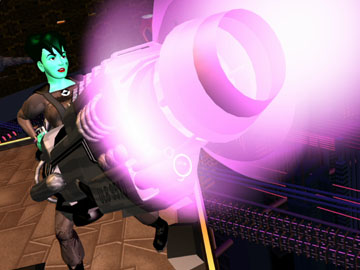
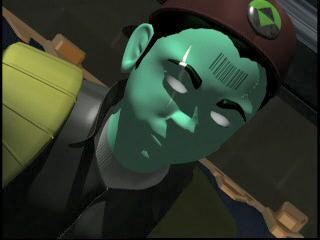
- In Season 3, Bob performs a Power Booster. He merges with his (damaged) keytool Glitch upon being reunited with it toward the end of the third season. This actually ends up causing problems for him in the fourth season, as the merge didn't quite work right due to Glitch's damaged state. It's mentioned that if he continues to use his Glitch powers he'll eventually die because of it. He manages to split from Glitch (though he decides to separate from Glitch because he believes he can win Dot's love that way, not because he's going to die!) a few episodes later, returning him to his original look. Glitch also returns, repaired, and upgraded.
- Future Badass: Enzo, twice.
- Future Me Scares Me: Played with when a backup copy of young Enzo is created during a system restore. At first, Little Enzo looks up to Matrix and wants to be just like him, while Matrix is irritated by Enzo as a reminder of how weak and naive he used to be. As time goes on, Enzo despises Matrix for the bitter and cynical Anti-Hero he has turned into, and Matrix realizes how much he has strayed from his more idealistic youth.
- Getting Crap Past the Radar:
- Mainframe Entertainment used codes to sneak in dirty words. In Season Two, as a Take That! towards the network censors, the words "Fuck you, Broadcast Standards!" are written in Mainframe's skybox in binary; ReBoot is rated TV-Y7 in America, M in Australia, G in Manitoba, and PG in Nova Scotia; none of which allow for saying "Fuck".
- The episode Painted Windows has Hexadecimal's mask scream "Damn you Guardian!" at Bob during her Villainous RRoD, something also not allowed in TV-Y7/G shows. It was hidden by being largely overwhelmed by the background noise.
- Mainframe Entertainment used codes to sneak in dirty words. In Season Two, as a Take That! towards the network censors, the words "Fuck you, Broadcast Standards!" are written in Mainframe's skybox in binary; ReBoot is rated TV-Y7
- Ghost in the Machine: Sprites, binomes and others live inside our computers and run it from the inside. We're totally unaware of this (conversely, citizens of the Net see "the User" as a deity of some kind).
- Gilligan Cut: In "The Crimson Binome", when word breaks that something bad is going down at the docks, Enzo says that Bob lives out that way and whatever's happening, he'll be on top of it. Cut to panic in the streets as the raiding pirates take everyone prisoner, and meanwhile, Bob is completely oblivious, working on his car and listening to music on a large pair of headphones.
- Glass-Shattering Sound: The Web/Mainframe conflict is partly kicked off by Mike the TV showing Hexadecimal an opera program. The opera singer's shrill voice shatters Hex's mirror, allowing a Web creature to invade the city.
- God Is Evil: The User's regarded by the denizens of cyberspace as an almighty being. Inscrutable at best, actively sending viruses and games to bedevil them for no known reason at worst.
- Godzilla Threshold:
- Standard Guardian protocol when a Class-M Web Creature is discovered in a system like Mainframe is to destroy the entire system. Class-M Web Creatures are capable of creating portals, potentially forming a bridge for a full Web invasion of the Net. Compared to that, the loss of a single system is a minor consideration.
- When faced with the threat of Daemon, Matrix, AndrAIa and Enzo allow Hexadecimal to enter Mainframe's core and regain her powers. Even as the two viruses are fighting, Matrix is scared of what is going to happen if Hexadecimal wins.
- Go-Karting with Bowser: Megabyte takes a break from evil scheming to rock out with Bob at Enzo's birthday party.Megabyte: I've always wanted to do that.
- Gone Horribly Right: How Bob gets Hexadecimal to reverse the Medusa virus. by pointing out how still, quiet, peaceful, and worst of all Predictable Mainframe has become with everyone frozen in place.
- Good Costume Switch: Hexadecimal goes from red and black to white and gold after becoming a Sprite.
- Good Old Fisticuffs: Megabyte provokes Matrix to give this a try, and comes to regret it prompting him to use his retractable weapons, Wolverine Claws
- Good Pays Better: Dot Matrix was able to stop the Crimson Binome's pirate raid by parleying with him and his accountant. After showing him that his pirate profit margins were lower than her own rates for honest cargo hauling, she hired him and his ship.
- Grand Finale: Season 3 ended with all the immediate plot threads concluded and a happy ending for every good character, full of emotional well-being and joy that only left the vaguely-referenced Daemon plot unresolved. Then it was continued in Season 4, which ended the show with a Cliffhanger that has not been resolved for years.
- Groin Attack: "Identity Crisis: Part 1," in which Bob receives a tank turret to the groin.
- Grumpy Old Man: Old Man Pearson, although it is later revealed that he is also a Retired Badass.
- Guile Hero: Dot manages to save the day in "The Crimson Binome" by convincing Captain Capacitor to change his ways and become her associate, after showing him how much more profitable her business tactics were.
- Bob is also capable of playing this role when the situation calls for it, as shown in "The Medusa Bug" and "High Honor".
- Guns Akimbo: Dot during the game featured in "The TIFF."
- Gut Punch: "Web World Wars," where Megabyte (being Megabyte) turns on Bob during the Web creature invasion, and launches him into the web, stranding him there and leaving Mainframe with no guardian to defend against Megabyte's impending takeover. It was the show's first major example of The Bad Guy Wins.
- And it quickly went From Bad to Worse (boy, did this show get dark in a hurry). Enzo stepped up to the plate to defend the city, and four episodes into his run as guardian, he loses a game, and he (along with AndrAIa and Frisket) has to leave with it in order to avoid being nullified. The next time we see him, he's grown into a renegade, gun-toting Anti-Hero, and the next time we see Mainframe, it's a veritable wasteland.
- And when he encounters Megabyte, he gives him a literal one of these in one of the most awesome moments in the show.
- Happiness in Slavery: It turns out that some of the infected binomes liked being controlled by Megabyte, since they enjoyed causing mayhem and terrorizing their fellow Mainframers. When Megabyte returns, they eagerly surrender themselves to his control.
- Happy Ending: When it was thought ReBoot would end at season three the writers wrapped up as many storylines as they could, and gave the characters the happiest ending possible. Everybody has a romantic interest, the city has been restored, Megabyte has been defeated and dead people have been returned to life!
- Heel–Face Brainwashing: Bob does not believe in deleting viruses, and would rather find some way to re-program them into non-hostile programs. Megabyte, however, considers that worse than deletion and claims it is more monstrous than his own designs.
- Heel–Face Turn: Captain "Gavin" Capacitor, Mouse, Cyrus, Hack and Slash, Hexadecimal.
- Heroic Sacrifice:
- In the episode High Code Bob plans to let the User win a game and be nullified so the Codemaster is nullified along with him; he is forced to change his plans at the last minute when he learns Enzo followed him into the game.
- Hexadecimal.Bob: Hex, you won't survive it. It's a one-way trip. Total fragmentation.
Hexadecimal: But you will survive.
- Heroes Gone Fishing: In the middle of a war game during Identity Crisis (Part 1), Bob is seen taking a nap while fishing. With the games being life and death situations, Bob must be very confident that the User sucks at this particular game. Of course, he was correct.
- Herr Doktor: Herr Doktor, of course, Megabyte's loyal mad scientist binome.
- He Who Fights Monsters: Matrix's hatred for and obsession with Megabyte risks making him almost as cruel and vicious as the virus. He even comes to realize this in Number 7.
- "Hey, You!" Haymaker: During the titular battle between Matrix and Megabyte in the episode "Showdown," the pair become separated. The fight resumes when Matrix walks up behind Megabyte, grabs him by the shoulder, spins him around and decks him in the face. Not only does this not knock Megabyte off his feet, the virus actually manages to dodge Matrix's next punch, and the fight continues on from there.
- Holodeck Malfunction Bad Bob features a game cube that gets corrupted when Megabyte steals Mainframe's core energy. Normally the destruction a game cube can cause is limited to the area it landed on, but since this game landed on the Principal Office if the User wins the entire system crashes. However, if anyone else wins the game, the core energy leaves with the game, and the entire system crashes. This problem forces Bob to keep the game going until he can get the core energy back into the Principal Office to stabilize the game and let it leave without crashing the system.
- Homage: Every episode was full of Shout Outs, computer science and gaming in-jokes, and Whole Plot References. However, starting with the middle of season two several episodes were essentially other series with ReBoot characters: Bad Bob was Mad Max; NullZilla included homages to Godzilla, Super Sentai and Thunderbirds; Trust No One's main guest stars were essentially Mulder and Scully ("Fax Modem" and "Data Nully", who was even voiced by Gillian Anderson); Firewall was a James Bond film both in and out of the game in the episode, complete with altered opening titles; "Where No Sprite Has Gone Before" was a Star Trek episode written by D.C. Fontana, a long-time Trek alumni dating back to the Original Series; "Number 7" was in the style of The Prisoner; and "The Episode With No Name" was a Spaghetti Western to make Sergio Leone proud.
- Honor Before Reason: The crew of the Saucy Mare have always loyally followed the Crimson Binome on whatever path he chose for them, whether it was piracy or honest trade, because he always took them towards the profit. However, when he meets up with Matrix after losing contact with Mainframe he decides to bring his ship and his crew to the aide of Matrix and Dot and, when his first mate asks where the profit is in any of this, he explains that there are things more important in life than profit. The entire crew is shocked to a stand-still, and he mentions repaying a debt to an old friend and helping those in need. Despite the dangerous waters they are going into, and the lack of any benefit to themselves, the entire crew follows him onward anyway.
- Hopeless Auditionees: The long string of weird, inappropriate or otherwise talentless characters applying for Enzo's birthday show. Even Phong himself gets rejected after forgetting the lyrics to "Unforgettable".Dot: Is it just me or are these acts just getting worse?
- Hotter and Sexier: After the end of season 2, when the show left ABC, the creators had some more freedom with the female character models. Breasts became more defined rather than just a curved bump on the front, sashaying became a little more defined, and that's to say nothing of AndrAIa and Hexadecimal. Still, this trend is mostly noticeable in Dot. The first game of season 3 has her reboot into a Vampira/Elvira outfit with the plunging neckline and has her ripping the dress to walk easier and to Show Some Leg. By Daemon Rising, she's also gotten a bit bouncier.
- Hover Tank: The ABCs are flying tanks. Standard ones have a turret with dual cannons and a rotary missile launcher. Other variants are: one re-purposed for burrowing under the Silicon Tor, some of them have two huge missiles launchers and another a large cannon.
- Hulk Speak: Princess Bula.
- Humans Are Cthulhu: To the inhabitants of the Net "The User" has the power and skills of a deity, but is unknowable, unfathomable, and something of a jerk. Guardians will especially question "The User's" motive for introducing viruses into systems. Like a true Eldritch Abomination they are not actively malevolent or helpful, but are simply so far beyond the ken of Sprites, Viruses and Binomes as to upset their world without even knowing it.
- I Call It "Vera": Matrix has named his gun. Unfortunately, he is not exactly a creative genius, and he simply named it Gun.
- I Don't Like the Sound of That Place: During the RPG Episode, Bob asks where they are heading. Dot checks the map and replies that they are heading toward the "Vicious Pit of Total Oblivion". One by one, everyone's jaw drops.
- I Hate Past Me: After the time skip, Matrix feels that he was "a weak little boy" and insists on not being referred to as "Enzo." When the back-up copy of Enzo first emerges, Matrix is initally put off by him and refuses to admit that they are more similar than different.
- The Igor: Herr Doktor's assistant, Bunnyfoot.
- I'm Okay!: Done epically by the Surfer in the "Mousetrap" episode.
- I'm Standing Right Here: While playing a game of Rocky Rabid Racoon, Matrix wonder where Phong and the idiots are, the latters being Hack and Slash. The duo have rebooted into soda cans and called out Matrix for the idiot line.
- Ink-Suit Actor: Compare the look of Dot Matrix with this picture of voice actress Kathleen Barr.
- Innocuously Important Episode: Almost everything that happened across the Myth Arc can be traced back to the simple act of Bob loaning Mike The TV To Hexadecimal in "Painted Windows". Before that, the show was episodic.
- Insult Backfire: From "Web World Wars":Mouse: [regarding Hex] Just tell the witch to be ready!
Hexadecimal: [angered] I heard that! [happily] What a sweet thing to say! - The Internet Is an Ocean: Played with in the forms of the Saucy Mare and Ray Tracer. The former is a(n ex)pirate ship run by the Crimson Binome, Captain Capacitor which sails across the Net trading with different systems. Equipped with the remains of Web Creatures as armor, the ship can also sail into the Web itself, which is portrayed as a much more intense maelstrom. Ray is a search engine that takes the form of a sprite on a surfboard who literally "surfs the web" while looking for interesting sights.
- Interrupted Declaration of Love: Seen in "Gigabyte" when the eponymous virus bears down on Bob and Dot.Bob: Dot, I... I wanna-
Dot: I know, Bob. I know. - In Their Own Image: When he's not trying to use a portal to escape to the Supercomputer, Megabyte is trying to conquer Mainframe and rebuild it as Megaframe. In "Infected," while inside the Principal Office, he explicitly says that he will rebuild the system in his own image.
- Intrepid Reporter: Mike the TV, believe it or not. When the Web creature has possessed Hexadecimal and is advancing on him he continues to report, even in the face of his own certain doom, and relates the publics right to know.
- It Is Beyond Saving: In the season 3 finale, Mainframe has been trashed so heavily by Megabyte's rule that even Bob finds it hopeless to actually save the city. His solution is to intentionally lose a Game, corrupting the system past the brink and causing a total systems failure, gambling that the User reboots the system from backup, restoring things to the way they were, instead of reformatting, which would annihilate everything completely. It works.
- It's a Wonderful Plot: Minor variation in the two-part Identity Crisis episode - Dot, despairing after Megabyte pulled a Kansas City Shuffle and enslaved the Binomes she tried to free, can not bring herself to fight in the game; she then gets a vision of what will happen if she does not (Bob reduced to a Null, Megabyte takes over Mainframe, etc.)
- It's the Only Way to Be Sure: As explained in "Trust No One," the Guardians won't take any chances upon finding a Web Creature in a Mainframe-type system. They'd rather destroy a whole system rather than risk a Web invasion into the entire Net.
- I've Always Wanted to Do That: During the festivities at Enzo's birthday, Big Bad Megabyte crashes the party, and brings out... a guitar, with a dial turned to 11. Megabyte begins jamming, almost painfully because of how loud it is. Then Bob steps up to face him, seeming angry at him for crashing the party. Then he commands his keytool to turn into a guitar and thus begins a rocking guitar duel, between the Hero and the Big Bad! After finishing, Megabyte gives Enzo his guitar, says the line (with emphasis on the "always"), and leaves.
- Jerkass Ball: How some of the characters (particularly Dot, though she has a My God, What Have I Done? moment when she finds out the truth) treated "Glitch" Bob when they thought he was a copy. Notably, AndrAIa and little Enzo avert this.
- Just Friends: Bob and Dot spend a lot of time in the Will They or Won't They? stage, and even when they finally express their feelings they still spend a lot of time claiming that they are "just friends." It is not until Daemon has infected both of them that they admit they are deeply in love with one another.
- Kid Hero All Grown-Up: Partway into season three, when Enzo enters a game he can't win, he, AndrAIa, and Frisket change their icons to game sprite mode and ride the game out of Mainframe. The game's accelerated time causes a time skip, bringing them to adulthood. The following episodes focus on them, Enzo, now going by Matrix, is a muscular badass, and AndrAIa, now an Amazonian Beauty, searching for Mainframe.
- Killer Rabbit: Daemon is a cute, sweet woman with a friendly demeanor. She is also a super-virus looking to destroy the entire Net.
- Knight Templar: Daemon originally appears to be one of these, as her infection instantly brainwashes people and turns them into docile pawns, and her goal is to use the infection to create unity throughout the entire net. However, it turns out the only reason she wants to unite the whole net is because she is a time-delayed virus. When her timer is up, she's set to destroy everything and everyone she had infected, effectively triggering an apocalypse.
- Large Ham: Mike the TV, and he doubles as a Large-Ham Announcer.
- Hexadecimal is oozing with ham, in a Careful with That Axe sort of way. Of course, Megabyte is on a different end of the spectrum.
- Laser-Guided Karma: At the end of Season 2, Megabyte shot Bob into the Web. In season 3, Mouse repay him by changing the coordinates of Megabyte's destination from the Super Computer to the Web.
- A blink and your miss moment in Nullzilla: the clown binome who had been shown abusing nulls in the previous season has a brief cameo in which we see nulls fall on him and (presumably) drain him.
- Last Of Their Kind: Dot, Enzo, Phong, Frisket, and four other background characters are the only surviving, non-nullified sprites native to Mainframe. Enzo is the only little sprite.
- Late-Arrival Spoiler: Megabyte and Hexadecimal being siblings came as a surprise in the late second season. Any biography of them will list this fairly early on, including the introduction on this very page.
- Leave the Camera Running: The duel between AndrAIa and the female Guardian in "The Episode With No Name" lasts one minute and thirteen seconds before either character draws their weapon.
- Left Hanging:
- The Grand Finale at the end of season three concluded all important and current storylines (Megabyte defeated? Check. Love interests together? Check. City repaired? Check. Dead characters returned to life for joyful reunion? Check), but the Daemon storyline was left open. Introduced earlier in season three, it revealed the existence of Daemon, a supervirus, and laid at her feet a lot of the previously thought-random occurrences that lead to the current situation. The Daemon arc had little bearing on the immediate quest of the characters, the reclaiming of Mainframe from Megabyte, so it fell by the wayside once they left Guardian-controlled territory and was only resolved in season four.
- Speaking of, season four ended with an infamous case of this. After returning from the Web, Megabyte has taken over the Principal Office and swears revenge on Bob and all his friends. What happens next? Nothing. Unlike season three, which resolved all its major plot lines and ended on a happy note, season four stalls out in the middle of the action with nothing at all resolved. It stayed that way until 2018, when The Guardian Code — produced by an executive who'd only watched a handful of season one episodes — came out and wiped the slate clean, reverting all the characters to their season one incarnations and undoing years' worth of storytelling.
- Leitmotif: Some characters, such as Megabyte, Hexadecimal, and Mouse each have their own distinctive themes. The show's theme tune also crops up in some episodes on a few, brief occasions.
- Let's Get Dangerous!: Bob is relatively laid back and somewhat clumsy until the need arises, and then he turns into a prime action hero.
- Limited Wardrobe: Played generally straight in that their normal outfits are used constantly and later in the series you see them shift up to maybe three different variations. But rebooting in the games shifts their appearance into something appropriate to the game so we do regularly see them in something other than their standard clothes.
- Literal Ass-Kicking: Megabyte on Matrix.
- Literal Genie: In "Enzo the Smart," Enzo tries to become twice as smart as everybody else. The computer tells him to go to the clock-speed room to adjust it, because the clock speed determines how fast sprites can run and process things. It asks him if he wants to be twice as smart as everybody else in Mainframe now or later. When he changes the clock speed, it slows down…keeping Enzo at his current IQ and making everybody else in Mainframe dumber.
- Literal-Minded: When Matrix orders the crew of the Saucy Mare to fire at will, one of the binomes in the background softly says "who's Will?"
- Little "No": Dot utters one of the third variety right before her Big "NO!", after Enzo is lost in the game.
- Love Redeems: Hexadecimal. And it's ultimately her end.

- Macross Missile Massacre: Matrix's bike blossoms out many petals of armaments before letting loose on the infected Guardians.
- Mad Scientist: Herr Doktor.
- Magic A Is Magic A: The general mechanics of how this universe works is well defined. The Net is the universe, containing everything and everyone in existence, and each system is a self-contained "planet." The web is an Eldritch Location; contained within the universe but not touching any inhabited planet and filled with beings that do not conform to natural law as it applies within the rest of the Net. The only flimsy issues are related to portals; at some points in the series they are simply the direct equivalent of internet connections, linking two distant systems that are connected through the Net, but at other points they seem to be almost magical within the series, linking systems that do not have any sort of Net-connection and bypassing any sort of firewall or other defenses set up between the two systems.
- Magical Eye: Matrix in the third season onward. When he uses his Magical Eye, watch out, it usually means he is about to delete something. Messily. Can also be seen as a form of Calling Your Attacks, as its animation is used as a warning to the audience that he is going into Badass Mode.
- Magical Security Cam: Lampshaded in My Two Bobs when Mike recaps Hex's sacrifice and mysterious change to Enzo's icon using show footage. "Just where do we get this footage from?"
- The Magnificent Seven Samurai: The post-Time Skip episode "Icons." Matrix and AndrAIa find themselves in a rundown computer system and have to teach the inhabitants to win games to ensure the system's survival. When Matrix finds that the Tagalong Kid has brought their makeshift team to seven, he utters a sarcastic "magnificent."
- Major General Song: Season three closes with a performance by the Mainframe Strolling Players giving a summary and recreation of the preceding season and the end of season two, all to the tune of Gilbert & Sullivan.
- Makes Us Even: In "When Games Collide" Bob saves Megabyte from a Tyrannosaurus with a tank for a head while the two are in a game. Later, when Megabyte has Bob and his friends dead to rights at the end of the episode, he lets them go, saying that now they are even.
- Meaningful Name: Cyrus' debut episode, Identity Crisis, Part 1 is a Whole-Plot Reference to Anabasis, about a group of Greek warriors who must make their way home through hostile territory after their meeting with the Persian prince Cyrus the Younger is attacked. Or, if you prefer, its most famous imitator, The Warriors which features a similarly-named gang leader.
- Male Gaze: In The Great Brain Robbery, Megabyte leans to the side for a better view of Mouse's backside, with the cameraman focusing along with him.Mouse: Let's get this show on the road, my meter's running.
Megabyte: [leans over and ogles her] Indeed. - Marked Bullet: In the fourth season, Matrix has one with Daemon's name on it. Daemon stops it midair, then gingerly holds it between two fingers and lets it explode, not harming her in the slightest.
- Megaton Punch: Slash and Matrix use non-comical versions of this when you really piss them off (though the latter may just delete you before getting to that point).
- Mentor: Phong
- Merry Christmas in Gotham: In one episode, Big Bad Megabyte goes to great lengths to infiltrate Enzo's birthday party, with no more heinous goal than to play electric guitar, put on a rocking show (including a duet with Bob), and leave.
- Mind Screw:
- "Identity Crisis," which was interspersed with "temporary distortion[s] of reality."
- The episode "Number 7." It was a homage to The Prisoner and it did its inspiration proud.
- Minion with an F in Evil: Hack and Slash, who are actually upset that Bob is gone because now nobody will stop them from actually doing bad things.
- The Mole: Cyrus was the only binome ever seen to cooperate with Megabyte without a viral takeover. As such he was often used undercover, since he could pass where Megabytes normal troops could not.
- Moment Killer: Dot's reaction to seeing Matrix alive and well is one of the series' great Tears of Joy moments, and it threatens to get even better when Matrix says he kept his promise and brought Bob home. And the first time Dot sees Bob... Mouse has him bent over in a big smooch. Cue Death Glare from Dot.Bob: [flustered] ...It's nice to see you too, Mouse.
- Monster Clown: The User character from Identity Crisis is a Bozo-style clown in the In-Universe Funhouse game.
- Monster of the Week: The majority of the episodes feature a Game, each with a unique User to be defeated.
- Mood Whiplash: Near the end of My Two Bobs, you get scenes alternating between Dot and Mega-Bob's wedding and reports of Glitch Bob dying in the Supercomputer hospital.
- Morph Weapon: Bob's Keytool, Glitch. The keytool even shows initiative at some points; in one episode Bob desperately shouts, "Glitch: Anything!" and Glitch turns into a necessary piece of equipment (Namely, a lampost). On another occasion, when Dot was falling from a great height the same command caused the keytool to fly out to the ground and turned into a springboard she could jump off to safely land. The keytools seem to have a degree of intelligence and can think and communicate, serving only the Guardians that they choose to serve and even offering advice and suggestions. It overlaps with Gadget Watches and Magic Tool.
- When Bob merged with Glitch he seemed to have an array of powers not entirely unlike Green Lanterns themselves, including energy powers. When they unmerged in season 4, Bob's first fight with an upgraded Glitch had him using solid light constructs as well.
- Ms. Fanservice: Any episode in which Dot sings.
- In "To Mend and Defend" when Dot wears an Elvira-like costume (and several other post-ABC occasions).
- AndrAIa, after she grows up. And man, does she grow up.
- Mouse, pretty much any time she opens her mouth to speak.
- Hexidecimal.
- The Musical: The final episode of the series before its uncancellation had a great one reenacting the events of the entire show, sung to the tune of Gilbert & Sullivan's Modern Major General.
- My Car Hates Me: A Running Gag was that Bob's car would never cooperate with him. Apparently it had a bad interociter and clogged Daniel's tubes.
- My User, What Have I Done?: In Painted Windows Bob gives a look of absolute horror on his face when he removes Hex's mask, i.e her face, to save himself. Energy pours out of the hole, and she lets out an unearthly scream. He spends the climax desperately trying to undo his actions.
- Myth Arc: There is always the idea of what is really out there in the net. The second season introduced the hellish Web and the third season showed many new cities and started to get involved in the greater realms of the net. Mainframe does not have much by way of online capabilities until the fourth season, and that is when the supervirus Daemon is trying to take over the net.
- A Nazi by Any Other Name: Megabyte is Adolf Hitler and his minions are Nazis. Herr Doktor calls him "mein fuhrer." The alternate universe Megaframe has everyone given a bar code. If this wasn't obvious enough, minions still loyal to him after his defeat are called "neo-virals."
- Never Say "Die": Played straight for the first two seasons and changed; "delete" and "erase" were used instead. However, it was later averted, starting with Matrix's fairly subtle Death Blossom and growing more prevalent after. This was to be expected, as the later seasons are Darker and Edgier.
- Nice Job Breaking It, Hero:
- Mike the TV. Granted, he is not much of a hero and he had absolutely no idea that playing the opera would break the mirror and open a portal to the Web, but doing so gave Daemon the chance to send the web creature to them, which caused Nullzilla, Gigabyte, the web war, and eventually Megabyte taking over complete control of Mainfr—sorry, of Megaframe. Bob can be blamed for the whole mess as well, as his decision to leave Mike to entertain Hex at the end of "Painted Windows" explains why Mike is in Hex's lair in the first place.
- When facing Gigabyte, Hack and Slash try to distract him so he does not notice that the sector they are standing on is separated from the rest of Mainframe. When Gigabyte manages to attack and drain Hack it makes Slash so angry that he punches Gigabyte—and sends Gigabyte flying all the way back into Mainframe.
- During the Timeskip, Phong stayed behind to give enough time for Dot and the rest of the rebels to escape. Unfortunately, he carried the codes to open a way to the Super Computer, making Megabyte's job easier. Ironically, Phong didn't even change the codes from the last season when he was captured, so Megabyte could have saved himself a lot of time extracting them from him.
- A flashback showed that cadet Bob delayed Killabyte's execution by getting in a debate with Dixon Green regarding viruses. This bought enough time for the User to send an upgrade to Killabyte, turning him into Gigabtye, who then killed Dixon and which led Mainframe's sister city to be destroyed. When Dot blamed Bob for the destruction, she wasn't far from the truth.
- In season 4, it's revealed that the whole Guardian Collective could have taken down Megabyte and, with some difficulty, Hexadecimal. However, with Turbo's approval, Bob insisted on reforming the viruses. When you think of all the bad things the viruses have done to Mainframe up until season 3, Bob is to blame for a good measure. But as Bob pointed out: the Net was saved from Daemon because of Hexdecimal's reform.
- Nice Job Fixing It, Villain: Near the very end of Season 4. Bob would have been stuck in his Web-corrupted form if Megabyte hadn't decided to be a colossal dick.
- Ninja Pirate Zombie Robot: The episode "When Games Collide" does Exactly What It Says on the Tin, involving a war game merging with a dinosaur-hunting one, with the result that Megabyte and Bob are attacked by a T-Rex with a tank turret on its head.
-
 Nintendo Hard: Inverted - the game Funhouse has a fabled reputation for being absolutely deadly to anyone who enters it, but given that this is from the point of view of the people fighting the User, presumably from the usual point of view the game is very easy. However, this effectively makes every other game in the show Nintendo hard, since during the course of the series the User only wins 3 games onscreen. Phong mentions that before Bob, their win ratio was less spectacular.
 - No Ending: The show ends on a cliffhanger, with Megabyte telling the heroes to prepare for an event called "The Hunt". And... that's it.
- No Flow in CGI: All the clothing is tight and the hair is generally short and/or rigid. As they introduced characters with longer hair (like adult AndrAIa and web-damaged Bob) you can see the difficulty in properly animating those features. Although with Daemon the unnatural flow of her hair added to her off-kilter look and behavior.
- No Fourth Wall: An obviously non-canon "Making Of" episode, which involves Megabyte finding a wormhole thingy that allows him to look in on the creation of the show he appears in. He is not fazed by it at all.
- No Hugging, No Kissing: In the first two seasons the show was to forced to do this by merciless Executive Meddling, especially if the display of affection wasn't meant to be romantic, like Dot kissing Enzo. Once they were freed up, the creators happily averted this trope.
- No OSHA Compliance: The Silicon Tor is a very unsafe place to work. There are no handrails and you can easily fall from great height if you're not careful. Another episode showed a crane inside the Tor. Its controls are located near the crane's base, putting the operators in immediate danger should any large objects be accidentally dropped. All this can be explained because the owner of the Tor is an Evil Overlord who doesn't value the lives of his underlings.
- Nobody Poops: Averted.
- In "The Tiff" there is a montage of Bob passing the time in his apartment; at one point, he disappears from the screen and after a second we hear a toilet flush.
- There is a baby 1-Binome that is frequently shown with a full diaper, often to show how terrified the child is.
- Frisket once eats an old un-format command, which Megabyte tries to steal by "opening" Frisket. Frisket eventually has it pass from his system, and Megabyte steps in it.Megabyte: [to Hack and Slash] Someone delete that. And clean up this mess!
- Non-Action Guy: Dot can hold her own, but prefers to make battle plans and direct forces instead of doing the fighting herself when she has the option.
- "Not So Different" Remark: Matrix had to confront his fears of becoming like Megabyte in the episode "Number 7."Matrix: (as Megabyte) This form represents everything I hate.
AndrAIa: (as Hexadecimal) Everything that you hate, or everything that you're becoming? - Nothing Is the Same Anymore: Happens twice.
- Oh, Crap!: When Matrix faces off against Megabyte. He taunts Matrix into throwing his gun away and fighting with his fists, which he does, and while he's shaking his head at how stupid Matrix was for taking the bait, the "boy" knocks the obscenely powerful villain across the room. The Oh, Crap! is Megabyte's reaction to seeing a dent in his chest where Matrix just punched him. And another one at seeing Matrix sprinting towards him right before tackling Megabyte through a wall.
- Ominous Cube: Game Cubes (not those ones) sectioned off large portions of the system cities of The Net, which would either be left intact or destroyed, depending on whether the User lost or won.
- Omnicidal Maniac:
- Hexadecimal created the Medusa Bug to turn everyone to stone, and it would eventually degrade the infected to dust. She is also perfectly willing to destroy the Principal Office; when Megabyte informs her the entire system will be destroyed (including them both), she replies, "It will be glorious."
- Daemon, who as a kindness starts with herself. Nightmare fuel is added as every infected being counts down to their own death. Happily.
- One-Hit-Point Wonder: The user of "Treasure of Atlantis" (AndrAIa's home) seems to die quite easily. Good for him that he's given 15 Extra Lives.
- One-Wheeled Wonder: Hack and Slash, Megabyte's minions.
- Only Six Faces: Defied by the main cast, with both subtle and overt differences that makes each one distinct. But the majority of background characters were Numerals (shaped like numbers) and binomes (the spheres and three-blocks) and were identified mostly just a mixture of different colors, clothing designs and props. They were very creative with it, but is still this trope. In the crowd scene in "Talent Night," most of those character models are reused several times over.
- O.O.C. Is Serious Business: Played for laughs in "Nullzilla" when Slash says something so monumentally stupid that even perennial chatterbox Mike the TV is struck speechless.
- Opening Narration: The page header is the primary narration, which opened every episode from seasons one and two, but different characters took over the duties in seasons three and four, with one narration for each mini-arc. In the original Bob talked about finding The User, but this was never addressed directly in the show. The Toonami broadcasts did not include these narrations. Other narrations include:Megabyte: I come from the Net. Infecting systems, people, and cities, to this place, Megaframe: my domain. My format, Virus: To corrupt and conquer!
Matrix: I live in the games. I search through systems, people, and cities, for this place: Mainframe; my home. My format? I have no format. I am a renegade, lost on the Net.
Matrix (2nd narration): I come from the Net. I search through systems, people, and cities, for this sprite: Bob; my friend. My format? I have no format. I am a renegade, lost on the Web.
Dot: I look to the Net. I search through systems, peoples, and cities for these sprites: my family. My format: Command.Com of what was once Mainframe.
Daemon: I am Daemon. I am the Word. My format: Super Virus. My function: to bring unity to the Net. All must hear... the Word.- The season 4 episode "Sacrifice" had a Closing Narration.Hexadecimal: "I infect the entire Net. I have spread through systems, peoples, and cities, from this place, Mainframe. My format: Virus: The queen... OF CHAOS! Ah ha ha ha ha ha!"
- The season 4 episode "Sacrifice" had a Closing Narration.
- Orbital Kiss: Bob and Dot in the season 3 finale.
- Order vs. Chaos: A good example where both extremes are treated as undesirable. Megabyte is a tyrannical despot who seeks to dominate all life under his rule in an Orwellian state. Hexadecimal is a lawless Mad Artist who causes rampant destruction and anarchy for the sake of it, bringing misery to the populace. Both have their softer sides but both are still dangerous to the population at large. Hex later gets a Face Turn, but only when she gets her face "healed"/"made whole" and stops being quite so extreme about the whole chaos thing.
- Out-Gambitted: In season 4 finale, Dot planted a trap to capture Megabyte. They have the gateway command moved from the Principal Office to the Archives, knowing that Megabyte will try to steal it. He does so, not knowing Bob and his team secretly follow him back to his secret lair. When Megabyte try to use the gateway, he realizes it was a dud and Bob and co captured him, despite his Trojan Horse abilities. Unfortunately, Megabyte anticipated Dot's plan and turned it around. A harmless copy of himself has been captured instead and he masqueraded as Frisket. Now inside the War Room of the Principal Office, he infected everyone and proceeded with his plans for Revenge.
- Out-of-Character Moment: The PlayStation game, which is non-canon, is full of these. Bob knocks the bejeezus out of Megabyte after winning their boss encounter, Hexadecimal practices taxidermy on Bob and Dot in a game over cinematic. Most notably, Hex has a Hugh Mann scene before the final battle, masquerading as Dot and seducing Bob with so much Fanservice that it is a shock to the typical ReBoot fan when first seen.
- Parental Abandonment: Both Dot and Enzo's parents are gone, because of their father Wellman Matrix's failed project that deleted most of the sprites.
- Parental Bonus: Mike the TV once organized an elaborate musical number... dressed as James Brown.
- Pac Man Fever: Averted. The games were generally based on real, popular game genres. The Evil Dead inspired game was even parodied long before the official one came out.
- Pair the Spares: Mouse and Ray Tracer, are introduced as alternate love interests for Bob and AndrAIa respectively. Once both were done hassling their respective love triangle counterparts, the two naturally got together.
- Paper-Thin Disguise: The viral binome Agent Twelve, who wears the classic "fake-glasses-and-mustache" disguise, along with a fedora.
- Percussive Maintenance: Bob to his car in "The Medusa Bug" after he claims that he has it working. Done later in the episode by Dot when the group is trying to escape the titular bug but Bob's car once again won't start.
- Pirate Girl: Princess Bula. The largest Binome in the show, and has the other pirates too scared to tell her she is not really a princess.
- Pirates: The Crimson Binome and the crew of the Saucy Mare arrive to plunder Mainframe for booty in The Crimson Binome, but abandon piracy once Dot shows them just how much money there is to be made in legitimate business. They become honest traders between ports and Dot's business partners, even if they never do abandon their pirate trappings, and return in season three as supporting characters and muscle for Matrix, AndrAIa and the Mainframe revolution
- The Pirates Who Don't Do Anything: Averted.
- Plot-Relevant Age-Up: Enzo Matrix and AndrAIa were trapped in the Games, where time moves faster. The Year Inside, Hour Outside nature of game-time was even referred to before the Time Skip, albeit only in the immediately-preceding episode.
- By the time they meet anyone that knows who they are, it's mentioned that Enzo should only be 11 (having compiled from 01 to 10 in Season 1).
- Poirot Speak / Bilingual Bonus: Herr Doktor, on occasion.
- Pokémon Speak: In the Pokémon parody in "My Two Bobs," Frisket reboots as a Pikachu Expy and naturally invokes this trope.Frisket: Frisket! Frisket!
- Portal Cut: One of Bob's time-locked portals does this to a guardian ship.
- Pre-Asskicking One-Liner: "Okay, big boy, let's party."
- Primp of Contempt: In the episode "Medusa Bug". While Megabyte's army loads up their weapons in preparation to attack her, Hexidecimal glances at her Femme Fatalons before beating them with ease. She looks at her nails later on in the episode, but in sadness and boredom, as all the citizens of Mainframe have been turned to stone by her titular Medusa Bug.
- Punch-Clock Villain: The Crimson Binome and crew are committed software pirates, but this is not because they are evil, but because they enjoy the profits. The instant Dot makes them realize just how much money they can get in legitimate trade they drop piracy and move to honest work.
- Pun: In "The Episode With No Name," Matrix visits a cantina. The name of the place? "Sibedar."
- Punny Name: Killabyte.
- Quick Draw: AndrAIa and the female Guardian have a classic showdown in "The Episode With No Name."
- Quirky Miniboss Squad: Hack and Slash are dual enforcers for Megabyte and are generally ineffectual and bumbling.
- Random Transportation: Enzo, AndrAIa, and Frisket had no control over where the Games would take them. They could only hope to eventually find a system that had a way to get them back to Mainframe.
- Recurring Extra: Numerous minor characters can be seen populating different crowd scenes, especially the zero binome with a "torque" wool cap. If the crowd is large enough you will see the same dozen or so character models repeat.
- Reality Is Unrealistic: The producers originally wanted to hire an actual Asian voice actor to play Phong, and hired Mike Donovan to play Mike the TV instead. However, after the auditions they found that none of the actually-Asian actors sounded Asian enough, and Mike was hired to do both characters.
- The Remnant: The Neo-Virals remain loyal to Megabyte despite being de-virused, largely because they miss the respect/perks. And then there's Herr Doktor, who isn't allowed to be a Mad Scientist anymore.
- Rent-a-Zilla: Nullzilla
- Replacement Scrappy: In-universe, in the eyes of the binomes at first when Enzo replaces Bob as Guardian.
- Reset Button: Quite literally. Mainframe crashes and the User, like anybody with a computer would, resets the system and restores from the last backup. The city is rebuilt, virus-infected files are cured and it even restores deleted files, meaning that dead characters come back to life. The season three finale is the happiest possible ending that could have been written for the series at that time.
- Resignations Not Accepted: Codemasters are powerful inter-system eliminators that will delete anyone or anything, they are paid to. The penalty for desertion is death. Tired of killing, Codemaster Talon abandoned their guild for Mainframe, only to have Lens later pursue after him.
- Ringer Ploy: In "Between a Raccoon and a Hard Place," Megabyte has given orders to his troops to prevent Enzo from entering games. Dot comes up with a way around this, by having binomes fly around with cardboard cutouts of herself and Enzo to overwhelm Megabtye's armada. At the end of the episode they pull a similar trick, this time with cutouts of CPUs to intimidate Megabyte's forces.
- Rube Goldberg Device: While in a game cube in "Life's a Glitch," a Rube Goldberg Device is constructed out of objects within the kitchen, designed to defeat Rocky the Rodent. The contraption's final move ends up opening a cupboard door hard enough to send Rocky flying through the doggy door and back outside, taking a life in the process.
- Rugged Scar: Enzo in "Identity Crisis" has one over his eye. It serves to emphasis just how bad this Bad Future really is. And to foreshadow our Enzo losing his eye in a game.
- Running Gag: "You can't talk in these things!" (Except for the one time it was a Meaningful Echo.)
- Enzo pouncing on Bob to get his attention.
- To a lesser extent: "(Insert object name). Ya gotta love 'em."
- As Herr Doktor is the only Binome to have actual fingers, there has been more than one occasion in which they have been flattened or damaged in some way, and remaining in bandages for a long time afterwards.Herr Doktor: Mein digits!!
- The baby One binome, who often completely fills his diaper when he sees something that scares him.
- Binky and Sir, calmly facing the impending fiery crash of whatever they happen to be driving.Sir: Crikey Binky, I think we've bought it!
Binky: Oh... Jolly good. - Bob constantly reminded that "[Mainframe] is not the Super Computer", usually by Phong.
- Save the Villain: When Megabyte is in distress inside a game, Bob goes to save him. Binky protests, but Bob says he can't go against his programming.
- Seeking Sanctuary: In days before Mainframe was connected to the Net, a very powerful Codemaster Talon, tired of an assassin's life, sought refuge in the peaceful system. Phong heard his pleas and granted asylum, agreeing never to tell another soul. Talon changed his very look and identity, becoming everyone's favorite grumpy Binome, Old Man Pearson.
- Scannable Man: In "Identity Crisis," Dot spends time in sent a Megabyte-controlled Bad Future where everyone has a barcode on their person for identification.
- Scaramanga Special: The original appears as the rebooted form of Matrix's gun in "Daemon Rising," when they are in an Austin Powers themed game.
- Sealed Evil in a Can: The heroes try to do this to Megabyte with a firewall. It works for a while, but he got out.
- She Cleans Up Nicely: While Dot is normally seen in business casual clothing, that red dress she wore for Enzo's birthday left him and Bob in shock.
- Shipper on Deck: Everyone in-universe ships Bob and Dot together, Mouse even goes right from giving Bob a very enthusiastic "Welcome Back" kiss, to basically giving Dot a What the Hell, Hero? speech about how she should tell Bob how she feels and stop wasting everyone's time.
- Shoo Out the Clowns:
- In Game Over, the ending of which marks the beginning of the truly Darker and Edgier part of season 3, Megabyte decides that he has finally become tired of the eternal bumbling of Hack and Slash. Once they they return from their current mission (Which they fail, by the way) Megabyte resolves to put them at the forefront of his next assault on the Principal Office to get rid of them once and for all.
- Mike the TV appeared in only three or four episodes of Season 3 - far less often than in the other seasons.
- In the first two seasons, despite being the hero and the most capable member of the main cast when it comes to fighting off threats, Bob was also the goofiest in terms of personality. Cue the second season's last 4 episodes, which take a darker turn and conclude with his removal from the main cast, resulting to his absence in the even darker Season 3. Of course, he was eventually brought back mid-Season 3, but by that point, he had undergone Character Development that rendered him more serious and less of a goofball. This gets played with in Season 4, when the return of classic Bob midway coincides with the show adopting a lighter and more comical tone reminiscent of the first seasons. Then classic Bob is revealed to be Megabyte in disguise, and the shows undergoes a darker Tone Shift again.
- Shout-Out: Many and varied.
- The agents "Fax Modem" and "Data Nully", homages to Mulder and Scully, who arrived to investigate strange occurrences at the end of the second season; the latter of which was actually voiced by Gillian Anderson.
- The show is positively loaded with jokes related to the greater Vancouver area. The different sections of Mainframe are named for Vancouver locations with the exception of G Prime, which is an entirely different reference.
- In the episode The Crimson Binome, a classic "Kilroy Was Here" sketch is on the wall of the cell they lock Bob in.
- "I am become Gigabyte - destroyer of systems!"
- The third season episode "Where No Sprite Has Gone Before" is littered with Star Trek references. It was written by the story editor of The Original Series: D.C. Fontana.
- Matrix's gun's "Death Blossom Mode" and The Last Starfighter.
- "Mainframe neo-virals." "I hate Mainframe neo-virals."
- The opening to the third season episode "Firewall" is a deadly sharp parody of the openings to the various James Bond films
- The last part of the Game Over episode, as seen here, counts as a shout-out as a whole. It even ends with a Fatality... of sorts.
- In "Daemon Rising," the game witnessed seems to be Austin Powers without even the bother of changing the superficial details. Matrix reboots into Dr. Evil, Enzo reboots into Mini Me and Frisket reboots into Mr. Bigglesworth. Austin himself appears as the User, saying the word "Karma" instead of "mojo," and Matrix kills his enemy with one shot from the golden Scaramanga Special.
- During the System Restore, one of the Virals restored from backup exclaims (after being de-infected) "Great Norton's Ghost!". Norton Ghost is a computer backup software, used to perform essentially what just happened.
- In the Evil Dead-inspired game Dot reboots into Morticia Addams. Then trips over the dress and tears it open to become Elvira. Enzo, meanwhile, reboots into Michael Jackson from the "Thriller" video, and even performs some of his signature dance moves. In the same episode, Hexadecimal says "Say hello to my little friend!".
- Bob's car is always having trouble with its interocitor.
- In "Cross Nodes," when Bob and Dot enter a game Bob describes the user as somebody who is "raiding this tomb." When Dot reboots she pats her hips looking for something and remarks to Bob that she was hoping for a pair of .45s. Also, the User in that game resembles Rick O'Connell, the protagonist of The Mummy Trilogy.
- In the Playstation game, Hexadecimal says "Heeeeere's Hexy!".
- In "Infected," Dot battles Megabyte in a yellow robotic exoskeleton. In the same episode, while Dot is crushing Megabyte underfoot with said exoskeleton, his red pupils start to dim. Later on, Megabyte activates a self-destruct mechanism on his wrist.
- In "Firewall" in addition to the overall James Bond Homage mentioned above, has several other references. The episode's game itself has a Wacky Races theme to it - the User is Penelope Pitstop, and Cyrus and Frisket reboot into Dick Dastardly and Muttley respectively. The T-rex attack on Cyrus' vehicle resembles the famous scene from Jurassic Park when the T-rex escapes, and there is also a reference to The Indian in the Cupboard when Enzo is plummeting through the air. And to round out the homage, is Cyrus' gyrocopter afterward.
- In "Icons," AndrAIa, after rebooting, wears an outfit very reminiscent of Xena's. In keeping with the Xena theme, the binome who tags after her is a blatant Gabrielle expy (she's even named Gabby). Also, the game shown at the beginning of the episode has Matrix, AndrAIa and Frisket rebooted as Mars Attacks!-style Martians. Also, a much more subtle shout out occurs when Backup jumps into the group and says "Make that seven" - Matrix sarcastically responds "Magnificent."
- In the Pantsu Hebi X game, Mega Bob tells Matrix to "Stop trying to hit him and hit him!"
- In "Life's A Glitch," AndrAIa, Classic Bob, and Matrix reboot into a Barbie doll, a GI Joe, Darth Vader, and Mentor Phong turns into a cup of Yogurt. At one point, Enzo utilizes cans of soda in a Shout-Out to Anakin's Pod Racer from Episode 1 of Star Wars.
- The episode "Talent Night" has a reference to TRON which, due to the setting, the series itself also shares lots of terminology with. It also contains many references to songs, music videos, and musicals — including one to Singin' In The Rain!
- In the episode "Talent Night" there is a scene when Enzo is backstage where he passes a large purple cyclopian robot doing ballet. This is a reference to the YTV Station bumper, on which the series originally aired. In fact, early airings of the episode had the YTV logo on its chest.
- In the episode "Gigabyte", Dot performs a Canopy-Rescue of Mouse like the one Rick Hunter used with Lynn Minmei in the Robotech episode "Countdown"
- A couple of binome extras in various episodes have worn Star Trek-style uniforms. One with captain's pips even says "The line must be drawn heeyah!" as a statement of defiance in the episode "Between a Raccoon and a Hard Place".
- The Web Creatures in Web World Wars look like organic versions of the Vorlon ships from Babylon 5.
- Towards the end of Showdown, while watching the flaming wreckage of The Saucy Mare flying across the sky and then crashing,'', Capacitor asks "My God, What Have I Done?" To which AndrAIa responds, "What you always do, Captain. Turn a hopeless situation into a fighting chance."
- The game in the episode "Between a Raccoon and a Hard Place". Enzo essentially reboots into Elmer Fudd (complete with accent) and the Title Card references the Looney Tunes / Merry Melodies Title Card.
- The game used in the pinnacle episode "Game Over" is a direct nod to Mortal Kombat. This is evident by the theme music during the game that's very similar to the one used in the originals. This is also backed up by both Enzo Rebooting into a direct parody of Scorpion, in all but his signature harpoon attack, and AndrAIa Rebooting into a parody of Sheeva. The extremely graphic means of the User's avatar ripping the heads off of his defeated opponents also suggests a nod to the extremely graphical means of finishing opponents with a Fatality.
- The entire episode "Number 7" is a direct nod to The Prisoner. This is obvious once Matrix flies in, with a virtual clone of the iconic theme music playing (including the thunderclap), including Number Six's march down an empty hallway. A conveniently placed teacup and saucer also is placed for the fist slam at the end of the resignation drop. A vid window appears with his Rebooted avatar and the X's are typed over it, for filing. While he is being filed away, he uses an iconic line: "My life is my own!" Many other characters also use the repeated line "Be seeing you!", oft used with a salute by persons in the series.
- Some of the Net Riders have masks that look a lot like the one worn by Omega in The Three Doctors.
- The Guardians, with their boots, knee- and shoulder pads, resemble the Judges from Judge Dredd. Especially Turbo. It helps that one of the book's artists worked on the show. See also, the Signature Style entry.
- In Identity Crisis, part 1 Bob and Dot are escaping in the sewers and Bob yells "Cowabunga!"
- In ''In AndrAIa', Bob let out a "D'oh!".
- Showdown at High Noon: AndrAIa and the female Guardian have a classic Quick Draw duel in "The Episode With No Name," drawing heavy inspiration from the works of Sergio Leone.
- Shown Their Work: One 0-Binome on the Saucy Mare covers up one of his two eyes with an eyepatch, even though it is not damaged. This is something Real Life pirates often did and is what leads to the eye-patch-wearing pirate image in the first place: Many pirates wore an eye-patch while going into battle so that that eye would become accustomed to seeing in the dark so, if they suddenly had to fight beneath decks (Which would have had no lights at all, since candles and lamps would be extinguished for fear of starting a fire during combat) they would not need time to adjust to the different light levels, but could just remove their patch. The 1-Binome with the patch over his only eye, on the other hand...note
- Show Some Leg: AndrAIa uses her skin-tight, revealing outfit to distract the guards and free the prisoners in Return of the Cimson Binome.
- Sibling Yin-Yang: Megabyte and Hexadecimal. Megabyte is egomaniacal, sophisticated, well-mannered, calm, and collected, and desires to have Mainframe placed under his orderly rule. Hexadecimal is sporadic, prone to wild mood swings, and loves chaos for the sake of chaos.
- Signature Style: Once you know that Brenden McCarthy also did work on Judge Dredd, it is clear to see the visual similarity between the Guardians and the Judges.
- Sinister Scraping Sound: In "Gigabyte" the titular virus corners Bob and Dot in an alleyway and scraps his long claws along the wall as he slowly approaches them.
- Sitcom Homage Episode: The episode "My Two Bobs" opens with a sitcom-inspired scene, complete with canned laughter. The sequence ends with an homage to the The Brady Bunch's title with various characters in boxes. The scene is then revealed to be a dream of Dot's.
- Sixth Ranger: In Season 4, Hexadecimal.
- Slasher Smile: Hexadecimal has a mask that depicts one of these.
- But the most frightening one has to come from Megabyte, just before he launches Bob into the Web. He truly relished that moment.
- Small Role, Big Impact: Welman Matrix's experiment with the Gateway brought Bob, Megabyte, and Hexadecimal to Mainframe and led to the start of the series. Not to mention destroying the Twin City and nullifying all its inhabitants.
- Smoldering Shoes: In the Season 3 episode, "Between A Raccoon & A Hard Place," Megabyte's forces demand the PIDs of a group of binomes. One, an obvious stand-in for '' Captain Jean-Luc Picard, refuses, saying "The line must be drawn here!" An ABC then deletes him with a laser, leaving behind smoldering shoes. The other binomes immediately hand over their PIDs.
- Speak Now or Forever Hold Your Peace: Played completely straight. Bob appears at the wedding right after Phong says the line and objects. Even when Dot convinces Bob to leave, this trope appears again when Phong asks if the couple has any objections, and then Glitch interrupts the wedding to reveal that groom-Bob is Megabyte.
- Speaks in Binary: In "Talent Night" when comedian Johnny O'Binome a joke in binary, the "binary joke" comes out to "Take my wife, please!" when translated into ASCII.
- In various other episodes, numbers are said in binary. For example, Turbo remarks that Matrix's age should be 11 (pronounced one one, or what would be 3 in base 10). Also, characters infected by the super virus Daemon could be made to count backward, in binary, disintegrating up on reaching 0.
- Spikes of Villainy: When Mike the TV meets Daemon he is expecting large gloomy spikes to display her evilness, and is very surprised at the sweet, cute woman facing him.
- Spoiler Opening: All the openings give you a glimpse of the episodes to come. Particularly bad once you get to seasons 3 and 4 when the series is less episodic and more focused on stories.
- Spoiler Title: Quite a few titles gave away the plot's punchline.
- Spy Speak: Parodied. Megabyte cannot understand his own lackeys' code, which is complete gibberish."The monkeys are restless and my dog has fleas!"
"If you can't stand the heat, go to the dentist and get it fixed!" - Stag Party: When Bob and Dot prepare to get married in Season 4, Bob initially picks Matrix as his "Best Sprite", but then when Dot asks Matrix to walk her down the isle, leaving Matrix unsure what to do, Bob quickly switches best sprite duties to Enzo, freeing Matrix up. While the girls have a typically raunchy bachelorette party, the bachelor party that young Enzo planned more closely resembles a child's birthday party, complete with a clown.
- Standard Police Motto: Bob's motto, "To mend and defend," is essentially this.
- Starfish Language: The Web Riders speak in the audio code of a dial-up modem.
- Star-Spangled Spandex: Bob's reckless experimentation in his attempt to separate from Glitch causes him to be frozen in some sort of unbreakable shell that has a texture resembling deep space.
- Status Quo Is God: All of the first season and roughly the first half of the second is an example of this, but everything soon changes after that... The second half of the fourth season could be seen as a sort of Take That! against that line of thought; supposedly everything is back to normal and the way it should be, but what if you had the chance to return to the memories before everything went to hell? You, and everyone you love, have changed.
- Stepping Stones in the Sky: In "High Code", the User releases the load of a train car carrying logs over a trestle, knocking the Codemaster off the bridge and train. This is how the Codemaster makes his way back up to the train.
- Stripperific: AndrAIa's outfit post-Time Skip sure is something.
- Hexidecimal always had shades of this.
- Story Arc: The last four episodes of season two serve as a complete arc involving the arrival of a web creature and an all-out war with the web. This continued in season three, which was composed of four story arcs of four episodes each, while it served as a summation of the season as a whole each individual arc had its own theme and character goals. Season four continued that path with two four-episode story arcs.
- Stylistic Suck:
- The "True Stories Of Mainframe" were reenactments of previous episodes with very poor production values played by binomes.
- The end-of-season musical have the actors falling off the stage and includes a scrolling background saying "do not scroll past this point".
- During Nullzilla, the various panicking citizens are in front of a screen reacting as if Nullzilla is there.
- A couple of disparaging references are made to the Dire Straits "Money for Nothing" video, which featured more primitive CGI characters done by the show's creators.
- Supermodel Strut:
- Hexadecimal. Just watch her. The censors let this pass because Hexadecimal is evil.
- Most of the female sprites in the show were given a distinctive "wiggle" in their hips as they walked. Watch Dot walking away from the camera in "Identity Crisis: Part 1."
- Mouse upon her introduction in "The Great Brain Robbery", does a seductive strut towards the camera that even has Megamind getting Distracted by the Sexy.
- Super-Strength: Megabyte, Hack, and Slash, and Frisket are all freakishly strong.
- Surrounded by Idiots: Megabyte was prone to this. The old ReBoot trading cards explained for Hack and Slash that "...Megabyte loaded them up with so much firepower that they only had a couple of kilobytes to share between them." Alternatively, the video game offers the interpretation that Hack and Slash were once a 'family heirloom,' which broke into the individual pieces of Hack, Slash, and Scuzzy. Could explain what happened to any intelligence they might have had…
- The Tag: The final episode of the third season, which was the Grand Finale until the fourth season appeared, plays with this trope. The actual episode is over before the 15-minute mark and the credits start rolling. Mid-way through, static blurs in, and Mike the TV explains that they are now going to have a musical, with all the main characters sitting in the theatre.
- Tagalong Kid: Enzo in seasons one and two (and four), he gets his own in season three's Icons.AndrAIa: Did that kid remind you of anybody?
- Take a Number: Bob needs to get "slow food" from Al's Wait-And-Eat, and is told to take a number. Bob's number is "1000000000000," but since it's in binary, Bob remarks "4096? Must be the lunch rush..." But still, Al's waiter calls out "Now serving number 3..."
- Take That!:
- In one of the Gamebooks we find out Bob hates Super Mario Bros. (Sega having been far more popular in the United Kingdom at the time, where the books were released).
- In Talent Night, the guys from the Money For Nothing video by Dire Straits are booed off-stage. A case of Creator Backlash.
- The show responded to David Duchovny's moving of The X-Files filming from Vancouver to L.A. because of the rain by blowing his Binome parody character up in System Crash.
- In response to ABC not renewing their contract, we hear this exchange: "The ABCs,note they've turned on us!" "Treacherous dogs!"
- In "My Two Bobs", we have Matrix, Bob, and Frisket play in a game that closely resembles Pokémon, where Bob is shocked and disgusted by how both the gang and the user have to capture creatures and have said creatures fight each other in order to win.
- Take Up My Sword: Enzo at the end of the second-season finale, when he picks up Glitch after Megabyte exiled Bob to the Web.
- Taking the Viral Tentacles: Phong.
- Thank the Maker: Phong occasionally exclaims, "Thank the User!" The other sprites view the User as a mixed blessing.
- That Poor Cat:
- In "The TIFF", Bob throws Mike the TV down the garbage chute, and he apparently crashes into a cat on the way down.
- In "Identity Crisis: Part 2", as Phong digs through junk in the back of a wooden box, some cat gets disturbed in the process.
- In "Bad Bob", Bob's malfunctioning car drops out of the air, down out of frame, and disturbs that poor cat.
- There Is No Kill Like Overkill: Matrix is practically the poster boy - just look at his bike.◊
- There Is No Try: "Matrix! Stop trying to hit him and hit him!" from the Pokemon knock off game, Pantsu Hebi X.
- "They've Come So Far" Song: Season three ends with a large-scale Gilbert and Sullivan-style musical number that summarizes the entire series up to that point.
- This Is Something He's Got to Do Himself: When Matrix and AndrAIa into Megaframe's core, they agree he has to be the one to confront Megabyte.
- Those Two Guys: Hack and Slash after the time skip.
- The binomes Algernon Cholmondley-Worthington III and Binky.
- Thou Shalt Not Kill: Bob suddenly picks up this attitude in season four. Nothing really bad about this, except that it goes against Bob's attitude in prior seasons where it's shown that, given the chance, he is willing to kill Megabyte. Season four reveals that he ALWAYS had this attitude, and that the reason the Guardians didn't swoop in and delete Megabyte immediately after arriving in Mainframe is that Bob wanted to prove his theories that viruses could be rehabilitated and their powers used for good.
- Time Skip: Between Game Over and Icons, where Enzo and AndrAIa go from young sprites to battle-hardened adults. It is later revealed that this was not a complete skip, only they passed so much time, so other characters remained largely (Though not completely) the same.
- Tiny Guy, Huge Girl: Specky and Princess Bula, during the last two episodes of season three.
- Title Drop:
- "Reboot" is shouted whenever characters enter games.
- Season four is made up of two movies, the first of which is called Daemon Rising. When Mike the TV sings "Cross Nodes", he says "I've seen Daemon rising!" As it turned out, the movies were split up into half-hour episodes, and while the first retained the title Daemon Rising, the title drop ended up in the episode Cross Nodes, so it's more of an artifact of a title drop.
- Toilet Humor: When the baby One binome gets scared, his diaper quickly and considerably expands...
- "The Tiff" has a montage with Bob and Mike sitting around Bob's apartment, since without having Dot's Diner to go hang out at, he doesn't have much to do. In the middle of the montage, Mike is suddenly seen alone, while a toilet flushes in the background.
- Too Dumb to Live: Two binomes tried to win a game by blowing up a planet... while Bob and both of them are inside the planet. Bob was not amused.
- Took a Level in Badass: Enzo, who demanded people address him by the tougher name of Matrix. Bob as well, after fusing with Glitch.
- Matrix embodies this trope thanks to all his, well, Level Grinding. Over the course of all his time spent in the games artificially aging up, he put all his Tagalong Kid-tendencies behind him for good, and became a gun-toting, self-described renegade who would probably go mad if not for AndrAIa. Seeing Matrix for the first time after over two seasons of Enzo is... quite a sight to see.
- Backup/little Enzo became a badass in his own right. He berates infected Matrix in particular, and infected AndrAIa by extension. Guy's got some damn big nodes to chew out his alternate self.backup Enzo: You'd hurt our dog?
- Took a Level in Dumbass: This happens to everyone in Mainframe during Enzo The Smart. Except for Enzo, who was exempt from the process, and Mike the TV, who had already maxed his dumbass level.
- Torches and Pitchforks:
- Rabid Raccoon faces this immediately out of the subway in ''"A Raccoon and a Hard Place"'... sans the torches.
- An episode later, Enzo faces one in Firewall. However, Frisket convinces them not to.
- Totally Radical: When Bob initially presented his theories of virus rehabilitation to the Prime Guardian he was told that the idea was "radical." Bob took it as a compliment, but Turbo clearly meant it in its more traditional meaning of drastic and outside the norm.
- Tractor Beam: When the Virals capture the gateway command, one ABC used a tractor beam to tow it away.
- Training the Peaceful Villagers: The season three episode "Icons" had Matrix and AndrAIa training the inhabitants of a broken down system to win the Games so that the system could survive after they left.
- Trash the Set:
- As season two progressed, several of the more frequently visited locales in Mainframe are destroyed as the series moved into more serious and arc-based territory. Bob's apartment was crushed by Nullzilla, and Dot's Diner was destroyed during the battle between Mainframe and the Web.
- The conclusion of season three features so much destruction of Mainframe in the war with Megabyte that the system is rendered unrecognizable and ultimately crashes.
- Tsundere: Hexadecimal; of course she is like that around everyone, it just takes a new level of danger around Bob.
- Tuckerization: A lot of characters and devices are named after people who worked on the show. Captain Capacitor's first name is Gavin after show creator Gavin Blair and Old Man Pearson is named after show creator Ian Pearson.
- Underwater Boss Battle: The one User Bob admitted he could not beat was in the underwater game, where he and Dot had become Mer-people and Enzo commanded a small submarine. Mostly due to Fake Difficulty because this was the only User with over 20 lives and would receive more lives on the final level. The User was a cheating bastard in this game.
- The Un-Reveal: Megabyte made system-wide fake upgrade to infiltrate the Principal Office. After he's defeated, the User send the real file to Mainframe, but the content of the upgrade is never revealed to the viewers.
- Unresolved Sexual Tension: Bob and Dot.
- "Untitled" Title: A western pastiche episode is called "The Episode With No Name" in reference to "The Man With No Name" in The Good, the Bad and the Ugly.
- Unusual Euphemism: Many, mostly computer terms. A particularly fun one...Ray: Told you I had it covered.
Matrix: Covered my ascii! - Unwanted Assistance:
- In one episode, the Binomes try to win the game for Bob by triggering an Earth-Shattering Kaboom, while still inside the planet. Bob was not amused.Bob: I'm supposed to save them from the User, not themselves.
- In another episode, when Enzo accidentally lowered the intelligence of everybody in Mainframe, he had to deal with their attempts to "help" when they were all trapped in a game together. Eventually, he discovered the key to victory: Have them "help" the User.We are helping! We are helping!
- In one episode, the Binomes try to win the game for Bob by triggering an Earth-Shattering Kaboom, while still inside the planet. Bob was not amused.
- Unwitting Instigator of Doom: Dr. Wellman Matrix created a portal device to connect and travel to other systems. But when he activated it, it ended up destroying Mainframe's sister city, reducing everyone in it, including Wellman, into Nulls, and bringing Megabyte and Hexadecimal to Mainframe, thereby setting the events of the entire series in motion.
- Vampiric Draining: Gigabyte has one oversized claw that he uses to drain the energy from his victims, in an attempt to restore himself to full power.
- Victory Is Boring:
- Hexadecimal's "Medusa Bug" comes very close to turning all of Mainframe (and its inhabitants) into stone... when Bob tells her that it must be nice and quiet and peaceful like this. She immediately realizes how incredibly boring it would be (since she delights in chaos and craziness) and immediately unmakes the bug's effect, essentially "saving" the day from herself.
- Also Matrix in "My Two Bobs". He's shown having combat training and using live ammo to make sure he's ready for the next battle. He doens't know what to do with himself now that he's home, and there's no enemies left to fight.
- Vile Villain, Laughable Lackey: Megabyte could be a dangerous villain when he wanted to be, but his bumbling robotic henchmen Hack and Slash provided some of the show's best comedy.
- Villain Forgot to Level Grind: Every User character that appears in System Crash since they are all undeleted RAM saved from their previous appearances and simply did not have the opportunity to level grind. Case in point Zaytan easily beats Enzo. Matrix easily beats Zaytan.
- Villainous Harlequin: Hexadecimal, although her powers and sociopathic tendencies (not to mention her more frightening masks) push her toward Monster Clown territory.
- Villainous Incest While Megabyte's attempt to marry Dot may not seem like incest at first glance, it counts if you understand his origin. He was "born" from an explosion triggered by an experiment gone wrong made by Wellman Matrix (Dot's father), so technically he is Megabyte's father as well. Megabyte even calls the nullifed Wellman "father" and Hexadecimal (Megabyte's sister) calls Dot her sister late in the series. So Megabyte marrying Dot falls under this trope, or Not Blood Siblings given that Hexadecimal considered for most of her life that the explosion that created her was the closest thing to a parent.
- Villain Protagonist: The User in the various games. Most of the video games are pretty typical, about a knight saving a Damsel in Distress or adventurers braving dangerous places to find lost treasures. It's just that then the show portrays the enemies as innocent people fighting for their lives, instead of attacking the hero because that's just what video game enemies do.
- The Virus: Well, it is inside a computer... Megabyte and Daemon are near perfect examples.
- The Voice: Al. The only thing he ever says is "What?!"
- Void Between the Worlds: The Web, full of monsters, distinct from the Net, which consists of normal systems and the portals connecting them.
- Vomit Discretion Shot: In the third season, a very, very drunk crew member of the Saucy Mare is seen (and heard) vomiting profusely after drinking a little too much.
- War Is Hell: At the end of season 2, we see the real effects of war: death and destruction on Mainframe. Things get far worse in season 3, as even more people die and Mainframe is reduced to an unrepairable wreck. Civilians are feeding off scrapes and living miserably in ruins. People are losing their family and refugees are taking shelter in the Principal Office.
- The War Room: The Principal Office has a large-scale map of the entire city which Dot and Phong use to coordinate their war against Megabyte.
- We Hardly Knew Ye: In a flashback, Dixon Green is shown as Bob's partner and she is deleted by Gigabyte very soon after her introduction.
- We Have Reserves: The bigger Megabyte's army gets, the more okay he becomes with sacrificing them for "the cause", which gets demonstrated when he has Hexadecimal open a hole in the newly erected firewall so he can send an entire fleet of ABCs through to atack the Principal Office. The ABCs are immediatly shot to peices by the Principal Office defenses, and when the survivors attempt to return to base, Megabyte has Hex close the hole in an attempt to prevent himself from being shot, sealing the fate of those still outside.
- What Happened to the Mouse?: We never see Scuzzy or Cyrus again after they meet on opposite sides of the Firewall in "Game Over." Well, we see Scuzzy somehow got past the wall, because he meets up with Hex soon after. Later, it is revealed that they are employed by the Mainframe Strolling Players as the bouncing ball and supporting dancer, respectively.
- Wham Episode: "Web World Wars," the second season finale, is a slap in the face to conventional Western Animation, and "Game Over," the fourth episode of the third season: it seems to be a Breather Episode establishing the new status quo of Guardian Enzo, and then someone loses an eye.
- Wham Line:
- The last line of the episode "Game Over": "Game Over. User Wins."
- This marks the last time we see Enzo and AndrAIa as children, and Dot or Mainframe at all until near the end of the season.
- Mouse finds out to her horror what the Guardian protocol is for finding a dangerous web creature that poses a threat to the Net, in a system like Mainframe:Mouse: They have no intention of saving us?
Bob: They have every intention of destroying us!! - Matrix, AndrAIa, Ray, Capacitor and the crew of the Saucy Mare are in the web, and at their Darkest Hour. AndrAIa is dying. The Saucy Mare is being boarded by Web Riders. Our heroes put up a good fight but just can't turn the tide. And then, the fight abruptly stops when one of the riders speaks up:Bob: Stand down. These are my friends.
- The last line of the episode "Game Over": "Game Over. User Wins."
- Wham Shot:
- Season 3, episode 5, "Icons." The first appearance of grown-up Matrix and AndrAIa, lost in the Net, was quite a surprise by viewers when it aired back in the day. That's a bit Wham-y in and of itself, but then, moments into the episode, Matrix demonstrates the Anti-Hero he's become, by sticking Gun against a virus' head, and sadistically killing it. This establishes the greying morality of Matrix, and the darkest tone of the series up to this point.
- In the first scene of "Daemon Rising", we see a shot of Mainframe. Then the camera pan and we see ANOTHER MAINFRAME. It takes a moment to realize that this is a flashback of the Twin City.
- What Measure Is a Viral Binome?:
- Bob really does not care about Megabyte's mooks at all. He lets them fall from the top of the Tor, crushes them in their ABCs at the junkyard, blows up their ships in Games, even runs them over with a Megatruck at one point. Even in season 3, when the mooks are no threat to Glitch-Bob, he still takes the time to blow up an ABC. No Deletion Ever, my ASCII.
- That said, and unusually for a children's program, the show makes clear (especially when it gets Darker and Edgier) that mooks are dying, not just getting knocked out.
- In "Showdown," after the climactic fight with Megabyte, Matrix lets him live with the admonition that he was not worth killing. Apparently the dozens of viral binomes that Matrix killed to get to Megabyte, binomes that were infected by Megabyte and had no choice in the matter, were worth it.
- Enzo wipes out an entire squad of infected Guardians in the middle of a parlay. This is especially jarring since in a previous episode he went so far to make sure the drones he and Turbo proceeded to wipe out didn't have personality chips.
- Dot at least averts this. After destroying a huge chunk of Megabyte's fleet, she dejectedly says "well done, people", before going off to mourn for them.
- Bob really does not care about Megabyte's mooks at all. He lets them fall from the top of the Tor, crushes them in their ABCs at the junkyard, blows up their ships in Games, even runs them over with a Megatruck at one point. Even in season 3, when the mooks are no threat to Glitch-Bob, he still takes the time to blow up an ABC. No Deletion Ever, my ASCII.
- What Measure Is a Non-Sprite?: Bob holds unconventional beliefs about the treatment of viruses, especially as a member of an order like the Guardians, where everybody else has a "Delete on Sight" policy and he believes in the potential for rehabilitation.
- What the Hell, Hero?: Pulled on Matrix several times due to his angry and reckless behavior.
- White Mask of Doom:
- Hexadecimal has a whole bunch of masks that she can switch freely between at a moment's notice. Removing it would cause her transfinite power to overload and take out all of Mainframe.
- Hexadecimal's mask-shaped bomb in Racing The Clock.
- Whole-Plot Reference: The show was very indulgent in playing off existing movies and tv shows with an Affectionate Parody, often done through the games which would reflect a different genre, but some end up forming the backbone of the entire episode.
- "Bad Bob" had a Mad Max inspired game warp into the Principal Office during a Megabyte attack and the Mainframe Core was translated into a semi-truck driving away. Bob had to hijack and return to the starting point before the game ends or the city will crash, letting them play off the prolonged chase scenes from the filmsnote .
- "Nullzilla" has Hexadecimal swarmed by the slug-like nulls, becoming a Kaiju-like blob. Phong was prepared for this scenario and the main heroes have to do battle with a Humongous Mecha to contain it, in a play off Power Rangers and Thunderbirds.
- "Trust No One" is a parody of The X-Files, with one-off FBI-esque characters called Data Nully and Dax Modem as they track rumors of a monster in the lower districts attacking people. Both shows was filmed in Vancouver, BC and Gillian Anderson was married to a producer and ended up voicing her own parody character.
- "Firewall" has Enzo do a James Bond Cold Open, then have a Bond-like opening sequence and a game adventure that puts him into a tuxedo and a prolonged car chase.
- "Number 7" evokes the classic British show The Prisoner (1967) (the show creators were from the UK) and has Matrix searching for the mysterious "Number One" only for the story to get weirder and weirder before a Gainax Ending, that resolves itself with All Just a Dream.
- Why Don't You Just Shoot Him?: The Game that shows up in "Daemon Rising" casts Matrix, Frisket, Little Enzo, and AndrAIa as characters in an Austin Powers-themed game. After AndrAIa drags in the User (Powers), she wonders aloud how to win the game and Matrix (As Dr. Evil) then shoots the user with the Scaramanga Special.
- Wolverine Claws: Megabyte's weapon of choice. Unfortunately for him they are not made of adamantium and appear to cause him a great deal of pain when shattered
- World-Healing WaveSystem Crash:
Restart Y/N?:
Yes
Restore Y/N?:
Yes - World of Pun: Various character names, locations and occupations are named for computer-based puns.
- World-Wrecking Wave: When the Twin City is destroyed. The Gateway command first overloads from transporting a super-virus. It destroys the system operating core. Then explosion spreads out from the city, nullifying all the resident sprites, destroys Gigabyte, and the shock-wave badly damages Mainframe.
- Year Inside, Hour Outside: Time moves much faster inside a game relative to the outside world, which itself runs at a high rate compared to the world The User comes from. Season Three includes a Time Skip where Enzo and AndrAIa grew into adults wandering the games looking to get back to Mainframe, suggesting it's been the equivalent of 10-15 years. When they came across Turbo, the Prime Guardian, he explained the time discrepancy and that it's actually only been upwards of a year and a half since they left Mainframe.
- You Are What You Hate: The episode "Number 7" is, amoung other things, about Enzo realizing that he is becoming just like Megabyte.Matrix: [in Megabyte's body] This form represents everything I hate.
AndrAIa: [in Hexadecimal's body and voice] Everything you hate, or everything you're becoming? - You Can't Go Home Again: Much of the 3rd season revolves around Matrix and AndrAIa game-hopping around the net in the hopes of finding Bob and returning to Mainframe. Because they don't have any kind of transport beyond the games, they just have to hope that one of them eventually leads them back there. Eventually, they find the Desert Port System with connections to the Net, but they run into new problems because the Guardians have uncharacteristically restricted travel.
- You Have Failed Me:
- Megabyte makes frequent references to the punishments he metes out to those who fail him, but we never do see him delete anybody for failure. Ironically, he did unformat one of his troops for succeeding.
- In Season 3, Megabyte got more ruthless and finally grew tired of putting up with Hack and Slash's constant failure. He doesn't do the deed himself, but he does decide to give them a dangerous assignment, knowing they'll get killed.
- When Deacon reports to Daemon that he has been unable to breach Mainframe's firewall, Daemon explains that it is okay and she forgives him. However, when he goes to her later and says he failed again, she activates her infection and causes him to delete himself.
- You Rebel Scum!: Utered by one of Megabyte's guards in "Megaframe."
- You Will Be Assimilated: Essentially what Daemon eventually does to everyone on the Net. Explicitly Borg-like is "Between a Raccoon and a Hard Place," which references Star Trek: First Contact - When Megabyte intends to takeover a nullified sector, a binome resembling Captain Picard resists, saying "The line has to be drawn here!" After the binome is deleted, Megabyte tells the witnesses, "As you can see, resistance is futile."

