

Coined in Japan in the late '90s, Moe (萌え; pronounced as "Mo-Eh", IPA: [mo̞e̞], derived from a Japanese word that means "budding, to sprout/bloom")note is an ill-defined otaku term that means, amongst other things, "cute", "huggable", or "endearing". While it's sometimes used to describe a series or the phenomenon called Perverse Sexual Lust, it's more about a specific ideal or kind of character, similar to Kawaisa. When used as an interjection, figuratively, it's used to convey that "something blooms inside your heart". It has a basis in the Bishoujo genre.
A common definition is that Moe is the ability of a character to instill in the audience an irrational desire to adore them, hug them, protect them, comfort them, etc. To evoke a sort of Big Brother Instinct or Heartwarming Moments, regardless of gender. Therefore, Moe characters are, generally speaking, cute.
Moe characters are implicitly youthful. In Anime, they are mostly of high school age, but adult characters are not exempt if they fit the model of adorability; an example of the Moe Archetype applied for adults is the Yamato Nadeshiko. Their personality will reflect an "innocent" outlook on something vital, such as about romance. A related implication is that moe characters are virgins, though mostly in Japan, where virginity and purity still remains important to a girl's appeal.
The classical Moe character, based on that of Conservative Japanese customs, is highly associated with innocence, shyness, humility, submission, helplessness and woobie characteristics (e.g., Prone to Tears, Shrinking Violet, Extreme Doormat, Cute Clumsy Girl, The Ingenue, the Healing-type genre, etc., usually drawn with Tareme Eyes). However, modern variations of the Moe Archetype trend towards upbeat, lively, energetic and extroverted personalities that are far more unique, noticeable and recognizable, such as the Genki Girl, Manic Pixie Dream Girl, Broken Bird and benign variants of the Tsundere archetype. Other contributions to uniqueness can also come in the form of quirks, reliance on Costume Exaggeration, odd language, strange hobbies and the like. Occasionally, these quirks are completely unrelated and seem a bit disjointed.
If a character is plain, they are "loudly plain" in the way Hollywood Homely characters are "ugly"; sometimes they're just more moderate than the rest of the cast, and the writers implicitly suggest the audience is kind for liking the character for being plain.
More on these traits can be found here, although exactly "what is Moe" remains debatable.
Such characters are prone to be used to pander to the base. A character with no visible personality traits aside from vaguely cute uselessness is termed the dreaded "Moe Blob". As a result of this, some moe characters are quasi-Animated Actors; the series they star in need not be related at all, being only devices to enable the viewer to enjoy the character. Many of them feature in Gag Series, and only the merchandise for the series shows off its possibly-intended roots, though quite a few merchandise producers use heavy amounts of artistic liberty when designing products.
Also, do note that the Moe aesthetic in itself is generally not considered to be a sexual thing. Saying otherwise will be a Fandom-Enraging Misconception. That is not to say, of course, that Moe characters can never be sexually attractive, and indeed some aesthetics may deliberately blur the line.
Male characters can also have moe traits, and they figure prominently in Shoujo and Josei. Like their female counterparts, moe boys are usually ridiculously cute. The Adorably Precocious Child is a good example. Bishōnen characters (particularly Troubled, but Cute characters) also tend to evoke feelings of Moe in a female audience and are frequently called Moe by both fans and authors.
Often times, characters who are simply genuinely kind and friendly people automatically qualify as Moe even if they lack any noticeable Moe traits as their genuine kindness and friendly is enough to invoke feelings of adoration and protectiveness towards them.
For the non-anthropomorphic equivalent, see Ridiculously Cute Critter. See also Moe Anthropomorphism, Moe Couplet; compare The Cutie, a more specific form of Moe defined by innocence, and The Woobie where the focus is about sympathy. Yamato Nadeshiko has a similar appeal but for older characters. Also see When She Smiles for situations where applicable characters get massive Moe points for finally breaking out a smile. In darker series, very likely to suffer Break the Cutie. Weakness Turns Her On is a sort of Distaff Counterpart that concerns women's attraction to moe males. Contrasts are the Complete Monster, the character who is absolutely unsymphatetic and unloved because of their exceptional evilness, abomination, lack of conscience and remorse, and irredeemablity. What Do You Mean, It's Not for Little Girls? when someone mistakes a moe show that's meant for older males for a show that's meant for little girls.
The main element of the Cute Girls Doing Cute Things genre.
Example subpages:
Moe characters
- The Japanese Windows 7 mascot Nanami Madobe who's a bit ditzy and suffers from Cuteness Proximity.
- Microsoft Moe strikes again: Claudia Madobe, whose figurines are bundled with Microsoft Visual Studio 2010. Priced at ~$2200, one must wonder whether the figurine or the software is the bonus content.
- The Pillsbury Doughboy, or Poppin' Fresh, mascot of the Pillsbury Company. He is a bundle full of joy whenever he's seen, thanks to his cute voice, endearing personality, and especially his giggle whenever he's poked. Observe any commercial featuring him, and hearts will melt.
- Snap, Crackle and Pop from Kellogg's Rice Krispies. These elves managed to become this because of their adorable designs and charming innocence.
- The commercials for Myrbetriq hyperactive bladder medication manage to evoke this in an anthropomorphic bladder, of all things. Just look at those soft, pleading eyes...
- Henry the baby hippo of the Silentnight Beds family qualifies as this.
- Hommage aux soldats français morts pour la patrie◊ (1931). Given how the French are known for Cultural Cringe it is not surprising that some artists used this to promote a more innocent outlook on Patriotic Fervor. The date shows that the trope is Older Than They Think.

- Alpha Flight: The original version of Marrina was absolutely made of this, at least as long as she was in control of herself. Unfortunately, outside forces kept pulling out her Superpowered Evil Side, making her good half seem just that much more tragic and, well, moe.
- Empowered: The title character is a rare example in an American super-hero comic.
ThugBoy: She's got this whole adorable, aching vulnerability thing going on... [...] I wanted to comfort her and tap that ass like it's never been tapped before.
- The Flash: Jesse Quick, due to her Amazingly Embarrassing Parents and light-hearted Wanted a Son Instead interactions with her parents, and nature as a cheerful Bookworm, Depending on the Writer.
- Gaston Lagaffe: The titular character is this. Just look at this album cover.
- Squee from Johnny the Homicidal Maniac could be an example of this.
- Justice Society of America: Motor Mouth Legacy Character and theatre geek Cyclone.
- Most of the kid characters from Le Petit Spirou easily qualify for this.
- Mega Robo Bros: Alex and Freddy, the titular main duo are downright adorable in their own special ways, especially with Alex's precocious and sensible Adorkable-ness and Freddy's hyperactive tendencies that provides loveable humour that is usually expected from a 6-7 year old. And tell us if one of those Badass Adorable robot brothers emotionally grew on you.
- Ms. Marvel (2014): Kamala Khan is so perky and happy all the time.
- Robin (1993): Enfant Terrible the General's little sister Hilary is pretty adorable for the childish innocence she shows while interacting with Robin and giving him information about her brother, whose monstrousness she is Wise Beyond Their Years about, and for the way she protectively holds her little dog to her chest in several panels.
- Supergirl: Even if Silver Age Supergirl is one of the strongest beings in the galaxy, Kara's cute appearance and upbeat, sweet-natured personality in the face of her unfortunate circumstances makes her deeply endearing and extremely huggable.
- Wildguard: Ignacia.
- Calvin and Hobbes: One male example who gets away with it because of his age is Calvin. It's when he wants to be, and it never works on his parents. Not even "Bambi eyes" work. Of course, "Bambi Eyes" tend to lose the intended effect when one is using them to ask for a flamethrower.
- Peanuts: The entire cast can all count as this, being children who are all Wise Beyond Their Years. Characters like Charlie Brown, Schroeder, Linus or Sally would definitely count. And then there's Snoopy and Woodstock.
- And If That Don't Work? has Shinju Ayanami, It Makes Sense in Context. Imagine the Moe qualities of Rei and Shinji and add a healthy dash of Elegant Gothic Lolita.
- Brainbent's AU version of Nepeta Leijon, like her canonical counterpart, is pretty darn adorable. She's a short, quirky Cat Girl with a generally playful and friendly personality, although like the rest of the cast, she has her share of issues.
- Many of the younger cast members have moe moments. Being a cast full of Woobies doesn't hurt, and neither does the cast's comparative lack of homicidal outbursts.
- Calliope gets moe points from her character design alone. She's a burn victim instead of an alien skull monster in this universe, but still terribly cute in her own way.
- In A Brand New Day, an AU fic of Puella Magi Madoka Magica, Homura Akemi's moe traits are jacked up. Shrinking Violet? Check. Nice Girl? Check. The Woobie? Check. So much that all other characters want to hug her.
- Chi and Chakra has Ryoko Saotome, a moe Blood Knight.
- The End of the World:
- Wiress is an awkward, autistic girl who is deeply loyal and affectionate to her allies, and it makes her one of the most endearing of the victors.
- Solana "Solly" Vole, the youngest of a group of Capitol street kids who sponsor Katniss in the Quell. She is endearing, with her bright and eager awe of the people of District 12, her closeness to her sister, being Wise Beyond Their Years and the way she's so eager to help Katniss, Peeta, and Haymitch despite her young age.
- Many of Haymitch's tributes can really bring out protective instincts in readers, which is unsurprising given how he and Effie often try to dwell on their bright and endearing Too Good for This Sinful Earth qualities to get themselves more invested in saving the kids and then to keep their memories alive.
- Ginger McCullough, who needs a crutch to walk, sings commercial jingles as a coping mechanism and tries to find comfort in hoping the advertising sponsors this gets will help District 12 girls.
- Ronka Berry spends a lot of her free-time before the games trying on wigs with Effie.
- 12-year-old Treeza Murphy, due to her Puppy Love gushing over Finnick, who she never gets a chance to actually interact with.
- Let's just say the author of Gankona, Unnachgiebig, Unità really displays Italy's moe characters. No wonder Germany and Japan are head-over-heels for him.
- Gensokyo 20XX: Kid Youmu is adorable and there isn't much not to love about her being a Cuddlebug and her only being able to say "Muh". The image of her almost speaks for itself.
- Even a Dark Fic like Hivefled has moe characters, especially Ganmed Lomust, an Adorkable writer of absolutely awful fanfiction, and Tsukey Morney, a painfully shy sufferist with Girlish Pigtails who usually speaks in third person. (Of course, Ganmed is an Obliviously Evil subjugglator who has, to quote his profile, "killed a number of people", and Tsukey is a Child Soldier who collects knives, but, ehh, they're still cute.)
- In the Total Drama story, Keepers of the Elements, the author has stated that Aideen, the previous Fire Keeper is this, as well as Anacaona the very first Air Keeper.
- Pretty much EVERY original character that Author Nearlover7 writes. And if you know her from DesuDesBrigade, she's pretty moe herself.
- In misakiyu's illustrations of SlifofinaDragon's Sengoku Basara fanfics, Date Masamune and Sanada Yukimura's seven year old grandson Tsukitora (mothered by their son Masa and fathered by the late Oyamada Nobushige) is a cute seven year old boy of the Raven Hair, Ivory Skin variety.
- Sweetie Belle in Sweetie Belle: Blackjack Dealer. Yay! is so adorable that hardened hitponies and mafia dons fold like a house of cards in front of her. In the final scene, she gains her cutie mark (a kitten licking an ice cream cone) that signifies her special talent is being unbearably cute.
- Peter Parker in To Intervene is so adorable and purely good that Tony finds himself wanting to wrap him in cotton and protect the kid from any and all harm. After their first meeting, Tony resolves to protect Peter's innocence and idealism when he learns Peter is a superhero because he feels obligated to help others simply because he can.
- The girls, as well as the boys in the Boy's Side stories, in Tokimeki PokéLive! and TwinBee are usually drawn in a cute moe type art style in fan art, thus making them very adorable!
- Total Drama Kids: The designs for the kiddie versions of the teens are all completely and absolutely adorable!
- Izuku in The Undead Schoolgirl: Dead Pulse. Everyone who meets her wants nothing more than to protect her optimism, including Bakugo, Gunhead, Mirio, and Shinso.
- The Victors Project:
- Elena's Star-Crossed Lovers romance, her Good Parents moments, her reluctance to kill in the arena, and the affection and closeness she shows many of her tributes make her a very endearing character who is easy to care about in every way possible.
- Dido is a trainer killer and Hard-Drinking Party Girl, but her delightfully immature nature can still inspire this. Notable moments include when she spray paints her new mansion Cheery Pink, engages in bungled Just Like Robin Hood efforts as a child, and acts as The Prankster during training rather than prepare for the Games.
- Mitt's status as an endearing practical joker who avoids intentionally hurting anyone in the arena and then suffers from devastating PTSD afterward makes it easy to feel sympathetic toward him.
- Berenice's sense of unease at her victory tour, the way Ares treats her like a daughter, and the way she sings a song about their relationship make her surprisingly cute for a career victor.
- Abram, for being a shy, kind Momma's Boy who is more upset than most about having to kill in the arena and becomes both friendlier and a better fighter at the same time during his Character Development.
- Yu-Gi-Oh! The Abridged Series has jokes about Yugi being this. Specifically, the series likens him to a baby panda.
Yugi: Have you seen my face?! Seriously, I'm so cute, people have mistaken me for a baby panda! One whimper outta me and he'll be the Joey we know and love again.
Yami: You mean you're not a baby panda?
Yugi: Nope.
Yami: Wow, you're good!
- Alice in Wonderland: The titular Alice is a very polite and curious young girl with an adorable appearance.
- All Dogs Go to Heaven: Anne-Marie. For a good many folks who grew up during the Renaissance Age, she was THE Heartwarming Orphan.
- Alpha and Omega:
- Lily is just too dang adorable and clumsy it is hard to not want to hug her.
- Shakey is a Ridiculously Cute Critter who also happens to be Adorkable with his tendency to trip up.
- The Aristocats: Marie is so blatantly cute that even her spoiled behavior is somewhat adorable. To a lesser extent, her Cute Kitten brothers also qualify.
- Batman: Mystery of the Batwoman: There aren't many scenes Rocky's in where she doesn't inspire amused affection or pity. Whether she's deriding her own Open Mouth, Insert Foot tendencies while asking about Bruce's social life, fumbling with the slides for a research presentation, gaining everyone's attention with an In-Universe Show, Don't Tell demonstration, playing video games with Tim, or having a tearful conversation with her wrongfully imprisoned fiancé.
- Bambi:
- Bambi (and by extension Faline, the two fawns they have as adults, and even Ronno to some degree) is likely the cutest white-tailed deer fawn you'll ever see. There's a reason Osamu Tezuka used him as the basis for the distinctive large eye style of anime.
- Thumper, his sisters, and Flower are also adorable Ridiculously Cute Critters.
- Big Hero 6:
- Hiro is an adorably tiny 14-year-old robotics prodigy with Messy Hair and big brown eyes, and he looks especially small when standing next to the rest of the adult characters, including Baymax. And he's an orphan who loses his big brother, which makes him prime-grade Woobie material. The fandom loves to make him the subject of Hurt/Comfort Fics, many of which involve him getting kidnapped or hurt in some way.
- Honey, with her cheery, bright disposition that can put a smile on anyone's face.
- Baymax is a Cute Machine example of this. He's very friendly and huggable, by design.
- Aunt Cass is an adult example. She is already easy on the eyes, but she's a hardworking restaurant owner, a great baker, a loving mother figure, and a Genki Girl. She's essentially a bubbly teenager in a 30-something body, and that's adorable.
- The Boss Baby:
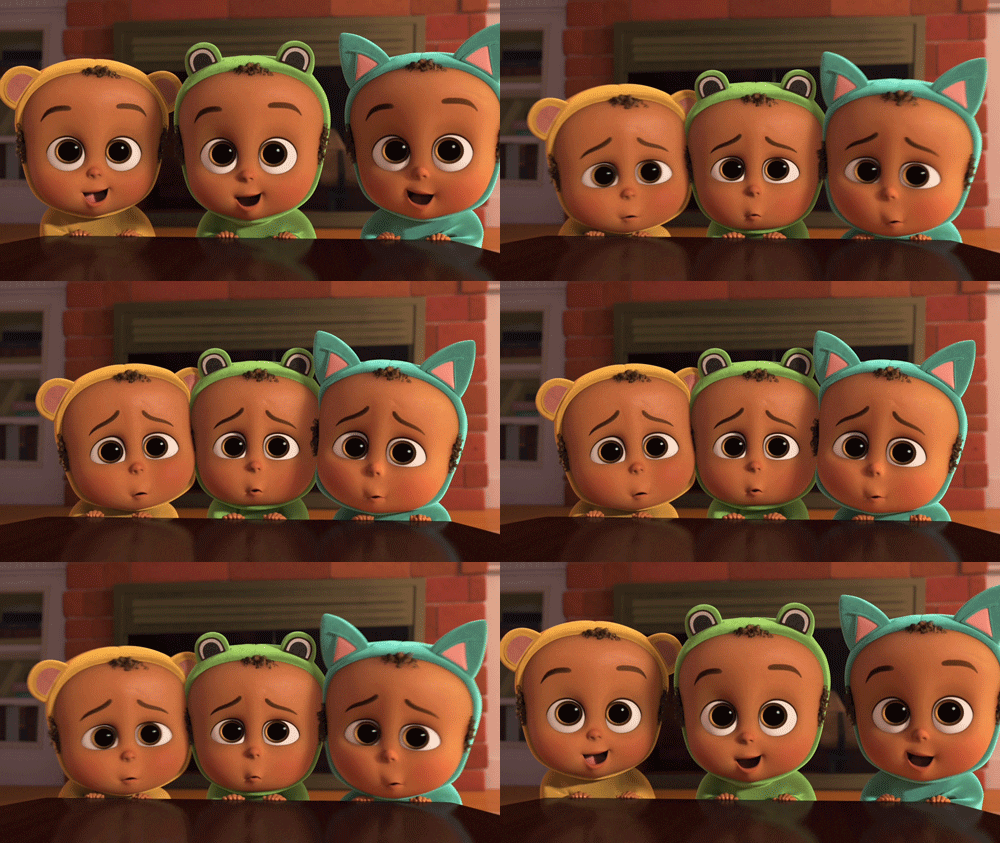
- Despite having Alec Baldwin's voice, Boss Baby is still an adorable kid. There's also a group of three babies, each dressed up in full-body animal outfits complete with furry ears. See here◊. And let's not forget the baby girl wearing a pink tutu.
- Timothy is an adorable little boy with a big imagination and all the usual traits typically associated with a seven-year-old.
- Despite having Alec Baldwin's voice, Boss Baby is still an adorable kid. There's also a group of three babies, each dressed up in full-body animal outfits complete with furry ears. See here
- A Bug's Life: Dot is as sweet and adorable as an animated bug of all characters can be.
- The Boxtrolls: Eggs, the Heartwarming Orphan who was taken in by the titular boxtrolls, also invokes a "taking him home with me" reaction from the audience.
- Coco: Miguel is just so cute! Especially in skeleton makeup! His love and enthusiasm of music combined with his childish looks make him quite huggable.
- Despicable Me: All three of the girls are adorable Heartwarming Orphans, especially Agnes who is the most innocent child to hit the screen in a long time, and is the youngest and most upbeat of the three.
- Dumbo: The innocent baby elephant Dumbo, despite being mocked for his appearance in-universe, has a blatant Ridiculously Cute Critter design and his large ears only make him cuter (and not in an Ugly Cute way). Being also the Disney Trope Codifier for The Woobie adds to this trope.
- Encanto:
- Mirabel, between her kind heart, cute Meganekko appearance, sheer earnestness in trying to be a good family member, and clumsy moments being very endearing.
- Dolores, with her cute appearance, soft voice, sweet personality, ability to hear faraway things making her come across as concerned for others most of the time, and the little honking sound she makes whenever she's nervous.
- Antonio. With his wide smile; shy, gentle nature; and love for animals, the boy has won the hearts of many.
- Far From the Tree: Marie the raccoon kit is adorably precocious, with the way she stares at the beach with wide and eager eyes while enjoying new sights and sounds and trying to help her uninterested parent harvest food. Her own kit is almost exactly the same way.
- Frozen: Anna, as part of her Adorkable and Cute Clumsy Girl appeal.
- A Goofy Movie:
- Roxanne. She's sweet, stutters and twirls her hair. It's no wonder Max likes her.
- It's sequel An Extremely Goofy Movie gives us Sylvia Marpole, who like Roxanne above is sweet, Adorkable, wears glasses to emphasize her both her nerdy nature and her status as a cute librarian. She shares a lot of Goofy's awkward and loveable qualities.
- The Great Mouse Detective: Olivia Flaversham is an adorable little mouse girl who also happens to be so dang sweet to boot.
- The Grinch:
- Young Grinch, as shown in the teaser poster and in the flashback shown in the second official trailer. Borders on Ugly Cute to some people.
- Cindy Lou Who◊.
- Her friends, Groopert, Izzy, Axl, and Ozzy count as this too. The five of them are all adorable and enthusiastic children who love the holidays and get excited over the idea of Santa Claus.
- Ice Age :
- Louis the molehog. His big Puppy-Dog Eyes enhance his cuteness.
- Peaches as an infant at the end of the third one and a child in the holiday special was as adorable as any little girl could be. Cheerful and curious about the world around her.
- The Incredibles: The Parr children, at least when they're not crime-fighting. Violet is Adorkable, Dash has an innocent, child-like demeanour and Jack-Jack is one of the cutest babies around. It helps that they all look adorable.
- Inside Out: All five of the emotions are this in some way, but Sadness tends to be the biggest example out of all of them thanks to her quiet Eeyore-like personality, large glasses, and her short stocky appearance in general.
- Klaus: Pretty much all of the Smeerensburg kids are ultimately kind-hearted and quick to smile adorably, taken up to eleven with little Márgu, the Saami girl who befriends Jesper.
- Kubo and the Two Strings: Kubo not only is a Heartwarming Orphan who deeply cares for his mother, but he also puts up with so much crazy bunk that you just wanna protect the kid!
- The Little Mermaid (1989):
- Ariel is a very cute mermaid for viewers of all ages to enjoy.
- Flounder is just too cute with his bright colors, puffy, round face, and cowardly nature
- Taken up to eleven with Ariel's daughter Melody in The Little Mermaid II: Return to the Sea. Sounding like a younger Twilight Sparkle certainly helps.
- Lilo of Lilo & Stitch. Stitch also qualifies in his own Ugly Cute way.
- Luca:
- Luca, the Constantly Curious Cheerful Child who is amazed by the surface world and also has a wild imagination along with biggest eyes of any character in the movie.
- Giulia, the absolutely adorable human with great Big Sister Instinct whenever Luca's around, yet is shown to be an absolute Determinator for justice.
- Luck (2022): Sam is an adorable Cute Clumsy Girl Nice Girl Woobie who was put in the foster care system and never got adopted, and was Born Unlucky to such an extent that, before getting the lucky coin, every possible thing that can go wrong for her does go wrong. The combination of her incredibly attractive design, sweet personality, and Woobie traits make her very huggable.
- The Mitchells vs. the Machines:
- Katie with her very cute design, endearing love of movies, and quirky personality instantly makes her this.
- Aaron also qualifies with his endearing obsession with dinosaurs, his cute design and overall being a very nice brother to Katie. In her No Animals Were Harmed disclaimer, Katie even mentions that he has "the cutest, rosiest cheeks you've ever seen in your life".
- Linda herself is a very sweet and undeniably kind parent and a schoolteacher.
- Moana: Moana herself for being very cute, klutzy, having an endearing adventurous spirit, being a total dork and goofball at times, and having a kind heart.
- Monsters vs. Aliens: Susan Murphy/Ginormica is the most adorable 50-foot woman out there. With her big blue eyes and naïve, meek personality (particularly early on, before her Character Development), she's pretty cute.
- Mr. Peabody & Sherman:
- Sherman. He is Endearingly Dorky and and very excitable.
- Penny, despite initially being a Jerkass to Sherman, also counts.
- Oliver & Company: The titular Oliver is a Heartwarming Orphan in the form of a Cute Kitten. Likewise, his owner, Jenny, is also pretty cute.
- Once Upon a Forest: All of the main kid characters qualify, but especially Michelle who is a curious, cheerful, and adorable little badger, which makes her even more sympathetic and pitiful when a gas leak orphans and nearly kills her.
- Onward: With his poofy hair, giant elf ears and shy personality, Ian is just adorable.
- Over the Hedge: Hammy is this to many fans of the movie, due to his large eyes and excitable, playful personality.
- Pinocchio: Pinocchio, being crafted to resemble a young boy and being very innocent and naïve, is probably the most adorable marionette ever.
- Raya and the Last Dragon: Raya as a child definitely qualifies for being extremely adorable and earnest. It's Downplayed for adult Raya however, who compared to other Disney Princesses gets much more serious and world-weary, though she does still have her quirky moments every now and then.
- The Rescuers:
- Miss Bianca, due to her graceful and feminine demeanor, but especially her big heart and how warm and loving she is towards children.
- Penny, a cute and innocent Heartwarming Orphan who just wants to be loved, especially when the abusive Medusa brings her to tears.
- Rise of the Guardians: Sophie is just the most adorable thing and tends to invoke I'm Taking Her Home with Me! in the audience.
- Robin Hood :
- All of the kid characters. Skippy, Toby, and the former's youngest sister, in particular are seen as especially huggable. The fandom takes Skippy's moe and runs with it.
- Maid Marian is a lovely vixen with an equally lovely demeanor. She's soft-spoken, loving, ladylike, and warm towards children.
- Rock Dog: Bodi's cute character design and optimistic, innocent Adorkable personality make him quite the Precious Puppy.
- Sing:
- Many contestants could count as this, but special mention goes to Johnny, Rosita, and Meena.
- Buster is even regarded as such by some due to being an Adorkable tiny sharp-dressed koala.
- Snow White and the Seven Dwarfs:
- Snow White, the original princess, was arguably the start of this in Western Animation and her cuteness is purposefully emphasized nowadays in contrast to some of the most elegant or tough princesses.
- Dopey is Cute Mute, younger and more naive than the other dwarfs, and has Innocent Blue Eyes.
- Song of the Sea: Sweet little Saoirse is goddamn precious, with her little rosy cheeks and huge dark eyes. You just wanna give her a big squishy hug, especially early in the film when her older brother is being mean to her.
- Spider-Man: Spider-Verse:
- Spiderman Into The Spiderverse: Considering she's deliberately designed to be a cute anime schoolgirl, Peni Parker ends up being this. And plenty of people welcome it.
- Spiderman Across The Spiderverse Peter B.'s toddler daughter Mayday is downright adorable, gleefully climbing around Spider-Man HQ and taking all of her dad's crazy antics in stride whenever he brings her along. It's very easy to see why Peter B. dotes on her so much.
- Spies in Disguise:
- Walter instantly became this when the character design was revealed, even more so when the film itself released. Aside from being a direct caricature of his actor, Walter is an awkward yet kindhearted Wide-Eyed Idealist who loves pigeons and wants to use his gadgets to protect everyone from harm, including his enemies.
- Eyes is a tall, slender Meganekko with big glasses, Youthful Freckles and an endearingly nerdy personality.
- The Sword in the Stone: The girl squirrel who falls in love with Arthur is playful, affectionate, and way too cute, until she learns that he's not really a squirrel.
- Tangled: Rapunzel. Her mannerisms and personality make her one of the most adorable Disney Princess.
- Tarzan:
- The design Disney used for Jane evokes a protective instinct - but then again, this is one of literature's archetypal Damselin Distress characters.
- Tantor as a calf as well, especially since his voice actor was too young to read his lines.
- Toy Story 3: Bonnie. Whether she's being shy (around adults) or a cheerful Genki Girl (with her toys) she's always adorable.
- The lost little girl who was crying before adopting Gabby from Toy Story 4 is pretty endearing as well.
- Trolls: The titular trolls are considered this, given the fact that they hug all the time. Special mention goes to cheerful Genki Girl Poppy.
- Turning Red: Mei is pretty cute-looking and huggable, especially in her giant red panda form. Her friends have also stolen hearts for their quirky personalities and unconditional support of Mei's transformation. The rest of her family's red pandas look adorable too.
- Up:
- Dug is absolutely adorable, helped by his Undying Loyalty to Carl.
- Kevin's babies too, they're like smaller more precious versions of their mother.
- WALL•E:
- Wall•E himself has huge adorably expressive eyes, a sad-sounding voice, Adorkable traits such as loving musicals and collecting sporks, and is all around an incredibly kind robot.
- Eve becomes this as the film progresses. She and Wall•E are always Cute Machines physically, and even provide the page image for that trope, but it's once Eve starts to bond with Wall•E and expresses adorable traits such as a Laugh of Love that she fully becomes this.
- Wreck-It Ralph: Vanellope von Schweetz is the most adorable character in the movie and also the most abused, whose living conditions were even worse than Ralph's. She is essentially a Dummied Out character in her home game, which is horrifyingly tragic if such a character were sentient. Some of the story team members even grew protective of her.
- Zootopia:
- Judy Hopps is an endearing little bunny with an appealing design who tries so hard to prove herself and is so determined to solve genuine problems in her city (not just being a traffic cop as others want her to) that it's near-impossible to not root for her.
- Benjamin Clawhauser is considered an adorable Gentle Giant and the friendly face of the police station, and when he loses his job later on in the film just because he's of a predator species, he comes across as very Woobie because of how nice he is.
- Judy and Nick as children are completely adorable, as are the little jaguar and cougar from Judy's play.
- It's hard not to find Bellwether adorable, with her short stature and wide-rimmed glasses. It's what makes her reveal as the Big Bad all the more shocking.
- Despite her limited screen time in the film's prologue, Sharla gained her own set of fans not long after the film's release. This is due to her charming performance as an astronaut at the school play and being one of Gideon's easiest targets for bullying.

- 9 to 5: Doralee. Dolly Parton fills her with some great Country Mouse sweetness and sad confusion about why people dislike her.
- Addams Family Values: Both used straight and subverted when Wednesday Addams turns on the charm at summer camp. In just a few moments, she blossoms from her usual drawn and dour self into a charming doe-eyed lovable little girl.
- The other children are visibly shocked. One remarks, "She's scaring me!"
- Anna and the Apocalypse:
- Between her Digging Yourself Deeper moment while discussing Anna and Nick's breakup, her Sickeningly Sweethearts moments with Chris, and her vulnerable scenes while holed up in the school (particularly during the Human Voice musical number), Lisa is a pretty huggable character.
- John, given his love for Christmas, goofy enthusiasm, girlish scream, and sad but mature reaction to Anna not returning his feelings for her.
- Another Time, Another Place: Janie, especially when she gets the chance to smile.
- Army of the Dead: Sebastien's jumpy but earnest Naïve Newcomer and Ascended Fanboy personality and excited physical movements make him even more adorable than he is in the first movie.
- Just about anyone played by Mr. Buster Keaton. Poor guy.
- A Canterbury Tale: Bob's sense of naïveté (a reflection of his actor being new to film making), kindness and determination to his friends, and growing love for the countryside absolutely charm scores of viewers.
- Can't Hardly Wait: The yearbook girl might come across as annoying to her classmates, but her perky attitude and school spirit, and how she wants the yearbook signature of everyone regardless of social status can make her rather endearing.
- Catwoman (2004): Patience Phillips definitely qualifies in the movie's first half. She's a dorky but sweet aspiring artist who's too meek to stand up to anyone, whether it be her boss or her loud neighbors, she's endearingly awkward in her everyday life, and her reaction to Tom's interest in her is adorable. Not to mention her loving nature toward cats even before becoming Catwoman. Downplayed in the movie's second half where she becomes more confident and sexually assertive as Catwoman, though she does still have some cute moments even after this.
- Cecil B. Demented: Raven falls into this category in a weird way, but then, considering the actress...
- Child's Play: Andy an six year old who ends up with a murderous possessed doll is just so adorable and a sweet boy who willing to make breakfast for his mother who he loves dearly and can't help but defend him from a killer doll when no one else believe him about Chucky. You just want to hug the poor boy.
- Dance of the Dead: Gwen, the Pom-Pom Girl who is upset about dissecting a frog, doesn't know how to use a machete, and has some Give Geeks a Chance interactions with Stephen.
- Deadpool 2: Yukio is notably the only character that Deadpool just doesn't have the heart to ever insult or snark at. This is because she is an adorable Nice Girl who is always friendly to him and everyone else, greeting him with a kind "Hi Wade!" or "Bye Wade!" every time they interact and never being anything less than completely sweet to him. Deadpool of all people liking her too much to be mean to her shows just how much she is this.
- Diary of the Dead: Tracy inspires endearing or protective feelings due to being a sweet Southern Belle early on (with some humorous Of Corset Hurts complaining about her movie costume) and the way she gets gradually broken down by the traumas of the zombie apocalypse while still retaining some spunk.
- Drop Dead Gorgeous:
- Amber. Her wholesome demeanor, Only Sane Girl moments, and the nice way her Small Town Boredom is handled all help, but mainly it's down to the bright and hopeful performance of Kirsten Dunst.
- Lisa, with her odd laugh, desire to move to New York, the affectionate way she talks about her gay brother, and how she sacrifices her own chance to win the pageant to help Amber.
- Tess for some, due to being a Wide-Eyed Idealist and The Chew Toy, plus really, really liking German Shepherds.
- Final Destination 3:
- Wendy. She's endearing enough while happily acting in her capacity as school photographer during the first fifteen minutes of the film. Then, after the accident that kills her boyfriend and best friend, she's in a broken state with barely anyone to turn to as she tries to prevent more deaths and finds out that her sister is also being targeted by Death. There's barely a moment in the film where the average viewer won't want to hug her.
- Valley Girls Ashley and Ashlyn surprisingly inspire a lot of sympathy and warm feelings due to their attempt to provide Wendy some emotional support while she's depressed and the horrific way that Death chooses to target them.
- Julie's friend Perry (on a minor scale) due to her constantly changing hairstyle and how she sometimes has a sunny smile but often looks appropriately sad and frightened.
- Finch (2021): Both of Finch's Ridiculously Human Robots are highly cute and endearing; Jeff for the eager and childlike way he strives to learn throughout the road trip, and Dewey for the way he lowers his head in a dog-like way when Finch says something disappointing.
- Flashdance:
- Alex's winning smile, her passion for dance that is tempered by insecurity about her skills, her protectiveness of her friends, and her sense of pride in her blue collar work all make her charming and endearing.
- Tina's awkward insecurities about her boyfriend, the funny way she struggles with some barbells during a Training Montage, and the sheer energy and dedication she puts into her Minor Character, Major Song dance number all make her surprisingly adorable for a small character.
- Four Weddings and a Funeral:
- Tom's bumbling nature and speech about seeking a happy, low-drama true love casts him in this role.
- Bernard and Lydia, due to their cuteness as a couple and how they patiently help the minister who is marrying them when he gets tongue-tied.
- Fiona, due to her sad but graceful All Love Is Unrequited moments.
- Serena, due to her clumsy attempts at flirting with sign language.
- Gareth, due to his non-stop Life of the Party joviality.
- Freaky: Millie. She's a Shrinking Violet with some cute Character Tics, gets harshly bullied for being the school's mascot, a job that she seems to care about, and is too shy to tell a Lovable Jock about her crush on him. And that's before her "Freaky Friday" Flip with a middle-aged man adds a new level of awkwardness to everything she does.
- Friday the 13th (2009): Jenna is humble, caring, innocent, quick to help someone in need, and has a dazzling smile.
- Gallipoli: Archy, due to being an occasionally self-sacrificing Wide-Eyed Idealist with amazing skill and passion for sprinting.
- Go: Claire (Katie Holmes) combines moments of awkward nervousness in the first part of the film and awkward, mischievous glee in the final act into an adorable package.
- The Grudge:
- Allison, due to her being a kind wallflower with an innocent face who just wants to have friends and ends up suffering some of the worst Break the Cutie and The Woobie misfortune in the franchise as a result.
- Aubrey, due to how she spends so much of the movie distraught and vulnerable but still determined to stop the curse, and is unhappy in her position as The Un-Favorite to her sister Karen but still shows a lot of concern and affection for Karen.
- Halloweentown: Sophie, given her Cheerful Child moments, sense of eagerness about exploring Halloweentown, innocent use of magic, and how she gets along with all of her family members pretty well while the others have more frequent disagreements.
- The Hunger Games:
- Like in the book series, Prim. Katniss as her older sister would do anything to protect her and the citizens of Panem fall head over heels for her when Katniss volunteers to take her place as the Hunger Games tribute. The second film The Hunger Games: Catching Fire lampshades this after one of gimmicks in the Games arena tricks Katniss into believing Prim had been tortured; fellow tribute Johanna points out that Panem loves Prim so much that if it were real, the Capitol citizens (the prime audience that regularly enjoys seeing children of the Games slaughtered) would riot against the gamemakers and President Snow. Prim becomes less of a Moe from Catching Fire onward, as she takes up to helping their nurse mother treat starving and injured patients, and thus has to grow up too quickly.
- Katniss also sees her Hunger Games competitor Rue as this, as, aside from being black instead of white, she reminds Katniss of Prim in every way, including being around the same age. Rue gets killed in front of Katniss (and all of Panem) and dies in her arms, and Katniss decorates her body with flowers to show she actually cared about Rue. She remains a driving force throughout the series behind some of Katniss' motivations to fight against the Capitol. The film also adds an extra scene showing people in Rue's district District 11 rioting against the Captiol soliders after she gets killed.
- The Hunter: Both Armstrong kids are utterly adorable and inspire protective feelings from Martin and the audience due to Sass being a wide-eyed Cheerful Child who is always asking questions and clearly misses her dad and Bike's Cute Mute attitude. Their mother eventually inspires some of this as well with her playful grins and Wide-Eyed Idealist attitude once she stops getting high on prescription meds to deal with grief over her lost husband and starts opening up to Martin and paying more attention to her kids.
- I Know What You Did Last Summer: Helen, with the exception of the hit-and-run scene. Sarah Michelle Gellar makes sure that all of her scenes before that have her displaying a fun, bubbly charm while her scenes afterward give her a strong sense of defeat and vulnerability as she's being bullied by her sister, stalked by a psycho, and unsuccessfully tries to reconnect with her best friend.
- Ice Princess:
- Casey's sheer passion for skating and habit of rambling on about mathematical equations in the middle of normal conversations make her surprisingly adorable.
- Gen. Her first couple of scenes don't seem to be heading in this direction, but once she shows a warmer side of her personality, it's easy to feel warm and attached toward her as she starts acting like a Cool Big Sis to Casey and shows some range in chafing under the demands of her Stage Mom.
- Jack of the Red Hearts: Glory Adams, the severely autistic girl has her own way of being adorable throughout the film.
- Kick-Ass: As badass as Mindy is as Hit-Girl, she is absolutely adorable out of costume.
- Knives Out: Marta is such a sweet person that she's basically a precious cinnamon roll human incarnate. She can't even think about lying to anyone or she'll throw up! Aww...
- Lights Out (2016): Between his Extremely Protective Child moments toward mom, bonding moments with his older sister, and the scene where Becca finds him asleep in a bathtub with a flashlight in his first night away from the Haunted House, Martin inspires a lot of warmth and protectiveness.
- The Lord of the Rings: Frodo Baggins. More so than the book, in which he seems slightly more composed and more mature than his younger Hobbit friends, film Frodo is every bit the doe-eyed, plucky little train-that-could. Whenever action goes down, even the other Hobbits manage to get some licks in. But not our Frodo, who whimpers and faints and plays ill throughout. He's so in over his head it's absurd... which is what makes his pluck all the more moving. It's just a good job Sam went with him...
- Mad Max: Fury Road:
- Nux, due to how he's Desperately Looking for a Purpose in Life, his emotionally stunted behavior, and his Butt-Monkey moments.
- Splendid Angahard, due to her Team Mom and Actual Pacifist moments.
- Capable, at least when she's being compassionate toward Nux. Her Brainy Specs goggles help as well.
- The Dag for some, due to her hamminess and her emotional conversation with the Keeper of the Seeds about the hope the seeds represent and The Dag's mixed feelings about motherhood.
- Maleficent: Aurora. Innocent, Friend to All Living Things, and spends many of her scenes full of nothing but joy. The spell did say she'd be beloved by all that meet her. Being played by Elle Fanning definitely helps. She eventually forms a Moe Couplet with the title character.
- The Man Who Fell to Earth: David Bowie's character is a fragile, if stoic, alien who proves highly, tragically vulnerable to the pitfalls of the human world. In his human disguise, he's one of the older examples of this trope (his true form is that of a Rubber-Forehead Alien). It's telling that Bowie fangirls usually refer to Thomas Jerome Newton via his in-story nickname of "Tommy".
- Marvel Cinematic Universe:
- In Thor, Loki gets one or two scenes (notably The Reveal scene) that make him this... until he turns all Woobie, Destroyer of Worlds.
- Pre-serum Steve Rogers in Captain America: The First Avenger, especially in fanworks. He's feisty and determined (very) rather than innocent and vulnerable, but he is a short, kind of delicate-looking (with big blue Disney princess eyes), romantically inexperienced, Adorkable yet ailing boy who gets beat up a lot. Post-serum, he's still cute, but in more of a Dork Knight-Iron Woobie way.
- Cute Alien Girl Mantis in Guardians of the Galaxy Vol. 2. She's a reasonably kind person with a non-violent power set (being The Empath) in a film full of stab-happy Jerks With Hearts Of Gold and worse. She's socially awkward in a terribly endearing way due to her isolated upbringing, which also gives her Woobie points because she's terribly lonely and in need of friends. And her Cuteness Proximity reaction to Rocket and baby Groot is adorable.
- Spider-Man. Much emphasis is placed on this Spider-Man's youth and inexperience compared to previous versions. He acts like a geeky fanboy and is constantly stuttering and running his mouth in battle. He defaults to being the youngster when placed against much older heroes. The writers and actor deliberately invoke trope as it makes both his death in Avengers: Infinity War and his mentor Tony Stark's death in Avengers: Endgame all the more heartbreaking as he reacts like a scared, frightened child instead of a more stoic, hardened hero.
- Shuri, T'Challa's little sister first introduced in Black Panther (2018), whose cuteness, Adorkableness, and fun antics in general make her very huggable.
- Black Widow (2021) introduces us to Yelena Belova, who despite being a tough and capable Action Girl like her sister Natasha, tends to be seen by viewers as extremely adorable. This starts from her being shown as an innocent child in the flashbacks, with her being the more happy and carefree sister to Natasha, and then still being shown as goofy and quirky as an adult despite the seriousness of her line of work. For example, she enjoys teasing Natasha about her battle poses and asking her why she feels the need to show off with them. She also has an easier time warming up to her lost family members, being quick to forgive everyone compared to Natasha who is a Defrosting Ice Queen about it. This characterization then takes off even further in Hawkeye (2021), when Yelena's quirkiness and sweetness gets even more emphasized in her banter with Kate Bishop, who has a similar personality to her and is considered quite Moe herself. In a nutshell, Yelena may be a tough spy but her goofiness and sweetness makes Marvel fans completely adore her anyway.
- The Mighty Ducks: Connie's smile, enthusiasm, and loyalty to the team make her an easy character to feel affection for.
- Morning Glory: Becky's occasional moments of being a spaz, her Ascended Fangirl attitude about her job, and her passionate but nervous arguments about ways to save the show from cancellation make her a very adorable character.
- Necessary Roughness: Gentle Giant Manu, mainly due to the determined but bashful way that he stands in front of Lucy while she's showering so no one else can look at her and doesn't look back himself.
- A Nightmare on Elm Street:
- A Nightmare on Elm Street (1984): Between coming across a savvy but victimized Girl Next Door in her first appearance and a sadder and wiser Team Mom in her second one, Nancy inspires such feelings.
- A Nightmare on Elm Street 3: Dream Warriors: Cute Mute Joey and his Translator Buddy Jennifer (a shy aspiring actress) have a lot of endearing moments where they display vulnerability amidst Freddy's hauntings and loyalty and helpfulness to the other kids even before the Dream Warriors are formed.
- A Nightmare on Elm Street 4: The Dream Master: Alice, due to her endearingly introverted personality, her sense of grief about all of the deaths, especially her brother's, and how she remained optimistic and caring even after she Took a Level in Badass.
- A Nightmare on Elm Street 5: The Dream Child: Greta, due to her empathetic crying moments after the first death, her insecurity about her and Mark's feelings for each other, her playful demeanor during the graduation scene, and her Indifferent Beauty moments when her mother is being a Stage Mom.
- Night of the Living Dead (1968): Barbra. After all of the horrible things that happen to her, she becomes a nervous wreck. And it's adorable!
- Ninja Assassin: The way Kiriko smiles and acts like a Friend to All Living Things as both a girl and an adult make fans utterly adore her and want her to stay safe, which regrettably doesn't happen.
- No Time to Die: Very surprisingly for the James Bond franchise, Paloma is like this. Although she's still an amazing fighter, outside of her fight scenes she has an awkward, sort of nerdy disposition with shy, cutesy mannerisms to boot. She even seems so innocent that she chokes on her alcohol in a way that implies she hardly does any drinking, and the one time it seems like she's coming on to Bond, it turns out she didn't mean it and was just being awkward.
- Piranha 3D: Despite being a porn star, Danni inspires a lot of this feeling in the scenes where she isn't on the job, due to her Intergenerational Friendship with Jake's little sister and efforts to save Derrick from being killed, plus how her failure to do so leaves her deeply upset.
- Pirates of the Caribbean: On Stranger Tides: Syrena. Come on, look at those big adorable eyes. Doesn't hurt that she's a sweet vulnerable non-murdering mermaid.
- Python: The cute way Theresa talks abut her childhood crush on Tommy and the amount of terror she displays while still showing some good Action Survivor skills make her surprisingly cute and endearing for a secondary character in a B-Movie.
- The Replacements (2000): Deaf player Brian Murphy, due to his All American Boy looks, kind nature, and sign-language flirting with one of the strippers and stunned, embarrassed reaction to her making an explicit suggestion.
- The Return of Hanuman: Child!Hanuman/Maruti. Big girly eyes, cheeks, innocence, he's just so adorable.
- Roman Holiday has the ultimate western example in Audrey Hepburn's adorably innocent Princess Ann.
- Ruthless People: Helen is a sweet, shy, worn-down, easily frightened young woman who feels completely in-over-her-head about the whole fiasco, has some nice When She Smiles moments, and goes through the whole movie without getting a Kick the Dog moment.
- Scream Franchise:
- Scream (1996):
- Tatum's witty nature, protectiveness of Sidney, fashion style, and the cuddly accessories in her room make her immensely endearing.
- Casey's sweet-looking appearance, Nice Girl dialogue and Trauma Conga Line make her feel quite huggable.
- Clueless Deputy Dewey, due to his flirtation with Gale and Dude, Where's My Respect? interactions with his sister.
- Randy, due to being an enthusiastic Meta Guy, but also showing more sadness about the actual murders than most of his classmates.
- Scream 3: Jennifer is a rare Jerk with a Heart of Gold example. This is due to her hilariously neurotic nature, exaggerated physical movements while running for her life, her Becoming the Mask actions in mimicking Gale's investigatory nature, and the way she jumps into someone's arms when she's scared.
- Scream (2022): Tara is extremely adorable between her small stature, baby face, and kind personality. Adding to this, she's also a major Woobie for the extreme amount of suffering she endures, between being hospitalized from multiple stab wounds right at the start of the film and then continuing to get targeted by the killers while she's still wheelchair-bound and with a nasal cannula in the hospital, making many viewers just want to give the poor girl a hug for everything she goes through.
- Scream (1996):
- Short Circuit: Johnny Five. The robot's deep respect for life, loyalty to his friends, and fondness for movie quotes all make him pretty lovable.
- Short Circuit 2: Toy company purchasing agent Sandy. Her enthusiasm for novelty toys that her boss dislikes and the way she's eventually charmed by Ben's awkward flirting are pretty cute.
- Sin City has Little Nancy, who is a lot cuter when seen in full color light in the bonus DVD features than in the black and white of the movie.
- Spider-Man Trilogy: Ursula Ditkovich, the daughter of Peter's landlord, is an adorably sweet character who never, ever fails to be kind to Peter even at his lowest points, even when it seems like the entire world is disrespecting him. In Spider-Man 2, when Peter's at his lowest point, Ursula notices how depressed he is and makes him chocolate cake to cheer him up, the start of his luck finally turning around. In Spider-Man 3, she continues to be supportive to Peter even when the symbiote is clearly turning him into a Jerkass, and responds to the situation by being concerned for his well-being and trying to figure out what's wrong rather than condemning him. She also, despite seeming to have a crush on Peter, has an I Want My Beloved to Be Happy attitude to his romantic life by rooting for him and M.J. rather than show any jealousy over their relationship. As a result, fans tend to love her for being such a wholesome character and unfailingly good friend to Peter, with a common fan sentiment being that Peter should have dated her rather than M.J.
- Stake Land:
- Belle, the Imperiled in Pregnancy country singer has a lot of down-to-earth charm.
- Peggy, due to her sunny, go-getter nature even after spending so long surviving alone.
- Star Trek (2009): Chekov. He's developed quite the female following.
- He's practically a live-action anime character with his enormous greenish-blue eyes; no wonder he's a Moe! That and his positively adorable accent (especially when the computer acts like a bitch to him).
- "I can do zat! I can do zat!"
- He's practically a live-action anime character with his enormous greenish-blue eyes; no wonder he's a Moe! That and his positively adorable accent (especially when the computer acts like a bitch to him).
- Sucker Punch: The main cast as a whole are this for being adorable, innocent girls who are being abused in an asylum, and coming across as rather cutesy and huggable despite the Crapsack World that they're in, but two of them in particular stand out as more Moe than the rest:
- Amber is the sweetest out of everyone, has a very endearing and encouraging personality, and has a very short and cute appearance to boot, thanks to being played by Jamie Chung.
- Rocket is extremely perky, sweet, and the most idealistic out of the group, being a contrast to her more serious and reserved older sister.
- The Suicide Squad: Ratcatcher 2 is absolutely adorable mostly due to her sweet personality, which is influential enough to make her the Morality Pet of both Bloodsport and King Shark. She's also The Baby of the Bunch due to being the youngest and most innocent member of the Suicide Squad, an Animal Lover who has a cute bond with her rats, and has a cute Unkempt Beauty appearance too.
- Tomorrow: When the War Began: Fi, due to her characterization as a sweet but jumpy City Mouse.
- Tower of Terror:
- Anna, due to her sense of empathy for the ghosts and the gleeful way she helps out her uncle with his staged tabloid photos.
- Sally Shine is a beaming child star who inspires a lot of sympathy and affection with the happy way she talks about how she wanted to throw a party for her sister, and liked how she didn't have to act like a star when the two of them were together.
- Transformers Film Series:
- Bumblebee fills this, despite being a mechanical life form. Due to being the most humanoid of the robot cast, his movements modelled after Marty McFly, the fact his horns are replaced with little bug antennae, he's given Prowl's door wings which act like dog ears, and his childlike enthusiasm at times. There's a reason many cried when he was injured in the first film and when it looks like he's about to be executed by Soundwave in the third. Possibly lampshading this, Laserbeak uses his apparent ability to change into anything to become a human child sized pink version of him to trick a small girl into letting him inside so he can kill her family.
- Carly in the third film also acts as this, due to being more emotional than Megan Fox's character Mikaela in the first film and more playful.
- The 2018 Reboot Bumblebee portrays the aforementioned Bumbleebee as this once again, and plays it up even more by making him scared and vulnerable due to his memory loss, yet still upbeat and curious.
- Charlie from Bumblebee is considered this too for being quirky, Adorkable, klutzy, and often ending up in embarrassing situations, which makes her very huggable. It also helps that she's played by Hailee Steinfeld, who is both good at playing endearingly awkward characters and cute in general. She is also dealing with the loss of her father who she was close with, along with having major conflict with her mother who doesn't understand her, which makes her The Woobie.
- Tremors 6: A Cold Day in Hell: The average viewer can really feel and appreciate the positive energy of chipper Tomboy with a Girly Streak Valerie.
- Who Framed Roger Rabbit: Roger Rabbit is such a lovable sweetheart.
- X-Men: First Class managed to make Mystique seem Moe through her shy and excitable moments.
- Zoom: Academy for Superheroes: Super strength or not, Cindy is absolutely adorable due to being a six-year-old Girly Girl with normal childish insecurities and interests who doesn't know her own strength.
- Lala◊ (right), the singer for J-Pop / digital noise shotgun wedding わたしのココ. You think it stops there? Wait 'till she opens her mouth.
- Possibly something of a Woobie as well; the band's webpage states that she's a Shrinking Violet to the nth degree.
- Possibly something of a Woobie as well; the band's webpage
- LIGHTS for most of her discography being Sweet Dreams Fuel, the passion for adventure, sci-fi, comic books, and animation that she incorporates into her music being very endearing, and the singer herself being cute.
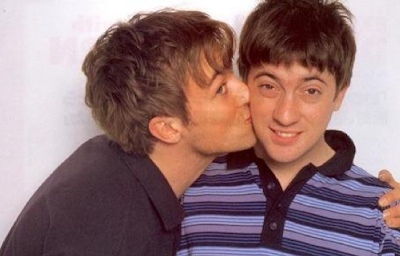
- Damon Albarn of Blur most likely invokes this, particularly in the mid-90s. Just look at him.◊ Awwwwww.◊
- Gorillaz:
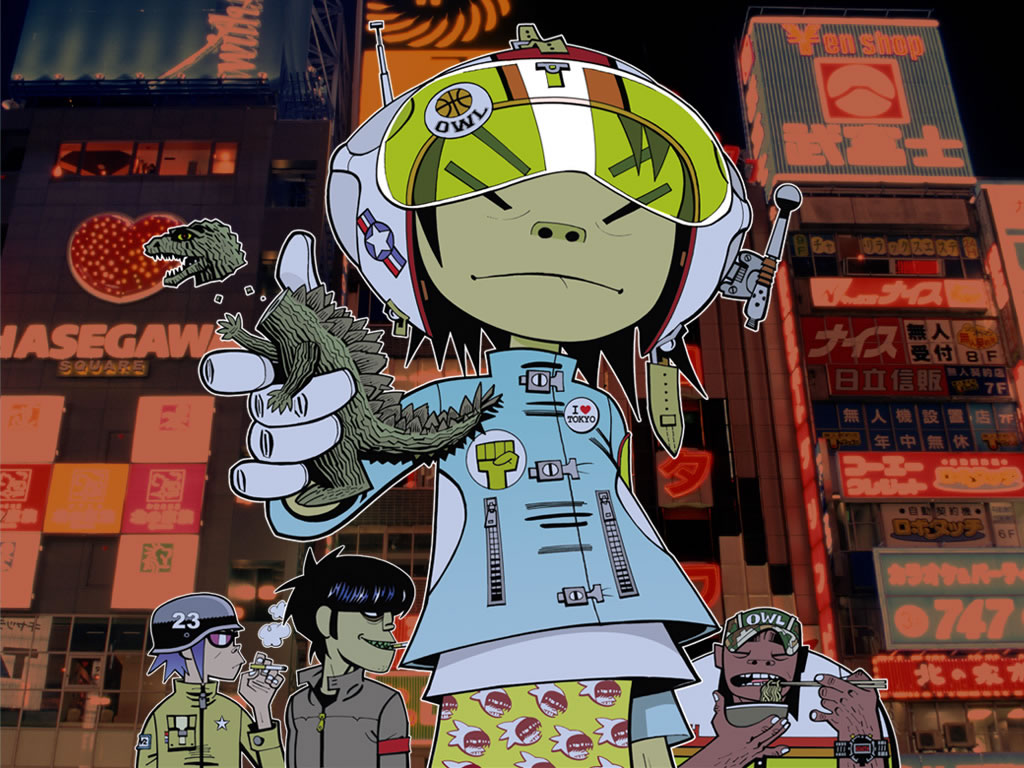
- Guitarist Noodle has always been one in her way, especially considering the visceral art style. Here she is aged ten◊, fourteen◊ and twenty◊, complete with Cool Mask.
- 2D also invokes this feeling a bit, particularly in Phase 3. He's definitely more Ugly Cute than anything, but his advanced Woobiehood and ditzy, laid-back demeanor make him... pretty damn lovable.
- Guitarist Noodle has always been one in her way, especially considering the visceral art style. Here she is aged ten
- Carcass in their heyday were quite cute for people making Gorny Grind Core.
- Ringo Starr guessed that his fanbase in the '60s consisted mainly of girls who wanted to mother him. He was absolutely right.
- In-universe example. In the Bon Jovi song, "Superman Tonight," Jon sings about a girl he wants to rescue...THAT HE DOESN'T EVEN KNOW.
- Sally Shapiro.
- Jazz vocalist and pianist Blossom Dearie had this as a big part of her appeal, often described as having a girlish appearance and an innocent "baby-doll" voice. Case in point: her famous cover of "Someone To Watch Over Me." (Is a more Moe name than "Blossom Dearie" even possible?)
- Ben Howard has been known to have this effect on some.
- Patrick Stump from Fall Out Boy has always had this effect on people to the point where even Pete Wentz has joked about it.
Pete: patrick doesnt do gross things. his body is made up of kittens, saturdays, 70 degree weather, first kisses and butterflies. trust me, i cut that bitch open once to check.
- Ryan Ross◊ and Brendon Urie◊ of Panic! at the Disco. No wonder their fans ship◊ them together!
- Gerard Way◊ and Frank Iero◊ from My Chemical Romance are this. Is it no wonder why they were a hit with the girls?
- Most of the Vocaloids count. The best-known examples are Hatsune Miku, the Kagamine twins Rin and Len, Megurine Luka, Meiko (who also counts as Fanservice), Gumi Megpoid and Akita Neru.
- Many Utauloids also count, but none more so than Kasane Teto.
- Ian Curtis from Joy Division, a depressed yet kind if suicidaly unstable young man whose lyrics showed boundless understanding of the human condition. He really needed a hug◊.
- Kina Grannis is considered a very cute music artist with warm, soothing vocals that she brings to both her original songs and to her song covers. She even did a Stop Motion song with jellybeans once!
- Her roles in Wong Fu Productions skits are almost always Moe as well due to those characters being very sincere, kind, and cute, likely because she already comes across that way as herself.
- British singer Dodie Clark has a reputation for making songs with incredibly sweet lyrics and soothing vocals, along with having a kind and gentle personality herself.
- The lead vocalist for Taking Back Sunday Adam Lazzara definitely counts, especially in the early days. His shyness, emotional lyrics, bangs, and tendency to wear his sleeves either rolled up or down to his palms (the latter seen here) all make him a "soft boi" before they were ever called that.
- Many Korean Pop Music idols are this when not being Mr or Ms. Fanservice. This is often due to idols invoking aegyo and/or eccentric personalities to show in reality shows, variety show appearances, and other content. Even some acts that don't normally do "cute" concepts have occasionally let it seep into some songs and videos. Some examples of such idols include Jisoo and Lisa of BLACKPINK, Jungkook of BTS, Sana and Tzuyu of TWICE, Lay and Kai of EXO, Chuu of Loona, Felix of Stray Kids, and IU.
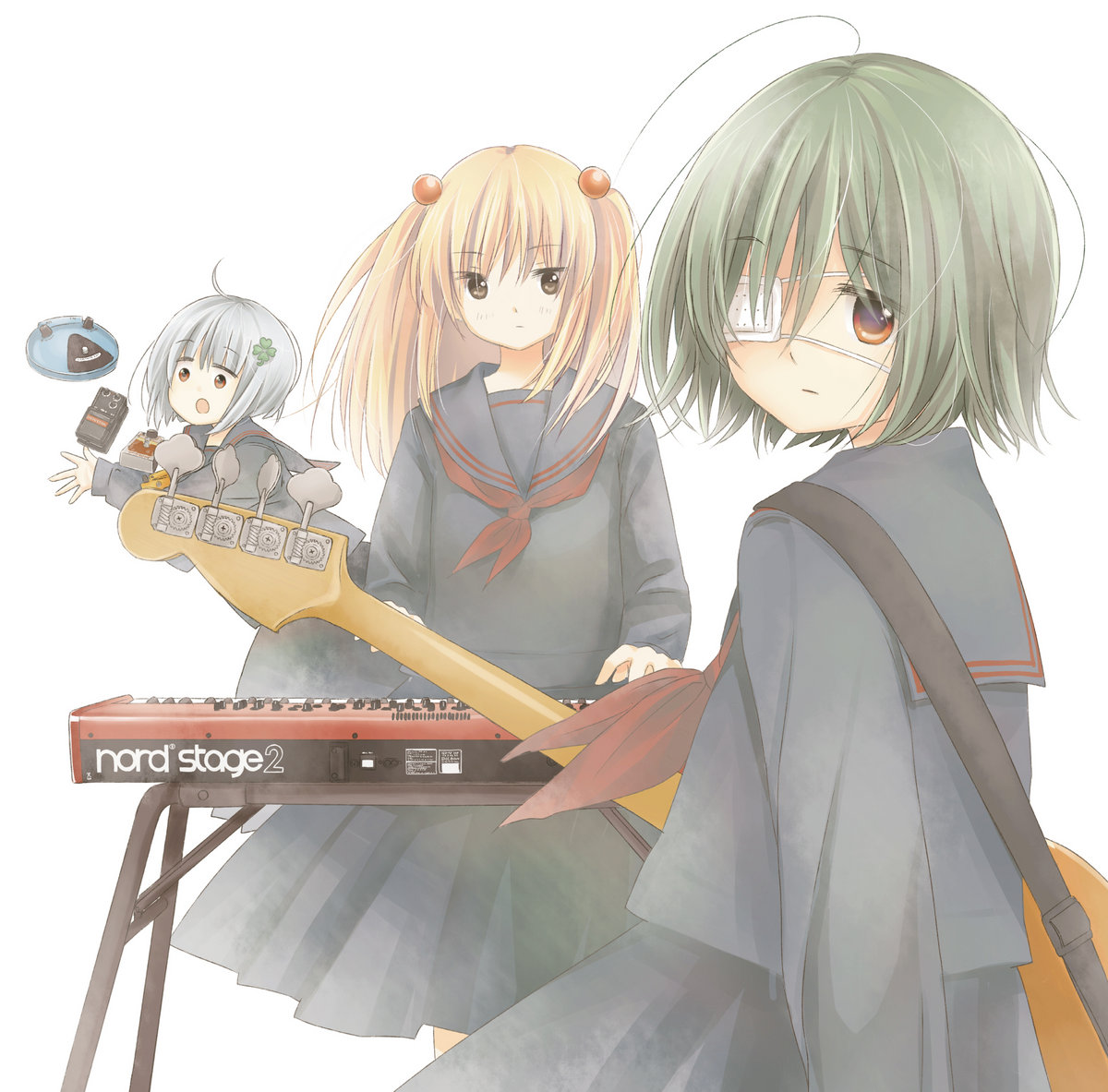





- The caricatures of the two hosts of Fat, French and Fabulous have a distinct, cutesy animesque art style that belies the dark, disturbing comedy of the podcast itself.
- About the best way to describe why Hailey Solomanari of Kakos Industries is so well liked among fans. Even with only her voice to convey her character, she's so damn naive and bubbly it's borderline infectious. She's especially this compared to the other characters who tend to carry a more obvious sense of intimidation while she keeps her own Evil capabilities under a pretty pink gauze of innocence which makes her both incredibly "moe" with plenty of Cute and Psycho to boot.
- A.J. Lee is of the Genki Girl variety.
- Randy Savage's valet Wrestling.Miss Elizabeth could also count.
- It's Bayley! Genki Girl, check, Adorkable, check, weaponized glomper, check, one of the most "wholesome" Divas on WWE programming, check. Her opening even features a drawing of her as an anime character!
- The Doomy Adventures of Irken Doominess:
- Melissa as a smeet is a total Moe for being shy and withdrawn, often having others feel the need to protect her.
- San, who is in pretty much the same situation as Melissa but isn't shy or withdrawn but so socially awkward that most people avoid her.
- Survival of the Fittest:
- Sierra Manning, a cute emotional girl whose cuteness is only amplified by her lisp.
- This trope could also easily explain why Orn "Dutchy" Ayers is so popular on the board. Dutchy is an Icelandic, free-loving comic book nerd who watches soccer and cries Tender Tears over the plight of third-world countries among other things. Add in his in-game posts, which makes many handlers see him as The Woobie, and his habit of wearing a Pointless Band-Aid over his nose, and you have a character who most of the board adores.
- The Warhammer 40,000 fan-character Cultist-chan turned into this once she got de-aged. Yes, a cultist of Chaos.
- She's so cute she'll cahptoor your heart!
- An unintentional example: The Land Raider is a ginormous uber-manly Awesome Personnel Carrier / Cool Tank, with◊ multiple◊ variations◊, each more badass than the last. The there's the Land Raider Spartan...◊
- In a similar vein to Cultist-Chan, we have Lolicron, which is basically a Moe Personification of the necrons. And yes, she is adorable◊.
- Eberron's female religious leaders are adorable.
- Jaela Daran has been mentioned many times.
- Erandis Vol also practices knitting.
- Fighting Fantasy books including Deathtrap Dungeon, House of Hell and Sword of the Samurai were redone in a moe art style in Japan.
- The GURPS advantage Pitiable basically facilitates moe.
Something about you makes people pity you and want to take care of you. You get + 3 on all reaction rolls from those who consider you to be in a position of helplessness, weakness, or need (which never includes those with the Callous disadvantage). Taken in conjunction with above-average looks, Pitiable means you are "cute" instead of "sexy"; in combination with below-average looks, it means you are "appealingly homely," like a basset hound.
- A similar Competence is available for some races in the Tabletop RPG based off Naheulbeuk : "Touching naivety" grants the character a +4 bonus to all Charisma rolls in order to get forgiven by the rest of the party for any laughably catastrophic mistake. Considering how stupid, clumsy (read "very keen to accidentally shoot allies in the back while trying to cover them") elves can be in the Naheulbeuk Universe, they automatically start the adventure with this competence.
- The Collectible Card Game Weiss Schwarz uses moe as its primary selling point, allowing moe stalwarts such as the Lucky Star and CLANNAD casts to wage bloody moe battle against each other.
- Yu-Gi-Oh! is a Japanese card game, therefore there are a lot moe characters in it. The first and best-known example is "Dark Magician Girl"; she later gets a moe sisterhood whose names contain the words "Magician Girl" and the first letters of those names form the word "Black" (she's known as "Black Magician Girl" in Japan and Korea). Many later archetypes used by cutesy female characters from the anime and manga consist solely of moe girl monsters. IRL, some of the most popular moe monsters are (visually) designed by the Japanese artist Akina Fujiwara (藤原明奈), including the girl group known as Charmers (one of them is male, but still cute enough) and their cuddly familiars; the Charmers have won a poll and gotten featured on game mat and card sleeve designs.


- Ophelia from Hamlet is one of the earliest examples of moe.
- The Phantom of the Opera:
- Christine is a perfect example of a Moe done well.
- Meg Giry could also qualify for this.
- Danganronpa:
- Danganronpa: Trigger Happy Havoc: Chihiro Fujisaki serves as this In-Universe, having a sizable fanbase due to looking like a "small, frightened animal". Even before her secret is revealed, she serves as the Token Mini-Moe to both the boys and girls.
- Danganronpa 2: Goodbye Despair: Chiaki Nanami fits this to a T. She's a shorty, busty, sleepy-headed Gamer Chick who is voiced by Christine Marie Cabanos in the English dub.
- Mikan Tsumiki too, at least before The Reveal and even then, people still tend to feel bad for her.
- Ibuki Mioda is pretty cute as well, especially with her energetic nature and hilarious dialogue.
- Danganronpa Another Episode: Ultra Despair Girls:
- Jataro to quite a few fans. His unmasked appearance especially.
- Komaru herself is quite the cutie, which is why the game seems to make an active effort to break her. Even Kotoko thinks so.
- Monaka plays it up for deceptive purposes, so she arguably subverts this trope.
- Danganronpa V3: Killing Harmony: Himiko has that "Cute Little Sister" aura to her, not to mention sharing some similar quirks (and Christine Marie Cabanos's voice in the dub, which also helps) with the above Chiaki Nanami.
- Doki Doki Literature Club! definitely has this aesthetic and kept it even as horror elements creep into the game.
- ElfQuest: The elves are deliberately Moe, particularly Suntop (later renamed Sunstream in-universe) who is practically the Ur Example. Around age 5 or 6, he had to endure being kidnapped by Winnowill, the only truly evil elf known and magically hurt in order to keep him from struggling. Then as a 7yo (guesstimated), he had to endure 2-3 days of sleeplessness because of constantly "hearing" telepathic screaming of other elves from some unknown place. If it weren't for sympathetic parents and an understanding mentor, he could have literally turned out an insanely evil being instead of godlike good.
- The Fruit of Grisaia: In-Universe. Yuuji suspects that Makina acts cutesy, dumb and weak in order to inspire protective feelings in people. He also speculates that it probably gets her bullied by other girls while guys would find it charming. In her route, he more or less falls for it and makes protecting her his duty in life.
- Higurashi: When They Cry:
- Rika and Satoko. The show then goes on to royally mess them up, time and time again. By the time the second season rolls around, Rika stops being moe, but Hanyuu more than makes up for it.
- Rena is plenty moe as well, she just has a far less emphasis on childish moeness. At one point she plays this up in order to fluster Keiichi long enough to win one of their club's games of tag.
- In its Spiritual Successor, Umineko: When They Cry, you have Shannon, who fulfills most of the stereotypical moe traits (Meido, Shrinking Violet, The Ingenue, etc.), and also Beatrice (oddly enough), when you get glimpses of what the fandom has dubbed "Moetrice".
- And Maria when she isn't being Nightmare Fuel Station Attendant.
- Also Sakutaro, for a male example.
- Katawa Shoujo features the girls, who are all Tragically Disabled Love Interests who each have some moe traits, but Shrinking Violet Hanako probably takes the cake. However, it's worth noting that despite fandom's treatment of Hanako as moe, her route in the game actually deconstructs the concept. Hanako becomes well aware that Hisao feels sorry for her and sees her as The Woobie, and she greatly resents it. In her Bad End, she calls Hisao out on this, yelling that she hates him for this behaviour. With the way she's facing the screen, however, it doesn't seem that she's yelling at Hisao so much as she's yelling at the player. In her H-scene, the reason she has sex with Hisao in the first place is so that he'll stop seeing her as someone to be pitied and protected.
- Phoenix Wright: Ace Attorney: Ema Skye in the extra case and her cameo in Ace Attorney Investigations. Check out one of her animation cycles if you want proof.
- Really, any of your female companions fall into this in some way. Maya with her childish naivete, Pearl's innocent ignorance of the world outside Kurain Village (and just being the one little girl in general), and Trucy Wright just all around. Even Kay Faraday, Genki Girl as she is, gets in on it sometimes with her charming ambition. It helps that all these characters have Woobie backgrounds.
- Ron DeLite: Mask☆DeMoe.
- Tsukihime: Shiki tends to have a love of moe traits among the girls in the games. The doujins take this to whole new levels, creating his infamous line "So moe...I'm gonna die~!"
- The female cast of the game are all quite moe; some just more than others.
- Akiha, Arcueid, Hisui, Satsuki, and Len; arguably the most moe characters out of the lot.
- Babushka: the Movie: There are several Moe characters in this short Ten Little Murder Victims story, surprisingly.
- Brooke fits the description perfectly for being an adorable Pollyanna Nice Girl who just wants to talk about chicken tenders despite no one caring (except Jodi), which makes her character very huggable.
- Tina dies right at the beginning and yet she still comes across as a very adorable, endearing character in that short amount of time. This continues into her time as a ghost, where she pouts about it being unfair that she was killed by the person she was protecting in a way that makes you want to hug her. She's also present when Brooke is killed and immediately moves to comfort Brooke, which adds on to the impression of her being kind and adorable.
- Corpse's Undying Loyalty to Rae, Little Bit Beastly look, and soft-spoken Nice Guy personality makes him surprisingly cute despite the fact that his passiveness allows Rae and Sykkuno to murder all of his friends.
- Jodi's character is really cute when she tries to imitate John's cop voice, and it's also worth noting that she was the only one who was kind enough to actually care about Brooke's love of chicken tenders.
- Rae is a subversion as she's a monstrous Serial Killer, and yet she still comes surprisingly close to this for being adorable anyway because of her Genki Girl personality and her genuine concern for Corpse. It's just that trail of bodies she leaves behind...
- Sykkuno is also a subversion for the same reasons as Rae, yet his attempt to talk to Toast starting with Toast telling him to leave and bullying him out of the room made him seem surprisingly vulnerable and endearing.
- Battle for Dream Island features many of the objects. Bell, Bomby, Bracelety, Bubble, Cake, Grassy, Ice Cube (her mini self also counts), Lightning, Naily, Rocky, Ruby, and Woody are some examples.
- X is also really, really cute, being by far the kindest (and meekest) of both the show's hosts and any of the numbers seen.
- Some of the RCs up for debuting in TPOT. Boom Mic, Onigiri, Price Tag and Winner are the most notable.
- Eddsworld:
- Edd himself is a very cute cartoon boy with his Adorkable personality, wide-eyed expressions, cheerful attitude and love of cats.
- Matt in the later episodes is still very vain, but also very much of a ditzy Keet.
- Jon, he's a bit jerkish like Eduardo and Mark, but it's suggested that he's only misguided and manipulated by them into being a jerk and is really just an innocent guy and possibly the Only Sane Man of the trio.
- Heck, to an extent, almost everyone on the show is this.
- Foxy Gets Hooked:
- Foxy! He's so sweet and innocent, and his anxiety about meeting the security guard makes him even more endearing.
- Chica as well. It's clear that she's trying her best to be nice to Foxy, even though she's not too sure how to comfort him. Her beautiful Welsh accent helps as well.
- JaidenAnimations: Jaiden is Adorkable and has a very endearing way of telling her stories, has a wholesome vibe to her videos, and is cute as both a drawing and as an actual person. Her bird Ari is also this for being a Ridiculously Cute Critter.
- Kizuna AI is a "virtual YouTuber" who plays video games or does video logs. She's an adorable Genki Girl and amusing to watch, while often rousing people's protective instincts when she fails or is scared. And she's also capable of being cute when saying cuss words like "Fuck you"—I mean, "FAKKYU!"
- Lucas the Spider will cure you of arachnophobia through cuteness alone. The little guy has the sweetest voice and the cutest eyes that you’ll just want to hug him!
- Recorded By Arizal: Arizal has an adorable design and Adorkable traits such as her enthusiasm for academic pursuits.
- RWBY has quite a few examples, as it's a World of Action Girls:
- Ruby Rose is a bubbly and geeky 15-year-old monster slayer in-training who wants to be a hero because her Cool Big Sis Yang read a lot of old fantasy stories to her as a little kid.
- Yang as a little kid would qualify, with her pigtails and brave Determinator attitude.
- Penny Polendina is a... strange but very cheerful young girl who is also capable of carving through an entire army of terrorists with a cute little smile on her face.
- Standing at 4'9'', Neopolitan is the shortest girl in the cast, and rarely seen without her Parasol of Pain. That is, when she's not stabby Nightmare Fuel who nearly murdered both Ruby and Yang on separate occasions.
- Velvet Scarlatina has bunny ears and big brown eyes, and practically squees when given a chance to use her weapon.
- Blake Belladonna too, being The Woobie and a Cat Girl.
- Squimpus McGrimpus focuses on nightmare-inducing, found-footage Fnaf content. Yet somehow, despite all of the horrors, the little animated Freddy in the Night Security Training Video is derpily adorable.
- Anime News Nina parodies the phenomenon with "Melodic Summer Kuu-Tan," whose eponymous main character is a literal moe-blob, as seen here.
- Applegeeks: Eve is a robot. She is also very innocent and very cute. "What kind of cat would you want?" "I want a lolcat!"
- Check, Please!: Eric "Bitty" Bittle (even his nickname is cute) may be the most adorable tiny big-eyed pie-baking college hockey player ever.
- Cuanta Vida has Anton, the panicky Mega Nekko medic. The CV fandom is usually ridiculously protective of the two main characters, so it really says something that Anton was immediately forgiven for working with Rojo to kidnap Bleu.
- Drowtales has Faen'arae Val'Sullisin'rune. While she may be older than the typical Moe character, she has the advantage of actually being a Drow whose age-equivalent in Human Terms would only be in the late Teens, Early Tweenties. This character has the drawback of being able to feel the emotions of others and frequently will go into what is termed "Empathic Shock" due to highly stressful emotions. She also suffers from severe PTSD. All that said, she is also one of the most endearing characters in the series.
- Oh and Kyo'nne Val'Illhar'dro may also count... depending on whom you ask. Not to mention Naal'suul Val'Beldrobbaen would have counted Prior to being turned into a Demon.
- Eerie Cuties brings us Chloe, the Meganekko Moe succubus who thinks that she's a failure as a succubus. She got over THAT in her own spin-off comic, Dangerously Chloe.
- El Goonish Shive shows us how not to do it: two moeblobs exceeding the critical mass together can make a moesplosion (cue speechless Diane).
- Nepeta Leijon from Homestuck. She even warms /b/'s heart with her utter adorable.
- Also, Jade can go into this category. Both she and Nepeta are clearly under Badass Adorable, though given the comic's cast...
- And then there's the passive, shy, wheelchair-bound Tavros Nitram. There's a reason he's one of the most popular trolls in the series.
- You know what? Skip individual descriptions, all the kids, and ALL the trolls can count as Moe at one point, for a ludicrous plethora of reasons. Which makes the three trolls who are now hated and feared an especially interesting character study...
- Clubs Deuce / Courtyard Droll is a Ditzy Ineffectual Sympathetic Minion with an F in Evil. This video is considered canon.
- And now we can add Calliope, aka uranianUmbra to the list, despite her not being a traditional example of "cute" physically. Her Fangirl tendencies (complete with Cosplay), hidden insecurities alongside being menaced by her "brother", and generally behaving in an Adorkable manner made many fans Squee when she was first officially revealed.
- WV/Wayward Vagabond/Warweary Villein, an adorable Cloudcuckoolander with a tendency to suffer.
- The Inexplicable Adventures of Bob! has Moé the ninja, who spends most of her time looking adorable and sad. Notable that she and her brothers Lari, Kurlijoh, and Shempu are the only anime-styled characters in the otherwise toony world of the comic.
- Keychain of Creation: Secret, with enough adorability that Keychain fanart about her is overwhelmingly more popular than Marena's.
- Megatokyo: Kimiko. "Rehhhh???"
- Yuki is a Magical Girl who almost has no choice but to be moe!
- Miho and Largo play a video game called "Super Moe Moe Moe Ball".
- Precocious:
- Tifany is considered this. Bud and Jacob comment on seeing her curled up asleep that she's "exceedingly cute!"
- Yvette fits the role quite well also.
- Tifany is considered this. Bud and Jacob comment on seeing her curled up asleep that she's "exceedingly cute!"
- Questionable Content: Hanners.
- And the author knows it. (Check the title.)
- Marigold is as well, though to a lesser extent.
- Marigold's anthroPC Momo is so Moe that she has a shocker built in to combat kawaii-related overload.
- And the author knows it. (Check the title.
- Rain (2010): The title character has been explcitly described as moe by the comic's author, Jocelyn Samara.
- Touhou Nekokayou: Masha Kinoko. Using the power of moe, she single-handedly melted any objection towards the introductions of original characters in the series and was considered too adorable to become the final boss of the series, which was her intended role in the story at the time of her introduction.
(Touhou Nekoyayou #50: A Maid's Work)
Tewi Inonymous: The unforgivable sin of fan works is original characters. DUH!
(Shenanigans in a Magical Forest 244: Masha: Wait, which her? PANIC!)
Tewi Inonymous: >Masha: Calm down, panicking will get us nowhere. Let's assess.- Moeshroom. Yes, she received a fan nickname because of this!
- Twistwood Tales has many of the child characters, with the biggest examples being Bucket Boy, Rock Girl, Eve Tuesday, and Oaki Loki the Satyr Baker.
- Jade Sinclair, codename Generator, of the Whateley Universe. Cute, Genki Girl, looks about ten years old even if she's a high school freshman, still fixated on Hello Kitty.
- According to Uncyclopedia, musicians such as David Ellefson, Varg Vikernes (Troubled, but Cute), and Rick Allen are considered moe by Heavy Metal fangirls.
- During the rise of image macro/"advice animal" memes in the early 2010s, Good Girl Gina became one of the mascots alongside the likes Bad Luck Brian, Overly Attached Girlfriend, Scumbag Steve, etc. Her meme was a picture of a cute girl (a model in Real Life) who would do extraordinarily kind things only out of the goodness of her heart. The good looks combined with the sweet personality made her "character" the most moe that this genre of meme could possibly get.
- Channel Awesome:
- Donnie DuPre from Demo Reel goes straight to the bedroom eyes to convince his co-workers to do anything, manages to be a complete Dude Magnet, is weak, femmy and very rarely raises his voice, has a horrible past (and present!) and nobody can resist looking after him.
- Rebecca Stone. Her actress was delighted that Doug was the only guy to give her a Badass Adorable role, and while she's plenty ass-kicking feminist, she's also got an adorable giggle, has a stoner past and says whatever comes into her brain first.
- Idols of Anime episode 14 discusses the rise of Moe in anime during the mid-2000s.
- No Boys Dorm has the character named Moe. With her bubbly personality, love of the color pink, enthusiasm for just about everything, and tendency to actually sparkle, she definitely fits the description.
- Travis from SMPLive seems to attract this sort of behavior due to his silly overexcitable behavior and tendency to not swear. The comments of any SMPLive video featuring him tend to be swarmed with "awww"-ing and timestamps of "cute Travis moments". This tends to lead to issues when he's involved in court cases where chat is used to decide the ruling, as bias tends to lean in his favor very quickly.
- Vampire Reviews: The host, Maven of the Eventide, comes across as this for being a pretentious but lovable Perky Goth fangirl, and being very cute with how she plays the "vampire" aspects of her character (i.e. the costumes, the accent when she uses it, etc.)
Entire series called moe
- The animation company M.O.E. is named after and produces many such shows; some have more fanservice than others.
- Kyoto Animation also has a knack for this. They made the series (Lucky Star, Kanon, Air, CLANNAD, K-On!) that are the zenith of moe.
- CLAMP, on occasion.
- Most series in the Manga Time Kirara magazines are moe.
- The Korean series Noonbory and the Super 7 stars a cast of creatures called the Borys, who use their Super-Senses to fight the evil Gurys. The Borys have very chibi-esque designs that are nothing short of adorable.
- The Tamagotchi toys are about taking care of a virtual alien pet. A lot of the breeds the pet can evolve into, especially the modern-era ones, look absolutely adorable and very cuddly and huggable (it's primarily aimed at girls most of the time, so this makes sense - girls love cute stuff, after all, right?).
- Game Tengoku (also known as The Game Paradise).
- Otomedius, a Spin-Off of Gradius.
- Every Kirby character that's not a final boss is Moe. Even Meta Knight, under his mask, is adorable.
- All of Nippon Ichi's strategy RPG releases are cutesy enough to qualify as Moe.
- The champ, however, has to be pop'n music. Take your pick of literally dozens of characters, including one actually named Moe (which she is, in spades).
- Neko Blade
- Chip Chan Kick, an Elimination Platformer for the PC-FX.
- Touhou Project actually averts this for the most part, since despite 98% of the cast being cute girls wearing some kind of frilly clothing very few of the characters really have any stereotypically moe personalities (and it's not like any of them need to be protected anyway). It's still pretty easy to think it's a moe series, though, since fans are very fond of emphasizing moe traits whether the characters in question have any or not. Some details in the guidebooks have actually subverted the moe treatment some characters got (i.e. Hina is not someone you want to spend time with because she leaks misfortune, Kisume is actually a Creepy Child, Nitori may or may not actually be racist against humans).
- Pangya, the world's most moe golf MMO.
- The Atelier Series, from their pages here on TVTropes, described as being "described as one-part JRPG, one-part Time Management Game and three-parts Item Crafting with a dollop of Moe for flavour."
- In Potion Maker, most notably the store staff, but applies to pretty much all characters. Including cats.
- When EA realized that The Sims wasn't selling so well in Asia, they figured they needed a new series to appeal to people in that area. In order to do this, they decided to take said game and add a thick coat of pure, Super-Deformed, Animesque, family-friendly Moe to it. What did they get? MySims.
- Eternal Fighter Zero, the doujin Fighting Game by Twilight Frontier features a cast of cute girls from Key/Visual Arts works, such as AIR, Kanon and ONE ~ To The Radiant Season ~, which are Moe works themselves. Special mention to Mayu, Mio and Unknown for the ONE side, Ayu, Nayuki and Sayuri for the Kanon side; and Misuzu and Kano for the AIR side.
- A set of eroge with actual plots and sympathetic characters is Key's works. Kanon and AIR have both been animated twice with all H-scenes removed and practically no fanservice, and didn't lose much; CLANNAD, which was also animated twice under the same contract, was completely clean in the first place.
- There's actually a whole VN genre for so-called "moege". Da Capo and its spinoffs, SHUFFLE!, Snow Sakura and Canvas 2 are just some that this particular niche has to offer. Confusingly enough, there is also a different genre called "moege", the one relating to burn/passion; these titles are usually related to sports or hobbies one can be, well, passionate about and bond to each other over it. This difference was mentioned (and admitedly better explained) in Koe de Oshigoto!.
- Speaking of Da Capo, remember the character Moe above in the anime section? In the VN there's more to her than meets the eye, and it has to do with her unusual sleeping habits, if that alone is not Moe enough. She takes sleeping pills. Not because of insomnia, but due to a tragic incident in her childhood — there was a boy she liked, then one day he died. Overcome with grief, she made a wish to the magical Sakura Tree to see that boy in her dreams. Hence her need to sleep. Thus when the tree withers, she loses that wish, and just breaks down. Awwww.
- Nerf NOW!! is a moe version of Team Fortress 2. While all the characters in TF2 are male (probably), the comic has male and female versions, and otherwise follows devotedly the Rule of Cute. It also has Moe Anthropomorphized Zerg Girls.
- APT Comic has plenty, all of which are intentional.
- The animated characters of the Dolan Life Mysteries videos, especially in the videos animated by Klowncar or ReturnOfGoo.
- Nearly every Happy Tree Friends character, with the exception of Fliqpy. Cuddles, Giggles, Flaky, Toothy, Petunia, Lammy, Mime and Cub in particular are seen as especially huggable. The fandom takes Flaky's moe and runs with it.
- Starting in 2014, .moe joined the likes of .com and .net as a TLD. Yes, it is directly named after this concept.
- Baby Looney Tunes: A Lighter and Softer version of Looney Tunes as adorable and innocent babies who learn life lessons.
- The Buzz on Maggie makes houseflies of all creatures cute-looking, with most characters sporting large round eyes. Maggie herself is no exception, as a plucky tween girl with a tendency to wear cute and quirky outfits.
- Cartoon Network: Throughout its history, this channel's been able to churn out a slew of cute cartoons (which may contribute to its popularity, both in the States and in Japan).
- ChalkZone has been described by many as Nickelodeon's cutest non-preschooler cartoon.
- Danger Mouse (2015): Penfold, Professor Squawkencluck, Danger Moth, Dawn Crumhorn, sometimes Danger Mouse himself... the list is endless.
- Doc McStuffins: Basically the entire show is about a titular "Healer of Moe-toys".
- Fish Hooks: For a show with deranged animation, this show has a lot of surprisingly cute characters. Milo, Bea, Oscar, Albert Glass, Jumbo Shrimp, Finberley, and Esmargot all come to mind.
- Foster's Home for Imaginary Friends has plenty of cute imaginary friends and some charming human characters.
- Hello Kitty's Furry Tale Theater: Tara Strong, the mistress of cute characters, started as Kitty on this show when she was 13.
- KaBlam!: The Life with Loopy shorts. And the Henry and June shorts at some points. The two main characters include an Adorably Precocious Child and a Cute Bruiser.
- Kim Possible: Many find Kim and Ron to be quite heartmelting.
- Lilo & Stitch: From the Puni Plush art to the high octane Sweet Dreams Fuel, it drips of Moe at every corner. Especially Lilo.
- The Loud House: Lincoln and all ten of his sisters, as well as many of the side child characters, just fill the series to the brim with cuteness.
- Madeline: Oddly enough for a late 80's/early 90's show. A lot is done to ensure the tiny, cute heroines are as tiny and cute as possible.
- My Little Pony: Friendship Is Magic: Due to the general art style, characters have varying degrees of this, but it's probably the most pronounced in Fluttershy. Outside of the main cast, there's Coco Pommel, whose popularity is almost entirely due to how endearing she is... And the show itself is largely about ponies learning to be better friends to one another, teaching lessons that often apply to adults as well as children.
- The original My Little Pony series, the second, or third.
- The Powerpuff Girls (1998) with Badass Adorable added to boot.
- Ruby Gloom combines this trope with Dark Is Not Evil to create a cast of endearing and lovable monsters and creepy creatures headed by the eponymous Perky Goth.
- SpongeBob SquarePants: The show features adorable characters who engage in numerous silly moments and their personalities are endearing in some ways. Special mentions go to SpongeBob, Sandy, and Patrick. Characters that don't have adorable designs can make up for it with endearing traits, with prime examples being Squidward and Plankton.
- Star vs. the Forces of Evil: The show has plenty of cute (or Ugly Cute for monsters) character designs.
- Strawberry Shortcake: Especially the first two incarnations (i.e., the 1980s specials, and the 2003 series).
- Tiny Toon Adventures: The main cast being a bunch of cute Puni Plush Toons based on Looney Tunes characters.
- Total DramaRama: A Spin-Off Babies show starring adorable preschool-aged versions of the cast of Total Drama Island. That said, some of the kids are cuter in appearance more than in personality.
- Wakfu: It has been described on This Very Wiki as Tengen Toppa Gurren Lagann, "but with Moe rather than Hot Blood." The main character is Yugo, an Adorably Precocious Child with Cute Little Fangs, huge brown eyes, and a hat with cat ears. One of his companions is Amalia, a Rebellious Princess with a flower in her hair who Prefers Going Barefoot and harbours a deep attachment to her female bodyguard. Speaking of said bodyguard, even Evangelyne has her moments. It's important to note, though, that while these characters look huggable and helpless, they're anything but.
uguu~
