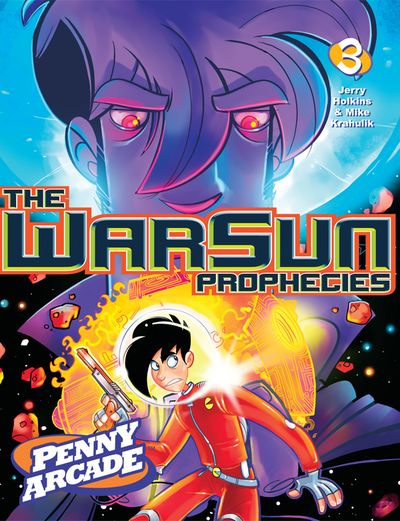
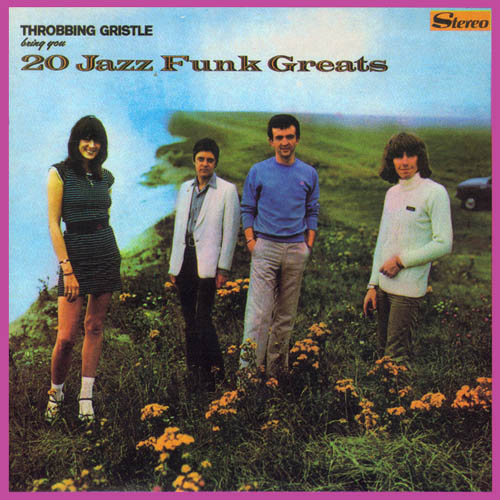
Don't judge a book by its cover - no, literally. Nor a video, a comic, or even a record. The cover is an essential part of the marketing plan. As is common in marketing, it can be an entirely inaccurate representation. It's not just the artwork that's misleading, either. The Blurb on the back may be even more disconnected from the story.
Popular characters who appear in little more than a cameo on the inside can be larger than the main character on the cover. A quiet, contemplative issue can be made to seem like an action-packed frag-fest, and vice-versa. The cover can push for an entirely different demographic than the rest of the work.
Film Posters and video packaging are particularly likely to mislead if it's an independent film, or a film in a genre that the marketing people assume most people are unlikely to appreciate. For example, an intelligently-written mystery for the whole family may have a cover that implies it's a comedy, or a family film that happens to have a dog in it may emphasize the dog on the cover. See also Never Trust a Trailer.
In non-graphic literature, it is not uncommon for a female character to be portrayed in a Stripperiffic outfit when they would wear nothing of the sort in the story. Also, virtually any Speculative Fiction book will have either a rocket or an alien of some sort on the cover, and dragons are commonly used on Fantasy, High Fantasy and Sword and Sorcery books, even if there is no dragon in the story at all. (Frank Frazetta and Boris Vallejo are particularly noteworthy as artists whose paintings make great book covers, but only occasionally actually relate to the contents of the books.)
This trope also applies to album covers, especially singles, which often get their own album art, for one or two songs.
A related subtrope is the practice of creating the cover first, and writing the story based on that. This was common practice for comic books, especially at DC, during The Silver Age of Comic Books under editor Julius Schwartz, and was responsible for some of the weirdest stories of the time. However, it would sometimes result in a story that went off in a totally different direction and disposed of the cover situation in a panel or two. The website Superdickery features many strange, silly and inane covers of this kind.
This has occasionally gotten lampshade hung on it, as evidenced here◊ and here.
Many of these overlap with Sexy Packaging and Contemptible Cover, and often feature Lady Not-Appearing-in-This-Game. Compare with Never Trust a Trailer, Wolverine Publicity, and Super Dickery, and enjoy this i09 gallery.
For cover illustrations that whiten dark-skinned characters, see Race Lift. For in-book illustrations, see Unreliable Illustrator. For magazines that sometimes put a bit of skin on their cover even though the interior is about gaming, sports, or whatever, see Fanservice Cover.
Note: Covers lie a LOT. It happens all the time, even if only to prevent spoilers. So only put really interesting examples here now, not every cover that tells a little fib.
Certain Chinese animated films (around 20 minutes long), usually from the past, had some video releases under different covers. One artist didn't do all the covers faithful to their corresponding works. Compare an example by seeing this 1980 feature if you can and one of its covers◊. In actuality, the characters are just the same, but appeared differently.
The famous "Dewey Defeats Truman" headline at the end of the 1948 election, so well known in fact that it even has its own Wikipedia page all to itself.
Anime and Manga
The far-out extreme would be the cover of Warriors of the Wind, the original dub of the classic anime film Nausicaä of the Valley of the Wind done in the mid-'80s. The artist just made things up and added characters and elements◊ that weren't in the movie at allnote There were no flying horses, guns, robots, swords made of light, or shadow-men, the monsters in the movie the one on the cover vaguely resembled were not ever ridden, and of those five characters only the one on the right looks anything like a character in the actual movie (Nausicaa, who even then wasn't blonde).. The dub itself wasn't an accurate representation of Hayao Miyazaki's work either, but it wasn't that different.
Some of the DVD covers for End Of Evangelion have Toji featured in his pilot gear. Not only does Toji not appear in the film at all, but he'd already been crippled by that point in the story anyway.
On the very last English dub DVD of Sailor Moon R, "Love Conquers All", Sailor Chibi Moon is pictured alongside Neo-Queen Serenity. However, Chibiusa doesn't actually show up as a Sailor Senshi until halfway through the next season. Apart from being spoilerific, entirely different companies did those seasons. Dic did Classic and R, while S and SuperS were done by Cloverway (Sailor Stars wasn't dubbed at all).
Almost ALL of the Sailor Moon bootleg covers feature pictures from the wrong season. Behold, an awful example, featuring artwork from the very last season! [1].
Delinquent In Drag: The ADV Films release's VHS cover made Go Nagai's high school comedy look like an action film.
The cover of the fourth DVD◊ Black Lagoon DVDs depicts Hansel and Gretel as a pair of cheerful smiling gothic lolis. Anyone who's actually seen the episodes concerning them will know they are probably the most horrific examples of fearsomeness that exist in any anime that doesn't involve the supernatural. And probably some that do.
Possibly the example with the biggest chance of emotional scarring: Narutaru. The back cover of the first English volume describes it as "A rare mix of breathtaking fantasy and gripping action/adventure, filled with imagination, excitement, and delight." Paired with the way everything on the cover depicts the main character happily flying around against a pink background, and you've got a good cover to attract little girls looking for a magical girl series. Except for the fact that Narutaru is actually seinen, and extremely disturbing seinen at that. Whoops. (That aforementioned blurb also proves that Dark Horse really hadn't done their research when they first got hold of the manga...) The opening of the anime is even worse; not only does it have a super-cute art style and a very upbeat theme song, but it references some shocking events from later in the series and treats them like a joke. Also, one of the DVD covers features one of the side characters, Hiroko, smiling like a typical Cheerful Child. Let's just say she's not quite like that in canon.
Franken Fran. Dear God, Franken Fran. The author uses hentai-like covers like this◊ for a horror manga that has images like THIS◊.
Lampshaded, as the tankouban covers are usually followed immediately by a version of the picture that's actually accurate to the manga's contents.
Elfen Lied is chock full of gore, dismemberment, nudity and psychological horror, and yet the cover to the manga usually looks something like this.◊
The ADV releases had 'blood-stained' covers which were more straight-forward.
The cover of This Ugly Yet Beautiful World's manga has lots of fanservicey, yuri undertoned pictures... all of which never come close to happening in the book itself.
The covers of the Amanchu! mangas show the girls in sexy◊ swimwear◊—which never happens in-series. Well, at least the scuba gear still makes sense.
The box sets and covers of Higurashi No Naku Koro Ni feature characters wearing skimpy clothing they don't wear in the series (and an odd emphasis on implied twincest, which, while refuted by canon on both sides, is often used for fanservice in promo pictures) for the first season. The second season's box art is still full of cuteness, often with Rika and Satoko. This, too, is only an accurate representation of about 40% of the series's content. The other 60% is murder.
The OVAs are even worse; they're full of the girls wearing very little clothing. Even Hanyuu and Rika, two girls who appear to be about nine years old.
The English DVD covers are in negative, giving them a creepy look, despite the fact that the art is happy and cute. It's a thematic reflection of what happens when you don't trust your True Companions. You can, however, turn it inside out to get the normal look, and the Japanese boxset covers are posters you find inside the box.
The manga, at least, averts the trope - the covers are the characters in their normal attire, surrounded by blood splatters.
The first boxset of Princess Tutu in America drew a lot of fire for choosing to put Rue on the cover in a skimpy outfit instead of the main Magical Girl herself. ADV Films likely got a lot of complaints, because later editions switched to a cover with Tutu as the focus.
Neo Ranga's cover depicts the trio of sisters who compose the main characters wielding huge wicked looking swords and wearing nothing but body paint. In reality the series is more of a giant robot-style deal, and while the characters do don the body paint at one point during the series (albeit with clothes), the giant swords are completely absent.
The covers of the Fruits Basket manga, due to the system used to decide who's on the cover (more or less appearance order at least at the start), the character on the cover often doesn't appear much or even at all inside the book. The final two books feature Tohru's father and mother, both of whom are deceased.
This is lampshaded in several cases, when filler pictures of the characters complain about how little they are in the story.
The front cover◊ of the North American DVD release for Simoun featured Neveril and Aeru sort of...hugging? Dancing? Playing patty-cake? Whatever they are doing they are close together and naked, but somehow their embrace has no sexual overtones at all, so the whole thing just looks weird. Also, there is not a single Simoun visible on the front cover, back cover, or spine. The series is namedSimoun and the machines are nowhere to be found. Without already knowing the background to the series there is no way to determine even what genre the show is, first guess would probably go to Magical Girl or an Ecchi series.
This trope could be applied to the Dragon Ball GT season sets. The first set, containing the first 34 episodes, features Super Saiyan 4 Goku on the cover, Super Saiyan 4 being a form Goku first achieves in episode 35. And the second set features Super Saiyan 4 Gogeta, a One Episode Wonder from late in the series.
When the Saban-dubbed episodes of Dragon Ball Z were released on DVD by Pioneer, there were three covers for the Namek arc that shown concept art of the characters past the Saban run. The concept art in question? Vegeta in the outfit he wore during the Freeza fight, Goku preparing the Spirit Bomb to use against Freeza and Goku as a Super Saiyan with the last one being on two of the three covers. Kid Goku is on the last cover, but he's not shown in any flashbacks in the episodes on that set.
Would you think Bleach would be about fighting ghost with samurai swords with a cover like this?◊
An even better example is the cover of Volume 34, which has Adult Nel on the cover◊. If you were a newcomer to Bleach you could be forgiven for thinking that adult Nel would play a significant role in this volume. In actuality, she has a total of 7 pages worth of screentime (that's counting a Double-Page spread as 2 Pages) and everything from her transformation into her adult form to her backstory was in Volume 33.
But then if it was the cover for volume 33 is would be a Spoiler Cover.
In a combination of this and "What do you mean, it's not for kids?", the most sexually explicit yaoi manga are often mistaken for tamer series due to the heavy use of pastel-tones and flowers.
The manga prequel to Hellgate London has a cover that looks like a nice Dragon Ball-esque adventure, with the main characters and their family arranged in a happy little formation. The actual content is far from what this implies-most of the family is brutally slaughtered near the end, and that's not even getting into what comes before that.
The US cover art for Initial D Third Stage shows a car that appears for all of 5 minutes of the movie, and the race against said car, despite being on Battle Stage, isn't much of one.
At last one edition of the first book of Barefoot Gen suffers from it. The story is far less happy than its cover◊. What a happy looking series... about the atomic bombing of Hiroshima.
Might be true for a Japanese audience. However, given pretty much the only thing Hiroshima is known for to people outside Japan, anyone who can't guess what "A cartoon story of Hiroshima" is going to wind up being about fails history forever.
The Ace Attorney "Official Casebook" manga collections have back cover blurbs that make it sound like the stories involved in the books will all involve mystery solving and legal action in the vein of the games. Though there are a few mysteries involved most of the stories are just Slice of Life pieces about the characters outside of court.
Many volumes of Rave Master have highly nonsensical/comical cover art which has absolutely nothing to do with the volume's story. One of the weirdest ones involved Haru and friends snowboarding.
The cover of the first volume of the North American release of Sukisho have the title characters holding each other, surrounded by multitudes of bright pink flowers. Seems perfectly innocent, right? Or at least it does until you know what it'sabout.
One Piece Volume 59 has Ace looking ready to kick some ass, even though he's mortally injured at the start of the volume and dead at the end of the first chapter.
It could simply be as a tribute to the character, since this is the last time he appears.
The poster and VHS cover for Pokémon: The First Movie has several Pokémon in the background that aren't even in the movie at all.
Some of the VHS covers for the Pokemon series itself are misleading as well:
The front and back covers of "Psychic Surprise" both show clips from the episode, "The Tower of Terror", which is not included on this volume at all.
Pikachu is shown wearing boxing gloves on the cover of "Fighting Tournament". While there is a scene in the episode where he wears them, he doesn't actually participate in the tournament.
The cover of "The Great Race" shows Pikachu running in the race when in the episode itself, he actually rides Squirtle.
"Jigglypuff Pop" shows various Pokémon singing when Jigglypuff is the only Pokémon that sings.
Puella Magi Madoka Magica: Oh great, yet another series featuring cute magical girls fighting monster of th...WhatIsThisIDontEven... More specifically, the artwork implies that Madoka becomes a Puella Magi from the beginning when it doesn't actually happen until the end.
The Spin-Off manga Puella Magi Oriko Magica has a variation. Almost everyone assumed that the green haired girl on the cover of the first volume was the eponymous Oriko. Then the official preview images were released, revealing that she wasn't Oriko.
Some English Azumanga Daioh DVDs show the girls with their stomachs exposed, blushing, and their skirts looking like they're going to fly up; Yomi is not only blushing, but is covering her skirt, making the series look like a fanservice anime.
Wandering Son covers show the two Transsexual characters 'cross-dressing', when in the series they rarely dress up like that (especially the protagonist). The coloring of the characters is often incorrect, retcons and Art Evolution aside. The back of the first volume shows Maho with blond hair while the inner artwork at the beginning of the manga shows her with as a brunette.
In the Warrior Cats manga Escape From The Forest, Tigerstar gets the cover all to himself, implying that he will be important in it, however he only appears once to ask the protagonist a question. After she answers it, he is not seen again.
Miracle Girls covers almost always have the characters with incorrect haircolors. The mangaka lampshades this in her omakes, saying that it's due to the printing process and her original images had the correct colors.
The cover of the Burst Angel OVA makes it look like a sequel to the TV series. It's actually a PREQUEL, set between a flashback episode and the rest of the series.
A handful of early DVD covers for the Hungarian release of Transformers Armada show off characters that either haven't been introduced yet in the episodes that are on the disc, or use colorations that the characters only take on way-way later.
The cover of Divergence Eve looks like a generic mecha series with lots of fanservice - when really the breasts of the lead characters are the last thing you end up thinking about whilst watching the show... and its incredibly complicated plot.
Early promotional material for Digimon Tamers portrayed Impmon in typical Big Bad fashion, as he was at the time planned as the series's main antagonist. This route was later abandoned.
Where to begin with the "Digimon: The Movie" poster/DVD & VHS art? The posters show the original Season 1 characters as depicted in Season 2 (high-school age), but these characters are mostly shown at their Season 1 ages (and all but Tai, Izzy, Matt and Sora have glorified cameos). Davis, Yolei and Cody are depicted in their Digi World outfits—they never wear them during the movie and never enter the Digi World. Terriermon is shown along with what is possibly supposed to be Kokomon's rookie form, Lopmon—only Lopmon never appears in the movie and is shown inaccurately on the cover as a demented, fanged Terriermon. Oh, and the back of the VHS and DVD case features a plot summary about the older kids being kidnapped by a rogue Digimon—a plotline completely cut out of the dubbed movie.
Purposely done with the Japanese version of the Sayonara, Zetsubou-Sensei manga as the bookflap blurb describes nonsensical stories that had nothing to do with the actual contents.
The cover art of one American Haruhi Suzumiya DVD release shows Haruhi standing alone with her shadow being that of her Bunny Girl outfit, implying that a bunny girl plays a much larger role in the plot than it actually does.
One of two different DVD covers used by Central Park Media for the OVA Strange Love (AKA Hen) depicted two characters kissing, in front of an abstract red/pink background. One of them is the main character (Chizuru), but the black-haired girl is a very minor character with little screentime and is not Chizuru's love interest — the picture was taken from an Imagine Spot scene that explains that Chizuru isn't attracted to her or any other women, with one exception.
The vhs cover art for The Enchanted Journey features Glicko and Nono as giant anthropomorphic chipmunks walking on their hind legs, carrying backpacks, and having human like hands, in the film however neither are anthropomorphic in any way.
The Emma Frost series was a cute teen drama about a younger version of the title character pitched at a mostly female demographic. This was undermined because the covers were pieces of absurd fanservice featuring the adult Emma in the skimpier◊ costume she wore in New X-Men - and if you're familiar with her time as White Queen, you know that's not an easy bar to reach. (Warning, NSFW.)
Check out Superdickery.com for dozens of examples of dishonest Superman (and other) covers. For that matter, check out the entire site, as it rocks. (Though it will suck out hours of your life you'll never have back... just like TV Tropes).
A late 80s issue of Superman lampshaded this with Mr. Mxyzptlk indicating that the cover, a giant sized Superman destroying skyscrapers, probably wouldn't actually happen.
Something of a running gag among comics fans is how many covers Wolverine has appeared on for comics in which he wasn't even mentioned secondhand.
The trope was acknowledged in the nostalgic comic-oriented novel The Amazing Adventures of Kavalier & Clay, when a character finds the latest issue of The Escapist has a cover in which the eponymous hero is being executed by his own alter ego; the character is mildly intrigued but knows that the event will likely turn out to be a dream or an alternate reality or some other cheap trick, if it in fact appears in the issue at all.
That may have been directly inspired by the Silver Age Superman cover that had Superman stand around mocking Clark Kent as Kent got beaten up. As it turned out, this was just a metaphor for the fact that Kent had given up being Superman.
The cover of Amazing Spider-Man #75 is "Death Without Warning" and shows Spider-Man mourning over a dead body. Nothing like that happens in the comic. What's more nobody in the story dies at all. Although to be fair, one villain does get de-aged seemingly into nothingness, so it did appear that he was dead.
The very first issue of Captain America Comics shows CA punching out Adolf Hitler. Hitler doesn't appear in the comic (although various other Nazis do, including the Red Skull).
Archie Comics usually just display a single gag panel which has nothing to do with any of the stories within.
A glaring example of this trope, however, is one for the Betty and Veronica Double Digest issue 128. On the cover, there is a picture of a phone being held by one of the girls, and you can see an image of Archie and Cheryl Blossom in the same image. There's a subtext on the side of this cover that says "Cheryl's back... look out 4 Trbl!" implying that this is the opening story. Not one single story in that book contains anything regarding Cheryl.
The Marvel issue of "What If..." that dealt with the Fallen Son storyline had a cover of Captain America carrying an apparently dead Iron Man in a dramatically mourning way. The contents of the comic... weren't nearly so touching.
Many issues of What If...? have covers that pose more dramatic questions than the ones actually addressed in the issue, and often emphasize fairly minor parts of the story. Take, for instance, vol. 2 #5, "What If the Vision had Destroyed the Avengers?" The Vision's role in the story is rather limited — the issue is really about what would have happened if Wonder Man had survived his first encounter with the Avengers.
Vol. 1 #39, "What If Thor battled Conan?" is the question asked on the cover, which depicts Thor and Conan in aggressive stances with weapons raised at each other. Inside, the title page instead asks "What if Thor of Asgard had met Conan the Barbarian?", and the two fight only briefly before becoming the best of friends.
The cover of one old Star Trek: The Next Generation comic shows Captain Picard floating around in a space suit with half of his face covered in green slime and Counselor Troi looking-on in horror and disgust. Nothing even remotely similar happens at any point in the issue; no space suits, no green slime, and Counselor Troi is barely even featured.
Most World War II era Marvel Comics have Captain America, Human Torch, and Sub-Mariner having epic battles against the Axis on the cover. The stories themselves though have none of those and are usually about Those Wacky Nazis having their plans for world domination foiled by the heroes.
Malibu Comics used to have a major villain named Rafferty, whose gimmick was that he came with an editorial promise: every time he appeared, a superhero would die! This led to a slew of issues featuring him, many of which showed him threatening a major character on the cover. Too bad those were hardly ever the characters he actually killed. In fact, in most cases he just killed a random walk-on character who had been created just so Rafferty could off him.
Atomic Comics quickly grew guilty of this. While Madman comics had started out having actual, if bizarre superheroic adventures, his latest series, Atomic Comics was much more philosophical than anything else. However, from looking at most of the covers, you would not know this. For example, one cover had two girls, his girlfriend Joe and his friend Luna, who had been fused into the same body in-comic, fighting over him and trying to pull him away from the other, much to his dismay. In the actual comic, the two are complete at peace with each other, only Joe has feelings for Madman, and in fact, the issue isn't even centred around this.
The last issue of the old Chip N Dale Rescue Rangers comic book has a cover depicting Chip, Dale, and Monterey Jack fencing with a one-eyed mouse who has apparently taken Gadget hostage, and it is given the caption "His name is Ransom - and he means trouble!" Not only does this scene never happen in the issue itself, but Ransom isn't even a bad guy.
The Muppet Show: The Treasure of Peg-Leg Wilson has two. The most egregious since it's used for the cover of the TPB is Peg-Leg Wilson in a ghost-like form laughing maniacally while the cast looks on in shock and horror, seeming to imply the story arc is some sort of ghost haunting. Peg-Leg Wilson appears on one page in that issue, and it's just a visual narration since Gonzo is reading about his history. Another cover has Kermit and Kismet the Toad in a face-to-face confrontation. Turns out Kermit hired Kismet for a closing act intended to feature Kermit lookalikes (most of which never showed up), and has absolutely no reason to be mad at him at any point in the series. The weirdest part of these examples is that the writer/artist of the series also does the cover art.
The cover for the JLA story Justice For All depicts Superman and Captain Marvel fighting while the Justice League and Justice Society look on in horror. In the story itself, the two heroes' "fight" consists of Marvel knocking out Superman with two punches to prevent him from following Marvel into the 5th dimension.
Issue 9 of the post-RebirthGreen Lantern series features Hal Jordan and Batman in the middle of a fight with each other. It's true that Batman does punch Hal in the issue...as a lighthearted revenge for something that happened in an earlier issue. Most of the issue is the exact opposite of the cover, featuring Hal and Batman becoming friends again.
The cover of one of the Blackest Night issues of Teen Titans features an army of zombified Titans rushing toards the reader. The hands of Blue Beetle and Static can also clearly be seen, preparing to fight said undead heroes. None of the characters on the cover appear, and the entire issue is instead about Deathstroke's relationship with his children.
Sal Buscema was fond of this when he was the artist for Spectacular Spider-Man. Once issue had the Rhino squeezing the life out of Spider-Man on the cover with a blurb indicating that Peter was gonna receive A Fate Worse Than Death. In the issue, Spider-Man is infuriated due to the machinations of Harry Osborn, the second Green Goblin and ends up giving Rhino a No-Holds-Barred Beatdown that leaves the villain crying for mercy. Another issue a couple years later show the Green Goblin gloating over the bodies of Spider-Man and the X-Men. While the X-Men did appear in that issue (it was the final chapter of a three-part storyarc about something different), they never fight the Green Goblin. Instead, Harry Osborn simply returns toward the end of the issue, setting the stage for the next arc.
In the six-part Spider-Man story "The Assassin Nation Plot", one issue had a cover showing Spidey confronting Sabertooth. Sabertooth did appear in the story, but he and Spidey never met; Captain America and Silver Sable fought the villain, while Spidey was hundreds of miles away fighting terrorists. (Word Of God claims that Todd McFarlaine penciled the cover before the script was finalized, and while he knew Sabertooth would appear, he didn't know in what regard. The cover was kept because the editors liked it so much.)
One Sonic The Comic cover prominently featured Sonic's long-lost brother Tonic standing alongside Amy Rose. In the comic, Amy and Tonic barely interact, and "Tonic" is exposed as Metamorphia (again) within a few pages.
Another cover shows Knuckles and Shortfuse charging into battle with each other. The actual "fight" consists of two blows and the misunderstanding that led to it is quickly cleared up. (As this was a one-shot, there wasn't much time for anything else.)
Both the cover and teaser to Issue 178 proclaim "KNUCKLES VS. CHAOS!!!" With Knuckles and Chaos squaring off. In the actual issue Knuckles jumps to fight Chaos but is instantly crippled by Chaos's fear ability and is left like that for the rest of the issue.
Dave Dorman's cover for the comic adaptation of Tim Burton's Batman Returns shows Batman running toward the viewer as the Batmobile explodes in flames behind him; the Batmobile does not explode in either this adaptation or the movie itself. (Then again, Dorman is fond of painting fire and explosions and always tries to work them into all of his comic-book covers.) Also, the Batman on the cover looks about ten years younger than Michael Keaton.
A terrible habit Marvel is getting into these days is releasing variant covers for their comics to promote films. For example, around the time of the movie, many comics started getting variant covers with The Mighty Thor or his supporting cast doing something completely unrelated to the issue.
Made funnier (and more obvious) with any covers involving Loki, since he's about 10-13 years old physically (it's Depending on the Artist) right now. You see a grown-up Tom Hiddleson Loki? It has nothing to do with the story.
Lampshaded with the cover to Star Brand #12. The cover has the X-Men, but the bottom left-hand corner has a caption saying The X-Men in the New Universe? Not bloody likely!
The covers to Batman and Robin 23-25 all show Jason Todd in the Red Hood costume he wore during Grant Morrison's run. The problem however is that Jason never wears it, in fact he dons a new costume at the end of the second issue. Which makes the third cover◊ seem like a Take That in hindsight.
Another issue's cover has Giant Man displayed, despite him not appearing in either of the comics within.
Fans of comic book bondage refer to these as "'gotcha' covers" because they display a woman Bound and Gagged or in some other type of peril that doesn't appear in the comic itself.
Sometimes covers for "big" story lines tend to exaggerate just how many people are involved. Such as in the book "Batman: Battle for the Cowl", it showed characters such as Bat Woman on the cover even though she was neither seen or mentioned at all in the storyline.
Cerebus did a parody of this phenomenon by introducing a character named Wolveroach, an obvious spoof of Wolverine. Wolveroach showed up on three consecutive covers of Cerebus, in various badass action poses...while inside the comic itself, he spent all three issues in a coma. After he woke up, he stopped appearing on the covers.
A common trick in superhero comics is for the cover to feature the villain(s) standing on top of the hero's dead or unconscious body. This rarely happens within the book itself, or if it does, the hero recovers and beats the villain down anyway.
This was parodied in a Justice League of America cover, which shows a group of weak villains standing atop the corpses of the entire League. One of them looks directly at the reader and says "We don't really beat them... but it's a heck of a cover, isn't it?"
The cover of Victorian Undead: Sherlock Holmes vs. Zombies depicts Holmes as a zombie smoking his pipe. He is never turned into a zombie at any point in the comic. Also he is shown in his stereotypical deerstalker hat, which he never wears in the story at any point.
With the Swamp Thing ongoing series beginning in 2011, the first four covers depict the titular Swamp Thing. The only problem is that, for the first several issues of that run, Alec Holland wasn't even the Swamp Thing. It's only later that he actually changes into the Swamp Thing. The covers depict events that, while vaguely related to the contents of the issue, are horribly inaccurate.
Most modern comic books have different artists for the cover and for the comic book itself. The cover may not lie about the content, but about the style. You may buy a comic book with a magnificent cover and find that the interior art is drawn by a different artist, with a completely different style.
[[Spider-Man]] 694 features the end of a story arc involving 'Alpha' a teenager imbued with potentially the strongest powers in the Marvel universe thanks to an experiment by Peter gone awry. As well as these powers, he's also become a selfish jackass, causing Peter to try and remove his powers before something bad happens. The cover of course features Spidey and Alpha high in the air, ready to beat the other into a pulp, with the words 'Battle Of The Half Century' hovering over them. The actual book? Well, they and the Avengers fight Terminus, but not a single punch is thrown between Alpha and Spidey; there isn't even a shouting match for them to exaggerate.
One of the Spider-Man graphic novels, the one collecting the Ends Of The Earth storyline, does this in a relatively minor way. It should be obvious that Ock isn't actually going to fight Spidey in open space above the Earth and that that's just a cool cover, but Spidey is seen on the cover in his classic garb, when he spends 90% of the book in his new Spidey-armor, and only wears his classic outfit in the first book in the collection (and it's not used to fight Ock).
Shortly after the Batmobile was introduced in the comics (Detecive #362) following the Adam West movie and TV series, (the first of which looked nothing like the Lincoln Futura Batmobile), it slowly started to resemble◊ the Futura more and more (Detective #371 and #375, though later issues change it to look like a Jaguar E-Type), the cover of Detective #375 has Robin drving the Batmobile and Batman waving to a crowd. The Batmobile does not appear in that issue.
In Death Of The Family, one cover shows Harley Quinn and Joker going back to their abusive relationship. However, it turns out that there is nothing romantic between them, and Joker tries to kill her off as well as revealing that she's just part of a long chain of Harley Quinns that he has killed off at one or another. She escapes him and lets herself be put into prison.
An interesting subversion occurs on the cover of Love and Capes: What to Expect #5. In the story the Crusader (Mark Spencer) and his pregnant wife Abby switch bodies, but on the cover they don't switch bodies but just the suits (and now Mark has the "baby-belly") in order to convey what happens without words.
On the cover for Marvel Comics's Our Love Story #24 depicting the story "Joe Howard's Chick", protagonist Connie Smith doesn't appear to notice the boy approaching her and being stopped by another boy. Her noticing this is the turning point of the story. Compare the cover◊ to the actual scene◊.
If you've never read Garth Ennis' Preacher, the cover of the first issue can easily fool you into thinking that the hero, Reverend Jesse Custer, is the primary antagonist of the series (or at least a Villain Protagonist) even though he's one of the most sympathetic protagonists that you're likely to find in a Vertigo Comics book. How misleading is it? See for yourself: it's currently the page image for Sinister Minister, a trope that Jesse is emphatically not an example of.
The Bionicle comic To Trap a Tahnok shows a Tahnok stealing Tahu's Golden Mask and another placing a mind-controlling Krana on his face. No event like this ever happens in the comics or books.
The 19th issue of Batman spinoff Batwing features the titular hero crawling on the ground, badly wounded and desperately trying to get away from a sinister looking Batman. The cover headline even read "A HERO FALLS..." This seemed like a big deal, since DC had already announced that David Zavimbe would be replaced in that issue by a new hero who would inherit the name of Batwing. The implication on the cover was that David would die, and that Batman was somehow responsible. In the issue itself, David simply decides to retire, and Batman is nothing but supportive.
Most of the revealed covers for My Little Pony: Friendship Is Magic (IDW) are sort of just generic "ponies being cute/cool" and very few so far even hint at the return of changelings. Not that we don't expect ponies being cute/cool or anything, but Rainbow Dash doesn't go snowboarding or dressing up as a superhero in Issue #1.
Although the poster showed the evil fat lady storming in the background.
The cover of the American DVD of Help Im A Fish not only calls it A Fish Tale, it also shows really bad 3D renderings◊ of a few of the characters, (WARNING! The linked image may cause your eyes to bleed!) making it look like a crappy Finding Nemo or Shark Tale rip-off when it's actually a decent, Don Bluth-esque, mostly 2D film.
Even weirder, the American cover flatly says "Alan Rickman" above the title (the original cover said "Featuring the voices of Alan Rickman and Terry Jones"), making Rickman seem like the lead role. To make matters worse, Rickman's character isn't even shown on the U.S. cover!
The second Beano video, Beano Videostars, included Roger the Dodger on the original VHS cover, even though he's not on the actual video. Possibly because his checkered jersey made him too hard to animate.
The Brave Little Toaster was marketed as much less scary than it actually was. This goes so far that the screencaps on the back of the VHS/DVD are not even from the film. One of them even showed Toaster high-fiving the Master! (In the film, the fact that they were alive was always kept a secret). The artwork on the back depicts the oh-so-serious waterfall scene, except that the title character has a goofy smile on his face after having made it to the other ledge, waiting for his friends to follow suit! (In truth, they all fell before even the toaster could make it across.) Oddly enough, the original poster showed three screencaps from the film, two from the Nightmare Sequence and one from the dark forest scene.
On the DVD cover of A Boy Named Charlie Brown, Lucy clutches Charlie Brown's arm and stares up at him adoringly. Never mind that her horribly cruel tormenting of him is the whole point of the movie, and that she isn't nice to him for a second...
The 1-disc for Atlantis: The Lost Empire for some reason showed a woman wearing a dress (her left arm is covered by a sleeve). In the actual movie, she wore an outfit that was very revealing throughout most of the film, and she only wore a dress at the end.
The poster for Beavis And Butthead Do America shows them riding motorcycles. Which they don't even come close to doing in the movie.
In Chill Out Scooby Doo, Velma, Daphne, and Freddy never snowboard once in the entire movie.
Films — Live-Action
The poster and tagline of Robert De Niro's A Bronx Tale completely lies about the plot, making the movie seem like an outright war between De Niro's and Chazz Palminteri's characters (an ordinary father and a local crime boss, respectively) over the life of the former's son, who is apparently getting caught up in the latter's evil crime syndicate. Their rivalry is barely noticeable, and they spent a mere two scenes together. The crime boss isn't a bad guy either: the movie is actually a Coming of Age Story, and he functions as the son's mentor, repeatedly advising him not to follow him in his criminal lifestyle and making sure he doesn't get himself into trouble. Also, at no point in the movie does the son have to run away from a huge explosion.
The most recent dvd cover◊ for the boxing film Black Cloud. Although Cloud is the main character, of the four characters displayed he is pushed all the way to the back. Tim Mc Graw and Ricky Schroder occupy more of the cover than the protagonists.
A lesser example: American Psycho's uncut edition has a blurb on the back cover that states that Patrick Bateman rapes his female victims too. Yet not once is it shown or implied in the film that he actually rapes anybody. His was probably done as a ploy to get fans who hadn't seen the uncut edition to buy the DVD.
The reprint of the 1972 Last House on the Left makes the cover look so modern that it is easily mistaken for the 2009 remake of the film◊; it also doesn't appear to use the original actress on the cover. Only in tiny-text does it say on the bottom of the box that it is the 1972 version of the film. Arguably it says that it is written and directed by Wes Craven on the front, which the remake was not.
The Hong Kong film Infernal Affairs is a subtle thriller with four male leads, but all the female leads are as window dressing. Unfortunately for the international poster, a random chick with a gun who never appears in the movie was added for titillation. The poster looks a campy Bond knockoff instead of a cop movie.
The DVD cover for the Mike Judge movie Office Space features Jennifer Aniston on all 3 pictures on the back and the spine, but she's only on screen for barely 1/4 of the movie.
The back of the DVD cover for Tootsie features an image of Dustin Hoffman's character, Michael, kissing his coworker Julie while in full Dorothy Michaels regalia, even though the two never kiss at any time while he is dressed as a woman.
The Wishmaster DVD cover suggests the villain is a vampire; he's actually a genie.
Klay World: Off the Table. The DVD cover makes it look like one of those cheap, direct-to-video family movies. Although it IS cheap and direct-to-video, the language and violent (albeit cartoony) on-screen deaths proves that this ain't a kids flick. The writer/director lampshades this in one of the DVD commentaries.
The American Hogfather DVD case goes out of its way to obscure the central conceit of the movie (that Death is replacing the Discworld's Santa Claus for a night... for instance, his servant Albert appears on the cover, but not Death himself), and prominently features the young actors who play Bilious and Violet (who aren't really involved in the action). The whole effect is to make the whole thing seem much less dark.
A second edition DVD released in the States is only a marginal improvement; the new cover art focuses on Susan Sto Helit, who is more central to the plotline than Albert, with the two kids. But there's no images of Death on either the front or back of the cover.
The cover of a live-action adaptation of Animal Farm made the movie seem like any other nice, kid-friendly movie about talking animals. The plot summary on the back even used words like "delightful" and "charming" in its description...
Releases of The Lavender Hill Mob make much of the fact that Audrey Hepburn has a role in it - the blurb spends more time talking about that than it does about the plot of the film, in fact. In reality, the film was made long before Hepburn was famous, and she's in it for maybe ten seconds.
The poster and DVD cover of Apocalypto makes it look like Middle-Eye is the main character. He's actually The Dragon.
Look at this◊ video cover for The Little Shop of Horrors. What's wrong with this picture? Jack Nicholson's part is only about two minutes long, and the plant isn't even in that scene.
The girl standing with Nicolas Cage in the movie poster for Valley Girl is not actually the titular character played by Deborah Foreman. Word Of God says that the model in the poster is the actress who actually plays the ex-girlfriend of Cage's character. A budget DVD release of Valley Girl with The Sure Thing (as the Totally Awesome 80s Double Feature: The Sure Thing / Valley Girl) has Foreman's head obviously Photoshopped onto the other actress' body on the front cover.
The posters and most promotional material for Air America depict it as a light-hearted buddy romp. The poster is Mel Gibson and Robert Downey, Jr. smiling at the audience. However, this is a film set during The Vietnam War, about opium trading and corrupt generals, and it's also based on a non-fiction book.
The movie about Norwegian War Hero Max Manus, a muted, tense story about the Norwegian Resistance during WW 2 and the eponymous character, had a fairly indicative poster and cover in the original release. The international cover has this picture◊ instead, from a very brief backstory action scene. Not quite lying as much as stretching the truth a lot, though.
Judging by the poster for She Gods Of Shark Reef you'd think the movie was all kinds of awesome. In reality it's an hour long slog, badly shot and horribly dubbed, with nothing happening.
The cover for Mazes and Monsters makes it appear to be a dark fantasy story, with a picture of a labyrinth, a dark tower, and a night sky filled with bats. Turns out it's just an Anvilicious story based on the D&D scare of the early '80s. Also, the picture of Tom Hanks on the cover was taken years after the movie was made.
The cover◊ of the film Slaughter in the Ring declares the star of the film to be a muscular fellow named Lee Van Dorn....except no one named Lee Van Dorn is in the movie. The cover also features a blonde woman holding a shotgun who doesn't appear in the movie, and the back cover has a picture of a funeral scene that is nowhere to be found in the film.
The cover of the godawful sex comedy The First Turn-On! boasts that co-star Vincent D'Onofrio (in his rather embarrassing film debut) is an Academy Award nominee. Vincent D'Onofrio has never been nominated for an Academy Award.
Just take a look at this hilariously misleading cover art◊ for Troll 2. Three guesses as to whether the big beastie on the cover actually appears in the film or not and the first two don't count. The plot synopsis on the back of the VHS cover◊ is also misleading. It's like a mix between that movie's plot and the plot of the original Troll.
Feast your eyes on this DVD cover for Future War◊. No one resembling the African American man on the left appears at any time in the film.
The film poster and DVD cover for 2007's Atonement show Keira Knightley and James McAvoy, making it seem as if the film is about star-crossed lovers. The main character, however, is not featured on the cover.
The British and French DVD covers for Valhalla Rising show a charging viking horde. It's also sold in 2-DVD boxset alongside Outlander. The film is actually a slow-paced and hypnotic art film that is more in line with Aguirre, the Wrath of God than the historic action flick it's presented to be. Some covers show the main character set against a desolate landscape, which is keeping more in line with the actual plot.
All of the marketing for Scary Movie 3 makes it look like Denise Richards has a prominent role in the film as a love interest to Charlie Sheen (they were married at the time) or playing a role similar to Carmen Electra's. She has a grand total of one scene in the movie (in a flashback parodying a scene from Signs) and adds no importance to the film.
The cover to Red Riding Hood mentions Gary Oldman on top billing next to Amanda Seyfried (who's on the cover), and next to the two hearthrobs of the movie, with no figure of Oldman at all on the cover.
The video cover to the B-movie Street Asylum features G. Gordon Liddy as a cyborg, when he actually turns out to be an S&M obsessed, facist human politician.
The DVD covers issued for the Korean horror movies The Wig and Voice are given bad direct to video horror covers, with a disturbing picture of a bloody hand reaching out from a stiched-up shaved head, and a bloody hand coming out of some woman's mouth, respectably. Both are advertised as unrated, even though both movies could probably just as easily get an R-rating as most. The cover to Voice is perhaps the most unreliable one ever seen, as it's unrelated to the movie's plot; the movie is a weird ghost/killer movie with some blood and gore, but no hands coming out of people's mouths. Likewise, there is also no hand coming out of anybody's stitched-up head in Wig, just a killer hair piece.
The cover of the 1985 movie The Journey of Natty Gann might make the viewer think that John Cusack was one half of an established pairing, or at least in most of the movie. The viewer would be wrong on both counts. Not only does his presence not contribute all that much to the story, but said presence is all of twenty minutes.
The American release of the Australian film Cosi depicts it as being a Muriel's Wedding-type comedy with Toni Collette as the star. The film is actually a bit darker than that (it's set in a mental institution and Collette plays a recovering drug addict mistakenly placed in one) and Collette is the third-billed actor in the film (Ben Mendelsohn and Barry Otto are the stars, a writer and director who are staging a talent show that becomes "Cosi Fan Tutte").
The Film Poster for Freddy's Dead: The Final Nightmare came with the tagline, "They saved the best... for last." A matter of opinion, probably, but most would agree that, compared to the rest of the franchise, the movie was rather tame.
After Casino Royale came out, Daniel Craig's earlier film Layer Cake was given a new DVD release. Instead of the original cover, which showed a group photo of some of the film's ensemble cast, the new cover shows Craig in a very James Bond-style pose holding a Luger pistol. He does carry that pistol in the film...for exactly one scene. And he does pose like that...as a gag (and, again, only in that one scene). The cover also features an example of Billing Displacement: Sienna Miller is the only other cast member now deemed worthy to appear alongside Craig. In the film, she has a very minor role (which was reflected in the credits: she was listed third from the last in the opening titles). But she had become more famous since the film's original release due to her role in the remake of Alfie, so there she is.
The only actor depicted on the DVD cover of Camp Hell is Jesse Eisenberg, in gigantic floating head form. He's also the only one whose name appears on the cover. In reality, he has a cameo that lasts for only a few minutes, and the real leads are Andrew McCarthy and Dana Delany. Eisenberg is actually suing Lionsgate and Grindstone Entertainment for the misleading marketing.
The 90's indie film Spank The Monkey has a cover depicting the typical twenty-something slacker known to star in this sort of movie, making it seem to be a Sex Comedy in the vein of Clerks, possibly about having A Date with Rosie Palms. In reality, it is a Dark Comedy about Parental Incest.
The poster of Gremlins 2: The New Batch makes it look a lot darker than it is; in reality it's a much more slapsticky movie than the first one. The DVD cover is more straightforward about this.
The old, pre-Imperial Edition unrated DVD of Caligula claims it to be a straight-up Roman epic in the vein of Gladiator. The cover makes ABSOLUTELY NO MENTION that the film is hardcore pornography with, in places, unsimulated penetration. Plus actual urination and extreme violence, among other things.
The cover for The Help looks like some kind of awkward romantic comedy. It certainly does not suggest a serious period drama about a young woman secretly discovering what life is like for black maids in the 1960's and trying to expose the truth whilst avoiding persecution by her racist peers.
Posters for The Cave give the impression that the caving team is attacked at one point by a massive waterdwelling fish monster. While there are in fact monsters that do travel through water as well (they can, among others things, even fly), they're all human-sized.
The DVD cover to Stand and Deliver showed what many people thought that Lou Diamond Phillips was the main character, but in reality it was Edward James Olmos.
The cover of the American release of Cotton Mary shows a scantily-clad young woman kissing a man, suggesting an incipient sex scene. In reality, the film is about a much older woman who goes crazy in a horrible and very unsexy way, and who actually interrupts the one brief sex scene before it gets very far.
The cover of Brassed Off makes you think you're about to watch a romantic comedy starring Ewan McGregor and... some woman history has forgotten. They both are in the film, but their love story is one of five equally important plots, which deal with poverty, violence, destruction and death.
Not as major as most of these, but early promotional images for Scott Pilgrim vs. the World implied Lucas Lee was the leader of the League of Evil Exes, as he is depicted in the center of the group and looming directly over Scott. Later promos used the proper character for the position, Gideon Graves.
True Grit was re-released on DVD around the time of the Coen Brothers remake, with a monochrome gray tone and typography similar to the latter.
Look at any poster for Escape From New York and one of the big things they often show is a decapitated Statue of Liberty. In actuality, the statue only appears very briefly in the opening scene (the only moment in the film actually shot in New York), during which it is perfectly intact.
The posters and DVD cover for Soul Survivors had Eliza Dushku in the centre placed in front of three other cast members, and a demonic evil eyed face above them, implying that the film was a Final Destination-ish supernatural 'slasher' film with Eliza Dusku as the Final Girl. In the film itself, Eliza Dushku doesn't play the main character. The main character is played by Melissa Sagemiller, who is in the background on the cover. The events in the film are a bit random and confusing, but the plot, such as it is, isn't so much a supernatural 'slasher' film as a ghost story set around a car accident.
The box art for The Devil Inside features a very scary-looking blind nun. She does appear in the film. For a few seconds as a background character.
This VHS cover◊ of Julius Caesar starring Charlton Heston. The problem: the cover art proclaims that Heston plays Caesar; he actually plays Marc Antony. Just because he has top billing doesn't generally mean he played the title character.
The Raid UK DVD cover◊ modified the original cover/poster adding helicopters and multiple explosions on the outside of the building. First of all, only one explosion happens in the movie and two: no helicopters appear in the film at all. This is really odd because when the movie was first released in theaters internationally, they all used the same original poster◊.
The cover for the Silent Night, Deadly Night box set of films III, IV and V shows a killer Santa, which is ironic, as they're the only films in the series without a killer Santa.
Cop Dog, just Cop Dog. THIS◊ is the cover, which makes it look like every other silly kids' movie about dogs ever. The summary of the movie describes it as " a heartfelt tale about a boy and his dog who set out to solve the death of the young boy's father." Also, what the summary, the cover, and the movie's title fail to tell us is that the dog is dead for most of the movie. That's right, not even a quarter through the movie, and the dog is run over by a car. The whole movie is about helping the dog fulfill his final desire, as in solving his master's murder, so he can cross over.
Taken to magnificent extremes during the 80's with VHS home video releases. Two excellent examples are Frogs◊, a film not featuring giant man-eating frogs at all, and Survivors of the Last Race◊ which at no time features anything at all on the front cover and instead is a film about a small group of bad actors trapped in a fallout bunker.
The DVD cover of Baseketball depicts Jenny McCarthy in between Trey Parker and Matt Stone, seemingly implying that the film is a romantic comedy with sports elements. In actuality, McCarthy's character works for the villain and is never in a relationship with the two characters (Yasmine Bleeth played the love interest).
This cover◊ for the film Norma Rae, which features a cheerful Sally Field in jeans and a t-shirt and the film's title in pink cursive, implies "cheerful romantic comedy!" Norma Rae is actually a gritty and powerful drama about the title character's attempt to unionize textile workers, which won Sally Field an Academy Award for Best Actress and an enduring place in the pantheon of great American actresses.
The entire print campaign and video covers for Almost Famous depict it as starring Kate Hudson. The actual lead is Patrick Fugit (with Philip Seymour Hoffman's character having a lot of presence as Fugit's character's idol) with Hudson being a glorified supporting character. I guess the studio decided that selling it as a generic 1970's movie instead of the semi-biopic of the director was an easier sell (either way, the film was still an expensive flop despite critical acclaim).
The official promotional posters for the first Soviet release of Star Wars IV: A New Hope. 3 alien heads, a scrapyard-assembled cowboy, a panther with lightsaber mane and a rock head. By painters off their meds. The texts are technically correct: "Star Wars: a galactic Western" or "Star Wars: a space Western".
And there was also this◊ poster for the American release. Mark Hamil is more muscular than he actually was, and is holding a lightsaber in a fighting pose; in the movie, the character only used one in the training scene, and wouldn't fight with one until the next movie. Another version of the poster was even more deceptive showing Carrie Fischer in a sexier outfit, much unlike the modest one she actually wore in the movie.
The cover for the 2000 made for tv film Road Rageshows a truck tailgating a mustang, but unfortunately in the actual film the protagonists are in a Lincoln, not a Mustang.
The famous poster for Falling Down shows Michael Douglas' character in a white shirt and tie with a shotgun in one hand and a briefcase in the other. He is never actually seen with that combination in the movie.
The poster for the DTV movie The Adventures of Young Van Helsing features the eponymous Hero, his Love Interest and a tough looking black guy. This gives the impression that they are the three main characters of the film, when in fact the last guy is the drummer in the main character's band, appears in maybe two scenes, and neither have any impact on the film's plot.
The original poster for The Final Sacrifice depicts a warrior holding a sword in a mystical city◊. Neither the warrior nor the sword show up in the film, though the city does appear to resemble the Ziox civilization model seen briefly at the end of the movie.
A different release of the film, Quest for the Lost City, depicts none◊ of the actual actors in the film and appears to depict a Grecian ruin as the supposed city. In fact, the only thing on the cover that does appear in the film is the crude map that starts the plot in the first place.
Quest Of The Delta Knights has a poster that not only gets the title wrong◊, but aside from including publicity headshots of two actual characters, puts an armored knight on a horse front and center. This character does not appear in the movie and none of the knights look like this.
The DVD cover of the '80s heavy-metal horror film Trick or Treat has Gene Simmons' and Ozzy Osbourne's floating heads, and their names above the title. However, each one of them has a mere cameo in the film.
The poster for Oblivion 2013 shows a waterfall cascading down by the Empire State Building, but in the film is is buried up to the observation deck all around. Another poster shows the George Washington Bridge free and at an angle, while in the movie it is half-buried and standing straight.
Literature
Isaac Asimov couldn't stop one publisher from repeatedly misspelling his name.
The Miles Vorkosigan series by Lois McMaster Bujold is subject to this. Many feature a tall, handsome man. The main character is very short, with visible scarring on his face and noticeable bone deformities.
Several of the later books in the Goosebumps series.
Especially notable (and from an early book, no less) is the original Night of the Living Dummy, whose cover depicts the dummy Slappy looking foreboding. In reality, Slappy appears to be nothing more than a normal dummy for 99.9% of the book, with the title character being a completely different dummy named Mr. Wood. Slappy also being alive is, in fact, the Twilight Zone Twiston the very last page. He is, however, the villain in the sequels, whose covers correctly depict him as such.
The back-of-book blurb for Empire is so misleading it's tempting to call it false advertisement.
The first book of The Squire's Tales (hardback original editions) by Gerald Morris featured a knight, fully-armored, riding a horse backwards and carrying a lance with a banana impaled on it. Needless to say, this was not in the book. When the author complained about the artwork, the second book cover was based on a particular scene in the book, but it was terrible.
The covers of the second major print run for The Dresden Files novels portray Harry Dresden, wizard but in all appearances private detective, wearing what appears to be a cowboy hat. He looks like a young Clint Eastwood with a magic staff. He gets enough grief for the duster he wears; which at least is magical protection. The staff on the cover has Japanese writing on it, no less. The "runes" on the staff as seen on the cover is the word "Matrix" in katakana. Why Matrix? Good question. Jim Butcher seems to have noticed this, as several times in the books, Dresden comments on how he never wears a hat, or considers getting himself one.
The Three Investigators series of children's mystery novels does this from time to time. One example is "The Case of the Invisible Dog", the cover of which shows the investigators cornered by a large transparent feral dog. The invisible dog in the story? A small glass statue, which they are hired to find.
Similar things can happen in the cover art of another kid-lit mystery series, the Cam Jason Mysteries. On the cover of The Mystery of the Dinosaur Bones, we see the skeleton of a menacing giant Tyrannosaurus-like dinosaur turning its head at Cam and her best friend/assistant, who are naturally terrified that this fierce dead animal is staring right at them. The actual mystery in the book has less to do with malevolent undead dinosaurs and more to do with some thieves stealing a few of the vertebrae from a near-complete fossil of a Coelophysis (Cam gets involved when her class goes to view this fossil on a field trip), hoping to sell them back to the museum curators. Woop-dee-do.
Coelophysis is a predatory dinosaur, but much smaller and skinnier than Tyrannosaurus.
A three-books-in-one edition of the first three books in the Anne of Green Gables series shows on the front cover a photograph of a blonde teenage girl wearing a plaid shirt and leaning on a haystack with her arm twisting back her loose hair suggestively. This extremely inaccurate, considering that the books were written from 1908-1915 (thus no plaid shirts and "come hither" looks), and that Anne is iconically shown as a redhead with braids. The cover has received massive backlash from fans, who consider it an insult instead of a tribute to the original stories.
Earlier editions of Harry Potter And The Philosophers Stone had a youngish wizard with a short brown beard and a purple robe on the back cover, possibly Nicolas Flamel or Professor Quirrell. Later editions replaced him with someone who was clearly Dumbledore.
As well as this, the cover art depicted Harry as someone who looked a lot older than the eleven year old he was during the events of Philosopher's Stone. The illustrator Thomas Taylor originally intended Harry to be fully facing the train, hiding his face from view so as to let the reader imagine what he looks like. The publishers insisted on a portrait, and so Taylor only had a limited amount of time to change his design. Since then he's somewhat wryly regretted the fact that one of the most famous covers in literature was the result of a single day's work.
The Chamber of Secrets one, from the same person, shows Harry flying on a giant book and wearing a crocodile-shaped hat.
The Honor Harrington series has this problem a lot, especially in the later spinoff novels that focus on the adventures of minor characters: Honor Harrington is prominently featured on most covers, even though she is often barely mentioned in the book in question.
On the cover of the German edition, Crowley is depicted as some kind of ugly, green monster. Whatever happened to "Tall, Dark and Handsome" personified?
When the Ender books were first translated into Hebrew, the covers featured... U.S.S ''Enterprise''.
The books in Steven Brust's Vlad Taltos series all have a picture of a jhereg (presumably Loiosh) on the cover, and all of them have four legs and wings but jhereg are more bat-like than dragon-like. On occasion, Vlad shows up with Loiosh, always clean-shaven instead of sporting his signature mustache.
Anne McCaffrey's PartnerShip features an astronaut walking next to a female humanoid hologram being projected from a device that floats next to him as he walks away from a spaceship, giving the impression that the Brain Ship of the novel gains the ability to project an image of herself. This never happens. The blurb on the back cover also misidentifies the main character and misses the plot entirely.
One edition of Philip K. Dick's The Eye in the Sky has the best, most pulpy cover ever, featuring a man in futuristic space-clothes getting zapped by a laser. That any laser zapping happens in Now (the 50s) is neither here nor there. The blurb on the back suggests that the writer read only three pages of the book; the first, the last and a random page in the middle. It claims the Eye in the Sky will never let them go, as if the whole book is about escaping the Eye. In fact, the Eye is escaped relatively near the beginning and the whole book is an exploration of prejudice and the views people hold deep down.
Too Many Magicians by Randall Garrett is a clever whodunnit set an alternate Earth where low level magic exists and the technology is of approximately Victorian-era level. So why did one paperback edition◊ feel it necessary to have a naked woman unleashing a lightning bolt from her hand on the cover?
The covers of Trudi Canavan's Black Magician Trilogy are pretty awful as well. The UK versions feature the main character posing with a staff in a martial-arts esque stance, while the US versions are even worse; one of them has a flaming pegasus on the cover, for no reason whatsoever!
One edition of The Crying of Lot 49, despite having some really neat and appropriate cover art, completely craps the bed as far as the descriptive blurb goes. "The highly original satire about Oedipa Maas, a woman who finds herself enmeshed in a worldwide conspiracy, meets some extremely interesting characters, and attains a not inconsiderable amount of self-knowledge." The implication is of a heartwarming tale of finding oneself, and not the bizarre Post-Modern Mind Screw that the book actually is.
Frank Frazetta made his fame by painting covers that were much better than the books that they.... well, covered. And often completely unrelated to the story.
John DeChancie's 1989 Castle Kidnapped featured on its paperback cover the primary characters, tied up and being borne away on the back of a huge blue turtle-like creature which nowhere appeared in the book. On Fidonet's old SF_LIT echo this spawned the acronym FBT, for "Friggin' Blue Turtloid".
The covers of Keith Laumer's Bolo series are legendary amongst its fans for never getting the image of the eponymous tanks right. In one particular book, it showed a tank being faced by what appears to be a typical Taliban or Al-Qaeda insurgent... despite the fact that the battles in the book were against beaked aliens with black and white fur.
Darryl Sweet's interpretations of The Wheel of Time series are known for two things: being completely inaccurate and/or completely inconsistent. The best covers never seem to portray the same people. In particular, Rand rarely ever looks the same, and you would only know it's Rand because he's the main character. In particular the differences in size are never accounted for. Rand is quite tall being half Aiel, but is always portrayed the same height as everyone else. The worst are the covers that are completely inaccurate with the most infamous being The Great Hunt where the Trollocs are black people in armor. Lampshaded in The World of Robert Jordan's The Wheel of Time: the section titled Historical Portraits of Questionable Accuracy contained copies of all the book cover art.
The World of... manages to have its own (interior) artwork issues, hence the Fan Nickname "Big Book of Bad Art".
The Outlander series of novels got a lot of this, apparently. Probably the reason why the author has requested people are left off her covers— they are not your typical romance novels. Such as this early cover.◊ Not as salacious as it might seem. (Hint— there's character development, actual research done which the author loves showing off and Rape As Trauma done well.) The graphic novel in production might stray into this a bit— from what we've seen of the artwork, wow, Claire's a stunner. Everyone's really good looking. Everyone.
The American paperback version◊ of Stephen King's Bag of Bones depicts a lake, which is the extent of its accuracy. The naked woman in the badly-done CG of the lake and the little shack in the distance bear no resemblance to anything in the story, and the denuded trees seem a bit unlikely considering that the part of the story set on the lakeside takes place in July.
This◊ cover of Stephen King's Firestarter draws the focus to a large pair of eyes, presumably Charlie's. However, the eyes on the cover are green and it is mentioned many times throughout the book that her eyes are blue.
The cover of the French gamebook Le Carillon de la Mort (from the Les Messagers du Temps series) looks undeniably cool: a giant pointy-teethed dark monster coming out is pulling out a very long slimy tongue and is grasping on its end a muscular naked man wearing just a helmet and carrying a sword, while a shadowy cloaked figure watches the scene. No such creature appears in the book, not even this situation.
One edition of John Wyndham's The Chrysalids features what appears to be either an extremely enthusiastic interpretation of the effects of radiation on the developing foetus, or else a green arthropod/crustacean alien wearing a fur coat and cummerbund, wielding a spear menacingly. At least, that's what it looks like.
An at-least-they-tried example from a Penguin edition of Wyndham's The Kraken Wakes: it shows an ocean liner being sunk/attacked by an alien bio-tank. Ships do sink in the novel, and there are bio-tanks, but they never appear in the same scene.
One paperback version of Cormac McCarthy's Blood Meridian has a blurb which completely misses the point of the entire book, implying that the book is about the oppression of harmless innocent Native Americans, when actually everyone in the book is a murdering bastard, regardless of colour or creed.
Many of the covers of Octavia Butler's science fiction novels make them look like inspirational romance stories.
From Notes on Northworld at David Drake's website: "While I was writing Northworld, Beth called to ask what the book was about because they needed to put a cover on it. I sent her a scene of people dueling in powered personal armor. Beth called back in a week. "We had a cover conference on your book," she said. "We're going to put a tank on the cover. Is there a tank in the book?" I told her that there would be, now that I'd been told about the cover. And there is."
The Polish cover◊ of Regina's Song is only a minor example. The twins were blond in the book, but on the cover they're black-haired.
The Dale Brown novel Shadow Command has a boat on fire on its British front cover. No boats appear in the entire book.
This trope may have inadvertently launched Harry Turtledove's career: a colleague complained to him that her publisher had given her work a cover "as anachronistic as Robert E. Lee holding an UZI". This offhand complaint inspired what turned out to be his breakout success, The Guns Of The South (whose cover, ironically, did not lie.)
The British editions of later Harry Turtledove are very prone to this trope: for example, the Worldwar books show the lizardlike Race aliens lacking their chameleon-type eye turrets mentioned every goddamn paragraph in the book, wearing clothes, and having a symbol that looks vaguely like a pterodactyl. It's emphasised in the books that the Race don't wear clothes and have no distinctive symbol or flag because their homeworld has been politically united for so long that there's nothing they need to distinguish themselves from.
The cover of Club Dead, the third book in The Sookie Stackhouse Mysteries, shows Sookie dancing in the air above the eponymous club with someone who appears to be the vampire Bill, though he is never at the club and in fact does not appear in person for much of the novel's action.
The cover of Hazezon◊, the third book in the Magic Legends trilogy, features Hazezon holding the halves of a broken sword above his head and (on the back) Jedit fighting Johan in a desert with a burning city in the background. None of that happens in the book; Jedit fights Johan in an oasis, and where the business with the sword comes from, nobody knows.
The Kedrigern fantasy stories by John Morrissey state several times that the wizard Kedrigern dislikes wearing the conventional magician's robes and is brown-haired and clean-shaven. So what kind of wizard appears on the cover of every paperback collection of these tales? A white-bearded Merlin type clad in a star-and-moon-spangled robe.
A cover of Judy Blume's book Blubber features two smiling pre-teens on the cover. The book itself on the other hand deals with two girls who decide to start tormenting an overweight girl.
Several of the international Twilight covers feature a girl with long, blonde Rapunzel Hair, sometimes even swarming around the letters of the title in the shape of a heart. Not only is the protagonist a brunette, but the only blonde girl of any importance in the series, Rosalie, has an extremely minor part in the first book. One can only assume it's something to do with Phenotype Stereotype.
Penguin Publishing released Quantum Of Solace: The Complete James Bond Short Stories around the same time that the film Quantum Of Solace the film was released. In the book's defense, it makes no indication that it is a movie tie in - however, Quantum of Solace the Bond film and "Quantum of Solace" the Bond short story are only similar in their titles - the plots of each are completely different. As QOS is not a Bond story of any particular note, choosing it for the title of the book that collects all the Bond short stories in one place seems quite arbitrary, and was obviously done to tie into the movie.
To be fair, Bond movies based on the short stories rarely have anything to do with the story beyond sharing the same title—Octopussy, for example (in the original story, Bond wasn't even a character, although he was referenced once in passing), The Man with the Golden Gun, and others.
Apparently done the opposite direction to normal in regard to The Gatherer by Owen Brookes. Inside the dust jacket is a description that makes it sound like the highbrow sort of horror. On the back of said dust jacket is an excerpt of a scene in which the villain Gornographically mutilates some girl's breasts.
Phil Foglio always did a good job with the covers for the hardback editions of Robert Asprin's Myth Adventures novels, but when Walter Velez did the covers for the Ace reprints, he tended to get a lot wrong. The cover of the first, Another Fine Myth features Aahz the demon as a towering philosopher in a thong. Three strikes, you're out. At least they got his skin color right.
The blurb on the back of Vivia by Tanith Lee makes it sound like the protagonist Vivia is claimed by a vampire god named Zulgaris. In the actual novel, the vampire god who makes Vivia a vampire and his lover is a completely different character from Zulgaris, an invading warrior prince and alchemist who captures her.
Some editions of The Amber Spyglass has an ornate spyglass on the cover, which fits the title but not the story: in it, the eponymous artifact is a far more primitive device made of two sheets of resin fastened together so the user can look through them.
The covers of Lois Lowry's Anastasia series usually feature the eponymous heroine in the setting of each book, and would neatly avert this trope except for one minor detail: Anastasia is supposed to be blonde. Both the older hand-drawn covers and the newer photographic covers depict her as brunette. Maybe it's the matter of her personality?
At least one edition of Bruce Coville's Jennifer Murdley's Toad (part of the Magic Shop series) has a cover depicting Bufo, the toad in question, ranting to Jennifer, who on this cover is depicted as an attractive-looking blond girl. The problem is that, in the book itself, Jennifer is specifically described as being... well, not as hot as the girl on the cover, to put it mildly. The illustrations in the book, for the record, depict Jennifer as looking fairly unattractive and chubby. It's possible that the girl is meant to be Sharon, who is in fact described as blond and attractive; even so it still fits, as Sharon is a secondary character who only directly reacts to Bufo a handful of times.
The cover of Morton Rhue's The Wave features a group of students sitting eagerly glued to footage of Adolf Hitler. While this technically does happen, it's massively out of context: the Hitler footage was shown to them to demonstrate how wrong they were.
The Italian cover of Homegoing, a science fiction novel by Frederik Pohl, features an odd shark-shaped starship which does not appear in the book (compare it with the original cover). Furthermore, the tagline reads: "They're the Hakh'hli. They're aliens. They feed on human flesh". Purchasers fancying a sci-fi-horror story were utterly disappointed, as the aliens in the book do NOT feed on human flesh (they breed their own alien animals).
An edition of Chronicles of Thomas Covenant features covers that together form an illustration of the title character's oh-so-plot-centric white gold wedding ring. Except that the ring in the picture is kind of a dirty bronze color.
Jack Campbell's The Lost Fleet books feature the main character, John Geary, holding a different gun, in different armor, in a different location on each cover. This is despite the fact that Geary: Has never carried a weapon, has never worn armor, and didn't even leave his ship until the sixth book. (The books also contain absolutely no physical description of him, so there is no reason to believe he looks like that — even the race may be wrong.)
This is actually lampshaded in the eighth book, Invincible, when his flagship captain jokes about writing her memoirs:
"I can just imagine the kind of book cover they'll insist on. Some really heroic pose by you doing something you never did, probably. Maybe in battle armor. With a gun."
House of Leaves is an interesting example. The cover design is fine, but the choice of blurbs on the back paint a somewhat... um... misleading picture. "Funny, moving, sexy..." and "a love story..." are not the first descriptions that jump to most readers' minds when thinking of this book, and absolutely no mention is made of the novel's most memorable facet: it's really, really scary.
The official Guy Gavriel Kay fansite Bright Weavings lampshades this with a gallery of some of the interesting choices publishers made for cover art. The author praises some, politely declines to comment on most, and is openly baffled by others. Believe it or not, all of the following examples are from the same trilogy in different editions/languages (The Fionavar Tapestry): Evil Barney, Candy Land, Treant Guy, Yay Boobies (NSFW), and Tarzan the Wizard. Only Treant Guy has more than half an Ass Pull's worth of resemblance.
Behold! The new cover of Dante's Inferno! Yes, that's the book itself. Apparently, Dante's classic journey to the afterlife involved wielding a wicked scythe to slay the denizens of Hell with while wearing leather pants sans shirt to show off his muscular pecs. This is a special case of a lying cover, as it's perfectly accurate— for the video game that was Inspired By the poem.
The original paperback editions of the Riverworld novels typically depicted various historical figures (e.g. Sam Clemens)-complete with their facial hair, which did not grow on the eponymous planet.
They were clothed on the covers too, in their period dress.
At least in the American translation, the cover picture for The Battle Horse is stylized enough to not be a direct lie, but the back cover blurb relies rather heavily on From a Certain Point of View. The story itself is about rich kids who stage "jousting" tournaments and poor kids who're paid to be the horses. The blurb makes it sound like The Game Come to Life, with the female lead becoming a horse.
The second book in the Animorphs series shows Rachel morphing into a gray cat on the cover. In the book, the cat is actually described to be black and white. Also, the kids are usually shown morphing in their clothes, despite the fact that the books say they can only morph skin-tight outfits. (A lot of the morphs are anatomically incorrect. E.g. instead of the human ears rising to become the animal ears, the human ear disappears and the person's hair rises and reshapes to form animal ears.)
The covers in general could not depict morphing more inaccurately if they tried. Rather than the weird, always different, sudden-crazy-stuff-happening-at-weird-times morphing in the actual books, the covers show a smooth, all-at-once kind of morph.
The Doctor Who Expanded Universe novels often have wholly-meaningless covers, but in one notable case◊, they actually depicted two spinoff-only characters... in silhouette, and all wrong. Mr Heroic Build on the right there is actually supposed to be almost comically scrawny, and the girl in that strangely-detailed skirt is apparently wearing it in 18th-century England. Other than that, it's pretty accurate — hey, guess why there's a ring?
This cover confused that site in that it is neither fantasy or sci-fi, but political thriller. Oh, and they review Contemptible Covers.
Star Wars Expanded Universe covers are notorious for showing Ben Skywalker as looking like his father Luke when he in fact looks like his mother Mara.
Ursula K. Le Guin herself complained about covers depicting the hero of A Wizard Of Earthsea as white. The only white people in Earthsea are the Karg raiders, everyone else is black or brown. The hero, Ged, is brown.
The cover of Steven Harper's Trickster features a rather badly-drawn Kendi and Sci-Fi cover babe Gretchen, who, though not quite a Lady Not Appearing in this Book, definitely doesn't play a prominent enough role to warrant cover status. Potentially misleading on two levels since, though most people would probably assume Kendi and Gretchen were a couple due to their sharing the cover (and Gretchen's rather revealing dress), Kendi is actually married TO A MAN and Gretchen is quite a bit older and plainer than her cover counterpart.
One cover for Anna Sewel's Black Beauty shows the eponymous horse with a pretty pre-teen girl in suspiciously modern clothing. The story takes place in Victorian England and the only pre-teen girls who get any story-time at all don't have anything to do with Beauty — they're the granddaughters of a gentleman who buys Merrylegs.
Starlight and Shadows series has two sets of covers in different releases. Not a single one has a picture of the protagonist anywhere close to her descriptions, or indeed, of a drow at all (what with angular face and specific eye colorations) beyond a Dark-Skinned Blonde with sharpened ears. The second set got a round-faced lady and rumours say cover's a portrait of the illustrator himself with his girlfriend. That's the "good" variant.
It was common in the Sixties and Seventies for the cover blurbs of mystery novels to completely misrepresent the story within. This happened due to the popularity of thrillers and spy novels, which made plain old mysteries seem fit only for pathetic spinsters.
The cover of the 1975 reprint of Rex Stout'sPrisoners Base promises that the client "only has a fifty-fifty chance" unless Wolfe intervenes; in the novel, however, the client dies on page ten.
One of the early covers of Spellsinger shows a tall, thin, and clearly human wizard in a hooded cloak, posing dramatically. The only wizard in that book is a talking tortoise.
The blurbs on the back covers are equally prone to misidentifying characters' species, e.g. calling a sloth an anteater, or a tiny golden lion tamarin a gorilla.
A common note on the cover of an "Airport Novel" variety True Crime book is "10 pages of shocking photographs!". The actual photo section of the book is often anything but shocking though, showing things like the killer's high school yearbook picture ('70s hair! Shocking!), or a picture of the victims on an unrelated camping trip (they liked camping! Shocking!). If they actually do show you pictures from the crime scene they will be censored, and therefore not be particularly shocking, either.
The heroine of Ash: A Secret History is a White-Haired Pretty Girl, with her pale hair being repeatedly referred to and turning out to be a plot point. This didn't stop one cover artist from drawing her with red hair, however.
The cover for The Backward Bird Dog by Bill Wallace has J.C. hiding his head under his body (itself a major spoiler) and frowning, as if confused as to how he should point. A similar illustration comes up in the final chapter of the book, only he's actually smiling. This is because by that time he's found a way to keep his nose out of harm's way when pointing during a hunt.
The first couple of books in the Dragonlance "Chronicles" series have pretty accurate covers. But Caramon and Raistlin are never in a forest together at any point during Dragons of Spring Dawning◊—as a matter of fact, they get separated early on and stay separated for most of the book. And when they are in the same place at the same time, Kitiara isn't there. In Dragons of Summer Flame, Tanis and Usha never meet one another, and never will, since Tanis dies in the middle of the book. Similarly, the three characters standing together on the cover of Second Generation◊—Palin Majere, Steel Brightblade, and Gilthas—never cross paths during any of the five stories in the book.
In his Artbook, John Howe explains that he's had to draw book covers armed with only very brief summaries given to him by the publishers. In one case, he also admits that he... hasn't read the book very closely either.
The Unwilling Warlord is an Ethshar novel about a medieval character being dragged off to fulfill his ancestral duty in a war in a distant land. The cover art depicts an angry man in a business suit on a throne. The reason for this? That image was supposed to go on a completely different book.
The cover of Jessica Amanda Salmonson's The Swordswoman depicts the title character dressed in nothing more than a very short kimono fighting humanoid bugs with the trademark three swords of the world. Yes, she earns all three swords, and she does fight humanoid bugs, but she fights the bugs before she gets the swords. And she does dress more sensibly than that.
P.C. Hodgell posts on her website covers of various editions of her books with commentary. The biggest problem she runs into seems to be people giving the flat-chested Jame of Chronicles of the Kencyrath a prodigious bosom, or depicting the ivory-armored berserker rathorns as unicorns.
Steve Perry's The Albino Knife has a cover blurb that bears no relation to the book. It describes the eponymous character as 'the secret weapon of the Matadors'. She's a competent fighter, but not a weapon in any way, secret or not.
The cover blurb of The Regiment by John Dalmas announces, "The planet Kettle has only one resource: soldiers. But they are very good soldiers." The Private Military Contractors of the title regiment actually come from the planet Tyss; "Kettle" is a nickname for the very hot mining world Orlantha, which is where they're fighting in this book. Also, Tyss does have other resources; it's just that its soldiers are by far the most famous. The sentence about their quality is absolutely correct.
At least one edition of Eagle Strike prominently features an F-15E Strike Eagle on the cover. While cool, the fighter never shows up and plays no role in the novel. Other editions fix this.
The Japanese covers for The Tomorrow Series have a minor example: Ellie's (Asian, non-Japanese) boyfriend Lee is absent from most of the covers and way in the background when he does appear, while a white guy (presumably Kevin) is front-and-center on most of them, making it look as though he's the male lead/love interest. It's a little unfortunate (if not surprising considering how Japan tends to feel about the rest of Asia).
Alan Dean Foster's books seem to suffer from this often. For instance, the titular characters of his Pip and Flinx novels look very different in each cover; Pip almost always has horns, and occasionally feathers, while the only consistent thing about Flinx is that he is human, male, and has hair that is some vague shade of red.
The Spellsinger series was hit or miss on this. Some covers were alright, but others took misrepresentation to new levels. Most notable might be Roseroar, an almost ten foot tall Amazon tiger covered in armor and with huge weapons, etc. On the cover she's smaller than the hero and nude and seems to have escaped from Cats. On the other hand, there is a unicorn, and that did happen!
Shel Silverstein's Where the Sidewalk Ends has a cover drawing with two children peering over the edge of the earth - however, this is not "Where the Sidewalk Ends", this illustration is from a different poem in the book called "Edge of the World". The actual poem about "Where the Sidewalk Ends" is about the grassy spot between the sidewalk and the street, and has no illustration in the book.
On the cover of one of the books in J. D. Robb's In Death futuristic mystery series, there's a picture of a modern-day semi-automatic pistol which has no relevance whatsoever to the plot. This is particularly jarring because the series is set forty-some years in a future with extremely tight gun control, so that any use of a firearm is a major plot point in a story.
Contrast that with the cover art for Sweet Silver Blues, in which a trench-coated private detective confronts some gnome-sized people packing Tommyguns. Not only is Garrett never described as wearing a trench coat, but the family which the "gnomes" are supposed to represent (the Tates), although short, are human enough that one of them accompanies him to infiltrate a human-supremacist group in a later book without any of the bigots batting an eye. Oh, and did I mention there are no guns in this fantasy-noir series?
The cover of Johnny Tremain shows a boy, presumably Johnny, holding a rifle. It's a plot point that Johnny's crippled hand prevents him from using guns. (The boy also lacks the widow's peak Johnny is described as having, but that's a smaller issue.)
With Rivers of London the cover art is actually a pretty good display, although it does give away the entire plot if you pay close enough attention to it, but the blurb tries to make it out to be a Harry Potter clone despite having nothing to do with those books either in subject matter or themes.
The blurb for Whispers Under Ground implies that the FBI agent is a Fundamentalist who'll spend most of the book locking horns with the apprentice-wizard protagonist. Her faith is only very obliquely referenced, she doesn't even learn magic exists until the conclusion, and her only real concern about it is how to avoid mentioning it to her Bureau superiors.
The Bantam editions of the Doc Savage novels are usually pretty good, depicting either an actual scene from the novel or a generic image of Doc. However, the cover for Brand of the Werewolf depicts Doc wrestling with what appears to Universal Studio's Wolf Man. No scene like this occurs in the novel (where the 'brand of the werewolf' is a distinctive mark left behind by the killers).
Most editions of The Picture of Dorian Gray seem like they go out of their way to avoid showing an accurate picture of Dorian or the painting on their cover. Dorian is often described as having blond hair, blue eyes, and a feminine appearance, aside from being (or, towards the end, looking) only around 19 years old. Covers almost always show a picture of a man in his late-20s or early-30s with black hair and dark eyes. More than a few even show him with a beard.
The cover for Mercedes Lackey's Joust shows the main character, Vetch, standing with a dragon, presumably Avatre, while in full jouster armor. Not only is Avatre a hatchling at the end of the book, but Vetch is a serf, and never wears jouster armor in the book.
Apart from misleadingly making the book look like it's aimed at small children, it seems that the ONLY information given to the artist in Make Way for Dragons is that the story is set in California and has dragons in it. The cover we get is a blond "Valley Girl" with shorts and a denim jacket riding a skateboard past a bunch of palm trees as a tiny green dragon-dinosaur-thing clings to her leg - none of which has a THING to do with the book. Just for starters, the actual main character is a male cello player, most of the action takes place in the mountains, and the dragons are golden.
The Bionicle guidebook Dark Hunters has a promo shot of Keetongu on the front cover, with a group-shot of Vahki bringing up the rear. Keetongu is a highly sentient benevolent beast, while the Vahki are robotic law enforcers in the city of Metru Nui. Neither have any connection to the eponymous evil bounty hunters.
Most of the books used random promo-images of the toys as their cover picture, and rarely did these correspond to the stories told within. The Darkness Below shows Toa Nokama diving underwater, but the story is actually set in the underground maintenance tunnels of a museum. The cover of Maze of Shadows shows Toa Nuju standing atop an ice tower in the city of Metru Nui, but again, the events happen in an underground tunnel-system. On the other hand, the UK cover for Makuta's Revenge may seem like an aversion, as it actually shows Makuta, unlike the US cover — only in this case, even the title is misleading.
This is a minor one, but a cover of Pat Conroy's The Lords of Discipline shows a picture of a college class ring. This doesn't seem too bad, as the novel opens "I wear the ring" and every alumnus of the Carolina Military Institute (based on Conroy's alma mater, The Citadel) is proud of their rings. The problem? The ring had a stone. The Citadel's class rings are signet rings and thus do not have a stone.
One Garfield board book showed Nermal on the cover. Nermal actually didn't appear in that book at all!
The UK cover to Burning Tower by Larry Niven and Jerry Pournelle shows, logically enough if you haven't actually read the book, a medieval castle in flames. The book is set in Fantasy Mesoamerica, and Burning Tower is a character's name.
The covers of many J.T. Edson novels feature generic western scenes that bear no real connection to the contents of the book. And some are just flat out wrong. The Corgi edition of The Remittance Kid shows a gunfight on the desrted main street of tiny frontier town. The novel takes place entirely in Chicago.
The cover for the 2000 reissue of Patrick Senecal's Aliss, a Bloodier and Gorier take on Alice in Wonderland, features the heroine facing off against Bone and Chair (The Mad Hatter and the March Hare). Bone and Chair are painted as distorted, monstrous grotesques, whereas in the novel itself, part of what makes them so creepy is that they're nothing of the sort: Aliss repeatedly notes how elegant they look, and finds Bone moderately attractive.
John Foley's wartime memoir Mailed Fist is about going up against the German panzers in underarmed, underpowered and undergunned tanks. So good so far. But while Foley fought his war in british-built Churchill tanks, every cover art depicts American Shermans....
One edition of Gertrude Stein's How to Write describes the contents as a generic "advice for the young writer" book with tips on grammar, style, and so forth. The book is 400 pages of gibberish, and is a lot closer to Finnegans Wake than to Elements of Style.
The Flight Engineer: Commander Raeder does not look like James Doohan (chalk that one up to marketing trying to call attention to Doohan being co-author), and at no point in The Privateer does the Invincible fly into a docking port in the side of an asteroid. The Independent Command also screwed up several details on its picture of a Fibian.
The cover of A Brother's Price is highly Romance Novel, with a man carrying an unconscious woman. Jerin does pick up Odelia once, with his sister there to guard him, and it is in many ways a romance novel, but this cover is very misleading as to the roles of those two characters. It also shows him as very visibly armed, which Jerin never is.
The cover to The Dangerous Days Of Daniel X features the titular character holding The List; the problems is that it is depicted as a literal paper list, whereas in the book it is actual stored on an alien computer system. Granted it is mentioned that The List’s appearance can be altered, but it still never appears as an actual paper list in the book.
Time Machine gamebook series: Iin the Polish edition, the back covers feature a situation from the book and hint that you will have two choices in that situation (and that if you choose wrong, you'll end up stuck in a time loop). Most of the time, it turns out that when this part comes in the book, you don't actually have the choices presented by the cover.
The Polish cover for Mystery of the Atlantis deserves a special mention: it claims that the Olympic games featured in the book are the first Olympic games (something that isn't in the book)... and this claim on the cover is accompanied by a huge headline stating "it's the year 400 BC", while in real life the tradition of Olympic games actually began at least three centuries earlier! (And this is meant to be an educational series.)
Legacy of the Dragokin: The image in the cover is accurate but It won't happen until the final act of the climax. One can only assume the author was going for Rule Of Cool.
The cover picture of the Star Wars Expanded Universe novel Shadow Games (the main character, Han Solo expy Dash Rendar, running down a corridor with the insignia of the Galactic Empire on the left and the Rebel Alliance on the right) seems to be a big case of this. But for more than 2/3 of the book, there's no sign of the conflict between the Empire and the Rebels playing even a background role to the story. In actuality, it's the blurb on the back cover (implying that the conflict is between Black Sun and a rogue ex-member, with Dash caught in the middle) that's deceptive. It's really all about the Empire and the Rebels, the protagonist (and the reader) just doesn't find out until near the very end.
The cover of the 50th anniversary edition of To Kill A Mockingbird is a silhouette of a girl—likely Scout Finch—playing on a tyre swing, when everybody knows that the story is really about racial prejudice starring one of the most despicable characters in literature history in the form of Bob Ewell.
On E. D. Baker's The Wide Awake Princess, Gwendolyn's asleep and Annie's awake, but that's the only visible difference, even though it is clearly stated in the book that Gwendolyn is stunningly beautiful and blond, and Annie is mousy, plain, and brunette. On the sequel Unlocking the Spell, you can only guess which of the princesses is which.
One edition of Agatha Christie's A Murder Is Announced features a cover that prominently features an analog clock reading 5:30, despite the fact that the book made a point of the murder being scheduled for and committed at six o'clock.
Tutis Digital Publishing's covers of prints of public domain material, which are so strange and inept as to be almost dadaist. The Dorothy and the Wizard in Oz cover, for some reason, depicts modern fighter jets flying over Mars. See herefor yourself.
Live-Action Television
The British TV movie Blunt, The Fourth Man was made in 1985. The video was released much later, at least several years after The Silence of the Lambs (film) came out. Anthony Hopkins's head and upper torso were prominent on the cover, along with his name in large letters. However, the eponymous Blunt is played by Ian Richardson. Hopkins plays Guy Burgess—the love interest. But then Ian Richardson never played Hannibal Lecter.
The cover for the Babylon 5 DVD set "The Movie Collection", containing the last three Made For TV Movies, prominently features Londo, who appears in none of them.
The US release does have all five movies, thus Londo does make sense. When they chopped the two previously released movies from the UK (or wherever you are?) release, they obviously didn't think to change the artwork.
The actual discs for the five movie collection uses the pictures from the season 5 DVDs, which are images from the fifth season itself.
In the insert for the 1st Season box set, one of the pictures for the episode Soul Hunter shows the Soul Hunter from the movie River of Souls, who does not appear in the episode. It was likely included because Martin Sheen is a more recognizable actor than either of the Soul Hunters in the episode.
One of the DVD covers for Robin Hood Season One has the outlaws lined up at the bottom of the cover, including Roy and Djaq. In actuality, Roy was dead before Djaq appeared on the show.
The UK VHS release of Buffy the Vampire Slayer Season Three had Spike and Drusilla on the spine of one of the tape boxes. Spike appears in one out of twenty-two episodes, and Dru doesn't at all.
The original DVD set (before they were replaced with the slim cases) also featured an image of Spike and Dru among the other major characters. Spike is even prominently featured on one of the six discs.
Happens in-universe in As Time Goes By to Lionel's book, My Life In Kenya. The cover shows Lionel in a pith helmet in front of a luxurious jungle, with a busty blonde woman showing considerable cleavage draping herself over him.
Lionel even complains during the photo shoot that there weren't even any such luxurious jungles in Kenya and that no one in Kenya wore pith helmets or even the khaki outfit Alistair had him wearing for the cover. Oh, and the story itself was about Lionel's life as a coffee plantation owner, and the woman he was married to was even described as being a thin, angular, severe-looking woman, not a "busty blonde woman", to add one more absurdity to the cover.
The Season 1 set of The Middle shows the aunts' dog Doris on the front cover with the main characters implying that she belongs to the Heck family.
One version of the Season 4 set of Farscape features Rygel, Scorpius, Stark and Crais on the front. Stark is only in about five episodes in the whole season, and Crais died a season earlier and doesn't appear at all. Particularly bizarre because of the large amount of characters they had to pick from, nearly all of whom would be better.
Another cover for season four just has Crichton surrounded by the attractive female aliens. No sign of D'Argo and Rygel. In fact it can even serve as a false Late Arrival Spoiler suggesting they both die by the end of Season three (in reality Rygel survives the whole series and D'Argo dies near the very end of The Peacekeeper Wars.
The Season 9 set of The X-Files prominently features David Duchovny's face, despite the fact that he was in only one episode that season. Or two if you count the brief, imaginary reflection of him in another character's eyeball. Robert Patrick and Annabeth Gish, who were the actual leads that year, are marginalized.
Speaking of The X-Files, various Rolling Stones and other magazines had amusing 'shipper' covers of David Duchovny and Gillian Anderson in bed or otherwise in suggestive poses, which their agent counterparts were never seen in.
Walking With Beasts was only ever released in Hungary on a pair of VHS tapes. These featured images and story descriptions for the first two episodes (one tape centered around the episode New Dawn, the second was all about Whale Killernote although the episode titles printed onto the cases and the cassettes were inconsistent with each other). In reality, the first VHS contained episodes one to three and the first bonus feature, while the second had episodes four to six, as well as the second bonus.
The DVD of the Mini SeriesTo The Ends Of The Earth features Sam Neill's face largest and in the forefront, and his name and profile on the case spine, even though he plays a very minor character. The real star, Benedict Cumberbatch, is barely noted.
The cast photo and back cover of 24 season five prominently features Tony Almeida. Although he is technically a member of the main cast it feels weird seeing him up there with the other cast members even though he barely has any relevance to the overall arc. Tony doesn't even wear the suit he has on in the photo any point.
The cover◊ for the VHS release of the Psycho Rangers arc in Power Rangers in Space is only titled by the season name, and it claims to be "An All-New Feature-Length Movie!", when in reality they're just 5 individual episodes that cover one story arc. Nowhere else is it advertised as a movie.
The Star Trek: Deep Space Nine DVDs feature images of ships and characters on the discs themselves. However, they don't match the episodes on that disc.
Gary Numan's backing band put out one largely forgotten The Band Minus the Face album entitled For Future Reference under the name Dramatis. While the initial release had a cover just featuring a photograph of the band◊, in 2000 it would be re-released with a cover with one ambiguously shadowy face on it that might or might not be Gary Numan◊, and billed as an album called The Dramatis Project by Tubeway Army Featuring Gary Numan. In fact Numan only contributed guest vocals for one song, and no members of Tubeway Army, the band that initially brought Numan fame, were involved.
This cover◊ for the album Share the Fantasy by Godheadsilo makes it seem like a Black Metal-esque cover, but the music is really psychedelic noise rock.
This cover◊ for the album Visit Me by R&B group Changing Faces. Which would suggest a lot of sex driven songs. It's not... the album has nothing to do with sexual themes or topics. The album consists of Lighter and Softer R&B songs about relationships and the inherent drama.
The Kinks' album Face to Face features an iconic 60s cover that includes a white background, and some pretty psychedelic colors and art. The Kinks' frontman, Ray Davies, has stated that he was never happy with the cover, and that he thought a simple black cover much better suited the style of the album itself.
David Bowie's early albums Space Oddity and The Man Who Sold the World got the Trend Covers treatment after The Rise and Fall of Ziggy Stardust and the Spiders from Mars hit it big — they were reissued with pictures of him as Ziggy on the covers. But while Ziggy Stardust was Glam Rock through and through, those albums were folk rock and Heavy Metal, respectively.
Nearly every single Super Eurobeat cover lives and breathes this trope, quite notably in Super Eurobeat 175◊, which features upbeat and fun tunes such as this.
Famously, the cover for Led Zeppelin IV (which doesn't even feature a title!) shows a significantly weathered image of an old man on a rural road, suggesting that the record was going to be nothing but hippie folk music. While there is some of that ("The Battle Of Evermore," for instance), the tracks that most people remember from this album are the heavy metal standards "Black Dog" and "Rock and Roll" - and "Stairway to Heaven," which actually starts out as a medieval ballad, but has morphed into a full-blown headbanger by the climax.
Some album covers, such as certain editions of Front Line Assembly's Civilization, list the tracks in the wrong order.
My Brightest Diamond's album A Thousand Sharks Teeth consists of a photo of Shara Worden playing an accordion. There's no accordion to be heard anywhere on the album.
The cover for KISS "Creatures of the Night" originally featured Ace Frehley, even though he doesn't perform on the album.
A later re-issue featured an updated band photo on the cover with Bruce Kulick, who doesn't preform on the album either
Wrestling posters and DVD covers will often feature one of their Divas (and one of the Faux Action Girls at that) holding a prop that symbolically has something to do with the theme of the show, but is otherwise irrelevant; the Diva in question is often barely in the show, if at all. Even if a male wrestler's image is used, he might be shown wearing a silly themed costume (suggesting that the show will be laugh-a-minute) or depicted with inappropriate iconography. Famously, the poster for No Mercy in October 2007 showed Randy Orton holding a white dove on the cover, implying that he was about to turn face. (He didn't.)
If he had turned face, that would have been the creepiest foreshadowing ever. Yeah, he was holding a dove, but his face!
Tabletop Games
The box for Space Crusade (HeroQuest set in the Warhammer 40000 universe) depicts an elderly squad commander in entirely white armor with a gold emblem on his left shoulder plate. Not only does this character not exist in the game, the color scheme and emblem are not used by any chapter of the Legions Astartes.
The old boxed sets for the Basic version of the Dungeons & Dragons game invariably showed a party of heroes engaged in glorious battle with a dragon of some description. The Basic D&D rules only provided information for advancement up to 3rd level, meaning that if your Basic-level adventurer met up with a dragon of any sort, the resulting Curb-Stomp Battle would wipe you out within a round or two.
Video Games
Occasionally a game will get away with using beta screenshots on the back of the game box, sometimes these only faintly resemble the finished game. An example of this is the boxart for Warcraft III: Reign of Chaos◊ which shows buildings a lot taller than the units themselves, as well as units that weren't even in the final game (although most were added later in the expansion pack or through modding).
The Legend Of Zelda Twilight Princess had the same thing happen as well. One of the screenshots◊ on the back of the box is from a beta version of the game that had a magic meter when the final game is among the few non-handheld installments in the series since the second game (the first to have a magic meter) to lack one. This led people believe that at some point in the game Link would get access to spells, but they were all sadly mistaken.
The Japanese version cover of Mass Destruction, a game where you drive a tank, blow things up and leave smoking craters and debris behind shows a tree which implies peacefulness*
though, if you think about it, what's going to grow up after everything's destroyed?
. The backside is accurate, and the original American version stays true, though.
Kendo Rage. The cover◊ looks similar to Xena: Warrior Princess, but the game is cute, lighthearted, and anime-style. This game was actually the first of a trilogy of games known as "Makeruna! Makendou". The whole story and the characters' names had been rewritten for the American game market.
There are a lot of NES and SNES games with anime-style artwork which doesn't look anything like the American box art. This is understandable, given that most Americans didn't even know what anime was at the time, and certainly not the intended age group for those consoles. For the record, the girl with the big paddle is, in fact, in the game: she's the tennis player boss.
World Series Baseball 2K1 for the Sega Dreamcast came on the heels of the ultra-successful NBA and NFL 2K (the latter being a system mover in its own right), both developed by Visual Concepts, and WSB was presented as a sim-like entry along the other Sega Sports entries. However, the gameplay was actually a port of a Sega arcade game, and left the box in blatant lies. It boasted things like hot zones, scouting reports, and weather changes, neither of which were in the game. Also neither in the game were sim-like gameplay and user-controlled fielding, which among other flaws made the game universally panned, and the series was properly handed off to Visual Concepts the next year.
The US cover for Konami's Suikoden I featured what were supposed to be scenes of various characters from the game; however, they had a completely talentless artist do it, and he rendered them so Off Model that they're all hideous and only one or two are even recognizable as being certain characters from the game. Not exactly deceptive, but inaccurate nonetheless, and earns the US version of the game a position among the most awful game cover arts of all time. They get some points for the inexplicable Bruce Campbell lookalike...
The box art for Power Quest shows five humans all standing side by side. These are supposed to be the game's five playable models, MAX, AXE, LON, SPEED and GONG. They look nothing like that in the game.
Mobile Light Force and Mobile Light Force 2 (better known as Macekred versions of Gunbird and Shikigami No Shiro, two unrelated series) have identical Angels Pose covers that have nothing to do with either of the games in question.
Video games based on college athletics cannot use the image of a current athlete on the cover; it would void their amateur status. So the cover is almost always a standout player who recently completed their eligibility, meaning that you can almost never play as the athlete on the cover of the game box.
One game in the NCAA Football series instead shows a mascot. Another edition of NCAA Football has Super Bowl XXXI MVP Desmond Howard on the cover, who was retired from the NFL at the time.
In Vampire: The Masquerade - Bloodlines, Lesbian Vampire Jeanette Voerman is a minor character who only shows up for about a third of the game as part of a major subplot. Apparently, that was enough to land her a spot as the sole character on the box cover.◊ In their defense, the developers note their dislike of it, saying it was because the cover art was done by a marketing firm that hadn't played the game and had only various pieces of concept art to go with.
On the NES, Konami usually did good artwork of their game covers that left things just ambiguous enough that it didn't matter. But when they designed the cover of The Goonies II, everything just went to crap. Assumedly unable to afford the royalties for using the actor's likenesses, the artist just drew them all to look like Mark Hamill.
The box art for Advance Wars: Days of Ruin / Dark Conflict really makes the very heroic moral pillar Captain Brenner / Lt. O'Brian look like a villain, due to a combination of the lighting, his beard and hair and his head being in a position in the art befitting of an Evil Overlooker.
The Chrono Trigger cover has Crono, Frog, and Marle fighting a boss. The boss is in the wrong location (in fact, a location that doesn't exist in the game), he's being fought with the wrong party, Crono's outfit is slightly off, Marle's outfit is not even close to her actual in-game outfit, and Marle using a flame spell when she's an ice spell user. And they kept it for the DS release! This is made even more bizarre by the fact that that said artwork was drawn by Akira Toriyama himself, the guy who actually designed the characters and monsters for the game. However, it turns out that it was early promo art before the game had been finalized.
This is somewhat turned into a Cover Drop in the DS version, as there is a fight with that creature, in an area similar to that on the box art in the bonus dungeon...but doing the shown move (Frost Arc) on said monster heals it.
The cover of Spore Creature Creator shows two creatures with embossed, segmented plates running down their torso. These creatures cannot be built, and after the release of the full game there is still no texture that even vaguely resembles an exoskeleton.
The cover art◊ for the Super NES rail shooter Yoshi's Safari prominently features Yoshi, yet Mario is nowhere to be seen despite his own in-game prominence outside the actual gameplay. But then Yoshi is depicted looking back at the camera as if it's Mario.
The box for Half-Life 2 has absolutely no screenshots from the actual shipped game. Some are from early E3 builds of the game, and some are simply creatures in areas they don't exist in the game (a Antlion guard on the beach, for example.) The same goes for the first game. All of the screenshots on the box were from early builds of the game.
The box for Silent Hill 2 features Angela's face, and nothing else, on the cover. Angela is a character that you encounter a couple times throughout the game... but the much more important female character who you encounter far more often and who plays a major role in the story, is Maria, who is nowhere to be found.
The cover of the HD collection does feature a very stylish and creepy image of Maria - but unfortunately, it has nothing from Silent Hill 3 except for the original box art, downsized and included (next to the downsized original cover for 2).
The cover artwork of the Fist of the North Star NES game features a cel artwork from the anime series which depicts Kenshiro sparring with his brother Toki, despite the fact that this was actually based on the second series (Hokuto no Ken 2), which didn't even had Toki in it. Since the game was published years before the anime was even localized for the U.S. market, the people at Taxan just used a random artwork from the series without any regard to the game's content, knowing that most Americans at the time would've not noticed this..
The Japanese cover of Sega's Hokuto no Ken side-scroller for the Master System (the one that was released overseas as Black Belt) features Rei, who is not in the game at all.
The Box art for Demon Sword features a Barbarian Hero wielding the game's eponymous weapon. The protagonist in-game is a Wuxia-type warrior who can leap the height of the screen In a Single Bound.
Not really cover art (there is no cover art in this case), but the horrific ads for the freemium Civ clone Evony feature busty women imploring you to "Save the Queen", when it is a strategy game, not an RPG (and hence you'll never see them ingame) and, according to those who've played it, there is no queen at all. Later ads didn't even pretend to have anything to do with the game anymore.
The cover of the PC version of Jurassic Park featured screenshots of a different port (either SNES or Amiga)
The cover for the North American version of SNES game Ranma ½: Hard Battle has an ugly, highly Off Modelillustration◊ of Ranma, Ryōga, and Genma.
Would you ever buy a game with Disney characters on its cover, but not appearing in the actual game? Well, only in the South Korean version of the 1983 Hudson Soft game Dezeni World.
Kingdom Hearts 358 Days Over 2 features Mickey Mouse in the Organization cloak, which leads people to believe he's a prominent figure in the actual game. Instead, he's featured for one cutscene near the game's end, and doesn't even encounter Roxas.
That scene was also in the trailers, again, hinting it might be important, leading to the Sister Trope, Never Trust a Trailer. The trailer for this game featured a few other cutscenes like this as they were all from the (few) higher quality ones.
SimCity plays mind screws with their covers, usually showing buildings that could never exist in the game. Best example of this is Sim City 4's cover, which shows many of the Asian buildings from Sim City 3000 Unlimited that cannot be built in that game.
Ubisoft's 'Imagine Happy Cooking' proudly displays a very dull housewife to appeal to grandmothers and boring people alike, coming across as a tired lump of shovelware. Surprisingly, the game itself is a very cutesy Japanese-style visual novel complete with friendship meters and gift-giving, and the cooking games are far more well-made compared to Cooking Mama, as you actually cook three-course meals complete with sides, desserts and dressings.
An urban legend had it that Atari 2600's Video Chess was the end result of a false-advertising lawsuit. The original box art for the Atari 2600 game system included a picture of a chess piece. Supposedly, someone sued Atari because there was no chess game available for the 2600. However, according to Bob Whitehead, the programmer of the game, there was no lawsuit.
The back of the box for the original PS2 version of Crash Bandicoot The Wrath Of Cortex features screenshots of a side-scrolling level involving Coco on her scooter (the only section in the game where she rides a scooter has the camera in front of her) and Crash driving a jeep away from what appears to be his hut (the jeep is in the game but only appears in a jungle).
The covers of all four games in the Wizards And Warriors series featured designs depicting main character Kuros as a barbarian warrior in the style of Conan the Barbarian, complete with flowing locks and obvious huge muscles. In all four games, Kuros always wears platemail and almost always has a helmet. Even when he's not wearing a helmet, either all you can see are his eyes (in Ironsword) or he is seen with short hair, a mustache, and a beard (in Wizards & Warriors III).
The second game, Ironsword: Wizards & Warriors II even oddly featured featured male model Fabio Lanzoni (known for appearing on romance novel covers) as he brandishes the title Ironsword, overlapping with Contemptible Cover.
The cover to Deadly Premonition has a definite "ultra gory action/survival horror" theme. It's actually a standard survival horror games that, while it does have a good amount of gore, focuses more on the detective work than the action.
The cover for the original X-COM game, UFO - Enemy Unknown, features a huge bug-eyed monstrosity which does not appear in the game in any way, shape, or form. To be fair, showing something that did would be a subversion of the title.
In the Double Dragon series, it is established that Marian is Billy's girlfriend, who is the Lee brother that wears blue in the games. Yet on the cover artwork used in every version of Double Dragon II: The Revenge, she is shown embracing the one who wears red. Either, Billy doesn't mind sharing his girlfriend with his brother Jimmy, or the artist switched their colors by mistake. Also, Marian is supposed to be dead in II ( although, she does get better in some versions of the game).
Space Station Silicon Valley has a picture of the fire fox on the game cart and instruction manual (he's the only animal in the picture). Although he's one of the most fun animals to control, you only encounter him twice and NEVER play as him, unless you use a cheat code.
Rampant in the cover art of Atari and other early-era video games. The artwork on the box and in the manuals was always way better than the blocky shapes on the screen. Take the cover of Warlords◊, versus the ingame screenshot◊ for instance.
Similarly, Star Wars Battlefront II has an example of this for its space maps. Usually, the Loading Screen shows an image of a battle on the map being loaded along with hints in the upper right. Space maps, unlike most ground-based maps, only allow the player to battle in one era (Clone Wars from the prequels or Galactic Civil War from the originals) depending on the map. In the console versions of the game, Clone War-era space maps only show Galactic Civil War-era ships in the loading screens, and vice versa.
Final Fantasy VII had the back of the box showing screenshots of nothing but FMV scenes with nary a screenshot of the game itself in sight. This led many people to believe that the game would be played in the advertised graphics. Final Fantasy and other games that pulled this stunt had gotten in trouble for deceptive marketing and all game boxes are required to show at least one screenshot of the game itself instead of a cut scene.
The cover of Final Fantasy XIII-2 is only a picture of Lightning, similar to the previous game's cover. Unlike the previous game, however, she is not the main protagonist (who is her sister Serah this time), nor does she play a huge role in the story.
Tomb Raider Chronicles shows Lara Croft in a cat spy suit jumping out of a building shooting at someone with her signature dual pistols. Lara does infiltrate a building in the advertised outfit and the cut scene for the first level even shows her shooting a vent grate off with a pistol, but in the actual game, she doesn't have her pistols, but a limited ammo based machine gun.
Tempo for the Sega 32X has one of the most ridiculous box arts ever. It depicts a mutant with insect antennas protruding from his head, wearing sunglasses and a headset, and holding a musical note in one hand while kicking a red tentacled alien in the face. Anyone who has played the game (or seen gameplay videos of it) knows that the actual game has nothing to do with this. But at least the Japanese box art is accurate and faithful to the game.
Sonic the Hedgehog 2 for the Master System and Game Gear has each act introduction showing what hijinks Sonic and Tails will get into...except that Tails isn't a playable character at all and the whole game is about saving him from Eggman.
The box art of Kid Kool depicts Kool as an Elvis look-alike, completely different from his in-game appearance, where he resembles Goemon.
The American box art for Rhythm Heaven gives no clue on what the game is about except for an illustration of a man with a stick and three screaming children. Granted, the stick is a conducting baton and these four are actually in the game, and there are plenty of interesting screenshots and more artwork on the back, but considering DS games are always sold behind a locked cabinet or case, this is your only idea of what the game will be about.
The cover for Catacomb 3-D depicts a badass guy with a gun. The game itself is fantasy and all you use are fireball spells, not guns.
The cover of Pokémon Mystery Dungeon: Explorers of Time depicts Arbok, Drapion, and Weavile looming over the heros from behind in a very villainous looking fashion. In the game, however, they're just one of the exploration teams that randomly shows up in the guild from time to time and the only thing they do is give you some friendly advice. This is in contrast to the boxarts of the first games, which depicted other Pokemon in a similar fashion, only they did end up being antagonists at some point.
The Final Fight series almost always had this problem:
The packaging illustration for the SNES version depicts a stare-off between Haggar and Abigail, with three different images between them of a character vaguely resembling Guy beating up other punks. The original release of the SNES version did not feature Guy.
The American cover for Final Fight 2 features two different depictions of Damnd (traced over from different sources), Cody, Guy and other characters from the first game that don't even appear in the sequel.
The American cabinet for the arcade version features enemies wielding lead pipes (only the player can wield pipes in-game) and the good guys fighting multiple opponents in a wrestling ring (when only Sodom appears in such stage in the game).
The packaging illustration for the home computer ports by U.S. Gold depicts Cody (with dark hair instead of his usual blond) confronting a group of punks in a train with a few bystanders witnessing the action. In the game, the only people in the train besides the player are all enemies.
Not even the Sega CD version is safe from this. The covers for that version of the game are fine, but in the cut-sceneintro: it shows Two.P wielding a knife, Axl wielding a choke wire, and Andore wielding (more like bending) a lead pipe. None of these characters pick up/carry weapons during game play, except El Gado or Hollywood. The latter that actually appears with the correct weapon in the cut-scene.
Particularly way-out example in the case of Superior Software's BBC Micro version of Tempest. As You Know, Tempest was an early vector graphics game, with a claw-shaped blaster firing down a true-perspective playfield. Superior Software's box and ads had screenshots of this, but the main painted artwork was of a dark and stormy night, with church tower in the background and an ominous figure in top hat and red-lined opera cape in the foreground... suggesting a possible breakdown in communications with the artist.
The cover of Epic Mickey: Power of Illusion shows The Queen of Hearts from Alice in Wonderland and Hades from Disney/Hercules, and while they are both shown as brief cameos in the beginning of the game, you never battle them or go through any levels based on their respective movies at all in the game.
An unlicensed NES game called Little Red Hood shows the title character kicking a guy in the butt, but in the game, her kick is only good for knocking stuff out of trees and not used as an enemy attack.
On the first Road Rash game, the title card for the track, "Pacific Coast", makes you think you're going to ride along the beach, but the actual track looks more like its out in an open field surrounded by mountains like its somewhere in Scotland or something.
Edutainment Game series JumpStart gives us some examples. The original cover for JumpStart Spanish showed Mr. Hopsalot, who was indeed the game's main character, on the cover. However, somewhere around 2001 or 2002, JumpStart arbitrarily decided that Frankie the dog should be the main character and mascot of the entire JumpStart series. As a result, in 2003, the JumpStart Spanish cover was changed to one that prominently featured Frankie and didn't feature Hopsalot at all...even though Frankie didn't appear in JumpStart Spanish.
Another example (again involving Frankie) can be found in the case of JumpStart Advanced 2nd Grade. All the covers of the game prominently feature Frankie in a cool spy outfit. Aforementioned cool spy outfit appears nowhere in the game, and while Frankie does appear, C.J. Frog and Edison Firefly are the true main characters. Frankie just hangs around headquarters while C.J. and Edison go on the adventures.
Webcomics
Penny Arcade's book covers (1, 2◊, 3◊) all feature the two main characters, but that's about it. On the other hand, this may as good a way as any to represent the comic.
Banner ads for Ménage ŕ 3 do a thorough job of explaining that the comic features a lot of sex based jokes. Most of these ads are either Les Yay, or DiDi's "DDs". There is no indication that most of the comic is actually Ho Yay.
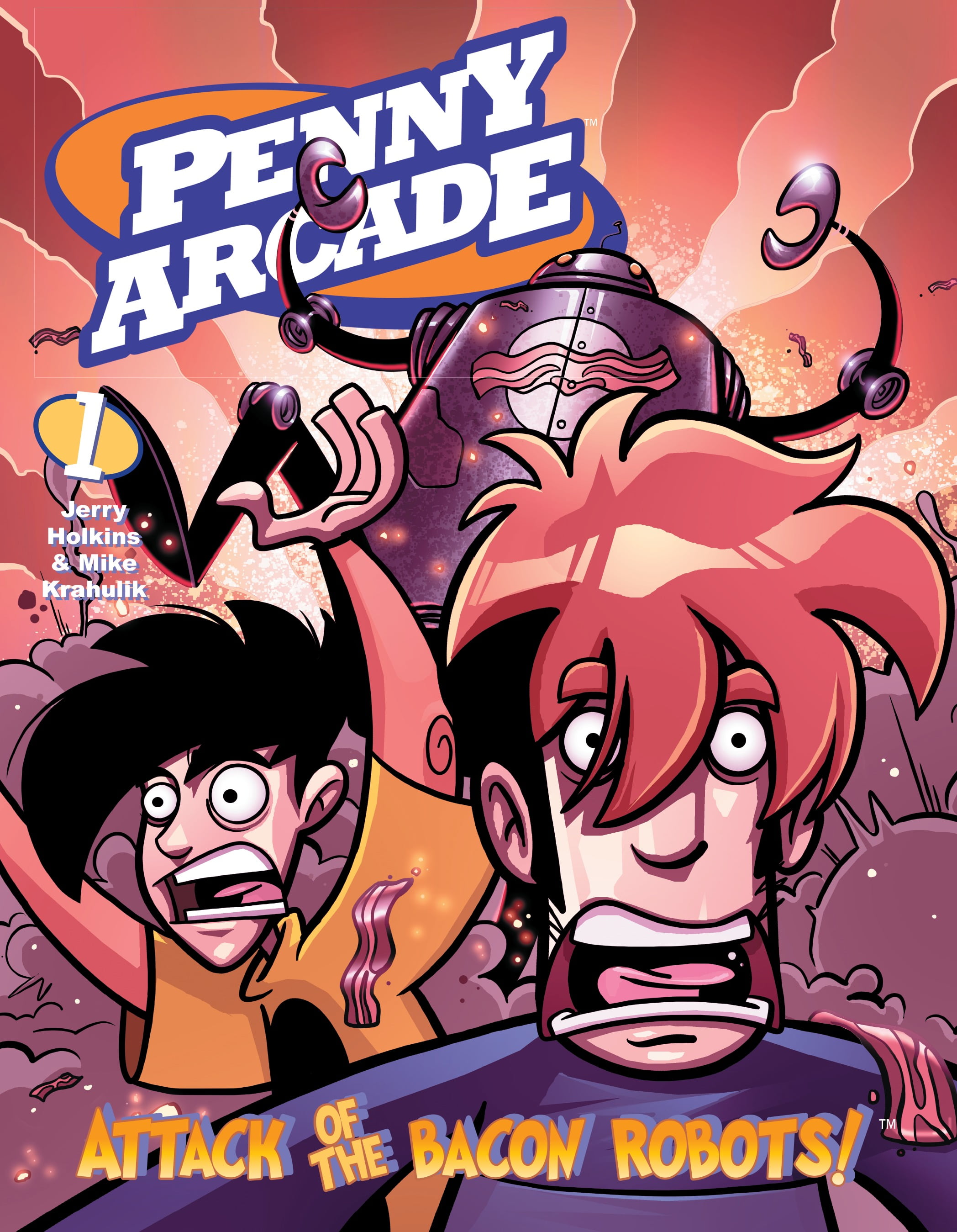
How I Became Yours not only has scenes that don't happen on the cover, but it also has several fabricated positive reviews.
Web Original
Lampshaded during this review pr Master of Magic one of the reviews states "I knew it was a total flop, one could tell that just by looking at the box". Before the end of the video that same reviewer falls in love with the game.
The autographed cast picture where everyone was in their costumes was the first spoiler for To Boldly Flee, and taking the cue from Kickassia and Suburban Knights, fans wondered how Doug was going to emote at all with a giant Judge Dredd helmet covering half his face. In reality, he was only in the Dredd costume for ten minutes, so he was free to Puppy-Dog Eyes/Manly Tears away the rest of the time.
Western Animation
The title card that opens most Tom And Jerry shorts shows the duo smiling at each other as if they like each other, when really, the two of them are enemies.
The back cover of a five episode Powerpuff Girls VHS tape "Dream Scheme" shows Buttercup beating up Him who does not appear in any of the episodes on the tape, and the episode list says "PLUS a 'Courage the Cowardly Dog' bonus toon!" while the bonus non Powerpuff toon is actually the pilot to Sheep in the Big City.
The back cover of another tape called "Birthday Bash" states it has a Sheep in the Big City bonus toon. It's actually just a random Courage the Cowardly Dog episode. Maybe the two covers were switched around?
Subverted in 'Phineas and Ferb'' where Candace immediatly dismisses books based on their covers, when her mom says not to judge a book by its cover Candace argues that books have covers to capture someones interest, and then asks her mom why she picked these books to which Linda begrudingly admits because they looked interesting and leaves.
Likewise Ed Edd N Eddy title cards barely have anything to do with the episodes or characters, though occasionally you might get an in-sight onto the characters designs.
Re-releases of Scooby-Doo television films and collections that contain Scrappy-Doo no longer depict him on the box cover nor mention his presence anywhere in the blurbs, despite Scrappy being a major character in those productions. This is likely due to the massive anti-Scrappy backlash of the post 80s era.
This also extends to the My Little Pony Tales DVD releases in Australia. Understandably, it only reinforced the confusion of "which generation does Tales belong to?" that was already widespread among collectors and fans of the show at that time.
The My Little Pony: Friendship Is Magic Season 1 DVD box set prominently features Princess Cadance on the disc 3 label art. Cadance wasn't introduced until the finale of Season 2.
The cover art for the DVD My Little Pony: Friendship Is Magic: "Adventures in the Crystal Kingdom" shows the Mane Six all in new crystal forms. Forms that the cast only take at the end of the twoparter, and which only get a minute or two of screen time. Furthermore, the bright colors and smiles on everyone's faces give no indication that "The Crystal Empire" is one of the series' darker adventure episodes.
The box art and title screens for Dingo Pictures's productions often depict characters that don't appear in the cartoon... or characters with a different role than they actually have.
And the artwork is usually much better.
The DVD cover of Yogi's First Christmas is actually a promotional image for Yogi Bear's All Star Comedy Christmas Caper.
Various Transformers-related DVD covers. The Hungarian boxart for the 1986 animated movie and the disk itself showcases screencaps and promo art for G.I. Joe. Meanwhile, a German cover has Optimus Prime from the Transformers Armada cartoon on it, with the background being a promo shot from the Michael Bayfilms, and the back cover showing stills from the Armada video game (!). Another German release just uses stills from the Transformers Generation 1 animated series and a sticker album cover.
The DVD cover for Arthur's Big Hit depicts a boxing match between Arthur and D.W. with Francine as the official. This only happens in the Cold Open at the beginning of the episode.
A very mild case, however the titular mask on the Bionicle: Mask of Light movie's poster doesn't actually look like as it does in the film, having been modeled after the real LEGO piece, whereas the film uses a stylistic, simplified design.
The cover art for the DVD release of Tiny Toon Adventures: How I Spent My Vacation depicts Buster, Babs, Plucky, Hamton, Elmyra and Dizzy on a ride at Happy World Land. In the actual movie, Hamton's family and Plucky are the only ones who actually go to Happy World Land, and they don't even go on any of the rides, much to Plucky's dismay.
The makers of the Justice League Unlimited DVD box sets (at least the ones released in the US) seem to have been confused. The “Season One” set actually contains all the episodes from the first two seasons. The “Season Two” set contains the episodes from the third (and final) season—but the screenshots on the packaging are all from second-season episodes.
Parodies
Comic Books
Pinky and the Brain, mirroring the earlier Animaniacs, was spun off in its own comic book series. While the covers of both titles rarely showed scenes or concepts from the stories inside, the first Pinky and the Brain cover was notable for following the guidelines at the top of this page explicitly, with the Brain pronouncing 'This is the way to make it big in the comic business!'. The cover featured Pinky, the Brain, superheroine costumes, and a box of Kleenex. And it followed the one-inch-from-centre rule.
Parodied in an issue of Excalibur where Spider-Man guest-starred. The cover prominently displays our web-headed hero, who brags about how he's taking over this comic book, even though he already has four series of his own. None of the members of Excalibur themselves are depicted except for Captain Britain, who is shoved into the background.
Another Excalibur issue had an incredibly boring cover that certainly didn't happen inside the comic, with a morose-looking little man sweeping the floor and telling us that the usual comic-book cover stuff - muscular heroes fighting dastardly villains, and girls with big tits - is actually inside the comic book, and we should stop bothering him.
Played with in an early issue of Thunderbolts, which guest starred Archangel of the X-Men and featured him prominently on the cover with the headline: "Will Archangel join the Thunderbolts?" And then, at the bottom and in only slightly smaller text: "Nah, he's only a guest star... but doesn't he look cool on this cover?"
As seen on the page image for Wolverine Publicity, there existed an alternate cover for an Anita Blake comic Marvel was putting out at the time featuring Wolverine and Anita, with a small caption reading "Wolverine does not actually appear in this issue".
Discussed and parodied in the Golden AgeMAD feature "Movie... Ads!" A gritty War Is Hell picture devoid of female characters except for a scene where "for two seconds, a girl jumps out and kisses a soldier" is advertised as a torrid love story, with the woman's face and ballooning bust plastered all over the advertisement. An ad for an adventure movie depicts scenes taking place in different parts of the world edited together, with quotes from critics' negative reviews just as misleadingly spliced.
This was fairly common in the late-nineties-early-2000s, making fun of earlier covers that played it straight. For example issue of Impulse with a villain beating up Max Mercury while Bart ate popcorn declared "In This Issue ... absolutely nothing like this happens!"
On a cover of Robin:
Flash: "We can't possibly escape this!"
Robin: "Yeah. Good thing nothing like this happens in the comic."
One of the most common fake-out covers is the image of all the heroes lying dead in a pile while the issue's villains stand triumphant. A Justice League of America issue spoofs this by having one of the villains say to the reader, "We don't really beat them...but it's a heck of a cover, isn't it?"
She-Hulk had some fun with this. One particular issue had Punisher, Wolverine, and Spider-Man featured prominently on the cover, while She-Hulk tells the readers that they only appear on the book, not in it.
While the covers on her books don't lie, Shreve Stockton of the Daily Coyote blog mentions that authors rarely have control over the covers of their books.
Terry Pratchett's Only You Can Save Mankind parodies this wonderfully with the advertising material for the eponymous game: "Actual games shots taken from a version you haven't bought".
If you purchased this book without a cover, you should be aware that it was reported as "UNSOLD AND DESTROYED" to the Publisher and is stolen property. Also, you should be aware that the cover was awesome. It featured a painting of a metallic silver dragon flying up either to rescue or eat a beautiful, nearly nude sword maiden as she falls off a cliff. All of this is overseen by the bitter glare of the ever-uncaring Triple Suns. Plus, a very flattering portrait of the Author appeared within the Main Sun.
For the record, the book's real cover looks nothing like this. Although the dragon cover is printed on the inside of the cover of the paperback edition.
There's a Filk Song that parodies the phenomenon: "There's a bimbo on my cover".
Parodied in Bimbos Of The Death Sun. Engineering professor Jay Omega once wrote a novel about sunspots wrecking electronics and reducing the intelligence of women worldwide; the novel is well-written Hard Sci-Fi and not the least bit misogynistic. Unfortunately, the third-rate publishing house saddles it with a Frank Frazetta-style Contemptible Cover, featuring a Fur Bikini-clad barbarian woman clinging to the leg of a muscle-bound scientist with a clipboard and computer, as well as the title Bimbos of the Death Sun. As a result, people assume both book and author are much more lurid than they really are, and Jay does his best to make sure as few people as possible know he wrote it.
For extra recursion points, the actualBimbos Of The Death Sun was given a comparable cover; the novel itself is a fairly tame (if funny) murder-mystery set at a sci-fi convention.
In Diary of a Wimpy Kid Greg's mom puts the kibosh on his book club selection because she doesn't like the scantily clad warrior woman on the cover. Greg notes that there are no women in the book's entire series and wonders if the cover artist even read the book.
The first edition of Bored of the Rings included a rather erotic "excerpt" from the book as part of the front material. Naturally, nothing even remotely resembling the excerpt can be found in the actual text.
Alan Coren packaged a collection of humorous short stories and essays into a book titled Golfing for Cats, with a huge Nazi swastika on the cover. The reasoning, as stated in the foreword, is that people are interested in golf, cats, and the Third Reich, so putting them all together would be superb marketing.
Live Action TV
Ernie Kovaks parodied this trope with a series of "more sex and violence" book covers, showing Little Women as ladies of ill repute, Peter Rabbit as a gangster, and a Webster's unabridged dictionary with a picture of a silhouette of a lady behind a window blind, with blurbs all over the cover such as "Unexpurgated!", "Four Letter Words!", and "Nothing Left Out!".
This was inspired by the Butthole Surfers's Locust Abortion Technician. An album that looks like this◊ and sounds like this.
The cover (and title) of Throbbing Gristle's 20 Jazz Funk Greats◊ says it all.
Video Games
Capcom designed the box art◊ for the RetrauxMega Man 9 in the style of the original covers.
The box art was mocked even before that in Mega Man ZX Advent, where it was a part of side quest where a boy wanted cool pictures of heroes: upon seeing it, he immediately dismisses it as lame and lets you keep it. Upon looking it in your menu, the game states that "this "legendary hero" looks more like some sort of a colorful coal miner".
The title screen for the Doom mod "Psychic" is a deliberately-bad drawing of a man in a red coat and hat lifting up a cooked chicken with psychic powers, with said psychic powers shown as the word "BRITAIN" pasted all over. The actual mod is very well-done, playing like a cross between Devil May Cry and System Shock.
This strip of Schlock Mercenary refers to the trope, although the cover of the book it'll be in (#6) remains to be seen.
Referencing that strip, the artist intentionally invokes this trope for the actual cover for that book. It features numerous characters who never met in-story, all crammed together, and a ninja, watching while Kevyn does something science-y.
Deliberately used by Justin Pierce for the last published chapter of Killroy And Tina. The chapter is about Brandon gaining a magic glove that grants him Super Speed, but eventually having to relinquish it. The cover image featured Brandon with gorilla arms, panicking over the fact that prom was scheduled to start in an hour. Pierce said that he went with a completely non-indicative Silver Age-homage because his original cover idea gave away too much of the plot.
Parodied in The Noob. The squid people are the prominent feature of the game's expansion, but the Pointy-Haired Boss demanded it be replaced with a pair of boobs. 3D boobs.