
Companies
- U.S. Gold is a British company that originally started as a localization house/regional distributor of American-developed computer software. They later branched out into ports of Japanese arcade games (most notably Capcom's), as well as original software, making their name misleading.
Consoles
- The Family Computer (or Famicom for short name), the Japanese version of the Nintendo Entertainment System (NES), is not usually remembered as a home computer, despite Nintendo's early attempt at marketing it as one with the Family BASIC programming kit for hobbyists. This is probably why its successor, the Super Famicom (the Japanese version of the Super NES), used the shortened name instead (aside from the fact that's what everyone calls the console anyway).
- The Genesis was actually Sega's second video game console in North America, following the Master System. It was otherwise known as the Mega Drive everywhere else. Incidentally, the Mega Drive is actually considered to be the fifth Sega console in Japan (hence its internal code name, the Mark V), even though the SG-1000 II and the Master System (the Mark II and IV) were just remodeled versions of the original SG-1000 and the Sega Mark III respectively.
- The TurboGrafx-16, despite its name, actually uses an 8-bit CPU, specifically an overclocked version of the MOS 6502 previously employed by various 8-bit computers (such as the Atari 8-bit line and the Commodore 64), as well as the NES.note In Japanese, the console was released under the similarly misleading name PC Engine, likely due to NEC trademarking the term "PC" for their range of computers in Japan (e.g. PC-8801, PC-9801). Its (even) less successful successor ended up being named the PC-FX.
- The Nintendo GameCube, without the Game Boy Player attachment, is a rectangular prism; 6 in by 6 in by 4.3 in.
- The Xbox One is the third game console released by Microsoft, following the original Xbox and the Xbox 360. Prior to this, "Xbox 1" used to be an unofficial retronym for the original Xbox, but this naturally felt into disuse and now everyone just refers to the first console as the "original Xbox" or rarely "Xbox OG."
In-Universe
- In the Ace Attorney series, the mascot of the police department, the Blue Badger, does not look like a badger at all. It instead looks more like a cartoonish blue jester wearing a belt and sash.
- Despite the "Swedish Erotica" label used by American Multiple Industries in their porn games for the Atari 2600 (most notably Custer's Revenge), none of the games had anything to do with Sweden or its people for that matter. The label was simply licensed from a series of adult videos by its parent company Caballero Control Corporation.
- The American Multiple Industries name itself is also something of a misnomer, as it seemingly implies to be of a conglomerate rather than a game developer whose specialty is pixelated smut simulators.
- Armored Core 5 has a weapon called a Mass Blade. It's not a sword but rather a Big Stick with spikes and rockets boosters coming out of it while on fire.
- In Assassin's Creed: Revelations, the Templar faction in Istanbul are called the Byzantines and are trying to restore the Byzantine Empire to its former glory. While the characters refer to them as the Byzantines, in real life they were never called that. Instead, the Byzantines actually called themselves "Romans" because they were part of the East Roman Empire. Additionally, they never were called the Byzantine Empire either as that was a name thought up by a historian years after its destruction. Further muddling the issue is the fact that the new Grandmaster of the Templar Order is in fact an Ottoman prince, i.e. a member of the dynasty that led the Turks in the conquest of Constantinople from the Byzantine Empire. Somewhat justified in that in-universe the dialog is being translated by the Animus into Desmond's native language (English), and it's not unreasonable to assume it is translating the name of the faction to one Desmond would be familiar with.
- The realms in Ball Revamped 5 are named after flowers. note The flowers have nothing to do with the realms.
- In Batman: Arkham Series, The Riddler takes it to You Keep Using That Word levels. Throughout the series, he gives you a number of challenges to solve. Some of these are riddles, but most are more of a "find the Riddler trophy" scavenger hunt like challenge. Even granting that some require particular thinking of how to get it: what gadget to use, the proper order to activate switches, etc., they aren't riddles. In Arkham City he starts putting people in Jigsaw-esque death traps, which again for whatever thinking they may require do not qualify as riddles. By the time Arkham Knight rolls around this is treated as in-Universe case of Motive Decay, and reaches new heights when builds race tracks. Tracks that the Riddler himself could not complete since the "Riddlermobile" is in the shop. The time limit he imposes on you is apparently how long it would take him to complete it; but that isn't a riddle. He eventually attacks in a giant Mech, which he claims was perfectly designed to kill Batman "making it an intellectual victory above all of else", but even granting that, it still isn't a riddle. He'll occasionally attempt to justify this by saying if you don't see how it qualifies as a riddle, then he won't explain it to you. He also claims that apparently the difference between "unfair Death Trap" and "perfectly designed riddle" boils down to user error.Catwoman: (dodging saw blades) Damn him. How is that a riddle, Eddie? Seriously!
Batman: You get used it.
(later)
Catwoman: It's still not a riddle Eddie!
Batman: You just haven't figured it out yet. - In Bayonetta, angels are really horrifying monsters that dress it up really nicely, and their names are no exception, with misnomers like Affinity, Dear and Decorations, Inspired, and Jubileus. Mostly averted with the demon race, whose names instead invoke Names to Run Away from Really Fast, but Sloth is an absolutely brutal sword-wielding Lightning Bruiser.
- There's no actual racing in Big Rigs: Over the Road Racing. Most of the programming and gameplay mechanics needed for a race to happen were never implemented. Your opponents never leave their starting positions unless you install a patch, and even then they're horribly slow and will always stop short of the finish line. In other words, it's impossible to lose. What little gameplay exists is better suited to messing around with the game's wonky physics than trying to compete with the empty rig the game claims you're racing against.
- In the Borderlands DLC "Claptrap's Robot Revolution", the player is tasked with retrieving a wireless device called WIRED (short for Wireless Information Router Encoding Device). The quest giver himself remarks that he'll have to talk to marketing about the name.
- In Brütal Legend, the Kill Master's job does indeed have to do with death; namely, preventing it. He uses The Power of Rock to heal anything up to but not quite including death. However, this is because he deliberately chose a scary name in order to frighten away intruders and protect his flock (of giant spiders). The meta reason for the name is because he's an Expy of Lemmy Kilmister
 , legendary bassist and singer who also voices him. Bassists in the game fill the role of healer units, a reference to the tendency for bassists to fill a supportive role in rock music.
 - Capcom vs.:
- In Marvel Super Heroes and Marvel Super Heroes vs. Street Fighter, Blackheart has a special move called "Inferno," which is not only a fire-elemental move, but can also be ice and lightning-elemental, making it a Fire, Ice, Lightning move. It gets stranger in Marvel vs. Capcom 2, where the fire and lightning Infernos are removed, leaving Blackheart with the ice variation. Maybe it has something to do with the deepest circle of Hell in The Divine Comedy (sometimes mistakenly referred to as Dante's Inferno) being a freezing lake?
- Hulk's moves have nothing to do with gamma radiation, not even Gamma Wave. They mostly involve giant rocks, which makes sense for Gamma Crush and Gamma Quake, but not Gamma Wave or Gamma Tsunami. Gamma Charge does not charge you with Gamma radiation, it just involves Hulk charging forward. The Professor, the persona used for Hulk until Marvel vs. Capcom 3, might have named these attacks as such since he was able to use it in his gamma radiation-induced transformation, but there's no reason Savage Hulk would say anything other than "SMASH!" when using these attacks.
- X-Factor in Marvel vs. Capcom 3? The mutant team? No, a coincidentally named gameplay mechanic that has nothing to do with mutations that gives any character increased speed, strength and healing powers, with no explanation.
- Wesker's counter Hyper is called Rhino Charge, as per one of his moves in The Mercenaries from Resident Evil 5. It does not involve him charging forward like a rhino, he simply catches the opponent's attack and does a counter jab.
- In the Castlevania games, relics that give you powers usually have handwavy names, such as "Lizard's Tail" for the slide item. Castlevania: Order of Ecclesia sends this up by calling the Double Jump item the Ordinary Rock!
- Chrono Trigger:
- The Black Tyranno isn't black, at all. It has more of a grayish-teal color, although that may be due to it being difficult to color an enemy sprite pure black.
- In the future, there are various futuristic cities called Domes that, as the name implies, are dome-shaped. The last one you encounter, Geno Dome, is an optional endgame dungeon, but it doesn't look dome-shaped at all; it looks identical to the Factory dungeon you completed early in the game◊, and the interior looks like said Factory (which is still up and running) rather than the ruined Domes.
- In Civilization II: Test of Time, the sci-fi scenario has a planet called Naumachia. It's an arid world without any water. What does "naumachia" mean, you ask? Well, for starters, in Ancient Greek it literally means "naval combat". It generally refers to staged naval battles in Ancient Rome.
- Command & Conquer: Renegade: Havoc's old team is still called the "Dead Six", despite them only really consisting of four people anymore (Havoc doesn't like working with teams and another member defected to Nod).
- Coral Island: The "Giants" living in the woods near Starlet Town are all much shorter than humans. The Chieftan is the only one close to human size, and that's mostly because of the enormous headdress he wears.
- Crimsonland: The "Random Weapon" perk doesn't give you a random weapon; it allows you to choose one of the guns you have unlocked to replace your current one.
- For the longest time, DanceDanceRevolution had the "Good" judgement rank below "Great", "Perfect", and "Marvelous". It's worth 0 points in most games, it doesn't raise your Life Meter (but also doesn't decrease it), and it breaks your combo, the latter being made worse in modes where you are given a limited number of combo-breaking judgments before you get a Game Over, with that number ranging anywhere from four to one. note The 2013 DDR game alleviates this a little by making Goods count towards combo, and DanceDanceRevolution A makes Goods add points for the first time in the mainline series, if by a small amount.
- In darkSector, the main character gains access to a biomechanical weapon called a glaïve. It's the same sort of weird thing as in Krull, not an actual glaïve. Again.
- Dark Souls:
- Greatswords are one class of weapons, while another are the even bigger Ultra Greatswords. In all three games, the weapon simply called "Greatsword" is part of the latter category. This was not the case in series predecessor Demon's Souls, where these two categories were instead called "Large Swords" and "Very Large Swords" respectively, while the Greatsword had the same name (though it was written as "Great Sword").
- Similarly, the Black Knight Sword is a Greatsword, and the Black Knight Greatsword is an Ultra Greatsword. However, their names reflect their use by the Black Knights themselves, which are bigger than humans.
- The weapon called "Scythe" is clearly a bardiche, and even when Dark Souls II gave actual scythes their own weapon category (called "Reapers") instead of lumping them in with halberds, the "Scythe" stayed in the halberd category. Dark Souls III finally fixes it by changing its name to "Glaive", while including in its description that it used to be a scythe but had alterations made to the blade to make it more suitable for battle.
- The Last Giant in Dark Souls II, one of the first two bosses you fight, is not the last giant; you can find two more in Black Gulch.
- In Dark Souls III, there is a type of enemy called a lycanthrope. They are not related to the typical shapeshifting werebeasts.
- Also in Dark Souls III, one recurring character is named Holy Knight Hodrick. Sounds like The Paladin, right? Well...he might have been, once, but when you meet him in the game he's long since gone Ax-Crazy, and the only non-violent interaction you can have with him has him offer you the chance to join a covenant of similarly Ax-Crazy murder-hobos with no concerns beyond random slaughter.
- Destiny: The Myth Arc of the game and its sequel deals with the conflict between two Sentient Cosmic Forces called the Light and the Darkness over the ultimate fate of the universe. They don’t have much to do with literal light and darkness, instead representing different modes of behavior for sentient life (fundamentally, collectivism vs. individualism).
- Devil May Cry:
- The "Orbs" the player collects aren't really spherical, they're pear-shaped in the first four games, skull-shaped in DmC: Devil May Cry, and are of assorted shapes in Devil May Cry 5.
- A lot of the demon Mooks and boss characters are named after random mythical characters without any concern for how well they match up to the name. While there are too many of these to be listed, some examples include:
- The most notable case may be Beowulf from the third game, who is actually a pretty accurate depiction of the demon Pazuzu, an influence that has also been confirmed in the 3142 Graphic Arts artbook.
- The recurring boss "Phantom" is not a ghost or a person who walks through walls; he's a giant flaming spider-scorpion hybrid made out of magma. The name might refer to his ability to tunnel into the earth to appear and disappear at will, but that's a stretch.
- Drekavac is the Slavic word for "Screamer", and is also the name of a mythological south-Slavic monster. However, the Drekavac in DmC: Devil May Cry is silent.
- It also applies to a weapon in Devil May Cry 5. As stated in Nico's Reports, the "II" in the Kalina Ann II's name doesn't necessarily mean that it's an upgrade on the original; Nico just made a replica that doesn't stray too far from the original rocket launcher that Lady dropped in the battle against Urizen.
- Diablo: The Black Death are zombies who are colored bright yellow.
- Digital Devil Saga has the Null Sleep passive skill. The name implies that it gives immunity to the Sleep Status Effect, but what it actually does is make it so that a character with this skill dodges all attacks while asleep. Null Critical doesn't fully prevent critical hits either, it just makes them less likely.
- Donkey Kong
- The eponymous Donkey Kong is a gorilla. Shigeru Miyamoto came up with the name Donkey Kong when trying to find a name to mean "Stubborn Ape." (Donkeys are stubborn, King Kong is an ape.) It's a mix of this trope and Foreign Sounding Gibberish.
- One level in Donkey Kong Country Returns is called "Peaceful Pier." Other than three very small wooden platforms floating in the sea, there is no pier, and the level consists of piloting a rocket-powered barrel over an ocean while being perpetually bombarded by fire from a pirate ship.
- Doom³: There is an instance early in the game where the player encounters a unique, fast zombie. This zombie is internally named the morgue zombie. However, the area where you encounter it in is not a morgue, it's an infirmary.
- Dragon Quest:
- The Infernos spell found in Dragon Quest II and Dragon Quest III. You would think it is a fire based spell (inferno) but is actually a wind spell. Later releases would change this to Whoosh.
- Dragon Quest IV: From the NES version, at the end of Ragnar's chapter you can get the Sword of Malice. Based on prior games, where malevolent sounding names means CURSED, this would lead the player to believe it is a cursed item when it is actually a good weapon for Ragnar. Later games would change this to the Cautery Sword.
- Dragon Quest VI:
- You'd think that the Armamentalist skill Lightning Slash and the Luminary skill Lightning would be Lightning-elemental, but they aren't. They actually share the same element as the Bang line of spells.
- The Ranger class has little to do with nature spells compared to, say, Dragon Quest IX.
- Drunken Robot Pornography is a single-player arena shooter. Your enemies are robots, the Big Bad is a rogue robot bartender, and there are a few missions revolving around grabbing ingredients for alcoholic drinks, but the pornography part doesn't really come into play anywhere.
- Dungeon of the Endless has all of its equipment using non-indicative names. Frag grenades? It's actually a system to frag incoming grenades. T-shirt? Titanium shirt.
- Dusty Raging Fist have it's second-to-last boss, the Twins, who despite the name isn't a Dual Boss - she fights alone the whole battle.
- The Elder Scrolls :
- A number of the staple Fantasy Metals in the series qualify, especially Glass and Ebony.
- The Dwemer, a sub-species of Mer (Elves), are also known as "Dwarves". Though they do still have some similarities to typical fantasy Dwarves (they were expert arcane craftsmen and enchanters, had a tendency to build deep underground, and their men tended to wear long beards), the term is an archaeological misnomer. The term "dwarf" was given to them by the Giants of the Velothi Mountains; the Dwemer were the first non-giant race with whom they came into contact, so they seemed very small even though they were average sized among the Tamrielic races. After it was picked up by the Nords (and through them, the other races of Men), the name stuck.
- The Dwemer's last king was known primarily as Dumac Dwarfking. However, he is alternatively known by the names "Dwarf-Orc" and "Dumalacath", which would seem to indicate that he had some sort of connection with the Orcs. No such connection is evident from any established lore and may have been a Written by the Winners attempt by the Tribunal Temple to demonize Dumac (since the Dunmer people weren't exactly fond of anything relating to the Orcs).
- Malicious, malevolent, manipulative jerkasses who will double cross you the first chance they get in order to claim your soul, no one considers the Ideal Masters, formerly mortal Energy Beings who created and rule the Soul Cairn, to be "ideal masters". This is likely a name they gave to themselves once they transcended the limits of their mortal bodies, becoming "ideal" entities in their own view.
- The Psijic Order, a powerful Magical Society and the oldest monastic order in Tamriel, doesn't actually have anything to do with the "Psijic Endeavor", which is a specific process of ascending to divinity championed by the Chimeri/Dunmeri figures Veloth and Vivec. The Psijic Order does not believe that there really is a fundamental difference between ancestor spirits and gods in the first place, and ascending to divinity has never been mentioned as a motivation of theirs.
- St. Alessia, founder of the First Cyrodiilic Empire, is said to have been the first "Dragonborn". However, she wasn't a Dragonborn in the same sense as the dragon-soul-stealing instant-Thu'um-mastery Dragonborn heroes of Nordic legend (made famous in Skyrim, of which Miraak was the first). But Alessia was the first Emperor of Cyrodiil imbued with blood from the heart of Akatosh, the Dragon God of Time and chief deity of the Imperial pantheon, as part of sealing a pact with her (metaphysical) line to protect Mundus against incursions from Oblivion.
- Dragonlings, a reptilian species native to the Iliac Bay as seen in Daggerfall, are unrelated to the true dragons of the series, lacking their intelligence and magical ability.
- Morrowind:
- The "Ministry of Truth" is where the Tribunal Temple suppresses dissent of any kind. Its resemblance to the Ministry of Truth in Nineteen Eighty-Four probably isn't a coincidence, though its actual function resembles the Ministry of Love more closely. Orwell's Ministry of Truth was devoted to spreading lies and propaganda, not suppressing dissent.
- "Ash vampires", Dagoth Ur's highest ranking minions, have nothing to do with the series-standard vampires. In fact, they are not even undead. Some in-universe sources also refer to them as "Heart-Wights," which is quite a bit more accurate given the source of their power.
- The Morag Tong is an honorable and legal assassin's guild officially sanctioned by the Dunmer government. Their name, when translated to Tamriellic, means "Foresters Guild". They obviously have nothing to do with maintaining forests.
- In Skyrim, the owner of Honorhall Orphanage goes by the Ironic Nickname of Grelod the Kind. As Aventus Aretino, a survivor of Honorhall, can tell you, "she's not kind. She's terrible! To all of us!"
- Elden Ring: The eponymous Elden Ring is, in fact, not really ring-shaped at all◊. There are four overlapping rings in its design, but the rest is made up of partial crescents and arcs, with the whole thing being bisected by a straight vertical line.
- English Country Tune: You might expect a work explicitly named after a piece of music to be a music game, but this is not a case at all. While it does have a soundtrack, it's coldly ambient, and has no relation to any country music in its structure. The levels' names, like "Whale" or "Advanced Cutting", are also barely related to what's going on in them.
- Escape Velocity Nova has the Federation's Bureau of Internal Investigation, which is non-indicative in that it is far too specific — they are neither limited to investigations nor to operations within Federation space (or at least involving Federation citizens that aren't their agents). Bureau is questionable, too, since they operate completely without governmental supervision of any kind, having suborned the legitimate Federation government and becoming the real decider of Federation policy.
- Factorio's diesel train, which can run on anything from raw wood to solid rocket fuel. Ironically, you can't actually fuel it with crude oil or petroleum, and there isn't any diesel (or gasoline) fuel products in the game.
- Fatal Fury:
- Terry Bogard has an attack called "Burning Knuckle". However, it's not fire-elemental at all, unlike certain attacks from characters like Mai Shiranui and Wolfgang Krauser that actually make their opponents combust. Terry engulfs his fist in non-elemental ki when performing that move, although in some games, it does leave behind a trail of flame-like energy.
- The attack that causes Krauser's opponents to combust is a fireball projectile called "Blitz Ball". This name doesn't fit either, because "blitz" is the German word for "lightning". Although, one could argue that since Krauser throws it out so swiftly, "blitz" in this sense could refer to speed as opposed to actual lightning.
- Fate Series:
- Fate/stay night:
- Archer... is not an archer. He has a bow that he can use, but he's primarily a swordsman. The same goes for Gilgamesh, the Archer from the previous Holy Grail War. Word of God has stated either could have gotten the title of Saber (in each Holy Grail War, there's the same set of seven titles the servants go by), but the Saber who is King Arthur fits it even better, and since they often used their swords as range weapons "Archer" was the next best fit. FSN Archer's personal combat philosophies are also quite close to the ideal of Kyūdō. Not to mention the attitude which inspired the Independent Action ability associated with the Archer class being a strong element of characterization in both of the above.
- Assassin, from the same series, is not an assassin. He is an honorable and upfront Rōnin who doesn't bother using his class skill and prefers matching swords with his opponents in fair fights. He isn't even a Hassan, which at the time was an actual requirement for being summoned in this class under normal conditions. There is a reason why a Servant named True Assassin appears in the Heaven's Feel route.
- Fate/Grand Order proves that the definitions and qualifications of the Servant classes are actually quite loose, to the point of Memetic Mutation.
- The Saber class is usually made up of sword users, which would be what you'd expect... Except that you have folks like Saber Karna who uses Good Old Fisticuffs, and Rama who states his sword is a throwing weapon. And then there's the fact that most of those Sabers can shoot Sword Beams, which technically makes them ranged fighters. Which in turn would qualify them for...
- The Archer class, which is not actually just archers but anyone who "fights from range". This includes people who use guns and crossbows, like Billy the Kid and William Tell, but also has some completely absurd members like Summer Artoria Pendragon (who uses a squirt gun), Nikola Tesla (who shoots lightning), Asagami Fujino (who can twist things - that's not even throwing anything!), and Summer Jeanne (who throws dolphins. Yes, you read that right). And then there are the folks who can use a bow and arrow but choose not to, like the above mentioned FSN Archers and Chiron, who uses Pankration.
- The definition of Lancer is a horse riding knight or similar wielding a lance. The definition of Lancer in FGO is anyone who wields a spear, which includes lances, spears, naginatas, scythes, etc. And then there's the Grand Lancer, who isn't wielding anything. He IS the spear, and he fights by shooting energy from his hands. This was questioned by a LOT of people.
- Rider sounds quite self-evident compared to the others... until Medb tells you that the only reason she qualifies for it is because she's skilled at riding men. Yes, you can ride anything in this class. Except dragons, demonic beasts, or other kinds of magical entities. Then you need a special skill to actually ride them. Not to mention as well that Riding in particular has been shown in other Fate works to also be a skill that a Servant of any other class can have without being a Rider; Artoria Pendragon and Mordred, both Sabers, have it at a decently high rank, and in fact four of the currently nine Servants to have it at its maximum level aren't even Riders.
- You'd think Caster would just contain wizards. It doesn't. Other than magic users, this is the go-to class for scientists, inventors, craftsmen, and artists. This is why Thomas Edison and Hans Christian Andersen are here. It should also be noted Muramasa - a swordsmith - is annoyed that he's a Saber as he would normally be in this class, and he even has the otherwise-Caster-exclusive Territory Creation skill.
- A good chunk of the Assassin class failed to assassinate their targets. Grand Assassin is a swordsman, which is Lampshaded the second he shows up. And why is Dr. Henry Jekyll here?
- You'd think that the Berserker class is made up of people with Unstoppable Rage. Sure, there's no shortage of them, but that's not the actual qualification. Berserkers are those who are inflicted with Madness Enhancement, which makes their behaviour erratic even if it previously wasn't. While there are plenty of natural Berserkers who had a few screws loose to begin with, you also end up with folks like Florence Nightingale (who wasn't like this at all in real life), and Beowulf who isn't acting any crazy at all. Oh and by the way, there are some people out of the Berserker class who have Madness Enhancement.
- The Ruler class, introduced in Fate/Apocrypha, sounds like a class where you'd find a lot of kings. No. It's a class for people who do not wish for the Holy Grail, and they're supposed to act as regulators for the other Servants... Except that Amakusa Shirou Tokisada didn't get the memo, because he sure wants that cup. And there are a whole bunch of people in other classes who are not interested in the grail, either.
- The game itself pokes a lot of fun with this, but the grand prize has to go to Caster Merlin, who says that "even though his sword shoots beams, he's not an Archer."
- Fate/stay night:
- Final Fantasy:
- In Final Fantasy Tactics, the blaze gun shoots ice and the glacier gun shoots fire. This is one result of the "Blind Idiot" Translation that plagues the game. The guns were "Anti-Blaze Gun" and "Anti-Glacier Gun" respectively in the original Japanese. The PSP remake sidesteps this issue by simply swapping the names, so that instead of indicating what the guns were to be used against, they indicated what they actually fired. In a similar fashion, the NPC ability "Stop Bracelet"? Instantly kills the target. Later releases renamed it "Suffocate," since "Bracelet" was supposed to be "Breath."
- Continuing this fashion in Final Fantasy Tactics A2 are what happens when you have mages named after colors — some fans think that they're named after clothing and sprite colors, but actually the names are perfectly indicative of what magic type they use. White mage uses white magic, black mage uses black magic, etc. Still leads to cases of Green Mages wearing purple clothing, though, when the player mages tend to have color-matching clothing.
- Similarly, in Final Fantasy Tactics Advance, due to enemy units being a Palette Swap of player units, enemy Blue Mages wear red and enemy Red Mages wear blue.
- In Dissidia Final Fantasy and its prequel Dissidia 012, there is a gameplay mechanic called "Wall Rush" where you can send your opponent crashing into indestructible surfaces with specific attacks. However, this can also be done with ceilings, floors, and other non-wall structures.
- Some games in the series have had Updated Re-releases that include not only the stuff that was added to the North American and European versions, but more often than not, also all-new stuff to go along with it. Misleadingly, these are called International versions.
- A series-wide one that only occurs in translation are the dragoons. In Real Life, they were early mounted gunners (with early firearms sometimes called "portable dragons"), while the Final Fantasy versions are never mounted during gameplay and never equip guns unless they equip the ability from another class in games with a Job System. This is due to the fact that their Japanese name, Dragon Knight (which incidentally is much more apt, particularly in games where they get bonuses to damage against draconic foes) ran afoul of Character Name Limits in Final Fantasy IV, when the class first appeared in a game released internationally. Like several other artifacts of early Final Fantasy games, the name is still kept despite modern games having the space to properly translate the name.
- In Final Fantasy VI, the Crusader summon is made of three separate beings, none of which looks like an actual Crusader. In fact, the only vaguely human one doesn't even have a cross on the armor.
- In Final Fantasy VII, the final form of the final boss is "Safer Sephiroth". This form is not safer than anything that came before it in any way - it's special attack is called Supernova and seems to tear apart the entire solar system before finally hitting the player characters. This seems to be due to a mistranslation - the intended spelling would have been "Sefer/Sepher Sephiroth".
- Final Fantasy X has an in-universe example invoked by Jecht with his "Sublimely Magnificent Jecht Shot Mark III." As Tidus explains, "There is no Mark I or Mark II, you know?" continuing that Jecht just made it up to hook the crowd, that they would come back every night, expecting to see Mark I and Mark II.Tidus: And, they really did come back. I used to get... so mad.
- Final Fantasy XIV has a few examples:
- The Rabbit Pie food is named such because it's shaped like the head of a rabbit, not because it actually contains rabbit meat - the key ingredient is actually marmot meat.
- Warrior's Stew actually increases your craftsmanship and control stats for the crafter classes, making it quite useless for a Warrior, or indeed any regular combat-focused class.
- From the Stormblood expansion, Velodyna pugils aren't actually found in the Velodyna river, like the similarly-named Velodyna sarcosuchus. They're up along a much smaller creek coming out of Rhalgr's Reach that eventually flows into the Velodyna.
- In Final Fight, Andore Jr. is Andore's younger brother, not his son.
- Fire Emblem:
- The Fire Emblem itself is typically only a minor MacGuffin, and it's not even present in all of the games. Depending on the game, it may even be called the Crest of Flames, rather than the Fire Emblem.
- Fire Emblem: Three Houses has the recurring antagonist known as the Death Knight. Despite what his name and his skeleton-like armor would imply, he is not undead like other death knights in fiction. Instead, he is the Split Personality of Jeritza von Hrym/Emile von Bartels, who is very much alive.
- Front Mission features the МИР ОРЛЕН (Mir Orlen), a massive humongous mecha with a skeletal face piloted by the sociopathic Driscoll who has been integrated into it as part of its CPU and intended to be used to raze the OCU and the USN so the Republic of Zaftra can rise to power. It's name translates to Peace Eagle in Russian.
- F-Zero 99: Because of the new cosmetic options, the Blue Falcon is not always blue, the Golden Fox is not always gold, and the Fire Stingray doesn't always have a fire pattern on it. At least the Wild Goose will likely never resemble water fowl regardless of its cosmetics.
- No, Gaia Attack 4 isn't the fourth installment of a long-running series. Its the name of the eponymous alien, demon and ghost-busting team.
- In Ghost Recon: Future Soldier, one of the unlockable attachments is a Fixed Stock. Except, on almost every weapon in the game it's not actually fixed at all; rather, it's just a different model of the same type as the normal, foldable Extended version. The game basically admits as much with the AKS-74U, which actually has two versions of the Collapsed stock, one of which is the Fixed one folded to the side.
- In-Universe in Giants: Citizen Kabuto: Blind Man's Volcano. Closer inspection by Delphi reveals that's it's actually a frozen-over archipelago. Yan responds that the man who named it was blind.
- God of War (PS4): Kratos and Atreus have a discussion about this trope as applied to Giants. When Kratos notes that some tunnels made by them seem oddly small, Atreus corrects him by saying that 'giant' in this case is just another species like humans or elves (they're more properly called the Jotnar), and they aren't always literally gigantic... though some, like Jormungandr, were in fact literally giant. Indeed, many of the Jotnar met in the game and its sequel, such as Faye and Angrboda, are human-sized.
- Axe Battler, the Barbarian Hero of Golden Axe, uses a sword. The titular weapon is wielded by the Big Bad Death Adder, and it's not made of gold (it appears to be bronze). Incidentally, the only character with a shiny axe is Gilius Thunderhead, but it's not the titular weapon (and probably not made of gold either, most likely brass).
- Guilty Gear's Sol Badguy is not at all a "bad guy." In fact, he's the main character of the story — the name is simply the first of the series' many references to the original Mr. Bad Guy, though he's certainly not nice. According to Xrd, the moniker was an instance of Appropriated Appellation, as Sol was notorious among the criminal underground for busting up numerous illegal organizations and gangs, making him a "bad guy" from their point of view.
- Gunfighter: The Legend of Jesse James: In the sequel, Gunfighter II: Revenge of Jesse James, Jesse never goes on any sort of revenge. If anyone has a vengeance, it's Bob Younger, the brother of Cole Younger, who blames Jesse over his brother's death.
- The only thing Antlions from Half-Life 2 have in common with real life antlions is living in sand. They are quadripedal quasi-crustacean creatures while real antlions resemble dragonflies.
- Your titular character in Hands of Necromancy, despite being explicitly called a "necromancer"... is not. You don't communicate with spirits at any stage, you don't raise the dead, you simply fight the undead and restore them to being plain dead.
- The Harry Potter video games include Fire Crabs as enemies, which are actually gem-encrusted tortoises that shoot flames out of their backsides.
- Halo:
- The Covenant Hunters are hulking colonies of worms in suits of armor with giant plasma cannons and giant shields/blunt weapons that tend to blast or barrel through opposition, not hunting or stalking. However, material states they are often deployed as anti-vehicle platforms, and many human vehicles are named after animals (Warthog, Scorpion, Mongoose, etc.).
- The Covenant Jackals are a race of bird/dinosaur like aliens who aren't anything dog like. They are, however, scavengers, though this isn't demonstrated in the games.
- The Rookie from Halo 3: ODST; he gets his nickname from being the latest person to join Buck's squad, but he's actually a veteran who's both higher-ranked and more experienced than the squad's demolitions expert. As Buck says about him in one of the trailers:Not exactly green. No ODST is.
- The Office of Naval Intelligence, despite its name, does more than naval intelligence, instead acting as the general military intelligence agency. Although, it's more appropriate if you consider interplanetary affairs as "naval".
- While it's common for fiction to refer to longarm Energy Weapons as "rifles" despite lacking rifling, the Covenant "plasma rifle" isn't a rifle in either sense of the word. It's more of an automatic Hand Cannon that Elites wield with one hand (as can Master Chief in the games where he can go Guns Akimbo).
- While A Hat in Time features plenty of hats, there isn't a whole lot of time-travel in it, aside from the fact that the MacGuffins are called "Time Pieces" and are shaped like hour-glasses. The title is actually a holdover from the game's early development, when the project was actually planned to primarily center around a time-travel mechanic.
- Lampshaded in Heroes Must Die. Death, unlike War and Taxes, has a job that doesn't involve death at all; he's the Minister of Propaganda. Interestingly enough, Taxes is associated with this trope even though she is the Minister of Finance.
- Heroes of the Storm:
- Diablo's Lightning Breath is a cone of fire with streaks of lightning going through it.
- Tychus's Run and Gun does not actually let him shoot while moving, it's just a short dash. However, he can shoot while moving with his Overkill ability.
- Lampshaded by Brightwing in one poke quote, where she remarks that the Emerald Dream from Warcraft is not a dream and has no emeralds.
- A downplayed example: the game Hexen is named after the German word meaning "witches". While there is a lot of magic in the game (as well a mage as one of the Player Characters in the first game), neither the first game nor the sequel have any actual witches in them.
- Hornet in Hollow Knight is not a hornet, nor does she particularly resemble one apart from being an arthropod. She's actually half spider/half Wyrm, and doesn't fly.
- Hot Dog Storm is a Vertical Scrolling Shooter in the vein of Raiden and Sonic Wings, where you spend the entire game piloting a spaceship battling alien ships, giant mecha, tanks, with nary a hot dog in sight.
- In House of the Dead, all the boss monsters are named from Tarot Motifs. Some of them fit (Death, Wheel of Fate), others don't (Hierophant, Empress), but Temperance gets special mention. He's a Fat Bastard 30 feet tall named for a card meaning health and abstinence. Indeed, Word of God is that they deliberately named Temperance for the card he represents the opposite of.
- Zigzagged with the veracity of the title. The first game, III, and Scarlet Dawn indeed take place in a mansion, an industrial complex and another mansion, respectively. In 2, 4, and OVERKILL, zombie outbreaks encompass entire cities, though the latter does have levels (or parts of levels) set in several metaphorical houses, e.g. the fun house (an amusement park in the third chapter), the big house (a prison for the sixth), and the whore house.
- Haven City in Jak and Daxter always seems to be in some sort of war. In Jak 3, there is war in the city between three factions throughout the entirety of the game. Ironically, the city was originally created to protect citizens from the Metal Heads. However in Jak 3, the Metal Heads have their own entire section in the western part of the city.
- Jitsu Squad have a Snake-woman boss named Viper. Who looks more like a cobra instead of a viper, for some reason.
- Kid Icarus: Uprising has a Horde of Alien Locusts called the Aurum. Despite being named after the Latin word for gold, they are almost all primarily silver in color.
- Kingdom Hearts:
- The Heartless don't actually lack hearts; they're monsters born from people's disembodied hearts that were corrupted by darkness. Additionally, Nobodies are born from the empty bodies left behind when a heart is taken. Essentially, the Heartless have no bodies, while the Nobodies are heartless. However, both of these are meant to be purposeful misnomers—Heartless are named as such because they're seemingly mindless monsters who attack without feeling, while Nobodies are born in places that border light and darkness and "should not exist" and do not belong to the light or darkness, making them nobodies in the philosophical sense. Confused yet?
- Also: Despite the misleading name, Nobodies can have identities, and quite a few of them even look exactly like their former selves. The Heartless are the ones who (usually) look like faceless ghosts and have no individual identities. Confused yet?
- The Princesses of Heart, maidens born with no darkness in their hearts, don't actually need to be princesses. Most of them are, but then there are some like Kairi and Alice, who are very much not princesses.
- The Foretellers are all named for the latin words for the Seven Deadly Sins, yet none of their personalities particularly represent the sins they're named for. In fact, some of them do a better job at representing other sins another member is named for, such as Aced being named for the sin of sloth, when his personality actually fits wrath, the sin Ira is named for, better. At best, their names fit the roles given to them by the Master of Masters.
- Kingdom of Loathing has made it a Running Gag that six-packs of beer hold eight cans.
- Knights of the Old Republic and its sequel have a Force power called "Kill," a more powerful version of Wound and Choke. Kill is not a One-Hit Kill ability, but it does one sixth of the victim's maximum vitality in damage every two seconds for six seconds.
- The Legend of Zelda:
- Enemy names are often this. ReDeads have not died again; they're clay zombies, plain and simple. It's actually very annoying to find Rope, and it doesn't help in any way, since a Rope is a snake enemy. A Darknut is not a corrupted plant monster; it is a Black Knight note . There are also Bubbles (flying skulls that are usually covered with flames), Hardhat Beetles (squid enemies), Pols Voices (silent rabbit-like enemies), and Wart (huge eyeball monster, sometimes depicted as jellyfish-like).
- The Legend of Zelda: A Link to the Past: The English localization refers to the Ocarina as "Flute", to a grassy area with a few small ponds of water as "Great Swamp" (despite it being called a prairie in the original Japanese text), and to breakable pots as "bottles" (despite "Bottle" being a separate item). There's also "magic bottles" and the "Magic Hammer", despite both items having absolutely nothing magical about them. Later games would drop the magic name on the two items.
- The Legend of Zelda: Link's Awakening:
- The Wind Fish is actually a Sky Whale. This is lampshaded by one of the Owl Statues:"THE WIND FISH IN NAME ONLY, FOR IT IS NEITHER."
- The third dungeon, Key Cavern, is a brick building, not a cave. This may be a mistranslation; it's called "Key Cellar" in Japanese and French and "Devil's Mansion" in German.
- The Wind Fish is actually a Sky Whale. This is lampshaded by one of the Owl Statues:
- The Legend of Zelda: Ocarina of Time: The Forest Temple is actually a ruined old mansion and the Shadow Temple is actually a series of torture chambers. No reference is made to either being used for worship. Likewise, Zelda II: The Adventure of Link has its dungeons called temples, despite said temples having a lot of monsters and pitfalls and would not be an ideal place of worship. The English version calls the dungeons a "palace" instead, which makes even less sense since the buildings aren't luxury homes or castles.
- The Legend of Zelda: Skyward Sword: The Lanayru Mining Facility is a refinery, whose function is to polish the samples of Timeshift Stone that have been previously mined from the outside (specifically Lanayru Mine). The oddest aspect is that the Japanese, Spanish and French versions of the game correctly name the dungeon Lanayru Refinery. The German and Italian versions name it Lanayru Factory, which is equally valid.
- The Legend of Zelda: Breath of the Wild:
- Guardian Scouts don't really do much in the way of scouting — the basic type serve as security for shrines and Divine Beasts, while the stronger variants are sedentary residents of combat challenges. This is a bit of a translation artifact, as only the English dub calls them Scouts — all other languages, including the original Japanese, use more accurate variants on the theme of Small/Mini/Nano-Guardian.
- Mountain Bucks and Mountain Does spawn more or less wherever there are forests in non-snowy climates, which makes them more common in plains and valleys than in mountains. Islander hawks, by contrast, are only found among mountains. Downplayed with Tabantha moose. They are found in the Tabantha Tundra, but not in the nearby Tabantha Frontier, and are equally widespread in the Hebra Mountains, the Gerudo Highlands, and Mount Lanyaru, the latter two of which are opposite ends of the map from the Tabantha area.
- Hyrule Warriors: The material "Ganon's Fang" looks a lot more like a horn than any of his fangs.
- In Master of Orion, the Bulrathi are bears, not bulls.
- Meta-example in MechWarrior Online. The AWS- "Awesome" assault mech is anything but; while in previous games it is awesome at massed Lightning Gun sniping and Beam Spam, in Online the impossible-to-miss slab-sided torso, poorly placed weapons and minimal hardpoints make it hot trash.
- Many of the track names on Medal of Honor's OST don't correspond to the levels the songs are used in, as they were originally composed for levels that were Dummied Out. One, "Approaching Colditz Castle", didn't even appear in the game, although it was later used in the Behind Enemy Lines mission in Allied Assault.
- Mega Man:
- The titular Mega Man is a robot boy. His Japanese name is Rock Man, after his civilian name Rock; however, he does not use rock-elemental powers unless he beats a rock-elemental boss, and though his name goes with his sister's name, Roll, both have absolutely nothing to do with music. This Theme Naming extends to a lot of robots in the series - Mega Man's rival and Evil Counterpart is named "Bass" and has a Robot Dog named "Treble", a mechanical bird is named "Beat", and so on. Not a single one of these robots has anything to do with music either.
- Unless you have a dirty mind (or are in Japan, where none of the names for it can be pronounced in a suggestive way), Uranus from Mega Man V has one of these. His namesake planet is bluish-green, cold, has no solid surface, and was named for the Greco-Roman god of the sky, but Uranus himself is a red, bull-like, earth-elemental boss with an Egyptian-themed stage.
- The Four Guardians in Mega Man Zero are always called that even after one of them dies in the first game. This is even lampshaded on the spine card of one of the soundtracks.
- Mega Man Star Force 2: Solo/Rogue is only half-non-indicative; he does prefer to work "solo", but he hasn't gone rogue from anything, to the point where his entire character is focused on loyalty to his vanished homeland, nor does he demonstrate any particular talent for stealth or theft — the one time he actually goes a-stealin', his actual objective ends up in Omega-Xis' stomach.
- Metal Gear: The eponymous Metal Gears are an example, since they don't look remotely like any kind of metal gear. While "gear" can be used as another word for "mecha", in Metal Gear Solid 3: Snake Eater Granin explains the name by the Metal Gear's intended purpose of being the previously "missing link" between infantry and artillery (like a gear in an engine).
- Metroid:
- Metroid: Rippers, the common, slowly floating enemy you usually find in horizontal tunnels, don't "rip" anything. While they're very hard to kill with your normal beam, they don't even try to attack you—in fact, it's better just to freeze them with your Ice Beam so they can be used as platforms. Even its Norfair counterparts are barely any more threatening, aside from moving faster.
- Metroid II: Return of Samus:
- Arachnus, which doesn't look remotely spider-like, but instead like an alien armadillo.
- Autracks do not move on tracks, nor do they track Samus's movement. Although official art does give them tank-like treads, they are almost totally stationary in game, only extending their necks to attack.
- Chute leeches don't act much like leeches, although it's possible they lack the ability to feed on someone covered in metal and are simply trying to ram Samus because they are territorial.
- Metroid Prime: Puddle Spores can't be found in puddles (unless the pools of magma they live in count) and they're mollusks rather than anything that produces spores (though they do look a lot like Spore Spawn from Super Metroid).
- Metroid Prime 2: Echoes: Despite her name, Dark Samus has nothing to do with the other "dark" enemies in the game (She's the result of the defeated Metroid Prime absorbing Samus's Phazon Suit at the end of the first game while the other "dark" enemies are organisms and machines possessed by the Ing) and, in fact, as a "light world" enemy, she's weak to the Dark Beam. Her name is actually something the Space Pirates came up with, and is a reference to her dark colored armor.
- Minecraft Dungeons: The Orb of Dominance, the Arch-Illager's source of power, is actually a cube. Well, it is Minecraft...
- Minotaur Hotel: Invoked with the protagonist on the main route. He and Asterion get to a point where the protagonist is the "master" but functions more like a simple manager, while Asterion is a "servant" but he's on an equal level with the protagonist in terms of decision making and management.
- Monster Hunter:
- The term "Elder Dragon" is used to refer to monsters that defy traditional classification, stand outside of the ecosystem, and possess incredible powers. While many Elder Dragons do resemble dragons, such as Fatalis and Nergigante, others do not and are labeled as Elder Dragons for want of a more fitting description, such as the Unicorn-like Kirin, the Manticore-like Teostra and Lunastra, the cephalopod-like Yama Tsukami and Nakarkos, the whale-like Ceadeus, and the completely alien Behemoth. Lampshaded in World, where an ecologist wryly notes that whenever they can't find a good classification for a new monster, they just wind up calling it an Elder Dragon.
- The terms used for many large monsters are "Wyverns", but the only kinds of monsters that actually resemble wyverns are Flying Wyverns such as Rathalos.
- Akantor and Ukanlos are Flying Wyverns, yet they can't fly and have arms instead of wings. From a biological standpoint, their body structures are generally closer to a Flying Wyvern's than, say, a Leviathan's, but it's still pretty egregious.
- Tiger in Monster Rancher is actually a wolf-like creature. However, Tiger is a mistranslation of the name of a hero in one of Tecmo's other games.
- There is an arena in a few Mortal Kombat games called Jade's Desert. No reason has ever been given as to why it is named after Jade. In fact, it first appears in Ultimate Mortal Kombat 3, and seeing as the plot of that game takes place in Earthrealm, it's doubtful that this arena is even part of Outworld, making it odd that it would be named after an Edenia native. To make it even more confusing, when the arena reappears in 9, a statue of Sindel is added, possibly suggesting the place had something to do with Edenia, but not Jade.
- Mother:
- EarthBound (1994) has Peaceful Rest Valley. You will not be getting much 'peaceful rest' there. On the other hand, what rest is more peaceful than that of the grave?
- Mother 3 has the Tower of Love and Peace. It is actually a massive superweapon with a gigantic lightning gun on top of it, heavily guarded. It would be hard to come up with a less appropriate name if you tried.
- NetHack contains a user-customizable fruit, which is by default called a "slime mold". Real slime molds are quite definitively not fruits, and you would probably not want to eat one even if you were desperately hungry. You can also invoke this when renaming it — the fruit is always considered vegan, even if you call it "leg of ham" or "2/3-pound bacon cheeseburger", mostly as an Anti-Frustration Feature for those trying for a vegan run.
- Nezumi Man has Usagi. "Usagi" is Japanese for "rabbit"; however, he is no more of a rabbit than Jessica Rabbit. Usagi is a kangaroo.
- Ninja Gaiden:
- The word gaiden means "side story" but the games are not a side story to anything, except for the Sega versions which were the first to use the Ninja Gaiden title outside the U.S.
- The Vigoorian Flail isn't a flail at all. It's a pair of sickles tied together by a short rope.
- In Nox, a prominent NPC is named Lord Horrendous. He's a bit of a Knight Templar, but essentially a decent guy.
- Clickyclaws from Ooblets doesn't have noticeable claws.
- In Ori and the Will of the Wisps, the dire wolf named Howl never howls, but instead roars with the sound of a tiger.
- Technically speaking, Zenyatta from Overwatch isn't even Buddhist at all, let alone Zen (even if he was Buddhist, Zen Buddhism is from Japan while Zenyatta's origins are unknown and his current residence is Nepal).
- Pac-Man: Ms. Pac-Man is married, so she should be called Mrs. Pac-Man.
- Palworld: The Pal Hangyu was historically used in Public Executions in the Palpagos Islands. Criminals sentenced to death by Hangyu were not hanged as the name of the Pal implies, but were instead Flayed Alive by it.
- Persona:
- The ultimate Persona of Lisa Silverman from Persona 2: Innocent Sin is named after Venus, the Roman goddess of love who was born from sea foam, but it specializes in the Magna line of attacks. As a result, its Signature Move, "Foamy Lover", despite its water themed name, actually does earth damage.
- Persona 4:
- The game has a character named Yukiko, "snow child" in Japanese. When you meet her, she seems shy, subdued, and controlled... and then you go into her Mental World and discover that, while she is pretty sweet, she actually has more than a bit of a Hot-Blooded side and once you get to know her, she turns out to be a bubbly Ditzy Genius who is also, primarily, a fire-elemental character. This is actually a plot point, as Yukiko hates her name (she points out that snow melts and does nothing on its own). The only apparent reason her name was chosen was because she was born in December.
- The game's True Final Boss, Izanami uses attacks called "Kuro Ikazuchi" and "Oho Ikazuchi", which, despite their names ("Ikazuchi" means "thunder" in Japanese), actually do Almighty damage, not Lightning damage.
- Similarly, Golden adds Marie, aka Kusumi-no-Okami, who's fought at the end of the Hollow Forest. They use an attack called Hot Lightning, which, despite the name, is not a Lightning-element skill, but rather, an Almighty skill.
- Shuffle Time allows you to pick Tarot cards that have various benefits or drawbacks. Golden's version, which incorporates cards in the Major Arcana. The Strength card gives +1 to your protagonist's equipped Persona's Magic stat, not Strength as one might expect; Justice is the one that gives +1 to strength. Possibly justified due to how the Strength Arcana in tarot is associated with overcoming strong enemies through intelligence.
- Persona 5 has Goro Akechi purposefully invoke this with his codename. He chooses his codename to be Crow, which Ryuji says makes no sense because his Phantom Thief attire is mostly white, with red and other bright colors. Akechi says that's his intention; anyone hearing his codename will think 'black' because Crows are black and not 'white', meaning Akechi's codename will confuse their enemies. Of course, Akechi is also the Persona user known as Black Mask, and the true thief outfit he wears during the second phase of his boss fight and the third semester is an almost entirely black Featherman-like outfit, so the "Crow" moniker makes more sense in that case.
- In Persona 5 Strikers, the skill "Technical High" has nothing to do with Technical attacks, it extends the duration of buffs every time the user lands a Critical Hit. Its Japanese name is Critical High, so this was likely a translation error.
- In Professor Layton vs. Phoenix Wright: Ace Attorney, the "Epilogue" chapter is not a post-story segment or even the denouement, but begins near the climax of the game.
- Pokémon:
- All main games have an area that has to be traversed before the Elite Four called Victory Road. All of the Victory Roads are not actually roads however, but tunnels, and not even one with a road going through it as traversing requires going through narrow paths, bridges, ladders, and even water and/or mountainous outdoor areas in some versions.
- In Pokémon Red and Blue, the Poison-type Gym Leader Koga gives the Soul Badge to trainers who defeat him, while the Psychic-type leader Sabrina gives the Marsh Badge. One wonders if the names got mixed up during localization.
- Also in Pokémon Red and Blue, Lickitung, despite its name and Overly-Long Tongue, lacks access to the move Lick. Future generations remedied this.
- In Pokémon Diamond and Pearl, the Amplifier Artifacts for the main trio of legendaries are all called orbs, even though only one barely resembles an orb.
- Quite a few Pokémon have names that barely resemble what they're supposed to represent: Sandshrew looks more like an armadillo or pangolin than an actual shrew. Alolan Sandshrew gets it even worse, trading away its old Ground type for a new Ice/Steel combo, making both halves of its name inaccurate.
- Articuno, Zapdos, and Moltres, the 3 legendary birds avert this trope... that is, if you're talking about the original birds from Kanto. When it comes to their counterparts from the Crown Tundra of Galar, all bets are off. These forms of the birds now have types that don't match the elemental name theming. Respectively, Articuno, Zapdos, and Moltres are Ice, Electric, and Fire-types, while their Galarian forms are Psychic, Fighting, and Dark-types. Subverted with Galarian Moltres, as it looks like a Fire-type much like its Kantonian counterpart, what with its red and black flames (a fitting combo, as it's categorized as the "Malevolent Pokémon"), but as mentioned before, it's officially a Dark-type. There is at least an attempt made to lampshade this: Galarian Articuno freezes opponents in place with its psychic-augmented glare (its signature move, which does indeed have a chance of inflicting the Frozen condition), Galarian Zapdos's feathers "produce a crackling sound like the zapping of electricity", not to mention that it moves and strikes at lightning speeds, and Galarian Moltres's aura flares like black fire. The Pokédex even implies the Galarian birds to be entirely new species of Pokémon that were misnamed due to their resemblance to the Kantoan legendary trio.
- The animation for the move Submission suggests some sort of spinning grapple attack rather than a submission hold. This is explained by the original Japanese name: Jigoku Guruma (Hell Wheel).
- There's absolutely nothing normal about the Pokémon and moves that are categorized under the "Normal" type. It's more like a miscellaneous type with a diverse group of Pokémon that don't share design similarities, unlike Pokémon from the other types (all of which follow specific themes) and moves that consists of varying maneuvers and phenomenon, such as sound, beams, mimicry, self-destruction, tackling, yawning and, uhh... eggs; and the list goes on. It's to the point that sometimes, several of these "Normal" Pokémon and moves can be a lot stranger than ones from the other types.
- Rayquaza's special move Dragon Ascent is actually a Flying-type move, instead of the more obvious Dragon type.
- The move Aerial Ace, while a Flying-type move, is actually based on swordplay (it's called Tsubame Gaeshi, meaning Swallow Reversal, in Japanese, which is a famous sword technique) and has nothing to do with actually being a flying ace, explaining why it can be learned by — among others — the wingless, 800lb Rock/Steel type Aggron and the perpetually subterranean Ground-type Diglett. Hilariously, it's still a Flying-type move, which means that in Pokémon Sun and Moon the 'mons that learn it can still use the Z-Move Supersonic Skystrike, no matter how hilariously inappropriate it is for the creature in question. The anime doesn't really help as it's commonly depicted as a tackling move there.
- The move Rain Dance is not an actual dance, and is unaffected by the Dancer ability. Its Japanese name is Ama-goi, which means Rain Prayer or just "praying for rain." This could explain why so many frakking Pokémon can learn it, including several Fire-types.
- The move Thunder is a lightning strike. This is due to mistranslation — its Japanese name, Kaminari, can mean either "thunder" or "lightning". Same with Thunderbolt, Thunder Punch, et cetera.
- Sucker Punch is not a punching move (like Ice Punch, Thunder Punch, etc) and accordingly isn't boosted by Iron Fist note . Its Japanese name is Fuiuchi, which literally means Surprise Attack.
- Conversely, Meteor Mash is a punching move note . Its Japanese name means Comet Punch, but that name was already taken in English.
- Speaking of which, Comet Punch has nothing celestial about its animation and its Japanese name is Consecutive Punch.
- The "Dark" type has very little to do with darkness and a lot to do with not playing fair. This is again because the original Japanese name is "Aku", meaning "Evil". This gets even more confusing with the move Beat Up, one of the first few Dark moves from back when the type was first introduced to the series. You wouldn't think that a skill that consists of the whole team pitching in for an unison attack to be rolled with "dark", much less "evil". But, once again, it makes more sense in Japanese, where the move is actually named "Gang Up", as in "to lynch someone", which definitely fits. Then again, there's Pokémon like Umbreon, Absol, and Pangoro who don't fit the "Evil-type" either.
- Even the term "evolution" as used in the games is itself non-indicative. In biology, evolution is a slow and constant change that occurs to a species (not individual creatures) over thousands or even millions of years. What actually happens when Pokémon evolve in the games is closer to metamorphosis than evolution. This is not a translation issue, as the Japanese term "shinka" does mean "evolution," although it is often used in Japanese media to describe something or someone changing into a more powerful form.
- Mega Evolution counts from both the players' and in-universe perspectives. It is a temporary, battle-exclusive transformation that changes base stats, abilities, and often type, triggered by the Pokémon and their Trainer holding certain stones. It doesn't even remotely resemble Pokémon nor Darwinian Evolution. It's even worse in the case of Mega Aerodactyl, which is implied by the Pokédex to be a devolution.
- All towns and areas in the series are hit with Space Compression, but none quite so hard as Ever Grande City, the final area of Pokémon Ruby and Sapphire. Despite its name, the entire area consists of a mountainous island with one Pokémon Center at the beginning, the Pokémon League at the end, and the cave Victory Road connecting the two, with no other business, installments, and seemingly not even any permanent residents.
- Despite its English, French, and Korean names implying that it's an all-male species, Mr. Mime has a 1:1 male to female ratio like most Pokémon (its name was translated before genders were introduced in the games, and the translator would later regret his decision). In Japanese, it goes by the gender-neutral name Barrierd, while in the German translation it's named Pantimos. However, many Pokémon had King in their names in Japan even during Generation I like Magikarp who is called Koiking in Japan.
- "Fainting" is actually just the Pokémon being too exhausted to continue battling. They aren't actually unconscious, hence why they can still use HMs.
- In Pokémon Vietnamese Crystal, a poorly translated bootleg of Pokémon Crystal Version, many of the names of Pokémon and attacks make little or no sense. For example, Venonat is called "BREAD", Gyarados is called "JINDE", Rattata is called "CAML", Water Gun is called "FLAME", Hypnosis is called "SPEC", and Night Shade is called "Flash", to name a few. All of the items have completely unhelpful names, too.
- Psychopomp: The "Machine that Lets Me Read People's Thoughts When I Want To"'s shorthand name, Psychopomp. Not only does "psychopomp" have nothing to do with telepathy, but it doesn't even work as an acronym since the helmet's full name doesn't contain all the letters required to spell "psychopomp"!
- Psycho Waluigi has the Home Hardware Kingdom, which is really a hardware store with the word "kingdom" in it (as Psycho Iris points out). Granted, there is a king to dethrone at the end of the level, but he's probably about as much of a king as The Burger King is.
- Putzi, the titular character of a German freeware game (or at least its demo and its remake's demo), is a mage whose face is completely in shadow aside from the shiny eyes. The word "putzig" means "cute" or "twee".
- Rafflesia have nothing to do with the largest flower in the world. It's a rather generic space-shooter where you pilot a starfighter and shoots alien enemies and meteorites.
- The Tetrabomb gun from Ratchet & Clank: Going Commando, which is the upgraded form of Hoverbomb gun, shoots five mines instead of four like its name would suggest.
- Resident Evil
- Raccoon City is neither well-known for raccoons or particularly populated with them. Even when the city's population of humans and animals are zombified, there aren't any zombie-raccoons in sight. There is also a lack of raccoons in Raccoon Forest.
- The Dual Shock edition of Resident Evil 2 has an "Arrange" mode, which implied that it was the same mode in Resident Evil: Director's Cut. Unlike the first game's Arrange mode where things actually got rearranged (enemies and items were shuffled around), the sequel's Arrange mode is actually an Easier Than Easy mode where enemies are weaker and you have access to all three unlockable weapons (rocket launcher, submachine gun, and gatling gun) with infinite ammo (although in the Japanese version, you could also play the game with the English version's slightly altered difficulty setting, but the reverse was not true in the English version of the Dual Shock edition). The N64 version of the game has a "Randomizer" mode, which shuffles items around like the first game's Arrange mode.
- A number of the suppliers in Restaurant Empire. Bart's Butchery, Mark's Meats, and Kurt's Slaughterhouse sell vegetables. Victor's Vegan Supplies sells meat.
- The KrisKnife is a recurring item in the SaGa games. Despite the name, it's not a weapon but an accessory that protects the wearer from status ailments. Similarly, the TwiggyRod and EvilRod from Sa Ga Frontier are swords.
- Saints Row 2:
- The names of the three rival gangs are all over the place with this. Both The Brotherhood and The Sons of Samedi are actually unisex and have male and female footsoldiers, while The Rōnin (as lampshaded by their own members in NPC-chatter) have a quasi-Yakuza organizational structure and do have a leader.
- The name of the Sons of Samedi's signature designer drug, Loa Dust, implies that it's a powdery substance like cocaine when it's really a pot-based inhalant. This one gets called out immediately:Shaundi: It's the Sons of Samedi's number one product. They call it "Loa Dust".
Boss: (thinks about it for a moment) But you smoke it.
Shaundi: They suck at marketing, what can I say?
- In Sam & Max: The Devil's Playhouse, the Devil's Toybox is not, in fact, in any way associated with The Devil. He actually shows up in the final episode, during the Eldritch Abomination rampage, to dispel the rumors that he is involved with Junior's actions. The eponymous Devil's Playhouse is also a metaphor that gets explained in the final moments of the fifth episode and not an actual playhouse relevant to Satan. "They say idle hands are the devil's playthings, but there is something far, far worse. An idle mind is the devil's playhouse."
- SAR: Search and Rescue: Despite the title, you do not rescue anyone. By the time you reach the derelict colonial ship you're assigned to investigate, everyone aboard is either dead or assimilated into monsters, none which can be saved.
- The setting of Slime Rancher 2 is called Rainbow Island, but it's an archipelago.
- Shadow Hearts
- The Power/POW stat in the series refers to the characters' ability to withstand special (magical) attacks and not to the characters' proficiency at dealing physical damage.
- The names of some of the Yamaraja bosses (Earth, Wind and Stone) do not fit their actual elemental alignments (Water, Earth and Fire respectively).
- The Green Flyer monster is neither of that color nor flying. It resembles a gruesome mix between a female zombie and a snail.
- The White Wolfling monster is in reality a grotesque one-eyed green snake.
- It is extremely difficult to find a Mahjong game by a web search; nearly all the results returned will actually be Shanghai (which uses Mahjong tiles, and whose name Shanghai is trademarked).
- Silent Hill:
- The titular Silent Hill location is known for not being very hilly.
- Silent Hill has a nightmarish Final Boss theme called "My Heaven." The meaning of the title is open to interpretation, but the implications are anything but heavenly. The "song" is supposed to be the main character's monster-detecting radio reacting to the presence of the final boss.
- Pyramid Head, the Big Bad of Silent Hill 2, is named for his helmet, which is technically not pyramid-shaped (it's seven-sided). Also, the first weapon he uses is called the Great Knife, although given its size, it might better qualify as a sword. Though in certain depictions, such as Silent Hill: Homecoming, it is indeed a massive Bowie knife.
- SimCity has this with some building names. For example, the Hamster Tenement is not small and cute like a hamster, but a big ugly building. Most of the Condos are not very fancy either.
- The Sims 4's Cats and Dogs expansion has two cats named Bartholomew A. Bittlebun, Sr. and Bartholomew A. Bittlebun, Jr. Despite their similar-sounding Preppy Names, they are not related in any way.
- Sonic the Hedgehog
- The Chaos Emeralds come in seven different colors. Only one is actually green. This can be explained by the fact that the word "emerald" can be used as a more generic term in Japanese, applicable to any kind of gem.
- Sky Chase Zone in Sonic the Hedgehog 2 implies a fast-paced, frantic level. It's actually a leisurely plane ride with relaxing music, and serves as a Breather Level between two much more brutal action stages.
- Sonic 3 & Knuckles had a few examples as a result of its localization:
- The grasshopper enemy, called Hopper in Japan, was renamed Mantis in English.
- Sonic's mid-air move ("Double Spin Attack" in Japan) became "Insta-Shield" in English. It isn't a shield, but a spinning attack that deals damage. The confusion on the localizers' part likely stems from the graphical effects for the move somewhat resembling the appearance of the shield powerups. This was rectified in Sonic Generations, which renamed it "Twin Spin Attack".
- In Sonic Adventure, Final Egg is the first stage of Gamma's storyline. It just happens to take place in the same environment as the last stage of Sonic's story.
- Fang the Sniper's English name, Nack the Weasel. Despite what the localization team seemed to think, he's supposed to be a wolf/jerboa hybrid.
- The Sonic Amateur Games Expo (also known as SAGE) has later expanded to include more than Sonic fan games, such as ones for Mega Man and Mario, and there's also original games that occasionally don't even play like Sonic games.
- Splatoon:
- The battle teams, or "splatoons" if you will, only have four Inklings/Octolings. They're really more of a splire team.
- As one Sunken Scroll reveals, Squid Sisters Callie and Marie are actually cousins.
- Spyro the Dragon:
- Spyro 2: Ripto's Rage!: In some areas, the game is titled Gateway to Glimmer. Glimmer is the first level of the game and does not play a major role in the plot, and the alternate title borders on I Am Not Shazam because the world the game takes place in is named Avalar.
- The Legend of Spyro: A New Beginning:
- The Tall Plains are on top of a set of sheer pinnacles, with several areas surrounded and separated by steep Bottomless Pits, and their surfaces are covered in thick jungle and often include tiered levels for Spyro to climb. For being tall they're tall, but they're definitely not plains.
- Concurrent Skies is a Crystal Landscape of winding paths hedged in by crystal growths and dark, cavernous palaces. Most of the time, the sky isn't even visible.
- In Spirit Hunter: NG, The Screaming Author is not actually the author involved in the case, as is initially assumed, but instead one of the young girls that he experimented on.
- Star Fox:
- Team Star Fox is not actually a team of foxes, it's just named after its leader. The team has been composed of at most two actual foxes, with a bird, frog, and rabbit, as well as a robot and possibly also a lynx and a dog rounding out the party.
- Likewise, there's only one wolf in Team Star Wolf.
- Sunman doesn't have heat powers, unless you count the Eye Beams he uses in one level as "heat vision".
- One of the superheroes from Superhero League of Hoboken is Captain Excitement. His special power is... talking animals to sleep.
- Super Mario Bros.:
- Super Mario Bros. 2: Wart, the Final Boss, is a frog, and only toads have warts. Also, despite their name, Porcupos are actually hedgehogs.
- Super Mario World: The Koopa Clown Car introduced in this game is actually a helicopter. It does, however, have the face of a clown and fits more inside it than it should, like an actual Clown Car.
- Super Mario Galaxy and Super Mario Galaxy 2: In both games, the galaxies are actually miniature solar systems at best.
- Super Mario Maker 2: Three game/setting combinations don't match the usual theme that is respectively designated to them, opting instead to feature unique settings:
- The Forest theme in Super Mario Bros. 3 (actually Pipe Maze)
- The Desert theme in Super Mario World (actually Death Mountain)
- The Sky theme in Super Mario 3D World (actually Toy Time)
- Additionally, the 3D World setting, is inspired by 3D World, but the game itself is in 2D.
- Mario & Luigi: Superstar Saga has a special accessory called the Cobalt Necktie, even though its sprite clearly shows a bowtie.
- Super Mario RPG has an attack called "Drain." Instead of draining HP or Flower points, it's a weak fireball attack (in Japan, it was called "Fireball", and the remake amended it to "Hot Shot"). There's also the Meteor Swarm and Meteor Blast spells, which uses stars rather than actual meteors.
- Super Smash Bros.:
- The Mushroom Kingdom II stage in Super Smash Bros. Melee and Super Smash Bros. Ultimate is actually based on the first level of Super Mario Bros. 2, which takes place in the dream world of Subcon.
- The Super Smash Bros. Brawl stage Mario Circuit is actually based on Figure-8 Circuit from Mario Kart DS. It would finally be given its proper name in Ultimate.
- Super Smash Bros. for Nintendo 3DS and Wii U
- In the Event Match "Great Fox Defense", you are not actually defending the Great Fox. Instead, you are defending the Pleiades.
- In "Robots vs. Dragons", the two opponents besides Ridley aren't actually Dragons. (Although Mega Charizard X does make him a Dragon and Yoshi's Final Smash is Super Dragon.)
- Hathaway's Leitmotif in Super Robot Wars V is called "His Name Is Mufti Nabiyu Erin"... Even though it's been established in the story that he ISN'T Mufti Nabiyu Erin despite being the pilot of Xi Gundam (for starters, Chan Agi was the one who killed Quess, not him), and he personally vowed that he never will be after learning about Mufti from the NCC world.
- Team Fortress 2:
- If any player actually wanted to do scouting, the Scout would not be a very good class for it. They're incredibly noticeable, and the Sniper's zoom vision and Spy's invisibility make them better at it.
- A fairly funny example is the map "Gorge", whose eponymous land feature according to a blog post is not a gorge but "a large-ish hole not big enough to meet the U.S. Geological Survey’s standards for a gorge, disguised as a by-the-book, nothing-to-see-here gorge." A much later blog post states that in development, the gorge was originally a good deal larger and deeper.
- The King of the Hill map "Viaduct" is named for a type of bridge (which has arches under the pathway), but the bridge that hangs over the map is a completely different kind (a girder bridge).
- The unlockable Heavy secondary "The Buffalo Steak Sandvich" is not a "sandvich", just a steak. ("Who needs bread?")
- What the team names are acronyms for, "Reliable Excavation & Demolition" and "Builder's League United", are rather the opposite of what the teams tend to when both sides don't have the same goal: RED is defense and thus tend to have Engineers making a lot of Sentry Guns to stop the other team while BLU is offense and thus need to demolish a lot of those Sentry Guns to advance (often relying heavily on Demomen). This is particularly noticeable in payload maps, where BLU is trying to push a cart with a huge bomb on it to blow up RED base and weapons stockpile. Regardless, neither has anything to do with construction. The names are really just a Paper-Thin Disguise for the two teams of mercenaries.
- Using unlockable weapons, it's possible to be a Demoman that doesn't have any explosive-based attacks.
- While you can be a Sniper without a Sniper Rifle; the only non-rifle primary weapons are bows, which are still able to get headshots, keeping the name apt in at least one definition.
- Two of the three games contained in the Three Wonders arcade anthology are about a quest to find and use something called the "Chariot". This "Chariot" is, for all intents and purposes, a sort of fancy hang-glider.
- Tofu Tower (Naka): The Bumbleburn cards found in chests on floor 46 or so, has its Flavor Text:Despite her name, she is actually a hornet.
- Each Tomb Raider game features levels that aren't considered "tombs" by the strictest definition. More often than not, a "tomb" is any long-forgotten, non-civilized place where there are death traps everywhere and ancient artifacts lying around. Only the first and fourth games really stuck to tomb-y locations throughout. Some games even predominantly feature non tomb-based levels (Tomb Raider III with Nevada and London, and Tomb Raider Chronicles, with half the game taking place aboard a modern submarine and in a high rise skyscraper). Angel of Darkness wasn't even originally going to be called Tomb Raider, it would have simply been Lara Croft: The Angel of Darkness as it features virtually no tombs. The Tomb of the Ancients level was added in last minute, in order to justify the branding.
- Yahtzee lampshaded in his review of the reboot that the name had become particularly obsolete as raiding tombs had become "a tertiary activity at best", with the reboot series definitively steering away from platform puzzling and more towards 3rd person shooter action, with actual defined "tombs" existing mainly as entirely-optional side areas that could be ventured into for materials and exp, rather than an integral part of the game's story. Yahtzee also observed that these were actually his favourite parts of the reboot trilogy.Yahtzee: Well, speaking of Nathan Drake, I like Tomb Raider when it's actually being Tomb Raider and I like it a lot less when it's being Uncharted.
- Yahtzee lampshaded in his review of the reboot that the name had become particularly obsolete as raiding tombs had become "a tertiary activity at best", with the reboot series definitively steering away from platform puzzling and more towards 3rd person shooter action, with actual defined "tombs" existing mainly as entirely-optional side areas that could be ventured into for materials and exp, rather than an integral part of the game's story. Yahtzee also observed that these were actually his favourite parts of the reboot trilogy.
- Tomba! has the Haunted Mansion, which isn't haunted at all. There are no ghosts found in there whatsoever. In fact, its gloomy aesthetic is the result of an everlasting thunderstorm looming in the sky over the mansion. Said thunderstorm is a curse caused by the Pink Evil Pig. And even he's not safe, because he's also known as the "Haunted Evil Pig". Despite what that name would suggest, his powers have nothing to do with spirits. He only controls lightning-elemental magic, which is how he even created the curse at the mansion in the first place. This is averted in Japan, where the mansion is known as the more fitting "Thief Mansion" and the Pink Evil Pig is only ever referred to as such in the aforementioned country. Funny enough, there is an actual haunted Evil Pig in the sequel known as the "Evil Ghost Pig".
- Touhou Project:
- Team Shanghai Alice, the creator of the series, is not based in Shanghai, has never included a person named Alice (though the series would later include a character named Alice), and, most egregiously, is not even actually a team (it's all just one guy).
- Some titles among Touhou's musical themes also qualify, with the most notable example being "Septette for the Dead Princess," the theme of Remilia Scarlet. Despite her childish delusions, Remilia is no princess; Touhou vampires are not undead but are rather categorized as "devils" and the track is not even a septette.
- In the first game of the Ty the Tasmanian Tiger series, the giant boar boss is named "Bull".
- Lori the "Machete" from Unbound Saga fights with... either short knives, or her bare hands. In fact nobody in the game wields a machete.
- The license for the Uncle Albert games is officially called Uncle Albert's Adventures. Not only does this title never appear in the games, Uncle Albert's adventures are long over by the time the games start.
- The side mission "Warring without Weapons" in Valkyria Chronicles is not a No-Gear Level. In fact, it's one of the game's few straight-up Kill Enemies to Open missions.
- Valheim: The greydwarves are about the size of the player when standing straight, while the shamans and brutes are clearly larger. The greylings are clearly smaller, but then their name is indicative.
- Played for Laughs with Vampire Survivors, which proudly advertises itself containing precisely zero vampires. (In fact, much of the plot is regarding the characters looking for the non-existent vampire.)
- Also, McCoy-Oni is not an oni but rather a tanuki. However, his name is a Punny Name based on the Roman expression "me' cojoni", meaning "my balls", in reference to tanuki's huge testicles.
- Warframe has a lot of examples when it comes to its arsenal. All thrown melee weapons get lumped under the term "glaive." "Hammers" also encompass maces, while the heavy blade category was originally named "axes", despite including greatswords; neither term accurately describes the Zenistar, a large, flaming staff, with a fiery disc on the end which can be launched. The dual swords category really contains any pairs of bladed weapons that aren't dual daggers, such as short axes, sickles, cleavers, or even a sword paired with a dagger. Meanwhile, single-handed sickles get dumped in the machete category. When it comes to the ranged weaponry, the main example is the "Rifle" category of mods, which can be applied on rocket launchers, laser cannons, and even bows.
- Virtue's Last Reward: The Quark ending. You learn absolutely nothing about Quark from this ending. Though to reach this ending you are forced to play the Tenmyouji ending first, where you do learn about Quark.
- WACCA awards a Full Combo designation if you clear a chart with no Misses, as is typical of the Rhythm Game genre. There is also the Missless status, which is awarded by...getting 1-5 Misses.
- Wario: Master of Disguise has as one of its treasures the Superfantastical Money Tree...a boring potted plant that does absolutely nothing."Sure, it sounds fancy. But it's just a plant. A boring old potted plant. Slap anyone who tries to tell you otherwise."
- Will You Snail? features an AI named Squid. His computer avatar looks nothing like a squid.
- World of Warcraft:
- The Blood Elves have absolutely nothing to do with blood, and carry no inherent vampiric or blood-related powers or affinities of any sorts. (Unless the player character is a Death Knight, especially if he/she is Blood specced). Justified however, since they are actually originally from the race of High Elves, who are more associated with the Sun and Arcane magic. The name change is a homage to their fallen in the Scourge Invasion.
- Lady Deathwhisper actually yells a lot and does not in fact ever whisper. This would have been a better name for Herald Volazj, or one of those animal bosses in Zul'Gurub that whisper random players with death threats.
- The Fist of Subtlety, an insignificant quest reward, is a giant spiky "fist weapon" that covers most of your arm, and is used for punching people. The description even has the annotation "Not at all".
- The Outlaw Rogue's Mastery skill is called "Main Gauche," and it gives the rogue a certain probability of landing an extra attack with the weapon in his right hand. "Main Gauche" means left hand in French (though usually translated as "off hand").
- It's possible to get a Dwarven Fishing Rod and Goblin Fishing Rod. The latter is several sticks of dynamite, the former is a shotgun. And neither of them can be used for fishing."Dwarves are not known for their subtlety."
- The Sanctum of Domination has a boss encounter titled, "The Nine," in which you face the three remaining members of Sylvanas' group of nine Valkyr.
- The Drivers in Xenoblade Chronicles 2 don't actually drive...well...anything. In Spanish they're called pilotas (pilots), which makes...slightly more sense. Their Blades might be a case, too, with them being living weapons, and their "blades" are called Blade weapons (and many Blade weapons are, of course, cannons or balls).
- In Xenoblade Chronicles 3, "Blade" is a catch-all term for any weapon that can be summoned into one's hand from nowhere, including spears, pistols, healing rifles, metal boxing gloves, boat anchors, and a flagpole.
- The Grinning Colossus that you have to burn the rope to beat in You Have to Burn the Rope never grins or even smiles.
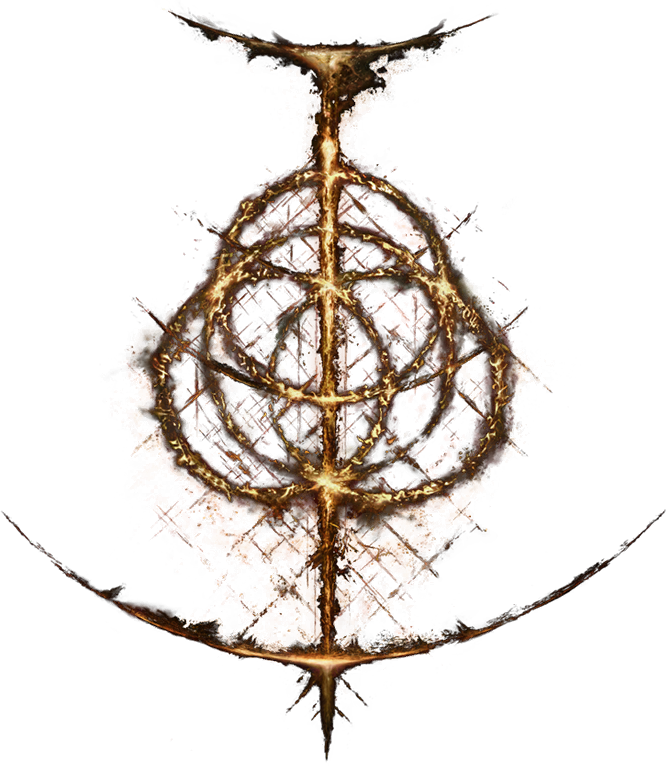
Other
- In summer of 2023, Steam held a "Steam Shmup Fest" to promote Shoot 'Em Up games on the platform. However, many of the games featured were not purely shmup games, with their main connection at most being that they have Bullet Hell elements, such as Vampire Survivors (roguelike) and Rabi-Ribi (Platform Game, with a single proper-shmup segment). Even more strangely, some games that are clearly shmups, such as Terra Flame (a Horizontal Scrolling Shooter evocative of Thunder Force), got initially rejected because for unknown reasons, they were not considered examples of the genre.
