
You have a character or faction in a game that occupies the top tier of competitive play. So why do they move slowly, use attacks that fail to impress, and have skills that look more appropriate for a Joke Character? Trying to get any decent use out of these characters is like trying to memorize the unabridged Encyclopedia Britannica.
But! With enough practice and experience, it turns out they really are awesome as advertised; it's just that these characters have a high bar to entry, and their steep learning curve scares most players away from using them. Most commonly seen in fighting games, strategy games, and in general multiplayer.
These characters tend to avoid becoming the High-Tier Scrappy, due to an unspoken respect for the amount of effort it takes to play one of these characters well, though they can still earn this status if they are particularly frustrating to play against and/or boring to watch; turtlers, attrition fighters, and heavy zoners are the most likely to earn Scrappy status, as are touch-of-death rushdown characters who are known for extremely lengthy combos. Counter-Attack-centric characters lend themselves easily to this definition because of the need to master the precise timing of their counters, as do Mighty Glaciers in games that favor the relentless pressure of Fragile Speedsters or Jacks-of-All-Stats.
Super-Trope of The Law of Power Proportionate to Effort. Opposite of Skill Gate Characters, who are easy to learn but easily defeated by skilled opponents. Compare Magikarp Power, which is about the character gaining additional power rather than the player getting better at using them; Full Health Bonus, an ability that works best if the user can avoid getting hit; and Game-Breaker, which some of the more potent examples can easily become. Compare and contrast Lethal Joke Character, who requires a specific trick or exploit to be awesome, rather than requiring the player to master the character over time, and Awesome, but Impractical, where Awesome may turn out to be a bit too Difficult. Can overlap with a Mechanically Unusual Class and/or Powerful, but Inaccurate, but is not required. The Anti-Metagame Character tends to be this, because if they were easier to use, it's likely they'd actually be the metagame instead.
This trope does not refer to great games that are themselves Nintendo Hard.
Example subpages:
Other examples
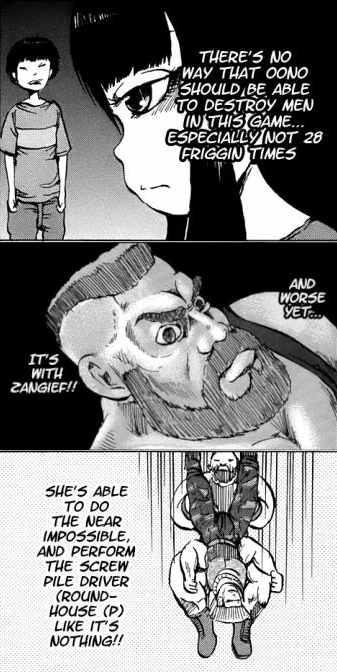
- Pretty much anything in Bayonetta tends to have mechanics rivaling Fighting Games in complexity. That said, feats that're about as amazing as this
 are legitimately possible.
- Specifically, there's the Moon of Mahaa Kalaa accessory. Simply put, it's the accessory that allows blocks and averting/countering attacks. The timing required is VERY precise and unforgiving but once you have it down, there is not an attack in the game that you can't send right back where it came from.
- Playing as Zangetsu on Bloodstained: Ritual of the Night has a pretty tricky learning curve owing to him being capable of literally everything he could do as a boss during Miriam's playthrough. Yes, even taunting. Since there's so much to learn to use, he's incapable of using items or gaining shards, and the only way to heal is to get to a save room, the game quickly becomes difficult as him if you don't get a good grip on all of his moves and his ability to change elements on the fly. In the hands of a master however, he's a force to be reckoned with even on Low Level Runs.
- Castlevania: Dawn of Sorrow has the Succubus soul. It has a very specific range it works at; half a pixel off, and Soma will just swipe at empty air, and most likely get hit by whatever he was trying to grab. If you can get the range down, however, you have an extremely powerful attack that also heals Soma greatly.
- There's also Yoko Belnades, available in Julius mode. She's a Squishy Wizard in a game mode where it's already very easy to die from taking hits, and in order to recharge her mana, she needs to get very close to the enemies to use her ridiculously short-ranged melee attack. Her spells themselves are very tricky to use properly, as well. Once mastered, however, Yoko can easily and quickly slaughter any enemy in the game with the correct spell, weave in and out of enemies' arms like a butterfly, earn melee kills before the enemies even know what hit them, and look incredibly stylish doing it.
- Devil May Cry:
- Multi-game:
- In 3, 4, and 5, you can play Dante with the Royal Guard style. To get the most out of this style, you need to time Dante's blocks and releases near-perfectly. If you take the time to master it, however, you can do a lot of damage. A real lot. Plus blocking everything your enemy/ies can throw at Dante and retaliating like the unstoppable badass Dante is meant to be looks really awesome.
- The top tier Rebellion Swordmaster skill "Dance Macabre". Yes, it looks extremely awesome when using it, but you need to be very aware of where every enemy is and when they're about to attack.
- Dante himself in 4 and 5 compared to the other playable characters. To get the most out of him, you have to learn to switch between all of his styles and weapons on the fly, utilize quite a few glitches and exploits, and learn to properly use his moves to chase the opponent. That said, if you can learn how to properly use him...
- Nero himself has the EX-Act mechanic. Prior to purchasing the EX-Act, the only way to use Nero's revved up attacks are by charging the sword while standing still, which is drawn-out and doesn't allow you to use certain attacks revved (such as at the end of a four-hit string when you are only allotted three Exceed segments). Once purchased, you can then charge the sword every time it's swung to gain an Exceed segment if you have good timing and thus all of Nero's attacks can be revved up. Going even further is the MAX-Act, which has an extremely small timing window (about a frame) but pulling the trigger on that frame will grant you a maxed out Exceed meter, meaning you get three segments for one well-timed rev.
- Jump Canceling is a trick/semi-legitimate exploitation of the "Enemy Step" ability that allows you to cancel any attack by jumping off an enemy. The most common use of this is to cancel an attack into another attack in mid-air. In 4, however, advanced usage of Jump Canceling allows you to transfer momentum from one attack to another, and advanced usage of that trick even allows Dante to zip around in the air with a technique known as "Guard Flying"!
- In 3, 4, and 5, you can play Dante with the Royal Guard style. To get the most out of this style, you need to time Dante's blocks and releases near-perfectly. If you take the time to master it, however, you can do a lot of damage. A real lot. Plus blocking everything your enemy/ies can throw at Dante and retaliating like the unstoppable badass Dante is meant to be looks really awesome.
- Devil May Cry 3: Dante's Awakening:
- There are two types of Lag Cancel for the big guns Spiral and Kalina Ann. The easier one is switch-cancelling, where you switch to Ebony&Ivory, fire them and switch back. Little finesse is needed and anyone can do it. The harder one is to use Royal Guard to cancel. If you slip up on the rhythm, the cancel will fail and the refire rate will be as slow as if you never tried. If you get the rhythm correct, though, you can fire faster than what switch-cancelling offers.
- Nevan is slow, has moves that need to be far more precise than any other in the game, is the only melee weapon that mainly involves charging attacks, it kinda sucks against large enemies and its damage isn't all that great either. However, its range is by far the best in the game and its sickle attacks when using the Swordmaster attacks are obscenely powerful. Once you get skilled enough with Nevan, you can quickly switch between its crowd control attacks, leaving everyone immobilized, and its killer sickle attacks.
- Multi-game:
- Using the mouse for one-to-one sword movement in Hack-and-Slash Die by the Sword is favored by most players because the enhanced control is more fun, but it's also significantly harder to block and strike than the "arcade" controls where a single keyboard button corresponds to a complete attack.
- God Eater:
- God Eater 2 gives us the Final Vengeance blood art. To wit, Final Vengeance is a buster blade-specific Blood Art triggered by a parrying counter that ignores the target's armor and doubles the damage inflicted at the cost of a stricter frame block. Unlike other upper parrying blood arts, it requires the user to actually take hits from Aragami, and all unsuccessful attempts always cause HP loss. However, If you get the timing right, you can turn almost every type of attack (even ranged attacks!) into a counter that's very devastating for the target, especially when landed on an Aragami weakpoint, in which case you can expect to see your melee damage numbers reach four digits.
- Just Guards have a very tight window, but get the timing right (which can be tough with anything that deploys slower than a buckler-class shield) and you negate any and all chip damage with the added benefit of negating the knockback you would get otherwise. In God Eater 3, this extends to negating the crippling Devour attacks used by the Ashborn!
- Getting all the pledges fulfilled to proc Blood Rage within the time limit (25 seconds without skills or link support devices) will be tough roughly 80% of the time (as they sometimes involve drastically decreasing your HP to the point that a slight graze can kill you) but get it done and you enter a Super Mode where your melee attacks deal 400% more damage, you're FUCKING INVINCIBLE! and you get infinite dashing, all within 30 seconds (will increase when using skills/link support devices).
- Kingdom Hearts:
- Kingdom Hearts has an exploit in which you can trap That One Boss Ansem-possessed Riku in an infinite combo using the Counterattack ability. It takes very precise timing, but when done correctly, you can beat Riku without him ever using his Dark Aura Limit Break.
- In Kingdom Hearts: Birth by Sleep, Aqua is this compared to Terra and especially Ventus. Her magic-based fighting style can be hard to get used to, especially for those who are used to Terra and Ventus (who are much more physical fighters), but she can be a devastating force in the right hands. There's a reason only she made the rank of Keyblade Master, after all.
- In Kingdom Hearts III Re:Mind, Kairi is this in her only playable battle, against the final boss of the DLC's first part. She's a textbook Glass Cannon for late game, exhibiting the worst aspects of the Birth by Sleep trio: slow like Terra, middling HP like Ventus, and awful defense that also hampered the aforementioned Aqua. However, she hits HARD, has moves akin to the ones Sora can only get very late in the gamenote , and some he can't even access unless he uses certain Formchangesnote . You will be dying a lot with her, but once you get the hang of her, she's a blast to play! It helps that the boss retains his HP should you lose then Continue.
- Mega Man:
- The frequently-mocked Top Spin in Mega Man 3 is regarded by many players as a joke weapon. Most will try it out once or twice before dismissing it as useless. A player who knows how the Top Spin works (you have to be in midair to spin) and what enemies are vulnerable to it howevernote , can twirl and spin through good bits of the game, taking out most enemies in one hit.
- Power Stone and Crystal Eye in Mega Man 5. Power Stone has a "unique" firing pattern, and Crystal Eye breaks into three balls that bounce off the walls. Most players never use these, as it is difficult to hit enemies with. However, if fired in the right places at the right time, they become devastating weapons that can be used to show off just how good you are.
- Zero from Mega Man X4 onward. His attacks tend to do more damage, and instead of gaining weapons from fallen Mavericks he learns new techniques that can be used without switching to them and don't require ammo. However, almost all of this requires the player to get in close to attack, increasing their risk of getting hit, he doesn't get armor upgrades like X does, and it's become popular for certain power-ups involving Zero to boost his damage output at the cost of increased damage to himself.
- Probably a gameplay oversight, but Zero has a particularly nasty technique that milks the non-Mercy Invincibility attacks for all of their worth. How? Well, his main combos are usually weak, fast-paced slashes that end on a high damage finisher. The weak slashes also seem to have high priority. So, if you start a repeated chain without doing any finishers and abusing the weak attacks, then you'll be killing off bosses smoothly. This sounds easy in theory, but it requires quite a lot of practice. It is also a staple in TAS runs.
- Sam in the Metal Gear Rising: Revengeance DLC Jetstream Sam plays completely differently to Raiden in the main game, with no infinite combo, less damaging standard attacks meaning he needs to rely on his Charged Attacks, focuses more on dodging than parrying, and doesn't have access to any of Raiden's Game Breaking upgrades. Master his combos however and whole rooms of enemies die in seconds while nothing they do can touch him.
- The later Metal Slug games have Clark and his special move, the Super Argentine Backbreaker. It's a risky move, requiring you to get up close to foot soldiers and risk gunfire to the face in a game where one hit equals death. However, it has three very beneficial effects: It's a One-Hit Kill to soldiers, throwing an enemy with the Backbreaker has a base value of 1,000 points (and climbs up with successive throws), and most importantly for survival-based players, it grants a few seconds of invincibility. Used proficiently, the Backbreaker turns hordes of mooks into opportunities for much-needed invincibility and buttloads of points.
- The fun little Action-Shooter-Multiplayer-Game Soldat offers a wide variety of automatic and half automatic weapons to kill other players, like an AK-74, akimbo Desert Eagles and even a Minigun. But by far the most satisfying hits are with the primary weapon M79 and secondary weapon M72 LAW. Both guns are explosive, killing in 1 direct hit or 2 with splash damage, but take several seconds to reload and have an awkward firing angle. The M79 projectile is slow and risks killing yourself, especially when fired upwards, and the projectile's speed/angle varies based on the velocity of the player. In a game where players are in mid-air most of the time, the LAW can only be fired while crouched on the ground. However, when mastered, few can match the M79's trick shots and the LAW ricocheting its missile off multiple walls and hitting enemies off-screen. Furthermore, no other weapon lets you experience the delight of standing in the bloody rain of your evaporated foes.
- Star Control II:
- The Slylandro Probe's controls are very different from other ships' controls — it always moves at top speed at the direction it is facing (so turning it makes it automatically move that in direction, without the need to accelerate and ignoring any inertia) and the thruster key is used for reversing the ship's direction instead of acceleration. It is insanely difficult to control, but once mastered it becomes highly maneuverable and a very deadly ship.
- The Druuge Mauler has no defensive mechanism, eats up a massive amount of energy with each shot, and has to kill off its own crew to replenish it at any reasonable rate. It also flies backwards whenever a shot is fired. This makes it very unappealing to novice players. An experienced player however will basically snipe at his opponent from across the map, causing massive damage with each hit. Experts like to fire a shot or two to build up some high speed, then cheerfully bombard their opponent with long-range potshots while coasting across the map so quickly that they're almost untouchable. Often, the Mauler's actual engine isn't used for propulsion at all, and the ship relies on the Recoil Boost from its gun to maneuver.
- The Umgah Drone is moderately fast but is made of paper, practically a One-Hit-Point Wonder. Its weapon is also extremely short range. But get within that short range and it will kill just about anything in seconds. It does have a "dash" feature that makes it move extremely quickly for a second or two... but it only dashes backwards, compounding the difficulty of this ship.
- The Pkunk Fury has very little health, must manually recharge its energy, and its only weapon is short-ranged and weak (but does fire in three directions). It is also fast. Really fast. Faster than any other ship in the game. And very maneuverable on top of that, meaning that a skilled Pkunk player can dodge just about anything. It also has a 50% chance of respawning at full health upon death, and this does not go down after it accumulates deaths. There's a reason seasoned players make sure to take at least one of these into the final battle: it can outrun the Final Boss's homing projectiles, making the battle a cakewalk.
- Lara's acrobatics in the earlier PS1-era Tomb Raider games. The Tank Controls combined with very manual and deliberate commands needed to coax precise movements out of Lara feel very clunky and broken at first, and inexperienced players will be forced to take slow and methodically timed jumps, adopt the "walk to a ledge, hop back, run forward holding jump" tactic to clear every pit, and typically engage enemies by retreating to ledges where they can't be reached or wasting their more powerful and limited ammunition. Experienced players who have learned that every ledge is spaced deliberately and specifically and have gotten a grip on the controls will be able to glide Lara through the environments like she's in The Matrix and effortlessly dodge high-tier enemies by casually flipping and rolling out of their reach while pumping them full of weak pistol rounds and never once taking a single hit. The average time to beat the first stage in the first game is about twenty minutes for an inexperienced player, while a pro can pound it out in about three.
- The Legend of Zelda:
- The Legend of Zelda:
- Link "CAN'T WAIT to bomb some Dodongos!" Alas, what the game manual doesn't mention is that targeting a Dodongo with bomb smoke is extremely difficult. This is due to the monster's erratic movement. Normally, it takes two bombs to kill one via force-feeding. But if you can time it where it walks into smoke left behind by a bomb's explosion, it'll be stunned and can be killed instantly with a sword stab. Using this method will also guarantee that the Dodongo will drop Bombs, replenishing your supply.
- Bombs have a time delay, stay put when used, have a somewhat limited range, and suffer from low capacity. However, their power is equal to that of the Magical Sword, and they are one of, if not the easiest side-weapons to get in the game. When used in tandem with other items (e.g. bait, boomerang), bombs can capably clear screens where you're otherwise overmatched early in the game. In the first quest, bombs are also essential in acquiring the Disc-One Nuke.
- Biggoron's Sword in The Legend of Zelda: Ocarina of Time is more powerful and has a longer reach, but it has a few drawbacks, mostly due to the sheer weight of the thing. First, the time required to swing it is much longer, and the recovery time is a window that you can be hit in. Second, it slows you down to a crawl; all dodging moves are delayed. Third, you can't use your shield at the same time because it's a two-handed sword. You can use the sword itself to block some attacks, but not all. That having been said, it is the only sword that can harm an Armos Knight, and especially when combined with the Jump Attack (which doubles attack damage) it can make short work of any boss. Since you usually have to stun a boss before you can actually harm them, it makes sense to want to deal as much damage as possible before they recover, so proper usage of Biggoron's Sword spares you some repetition. It is also very effective when used against Dark Link as he can pull an unavoidable counterattack if you are using the Master Sword but not against the Biggoron's Sword.
- The Legend of Zelda:
- Sid Meier's Pirates!: Players who favour mobility in a ship tend to find the Royal Sloop a solid choice, but a small cult of elite and possibly crazy players swear by the Pinnance-class ships, the War Canoe, the Pinnance and the Mail Runner. The Mail Runner is the largest and strongest of the three, with the most cargo capacity, crew capacity and cannons, but even then, it's still far less than just about any other ship. Not to mention that the Mail Runner is the second-rarest ship in the entire game, with many players never seeing one in an entire playthrough. However, the Runner can run rings around other, larger ships, and it is excellent at sailing into the wind.
- The Flying Knee in the NES version of Double Dragon II. To perform it, you must jump, and then jump again in either direction immediately as you stand up. It's extremely difficult to time....but it one-shots almost every enemy (except bosses and other big enemies) until Stage 7. If you can master pulling it off, you can pretty much destroy every enemy in the game with no effort, except for the ninjas and the Final Boss.
- God Hand has some of its apparently Awesome, but Impractical moves turn out to be this. For example, Yes Man Kablaam has an awful startup time, a period immediately after it connects where Gene smiles at an imaginary crowd and none-too-stellar damage, but if you know how to use it properly — on a dizzied target, preferably with no one around to interfere, then dodge-cancel the delay — it fills up the Tension Gauge much faster. Granny Smacker has similar drawbacks, but helps dizzy an enemy much faster than most other moves would.
- Of the four protagonists in Yakuza 4, Tanimura is by far the hardest to master. He starts off slow, weak, and with the smallest health bar in the game, with his only specialities being a unique parry and armbar grapple. Upgrading him unlocks "Essence of Combos", which allows him to use Heat to unleash a powerful attack after every single combo finisher, alongside the ability to gain Heat via said parrying and grappling. What's more, his grapple has a large amount of invincibility frames, and he can use his grabbed opponent to clear the area (something of a necessity given how often he has to fight large group of mooks). By mastering his uniquely defensive rhythm, he can go from the weakest character in the game to dishing out tons of damage while avoiding every hit. His final battle is either a slow-paced cakewalk or the player's worst nightmare, depending on how well they've managed to grasp Tanimura's style.
- Using manual transmission over automatic transmission in general. While automatic transmission frees you from having to shift gears by yourself and lets you fully focus on driving, in mastered hands manual transmission gives better control of acceleration and deceleration, as well as allows you to use engine braking (i.e. slowing your car by shifting the gear down instead of using the brake), which can be incredibly useful or even crucial on tight corners, especially when it comes to competitive gaming.
- While manual transmission being difficult holds true in many racing games like Wangan Midnight Maximum Tune, automatic transmission players can and do play competitively against manual transmission players when mastered. While manual transmission players simply needs to shift down a gear and then steer regardless of how the power setting is done, automatic transmission players need to memorize precisely when and how to brake and steer simultaneously and these change significantly when power setting is changed, which means they need to stick to the same power setting for all races. However, once they have these mastered, they can take on any corners as good as manual transmission users (even in Hakone, but that takes more effort than the rest of the tracks combined). A couple examples of competitive AT play can be found here and here.
- Rage Racer's higher-tier cars only have manual transmission as an option, and you'll need to master them to win in the advanced GP races.
- While manual transmission being difficult holds true in many racing games like Wangan Midnight Maximum Tune, automatic transmission players can and do play competitively against manual transmission players when mastered. While manual transmission players simply needs to shift down a gear and then steer regardless of how the power setting is done, automatic transmission players need to memorize precisely when and how to brake and steer simultaneously and these change significantly when power setting is changed, which means they need to stick to the same power setting for all races. However, once they have these mastered, they can take on any corners as good as manual transmission users (even in Hakone, but that takes more effort than the rest of the tracks combined). A couple examples of competitive AT play can be found here
- Speed class characters in Crash Team Racing and its remake have a low turning stat that makes it difficult to stay on the track. When mastered however, they are some of the best characters in the game for most tracks. This in contrast to turning class characters, who are easy to pick up but generally the worst choices at high skill levels.
- Daytona USA: the Javelin, an unlockable rocket car found in the Dreamcast version. It can hit an astonishing 450km/h. However, its low grip makes it almost impossible to control.
- F-Zero:
- The Jet Vermilion in F-Zero: Maximum Velocity. For being the coveted best car, it is incredibly awkward to use at first. But if you're insane enough to persist long enough to have gotten it (that is, without using the cheat code), you're probably disciplined enough to master using it.
- In F-Zero X, Blood Falcon's machine has a horrible grip rating, but mastery of the physics system (such as grinding the wall for massive bursts of speed) makes his vehicle one of the best ones for setting world records. In fact, most of the machines with an E in Grip aren't nearly as bad as the parameters would imply, as they're able to exploit the same mechanics and access several shortcuts.
- F-Zero GX's revamped physics system allowed the player to snake. It's a very difficult technique to properly pull off (not to mention that your fingers will be extremely sore afterward), but mastering it turns the game into an utter cakewalk by propelling your vehicle at insane speeds without even having to sacrifice your energy meter for a boost. The technique (in modified form) would also find life in Mario Kart DS. However, whether or not such tactics qualify as cheating remains a source of heated contention. Word of God states that those techniques were deliberately implemented into the games, so make of that as you will.
- When it comes to playable ships, GX's biggest example is Don Genie's Fat Shark. It is by far the worst-handling ship in the game, so bad that even a light flick of the control stick will send it drifting. This is however counteracted with extraordinary bulk, a very high top end speed, the best boost in the entire game and blistering acceleration for being a heavyweight ship. It's not a ship for beginners, but those who mastered it can set new track records and grind opponents to dust with little effort. Its drifty handling makes it a great ship to learn snaking with, too.
- Drifting in simulation racing games like Forza Motorsport and Gran Turismo. The simulated physics in those games require that you must tune your car to the right settings in order to make your car perform like the machines from Initial D. Depending on the car, it can be a real pain to turn it into a real drifting machine, especially if the car is not designed for drifting. Not only that, but players also must have extensive knowledge and feel of the race courses before implementing drifting mechanics, which will require lots of Trial-and-Error Gameplay. The only exceptions where drifting is not required are high speed courses with little to no technicality and plain Jane oval courses as these render drifting useless thanks to their simplicity. Don't expect arcade mechanics that you were used to in other racing games save the day for you.
- Happy Wheels has the pogo stick guy. His controls are very hard to deal with, and getting him to go where you want him to is a bit of a chore sometimes. However, he is one of only two characters that can actually jump with no outside influence, and he is fairly durable while on the pogo stick.
- Hydro Thunder Hurricane brings the Rad Hazard. The absolute best acceleration and air control in the game but also the absolute worst handling. Mastering the boat however has brought many players massive online success.
- Jak X: Combat Racing has the Havoc V12 car, which is quite hard to control and even slight contact with anything can send it crashing into wall. However, said car is one of two vehicles that have maximum both speed and acceleration, and the second car has way worse armoring. Mastering it will make most speed-based challenges much easier.
- Kinetica has Dusk, whose terrible grip causes her to fishtail all over the track. In Kinetica, players do stunts for boost, and if you're in a slide you can boost to correct your course; so if you do stunts at all times, you gain enough boost to effectively figureskate.
- Mario Kart:
- Starting with DS, it is entirely possible to dodge a Spiny Shell with a well timed use of the speed boosting Mushroom. It is not only difficult to get the timing down, it is also very rare that you will get a mushroom while in 1st place. With enough practice, Spiny Shells will do nothing to you as you pull off a mushroom boost to avoid being hit. Nintendo made this tactic deliberate to award players who can time the dodge perfectly.
- Taken to an extreme with the game's drift system: if you time it correctly you can dodge a spiny shell by using a drift boost. The catch is that you have to do this while the circuit is making a sharp turn, boost at the right time and immediately make a hop. If done correctly the spiny shell will miss you completely and possibly hit somebody too close to you.
- Richard Burns Rally and DiRT Rally, full stop. Even by hardcore racing sim standards, both are quite memetically unforgiving and punishing in their driving physics to the point that new players not experienced in performance driving will crash, repeatedly, until they master the skills required to push a WRC car to its limit in any road condition, all touched on in the Real Life section below, and for which RBR has a mandatory tutorial to teach several of those driving skills.
- Note that said road conditions for rallying can and will include harsh weather like thick snow, forcing drivers to adapt accordingly from their usual driving habits or lose control and slide into a tree, a wall, or — worse — off a cliff! Good thing you never have to worry about dying in a horrible crash in either of them!
- Roadkill's special in Twisted Metal 2 is a boomerang that does decent but unremarkable damage if it hits the enemy on the way out, but triple damage if it hits them on the return, which is much more difficult to pull off.
- In Twisted Metal 3, Firestarter's flamethrower special is very difficult to use as it only does Scratch Damage unless you land a direct sustained hit on an enemy with it, which isn't easy to do since Firestarter is one of the fastest cars in the game with very tight handling. Furthermore, since it has short range and Firestarter has low defense, to say nothing of how easy it is to light yourself on fire with it, it can be a dangerous attack to use. However, if you actually manage to land a direct sustained hit on an enemy, which is made easier by abusing freeze missiles, it's capable of draining anywhere from 40% to 60% of their health.
- Civilization:
- Aiming for the Domination or Conquest victory fits into this bill in many of the games. Invading other people's cities and annexing them (or Rape, Pillage, and Burn or, in V, making puppet states out of them) fits the bill. It's fun to conquer every single city, but it requires a lot of micromanagement and strategy with your units. You're also going to have to deal with a lot of unhappiness due to overpopulation, angry citizens from occupied cities and city-states, and having diplomatic relations completely cut off and every civilization declare war on you for your war-mongering attitude. This is why "military based civilizations" (i.e. Mongols, Aztecs, Huns, and the Japanese) are considered to be high-risk/high-reward type of civilization.
- The entire point of Wonders is they are expensive to produce, other people may beat you to building one (meaning you wasted all your effort) and time spent building one could have been better spent making lots of conventional forces. But if you finish it, you get something pretty awesome that changes how you play the game.
- In V, Venice has a unique playstyle where it cannot build any other cities and is therefore very reliant on its capital. Do bad, and Venice can easily get conquered as early as Ancient Era. Do good, however, and you will get massive amounts of gold, population, and units that can easily defend Venice while going for a diplomatic victory.
- Getting a Cultural Victory via Tourism in Brave New World requires a lot of planning, both to get the right Great Works at the right time and getting the aforementioned Wonders, but do it right and you can get the rest of the world to concede the superiority of your culture without firing a shot.
- Sid Meier's Alpha Centauri's Morganites have a natural +1 to Economy, giving them +1 energy production per base for free. While that's certainly nice to have (energy giving you money and research), it's pretty underwhelming compared to other factions. Add on a painful limitation on population limits (their bases can only reach size 4 without a pop-limit boosting facility, compared to 7 for the other factions; leaving you with slower creation of new facilities and units), and you have a faction that's profoundly weak in the early game on paper. Until you realize that their +1 Economy lets them prioritise Wealth as a societal value (as opposed to knowledge or power) to get them up to +2, which increases their energy bonus to +1 per square (translates to +21 per base), sending your research and income through the roof. Most factions have to run Free Market economics to get that, which comes with prohibitive Police and Planet penalties - industry crushing rioting and violent backlash from planet wildlife. Add in the fact that the pop-limit boosting facility is learned from the same tech as Wealth, and you get a faction that revels in Magikarp Power, and uses their hordes of cash to mind-control your units out from under you and sabotage your hard-built bases.
- Sword of the Stars:
- The Morrigi have below-average population growth, terraforming ability and industrial capacity. Their ships are fast tactically but sluggish strategically, fragile, prohibitively expensive and barely above those of the Liir in turret placement. Their tech-tree, while one of the most inclusive in the game, favours 'trickery' tech like cloaking, shielding, mines, drones, AI, and short-ranged beam weapons, and they have one of the poorest natural research rates in the game. However, they have a 50% bonus income from trading compared to all other species; moreso when conducting foreign trade, and their fleets get faster the bigger they are. Mastering the Morrigi requires hefty use of trade, diplomacy and planning on a strategic level, and dedicated large-sized fleets using alternate ship sections instead of all-purpose battlefleets. A player who masters these aspects will turn the Morrigi into an economic powerhouse that can out-buy, out-tech and outwit most opponents by the end of the Fusion era.
- The Zuul appear to be a Crutch Character at first glance; see that page for a rundown of their apparent advantages. However, they are closer to this, if taking a different approach to Morrigi Magikarp Power. Zuul players must subscribe to the blitzkrieg way of war, always on the Attack! Attack! Attack!, keeping enemies on the defensive and pushing ever forward. Being unable to avoid overharvesting means their planets "burn out" comparatively fast, and taking slaves is something of a compensation for not being able to use trade or having civilians to bolster their income. Their strategic speed comes at the cost of having a limited number of connections to each system. Their research speed is also the worst. All this forces the Zuul player to aim for quick victory, for he who loses momentum and lets the enemies build up to antimatter and/or dreadnoughts is Doing It Wrong and defeat will come soon. However, if you know how to carry out this aggressive playstyle, you can win games comparatively quickly.
- The Loa, introduced in the sequel's End of Flesh expansion, use drastically different strategic mechanics from the other races released before them. Their spacecraft are formed from "cubes" rather than manually built at colonies. Their population growth is affected by solar activity and the remaining biosphere, which the other races need not worry about, and is inversely proportional to tax rate (so more money gain equals less population growth). They cannot build police cutters to defend their trading freighters, making them highly vulnerable to pirates. Going into debt freezes their production, research and population growth. They do not gain access to the cybernetics and psionics trees and very little biological tree access. However, if you can wrap your head around them, you get a very powerful faction: They have the most 100% chances for techs, get the research-boosting Artificial Intelligence tech for free, all their command sections count as AI Command sections with the firepower and agility that implies, the cube system gives them unsurpassed flexibility of fleet composition and their spacecraft are Lightning Bruisers with the durability of Hivers, the guns of Zuul and acceleration and speed no organic faction can match.
- Stellaris:
- Before it was removed in Version 2.0, Wormhole FTL required you to build stations at the fringes of your empire to expand your borders and explore the galaxy. These stations were an Achilles' Heel (lose the station, lose your ability to jump fleets between systems) but the stations had massive range that only improved with technological unlocks, they circumvented defensive chokepoints and rendered Hyperlane travel obsolete, and travel was instantaneous. While a good Wormhole network was tricky to set up, it was so good that the powerful Jump drive was considered just a marginal upgrade. This was precisely the reason they were removed along with Warp drives; they were just too powerful if you knew what you were doing with them.
- Playing as a Pacifist empire can be tricky, especially in the mid-game when unclaimed territory runs out and taking territory through war is really the only quick and reliable way to expand.... which you can't do because Pacifists can only use liberation wargoals (and Fanatic Pacifists can only fight defensive and reconquest wars). However, if you play your cards right you'll be trusted and liked by everyone. You can uplift primitive species and pre-spaceflight empires and welcome them into your galactic community. You can offer weaker nations vassalage and then gradually assimilate them into yours. Your rivals can be brought about with diplomacy, or offered Associate status. Half the galaxy will call you an ally, and even Awakened Precursors will think twice about starting that fight. Hell, they might even be convinced to join your federation. And if one of the end-game Crisises comes knocking, you can punch out Cthulhu with the Power of Friendship. Who says nice guys finish last? Taking this further is the Pacifist and Xenophobe-exclusive Inward Perfection civic, which prevents most kinds of diplomacy, including almost all alliances (non-aggression pacts are the exception) and federations, while having Pacifist ethos restricts you to defensive and liberation war. This effectively pits you alone against the rest of the galaxy, even if it does give some hefty internal bonuses to the stability and production of your empire. Playing carefully might put you on the same level of power as an Awakened Fallen Empire.
- The Biological Ascension Path in Utopia is all about genetically modifying your species to make it more powerful. You get five additional Trait points and the ability to freely add or remove pre-existing traits to refund them into even more points. Now, Synths in the Cyborg Ascension Path do get a 20% bonus to everything except food production, but gene modded Pops can potentially be even more powerful than them. For instance, you can stack the Industrious and Very Strong traits on a subspecies to give them a 40% bonus to Mineral production, plus another 40% bonus to the damage inflicted by an army composed of this subspecies (note: Synths don't get any bonus). It requires a bit more micromanagement and forward planning than cybernetics or psionics, but you'll be hard to beat.
- Terra Invicta:
- The United States is everything a faction could ever want: a robust space program, lots of money and research, six modern armies which can cross the oceans and attack nearly anybody with impunity, a big nuclear weapons stockpile, and a massive amount of development points. It's also really, really difficult to get any foothold in the country due to the sheer size and wealth of it. You'll need to secure the control points within neighbouring Canada and Mexico and invest in multiple public campaigns to bring the American public around to your manifesto, and then spend massive amounts of Influence to bring control attempts up to reasonable levels. If you succeed, the USA's six control points are very expensive to maintain along with Canada and Mexico's as well; the US and Mexico also require some stabilization to calm down the political scene and prevent the erosion of democracy. That said, managing to seize just one of the USA's control points is very helpful. Controlling the USA outright would pretty much instantly put you in a better spot than basically anyone else.
- Taking over China is the same, but even more hard work. It's hands down the largest country on Earth population-wise, but compared to the US, it's a technological middle-weight with an inefficient authoritarian government and a military that pales in comparison to the USA's. China however has more room to grow than any other major power. If developed into a first-rate democracy, China (or better still, the Pan-Asian Combine) will make the USA look measly, and a well-developed Chinese military is practically the only thing that can fight the aliens on the ground toe-to-toe without nukes and massive support.
- Taking control of France and Germany is the first step towards unifying the EU into a single entity, something quite straightforward to do (once you have one of them, you can do it peacefully, country by country). However due to some idiosyncrasies in the economic calculations it's much easier to build mission control in individual countries than one large one. So if you max out the mission control capability of each region before you bring it into the EU then you can have an EU with a incredibly high mission control stat. However this tends to put a significant strain on your early game control cap and councilor actions putting it cleanly into this category. A fully-unified EU tends to have a greater GDP and science output than the USA with similar military muscle.
- Ace Online:
- Three of four classes seem attractive from the get-go. The B-Gear is a bomber; using the right type of advanced weapon, it can blow most opponents apart in one shot. The A-Gear is the literal tank; it uses its unrollable cannons to do massive DPS. The I-Gear is the fighter; aim, fire, do acrobats and survive. The M-Gear, however, is... a healer. Unlike the rest of the class, the M-Gear has the innate disability of having a low stat growth for attack which makes leveling it very difficult. However, with the right skills (M-Gear is the most micromanagement intensive class in the game), stats and equipments, the M-Gear can wreak absolute havoc by the virtue of its naturally high defense that can hold its own against literally an entire nation, sapping them of firepower trying to kill a virtually unkillable character while others move in for the kill. Of course, there are less strenuous ways to play the M-Gear such as being a buffslave or healbot, but it's the players who can master its intricacies who gain a lot of respect.
- Unlike the others, the I-Gear has no flashy gimmicks and while it does make it easy to get used to, it gets harder and harder to keep up at higher levels, much less master it. The choice is either make it an offensive class and risk dying lots due to its low defense (innate) and low evasion (due to build), or make it survival evasion build by trading its ability to kill, which are neither cost-effective nor foolproof. However episode 3-2 update gives a major boon to I-Gears which somewhat alleviates this problem.
- In Final Fantasy XIV:
- For higher level play, knowing the quirks of the global cooldown (GCD) and cast timers are key to ensuring maximum DPS uptime.
- Physical DPS and tank attacks are spaced out using the GCD since their abilities hit instantly. Input for the next ability doesn't happen when the GCD hits 0, but shortly before that, typically 0.5 seconds on average server lag. This lets you buffer in the next input so the next ability appears to go off right away. This is necessary to shorten how much time you spend on a rotation as much as possible.
- For magic users, moving while casting normally stops the cast. However, you can actually move about in the last 0.5-0.75 seconds of the cast time. If you time the cast right, you can squeeze in one more before you need to move if you need to dodge an AOE or get into position for a mechanic. This is known in the community as "slide casting"
- For even more fun Min-Maxing, optimal builds make it so that the GCD lines up with a nice even (as much as possible) multiple as possible with one of the job's abilities to maximize their usage.
- Related is knowing the last possible moment an AOE is about to go off. Because the server "snapshots" you when the spell goes off, you can dive right into the animation, even if it's a fiery wave of death, and not get damaged because the server didn't consider you in it. Of course, screw this up and you get hit by the attack.
- Monks are this for DPS classes. Due to their stance system they're maintaining 3 combo chains at once, are the most position-reliant class in the game, and have the disadvantage of being melee, but in the hands of a skilled player can output a lot of damage while adding some utility for the party. They're not as hard hitting as Samurais, but Samurais are a pure DPS class with no utility.
- Scholars and Nocturnal Sect Astrologians are seen as this compared to White Mages, generally being expected to alternate between DPSing and healing and being more about mitigation and preparing for damage rather than the huge burst heals White Mage has to offer.
- Black Mages are around the top for the highest DPS outputs of any of the jobs, but because it's a caster job, it requires standing still to throw attacks around. This is made worse with their Ley Lines ability which allows them to plant an area that gives them a buff. To make the most of it, a Black Mage user has to know when and where to position Ley Lines such that it provides the maximum benefit. This has led to memes regarding particularly DPS greedy black mages refusing to move from their Ley Lines even if an attack is right on top of them.
- For higher level play, knowing the quirks of the global cooldown (GCD) and cast timers are key to ensuring maximum DPS uptime.
- Guild Wars:
- Mesmers, particularly in PvP. Few of their skills deal direct damage to enemies; instead they punish the enemy for using their own skills, and thus require the mesmer to predict enemy behaviour and have godly timing. Completely useless in the hands of an unskilled player, but utterly devastating in the hands of a skilled one, mesmers take kill priority over even the healers — because they can and will shut down your own healers without even hurting them, forcing them to watch helplessly as their team gets ripped to shreds by the mesmer's allies.
- Many builds exist where a player can make their character nigh-immortal with a mixture of specialized abilities. These include monks with half the health of starting characters, assassins who can act as a tank, and elementalists who use their enemy's attacks to heal themselves and damage their attackers. Even a slight slip-up in timing with the skills can be fatal.
- The sequel gives us the Elementalist. While they're generally serviceable, they truly shine with the effective use of a dagger/dagger build. With precision timing, and if you can figure out skill chains with the class’s attunement feature (which involves juggling four sets of weapon skills), a D/D Elementalist is destruction incarnate, slaughtering foes in frontline combat with efficiency that would put a seasoned Warrior to shame. Have we mentioned this is a class that uses light armour and isn't usually suited for melee?
- The Lord of the Rings Online:
- Wardens wearing medium armour, using complicated long combined skill lists, are extremely capable tanks in the hands of the right player.
- As of the Rohan expansion, Mounted Combat. Your warhorse steers like a boat. The first few times you try it, it's pretty much guaranteed you're going to wind up with aggro from the half-dozen or so closest mobs to your intended target, because you keep wandering into their detection radius inadvertently. However, it's not uncommon for a character that normally hits for a thousand or so damage to be hitting for 4000 when mounted, so once you're competent it's extremely useful. (It helps that you can get control upgrades from leveling your mount so that it's less "sailboat" and more "motorboat".)
- Lore-Masters. They start off squishy, use only light armour, take many hours of practice to become competent at solo combat, but a genuinely skilled LM can stand toe-to-toe with even the most expert of Wardens with a robe and a stick.
- Advocates in Nexus Clash are rarely played for several good reasons: they have no direct combat bonuses, are equaled or surpassed by the Conduit as faction-support crafters and enchanters, and their supposed primary skill tree (Blessings) is a bottomless pit that can easily eat all of your Character Points and still need more. However, Advocates have a combo of skills that, done right, lets them soak up damage in combat better than even dedicated tank classes, and actually completing the Blessing skill tree lets the Advocate turn all of their allies into Super Soldiers with the click of a button.
- Phantasy Star Online 2:
- Counterattacks inherently involve a mechanic known as "Just Guard", which grants invincibility frames upon using a guard action to stop an attack at the right time. Just Guarding itself allows a skilled to player to remain an unstoppable badass on its own, but adding counterattacks improves this by increasing or maintaining DPS of a character. The most triumphant example in-game are Katana Bravers, whose built-in counter mechanic is central to their success. They're one of only two classes with a skill that directly buffs the power of their own counter, by a whopping 700%, as well as increasing range, PP recovery and activating Katana Gear Release. Katana Bravers who do not Counter consistently have significantly lower performance than Bravers who do, meaning that high-level Katana Braver play involves solid spatial awareness at all times as well as good reflexes and timing in order to react to, block and counter anything heading their way. Played this way Katana Bravers can even utilize their Counters as burst damage if they counter successive attacks; after all, the power of the Counter is independent of what they're countering. Even incoming Scratch Damage can prompt a retaliation strong enough to kill the offender hundreds of times over.
- The Hero Class offers a simpler counter function: Hero Counter, which instead of blocking and returning a hit, involves Hero completely dodging the hit and returning it tenfold with a particularly powerful dash attack. Although less flashy than the Braver Counter, and unlike Braver the Hero takes full damage instead of reduced damage if they mess up and act early, it's not limited to frontal guards like Braver, and can be performed more consecutively. Hero Counters make up the bulk of Hero's defensive game, and like Bravers significantly increase their performance; you can tell a run-of-the-mill Hero from an savvy one based on how often they Hero Counter as well as how aggressively they seek out opportunities for Counters.
- High-risk high-reward builds tend to be this, most notably the Fighter and Gunner classes which are built around the idea of taking as little or no damage as possible to reap maximum benefits.
- To maximize any main Fighter build you need to use a skill called "Limit Break" which drops your maximum health to a sliver, but also simultaneously activates at least half of the power-up skills in the Fighter tree at once, resulting in a period of outrageously high damage output while also being 1 or 2 hits away from death. An effective Fighter needs to understand very well their entire kit to know what actions are safe to perform at which times to avoid simply making themselves easier to kill in order to truly become the death machines Fighters are famous for being at high-level play.
- On the other hand, the Gunner does not need to put itself in mortal status to achieve its damage potential, and can even be fairly sturdy if it runs the Hunter class as subclass. The problem comes in a considerable amount of its power coming from three different skills that in summary rely on Gunner not taking hits or staying above certain HP thresholds. Since Gunner is actually a close-combat class, it's damage output will severely lower if it tries to fight at range like it's counterpart class Ranger, so Gunners must put themselves in harms way and dodge everything in order to stay at max power. Their Twin Machineguns gives them access to a very useful ability known as Stylish Roll, which lets them spend a fair amount of time safe, but a single mistake can make a Gunner into The Load until they power up again.
- This leads to an extremely powerful but also extremely fragile combo known as Gunner-Fighter, or "GuFi" for short. Although it cannot make use of Limit Break due to skill restrictionsnote , all that matters is that Fighter allows Gunner access to its Stances, which boast the highest damage multipliers in the game. Combined with Gunner's own power-boosting skills, GuFi, especially if the Gunner is at level 85 and learned the special skill "Another S-Roll Mode", is capable of dishing out very high damage, very quickly, over a very wide area, at virtually no cost, while having an on-command invincibility move it can spam to spend most of its attack time invincible. Of course, the caveat is that GuFi is made of wet tissue paper and will lose a lot of power if it takes even one good hit, if not die outright, so it also makes it even more vital for the player to dodge everything coming their way.
- Scion classes in general have a higher skill floor due to their incredibly different playstyles from the base classes and their dense class mechanics. In addition to that, they're a "what you see is what you get" deal, so you can't cover their weaknesses or amplify their strengths with a subclass. In the hands of a skilled player, Scions have unparalleled killing power.
- Heroes are the most straightfoward of the Scions, but they live and die by their weaponmaster playstyle. Heroes need to cycle through their arsenal on a regular basis, lest they are hit with diminishing returns for their Focus gauge. Not only that, they're not tanky enough to survive more than a few hits, so they need to make good use of their mobility to avoid losing their Hero Will to carelessness.
- Phantoms have abysmal defenses and no fallback skill to save them, as a counterbalance their deadly burst damage from Markers. They also effectively have ten Photon Arts at their disposal due to their Weapon Action, which is past the 6-slot palette standard. They also have the same reliance on dodging like Heroes, which is an extra obstacle for Phantom Katana-wielders.
- Étoile is practically a walking fortress with their sky-high defensive skills and power, but one should not take their defenses for granted. Though they're tough, their peak defenses also requires forgoing any external healing sources, resorting to using recovery items and personal skills. All that damage piling up will bite back eventually.
- Luster has an overwhelming amount of mechanics without a tutorial, making the other three feel like child's play in comparison. From juggling their three stances, multiple versions of their Photon Arts, Voltage uptime, and having exactly one weapon to wield, trying to string all their mechanics together will most likely lead to many deaths or lost damage. However, masterful Lusters have insane versatility and power that make them the crown jewel of the Scions.
- Jedi Shadow or Sith Assassin tanks from Star Wars: The Old Republic. Jedi Consulars, in-lore, are Glass Cannons relying heavily on diplomacy to keep them out of fights and Force-based attacks if diplomacy fails. Sith Assassins rely on stealth, hitting the target hard, and running away before they're caught. A Shadow or Assassin tank works against all this. They are the "squishiest" of the tank classes, relying heavily on their shields to mitigate damage, or stealth and speed to extract them if they bite off more than they can chew. However, they can hold aggro on multiple opponents easier than Vanguard Troopers / Powertech Bounty Hunters or Juggernauts / Jedi Guardians, and do almost as much damage as a designated DPS.
- World of Tanks:
- ELC AMX. It's very fast, has a low profile which makes it difficult hit, and a cannon which wouldn't be out of place on a tank 2 tiers higher. Too bad it has no turret, it dies in 2-3 hits, the view and radio ranges are terrible, the gun is very slow-firing, and sniping is out of the question unless you KNOW you're concealed. It can hurt itself going over bumps most tanks wouldn't even notice are there.
- Some of the Medium Tanks and Tank Destroyers have little to no armor. High-tier French Mediums and the German line of "Waffentragers" TDs don't even have much speed/maneuverability to avoid harm. Those classes also happen to come equipped with some of the best guns,provided their pilot can find positions to shoot from and not promptly die in the return fire.
- By far one of the most hated tanks in the game is the American M3 Lee and its counterpart, the British Grant. They carry their main guns in the side of their frontal hulls, but this thing can vaporize opponents in seconds.
- Artillery is also hated in the game, but Russian artillery reload in as little as 6 seconds, and while they won't do a lot amount of damage, they can keep enemies immobilized and slowly nibble them to death.
- The Cruiser II is a bit slow, thinly armored, and a fairly soft target overall....until it vaporizes you with a massive 3.7-inch howitzer shell from out of nowhere. Even heavily armored targets will feel that sort of hit.
- The AMX-40 is dreadfully slow, terribly undergunned, and looks like a big steel duck. It happens to have an extremely strong chassis, so it take hits meant for heavy tanks and just waddle along unfazed.
- The German VK 20.01 D has truly terrible gun statistics for a tier IV machine. A viable alternative is the 7.5cm 37 L/24. While having even worse standard penetration than the 5cm cannon, it can fire nothing but high explosive shells, an inexpensive yet effective way to damaging equipment and crew.
- The Tog II* is the butt of more jokes than any of the above, even the developers love to make fun of its antiquated appearance. What makes it scary though is it has very good gun with an unusually quick reload. It doesn't need armor because its health pool is staggering. Given that Togs can fire on the move with minimal accuracy penalty, don't be surprised if a Tog platoon punnches its was into the enemy cap without having to stop.
- The KV-2. The infamous 152mm howitzer is described by the game's own wiki as strong enough to send "the tank on the receiving end of the shell ... off the map and hurled into the sun". Absolutely suicidal to venture out alone with and so must be played in a support role, or in a platoon of three.
- KV-1S actually gets thinner armor compared to the KV-2 and it doesn't have the awesome 107 mm cannon. But it's lighter, faster, and has access to the 122mm D-2-5T, which has amazing damage at the expense of rate-of-fire and accuracy, making it an excellent city brawler.
- Then there's the T-28, which is rubbish at hiding, though it's surprisingly fast for its size. Initially, it's armed with a pathetic short-barreled 76mm close support cannon. With wafer-thin armor, it's not going to last too long, but with a proper engine and the long barreled 57mm Zi S-4, it can punch out higher tier tanks.
- The Tier-4 M3 Lee has a massive profile, lacks a rotating turret, and as a tendency to get killed by almost anything. However, it has very strong front armor and upgrades to a very fast, high-penetration gun which is capable of shredding even Tier 6 tanks.
- The Tier-4 AMX 40, a Tier 4 French light tank. It's slower than most heavy tanks, with a piddling gun, but has absurd amounts of sloped armor. Every shot bounces right off.
- The ELC AMX. Virtually no armor, terrible aiming time, and a turret which can't turn more than a few degrees left and right. However, it is among the smallest tanks in the game, with a profile so low that some tanks are incapable of depressing their guns low enough to actually hit it at point-blank range. It is also very fast, with a maximum speed limit is 65 km/h and an incredible power-to-weight. In contrast to preceding French tanks, it also has a great selection of guns, though slow to load. It can be a devilish nuisance if you stop trying to play it like a tank and start playing it more like a "Go-Kart with a Gun" (as it's been affectionately called).
- Tier-6 British TOG II* premium heavy tank. Dubbed the "Train", "Boat" or "Whale". It's painfully slow, comically large, and its armor is totally inadequate for its tier. However, its 80-ton bulk makes trying to ram it suicidal. It can absorb ridiculous amounts of damage, and it mounts the deadly OQF 17 Pounder Mk.VII, with excellent accuracy and rate of fire. Given its immense size, a TOG turned sideways on a bridge or other chokepoint can completely seal off avenues of attack to the enemy.
- The American Tier-4 "T40" Tank destroyer is a slower, slightly more durable T82 with a massive gaping hole on top which just screams "AIM HERE!" It has a gun 2 tiers above its own, it's naturally faster firing due to being open-topped, and happens to have an abnormally large view range and traverse. Combined with its standard Tank Destroyer Camouflage rate and competent players, this results in an invisible spotter.
- The humble Cruiser II, a Tier III British light tank. It is sluggish and fragile. However, it can equip the 3.7 inch Howitzer, which can annihilate almost any other tank of its Tier in a single shot. Get one or two kills in a match this way and people will begin to approach you a bit more cautiously or avoid you altogether.
- World of Warcraft:
- During the Burning Crusade expansion, Affliction Warlocks were generally seen like this in PvE. On top of the normal Shadow Bolt spam, you also had to keep up five different dots, most of which had different lengths and cast times and generally required at least a dot timer for maximum efficiency. Many Warlocks complained it was too complicated and went for the easier and almost as effective (until late BT where Destro just outscaled Affliction and was completely overpowered) Destruction tree. If you could play it right, topping damage was incredibly simple even in mediocre gear. In Wrath of the Lich King, they were simplified by merging two of these and making another one more powerful but exclusive with a 4th one, effectively cutting the spec down to three over time spells, one of which is refreshed by other spells. They are still one of the more demanding specs in that regard (on par with Shadow Priests and Subtlety Rogues), but most specs are now fairly difficult to play at their maximum potential. The main difference is that these examples have a terrible output if played wrongly. By contrast, Beast Mastery Hunters deal most of their damage automatically and many of their management inputs have fairly little impact on it (apart from keeping their pet alive).
- Warlocks in general have been this trope throughout the history of the game. They're typically much more complex and harder to play well than the other classes (although this has been reduced recently), but put them in the hands of good players and they can do incredible things in both PVP and PVE. For quite a long time, Warlocks were statistically the least-played class in the game for this very reason.
- Subtlety Rogues, although their basic combat style is rather simple, they have a lot of cooldowns and other factors to manage. One of their most defining traits is the ability to generate combo points based on critical strikes performed by other group members, which is every bit as random as it sounds. And even under best circumstances, they don't deal a lot of damage themselves but increase the damage other melee combatants deal. In general, they are still considered to be weaker than their easier alternatives.
- Feral (cat) Druids: while people who haven't mastered it do mediocre damage compared to other characters or builds, in the hands of a master they theoretically have the highest damage potential, to the point where the developers have come right out and said that Feral is the one class they are afraid to make any real changes to. Any nerfs to their ability would make anyone who hasn't mastered the class useless in terms of performance, while any buffs for the lower skilled people (to make the class less difficult) would turn those who have already mastered it into potential Game Breakers.
- Death Knight DPS'ers had some of the hardest spell/ability rotations in the game, so much so that Blizzard had to change how the class's resource mechanics work in Cataclysm just to make them easier and require less precision button mashing. DKs have to manage 6 runes (3 kinds, 2 of each) that regenerate every 10 seconds, their Runic Power meter that increases when you use abilities and needs to be emptied or you will be losing DPS, and 2 damage over time effects that need to be refreshed because they increase the damage of your strikes. In addition, their attacks have a global cooldown that prevents them from using any attack for a second and a half giving you a small (less than a second) window to use what ever attack is in your incredibly complex rotation or you will lose DPS and get messed up. The new method meanwhile relies heavily on Runic Empowerment, which gives a 45% chance for some of your Runic Power abilities to activate a depleted rune at random. Which means that you unexpectedly gain the ability to use one of your resources, which depending on what runes you have active already might be combined with another rune to cast a different spell, or might not, and just makes their rotation even more chaotic. Most of this was simplified even more in Warlords of Draenor and Legion - now, there is only one type of rune rather than three different ones.
- Enhancement Shaman have a rather interesting dilemma when compared to other classes. They are a class with low defense, aggro dropping and status-impairment breaking effects that do most of their damage with a combination of melee and spells. In other words they are a Glass Cannon that can beat out most non-tanks in terms of the aggro they get. While they do have sub-par DPS even in the hands of an expert player, they are one of the greatest support classes there is. Given how many cooldowns the average Enhancement shaman has to take care of, it's damn near literally impossible to play the class effectively without some mod to keep track of all them. And THAT is on top of how many raw button presses the class has to do because you'll be hitting a button every 1.5 seconds no matter what is on or off cooldown. If you like getting carpal tunnel, Enhancement Shaman is the class for you!
- Brewmaster Monks are generally considered to be the most difficult tanks to play, and it's not hard to see why. They wear the second-squishiest armor in the game (and unlike Guardian Druids, don't have Voluntary Shapeshifting to raise their armor value to the level of plate wearers), they can't use shields, and they have tend to have fairly little Parry and Dodge, so they don't have much access to the passive avoidance and mitigation that conventional tanks like Warriors and Paladins rely on. However, Brewmasters that properly understand, track, and use the defensive mechanics that they do have are tough to put down, and can use moves like Avert Harm and Zen Meditation to protect their party from damage that most other tanks can't.
- Protection Paladins are often held as the hardest tanks, thanks to their lack of powerful defenses. However, played properly, the Paladins are the only tank that can take nearly as many hits from supposed "instant kill" mechanics as they do, with up to 5 full returns from near death if timed properly, juggling these with timing your defense's cooldown, which has the lowest uptime, being the slowest to build up and shortest in duration to the boss's autoattacks. Prot is very unforgiving, but extremely powerful.
- In Player Versus Player, Retribution Paladins are the absolute hardest class to play, having a comparably small set of abilities, being the only melee class with no way to close the gap other than just running at their target, and they have to keep an eye on both their allies and their enemy's health bars. However, a Ret Pally is the absolute crux on which a 3-dps or 2-dps team in Arenas is based on, other groups being jokes at best, Ret Paladin and two other dps with burst? Quite capable of fighting evenly with groups that have healers if the Ret can keep juggling all the roles he has.
- Vengeance Demon Hunters in Legion. Since they rely more on passive stats and self-healing than other tanks, they are very vulnerable to heavy hits and damage spikes. However, with a skilled player and the proper use of Spikes, they can basically keep themselves alive forever.
- During the Burning Crusade expansion, Affliction Warlocks were generally seen like this in PvE. On top of the normal Shadow Bolt spam, you also had to keep up five different dots, most of which had different lengths and cast times and generally required at least a dot timer for maximum efficiency. Many Warlocks complained it was too complicated and went for the easier and almost as effective (until late BT where Destro just outscaled Affliction and was completely overpowered) Destruction tree. If you could play it right, topping damage was incredibly simple even in mediocre gear. In Wrath of the Lich King, they were simplified by merging two of these and making another one more powerful but exclusive with a 4th one, effectively cutting the spec down to three over time spells, one of which is refreshed by other spells. They are still one of the more demanding specs in that regard (on par with Shadow Priests and Subtlety Rogues), but most specs are now fairly difficult to play at their maximum potential. The main difference is that these examples have a terrible output if played wrongly. By contrast, Beast Mastery Hunters deal most of their damage automatically and many of their management inputs have fairly little impact on it (apart from keeping their pet alive).
- World of Warships:
- The Dunkerque has slightly smaller guns than other tier 6 Battleships, comparably flimsy armor, poor AA, poor torpedo protection, and is French. To make maters worse it doesn't get a large health pool like its size would suggest or a particularly fast reload, likes its low gun caliber may suggest. However all of its guns are mounted in super-firing turrets on the bow, and is very fast and maneuverable for a battleship of its tier. This means the ship can always keep its bow forward and effectively make the ship immune to the shells of most other tier 6 BBs. She also has very powerful high-explosive that makes the ship one of the few that can realistically one-shot destroyers.
- Saipan was originally dismissed as a rather lackluster Carrier due to its novel scheme of having having small squadrons of planes paced two tiers above it. It doesn't help that she has a smaller hanger capacity than her piers and that American Aircraft carriers as a whole are considered weaker than their Japanese counterparts. While she is weaker if the her captain expends his fighters on dog fights, in the hands of captains who can strafe, she is unquestionably the best carrier at her tier. All of Saipan's flaws are essentially negated by the speed of the aircraft, which allow fighters to get the edge in staffing runs and allows the bombers to have an incredible dps by being able to perform runs faster.
- The tier IX and X French cruisers St Louis and Henri IV were initially dismissed by the majority of the the player base when they were released for their flimsy armor and some gun issues with the latter during testing. While their suvivabillity in a brawl is low even against other cruisers, they are an absolute nightmare to sink in the hands of a competent player because they are both just so damn fast and hard to hit at range. The best part? The armor on Henri IV isn't as flimsy as it looks, It has a hard to see thick plate surrounding the citadel that forms triple spaced armor. This means that while its easy to kill it up close its very hard to score knockout hits at range where these cruisers naturally live.
- The tier X French battleship (sensing a pattern here?) Republique. When it was first introduced it was dismissed as garbage. It only has eight guns, and while it does have a very quick reload, it still has sub standard DPM and of course a pathetic Alpha. This doesn't also combine well with her "32mm everywhere" armor scheme being vulnerable to he spam from cruisers. However her eight guns are essentially the best in the game. They have monstrous velocity and penetration, which combined with the 2nd best accuracy among [BBs]in the game gives them a very high probability to do meaningful damage. The quick reload also means its very difficult to safely disengage a Republique, as she will get a broadside strike into anyone attempting to turn around. This makes her a good counter against cruisers, negating the 32mm armor disadvantage. Under that 32mm armor she has god tier citadel protection, making it very hard for other battleships to get meaningful AP damage against a Republique, as all their shells are either blocked or sail right through the ship and out the other side.
- The tier VII permium cruiser Boise/ Nueve De Julionote . Its essentially a worse version of the previous introduced Helena, being slower, having a gimped fire rate, worse AA, and lacks the ability to duel wield hydroacoustics and defensive fire. But it has a high tier Royal Navy heal, meaning it can heal several times the ship's orginal health over if it isn't citadeled. The thing is that like the Helena, the citadel is short and focused close to the rear. If an Boise/ Nueve De Julio player can park behind an island, they can safely use their front turrets without fear of citadel strikes. Combining this with the heal makes a Boise/ Nueve De Julio doing this absurdly hard to kill unless someone can get around their flank.
- The tier 6 Italian cruiser Duca d' Aosta, especially since its tier VII cousin is considered garbage. It's guns look like garbage at first glace, with He with a criminally low fire chance and Ap with pathetic penetration for its caliber. Its torpedoes do have a ridiculously long range, but they are slow and it just doesn't have a lot of them to a broadside. However the thing is ridiculously maneuverable with a base speed of 36.5knts and insane steering and acceleration. This allows the Aosta to simply dodge return fire while spamming them in return. To this end its guns also have very favorable flight characteristics that allow it to reliably hit enemies at extreme ranges. It's damage output may suck, but its really hard to make it stop shooting.
- The tier V Italian Battleship Giulio Cesare was actually dismissed as a joke character when first introduced, but is now considered anything butt. It only has ten guns of 12(ish) inches and a normal rate of fire. The Konig has the same amount of guns of a similar caliber and fires 5 seconds faster and Bretange has bigger guns with the same amount and reload. She does move quite quick at 27.5 knots but Kongo moves faster and has a bigger hp pool. In fact, Giulio Cesare has the least hp pool out of t5 battleships. But its guns are very accurate and it has good gun handling, meaning its very easy to eliminate cruisers. While it may be slower than Kongo, its as better acceleration and turning characteristics, making it by far the most maneuverable t5 battleships outside a strait line. While its Hp might be low, its armor scheme is extraordinarily effective when properly angled, even against ships than can over-match its extremity armor. And then there is the fact that the thing is tiny for a BB, so its a small target. Quite simply put, in capable hands the Giulio Cesare is difficult to get away from, difficult to even hit, is overall just hard to put down even when its bottom tier, and has the gun performance to be effective against everything.
- The American Tier VII light cruiser USS Atlanta. It's the size of a cruiser and has cruiser speed and manueverability, but it's armor is destroyer level at best, and unlike destroyers, it has a (lightly) armored citadel where hits do extra damage if they penatrate, making it very fragile. It has two quad torpedo launchers, but the torpedoes have only 4.5km range. Its guns are 5" 38 caliber guns, the same as american destroyers with correspondingly short range and low damage, and because of low muzzle velocity the rounds take a very long time to reach their targets, making accurate hits on anything that can manuever well extremely difficult. However, it carries sixteen of those guns in eight double turrets, can point up to 14 of those guns at a single target at the same time, has an extremely rapid turret traverse, and with the right build the reload time can be brought down to about three seconds. The shell's long flight time also means that their arc is so high it can shoot over all but the tallest of mountains from a position that most ships can't return fire at. This means that while a single solid hit is likely to make an Atlanta explode violently, and it's difficult to get in range in the first place, there are two situations in which the Atlanta becomes a holy terror:
- Hiding behind islands and raining fire on targets with poor manueverability. Indeed, if you use sequential fire, this is a constant rain of shells as by the time turret number seven fires, turret number one is reloaded. Great for pissing off battleships as their health slowly drains away while they are unable to reply.
- Ambushing lightly armored ships at point blank range. If you get close enough, the long shell flight time ceases to become an issue, the short-ranged torpedoes hit exceedingly hard, and under 6km even 5" shells can penetrate the armor belt of most cruisers. With it's absurd reload, you can put 4 or 5 heavily-damaging salvoes into an enemy in the time it takes them to reload once or twice and absolutely wreck people who thought it easy prey before they even realize what's going on.
- The Japanese cruiser Kitakami has terrible armor, so-so manueverability, and meh guns. But it also carries forty long-range torpedoes in eight quintuple launchers, allowing you to absolutely saturate a large section of ocean with swimming high explosives. It was introduced during the open beta test and promptly removed again because the sheer volume of torpedo fire led extremely frequent friendly fire... but as of this writing note it is slated to be re-introduced again in all it's hillarity-and-rage-inducing glory.
- Defense of the Ancients and Dota 2 (and their Expies in Heroes of Newerth, if applicable):
- Generally speaking, most heroes that requires micromanaging multiple units is considered to be one of the most difficult heroes to play in the game. Heroes like Chen, Enchantress, Lone Druid, or Broodmother can overwhelm the enemy or rapidly destroy their towers with their Zerg Rush tactics. But if played poorly, their summoned units become a source of free gold for the enemy team.
- Chen (Ophelia in HoN) is one of the most unpopular heroes to play in public games, simply because he requires you to micro multiple units at once, a skill that takes a great amount of time to truly master, and is otherwise absent in the genre. A properly mastered Chen is a hero who's high-tier at worst and god-tier at best. Because of the fact neutral units are way more powerful than heroes in the early game and have a versatile skillset, they are effective at supporting ganks, pushing towers, stacking MORE neutral camps, or all of the above or multiple at once. Having a global range heal as an ultimate is the cherry on top.
- Enigma and his HoN equivalent Tempest has one of the bar-none best ultimate in the game: a channeled stun in an AoE that lasts an ungodly 4 seconds with an EQUALLY ungodly long cooldown to match, ignores magic immunity, and pulls them in towards the center for good measure. This ultimate is so devastating a single cast that catches all of the enemy heroes without getting interrupted is practically an auto-win. The only problem is its short cast range, which requires farming a Blink Dagger/Portal Key as soon as possible, requiring good farming fundamentals to get that item fast, and because it's a channeled spell, any disable will cut the ult short (something at least 90% of the roster is capable of doing). If that does happen, everything will go down south for your team. There's also the fact Engima is a strong pusher, with his Eidolons capable of dishing out damage against anything slower than them (and they are slow). Playing Enigma at full effectiveness require mastery of the fundamentals of farming gold and pushing, and battlefield awareness to land the perfect ult.
- While Visage is fairly intuitive as long as you're aware of your mana pool, his ultimate defines both him and his difficulty. The familiars he summons are flying and fairly fast, in addition to attacking very hard and very quickly. The catch is that they're very fragile, give a huge 100 gold if killed and their attack damage fades with every attack down to a pathetic 10 a hit. The best way to reset their damage and heal them is Stone Form, which makes them invulnerable, immobile and stuns around their landing area, but has a delay before the invulnerability, and another before the stun. Managing both Visage's low cooldowns, need to be in the thick of battle and the familiars at the same time is fairly daunting. He also has enormous damage potential, a very strong early game and huge amounts of damage block for the first few attacks he takes.
- Meepo has horrible stats and a bad attack animation, at first he seems like a Joke Character. But his ultimate creates multiple permanent clones of him that are for the most part identical, and if one clone dies, they all die (including the original). But all the clones can gain exp on their own, meaning a well-micro'd Meepo can gain experience much faster than anyone else, assuming the Meepo player can control up to 5 different heroes at once.
- Initiators in general tend to be highly difficult, not because of complex mechanics but because of the sheer scale of what they have to do. Each Team's initiator is the one starting teamfights, and a bad initiation can easily backfire and lead to dead allies, but doing so properly can net nearly 1000 gold for everyone in the team in a few seconds, take as much from the enemy, and leave them open for a quick push. Being too cautious however isn't a good choice when you're the team's point man and usually calls when fights start, letting the enemy get too much farm and push down towers is just as bad.
- Many of the heroes considered 'pubstompers' or restricted to 'early game' can still be devastating in the late game and at higher skill levels provided the team coordinates enough to buff them up until they are far ahead or the player has a flawless command of their abilities. Good examples are Riki who is supposedly negated by basic warding and the Spirit Breaker who is shut down by decent team coordination but have been used in a commanding manner by pros in tournaments.
- Storm Spirit (Dr. Repulsor in HoN) can be one of the strongest ambush characters in the game, with impressive damage, some of the best mobility in the game and a way to dodge most spells; used improperly however his low health pool ad short range combine with low base damage to make him unimpressive food for almost any other hero. Storm spirits ultimate, ball lightning, uses a percentage of his total mana per distance traveled, but allows him to move in a straight line, at a significantly higher speed than the games max movespeed, while making him invulnerable and dealing damage at the destination based on distance traveled. Played well, Storm Spirit can be an incredibly effective ganker, and take control of a game with early kills, played anything less, he quickly runs out of mana to fuel his ult, and ends up mostly waiting to die.
- The Invoker, the hero with the most spells by far, is also the one who has to memorize some combos to "invoke" the spell he needs. To top it off, his skills don't even look particularly impressive written down, but in the hands of an expert, an Invoker can completely turn the tides of a battle.
- Templar Assassin deals immense amounts of damage while her magic shield protects her from incoming damage, has an attack that deals even more damage which also goes through armor (literally), she can also hit several targets with a single attack and everything is done with the "basic" attack, which means she laughs in the face of magic immunity. Not only that, "warding" is an important part of the game, specially for heroes with roles similar to her, but she has her own build-in ward that gives her vision of important spots on the map (One of the most important ones, Roshan's pit, can't be spied on with the regular wards, making her superior in this specific scenario), good luck playing the hero efficiently.
- One of the hardest gankers to play in the game is Pudge (Devourer in HoN), a Mighty Glacier who relies on melee-range Cast From Hitpoints aura and a channeling ult for damage, with a late game that requires stacking as many kills or assists as possible to become one of the biggest Meat Shields in the game. His entire game plan hinges on landing his Meat Hook, which has an incredibly long range and pulls anyone he catches back to him. The range is so long that if you can catch someone from max distance, the rest of his abilities can outright kill someone before their allies even has a chance to reach them. Better yet, if he can catch a key enemy hero with his hook, he turns a team fight into an 4v5 with a severe disadvantage for the other team. A Pudge who has mastered the hook will stomp pubs or even take one for the professional team in the big leagues. It's telling that the Signature Hero of Na'vi's Dendi, widely considered to be the best player period is Pudge.
- Pudge is in fact not hard to play at all (the only skill that requires a little skill is the Hook, which has over time been buffed to absurdity), is permanently in top 5 most picked heroes and Pudge specialists have the highest win rates of all specialists. The reason he is considered hard are that 1) as the most popular hero, it feels good to brag that he is hard and 2) because of popularity, a lot of really bad players play him and they lower the win rate of the hero enough that on the surface it does seem he is not all that good. The reason he is insanely strong is that in mid-late game he can try to pull heroes out of position every few seconds with zero risk to himself or his team (= that auto-win thing is a permanent threat to the enemy team, and there is nothing that can be done about it).
- Mirana (Valkyrie in HoN) is a Glass Cannon who needs a ton of farm to be anywhere effective as a standard carry due to her lack of scaling abilities, but has a lot of burst damage. If you can get the hang of Sacred Arrow, a skillshot that increases in damage and stun duration depending on how far away the target is from the cast point out to a ridiculously long five-second stun, and coordinate follow-up with your team effectively, she will win fights for you.
- Oracle, one of the last heroes to be ported to DOTA 2 from the Warcraft III mod, is mostly balanced around his ability to screw over team-mates and help enemies if used improperly. He is categorized as a support but his only healing move deals magic damage to whoever he casts it on before healing over time. In terms of helping allies in combat, he must cast on them a spell which provides magic damage immunity (but also renders them unable to attack), then use his nuke/healing spell, and finally purge the disarm off them with his ultimate ability (which delays all damage and healing to the affected unit, then doubles the healing and applies it all at the end - while also continuously purging negative effects for its duration). However, he is also an effective damage-dealer, if he combos properly: casting his low-cooldown damaging/healing ability on an enemy, then stopping the healing effect by purging it, then repeating can allow him to deal as much damage at level 10 as some heroes get at level 16.
- Earth Spirit has a relatively bizarre skillset that allows him to move stone statues, or "remnants", around the battlefield at great speed, damaging and negatively affecting those hit by them. He has a limited amount of remnants (which are restored slowly over time), but the impact he can have on a fight is astounding; the hero was added to the game in November of 2013, and is only allowed in professional matches at December 2015. Two years later after his initial release.
- Io the Wisp is considered to be one of the hardest heroes to play well. Its signature ability is Tether, which allows Io to link itself to another allied hero. While linked, the target gains 1.5 times Io's HP and mana regen added to their own, and shares the effect of its Overcharge spell when it's activated. However, the link breaks if the target moves too far away from Io, so communication is required to ensure both Io and its ally are heading in the same direction. This alone would not be enough to make Io one of the hardest heroes to play: the "nail in the coffin" for most low-level players is Io's ultimate ability, Relocate, which teleports Io and its tethered ally to any point in the map, then brings them back to where they were after a few seconds. If your tethered partner is not expecting to be suddenly teleported deep inside enemy territory, they won't be able to react in time and will probably die before they figure out what's going on. But if both parties agree on where to go, you can kill anyone, anywhere, with nearly no warning. Io is difficult not because of micromanagement or skillshot-based abilities, but because of the high degree of communication and trust required between Io and its teammates.
- The carry Io build, which Ana used to great effect in The International 2019, which requires item, skill and talent synergies to generate a massive power spike that leaves enemy teams in the dust.
- Generally speaking, most heroes that requires micromanaging multiple units is considered to be one of the most difficult heroes to play in the game. Heroes like Chen, Enchantress, Lone Druid, or Broodmother can overwhelm the enemy or rapidly destroy their towers with their Zerg Rush tactics. But if played poorly, their summoned units become a source of free gold for the enemy team.
- Heroes of Newerth:
- Silhouette has fantastic mobility and damage, being both a great Fragile Speedster and Glass Cannon at the same time. She has high burst damage on a range and two mobility skills, and one of the strongest illusions in the game, that she can swap to. The catch? She dies to a misplaced sneeze, and excluding her E ability which passively buffs her regular attacks, every single ability is VERY reliant on positioning and requires her to be in the thick of battle, somewhere where a glass cannon does NOT want to be. Combined with her subpar attack range after her rework, if you don't kill the enemy before they recover from stuns and get caught in a bad position, prepare to die after eating one nuke to the face.
- Tremble plays like a combination of Broodmother and Lone Druid in DotA. His main catch is being able to spawn Terror Mounds around the map, which can be used to lane effectively in the early game even against ranged harassers, as well as letting him teleport between mounds, so if he's allowed to roam the map, he can place mounds in vital locations, making his a potential threat anywhere in the map. His passive gives him a massive slow on his autoattacks, making running away from him incredibly hard, and he's accompanied by his trusty companion Shudder, who also attacks whatever he's attacking for a lot of damage and can be commanded to snare an enemy. If he gets a boost from a Staff of the Master, he gets a second Shudder that's manually controllable and can also lay Terror Mounds, giving him an even bigger map presence with good macro. Due to his playstyle that requires heavy map awareness, Tremble remains an unpopular hero in public games, even after a minor rework that took away some macro skill requirements.
- Monkey King used to be a popular pubstomper, but after being nerfed he's far less omnipresent than he used to be. But it's not that he's been reduced to a bad, underpowered hero, it's just that it's no longer as easy to burst down a hero as he did before. Despite a significant mana cost increase and burst damage decrease, with the right player who can properly combo his skills and position themselves right, he can just as easily destroy a hero while being very hard to pin down.
- Gemini by itself is a fairly average Agility hero, with a cone AoE nuke/slow, a fixed-distance dash/stun that requires the exact distance to hit at max power, and a scaling passive that gives him a hodgepodge of bonus stats. Gemini's true power is in his ability to split into two forms, Fire and Ice. They're only slightly weaker than Gemini until fully leveled and don't have a proper escape skill, but they each can gain levels like any other hero, teleport to each other's location, and recombine with the higher percentage of either one's health and mana. This makes Gemini very versatile, letting him split push to farm gold and XP and pile on more burst damage by splitting up. Plus, a Staff of the Master gives it a third form, Light. Overall, Gemini is like a more well-rounded Meepo, trading quantity of units for more quality.
- Circe is a very micro-heavy hero whose difficulty is unorthodox even among other micro-based heroes. She has the ability to make fully controllable illusions of any hero, and while most heroes use illusions as a way to add more damage, she's a support hero and can't do that by herself. Playing her not just requires knowing how to micro well, but also how to micro convincingly. Controlling one illusion convincingly enough to get an opponent to waste mana and cooldown to hit it is hard enough. You need to do that with several to truly master Circe. Even her other non-illusion skills are skill-dependent. Her only disable is a long-range skillshot, and her ultimate can be an absolute game changer by turning into a copy of any enemy hero in the game and use everything it has against them, but it needs a lengthy channel duration first. Her skill ceiling is enormous, but the ceiling for the payoff is equally enormous.
- League of Legends:
- Most obviously a burst caster, Anivia suffered in comparison to other burst mages. Due to her comboriffic nature and her reliance on aiming and timing she was very unpopular due to her difficulty, when for a fraction of the effort required you could easily achieve the same damage on, say, Annie. Then recently she was picked in the finals of a high-profile game tournament, by one of the best players in the game. Wreckage ensued.
- Not only do you have to control Orianna herself, but her magnetic ball as well, which gets flung all around the battlefield by her abilities. If you can learn to position not only yourself, but your ball, know when to hit enemies with what abilities, when to autoattack to use her passive, and how to build her, then you can master one of the most useful and versatile casters out there.
- Most champions have one or two projectile abilities that require target prediction and leading, if at all. Ezreal has three, and his remaining ability is easily his weakest. Gets even more difficult if building Ability Power and thereby much more reliant on his skillshot abilities. Bad players will find themselves rarely hitting and becoming a wasted slot in their team, at best. Good ones can punish single targets with an unbelievable amount of damage in a short period of time and become absolute terrors. Think you're safe on the other side of map? WRONG. His ultimate can and will hit you from afar and go through multiple targets to do so. Some of the most impressive plays come from Ezrael blasting someone from an improbable distance and/or getting multiple kills due to the projectile's piercing nature. "It's all skill!" indeed...
- Draven, whose boastful, showy personality belies his potential. For a carry, he has relatively low base attack stats. His steroid ability increases his movement and attack speed, but has a horribly low duration and long cooldown; his Spinning Axe ability makes his next attack much stronger, but has a decent cooldown and doesn't reset his attack animation like most. However, when a Spinning Axe lands, it ricochets into the air back towards Draven, giving the player about a second to react to it and move to catch it, which can be next to impossible during teamfights where proper positioning is vital. If they succeed, his next attack automatically becomes another high-damage Spinning Axe, free of cost, and the cooldown of his steroid ability is set to zero. Oh, and you can activate Spinning Axe a second time to have two going at once. A skilled player can constantly catch their axes, letting them spam their attack speed steroid over and over, throwing nothing but double damage attacks and tearing everything to shreds.
- One of Yasuo's skills quickly starts recharging almost every second, and every third cast is significantly different, AND it can be combined with another skill for another different effect. This "another skill" is also nothing simple, being fixed distance unit-targeted dash, which can be used on different targets in rapid succession. His other two skills require split-second reaction, either blocking enemy projectiles or reacting on windows of opportunity as fast as 0.1 seconds. Difference between bad and good Yasuo players is astonishing.
- Some champions have a mechanic that demands that the player get as close as possible to death to exploit most of their prowess: Tryndamere and Olaf. These two are extremely deadly the lower their HP is, with Olaf gaining more attack speed and life steal with each lost HP, and Tryndamere gaining attack damage and critical hit chances with each lost HP. When their ultimate activates, they became even more dangerous: Tryndamere outright becomes unable to die for a few seconds, letting him take advantage of his 'low HP advantage' traits the most, while Olaf becomes outright impossible to be stunned, slowed, or impeded and gains a lot of attack damage at cost of his previous defense and resistance bonuses. Their catch is the very fact that they're most useful when near dead was that by the hands of an unskilled player, they tend to either unleash those ultimates too early to make use of the advantages of the near-death situation, or they die first before they take advantage of that. Thus, they have a very high chance to turn these champions into food for enemy champions rather than feeding on enemy champions like breakfast.
- Gnar is mostly a cute, fragile, range-based yordle which transforms into a giant, bulky, melee-based beast for a few seconds whenever he deals or gets damaged (until he fills his Rage bar). The difficult part is managing his Rage resource and knowing how and when to use both forms (Mini Gnar and Mega Gnar), given that you barely get some control on his transformation.
- Kindred's Lamb is a very squishy markswoman with poor base stats and a level progression that only improves if you manage to take out enemies marked by her. Even worse, she is meant to be played in jungle, where tanky champions can survive her early attacks and other squishy champions can chase her and kill her. Without team coordination a Kindred can easily fall behind and a Kindred that's behind is very unlikely to catch up. A good Kindred, however, can stealthily sneak up on opponents and become incredibly powerful with a few marks due to her infinitely scaling damage and range.
- For gameplay roles, jungling (killing neutral creeps instead of laning) can be this. Overall one of the most demanding tasks since it requires both a good knowledge of both team's jungles and constant awareness of the entire map, especially if there's a risk of getting counter-jungled. Successfully ambushing is also a tough task and good teams will be extra wary the moment they see an enemy champion with Smite in the loading screen. It DOES allow for minion experience to be spread out better among the remaining four champions, particularly the one that gets a lane to him/herself, and gets the jungler ridiculously fed when done correctly. It's not for nothing that competitive teams invariably field one.
- 100% Orange Juice! has the Shifu Robot; one of the the three main bosses that were Promoted to Playable. Like with the other bosses, the Shifu Robot has been Nerfed for balancing reasons and is generally considered bottom-tier, with its only drawback being that it starts out and revives with 1 HP, making it an easy target for other players to pick off. However, if the player is smart enough to avoid battles for the first few turns and prioritize on healing, when the Shifu Robot recovers all of its HP, it becomes a genuine threat to be reckoned with. It can still pick up stars from bonus panels (unlike the Store Manager) and actively participate in battles (unlike the Flying Castle). And once the player uses its hyper, it gains a Critical Status Buff to potentially One-Hit Kill other characters into oblivion (even those with high HP pools like Marie Poppo). Even if it does get KOed, it will revive instantly on the next turn with no dice input from the player, allowing it to quickly regain traction in the game.
- Super Mario Party: Certain characters have Dice Blocks that have a high chance of rolling poor numbers, but also have above-average chances of rolling great numbers.
- Luigi's Dice Block has a 1/2 chance of rolling a 1, but compensates with a maximum roll of 7.
- Wario and Boo's Dice Blocks have a 2/3 chance of getting a great roll (Wario has four 6s, while Boo has a 50/50 split between 5 and 7), but also have a 1/3 chance of not only moving no spaces, but losing two coins in the process.
- Bowser has an extreme case with his Dice Block. At its worst, it can take away three coins. At its best, it can let him move ten spaces.
- Donkey Kong's Dice Block has a 2/3 chance of not moving him at all, but the remaining 1/3 chance will let him rocket ahead ten spaces.
- Diddy Kong and Dry Bones have Dice Blocks that have a 50/50 split between poor numbers and great ones. 0 or 7 in Diddy's case, 1 or 6 for Dry Bones.
- Zero Expy Ace from 20XX is built entirely around a small selection of melee weapons, depending entirely on powers for any combat further than the tip of a spear. This leaves him very weak in the early game, particularly in the platforming levels - while his X-inspired teammate Nina can eliminate enemies at a safe distance, Zero has to hope he can kill the enemy before he gets knocked off something, and if the first level boss is a very mobile target like Death Lotus or the Astral Twins, he can expect a fairly grim experience, but with enough damage boosts and the right weapon, he can shred bosses in under thirty seconds without needing to do anything other than run up close and engage the blender. This is particularly true for his Axe weapon, which gives a substantial damage boost, but has a weird attack pattern: it can't charge normally, but if you attack in midair, it'll deliver a charged attack at the expense of all your horizontal momentum, causing you to drop like a very deadly rock. You will lose a lot of HP to bottomless pits and stage hazards, but you will hit like a tank pushed off a roof when you do line it up properly.
- DLC character Hawk is a power-focused character...who starts out with a crappy gun power, a main weapon that's a short-ranged whip, no other main weapon options, and a penalty to power damage. Get the hang of her, get some power damage upgrades, and pick up a couple of powers from either weapon crates or bosses, however, and she's a different story: a virtually endless supply of energy and a selection of destructive moves to spend it for.
- Most of the Prototype pickups give you substantial boons at the cost of debilitating drawbacks: the Contractor Beta gives a stat boost but drops your damage spectacularly when your HP goes down, Uncharging Force boosts raw attack damage at the expense of being unable to charge your attacks, Enlightenment wipes out the vast majority of a level's augments but hits you with a Contractor Omega every level, Kingseeker takes out nearly all HP restoration in a level but gives a full refill when you kill the boss, and so on. Adjusting your playstyle to deal with the new drawback can be difficult, but if you do figure it out, you now have a substantial buff: a full health refresh at the end of the level, massively improved stats, and so on. note
- Cherry Broling in Broforce. When she was originally introduced, she was considered to be a lower-tier character with little utility value besides jumping and firing downward. However, in the hands of a skilled player, she is one of the (if not the) fastest characters in the game, especially in in open areas. By consistently jumping and shooting, a skilled player can move incredibly fast through levels and avoid the majority of enemy fire, which is only programmed to fire left and right. Likewise, she makes certain sections of the final Hell stage (such as the Outrun the Fireball section just before the final boss) trivially easy if a player knows what they're doing.
- The Jet, Ninja, and Suplex abilities in Kirby Super Star. Jet's abilities revolve around an awkward charge up time, Suplex requires you to grab an enemy first, and Ninja has a bunch of close range attacks. However, all three have throwing moves. Due to the mechanics of a Kirby game, a boss might take several dozen hits from a normal ability, but only need a couple from the stock inhale-spit out combo that you default to without an ability. Throws use this damage formula while being massively easier to hit with, and in the cast of these three abilities, each one can hit multiple times in one move. Jet, especially, where its fully charged throw will cover the entire screen, is capable of one and two hit killing most things in the game. Suplex and Ninja aren't far behind. But damn the deaths you will take from screwing up the motions for the moves before you master it.
- Zero from Mega Man X is a famous example. From X4 onwards, Zero was balanced around fighting with the Z-Saber, making him a Glass Cannon with high mobility and a very damaging melee attack, but also with weaker defense and very few ranged attacks. He's a lot harder to use effectively than X since you have to get close to enemies to attack, his special attacks require specific button inputs instead of just selecting them, and he just plain dies faster than X, but with fast enough reflexes and finger speed you can rip through enemies and bosses extremely quickly and stylishly.
- In Metroid games:
- The Wall Jump. Unlike most games that have Wall Jumps, where you're just required to press the jump button when the character is touching a wall, Samus's Wall Jump requires you to press the button when her feet are against the wall — and she somersaults when she jumps. Performing Samus's Wall Jump requires insanely good timing and reflexes, but is required to get most of the upgrades in the games, so mastering it will give you an easier time overall.
- Shinesparking is also very tricky to reliably pull off consistently, but mastery of it can enable some pretty cool Sequence Breaking.
- Metroid Dread introduces the E.M.M.I., which are near-invincible robots in a specific area that hunt you down and if they see you, they will chase you throughout their area while locking the exit so you can't leave. If one catches Samus, they WILL kill her regardless of how much energy she has left... unless she manages to parry the strike that has at best a single-digit number of frames at a VERY specific time. A player who can master the timing to this parry however can completely negate the entire threat of the E.M.M.I altogether, allowing them to explore their areas freely with no worry about them, smacking them aside whenever they act up again.
- Only Up! has beds scattered around the landscape, most of them requiring extremely precise jumps to land on. The beds send you flying upwards, allowing you to bypass tricky sections. Miss the jump? It's a long way down — potentially back to the very start.
- Some weapons from Ratchet & Clank series can be like this. The Meteor Gun from second installment is widely hated for being radically different from Lava Gun, its unupgraded version, due to being hard to aim and having inconsistent range. However, with Lock-On mod it becomes insanely powerful and precise, so if you're using Lock-On mod a lot and you are good at strafing it becomes much better than Heavy Lancer. Another example would be Hoverbomb gun, which has Depth Deception problems and is slow, but if you're good at estimating the enemy position, you can blow them up before they notice you due to weapon's power (close to the resident Infinity +1 Sword) and unlimited range.
- Super Mario Bros.:
- Luigi is this when he is the Lightning Bruiser to Mario's Jack of All Stats. He has the same strength, the same power-ups, but runs faster and jumps higher. However, his traction is lacking so stopping him is a bit like stopping on ice.
- Super Mario Bros. 2:
- Luigi's jumps are difficult to control but if you can master it you can get more air than even Princess Peach and her floating and skip entire portions of levels.
- Toad may have the worst jump in the game, but he also has the best ground speed and pulling abilities.
- The Hammer Suit in Super Mario Bros. 3 lobs hammers in awkwardly-traveling arcs with a range and momentum that is entirely based on your running speed. It can be very hard to effectively throw them at targets, running and missing your mark practically guarantees you'll run into the enemy you were trying to hit and losing the Too Awesome to Use suit for good, and inching along slowly and carefully aiming your shots makes beating the level within the time limit or making certain jumps next to impossible. However, the things pass through solid walls, pierce through enemies meaning a single hammer can hit multiple foes, and they kill practically anything they hit, even otherwise invincible enemies like Boos, Thwomps, and Dry Bones, and even some mini-bosses. An inexperienced player will lose the suit in about 30 seconds, an experienced player will become a Koopa-Troopa slaughtering god of death. As a bonus, crouching while wearing the suit will make Mario hide inside the shell, making him immune to most projectiles.
- In Super Mario World, parachute-gliding with the cape (i.e., when Mario stops flying and holds the cape so it expands). With the right timing, it's possible to fly forever, Mario is practically invincible (most hits revert Mario to the "not parachute-gliding" state, you can immediately glide normally), and strangely enough, may kill things that are impervious (such as those really Big Boos in the Ghost Houses).
- In Super Mario 3D World, Toad has a low jump and falls quickly. Pretty big liabilities for a platform game, but he's the fastest runner, allowing him to blur past stages like no one else (and also partially compensates for his jump, length-wise). Not only needful for time trials, his snappy physics make him funner to play as... if you're comfortable with his short jump.
- In Super Mario Odyssey, with clever use of Cappy and Mario's jump mechanics, it's possible to obtain practically all of the power moons in the game without ever having to capture enemies for their abilities. Actually doing so requires quite a bit of practice.
- Meteos:
- Meteo itself, in each game it's been in, has the maximum number of different Meteo types (colors) possible. In the original DS game, the colors were random. In Meteos Wars, they are the 7 rarest colors in the game. This, combined with Meteo having the widest playfield in the game, demands total focus on the player to even survive. What makes Meteo potent is that garbage blocks sent to opponents will eventually be restored—in the colors of the planet they came from. Since opponents have to deal with Meteo's colors on top of their own planets' colors, Meteo is very capable of winning by overwhelming anyone else (and often force them into Unwinnable situations, as they could have up to all 12 Meteo types scattered about).
- As long as a column has at least one burnt Meteos block and is in midair, does not count towards Annihilation (a loss by letting the blocks reach the top). Brabbit, due to its slow, floaty physics, is the one planet most capable of doing this simultaneously for all of its columns, rendering it invulnerable until the player runs out of matches or makes a mistake. However, the same floaty nature makes it unwieldy for anyone not used to it, since if you don't play carefully, you may accidentally fill up some columns while waiting for the other ones. Meteos Wars cuts Brabbit down to size with its new Planet Impacts mechanic, all of which kill Brabbit's momentum and tempo in one way or another.
- The reverse happened to Hevendor: It was perfectly usable in the original game but becomes this in Meteos Wars. Hevendor is the single lowest-scoring planet in the game. Meteos Wars added a timer that counts down from 3 minutes, and if no planet is Annihilated within that time, the game determines a winner by score. Hevendor is not going to win any matches in this way (unless there is a massive skill gap or the opponent is very unlucky) and must resort to Annihilation, which is itself pretty unlikely unless the Hevendor player can match blocks quickly enough to build up the garbage block meter to flood the opponent with. If a Hevendor player is anywhere short of blazing fast, the opponent will just get a trickle of easily-countered small batches of garbage blocks and easily survive the 3 minutes.
- Wuud has problems clearing Meteos blocks, let alone clearing the screen, but it has the only truly infinite combo in the game. To win by score in Meteos Wars as Wuud, one must play flawlessly the entire 3 minutes with one long combo that lasts that long.
- Planets introduced in later games tend to have an oddly high learning curve as well but are absolutely fierce in capable hands. Two of particular note are Gelyer and Hanihula: Gelyer has intense gravity, meaning any ignitions created through matching blocks are weak and fall back down quickly. However, every third ignition in a combo will clear any associated blocks. This requires precision planning if one wants to clear the whole screen, which nets a fat point bonus (crucial if you want to win by score). In addition, Gelyer's Planet Impact meter builds the fastest of any planet with the "Armageddon" Planet Impact. Skillful use of Gelyer will result in frequent and repeated Armageddon attacks which will eventually crowd out the opponent's screen and hinder them greatly. Hanihula, on the other hand, has normal gravity but extremely weak ignitions. An inexperienced player would have problems getting Hanihula to do, well, anything. A great Hanihula player, by contrast, will use said weak ignitions to create huge score multipliers (as they increase each time the same cluster ignites). Hanihula is the single highest-scoring planet in the series, at least within the three-minute time frame of Meteos Wars, where it debuted.note
- Arceus in Pokémon Shuffle. While its raw power exceeds that of any other Pokémon, it's unable to deal super-effective damage to anything due to its Normal typing. Even its ability, which more than doubles all damage dealt by Normal-types in the combo in which it's activated, is far from the best option in turn-based stages. In timed stages, however, a sufficiently skilled player can start one combo at the start of the level and make it last the length of the stage, so a team of Normal-types led by Arceus can outdo most super-effective teams against anything that doesn't resist Normal-types. As such, Arceus teams dominate the leaderboards for most competitive events.
- Puzzle & Dragons:
- Certain creatures have extremely powerful Leader-skills that are reliant on the player's skill at the core match-3 gameplay. While other leaders might provide a flat multiplier to particular elements or types of monsters, these will instead grant you multipliers based on the size of your combo, or the number of different elements used in one combo, or even the use of specific elements. The Egyptian Gods and the Chinese Celestials are primarily known for this, with the toughest commonly-used 'high-skill' leader being Sakuya the Kirin, whose 'Dance of the Four Origins' provides a hefty 5X attack-multiplier if you can match 4 specific elements in a single combo. Since multipliers of the same kind stack geometrically, that means that using two Sakuyas as leaders will provide a monumental 25X attack.
- Anubis' Roar of the Hell-Jackal skill grants a 10X multiplier (which, of course, can be turned into a sickening 100X multiplier if you're using two of him) - but only if you manage to get a 10-hit combo, which is basically impossible to do on purpose, and extremely rare to see just by luck unless you're in one of the 'special' dungeons where a smaller number of colors makes matches easier. Hence, seriously using him requires both extreme skill and quite a bit of luck... but if you DO manage it, you can utterly annihilate anything the game throws at you.
- Classic Rule in Tetris: The Grand Master 3. Its "firm drop"note has a bit of a learning curve, and you can't climb over pieces like in World Rule, but once mastered it's actually less annoying to use than World Rule due to its far simpler piece kicksnote , and the firm drop lets you take care of overhangs at low gravity with trivial effort.
- Hypertapping in the 1989 NES version of Tetris (the version used for the Classic Tetris World Championship), where you mash a directional button extremely quickly to move a block left or right, is extremely risky compared to the conventional delayed auto-shift (DAS) where you simply hold down the button to move the block, as you need to tap more than 10 times a second to make it worth your while. But if you can master it, you can make it past levels 29 and beyond, which would normally be considered kill screens with conventional DAS due to the sheer speed the game starts going from that point. In fact, it was through this method that 16 year old Joseph Saelee, who had only one year of experience playing Tetris, beat longstanding 37 year old world champion Jonas Neubauer 3-0 in the 2018 CTWC final.
- Against the Storm: Once you have completed several settlements and leveled up, you'll unlock the Rainpunk Foundry, which allows you to use the various types of rainwater to enhance your production in several ways. However, the rain is not benign: using it will result in the appearance of Blightrot on your buildings, which corrupt your Hearth. A fully corrupted Hearth is basically a death sentence for your settlement, causing massive Resolve penalties (resulting in villagers leaving) and even killing villagers at times. The only way to get rid of Blightrot is with fire. You can ignore all of this by playing on a lower difficulty, or by not using Rainpunk technology, but the excellent bonuses that you get from using the rain to boost production could be the difference between victory and defeat.
- Age of Empires II:
- The Goths, who have crappy cavalry, almost non-existent defenses, and very limited healing/conversion abilities. They also have one of the strongest economies in the game, and some of the strongest infantry, meaning that they can easily take out an enemy before said enemy is even able to defend themselves, while end-game advantages give the Goths a higher population limit than anyone else and the ability to produce infantry (including special infantry) at a ridiculously fast pace. Then factor in infantry bonuses against buildings and you have a quickly reforming swarm of locusts that can strip any town to the bone in minutes.
- The Mongols, as you might expect, are horse archer specialists, units that have good speed and range but limited defensive ability (as they lack the Paladin upgrade and the last Blacksmith upgrade). They require lots of micromanagement to work effectively.
- The Chinese as well. They start out with 3 extra villagers, but with 200 less food and slightly less wood note , meaning the player would need a lot of good early game micromanagement for this civilization start to pay off.
- The king of all the cool but hard civilisations however? Khmer. Starting off, it's a civ that specialises in Scorpion ballistas and war elephants. Khmer elephants are powerful Lightning Bruiser units that are nonetheless quite gold intensive, a careful consideration when you remember they have one of the weakest economies out there. One interesting thing about the Khmer is they uniquely don't need two pre-requisite buildings to advance to the next Age; in other words, they can build an Archery Range and a Stable directly in the Feudal Age without needing a Barracks - this means they have potentially one of the best Castle Age rush strategies of any civ, but that's something that can very easily backfire on the player. The Khmer have statistically the lowest loss rate in online play of any civ, because they need everything to come together perfectly or their game falls apart.
- The Allies in Command & Conquer: Red Alert 3 has a variety of units that fare poorly when used by themselves due to their poor armor and relies extensively with micromanagement to become more effective. But with some practice and great utilization of their useful special abilities, they are able to turn the tables almost easily. In fact, many players accuse the Allies of being extremely broken when synergizing some of their units. One good example is the infamous Cryo-Rush.
- Company of Heroes:
- The British are very slow to get going, with very expensive starting units which move extremely slowly outside their own territory. They also have a bizarre tech-tree that is unlike that of any other faction (not to mention their veterancy system). However, once a player learns to fight their urge to expand rapidly and instead build a solid defensive line quickly, the British can become nigh-invincible - vulnerable only to heavy artillery.
- The Panzer Elite have a wide variety of light, fast vehicles which will not survive long in any fight. Many are completely unarmed! Even experienced players can end up producing and losing a lot of vehicles by the time they get a grip on the situation. On the other hand, expert Panzer Elite players can win the game extremely early on with rapid and relentless assaults all over the battlefield.
- Dawn of War:
- Much like its source material, the Eldar and Dark Eldar require micro management and specific match ups, and while the Imperial Guard can easily crush all enemies with a properly built army, you can't just build a crap tonne of regular troops and steam roll the map like the Space Marines and Necrons.
- The Sisters of Battle have all around decent units, with few glaring weaknesses (the biggest one being the lack of melee attackers before Tier 3), they're kind of like Space Marines only worse in base stats, but with access to useful support units and powerful special powers in the forms of Acts of Faith. One of their key advantages is that both Secondary Commanders (Priest and Confessor) can spot infiltrated units, and the Canoness can do so with a single Wargear upgrade. While you can only have one Canoness and Confessor (which cost zero population), you can build as many Priests as you want (though they each cost one population), letting you potentially have every single infantry squad saying "fuck you" to stealth. Their turrets also detect infiltrated units, as do listening posts with the religious icon upgrade (though you can only build five of those). The Priest also has access to arguably the best Acts of Faith, including healing the squad he's attached to, dramatically increasing its damage against all unit types, or literally raining fire and brimstone on any and every unit or structure attacking his squad. Combined with their solid armor, health upgrades, and damage-dealing special abilities, you will need to micromanage a lot but if you know what you're doing you won't often lose Sisters in battle. And if you do, the Canoness can use an expensive but effective Act of Faith to raise them as uncontrollable battle angels for a brief time, giving you breathing space to reinforce squads or finish off some pesky enemies. About the only thing that gives them trouble is some massed attacks by Imperial Guardsman with armor support. The Sisters also have access to a particular jump-jet unit, the Seraphim Squad, which has the weakest attack of all jump units, but can fire without relevant maluses while moving: this makes them ideal to kite enemy troops, slowly tearing them down while avoiding most of their shots. The Immolator tank and Lightning Fighter aren't the best vehicles, but the Exorcist artillery tank (basically a wheeled pipe organ/missile launcher that shatters enemy squads while leaving your troops untouched) and Penitent Engine more than make up for them. Their Rhino Transport has a unique access to a machine gun, and while being globally a weak vehicle, it's really cheap and can be spammed to harass enemy infantry. And their Relic unit, the Living Saint, is not only a solid all-around combatant, but can even resurrect when killed, albeit with a cooldown timer on the ability, so if you can kill it twice quickly enough, they'll have to build another. Give basic Battle Sister Squads flamers to wreck enemy morale, and Celestian Squads melta and mulit-melta guns to deal with vehicles, and the Sororitas, then Sisters Repentia and/or Penitent Engines to keep pesky melee units locked down, and you can turn this faction to be surprisingly effective when adequately supported with Acts of Faith at the right moment. It will require a lot of micromanagement and good timing and build orders, but purging heretics in purifying flames will be a lot fun.
- Dawn of War II:
- Cyrus is a very micro intensive character, but with proper tactics, wargear and skill allocation can make most boss fights (even the Avatar) a joke, and can clear entire maps single-handedly (albeit obviously requiring a lot of time).
- The Tyranids, despite being a Zerg Rush faction in the lore and tabletop. Their ranged weapons work very differently to those of other factions, and the various synapse mechanics are either devastating or useless depending on how its used.
- Grey Goo (2015): Both the Humans and the titular Goo factions have elements of this, due to varying wildly from the more conventional (but still competitive) Beta:
- Humans can only ever have one base, and while they have unrivaled options when it comes to fortifying that one base, it comes at the cost of having long, delicate supply lines threading across the entire map. Players who can't figure out how to defend said lines while still having enough spare units to mount an offense will hit a brick wall when their base's resource nodes run dry.
- The Goo are exactly the opposite, having no fixed buildings whatsoever and creating units from "protean" blobs made by diving health from the resource-adsorbing Mother Swarms. While this gives them incredible flexibility and the ability to react to any enemy configuration, it requires a lot of micromanagement and situational awareness.
- Ground Control 2: Viron assault pods. You think dropping five basic soldiers to any place on the map is useful? Wrong! In the campaign, you will use it only at recommended missions and generally as a suicide attack to destroy a single important structure. Then you get to skirmish. Because of the layout of maps, AI players especially like to move their forces into the centre of the map and contest Victory Locations. This means you can drop pods on their unguarded Landing Zones and then finish the game by tearing them apart from both sides.
- Hearts of Iron: The Spanish Anarchists are this mixed with Magikarp Power. On one hand, your Stability is (fittingly) permanently set to 0%; your military is weakest of the four factions in the Spanish Civil War, being made up of civilian volunteers; and you receive no support from abroad, in fact you effectively stand alone against the entire world as you are playing as an aggressively expansionist political movement that has zero respect for the laws of nations, so the Allies, Axis and Comintern will all try to crush you unless they are all occupied in their own wars. On the other hand, you don't actually suffer any negative effects from being 0% Stability apart from a drop in Political Power (for example no workers' strikes for you, ever); you gain some fairly whopping bonuses to your production and recruitable population; and a lot of rules and mechanics dictating how nations function no longer apply to you — the anarchists can topple Portugal and later other countries to form the Global Defence Council, allowing them to effectively core and conquer the entire world in self-defence.
- Pikmin (2001): C-Stick Throwing. In the Gamecube version of the game by rotating the C-Stick so the Pikmin all bunch around Olimar and rapidly mashing A, you can throw Pikmin a lot faster than normal. It is very difficult to learn to the point of being able to use it effectively. But when you do you can collect the ship parts much faster and defeat even the toughest enemies really quickly.
- Starcraft: Many of the micromanagement-requiring units (especially spellcasters) fall for this category.
- The Terran Ghost can truly (but rarely) stand out with this trope, if one has the luxury of being able to research Lockdown (mechanical unit stun) for them. To clarify, the Ghost is a very tiny, hard to select unit on the game screen and if multiple ghosts are selected the game engine does not make it possible to normally cast only one Lockdown at a time (wasting mana on one target), but with a technique where one has good distance from the enemy and tells the Ghosts to cast lockdown on one Mechanical unit then deselects one of the ghosts, and then casts Lockdown on another unit, repeating this DESELECT-CAST, a group expensive units such as Battlecruisers or Carriers can be rendered helpless to the Terran's main army without a proper counter to that army. Then there's the possibility to drop a Nuclear Missile on the group of units.
A just as impressive and difficult use of the Terran Ghost: You can prevent a Protoss player from teleporting a significant portion of their army into your relatively undefended base by paying close attention and hitting the teleporting Arbiter unit with a Lockdown before the teleport can be cast. - For newbies, the Protoss (heavy units that mostly don't need much looking after, and devastating area of effect spells) and Zerg (swarms of light units that don't particularly need to survive, and - playing at low levels - no spell-casters to look after unless you're showing off) are much easier than the Terrans with their Fragile Speedster characteristic and intensive control requirements. But for mid-level play and up, it turned out that Terran, played by players with the skill to master the race, were very nearly dominant for the majority of Brood War's lifespan as a major professional game. note
Playing Protoss at full strength is still Difficult, but Awesome, due to a comprehensive array of supporting spell casters & artillery. Against a seasoned Zerg player (a challenging match up for many Protoss players), it is common to support a Protoss army with Reaver Artillery, and High Templar spell-casting support to deal a heavy blow to the Zergs' overwhelming numbers, and leave their Ultralisks in a world of hurt. How the match plays out depends strongly on the current Metagame, and can get sophisticated, using supporting spell casters like Dark Archons note & Arbiters note to further disable portions of the Zerg army temporarily, or perform advanced maneuvers. The Corsair Light-Air fighter even has its own spell, Disruption Web, note inconveniently located in the costly "Fleet Beacon" structure. The viability of actually using the specialist units all simultaneously is debatable because of their significant Vespene gas costs, but they can be a key equalizer against Zerg players. The Protoss also have to contend with lack of native access to physical healing & repairs, which counter balances their units' starting health, so needlessly getting units damaged is discouraged.
- The Terran Ghost can truly (but rarely) stand out with this trope, if one has the luxury of being able to research Lockdown (mechanical unit stun) for them. To clarify, the Ghost is a very tiny, hard to select unit on the game screen and if multiple ghosts are selected the game engine does not make it possible to normally cast only one Lockdown at a time (wasting mana on one target), but with a technique where one has good distance from the enemy and tells the Ghosts to cast lockdown on one Mechanical unit then deselects one of the ghosts, and then casts Lockdown on another unit, repeating this DESELECT-CAST, a group expensive units such as Battlecruisers or Carriers can be rendered helpless to the Terran's main army without a proper counter to that army. Then there's the possibility to drop a Nuclear Missile on the group of units.
- Total War:
- Rome: Total War:
- Playing as Parthia. Sure, they have huge tract of land, but most of it is simply miles upon miles of empty wilderness with cities few and far between. This means that corruption is very high and troop waypointing is tedious. They are also one of the most financially impoverished factions at the start of the game. Their forte are horse archers, which require practice to use effectively, are awful at capturing cities, and count as very weak in auto-battle. Their infantry is pitifully weak, among the weakest in the game in fact, in a game where infantry makes up the backbone of any serious army. As if that's not enough, they start out next to the unstoppable force that is Egypt. However, get to high-tier horse units, and Parthia will become the Timurids of 3rd century BCE.
- Playing as the Greek Cities. Your starting territories are spread out and you'll almost instantly be attacked on all sides. (The Brutii Romans in western Greece, the Scipii Romans and Carthaginians in Sicily, the Macedonians in northern Greece, and possibly the Pontic and/or Seleucid factions in Asia Minor.) If you can survive however, you'll have access to some of the most awesome infantry in the game (particularly the Spartan hoplites,) and some of the most profitable territories as well.
- The Seleucids have powerful units but start out in a very tough position. They are surrounded by enemies on all sides, most of which are entirely capable of reducing their slow phalanx units to Swiss cheese with horse archers or something similar. However, if they make it to the late game, they get perfect copies of the mighty Roman Legionnaires added to their roster.
- In Total War: Shogun 2, you have the Otomo. Being Christians, everyone in Japan hates their guts, and will try to murder you from the get-go. However, they start with access to matchlock infantry, which are a little finickity at times but are capable of countering any unit type and mow down units at a rate that archers couldn't even dream of. Provided you can hold out long enough, you also get easy access to Nanban trade ships, which pack plenty of cannon and can take on anything short of the Black Ship (which is a bigger Nanban trade ship). As if this wasn't enough, their matchlock ashigaru and samurai are much more skilled than those of the other factions, meaning you can essentially ditch bows entirely (save for one or two units to shoot over walls) once you have matchlock ashigaru.
- Total War: Attila: The Western Roman Empire is the single hardest playthrough ever in a Total War game, with a rating of Legendary. The Huns, the Germanic tribes and all manner of other barbarians are at the gates. The mighty legions are a distant memory, your armies are spread incredibly thin and usually a town under siege can expect no help. You'll be facing all kinds of internal revolts and economic issues. You do however have an alliance with the Eastern Roman Empire and your armies still enjoy good morale and discipline. If you can Hold the Line and iron out the rot afflicting Rome then you can possibly reforge the Roman Empire and change the course of history. How's that for awesome?
- Rome: Total War:
- Victoria: An Empire Under The Sun, even when playing as Prussia, the historical forming state of Germany, doing so is not easy. But a true power-hungry leader strives to form Greater Germany, which is Historical Imperial Germany + Austria (or Austro-Hungary, depending on circumstances), which is no small picnic either, and arguably even more difficult, given that both Austria and Prussia start the game as Great Powers, thus one of both must be reduced to Secondary Powers in order to gain rights to their lands. So why bother? Because Germany, and Greater Germany even more so, is a Manpower and Industrial beast, capable of fielding larger armies and producing more materials (thus generating monstrous wealth) than a Westernized China, Japan, and even Great Britain. (One can also try their hand at this with one of the German One Province Minors, but there's no bonuses, just bragging rights.)
- Many rhythm games come with the same action/note being pre-mapped on two or more different buttons (such as additional keyboard bindings for clicking circles in osu!, or d-pad and face buttons doing the same thing in Muse Dash). While seemingly counter-intuitive and redundant to beginners, it allows skilled players to "march" through note-intense sections by utilizing several fingers at once (as demonstrated here) — the technique that takes time to learn, but makes racking up long combos and dealing with extremely hard tracks much more manageable.
- Playing Aikatsu! Photo on Stage!! with six fingers is quite awkward at first, especially when playing using middle fingers as the primary fingers, but in higher difficulties the flexibility of finger movements will make clearing live stages easier.
- If one wants to remotely clear higher-level charts in beatmania, manipulation of the turntable without using an entire hand is needed. Normally two methods are employed: using the pinky or the wrist. A specific example is what's known as 1048-style positioning, named after 1048, a prominent IIDX player: For those playing on the player 1 side, place your left hand's thumb on key 1, middle finger on key 2, and index finger on key 3, and have your wrist hit scratches. If on player 2 side, substitute left hand with right and keys 1, 2, and 3 with keys 7, 6, and 5, respectively. The positioning is a bit awkward at first as this puts your scratching hand at an odd angle, but it does put you in an advantageous position on patterns involving scratches and keys close to the turntable.
- In CHUNITHM, realizing that the sensors are actually not that sophisticated is the key to playing at higher levels. The note charts make it seem like you need to do specific things like crossing your arms when two blue hold-note streams cross or lifting up both hands for a split air note. In reality, as long as the sensor is activated in the appropriate spot, the note is considered hit. So for the blue hold-note crossing, you don't have to cross your arms. Likewise for split air-notes, you only need to lift one hand up. And even for single air-notes, it doesn't even have to be from the hand that is hitting the air note. Once you get over that hump, you can start coming up with moves that still satisfy hitting the note without doing what the note chart wants you to do.
- DanceDanceRevolution in the higher difficulty levels requires pattern recognition for two deceptively easy moves: the crossover and spinning. These are very easy to do in a slow, easy to medium level song, but pick up the pace and it gets very hard.
- A crossover is a pattern of left, up/down, right, up/down, left (or vice versa). Crossovers are easier of the two to pull off since you can always face the screen. As an example, Under the Sky on Expert will deplete the life bar of any player who isn't even familiar with crossovers. It's rated at 6 feet (11 in the new scale), which most intermediate players should pass, but the last third of the song is a barrage of crossover steps that will wipe anyone not expecting it.
- A spin is a clockwise/counter-clockwise pattern of the arrows and is the harder of the two. Unless you're familiar with the note setup, spinning will require you to do a full 360. For example, Candy☆ on Heavy requires spinning and not spinning makes doing the song awkward.
- Frequency and Amplitude both provide two alternate control sets, one using L1-R1-R2, and the other using Square-Triangle-Circle. Most players pick one or the other (or a hybrid of the two, such as L1-R1-Circle). At higher levels, however, it becomes useful and eventually necessary to start using both sets at once.
- Guitar Hero and Rock Band:
- "Tapping" requires you to take your right hand off the strum bar and bring it up to the fret buttons, hitting the buttons with your strumming hand. It seems like a stupid move, since if you miss, it breaks your combo and you have to strum to get it going again (except in certain sections in some Guitar Hero games), but it is one of the most important skills for a top player to learn. Why? Adding in another hand allows for much faster fretting and makes complicated sections easier to hit. It's probably also the hardest skill in the game to master, due to the low margin of error between hitting a section and almost failing out of it.
- To "squeeze" means to deploy Star Power/Overdrive right at the edge of a note's viable hit box and then hitting the note, allowing you to sneak an extra note in under your score-doubling power. This is challenging because if you're too slow with the subsequent hit, you flubbed your full combo but if you activate too soon, then the tail end of your score double-up will be lost, nullifying the effect of the squeeze. It must be perfect, but doing so will net you the necessary points to climb to the tippy-top of the scoreboards.
- On a similar note, using individual fingers to hit Popn Music's large, colorful buttons. Not the most comfortable thing in the world, but you can hit more buttons this way.
- Mindcrafters in ADOM are very difficult to keep alive, as all but two of their offensive Psychic Powers don't work on undead or golems. However, since this is a Roguelike game that rewards lateral thinking in battles, you can, with caution and a bit of luck, take on just about anything else with their Confusion Blast and Mind Blast. Said attacks do not miss and ignore armor. Reaching lvl. 15 grants Telekinetic Blast, which works on everything.
- Balatro:
- The DNA card is a rare Joker that permanently duplicates a High Card played on the first turn and adds it to your hand for the next one. While using it requires you to start with the lowest-scoring hand by default, cloning the right cards can potentially net you Flush Fives, enhancements included.
- Loyalty Card gives x4 Mult, among the strongest bonuses in the game, but only triggers on every sixth hand played, requiring you to carefully plan out and time its usage if you need it to beat a certain blind.
- The Burglar gives you three hands in exchange for removing all your discards when you select a blind. While this means you're potentially forced into several bad hands, combining the Burglar with other Jokers that give chip or mult bonuses such as the Mystic Summitnote ensures that you can at least compensate for it.
- The legendary Joker Canio gains x1 Mult whenever a face card is destroyed. Card destruction effects are rather uncommon, with many not giving you the option to directly choose a card, and opportunities to destroy face cards naturally diminish the more you destroy. Because of this, Canio is counter-intuitively most effective if you were using a strategy that relied on filling your deck with face cards. That said, if you can somehow keep destroying face cards and pivot to a different strategy, you can pretty much turn the game into a cakewalk.
- The Binding of Isaac:
- Mom's Knife. Incredible attack damage that can pierce through most armor, but it's relatively short-ranged, and until Afterbirth+ added charge circles there's no way of gauging how much you've charged it and how far it will go.
- Brimstone, a blast of demonic energy that ignores any terrain and can hit multiple times in a single shot but must be charged for a couple seconds before firing.
- Selling all red heart containers through devil deals or the Black Market and relying entirely on soul/black hearts. Without certain items that produce them, soul hearts are much rarer than red hearts and black hearts are even rarer than them, especially in Repentence's Hard Mode. Deals with the devil and Black Markets also require selling three soul hearts as opposed to one or two heart containers. But going all soul/black permanently activates certain items, like a damage and speed boost from Whore of Babylon or flight and a shield from Empty Vessel. There are far more items that benefit from soul builds than red builds, and even then most of the red heart-supporting items are based on healing, making for more of a Stone Wall than anything else.
- The Lost starting from Afterbirth and his Tainted counterpart in Reptentance. Both characters are One-Hit-Point Wonders with limited shielding options, but they both come with very useful flight, tears that can go through rocks, and they get free devil deals. The former can unlock a shield that allows him to take a free hit every room, which comes at the cost of only being able to take two hits total in any given room without dying. The latter lacks a shield that regenerates every room and must instead rely on a version based on rarer cards, and he has a mechanic that rerolls most defensive items. However, he also rerolls weaker items in general, giving him a better chance to get stronger builds over the course of the run. Both of them can turn in to powerful Glass Cannons thanks to their advantages and the way their "health" works.
- Ipecac and Dr. Fetus both replace Issac's basic attack with a short-range physics-affected explosive. On one hand this makes it difficult to fight at close-range or counter-attack without hurting yourself and makes already annoying Goddamned Bats like spiders even more of a threat, but it also in effect gives you unlimited bombs. Once you master not killing yourself with your own explosions, you'll be quite literally drowning in extra keys, coins, hearts, powerups, pills, secret rooms, and devil / angel rooms since you can blast every wall, every rock, every mushroom, every shopkeeper and dead body, everything.
- For a specific character, is Apollyon. His gimmick is he starts with low stats and Void, an activated item that allows him to absorb other items: activated items get their effect transfered to Void, and passive ones will boost two random stats. He is the Magikarp, comparably speaking, where every character is already a Magikarp. Using him effectively requires a lot of planning ahead, as you need to manage your power charge carefully and know which passive items to absorb and which to take for their effects, but if used right you can utterly decimate later levels with a character capable of carpet-bombing rooms with high-power machine-gun-like tears.
- With careful positioning, it is possible to run diagonally between spiked floor tiles. This game loves to dangle powerups behind spikes, forcing you to choose between abandoning it or taking a hit, so if master this tactic you can access a number of powerups on a run without paying the damage you're supposed to pay.
- Death Road to Canada has the BERSERK! trait. Characters with this trait have their personality stats all bottomed out and their extremely low vitality means that one zombie bite will kill them. However, they have high combat stats that can go one point above the maximum, meaning you will likely tear through zombies with a BERSERK! character and pass any text events that require a strength/fitness/shooting check.
- Dicey Dungeons:
- The Witch's spells can have powerful effects, but using them can be tricky: first, you need to use a specific die (or multiple dice for her more powerful spells) to invoke the spell. Then, you have to use another die to actually cast it. Her P.U and Bonus Round runs also throw in a Mana point system that has some cards generate mana points, with others either spending it to boost their effects or boosting their effects if it's at a certain threshold. While this gives her a lot more to manage, when used right, this lets her do huge amounts of damage and keep up her dice making shenanigans.
- One of the Robot's weapons, the Ultima Weapon, is just a basic attack unless you Jackpot. If you do, your damage is doubled, and can get up to 12 damage just from the die.
- For Jester, duplicating Dice Cannon (or other reusable Finishers) with Inventor's ability and using Snap! gives you the ability to deal infinite damage. It's heavily reliant on good luck to be able to set this up, however.
- Dwarf Fortress is practically built out of this trope. The entire game has a steep learning curve, but oh the things you can pull off when you get the hang of it...
- An ingame example: It's incredibly tricky to build an effective trap, but if you can pull it off you can build a trap which locks the enemies in, pours water on their heads and flash freezes them.
- There's also the guy who built a turing-complete computer in Dwarf Fortress.
- In adventure mode, Wrestling. The system for understanding it is ridiculously complex and full of dead ends, but if you're good at it and get some decent armor you can quickly kill pretty much anything that breathes.
- An ingame example: It's incredibly tricky to build an effective trap, but if you can pull it off you can build a trap which locks the enemies in, pours water on their heads and flash freezes them.
- In FTL: Faster Than Light, the three stealth fighters fit the bill. All three start with no shield system, meaning that any and all attack hits them by default. They however all have more unusual ways to defend themselves. In particular, the Nesasio starts with an unparalleled level 4 engine, along with a cloaking system, allowing it to become invulnerable to attacks for a short time. Its weapons, while not flashy, are both strong for their power consumption, allowing it to ensure a second strike doesn't come. As a result, it is considered a solid ship if you know how to use it properly, in spite of its weaknesses.
- Luck be a Landlord:
- Many of the Essence items have a tall requirement to destroy them, such as adding, destroying, or transforming many of a certain symbol or type of symbol, but radically improve that symbol once that item is destroyed.
- Doing a crab or cultist sweep is very luck dependent but if you get it going you'll have very easy access to a lot of money. Crabs generate more money per crab on the same row so the more you have the easier it is to get a payout. Cultists are more difficult because they don't even give out one coin until you find another but each one on the board gives another coin to each other one. They snowball pretty hard but given the strict timer and nature of symbol management it's easy to either shoot low and not make enough money waiting out the exclusive symbols or not have the room as you needed to make money and got other symbols to do so.
- NetHack:
- The Tourist is a challenge due to the fact they start only skilled with darts that do low damage, have weak starting stats and are overcharged at all shops to contrast with their copious starting money. Once they finish their quest they get an item that can recharge any chargeable item in the game, including instant-death wands, as many times as the wand can take it. They also can become skilled with any weapon available and their alignment of Neutral means they have the best choice of powerful artifacts to wish for.
- The Indiana Jones style Archaeologist, possibly the most difficult class to play in the game, is the only class that can achieve master-level skill with a sword that does double damage to everything it hits. It takes practice to get yourself capable enough to get to the point where you can wield it.
- The Slash'EM Extended variant has the Ghast race. Mastering their different way of getting nutrition may be hard, but they make up for it with their broad set of starting resistances and a paralyzing melee attack that easily makes them one of the best races for a melee fighting class.
- Tales of Maj'Eyal has several classes, notably the Rogue and its variants, the Shadowblade and Marauder. They suffer early from stealth which is basically worthless but through smart use of positioning and traps they can deal ridiculous damage. The Solipsist class is difficult because it's so very different due to its Solopsism talent, which is inherent to the class and cannot be unlearned. It results in Psi energy being used as a secondary source of hit points, but can leave an hasty player without enough energy to use his abilities, as well as a crippling slow effect. Used correctly, though, Solopsists can deal good damage, with tremendous control options with their sleep powers, as well as excellent durability.
- Darkest Dungeon:
- As she goes to great pains to explain, the Antiquarian is not a combatant. She has a few mediocre buffs and debuffs and the unique ability to, uh, improve your cash flow by letting you carry more gold and uncovering Antiques during dungeon treks that go for quite a bit of money. However, her "Protect Me!" skill (which forces another character to Guard her and buffs their defenses) has good synergy with the Highwayman and the Man-at-Arms, who both have skills that give them the Riposte status, and the Flagellant from The Crimson Court DLC, who gets more powerful when he's low on health.
- The Sunken City Collection, an enormous and well-regarded mod pack for the game, has the Sisters, two people from Fantasy China where one is possessing the other. Spending too long with one of them dominant will inflict an ever-increasing degree of stress on her, and many of her best moves either move you around, need to be activated from specific slots or both, so you end up having to pay careful attention to the combat situation, how long she's been in a given mode and where she is in the lineup...but since her paired modes also have very different uses, careful use lets her fill multiple roles as needed while inflicting hefty damage on the enemy.
- Dark Souls has the Red Tearstone Ring, which increases all damage ratings of your weapons (including sorcery catalysts, pyromancy flames, and talismans) by 50% while you're below 20% max health.note It's incredibly useful against most bosses due to the sheer amount of damage you'll be doing. The only problem is that, if you get hit once when you're at that low health, you're pretty much dead. If you get really good at calling and dodging their attacks, though, it absolutely tears through them.
- The most powerful weapon attacks and spells in those games tend to be very slow to use (such as the "Firestorm" spells and the "Great" weapons that have knockdown moves), meaning you need to master the timing to use them well. When you do, your player character can devastate enemies.
- Dark Souls II 's DLC introduces Flynn's Ring, which increases your attack power the lower your weight ratio is. To maximize its potential, you'll be running around with no armor whatsoever and only carrying a single weapon (preferably a rapier, for maximum Flynning)...but your damage with that weapon will be through the roof. Hope you're good at dodging...
- Playing a Pyromancer in Dark Souls III. You have an unpleasant degree of multi-attribute dependency compared to, say, a greatsword melee bruiser, since pyromancy demands both Intelligence and Faith investment plus the attunement and mana needs, meaning that you can't invest as much in traditional combat stats - and the early game has a lot fewer toys for casters than melee builds. The mana expenditure also means you'll probably have fewer heals than a more traditional fighter who doesn't need to worry as much about their FP supply, since you'll need to split your flasks between health and FP, nor will you be investing in as much armour or a heavy-duty shield. However, because of that Intelligence and Faith demand, you can also use every spell in the game, since they're restricted by stats rather than class. An experienced pyromancer, who knows the elemental weaknesses of every boss, can use this feature for tremendous flexibility, switching to a miracle catalyst with lots of lightning spells to punish dragons, then going back to fire damage to bring down the likes of Aldrich or pulling out a wizard's staff to blast through armoured enemies with magic damage.
- Deltarune has a system of spells that is different than most rpgs. You cast spells or certain acts with Tension points (TP) that you get with the defend command or by grazing the bullets coming at you from enemies. In particular, Susie's spell Rude Buster which does a huge amount of damage but requires 50% TP to use. You have to get extremely good at dodging to be able to make it a viable damage option. Ralsi's Heal prayer Is this on a slightly downplayed level. The only other option for healing is items and Heal Prayer only heals for about 35 hp with the cost of 32% TP. However you are very limited in the amount of items you can have, so this is much more viable.
- In Diablo (1997), playing as a Sorcerer could be a real pain (especially for newbies) on early levels. Your combat capabilities are very limited since you start the game with mere Firebolt spell (which not only deals low damage, but has a terrible aim) and you cannot even squander it as you please because your mana pool is scarce (keep in mind that in the first game, unlike the second, your mana does not regenerate by itself), as are mana potions (and gold that you can spend on them). Of course, you may limit mana consumption by beating your enemies with a staff instead, but since you are very fragile, doing that is usually not advised. Therefore, you will struggle to keep your character not only alive, but being able to fight at all. However, once you gain a few levels — significantly increasing your mana pool — and get your hands on spells like Fire Wall, Lightning and eventually Fireball, the game may turn into a cakewalk, as you find yourself slaying many monsters at once with your deadly arsenal, no longer worrying about mana consumption, let alone "chance to hit" stat that other characters have to deal with. And with Mana Shield spell (which works by draining damage dealt to you from mana points instead of hit points), being fragile is no longer a problem.
- Throughout The Elder Scrolls series, playing with the "Atronach" birthsign (or activating the Atronach "Standing Stone" in Skyrim). The Atronach removes (or severely reduces) your ability to regenerate Magicka naturally, which includes sleeping. In return, it grants the largest boost to your maximum Magicka of any birthsign and gives you a 50% chance to absorb any magic spell cast at you. By devising a way to cover the other 50% (via additional absorption, reflection, or resistance), you can effectively become immune to magical attacks. Conjuration neatly sidesteps the inability to regenerate magicka, too: summon a creature that only attacks magically, attack it to turn it hostile, and then bask in its ineffective attacks while your magicka recharges. Altmer (High Elf) have a natural weakness to magical attacks but have the highest natural starting pool of Magicka of any race (until Skyrim, anyway).
- Etrian Odyssey may as well be called Difficult but Awesome: The JRPG. The game gives you massive freedom over your party, letting you pick each party member's class and dictate where their skill points go. However, poor selection of charater classes and skill builds can cause the player to easily brickwall early into the game, if not at the very beginning of the game, taking heavy damage while dealing out very little of their own. But someone who has strong party composition sense can wisely figure out what each class is best at and where their skill points should go at any point in the game, figure out how each class's skills synergize with other classes (for example, using one member's Action Initiative skill on another member using a "high damage, low turn priority, lowered defense until activation" skill), and absolutely demolish whatever enemies the game throws out.
- Fallout 4 has the Big Boy, similar to the Experimental MIRV from the previous game but far more effective, as it doesn't drain your ammo faster than a regular Fat Man while it carpet-bombs the area with twelve nuclear explosions. Very little in the game has any chance of surviving that, but the difficult part is in its very short range together with the Recursive Ammo mechanics. In other words, failure to properly plan a Big Boy shot is likely to end with the shooter just as dead as the targets.
- Final Fantasy fans have very strong opinions on which characters are good and which ones suck.
- Blue Magic is taught by monsters, so you have to get hit by the spell in question. The confusing thing about Blue Magic is how to get it. Oh, yeah, and knowing which spells can be learned and where to find them. In Final Fantasy V, the Blue spellbook is the largest and most versatile in the game. Learning Blue Magic can be fairly hard at times: you must be playing as a Blue Mage or have their "Learning" ability mastered. Some enemies have to "Controlled" before they will use Blue Magic, which necessitates a Beastmaster or their Control ability. Control takes some luck to pull off, but the rest is easy: Control the monster, choose the spell you want, and have them target the character of your choice. If you get the best spells, Blue Mage will outdo the other spellcasters... but it takes more work. Some spells (Big Guard for defense buffs, White Wind for full-party healing) are just so damn awesome they're worth the trouble of getting; others (Death Claw, Lv. 5 Death) will paralyze and/or kill bosses with just a touch and wreck the first half of the game.
- Fans have mixed opinions on the Chemist. Some say the job sucks, others claim it is the most broken job in the game. Ultimately, it comes down to finding the right items to combine (via experimenting or just downloading a FAQ) and abusing them. The Chemist can generate effects like boss-type immunity to spells that reduce HP by half or kill you outright, doubling your HP total, or turning weak spellcasters into street fighters. One Chemist doubles the staying power of your whole team, given a couple rounds. Not to mention that, when you first get the job, you can pretty much spam the "Succubus Kiss" mix to kill every non-undead enemy and boss with no strings attached until well into the halfway point. Some veterans refuse to use Chemist because it is absolutely broken.
- Final Fantasy VI: Gau is the most-misunderstood character because his entire mechanic is a crapshoot. He can't equip weapons normally, and when you select one of his moves, he goes into a "Rage" and can't be controlled from that point forward: he behaves like an enemy and uses enemy-exclusive moves that can't be learned elsewhere. However, in order to learn said Rages, you have to grind enemies on the Veldt, which is a continent on the overworld. Once you encounter enemies elsewhere in the game, they show up on the Veldt. But their appearances on the Veldt are random, and then you have to memorize which Rages do what and when to deploy them, since the in-game menu doesn't give you a hint.
- General Leo's famous Shock technique lives on through Gau! Let us avenge him by using it on the Warring Triad and Kefka! More often than not it kills everything instantly. He's one of only a handful of characters in the series who can learn this ability (also known as Vengeance).
- It's worth noting that some of his Disc One Nukes come from monsters that are laughably-weak, like that goofy Stray Cat on the starting continent. And who knew a little mouse met in the first half hour of the game would teach you to instantly kill someone?
- In the SNES version, he could equip the Merit Award, which gives him access to all equipment, whether or not it's something a character can normally use. Gau can't use any weapons, so his physical attack power is boosted to make up for it. Add in an actual weapon, and he has the highest melee attack available. The Kazekiri katana randomly replaces his melee swings with a multi-target wind attack. When combined with the Stray Cat Rage, it quadruples his melee attack at no cost. Add an Offering, which makes him attack 4 times in a row, and suddenly Gau sweeps everything. This setup was nicknamed "Wind God Gau", and was so powerful that the re-releases nerfed his ability to equip the Merit Award.
- Final Fantasy VII: Tifa Lockhart is unique in being able to use every Limit Break at once rather than only having access to one or two. However, each individual attacks is rather weak (the strongest is roughly on par with initial Limit Breaks like Braver) and operate on a wheel that players have to manually stop to determine if the attack hits, misses, or is a critical it. With proper timing, Tifa can deal hit an enemy for the maximum damage seven times whenever she uses her Limit Break. With poor timing, she does pathetic damage and has little to fall back on.
- Final Fantasy VIII has an in-universe example in the Gunblade, a sword with a firearm built into the hilt. Pulling the trigger on the gun sends a shockwave through the blade, dealing extra damage. However, like a real gun, the shot produces recoil, making it hard to get used to. As a result, only three people are known to use it; Laguna Loire (only awkwardly as a normal sword), Seifer Almasy (due to his dream as a sorceress' knight), and Squall Leonheart (speculated in-universe to use it because of its difficulty).
- Final Fantasy IX has Quina, who many people ignored due to him looking and acting pretty silly through the whole game, coupled with the relative difficulty of getting new magic spells for him. However, when used properly he's one of the best characters in the game, with the super buff spell Mighty Guard as well as a spell that is guaranteed to hit the damage cap every single timenote with a bit of work on one of the mini-games.
- Lightning Returns: Final Fantasy XIII:
- Perfect Guards. If you can put your shield up right as the enemy's attack lands, you take a lot less damage, and will automatically stagger some enemies. Your window of opportunity is one-sixth of a second.
- Perfect Hits are even tricker, as different attacks have different timing for getting Perfect Hits. The Martial Monk garb's Whirlwind Kick has an obscene Perfect Hit multiplier, making it a devastating Game-Breaker if you can master the timing.
- Kingdom Come: Deliverance has archery. Arrows are very dangerous for targets not wearing good armor and even then, the well-protected can still go down when faced with a good war bow. The unarmored don't even have a prayer. But between the lack of crosshairs, the sway and the stamina drain, mastering archery is perhaps one of the most difficult tasks any player will face.
- Knights of the Old Republic: Mission Vao is the squishiest member of your party. However, her feats and skill points can be optimized in an utterly terrifying way. If there's an area with computers (like an enemy base), equip her with a stealth belt, load her up with spikes, have her sneak to the closet terminal, disabling and re-setting mines along the way. From there, have her wreak merry havoc by destroying or confusing any droids, setting up any remaining enemies to run into the re-laid mines, and most of your enemies will be wiped out without any further fuss. Either that, or have your Jedi party members spam stuns while she doles out sneak attacks with insane damage bonuses.
- Library of Ruina has Tipereth and her Nix Abnormality Page, which requires you to play Hate, Despair, Greed and Wrath all on the same character - and all of those cards are Awesome, but Impractical.note However, if you manage to activate Nix, all the drawbacks from those four pages are removed. The end result is a character that can basically solo any battle and win.
- The Vanguard class in Mass Effect 2. For the most part, every other class can be played as a very cautious class, staying in cover and picking off enemies from long range. It's a slow way to play, but it's possible. Vanguards, however, can't do this if you're going to play at all like the class is meant to be played. Their regular class skills give them very few ranged powers, and their primary weapon is a short-range shotgun with a small clip and a long reload time. Unlike all the other classes, a Vanguard's primary ability, Charge, puts them directly into the thick of combat, and is a death sentence if used wrong. But if a vanguard player can manage to master the art of charging... well, that's when you get stuff like this.
- Mass Effect 3:
- The Drell Vanguard are the most physically fragile race, offering incredible mobility and speed in exchange for very low barriers. A well-played drell vanguard zips around the map too fast for anything to get a bead on; an inexperienced one needs to be revived frequently.
- While Drell Vanguards are difficult they pretty much lack the awesome nowadays and are widely regarded as the worst class in the game, as they don't have the power to compensate for their squishiness. Drell Adepts though still play this trope straight as a well played one won't even have to worry about their low health thanks to a variety of ways to both set up and detonate biotic explosions as well as surprisingly being able to hold its own against some enemies like the Atlas and Geth Prime thanks to Cluster Grenade.
- The N7 Fury lacks the very useful Stasis ability of the asari adepts, but if used properly they can create rapid chains of biotic combo explosions using the risky Annihilation Field and the target-hopping Dark Channel to prime explosions.
- The N7 Shadow requires a very different playstyle to make the most of its teleporting Back Stab Shadow Strike, but if you choose your targets and avoid exposing yourself you can deal massive damage and neutralise Demonic Spiders like Phantoms before they become a threat. While the cloak and wall-piercing AoE shockwave are easy to use, there are various tricks and combos you can use to cancel cooldowns, deal extra damage and spend more time invisible using the cloak.
- The Javelin sniper rifle weighs about as much as carrying a teammate piggyback would, especially with the High Velocity Barrel mod, has an ammo count in at most the low double digits, and has a short but noticeable charge-up before each shot. On the other hand, since it has intrinsic 1m cover penetration and an inbuilt thermal scope, with Garrus's AP ammo as a bonus power, the High Velocity Barrel from the Citadel DLC, and the standard piercer mod, you can kill virtually any target even through walls. With Tactical Cloak up, you can one-shot Brutes. As long as you can correct for the charge time and don't mind the lack of ammo, it can kill virtually anything.
- The volus characters, especially if you want to be an effective Combat Medic. A combination of low shield power, absolutely pathetic health (more like armour, given their ammonia-breather status) and offensive powers that are generally lackluster/have forbiddingly long recharge times would make them seem underwhelming - and they stand on an item crate when you pick them - but the key is to play them as a Magic Knight, with moderate-weight weapons, using Shield Boost as a survivability tool, rather than just focusing on your teammates, along with their unique Beehive Barrier, and combining that with More Dakka and well-timed uses of non-Shield Boost powers. Add a high-power Cyclonic Modulator to get more Hit Points to take advantage of their potentially absurd defence.
- Super Mario Bros.:
- In Super Mario RPG, Geno is not exactly a weak character, but his most powerful move, Geno Whirl, is incredibly hard to pull off. You have to time the button sequence just right to do it correctly. If you do get the sequence correctly, the attack deals a whopping 9999 points of damage, which will One-Hit Kill anything that isn't immune to it (for reference, the strongest enemy in the game only has about 8000 HP). The downside to this is, almost every boss is immune to it except for Exor.
- In both of the first two Paper Mario games, there's the "Danger Mario" build. Level up Mario's BP to max, FP as far as you can, and use Chet Rippo's stat-reassignment service to drop Mario's max HP to 5, putting him in constant "Danger" status. Then pile on as many badges as you can that take advantage of Danger status, like Close Call (which gives you a 50% chance to avoid attacks completely). Mario gets huge boosts to attack, defense, and evasion, but if any attack manages to overcome all his defenses at once, he's a goner (better stock up on Life Shrooms just in case). This is even easier to pull off in The Thousand Year Door if you're good at the above-mentioned Superguard, since it means you can rely on your own reflexes to avoid an attack instead of praying that the Random Number God is on your side.
- Paper Mario: The Thousand-Year Door:
- The Superguard is an upgraded version of the regular Guard, and requires pressing B on being hit instead of A. It's extremely difficult to time it exactly right, with a timeframe of 1/20th of a second. However, if you do, not only do you take no damage, but on a move with physical contact, the enemy takes one point of damage! This works for every attack in the game, except for Bonetail's biting attack, and an explosion from a Bob-Ulk or Bulky Bob-Omb, and enemies take damage regardless of defense making it immensely effective against Clefts and Bristles.
- The All or Nothing badge boosts Mario's attack if he performs a perfect action command or otherwise deals 0 damage.
- The Unsimplifier, another badge, makes action commands from all moves harder to use in exchange of earning more star power. And yes, it does include Guards and Superguards.
- The "Excellent!!" ("Expert" in the remake) Bros. Badge in Mario & Luigi: Bowser's Inside Story gives the plumber brothers access to their strongest Limit Breaks. The catch is that the meter can only be increased with attacks performed with an "Excellent" rating... and getting a "Good" or a "Great" empties the meter.
- The Monster Hunter has many instances has several weapon classes that stand out by themselves:
- The Hunting Horn has slow and unorthodox swing animations, and forces the player to constantly keep their self-improvement buff active to be effective, but a good Hunting Horn player is a Lightning Bruiser with all the strengths of a Hammer user in addition to having a large amount of buffs, heals and other beneficial effects at their disposal. In a party, being skilled with the Hunting Horn will earn you many thanks from your teammates as they whack the monster with all the buffs you've provided for them.
- The Greatsword (which is a popular weapon with new players, despite being this trope) has some of the highest damage potential in the game, but is incredibly sluggish in both attack speed and movement. A bad Greatsword hunter won't accomplice much, a good one can crush some of the strongest monsters in the game without much difficulty.
- The Charge Blade technique known as Guard Points involves abusing the fact that the Charge Blade automatically blocks during certain attack animations, and if the shield if charged, unleashes explosions upon successfully guarding. It's a very risky technique, ad mistiming the animation means you're leaving yourself wide open, but a player with good timing and reflexes can force the monsters to KO or even kill themselves on the Guard Point.
- The Insect Glaive requires quite a bit of micromanaging, on top of being a tricky weapon to use in a fight. Its most effective moves require the player to be airborne, while at the same time using the Kinsect to apply buffs to oneself to maximize their attack power and defensive prowess. Its greatest strengths lie in using its aerial mobility to mount monsters and wear them down enough to stun them, as opposed to fighting them head-on. The best Insect Glaive users play to their strengths to keep monsters subdued long enough for teammates to lay into them.
- Gunner weapons (Bows and Bowguns) also count. In addition to requiring a lot more micromanagement than Blademasters (thanks to multiple ammunition types you have to juggle), Gunners need to be aware of their surroundings a lot more due to Gunner weapons only working best at a specific distances and Gunner armor offering only half as much protection compared to Blademasters. That being said, Bows and Bowguns are incredibly flexible weapons suited for almost every situation as long as you know to exploit monster's weaknesses correctly.
- Monster Hunter Generations:
- Adept style focuses on dodging or blocking attacks at the last possible moment. This is inherently risky and demands a good read of a monster's possible attacks, but a successful Adept Guard or Adept Evade completely nullifies the attack and opens up special Counter-Attack options.
- The Updated Re-release Generations Ultimate doubles down with the Valor style. The mechanics are a nightmare to get your head around, a new attack button is added to the already-demanding controls (and it still pulls double duty with sheathing your weapon, which leads to all sorts of other issues), and it adds a level of resource management on top of whatever else your weapon uses. When properly understood and mastered, however, it has more attack options than any other style, and several defensive moves no other has, more than making up for the investment.
- Path of Exile:
- The game has what are considered "build-defining" items; unique items whose abilities are so oddball or whose Necessary Drawback is so great that you have to plan your character build around them in order to use them effectively. For example, Trypanon has the property "All Attacks with this Weapon are Critical Strikes", but a horribly slow attack speed and mediocre base damage. By itself Trypanon is pathetic, but with a build focusing on critical strike multiplier and supplemental damage from auras and other items, it can clear the screen in one blow.
- Necromancer summoner builds in general are usually considered this. They're very difficult to gear properly due to the game's spell mechanics, they're expensive, and the gameplay is rather boring to many players, but the advantages are utterly enormous - they are basically immune to map mods (included the dreaded Reflect), have amazing clear speeds thanks to Flesh Offering, can tank even the strongest hits with Bone Offering/+ block gear, and can easily deal with map bosses thanks to having minions do all their damage for them automatically while the player dodges attacks. It's not hard to slaughter even the strongest bosses like the Shaper or Red-tier Elder in crappy gear if you know what you're doing.
- The game has what are considered "build-defining" items; unique items whose abilities are so oddball or whose Necessary Drawback is so great that you have to plan your character build around them in order to use them effectively. For example, Trypanon
- Pokémon:
- Slaking is this in PvE. It has an extremely high Attack stat in addition to very high HP, decent Defense, and high Speed, and is capable of OHKOing all but the sturdiest Mons in the game, but only moves every other turn. However, if your prediction of your opponents moves and timing of when you switch in and out is good, it can end up taking out half the opponent's team.
- The No Guard ability ensures that attacks launched by either combatant always hit. This can result in absolute havoc as you decimate enemies with the otherwise Powerful, but Inaccurate moves such as Dynamic Punch or it can result in your Pokemon getting one-shotted by your opponent's own insanely powerful attack.
- Belly Drum is a move that maximizes the Pokemon's attack at the cost of half its full HP. The tricky part comes with the timing, Belly Drum will fail if the Pokemon's HP is less than 50%, and it's not going to survive most attacks with 50% or less HP unless they happen to be Mighty Glacier themselves. But once the Pokemon pull a Belly Drum successfully, it can wreck anything that stands in its way with physical moves unless the opponent is immune to that attack.
- In competitive play during Gen VI, some Mega Evolutions such as Sharpedo and Beedrill were tricky to use due to relatively low speed and pathetic defenses. With the right set up, they could destroy enemy teams. Played carelessly, they'd be taken out in a single attack without accomplishing anything. This is less so in later generations where Mega Evolution mechanics change allowed the speed changes to be applied immediately.
- The Grass type in general is not the most straightforward type to play. On the surface, it looks incredibly weak, with Grass moves being resisted by 7 types and the 3 types it's good against are better covered by Electric and Water. Defensively, it has 5 weaknesses, most of them being common attacking types. However, where it shines is having resistances to some of the most common attacking types in the game (the aforementioned Electric and Water, and the equally omnipresent Ground), as well as near-unique access to disruptive moves such as Leech Seed and Sleep Powder. Thus, while most Grass-types require a lot of maintenance and deft maneuvering (with the exception of those with a good secondary type such as Ferrothorn), their strengths make it worth the effort.
- Grass-type attacks also don't do as much damage... but with the combination of Poisonpowder/Toxic, Leech Seed, and one or two good attacking moves, any Grass type can fit in a good three hits per turn once the Poison and leeching HP drain is set up. Given that Grass/Poison is a fairly common typing, there's plenty of them available to set up this devastating combo that can actively tear through most NPC trainers.
- Pseudo-legendaries. They're part of three-stages evolutionary form that need many levels to evolve (Beldum, the one with the lowest need, first evolves at level 20, where many other families have already completed their full course) and gain them quite slowly, in their base form they have below-average stats (most of them have a 300 stat total, with Dreepy being the exception at 270), are quite rare, and sometime have other flaws (Beldum is only able to use Take Down, a move with recoil damage, and Sliggoo needs natural rain in the overworld in addition to reaching level 50 to trigger its final evolution). Once they reach their final forms, however, they're capable of laying waste to entire teams thanks to a base stats total of 600 (higher than many actual legendary Pokemon), good typing and powerful movesets. It says a lot that Dragonite, the first pseudo-legendary, is the final and strongest Pokémon of Lance, who seems to be the Generation 1 Final Boss until he's defeated.
- Magikarp named Magikarp Power because it's extremely hard to evolve into Gyarados due its poor stats and moveset. Once it does evolve to Gyarados, however, it becomes extremely powerful.
- Some Pokémon that evolve using convoluted means can qualify. Take Runerigus for example. In order to evolve a Galarian Yamask into one, you need to have it take at least 49 HP of damage without faintingnote and then take it underneath the stone arch in the Dusty Bowl. It's as nonsensical and void of logic as it sounds, but once you do get a Runerigus, you have a Ground/Ghost tank on par with Golurk. Even better if your Galarian Yamask was holding an Eviolite beforehand.
- Ruina: Fairy Tale of the Forgotten Ruins: The TTEXP system rewards players if they can gather enough EXP before returning to town, and the requirement increases by 100 each time. The player can meet multiple TTEXP thresholds in one dungeon session, but upon returning to town, TTEXP is set to 0. This encourages players to get as much done as they can in one dungeon session, which can be dangerous on normal and higher due to the limited save opportunities.
- Playing as the dog in Secret of Evermore. He moves slowly, is unable to change weapons, lacks any form of projectile, has only short-range attacks with a considerable delay no matter how charged up they are, and if the now AI-controlled boy is killed it's Game Over for you. However he has insane damage output, often doing double or even triple the times the damage the boy can inflict, and inflicts damage on par with high-leveled alchemic formulas free of charge. Note that this only counts outside of Omnipota; the dog's robot form has all the benefits and moves fast with a free projectile attack.
- Whips in Secret of Mana. Hard to use right, but when mastered, they are the most effective way to fight bosses if your MP runs out.
- Cheria Barnes of Tales of Graces. Her Physical Attack, Cryas (Magic) Attack and Physical Defense stats are low, and she's quite awkward to use for beginners unused to the battle system. However, after you practice with her she becomes a beast. She is the only character able to sidestep immediately after attacking, giving her an unrivalled level of evasion and mobility. She is the most versatile character, being able to attack in melee and from range, and has an assortment of healing, support and attack magic that can be instantly cast when placed at the end of a combo. Finally, she has a high crit rate (allowing for faster CC growth) and the highest Cryas Defense stat of the party. There is a very good reason why she is high-tier for Solo Character Runs.
- Also in Graces, there's Pascal. Being the last character you have access to, she'll seem quite a bit different from other characters that came before her; her primary attacks are ranged, but need set-up because the first attack is a physical blow, and her spells are built for melee. It can take a little time to learn how to effectively use her, but once the player figures out the combo system, she becomes an absolute beast. For starters, her stats are the overall best in the game (Best Cryas Attack, best physical defense, very respectable attack, etc.) that allow her to tank blows, meaning she can easily lure foes in close to get hit by her melee spells without fear of dying. But the true beauty of Pascal is found in dodging to build up your combo. Technically, dodging in whatever direction the player chooses counts as part of a combo. This has many possible benefits that Pascal is built to reap; it allows her to skip her first physical attack and go straight to shooting, and due to how combos work if she dodges a lot her casting times quickly become nill. With this in mind, Pascal can zoom about the battlefield (aided by an actual attack that lets her do just that) spamming incredibly damaging spells like Cyandine, ripping the foe apart, or stay back and spam her Shotstaff attacks. Even better, she has a self-buffing art that raises her attack stat to the highest in the game AND gives her first attack range, allowing her multiple methods of circumventing her first clunky attack in a combo. A poor Pascal player will get nothing out of her but a Stone Wall in a series not built for tanking. A good Pascal player who understands the game mechanics will rip foes apart. Pair her up with Cheria and watch everything die.
- Fog/Max in Tales of Eternia is broken in the hands of a good player with the Canceler equipped. The Canceler is an item that allows Max to swap out a spell with a short casting time for a spell with a long one, but it requires precise timing to work effectively. Once you figure out the timing, it's incredibly easy to spam his Mystic Arte, Elemental Mastery, which is already absurdly powerful, over and over again for little to no cast time. Did we mention his Mystic Arte is a barrage of elemental lasers covering the whole screen while he laughs like a maniac?
- Tales of Symphonia:
- Colette is considered very powerful, but unless you know how to use her (Basic attack only with a neutral control stick and only 2 attacks at a time, spam Paraball) she is awkward to control and slow to attack. She also gets two extremely powerful attacks to chain off of it — Triple Ray Satellite and Hammer Rain, and one less powerful, but more practical — Whirlwind Rush. Triple Ray Satellite requires a wide target, while Hammer Rain just needs a huge target to get their hits in (however, they're the strongest non-Hi Ougi attacks in the game). Whirlwind Rush is much less damaging (it's weaker than Paraball), but very consistent, working on just about anything.
- Regal's unique play style can be very hard to learn, but his damage output if you can fully master his fighting game style mechanics is awesome, not to mention really stylish. Not as powerful as Collete though.
- Tales of Vesperia's Judith is another example. Her aerial combos are quite difficult to figure out without using guides, and demand more dexterity than Tales games tend to require, but make her one of the greatest melee threats in the game. And by far the most stylish. She's Vesperia's Regal.
- Patty comes close to this as well because of her stance system and the party member whose utmost use relies on her luck stat. If the game isn't kind to you, she will fail you repeatedly.
- Trials of Mana's "suicide teams" — teams where not a single party member has any access to healing abilities (such as an all-Dark party of Duran, Kevin and Hawkeye), which means that one mistake can wipe the party. These parties also tend to have a ridiculous amount of firepower and are quite fun to play if you know how to handle them.
- Undertale has the Empty Gun, a late-game weapon that can be purchased in Bratty and Catty's shop by the Resort. Its base AT is second only to the Worn Dagger and Its Genocide equivalent, the Real Knife, but it has the hardest timing minigame of all the game's weaponry. However, a perfectly-timed hit with it, whilst hard to pull off, deals INSANE amounts of damage, meaning those who can pull those off with anything even resembling consistency will be able to blast through most encounters with ease.
- Xenoblade Chronicles 2
- Full Burst requires a ton of setup, but few enemies can survive it. First, you need to do a full Blade Combo, a chain of three elemental attacks that escalate in power and setup time. There are only 24 valid routes (out of 512 potential ones) and the game doesn't give you a convenient list of them. The element of the last attack in the combo determines the elemental orb placed around the enemy. You need to do this four times with four different elements (or, for the most damage potential, eight times), so you better have a variety of elements and really know the different Blade Combo routes. While doing all of this, your allies can't be falling in battle, as reviving them depletes your party gauge, which you need for the next step. Once you have at least four orbs, you need to do a chain attack. During the chain attack, you break the orbs by using the opposite element (fire against water, etc.) or getting lucky when you don't have an opposite element. After breaking four orbs, Full Burst is activated, where you freely attack for a bit then unleash your most powerful special attack with a huge multiplier. The damage from this attack alone is enough to kill most enemies in the game, even high-level bosses, especially after all the damage you did setting up the attack in the first place. If it somehow doesn't work, you're likely screwed, as you can't revive party members with an empty party gauge, and anything powerful enough to survive Full Burst will have some version of That One Attack.
- Playing well with Tora and Poppi. They have a severe case of Magikarp Power, as it takes an unreasonable amount of effort to get enough ether crystals from the Tiger! Tiger! minigame to even unlock all of the options for how to customize Poppi. Once you do that, you then have to choose from an obscene number of options for what specials and skills to give Poppi's various forms. Once you've figured that out, however, you have the strongest attacker and tank in the game in a single character.
- Dariusburst Another Chronicle has its version Burst Counter, a variation of the Alpha Beam counterattack from G-Darius, except instead of relying on the player Button Mashing to overcome a Beam-O-War, instead a Burst Counter requires timing deploying the Burst weapon right as the enemy fires theirs. Fail to time it properly and you'll eat laser, losing valuable shield points at best and an entire life at worst. Time it right, however, and your laser increases in power and duration, allowing you to tear down the enemy that tried to fry you. Alternatively, you can perform a Side Counter, in which you fire your Burst right as you cross the enemy's beam—again, screwing up will damage your shield or kill you, but proper timing will grant you a powerful counterattack.
- In diep.io:
- The Destroyer Branch. These tanks have incredibly slow firing speeds and their bullets are very slow, but they have massive bullets that do devastating damage, usually enough to One-Hit Kill any tank that isn't a boss or a rammer.
- The Overseer, and it's main upgrade, the Overlord. They utilize controllable Drones instead of standard bullets that can deal enough damage to shred even armored targets quickly and block enemy fire, but because you have no other defense apart from a small group of relatively slow drones, they have to always be in the right place at the right time.
- Then we have the Necromancer. Another upgrade from the Overseer, this tank cannot produce its own drones, instead having to infect squares by touching them or using existing drones to touch them. Because of this, extremely careful management of your drones is necessary, because unlike Overseer, you can't get them back reliably. However, you have an extremely high drone count, giving you immense firepower, and can Zerg Rush most enemies to death easily, however experienced players can make use of it's repel function to surround and confuse enemies.
- DoDonPachi:
- DoDonPachi DaiOuJou has Exy, who is the most difficult character to survive with due to having only 1 initial bomb and 2 max bombs (vs. Leinyan's 2 initial and 4 max, and Shotia's 3 initial and 6 max). However, a skilled player can make Exy into an ass kicker: she has Shotia's powerful shot and Leinyan's piercing laser, and her lower bomb capacity means she gets the max bomb bonus sooner. Moreover, unlike Shotia, who loses all of her laser power on dying, and Leinyan, who loses all of her shot power, Exy only loses one level of each upon death.
- DoDonPachi DaiFukkatsu has Power Style. You can't bomb (except you do get one auto-bomb upon picking up a bomb item) and the shot is still slightly weaker than Strong Style even in Boost Mode, but Power Style also builds up Hypers the fastest and any bullets cancelled by your Hyper while in Boost Mode also charge up your next Hyper. Play your cards right and you can have a Hyper ready basically anytime you want.
- DoDonPachi Saidaioujou has the swimsuit for whichever Element Doll you pick. It's analogous to Exy in DaiOuJou while the combat uniform is analogous to Shotia and the casual dress is analogous to Leinyan. However, unlike DaiOuJou, you don't lose any shot or laser power upon dying, while the swimsuit has the additional drawback of making enemy attacks significantly fiercer.
- Guns of Icarus: The cannon (and the super cannon) take some practice to aim correctly because of their slow-moving shots, but if you can master Leading The Target, they deal twice as much damage as the standard gatling, and they have massive range.
- Hellsinker has two: Fossil Maiden and Kagura-Xanthez. At least one of their attacks are melee-oriented. While Fossil Maiden can easily clear out bullets in front of her with her double-tap attack, Kagura-Xanthez doesn't have any options to clear out bullets as a part of her arsenal (if you don't count her bomb). But once you know how to use them properly, they have the most damage potential in the game.
- There are various examples for the Len'en Project;
- Earthen Miraculous Sword has Kuroji, whose shot is either firing randomly in all directions when unfocused, or firing straight forward when focused. While their shot may seem rather strange, and their damage output is initially only marginally powerful, having the shot at maximum power makes the shot the most consistently-damaging of the four shottypes. This is also helped by their flasbomb, which, instead of clearing bullets from the screen, flips their trajectories; this effectively means you can clear a wall of bullets with ease, especially due to how large the area of range is for the flashbomb.
- Reactivate Majestical Imperial has the Kuroji/Saragimaru team. While Kuroji is still the same as they were in EMS, it is Saragimaru who has the most potential of the two, and possibly most other shottypes; Saragimaru has one of the more unorthodox shottypes in the game, which wildly varies based on unfocsing/focusing and even power levels, but still allows them to cover a very wide area of the screen. Their shot, at 2.00 power, and then 4.00 onwards, gives them forward-firing familiars that actually do more damage than their other curving shots, which results in dealing fine damage to any target aimed at.
- Kuroji and Saragimaru also are given two of the best flashbombs in the game in tandem; Kuroji's still flips bullet trajectories (which, for RMI's bullet patterns, is a godsend), and Saragimaru has the only flashbomb of the seven shottypesnote that actually deals damage. These two flashbombs also carry the blessings of Kuroji and Saragimaru's hidden passive attributes; Kuroji allows Saragimaru to fill the flasbomb gauge (which is done by grazing) faster, and Saragimaru slowly fills up Kuroji's flahbomb gauge on its own. Their Jar Zenith mode also is of immense use, as it begins to rapidly fill up the flashbomb gauge; used correctly, and you can spam two or even three of Saragimaru's flashbombs for massive damage, as well as clear your path of bullets!
- Brilliant Pagoda or Haze Castle has the New Emperor Team, consisting of Fumikado, Iyozane, and Tsugumi. Given how their shots, bombs, flashbombs, and skill trees are of varying degrees of usefulness, it would be hard to figure out any strong impact a combination of their playstyles would make within the Trinity Systemnote ; enter Fumikado's flashbomb, better known as Armor Mode. Barring Suzumi's, Fumikado's flashbomb is the only one that actually does not require the entirety of it's gauge to be filled to activate it. Activating their flashbomb renders you completely invulnerable for a period of time, at the cost of forcing your character to stop shooting; this can be rectified with one of Fumikado's skills, which reflects back bullets shot by enemies and damage them in turn. Tsugumi and, preferably, Iyozane players will be able to get a lot of mileage with Fumikado's upgraded flashbomb, allowing them to Hold the Line for as long as they need.
- As of the most recent updates, Suzumi was Promoted to Playable in all four games. Suzumi has one of the most intricate of all shottypes in the series, due to effectively being a charge shot that can burst out for massive damage, but can be hampered due to Suzumi's absurdly mammoth speed; this can be worked around with their flashbomb, which, like Fumikado's, does not need the flashbomb gauge to be fully filled and also makes you completely invincible for a period of time. What Fumikado lacks, however, is Suzumi's scarily accurate homing shot, which begins to increase their damage output by obscene levels per each power level.
- Mushihime Sama Futari versions 1.01 and 1.5 have Reco-Abnormal, who at first seems like a horribly counter-intuitive character; she inverts the trend that focused shot = slower speed, and her focused shot at first feels pathetically weak. However, proper utilization of her focus shot's lock-on option ability allows her to rapidly decimate bosses and midbosses.
- R-Type: Novice players mostly use the Force Pod as a front shield. Experts know how to use front, back and especially detached mode to their full advantage, the latter of which can be difficult to learn. In detached mode you have to control two units at once and the shield is moved to an arbitrary position, leaving you open to attacks. But you do get to cover a greater shooting range.
- The Touhou games have several:
- Youmu in general:
- In Imperishable Night she's normally part of the Ghost Team, which has the highest overall power in exchange for having the spread shot focused and the concentrated shot unfocused, the reverse of usual, and she herself has part of her shot in an option that swings around as she moves. Or she can go solo, which removes the spread option (and her own ability to center her option by briefly focusing) but lets her lock her option by focusing, allowing her to cover any two areas with equally-powerful bullets, and gives her a shortened phantom gauge that improves her scoring abilities, to the point where Solo Youmu is considered one of the best characters for scoring.
- In Phantasmagoria of Flower View, her bullet-clearing sword and the invincibility frames that come with all charge attacks allow her to survive all kinds of nonsense if you know what you're doing.
- In Ten Desires and Wily Beast and Weakest Creature, she has access to the strongest spread and concentrated attacks... but she's a reverse shot-type, meaning that unless you're very good you won't be able to make full use of her strong unfocused shots. And the charged nature of her focused shots can be a problem if you don't get it's rhythm down, while the unfocused shots have trailing options that punish you for moving wildly.
- Mountain of Faith brings us MarisaC, who attacks using four "frostthrowers" that are locked in place when Marisa focuses. While this requires a player to time when to focus, unfocus, and pulse between the two, as well as manipulating boss movements, strategic placement of the frostthrowers is the reason why MarisaC is consistently the highest-scoring character, and it helps that she's effectively the strongest character in the game. Behind only ReimuC at pointblank and MarisaB's "Marisa Broken" form.
- SanaeA in the fangame Marine Benefit also qualifies for this, as her unfocused shot by itself is fairly weak and her bomb only clears the area to her sides; however, she has Kanako's virtue spheres hovering around her and spinning around the field, killing most non-boss enemies they touch almost instantly (and doing good damage to bosses). While it takes a lot of getting used to aiming the virtues, knowing when to unfocus to activate them, and learning to see through them so they don't distract you from the bullets, using them wisely helps tremendously in killing off enemies in places other shot types would almost require a bomb to kill, and thus reducing a lot of the difficulty of some sections. And it helps that SanaeA's focused shot, while it lacks the virtues, has plenty of forward power for boss killing.
- Youmu in general:
- Tyrian has secret "Twiddle" moves specific to each ship triggered by hitting certain buttons in sequence, similar to combos in fighting games. Many of them are very complex and memorizing and executing them can be incredibly difficult, but they can do things like restore your health, give you new weapons you would normally have to buy, give your ship temporary invincibility, and perform powerful attacks that cannot otherwise be done.
- Radiant Silvergun is considered a very difficult and technically in-depth shmup for good reason - you have a whopping seven weapons at your disposal at any given time, as well as an eighth super attack that can be fired after absorbing ten pink bullets, and there's an experience system too that requires you to rack up points through optimal color combos, weapon bonuses, finding secrets and completely destroying bosses to ensure later enemies will even be possible to kill in any timely fashion. It's also well over an hour long per playthrough, which means there is a lot to get down. But watching a master play through the game is absolutely mesmerizing to see.
- A subtle, but still important, part of scoring in Silvergun is being scraped by bullets or walls; being grazed by one will gain you a small amount of points, while taking a full hit is a death. So staying right on the edge of death near-constantly will get you a signficantly higher score in the end than players who don't.
- The Núllpunktur vibroblade from cloudphobia, which requires players to risk getting close and personal to attack enemies with a short-ranged sword, however, at the hands of a skilled player, they take advantage of its powerful strikes from the first two swings of the blade, and its continuous twirl attack can make short work of popcorn enemies.
- The wingman control system in FreeSpace. It's almost RTS-like in its complexity, it pretty much requires you to actually plan your mission beforehand and really listen to the pre-mission briefing to memorize the order of battle of your team, and Some Dexterity Is Required to juggle the on-screen messages and keyboard shortcuts — while there's a bandit on your tail. But it is absolutely essential to bring order to the later missions, where there are literally dozens of Space Fighters on you side only. Without fully mastering it, any fight quickly devolves into an unmanageable furball, which usually results into a failed mission, because the AI wingmen in this series tended to wander aimlessly without precise micromanagement. And there are a lot of them.
- In I Was a Teenage Exocolonist, some cards reduce the value of other cards, but if you can use them strategically, you can earn bonus points from pairs and straights.
- In MechWarrior Living Legends, the Shiva heavy Space Plane carries bar none the single most powerful loadouts in the game making it capable of taking out even the most heavily armored assault-class Humongous Mecha in a one or two passes. It also handles like a warehouse, the engines can be shot out in seconds from most angles, it is extraordinary expensive, and Some Dexterity Required is needed to use its massive array of weapons. A newbie in one is a free kill, while a veteran in one - like the brutal "Agent Orange" loadout with 60 cluster bombs, 80 dumbfire salvo missiles, and twin Gatling Good cannons - can lay waste to entire lances of ground pounders with carefully lined up strafing runs and precise maneuvering to shield the engines.
- The flamethrower-rigged Harasser hovercraft is unarmored, its controls are janky, and its weapons are short-ranged and low damage. An unskilled pilot is better off using spitballs and harsh language. A skilled pilot, on the other hand, will use the Harasser's insane speed over any terrain to move faster than most mechs and tanks can track it and run circles around the opposition, and use the flamethrowers to incapacite opposing mechs by pushing their heat gauges over redline, allowing the rest of the team to finish them off at leisure.
- Most MechWarrior games have the PPC as a general Difficult, but Awesome weapon. The gun deals massive amount of damage, heats up the target and has an area effect, but it's large and heavy and effective use requires building a Mech around it, unlike lasers or small guns that you can just slot here and there as convenient. Compared to other heavy weapons it also generates massive amounts of heat, further complicating Mech builds as you have to take into account a heavy load of heatsinks. To top it all off its projectiles are relatively slow, requiring more leading than any other gun. Build correctly, aim well and know how to operate around the weapon's limitations and you'll have a Mech capable of dealing brutal amounts of damage, sinking the heat quickly and rapidly being ready for another volley - and generally remaining a serious threat for the whole match (assuming you manage to stay alive), as the PPC is not ammo-dependent. Do it wrong and you'll miss your shots, shutdown on overheat and be shot to bits by Mechs equipped with lighter but more easily managed weaponry.
- Planet Coaster's roller coaster construction is among the more complex of any theme park simulation games, and even confining it to more standard degrees still makes it one of the ones you have to fiddle with the most. The path construction can also be one of the more maddening aspects, confined to "blobs" that can sometimes be placed evenly and sometimes will absolutely wreck your fine construction if placed at the wrong angle. But allow yourself to spend time with them and gently place things down and you can create both exact, accurate duplications of real-life rides and some absolutely stunning parks and vistas that can easily rival them.
- Similar to Coaster, Planet Zoo does this with exhibit construction. Apart from the ability to just plop down fencing like in most zoo simulations, Planet Zoo allows you to work with "null" fencing - or simply, completing an exhibit boundary with no fence and using building walls or natural barriers to create enclosures. Null fencing can be tricky to work with as it requires frequently checking movable space in an exhibit, as some animals are able to either jump high, negotiate rough terrain, or take advantage of even the smallest gaps. But null fencing allows for a bunch of different opportunities for fencing and guest interaction, including creating walkthrough animal houses, customized enclosure display areas, and even realistic habitat backdrops akin to modern real-life zoos.
- In addition, showcasing animals that are either rare or endangered can function as this. Animals like this are frequently expensive, hard to contain, ridiculous to get the breeding conditions right, and are very finicky with their exhibit specifications. Even just one of a relatively "common" endangered animal, such as a Clouded Leopard or even the Cheetah (vulnerable but under threat) can cost as much to make an even decently suitable exhibit as three or more other species, not to mention the care involved in some of them. But rare or endangered species contain three major factors that make them well worth it: 1) they are a huge guest draw to the zoo and can significantly increase expected ticket price, 2) donations for them tend to skyrocket in comparison to other species, and 3) successful breeding of even a low-rank individual tends to bring in a whopping amount of Conservation Credits.
- Plantasia is a gardening game with many kinds of flowers to choose from. Some flowers are harder to grow, but make up for it in other ways.
- The dragonia has the most mana of the cacti, but also requires the most frequent watering.
- Berries require lots of water, but give more mana to make it worth your while. Roses grow slower and need even more water, but give the most mana out of all the flowers.
- In Politics And War, Aircraft. They're expensive, and they use significant amounts of gas and ammo for each attack. But successful air to ground attack result in the "air control" buff, which results in enemy tanks' stats being reduced by 50%. They also cut through ships like a hot knife through butter, and they're very efficient at destroying infrastructure. The only thing that can stop aircraft is other aircraft.
- SimCity 4:
- It's a common strategy to just play on the biggest map possible and develop a large self-sufficient city on it. However, actually sitting down to split up your region into various functioning roles can result in having varied means of keeping pollution and crime very low and restricted to only specific cities.
- The Hydrogen Power Plant is effectively this, its actual cost per Megawatt isn't that great (tying with Solar as the second highest, only wind power is less efficient). However it can generate truly colossal amounts of energy. It's best used to power several cities through neighbor deals.
- War Thunder features tracerless ammo belts as an option for plane loadouts. Whilst they offer absolutely no visual cues to where your bullets are heading, making it much harder to lead your target (especially in Realistic/Simulator mode, which lack lead indicators), they deal more damge than tracer ammo due to not wasting mass on tracer compound and they won't tip off an enemy plane unless you successfully hit them. This makes it significantly easier to pull off ambushes or abort a botched attack without the target going after you in revenge or going evasive and making a second attack much more difficult.
- Energy fighters in a nutshell. While they require patience, practice and skill to be mastered, their superior top speed, climbing and energy retention will make you almost untouchable by more agile but slower turn fighters. Booming & zooming from a higher altitude, or maneuvering against fast planes that lost their speed, you can do. In the end you will dictate if, when and where to engage and disengage a dogfight, which is key to victory.
- Golf Story: A large number of the "hazards" on the courses can be beneficial if you use them right.
- The turtles that appear in the waters of Lurker Valley to bounce your ball off. If you don't know what you're doing, you may as well shoot straight into the water. But if you make the right shots, you can get some ridiculous drives off of them and easily set up for an eagle putt.
- The birds in Cheekybeak Peak are mostly detrimental, but there's a special colored bird that will move your ball closer to the hole. Of course, that bird is usually surrounded by birds that move your ball farther away, so you need to be really accurate with your shot.
- Puddles, sand, and tar slow the roll of your ball a little, a lot, and completely, respectively. But if used right, you can perfectly place the ball where you need it and not have to worry about roll (as long as you can compensate for the difficulty of shooting out of them).
- Tidy Park has no greens at all, meaning that the putter is useless. But if your approach game (wedge shots) is on point, the course is one of the easiest in the game due to the lack of other gimmicks and the relatively straightforward holes.
- Ice in Coldwind Wastes can let you get some really long shots, thanks to give your shots a lot more roll. But it can just as easily screw you over.
- Assassin's Creed:
- The Hidden Blade Counter Attacks are very difficult to pull off consistently, but once mastered even Brutes (though not Papal Guards or Janissaries) will be One Hit Killed by them, although in Brotherhood the returning protagonist's experience is reflected in the form of a more generous window of opportunity. This is doubly true in the first game, where the Hidden Blade didn't even block, meaning you had to get it right or take damage — however, get it right and even the final boss can be OHK'd.
- Stealth, even when it isn't a mandatory part of your current mission. You can reach a point where the only enemies that will ever attack you are the ones actually scripted to do so, which is a very small subset of the guards. You one hit kill virtually every unaware enemy, even the rare ones that might be able to avoid being counter killed.
- To a lesser extent, chain kills can be this. Once you get two to three kills in a row, you can simply point in the direction of the next enemy and hit attack to immediately kill them. The problem? You have no invincibility frames, and can be knocked out of your lengthy kill animations at any time. Start your chain kill at the wrong time, and you'll almost immediately be knocked out of it and left defenseless; start it at the right time and prioritize your targets, and you'll be unstoppable.
- Getting the Silent Assassin rating on any of the Hitman games is quite difficult, requiring a mix of proper timing, planning and Save Scumming. But pulling it off will net you bonus weapons, cash and in general make you feel like a badass, especially if you can pull off an accident kill.
- Dead by Daylight:
- The Nurse has a short-range teleportation ability that lets her bypass entire buildings and obstacles to get the drop on any survivor who thinks they're safe. But using it properly requires skill: her vision is heavily warped during the blink making it hard to judge distances correctly, and upon landing she'll stumble and be briefly stunned unless she can chain additional blinks or land a hit on her enemies; but she can also teleport past her target due to the impressive range of the blink. It's generally agreed that she's a top tier killer but Nurse players rarely get accusations of High-Tier Scrappy because it's also generally accepted that even an expert Nurse will make some mistakes during the play.
- For Michael Myers, there's his Shattered Mirror addon. This leaves him stuck in Evil Within I, with a movement speed not much faster than a survivor's and a pitiful lunge attack. But it also lets him see survivor auras through walls within a 32m radius, and remember as well that Evil Within I reduces his Terror radius to zero and makes him immune to most survivor detection perks. If you thought the Nurse was the master of Paranoia Fuel, you haven't seen nothing: Michael will always know where you are and there is no way to detect him until he is right on top of you, making him an incredible ambush killer, especially in confined spaces.
- In Dead Rising, the regular chainsaw is like this, especially in Infinity Mode before you get the Small Chainsaw. The standard swing is awkward as hell and leaves you vulnerable to attack after each swing, and you drop the weapon if you take a single hit from anything (forcing you to pick it up and rev it up again). However, the running attack absolutely scythes through zombies and bosses as long as you make absolutely sure never to stop moving.
- Playing at night on Dying Light. On one hand the enemies are stronger, it's harder to see, and you'll have to worry about the Volatiles, Elite Mooks which can sprint and parkor as fast and as well as you. Playing at night means you choose between hiding or running, and you'd better be damned good at both if you want to pull it off. On the flipside your power and agility level up twice as fast, you get a massive pile of survival points if you survive the entire night, and there's a supply drop that you can only get at night, making it well worth the effort if you can survive...
- Freddy Fazbear's Pizzeria Simulator: On the difficult side, the Sponsorships make the Survival Horror segments harder (since their noise attracts the animatronics to your location). On the awesome side, they give you a crapton of cash to use towards better attractions, or towards paying for lawsuits.
- SCP: Secret Laboratory: A risky, but very quick method of escaping the facility as a Scientist/D-Class entails using a Zone Manager card to get to Heavy Containment, then using a Scientist card (either taken from Light Containment or the server room in Heavy Containment) to get the MTF Sergeant card you need to escape (taken either from SCP-096's chamber or SCP-106's chamber). You'll have to go through Heavy Containment without armory access or SCP items from pedestals before getting the Sergeant card, but if you succeed, you're all but guaranteed to escape before the first spawn wave.
- The survival knife in Resident Evil is weak and short-range. But it doesn't require ammo. With enough practice, it can be used to great effect against zombies (who are slow and easy to back away from) and zombified dogs (who are staggered by the knife). This will leave you with more than enough ammunition to deal with the more powerful Hunters, which don't appear until the halfway point, and in turn will make the game much easier than it was meant to be. Later games nerfed this strategy by adding Lickers and recurring mini-bosses like Nemesis much more early in the game, plus ammo is more plentiful, reducing the knife to nothing more than an Emergency Weapon (and an outright Joke Weapon in part 2, where it can take upward of 30 stabs to down one zombie), and the REMake actually anticipated this strategy and gave Chris a stronger knife with slightly better reach than Jill's in order to better balance the two characters and make contending with Chris's more limited item space less of a chore. Resident Evil – Code: Veronica is an exception; Sega knew players would stuggle with the new rotating camera, so they buffed the knife to be even stronger than before, and that's not counting the infamous knife glitch.
- Resident Evil 3: Nemesis introduced the Quick Dodge which gives you the ability to leap out of harm's way without unreadying your weapon. It sounds easy on paper, simply press aim when attacked or (if already aiming) press fire when attacked, but every enemy has different timing and there's no on-screen prompts forcing you to master the timing via Trial And Error. Most players assume it's Luck Based and discount it as too unreliable to count on like lucky headshots (which are luck-based) but you can in fact master it and dodge with 100% success — doing so will let you steamroll the game as even hoards of zombies won't be able to touch you while you flit around the room and stab them to death with the knife.
- Resident Evil 4:
- One of the many unlockable Purposely Overpowered New Game Plus weapons, the Infinite Rocket Launcher, is so clunky and slow to use (and dangerous to the user, especially in small rooms) that it's much, much less versatile compared to most of its fellow special weapons. Most of the other unlockables can carry you through most if not all of the game by themselves, while trying to get through the game with only an Infinite Rocket Launcher would ironically be harder than playing through with standard weapons. On the other hand, it could just be argued that the weapon is just a logical upgrade to the Too Awesome to Use standard rocket launchers, which are very rare and contain only one shot each, on top of eating a large portion of your inventory space. Said weapons were designed to be saved for bosses, so acquiring the infinite version can be seen as the devs saying "Congratulations, you can now fire as many rockets as you want!" For a weapon that was never designed to be an integral part of the gameplay, that's actually pretty awesome.
- The PRL-42 has unlimited ammo capabilities and can either stun groups of enemies for long periods of time or just flat out kill any enemy in its path with a single charged blast, even wiping out a whole hoard in a single line. And most bosses are done in by one or two of the weaker stun charges. Unfortunately it takes a long time to charge even between disabling flash attacks and leaves the player vulnerable to attacks by nearby enemies. Getting hit will disrupt that long charge time and force you to start again. It can't be used against non-plagas enemies or objects like trucks, crows, locks or bear traps that require a projectile solution, and you're completely vulnerable from the rear because you can't charge it when making a quick turn. All of this however changed from the Wii version onward where it not only charges much faster, but also destroys everything in Leon's field of vision.
- To a lesser extent, the Mauser a.k.a Red9 used in cutscenes by Luis. The main rival of the Red9 is the semi-auto Blacktail. Apart from the aesthetic value (you don't often play a modern shooter with an antique pistol), it has a comparatively-small clip and long reload time. So you really need a good positioning game and a sound judgement of when and where to reload. You'll also need good aim if you want to truly take advantage of that stock upgrade. However, once you get the hang of it, it's like having a mini-sniper rifle, with the accuracy and damage that implies. The fully-upgraded Red9 turns the plentiful 9mm ammo into 6.5 dmg powershots. It's almost impossible to run out of ammo for it unless you're missing a lot. Even if that happens, you're still okay, because the game gets offended when Leon runs out of handgun ammo. It's also easier to aim than the sniper rifle when using the stock. If you're doing a handguns-only run, once you fully upgrade the Red9 you don't really need to use anything else.
- The recurring character Hunk in RE4's Mercenaries mode. As per tradition, Hunk is under-equipped. This time he doesn't even have a knife, and his TMP burns through ammo in seconds. The key? Careful aim and judicious use of his neck breaker special move (which kills in one hit). You don't have to worry about spent ammo; the ammo drops will far outpace your kill shots. The TMP has a high rate of fire; it can thin through crowds of enemies pretty quickly, including some of the minibosses who spawn in. You also start with 3 frag grenades. There's only two problems: if you do run out of ammo, you're left without a backup weapon. And without a knife, you can't even break open boxes to look for more! In the Remake's version of Mercenaries however, Hunk's weaknesses are mostly rectified in that he not only has a knife but his TMP has been replaced by the LE5 (effectively a straight upgrade in terms of firepower and accuracy) on top of retaining his neck breaker and gaining a Super Mode that grants him temporary infinite ammo.
- Resident Evil 5 has the longbow. It has no crosshair, but once you've mastered it, you can instakill most enemies on Professional difficulty.
- The Great Knife in Silent Hill 2. Because of its size, James moves slowly with it and it takes time for him to swing it. This leaves him open to getting hit. However, if you're very good at timing your attacks, basically any enemy will fall before they can deal much damage, and boss fights where melee is an option are over much faster than usual.
- The Torque Bow in Gears of War is difficult to charge in cover, it is difficult to aim, and it sometimes has scarce ammunition, but it can deliver one-hit kills, and it's one of the recommended weapons against the final boss.
- Global Agenda has the Recon class, which functions like this to at least some degree: there's a glut of players who have absolutely no business taking on the stealth-based mantle, but those who have practiced to a reasonable point are absolute nightmares to deal with. Certain varieties of Medic are similar, if less pronounced.
- Oni has the Backbreaker, a move with positioning requirements bound to a key combination that is hard to pull off reliably unless you're a veteran player, especially since the mooks can and will try to face you when you get behind them. It can also one-shot most enemies, making every successful use rewarding. Newbies may pull it off a few times per mission if lucky, experienced veterans tend to kill most enemies with it. Even more pronounced in the Anniversary Edition mod, where enemies have larger health pools but Backbreaker has increased damage. Despite retaining its deadly efficiency in an environment where every other ability is weaker, it is even harder to pull off due to enemies being far faster and thus better at protecting their backs than normal.
- Splatoon:
- Chargers, in general, fall under this category. They are the game's counterpart to sniper rifles and are generally used by standing in a high, difficult-to-access location and shooting at opponents who get within range.note A skilled Charger user can easily lead the team in splats (kills) as they pick off opponents while standing somewhere the opponents can't reach. The problems lie in the fact that Inklings, the player characters, are pretty small, and that all Chargers have a laser that opponents can see, so the only way to splat someone with a Charger is by catching them off-guard or be so good as to predict where they'll be.
- Of these, even more difficult are the E-liter and Goo Tuber subclasses. E-liters have the longest range of any weapon in the game, meaning they can defeat opponents from a further distance than anyone else, but they exchange that for the longest charge time and the highest ink consumption of any weapon (three shots before it empties out and requires the user to refill), making an E-liter user a sitting duck if an opponent closes the distance. The Goo Tuber has a similarly long charging time but has a much shorter range—but it excels at ambushing opponents from hiding, requiring its user be accurate enough to hit small targets from a distance AND quick enough to hit them before they can react and counter.
- The Ballpoint Splatling has different firing modes depending on how much it charges. Charging up to 25% results in a Splattershot Jr. with a wider spread, while charging further means a perfectly accurate stream of bullets with range comparable to higher-end Chargers. When played well it's essentially a short-ranged automatic and a long range gatling in one, but this requires carefully managing your charge time.
- The Nozzlenoses are a group of Shooters (automatics) that, instead of firing rapidly when the trigger button is held down, will make three shots, then the user has to recover for a short period before they can shoot again. Nozzlenoses become demanding, though in different ways: The H-3 Nozzlenose can splat someone if these three shots hit someone, but because of the longer recovery time, the user must aim perfectly on the first try, or else they'll be standing there helplessly as the opponent returns fire. The L-3 Nozzlenose has a shorter recovery time, allowing near-continuous shooting, but it takes 4 hits to splat an opponent, meaning there's more room for error but you need two accurate presses of the trigger button to splat someone.
- The Squeezer is a Shooter-class weapon that fires a single long-range, accurate, high power shot when the trigger is pressed once, and a burst of weak, inaccurate shots with a spread similar to a Splattershot when the trigger is held. Like the Ballpoint, it's essentially two weapons in one, but using it well it requires forgetting everything your fingers know about playing a Shooter-class weapon.
- Chargers, in general, fall under this category. They are the game's counterpart to sniper rifles and are generally used by standing in a high, difficult-to-access location and shooting at opponents who get within range.note A skilled Charger user can easily lead the team in splats (kills) as they pick off opponents while standing somewhere the opponents can't reach. The problems lie in the fact that Inklings, the player characters, are pretty small, and that all Chargers have a laser that opponents can see, so the only way to splat someone with a Charger is by catching them off-guard or be so good as to predict where they'll be.
- It's actually possible in Star Wars Battlefront (2015) to bring down an AT-AT walker in Walker Assault when it's vulnerable using the Snowspeeder by tying its legs with the cable. Though it involves avoiding the AT-AT's fire, its legs, and enemy fighter support, it can bring it down in one go.
- Transformers: War for Cybertron:
- The Soldier is fairly easy to get a handle on, as it's your standard shooter archetype and quite tough. However, skilled selection of special abilities and perks allows them to become devastating, particularly in close combat, and their heavy weapons can shred almost anyone in a matter of seconds.
- The Leader is very Soldier-like, with the added bonus of having an ability that not only gives you bonus armor and damage but all allies within a radius. Skill and timing in the use of this ability can make any Leader into a monster.
- The Scout is the first class where you really need to work to be dangerous, though—it has little enough health that a single shot from a Soldier's tank mode can kill. On the other hand, with the proper use of abilities, weapons, timing, and even the angle of attack, a Scout can often one-shot a Soldier when they're at normal maximum health.
- The true demons, though, are Scientists. Incredibly fragile, they are also the most mobile class, and their default weapon selection allows for both sniping and brutal close-combat damage. A Scientist player who masters the hit-and-run or snipe-and-run aspect of the class will demolish all comers—and this is to say nothing of if they deciding to perform their standard function as The Medic to heal up other characters on top of it.
- Warframe:
- The Lex pistol doesn't look like much on first use. Tiny magazine, high recoil, low rate of fire, long reload time. So why is it widely advocated? With the right mods, it's really powerful and has great accuracy even at great distance. The key is to treat it like a Poor Man's Substitute sniper and pick your shots slowly and methodically, not a pray-and-spray close-quarters automatic.
- The sliding melee can be difficult to land consistently, but it deals damage more efficiently than hacking randomly.
- Charged attacks can be easily disrupted, so landing them consistently needs you to learn timing and footwork. However, the greatly boosted damage, partly due to ignoring armour, means you can kill enemies with just a few charged attacks rather than many standard strikes.
- Learning to use a bow requires learning to charge the shot rather than try to lay out shots as fast as possible, as well as taking into account the ballistic arc and flight time, but the damage from a fully-charged headshot can be very impressive.
- Limbo's powers can completely disable enemy forces (unless a Nullifier gets involved), but his learning curve is so steep it's practically vertical. Unfortunately, an unskilled Limbo is a hindrance to the team rather than helpful. And since even a skilled Limbo basically requires the entire team to change their tactics to match his playstyle, he's been a massive Base-Breaking Character since day one. Players have been known to abort a mission if they find themselves on a squad with a Limbo.
- The Simulor and Synoid Simulor are weird little weapons: rather than firing bullets, arrows, or rockets, they launch magnetic 'singularities' a short distance. Not only will these attacks bounce off walls but also enemies, they can't even do damage directly should you manage to park one on an opponent. You have to get an enemy nearby and manually detonate weapon for a smaller amount of damage, or drop up to four more 'singularities' into the first. However, if you manage to do so, it'll pulse out serious area damage on every strike, and on the fifth strike slurp every surrounding non-living thing into the center, combined with a reasonable crit and status chance. All done with rifle ammunition — one of the two explosive primaries to use it and not the less-common sniper ammo.
- Nova's 2nd ability "Antimatter Drop" is a slow moving projectile that is guided by the player's aim and explodes when it touches a solid surface, but it does little damage by default. It has to be charged by taking damage, either from enemies shooting at it or the player them-self pumping bullets into it before it lands. However, when charged this way, it can kill every enemy in the room upon detonation.
- Garuda's passive ability, "Death's Gate", increases her damage output the lower her health is. So her playstyle is very much a high risk, high reward one centered around effectively managing her health and energy with "Blood Altar", which temporarily immobilizes an enemy and siphons blood from them to heal Garuda and her teammates, and "Bloodletting", which restores her energy at the cost of health. But when done correctly and equipped with the right mods, anything between Garuda and her objective may as well be bugs fighting a blender.
- Arknights has multiple units that are not so beginner-friendy, and require some knowledge about where and how to deploy them. However, further into the game, you will need to understand them. More or less, this goes for all classes:
- Vanguards have low DP cost, so they can be deployed quickly. However, they are also very fragile and are easily killed by high defense soldiers or airborne enemies, since no vanguard as of current writing prioritizes airborne units. If you play smart, you retreat your vanguards as soon as you see they have trouble keeping up note , and deploy them later in if cannon fodder keeps slipping through your defenders. Several of them are capable of generating DP by skills, which comes in handy when you're short on DP like in the Cargo Escort note , the Tactical Drill note or Annihilation stages note .
- Snipers usually prioritize airborne units and are of average DP cost, but due to this, they are a bad choice to deploy first on any level that isn't the Aerial Threat weekly mission due to this prioritization. Good snipers are deployed when the aerial units pop up and special mention goes to Exusiai, a six-star note who can rip any drone to shreds in her range.
- Guards have more hp then vanguards, although they aren't as tough as defenders and will need to be kept up with at least a second offensive unit or a medic. However, several of the best units in the game are guards, such as Lappland, who can eventually make pesky levels a joke by her Power Nullifier talent.
- Defenders have high DP, but a low attack stat. They make up for this in the ability to stop three units or so, note and are an ideal choice to put in front of the objective. Even somewhat more experienced players will keep a defender in front of the objective just in case one slips.
- Casters have an even higher DP then the aforementioned defenders note and are fairly squishy. Although they can attack airborne units, those are also their weakness, especially if there aren't any snipers around. Good casters are kept up with constant medic tending, and can invoke powerful AoE effects to annihilate great groups of enemies in less than five seconds.
- Medics can keep themself healed by using their medical skills on themselves, but are no Combat Medic and are by default entirely incapable of attacking. note Long-range units will attack a medic if deployed last and in range, which can be bothersome since they will spend time healing themselves when a teammate may need it harder. Good medics are deployed halfway into the game together with melee units, so to distract attention from them. Most medics also have a great range, which is crucial if you intend to deploy multiple units.
- Supporters have access to specific technics to fight, and several of them can summon units to fight for them. However, due to this, units as Mayer and Magellan need proper strategy to use, especially since you'll need room for their summons. If you manage to keep them up, your team will greatly benefit from them.
- Specialists have three types: ones that push or pull an enemy, the ones with a very low DP cost and quick cooldown time similar to vanguards, and the AoE units that are The Sneaky Guy. They need some figuring out to use - for example, Projekt Red is in category two with just 9 cost and 15 seconds of redeployment time, but is also very squishy. If you're intending on using them, you'll at least need to read some guides, for the sake of your Sanity. Eventually, once you've figured them out, they're one of the funnest units to use as they just laugh at the enemies. Most enemies are also not immune to the push-pull mechanic, which comes in handy when you have a map that's on a roof of a building or has a Bottomless Pit or two.
- Bloons Tower Defense despite its silly premise and equally silly cast of monkeys absolutely armed to the teeth just to pop some bloons, there's a surprising amount of gameplay depth that goes into "solving" certain maps, especially on the Harder Than Hard CHIMPS difficulty.
- A key part of high-level Bloons play is "microing", or micro-managing the targeting priorities of towers to have them fire in specific angles to hit as many bloons as possible or eliminate key bloons in early rounds where money or tower real estate is scarce. The Sniper Monkey in particular is notable for being used in early rounds to pick off stronger bloons before they even come on screen while other weaker towers with greater area of effect capabilities can mop up the clusters of stragglers the Sniper couldn't possibly kill on their own.
- The Beast Tamers are this combined with Magikarp Power, while their beasts are initially weak and overly specialized, with enough money put into several Beast Tamers to wrassle a singular mighty beast, said beast can effectively lock down a single portion of the map, and if any bloons escape its grasp, the beast can be repositioned at will wherever its other handlers are placed on the map effectively giving you infinite range as long as your fingers are quick enough to reposition the beasts.
- Disgaea: Hour of Darkness has the Scout and Thief classes. They have poor stats, poor aptitude so equipment boosts benefit them less than other classes, their only weapon proficiency is with Guns, and they're generally unfit for frontline combat. However, in the Item World, they are your MVPs. Scouts can use Geo Change to change the Geo Effects of the stage at random, removing harmful effects or creating Geo Panels on stages with none so you can earn bonuses earsier, and can use Dark Cannon to create a turret to attack enemies anywhere on the map, particularly useful in Item World as the randomized maps often puts enemies out of reach of even your spellcasters. Thieves meanwhile have a Throw range of 6, higher than any other class so they can quickly toss allies into position, and they're the only class able to steal from enemies competently — on the higher tiers of Item World enemies begin using top-grade equipment ripe for the plucking, and what you don't keep can be sold for a lot of money.
- Usalia in Disgaea 5: Alliance of Vengeance requires constant attention to your party's formation and a good understanding of team building since you have to build around her for maximum effect. When you can do these things, she earns her reputation as a high grade Game-Breaker. A top damage dealer with absurdly high damage mitigation that spreads to allies in the chapter of the franchise where defense is useful who happens to get one of the best Overload Skills in the game.
- In Final Fantasy Tactics is the Calculator. It is the slowest unit in the game by far. Using various math calculations, it can hit multiple units anywhere on the map, with nearly any magic spell, used instantly and without consuming any MP. The height of the tile a unit is standing on, their Experience Points, their Level and how charged their turn timer is can be selected, with variables of 3, 4, 5 and Prime Number. Careful use of these can wipe out an entire field of enemies, give giant boosts to your entire team at once, and even bring an entire team back to life with full health in an instant. By giving these skills to the Ninja class (the fastest in the game) it becomes so powerful that it was banned in PVP matches completely.
- Fire Emblem has the Dancer class, which can allow one of your units to move twice on player phase. Many beginners choose not to deploy them because of their low movement, little to no combat ability, and dying when an enemy breathes on them. This means that dancers won't be used much if you move every unit their full movement every turn. However, being able to refresh another unit has nearly limitless potential as long as you plan out your turn before moving your units. For example, you can use your best combat unit twice, which is usually better than deploying another combat unit. This is especially useful in more player-phase focused games like Fire Emblem: The Binding Blade. If you need to heal many of your units, you can dance for a staff user instead. Because of this, deploying a dancer is usually better than having to choose between deploying another combat unit or another staff unit. Dancers are also good at helping with rescue-dropping strats, allowing a mounted unit to rescue and drop another unit on the same turn, as well as being able to move up to double their normal movement.
- Fire Emblem: Genealogy of the Holy War: Movement in FE4 matters more than it does in any other Fire Emblem game, meaning your dancer's low movement stat is a big detriment. However, dancers in this game can refresh up to 4 adjacent units, which means that they are essentially 4 times better than dancers in other games, but clever positioning is required to use dancers to their full potential. For this reason, many players give their dancer the Leg Ring (increases movement by 3) and the Knight Ring (lets them move after dancing).
- In Fire Emblem Heroes, galeforce strategies - those which rely on defeating the enemy in one turn with warping and superior action economy - can be incredibly difficult to pull off. You have to consider how you're getting your special charges (which often involves meeting stat checks or getting the right number of hits), careful unit placement, and how you can pull this off and still actually kill your opponents. It's not uncommon for galeforce strategies to take half an hour of careful planning and maths before a single unit has actually been moved. However, an effectively-used galeforce strategy is almost impossible to counter, and is certainly much more consistently good than the (infinitely simpler) tanking options, whose success varies very heavily depending on the meta.
- In Heroes of Might and Magic III, the Fortress faction requires a bit of finesse to use properly. However, nearly all of their units have a special ability which can be put to good use if you know what you're doing. The Dragonfly is a flying debuff + dispel (goodbye Prayer, Magic Mirror, etc.). The Basilisks have a chance of petrifying enemies taking them out of the fight for a while (save those pesky Dragons for later). Wyverns can poison enemies softening them up for the kill (all those hitpoints seventh level units boast don't mean much when you lose half of them each turn for three turns). Hydras can potentially deal a ridiculous amount of damage since they attack everything around them with no retaliation (combine with Haste and Teleport for best effect — nothing like having rampaging Hydras on speed appear right in the middle of the enemy formation or behind their castle walls). The cream of the crop are the Mighty Gorgons (upgraded 5th level unit) which has a Death Stare that can instantly kill a number of the units in a stack they attack (say goodbye to your precious Archangels). The reason the Fortress is still challenging to use despite these abilities is because the units' actual stats are rather lackluster. Most of them are pretty slow (the Hydra is the slowest seventh level unit in the game), the two fliers with decent speed are fragile and weak for their tier, and the army overall tends to favor Defense. The Fortress having a grand total of one ranged unit — a lackluster one that has nothing going for it except decent defense and hitpoints — also doesn't help matters.
- Several factions in Lords of Magic are a challenging initial play. Air's low armor means that their units fall apart in a straight slugging match (you know you're in trouble when your best meatshield is the equivalent to other faiths' light cavalry) but they're extremely fast and have very powerful magic, plus most of their units can fly. Fire has weak armor and lacks Air's mobility, but make up for it with powerful magic that only gets nastier as the game progresses once you figure out how to use it to effect. Order looks solid on paper, but their starting position is close to two very hostile neighbors and their territory is riddled with marauders, and there's a high chance that at least one of the starting, low-level hamlets you try to clear out will spawn with a pegasus inside. But if you manage to survive slugging it out with such powerful enemies and constant raids, your army will be the most experienced and toughest force on Urak short of Balkoth himself, and will bring death and destruction on the heads of anyone who challenges you.
- In Mordheim: City of the Damned, the Cult of the Possessed have a horrible early game due to their Glass Cannon tendencies and random mutations, but if they manage to survive it in decent condition, they have the potential to become pretty powerful. A full-tank Darksoul can keep multiple enemy warriors occupied for round after rounde, since Darksouls never take All Alone tests and can become pretty sturdy, while a Magister who advanced Chaos Chains can make enemy Heroes nearly powerless and a Possessed or Spawn with the right mutations can destroy them like there's no tomorrow.
- Advance Wars:
- Sami is often seen as a waste, as her only ability is to have stronger infantry (the weakest units in the game) at the cost of weaker vehicles (The most used and useful units). However, by simply spamming mech units in deployment maps, you will overwhelm your opponent and literally be unstoppable. In the second game, winning as Sami basically translates to "Get an infantry to the enemy's HQ with a fully charged super co power". You'll capture their HQ instantly, even if the infantry has low HP, guaranteeing an instant win. Even when you're not using the Mech Spam tactic, she's hard to counter for the same reason Jess is hard to play as. It's hard to interrupt her capture game without using larger units like tanks and recons, and you are at a severe disadvantage if you're not using your own infantry to battle infantry since it prevents you from pushing forward with your more powerful units: in other words it's hard to stop her from claiming properties, holding them, and seizing your own without slowing your own advance, and you will not win without properties.
- VS Mode Sturm in the first game is too, believe it or not. He's considered USELESS, as his units have 20% lower attack in exchange for 30% stronger defense. Defense, however, is actually the single most broken stat in the game as it's calculated to adjust overall damage taken, unlike attack which is calculated to adjust that unit's attack power. An Infantry with attack boosted by 100% will still only do about 1% damage to a Medium Tank, but an Infantry with 100% boosted defense will No-Sell a Medium Tank's attack. Adding to this is his ability to ignore terrain movement costs; your infantry move just as well on mountains as they do on roads, so if you master how to play defensively and keep to high-defense areas, your opponent will quickly learn your units simply will not die thanks to their massive overall defense boost. He'll struggle to push through your defenses, basically won't be able to kill Medium Tanks parked on Sturm's properties, steadily being harassed by Infantry and Mechs from the mountains every step of the way, all the while losing his attack advantage as he takes damage in the process from your counter-attacks. Meanwhile you're building up a strong offense and, when you attack in one assault, the results are devastating. VS Mode Sturm is actually harder to kill than Campaign Sturm in the hands of someone who's mastered him.
- Adder in the sequel is often cited as a middle-tier CO at best, as he has no day-to-day abilities in exchange for a very quick charging CO Power, two stars for Sideslip and five stars for Snakebite, and his power is the very mundane ability to boost all movement range by one or two. Thus, he generally struggles against pretty much any CO with a day-to-day power or who has a good CO Power which, suffice to say, is most of them. If you learn to play him very aggressively though and rely on the Confusion Fu and Moving the Goalposts aspects of your constantly-changing movement (attack) ranges, you can spend the entire battle bullying your opponent and making them second-guess your attack ranges. Since you can pretty reasonably use Sideslip every other turn, you can constantly hit opponent units they thought were safe and push them back, or pull units out of their attack ranges when they pop their CO Power. Though not broken when mastered like Sami and Colin, you can ruin someone's day if you master the aggressive and sneaky playstyle needed to use Adder to great effect.
- Colin has 10% weaker units in exchange for 20% cheaper units. There is a Campaign mission where you only have to survive for 14 days as Colin which seems to hammer home the fact that he sucks, and his wimpy theme music doesn't help. However, give him a try on deployment maps with Aerial and Naval units. Suddenly Bombers and Battleships which are absurdly powerful are costing about 6000 bucks less to deploy, and their absurd attack strength means that a slight loss in power means absolutely nil. Note too that he only suffers a lowered attack: his units have standard defense and are no easier to kill than any other standard unit. His CO powers really hammer this home: Gold Rush is tied for the fastest charging CO power in the game, and increases his current available cash by 50% when activated. Power of Money, his super CO power, takes a fair bit longer to charge, but gives a damage boost to all of his units for the turn scaling off of how much money he has at the time. If Colin is ever given a chance to stockpile even a little spare money, the situation can quickly snowball out of control, as Gold Rush eventually generates more money than it costs to recharge it, leading to Colin having potentially hundreds of thousands in cash on hand as he fires off Gold Rush turn after turn after turn, leading to the eventual conclusion as his army of discount units tears through everything in its path during Power of Money, sporting attack power potentially dozens of times normal if he's been allowed to stockpile enough cash. There's a reason the kid's considered broken on many tiers lists.
- Several weapons in Worms:
- Perhaps the poster child for this is the Super Sheep. You can steer it through the air at will, and it explodes with enough force to take out over half of a worm's health, so in theory it can be absurdly effective, but its relatively high speed and wide turning circle mean that getting a consistent result will take practice.
- The Bazooka deserves special mention, a high damage explosive starting weapon with a ludicrously long ballistic trajectory that is strongly affected by wind. Newbies may have a hard time hitting anything not on the same screen but Scorched Earth veterans can knock an enemy worm into the water from across the map in turn 1.
- XCOM: Enemy Unknown:
- Multiple high-tier MEC Troopers are incredibly powerful Lightning Bruisers, but they're incredibly expensive to field. 10 Meld to allow a trooper to use MECs, 40 to produce the basic tier-1 suit, 60 to upgrade it to the tier-2 suit, and 100 Meld to upgrade it to the tier-3. All in all, it costs 210 Meld to fully upgrade a single MEC Trooper, when most missions net you 20 at most. Furthermore, MECs cannot Take Cover!, so ensuring that they survive is harder.
- Fully gene-modding a soldier is also this for the same reasons. Depending on what you pick, you may have to pay up to 200 Credits and 150 Meld to fully kit out a soldier with gene mods. It also takes twenty days to complete the procedure. However, you're left with a super-powered badass who can take out several aliens by him/herself, and forms a deadly duo with MECs and psionic troopers.
- Shotguns for the Assault class. While the Assault Rifle is a completely superior choice on lower difficulties, the Shotgun is a must on Impossible. Using a Shotgun trooper effectively requires excellent knowledge and use of cover and concealment, but killing an alien with a critical hit is vital if you want to succeed.
- The Sniper's In The Zone ability can be this. Killing a target that has been flanked or is out of cover does not cost the Sniper an action, meaning that one Sniper can take down many aliens in a single turn. However, taking full advantage of this requires a lot of setup and luck.
- Due to the various changes to driving physics in Grand Theft Auto IV (cars are heavy, have very soft suspension, and are highly vulnerable to Subsystem Damage), higher-end vehicles like sports cars and bikes become this. Whereas these types of vehicles were powerful Lightning Bruisers in previous games, in IV it takes a lot of practice before you can comfortably drive fast everywhere, and their fragility makes any mistake extremely punishing.
- Designing and successfully flying a single-stage-to-orbit spaceplane is the way to invoke this trope in Kerbal Space Program. Anything an SSTO is capable of doing, a plain old rocket can do it much more simply — and in most cases, more efficiently. They can be a real pain to get working properly and are by no means the easiest or fastest way to orbit. Pulling one off, however, is seen as a rite-of-passage amongst KSP players, and it results in a rather useful do-everything reusable utility craft.
- An even more challenging craft type is a true SSTA - single-stage-to-anywhere. This means building an SSTO ship with an included mining module and refinery that can also take off and land both in the high gravity and crushing, non-oxygenic atmosphere of Eve and the high gravity vacuum moon Tylo. If this craft can also carry useful payload, you have basically won the game.
- Minecraft:
- Learning how to work with redstone can be a challenging feat, requiring an intimate understanding of the game's block physics and a good understanding of boolean algebra. Once you get to grips with redstone, you can produce some outstanding projects, such as mob grinders, home security systems, and Turing machines.
- Elytra allow the player to glide and potentially even fly. But even acquiring them is difficult (you need to kill the Ender Dragon and then explore the End to find them) and it takes skill to use them properly. Actual flight requires the use of firework rockets or a trident with the Riptide enchantment. But when mastered, you can use elytra to zoom around the landscape extremely quickly. In PvP, elytra allow for intense, fast-paced battles between players.
- For the casual vanilla Minecraft player, many modpacks fit this trope (particularly the more technical modpacks, such as the Feed The Beast series). Many modpacks increase the amount of content in the game by literal orders of magnitude, sometimes adding tens of thousands of new blocks and items—including machines, pipes and wires that can interact in very complex ways, or bizarre magic systems that are nothing like anything included in the base game. A new player might feel lost and overwhelmed very quickly—however, once mastered, the tools available to an expert Feed The Beast player are extremely powerful, allowing the player to automate production of virtually any item in the game (by the millions), and build structures with far more detail and more creative options than anything possible in vanilla.
- Learning how to work with redstone can be a challenging feat, requiring an intimate understanding of the game's block physics and a good understanding of boolean algebra. Once you get to grips with redstone, you can produce some outstanding projects, such as mob grinders, home security systems, and Turing machines
- Open Simulator:
- Second Life has already got a learning curve so steep that the vast majority of users log in only once and never again because there's no all-encompassing tutorial that'll guide you to your first quest. Nor are there quests in the first place, you have to figure out what to do yourself. OpenSim adds things on top such as even less user documentation, having to choose a grid to join before you can do anything, the Hypergrid and more and cheaper available land that'll get you to building even faster. Not to mention hosting your sims yourself or even running your own grid.
- Sailing started out as a case of Wreaking Havok, and the boats are actually driven by wind. It's so realistic that if you don't even have a rough grasp on how sailing works in Real Life, don't even try. On the other hand, it's popular enough for the Hypergrid to "waste" not exactly little of its area on water and the reason why 16x16 varsims (that's 4x4 kilometers or 2.5x2.5 miles) exist.
- Terraria:
- In General:
- Expert Mode, of course. All the enemies are insanely buffed (not to mention can steal your money) and the bosses are much harder to kill, but in exchange some of your equipment becomes more effective, everything drops more loot, and you can get expert-exclusive items from the bosses.
- Crimson Worlds. While the Crimson's enemies are often considered harder than the Corruption's, and the boss is much more confusing and deadly, the weapons you can get from it are generally much more effective (read: Crimson Armor and Golden Shower).
- For Weapons:
- Flails can be incredibly fiddly to use and awkward to aim, but once you master them, especially the Dao of Pow, you can become almost unstoppable. They pierce foes, rebound, and deal lingering damage around the ball head, making them incredibly deadly against larger and/or segmented foes. The second-best damaging flail, the Dao of Pow, also has a chance of confusing enemies. The Flower Pow does slightly more damage and its flower (which is the spiked ball) shoots petals at nearby mobs as long as it is out.
- The Star Cannon in Easymode. It deals absolutely ridiculous damage and pierces, but requires Fallen Stars as ammo, which are incredibly hard to get a large supply of. If you farm enough though, you will be able to easily demolish even the Wall of Flesh, and it can even be used effectively on Hardmode bosses.
- The Coin Gun is normally an Awesome, but Impractical money waster. However, if you only shoot Silver Coins, it can become a completely self-sufficient weapon, easily making back the money it shoots. Shooting Silver Coins, however, is trickier than it sounds, and requires constant attention to your coin count.
- Yoyo-class weapons introduced in 1.3 have some major drawbacks: limited spin time Explanation, lack of auto-swing to re-release them when they wind back, and relatively small hitboxes. This is balanced out by the fact that they deal continuous contact damage like flails but with much greater control, they follow your mouse cursor so you can easily track enemies until the yo-yo retracts, and their small hitbox combined with mouse control allows you to guide them around corners and even through 1-block wide holes, allowing you to attack from behind cover. They also have a number of accesories that improve their usability Explanation, and all of them can be combined together into the Yoyo Bag to save equipment slots. Once you're kitted out and fully-familiarized with Yoyos, they can easily rival or even surpass Flails under certain conditions.
- Pre-hardmode, grenades can deal out insane damage against enemies, but will only trigger if they make contact. It's easy to accidentally miss a lot (or even worse, blow yourself up), but if you have good aim, they can rack up damage against enemies and bosses at a very quick rate.
- In General:
- TerraTech:
- Aeroplanes have to be lightweight and balanced to fly properly, but a well-made plane can bombard land-bound techs with missiles and bombs without taking a single hit. Drones and helicopters are just as awesome, but twice as difficult.
- Melee weapons deal heavy damage and penetrate through shields, but using them requires you to get close to an enemy tech while enduring all its guns.
- Full Venture builds. Venture blocks are lightweight and have very little health and their wheels are the fastest in the game, allowing for fast, weak techs. A few good shots from a Megaton cannon are usually enough to finish a Venture tech, but a skilled player can use it to run rings around slow enemies.
- VRChat has a multitude of avatars and worlds for the users to peruse. That said, some might not be to one's liking, and a player only has about 16 favorite avatar slots as of this writing. Learning to create stuff via Unity and Blender, as well as to properly optimize your creations, can solve these problems, but require you to self-teach yourself 3D modeling, which usually is a skill that college graduates learn. That being said, you can create avatars, and eventually worlds, to your exact liking, can make amazing animations for said avatars, customize everything to your personal liking or needs, and gain a skill that can be transferable to the job market.
