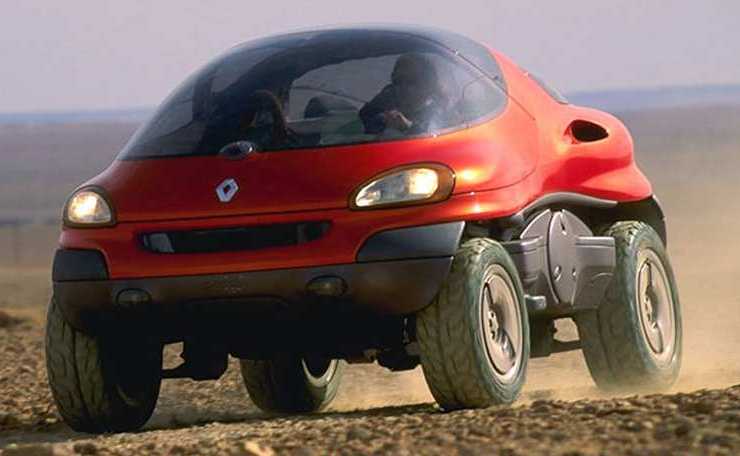
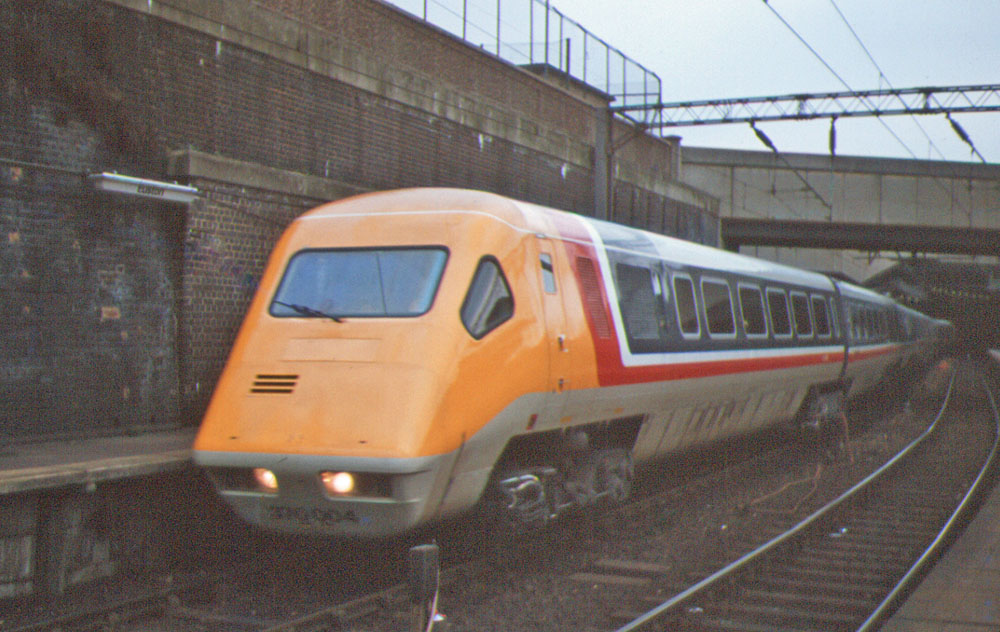
Something — be it a piece of technology, character design, outfit, vehicle or building — used to be someone's idea of futuristic. Nowadays it has, ironically, acquired a quaint sort of datedness to it: inevitably, it will be more reminiscent of the era the work came from. Also sometimes called "Retrofuturism".
Think of mobile phones as a simple example. Once, they were large, cumbersome, and it was thought that they would only ever be available to the rich. Works from that era will tend to depict even a 'futuristic' phone as still no smaller or sleeker than a brick plugged into a suitcase. Next, when they became widely available and shrank dramatically as technology improved, for a while it was assumed they would keep getting smaller and smaller for portability; depictions of the future from this period will show people using tiny communication devices. The next real life trend would instead be broad, flat smartphones, which needed to have a large rectangular touchscreen while being thin enough to slip into one’s pocket. Any current depiction of the future featuring such slablike devices might also turn into a time capsule of the period it was made in, if and when flexible and foldable phones become commonplace. And so on.
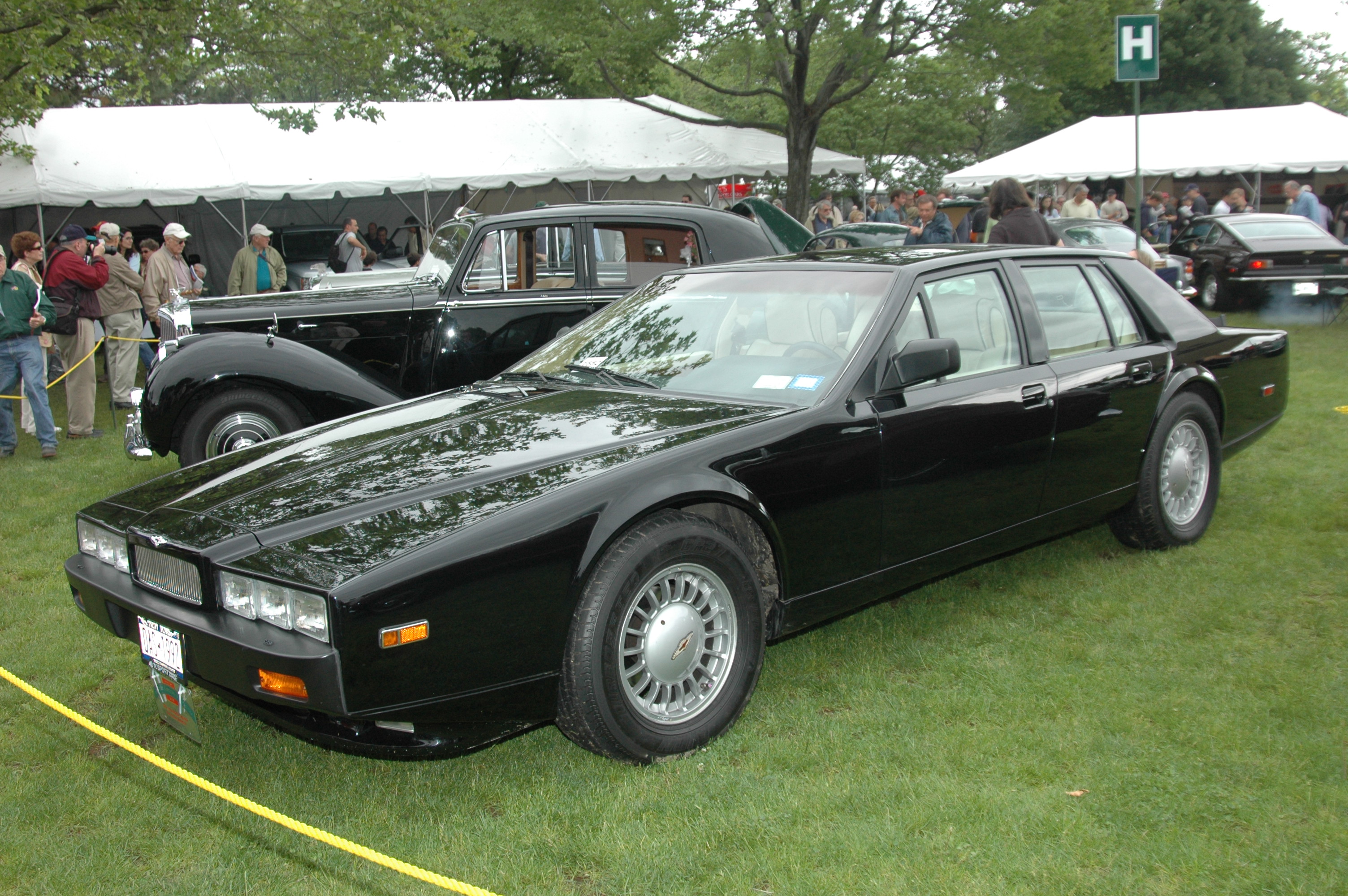
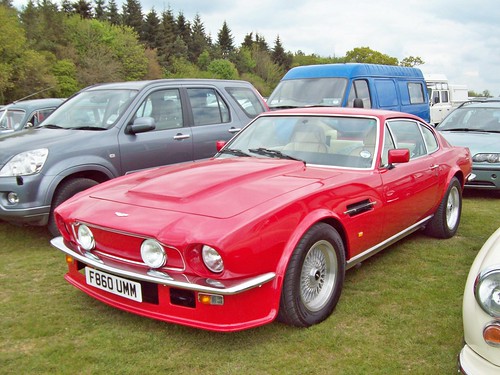
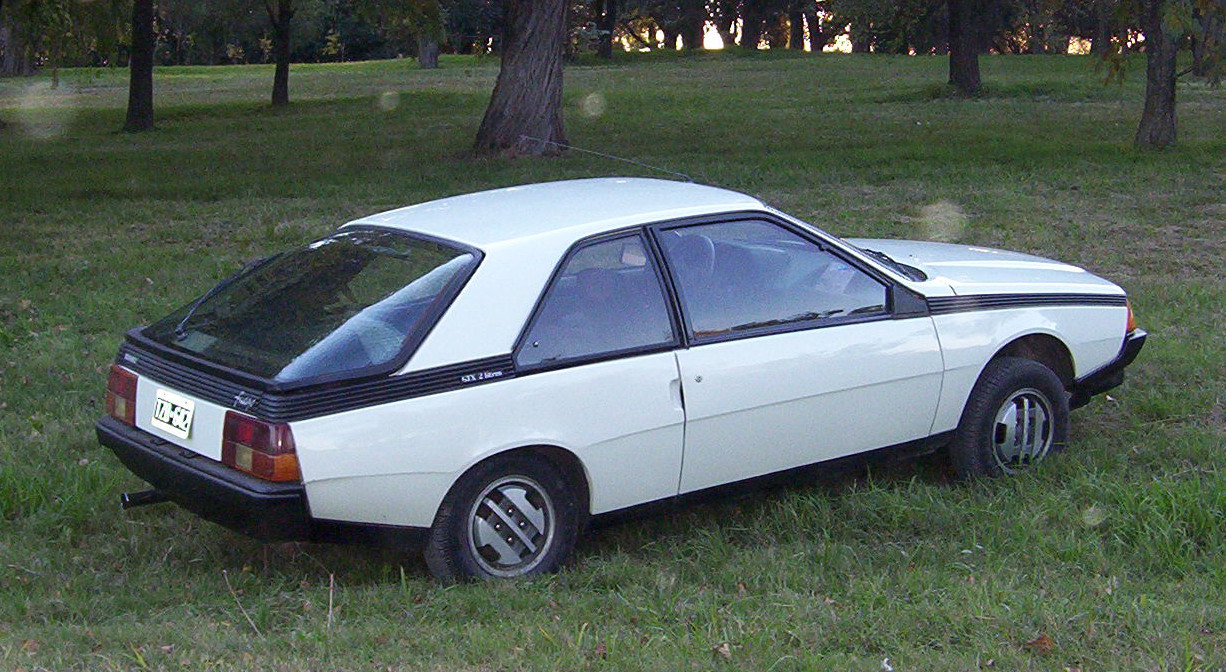
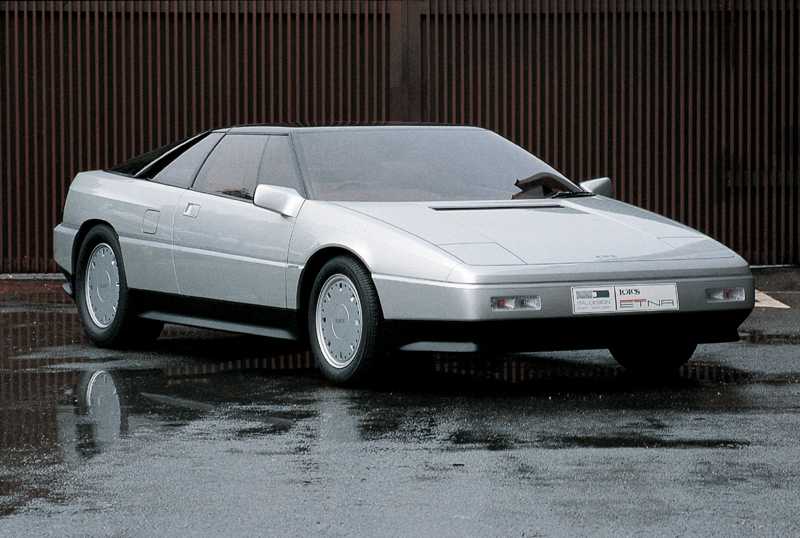
Sometimes the dated feeling is due to this sort of straight-line extrapolation of trends ascendant when the work was written into the (far) future. Sometimes the datedness is a bit more subtle. It's possible that the prediction turned out to be technologically or aesthetically accurate (or at least on the right track), but still fails because of the designer's implicit assumption that social values will be the same in the future as in their own time — as demonstrated in the page image.
Often the datedness behind zeerusty designs lies in the attempt of the designers to 'improve' on the technology of their time, only to find out that more mundane designs are actually far more efficient if advanced engineering and craftsmanship are used on them. Note that this is not always a bad thing: often the dated vision of the future is a lot more imaginative than anything being attempted today, with more modern, 'realistic' depictions striking viewers as bland and boring precisely because of the authenticity.
Another part of this often comes from a related issue: set, costume and prop designers have no choice but to depict the "future" with the materials they have on hand in their present day. When thin, molded glass and clear plastics aren't very readily available to you, you aren't going to put together a prop that looks like an iPhone fifty years before one exists; you're going to use hard black plastic, inexpensive chromed trim, a grill straight off a then-current telephone, and you're going to end up with a TOS communicator and you'll be satisfied with it because you have other things to work on. This can lead to some particularly hilarious moments when a long running franchise wants to produce a prequel or somesuch, but the set and prop design ends up looking different and more "properly" advanced simply because the designers of the new product have access to the fruits of decades of real-world technological progress.
As such, when a Long Runner franchise is outflanked by the progress or direction of technology/aesthetics/societal values while it is still going on, but it is tied to its pre-established version of them, this may lead to Zeerust Canon over time.
Sometimes Zeerust is deliberate. If a Retraux work presents a supposedly past vision of the future, or 20 Minutes into the Future (i.e. the present), it will inevitably invoke Zeerust or Raygun Gothic.
Gets its name and definition from The Meaning of Liff by Douglas Adams and John Lloyd, a book of neologisms concocted by the two. Adams and Lloyd mostly used actual place names for their words — Zeerust's name is borrowed from a South African town , which in real life has nothing to do with the phenomenon.
Compare The Aesthetics of Technology, Crystal Spires and Togas, I Want My Jet Pack, Hollywood History, Punk Punk, Steam Never Dies, Schizo Tech, Science Marches On, 20 Minutes into the Future, Raygun Gothic, Retro Universe. Contrast with New Weird. When the creators actually predict what the future holds correctly, then it's Life Imitates Art.
Tropes commonly associated with Zeerust:
- Cassette Futurism
- Computer Equals Tapedrive
- Data Pad
- Flying Car
- Flying Saucer
- Food Pills
- Jet Pack
- Master Computer
- No New Fashions in the Future
- No-Paper Future
- Our Graphics Will Suck in the Future
- Raygun Gothic
- Retro Rocket
- Robot Buddy
- Sci-Fi Writers Have No Sense of Scale
- Science Marches On
- Starship Luxurious
- Technology Marches On
- Tin-Can Robot
- Video Phone
- We Will Not Have Pockets in the Future
Examples in media:
- Have you ever used a phone booth with a video screen rather than just a cell phone? You Will. Many of the technologies featured in the ads did in fact come to pass, including turn-by-turn GPS, touchscreen tablets, wireless internet, and video-on-demand services — mostly in forms remarkably similar to the commercials' versions. The most out-of-date part is the assumption that AT&T would be the main carrier for all — or any — of these technologies. Almost every one of those technologies exists in pretty much the form depicted in the commercial, but most of them are either non-centralized or connected to the public internet. The only way AT&T makes any money off any of them is as either a patent holder or one of many wireless service providers that they use to access the internet.
- Telmex (a telephone company in Mexico) heralded in 2008 its brand-new video phone service by airing a "Homage to the Video Calls", which was basically a montage of every single "TV phone" featured in a sci-fi movie. Except that one from Demolition Man.
- Samsung did the same thing in its commercial for the Galaxy Gear smart watch: a montage of TV characters using video- and communicator-watches.
- Played with in a series of ads by Brazilian bank Bradesco featuring the Jetsons: the aesthetics remain the same, but with modern-day technology, such as smartphones and wristwatch payment, added into the mix. Jane is even shown to go from housewife to managing her own business.
- The Big Finish Doctor Who audio The Destination Wars is a First Doctor story set in The City, which is a gleaming-spired metropolis with monorails and servitor robots, exactly what Ian and Barbara, from 1963, would expect the future to look like. However, it turns out to actually be a colony world of Human Aliens, rather than their own future.
- Project Blue Earth SOS purposely invokes this, since it's a throwback to '50s science fiction TV. The series takes place in an alternate version of the 1990s and the technology and setting is made to display this trope due to it being how someone from the 50s would imagine the 90s.
- Daltanious (released in 1979) takes place in 1995, and depicts Earth as being ruined by an Alien Invasion, while interplanetary travel and animal-to-robot transmutation is the norm (to be fair, those are a case of alien technology...). Yet the characters lack flip-phones (communicating by leaving paper notes when they're need to get an instant message across), and the Adalus Base spaceship is treated as noteworthy for being able to fetch and research information even though by then, the internet would have been common.
- Mobile Suit Gundam: Practically every iteration bears some vestiges of the era in which it was made, despite the fact that most series occur some time around the 22nd-24th Century.
- The bellbottom-esque uniform pants on the 1979 original series.
- The 80s-style hair and fashion in Gundam ZZ (made in 1986). Take a look at Chara Soon and see what we mean.
- In the same anime one of the characters in a scene is listening to music on a Walkman.
- The prominence of boxy desktop computers in Gundam Wing (made in 1995).
- The majority of UC Gundam series have the ubiquitous appearance of floppy disks, even ones made during the age of Compact Discs and Laserdisc, like Gundam 0083 and The 08th MS Team.
- According to The 08th MS Team, the Apsalus, a flying weapon of mass destruction, uses the same hard- and software components as a mid 1990s desktop PC, such as a 6X86MX CPU from the long-defunct manufacturer Cyrix. Along with DirectX6, you can kinda tell why the first two versions of the Apsalus ended up crashing.
- G Gundam has a scene where Master Asia holds up a floppy, claiming it contains vast amounts of information.
- The theatrical recap trilogy of Zeta Gundam, which extensively uses footage from the 1985 TV series, adds laptops and more futuristic computer displays, in an attempt to renew the futurism.
- The original Bubblegum Crisis, released in 1987 and set in 2032, is similar: clothes and hairstyles are very 1980s; car-phones are common, but the hand-held ones are rare, meaning characters make calls from phone boxes with video screens, and the Soviet Union and East Germany still exist, at least in the very first OVA. However it is worth noting that even though they completely missed the Internet revolution, many of the mecha designs, especially the hard suits, still look very futuristic.
- Yoshiyuki Tomino's Space Runaway Ideon faces the issue of its protagonist having perhaps the largest afro in anime. There is also the silliness of the alien race, the Buff Clan, wearing futuristic versions of Elvis Presley's wardrobe, which were apparently intentionally done as a semi-tribute to the over-the-top outfits worn by every evil overlord in the 1960s sci-fi B-movies. Elvis Presley's outfits in Real Life tended to border on Space Clothes anyway.
- Astro Boy:
- Tezuka wanted his readers to be able to relate to the characters and setting, so he usually only added things like robots and spaceships when they were important to the story. Ultimately, though, this results in what looks like Schizo Tech, with ludicrously Zeerusty spacecrafts and intelligent robots that run on vacuum tubes existing in what otherwise appears to be mid-20th century Japan, even though the series is supposed to take place in the early 21st. There's an amusing bit of Lampshade Hanging of this in the introduction to one of the paperback collections, where a character complains to Tezuka, saying that since it's the future, he should be wearing Space Clothes instead of a threadbare old suit and living in a high tech space colony instead of a crummy one-bedroom apartment.
- Oddly enough, the subsequent remakes managed to be even more Zeerusty than the original. The 1980s version tried to depict a more futuristic world where technology was more integrated into modern life, with the result being that the technology's greater presence makes the show's datedness even more obvious and jarring to modern viewers. Even though they got the part about more people using computers right, the computers look totally anachronistic; the futuristic architecture and flying cars they use are often hideously impractical; and all the robots that don't look identical to humans look like a cross between old Kenner toys and outdated computer parts. The latest anime from the early '00s is more self aware about this and deliberately goes with an over-the-top retro-futuristic style similar to that used in the earlier Tezuka-inspired film Metropolis. In most ways this is an improvement, but sadly, it sacrifices most of the down to Earth charm that arguably helped make the original such a huge hit.
- Pluto, an Ultimate Universe remake of Astro Boy by Naoki Urasawa, stakes out a comfortable middle ground here. Most of the robots look like bigger & better versions of ASIMO, modern conveniences that are just now starting to catch on like debit cards and flash-drives are ubiquitous, Holographic Terminals are fairly common and most of the automobiles look like larger versions of modern Smart Cars. On the other hand Urasawa has restored some of the more domestic 20th-century touches that gave the original its charm. Ordinary things like houses, cafes and flowershops look pretty much like they always have. He also manages to throw in a few bits of retro-futurism that are even sillier than the original, such as high-tech-looking skyscrapers so huge that they can fit entire gated communities onto their roofs.
- Abundant in Mazinger Z, evident in many of the vehicles and SuperRobots in the series. A case that stands out is an episode in which Baron Ashura captures and analyzes Aphrodite A, only for the disc with the data to be destroyed. It's a good thing the villains didn't have e-mail. Ironically, in another episode Ashura stored data in a sort of card that had to be inserted into a computer to display the information stored in it (effectively, an SD/Flash card)....
- There are other examples in Space Battleship Yamato, but the craziest is Desler's use of a gold-colored mid-20th century earth telephone to argue with Starsha. Gamilon General Lysis composes his report on his first encounter with the Argo/Yamato on an alien typewriter.
- Serial Experiments Lain's CRT monitors, 90s-like GUIs and BeOS. Also notable is the Dreamcast-like console seen in the OP animation, and the many computers that seem to be running some version of NeXTSTEP, the direct predecessor to OSX. Lain doesn't take place in the future, however, but in "Present day, present time! Hahahahaha!", ie. some kind of alternate reality that may or may not be turned into the world that we know at the end of the show.
- Lampshaded in the 2008 anime Rin: Daughters of Mnemosyne, where a character in 1991 boasts extensively about the cutting-edge advanced technology of her 486 PC.
- There's something of a meta, in-universe example in Yu-Gi-Oh! 5Ds. The character Vizor/Dark Glass(es) is from two-hundred years in the future, as are several other characters, such as the Three Emperors of Illiaster. Many of these cards have by now been released as cards for the trading card game. Aside from the universe-destroying time paradox this has inevitably caused, the cards...don't stack up to what Power Creep would dictate. On the other hand, in-universe, their energy-bladed duel disks were introduced to the series with Yu-Gi-Oh! ARC-V.
- Legend of the Galactic Heroes is a Space Opera that features absolutely no noteworthy computers during its entire run. The novels were first written back in the 1970s. Its pilot movie was shown in cinemas in 1988. By the time the series had finished airing in 1999, current technology had outrun them completely, with super computers the like of which the author Yoshiki Tanaka could have never imagined during the inception of his masterpiece.
- While most of the technology in the Ghost in the Shell franchise remains futuristic and beyond our current capabilities (Ridiculously Human Robots, Invisibility Cloaks, Powered Armor etc.) there is inevitably some zeerust in the form of outdated flip phones (no smartphones in this fictional universe as of yet, despite ubiquitous computing) and computer terminals with physical keyboards (touchscreens don't seem to have come into use in 2029 either, even with time to make them more functional than today's touchscreens). GPS is also fairly primitive (although that is slightly more believable; GPS devices in the present day don't have the sharpest graphics either, since they're purely functional). The TV series shows that chatrooms are still popular when in Real Life they've mostly been superseded by social networking sites, although geekier types still use IRC.
- The "chatroom" is actually the production team's idea of what a 2channel-like website will look like come 2030.
- Cowboy Bebop revels in its Used Future / Anachronism Stew aesthetic, so it's not surprising that its computers look like they were cutting-edge in 1998 while interplanetary space travel using jump gates is commonplace. The show also features prosthetics that are virtually impossible to tell from the real thing (for example, Spike's bionic eye) yet the characters still use firearms that were manufactured over a century ago according to the series' timeline.
- The weaponry is possibly more of an example of Truth in Television, since there are many examples of this in real life. The Colt 1911 was invented in, you guessed it, 1911, but is still in widespread use in 2020.
- Outlaw Star: In The Demon of the Water Planet, the old man who hired the crew to go get sunken treasure hands Jim a floppy disk.
- Dragon Ball: Appears in both intentional and unintentional forms. Intentional examples are vehicle designs that have a militaristic, World War II type of appearance to them. Unintentional ones would be the use of VHS tapes and CRT televisions, as well as a more "flashing-light circuitboard and wires" look to any unique tech, such as Bulma and Dr. Gero's inventions, that is distinctively 80s. This was considered modern at the time the story was written, but nowadays it provides a unique aesthetic when mashed into the traditional Chinese aspects.
- Mello in Death Note uses a uniquely designed flip phone that, according to the writers, was meant to look like what a cell phone might look like in the far-flung year of 2009 (the manga ended in 2006). The first generation of smartphones showed up in 2007, and by 2009, it would be pretty hard to imagine a rich guy like Mello sticking with a flip phone unless he had some kind of strong personal preference.
- Zot! features the world of the (then-)present day, and the Alternate History wherein every cool thing thought of in the early 20th century came true.
- Star Trek comics: One issue showed the Starfleet Records Division, with filing cards, despite the show being fairly consistent in showing us that we would finally have the paperless office by the 23rd century. The Gold Key Comics were just as dated, technology extrapolated from The '60s even though the comics were published well into The '70s.
- Dean Motter's works — including Terminal City series, Mr. X, and Electropolis — use this trope, with a heavy dose of savviness and a pronounced tendency to pun. Character names like Tess LaCoyle and Erik "the Red" Haring are among the less egregious.
- Strikeforce: Morituri takes place in the late 21st century, yet at one point an alien invader surreptitiously passes a message to one of the heroes via videocassette.
- Deliberately invoked in Chassis which is set in an alternate 1949, where World War II never happened and there are Flying Cars.
- "Blobs!", a story in the first comic issue of MAD, features a future extrapolated from "the ancient year of 1952," when the "typical civilized house-wife" was just beginning to be surrounded by machinery.
- Legion of Super-Heroes:
- In the 1970s, the book introduced new costumes for its team of 30th-century teenage heroes. Most memorable: Phantom Girl, whose new costume was a white bell bottom jumpsuit.
- The Death of Lightning Lad shows that, in the year 2963, newspapers come out in microfilm format. Also, the Legion uses a ridiculously complex analogue wall clock.
- Back to the Future keeps its Eighties Zeerust for scenes set in that universe's 2015, but it also achieves this for its depiction of 2035 by taking the Zeerust established in Back to the Future Part II and adding Zeerust from The New '10s (i.e. Holographic Terminals everywhere and malls being replaced completely by online shopping), resulting in a sort of composite Zeerust.
- The 1998 DC Comics crossover event DC One Million featured superheroes from the 853rd century traveling to the present day. As part of the crossover, DC used computer graphics to show how the world of the 853rd century would look - graphics which look more like they're from the late 20th century.
- Superman:
- In Supergirl story Adventure Comics #389, written in 1970, Brainiac, one of the greatest geniuses in the galaxy, stores information in cartridges.
- Let My People Grow!:
- Despite hailing from a technologically hyper-advanced civilization, Superman needs a computer which takes up a whole wall, two different monitors -one of them moved by a clunky mechanical arm-, and a headset to talk to the Kandorians via video-link.
- Superman builds a device capable of causing Brainiac severe mental discomfort and irritation. Said device is attuned to his electronic brain-waves, and its ultra-high frequency signal can find him anywhere in the universe. And it looks like a 70's beeper.
- The Super-Revenge of Lex Luthor: In this 1966 story, Luthor brings about a revolution in planet Lexor by introducing scientifical marvels which could not be dreamed up by 1960s' Earth's science. Said super-advanced high tech includes bulky, non-wireless headphones.
- In The Planet Eater Trilogy, Brainiac's super-advanced space-ship uses radio transmission to monitor Superman's actions.
- Supergirl's Greatest Challenge: The only differences between 1962 video cameras and their 30th century equivalents is that the latter are considerably bulkier, more unwieldy, and have attached metal fins.
- Wonder Woman Vol 1: In issue 7 the Magic Sphere is used to view a possible future for the year 3000. Among other things a bracenote is used, effectively dating the comic to before the widespread use of the electric drill. (They had been invented in 1889, but were not yet widespread).
- Advice and Trust: In Chapter 8 Shinji and Asuka are watching laserdiscs. Laserdiscs. In 2015. Justified when the writer points out that technologic development in the original proper series never went past The '90s: Rei uses a bulky cell phone, Shinji a Walkman, and the children play a Sega console.
- Played with in Calvin & Hobbes: The Series - in a Time Travel plot, the version of the future Sherman is trapped in is exactly like The Jetsons (in fact, the narrator outright says so), though the fic was uploaded sometime around 2005 or 2006.
- Averted in an unintentional -and ironically funny- way in The One I Love Is.... In a chapter, Misato plays a DVD for Shinji. This fic was written in 1999-2000, and the author said in the afterword he guessed in 2015 there would be more advanced technology than DVD technology, but he didn't feel like making something up. As of 2015, purely digital storage is spreading, but DVDs still look like they have a few years left in them.
- Rocketship Voyager is written In the Style of a 1950's science fiction magazine serial. The eponymous rocketship has a Master Computer that takes up an entire deck and has only recently been upgraded from vacuum tubes to transistors, and an 'Illusionarium'—a three-dimensional theatre with interactive couches that provide sound, touch and smell; coordinated with a cabinet-sized microcomputer that uses punched cards and is repaired with a soldering iron.
- The movie trailer of Astro Boy looks a lot like setting of Meet the Robinsons.
- Batman: Mask of the Phantasm. In a Happy Flashback, Bruce Wayne and Andrea Beaumont are shown having a wonderful time visiting the Gotham World's Fair, with its lively and optimistic Raygun Gothic view of the future like flying cars and robot maids. Bruce takes a liking to a Cool Car that looks a lot like his future Batmobile, but in the present the Fair is a derelict wreck that's used as a battleground between Batman and the Joker.
- Invoked with many of Gru's gadgets and vehicles in Despicable Me, in order to emphasize how behind the times he is. His car, for instance, looks like a "futuristic" tank taken straight out of sci-fi from The '50s. In contrast, Vector's tech is much more up-to-date for 2010 standards.
- Intentionally used in The Incredibles to give a timeless or time lost feel. It works rather well, especially when combined with that "Apple Store" sleek design.
- Intentionally invoked in the happy futuristic scenes in Meet the Robinsons, as opposed to the hat-dominated Dystopia. The Neo-fifties look is heavily influenced by Walt Disney's own personal Zeerust from 50 years ago.
- 2001: A Space Odyssey:
- HAL is a computer that can have a philosophical conversation and follow voice commands, but can't print plain text onto loose leaf paper.
- The novel has typewriters and office computers being used, along with "girl assistants".
- This article elaborates on both the Zeerust and accuracy.
- The 6th Day:
- The film opens on an XFL game. The XFL was a blink-and-you'll-miss-it American Football league, backed by Vince McMahon, which was meant to compete with the NFL. It ended so quickly that most people don't even remember it existed, yet it's featured in this movie's futuristic setting (even an attempt at reviving it in 2020 didn't last long).
- While cloning is nowhere near as advanced as in the film, nor did Ray Guns become a reality, the writers did make some accurate predictions on the smaller-scale tech, like Adam putting in an order for milk on his smart fridge, video phones (which sci-fi writers have hypothesized since at least the 1950s), driverless cars, and Adam's friend Hank has an A.I. girlfriend. This is not so surprising, since most of these are reasonable extrapolations from technology in the early 2000s.
- Airplane II: The Sequel features a deliberately Zeerusted moonbase (complete with inverted swooshy doors that don't make the noise, you make the noise at them to open and close them, and even the "Device with Lights That Move Back And Forth" seen in Star Trek II: The Wrath of Khan and other places in the franchise). Of course the base commander is played by William Shatner at his overblown best.
- Alien has been described (by the February 2014 issue of Electronic Gaming Monthly) as "A world where the iPod never happened", owing to the clunky keyboard-and-toggle-switch control panels and cathode ray tube TV display monitors. What is ever weirder is the monochromatic nature of all the TV screens in the franchise — given the fact that already the first movie was filmed in color.
- Back to the Future: Robert Zemeckis and Bob Gale wanted to avoid dealing with the future for this very reason, as they couldn't know what the future would really be like. However, when the ending of the first film left them with no choice (as they didn't originally write the ending with a sequel in mind), they made 2015 basically a cleaner and more colorful version of 1985 with a generous dose of Applied Phlebotinum (computerized waiters, flying cars, and weather control) thrown in. It was meant to be humorous, though; the writers knew the date was close enough that a majority of viewers would reach it in their lifetime and they most likely weren't going to hit the bullseye when it came to making predictions, so they just tossed in whatever fun "futuristic" ideas they had. Back to the Future Part II was one of a few 80s movies and TV series that had incredibly ubiquitous fax machines in the near future. The alleyway recycling center with huge cubes of shrinkwrapped laserdiscs awaiting processing was utterly hilarious. For as much as it got wrong, though, the film actually got quite a few things right, such as widescreen TVs, video conferencing, targeted personal advertising, video games that don't require the use of hands, tablet computers, 3D movies returning to prominence (just not holographic movies yet), and (perhaps most famously) a Major League Baseball team in Miami and, while a year off, Cubs finally winning the World Series.
- Blade Runner, which was made in 1982, thought that in the year 2019 we'd have flying cars, skies so choked with pollution that you never see the sun, off-world colonies, implantable memories and androids so lifelike that we'll need detailed personality tests to distinguish them from the real thing... All the while with Video Payphones still in use. The sequel Blade Runner 2049 adds elements from the three decades between movies, but it's still that movie's future.
- In A Clockwork Orange, Alex plays Beethoven's 9th Symphony on a microcassette tape, which looked pretty futuristic in the 1970s, but never caught on, and was replaced by the far superior compact disc.
- The opening visual communication from 22nd Century Earth Base Mission Control in Dark Star features reel to reel computers in the background. When the guy explained they'd had to deal with "a few budget cuts", he clearly wasn't saying the half of it.
- Karel Zeman plays this trope for Retraux charm in his films Invention for Destruction, The Stolen Airship, and On the Comet, befitting their Steampunk flavor.
- Demolition Man, which was an example of late 20th century Zeerust despite being a retelling of Brave New World, which was 1930s Zeerust.
- In the Godzilla film Destroy All Monsters (released in 1968), the year is 1999. Rocket men, aliens that look like people, Mind Control signals, knockout gas, a nation devoted to containing monsters; must've been what Y2K was distracting us from.
- The film adaptation of Fahrenheit 451, directed by François Truffaut in 1966, features zeerust aplenty, notably a propeller-powered monorail commuter train (which was an actual French prototype at the time, but was never developed), antique-looking vehicles, interactive wall-mounted television sets (though wall-mounted TVs actually would be a thing), and payphones with a weird design. Explained in that this was one of the first films where the director deliberately went for a Schizo Tech look. Also, the jetpacks at the end.
- The Island (2005) is mostly devoid of zeerust. It takes place in 2019 (released in 2005), where Los Angeles looks pretty much the same, except for efficient high-speed mass transit. Though the vehicles are pretty much all modern cars (no junkers). MSN runs a free database that allows you to look up anyone you need at booths, and the phones and computers are pretty much the same, albeit with more voice recognition software. However, for everything that is perfectly in place, something is off. The police have flying jet bikes with machine guns, tiny spider bots can enter someone's body through their tear ducts to act as a tracking device, and, of course, giant underground colonies where sentient clones are raised for the wealthy as organ banks. All this is supposed to come about in ten years?! The one thing that they almost got right was the video game that tracks movement, though the Xbox Kinect never really worked well with anything but dancing games.
- Logan's Run could not look more 1970s if it were set in a disco (bits of it were).
- Men in Black: In a strangely modern example, K shows J a tiny disc, explaining: "it'll replace CDs soon." Back then, it looked like the logical next step in audio recording medium. But with the invention of the MP3, it seems we skipped that "micro-disc" step. The trope is then used intentionally in the third movie, with the 1969 MIB headquarters (as well as many of the aliens inside) having a very Zeerusty look.
- Fritz Lang's Metropolis has vid-phones, with 1920s style handsets. Much like Le Corbusier, the cars on the elevated freeways are all Model Ts. The flying taxis are a mix of antique biplanes and Raygun Gothic zeppelins. It has ticker-tape machines and antique IBM devices instead of computers, of course.
- The Planet of the Apes (2001) remake starts out on a futuristic spaceship, yet one from which trained apes are sent on scouting missions. Chimps did play a key role in old 1960s orbital exploration, but were only used to confirm that the space-borne environment wouldn't hamper the anthropoid brain or body, before human astronauts could take their place. Nowadays it's rodents, fish, and various invertebrates that are commonly sent into orbit, while far-flung surveying of the solar system is performed by robots: There's no point to launching apes anymore.
- RoboCop (1987): It is amazing how they were able to build a fully functional cyborg, while still using floppy disks. Robocop's visual displays are also in monochrome. Even the computers used by the police station and OCP's corporate headquarters have pretty crappy graphics, although that may be because the setting of the film is a Crapsack World. Lastly, those Ford Taurus police cars looked very futuristic at the time, but not so much now.
- Silent Running features robots that can understand human speech, yet take their programming from non-reprogrammable cartridges, which our (going mad from loneliness) protagonist has to write new software for, hand-solder the programmed chips onto the boards, and then insert into top-loading bays that wouldn't hold a NES cartridge steady.
- Sky Captain and the World of Tomorrow (2004) is chock-a-block full of Zeerust — not surprising, given that that was the point of the whole exercise. There is a 1930s submersible with a radio-imager that can send pictures back to the Airborne Aircraft Carrier, giant bipedal robots wreck New York, and the hero's plane can go underwater. The entire movie is pretty much Rule of Cool and must be set entirely between 25 August 1939 and 1 September 1939 because The Wizard of Oz is in theaters (released 25 August 1939) but Germany hasn't yet invaded Poland (1 September 1939).
- Soylent Green. The film is set in 2022 but there is a police callbox.
- Starship Troopers: Unlike in the book, CRT monitors are prominent despite flat-panel monitors already having been invented and in production by the time the movie was made.
- Star Trek II: The Wrath of Khan
- Khan's followers look like the entourage of a hair metal band, with Khan himself resembling an elderly version of Cutter from Elfquest.
- The computers look pretty 80s too, although they're at least better than those in Star Trek: The Original Series. In the novelization, one of the Regula 1 scientists complains that a portable computer doesn't have enough memory for his "fifty meg"note game. Star Trek later introduced the fictional unit of "quads" to describe computer capacity in order to avoid looking dated.
- On the DVD Commentary, Nicholas Meyer talks at great length about how dated the way David wears his sweater is, citing it as an example of how "all works of art are inevitably products of their time".
- Star Wars features many elements of this, being an unusual (for the time) combination of Raygun Gothic and Used Future aesthetics. Technology is constantly breaking down and not working correctly, bundles of wire spark frequently, interfaces are all levers and flashy buttons, visual readouts are bright lines and enormous geometric shapes, and holographic visual displays are monochrome with crackling static. And in the very first movie, the plans for the horrifying superweapon are on "data tapes" (although tapes are still used for some specialised purposes, and can store terabytes of data). The prequels, set before The Empire forced the galaxy into a constant state of war and deprivation, feature shinier and more streamlined technology with next to none of the grit. At any rate, it ducks the whole Zeerust discussion in the first place by stating that the story takes place "a long time ago, in a galaxy far, far away." Thus, it's not the future and it's not our technology.
- A curious example appears in Strange Days, which was filmed in 1995 and set in a futuristic Cyberpunk dystopia all the way in 1999. While obviously the mind-recording technology that formed the centerpiece of the movie's plot has never shown up, the main character's voice-transcribing answer machine is also not exactly the way that particular technology developed. Neither was Los Angeles quite the decaying urban nightmare just seconds away from exploding into all-out civil warfare in 1999. The fashions are also quite a bit more Cyberpunk than what really went down. You also have to wonder, with the rise in population of file sharing since 1999, why recorded memories aren't swapped online rather than illegally traded on discs by hand. This would have put Lenny out of a job.
- Timecop, was released in 1994 but the future sequences were set in 2004. In that 2004, they had self-driving, voice-activated cars that looked like spaceships, and some sort of cartridge music player instead of tapes or CDs. Widescreen TVs a few years early, too! The music player was a Sony MiniDisc player, which was new in 1994 and thought by some to be the next big thing in audio, replacing cassettes and CDs.
- The original Total Recall (1990), with its ridiculously bulky CRT-based videophones.
- Zenon: Girl of the 21st Century, Zenon: The Zequel, and Zenon: Z3, take place from 2049-2054... as writers from 1999-2004 imagined it would be. The first film got some ribbing from Doug Walker over references to a "President Chelsea Clinton" and boy bands still being the biggest thing in music in the future.
- Done deliberately in Space Station 76, a 2014 black comedy in the style of a "realistic" space setting as imagined in the late 20th century, like 2001: A Space Odyssey or Star Cops. Lots of beige walls, brightly coloured switches, clunky robots, crystal holograms, and old-fashioned attitudes to gender and sexuality.
- "A Logic Named Joe": Published by Will F Jenkins, who usually used the Pen Name Murray Leinster. This story was published in 1946, yet it revolves around a computer network strangely prophetic of the real-world Internet, complete with search engines, online pornography and content filters. At that time, there were 6 working computers in the world. Although they have a very modern monitor-and-keyboard interface, the eponymous "logics" run on a combination of relay switches and "cold" vacuum tubes, and can literally figure out anything.
- The Machine Stops was written in 1909, and has what is basically the internet, though with fixed terminals. Anyone can talk to anyone else on the planet through a screen. And given the state of human society in that story, the lack of portable devices is completely justified.
- Robert A. Heinlein's early novels for younger readers all have an anachronistic "future 1950s" feel to the society, with slide rules juxtaposed with interplanetary travel, Mars colonies, nonhuman sentients, and a host of other technologies, concepts and discoveries one might think would change American society. Examples include:
- In Have Space Suit – Will Travel, there are colonies on the Moon and the hero wins a used space suit in a contest... But the contest is held by the sole sponsor of a (typical) live TV program (a soap company), as in bar soap for washing clothes. By hand. By housewives. Even when Heinlein wrote it, most of his readers were probably too young to remember that. On top of that the chronically unemployed town ne'er-do-well, "Ace" Quiggle, hangs out at the drugstore soda fountain. Drinking chocolate malts.
- In The Rolling Stones (1952), the eponymous Stone family finally tire of space travel and decide to go home and settle down for assorted reasons, including that it is high time the oldest daughter got married. Said daughter is all of twenty years old.
- In Rocketship Galileo, the eponymous spacecraft has an autopilot that is a shaped cam connected to the controls. Which are, in turn, connected to the damping rods in the nuclear reactor that makes up the ship's drive using mechanical linkages. There's also trans-Atlantic passenger and freight rockets instead of jets. And the existence of the U.N. police has abolished war. Heinlein had Nazis on the Moon too, but given that the book was written in 1947, that probably seemed like the least fantastic element.
- In Misfit, Andrew Jackson "Pinky" Libby, a lightning calculator as well as a math genius (the two often don't go together IRL), saves the day when the space-ship's sole calculator is on the fritz, gaining him the new nickname "Slipstick" for his supposed mental resemblance to a slide-rule. Earlier in the same story, Andrew saves his blasting team a lot of fix-up work when he notices an error the foreman made in computing the charge of nuclear explosive to use... Which the foreman did with a slide-ruler.
- And Heinlein's supercomputer in The Moon Is a Harsh Mistress is intelligent (and sapient) enough to plan a full lunar revolution... But gives all of its calculations on long rolls of printed paper. Ironically, the book did accurately predict CGI acting. The supercomputer is also built on a 1950s scale, to the point that bugs (actual living bugs, mind you) are a threat to his hardware.
- In Starman Jones and other stories, FTL Travel is accomplished with the help of books containing table after table of pre-computed values — seemingly no electronic storage or look-up at all. The books didn't just contain look up tables for functions — they also contained the tables for converting between decimal and binary, as all the values had to be converted into binary before being entered into the computer by toggling switches to set the binary values, then reading the binary values from the display lights and converting them back into decimal to make them human readable. This last is particularly strange, as computing devices that did decimal I/O with internal conversion for binary internals had existed for at least a decade when the novel was written.
- His later works included bits as well. Stranger in a Strange Land implied data stored on magnetic tapes, missing the rise of hard disk drives. The tape recorder was powered by a tiny onboard nuclear reactor, and was described as "the size of a cigarette lighter," which likely meant the size of a Zippo, not the smaller disposable lighters used today. Essentially, it's a Zeerusted iPod.
- Used again by Heinlein in Between Planets with the added bonus that the protagonist (who is staying on a dude ranch in New Mexico) takes a call from the mobile phone mounted in his horse's saddle!
- Rhysling, the hero of the short story "The Green Hills of Earth", was blinded in a reactor-room incident aboard an interplanetary spaceship. Whereupon his crew mates "passed the hat," and he was dumped in a strange spaceport to earn a living by busking: the narrator (looking back from an even more remote future) admits that no one would have thought ill of Rhysling if he'd settled for simple begging, since "there was no way then to restore a man's sight"; in a future where planet to planet travel is routine, Heinlein failed to anticipate technological advancements that would increase employment opportunities for blind people. He also turned out to be a genius singer-songwriter, and would've made a fortune in our days. Unfortunately, the story was written good ten years before the concept of a rock star. In The '40s there weren't a snowball chance in hell that a washed out blind ship's mechanic could make it big in the entertainment business. Not to say that Rhysling wasn't famous — he was. He simply haven't had a penny out of his fame, and stayed a street busker to the end, though it might have do with his personal preferences. The book also seems to ignore something that existed as far back as the 1910s: Workmen's Compensation insurance where your employer (or their insurance company) has to pay you a weekly stipend (about 75% of your pre-injury salary) if you are unable to work as a result of an on-the-job injury, and even where they didn't have Worker's Compensation (as it was later renamed in the 1980s) you could still sue your employer for being injured, same as you can sue a store if you slip and fall due to it failing to keep the floors clean.
- Heinlein's first written (1938) but last published (2003) novel For Us, The Living: A Comedy of Customs is chock-a-block full of Zeerust. Of main significance is a cross between a centralized library and a network that handles information and entertainment, but transmission is by speeding up analog signals which are recorded at home then slowed down to normal speed. That was actually used with wire recorders for a while during World War II by Allied spies to radio messages from Europe to the UK. What hasn't caught on is everyone lounging around stark naked at home, and most of the time in public.
- In The Moon Is a Harsh Mistress, published in 1966 but set in 2075, Major League Baseball pennants are still awarded to the team with the best win/loss record for each league. Just three years after the book was published, the leagues split into two divisions each, and the teams with the best records out of each division would play a best-of-five series for the title. Now there are three divisions per league, and the top team from each division plus a wild card team play for the pennant.
- Starship Troopers has a couple that stand out. Early in the novel the narrator comments that their pilot made a course correction "by hand and eye" because the computers couldn't do such a thing; today, we would expect the computer to fly the ship with exacting precision. Later, when Rico is off to Officer's Candidate School, he (and others) must take actual hard-bound textbooks for additional study; even today, such is almost always digital and certainly would be on even a future spacecraft.
- Deconstructed in the Kim Newman short story Tomorrow Town, which is set in the 1970s and focuses on a murder committed in an experimental community of futurists deliberately constructed as a 1970s version of what the year 2000 would look like — and the savvy detectives are quick to realize that it's completely unworkable, with a futuristic monorail system and bubble cars that can be outrun by someone on a bike, robots that are bugger-all use whatsoever, a "super computer" that's really good at adding things up but not much else, an "evolved" linguistics system which exists largely because its creator has trouble spelling, and a dysfunctional and somewhat sexist social system that, not un-coincidentally, places the (murdered) leader of the community in both a position of unquestioned power and gives him the opportunity to legally steal other people's girlfriends/wives if he fancies them, whether they (or their partners) want to or not. Oh, and the very fact that a murder has been committed by people who claim to have evolved "beyond" the petty motives for murder is a pretty big strike on the card as well. And, of course, there's the fact that the 21st century reader knows for a fact that all of the community's predictions about the world of 2000 are completely wrong.
- This trope affects a lot of Isaac Asimov's science fiction, especially the robot stories:
- The End of Eternity is about a secret organization which regularly changes the whole history of humankind, by combining Time Travel, Butterfly Effect and magical computers, powerful enough to calculate what the new reality will look like after the change made by a Butterfly of Doom. They also use... wait for it... punched cards. There's a partial implicit Hand Wave at the end of the story: we never saw our future, and that was the case already when the book was written in 1955: a minor change in 1932 led to a different course of technological development.
- Foundation Series: The stories were initially written in The '40s, and popular understanding of computers and space travel make for some embarrassing predictions, mixed with some surprising guesses at miniaturization and synthetic music. The embarrassingly dated ideas include space travel with fossil fuels, microfilm and hard-copy newspapers as the peak of information storage/distribution, and human-performed calculation for all interstellar navigation. Revisiting the series thirty-plus years later allowed him to include more modern predictions, such as an autopilot that performs course corrections independently, personalized data-mining algorithms, and factors to make a City Planet function, like yeast farms, geothermal power/heat, and graviton-based propulsion.
- Second Foundation Trilogy: Written by Benford, Bear, and Brin, this trilogy includes some industrial-scale lampshade-hanging and retconning of the entire Foundation saga. Part of what is written is a justification for why technology in Foundation's time is relatively primitive; the robots that have been caring for humanity under the terms of the Zeroth Law of Robotics deliberately dumbed down human civilization to make the job more tractable.
- Many of Asimov's robot stories, set in the 2000s—and even the Lije Bailey novels, set in about the 3000s—mention characters using slide rules. Robots can't do math?
- A plot point in one of the Lije Bailey novels revolved around the incredible idea of robots with interchangeable parts. Then there was concern about robot brains controlling starships (especially warships), because it wouldn't occur to them that other ships contained humans.
- Never mind that, try a robot with true A.I....that can't talk because text (or robot "thought") to speech is too complex. Really, it's amazing how his early robots had A.I. and could communicate in lots of ways, but couldn't talk. They can understand human speech perfectly well, however.
- Particularly in the early days of electronic computing, there was a serious lack of understanding of what kinds of tasks are computationally easy and what kinds are computationally hard. It was thought that converting between speech and internal data representation in the system, machine vision, and walking would be fairly simple problems to solve while symbolic algebra and other advanced mathematics would be difficult, because that's the way it is for humans. The reverse is true, because humans are the result of several hundred million years of R&D in doing the former tasks while we've had almost no R&D for the later. It isn't that making sense of the visual world, speaking and understanding speech, and locomotion are easy problems, we've just got very, very optimized wetware for those tasks, while our ability to perform higher mathematics is more or less just a happenstance by-product of abilities that were useful to staying alive in a neolithic culture.
- "Lenny": The character who gets injured by the LNE-prototype is a computer, meaning a human being employed as part of a team to do complex calculations by hand. Because this story was written in the late 1950s, it also begins to use the word computer to mean an electric machine capable of complex processing.
- "Little Lost Robot": Bogert raises the possibility of using the station's computers to help analyze their problem, before concluding, "We can't use computers. Too much danger of leakage." In 1947, "computer" meant a human being employed as part of a team to do complex calculations by hand — Bogert is worried about news of the problem spreading if the secret is shared with more people.
- Minus Planet, a story by John D. Clark from 1937, has a huge one. The protagonist observes an anti-matter planet, compares his sightings with those of observatories on Mars and Venus, and works out that it's heading for Earth — with a slide rule.
- William Gibson's 1984 novel Neuromancer, is unintentionally prophetic in many ways, often because people have read it, gone 'Cool!' at something in it, and proceeded to build it. A lot of the Zeerust comes from Gibson himself knowing almost nothing about real computers when he wrote it on his (manual) typewriter, such as:
- A famous and unfortunate moment early on where Case's "...buyer for the three megabytes of hot RAM in the Hitachi wasn't taking calls."
- The eponymous sentient supercomputer's more extroverted counterpart, Wintermute, disturbs and frightens Case by causing a bank of pay phones to ring in sequence as he runs past them. This is in addition to the fact that cell phones are completely non-existent in Gibson's vision of the future. In his introduction to the 25th Anniversary Edition to the book, Gibson apologizes to any young readers who are baffled as to why no one has a cell phone, and who can't imagine what a payphone looks like.
- In a raid on a full-sensory-stimulation entertainment-industry facility, coordinated from cyberspace with a woman ghost-ridden by a jack-linked hacker as its infiltrator, said woman subdues a security guard before the man can sound the alarm with his beeper. Wrap your head around that one.
- Another example is from the novel's famous opening line: "The sky above the port was the color of television, tuned to a dead channel." As TVs back when the novel was written showed gray static when tuned to a dead channel, this description was meant to evoke Cyberpunk with a Chance of Rain. However, as today's TVs show clear, bright blue when tuned to a dead channel, the description now evokes a clear, sunny day. Gibson himself said he finds the irony amusing. Neil Gaiman parodied the contrast in Neverwhere: "The sky was the perfect untroubled blue of a television screen, tuned to a dead channel."
- Gibson's Bridge Trilogy started showing this post-1999. Anyone else happen to remember a gloves-and-goggles-VR Internet coming into existence in the 2000s? Didn't think so.
- Consciously addressed in Gibson's "Gernsback Continuum", a short story about a photographer who receives an assignment to photograph California's Zeerust-laden "Raygun Gothic" architecture.
- Subverted in The Hitchhiker's Guide to the Galaxy novels, particularly the first one where Arthur, new to space, sees a spaceship and is impressed by how it looks so future-y. Ford, an alien who's been across space and time, is aghast by how garish and out-of-date it is. Life, the Universe and Everything also drops a lead lampshade on the in-setting zeerust of the 'ultra-modern' courtroom where the Warmasters of Krikket were tried for attempting to destroy the rest of the universe, mentioning that this was 2 million years ago, "when ultra-modern meant lots of stainless steel and brushed concrete". Remember the book came out at a time when people still thought digital watches were a pretty neat idea.
- Much to Ray Bradbury's surprise, Fahrenheit 451, first published in 1953, partially avoided this, portraying an early 21st century society with people listening to music from devices the size of cigarette lighters with plugs that go in their ears, televisions that are as wide and as thick as the walls they're mounted on, and people who are obsessed with their "interactive stories." Of course, he did write a number of short stories (several of those featured in The Illustrated Man being good examples), which described one-piece rockets being used for interplanetary and interstellar travel. For those of you who don't know, modern rockets are multi-stage and designed to separate into different parts upon leaving the atmosphere; this type of rocket goes at least as far back as the Apollo Missions. Bradbury also probably didn't count on the possibility that later rockets would break from the traditional image (a cone atop a long cylindrical tube with the engines on the bottom), i.e. the space shuttle. He also had a tendency in his rocket-based stories to write all-male crews, apparently not considering the eventual possibility of female astronauts.
- Aldous Huxley's Brave New World posits a Dystopia where humans with drastically reduced mental capabilities are engineered in a complex of labs... To be elevator operators. Lampshaded in the final chapters, when Mustapha Mond claims that many institutions deliberately use archaic and inefficient technology in order to ensure that there are always jobs for the lower castes. There's also a moment where they use a card catalog. It is also specifically stated at one point that all games and sports are heavily regulated, and that no new game will be approved unless it uses at least as much equipment as the most complicated one currently in existence (in order to boost the consumption of goods)
- Islands in the Net, by Bruce Sterling, has a computer-net dominated future — of fax machines and BBS (bulletin boards, for those too young to remember. The pre-WWW ancestor of the forum). Still, with just a few changes in wording, it could very easily become a believable 20 Minutes into the Future, as it does predict many plausible consequences of information technology.
- Alfred Bester's The Demolished Man holds up surprisingly well for a novel written in the '40s, mainly by circumventing or just not directly addressing most potentially Zeerusty subjects. However, there's only one computer in the book: It's the size of a room and prints the results of its calculations on paper tape. Despite this, its legal verdicts are weirdly intuitive.
- The Metaverse of Snow Crash resembles Second Life more than the internet (which is essentially what it turns out to be). Though it may be a case of Second Life Imitates Art, Phillip Rosedale explicitly claimed Stephenson's work as inspiration. Also, on a more political front, the United States has devolved into a series of franchises that each function as separate countries, and Japan (or "Nippon") is the undisputed leader in technology and business, as apparently the Japanese economic bubble never burst. It also features a real-time Google Earth, and a Wikipedia which requires one to pay for its information.
- Dragonriders of Pern shows a bit of this: apparently, when we achieve faster-than-light interstellar travel and Turing-level artificial intelligence... we will be using DOS again.
- Eva, written in The '80s, takes place in an unspecified future where holograms are commonplace and scientists have just figured out how to copy neurons. The protagonist communicates using a text-to-speech keyboard... which uses samples stored on discs.
- The Hyperion Cantos:
- Managed to predict relatively cheap ubiquitous use of the Internet in 1989, just one year after it was made accessible to commercial groups. On the other hand there are also Hard Boiled PIs.
- Even more, it predicted the iPhone. Yep. The Diskey is a small, ubiquitous device looking like a screen the size of a cigarette pack, but much slimmer, that you command by pressing icons that appear on it. It's used as a communication device, has a direct connection with the computer network and is your main way to access any medium. The cycle doesn't tell if you can shake it to skip tunes, or if it systematically falls apart by itself after three years use, though.
- Valentina: Soul in Sapphire, a story about a sentient computer program published in 1984, is interesting because it rather accurately predicts the Internet, online gaming culture, and the use of emoticons in text messaging.
- Larry Niven's The Ringworld Engineers (1979) has computers that use magnetic tapes. Built by a race that make floating cities, interstellar ramscoops, longevity drugs, etc.
- Later novels in the series retcon the technology, stating that the longevity drug was almost certainly the result of a Protector needing money for a project, and implying that a lot of the other technology might have been passed along by Protectors for similar reasons.
- In Harry Turtledove's The Guns of the South the South African white supremacists arming the Confederacy with AK-47s are from 2015, but the details given of that year appear little different from the late Eighties - early Nineties (published in 1992.) The only apparent reasons for the future setting are the Time Machine's span of 150 years, and the invention of a time machine.
- Also in his 1990 novel A World of Difference, set on a larger, inhabitable fourth planet (called "Minerva" instead of Mars), the 1st expedition's photographer lugs along an entire photography lab to print out all the pictures taken.
- Edward Bellamy's Looking Backward, written in 1887, portrays the U.S. in the year 2000 as a "socialist utopia" — actually a top-down military dictatorship. Bellamy's descriptions of credit cards and the Internet, however, were surprisingly spot-on, if primitive.
- It should be noted, however, that Bellamy failed to imagine even radio, let alone television. The main entertainment in the year 2000 was sitting around in your living room listening to music piped in over telephone wires. While this may suggest the infrastructure of the internet, the absence of any wireless technology (e.g., radio) is striking. Also, the automatic retractable awnings over the sidewalks is highlighted as an impressive technology which was no doubt feasible when the book was written.
- George O. Smith's Venus Equilateral stories (1942-1945) feature a three mile long, one mile diameter space communications station stuffed with vacuum tubes. The problem of communicating with ships in flight is solved with complicated cams. The engineer heroes work out problems by sketching them out on tablecloths and using their slide rules.
- The three Rama sequels (written by Gentry Lee, with Arthur C. Clarke contributing ideas) take place in the 23rd century, but we're still using analog tapes for museum tours, and somehow the internet has failed entirely to catch on to the point that they actually send TV reporters and newspaper correspondents on potentially dangerous deep-space missions instead of just letting the astronauts post on their blogs to tell the world what's going on.
- Arthur C. Clarke was a visionary in many respects, but some of his works share his peers' failure to anticipate advances in computing:
- In the short story Superiority, a major plot point is that a spaceship battle computer requires a million vacuum tubes and a team of five hundred technicians to maintain and operate it. The liner carrying the technicians makes an interesting target. note
- In Earthlight the protagonist, searching for an information leak, finds the moonbase computer with girls feeding it tapes, and a room-full of electric typewriters. He leaves convinced that information could not possibly leak out through the computer, because the hardware is locked away.
- Also, many stories and novels written by Arthur C. Clarke from the 1950s to the late 1970s attribute in the near future seen from their perspective (roughly the 1990s to present age) a most important place in world politics, science and global Julesvernian projects for African and Pacific Islands countries. Even more strangely for a modern reader, this idealistic view of decolonized Africa in the forefront of progress was fashionable prior to 1980 (another well known example is the final story of Asimov's I, Robot collection), and not just in Eastern European Communist countries.
- Philip K. Dick books are pretty Zeerusty, but a glaring example is in Ubik. The characters are in a spaceship, en-route from the Moon to Earth, and they need to make a phone call. Someone punches a search query into an electronic phone book (which is big, bulky device, not simply a function of the ship's computer) which then extrudes a punched-card with the number on it. The card is then fed into the phone to make the call.
- Another unintentionally hilarious example is in the earlier novella "What the Dead Men Say", in which it is commonplace for the dead to be frozen an held in a "mortuary" where a certain number of times they can be partially revived enough for friends and family to interact with their thoughts. As fascinating as his ideas may seem, it might seem a bit jarring to modern readers when the characters refer to telegraphs and electric typewriters.
- Used deliberately in the short story The Radiant Car Thy Sparrows Drew by Catherynne M. Valente, with a documentary filmmaker being shot off to Venus in a Jules Verne-like cannon, and her B&W newsreels of alien worlds shown in silent movie theatres.
- One second grade schoolbook contained a short story about life in an extremely polluted future. It was told from the point of view of a kid living his normal day at home (school via video and so on). At one point, parents came back home and the mother went to the kitchen and set about making dinner. Yes, in a world where dinner consists of swallowing pre-made brown ("chicken and gravy") and green ("peas") pills, it's still the woman's sacred duty to take the pills out and set the table.
- One middle-school science textbook ended with a series of sci-fi stories. One took place in a future where advanced plastics had made a better world, told from the perspective of kids in that time learning about the "dangerous" past. Despite only having been printed in 1992, it had the kids learning what soda cans and glass bottles were, saying that "it wasn't until around 2000 that plastic bottles completely replaced them."
- The Tom Swift series of books (1910 or so) foretold some interesting developments, such as stealth airplanes (though in this case the stealth related to silence), television, and laser weapons. The Tom Swift, Jr. series of books (50s and 60s) also foretold some interesting developments including pocket calculators, space shuttles and space stations.
- Stanisław Lem's Tales of Pirx the Pilot suffers partly from this, especially with the bigger computers that still have punchcards as input, and satellites communicating with morse.
- Kurt Vonnegut's first novel, Player Piano, ("Utopia 14" in some printings) features EPICAC, a massive supercomputer that takes up the entirety of Carlsbad Caverns National Park.
- The early Pip and Flinx novels are prone to this, although the series retcons much of it away in time. The first one has Flinx don a survival-kit belt that includes a supply of mini microfilm books on spools for his visit to an alien planet; in the second, he's kidnapped by a pervert who needs his psychic powers to guide an animated simulation within a "Janus jewel," the functions of which would be outclassed by your average 16-bit graphics program.
- Non-fiction "futurism" works tend to become this trope within a decade or two of publication:
- The 1970 bestseller Future Shock tells of future housewives who get their hair dried under '50s-style bowl driers that tickle their pleasure centers as they operate, and that the pretty airline counter receptionist who books your flight (because, of course, there's no Internet to buy tickets through) could be part robot.
- Captured in the 1962 non-fiction book, 1975 and the Changes to Come. Some predicted innovations that never came to pass include toaster bacon and punch-card rotary phones.
- Toaster bacon actually did exist— you can see a PDF of the patent for the packaging here. They had to pull it from the market because some packages leaked grease from the bacon and caused toaster fires.
- Punch-card rotary phones also came to pass. See this photo for one example from the 1970s. The advent of widespread touch-tone service was their death knell.
- Toaster bacon actually did exist— you can see a PDF of the patent for the packaging here.
- The more-recent "futurism" work 2081, from 1981, correctly anticipated personal electronics and online shopping, but completely missed the mark on how multi-functional devices such as smartphones or home computers would turn out to be. Thus, a tourist from a space colony whose journey to Earth serves as a running demonstration of 2081 life carries a phone, e-reader, translation device, still camera, motion camera, and personal locator on his tour ... but he needs a lot of pockets to do it. His hostess can shop for hot sauce electronically and have it delivered via vacuum-tube, but has to go into the kitchen to access the grocery-shopping computer. When his mother sends him a letter from back home, she writes it out longhand, then transmits a pic of it to Earth.
- Orson Scott Card's Ender's Game falls under this, imagining that the internet would primarily be a think tank for the world's smartest people and that everyone would use online newspapers.
- G. K. Chesterton invoked this trope when writing The Napoleon of Notting Hill and wrote a Lampshade Hanging prologue.
- Kill O Byte by Piers Anthony has very sophisticated virtual reality... Over dial-up Internet.
- The Android's Dream by John Scalzi has Replicators which function a lot like modern 3D printers. Just six years after the novel was released, they already feel dated compared to the 3D printers sold for home use today.
- The SeeTee stories by Jack Williamson have rocket ships that have to search for their targets using advanced thermal and photographic equipment. Of course that was because they were written in the 1940s, when radar was a military secret.
- The glove and goggles Virtual Reality rigs in Heavy Weather (1994) by Bruce Sterling. Younger readers may not remember the moment when this was going to be the future of computing.
- The Paratime series is full of this. Everybody Smokes like a chimney, there are Tin-Can Robots everywhere and best of all the ridiculously advanced Home Timelines uses index cards and charts, and tables with models too, and exchanges information by fax. Also women are called 'girls'.
- The Fortean sf novel Sinister Barrier by Eric Frank Russell (1939, revised 1948) is set in the far future year of 2015. An important plot point is an improved form of camera film, and even in the revised version there's radio but no television.
- Rudy Rucker's The Hacker And The Ants is yet another Cyberpunk-ish novel in which driverless cars are assembled from kits and VR is widely used for everything from shopping to cheap sex. Yet cell phones (as in Neuromancer) are nowhere to be found, people still need to change CDs manually on their stereos, and the main character's hyper-sophisticated home office has no wireless connections between components, because equipping it with those would be hideously expensive.
- In keeping with the many struggles that Doctor Who has had with this trope over the years (see below for televisual examples), the Doctor Who New Adventures (and, to a lesser extent, the Doctor Who Missing Adventures) contain many visions of the then-near future that have not aged particularly well. As part of its general Darker and Edgier approach to the franchise, it so enthusiastically leaned into things like cyberpunk, virtual reality universes, speculative computing technology that isn't quite as impressive these days as people back then thought it sounded and leather-clad badasses with big guns running around that almost every page of every novel might as well have a watermark reading "this was published in The Early '90s".
- While hardly free from this trope, Eighth Doctor Adventures tend to be a bit less overt about it, mainly because they were generally a bit more niche and didn't try to chase the zeitgeist quite as much as the New Adventures did.
- The trope is deconstructed in the Eighth Doctor Adventures novel The Space Age. An alien transports a group of mods and a group of rockers to an artificial city based on what people in the 1960s thought the future would be like, but since there's no work (robots and machines do everything for them) and no recreation, they have nothing to do but continue their rivalry.
- Richard K. Morgan's Takeshi Kovacs trilogy is an example of how fast this can happen; Morgan wrote the trilogy from 2002/2005 — just twelve years ago, but still well before 3D bioprinting and The Metaverse became buzzwords — making his universe's demand for natural aged humans and clones for sleeves look rather quaint. The Netflix series makes good attempts to Hand Wave this with bioprinters being heavily regulated to prevent "identity theft" and an Alternet full of stack-annihilating malware.
- In the Left Behind book Kingdom Come, technology doesn't really advance much beyond the level of the 2000s throughout the course of the Millennial Kingdom, as fax machines and printers are still in use by the time the Kingdom ends and the old earth is replaced with the new earth. The final book of the series was written and published in 2007.
- The nonfiction Where the Wasteland Ends (1972) by Theodore Roszak employs this trend for a critique of modernism, invoking decaying mid-20th-century modernist artifacts as seen in the early 1970s.
- Giants Series: Early on, a character uses a "briefcase computer" (laptop) to reserve a Flying Car...by looking up the phone number of a rental car place, manually dialing the number, calling the rental car company using the briefcase's built-in Video Phone, and talking to the attractive young woman at the other end.
- Sex Robots and Vegan Meat: The author describes Sergei Brin of Google as "managing to look both futuristic and completely dated in his Google Glass headset."
- The Adventures of Slim Goodbody: This sci-fi series was produced in the late 1970s, and it shows: B-1 is an advanced robot who could easily pass the Turing test, has the ability to walk around on his own, and can even recognize faces. However, he needs to have floppy media inserted into him regularly, or his programming out-and-out crashes. What floppy media is this? A cassette of magnetic tape.
- Babylon 5:
- A computer search that would take less than a second by Google takes several hours on B5 - enough time for the results to arrive too late.
- Needing to find non-military people in person or by word of mouth is definite Zeerust in a modern world where it's impossible to avoid overhearing at least one "where are you?" cell phone call a day. Especially since both cell phone-equivalent technology and telepathy (which would make the question completely moot) were available to at least the main characters throughout the run of the series.
- Apparently, the wrist-mounted cell-phone-like communicators ubiquitous among the main characters were a classified military technology and unavailable to the general public.
- One episode featured an individual known as a 'Vicker' whose job it was to record events (including thoughts and experiences transmitted telepathically) onto a data crystal inserted directly into a port in his brain. While the technology itself is plausible by the 23rd century, 'Vicker' was explained as a phonetic pronunciation of 'VCR', a recording technology that would become obsolete less than five years after the series made its first run.
- Multiple characters are shown reading Universe Today, a print newspaper. Although one episode goes out of its way to demonstrate that readers can select articles of interest and print the paper on demand, changes in the newspaper industry and the advent of portable e-readers since the series aired mean that the appearance of an actual newspaper in the series is starting to look almost quaint even by today's standards.
- So when was the last time your computer (or even your television) showed you static "snow" when the signal dropped? Happens on Babylon 5 all the time. For that matter, while they do have touch screens, the interfaces are ridiculously blocky, over-sized and colorful, almost looking like a child's computer game from the 80s. This is most prominently on display in the fourth-season finale The Deconstruction of Falling Stars, nearly the entirety of which is actually a series of recordings being watched by a man thousands of years in the future. The GUI of his recording program looks horrifically tied to the early 90s. (Granted, some of it may be so that the viewer can parse it at a glance, but it's one of those things you notice on repeat viewings.)
- Speaking of television screens: It obviously did not occur to the creators that general-use video monitors would shift to the 16:9 aspect ratios. In the B5 timeline, all screens are in the old 4:3 format. They imagined a self contained space station, but not a 16:9 screen, especially since ones in personal quarters are shown being used for recreation and television equivalents.
- Tez One from Bad Robots is designed to look like a fifties era toy robot.
- Blake's 7
- The computers are hardwired, and Avon hacks them by rewiring their circuits instead of reprogramming their software.
- The word 'online' refers to the computer being switched on, not connected to a network. When a computer crashes while analyzing a plague in "Killer", they can't access another because it's physically located outside the quarantined zone. The Federation is organised by a single Master Computer with dumb terminals rather than a distributed network.
- Carnell boasting that he beat "the best chess computer available" six times in a row in "Weapon" now makes him look ridiculous.
- "The Harvest of Kairos" features a spaceship closely resembling an Apollo lunar module that looked zeerusty even when it was first broadcast in 1980. In fairness, this is the least of that episode's problems.
- Zig-zagged with Captain Power and the Soldiers of the Future. On one hand, it was a rare 20th century SF show that DIDN'T have CRTs, but used thin flat screens everywhere. Then again, it also had data being encoded on 3.5 inch floppy disks.
- The Futuristic Zone from The Crystal Maze has many early Nineties ideas of future technology, with good doses of Cyberpunk and Used Future, and lacking many of the technological advancements made since then. Fluorescent tube lighting, CRT screens and seven-segment displays abound, along with a talking computer.
- Because of this, when the series was given a full Revival in 2017 the Futuristic Zone was the only one of the four to be completely redesigned from scratch (now adopting Everything Is An I Pod In The Future), while the other three more or less used the same designs from the Nineties version.
- Doctor Who:
- The show has had some problems with this due to its exceptionally long run. Under various excuses, the new series has "modernized" such Zeerusted elements as the TARDIS interior (which has, on a few rare occasions, had a deliberately Steampunk look), the Cybermen, and the sonic screwdriver, though not the Robot Buddy K-9, designed in The '70s. In "School Reunion", a lampshade was hung on the latter:
Rose: Why does he look so... disco?
The Doctor: Oi! Listen, in the year 5000, this was cutting edge! - The new series console rooms have been "organic/coral", "relatively shiny and futuristic for the 2010s", and "glowing crystals". The console itself, in its first two versions, had a thrown together old fashioned scrapheap look, with bicycle pumps and hot-n-cold taps replacing random parts. TARDIS interiors are justified in that they're fully customisable by the user, and if they look out of date it's simply because the user wants it that way. On the other hand, modern Who may have Zeerusted itself in the future by referring to the interior looks as the "desktop theme".
- One of the Eighth Doctor books had the TARDIS crew landing on a city based on these concepts, with foodstuff pills, antigrav beds, a "supercomputer" full of tapes and whatnot. The problem? No civilization in the entire Universe ever created this city... It turns out a Time Master had once been helped by a group of kids from The '60s and granted their wish to see the future they'd seen in comics and movies. Since no future ever fitted with their expectations, he created the city for them.
- Remarking on all of the Sixties Zeerust would be pointless, but a few more jarring examples:
- In "The Keys of Marinus", Ian and Barbara remark that they can't tell what colour the alien world is from the TARDIS's screen, which may be a little confusing to modern viewers used to colour televisions. To be fair, modern viewers might get a hint from the fact the serial was filmed in black and white.
- "The War Machines" is made of this, since it is about an extremely powerful computer in the Post Office Tower in the 1960s. The scientist who shows it to Dodo remarks "this may not be the biggest computer, but it is probably the most advanced", the computer is able to hypnotise people, it makes the humans build the most ridiculous Tin-Can Robot weapons, it has prominently mounted tape reels, someone describes it as 'a machine that can think!' as computers were a new concept, it makes tape grinding and spool noises and prints out ticker tape, and it also uses 60s beliefs of what the Internet would be like (being able to communicate with computers all over the world by literally calling them up with telephones)... even the non-standard title text is very, very dated. On the bright side, it does take place in 1960s London, so the theme is appropriate.
- The Mondasian Cybermen, when compared to their modern day counterparts, should be Narmy relics of Zeerust. Except, of course, for the fact that they're a secret medical project, kept from the people aboard a Generation Ship suffering a Time Dilation in the grip of a black hole, until they're tricked into the operating room to have painful surgery conducted on them that robs them of their humanity and leaves them in crippling pain. They're in constant agony, and their doctors and nurses could not care any less, seeing as how their preferred method of treatment for the pain is to turn down their voice boxes. And companion Bill Potts has just been lured into the Conversion Theatre.
- The show has had some problems with this due to its exceptionally long run. Under various excuses, the new series has "modernized" such Zeerusted elements as the TARDIS interior (which has, on a few rare occasions, had a deliberately Steampunk look), the Cybermen, and the sonic screwdriver, though not the Robot Buddy K-9, designed in The '70s. In "School Reunion", a lampshade was hung on the latter:
- In Earth 2 the audience gets to see inside the cockpit of the starship that will take the colonists to their new home. It's a very modern glass cockpit with displays everywhere, but they are all heavy bulky CRTs.
- Disney's 1988 mini-series/failed pilot Earth☆Star Voyager. Not surprisingly, computer technology and graphics have taken a giant leap backward by 2088. The future looks like it was designed by the same engineers who built EPCOT Center's Future World, which itself is becoming dated.
- Part of Firefly's charm is how a lot of the "future tech" weapons look like old fashioned guns. This is exemplified in the episode "Trash", where the antique, high-tech laser gun shown looks like an oversized Star Wars blaster. More contemporary (In-Universe) laser weapons are still quite boxy, and fall into the Awesome, but Impractical category, running off quickly-depleted batteries. Well, it's a Space Western.
- Deliberately invoked in The Flash (2014) for Earth-2. Although the year is the same as on "our" Earth, the buildings and vehicles are Art Deco 1920s/1930s in appearance, most of the civilian fashions (especially women) look to be from the 1940s/1950s, and Jay Garrick's Flash costume looks like a 1930s/1940s pulp adventurer's with the leather jacket and a helmet design (stated to have originally been his father's combat helmet) taken out of American Army service prior to World War 2. However, an episode of Arrow on Earth 2 reveals that this world's Starling City is largely identical to Earth 1's Star City, implying that the aesthetic is limited to Central City.
- An episode of Fraggle Rock has the inventor Doc trying to develop a radio that can get signals from the other side of the world. You just know Jim Henson would have loved what the Internet can do.
- Fuji Television's sign-on and sign-off depicts life in future Tokyo, complete with a Space Elevator to their orbiting TV studio.
- Playboy's Inside Out was filmed in 1991 and had several stories based in the future, including:
- Leda, a story about a woman serving out her sentence on a spacecraft. Despite having the ability to travel in space, the ship's computer used CRT screens to talk to her and only did so through text.
- My Cyberian Rhapsody had a man rent a cybersex machine with everything being put on a floppy disc.
- In a B&W episode of CBS's The Johnny Carson Show from the 1950s (not to be confused with The Tonight Show, which Carson would begin hosting in 1962) depicting the future of 1980, where a husband has a robot household servant named Gregory who operates on an electric cord, with the bored housewife finding the robot more appealing, only for the robot's wife to take him home so he can take care of their robot children.
- Costume designs from Lost in Space. Everything from Lost in Space, such as the laundry machine that spits out neatly folded, plastic-wrapped clothes.
- Watching Max Headroom in The '80s we all thought to ourselves, "Shit this looks futuristic!" Nowadays when we watch it, we think "Shit this looks '80s!" The video technology, the graphics, the clearly '80s look of everything (well, it was the trope namer for 20 Minutes into the Future). On the other hand, some of its "predictions" are more accurate than those of most other fiction of the time: It seemed to know about the upcoming internet epidemic, the only difference being that exactly the same thing was done with computers instead of TV sets.
- Moonbase 3 takes place in 2003, a time when the United States, the Soviet Union, Europe, China and Brazil all have moonbases. A European manned probe to Venus is discussed at some length in "Achilles Heel".
- Often invoked in Mystery Science Theater 3000, as a lot of the movies were cheap '50s and '60s sci-fi films like Santa Claus Conquers the Martians and Fire Maidens from Outer Space. One of their most notable shorts, "Design for Dreaming," set at a General Motors Motorama during the '50s, featuring a "futuristic kitchen" that can instantly bake and frost a cake with candles at the push of a button, and a number of highly impractical concept cars for the "electronic highway of the future." Lampshaded, of course:
Crow: Just because it's futuristic doesn't mean that it's practical.
Tom Servo: Future may not be available as seen. Personal fates may vary. Future not available in Africa, India, or Central and South America. - Red Dwarf had this quite a bit. Examples included the Cat's "cutting edge" very 90s fashion sense, and an episode where the crew watched triangular video tapes. This was amusingly lampshaded in the 2009 Reunion Show "Back to Earth", in which Kryten points out that DVDs became obsolete because everyone kept losing them. Apparently videotapes are "too big to lose." The basic plot of Timeslides hinges on the fact photographs are created using a chemical process that involves developing fluid. (And so, for that matter, does the entire premise of the series; Lister was put in stasis because he sent a photo of him and his illegal cat to be developed in the ship's lab.)
- In a subtle continuity nod, Lister is shown to have recorded a message to himself on a video tape in the Series X episode Fathers And Suns, despite it acting like he's operating a DVD or Blu-Ray player.
- The dispensing machines have been noticably redesigned from being integrated with the walls of the ship to being free-standing talking vending machines in Series X, complete with buttons. Taken further in Series XII, where they are shown to not all be identical and feature signs and typefaces resembling 70s and 80s vending machines.
- The "officer's quarters" that Lister and Rimmer occupy between Series III and Series V includes a microwave oven that's blatantly from 1989. Similarly, the exam room set in Series I appears to include film reels on a shelf.
- Holly's preferred form of locomotion in Series II is a large and unwieldly CRT monitor on caterpillar tracks.
- While the sets for Series I-V would attempt to hide the use of CRT monitors by building the walls and consoles around them, the sets for Series X-XII make it very obvious that the monitors are now LCD televisions mounted onto the walls.
- The "future" setting of RoboCop: The Series has 1.33:1 academy-ratio video screens, and CD-ROMs are used for video recordings and computer software, and 3.5" floppy disks are still used for transferring computer data.
- Space: 1999 was shot in 1975-76 and takes place in 1999. While the set design, spacecraft models and some props look quite futursistic even in 2022, other aspects practically scream "1970s" today.
- The main computer is pictured in a way typical of the time before the public was exposed to computers: it seems to be a sort of oracle that can solve any problem given enough input data.
- On the other hand, the input and output devices used by the computer are very primitive: enormous wall-mounted keyboards (with unmarked keys) that seem to require experts to operate (the fact some people spontaneously develop the capacity to input information on Computer at all — let alone at an insanely quick speed — is the first sign that something is not right on a couple of episodes), and output printed on narrow paper tape that has to be torn off and read aloud by an operator.
- Many shots of high-tech equipment featured the large, open-reel tape drives typical of 1970s computers (but in real life made obsolete long before 1999).
- On the same page, it's easy to notice that various "portable terminals" that appear throughout the series (such as for example on "Testament of Arcadia" ) are actually calculators of the type that were cutting-edge technology in 1975.
- When the crew is trouble-shooting the computer, Eagles or other equipment, they often remove circuit boards which were state-of-the-art in 1975, but look hopelessly old-fashioned today.
- The first season's beige, unisex uniforms with flared trouser legs, broad, shiny belts and platform boots seem very much like The Seventies today.
- Star Trek:
- Just about anything from Star Trek: The Original Series, which has not dated well with its depiction that control panels in the 23rd century are hundreds of buttons and flashing lights. The Star Trek: The Original Series Remastered undertaking does, on occasion, fix some of these, to the annoyance of purists.
- In the original pilot we see paper and a printer, complete with printer noises, for the first and only time in classic Trek.
- In Balance of Terror Captain Kirk asks Mr. Spock about the nature of a local comet, and tries to hand him an actual book - presumably a reference. We don't see hard-bound books again until Court Martial, in which Attorney Cogley's use of actual books is commented upon.
- Khan's origin story is that he's an Indian warlord/genetically-altered superhuman during the Eugenics War in the year 1996. The name "Eugenics War" itself is dated; eugenics was at the very least on its way into the annals of pseudoscience by the time the show was being filmed, mostly thanks to Those Wacky Nazis.
- Star Trek: The Next Generation is starting to suffer from this as well. '80s resort hotel architecture for a starship interior, a therapist stationed on the bridge, wood paneling(!), and this haircut, for starters.
- The Star Trek: Deep Space Nine episode "Trials and Tribble-ations," in which the crew time-traveled into the setting of the episode "Trouble with Tribbles," mined a lot of amusement out of the style differences of clothing, devices, and Klingons. While getting prepared for the mission, Dax makes appreciative comments about the "classic 23rd century style" of the equipment.
- Star Trek: Voyager managed to experience the onset of zeerust during its run; the eponymous ship's desk-mounted flat-panel displays were pretty good at first, but by the end of the series they were looking distinctly clunky. The show also had some fun itself with Zeerust, with a crew member who enjoyed acting out the Show Within a Show adventures of Flash Gordon-esque "Captain Proton".
- Star Trek: Enterprise really made things interesting, considering it is a modern Trek with modern designs yet is supposed to be set before the Original Series. It was a challenge to make their hand-held communicators bigger than modern cell phones yet smaller than the clunky boxes they used. The designers even said that in 40 years, the modern Trek will look like Zeerust (and they're probably right, as our ideas of what futuristic is is slowly shifting from sleek all-metal designs to bright, white, and very minimalistic). Plotwise, things haven't changed much either: one of the stock patterns of threat in ST: TOS is "Step 1: take away the communicators". Similarly, by 2005 or so, the stock pattern in all contemporary media is "Step 1: take away the cell phone." Most writers then and now haven't worked out how to create dire circumstance while having reliable mobile communication available (this is why Buffy the Vampire Slayer didn't get cellphones until the last season).
- Lampshaded once in an episode; on encountering the classic Trek starship Defiant they gush at how futuristic it is.
- Trek's computing technology (excluding AI) is absurdly primitive by contemporary standards. TOS has the Federation using hand-sized Microtapes in 2267 when we have MicroSDHC cards the size of a fingernail today. In one TNG episode, Wesley marvels at how some machines can possess whole gigabytes of memory. (Though to be fair, these machines were nanites; stated to fit within a human cell nucleus [~6µm in diameter] and we don't have gigabyte nanites yet.) TNG dodges this later by refering to computer memory in terms of "kiloquads," which is sufficiently vague to dodge zeerust.
- An interesting aversion is in Mirror, Mirror in which Kirk asks the computer a few vague questions about parallel dimensions and then orders it to create a procedure to re-connect with one - and it does. Now that is some serious computing.
- PADDs are more zig-zagged: while they are much more advanced in range, being able to connect to locations light-years away via subspace, they also lack built-in real-time communications capability (in particular no video) and were not capable of running multiple applications, which often resulted in users working with more than one PADD at a time.
- The signature LCARS interface introduced in Star Trek: The Next Generation as the look for all Starfleet ship control panels qualifies. It anticipated smartphone like touch-sensitive virtual controls, impressive as the show debuted in 1987 before Windows 1.0 was readily available for IBM PCs and most home computers were Commodore 64s or ZX Spectrums, but not most of computer graphic user interface advancements like tiled windows and multitasking. LCARS resembles a multi touch enabled piece of DOS software. The idea of touchscreens themselves might also go this way depending on how augmented reality goes in the future.
- Part of this may be explained/handwaved by Earth's history in the Trek universe — The 1990s saw the Eugenics Wars which left things a bit stunted, followed by bad social climate and eventually World War III. Technology that developed in the real world didn't in the Trek universe.
- 90s Star Trek does get points for managing reasonably well with most depictions of time travel to the 21st century (such as First Contact and the DS9 episode Past Tense. Most of the clothing was kept simple enough to look reasonably accurate to a real 21st century watcher, and there are references to the internet being more significant.
- Tek War was only set in the mid twenty-first century (so about fifty years after it aired in the mid-nineties) but much of the technology currently looks outdated. In particular, their handheld versions of video phones appear quite 90s in design with various controls and switches on them which seem quite unlikely given the advancement of touch-screen technology and other advancements in mobile phone technology. There was also an episode where shopping was done from an interactive version of a home shopping network rather than simply online (and while home shopping networks do still exist, true online shopping wasn't presented as an alternative).
- That '70s Show once had Red imagining what the future would be like, and it was filled with tongue-in-cheek Zeerust, such as jumpsuits and jet packs. The joke was that he imagined all that stuff would be available in the far-off year of... 1997. The episode first aired in 1999.
- Thunderbirds is supposed to be set in the year 2065, 100 years in the future according to the time of production. The Thunderbird vehicles themselves, particularly 1 and 2, are based on aircraft and prototypes that were state of the art at the time the series was produced; TB 1 on the MiG 19 and 21, along with a series of X-planes, and 2 on experimental lifting-body aircraft. And of course everything high-tech has clicky panels, big shiny microphones and chrome plated chrome. Things like internet, mobile phones, iPads, etc. are not present at all in the futuristic world of the Thunderbirds.
- The original run of The Twilight Zone (1959) had a few episodes about space travel which had this mixed in with then-current tech. Episode "Third from the Sun" contained a shapely rotary phone and a spaceship that navigated with a suspended model of itself (as if to show orientation).
- The Twilight Zone (1985): In "The Mind of Simon Foster", memories can be transferred with ease in 1999.
- UFO (1970) is from 1970 and takes place in 1980, but has very little in common with the real '80s.
- The design of basically everything in the series practically screams "late 1960s" or "late 1960s vision of the future", making it an orgy in Zeerust.
- In the episode "Court Martial", a computerized encoding device uses handwritten data entry, but it's actually a security precaution. Handwriting samples of personnel authorised to use the device are stored in its memory, and compared against the message written on the input card.
- The BBC's long-running science and technology show Tomorrow's World tempted fate - irresistably - with a show title that was an invitation to instant Zeerust. As the show lasted thirty-eight years and never quite escaped a BBC presentation style reminiscent of Blue Peter for grown-ups, it became hopelessly anachronistic: pretty much Yesterday's Guess At What Tomorrow's World Might Look Like.
- The 1994 TV movie Witness to the Execution is set in 1999 and depicts how moral value has fallen to such a low that the execution of a man is a Super Bowl-esque public spectacle (the plot is fueled by the fact that he's innocent and there's a Race Against the Clock to clear his name before he is executed). Platypus Comix derided them for this, saying that a bold prediction should not be set five years from the year that the production is made.
- Lampshaded humorously in the Zyuden Sentai Kyoryuger direct-to-DVD special Kyoryuger Returns - 100 Years After. The first image we see of 2114 is appropriately sci-fi, with flying cars and everything...and then the camera pulls back to show that it's just a picture showing a 1970s' artist's interpretation of the 22nd century. A little boy looking at the picture says "They got it completely wrong!" and we see that other than slightly fancier buildings and cellphones with holographic displays, things haven't changed all that much. Even the show's Lemony Narrator voices his surprise.
- Wonder Woman (1975): In "Time Bomb", the time travelers, Adam Clement and Cassandra Loren, wear silvery clothes and computers all have big consoles complete with lots of levers and colored buttons. The Earth is a series of domed cities. All of which is very reminiscent of a 1950s view of future.
- Donald Fagen's song "I.G.Y. (What A Beautiful World)" deliberately invokes Zeerust, depicting a world where the US definitively won the space race, computers are benevolent overlords, and everyone wears spandex jackets in a world with perfect climate control.
- That entire album (1982's The Nightfly) is full of cultural Zeerust, being a combination homage and Affectionate Parody of the optimism of the 1950s and early 1960s (albeit one leavened with hints of the darker developments just around the corner). From the liner notes:
Note: The songs on this album represent certain fantasies that might have been entertained by a young man growing up in the remote suburbs of a northeastern city during the late fifties and early sixties, i.e., one of my general height, weight and build. - D.F.
- Fagen's 1993 album, Kamakiriad, continues to invoke this trope intentionally. It is set 20 Minutes into the Future, but the album art implies that this is 1999 as imagined from 1959. The inlay notes begin:
Kamakiriad is an album of eight related songs. The literal action takes place a few years in the future, near the millennium.In the first song, "Trans-Island Skyway", the narrator tells us he is about to embark on a journey in his new dream-car, a custom-tooled Kamakiri. It's built for the new century: steam-driven, with a self-contained vegetable garden and a radio link with the Tripstar routing satellite.
- That entire album (1982's The Nightfly) is full of cultural Zeerust, being a combination homage and Affectionate Parody of the optimism of the 1950s and early 1960s (albeit one leavened with hints of the darker developments just around the corner). From the liner notes:
- The video for The Postal Service's We Will Become Silhouettes is set in a 1950s-style household. Except, of course, they didn't have synthesizers in that era. Why, you ask? the video takes place After the End.
- In an in-music example, Animusic's "Future Retro" has futuristic instruments, but retro tunes.
- The Flight of the Conchords have a song about a Robot War where sentient robots have Turned Against Their Masters and exteminated mankind, which starts with the lyric "The year 2000, the distant future/The year 2000, the distant future..." (This is entirely deliberate; it was made in 2007.)
- Someday, Little Children from Sesame Street
- Boards of Canada does this deliberately, and it is very effective.
- Glory Hammer's second album, Space 1992: Rise of The Chaos Wizards starts with "In the distant future of 1992, war has returned to the Galaxy!" The album was released near the end of 2015.
- Caravan Palace's mascot bot is based on old scifi robots, and is used on all three album covers (and is even shopped from an existing image◊ on their debut album) and the music videos for Rock It For Me and Suzy. The music video for Mighty also consists of several clips of robots both new and old

- One of the worlds seen in the Gemini arc of Sequinox is a Flash Gordon-style 70s sci-fi set. Yes, it's specifically designed to resemble a shoddy, dated, tv serial.
- The 1978 radio show Alien Worlds took place in the 2020's, but dates itself because the episode "Resurrectionists of Lethe" makes a passing mention of Richard Nixon that implies that he lived an unusually long life, when in real life he'd pass away in 1994.
- Panopticon Quest acts to counter this element in canon Mage: The Ascension by updating the aesthetics and traits of the Technocracy.
- Cyberpunk: A game released in the late '80s/early '90s (first edition was released in '88, second in '90) depicts portable computers ("cellular cyberdecks") as massive, expensive, and unwieldy. While taking place in 2013/20. The stats for the cyberdecks were listed in real life units: one top-of-the-line model had a massive 256 MB of RAM and ran at a blazing 100 MHz.
- Also, according to the depictions in the game material, the most popular kind of music in the Future is basically an updated version of Hair Metal with cyberpunk-themed lyrics. One sourcebook, Live and Direct, compares 2020 indie rockers to "the rap artists of the past", implying that the latter was just a passing fad.
- The name "Adam Smasher". When the original game was written, atom smashers were the new cutting edge in high-energy tech and advanced research, and the Punny Name probably felt cool and futuristic (and fitting for a Psycho for Hire). In 2020, when atom smashers are regular pieces of scientific hardware, and everyone calls them "particle accelerators" instead, the name, while still fitting for a cruel villain, makes him sound more like a cheesy bad guy from a Saturday morning cartoon.
- In ICE's 1990s Cyberspace it is noted that by 2090 some portable phones are small enough to fit into a pocket.
- In the original Traveller ship's computers start at one ton for the most basic, 2 program model. If you pay extra you can have an optical backup device. Later versions make it clearer that "tons" are neither a weight nor mass measurement for ship sizes, but a volume measurement, that of liquid hydrogen. This means your 1-ton ship's computer has a volume of a bit over fourteen cubic meters ... a cube almost two and a half meters on a side. Presumably this includes all the control wiring and interface hardware (keyboards, screens, servo motors to actually control the ship, etc.) and not just the computer proper, but still.
- Shadowrun: This is the case with the entire first three editions of the game. Since the game was set 20 Minutes into the Future, every few years they would need to reboot the game to keep ahead of growing technology. For the hacker type class, the original series had deckers that would have to literally plug a wire into the back of their head to go virtual. Later on, everyone has augmented-reality goggles or a wi-fi computer in their head. Many fans, however, are not as happy with this change however, as the zeerust present in the original gave it its cyberpunk charm.
- BattleTech has a hint of Zeerust with comically oversized targeting computers (similar to the Traveller example). In addition, the "future history" of the game was written in the 1980s and featured the Soviet Union remaining a power in international politics well into the 21st century. This history has been reprinted, but not updated, in later editions of the game, so that it references events that should now be in our past.
- The original Main Book for Rifts lists an item called the PC-3000 Hand-Held Computer. It's about the size of a Nintendo DS Lite. It uses one inch disks, has a Dual drive system, and a hard memory of 16 megabytes, and has no sound capabilities. Later versions avert this by saying that the player should assume that it's more powerful than whatever's currently available on the market.
- Paranoia was designed to invoke this on purpose, to help make the end date of our civilization and the rise of Alpha Complex unclear. Buildings, pills and even the swooshing doors all invoke Zeerust, and then we get talk of cloning and genetics that suggests that mankind was actually 20 Minutes into the Future when the apocalypse happened.
- More like twenty minutes into the past, given Friend Computer's obsession with "commies". There's one adventure in which the commies involved are of the Chinese variety, but for the most part they're pretty clearly intended to be the Cold War Soviet type. Although this is a product of the game's origin (first published in 1984), it's easily future-proofed by the idea that the Computer has formed the wrong impression from its patchy historical records.
- Narrowly averted by the original Trinity, set in the 22nd century. Computers in that RPG are only one step under true AI, are small enough to fit in a pocket, and are presumed to have most of the capacities of 2011 smartphones. The smallest unit of memory described is the "bloc," able to hold "a large library." The only notable limit on what computers can do is the "Comm Crunch," which states that cellular bandwidth is in very short supply (so the GM can arbitrarily throttle the PC's communications, as needed by the plot). This seems eerily prescient for a game from the 90s! Zeerust only arises in the presumption that computers would still have keyboards, would be strapped to your forearm, and would be called "computers" not "phones."
- Dark Conspiracy, based on Twilight: 2000, was set similar to this. During the Greater Depression most of the technology and design went back to the fifties, unless you were a corporation, or the government, in which case it was set back to the early '90s. Excluding the invading aliens, who used brain tissue of organisms fitted with advanced computer chips.
- Myriad Song was intentionally designed that way. Everything's analog, the concept of "digital" was lost when the Syndics enslaved the galaxy. Nuclear batteries are a common power source. And the most common Energy Weapon is called a "raygun pistol" and looks straight out of a sci-fi flick from the first half of the 20th century.
- Rifts and Heroes Unlimited by Palladium Books haven't really moved past The '80s in their vision of the future: We Will Use Lasers in the Future. Bionic augmentation is the go-to for transhumanism, and while genetic engineering exists, it's not the new nuke by a long shot. Computers are big and bulky, unless they're robot brains. In Rifts, this has become a part of the setting's idiom, but it feels a little jarring in Heroes Unlimited, which is ostensibly set in the modern world.
- Deliberately invoked in Rocket Age. Since this is 1938 every human made screen is a CRT and punch card operated vacuum tube computers exist alongside more advanced versions, some of which even incorporate parts of Ancient Martian robobrains.
- A decent amount of gear in The Splinter deliberately falls into this category. Most of the gear that fits this description is leftover from one of the many precursor races that have inhabited The Realm.
- TORG: The Nippon Tech realm, being set 20 Minutes into the Future, has its share of this trope. Not only are the computers hilariously underpowered for a "cyberpunk without the cyber" setting (e.g. "supercomputers" with 64-bit video co-processors and up to 256 MB of user memory), the Japan Takes Over the World aspects make the realm a product of the time it was released.
- The board game Alien Frontiers is about creating a human civilization on an alien planet by using zeerusty rocket ships, space suits, domed colonies, etc.
- Invoked Trope by Cartoon Action Hour, which as the name might imply is meant to mimic the feel of 1980's adventure cartoons. It deliberately encourages GM's coming up with elements for their settings not to base them on reality, but on the goofy ideas of technology in 80's sci-fi cartoons (E.g. supercomputers that use 5.25 floppies).
- The actual biotech in GURPS Bio-Tech (2007) remains plausibly futuristic. However, some of the in-universe commentary is taken from discussion groups with names like "alt.bio.upgrade.samurai" and "sci.bio.posthuman.rant". Yes, apparently the 22nd century's bleeding-edge Bio Punks are still using Usenet.
- "S3 - Expedition To The Barrier Peaks", an early Dungeons & Dragons adventure that blended science fiction with fantasy, features PCs exploring the wreckage of a hyperadvanced spacefaring civilization's crashed colony ship. A ship, that uses microfilm in its library.
- Tomorrowland at Disneyland and Walt Disney World, originally conceived in 1955 as a portrayal of life in 1986, which over the years has become about half-Zeerust and half-rides-based-on-Sci-Fi-Disney-properties, such as Lilo & Stitch and Buzz Lightyear.
- Of particular note was Monsanto's House of the Future in Disneyland, which featured ultra-futuristic elements like plastics, a microwave oven, and a flatscreen television. While the House soon faded into Zeerust, one element remained steadfastly resistant to progress: when Disneyland decided to demolish the House, wrecking balls just bounced off the sturdy plastic construction. They had to use hacksaws and blowtorches to dismantle it.
- Disney once tried to obsolescence-proof Tomorrowland by going for intentional Zeerust — "The future that never was is finally here!" In 1998 Disneyland redesigned Tomorrowland to deliberately go "Retro-Future"... that is, they stopped even trying to be prophetic and went for the future-as-envisioned-by-Jules-Verne look (essentially, part steampunk and part art deco). For some of the area this worked, but apparently, it didn't occur to anyone that it would turn Space Mountain, an iconic gleaming white structure visible from a significant fraction of the park, into what looked like an enormous pile of greenish-brown doggie-doo. A notable exception is the Carousel of Progress, which touts a "Great Big Beautiful Tomorrow" that's at least a decade out-of-date despite Disney's efforts. Carousel of Progress is supposed to showcase "cutting edge" stuff in its last scene... the last minor tweak in 2010 finally added a flatscreen TV to a scene written in 1994.
- Euro Disneyland's version of Tomorrowland went even further, actively promoting the fact it was displaying the future imagined by Jules Verne (having an actor dressed as Verne in the park's commercials), and basing many of the rides on his works.
- Unfortunately, the Carousel of Progress appeared to have been half-designed by advertisers who wanted to reach Disney's paying customers. (Note that this is exactly what it originally was - an ad for General Electric at the New York World's Fair.) Some of the "features" included a long car commercial that people would actually wait in line to see because the screens were mounted on something that looked like motorcycle handlebars attached to a chair that turned and swiveled. Not surprisingly, many of the viewers would hop off the swiveling chairs as soon as they realized the commercial wasn't an introduction but was actually the feature.
- One of the "New (i.e. 1998) Tomorrowland" features was the Rocket Rods, designed to reuse the old Peoplemover track. In the queue for this ride, a segment of animation depicting "transportation in the future" was played. The late 50s or at best early 60s styling of the clip gave it its own Zeerusty charm. Unfortunately, due to massive technical issues (largely caused by trying to operate the vehicles on the track which had been designed for the Peoplemover, a much slower ride), Rocket Rods was down a substantial fraction of the time and was closed entirely after two years of at best intermittent operation.
- As of 2015 Retro-Tomorrowland is itself largely a thing of the past. The only deliberately Zeerusty thing remaining other than the odd incidental bit of "bronze patina and gears" decor is the Astro Orbiter, and the Carousel of Progress/Innoventions building has most recently done duty shilling for Disney's Marvel Cinematic Universe and Star Wars movies, being used mainly to display props and memorabilia.
- Tomorrowland has faced Zeerust problems nearly from day one. On opening day the area had two muesums, Monsanto's Hall of Chemistry, and Kaiser's Aluminium Hall of Fame. Both proported to show off the amazing future materials of Monsanto's plastic products and Kaiser's Aluminium products respectively. However, both aluminium and plastic went from exotic to mundane within just a couple of years. The Hall of Chemistry managed to remain open for eleven years, while the Aluminium Hall of Plastics was shut down after only five years.
- Of particular note was Monsanto's House of the Future
- EPCOT has been sliding toward this as well, to the point that the original meaning of the name (Experimental Prototype Community of Tomorrow) and Walt Disney's original conception of EPCOT as a genuine "city of the future" are no longer officially acknowledged by the Disney corporation.note The original scale model of the EPCOT city plan can now be found as a generic "vision of the future" seen at one of the brief stops on the Tomorrowland PeopleMover ride in the Magic Kingdom.
- Said park also had an attraction called "Horizons" depicting future space and ocean colonization and desert agriculture. Somehow, nearly everything else looked incredibly dated within a decade, including a building that looked straight out of Buck Rogers. Opened in 1983, closed in 1999. The same ride had a room nostalgically presenting the "The Future of the Fifties" as if it were a humorous departure from the sensible, realistic depictions in the rest of the attraction, demonstrating awareness of this trope while still lacking self-awareness of it.
- "Horizons" was actually built as an sequel to General Electrics' Carousel of Progress having the same sponsor. The issue was keeping the ride section current and not jarring when you exited in the exhibit space it also had an choose your own ending feature where you could enter the Zeerust future of your choice. This would later show up in Spaceship Earth in an updated form.
- The current version of Spaceship Earth allows guests to vote an animated Zeerust future to ride through a series of questions and an onride photo system puts their faces onto the cartoon bodies.
- This problem, exacerbatted with the further passage of time, was the reason that Future World would, in a process that started in 2019, be done away with and separated into three different sections, World Celebration (the area around Spaceship Earth and the plaza), World Nature (the area consisting of The Land and The Seas With Nemo And Friends), and World Discovery (everything else, including Test Track, Mission Space, and Guardians of the Galaxy: Cosmic Rewind).
- The provincially-owned theme park Ontario Place, a series of artificial islands built on the waterfront of Toronto, Canada became an example of this trope. It was first opened in 1971 to emulate the success of the Ontario Pavilion during Expo 67 in Montreal. Ontario Place has modular pavilion pods above the water and the Cinesphere, a geodesic sphere that is the world's first permanent IMAX theatre. The theme park pioneered the concept of the soft playground, complete with a large air-supported mattress for children to jump on (though this playground was removed in 2002) and a large water pad that later inspired numerous water parks around the world. Ontario Place even had a large maze that had both indoor and outdoor sections, which was replaced during the late 2000s. Ontario Place as a theme park closed in 2011, but the Cinesphere still has screenings to this day, though the pavilion pods are closed.
- The Classic LEGO Space era largely falls into this, as do some of the early days of "modern" LEGO Space; this set, from 1986, is a pretty good example.
- In 1990s media, virtual reality was touted as the "future" of video games (and, in some cases, of internet-browsing as well). By the 2010s, VR finally came to exist in the real world, only to be relegated as a niche form of entertainment. Writers in decades past spent so much time speculating on the capabilities of VR, they never stopped to ask if people would actually want to be completely immersed in a computer world with no awareness of their physical surroundings. Once virtual reality became...reality, its Awesome, but Impractical nature became evident.
- Invoked deliberately in Batman: Arkham City in the Wonder City levels/Maps. Built by Ras al'Ghul, only the central tower still rises aboveground, the rest (Along with the Wonder City Guardians) being buried belowground as Gotham was built over it. Backstory implies his early experimentation with a proto-Lazarus pit may have started the slightly insane tinge to Gotham citizens that reflects itself in its criminals.
- Also employed deliberately (and very skilfully it has to be said) in Alien: Isolation. Everything in the game conforms to a "what somebody living in The '70s thought the future will look like" to keep consistency with the original film. So, computer monitors are bulky CRT-style systems that show text in green monochrome, other electronics have boxy and gray cases and audio recorders even still use magnetic tape, even though the setting is a space station.
- In Call of Duty: Black Ops II, the downloadable "Nuketown 2025" map was redesigned from its original 1950s aesthetic to Zeerust incarnate.
- Click Medic: The game is set in the then year of 2016 where mankind is at risk of dying of an illness thanks to a variety of diseases, but in real life, no such pandemic effected the whole world and it was not until late 2019 that the COVID-19 Pandemic started to take the world by storm.
- Parodied in SNK's Metal Slug series, which takes place in a near future in which nearly all "futuristic" tech is intentional Zeerust, such as land battleships or pulp robots. In a related note, almost all of the "contemporary" tech is inexplicably World War II-era.
- The Space Zone (called The Space Zone) in Theme Park World.
- Beneath a Steel Sky has this with the brightly coloured LINC-space, and VHS tapes still being used in the future.
- The Fallout series of RPGs embodies zeerust. Fallout is set in an Alternate History in which the Cold War was between the US and China, and ended in nuclear war. The pre-war USA was a Jetsons-esque future where it's the Fifties, but with ray guns, atomic cars and domestic robots. All computers have monochromatic monitors and run on vacuum tubes instead of transistors.
- Wasteland, a nearly-forgotten game of The '80s and the inspiration for Fallout, took place In The Distant Future Of... 1995, when the Cold War (oops!) reaches a breaking point and everybody gets nuked. Only a small portion of Nevada survives. So far as you know, anyway, since the precipitating event that started the nukes flying was the sudden, simultaneous and unexplained destruction of all communications satelites. While standard equipment is somewhere around the level of the Kalashnikov (the "AK-97," to be specific, a 50th anniversary update of the classic) you eventually wind up carrying around portable nuclear batteries to power your handheld ion cannons.
- Wasteland 2 splits the difference between the two through the simple means of having the same vision of the future as the original game (with some minor changes to accommodate the better graphics), comically exaggerated near-future apocalypse as seen from the late 80s, but being made in the early 2010s instead of the late 1980s, so it is deliberately retro-Zeerusty like Fallout.
- The Outer Worlds, which many fans consider to be a spiritual successor to Fallout has a twenties or thirties art deco style IN SPACE!
- In the BioShock series, the city of Rapture is all designed in a 1940s Art Deco style, somewhat behind the times even by 1960 when the game takes place. Even ignoring the ban on contact with the surface (outside of personally-invited new arrivals) and the unjustifiable expense of remodeling an underwater city, the "space age" designs of the '50s would have been a poor fit anyway.
- The Command & Conquer: Red Alert Series loves this trope more than life itself, especially with the Soviet side.
- Stubbs the Zombie takes place in the 1950s with what they believe will be futuristic technology. There are lots of flying cars, simplistic robots with bare-bones AI but no e-mail, Internet, etc. The game developers make the game seem futuristic... for the 1950s.
- The original Contra, being a Rambo/Commando/Alien pastiche, stars a pair of musclebound commandos fighting against an alien army in the jungle. The game is set in the year 2633 according to the Japanese canon, but despite the presence of improbable weapons and bases, there's no real reason to suspect that the game is actually set in the future. Because of this, the localization actually claimed that the game was actually set in the present when they brought it to America. This continued until they decided to keep the futuristic setting for Contra III: The Alien Wars and even then the city where the game starts, as well as the car in the first level, looks late 80s - early 90s.
- Thought it might not be as obvious as some of the above example, Mass Effect is an intentional version of this trope, or was at least originally intended to be in the first game. The zeerust it evokes is not 1930s, 40s, or 50s, but rather 1970s and 1980s science fiction. The general colour palate is somewhere between A New Hope and Blade Runner. Take, for example, holographic displays in eye-killing 1980 orange monochrome, or luminous pink as a viable colour for armour.
- Essentially the entire concept behind the style of dress of the Team Galactic Mooks in Pokémon Diamond and Pearl. Their buildings too have an almost Raygun Gothic style. Some NPCs actually comment on how strange their headquarters looks.
- Lampshaded by more than one character when used as part of the character design of Chester in Ar tonelico II: Melody of Metafalica, even leading to him being nicknamed "Fuglycool" by one character.
- Mega Man (Classic): So, how about that 20XX, eh? Remember when that mad scientist (who looked like Albert Einstein) stole a bunch of robots from his coworker scientist (who looked like Santa Claus) to take over the world? Aren't you glad the Santa-scientist refitted his personal assistant robot to become a super fighting robot who went on to stop that madman? Several times? Don't look now, I hear some scientist in the Soviet Union is threatening a similar attack...
- Mega Man Battle Network eerily goes in and out of this - it was only set in 200x (Whereas the first game came out in 2001), yet it featured people still using cathode-ray tube monitors, physical disk drives, and they were just getting wireless connectivity right. Unfortunately the cyberterrorism didn't become this trope...
- In Headlander, you wake up from cryosleep as a disembodied head in the future. Or at least what a person living in the 1970s' thought the future would be like.
- Street Fighter 2010 (which came out a year before Street Fighter II made the franchise really popular) predicted that in twenty years, martial artists will be fighting aliens using performance-enhancing cybernetic suits and interdimensional warp gates. The year 2010 has come and there are still no cyborgs, no aliens, and interplanetary travel is nowhere near perfect yet.
- Space Channel 5 is all about the 1960s Zeerust. The games' soundtracks are even dominated by the Big Band jazz that was popular during that era.
- Wipeout 2097/XL is a futuristic racing game released in 1997 and set a hundred years in the future. It made a serious effort to create a consistent future aesthetic◊ with its Designers Republic branding and licensed underground soundtrack, but unfortunately it was released on the verge of the minimalist iPod pastel style. The rounded 'computer' Fonts, bright primary colours and segmented digital displays now seem rather dated.
- Vampire Night is set in the modern-day France, but the setting looked like if they were in The French Revolution period.
- In the adventure series of Back to the Future: The Game, Marty finds himself at a science expo in 1931. The expo predicts that, fifty years from then, there will be machines that make artificial rain and sun, and vast underground cities. Marty, from fifty-five years later (and had... er, will have seen even further into the future in the movies) snarks that he hasn't been to that timeline yet.
- Aerobiz: Futuristic predictions of huge, 1000-passenger airliners and supersonic airliners traversing the globe seem almost quaint for someone who picks up the game now.
- Team Fortress 2 (since it takes place in its own alternate universe that evokes spy fiction popular in the sixties and seventies) has a bit of this in its level design, such as the mysterious Doomsday Device featured in Nucleus and the giant missile launcher in Gravelpit. In addition, the buildings of the Engineer class are retro-futuristic as well.
- The Dr. Grordbort weapons invoke this trope, similar to their real-life models (except in the game they actually work)
- Towards the end of Portal, the player character gets a chance to visit some of the observation rooms seen in earlier stages. The computers at Aperture Science appear to be at approximately the PC/XT or PC/AT level, right down to having monochrome (amber) displays. In a facility capable of building the portal gun, and GLaDOS.
- Far Cry 3: Blood Dragon features an unusually recent source period of futurism. The 80s/90s Cyberpunk action movie setting is replete with props that are then-modern technology with LEDs and neon lights stuck on, bogus computer Techno Babble, and seemingly post-processing added lasers. The cutscenes are meta-fictional by way of low resolution pixel art as was standard in video games made in that era.
- The Sims 2 has a whole interior design style based around Zeerust: the "futuristic" decor option added with the Pets expansion pack borrows its aesthetic from shows like The Jetsons and Lost in Space - basically, a '50s to '70s idea of what the 2000s might look like. It gets Lampshaded in the bios of the Kim family, whose home is the pre-made example of this style: they starred in a TV show set in the future that was cancelled once people realised that said future was rapidly approaching and looked nothing like the show.
- Blue Stinger is set in 2018, but the signage and advertisements makes it seem more like the late 80s/early 90s with a few technological advancements, such as handheld rail guns.
- Teenage Mutant Ninja Turtles: Turtles in Time has the Neon Night Rider level that takes place in a futuristic city with hoverboards as a mode of transportation while zipping across a highway that is floating above the city, similar to what you would see in F-Zero. The year the level takes place in? 2020 (the game was released in 1992). Despite the year having already passed, there is nary a hoverboard, a floating highway, or a futuristic styled skyline in sight. As one GameSpot article says best, "We could've had hoverboards. Instead, we got COVID."
- Miitopia's Nimbus region, set high up in the air, evokes this style in its architecture and its Flying Cars.
- The Astron Federation of Space Tyrant use ships and costumes straight out of Buck Rodgers.
- The Riddle of the Sphinx, from 2000, is ostensibly set in 2012. While most of the inventory items to be gathered are ancient, one "high tech" item - the Cheoptronic mini-robot used to probe a pyramid air shaft - supposedly cost thousands of dollars to manufacture. In the actual 2012, you could probably assemble it from a push-bar and some secondhand Roomba parts. The sequel, The Omega Stone, features a hand-held audio player that looks as clunky as a brick-phone, and requires individual chips for each message played back.
- The .hack series, which was launched in 2002, is set in what is now considered an Alternate History where, at the turn of the millennium, a devastating computer virus that nearly destroyed the world led to the internet being fundamentally rebuilt following the computer industry being completely monopolized and the United Nations (now a superpower) declaring cybercrime a capital offense. By the year 2010, the internet is still fairly basic, and it would not be until much later (around the time of .hack//G.U., which takes place in 2017) that the internet began to vaguely resemble the one in the real world.
- In Super Metroid, the Wrecked Ship is similar to something one would find in old sci-fi movies—especially the design of the walking bipedal robots.
- The Evil Within 2: Mobius intentionally designed the setting of their Lotus-Eater Machine to a utopian version of a 20th-century suburb, despite taking place in the late 2010's, because the culture obsolescence would help them maintain control of the test subjects. It worked too well when a 20th-century horror movie wraith started killing everyone, turning their corpses into the mooks working for the villains.
- When Uru debuted in 2003, its KI devices - wristbands for communication, image-capture, navigation, access approval, and waypoint-placement - seemed impressive in their versatility and convenience. Today, while their capacity for cross-Age messaging lies beyond us, everything else about the KI creates the awkward impression that it took the otherwise-brilliant D'ni civilization nine and a half millennia to invent the smartphone.

- I Was Kidnapped by Lesbian Pirates from Outer Space!!! is a 1950s and 1960s Fest of this trope.
- The Distant Finale of Penny and Aggie, set six years in the future, shows several of the female characters wearing outfits of this type to their Class Reunion. Sara even lampshades this by telling Daphne, "The retro-future trend was made for you."
- Sometimes, characters in Electric Wonderland use technology that feels dated even for the year of the respective comic's release. The cartoonist reportedly hopes that this will prevent references that will date in the future from sticking out.
- Lampshaded in one The Hero of Three Faces strip crossing Doctor Who and Star Trek: The Next Generation. The Doctor has a plan that assumes Lt. Data can connect to a computer wirelessly, and Data says he doesn't have that ability for security reasons. The Doctor says it's more likely that Next Gen writers failed to predict wi-fi, and Data points out that the Doctor only claims to believe fiction planes work like that (rather than the writers having an imperfect vision of something more complicated) when he's wrong about something.
- The website Tales Of Future Past goes into the phenomenon in detail. Sadly this site is no longer functional, although its creator intends to have a replacement up and running at some point in the near future. Archived here.
- For some steampunkish Zeerust, see this awesome collection of French postcards from 1900, trying to imagine what life would be like in 2000. It's surprisingly accurate in some regards. And then they have things like the "Radium-Powered Fireplace"...
- Paleo-Future. A look into the Future That Never Was.
- Transportation Futuristics
- The art of Syd Mead (famous for his work in Blade Runner). And here.
- These old articles from Popular Mechanics have countless examples of the Awesome, but Impractical machines of the future.
- Dark Roasted Blend. Photos including retro-art space-travel posters and Soviet-era Zeerust!
- The website Deep Cold is devoted to CGI animations of Cold War-era spaceships that never flew.
- Almost all of Doctor Steel's artwork is sci-fi through Victorian or Diesel-era tinted goggles.
- Retropolis: The Art of the Future That Never Was.
- Zeerustian predictions of the future are savagely parodied in this film short. While the narration sounds like a 1950s expert beaming about the coming utopia brought about by our futuristic technology, the actual video depicts a lower middle class couple from the actual year 2000, who seem none too impressed with the megamalls, bad traffic, crappy service jobs and life-extending but not life-enhancing medicine which comprise their world.
- Parodied in this Cracked.com image collection.
- SCP Foundation
- SCP-2005: a group of artifacts built by aliens attempting to anticipate what future human technology would be like from watching out-of-date sci-fi.
- SCP-1122: an old-school "house of the future" display from the 50s that's fully functional and inhabited by people of said future. The twist is that any current technology introduced to them by outsiders replaces its equivalent in Zeerust-land... and causes them to grow increasingly depressed as their retro-but-idyllic world gets slowly overriden by cold harsh reality.note
- SCP-2005
- A more modern version that will no doubt become this trope: Future Timeline.
- "The future" in The Jetsons seemed to mean "the 1960s, but with more Applied Phlebotinum".
- This was parodied hilariously in an episode of Harvey Birdman, Attorney at Law.
George Jetson: We're from the future.
Elroy Jetson: The 21st century!
George Jetson: The magnificent far-off year of 2002!
Birdman: (looks at his desk calendar — it says 2004 — then back to George while narrowing his eyes) Really.
- This was parodied hilariously in an episode of Harvey Birdman, Attorney at Law.
- Muppet Babies parodied this, when Baby Piggy claimed that the future would be "just like now, only more... futurely!"
- Any of Tex Avery MGM Cartoons exploring and spoofing how future technology would improve many things, such as cars, television, household appliances, and even farms; this is known as the "Of Tomorrow" series (one of the running gags in two of the cartoons was the "mother-in-law" getting something bad).
- These shorts were parodied in the Ren & Stimpy episode "The House of Next Tuesday", which deliberately played with the trope for all it was worth.
- The Adventures of Jimmy Neutron, Boy Genius is set in the Zeerust-styled town of Retroville, and Jimmy's futuristic inventions have a charming Buck Rogers quality about them. And in a strange contrast, the entire show is pretty modern 3D animation. So you get a Buck Rogers-esque mind control device that looks remarkably realistic, even though it appears to be a toy. In retrospect (no pun intended), he probably intended it that way.
- Lampshaded one time when Jimmy invented a robot version of his mom while she was away, and later commenting that she was replaced by some psycho robot with a hideous, 1950s hairdo.
- Many episodes of Futurama parodied this by having futuristic technology that was already outdated in some way, such as interactive cinemas with monochrome newsreels. And then making them holographic. The Jetsons-style "floating hoops around everything and everyone" is considered retro in the manner of a nostalgia cafe or disco.
- The creators Hand Wave any technology that seems outdated by claiming things have moved erratically since civilization was destroyed (twice) between 1999 and 2999. For example, the wheel is lost technology in the Futurama world.
- Bender in "Proposition Infinity":
Bender: "Is food finally in pill form? What about pills? Are they in food form?"
- It's worth noting that the series took its name from an exhibit at the 1939 New York World Fair, those fairs being notorious real life examples of this trope.
- Futurama also plays this trope straight in that many episodes feature 'futuristic' takeoffs on then-current technology, which start looking unironically outdated over time. A 2000 episode about the Internet includes a joke about how it took Prof. Farnsworth years to logon to AOL (AOL!), for example. "Kidnappster" (a pun on Napster.com) is another good one - by the time "I Dated a Robot" (the episode featuring Kidnappster) aired, Napster itself was on its last legs, having endured a lawsuit from the government over copyright violations (it would shut its doors later that year). The nature of Internet file-sharing was already starting to evolve beyond Napster by this point. In another episode Amy uses a magnifying glass to operate a minuscule cellphone; Similarly, when Leela sees Amy coughing, she asks her sympathetically "aw, have you swallowed your cellphone again?"; cellphones had been getting smaller and smaller by the early 2000s but the advent of touchscreen smartphones reversed this. In yet another episode, Fry is taken to a museum to see the complete archive of world literature written so far, which consist of two DVDs, labelled "Fiction" and "Non-fiction" (DVD being the early 2000s standard medium for storing data).
- When it was Un-Cancelled it often ignored and/or Retconned its previous "canon" and introduced technologies, ideas and memes relevant at the time of its production, as well.
- The modern-day Venture compound in The Venture Bros. is practically built on Zeerust, from the X-1 (nuclear powered superjet) to the punch card sleeping beds, to the moving walkways, etc... Justified in that "Rusty" Venture is not a very good scientist, and is mostly coasting on minor updates to or repackaging of the inventions of his father, who was very much a 1960s Adventure Scientist. He built the X-1, which was cutting edge 50 years previously, and the Venture compound looks like a '60s rendition of the World of the Future.
- Transformers: The Movie and the third and fourth series were set in the far-off year of 2005. The new characters all have 80s future-y alt-modes, although this can be excused as the Cybertronians having alien designs (why robots would transform into vehicles for people to drive is beside the point). The fact that Soundwave and Blaster still transform into cassette players, not to mention the fact that the Cybertronian personalities can be stored on five-and-a-half-inch floppy disks makes this trope very clear. Daniel Witwicky's outfit (a jumpsuit with his initials on it) falls right into Zeerust, too.
- Lampshaded by a 2005 Shortpacked comic.
- Lampshaded by a 2005 Shortpacked comic
- One episode of Batman: The Animated Series deals with an inventor who has secluded himself in his own little Tomorrow-Land. It does look heavily Zeerust, but then, most "modern" buildings and fashions in that series tend towards the early 20th century, so who knows how they see it.
- Batman Beyond has a number of examples:
- While the show correctly predicted the prevalence of cell phones in the future, the phones themselves look more like cell phones from the late 90s when the show was made. The creators even admit in one episode's commentary that they did not predict how cell phones would shrink. If it helps any, you can think of them as satellite phones (which have shrunk, but not nearly as much) instead. This goes double when they somehow continue to work at the bottom of those vast glass-and-steel canyons where the signal from an ordinary tower would be almost indistinguishable from background radiation.
- More to the point they were completely unable to predict smart phones and text messaging. note
- Additionally the prevalence of disk-based memory storage. Granted that USB Flash drives were just invented as the show was in production, only a few high-end memory 'cubes' were seen.
- While we are in the DC Animated Universe, the idea of zeerust was deconstructed in Batman: Mask of the Phantasm; in a flashback, Bruce and Andrea are shown having a wonderful time visiting the Gotham World's Fair, with its lively and optimistic view of the future with standard things such as robot butlers. When the fair is revisited in the present, it is in ruins, seemingly paralleling Bruce and Andrea's future, and serves as the final battleground for the two former lovers and the Joker.
- While the show correctly predicted the prevalence of cell phones in the future, the phones themselves look more like cell phones from the late 90s when the show was made. The creators even admit in one episode's commentary that they did not predict how cell phones would shrink. If it helps any, you can think of them as satellite phones (which have shrunk, but not nearly as much) instead. This goes double when they somehow continue to work at the bottom of those vast glass-and-steel canyons where the signal from an ordinary tower would be almost indistinguishable from background radiation.
- There's plenty of this in Ruby-Spears' Mega Man; despite taking place in at least 2010 (it's never outright stated, but the games give us a pretty good idea), the fashions and much of the technology are clearly 90s. Corded phones and phone booths. However, the robots are pretty damned advanced.
- Affectionately parodied in Megas XLR with the R.E.C.R.note , a Humongous Mecha created in Area 51 back in the 50's with a design that looks like it was ripped from an early-cinema alien invasion flick. It went rogue after its cassette-track main computer interpreted everything around it as the enemy, but its weaponry and Energy Absorption powers made it more than a match for the titular giant robot.
R.E.C.R.: There is no way you can defeat the superior power of my massive 56-kilobyte processor!
Coop: I got twenty-year-old video games that are smarter than you. - My Life as a Teenage Robot uses a visual style akin to Pie-Eyed classic toons and is set in a near-future setting with very Zeerust aesthetics.
- The Scooby-Doo and Scrappy-Doo Show has an episode where Shaggy, Scooby, and Scrappy accidentally go into the future, (Judging by the title, 2000) It has rocket cars, giant wind up toys, and moving sidewalks.
- The Fairly OddParents! had an episode that actually lampshaded this trope called "Future Lost", in which Timmy discovers one of his father's old sci-fi comic books that supposedly takes place in the "far off" future of the year 2000. Timmy notes that what's in the book is very different than the real early twenty first century. He then makes a wish making the Zeerust world of that book come to life.
- South Park:
- The episode Go God Go has Cartman get frozen and wake up 500 years in the future. The 26th century is filled to the brim with intentional Zeerust (including a Robot Buddy and Space Clothes), making it all look like a bad '70s sci-fi flick. With reference to the intro sequence to Buck Rogers in the 25th Century. (There are some unique touches, such as otters apparently having developed sentience, and darts that cause your head to swell up and explode when they're fired into your neck.)
- The episode "Goobacks" shows time-travelers from the future arriving in present-day South Park; they have dark pink skin, are completely bald, and speak a strange, guttural, almost "choking" language. Their culture is portrayed as a twofer parody of minority ghetto inhabitants and retro visions of the future: traveling around in "low-rider" hovercars while their stereos play what sounds like a combination of synth-pop and hip-hop.
- Parodied on The Ren & Stimpy Show with the "Commander Hoek" episodes.
- While mostly set in a contemporary 1994-96, Gargoyles also features several forms of highly advanced technology...that somehow manage to fit their data on 3 1/2" floppy disks.
- Parodied in The Owl House episode "Thanks to Them" with Cosmic Frontier, which uses an asthetic similar to that of Star Trek: The Original Series, yet was written in the 90s about the year 2008.note
- Parodied in the Inside Job (2021) episode "Buzzkill" when Reagan, Brett, and Rand travel to the moon and discover Buzz Aldrin's space colony. It is determined that once they managed to put their insatiable horniness aside, the moon colony was able to technologically develop at a significantly faster pace than our world has been able to. All of this high-tech equipment and super-sleek space fashion has a noticeable 1960s flair to it (including a whole lot of roller skates). This of course makes sense, given this team's arrival in 1969 and their lack of imposed capitalistic manufactured fashion trends; of course their styles and behaviors would develop outward from the standard '60s trends, that's about all they know.
- Every World's Fair. Ever. The Futurism of the 1962 Seattle World's Fair, and the Bell Telephone Company in particular, is captured in "Century 21 Calling"note .
- Cybergoth music and fashion. Both are intended to seem "futuristic", yet are firmly grounded in 80s and early-90s conceptions of the future (except with more falls).
- A lot of "classic" 1950s design elements, probably best seen in the "Doo Wop" architecture of Wildwood, New Jersey.
- Now referred to as 'Googie' or 'Midcentury Modern'.
- Exemplified by Seattle's Space Needle (Which was built for the abovementioned 1962 World's Fair.)
- To quote Mark Rosewater, Head Developer for Magic: The Gathering: "Because Future Sight's timeshifted cards are from the FUTURE (dramatic music) we wanted them to have a futuristic look, so we made a futuristic frame."
- Apparently, to Mr. Rosewater, "futuristic" means "shaped like a 1950s CRT TV frame". For the quasi-medieval MtG, that is pretty amazingly prescient.
- Dippin' Dots, a dessert made from liquid-nitrogen-cooled beads of ice cream and mostly sold at amusement parks and shopping malls, has been marketed as "The Ice Cream of the Future" since 1987. A 2008 Onion article parodied the slogan in an article where a time traveler with 1950s fashion sense arrives in the present day to report to the people of the world that, in the 22nd century, everybody eats Dippin' Dots and "real" ice cream is unknown. (Oh, and 99% of the population has AIDS and we're all slaves to the machines)
- Brunching Shuttlecocks beat The Onion to the punch by years, mocking the slogan by saying they'd like to see a Star Trek episode where Picard tells a replicator "Tea. Earl Grey. Hot. No, wait, make that Dippin' Dots."
- GM's "Dustbuster" minivans from the early '90s. At a classic car show, as a radio mobile unit, it didn't look out of place.
- The weirdly egg/bubble-shaped Ford Taurus station wagons◊ from the late '90s, for similar reasons.
- Same for GM's 90s full-size wagons.
- The weirdly egg/bubble-shaped Ford Taurus station wagons
- The General Motors Firebird concepts from The '50s, none of which would look out of place in a Fallout game. All four concepts have gas turbine engines and lots of fins, with some of them having conceptual guidance systems not unlike modern autonomous vehicle technology. Despite the name and several design carry-overs, they share a little in common with their Pontiac Spiritual Successor pony cars of same name.
- The almost completely digital dashboards on many 1980s cars. Although they are making a comeback in the form of interactive LCD screens, they make the old dashboards look barren in comparison.
- The Aston Martin Lagonda◊ and Bulldog◊. Pretty hideous and dated but, to give them some credit, unlike today's Astons they aren't aping the sixties James Bond DB5 in any way.
- They had been planned to erase from people's minds the impression of heavy V8 powered dinosaurs◊ fit for older rich Brits and which looked like a cross between a Mustang and an Opel Manta. This was also the reason for cramming every possible cubic inch with CRT screens and complex electronics. It backfired.
- They had been planned to erase from people's minds the impression of heavy V8 powered dinosaurs
- 1980 Renault Fuego. Cutting edge then. Not so much now◊.
- The Lamborghini Countach. Now the earlier Miura and 4-door Espada look more modern. Even worse with the eighties versions with their huge wings and flared arches that make them look less sophisticated since newer cars don't really need giant spoilers.
- The DeLorean probably belongs here too. Not helped by the fact that it was a dressed-up Lotus Esprit — a car that has aged quite well.
- While we're on cars, pretty much every American car from the mid-to-late '50s. They're loved as classics for that exuberance now, but when they first fell out of fashion, they fell even harder than the '80s examples listed above. The fact that all that chrome was attached with bolts to holes drilled into the fenders didn't help matters — the trim sporadically fell off when the holes rusted out, often before the car was even ten years old.
- A large number of prototypes from the late 1980s emphasized modernity by exaggerating the boxy, plasticky shape typical of that age's industrial design and adding gigantic glazed areas (which in Real Life would cook the passengers in hot weather due to the greenhouse effect). Ford Probe IV◊ (1982), Lotus Etna◊ (1984), Buick Wildcat◊ (1985), IR/VW Futura◊ (1989), Renault Raccoon◊ (design work underway in 1990, shown 1992), and plenty others.
- Split-deck buses with toilets were cutting edge when they appeared in The '50s. Nowadays the advancements in suspension, monocoque bodywork and glazed area design allow the same advantages (baggage area below floor, toilet, 360-degree vision) in much plainer looking and more efficient box-shapes.
- While marketers played upon their advanced features and sumptuous design, engineers and business executives knew even back then, 50 years ago, that design had to be improved to gain lower floors, larger access doors, better insulation, cooling and aerodynamics, and therefore they sought them at the expense of coolness.
- The Advanced Passenger Train◊. Well it was in 1980. The previous link shows off the APT-P Prototype unit; the APT-E (Experimental) gas turbine unit looks less like a train and more like a spaceship straight out of the early-1970’s!
- While on the subject of trains, Washington, D.C.'s Metrorail system almost certainly counts. It was a huge step forward when it opened in 1976, but its decor has changed surprisingly little since, and the elaborate automatic train control system has started to show its seams (the deadly crash that happened on the Red Line in 2009 has been blamed on failures in that system). Due to budget and time constraints, there are still some 1000-series cars in service, despite being over 30 years old and not having had a major overhaul since the 1990s; they're the ones with the disco-fabulous red/orange/beige interiors.
- PEOPLExpress. Yes kids, mauve and orange stripes were once the cutting edge.
- Southwest Airlines embraces their original livery's Zeerust-ness by keeping several planes in rotation with the old color scheme. And like all non-white based liveries, their current Blue/Red/Yellow version will someday be Zeerust. Any airline whose planes used to be chrome-colored also suffer Zeerust. Continental was the last American airline to hold out on that scheme.
- And for a combination of both, CP Air◊, the 60s rebrand of Canadian Pacific Air Lines.
- Soviet/Russian state company Aeroflot clung to a similar striped design from the late 1960s to the 2000s.
- Also along the same lines, many films used Pan American airlines in their vision of the future... either showing Pan Am Space Travel, or something similar. A fact that's worth much amusement and lamentation now that Pan Am not only fell from grace as the world's airline, but out of existence altogether (they sold off their Pacific Division in 1985 and most of their London operations in 1990 to United, their German operations to Lufthansa in 1990, pretty much every other profitable asset they had to Delta in 1991, and - unsurprisingly to anyone except apparently Pan Am executives - were forced to declare bankruptcy later that same year).
- As of 2017, there have been no fewer than six attempts to make Pan Am a subversion. There's always a possibility that one of them will work. One such use of the name has stuck, albeit with freight trains instead of passenger planes; that honour goes to Pan Am Railways, which operated independently from 1998 to 2022, whereupon it became a subsidiary of CSX.
- As of 2017, there have been no fewer than six attempts to make Pan Am a subversion. There's always a possibility that one of them will work. One such use of the name has stuck, albeit with freight trains instead of passenger planes; that honour goes to Pan Am Railways
- Southwest Airlines embraces their original livery's
- The Concorde SST was once expected to replace subsonic long-distance airliners altogether. Between safety issues, limited capacity, excessive operating costs, and noise-pollution statutes, it's unlikely that regular supersonic passenger flights will resume until there are space colonies to fly to.
- Pan Am's Worldport terminal at JFK Airport looks like any other "futuristic" structure designed and built in the 1960s. The structure's architecture is famous for its large flying saucer shaped roof that suspends over the terminal. After Pan Am collapsed in 1991, the terminal was acquired by Delta Airlines and used through May 2013 when it was demolished for more plane parking.
- TWA's Flight Center at JFK was all Futuristic/Googie design and cutting edge technology when it was built in The '60s, but was woefully outdated by the time TWA started going downhill in the late 80s. Unlike the Worldport, it’s still around today, having been incorporated into a new airport hotel that’s half hotel, half love letter to TWA and its mid-20th century aesthetics, complete with a pool that overlooks the apron and runway, a Lockheed Starliner parked out front that serves as a cocktail bar, and a painstakingly-restored interior that matches the outside’s aesthetic.
- The Aptera Typ-1◊, a hybrid/electric car prototype from 2009 that wouldn't look out of place on The Jetsons. It's either awesome on top of awesome, or utterly preposterous. You want one. And a jetpack. Sadly, the company went out of business before the car made production, though the company was relaunched in 2019 with plans for an electric car with one thousand miles of range.
- The infamous Xanadu houses, which were supposed to the "the house of the future". Built in the early 80s as automated homes and tourist attractions, their technology rapidly dated and the last of them closed up a mere ten years later.
- Similarly, the Eichler homes of the 1950s. These were seen as outdated, inefficient relics for over forty years before becoming the holy grail of the mid-2000s house-flipping craze. They've since come to be viewed much like classic hot-rods, often receiving ultra-high-tech, million-dollar upgrades.
- The Landmark Hotel & Casino in Las Vegas was a resort built in the 1960s with a "futuristic" architecture inspired by the Seattle Space Needle. When the resort opened in 1969; The tower was one of the tallest structures in the city. The resort operated until 1990 and was closed due to economic issues and because it could not keep up with newer and larger resorts that were dwarfing the tower. The Landmark was demolished in 1995.
- The "Whomobile" from Doctor Who. This was written into two episodes of the series, but was actually Jon Pertwee's personal car.
- There's some adorable Zeerust in this 30s newsreel feature of what clothes in the year 2000 will be like ("Oh swish!"). Curiously, they weren't wholly wrong about portable phones or radio. Or women wearing pants. That said, they were a bit early to the resurgence of mustaches and beards on men.
- This 1968 article about life in 2008 contains some fine, typical Zeerust: automated cars that hit 250mph on smooth plastic roads, all controlled by an infallible computer that has never caused an accident; cities covered by domes that keep them evenly climatized yearlong; moving sidewalks everywhere; intercontinental passenger rockets; four hour work days; housework is done by robots; and a lot more wacky stuff.
- Buckminster Fuller's Dymaxion House, a cheap, energy-efficient mass-produced portable home that was never produced because it was butt-ugly. And the Dymaxion car, as fuel-efficient as a modern car at a time when massive gas-guzzling road-boats were the norm, easier to park, and no one bought it because its aerodynamic body looked like a fish on wheels.
- People do sometimes willingly buy or build houses at least as ugly as that. Fuller (in the introduction to Grunch of Giants) said the Dymaxion House went nowhere because building codes of the time effectively made prefab impossible.
- While building codes have changed to make prefabs more than possible in most places, a home that's fundamentally inextensible (it's really hard to add an extension to a geodesic dome, even during the design phase) and has loads of unusable space (almost everything you might want to put into a room has a rectangular footprint, which makes for a lot of wasted space against curved walls) is a hard sell at best.
- Domes are also really drafty, leak badly (think of all the joints on the outside and the fact the outside is all roof), and have really weird acoustics (you can hear someone from the other side of the house but might not be able to easily hear someone in the same room). There's a reason why people like Lloyd Kahn, who actually wrote several books on dome construction, no longer think they're a good idea. Not to mention they have terrible re-sale value and most banks are really hesitant about making loans on them and you get traditional construction winning out over futuristic.
- It's not that nobody bought the car — it never even went to production. It turns out that, in addition to being very aerodynamic, the (three-wheeled) Dymaxion was also very top-heavy and unstable. Development was tabled after the prototype killed a test driver.
- People do sometimes willingly buy or build houses at least as ugly as that. Fuller (in the introduction to Grunch of Giants) said the Dymaxion House went nowhere because building codes of the time effectively made prefab impossible.
- The Fascination concept car. First was proposed to use a "boilerless steam engine" (the closest thing to which is a hydrogen fuel cell), then an "electromagnetic association engine" (pure pie-in-the-sky vaporware).
- This video made in the '50s shows the highway system of the future to have things like heated roads to melt ice, prefabricated bridges, self guiding cars with thermal imaging, truck trains consisting of store shelving, vehicle elevators, underground roadways... and as it proceeds further from reality: floating cars that can follow roads that turn upside down for no reason. They did certainly get urban sprawl right, though.
- Interestingly enough as of 2014, heated roads are being tested in the Netherlands (along with glow-in-the-dark roads powered by solar energy and friction from traffic); Google is developing a driverless car; rear-view cameras (some of which utilize thermal imaging for night viewing) are now mandatory on all new cars sold in the US; vehicle elevators are in regular use in some car parks and warehouses; and as for underground roadways, the Big Dig certainly qualifies.
- Any New Town generally, and the town of Zeerust in South Africa, which inspired the Trope Namer, in particular. While not actually a New Town, it was heavily expanded in the 1960s under the old Apartheid Government as an example of how wonderful the Republic of South Africa was (for White South Africans). Now looks a bit run down and odd in places, like most New Towns.
- Milton Keynes, the first British New Town prototype, is notable for assuming that everyone would have a car and that fussy old-fashioned stuff like railways would be obsolete. The 1973 oil crisis and mounting evidence of man-made climate change put paid to that vision of the future, just barely too late to revise the plans.
- Brasília, the capital city of Brazil, opened in 1960 and designed by Oscar Niemeyer, is a perfect example of Zeerust. Like another planned capital, Canberra, it has some interesting buildings but was built on a scale that assumed everybody would be driving a car. Looking back from a world where unlimited car usage is seen as a bit unnecessary Brasilia and Canberra seem far too overscaled and impersonal.
- UNO-City in Vienna makes a similar impression to viewers. Like most planned towns and districts of the 1960s and 1970s, it looks devoid of life. The planned structures both in the West and the Communist Bloc were usually built on empty spaces, rising straightly from the ground, which look strange to people accustomed for centuries with cramped buildings within walking distance of each other.
- Various 1960s rail transport vehicles such as the Budd Metroliner, UAC Turbo Train and US DoT State of the Art Cars in the USA and the 1970s design ER-200 in Russia exhibit this trope. While decades later the surviving vehicles from this era are considered either unremarkable or terribly dated (depending on their level of rehabilitation) at the time they were the living embodiment of the future. In the 1960s most rail vehicles dated from the 1930s and exhibited lackluster performance, high levels of noise, a bumpy ride, concrete floors, wicker seats, riveted carbon steel bodies and very little in the way of climate control. Then came along new vehicles built from shiny stainless steel or aluminum that traveled at twice the speed, with twice the acceleration and featured fully climate controlled interiors with plush synthetic materials and fluorescent lighting. When one of these new trains pulled up it would have been little different for someone at the time to have stepped on board some sort of flying saucer. Sealing the deal were intentional design elements to mimic the then new Jet Airliners.
- The Metroliners are sort-of a defied trope at the moment, however: Between the originals (some of which are still in service 50 years later) and their immediate non-EMU cousins in the Amfleets, the design has largely been "the" intercity passenger railcar design in the Eastern US for two generations...if only because no new equipment has come along to replace them. Ironically, however, the newer railcar designs out there look an awful lot like the "sleek" designs from a generation before, meaning that the "Zeerust-ish" designs from the 30s-50s are looking more and more like the actual future.
- The State of the Art Cars best embody this trope as they were specifically designed to be futuristic as to promote to the general public what their transit systems could be like with a little funding. The carpeted, pleather and plastic wood interior really didn't age well.
- Communist Eastern European governments adopted designs based on very clean lines and very hard-wearing materials like plastic-wood for public services like mass transit, buses and hospitals. By the 1980s they were not only out of fashion, but also looked horrible due to wear and tear.
- This article is a from a 1960 pamphlet about the future of the glorious Soviet Union in 2017. Not only does it fall afoul of the end of the Cold War hard, it depicts things that would be simply impossible to do in 2017, much less considered wise or ethical. In a Harsher in Hindsight moment, the Soviets' manipulation of currents and weather conjures images of the around fifty million casualties of the Great Leap Forward.note
- As the article points out, it became Zeerust very quickly as the economy of the Soviet Union took a dive it would never recover from after 1964. The idea of the last imperialists being confined to a remote island in the pacific by 2017 would become antiquated with the Cuban Missile Crisis and, to a greater extent, the Kennedy assassination. After these events it was clear that trying to incite a communist revolution directly in the United States, even by accident, would most likely result in the destruction of the Soviet Union.
- Terminal 1 of the Charles de Gaulle Airport in Paris, which opened in 1974 and looks like it.
- Dulles International Airport◊ outside Washington, D.C. No disrespect to Eero Saarinen's memory intended. It's a beautiful design to this day, but it's...very 1958.
- The Hong Kong Police and Judiciary still uses 1.44MB floppy disks for some documents, new governmental computer installations in mid 2011 still have to come with an external floppy drive to read these. The Legco members also received floppy disks before an environmental department policy address.
- The Austrian made, 1970s Assault Rifle Steyr AUG, while looking rather futuristic with its plastic housing and Bullpup setup then, looks about as old as it is today.
- Many military weapons (or weapons putting on military airs) from the 1970's and 80's can come across this way due to their raygun looks and plastic furniture, especially in the case of the many weapons of the brief international bullpup craze. Weapons like the French FAMAS, Finnish Valmet M82, the iconic SPAS-12 shotgun and notorious SA80/L85 are all fairly easy to date for this reason if you know a little firearms history. It certainly isn't confined to this period, however, with weapons like the Belgian F2000 seemingly intending to harken back to this style of firearms design. The HK XM8 gets hit with this HARD, despite the fact it was a serious contender for the mainline US service rifle as late as 2005.
- Steampunk in general is founded on the notion of "what's wrong with a little Zeerust, anyway?" Most of the fashion sensibilities are neo-Victorian, and the tech is Victorian-era science fiction turned up on the coolness dial.
- Geodesic domes. For a while in the early 1970s it was thought that these would BE! the architecture! of! The Future! Stewart Brand, an enthusiastic advocate of them at the time, explains in How Buildings Learn why they were not: they're actually wasteful of building materials (cutting equilateral triangles out of rectangular sheets of plywood), they weren't space-efficient (very hard to subdivide internally and with far too much wasted space above head height), they're by nature unexpandable (if the dome isn't big enough you have to build something onto it), and no matter what anyone did, they leaked like the upturned sieves they resembled. As Brand admits, "When my generation outgrew the domes, we simply left them empty, like hatchlings leaving their eggshells."
- Scientology scripture is loaded with this. "H-bombs", Douglas DC-2s, passenger trains, and fedoras fill the universe and have for millions of years. Alien races are explicitly stated to look, dress, and live like human beings of the 1940s and 1950s, fedoras and all, and to have done so for millennia. ENIAC-era computer terminology is also heavily used. Even worse, Scientology has spaceplanes that look like "Douglas DC-8s without propellers."note
- North Korea has a state museum of technological wonders like microwave ovens and cell phones from the 90s. Considering that the cities look like South Korean cities in the 60s, and the rest of the nation is dominated by Victorian era architecture, this isn't that surprising.
- A film made by the British GPO in the '60s (back when the Post Office was in charge of the telephone network!) entitled Telecommunications Services For The 1990s (here) makes a lot of interesting predictions about future developments... such as terminals (with wood paneling!) which would have high resolution color video (over a decade too soon), 'computer services' that look remarkably like Prestel (because of course there would be no home computers and emerging Internet) and answering machines based on standard Compact Cassettes (very '80s)! Not to mention the questionablenote ultraviolet light system for copying documents onto photosensitive paper (what, no fax machines?), the user ID cards, and the fact they're still wearing '60s fashions.
- A data service incorporated into TV signals and looking like Prestel makes sense. It was developed by the British GPO in only the decade after the film was made. They may well have used the same development materials as a template for how it should look. Wood (or faux wood) paneling was used on some home electronics in the 70s as well (most memorably, on the original Atari 2600 console).
- Science's tendency towards zeerust depends on how fundamental each discipline is. A book on physics from 20 or so years ago will still be fairly useful today; less so anatomy or chemistry. Astronomy and paleontology, on the other hand, should be considered instant zeerust. Any illustrated book on the Solar System published before last year should, by definition, be considered dated; any made before the 2000s should be treated with suspicion; any from before the 1960s is not even good scifi. Ditto dinosaurs. Any illustrated dino encyclopedia published more than a decade ago should be considered of historical value only.
- This film describing the Billingham Forum sports and leisure complex, and the rest of the town centre in Billingham, a small town in North East England. Listen to the commentary describe how modern and forward-thinking the town centre supposedly is. Apart from the obvious postwar ideas of modernism (and the fact that one snide YouTube commenter on another video likened it to a tourist attraction for those nostalgic for Honecker's East Germany), anyone who knows Billingham will know how abandoned and run-down it has become, how parts of what you see in the video (including the nightclub) have been knocked down, and the Forum itself has undergone a fairly substantial makeover in recent years.
- NS Savannah was the first nuclear powered surface vessel built in the United States, functioning as a hybrid cargo passenger ship meant to spread interest in nuclear power. Her designers thought ships in the future would look a lot like her, and of course use nuclear powernote . Suffice it to say, she was the only ship ever to be given an Atom Punk interior and no nuclear civilian vessels have been built in America since. They did surprisingly predict that cruise ships would use white paint though.
- Arguably inverted with many passenger and military airplanes. For example, the Boeing 747 perfectly passes for a modern passenger plane to the casual eye, yet was quite incredibly first produced in 1968. The same can be said of the F-16, first produced in 1973 and so successful that it's still being used today, over 40 years later. Your mileage may vary on whether the Lockheed Blackbird (produced in 1964) looks futuristic or retrofuturistic, but it's still undeniably badass.
- In fact, it may be because they are still used that they still look "modern". The most recent generation of fighter aircraft look "properly" futuristic, but are still too Awesome, but Impractical to see wide use, so it will be a few years yet before the F-16 starts to look Zeerust-y.
- Arguably played straight with the A-10 Thunderbolt II. Plenty of observers have remarked that the overall design of the aircraft makes it look like something out of World War II, with its prominent externally-mounted jet engines, straight-wing design, rounded nose and prominent bubble canopy cockpit. It's a notion only reinforced by the frequent depictions of these planes bearing shark teeth nose art like those of the warbirds of yester-year.
- Played even straighter by the Beechcraft Starship, a private turboprop plane developed in the early 1980s. It looked extremely futuristic at the time, and still does today, but it was a financial flop. It was supposed to showcase new technology that was seen as futuristic for a civilian plane, such as composite materials, canards, and pusher propellers. Unfortunately for the Starship, within a few years more conventional planes had advanced beyond its level, leaving it as little more than a novelty.
- In fact, it may be because they are still used that they still look "modern". The most recent generation of fighter aircraft
- Any use of the Westminster font after about 1990 = instant Zeerust. It was first designed in the 60's, based on the way account numbers are printed on the bottom of paper checks to be read by a computer. That was cutting-edge technology at the time, so Westminster became the "official" typeface for anything invoking a high-tech, futurist feel. But over time, the font grew as outdated as the tech that inspired it. These days, you'd probably use OCR-A (other than being monospaced, the -B variant with its rounded letters isn't especially distinctive) or something based on the letters from 8-bit consoles like the NES for a "computery" font, if you bothered to come up with something at all.
- Brutalist architecture, which specializes in stylized raw concrete, was trendy in Europe and the United States in the 50's to the 70's. Part of it was because it looked ultra-modern at the time and politicians and corporations wanted to be associated with an idealized vision of the future. Another part was because Brutalist buildings lend themselves to durability; a nuclear missile won't take one down, much less a tornado. However, the once-futuristic designs now scream seventies or older, which has lead to a Broken Base in cities where Brutalist architecture is prominent; some see the buildings as ugly, outdated eyesores, while others see them as part of their city's cultural heritage (though not always disputing the "ugly" part).