, Adventurers!
As the power of an evil creature increases, they become more of a large, disfigured abomination — until they cross the Bishonen Line, beyond which as they gain more power, they (re)gain humanoid form, or something in between.
The Ultimate Lifeform in particular may progress into a distinctly human form on its way up the Evolutionary Levels, as humans being the "perfect" form naturally follows as a result of Most Writers Being Human. The Monster Lord may also be the result of such a development, where this trope divides leaders and mooks inside a race of monsters.
The humanized monster may possess a Sculpted Physique, which may be applied to "cosmetically" or grotesquely.
A possible In-Universe justification for this is that what's increasing is not only the creature's power, but also how much they control that power — the monstrous, oft-visceral features are the result of power pouring out without restraint. Once the creature manages to get a grip on their abilities, they can suppress the giant-scary-monster aspect of their abilities while freely accessing the kick-ass part. In some cases, this concept will be alluded to via the creature starting to revert to its monstrous form as it is harmed and loses control over itself, or deliberately goes to a new One-Winged Angel level to tap into even more raw power.
In some cases, this could also be viewed as the creature being Functional Genre Savvy. For example, a huge monstrous abomination cannot physically participate in the impressive martial arts stuff that a Fighting Series is built around, so if it's in one of those, it gains an advantage by reverting to a humanoid form that will fare better Kung Fu Fighting.
Also, the creature probably wants to either rule over humans or mock them, and in either case it's hard to have a good Motive Rant when your face makes the humans run screaming. Similarly, it may often see major advantages in having the option of passing itself off as a human, so obviously any kind of monstrous appearance would ruin that.
This trope is also fueled by several out-of-universe factors. One, for example, is the Rule of Perception: you can only add so much horrid detail to a monstrous creature before the design becomes busy and adding extra eyes, putrid tentacles, etc. just does not make that much of a visual impact anymore. The only possible way left to get the audience's attention and signal "major change" is, paradoxically, to take all the monstrous features away. Also, drawing or rendering an ever-expanding monster is taxing in terms of resources; this is a particularly important consideration in animation or sequential art, where the same thing must be drawn over and over again — so much so that in those mediums, you can probably expect the humanoid form to appear in more episodes than the monstrous form.
Subtrope of Monstrosity Equals Weakness, where more monstrous characters will be inherently weaker / less important than humanoid ones. This trope is about transformations; if a pretty person is merely the most powerful member of a rugged/monstrous group, it's The Pretty Guys Are Stronger.
Compare The Man Behind the Monsters (an exogenous demonstration of this trope), With Great Power Comes Great Hotness (when a person who wasn't necessarily monstrous to start with looks better as they gain power) and Crystal Spires and Togas (which is more or less this trope applied to entire civilizations). Contrast Eldritch Transformation, where one becomes far less humanoid as their power increases.
See also Monstrous Humanoid and Humanoid Abomination. See also Anthropomorphic Shift for normal shifts in anthropomorphism.
Not to be confused with Bishōnen, Bishōnen Jump Syndrome, or Bishōnen Train Lines, though it's certainly possible to become a Bishōnen after crossing the Bishonen Line.
Examples:
- This commercial has two men dueling over the last beer by progressively turning into something more powerful and intimidating. The first guy starts by becoming a masked wrestler. The second guy responds by becoming a gorilla. The first guy then becomes a barbarian. The second guy then becomes a robot that looks like a cross between a Terminator and Robosapien. Then, the first guy becomes a hot blonde babe. Guess who won the duel?
- Bleach:
- Hollows start out as large monsters, and those who cannibalize others of their own kind get bigger until they reach the size of a skyscraper (Gillian-class, Menos level). As they increase in power by keeping their Hollow diet, they get smaller again (Adjuchas-class, Menos level), until they reach the size of normal humans (Vasto Lorde, Menos level). Hollows are created when the Unfinished Business of a departed soul consumes them, transforming their hearts into the masks that hide their faces and making them monsters of unrelenting, insatiable negative hungers. Ripping off the mask of a sufficiently powerful Hollow creates an Arrancar, a Hollow whose ability to use human higher reasoning has been restored, allowing them to control their hungers and impulses, and bringing with it much greater power than they previously possessed. That makes Vasto Lorde Arrancar far more powerful than ordinary Vasto Lordes, but it also means they can potentially be reasoned with.
- Werewolves were banished to the Animal Realm to atone for their sins before eventually being able to enter Soul Society. However, their punishment means they remain trapped in their animal forms regardless of whether they're in the Animal Realm or Soul Society. The clan possesses a secret technique that allows them to temporarily free themselves of their curse and regain their original, more human, forms. This not only turns them into bishounen but gives them far greater power than they possess in their animal forms. Komamura turns out to be a member of this clan when it's revealed he can take human form to increase his power in battle against the Quincies. It even affects his bankai's appearance.
- Chainsaw Man: Played with. A devil's raw power doesn't seem to be all that related to their appearance; both extremely weak devils and extremely powerful ones can look equally monstrous and terrifying. Either way, that says nothing about their intelligence. The more humanlike a devil is, the better it understands and is able to communicate with humans. The Four Horsemen are some of the most powerful devils short of the Primal Fears, and they're also completely indistinguishable from human. Their incredible personal power often takes a backseat to their ability to manipulate and utilize humans. The first Big Bad of the series, the Control Devil, rarely actually uses her supernatural abilities until the final battle, but still basically owns the country before she is defeated.
- Claymore:
- Generally, when a warrior overuses her Yoma power, she becomes an ugly monstrous inhuman drooling creature that likes to eat guts. Except more powerful ones, who start to maintain some degree of sentience (though still like to eat guts). And the strongest (such as Abyssal Ones) having rather glamorous forms, the ability to take a completely human form and being very intelligent and manipulative.
- Particularly true of the Big Bad Priscilla, whose ultimate combat form is that of a (naked) young woman wielding a two-handed sword—essentially her own perfectly human form before her Awakening, though this gets subverted later on when she starts feeding on her hatred of yoma to become even more powerful than that—at the cost of Body Horror.
- The actual ultimate example seems to be Teresa of the Faint Smile, who finally Awakens after so many years—only to find out that her Awakened form is essentially the same as her (already ridiculously overpowered) human one, with some minor tweaks to her legs and a pair of angelic wings.
- This is actually a Deliberate Enforcement of the trope; the Teresa shown is only as powerful and as beautiful as she is, because she is Clare's vision of an ultimate warrior. This makes her both beautiful, and far more powerful than the real Teresa ever was when she was alive. Whatever her true transformation would be is never shown.
- D.Gray-Man: The Akuma start off looking like round things with cannons; by level two they could look like pretty much anything; by level 3, they resemble humanoid armored creatures. When they reach level 4, they resemble a freaky angel-like child with three halos and fairy wings.
- It's subverted here, though, in that even level one Akuma are capable of taking human form. When a human performs the ritual to summon a dead loved one's soul as an Akuma the monster's first act is to kill that human and take their body, which they can use to blend in to human society.
- Digimon does this quite often. In fact, a pretty good way to tell if a digimon's reached their perfect or ultimate form is by how human they look.
- Digimon Adventure: Virtually all digimon work like this, such as the Agumon line (Small Dinosaur > Big Dinosaur > Even Bigger Cybernetic Dinosaur > 7ft-ish semi-reptilian knight > giant knight-shaped mecha). Palmon goes from short, cute plant-monster to giant cactus with boxing gloves to beautiful, pink humanoid. In addition to those mentioned above, Garudamon, Angewomon, Angemon and Zudomon are all more human-like than any of their lower forms. You can in fact pretty accurately measure how powerful the entire line up of the main characters Digimon are by how human they look — Angemon / Magnaangemon is the most human and the few times he's around he easily dominates Digimon of a higher level than himself. He solo kills the first Big Bad, Devimon -though the process almost kills him- on his first appearance (Said Big Bad easily stomped over the entire team). In his second appearance, he forces the then current Big Bad, Myotismon, an Ultimate-level Digimon who easily beats around the other Digimon of his level as well, into retreat despite being only Champion level himself. As the Ultimate-level Magnaangemon, he beats Mega-level Piedmon and in 02 holds his own / almost beats Mega-level BlackWargreymon. The similarly human-looking Angewomon meanwhile is the one who actually defeats the Big Bad Angemon forced to retreat. In both cases, their formidable power is helped by the fact they seem to fight enemies whose motif you'd expect angel-themed creatures to be strong against: Demons, Vampires & Darkness.
- Avoided with Tentomon, who doesn't get more human in any of his forms, but the closest subversion in Adventure is Gabumon; he gets more wolf-like with Garurumon, then more human-like with WereGarurumon, then more robotic (and notably back to being four-legged) with MetalGarurumon. The reason this is not a true subversion is that he is one half of Omnimon, a giant knight-shaped mecha.
- Gatomon mostly plays it straight at first. Her Rookie form Salamon is a puppy. Her Champion form is a cat that walks on two legs. Her Ultimate form Angewomon is a beautiful angel. She has two Mega forms in the expanded universe, originally Magnadramon and later Ophanimon, which respectively subvert the trope and play it straight.
- Though also subverted in the cases of a few non-partner Digimon who can digivolve (Leomon, Myotismon), who start off relatively humanoid and then get less so, while Seadramon and Etemon are in the same vein as Tentomon.
- Digimon Adventure 02: The three new partner digimon all have one more humanoid Armor Digivolved form (Flamedramon, Shurimon, and Digmon) and one less so (Raidramon, Halsemon, and Submarimon). Their Champion stages look more or less the same as their Rookie ones. While the DNA forms are notably more humanoid, Imperialdramon is not, until he switches to fighter mode.
- Digimon Tamers: As Guilmon is explicitly based on Agumon by fanboy Takato, the above can describe his line as well. Minus the reptilian part. The final form is an adult human-sized heavily armored knight. The part that looks like Guilmon's head is actually on the outside of his armor, and wouldn't be part of the wearer if there was a body under it.
- Renamon starts as a bipedal fox, evolves into something more fox-like, then into a fox-featured, heavily built humanoid. Her final, strongest form is the completely human Sakuyamon, which only has fox-stylized armor (and Taoist themes) in common with previous forms.
- It's discussed when Vajiramon is scornful at Renamon crossing the line as Taomon, and Zhuqiaomon is disgusted by the partner Digimons' actually merging with humans. Digimon were born out of a computer program that simulated evolution but was also based on fairy tales, to keep kids interested. Our fairy tale creatures eventually "evolve" into our legendary heroes, mythical figures and venerated gods, a good deal of which are humanoid.
- Digimon Frontier: Averted with the beast spirit evolutions, which get earned by the kids after their human spirit evolutions and are significantly more powerful. It gets played straight later when The Hero and The Lancer gain higher forms by combining several of the spirits together, all of which more humanoid, than any beast spirit forms. It should be noted, however, that several of the "combined" spirits created for the card game, which never appeared at all in the anime, were more animal-like than humanoid, making the results varied. One of them is a giant penguin. Lucemon also gets progressively less human in his final two forms.
- Played completely straight in Digimon Data Squad, as the final forms of each of the main Digimon are all humanoid in stature. However, this trope is zigzagged as Agumon's most powerful form is just himself with a pair of energy wings, with Agumon being a small childlike dinosaur.
- Digimon Adventure: Last Evolution Kizuna: After Omnimon fails to defeat Eosmon, it forces him to de-digivolve back to Agumon and Gabumon. When Tai and Matt evolve the two Digimon again, this time using their bonds, it results in an entirely different evolution for the two, looking far more human-like than any of their previous forms. Agumon becomes an Wargreymon/Greymon hybrid with a human like face and Gabumon becomes a dark blue armored knight with a visible human like face under his visor.
- Most series will subvert this if villains have an evolved form, with One-Winged Angel in full effect.
- The Digimon Legendary Skies manhua gives its version of Pandamon a progressively more humanoid series of evolutions. It starts with the Funny Animal Pandamon, going to the Beast Man PalaPandamon, and ending with the human-looking TafaPandamon. TafaPandamon has Frontier's guy-in-a-power-suit aesthetic, which is appropriate since Legendary Skies was a short-lived sequel to the manhua adaptation of Frontier.
- Digimon Ghost Game:
- Gammamon goes from a cute little dinosaur to Betal/Kaus/WezenGammamon (three different dinosaur evolutions) to Canoweissmon (a dragon), but his Ultimate Level, Siriusmon, is a knight with a draconic helmet.
- Angoramon zigzags the line, going from a large rabbit to SymbareAngoramon, who is slightly more humanoid, becomes a hulking beast as the feral Lamortmon, and settles on the rabbit-themed knight Diarbbitmon as his Ultimate Level.
- Digimon Adventure: Virtually all digimon work like this, such as the Agumon line (Small Dinosaur > Big Dinosaur > Even Bigger Cybernetic Dinosaur > 7ft-ish semi-reptilian knight > giant knight-shaped mecha). Palmon goes from short, cute plant-monster to giant cactus with boxing gloves to beautiful, pink humanoid. In addition to those mentioned above, Garudamon, Angewomon, Angemon and Zudomon are all more human-like than any of their lower forms. You can in fact pretty accurately measure how powerful the entire line up of the main characters Digimon are by how human they look — Angemon / Magnaangemon is the most human and the few times he's around he easily dominates Digimon of a higher level than himself. He solo kills the first Big Bad, Devimon -though the process almost kills him- on his first appearance (Said Big Bad easily stomped over the entire team). In his second appearance, he forces the then current Big Bad, Myotismon, an Ultimate-level Digimon who easily beats around the other Digimon of his level as well, into retreat despite being only Champion level himself. As the Ultimate-level Magnaangemon, he beats Mega-level Piedmon and in 02 holds his own / almost beats Mega-level BlackWargreymon. The similarly human-looking Angewomon meanwhile is the one who actually defeats the Big Bad Angemon forced to retreat. In both cases, their formidable power is helped by the fact they seem to fight enemies whose motif you'd expect angel-themed creatures to be strong against: Demons, Vampires & Darkness.
- Dragon Ball is the Trope Maker and Trope Codifier:
- Dragon Ball Z:
- Frieza's intermediate states are larger and more monstrous than his delicate-looking final form. While his second form is essentially a bigger and taller version of his first, his horns become bull-like (allowing them to gore an opponent, which he does in fact do), his third form looks like an even freakier version of the Queen Alien, except in Frieza's iconic two-tone purple and silver color scheme. His final form, though, looks almost human (aside from the tail, reptilian/alien ears and prehensile feet) and even seems downright unimpressive, even to the other characters, until he starts kicking ass. He then becomes progressively more muscular once he starts increasing his power to 100%.
- Krillin remarks that Frieza's true form is probably "the most hideous, disgusting, ugliest creature in the universe," complete with a thought bubble of a worse-looking version of the third form. Needless to say, he's quite surprised when proven wrong, but Piccolo seems fully aware this trope is in play.
- According to an interview with Akira Toriyama, this trope exists specifically because he wanted to defy the readers' expectations that "more powerful" automatically meant bigger and beefier, thus designing Frieza's ultimate form to be small, slender, and yet still incredibly powerful and utterly terrifying.
- Frieza's new fifth form from the 2015 film Resurrection 'F' continues the trope, taking his original final form, turning it gold, and adding some elements that vaguely resemble armor (particularly on his thighs).
- Weirdly, Frieza actually inverts this trope. In contrast to the normal routine of shifting into different forms as power-ups, Frieza's various forms serve as Power Limiters, as Frieza is so Unskilled, but Strong that he originally couldn't handle his own might; his most humanoid is his baseline form, and the small, horned humanoid form he is introduced with into the series is his highest transformation, with the intermediate forms being specific levels of Willfully Weak. He then goes on to play the trope straight with his 100% Power sub-form (his true form, but obscenely bulked up) and the aforementioned Golden Frieza form.
- Cell's initial form looks like some kind of a reptile-insect hybrid. His second form is slightly more humanoid, but bulkier and even more monstrous. His ultimate form, shorter than the last one, looks a lot like a very chiseled bishounen wearing reptile/bug armor. This might be justified because Cell transforms by absorbing the Androids, who are made from and resemble normal humans.
- This is again lampshaded by Vegeta, who remarks that Cell's Perfect form looks less impressive than he imagined, being 'even smaller than he was before'. Considering that Vegeta is one of the shortest fighters in the series, and is towered over by his main rival Goku, this could be a bit of a Napoleon Complex in play.
- Unlike Frieza, Cell's transformations are entirely due to Executive Meddling; originally he never intended Cell to go beyond his insectoid form, but his editor insisted that Cell had to transform because his current form was "too ugly". That same editor complained about Semi-Perfect Cell, saying he "looked like a moron", which is why we have Perfect Cell.
- Majin Buu's final form is that of a boy ("Kid Buu"), as opposed to the hulking Fat Buu and the muscular Super Buu. Unlike most examples, Kid Buu isn't technically his strongest form, but it's still the most dangerous. Fat Buu was the result of Majin Buu absorbing the tubby and kind-hearted Grand Supreme Kai, which in turn tempered Buu's desire for destruction. Super Buu absorbed a bunch of warriors (most of them Saiyans), and put off wiping out humanity for as long as possible so he could get a better fight out of the heroes. While Kid Buu is weaker than the strongest form of Super Buu, he has absolutely none of the restraints showed by his previous forms and revels in causing as much destruction as possible.
- Super Buu: Ultimate Gohan Absorbed (better known as "Buuhan" and Buu's strongest form), in comparison to Fat Buu, plays this trope straight with a nose, a proper chin, genius intellect inherited from Piccolo, and a more humanoid shaped face from absorbing Gohan with his signature Turtle School shirt and a much larger head tentacle.
- Janemba of Dragon Ball Z: Fusion Reborn originally was a giant yellow marshmallow man, but became a sleek, muscled demon of human shape and size in his powered-up form after Super Saiyan 3 Goku gave him a good pounding.
- Planet Eater Moro in Dragon Ball Super started out as a Gruesome Goat but became more humanoid, resembling Perfect Cell with horns.
- This is a major plot point of The Fruit of Evolution. Any being that eats 10 Evolution seeds, and "evolves" ten times, by defeating monsters stronger than itself, gets stronger with each evolution, until after the tenth, and final, evolution, when it becomes the epitome of human beauty, regardless of original looks or species. Note that attempting to eat an eleventh "Evolution seed" is invariably fatal, with no remedy.
- Fullmetal Alchemist: The Big Bad Father◊ first appeared in the form of Hohenheim, a handsome older man◊. He then reverted to a formless blob with too many eyeballs, until Chapter 104 where he finally settled for a teenage Hohenheim◊.
- Fullmetal Alchemist (2003)'s version of Envy was the most powerful homunculus, The Dragon and even a Hero Killer. And a definite Bishie, both in his preferred form and his original form as the failed transmutation of Hohenheim and Dante's son, and Ed and Al's half-brother. The manga version of Envy, however, most definitely averts this trope.
- Hellsing: Alucard's power level depends on how many power limiters are unlocked. His penultimate form comes with release level 1. It is a huge black mass filled with glowing eyeballs. In his level zero form that only his boss can unlock for him, he appears as a sexy medieval knight on a horse.
- Inuyasha: The more powerful Yokai, like Sesshoumaru, tend to have more human forms. This is even discussed at one point.
- Jewelpet: Magical Change: when the tiny and adorable titular pets turn into their human forms, the power and accuracy of their magic increase by a lot. This is very helpful because when Jewelpets try to cast magic, it tends to go wildly wrong. Unfortunately they can only cast one spell per transformation, after which they turn back.
- JoJo's Bizarre Adventure:
- In Diamond is Unbreakable, Koichi Hirose's Echoes goes through this as it evolves into different and stronger acts as his own will-power grows, starting with the reptile-insect hybrid Act 1, then the bipedal and mechanical Act 2, and finally the humanoid rapper-styled Act 3.
- Johnny Joestar in Steel Ball Run also has his Stand Tusk evolve into more humanoid and powerful acts to parallel his Character Development. As Act 1 it starts out as an axolotl-like creature that can help Johnny fire his fingernails, and as Act 4 it can use the Infinite Spin to defeat the extremely powerful Stands D4C and hold up against The World.
- Kill la Kill: The Elite Four's Goku Uniforms are affected by this, each new revision over the course of the show making them smaller, sleeker and more revealing (even for the guys.) Sanageyama's Blade Regalia is perhaps the biggest example of this, starting off as a gigantic suit of armor, and by the final version is just a skintight suit with a few armored bits, leaving his head and one arm exposed.
- Mobile Suit Gundam 00:
- Alvatore, the monstrous mobile armor piloted by Big Bad Alejandro Corner, has a "true form" of sorts in the Alvaaron, an angel-like mobile suit hidden in said armor but is a subversion. The armor was more powerful in terms firepower.
- Gundam Virtue/Nadleeh. An extremely bulky and heavily-armored Gundam housing a smaller, but more powerful unit.
- Some of the SD Gundam kits and series take this tack when it comes to creating larger combinations—as units combine, they take on "normal" proportions, such as the Cho Kido Daishogun.
- Naruto:
- Both Naruto and Killer B are Jinchuriki, and can transform into their Tailed Beasts; but their most powerful forms are human-sized with just the chakra of their Tailed Beasts surrounding them.
- Now subverted with Killer B. Naruto in Kurama-Cloak is very transparent and just looks like Naruto inside of Kurama's head, while Killer B in Gyuki-Cloak is completely solid.
- Another heroic example is Sage Mode. Jiraiya's imperfect Sage Mode gives him a goatey, warts, webbed fingers and other toad-like features. The only physical changes Naruto gains from perfect Sage Mode are toad-eyes.
- Played straight when Obito becomes the Ten-Tails Jinchuriki. He starts out as himself with scales and spikes, but the overwhelming power turns him into a warped monster that can barely speak. Then he pulls himself together through force of will, gaining a third form with a coat (growing out of his own body) and staff thrown in.
- The Akimichi clan's unique ability is the power to change their size up to being a full grown giant, yet Choji himself is at his absolute strongest when using his butterfly mode, which is simply him in his base form overflowing with chakra with no size increase. This is especially true during his first time using it, as it was imperfect and burned off all his fat, leaving the normally very chubby ninja extremely lean and skinny.
- Both Naruto and Killer B are Jinchuriki, and can transform into their Tailed Beasts; but their most powerful forms are human-sized with just the chakra of their Tailed Beasts surrounding them.
- Neon Genesis Evangelion: All the Angels are bizarre Eldritch Abominations, ranging from a colony of computer-hacking microbes to a giant blue octahedron. The only exception is Tabris, a.k.a. Kaworu Nagisa, a 15-year-old Bishōnen. Tabris is the final and the most powerful of the Angels, being the result of the contact experiment with Adam that triggered the Second Impact, which means he is genetically human but has the soul of the Angels' father. This also means that he blurs the line between being the 1st and one of the 18th Angels, as End of Evangelion reveals that the latter is none other than Humanity itself.
- Rebuild of Evangelion: Zeruel. It eats Eva-00, and mutates into a humanoid form that's even bigger than its monstrous form.
- One Piece:
- Rob Lucci uses his Devil Fruit ability to turn into a giant leopard-man, but one of his kung-fu techniques is the ability to shrink himself down to normal proportions, making him much more agile.
- More generally, users of Zoan Devil Fruits are not only able to transform into the complete form of their fruit, but also into a hybrid form, which is more powerful and less monstruous.
- Happens to a location rather than a person, for Impel Down. The five first levels of the prison consist of harsher and harsher form of tortures to be inflicted on the prisoners, but the sixth level's punishment is nothing beyond simply being locked up, because anyone powerful enough to warrant the sixth level would resist any kind of torture or other form of punishment.
- Puella Magi Madoka Magica The Movie: Rebellion: Homura Akemi. Throughout the movie, she runs the gamut from her Meganekko self in the back story, to her design from the series proper, to an Elegant Gothic Lolita version of herself, to her horrifying witch form, to her final form as the Devil, which is essentially her normal self with more vivid, shining eyes, a pair of black-feathered wings and a Stripperific outfit.
- Rave Master: If a member of the dragon race, like Let, manages to pass their Dragon Trial and gain a human form, they become much more powerful.
- Rosario + Vampire: Kuyo crosses the line twice; once onscreen, once off. He starts off in the Yokai Academy standard human form. His 'monstrous' form is a fox forged out of fire, with four tails, trying to kill the main character. He crosses the B-Line when he goes into his 'Ultimate Battle Form', which is basically his human form, forged out of fire, plus fox tails and ears, and succeeds in killing the main character (for all of about ten seconds). Next time we see him in Season II as part of Fairy Tale, he's crossed the B-Line for his default battle form - now he looks more like his human form, just with five tails.
- Soul Eater: Mosquito's transformations where he reverts his body to the form it was some number of centuries ago, getting progressively stronger as he goes further back: his 100-years-age form has an enormous upper body like a gorilla, his 200-years-ago form is streamlined and slightly feline, and his 400-years ago is a handsome young man (who can turn into a swarm of bats). Technically, he had an even stronger form (from 800 years ago) that's even more monstrous than any of the others (including insect-like eyes) but it was quite easily defeated before Mosquito even finished transforming.
- Superior is equal-opportunity in this regard—in fact, the most powerful and most human monsters, Sheila and Rossi, are both female. (Angelica's grandfather demonstrates that power does in fact make demons look human, rather than humanity making them powerful—he looks more human when he calls on his abilities.)
- In That Time I Got Reincarnated as a Slime, monsters tend to become more humanoid-looking while keeping previous traits as they grow more powerful, especially once they become "named" by a stronger monster and receive a power boost in the process. The most powerful monsters, therefore, often appear as beautiful-looking humans with only a few traits to denote their otherness. Veldora is an exception, as he still looks like a giant dragon despite his considerable power though he too eventually obtains a human form for convenience, if nothing else.
- Justified in Tengen Toppa Gurren Lagann, as the human form is the one most conducive to channeling Spiral Energy. After an entire series of facing Cephalothorax's and the Eldritch Mugann, The Anti-Spiral decides to fight the heroes in a human shaped Giant Mecha, which was also an Evil Knockoff of the heroes' own Mecha.
- While Gurren Lagann more or less stays humanoid when transforming, Super Tengen Toppa Gurren Lagann looks exactly like a blue version of Kamina. This is justified since it's a reincarnation of Kamina.
- The Evil AI in Tomica Hyper Rescue Drive Head Kidou Kyuukyuu Keisatsu starts off as just an eyeball symbol with no human-like traits at all. In the 2018 web series and movie, it takes on a form resembling a human child, which is far more powerful. Then it evolves from there into a more handsome-looking young man. Subverted in its final form though, which just resembles a mountain with a head coming out the top of it.
- Undead Unluck: Most UMA appear as giant humanoid monsters (Spoil, Move, and Burn, for example), with some of them not even that (Autumn is a spider monster, Summer is a dragon, and Winter is a floating block of ice), however the Ten Master Rules, the most powerful of them, all look like humans.
- Yu-Gi-Oh!:
- Yu-Gi-Oh! ZEXAL: Don Thousand's initial form is a monstrous demon. His true form has long golden hair, and handsome features with the skin of Number 96.
- Ai from Yu-Gi-Oh! VRAINS has a tentacled blob monster form and a more commonly-used tiny, sprite-like humanoid form with no facial features except pupil-less yellow eyes. In the final season, he upgrades to inhabiting a Tall, Dark, and Handsome Smug Smiler android with golden Tsurime Eyes and a Badass Cape.
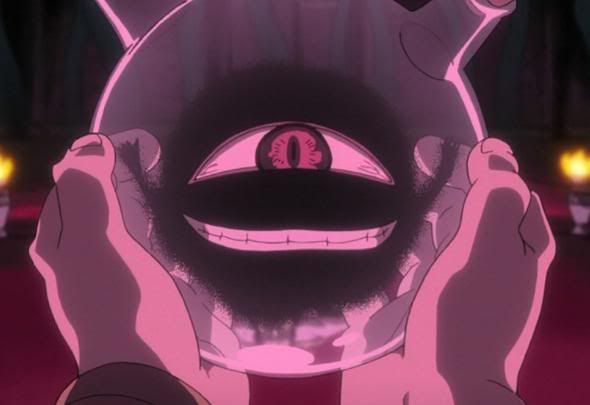
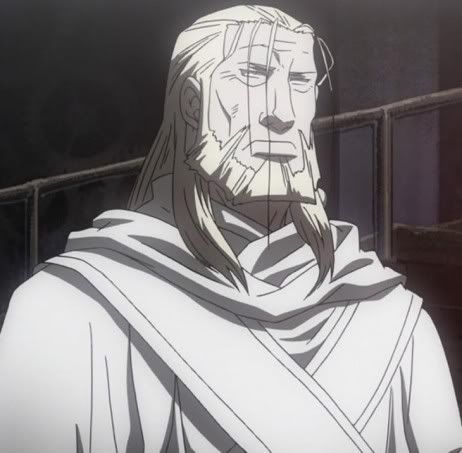
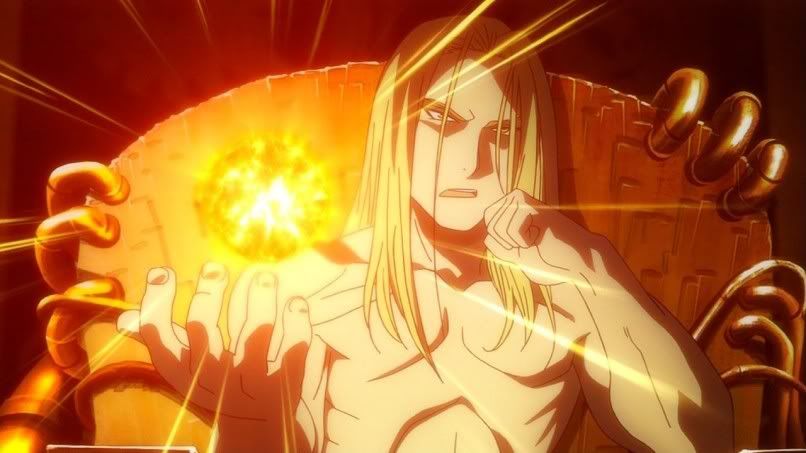
- The Avengers foe Korvac of The Korvac Saga. Once he was a deformed cyborg, with only one eye and a torso attached at the waist to a floating computer terminal. Upon absorbing the power from Galactus' ship, he transforms into a handsome, blond man with a perfect physique.
- In Secret Wars (1984), when Doctor Doom absorbs the awesome power of Galactus, he uses the power to instantly remodel his armor to contain it. When he absorbs the still greater power of the Beyonder, he removes his mask and shows that he's used the power to heal his long-scarred face, making himself handsome again.
- In The Ash this is the ash ponies' main motivation for spreading disease across Equestria. Sure, most ponies will die but those that don't get transformed into Alicorns or Windigoes as the infection runs its course. Twilight becomes a Windigo.
- Nier: Automata (RE)Birth: Invoked and Justified with Purple Athena, as her biped machine body can't handle the strain of using magic. To fix this, she creates a humanoid body akin to Adam and Eve.
- White Snake (2019): As the snake demons get more powerful and gain more Life Energy, their appearance becomes more human. When they're drained of their powers, they're shown to revert back to regular snakes.
- Ultron from Avengers: Age of Ultron is both a subversion and inversion. His intended most powerful form was the vibranium body that ultimately becomes Vision. It would have been, both cosmetically and physically, his most human form. When he loses it, he settles for a bulkier vibranium body similar to his previous one but with a less articulated face.
- The Deviants from Eternals are normally animalistic beings created by the Celestials that transform based on the predatory organism that they consume on they swallow- usually resembling eldritch versions of regular predators or on the rare occasion- mythological beasts like dragons, gryphons, and minotaurs. One particular Deviant named Kro, decides to devour the energies of its enemies the Eternals, Ajak and Gilgamesh in particular, evolving from a ursine like creature to a more apish like being to finally a four-eyed humanoid capable of sapient thought and speech.
- When adapting The Lord of the Rings for the big screen, Peter Jackson considered having Sauron appear in person during the final battle, in his angelic Maia form, but ultimately decided against it. Some CGI◊ sketches◊ of the concept can be seen in the DVD bonus documentaries, and a variant was eventually used in flashbacks in Middle-earth: Shadow of Mordor.
- The eponymous flesh-covered killer robots of the Terminator series develop according to these lines over the years. From hulking Ahnold, the later Terminator models seem to be heading towards ever more slender and graceful ones, from Robert Patrick to Kristanna Loken to Summer Glau. It does have some justification in that the Terminators are meant for infiltration; smaller people stand out less in a crowd, and the diminutive stature makes humans less wary. The war models Skynet uses in the future have no such design limitations and include anything from drones to Humongous Mecha.
- The Nome King in Return to Oz starts out as a creepy moving face on a rock surface animated in claymation, like the other Nomes. But as he grows in power, he becomes more and more humanoid- which is made more apparent when he switches from a claymation humanoid to a live actor is heavy makeup with his most humanoid look before his plan backfires is essentially a gray-skinned version of his original actor— although his One-Winged Angel form in the climax is a mass of rock that looks even more monstrous than before.
- RoboCop has a similar case to the Terminator example above. OCP's cybernetic enforcers evolve with every film. The clunky Chicken Walker ED-209 is succeeded by the metallic bodybuilder RoboCop 2, who is followed by Otomo, a robotic swordsman. Otomo looks like an ordinary man, but he can slice RoboCop's armor with little effort—neither of his predecessors had that kind of power.


- Codex Alera: The Vord queens start out fairly insectile, then go through a marginally more human look before eventually graduating to a "green Kitai" form that tries for Cute Monster Girl but falls a little flat.
- Creature Court subverts this with the shapeshifted forms of the various levels of the Court: the sentinels look completely human, the courtesi transform into swarms of animals, and the Lords use the powerful, glowing Bishonen-style form . . . but the Kings are fanged, clawed Animalistic Abominations.
- Desolate Era: Monstrous beasts that train like human immortal practitioners gain the ability to transform into human form when they reach a certain level of power. The more inherently powerful beasts, the Godbeasts, must reach a higher stage before they can do this. It appears, however, that using their full power requires that the monstrous beast return to their non-human form.
- The Divine Comedy: Souls become less and less human in appearance as Dante makes his tour of the afterlife, going from Hell to Heaven — from physically human in appearance in Hell and Purgatory (though the damned often have their human forms disfigured and transformed in horrific ways) to ethereal faces in the first sphere of Heaven, shining balls of light with discernible eyes in the second sphere, and beautiful but indescribable balls of light in the third through ninth spheres — but when he reaches the Heavenly realm entirely beyond physical existence, the Empyrean, everyone is entirely human again.
- The Dresden Files:
- The Gruffs follow a Bishonen Line. The first ones we see — the youngest of a group of related faeries — are goatlike but about the same size as humans. The next group we see are physically similar to the first ones, but are bigger and are carrying submachine guns. The third time we see one, this one works solo, and he is even bigger than the last group; he has to bend almost in half just to fit through a door. He is large enough for his size to noticeably reduce his maneuverability. The final one is powerful enough to have defeated three high-ranking Council wizards, but he is only five feet tall and definitely more human-shaped than any of his brothers.
- The Denarians play around with this trope. Nicodemus, the most powerful, is always in human form, while the second most powerful, Tessa, can become a praying mantis. The other Denarians take a variety of forms, with Rosanna and Deirdre among the most humanoid.
- In Master of the Five Magics, the Demons have a hierarchy of power. The least powerful are near human, but they grow larger and more bizarrely monstrous as they become more potent. The Archdemon, however, has the form of a lightly built human male.
- Oto × Maho: Discord Effect first appears similar to most "Noise" monsters, resembling an intimidating humanoid silhouette with twisted shadow imagery. After barely surviving their battle with Kanata, reduced to a fading shadow before being discovered by and forming a partnership with President, they later reform as a more human-looking, dark-skinned androgyne, staying that way for the rest of the series, albeit still possessing their usual powers. It's unclear if they actually ended up becoming genuinely human or if it's just a visage, but either way, Effect ends up doing a Heel–Face Turn and — following the defeat of the Big Bad — retires peacefully to become a school teacher of all things, and is able to pass to the point that many of Kanata's fellow students find them hot.
- The Sharing Knife: The protagonists have to fight monsters called malices. The first one they encounter is hideous and troll-like, and among the least dangerous of its highly dangerous kind. The second is so advanced and dangerous that it could become a threat to the entire world if not stopped quickly, and is breathtakingly beautiful. This is justified by the malices' particular magic—they absorb the powers of whatever they magically kill, and it's by quickly absorbing a large number of humans that the second malice acquired its power and intelligence and also its human-seeming beauty.
- The Weakness of Beatrice the Level Cap Holy Swordswoman:
- The Break News follow this. The weakest of them is the Thousand Dragon, a dragon a thousand metres in length. All other Break News are humanoid, with the strongest of them, Sutriona, resembling a ten year old girl with fairy wings.
- Abyss, an Ultimate Life Form created by the Labyrinth, also fits. This is justified by its backstory - the Labyrinth created various kinds of monsters and had them fight against any intruders, to gather data on the strongest form of life. When human adventurers consistently defeated the monsters, it came to the conclusion that humans were the strongest.
- Super Sentai and its Power Rangers counterpart shows used this a few times:
- In the series finale of Power Rangers Jungle Fury, the restored Pai Zhua masters summon a higher level of the powers that the Rangers use. It turns them into furries. At the climax, however, the Rangers summon the highest level of power, reaching a level never seen before. This involves unmorphing and throwing CGI fireballs.
- It and its counterpart Juken Sentai Gekiranger averted this with the Big Bad, however, as its true form is a giant quadrupedal-multiheaded dragon, one of the franchise's few non-humanoid monsters.
- This trope is downplayed in Mahou Sentai Magiranger and its counterpart Power Rangers Mystic Force with the Big Bad. When the Big Bad makes his first full appearance, he looks like a Lovecraftian demonic squid monster. His final form is...a humanoid Lovecraftian demonic squid monster. This form does not make him look any less impressive, however. Zyuden Sentai Kyoryuger and Dobutsu Sentai Zyuohger do the same with their respective villains.
- This is common enough, actually. The villain is often a Sealed Evil in a Can or in an incomplete state at the start of the series, so when the floating face, giant brain, or pulsating sphere can finally come out and play in its complete form, you know the excrement is about to hit the cooling device!
- Kamen Rider:
- Most Riders from Kamen Rider Kabuto transform into heavily-armored Masked Forms, but once they trigger their Transformation Trinket's "Cast Off", they shed their armor and gain access to the Clock Up ability.
- The Imagin protagonists of Kamen Rider Den-O usually need to possess their contractor Ryotaro to transform into the titular Rider, but late in the series (and in some of the post-series movies) they can now transform on their own without the need for possession. Meanwhile, Ryotaro himself gets a form to himself without needing Imagin possession, and it gives him a Stance System to incorporate his Imagin partners' varied fighting styles.
- Upon transforming one time too many, Zodiarts, the Monster of the Week in Kamen Rider Fourze, will reach the Last One stage, in which they can't change back to their normal human form. However, some Zodiarts have the ability to surpass the Last One stage and evolve into a Horoscopes. One of the abilities of a Horoscopes is reverting back to human form.
- A variant in both Kamen Rider Wizard and Kamen Rider Drive. It's not the actual Rider who goes into a humanoid form, but rather their Bond Creatures and sentient Cool Car, respectively, performing a Fusion Dance with them to become their Super Mode.
- Kamen Rider Gaim seems to use this trope for transformations of the title character Kouta. The transformations to his second and third forms add more armor to his suit, with the third form being almost completely covered in Samurai armor. His fourth and final form crosses the bishounen line, by being the least armored and thinnest looking suit in the whole show. Kouta takes this trope a step further by accepting godlike powers in the finale, which causes him to transform into a white haired version of himself, thus making his powerful form the most human for them all.
- Kamen Rider Ex-Aid has its characters dance back and forth across the line. All five main characters have a Super-Deformed Level 1 form, which turns into a more normally proportioned Level 2 formnote . Each can then add on an expansion pack to achieve a Level 3 form that in most cases is asymmetrical and gaudy compared to the Level 2 form, with the second game's themes clashing heavily with those of the base Rider. The additions made by their Level 5 forms, in contrast, are minimalistic in design and only affect one limb. The Level 50 forms return to the heavier look of Level 3, but with armor designed to complement rather than contrast against the base suits they're added on to, while Level 99 gives Ex-Aid a gigantic bulky suit of armor. Finally, Ex-Aid's final form has him shed the armor to become a literal Bishōnen, complete with long, flowing golden hair and rainbow sparkles. Bugsters in the same show go from a swarm of virus particles in their weakest form to the usual People in Rubber Suits, with the strongest Bugsters of all being the ones who can assume human form.
- Kamen Rider Build plays with the concept a bit with its Big Bad, whose final form causes him to shed his Rider costume and return to his regular appearance. Since he's an alien, though, his idea of crossing the Bishonen Line is everyone else's idea of a monster.
- In both Kamen Rider Zero-One and Kamen Rider Saber the lead Rider unlocks a new form during his final battle. Said form looks exactly like their base form, but is much more powerful.
- The final villain from Genseishin Justiriser, Majin Daruga, zigzags this trope. First he crosses the line during the finale, by absorbing the untapped potential of the Sixth Ranger Demon Knight. With this power Daruga takes on the form that would have been Demon Knight's Super Mode, meaning Daruga transformed from a monstrous alien to a sleek knight like form. But then Daruga goes One-Winged Angel and transforms into a monstrous giant version of the previous form.
- Stargate SG-1:
- Anubis. For most of the series, his appearance is that of a cloaked figure, revealed to be a dark, shadowy form of energy. When said shadow-being loses the forcefield containing it, Anubis then takes to possessing various human hosts (seemingly "burning them out" in the process). His "final form" (at least, the last time we see him) is a jolly (and creepy) fat guy who visits Daniel in a wafflehouse. note One of his near-ascension clones makes an appearance in the Post-Script Season, which is not just human, but quite attractive as well. In a twist, this was apparently what his original host looked like, it's just the last time we ever see the jackal.
- The Replicators start out as a ravenous, all-consuming horde of spider-like machines whose sole purpose is to assimilate everything to make more of themselves. The humans then started to encounter larger and more dangerous Replicators such as Queens, who produced even more of the regular ones. Then after the Replicators assimilated the android who designed them in the first place, they evolve into human-form replicators. These Replicators were more dangerous and intelligent than any of them, and also sentient to the point that they clearly showed sadistic or compassionate streaks.
- In Battlestar Galactica (2003) and its prequel Caprica, the evolution of Cylon models is shown to have started with robots resembling household devices in Colonial society, then progressed to more humanoid android forms, which are then replaced by much larger and more imposing Centurions and Raiders after they rebelled, and finally stop at a Ridiculously Human Robots form.
- In the Doctor Who story "The Mutants", Solonians start as Human Alien creatures. As they progress through their metamorphosis, they turn into hideous Mutts, which are unintelligent and violent insect-like beings. When life cycle conditions are met, the Mutts transform again into beautiful, glowing, androgynous rainbow-beings.
- In Charmed it's said that the more powerful upper level demons are the ones who can take on a human form. Early on in the series the sisters face appropriately demonic-looking demons. As their powers increase, more human-looking demons begin coming after them.
- Dungeons & Dragons:
- D&D has the slaadi, extradimensional spirits of Chaos which, as they get more powerful, get bigger and scarier — until you get to the Death Slaad. Although vastly more powerful than all the others and the only slaad that's naturally evil, death slaadi are human-sized and shaped. Sorta this trope without the "Bishonen" part. And then they leave the trope with the Epic Level Handbook White and Black Slaad — the white are gigantic and the black are vaguely froglike things made of pure darkness.
- Inverted with the Modrons, order-obsessed inhabitants of the Lawful plane of Mechanus. They have a strict hierarchy of 15 total stages, and when one dies, the next lowest evolves to fill their place, resulting in a chain reaction that ends with a new member of the lowest caste being created. The lowest tiers are all geometric shapes with very limited capabilities. As they evolve, they become more anatomically complex, and also humanoid, but also with extra features such as wings and extra arms. The highest tiers lose even these and merely resemble biomechanical humanoids. However, the highest rank, the Modrons' ruler, is Primus, which has no obviously human characteristics and is more like a gigantic computer interface, sort of like the MCU in TRON.
- Shows up occasionally in the Warhammer and Warhammer 40,000 universes with certain daemons and Chaos-possessed folk, mostly involving Slaanesh.
- Generally proceeds like this: the weakest or stupidest daemons are entirely inhuman and animalistic. Daemonic foot-soldiers are bestial humanoids, but lack intelligence beyond basic tactics. Greater daemons are gigantic bestial humanoids that are basically avatars of their respective god and can lead entire armies of their ilk - depending on the god they might also be dangerously intelligent. Daemon princes are humans raised up to daemonic level - they're on par with greater daemons, but generally more humanoid and more dangerously intelligent. Finally in Warhammer 40,000 there are the Daemon Primarchs, who were demigods before they were raised to daemonhood and are now some of the most dangerous beings in existence. They can assume human or indeed any form seemingly at will, and will kill almost anything that gets in their way.
- As for the actual chaos gods, the trope is played with in odd ways. Make no mistake, each one is a full-scale Eldritch Abomination with power so far beyond the Bishonen Line it literally melts human brains. However, Slaanesh takes the form of a hermaphrodite who is simultaneously the most repulsive and most beautiful thing your mind can understand. Meanwhile Khorne, often said to be the strongest chaos god as of the turn of the 42nd millennium (their rankings fluctuate) is always drawn as a recognizable humanoid warrior to contrast his original rival Tzeentch, who can't settle on one single form, humanoid or otherwise. Necoho, a minor deity who embodies disbelief, takes the form of a completely unremarkable balding human man with a permanent smirk. However, nothing with Chaos is quite that simple; it's just as accurate to say that a god's "form" is their entire realm.
- Daemonic possession usually inverts the line - as the daemonhost becomes more dangerous, its form becomes less and less human until it reaches One-Winged Angel status. If the host is destroyed the wrong way, though, the daemon proper might emerge crossing the Bishonen Line.
- Also inverted with the Chaos Spawn, people who've received so many daemonic gifts and mutations that their minds break under the strain and turn into hideous masses of random bodyparts.
- Inverted with Genestealers: Implanted humans are completely indistinguishable from normal humans, but with every generation they show more and more Tyranid trait until they finally birth purestrain genestealers, close-combat monsters that look like bulked-up xenomorphs.
- In Age of Empires Castle Siege, the troops get less cartoony and more realistic-looking as you upgrade them. Not to mention with armor\weaponry that gets heavier and more intimidating.
- Asura's Wrath has several examples, being a game that lives and breathes anime tropes:
- Asura has several Super Modes that turn him into a man with six arms, or a colossal lava monster, or a berserk demonic creature, but Mantra Asura, his second-most powerful form, is just his regular body with bigger gauntlets. The one after that, Asura The Destructor, is the same, but black, bulkier, and swollen to the size of a large planet.
- Gohma Vlitra usually appears as a continent-sized skeletal face thing made of lava surrounded by massive tentacles, but its true form, Vlitra Core, is a much smaller humanoid monster.
- Chakravartin, the ultimate villain of the game, starts off as a large golden spider, then turns into a blonde girl, then into a tall gold-robed humanoid with dozens of arms, then into a metallic replica of that form big enough to toss around stars. His final form, Chakravartin The Creator, is a simple skeletal humanoid in silver armour.
- Baten Kaitos:
- The final boss fight is against Malpercio, whose body is a hideous frankenstein made up of the body parts of various dead gods. After he's beaten, though, Melodia combines with him, turning him into a more humanoid figure with wings on his head.
- Another example is Geldoblame. When exposed to the power of the End Magnus, he transforms into a grotesque tentacled thing, which still ends up being That One Boss for many players. He appears to die after that, but is somehow able to come back during the ending cutscenes for round two. There, he "simply" appears as a giant version of his head protruding from the ground and is easily dispatched by one Guardian Spirit attack.
- Bloodborne's Great Ones take various forms, from a giant brain covered in eyes to a massive spider to a cross between an octopus and a dragon, and everything in between. However, the absolute strongest of them all, the Orphan of Kos, resembles a (severely deformed) human. There's a reason for this: Kos modeled her child after the hunters who killed her.
- The characters of Bloody Roar tend to avoid this trope, since turning into animals is the whole point, but a few characters get past that point.
- Cronos, one of the potential final fighters, turns into a very nonhuman penguin when he powers up a little. Turn on the Ominous Latin Chanting, however, and he can transform into a phoenix that looks like a human with a beak and feathers before he kills you.
- Uranus is an even better example, as she first turns into a fearsome chimeric beast with her normal powerup, but her strongest form looks like her normal one, just glowing.
- Uriko also exhibits a degree of this. In the original game, as the Final Boss, her beast transformation consisted of going from a little girl to a full-grown woman, sprouting cat ears, and her hair turning green. Later, when she's less powerful, her beast form, although still less animalistic than the others, is noticeably more feline. She also exhibits going to the One-Winged Angel again, as in the first game, her ultimate form is a grotesque chimera.
- Bravely Default: Airy the Fairy is fought in huge Larval and Chrysalis forms, serving as Final Boss to the Normal Ending. In the Golden Ending, the boss gains access to their "Perfect" form, a human-sized butterfly-like fairy.
- Brave Fencer Musashi: The Wizard of Darkness is originally a massive, horned demon-man; he changes into an even more monstrous green beast, then finally into a white-skinned humanoid slightly larger than Musashi.
- Ryu, the protagonist of Breath of Fire III, can transform into various dragon forms. His strongest form, Kaiser, is identical to his human form, except recolored gold. When you use that form's Kaiser Breath attack, however, he temporarily changes further into a gigantic dragon. This example is more justified than most, however, because the Kaiser form is just so frickin' huge that having Ryu fight permanently in it would fill up half the screen.
- The final boss of Castle Crashers is an evil wizard who first fights you by controlling crystals on a throne, then fights you on foot with a magic wand, then bloats up like a balloon and drops magical bombs, and finally becomes an enormous bat creature. When you defeat that, he regresses back through his balloon form to his normal form, where he summons a gigantic sword for one final battle.
- Castlevania:
- In the original PC Engine version of Castlevania: Rondo of Blood (and the prologue sequence to its sequel, Castlevania: Symphony of the Night), Dracula's second — and final — form is a giant, fire-breathing, bat-winged reptile, which you fight in an Amazing Technicolor Battlefield. In the PSP remake featured in The Dracula X Chronicles, however, he assumes his human form again for the final round after you've defeated the lizard.
- In Symphony of the Night and Harmony of Despair, Dracula's final form is a massive three-headed dragon, but Dracula's human form is visible slouching on a throne set into the center of it.
- Graham in Castlevania: Aria of Sorrow has a One-Winged Angel transformation, with him sitting comfortably within what appears to be two giant pale women joined at the eyes and ribs.
- Soma Cruz himself as Dracula's reincarnation in Castlevania: Aria of Sorrow and Castlevania: Dawn of Sorrow plays it straight, being even more bishonen than his past life ever was.
- Lampshaded in Castlevania: Lords of Shadow, where the bestiary mentions that vampires become more human-like as they become more powerful.
- Legion's incarnation from Castlevania: Curse of Darkness also counts. It starts as the giant ball of corpses, as usual. After breaking off the shell and busting the core, however, it transforms into Nuculais, a giant glowing white humanoid creature.
- The Mutant Core from Chaos Heat begins as a huge, pulsating Faceless Eye larger than your characters, who floats all over the place during the battle. Once it's defeated, the eye shrinks, gets assimilated with a bunch of other mutants, and suddenly turns into a far more human-like body, albeit one which is translucent. Defeat the second form though and the core morphs into a giant beating heart.
- In Chrono Trigger, Lavos actually subverts the Bishonen Line. His colossal bug-like exterior is actually a protective shell guarding his true humanoid form, which, probably thanks to Akira Toriyama, happens to look a lot like Imperfect Cell (see the trope picture above). However, upon defeating this form, the Lavos Core reveals itself to be a shambling monstrosity, the end result of Lavos' attempts to achieve biological singularity. And, in actuality, the core is a tiny, indistinct pod floating beside said monstrosity that couldn't look less like a human.
- The final boss of Deadly Premonition first mutates into a bloated version of himself, then into a giant wall-crawling lizard-thing with backwards hands, and finally into a giant version of his normal self. Subverted from the norm for this trope because his normal form is a goofy-looking fat man in overalls.
- Devil May Cry:
- In the first Devil May Cry game, prior to the third fight with Nelo Angelo, he reveals his true face (identical to Dante's, as he's his twin brother, Vergil). He still has blue skin and glowing eyes, but he's more human than before, and has some new, infuriating attacks.
- If you count the Despair Embodied of Devil May Cry 2 as a second form of the immediately preceding boss, as some Fan Fic writers do (it's not made clear in canon), this would apply. This does not occur in the other games of the series.
- Generally in the world of Devil May Cry, your bosses will come in the form of gigantic monstrosities who lumber around the arena and whose tactics typically boil down to "get as close as possible and hack away" or human-sized foes who meet you slash-for-slash with deadly precision and require a modicum of thought and patience to triumph against. The latter kind might turn into That One Boss but the actual content of the fight will be something to marvel at by comparison. Comparing the fight against Berial as Nero in 4 and the second battle against Dante is a good example.
- Devil May Cry actually does a good job of subverting the Bishōnen Line with the Devil Triggers, Dante and Vergil start off as pretty boys but powering up (i.e tapping into their Demon side) turns them into insectoid-human monsters. This is inherited from their father Sparda whose "human form" is a handsome man and "true form" is an imposing bug-looking knight.
- Played straight with Nero's Devil Trigger from Devil May Cry 5, which is the demon-equivalent to a Long-Haired Pretty Boy.
- The first time you fight Dragon Quest VII's Big Bad, the demon lord Orgodemir, he first starts out as a humanoid creature (with pointy ears and wings), but halfway through the fight, he goes One-Winged Angel and becomes a monstrous demon centipede with new attacks and higher stats to use on you. When you fight him at the end of the game, though, he starts out as a palette swapped version of the centipede, and halfway through the battle, he crosses the bishonen line, becoming a palette swapped version of his original form with much more powerful attacks and stats. He then further changes into a hybrid of the two forms before changing into his final form, which is just loaded with Squick.
- Played straight and averted at the same time for all the dragons' Super forms in Dragon Seeds. They evolve from Baby, to Adult, and to Senior, gradually becoming more complex and massive each time, with one dragon type even becoming a harrier! From there, they can branch off into two categories: Old, where they retain their Senior form, but lose a bunch of stats and only live for a few more days (dragon years), and Super, which plays the trope straight, and they revert into a more humanoid form that looks relatively small, but becomes biologically immortal and ungodly powerful. So powerful, in fact, that you can't do anything else with the dragon but defend the title of World Dragon Champion (assuming you did get to that point) and duel against another player.
- The Elder Scrolls:
- The Elder Scrolls III: Morrowind: Big Bad Dagoth Ur spreads his influence via the corprus disease, which drives its victims insane and causes horrible tumorous growths. For most this means becoming a grotesquely deformed zombie, but the higher echelons of the hierarchy are able to control these transformations, to the point where Dagoth Ur and his immediate underlings look completely humanoid except for the occasional extra eye (or pair of nipples).
- Inverted in Oblivion with vampires. The longer a vampire goes without feeding the stronger they become in vampire abilities, and thus the more vampiric they look, eventually causing townspeople to freak out and guards to attack.
- The third raid boss from Elsword, Perkisas, has three phases. In the first two, he's simply a very large, scaly, scarred red dragon, but in the third, he takes on the form of a very handsome man in a midriff exposing jacket with horns and wings like his dragon form. Possibly a subversion, however, as this fight seems to take place within Perkisas's subconscious.
- Mirelurks evolve like this in Fallout 3. Standard ones are basically giant bipedal crabs, then there are Hunters, Nukalurks, and Swamplurks (Point Lookout), with extra limbs and spikes on their shells, and this culminates in Mirelurk Kings, which look like mutated humans and attack with Psychic Powers rather than tackle attacks. Bonus points for them resembling Frieza and Cell. Mirelurk Kings and Swamplurk Queens are actually a separate species than other Mirelurks, being mutated versions of turtles, making their differing appearance justified in a weird way.
- Synths in Fallout 4 operate like this. Gen 1 synths are extremely robotic and skeletal, while Gen 2 Synths have an additional yellowish, fleshy-rubber "skin". Gen 2.5 synths, like Nick Valentine and DiMA, have additional mouth movement and facial animation. Gen 3 synths, meanwhile, completely forgo their robotic nature and instead are artificially grown humans with implants that make them loyal to the Institute (although this can be overridden). They are, for all intents and purposes, human, as it is imposssible to discover the true nature of a Synth without extremely invasive surgery that would kill them. Coursers up the ante even further, with additional strength, endurance, intelligence, awareness, and combat prowess, although visually, they are no different from Gen 3 synths and, by extension, humans.
- Final Fantasy:
- Final Fantasy VII: Mad scientist Hojo seems mostly normal in his weakest form, except for strange movements and a slightly greenish tint to his skin. Defeating him in this form allows you to fight Helletic Hojo, a huge and ugly mutant. When Hellectic Hojo is defeated, he becomes Lifeform Hojo N/A, an eerily-beautiful humanlike creature draped in white.
- In the final battles with Sephiroth, he starts off as Bizarro-Sephiroth, a large demon-esque looking form. He then turns into the angelic-looking Safer-Sephiroth (complete with Ominous Latin Chanting). In his final form he is himmself with his coat off. However, this final scene is more symbolic than anything else. It's impossible to lose against shirtless Sephiroth.
- Crisis Core does this too, with Genesis Avatar, a hundred-foot-tall Evangelion-esque monster knight, as the first form, and the final battle with Genesis being a straight sword duel after he's inexplicably reverted to his normal and non-decayed form. Gameplay-wise, this may or may not be an example. The Avatar is going to be a long and tedious, if not difficult, fight regardless of what you do. The human form can and will mess you up provided you go into melee. It can be stunlocked by magic, making the fight something of a joke.
- Dirge of Cerberus is also guilty with Nero. He transforms into the huge and malformed Arachnero, and then into the human-sized and pretty Gorgonero.
- Vincent as well. His controlled Chaos form in the final area is stronger and looks more human than his earlier uncontrolled or partially controlled Chaos form.
- Final Fantasy XIV does this with many of its endgame bosses: Niddhogg, in the Heavenward endgame MSQ, temporarily transforms into the possessed Estinien before going One-Winged Angel. Two of the Four Lords from Stormblood also have humanoid forms: Byakko transforms into a large, muscular man whose right arm is his tiger form's head connected by a long neck to his shoulder, while Suzaku transforms into a beautiful woman. Most bizarre of all, however, is Omega: the final raid battle against it has it transform into two humanoids, one male and one female. In the Shadowbringers MSQ, Vauthry looks to be a Breather Boss while in his (incredibly Gonk) human form, until, at the last possible moment, he transforms into his literally angelic Sin Eater form, Innocence, and gains tremendous power.
- Final Fantasy VII: Mad scientist Hojo seems mostly normal in his weakest form, except for strange movements and a slightly greenish tint to his skin. Defeating him in this form allows you to fight Helletic Hojo, a huge and ugly mutant. When Hellectic Hojo is defeated, he becomes Lifeform Hojo N/A, an eerily-beautiful humanlike creature draped in white.
- Reversed in Half-Minute Hero's Evil Lord 30, in which the Evil Lord increases his magic power by "getting sexier", for which he must go to a beauty spa.
- During the final battle in The Halloween Hack, The Id uses its mindpower to turn into a PSI-wielding, curse word-spouting superhuman version of Dr. Andonuts.
- Halo 3 has the Flood Pure Forms. Starting out with a fast, spindly crawling creature, then turning into a many limbed wall spider with two growths on its back that fire projectile needles, and tending with the Juggernaut, a hulking form that, aside from the head and the hold in the torso, has a humanoid body shape.
- Viper from Jitsu Squad is a gigantic snake-woman with two forms, her default being a half-woman, half-serpent and her lower body a snake's tail. But when her power level is high enough, she turns into a more slender, humanoid form, having legs while retaining serpentine features like scaly skin and a forked tongue. Most of the battle have her alternating between these two, and defeating her either in her first or second forms will have the following cutscene showing her default version (that legless one with the snake-tail).
- In Kid Icarus: Uprising, Pandora returns near the end in what is presumably her former humanoid form.
- Kingdom Hearts:
- The final boss of Kingdom Hearts II first fights in his original black-cloaked form, then changes into an armored knight on a throne which is itself on the head of a robot dragon; after several fights against said dragon and knight, the final fight is against him in a recolored version of his original outfit, with an upgraded version of his original fighting style.
- The Heartless, as a rule, grow more massive and horrifying the stronger they are. However, the most powerful of them all, Ansem/Xehanort's Heartless, first appears as an unassuming cloaked figure before possessing Riku, at which point he becomes visually indistinguishable from a normal human. He's the exception to the rule, though.
- The usual Nobody Mooks are somewhat-inhuman beasts, with a few massive Nobody bosses, the frighteningly powerful Nobodies that make up Organization XIII are visually indistinguishable from normal human beings.
- Kingdom Hearts: Chain of Memories: In the GBA version, the first fight against Marluxia is a straight up battle where he uses his own flower magic and wields a Sinister Scythe. The second has him on a sinister, large, floating mech with scythes for arms. That was it in the original version, but the Video Game Remake added a third fight that takes place on top of the remains of said mech, only this time Marluxia has a creepily beautiful angel-like familiar wielding a gigantic scythe backing him up and basically doing all the fighting for him.
- Kingdom Hearts coded: The digitized Sora's Heartless first takes the form of a Darkside with glowing tattoo-like markings, but after taking a beating transforms into a dark copy of Sora, then finally three dark copies of Sora.
- Kirby:
- Kirby's Adventure has Nightmare, who initially takes the form of a purplish-blue Sphere of Power covered in stars. After getting shot down by the Star Rod, however, he turns into a caped sorcerer wearing a pair of Sinister Shades.
- The Big Bad of Kirby and the Forgotten Land, Fecto Forgo, normally looks like a huge, unsettling embryo stuck inside the Eternal Capsule, then becomes a monstrous blob filling the space of a corridor. But after it forcibly fuses with Elfilin, it transforms into Fecto Elfilis, a brightly colored angel-like alien with huge, majestic Ear Wings.
- League of Legends features Thresh, the Chain Warden, an evil undead mastermind who — after many machinations during the Ruined King Saga — eventually claimed enough souls to become "unbound", shifting his appearance from that of a spectral skeleton to a much more human visage, allowing him to pass as an unassuming 50-year-old man. Some of the earliest artworks following this change depicted him as being much prettier and visibly younger, but fan outcry resulted in him being aged him back up to more "Man of Wealth and Taste" range. There was also a Doylist reason for the change in the form of the game's mobile Wild Rift port, which wouldn't accept his usual skeletal appearance and necessitated a new "default" appearance.
- The Legend of Silkroad: Ba Wang, the villain of the sequel, is a Demon of Human Origin who usually appears as a Big Red Devil. But after you defeat him in combat, he then ditches his demon form into a far more humanoid appearance, albeit one with blue skin and glowing red eyes as indicator of his demonic nature.
- The Legend of Zelda:
- The eponymous mask from The Legend of Zelda: Majora's Mask becomes more humanoid the longer Link faces it in battle. First is merely the mask itself, the second, Majora's Incarnation, grows some spindly limbs and what vaguely looks like a face, and finally, the Majora's Wrath form enlarges those limbs and then grows an actual (if horrifying) face with an eye on the top.
- Nintendo realized in The Wind Waker that the humanoid Ganondorf was a far more compelling character, and thus a better arch-enemy, than his boarlike bestial form Ganon, so they saved the duel with Ganondorf for last, following a battle with a giant transforming puppet version of Ganon.
- In Twilight Princess they did it all over again, giving the big man two human phases after you'd already dealt with his bestial form.
- A variant with Bellum of The Legend of Zelda: Phantom Hourglass, where it only became humanoid through Demonic Possession. Its first form is its true form, a giant squid-like creature; after that is defeated, Bellum takes control of the ship it uses to terrorize the World of the Ocean King, the Ghost Ship, engaging the heroes in a naval battle; after that is done, Bellum possesses Linebeck, transforming him into a Phantom (those same knight-like enemies that torment Link in the Temple of the Ocean King) for the final battle.
- The Legend of Zelda: Skyward Sword's The Imprisoned starts off as a giant Armless Biped covered in black-red scales with only a mouth and legs. Its second form grows arms, and its third form grows a tail, as well as the ability to levitate. Once it absorbs the Goddess Hylia's soul, it achieves its true form Demon King Demise, which pretty much resembles a cross between Ganondorf and Akuma.
- The Legend of Zelda: Breath of the Wild has an unusual variant with Calamity Ganon. When Link finally faces the fiend in Hyrule Castle, it emerges from its cocoon as a giant, multi-limbed Mechanical Abomination with robotic, spider-like Guardian legs, arms with laser cannons and laser blades instead of hands, and a grotesque skull-like face with a very faint similarity to Ganondorf's original human face. Upon being defeated in this form, Ganon ditches the Magitek cybernetics and reconstitutes itself as Dark Beast Ganon, which resembles Ganon's bestial form from Twilight Princess and, while still a big and monstrous-looking creature, more closely resembles a real creature and is significantly less gruesome-looking than Calamity Ganon.
- In Hyrule Warriors: Age of Calamity, the new incarnation of Calamity Ganon, born after Harbinger Ganon consumed its servant Astor, is humanoid and resembles Ganondorf, albeit huge and with some monstrous features. It's faster, stronger, and overall far more dangerous than either the mechanical monstrosity or Dark Beast from Breath of the Wild, requiring a Heroic Sacrifice from Terrako before it can even be harmed at all.
- The Big Bad of Lunar: Eternal Blue, Zophar, takes a giant Eldritch Abomination form when you first seen him. When you fight him for the first time, he looks decidedly... prettier, even when he goes One-Winged Angel on you. Both forms are also nowhere near the size of his original form, which he actually turns into the game' final dungeon.
- MS Saga: A New Dawn, the failed Gundam RPG, exhibits this with the final boss's Humongous Mecha. He starts the fight in the Alpha Azieru from Mobile Suit Gundam: Char's Counterattack and, when that's destroyed, uses the G-System to turn it into a black version of Wing Zero Custom from Mobile Suit Gundam Wing.
- Mega Man:
- Cyber-elves in the Mega Man Zero series start off as midgets and some Cephalothorax, but for each level raised they grow up and become more humanoid in the process. (Especially the Nurse types and the Mimic elf from 4.)
- Omega from Mega Man Zero 3 starts off huge in his first form, gets a golden color scheme when he powers up to his second form, then becomes even bigger in his third, and finally reverts to a much smaller form, which just happens to be Zero's original body. As the trope states, he is infinitely more powerful in this form than he is in his others, though justified in that the giant form he's seen in for most of the game is actually just a mech suit created by Dr. Weil that hide his true identity. He's actually a departure from series norm, which tend to be small, agile humanoids followed by a giant monstrous form. However, in early games, the humanoid is more dangerous than the monster, since Zero's most powerful weapons are close-range, which is harder with the boss's speed. Later final bosses show greater damage and reach on their attacks. (Compare Ragnarok-Weil to Copy X or Elpizo.)
- Master Albert of Mega Man ZX Advent sort of fulfills this trope: he starts in humanoid form, his second phase is a giant robot dragon/hydra and his last phase is him channeling the power of the completed Model W into an angel-like humanoid form. However the dragon is not his transformation, but rather his throne's.
- Mercenary Kings features a trio of dog-themed tanks - The Blitzhound K9, the Munsterlander and the Metal Woof - piloted by the Big Bad's pet dog. Each new model is smaller and sleeker than the last, and obviously more powerful.
- Metal Gear Solid 4: In the boss fight against Ocelot, he slowly regresses in his mind to his Bishōnen younger days. However, since this is only in his mind, he remains looking like an old man, and only his movements become more 'bishounen'. Note also that the Life Bars change as well!
- Metroid:
- At the end of Metroid Prime, the title character sheds its giant black arachnoid armor, revealing a mixture of an octopus, a Metroid, and a human face. It then manages to snag Samus's Phazon Armor and some of her DNA in its death throes to reconstruct itself into Dark Samus, who is essentially a black-armored clone of Samus's armor made of Phazon. Dark Samus herself also gained a more streamlined version of herself by the third game; in Metroid Prime 2: Echoes, Dark Samus's shoulders looked organic and instead of having boots like Samus, she had humanoid feet instead. The rest of her body looked like a combination of the suit and natural skin. In Metroid Prime 3: Corruption, Dark Samus's body looked much more identical to Samus, looking like a near-perfect identical copy of the heroine in her suit. Considering in this same game, falling to Terminal Corruption results in the Phazon-infected Samus becoming another Dark Samus, there's even an implication Dark Samus herself has a proper human form underneath her armor compared to Echoes where the final fight reveals a humanoid Metroid Prime-looking skeleton and organs beneath the armor.
- Also, at the end in Metroid Prime 2, the Emperor Ing goes from being what resembles a giant eye with tentacle lashes, to a gas spewing shell, to a much larger version of the basic Warrior Ing, which isn't humanoid at all, but would be this trope from an Ing's point of view.
- The Big Bad of Noitu Love 2. For phase one of the boss fight, she's a blobby sphere with legs. For phase two, she transforms into a bat-winged human, and grows so big that only her head and shoulders fit on-screen. For phase three, she loses the wings and shrinks down to only slightly larger than the protagonist.
- Onmyōji (2016): Not evil monsters per se, but Ubume the oversized talking bird and Hakurō with the head of a wolf and the body of a woman become humanoid when they are Awakened.
- Eve's final form in Parasite Eve is a rare Bishoujo Line example, having gone (over the entire game's course) from normal actress to 8-foot pale seductress with a serpentine lower body to taking up a good-sized room while preggers with the Ultimate Being to 20-foot floating monstrosity covered in grasping arms to functionally naked Fragile Speedster harpy-thing.
- Persona 4:
- Around early July, Teddie, after recovering from his ordeal with Shadow Rise and Shadow Teddie and poking into the real world, he talks about how he's grown on the inside. And he has, literally: when he takes off his bear costume, we see not empty space, but a blonde, blue-eyed bishounen.
- Inverted with with Izanami, who starts the fight as a woman in a strait jacket and a massive skirt, before revealing her true form, a monstrous, multi-limbed, rotting...thing with what's left of Izanami's upper body from the last form on top... which is also rotting and unpleasant to look at.
- Phantasy Star IV:
- The Dark Force appears multiple times. First, as a monstrous head and shoulders attached to the satellite, and second in the form of a giant spider with the same head. Then it hides inside the form of a human archaeologist with dark magical powers, allowing it to hunt for the Aeroprism. When the party finds the Aeroprism, he transforms into the third Dark Force, which is a humanoid demon much smaller than either of the others.
- Even more the case with the Profound Darkness. First form: a collection of mouths and red eyes on a blob of purple flesh. Second form, it's got green-gray armor, plenty of appendages, but only one mouth and not as many eyes. The third form? A giant gray human female with bony wings and seven eyes in symmetrical positions on the thighs, wings and forehead; if you hadn't seen the prior forms, you'd probably take them as gems.
- Many Pokémon get more humanoid as they evolve.
- Many Pokémon get more humanoid as they evolve. Abra to Alakazam, Mareep to Ampharos, Zorua to Zoroark, Spritzee to Aromatisse, and Nacli to Garganacl are a few examples. This trope is especially common in starter Pokémon evolution lines. Earlier generation starters didn’t really use the trope (with Blaziken and maybe Typhlosion and Empoleon being rare exceptions), but from Generation V onward, every starter Pokémon has evolved from a small animal to a semi-humanoid creature, to the extend that every starter with a quadrupedal first stage has evolved into a bipedal final stage since that time.
- Inverted with Meowth and Persian. Meowth is a cartoony Funny Animal that walks on two legs, but its evolved form is a more realistically-proportioned large cat.
- Zygarde is initially seen as a mass of small, blob-like creatures, which come in two varieties: the massive-numbered Zygarde Cells, and the less numerous Zygarde Cores (the anime has only two, while Sun and Moon have five). When the situation calls for it, the Zygarde Cells can assemble into: 10% (canine), 50% (snake; the form Zygarde takes during Pokémon X and Y), and finally, 100%/Complete Forme (a gigantic Humanoid Abomination).
- Hunters from [PROTOTYPE] are massive, ugly hulks. Leader Hunters are even larger, even uglier and even more powerful. The Supreme Hunter, on the other hand, while impossible to call handsome, is still slightly better-looking than the previous two, not that much bigger than Alex, and predictably even more powerful than Leader Hunters. Alex himself is also bordering on physical godhood by endgame, though he usually looks like a normal human. PARIAH looks completely human, and as far as the Web of Intrigue can say, is capable of single-handedly wiping out all life on Earth.
- Putrefaction does this in the sequel, Void Walker. You fight The Hermit who first turns into two gigantic, demonic forms, and if you win he went on to his third and last form - an armored knight who's humanoid and roughly your size.
- Wesker in the Resident Evil series, in a rare out-of-boss-fight example. Despite being essentially a man in a trenchcoat with red eyes, he's more powerful than all the horrific genetically-engineered monsters in the series. He seals his fate by going One-Winged Angel for the Final Boss fight of RE5, which allows you to (presumably) finally kill him for good.
- In Scott Pilgrim vs. The World: The Game, the final boss actually has three forms. The first of which is Super Gideon Graves, which is Gideon grown to twice his normal size, the second of which is Gigadeon Graves, a giant mutated monstrosity fought within Gideon's own subspace and the last of which is Gideon Graves, fighting unaugmented with only his pixel katana.
- Shadow Hearts:
- The original game features this. Although Yuri's fusion souls are all roughly human-sized, they generally get more bizarre or monstrous as they get more powerful, with the second-most-powerful, Amon, being a hulking, monstrous demon with a blade on one arm. However, his most powerful, the Seraphic Radiance, is just him, glowing white, with black wings and mystic-looking tattoos.
- Even more so in Covenant. Yuri's low level fusion forms look like "elemental" costume swaps of his normal body. His stronger forms include a giant armored knight, a beastly rock monster, and a sea dragon, all much larger than a human. Amon, as usual, is a big, muscular demon, and Dark Seraph looks like a black-winged, almost completely naked, but otherwise fairly normal Yuri.
- Ramirez in Skies of Arcadia does this when after going through his One-Winged Angel phase, by fusing with the gigas Zelos, he crosses the Bishonen Line once his second form is defeated and resembles something of a silver angel with his original human form clearly visible. Possibly qualifies as Clipped-Wing Angel from a narrative standpoint, as the Rameirez/Zelos fusion was the size of a moon and threatened the entire world with its power to call down the Rains of Destruction. The final form, however, is just Ramirez harnessing a fragment broken off of Zelos as it died, and is only a threat to the party.
- In Spectrobes the Krawl start off as relatively small monsters, growing in size slowly with each passing boss until the final boss who is relatively large, basically the largest enemy of all (to say nothing of your ally Tindera). Immediately in the second game you are introduced to the high Krawl who are human shaped Krawl. but then this trope is subverted as the high Krawl all go One-Winged Angel. but then this is Doubly Subverted with the final boss(s) who are all massive and only grow larger until you face the ultimate Spectrobe, whom you cant defeat. (The True Final Boss is Krux, a human, though).
- Black Cat in Spider-Man: Web of Shadows, when first infected by a symbiote, looks frightening in appearance and power, but does not have control. When Spider-Man infects her with his own symbiote, Black Cat retains her human appearance, and gains a Stripperiffic costume even more revealing than the costume before and has become more powerful to illustrate the complete control of her symbiote.
- Tales Series:
- Dhaos from Tales of Phantasia fights you as is, then turns into his presumably true alien form. After beating that, though, he returns to being a humanoid, albeit very tall, suited in white, and sporting angel wings.
- Granted, that form was only put into the remakes.
- The final boss of Tales of Hearts fuses with the core of a giant planet-eating parasite to fight you, has a big magical lump of flesh for an ally, and can summon monsters, walls, and spikes from the room itself to attack you with. After beating that, you enter his mind and fight his "true self", which is him with a bunch of power crystals, a silly collar and powerful spells, a tough defense, and a Limit Break.
- In Terapets, several monsters do get more human-looking but some monsters play an inversion.
- The Process of Transistor display this. Two of their three most powerful forms, the Younglady and Man, are also the most humanoid. (The third is the gigantic Spine.)
- In Treasure of the Rudra, Mitra fits the theme, as she starts as a statue-like being, then a giant half-human, half-serpent monster, and then assumes a smaller, more humanoid form for the final battle.
- In Trillion: God of Destruction, the eponymous Trillion starts off as a titanic monster vaguely resembling a bipedal and wingless dragon, then transforms into a full on dragon form with wings, and finally turns into a smaller humanoid form that still has the wings and horns, but now also has long hair and wields an oversized kitchen knife and fork as weapons. It's lampshaded by Faust who notes the second form is more combat-oriented and the third its "most natural" state and justified since Trillion was once a demon Overlord like the main characters.
- Undertale:
- During the final fight with Mettaton, after you flip the switch on his back he goes from looking like a giant boxy computer with arms and a unicycle wheel to the bishonen-looking Mettaton EX.
- While none of the monsters look quite human, Flowey comes about as close as any monster can. His initial appearance is a cute, smiling flower, who quickly becomes a much less cute flower. At the end of a Neutral run, he absorbs six human souls and becomes Photoshop Flowey, who is far more bizarre and monstrous than any other monster in the game, and does not look human in the slightest save for a human face occasionally appearing on his screen. In the True Pacifist ending, he finally crosses the line after absorbing the six human souls and the soul of every monster in the underground. At this point he first appears as an anthropomorphic goat-child not unlike Toriel and Asgore, because he's their child: Asriel Dreemurr. During the final battle, he becomes a floating adult version of the same, then grows wings. At the very end, he reverts to his child form, and without the power of the souls he will inevitably become Flowey the flower again.
- In Viewtiful Joe, it is revealed that Captain Blue, Joe's movie hero, is in fact the true villain of the piece. He transforms into his monstrous "King Blue" form that is so large, Joe must face him in his Humongous Mecha "Six Majin". After the battle, Joe jumps to the nearby platform to commence the final battle; Blue appears again, much younger and more muscular than he ever was before. After being defeated, he reverts back to his older, overweight form.
- In The World Ends with You, when Sho Minamimoto becomes part Taboo Noise, he basically just loses his hat and gains another black hand; much more human than his original noise form, and he becomes, in his own words, strong enough to rival the Composer.
- In Zone of the Enders there are gigantic battleship-sized Orbital Frames, but the most powerful Orbital Frames ever made are comparatively small and bipedal. They get more powerful when they lose a lot of their armor and look even more human-like.
- Used in, of all things, the DS version of Nicktoons: Globs of Doom with Big Bad Globulous Maximus, who goes from a gooey cyclops meteor taking up the entire screen to a flying slime man the size of SpongeBob SquarePants.
- A stunningly common trend in Bullet Hell games is for bosses to become larger and/or more complex as one progresses through the game, but instead of being even scarier, True Final Bosses are small and elegant-looking. This shows up in Blue Wish Resurrection, XOP, all the Trigonometry Wars games, and probably dozens of other places.
- Shadow the Hedgehog in Sonic Adventure 2 is a variation: As the Ultimate Lifeform, he himself has only ever had a hedgehogoid form, but his prototype is monstrous.
- In the Dreamcast game Seventh Cross Evolution, the protagonist starts out as a cell, growing into a fish-man, and one of the most expensive evolutions is a human with a pretty face and hair.
- In Rewrite, familiars such as Krivoy Rog (a massive crustacean) and Fuego (effectively a giant blob of lava) are incredibly powerful...but the most powerful familiar, Sakuya, is straight bishounen.
- Averted by Kotarou, who becomes less human the more powerful he becomes, eventually becoming a tree. Played straight when he is summoned from his tree form looking like a fairly normal guy, and then uses his immense power to take five people to the moon.
- In the Heaven's Feel route of Fate/stay night, the Shadow attacking and killing Servants starts as a gelatinous, octopus-like thing. When Sakura realizes that the Shadow as a part of her subconsciousness, it begins to manifest through her instead. True to this trope, Dark Sakura starts out looking like a bloodstained and crazed version of herself, but when she finally gives in and embraces her darker side, she undergoes an Evil Makeover that makes her look more conventionally beautiful.
- Adventurers! is the Trope Namer, as seen above. Khrima goes from a human sorcerer, through two progressively monstrous forms, and then takes on his final form, which is far more human.
- Homestuck:
- This is seen with the prototyping of the Black Queen's Ring in the Kid's Sburb session. The features of whatever's prototyped by the kids are incorporated into the carapace that wears the ring, in this case Jack Noir. The first three add a harlequin hat, tentacles, wings, cat features, and a sword through the chest. But when Bec is prototyped last, the tentacles disappearnote , and the head elongates from a creepy harlequin/cat mess into a sleek, canine face, leaving the carapace much smoother and cleaner-looking than before. The eye scar, wings and missing arm stay, though.
- Given that a First Guardian wasn't prototyped, this is averted in the Trolls' session, where 12 things get prototyped, including an Eldritch Abomination, creating a monstrous, hideous Black King as their session's Final Boss.
- Lord English averts this trope as well. As Caliborn, he starts out a small, rather Creepy Cute skull monster boy. As Lord English, he is a giant, hulking monstrosity, with bulging muscles, flashing billiard eyes and a hideous skull face.
- Caliborn lampshades this with his obsession over being big, muscular, and manly. He's under the impression that the more monstrous you are, the more powerful you become. This mentality is built upon when it's revealed that Lord English's soul contains Equius, a Troll also obsessed with muscle culture as well as large, bulging "hoofbeasts" (horses).
- Spacetrawler: After Yuri becomes a cyborg, she starts constantly upgrading herself—her cyborg implants become increasingly bulky and inhuman, until she eventually looks like some kind of robot spider. Martina forcibly downgrades Yuri to her baseline cyborg form. Then Yuri upgrades herself to her most powerful form yet, a a self-styled death goddess—and she looks like her human self with a different skin color.
- In Manly Guys Doing Manly Things, GACKT naturally has one, including a lampshade over the trend.
- In Blindsprings, the girls come across a huge skeletal dragon. If you want to see his true form though, click here (he's the one that's glowing). Justified since he's just a fairy at the end of the day.
- The Devils of Kill Six Billion Demons apparently dance back and forth across this line as they increase in power, although their most human-seeming level is the third-most-powerful Gold Devil.
- Parodied and subverted by a Transformation Sequence in Awful Hospital. When a giant bacterium, an anthropomorphic maggot, and a fungus do a Fusion Dance, a curvaceous humanoid outline briefly appears, and then...
- In Tower of God, the "transformation" Super Mode used by the canine people involves parts of their body turning monstrous and often enormous. But that's just partial transformation — when Yama, the only one able to use full transformation, finally shows what it's like, far from every part of him turning monstrous, his body is almost unaltered, though there are things floating around it.
- Adventure Time: Bella Noche, the main antagonist in episode "Betty", starts looking like a large head made out of a green, slimy substance inside of a grey box, then takes on the form of a massive black cube that grows as it absorbs the magic from Wizard City. The box is actually the shell for his true form, which has the appearance of a blue, androgynous, humanoid being with long hair.
- In Ben 10: Ultimate Alien, Ben 10,000's most powerful form just happens to be himself, not having any alien features (aside from the Omnitrix emblem on his chest). In this form (called "Ultimate Ben"), he can use the powers of all the aliens in the Ultimatrix without having to transform into them.
- In the fourth season of Justice League, Lex Luthor is possessed by the intelligent supercomputer Brainiac, who turns his body into a hulking, half-machine, betentacled monstrosity with a robotic "face" on its abdomen, containers sticking out of his back, and tentacles coming out of his arms. Then they "merge completely" into one being with the power to remake matter with a thought, and become green-skinned Lex Luthor wearing gold armor and a Brainiac tattoo on his forehead. This "complete merger" gets broken off and then phased out by The Flash, leaving Luthor completely human again and naked.
- In The Owl House, Eda’s "Owl Beast" form initially changes her into a quadrupedal, gryphon-like monster.◊ In the show’s second season after accepting the Owl Beast as part of herself, this form changes into a more humanoid harpy-like form◊ that she dubs "Harpy Eda".
- In Wakfu, Rushu at first looks huge, demonic-looking complete with horns, and brimming with fire. His true form is a much smaller cyclopean humanoid smooth-headed demon that is actually even more powerful than his giant form, with Rubilax explaining that Rushu prefers using the giant form because it emphasizes his intimidation factor despite being weaker. The only opponent strong enough to force him to fight in this form is Goultard, the demigod son of Iop himself.