
Here it goes- every reference in the Mortal Kombat saga which isn't a reference to other MK games or Mythology Gags related to the Guest Fighters' home franchises.
open/close all folders
Characters
As characters can appear in more than one game or installment, they're grouped here for your convenience, and sorted alphabetically.
Multiple at once
- The designs of the ninjas, black tight fitting clothing with a split down robe thing, looks remarkably similar to Luke's outfit in Return of the Jedi only more colorful.
- Scorpion's Spear and Sub-Zero's Freeze were, by Ed Boon's admission, directly influenced by Street Fighter II's dizzy mechanic; he loved the idea of having a free hit on an opponent and looked to incorporate it into the characters' actual movesets.
Baraka
- His Mythic victory pose in 11, where he crosses his arms in front of his chest, is called "Tarkata Forever".
Bo'Rai Cho
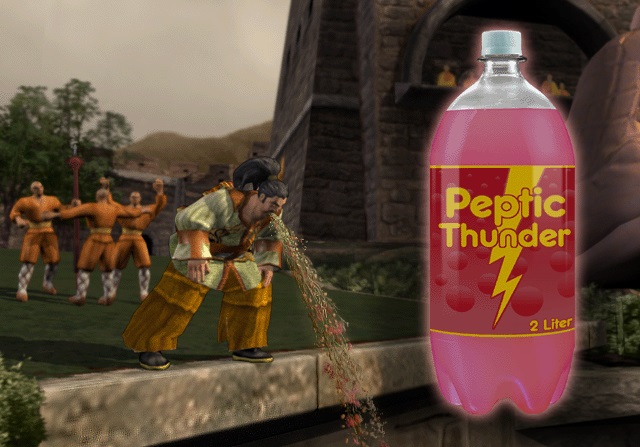
- His Krypt Comedy Commercial in Deadly Alliance endorses a vomiting-inducing drink called Peptic Thunder
 ◊, a clear knockoff of Pepto-Bismol.
Cassie Cage
- MKX comics:
- Issue #3 calls her match against Frost a "Celebrity Deathmatch".
- Issue #5 has her being dominated by Frost in the aforementioned match. After a comeback, Cassie calls her rival Elsa.
- Issue #12 has her calling Mavado Captain Hooks.
- Her "Selfie" Fatality in X has her posting the selfie on an obvious expy of Facebook called "Friendships". Many of the cycling comments on the picture feature popular Internet memes and phrases such as "How can she slap!" and "rippin and a tearin". A trollface can even be seen on one of the profile pics.
- One of her pistol designs is called LFG-9000.
- Her Groin Attack Fatality is taken straight out from American Gods (2017) where Laura Moon kicks a mook between his legs so hard, everything directly above the testicles comes flying out.
- One of her "Social Media" intros against Kotal Kahn has her state she's not worried because "He's no samurai, Jac."
Cyrax, Cyber Sub-Zero, Sektor and Triborg
- They were inspired by Predator. If you ever had doubts about this one, Cyber Sub-Zero from 9 and the Predator himself in X makes it even more obvious.
- Cyrax's self-destruct fatality has him typing some kind of sequence in a panel in his pulse, like the Predator himself. Later games show that Sektor and Cyber Sub-Zero have similar panels.
- Cyrax uses a "Sabre of Light" in 4. In the PS2 games, Sektor also uses that and was renamed as "Pulse Blades": A blue one (green in Armageddon) for Cyrax and two red ones for Sektor.
- Cyber Sub-Zero's second Fatality in 9 has him latching onto his opponent in a fashion akin to a Saibaman and then self-destructing.
- Triborg is a robot with a rogue A.I. seeking the end of organic life that it deems as inferior to itself and also inhabits multiple bodies simultaneously. Sounds eerily similar to Ultron in yet another tribute to Marvel Comics.
- A brutality for the Cyber Sub-Zero variation shoots a continuous stream of ice, freezing his opponent in an ice block with only their face, hands and knees poking out.
D'Vorah
- She takes several cues from Sarah Kerrigan. She commands an army of insects (mutated insects in Kerrigan's case), many of her attacks involve some kind of Body Horror, two of her variations in X are called "Brood Mother" and "Swarm Queen", the X Comics show how she was killed, with the implication of being resurrected by an evil force, mirroring the ending of the next-to-last mission of the Terran campaign in the original StarCraft, the Story Mode has her starting in the "good" side and then showing her true colors (mirroring Kerrigan's actions in the original StarCraft's Expansion Pack Brood War) and her ending has her declaring herself Queen of an insectoid species who conquers every other realm and slaying a powerful being, similar to the ending of Brood War.
Darrius
- His alternate costume is basically Black Belt Jones with Cool Shades.
- Both of Darrius' fatalities in Deception are taken from Thrill Kill, specifically one of Mammoth's (beating the opponent to death with their own severed arms), and of of Judas' (ripping off the arms, legs, and head followed by sticking them back in the wrong spots).
Ermac
- If he gets knocked off Raiden's Sky Temple in Deception/Unchained and Armageddon, and sent plummeting to his death, he's got two words for ya: "SUCK IT!!!"
Erron Black
- He has a combo string in X named Firefly and a Brutality named Serenity.
- His gun twirling is reminiscent of Ocelot. Considering his voice actor's role in MGS V…
- When he uses his X-Ray on the Predator, the bullet he fires has "Ugly Mofo" written on it.
- In the comic, he mentions that the rescue operation feels more like a Suicide Squad.
- His Swashbuckler costume in 11 resembles Indiana Jones.
Ferra/Torr
- They have a very Master Blaster-like dynamic going on, something that has not gone unnoticed by fans or commentators at E3 2014. Johnny Cage goes so far as to call them Master Blaster in pre-match intro dialogue.
- Their playstyle in general note also calls to mind Chang and Choi in Capcom vs. SNK 2: Torr does the brunt of the brawling and Ferra issues orders, though several specials (especially in the Vicious variation) have her jump into the fray (and off of his shoulders) to help out.
Frost
- Her default intro in 11 shows her head and spine being lowered into her body, similar to the introductory scene of the Borg Queen.
- One of her winposes is similar to Fulgore's in the 2013 Killer Instinct reboot, with both of them shooting a beam at full strength.
- Her Friendship involves her whipping up her own ice rink and doing a rapid two-foot spin while her head remains motionless and fixed in place, much like the Snow Miser.
- One of her winposes is similar
Fujin
- One of his cosmetic items in 11 slicks back his hair and makes it pointy, making him resemble Vergil from the Devil May Cry series. During a Developers' breakdown video of his Gameplay Reveal, one of the MK11 devs even noted Fujin was "motivated", referencing a Vergil-related meme.
Geras
- He controls two different elements. Namely, sand and time.
Havik
- His first fatality in 1, where he rips out his opponent's heart and shoves his own heart in their body, causing it to explode, is appropriately titled "Atomic Heart".
Jacqui Briggs
- Her second fatality in 11 has her vertically bisecting the opponent with an energy wall, the same way that Ben Moss is killed in Thir13en Ghosts.
- Her Space Marine Skin heavily resembles the outfit worn by Ellen Ripley in Alien.
Jade
- Her main outfit in Deception is a very similar imitation of the overall attire worn by Black Orchid in the original Killer Instinct games.
- Her alternate costume in 9 looks strikingly similar to that of Slave Leia's, right down to her hairstyle.
Jax
- His fatality in Mortal Kombat 3 in which his arms turn into blades is likely a reference to the T-1000.
- His bald look in MK vs DC is inspired by his appearance in Mortal Kombat: Annihilation.
- In 9, one of his fatalities where he uses his arms to brutally bury his opponent into the floor is a shot-for-shot copy of Tak's Fatality in War Gods, another Midway project. If you remove the kicks at the end, it's also a shout-out to one of Superman's Heroic Brutalities in MK vs. DC.
- In X, if his Carl Weathers-inspired costume is chosen and his opponent is Johnny Cage in his "Commando" costume, they recreate the handshake from Predator, complete with "You son of a bitch!"
- One of the customizations for his arms in 11, a paint job resembling the American flag, is called "This Is America".
Johnny Cage
- He's inspired by Jean-Claude Van Damme's character in Bloodsport. This is because the game was originally planned as a tie-in for the film.
- This becomes a Development Gag in 1, where he gets a premium skin voiced by Van Damme. The skin's design is even based on Van Damme's appearance in Bloodsport.
- His moves are taken from Iron Fist's Daniel Rand and his last name from Luke Cage.
- Both being actors who were named after Luke Cage, some of Johnny's films and his general reputation as an actor in later games come off as a pastiche of Nicolas Cage.
- In Deadly Alliance, apparently, he was a contestant on a celebrity edition of Smash TV.
- From the same game, one of Johnny's fictional films was entitled Exiting the Dragon of Death. He starred opposite Hong Kong action star Channie Jack.
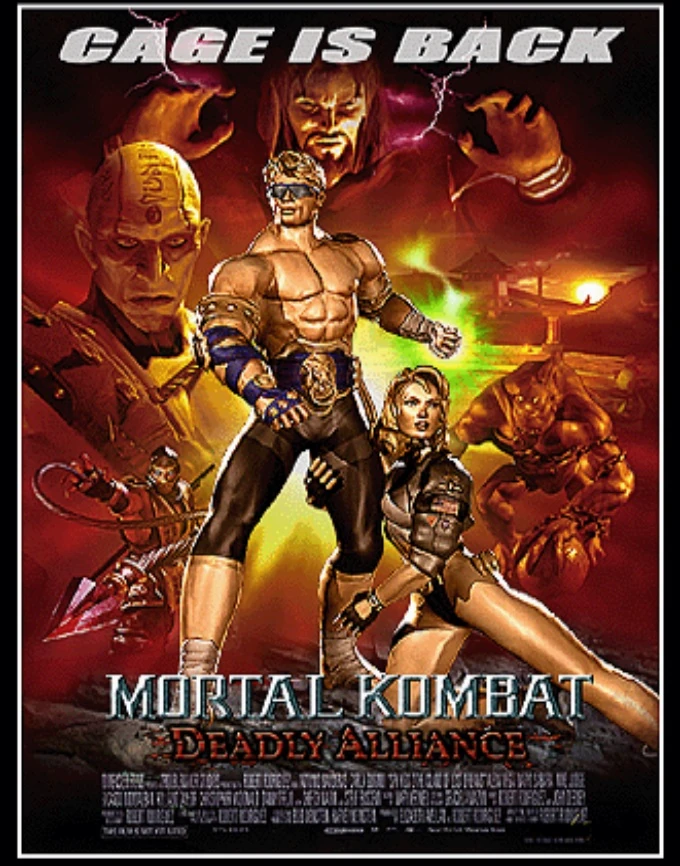
- The poster for his fictional movie Mortal Kombat: Deadly Alliance, is an homage to other movies' posters, Army of Darkness in the middle.
- In 9, he starred in various movies titled Time Smashers, Citizen Cage and Tommy Scissorfists.
- One of the Challenge Tower missions has Reptile trying to stop him from reaching the premiere of Breaknose Mountain.
- In X, one of his Fatalities has him recreating a classic scene from The Shining, complete with Johnny saying "HEEEEEERE'S JOHNNY!"
- Chapter 1 of the story mode has him defending himself from Sub-Zero by using a familiar looking crowbar.
- One of his Brutalities has him performing the same jumping split kick Van Damme did in Bloodsport. The kicker? The Brutality's called "Blood Spurt".
- One of his buckle designs in 11 is called Bullet Gang is Fine. The design is composed of two cross pistols over a multicolored skull of sorts
- A tower sees you fighting Johnny multiple times while trophies that look like Razzies are thrown at you.
- An alternate palette for Johnny's tuxedo costume resembles the purple suit worn by The Joker.
- He has a brutality version of his new sunglass toss move that causes the victim's head to explode after the shades land on their face, referencing the self-destruct sunglasses from Mission: Impossible II.
- When setting Johnny Cage as the game's announcer in 11, he might instead refer to a fighter by a nickname. The shout outs include:
- Big Troublenote
- Mr. Roarkenote
- Thundercatnote
- 1.21 Gigawattsnote
- Mini-Menote
- Real Steelnote
- Jugga-bronote
- Guns and Bruisesnote
- Fright Nightnote
- Once Bittennote
- Skarlet Jo-Mansonnote
- Toastynote
- Sting note
- Grim Shadynote
- Moby Ghostnote
- Chilly Willynote
- Citizen Kanonote
- Kicky Longstockingsnote
- I'll buy that for a dollarnote
- Hey there, Buckaroonote
- Guns! Guns! Guns!note
- Mama Roachnote
- Creature Featurenote
- Captain Hooksnote
- Footloosenote
- Busta Timesnote
- Nowhere Mannote
- Purple Painnote
- The Artistnote
- Windy Citynote
- KAAAAAAHNnote
- Kotal the Barbariannote
- Elsanote
- Foxy Ladynote
- Send In The Clone!note
- AW! He's a Death Machine!note
- Not even the stages are safe from the shout-outs:
- You will be upgraded.note
- Beast Mode!note
- A Bug's Deathnote
- It's a Trap!note
- Those about to die salute you!note
- Mad Icon Square Gardennote
- In the gameplay trailer of Mortal Kombat 1, he turns his middle finger into a gesture mechanism. The "It Has Begun" Kombat Kast reveals that it's his intro pose if he's the second.
- Two of his taunts are Professional Wrestling references: Hulk Hogan's "I can't hear you!" And D-Generation X's "Crotch Chop/Suck it!"
Kabal
- The gas mask he wears? A tribute to Tusken Raiders.
- Speaking of Star Wars, Kabal was burnt alive, horrifically scarred and forced to wear a respirator & hide behind a mask the rest of his life, a possible reference to Darth Vader.
- One of the game over messages in Shaolin Monks is "Kabal says thank you very much." Aside from referencing the mission in which you can rescue him, Kabal's voice acting appears to be modeled after Elvis Presley.
- Kabal's ending in 9 features a cyberneticist who rebuilds him "Better. Faster. Stronger."
Kai
- Kai's appearance in his debut game, Mortal Kombat 4, has a strong resemblance to African American retired professional basketball player Kareem Abdul-Jabbar, who was a student of Bruce Lee and also starred along with him in Game of Death. Similarly to the relationship of the real-life Lee and Abdul-Jabbar, it is acknowledged in Kai's bios for MK4 and Armageddon that Liu Kang is a mentor to the new newly recruited student of the Wu Shi Academy.
Kano
- His cybernetic eye-plate pays obvious homage to Terminator.
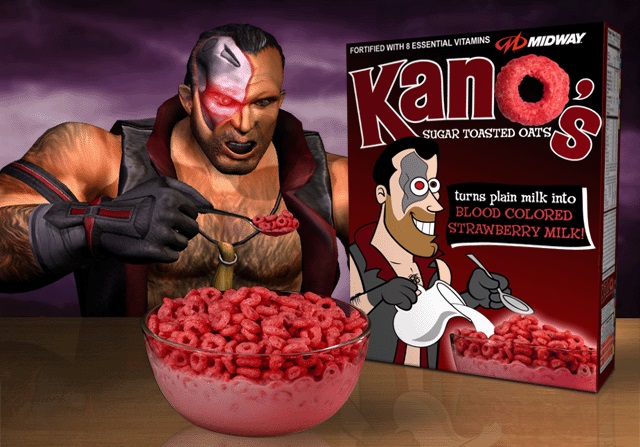
- Deadly Alliance has a fake cereal advertisement showing Kano eating a bowl of Kan-Os.◊
- The style of his beard in X might have been inspired by Khal Drogo.
- The names of some of his combo strings in 11 include references to Australian pop culture, such as AC/DC and Butterfingers.
- His sleeveless tee/mustache combo costumes make him resemble Cypher from The Matrix.
- His robotic costume heavily resembles Cyborg.
- He has a chest piece called "Ruby's Riot Shield".
Kenshi
- He draws heavily from Zatoichi, the blind swordsman; one of the main differences between the two is that Kenshi wears a blindfold.
- One of his combos in 9 is named "Blind Justice", a reference to Daredevil, a likely inspiration for the character.
- In his "Possessed" variation in X, he uses what's practically a Stand, a Fighting Spirit that comes to assist him in several combos.
- The way he plays in 1, with his Fighting Spirit being active all the time and being able to be controlled independently, evokes Zato-1/Eddie from Guilty Gear.
- One of his mid-round taunts in 1 has him ask "Where's your motivation?, referencing a memetic line from Vergil.
Kitana
- Her Animality in Ultimate Mortal Kombat 3 turns her into a white rabbit. She then proceeds to attack the enemy in a violent manner.
- In 4, her facial features are modeled after Talisa Soto, the actress who portrayed Kitana in the theatrical adaptations.
- In MK vs DC, she becomes Mortal Kombat's version of Wonder Woman when the gods grant her Shang Tsung's island to form the Edenian resistence, which is also seemingly made up of only women.
- In 9, her chapter during story mode contains a scene very much like one found in Alien: Resurrection where she finds a lab filled with progressively more human half-breed clones of herself.
- Her Arcade Ladder ending has three Edenian women re-united to fight for justice all over the realms; as the narrator explains this, the three characters are posed in silhouette over an orange background and as the ending fades to black, the music closes with the iconic jingle from the show.
- In 11 Kitana has a mask called "Empress of Tomorrow".
Kotal Kahn
- His Matinee Skin resembles Conan the Barbarian.
Kung Jin
- He has a costume in X, called "Marksman", which makes him the game's version of Green Arrow.
Kung Lao
- His weaponized hat gimmick was inspired by Bond's villain Oddjob.
- He has two Killer Rabbit fatalities in Shaolin Monks, one of which has the rabbit wiolently attacking and dismembering Lao's opponent. This is a clear reference to Monty Python and the Holy Grail.
Li Mei
- Her first fatality in Deception is a serious of rapid-fire punches, a few moments after which her victim explodes in a shower of gore… just like Kenshiro in Fist of the North Star.
Liu Kang
- There are several aspects of him that make him a Bruce Lee Clone:
- His costume in the first game is black pants, no shirt, black laceless shoes, and a mullet. Later games add color and a headband for slight Divergent Character Evolution. (of which the headband is also a homage to fellow fighting game character Ryu from the Street Fighter).
- One of his fighting styles in Deception and Armageddon is called Jun Fan, after Bruce Lee's birth name, Jun Fan Lee.
- In Shaolin Monks, he has Jeet Kune Do (misspelled without the "e" in "Kune"), Bruce Lee's fighting style.
- In Deception, Armageddon, and 11, he wields a Nunchaku as a weapon.
- One of his fatalities in 11 begins with a more grotesque take on the Five Point Palm Exploding Heart Technique from Kill Bill, and ends with an explosive One-Inch Punch as another homage to Bruce Lee.
- He also takes after fellow Bruce Lee Clone Kenshiro, having some Rapid-Fire Fisticuffs kombos and the "hopping" Jeet Kune Do stance with hand gestures.
- He is named after Gordon Liu, whose most well-known roles are as Shaolin monks.
- In Shaolin Monks, he has a Fatality named Shaolin Soccer, where he beheads his opponent with an uppercut and then kicks the disembodied head with an overhead kick with such force that makes his opponent explode, a "Chilena", so to speak.
- His arcade ending in the DC crossover has him gaining the ability to summon the powers of the Elder Gods by shouting "MORTAL KOMBAT!", much like Captain Marvel's powers.
- In Mortal Kombat X, if Cassie Cage uses her "Selfie" Fatality, Liu Kang may post on her "Friendships" page using the account name "Kool & The Kang," referring to the band Kool & the Gang.
- His "Spring Autumn Knife" skin in 11 is based on Son Goku's color scheme.
Mokap
Nitara
- Many of her Konquest mode messages in Deadly Alliance are references to different rock bands and songs performed by them. What's more, her alternate costume surely brings to mind KISS. For the curious, said messages include...You must be deaf. Leopard style is not executed in such a way.
You have not yet failed on this Journey. Do not stop believing.
You are a midnight queen. You are a creature of the night. Kiss your black diamond freely to draw strength from dark light.
Patience, sweet child of mine. You are not the first to fail. You are crazy if you do not continue. It is so easy. You must get back in the ring.
[...]But this time, add one more hit between the eyes.[...]it looked as though Scorpion might black out from the force of the blows
You must successfully learn the Kama. Khameleon would have mastered it with ease had her culture not been clubbed by Shao Kahn ages ago.
Do not be afraid. On this secret journey, you must learn to harness your Vampiric essence to bring on the night. I will be next to you watching every step you take as you traverse this material world.
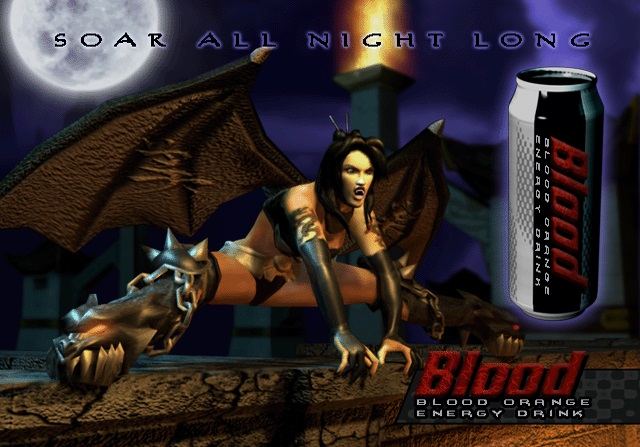
If you do not pass this test, you will be cast into the Netherrealm, condemned to run from the Devil for the rest of eternity.[...]You are indeed learning at a pace that kills. - Her Blood Energy Drink◊ promo is a parody of most energy drinks in general.
Noob Saibot
- One of his intros with Cetrion in 11 has him invite her to his "darkness world" and rebukes her calls of virtue with "Everything is Evil!", referencing EVIL of Los Ingobernables de Japon.
- One of Noob Saibot's Mirror Match interactions has this exchange:
Noob Saibot 1: Who are you, ghost?Noob Saibot 2: He who shall not be named.Noob Saibot 1: Return to your deathly hollow.
Quan Chi
- His original attire is somehow similar to Spawn's demon-in-the-guise-of-an-evil-clown, Violator.
- His appearance in X was modeled after classic horror movie actor Boris Karloff.
Raiden
- His most iconic traits, namely his electric powers and his conical straw hat, were both designed after Lightning, one of the three servants of Lo Pan from Big Trouble in Little China.
- His arcade ending in the DC crossover has him being weakened under Earth's sun, but being able to regain his power so long as he keeps a mysterious green rock nearby; this is an inversion of how Superman's powers work.
- Likewise, his Torpedo special is renamed as "The Superman".
- His second fatality in 9, "Just a Scratch", is a reference to the Black Knight scene in Monty Python and the Holy Grail.
- His Friendship in 11 shouts out to the dance group Light Balance, which performed an MK-themed routine to help promote 11.
- One of his remarks to Johnny Cage in one of his pre-fight dialogues states that they are standing on the stage of history, which becomes Hilarious in Hindsight following Spawn's inclusion.
- He also says that Spawn reminds him of "another dark knight". Spawn replies "The billion-dollar crusader? He's a friend", referencing the two Crossovers the pair had in 1994.
Rain
- His costume is purple, there's also his name, and Armageddon reveals that he's a Prince. The Mortal Kombat 11 – Pre-Match Intros add more references.
- His "Power Washer" Fatality in 11 has him perform a Bohemian Parody pose (referencing the cover of Queen II) with Smoke, Ermac and Reptile.
- One of his default variants is called "Formerly Known" (yet another Prince reference).
- One of his combos is called "Prince of Pain", the same ephitet given to Goro in the Malibu comics series.
- The water cutter he forms in his "Eye-Solated" fatality looks a lot like a Destructo Disc.
- Many of his combo strings are named after Prince songs. "Let's Get Krazy", "Scandalous", "Insatiable Prince", "Thieves in Edenian Temple", and "When Mortals Kry".
Reiko
- His original design in 4 bears more than a passing resemblance to Nightwing, especially with the facemask.
- In the X comics, he suffers a Superpower Meltdown due to not being the chosen one of an ancient legend. Now, replace the ancient legend with the Orochi legend and you have the MK version of Rugal Bernstein.
Reptile
- His new fatality in 1 from the Banished trailer is exactly like the Hunter Gamma's Eaten Alive game over in Resident Evil 3: Nemesis, down to the Helpless Kicking.
Scorpion
- His blazing skull is an homage to Ghost Rider.
- In the official Mortal Kombat comic book, Scorpion grabs Sub-Zero and tells him to look into his eyes. This is an even clearer reference to Ghost Rider and his Penance Stare power.
- After defeating Scorpion in Shaolin Monks, Scorpion gets dragged into the lava by skeletons. As his arm goes in, he gives the player a thumbs up. This is a reference to the ending of Terminator 2: Judgment Day, in which the T-800 (Arnold Schwarzenegger) gives John a thumbs up before he gets engulfed by molten metal.
- In X, while using his Hellfire ability, Scorpion may occasionally say "through fire be cleansed!", referencing a Kael'thas attack quote, "By fire be purged!"
- In the Open Beta for 11, Scorpion's Maize and Blue skin heavily resembled Wolverine's classic outfit◊. Unfortunately the skin didn't make it to the full release of the game.
- One of his augments is named "Hellfire Walk With Me".
Shang Tsung
- In the first game, his role is similar to that of Mr. Han from Enter the Dragon.
- In 9, one of his Challenge Tower episodes is titled "Arise From Your Grave", referencing the infamous Altered Beast (1988) quote.
- In his non-Fatality outro in 1, after executing his opponent, Shang Tsung points directly at the camera and recreates the opening scene of Mortal Kombat: The Movie by proclaiming: "YOUR SOUL IS MINE!"
Shao Kahn
- Both of Shao Kahn's fatalities in Deception are taken from Mace: The Dark Age, specifically Mordos Kull's (launching the opponent into the air, then smashing them to pieces own their way down) and Gar Gunderson's (Hammers the opponent into the ground, then winds up a swing to send their head flying).
Sheeva
- Her namesake is Shiva, the (male) Hindu destroyer god with multiple limbs. Like Shiva, Sheeva has extra arms and is turned into a destroyer goddess in her Armageddon ending.
- Her arcade ending in 9 involves the Shokan taking control of Australia with the permission of world leaders. This is a possibly reference to Lex Luthor in Superman II. This may also be a reference to the fact that 9 was once Banned In Australia.
Shujinko
- His visual design is clearly inspired by Pai Mei. In 1, his Kameo Fatality is even a Bloodier and Gorier version of the Five Point Palm Exploding Heart Technique.
- He borrows his alternate outfit from Deception from the villain of Master of the Flying Guillotine.
Sindel
- One of her default variation names in 11 is "YOU… will die", a shout out to the most infamous line in MK Annihilation.
Skarlet
- Her mid-range fatality in MK11 has her kill her opponent by extending her blood vessels from her body and pumping her own blood into their heart until it explodes, much like ACDC/Esidisi did on Jo Jos Bizarre Adventure Battle Tendency.
Sonya Blade
- She's inspired by the karate champion and movie actress Cynthia Rothrock.
- In the Krypt of Deadly Alliance, one can unlock a picture of Lifeguard Sonya.◊ Her red bikini makes her heavily resemble Pamela Anderson of Baywatch fame.
- Her arcade ending in the DC crossover has her acquiring a Green Lantern ring, but because she isn't a member of the Green Lantern Corps, the ring only gets one charge, and she has to use it sparingly until she gains a means to recharge it. Amusingly, she also shares her military background with Hal Jordan and John Stewart.
- Her alternate costume in 9 and herX look evoke Sarah Connor from the Terminator franchise.
- What cements this even more is her use of flying drones in her Fatalities in X and 11, which heavily evoke the designs of those seen in the Terminator Ride at Universal Studios.
- Taking this even further is her Cyborg Hunter skin in 11 that resembles Sarah Connor in T2.
- One of her head gear designs in 11 is called "Never gives up, never surrenders".
- The fatality where she shoots her opponent into helicopter blades in 11 is called "To the Choppa".

Stryker
- In Armageddon, Stryker wears a very futuristic suit, giving him a passing resemblance to the main character from Street Fighter 2010: The Final Fight, which was originally an unrelated game remodeled to serve as a spin-off for the series. It's worth noticing that in the original game, the character was actually named Stryker instead being passed off as Ken Masters.
- His bio in 9 has him single-handedly defeating the terrorists in the Greenbury Tower Incident and saving an explosive-rigged bus full of civilians while maintaining a high speed. Even further, it refers to him as a "die-hard cop".
- He tosses a grenade on a defeated enemy for his win pose, like Rolento F. Schugerg.
- Challenge Nº 266: The Duel has two Strykers battling out, preceded by the following exchange:
Stryker: Draw on the count of 3, partner!
CPU-controlled Stryker: I'm not your partner, buddy!
Stryker: I'm not your buddy, pal!
Sub-Zeronote
- His Spine Rip fatality resembles the Predator's method of killing people, by extracting the skull and attached spine from their opponent.
- His eye scar in Mortal Kombat 3 is very similar to the scar O'Hara has in Enter the Dragon.
- The design of his primary costume in Mortal Kombat: Deception evokes The Shredder.
- His ending in X has him hatching Outworld frost dragons and becoming a "Father of Dragons".
- In 11, one of his mid-round win animations has him bathed in a blue light with falling snow, a la the entrance of infamous WCW wrestler Glacier, a blatant expy of MK3 Sub-Zero.
- The way the opponent dies in Sub-Zero's second fatality in 1 with the giant blade of ice is a near one-to-one recreation of Tessai's death from Ninja Scroll.
Takeda
- His name is a reference to the Mortal Kombat: Conquest version of Scorpion whose real name was Takeda. MKX even makes its Takeda Scorpion's apprentice.
Tremor
- One of his brutalities involves him turning the opponent to gold (while also impaling them in the chest with a spiked gold ball,). It's called "It's Me." This is a reference to both the phrase "It's me" and Golden Freddy from the Five Nights at Freddy's series, as the two are commonly linked together by fans.
Pre-fight intros
These are shared by two characters, so they're given their own folder, separated by game.
Mortal Kombat X
- A Bo'Rai Cho vs. Predator pre-fight intro has the former stating this quote:Bo'Rai Cho: You are one ugly motherfucker.
- Bo'Rai Cho vs. Reptile:
- Jax vs. Ermac
- Johnny Cage vs. Ermac:Johnny Cage: The Mummy Returns.
Ermac: You annoy us, Earthrealm fool.
Johnny Cage: That supposed to make me feel bad? - Johnny Cage Mirror Match:Johnny Cage 1: Is this for real?
Johnny Cage 2: How many of us are there?
Johnny Cage 1: "There can be only one!" - Johnny Cage vs. Kitana:
- Kano vs. Cassie Cage:Kano: Over here, sweet girl.
Cassie Cage: Grandma, what big teeth you have.
Kano: Here's how the story ends. - Kano vs. Kung Lao:
- Kung Lao vs. Johnny Cage:Kung Lao: Why are you here, Cage?
Johnny Cage: To tell you Zorro's mom wants her hat back.
Kung Lao: Any hope for mercy is lost. - Tanya vs. Kung Lao:
- Kung Jin Mirror Match:Kung Jin 1: Doppelganger?
Kung Jin 2: I know you are, but what am I?
Kung Jin 1: Twelve years old, apparently.
Mortal Kombat 11
- Baraka vs. Jacqui Briggs:Baraka: Speak your joke to my face.
Jacqui: Grandmother, what big teeth you have!
Baraka: My grandmother's were the biggest! - Baraka vs. Johnny Cage:Baraka: Do you know what I am?
Johnny Cage: Cannibal humanoid under-dweller?
Baraka: I am death, you imp! - Baraka vs. The Terminator:Baraka: You've never fought a Tarkatan.
Terminator: If you bleed, I can kill you.
Baraka: Ha! A delusional machine. - Baraka vs. The Terminator, again:Baraka: What did Cage teach you to call me?
Terminator: An ugly motherfucker.
Baraka: I will eat him alive! - In one Cassie vs. Cassie Mirror Match, they reference Bill & Ted's Bogus Journey:Cassie Cage #1: No way!
Cassie Cage #2: I'm totally you, dude!
Cassie Cage #1: Maybe an Evil Robot Me. - Cassie Cage vs. Erron Black references Tinder and other similar dating apps and websites, where swiping left is the indication that you're not interested in someone:Cassie: This your idea of flirting, Erron?
Erron Black: Easy, sugar! Just bein' friendly...
Cassie: This is me swiping left! - A Cassie Cage vs. Frost match has the former mockingly call the latter Elsa, like she also did in the MKX comics:Cassie: Hey there Elsa, what's up?
Frost: Ugh! Why does everyone call me that?
Cassie: Oh honey, let me help you.- This is also referenced in a Frost Mirror Match:
Frost #1: The past is in the past.
Frost #2: Then let your storm rage on!
Frost #1: Time to test my limits and break through.- As well, in a subtle way, in a Cetrion vs. Sub-Zero pre-fight intro that references her:
- One interaction between Cassie and Rambo has this exchange:Cassie: Stop! Or My Mom Will Shoot!
Rambo: Your mother's not even here.
Cassie: Don't worry. She'll find you. - Cassie vs. Skarlet:
- Cassie vs. The Terminator is one towards Guns N' Roses:
- Cetrion vs. Mileena references The Empire Strikes Back:Cetrion: I see the fire in your eyes, Mileena.
Mileena: Kronika altered our deal!
Cetrion: Pray she does not alter it further. - A D'Vorah vs. Jade pre-match intro references the "Oh? You're approaching me?" dialogue between Jotaro and DIO in Jo Jos Bizarre Adventure Stardust Crusaders.D'Vorah: You dare approach, Jade?
Jade: Only close enough for my bo to strike.
D'Vorah: Close enough for This One to kill you. - Erron Black vs. Johnny Cage has him making fun of Erron's name:Erron Black: That ain't how it's said.
Johnny Cage: Whatever you say, A-A-Ron.
Erron Black: Gonna shoot off that ten-gallon mouth. - Erron Black vs. Shang Tsung:Erron Black: Kotal Kahn would like a word.
Shang Tsung: I thought he wanted my life.
Erron Black: That too, Houdini. - Erron Black vs. Spawn references the Violator, one of Spawn's biggest rivals:Erron Black: You're a hard man to pin down.
Spawn: Why you following me, dirt bag?
Erron Black: This, uh, 'clown' paid me to. - Erron Black vs. Sub-Zero. Bonus points for Actor Allusion:Erron Black: Ugh. Not this fight again.
Sub-Zero: You would prefer someone else?
Erron Black: Hell, I'd fight a goddamned space cowboy. - Prince shout-outs:
- Frost vs. Rain:
Frost: What's on your dirty mind?
Rain: I need someone cool to rule my world.
Frost: That's some fantasy, but it's not mine.- Jax vs. Rain:
Jax: You should've left Jacqui alone.
Rain: I never meant to cause you any sorrow.
Jax: Well now I'm going to cause you pain. - In one of Sonya's intro quotes with Frost or Mileena, she calls her a "Do Nothing Bitch." Yet another Actor Allusion.Frost: I deserve your respect.
Sonya: Whatever, you do nothing bitch.
Frost: Wrong answer, Blade.
Mileena: Pledge fealty to Shao Kahn's daughter.
Sonya: Whatever, you do nothing bitch.
Mileena: On your knees, Earthrealmer! - In one of Frost's intros with Sub-Zero, they reference A New Hope:Frost: The circle is complete, Sub-Zero.
Sub-Zero: You were a talented student once.
Frost: And now, I'm the master. - Johnny Cage has two words for Geras's statement:Geras: Actors leave no mark on history.
Johnny Cage: Ronald. Reagan.
Geras: The exception that proves the rule. - One of Geras and Johnny Cage's pre-fight dialogues quotes the "Tears in the Rain" monologue from Blade Runner:Geras: I have seen things you can't imagine.
Johnny Cage: Attack ships on fire off the shoulder of Orion?
Geras: Time to die. - In one intro Geras and Kotal Kahn of all people end up referencing The Princess Bride:Geras: Kill me and I become stronger.
Kotal Kahn: Then I will fight you to the pain.
Geras: I am not familiar with that phrase.- And speaking about that:
- Geras vs. The Terminator:Geras: You cannot answer the Riddle of Steel.
Terminator: That information is not within my files.
Geras: Then be cast out of these realms! - Jacqui vs. The Terminator:Jacqui: Is it true? Sub-Zero's now "plain zero"?
Terminator: My mission objective is complete.
Jacqui: Damn. - A Jax Mirror Match will have one of the Jacksons to channel Mr. T:
- We're not sure if Jax and The Joker were just doing the shout-out for kicks or were anticipating the arrival of Murphy:Jax: Dead or alive, you're coming with me.
Joker: Whatever you say, robo-cop.
Jax: Gonna smack that grin right off him. - Jax vs. Rambo references a film in Sly's career:Jax: You took out Shao Kahn's army single-handed?
Rambo: Just did what had to be done.
Jax: You gotta gift for demolition, man. - Jax vs. Spawn has an unexpected reference:Jax: Nobody questions my loyalty.
Spawn: There's a snake in every operation.
Jax: You wanna be startin' somethin'? - Here there be Johnny Cage references, of which there are lots of them:
- Johnny vs. Baraka:
- In an intro vs. Cassie, they reference The Matrix. For bonus points, Andrew Bowen (Johnny's VA since MKX) voiced Neo in The Matrix: Path of Neo.
Johnny Cage: No one can be as strong or as fast as a Cage.
Cassie: You tryin' to tell me I can dodge bullets?
Johnny: When you're ready, you won't have to.- Johnny vs. D'Vorah has a musical and movie quote:
Johnny Cage: Of all the gin joints, in all the towns.
D'Vorah: Quit babbling, Earthrealmer.
Johnny Cage: You're not walking outta mine.- Johnny vs. Frost:
- In one intro with Fujin, Johnny Cage mentions that he's already beaten Earth and Fire. Fujin thinks he's referring to elementals returning.Johnny Cage: I've beaten Earth and Fire.
Fujin: The Elementals have returned?
Johnny Cage: Nah, I was reaching for a music gag.- Johnny vs. Jacqui:
Johnny Cage: So I was a good dad to Cass?
Jacqui: Once you finished all twelve steps.
Johnny Cage: Whoa! Hold the phone. Rehab?- Brick Joke? Funny reference? Your call:
Johnny Cage: You and Cass'll play soldiers turned private eyes.
Jacqui: Working for you, our mysterious boss?
Johnny Cage: Say hello to 'Johnny's Angels'.- Johnny's Mirror Match:
Johnny Cage #1: Hands down. Best stand in ever.
Johnny Cage #2: I'm the star. You're the stand in.
Johnny Cage #1: Keep dreamin', Mini-Me.- Another Mirror Match:
Johnny Cage #1: I got it! Twin cops!
Johnny Cage #2: We'll hunt down a Triad gang leader!
Johnny Cage #1: Yes! And we'll call it Double. Something.- Johnny vs. The Joker:
Johnny Cage: Time for a company move back to your universe.
Joker: Worried that I'll steal the show?
Johnny Cage: That you'll serve me with chianti and fava beans.- More musical references:
Johnny Cage: You just need a cop, a sailor and a cowboy.
Kotal Kahn: For what, Johnny Cage?
Johnny Cage: Only the greatest disco reboot ever.- In one intro with Liu Kang, they refer to the first movie:
Johnny Cage: I admire Sonya's strategic mind.
Liu Kang: It's not her mind you're admiring.
Johnny Cage: It's true.- An exchange with Liu Kang references dialogue from Big Trouble in Little China.
Johnny Cage: Nothing or Double? God bless you.
Liu Kang: My mind and my spirit are as one.
Johnny Cage: Then let's shake the Pillars of Heaven. - One of Kitana vs. Cetrion intros has this exchange:Kitana: I was right, doubting the Elder Gods.
Cetrion: Your lack of faith disturbs me..
Kitana: As does your obedience for Kronika. - Shang Tsung vs. Jacqui Briggs:Shang Tsung: Such beauty in kombat is rare.
Jacqui: I'll turn you fifty shades of black and blue.
Shang Tsung: Rarer still for it to survive. - One of Kabal's mirror match dialogues parodies the "Life was like a box of chocolates" and "Run, Forrest, run" quotes from Forrest Gump:Kabal #1: Mama always said, life's like an armed robbery.
Kabal #2: You never know who you're gonna kill.
Kabal #1: Run, Kabal, run! - Kano vs. Jade:
- One of Mileena's intros with Kitana has the "Empress Outworld deserves vs. needs" argument.Mileena: The wrong sister wears the crown.
Kitana: I am the Empress that Outworld deserves.
Mileena: But I am the one it needs! - Kotal vs. Shao Kahn:Kotal Kahn: Oceans rise, empires fall.
Shao Kahn: Mine will never die.
Kotal Kahn: You will not be back. - Shang Tsung vs. Geras has a two-for-one:Shang Tsung: In seven days, I can make you a man.
Geras: A mortal man who can be killed?
Shang Tsung: I see you quiver with anticipation. - Shang Tsung has a peculiar offer for Baraka:Shang Tsung: I can make you better, faster, stronger.
Baraka: Just like your half-breed clones?
Shang Tsung: Mileena was a masterpiece. - Johnny isn't afraid of Shang Tsung:Shang Tsung: Are you still eager to die, Mister Cage?
Johnny Cage: "Every man dies, not every man really lives"
Shang Tsung: Enough impertinent nonsense. - One of Johnny's pre-fight intros with Skarlet references Gone with the Wind:Johnny Cage: What's that, Skarlet?
Skarlet: The Gods as my witness, I'll never go thirsty again.
Johnny Cage: Frankly, my dear, I don't give a damn. - One of RoboCop's trades with the Terminator:RoboCop: Haven't we done this before?
Terminator: I have no record of a previous encounter.
RoboCop: We have met. I am sure of it. - Another Robocop vs. Terminator:RoboCop: Machines are either a benefit or a hazard.
Terminator: Which am I?
RoboCop: Were you a benefit, you wouldn't be my problem. - One of Raiden and Sub-Zero's clashes is a direct reference to Injustice 2, where they were both Guest Fighters:Raiden: I dreamt of a strange and unjust world.
Sub-Zero: With a dark knight and a caped wonder.
Raiden: How could you know my dream?- Sub-Zero also references this in an intro with Cetrion.
Cetrion: I have seen the world beyond the realms.
Sub-Zero: Then Raiden and I did go there?
Cetrion: It was no dream, Sub-Zero. - One of Spawn's intros vs. the Joker:Spawn: Your angel of death awaits.
Joker: You can't kill me, heroes have moral codes!
Spawn: Who said I was a hero? - Spawn also recognizes that Scorpion has been to other dimensions:Spawn: You've been to other dimensions?
Scorpion: Each has had its own injustices.
Spawn: Maybe that's why my soul still burns. - Terminator vs. Johnny Cage:Terminator: Have you killed anyone?
Johnny Cage: Yeah, but they were all bad.
Terminator: Why make that distinction? - Cetrion vs. Baraka:Cetrion: I Come in Peace.
Baraka: You'll leave in pieces, stranger.
Cetrion: You trifle with an Elder God, Baraka. - One of Noob Saibot's Mirror Match intros:Noob Saibot 1: Who are you, ghost?
Noob Saibot 2: He who shall not be named.
Noob Saibot 1: Return to your Deathly Hollow. - Shao Kahn vs. Kung Lao:Shao Kahn: I will poison and destroy the Shaolin.
Kung Lao: Then I'll lay my vengeance upon you.
Shao Kahn: The righteous man's path leads to death. - Mileena vs. Kano:Mileena: D'Vorah still lives, Kano!
Kano: Don't spit the dummy, I'm on it!
Mileena: You've failed me for the last time.
Mortal Kombat 1
- A Mirror Match between both Sub-Zeros reference A Christmas Carol:Sub-Zero 1: What are you?
Sub-Zero 2: The ghost of Kombat past. - A Mirror Match between both Liu Kangs reference Injustice: Gods Among Us:Liu Kang 1: What happened to your Kitana?
Liu Kang 2: An evil clown tricked me into taking her life. - Johnny Cage, being the Pop-Cultured Badass he is, has many a Shout-Out in his intros:
- Johnny vs. Liu Kang:
Liu Kang:: I will now demonstrate why you sanded those floors.
Johnny Cage: Holy shit! I've been Miyagi'ed.- Johnny vs. Li Mei:
- Johnny vs. Sub-Zero:
- Johnny vs. Shang Tsung:
- Another Shang Tsung intro:
Shang Tsung: You plan a film about me?
Johnny Cage: Yeah. The working title is "Death of a Salesman".- One more intro with Shang Tsung:
Johnny Cage: I have had enough of your Reindeer Games!
Shang Tsung: Then I shall eliminate you Mr. Cage.- Johnny vs. Smoke:
Smoke: You really like my mask, Johnny?
Johnny Cage: It's SSSSSSSMOKIN'!- Johnny vs. Baraka:
Baraka: You're later, Earthrealmer.
Johnny Cage: Not my fault. My Train to Busan got delayed.- Two intros between Johnny vs. Geras have Back to the Future references:
Geras: You want a sports almanac from the future?
Johnny Cage: Forget it. It was just an idea.Geras: What happens in your future is devastating.
Johnny Cage: What? Do I become an asshole or something?- Johnny vs. Ashrah (doubles as an Actor Allusion):
- Johnny vs. Reiko:
Johnny Cage: And here I though you were some kind of super soldier.
Reiko: You'll marvel at my skill, Earthrealmer!- Another intro against Reiko has him paraphrase a line from The Godfather Part II. Johnny lampshades it.
Reiko: I'm not stupid, I'm smart!
Johnny Cage: Whatever you say, Rei-do.- Another reference with Reiko:
Johnny Cage: Time to dress you up in a Full Metal Jacket.
Reiko: Is that supposed to threaten me?- Johnny vs. Raiden:
Johnny Cage: What I saw in Outworld flipped my mind upside down.
Raiden: I'm told there's more, even Stranger Things.- Another Raiden intro references the lyrics of We are the Champions:
Johnny Cage: You are the champion, my friend.
Raiden: I'll keep on fighting until the end.- Johnny vs. Nitara:
Nitara: Of course I fly, I have wings!
Johnny Cage: Are you sure you just don't just fall with style?- An Johnny vs. Havik intros references some lines from Shakespeare's Julius Caesar:
Havok: Shall we let slip the dogs of war?
Johnny Cage: I'm gonna make you cry, Havik.- Johnny vs. Reptile:
Reptile: You own leather made from reptiles?!
Johnny Cage: What? It's not like I skinned your cousin Vinny.- Johnny vs. Kung Lao:
Kung Lao: Seeing Empress Mileena become Tarkatan...
Johnny Cage: ...was a close encounter of the weird kind. - This dialogue between Kung Lao and Nitara, acts as both a Mythology Gag and an Actor Allusion.
- An intro between Johnny and Nitara has another Actor Allusion:
Nitara: Were you always so starved for attention?
Johnny Cage: You know it. Oh, I was such a teenage drama queen. - The special Jean-Claude Van Damme DLC skin for Johnny makes tons of Actor Allusions to many of his own movies in his intros:
- Vs. Geras:
Jean-Claude Van Damme: It will be great. I'll play a kickboxer, you a street fighter.
Geras: The answer remains "no".- Another against Geras:
Geras: What happens in your future is devastating.
Van Damme: What? Do I become an cyborg or something?- A Mirror Match:
Van Damme 1: Two Johnnies, one timelines.
Van Damme 2: Now that's a Double Team!- Vs. Mileena:
Van Damme: Where I'm from, princesses aren't taught bloodsport.
Mileena: What a failure of imagination.- Vs. Scorpion:
Van Damme: Bi-Han's got you lit up like an inferno, eh?
Scorpion: He'll burn for betraying my father.- Vs. Baraka:
Baraka: I was a tribune in the Empress's army, Cage.
Van Damme: And I've played universal soldiers. Big deal.- Another against Baraka:
Baraka: You're late, Cage.
Van Damme: Well, pardon me, Time Cop!- Vs. Shang Tsung:
Van Damme: I have had enough of your Assassination Games!
Shang Tsung: Then I shall eliminate you, Mr. Cage.- Vs. Omni-Man (referencing two movies van Damme starred in):
Van Damme: I'll kick your ass so hard, you kids will feel it!
Omni-Man: You'd have more luck kicking a tree.- Vs. Ermac:
Ermac: If our souls stood side-by-side, you would face thousands.
Van Damme: That's gonna make you a hard target. - Raiden vs. Shang Tsung:Raiden: Your laboratory was a chamber of horrors.
Shang Tsung: I prefer to think of it as a chamber of secrets. - This dialogue between Scorpion and Mileena. Doubles as an Actor Allusion:
- A mirror Match between two Shaos references the main theme to the first Highlander film.Shao 1: Here we are! Born to be Kings!
Shao 2: We are Princes of the Universe! - A piece of dialogue between Mileena and Nitara references a certain famous piece of vampire media.Mileena: You'll tell me what what Vaeternus is plotting!
Nitara: Hah! I won't divulge what we do in the shadows. - Dialogue between Kitana and Rain almost references the iconic line that Spider-Man popularized:
- A match between Tanya and Mileena references a rather memetic line from The Incredibles:Tanya: I am doing this for the greater good!
Mileena: I am the greatest good you'll ever have! - One more Back to the Future reference with Geras for good measure, this time a Mirror Match:Geras 1: My presence in this moment threatens the timeline.
Geras 2: We must get you back to the future. - A Mirror Match between two Raidens is a double Alice Allusion:Raiden 1: I've stepped through the looking glass.
Raiden 2: How far down the rabbit hole will you go? - Raiden vs. Rain:Raiden: This fight will be one for the ages.
Rain: Historians will call it The Perfect Storm. - Nitara vs. Reiko:Nitara: Of course you realize this means war.
Reiko: I cannot wait, Nitara. - A intro between Nitara and Kenshi references another vampire movie:Nitara: I'm here to feed, Earthrealmer.
Kenshi: Looks like tonight's Fright Night. - General Shao vs. Shang Tsung:Shao: Earthrealm must suffer an apocalypse. Now!
Shang Tsung: Be patient, General. - A Mirror Match between two Ashrahs:Ashrah 1: What hell spawned you?
Ashrah 2: You will never find out. - Ashrah vs. GerasAshrah: I must know, Geras. Is my future set?
Geras: There is no fate but what you make. - Baraka vs. Kung Lao
- Scorpion vs. Johnny Cage
- Raiden vs Liu KangRaiden: Master Kai taught me Crouching Tiger style.
Liu Kang: Try it against my Hidden Dragon style. - Rain vs. Nitara (Nitara's question could be understood as a reference to the forbidden art of bloodbending from the Avatar cartoon franchise):Nitara: Can you control blood as well as water?Rain: That — is an interesting question...
- Kenshi vs. ReikoKenshi: Your Black Hawks are down.Reiko: That was just the first wave, Earthrealmer.
- Omni-Man vs. Kung LaoKung Lao: You should know, with great power comes great...Omni-Man: Stop right there. You can't plattitude me to death.
- Shao vs. ReikoReiko: Then command us into battle.
- Reiko vs JohnnyReiko: An actor has no chance against me.Johnny: For that, I'm stuffing you into a hurt locker.
- Kenshi vs. ReikoReiko: My body is a Lethal Weapon.Kenshi: Cage'll be ticked off you're stealing his line.
- Smoke vs. ReikoReiko: I love the smell of kombat in the morning.
Smoke: There is something seriously wrong with you. - Omni-Man vs. ErmacOmni-Man: I'll rip you apart one soul at a time.
Ermac: That would be very painful...for you.
Other
Mortal Kombat
- The code used to unlock the blood mode in the Sega Genesis version is "ABACABB", which also doubles as one of the most out-there puns in a video game.
Mortal Kombat II
- In the SNES version of the game, Sculptured Software continued its tradition of humorous credits, including a parody "special thanks" list titled, "People We Owe No Thanks To". The people thanked include three famous figures, namely Elvis Presley, Howard Hughes, and Jim Morrison. The other two names on the list are probably just shout-outs to more personal friends of the developers.
Mortal Kombat 3
- Ultimate Mortal Kombat 3 for the SNES has the Konami Code as a Classic Cheat Code.
- Brutalities were influenced by Ultra Combos and consist of hitting your opponent over and over at high speeds until they explode.
Mortal Kombat: Deadly Alliance
- When you win a Test Your Sight challenge, the announcer will say "You chose... wisely". However, he says "unwisely" rather than "poorly" if you fail.
Mortal Kombat: Deception
- Puzzle Kombat is inspired by Super Puzzle Fighter II Turbo, being a puzzle game with a fighting game running on the background and influenced by how the puzzle progresses.
Mortal Kombat: Armageddon
- In the same vein as Chess Kombat and Puzzle Kombat, Motor Kombat is inspired by another videogame, in this case Mario Kart, as a karting-based Racing Minigame.
- In Kreate a Fighter mode, available features and accessories (though with some minor modifications in some cases to avoid potential lawsuits) include the following:
- "Cyborg" face: It resembles that of the T-800 from the Terminator franchise.
- "Skull Tattoo" face: A face tattoo that resembles the face paint skull warn by Image Comics character Chapel from Youngblood (Image Comics) and Spawn.
- "Eye Stripe" face: Based on face paint worn by Pris Stratton in Blade Runner.
- "Anime 1" hair (female): Based on that of Ryoko Habuki, though the default color is light green rather than aqua.
- "Anime 2" hair (female): Based on that of Sailor Moon's odango-and-twintails (though the default color is blue instead of blonde). In addition under Head Accessories is "Tiara" which strongly resembles those worn by the Sailor Senshi.
- "Anime 1" hair (Male): Based on Cloud Strife's (though default color is light blue instead of blonde).
- "Anime 2" hair (Male): Based on Goku's. In addition, there is also under Torso "Layered Gi" which is based on his and Krillin's most common outfit though without any Kanji on the leftside chest or back.
- "Devil" hair: Based on Akuma.
- "Feral" hair: Based on Wolverine.
- "Pillar" hair: A Hitop fade hairstyle popularized by Jean-Pierre Polnareffnote
- "Swoop" hair: Based on Kazuya Mishima.
- "Wave" hair: Based on Rudolf von Stroheim's hairstyle.note
- "Space Hawk" helmet: Based on Ken Washio's helmet.
- "Space Ninja" helmet: Based on the Red Power Ranger's and Geki's helmet from Mighty Morphin' Power Rangers and Kyōryū Sentai Zyuranger respectively though with some antennae added. The additional antennae also doubles this as an allusion to Kamen Rider, which is Super Sentai's brother show.
- "Crew Neck" torso and "Striped Running" pants: Based on the outfit warn by Bruce Lee's character in Game of Death.
- Clothing for female characters includes a similarly designed "Track" torso and pants, which is modeled on The Bride's whose outfit in turn is based also on the aforementioned Game of Death one.
- "Harness" torso: Based on that worn by He-Man (including lacking any other shirt or clothing aside from the harness) though without any sort of heraldry on it.
- "Suspenders" Torso and Pants and "Wrap" torso: Based on outfit of Vampirella.
- "Daisy" Torso and Pants: A rather obvious reference to Daisy Duke.
- "3 Knives" glove: Based on the claw worn by Mr. Han, the main villain of Enter the Dragon.
- "Utility" belt: Based on Batman's (minus any sort of Bat symbol).
- "Punk Glasses" head accessory: Based on the Visor of Geordi La Forge's and/or that of Cyclops.
- "Shield" chest accessory: The shield is placed on the back and also has a design that looks like a turtle's shell.
- "Trident" helmet: a holdover of the helmet of Sub-Zero in Deception, but it was in turn based on that of the Turtles' archnemesis The Shredder.
Mortal Kombat vs. DC Universe
- In the DC side of the Story mode, after learning that Dark Kahn is behind the whole mess, guess which classic scene The Joker parodies upon hearing his name:Joker: KAAAAAAAAAAAAAAAAAAAAHN![Beat]Deathstroke: Shut up, or I'll gut you.
DC Characters
- Batman's ending sees him starting an "Outerworld Monitor and Auto-Containment" system.
Mortal Kombat (2011)
- The achievement for unlocking 50% of the Krypt is called Undertaker.
- Another achievement, unlocked by winning 10 King of the Hill matches, is called There Can Be Only One.
- The "X-Ray" effect used in certain brutal moves from the game will be quite familiar to any fan of Sonny Chiba movies.
- The Challenge Tower, being composed of non-canon mini-games, is choke-full of Shout-outs.
- Challenge Nº 10: This Is The Pits!
- Challenge Nº 15: Walking Dead
- Challenge Nº 47: Who Ya Gonna Call?
- Challenge Nº 53: Frankenstein
- Challenge Nº 62: What Is Your Major Malfunction?
- Challenge Nº 86: It's Not Easy (a match between green-clad Jade and Reptile)
- Challenge Nº 95: Soul Glow
- Challenge Nº 116: Kiss Kiss Bang Bang
- Challenge Nº 134: New Jax City
- Challenge Nº 183: There Can Only Be One
- Challenge Nº 188: Arise From Your Grave
- Challenge Nº 193: I'm Not Dead Yet
- Challenge Nº 209: Orange you glad I came?
- Challenge Nº 223: An Offer You Can't Refuse
- Challenge Nº 226: Unit 5... Alive?
- Challenge Nº 239: Flying Fists Of Fury
- Bonus Challenge Nº 34: Isn't This Marvelous (A match where you tap the screen repeatedly to fight.)
- Bonus Challenge Nº 38: Real Skarlet Please Stand Up!
- Bonus Challenge Nº 126: Under Pressure
- Bonus Challenge Nº 142: It's Electric
- Bonus Challenge Nº 143: Bombs Over Netherrealm
- The Stage Fatality for The Streets (having the opponent run over by a car) bears a striking similarity to the ending of Final Destination 4, complete with an X-ray view despite not being an X-ray attack, and leaves a twitching beheaded corpse similar to the first death in that movie.
- The Subway Stage Fatality is a reference to The Matrix, where Agent Smith attempts to kill Neo by throwing him onto the path of an incoming train.
- The Test Your Strike mini-game has a concept similar to the test given to Frank Dux in Bloodsport, where he had to break one brick out of a pile.
Freddy Krueger
- He has several Fatalities that are reminiscent of the most infamous kills of his home franchise:
- In one, after stabbing his opponent with both sets of claws, he drags him down into a hole that has just appeared. This is then followed by a geyser of blood, similar to how he killed Glen, Nancy's boyfriend, in the very first movie.
- Another has Freddy throwing his opponent into a boiler to be burned alive. This references both his own origin (Freddy was burned alive by vigilante parents who wanted to make him pay for murdering their children) and how he killed the former Final Girl from the third movie as his second kill in the fourth movie.
- Many of his combos are named after lines from the movies, such as "Now You're Playing With Power" (which also references a Nintendo commercial) or "Never Sleep Again."
- If Stryker finishes Freddy with his Secret Fatality move, Freddy will have a bomb in his body and will explode, much similar to the ending of Freddy's Dead.
Kratos
- His pre-fight quote is taken from his speech to Zeus early on in God of War III (Kratos' words in 9 are in boldface):"The hands of Death could not defeat me. The Sisters of Fate could not hold me. And you will not see the end of this day! I will have my revenge!"
Mortal Kombat X
- The official tagline for the game as a whole is "Who's Next?"
- One of the modifiers for Test Your Luck, which spawns random portals in the match, is called "Portal Kombat". The icon for the modifier is inspired by 300.
- Another of the modifiers, which spawns puddles which cause Kombatants to slip, is called "Slippery When Wet".
- Another modifier is called Kick Dive. Sure enough, you cannot block, and can only jump and perform divekicks, which do 33% damage.
Alien
- He has a fatality called Killer Queen, which also serves as a Mythology Gag to Bishop's bisection in Aliens.
- Having either Alien perform the "Alien Baby" Brutality or letting it go to the default win-pose against Predator will result in a Predalien coming out of the latter's chest.
Jason Voorhees
- His alternate palette gives him blue marks on his hockey mask after the copycat killer from Friday the 13th Part V: A New Beginning.
- His "Unstoppable" variation allows him to resurrect via a lightning strike, which was how he was revived in Friday the 13th Part VI: Jason Lives. Said variation also gives him a chain on his neck that stuck with his appearances from that film onward.
- His Relentless variation gives him a chrome mask.
- His second fatality is reminiscent of the numerous sleeping bag kills in the franchise, according to the developers.
- One of his Brutalities has him punching the head off of his opponent, similarly to how he killed Julius in Jason Takes Manhattan.
- His Arcade ending features him killing Liu Kang after he brings him to the Netherrealm, making it a literal case of him being in hell.
Leatherface
- He displays an attraction to Cassie in his ending similar to his interactions with Stretch in The Texas Chainsaw Massacre 2 while Drayton is mentioned.
The Predator
- In his non-Fatality outro, he has six human skulls hanging in his trophy room during his win outro, the skulls of the six members of Dutch's team that the Predator killed in the first movie. The loser of the fight has their skull added to the collection.
- After the Kombat Pack 2 DLC, the Alien is a possible opponent, to the point of sharing an intro.
- He has combos, fatalities and brutalities named after some of the one-liners of the first movie, "Time to Bleed" being the most obvious.
Mortal Kombat 11
- The official tagline for the game as a whole is "You're Next!"
- The Retrocade level introduced in the Aftermath expansion has arcade machines for old Midway titles in the background, such as Primal Rage and Rampage: World Tour.
- The 29th stage of the Gauntlet is one big one to Captain Planet and the Planeteers. You first have to fight five opponents representing each of the Planeteers with powers that fit the element, and finally Centrion, who represents Captain Planet himself.
The Joker
- On one of his intros, he cuts his thumb with his own knife and then smears all that blood onto his face to create his smile. All of this is obviously referencing the scene in Joker where Arthur smears the blood on his nose and mouth into a smile on his face.
Spawn
- His "Angel of Mercy" skin gives him red skin and black markings on his face akin to Deadpool.
The Terminator
- During his arcade ending, Cassie narrates that the war between man and machine is a losing game that ends in mutually assured destruction no matter how many times the Terminator restarts time, and the only way to win is not to play.
- Tying in with Raiden being based on Lightning from Big Trouble in Little China, one of his end-of-round taunts is lifted verbatim from Lightning's arrival in that movie, riding down from a bolt of lightning before engaging in a similar kata.
Mortal Kombat 1
- As expected of Johnny Cage, he does a billion of them, referencing tons of fan-favorite franchises:
- Upon entering Outworld, he says "Toto, I've a feeling we're not in Kansas anymore."
- He says "Get away from her, you bitch!" in one scene, and is disappointed that no one gets the reference.
- When Reptile turns invisible, he says he didn't expect him to go "Full Predator!"
- He also tries to taunt Havik by calling him an "ugly motherfucker" (also from Predator), but gets interrupted by his opponent threatening him with a fate worse than having to see his face.
- After defeating his opponent with a Brutality, Johnny states "There's no crying in Kombat.".
- He compliments Smoke's Cool Mask in the same manner as a titular character's catchphrase from "The Mask".
- In a Nitara intro, she says she can obviously fly because she has wings, but then Johnny asks "Are you sure you don't just fall with style?".
- One of the nicknames for the character announcements he came up with was "Slither Inn" for Syzoth/Reptile and "Liu Almighty" for Lord Liu Kang.
- Johnny really seems to like making Back to the Future references:
- When Sub-Zero was untying the bound Kenshi, he rehearses and then tells Sub-Zero "get your damn hands off him" like George McFly in Back to the Future.
- He has two for Pre-Fight intros with Geras. One has him inquiring about a sports almanac from the future. Another has him ask if he's going to be "an asshole or something" in the future, just like what Marty asked Doc Brown in the same movie.
- In the finale of his movie shoot scene, he decapitates Katara Vala by using his bladed shield. The way he throws it and then ricocheting back to him is very similar to Captain America, especially his MCU adaptation.
- One of Johnny's selectable gears, "Beverly Hills Badass", is a pair of Triangle Shades modeled after Kamina's sunglasses from Tengen Toppa Gurren Lagann.
- In the final battle's stage, the Star of Chaos can be seen in the background. This isn't merely a shout-out, it's also clever foreshadowing, since the post-credits stinger implies that Titan Havik will be the next game's big bad.
- The movie Johnny is shooting for in the beginning of his chapter is a clear reference to Indiana Jones, with Johnny wearing attire similar to the archaeologist, and the bat-winged creatures that guard it are termed the Kalima. He even says that Katara Vala's shield belongs in a Museum.
- The chakram Kung Lao throws at Sub-Zero in chapter 1 is visually very similar to Xena: Warrior Princess's splitting chakram.
- Shujinko's mannerisms are heavily inspired by Pai Mei. His appearance is a close match and his idle animation is him running his hand down his beard and flicking it towards his shoulder, like Pai Mei's own Character Tic. In addition, his Kameo Fatality is the Five Point Palm Exploding Heart Technique, which is shot for shot identical to how The Bride uses the technique to, well, kill Bill, right down to including the Death Glare before the final strike.
- Some of the chapters in the story mode have titles that are Shout-Outs. Chapter 5, which focuses on Baraka, is titled "Weird Science". Chapter 8, Sub-Zero's chapter, is "Band of Brothers". Finally, Chapter 12, which focuses on Mileena, is titled Queen's Gambit.
- Fitting for his new background as a member of the yakuza, Kenshi's suit alternates contain a fair amount of references to the Like a Dragon series. Two such alternates give him a darker grey variant of the outfit worn by the series' old protagonist Kazuma Kiryu, while another grants him a brighter red color reminiscent of newer protagonist Ichiban Kasuga.
- The Halloween-exclusive Fatality has the winner shove a pumpkin onto the loser's head. The pumpkin proceeds to produce several bugs on the inside, harkening back to the usual effects of a Silver Shamrock mask.
- After Havik finishes a fight with a Brutality, one of his lines is "You have permission to die."
- When Raiden first talks to empress Sindel, he sees himself as a "stranger in an unfamiliar land".
- When Johnny complains about the long way to capture Shang Tsung, he says that "these boots weren't made for walking", a reference to Nancy Sinatra's famous song "These Boots Are Made for Walkin'".
- Johnny calls the Liu Kang's detector for Shang Tsung's chi Kenchi is using "his precious", which is what Gollum resp. Smeagol called The One Ring.
Omni-Man
- His Fatal Blow is a reference to the beatdown he's given his son, Mark/Invincible.
- His first Fatality is a reference to him holding Mark in the way of a subway train full of people who get crushed coming in contact with him.
- His second Fatality is exactly how he killed Red Rush by slowly squeezing and crushing his head.
- One of his intro responses to Johnny Cage, "Get out of my sight before I demolish you.", is an Actor Allusion to J. K. Simmons' performance as the infamous Terence Fletcher in Whiplash .
- In one of his intros against Sub-Zero, he refers to himself as the cryomancer's "distinguished competition" over the conquest of the realms. "Distinguished Competition" is the backronymic nickname Marvel Comics uses to refer to DC.
