
Dennis: Huh huh, dat's me!
A common feature is to allow players the option to name their Player Character, or even other characters. It allows for a certain level of customization. Most games that do this feature a hero without a past, but many even present this option for characters that actually have "real" names. Often, the player's name will appear in a slightly different typeface, which may have been intended to remind the player that they're the one being addressed, but also reminds them that the dialogue is being generated Mad Libs style. Endless amusement can be derived from entering entirely inappropriate words instead of names. Occasionally, a game will acknowledge an unusual name choice (often for a cheat code or Easter Egg), or even not allow you to use specific names, such as the names of non-player characters (failure to do the latter can lead to major plot confusion if the player accidentally gives a character the name of a subsequently-introduced character).
Naturally, it is common for the player to abuse this feature (in one way or another). Many Speed Runs will reduce character names to a single letter because it makes Scrolling Text messages go by just that much faster.
Occasionally, RPG designers attempt to compensate for the issue by writing extremely ambiguous NPC reactions to players' names: "And what is your name?" "Call me (name)." "Well, that's as good a name as any, I suppose." Most of the time, this will end up sounding totally inappropriate, either because the player chose a normal name that shouldn't elicit any special comment or because the player chose an outrageous, even obscene name that should be reacted to much more strongly.
Since the addition of live voice-acting to video games this presents a challenge to developers, because they can't predict and record audio tracks for whatever possibilities a player may think up. Methods for addressing this vary:
- Some series have stopped allowing you to name characters at all, so they can be referred to by their intended names.
- Some games have voiced dialogues with only lines that don't contain the player character's name voiced.
- Some games have attempted voice synthesis. This can be accomplished more easily in Japan using the phonetic katakana alphabet than it is in English, but even in games that do have this, the results may still sound strange as it misses out on timing and inflections, and Say My Name loses much of its effectiveness as a result.
- Other games may provide an In-Series Nickname for your character, or have dialogue written specifically to avoid the character's name ever having to come up at all.
- The very rare exception is having a large list of pre-recorded names to choose from.
- Some games have the voice actor call the renamed character by their default name, but the name you gave them will show up in the dialogue box. The voice actor may also skip the names completely, so the text says "Good morning, Name" but the voice only says "Good morning."
- Some games have a predefined surname, but you can give your character whatever first name you want, with characters referring to you either by surname or avoiding using any name.
- Or Everyone Calls Him "Barkeep" — the player is only ever specifically referred to by some title of sorts.
Can result in Awesome Mc Cool Name or Unfortunate Names, as seen above. Often used in tandem with My Name Is ??? if the character appears before a name for them is given. Compare Canon Name, which gives a name to a character with no default name. Meaningful Name can be worked in while fitting any of the above. See Artifact Alias for characters who continue the selected name even after their true name has become known.
Examples:
- ActRaiser: The first game lets you name the god you play as. Your angelic assistant is the only one who refers to you by name, and always calls you "Sir", which adds to the creative process.
- Ghostlore: You key in your character's name before the very first stage, alongside stats like equipment, character class, and hairstyle.
- Infernax: You are allowed to name the Duke any name you see fit when starting up a new save file, and certain names even change the game experience. His Canon Name is Alcedor.
- The Legend of Zelda: While Link is the main protagonist's Canon Name, ever since the first game, most games allow the player to name him as they see fit. Since the games with written dialogue have lots of characters who will begin and/or end most sentences by saying his name to the point of seeming like a Verbal Tic, this is quite easy to exploit for humorous effect.
- The two DS games use the player's name as set in the DS options as the default name. This is because the Canon Name Link is meant to symbolize a "link to the player", so using the player's own name gives more of a feeling of immersion in the adventure.
- Many of the Zelda have an Easter Egg where naming your character "Zelda" gives you some kind of bonus.
- The Legend of Zelda: Link's Awakening combines this with No Fair Cheating. If you manage to steal from the store, the game changes your name to "THIEF" for the rest of the playthrough.
- The Legend of Zelda: Twilight Princess: It's the first game that has "Link" already filled by default on the naming screen. That same goes for Epona, your horse. Interestingly, it was abusing a stack overflow with Epona's name that led to the proliferation of homebrew on the Wii.
- The Legend of Zelda: Breath of the Wild and The Legend of Zelda: Tears of the Kingdom:
- Averted with Link, as the games feature extensive voice acting and Link is referenced by name. You can however name any other horse you come across so you could make any of them "Epona" (or whatever else you may like), even with the Royal Family's special white steed or the rare black horse with a wild red mane based on Ganondorf. However, if you get Epona through the appropriate amiibo, you can't rename her.
- Breath of the Wild has a rare in-universe example: the weapon-making robot Cherry in Robbie's lab attempts to do this with Link, although it comes out as "Hello, *beep* FamiliarNameMissing."
- Transformers (2007): In the Nintendo DS games based on the movie, you are able to make your own name up. Due to the voice-acting in all of the cutscenes, though, you are not directly referred to by name. Whoever happens to be your mentor, though, calls you 'rookie'.
- Wardner: The arcade version asks for the player's name first in the form of a three-letter initial, and then inserts it into several points of the game where there is dialog. It's one of the few arcade games known for that feature, and said feature is prone to being abused.
- In Adventures In The Magic Kingdom, you can enter any name you want, though if you decide to leave the naming box blank, your name will default to... "Bamboo.7".
- The fourth type is seen in some Barbie CD-ROM games, of all things. You get a pretty large list of prerecorded names to pick, including male ones, which is a nice surprise...
- Metal Warriors: The player character can be named, with its default name being Stone.
- Rengoku: In both games the protagonists can be renamed at the start, while GRAM is the default name.
- Sly Spy begins by asking the player to enter a three-digit "security clearance code" which then becomes the agent's code name. Inputting "0-0-7" is allowed.
- Blackout starts out with asking the player to name the main character, but as the game progresses it gradually becomes clear that the main character actually has a pre-established name and identity, which is of a mentally disturbed young man by the name of Gabriel, and the name the player has been asked to type in at the beginning is actually the name of one of Gabriel's Split Personalities.
- Chicory: A Colorful Tale: While you can name your character whatever you want, you're encouraged to name them after your favorite food, to go along with the theme naming that everyone else has.
- Some of the Hamtaro video games allow you to select a name for Hamtaro at the start of the game if you want. In the case of the GBA title, Hamtaro: Ham-Ham Heartbreak, not only are you allowed to pick a name for Hamtaro, but you are also allowed to select a name for Bijou at the start of the game if you so wish.
- The Quest for Glory series lets you name your character, but it's mostly a moot point because you only get addressed by name three times in the entire five-game series (in the very first conversation in the first game, at the end of the third game, and when entering the Dark One's cave in the fourth game).
- The first two Space Quest games featured this ability. If you left that field blank, it would default to "Roger Wilco," which became the character's official name.
- Tombs & Treasure lets you name the player character and his female companion. Leaving the boxes blank will make the game assign them names from lists already programmed in.
- Wandersong allows you to name the Spoony Bard protagonist whatever you'd like. Unfortunately, there are only 4 characters to work with.
- In Wasted Youth, you enter your name at the beginning of the game. The game tells you not to give your character a "stupid" name, because "ask the kid of any celebrity how that feels and you'll realize it's a bad idea."
- In Forza Horizon 3, characters and the GPS will refer to the player by a name they chose from a list of real life names or nicknames, à la Fallout 4.
- In Gran Turismo 7, the characters say your name by either player's nickname or PSN's user nickname.
- The GRID racing game series has a kind of hybrid of this. It will ask you for your name, which is what shows up on the scoreboards, but also for a nickname or call-sign, which is what will be used in voice commentary. You can pick anything you want for name, but only choose from a list for the nickname.
- In GRID Legends on the other hand, the characters in the in-game story Driven to Glory addresses you as "Driver 22", though the game doesn't stop you from giving yourself a new name. They will still address you as "Driver 22", regardless.
- Various Need for Speed games allow this; in them the other racers use no names in reference to the player character, calling you things like "Yo dawg," etc.
- An old Reader Rabbit game, Reader Rabbit Thinking Adventures takes your name entry and matches it against a database of pre-recorded names available on the CD-ROM.
- In modern Wrestling Games with create-a-wrestler modes, announcers either don't say your name or refer to as you as Player One. In some games, you can pick your ring name from a generic list of ones that the game has recorded. Legends of Wrestling 2 is a bit more robust, as you can select a first name, a last name, and a nickname for your created characters from the list of pre-recorded names. The general rule on this device seems to be that if you can find your name on one of those tiny souvenir license plates, you can find it in the game, too.
- Fun fact: Several wrestling games out there include multiple choices that are obvious homophones like Derek and Derrick, or Sophie and Sofie. Since these names are spoken in-game with the exact same pronunciations and inflections, it begs the question as to why the different spellings should even matter in the first place.
- In Deus Ex, you can name your character anything you like, but he'll still be called by his "Code Name" JC Denton. The only place you get to see your custom name are in datacubes and e-mails.
- And newspapers, but they're calling you a terrorist.
- Last Rites begins with a screen that allows you to name your onscreen character. It has no impact on gameplay in any way.
- When someone in a multiplayer game of Red Faction kills himself, the game shows a message saying " was killed by his own hand". When someone frags another player, the message says " was killed by ". Therefore, you see gamers calling themselves "his own hand", and beyond this, is Capture The Flag mode. The flag status indicator shows "at base" if it's at the base, "Missing" if it's dropped somewhere, or if somebody has it. Cue players naming themselves "at base" or "missing."
- In the original Star Trek: Elite Force, the player doesn't get to choose their character's name but they do get to choose their gender, which would normally affect the possible names. The developers work around this by saying that the male is Alexander and the female is Alexandra, meaning they can just be called Alex either way.
- The game dialog, however, remains the same regardless of gender, which may have led to unintentional Les Yay.
- In Diablo II, since all of the speeches are prerecorded, they simply refer to the player as "Hero" or variations thereof instead of mentioning you by name.
- Dragon Quest Swords has a rather strange variant: you get to choose your name, which only appears in your stat screen and some Non Player Characters dialogues, but one of your teammates will let you pick from a couple of nicknames, and will call you that for the remainder of the game.
- Religious Idle: You can name the religion, god, zealots and other things whatever you'd like, with in-game text changed to refer to them.
- The beginning of Emily Is Away promts you to enter a username and your real first name to log in to the IM client. The bonus Easter Egg icons are unlocked by inputting specific usernames during the log in.
- In the experimental game Façade (2005), all dialogue was spoken. Since the game revolved around a tense three-way conversation, it needed to speak your character's name. So you got to pick from a list of male or female names, which would be clumsily inserted into the speech.
- Spoofed at the beginning of Five Nights at Freddy's: Sister Location: Your Mission Control prompts you to enter your name on a Speak'n'Spell like keyboard, which is very glitchy, constantly switches the keys around, and keeps shaking with the elevator you're in. Whatever you do, the Mission Control will decide you intended to type "Eggs Benedict".
- Moonmist asks you for your name and title at the beginning.
- In all of Artix Entertainment's MMOs (AdventureQuest Worlds, EpicDuel and HeroSmash) you can name your character.
- In NC Soft's Aion, the player can name their character whatever they would like. Cutscene dialogue is neutral and the text inserts the name of your character class when referring to the character.
- Champions Online is full of restless Non-Player Character mooks whom you will often catch talking among themselves (in text balloons), saying things like "Who do you think would win in a fight between Ironclad and [your name here]?", or running up to you and saying stuff like "I bet Psimon will think twice about crossing [your name here] again!"). When it comes to voice acting, the accompanying text balloon will always use your character's or your nemesis's name while the voice calls you or your nemesis "hero" and "the nemesis" respectively.
- City of Heroes does this, as lampshaded by a malfunctioning automaton: "I hope you're ready to fight, (HERONAME), because WITTY BANTER INSERT FAILURE!"
- Like the World of Warcraft example below, the game sometimes refers to whichever character attacked first, which may be a player's pet and not the actual player. This leads to Non Player Characters saying things like "You'll never get away with this, Battle Drone!"
- Final Fantasy XIV lets players give their character a first name and a surname and all characters will refer to your character on either a first or last name basis, though some will address you by your full name. While the game has voiced cutscenes, characters will never address you by name and will use "adventurer" or some other similar moniker. An NPC who is in charge of one of the Adventurers Guilds lampshades people who make silly/offensive names by saying there's a special hell for people who sign up in a guild with an "amusing" name.
- Grand Theft Auto Online lets you name your characters online, but after that, you'll probably never see it again, unless you've created multiple characters and are in the character select screen — the parts of the game with voice acting will never mention your name, and in cases where names are shown, only the player's Social Club nickname ever comes up, not the name of the character that the player has designated.
- In the (fully voice-acted) cutscenes in Guild Wars, the Non Player Characters will refer to the leader of the human party as 'soldier' and other general, non-gender specific names. Non-human characters will use slurs such as 'bookah' or 'two-legs'.
- In the sequel, your character's name only comes up in non-voiced dialogue. Cutscenes during your personal story will use the latest of your titles — first the one earned during your tutorial, then (for most races) one given at the start of the last racial storyline, then your current rank in your chosen Order, then, finally, Commander.
- Kingdom of Loathing has familiars which players are expected to name. However, you cannot name your familiars anything profane. Doing so causes them to be renamed to "[profanity]"
- Funnily enough, the only name you cannot give your Bloody-Faced Volleyball familiar is "Wilson". And if you try, it gets renamed to another brand of volleyball.
- Attempting to name your Exotic Parrot "Polly" results in it being renamed "Unoriginality".
- LEGO Legends of Chima Online: Player character names are chosen from three sets of words consisting of an adjective followed by two more adjectives and/or nouns smashed together, such as "Intrepid BeastlyCyborg" or "Cunning SeaRogue". However, all dialogue and text refer to the player by their title of Commander.
- In MapleStory, Non Player Characters sometimes call your player by name during quests. Which can lead to stuff like "Please help me, Dragon3.14159265358979323!"
- Puzzle Pirates allows custom-named ships, and ship names are used in several places.
- Each of the characters in Vindictus has a preset name, which is generally used more like a class title than a real name, instead using the name the character comes up with.
- Star Wars: The Old Republic allows you to name your character, but this name will never be mentioned in cutscenes, with you being identified by your occupation. (whether it's your starting class, your status as a Republic or Imperial operative, or your position as Alliance Commander).
- Wizard101 has a set list of name-parts to choose from (usually resulting in Luke Nounverbers); however, the voice-overs will always call you "Young Wizard" while the dialog boxes will display your character's name.
- World of Warcraft doesn't apply player names to actual sounds (players are usually referred as friend(s) or hero(es) in sound bits) but frequently uses it in written dialogue, battleground announcements, quest texts etc . This is further enhanced by having the script also recognise the player's sex, race and class. In some cases, older titles or whether or not the player has completed other quests related to the NPC are also taken into account.
- This can sometimes lead to funny results when an NPC mis-yells. For instance, the arena quests in Valhalas are scripted, so the arbitrator NPC yells the name of the person who does the killing blow. What happens when a pet/summoned creature gets the killblow? "All hail Army of the Dead Ghoul, Champion of Valhalas!"
- Also, "All hail Searing Totem VI!"
- For voice-acted lines, the text may show your name, but the actor will simply skip over it. Other times, the actor will use a generic title like "hero" or "champion". In Warlords of Draenor every player is put in charge of his or her own garrison, so expect to hear "commander" a lot.
- The Arcade Game Hyper Bishi Bashi Champ allows you to choose from a list of prerecorded "wacky" nicknames, although this feature is removed from its PlayStation port on the compilation Bishi Bashi Special (where you're always "PRAYAAAAH WAN")
- In Family Party 30 Great Games Obstacle Arcade, you can enter a name, but the game will still use your character's nickname most of the time.
- The protagonist of Celeste is named Madeline by default, but you're allowed to name her anything that fits in the character limit. If you name her Alex, the name of Theo's sister, Alex's name will change to Maddie.
- In Love & Pies, Amelia's new dog given as a gift by Joe (but was actually an Apology Gift from Yuka that he passed on to her) can be named by the player anything, even a traditionally masculine name.
- Parodied in Portal, where GLaDOS (who probably has an automated response to finishing each course) says things like "You, [Subject Name Here], must be the pride of [Subject Hometown Here]." Though, it should be noted that the main protagonist does have a name (Chell) and an official (though unconfirmed) backstory (a daughter of an Aperture employee who witnessed GLaDOS being turned on).
- In Unpacking, you can input any name onto the album cover, even a traditionally masculine one, as the protagonist otherwise has No Name Given.
- While Heroes of Jin Yong gives your character a name, Hsu Xiao-hsia, by default (it's in the manual and starting screen), you could however change it before hitting start.
- Another Chinese RPG, Ho Tu Lo Shu The Books Of Dragon, allows you to choose a name for yourself on it's title screen, after you answered a lengthy questionnaire the game inexplicably throws at you. ("Why do you want to enter the world of He Luo?" "When you're on the road and you're broke, what do you want the world to do for you?" "What kind of weapon would you like to use the most?" "In the world of martial arts, what do you think is the most important?"... finally, "Insert Name Here")
- You can name your Avatar in SpellForce anything you want. The only times you see the names is in the subtitles, when he speaks himself. Everybody calls him by his descriptive nickname.
- In Scrap Metal Heroes, you can pick your character's first name and last name, as well as the names of the robots you build.
- Stellaris not only allows you to name your starting race, empire, starting ruler and ruler title, you can also name any star and planet within your empire, every fleet, every ship and your ship classes.
- Every time you colonize a new planet you can choose a custom name. The default name would be the stars name followed by a numbering based on the system. (Prime for the first colony in the system, Secundus for the second...)
- In Stronghold Crusader, the player can choose his or her name and gender. The CD has a list of a few hundred common first names on it, and on the title screen the player would clearly hear "Greetings, Lord [name you choose]" or "Greetings, Lady [name you chose]" voice-acted. Including Lord Vader.
- In Abomi Nation every teammate can be named, though they default to their species name.
- Away: Journey to the Unexpected: You must enter your Player Character's name when you start the game.
- Dwarf Fortress combines this with randomly-generated Luke Nounverber-style names for endless entertainment. You can give dwarves nicknames and custom professions ("'Carpslayer' Fencebadge, Badass, has organized a party at Slate Table.") and choose the name of your fortress using a list of words that the game gives the You Are the Translated Foreign Word treatment. While this does prevent you from naming your fortress "Fred," you can name it "Goldgold the Golden Goldgold of Lobsters" or "Omnom Nomnom" ("Cluttergod the Godgod").
- JauntTrooper lets you name your character (default is "Captain Hazard"), as well as creatures you befriend, and items you haven't identified yet.
- NetHack has renamable foodstuffs (and pets); couple this with The Many Deaths of You and it's not hard to see why some wags try to die by choking on "an unusually large wang" or kicking a "bucket". Like every other NetHack trope, this overlaps with Developer's Foresight. Reading a scroll of amnesia ordinarily triggers the messages "Who was that Maud person anyway?" and "Thinking of Maud, you forget everything else." That's unless your character's name is Maud, in which case "As your mind turns inward on itself, you forget everything else."
- The Pokémon Mystery Dungeon series allows you to name your hero, their partner, and any Pokemon you recruit (save for in Gates to Infinity, where automatic recruits can't be named due to retaining their story relevance). In the case of the partner, this can come across as being rather odd in Rescue Team and Explorers, as your partner will introduce themselves with whatever name you give them, which can make them the one Pokémon in the world who has an actual name, rather then simply going by their species name. Gates to Infinity fixes this by having them introduce themselves as their species initially, then later ask you to give them a nickname, which they immediately decide to use as their new name after saying that it's awesome (even if you don't actually change it).
- You can also name your rescue team. If you happen to give your team a name that is already used by another team, this team will use an alternative name.
- In Artix Entertainment's AdventureQuest, DragonFable, MechQuest and WarpForce, you can name your characters.
- In Akiba's Trip, the main character's name, Nanashi, literally translates to "No Name". Even the manual pokes fun at this.
- In Always Sometimes Monsters, you name your protagonist and their partner by filling in their names on a gift card that they'd forgotten to sign before the party.
- Arcanum allows you to choose any name, but still has voice acting for some important Non Player Characters — who simply skip saying your name if directly addressing you (though it appears in the dialogue text).
- At the Tale End asks for your name at the start of the game. This is not the main character's actual name, however; it's an alias the Black Book gives him because using his real name might cause trouble.
- Baten Kaitos also has the characters leave out the Guardian Spirit's name when addressing it, actually leaving a gap in the voice acting where the name would go.
- This is fixed somewhat in the game's sequel/prequel by not giving the player the option of choosing the Guardian Spirit's gender (leaving characters free to use generic masculine pronouns). That doesn't mean it stops when the spirit's name is said during regular dialogue, though.
- Almost all RPGs made by BioWare allowed you to name your character, and almost all have involved voice acting. The solution to the naming problem has been to simply refer to your name only in the written dialogue, and only in passing. For example, you could have "I don't think that's a very good idea, <name>" in the dialogue with the voice acting simply being "I don't think that's a very good idea". There is separate voice acting for the male/female distinction, however. Knights of the Old Republic II: The Sith Lords partly averts this by giving the main character the moniker "Exile" (canonically "Jedi Exile"), while in Mass Effect, the player can only change the first name of Commander Shepard or Pathfinder Ryder; Shepard's given name is never used anywhere in the game, while Ryder's is only used if you leave it as the default Scott/Sara.
- The Baldur's Gate series is usually able to duck this, although in scenes with recorded dialogue, the protagonist is referred to as Gorion's Ward or "you", and their gender is avoided altogether.
- The second game has some fun with this in the scene where you meet Drizzt Do'Urden. If your character is also named Drizzt and has a bad reputation, the real Drizzt will challenge you to a fight over it.
- The original Knights of the Old Republic does a heroic job in its entirely voice-acted dialogues in avoiding the player character's name. Then comes a revelation.
- In the second game Kreia is The Nicknamer and makes it less awkward for her to avoid using the Exile's real name when she is (by far) the character that refers to her the most.
- The Baldur's Gate series is usually able to duck this, although in scenes with recorded dialogue, the protagonist is referred to as Gorion's Ward or "you", and their gender is avoided altogether.
- In BoxxyQuest: The Gathering Storm, this is played straight for several of the party members, but Tyalie subverts it by turning down whatever name you try to give her. It’s the first hint that she has a higher level of awareness than the others.
- Bravely Default double subverts it. The party members have fixed, canon names, but unusually for a game with voice acting, you can change their names however you like past a certain point in the story.
- Phantasy Star II also had the "renames are nicknames" aspect — characters would arrive at your house, introduce themselves and then ask you to rename them as a sign of trust.
- You don't have an option to rename Nei and Shiruka will refuse to get nickname from you.
- Chrono Trigger:
- You can name all the playable characters. As at least half the party has an alternate name or pseudonym in some form, this can lead to some pretty funny results, as when you meet Robo he identifies himself by his serial number, which Marle immediately rejects. However, the number fits in the name creation box, which can lead to this exchange:
Lucca: All right! Now what's your name?
Robot: Name? Ah, my serial number. It is R66-Y.
Lucca: R66-Y? Cool!
Marle: No! That won't do at all! Come on Crono, let's give him a better name!
[Crono names him "R66-Y"]
Marle: R66-Y... R66-Y... that's perfect! Your new name is R66-Y, okay?
R66-Y: I am... R66-Y... Data storage complete. - Most bizarrely, you can rename Magus if he joins your party, despite the fact that his name is used frequently before that point (which happens a good 3/4 of the way through the game). If you do, suddenly everyone throughout history will refer to him by his new name. Even his bestiary data in the DS version is affected.
- In the Giant Bomb Endurance Run of the game, an errant button press by Ryan Davis changed the first character in the protagonist's name to a B. Amused, he kept it and continued the convention with the other characters, leading to a party full of characters with names like Brono, Bobo, Barle (pronounced like "barley"), Bucca ("di Beppo"), etc.
- In the Japanese version, Ayla calls Crono (Kurono, クロノ) by a simplified nickname, Kuro (クロ). This happens even if you give Crono a custom name. For instance, if you name Crono "Hiroshi" (ひろし), Ayla will always call him "Hiro" (ひろ). There is an algorithm that shortens the name by retaining only the two first syllables, and works conveniently because of how Japanese language is written. This feature was removed in the English release, so Ayla uses the same name for Crono as everyone else. Some fan translations have created their own Ayla-speech features. For instance, the Finnish translation includes an elaborate engine that shortens clusters of consonants, turning Crono into Rono, Matti into Mati, or Ilkka into Ikka.
- Also in the Japanese version, Marle's real name is always the name the player gives her with -dia/ディア at the end, while in English she's always Princess Nadia.
- You can name all the playable characters. As at least half the party has an alternate name or pseudonym in some form, this can lead to some pretty funny results, as when you meet Robo he identifies himself by his serial number, which Marle immediately rejects. However, the number fits in the name creation box, which can lead to this exchange:
- Chrono Cross plays it somewhat weirdly: The names you give the characters are explicitly nicknames, which explains why there are several cases of characters who already have names getting naming screens. This is necessary to avoid Interface Spoiler, as several characters first appear as foes before becoming recruitable later, after you switch bodies with the villain. With the exception that the game will not let you give the main character the nickname Crono.
- Interestingly, a certain boss' name should change with that of the main character, but doesn't. That boss being... (SPOILERS!!!)
- The Closer: Game of the Year Edition lampshades this when it comes time to pick the titular character's name:
Joe Buck: One out away from the World Series trophy, it's no surprise who the manager turns to here. He's bringing in the closer.
Hawk Harrelson: Closer and rookie of the year candidate, if you ask me. [...] This boy is fantastic. He... He is amazing. He is...
Joe: You can't remember his name, can you?
Hawk: ...No.
Joe: You think he should be rookie of the year and you can't remember his name. This is why no one takes your analysis seriously.- Additionally, it plays with this trope by allowing you to rename yourself by finding an NPC in a secret area of the All Night Bookstore. While it's usually convenient if you decide you don't like the first name you chose anymore, it's also important if you have not already named yourself "Erdrick", since that name opens up an important sidequest to obtain the legendary Dragon Slayer pitch.
- Crystal Story II lets you name all of your party members when you first meet them.
- The NES game Crystalis allows you to name the hero during the cryogenic re-awakening process. If you leave the name blank, it becomes S N K (with spaces) by default. SNK is the name of the company that produced the game. In the Game Boy Color remake, his default name is changed to SIMEA (all caps), which is an anagram of Mesia, the game's heroine.
- Most Custom Robo games will allow you to name your own character (You are forced to choose a male).
- In the original Dark Cloud, you could rename every single character in your party. After his story is finished, Rando still calls the main character Toan even if you changed his name.
- The first three Deception games all allow you to name their protagonists, but only Kagero and Deception III have default names for them. The Zemekian prince of the original game is named entirely at your whim, although his brother is named Yurias.
- In the first four .hack games, the main character's default name is Kite, but the player can change this to any name they wish, and while the player is called by their given name in text, nobody ever says their name out loud. However, every other part of Dot Hack that references the games assumed that the player's name canonically is Kite.
- Defied in Deltarune. After setting your character's appearances, preferences and name, the game immediately discards your choices, and tells you "no one can choose who they are in this world." It's a big sign of what's to come, and the first of many instances of the game's themes of predestination and being unable to affect the world with your choices.
- Dragon Age: Origins, like Mass Effect, allows the player to give their character a first name, though they will have a specific last name depending on their Origin Story. You can speak your own name — because the Player Character dialogue is text-only — but others won't use it even if you ask them to. You'll mostly be addressed as The Warden. Somehow, this never causes confusion even though you have another Grey Warden with you. PCs of either Dwarf or Human Noble origins are also referred to by their surnames (Aeducan and Cousland, repsectively), since they have bearing on the plot on several occasions.
- This is Lampshaded in Dragon Age II, if Hawke meets Alistair and Bann Teagan and the latter comments that "the Hero of Ferelden" will be back in Denerim soon. Alistair pokes at him for being so formal and says that the Warden "has a name".
- Speaking of Hawke, he or she has a default first name which the player may change to whatever they wish; however, the surname is fixed. No one ever explains how they automatically know Hawke is the PC, and not their NPC sibling, who also has the surname "Hawke".
- The trope makes a third appearance in Dragon Age: Inquisition. Like in Origins, the player character's surname depends on which background is selected, but the first name can be whatever the player likes.
- Dragon Quest:
- The series, as a rule, always lets you name the main character yourself and never gives suggestions. Dragon Quest III and Dragon Quest IX also feature create-a-character sections where naming is up to you, and various other games allow you to rename some party members as well (though those do give some sort of default name first).
Nintendo Power: What do you consider the sacred elements of Dragon Quest that should never change?
Yuji Horii: Two things: the game worlds and the ease of play. Also, the fact that the main character never has a name. - Cameos and guest appearances in spinoffs and sequels go out of their way to avoid naming previous player characters, as in most cases party members can appear but main characters do not. One of the few places where the actual main characters appear is Super Smash Bros. Ultimate, and even there they are collectively titled "the Hero" instead of being called by name.
- Dragon Quest: You name the Hero, and your chosen name actually affects his base stats and stat growth.
- Dragon Quest II: The Prince of Midenhall. The Prince of Cannock and the Princess of Moonbrooke have their names randomly selected from an internal list. You can rename them yourself after recruiting them by highlighting the save file and holding Left/Right + A.
- Dragon Quest III had many plot-related names. You had to create and name all of your characters. Guess which name was "not available": "Erdrick" (or "Loto" in the GBC version), the name of the famed ancestor from the first two games, would cause the tavernmaster to say something about the game's mythology and ask for a more humble name. This is because in this game, you are Erdrick, and are given the name at the end of the game in honor of your deeds.
- Dragon Quest IV: The Hero has a canon name (Solo/Sofia), but it is not given in the game.
- Dragon Quest V:
- Along with naming the hero and his kids, you can rename your recruited monsters. The Hero and his family have canon names, though.
- The game also starts with his parents naming him at his birth, with his father suggesting a name before going with his mother's choice (the player-provided one). If the player tries to get cute and use the name that Dad would say, then his dialogue would be tweaked to suggest a backup choice instead.
- Dragon Quest VIII. You're either referred to as "guv," or the characters simply skip over saying your name while speaking, although it does sometimes still appear in the dialogue box.
- Dragon Quest XI usually works around using the player's name in voiced scenes using nicknames and the like, but a side story introduced in the "S" Updated Re-release includes an instance that can't avoid it. While it does display the name in the accompanying text box, it has a character suddenly and gratuitously sneeze at just the right time to drown out the audio.
- The series, as a rule, always lets you name the main character yourself and never gives suggestions. Dragon Quest III and Dragon Quest IX also feature create-a-character sections where naming is up to you, and various other games allow you to rename some party members as well (though those do give some sort of default name first).
- Dubloon has you naming your characters right on their introduction. Like in EarthBound, there is a "don't care" button which gives a character one several predefined names, ranging from standard names to shout outs to Monkey Island, One Piece and EarthBound (1994).
- Dungeon Siege allows the player to name the main character upon creation. The film adaptation seems to play with this, referring to the main character as "Farmer," stating that he is of the belief that a person's profession should be their name. Whether this was an intentional act of custom-name-fixing or the film's writer was just lazy is unknown.
- Dungeon Siege II takes the Everyone Calls Him "Barkeep" method with the protagonist, referring to him or her as "The Mercenary" in voiceovers, though the text will still show the chosen name. Space Siege and III avoid it altogether by giving the protagonists their own names.
- The Elder Scrolls
- Morrowind has the option to name your character, and this name appears in text form in conversations with NPCs, as well as on some in-game documents. However, it is understandably not present in spoken dialogue.
- Oblivion:
- You can name your character, but due to the fully-voiced nature of the conversation, none of the characters ask your name or refer to you by name. Spoken dialogue references to your character are simply "you" and, occasionally, your title of "The Hero of Kvatch" after finishing a certain story quest early on. NPCs will also call your character by race on occasion.
- This actually causes some interesting problems in the German translation. The translators apparently didn't realise German has gender-specific words for hero ("Held" for male, "Heldin" for female)... meaning that, since the voice acting lacks variety, your character will ALWAYS be addressed as female.
- Skyrim continues this yet again, characters call you by race or title (if you join certain guilds), and once you reached a certain point in the story quest, you will be referred to as "Dovahkiin" or "Dragonborn" as you are indeed, the Last Dragonborn.
- In Fable, you may as well just name your hero "Hero" as, barring your close family and the folks in your hometown, pretty much everyone calls you that, or by your title.
- In the PC upgrade The Lost Chapters (basically the same game with a bit of fluff added) they omitted the ability to even name your character, and your only source of identity comes from whatever title you buy from the vendor (unless you want to be called Chicken-chaser, the title you start with).
- Fable II continues the by-now time-honored tradition of not having a proper name. Now, you don't have a name at all, you're simply referred to by your title. At least it gives you a default title of Sparrow, which is better than Chicken Chaser (which is still available, of course).
- "Chicken Chaser? Do you chase chickens?"
- The Fallout games allow you to name your character and choose a gender. The latter affects some dialog, but the former appears very rarely, and the playable characters are referred to by titles like The Chosen One or The Courier almost exclusively.
- In Fallout 2 you can wind up overriding most of the other endings for New Reno provided that you're male and choose certain options, but other than that it's mostly aesthetic.
- This trope is justified in Fallout 3, you name your character as a baby. Yet the game itself gives in to the Bethesda writing tradition from The Elder Scrolls above where none of the other characters ask you or refer you by name.
- In Fallout: New Vegas, the character you tell your name to responds incredulously — apparently the game just assumes you'll pick something absurd!
- Which can lead to some real hilarity.
Doc Mitchell: What about your name? Can you tell me your name?
Player: 'Doc Mitchell'
Doc Mitchell: ...Huh. Can't say it's what I'd have picked for you, but if that's your name, that's your name.
- Which can lead to some real hilarity.
- In Fallout 4, you name your character when you give a Vault-Tec salesman info about yourself as part of a survey. In a first for Bethesda games, your robot butler Codsworth (and only Codsworth) can actually address your name by voice if it's within its list of recognized names. Hilariously, this list of names
 includes "McFly", "Pliskin", "Furiosa", and "Fuckface".
- Other characters have their own nickname for you. Like "General" for members of the militia you can become the leader of, or "Blue" from your Vault suitnote . If you join La Résistance, you select from a short list of codenames.
- Familia:
- Keeria, Koko, Poki, and Muffins can be renamed when they first join the party.
- Lono can be renamed when he reunites with his family.
- Sero is named the second time he joins Lono, though his real name is unknown.
- In Fate/EXTRA, you can name your male or female protagonist, even create a nickname for them.
- However, the nickname is never used. Even your name is rarely used, due to being referred to indirectly by other Non Player Characters, and being called "Master" by your Servant. You aren't even referred to indirectly in the voice-acted scenes, except by your Servant.
- The Final Fantasy series has held a long-standing tradition of allowing the player to name characters as they are introduced.
- In general, if you already know the events of certain games prior to playing or already played through, you can do dumb shit such as naming characters that use aliases after their real names (Edgar/Gerad, Red XIII/Nanaki). Another fun thing to do in Final Fantasy VII is to name everybody Sephiroth. It makes the story borderline incomprehensible.
- In Final Fantasy II, it is used for a little bit of Chekhov's Gun. You can name Firion, Maria, Guy and Leon when starting a new game, similarly to the prequel and sequel. However, Leon immediately disappears after the Hopeless Boss Fight that starts the story. You don't get to name any of the guest characters that show up to take his place (Minwu, Josef, Gordon, Layla, and Ricard), and Leon eventually reappears right at the end of the game.
- In Final Fantasy IV, you don't get to name anyone as they are introduced, but you can change their names by speaking to an NPC (Namingway). Lampshaded in the DS remake of Final Fantasy IV, which adds a subplot where Namingway finds himself out of a job, realising that since characters are referred to in spoken dialogue, he can no longer rename them.
- In Final Fantasy V, you can rename Bartz (probably for the best) but none of the other four party members. Curiously, there doesn't seem to be a technical reason behind this. Perhaps it's to make Bartz more important, as he wouldn't particularly jump out at you as being the protagonist otherwise.
- Final Fantasy VI's execution is very stylish, befitting a game inspired by theatre. Every time a new character is introduced, they get an Establishing Character Moment, after which the screen turns black with the character highlighted in the middle, and a short, poetic description of their personality is displayed. If you choose to change their name, the character's real name will show up later in the credits as an 'actor's name' (e.g. "STARRING: ... TINA as TERRA BRANFORD").
- Interestingly justified at one point in Final Fantasy VII, which otherwise plays it straight. When you are introduced to Red XIII, he notes that that name is just a designation Hojo gave him and that he has no attachment to it, and then allows you to call him whatever you want. He, unlike the other party members, does have his own separate name Nanaki that he is referred to as in his hometown which the player cannot alter, but otherwise will never go by it.
- Final Fantasy VIII is the second game in the series that doesn't allow the player to rename all party members; only the male and female leads, the female lead's dog, the Guardian Forces, and Squall's ring can be renamed (Which becomes the name of a boss later on.). Starting with Final Fantasy XII, it's no longer possible to rename anyone.
- Final Fantasy IX plays with the trope a bit: You can't name Garnet originally, but when she takes on a pseudonym, you get to choose that. Strangely enough, her default pseudonym ("Dagger") is taken from an actual dagger, so if it's changed to anything else the scene stops making sense. Still, it does makes the scene (and the rest of the game) rather funny to just call her "Garnet", and if you do want to have it make at least some sense with the "Dagger" prompt, you can always go with "Dagarnet".
- Also in IX, there's a rare case with Adelbert Steiner where you don't change his first name; instead the players are given the option to change his surname, since that's what everyone calls him by.
- Those more literary players could get a kick out of changing his name to 'Benedick', since he ends up with Beatrix.
- Or those who liked to call him 'Rusty', in accordance with Zidane's nickname for him.
- In Final Fantasy X, you can name Tidus whatever you want, and as a result he is referred to by the standard multiple variants of you. In fact, the other characters seem to (quite conspicuously) go out of their way not to address him by name in the third-person. Oddly, this still occurs in Final Fantasy X-2 when the player has no chance of renaming him, although Yuna is the only one who really talks about him directly. One consequence of this is that nobody knew how to pronounce his name for a long time, at least in Englishnote ; Kingdom Hearts II uses the pronunciation "tee-doos", while from Dissidia Final Fantasy onwards, it seems that Square Enix has settled on "tie-doos". Subsequent games would simply ditch the feature so as to avoid that voice acting problem again.
- In the PSP remake of Final Fantasy Tactics you can name your character at the start of the game, and your character will be referred to as the name you set in text sequences. However, the main character is referred to by his default name in the voice-over cutscenes.
- Final Fantasy Tactics Advance and Final Fantasy Tactics A2 also lets you rename the main character, but also lets you change the name of the clan you are in.
Ritz: You can't be the "new kid" forever!
[is named as "New Kid"] - Final Fantasy Crystal Chronicles, while allowing you to name your party members, will not allow names that conflict with NPCs.
- Final Fantasy: The 4 Heroes of Light allows you to name all four heroes. Only one of them even has a name suggested in the manual. As a result, you can end up looking at a walkthrough and wondering "who the hell is Aire?"
- Mobius Final Fantasy has a conceit where all of the potential candidates for being the Chosen One have the same name as your main character. It also has social gaming features which encourage players to put in Internet-style handles, even if they'd normally be satisfied leaving an FF protagonist with their default name or naming them after themselves. Bathetic Hilarity Ensues when Non Player Characters are rhapsodising about the significance of the name VAPELORD420 or whatever stupid thing you call yourself online.
- In Final Fantasy Record Keeper, you can name the Keeper (default name Tyro) to whatever you want, whenever you want. Since most of the game is about keeping the records of the past Final Fantasy games like those listed above, the Keeper usually doesn't even get mentioned while the story of these games are recapped but with new fights in this mobile game. In 2018, the game added a Record Dungeons section with an original story, turning the Keeper into a bit of an Audience Surrogate and fanboy of the games' stories.
- The Fossil Fighters games not only allow you to name yourself, but you can, in fact, change your name as much as you like, any time you like. Tired of being named Hunter or Dina? How about Buckland or Sarah? The first game, however, did not allow you to name your Mons despite this feature. (The second game did.)
- Front Mission provides Lloyd as the default name for the Commander, but the name and call-sign can be customized only at the beginning of the game.
- After the Larcus Incident, the Carrion Crow wanzer names are all customizable — every wanzer as soon as its pilot joins the team.
- In Genshin Impact, you can name Lumine and Aether anything you want, but this name is only used in on-screen text. This creates a disconnect between the voiced dialogue and the subtitles; the subtitles will have the characters addressing you by the name you typed in, while the voiced dialogue will always have characters addressing you as "Traveler" or some nickname, or be slightly rewritten to avoid using a name. Averted during the the Archon Quest, "We Will Be Reunited", where the Traveler's Sibling will address you as either Lumine or Aether in both voiced and text dialogue, regardless of what name you use. At the end of the third Archon Quest Interlude, the player gets a chance to rename The Wanderer (though you cannot name him after other NPCs or anything connected to his backstory).
- In the second Glory of Heracles game, the Centaur and the Statue ask you to give them names when they join the party. The Centaur specifically asks for a brave new name...and when you meet his mother, she'll somehow know his new name and refer to him as such.
- The third game has the main character, whom you name at the start of the game, and a second nameless hero encountered later whom asks the main character to give him a name. The Protagonist's choice of name for him turns out to be very significant.
- Both Golden Sun games only let you rename Issac and Felix, but certain button combination in the name entry screen would also let you rename the rest of the party.
- There was also a second code you could input in Golden Sun 1 that let you rename Felix, Jenna, and Sheba.
- In the second game, the first code lets you rename the party of the second game, while the second lets you rename the ones from the first.
- Golden Sun: Dark Dawn restricts the character naming to just the main character, Matthew. Everyone else is set with their given names. However, you cannot give your character the same name as any other party member or plot-critical NPC (including Alex).
- There was also a second code you could input in Golden Sun 1 that let you rename Felix, Jenna, and Sheba.
- Growlanser I, IV, V, and VI allow the player to rename the main character in the beginning.
- Hack and Slash has an interesting case of this. Not only do you get to name your character and your assistant (the defaults being Alice and Bob, respectively), but in keeping with the hacking theme, you can change your name during the game to get past the warden once you escape from jail.
- In Holy Umbrella, the player gets to name the protagonist. This is justified by the Summon Everyman Hero plot.
- After successfully defeating and recruiting any one of the three goddesses in Hyperdimension Neptunia, you are allowed to give them a name, Noire/Blanc/Vert being the default names of these three goddesses. In the grander scope of the series as a whole, this is more of an Early-Installment Weirdness moment, since every other piece of media in the franchise has said names as their Canon Names, and being able to name them is never an option in any of the other games.
- In Jade Cocoon, whatever you name yourself wouldn't get your name said. Usually Non Player Characters say all their dialog except your name, which in the dialog box your name is in red text.
- Both Legend of Legaia and its sequel give each of the player characters a default name while also allowing you to name them something different instead. Since the game doesn't feature any voice acting outside of battles, there's no issue with having to avoid using names in dialogue.
- In the Unskippable Let's Play they named Lang "a tool".
Graham: "[a tool]: You can call me a tool. This should be pretty cool." (laughter)Paul: He's a rhyming tool! That's awesome!
- In the Unskippable Let's Play they named Lang "a tool".
- Loser Reborn: The protagonist is allowed to choose a new name for themselves, with "Marty Stu" and "Mary Sue" being the defaults. Their real name is different, but Nya keeps censoring their name out every time the Cultist says it.
- The Lufia series lets you name The Hero of each game, save for Curse of the Sinistrals due to voice acting. Due to an oversight, going to a shop allows you to see Eldin named as "Eldin" before you're given the prompt to name him in Ruins of Lore. Lufia II and Ruins of Lore also let you name your Mons.
- Present in Magical Starsign; you can not only name the hero(ine), you are given the option of naming your classmates. It comes with a neat detail: At least once, your main character is addressed by name in all-caps even if his/her name is not all-caps to begin with. Extra rant
- In Megaman Sprite Game, you get to name the new Dogmobile after the old one dies.
- In the first Mega Man Star Force game for the DS, you can do this with the main character, the default name being the Canon Name. This was removed in the second game.
- Miitopia: Every major character is casted by the player.
- In EarthBound Beginnings/Mother, the character name screen would prevent you from giving characters the names used by locations, important NPCs, or enemies, such as "Duncan", "Mary", "Wally", or the name of the last boss, although this could be bypassed by entering the name with a different capitalization.
- In EarthBound/Mother 2, you are allowed to name the characters; however there is a default option button which gives the party their canon names. Pressing it multiple times even provides additional options.
- Mother 3 gets a little... sick... about this. It lets you name everyone in Lucas's family, including his Sacrificial Lamb mother. The creator said he wanted to give players the opportunity to name her after their own mother. Talk about a Player Punch.
- Some of the party characters in Mother 3 go into hiding and adopt aliases later in the game. To prevent a situation akin to the Gerad/Edgar example in the Final Fantasy section above, the game has a 2nd choice of alias picked out if you happen to name either of the characters identical to what their secret alias would be.
- Other than characters' names, you can also name their favorite food and favorite things (the later is used for a special ability's name). Don't be surprised if there's a boy who likes to eat his mom's homecooked PUSSY as his favorite meal and likes to wander around casting "PK RAPE" on random animals.
- Neverwinter Nights 2 piles titles onto the player so that voice-acted Non Player Characters can call you "Harborman", "Kalach-Cha", "Knight Captain" or "shard-bearer" (and in Mask of the Betrayer, "spirit-eater"). Before you start accumulating titles, Non Player Characters generally call you "lad" or "lass." Unfortunately, Elanee has some moments of calling you "our leader" when she has no real reason to dance around your name.
- Which is somewhat odd, as there are a number of times that your name comes up in dialogue but is simply skipped in the voice acting. It's not like, in cases when she's talking to another character about the PC she couldn't just use a pronoun.
- NieR lets you name the protagonist, who doesn't have a canon name but is referred to as Nier in the companion book. There's one cutscene near the end of the game where the subtitles use his name, yet the voice line is jumbled.
- In Okage: Shadow King, the main character (default name "Ari") can be renamed. Most of the dialogue in the game is text-only, but in the occasional narration, his chosen name is displayed in the subtitle but replaced by "the boy" or "the hero" in the recorded voiceover.
- After finishing OMORI's tutorial, you get the opportunity to name Omori's real-life counterpart. His Canon Name is (ironically enough) Sunny.
- Paper Mario: The Thousand-Year Door gives you the option to name your Yoshi partner. As the Yoshi lampshades, this is justified by the fact that he only just hatched out of his egg.
- Phantasy Star II is the only game in that series which allows you to rename characters, and in context, they're explicitly nicknames that the party members have asked you to give them; the main character is named upon starting a new game, and is given the name "Rolf" if you leave the spaces blank.
- The main aversion is Planescape: Torment, where your character is known as "The Nameless One".
- All Pokémon games in the main series allow you to name yourself (or, if you don't feel like coming up with your own, choose from a list of default choices) and nickname your catches. (Trades can't be renamed unless you're in Pokémon Sword and Shield and the traded Pokémon has their species name but if you do rename them, the game will warn you that you will be stuck with that name.) Usually, you can only name Pokémon either immediately after catching them or by visiting a "name rater" NPC (or at least until Pokémon Let's Go, Pikachu! and Eevee!). Your inability to rename party members on your own doesn't make much sense in and of itself pre-Let's Go, but provides an excuse for why you can't rename a traded mon — the "rater" will insist that its name is perfect and refuse to help you change it.
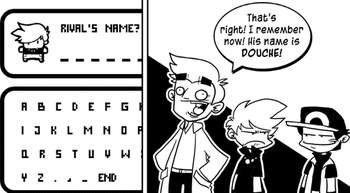
- Pokémon Red and Blue, Pokémon Gold and Silver, Pokémon Diamond and Pearl, and Pokémon Black 2 and White 2 (and their remakes) let you name The Rival as well. Red and Blue has the most ridiculous of all: Not only does the Absent-Minded Professor forget the name of his own grandson, he will also "remember" (and delightfully shout out) whichever name you choose, as seen in this page's image.
"This is my grandson. He's been your rival since you were a baby. ... Erm, what is his name again?"
"That's right! I remember now! His name is (Insert Derogatory Term Here)!"- This is averted with his appearance in Pokémon Let's Go, Pikachu! and Let's Go, Eevee! where he's named Blue, but it's implied Oak was joking whenever he asked his grandson's name, as he asks the same question near the end of the game and Blue calls it out as not funny anymore.
- Also in Red and Blue, the MissingNo. glitch is a result of your player name being copied accidentally into an invalid memory location. The glitch is caused by a limitation in the way the battling system interface looks up the player name. When the player talks to the old man in Viridian City who demonstrates how to catch Pokémon, his name gets copied into the name location, and your name gets displaced. When talking to him later, this causes your name to be copied into the data causing the glitchy squares on Cinnabar Island.
- Pokémon Gold, Silver and Crystal have a widespread case of the accidental abuse type. The player names the rival by giving his name to a police officer, the problem is that you have fought him at this point, where he has the temporary name ???. He even says “My name is ???” after the battle. Quite a few people gave the "right" answer and wound up stuck with a rival called ???. The remakes change this, as the rival now has the name "Passerby Boy" (which is too long to fit in the name box and is more obviously a description) during the first battle with him, and upon defeating him, he drops his trainer ID and the player character sees what it is but you don’t.
- In Pokémon Colosseum, you are also allowed to name your partner (canon name Rui).
- In addition, you can really abuse this feature with naming your Pokémon themselves. The most popular version of this (outside of Heh Heh, You Said "X" type stuff) is making the daycare lady look like a ruthless extortionist◊.
- As with the above main series and Mystery Dungeon examples, Pokémon GO allows you to nickname your Pokémon. Unlike above examples however, you can nickname your Pokémon at any time without requirements nor restrictions. Naturally, Pokémon Go players picked up on the dirty name stuff and swear words as soon as the appraisal feature, with comments on a Pokémon's size, was released. In case your were wondering why other trainers' mon-nicknames aren't visible in gyms... well...
Team Leader: Your Penis is just huge!
- In addition to name selection, Pokémon Sword and Shield let you select a three-digit number for the back of your jersey and your Trainer Card. While the in-game characters use Goroawase Numbers; 69, 420, 42 and 666 are (un)surprisingly common among the playerbase.
- Pokémon Red and Blue, Pokémon Gold and Silver, Pokémon Diamond and Pearl, and Pokémon Black 2 and White 2 (and their remakes) let you name The Rival as well. Red and Blue has the most ridiculous of all: Not only does the Absent-Minded Professor forget the name of his own grandson, he will also "remember" (and delightfully shout out) whichever name you choose, as seen in this page's image.
- Pou: You can change the titular pet's name from Pou to anything you want.
- Pyre: The Stowaway's name can be picked from, all with their own Flavor Text accompanying the choice.
- Bae the Bloodless, "This can't be her real name...right?"
- Chae the Changeling,
- Dae the Dense, "You suppose she could be named Dae."
- Fae the Fair, "She could definitely be a Fae, of that you have no doubt."
- Gae the Gray
- Kae the Unkempt, "She does look like she could be a Kae"
- Lae the Lonely
- Mae the Moon-Touched
- Nae the Nuisance
- Rhae the Wretched, "She could be a Rhae, perhaps, as well."
- Shae the Shoddy
- Tae the Tattle
- Xae the Poxy, "Her name could be Xae, however uncommon it may be."
- Zhae the Zealous
- Rainbow Skies: You can change the three main characters' names from the defaults shortly after they first appear, and later in the game there is a renaming service, should you regret your original choice. You can also rename the Mons you catch and tame.
- Shadow Hearts identifies all playable characters with descriptive monikers ("Rude Hero", "Girl in Danger", and so on), before allowing you to enter their name. In voice-acted cutscenes they are still called by their Canon Names. It's used to set up a gag when you try to rename "Strange Creature" (Roger Bacon) and he won't let you. In the sequels, you can't rename the characters... but a rename box still comes up for him.
- All over the place with Shin Megami Tensei: Other than the games mentioned bellow, most games allow you to name the protagonists whatever you want, even though side material provides a number of different names for them. Furthermore, some games allow you to name the character but the game refers to them by more general terms such as "leader", "he" etc. This mainly happens to games with voice acting.
- Shin Megami Tensei I allows you to name the whole party. It's even worked into the plot:
- At the beginning of the game, the protagonist has a dream where he encounters, in order, the Law Hero, the Chaos Hero, and the Heroine, and is asked to speak each of their names to awaken them. Before this, he must speak his own name to get past a sealed gate.
- Since the Heroine is the leader of La Résistance, the police arrest everyone with her first name, including old women and little girls. This would make sense for common names like Miki, Yuka, or Aoi, but meeting multiple women with exotic, foreign, or derogatory names can get strange.
- Shin Megami Tensei II plays around with this. The protagonist has amnesia at the start of the game and is named "Hawk" by the one who finds him, but is given the option to name himself and the other party members by 'remembering' them during random flashbacks early in the game. However, if you choose not to name them, they will be stuck with their canon names, which has the addition of pushing you towards Law. You can get around this by typing out the normal names instead, as you technically still name them.
- Shin Megami Tensei if... and Persona 4 allow you to name the character (and fully customize them in the former case), but later installments give them canonical traits and defined personalities; Tamaki Uchida for If... and Yu Narukami for P4.
- Persona 2: Innocent Sin and Shin Megami Tensei IV provide default options (Tatsuya Suou and Flynn) which can then be changed. However, these are indeed their canon names.
- Shin Megami Tensei IV: Apocalypse is an interesting justified case. Your character's birth name is Nanashi, which literally translates to "nameless". When you get a smartphone early in the game, you have the opportunity to change it, at which point Manabu will agree that Nanashi is a bad name and convince everyone to start using your new name. Asahi, however, will always call you Nanashi.
- In Raidou Kuzunoha vs. The Soulless Army, you can name the protagonist whatever you want but he is almost always referred to as Raidou. The same goes for other games that feature him.
- A similar case to the above occurs in Persona 5; you can name Joker, but the game usually uses his title when voice acting is involved. He also typically goes by Joker in other media, such as Super Smash Bros. Ultimate.
- Devil Survivor lets you name the protagonist as usual. However, whatever last name you give him is also given to Naoya because he is the protagonist's cousin.
- In Persona Q: Shadow of the Labyrinth, you can give first and last names to the protagonists from 3 and 4. In-battle dialogue will usually call them "Leader" and "Vice Leader" based on who you chose to play as first. Some characters have specific variations as well: Teddie calls the main character "Boss", Mitsuru and Fuuka use "Leader", Naoto and Rise use "Senpai", and Marie calls the secondary protagonist "Vicey". If your character's name is flat-out written in a voiced line, it'll either be skipped over or use a nickname.
- Shin Megami Tensei I allows you to name the whole party. It's even worked into the plot:
- Parodied in South Park: The Stick of Truth: despite asking you for your name (which can be anything you want), no matter what you enter, Cartman will say "You entered 'Douchebag', is this correct?". No matter how many times you correct him, you still end up with Douchebag as your name. Of course, the player character's real name is later on revealed to be Dovahkhin.
- The player's creature in Spore Creatures is named "Oogie" by default, but can be renamed at the very beginning of the story. However, due to how the game's autocensor works, picking a name for the player creature can get frustrating, and the name cannot be changed ever again after this point. Not to mention that the player's name is never used anywhere in game, rendering their assigned name completely pointless.
- Star Ocean: Till the End of Time lets you rename the characters, but uses the default names for voice-overs.
- Ditto with the remake of the first Star Ocean for PSP.
- Not to mention the second, which also featured a huge list of recruit-able characters. Not only did Claude and Rena retain their names in voice-overs, the anime cutscenes treated them as the only two members of the party.
- Done in an interesting manner in Slayers (SNES). The game gives you "please enter name here" at the very end of the game, right after the Final Boss. You get to name the main playable character, Lina herself, because, as it turns out, she's a copy of the real Lina, who was imprisoned by the Big Bad. After the real Lina is freed, the rename is suggested to uphold the One-Steve Limit. You can see the name when clearing the Post-End Game Content that the game has to offer.
- Tales Series:
- The PlayStation version of Tales of Phantasia didn't use any different typeface for character names, but in all the voice-acted lines, there was a pause right about where names would have gone, or the voiced line was the written line minus the name. There was exactly one exception, though — Chester's name near the beginning, immediately before you get to enter his name.
- In Tales of the World: Radiant Mythology, you are a create-a-character that interacts with Tales series veterans. Since major dialogue is voiced, people either skip over your name entirely, or say "you" or "my partner" while simultaneously using your name in text.
- In Radiant Mythology 2 and Radiant Mythology 3, the same thing was done, except that "descender" was also used .. once you're at the part of the story where it's known'' to the Tales Of characters that you are the legendary descender.
- In Tales of Vesperia every character is renameable but the default names are the ones spoken in the voiced scenes. The Definitive Edition removes this option, though.
- In TS!Underswap, our Player Character has amnesia from their fall into the Underground and struggles to recall their name, with us inputting their name before anything else. As in Undertale, the "true name" is Chara, though this time we're actually naming who we think we're naming. Like Undertale, the game has some special responses to certain names. Here's a list.
- The Witch and the Hundred Knight: While you can rename Hundred Knight whatever you wish, you'll still be referred to as such throughout the game. You later learn that Metallia took your inputted name as part of the binding contract, and in releasing you from it, speaks the name you gave him, allowing Hundred Knight to fight at full power.
- Wild ARMs:
- Most of the games allow the player to rename spells.
- The first Wild ARMs (and the remake, Alter Code F) allowed the player to select the name of one of the main characters as he is entering his name into an ancient password lock. Naming him after one of the correct passwords causes the corresponding door to open, after which he just enters something random. This means the same thing happens regardless of whether or not he's named after a password.
- Wild ARMs 2 allowed the player to name virtually every major and minor character that was not a villain.
- Wild ARMs 3 does this, mainly through using rare 'Rename Cards' on townsfolk.
- Undertale plays around with this like it does so many other tropes. The game starts out by asking the player to "Name the fallen human." Unlike some examples, the game will catch you if you try to use a canon character's name (and there are a lot of them) and provide a quote from said character. Most bosses will tell you that you can't use their name, with a few exceptions: Papyrus says he'll allow it, and Mettaton accepts it as brand promotion (though you can't fit his full name in the six letters available).
- The big twist (which you discover on either the Pacifist or Genocide routes) is that "the Fallen Child" and the child you play as are two different (but similar-looking) characters. The player character's real name is Frisk. And the one you named? They were the First Child, Asriel's childhood friend, and major character in the game's backstory (And Greater-Scope Villain of the Genocide path, alongside you). If you notice carefully, only Flowey ever addresses you by name, and that's because he's what's left of Asriel, thinking that Frisk and the Fallen Child are one and the same (and on the Genocide route, he's not entirely wrong). That being said, many players that found out about the twist with the naming scheme would have their share of fun on future playthroughs by renaming the first fallen child with a silly or inappropriate name, leading to a Mood Whiplash in the more emotional scenes.
- If you name the Fallen Child after Frisk, this activates Hard Mode, which stops the game right after you finish Toriel's boss battle. That way, even if you learned Frisk's real name from outside of the game itself, it doesn't spoil the plot twist above until you play through "properly" with a different name. If you name the Fallen Child "Chara" (which is implied to be their Canon Name) the confirmation text will call it "The true name" and you will be allowed to choose it.
- Xenoblade Chronicles X puts you in the shoes of your player created avatar, including their name. But your fellow party members and NPCs will only address your character by name during onscreen text (i.e. scenes that don't include voice acting), not during cutscenes.
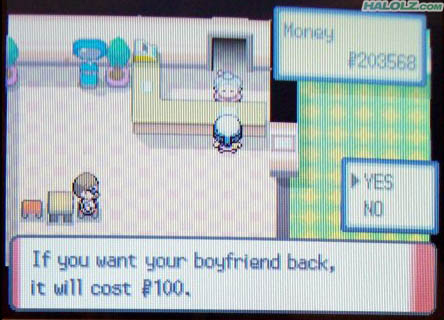
- The Animal Crossing series allow you to name your character and your town. The games also let you set a neighbor's catchphrase. In some of the games, your neighbors may decide to address you by a nickname instead of your current name — in New Leaf, at least, if you refuse their suggestion they'll instead invite you to come up with your own nickname for yourself.
- Black & White actually contains voice recordings of a whole bunch of names to use in case the player happens to use a name matching them; rather than using them for standard dialogue, though, it just occasionally has a disembodied voice quietly whisper them.
- Cities: Skylines allows you to rename every NPC, building, and even the pets of the NPCs, providing the opportunity for vast amounts of immaturity. The Mass Transit DLC expands this further by allowing you to rename roads and highways for your creative imagination.
- Descent: Freespace allows you to pick a callsign, but avoids this problem completely by making you a Featureless Protagonist and having everybody treat you like a Red Shirt. Command addresses you as "pilot", or by your wing designation "Alpha 1". Vasudans just call you "Terran". Your squadron leader in Freespace 2 greets you on your first briefing with "Welcome to Vega, Ensign..." (even if you've been promoted and was starting the campaign over).
- The protagonist of Growing Up can be named anything, even a name that's traditionally expected for the opposite gender. There's even a secret achievement for naming them after one of their parents.
- Hardwar lets you give a name to your character, which you will then see all the time, from police bounties to your hangars' names to various bulletins. However, if you try naming yourself "Gandalf", the game flat out refuses to let you play, displaying the following message: "Please insert a name that is not inherently sad".
- The player characters in the Harvest Moon and Story of Seasons series all seem to have default names, but for some cases like Pete their fanon names are more widely known (for him it's Jack). You don't have to use the default names (that's assuming you knew them), which is where this trope comes into play. Interestingly, Island of Happiness and Sunshine Islands only allow 6-character names for their farmers, Mark and Chelsea. Chelsea is one letter too long to fit.
- In Story of Seasons: A Wonderful Life the player character has no default name in-game and can be named anything. ("Shion" (Mark) and "Maya" (Pony) are the default names for promotional data.) They can also name the farm, all animals on the farm, and later their child.
- Hidden Agenda (1988), a Banana Republic simulator, asks for your first, last, and mother's maiden name (which is customarily appended in Latin America). If you skip this step, you become Juan Incognito Anonymous.
- In Hundred Days, you can name your winery whatever you want and also customize its logo. You can also change its name anytime.
- Idol Manager: The Player Character, their group, the rival and the rival's group all have names chosen by the player. The rival's gender is also chosen by the player at the beginning of the session, as their default first name depends on it.
- Littlewood: The player can name the Hero, the village they are rebuilding (for which "Littlewood" is the Canon Name) and choose the Hero's title as the town's leader.
- In Potion Permit, not only can you name the chemist, you can pick a name for your dog too. The default names for the chemist and their dog are Logan and Noxe, respectively.
- In Rock Star Ate My Hamster, while you can't change the Parody Names of the rock stars themselves, you can replace the default name of their band and any albums and songs they record. This feature is abused for Vulgar Humor in DazzyVanDam's playthrough.
- In Roots of Pacha, you can name the protagonist, their pets, livestock, and children whatever you want.
- The SimCity games by default required the city to be named and in 2000 and beyond, to name yourself as the mayor (The default name was Defacto). Since advisers, petitioners, citizens, and everyone else would address you by "Mayor [your name here]", or sometimes use the line "the fair city of [insert city name here]". Results could get pretty crazy here, to the point of mad libs.
- Ironically, while The Sims games have voice acting, they're Speaking Simlish, so players have no problems changing the names of their Sims.
- The Sims Medieval has cutscenes, messages and moodlet descriptions that are all able to integrate a Sim's unique name and any titles he or she might have. Moodlets use first name only, while many cutscenes and other messages use profession title and first name.
- In Stardew Valley, the first thing you do is name your player character, your farm, and your favorite thing (much like the MOTHER series). Your "favorite thing" only comes up in a dialogue that occurs after you find and eat a Stardrop: "It's strange, but the taste reminds you of [favorite thing]." If your "favorite thing" is "ConcernedApe" (the pen-name of the developer) the game thanks you during the Stardrop dialogue.
- Starsiege uses the "Define a name; everybody uses fixed nickname" variety.
- Your Miis can be named anything you want in Tomodachi Life. The game solves the voice acting problem by having them voiced by Synthetic Voice Actors. This initially cause problems when attempting to localise the games into Western territories to the point where they've canceled the localisation of the first game, but they've figured something out for the second one (Similar to how the first Animal Crossing game wasn't initially released to Western audiences.)
- In To the Rescue!, you can name your character, their dog, and the shelter anything.
- In Wing Commander, prior to the option of available speech, the name and callsign you chose at the start of the game was worked into the speech text. Starting with the Full Motion Video of Wing Commander III, you could only choose your callsign, but it was never mentioned in conversation.
- In fact, while Colonel Blair (as the Player Character) had his last name on the nametag on his uniform, the other pilots were tagged with their callsigns.
- The X-Universe series allows you to rename your character at any point, though how the game treats names varies. X3: Reunion and prior games still refer to the player as Julian Brennan, or his father, Kyle, in the original game, as the Julian/Kyle Brennan game start is the only one that can do the storyline, the only place where the player is explicitly called out. X3: Terran Conflict and Albion Prelude allow all the plots to be done on all the game starts, so it simply calls the player "Pilot" in voiceovers, only saying their name in text messages. X: Rebirth on the other hand, does not allow character naming as it features character interaction on a much deeper level.
- Yes, Your Grace: If Eryk's baby is born during the ritual intended to ensure a boy, the player gets to pick a name among three options. There is a selection both for a boy and for a girl.
- Sports games often call the "create-a-players" by their jersey number or team position. Some games seem to have a "bank" of names stored in them that will be read out when a custom player is introduced to the game. So, theoretically, if your character's name is "Mark Smith", it just might be able to cough it out.
- In the NCAA Football series, the players all come without names, because they cannot use the names without paying the players, and cannot pay the players without violating NCAA rules. The announcers have a very large name bank they will use if you type in the names manually, including some extremely rare surnames corresponding to star players. At one point, EA even took submissions for players' names to be recorded in the game.
- The same thing appears in NHL 2K9, where the international and historic players were not named in order to keep the production costs down. However, the name bank, as normal, allows you to put players back in the game... if you're willing to research all of that.
- In some of the EA Formula 1 series, the players are called "The Driver", which inevitably results in the commentator calling "Michael Schumacher is first... the Ferrari driver is second!" or something similar. In multiplayer games, where you have races with five McLarens, the guy on the pit radio calls them all "The McLaren Driver, meaning you've got no idea who he's referring to if it weren't for the message that popped up that says "[player] has entered the pitlane".
- The Backyard Sports series features a "Create-a-Player" option. However, the game can only refer to them by a preset nickname.
- Madden NFL:
- In the iterations that allow for creating a new team or relocating one while changing the name, you are free to enter any name you wish. However, the announcers will not say the name of the team, referring to them generically as "the home team" or "the visiting team". Averted in a few cases where they recorded commentary for a selection of fictional team nicknames (such as "Sharks" or "Rhinos"), which would then be called as appropriate should you name your created team accordingly. The stock logos you could select from do hint at what names might be recognized.
- Created players may be referred to their jersey number, or their last name if it's common or already recorded. (For example, if you create a player named "John Brady", the announcers may actually say "Brady" since they have commentary recorded for Tom Brady.)
- In MLB: The Show', the commentators can announce many first names, last names, city names, and team nicknames for custom teams and players.
- The EA Sports NHL series has tried different approaches to this in its Create a Player feature. NHL 2002 made an attempt to actually use the name entered, whereas NHL 07 asks you to select the player's surname from a huge pre-defined list, and this selection is then used in all commentary. This could have been driven by EA's decision to switch from creating a version specifically for the PC (NHL 2002), to simply porting over the PS2 version to PC (NHL 06 onwards).
- Modern football/soccer games work like this too, when you create a player. You may name him "Joe" and have the announcer refer to him as, say, "Ronaldinho" (or not refer to him at all), if "Joe" isn't available in the callname list. Pro Evolution Soccer is particularly bad with this, since it also allows you to change the callnames for already-existing players since the PS1 versions.
- In Dawn of War II, you can name the force commander with the other characters only referring him to simply as Commander. While he never shows up again following "Chaos Rising", you can collect a piece of wargear during Retribution which implies that he literally had no name. (The tie-in novel reefers to him as Aramus, but its status as cannon to the series is questionable).
- In Plague Inc., you can name your plague. Some of the scenarios have default names for the diseasesnote , but you can still change them.
- When using the first node during the Plant chapter of Metal Gear Solid 2: Sons of Liberty, you are asked to enter your name. Entering the F Word makes the game beep angrily at you. Contrariwise, calling yourself Kojima and entering Hideo's data (Bloodtype, DOB, etc), would unlock a bonus for you. The name and data is only used for the dog tag Raiden throws away at the end of the game.
- Done again in Metal Gear Solid V: The Phantom Pain, where you are required to input your name and birth date as a test for your memory after waking up from a 9-year coma. It is, in fact, the name and birth date of the Medic, who is made into a Body Double of Ishmael, the real Big Boss. In the true ending, Big Boss receives the Medic's identity (that which you put in at the beginning of the game) and escapes to America to build Outer Heaven from behind-the-scenes.
- The Cute Knight series: For the protagonist's name in each game:
- The first game, Cute Knight, has a Canon Name of "Michiko" as revealed in the sequel.
- The second game, Cute Knight Kingdom, has its protagonist named "Sorami" if the player doesn't choose a name.
- Cute Bite: Both the butler and the vampire can be renamed by the player. Saule and Buttercup are their default names, but even those are hinted to not necessarily be their original names, only what the previous vampire chose to call them.
- Cooking Diary: You can name the player character just about anything. The same goes for pets.
- Played with in the PC versions of Who Wants to Be a Millionaire?, where you can name yourself for the game's high score list, but any attempt to name yourself "Regis" or "Millionaire" would result in your name being changed to "Faker," "Wannabe," or something similar.
- You Don't Know Jack uses the variant of this trope in which the host simply referred to the players as "player one, player two", etc. In the first three, that's about as far as the trope went. In the fourth game, the game would sometimes take it upon itself to change your name to something more demeaning, and would actually scold you and exit the program if you tried to name yourself "fuck you". The 2011 version will supply a name for everyone that did not enter one. It is not above using name such as "Duck", "Duck", and "Goose" for 3 players that don't enter any names.
- In Crusader Kings 2 you can name every child of your dynasty born at your court, most prominently, your children and heirs.
- The game will, however, suggest a name based on your culture and your ancestors. So if you don't feel like it, you might just pick that.
- In most Nippon Ichi strategy games (Disgaea, The Guided Fate Paradox, Makai Kingdom, Phantom Brave) except Soul Nomad & the World Eaters and Zettai Hero Project, the main characters are not renamable; instead, the power of naming is restricted to the generics, who don't factor in the plot at all.
- Fire Emblem:
- Fire Emblem: The Blazing Blade has the player assume the role of a tactician (Canon Name "Mark") in the game who can be renamed. This creates a funny moment if the player choose to name their character "Lyn," since the first character the player meets (Lyn) will always comment that the player's name is odd-sounding.
- Fire Emblem: New Mystery of the Emblem gives us the Avatar, whose Canon Name is Kris. He/she is like the tactician but can be controlled as a playable character and has his/her own unique (customizable) portait.
- Fire Emblem: Awakening also has an Avatar, Canon Name Robin, who serves as the tactician and a highly customizable playable character, but also plays a much greater role in the story. Like with Blazing Blade above, you can name yourself after canon characters like Marth or Chrom and no one (including the ''actual'' Marth and Chrom) will pick up your shenanigans.
Chrom: Chrom? Sounds foreign.
- Fire Emblem Fates continues the Avatar trend, Canon Name Corrin. Unlike the previous iterations, the Avatar is the main protagonist. Like in Awakening, there's plenty of customization.
- Fire Emblem: Three Houses allows the player to name the main player character, though unlike previous avatars in the series, there is no customization available beyond the name and gender, as they're fully shown — face and all — in cutscenes. The character's Canon Name is Byleth. Because of the voice acting, other characters will always address them as "Professor" or some nickname like "Chatterbox" or "Teach".
- Fire Emblem Engage again allows the player to name the main character, whose Canon Name is Alear. As with Byleth, only the name and gender can be chosen. The name you chose appears in the subtitles, but is omitted in the voiced dialogue, with other characters addressing the main character as "Divine Dragon" or "Divine One".
- Shin Megami Tensei: Devil Children (known in North America as 'Demikids') allows you to name your protagonist before the game begins. Whichever character you are (Jin for Light and Akira for Dark version as the default) respectively are not silent protagonists, so naming the character serves no purpose beyond the players desire. Also, you cannot name Akira in Light version or Jin in Dark Version even though said other character appears.
- In Shining Force for the Mega Drive/Genesis, it was possible to rename the main protagonist. In the second game, a code allowed you to do the same for the entire playable cast.
- The main characters of the Suikoden games (except the third one) don't have default names (besides a few used in novelizations which fansites has adopted), so you have to provide your own name. This can lead to some humor in the first game if you call your character "Bater".
- In Suikoden III, you can rename the castle, which already has a hilarious default name: "Budehuc". The Genki Girl gate guard Cecile is rather exuberant in chanting the castle's name over and over again; this plus the already-hilarious default name becomes very tempting...
- It's not just Suikoden III. You can rename the castle in virtually all the games with default suggestions from other characters.
- Renaming your castle (on in Suikoden IV's case, your ship) is constant in all five main-series games. II and V also give you the option to name your ARMY, however. In Suikoden II, your army's name eventually goes on to become the name of the country/state forged at the end. Since one of the initial suggestions from Jowy is "orange", you could wind up being responsible for giving an entire country this name. Or you could name it after the hero for maximum megalomania.
- In Suikoden III, you can rename the castle, which already has a hilarious default name: "Budehuc". The Genki Girl gate guard Cecile is rather exuberant in chanting the castle's name over and over again; this plus the already-hilarious default name becomes very tempting...
- Super Robot Wars usually lets you rename the Original Generation protagonist, and sometimes his/her mech as well (and in some cases, each and every weapon of the damn thing). The voiced installments have an interesting way of doing it: the dialogue will call the protagonist by name regularly, but only if you keep their Canon Name. If you rename them Faggy Mcdoodoo or anything else, then those lines go unused and Hey, You! is in full effect (unless they have an In-Series Nickname or codename, then the game will use that instead).
- Tactics Ogre allows you to name the main character (Denam) and give them a birthday, as well as name the batallion you'll eventually lead. In the Reborn remake, however, you cannot rename the main character because his name is spoken by the voice acting a lot (voice acting still existed in the Japan-exclusive Sega Saturn version, but kept in minimum to avoid mentioning the character's name). You can still edit his birthday and rename his batallion.
- In the Total War series, armies are automatically given historical names, but you can change the name as well, which ensures hilarity when an enemy army is routed by "Sheep".
- By the same token as Total War, in most iterations of Civilization, you're given more or less free reign to name yourself and your civilization whatever you please. This flexibility reached its height in Civilization IV, as your civilization had a formal title (by default the "[Your Civilization] Empire"), a short name, an adjectival form, and a name and title for you. You could, if you wanted, change all of these at any time; you could, if you wanted, call yourself the "Jim-Bob, Grand High Pooh-bah and Supreme Lord" of the "Free Dynastic State of Mali", short form "China", with your people called the "Arabs", even though your "leader" was Elizabeth Inote and the civilization was the English. And yes, this meant that when an AI-controlled player contacted you they would say things like "India greets the Free Dynastic State of Mali", "A friend in need is a friend indeed, Jim-Bob", "The glorious Carthiginian people greet the cute little nation of China! Do the Arabs want to trade?" (remember, you're England), etc., etc., etc.
- The second Vandal Hearts game allows you to name the main character in the beginning.
- Ballads at Midnight has the protagonist playing as "Me, a Prisoner" until she finally introduces herself to the vampire Lucius.
- Lucius will have a number of unique responses depending on the chosen name, even reacting to meta references like "Dimitrescu," "Buffy," and "Dracula."
- He will also have a unique response if you insist on taking HIS name before he even introduces himself, and will forcibly name the player character "Spot" - "like a dog's name" - if they try it twice.
- CLANNAD allows you to do this. It can cause giggles later on, though, if one is using the English patch: because "Tomoya Okazaki" is a variable (like when your typed in name is in a different font/highlighted) it is "untranslated" and as such its kanji will appear in a field of English text.
- If one is playing with the voice patch or the PS2 version, the characters will still refer to him as "Tomoya Okazaki," making the entire naming process pointless.
- Kanon also allows you to name your character.
- Digital: A Love Story does this with the player inputting a username and their real first name, both of which are used throughout the game.
- Played With in Doki Doki Literature Club!, to hair-raising effect. As per a standard dating sim, you can enter the protagonist's name at the start of your game. However, when Monika finally reveals herself as a Fourth-Wall Observer and addresses the player directly, she uses the name of the currently logged-in OS profile — which is very likely to be the player's actual name. Brrr...
- The Famicom Detective Club series has you enter the first and last name of the main character. Later promotional material for the Nintendo Switch remakes offer "Taro Ninten" as a possible Canon Name, but otherwise no default option is given.
- The first game in the Fantasia (Otome Game Series) lets you name the main character even though her canon name — which is used in the second game that incidentally doesn't give you the option to name its new main character — is Cheryl.
- Halloween Otome uses this, with Emma Cee as the default protagonist name.
- Magical Diary does this, with an added joke of listing the main character's default name as "Mary Sue."
- In Melody, this is the in-game mechanism to name the protagonist.
- Namco High has the protagonist's default name as Cousin, but you can name them whatever you like... except for Zoosmell Pooplord.
- Nameless has Eri as the default name for its protagonist, but you can change it if you wish. It also asks you for the name of "the first doll you owned" at the very beginning of the game which ends up being the true name of the Secret Character.
- NinNin Days: The first thing you need to do before you can start the story is name your Player Character.
- Our Life: Beginnings & Always: The MC's first and last name can be changed upon character creation, and their first name can even be changed between "steps." Our Life also has a free voiced name DLC where there's hundreds of names that love interest Cove could say in voiced lines.
- PARANORMASIGHT: The Seven Mysteries of Honjo: At the start of the game, The Storyteller will ask the player to enter a name, before asking for confirmation using the player's username. This name becomes important later on when The Storyteller wants you to find a certain character, because the player has been secretly controlling them the entire time.
- The first choice of Senpai, Please Look At Me! asks you to name the female protagonist. Typical so far, but it gets really interesting if you trigger the hidden plot event of Senpai repeatedly crashing and rewriting the game: he eventually glitches the game to such an extent that it skips over the name-choosing option entirely and displays the protagonist's name as a default variable only, which causes him to realize that he's gone too far. In addition, if you choose to hear him out after this, he confesses that his lack of an actual name bothers him because it indicates that he's a Flat Character and asks the player to give him one with the same method they did for the female protagonist.
- The Shall We Date? otome games have main characters with default/canon names, but you're allowed to change them.
- Spirit Hunter series:
- The protagonist of Spirit Hunter: Death Mark suffers from amnesia, and so you provide him with a temporary name of your choosing (the default being "Kazuo Yashiki"). He remembers his actual name at the end of the game.
- Like Yashiki before him, Akira Kijima is the default name for the protagonist of Spirit Hunter: NG that can be changed if the player so wishes. This also changes the surname of his cousin and aunt.
- Tokimeki Memorial Girl's Side actually has voice synthesis as a feature so that the characters will actually say your name. However, it can sound very... odd and in the handheld versions it's merely a prerecorded list of names.
- Trapped with Jester: If you refuse to allow Jester to call you "Master," he'll ask what he should refer to you as, prompting the player to input what name your protagonist will go by.
- Zang Hua: The protagonist Ji Ming already has a name at the start, however, later it's revealed that it was just his temporal name used for hypnotherapeutic purposes, and his actual name is up to the player.
- The Godfather: The Game allows your character to be named anything, but this doesn't affect the game at all. The respectful characters tend to use 'Hey, You!' or 'Son'. Not even choosing the name 'Michael' does anything. And at the end, your 'real' name is revealed anyway.
- There's an interesting bit of Painting the Medium on an FBI Agent's outline of the Corleone Family structure, with a picture of members with their names and nicknames. Under your picture is the name "Aldo Trapani."
- Minecraft allows players to rename creatures of all kinds by either renaming their spawn eggs via the anvil (only in creative mode unless an adventure map allows players to get them) or by using a name tag. Whether it is the docile pig or the aggressive Creeper, you can use any name. Certain names result in special effects: for example, naming a mob Dinnerbone or Grumm will flip the mob's model upside down as an easter egg since those names are based on the developers of the game. Mobs that are give a custom name will also never vanish from the game unless killed, making it handy to keep your pet wolf or horse at your side.
- Marcus, the protagonist of Queen at Arms, can have her name changed to anything the player wants; the chance to change it comes up when Assistant-Commander Berin demands to know the new recruit's name. Played with, however, because Marcus is a woman masquerading as a man, and if the player selects a name which sounds too feminine, Berin will call them out on it.
- Terraria also features such in the character creation, and NPCs refer to the player by their name when talked to.
Non-video game examples:
- In Sony's special "Hall of Play" marketing campaign, Facebook users can navigate their own personal Halls. One of the links will cause an advertisement to play, and taking the first name from the user's Facebook profile, various video game characters will honor them for their continued valor (i.e. "To Michael! To Michael!"). However, if the name isn't pre-recorded, the characters will simply chant "To you! To you!"
- One case in Case Closed involved a kidnapped child and a strangely worded ransom note imploring his older brother to "help me... bring Mamoru back to life." When Conan investigates Mamoru's room, he discovers that Mamoru had been playing a video game where the hero dies partway through, and the player must find a way to revive him before they can move on. Mamoru had used his own name for the hero/save file, which helps Conan deduce that the boy's message was actually him telling his brother that he'd gone to a friend's house so they could help him bring the hero back to life, and that the "kidnapper" had altered the note to make it seem more menacing.
- Dragon Quest: Your Story is an adaptation of Dragon Quest V. While the game uses this trope, the movie gives its hero the Canon Name of Luca... until we find that it's about a kid playing Dragon Quest V. He's the one who chose the name "Luca", and it's stated that he always names his heroes "Luca".
- In the Hero Licence Exams arc of My Hero Academia, the very exhausted exam overseer Yokumiru Mera doesn't bother to even come up with a name for the fictional city for the exam, referring it to as [Insert Name Here].
- Episode 53 of Yu-Gi-Oh! The Abridged Series has this gem.
Virtual Kaiba: HELLO, "INSERT NAME OF SIBLING".Mokuba: He remembers my name!
- In The Firesign Theatre's comedy album, I Think We're All Bozos on This Bus, the events take place in an automated amusement park. The protagonist, Clem, is taken by surprise when a recorded greeting asks him his name, and he stutters, "uh, Clem". For the rest of the trip, he keeps running into park animatrons who say things like, "I sure am happy to see you, [uh Clem], please walk this way." To make the cut-and-paste even more obvious, the bulk of the sentence is delivered in a "professional actor" voice, while the "[uh Clem]" part is a tinny low-fidelity soundclip of Clem's original response, playing at lower volume than the canned line.
- There is an LoadingReadyRun skit in which all the actors pretend to be in the "LRR CD-ROM Game", getting very annoyed when the viewer doesn't do anything. Near the beggining, Graham asks your name several times before deciding to call the viewer by the name displayed in the input box, "TypeYourNameHere". That name even appeared in the closing credits.
- One French skit has a man call a sex hotline (completely oblivious to the fact that he's talking to a recording), giving his name as Gerard Bouchard. For the rest of the skit the woman's voice switches from sultry to a loud, toneless recording of his name.
Woman: Say, GERARD. BOUCHARD., you must be very manly. I feel that with you, GERARD. BOUCHARD., I'm going to feel so much pleasure.
- Rocketship Voyager. When a bureaucrat on the Array demands to know the galactic coordinates of their solar system, Captain Janeway retorts, "How in Hubbard's name would I know?" because no human has ever been outside their own solar system before. Later some Hirogen hunters turn up demanding to speak to the captain from the solar system How In Hubbard's Name Would I Know.
- The fanfiction equivalent of this is reader-insert stories, in which the insert character is typically referred to as "Y/N" ("Your Name") wherever a name would be mentioned.
- Jimmy Neutron: Boy Genius: When all the parents in Retroville are taken by aliens, they leave notes to all the kids that begin "Dear Son/Daughter".
- Zootopia: Clawhauser proudly shows off "Dancing with Gazelle" app which shows him "dancing" alongside the star.
Gazelle: Wow! You're one hot dancer, Benjamin Clawhauser!
- Amazon Women on the Moon featured a version of this trope being done on VHS. A young man called Ray was in a video store and a man called him over and asked him his name. The man then picked out a VHS labelled "Ray" from among a large collection of tapes with all different men's names on them. As Ray watched the (initially quite sexy) film, he found the rather attractive lady in the film kept addressing the viewer and referring to them as "Ray".
- In a scene in Idiocracy, Joe Bauers is asked by an ID machine what his name is, according to a government document Joe has never heard of. He answers, "I'm not sure if—", before the machine declares that his name is now "Not Sure."
- In Small Soldiers, the toy initially asked Alan's name typical of the trope. The toy confirmed the successful name application: "Greetings, Alannowshutup."
- One of the Bunnicula books featured a dog whose New Yorker owners, trying to be cute, gave it the name "Taxi," which resulted in a confused dog and an angry taxi driver whenever they tried to call him.
- Discworld:
- A running gag in the City Watch novels is the fact that Vimes never bothers to fill out the registration for his Dis-Organizer. Because of this, it always refers to him as Insert Name Here.
- The Oath of the Ankh-Morpork City Watch is written in this style, but new members generally say it exactly as written instead of making the appropriate substitutions:
"I, [recruit's name], do solemnly swear by [recruit's deity of choice] to uphold the Laws and Ordinances of the city of Ankh-Morpork, serve the public trust, and defend the subjects of His/Her [delete whichever is inappropriate] Majesty [name of reigning monarch] without fear, favour, or thought of personal safety; to pursue evil-doers and protect the innocent, laying down my life if necessary in the cause of said duty, so help me [aforesaid deity]. Gods Save the King/Queen [delete which is inappropriate]."
- It's even better when it's read the way Carrot reads it, because he has a problem with punctuation. "I comma square bracket recruit's name square bracket comma do solemnly swear by square bracket recruit's deity of choice square bracket to uphold the Laws and Ordinances of the city of Ankh-Morpork comma serve the public trust comma ..." This may have to do with him being raised by dwarves, who have a religious reverence for the written word.
- In Bitterblue, the title character allows Teddy and Saf to name her because she doesn't want them to recognize her name as that of the Queen. (Let's face it, how many Bitterblues can there possibly be in Bitterblue City?) They call her Sparks.
- Conspicuously averted with the text of one of Life's Little Instruction Book's maxims, but then again, the author did originally write it for his son.
744. Introduce yourself to someone you would like to meet by smiling and saying, "My name is Adam Brown. I haven't had the pleasure of meeting you."
- Played for dark laughs in The World of Ice & Fire: the book, meant to be an In-Universe encyclopedia is dedicated to King Tommen but if you look closely, you can see that the name was clearly written over "Robert" and then "Joffrey". Given how the chapter on Robert's reign is written in the present tense, it's also an indication of just how long the book took to write and what a turbulent period it has been in the interim.
- Barney had a personalized video entitled "My Party with Barney," featuring the purple guy and his friends throwing a birthday party for the viewer.
- Community has Troy abusing this trope by naming his monkey "Annie's Boobs".
Annie: Please rename that thing. And this time not with a contest on Twitter.
Troy: It's HIS Twitter account. He can do what he wants.
Annie: They are MY body parts. - Referenced in Doctor Who. Apparently, the anthem of the most conquered planet in the universe is titled "Glory to Insert Name Here".
- Family Ties has Alex working at a suicide crisis hotline. Flummoxed when he ends up actually taking a call, he has no idea what to do and reads his responses directly from the manual. He denies to the caller that he is reading from a script, then blows his cover when he addresses the caller as "Insert Name."
- In the sport-themed comedy panel show A League Of Their Own (not to be confused with the movie of the same name), one of the contestants did this with, of all things, a horse. He told the story of how he bought a horse and named it "Some Horse", just to get the announcer at races saying things like "And Some Horse is coming round the outside" or "And in fifth place, it's Some Horse".
- Arino has fun with this a few times, notably in the The Legend of Zelda: A Link to the Past episode of Retro Game Master, where he named his character "Deadbeat", resulting in a deadbeat being the savior of Princess Zelda, and eventually the world.
- In Stargate SG-1, Colonel Maybourne retires to an offworld village, where the locals make him their king. He tells the main characters, "I get to name all kinds of stuff. You should see the Grateful Dead Burial Ground."
- Children's music CDs pumped out by Kids Jukebox Inc allows the buyer to customize the CD by inserting their name into the song. The end result can be Narmish.
- In addition to their general CDs, they have produced personalized CDs featuring characters such as Barney, Care Bears, and Spider-Man.
- Just Me Music also provides personalized kids CDs based on popluar franchises like Mickey Mouse, Sesame Street, and VeggieTales. They have previously produced CDs featuring The Wiggles and the aformentioned Barney.
- Skies Forever Blue features a female RPG protagonist that feels loved when the player names her after their own loved one.
- Capcom Pinball's Flipper Football has an option to allow players to enter their own names for their soccer team, invoking this trope.
- At the Universal Studios E.T. Adventure theme park ride, visitors have to help E.T. return to his dying home world and heal it. Guests enter their names for an "Interplanetary Passport" before boarding; at the end of the ride, the visitors pass an animatronic E.T., who thank them by name. The potential for abuse from repeat riders should be obvious...
- Certain toy companies tried to cash in on this trope:
- Hasbro has produced personalized toys under the PlaySkool brand. In 2000, they made the fully customizable "eSpecially My Barney" that did this. 16 years later, they make the similar Sesame Street Love To Learn Elmo (stylized as Love2Learn Elmo, also called Fun2Learn Elmo).
- Fisher-Price came up with a bunch of plushes (the Knows Your Name line) from Winnie the Pooh to Elmo that you can program your name into and it will say your name.
- Leap Frog tried this trope with several toys in the past (these toys take a flash cartridge that you program your name using specialized software through a serial port or USB device) but hit gold with the My Pal Scout and Violet plushes, and then supplemented it with the My First LeapTops and My First Story Time Pads, which adds Mad Libs Dialogue to the toys as well — for example, the toys may claim to have the same favorite color as the owner. The Scout and Violet plushes, LeapTops and Story Time Pads are programmed using a USB cable.
- And then V-Tech rips off Leapfrog with Smart Cubs Cody and Cora, with both interactive plushes and toy laptops. All are programmed by downloading the selected name from a list into the toy using a USB cable.
- The company mentioned above, Kids Jukebox Inc, also puts out various toys that can be customized with the owner's name.
- Older than any of these, there was a story-telling teddy bear that had a built-in microphone. You'd press the Record button and record your name (which, as with other examples on this page, could be anything), and it would insert the recording at random points in the stories. So, for example, it could greet you by saying, "Hello, [Dammit, Hardison!], it's time for a special story!"
- A Basic functionality of all cloud-enabled toys. These toys usually have a companion smartphone app or web interface from the PC which the parent can program in the child's name.
- In Adventurers!, name entry screens pop up when new characters try to join the party. Drecker complains that he was trying to have a conversation, and Karashi gets one even though Karn just said he already knew her name. Lumi doesn't get one because a few voice clips use her name.
- A series of El Goonish Shive NP strips in which Grace plays Chrono Trigger, starting here has Grace discuss how to choose names, get annoyed when Frog's default name is the one she wanted and she doesn't have enough letters to call Robo "Toaster", and name far too many characters Tedd.
- Another series parodies Pokemon and gives the trainer (Justin) the option to select his name and the name of his nemesis (Nanase).
- Another series parodies Pokemon and gives the trainer (Justin) the option to select his name
- Exaggerated in The Fourth, where the Hero Antagonist is literally named "Blank".
- This GabaLeth comic has Red name himself God and Blue Dumbass. Professor Oak forces Blue to accept his name despite's Blue insistence that Red changes it.
- Parodied several in the MS Paint Adventures storyline Homestuck. The four main characters are named demeaning names at first (such as "Farmstink Buttlass"), then express their displeasure and receive proper ones instead.
- Subverted, however, with Jack Noir. He states that, while the suggested name (Spades Slick) sounds nice, he already has a name. Besides, Spades Slick is the name of an alternate version of him from another Sburb instance. And Sovereign Slayer sounds cooler anyway.
- Subverted again with the twelve Troll kids. The first one cuts down his first name suggestion –- literally –- and gives a reminder that he has lots of friends that also needs introductions, and following through with that Running Gag every time would take up way too much time. Played straight with the Trolls' planet, Alternia.
- Subverted once again with the Alpha kids, who are 16 when the narrative switches to them, and thus already recieved names (both the original kids and the Alpha kids recieve their names at 13.) Besides, the reader would've just named them something dumb like Barnstench Fartface.
- The Noob also had this in spades, with names like "Your Name Here" and "ohforf'sake", and the elf forest where everyone was named some variant of Legolas.
- Being a parody of JRPGs in general, RPG World uses a typical RPG naming dialog box whenever a new member joins the party. Particularly notable is when a woman named Lienne attempts to join, only to be renamed "Diane" by the hero mid-sentence.
- Parodied in Super Effective, the side project of VG Cats creator Scott Ramsoomair, where the protagonist Red reminds Professor Oak that his Grandson is named "Douche".
- Later in the same comic, Red's Pokédex tries to get him to do this with his Pokémon ("You should name it 'Butts'! 'Butts used GUST'! Hahaha...").
- in Oceanfalls, Nino gets assaulted by all the wrong names entered by readers before he gets his actual name.
- xkcd shows how to abuse this in Real Life to create an SQL injection.
- Any time a person, place, or thing can be renamed in a game, bringing the matter up for a vote is a time-honored tradition in the Something Awful Let's Play forum. A LPer will be quick to ban obvious joke names ("Dongs" is generally not a valid name for this reason), but sometimes the goons do come up with pretty clever Theme Naming schemes.
- Tales From Dev Null: The whole point of Make-A-Story, but for ALL the characters. See this story, where Mr. T and Hulk Hogan fight kung-fu master Anne Frank with help from Queen Elizabeth II.
- The Angry Video Game Nerd usually names his files "ASS" or some variant, and sometimes the occasional "FUCKER" or "ANALBAG".
- He lampshades the name entry problem in his review of Winter Games on NES:
"The name entry screen is a disaster. You can't move the cursor up or down. It only goes left and right. Isn't that fun?! Not to mention, they only let you spell four-letter words, which I could think of plenty, but how many names would have less than four letters? If you tried to add a fifth letter, it goes back and replaces the first letter, then you gotta figure out how to start over. When it reaches the last letter, why couldn't it just stop?! The simplest thing to do is to type in all A's, then go left once to get to the end button. Because, why put in a name anyway? It's not like the game is gonna save it. But if it did, I guarantee most of the high scores will belong to "AAAA". The point is, how hard is it to program something as simple as a name entry screen? If they can't even get that right, then WOAH! Wait 'til you see the game!"
- He lampshades the name entry problem in his review of Winter Games on NES:
- The Game Grumps often have fun with this. From the top!
- Groomp.
- Fuck, I, which leads to quite a bit of hilarious dialogue.
- OOOOOO.
- Yump>>♢.
- R3a7t47.*
- The Bigdix family.
- Guff.
- Himmler vs. Buttox.
- ÆDÒßë.
- Buttbuttyawn, buttsgalore, and weeweesee / UmJamLam and forevercluck.
- Egofaptor (which is also Arin's Tumblr domain name).
- I Never.
- Spoopy.
- Slurmp.
- 8===D and HIV+, which was mostly forgotten until they swapped controllers.
- Anytime Jim Sterling is faced with this choice, expect them to pick "Chungus" or a variation on it.
- Mentski typically enters Bum into the high score screens in his One Credit Champ videos. Come the Wardner One Credit Champ episode, which does attempt the trope by asking the player's name first, then inserting it into several points of the game...
- ProZD: One of his skits has the player character name his rival Dildoface much to Gary's chargin. The professor accepts it as his grandson' name.
- Vete A La Versh during the "Puchamon" episode, when Darkar gets to name his rival (who looks like his roomate) he decides to go with "Vagina". The rival keeps insisting "My name is not Vagina!" whenever the dialog box reffers to him as such.
- Zero Punctuation: Yahtzee frequently has fun abusing the character naming function in every game that has one, and thus gets very annoyed (or creative with spelling) when his more profane suggestions are disallowed. Notable examples include:
- Titty Shephard
- Fagballs — here he notes that the character is "Link, when I'm mature enough to not abuse the naming feature, and Fagballs at all other times." In the blurb at the end, he notes he sometimes names him "I Say" because it makes every other character sound like Foghorn Leghorn.
- Fuck Me, leading to a moment where Navi says "Fuck me it's cold in here."
- Useless, which he points out becomes kind of apropos because Link's accomplishments are repeatedly undone every time he resets the three-day cycle, and he never gets to take credit for them anyway thanks to the transformation masks.
- Twattycakes
- Gareth Gobulcoque
- Averted in SimCity, though, when the game flat-out refused to let him name his new town "Dogbollock".
- The Amazing World of Gumball: When Gumball gets Elmore turned into a video game where he's the player character, he's given the option to pick the name everyone will refer to him as. Naturally, he names himself "MYBUTT", causing everyone to call him that with a straight face.
Anais: A foul curse has been unleashed upon our town by MYBUTT.
Darwin: You mean the gates of doom were opened by MYBUTT? - Arthur has an infamous personalised DVD called Arthur's New Friend.
- Dora the Explorer has a personalized DVD as well.
- Eek! The Cat: Eek avidly watches a 'personalized fiction' video starring the Dummie Bears. The cartoon bears' dialogue is awkwardly broken in several places to insert "EEK THE CAT" in a droning computer monotone, during which the speaking bear's mouth is pixelated, but Eek is enchanted nevertheless.
- The Fairly OddParents!: When Norm the Genie introduced himself to Crocker, he read the introduction from a card. "Hello, insert human's name here,..."
- Futurama: Fry's Lucy Liubot had this feature; she would say things like "I love you, Philip J. Fry", saying his name in a mechanical tone at odds with the rest of her dialogue.
- Kaeloo: When Mr. Cat plays one of Stumpy's video games, it responds to him like this. He says "Shut up, stupid machine!" and the game spends the rest of the episode referring to him as "Shutupstupidmachine".
- A Nicktoons stop motion holiday promo from the early 2000s ended with all the characters wishing the viewer a "MERRY [insert holiday choice here]note TO YOU!"
- In Phineas and Ferb, Lawrence one time forgets his and Linda's anniversary, leading him to hire the services of "Love-On-The-Go". The script reads as follows:
Lawrence: ... lead the way for the lovely lady with a wave of your hand. "For you, and only you, [Insert-Your-Name-Here]..."
- In The Secret Show, one of the characters is constantly subjected to this. His name is changed daily for security reasons. And every day, his new name turns out to be something embarrassingly silly, like "Wobber Wobber Wobber Wobber Bobber". When he met his alternate universe counterpart, he was shocked to find that said counterpart got the much, much cooler name "Jet Strung" that day.
- The Simpsons:
- In "Radio Bart", Bart has his birthday party at Wall E. Weasel's, where the animatronic animals sing this birthday song:
Wall E. Weasel: Hey, there. I hear it's your birthday. How old are you?Bart: Well, I'm—Wall E. Weasel: That's great. Would you like us to sing you a special song?Bart: Hell no.Wall E. Weasel: You got it. Ready, Señor Beaveratti?Beaveratti: (in Italian accent) I'm a-ready.Wall E. Weasel: And a-one, and a-two...Animatronics: (singing off-key) You're the birthday, you're the birthday, you're the birthday boy or girl...
- In "Lisa on Ice":
Skinner: [over PA] Attention, this is Principal Skinner, your principal, with a message from the Principal's Office. All students please proceed immediately to an assembly in the Butthead Memorial Auditorium. [to himself] Dammit, I wish we hadn't let the students name that one.
- When Bart and Lisa go to Kamp Krusty, they are welcomed by the very boring and monotone Mr. Black. He plays a tape of Krusty very enthusiastically welcoming them to camp, and turning things over to "my bestest buddy in the whole wide world, Mr. Black" with the name being very obviously said in Mr. Black's monotone voice.
- The episode "Sunday, Cruddy Sunday" has a scene where Homer, his new friend Wally Kogen, and Moe discuss the upcoming Super Bowl. However, every time they mention the names of the teams playing, each man holds a beer mug over his mouth and says the name in a stilted fashion ("My favorite team is in it. The... Atlanta Falcons." ("I wouldn't rule out the... Denver Broncos), as when the scene was animated they didn't know which teams would be playing. This also extends to Wally's mention that President... Clinton and his wife... Hillary will be attending the game, as the episode was written during Clinton's impeachment trial so the writers didn't know whether Clinton would still be president — or, for that matter, whether Hillary would still be his wife. This was also a Mythology Gag about how the season 3 episode "Lisa The Greek", which was also the Super Bowl, got produced long before the playoffs that year.
- In "Cape Feare", Lisa gets a Voiceover Letter from her overseas penpal, Anya.
Anya: Dear Lisa, as I write this, I am very sad. Our President has been overthrown and...
Male Voice: ...REPLACED BY THE BENEVOLENT GENERAL KRULL! ALL HAIL KRULL AND HIS GLORIOUS NEW REGIME! SINCERELY, LITTLE GIRL. - In "The Dad Who Knew Too Little", Homer gives Lisa a personalized video for her birthday, with his voice filling in the information. It greatly upsets Lisa because it shows that Homer doesn't know anything about her, which includes saying that her favorite food is McNuggets (she's a vegetarian) and that Maggie is her best friend (even though the "best friend" in the video is clearly an adult male).
Prospector: Bad news, Sheriff Lisa Simpson, some Indians took all the McNuggets! Mmmm... McNuggets. [drools]
Cowgirl: I'll get those no-good Indians, just as sure as my favorite book is magazines! [snoring] [Bart: Wake up, Dad!] Huh?! What?! - Again in "The City of New York vs. Homer Simpson" when Homer calls the parking violations bureau.
Parking Operator: Thank you for calling the Parking Violations Bureau. To plead 'not guilty,' press 1 now. (Homer does so) Thank you. Your plea has been rejected. You will be assessed the full fine plus a small large lateness penalty. Please wait by your vehicle between 9am and 5pm for parking officer Steve Grabowski.
- In "Radio Bart", Bart has his birthday party at Wall E. Weasel's, where the animatronic animals sing this birthday song:
- In the SpongeBob SquarePants episode "Karate Island", the tape SpongeBob receives inviting him to Karate Island has his name inserted at one point in a noticeably different voice to the rest of the narration. Well, noticeable unless you happen to be SpongeBob.
- Steven Universe:
- When visiting Homeworld in "Familiar", Steven has to deal with Yellow Pearl, who, like all the other Homeworld Gems, can't comprehend he isn't just an amnesiac extension of his mother and refers to him as Pink Diamond; after he asks to be called Steven, she amends her address to "Pink Steven", and "Just Steven" when he clarifies. As an experiment, he jokingly orders her to "call me... Lasagna", but Pearl discourages him, implying Pearls can "break" if this trope is abused.
Yellow Pearl: Have a nice extraction, Pink Lasagna!
- In Steven Universe: The Movie, after she gets poofed by Spinel's "rejuvenator" and loses her memories Pearl (who's originally a member of a Servant Race) ends up bonding to Greg as her new master. But since a confused Greg introduced himself as "Um, Greg Universe" while Pearl was "booting up", Pearl keeps calling him "Umgreg Universe" until she gets her memories back.
- When visiting Homeworld in "Familiar", Steven has to deal with Yellow Pearl, who, like all the other Homeworld Gems, can't comprehend he isn't just an amnesiac extension of his mother and refers to him as Pink Diamond; after he asks to be called Steven, she amends her address to "Pink Steven", and "Just Steven" when he clarifies. As an experiment, he jokingly orders her to "call me... Lasagna", but Pearl discourages him, implying Pearls can "break" if this trope is abused.
- VeggieTales has a personalized DVD and two personalized CDs.
