
This page contains unmarked spoilers.

ParaNorman is a stop-motion animated comedy horror film from Laika Animation Studios, better known for their success with Coraline. It's directed by Chris Butler (the main storyboard artist on Coraline) and Sam Fell (an Aardman alum and director of Flushed Away) based off a script written by Butler, and was released in August 2012.
The film follows the titular protagonist, Norman (voiced by Kodi Smit-McPhee), living in a small town in Massachusetts. With the "gift" of speaking to the dead, Norman is considered an outcast by the majority of the town, most of which is populated by useless adults and nasty kids. When the town comes under siege by zombies, ghosts, and witches, only he can actually save the town from these creatures, not to mention a three-hundred-year-old curse.
Now has a shout out and a character page.
This film provides examples of:
- Adults Are Useless: Most of the adults range from Too Dumb to Live to entirely oblivious, when they aren't just plain Ax-Crazy.
- Alas, Poor Villain:
- The supposed witch of Blithe Hollow, Agatha Prenderghast, Used to Be a Sweet Kid who, like Norman, happened to have the ability to speak to the dead. She cursed the zombies in revenge for killing her for being different. She became so obsessed with making the townspeople pay for what they did to her that she completely forgot about the people who loved her, and almost completely lost herself in her rage. When she is finally able to find peace with the help of Norman, Agatha Disappears into Light to move on to the afterlife upon realizing that the only thing she really wanted was to see her mother again after the townspeople separated them.
- The Judge (as well as the other zombies) have come to regret their actions over the hundreds of years they've been dead. When Aggie is finally at rest, they Disappear into Light to move on to the afterlife, looking scared and regretful.
- All Guys Want Cheerleaders: Subverted. Mitch is gay and has no idea Courtney has been trying to flirt with him.
- All Love Is Unrequited: Courtney manages to find herself on both sides of the trope. She's infatuated with Mitch, who doesn't reciprocate since he's gay with a boyfriend and has no idea she's been trying to flirt with him. Meanwhile, Alvin likes Courtney, but she doesn't reciprocate since she's much older, and he's a bit of a creep about it.
- All of the Other Reindeer: Deconstruction. Norman tries to take the constant bullying with grace, but often finds his heroics hampered by almost every living person's low opinion of him. It doesn't help that the witch (in fact, an 11-year-old girl) died because of this.
- Ambiguous Time Period: Downplayed. Initially, the exact time period of the movie is a bit fuzzy. All the TVs, most of the cars, and the movies that Norman watches seem to come from The '70s, but all the kids have cell phones and Internet access, and during the school play, all the parents (as in literally all the parents) have 2000s-era video recorder cameras. However, it is indirectly revealed that it takes place in August 2012 according to the grave sites, the 300th anniversary signs, and a brief look at a computer website Salma looks at.
- Anachronism Stew: The book to stave off the witch's curse is a storybook retelling of "Sleeping Beauty". While the story existed in oral tradition all over Europe (and its colonies) for centuries, this version clearly owes much to Charles Perrault's version of the fairy tale, which wasn't translated into English until 1729, seventeen years after Agatha's execution. Possibly excusable if the first Prendergast to tell the story (from memory) bought the book so their successor would have a written copy.
- And I Must Scream: Pretty much the witch's curse the town is famous for. The seven Puritans are said to be damned to walk the earth as the undead. They're all very aware of their punishment when the curse comes into full effect and they rise from their graves.
- Annoying Younger Sibling: Courtney sees Norman as this, although in the scene at the town hall
- Anti-Villain: Both "the witch" and the zombies, the former by being just an angry little girl lashing out at everyone out of revenge and the latter for executing Agatha out of fear and feeling genuinely remorseful for it now.
- Armor-Piercing Question:
- Norman to the zombies after finding out what they did to Agatha.Norman: How could you?
- During the climax:Agatha: I'll make you suffer!
Norman: Why?
Agatha: [searching for an answer] Because... because...
- Norman to the zombies after finding out what they did to Agatha.
- Aside Glance: In-Universe. The actress in the cheesy zombie movie Norman watches screams in horror at the zombie walking toward her, but he's walking so slowly, thus forcing her to scream for so long, that she stops to cast an annoyed look off-camera (presumably at the director), and then resumes screaming.
- Ass Kicks You: The police officer smacks Mitch's van, which has all of the kids and one of the zombies inside, with just her hips, and the truck gets forcibly knocked away.
- The Atoner: The Judge (as well as the other zombies) know that the curse is their fault because of what they did to a little girl. They were only trying to tell Norman how to stop it the whole time.
- Aw, Look! They Really Do Love Each Other: The rest of the Babcock family to Norman, especially his father, who is kind of a jerk to Norman during most of the movie.
- Badass Pacifist: Norman takes a No-Holds-Barred Beatdown that pushes the bounds of the movie's PG rating, but never once stops trying to reason with the witch's ghost.
- Bad "Bad Acting": The kids in the school pageant read their lines in such an unenthusiastic monotone that Norman's prophetic outburst, if anything, improved the play a thousand times over.
- Bat Scare: A swarm of insects startles Norman when he goes to Uncle Penderghast's house to retrieve the book.
- Big Bad: Agatha Penderghast, the ghost of a supposed witch who unleashed zombies on the town to avenge her execution, although it was intended as punishment more for the zombies than the current-day townspeople.
- Big Ol' Eyebrows: Norman and Mr. Prenderghast, as well as Aggie. It's a family trait, which apparently goes with the "speaking to the dead" ability.
- Big Ol' Unibrow: Salma has one
 ◊.
◊. - Big Brother Instinct: Mitch to Neil, and Courtney towards Norman, eventually.
- Black Comedy: It's a film built on morbid concepts, and while some of them are portrayed as dead serious, there are still comedic moments related to them, like Norman's slapsticky struggle to take the book from Uncle Prenderghast's stiffened corpse.
- Black Comedy Pet Death: There's Bub, a ghost dog belonging to Norman's best friend, who died from being run over by an animal rescue van. He now appears as a head and a butt separated by several feet of space, and Neil accidentally kisses his butt, mistaking it for his head.
- Book Ends: The film begins and ends with Norman watching a horror movie with his grandmother. Not counting screams and zombie grunts, both the first and last lines are "So... What's happening now?"
- Book Dumb:
- Neil, who considers reading a 26-page manual an achievement.
- Mitch doesn't seem to do much better.
- Alvin can't even spell his own name when trying to make bathroom graffiti.
- Born in the Theater: The movie begins with a "feature presentation" sequence that apes '70s-era sequences of the kind.
- Bread, Eggs, Milk, Squick: Neil gives one too many reasons for why the other kids pick on him.Neil: It's just because I’m fat and my allergies make my eyes leak and I sweat when I walk too fast and my lunchbox has a kitten on it. Ooh! And I have irritable bowel syndrome.
- Brick Joke: The cheesy zombie flick Norman watches in the opening cuts away just as the girl is attacked by the zombie. In the ending, the now-zombified girl is briefly seen munching on a severed limb.
- Bring My Brown Pants: When Alvin first tries to run away from the zombies, he exclaims "I think I peed my pants!"
- The Bully: Alvin. He scrawls poorly-spelled insults on Norman's locker, calls him a freak, shoves him around, and generally lives up to the trope to a T. It's a little surprising that he never gives Norman a wedgie or swirlie, in fact.
- Burn the Witch!: Agatha, an innocent child, was condemned to death as a witch by a fearful society. History nearly repeats at the city hall, with the protests of Norman's parents drowned out by the yelling of the mob, showing just how powerless they are to stop it.
- CamelCase: The title, ParaNorman, since it's a portmanteau including a proper noun.
- Casanova Wannabe: Alvin is frequently seen trying to woo girls, but never comes close to impressing them. He's aware of it, too.
- Cassandra Truth: Norman has apparently told a lot of people about his ability, and they all think he's either insane or lying for attention, but worthy of ridicule either way. This makes it really difficult for him to get their support when the dead actually rise.
- In keeping with this trope, Norman even has a prophetic vision in public... that earns him even more ire from his father and more taunting from his schoolmates.
- Cast of Snowflakes: Each and every character has their own unique design, with differently exaggerated features and proportions helping to set their silhouettes apart.
- Celestial Deadline: Norman is supposed to read from Uncle Prenderghast's book at the witch's grave before sunset. When he finds the apparent spot, it doesn't work and the curse takes effect despite his efforts, but that's because he was at the Puritans' burial site, not the witch's grave.
- Central Theme: The importance of forgiveness and not getting overcome by anger. Also, don't give in to blind fear and mob mentality, because they can make you do monstrous things.
- Chekhov's Gun: Norman's grandmother at the beginning says (in regards to the zombie movie he's watching) that it would be better if they just sat down and talked to each other. In the climax, Norman ends the witch's curse by talking to her.
- Classically-Trained Extra: The school drama teacher. When whipping up the mob, she makes a Julius Caesar reference ("Cry 'Havoc', and let slip the dogs of war!").
- Color-Coded for Your Convenience: All the ghosts glow pale green to underscore their undead state. The witch's powers glow bright green to emphasize her supposed evil nature.
- Collective Groan: The reaction of the group after the library at Neil's elation that he finished a whole book in one night. A book that is twenty-seven pages long.
- Even better, they were looking for records on the accused witch, and Neil's choice of reading was an old asbestos installation manual.
- Comically Missing the Point:
- When Mitch accidentally runs over a zombie, the head comes to life and growls at him. He freaks out and kicks it. When he gets back in the car, Courtney and the others are freaking out over a man apparently coming back to life, Mitch is more impressed by how far he kicked the zombie's head.
- And earlier, Norman tries to give Neil the brush-off by saying he prefers to be alone. Neil's response?
Neil: So do I! Let's do it together. - Cool Old Lady: Norman's dead grandmother.
- Cosmetic Horror: The school drama teacher. Mrs. Henscher's daytime makeup is awful, but her puke-green facial mask is bad enough that only her talking saves her from being mistaken for a zombie.
- Crapsack World: Blithe Hollow is a rundown little small town, the locals have a low tolerance for any behavior that lies outside the norm, and it of course has a dark secret.
- Creepy Child: Norman is considered this by some, but Aggie is more a terribly wronged one.
- We see early on how it looks to everyone else; he ducks around nothing, constantly talks to empty space, and even stops at roadkill to pet the air above it. As it's not until shortly thereafter we get to see through his eyes, it's pretty clear he comes across as a Cloud Cuckoo Lander at best.
- There's also the nameless kid in the mob that sets her teddy-bear on fire and chucks it through a broken window. She also carries around a zombie's arm for a short portion of the movie before giving it back.
- Cruel and Unusual Death: The "witch" of Blithe Hollow is revealed to be an eleven year old girl named Agatha Prenderghast. The mere thought of an eleven year old girl being sentenced to death by hanging is quite brutal as it could have taken 20 minutes or longer for the "witch" to be killed.
- Crusty Caretaker: According to the novelization, Mr. Prenderghast is the caretaker of the Blithe Hollow Cemetery.
- Cute Ghost Girl: Agatha, once Norman calms her down, is a sweet kid who just wants to be with her mommy again.
- Darker and Edgier: It's even darker than Coraline — which is saying something. It also only got a PG rating, despite being probably one of the darkest PG-rated movies out there.
- Dark Is Not Evil: The ghosts all over town are a pretty friendly bunch overall. Likewise, the zombies were only malicious before they died; in their (un)death, they just want to atone for their sin of killing the "witch," Agatha, who in turn is simply angry over the wrongs committed against her.
- Deadpan Snarker: In the Babcock family alone, there's Norman, Courtney, and Grandma.
- Deconstructed Character Archetype: A repeated theme with much of the main cast.
- Norman's openness about his abilities leaves him ostracized from the rest of the town, who somewhat justifiably think he's crazy for talking to ghosts that no one else can see.
- Judge Hopkins is a deconstruction of the Hanging Judge, as he legitimately did what he thought was best, and his decision wasn't motivated by sadism or cruelty, but by a values system that
 all the people of Blithe Hollow agreed with. He's also a deconstruction of the stereotypical zombie characters, as he and his fellow zombies have come to regret their actions over the hundreds of years they've been dead, and in the climax, it's the zombies who flee in terror from the hordes of bloodthirsty townspeople.
 - The Witch of Blithe Hollow was not an evil old crone practicing black magic, but a scared little girl with abilities neither she nor the townsfolk understood, who was executed by the townspeople for something she had no control over, which is much closer to what the Salem Witch Trials actually were in real life. Moreover, while her Freudian Excuse is sympathetic, it's still only an excuse — she's a scared, angry child lashing out in the only way she knows how, and Norman forces her to understand that her violent cursing of the town and its people is understandable, but still not justified or the right thing to do.
- The townspeople of Blithe Hollow are shown to be not so different from the zombies, reacting to their appearance with extreme violence and aggression, and with shots of their attacks deliberately paralleling iconic zombie attack scenes. Thanks to modern technology and a massive numbers advantage, the townspeople pose far more of a threat to the slow-moving, shambling zombies than the zombies do to them. Their lynch-mob mentality gets so bad that they actively try to kill Norman, who's only a child, just for being different — exactly like the zombies did when they were alive.
- Deconstructive Parody: Of both stereotypical zombie movies and of the Salem Is Witch Country tropes. At first, it seems to be simply spoofing the genre with the old zombie movies that Norman watches, before deconstructing the concept of "evil witches and mindless zombies" by making both of them into tragic characters. Aggie was an innocent little girl who was executed for her powers despite not hurting anyone with them, and while the Puritan zombies initially crossed the Moral Event Horizon by sentencing Aggie to death, they've all suffered a Fate Worse than Death and have spent the last several hundred years trying to atone for what they did. The zombies are actually trying to help the protagonists break the curse so they can rest in peace. Not to mention, that in the third act of the film, it's the zombies who run and hide in terror from the vicious, mindless hordes of living townspeople, and the living townspeople are the only ones who outright try to kill Norman without any provocation on his part.
- Department of Redundancy Department: "KILL 'EM IN THE HEAD!"
- Didn't Think This Through: Mr. Penderghast's spirit passes on, his duty fulfilled by getting Norman to promise he'll read from the book at the witch's grave to stop the witch's curse. Apparently it didn't occur to him in life or death that Norman wouldn't know where the witch's grave was. Ironically, it's thanks to this failure that Norman is able to find the grave (the zombies that come back to life do know where the grave is) AND lift the curse for good.
- Disappears into Light: A variant; when a ghost is finally at rest, they fade away in this manner to move on to the afterlife.
- Distress Ball: Enforced in-universe by the actress in the horror flick Norman is watching in the beginning. A zombie shambles towards her character, and she just stands there screaming. For a very long time, long enough to run away, find a weapon, or do anything but scream. (Her annoyed glance at the camera hints she's not exactly thrilled with this.)
- Distaff Counterpart: Aggie to Norman. Both are children ostracized by the people of Blithe Hollow for their ability to speak to ghosts, share similar physical appearances, and Norman is likely Aggie's distant descendant.
- Does This Remind You of Anything?: Played both for drama and laughs, sometimes simultaneously. The second half of the movie plays almost all of the classic Zombie Apocalypse tropes totally straight, except that it's the terrified, outnumbered, and helpless zombies who are running from the bloodthirsty mob of townspeople.
- Also, in the flashback to Aggie's sentencing, when Judge Hopkins gives his speech, note the shot of the then-living Puritans slowly stalking mercilessly towards Aggie and surrounding her. Their slow movements, pale faces, and blank expressions makes them appear far more chillingly zombie-like than they are as actual zombies.
- Additionally, the townsfolk denying or trying to justify why they became a ruthless mob bears some resemblance to a grown childhood bully trying to pretend their past tormenting didn't happen.
- Dumb Blonde: Courtney, though her hair may or may not be dyed, as none of her family has hair as brightly blonde as hers.
- Dumb Jock: Mitch is a Top-Heavy Guy who works out frequently. He's bored and frustrated at the mere prospect of having to dig through old records, and is completely oblivious to Courtney's attempts at flirting with him.
- Dumb Muscle: Mitch and Alvin are pretty strong given their ages, and not too bright either.
- Earn Your Happy Ending: Norman has to fight a supernatural menace to protect a town that largely scorns him, but over time, a growing number of townspeople realize that his ability to speak to the dead is real. While the movie finishes out with said townspeople too occupied with justifying their own moblike behavior to properly apologize to Norman, he does earn his family's support and realizes that he has a true friend in Neil.
- Eating the Eye Candy: Courtney is delighted when Mitch answers the door wearing nothing but a Modesty Towel.
- Enfant Terrible: A little girl tears off a zombie's arm, and later on lights her teddy bear on fire and chucks it through a window in order to set the town hall alight.
- Entertainment Above Their Age: Norman is only about eleven, but he frequently watches violent horror movies.
- Everything's Deader with Zombies: Zombies are the first type of supernatural creature to invade the town.
- Evil Is Petty:
- The witch cursed the entire town to be attacked by the zombies of the people who executed her. Subverted in the end. Aggie wasn't cursing the town to be attacked by zombies, she was cursing the zombies to go through the same thing she went through.
- Subverted with Judge Hopkins. He sentenced an innocent girl to death for talking to the dead, not because he hated her for being different from others, but because he thought it would be good for the townspeople.
- Evil Is Hammy: You can actually, quite literally, see the spittle flying when Judge Hopkins is handing down the sentence to Aggie. Appropriately enough for the trope name, he loses the hamminess once he becomes 1) a zombie and 2) a good guy.
- Exotic Eye Designs: Norman's irises and pupils are faceted.
- It seems to be a trait for those in the family who can see ghosts, as both Mr. Prenderghast and Aggie have faceted eyes as well.
- Extra-Strength Masquerade: The television news report the day after the events of the movie suggests that the rest of the world attributes the entire supernatural event to a "freak tornado" hitting Blithe Hollow.
- Eye Scream: Alvin gets poked in the eyes repeatedly by a zombie arm.

- Face/Heel Double-Turn: Sort of, and in both cases, it's posthumous. The whole tragedy began when merciless Puritan fanatics sentenced a little girl to hanging just because she had powers they didn't understand. Fast forward three hundred years, and the zombies of those same Puritans have had a very long time to realize the horror of what they did, while Agatha, despite getting her revenge, has spent all those years clinging to her hatred and refusing to let go, even when it means hurting innocent people in the process.
- Family-Unfriendly Death: Agatha's death. The thought of an innocent 11-year-old girl being sentenced to hanging is very unsettling. Not to mention how it's suggested that the zombies chasing Norman the whole film were killed by Aggie's "witch powers" after sentencing her to death.
- Fat Best Friend: Neil is one to Norman, and he's well-aware of it.
- Fate Worse than Death: Most obviously for the zombies, who are forced to live afterlives of horrifying suffering for what they did several hundred years ago, but also Agatha herself, who remains on Earth as a being of almost pure fear and hate, unable to pass on until she confronts her own desire for vengeance and recognizes it as a mindset that's really worse than useless.
- Favouritism Flip-Flop: At the end of the film, Alvin explains to a couple of girls that he and Norman have been real close for years now. Seeing how Alvin was Norman's bully/tormentor up until just the previous night, that statement is technically true.
- Fighting Back Is Wrong: The Aesop of the story is that bullying is wrong, even if the other person did it first. The villain is trying to get revenge on the people who killed her, but in the end Norman makes her realize that she has become as bad as they are.
- Fire-Forged Friends: Alvin, the former bully, warms up to Norman after being attacked by zombies and realizing Norman's ability to talk to ghosts isn't made up after all.
- Forced Meme: In-Universe: "That's so Alvin!"
- Foreshadowing:
- The practice for the school play, especially Salma's concern about the portrayal of the witch not being historically accurate.
- During the opening B-Movie, Norman's grandma suggests that instead of running, the girl in the film could try to reason with the zombie.
- Early in the film, Neil tells Norman that he'd be a bully too if he was strong and stupid like Alvin. When Norman confronts Agatha, one of the thing he tells her is that using her power to terrorize the townfolk just makes her a bully.
- Mitch's total lack of response to Courtney's flirting is a hint that he's not into any women, and that he's already taken.
- After the play, Sandra tells Norman "Sometimes we do/say things because we are scared." This line is said later by Norman.
- The fact that Norman is the only one who can interact with his dead grandma foreshadows his special gift.
- Forgiveness: One of the main themes of the film. The witch's curse ravages the town because Aggie refused to forgive the Puritans who executed her, and only when Norman convinces her to let go of her vengeance can she peacefully move on.
- Freaky Is Cool: Pretty much the sole reason why Neil befriends Norman. He's absolutely delighted to discover that Norman can talk to his dead ghost dog.
- From Nobody to Nightmare: The witch used to be a sweet little girl whose only power was the ability to see ghosts. Her other, more terrifying powers only emerged after the townsfolk sentenced her to death by hanging.
- Funny Background Event:
- A couple on a date coo at each other over wine while out the window behind them, Mitch's car tumbles and bounces down the hill.
- While Norman's family watches his school play, literally every single other parent in the audience is recording the show on a video camera.
- The Future Is Shocking: The Puritan zombies awaken in the modern day, and are shocked to see such things as a bar, sexy advertisements, and a TV window display broadcasting endless scenes of war, violence, and scantily-clad pop stars.
- Genre Savvy: The bar owner. When she realizes the man asking for help is not drunk or crazy and that there really are zombies, she shouts, "KILL 'EM IN THE HEAD!"
- Genre Deconstruction: Oh boy, there's a lot. Zombies come back from the dead to wreak havoc on a sleepy town thanks to a witch's curse. Except the witch was an innocent little girl, the zombies are completely harmless and rather pathetic compared to anything in Norman's horror movies, and the town uses the little girl's trial and hanging to pull in tourists and sell cheesy merchandise.
- Genre Throwback: The film is one towards vintage zombie movies, which themselves are parodied during the opening scene with the "feature presentation" card and narm-y acting of the lead actress of said Show Within a Show.
- The movie's surprising darkness for its rating is reminiscent of old PG-rated films that could get away with racier content before the invention of the PG-13 rating. Yes, in a meta way, the rating is a throwback!
- Get Back in the Closet: In some foreign language versions of the film, Mitch says he has a girlfriend instead of a boyfriend.
- Ghostly Animals: In addition to human ghosts, Norman can see the ghosts of animals, including a raccoon and a dog, the horse of a Civil War soldier, and a flying bird ghost.
- Giving Them the Strip: The zombie of the judge manages to grab Norman, who sheds his jacket and runs away. The zombie can be seen staring at it in confusion for a second before tossing it aside.
- Good-Times Montage: A deleted scene has Norman and Neil go through one after they play fetch with the ghost of the latter's dog. Unfortunately for Norman, the writers felt that this concluded his Character Arc of opening up to and trusting living people too early.
- Greater-Scope Villain: Judge Hopkins in his past life. He sentenced an innocent little girl to death, thus starting this whole mess. However, it's somewhat Averted by his Heel Realization in his now-zombified state.
- Grey-and-Gray Morality: No one in this movie is outright evil.
- Gym Bunny: Mitch. He's extremely muscular, and at the town hall, to keep in shape, he does bicep curls with a pair of books.
- Hammerspace: The bar owner, after yelling that they should kill the zombies, pulls a large shotgun from seemingly nowhere.
- Hartman Hips:
- Courtney and her mom.
- Taken to extremes with the aerobics instructor Neil likes to freeze-frame on.
- The actress in the horror flick has a rather ample rear.
- Hate Sink: Whereas the Puritans carried out their execution of Aggie, an 11-year-old girl, out of fear and desire to protect the town, they've been trying to make amends for their actions ever since. However, the current citizens of Blithe Hollow are quite cruel to what they thought was a mentally ill boy for no good reason, and can't even claim they were truly led by fear.
- He Who Fights Monsters: Aggie was so intent on punishing those who wronged her that she became just as angry and spiteful as them. In the present day, it doesn't take long for the townsfolk to whip themselves into such a frenzy about the zombies that they're willing to kill Norman for it.
- Heroic BSoD: Norman has one when he learns that the witch was eleven years old when she died and the witchcraft she was accused of was the ability to talk to ghosts.
- History Repeats: The people of Blithe Hollow decide to murder a child who claims to be able to talk to ghosts twice — once in Puritan times, once in the present.
- Hot Witch: When the people of Blithe Hollow capitalize on the execution of a supposed witch in its colonial past, most of them use the Wicked Witch archetype. A billboard for the casino, however, depicts her as a young woman in a skimpy outfit with a wad of bills in her generous cleavage. This can come off as unsettling after the later revelation that Agatha, the real "witch" of the story, was actually an 11-year-old girl.
- Humans Are Bastards: Or rather, living humans are bastards. Fear and paranoia can drive humans to do horrendous things, including trying to lynch a child, more than once. The dead are either victims of great cruelty, completely harmless, trying to help, or all of the above.
- Humans Are the Real Monsters: In this movie, it's the humans who are the aggressive attackers and the ghosts and zombies who just want to help. In fact, the Puritan zombies were actually much worse people when they were still human. At the same time, a big theme of the movie is that people often do bad things because they're afraid, not because they're inherently cruel. When they realize there's nothing to be afraid of, they're much kinder.
- Hypocritical Humor: While rehearsing for the school play, the drama teacher passionately demands that the students properly reflect the Puritan characters that they're portraying. But when Salma points out that her witch costume - consisting of a stereotypical warty nose, pointy hat and broomstick - isn't historically accurate, the teacher simply rebuts that it isn't supposed to be.
- Identical Stranger: Norman and Aggie look like gender-flipped clones of each other. Since she obviously didn't live long enough to actually be his direct ancestor, this is more for thematic reasons than to imply any familial connection, though since his uncle has the same last name as her, he could be descended from an unmentioned sibling or cousin.
- I Resemble That Remark!: Courtney: "I do too listen! And whatever it was you just said, it’s not working!"
- If You Can Read This: The background text in the movie is absolutely rife with jokes, puns, and unusual bits of humor, such that it's almost impossible to catch all of it in one viewing. There's Salma's "My First Fusion Reactor" book and a "The Hands of Fate" board game, just to name a few...
- If You Taunt Him, You Will Be Just Like Him: Although this trope is normally the more benign version of its fatal counterpart, Agatha has already killed her accusers, and her form of "taunting" is a Fate Worse than Death meant to reveal how awful her victims were. Norman confronts her with the fact that this makes her just as bad as them, which in this case is particularly true given that her former persecutors have learned that what they did was horribly evil and are torturing themselves even more than she is harming them.
- Incompatible Orientation: At the end of the film, Courtney decides to stop flirting with Mitch and invites him to a movie. Unaware that she had been flirting with him all the time, Mitch happily mentions that his boyfriend is a Chick Flick nut.
- Ink-Suit Actor: Doesn't Neil◊ kinda looks like Tucker Albrizzi◊, his voice actor?
- Improbable Hair Style: Norman's hair is always sticking straight up. Even if he combs it or it gets all mussed up, it'll always pop back to its original state a moment later.
- Insufferable Genius: Salma. Lampshaded by Norman when he calls her asking for advice.Salma: If you cared to pay attention some of the time, you would know that we covered this [where the witch was buried] in fifth-grade history class.
Norman: You know, I would google this myself if there wasn't a 300-year-old dead guy trying to rip my face off! - In the End, You Are on Your Own: Norman must face Agatha alone, and the trees form an impenetrable barrier separating him from the help of his family.
- Invisible Parents: We know Neil and Mitch must have them, if only because of "Mom's exercise DVDs", but they're never seen.
- Ironic Echo: Sandra tells Norman the reason Perry is always angry is because he's afraid for Norman. He initially believed his dad is afraid of him, which was how Judge Hopkins and the other zombies felt about Aggie.
- Irony:
- A sign reads "Spelling Bee next Wensday".
- Neil explicitly points this out in the case of his dog Bub, who was run over by an animal rescue truck.
- Alvin breaks into the library with the aid of a sandwich board advertising a 'crime prevention seminar'.
- Agatha meant for the curse to hurt the seven zombie Puritans, but its effects aren't so contained. In addition to punishing the zombies, it almost gets her descendant Norman killed by the townsfolk who feared him, almost like she was, when he tries to stop the curse.
- I See Dead People: This appears to be a family trait for the Prenderghasts, as Agatha, Uncle Prenderghast, and Norman all demonstrate this ability. Unfortunately, all of them are ostracized by the town because of it (although in Uncle Prenderghast's case it's implied rather than stated), and for Aggie and nearly Norman, it proves fatal.
- Jerk with a Heart of Gold: Courtney is a self-centered teenager, but she's not a bad person, and she's the first one to step up in Norman's defense and convince the town to give her little brother a break.
- Jumping Off the Slippery Slope: The current citizens of Blithe Hollow go from being distrustful of Norman at best to trying to kill him when he's protecting the zombies.


- Kangaroo Court: Aggie's trial by the seven Puritans is ridiculously one-sided. She gets charged immediately without any chance to defend herself and is sentenced to death, even though she's only 11. Of course, this ends up very, very bad for the seven Puritans.
- Kid Hero: Norman. He's 11 years old, and is the only one in town who can undo the curse, since his uncle (who also can talk to the dead) died.
- Large Ham:
- The drama teacher not only chews the scenery with every line she says, but she insists that her student actors do the same thing.
- Uncle Prenderghast is one as well, rambling insanely and theatrically at Norman even after he dies.
- Leitmotif:
- Both Norman and Neil have very noticeable ones, Norman's being a clarinet with acoustic guitar in the background, and Neil's being a simple keyboard riff with a xylophone and what seems to be bongos in the background.
- Mr. Prenderghast has one as well; a simple strings tune.
- Even Agatha gets one, sounding like a modern take on the soundtrack of a zombie chase scene from the '80s. It plays during fights with her, and in the epic final fight with her, to fit the occasion, some violin is mixed in.
- Lack of Empathy: The seven Puritans took a young girl away from her mother, and as Judge Hopkins told her how she was to be hanged by the neck until she died, they were eerily calm as the girl cried from fear. They later subvert this, having had a Heel Realization during their centuries-long undeath, and realize how monstrous and cruel they were.
- Loners Are Freaks: Justified with Norman, since the whole town, including his father, tend to scorn him for being able to talk to the dead, since no one believes him. It's more of a defense mechanism.
- Lovable Jock: Mitch is not particularly bright, but he's not mean to anybody either.
- Lovecraft Country: Blithe Hollow is the Salem witch trials variation, with thick, dark forests everywhere and the sins of Puritan settlers still haunting the land.
- Manly Gay: Mitch. Who knew?
- Meaningful Name:
- Prenderghast literally means "ghost catcher" or "ghost holder."
- Norman means "northerner" or "north-man". Even before the Norman conquest in the year 1066, it was used to describe outsiders or people who didn't belong or were not natives.
- Sandra (the name of Norman's mother) means "defender."
- Blithe means to show a casual and cheerful indifference considered to be callous or improper. Considering the town's portrayal of the legend, it's appropriate. (It also recalls Noel Coward's ghost story, Blithe Spirit.)
- Agatha means "good" in Greek. Too bad the other townspeople of her time didn't take that to heart.
- The Mentor: Norman's wise (but dead) grandmother, who tells him it's okay to be afraid so long as that doesn't change who you are, neatly encapsulating one of the film's major themes.
- Misunderstood Loner with a Heart of Gold: Norman and Aggie, and for much the same reason too.
- Mr. Fanservice: Mitch, who even gets a Shirtless Scene, and constantly gets Courtney Distracted by the Sexy.
- Ms. Fanservice: Courtney, which may be incidentally why she's something of an Ensemble Dark Horse. The Hartman Hips certainly don't hurt.
- Motion Blur: To achieve this effect in Stop Motion, the animators actually sculpted smear frames◊.
- Motive Decay: Which Norman calls Agatha out on. Her Ghostly Goal was to take revenge on the fundamentalist Puritans who unjustly murdered her. Well, she got her revenge, and then some, and three hundred years later, she's still lashing out at people. It's no longer about justified vengeance and now she's just an angry child trying to hurt the world to distract herself from her own pain and suffering.
- Mundane Solution: Alvin's lock-picking method; he just smashes the window, reaches through it and opens the door that way. And he's proud of this, too!
- My God, What Have We Done?: Judge Hopkins and the other zombies have spent the last 300+ years regretting their actions against Agatha. When confronted by Norman about Agatha's death, Hopkins confesses that their actions were out of fear and out of the belief that they were doing the right thing.
- Never My Fault: One of the townspeople, who was the first to break the news about the zombies to the rest of the town, can be heard saying after the curse is broken to a reporter, "It wasn't my idea, they forced me into it!"
- Nice Job Breaking It, Hero: Mr. Prenderghast and his predecessors all diligently protected the town from the witch's curse... but by keeping the witch's and Puritans' spirits trapped for centuries while only stalling the curse for a year at a time. Ironically, it's only Mr. Prenderghast's screw up in not telling his successor what unmarked place in the wood he should perform the "ritual" at that allows it to be lifted permanently.
- Not Evil, Just Misunderstood: Aggie is just a justifiably angry child throwing the mother of all tantrums. The zombies are just trying to relieve the curse they brought upon themselves through fear and hysteria. Even the angry mob of humans turns out to be not beyond reason.
- Not Quite the Right Thing: The Prenderghast line (specifically those that can see the dead) have been duty-bound to keep the witch's curse at bay by reading from a book once a year. However, that ritual is simply reading a little girl bedtime stories so she'll stay asleep, but it does nothing to resolve the anger and resentment that have been fueling her curse in the first place.
- Not Using the "Z" Word: Subverted. Courtney uses it around Judge Hopkins, but Norman tells her not to use "the z-word." However, the zombies are generally referred as such by others, especially the angry mob of townsfolk.
- Novelization: The movie's novelization goes the extra mile compared to the typical tie-in novel for children and takes the form of a hardcover (with the cover underneath the jacket based on the Prenderghast book featured within the film). It also serves as the lore manual, with some extra details on the characters, such as how Grandma's death affected Norman, the strange circumstances of his birth, the witch trials in Blithe Hollow, and other material.The character Salma is also something of an Ascended Extra in the book, having some more lines and such.
- Now What?: "So what's happening now?" Also counts as Leaning on the Fourth Wall and a Meaningful Echo.
- Odd Friendship:
- Norman with the ghosts, one of whom is the town loon, voiced by John Goodman.
- Neil and Salma are implied to be one, at least before the former takes interest in Norman.
- One of the Kids: Mitch. He's 20 years old and out of school, but his Dumb Jock nature puts him on a level with the elementary-school-age kids he ends up hanging out with for the night.
- Otherworldly Communication Failure: The zombie horde seemingly destroying the town and trying to kill Norman actually are benign and just want to ask for Norman's help in breaking the curse placed upon them and the town. Norman, using his ability to speak to ghosts, eventually comes to realize this, and has to convince the rest of his town that they aren't evil.
- Our Ghosts Are Different:
- Agatha Prenderghast has very interesting powers, carried over, presumably, from life. However, she's the only one to display such powers — all the other ghosts are talkative at best.
- Uncle Prenderghast also destroys a bathroom when he fulfills his unfinished business and passes on. Considering their abilities in life, perhaps the ghosts of mediums have stronger abilities.
- Our Zombies Are Different: The Judge and the other zombies are actually a kind of Revenant Zombie. They have intelligence, they're not infectious, and they aren't hungry for brains, but like any revenant, they are driven by a single, burning purpose. In their case, they mean the town no harm at all; they only want to break Agatha's cycle of revenge so they may finally rest in peace.
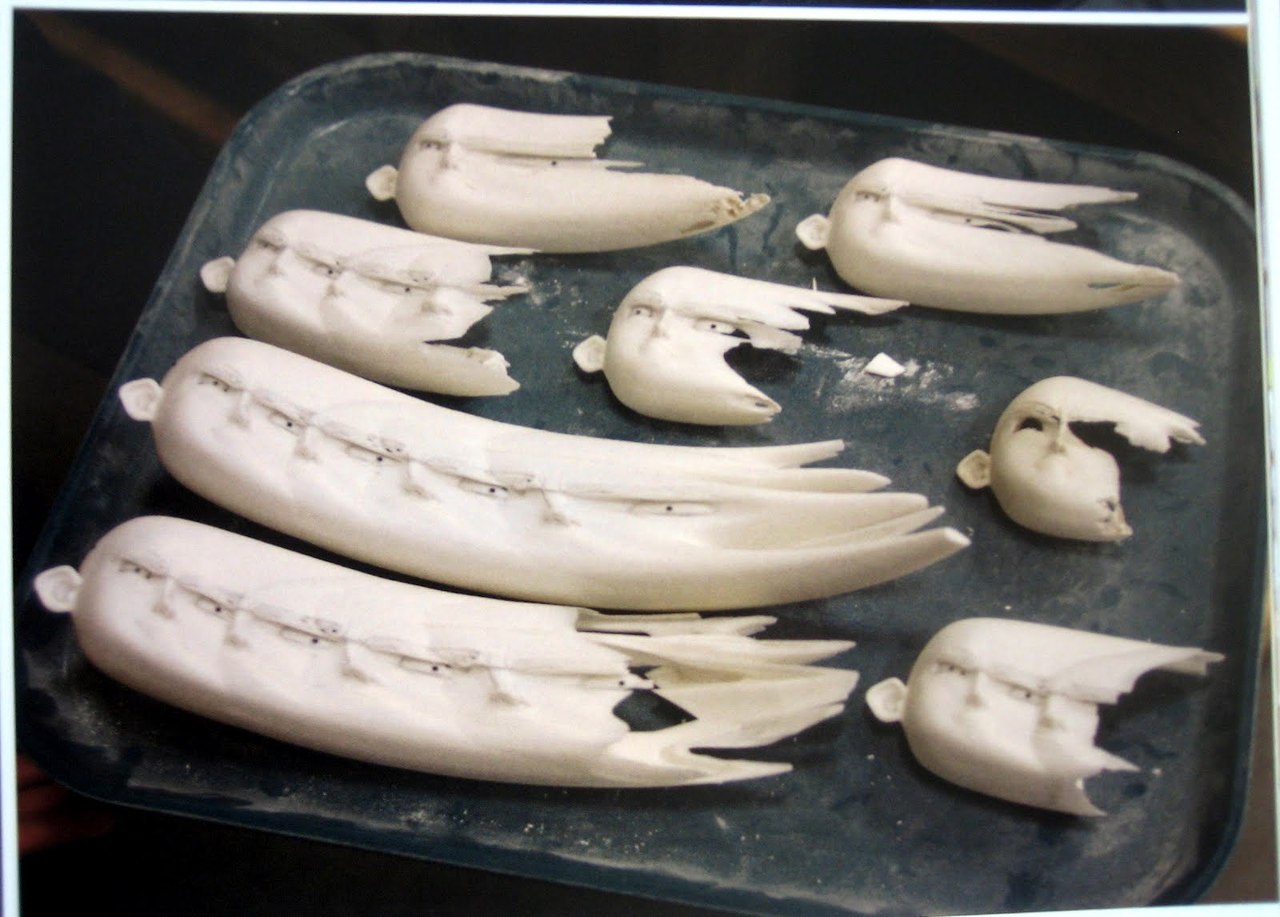
- Playing a Tree: Neil's part in the school play.
- Poor Communication Kills:
- Little girl Aggie had no idea how to explain her ability to see and speak to the dead in terms that her accusers could see in any way except as "witchcraft". In trying, she basically admits to being "guilty", and is executed for it.
- Old Mr. Prenderghast clearly had decades during which he could have written out detailed instructions for whoever took over the task of keeping the witch asleep. Indeed, that information probably was in his study. But, being rather insane, his collection of information is a tangled mess that only makes sense to his irrational mind. He also seems to assume that Norman already knows what to do and just needs to be pushed into doing it.
- Poor Man's Porn: Neil enjoys freeze-framing his mother's aerobics instruction tape to look at the ample-bottomed instructor.
- Poor Man's Substitute: In-Universe. Word of God likens the town to a B-list version of Salem, Massachusetts.
- Politically Correct History: In-Universe, the school play about the witch's curse is admitted to be historically inaccurate, portraying the witch as a stereotypical Wicked Witch who cursed the entire town be attacked by the zombies of the Puritans who tried her. In reality, the Puritans were driven by their fear-motivated religious fanaticism to executing an 11-year-old girl on charges of witchcraft just because she talked to ghosts and they didn't understand it.
- Popular Is Dumb: Courtney is a cheerleader and Mitch is a jock, and both seem to be very popular.
- Portmantitle: "Paranormal" + "Norman."
- Powered by a Forsaken Child: In a decidedly mundane manner; Agatha's execution is the core of the city's identity and tourism industry. That she's unable to move on, stuck as an angry, hateful ghost that's been haunting the town the whole time, is incidental.
- Precision F-Strike:Mitch: Can I help you?
Courtney: Hell yeah!- Norman's grandma also calls his father a jackass.
- Precocious Crush: Alvin for Courtney, who is not exactly impressed.
- Redemption Equals Death: An odd example, given that the subjects are already dead. It's only possible for the zombies to pass on after they assist Norman in helping Agatha to do the same, by reasoning with her about her need to let go of the pain and hatred that they caused her, and her desire for vengeance.
- Redemption Quest: The zombies are cursed to be trapped in the afterlife as the living dead, but they put themselves through even worse suffering trying to do something to help Agatha pass on by moving past the hurt that they brought about.
- Restored My Faith in Humanity: At the climax of the film, Norman talks down the main antagonist, in part by reminding her that there are good people in the world, some of whom cared about her when they were alive, and that her personal crusade for vengeance is keeping her apart from them.
- The Reveal: The witch is just a scared and angry little girl, and the ritual book really isn't anything but a bedtime story. Oh, and Mitch is gay.
- Revenge Is Not Justice: The witch, Agatha, was persecuted for her supernatural powers and eventually executed. During her trial, she cursed her accusers to return as zombies, subjecting them to the same torment she felt at their hands. However, this does not come to pass until Norman fails to keep her spirit asleep and Agatha exacts vengeance by wreaking havoc on the town. Eventually, Norman points out that as awful as everyone was to her, that does not give her the right to cause suffering, and for doing this, she's no better than the townsfolk.
- Ridiculously Alive Undead: Discussed. When Norman, who can communicate with the undead, is translating a zombie's moans, Norman's father says, "Please don't tell me he needs to go to the bathroom." (He doesn't.)
- Right for the Wrong Reasons:
- Well, the Puritans were quite right that Agatha had dangerous powers and could become an "evil witch", they just didn't consider that she would do so as a direct consequence of their accusations.
- When defending the zombies from the angry mob, one of the townsfolk calls Norman a necromancer. While Norman obviously didn't raise the zombies like most common depictions of necromancers, his ability is actually closer to the original idea of necromancy; communing with the dead to divine the future.
- Rousseau Was Right: The antagonist of this movie is really just a scared and angry little girl sentenced to death by a judge, who in turn was just doing what seemed to be the best for the people of his town.
- Salem Is Witch Country: Deconstructed and ultimately Subverted, as Blithe Hollow preferred to cash in on their blood-soaked history of witch hunts for tourism rather than deal with their dark past. So they operate on historical revisionism, including leaving out that not only was said witch a little girl, not any kind of witch at all, but also had Norman's ability to see the dead.
- Sassy Black Woman: Sheriff Hooper (the motorcycle cop) is one."What do you think you're doing firing at civilians? That is for the police to do!"
- Scarily Specific Story: Played for Drama. Norman is originally tasked with reading a generic bedtime story that's been used to keep the witch asleep for centuries, though the book quickly ends up destroyed. When Norman finally confronts the witch, he decides to tell her a story about a little girl who could see ghosts but was killed because everyone was afraid of her, retelling the witch's own tragic past. Ultimately, he succeeds in finally calming her down and allowing her to see she's not so different to the townspeople who tormented her.
- Scary Fiction Is Fun: The beginning of the film shows that Norman likes to spend his spare time watching scary movies with the ghost of his grandmother (who doesn't quite get them). At the end of the film, the rest of his family (who've finally come to accept him) watch a scary film with them. His father doesn't get them, either.
- Scenery Porn: Well, it is made by the company that made Coraline, but ParaNorman ups Laika's game in a multitude of ways. The autumnal New England foliage is even more beautiful and vibrant than before.
- Schizo Tech: A lot of the scenery and vehicles have a distinct look of being from The '70s, especially the Babcocks' station wagon and Mitch's van. Also, all the TVs are old-style CRTs. Nonetheless, even the kids have pre-smart cell phones, and they use the Internet to search for information about the witch (Norman mentions Google by name). Note that the film is canonically set in 2012, the 300th anniversary of the witch being executed in 1712.
- Screaming Woman: The girl in the horror flick Norman watches. She doesn't even have any dialogue — all she does is shriek in terror.
- Screams Like a Little Girl:
- Alvin when he opens the front door of Mr. Prenderghast's place, only to see a zombie on the other side.
- One of the zombies when they see what became of Blithe Hollow in their long absence.
- Sealed Evil in a Can: Norman realizes what his uncle wanted him to do — merely suppress the menace annually — is not enough, and seeks a permanent solution.
- Self-Fulfilling Prophecy: The Puritans sentenced Agatha to death for witchcraft, wrongly believing that she would threaten Blithe Hollow with her powers. Her Vengeful Ghost turned them into zombies to make them suffer the same persecution she faced. As a result, the modern citizens of Blithe Hollow mistake the appearance of the zombies for a Zombie Apocalypse.
- Shadow Archetype: Norman has two of these in his relatives, who are All of the Other Reindeer among the townspeople because of having the ability to speak to the dead:
- Mr. Prenderghast is what Norman would be if he had completely (and bitterly) resigned to everyone's expectations about him being weird.
- Unlike the goofy Mr. Prenderghast, Agatha the witch serves as the Evil Counterpart as well as the Big Bad. She's what Norman would be if he embraced his desire to be mean back to the people who treat him badly. Norman, however, seeks to save the townspeople and learns to value the people who care about him, while Agatha only sought to make them suffer and completely forgot about the people who loved her in the process.
- Shaming the Mob: Courtney does this to defend Norman and the zombies from the angry mob, calling them out for being adults and yet lacking any common sense.
- Shock and Awe: Agatha's extra supernatural abilities.
- Shout-Out: See the page.
- Shout-Out to Shakespeare: "Cry 'Havoc', and let slip the dogs of war!"
- Sickly Green Glow: All the ghosts glow pale green, to underscore their deadness. The witch's powers glow a bright green to underscore her apparent evilness.
- Signs of Disrepair: At one point, the "Witchy Weiners" sign falls down... and the W in Witchy blinks in and out.
- Sins of Our Fathers:
- Justified with Aggie, considering the memory of her has continued into the present day as a completely insulting caricature.
- And the fact that the modern townsfolk let blind fear drive their actions, much like her executioners did.
- Skewed Priorities: The man who's torn between waiting to get his chips from the vending machine and running in fear from the Puritan zombies. He eventually does run off... only to run BACK, while screaming, to retrieve the chips.
- Sliding Scale of Idealism Versus Cynicism: The Power of Friendship versus three hundred years of festering hatred and anger over an unjust death. Rousseau Was Right.
- Sleep Cute: Aggie falls asleep on Norman's shoulder and fades away, moving on.
- Smart People Wear Glasses: Salma.
- Smash to Black: Well, Smash to White. Right as Norman grabs Agatha's hand, the scene immediately cuts to a silent white screen. It's especially jarring since the previous scene is quite noisy, being the dramatic final fight between the two.
- The Smurfette Principle: Of the whole gang, Courtney is the only girl.
- Spirit Advisor: Zig-zagged all over the place. Played straight with Norman's grandmother, who advises and loves her grandson after death just as she did while alive. Subverted with most of the other ghosts, including Mr. Prenderghast, who are too wrapped up in their own obsessions to offer much useful guidance. Inverted with Norman and Aggie, as he is a living person trying to help guide a spirit.
- Spiritual Antithesis: To Scooby-Doo! and the Witch's Ghost, given their similar genre (family/horror/comedy/mystery), settings (Salem-esque, Massachusetts), and subject manner (how a town's witch-related legends and past affects them in the present). However, ParaNorman inverts the order of the films' shared plot points to create significantly contrasting themes. In The Witch's Ghost, the witch is initially presented as an innocent and unjustly executed Hero with Bad Publicity by her descendant (who is a successful author respected by his community as well as secretly supernatural), and the twist is that she was Evil All Along and her ghost enacts Roaring Rampage of Revenge upon the town in the third act. In ParaNorman, the inciting incident is that the curse of an executed witch is coming into effect over a Massachusetts town, and the third act twist is that the witch's descendant (a bullied and ostracized child who openly claims to have supernatural abilities) discovers the "witch" was innocent and unjustly executed, and the curse is her restless ghost lashing out from the trauma of being murdered by her community.
- Stealth Insult:
- Norman manages to snarkily deliver one to Alvin.
Alvin: They're going to eat our brains!
Norman: I think you'll be safe.- It takes Alvin a couple of seconds to realize what Norman meant, but he doesn't get the chance to react to it due to the zombies appearing shortly after.
- Stereotype Flip:
- While Alvin is a pretty stereotypical example of The Bully, everyone sees him as a complete loser who's not much higher on the social ladder than Norman. Even his victims think he's pathetic.
- Mitch is your standard popular Dumb Jock, but his popularity seems to come in part from being actually a nice person. Despite being nice, he expresses fear and distrust of socially outcast groups, despite being a member of one such group himself, showing that even members of socially discriminated groups can still be fearful and prejudiced.
- The Stinger:
- After the credits, a stop-motion video of how Norman's figure was made is shown. He then gets up and walks off-screen.
- Which is made rather impressive when you consider that the entire 10-second sequence has to have taken over two weeks of taking a picture, nudging a part, taking a picture, nudging a part, taking a picture, nudging a part...
- Straight Gay: Turns out Mitch is gay and has a boyfriend, disappointing Courtney, who has been trying to flirt with him for the whole film.
- Strong Family Resemblance:
- Norman Babcock and the witch, Agatha Prenderghast, who's a distant relative on his mother's side.
- One of Agatha's accusers looks an awful lot like an older Alvin.
- Sandra looks like an older version of Courtney◊.
- Stylistic Suck: The zombie movie Norman watches in the beginning. The props are obviously rubber, the acting is unnatural, the girl has to shove a boom mic out of frame...
- Suburban Gothic: The quiet small town of Blithe Hollow is filled to the brim with ghosts, who can only be seen by the protagonist, Norman. When the town is invaded by zombies, the human residents quickly prove to be more Ax-Crazy than the undead.
- Supernatural Floating Hair: In contrast to the town's Wicked Witch perceptions of her, the witch's ghost manifests as an electric spirit, with hair that floats upward and turns into lightning.
- Surprisingly Realistic Outcome:
- It's not easy for Blithe Hollow to cope with the fact that they burned down the town hall and almost killed an innocent boy (Norman) out of misplaced fear. So when the day is done, they try to justify how they got swept up in the mob mentality.
- Thanks to modern technology and a massive numbers advantage, the townspeople pose far more of a danger to the zombies than the zombies do to them. In fact, throughout most of the climax it's the zombies who are running from the humans, rather than the other way around. It turns out that this was exactly the nature of the curse; to make Agatha's judge, jury, and executioners rise from the dead and be completely helpless against the humans as punishment. The living aren't being cursed nearly as much as the small group of people who condemned the witch.
- The story of how the witch's curse came about? Where an evil, cackling old crone was brought to justice, and then cursed the whole town out of pure spite? Yeah, it's complete crap. The "witch" was an innocent child who was murdered by a Kangaroo Court run by prejudiced Puritans. She never hurt anyone while she was alive, and was hung solely because the townsfolk didn't understand her, and feared her because of that. She then cursed her killers so they'd get a taste of their own medicine. Magical elements aside, anyone with a working knowledge of the Salem witch trials can tell you that this is far closer to what really happened than most common portrayals.
- Agatha being nothing more than a child when she was tried for being a witch is, unto itself, a harsh but true reality about witch hunts. In those days, witch hunts made no distinction if you were man or woman, old or young: anyone can be a victim to mass hysteria.
- Take That!: "What do you think you're doing firing at civilians?! That is for the police to do!"
- Talking the Monster to Death: Norman puts Aggie's soul at rest through simple (though very persistent) discussion and reasoning.
- Talking to the Dead: Mr. Prenderghast and Norman have this ability. It apparently runs in the family. Way back in the family — all the way back to Agatha in the 18th century.
- Technical Euphemism: Neil insists that he does not have boobs and that they're called "pectorals". Alvin punches him there and Neil groans, "Ow, my boobs!"
- Tempting Fate: When the witch's ghost is wreaking havoc amongst the town, Norman's mother, Sandra, asks her husband, Perry, if it has anything to do with Norman.Sandra: Oh my gosh. Do you think this has got anything to do with Norman?
Perry: Of course not.
Random Stranger: Everyone, look!
[cut to Norman climbing the tower of City Hall] - Then Let Me Be Evil: The Blithe Hollow Puritans sentenced little Aggie to death because they thought she was an evil witch who would curse the town. As it turns out, they were right. Boy howdy, were they ever right.
- There Are No Therapists: Norman's Hilariously Abusive Childhood seems to consist of dodging bullies at school, being berated at home, and being a pariah in town. Social Services Does Not Exist either. His father, in particular, alternates between believing Norman has a problem and Norman is lying, and seems to think browbeating him will fix it in either case. No one thinks "this kid needs real help."
- There Was a Door: Neil is seen climbing awkwardly over the fence in Norman's backyard when leaving, falling over to the other side. Right after he falls, the gate opens right next to him.
- Torches and Pitchforks: The mob at the town hall. Parodied when they drop all their weapons — including a bowling ball.
- Town with a Dark Secret: Centuries ago, the citizenry of the town condemned and executed a young innocent girl for being a witch. Since then, consciously or not, the town has distorted her memory into a hideous caricature, which makes Agatha more angry with each passing year...
- Trailers Always Spoil: The trailer spoils nearly every joke, even if it does not spoil the plot for the most part. However, the Japanese trailer did spoil the plot.
- TV spots aired around the time of the Olympics showed the zombies getting along well with Norman, spoiling that they aren't the mindless villains the film initially sets them up to be.

- Undead Child: Agatha, tragically. Her unfulfilled revenge and the efforts of her descendants have trapped her in Blithe Hollow as a furious revenant for three hundred years.
- Villainous Breakdown: Agatha when Norman takes apart her actions and ideology, telling her that she isn't morally superior after all. "I don't like this story!"
- Even before then, she completely loses it when Norman manages to convince the townsfolk to spare the zombies. She's probably sore over the fact that they were shown the mercy that she was not.
- The Voiceless: All the zombies, except for the Judge, who is the only one to speak to Norman.
- "Well Done, Son" Guy: Norman wants his father's approval, but for much the movie, his dad thinks he's either insane or lying at turns, and refuses to even entertain the idea of listening to his son. He even literally says "Well done, son," near the end of the movie after Norman puts Agatha to rest.
- Wham Line:
- In the opening scene, we're introduced to Norman's grandmother, and all seems normal, but when he relays her request about the thermostat to his father, he angrily chews him out for saying that since she died a while ago, establishing Norman's ghost-seeing powers in a rather abrupt manner.
- One of Norman's magic-induced flashbacks makes a girlish sob into a Wham Line of epic proportions, as it reveals who the witch actually was: an 11-year-old girl.
- Followed by the witch's crime: "You were speaking to the dead!"
- Also, this bit:Mitch: You're gonna love my boyfriend. He's like a total chick-flick nut!
- When Trees Attack:
- Sort of, anyway. During a vision Norman has while putting on the school play, a tree grabs him and warns him that the "dead are coming."
- Played straight before the final confrontation. Agatha uses trees to trap and separate Norman from his family, then attempts to use spiked roots to impale Norman to prevent him from reaching her.
- White-and-Grey Morality: Norman against Aggie, who is just scared and very angry.
- Whole-Plot Reference: To Return of the Living Dead Part II, with a group of kids led by a young male child, as well as including his older sister and a guy she's interested in, trying to survive a Zombie Apocalypse in a movie filled with Black Comedy. Plus, the outbreak is caused by the meddling of the child's bully (although it's eventually revealed that Norman was trying to conduct the ritual in the wrong place, so the zombies would have awoken anyway), though the bully doesn't become a zombie here, unlike the other film.
- Wide Eyes and Shrunken Irises: Realistically done and a really nice touch to The Reveal. When Norman gets a vision of the Blithe Hollow witch trial, he thinks he's being placed in her role again and doesn't see the accused until he hears someone crying from behind him. His eyes widen in shock◊, and he turns around to see that Agatha, the "witch" of Blithe Hollow, is a girl his age.
- Witch Hunt: One of these is what causes all the trouble in the first place. If Agatha had never been sentenced to death on suspicion of being a witch, she would've never laid a curse on the Puritans who sentenced her or haunted the town until the present day.
- Woobie, Destroyer of Worlds: The "witch" is an (extremely psychically powerful) little girl who lost it when she was accused and executed, and keeps the seven Puritans who sentenced and executed her trapped in undeath for three centuries as punishment. She then unleashes the zombies on the town, and nearly kills one of her descendants when he tries to talk her down from her rage.
- Would Hurt a Child: The Judge sentences a young girl to be hanged for talking to the dead.
- Then the rest of the town tries to kill Norman when he's protecting the zombies. Things would have gotten ugly if his sister had not stepped in.
- Then the rest of the town tries to kill Norman when he's protecting the zombies.
- You Are Not Alone: Norman's "weapon" against Agatha, being the first person in centuries to really understand her. Just like her, he's been ostracized by the people of Blithe Hollow for being able to talk to ghosts.
- Your Brain Won't Be Much of a Meal: Alvin worries that the zombies will eat his brains, and Norman tells him not to worry.
- Youthful Freckles: Neil. Mitch has some too.
- Zombie Advocate: Norman, when he realizes the zombies have intelligence and are afraid too. His sister, Neil, Mitch, and Alvin back him up on this to the rest of the town.
- Zombie Apocalypse:
- Subverted in that the appearance of the zombies does freak the townspeople out, but they then quickly gather weapons and attack them, and the zombies are instantly overwhelmed because they are not strong, numerous, vicious, or infectious.
- Wonderfully subverted even further in the town hall scene. The zombies and kids hide inside as questing arms burst through the walls and windows and grab at them, much like in any Romero movie. That's right, LIVING people are breaking down the walls in an attempt to attack the undead.

