

Sometimes, an artist has decided to take the time to give even the most incidental of background characters each a unique face and appearance. This requires the artist to resist the temptation to idealise everyone's appearance, making only a minority of characters attractive, and not design faces and bodies from a limited set of templates
Please note that almost all the facial features of the characters are different. Slight changes in hairstyle, hair colour, eye shape, or eye colour do not count. The opposite of this trope is Only Six Faces, where even the main characters tend to look alike. In video games, there are usually only six background characters (You ALL Look Familiar). Sort of related to Taste the Rainbow, where a cast of characters may come in a huge number of permutations. Unrelated to Special Snowflake Syndrome and Sizable Snowflakes. Contrast with Flashy Protagonists, Bland Extras.
Examples:
- Ling Long Incarnation: Impressively so, given that it's CGI, where recycling models is a commonly used short-cut.
Authors
- Common with classic manga artists, such as Osamu Tezuka, Shotaro Ishinomori, Go Nagai, and Ken Ishikawa. Impressive when you consider that these artists generally drew most of their characters with black hair and conservative hairstyles. Of course, Tezuka is also the Trope Codifier for the Star System, where he would openly re-use character designs between different works; just not within a single work.
- Satoshi Kon: Many (if not all) of his works feature this, most noticeably in Paranoia Agent.
- Kozueko Morimoto's Gokusen and Deka Wanko both have very distinctive characters.
- Masanori Morita, author of Rokudenashi Blues and Rookies, is very good at this. Despite none of the characters wearing particularly distinctive outfits and only a few having Anime Hair of any kind, each of them has a very distinctive face. It helps that he draws in a very realistic style.
- Takeshi Obata is good at this, though he himself acknowledges that his female characters tend to look very similar, save for their hairstyles.
- In Hikaru no Go all the characters wear normal, everyday clothes but are very distinct and unique - including the old people, fat people, young people, etc.
- The Death Note manga has distinct faces for nearly everyone, including random criminals who only appear once in a mugshot (though they tend to look a bit odd). The one time a character (one of the Yotsuba Group executives) looks similar (yet distinct) to the main character, Light, it's fixed by Misa Lampshade Hanging.
- Shinichi Sakamoto: Kokouno Hito has this as a concern even early on in the series, but it's particularly noticeable in the later volumes, as the art improves tremendously and the differences become much more pronounced, owing to Shinichi Sakamoto's more realistic style. His next series, Innocent, continues this trend, although some characters do end up looking similar due to the author's desire to portray beauty.
- Takahashi Tsutomu, creator of Jiraishin, Hito Hitori Futari, and Skyhigh gradually transitioned into this as his art improved. With the exception of his more attractive female characters, which can look a bit similar to each other, every single character in his more recent manga have completely unique designs, largely owing to Takahashi's stylized, sketchy aesthetic.
- Yoshihiro Togashi: In any given series he created, it'll even go into "Nonstandard Character Design" territory. Some of the characters he creates look like they belong to some other manga series, especially in the case of Hunter × Hunter.
Series
- Assassination Classroom: The Academy features almost 200 students, with 28 composing the protagonists in E Class. Not all of them stand out, but all of them are distinct from each other.
- Attack on Titan: Everyone in the main cast is distinct in terms of face shape, eye shape, build, etc, which is especially impressive since almost all of them wear the same uniform. Every Titan that gets any screen time is very distinctive too.
- Battle Angel Alita and its sequel series Last Order both have extremely varied character designs, even for the most minor background cyborgs. If two characters resemble each other, it's likely related to plot or thematic reasons, and not the artist being lazy.
- Berserk includes hundreds of (realistic) sets of armor, and the vast majority of the cast have unique designs, especially more prominent supporting characters who appear more than once.
- Black Butler: There are whole new sets of characters in every arc, yet all of them are easily distinguishable. Despite some similarities between characters (such as Sebastian and Vincent, Bardroy and Phipps, etc.) Toboso Yana still stays within this trope by varying their expressions and overall body language. While most of her bishies are long-jawed and narrow-eyed, one would still be able to identify them naked and bald.
- Blade of the Immortal definitely deserves a mention. As it's set in Edo-era Japan, most characters wear kimonos and have pretty normal hairstyles and colours, but Hiroaki Samura's realistic and detailed art style allows for plenty of variation in face and body features... though fans have complained that his women look too much alike.
- Blue Exorcist does this really well. However, Kato also takes into consideration family relations and so you can actually see they are related by their similar features (for example Rin, Yukio, Amaimon and Mephisto all sons of Satan) but still are easily identifiable.
- A Certain Magical Index and its spinoff A Certain Scientific Railgun does a good job of this. Even Mikoto's clones have slight variances from her. One exception is that Shutaura Sequenzia from the Miracle of Endymion movie looks exactly like Seiri Fukiyose. The series' artist, Kiyotaka Haimura, realized this too late and apologized to the fans when the movie came out and he noticed the mistake. Another exception is that Vento of the Front looks like Orsola Aquinas, though this is disguised by Vento's many facial piercings and hat.
- Everyone in Chainsaw Man is very visually distinct and easy to tell apart from one another, even the normal humans with no Devil or Fiend, which is all the more impressive considering the vast majority of the protagonists wear the exact same uniform of a white shirt, black tie, and black suit jacket with matching slacks. Even characters who appear for only a few panels or two and then die gruesomely are likely to have totally unique faces.
- Darker than Black has completely unique designs for practically every major and minor character. Most notably the contractors, who along with having very odd appearances compared to the noncontractor characters, all feature completely unique and often abstract abilities, along with a unique and abstract remuneration. This uniqueness even extends to characters who only show up for a few minutes at best. The character designs often add strange or unusual aspects to a character's appearance with no real reasoning behind it, such as Wei's elf ears, Amagiri's one eye always half-closed, and Maki's heterochromia.
- Death Parade: Despite most episodic characters featuring muted color palettes and sporting darker, realistically colored hair and eyes, they're all distinguishable by their silhouettes alone. The recurring cast has an easier time with this since their hair and eye colors and designs can be a bit more outlandish, while still being cohesive.
- Delicious in Dungeon: Every character has their own unique design. Ryoko Kui has even stated in her artbook that she dislikes when the cast of a manga all look too similar. In her opinion, a reader should be able to recognise each member even if they change clothes and hairstyles. To prove it, she includes supplementary sketches only showing a character's facial profile outline, eyes, or having them switch clothes, or even species, and they're still completely distinct.
- In Demon Slayer: Kimetsu no Yaiba, every single character in the series is notoriously unique, most noteworthy examples being the Slayers within the Corps themselves, with unique facial features and varied hairstyles, also despite all wearing the standard issued paramilitary uniform, many of them add unique touches to how they wear it or which additional clothing they add on top of it. The demons don't lag behind either, from the most powerful ones to lowly fodder, they are all quite different from each other, since their body mutations are exclusive to one another.
- Dorohedoro's characters are quite distinct. While some facial features are reused often, the resemblances between characters that are present tend to be intentional, and without hair and clothes, they'd all still be pretty easy to tell apart.
- Eyeshield 21 goes above and beyond when it comes to making each character extremely distinctive. Every audience shot is filled with detailed, individualized people, and one can even spot the "regulars" amongst the crowd. And even if a character has so much as ONE notable speaking line, you can guarantee there's gonna be a little character profile for them at the end of the chapter.
- And of course, that's not even mentioning the HUGE cast of main and secondary characters who are in football uniform 75% of the time, who are still instantly recognizable due to very distinctive body types and faces.
- A quiz in one of the manga volumes just shows a bunch of hands and has the reader identify what characters they belong to. Yes, even their hands are unique.
- Food Wars! even has every background character with a unique design.
- Fullmetal Alchemist. Many of the characters are in the Redshirt Army. Nearly all of the characters (with the exception of, what, four or five out of how many dozen?) have either black or blonde hair, making facial features more significant. Maybe the mangaka's ability to distinguish similarly built characters is why Father looks completely different from first Hohenheim and then Ed (especially Ed, there seems to be barely a passing resemblance between the alchemist and his counterpart due to mannerisms and attitude alone) even though he is identical to them in physical features. The same tactics are used to differ Ling from Greed after they end up sharing a body and can still be fairly easily told apart from one another when they switch dominance in control.
- Gantz by Hiroya Oku. Necessary, since the whole cast wears identical black suits.
- Haikyuu!!: All the major characters have distinct facial features, hairstyles, postures, and body types. A lot of detail is put in the spectators as well.
- Hellsing definitely applies. While the manga cast isn't large per se, the main and secondary characters in it are all extremely stylized with completely unique outfits, hairstyles, facial features, weapons, and poses.
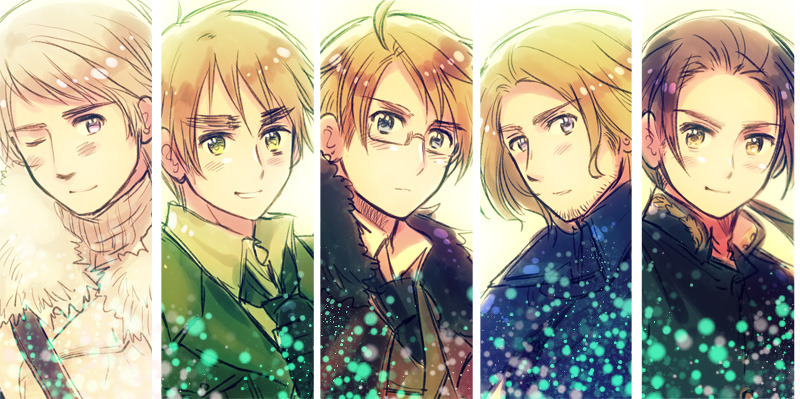
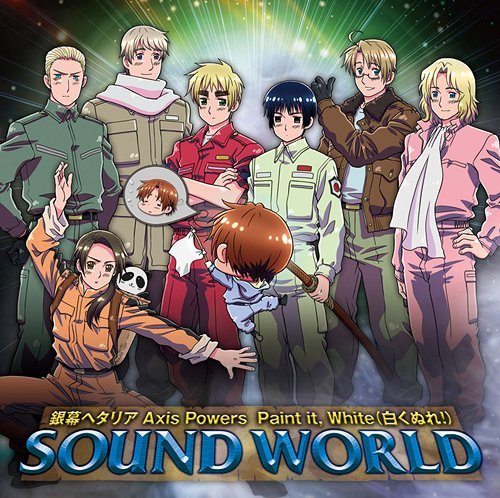
- Hetalia: Axis Powers's Generic Cuteness and excessive use of Idiot Hair could make one assume it has a case of Only Six Faces. But no two characters have the same eyes. Many characters also have distinctive jawlines and expressions.
 ◊ Most people accusing Hetalia of having Only Six Faces probably only saw the anime◊ pre-Art Evolution.
- Karate Shoukoushi Kohinata Minoru gives everyone a unique appearance in terms of build, facial structure, and features, not to mention diverse wardrobes, down to the unnamed bit part characters.
- Kemono Friends: Every Friend has a unique design. Even with the multiple Cat Girls abound the models have distinct characteristics (such as ears or tails) that help them differentiate from the others.
- Kengan Ashura: Through years of publication, the series has been consistent about one big brutal fighting tournament. Its dozens of fighters have very varied designs and each fight is given panel time, even those where the protagonist isn’t taking part. Some are shorter, some are longer, but all fighters are given some character and a background.
- Kill la Kill is very good at giving everyone, both important and of lesser importance, distinct appearances. The heavy stylization helps. This distinction is driven home by the One Star Students, who all look identical to each other and are hinted to be this way as a result of the Goku Uniforms.
- K-On! Season 2 is one of few anime where all 38 students in the same class are not only named officially (even if most aren't even remotely relevant in the anime), but also have complete character designs (although one of them looks like Mio wearing glasses, and another is an Expy of Rukia Kuchiki). Ironically enough, the show also falls into Only Six Faces territory, due to how similar everyone looks, aside from Mio and Tsumugi, whose facial features are enough to set them apart from the rest.
- Liar Game is a rather impressive example considering that each new arc introduces about 15 new characters. Not only is each character distinct but the character's facial expressions display a range of emotions wider than the vast majority of manga.
- Maiden Rose: Author Inariya Fusanosuke manages to pull this off despite the fact that 90% of the cast are wearing the same military uniform, of the same ethnicity, and with no Anime Hair to speak of.
- Monster: As shown in the page pic, the style allows the artist to give variety to various features, including the noses and eyes. Especially impressive given that, in contrast to most anime and manga, the cast primarily consists of heavyset middle-aged men in bland clothing and business suits.
- My Hero Academia: Different eyes, builds, and so forth. The 20-30-something character main/supporting cast is just the start, even random people on the street tend to look varied. Taking place in a world, where appearance-altering quirks (like looking partially like a frog) are abundant. A few characters even dip into having entirely different art styles.
- Nurse Hitomi's Monster Infirmary: Every post-pubescent character shown looks different, as appropriate for a world where humans go through wild and random changes during puberty. Even background characters can suddenly be named and given a spotlight chapter about the troubles their unique traits give them.
- One Piece: Need a big crowd of Amazons? Marauding army of Pirates? Every single one of them has a unique face, hairstyle, outfit, and most likely, superpower. The biggest improvement in the art of One Piece has been the elimination of Nami clones, Eiichiro Oda has gotten much better at drawing women, giving them small details that separate their appearance, rather than just unique hairstyles that most mangaka seem to use as a crutch.
- Pandemonium Wizard Village: Every character, excluding the Faceless Goons in the brigade, has a name and distinct design, even ones that only show up once.
- Pokémon in general is good at this. Nary a Gym Leader, Elite 4, Champion, or rival look alike. Even in Pokémon: The Series, it's rare to find a Character of the Day that looks similar to a previous one.
- In Pokémon Adventures, in particular, the Team Plasma grunts all have strikingly different faces and bodies.
- The Promised Neverland starts off in an orphanage of 38, with every kid having unique features, builds, and ethnicity. From there the cast slowly expands.
- RahXephon - all of the character designs are given unique facial profiles, making sure that everyone has a unique appearance. The only exception being the Isshki clones, but who counts them?
- Reborn! (2004) has an insane amount of characters but each of them is distinct from each other (and if there is a resemblance, expect there to be a reason).
- Re:CREATORS: From the main characters to the extras, pretty much everyone has different hair styles, hair and eye colours, clothing and body shapes. Even similar characters have at least one unique characteristic to differentiate.
- Rosario + Vampire is pretty good about this, especially post Art Evolution. Every character has distinct facial features and expressions, with various traits by which to distinguish themselves, including secondary characters and even some recurring extras.
- Shiki characters have very different faces from each other, even the ones who are only in a little while. Their body types tend to be the same, though.
- Shuukan Shounen Hachi: The story is set in a specialty school characters don't wear uniforms, and every character, background or not, has a visually distinct appearance and facial shape (although there is still some degree of Generic Cuteness involved on the girls' side). This is despite adopting a less cartoonish art style than in My Monster Secret.
- Silver Spoon: Not only are the characters very different from each other, but they're also quite different from Fullmetal Alchemist characters, with occasional exceptions that are so obvious one might claim it's a deliberate Expy, such as the P.E. teacher who looks a lot like Major Armstrong.
- Smile Down the Runway features a diverse cast of various age groups and nationalities, and all of them have distinctive faces and build. Even the models, all of whom are drawn attractively, manage to have their own unique charm by having different eye designs and face structures.
- Soul Eater is pretty good with this. Every character in the series, most notably the main cast, has unique eyes, mouths, body types, and of course, hairstyles. You could differentiate the characters from miles away. However, some characters tend to look extremely alike (such as Patty and Kim), and in the anime at least it's a subversion as background characters are greyed out and indistinct, differing from a proper Cast of Snowflakes.
- Sound! Euphonium: Each of the 50+ members of the band has a unique design, personality, and set of relationships that are consistent throughout the entire series. This is despite the fact that the majority of them only get about two lines at most throughout the series. Then there are the non-band characters and the random one-off background characters, most of whom have unique designs as well.
- Space Patrol Luluco: Every single character has a distinct design, although this isn't difficult for the background characters since they're mostly aliens.
- Tengen Toppa Gurren Lagann: Across the main cast, the one-shot beastmen, the Spiral King and his generals, and the humans after the Time Skip, the faces are all distinct. Averted, though, with the Spiral King's daughters and the Anti-Spirals, who are basically clones of each other.
- Tokyo Ghoul manages to pull this off. Even minor characters have distinct facial features and body types, helping to distinguish them from each other. Like other examples on the list, Ishida manages to make his characters distinct while still including familial resemblances, which becomes a critical bit of Foreshadowing when it comes to Kichimura Washuu, aka Souta, who strongly resembles his half-brother Yoshitoki.
- Tweeny Witches is very good about this. Even though most of the characters are young girls.
- Vagabond is famous for its extremely high-quality artwork, with even minor characters who only appear once or twice having detailed, realistic designs.
- Vinland Saga is specially good at making different characters. Anyone that appears in the story has its own unique characteristic, such as eyes, hair or face.
- Yo-kai Watch: Shadowside: The background extras have a wide range of character designs and body sizes.
- Yowamushi Pedal: Every main and even background character has a unique face and build, which is quite impressive when you realize that while Imaizumi and Arakita have the same hair colour, eye colour, and a near-identical hairstyle, they also look nothing like each other.
- Zatch Bell!: We don't see all 100 demons/mamodos, but we see more than half of them along with around 40 revived from the previous battle, and every single one of them, whether they appear in a single chapter or even a single panel, is distinct. The only one whose design doesn't fit this trope is Zeon/Zeno, and that's just because he falls under Evil Twin instead.
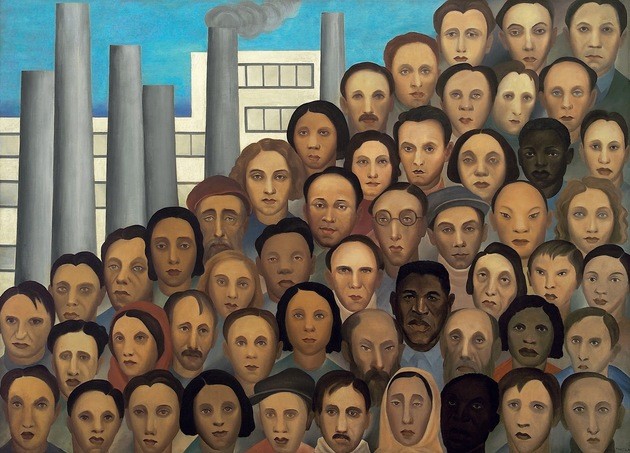
- Tarsila do Amaral's painting Operários◊ (Workers) shows several people of different ethnicities outside of a factory from São Paulo, each one with unique facial features.
- Bryan Hitch of The Ultimates fame, known for his realistic depiction of superheroes, loves drawing scenes with many characters. And they all have different faces. He is also known for drawing superhero characters who don't wear masks and yet keeping them recognizable.
- Alan Davis blows Hitch away in this regard, though it can be ironic, in that he often works with previously existing characters & gives them distinctive faces they didn't have before.
- R. Crumb's 2009 rendition of the Book of Genesis includes a unique and detailed depiction of every single "Begat" in the entire book.
- George Perez (Teen Titans, Crisis on Infinite Earths, The Avengers) loves drawing huge crowd scenes better than almost anything else, and will gleefully fill a page with minuscule Where's Waldo-sized figures who each look different from one another.
- Comic book painter Alex Ross (Marvels, Kingdom Come) is very good about this as well. He is notable for using live models for most of his work.
- Gil Kane of Green Lantern was always pretty good about this, as were Doug Mahnke and Ivan Reis.
- One of Kane's most impressive feats, way back in the early Silver Age, was introducing Hal Jordan's two brothers, who each looked like they were clearly related to Hal, and yet you would never confuse them for each other.
- ElfQuest, by married creators Wendy and Richard Pini, is famous for every single character appearing on panel looking unique. With such a massive cast spanning generations, this is no small feat.
- A random crowd in Sillage will usually be made up of lots of different species. If there is a pair of one species in such a scene, this might not apply, but as soon as a group made up of individuals of one species is featured, and there are no plot/worldbuilding reasons, they will get the Cast Of Snowflakes treatment.
- Asterix, which is impressive considering that almost everyone has the same bulbous nose. This is combined with distinguishing the ethnic groups by giving the members of the same ethnic group some subtle common facial or body traits.
- Tintin has a lot of different supporting characters, from different ethnicities, and all of them are different. They are all represented on the inside covers of each of the modern French albums.
- Sergio Aragonés sways back and forth, much for the same reason as the Japanese mangaka examples above. When you really look at a crowd scene, he makes every effort (which is very hard with his art style) to give everyone a unique appearance, while in his shorts you see characters reused very often. In fact, some shorts are all one person, ala the classic Goofy sports and safety shorts.
- Crowd scenes in DC Comics' yearly mega-crossovers. Hey, look, there's the last living Bloodlines guy! Bonus: when they include made-up heroes nobody has ever seen before as crowd-filler.
- Done nicely in Watchmen. Dave Gibbons went to great lengths to give each character a distinctive look both in and out of costume and often used actor's faces for inspiration. The Comedian was based on Groucho Marx, while Rorschach was based on Bruce Weitz as Belker in Hill Street Blues.
Dave Gibbons: "I wanted them to be individuals, more like the near-caricatures common in European comics, rather than the square-jawed variations on a theme of most American comics."
- Batman: The Dark Knight Returns involves not only a decent-sized cast of main characters but many different media pundits and man-on-the-street interviews with the random denizens of Gotham and they all look different, except the Mutants who are trying to look alike.
- Kyle Baker is quite skilled at caricature so the casts for his comics tend to all be visually distinct.
- Persepolis doesn't make every crowd look different from page to page, but in any given panel every non-fundamentalist portrayed will differ in some way from the others, even if they're all dressed identically. (Fundamentalists, however, can usually only be told apart by gender.)
- Chris Claremont's first X-Men team follows this, with each character being very distinct from one another. You have Cyclops, who goes around wearing red sunglasses or visors. Then there's Storm, a tall, voluptuous white-haired black woman in a sexy black costume. Next is Wolverine, a short guy who has metal claws and wears a yellow and blue suit. Banshee was an Irish redhead with a yellow and green costume, and Colossus is a big Russian guy who spends much of his time in his metal form. Finally, there was Nightcrawler, the most distinct of them all. He resembled a blue demon, pointy tail and all, and went around in a tight red suit.
- Although Ultimate Spider-Man suffered from Only Six Faces under Mark Bagley and Stuart Immonen's pencils, the characters got more varied in appearance when Dave Lafuente showed up and kept their new looks when Sara Pichelli took over. Originally you could barely tell Kitty Pryde from Spider-Woman. Now you could never make that mistake.
- Usagi Yojimbo tends to follow this rule - you can generally see when an issue was a little rushed because the crowds tend to be generic dog-like creatures, but when time permits the artist/writer loves to present crowd scenes in which every face is different. At times, one will spot a minor recurring character passing by who has nothing to do with that issue's story at all.
- The Transformers: More than Meets the Eye. Alex Milne puts a lot of effort into making sure each and every character is visually distinct from all the others, even if they're just background crowd-fillers. This even extends to the faces (Megatron has visible creases and "wrinkles", Cyclonus has a slim and demonic-looking face, Getaway's face plate looks different than most face plates, etc.), something most artists wouldn't bother with on robots. Even characters who were previously repaints of other characters are redesigned to look unique (ex. Bluestreak used to look like a Prowl repaint, so Milne redesigned him to have a completely different body structure).
- The characters in Jem and the Holograms (IDW) all have vastly different hairstyles, body types, and heights. They can be distinguished by their silhouettes. Even Jem averts Clark Kenting by looking completely different from Jerrica.
- An early Brent Anderson example comes up in Strikeforce: Morituri, as he does a laudable job in giving everyone distinctive faces and body types.
- Brent Anderson and Alex Ross really flex their skills in Astro City, which easily features over 200 characters in all sorts of roles. Even so, each character is visually distinct and easy to read, with original costumes for nearly everyone (the exceptions being teams or legacy characters, naturally).
- Always Having Juice has near-complete redesigns for the Sonic the Hedgehog characters that appear, even the non-mains. And that's a lot.
- Forest Of Despair lampshades this, as it is the name of one of the chapters in the prologue. Even though there is no official art of the characters, the author goes into painful detail about how they all look different from each other.
- Everyone in Klaus has a unique face, silhouette, and build, even random background characters, which is all the more impressive considering how many of them there in the numerous crowd scenes.
- Impressively, the meerkats in the crowd scenes of The Lion King 1 ½ all look distinct, despite having similar body shapes and no clothes to help distinguish them.
- Invoked by Pixar for Monsters, Inc. and held over for Monsters University. When setting out to design all non-hero monsters they came up with an innovative workaround to manually designing them all. They modeled and rigged half a dozen different variants for bodies/eyes/appendages/etc then wrote an algorithm which would randomly choose body parts then merge scale and color them to create thousands of unique looking monsters which were grouped by "families" determined by what base component they were built on.
- The denizens of Halloweentown in The Nightmare Before Christmas.
- ParaNorman: Each and every character has their own unique design, with differently exaggerated features and proportions helping to set their silhouettes apart.
- For Turning Red, in addition to making the main characters distinctive, Pixar created 303 unique background characters for crowd scenes.
- Baccano! is a good example of this, as shown in the illustrations. Despite the fact that most characters are simply wearing suits and many have similar (and realistic) hairstyles, every character in the massive cast looks completely unique. This extends to the anime adaptation, where even background characters and all the random henchmen who get killed off immediately have distinctive designs.
- Discussed by the eponymous cat in I Am a Cat. He mentions a burglar breaking into his master’s house, then stops to explain that while people think that this trope being a feature of Real Life is proof of God’s omnipotence, as no human could produce such a huge variety of faces. He, however, reasons that it’s proof of the exact opposite, as even the greatest artists could never reproduce their own work perfectly. Then he returns to the narrative and mentions in awe that the burglar looked exactly like his master’s friend, except he had a thin mustache while his friend did not. Upon seeing the burglar, he becomes convinced that God exists, and that He is indeed omnipotent.
- Ravages of Time notably manages a greatly varied roster of faces for the male cast even for those who are only around for brief or even seemingly one-time appearances. Unfortunately, with women Only Six Faces is in full effect.
- The music video for C2C's song "Delta" has a Martian civilization populated by citizens who all look totally unique and distinctive from one another, which all the more impressive given that they're all men and many of them have similarly impressive facial hair.
- Ostensibly the point of paint-your-own miniatures in any number of tabletop games. However, not everyone bothers to paint theirs differently, or at all.
- In the Masquerade scene of Phantom Of The Opera. Each character costume was specifically designed by Maria Bjornson to be different and distinguishable, especially the man/woman costume. Might also be applicable to the whole company EXCEPT the corps de ballet, who are meant to all look the same.
- In Bully, every character in the game is unique. One of the mini-games revolves around finding all 60 students and taking photos of them. Add the various school staff and townsfolk to that 60, and the game has over 100 characters.
- Sometimes in video games, faces will be made and put through an "imperfect factory" using procedural generation. The result of this is that everyone looks different, without causing the artists too much pain. Extensively used in The Elder Scrolls IV: Oblivion.
- EXTRAPOWER gives nearly every character a unique appearance and body language expressiveness, often as a homage to different styles throughout the history of anime, manga or Toku. Cute or pretty characters never slip into Generic Cuteness. Beefy, muscular characters are drawn across different types of muscular builds. Even unimportant NPCs are given unique and distinctive designs. The only characters not given the bespoke treatment are the swarms of Mooks —- and even the human mooks are at least given 2 or 3 varieties per type to avoid homogeneity.
- Fallout examples:
- Fallout 3 uses the same engine as The Elder Scrolls IV: Oblivion above; the absence of You All Look Familiar is impressive. (Especially amongst the ghouls, who are significantly harder to distinguish by facial features alone. They all have different-looking rotted flesh.)
- Fallout 4 takes this further, using the same highly-versatile facial construction system used in Character Customization to create a unique look for every human character. Good luck finding any two characters who look exactly the same.
- Dishonored uses a blend of gritty realism and stylization for its character designs, which results in each of them looking in a way that indicates their function: thugs and bandits are brutish, wide-set bruisers with hands as big as their heads, as are the lower city guards. Meanwhile, Watch officers and nobles are gaunt, noble-looking and emanate arrogance, and Renaissance Man and famous drunkard Anton Sokolov rightly looks like a blend of Grigori Rasputin and Leonardo da Vinci. The game's character design is one of its main attractions.
- Elite Beat Agents. Some of these people seriously look like possible clients for the agents to take on.
- The 3D Legend of Zelda games tend to do this with the human and Hylian characters. Whether they do it with other races, though, depends on the game and the race.
- Special mention goes to The Legend of Zelda: The Wind Waker, in which every single character was unique, no matter what race or how minor they were. In fact, one (massive) sidequest involves taking pictures of them and turning them in to a special character, who will make neat little figurines of the pictures' subjects.
- Taken to new heights with humans in The Legend of Zelda: Breath of the Wild. There are more named NPCs than in any previous Zelda game, and every single Hylian and Sheikah has a unique face. Oddly, Gerudo are largely same-faced despite also being human. The only NPCs that completely reuse models and lack names are the 900 Koroks hidden around the world.
- Littlest Pet Shop: Biggest Adventure: The fifty-plus possible pets to adopt represent a wide variety of species and breeds of animals with distinctive appearances. Even in cases where multiple characters are of the same species and have the same toy mold (such as the cats), they all have unique colorations and markings.
- Ōkami is a pro at this. Every villager in every town and city is completely different, everyone actually has a name (if Nameless Man counts as a name). Not to mention the Dragonians, Sparrows, and the Oina tribe could have been easily written off as different examples of a Planet of Hats, but instead are all completely unique. Even the Emperor's Red Shirt Army has a variety of guards that vary in appearance. What's additionally surprising is that about 99% of the characters from this 40-hour long game actually all have official art.
- The entire cast of Pentiment is very diverse in facial features and body types, with some such as Brother Sabhat even being in different art styles
- Metal Gear manages to give every character in the series a unique model.
- Suikoden while not the first was one of the games with this as a defining feature, there are 108 unique "stars of destiny" in each game spare a few recurring characters, whose age and appearance still changes over time, and there are even bonus characters from previous games, all artwork of the recurring characters are updated per game and collectively there are over 500 unique player characters, and that's just player characters!
- Just about every NPC and playable character in Skies of Arcadia has a unique model, from face to body shape, with a few of the merchants being the exceptions. Impressive, given that it was originally a Dreamcast game.
- Shenmue and its sequel (which are largely set in urban areas with milling crowds) are distinguished for having every single background and NPC character be a unique person with their own in-game home, daily schedule throughout the day and unique voice. The "special features" DVD even includes a brief description of each person. So if you see an NPC character walk by in the street, and later see someone who looks the same in a shop, they don't just look alike, they are the same person. Shenmue II walks it back a little by having unique NPCs but doing away with the scheduling for each one, which doesn't stick out much until you get to Kowloon and notice several pedestrians who apparently took the same bus from Hong Kong as you.
- Timestalkers has around 80 unique characters, although being an RPG the enemy creatures aren't afforded such luxuries (four per 'monster family'). Still, being an RPG, it is hugely impressive. Also, non-consumable items? Yes, that's right, ALSO given the same treatment. (almost, most knuckle weapons look alike unless they have a special element/material.) Even if you dislike this sort of game, its worth it to hunt down and try just to take in the attention to detail.
- The Persona franchise, starting with Persona 3, not only has a small but highly diverse cast of playable characters, but a significant number of Social Links with yet more characters, each and everyone one unique in appearance, personality, and plotline.
- The elder dragons in the "Reignited" remake of Spyro the Dragon (1998) have gone from mere Palette Swaps to this trope, full stop. Every single dragon Spyro can rescue in this remake has their own unique character design, often with clothing and accessories added to better represent the worlds they're found in.
- Dwarf Fortress does that on every Person and even animal. Since the visuals are bare-bones, it is shown in text but is still an amazing example. Each dwarf has his/her own personality traits that influence how they respond to certain events and how they go about their day. And it does that not only procedural but includes genetics too! DF2010 adds even more details, now including what each creature looks like. (Here's a description of a random dwarf◊.) And that description is of an older version, recent versions are even more detailed.
- Fire Emblem games love this trope. Every installment has a playable cast of at least thirty or so party members—sometimes even over seventy—and a considerable amount of side characters, all of whom look different. Generic enemies and Non Player Characters usually don't get this luxury.
- Red Dead Redemption gives every NPC a unique appearance, populating entire villages with them. There's still the occasional bug that spawns more than one of the same character in one town.
- The Halo 3 Believe commercials featuring the miniatures pulled this off, no human face looked the same.
- The Inazuma Eleven games has over 1000 characters in the first game, and over 2000 in the third, of which every single one has a unique set of head sprites, 3D head model, mug shot, and a short bio. And this is all crammed onto a little Nintendo DS card, mind you.
- Team Fortress 2's nine playable classes were specifically designed to look different from one another even when everyone is wearing either red or blue, to make them easy to pick out on the battlefield. In particular, each has a distinct silhouette and gait that can be easily identified at a glance.
- This even extends to their weapons! For example, the Scout's melee weapons range from an aluminum baseball bat, to a roll of wrapping paper, to a wooden baseball bat, to a dead fish!
- The extension goes so far as to include the NPC cast. It goes so far as to include a pair of twins, who are the only discrete characters who look identical.
- The players themselves can do this even within classes. With the glut of cosmetic items and new weapons which Randomly Drop and the paint that can be applied to them, even an uninitiated observer can pick out different players simply by what they wear and what weapons they carry.
- Just about every NPC in Solatorobo: Red the Hunter has a unique sprite, and even generic enemies have some personality attached to them or contain two or three permutations of the same enemy class. Lampshaded during one sidequest:
Red: Another "unique" character I have to deal with. Gimme a break...
- League of Legends has a cast of (as-of-writing) 154 playable characters, all of them looking and playing completely differently from each other.
- This is a standard feature of Multiplayer Online Battle Arena games. Much of the games' variety comes from the playable characters, so most MOBAs have tons of characters, who have to be distinct and easily identified in a chaotic teamfight.
- The last few of Koei's thirteen Romance of the Three Kingdoms games have over six hundred officers... and ALL of them have a unique, hand-drawn portrait. Even as far back as the second game, there were three hundred and fifty officers with less than half of them assembled from stock graphics, with none of them assembled identically.
- As of January 2019, a game mod gave every character in the second game a unique face, even the weakest, most irrelevant characters.
- Koei's Gemfire has sixty-four playable characters, and every single one of them has a unique face. Its mod Dawn of Ishmeria replaces three-quarters of them but again gives every character a unique face.
- BlazBlue takes this to the next level. As well as having many different looks, abilities, and personalities due to the game being set in a Fantasy Kitchen Sink, all the playable characters have a unique gameplay mechanic and attacksnote . Apart from the anime art style and the guitar work in the character themes, there is almost nothing the cast has in common. A trait (minus the Drives) that BlazBlue shares in common with its predecessor Guilty Gear, naturally.
- Cave Story: Pretty much every named character has a unique talk sprite and game sprite. Even the Mimiga are easily identifiable from another; it's impossible to mistake Jack for Santa, Sue for Torokonote , Mahin the Fat Mimiga for Kanpachi the Fishing Mimiga, etc.
- Xenoblade Chronicles 1 has a long list of Non Player Characters, almost every one of which has a unique appearance. Even among the generic, unnamed NPCs, it's almost impossible to find two exactly identical. With one exception: Xekit◊ uses Prox's model rather than her own◊ due to an oversight.
- The various personalities and races of WildStar are as bright and colorful as the world itself.
- Good luck finding two background NPCs, let alone player characters, who look even remotely alike in Skullgirls. Well, aside from the Egrets, but they're a special case.
- JoJo's Bizarre Adventure: All Star Battle mixes aspects of Araki's evolving art style without completely succumbing to the homogenization and lower muscle mass of his current art, and as a result, there's a lot of diversity.
- Writers for the Star Trek Online Foundry find that hitting the "random" button once or twice is a very good way to create individualized extras for their missions. Many authors take full advantage, although there's a hard cap to how many custom Non Player Characters you can have in a given mission. There's also a godly number of premade Non Player Characters that are useful.
- Every Wonderful One in The Wonderful 101 is unique. All 100+ of them. Each one has their own name, superhero alias, outfit, signature weapon, catchphrase, and pointless set of stats, as well as each one coming from different cities in the world.
- Each and every customer in the Papa Louie series of time-management games has their own dress style and facial appearance. In the latest games, which introduced holidays, the toughest customers even get their own Halloween costumes.
- The characters in the flash game Click 'em Up and the sequel are all different from each other (not counting on using the same characters in the same level). Heck, some even have abilities and they are clicked different as well.
- In SpyParty, The "new art" characters are wildly varied among many different axes, including age, ability, ethnicity, and religion. According to Word of God, the only axis the game does not explore is economic class, as all the characters must be a part of high society to fit the theme of the game.
- Final Fantasy VI has a total cast of fourteen playable characters, the most of any single-player entry in the series. Each and every one of those characters has a unique look and special ability, including (but not limited to) Terra and her Trance ability, Shadow and his ability to throw weapons (including any unequipped gear), Sabin and his Blitz attacks, and Celes with her spell-absorbing Runic blade.
- Final Fantasy XIV, and a lot of other Massively Multiplayer Games allow this with the sheer number of armor sets. Not only do most of the named characters look unique, if they are not in a specific uniform, but the Glamour system allows any player at the level cap to wear anything aesthetically, leading to very few similar-looking players.
- Phantasy Star Online 2 has one of the most diverse populations of characters, playable and otherwise, of any video game. Its character creation system is one of the most extensive ever made, with players able to alter practically every aspect of their avatar's bodies, from the coloration of their skin, eyes, and hair to the most minute details of their physical builds.
- Undertale, being a game where the vast majority of characters are monsters, is highly diverse in its character designs. Very few characters are even of the same species, and when they are, they always have extreme variation in their body types and facial structures. This extends beyond the main cast of the game— even the unnamed NPCs you meet throughout the Underground have unique sprites and designs. The few exceptions to this rule tend to be restricted to "random encounter" monsters, whom you can speak with outside of battle after clearing an area, the RUINS, and Temmie Village.
- Overwatch, like Team Fortress 2, has characters who are instantly recognizable and easily distinguished from one another in the middle of a frantic battle (albeit 24 of them instead of 9). This even extends to Hanzo and Genji, the two characters who are brothers and would have the greatest excuse for looking similar but don't.
- So uh, a spaceship crashed in my yard.: The non-animals; they all have unique sprites, unlike the dogs, who all use the same sprite, and the Jellyfish, which doesn't speak:
- Mark: Blond, light-skinned, yellow-eyed grinner.
- ARIA: Girl of Blue coloration in everything, due to being a blue hologram.
- Aquarium Manager Girl: Blonde, Blue-eyed, Dark-skinned.
- Man outside Jack's house: Black handlebar Moustache and Black hair.
- Welcomer at Rosco's Gas Station and Pet Store: Green-hair, tired looking.
- Mad Scientist: Long-haired, black-haired, yellow glasses wearer.
- Summertime Saga - there is a good reason why the Main Character, Diane, Debbie, and Jenny should have very similar-looking faces. It just can't openly be said any more. Outside the MC's home environment note , while there are nearly seventy mainly female characters, they all seem to follow at most three physical builds and three types of face; differentiation is mainly done by hairstyles, colours, freckles, clothing, etc.
- Bug Fables: The only things in this game that are identical are the enemies, military NPCs, most of the Roaches, and Mothiva's crowds of fans. Every other friendly NPC has a unique design, to the point where the whole joke about Janet is that she's the only Ant with an unremarkable design... which in turn makes her stand out anyway.
- World of Warcraft tries for this and, apart from city guards, manages pretty well. It does this through a procedural generation system, based on race and to some extent class. Additionally, most major NPCs have unique models. There are only a few thousand options for customization though, but probably almost a million NPCs in the game: so it is in fact possible to find two who look exactly alike. Generally speaking though, all NPCs within a particular expansion's content will look different from each other. Not half bad for a 3D, completely open world MMORPG with an engine made in 2005.
- In Mother 3 all of the residents of Tazmily village are named and each has a unique personality and appearance. The same doesn't go for most of the other NPCs encountered throughout the game though (that said, the NPC sprite variety is rather high).
- Every character in Psychonauts has a distinctive character design that sets them apart from everyone else.
- Hiveswap: Even aside from the Trolls introduced in the Troll Call/Friendsim, each and every background Troll in the low to midblood train cars has a distinct design and animation which gives them each their own unique look and personality.


- The Danganronpa series is very good at giving all the students very distinct looks from each other, helped by the fact that some are drawn in different styles. This is even worked in as a plot point in the first game, as the fact that twins Ikusaba and Enoshima have different faces is what leads Naegi to the truth. However, the faces themselves tend to be rather similar to each other, especially among the girls.
- Probably helped by their small cast sizes, Kokoro No Doki Doki Senpai and Kokoro Baka Monogatari have all of their characters be visually distinct from each other. Even the protagonist of Doki Doki Senpai, Player, stands out, and he's only drawn in one whole scene.
- The cast of Morenatsu almost all look completely different. Exceptions are the Uncanny Family Resemblance of Kounosuke and Yukiharu, and Nanafuse assuming the appearance of Shun. Even in the latter case, Nanafuse has eerily distinct facial expressions that make him impossible to actually confuse with Shun.
- Princess Waltz is notable among Visual Novels for giving every minor character their own set of unique paper dolls. In a big way, this helps to set up a big reveal around mid-game that one of those minor characters isn't so minor after all...
- Homestar Runner gives a unique character design to every character. Strong Bad, Strong Mad, and Strong Sad are brothers and don't resemble each other in the least. The only characters who even look remotely like each other are Homestar and Homsar, and that's because Homsar started as a one-off joke to make fun of a misspelling of "Homestar", and Strong Bad and Senor Cardgage, and that's because Cardgage made his debut as Strong Bad imagining himself as "an ugly dumpy guy with a beer belly and a comb-over".
- Zig-zagged in Monster High. The main characters essentially have the same model except with different clothes and hair but the secondary and background characters have their own distinct looks along with being different creatures.
- Hazbin Hotel is animated by Vivziepop, so naturally it has a wildly diverse cast of imaginative and unusual-looking characters.
- Since Helluva Boss was made by most of the same people as the above example, it also falls into this trope, even with less variety in species.
- exaggerated in Wolf Song: The Movie where you can tell each character down to extras apart by build, colour, fur patterns, hairstyles, eye colour and even the odd scar, even though the cast are of one species (wolf) the effort to make no two identical (even if biologically related) results in half the cast being examples of Amazing Technicolor Wildlife at its fullest.
- Afraid of Monsters has 30+ characters with different looks, save for those related to one another, and most of them are different species besides.
- Ethan Nichole's series (Chumble Spuzz, Axe Cop, and Bearmageddon) are all examples of this, but note should be made of Axe Cop's main sidekick, who changes identity every few pages and always looks completely different: first he's Flute Cop, resembling Sipowitz from NYPD Blue until he gets some dinosaur blood on him and becomes Dinosaur Soldier, who is an anthropomorphic t-rex built like Schwarzenegger. Later updates include him becoming Viking Cop, Ghost Cop, and Avocado Soldier (who soon gains a unicorn horn and becomes Uni-Avocado Soldier).
- In Baskets of Guts even background characters usually get at least a moderately unique appearance.
- Bobwhite. No two sets of eyes, heads, noses, colors, shapes, and bodies are the same, and all characters who only appear in one or two comics has a distinct face you'd be able to pick out if given a picture of them. Some of them even have stories and backgrounds!
- Due to its length Charby the Vampirate has built up over 100 named characters each with their own distinct visual character design and personality, even twins in the comic are easy to tell apart as long as they aren't trying to pass as each other.
- Dan and Mab's Furry Adventures is a Furry comic featuring a cast that wildly differs from each other, due to a wide variety in species and colors. Even though a good portion of the cast appears to be feline, it's very difficult to mistake Dan for Abel, Merlitz, or Pyroduck. Within the families shown in the comic, no two family members appear alike either.
- Dear Children: Notable for the careful crafting of its character designs, including detailed facial features and (especially as its Art Evolution progresses) body types, so that in most scenes even secondary characters are unique and clearly recognizable. This is especially laudable, as the total cast of characters shown and named so far is huge.
- All of the cast in The Dreamer look quite distinct from each other, even more so after the Art Evolution.
- Thanks to Art Evolution, Drowtales has become a good example of this, with even incidental characters passing the "naked and bald" test thanks to varying facial structures and body types, especially since most drow have the same natural white hair and dark skin. Most of the time when characters look similar it's because they're actually related, and the resemblance is acknowledged in-universe.
- El Goonish Shive's secondary and minor characters vary considerably, in some ways moreso than the main characters who by comparison suffer from Only Six Faces. Chalk it up to Art Evolution and the Grandfather Clause.
- In FireSoup, no two characters look alike, with a large variety of faces such as colored pupils without irises and even Black Bead Eyes, and different hairstyles like Ramy’s short bangs with a tuft on the back of her head.
- Guilded Age has quite the unique cast. Even besides the obvious body type differences between races (humans, gnomes, dwarves, elves, savage beasts, etc.), all of the characters have instantaneously recognizable faces.
- In Girl Genius this is largely reserved for characters with speaking roles however, due to the large number of characters who do speak there are hundreds of unique character designs on top of a fairly diverse cast of background characters.
- Gunnerkrigg Court also does quite well with its Cast of Snowflakes. The creator only half-jokingly points out that random background characters are not related to the main story in any way.
- Hanna Is Not a Boy's Name has a number of distinct characters with different faces, heights, body language (which gives them fairly distinct silhouettes, though nearly all of them have similar builds), and color schemes. Check 'em out!
- Hero Oh Hero has 100 unique sprites already in reserve, each with their own design (even the ones wearing uniforms or otherwise sharing outfits).
- Homestuck: Andrew Hussie took pains to make each character visually distinct from all the others, partly out of necessity; the sheer amount of characters and the fact that some characters are alternate versions of other characters, makes being able to tell everybody apart very important.
- Background people, even those in crowd scenes, all get the snowflake treatment in The Illustrated Guide to Law. Partly a result of Art Evolution.
- Background characters in The Inexplicable Adventures of Bob! tend to have unique faces. Even characters who initially appear as just random people in a crowd will typically return later with distinct names and personalities.
- Lackadaisy: All the characters are highly distinct and defined in every way, which is even more impressive when you remember that they are, in fact, anthropomorphic cats.
- Last Res0rt uses Faceless Masses for massive crowd scenes like the arena audience, but otherwise hews to this pretty nicely.
- Doesn't stop readers from mixing up Vince and Nate though; yes, they're supposed to be a Wrestling Family (after a fashion), but Cypress at least has bluer skin (and curly hair), Damien has those headwings, and they both have different hair colors.
- The Meek has a rather distinct cast, where no one person looks like another, all the while using realistically drawn cartoon figures.
- Monster Lands' cast is quite diverse in race, body type, and gender, as seen here◊
- Oglaf has a diverse cast of humans, elves, and various fantasy races that all look very unique, with no reused character designs except for the sparse number of recurring characters, which is all the more impressive given that it's a gag-a-week comic with an entirely new group of characters every Sunday.
- Opplopolis has a large cast of various ages, body types and ethnicities. Even the aliens are surprisingly distinguishable, despite their uniform, circular eyes.
- Paranatural does a good job making every single character visually distinct, from minor background spirits that will never be seen again to students who show up in every school shot. Here is a group shot of almost forty Consortium agents, while here is a similar number of students, all of whom are important background characters for the next fifty pages.
- Characters in Penny Arcade tend to look unique except in the first two years or so of the strip.
- Sleepless Domain : by virtue of the setting, all magical girls have a unique design, and all kinds of ethnic groups are represented throughout, but even in the normal school, most of the students and staff are unique.
- Sluggy Freelance is pretty good in this respect, at least with any character that shows up in more than one comic. The comic also deserves a special mention in the sense that it's not only the faces that are distinguishable, but characters' body shapes as well, even between characters who have the same general type of figure. (Well, at least you can see the differences if you know how to look. They can be subtle, just like in real life.) It did take some Art Evolution since the beginning to achieve this.
- The comic takes advantage of this in dimension-travelling storylines — it's actually rare to run into someone in a different dimension who isn't an alternative version of a main character or one of those unique minor characters.
- The demons of the Dimension of Pain are all unique to the point of not visibly fitting the definition for being of the same species, or even genus. During the Dimension of Lame invasion, some caught on with fans enough to get more exposure. Some "Outsider" mutants found later on have the same trait.
- Even background characters in String Theory (2009) have individual designs. Not to mention many characters can be identified by their hands alone.
- The Walkyverse has lots of characters whom can be identified quite easily. See this poster◊ for examples. Note that the only reason some of the people on the far right look like those on the left is that they are the same characters, but from another universe.
- When Dorothy was introduced, some commenters noticed a resemblance to Amber, and dubbed her Blonde Amber. Art Evolution has since diverged their appearances more, and the similarity was lampshaded when Danny revealed that he became interested in Amber primarily because she sort of looked like his ex Dorothy.
- Every single character in Weapon Brown is a parody of a syndicated comic strip character. Crowd scenes are a who's who of different characters by different artists spanning more than a century of the genre.
- Yet Another Fantasy Gamer Comic does this impressively well, despite the rather simplistic, cartoony art style, there's enormous range in appearance among the massive cast of all different hairstyles, species, physiques, facial builds, expressions, and ethnicities. Especially noticeable with the fantasy races that tend to share certain very striking and distinctive features (drow all have dark skin, long white hair, and blank white eyes, orcs all have massive, bulbous snouts and large eyes) but are still easy to tell apart. Doubly impressive since the comic is entirely black-and-white and yet all the characters are still easy to differentiate despite the lack of color.


- Thanks to the dedicated fan-art community, the islanders of Vinny's Tomodachi Life series all have unique canon appearances. Notice how regardless of artist, even in crowd shots, each has a recognizable shape, face and color palette.
- Pokémon fan-blog Pokekids and Friends has a distinctive appearance for every character, even the ones in the same family group
- The "hard mode" of the "Spot the Main character" meme, used to poke fun at situations where the protagonists stick out like a sore thumb among the drab extras, consists on posting an image of a Cast of Snowflakes where it's actually hard to single out the main characters due to everyone having unique, distinctive designs.
- Centennials has this trope in effect due to the unique art made for every single named character who is a member of the Century Corps despite the fact a large chunk of them have small or no speaking roles.
- VTubers as a whole tend to be like this - since, after all, one ought to be distinctive to draw in viewers.
- The ageless monsters that make up the cast of Satellite City all have strikingly creative designs that are totally and uniquely different from one another. In fact, few of them look like they're even from the same species (although they are.)
- On The Amazing World of Gumball, every character has not only a different design but also a different art style.
- Atomic Puppet, to the point where even the background characters are easily recognizable.
- Avatar: The Last Airbender:
- Avatar: The Last Airbender. Some of the earlier episodes have repeated designs for background characters, but by and large, it follows this trope. If you recognize a specific character design from an earlier episode, you may be pretty certain it's the same individual. Once had a whole flock of 12-year-old boys who were in identical costumes and bald. They were all distinguishable. The main characters also routinely swap hairstyles and costumes, and remain completely recognizable.
- Continued in Sequel Series The Legend of Korra. Even background characters in a bustling metropolis have distinct features.
- Billy Dilley's Super Duper Subterranean Summer heavily suffers from this! Barring the titular trio, we've got a rat with a tank top and sandals who spend his appearances lazing around, a green female creature, a sludge-obsessed humanoid tyrant and his nagging mother, a group of ape-like creatures named "Troggies", a Barbarian Hero who is actually a fraud, a round, dark red, one-eyed creature who looks like a giant meatball, an army of lizard warriors and their leader, a clingy old witch, and so many more!
- As LS Mark said in one of his videos, even the most minor of characters in Clarence "looks like they could be the main character of their own show".
- The various secondary, minor, and background characters in Daria.
- The characters in Ed, Edd n Eddy.
- Family Guy and American Dad!: despite a pretty simple art style, every character (even relatives) looks distinct from one another; even background and one-off characters each look unique in nearly every way possible. However, since the uncancellation, the male character designs for the former seem to look much more realistically proportioned and their faces are almost the same, as well as having rounded edges for their noses. The latter, however, has completely different designs for characters.
- In the former show, the exception seems to be family members — Lois and Meg have similar faces, along with Lois' mother. Peter is also a dead-ringer for his biological father.
- Disney's Fillmore! has a distinct love of using distinct background characters. Often one-shot characters from previous (or even future) episodes...
- Futurama went through a similar process, so much so that one of the last scenes of Into the Wild Green Yonder has a crowd shot containing every adult character at once (it was originally supposed to be everyone ever, but a joke necessitated them to remove them because it hinged on there not being any children present).
- Goof Troop and its two movies have significant variance in important characters, minor characters, and extras in terms of head shape, face and ear shape, body shape and physical size, and even the degree of anthropomorphism applied to the Funny Animal and what animal characteristics are retained, which can vary significantly even within one family. Even the characters who are meant to physically take after one another (Max after Goofy, PJ after Pete, Pistol after Peg) have significantly different faces and head shapes.
- Along with the main characters, the townspeople of Gravity Falls have very unique designs.
- The characters in Hey Arnold!. The art style makes good use of creative head shapes and various body sizes and proportions to make the characters distinctive and not resort to reusing character designs.
- Bartlett's brother-in-law is Matt Groening, who actually advised him to make his characters so that they are recognizable through silhouette, which is why Arnold has a football shaped head, and Gerald has a high hairdo, etc.
- Huntik: Secrets & Seekers is good about this, having unique designs for everyone, even random civilians and Suits.
- In Jelly Jamm, the Jammbonians all have very distinct body shapes that make it tough to mistake one of them for another.
- Jimmy Two-Shoes because everyone in Miseryville except for Jimmy, and possibly Heloise, are different kinds of demons. Watch enough episodes and it gets pretty easy to recognize even the nameless incidentals.
- Kaeloo: Every single character except for the sheep has their own design, which makes sense because they're all different species. Even Stumpy's sisters, who are nearly identical due to being septuplets, have features that distinguish them from the other sisters.
- Kim Possible tends to reuse certain background characters who have their own distinct looks, behaviors, and voices.
- Littlest Pet Shop (2012) features a wide variety of facial features and body shapes in both its human and animal cast.
- Miraculous Ladybug does a good job at this. Marinette's classmates have varied faces, body types, and style. And this applies to the rest of the supporting cast as well.
- Mixels has every character look unique from each other, to highlight the idea of creativity the series pushes. Even one of the first commercials says that "every Mixel is unique". Even Mixels that skirt the line (such as Slumbo and Shuff) still manage to look different enough from each other (like Shuff's rocky texture and Slumbo's ice crystal hands). This is also averted with their enemies, the Nixels, who all look alike to further highlight how uncreative they are.
- Moral Orel, a stop-motion example. While some faces/designs are shared occasionallyNote, most of the models are very distinct, usually by noses or the shape of their head.
- Motorcity, especially since the characters still have a more realistic shape with some cartoony features, much like Anime.
- Everywhere in Numberjacks.
- The Numberjacks themselves are all different numbers with different skin and eye colours.
- Each of the five villains looks very different from each other; a spoon, a floating sphere, a floating head, a green Blob Monster, and a strange man in a white coat.
- The Agents are a very diverse group of children. Throughout the course of the series, there have been black agents, white agents, brown agents, Asian agents, and Hijabi agents, all of whom wear different clothing and look very distinct from each other.
- The Owl House has a large cast of unique recurring characters that populate background shots. Hexside alone has around 50 different students who all have an established magic track and are instantly recognizable despite usually being seen wearing the school uniform. Even Coven Scouts start having different body types from "Any Sport in a Storm" onward.
- Every Penn Zero: Part-Time Hero character has a unique face shape and body type, even irrelevant background characters. In the part-timers' case, this allows the audience to quickly figure out who they are even when their current form doesn't display much Morphic Resonance. More intricate details such as pupil sizes and eye shapes often vary as well.
- Popeye always had very unique character designs for the main characters, though background characters could suffer from Only Six Faces.
- The characters of Randy Cunningham: 9th Grade Ninja have different face shapes, body types, eye shapes, and signature colors.
- The characters of Ready Jet Go! have distinct appearances and silhouettes. The background characters are also unique-looking and recognizable.
- The characters of Recess.
- John Kricfalusi and Spumco produced shows, such as The Ren & Stimpy Show and The Ripping Friends. All of it is done with full intention, since this is John Kricfalusi we're talkin' about.
- In Roughnecks: Starship Troopers Chronicles, ever character, including unnamed extras and Red Shirts, is distinct from every other character. Even when the troopers are wearing full helmets that obscure their faces they can be identified by their armor and name tags. The one time it is averted it becomes a vital clue to the team that something is wrong, as they notice that they keep passing the same people all throughout a town.
- Sanjay and Craig has a strangely unique and diverse cast of characters from Main and Secondary characters to Extras and One-Offs. Even real people like Marc Summers and Dolph Lundgren make guest appearances. It really shows in the episodes "Street Dogg"◊ and "Booyah for Bollywood"!
- Occurs in The Simpsons largely by virtue of the fact that they keep making episodes and never throw anything away. Bumblebee Man? Disco Stu? Permanent residents. Matt Groening is credited with establishing the "Groening Rule", which says that every character should be immediately identifiable from their silhouette alone.
- Despite the utter lack of any coherent continuity (most of the time), SpongeBob SquarePants actually boasts a very diversely designed cast of characters (as evident in this wiki page). In the main lineup, we have a sponge, a star, an octopus, a crab, a plankton, and a squirrel. And while the recurring characters generally are fish, each of them has a distinctive design that are easily recognisable. Also almost all of them are *named*. The brown fish who yells "My leg"? Fred. The blue fish that says "Big meaty claws"? Harold. Stocky brown fish wearing a shirt that yells chocolate? Tom. And let's not get started will all the one-shot and guest characters.
- Steven Universe has quite a diverse cast, even among the secondary characters. Interestingly, we later see that Gems of the same type are SUPPOSED to be identical, but we still see plenty of little variations to help distinguish them.
- Sym-Bionic Titan has this, the neighbors, military personnel, random citizens, and school students all look VERY different. Some occur several times, but if they go to the same school, this is justified.
- Mostly the characters from Teen Titans.
- Thomas & Friends - both the sculpted character faces/expressions and the engine models themselves, with a handful of exceptions.
- Most new characters in Season 5 had look-alike faces - large, round chin and nose, high cheeks, round eyes.
- From Season 7, Arthur, Emily, and Murdoch all had round faces, oblong eyes, triangular noses, and small mouths, just with different proportions.
- Diesel, 'Arry & Bert, and Splatter & Dodge from The Movie are all based on the same engine type, just different faces and paintwork.
- Stanley, Billy, and Charlie are all practically identical builds of tank engine, again, with different faces and paint.
- Every Total Drama and Total Drama Presents: The Ridonculous Race character has a unique design and none of them look even a little bit alike, even though all the girls have the same Hartman Hips. Word of God says this was done intentionally so that each character could easily be recognized in silhouette, similar to The Simpsons example above.
- The Transformers, as a Merchandise-Driven show, has quite a few characters whose toys are identical except for color or other minor details. However, most such characters introduced in the second season are drawn with different proportions from their counterparts from the first season (for example, Hoist and Trailbreaker's toys are almost identical, but their animation models are very different). An example is the "cone head" Seekers, where the animators varied them by making one change in how they transformed their toys from vehicle to robot (this was probably seen as necessary since the first season already had three Seekers identical except for color, and the second season introduced three more.)
- Turtles Forever, featuring the best animation quality in the two series, uses this to great effect during crowd shots. Often done on purpose to feature many cameos from all over the 25-year franchise.
- The Venture Bros. applies this and takes it a step further. When there are large numbers of mundane background extras, they tend to be unique and distinctive, but there is no hesitation to reuse them later without regard for their identity or context. When it comes to crowds of heroes and villains, however, even characters that are seen only for a few seconds in the background are memorable enough that it's easy to believe they each have their own name and canon. Indeed, many of them turn up later with just that; Sgt. Hatred, for example, was first seen waiting in line at arch-villain tryouts before becoming a recurring character, then a main cast regular. Unnamed henchmen on the other hand, are usually Faceless Masses. The handful of exceptions, such as #21 and #24, are seriously lampshaded.
- Everybody in We Are the Strange.
- X-Men: Evolution. Head character designer Steven E. Gordon is often praised for unique character designs for each person, even minor background characters. However, clothing designing is often very similar and reused (Boys tend to wear sagging pants and exposed boxers, while girls tend to show off their stomachs). The facial designs and haircuts are so unique, that when two characters have slightly similar appearances (Amara and X-23, both being young, short, with dark skin and brown hair) some fans make a big deal about how much they look alike, despite being completely different (Both have different builds, different skin tone, and different hair cuts and shades).

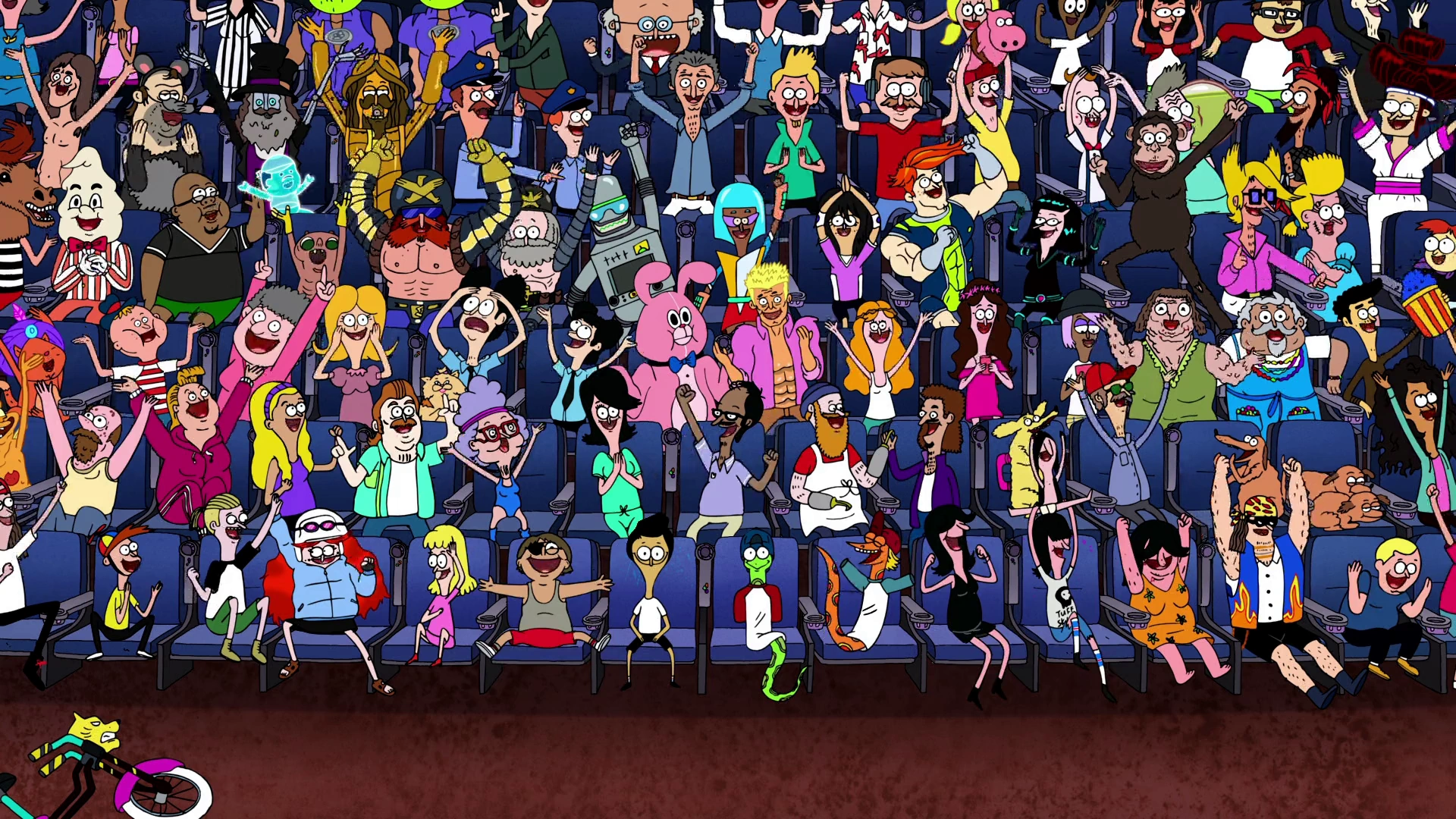
- Actual people in real life, but inverted to varying degrees for people with face-blindness.
- Matt Groening has a rule of thumb for character design that's become widely known as "The Groening Rule" stating that any design should be identifiable by silhouette.
- The Terracotta Army of Qin Shi Huang contains approximately 8,000 terracotta soldiers. And each one looks different.
- Occurs with any 'mass scale miniature' or otherwise not created for a gaming/collectible purpose. There was a Belgian exhibit with 855 knights and footsoldiers engaged in combat, and every single face was readily distinguishable from another. Quite an amazing feat considering the figurines were something like 1/25-1/30 scale. Feel sorry for the poor bastard's hand.
