
The characters of the manga series Bakuman。:
open/close all folders
Main Characters (Ashirogi Muto)
Moritaka "Saiko" Mashiro
Voiced by: Atsushi Abe (JP), Michael Sinterniklaas (EN)

"This is the first time I ever thought I didn't have any time to waste... It's also the first time I've ever dedicated myself to something so seriously."
An average student in his third year of middle school. Mashiro decides to become a mangaka alongside his classmate Takagi, under the team pen name Ashirogi Muto, following his proposal to his love interest, Miho.
- Alliterative Name: Moritaka Mashiro.
- Author Appeal: Since Mashiro is an illustrator, his writing preferences don't get much coverage. However he's noted to prefer more realistic drawing with darker than average color tones.
- Comic-Book Fantasy Casting: Invoked. Mashiro intentionally designed all his female leads to look like Azuki so she could land the role in a possible Anime adaptation. Eiji is the first person who noticed this by just looking at her.
- Curtains Match the Window: Both his eyes and hair have shades of blue.
- Cynicism Catalyst: The death of his uncle, the possibility that it was suicide, and the fact that he was deep in debt caused Moritaka to give up on the idea that he could make a living as a manga artist until Takagi came along.
- Establishing Character Moment: Drawing a detailed sketch of Miho Azuki while lamenting about his prospects for careers and love.
- Expressive Hair: His Hair Antennae turns into a heart when he has a lovey-dovey thought about Miho. Anime only.
- Generation Xerox: Mashiro's relationship with Miho mirrors his late uncle's relationship with Miho's mother to a freakish degree with the only exception that he actually spat it out.
- Heroic BSoD: At a few points, such as when his dream appears more distant than he thinks, Detective Trap gets canceled and PCP won't get an anime.
- Heroic RRoD: Pushes himself too far and gets hospitalized while working on Detective Trap.
- Heterosexual Life-Partners: With Takagi, to the point that when Kaya and Takagi plan their first trip since their honeymoon, Kaya invites Mashiro along, reasoning that he and Takagi are together so often it'd feel strange for him not to come.
- Idiot Hair: It's hard to find if common traits associated with it (idiocy and/or foolery, naiveness, mischieviousness, etc.) suit him, though.
- Mangaka: He is the artist from the "Ashirogi Muto" team.
- Red Oni, Blue Oni: Despite being Color-Coded for Your Convenience, Mashiro and Takagi are a mix of both onis.
- Reused Character Design: He resembles Near and L from Ohba and Obata's previous work. He also occasionally sits in the same pose as L.
- Surprisingly Creepy Moment: Mashiro over-extending himself and trying to manage three serializations at once has some gruesome results.
- Uncanny Family Resemblance: He looks very similar to a younger version of his uncle.
Akito "Shujin" Takagi
Voiced by: Satoshi Hino (JP), Kevin T. Collins (EN)

"I'll regret it if I follow my dreams and fail. But I'll regret it more if I don't even try."
Mashiro's classmate and the smartest student in their class. Takagi comes up with the idea to become a mangaka with Mashiro in order to do something more interesting with his life.
- Armor-Piercing Question: In the first chapter, as Mashiro refuses to team up with him and write manga because he doesn't think they could succeed, Takagi asks him "So you're just going to end up becoming a dull businessman? That's all you want out of life?" Mashiro responds that Takagi is unique among third-year middle school students for having a dream, but his previous internal monologue and following thoughts indicate that he's less happy with a "normal" path through life than he wants to admit at the time.
- Author Appeal: Generally prefers writing science fiction and mystery stories.
- Author Avatar: Ohba, to some degree.
- Betty and Veronica: Finds himself in the Archie position torn between Miyoshi (Betty) and Iwase (Veronica).
- Buxom Beauty Standard: Has openly stated that Kaya's breasts are definitely a plus.
- Chick Magnet: Miyoshi, Iwase, and Aoki like him.
- Dumb Blonde: Averted, according to Mashiro, his grades were some of the highest in the country.
- Education Mama: His mother initially tries to get him to study so that he can "avenge" his father being fired to take the heat for his boss, but when he snaps and declares he'll live any way he wants, she's surprisingly supportive of him.
- Heterosexual Life-Partners: With Mashiro, though there's some
 Ho Yay subtext in Volume 4.
- Mangaka: He is the writer of the "Ashirogi Muto" team.
- Poor Communication Kills: Some of his problems could have been averted more easily by being more open with others, such as telling Mashiro of his plans to make a mystery manga, telling Miyoshi about his meetings with Aoki and telling Mashiro that he's only temporarily planning on helping Shiratori.
- The Promise: Takagi and Miyoshi will only get married once Mashiro's and Takagi's manga becomes serialized.
- Red Oni, Blue Oni: Despite being Color-Coded for Your Convenience, Mashiro and Takagi are a mix of both onis.
- Reused Character Design: He resembles Light Yagami. Lampshaded at one point, when he's in almost the exact pose as one of Light's and mentions Death Note. He also looks somewhat like Matt.
- Savvy Guy, Energetic Girl: Savvy Guy to Miyoshi's Energetic Girl.
- Shipper on Deck: Wants Mashiro and Azuki to get together.
- Shut Up, Hannibal!: Hangs up on Nanamine's desperate challenge.
- The Stool Pigeon: A Whistleblower Wilson on Nanamine; despite being reluctant to snitch on him, he comes forward because of what Kosugi is going through.
- Technician Versus Performer: It's pointed out early on that he's a technician; he's less likely to create a hit than those who draw what they feel like, but easily follows up on one.
- The Watson: In the first volume, when he was basically an excited manga fan who didn't know much about the workings of the industry for which he was trying to become a writer.
Miho Azuki
Voiced by: Saori Hayami (JP), Stephanie Sheh (EN)

"I want to cherish the promise I made with you about our dream. I'm sure our love and joy will be far larger if we met each other after our dreams come true."
Mashiro's love interest and fellow classmate, who aspires to become a voice actress, specifically for Mashiro and Takagi's anime. Miho agrees to marry Mashiro once they both achieve their dreams.
- Alliterative Family: With her mother Miyuki and her younger sister Mina. Her father's name is unknown.
- Childhood Friend Romance: With Mashiro. It turns out that she has secretly loved him for eight years, since she first saw his work on display.
- Comic-Book Fantasy Casting: Invoked. Mashiro intentionally designed all his female leads to look like Azuki so she could land the role in a possible Anime adaptation. Eiji is the first person who noticed this by just looking at her. Then subverted, as Azuki landed the role in Reversi by her own merits.
- Expy: Of Iori Yoshizuki from I"s, interestingly. Both are attractive young women with Yamato Nadeshiko tendencies, have careers involving the Japanese celebrity media industry (Miho is a seiyuu while Iori is a stage and TV actress), who end up having to struggle through the rigidity and controversies surrounding said industry and whose careers ultimately get put on the line because of their relationship with their respective boyfriends.
- Family Theme Naming: The initial "mi" syllable in her name and those of her mom and sister is written with the same kanji character which means "beautiful". note
- First Girl Wins
- The Gadfly: Notably likes to troll Mashiro during text conversations. Otherwise, it's averted as she's generally soft-spoken.
- Generation Xerox: Not only does her relationship with Mashiro mirror her mom and his uncle's, with the notable difference of their actually telling each other how they feel, her mother looked exactly like her at her age.
- Hero of Another Story: Most of her efforts to fulfill her end of the dream- becoming a good enough voice actress to land the heroine role- take place offscreen unless they concern Mashiro in some way (such as her being considered for the +Natural lead, or the backlash against her relationship with Mashiro)
- Heterosexual Life-Partners: With Miyoshi.
- High-School Sweethearts: With Mashiro.
- Hime Cut: A polite and reserved ojou with the associated hairstyle: long in the back with sidelocks upfront but with a curved fringe instead of a straight one, as is usually the case.
- Hollywood Tone-Deaf: She can't sing, despite the insistence of talent recruiting agencies for her to do so.
 Ironically, Saori Hayami is praised as one of the best singers of her generation of voice actors.Miyoshi: (laughing out loud) Now I know why she never wanted to go for karaoke!!!
- She gets better, later on, and sends Mashiro some of her songs on a disk.
- In-Series Nickname: "Azukyun" and later "Abazureyun"- "Abazure" means "bitch" in Japanese (or "Bitch-kyun" in the Viz translation)- to people angered by her relationship with Mashiro.
- Love at First Sight: She fell in love with Mashiro the moment she first saw him when she was a child after seeing one of his drawings on display.
- Minor Major Character: She's important in that she gives Mashiro motivation to become a mangaka with their promise, but besides that her contribution to the plot is minimal.
- Official Couple: With Mashiro.
- Ojou
- Satellite Love Interest: She has little to no characterization beyond the fact she loves Mashiro and most of her efforts are focused on fulfilling the promise and getting together with Mashiro.
- Seiyuu: This is what Miho wants to be.
- Sibling Yin-Yang: Miho is polite, reserved and has only had feelings for Mashiro since she was a young girl. Mina is hyperactive, a bit annoying, and, late in the manga, alludes to having been in many relationships.
- Significant Birth Date: Offers plenty of Squee for the poor, beleaguered month of November. On Guy Fawkes Day, no less.
- Single-Target Sexuality: To Mashiro (and apparently since 4th grade).
- Strong Family Resemblance: When her mother was younger, she looked almost exactly like Miho.
- Tomboy and Girly Girl: Girly girl to Kaya's tomboy.
- Twice Shy: With Mashiro.
- What the Hell, Hero?:
- Gives Mashiro one for keeping her mother’s love for his uncle secret from her, as well as for knowing about Takagi’s meetings with Aoki and not telling her or Kaya.
- She gets one from Takagi for not confiding in Mashiro about the photo book or answering his phone call, causing him to start to go to her house and risk missing his deadline.
- Yoko Oh No: Invoked in-universe. This initially happens when it's revealed that she's dating Mashiro. When word gets out of Azuki dating Mashiro, it causes a massive backlash, with angry fans calling Azuki a slut.
Kaya Takagi (née Miyoshi)
Voiced by: Sayuri Yahagi (JP), Amanda Schuckman (EN)

"Is your dream to become a manga artist just a dream between you and Miho? It's a dream for me and Takagi too now. What reason is there for you not to let me help out?"
Miho's best friend and Takagi's eventual girlfriend and later his wife.
- Action Girl: According to Mashiro, she has been to the Japanese Nationals for aikido, as well as being proficient in karate and boxing.
- Adapted Out: A particularly notable case of this in the live action adaptation.
- Audience Surrogate: Her outsider's perspective of the manga industry makes her this.
- Betty and Veronica: The Betty to Iwase's Veronica for Takagi's Archie. Miyoshi wins and becomes his wife.
- Buxom Beauty Standard: She has a massive chest that frequently draws attention from the boys and is often subject to gainaxing from loose clothing.Miyoshi: "What", what? It was you guys who didn't take your eyes off me.
Takagi: Yeah, it's hard to look away from your boobs bouncing like that. - Dumb Jock: Subverted. She isn't exactly stupid, though she's not exactly a genius. She is very athletic and didn't exactly make the best grades in high school (she has an average D grade in grammar, for example).
- First-Name Basis: With Miho, and later with with Takagi after getting married to him. Around the time she gets married, and takes on Takagi's family name, Mashiro starts calling her by her first name, too.
- Heterosexual Life-Partners: With Miho.
- Inelegant Blubbering: Very prone to this, complete with runny nose.
- It's All My Fault: When she tells Miho about Takagi's letter from Iwase, Miho becomes angry with Mashiro for being complicit in keeping the secret. Kaya is quite upset when this jeopardizes Miho and Mashiro's relationship, which was not her intention when she called her best friend for support.
- Love at First Punch: With Takagi.Takagi: (just been punched by her) I'm sorry. I know it was my fault.
Miyoshi: I know. So let me hit you ten more times.
Takagi: Eh?! What? You pack a punch like three guys together!!
Miyoshi: I'm trained in karate and boxing. So I'll give you a discount. I'll hit you three more times and I'll feel better.
Takagi: Uh... Uh... Okay!
Miyoshi: And when I'm done, we'll start dating.
Takagi: Eeeh?! What's that got to do with it?!
Miyoshi: You said you liked me.
Takagi: Just shut up and hit me!!! (she does so) - Love Revelation Epiphany: She began to like Takagi after she misunderstood something he told her as a love confession. By the time Takagi cleared the misunderstanding, Kaya had already decided she wanted to be his girlfriend and that they would start dating once she was done with beating him up for causing the misunderstanding.
- Passionate Sports Girl
- The Pollyanna: In comparison to Mashiro and Takagi, at least. She's always the one with the best-case scenario in mind, and gets upset whenever Mashiro enters Eeyore mode. This is nicely illustrated when Money and Intelligence gets third place: it would seem to normal people to be a fairly good result, but Mashiro and Takagi both know it's not good enough to get serialized. Also the case when Azuki gets her first voice role: while she sees it as a stepping stone to get closer to her dream with Mashiro, he's jealous that she started out in another anime and covers it up with the fact that it's a bit part.Miyoshi: Why must he be so pragmatic?!
Takagi: That's the way he is. - The Promise: Takagi and Miyoshi will only get married once Mashiro's and Takagi's manga becomes serialized. They tie the knot when it happens to Tanto.
- Satellite Character: Miyoshi appears to care more about Ashirogi Muto than her own marriage. Although her worries for Takagi's success and welfare (such as when he goes sleepless trying to figure out how to keep Tanto going when he clearly cannot, or when he spends long enough helping Shiratori get Rabuta & Peace serialized that he essentially leaves Mashiro, and even her, to their own devices) are good precedents. The latter case even nearly drives a wedge between them, and she only calms down thanks to Azuki's reassurance. Notably, she's also the only main character not to have a personal dream, barring her brief attempt at cell phone novels.
- Savvy Guy, Energetic Girl: Energetic Girl to Takagi's Savvy Guy.
- She Cleans Up Nicely: She's not an ugly girl by any stretch (the sort-of rounded head Obata draws on her even makes her kinda cute sometimes), but she can look downright gorgeous when necessary, from her first date with Takagi (something he even notes to himself) to their wedding.
- Shipper on Deck: For Mashiro and Azuki, which is arguably more of a reason for her to jump into the mangaka bandwagon than her commitment with Takagi.
- Squee: When Perfect Crime Party gets serialized. Also when Reversi gets an anime.
- Also every time Takagi (intentionally or not) shows off his mental capabilities, mainly by brainstorming story ideas.
- The Watson: Typically the one who has to ask questions for the readers on the manga world.
- What the Hell, Hero?: Gives one to Takagi regarding his secret meetings with Iwase when she finds her letter, (but unlike Azuki, doesn't blame Mashiro), and gives another to Takagi when she believes that he's taking out his frustrations on Mashiro.
Team Fukuda
Eiji Niizuma
Voiced by: Nobuhiko Okamoto (JP), Roby Sharpe (EN)

"Niizuma is out of the ordinary... He has been drawing since he first held a pen at the age of six. Drawing is like breathing to him. He's said he'd die if he couldn't draw manga."
— Sasaki, regarding Niizuma.
The author of Crow and Zombie Gun. He is also the artist for +Natural. He sees Ashirogi Muto as his primary rivals. Unlike Takagi, who plans what he writes based on what he can do and what is popular, Eiji writes whatever comes to mind.
- The Ace: He's known as a genius mangaka who got published at age of 15 and serialized and animated while Mashiro and Takagi are still struggling to get approved. While the two need to take a while to even come up with an idea, Eiji can draw an entire chapter draft mid-conversation. Due to his talent, Jump is ready to pull some strings to keep him motivated. He's also very welcoming despite his odd mannerisms and is a quick learner, when Mashiro points out that his manga is intriguing but gets stale, he remakes the next chapter from scratch to include more plot threads.
- Adaptational Villainy: In the live action film, he is consistently outright antagonistic towards Mashiro and Takagi.
- Author Appeal: Most types of stories actually, but the ones he writes and excels at are generally fantasies.
- Bait the Dog: Inverted. His initial arrogance and fickleness may put the reader off, but he's generally a better person for the rest of the manga.
- Benevolent Boss: He treats his assistants well, and is quite generous in how he reimburses them for their meals out.
- Big Eater: In the scenes where he does eat. However, considering that he doesn't sleep until he's done drawing, he probably doesn't eat either.
- Bunny-Ears Lawyer: He is very eccentric, but he's also a very nice guy and one of the most talented mangaka in the main cast.
- Chaste Hero: His only experience with romance is having a crush on a girl in elementary school. As a result, his romance one-shot is essentially more of a fighting manga, and doesn't do very well in the competition.
- Cloudcuckoolander: Very much.
- Country Mouse: Well, Aomori (the city in the northernmost part of Honshu where he comes from) isn't exactly a small town, but it's pretty "country" compared to Tokyo - he even admitted to getting a bit off-put with the bustle of the big city (to the point he's actually afraid of taking the subway).
- The Cuckoolander Was Right: Whenever he's asked to give an analysis on other manga, he's pretty spot-on, as when he predicted the result of the Golden Future Cup in Volume 4 (the one where Mashiro/Takagi, Fukuda and Aoki/Nakai competed together).The third place is set, but the first and second are tied. I'll say no more in consideration for the third place. (the end result: Ashirogi and Fukuda tie at the first place, while Aoki and Nakai's manga comes in third. In the anime, Mashiro wonders if he and Takagi are third, and make some changes, slightly muddying the waters)
- Curtains Match the Window: He has matching light purple hair and eyes.
- Friendly Rivalry: He and the main duo quickly develop a mutually respectful and civil version. They're impressed by his raw talent, while he enjoys their offbeat success.
- Gratuitous English: Another part of his speech.Flying Apple Skin!!
- Insufferable Genius: Quite arrogant at first, but becomes somewhat humbler and better at interacting with other people over time.
- Jabba Table Manners: Tends to make a pig of himself at parties.
- Love Freak: Tearfully blows his nose and gives his blessing when he learns about Mashiro's romance with a potential voice actress.
- Mangaka: In-Universe, and a very famous one.
- Nice Guy: Despite his arrogance, is a genuinely nice person who never has a bad thing to say about anyone. Mashiro and Takagi are actually shocked when he, an extremely talented artist openly admits to being a fan of their work.
- No Celebrities Were Harmed: He's based on Eiichiro Oda — a genius mangaka who started young, creator of the most successful flagship series in Jump period, works with incredible artistic freedom needing little to no input from his editor, and of course adopts a very dynamic art style to boot. Also like Oda, when an anime is made of his manga, he makes up filler arcs for the team to do rather than forcing them to come up with their own.
- Oblivious to Love: Unwittingly causes Iwase to become attracted to him after he calls her a talented artist.
- O.O.C. Is Serious Business: He reads virtually everything in Jump and is a big fan of the main characters' work. When he declares that he's not reading Tanto, it's a clear sign of how strongly he believes that Mashiro and Takagi aren't living up to their potential.
- Pet the Dog: Frequently, but the first time involved giving most of the prize money for the Tezuka Award to his parents after buying a stereo.
- The Rival: To the main duo. While the manga generally depicts the rivalry as an amicable one, the live-action adaptation far more antagonistic.
- Saying Sound Effects Out Loud: Does it a lot, and with passion, especially while drawing.
- Shipper on Deck: For Mashiro and Miho.
- Significant Anagram: His pen name, "Moneys", while illustrating for Iwase, is an anagram of his surname ("Ni-zu-ma"-> "Ma-ni-zu")
- Technician Versus Performer: Very much a performer, to contrast with the main duo.
- This Is Something He's Got to Do Himself: When Nakai and Aoki, as well as the main characters, are threatened with cancellation, he says with uncharacteristic seriousness that there's nothing he can do to help them, and that only those who have what it takes to succeed can stay serialized.
- To Be a Master: He aims to be #1 in Jump and asks for the privilege to end one series of his choice, and everyone thinks he has has a good shot at is. He eventually manages to stay on the top for 20 weeks continuously, which he uses to end Crow. So he can focus on his next piece that will become the best printed series globally.
- Verbal Tic: Saying Sound Effects Out Loud.
Shinta Fukuda
Voiced by: Jun'ichi Suwabe (JP)

"Back when I was working as Niizuma-shisho’s assistant, I said to Ashirogi-kun and Nakai-san, 'Together, we will change Jump.' Niizuma-shisho, Ashirogi Muto, Ko Aoki, Kazuya Hiramaru, and Takuro Nakai. Together we can do anything."
Initially one of Niizuma's assistants, he writes Kiyoshi Knight and later, Road Racer Giri. He sets out to change Jump, and forms "Team Fukuda".
- Author Appeal: He's a big fan of more old-school Shonen manga that emphasize an extreme adrenaline rush.
- Badass Biker: And he also makes manga about bikers.
- Big Damn Heroes: Chapter 67, when he intervenes offer his help for Aoki.
- Chivalrous Pervert: A downplayed version since he isn't actively ogling anyone in particular, but Fukuda definitely likes Ecchi and harem manga such as To Love Ru and Strawberry 100%. He also volunteers to be Aoki's tutor for drawing Panty Shots to protect her from a not-so-chivalrous pervert.
- Expy: Similar to Mello from Death Note, but less evil.
- Friendly Enemy: Fukuda helps out his fellow mangaka Mashiro, Nakai, and Aoki — despite the fact that they are his competition.
- Get A Hold Of Yourself Man: To Nakai in Chapter 67.
- Hot-Blooded: Whatever Fukuda does, he does with passion.
- Jerkass Has a Point:
- He's at his most abrasive when he's introduced as Eiji's assistant, but he's completely right when he gives Eiji a reality check and gets him to make much-needed improvements to his series. Eiji gets the point and even apologizes to his editor.
- Toward the end of the series, he was as subtle as a powder keg and may have made matters a bit worse with his radio appearance, but even so, one can't blame for being pissed that a good guy he's known for a while is suddenly getting demonized by droves of jealous losers.
- Jerk with a Heart of Gold: Is quite blunt, but willing to help out when needed. Notably with Nakai, as he's typically fairly blunt about Nakai's poor luck with getting serialized, but while barging in on him in Chapter 67, tells him that he's sacrificing his career and that he likes competing with him. And definitely more of a softie romantic than he would like you to believe.
- He even gets Ocular Gushers when he hears about Mashiro's marriage promise.
- Mangaka
- No Indoor Voice: When he gets fired up, it's hard to shut him up. Even on the phone. Be it congratulating Ashirogi on their success or lecturing Aoki on panty shots.
- Not Quite the Right Thing: His calling out the people complaining about Mashiro's relationship with Azuki on-air isn't wrong, but he ultimately doesn't make anything better.
- The Promise: His goal is to change Jump, particularly the voting system and how the rankings affect placement in the magazine.
- Rated M for Manly: Both of his series have an emphasis on being male power fantasies with street fighting and bike racing.
- "The Reason You Suck" Speech: Gets one on the In-Universe backlash against Azuki and Mashiro's relationship coming to light.Fukuda: The voice actress you like has a boyfriend... Sure, I understand that some of you would be depressed to hear that. That's the fan spirit. (yelling) But even so... using that as an excuse to post all kinds of stupid crap on the Internet is something I can never forgive! Voice actresses and manga artists are humans, too. There's nothing wrong with them having a relationship!
- She Is Not My Girlfriend: Denies that he's attracted to Aoki or even likes her. While the second part is clearly false, the first part is true, as he has no feelings of jealousy or sadness when Aoki and Hiramaru end up together.
- This Is Unforgivable!: Has this opinion on the backlash against Mashiro and Azuki's relationship.
- What the Hell, Hero?: Gets some for his outburst against the backlash against Mashiro and Azuki's relationship. He stands by what he said, but decides to apologize to Mashiro and through him, Azuki.
Takuro Nakai
Voiced by: Tomoyuki Shimura (JP)

"I'm sure things would be easier for me if I just accepted myself being a professional manga assistant. But I just can't give up on my dream of becoming a manga artist."
An assistant who has considerable experience drawing, but has been unable to get serialized for years. He also has the goal of getting a girlfriend, and is attracted to Aoki. He ultimately alienates Aoki by offering to draw for her if she will be his girlfriend, turns Kato, another girl whom he's interested in, away from him after that comes to light, and loses his position as assistant after Takahama's series gets canceled. He ultimately decides to return home to Akita. However, he later comes back as Nanamine's new "super-assistant," until he was fired for accidentally driving away what remained of Nanamine's online correspondents. He is now Hiramaru's assistant.
Tropes associated with Takuro:
- Acrofatic: Despite being heavily overweight, he easily overwhelmes Hiramaru in a fist-fight.
- The Bus Came Back: Returns home and decides to quit manga forever, but could return, since he's not exactly happy with his new life. He later returns as Nanamine's assistant.
- Despair Event Horizon: Twice. After Takahama's series is cancelled, he returns home, convinced he went into manga for all the wrong reasons. After being fired as Nakai's assistant and being told Jump doesn't want him as an assistant any longer, he gets close to attacking Aoki, and during the incident, laments that he sacrificed his youth to manga, and now has nothing.
- Determinator: In order to get "Aoki Ko" to work with him, he started drawing, under the snow, risking his own life. He even kept drawing when some people attacked him, and was determined to protect his hand in order to continue
- Disappeared Dad: His mother mentions that his father is dead.
- Dogged Nice Guy: Played quite straight, especially when he agrees with virtually everything Aoki says.
- Fat Bastard: When he becomes an assistant for Nanamine, he's devolved into this. The first shot we see of him again is him chomping away at a pizza acting all smug.
- Gonk: He's obese and not often clean-shaven, and the manga clearly shows that he's not very attractive. And it gets even worse when he comes back..
- Jerkass: While some viewers see him as having sympathetic qualities, there's still the fact that as an assistant for Nanamine, he acts like a real dick to the guys working with him and clearly shows the cuter girls preferential treatment; none of the other assistants seem too fond of working with him as a result.
- Just Friends: This seems to be what "Aoki Ko" wanted to have with him. There might have been some sort stronger relationship between them, but he ruined everything when he became a Jerkass
- Heel–Face Turn: After the Villain Team-Up with Nanamine, he holds himself back from hitting Aoki, then he gets a job offer to be Hiramaru's assistant as a way to pick himself up, and takes the oppurtunity to make up for what he's done. And while he's not even close to recovering from or making up for his actions yet, he seems to be clawing his way up to Jerk with a Heart of Gold. Heck, he's even getting coaching to lose the Gonk traits he's picked up.]]
- Mangaka
- Oh, Crap!: Gets this when things go wrong, particularly when he sees Aoki Pinky Swear with Hiramaru.
- Progressively Prettier: Inverted! Nakai has always been overweight and noticeably older than the other mangaka, but he looked relatively normal in his initial appearance and has since gotten steadily fatter and less attractive. This went into overdrive after He Took a Level in Jerkass and later came back from his time at his mother's house, although this can be justified in that he has not been taking very good care of himself since he became a Jerkass.
- Spanner in the Works: Goes to Nanamine's assistants and tries to tell them the truth about the rankings in an attempt to prevent the series from being canceled, but ends up alienating the few who remain.
- Took a Level in Jerkass: At some point after Hideout Door is canceled.
- Tragic Dream: His desire to become a mangaka can be seen as this.
- Yank the Dog's Chain: In Chapter 128, a young girl offers to be a model for his portraits and allows him to take her home...only for it to be revealed that it was a bet between her friends to see if he was desperate enough to follow her.
Yuriko "Ko Aoki" Aoki
Voiced by: Ayako Kawasumi (JP)

"It's difficult to have someone we like to love us back... And even when we don't, we end up getting attracted to someone who keeps confessing their love."
The author of Hideout Door, and later, The Time of Green Leaves, and The Gift God Gave Me. She initially appears quite cold, and is largely distrusting of men, but after opening up, reveals herself to be a kind person.
- Author Appeal: Romance and fantasy. Early on, she specifically notes that ideal manga should be inspiring and hopeful.
- Curtains Match the Window
- Defrosting Ice Queen: She initially seems cold and unwilling to cooperate with the rest of "Team Fukuda," but opens up to each of them over time.
- Does Not Like Men: Has issues trusting men until she meets Takagi, and even then, only hires female assistants after getting The Time of Green Leaves serialized (although this is more in reaction to Nakai's later actions toward her).
- First-Name Basis: Eventually gets onto this with Hiramaru after they get engaged. After becoming friends with Kaya and Miho, she calls them by their first names.
- Graceful Loser: Tends to take cancellation relatively well.
- Hot Teacher: In Takagi's imagination after she reveals that she hopes to become one if she can't make it as a mangaka.
- Mangaka
- My Greatest Second Chance: Downplayed version. She initially wanted to work on Shoujo manga, but was told she was more suited to Shonen. However, given her penchant for stories about hope in romance and fantasy settings, it's a bit of a mystery as to why she wasn't suited to her original intended demographic. Nevertheless, she does become a successful at Jump and is continually remarked as becoming more like a Shonen author with each new series.
- No Celebrities Were Harmed: It's stated by Word of God that she looks like J-Pop singer Kaela Kimura.
- "Not So Different" Remark: Sees herself as somewhat similar to Iwase and sympathizes with her desire to reach out to Takagi in spite of believing that going into manga only for that reason is petty. She gets somewhat annoyed when Eiji and Fukuda point out that Iwase is like how she used to be, though.
- Oblivious to Love: She is unaware of Hiramaru's feelings for her. When he finally asks her out, she says yes.
- Official Couple: With Hiramaru.
- Reused Character Design: Her hairstyle resembles that of Mello from the duo's previous work. Incidentally, Mello was mistaken for a girl by many during his initial appearance.
- Ship Tease: Has feelings for Takagi, might have had feelings for Nakai, and might develop feelings for Fukuda. Hiramaru also constantly tries and usually fails to woo Aoki, but she agrees to go out with him after he finally confesses to her.
- Sugar-and-Ice Personality: Appears cold and aloof at first, but is gradually shown to have a kinder and warmer side to her.
- Teeth-Clenched Teamwork: Her partnership with Nakai had always been a bit strained, even before he Took a Level in Jerkass. For example, when Aida announces that they're in danger of being canceled, Nakai is desperate to continue at any cost, while Aoki insists on following her artistic vision.
- Unwanted Harem: Her reason for her distrust towards men.
Kazuya Hiramaru
Voiced by: Masakazu Morita (JP)

"Maybe it was a moment of weakness... Like I've been possessed or something. I couldn't stand my job anymore, so I picked up a Shonen Jump and thought I could do the same... What was I thinking? I made a big mistake."
The author of Otters 11 and later, You Can't Reach Me, who got started as a mangaka after picking up an issue of Shonen Jump and quitting his job to do manga. He realizes that being a mangaka is more work than he thought, but his editor manages to manipulate him into keeping motivated.
- The Alcoholic: Downplayed, but he does drink more than he should. It's one of many negative aspects of his life that Yoshida has to moderate and that Aoki helps him overcome.
- Brilliant, but Lazy: His editor basically has to pull Manipulative Bastardry in order to get him to do any work at all, but Kazuya is a genuinely funny and imaginative creator.
- Bread, Eggs, Milk, Squick: Mentions in the middle of a conversation that he has a medical condition that causes him to urinate blood.
- Bunny-Ears Lawyer: Despite the fact he seems to do anything he can to get out of working, he's still quite good at his job. His manga does consistently well throughout the series and the bits they actually show of Otters 11 are genuinely good.
- Butt-Monkey: His editor's schemes often don't go well for him, as when his editor gives him a necklace to give as a gift to Aoki, he leaves it in his Porsche, which gets towed when he parks it in front of the building.
- Casting Gag: The manga he found had Ichigo Kurosaki on the cover. The "11" of his manga Otter 11 is pronounced as "Juichi-go" in Japanese.
- Comically Small Bribe: As a Running Gag, his editor treats him like a slave and gives him small gifts to keep him motivated, which Hiramaru passionately accepts only becuase he's not aware basic respect is normal and other mangaka don't have the same living conditions.
- Determinator: When a drunk and angry Nakai wants to confront Aoki, Hiramaru confronted him personally instead of calling the police. Due to being pretty weak, Hiramaru got thrown around, but he refused to give up for Aoki's sake.
- Dogged Nice Guy: Multiple times, particularly with Aoki, though once he actually asks her out and starts spending time with her, the two do genuinely fall in love.
- Early-Bird Cameo: In Episode 23 and 24.
- A Fool and His New Money Are Soon Parted: Whenever Hiramaru gets some a paycheck, particularly in the early parts of the series, it tends to cause him to perk up in a hurry... only to blow it all on fancy cars and other luxury items, and leave himself with no choice but to get back to work to remain solvent.
- Hidden Depths: At first his infatuation with Aoki comes off almost as superficial and pathetic as Nakai's obsession with her... Until we find out Hiramaru actually does respect Aoki as a person and even calls out his editor for using her. When they get together, he actually works towards improving himself. Hiramaru might be completely neurotic, but in the end he is really a Nice Guy who has proved he genuinely cares enough about Aoki to try to change his habits for the better.
- Hopeless Suitor: For Aoki. Later subverted since she accepts his love confession and they end up getting married.
- Hot-Blooded: In the weirdest way. When Hiramaru gets depressed, he does it with gusto. His editor notes that it's actually when he's being all negative that he has the best ideas.
- Eerie Pale-Skinned Brunette: When his idiosyncrasies are being played for humor, Hiramaru makes people around him very uncomfortable.
- No Celebrities Were Harmed: He's reputedly based on Hideaki Sorachi, the author of Gintama.
- Pinky Swear: With Aoki, to get serialized again
- Official Couple: With Aoki.
- O.O.C. Is Serious Business: He expresses his anger over the decision to put Detective Trap on Hiatus by storming off to work on his manga.
- Real Life Writes the Plot: Otter 11 seems to be based off Hiramaru's life, with him working at a job he hates, getting along poorly with someone named Yoshida and wanting to live like an otter rather than a human, but being forced to go on out of responsibility to someone else.
- The Slacker: Particularly early on, when he sneaks out of his apartment to "hide" at the other mangaka's houses.
- Throw the Dog a Bone: He finally asks Aoki to go out with him, and she says yes (as long as he keeps drawing manga). He later did the same for Nakai, hiring him on as an assistant not just in spite of all the Jerkass behaviour Nakai's been showing, but because of it (though they were both drunk and Hiramaru actually worried he was going to end up like Nakai.)
Shoyo Takahama
Voiced by: Hiroki Shimowada (JP)

One of Mashiro and Takagi's first assistants during Detective Trap and Tanto. Initially very quiet, he eventually starts speaking up and talking about his own desire to create manga. He eventually goes off on his own to create Business Boy Kenichi and later Mikata's Justice, which becomes successful enough to gain a Courtroom Drama adaptation on TV.
- Author Appeal: Both of his series were Realistic Fiction pieces that focused on topics that would normally be boring to young readers (business and law) but still managed to be popular without compromising the realism.
- Executive Meddling: In-Universe. Takahama quickly loses trust in Miura when he keeps demanding more and more gags be added to BB Kenichi, to (what he believes is) the series' detriment (which also serves as Foreshadowing to the eventual fate of Tanto, which was also edited by Miura). When the manga eventually gets cancelled, he goes behind Miura's back to the Editor-In-Chief to request a new editor because Miura won't let him draw what he wants to, prompting him to deliver the line under his character section.
- Goal in Life: His first real conversation with Mashiro is admitting he wants to work for Disney someday.
- Headphones Equal Isolation: Only at first; he enforced this trope because he didn't have anything in common with the other assistants since they were complacent with their job while he wanted move up as a mangaka.
- Oh, Crap!: His reaction to the Editor-In-Chief's "The Reason You Suck" Speech.
- The Pessimist: Working with Miura had an effect on his worldview, and he's constantly shown worrying about whether he or other mangaka getting cancelled.
- The Quiet One: At first. He quickly gets over it once he's alone with Mashiro, then opens up to others.
- Shown Their Work: During Mikata's Justice's run, he's frequently depicted attending courtroom trials for research purposes.
- Sour Supporter: He's on good terms with the others but is still usually The Cynic in their group dynamic.
Other Mangaka (Ashirogi's Generation)
Aiko "Aiko Akina" Iwase
Voiced by: Ayumi Fujimura (JP), Veronica Taylor (EN)

"I really did fall for him. And I wanted to beat him. When he was giving it his all..."
The second-smartest student in Mashiro's and Takagi's class. Iwase has an initial one-sided rivalry with Takagi that eventually develops into feelings for him. She eventually becomes a mangaka and writes +Natural.
- Alliterative Name: Her Pen Name: Aiko Akina.
- Betty and Veronica: Takagi's Veronica to Miyoshi's Betty.
- Best Her to Bed Her: The smartest girl in school, believes that she and Takagi are now a couple when he gets better grades than her. Too bad he thinks she was just making a friendly competition out of it. And she still won't quit either. Even proclaiming she'll do manga too just to prove her point. AND according to Chapter 70, she even seems to be some sort of manga writing genius, more than proving her worth as a rival.
- Chekhov's Gunman: That girl in junior high with a prideful crush on Takagi? Goes on to become his rival in writing about a hundred chapters later.
- The Comically Serious: Much of the humor in Iwase is from how seriously she takes everything.
- Defrosting Ice Queen: Initially very aloof and cold, like Aoki was in the beginning. Naturally as the series goes on, she begins to mellow out a little.
- Establishing Character Moment: Her first conversation with Takagi in the anime showcases her competitive nature and academic rivalry with him.
- Expy: She looks almost identical to Kiyomi Takada from Death Note, and to an extent shares her vanity, albeit here taken up a notch.
- Foil: To both Azuki and Miyoshi, with Takagi unfavorably comparing her to each girl while making a point.
- Takagi uses her as a contrast with Iwase. While Azuki isn't an especially good student, Takagi considers her one of the smartest girls in the class because of her humility and social grace, whereas Iwase comes off as not especially likeable because of her bullheaded and competitive nature.
- When Iwase and Miyoshi visit Takagi while he's on suspension, he asks them whether they'd be willing to support him going into manga- Miyoshi says yes, while Iwase says no, which is the main factor that results in him choosing Miyoshi. He later tells Iwase that while Miyoshi isn't nearly as smart, talented or pretty as Iwase, he likes Miyohsi a thousand times more.
- Gratuitous English: When greeting Nizuma, changed to Gratuitous Japanese in Viz's translation.
- Hopeless Suitor: For Takagi.
- Insufferable Genius: Iwase is very smart, and Takagi freely acknowledges she's quite talented as well, but her very standoffish personality means that a lot of people in-universe have trouble liking her very much (She gets along pretty well with Niizuma, though). Fans are divided over whether this is simply a sexist overtone of people not liking her for being an intelligent, competitive go-getter and a woman or if it's simply that her snobbish personality that turns people off, which has nothing to do with her being a woman.
- Looking for Love in All the Wrong Places: She starts off trying to woo Takagi, but as soon as he gets married she latches onto Hattori instead, much to his dismay. When Hattori stops being her editor, she seems to start going this way with Nizuma until it turns out she was actually trying to convince Nizuma to do a crossover between Crow and +Natural instead. It's still implied afterward, however, that she might like him as more than a co-author.
- Mangaka
- The Only One Allowed to Defeat You: She repeatedly tries to prove to Takagi that her writing is better than his, even if he doesn't really care. When she learns that PCP has an additional cancellation condition, despite saying she wants to take it down, she calls Takagi to encourage him becuase she wants to continue to compete with it.
- Serious Business: Everything she takes an interest in becomes like a competition to her, especially where Takagi is concerned.
- She Is All Grown Up: Four years have passed, and Iwase looks very beautiful. Not that she wasn't before.
- Stalker with a Crush: For Takagi and later Hattori.
- Teen Genius: Like much of the cast.
- Tempting Fate: Takagi "breaks up" with her early on because she said that living on manga would get him nowhere, while Miyoshi was supportive of him from the get-go. She even told him he would "regret forever" having decided to keep doing manga as she left. Now look at how her path crosses Takagi's again (well, she's a talented up-and-coming novelist when they meet, but she decides to venture into manga anyway just to show him up).
- Token Evil Teammate: She's the only one out of the main mangaka to be rooting for Ashirogi Muto to fail, and even tried to interfere with not just Takagi's, but also with Mashiro's romance For the Evulz. She's also very entitled and doesn't like when anyone doesn't act as she wants, and out of her limited interactions, Eiji is the only one she's on good terms with. She does however draw the line on sabotage, and eventually has a Heel Realization that rivalry isn't just about proving each other surperior.
- Unknown Rival: Takagi initially doesn’t notice her rivalry, but later acknowledges her skill as a mangaka, and says that it’s nice having her as a rival in Jump.
- Woman Scorned: Comes to deeply resent both Takagi and Hattori once the former marries Kaya and the latter rejects her advances and goes back to being Ashirogi's editor. She swears to take Ashirogi's manga down as revenge.
Ryu Shizuka

"I'll make True Human better than ever! I'll draw about these two-faced women and their two-faced kind of love!"
Author of True Human. A socially awkward shut-in who Yamahisa endeavors to get to go out and socialize more.
- Adapted Out: The only "main" mangaka to be absent from the anime.
- Author Appeal: As noted below, Shizuka's manga are heavily influenced by his life, with Happiness in Slavery elements becoming dominant in the plot after he discovers hostess clubs. Even after becoming disillusioned with hostess clubs, the trope is still played straight only with his focus now shifted to "false love".
- Humans Are Bastards: Seemingly his view on the world, as very evident in True Human.
- Loners Are Freaks: He is really not adjusted to social situations. Yamahisa suggests the problem was only exacerbated by being bullied in school.
- Meaningful Appearance: When he starts living on his own, he lets his hair grow to a point that it sometimes obscures his face, highlighting the Loners Are Freaks aspect of his personality even more.
- Morality Pet: For Smug Snake Yamahisa.
- Nightmare Fetishist: It isn't obvious until you look at his manga, but Shizuka has a rather Disproportionate Retribution response to whatever happens to his life.
- No Social Skills: He was a NEET until he became a mangaka, with Yamahisa believing it stems from a history of being bullied.
- Out of Focus: After the host club incident, he pretty much disappears from the story, with True Human only getting passing mentions, and Shizuka himself making only a couple brief appearances near the end of the story.
- Real Life Writes the Plot: Is frequently prone to this. Yamahisa suspects that True Human's extreme cynicism stems from him getting bullied in school. When he discovers and gets addicted to hostess clubs, he starts writing about male humans dying off and female humans finding Happiness in Slavery in service to the True Humans, and when he discovers that the hostesses only liked him because they were getting paid for it he endeavors to write about false love instead.
- Satellite Character: Notice how all of his tropes pertain to Yamahisa and not Team Fukuda.
- Scary Shiny Glasses: Frequently.
- Shrinking Violet: It took Yamahisa months of playing video games with him in silence and speaking through chat rooms before they could have a conversation in person.
Toru Nanamine
Voiced by: Shinnosuke Tachibana (JP)

"Isn't a pro someone who uses any means necessary to succeed? To gain a solid fan base? To make high sales? Anyone whose pride comes before all that has yet to learn what it means to be a professional."
A fan of the main characters, who hopes to one be serialized with them. He's polite, cheerful and enthusiastic... or so it seems. In truth, Nanamine despises editors, believing they have no ability to judge manga, and plans on making his way to the top by consulting with 50 online correspondents.
His series were Classroom of Truth, The Thing That Comes With Being Nervous, and What is Required for a Good School Life.
Tropes associated with Nanamine:
- Adaptational Heroism: The anime omits his reappearance, making him exit the story as a naive man that genuinely learned his lesson than a sociopath that learned nothing and becomes worse.
- All Your Powers Combined: His way of making manga, which has some success, but falls apart without a strong central creative hand to keep the disparate movements yoked together.
- Ass Pull: An In-Universe problem with his writing style. Nanamine's plots are often more focused on shocking the reader than presenting a coherent, sensible story.
- Bad Boss: He'd be a real force to contend with if he actually respected the people he employs.
- Bitch in Sheep's Clothing: Puts on a persona of an energetic mangaka in front of editors.
- Blackmail: Nanamine promises Kosugi that he'll make his job easy if he just accepts his role as his "51st editor", or he can find a job at another magazine and the editor will get punished for failing to secure talent. Kosugi reluctantly accepts. He then even asks Kosugi to steal manuscripts from Ashirogi Muto's studio, but at that point a lot of people are already aware of what he's doing.
- Blunt "Yes":Kosugi: Am I... not good enough for you?
Nanamine: Not in the least. - Break the Haughty: Broken as of Chapter 127, and abandons his methods in order to create a manga that will win against Ashirogi Muto.
- Breaking Speech: Gives one to his editor, Kosugi, blackmailing him by reminding him that he needs a success to keep his job and taking advantage of his lack of confidence to browbeat him into going along with his plan.
- Brilliant, but Lazy: He's shown to be fairly capable as a mangaka, but his desire to be the very best made him think he can leave most of the creative input to the so-called experts. It's commented that his method isn't even terrible, but he doesn't put much thought in quality control either and believes he can't possibly fail, resulting in a manga that can't keep own story straight.
- The Bus Came Back: After his short run, he returns later as a CEO of a ghostwriting company. It's not adapted into the anime.
- Cheaters Never Prosper: Both his underhanded attempts to rise to the top fail, and he's ultimately banned from working for Jump. Mashiro, Takagi, Hattori and Kosugi notice that in spite of his methods, he did actually have talent, and that it's sad he kept wasting it.
- Corrupt Corporate Executive: After "What is Required" is cancelled, he takes his collaboration philosophy up to the next level, not learning from his mistakes. He establishes Shinjitsu Corporation, basically the manga equivalent of the Stratemeyer Syndicate, hiring dozens of ghostwriters to make tons of series, and using washed-out older manga-ka as faces.
- Create Your Own Villain: Turns out he became the way he is purely out of idolizing Ashirogi Muto. Specifically, their "Money and Intelligence" one shot convinced him for life that the real world really did only run on money and intelligence. Mostly money, though, which made him borrow money from his father years ago... and again now to start his Manga-producing company. He's explicitly said he doesn't give a damn about the money, the manga world or even the manga themselves... Nothing but defeating Ashirogi Muto, the mangakas who changed his life. By whatever means nesscesary.
- Cut Lex Luthor a Check: He just refuses to put creative mind into his work and instead lets others do it for him. When he fails, instead of having a change of heart, he upgrades his previous scheme to an actual company, thinking he can make his reviewers more loyal to the cause if he pays them. He's not wrong in that, but he missed why he failed in the first place. He effectively creates own "Shonen Jump" with own educational department and does make good manga that lets starving writers get paid, but everything he's doing needs to be for the sake of beating Ashirogi Muto at their own element.
- Dramatically Missing the Point: After his first failure in Jump, he simply launches a refined version of his plan instead of actually working hard on a series on his own.
- Evil Is Petty: He wastes a lot of money, just with the goal of defeating Ashirogi Muto.
- Expy: Of Light Yagami. He has the same smugness, same disregard for the methods to achieve his goals, and same way of losing it when his plans start to go south. Unsurprisingly, he shares a lot of Light's expressions. It helps that the authors of Bakuman。 previously wrote Death Note.
- Face of an Angel, Mind of a Demon: He has an attitude of a dorky rookie who's just surprizingly lucky, but in private he's cold, calculating, and arrogant, trying to prove Jump and its writers as a joke with manga he doesn't even write himself.
- Fan Boy: Of Ashirogi Muto, although he is disappointed in their writing Tanto and going along with their editors.
- Fatal Flaw: He is unable to relate to other people. Not only does this lead to his attempts to use other people in an underhanded and ultimately self-destructive scheme to rise to the top of Jump, but as Kosugi points out, he has difficulty writing fictional characters with a heart if he can't sympathize with others.
- Friendless Background: He used to have no friends in school until he literally bought them over, inspired by Money and Intelligence.
- Get A Hold Of Yourself Man: On the receiving end of two from his editor after he contemplates giving up.
- Ghostwriter: Toru Nanamine reveals that he's not writing by himself, but has an online group of select 50 fans, which includes alleged veterans, who write for him, while he acts as a director. He plans to make a point that Jump's editors are incompetent while making minimum effort himself. While his first two chapters receive a lot of praise, from there on it gets too inconsistent and the rankings sink to the bottom, while his narcissism and lack of direction make all of his assistants leave. He later establishes Shinjitsu Corporation, a multi-staged corporate pipeline that writes a higher quality manga on demand, but his personal involvement undermines the legitimate methods it could have run with.
- Hate Sink: As the closest thing to an antagonist, he comes off as a character who's meant to be despised, especially when he starts using others as a means to an end.
- Hoist by His Own Petard: Both times he tunnel-visions that he can do better than Ashirogi Muto and doesn't even proof-read the thing he publishes or treats the people helping him with respect, then in self-confidence makes his conditions with the Editor-in-Chief even stricter. For a salt in the wound, he got beaten by Azume he just fired, which let him to not just be cancelled by banned from publication.
- Ignored Epiphany: Seems willing to consider his editor's advice after his first series is canceled, but decides to go back to a revised version of his plan
- In-Series Nickname: "Usomine" ("Liarmine") after he lies to his online helpers about what rank his manga is in.
- Jerkass: He views most people with contempt and only acts nice to them as long as he needs their help.
- Jerkass Has a Point: In one of his fan letters, he points out that the main characters aren't suited to gag manga, although he's hardly the only one to think this and this is before they realize his personality.
- Jumping Off the Slippery Slope: Nanamine turns from an overexcited guy with risky but potentially worthwhile ideas to an arrogant jerk who bullies his editor within the span of a few chapters.
- Laughing Mad: After getting 19th in the rankings on the chapter in which he competes with Ashirogi Muto.
- Mook Depletion: Nanamine's lack of respect for his own forum causes everyone to abandon ship one by one even before he gets canceled.
- Never My Fault: When "his" manga gets criticism, he thinks his editor is an idiot. When it gets the second place instead of the first, he thinks his readers are idiots. When the rankings drop, he calls his team idiots until gradually all 50 leave. For someone who doesn't write himself, he thinks he's making masterpieces and refuses to see issues with his skill as a director even when they are spelled out.
- Nice Job Fixing It, Villain: Azuma, who is the guy who used to test his new method of creating shonen mangas and then fired when stopped being useful, was the one who ended up taking third place from him.
- No Indoor Voice: Nanamine speaks so loudly at his first meeting that the editor at the next booth hears everything.
- "Not So Different" Remark: Believes Ashirogi Muto should understand that editors can't be trusted from having done Tanto at Miura's suggestion, and because they took risks and defied the editorial department to become successful with PCP.
- Obfuscating Stupidity: He knew all along that it was wrong to publish Classroom of Truth online, but made a big show of how sorry he was in front of the editor while pretending to be a naive and excitable young mangaka as part of his plan to show his next one shot to him.
- The Only One Allowed to Defeat You: Chapter 146 all but confirms this trope, when he tells Mashiro that everything success he has with his business is meaningless unless he beats Ashirogi Muto with a manga that he's written, not one by his subordinates or senior mangakas.
- The Plan: His plan involves submitting Classroom of Truth, posting it online after it loses. Doing so enables him to recruit 50 people to work on a second one-shot and show it to the editor in chief himself, resulting in him quickly getting serialized. However, once he runs into trouble, it spirals out of control.
- The Power of Friendship: Subverted, while he explicitly calls his co-writers "friends" who help each other, and compares it to the relationship Ashirogi Muto has with Hattori and other mangaka, they are only helping him for as logn as he treats them.
- Pragmatic Villainy:
- After Kosugi hits him, he considers getting him fired for battery, but decides against it because he has nothing to gain from it.
- He learns from his mistakes, while in the wrong way, it's still effective. He lets 4 teams of 4 paid professionals write names while also paying them to study modern trends, then lets unsuspecting students review drafts at a cafe and watches their reactions. Even Takagi and Hattori admit that aside from lying about the authorship, there are little flaws in this system.
- Redemption Rejection: Both times when his schemes fail, Kosugi offers him his help. Even though Nanamine is repeatedly told that he's both good as an artist and a writer if only he'd write something himself, he hates Jump too much to compromise.
- The Rival: The most antagonistic version of this trope in the story.
- Sanity Slippage: He becomes increasingly unhinged as he loses more of his helpers and his manga drops in popularity.
- Shadow Archetype: He intentionally makes What is Required similar to Ashirogi Muto's PCP, while also borrowing from all of their previous works, but just enough to avoid plagiarism, believing if he writes in a similar setting but better, he'll make them unpopular. This represents the path they could have taken if they were pandering to fan mail. As a result, his manga's pilot is considered amazing, but surprizingly soulless, while the other chapters turned to be a mess. He even challenges them to write the same chapter premise while he takes more control over his co-writers, but his ratings still remain at the bottom.
- Shut Up, Kirk!: Says his quote in response to Mashiro and Takagi saying that they're disappointed that he would waste his talent in a way that shows a lack of "pride."
- Smug Snake: He's exceptionally arrogant and while he isn't completely stupid, he makes a number of poor judgement calls because of his overconfidence in himself and disdain for others. Instead of ranking #1 every time like he expected, his ratings make a total nosedive and Mashiro and Takagi quickly stop treating him like a threat.
- The Sociopath: He has more than a few indicators of this, as he sees most of the people he interacts with as means to an end, is highly manipulative and can easily assume a humble and charming persona to appeal to others. Kosugi tells him that his inability to understand others' feelings is a large part of the reason why he can't write characters well.
- Sore Loser: When his ratings sink, he yells how nobody understands his vision and ignores his editor's plead to just write something himself, instead thinking his method wasn't strict enough.
- Spoiled Brat: His father helped him buy friends at school and approving his ambition buys out a few floors of an office building for his next scheme.
- Too Many Cooks Spoil the Soup: The main reason why he fails is becuase 50 co-writers with little interest in quality don't make the series 50 times better, he just puts any good idea in with no regard if it makes sense for the plot.
- Used to Be a Sweet Kid: Based on his old fan letters, it's implied Nanamine was just as excitable and passionate as he now pretends to be, but being inspired by Ashirogi Muto's "Money and Intelligence", he became the very money-throwing glory-hound they were afraid of who tries to bring them down.
- Vile Villain, Saccharine Show: As a manga about manga writers, most of the drama in the series comes from serialization races between friendly rivals, so there isn't a lot of serious conflict. Even Iwase's Woman Scorned is more her being confused about her feelings and she gets calmer over time. Nanamine reveals under the mask to be a cold schemer who intends to ruin Jump's reputation with his team of ghostwriters, and gloats to his idols Ashirogi Muto about his future successes. When he doesn't succeed, he insults everyone but himself, and even tries to ask his editor to steal the manuscripts from Ashirogi so he can accuse them of plagiarism. While Nakai, who he brings from a bus, eventually goes through Heel Realization, Nanamine instead thinks he needs to go harder with his unethical methods.
- Villain Ball:
- He reveals both of his schemes in full to Ashirogi Muto to gloat. It only made them easier to come up with countermeasures against him, and many others learn of this as well.
- Once he proves Shinjitsu Corporation is effective, he throws his current authors under the bus and takes creative control, so he can make something that can personally compete with Ashirogi Muto. Even with already favorable conditions that he'll be accepted if he gets in top 3, he disregards Kosugi's feedback and decides to aim for number 1. This bites him back in so many ways.
- Villainous Breakdown
- When his manga plummets in the ratings, he orders all the correspondents who criticize him to leave and yells at his editor. When his attempt to compete with Ashirogi Muto fails, and all his correspondents leave, he begins laughing madly and declares that he's finished.
- Has a minor one when not only Ashirogi but Azuma, the man he used then fired for his own purposes, manage to beat him in the polls. Considering this was his last chance to work with Jump, the reaction is understandable.
- Walking Spoiler: His façade lasts only a few chapters, but it comes as quite a shock when he reveals his true colors. It's also almost completely impossible to talk about him without mentioning that side of him.
Shun Shiratori
Voiced by: Yuuichi Iguchi (JP)
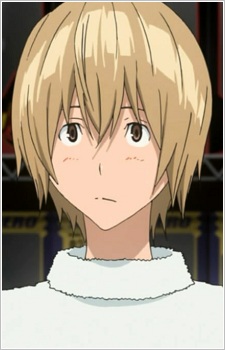
"Manga is something you can enjoy for a small price. It's meant to be for everyone. Being a manga artist is an honorable career! I want to see how far I can go."
One of the assistants for Perfect Crime Party, Shiratori eventually develop his own manga. He requires mentoring from Takagi to do this, which causes some friction between Muho and Takagi.
- Alliterative Name: Shun Shiratori.
- Art Evolution: His eyes become less squinty quickly after his initial introduction and he looks more classically bishonen
- Author Appeal: Dogs, oh so very much. His only manga also had an emphasis on communication and goodness, which likely stems from his mother issues.
- Calling the Old Man Out: During the final argument over whether to allow him to go into manga, he says that everything his mother claims to have done for him was actually for the sake of the Shiratori family's reputation.
- Dude Looks Like a Lady: He's very soft-spoken and it's not helped by his contant blushing and preference for fluffy sweaters. Shiratori's mannerism is also rather feminine.
- Family Honor: His mother wants him to do things that will be good for the image of the Shiratori family, and he calls her out on that desire overshadowing her desire for his well-being.
- Fantasy-Forbidding Mother: He has a mother who doesn't think much of his going into manga. His father is fine with it, though.
- Foil: To Moriya. He wants his art to have popular appeal, while Moriya believes that art should be focused on quality.
- Innocent Prodigy: Granted, he had Takagi helping him with the plot, but for someone who only drew as a hobby until recently, Shiratori is noted to be incredibly gifted as an artist and gets serialized after his first pitch for a series.
- Older Than He Looks: Shiratori looks like a child (like Near) but is a bit older than he looks.
- Out of Focus: Once his arc is finished, his new series is eventually cancelled and he quickly disappears from the story altogether.
- Rich in Dollars, Poor in Sense: He has no idea how to do simple tasks and his father flat out admits that if he takes over his company, he'll run it to the ground.
- Skilled, but Naive: Incredibly so. Despite no formal training, he's a talented artist that got a published series way sooner than Mashiro and Takagi (granted, Takagi was helping him after his years of experience). However, his first couple of weeks of living on his own resulted in making constant house calls to Kaya for help with basic tasks.
- Unwitting Instigator of Doom: Rabuta and Peace is deemed a good work, but he needs Takagi's (temporary) help to get serialized. This is one of the factors leading to Mashiro and Takagi nearly splitting up. Takagi has to teach him how to write a good story by his own, so that Takagi can go back and focus on Team Ashirogi.
Koji "KOOGY" Makaino
Voiced by: Showtaro Morikubo (JP)

A famous musician who performs under the stage name 'KOOGY'. He tries to use his popularity to force his way into the manga industry.
- Advertising by Association: He urges his fans to buy and vote for his manga when it comes out, skewing the results in the popularity polls and getting it ranked highly. When the novelty of it wears off though, any of his fans that weren't manga readers already stop their support and causes it to tank in subsequent polls before being cancelled.
- Rockers Smash Guitars: He is so enraged at the poor performance of his debut manga that he shatters his guitar.
- Write What You Know: What little we see of his manga seems to be music-focused; Koji's main job is being a musician.
Hidemitsu Ishizawa
Voiced by: Kōki Miyata (JP)

A sleazy guy that Ashirogi knew in school. He does a little manga work at first, but eventually leaves the industry.
- Blatant Lies: When his mother calls him out for still calling himself a mangaka despite not having done anything for five years, he insists that he's just 'recharging.'
- Ecchi: The little work he produces seems to involve this.
- From Nobody to Nightmare: He's essentially a non-entity in the manga world by the end of the series, but he's still able to figure out that Mashiro and Azuki are dating, which causes major problems when he posts it online.
- Hikikomori: By the end of the series he's unemployed and living at his mother's home.
- Jerkass: He's a despicable person who makes publicly fun of Mashiro and Takagi as aspiring mangakas (which immediately earns him a punch to the face, which also leads to the duo to create a pen name for themselves to avoid repeating this issue), he tries to take advantage of Aoki when she and Takagi asked Ishizawa desparately for his help, and finally, he causes a public scandal for Azuki's and Ashirogi's careers.
- Smug Snake: Despite being only able to draw generic cute girls who all face in the same direction, he gloats about his "talent" and looks down on Mashiro who is a much better artist than Ishizawa.
Other Mangaka (Kawaguchi Taro's Generation)
Nobuhiro "Kawaguchi Taro" Mashiro
Voiced by: Kenji Hamada (JP), Marc Diraison (EN)

"I've been able to come this far because she was around. I can continue drawing manga without giving up because I believe she's watching me. She can't see my progress if I was just an ordinary businessman, right?"
Moritaka's deceased uncle, who, like Moritaka, had hoped to marry his childhood love interest after becoming successful himself, but by the time he felt secure in his career, she was already married. After his first series ended, he was unable to follow up with another, and died from overworking himself while deep in debt. This caused Moritaka to abandon his desire to become a mangaka until he met Takagi, confessed to Miho and learned how hard his uncle had worked.
- Cannot Spit It Out: Determined not to tell his love interest how he felt until the time was right.
- Determinator: He kept drawing manuscripts in an attempt to get another series going.
- Did Not Get the Girl
- Driven to Suicide: Subverted. Mashiro thinks he did so out of despair, but realizes that he pushed himself until he died.
- Generation Xerox: He and his nephew have similar ambitions, and Moritaka's girlfriend is the daughter of the woman he loved. Moritaka's grandfather was amused by their similarities.
- Mangaka
- Nerd Glasses
- Normal Fish in a Tiny Pond: His art is not very good in comparison to other manga artists, but he was fairly good for his art class.
- One Degree of Separation: Most editors who have been in the manga industry for at least 10 years prior to the start of the story have met him including the editor-in-chief, who had been his last editor, and virtually everyone else has heard of him. When you consider that the main character is his nephew, it's quite easy to link people to him.
- Patient Childhood Love Interest: To Miyuki. She eventually got tired of waiting for him and married someone else.
- Perma-Stubble
- Personal Effects Reveal: He told Moritaka about his relationship with his crush, but going through his office reveals that the person he was in love with was Miho's mother.
- Much later on, Mashiro gets Nobuhiro's diary, and learns that he had continued his pursuit of Miyuki until hearing of her engagement, even trying to think of how to propose to her.
- Posthumous Character: A lot about him only comes from family, his work, and figures who had actually worked with him when he was alive.
- Smoking Is Cool: Tended to smoke fairly often as an adult, and Mashiro remembers his office smelling like cigarettes.
- Take Care of the Kids: He asked Sasaki to look over Mashiro before he died.
- Technician Versus Performer: Has some elements of Technician, as it's once mentioned that he researched what kind of humor was popular.
- Twice Shy: He had this with Miyuki.
Mikihiko Azuma

An older mangaka who unexpectedly returns to Jump with a promising new series, Panty Flash Fight. However, it turns out that he's one of Nanamine's minions.
- Adapted Out: Nanamine's return wasn't adapted for the anime, so Azuma wasn't included there either.
- Author Appeal: Incorporates Ecchi into his work.
- But Now I Must Go: Despite showing promise with his latest one-shot, Azuma chooses to retire permanently.
- Dirty Old Man: Zigzagged, he doesn't overtly show many of the normal traits associated with the trope, but he's still a fifty-year-old man who draws Ecchi art of young girls and women.
- The Dog Bites Back: He gets revenge on Nanamine for using and firing him. Specifically, he writes a one-shot which surpasses Nanamine's comic and pushes it to fourth place for the week, resulting in Nanamine being banned from Jump.
- Foil: One for Nanamine. Both showed promise but were let go to inability to grow. However, Azuma ultimately grew when he collaborated with others, while Nanamine turned to a vengeful vendetta.
- I Coulda Been a Contender!: It's noted that his art is fine, especially for his specialty, but his writing was too sparse and incoherent to keep readers engaged. If the results shown from Hirapara Paradise were any indication, all he needed was proper coaching or teaming up with a writer to make a hit series.
- Tell Me About My Father: He was the final assistant of Nobushiro Mashiro/Kawaguchi Taro and bonds with Mashiro over him.
Kisaku Arai

A less successful mangaka. He created Cheese Crackers, Hustleman A, Mosoutsukai Moshimo, and Tournament and School.
- Author Appeal: It's mentioned that he tends toward romantic comedies in school settings.
- Butt-Monkey: His series are canceled frequently, and he's ultimately fired from Jump.
- Dub Name Change: His first series, Cheese Crackers is Cheese Okaki in Japan.
- From Nobody to Nightmare: The manga he and other mangaka receive from Nanamine make them gain placements in the magazine, which puts our protagonists danger of losing their slots.
- So Okay, It's Average: In-Universe. It seems his series pan out this way. They initially place well, as seen with Cheese Crackers and his one-shot Boy E, Girl B but usually can't land an audience.
Kyotaro Hibiki

An older mangaka. He eventually joins Nanamine's team.
- Follow the Leader: In-Universe. He makes a detective manga after Ashirogi's well-received 'Detective Trap' comes out.
- Never My Fault: When his detective manga crashes and burns, he blames Ashirogi, since his works are similar to theirs and he had been counting on Mashiro remaining out of commission for longer. His artist calls him out on this.
Kyoichi Murasaki
A detective writer who enters the manga world.
- Follow the Leader: In-Universe. Like Hibiki, he enters the manga world after Ashirogi demonstrates that detective manga can be successful.
Shigure Yanagi

A veteran mangaka who joins up with Nanamine.
- Fat Bastard: He's noticeably pudgy and he spends all of his screen time whining at Nanamine and insulting the editor he was assigned.
- "The Reason You Suck" Speech: He gets one of these from Nanamine after his manga loses to Ashirogi's.
Assistants
Naoto Ogawa
Voiced by: Yoshimitsu Shimoyama (JP)

One of Mashiro and Takagi's first assistants, along with Kato and Takahama. He's a professional assistant who isn't talented enough to be a full-time mangaka, but has years of experience under his belt and usually acts as lead assistant for projects.
- Brutal Honesty: Not to Mashiro or Takagi, but the assistants on whether a series will last.
- The Bus Came Back: Returns to Mashiro and Takagi's team when they need an extra assistant for Reversi.
- But Now I Must Go: When Trap is cancelled, he has to leave Mashiro and Takagi in order to support his family.
- Consummate Professional: He's efficient at his job and a clear communicator.
- Family Man: He genuinely wants to work for Mashiro and Takagi, but he has to put the well-being of his wife and children first.
- Henpecked Husband: He's insistent on returning home promptly, partly because he wants to be with his family and partly because his wife will nag him if he's late.
- The Leader: His experience makes him very adept at delegating tasks among the assistants and can tell what materials they need at a glance.
Natsumi Kato
Voiced by: Yoko Honda (JP)

Another of Mashiro and Takagi's assistants, who later goes on to be an assistant for Takahama, then Aoki, before returning to Ashirogi.
- The Bus Came Back: She returns to work for Ashirogi Muto because she's not entirely fond of Aoki's all-female workplace.
- Foil: Can be considered one to Nakai, as she's more content with her lot in life as an assistant
- Girlish Pigtails: One part of her appearance that makes her look younger than she is. She initially wears them braided, but she changes to loose pigtails when she comes back to work on PCP and Reversi.
- Older Than She Looks: Looks like a high school student.
- Old Maid: She's over 30 and unmarried, but she occasionally expresses a desire to fix that.
- Unwitting Instigator of Doom: By proxy, as she introduces her friend, Ririka Kitami, to Mashiro, and Ririka finds out about Mashiro and Azuki's relationship and posts about it on her blog, resulting in virtually everyone finding out about it. Although to be fair, Kitami didn't know who was the seiyu Mashiro was dating, and even though she took her post down 48 hours after the fact, it was still enough time for Ishizawa to put two and two together and figure out that said seiyu was Azuki, and from there spread it all over the Internet purely out of spite.
Ichiriki Orihara
Voiced by: Kazuyuki Okitsu (JP)

An assistant for Mashiro and Takagi that was brought on to help with Tanto. After the Tanto's end, he became one of their permanent assistants because he enjoyed working with Ashirogi Muto and believes he can learn a lot from them.
- Affectionate Parody: Appears to be one of more typical protagonists in shonen manga.
- Anime Hair: Makes him stand out among the more realistic hairstyles of the cast.
- Big Eater: It's part of his "typical shonen hero" shtick.
- Butt-Monkey: Despite working for Mashiro and Takagi for arguably the longest amount of time consecutively, he is quickly and comically surpassed by the other assistants.
- Can't Catch Up: Of the Ashirogi Muto assistants that expressed a desire to be a full-time mangaka, he's the only one besides Moriya to never get a series, and unlike the former, none of his works-in-progress were mentioned or reviewed by other characters beyond a title.
- Genki Guy: Very loud and energetic, so much so that he could easily be mistaken as a protagonist in a more typical Shonen manga.
- Lovable Jock: He's never actually shown playing sports, but his attire and favorite manga being Slam Dunk at least imply he's this with his Genki Guy personality.
Shuichi Moriya
Voiced by: Mitsuhiro Sakamaki (JP)

"Manga is a reputable form of art! It differs from painting in its ability to connect with the young! Its power to capture the heart is truly unique! I consider all my works to be no less than art!"
Another of Mashiro and Takagi's assistants, who came on board when Perfect Crime Party was launched, and also worked on Reversi.
- Author Appeal: Being avant-garde and generally treating manga as an art form that pushes the envelope.
- Foil: To Shiratori. He believes artists should make the best work they can without writing for the masses, while Shiratori believes art should have popular appeal.
- Hypocritical Heartwarming: He stands up and argues against Shiratori's mother's view that manga is shallow for being mass-marketed.
- Oh, Crap!: After being told in no uncertain terms that his work is unsuited for shonen magazines... by two different editors.
- Smug Snake: He looks down on Shiratori and doesn't believe his corrections will have any benefit for his work. He's quite shocked when he's told that Shiratori's work will be a potential hit with enough editing while he is better off starting from scratch. While he's still somewhat arrogant, he does get better later, going so far as to stand up for Shiratori when he defies his mother's wishes for him to quit making manga.
- Tempting Fate: He thinks that Shonen 3 will be more receptive toward his work than Jump is, and immediately thereafter, gets turned down.
- True Art Is Incomprehensible: Invoked. He writes art that is deep and often difficult to understand, and believes that quality matters more than popular appeal.
- Wild Take: One of the series' great masters of this trope, just behind Hiramaru.
Hiromi Yasuoka

Nonaka Shinobu
Fukuda's second assistant.

- All There in the Manual: His name is never stated in the series proper, but it's given in supplementary material.
- Delinquent Hair: He has a pompadour.
Editors
Akira Hattori
Voiced by: Kentarou Tone (JP), Wayne Grayson (EN)

"I'm just an editor, and there is only so much I can help you with. The people who are able to do more than what the editor tells them are the ones who will succeed as manga creators."
The main characters’ first editor, who helps them with their first submissions. He gets replaced by Miura after Detective Trap is first serialized, then returns to being their editor after Perfect Crime Party is serialized. Hattori later becomes an editor for the manga Reversi.
- Adaptational Attractiveness: Inverted. His namesake in Real Life is quite handsome, as well as But Not Too Foreign. Bakuman!Hattori is a Gonk.
- Armor-Piercing Question: Asks one of Azuma, after he expresses a belief that he can only re-establish himself by collaborating with Nanamine.Hattori: Do you think Taro Kawaguchi would be happy about this?
- Big Ol' Eyebrows
- Composite Character: of Real Life Jump editors Akira Jean-Baptiste Hattori (his namesake) and Yuu Saitou (his physical model).
- Consummate Professional: A highly skilled and diligent editor who knows how to use his artists' strengths while playing to what readers want. Rarely makes mistakes, but quick to learn, apologize, and correct his course when he does. No corporate stooge by any stretch, but does respect the proper procedures and hierarchy of the Jump editorial office (such as refusing to discuss Tanto with Ashirogi Muto behind Miura's back). His threat to quit if Jump attempts to force Ashirogi Muto to artificially prolong their masterpiece Reversi is a rare outburst that shows just how highly respects both the work and its authors.
- Drowning My Sorrows: Believing he will not be Mashiro and Takagi's editor on Reversi.
- Gonk: While he is not absurdly ugly, he has large lips and eyes.
- My Card: He gives this to manga artists, along with his e-mail address if he’s impressed, and his cell phone number if he’s very impressed.
- One-Steve Limit: Has the same name as Yujiro Hattori, Niizuma and Fukuda's editor. The other editors even mention the fact that both Hattoris are in charge of such big name manga.
- The funny thing is that even Yujiro himself refers to him on a Last-Name Basis. Nizuma, one of the few who has worked with both of them on a regular basis (Yujiro for Crow, Akira for +Natural), refers to Akira by his first name.
- The Plan: His plan to have Iwase team up with Niizuma in order to get Ashirogi Muto and Aoki to push themselves even further.
- Trickster Mentor: While not evident at the start, Hattori shows a sneakier side to his editorial skills once he endeavors to help the Ashirogi Muto pair out.
- Despite knowing that such a move would be controversial among the other editors, he manages to pull off a dirty trick: getting Eiji Niizuma to partner up with Aiko Iwase in creating a new manga series for Jump despite the former already having his hands full with his own existing series, all in a bid to anger both Mashiro and Takagi into getting serious and forcing them to improve their own output in retaliation.
- He later convinces Miura to have Ashirogi Muto write a storyboard for a mainstream fantasy battle manga, despite knowing that such stories aren't their specialty. It's because he also knows Takagi can create very good settings and plots, but is weak with characters. Enforcing such a simple setting and basic plot makes Takagi focus on improving his character writing.
- Red Oni, Blue Oni: In the middle of the series, he was the Blue to Miura's Red.
- Shipper on Deck: After knowing the situation of Mashiro's engagement with Miho, decides to cheer him on.
- Verbal Tic / Signature Laugh: "Ha ha ha." He only has it in the first volume he appears (2); the first few pages of volume 3 tone it down until it's completely dropped in the same issue.
Yujiro Hattori
Voiced by: Hirofumi Nojima (JP), Chris Niosi (EN)

He's editor to Nizuma and Fukuda.
- Oh, Crap!: After he realized Nizuma has decided to submit Crow instead of Yellow Hit, which had been serialized, and he and several of his colleagues are all but certain he will be fired over this. The editor in chief approves, though, and Crow ends up becoming one of Jump's most popular series.
- One-Steve Limit: Averted. He has the same last name, but no apparent relation to, Akira Hattori.
- Vitriolic Best Buds: He and Fukuda often argue, but there are moments when Fukuda respects him, and he also hopes to help Fukuda succeed.
- What the Hell, Hero?: Gives this to Fukuda regarding his denouncing the people who are up in arms over Mashiro and Azuki's relationship, saying that his statement only makes things worse and telling Fukuda to grow up. Fukuda responds by saying that he's the good grownup here, but Fukuda decides to apologize to Mashiro and Azuki later.
Goro Miura
Voiced by: Daisuke Kirii (JP)

"I was hoping we could grow together. I know that’s not a good thing for an editor to say, but I’m not a good editor yet."
Mashiro and Takagi’s editor for Detective Trap and Tanto, and also Takahama’s editor. Has an affinity for gag manga, which he believes are, despite being unlikely to climb to the top, more likely to stay serializeed.
- Blunt "Yes": Gets one from Mashiro and Takagi when he asks if they're telling him that he's wrong to suggest they go into gag manga.
- Dumbass Has a Point: Despite his sometimes questionable advice, he immediately realizes that Mashiro and Takagi are taking suggestions from fans, and reminds them that fan letters don't represent all of Jump's fans, the majority of which are reading for shonen manga.
- Fat Idiot: He's not completely stupid, but he's heavyset and makes a fair number of questionable judgment calls.
- Inferiority Superiority Complex: He’s often insecure about his own abilities and unsure what to do, but when in disagreement with Mashiro and/or Takagi, will become exceptionally stubborn.
- Irrevocable Message: After angrily saying that if Mashiro won’t do gag manga, Takagi should end his partnership with him, realizes that he has already sent materials that would convince them to go into gag manga and thus possibly make them angrier. Luckily for him, they've calmed down and are a bit more willing to consider doing so.
- It's All My Fault: He believes that he failed to notice Mashiro’s declining health, and is to blame for his hospitalization and Trap’s cancellation.
- Oh, Crap!: After realizing the implications of his ultimatum that Takagi split up with Mashiro if Mashiro won't follow his suggestions.
- Pose of Supplication: When going to apologize to Mashiro and Takagi after his Irrevocable Message has already arrived.
- Rapid-Fire Comedy: He likes gag manga that use it, and it shows whenever he meets to discuss Takagi's storyboards: he usually asks that Takagi fit as many jokes as he can into the chapters (he states that good gag manga should have an average of three jokes per page) and doesn't feel the need for much depth behind them. This eventually ends up running Takagi ragged enough to influence his and Mashiro's decision to give Tanto the axe.
- Red Oni, Blue Oni: Red oni to Hattori, as he shows a broad spectrum of emotion, from excitement to anger to depression.
Editor-in-Chief Hisashi Sasaki
Voiced by: Kenyū Horiuchi (JP), Dan Green (EN)

"Saying you haven't been able to draw what you want to draw is the same as admitting your own lack of talent."
The current editor in chief of Shonen Jump and was Kawaguchi Taro's editor when he was alive.
- Big Good
- Brutal Honesty: Says the above quote to Takahama when he asks to change editors because Miura won’t let him draw what he wants, also pointing out that not even veterans can make this request.
- Dropping the Bombshell: In a phone conversation with Nanamine, when he says he finds his methods unacceptable.
- Everyone Calls Him "Barkeep": Often referred to solely by his title, although Mashiro's mother once calls him "Mr. Sasaki" in the Viz manga.
- Little "No": When giving his opinion on whether PCP can compete with Eiji's work and again as the deciding vote, although the other three "no" voting editors change their votes rather than end Mashiro and Takagi's career by such a narrow margin.
- No Name Given: Sasaki is his last name, and is rarely used, at that.
- Not So Stoic: He admits that he couldn't really keep a cool head around Ashirogi Muto, blaming his decision to put PCP on hiatus as a result of Taro asking to look after him.
- Reasonable Authority Figure: For the most part, he’s willing to allow his authors to make their own decisions provided they understand the consequences, and respects determination.
- Stealth Mentor: He took it upon himself to look after Mashiro after Taro asked him to before he died and admitted that he favored them.
- Stern Teacher: Can come off as one at times to the mangakas.
- The Stoic: He almost never loses his cool, even when his writers do something drastic, such as turn in a different series, or boycott the magazine.
- Stoic Spectacles
- This Is Unforgivable!: Has this reaction to Nanamine's using older manga artists to test his plan, saying that the only reason he's giving him a final chance instead of banning him from Jump is because Mashiro, Takagi and Team Fukuda are hoping to surpass him.
Koji Yoshida
Voiced by: Takehito Koyasu (JP)

"Letting the manga artist do as they want isn't the only way to support them. We're editors, for God's sake. Our job is to draw the most out of the artists."
Hiramaru's editor and one of the Team Leader Editors. He usually has to manipulate Hiramaru in order to keep his manga series running, and his rewards rarely live up to Hiramaru's expectations. Despite all their quarrels, Yoshida actually cares about him and tries to give him advice on how to approach Aoki Ko.
- Face Framed in Shadow: When he's manipulating Hiramaru, his face is typically not shown.
- Gag Lips: When he straight out lies to Hiramaru.
- Happily Married: After tricking Hiramaru into getting in debt with a car and a new apartments, starts talking to his wife on the phone about gettng a nice new apartment once Hiramaru produces more chapters.
- Also he mentions how he proposed to his wife in a ferris wheel when advising Hiramaru on how to propose to Aoki
- Jerk with a Heart of Gold: Often resorts to manipulative tactics, but when it comes down to it, his first priority is ensuring that mangaka live up to their potential.
- Manipulative Bastard: Has to use this in order to make Hiramaru draw. Later on he also manages to goad Nakai into living a healthier lifestyle by promising to introduce him to Aoki's older sister.
- Vitriolic Best Buds: Happens to be his relationship with Hiramaru in the end.
Masakazu Yamahisa

Shizuka's editor, as well as Aoki's after her first cancellation.
- Calling the Old Man Out: He does this by proxy to Shizuka's mother when she opposes her son going into manga, telling her that she's denying him a potentially beneficial opportunity. Some other editors applaud him, but others call him out on interfering.
- Demoted to Extra: Since Shizuka was Adapted Out, Yamahisa loses all of his screen-time outside of office banter.
- Jerk with a Heart of Gold: While he enjoys taunting his fellow editors, he is actually sympathetic towards the mangakas. He is very respectful towards Aoki, constantly checks on Shizuka's mental state, he wasn't against Hiramaru and Aoki dating and refused to go along with Yoshida and interfere, and he was one of the few editors to support Eiji's decision to end Crow on his own terms.
- Pet the Dog: While he does have a vested interest in how well True Human is doing, he, at times, seems genuinely concerned for Shizuka.
- Smug Snake: Tends to be somewhat arrogant towards others, such as taunting Miura about whose series will do better, enraging him and causing him not to want to lose to Yamahisa.
Tatsuro Kosugi
Voiced by: Yūki Kaji (JP)

"I want to help an artist create something amazing more than anything. But to Nanamine, I'm not even worth a second look... I can't help but take it personally."
A relatively new editor at Jump who ends up getting assigned to work with Nanamine.
- Adaptational Badass: Gets a brief moment of this in the last episode of the anime. In the manga he becomes Iwase's latest editor and appears to be simply the next victim of her... forceful... personality. In the anime adaptation he recovers from the initial shock very quickly, and Iwase herself is taken aback by how well prepared he came for their first meeting.
- Beware the Nice Ones: For the most part, he reluctantly puts up with how Nanamine treats him. But when Nanamine suggests that he's giving up, he punches him
- Butt-Monkey: Past the point where it becomes funny. Mashiro and Takagi are reluctant to tell on Nanamine, but they tell Hattori what Nanamine's methods are because they feel bad for Kosugi.
- Extreme Doormat: Largely forced to cave in to Nanamine due to his lack of confidence and Nanamine using a Breaking Speech and what amounts to blackmail on him (either work with him and get the success he needs to keep his job, or reject him and essentially drive a successful mangaka away from the magazine).
- Get A Hold Of Yourself Man: Punches Nanamine after he contemplates giving up.
- Hot-Blooded: Suggested to be this by Nanamine after the Get A Hold Of Yourself Man example.
- "The Reason You Suck" Speech: Gives a relatively calm and subdued one to Nanamine, after his final defeat.Kosugi: But something was missing, Nanamine, something more important than anything else. In fact, I'd say it's the one thing any story in a shonen magazine can't do without. That's the heart of the characters. You can never express their feelings if you can't sympathize with others in the first place.
- Sadistic Choice: Essentially told to either submit to Nanamine's plans, which Jump wouldn't accept if they knew about, or put his career in jeopardy.
Family Members
Miyuki Haruno/Azuki
Voiced by: Kikuko Inoue (JP), Veronica Taylor (EN)

"You really are... a wonderful couple, you two..."
Miho's mother and the woman Nobuhiro was once in love with.
Tropes associated with Miyuki:
- All Girls Want Bad Boys: Her opinion.Miyuki: (to Takagi) I've never been too fond of men who are extremely smart. Girls tend to like boys who are a little bad, you know.
- Alliterative Family and Theme Naming: With her daughters Miho and Mina.
- Cannot Spit It Out: She was in love with Nobuhiro "Kawaguchi Taro" Mashiro, but neither could admit their feelings for each other, and she eventually moved on and found a Second Love.
- Expository Hairstyle Change: Goes from looking exactly like Miho as a teenager to having lighter hair in Ojou Ringlets as a middle-aged woman.
- Generation Xerox: She looked exactly like her older daughter when she was a teenager, and her relationship with Kawaguchi Taro mirrors her daughter's relationship with his nephew.
- Ojou Ringlets: As an adult. Moritaka doesn't like them, though.
- Older Than She Looks
- Open-Minded Parent: Regarding her daughter's relationship and the possibility of doing a gravure picture album.
- Second Love: She married another man after Nobuhiro, each having waited for the other to confess love, but she moved on first.
- Secret-Keeper: After Mashiro realizes that Miyuki was in love with his uncle and Miho is unaware, he asks her not to tell her daughter. Miho finds out and is not happy with Moritaka.
- Shipper on Deck
- Twice Shy: She had this with Nobuhiro.
- Uncanny Family Resemblance: Something that freaks Takagi out when he finds an old picture of her.
Mina Azuki
Voiced by: Rina Hidaka (JP)

Miho's younger sister.
Tropes associated with Mina:
- Alliterative Family and Theme Naming: With her mother and older sister.
- Annoying Younger Sibling: Miho complains when she has a habit of knocking after entering a room, and on occasional teasing about her relationship with Mashiro.
- Girlish Pigtails
- Shipper on Deck: Seems to like the idea of her sister getting together with Mashiro.
- Sibling Yin-Yang: Miho is polite, reserved and has only had feelings for Mashiro since she was a young girl. Mina is hyperactive, a bit annoying, and, late in the manga, alludes to having been in many relationships.
- Strong Family Resemblance
- Uncanny Family Resemblance
Kayoko Mashiro
Voiced by: Kumiko Higa (JP), Eileen Stevens (EN)

Moritaka's mother, who is initially opposed to his going into manga.
Tropes associated with Kayoko.
- The Complainer Is Always Wrong: She's the only one in the Mashiro family opposed to Moritaka going into manga, though this is more out of worry of what happened to his uncle (who worked himself to death) and not wanting Mashiro to wind up the same. However as he gains more successes in manga, she's happy for him that he found a goal worth pursuing.
- Education Mama: Insists that Mashiro study hard to get into a good high school and sees manga as a distraction from that.
- Fantasy-Forbidding Mother: Manga is the "fantasy" in question, although she gradually changes her stance.
- Tempting Fate: She appears unwilling to believe that her father-in-law, "who lost his son to manga" would approve of Moritaka's desire to go into it. She's thus shocked when he gives Moritaka the keys to Nobuhiro's office.
- Unnamed Parent: For most of the manga, although her name is mentioned before long in the anime.
Masahiro Mashiro
Voiced by: Hidenari Ugaki (JP), Dan Green (EN)
"Your uncle wasn't a gutless coward who'd think about killing himself. He's the kind of guy who'd gnash his teeth and keep doing his best no matter how tough the situation got... without even complaining about it."
Moritaka's father and Nobuhiro's older brother.
- Alliterative Name
- Determinator: Respects this quality in Nobuhiro, and mentions that young people don't have willpower.
- Invisible Parents: Although part of him can be seen in the anime.
- Repetitive Name: Classic Classical, albeit with the given name being slightly longer than the surname.
Fumio Mashiro
Voiced by: Chō (JP), Mike Pollock (EN)

Moritaka's grandfather and Nobuhiro and Masahiro's father.
- Ascended Extra: Gets quite a few more scenes in the anime.
- Open-Minded Parent: He's willing to give Moritaka the keys to Nobuhiro's office, pleased that he's found something to which he can commit himself.
Other Characters
Copycat
One or more individuals who begin breaking into bank vaults and leaving taunting notes. Their crimes are similar to an activity proposed in Ashirogi's manga Perfect Crime Party, which causes problems for Ashirogi.
- Jack the Ripoff: The copycat(s) imitate a crime proposed by one of the characters in PCP.
Ririka Kitami
A voice actress who is friends with Kato.
- Unwitting Instigator of Doom: She posts online about the relationship between Mashiro and Miho, which causes major problems when Ishikawa finds out and spreads the news more widely.
