
Something is released to the public, and something in it offends a group of people; say, for instance, members of a certain religion. They might call in to complain and express their distaste, but there's a twist: the creator of the work is also a devout member of that religion!
Why would this happen? Differences in opinion and approach, typically. While people can often agree on harmful stereotypes, what constitutes a positive depiction may still be viewed as a stereotype. Maybe this practitioner has a particular social circle where this is acceptable and even an acknowledged in-joke, not realizing others would see it a problem. Or maybe they did realize there would be a problem, and plowed ahead because they felt an uncomfortable observation was needed. The point is, that while works must be judged on their own qualities, the personal background of an author can serve to make an accusation of bias or hostility more complex to unravel. And in a world where the differences, both real and imaginary, make interaction all the more complicated, that's saying something.
While this trope isn't limited to religious satire, it often finds a home here. Many critics will ask why the creator doesn't mock or criticize any other religion, and the reason is simple familiarity. The creator has intimate knowledge of their own faith from a lifetime of hearing its doctrines. This is doubly true if the other religion is a stark minority in their country. Fair for Its Day can also be at work, where something considered bold and progressive at the time it was released has gone to be seen as harmful, if not making such stereotypes iconic.
For the record, it is just as condescending to presume all members of a group must share the same opinions about what is offensive, as to presume that anyone who offers a harsh depiction of a group must be an outsider: that's the same logic that leads people to argue that something isn't offensive to a group because they have a friend from that group who's okay with it. And that way lies madness.
Note that intentionally mocking your own group, particularly for comedic reasons, is Self-Deprecation (sometimes overlapping with N-Word Privileges), a different trope. May result from Poe's Law. Compare Unwanted Assistance, Stop Being Stereotypical. Note that this may not stop those most offended from branding the creator in question as a Category Traitor and/or Boomerang Bigot, wrongfully or otherwise. The inverse is Mexicans Love Speedy Gonzales, where a depiction of a group of people by an outsider that some might consider stereotypical or negative is nevertheless embraced by real members of that group. Compare My Country Tis of Thee That I Sting, where the creator is offending their own country.
Examples:
- A billboard advertising Dove deodorant
 sparked controversy in New Jersey due to it saying "Dear New Jersey, when people call you 'The Armpit of America,' take it as a compliment." The intent was to say that armpits can be nice, even beautiful, instead of smelly (given that it's advertising deodorant and all), but it backfired badly, and the ad was pulled. Unilever, the company that owns Dove, has its North American HQ in New Jersey — Englewood Cliffs, specifically.note
- The popular "Beatie" adverts for British Telecom (later BT) from the late Eighties to the mid Nineties was criticised by elderly Jewish women, who felt the character was not a good depiction of them. This is despite the fact that actress Maureen Lipman, who played the character, is Jewish herself.
- Mia, the iconic "Indian Maiden" mascot who was depicted in the packaging for Land O'Lakes butter for 92 years, was dropped in 2020 by the brand themselves, citing perceived Values Dissonance as the reason due to her being widely seen nowadays as a racist stereotype of Native American women and the decision was commended by some Native advocates such as Peggy Flanagan, Lieutenant Governor of Minnesota and a member of the White Earth Band of Ojibwe. This becomes ironic when you consider that the person who redesigned her into her iconic look in The '50s, Patrick DesJarlait, was an Ojibwe Native American himself and his son Robert has been critical of the decision about it, refuting claims about her being either a stereotype or offensive towards Native women.
- Pokémon the Series: XY: Serena is a very divisive character, with many of her detractors (particularly in the west) decrying her and Pokémon Showcases for playing into outdated stereotypes regarding women. In reality, most of Serena's focus episodes are written by Akemi Omode who is a woman. In addition, Omode wrote either the script or screenplay for every episode containing a Pokémon Showcase.
- Many critics of Sekirei accuse the series of being sexist, with its extreme fanservice and ditzy female characters. The writer, Sakurako Gokurakuin, is a woman.
- ''Snow White and The Madness of Truth'' was a Swedish art-installation about suicide bombing that caused a lot of controversy. It was accused of being antisemitic and glorifying suicide bombers, and eventually the Israeli ambassador to Sweden personally went to vandalize the installation. The artist behind the installation, Dror Feiler, is an Israeli-born Jewish man, though being Jewish and Israeli-born is no reason not to support other views.
- Cartoonist Robert "Buck" Brown did a great many cartoons for Playboy, many featuring his Granny character. Others had to do with race relations, in a humorous way. One, which featured a soul food restaurant in the inner city called "Sho 'Nuff Boss Chow", started a firestorm of protest alleging that he was a racist. Brown was African-American.
- Ms. Marvel (2014): In the "Crushed" arc, G. Willow Wilson being herself a Muslim did not prevent a minority of readers from arguing that Kamala's boyfriend-until-he-showed-his-true-colours Kamran being a member of Lineage's villainous Inhuman gang and trying to force Kamala into it encouraged views of Muslim men as evil and abusive towards women. Despite the fact that the comic includes many male Muslim characters who are neither and that "first boyfriend turns out to be evil" as a metaphor for sexually-exploitative teenage boys has been a trope in stories about teenage girl heroes for a long time.
- Some Canadian Marvel fans weren't fond of Alpha Flight, finding them to be not representative of their country despite the fact that creator John Byrne is Canadian himself, albeit a naturalised citizen, as he was born in the United Kingdom but moved to Canada when he was eight.
- The "Freaky Friday" Flip that turned Psylocke (Betsy Braddock) from a relatively wholesome Caucasian Brit to a very sexualized Japanese ninja. It was odd back then, but dismissed as just comic stuff that's par for the course. Today, it would've likely raised a vocal backlash. After so many years, people just accepted it, and that in itself created a multitude of hurdles. However, Jim Lee, the man who wanted to draw her as a sexy ninja chick, is himself ethnically East Asian (albeit Korean American).
- One early Pearls Before Swine Sunday strip featured Pig eating in an absolutely filthy Greek restaurant where the staff spoke broken English. Greeks and Greek-Americans were not happy. The author, Stephan Pastis, is himself Greek-American.
Restaurant owner: Yasou, pig... Georgios, he drop you gyro behind stove, but ees okay, becose Yanni can reach with mop...
- To give more details, when the strip was reprinted in a treasury, Pastis added this comment:
Pastis: This June 9th strip was my first experience with reader outrage. I thought that I could get away with it because I was Greek. That was not the case. Greeks everywhere complained. While I wouldn't do it again, I still maintain that everyone is just a wee bit too sensitive these days.
- To give more details, when the strip was reprinted in a treasury, Pastis added this comment:
- If one interprets Hogwarts School of Prayer and Miracles as being genuine, many Christian readers were upset with how the religion was portrayed in the work. Not the part where God instantly makes things appear when asked and can teleport people, but the Stay in the Kitchen values of the good characters, even the women, and how the heroes openly derided atheists and anyone not from their own brand of Christianity.
- One of the criticisms autistic readers levelled against Twilight Pretty Cure was that the author, who is autistic herself, portrayed the autistic character Riko in an offensively stereotypical way, as well as appearing to condone the behaviour of those who picked on Riko because of her autism. The author replied that she hadn't realised her portrayal of Riko was problematic, and set out to rewrite the story to fix this and other controversial elements, but ultimately abandoned it. However, she appears to have learned her lesson as the autistic characters in her subsequent fanfics (such as Julia in Pokémon: A Marvelous Journey and Mary in The Sun Will Come Up And The Seasons Will Change) do not embody such stereotypes and have therefore been better received.
- A small number of Scots (mainly Scots-Americans of distant Scottish ancestry) condemned Brave for containing what they considered offensive ethnic caricatures (and for overshadowing the native Scottish-made film Sir Billi) despite the number of well-known Scottish actors who happily did voices for it. Conversely, Scotland as a whole embraced the movie wholeheartedly.
- The Emoji Movie:
- Director Tony Leondis, who is openly gay, once compared the main character Gene's struggles with showing off his face-changing ability with how gay men struggle with coming out in real life. However, the fact that Gene nearly got the phone factory reset because of his ability, plus the fact that he inherited the ability from his father, made the whole metaphor come across to many as insulting towards those in the LGBT community.
- The lead female character, Jailbreak, has been met with widespread mockery and apathy by many feminists despite her plotline and motivations advocating strongly for women's issues. Some would say too strongly. The fact that the plot breaks the character's pro-feminism aesop cleanly in half, combined with a common perception of Jailbreak as being placed in the movie solely for brownie points, left the movie with a pro-feminist character for whom 90% of feminists didn't bite, including ones who agreed with what the creators were trying to say with her character.
- In Killer Bean Forever, Final Boss Jet Bean is a martial arts assassin and East Asian stereotype who speaks mangled English with a thick Chinese accent. Two side characters working at a restaurant in Jet's first scene are similarly stereotypical, and at one point later in the film, a cop makes a few racist remarks toward Jet and imitates his accent (though this one is more fair, because a racist character, especially an antagonist, doesn't necessarily equal a racist creator). It probably wouldn't successfully cross the line twice if not for the fact that Jeff Lew, who made the film nearly single-handedly, is of Chinese descent himself and personally voices all four of the offending characters.
- Shark Tale: Ernie and Bernie have been criticized as offensive stereotypes of Jamaicans, due to their bells and tentacles looking like dreadlocks and rasta caps, sounding like they're stoned, and singing reggae songs. Ernie is voiced by the Jamaican Ziggy Marley (son of Bob), while Bernie's voice actor Doug E. Doug is of partial Jamaican descent.
- Adam (2019) was accused of transphobia as its premise revolved around a cis boy attempting to pass off as a trans boy to deceive a lesbian girl, even though director Rhys Ernst is himself a trans man. It should be noted that much of this criticism derives from the original novel by Ariel Schrag, which has been accused of being full of racist, homophobic, and transphobic elements.
- Director Alejandro Amenábar is an atheist, which can be felt in the strongly anti-religion (and anti-Christian in particular) message on his film Agora. However, the result actually left many Spanish atheists discontent, as the film happened to build its message over a pile of convenient historical deviations from the real events it portrays, where the whole religious factor was actually very minor.
- Many conservatives did not actually like the right-wing comedy film An American Carol by conservative filmmaker David Zucker because they found it condescending towards its imagined Republican audience.
- American Psycho: Like the novel, the film adaptation was also controversial for its violence towards women, yet the director and writers of the film, Mary Harron (director/writer) and Guinevere Turner (writer), are women. They made conscious decisions that project the female influence on this adaption. The film changes the focus from purely Bateman's perspective to showcase the faces of the women at certain scenes.
- For all the accusations of sexism leveled at Black Widow's death in Avengers: Endgame, it can be surprising to learn that it was only after the advice of several female crew members, particularly visual effects producer Jen Underdahl that they decided to kill her as opposed to Hawkeye, who was originally going to sacrifice himself to obtain the Soul Stone.
- Mel Brooks has occasionally been accused of being antisemitic. To Be or Not to Be in particular attracted this criticism. Brooks is, of course, Jewish (and a World War II veteran to boot), and never fails to include Jewish references and Borscht Belt-style jokes in his films.
- The In Name Only portrayal of Cassandra Cain in Birds of Prey as a pre-teen street urchin who is able to speak normally, has no powers or training, has none of her comics version's ironclad morals, and spends the film as a Living MacGuffin, has received condemnation from fans — Asian and non-Asian — as a betrayal of her comic incarnation, who's seen as one of the best Asian-American superhero comic characters. Both director Cathy Yan and writer Christina Hodson are of Asian descent themselves.
- The Queen biopic Bohemian Rhapsody received controversy over the its alleged homophobia, with it being accused of downplaying Freddie Mercury's bisexuality, associating his man-on-man sexual activities with psychological dysfunction, and treating his death from AIDS as "punishment" for not being straight. The movie's director, Bryan Singer, is openly bisexual and has admitted to treating the X-Men movies as if they were gay rights allegories.
- The character of Borat often makes antisemitic remarks, but the actor who plays him, Sacha Baron Cohen, is a Jewish man himself. In fact, his fake "Kazakh" language is actually Hebrew. Baron Cohen has stated that the character's purpose is to mock antisemites. The Kazakhs didn't appreciate being used as the foil, however, especially since the movie implies that Borat's prejudices are the norm in Kazakhstan, though they eventually grew to love the film enough to use Borat's "Very nice!" catchphrase as a tourism slogan.
- Some people complained that the Bridge to Terabithia movie supposedly contained messages mocking Christians. One character questions whether God would go around damning people to Hell, and another character says that an atheist girl would go to heaven after death for having been a good person, in spite of not being a Christian. The author of the book on which the movie is based is a Christian, though apparently a more moderate or liberal one than the Christians she offended with her open message. In fact, the author's parents were missionaries to China, and the author herself is married to a Presbyterian minister; moreover, many of the issues that caused offense are actual live debates in Christian theology, with there being serious arguments on both sides firmly rooted in logic and in Scripture. Furthermore, the film's backer, media mogul Phillip Anschutz, is an outspoken conservative Christian.
- Country Strong was criticized for being sexist towards women. And yet it was written and directed by a woman.
- The highly controversial film Cuties, by Maïmouna Doucouré, has been accused, among other things, of being Islamophobic and of attacking Muslims, despite the fact that Doucouré is the daughter of Muslim immigrants from Senegal, although she herself does not appear to be particularly religious.
- Some Roman Catholics protested against Kevin Smith's Dogma as blasphemy. Smith is a practicing Roman Catholic himself, though his personal beliefs are not completely typical of the church. Smith pranked the protesters by joining their ranks for a photo-op, portraying himself as particularly ignorant, saying he'd never even seen the film.
- Ghostbusters (2016), while already controversial for replacing the beloved cast of the original, drew some controversy for depicting all of its male characters as either dumb or antagonistic, or both. The film's co-writer and director Paul Feig is a man.
- God's Not Dead was a Pure Flix propoganda film made by Christians for a Christian Audience. However, many of the film's biggest detractors are themselves Christians who lambasted the film for its unintentional negative portrayal of devout Christians; such as the religious main-character being a selfish, unempathetic, priggish asshole, and two Ministers happily calling a man's violent death a "cause for celebration" simply because he converted to Christianity in his dying breaths... which they persuaded him to do as he was lying mortally injured on the ground instead of doing the Christian Thing in helping the man and calling an ambulance.
- The King's Speech was written by a stammerer, just like its title character. While many stammerers lauded it for giving much-needed exposition to the worst side of their condition, others felt the film still falls in several harmful myths about it, such as that it is caused by childhood trauma, that emotional catharsis is needed to overcome it, or that the whole condition basically vanishes if you use the right method.
- Lucio Fulci was a Catholic, though several of his pictures have been accused of being anti-Catholic (e.g. Don't Torture a Duckling was banned in the United States for years on account of a priest being depicted as a serial killer with good intentions, and City of the Living Dead starts with a priest hanging himself in a cemetery and then coming back as a murderous demon).
- Independence Day was heavily criticized for playing America Saves the Day too straight, rendering the entirety of Europe completely useless as they wait for the American heroes to save the world from the alien invasion. Of course, it was written and directed by Roland Emmerich, who's German.
- Iron Sky pokes fun at Finland, which meekly admits that they are the only country that didn't think to violate treaties and arm their spaceship. They're therefore useless in the fight against Space Nazis. The director is Finnish and the film was financed in part by Finns. Since the movie ends with the non-Finnish nations murdering civilians on the moon and starting a nuclear war, you could argue that Finland comes out looking good. (If the film really wanted to insult the Finns, it would have brought up how Finland was briefly a member of the Axis during World War II, due to having a mutual enemy in the Soviet Union.)
- Some people criticized the film The Last Airbender because the good guys are played mostly by light-skinned actors, but the villainous Fire Nation is given a Race Lift from a Fantasy Counterpart Culture of Japan to being played by a wide variety of darker-skinned actors, including Indians and Polynesians. Director M. Night Shyamalan is Indian and even gave himself a Creator Cameo as a Fire Nation mook. (It should be noted however that the entire original cast was white — including Jesse Mc Cartney as Zuko — and that all this controversy apparently was due to an unfortunate case of Executive Meddling that Shyamalan was wrongly blamed for.)
- Martin Scorsese's The Last Temptation of Christ offended Christians of all denominations across the world, even though Scorsese is Catholic himself (he had earlier used a Biblical quotation non-ironically at the end of Raging Bull) and affirmed that he was a believer when he made the film.
- Midwinter Night's Dream caused some outrage for its depiction of Serbia's role in The Yugoslav Wars, with critics accusing the director of being unpatriotic. The movie's director, Goran Paskaljević, was Serbian.
- The film Mohammad, Messenger of God was produced and directed by Moustapha Akkad, a Muslim who consulted Muslim clerics on how to avoid giving offense (for instance, any scene where Muhammad is present is shot from his point of view to avoid depicting him). That didn't prevent an extremist attack on the film's premiere.
- In spite of all the criticism Music received from the autistic community, director and co-writer Sia was diagnosed with autism herself sometime after its release.
- The Neon Demon was criticized by some for allegedly having misogynistic undertones, but it was written by two women.
- In the Siskel & Ebert review of North, Gene Siskel cited a scene involving a Hasidic Jew testing a pair of pants as a particularly tasteless example of the film attempting to derive jokes from stereotypes. The movie was directed by the Jewish Rob Reiner.
- It's been frequently suggested by analysts that Nosferatu carries anti-Semitic undertones, given, among other things, Orlok's long-nosed design, his status as a foreign invader in a quiet German town, and him being analogized with rats and vermin. However, the film's screenwriter, Henrick Galeen, was Jewish, as were several members of the cast. It's also worth noting that the Nazis themselves hated this movie, and it appears on their famous list of "degenerate art". Whether or not this was intentional is a matter of genuine scholarly debate; while there are hints at a lot of the uglier stereotypes of the time, most accounts suggest that F. W. Murnau himself didn't hold any real anti-Semitic views.
- Oliver Stone has come in for heavy criticism from the political right over the years for mocking the military, among other things. In fact, Stone served in the US Army during The Vietnam War. And according to Gene Siskel, many Vietnam veterans strongly identified with the film Platoon.
- Sex and the City 2's gay wedding scene was accused by many of glorifying stereotypes of the gay community. The film was directed and written by Michael Patrick King, who's openly gay.
- Transformers: Revenge of The Fallen's twins were seen as Ethnic Scrappy characters embodying lots of negative stereotypes of black people. Mudflap was played by African American actor Reno Wilson, who was surprised when he found out that he should be offended by his character.
- C. S. Lewis' The Chronicles of Narnia are sometimes accused of being "pagan" or "occultist" due to the inclusion of supernatural beings from Classical Graeco-Roman mythology among Narnia's native sentients. This is in spite of Lewis himself being an avowed Christian who wrote the series with some extremely obvious Christian allegory.
- J. R. R. Tolkien has been accused of occultism due to the "magic" present in his Tolkien's Legendarium, despite the fact that he was always a devout Catholic (although in his case he hated allegories, whether Christian or otherwise).
- Madeleine L'Engle (Episcopalian) had her books removed en masse from American Christian bookstores after her slightly unorthodox theological beliefs came to light.
- Harry Potter is accused of being stealth propaganda for Satanists or pagans, but J. K. Rowling herself is a Christian (Anglican) and in interviews has stated that the magic in her books was inspired by Narnia, with increasingly obvious Christian allegories (and even some Biblical quotations) in the seventh book.
- It is easy for a modern-day reader to view many of the writings of St. Augustine of Hippo (like The Confessions, City of God) as overly harsh and even bigoted toward non-Christians. In fact, St. Augustine was a pagan for a good portion of his life, and much of his writings' condemnation was aimed at himself and his former lifestyle.
- The Satanic Verses by the Indian-born author Salman Rushdie caused such widespread protests in his birth country that the Indian government banned the book within a month of publication, despite Rushdie being outspokenly proud of his country and culture (while nevertheless critical of it). The book also became infamous in no small part because it offended the Muslim world so much that Ruhollah Khomeini, the religious leader of Iran at the time it came out, issued a fatwa against him forcing Rushdie to live under police protection for years and surviving an assassination attempt in 2022 which left him seriously injured. The latter however, while sometimes reported as it, is not an example of this, as while Rushdie is from a Muslim family, he had been an atheist for most of his life when he wrote The Satanic Verses and remains one afterwards.
- Juanita Brooks earned the ire of the Mormon Church after publishing an account of the Mountain Meadows Massacre that implicated Brigham Young, the second President of The Church of Jesus Christ and Latter-day Saints, in the efforts to conceal Mormon involvement in the massacre. Brooks herself was a lifelong devout Mormon.
- Hillbilly Elegy is the memoir of author J.D. Vance, detailing his rough childhood in the deeply poverty-stricken areas of the Appalachia region and unlikely ascent from his low station in life to attend Yale Law School, all the while analyzing the culture of "hillbillies" and their struggles. While it received glowing reviews for being a raw look into the segments of American society that have been "left behind" by globalization and cosmopolitanism, it's also attracted an intense backlash from people with similar backgrounds as Vance himself, with books like What You Are Getting Wrong About Appalachia (by Elizabeth Catte, a native of East Tennessee) and Appalachian Reckoning being released in subsequent years dedicated to breaking down the generalizations Vance made about poverty and exploring the root causes behind the region's economic and cultural decline. It didn't help that Elegy was released around the time of one of the most controversial elections in American history and has earned accusations of victim-blaming the culture it supposedly attempted to portray with nuance.
- "Helicopter Story" is a Military Science Fiction story that was accused of being transphobic due to its original title of "I sexually identify as an attack helicopter" being a meme often used to mock trans people, and the premise being based on interpreting that phrase in a literal sense. The story's author, Isabel Fall, is a trans woman.
- Works by showrunner Russell T Davies, probably the highest-profile openly gay man in British TV:
- Many Torchwood fans furiously denounced Ianto being killed in Torchwood: Children of Earth as homophobic. Unfortunately for Russell, he's a romanticist in the "I shall but love thee better after death" sense, and can't help killing off his couples. It's in his bones.
- In the 2005 series of Doctor Who, Rose says that the Doctor is "so gay." Russell wrote the episode in question ("Aliens of London") himself.
- Barry Letts co-wrote and directed the Doctor Who story "Planet of the Spiders" as a deliberate parable expressing his own Buddhist beliefs. He was upset to receive letters from Buddhists protesting about the use of the "Jewel in the Lotus" mantra "Om mani padme hum" in the context of villains summoning up alien monsters, although defending himself on the grounds that the story explicitly described it as the misuse of something usually good.
- The Wire creator David Simon has gotten flak for the character of shameless drug lawyer Maurice Levy, who frequently exhibits Jewish mannerisms and stereotypes. Simon is Jewish and insisted that he knew the drug lawyers upon which Levy is based and they were all, in fact, Jewish. The sympathetic lawyer of the show — prosecutor and occasional Only Sane Woman Rhonda "Ronnie" Pearlman — is also Jewish, but you'd never know it from the complaints.
- Hogan's Heroes has come under fire from various sides more or less for the implications of featuring the Third Reich in a comedic context. However, much like Mel Brooks' intent (see below), the Germans' roles were played by Jewish actors who had served in the U.S. armed forces and wouldn't have allowed the Nazis to be viewed in a positive light even once (one of them was a Holocaust survivor, two others had been in camps, and those three had lost family to Nazi atrocities). Despite using Politically Correct History in many respects and fudging some of the facts for the sake of entertainment, the show does (correctly and importantly) make distinctions between POW camps and concentration camps, and between Nazis and the Germans simply caught up in the whole mess (the former being unambiguously villains when they did appear, the latter strongly embodied by Sgt. Schultz, the Minion with an F in Evil).
- The Big Bang Theory: The character of Sheldon Cooper has been widely criticized by the autistic community for allegedly reinforcing negative stereotypes about the condition, despite the creators refusing to label him as having it, instead preferring to stick with an unnamed mental disorder for the Rule of Funny (though actor Jim Parsons disagrees, saying he deliberately played him as an autistic character). Either way, this ultimately became an example when co-creator Bill Prady revealed in 2021, two years after the show ended, that he is himself autistic.
- Mark Gatiss, who is gay, is co-creator of Sherlock, which has been frequently accused of being homophobic, due to the many jokes aimed at gay people, Sherlock and John being constantly Mistaken for Gay as a Running Gag which has led to accusations of "queerbaiting", Sherlock deducing a guy is gay based only on stereotypes, Irene Adler identifying as a lesbian but then falling for Sherlock, and Big Bads Moriarty and Eurus both being implied to be Depraved Bisexuals. When the fourth season of Sherlock ended with no canon John/Sherlock some militant slash fans even publicly called for gay charities to expel Gatiss from his public roles with them. His Doctor Who episode "The Crimson Horror" also got criticism for the scene where the Doctor forcibly kisses his lesbian friend Jenny.
- Star Trek: Discovery drew fire for its treatment of the male gay couplenote in the supporting cast (initially for only showing them acting as a couple when something threatened their relationship, then by abruptly killing off one member for shock value). Showrunner Aaron Harberts defended this on After Trek by pointing out A) he's gay himself and B) he'd talked the storyline over with GLAAD beforehand. This did little to quiet the anger (especially given Harberts' increasingly obvious habit of brazenly lying in an attempt to obfuscate plot twists), with many critics even linking to Bury Your Gays and Stuffed into the Fridge on This Very Wiki. (The fact that the deceased partner was the Latino one instead of the white one is a whole 'nother can of worms...) As had been hinted at by several of the creators in response to the protests, the dead character was resurrected in the second season.
- David Crane's popular sitcom Friends had a number of jokes aimed at gay people, enough that someone released an hour long compilation. Given that David Crane, who is openly gay, was the co-creator, he likely wrote or approved those jokes.
- Little Britain was widely criticized for, among other things, its large number of gay and fat jokes, even though actor and co-creator Matt Lucas is both gay and heavyset.
- Teen Wolf is yet another show that often comes under fire for its queerbaiting (especially between Stiles and Derek) and giving much less screentime to LGBT characters and relationships than straight ones despite creator Jeff Davies being openly gay.
- The Umbrella Academy (2019). Season 1 was criticized for supposed anti-semitism in its depiction of The Handler, even though showrunner Steve Blackman is Jewish.
- United States of Al is a sitcom with the premise of a soldier finishing a tour of duty in Afghanistan and returning home to the US with his translator, Awalmir. Trailers tended to highlight a Funny Foreigner angle to the show (with some dramedy on the side) which had a fair share of backlash, with the casting of the Indian South African actor Adhir Kalyan in the role of the Afghan Awalmir also drawing criticism. This was in spite of the fact that the Chuck Lorre crew made a conscious effort to bring in a writing staff primarily of Middle Eastern background to aim for some authenticity, and when the Taliban retook Afghanistan in 2021, the real-life stories of family members was translated into an episode of the show.
- Riverdale has a character named Kevin, who is typically regarded as a flat gay character who mostly falls into gay stereotypes and his only defining character trait being that he's gay. One of the characters even directly refers to him as the "Gay Best Friend" trope. However, the showrunner of Riverdale, Roberto Aguirre-Sacasa, is openly gay.
- In the finale, some fans felt that there were homophobic undertones to the fact that the 4 main characters enter a polyamorous relationship, but while it's implied they're all dating each and every pair shows physical affection to the other, the exception are the two men, who showcase no sign of touching each other unlike the two girls.
- Mel Brooks' "Hitler Rap" was widely criticized as insensitive to Jews, if not actually antisemitic. In an interview for 60 Minutes, Brooks stated that his life's goal was to reduce Hitler to a figure of such ridiculousness that no-one would ever take his ideas seriously again (if the numerous Tonys that The Producers won are any indication, it's working). Being both Jewish and a World War II veteran, if anyone has N-Word Privileges to joke about Adolf Hitler, it's him.
- Jacques Brel caused a lot of controversy during his career for writing satirical songs offending the Flemish, the Dutch speaking population of Belgium. Although he spoke French (Like the other half of Belgium's population, the Walloons), Brel's family was Flemish and thus felt he had the right to criticize his own people.
- Madonna, who is Catholic (albeit now a Kabbalist by personal belief), often drew the ire of the Catholic Church, especially during The '80s, when her highly sexual persona and use of Catholic imagery (with "Like a Prayer" being the most notorious) earned her the ire of the Catholic Church more than a few times. Some have even claimed that Madonna's very name is offensive, that she chose it specifically to mock the Virgin Mary. In fact it is her actual birth name — Madonna Louise Ciccone — given to her by her devoutly Catholic parents. Her mother, in fact, was also named Madonna.
- Tom Araya of Slayer, one of the lead Rock Me, Asmodeus! bands, is a Catholic who said that his band's music will "never interfere with what I believe and how I feel."
- Similarly to the above, Ralph Santolla a Catholic, was a lead guitarist in Deicide, one of the most vocally anti-Christian bands in death metal.
- At one point, foul-mouthed proto-punk Ian Dury was accused of mocking the disabled with a song called "Spasticus Autisticus" by several disabled rights groups. Dury was himself disabled (partially paralyzed due to childhood polio) and recorded the song as a combative response to requests that he get involved with the International Year of Disabled Persons in 1981, which he considered to be patronizing in its whole approach to the subject. In 2012, the song got a prominent place in the opening ceremony of the London Paralympics.
- The song "All Coons Look Alike to Me" was composed by black American entertainer Ernest Hogan, who is also credited for creating the Ragtime genre. It's stated that he eventually regretted the usage of slurs in his music.
- The logo of KISS features two angular "lightning bolt" S's similar to the SS logo, which has led to allegations that the band are Nazi sympathizers, even leading to the logo having to be redesigned for German tours and releases due to falling foul of modern German laws against Nazi revivalism. In fact, two of the founding members, Gene Simmons and Paul Stanley, are Jewish and have Holocaust survivors in their families.
- Prince frequently explored sexually taboo themes in his music, drawing ire from conservative Christian commentators to the point where one of his songs was supposedly the catalyst for the Parents Music Resource Center. Prince was a lifelong Christian — he was raised Seventh Day Adventist, later converting to a Jehovah's Witness.
- In the 1970s, Rush were accused of being fascists or even Nazis due to drummer and lyricist Neil Peart's Objectivist-influenced libertarian beliefs, as shown on songs like "Anthem" or "Something For Nothing". This is despite the fact that bassist and vocalist Geddy Lee is not only Jewish, but his parents were Holocaust survivors. Neil Peart would disavow Objectivism later in life, becoming a "bleeding heart libertarian", and Rush would also later release a song told from the perspective of a Holocaust victim, based on the experiences of Geddy's parents, "Red Sector A".
- Alice Cooper, one of the most notorious Shock Rock artists, is a born-again Christian who still ran afoul of Moral Guardians even after joining the Christian faith.
- Twisted Sister were a Glam Metal/Shock Rock band known for their onstage antics, rebellious music and disapproval of censorship, which drew the ire of conservative and fundamentalist Christian groups in the 80s. Their frontman, Dee Snider, has been a lifelong Christian.
- Demi Lovato's 2015 hit single "Cool for the Summer" was ridiculed for treating bisexuality as taboo by Halsey, who herself is openly bisexual, back in 2016, even though Lovato is pansexual themself.note
- The Killers lead singer Brandon Flowers was raised as and is a practicing member of The Church of Jesus Christ of Latter Day Saints. The band's seventh album Pressure Machine focused on the experience of life in small town Utah where religious culture (especially Mormon culture) can be an oftentimes overwhelming presence, leading to some Latter Day Saints assuming the album was a dig at the faith. Flowers pointed out as a retort the album was meant to empathize with those who felt ostracized in rural Utah with an honest viewpoint regarding their life stories, including those who struggled with religion.
- Michael Jackson's Thriller drew plenty of ire from the Jehovah's Witnesses thanks to its depictions of the undead. Jehovah's Witnesses believe the deceased will rise again after the second coming of Christ, and some consequently take offense at trivial depictions of undead people. Jackson himself was a Jehovah's Witness and learned of their disapproval the hard way when he screened an advance copy of the short film to his elders to try and get their approval. When they threatened to excommunicate him, Jackson called Epic Records in a panic and tried to make them destroy the negatives before the film could be premiered. After he calmed down, director John Landis convinced him to instead include a ghostwritten disclaimer at the start as a compromise, stating that "Due to my strong personal convictions, I wish to stress that this film in no way endorses a belief in the occult." It didn't work, instead marking the start of Jackson's souring relationship with the sect that would ultimately lead to him parting ways with them.
- The sketch comedy series Round the Horne is now best remembered for its series of "Julian and Sandy" sketches, featuring two young Camp Gay men. Kenneth Williams and Hugh Paddick, who performed the routines, were in fact both gay, and the sketches became very popular among British gay men because they smuggled in a lot of actual gay male humour in a "laughing-with" way. There have, however, been repeated online backlash incidents where American gay men have stumbled over the sketches and considered them homophobic due to the stereotyping, to the displeasure of British gay men.
- Dungeons & Dragons was the target of a Satanic moral panic from Christian groups during the 80s. There were even rumors that a Christian children's charity had refused a donation made in creator Gary Gygax's name when he died, though the rumor was false. Gygax was actually an outspoken Christian, and even included a verse from the Gospel of Matthew in his e-mail signature.
- The G.I. Joe franchise is sometimes considered to trivialise warfare. Stanley Weston, the inventor of the original 1963 12-inch toys, was a Korean War veteran, and Larry Hama, who invented many of the famous aspects of the 1980s revival, fought in the Vietnam War.
- LittleBigPlanet has a song that had to be modified to have the lyrics removed, as it had verses from the Koran and "might offend Muslims", as many Muslim clerics and scholars agree not to make verses of the Qur'an incorporated into entertainment. The composer, however, is a Muslim himself.
- Sandy Petersen, one of the level designers for Doom, is a Mormon, and is quoted by John Romero as saying "I have no problems with the demons in the game. They're just cartoons. And, anyway, they're the bad guys." Students of Petersen's game design courses say that he has maintained this stance.
- My Ex-Boyfriend the Space Tyrant features a young, openly gay twink in a barely-there shirt and booty shorts as its protagonist, most of the men are equally as buff and scantily clad, their spaceship has bright pink everywhere, and the doors are phallic-shaped. The developer himself is gay, but it didn't stop Steam Train fans, some of them gay men themselves, from either getting offended or rolling their eyes when Danny, Arin, and Ross decided to play it on the show.
- 1942 and 1943 feature American pilots out to defeat Japanese forces...and were produced by Japanese developer Capcom. The latter, which uses the names of real-world World War II-era Imperial Japanese Navy battleships, had to have said battleships renamed for the Famicom port.
- Some female gamers strongly dislike the appearance of Bayonetta, finding her highly sexualized design to be objectifying and demeaning. However, Bayonetta's character design was made by a woman, Mari Shimazaki, and her creator, Hideki Kamiya, has stated that "the costumes and accessories show the touch and detail that could only come from a woman’s sensibility."
- The planned Tactical Shooter Six Days in Fallujah, based on the Second Battle of Fallujah during the Iraq War, was cancelled in 2009 after immense backlash saying it trivialized the horrors people experienced. This was despite the fact that marines from Fallujah asked developer Atomic Games to make a game based on their experiences, and the developers interviewed over 70 U.S. Marines, Iraqi civilians and insurgents, war historians, and senior military officials so they could accurately portray the psychological complexities of the battle.
- AliceSoft's Rance series of erotic RPGs is infamous for having a protagonist who is a crass, violent and entitled Nominal Hero who sincerely believes all women in the world belong to him, and is willing to do extremely unscrupulous things for the sake of being able to have sex with as many as possible. This point is driven further home by Sill Plain, the series' main heroine, being his slave and thus literally his property to do with as he sees fit. Things get perhaps even more shocking when one learns that both TORI, the lead writer of all but the last few games in the series, and YUKIMI, the main artist for the first half of the series, are both women, and it was in fact YUKIMI who suggested that Sill be Rance's slave as opposed to simply his assistant. In summary, for nearly half of its 28-year-long run, a series revolving around a man who regularly sexually assaults women was both written and drawn by women.
- Rusty's Real Deal Baseball had its main character redesigned for the West, as his original design, which had Eyes Always Shut and buck teeth, was deemed too close to offensive stereotypes of Japanese people from World War II. However, the game itself is Japanese.
- Animal Crossing: Chip's original design gave him Eyes Always Shut, and, as a beaver, he naturally had buck teeth—like in the Rusty's Real Deal Baseball example above, this gave him an unfortunate resemblance to offensive American stereotypes of Japanese people. When the game was localized for the West, his eyes were opened, even though the original game was indeed from Japan.
- Vivzie Pop's Hellaverse is often subjected to this:
- Hazbin Hotel:
- Several people have accused the Salvadoran Vaggie of being a racist "angry Latina" stereotype. The creator of Hazbin Hotel, Vivienne Medrano, is Salvadoran herself.
- The pilot has also received criticism from some in the LGBT community primarily due to Katie's "I don't touch the gays" commentnote and Angel Dust being seen as a negative gay stereotype. This despite Medrano and many others who have worked on the short being members of the LGBT community as well. Medrano, specifically, is bisexual.
- Helluva Boss has also faced criticism for depicting its queer characters as openly promiscuous and overall toxic people — the setting being Hell itself notwithstanding. Again, Mendrano is bisexual, but the series is also co-written by Brandon Rogers, who is a gay man and incorporates a lot of his signature queer-related Black Comedy.
- Hazbin Hotel:
- It's not uncommon for people to accuse Boyfriends. of fetishizing and stereotyping queer men, even though author refrainbow identifies as a homosexual non-binary man.
- Joey Bizinger aka The Anime Man has gotten criticism from Japanese viewers in regards to him criticizing Japan's negative traits on his channel and on the Trash Taste podcast he helps host, ignoring the fact that he's half-Japanese via his mother and half-Australian via his father, traveling between both countries.
- Sarah Z:
- Double Standards and Diverse Media which opens by explaining a story on Amelie Wen Zhao and how her planned trilogy of books as part of a series called Blood Heir was canceled due to heavy criticism of the first book's content on slavery (which could be interpreted as offensive by some people). She then explains that media that is made by diverse creators will often be held to higher standards due to perceptions that because they are in the same minority they are in, they would be able to avoid making the same mistakes those from non-marginalized groups make when that's far from the truth.
- As Sarah stated in her "Homestuck Sent Me a Legal Threat" video, when they announced the Homestuck video, a writer affiliated with Homestuck told Sarah and her co-writer Lady Emily to "die" because they planned to speak about the franchise's trans representation. While Sarah is cis, Emily is a trans woman, and Sarah repeats frequently in her Homestuck video that the section on trans representation was entirely written by Emily.
- Her video on "pro-shippers and anti-shippers" received backlash claiming that she was contributing to hatred towards queer fans. Sarah is openly bisexual and her cowriter is a trans woman.
- The Boondocks tends to be thoroughly unencumbered by political correctness in its satire of African-American culture, and has more than once managed to offend black public figures of pretty much every ideological persuasion despite creator Aaron McGruder being black himself. The Alternate History episode featuring Martin Luther King Jr. waking up from his coma only to be vocally disgusted with the current culture among African Americans (and decried as a race traitor for voicing this opinion to their faces) was a particularly controversial (and meta) example.
- Due to Drawn Together's deliberately offensive style of humor, it's far from uncommon for the show to poke fun at various minority groups. One group that was especially mocked were Jewish people, leading to accusations of the show being genuinely anti-Semitic. However, creators Dave Jeser and Matt Silverstein are both Jewish and one of the main characters, Princess Clara, is voiced by the Jewish Tara Strong. note
- Family Guy:
- Due to its Equal-Opportunity Offender style of humor, its common for the show to poke fun at various minority groups. One group frequently mocked is Jewish people, which has led to accusations of the show being anti-Semitic. However, a number of the show's cast and crew members, including Seth Green, Alex Borstein and Alec Sulkin, are Jewish.
- In the episode "Extra Large Medium", Chris dates a girl, Ellen, who has Down Syndrome. This, and the fact that it is implied in the episode that Ellen's mother is Sarah Palin, whose son has Down Syndrome, caused a lot of controversy. Yet, the role of Ellen was played by actress Andrea Fay Friedman, who has Down Syndrome herself. Once Palin herself criticized the show, the voice actress wrote an open letter telling Palin to "get a sense of humor".
- The British cartoon Rastamouse was attacked by some people as ethnic stereotyping, despite its co-writer Michael de Souza being a Rastafarian from Trinidad.
- Steven Universe:
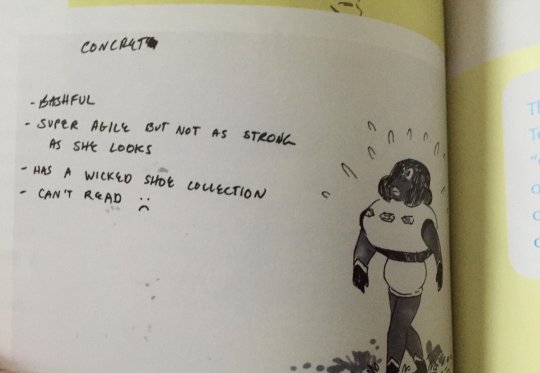
- The inclusion of the unused character Concrete◊ in the "Art of " book raised a considerable stink when many fans deemed her blackface-like appearance (dark skin and thick pale lips) and character description ("Has a wicked shoe collection," "Can't read"note ) evocative of racist stereotypes of black women. She was removed from future printings and the creator of the design, Lamar Abrams, who is African American himself, would apologize for the design, though the description was written by Hilary Florido, a white woman.
- Some rather strong detractors of the show have accused the show's creator, Rebecca Sugar, of being a Nazi sympathizer for having the Diamonds make a Heel–Face Turn after Steven manages to get through to them, viewing this plot development as a Broken Aesop. This is ignoring that Rebecca is Jewish and her family are Holocaust survivors, and that perhaps because of that is why the show emphasizes Rousseau Was Right as its message.
- Despite complaints that the show's depiction of nonbinary people (Steven's fusions and, according to Word of God, the Gems) only depicts them as aliens or a literal fusion of people with different genders, Rebecca Sugar is themself a nonbinary woman, who's admitted to using the Gems (also written as nonbinary women) to explore her own gender identity. This did soften after Steven Universe: Future introduced a nonbinary human character, Shep.
- The inclusion of the unused character Concrete
- Elena of Avalor was initially accused of ethnic stereotyping (to the point of supposedly ripping off of other Latin American mediums like Coco and The Book of Life based on shared cultural depictions and superficial/coincidental similarities), ignoring that a sizable amount of the crew including the writers were Latino and that the show has consulted Latino representation organizations. Nowadays, the show is lauded for its great representation of Latin culture and claims of racism are almost non-existent, though that's partly because the show is not well-known outside of Disney Junior.
- Many Jewish people have accused Harley Quinn of being antisemitic due to some of the humor revolving around Jewish stereotypes — despite many of the crew, including executive producer Justin Halpern and Charlie Adler, who's one of the voice directors and voiced the title character's father, being Jewish themselves.
- High Guardian Spice received criticism for its questionable portrayal of its transgender characters. Professor Caraway is introduced as being a trans man, but otherwise has little characterization beyond that and the revelation that he's trans feels incredibly shoehorned in the sense that it bears no plot relevancy whatsoever. Meanwhile, and slightly less controversial, Snapdragon's gender identity subplot was accused of following the stereotype that men who are feminine are automatically trans. Caraway and Snapdragon are voiced by Raye Rodriguez (who is also the creator of the series) and Julia Kaye respectively, both of whom are trans.
- She-Ra and the Princesses of Power:
- Some fans accused the show of queerbaiting when creator ND Stevenson confirmed that Scorpia and Perfuma ended up together in an interview after the show's end. Aside from the fact that Stevenson himself is openly queer, it also ignores the fact that the series' main protagonist became involved in a much more prominent lesbian relationship onscreen.
- Some non-binary fans weren't happy about Double Trouble being a green-skinned alien shapeshifter and felt that Stevenson should've created an original NB character for the show, despite the fact that storyboarder Rae Geiger and Double Trouble's VA Jacob Tobia are non-binary themselves, and Stevenson would later identify as transmasculine non-binary after the show ended.
- Primos, an upcoming Disney Channel show has attracted a lot of controversy from Mexican people over its use of Mexican stereotypes despite that the creator Natasha Kline grew up in a Mexican-American multicultural family.
- Rick and Morty has often been accused of ableism towards neurodivergent people, due to Rick being seen as a negative stereotype of individuals on the autism spectrum. His grandson Morty is implied to be autistic as well, and while he's definitely more positive than Rick, Morty is also one of the show's biggest Butt Monkeys. Series co-creator Dan Harmon himself is on the autism spectrum (though self-diagnosed) by his own admission.
- Rugrats: Some critics have accused the characters of Grandpa Boris and Grandma Minka of being anti-Semitic caricatures, to the point that they were eventually Demoted to Extra in the show's later seasons and cut from the comic strip adaptation altogether. Arlene Klasky and Gábor Csupó, the show's creators, are Jewish themselves.
- The Netflix animated comedy Q-Force featuring LGBT spies was instantly lambasted once the first trailer was released for being nothing but offensive stereotypes, complete with a character literally named "Twink". Many in the show's production staff are part of the LGBT community, including co-creator Sean Hayes and lead writer Gabe Liedman (both of whom are gay). Several of the staff members spoke out against the trailer to clarify that it was purely a case of Never Trust a Trailer. Indeed, later trailers for the show placed more focus on the actual storyline and characters, receiving much warmer reception.
- Santa Inc. has received criticism from the Jewish community for portraying common Jewish stereotypes, featuring an abundance of Holocaust jokes, and for downplaying Candy Small's Jewish heritage and the significance of Hanukkah when compared to Christmas. This is despite the fact that Seth Rogen and Sarah Silverman — the main leads and executive producers — are Jewish themselves.
- South Park: The character Eric Cartman is a raving anti-Semite, who at least Once per Episode bullies Kyle for being Jewish. The show itself also tends to poke fun at Judaism more than other groups of people, with Sheila, Kyle's mom, being an obvious stereotype of a Jewish mother. This has caused some moral watchdogs to accuse the show of being anti-Semitic, despite the fact that one of its creators, Matt Stone, is himself ethnically Jewish (albeit an atheist by personal belief). On top of that, Cartman is far more often the villain of an episode than its hero, and episodes where he is the hero never have him bullying Kyle (though he will still sometimes behave harshly to Kyle).
- Velma is clearly intended for a very left-leaning audience, with the diverse recasting on display and the titular character's near-constant preaching of far-left sentiments, but ended up largely turning off left-wing viewers by depicting them in a very negative light. The titular character is essentially the worst possible stereotype of a leftie imaginable, being a nauseatingly bigoted, sexist, racist, stupid, and ignorant person who ends up acting no different than the people she is against, which received genuine accusations that the show was actually black propagandanote meant to discredit the left. It certainly didn't help that the show has a weirdly flippant attitude toward things like political correctness and the #MeToo movement, embraces negative racial and gender stereotypes, or that Fred, the series' token straight white male conservative punching-bag, ended up being the most sympathetic out of the cast of absolute assholes. The fact that one of the prominent figures behind the show, Mindy Kaling, was caught liking transphobic tweets and even once made an anecdote about kissing a co-star without his consent adds fuel to the fire.
- Xiaolin Showdown is sometimes criticised for the stereotypical design and personality of the Chinese protagonist, Omi. The series creator, Christy Hui, is a Chinese-American Woman.
- Columnist S. E. Cupp is a professed atheist who, nevertheless, supports the Religious Right in the United States and claims that only with religion can people be moral.
- Red Mesa High School in Teec Nos Pos, Arizona, despite being in a town that is over 95% Native American (specifically Navajo), has Redskins as their team name. Despite the controversy regarding the NFL teamnote the town appears to have little problem with their own school using the term, although that could just be because they regard themselves as having N-Word Privileges (well, "R-Word privileges").
- In 2016, a Portland bakery caused some controversy when they began serving an Oreo-based cupcake called "Mr. President", believing it to be a racist slurnote against then-President Barack Obama. It turned out that the owner of the bakery, and the one who named the snack in the first place, was herself black. Nonetheless, the cupcake ended up being renamed "The Professional" due to the controversy.
- NBC's cafeteria menu for 2010's Black History Month (specifically: fried chicken, collard greens, black-eyed peas and cornbread) caused controversy as those foods were considered to be stereotypical cuisine for African-Americans. The chef who came up with the menu is herself African-American.
- Caitlyn Jenner is a very contentious figure in the LGBTQIA+ community because she identifies as a Republican — many members of the more dominant hard-conservative faction in the party are against the community as a whole.
- Project 2025, a proposal by far-right activists to turn the US government into an authoritarian state in the event of a Republican president winning, was criticized by several Republicans and conservatives who decried it as immoral and unconstitutional, with some even calling it an affront to God.
