

Bosses have a number of ways to announce their presence, but nothing quite says "Boss Battle" like splashing a banner across the screen to say:
Or vice-versa. This is very, very popular in Japanese media note , and found in most 3D Console RPGs, as well as in certain anime and manga (where it's a handy way to introduce new characters), it has been parodied from time to time. Despite the name, this is not limited to video game bosses. It often accompanies a Mook Debut Cutscene.
This is NOT simply when a game precedes a boss battle with a caption; that falls under Boss Warning Siren. This is when the boss has a unique subtitle to it.
See also Freeze-Frame Introduction, Dramatis Personae, and Adjective Noun Fred. Often overlaps with Red Baron, a moniker given to a character to show how badass they are.
Gaming Examples:
- Beyond Good & Evil only does this with Jade and Pey'j.
- Blaster Master Zero gives us "WARNING! THE LAIR OF <boss name>". Major bosses even get their own title in-between "lair of" and their actual name. Zero II gives us "THE HOSTILITY OF <special note> <target name>" for MA battles. This is justified in Zero III as the MA's AI calculating the target's abilities; here's what Kane saw during the first boss fight.
- Clock Tower 3 has this. First, it shows the title of the boss, then underneath, a count of their victims shows. The count disappears and is replaced with their extremely exaggerated prison sentence in years, which then reduces to 0 as the bosses health meter fills up. The bigger a sentence, the more health the boss will have.
- When someone important shows up in Killer7, they get one of these. Even if they're scheduled to die in a few moments (take a bow, Toru Fukashima and Trevor Pearlharbor). This also happens when a new version of a Heaven's Smile appears for the first time.
- The Legend of Zelda:
- The Legend of Zelda: Ocarina of Time (the picture above is taken from a fan game tribute) is the Trope Codifier. Every boss except the final one is described with a unique subtitle, starting with "Parasitic Armored Arachnid: GOHMA". Every subsequent 3D game except The Wind Waker has followed suit (though in Wind Waker, the bosses' names and titles are still used when viewing the in-game figurines you can collect). Sometimes, a common adjective appears in each of the standard bosses' descriptions: In Majora's Mask, it is "Masked"; in Twilight Princess it is "Twilit"; and in the aforementioned The Wind Waker, "Protector of the Seal" is given to the two temple bosses.
- The Legend of Zelda: Phantom Hourglass mixes things up by putting the subtitles after the boss's name (eg., "Blaaz, Master of Fire").
- The Legend of Zelda: Spirit Tracks gives each boss a name and title. The only exceptions are Byrne, who's only referred to by name, and Dark Link, who isn't identified at all.
- Averted right at the end of Ocarina of Time when the final boss rears up in front of you and the bold letters plainly and simply state "GANON", as if the game itself were incapable of describing the horrendous monster in front of you as anything else. Following games do the same thing with their final bosses. They did it again in Skyward Sword, except several times. The Imprisoned is only known as such, and when you fight its true form, it is only listed as DEMISE, which takes on an even deeper meaning when it's revealed that Ganondorf (and by extension, Ganon) is the embodiment of Demise's curse on Link and Zelda.
- In The Legend of Zelda: Breath of the Wild, the field bosses (Hinoxes, Stalnoxes, Stone Taluses, and Moldugas) will have their creature name and the name of the area they are found in. The main story bosses instead have "Scourge of [insert name of dungeon where they are found]" above their names; the exceptions are Master Kohga, who is labeled "Leader of the Yiga Clan," and Dark Beast Ganon, who is labeled "Hatred and Malice Incarnate." Major friendly NPCs will also get subtitles when they are first introduced.
- The Legend of Zelda: Tears of the Kingdom also uses them in the same scenarios as is predecessor, with a hilarious one given to a Brainwashed and Crazy Yunobu as "Clearly Not Himself" while he's trying to flatten you in a miniboss fight and it's been established that he's been acting like a jerkass ever since he was given a mind-controlling mask rather than the lovable Cowardly Lion last time.
- Hyrule Warriors: Per classic Zelda tradition, bosses are introduced with a descriptive phrase followed by their name, like "Fire Breathing King Dodongo," usually the same as in their original appearance.
- Hyrule Warriors: Age of Calamity continues the trend with a title for all characters, such as Master Kohga, who is labeled "Top banana of the Yiga Clan".
- LEGO Adaptation Game:
- Used with every single character in LEGO Marvel Super Heroes. Justified in that there are so many characters in the game (most of which are playable) that having the name tags show up helps players remember who they are. It also helps for storytelling purposes; nearly every character is already familiar with the other characters they meet, so showing the name tags avoids any "Hey it's Wolverine!" "Yes I am Wolverine" moments.
- Every boss in LEGO Star Wars: The Skywalker Saga is introduced with their name on-screen with a subtitle in Aurebesh, the fictional alphabet of the Star Wars universe. Some are straightforward, while others are more humorous, like Darth Vader's subtitle being "Loves the dark side, hates sand".
- Metal Gear Solid:
- The series follows the 'Character Name' - 'Voice Actor' format. Main characters like Snake or Raiden even get big music stings to go with them. Metal Gear Solid 2: Substance parodied it with the more standard boss variation and 'The Monster From Another Dimension - Gurlugon'. Holding a button when this occurs will display the character's motion-capture actor instead of the voice actor.
- Metal Gear Solid: Peace Walker also features the more traditional variant. Compulsory bosses and the Monster Hunter creatures get one on a red-tinted screen with a special font while the Extra-Ops vehicles have no screen tinting and use a larger version of the subtitle font.
- Played with in Metal Gear Solid 4: Guns of the Patriots: the end credits role beginning with the main characters... Big Boss? Big Boss didn't have a speaking role, why is someone credited with... ooohhh...
- No Straight Roads has a variation of this, with every major boss battle preceded by "Bunk Bed Junction Vs. [Name of Musical Artist]".
- Ōkami has Boss Scrolls, with a illustration of each enemy (including bosses) when fighting them for the first time along with their name in Japanese (regardless of whether the game is the English version), right when Boss Subtitles would normally occur. It also has this for many characters when you first meet them. Including a slip of paper.
- Pokémon Rumble has a basic one for its bosses (class, then the name). The Battle Royales give a hint of what Pokemon it is beforehand with a silhouette, almost meaningless stats (as you progress in the game they'll always be Legendaries), and the typing.
- Risk of Rain and Risk of Rain 2 do this for all bosses in the game.
- Magma Worm Ancient Lava Swimmer
- Scavenger Tasting Your Own Medicine
- Toxic Beast Mother of Many
- Providence Bulwark of The Weak
- The Shantae series has it for most of its bosses, which usually have Added Alliterative Appeal:
- Shantae and the Pirate's Curse does this with all of its bosses such as:
- Cyclops Plant: "Frighteningly Fixated Flora"
- Squid Baron: "Reocurring Rascal".
- Shantae: Half-Genie Hero:
- Tinkerslug: Changes based on mode:
- Regular:
- (Don't Call It Poop Toot!)
- Jammies:
- (Slime-ridden Sail Barge!)
- "Giga Mermaid (Captivating Captive)"
- Shantae and the Seven Sirens:
- Water Lily Siren: Sunbathing Seaweed
- Coral Siren: Drills to the Gills
- Tubeworm Siren: Parasite Petting Princess
- Shantae and the Pirate's Curse does this with all of its bosses such as:
- Asura's Wrath has these for bosses and mooks alike. As well as Yasha's airbike.
- Every boss battle in Cuphead is preceded by a title card with the boss's name and a name for the level.
For example: Beppi the Clown in Carnival Kerfuffle
- Enter the Gungeon features these during the boss introduction splash card, stating the name and title of the boss.
Such as Trigger Twins, Double Tap
- Hollow Knight gives its bosses names in their introduction animations at the bottom right of the screen, but there are exceptions:
- The final boss, the Hollow Knight, has their name center on top of the screen. They also have this treatment in their Godmaster DLC rematch as the Pure Vessel.
- Also, two examples stand out in that their titles take up the entire screen. The (Absolute) Radiance's intro fills the screen in white with her name in black, while Nightmare King Grimm gets red text on a black background.
- Grey Prince Zote is a special example, who's Played for Laughs: while his name is shown at the bottom-right in the traditional way, more adjectives are added over his name over the times you defeat him. It goes so far the screen can't show them all!
- Star of Providence has a name appear at the top (and bottom, if necessary) for major bosses. The Machine has scrambled runic characters instead, with its name only given in the bestiary.
- In Xenoblade Chronicles X every Tyrant is given a name in this style. Examples include "Telethia, the Endbringer" and "Aria, the Zauberflöte".
- Claws of Furry: Each boss has one. Examples include Ratamaster "Say Cheese" and Mama Croc "Eat Your Soup!!!". The last two bosses, however, just seem to have an image of an attack.
- The Dishwasher: Vampire Smile has one for every boss save the last. It's pretty much always played seriously, though a couple are a little snarky.
- Double Dragon Neon does this with both bosses and mooks, like "Cartwheeling Cannon Fodder Williams", "Mistranslated Mutants Bimmy and Jammy", and "Your Worst Nightmare Skullmageddon".
- Ganbare Goemon makes good use of this. We have, for instance, "Wartime Kabuki Robot KASHIWAGI." The final boss is "The Fairy of Love and Dreams D'ETOILE." From Goemon's Great Adventure there's "Ukulele Hawaiian GODS OF WIND AND THUNDER."
- Both Guacamelee! games have a screen just before a boss battle showcasing both the player characters and the boss being challenged. The first game's boss intro resembles a lucha libre promotional poster, while Guacamelee! 2's boss intro is more akin to an arcade fighter.
- The Like a Dragon games do this almost every time an important character is introduced, boss fight or otherwise. Of course, this being a series set in modern-day Japan, most of the subtitles are fairly mundane, being the Character's occupation instead of their nickname (for example, Daisaku Kuze, Lieutenant of Dojima Family, Tojo Clan Subsidiary), which sort of makes it funnier. If the main character doesn't know the boss's name, the game will use a generic descriptor instead, which can result in some unintentional comedy.
 ◊
◊
- Spyborgs is one of the cases where they do it to introduce new regular enemies.
- Viewtiful Joe has bosses such as Dark Fiend Charles III, Aquatic Terror Gran Bruce, Blade Master Alastor, Serial Killer Android Miss Bloody Rachel... pretty much every boss has a subtitle, including King Blue and Dark Hero Jet Black.
- The Warriors introduces each new gang with a quick shot of the gang and their tag.

- Colin McRae: DiRT 2 uses a variation of this as its 'One To Watch' feature: Immediately before each individual race, the game shows you the name and vehicle of whichever participating racer the game has chosen as most likely to win, making him/her your primary challenger for the rest of the race. There's even a chance that the game can pick you as the One To Watch, letting you know just how much of a speed demon you are.
- Need for Speed: Hot Pursuit (2010) has the car model of a police car sent after you to be in focus and named before the action continues as the cop car is chasing you.
- The .hack games show special animations before you fight the eight phases, the first of which is Skeith: The Terror of Death.
- The first Darkstalkers did this with each character and their monster template/inspiration (e.g. Anakaris — Mummy). The sequels didn't.
- Touhou Project:
- The games do this whenever the protagonist reaches the boss battle at the end of a given stage. Which isn't to say that it's just stage bosses that get titles; the protagonists have them in the character select screens, midbosses have theirs in the profiles, and they even show up in the manga spinoffs! Not to mention they usually get new titles whenever they show up again in another work.
- Junko from Touhou Kanjuden ~ Legacy of Lunatic Kingdom stands out as the only aversion in the entire series. Instead of a title, her profile calls her "(Nameless Being)". This is related to her power to purify things, refining them to their most basic components. She has purified herself from any information on what she is, including her title and her True Name. She only uses her former name "Junko" out of convenience.
- Bayonetta:
- Every time a new type of enemy appears in the game, it's accompanied with a short cut scene and a Pastel-Chalked Freeze Frame that gives the name and class of the enemy. The enemy's name is then displayed over a picture of their halo (with stronger and more powerful angels having more elaborate halos), and the freeze frame zooms out to reveal their image within "The Hierarchy of Laguna", before the book flies away and the scene cuts back to the action. This is also used to alert the player when Umbra Witch: Jeanne finally appears after fighting her at least three times prior, and Dea: Jubileus
- The Golem enemy, being a mechanical beast rather than an angel, doesn't get a halo behind its name in its subtitle introduction. It still appears in the Hierarchy, however.
- Jeanne also has no halo, but unlike the Golem, she doesn't appear in the Hierarchy of Laguna (for obvious reasons) and her subtitle simply appears on screen.
- There is only one pair of enemies in the game not to get an introduction: Gracious and Glorious. These two are upgraded versions of Grace and Glory, two enemies that have likely already achieved status as Demonic Spiders for the player. Without this introduction, it's possible for the player to not even notice that these are new, more powerful enemies and have no idea why they're getting their ass handed to them even moreso than usual.
- The Infinite One: Father Rodin. After defeating him, you can read his description to find out where the name "Infinite One" comes from.
- Every single enemy in the game, with the exception of bosses, will attack during their 'Boss Subtitles' cutscene, and will hit you if you don't move out of the way once the cutscene ends. It's also worth mentioning that no matter how perfectly one dodges this first attack, Witch Time will never be activated against it.
- This has carried over to Bayonetta 2 as well. But it's not just for the angels... Players will be reminded to crap their pants when they see Devourer of the Divine: Gomorrah. The demons also show up in their own book as a parallel to the angels' "Hierachy of Laguna"! Of special note is the identity of the Masked Lumen Sage, Lumen Sage: Balder. Not only that, but it's accompanied with his boss theme from the first game.
- And carried over to Bayonetta 3, featuring the Homunculi. The titles they receive are much less fanciful due to being a man-made production line of Killer Robots rather than angels or demons from ancient scripture. Compare Light Humanoid Assault Unit: Nebulosus or Mega Aerial Fortress: Aureole to any of the above.
- Astral Chain: Every new Chimera (and the few bosses that don't fit that descriptor) get an IRIS callout on their first appearance. Given the sheer amount of unique Chimera subspecies, these keep showing up well into the postgame.
- In Fire Emblem Warriors: Three Hopes, boss characters are given a short intro cutscene displaying their name and faction when they are first encountered, followed by a quote if they're a story-important character.
- The Sengoku Basara series does this with stage bosses; examples include "Motonari Mori: Terrifying Tactician" and "Kojuro Katakura: Doing Work."
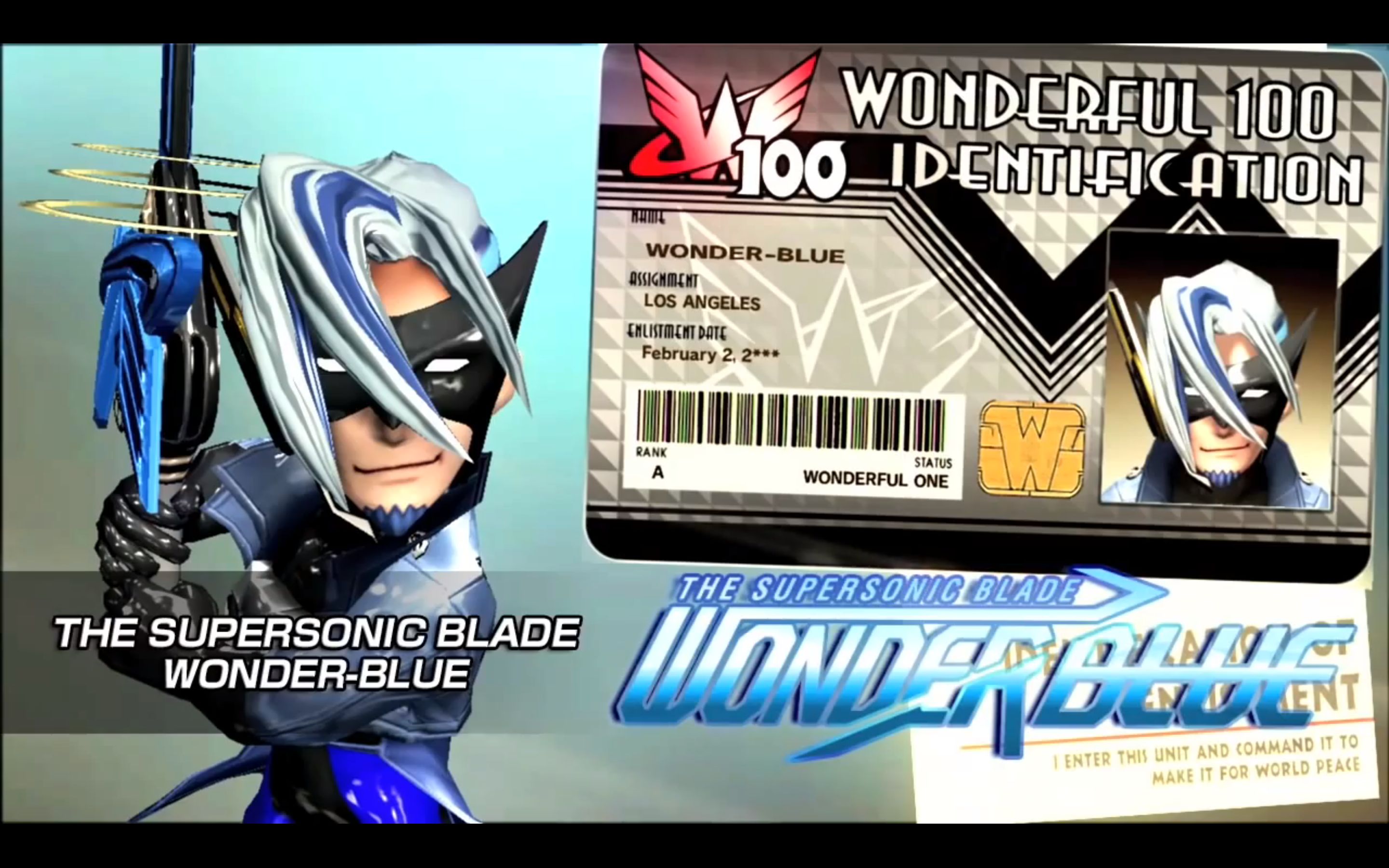
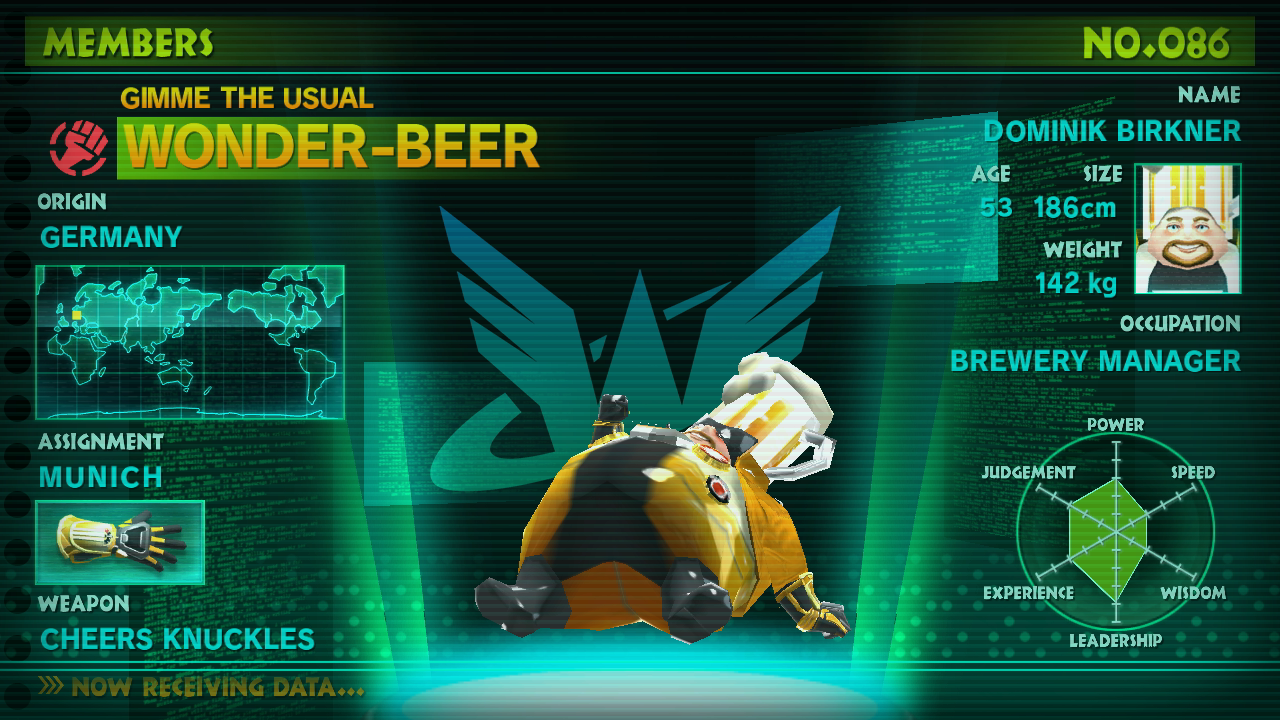
- The Wonderful 101: This is yet another parallel to its predecessor, Bayonetta.
- All enemies are given names, subtitles, and highly detailed, almost Pokédex-like◊, descriptions when first encountered. Bosses are given an accompanying "WARNING!" buzzer to let you know they're a real threat. Platinum Robo is also given an enemy style introduction, as both its origins and intentions are unknown.
- The heroes are also given similar intros◊.
- Every single one of the 100 heroes (115, if we're including secret characters) has an intro and subtitle when recruited just like this◊.
- All enemies are given names, subtitles, and highly detailed, almost Pokédex-like

- In Dungeons & Dragons Online, several bosses have a subtitle under their names. Some of them really funny (special mention for three of the members from Dr Rushmore group of outlaws: Ugg <Confused Meatshield>, Dr Will Ewe Rushmore <Renegade Master Wizard Himself> And Smiling Sam <Sassy Assassin>.)
- Throughout one of the bonus mission pack missions in Guild Wars, which was a pastiche of kung-fu movies, every boss character is introduced in this way.
- In Grand Fantasia, this happens frequently, no matter what part of the world you are in and no matter where the boss monster appears. It also occasionally has a WARNING tacked onto the front (to let you know that a monster on the other side of the continent is coming to get you), accompanied by an ominous bell chime. More often than not, five minutes later there will be another message popping up to let you know that the monster has been defeated.
- Mabinogi does this when you reach the boss of an instanced dungeon. As does its Darker and Edgier prequel Vindictus.
- Not typical in World of Warcraft, but happens sometimes. Mainly, Illidan Stormrage, "The Betrayer". Also, Kael'thas Sunstrider, "Lord of the Blood Elves" or Kil'jaeden "The Deceiver". The Warlords of Draenor expansion, however, takes this trope and runs with it - all of the warlords get their own subtitled cut-in/freeze-frame when they're first introduced.
- Since Shadowbringers, Final Fantasy XIV has done this with every dungeon and raid boss, giving them an overhead title with the boss' name beneath it. Though like with Zelda, when it comes to the final bosses, the game forgoes titles to simply have the Big Bad's name in bold.
- Banjo-Tooie: Boss subtitles are used in a tongue-in-cheek fashion, with unusual titles like "Giant Wobbly Inflatable Thing Mr. Patch", "Visually-Impaired Welding Torch Weldar", and "Self-Important Angler Fish Lord Woo Fak Fak". Played with in the fifth level, where two NPC, and an enemy get these. In the case of one of the NPCs, Chompasaurus, he seems like an enemy as he eats Banjo and Kazooie as soon as he appears… But he turns out to be a nice guy who's just having stomach problems and wants them to help him out.
- Broforce gives subtitles for the Bruisers and the bosses displayed with Satan's flag in the background, as well as similar splash screens for unlocked bros or supply crates with the American flag in the background.
- Every boss in Donkey Kong Country: Tropical Freeze has a title that is shown on their figurine. In order, these are:
- Pompy, the Presumptuous
- Skowl, the Startling
- Ba-Boom, the Boisterous
- Fugu, the Frightening
- Bashmaster, the Unbreakable
- Lord Fredrik, the Snowmad King
- Hard Corps: Uprising has this followed by the Boss Warning Siren when a boss battle appears. In the Japanese version, the boss names are written in Kanji, with Romaji written below it. In the English version, the English text covers the Japanese Kanji, without Romaji below them.
- I Wanna Be the Guy does a parody of an Ikaruga boss fight with Mecha-Birdo, complete with the same warning screen and BGM.
- Kid Icarus: Uprising usually displays the name and picture of a boss on the bottom screen while you're fighting it, sometimes also including a descriptive phrase.
- Kirby:
- Kirby Star Allies does this with every major boss in the Story Mode and Heroes in Another Dimension. In Guest Star ???? Star Allies Go! and The Ultimate Choice, only the final boss of a level or difficulty gets the subtitles. For example:
- His Royal Nemesis, King Dedede
- Otherworldly Dark Liege, Parallel Dedede
- The Lone Swordsman, Meta Knight
- Otherworldly Frost Blade, Parallel Meta Knight
- Frozen General, Francisca
- Blazing General, Flamberge
- Lightning General, Zan Partizanne
- Cycloptic Stormcloud, Kracko
- Dual Thunderheads, Twin Kracko
- Unearthly Storm Front, Parallel Twin Kracko
- Unearthly Thunderhead, Parallel Big Kracko
- Officiant of Doom, Hyness
- Reborn Butterfly, Morpho Knight
- Dark-Winged Disaster, Morpho Knight EX
- Destroyer of Worlds, Void Termina
- Essence of Chaos, Void Soul
- Astral Birth, Void
- Kirby Fighters 2 also has boss subtitles, though fewer in number due to the smaller number of bosses overall:
- Giant Tree Twins, Twin Woods
- Old Rivals, King Dedede & Meta Knight
- Sworn Partners, King Dedede & Meta Knight (rematch)
- Moon Warriors, Waning Crescent Masked Dedede & Waxing Crescent Masked Meta Knight
- Kirby and the Forgotten Land also has these; the subtitles are now Ninja Props that appear as a physical part of the environment. King Dedede and Meta Knight also reprise their subtitles from Kirby Star Allies. Other examples include:
- Strong-Armed Beast, Gorimondo
- Unfriendly Fronds, Tropic Woods
- Lethal Leopard, Clawroline
- Armor-Plated Prancer, Sillydillo
- His Primal Nemesis, Forgo Dedede
- King of the Beasts, Leongar
- Invasive Species, Fecto Forgo
- Ultimate Life-Form, Fecto Elfilis
- Possessed Beast, Forgo Leon
- Psychic Beast, Soul Forgo
- Fluttering Dream Eater, Morpho Knight
- Species Born of Chaos, Chaos Elfilis
- Kirby Star Allies does this with every major boss in the Story Mode and Heroes in Another Dimension. In Guest Star ???? Star Allies Go! and The Ultimate Choice, only the final boss of a level or difficulty gets the subtitles. For example:
- The Legend of Dark Witch series has one for nearly every single character. The tradition actually started with the English version of the first game (the original Japanese version rendered the character names in both katakana and romaji instead) and continued in both languages from there.
- Every normal stage in the Mega Man (Classic) and Mega Man X series opens like this, with just the boss name. Boss descriptions came about as early as Mega Man 6, with intros such as "Flame Man: Master of Flame", and "Plant Man: Flower Fancier". The art books tend to be more descriptive.
- Magical Doropie has Boss Intertitles. After the Boss Warning Siren sounds and the boss appears, the game cuts to a screen with the heading "ALERT!! Big Enemy!!" Underneath this is shown a short data file on the boss. Concluding this screen is a "message for you from your friends."
- Neo Contra. In each cutscene before the boss battle, the boss NPC has the nickname attached in the dialogue when talking to the players.
- Pizza Tower: The game's bosses have a versus screen displaying realistic-looking versions of Peppino (or The Noise) and the boss. The game also masks the reveal of Fake Peppino by showing a second Peppino where the boss would be, but uses the boss's image for rematches.
- Psychonauts 2 gives both Mooks and bosses subtitles and a one-sentence summary of what they do/are in the form of Raz's notes during each Mook Debut Cutscene.
- The Guardians from Rayman 2: The Great Escape get this. Even Zero-Effort Boss Umber.
- Sonic the Hedgehog:
- Used in Sonic Adventure, Sonic Adventure 2, Sonic Heroes, Shadow the Hedgehog, and Sonic the Hedgehog (2006), as well as the Sonic Rush series. The two Sonic Adventure games and Sonic Heroes type out each letter one by one, even including a typewriter sound effect. In Sonic Adventure 2, the GUN robots take it a step further: their name is accompanied by scrolling text that shows a list of their technical specs (which, while irrelevant, are perfectly readable).
- The two versions of Sonic Unleashed do it differently: The HD version by Sonic Team merely shows the bosses' names, all of them using the same font, while the Wii/PS2 version by Sonic Team and Dimps takes a cue from the Sonic Rush series and reads "Boss Battle: vs. [Boss]", using a different font for Sonic bosses and Werehog bosses.
- Sonic Dream Team has Each boss has its own subtitle when you encounter them.
- Dr. Crabulous: Cognitive Crustacean
- Factory Foreman: Menacing Managers
- The Four Man: Managerial Mecha
- Guardian Hunter: Nightmare Horror
- The Valis series has experimented with several different versions:
- The TurboGrafx-16 version of Valis II has Boss Intertitle screens. "Warning!! A strong warrior (Adjective Noun Fred) is coming here!" The Japanese PC versions preceded each Boss Battle with a subtitle describing the boss in a (English) sentence that could be quite bizarre, e.g. "Heizen was manipulated by his occiput!"
- The PC-88 version of Valis said "Be carefull (sic)! (Boss's name) is coming," followed by a line of proverbial advice.
- Super Valis IV showed the name of the "dominator" and its area, followed by its signature ability or weakness.
- Yooka-Laylee has these for all of its bosses:
- The Great Rampo: Ancient Angular Stone Bloke
- Brrreeze Blok: Bookend in Burnie
- Trev the Tenteyecle: Upset Kraken
- I.N.E.P.T: Short-Sighted Sentient Supercomputer
- Planette: Interstellar Widow
- Capital B.: Crowdfunded Corporate Creep
- Part Time UFO: The second Moon level features one of these.
- Every boss in SpaceChem is preceded with one of these, which is convenient because there's no other way you'd know what you were fighting. Even the "boss" of the 63 Corvi DLC campaign, which is a star you are trying to make collapse under its own weight, gets one, namely "Corvi - Type K Main Sequence Star".
- Every boss encounter in Avalon Code.
- Seen with the bosses in Brave Fencer Musashi and its sequel Musashi Samurai Legend.
- BoxxyQuest: The Gathering Storm: ONE_WING: KING OF TROLLS gets one — an extension of his rampant Large Ham tendencies.
- Dark Cloud and its sequel, Dark Chronicle also do this. Both games have stuff like "Divine Beast Dran", "Ice queen La Saia", "eater of memories, Memo-Eater" or "Dark Ruler Emperor Griffon."
- Diablo III has gotten into the act. Random unique enemies will have a title under their health bar in place of attributes like most special enemies. For example, in Act II you can run into "High Cultist Murdos, Cruel and Powerful Cult Acolyte" or "Ashek, Diminutive Fallen Fighter". As a reference to My Little Pony: Friendship Is Magic, there's "Nightmarity, Generosity In Death" and "Midnight Sparkle, Nightmare Is Magic". And as a reference to an Act I memetic NPC linenote , there's an Undead unique named "Marko, And Now He's Dead".
- Fable II introduces new enemies using little cutscenes, going from standard "Bandits" when the hero is young and "Commandants" when things get tough.
- Final Fantasy:
- Done for party members in Final Fantasy VI, except it only shows the description. You get to name the characters yourself. The DS remake of Final Fantasy IV does it for all party members the first time you meet them, while the boss encounters show the name of the boss at the beginning.
- Final Fantasy XIV:
- The game started giving subtitles to raid- and dungeon-bosses as of the Shadowbringers expansion, with descriptors like “Lightwarden: Philia” and “Heritor of the Whorl: Leviathan” appearing in the pre-fight cutscenes. The expansion’s final boss, Hades, simply displays their name without a descriptor.
- In the Endwalker expansion, Hildibrand is titled "Lightwarden: The Forgiven Gentleman, complete with the Shadowbringers dungeon boss theme playing as part of a gag. It doesn't last very long.
- Every boss in From The Abyss. Most of them will also have a pre-fight taunt after the subtitles fade, the only exception being the penultimate boss, the Abyss Cocoon (which is a giant beating heart).
- Gurumin: A Monstrous Adventure does this for each boss as they transform from their less threatening forms into a more formidable opponent.
- Used for each boss in the freeware RPG A Home Far Away
- Many of the bosses in the The Legend of Heroes: Trails of Cold Steel games come with these, for example, "Icy Beast Unsurtr" and "Heavily-Armorerd Soldat Hector." One of the most notable examples is "Enforcer No. 1 - McBurn The Blazing Demon" - notable because it appears only after you have seemingly defeated him in battle, only for him to then "turn up the heat."
- Live A Live introduces each enemy in battle by showing their name at the top of the screen.
- Marvel Ultimate Alliance 3: The Black Order: Every character, boss, playable or otherwise, has one of these.
- All bosses in Ni no Kuni have these, such as the first boss: "The Guardian of the Woods: Steadfast Defender of the Forest."
- Paper Mario: The Origami King is by far the only Paper Mario game that uses subtitles to introduce the bosses, as the game itself introduces the Legion of Stationery, a legion of living arts and crafts supplies who are given such subtitles in a The Legend of Zelda style, with their names displayed in the same color of the streamer they guard, complete with Red Baron nicknames as well.
- Pokémon has begun doing this starting in late Generation VIII:
- Pokémon Legends: Arceus uses this trope for the Noble Pokémon battles (excluding Ursaluna and Braviary, which battle the player of their own accord rather than in a frenzy).
- Lord of the Woods: Kleavor
- Lady of the Bridge: Lilligant
- Lord of the Isles: Arcanine
- Lord of the Hollow: Electrode
- Lord of the Tundra: Avalugg
- Pokémon Scarlet and Violet uses this trope for the Titan Pokémon, but also for the Final Boss: the Koraidon/Miraidon used by the Paradise Protection Protocol:
- Klawf, the Stony Cliff Titan
- Bombirdier, the Open Sky Titan
- Orthworm, the Lurking Steel Titan
- Greak Tusk/Iron Treads, the Quaking Earth Titan
- Tatsugiri/Dodonzo, the False Dragon Titan
- Koraidon/Miraidon, the Guardian of Paradise
- Pokémon Legends: Arceus uses this trope for the Noble Pokémon battles (excluding Ursaluna and Braviary, which battle the player of their own accord rather than in a frenzy).
- Shin Megami Tensei has races that generally subvert the trope due to being shared, but a few of the unique ones are double subversions. The main series's biggest example is in Shin Megami Tensei IV: Apocalypse, whose penultimate boss is titled Original Angel: Satan.
- Skies of Arcadia does this for the Valuan admirals... and their ships. And the Gigas.
- Torchlight II plays similarly and probably just as coincided as it's release date being close to Diablo III. Bosses display their name then their title below that accompanied by the sound of a stone door opening to act as a Boss Warning Siren.
- Undertale: The only boss to do this is the True Final Boss. This makes sense, given that he's a little kid given god-power, and everything he does in this form is his idea of Rule of Cool.
- Wild ARMs 2, with a silhouette against a blood-red screen and an ominous intro theme to go with them.
- In the Japanese versions of the Ys games, glorious Gratuitous English subtitles began with Ys VI: The Ark of Napishtim and continued in Ys: The Oath in Felghana and Ys Origin, giving us such wonders as 'Garland — Mind Broken of the Darkness'. The accompanying Japanese subtext tended to make a lot more sense but wasn't half as fun. Ys SEVEN has only Japanese titles. XSEED Games's localizations translate these properly, and had fun with at least one in SEVEN, with one boss having the subtitle "big bug beast".
- Palworld: Every single one of the eponymous Pals has a boss variant and when encountered, a health bar with their title will appear on the top of the screen.
- No More Heroes:
- The first game does this (with the exception of the first boss) whenever you enter a boss fight. Starting with a digitized voice announcing the boss's name and a quote from them.
- No More Heroes 2: Desperate Struggle uses a different approach, in reverse; The boss' name gets revealed after the battle is won, along with the subtitle stating that they are defeated.
- Travis Strikes Again: No More Heroes is a bit more subtle about it, having a close-up for every new enemy bug type that appears for the first time, while the bosses get more traditional splash screens prior to the battles. Both simply have their names displayed.
- No More Heroes III is all over the place about this. In addition to using NMH2's approach at the end of each boss battle, each Ranking episode is preceded by opening credits that list all of the major characters that are relevant in the episode, new enemy alien types are introduced with info cards that describe their names, what they are and what tactics they use, and the Galactic Superhero Rankings are introduced in grand fanfare (alongside Travis) in an ad after the first boss, with action figure-style packaging.
- Ace Combat:
- Ace Combat Zero: The Belkan War: Starting with the player's Galm team, whenever a new boss-level squadron appears, their name and emblem appears on the screen during the introductory cutscene. This is also the case with the interviews, showing the character's callsign, their full name, and their squadron's name. Assault Horizon Legacy does it, too.
- Ace Combat 7: Skies Unknown shows a new emblem and subtitle during takeoff every time Trigger changes squadrons. From Mage 2, to Spare 15, to Strider 1, and finally the unofficial name everyone knows him by: Three Strikes.
- In Astro Warrior for the Sega Master System, Boss Battles are preceded by the message "WARNING! DESTROY (boss's name)," and followed by the mysterious flashing message "SURELY REVIVE — (boss's name)."
- Toaplan's Batsugun has simple boss subtitles, consisting only of a flashing "WARNING" label, the stage number, and the boss's name.
- Before a boss appears in Gunstar Heroes, you're given a warning that names the boss and their attacks. A lot of them tend to have silly names and attacks, but that won't stop them from beating the crap out of you if you don't know what you're doing.
- Ikaruga: Before encountering a stage-end boss, a red warning is displayed on the screen stating "The big enemy is approaching at full throttle. According to the data, it is identified as Butsutekkai. NO REFUGE"
- Every boss in Jamestown: Legend of the Lost Colony is introduced with their name, followed by a poetic description, such as "Lady of the Lake: The bane of Roanoke".
- Being an Ace Combat fangame that wears its inspiration on its sleeve, Project Wingman gives the Peacekeeper Squadrons and major enemy airframes a splash with their squad emblem, name, and role. And then, at the very end of the game when Crimson 1 is out of tricks and it's down to a final duel in the skies... Monarch gets one.
- Radiant Silvergun starts off each boss battle with the message "Be attitude for gains:" followed by three tips which don't, for the most part, seem to make any sense. Except for the final boss: 1. BE PRAYING 2. BE PRAYING 3. BE PRAYING
- Star Fox:
- Star Fox for the SNES has an unusual example of this. Every major boss is given a subtitle in the manual, such as "Advance Scout Mother Ship: Attack Carrier", and "Special Close Orbit Robot: Phantron". There are no names or subtitles given during gameplay, but instead features an elaborate ending sequence that shows each of the bosses faced during the course which gives just the name and some meaningless stats.
- The 3DS remake of Star Fox 64 adds these, using the first format. The only exception being Sector X's boss which only shows the Boss Name. It averts the All There in the Manual that the original had where most boss names were concerned.
- Galdon and Drakor are the only bosses in Star Fox Adventures introduced this way.
- Star Fox Zero uses the Adjective Noun Fred format not only for bosses, but for newly acquired vehicles or transformations.
- The Tale of ALLTYNEX has these for every boss, which includes the description or code name of the boss alongside the boss name itself.
- Thunder Force: For Thunder Force V: "ALERT! The enemy is dead ahead! Area Guard Name: _____", and a small description (like "It died three times a and was reborn twice" for Armament Armed Arm) and for the final boss: ALERT! ALERT! ALERT! ALERT! ALERT! ALERT! ALERT! ALERT! ALERT! ALERT! ALERT! ALERT! ALERT! ALERT! ALERT! ALERT! ALERT! ALERT! ALERT! ALERT! ALERT! ALERT! ALERT! ALERT! ALERT! with the voice-over devolving into static, repeatedly saying "caution."
- ZeroRanger does this when revealing the identity of the Stage 2-3 boss, who you fought in Stage 1-3 earlier and was introduced as "Eve of Destruction":
THE ABADDON FIGHTERnote
"GRAPEFRUIT"
- Borderlands uses this as its signature running gag, even for major NPCs. It's funny when it gets to the bosses though, like with these:
9 Toes. (Also, he has 3 balls)Sledge. PS. You aren't friends.Undead Dr. Ned. HOLY F*#ING SHIT!!!!!!Hank Reiss: Wereskag (nice hat!)Knoxx: Doesn't like MondaysRoscoe: He's cute and cuddly, right?Flame Knuckle: Kill this guy ⇧
- The boss levels at the end of each Act in The Citadel uses the naming convention of "[Boss Name], The Angel of [Deadly Sin]".
- Darius (and its sequels) introduces the stage's boss with this: "WARNING! A HUGE BATTLESHIP (boss's name) IS APPROACHING FAST."
- Every installment in the House of the Dead series does this with its bosses, having a name (Until Overkill, taken from Tarot cards.) and picture of the boss come up, with its weak points helpfully pointed out. Justified in the first two games as being a file collected at the beginning of the game, and even shown as opening the file or book to the relevant entry. In The House of the Dead 4, James stores boss data in a sleek PDA.
- Max Payne: Done for the introduction of every major character of the second game.
- Silent Scope uses the Name — Epithet format, e.g. "Scorpion the Butcher", "Cobra the Iron Man", and "Monica the Armored Secretary".
- Splatoon 2 and Splatoon 3 use subtitles to introduce the bosses, notably the third boss has two subtitles during its introduction and after the first phase is beaten.
- This happen with the bosses in Titanfall 2.
- Descent 2 has descriptions of the boss robots in the level briefings, while D3 directly introduces bosses with subtitles.
- Trauma Center: Both Under the Knife games and Second Opinion use the descriptive sentence/boss name format for the bonus X missions, which featured each strain of (Neo-)GUILT in isolation and in their hardest form. Here the subtitles manifest as the notes in the pre-operating briefing.
- Full Spectrum Warrior introduces main characters this way.
- In Super Robot Wars, particularly Alpha and Original Generation, introducing Sanger Zonvolt's Dygenguar always requires this as the title card of the mission scenario where it makes its debut appearance.
- Pachimon: Each card features a kaiju's info, including a subtitle that is some variation of "Giant Monster [insert name here]".
- Yu-Gi-Oh!: The Japanese OCG card names do this a lot. For instance, Dark Paladin in the English TCG is known as Super Magical Swordsman — Black Paladin in the OCG. In general, the TCG tends to be fairly inconsistent about localizing the full names, often resorting to shortened forms to reduce title text. Sometimes, the anime will include them where the card does not (Yugi in the English dub does refer to Dark Paladin, the Ultimate Magical Swordsman). It's also common for retrained versions of old cards to include these to distinguish them from the original, often using their attack names as the subtitle (e.g. Harpie's Pet Dragon — Fearsome Fire Blast).
- Fate/Grand Order has these primarily in the Cosmos in the Lostbelt storyline for the big important bosses.
- The fifth Lostbelt features the battle intro "True Mechanical God Advent" before the Olympian's name is chiseled onto a metal slate in Greek as their intro card.
- The sixth Lostbelt features the Calamities' titles used as the battle title card before it burns away to introduce the boss' name in Gratuitous English:
- Calamity of Flame: Albion
- Calamity of the Beast: Barghest
- Calamity of Curses: Cernunnos
- Insect of the Abyss: Oberon
Non-Gaming Examples:
- Putting onscreen the name of the Robeast during its first appearance used to be very popular in the Super Robot Genre. Noteworthy examples are:
- The Mazinger saga:
- Mazinger Z with the Kikaiju (Mechanical Beasts)
- Great Mazinger: with the Mykene Warrior Beasts.
- UFO Robo Grendizer with the Vega Beasts and the Saucer Beasts.
- Getter Robo with the Mechasaurs and Mechaoni.
- Kotetsu Jeeg with the Haniwa Phantom Gods.
- Raideen with the Slave Beasts.
- The Robot Romance Trilogy:
- Combattler V with the Slave Monsters and later with the Magma Beasts.
- Voltes V with the Super Beast Knights.
- Daimos with the Mecha Warriors.
- Zambot3 with the Mecha Bursts.
- The Mazinger saga:
- While most of the demons in Devilman simply have their name prefixed with Yōjū (literally "Demon") in the episode titles, there are quite a few opponents which mix things up a bit, such as these examples:
The Sleeping Beauty, ZoldovaDemon Gande, The Walking EyeDemon Kilskey, The Crimson TornadoDemon Magdler, The Flying Lava
- GEAR Fighter Dendoh does it with the Galfa.
- YuYu Hakusho did this even with special attacks. Practically every new character introduced was given a name in this fashion, even Yusuke himself.
- The Law of Ueki does this with opponents, detailing their powers, number of talents, and miscellaneous information such as hobbies and such.
- Real Bout High School did this in the final volume (descriptive sentences and everything) as a sendoff to all the characters, handily inverting the common usage of this trope.
- Tengen Toppa Gurren Lagann:
- The show applies this to both the Quirky Miniboss Squad as well as its leader and whenever the heroes combine into a new and bigger kind of Humongous Mecha, the name of the new form is displayed onscreen.
- Used in the last episode to make the Title Drop, just before the Final Battle. The subtitle is even in the same font as the main title.
- In the first movie, it also happens after the three Generals and Viral combine their Dai-Guns (Dai-Gunkai, Dai-Gunten, Dai-Gundo, and Dai-Gunzan II). The name-tag says "Dai-Gun Doten Kaizan".
- In the second movie's final battle, we get Tengen Toppa Solvernia (Nia), Tengen Toppa Enkidulga (Viral), Tengen Toppa Yoko W Tank (Yoko), Tengen Toppa Twin Vulcan (Jorgun & Balinbow), Tengen Toppa Kidd Knuckle (Kidd), Tengen Toppa Ainzaurus (Iraak), Tengen Toppa Sozoshin (Zorthy), Tengen Toppa Moshogun (Makken), Tengen Toppa Grapearl (Gimmy and Darry) and finally Tengen Toppa Dai-Gurren (everyone else) all get epic entrances complete with their own respective subtitles. And then they combine to form Super Tengen Toppa Gurren Lagann. He gets a subtitle too, of course. Notably, most of the mechs are introduced so fast that there's no opportunity to mention them onscreen, so the subtitles are the only way to know their names. There are two mecha in the final battle without Boss Subtitles, the regular old Lazengann and the curiously unnamed Tengen Toppa Lagann.
- One Piece:
- Tends to be a necessity when characters are being introduced in rapid succession, and is almost always used when a major character is introduced (in the format of Epithet - Name - Bounty).
- This also applies to characters important enough that their name is a chapter name. In fact, this is necessary for some undubbed characters, as it is the only way to spell their name correctly when it is written in English. As an example of both variations: Great Whirlpool Spider Squad.
- The early episodes of Digimon Data Squad did this with newly-encountered Mons instead of the usual Digimon Analyzer scene. Tradition prevailed and the analyzer scenes were back by episode eight or so. Digimon Fusion did it near-constantly with every Mon instead of anything resembling a Digimon Analyzer; it even repeated the subtitles for characters outside Xros Heart / Blue Flare whenever they showed up in multiple episodes, the practical upshot being that they were displayed almost every time repeat villains like Lilithmon, Tuwarmon and DarkKnightmon showed up.
- Floor Bosses in Sword Art Online, justified since it's an MMORPG. Complete with Spell My Name with a "The".
- Eyeshield 21. Practically every new character introduced.
- Vampire Princess Miyu TV series. Every single episode.
- Great Teacher Onizuka slipped in and out of this depending on how many new characters were being introduced. The manga also had more detailed versions for primary antagonists like Principal Uchiyamada and Teshigawara.
- All characters in Bobobo-bo Bo-bobo receive a captioned name when they first appear, no matter how irrelevant they are to the plot. Lampshaded in the dub when one was left untranslated:
"Get those Japanese words off of me."
- Negima! Magister Negi Magi occasionally made use of this trope. It's even lampshaded at one point when Misora is trying to maintain a secret identity... a task which might've been easier if a caption displaying her full name and even her seat number hadn't shown up. An annoyed Misora immediately asks what it's doing there and tries to shoo it away.
- Done to much greater effect in Chapter 300, where everyone gets their own subtitle—some 28 characters in all.
- Tentai Senshi Sunred, being a parody of Sentai shows, has these for everybody — hero, villain and human alike. They're accurate, but goofy considering the creatures they're describing are just going about their daily lives.
- The Prince of Tennis does this whenever new players are shown. Not that it helps, considering there's a large cast.
- Rosario + Vampire has these for new species of monster.
- The first episode of Hayate the Combat Butler's second season uses these to get the audience up to speed with the rather large cast, all of whom appear.
- Lampshaded in Cromartie High School, where all the main characters and bosses are introduced with subtitles in every single segment.
- The Monster of the Week's name is displayed in the original Japanese version of Samurai Pizza Cats.
- All the suspects, their ages, and occupations are displayed in this manner for Case Closed, which has obvious character-recognition applications, especially when you need to introduce 2-5 characters a week for a fresh mystery.
- Record of Lodoss War introduces every character with a speaking role like this.
- Legend of the Galactic Heroes also does this for every character, even the major ones at least once per season. The format is usually the former, with the 'Descriptive Sentence' denoting military rank as well as position within government (i.e. Chief Minister Of Internal Affairs, Fleet Admiral William Von Ribbentrop. Note: This is not an actual character, in order not to spoil). This is a courtesy extended by the producers to the viewers, as it's another case of a large cast.
- In Shakugan no Shana, it's standard practice for both Flame Hazes and the Crimson Lords they hunt to have titles like this, such as "Margery Daw: Chanter of Elegies", or "Supreme Throne: Hecate".
- Starting from Magical Girl Lyrical Nanoha A's the Belkan Knights looks to be akin to this with all the Wolkenritter's having subtitles like Shamal's "Knight of the Lake", Vita's "Knight of the Iron Hammer" and Zafira's "Beast of Shield". Their leader Signum even has two in "Blazing General" and "Knight of the Sword". Their weapons and unison devices also have their own names and subtitles but that will deserve its own list.
- Puella Magi Madoka Magica: Each witch gets their name displayed in runes, either when they appear or when first entering their labyrinth.
- In Bleach, whenever a new captain or lieutenant was introduced during the Soul Society arc, a small panel appeared onscreen: [Name of character] [Captain/lieutenant of division [insert number here]]
- In Fairy Tail, these started popping up in the anime adaptation of the Sun Village and Tartaros arcs, introducing important characters in small on-screen panels like such: Tartaros | Nine Demon Gates | Goddess of the Slave Planet, Kyoka and so on. In the first, pre-2014 animated series, it was mostly the Narrator doing the new character introductions, and although he wasn't completely ditched in the second series, his role within the episodes was largely replaced by these Boss Subtitles, and he was moved to narrating the recaps.
- In Kill la Kill, every character gets HUGE RED BLOCK CAPITAL TEXT announcing their names and titles whenever they appear for the first time, and sometimes repeatedly for added drama. Nui Harime leans and sits on her subtitles. As a side note, the same HUGE RED BLOCK CAPITAL TEXT appears not only for characters but also for many attacks, locations, and events.
- Shirobako gets some 20 recurring, speaking characters introduced in the first episode. This trope thus became mandatory, every speaking role gets subtitled every episode when they first appeared, including the protagonists.
- Used in the supplementary materials and video games for Fist of the North Star, both for villains and heroes. Examples include:
Savior Of The Post Apocalyptic World/Savior Of Century's End - KenshiroThe Ruthless Conqueror - RaohThe Star Of Martyrdom - ShinEmperor Of Nanto - SoutherPredator Of the Weak - ZeedDestroyer Of Fists - HeartHells Gatekeeper - Uighur
- Yo-kai Watch uses this each time a new Yo-Kai is introduced.
- The Kindaichi Case Files: As another detective series, this series also introduces characters in this fashion.
- Kemono Friends introduces new Friends this way, showing their name in Japanese and English along with the animal's scientific classification
- Mysterious Beings in One-Punch Man are often introduces with a caption giving their name and disaster level, the latter being an indication of how strong/dangerous/hard to kill they may be. Currently, there are five levels:
Wolf: Nigh harmless creatures that an armed civilian could deal with.Tiger: Monsters that are about as strong as the average street-level Western superhero but can be handled by the police force.Demon: This one is for significantly powerful and/or dangerous monsters that require high-ranking heroes to be dealt with.Dragon: Here is when things get difficult; this disaster level is reserved for natural disasters and monsters strong enough to cause widespread damage across several cities, and it is here when the Hero Association decides to send in the S-Class heroes.
- In the anime adaptation of My Hero Academia, characters get these when they enter a combat situation (whether it be training or real). In cases where they haven't revealed their specific quirk yet, just their name will be revealed. It becomes annoying halfway through Season 2, where every character starts being reintroduced via them in every single episode.
- In Jagaaaaaan, every single Fractured Human gets one upon their introduction, stating their mindset, occupation and finally, their names.
- Promare has characters and gadgets introduced with big black English text right behind them. However, they take it a step further by also having the Japanese translation in front of the text in red stylized font.
- Parodied in Miss Kobayashi's Dragon Maid Chapter 84, where Kobayashi discusses the prospect of her becoming the area guardian of Oborozuka with three elder dragons (specifically, Tooru and Kanna's respective dads and Elma's gran-older sister). She says that she's concerned about getting an overblown set of Boss Subtitles: Jigokumeguri Company Chief and Oborozuka Area Guardian: Kobayashi. Tooru, on the other hand, just thinks it sounds "cool", although knowing her, the "Kobayashi" in it is enough to make anything sound cool in her mind.
- Whenever a locale or a character is introduced in Black Clover, it is always accompanied by a description of their names.
- Happens in Scott Pilgrim, with "bosses" like The Evil League of Ramona's Ex-Boyfriends, since the book's plot is halfway between a romance manga and an old-school Beat 'em Up. The other characters get these as well, with one of the running gags being "Knives Chau: 17 Years Old". The characters are also able to read them, as Roxie objects to her caption classifying her as Ramona's fifth Evil Ex Boyfriend. Scott is shocked when Knives' subtitle finally changes to "18 years-old". He comments on Ramona's age being listed as "Unknown," and he reads "Knows everybody" off of Comeau's box.
- Protagonist example, The Authority are introduced using a mix of these and a Batman Cold Open. Midnighter's subtitle ("Night's Bringer of War") is probably the best of the lot.
- The X-Men and The Avengers loves this too. Usually they go "Name, Codename, power, short description". The description can often be completely tangential, odd, or just funny. Examples:
- "Scott Summers, Cyclops, Optic Blasts, leader of the X-men. Owns a jetpack."
- "Kurt Wagner, Nightcrawler, Teleportation, fan of Errol Flynn movies."
- Marvel does this with all their team books. Marvel reached (and arguably passed) peak subtitling in the mid-2010s, when certain titles would feature multiple examples (often comedic) in every issue. Eventually, the company's more meta-aware characters (e.g. Deadpool) started cracking jokes about it: "It sounds like you just said your name in title font."
- The Mega Man (Archie Comics) comic from Archie Comics provides a caption describing whatever power and weapon the titular character is using. This is especially key in the Worlds Collide crossover with Sonic the Hedgehog (Archie Comics) in which Rock takes on the powers of eight different Sonic cast members over the course of one issue.
- Transformers vs. G.I. Joe has a memorable moment when Destro first meets Megatron, in which a panel of Megatron's face reflected in Destro's mask is accompanied by caption boxes showing a stylised version of the mask and describing Destro as "Gun Maker, Life Taker, Dream Breaker, Earth Shaker, Money Raker".
- Dilbert introduces specialized or one-shot characters with a caption at the top of the strip.
- "Catbert: Evil Director of Human Resources."
- "Phil: Prince of Insufficient Light."
- "Mordac: Preventer of Information Services."
- Clash of the Elements: In a use of this trope not related to video games, the author uses titles for both the Inner and Outer Guardian fights in the story. He also uses them again in Movie 1 whenever The stronger members of the Subspace Army appear.
- The Pony POV Series does this whenever a Nightmare shows up. This is likely because Nightmares in this canon are based off the Witches from Puella Magi Madoka Magica:
- Nightmare Moon: Eternal Night
- Nightmare Purgatory: the Most Vengeful of Friends
- Nightmare Eclipse/Paradox: 'The All Knowing Tragedy! I mean Triumph')/"The-Query-Most-Contrary" (this one was given to her by someone else and she doesn't like it)
- Nightmare Mirror: Cruelest of Truths.
- Nightmare Granfalloon: The Endless Laughter.
- Nightmare Manacle: All-Consuming Loyalty.
- Nightmare Whisper: Kindest of Lies
- Nightmare Bannerette: The Beautiful Fury Of the Generous Green Flames.
- Nightmare Nhilis:Swan Song's Siren
- The Legend of Zelda: Paradise Calling uses this when Link fights the Gargoyle statue, "Mini-Boss: Grayrg", and the Final Boss, "Parasitic Armored Titan: Ingo".
- Heroes In Forgone Dreams: All of the boss fights have subtitles in the style of the game they hail from.
- Primal Puppeteer - Forgo Taranza
- Trifecta of Ferocity - Forgo Rick & Kine & Coo
- Chrome Crustacean - Heavy Lobster mkIV
- Merciless Machinist - Forgo Captain Vul
- The Isolated Illusion - Phantom Meta Knight
- Herald of Hellfire - Forgo Landia
- Primeval Pickpocket - Forgo Daroach
- Ashen Altostratus - Charcoal Kracko
- Unrestrained Artist - Forgo Adeleine
- Sanctified Savage - Forgo Dyna Blade
- Berserk Beast King - Forgo Leon
- Psychic Phantom - Soul Forgo
- Fluttering Dream Eater - Morpho Knight
- Aeonic Armageddon - Morpho Knight DX
- Species Born of Singularity - Genesis Elfilis
- Oni Ga Shiku Series uses bold letters, space lines and center column alignment to copy the Like a Dragon games as much as possible. There are boss subtitles even for the random goons Izuku fights. The Archive of Our own version takes it a step further by actually imbeding custom images with the typical Like a Dragon font for the boss fights.
- Ralph Breaks the Internet: When Ralph and Vanellope are sneaking around in Slaughter Race looking for Shank's car to obtain for Lootfindr, they find two gamers have beat them to it and are preparing to jack Shank's car for themselves...only for them to find themselves surrounded by Shank's crew. Shank then comes out of the shadows, and as she does show, she gets a freeze-frame listing her stats, accompanied by a chorus of "Shank! Shank! Shank!"
- As the trope description says, this is fairly common in both Chinese and Japanese films.
- The Losers introduces the main characters by freeze-framing before shifting to the comic book art style, showing their name and military specialty.
- In The Good, the Bad and the Ugly, the three title characters are introduced by this as well as a freeze-frame and Leitmotif.
- Done in the opening scenes of Zoolander with the main characters. Played With later on when David Bowie (playing himself) also gets a subtitle despite being little more than a cameo.
- Hugo Stiglitz from Inglourious Basterds randomly gets some, just to show how badass he is. Later in the film, some important Nazi figures are pointed out, but in a much more subdued way.
- Done in Kill Bill, with the accompanying code name for the assassin. This was in fact a homage/another nod from Tarantino to the old Chinese action films, which generally portrayed the villains (and also the heroes) with their names onscreen every time they are introduced in the movie
- As in the comic book example above, Scott Pilgrim vs. The World has freeze frame names and descriptions for new characters.
- An unusual "serious literature"-type movie example: The Merchant-Ivory film The Golden Bowl (adapted from a Henry James novel) had a caption: "The London home of ADAM VERVER" followed by "America's first billionaire."
- Most major characters in William Shakespeare's Romeo + Juliet receive some.
- In Smokin' Aces and its sequel introduction of all principal characters includes a still frame with a name tag.
- In the classic silent Robin Hood, each character gets a caption with their name as they're introduced. Given that Douglas Fairbanks wrote, produced, and starred in the film, which was technically titled Douglas Fairbanks in Robin Hood, it's amusing but not surprising that Robin Hood's caption is the only one that also lists the name of the actor.
- Jay and Silent Bob Strike Back: The Cock Knocker's introduction includes a freezeframe with the caption: "Hey kids! It's Mark Hamill! *applause*"
- That Thing You Do!: Boss Subtitles and humorous, one-sentence descriptions introduced each of the Wonders during their first major TV appearance. They also played a major plot point: one of the band members had the line "Careful, girls—he's engaged!" under his name. It proved to be the final nail in the Wonders' coffin.
- Submerged: The Crew in the Steven Seagal is introduced like this.
- The Death of Stalin: Every main character gets a name tag and their position in the Soviet government, accompanied by slo-mo and usually bombastic music. Generally Played for Laughs, but a real character-establishing moment all the same.
- Journey to Chaos:
- Tasio the Trickster invokes this in Looming Shadow. After warning Eric that the final boss of a dungeon always has more than one form, the Evil Sorcerer that Eric just defeated returns for round two. At that point, Tasio plays a brief tune on an ocarina and says: "The Crimson Killer: Kierdos!"
- Shortly thereafter, Eric is on the other side of this trope, when Basilard confronts a new monster, "The Plight of Familicide, Grendel!".
- Tasio the Trickster invokes this in Looming Shadow. After warning Eric that the final boss of a dungeon always has more than one form, the Evil Sorcerer that Eric just defeated returns for round two. At that point, Tasio plays a brief tune on an ocarina and says: "The Crimson Killer: Kierdos!"
- Every Super Sentai series between Choudenshi Bioman and GoGo Sentai Boukenger did this for every villain, from Monster of the Week up to Big Bad. The same goes for the heroes' and villains' Humongous Mecha, and sometimes important locations when first introduced.
- The 2010 remaster of Mighty Morphin' Power Rangers added these for the villains at the beginning of the first episode. Otherwise, Power Rangers generally avoids it, though seasons fond of Word Power may mirror the format verbally by combining In the Name of the Moon with a Transformation Name Announcement. (For example, "Forceful as fire! Red Mystic Ranger!")
- And now Zyuden Sentai Kyoryuger brought it back for main characters and new mechs, though the Monster of the Week doesn't get it. We go back to classic style where everyone gets 'em in Shuriken Sentai Ninninger and Uchu Sentai Kyuranger, though. Nin introduces MOT Ws in the form [object] [animal] [Youkai type (For example, "Sickle Weasel Kamaitachi.") while Kyu gives the enemy's rank and name (along with Jark Matter's logo.)
- Kamen Rider BLACK and Kamen Rider BLACK RX did it, but otherwise, it never caught on in the franchise.
- Burn Notice does this every episode with the client and the antagonist, and frequently plays with it. For instance, if Michael is reluctant to take on a client, the subtitle "Character Name: The Client" will show up when he finally gives in. The antagonist will also sometimes have their job title slide off the screen to be replaced with a comment another character has made about them. Two particular examples are "Undead Spy"note and "Probably Not An Alien"note . Another one comes from an episode where Michael and a gang member are on the run from a Russian criminal. The gangster comments that the Russian is a hardass, and wonders aloud what hardass is in Russian. The subtitle then shows up for the Russian, with some Cyrillic characters followed by "(hardass)". There's also Fiona's, "Forget that, anyone who messes with a fifteen-year-old girl is nothing more than a bloody pervert!" Cue recycled subtitle: "Felix Cole: Pervert". It's also used to dramatic effect at two points. The subtitle for Simon is simply "?" and Management gets no subtitle at all.
- Scrubs has the "Boss" subtitles Elliot Reed: Moment Killer
- The first episode of the Gokusen live-action drama introduces the major characters this way.
- Super Robot Red Baron did this much like the Super Robot Genre examples above, with the Iron Alliance and Space Iron Alliance robots.
- Taking a cue from Super Sentai, BIMA Satria Garuda introduces the Monster of the Week this way.
- Nearly every kaiju and alien in the Ultra Series has one, such as "Space Ninja Alien Baltan" or "Ancient Monster Gomora". These are typically shown at the start of an episode, after the opening, to tell viewers who the Monster of the Week is. Some series like Ultraman 80, Ultraman Max, Ultraman Z and Ultraman Trigger: New Generation Tiga show these when the monster appears on screen as well.
- Odd Squad: The episode "The O Games" has each of the competitors of the eponymous games (barring Odd Todd) introducing themselves with subtitles consisting of their agent number, their name, and "100% [adjective], 0% [adjective]". Each competitor reads their own subtitles and a majority of them are either hilariously silly or are just straight lies. They include:
#52, Agent Oren
100% Happenin'
0% Humble#60, Dr. O
100% Smart
0% Silly#71, Agent Octavia
100% Bright
0% Boring#70, Agent Otto
100% Number 70
0% Not Number 70- At the end of the episode, Otto in particular gets another round of subtitles that differs a little from the subtitles he and every other competitor (again, barring Odd Todd) got previously:
#70, Agent Otto
100% Winner
100% Into Food
100% Soundcheck
- Either through deep association, sheer bossiness or some other factor, some pro wrestlers saw their red baron listed before their name on screen after the sport started being shown on television.
- "The Natural Guy" Buddy Rogers
- "Blue Justice" Yuji Nagata
- "The Super Hardcore Anime" LuFisto
- "El Mega Triple Campeon de AAA" Mesias. Some channels take it to the next level, referring to him exclusively by his red baron
- "The Greek God" Dimitrios Papadon
- "The Last Real Man" Silas Young.
- "Mr. 450" and "Jesús de Leon" for Hammet, another who is often referred to exclusively as such.
- Red vs. Blue:
- When the character Doc is introduced.
- Church even subtly lampshades it.
- They did this in the trailer for RvB, so it would appear that they didn't want to leave Doc out (the only soldier not to make an appearance in the trailer).
- SPARKLE ON RAVEN features boss subtitles for every one-off student introduced in episode 4, which lists their name and which school club they're in; for example, "SHINO BEE - 4th Period Ninja Club" and "CRABELLA - 4th Period Pirate Club".
- Chapter 12 of Drowtales used this during a fight when over a dozen new characters were introduced.
- Spoofed like so many other things in Girly.
- EVIL: Every major character is introduced with subtitles including their name, year, and major (or department, in the case of faculty). There is even an Alt Text gag about a couple of characters who are clearly not important because they don't have them.
- Every villain in Titanzer gets introduced with subtitles, like so.
- Pages in Bibliography get a short message indicating their name and codex if they haven't introduced themselves yet.
- The Spanish webcomic 5 Elementos does this with every "boss" of each arc story, as a reference to The Legend of Zelda, of which the author has said he is a fan.
- In Kill Six Billion Demons the Demiurges each have their own subtitles, unveiled during an Establishing Character Moment (as opposed to when they’re first introduced). Eventually, Allison gets hers as well. In order of appearance:
- Queen Nadia Om: The Blood Flower, Imperatrix of the Gates of Fire. Bearer of the word GLORY, and Goddess of the Seven-Part World.
- Incubus: Lord of the Golden Army, Sword King of the Middle Army, Bearer of the Word FLAME and God of the Seven-Part World.
- Mammon: The Grand Dragon, Scaled God of the Deep, Master of the Infinite Vault, and Lord of Yre-Ynamon. Bearer of the Word TOWER and God of the Seven-Part World.
- Solomon David: God Emperor of the Celestial Empire and Grand Master of Ki Rata. Bearer of the Word DIAMOND and God of the Seven-Part World.
- Gog-Agog: Queen of Worms, The Great Devourer, Scourge of Worlds. Bearer of the Word BEAST and God of the Seven-Part World.
- Chakravartin Jagganoth: Wheel-Turning King, Red Eyed Heir, Pankrator, The God Eater, Bearer of the Word BLADE and Destroyer of the Seven-Part World.
- Jadis: The Witch in Glass, The Prophet, The Lady of Infinite Repose. Bearer of the SHAPE, and Former Bearer of the Word MIND.
- Kill Six Billion Demons: The Heir, Wielder of Names, Seeker of Thrones, King of Swords, Breaker of Infinities, Wheel Smashing Lord.
- Gog Agog: Gog Agog, it's Gog Agog. Once again with Gog Agog. Here we are with Gog Agog, it's our good pal, Gog Agog. What would we be without Gog Agog, she's such a swell gal it's Gog Agog. GOG of the AGOG and Gog of the Gog Gog Agog.note
- Ozzie the Vampire: Demons have their names and titles appear on panel when they first show up.
- Monger of Manslaughter & Eternal Bloodshed: Glasya-Labolas
- Fallen Giant: Gogmagog
- Infernal Seducer: Master Leonard
- Punisher of Vile Men: Alastor
- Ambdusias' Knights:
- Captain of Ambdusias' Knights: Jeff
- Shredder of Souls: Bill
- Reaper Creeper: Mike
- The Silent Shield: Ken
- Bloodsucking Wraith: Vampire (Dorrian)
- Also a Bloodsucking Wraith: Vampire (Catherine)
- Revealer of Secret Thoughts: Malphas
- The Face of Many: Dantalion
- Monger of Manslaughter & Eternal Bloodshed: Glasya-Labolas
- Parodied in Paranatural when Isaac confronts Hijack, or as he knows him: "Jim, the evil brain man".
- Critical Role: The final boss of the second campaign, being a love letter to Final Fantasy, has these, though they are spoken rather than visual. Lucien's first phase is "The Neo-Somnovem", and his second, far more monstrous phase is "Cognouza Incarnate".
- A FAQ for Kingdom Hearts: Chain of Memories actually did this. Many of these were pretty good, like "Fairytale Pirate Captain Hook", "Evil form of a lost friend, Dark Riku", or "The one behind it all, Marluxia."
- Used for major fights in all three seasons of The Massive Multi-Fandom RPG, sometimes getting creative, such as when a character's paranoid boss battle expectations come true:
aki may have been on to somethingTZEENTCH'S HORRORS
- In The Nightmare Before Christmas Who: Skellington's Revenge, this is how Black Hiver is introduced.
Black Hiver: Sadistic Holiday Demon
- /r/Bossfight on Reddit is dedicated to taking random images and adding boss subtitles to them.
- A certain Let's Play of Shadow of the Colossus adds them in.
- This FAQ for Kingdom Hearts: Chain of Memories also adds them in.
- Wile E. Coyote and the Road Runner has the eponymous characters (plus some guests, like a Burmese tiger) given made-up subtitles resembling scientific names. For example, for Road Runner has "Acceleratii incredibus" and Wile E. Coyote has "Carnivorous vulgaris". Parodied at least once when the subtitles actually were the actual scientific names for roadrunner and coyote.
- In The Simpsons, while parodying Road Runner and Coyote, Bart and Homer are defined as Brat'us Don'thaveacow'us and Homo Neanderthel'us, respectively.
- Ultimate Spider-Man sometimes debuts new characters by freeze-framing them and putting their name on the screen (if like Wolverine or Doctor Strange you've got your own comic, it'll be your actual logo.) These are part of Peter's many Imagine Spots.
- The Japanese version of My Little Pony: Friendship Is Magic displays every major character's name under them when they make their first big appearance.
- This also happens with the Japanese version of Transformers: Prime, showing the character's name, position, and faction, complete with faction symbol.
- Same goes for the Japanese version of the Donkey Kong Country pilot episode.
- Hulk and the Agents of S.M.A.S.H.: Just about everyone important. Note that these are part of the Show Within a Show web series, with A-Bomb actually editing them in.
- A Musical Episode of Codename: Kids Next Door, Operation: F.O.O.D.F.I.T.E., has the Slamwitch's name pop up on the third verse of the second song.
- Since OK K.O.! Let's Be Heroes is a series brimming with video game influence, this naturally comes up quite a bit. It's not just limited to villains, either.
- There's a three-month Time Skip between Seasons 1 and 2, and the main characters get these in the Season 2 premiere to show how they "changed" over their summer vacations:
Rad (Now Orange); Enid (Now Mime); K.O. (Same Boy)
(later, after Enid and Rad ditch these changes): Rad and Enid (Back to Normal) - The very next episode, we see the villains again for the first time in the season, and get these:
Lord Cowboy Darrell (That's His New Name)
Lord Boxman (Just Got Back From the Sun) - Not only do we get more of them in the Point Prep arc, but Sunshine outright sees and interacts with hers, and a major part of the Charisma aspect is heroes refining their flashy entrances and including these in them.
Sunshine (Makes a Great Entrance)
Elodie (Pride of Point Prep)
Enid (Loyal Ninja)
Doctor Greyman (Lost His Powers in a Tragic Accident)
Foxtail (Leader of P.O.I.N.T.) (Teacher of Strength)
Chip Damage (Dean of Students) - A much-less Played for Laughs one near the end of Season 3, leading up to the series climax: the introduced villain gets three subtitles, but despite being an Overly Long Gag, the villain's identity and the circumstances of what's happening make it creepy and somewhat horrifying rather than funny.
Shadowy Venomous (Perfect Venomous) (Venomous is GONE NOW) (Shadowy Figure has OVERTAKEN VENOMOUS)
- There's a three-month Time Skip between Seasons 1 and 2, and the main characters get these in the Season 2 premiere to show how they "changed" over their summer vacations:
