
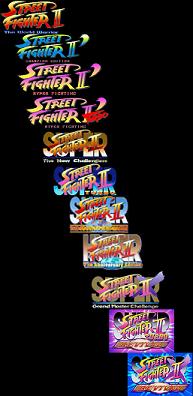
Among some video game publishers, there exists an annoying tendency to release one game, and then release it again several times with minor changes before any wholesale sequel ever comes along. When a new game finally is released, it's 2:1 odds that it will be a prequel or Spin-Off that doesn't do much of anything to advance the main plotline. Whether this is done to cater to the hardcore fanbase or cynically milk a franchise for all it's worth is purely a matter of conjecture.
There is a third reason why this occurs: competitive multiplayer games. In the old days, patching a non-PC game was impossible. Arcade machines could have their hardware swapped without taxing its players in the slightest, but console game updates had to take the form of a new cartridge or disc, usually priced the same or similar to the first iteration of the game. Companies were able to get away with this due to the popularity of the games in the arcades, thus necessitating that players "keep up with the Joneses" at home. While this practice gradually died down thanks to the rise of online-enabled consoles, allowing such things to be handled via patches or Downloadable Content, some companies still abused the idea of releasing an update as a full game. Capcom themselves has done both; contrast the handling of Super Street Fighter IV: Arcade Edition (a DLC update that was also optionally available for purchase as a standalone game for newcomers) with Ultimate Marvel vs. Capcom 3 ($40 retail update that wasn't compatible with the original game)note . The only other excuse for doing this was to keep major release versions consistent between both home and arcade versions (so both versions can have the same baseline for major gameplay and balance changes), as arcade hardware weren't quite able to keep up-to-date as fast as online patches, but with arcades losing popularity even in Japan and the fact arcade machines can now update just as frequently as home versions, this practice has all but died for fighting games.
Note also that, while the trope namer Capcom does this enough to get the trope named after them, they are by no means the only publisher guilty of it.
Related to Mission-Pack Sequel, but this includes the storyline as well as the gameplay. Easily leads to It's the Same, Now It Sucks!. This can lead to Sequelitis but not necessarily, as the games might still be good, or even great, in spite of the redundancy. Might be related to a game being Port Overdosed. If the time between two major entries is filled with new storylines, just not ones that advance the main plot or resolve a sequel hook, then the franchise might have hit a Cliffhanger Wall. Borrowing from the Sister Series is a common method for avoiding this by taking successful features from another of the creators series while minimizing the risk of adding something completely new.
See Observation on Originality for one explanation.
WARNING: Too much exposure to this trope may cause Colon Cancer.
Examples:
- Street Fighter:
- The most ostentatious and infamous example is easily Street Fighter II. It began with Street Fighter II: The World Warrior in 1991. Then came Street Fighter II’: Champion Edition and Street Fighter II’: Hyper Fighting, both in 1992; Super Street Fighter II: The New Challengers in 1993; and Super Street Fighter II Turbo: The Ultimate Championship (a.k.a. Super Street Fighter II X: The Grand Master Challenge) in 1994. Four different derivatives of the original Street Fighter II in a span of three years, and that's just the official arcade releases (there were bootleg Game Mods as well). Capcom never marketed these releases as full-fledged sequels, but updates and balance changes made largely in response to players discovering broken and unintended gameplay mechanics (a purely academic difference to home console players, who were expected to shell out another $50 to $60 for each new version before DLC and online patching became the norm). Almost all of said updates would appear in the 30th Anniversary Collection.
- Hilariously lampshaded in a piece of envelope art shown in an early 1990s issue of the GamePro magazine (years before Street Fighter III came out), which featured a couple of Sesame Street parodies. One of them showed Bert and Ernie with a Capcom representative trying to count to three — by rattling off the various versions of Street Fighter released up to that point ("Street Fighter, Street Fighter II, Street Fighter II: Champion Edition, Street Fighter II Turbo, Street Fighter II: Hyper Fighting, Super Street Fighter II..."). Ernie's reaction to this is putting a gun to his head, saying "I give up," and Bert's is banging his head on a nearby desk.
- GamePro mocked it again in the April Fool's joke section of an April issue where they advertised the latest version of Stooge Fighter II, where the only significant difference between it and the previous version was some dialogue changes in the pre and post-fight taunting.
- Some of the home versions are titled differently as well. The Super NES received a two-in-one compilation of Champion Edition and Hyper Fighting titled Street Fighter II Turbo, taking its title from the Japanese version of Hyper Fighting (but without the apostrophe-like prime symbol they use to represent the word "Dash" over there), while the Sega Genesis counterpart of that same compilation is titled Street Fighter II: Special Champion Edition (otherwise known as Street Fighter II Dash Plus in Japanese). Then we got Street Fighter Collection and Street Fighter Collection 2, a compilation of all five games for the PlayStation and Sega Saturn, although covered in reversed order (the first one has both Super games and a bonus disc with Alpha 2 Gold, while the second contains the original three); Super Street Fighter II X for Matching Service, an online-compatible version of Super Turbo for the Sega Dreamcast released only in Japan via mail order (making it one of the most sought after versions of the series); Super Street Fighter II Turbo Revival, a watered down Game Boy Advance version of Super Turbo; Hyper Street Fighter II: The Anniversary Edition, a modified version of Super Turbo that allows players to use any character from the five different iterations of Street Fighter II; and finally Super Street Fighter II Turbo HD Remix, a remake of Super Turbo that replaces the original graphics and music with artwork by UDON and music remixes by OverClocked ReMix. Even now, 25 years later and counting, Capcom is still willing to update this game: to mark the beginning of the series' 30th-anniversary celebration, January 2017 saw the announcement of Ultra Street Fighter II: The Final Challengers for the Nintendo Switch, which adds Evil Ryu and Violent Ken to the roster.
- Street Fighter Alpha (Street Fighter Zero in Asian languages), the prequel game that followed II, also got its own series of updates and pseudo-sequels. The original was immediately followed by Alpha 2, which added alternate versions of certain characters for its North American release (namely Evil Ryu, EX Zangief, and EX Dhalsim). Alpha 2 was then re-released in Asia with the Asian name Zero 2 Alpha, which had all the extra characters from the North American release, plus "EX" versions of the rest of the Street Fighter II cast. Zero 2 Alpha was then ported to home consoles as Alpha 2 Gold, which added an extra character to the mix: the Shadaloo version of Cammy (who previously appeared in X-Men vs. Street Fighter), although she was initially only playable in the Versus and Training modes. Then Alpha 3 came and the home versions of that game added even more characters (eventually bringing back the entire Street Fighter II roster). The Dreamcast version of Alpha 3, subtitled Sakyo Dojo, was backported to the arcade as Zero 3 Upper in Japanese, a title used for the later Game Boy Advance version (Alpha 3 Upper), which added three characters from Capcom vs. SNK 2 (Maki, Yun, and Eagle). This all culminated with the PlayStation Portable version, Alpha 3 MAX, which has all the extra characters from the previous versions, plus Ingrid (from Capcom Fighting Evolution) and giving them all arcade stories and endings when the GBA version didn't. This isn't even counting Street Fighter Alpha Anthology, a compilation of the arcade version of the Alpha games, along with Alpha 2 Gold, Alpha 3 Upper, and a Versus/Training mode-only game titled Hyper Street Fighter Alpha that pits versions of nearly every character from all the above games (the characters who appear in the portable versions of Alpha 3 weren't included). And the Japanese version of that (Street Fighter Zero: Fighter's Generation) not only includes the Japanese versions but the English Alpha 2 so Japanese players could try Evil Ryu along with the Cammy-included version of Zero 2 Alpha (titled Zero 2 Alpha Dash).
- Street Fighter III was a bit more modest in its sequels compared to II and Alpha, mainly due to its relative unpopularity at the time of its release. The original was titled Street Fighter III: New Generation, which was followed by Street Fighter III 2nd Impact: Giant Attack, and Street Fighter III 3rd Strike: Fight for the Future. In terms of home versions, the first two were released exclusively for the Dreamcast in a two-in-one compilation titled Street Fighter III: Double Impact, while 3rd Strike got a stand-alone release for the Dreamcast, followed by PlayStation 2 and Xbox ports which helped expose the series a bit, and a release on Xbox 360 and PlayStation 3 that added online play.
- The Street Fighter EX 3D spin-off series consisted of four arcade games (EX, EX Plus, EX2, and EX2 Plus), two PlayStation ports (EX Plus Alpha and EX2 Plus), and a PlayStation 2-exclusive final installment (EX3).
- Street Fighter IV (an interquel set between II and III) was originally released for the arcades in Asia exclusively and then ported to home consoles. The home versions added six more characters to the roster. Then it got an update for the home consoles in the form of Super Street Fighter IV which added 10 more characters to the roster. Super Street Fighter IV was then ported to the arcades (and the home consoles as DLC as Super Street Fighter IV: Arcade Edition). Four more characters were added to the roster (Yun, Yang, Evil Ryu, and the introduction of Oni, who is an alternate form of Akuma). A 3DS version was also released, titled Super Street Fighter IV: 3D Edition. An update titled Super Street Fighter IV: Arcade Edition Ver. 2012 was released as a downloadable patch in December 2011. Another balance update (Ultra Street Fighter IV) was released in 2014, with another 5 additional characters (four of them, Hugo, Poison, Elena, and Rolento, ported over from Street Fighter X Tekken). note
- For a series with such a reputation for this, Street Fighter V was touted as a subversion of the trope, with Capcom intending to release post-release content (i.e. characters) as updates instead. They did ultimately cave in January 2018 with the release of Street Fighter V: Arcade Edition (which features the 12 DLC characters from Seasons 1 and 2 of the original game, new V-Triggers for all the cast, the widely requested addition of Arcade Mode, and an Extra Battle Mode), though it's a free DLC update for those who already own the vanilla version. November 2019 would see the announcement of Street Fighter V: Champion Edition, another update featuring new V-Skills for the cast as well as the addition of Gill and Seth as playable characters, though it is likewise a free update for previous owners of SFV. In both cases, people who weren't interested in the new characters or content still got the new game systems and balance updates free of charge, preventing the online playerbase from "fracturing" with every new release like Capcom promised near the initial release of the game — one could easily buy the base SFV game and play straight away with CE players with no additional purchases.
- To wit, Capcom's infamy with this trope from Street Fighter alone has led to a recurrent trend among fans of creating ridiculously long, absurd-sounding, subtitle-laden titles whenever a new title/update is announced because it's expected that Capcom's going to turn around and release another version of the game they just bought several months down the road. How affectionate the mocking is varies from person to person.
- Even Capcom themselves are aware of it and parodied themselves when they titled a two-player Street Fighter-themed puzzle game Super Puzzle Fighter II Turbo in 1996.
- The most ostentatious and infamous example is easily Street Fighter II. It began with Street Fighter II: The World Warrior in 1991. Then came Street Fighter II’: Champion Edition and Street Fighter II’: Hyper Fighting, both in 1992; Super Street Fighter II: The New Challengers in 1993; and Super Street Fighter II Turbo: The Ultimate Championship (a.k.a. Super Street Fighter II X: The Grand Master Challenge) in 1994. Four different derivatives of the original Street Fighter II in a span of three years, and that's just the official arcade releases (there were bootleg Game Mods as well). Capcom never marketed these releases as full-fledged sequels, but updates and balance changes made largely in response to players discovering broken and unintended gameplay mechanics (a purely academic difference to home console players, who were expected to shell out another $50 to $60 for each new version before DLC and online patching became the norm). Almost all of said updates would appear in the 30th Anniversary Collection.
- Capcom's Darkstalkers series went out with Vampire Savior 2 and Vampire Hunter 2, which despite being numbered like sequels were just minor rule and roster updates to the original Vampire Savior, which was actually the third game in the series, following the original Darkstalkers (Vampire in Japanese) and Night Warriors (Vampire Hunter in Japanese). And then the characters from all three (Vampire Savior, Vampire Hunter 2, and Vampire Savior 2) were combined into a home release as Darkstalkers 3 (which retained the Vampire Savior title in Japanese). Another update was released for Dreamcast titled Vampire Chronicle for Matching Service, which also allowed you to select from the different fighting styles of each game. Although the Dreamcast version was released in Japan only, a PSP port was made called Darkstalkers Chronicle: The Chaos Tower which added a new mode called The Tower where you pick a team of three characters and have to make it through with limited regenerating health. This version was released in America a week before the PSP was released in America. In the case of Night Warriors, it borders between being an updated version of the original Darkstalkers and a sequel. The entire roster and stages are lifted straight from the first game, and the ending sequences are the same, but there are many rule changes from the first game to distinguish it as a separate game. That being said, Yoshinori Ono (producer of the Street Fighter IV series, among other titles) has been lobbying for a true sequel to Darkstalkers 3. However, the series is currently on indefinite hiatus.
- Capcom made two licensed fighters based on JoJo's Bizarre Adventure, developed by the Street Fighter III team for the same arcade hardware. Not surprisingly, JoJo's Bizarre Adventure: Heritage for the Future adds little to its predecessor JoJo's Venture except for a bunch of new playable characters.
- There was a time when the Resident Evil series was heavily fixated around the events of Raccoon City in 1998, with many prequels, interquels, and side-stories. Even Resident Evil 3, the third numbered entry, was actually set around the same time period as Resident Evil 2 and added many retcons to the previous game's plot. The Resident Evil: Outbreak spin-off series is set during the Raccoon City outbreak as well, but still feature many irreconcilable inconsistencies with both of those games. Resident Evil 4 finally moved away from the plot and setting by being set in 2004 (six years after the events of Raccoon City) and all the numbered entries since then have taken place in the present or near-future. Their minds are still stuck in Raccoon City for the spin-offs, however. The Umbrella Chronicles, The Darkside Chronicles, and Operation Raccoon City all go over the zombie outbreak in Raccoon City again. Despite not taking place in or near the ruins of Raccoon City, Resident Evil 6 has viral outbreaks happen across multiple cities in a manner similar to the Raccoon City outbreak and one of the antagonists even lampshades it by saying how "this is gonna be Raccoon City all over again" before a city gets bombed with the C-Virus. Capcom broke the mold in 2017's Resident Evil 7 by returning to the series' roots with a rundown house full of monsters... only to follow-up with a remake of RE2 two years later and a remake of RE3 one year after that. (To Capcom's credit, they did unveil the next canonical installment a few months after RE3R, which came out in 2021, followed by formally announcing the fourth game's remake in 2022.)
- Originally, Devil May Cry was supposed to be the immediate sequel to Code: Veronica and a prototype of Resident Evil 4. They thought it was too much of a huge break in genres, though, so they ripped out the original story (Dante was a police officer named Tony Redgrave fighting against more Umbrella horrors) and went with the current one (Dante as a half-human, half-demon devil hunter hired to investigate strange happenings on Mallet Island at the behest of his mysterious client Trish). Turned out to be a successful idea. So far the franchise has been pretty good about this trope (even though chronology is all over the place: the chronological order currently being 3 -> 1 -> 2 -> 4 -> 5), but that can change in a heartbeat as soon as Capcom start pumping out spin-offs. note
- Devil May Cry 3: Special Edition, infamous amongst the gaming community as one of the only (or the only) game/s to be re-released because it was too freaking hard. note
- Re-releases for Devil May Cry games became a series staple, as Capcom announced in December 2014 a Definitive Edition of the highly controversial DmC: Devil May Cry, later released in March 2015, followed by a Special Edition of the more favorable Devil May Cry 4 released June 2015. After Devil May Cry 5 released in March 2019, that also got a Special Edition release for console in November 2020note .
- Even the semi-obscure 1942 Shoot 'Em Up series isn't invincible to this. 1943 got a re-release called 1943 Kai, and 1942: Joint Strike consists of elements of 1943, 19XX, and 1944 rolled up into one game. And then there's 1941: Counter Attack, the third game in the series.
- The Gundam Vs Series, originally developed by Capcom, has been zig-zagging the trope:
- Federation Vs. Zeon was innovative and well-received, the sequel AEUG Vs. Titans was the same game with some new machines — and then came Gundam Vs. Zeta Gundam, which was AvT with more new machines, and the popular Campaign Mode replaced with a repetitive alternate history mode.
- Next came Alliance Vs. ZAFT, which boasted a drastic overhaul to the game engine, and was likewise followed by Alliance Vs. ZAFT II; its home version added new content, including characters and machines from Mobile Suit Gundam SEED CE.73: Stargazer and a new mission mode, and was labeled Alliance Vs. ZAFT II Plus.
- Gundam Vs. Gundam skipped further adaptations in favor of pure Fanservice by crossing over all the Gundam series they could. note The sequel, Gundam Vs. Gundam Next added a bunch of new characters (including many fan favorites); it was later ported to PSP as Gundam Vs. Gundam Next Plus, gaining even more new characters and a mission mode.
- At this point, development of the series was handed over to Bandai Namco, who announced Extreme Vs., a new iteration of the series that upgraded the graphics to PlayStation 3-level (Capcom's iterations always used the Dreamcast-level NAOMI board) and boasted a complete overhaul of the gameplay engine. However, the ExVs sub-series quickly fell into this, between console ports and sequels (Full Boost, Maxi Boost, and Maxi Boost ON) which simply added to the game's roster while only making minor tweaks to the game engine. Then in early 2018 Bandai Namco announced Extreme Vs. 2...
- Most recently, Bandai Namco announced an entirely new game simply titled Gundam Versus designed specifically for the PlayStation 4 with no arcade release; as with ExVs, this iteration boasts upgraded current-gen graphics note and big changes to gameplay. However, for the most part, the game is still mostly just a PS4 version of the ExVs games.
- Monster Hunter fell victim to this during its first three generations. While each game adds new content, some games are nothing more than expansions. The 3 numbered games are set in different locations, with new monsters, new weapon types, and in Tri's case, some monsters and weapon types were taken out in favor of all new content. However, in the expansions, commonly given the subtitle "G" (in Japanese) or a word starting with U (overseas), the biggest changes are to the weapon types to make them more balanced, and there are usually no more than a few new monsters that aren't just palette swaps. The Freedom games improved over time in this regard: While Monster Hunter Freedom was merely a hybrid port of the original game and its G expansion, Monster Hunter Freedom 2 at least changed the setting and story and introduced some monsters so it didn't feel too much like a retread of the Japan-exclusive Monster Hunter 2 (dos); and Monster Hunter Portable 3rd is even more different from Monster Hunter 3 (Tri) despite still borrowing many monsters and stages from it. The stagnation was majorly addressed with the fourth generation, as both Monster Hunter 4 and is Freedom counterpart (Monster Hunter Generations) introduce several novelties, mechanics and ideas that revamp the formula of the series while still keeping its essence, and their respective G-Rank expansions manage to bring several ideas on their own. The fifth generation eliminated the issue altogether, as not only did Monster Hunter: World and Monster Hunter: Rise greatly overhaul the conventions of the series with improvements and additions, but their expansions were released directly as Downloadable Content, eliminating the need of having to acquire them as separate installments.
- Dragon's Dogma had new content released about a year after its initial launch. This release, known as Dragon's Dogma: Dark Arisen, ended up in a situation similar to Marvel vs. Capcom 3, as despite only adding one new area and making a variety of gameplay tweaks, it was exclusively released as an Updated Re-release at $40 even for existing owners. However, since the release of Dark Arisen, the game was ported to multiple systems, and the Dark Arisen release was the only one available to them. The only other non-port installment in the franchise over the seven years between the initial release and the Switch port was Dragon's Dogma Online. Despite being a completely new game (that wasn't released outside of Japan), it takes place within a different continuity. The creators do not consider it the sequel they have wished to make since finishing the original.
- In an unprecedented move, Capcom applied this to the Vs. series in The New '10s. A mere five months after the release of Marvel vs. Capcom 3, Capcom announced
 Ultimate Marvel vs. Capcom 3. The new content (12 new characters and 8 new stages) was originally meant to be released as DLC, but the tsunami and earthquake that hit Japan in 2011 forced the development team to re-route their development cycle and instead package everything (and a few extra bells and whistles) in a manner similar to Super Street Fighter IV (and its Arcade Edition update). More than a few fans are still wondering exactly what the hell they bought the first go-round, though.
- According to an interview with Keiji Inafune, Capcom's official policy for quite a while was that 70-80% of new games had to be sequels. Its unofficial but de facto policy was that only sequels would be developed. Adding to this is that he actually had to resort to a Batman Gambit to actually get Lost Planet and Dead Rising made by going so over budget on the "demos" for these games that Capcom would not dare cancel them. In fact, this trope is actually the reason why he quit Capcom.
- Dead Rising slid into this first with the release of Dead Rising 2: Case Zero, Dead Rising 2, Dead Rising: Cast West, and Dead Rising 2: Off the Record all being released in a little over a year between the first and the last. Off the Record sees the reuse of the Fortune City setting, with an additional area, new weapon combinations, and switching the protagonist to Frank West in a "What If?" scenario. Capcom went into full self-aware parody mode for their Dead Rising 3 DLC announced at E3 2014, titled Super Ultra Dead Rising 3 Arcade Remix Hyper Edition EX Plus Alpha.
- The Ace Attorney series' first three games. The trilogy was originally released on the GBA only in Japan. Years later, DS versions of all three games were made, localized, and released internationally. Other than remastered music, a larger screen resolution, and a bonus case in the first game which made use of the DS's new features, all three games were mostly the same. Later, all three games were made available on WiiWare, with the only notable difference being that the player can point the Wii Remote while shouting OBJECTION! But again, no significant differences. The trilogy was later released in one package on the iOS store (using a free-to-play model where the user must pay for each individual episode save for 1 and 2). This collection featured improved graphics, and many problems. Then all three games were released on the 3DS as Phoenix Wright: Ace Attorney Trilogy. The graphics were practically identical to the iOS versions, with the only difference being a slightly touched-up script. In 2016, Apollo Justice: Ace Attorney got its iOS version, followed by its 3DS version a year later. And then the original three games got a Nintendo Switch and PlayStation 4 version as well. A benefit from this trope is that all these titles are still on the market, well after their home consoles became outdated.
- Arcana Heart: While the first two games only had one each (Arcana Heart Full! for the first one and Suggoi! Arcana Heart 2 for the second), it was at Arcana Heart 3 where things started to get desperate. First was Love Max!!!!!, which added in an after story, storylines from the card game Card of Glory and stages from the previous games. Then came Love Max SIX STARS!!!!!! which added nothing other than an extra character (and support for future characters as DLC). These both came out in the span of eight to nine years since the original first came out (September 2009). And then Love Max SIX STARS!!!!!! Xtend was announced...
- Arc System Works fell into this with the Guilty Gear games — Guilty Gear XX, the third game in the series, was followed by Guilty Gear XX #Reload (one "new" character [Robo-Ky], rebalanced moves), Guilty Gear Isuka (a four-player spin-off), Guilty Gear XX Slash (two new characters, one of whom [A.B.A] is from Isuka, and more rebalancing), then Guilty Gear XX Accent Core, which despite having no new characters has enough gameplay changes that they probably could have gotten away with calling it Guilty Gear X3 if Reload and Slash hadn't existed. Then came Guilty Gear XX Accent Core Plus, which fixed some glitches and added a ton of extra features, including a Story Mode that takes place after the original XX, and then Accent Core Plus R, which adds more balances changes and made SNK Bosses Kliff and Justice tournament legal. In fact, most of XX is built upon its predecessor X series, which itself had a regular and a 1.5. On the plus side, the sheer amount of differences between AC+ and vanilla XX are on the level of a full-on sequel.
- Later, a true sequel (Guilty Gear 2: Overture) was released around the same time as Accent Core Plus (the new story in AC+ leads into Overture in some aspects where Sol, Ky, and Dizzy are concerned). And a sequel to both that and GGXX, Guilty Gear Xrd -SIGN-, was later released.
- In late May 2015, barely half a year out from Xrd's console release in Japan and North America, an update, Xrd -REVELATOR-, was announced, featuring additional characters (including a returning Johnny, who was an NPC in -SIGN-; Jam, Raven, and Dizzy would be added in future updates) and new versions of pre-existing stages not unlike the various revisions to XX. As with Accent Core Plus, the story continues on from where -SIGN- left off.
- January 2017 saw the announcement of a second update known as REV 2. Aside from the usual character rebalancing (including a few new moves for the existing cast) and roster expansion (one of the "new" fighters being series veteran Baiken, Promoted to Playable from NPC status in -REVELATOR- much like Johnny and Dizzy before her), REV 2 features new story scenarios, such as story Episodes for Jam, Raven, Haehyun, and Dizzy (who lacked them in the previous iteration). The game was released in arcades at the end of March that year, followed by a retail release on consoles and PC two months later as both a downloadable add-on to the original -REVELATOR- and, if you live in Japan, a standalone physical and digital release for the PlayStation 4.
- Guilty Gear -STRIVE- averted this, having a business model more in line with its competitors. The usual stuff that would come with a new installment in prior titles, such as new characters and new story modes, instead gets bundled into Season Pass Downloadable Content. The gameplay balance changes, on the other hand, are free to everybody regardless of any prior downloaded DLC.
- Arc System Works also fell head-first back into this with Guilty Gear's Spiritual Successor, BlazBlue, albeit not initially.
- The first game of the series, BlazBlue: Calamity Trigger was quickly followed up by the sequel BlazBlue: Continuum Shift about a year later. Then about a year later, Continuum Shift II came out. Despite its title, it is not a sequel to the original Continuum Shift. It is simply a balance patch with three additional characters (who were DLC for the console versions) and a little extra story content. Then Continuum Shift Extend came out, which was again, another balance patch and added only one additional character and more story content. Except this time, it was a full retail release.
- BlazBlue: Chronophantasma followed in Continuum Shift's footsteps. The original game came first, then a patch for the additional characters, and then finally a new patch called Chronophantasma Extend which was several extra story campaigns plus, for Western audiences, the previously exclusive Library Mode all given in a full retail release. Thankfully, that was the only re-release before the next game, BlazBlue: Central Fiction. In addition, the series producer, Toshimichi Mori, stated that there would be no Extend for CF, and further updates to the game would be done through DLC. So far, he has stayed true to his word. About nine months after CF's console release, there was an update to the arcade version which added long-requested character Jubei to the roster along with re-balancing the cast, but said update was released worldwide on consoles less than a month later for free, with Jubei being DLC.
- ClayFighter also suffered of this, releasing updates for CF1 (Tournament Edition) and CF63⅓ (Sculptor's Cut.) The former only fixed some bugs and balanced the game and the latter added characters that was left from first release and changed some things, like portraits, lifebars, a new intro, and stripped out the Killer Instinct-esque combo system. Both versions were exclusive to rental stores.
- Dead or Alive has gotten into this, big time. The original 2012 release of Dead or Alive 5 was followed by Dead or Alive 5+ for the Vita, Dead or Alive 5 Ultimate, and finally Dead or Alive 5: Last Round. Each update retained the same core engine, menu styles, story mode, and basic gameplay of its predecessor while adding a few characters and other tweaks, very similar to the Street Fighter II sequels.
- DOA: Hardcore and DOA: Hard*Core, which are updates of Dead or Alive 2. The Dreamcast release already included all the fixed and new things from both updates, as well new stages, costumes, and cutscenes.
- And also, there's Dead or Alive Ultimate, an Updated Re-release for Xbox with the first 2 games, both of them could be playable online on Xbox Live: the enhanced Sega Saturn version of DOA1, and DOA2 with the graphics of DOA Xtreme Beach Volleyball, the gameplay of DOA3 and the addition of Hitomi as a playable character, as well the Final Boss Tengu as selectable.
- Averted (or perhaps zig-zagged) by the free-to-play model of Dead or Alive 5: Last Round, which offers four characters for free (eight on Xbox One), with two weekly rotating characters. If one doesn't already have a copy of the game, they can buy characters individually at $3.99 per character.
- Final Boss S-Kill from Divekick is a parody of this practice, being the leader of an organization looking to rebalance the world so it can repackage and sell it anew. His win animation also has him pulling out a copy of Divekick with randomly generated Word Salad Title suffixes and prefixes like the kind one would expect from a game afflicted by this. The game itself also poked some fun at this with its free DLC referred to as Divekick: Addition Edition+.
- Killer Instinct (2013) is an early aversion of this trope for fighting games, with a free-to-play model similar to Dead or Alive 5: Last Round, although not nearly as generous with only one weekly rotating character for free and individual characters usually costing $4.99. The release of the Shadow Lords single-player campaign let up on this a little by adding opportunities to permanently unlock Jago and Orchid by beating the Shadow Lords tutorial and collecting at least 50% of the Shadow Lords dossiers, respectively.
- Melty Blood was first released in 2002 as a Doujin Soft product, which was by far the rarest and jankiest version of the game. 2004 came Re-ACT, which polished up the gameplay, added two new characters, revamped moveset for many old ones, and an Arcade story, which had a revision patch in Re-ACT Final Tuned. The game then started getting released in the arcades with Act Cadenza and then Act Cadenza Version B for PC and consoles, which added two more characters but took out the original's Visual Novel story mode and added censorship. Actress Again then came out in 2007 and added five more fighters (including Guest Fighter Shiki Ryougi) and three different styles and variations for every character, and then — for a time — finally ended on Actress Again Current Code in 2010, with one more new character with a few patches down the line (the last version which was exclusive to a Blu-Ray collector's edition box set for a different product at first). Then, in 2021, Melty Blood unexpectedly saw a revival with Type Lumina, which actually averts the trope by being a Continuity Reboot set in a What If? path of the Tsukihime remake that released earlier that year in addition to scaling back the roster to 13 (new characters included).
- Mortal Kombat 3 was ported to a wide range of consoles, but that didn't prevent it from being superseded on most of those platforms by an Updated Re-release titled Ultimate Mortal Kombat 3, which was then expanded even further into the Dream Match Game Mortal Kombat Trilogy. The Mortal Kombat Kash Kow Franchise was clearly hitting its peak around that time.
- MK3 is just the most obvious example. The trope also affected the series at other times — it wasn't until Armageddon that the series stopped being treated this way (and even then it may have started up again, depending on your point of view, with each game since the 2011 reboot receiving a new version that includes all major DLC). Mortal Kombat 4 was clumsily updated into Mortal Kombat Gold on the ill-fated Dreamcast. Deadly Alliance received not one but two ports for the Game Boy Advance — each splitting the character roster roughly in half and the second one receiving three new characters as well as a different title (Tournament Edition). Deception was upgraded with six new faces for the PSP as Unchained. And as if all that weren't enough, MK saw its only DS release in the form of Ultimate Mortal Kombat. Three guesses as to which entry this one was based on, and the first two don't count.
- Played with in SNK's case; whenever they decided to go down this path, they usually gave the game the non-canon Dream Match Game treatment. Case in point, Fatal Fury and Samurai Shodown:
- Fatal Fury 2 was updated to Fatal Fury Special, which made the four bosses playable, added in Tung Fu Rue, Duck King, and Geese Howard from the first game into the roster as well as adding in Ryo Sakazaki as an Optional Boss-slash-Guest Fighter. note Ditto Real Bout Special (not the first Real Bout, as that's a different game), which was updated to Real Bout 2, which added in two new faces (Xiangfei and Rick Strowd, the former of whom would even make the jump to The King of Fighters) as well as an Optional Boss named Alfred and making Geese playable againnote .
- In Samurai Shodown's case, it was V that got the treatment; it was updated to V Special, removed the two unplayable bosses Sankuro and Yumeji (and Poppy), promoted Gaoh to playable and added in three previous bosses to the roster (Amakusa, Zankuro and Mizuki)note . There was also V Perfect, in an example of What Could Have Been, which would have tweaked everyone and fixed up whatever bugs were present in Special before SNK pulled the plug on the thing to focus on VI, leaving it to linger in limbo until 2020 as part of a Compilation Re-release.
- Skullgirls initially parodied this trope when they would release (free) patches for the game, code-naming the patches things like "Slightly Different Edition", "More Different Edition", etc. as a way to reference fighting games that played this trope straight. But then, due to a bit of legal trouble with Konami and a de-listing of the game on console versions, the team was forced to actually re-release the game as Skullgirls Encore, which is essentially the original game with the latest balance patch and Squigly available. It still counts as a free patch to those who already bought the original game, though. A later update titled 2nd Encore would later be released containing all the DLC characters.
- Under Night In-Birth first came on the scene in September 2012, and instead of sequels to move the story forward all we got were revisions in the following years. The first revision was Exe:Late (2014) which rebalanced the roster and added in two more characters (Chaos and Guest Fighter Akatsuki). Exe:Late was ported to consoles the following year, with two more characters (Byakuya and Nanase) added to the roster. And then Exe:Late[st] showed up mere months after the home ports of its predecessor, rebalancing the roster again and adding in one more character (Phonon, although Mika would be added a year later). That was later ported to consoles in mid-2017 (early 2018 outside of Japan) and threw in two more characters (Wagner and Enkidu) and a prequel story mode for good measure. Early 2020 saw the advent of yet another update, this time to Exe:Late[cl-r] with one new character (Londrekia), balance tweaks, new moves for the older characters, and nothing else. A proper sequel was finally announced in 2023 for a January 25th, 2024 release, nearly twelve years after the release of the original game.
- Surprisingly averted with World Heroes when ADK made the jump from World Heroes 2 to World Heroes 2 Jet; other than adding in two more characters and despite it carrying over various stages from the previous version, it also features an entirely new story dealing with the new Big Bad, Zeus, as opposed to a rehash of fighting Neo-Geegus and DIO again.
- Tatsusoft (now TwinSky Games) once had a game placing Bubble Bobble characters in a Fighting Game. It made fun of the many prefixes and suffixes of the Street Fighter games and was called Super Bubble Fighter II Turbo Alpha Championship Edition + 4 Ned.
- Dynasty Warriors games all share the same plot, due to sticking to the same period in Chinese history. Each new numbered sequel brings only minor graphical improvements, and maybe one new game mechanic and one new character per faction.
- Bizarrely, when Dynasty Warriors 6 actually shook things up, the changes to weapon and play mechanics of fan-favorite characters and the increasingly anachronistic character designs caused a major fan backlash. Koei went too far in all ways at once.
- All this was, however, brought back to normal with the seventh game which toned down several of the character designs and managed to actually appease the fanbase by moving the storyline ending point further back in history, resulting in a shed-load of new characters. Fans are still irritated however at two characters still not being present after being removed in the sixth game (Pang De and Zuo Ci). Pang De would be eventually brought back in the seventh game's expansion pack, whereas Zuo Ci didn't return until the eighth installment.
- Bizarrely, when Dynasty Warriors 6 actually shook things up, the changes to weapon and play mechanics of fan-favorite characters and the increasingly anachronistic character designs caused a major fan backlash. Koei went too far in all ways at once.
- Castlevania started to feel like this at some point following Castlevania: Aria of Sorrow and Castlevania: Dawn of Sorrow. All of the major plot points for the series (from the beginning to the end) have all been covered except the ultimate battle mentioned in Aria of Sorrow, which Konami seems keen on avoiding for more "let's have some random dick revive Dracula for shiggles" storylines to avoid having to close the series. On the upswing, at least the gameplay changes, especially when the primary protagonist isn't a Belmont. Really, the series at its heart is an inverted sequel — the basic enemy types and the main villain are always the same, as opposed to the heroes, with the exceptions of Richter and Simon.
- There are six games featuring Simon Belmont fighting Dracula in 1691: the original Castlevania, Vampire Killer, Haunted Castle, Super Castlevania IV, Akumajō Dracula, and Castlevania Chronicles.
- The Battle of 1999 not yet receiving a game (despite Castlevania: Aria of Sorrow and Castlevania: Dawn of Sorrow duology, Portrait of Ruin, Curse of Darkness, and Judgment hinting at it) is most likely the reason Castlevania rebooted the franchise from scratch with Lords of Shadow. However, that string of installments concluded fairly quickly itself, as LoS was followed by Mirror of Fate and Lords of Shadow 2, the latter of which wrapped up the Lords of Shadow story.
- This happens all too often with Konami's rhythm games, due to their very nature, since the many sequels are essentially a chance to play about 30-60 new songs.
- In the DanceDanceRevolution series, the first 5 main arcade titles went from just DDR to DDR 5th Mix; 3rd and 4th also had updated Plus versions with a few more songs and features. Then it went to DDRMAX, MAX2, Extreme, Supernova, Supernova 2, and now X, X2, and the almost truly Capcom-like X3 vs. 2nd Mix. However, after this one, DDR shifted to longer lifecycles for its releases, with the subsequent version titled simply Dance Dance Revolution (lasting from roughly 2013 to 2016 with content updates and events), followed by A, then A20.
- In the beatmania series, it goes: BM, BM 2nd, BM 3rd, BM Complete, BM 4th, BM 5th, BM Complete 2, BM Club, BM feat. DCT, BM Core Remix, BM 6th UK Underground, BM 7th Keepin Evolution, BM The Final, BMIIDX, BMIIDX Club, BMIIDX Substream, BMIIDX 2nd through 10th, BMIIDX 11 Red, BMIIDX 12 Happy Sky, BMIIDX 13 Distorted, BMIIDX 14 Gold, BMIIDX 15 DJ Troopers, BMIIDX 16 Empress, BMIIDX 17 Sirius, BMIIDX 18 Resort Anthem, BMIIDX 19 Lincle, BMIIDX 20 Tricoro, BMIIDX 21 Spada, BMIIDX 22 Pendual, BMIIDX 23 Copula, BMIIDX 24 Sinobuz, BMIIDX 25 Cannon Ballers. And again, this only includes the main arcade series, not any of the home console versions or the arcade variants like Beatstage or Hip Hop Mania.
- The strangest thing is that the game intended to change the gameplay up (albeit only slightly) didn't do quite well, that game being beatmania III. BMII, which was intended to be more of the same like the original BM, ended up much more popular than its successor.
- BioWare has re-released countless compilations of Neverwinter Nights packages, one with each new expansion pack or sequel. Gold, Platinum, Diamond... Diamond was not the ultimate collection. NWN2 and its expansions were then included in more collections. The same happened with older Infinity Engine games also. This is referenced in-universe as well, where Deekin's books about the events of the first game and expansions went through all the same compilations and re-releases as the game itself.
- The long-running Chessmaster series gets accused of this. But there's only so much you can do with chess.
- Lunar: The Silver Star and its sequel Lunar: Eternal Blue, originally released for the Sega CD, were remade for the Sega Saturn and PlayStation. The first game was remade again for the Game Boy Advance and then for the PSP. The Lunar franchise has produced various side games, but no proper third installment yet, since Lunar: Dragon Song was a dull retread of much of the first game.
- The third installment of the Wangan Midnight Maximum Tune series suffers from this. First there was Wangan Midnight Maximum Tune 3. Then came WMMT 3 DX, which added a few new cars, one new song, a new course, and 20 more stages (as if 80 wasn't enough!). And then game WMMT 3 DX+, which adds yet another course, more cars, and four new songs (two of which are remixes). This seemed to be fixed with Maximum Tune 4 and 5, but then 5 also got DX and DX+ editions. Justified with 5 DX which fixed the regional segregation issues across the version.
- The original Final Fantasy has been released on the NES, MSX2, WonderSwan Color, PlayStation, Game Boy Advance, mobile phones, PSP, Virtual Console, PlayStation Network, iPhone, iPod Touch, and Steam. Each release has seen a handful of gameplay tweaks and a bonus dungeon or two, but the game is the same. With the exception of the Virtual Console release (overseas, it did get one in Japan), Final Fantasy II has seen a release on all of those platforms too, often bundled together with the first game. It too is the same game with a bonus dungeon added (unless you're playing the Pixel Remaster version).
- Final Fantasy IV has seen releases on the SNES, PlayStation, WonderSwan Color, GBA, DS, Virtual Console, mobile phones, PSP, smartphones, and Steam. With the exception of the DS version (which itself later got an Updated Re-release for smartphones and Steam), which was a full 3D remake with a fully revamped battle system and several other differences instead of just a port, all of these releases are the same basic game with a handful of new features. The PSP version is similar to I and II on the same console graphically and includes the sequel as well as some new features.
- The Oregon Trail. The first game itself had no fewer than three iterations (the teletype version, the Apple II version, and the PC/Mac version). Then there's Deluxe Edition for DOS, and the slightly updated version 1.2. The third and fourth editions are remakes of the first, and 5th Edition is a remake of II, then there was OT II 25th Anniversary Edition. There's also a Facebook version.
- The Guitar Hero series hasn't seen a significant gameplay change since Guitar Hero: World Tour, which introduced full-band gameplay so that the franchise could compete with Rock Band, and has been pushing out constant song pack sequels ever since Guitar Hero: Rocks the 80s and Guitar Hero: Aerosmith, the most egregious of which is most likely Guitar Hero: Smash Hits, consisting entirely of songs from past Guitar Hero games, charted for full-band play with their original master tracks. So it's little surprise that Activision has officially terminated the franchise. 2015's Guitar Hero Live finally made a major gameplay change, stripping the controllers down to a newly-designed guitar and a microphone. Instead of 3D animation, the game used Live Action footage. Activision terminated the franchise anyway.
- The Pokémon series does not do this extensively, but it has this consistently. Game Freak's usual pattern is releasing two virtually identical games at once, followed by an third nearly-identical-but-with-a-couple-bonuses game, with updated remakes of older games wedged in there as well. Generations that have adhered to this are:
- Gen I: Red and Blue, then Yellow a bit later note
- Gen II: Gold and Silver, then Crystal
- Gen III: Ruby and Sapphire, then Emerald, with FireRed and LeafGreen (remakes of Red/Blue/Yellow) in between
- Gen IV: Diamond and Pearl, then Platinum, followed by HeartGold and SoulSilver (remakes of Gold/Silver/Crystal)
- Gen VI: Omega Ruby and Alpha Sapphire (remakes of Ruby/Sapphire)
- Gen VII: Sun and Moon, then Ultra Sun and Ultra Moon. That is about 5 unique plotlines spread across 22 games! note
- Averted with Pokémon Sword and Shield, which was given an Expansion Pack rather than a follow-up version. However, there is Brilliant Diamond and Shining Pearl, remakes of Diamond/Pearl.
- The two near-identical games are justified, because 100% Completion requires trading with the other version — a mechanic that the Japanese love, but became a Scrappy Mechanic outside of Japan, making it a case of Americans Hate Tingle. Meanwhile, the remakes are justified due to some Pokémon being unavailable in that generation alone without the use of hacks — the third generation in particular lacked the "previous gen" backwards compatibility that all other generations host, meaning that getting FireRed and LeafGreen (and some spin-off titles) really was the only way to complete the Pokédex.
- Game Freak began to move away from the Updated Re-release formula with Black and White 2. Yes, a Numbered Sequel instead of an Updated Re-release. Though apart from the plot, the games still fill the same role as a hypothetical Grey version. The company also surprised the fandom entirely when they didn't have either in the sixth generation, choosing to move onwards to the seventh generation after releasing Omega Ruby and Alpha Sapphire rather than make a Z version to follow X and Y... then surprised the fandom again by having a pair of updated rereleases in Ultra Sun and Ultra Moon following Sun and Moon, instead of a single game (a rumored Stars) or proper sequels.
- Many of Sega and Namco's arcade games that dispense and uses game cards work squarely by this trope. None of them contain new storylines, only code and data to recognize new cards, and slight tweaks to the existing storyline and gameplay. Some may add new mechanics to the game with each update but retain the same overall gameplay. And the games are timebombed to "persuade" operators to upgrade once a certain date has elapsed on the machine.
- Mushi King
- Animal Kaiser
- Dinosaur King
- Naruto: Ultimate Ninja
- Power Rangers Card Battle
- San Francisco Rush The Rock: Alcatraz Edition, an Updated Re-release of the arcade game, added four new tracks including the titular Alcatraz, new shortcuts on the original tracks, four new cars, and a few new music pieces. It was followed by the Wave Net edition, which featured online multiplayer.
- Super Mario Bros.:
- The New Super Mario Bros. sub-series got hit with this, having extremely similar graphics and Video Game Settings between all four games. The first game was creative and original all around, introducing various new gameplay mechanics, enemies, bosses, power-ups, obstacles to the franchise. Then, New Super Mario Bros. Wii started reusing the art style and some Video Game Settings from the original game but still had the extremely important addition of Co-Op Multiplayer and various enemies and obstacles not in the original. It became much more pronounced onwards with the last two games, when Wii's soundtrack started getting recycled and Bowser and the Koopalings became the bosses for nearly all castles (and when not, it's either Boom-Boom or the Reznors, and Kamek once) instead of the original bosses the first game had, and most enemies and obstacles were recycled from the first two games as well. Granted, each of the New games introduced new power-ups, set pieces, and gimmicks (New Super Mario Bros. 2 introduced only one coin collection gimmick/power-up and absolutely nothing else, however), but the gameplay and Video Game Settings were mostly the same. New Super Mario Bros. U also stepped this up even further. First, there was the original game. Then there was New Super Luigi U, a DLC expansion with a full game's worth of new levels and a new character; which was also sold as a standalone game. Then there was the Compilation Re-release that included both. And finally, there's New Super Mario Bros. U Deluxe, which is New Mario U and New Luigi U plus an additional playable character.
- Mario Party hardly changed at all and went up and down in quality by the game in general, after Mario Party 2 and Mario Party 3, which are widely considered to be better than the original and significantly different. Mario Party 4 also was a massive step up in the graphical department compared to the N64 installments, introducing the designs that Mario characters still use to this day, and Mario Party 8 notably had the distinction of having its minigames controlled exclusively with motion controls, unlike the traditional control schemes used in all prior games. The board gameplay of both games remained mostly the same as prior installments, however. That is to say, even the better ones suffer from one simple issue: They are too similar to each other to justify buying more than one... then the Mario Party 9 changed the gameplay from players collecting stars, coins, and items, and participating in a minigame after every turn to collecting mini-stars, players traveling as one unit, and minigames only appearing when players land on certain spaces. The fanbase disliked it, and every other following game that experimented with the formula in the following years received equally polarizing reception. The trend was reversed with Super Mario Party and Mario Party Superstars, which brought back the classic formula.
- Mario Kart 8 was released on the Wii U in May 2014, got two waves of DLC in the next few months, then got a enhanced port on the Nintendo Switch under the name Mario Kart 8 Deluxe in April 2017 and then Deluxe got its own set of DLC called the "Booster Course Pass" with 48 additional courses released from March 2022 until the end of 2023. After almost a decade, 8 has yet to get a successor aside from the non-numbered mobile game Mario Kart Tour (that also ended receiving new content in 2023) and the spin-off Mario Kart Live: Home Circuit.
- Occasionally a sports sim will introduce radical new gameplay (MVP Baseball 2004 and Madden NFL 2013 being good examples of this) but generally Sport xxxx + 1 is just Sport xxxx with tweaked shirts and updated rosters. In fact, frequently the selling point of such games is "The same as Sport xxxx! Only with one new feature!" Cumulatively, these changes make a big difference, so that, for example, Madden 2011 is significantly different from Madden 2001, but the annual changes are less like content improvement and more like patches.
- The Wayne Gretzky's 3D Hockey games on the Nintendo 64. The original (released a couple months after the N64's launch) is a fun but very flawed arcade-style hockey game. However, aside from improving the goalie A.I. (a common complaint about the original), Gretzky '98 is the original game with updated rosters and... a green background in the menus. Olympic Hockey Nagano '98 (which, to this day, is the only game to ever earn a 0.0 on IGN), released a mere two months after Gretzky '98, is a direct copy of that game but with the various countries participating in the 1998 Winter Olymp
- From the 16 bit days, there's World Series Baseball '96 (which is just a repackaged World Series '95 with updated rosters and a few bug fixes) and College Slam (which is just NBA Jam: Tournament Edition with college teams replacing professional teams).
- Virtual Villagers hasn't made any significant changes since the first game. (And there's been FIVE.)
- Eversion has had two updated rereleases, the first virtually nothing but an Animation Bump and the second adding a third ending.
- Happens with almost every title in the Raiden series, with the original getting Raiden Trad and Super Raiden, and Raiden II getting DX. Raiden IV seems to be getting this, since it was originally ported to the Xbox 360. The newest update, Raiden IV: Overkill, was ported to PSN and PC/Steam, and then that was followed by Raiden IV x Mikado Remix for the Nintendo Switch. Raiden V was also this with the subtitle Director's Cut, and was also ported to the PS4 and PC/Steam.
- Another Bullet Hell game, Crimzon Clover, has also fallen afoul of this. There was the original doujin release on PC, then there was the arcade release which added in a Boost mode, an extra ship, two-player support, and some other bells and whistles and was ported back to PC as World Ignition. Then there was World EXplosion for the Switch which added in a Gradius-esque Arrange Mode, which would then eventually be ported back to PC as wellnote .
- Bootleg Unlicensed Games have a tendency towards this. Somari, for example, was rereleased at least six times under different names.
- Between the release of Angry Birds and Angry Birds 2, several other Angry Birds titles were released, some being just the first title with a minor reskin (as is the case with the Star Wars titles) or with a minor gimmick (Angry Birds Space) while very few titles change the gameplay altogether (Angry Birds Go!, Angry Birds Epic, Angry Birds: Transformers).
- Tomb Raider suffered heavily from stagnation in the PlayStation era. After the first game became a big hit, publisher Eidos demanded that a new ''Tomb Raider'' game should be made every year. While the sequels did make improvements in the gameplay and the graphics, the impact from them became smaller and fans and critics alike began to grow sick of same mechanics and Invisible Grid system used in every single game. Tomb Raider: The Angel of Darkness tried to change things up, but thanks to Troubled Production, it bombed heavily.
- The Elder Scrolls V: Skyrim has joined the club. The original release was in 2011, with three DLCs following up. In 2013, they released the Legendary Edition, which is the bundle for the original game and all the DLC. In 2016, they released a graphically overhauled version, labelled the Special Edition, for all current gen consoles and PC. 2017 saw them announce a port of the Special Edition for the Nintendo Switch, as well as a port for PlayStation VR. All of this was done with no word on an Elder Scrolls VI - and even once there was word on a sixth game, we still got an Anniversary Edition of Skyrim to celebrate ten years since its original release first.
- Fallout 4 has reached nearly memetic levels as well, although not nearly to the level of Skyrim, but because it has also been given a VR version with no sequel in sight after 3 years (and both the Fallout and Elder Scrolls series are produced by the same company, Bethesda, by the same developer, Todd Howard).
- The F-Zero series was slowly drifting into the trope, despite not having a lot of games released. The jump from the Super Nintendo iteration (F-Zero (1990)) to the Nintendo 64 (F-Zero X) iteration introduced new mechanics such as using one's own energy meter for a speed boost, ramming other drivers, and more dynamic tracks. F-Zero GX for the GameCube and arcades bumped up the visual fidelity and difficulty while keeping mostly everything else the same. The series on the Game Boy Advance at first followed more closely to the first game with some mechanics used in the 3D installments (justified in-universe by F-Zero: Maximum Velocity being an Alternate Continuity to X set 20 Minutes into the Future from the original), but the games after (F-Zero: GP Legend and F-Zero Climax, based upon The Anime of the Game) were more or less the same as the console iterations. Afterwards, the series went on hiatus with Shigeru Miyamoto stating that he wanted to avoid the stagnation by trying something different in the next game, but couldn't think of anything that could be added or changed to the series...Until 2023 and F-Zero 99, an online multiplayer battle royale game based on the original F-Zero.
- The Binding of Isaac has a rather convoluted history with expansions:
- The original flash version was released in 2011 and was intended as a small side-project. It got some free updates, culminating in the "Halloween Update" which was a free expansion that included new items and a new level, Sheol.
- In 2012, the first expansion, Wrath of the Lamb, was released. It itself got an expansion-within-the-expansion that added a new level, The Chest.
- After that, technical issues relating to the flash engine (namely, the game getting so bloated they were unable to open the actual game files) caused Edmund McMillen to team up with Nicalis to create a Video Game Remake entitled Rebirth that included another expansion's worth of content.
- Then, Florian Himsl, the sole flash version programmer, managed to open the flash version again after Rebirth came out, and worked on another free update to Wrath of the Lamb entitled the "Eternal Edition" which included a deliberately unfair hard mode. Edmund McMillen himself stated that people should treat it as a "Fuck you" update for masochistic players, rather than an actual, serious update.
- Rebirth got its own expansion, entitled Afterbirth, which included a new game mode called Greed.
- Afterbirth was then followed with Afterbirth+, a smaller update whose main features included a new floor called The Void and official mod support.
- Most recently, there has been Repentance a few years after the release of Afterbirth+, which, in addition to another large amount of original content, also incorporates the popular fan-made expansion Antibirth, making it official with some changes and improvements. So far, Repentance is claiming to be the final major update for the game (excluding some post-release balance changes), but only time will tell...
- Dariusburst has several versions. The game first debuted for the PSP in Japan, then later received an arcade version called Another Chronicle, followed by another arcade version called Another Chronicle EX. There was also a port to Android and smartphone devices going by the name Second Prologue, and eventually in December 2015 came a definitive version titled Chronicle Saviours, a home port of Another Chronicle EX which also features an exclusive CS Mode.
- Since 2009, there's been a new Just Dance game every year. The first game had three sequels and then started being named after the year after it was released. That's not even getting into the various spinoff titles such as the four Japan-exclusive titles, the Experience titles, and the Kids series, just to name a few.
- Croteam's flagship series Serious Sam has been quite generous with rereleases of Serious Sam: The First Encounter, Serious Sam: The Second Encounter and Serious Sam 3: BFE. All of these versions have their regular version, an HD versionnote , a VR version and a Fusion versionnote .
- Ys I & II (despite the title, they're essentially the first two games fused into one complete game) has seen many rereleases over the years, starting with the first version on Turbografx-CD, and then later on getting separate new versions for Windows PCs, PS2, DS and PSP. However, aside from graphical and audio facelifts, later releases would eventually also have updated gameplay to make them play more like modern Ys games.
- The Tony Hawk's Pro Skater franchise released one new game a year annually (not counting the various spinoff games Activision created using the same game engine under the Activision O2 label to capitalize on the success of Pro Skater), and with Tony Hawk's Underground they attempted to start doing different things to make things feel fresher. Didn't quite work, as the franchise went on a downhill slope afterward, not helped by developer Neversoft being reassigned to the Guitar Hero franchise; the franchise was offed by the badly-received Pro Skater 5 in 2015. The franchise made a comeback in 2020 with the critically acclaimed 1+2 remake, but not long after developer Vicarious Visions was reassigned (like many other studios within Activision) to the Call of Duty franchise, and given the internal turmoil at Activision Blizzard and the announced buyout by Microsoft, the fate of the franchise is currently up in the air.
- R-Type Final 3 Evolved to R-Type Final 2. While it is indeed the same game, it includes a set of all-new levels exclusive for the PlayStation 5.
- Neon Genesis Evangelion has had a number of versions for its animated installments. The series itself has been re-released in Japan as the "Renewal of Evangelion" edition, containing the Director's Cut (also called the New Production Cut) versions of episodes 21-24, which contain extra scenes. "Renewal of Evangelion" also got a US release as the "Platinum Edition", albeit sans various extras that came with Renewal. The extra scenes in the cuts also appeared earlier in Death, the first part of the first Eva movie, Death and Rebirth. Death itself (largely a recap of the series focusing on the main trio) was later given a theatrical re-release by itself, labeled Death(true), with most of the Director's Cut footage removed, and then a second re-release called Death(true)2 aired in theaters alongside End of Evangelion under the "Revival of Evangelion" project (not to be confused with Renewal). Then Rebirth, mentioned earlier, was recut and expanded upon to form Episode 25': Air, which is the first part of End of Evangelion. Phew.
- Moving onto Rebuild of Evangelion (again, not to be confused with Renewal or Revival), both movies released thus far have a couple versions. Evangelion 1.0: You Are (Not) Alone was re-released in theatres (and to DVD and Blu Ray) as Evangelion 1.01, which contained a large number of improvements here and there. There was then a second DVD/Blu-ray version, Evangelion 1.11, which dealt with darkness issues and added three minutes of new footage. The second film, Evangelion 2.0: You Can (Not) Advance, in addition to already changing certain scenes that appeared in 1.0's preview, was improved as Evangelion 2.22 for DVD and Blu-ray.
- The Dragon Ball franchise's home video release has fallen victim to this in many regions, particularly North America:
- First you have the VHS and DVD releases of Dragon Ball Z by Pioneer that took viewers through the Saiyan and Namek arcs up to the battle with Ginyu, featuring the Ocean dub. Funimation took it from there with single-disc releases that continued until the end of Dragon Ball GT with the now-familiar English voice actors. Both English dubs feature replacement music by Bruce Faulconer.
- Then Funimation began releasing the Ultimate Uncut Edition, starting the series over with the new dub actors, including the original Japanese audio track with subtitles, and omitting the more egregious Bowdlerization from the Ocean version. This release was cancelled before the battle with Vegeta.
- Then came Funimation's infamous DVD box sets, colloquially known as the "Orange Bricks", which supposedly feature remastered and improved footage along with the now-standard English dub and Japanese track. In practice, the picture is (badly) cropped from 4:3 to 16:9 (losing 20% of the picture and introducing terrible artifacting into what remains) and then "remastered" by an automated process that resulted in incredibly inaccurate colors and even more artifacting. On the (faintly) bright side, they're really, really cheap, and they include both a 5.1 English dub track with the Faulconer music and a 2.0 stereo track with the English dub over the original Japanese music in addition to the Japanese audio track with subtitles. The Dragon Ball and Dragon Ball GT music received similar treatment in the Blue Bricks and Brown Boxes respectively, although they retained the original 4:3 aspect ratio (though Dragon Ball is slightly zoomed in to push damaged areas of the film print offscreen).
- Finally, Toei Animation and Funimation released the "Dragon Box" DVD set of Z, which actually feature a new and superior film transfer in the original aspect ratio. Additionally, the Funimation release includes an English dub track with original Japanese music, a Japanese audio track with subtitles, and little to no censorship, representing the first and (so far) only time the full run of Z has been available on home video in North America with no censorship and good picture quality. The only thing they're missing is an audio track with the Faulconer score, for those who have nostalgia for such things. The downsides? They started out being relatively expensive compared to the dirt-cheap Orange Bricks, and as a limited release, they went out of print and are now sometimes hard-to-find at a reasonable price. They were available concurrently with the Orange Bricks. Funimation hinted at plans to release the movies, Dragon Ball, and GT in similar editions, but this never came to fruition.
- Around this same time, Dragon Ball Z Kai was announced, an extensive re-edit and remaster of Z with most of the filler cut out, a new score, some partial re-animation, a new opening and ending, and new Japanese and English dubs that feature many, but not all, of the voice actors from Z. In particular, Linda Young's controversial take on Freeza's English voice is replaced by a more faithful rendition by Chris Ayres. This is available in both DVD and Blu-ray editions and was, for a time, available concurrently with both the Orange Bricks and the Dragon Boxes.
- Partway through Kai's run, it came to light that the new score by Kenji Yamamoto included instances of blatant plagiarism of other musicians' work. The entire score was replaced by the original Z score by Shunsuke Kikuchi in subsequent print runs of the DVD and Blu-ray releases.
- As if all this weren't enough, Funimation later released the "Rock the Dragon" set for those with nostalgia for the old Bowdlerized Toonami version of DBZ. It includes the Ocean dub of the first 53 episodes of DBZ and the first three films, all with the Shuki Levy score and with all of the hilariously bad censorship (such as digitally altering shirts that read "HELL" to "HFIL" and referring to it as the Home For Infinite Losers).
- And that's not even going into:
- The DBZ movies, which have been available as follows: Ocean dub versions (First three movies available on uncut VHS dubbed or subbed, on DVD singles with both English and Japanese audio, and on Laserdisc with both English and Japanese audio), In-house Funimation dub (available on edited or uncut VHS releases (up until movie 10) only featuring the dub with a replacement score, single DVD releases featuring both the English dub with either the replacement score or original score and the original Japanese audio), Funimation DVD steelbook double packs (featuring a re-dub of the first three movies complete with a new score to accompany it. In addition, all (at the time) 13 movies are presented in 16:9), Funimation Blu-rays (which were just the steelbook DVD releases), and various box sets. Earlier releases tend to be presented in 4:3, and later releases tend to be in 16:9. Which aspect ratio is "correct" is a matter of some debate, as most of the movies were animated in 4:3 but shown in theaters in matted 16:9.
- Funimation's "Level Set" Blu-rays, which feature remasters that surpass the Dragon Boxes in terms of visual quality; unlike the Brick sets, which used Digital Video Noise Reduction to automatically remove dust and film grain, the Level Sets were remastered by hand, touching up each frame to remove visible dust and print damage. Uniquely, this version preserved the film grain like the Dragon Boxes did, rather than remove it. Unfortunately, since manually remastering a show is really expensive, this release was cancelled after just two volumes and was replaced with what can best be described as a better-done Orange Brick set (the 16:9 cropping captures more crucial parts of each shot, the color discrepancy is far less severe, and the artifacting is almost nonexistent).
- The Wal-Mart exclusive "Best of Goku" and "Best of Vegeta" collections, collecting seven random Orange Brick episodes each.
- English releases outside of North America, such as the so-called "Big Green" dub released in the UK.
- The fact that the Ocean group later dubbed episodes 108-276 (but not 54-107) of Z for Canadian television, which have never been released on home video.
- The 1989 Harmony Gold dub of the first five episodes and first and third movies of Dragon Ball. The movies are readily available online, and the five TV episodes were lost until 2020.
- The 1987 Frontier Enterprises dub of Dragon Ball, which was likely only aired on Japan Airlines flights; no known recordings of the dub exist, and for all intents and purposes the dub is very much lost media. Which is a shame because, since it predates the Harmony Gold dub by about two years, it holds historical significance as the earliest-known English dub of any Dragon Ball media.
- The well-regarded Latino Spanish dub of Dragon Ball Z, which is two discs shy of a complete North American home video release but very difficult to track down, at least in North America.
- The controversial Latino Spanish dub of Dragon Ball Z Kai, which retains some but not all of the actors from Z.
- There have been several different editions of each Alien film, due to various re-releases and alternate versions that have tweaked or supplemented it with deleted material:
- Alien had the original theatrical version, the "20th Anniversary Edition" (various scenes trimmed or extended) and the Director's Cut, which was released in 2003 and integrated several deleted scenes - including Ripley discovering the final fate of Brett and Dallas - into the finished film.
- Aliens had its theatrical version, an alternate version that aired on CBS which integrated deleted footage of the Xenomorphs attacking the Operations building (while also cutting out most of the profanity), and the "Special Edition" that integrated most of the remaining deleted scenes, which was made in 1992 made not released until the DVD version in 1999. The Blu-Ray version of the film also notably tweaks several scenes, including Ripley's Lock-and-Load Montage while flying to the atmosphere processor and the continuity error of Lance Henriksen's lower body being seen in the hole when he reaches out to hold on to Carrie Henn's character.
- Alien³ had several different versions, the most of any of the film series to date:
- The theatrical version, released in 1992.
- A workprint taken from an early cut, released sometime around 1992-93, which features many alternate scenes, musical cues, and dialogue. Several of the scenes in this release have not been released to date.
- The "Assembly Cut", which reintegrated a large amount of deleted material and was released on the Alien Quadrilogy DVD set.
- The Assembly Cut was further changed after a large portion of its audio track was re-recorded (due to the original ADR making the actors in the original footage very difficult to hear) and released on the Alien Anthology Blu-Ray set.
- Alien: Resurrection had a theatrical cut and Special Edition version included on the Quadrilogy and Anthology boxsets.
- The first three films were released multiple times over the years, with several different versions including Super-8, Laserdisc (film-only/Special Edition), Videodisc, VHS (Alien Trilogy/Triple Pack/Facehugger Boxset/standalone releases), DVD (Alien 20th Anniversary/Aliens Special Edition/Legacy/Quadrilogy/Triple Pack/standalone) and Blu-Ray (Anthology/standalone). Phew.
- Prometheus kinda subverted by having deleted scenes, but not an alternate cut because Ridley Scott didn't want to do so. (given both Alien and Blade Runner, a feat for him!)
- George Lucas has made three different cuts of each of the Star Wars films. Yes, even the prequels!
- Original Trilogy: Original Release, 1997 Special Edition, 2004 DVD Versions, 2011 Blu-ray Versions.
- A 2006 reissue of the 2004 DVDs come with the added bonus of carrying the first home release of the unmodified Original Trilogy since the VHS and LaserDisc versions. However, because this release is simply pulled from LaserDisc copies of the films, the quality is noticeably bad. Fans like to refer to this version as the "GOUT" (George's Original Unaltered Theatrical version) release.
- In 2012, Lucas also made a further change to the Han/Greedo shooting, the fourth edit of this 1-minute scene. However, this version wasn't released until the film started streaming on Disney+ in 2019.
- The original film also had a slightly altered release in 1981 where it was subtitled Episode IV: A New Hope and the opening crawl was appropriately modified.
- Prequel Trilogy: Film release, digital cinema release, DVD Release, Blu-ray Release
- At one point Lucas planned on converting all the films into 3-D, releasing them on an annual schedule. However, he only got as far as The Phantom Menace (which underperformed at the box office, likely due to 3-D rereleases, and the 3-D craze in general, starting to go out of style) before he sold off Lucasfilm to Disney later that year, who opted instead to make a new sequel trilogy. *
- This◊ sums this issue up pretty well.
- This
- Original Trilogy: Original Release, 1997 Special Edition, 2004 DVD Versions, 2011 Blu-ray Versions.
- James Cameron has two different cuts of Avatar: the original, and Special Edition which hit cinema screens roughly a few months later after the original was proven to be a hit. The "Collector's Extended Cut" was released as part of the three-disc Blu-ray release, adding a few more minutes of footage than the Special Edition.
- Blade Runner has no fewer than 8 different versions that have been shown at some point in time. From Wikipedia, they are:
- The four-hour rough cut that was shown to studio executives and people involved with the production.
- The original workprint version (1982, 113 minutes) shown to audience test previews in Denver and Dallas in March 1982. It was also seen in 1990 and 1991 in Los Angeles and San Francisco as a Director's Cut without the approval of director Ridley Scott. Negative responses to the test previews led to the modifications resulting in the North American theatrical version, while positive response to the showings in 1990 and 1991 pushed the studio to approve work on an official director's cut. It was re-released as part of the 5-disc Ultimate Edition in 2007.
- A San Diego Sneak Preview shown only once in May 1982, which was almost identical to the Domestic Cut with three extra scenes.
- The North American theatrical version (1982, 116 minutes), known as the original version or Domestic Cut. This version remained unreleased on home video until 2007 when it was released on DVD as part of the five-disc Ultimate Edition.
- The International Cut (1982, 117 minutes,) also known as the "Criterion Edition" or uncut version, included more violent action scenes than the North American theatrical version. Although initially unavailable in North America and distributed in Europe and Asia via theatrical and local Warner Home Video LaserDisc releases, it was later released on VHS and LaserDisc (the latter coming from The Criterion Collection) in North America, and re-released in 1992 as a "10th Anniversary Edition".
- The North American broadcast version (1986, 114 minutes), the North American theatrical version edited for violence, profanity, and nudity by CBS to meet broadcast restrictions.
- The Ridley Scott-approved (1992, 116 minutes) Director's Cut; prompted by the unauthorized 1990–1991 workprint theatrical release and made available on VHS and LaserDisc in 1993, and on DVD in 1997. Significant changes from the theatrical version include: removal of Deckard's voice-over, insertion of a unicorn sequence, and removal of the studio-imposed happy ending. Ridley did provide extensive notes and consultation to Warner Bros. through film preservationist Michael Arick who was put in charge of creating the Director's Cut.
- Ridley Scott's Final Cut (2007, 117 minutes), or the "25th Anniversary Edition", released by Warner Bros. theatrically on October 5, 2007, and subsequently released on DVD, HD DVD, and Blu-ray in December 2007 (UK and Ireland - December 3; North America - December 18). This is the only version over which Ridley Scott had complete artistic control as the Director's Cut was rushed and he was not directly in charge.
- For a long time, Army of Darkness held (and may still hold) the record for the most distinct "special edition" DVD releases, with six different releases in Region 1 alone. Most feature some combination of the 82-minute theatrical cut and the 96-minute director's cut in 4:3 and/or 16:9 (which may or may not be anamorphic), plus various special features. DVDActive has a comprehensive guide.

- Insane Ian titled his video game parody medleys as follows: "The Epic Video Game Medley", "The Super Epic Video Game Medley II: Championship Edition", "The Ultimate Epic Video Game Medley 3rd Strike: Revenge of the Return of the Rise of the Remake of the New Challengers", and "The Ultra Epic Video Game Medley IV: Guns of the Last Nightmare New Patriot Revelations".
- Yes, this really is a thing with music albums as well. Like video games, albums are often "remastered". In the early years, this was justified as monaural records were re-released in stereo. Then again higher fidelity media like CDs and DATs became available. However, after that, usually remasters are only done if the album is short and they wanted to release an edition of the CD with additional songs. A good example of the latter would be Queen's Platinum Album — it was originally released as a two-disc set, but was later revised to include a third disc.
- There are some albums that have seen so many reissues that it is a running joke on music forums. These include Pet Sounds, Kind of Blue, The Velvet Underground & Nico, and the entire discography of The Doors. Some of these were getting reissued whilst two or three other versions were still in print, whereas there are numerous albums that remain out of print despite fan demand.
- Discussed by The Angry Video Game Nerd in his Chronologically Confused about Sequel Titles. SFII was the very first thing he talked about, but he eventually expanded the discussion to other games. He actually talks about multiple tropes in the episode, but this trope kicks off the discussion.
- An In-Universe example in The Simpsons, where Malibu Stacy is re-shelved with a new hat.
- Phineas and Ferb Christmas Vacation! first aired Christmas 2009. A year later, an extended edition aired, with only one extra song. The special would have been aired in 2010 anyway (as is normal for Christmas specials), so this is a more accepted case of the trope than in video games.
, which dictates that the major version number of software should only be incremented when making breaking changes that render it incompatible with prior versions. Software that follows this practice and strives to maintain backwards compatibility will stick with the same major version number no matter how many new things it adds. This convention isn't universally followed, often due to marketing not wanting potential customers to think this trope is in effect. In some cases (such as those of Java and Windows) the external version number used in marketing is incremented but the internal version number is not.
- On a very cursory level, Windows still looks like Windows 95. But analyze the codebase and you will see that about half of Windows 10 was introduced in Windows Vista (and the most famous version since 2009, Windows 7, was essentially a more stable, finalized Vista). Yes, they had to arbitrarily change the major version for Windows 10 (without doing much to deserve it, which is why they were able to offer the free upgrades) because having 8.1 be NT 6.3 internally was starting to become a disgrace.
- How much has Microsoft Office 2016 changed from 2007? Not one bit internally, but 2010 introduces a new UI that's further redesigned to fit with Microsoft's "Modern" style UI in 2013 and 2016. While some versions of 2007 lack DRM, from 2010 onwards Microsoft Office has tougher DRM, though it didn't stop some people from breaking it.
- Apple products:
- There have really been only been five major iPhone revisions since the original: the 4, 5, 6, X and 12. After the original iPhone, the 3G and 3GS models were relatively minor upgrades. The iPhone 4 was a major redesign, which was followed by the nearly identical 4S model. The iPhone 5 was a major revision, followed the 5C, basically a re-housed 5 with a bright plastic shell, the 5S, which introduced a fingerprint sensor and more powerful processor but was largely the same phone, and the SE, which was a spec-bumped 5S. The redesigned iPhone 6 (as well as the larger sized 6 Plus) were followed by the spec-bumped 6S, while the 7 and 8 use the same form factor and only have a few minor changes. The iPhone X was a major redesign, followed the similar 11. The 12 series received a notable redesign, followed by the similar 13 and 14 series. The iPhone 14 might be the biggest offender: it has the exact same design and processor as the 13, and was the first non-budget iPhone model to reuse the processor from its predecessor.
- The third and fourth generations of iPad were marketed as "New iPad" and "iPad with Retina display". The only discernible difference between the models was a change in charging port.
- Between 2001 and 2020, Apple released 16 different versions of Mac OS X, numbered 10.0 through 10.15. Some versions barely had any noticeable changes from their predecessor; Apple famously referred to 10.6 Snow Leopard as a maintenance release having "zero new features" compared to 10.5 Leopard. This was a subversion though, as many of these releases did make significant improvements or alterations to the OS. Still, it took until the release of macOS High Sierra in 2016 for Apple to rebrand the OS to simply macOS, and internally the version number remained 10.x until 2020's Big Sur, when they finally released macOS 11, and new versions have incremented an entire number since then.
- Java versions 1-8 are known as versions 1.0-1.8, though starting with Java 9, the major internal version number finally started matching the external version number.
- Samsung has a tendency to issue Updated Re-release of the preceding Android smartphones after releasing a new model. The Galaxy S has the Plus model and whopping 3 dual-SIM revisions, S II has the Plus model, S III has the Neo model, the S4 have the rugged Active version released in the same year, and the S5 has the Neo model again. The S6 and S7 is released in the normal, Edge, and Active model (S6 also includes the larger Edge+ model). The larger Note devices suffer similar things: the Galaxy Note 3 was followed by a nerfed model called Neo with worse camera, display, and storage. Goes more blatant with the Note 10.1 tablet where the updated model is called 2014 Edition. Of note, other Android vendors do similar things as well.
