

- Black Sabbath, Led Zeppelin, Deep Purple, Pink Floyd, Queen, Judas Priest, Jethro Tull, Motörhead, Genesis, Yes, Rainbow, Rush, King Crimson, Uriah Heep, Thin Lizzy, Emerson, Lake & Palmer, Styx, Alice Cooper, UFO, Montrose, Cream, Triumph, Wishbone Ash, Van der Graaf Generator, AC/DC, Free, Golden Earring, The Who, T. Rex, Jimi Hendrix, Arthur Brown, The Beatles
Iron Maiden is a British Heavy Metal band. They are one of the most successful metal bands in the world and were a major part of the New Wave of British Heavy Metal.
The band takes its name from a fabled medieval torture device, allegedly used to dish out Cruel and Unusual Deaths to witches and the like, as an alternative to burning at the stake. If you're really interested in how it worked, all we're going to say is that it involves a human-sized canister with a hinged lid, and Spikes of Doom on the inside of the lid. You know where this is going. (Tropers familiar with Roald Dahl's Matilda may recall a less lethal version in the form of the Chokey, a Punishment Box lined with glass shards and metal nails that weren't quite long enough to cut you as long as you stood perfectly still.)
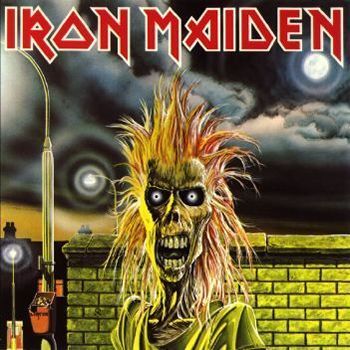
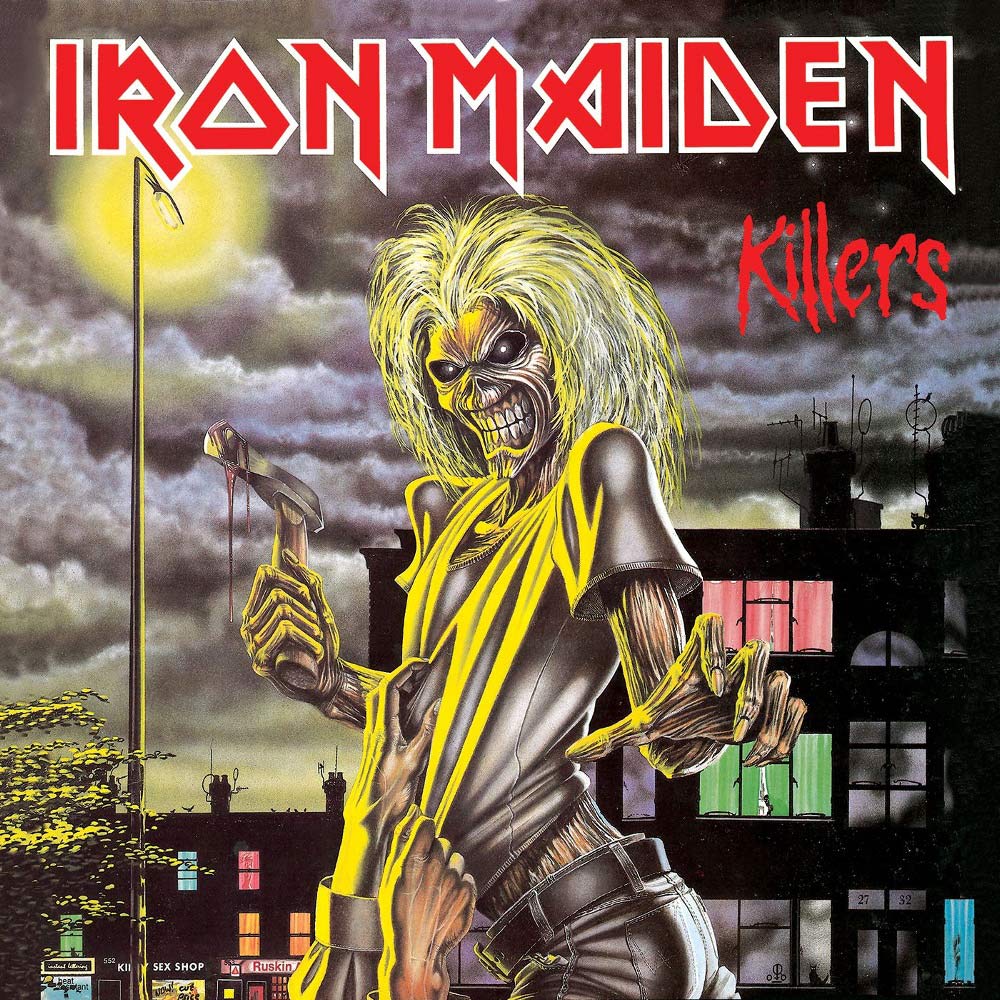
It was founded in 1975 by bassist Steve Harris. The band went through a lot of line-up changes before the release of their first album, simply called Iron Maiden, in 1980, recorded by Harris, singer Paul Di'Anno, guitarists Dennis Stratton and Dave Murray, and drummer Clive Burr. In the follow-up, Killers from 1981, Stratton, due to Creative Differences, was replaced by Adrian Smith, from the band Urchin. This was also the last album with Di'Anno, who was fired for drinking problems but wanted to leave the band anyway and shows no animosity for it.
The real success came a year later, in 1982, with The Number of the Beast, which marked the debut in the band of Bruce Dickinson, Di'Anno's replacement. The band's classic line-up came full circle in 1983 with the arrival of drummer Nicko McBrain, replacing Clive Burr, for personal problems. With this line-up, the band recorded four studio albums (Piece of Mind, Powerslave, Somewhere in Time, and Seventh Son of a Seventh Son) and a live album, (Live After Death) which marked the climax and end of the so-called "Golden Years".
Unfortunately, from this point onwards, the things weren't going so well for the band. Adrian Smith left the band due to Creative Differences (although it was in good terms, it was just that he wanted to play in a softer mood than that one of Maiden) and he was replaced by Janick Gers, who played in the band White Spirit, and with Fish (former singer of Marillion) and Ian Gillan before Bruce Dickinson brought him as guitarist of his solo career. The follow-up to Seventh.., No Prayer for the Dying, was considered inferior to the former albums, despite having the band's first #1 hit. ("Bring Your Daughter... To the Slaughter") The follow-up, Fear of the Dark, charted in #1, but after it, Bruce Dickinson left the band.
He was replaced by Blaze Bayley, who wasn't well received. Not only that, but the band also changed their Record Producer, and thus, everything was set for the band's Audience-Alienating Era. The two albums released in the Bayley-era (1995's The X Factor and 1998's Virtual XI) weren't so well received, and it seemed that the band was going to break...
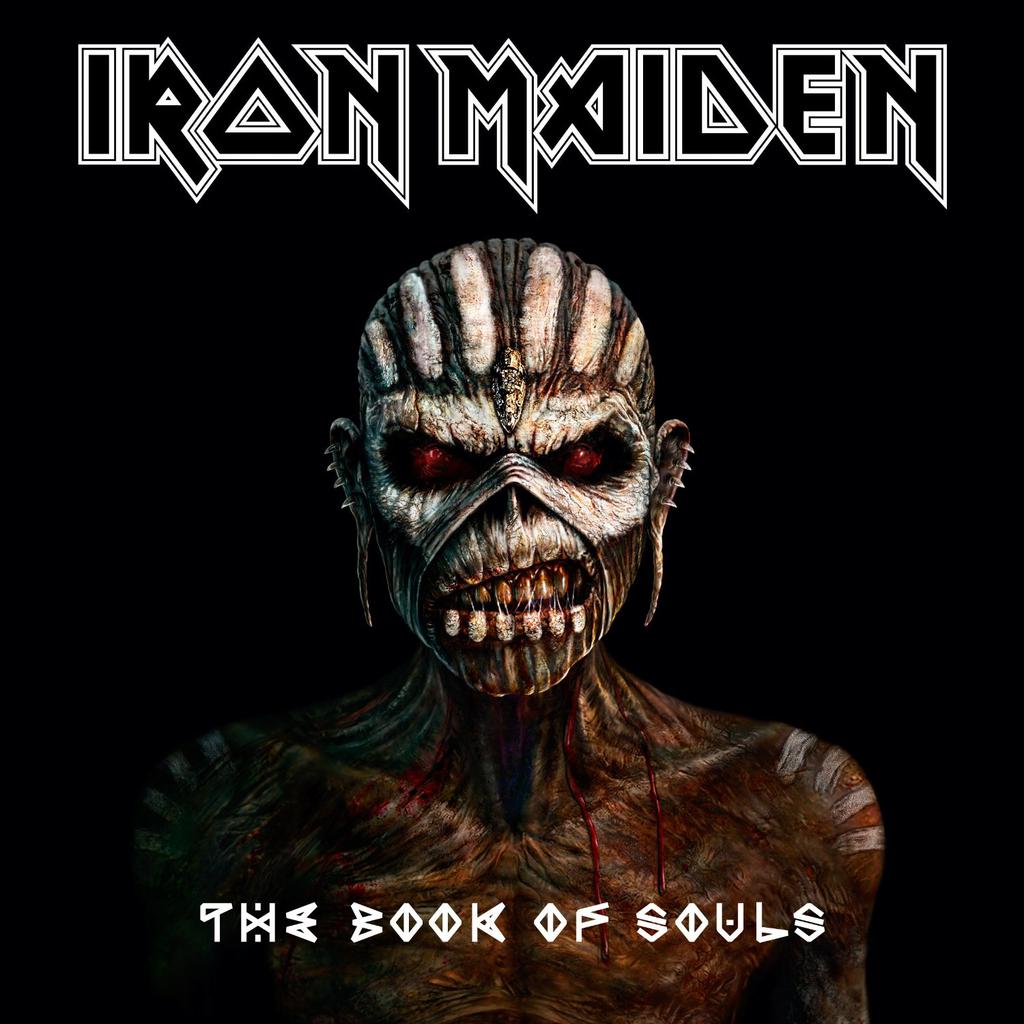
...But 1999 brought the biggest news: Bruce Dickinson and Adrian Smith returned to the band, but only Blaze left, thus making Maiden a sextet with three guitarists. Not only that, but the follow-up to Virtual, Brave New World, was a big hit, with a lot of people claiming the album as another classic album of the band. This line-up (Dickinson / Smith / Gers / Murray / Harris / McBrain) continues to our days, having recorded other three albums: 2003's Dance of Death, 2006's A Matter of Life and Death and 2010's The Final Frontier, the band's most recent #1 album. After Dickinson's successful recovery from throat cancer, The Book of Souls was released in September 2015. A music video has been released .
.
The band started working on a new album in 2019 while touring for The Book of Souls and were planning to release it in that year or early 2020, but COVID-19 delayed the album. In mid-July 2021 they made the announcement that the new album, titled Senjutsu, will be released on September 3rd 2021. The first single, The writing on the wall, was released on July 15th.
Their sound is characterized by twin guitar (later triple guitar) harmonization and galloping bass, as well as the operatic vocals of Bruce Dickinson. Their most notable songs fall into three themes: Ominous ("The Number of the Beast", "Fear of the Dark"), historical (war songs such as "The Trooper" and "Aces High", historical events such as "Run to the Hills" and the biographical "Alexander the Great") or derivative ("The Wicker Man", "Flight of Icarus", "Brave New World"). Also notable is the band's promotional imagery, featuring zombie mascot Eddie the Head.
Current Members:
- Steve Harris - bass, backing vocals, keyboards (1975–present)
- Dave Murray - guitars (1976–77, 1978–present)
- Nicko McBrain - drums (1982–)
- Janick Gers - guitars (1990–)
- Adrian Smith - guitars, backing vocals (1980–90, 1999–)
- Bruce Dickinson - lead vocals, piano (1981–93, 1999–)
Former Members
- Clive Burr - drums (1979–82, died 2013)
- Paul Cairns - guitars (1978–79)
- "Blaze" Bayley Cook - lead vocals (1994–99)
- Paul Di'Anno - lead vocals (1978–81)
- Doug Sampson - drums (1977–79)
- Dennis Stratton - guitars, vocals (1979–80)
Early Members / Fill-Ins:
- Paul Day - lead vocals (1975–76)
- Ron Matthews - drums (1975–77)
- Tony Moore - keyboards (1977)
- Tony Parsons - guitars (1978–79)
- Barry Purkis (Thunderstick) - drums (1977)
- Terry Rance - guitars (1975–76)
- Bob Sawyer - guitars (1976–77)
- Dave Sullivan - guitars (1975–76)
- Paul Todd - guitars (1978–79)
- Terry Wapram - guitars (1977–78)
- Dennis Wilcock - lead vocals (1976–78)
Studio Discography:
- 1979 - The Soundhouse Tapes
- 1980 - Iron Maiden
- 1981 - Killers
- 1982 - The Number of the Beast
- 1983 - Piece of Mind
- 1984 - Powerslave
- 1986 - Somewhere in Time
- 1988 - Seventh Son of a Seventh Son
- 1990 - No Prayer for the Dying
- 1992 - Fear of the Dark
- 1995 - The X Factor
- 1998 - Virtual XI
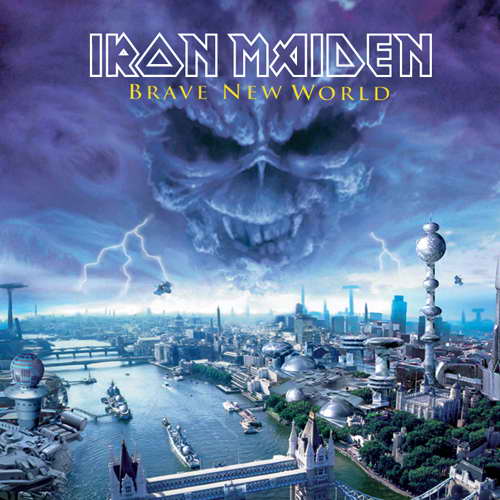
- 2000 - Brave New World
- 2003 - Dance of Death
- 2004 - No More Lies
- 2006 - A Matter of Life and Death
- 2010 - The Final Frontier
- 2015 - The Book of Souls
- 2021 - Senjutsu
Live Discography:
- 1980 - Live!! +one
- 1981 - Maiden Japan
- 1985 - Live After Death
- 1993 - A Real Live One
- 1993 - A Real Dead One
- 1993 - Live at Donington
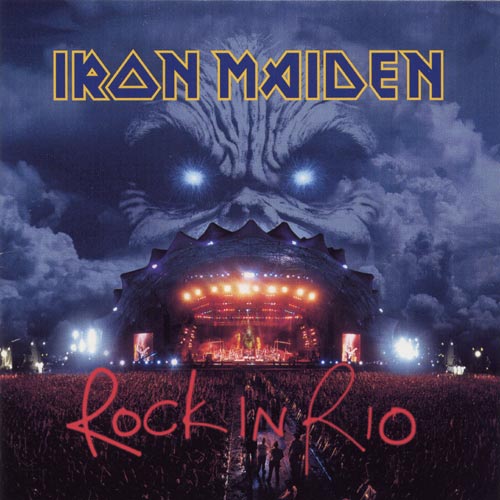
- 2002 - Rock in Rio
- 2002 - BBC Archives
- 2002 - Beast Over Hammersmith
- 2005 - Death on the Road
- 2009 - Flight 666
- 2012 - En Vivo!
- 2013 - Maiden England '88
- 2017 - The Book of Souls: Live Chapter
Other discography:
- 2002 - Best of the B-Sides
- 1980 - Women In Uniform
- 1981 - Wrathchild (Live at the Rainbow)
- 1982 - The Number of the Beast
- 1982 - Run To The Hills
- 1983 - Flight of Icarus
- 1983 - The Trooper
- 1984 - Aces High
- 1984 - 2 Minutes to Midnight
- 1986 - Wasted Years
- 1986 - Stranger In A Strange Land
- 1988 - Can I Play With Madness?
- 1988 - The Evil That Men Do
- 1988 - Infinite Dreams (Live)
- 1988 - The Clairvoyant (Live)
- 1990 - Tailgunner
- 1990 - Bring Your Daughter... To The Slaughter
- 1990 - Holy Smoke
- 1992 - Be Quick Or Be Dead
- 1992 - From Here To Eternity
- 1992 - Wasting Love
- 1995 - Lord of the Flies
- 1995 - Man on the Edge
- 1997 - Virus
- 1998 - Futureal
- 1998 - The Angel and the Gambler
- 2000 - The Wicker Man
- 2000 - Out of the Silent Planet
- 2003 - Wildest Dreams
- 2006 - Different World
- 2006 - The Reincarnation of Benjamin Breeg
- 2010 - The Final Frontier
- 2013 - Blood Brothers (En Vivo)
- 2015 - Speed of Light
- 2021 - The Writing on the Wall
- 2021 - Stratego
"Scream for me, TV Tropes!... SCREAM FOR ME, TV TROPES!!!"
- Aborted Arc: The Book of Souls starts with a song Bruce had written for a solo Concept Album, "If Eternity Should Fail". Thus the spoken outro introducing two characters is setup for a plot that doesn't continue — Bruce even asked Steve if he should cut it, but the bandleader felt it fit the album's themes and mood.
- Aerith and Bob: Inverted: Paul, Adrian, Dave, Michael, Steve... and Janick.note
- Age of Titles: "Age of Innocence", from Dance of Death.
- All Drummers Are Animals: Nicko, who drums wildly, is Fun Personified, and even developed a way to not need a double bass pedal!
- And I Must Scream: "Futureal", from Virtual XI, is about being locked in virtual reality.
- And Show It to You: Part of The Book of Souls artwork has Eddie doing this with his own heart.◊
- Apocalyptic Log: "Satellite 15... The Final Frontier", from The Final Frontier, about a pilot whose ship ends up doomed.
- Art Evolution: Many artists - Derek Riggs had one right away going the simpler cover of the first album◊ to the more eye-catching one for ''Killers''◊, which only became more detailed and well-made as time went on, and now it's even digital paint◊. Second adopter Melvyn Grant◊ also was much more complex two decades later◊, and so was Mark Wilkinson from a tour poster◊ to an album 22 years later◊.
- Animated Music Video:
- "Wildest Dreams", from Dance of Death is 3D-animated.
- "Different World", from A Matter of Life and Death is 3D-animated.
- "The Final Frontier", from The Final Frontiernote is 3D-animated.
- "Speed of Light", from The Book of Souls, mixes 8-bit, 16-bit and various forms of 3D animation.
- "The Writing on the Wall", from Senjutsu is a mix of 2D and 3D animation.
- "Stratego", also from Senjutsu, starts out as 2D-animated but features 3D-animation later on in the music video.
- As the Good Book Says...: "The Number of the Beast" opens with quotes from the Revelation (12:12 and 13:18 specifically).
- Assist Character: A rare non-videogame example: In the Fighting Game part of the video for "Speed of Light" The Beast summons a Reaper as a special move.
- Audience Participation Song: Plenty of them. Sometimes Bruce leaves the lyrics to the audience:
- "The Wicker Man", from Brave New World has the final bars of the song.
- From 1986 to 2008, when the band played "Heaven Can Wait", from Somewhere in Time, they invited some fans to the stage. When the band brought this back for The Future Past tour, this was discontinued for safety reasons, so that Bruce could reenact his gun battle with Eddie from the original tour (as a good chunk of TFP was modeled after said tour). The axemen all head to the left side of the stage to avoid getting hit by any firecrackers.
- "Fear of the Dark", from the eponymous Fear of the Dark, is a song that's been particularly adopted by the fans as an audience participation song, but is interesting in the fact that the fans don't sing along much to the lyrics, but vocalize to the guitar. It's become such an audience participation staple that pretty much every Iron Maiden compilation will have a live version of the song.
- Badass Biker: Paul Di'Anno is a member of the famous motorcycle club, The Hells Angels.
- Badass Bookworm: While none of them have superior education, all are well read (the sheer number of Filk Songs is a great indicative) and managed great feats, such as both Bruce and Nicko learning to fly aircraft.
- Ballad of a Sex Worker: "Charlotte the Harlot" describes the titular sex worker's life on the job. Charlotte would become a recurring character for the band, appearing again in the songs "22 Acacia Avenue" in which the narrator tries to persuade her to give up her dangerous lifestyle, and "From Here to Eternity" which sees her taking a fateful motorcycle ride with the devil.
- Battle Cry: From "The Clansman", from Virtual XI.FREEEDOOOOOOOOOOOOOOOOOOM!!!
- Berserk Button:
- Do not suggest that Iron Maiden was influenced in any way, shape, or form by punk rock when Steve Harris is around. His contempt for the punkish debut album shows perfectly.
- Depending on which day of the week, Iron Maiden as a whole, and especially Steve Harris and Bruce Dickinson counts for Paul Di'Anno. It notoriously reached a point where Di'Anno singled out an audience member shouting Dickinson's name, mocked the person and Dickinson repeatedly, and ended it by threatening to enter the crowd and assault the guy.
- Biography: The band has a few, such as Run to the Hills, the Authorised Biography, Running Free, The Official Story of Iron Maiden and 30 Years: The Ultimate Unauthorized History of the Beast. Paul Di'Anno also wrote an autobiography, titled The Beast, which fit the title by showing a lot of Sex Drugs And Rock N Roll.
- Bittersweet Ending: "The Talisman". The crew finally reached their golden promised land, but many ships and men were lost on the way, and the protagonist is dying from an unspecified sickness, most likely scurvy and/or malnutrition ("twenty days without a meal").
- Blood Knight: "The Mercenary" from Brave New World.
- Book Ends:
- Seventh Son of a Seventh Son, the album, starts (in "Moonchild") and ends (in "Only the Good Die Young") with the same paragraph:Seven Deadly Sins
Seven ways to win
Seven holy paths to hell
And your trip begins
Seven downward slopes
Seven bloody hopes
Seven are your burning fires
Seven your desires - There's also "Fear of the Dark", from the eponymous album Fear of the Dark, where the order of the first two lines is reversed at the end of the song, for a truly symmetric feel:I am a man who walks alone
And when I'm walking a dark road
...
And when I'm walking a dark road
I am a man who walks alone - "When the Wild Wind Blows", from The Final Frontier, opens and ends with... Wind.
- Seventh Son of a Seventh Son, the album, starts (in "Moonchild") and ends (in "Only the Good Die Young") with the same paragraph:
- Brain Food: Piece of Mind's inner sleeve◊ and CD art◊, probably referencing the cover with a post-lobotomy Eddie, have a brain as the centrepiece of a banquet.
- Buffy Speak: From Live at Donington, Bruce Dickinson refers to the live video as "the most mega Iron Maiden video-film-whatever".
- Calling the Old Man Out: "Wrathchild", from Killers, is about a child who was abandoned by his father with his prostitute mother and is going after him.
- Catchphrase:
- The fans themselves have a Catchphrase of their own — the phrase "Up the Irons" is pretty much the Maiden fan salute.
- During live shows, Bruce is very fond of shouting "Scream for me!" followed by the name of the city where they're performing.
- Chick Magnet: Dave, in the early days of the band he earned quite some mail from female fans (and their jealous boyfriends...).
- Children Forced to Kill: "Sun and Steel", from Piece of Mind:Well, you killed your first man at 13,
Killer instinct, animal supreme,
By 16 you had learned to fight
The way of the warrior, you took it as your right. - Chronological Album Title: In case you started to lose count of how many studio albums the band released, they throw in the occasional hint to the ordering:
- Iron Maiden: The first album.
- Seventh Son of a Seventh Son: The seventh album.
- The X Factor: If you read the X as a Roman numeral, then this album is the tenth...
- Virtual XI: ...while this title does have a Roman numeral, as the eleventh album.
- The Final Frontier: Appropriately enough for the fifteenth album, its Title Track also carries the prefix "Satellite 15...".
- Chuck Cunningham Syndrome: All the guys who joined the band prior to The Soundhouse Tapes have pretty much become footnotes, with even Steve Harris barely acknowledging them. One of those, short-tenured singer Paul Day, even claimed to have helped written songs.
- City Shout Outs: Bruce Dickinson's Catchphrase is "Scream for me, [insert name of country/city]!" whenever the band performs their self-titled song, this is also a cue for Eddie to appear.
- Clear My Name: "Murders in the Rue Morgue", from Killers, as it's about a wrongfully accused man coming across two women who were murdered. Also "The Fugitive", from Fear of the Dark, as it's about a fairly known work about a wrongfully accused man.
- Concept Album:
- Seventh Son of a Seventh Son.
- Somewhere in Time deals with different aspects of time (time-travel, history, racing against the clock).
- A Matter of Life and Death is mostly about war and religion.
- Continuity Cavalcade:
- The cover of Somewhere in Time has a lot of Maiden references:
- Ruskin Arms, The Rainbow Bar, Marquee Club, pubs where the band played on their first years.
- The opera house is called "Phantom Opera House", as in "Phantom of the Opera".
- "Maggie's Revenge" is a reference towards both the song and cover art of "Sanctuary", the cover art of "Women in Uniform" and, of course, Margaret Thatcher.
- Some Japanese elements also reference the live album Maiden Japan.
- Eddie is in the "22 Acacia Avenue" street. Charlotte (reference to "Charlotte the Harlot") is found sitting in one of the windows of the avenue.
- Bruce has a brain in his hands, reference to Piece of Mind.
- In front of Bradbury Hotel, there's a winged guy falling, his wings on fire. This is, of course, a reference to "Flight of Icarus".
- "The Sand Dune grill (IMHO)" references "To Tame a Land". There's also "Herbert Ails", reference to Frank Herbert, author of Dune, the inspiration for the song.
- Three pyramids reference the album Powerslave.
- There's a bar called "Aces High" and there's also a plane flying.
- The clock marks 23:58 a.k.a. "2 Minutes to Midnight". Another reference is the laser eye Eddie has.
- There's also the Eye of Horus (reference to "Powerslave") near Eddie.
- "Ancient Mariner Seafood Restaurant", for "Rime of the Ancient Mariner".
- The cinema plays "Live After Death". There's also "Long Beach Arena", which was the place where LAD was filmed.
- "Tehe's Bar" is the place where Maiden gathered people in order to sing in the central piece of "Heaven Can Wait".
- The cover of Best of the Beast includes various Eddies.
- The cover of Somewhere Back in Time has the Cyborg Eddie from Somewhere in Time breaking out of the pyramid from Powerslave, while the Maiden font has the colours seen in Seventh Son of a Seventh Son.
- The poster for the promotional Somewhere Back in Time tour has Mummy!Eddie from Live After Death being resurrected, and the pyramid has three Eddie statues, referencing the albums Somewhere in Time, Powerslave and Seventh Son of a Seventh Son.
- The cover for From Fear to Eternity has references to all the albums from the period.
- The video for "The Writing on the Wall" is The Apunkalypse amidst 7 minutes of endless Maiden references.
- The cover of Somewhere in Time has a lot of Maiden references:
- Continuity Nod:
- The video for "Wasted Years" contains a lot of fragments from Maiden's older videos.
- "Speed of Light" references just about every single other Iron Maiden artwork of the band's career. Namely:
- Eddie is playing on an arcade with an interface that's taken from the cover of "Wasted Years".
- The first level references the covers for "Killers", "Iron Maiden" and "Bring Your Daughter... To the Slaughter".
- The second level references the covers for "The Reincarnation of Benjamin Breeg", "Somewhere in Time", "Powerslave", "Stranger in a Strange Land" and two blink it and you'll miss it references to "The Final Frontier" (Eddie passes the skull in the cover near the level's end) and "Seventh Son of a Seventh Son" (he passes one of Eddie's bits of flesh from that cover shortly thereafter).
- The third level is basically the cover of "Run to the Hills" in animated form, plus Eddie's fatality is directly taken from the single cover of "The Number of the Beast". Eddie comes back to life mid-fight in a manner reminiscent of the cover of "Live After Death". Plus an appearance of the Grim Reaper, which often shows up in album covers.
- Last level has references to "Powerslave", "A Matter of Life and Death", "2 Minutes to Midnight".
- When he beats the game, the scoreboard has the names of every member of the band.
- The arcades in the background are all named after album titles.
- Contrasting Sequel Main Character: Compare Bruce Dickinson, short, lean, generally quite stable and with a voice that reaches operatic levels of high-pitched with Paul Di'Anno, a tall, bulky, self-admittedly violent lunatic with a raw, hoarse punk baritone.
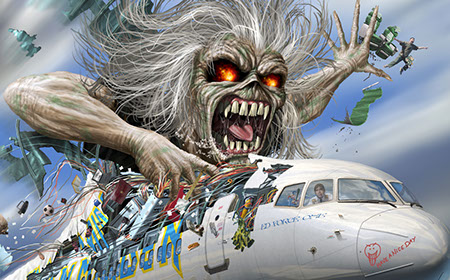
- Cool Plane: They go on tours in a customized Boeing (first a 757, then a 747) called "Ed Force One", piloted by Bruce Dickinson himself (who works as a commercial pilot between rocking). However there are rules about not being able to pilot the night of a concert. He has since retired as their pilot.
- Corrupt Corporate Executive:
- "Be Quick or Be Dead" from Fear of the Dark is a takedown on one of those.
- "El Dorado", from The Final Frontier, is sung from this point of view.
- Cover Version: They've covered songs by Skyhooks, Montrose, Jethro Tull, Beckett, Nektar, FM, Marshall Fury, Thin Lizzy, Stray, Golden Earring, Free Band, Led Zeppelin, Chuck Berry, The Who, UFO, Focus and Deep Purple. All of these, anyway, can only be found in singles, compilations or tribute albums.
- Creating Life Is Bad: At least, according to Nicko, who wrote "New Frontier", from Dance of Death about his preoccupation about human cloning.
- Crystal Ball: "Can I Play with Madness?" references one in the lyrics, and the artwork from its album Seventh Son of a Seventh Son also has it.
- Darker and Edgier:
- Some songs work as darker counterparts of earlier songs. Compare "Charlotte the Harlot" (1980) to "22 Acacia Avenue" (1982); and "The Trooper" (1983) to "Paschendale" (2003).
- Fear of the Dark and No Prayer for the Dying are this compared with any of the previous albums. The vocals, for example — less operatic, more raspy.
- The X Factor is by far Maiden's darkest album. Lead Bassist Steve Harris
 was going through a tough time: Bruce Dickinson left his band, Martin Birch retired, his father died, and he went through a divorce. How could one expect him to write up beat songs about literature and poetry when he was clearly going through a depression. It could be argued that Blaze Bayley, a baritone, was the fitting singer for that period of Iron Maiden's history. This becomes very clear once you read some of the lyrics:[From "Fortunes of War"] I'm scarred for life / but it's not my flesh that's wounded.
[From "Judgement of Heaven"] I've been depressed so long / it's hard to remember when I was happy. - The entirety of A Matter of Life and Death is quite a bit darker musically than previous albums, though the lyrics are still pretty much what you'd expect from Iron Maiden with possibly a more focused emphasis on humans being bastards. The album's dark feel is largely due to the complex and melancholic melodies, and the quality of Dickinson's voice as he gets older.
- Dark Is Not Evil: In an inversion of Scary Musician, Harmless Music, their music is undeniably dark, but the band members themselves are pretty decent people for the most part, and they always portray the terrible topics in their songs as genuinely terrible, so there's never any sense that
 Evil Is Cool.
 - The Dead Can Dance: "Dance of Death", from, well... Dance of Death, where a narrator is brought into a festive ritual, and is enthralled until he realizes "Lifeless figures, they were undead, all of them."
- Dem Bones: The cover of A Matter of Life and Death has Eddie over a tank, leading an army of skeletons.
- Department of Redundancy Department:
- Mother of Mercy, from The Final Frontier: "I'll die a lonely death, of that I'm certain of".
- "Now we need to know the truth now" from "The Man of Sorrows".
- Digital Piracy Is Evil: In January 2018, Bruce spoke against Napster and how illegal downloads are destroying the concept of value and work of new artists. He also said that the founder of Napster is selfish and he "should be locked up"."[New artists] have a tough job, actually, because digital downloading… well, not digital downloading now in itself, but the result of Napster and things like that, even though downloading is now kind of mainstream, Napster destroyed the concept of music having any value, which is terrible...""I think the guy [who started Napster] should be locked up, and maybe he has been — he deserves to be. It was an act of pure selfish destruction.""For a band like us, actually we still make records, but we pretty much accept that we don’t really make hardly any money out of making a record. We still do it because we have to, because we love it and we have to do new music. But the great thing with us is we can tour and make money [from performing] live. Other bands, bands who are coming up doing great music, they don’t get that luxury. People who are brilliant musicians don’t get paid for doing amazing jobs."
- Digital Piracy Is Okay:
- The above said, the band itself couldn't give less of a flying rat's arse if you downloaded their music. In fact, they encourage downloading of their music, and have even gone so far as to state "We're not like Metallica".
- In an interview with Steve Harris, when asked about bootlegs:
"I have some... I collect them."- The band also asked fans attending the first leg of Somewhere Back in Time to send over any video footage they took during the concerts, as they were hoping to include it in their documentary Flight 666.
- In the Give me Ed 'Til I'm Dead Tour, Bruce said this once:
"... if you wanna record this song and you wanna put it on a world wide web - on the internet, so all your friends could listen to it - as long as you buy the album in September - we don't give a fuck my friends!" - Doomsday Clock: "2 Minutes to Midnight", from Powerslave, is named after it. (the lyrics don't specify nuclear war rather than the regular one)
- Downer Beginning: "Satellite 15... The Final Frontier" opens an album with an Apocalyptic Log of a doomed astronaut, which to enhance the discomfort has its first part be percussion-heavy progressive rock.
- Downer Ending: Maiden just seems to love this trope.
- Most of their songs sung from the perspective of soldiers end with their narrators' death.
- "Hallowed Be Thy Name" from The Number of the Beast ends with the last rites imparted upon the subject of the song after he says his last words, leading to his final execution at the gallows.Mark my words, believe my soul lives on,
Don't worry now that I have gone,
I've gone beyond to seek the truth.
When you know that your time is close at hand,
Maybe then, you'll begin to understand
Life down here is just a strange illusion.
Hallowed Be Thy Name - "The Trooper" is about the "Charge of the Light Brigade" and those who know history knew how that ended.
- "To Tame a Land" ends Piece of Mind with a very unhappy sounding final part.
- The last line of "Alexander the Great" (the final track on Somewhere in Time) is "He died of fever in Babylon".
- Seventh Son of a Seventh Son ends with a depressive 1-2: "The Clairvoyant" ends with the revelation that despite the power to see into the future, the Clairvoyant "for all his power, couldn't foresee his own demise". This effectively closes the story arc on the main character, the titular Seventh Son. The final track, "Only the Good Die Young", is about the devastation of a town from a disaster, and Lucifer planning to cancel the rest of mankind.
- Virtual XI ends with "Como Estais Amigos", about the Falklands War. It even sounds depressing.
- Brave New World has "The Thin Line Between Love and Hate", which for some hopeful lyrics but still ends in an unhappy part... If you ignore the Studio Chatter that follows.
- A Matter of Life and Death ends with "The Legacy", about the death of a corrupt leader marking a Karma Houdini for him, plunging the state of his country into futher chaos. It helps that it follows three either really disturbing or really depressing tracks in a row.
- The Final Frontier ends with "When the Wild Wind Blows", about a couple who commits suicide mistaking an earthquake for the start of a nuclear war.
- The Book of Souls is a Double Album, but both sides count: disc 1 ends with the title track, based on the film Apocalypto, about the decline of the Mayan civilizations by the Aztecs and the further end of the Aztecs by the Spanish Inquisition; and disc 2 ends with three depressing songs: "Tears of a Clown", a tribute song to Robin Williams who committed suicide, "The Man of Sorrows", about how people think religion will solve the world's problems but only instead make it worse, and "Empire of the Clouds", which tells the story of the maiden voyage of the R101. Counting the other two albums, TBOS marks three straight albums with downer endings in a row.
- Dystopia: "Brave New World", from, well... Brave New World.
- Early-Installment Weirdness:
- The two albums with Paul Di'Anno, but the self-titled debut in particular. It has more a punk rock vibe that ultimately lead to Steve Harris' derision.
- The song "Burning Ambition" (B-Side of "Running Free") was written in 1972. It was the first song Steve Harris wrote, and bears quite obvious influences from glam rock of the period, plus an uncharacteristically phased guitar intro. It was part of Steve Harris's original band Gypsy's Kiss's setlist, in his following band Smiler's setlist, and also in the early Iron Maiden's set back in the Paul Day and Dennis Wilcock days, when their tempos were slower and more hard rock. When the harder-edged Paul Di'Anno joined and their arrangements became faster and heavier, it began to look very out of place. When it came to putting out a single, the band needed a B-Side and used "Burning Ambition", due to it not fitting the style of the first album, which they were working on at the time, but Steve still wanting to see it released. Whilst it is often overlooked by fans due to its style difference, Steve Harris noted that he still has sentimental value for the song.
- The mellow "Strange World" on the debut album is an Out-of-Character Moment for Paul Di'Anno. In a 2019 interview with original singer Paul Day, he all but admits that it was his composition (or at least partly) but he was not credited due to being out of the band when the song was copyrighted. Other songs written by ex-members include "Sanctuary", "Charlotte The Harlot" and "The Ides Of March".
- On their eponymous first album, Eddie the Head has a comical "Huh? Wha?" expression on his face, like his mom caught him masturbating or he just woke up from a screaming coke bender and found himself in a group therapy circle. His fuck-you sneer debuted on the second album, Killers, and hasn't gone away since.
- Earth-Shattering Poster: For the World Piece Tour of 1983 and the Early Days Tour of 2005.
- Epic Rocking: All their albums sans Killers have an epic, usually as the closer. This began with "The Phantom Of The Opera", but the band has gotten even longer in recent years. The following are their longest songs.
- "Rime of the Ancient Mariner", (13:36) from Powerslave.
- "Seventh Son of a Seventh Son", (9:53) from Seventh Son of a Seventh Son.
- "Sign of the Cross", (11:16) from The X Factor.
- "The Angel and the Gambler", (9:52) and "The Clansman" (9:02) from Virtual XI.
- "Dream of Mirrors" (9:21) and "The Nomad" (9:06) from Brave New World.
- "For the Greater Good of God" (9:24) and "The Legacy", (9:23) from A Matter of Life and Death.
- "When the Wild Wind Blows", (11:01) "Isle of Avalon" (9:06) and "The Talisman", (9:03) from The Final Frontier.
- The Book of Souls has "The Red and the Black" (13:33), "The Book of Souls" (10:27), and their longest song to date, "Empire of the Clouds" (18:01). In fact, no songs are below 5 minutes. note
- Senjutsu has 2 out of 10 songs shorter than 5 minutes, and the album ends with a trio of epics: "Death of the Celts" (10:20), "The Parchment" (12:39) and "Hell on Earth" (11:19) (all written by Steve Harris).
- Every Episode Ending: The last song before the encore is always "Iron Maiden", which also marks the entrance of an Eddie on stage.
- Evil Laugh: Quite a few. Examples include:
- "Killers" from Killers
- "El Dorado" from The Final Frontier.
- "Moonchild" from Seventh Son. Now that's textbook evil laughter.
- "Caught Somewhere in Time" from Somewhere In Time.
- "Fear of the Dark" usually gets this in live shows.
- Face Death with Dignity:
- If you're gonna die, "Die with Your Boots On" (Piece of Mind), with added lyrics against doomsday prophets.
- The second part of "Satellite 15... The Final Frontier", a song-wide Apocalyptic Log, also fits, along with Facing Death With Optimism.
- "Stratego" has both reminiscences and trying to accept death.
- Evil Overlooker: Eddie in Brave New World◊ and Rock in Rio◊.
- Football Hooligans: "Weekend Warrior", from Fear of the Dark, concerns one of those, while questioning why this path is chosen.
- Foreshadowing:
- Before appearing in Killers, "Wrathchild" appeared in the multi-band compilation Metal for Muthas.
- A live version of "Drifter" was released as part of the Sanctuary single before appearing in Killers.
- Adrian composed "22 Acacia Avenue" while he was in Urchin. The final version is different from this one.
- The cover art for the Purgatory single foreshadows The Number of the Beast.
- Bruce recorded with his solo band a version of "Bring Your Daughter... To the Slaughter" for the soundtrack of A Nightmare on Elm Street 5: The Dream Child before the band reworked it for No Prayer for the Dying.
- Janick Gers played guitar on the original version, then joined Maiden the next year.
- "Wildest Dreams" was presented in the Give me Ed 'Til I'm Dead tour, before the release of Dance of Death.
- Frameup:
- The narrator of "Innocent Exile" is subjected to this.
- "The Fugitive" is about this along with (as mentioned above) Clear My Name.
- Fun Personified: Nicko, as the "Listen With Nicko" recallings of the singles up to 1989 show, complete with Funny Answering Machine codas.





- Garfunkel: Nicko can be seen as this, considering that all the other 5 members are prolific composers but he has only written one album track ("New Frontier"). But he compensates by being one of the best drummers in the business.
- Ghost Ship / Afterlife Express:
- "Rime of the Ancient Mariner" (based on the poem), from Powerslave, where Death and She-Life-In-Death arrive on the stranding ship to gamble on the sailor's lives (the former wins all but the Mariner, cue a storm to wipe them).
- "Ghost of the Navigator", from Brave New World. Although Bruce hinted that the ghosts might be in the narrator's head.
- Glowing Eyelights of Undeath: Just about every Eddie has glowing eyes (even ones that might not be zombies, such as The Final Frontier).
- A Good Name for a Rock Band: The band is named after a torture device, which appeared in the 1938 version of The Man in the Iron Mask and caught Steve's eye.
- Gratuitous Japanese: Senjutsu ("tactics and strategy"), which adequatedly has a Samurai Eddie on the cover and a Japanese-tinted Title Track.
- Gratuitous Latin: "Stratego", after the leader of an army.
- Gratuitous Panning: With 2 or 3 guitarists, they had to use it (example: in Rock in Rio, Dave Murray's guitar is in the left speaker, Janick Gers' is in the right one, and Adrian Smith is in the middle)..
- Great Balls of Fire!: In addition to pyrotechnics, their shows include elaborate setpieces, a guy dressed as Eddie, and sometimes Bruce in costume and/or mask.
- Greatest Hits Album: Plenty of them. And they all followed a three year interval!
- Greedy Televangelist: "Holy Smoke", from No Prayer for the Dying condems corrupt televangelists with Holier Than Thou attitude.
- Grief Song:
- "The Clairvoyant", from Seventh Son of a Seventh Son is about the death of psychic Doris Stokes.
- "Blood Brothers", from Brave New World, about Steve's father who died while he was touring.
- "Fear is the Key", from Fear of the Dark, was written after the band learned about the death of Freddie Mercury.
- "Como Estais Amigos", from Virtual XI, is a tribute to the dead soldiers in The Falklands War in both sides of the conflict.
- "Face in the Sand", from Dance of Death, is about the victims of 9/11.
- "Tears of a Clown", from The Book of Souls, is an homage to Robin Williams.
- The Grim Reaper: Eddie in the Dance of Death cover art and one of the covers of "Bring Your Daughter to the Slaughter".
- Hair-Trigger Temper: Paul Di'Anno, as evidenced with an infamous show in Ukraine where Paul was going to beat up a fan who suggested that Bruce Dickinson was a better singer than him (even though Paul made a similar statement in the early days).
- Harsh Vocals: Paul Di'Anno due to his punk background, and was probably one of the earliest heavy metal examples.
- The Heart: Dave Murray is the only guy aside from Steve in every album, so no doubt he's the one that connects the band, and his guitar has the signature Maiden sound. It's even truer regarding the other guitarists: Janick said that despite never playing with another guitarist before, with Dave "we just got together and it seemed to gel"; and Adrian added that "If I write a song I’ll usually play the solo in it and then Davey or Jan will do the other solo - usually Davey - and then again if Jan writes a song Davey will play the solo - so Davey gets to play everything"
- Hell-Bent for Leather: Paul Di'Anno also wore a jacket, and often spiked bracelets.
- A Hell of a Time: "From Here to Eternity", from Fear of the Dark:Hell ain't a bad place!
Hell is from here to eternity! - Heavy Mithril: Among a Filk Song-filled catalogue, there's the Arthurian-legend themed "Isle of Avalon", from The Final Frontier.
- Homage: Seen also here.
- Homesickness Hymn: "Stranger in a Strange Land" is sung from the perspective of an explorer who is freezing to death in the Arctic, while lamenting how he's alone and far from home and family. In the last verse, he is found frozen to death a century later.
- Horrible History Metal: They love this trope, telling stories of battles, massacres and such. Probably the Trope Codifier.
- Human Popsicle: The protagonist of "Stranger in a Strange Land" is one who awakens and feels like what the title says.
- Humanoid Abomination: Eddie in The Final Frontier. Artist Mel Grant said the alien “is not Eddie, as such”, but the band still takes it as Eddie.
- I Am the Band: Steve is the leader, founder, and only constant member of the band. In some albums, he even wrote or collaborated in all songs.
- Iconic Item: Steve Harris' beloved Fender Precision bass with the crest of his favorite soccer team on it. It's survived decades of modification and abuse, and is recognizable enough for Fender to make a model specifically based on said instrument.
- Idiosyncratic Cover Art: The box set "Eddie's Head.◊", where the CD spines combined into the first album's cover
- Impaled with Extreme Prejudice: The "Hallowed Be Thy Name" single from 1993 depicts Eddie as a devil impaling Bruce Dickinson, who was leaving the band, with a pitchwork.
- Incredibly Long Note: Bruce is quite fond of them, usually closing the song. Stand-outs include "Run to the Hills", "Children of the Damned" and "Seventh Son of a Seventh Son".
- Intercourse with You: Most of the "Charlotte" saga, such as the eponymous "Charlotte the Harlot" from Iron Maiden and 22 Acacia Avenue from The Number of the Beast.
- Instrumentals: "Transylvania" (which Bruce Dickinson once introduced as "a song I've never sung before, and probably never will"), "The Ides of March", "Genghis Khan" and "Losfer Words (Big 'Orra)".
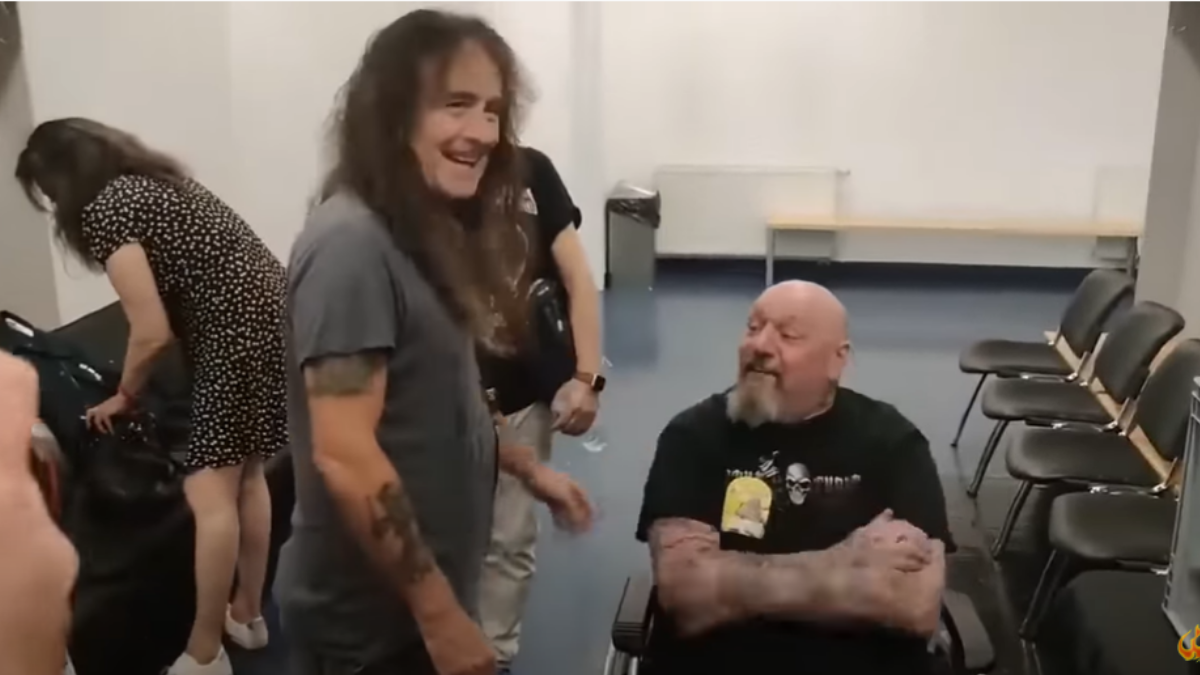
- I Was Quite a Looker: Paul Di'Anno◊ let the years (and drugs) take the best of him◊ - it's quite the contrast seeing him with Steve◊, who like the rest of the current band looks good for a guy in his 60s. A lesser case is Blaze◊ Bayley◊, who lost his hair and gained weight, but is not that bad in comparison.
- I Will Show You X!: "Can I Play With Madness":I screamed loud to the old man
I said "Don't lie, don't say you don't know"
I say "You'll pay for this mischief
In this world or the next"
Then he fixed me with a freezing glance
And the hellfire raged in his eyes
He said "You wanna know the truth, son?
Lord, I'll tell you the truth:
Your soul's gonna burn in the lake of fire - Jerk with a Heart of Gold: Paul Di'Anno still found time to praise Bruce Dickinson's singing in The Early Days documentary, despite his bitterness at never being able to reach the band's level of success.
- Just Before the End: "2 Minutes to Midnight", named after the indicator of this and discusing the horrors of war.
- Keet: Janick is really hyperactive, a big contrast to the more composed Adrian and Dave. No wonder Eddie normally chases him on stage.
- A Lady on Each Arm: Eddie in the Women In Uniform single cover.
- Large and in Charge: Paul, in every band he's been in since he left Maiden. He's also still a very large and imposing man, despite being nearly 60.
- Large Ham: Bruce Dickinson is not nicknamed "The Air Raid Siren" for nothing.
- Last Chorus Slow-Down: "Powerslave" and "Fear of the Dark" (although in the latter, the last chorus is only the start of a full slowdown that ends in a reflection of how the song starts).
- Last Note Nightmare:
- "Phantom of the Opera", in the pre-remaster release, where after 10 seconds of silence, Di'Anno shouts the song's final line again.
- Due to a production error, the intro to "Powerslave" haphazardly got stuck onto the ending of "Back in the Village" on the 1998 remaster of the album of the same name. So when one listens to "Back in the Village", the song ends with the spooky intro to "Powerslave". The 2015 remaster moves the intro back to "Powerslave".
- Lead Bassist: Steve Harris formed the band, writes or co-writes most of the songs, co-produced many albums, and is also considered one of the most technically skilled bassists.
- Light Is Not Good: "Lord of Light." Which is a fancy name for "Lucifer".
- Lighter and Softer: "Heaven Can Wait" could, in some respects, be seen as a Lighter and Softer version of "Hallowed Be Thy Name" — they've got a number of similarities musically and lyrically, but "Heaven Can Wait" features a more upbeat tone, and the character in it lives, whereas the one in "Hallowed Be Thy Name" dies. In general, Somewhere in Time can be considered this, thanks to the synths giving it a poppier feel.
- Literary Allusion Title:
- "The Evil That Men Do" (Seventh Son of a Seventh Son) is one of the few that isn't actually about the literary work.
- "Out of the Silent Planet", actually about Forbidden Planet.
- "Stranger in a Strange Land", about antarctic explorers.
- "The Wicker Man", about the Apocalypse.
- Littlest Cancer Patient: Clive Burr left music due to multiple sclerosis. Maiden has since founded a research fund on that disease to help him. It stands even after his 2013 death.
- Long-Runner Line-up: Hasn't changed since 1999.
- Longest Song Goes First: The X Factor kicks off with "Sign of the Cross" (11:16). Which not only inverts their usual epic as a closer (see below), but is also the only album opener that wasn't fit for a concert opener ("Man on the Edge" had the honors; even if the first songs from The Final Frontier onward were long, they at least were fast-paced enough to work).
- Longest Song Goes Last:
- The Number of the Beast closes with "Hallowed Be Thy Name" (7:13).
- Piece of Mind closes with "To Tame A Land" (7:25).
- Powerslave finishes with "Rime of the Ancient Mariner" (13:36).
- Somewhere In Time closes with "Alexander The Great" (8:35).
- "Mother Russia" (5:32) closes No Prayer for The Dying.
- "Fear of the Dark" (7:17) closes Fear of the Dark.
- The Final Frontier closes with "When The Wild Wind Blows" (10:59).
- The Book of Souls has "Empire of the Clouds" (18:05) as the closer.
- Looped Lyrics: "Iron Maiden" has only one verse and a chorus, repeated thrice.
- Loudness War: Once that trope took off in the mid-90s, the band's albums were victims of it, both the new ones and catalogue reissues in 1998 and 2002 were criticized for sounding muffled. Though then it was averted with A Matter of Life and Death and The Final Frontier, which were released without any mastering and thus are more dynamic than their predecessors.



- Magical Seventh Son: Referred to in (of course) Seventh Son of a Seventh Son, with the title track in particular noting "The seventh, the heavenly, the chosen one".
- Mayincatec: The Book of Souls takes inspiration from Mayan myth. The artwork still mixes some Aztec symbols.
- Metal Band Mascot: Eddie the Head, the albino zombie originally designed by Derek Riggs. Eddie appears on all album covers, and on most (if not all) of the band's merchandise. Although Motörhead's War-Pig precedes him, Eddie is the Trope Codifier.
- Metal Scream: Very common, with one of the contentious points in No Prayer for the Dying and Fear of the Dark being Bruce singing with a very raspy tone alongside his common "clean screaming".
- Million to One Chance: Mentioned twice in "Empire of the Clouds". "The millionth chance they laughed, to take down his majesty's craft" during the second verse is echoed far later with "A million to one, that's what he said" as the aircraft is crashing.
- Mistaken for Apocalypse: "When the Wild Wind Blows" tells the story of an elderly couple who are obsessed with the end of the world based on what they see on TV, and commit suicide mistaking an earthquake for doomsday.
- Mundane Made Awesome: Given the band is grandiose, there are things like turning a flasher into quite the Villain Protagonist in "Prowler" and an epic about a track and field athlete in "The Loneliness of the Long Distance Runner".
- Murder Ballad: "Sanctuary", about a man who killed a woman and now seeks sanctuary from the law.
- My God, What Have I Done?:
- Rather, "Oh God help me, what have I done?" in Killers.
- "Brighter Than a Thousand Suns," from A Matter of Life and Death, seeing as it's about the nuclear arms race.
- "The Time Machine" ends with a rather interesting variation. The titular time traveler takes his companion on a journey through space and time only to realize he's inadvertently shown the companion that humanity always has been horrible to each other and will always continue to fight and murder each other over petty, useless things for as long as time goes on.
Eerie collection, darkness is thereWedded to danger, betrothed to despair... - The Napoleon: Steve is not as grumpy as most examples of the trope, still hot-blooded, somewhat shorter than average at 5'8", and in a position of power.
- Nightmare Sequence: Quite a few songs are inspired by Steve Harris' nightmares, such as "The Number of the Beast," "Infinite Dreams" and "Dream of Mirrors".
- Ninja Pirate Zombie Robot: Eddie is already a zombie, but throughout the years he has been a cyborg, the devil, the Grim Reaper, The Phantom of the Opera, Pharaoh, bounty hunter, WWII pilot, dinosaur hunter, evil tree, king, alien, Samurai....
- Nothing Is Scarier: "The Great Unknown" utilizes the second variant to great effect. It just builds and builds and builds and the minute you think it's gonna explode into one more big chorus... It just goes back to the calm, eerie, creepy intro and then just ends. And it is creepy.
- Non-Appearing Title: 5/8 in Piece of Mind; other albums have it as well, mostly for self-describing titles, such as "The Prophecy", "The Mercenary", "The Reincarnation Of Benjamin Breeg".
- Obligatory Bondage Song: "Hooks in You", where Charlotte the Harlot sings about what will ensue with her client.
- Off with His Head!!: The original Maiden Japan◊ cover had Eddie decapitating the departing Paul Di'Anno.
- Old Media Are Evil: "When the Wild Wind Blows" is a loose deconstruction of a 1982 comic of the same name. An elderly couple is obsessed with the end of the world based on what they see on TV, and commit suicide during what they think is Doomsday, but is actually just an ordinary earthquake.
- Only in It for the Money: Dennis Stratton joined the band because he had a wife and daughter to support. Soon found he didn't quite fit.
- Ooh, Me Accent's Slipping: Bruce's English accent usually never slips in when he's singing, but on "Hell on Earth", it slips in pretty hard when he pronounces "propaganda" as "propagand-er".
- Our Ghosts Are Different: "The Apparition" from Fear of the Dark. Instead of doing typical ghostly things like scaring the person he's speaking to, the titular ghost waxes philosophical.Are we here for a reason?I'd like to know just what you thinkIt would be nice to know what happens when we die...wouldn't it?
- People Puppets: Eddie is controlling the devil (who in turn seems to control a regular human) in The Number of the Beast.
- Perpetual Frowner: Adrian scowls constantly, in contrast to Dave Murray.
- Perpetual Smiler: Dave, who's always seen with a grin.
- Pint Sized Power House: Bruce, who's only 5'6" (168 cm), but has a huge voice and a truly large presence. Besides his abilities as a singer and frontman, he's also a licenced pilot and a skilled fencer.
- Power Ballad: "Wasting Love", from Fear of the Dark, their only song about something romantic.
- Precision F-Strike:
- "Holy Smoke", twice.
- Cluster F-Bomb: Aside from Bruce live, a few B-sides filled with Vulgar Humor... And another that's not a song, but a recording of Steve and Nicko having an argument after a concert.
- Primal Fear: The title track of Fear of the Dark is about just that—or, specifically, fear of the things that live in it.
- Progressive Instrumentation: "The Clairvoyant": bass > guitar 2 > guitar 1 > drums > voice.
- Progressive Metal:
- Their music borders on this at times, especially on Seventh Son of a Seventh Son, A Matter of Life and Death, and The Book of Souls, as well as epics from other albums like "Powerslave", "Rime of the Ancient Mariner", "To Tame a Land", and "Hallowed Be Thy Name". Depending upon your definition of the style they will probably either qualify as one of the first genuine examples of the genre or as an Ur-Example instead. Their modern material is unabashedly prog, with three songs on The Book of Souls stretching well past the ten-minute mark and the longest being just over eighteen.
- It's probably worth noting that Dream Theater covered the album The Number of the Beast in its entirety live, to give an example of Maiden's prog credentials.
- Protest Song: Sometimes they go into current world problems, such as televangelists ("Holy Smoke"), the high crime rate ("Age of Innocence"), human cloning ("New Frontier"), and the economic crisis ("El Dorado"). And then there's the war-inspired songs...
- Pun-Based Title:
- Piece of Mind and "Public Enema Number One", from No Prayer for the Dying. The live albums Maiden Japan (EP, referencing Deep Purple's Made in Japan) and Maiden England (released on DVD with a "'88" attached) too.
- A self-referential pun is From Fear to Eternity... Even if "From Here to Eternity" is not on the album although it could fit.
- Rated M for Manly: As with any good heavy metal band! Epic songs, and the subjects are usually very manly things and people. And to top it off, all their promotional art revolves around a zombie!
- Red Eyes, Take Warning: Depending on the album cover, Eddie's eyes will not only glow but be red.
- Real Men Love Jesus: Nicko is a rather devout Christian.
- Real Men Wear Pink: As badass and manly as they are, they're not afraid to put out really weepy songs from time to time.
- Record Producer: Martin Birch from Killers to Fear of the Dark, Kevin Shirley since Brave New World. Steve also co-produces most since The X Factor.
- Redemption in the Rain: "Rainmaker" uses rain as a metaphor for self-recovery.
- Religion Rant Song: A few.
- "Holy Smoke" from No Prayer for the Dying was inspired by televangelist scandals.
- "Only the Good Die Young" from Seventh Son of a Seventh Son is one In-Universe, as the psychic protagonist rants against his people for not trusting in his powers, as they believed his powers came from the devil and rejected him on religious grounds. He responds by rejecting them and their religion on the basis that it's holding them back and refuses to use his powers for the good of his people anymore.
- "Judas Be My Guide" from Fear of the Dark is a rather ambiguous one, and seems to be about people who simply use religion as spiritual life insurance but do nothing to implement their beliefs & values into their daily lives, merely using it to escape hell when they die.
- "Starblind" from The Final Frontier deals with the quandary of how small the reality that religion sold to the masses is, and how comparatively huge the universe actually is.
- "Mother Of Mercy" asks why so many religious leaders don't seem to practice what they preach.
- Revival: Three tours in the Turn of the Millennium / The New '10s, "The Early Days" (only songs from the first four albums, and a Earth-Shattering Poster taken directly from the Piece of Mind tour), "Somewhere Back in Time" (besides "Fear of the Dark", only '80s songs, plus an Egyptian Powerslave-like stage which also had references to the two albums that followed), and "Maiden England" (stage and set-list inspired by the eponymous live album, recorded during the Seventh Son tour).
- Revolving Door Band: The early days of the band were very tumultuous. In fact, it took until the fifth album before they even had the same lineup on two consecutive recordings.
- Rise from Your Grave: Eddie in the covers of Live After Death and No Prayer for the Dying.
- Rock Opera: Seventh Son of a Seventh Son, with the first half being the father discovering his child will be a Magical Seventh Son and the latter the story of said son, and the Charlotte saga, following a prostitute.
- Rockumentary:
- 12 Wasted Years, The Early Days and Flight 666.
- Live After Death's DVD edition has the second part of The Early Days as an extra. Part three comes in the DVD for Maiden England, along with 12 Wasted Years.
- Rousseau Was Right: "The Thin Line Between Love and Hate" (Brave New World) is about this and Karma.

- Sad Clown: "Tears of a Clown" is all about how Robin Williams was one of those.
- The Savage Indian \ Tribal Face Paint: A Mayan-inspired version in The Book of Souls.
- Scary Musician, Harmless Music: Inverted. They don't attempt to look intimidating (the horror is left for Eddie), but the music is often ominous.
- Screw Destiny:
- "Die with Your Boots On":For the truth of all predictions
Is always in your hands. - The narrator of "Heaven Can Wait" refuses God's orders to follow him to the afterlife and is returned to his body.
- "Die with Your Boots On":
- Second-Person Attack: The opening verse of "Killers" describes the listener being attacked by said killer.
- Self-Titled Album: With a self-titled song!
- Shout-Out: Go this way.
- Shown Their Work: Possibly not all of their great many songs based on history, literature, or whatever it is are entirely faithful and accurate. The number that are, the sheer volume of them, and the actual possibility of discussing whether a metal song is historically accurate mean they more than qualify anyway. Bruce Dickinson having a degree in history from London University doesn't hurt. When the lyrics of "Alexander the Great" talk about the Scythians fleeing across the River Jaxartes, you know they've done their research.
- Shrouded in Myth: The subject of "The Nomad":Legend has it that you speak an ancient tongue
But no one's spoke to you and lived to tell the tale
Some may say that you have killed a hundred men
Others say that you have died and live again - Sinister Minister: "Holy Smoke" is a complaint about sleazy televangelists.
- Sixth Ranger: The return of Bruce and Adrian meant it was a reunion of the "Golden Years" Maiden, with an added Janick Gers.
- Something Blues: B-sides "Black Bart Blues" and "Nodding Donkey Blues".
- Space Isolation Horror: Defied in "Satellite 15... The Final Frontier", where the protagonist is an astronaut who is about to die alone in space, but elects to Face Death with Dignity, reflecting that even if his story must end like this, he has no regrets.
- Spoken Word in Music: Occurs sometimes, such as the outro speech that is never followed on in "If Eternity Should Fail".
- Stage Names: Paul Andrews: Paul Di'Anno; Michael "Nicko" McBrain; and Bayley Cook added "Blaze" before his name.
- Start My Own: Many of the departed members, be it solo work (Bruce and Blaze), new projects (Paul's Battlezone, Killers and the band Di'Anno; Adrian's "Adrian Smith And Project", aka A.S.A.P.) or joining other bands (Clive joined Nicko's former band Trust, and Paul's band Gogmagog).
- Stealth Pun: Done in an insulting way in "El Dorado": "I'm a clever banker's face, with just a letter out of place".
- Step Up to the Microphone:
- Immediately before Maiden's second ever gig, Paul Di'Anno was arrested outside the club they were due to perform in for carrying a concealed switchblade, forcing Steve to sing on the basis that he was the only one who knew all of the lyrics.
- Adrian Smith sings lead vocals on "Reach Out", the B-side to "Wasted Years".
- On a Played for Laughs sense, there's Nicko "singing" "Age of Innocence".
- Studio Chatter: Nicko has one closing Brave New World, and two opening Dance of Death ("1, 2, 1, 2, 3, 4...") and A Matter of Life and Death ("AIEEE!"). He also is heard yelling in the beginning of "Public Enema Number One".
- Subdued Section: Often in their Epic Rocking songs there will be a quiet section, such as in "Rime of the Ancient Mariner" right before the solos.
- Subliminal Seduction: In "Still Life" there's a Take That! from the band towards Moral Guardians.
- Surprisingly Gentle Song: "Wasting Love", a Power Ballad; "Journeyman", a downright unplugged song; and "Out of the Shadows", a rare optimistic moment in a very downbeat album.
- Survivor Guilt: "Murders in the Rue Morgue" is about a guy who hears a scream, when seeking where it came from ends up seeing the victims, and is haunted by witnessing the dying victims; he becomes paranoid because he is believed to be the one who killed those two girls.
- Take That!:
- In the cover of "Sanctuary", Eddie is seen murdering Margaret Thatcher (who eventually returns to stalk him on the cover of Women In Uniform for revenge).
- He was also used a bit more lightheartedly when a band member departs, such as a Decapitation Presentation of Paul Di'Anno in Maiden Japan, and impaling Bruce Dickinson with a pitchfork in Raising Hell.
- "Holy Smoke" is a song length one to the modern day christian clergynote , from the perspective of Jesus, no less.
- Team Chef: Nicko is a lover of American barbecue cuisine, and he even owns a restaurant called "Rock N Roll Ribs" in Coral Springs, Florida.
- Technician vs. Performer:
- Adrian writes the most technical solos and has the most complicated backline. Janick, by contrast, leaves patch changes to his tech, swings his guitar around by the strap like a loon, and gets into mock fights with Eddie on stage. Dave, for his part, is between the two.
- Bruce Dickinson vs. Paul Di'Anno: Bruce is a formally trained singer who has made it a point of taking care of his voice. Di'Anno has gone on record saying his "vocal training" consists for extended drug and alcohol abuse and has gone as far as to say that rock singers taking vocal lessons are "pussies".
- Three Chords and the Truth: Despite their progressive leanings and large amounts of Epic Rocking, there is a distinct set of chords that permeates much of the band's catalogue (namely C, D and Em).
- Title Track: Besides "Iron Maiden", most albums have one (even if borderline such as "Caught Somewhere in Time" and "Satellite 15... The Final Frontier").
- Title-Only Chorus: A few, such as "Caught Somewhere in Time" and "Seventh Son of a Seventh Son". The subversion became more frequent as band matured, as many choruses included others phrases along the title.
- Transformation Sequence: How Eddie's Samurai form is revealed in the music video of "The Writing on the Wall".
- Trope Makers: Along with Judas Priest, of blending Hard Rock with Heavy Metal.
- Uncommon Time: Used occasionally. The instrumental bridge of "Alexander the Great" is one example, being partially in 7/4.
- The Undead: Eddie is often portrayed as a zombie of some form.
- Unreliable Narrator: Although few if any expressly confirmed cases exist, the limited perspective of many of their songs, and some of the subject matter they cover, suggest that at least a few of them are subject to this. Though it's outright lampshaded in "El Dorado"."Well, you only get one chance
And it's too good to miss.
If I didn't lie to ya,
Then I wouldn't exist!"- "Dance of Death" implies this: "I'd one drink but no more." Which is something a drunkard might claim, so the narrator's ghastly meeting with the supernatural was just an alcohol-induced nightmare.
- Verbal Tic Name: Eddie started as a head that hanged above the drum kit. When the band members mentioned it, the London accent made it sound like "'ead", which soon evolved into "Eddie".
- Villain Song: Evil narrators are used in songs such as "El Dorado" (executive bordering on con man), "Moonchild" (Lucifer), "Killers" (an Ax-Crazy guy), and many of the War Is Hell songs.
- Vulgar Humor: A few of the B-sides, such as "Nodding Donkey Blues" (about a Big Beautiful Woman — "She was fucking huge! Enormous! You could have sailed the Hindenburg through her legs and never even had landing permission!") and "Sheriff of Huddersfield" (a joke on the band's manager).
- Wanderlust Song: "Running Free", about a teenager who decides to seek some (mis)adventure.
- War Is Hell: Many of the war-inspired songs ("The Trooper", "2 Minutes to Midnight", "Afraid to Shoot Strangers", "Paschendale", "The Longest Day", "Mother of Mercy" — for that matter, all but "Different World" in A Matter of Life and Death), with frequent reminders of the horrible sights and the ensuing trauma.
- Wild Hair: Everyone, though Bruce has kept his hair short ever since the reunion.
- Word Salad Lyrics: Quite a few, such as "Still Life", and "Revelations", quoted below:The light of the Blind — you'll see
The venom that tears my spine
The Eyes of the Nile are opening — you'll see
