

The symbolic equivalent of Arc Words or an Arc Number. A picture or symbol appears multiple times and places over the course of a Story Arc. No explanation is given for the symbol until well after the eagle-eyed fans have noticed it and started debating its meaning. These often either serve as Foreshadowing, or tie into the theme of the story.
Note that this is distinct from Sigil Spam, which is about organizations who put their symbol on everything they possibly can. But it is possible for the two tropes to overlap: If a symbol that has been appearing everywhere since the first episode is revealed in the season finale to be the symbol of the Ancient Conspiracy that secretly rules the world, then it's an Arc Symbol and Sigil Spam.
Examples:
- Assassination Classroom has the crescent moon on Koro-sensei's tie. It's often used as a reminder of just how powerful Koro-sensei is.
- Bleach: The cross is associated mostly with Quincies. While their five-pointed cross is an example of Sigil Spam, the Latin cross can often be found inserted in some subtle, or not so subtle way, in any chapter that contains anything relevant to Quincies. One of the author's favourite tactics is to have cross-shaped window frames, especially in the hospital scenes featuring Quincy-in-denial Ryuuken Ishida, where he'll often be shadowed by or beside a cross-shaped window (he also possesses ties that contain little Latin cross patterns on them). It can even be found as far back as Chapter 1, as the blanket pattern on Ichigo's bed. The fandom joked for years that the bedspread meant Ichigo was secretly a Quincy... then the final arc revealed Ichigo really is half-Quincy, after all.
- Boarding School Juliet has three:
- Walls symbolize Dahlia Academy's divide between the two warring countries, Towa and the West, and their respective school dormitories, the Black Dogs and White Cats. Walls are also used by the Official Couple as a scale they compare the obstacles in their goals to.
- As expected of having Romeo and Juliet as a loose inspiration, important developments for Romio and Juliet happen in the vicinty of balconies (or something similar, like a lighthouse's viewing deck).
- Crosses are prominent early in the series, whether as an object (rosaries exchanged between Romio and Juliet) or the image in general. This culminates in one of the first climaxes of the story where Romio and Juliet have to duel with real swords in order to maintain their image of being rivals while keeping their relationship secret, and invoking Pocket Protector with the aforementioned rosaries in order to fake a mortal blow.
- Ghost in the Shell: Stand Alone Complex has the Laughing Man Symbol.
- Kill la Kill: Four-pointed stars are everywhere. They are used as rank symbols on Goku uniforms, sparkle in the air when Life Fiber powers are activated, appear as scars on Kiryuin Ragyo's back...
- Turtles in K-On!.
- In Last Exile, a vaguely peanut-like shape starts to appear more and more in various places over the course of the series. Then comes the last episode, which shows that this is the shape of the artificial planet the characters have been living on all along.
- Sparkles in Mobile Suit Gundam 00 is not just there so the titular mechas will literally be flashy. They're eventually revealed to be an important tool for the humans to evolve and to interact with different celestial bodies.
- Neon Genesis Evangelion:
- SEELE's logo is a mix of Sigil Spam and this trope. It turns out that their logo is the face of Lilith, the Second Angel.
- Dolls are a recurring symbol/motif for Asuka. She calls Shinji & Rei "dolls" who make no decisions of their own. Asuka's mother was clutching a doll when she killed herself.
- Shinji's Walkman is cycling constantly between tracks 25 and 26. Episodes 25 and 26 are the last two episodes of the anime, which make up the Gainax Ending, in which the plot fades away into a psychological exploration of the characters. (Or alternatively, episodes 25’ and 26’ make up The End of Evangelion.)
- The seemingly omnipresent penguin-head logo in Penguindrum, which appears on several objects such as a Kanba's backpack, the back of a skunk, and the memory-erasing slingshots that Masako uses.
- Tengen Toppa Gurren Lagann: Spirals appear both intentionally and spontaneously, due to the law of Spiral Power: any spiral or helical shape generates energy. The shape is thus invoked to acquire power, and tends to appear when large amounts of spiral power are used.
- In Tokyo Ghoul, random shots of Creepy Centipedes begin to appear in the series during the Aogiri Arc. Then Yamori sticks one in Kaneki's ear while torturing him, which remains there until his eventual escape. After the Time Skip, Kaneki has started wearing an Eyepatch of Power decorated with a centipede pattern and his incomplete Kakuja form resembles one, causing CCG to assign him the alias "Centipede".
- Uzumaki has spirals in a way entirely dissimilar to the above.
- The Eye of Wdjat symbol (not quite the Eye of Horus) on Yu-Gi-Oh!. Appears on all the Millenium Items except the Key, and on people's foreheads when they are wielding or being controlled by the Items' magic. It also crops up on artifacts that are connected to the secret of the Pharaoh's past. It is defictionalized in a couple of the cards, where it is finally named.
- The symbol of Infinity in Yu-Gi-Oh! 5Ds for the Yliaster arc. It's the very first shot in that arc's first episode (which is revealed to have been made by a monument and its reflection in the water), it appears whenever the Three Emperors summon one of their ace cards, and the circuit they need to complete to summon the Ark Cradle is in the shape of that symbol.
- Episode 26 of Yu-Gi-Oh! ZEXAL introduces new main antagonists known as the Tron Family who possess "crests" on parts of their bodies. Thirty episodes later, we still don't know what the heck their symbols mean!
- In 52, the number 52 itself is used constantly as references to the main plot. It's an Arc Number, but also symbols and concepts associated with 52 (such as card decks) are used.
- Black Science has a circle and nesting crescents symbolizing the onionlike nature of the eververse. It shows up constantly across multiple realities.
- Luther Arkwright: The five-armed spiral in Heart of Empire.
- Doors in The Multiversity. Among other things, comic book pages are called "doors" and turning a page is compared to opening a door.
- The Sigil in CrossGen comics' Myth Arc.
- Throughout The Sandman (1989), there is a repeated image of one person passing a heart-shaped object to another. Fans still debate what, exactly, it means although the most frequent theory is that it indicates the influence of Desire, whose sigil is a heart.
- The Pyramid Deliveries logo and Doomsday Clock in Watchmen. Initially used as a reference to the doomsday clock, the Comedian's "Have a Nice Day" Smile becomes its own independent recurring symbol in the latter parts of the story.
- A square with X on it in White Sand, marking the influence of new warrior-priests.
- A gnarled tree keeps showing up during Greg Rucka's clever run on Wonder Woman (Rebirth).
- The X symbol for the X-Men.
- Always Visible: The apricot tree in the second act, which Jordan saw in the neighbors' yard, he later sees in his dying dreams.
- Vocaloid:
- Evillious Chronicles: Flowers frequently come up to symbolize corruption and sin. Notable examples are in Duke Sateriajis Venomania (commits the sin of Lust in "Duke Venomania's Madness
 ", represented by a flower), Princess Rilianne Lucifen D'Autriche (referred to as an "evil flower" in "Daughter of Evil"), and Mikulia Greonio (the title of her feature song, and her nickname in the song, is "Flower Of The Plateau"). Also, gears are something of a symbol for the Clockwork Lullaby series.
- In the series Synchronity, there is Len and Rin's treble and bass clef necklaces.
- Evillious Chronicles: Flowers frequently come up to symbolize corruption and sin. Notable examples are in Duke Sateriajis Venomania (commits the sin of Lust in "Duke Venomania's Madness
- Friday Night Funkin': Multiple Game Mods feature a red-outlined eye overlayed on an X, typically associated with various secret organizations / conspiracies. From Hex first having it appear on his screen while he's infected with a virus, The Tricky Mod ending with the eye briefly appearing on the Auditor's terminal, QT Mod having it show on the monitors in the backdrop while Boyfriend faces off against KB, and The Blueballs Incident features it on the Troll Containment Foundation letter at the beginning of the mod. The Weekend update for Vs Hex Mod reveals that the symbol represents a media conglomerate of the Underworld, IRIS Co. Ltd. What makes this interesting is that the other instances are simply Shout Outs to Vs Hex Mod, but the symbol was so prevalent in other mods, fans started to speculate if it's more than that.
- A certain face of Twilight tends to show up a lot in Friendship is Witchcraft (i.e. during the "It'll Be OK" number or in fireworks at the end of "Foaly Matripony").
- Oyasumi Midoriya has one for each of the four main characters. Midoriya has butterflies, Bakugou has wasps, Momo has dragonflies, and Todoroki has crickets.
- Fire and light in The Croods
- Frozen (2013):
- Doors, both open and closed, are associated with relationships:
- After the accident when the princesses were children, the castle doors were ordered closed, and a closed door constantly divided Anna and Elsa. Anna is overjoyed that the doors to the castle will be open for Elsa's coronation, while Elsa wishes she could keep them closed to protect her secret. After all is well at the end, Elsa decrees that the doors will never be closed again, denoting that she no longer feels she must conceal her nature.
- Elsa's "I Am Becoming" Song "Let It Go" has the lyric "Turn away and slam the door" and concludes with her doing just that. The theme of slamming doors shut is brought up again in reprise of "For the First Time in Forever", in which Anna begs Elsa to not shut her out from her life again.
- The duet between Anna and Hans is called "Love Is an Open Door". Hans locks Anna in the drawing room once his duplicity is revealed. Also, when they were on the balcony discussing their trouble connecting with their siblings, Anna closes the door to separate them from the rest of the party (including her sister).
- Elsa's signature snowflake, as it symbolizes the beauty and danger of Elsa's power. They Sigil Spam her dress and her ice castle. They also appear as pock-like marks on Anna's skin after she is cursed with a frozen heart.
- Gloves are associated with hiding one's true self. The king gives Elsa a pair as she begins to conceal her powers, and she temporarily removes them for her coronation ceremony, for which she also opens up the gates and lets herself be somewhat vulnerable for the day. When she and Anna fight, one comes off and her powers come out, and she throws the other one away in "Let It Go," when she's decided to embrace her magic. Hans also wears gloves throughout the film, only removing them for The Reveal scene, which is the only time he shows his true self. He puts them back on when he declares he will be "the hero" of the story and puts his mask back on to meet with the dignitaries.
- Hands in general. Hans offers his gloved hands to Anna repeatedly, pretending to open up to her while really concealing himself, and Elsa attempts to both cover hers and keep them away from people, not touching anyone or, in contrast to Hans, even giving the appearance of connecting with people. She looks at them in horror when she's terrified by her power, and in amazement when she realizes she can create life, and often uses them to make gestures as she casts magic, although her Power Incontinence makes it clear that they're unnecessary for it to work.
- Boats are associated with hope. The girls lose their parents when their ship is overtaken by a storm, Anna looks longingly at the ships coming into the harbor during the excitement of "For the First Time in Forever" and is knocked into an unsteady boat when she meets Hans, their Falling-in-Love Montage includes a shot of their shadows on the sail of a boat as the two dance in a lighthouse, a ship nearly falls onto Kristoff and Sven as they race to rescue Anna, and when Elsa thaws the Endless Winter and the fjord melts, they are all find themselves standing on the deck of one.
- Light is also associated with hope. The girls' joyful play in the beginning of the movie is spurred by the presence of Northern Lights, but after the accident the lights are no longer visible in the sky. The lighting grows progressively darker during "Do You Want to Build a Snowman?" and completely fades at the end, after the parents' ship sinks at night. The light returns after a Time Skip for Coronation Day, when Anna sings "they'll be light" again "for the first time in forever." Anna and Hans dance on a lighthouse during their Falling-in-Love Montage, Elsa concludes "Let It Go" and rediscovering the beauty in her powers at the break of dawn, wolves attack Anna and Kristoff at night and challenge their resolve, and they meet Olaf note in the daytime. Elsa reveals she doesn't know how to thaw the Endless Winter and accidentally freezes Anna's heart at sundown, the trolls give hope for a cure at dawn. Hans extinguishes all light sources at The Reveal of his Evil Plan to kill the sisters and take over the kingdom, and sentences Elsa to death at night with one of the lights in the chandelier out. Elsa then breaks out of her cell and Kristoff makes choice to return in day. When Olaf finds Anna, he relights the fire as he brings back hope of her surviving the curse, and the film's last shot in the epilogue is of light glinting off a snowflake at the top of the Arendellian castle.
- The crocus is a symbol of spring and rebirth and is part of the official crest of Arendelle and is seen adorning various props and official regalia, including the scepter and orb Elsa takes as part of her coronation ceremony, her gloves, and her coronation dress and cape, as Sigil Spam, but also contains thematic significance. Elsa throws away her gloves and cape and replaces her dress with an ice dress when she flees Arendelle, signaling her leaving behind both the responsibilities that tied her down and her home and much of her hope, but the symbol still appears embedded within the walls of the ice palace she constructs, indicating they are still a part of her.
- Doors, both open and closed, are associated with relationships:
- Rocks are depicted as obstacles throughout the duration of The Good Dinosaur.
- Kung Fu Panda:
- In Kung Fu Panda, oddly enough, stairs. It is a fitting visual illusion of Po's character. He is hilariously out of shape that it takes him a very long time to make it to the top but he always reaches the top eventually. Each time Po has a major scene on a stairway, it marks an important milestone in his Character Development.
- In the beginning, he tries climbing the stairs up the palace to see the choosing of the Dragon Warrior. By the time he reaches the top, he is so exhausted and late that the ceremony is underway by that point and the palace doors are shutting.
- Later, he tries to flee the palace when he finds out Tai Lung has broken out of prison but Shifu stops him at the stairway. They have an emotionally charged argument which Po leaves Shifu speechless when he points out neither of them think Po will become the Dragon Warrior. It's the first indication how complex a person Po is and his self-loathing runs far deeper than simply not being able to do kung-fu.
- Finally, he climbs the stairs again to rescue Shifu from Tai Lung. He is still completely out of breath but makes it in time to save Shifu. He also wins the fight against Tai Lung because he has learned that only people who could look at themselves and believe they are truly special are able to achieve greatness.
- Lord Shen's stylized sun symbol that haunts Po, as well as the yin-yang symbol that haunts Lord Shen in Kung Fu Panda 2.
- As expected for a martial arts movie, the yin and yang symbol when referring to Po's status as the Dragon Warrior. As a panda he's black and white, and at the end of the third film his Golden Super Mode as a master of chi manifests as a golden dragon that briefly formed the shape of the yin and yang.
- In Kung Fu Panda, oddly enough, stairs. It is a fitting visual illusion of Po's character. He is hilariously out of shape that it takes him a very long time to make it to the top but he always reaches the top eventually. Each time Po has a major scene on a stairway, it marks an important milestone in his Character Development.
- Hands are frequently shown in The LEGO Movie to coincide with the film's themes/aesops such as "one could build anything if one believes they can" (self-respect) and "joining hands" (unity).
- Reflections in Mulan.
- The kingdom's sun insignia in Tangled. Finding it hidden in her artwork is what leads Rapunzel to realize she's really the long-lost princess.
- Balloons in Up, reflecting Carl's happy and uplifting memories of Ellie (or more accurately, the way he stubbornly clings to them and refuses to let go, as if he's afraid he's going to fall). At the beginning, he uses balloons to fly his house to South America, reflecting her desire to go to Paradise Falls propelling him forward. Throughout the film, the number of balloons still attached to his house decreases as he learns to let go of her and focus on the present. By the end of the movie, the balloons have been replaced with Muntz's blimp, which could be interpreted as him using her memory to propel himself in a new direction — namely, enjoying the rest of his life.
- Medals in Wreck-It Ralph. It reflects/represents the titular protagonist's desires and Character Development. The Hero's Duty medal he achieved through game-jumping represents his need to be loved and respected, while the one given to him by Vanellope as an appreciation for helping her build a car represents his selfless devotion to his friend(s).
- The color blue in (500) Days of Summer represents the titular woman The Hero is pining for. Throughout the film, The Hero sees and ignores many objects with this color which serves as a Foreshadowing that they are not meant to be.
- The Amazing Spider-Man 2 gives lots of focus on clocks. It coincides with the film's theme of time and how it affects people or how they use them. The Final Battle, which concluded with Gwen Stacy's tragic death, happens in a clocktower.
- In Beyond the Black Rainbow, eyes figure prominently throughout the movie. The title sequence features a close-up of a dilating pupil and is set to the song "Forever Dilating Eye" by Sinoia Caves. Underneath his contacts, Barry has black eyes. Barry kills Rosemary by crushing her eyes. Barry claims to have seen the "eye of God" during his 1966 psychedelic experience. In the 1966 flashback scene, Barry has drawn a third eye on his forehead in preparation for his psychedelic experience in the black liquid. The scene later gives viewers an overhead view of the pool of black liquid, which looks like a dilated pupil when viewed from above.
- Cast Away: The winged symbol on the last FedEx box, for Chuck, symbolizing his unstoppable desire to survive and return home. It's cemented when he paints it on the sail of his makeshift raft.
- Cloud Atlas: The comet-shaped Birthmark of Destiny that all the main characters have (although all in different places.)
- The standard of two snake heads facing each other in The Movie of Conan the Barbarian.
- The eye of the jungle Amy draws in Congo.
- The spiral in Dark City.
- In the DC Extended Universe:
- The Kryptonian "S" in Man of Steel.
- In SHAZAM! (2019):
- Billy has his compass from the fair, while Doctor Sivana has his magic eight ball. Both of them feel they can't turn to adults for help and instead seek guidance from their trinkets.
- The stuffed tiger at the fair. Besides being a Mythology Gag to Talky Tawny from the comics, it signifies Billy's journey, when he first asks his mother to get him the tiger as a boy. Later on, after he realizes that his mother deliberately abandoned him at the fair, during his fight with Sivana at that very same fair, he finds an identical tiger toy and gives it to a scared little girl to comfort her.
- Everything Everywhere All at Once:
- A heavy black circle with a hole in the middle. It first appears when Deirdre draws a heavy circle in pen around a receipt for a karaoke machine that Evelyn wrote off as a business expense. It later factors heavily into anything connected to Jobu Tupaki. Her "minions" wear the symbol on their foreheads in some way. It turns out to symbolize the artifact Jobu Tupaki created; a truly "Everything" Bagel.
- The Googly Eyes, which Waymond puts on things sometimes and becomes a symbol of his outlook, trying to find joy and happiness in little things. It also forms the Yang to the Everything Bagel's Yin: The Everything Bagel is a black circle, with a white center, while the Googly Eye is a white circle with a black center, symbolizing how Waymond's Anti Nihilism counters Jobu Tupaki's nihilism.
- The rainbow in Eyes Wide Shut. The girls at the party tell Bill that they are going "where the rainbow ends", there are images of rainbows throughout the movie, including a costume shop with that name, and in the early versions of the script, the password was to be "Fidelio Rainbow". It symbolizes Bill's desire to chase after an impossible dream "at the end of the rainbow".
- The Forest (2016): Basements are used to symbolize Sara's repressed thoughts, memories, and emotions. It's also where she dies.
- The silhouette of a tree in Gone with the Wind.
- Clocks are also a recurring motif in High Noon as it counts down to the final showdown.
- The Hunger Games: Fire is strongly associated with Katniss Everdeen throughout the story. Of course, fire usually represents revolutions, even in real life, so it fits. The mockingjay symbol also frequently pops up as early as the first film. It eventually becomes the rebellion's sigil.
- The film Im Juli revolves around a Sun symbol.
- Joe Versus the Volcano features a distinctive jagged line that appears several times during the movie. His company's logo, the entrance to the factory, a crack in a wall, a lightning bolt, and a path up the volcano from the title.
- Balconies in Letters to Juliet. Aside from the obvious Romeo and Juliet reference, it also reflects the film's theme of doing whatever it takes to reach the one you love.
- Books in Liberal Arts. They frequently show up and at least one is present in key scenes. Characters also frequently compare themselves and others, as well as where they or said people are in life, to literary terms (e.g. Zibby calling herself a "rough draft" and Jesse telling Dean that the latter's struggles will just be a "footnote" in his life).
- Being a film about a man who only has one day to live, clocks and time are frequently shown and discussed in The Living Wake.
- Marvel Cinematic Universe
- The Take My Hand! gesture in Guardians of the Galaxy (2014). First it's about Peter refusing to hold his mom's hand while she died and then eagerly accepting Gamora's at the end, because he sees it as his mom doing the same.
- Doctor Strange (2016)
- The Seal of Vishanti, which appears on the Eye of Agamotto Strange wears around his neck and on the large circular window in the Sanctum Sanctorum.
- The red symbol from The Book of Cagliostro, which marks spells and people drawing upon the Dark Dimension.
- Thor: Ragnarok
- Fire appears prominently throughout the film. It references Surtur, the God of a Lethal Lava Land and the one prophesized to cause the fall of Asgard, which he accomplished.
- In a movie focused on the Throne of Asgard, Thor routinely finds himself forcibly strapped to large, grand-looking chairs. Until he finally takes his place as king in the captain's chair of Asgard's escape vessel.
- Black Panther (2018) gives several focus on pits, reflecting the film's theme of being unable to escape from the past or how it impacts people.
- The Natural has lightning. It splits the tree open at the beginning of the film, is carved into the bat "Wonderboy," strikes before Roy knocks the cover off the ball in his first at bat, appears on a patch that the Knights wear, and again strikes before Roy hits a pennant-winning home run
- The New Daughter: Ants, which are creeping mound-dwellers like the story's antagonists. Sam gets an ant farm from school and tells his dad what he learned about them, namely that there's only one female ant and the hive can't last without her. This turns out to explain the reason the mound-walkers want Louisa.
- Pitch Perfect: The Bellas' "hands-in" symbolizes how united they are as a team by how successfully they perform it at different points in the film.
- The X-Men Film Series features many instances of X symbols.
- In Always Coming Home, a lot of importance is given to Heyiya-if, a hinged spiral reflecting the Kesh world view, with the left arm representing Earth and the right Sky. The Kesh include it not only in things like their drawings; their cities are laid according to it, with the left arm containing living houses (in case of the largest town, several arms were needed), the right arm, the heyimas (multifunctional public structures), and the hinge being some sort of spring or waterfall.
- Brave Story boasts a star-shaped sigil which is found on various locations all over the world of Vision — which, when used in harmony with a certain magical mirror, creates a portal between Vision and the real world.
- Blood in Carrie represents power as well as violence and death.
- Clear Light of Day, by Anita Desai, has hands EVERYWHERE.
- The Trystero post horn in The Crying of Lot 49.
- Deltora Quest has the Resistance logo (a V with short diagonal lines extending down from the tips, forming a partial M). On a more sinister note, there's the Shadow Lord's Brand (a black handprint inside a circle with a hole in the palm), which he is fond of spamming.
- Harry Potter: The line-in-a-circle-in-a-triangle symbol recurs in the last book, as it symbolizes the Deathly Hallows. Harry briefly saw it in the previous book in a flashback about Voldemort's family but didn't really pay it any mind.
- Hours 2020: the symbol drawn next to the first Finn's name keeps cropping up in odd places.
- The Hunger Games: The mockingjay, hybrid offspring of the genetically engineered jabberjay that was used to spy on the enemy during the last war, and mockingbirds. They represent Katniss, the child of an oppressed working class coal miner who taught her to sing, and a white, blonde, (relatively speaking) upper-class mother who decided she would rather be married to him that have enough food and resources. They stand for freedom, and as such represent the goal of the rebellion. Katniss' mockingjay pin becomes a symbol of La Résistance and serves as the cover for the first book.
- Mark S. Geston's Lords of the Starship has frequent mentions (though no depictions) of a mailed fist and pegasus insignia worn by various enigmatic characters (actually the same immortal man in different guises) who drive the plot over the course of a century and a half.
- Keith Roberts' Pavane stories, later assembled into a novel, are all linked by a symbol (designed, of course, by Roberts, who was an artist as well as an author). The symbol depicts two pairs of arrows, one converging and one diverging, within a circle.
- The Reader (2016) has a circle with one line curving down and three curving across, resembling a book on its side. Main character Sefia is able to tell who might have information on The Conspiracy based on the presence of the symbol.
- Red Moon Rising (Moore): A stylized black wolf head in a red moon, the tag all wulves are tattooed with at infancy that proves their species.
- In The Savior's Champion, the smeared hand-print cross as shown on the cover. Tobias originally gets it when Leila smears a substance on him that she claims the Savior has blessed. It becomes Tobias' official symbol in-universe and many of the spectators start to fly banners depicting it as he grows more popular.
- A Series of Unfortunate Events: The eye tattoo on Count Olaf's ankle. The eye turns out to be the official insignia of the secret organization V.F.D., with every member of the organization up to a certain point sporting the same tattoo on their left ankle.
- Shaman Blues has the spiral, which always accompanies the Mysterious Mist and somehow ties in with ghosts going power-crazy and putting Jacob Marley Apparel on.
- The dwarf rune of The Summoning Dark in Thud!.
- The Wheel of Time series has a lot, including the Dragon's Fang and the Flame of Tar Valon.
- Alien glyphs in Agents of S.H.I.E.L.D.: they first appear in Episode 4, "Eye Spy", written on a blackboard in a guarded room in the Todorov building, long before Garrett (and Coulson) starts scrawling them as a symptom of GH-325 induced hypergraphia.
- The Eye of Rambaldi in Alias.
- America Unearthed: The appearance of the Hooked X, Cross of Lorraine or Freemason square and compass.
- Arrested Development: During Season 4, an ostrich shows up a lot. It symbolizes the family members learning to be self sufficient.
- Arrowverse
- Arrow:
- In Season 1, the strange symbol of Tempest turned out to be a map of the Glades.
- Drugs frequently pop up as early as Season 1, Foreshadowing the arrival of the Mirakuru as an important Plot Device for Season 2.
- While masks have been there since the first season, the third shows an increase number of them, referencing the season's Central Theme of identity.
- The first season of The Flash (2014) has two:
- Circles or/and round objects frequently pops up. S.T.A.R. Labs itself has a torus design, same goes for its Particle Accelerator and the Pipeline in it. A lot of focus is also given on the wheels of Dr. Harrison Wells' wheelchair. Several characters (including the titular hero's) have circle shaped Chest Insignias. Going back in time is also a Central Theme. They are all connected after The Reveal that "Dr. Wells" is not actually real Dr. Wells. He's actually The Hero's Arch-Enemy from the future who traveled back in time to kill the former as a child but failed so he killed his mother instead. In doing so he lost his powers, so he looks for the real Dr. Wells (who will be responsible for giving The Hero his Super-Speed in the future since the speed is necessary for Time Travel), killed and replaced him, build S.T.A.R. Labs himself then construct the Particle Accelerator so The Flash will become The Flash much earlier. he then starts Obfuscating Disability so he can recharge his powers. In short, he literally had everyone running around for him. Oh, and the ultimate threat in the Season Finale is a wormhole connecting to The Multiverse.
- Cages also frequently pops up. It's mainly because The Hero puts his enemies to a special cage in the accelerator's Pipeline and his main goal is to give justice to his father who was Mistaken for Murderer. At the same time, it also signifies how he still hasn't moved on since the fateful night his mother was killed. When he finally accepted what happened to his mother at the Season 1 finale and his father finally being freed in Season 2, he returns to the same prison his father was put into to visit a Worthy Opponent and shows him how he's finally free from the past.
- After his tenure as Barrier Maiden in the Speed Force during the Time Skip between Seasons 3 and 4, Barry has gone slightly crazy and start writing strange symbols on any surface he could touch. Hinted halfway through Season 4 and revealed over the course of Season 5 via his Kid from the Future Nora to be a futuristic cypher.
- Arrow:
- Black Mirror: The mysterious signal in "White Bear" that appeared on every screen across the world and transformed people into "Observers"; people who stand by and watch everything while those not affected run rampant. Turns out it's a replica of the lead's boyfriend's tattoo.
- Doctor Who: In Series 5, the cracks in the universe appear at least Once an Episode. Notably, they have the exact same shape every time they appear. As is usually the case with the show, the most recognisable feature of the season again acts as foreshadowing.
- The Blue Sun logo in Firefly was going to be this until the series was so rudely interrupted.
- In Hannibal the Ravenstag — a deer with feathers instead of fur — shows up a lot in Will Grahams visions and hallucinations. A statue of one also appears in Hannibal Lecter's office. As becomes apparent over the course of the series the Ravenstag is Will's subconscious suspicion of Hannibal's true nature. As Will becomes more aware the Ravenstag turns into a humanoid figure with stag antlers referred to by Bryan Fuller as the Wendigo, which he finally sees standing in Hannibal's place, showing he's realized the truth.
- Heroes has the eclipse, everything from a real one to an illustration by Isaac. Another is the RNA symbol, a single helix with half of some base pairs coming off of it. This is also used as the symbol for Takezo Kensei, as it is stated to be the characters for "god send".
- How I Met Your Mother:
- The yellow umbrella is a subversion — we already know that the umbrella signifies the mother, but Ted doesn't.
- The blue French horn signifies Ted and Robin's relationship.
- In El internado: Las Cumbres the students looking for their missing friend Manuel learn about about the occult lodge Nido del Cuervo ("raven's nest"), represented by a "death" rune. The lodge members tattooed the rune on their bodies and would carve it in certain places.
- Allusions to the Round Table turn up repeatedly throughout Merlin, (usually people gathering in a circle around Arthur, or Arthur making a speech on equality, or heck, even Uther's rectangular dinner table makes the round one conspicuous by its absence) though four series in and it still hasn't shown up for real.
- It finally does show up in Series 5, highlighting Arthur's reign.
- The Lord of the Rings: The Rings of Power:
- Season 1:
- Eyes imagery and symbolism, from held gazes between enemies, to characters using a proto eye symbol of Sauron.
- Sauron's sigil appears through the season, being carved on the corpse of Galadriel’s brother, than found in one of Morgoth's fortresses, and later in Numenor.
- Season 1:
- The Dharma logo in Lost.
- Butterfly motifs and the stylized Zetrov "Z" in Nikita.
- The runic symbol of the Coven of the eight in Season 7 of Once Upon a Time.
- Orphan Black
- Mirrors and windows appear frequently in the cinematography. By their very nature, mirrors reflect one's own image and windows provide glimpses into the truth. Fitting for a show about identity and secrets.
- Sarah looks into or is reflected by mirrors three times in the premier, each of which has to deal with her taking on a new persona: in the restroom after she steals Beth's purse, during her transformation into Beth, and in the precinct bathroom when she realizes being Beth will take a lot more commitment than she expected.
- When Katja is murdered, the bullet shatters the car windshield, representing how Sarah's "normal" life had been irreversibly changed.
- Rachel is often shown in front of windows and she is the only clone that was raised self-aware and knew (part of) the truth about her origins from the start.
- When The Reveal regarding the Castor clones is made, Rudy is introduced to the audience as Sarah watches him at the other side of a containment room. The final shot has them staring down at each with the window between, reflecting how the Castors are Spear Counterparts to the Ledas.
- The winged fish appears throughout. It is the symbol of the Proletheans, and it appears on characters aligned with them. So far, it has been seen on Helena (carved onto her knife), Tomas (engraved on his ring), Maggie Chen (branded onto the back of her neck), and Mark (on his belt buckle). One of their communes also bears it on a signpost.
- Mirrors and windows appear frequently in the cinematography. By their very nature, mirrors reflect one's own image and windows provide glimpses into the truth. Fitting for a show about identity and secrets.
- Flowers is used as a symbol of nobility in Power Rangers Lost Galaxy. Both the Magna Defender and Villimax are given flowers before they commit one final noble act. This is also combined with foreshadowing in the case of Kendrix. In the opening credits, the (morphed) Pink Ranger is shown posing in front of a background with pink blooming flowers. The shot is actually carried over from the source material, in which the heroes had Elemental Powers, Pink's being plant life, specifically flowers, but here it gains an entirely new meaning knowing that Kendrix goes through a Heroic Sacrifice later on during the season.
- The three dots in Terminator: The Sarah Connor Chronicles. Discussed/lampshaded/subverted: the symbol is so simple that some characters question whether it's actually a symbol, or whether Sarah's obsession with it is a sign of Sanity Slippage. The fact that it was first found in a Room Full of Crazy doesn't help.
- True Detective: Spirals and naked women with horns are recurring symbols in a series of murders.
- The tattoos in Twin Peaks.
- The Walking Dead (2010):
- Season 1 puts a lot of emphasis on roads, signifying characters' dilemma on where will they go now/next as the world is no longer safe.
- Blood for Season 2. The season emphasize how the group is becoming a family. At the same time, this is the first season to feature several major Character Deaths.
- Walls and gates/doors for Season 3. The season tackles The Hero having to open up and let people in after shutting himself and the group from strangers. There is also a lot of emphasis on how manipulative the current Big Bad is to the people he meets and lets in to his group.
- Crosses (both crucifixes and x-marks) and fire for the first half of Season 5, "W"'s for the second half. The first half mainly takes place in both a church and a hospital. A priest also joins the group. The Arc Villains starting the second half is a group called Wolves.
- Starting Season 5, baseball bats begin to frequently appear everytime Glenn is around. Speaking of which, an engraving of Lucille, Negan's trademark bat wrapped in barbed wire, ultimately serves as this for Season 6. Glenn is brutally murdered by Negan using that weapon in the Season 7 premiere.
- Fans (either wall or desk) for scenes at the Sanctuary and The Saviors outposts to fit the Nightmarish Factory setting. The blades can mutilate and kill but also provide comfort and hospitable conditions.
- Walkers themselves for the Whisperer arc of Seasons 9-10, since the Whisperers are the personification of the threat the undead poise to the survival of society.
- Fire returns again for Season 11A, as it’s a key motif of the fanatical Reapers and representative of the Cycle of Revenge of both their war with Maggie, and Maggie’s own war with Negan.
- Lance’s gold-plated nickel for Season 11B - representative of how the Commonwealth has a pretty exterior, but as Lance shows, has an ugly underbelly.
- Watchmen (2019): Eggs. Just a few examples include Angela Abar being first introduced showing her son's class how to properly mix egg yolks together, Will Reeves grabbing an egg from a pot of boiling water without any apparent injury shows that there's more to him than may first appear, and Angela later gaining (possibly) Doctor Manhattan's Reality Warper powers in the miniseries' epilogue.
- Yellowjackets: The iconic symbol resembles an impaled female figure with a hook coming out the bottom. In 1996, it appears carved in a tree and on the attic floor of the cabin the girls occupy. In 2021, it turns up on the postcards mailed out to the survivors by their blackmailer. And in the Season 1 Finale, "Sic Transit Gloria Mundi",the symbol also appears scrawled in blood on a wall by Taissa's altar and on a medallion worn by Natalie's abductors.
- The rotating red circles in Escape of the Witch, Salmhofer, representing Hansel and Gretel, the "red fruits".
- The music video of Katy Perry's "Chained To The Rhythm" puts a lot of emphasis on circles, from several circle-shaped objects appearing left and right (specifically; spheres, loops, saucer rides, balloons, astronaut helmets, and most importantly the giant hamster wheel) throughout the music video, to the dance choreography mostly having a circular motion. In addition, the music video takes place in a fictional amusement park named Oblivia. The song's lyrics depict a world of repetition and ignorance, where technology renders us oblivious to people's real problems, and the aforementioned giant hamster wheel is intended to compare people's tendency to do those things to a hamster using a wheel: doing nothing productive and going nowhere. Further, the previous lyric video shows a hamster eating round shaped foods such as burgers and cakes served in miniature cup plates.
- Holland wears the same shirt in "I'm not Afraid" and "I'm so Afraid". The lady dancing through the streets in I'm so Afraid also wears it.
- Hearts are a common motif in Clover, the Electro Swing conceptual album by OR3O. Kel and the three ghosts have visible hearts, with Kel's heart being broken. As seen on the thumbnails for the characters' theme songs (and whenever there's a Follow the Bouncing Ball segment during a music video, as seen in the end of George's "100 Years"), the individual characters are represented by hearts that, with the exception of Kel's heart, are rotated. George by a heart rotated 90 degrees clockwise, Brenda by an upside-down heart, and Dave by a heart rotated 90 degrees counterclockwise. The symbol of the project itself is four hearts rotated and arranged to resemble a four-leaf clover.
- The letter χ is this in Interstitial: Actual Play, just as in the main Kingdom Hearts games.
- The Barbed Wheel, the symbol of Cjopaze, in Ruby Quest.
- The Three Virtues of BIONICLE. Eventually revealed to be a map of the remains of Sphereus Magna - Bara Magna and its two moons Bota Magna and Aqua Magna.
- In Ace Attorney, the magatama is used to signify anything and everything spiritual and/or related to the Fey clan.
- The Yatagarasu logo in Ace Attorney Investigations.
- The Borromean knot from Remember11, which even appears in the game's logo and as a placeholder for the "end of message arrow" in the text. It represents Lacan's real-imaginary-symbolic triad. It's also the first clue that the Arc Number for this game is 3, not 11.
- The One-winged Eagle in Umineko: When They Cry.
- In Virtue's Last Reward, images of lion heads eating a sun are all over the place, and written on one of the warehouse walls is "Memento Mori if the nineth lion ate the sun."
- Broken Saints has the red cat eye.
- Dork Souls 3 has a spoon, based on the joke that replaces the First Flame with the Pudding of the Lords.
- Dusk's Dawn: The Evil Twin's cutie mark, as well as the De Noir family crest, is the Invisible Pink Unicorn logo. What this has to do with anything relevant to the story is anyone's guess.
- The trailers for RWBY place great emphasis upon Remnant's shattered moon- each of the protagonists is shown in the air with the moon (or other circular white object clearly representing the moon) behind them, and as each protagonist finishes their respective battle, the camera silhouettes them against it. The same image is repeated at the end of the series' theme song.
- The yellow sign with the (/) symbol over a heart with a cat and bunny in There she is!!.
- Eyes and empty faces are frequently seen in TMK.
- YouTube Poop Music Videos (YTPMV) tend to associate Jack Black with an octagon due to his appearance on Sesame Street being a popular source for those videos.
- Gunnerkrigg Court has a sigil of an eye with a line through it. It shows up on the walls of containment cells, on spirit-binding magic, and on a necklace worn by a character's mother. It's eventually revealed that the spirit-binding magic was actually a union of magic and computing, and the other occurrences of the symbol are remote interfaces for accessing the magic computer. Also alchemical symbols — Antimony for, well, Antimony Carver, Mercury for Renard the Fox (or rather, for his body-snatching ability — both it and the symbol were associated with Coyote in the backstory), Lead for the Court's Protector and the great Sigil Spam of Bismuth for the Court itself.
- Ever Blue has two of these: the "Black Candle" emblems on flags, banners, and peoples' clothing, and the crescent-moon tattoo Shar and Luna share. It may be of note that he displays the tattoo on his head, while hers is on her stomach (and she never wears stomach-revealing clothing).
- Homestuck walks a fine line between Arc Symbols and Sigil Spam.
- Spirographs. They make frequent appearances throughout the game, and are associated with Skaia and Sburb in general.
- The logo of Sburb (a house broken into four squares) is frequently used in the game's In-Universe build menu and sometimes appears as the preload screen for the comic's Flash animations. The trolls have their own logo (a house broken into 12 squares) and the Alpha Kids' logo is the same four-squared one, but colored red and mirrored.
- The "broken record" symbol, symbolizing The Scratch, as well as various other themes related to breaking and repeating things.
- Pool balls. While initially they show up as the symbol of The Felt, the iconography is later used in association with their master Lord English.
- Card suits. While first used to represent the Midnight Crew, they later are used to represent troll romance.
- The symbols of the Western Zodiac, representing the 12 trolls.
- The Aspect symbols, representing the characters once they ascend to godhood.
- Becquerel's iconic headshape, later associated with Jade and Jack Noir once Bec is prototyped with Jade's Kernelsprite.
- Our World: A kind of triskelion — broken circle with three tangents — appears in the prologue on the jumpsuit of an amnesiac teenage girl. The 1st chapter ends with some mysterious observers bearing the same logo. By the end of chapter 2 we finally see their faces and learn how they treat their captives, setting them as antagonists. The Reveal about their intentions and capabilities has to wait until chapter 4 (and proves to be, largely, a Tomato Surprise).
- Sleepless Domain: The alchemical symbol for gold - a circle with a dot in the center - shows up in various locations, such as a news camera, the power button of a television, and a C.D.D. officer's belt buckle. Most conspicuously, this emblem is incorporated into the design on a Foundationist street preacher's shirt and leaflets, implying a connection between the symbol and the mysterious figure known as the Founder.
- Economy Watch: Circles and coins.
- Gemini Home Entertainment: Neptune, the In-Universe company logo and becoming very plot-relevent in "Our Solar System."
- Lucids: The apple. It's a symbol of being in a dreamscape, and whoever has it is the person dreaming.
- The Operator Symbol, a circle with an X through it, from Marble Hornets, or The Slender Man Mythos in general.
- Petscop: The Tool.
- The Observer symbol in Tribe Twelve, to the point where all of Noah's social networks have that symbol.
- Avatar: The Last Airbender:
- The Order of the White Lotus secret society inconspicuously integrates their symbol into their surroundings, to denote a friendly place.
- Images of lion-turtles also appear in several places before a real lion-turtle provides Aang with information about the Deus ex Machina ability he uses in the finale.
- BoJack Horseman has a combination of the Griffith Observatory and the night sky as a recurring symbol. The observatory apparently represents idealism and what someone truly wants. It was there that Herb and BoJack first planned Horsin' Around years ago, and where the latter returns once he gets what he thought he most wanted in life, but without Herb as planned; Sarah Lynn ends up there to confess to BoJack all she ever really wanted before dying, and it appeared behind her in her videos; it even appears as part of the stage set during the game show Mr. Peanutbutter hosts in part to distract himself from Diane separating from him. The night sky is prevalent through some big moments, and probably represents existential insignificance, regret, and the people Bojack lose through the course of the series. Bojack helps Penny and her friends release balloons with glow sticks in them into the sky instead of going to the dance the night he makes one of the very worst decisions of his life. Sara Lynn dies under it in the observatory as mentioned above. It shows up in the intro of the final season as Bojack reflects on the mistakes he's made. And then the very last scene of the series sees Bojack and Diane sitting under it in uncomfortable and sad silence, unsure of what to say to each other and knowing their friendship has run its course.
- Exclusive to Season 5, there's the big Philbert balloon shaped like Bojack. It's used to represent Bojack's loosening connection to reality and himself as his painkiller addiction increases. When he finally loses it after strangling Gina, he goes up the stairs he keeps seeing in his dreams to find nothing but the balloon there.
- Gravity Falls has this all over the place.
- The most notable example is the Eye of Providence which shows up everywhere; often, it is anthropormophized with arms, legs, and a top hat. Eventually it turns out that this symbol is actually a character, Bill Cipher, the Big Bad of the series.
- An image from the opening credits and a few other places depicts the Cipher Wheel/Zodiac, with the aforementioned Bill Cipher surrounded by symbols for various characters: the pine tree from Dipper's hat, the shooting star and llama from two of Mabel's sweaters, the question mark from Soos' shirt, the fish from Stan's fez, the pentagram with an eye from Gideon's tent, the six-fingered hand from the Journals (i.e., the Author/Ford's), the stitched heart from Robbie's hoodie, an ice bag reminiscent of "Time Traveler's Pig" and a pair of glasses. Fans debated whom some of these might refer to. While originally intended as just a cool image, it became Ascended Fanon as a way to defeat Bill, with each person standing in for their symbol. The ice bag represented Wendy for being "cool," the glasses Fiddleford for his intellect, and the llama Pacifica, who had borrowed that sweater from Mabel earlier in the finale.
- Eventually a recurring image of an eyeball X'ed out shows up. It refers to the Society of the Blind Eye, a Well-Intentioned Extremist group who erase people's memories of the supernatural.
- The most notable example is the Eye of Providence
- In episodes of Season 4 of My Little Pony: Friendship Is Magic where the Mane Six receive their Plot Coupons that will become keys to open the box at the Tree of Harmony, the audience can see flashes of "rainbows" made up of their six coat colors. These are usually quite obvious at the ending of the episode and when their eyes flash showing they've learned a valuable lesson about The Power of Friendship, but subtle hints can be seen by Act 2 of each episode that advances this arc.
- Phineas and Ferb has the members of the cast being represented by shapes.
- Phineas' triangles is the most obvious. There's the obvious ones, such as Phineas' head, and then there's the ones that are snuck in the background to show texture in literally every episode, usually in foliage and rooftops.
- Ferb is represented by rectangles. His body is shaped like one if you don't count his nose, and rectangles appear in the background almost as often as triangles.
- Isabella and Candace are both represented by semicircles. Their heads are shaped like semicircles, with Candace's semicircle having the flat side be on the back of her head, and Isabella's flat side being on top.
- Baljeet is represented by circles and Buford is also represented by rectangles, but this doesn't pop up as often as the others, appearing only in the credits of "Tip of the Day".
- In She-Ra and the Princesses of Power, eyes figure prominently in Season 4. Several times, a character is revealed to be Double Trouble in disguise when their eyes turn yellow and reptilian. Octavia explains that Catra clawed out her right eye as a child. Grox is missing an eye. On Beast Island, when the signal induces despair in Bow, Micah, Entrapta, and Swift Wind, their eyes turn dull. Scorpia's eyes glow red when she connects with the Black Garnet. When Hordak learns that Catra exiled Entrapta to Beast Island, viewers receive a close-up of his eyes filling with tears. Bow fires an exploding arrow that ignites in Hordak's face, causing Hordak to fall to his knees and cover his eyes with his hands. Horde Prime has multiple eyes on the right side of his face which he harvested from his clones, according to character designer Rae Geiger. Horde Prime's clones have green eyes, and Hordak's eyes change from red to green when Horde Prime overrides his mind. After Etheria is pulled out of Despondos, Entrapta's irises change from red to green.
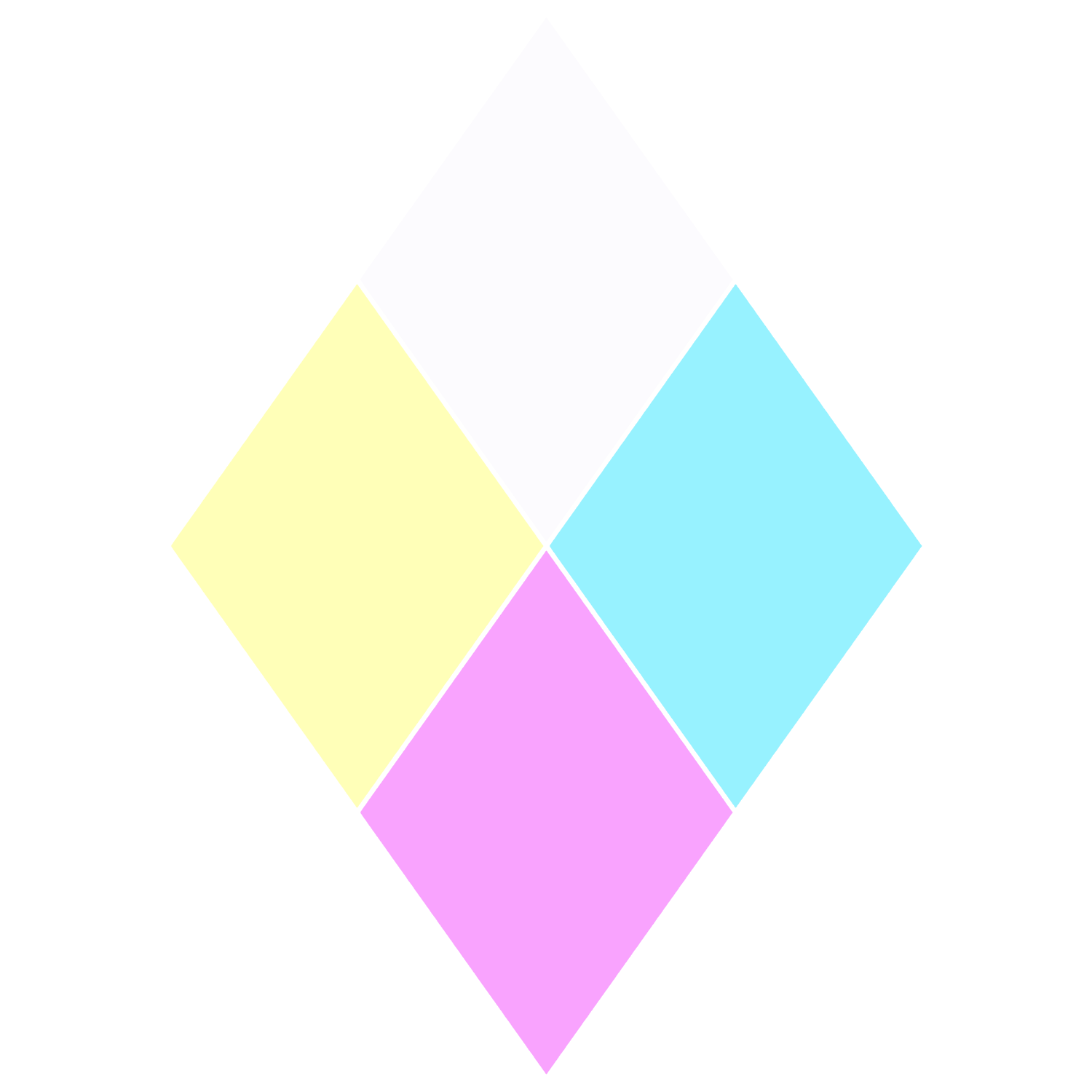
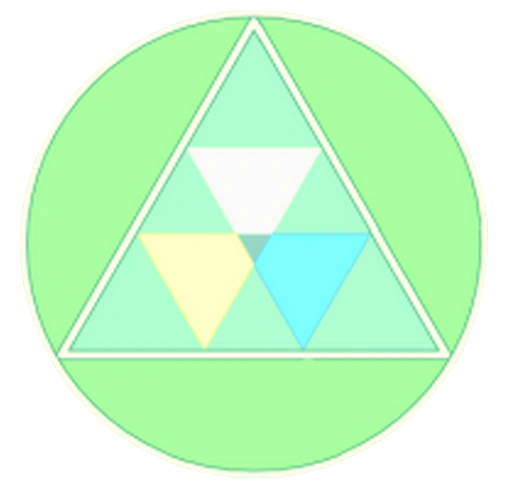
- Steven Universe gives us the four-diamond symbol, hinting at the existence of The Great Diamond Authority, the enigmatic rulers of Homeworld and the Gem Empire. More modern pieces of Gem architecture and machinery showcase a three-triangle symbol, hinting that the death of Pink Diamond was part of the rebellion 5,750 years ago.)
- According to conspiracy theorists, every instance of an eye, triangle, circle, swastika and comma (which looks like an inverted six) is a reference to the Illuminati. The secret society allegedly controlling the world apparently has nothing better to do than to plant secret hints to their existence for people to notice.
- The Super S, which has appeared in various places all over the world since the 50s at least. Its origins are heavily disputed, but almost everyone under a certain age seems to recognise it.
- The crosshair-like symbol the Zodiac killer used to sign his letters with.
- Branches, spirals and hexagons are among the most commonly recurring shapes in nature, either due to their economy of mass or their fractal nature.
