

Opera has been around since the end of the 16th century and is still going strong. Major opera composers include Mozart, George Frederic Handel, Giuseppe Verdi, Gioachino Rossini, Richard Wagner, Giacomo Puccini and Richard Strauss, though there are, of course, many more.
The public perception of the difference between opera and The Musical is that musical theatre has breaks for spoken dialogue, whereas opera is "sung through", alternating between "recitative " (which is when the plot happens and is typically sung in a less-formal style) and "arias" (big numbers where someone has a therapy session onstage). While not a bad approximation, it's not always true. Because opera tended to be the theatrical equivalent of a Doorstopper, someone asked why it couldn't just be abridged by turning the recitative into dialogue; this form was typically called "operetta" (to oversimplify the matter), and the only thing you have to add to that to get a modern musical is a greater inclusion of dance. This means there are in fact operas that have spoken dialogue, like The Magic Flute and Carmen. Likewise, there are musicals that have "regressed" back to including recitative; among these Sung Through Musicals are Les Misérables and Joseph and the Amazing Technicolor Dreamcoat, and others are nearly so like The Phantom of the Opera and RENT (which to a certain extent reserves spoken dialogue for its Wham Lines!).
The actual line between musicals and opera is blurry and kind of technical, but the short of it is that opera doesn't use electronic sound equipment and musicals typically need better actors than singers. Stephen Sondheim was heard to claim, "I really think that when something plays in Broadway it's a musical, and when it plays in an opera house it's opera. That's it." note
Common Knowledge also insists that opera is always a tragedy. This is also not true; the opera genre is as varied as any other. Many operas are comedies — The Barber of Seville and The Marriage of Figaro are basically RomComs, just to give two examples — and even the serious ones tend to have at least some humorous parts. In fact, during the Baroque and Classical periods, operas were generally expected to have happy endings; the concept of tragic operas only became popular during the Romantic period. And while some operas have incredibly well-crafted lyrics and story lines that are true works of art, others are... not quite as brilliant.
That said, the opera genre is known for featuring many a work with extremely drawn-out texts focusing on a single (often trivial) theme. As a result, opera texts (libretti) are often mocked, and in many cases it's mainly the quality of the music that makes an opera work, along with the same thing you need for any theatrical production: committed performers bringing the art form to life on stage. Movies have car chases, rock songs have guitar solos, and operas have death-arias (the soprano [female lead] frequently dies). In fact, both Anna Russell and B.J. Ward (in her one-woman show, Stand-Up Opera) have made entire comedy routines of poking fun at opera tropes.
Nowadays we tend to think of operas as high-falutin' fare for the nobs and snobs. Back in the 18th, 19th, and early 20th centuries, though, opera was popular music, to the point that the opening night audience was chock-full of transcriptionists. And it didn't take long for them to produce a saleable product: Rossini once said that by the time he left the opera house for home at the end of opening night, hawkers would be lined up on the street selling copies of the music and lyrics of his arias to those who couldn't afford a ticket. (Yes, this means that media piracy and its critics are Older Than Radio.)
Several modern films and other works have been created as operas (that is, entirely consisting of sung dialogue). The most famous "serious" opera film is probably The Umbrellas of Cherbourg, starring Catherine Deneuve. A very modern example is Repo! The Genetic Opera, which transplants the style into industrial sci-fi horror. The term Rock Opera is thrown around at times for a Sub-Genre of the themed Concept Album, but most "rock operas" are not produced for the stage (with an exception or two). The nearest thing to a modern successor to opera is Broadway-style Musical Theater. Indeed, musicals can trace their origins to opera through the operatic subgenre of operetta or light opera, which, as its name implies, is light in terms of subject matter (i.e. it's funny) and music, and often feature a good deal more plain dialogue than ordinary operas. The works of Gilbert and Sullivan are generally considered transitional, as while they considered their works to be comic operas, they would probably be called musicals if produced today; many would argue that musicals are basically the genre of theatre launched by G&S.
Used in movies and TV shows to add a touch of class. Or just something artsy. Or for the cast to get bored and fall asleep, which is something that can't be done (too loud).
Not to be confused with the Cantata, though at least one cantata, Johann Sebastian Bach's Coffee Cantata, can be considered a miniature comic opera according to The Other Wiki. The Oratorio is an intermediate form between the cantata and an opera, being a sung musical work that is long, generally divided into acts, and has recognizable characters interacting to tell a story, but not involving any acting of any significance; they were historically written for circumstances in which opera was infeasible or inappropriate (for being too vulgar), typically religious venues, or when the composer couldn't convince a patron to let him write an opera (which is much more expensive; this cost factor drove George Frederic Handel's prodigious output of oratorios late in his career, as he had previously focused on opera, but the English public's tastes had shifted away from that form).
Contrast Cantata. See also Classical Music, of which most opera is a subgenre.
For Dario Argento's film titled Opera, see Opera (1987).
Tropes typical of opera:
- Actor Shipping: When two singers perform together frequently enough, this can happen, especially if they have wonderful chemistry together. Some examples include:
- Anna Netrebko and Rolando Villazón
- Luciano Pavarotti and Mirella Freni
- Renata Tebaldi and Mario Del Monaco
- Franco Corelli and Birgit Nilsson; also, Corelli with Freni, after their amazing performances of Gounod's Romeo et Juliette.
- Maria Callas and Giuseppe Di Stefano
- Juan Diego Flórez and Diana Damrau
- Montserrat Caballé and José Carreras
- Roberto Alagna and Elina Garanca
- The Ur-Example of this, at New York's celebrated Metropolitan Opera Companynote at least, was Enrico Caruso and Geraldine Farrar, who sang frequent performances of Carmen, Tosca, and Manon in the first two decades of the 20th century and participated in the Met's first Madame Butterfly in 1907.
- Soprano Lina Cavalieri probably inspired this with Caruso as well; they had great chemistry onstage and once during a Met performance of Giordano's Fedora she gave him an off-script Big Damn Kiss that went viral with endless speculation — method acting or were they....? — and became known as the first authentic stage kiss. note
- Soprano Lina Cavalieri
- In the 1930s, Kirsten Flagstad and Lauritz Melchior also became Household Names for their joint performances of Wagner's music dramas.
- An Aesop:
- Lampshaded in Donizetti's Don Pasquale
- And in Stravinsky's A Rake's Progress
- And in Rossini's Il Turco in Italia
- In Mozart's Don Giovanni, one was apparently enforced. (Opinions vary wildly on whether it's better when performed with or without it.)
- All There in the Manual: Without a program, good luck trying to understand what's going on on stage. Many modern opera houses (Especially in Germany) show the text right above the stage, and some fancy opera houses even have a small screen on the back of the seats with the text in several selectable languages. Performing opera in translation has disadvantages too. It's often just as hard to make out the words, and when you can the effect isn't always what it might be. For example, to an English ear Tosca may sound dramatic when she sings 'Muori! Muori! Muori! ... È morto.' but translated into English this becomes 'Die! Die! Die! ... He's dead.' 'Nuff said.
- All Musicals Are Adaptations: Opera gets this from both sides. Many operas are adaptations of existing works, and a number have been adapted into modern musicals.
- At the Opera Tonight: Naturally! If your characters are looking for a classy evening out, it doesn't get much classier.
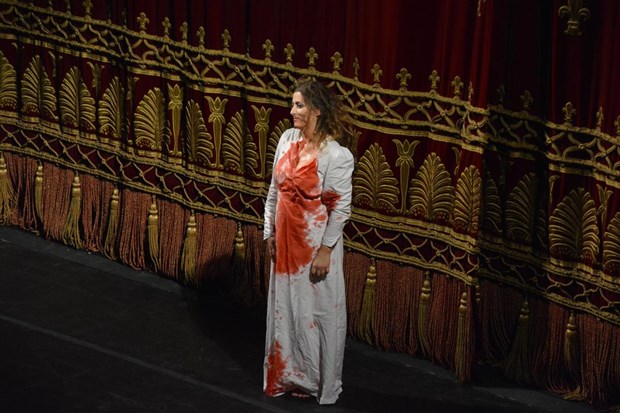
- Blood-Splattered Wedding Dress: Poor, poor Lucia di Lammermoor. In many modern productions of La Traviata this happens with Violetta's nightgown for extra realism (she's got TB).
- Brawn Hilda: A rather unfortunate stereotype of opera singers (as in the saying, "It ain't over till the fat lady sings"). Although it's usually very exaggerated, it does have a degree of Truth in Television since the vocal pipes necessary to support a huge operatic voice often go along with a larger frame. The trope may have originated from Wagner's Die Walküre,note where the main character, Brünnhilde, is often played by an imposing woman. (Wagner's music has a lot of long, sustained phrases and singing those develops back and shoulder muscles.) Though if you think that means opera singers are unattractive, think again.
- If you're watching work from the 17th or 18th century (where opera houses and orchestras were much smaller) this is usually averted, if not sometimes inverted; soubrette sopranos who play roles like Despinanote or Zerlinanote are usually quite small women, cast for their girlish vocal instrument. Women in 'trouser roles' (playing a boy) in these operas are likewise often petite.
- Sexy, beautiful male and female singers date back to the earliest days. The De Rezske brothers were both considered extremely attractivenote , as was soprano Geraldine Farrar (no, not that one). Soprano Lina Cavalieri was literally known as "The World's Most Beautiful Woman". Coloratura [extremely high vocal range] Lily Pons◊ was barely five feet tall and had a voice like a crystal canary, and basso Ezio Pinza◊, a contemporary of hers, let audiences know why the ladies wanted to be with Don Giovanni. More recently, heroic tenor Franco Corelli was so drop dead gorgeous director Luchino Visconti made a play for him. (Corelli was straight though. Besides being married, he had a longtime affair with Lisa della Casa, and later with Teresa Żylis-Gara, neither of whom were so bad themselves.note
- The "Brawn Hilda" image is probably based on Kirsten Flagstad, due to her having performed in full costume the wild "Ho-jo-to-ho!" chant from The Valkyrie in several 1940s films. Kirsten wasn't fat, just powerfully built like an Amazon, partly from the breath control needed for Wagnerian singing.
- A lot of modern opera singers are quite beautiful in voice and in appearance, too. The late Russian bass-baritone Dmitri Hvorostovsky was one of People magazine's "50 Most Beautiful People" in 1991, a rare pop-culture distinction for an opera singer.
- Classical Mythology: Baroque (1601-1750) operas tended to draw on these for their plots.
- One of the most popular settings throughout the history of opera was the story of Orpheus and Eurydice. This persisted until Jacques Offenbach produced Orpheus in the Underworld in 1858, a comic opera satirizing nearly three hundred years of Orphean opera settings. It was essentially the Airplane! of operas, with its most (in)famous moment being ''The Infernal Galop,'' A.K.A. The Can Can Song.
- Two of Richard Strauss' operas draw on it, Elektra and Ariadne auf Naxos (although in a different way).
- One of the most popular settings throughout the history of opera was the story of Orpheus and Eurydice.
- Colorblind Casting: In the world of opera, your race and appearance don't matter to the public in the least. Even when the character being played is of a very specific nationality. It is perfectly normal for any race to play any other onstage.note For example, the world famous black American soprano, Leontyne Price, was very popular in the role of the Ethiopian princess, Aida. But she played many other roles of various nationalities and races through the years, including Tosca (Italian), Madame Butterfly (Japanese) and Leonora in Il Trovatore (Spanish).note
- This didn't mean that black artists had an easy time of it getting hired by the great American opera houses. As with artists like Josephine Baker, they were much more readily accepted in Europe. Contralto Marian Anderson was the first black person to sing at the Metropolitan, in 1955. The first black man was Robert Mc Ferrin in the same year. The first black woman to sing leading roles there was Mattiwilda Dobbs, starting in 1956 as Gilda in Rigoletto. These artists were brought in by General Manager Rudolf Bing. An Austrian Jew and virulent anti-Nazi, Bing made a point of hiring qualified black artists whenever possible.note
- This can, occasionally, result in Black Vikings. Quite literally even, when it is a production of Wagner.
- Age doesn't matter either. Fifty-year-old singers have played fourteen-year-olds and gotten away with it. All they want is your voice and acting ability.
- Size and body shape are especially ignored in opera. As described in Brawn Hilda above, opera requires a big voice, especially considering that many of the works were written before microphones and other forms of amplification had been invented—singers had to hit the back of the opera house on their own. A bigger voice might naturally result from a bigger body (the larger the frame, the larger the lungs and diaphragm/back and shoulder muscles, and thus the larger the sound). Ergo, it's more than likely to see the Delicate and Sickly lead, such as La Bohème's Mimi—a frail, impoverished girl dying of tuberculosis who might be expected to be slight and sickly—or Violetta from La traviata—a courtesan who has just recovered from a case of TB and later suffers and dies from another attack of it—played by a heavyset woman.
- One notable exception is Porgy and Bess, in which all the main roles are African-American and are always performed by black singers. George Gershwin was adamantly opposed to the use of Blackface in his opera, even turning down an opportunity to have it premiered at the Met(!) for that reasonnote .
- This didn't mean that black artists had an easy time of it getting hired by the great American opera houses. As with artists like Josephine Baker, they were much more readily accepted in Europe. Contralto Marian Anderson
- Creator Killer: Even for a great success, William Tell did this to Gioachino Rossini.
- And on the subject of Rossini, Constantino Dall'Argine did a version of The Barber of Seville that was first performed two days before Rossini died. History repeated itself and Dall'Argine's work disappeared forever.
- Leon Kirchner had his operatic career destroyed from the get-go, where Lily gave one of the quickest bailouts in operatic history. (He still thought it was his best work.)
- Crosscast Role: There are many "trouser roles" for women playing men and several "skirt roles" for men playing women. In the Baroque period (Opera's earliest century-and-a-half), especially in those areas where the pope's influence was strongest such as Rome, female roles were often played by male castrati. (And, yes, a castrato is exactly what you think it is.)
- Dawson Casting: Due to the physical requirements and amount of training involved, teenage characters like Cio-Cio-San (Madama Butterfly) or Salome are almost always portrayed by singers in their twenties or older. And teenage boys are generally played by adult women, usually mezzo-sopranos [somewhat deeper voice, think Billie Eilish or Madonna]. Sometimes averted with less demanding roles such as Barbarino from The Marriage of Figaro, who is occasionally played by a high-school aged singer.
- Downer Ending: Anything by Puccini or Verdi.
- Notably averted in Verdi's last opera, the comedic Falstaff.
- Bittersweet Ending: In the rare cases it's not. For example La fanciulla del West. Maybe La rondine too.
- Anything by Puccini... excepting the chamber comedy Gianni Schicchi. Although, the entire Donati clan may disagree that it was quite so funny.
- Another notable aversion with Turandot, though since Puccini Died During Production and wasn't able to put the finale into music, its tone may oscillate between Bittersweet Ending and an outright Happy Ending according to what replacement score is chosen to be played.
- Donizetti's "Lucia di Lammermoor" comes to mind.
- Lampshaded by none other than Bugs Bunny upon summarizing operas:
"What did you expect from an opera? A happy ending?"
- Epic Instrumental Opener: Except that in Opera-ese we call it an overture.
- Everyone Is Jesus in Purgatory: Individual operas may very well be subject to this, but the entire form of Opera is actually a product of this. In attempting to revive classical Greek plays to the theatre of the Renaissance era, interested scholars decided that the Greek plays were meant to be sung in their entirety. New works followed suit, and the rest is history.
- This once got certain composers in trouble, Jean Baptiste Lully had to briefly end his partnership with his usual Librettist, Philippe Quinault, when the Opera Isis, about Hera's wrath against Zeus's latest mistress Io, was interpreted by the members of Louis XIV's court as an allegory for the cat fight between two of the King's mistresses.
- Evil Sounds Deep: Usually. Although this is subverted far more often than you'd think. There are many good guy low voice-ers (Figaro, Hamlet, Billy Budd, Cenerentola, and Rosina par example) and more than one high voiced baddy (Duke of Mantua, Queen of the Night, Pinkerton and Turandot to name a few) in operatic repetoire. However, it is generally safe to guess that the baritone is not who you should be rooting for.
David Merrill: You're the rat again, aren't you, Daddy?Robert Merrill, baritone: The baritone is always the rat, my boy.
- The darker and heavier the voice, the meaner and nastier the villain.
- In the Baroque period, heroic roles were often written for castrati, whose unbroken voices were synonymous with virtue and heroism on the opera stage. The broken normal male voice was usually assigned to villains or servants.
- A lament of contraltos (the lowest and darkest of female voices — think Patti Smith) is that contralto roles are always either "bitches, britches, or witches".
- The darker and heavier the voice, the meaner and nastier the villain.
- Farce: The plot of many comic operas. There's even a whole genre called "opera buffa" (to distinguish it from "opera seria"). Notable examples are The Marriage of Figaro, The Barber of Seville, and L'Elisir d'Amore [Love Potion], all of which are screamingly funny provided the cast is on their toes.
- Femme Fatale: All the best diva roles. Special mention goes to Violetta from La Traviata.
- Other examples include:
- Carmen from Bizet's Carmen
- Dalila from Saint-Saëns' Samson et Dalila
- The Foreign Princess from Dvorak's Rusalka
- Thaïs from Massenet's Thaïs
- Other examples include:
- Flame War: For all the veneer of civilisation in the genre, opera enthusiasts can get just as vicious in defense of their favourite singers and composers as any other fans. Just go have a look at the comments on any opera clip on YouTube. Or Google Groups (used to be Usenet) rec.music.opera, or join the Listserv mailing list Opera-L. Fighting will branch into nasty personal insults, sometimes with the contestants switching languages to show off their intellectual prowess.
- Gender Bender: Not only are many male roles played by women, but many of these men end up crossdressing.
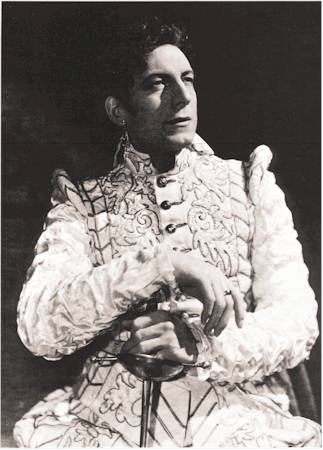
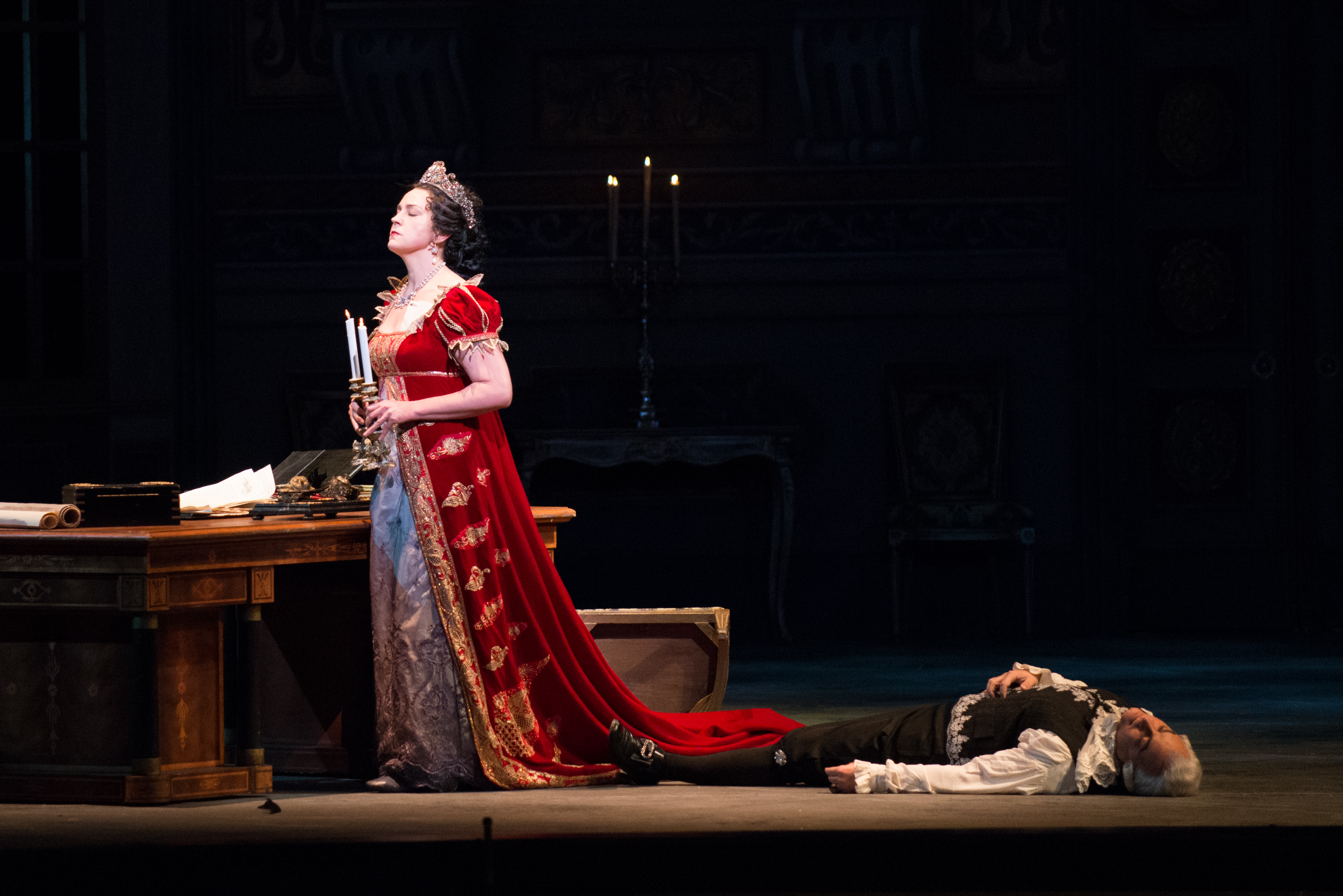
- Gorgeous Period Dress Pretty much every traditional opera production has really beautiful costuming. Such as this◊ and this◊. Even non-traditional productions can look pretty◊ spiffy◊.
- Depending on the budget of the production, this occasionally branches into some really unbelievable Costume Porn. Like here◊ or here◊.
- This production of an opera about Elizabeth I.
- Depending on the budget of the production, this occasionally branches into some really unbelievable Costume Porn. Like here
- Gratuitous Foreign Language: As mentioned above, it's traditional for operas to be performed in their original language rather than translated.
- Even when he lived in London, most of Handel's operas were composed for Italian libretti, and it could be said Handel stunted the development of English opera with the popularity of his Italian works. When London's taste for Italian opera waned, he switched to composing oratorios in English rather than opera.
- Groin Attack: In the early days of opera, it was considered improper for women to appear on stage, but there were still treble singers. This was because if a prepubescent boy had a good singing voice, a simple operation could enable him to preserve it permanently into adulthood. Yes, "castrato" means exactly what you think it does. At the time, they often became wildly successful superstars, but the practice fell out of favor by the mid-1800s if not before then; since that time, parts written for castrati have generally been either given to counter-tenors or turned into "trouser roles" for a female soprano (if the role is male) or given to sopranos (if the role is female).
- Here's a recording of a real castrato, Alessandro Moreschi. This recording does not do him justice by a long shot, but you can get the idea.note
- Here's a modern 'castrato' voice, Cesare Santos. The very rare 'natural castrato' is a guy whose voice never changes at puberty. With the modern recording quality it is easier to tell what they really sounded like.
- Here's a recording of a real castrato, Alessandro Moreschi
- Happily Ever After: Despite the stereotype of all Operas having a tragic or at least bittersweet endings, though especially common in Romantic Opera, there are plenty that end with the main leads riding off into the sunset, or lifted up into the heavens if were talking about a mythological work.
- The Heckler: Not even opera is immune from a tough audience; Milan's La Scala, one of the most presitigous opera houses in the world, is infamous for its loggionisti (fans in the cheap seats for whom opera is Serious Business) who will loudly boo any singer who doesn't meet their exacting standards. Being able to face down their criticism has been considered a baptism by fire for many a singer.
- Early in his career, Enrico Caruso, widely considered "the greatest singer in the world" for his time (and still one of the most highly respected), was so widely razzed in his home town (he neglected to hire a claque, a group of shills in the audience to cheer for him, as was the common practice at the time) that he swore never to sing in Naples again and famously said he would only come back there to eat spaghetti.
- "I Am" Song: "Mi chiamano Mimì" [My name is Mimi], "Io son l'umile ancella" [I am the humble handmaid], "Largo al factotum della città" [Make way for the jack-of-all-trades of the city] among others...
- Iconic Outfit: A shrieking Brawn Hilda in armor and a viking helmet brandishing a spear. (She is a flanderized version of Brünnhilde from The Ring of the Nibelung, and doesn't actually appear in any modern productions; see Shallow Parody.)
- Incredibly Long Note: This and this, for starters. In fact, some famous singers like Birgit Nilsson & Franco Corelli made it a friendly sport over who'd black out first from holding that high C in Turandot. Everyone else peed in excitement, of course. Expect this trope (especially of the soft-but-incredibly-held-out variety) when you see Montserrat Caballé on the cast list or album notes.
- The "Vittoria!" from Tosca is also a good example. See attached.
- Siegmund's cry of "Wälse!" in Die Walküre is a favorite of Wagnerian tenors.
- "Di Quella Pira" from Verdi's Il trovatore has been troublesome for almost every tenor who has played Manrico. He is expected (pretty much forced) to end it on a very long and hard high C (pretty ridiculous considering that note isn't in Verdi's original score.) most tenors take the key down a half or whole step and sing either a high B or Bb. And the fact that Manrico is usually played by a dramatic tenor [somewhat heavier voice, often with a slightly lower range] doesn't help. Franco Corelli, however, was a legend at this and usually sang it in the original key topped with a thrilling high C. See for yourself "here"
- The ever famous Bell Song (L'air des clochettes) from Act II of Lakmé, also known as "Où va la jeune hindoue?" [Where is the young Hindu girl going?]. Not only is it incredibly challenging, but it's a favourite recital piece for coloratura sopranos. Check it out right here.
- The "Vittoria!" from Tosca is also a good example. See attached.
- Large Ham: Opera has long been full of hammy divas and divos (many roles, and perhaps the very nature of Romantic opera, lend themselves to this), though singers and productions seem to be averting this trope more and more these days, partly thanks to speakers making it no longer necessary to have No Indoor Voice. (Traditional opera houses are designed for maximum acoustics so even quiet vocals can be heard clearly no matter where you're sitting.)
- Special mention to Escamillo from Carmen there's no larger ham than a bullfighter who sings the famous Toreador's Song.
- A lot of Mozart's bass or baritone roles, Figaro and Don Giovanni especially.
- Leitmotif: Wagner commentator Hans von Wolzogen is the Trope Namer, although the concept predated Wagner by quite a while
- Man of a Thousand Voices: Otherwise known as 'character singers'. Singers who specialise in art songs (as opposed to opera only) can also modulate their voice on demand.
- Massive Multiplayer Ensemble Number: Not omnipresent, particularly given how difficult it is to write one. But Lucia di Lammermoor and The Marriage of Figaro have especially notable ones, a sextet and septet respectively. There are several in Pippo Flora's I Promessi Sposi [The Betrothed Spouses], primarily led by villains or groups of villains.
- Pretty much a given in bel canto or early Verdi. Almost each act would end in a huge cabaletta [song with a repeated refrain, often an opportunity for showing off] for the main characters and a chorus. Frequently the main female character (usually a soprano) will interpolate a high note at the end of these, especially Maria Callas, famous for her gigantic high Eb at the end of the Triumphal Scene in Verdi's Aida. Few in their right mind would do this today, although Adelaide Negri gave it a go in 1990.
- Pretty much a given in bel canto or early Verdi. Almost each act would end in a huge cabaletta [song with a repeated refrain, often an opportunity for showing off] for the main characters and a chorus. Frequently the main female character (usually a soprano) will interpolate a high note at the end of these, especially Maria Callas, famous for her gigantic high Eb at the end of the Triumphal Scene
- Melismatic Vocals: Or 'coloratura'. Bread-and-butter for ALL voice, but ideally for bel canto roles. A huge plus if you have a large voice (dramatic coloratura) - although having a large voice and a dramatic voice is not necessarily the same thing.
- Lampshaded gloriously in most Baroque operas. Expect the vocal line to fall when singing about sadness or despair, rise up when singing about glory, anger and war, and have crazy roulades when singing about being in love (as in "adrift in a sea of love").
- The Musical: Several operas have been adapted into musicals. Examples include:
- La Bohème into RENT
- Madame Butterfly into Miss Saigon
- La Traviata into Moulin Rouge!
- Aïda into Aida
- Carmen into Carmen Jones
- La fille du régiment into La Vivandière
- Norma into The Pretty Druidess
- L'elisir d'amore into Dulcamara
- Mysterious Waif: Melisande from Debussy's Pelleas et Melisande.
- Narm Charm: Detractors will insist that Opera is unrealistic and hammy and pompous and overwrought and more than a little silly and that it gets taken way too seriously by the fanbase. The fanbase will loudly proclaim to anyone who will listen that that's the point.
- One-Hit Wonder: Pietro Mascagni and Ruggero Leoncavallo fall into this category respectively with Cavalleria Rusticana and Pagliacci, shorter works which are often performed together. Composers who only wrote one opera include:
- Béla Bartók: Duke Bluebeard's Castle
- Ludwig van Beethoven: Fidelio
- Paul Dukas: Ariane et Barbe-bleue (three other operas are now lost)
- Scott Joplin: Treemonisha (an earlier opera A Guest of Honor is now lost)
- Franz Liszt: Don Sanche—and it was a collaborative effort written, no less, when he was in his teens.
- Jean Sibelius: The Maiden in the Tower, composed to a Swedish libretto, first performed in Helsinki.
- Claude Debussy: Pelléas et Mélisande
- Power Echoes: The Valkyries from Die Walküre were originally conceived as singing their entrance war-cry off-stage into actual megaphones ('singing trumpets'). Played straight in Siegfried with the dragon.
- Production Posse:
- Practically every opera by Vincenzo Bellini that you will see (except his last, I Puritani) has a libretto by Felice Romani.
- Of his 16 operas, Richard Strauss composed seven of them to librettos by Hugo von Hofmannstal.
- Mozart worked with many librettists but his partnership with Lorenzo da Ponte produced the Big Three of The Marriage of Figaro, Don Giovanni and Così fan tutte amongst many others
- A good majority of Giacomo Puccini's operas have a libretto written by Luigi Illica and Giuseppe Giacosa, which would make them more of a Creator Trio. These operas are La Bohème, Tosca, and Madame Butterfly.
- The French composer Jean Baptiste Lully wrote ten of his fifteen operas with librettist Philippe Quinault.
- Protagonist Title: Turandot, Carmen, Aida, and Lucia di Lammermoor are just a few examples of operas directly named for the protagonist. A number of others use a phrase that clearly refers to the protagonist, such as The Barber of Seville, or La Traviata. [The Lost One]
- Propaganda Piece: In early French Opera known as Tragédie en musique, especially those by Jean-Baptiste Lully, always had an allegorical prologue glorifying the latest triumphs of Louis XIV, needless to say, the prologues stopped being propaganda peices after his death before they fell off entirely.
- Public Domain Soundtrack: Many, many famous tunes are originally from operas. In particular, the Ride of the Valkyries, the William Tell Overture, "O mio babbino caro" [Oh my daddy dear] from Gianni Schicchi, the Can-Can and a number of other Standard Snippets have operatic origins.
- Recursive Crossdressing: Cherubino from The Marriage of Figaro, Octavian from Strauss's Der Rosenkavalier [Knight of the Rose], and many more.
- Recycled Script:
- Several examples, but Rossini was particularly well known for lifting music from one of his operas to another. It was acceptable at the time, as long as the two works didn't premiere in the same town.
- There was also nothing stopping different composers from writing operas from the same libretto, Metastasio's L'Olimpiade was first set to music by Antonio Caldara in 1733 has had over 60 scores written for it.
- Rule of Drama: Librettists were never shy of letting the facts get in the way of a good story, the meeting of the queens in Donizetti's Maria Stuarda, just to name one example.
- Romance on the Set: A lot of opera singers have married either fellow opera singers or conductors after meeting during productions or concert performances. Some famous couples are:
- Angela Gheorghiu and Roberto Alagna
- Anna Netrebko and Yusif Eyvazov
- Mirella Freni and Nicolai Ghiaurov
- Joan Sutherland and Richard Bonynge (she would rarely sing without him conducting; it was in at least one of her contracts, with the New York City Opera).
- Montserrat Caballé and Bernabé Marti
- Diana Damrau and Nicolas Testé
- Étienne Dupuis and Nicole Car
- Charles Castronovo and Ekaterina Siurina
- Sonya Yoncheva and Domingo Hindoyan
- Basso Soloman Howard proposed to soprano Ailyn Perez right on the stage during curtain calls for Tosca in September 2021. (She accepted!)
- Rule of Three:
- Many operas have three acts, especially those of Wagner.
- For Verdi and Puccini, their third operas (respectively with Nabucco and Manon Lescaut) formally launched their careers.
- Many operas also feature three main characters. Usually one soprano, one tenor and then a lower voice of either gender. A few examples:
- Violetta, Alfredo, and Giorgio Germont in Verdi's La Traviata.
- Tosca, Mario, and Scarpia in Puccini's Tosca
- Aïda, Radames, and Amneris in Verdi's Aïda.
- Calaf, Turandot, and Liu in Puccini's Turandot
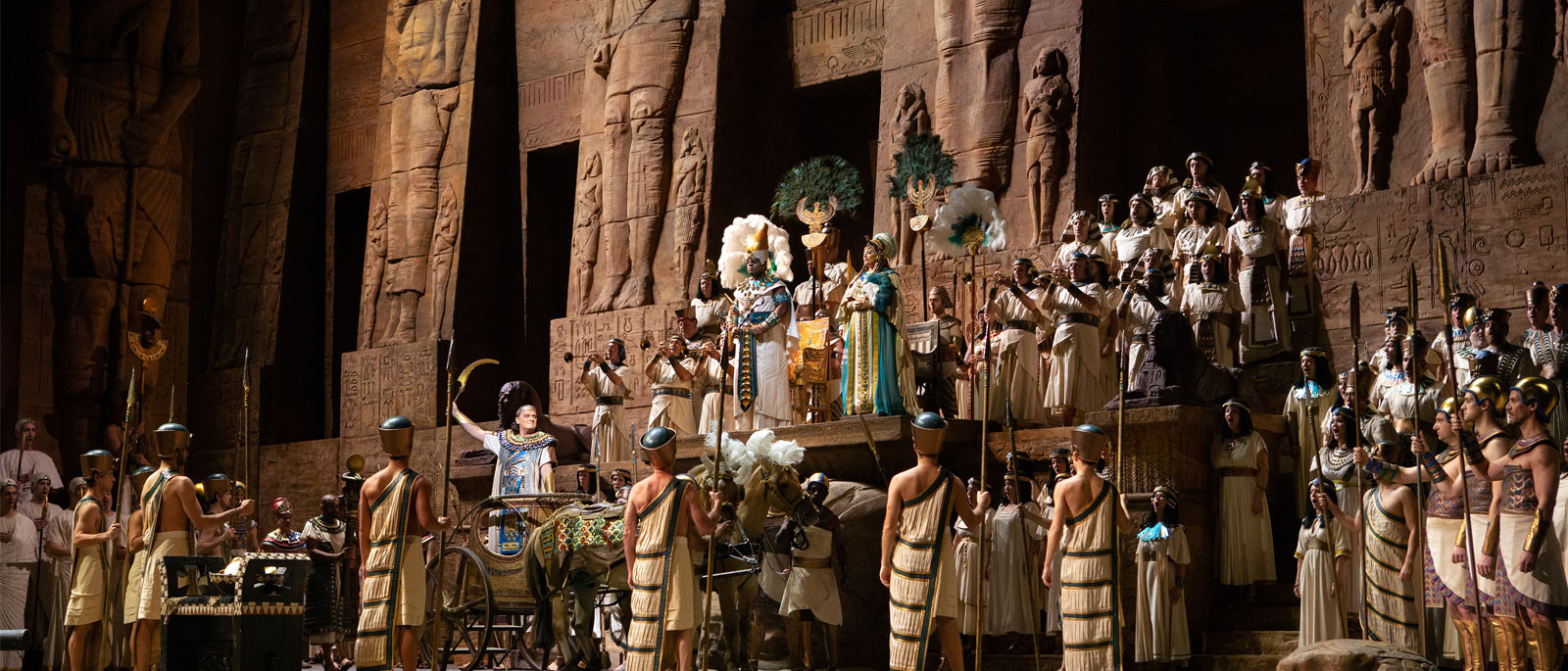
- Scenery Porn: In opera, the design is either minimalist or it's the stuff that makes you drool rainbows. Oriental operas especially fall into this category.
- Franco Zeffirelli is well known for his lavish productions of:
- Following in Zeffirelli's footsteps, there's Sonja Frisell's Aida◊.
- Otto Schenk is another director well known for his extravagant productions of:
- Shallow Parody: A typical parody of opera is likely to feature a shrieking fat lady in armor and a horned helmet, brandishing a spear. There's only one opera that's ever featured a somewhat similar costume, The Ring of the Nibelung's Brünnhilde, and it's been pretty much phased out in modern productions. (Admittedly though, it is a fairly Iconic Outfit, so it may perhaps be excused in cases where quick visual shorthand is needed to establish "Oh, an opera!") If the parody isn't this, then it probably involves a fat Spanish barber or a crying clown.
- Satellite Love Interest: Very common - as in the Commedia dell'Arte, viewers are given little explanation as to who the inamorati actually are. They're young and in love, which usually sums up both characters' entire personalities (or at least the soprano's).
- Screaming Woman: This is the cliché image to most non-opera fans. One or several women singing so high and loud that it sounds more like screaming. Think of the character Bianca Castafiore in Tintin. The genuine article, when done right, should remind you more of trumpets, or bells ringing.
- Serious Business: During the "golden age" of opera (roughly the seventeenth through nineteenth centuries), France and Italy had an extremely bitter rivalry over who had the better composers. It didn't help that much of the rest of Europe thought that opera had to be written in Italian; Jean-Baptiste Lully, who despite being Italian spent most of his career at the French court of Louis XIV, broke this tradition and instead wrote to French libretti. As such, it was common for critics from one nation to travel to the other upon a new opera's debut, watch it, then go back to their own country and write incredibly scathing reviews of the work.
- Signature Line: Ask someone to sing an imitation of opera, and they will probably bellow, "Figaro, Figaro, Figarofigarofigaro!" This is indeed a line from Figaro's famous aria "Largo al Factotum" in Rossini's The Barber of Seville note .
- The other image and line people are likely to know is "Ridi Pagliacci" accompanied by loud sobbing. The opera is called Pagliacci (Clowns), the song is known as Vesti la giubba (Put on the costume), and the line is ridi Pagliacco (Laugh, Pagliaccio). Pagliaccio is a Commedia dell'Arte character, played in a Show Within a Show by Canio, who has just discovered his wife's unfaithful with his best friend and he's got to go onstage and give a hilarious comedy performance. This was one of Enrico Caruso's iconic roles. He actually had to give several performances of it right after his long-time partner Ada Giachetti left him.
- Similarly Named Works: It helps to be a bit more specific when you're looking for operas by Strauss. Johann Strauss wrote all those lighthearted waltzes, but also several light operas, the only one still regularly performed being Die Fledermaus; Richard Strauss (no relation) wrote dramatic pieces like Elektra and Salome. (Johann Strauss is also not to be confused with his father, Johann Strauss Sr., or his brother, Josef Strauss...)
- Small Reference Pools: Despite having produced many famous names in the field the general public may only know Enrico Caruso, Maria Callas (fans of Enigma may know of her, she's sampled in several commercials, and you can hear her in the "Night of San Lorenzo" scene in Lorenzo's Oil and an important scene towards the end of Philadelphia) and Luciano Pavarotti. If you are very lucky they may also remember Placido Domingo and José Carreras. Fans of Freddie Mercury will recognize Montserrat Caballé from the duet Barcelona. And even most of these names were better known after their glory period, when their voices were already considered less good and they hit the commercial circuit, because most non-opera fans wouldn't be able to tell the vocal difference anyway.
- Sung-Through Musical: That's kind of the point.
- Sweet Polly Oliver: Fidelio where the faitful Leonore disguises herself as the male Fidelio to rescue her husband Florestan from a Spanish prison.
- Talking Is a Free Action: Well, singing is. You often find lengthy arias in dramatic moments along the lines of "Yes, now we must quickly run away, silently, before anyone spots us, yes, softly, let us run…"
- Tear Jerker: Some operas, especially ones by Puccini, seem engineered specifically to be as heart-rending as possible.
- That Makes Me Feel Angry: In opera, this trope is pretty much a must-have, since the music is more important than the words and many singers don't bother acting things out too much.note Opera is full of (insert adjective here) mi sento (I feel) and other status-descriptions. Or the composer/librettist put it in to give the singer an indication of how the character should feel; singers are expected to act nowadays. Also, during the Baroque era, musical drama tended to be structured according to the so-called doctrine of affects, with consecutive numbers depicting contrasting emotions - a lilting love duet followed by a furious vengeance aria, for instance. If the idea is to juxtapose readily identifiable emotions for maximum effect, it makes sense to flag them in the libretto.
- Theme Naming: Ariane et Barbe-bleue was written by Maurice Maeterlinck, who named Bluebeard's five former wives after female characters in his own plays: Mélisande from Pelléas et Mélisande, Alladine from Alladine et Palomides, Ygraine and Bellangère from La mort de Tintagiles, and Sélysette from Aglavaine et Sélysette.
- In Carmen the refrain of the Toreador's Song appears in the first three minutes of the overture and appears in every act thereafter.
- Untranslated Title: Most of the titles below that are not proper nouns. In fact if the title is translated that usually means the whole opera is. (There are a few operas that are best known in English by their English titles whether or not they're performed in translation, such as The Barber of Seville and The Magic Flute.) Sometimes the effect is a little bit odd, such as La Fanciulla Del West or Lucia Di Lammermoor. Oddly, La Bohème has a French title despite being entirely in Italian.
- Up Marketing: Opera has a bit of a reputation for being intended for the wealthy and highbrow patrons, and much of the imagery in opera marketing will reflect this with ladies in fur coats dripping diamonds, gents in tuxes, and the like. In actuality, while it is indeed an expensive art form to produce, even the best tickets aren't much pricier than comparable tickets for a headlining pop or rock concert, and considerably cheaper than sports tickets. Plus there have always been cheap seats up in the gallery for working class people and students to come cheer their faves. Many modern opera companies are actively appealing to a broader demographic, especially with the tight economy making it harder to get funding for the arts. (Some opera companies take pains to reassure attendees that casual clothes are completely acceptable!) When you see the ultra-rich attendees in the aforementioned glittery-glam outfits, that's probably for a charity fundraiser gala.
- Values Dissonance: Not uncommon thanks to the advanced age of the most popular operas. Contemporary productions will often try to lampshade the less palatable parts of the plot or make staging changes to cast characters or situations in a more sympathetic light.
- Villain Protagonist: Boris Godunov, Don Giovanni, Faust
- What Is This Thing You Call "Love"?: Many characters wonder something similar aloud in trying to understand their feelings; most conclude that, yes, that strange feeling is love indeed
- World of Ham: Pretty much all of them. An Enforced Trope back then, since you have to SHOUT for the back audience and poetically narrate each little thing that is happening to you while epic music plays.
- Willing Suspension of Disbelief: Pretty much a given for all operas ever. Many plots are completely implausible, The Casanova is often played by a short, fat, middle aged guy, The Ingenue is often played by a tall, buxom woman, and there's only so much costuming can do. Opera is pretty much built on this trope - generally, the audience is there for the music.
- It also creates a certain amount of Colorblind Casting, since the voices are usually cast indiscriminately of the singer's race.






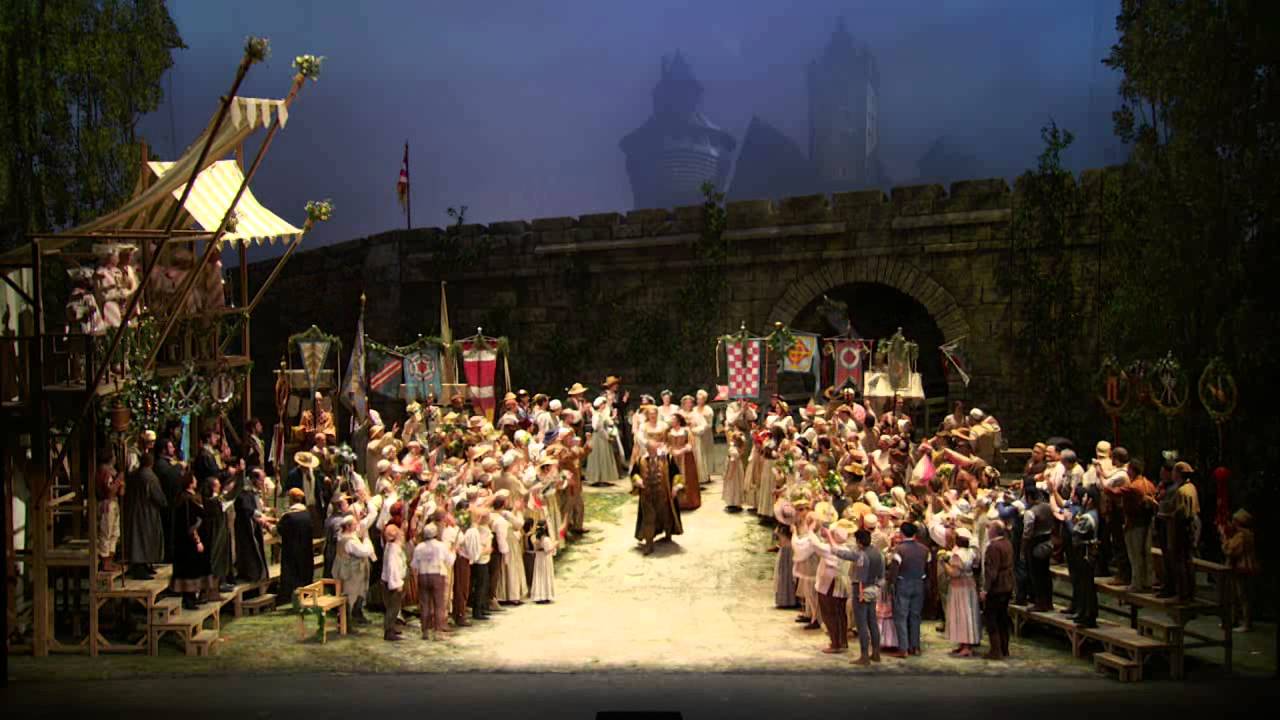
Examples appearing in fiction
- Amadeus: Several works by Mozart, of course.
- Artemis Fowl and the Lost Colony: The book pretty much starts out with Artemis attending an opera, specifically Norma, and commenting on how Butler does not know how to appreciate an opera.
- Batman Begins: Thomas and Martha Wayne — as well as young Bruce — see Mefistofele. Little Bruce gets shit scared and they go out...Death by Origin Story ensues.
- Battlestar Galactica: The Opera House
- Buffy the Vampire Slayer: In "Nightmares," Willow is supposed to sing the duet from Madame Butterfly with a world-famous tenor.
- Citizen Kane: Fictional opera written for Kane's second wife; based on Massenet's Thaïs
- Many key events in The Count of Monte Cristo takes place in opera houses.
- Dexter's Laboratory: The famous "LABRetto" featuring Dexter's origin: how he was born, came to build his lab, and his torment at the hands of Dee Dee.
Dexter: (Singing the final lines) This is not fantasy. This is reality. I'm stuck for my life. I'm stuck, and I'll be stuck forever, with...my...sister...Deeee Deeeeee!
- Discworld: Heavily but affectionately parodied in Maskerade — see page quote
- Several Emma: A Victorian Romance characters are opera fans. Rossini's Barber of Seville plays a minor role in the story.
- Farinelli: A film based on the life of Carlo Broschi, whose stage name was Farinelli, a famous 18th century castrato and regarded as one of the best opera singers of all time.
- The Fifth Element: "Il dolce suono" from Donizetti's Lucia di Lammermoor
- Final Fantasy VI: Contains some original/fictional opera elements
- Frasier: Both Frasier and Niles are opera buffs
- Gilligan's Island: Cast creates in "The Producer" episode an operatic rendition of William Shakespeare's Hamlet, set to the Habanera and Toréador melodies from Carmen and the Barcarolle from The Tales of Hoffmann).
- In Heart of a Dog Preobrazhensky goes to watch Aida in the Bolshoy Theatre. Bortko's film soundtrack has the march from the second act.
- Heavenly Creatures: Toward the end, just before the tragic finale, Juliet stands on her balcony and sings "Sono andati" (Are they gone?) from La Boheme. It's actually Kate Winslet singing. On the fatal walk, the Humming Chorus from Madama Butterfly is heard. It creates an unbearable dramatic tension, especially if you know the story.
- Hellsing: Rip Van Winkle identifies herself with Kaspar from Der Freischütz. She even sings a few bits from the opera, but nothing that Kaspar sings.
- The Heckle and Jeckle cartoon "Off To The Opera" features two selections from "The Barber Of Seville."
- Hitman: Blood Money: An early mission is set at the Paris Opera's Palais Garnier during dress rehearsals for Tosca, which was probably chosen for how seamlessly that level's signature assassination methodnote fits into the opera's plot
- Looney Tunes: Featured particularly in "Rabbit of Seville," "Long-Haired Hare," and, most famously, "What's Opera, Doc?" All together now: "Kill da wabbit! Kill da wabbit! Kill da wabbit!..."
- Mad Men: The Marriage of Figaro
- Milk: Incorporates the finale of Tosca at the end
- The The Marx Brothers film A Night at the Opera features quite a bit of Il Trovatore, including the famous Anvil Chorus
- The video game adaptation of Parasite Eve opens at an opera.
- The Phantom of the Opera parodies Mozart's The Marriage of Figaro (Il Muto) and Don Giovanni (Don Juan Triumphant)
- In the novel and the silent film, Gounod's Faust features in several key scenes.
- In Philadelphia, Andrew Beckett listens to the aria "La mamma morta" from Andrea Chénier by Umberto Giordano.
- Pretty Woman: La Traviata (an opera about a prostitute who falls in love with a rich man).
- Professor Layton and the Eternal Diva features, well, a diva. She performs an aria on the soundtrack.
- Quantum of Solace: Tosca, probably chosen because of the parallel between its Scarpia Ultimatum and the General's evil behavior
- Rasputin: The Romanov family attends a performance of "Norma". The awesome march from Act II is heard.
- Robot Chicken had a sketch consisting of Star Trek II: The Wrath of Khan being performed as an Italian opera. Featuring such great lines as "Oh no! My ear! I'm not supposed to get eels in it!"note
- Seinfeld: episode "The Opera" centers around the gang going to a performance of Pagliacci.
- The Simpsons: one episode ("Homer of Seville") has Homer become an overnight opera star, and includes snippets from several shows.
- Alien operas occasionally pop up throughout Speculative Fiction. Klingon and Centauri and Narn operas spring to mind.
- Star Wars: Episode III — Revenge of the Sith (a literal example of a Space Opera)
- The Talented Mr. Ripley film version has Ripley watching a production of Tchaikovsky's Eugene Onegin.
- The Untouchables (1987): A very moved Al Capone struggles to keep a straight face during Pagliacci.
- Make Mine Music has a segment with an opera-singing whale named Willie who's so adept at singing that an opera director believes that he had swallowed a talented singer. He can even sing with three voices at once.
Opera composers and singers with their own page:
Operatic works:
- John Adams
- Matthew Aucoin
- Béla Bartók
- Ludwig van Beethoven
- Vincenzo Bellini
- Georges Bizet
- Terence Blanchard:
- Alexandr Borodin
- Benjamin Britten
- Francesco Cilea
- John Corigliano
- Gaetano Donizetti
- Antonin Dvořák
- George Gershwin
- Umberto Giordano
- Philip Glass
- Mikhail Glinka
- Christoph Willibald Gluck
- Osvalo Golijov
- Charles Gounod
- George Frederic Handel
- Engelbert Humperdinck
- Leoš Janáček
- Franz Lehár
- Ruggero Leoncavallo
- Heinrich August Marschner
- Pietro Mascagni
- Jules Massenet
- Gian Carlo Menotti
- Claudio Monteverdi
- Wolfgang Amadeus Mozart
- Modest Mussorgsky
- Jacques Offenbach
- Johann Christoph Pepusch
- Sergei Prokofiev
- Giacomo Puccini
- Henry Purcell
- Nikolay Rimsky-Korsakov
- Gioachino Rossini
- Camille Saint-Saëns
- Bedřich Smetana
- Johann Strauss, Jr.
- Richard Strauss
- Peter Ilych Tchaikovsky
- Giuseppe Verdi
- Richard Wagner
- Carl Maria von Weber
- Kurt Weill
- Arnold Weinstein
- A Wedding (1978) (the Screen-to-Stage Adaptation, anyway)
Musicians using opera in their music
- Freddie Mercury
- Barcelona (1988) (a collaboration with opera singer Montserrat Caballé)
- Klaus Nomi
- Klaus Nomi (1981)
- Simple Man (1982)
Special Cases
- Traditional Musical Theater Plays Frequently Performed By Opera Companies
- Johann Sebastian Bach
- Schweigt stille, plaudert nicht (a cantata that executes as a mini-opera)
