

"Covetous Jew"
'Alright, Saul, Morris, everybody sit down, we're gonna start the meeting to control the banks.'
'Oh sure, who died and left you king? No, sure, start the meeting, I'll sit over here, I'm nobody, I'm nothing, I got no opinons.' "
The Greedy Jew is rooted in the stereotype that Jews are inherently greedy and malicious, both individually and as a group. More specifically, they are wealthy, secretly controlling or manipulating financial markets, nepotistic toward family members and other Jews, willing to defraud non-Jews, and always preferring underhanded means of profit over honest labor.
The origin of the stereotype is arguably Older Than Feudalism, with characters like Zacchaeus the tax collector, the moneychangers in the Temple, and Judas Iscariot in The Bible. However, it didn't have any sort of widespread cultural presence until The Middle Ages. The three main Abrahamic religions—Judaism, Christianity, and Islam—consider usury to be sinful, especially to fellow members of the faith. However, Judaism is the only such religion that doesn't have an explicit prohibition on lending to outsiders. Jews also faced numerous restrictions and hardships in medieval Europe: they were often banned from owning land or joining professional guilds, and frequently faced expulsion and/or persecution from cities and kingdoms for various real or imagined slights against Christians. As a result, many of them worked in jobs that pious Christians couldn't or wouldn't do, such as rent and tax collecting, trading, peddling, and banking.
In literature of the early modern era, a clear stock character of the Greedy Jew emerged: a Morally Bankrupt Banker whose primary motivation was the accumulation of wealth, or revenge against some other person who owed him or cheated him out of wealth. He had no loyalty to king or country, utterly lacked a (Christian) moral compass, attempted to corrupt or subvert Christian characters into helping him, and lusted over unwilling Christian women. By the end, he tended to suffer a Karmic Death, or be redeemed by "choosing" to convert to Christianity. The most sympathetic treatment that a character of this type would ever get was in works by William Shakespeare and Christopher Marlowe, in which he was portrayed as a Tragic Villain who had chosen to hate Christian society because Christian society hated him first.
With the emergence of nationalism in the 19th century, European Jews' perceived lack of ethnic ties to their "host" nations meant they were seen as "rootless cosmopolitans" and a potential fifth column. It was around this same time that conspiracy theories regarding international plots hatched by Jews seeking political and economic world domination started taking shape, and took their modern form in the 1903 book The Protocols of the Elders of Zion. A purported transcript of the meeting of one such Jewish cabal, the Protocols' legitimacy was called into question as early as 1921, and the book has been thoroughly debunked as a propaganda fabrication since then. That didn't stop antisemites from taking it at face value for decades (and, in some cases, continuing to do so), however.
The image of the Greedy Jew was eagerly exploited by Nazi Germany as an excuse to justify their discrimination, persecution, internment and eventual genocide of European Jewry. Depictions of Jews as rapacious liars and swindlers was a fixture of Nazi propaganda posters and films, and they blamed supposed Jewish conspiracies for everything from Germany's defeat in World War I to the decline of The Roman Empire.
Following the defeat of the Nazis and the revelation of The Holocaust to the general public, this rapidly became a Discredited Trope in mainstream media. It is rarely (if ever) played straight outside of explicit antisemitic propaganda, and a character invoking this usually indicates they're a Politically Incorrect Villain. The only people who reguarly use Greedy Jew tropes without raising Unfortunate Implications are Jews themselves, though it's usually the trope's Lighter and Softer variant, All Jews Are Cheapskates.
This trope tends to also be associated with other Semitic and Mediterranean ethnic groups, such as Arabs (as in stock characters like the Arab Oil Sheikh), Greeks, and Armenians. In fact, many of the same accusations leveled by the Nazis against Jews had been invoked three decades prior by the Ottomans in order to justify The Armenian Genocide.
Compare The Scrooge, Gold Fever, Morally Bankrupt Banker, The Rich Want to Be Richer, and The Conspiracy. If a Greedy Jew has a Sizable Semitic Nose, it's likely also a Sinister Schnoz. Contrast Magical Jew, when a Jewish character becomes a source of wisdom for other (usually non-Jewish) characters.
Examples:
- The original plot for Angel Cop involved a Jewish conspiracy to take over Japan (this was removed in the dub).
- Leo from the American dub for Ghost Stories.
"Leo": Eggs, juice box and three kinds of flowers and none of it on sale. If Momoko lives she's gonna pay me back, with interest.
- Played with in Adolf. Elisa's father hits a lot of the notes of the classic greedy Jewish businessman stereotype, but his greed is portrayed as detrimental to his Jewishness rather than a consequence of it, as he betrays his own people by having dealings with the Nazis (for all the good it does him when the Holocaust gets underway).
- The Carbine family, owners of the notoriously duplicitous MegaCorp Anaheim Electronics are said to be of Jewish descent in the novel version of Mobile Suit Gundam Unicorn. Family patriarch Melanie Hugh Carbine, however, is at least partly motivated by ideology rather than sheer greed as his efforts to undermine The Federation stem from his disgust at the government for allowing the dissolution of the state of Israel. Once he's out of the picture in the Late-UC era, though, Anaheim is all profiteering, all the time.
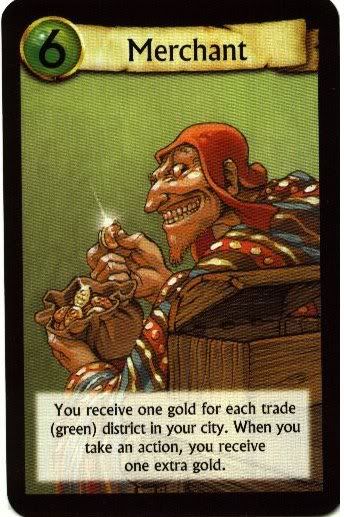
- It may not have been the best design decision to give the Merchant◊ in Citadels such a hooked nose. And greedy grin.
- Discussed in Static #7. After the Malcolm Xerox supervillain Commando X starts targeting Jews, Black and Nerdy Virgil and his friends while under the assumption that he's nonviolent assert that his actions are justified due to Jews' disproportionate influence over media, law, and high society in general. Virgil ends up getting into a fight with his Jewish girlfriend Frieda who claims that Jewish dominance in the world of business is no different from black people's dominance in the world of sports and that both groups worked hard to get where they are after centuries of oppression. They later make up after respective chats with their Reasonable Authority Figure parents, who explain that Jews were allowed to assimilate more easily into society by virtue of their skin color and that it's the system's fault for giving them a leg up over blacks in the days before affirmative action to begin with.
- An In-Universe example from Watchmen: An editorial cartoon in the far right-wing New Frontiersman magazine depicts a chained-up superhero facing giant, ethnic-stereotype personifications of corruption. One of the three largest figures is "Big Biz", depicted as a stereotypical Jewish banker, dollar signs in his eyes and a Star of David on his tie, taunting the superhero with "Oy vey! I know vhere you liff!" He's depicted as comparable in size with a stereotypical Italian gangster with a tommygun representing "Crime", and surpassed only by the largest figure standing behind everything representing the USSR.
- In the original version of the Tintin book The Shooting Star (published in Nazi occupied Belgium during WWII), the main antagonist was an American banker named Blumenstein whose physical features closely resemble Nazi Jewish caricatures. Hergé later tried to remedy this by changing the banker's nationality to that of a fictional Banana Republic and changed his name to "Bohlwinkel ", after a Dutch dialect word for "sweet shop." Unfortunately, as Hergé found out later, Bohlwinkel is also a Jewish surname, but that remained unaltered. It also featured some stereotyped greedy Jews rubbing their hands and gloating over the fact that if the world ended, they wouldn't have to repay their creditors. Unsurprisingly, this frame is cut in later editions.
- The Smurfs enemy Gargamel might have been based on this stereotype. Maybe. French sociologist Antoine Buéno presented this theory, suggesting that the character’s big nose, magic powers, love of gold, and keeping a Mezuzah by the door of his house (clearly identifiable in several panels of the original comic) indicated it. Also, this may be why his cat was named “Azrael”, the Jewish name for the Angel of Death. (There is evidence to the contrary, however. “Gargamel” is not a Jewish name, but is taken from the French novel Gargantua and of Pantagruel, where Gargamelle is the mother of Gargantua and a giant, fitting as Gargamel is a giant compared to the Smurfs. Seeing as Yvan Delporte – Peyo’s co-author who designed the character – had a Jewish wife, “Azrael” could have just been an inside joke.)
- It would fit better with Monulf, the antagonist of the Cursed Country album - especially as he swears in Hebrew…
- Maus
- The author surrogate's father is characterized by his rather ruthless pragmatism and attention to detail, including the pursuit of a comfortable life. One major example is how he pursues a woman from a wealthy family in favor or a more beautiful but less well-to-do woman, though he insists that he fell in love with her through her engaging letters.
- The father himself calls out the bullying, hypocritical inmate Yidl using this trope by name.
- This is briefly discussed in one of the sequences depicting the writing of the comic. During a discussion with his wife, the author confides his worry that by portraying his father's extreme frugality honestly, he'll be perpetuating this stereotype.
- Chilean comic Condorito use to have one; Don Jacoibo, but it was remove from latter issues due to complains about Unfortunate Implications.
- Some propaganda films from Nazi Germany are naturally filled with the trope, although it should be noted that they weren't openly, front and center antisemitic until 1940. By this point Nazis didn't bother about international opinions anymore after World War II started.
- Jew Süss is the most (in)famous example, though the main claim is that Jews rape Aryan women, which is elaborated on towards the end - this is in-keeping with Josef Goebbels's belief that propaganda should be as subtle as possible, so that the people maintain the illusion that their ideas are the product of rational thought and are therefore more likely to commit themselves to them as they are seen as being something personal to them rather than something the state hammers into them. The film was so effective that it reportedly inspired several murders of Jews in Nazi-occupied Europe, and was shown to concentration camp guards.
- Der ewige Jude (The Eternal Jew), a pseudo-documentary. It was a notorious flop, both because it was incredibly boring, artistically inept and shockingly crude and sensationalist when compared to Jew Süss, which was an engaging period drama with costumes, interesting plot line to engage the audience and starred leading German actors of the time. It also had some disgusting scenes of Jewish ritual slaughter that turned the audience's stomach. Even some Germans who had lived under years of Nazi rule found it absurd. For the most part, the film was viewed by party supporters and Nazi organizations like the Hitler Youth and the SS. It is widely noted that SS troops headed for the Eastern front to carry out the Final Solution were "invited" by Himmler to watch the film.
- The Rothschilds, a biopic of the famous banking family, complete with the expected conspiracy theories (plus some anti-British propaganda, befitting its wartime production). It's an unattributed remake and Spiritual Antithesis to the 1934 Hollywood film The House of Rothschild, which was decidedly less negative towards the Rothschilds.
- In The City Without Jews, this trope is cited as a reason why the Jews should be expelled from said city. Despite being against anti-Semitism, the movie doesn't exactly repudiate the stereotype. Its message is more, "The Jews may be a bit greedy, but you need those greedy Jews for the good of the economy."
- In Cecil B. DeMille's The King of Kings, Caiaphas, head of the Sanhedrin and a guy who really doesn't like Jesus, is said to care more about revenue than religion. (He is also portrayed physically as a crude anti-Semitic stereotype.)
- Borat portrays "Kazakhstan" as being rife with this and many other stereotypes about Jewish people. Sacha Baron Cohen plays Borat's antisemitism to the hilt in an effort to see who will casually agree with him. Many viewers who didn't understand the full joke failed to realize that Cohen is himself a practicing Jew, granting him a claim at N-Word Privileges.
- In Harold Lloyd's Safety Last!, Harold buys a chain for his girlfriend from a shifty jeweler with a hooked nose called Silverstein, who constantly wrings his hands in avarice. The soundtrack shifts into Klezmer-type music here, just so we get the point. Harold, embarrassed, starts imitating the man's hand-wringing. The joke is still amusing to modern audiences, because of the added irony of knowing that Harold Lloyd himself is Jewish.
- The Promised Land: Several of the greedy, rapacious factory owners are Jews. Mr. Grynspan, in particular, gives an underling a lecture about how he doesn't like it when his workers burn gas to brew tea, so he's going to start charging them for it. Some people in 1975 Poland suggested this film was anti-Semitic but there are some pretty greedy, awful Christians in the movie too, including Karol the Villain Protagonist.
- Slovak film The Shop on Main Street is set in 1942, when Slovakia was a fascist puppet state of Nazi Germany. The protagonist's wife sincerely believes in this trope. She's overjoyed when he is assigned custody of a shop that has been taken away from its Jewish owner. She sincerely believes that the woman who owns the shop must have a hidden pile of money somewhere, and keeps pestering her husband to find it.
- In Lacombe, Lucien, a French film about a teenaged boy working with the French Gestapo, one of Les Collaborateurs says of the advancing Allies that "I don't want to be liberated by the Rothschild bank."
- The Malik, villain of Kazaam is the Arab version. He has a stereotypical appearance, is introduced with ominous arabic music, and wants all the money in the world. Reviewers have noted this.
- The Turkish film Valley of the Wolves: Iraq features Gary Busey as a Jewish-American doctor who harvests the organs of prisoners of war for sale to the American elite.
- The Verdict: In one instance of the main character calling around using false identities to get information for his case, he gives his name as "Mr. Goldberg" while passing as an accountant.
- The Phantom Menace was accused of featuring several alien races based on racial stereotypes. One of them is Watto. His obsession with money and gambling, big nose, and vaguely Yiddish accent are all aspects of the stereotype.
- Conspiracy (2001): Discussed Trope. There's an interesting back-and-forth between Heydrich and Kritzinger when the former gets fed up with the latter's recalcitrance to sign off on the Holocaust. Heydrich parrots the usual Nazi party line of a Jewish conspiracy controlling the banks when Kritzinger basically calls him a liar to his face. Realizing that they're never going to see eye to eye, Heydrich resorts to death threats instead to get him on board.
- OSS 117: Lost in Rio: 117 tells some Israeli intelligence officers that it's not because of all those things they say about Jews and money that he doesn't leave a Briefcase Full of Money with them.
- Played for Laughs in Bubble Boy, as his mother - a Christian fundamentalist - decides to forge a ransom note to get the help of police after her son runs away.
Mrs. Livingston: "Mr. and Ms. Livingston, we have kidnapped your son. Pay $100,000 dollars or he dies. Signed, the Jews." Are you kidding? Are you kidding? Who in their right mind is going to believe this note? It's the Jews, Morton! They're going to want more than $100,000!
- Cousin Avi from Snatch. is a Jewish gangster from New York who travels to London after his associate Frankie Four Fingers gets lost upon stealing a large diamond from Antwerp. Avi downplays this trope, however: he's certainly after the diamond for monetary gain as we can tell in the Dramatis Personae which shows he ends up getting it in the end, but he's equally concerned for Frankie's well-being, and Avi's more prominent negative qualities are profanity, kvetching, and being unbelievably incompetent.
- Avi's cousin Doug the Head is a subversion. He works at a jeweler's shop that inspects stolen gemstones, but he's not greedy, more Affably Evil and incompetent. And he's not even Jewish.
- Home Alone: Marv is an unrepentant criminal who has no qualms with stealing from salvation army Santa's or robbing money meant for a charity for sick children. The second film has a couple of lines that reveal him to be Jewish. This likely comes from the fact that his actor Daniel Stern, who improvised a lot of his dialogue, is himself Jewish.
- Glass Onion alludes to the stereotype when the politically incorrect Birdie says she thought an antisemitic term was a synonym for "cheap" and was lambasted for it.
- One of Russell Peters' standup routines involves talking about how absurd American Sign Language's different signs for "Jew" are. The first and least offensive is pantomiming having a long beard. The second is mimicking a long, pointy nose. The third is rubbing one's fingers together like you're asking for money.
- Fagin of Oliver Twist is a miserly Jewish crook who persuades homeless Christian boys to steal for him, even though many of them get executed for their crimes. Dickens claimed that he made Fagin a Jew because he believed that most of the real London "kidsmen" were in fact Jewish. After befriending some Jews and learning how much the character offended them, Dickens attempted amends by editing out some of the Jewish references and stereotypes. In Our Mutual Friend, he essays an Author's Saving Throw with Mr. Riah, who initially appears to be yet another Greedy Jew, but then turns out to be a subversion.
- Reuben Rosenthall, a one-off Raffles antagonist, is a Jewish Amoral Afrikaner who made a fortune off the illegal diamond trade in South Africa.
- Yankel from Nikolai Gogol's Taras Bulba is portrayed as a greedy coward. At the same time he is pretty much the Only Sane Man among the characters, because the eponymous Cossack warlord is a bloodthirsty warmonger, and other Cossacks are portrayed as ruthless warriors who love nothing more than fighting and treat Rape, Pillage, and Burn as a matter of course.
- In Stephen King's It. When the Losers Club is playing monopoly, Stan Uris is winning, and they teasingly say it's because he's Jewish.
- The Jew Among Thorns (one of Grimm's Fairy Tales). After torturing a Jewish merchant for all the people he has undoubtedly swindled by forcing him to dance in a thornbush with a magic fiddle, the hero extorts the merchant for all of his valuables. Once in town, the hero is arrested and accused of stealing the merchant's things. The hero responds that the merchant gave them to him, and is promptly laughed at since a Jew would never give away his things like that. Just before he is executed, however, the hero is granted the request to play his magic fiddle once more. Upon doing so, everyone around him bursts into Involuntary Dance. The hero threatens to keep playing until the merchant admits to all his crimes. The merchant finally confesses, and is executed, and everyone important lived happily ever after.
- Isaac of York in Ivanhoe is somewhere between an example and a subversion. The character is a rich Jewish moneylender who clearly loves his wealth and seems to have an inexhaustible supply of hidden money caches, yet he spends most of the story trying to keep his daughter safe and repeatedly proclaims that he values her above all his wealth. He is also willing to pull a lot of strings to help Ivanhoe get into the tournament at Ashby, in spite of knowing it is probably a lost cause, for no better reason than that Ivanhoe stood up for him. In the end, he comes across more as a Jewish Mr. Vice Guy whose vice just happens to be greed than a racial cariacture. He appears to be based on Ephraim Lópes Pereira d'Aguilar, 2nd Baron d'Aguilar, an eccentric Sephardic Jewish nobleman known for being stingy, hiding large amounts of money throughout his home, and for being a strange yet loving man.
- Beau Geste features a particularly unpleasant grotesque Jewish pawnbroker stereotype. Made egregious by the fact that the scene is completely extraneous to the plot, and seems to have been thrown in just to have a chance to emphasize that Jews are filthy misers.
- Subverted in the Swedish 19th century novel Drottningens juvelsmycke, with its greedy, stereotypically Jewish jeweler Benjamin Cohen. He is only pretending to be Jewish. Actually he represents another national stereotype - the evil Dane.
- Both invoked and subverted in Anthony Trollope's The Way We Live Now. The Ambiguously Jewish Melmotte fits the stereotype, but the definitely Jewish Mr. Brehgert is arguably the most honorable character in the book.
- Isaacs the Jewish theater owner in The Picture of Dorian Gray is a particularly anti-semitic example even for Victorian times. He's repeatedly described as old, vile and disgusting. Though he claims to have a passion for Shakespeare, his productions are cheap and shabby. He's obsequious towards high-class customers and wears an enormous diamond on his shirt.
- Often associated with this trope, but somewhat different in implication, are the ambitious Villain Protagonists of several 20th-century novels by Jewish authors:
- Meyer Hirsch from Samuel Ornitz's Haunch, Paunch and Jowl: The Making of a Professional Jew (originally published as an anonymous memoir).
- Harry Bogen from Jerome Weidman's I Can Get It For You Wholesale.
- Sammy Glick from Budd Schulberg's What Makes Sammy Run?.
- The otherwise heartbreakingly beautiful Decadent tale "The Egg of the Albatross" by Eric, Count von Stenbock, is marred by his having made the villain of the piece a "certain Portuguese Jew" called Mendes. He's not only a slick, greedy bastard, but Stenbock drops a couple of hints that he's after more from the little girl than her albatross egg.
- Here's a number of stories from the Nazi children's book Der Giftpilz that are pretty representative. Here's some illustrations in case you feel like barfing. Readers of Doris Orgel's The Devil In Vienna will be familiar with this one.◊
- Invoked in John Moore's Fractured Fairy Tale, The Unhandsome Prince—this is one of the reasons the King and Prince Kenneth (not the prince of the title) cite to support their plan to kick the Jews out of the kingdom and confiscate their property (neatly solving the family's money problems).
- In Mc Teague, there is a stereotypically greedy Jewish man named Zerkow who LOVES gold. He loves hearing about gold, he loves seeing gold, he loves touching gold. One of his most frequent companions is a lady named Maria Macapa, The Ophelia of the story but he only wants to talk to her because she has a tendency to ramble on about a fortune her family once owned, particularly a few sets of pure gold dishes. The two marry and she tells him the story several times until he becomes convinced that she has the fortune hidden somewhere and that the location is somehow hidden within the story. Sadly on the particular day he asks her to tell it she denies that she ever said such things and calls him crazy. The results aren't pretty, even when you consider his fate.
- In the Hercule Poirot novel Peril at End House, Poirot is suspicious of an art-dealer who is offering Nick far too much for a painting, describing him as "the long-nosed Mr Lazarus" when saying this behaviour is unusual. (The character is also called "A Jew, of course, but a frightfully decent one.") It transpires that Lazarus intends Nick to get the painting valued, discover he's being generous, and then not get a valuation the next time he offers to buy a painting from her.
- There's a prehistoric example in Robert E. Howard's Conan the Barbarian story "Queen of the Black Coast" although it's portrayed more as an aesthetic fascination akin to what you might expect from Dwarves. Bêlit is a Shemite (Semite), and when she and Conan find the treasure they're after, she sits there mesmerized by its beauty instead of picking it up and getting the hell out of there — which ultimately leads to her death. "The Shemite soul finds a bright drunkenness in riches and material splendor, and the sight of this treasure might have shaken the soul of a sated emperor of Shushan."
- The narrator of Mutiny on the Bounty writes of "...sharp-faced Jews, in their wherries, hovered alongside, eager to lend money at interest against pay day, or to sell on credit the worthless trinkets on their trays."
- The Great Gatsby: The only criminal associate of Gatsby's that we ever meet is Meyer Wolfsheim, an oily Jewish gangster who wears human teeth as cufflinks. He speaks with a Funetik Aksent to show that he's not part of proper gentile society in spite of his wealth. He's said to have rigged the 1919 World Series, pegging him as a No Celebrities Were Harmed take on Arnold Rothstein, the real-life Jewish gangster who is said to have done the same thing.
- The original Aladdin story has the title character get some gold plates from the genie of the lamp. Then he sells them to a Jewish merchant, who cheats him.
- "The Man of the Crowd": The people-watching narrator mentions the "Jew pedlars" he sees on the street, who have flashing "hawk eyes" that betray the humble facade they affect. The narrator ranks them among society's lesser people along street beggars, invalids, women, and drunkards.
- The In-Universe belief in this trope is a serious plot complication in Spinning Silver. Miryem Mandelstam is objectively quite reasonable about interest rates, repayment plans, accepting goods/services in lieu of cash, and so forth. However the Jewish Moneylender's daughter insisting on repayment at all stirs up resentment and outright violence among the villagers.
- Mr. Krupp from Captain Underpants isn't exactly greedy, but he's an evil principal responsible for turning Jerome Horwitz Elementary School into a living hellhole, and as revealed by Book 5, he happens to come from a Jewish background.

- Sons of Anarchy brushes against this trope. Bobby, the Jew of the gang, seems to be their official accountant. In one episode, he states that his father was a mob accountant who was skilled at skimming off the top. On the other hand, he is opposed to the gang getting in the drug trade, despite all the money it'll make.
- The Wire features Maurice Levy, an Amoral Attorney for various drug gangs who breaks all the cardinal rules of his profession, to the point that he's almost a consigliere for hire to drug lords, all while hoping his clients get into further legal trouble so he can rack up more billable hours. In the process, he makes frequent references to Jewish holidays, foods and customs as well as drops Yiddish phrases into his speech. Show creator David Simon, a Jew himself, says that he is based on several real Baltimore drug lawyers, all of whom were Jewish, and rhetorically asks how he can pull a punch where his own "tribe" is concerned when his show features greedy whites, blacks, foreigners and Christians. For what it's worth, the sympathetic lawyer Rhonda "Ronnie" Pearlman is also Jewish.
- The Doctor Who story "The Web of Fear" has the highly unfortunate character of Julius Silverstein, an extremely stereotyped Jewish art collector. He responds to suggestions that it might be dangerous to have a deactivated alien killbot in his collection with accusations that the person who is worried is trying to con it out of him, gloats about how "priceless" it is, and quickly gets killed when it predictably gets reactivated.
- Inverted in the Israeli version of Beauty and the Geek. While the American/British opening song is about getting lots of money, the Israeli version is about two people working up the courage to come together from different worlds. Although one of the contestants on the second season was ridiculously stingy for no apparent reason, partially playing straight the All Jews Are Cheapskates trope.
- MADtv (1995) has a skit of a racist interracial couple (they're married to each other but make passive aggressive racist remarks towards each other). Their Jewish landlord confronts them about their late rent and calls them out on their racism by asking "what is it with you people and race?" only to be replied with "what is it with you people and money?"
- The Plot Against America: Deconstructed by Abe Steinheim, a "macher" who is prone to lecturing everyone around him about how you need to make lots of money and then use that money to make even more money. He's a jerk, but he also believes that riches are the only way that a Jew has to protect himself in a gentile world.
- Community: In "Cooperative Polygraphy" Annie reveals she has been overcharging Troy and Abed on rent for to help them save for a rainy day, because she knows they're bad with money. Shirley rebukes her, saying that since Annie is Jewish she should know better than to feed into stereotypes.
- Tokyo Vice: The Japanese in The '90s know about antisemitic stereotypes but seem to regard them as a novelty within the tapestry of gaijin stereotypes. When the Meicho editors blithely ask Jake what he thinks about the accusation that his fellow Jews run the world's economy, they seem to genuinely want his opinion. For his part, Jake is well practiced in not taking offense.
- Veep: Sherman Tanz is a Jewish Corrupt Corporate Executive who blatantly manipulates Jonah into supporting legislation that will make his private prison business more profitable; he even goes as far as to say bills that blatantly cause societal harm are good because more crime means more people for him to imprison on the government's dime. Other characters describe him as a "walking anti-Semitic stereotype" and "why people hate the Jews."
- The Chosen TV Series inverts the trope with Matthew the tax collector. The other Jews see him as a sell-out and a Jew in-name-only for working with the Romans and earning his wealth off the backs of his own people. He starts becoming a proper Jew only after leaving that life and wealth behind to follow Jesus.
- Voltaire's "Coin-Operated Goi" (a parody of "Coin-Operated Boy" by the Dresden Dolls, Amanda Palmer's old band) uses this as its punchline, describing the efforts of a Jew to convert the eponymous goi into "a coin-operated Jew, just like me and you."
- "Weird Al" Yankovic's "Pretty Fly For a Rabbi" plays with this in its line "the parents pay the mohel and he gets to keep the tip," as it is actually a thinly-veiled circumcision joke.
- In Pictures at an Exhibition, the movement "Samuel Goldenburg and Schmüyle" portrays two Jewish men, one a wealthy banker and the other a whining beggar, which as musicologists have observed bear an unfortunate resemblance to two different versions of the stereotype.
- The Ur-Example is probably Judas Iscariot from The Four Gospels in The Bible, who betrayed Jesus for thirty pieces of silver, leading to Jesus's arrest and execution. Judas was also the treasurer of Jesus's entourage, but habitually stole from the common purse. Christians have historically used Judas to stereotype all Jews as greedy and evil, ignoring that Jesus and the first Christians themselves were Jewish. The Gospels don't go into much detail over Judas's motivations for betraying Jesus besides apparent desire for money, except the Gospel of John which says "Satan entered him" — which taken literally means Demonic Possession. Thus, several Biblical adaptations have tried to flesh this out by making him a Well-Intentioned Extremist who does it for political reasons — or, more controversially, because Jesus ordered him to.
- Bleak Expectations: Subverted with a disguised Mr. Benevolent in one episode, as a Fagin-impersonation named Abraham Bagel, who talks with a ludicrously exaggerated Jewish accent... only he's meant to be Catholic.
"Bagel": Yes, we're not all money-grubbing Catholics like the books portray.
- Appears in Racial Holy War, because of course it does. The game has the PCs play as white nationalists on a self-appointed mission to 'take the country back.' Among a kitbash of offensive stereotypes for enemies, the various Jews can bribe the players to skip their turn with no save. So... Greedy White Christians?
- Shylock from William Shakespeare's The Merchant of Venice. In an interesting contrast to the way "evil Jews" were generally portrayed in Elizabethan theatre, Shylock is a complex and sympathetic character who's not seeking money, but revenge for insults. The play was bashed at the time for not giving Shylock a Karmic Death, opting instead for a "happier" ending in which Shylock is forcibly converted and his daughter married to a Christian. The debate as to whether Shylock is intended to be a straightforward villainous Jew or a sympathetic portrayal is still raging. Either way, antisemites have used it as propaganda for centuries.
- Christopher Marlowe's The Jew of Malta plays the trope more straight. Barabas's motivation is also revenge, but for the loss of his wealth. Barabas is a pure villain and receives a Karmic Death. The Christians in the play, however, are no saints either.
- Invoked by the Nazi consul Karl Baumer in Margin for Error, when trying to blackmail Dr. Jennings into giving him more money:
Dr. Jennings: So bribes are taken, even in the Third Reich?
Baumerl: Only by Jews, Doctor.
Dr. Jennings (Sarcastic): Oh there are still Jewish Officials in the Third Reich?
Baumer: Not who admit it. But Berlin realized at once, when they took bribes, that they were Jews, so Berlin purged them. - Fiddler on the Roof: Defied. Tevye is obsessed with making money, but that is because he is very poor and trying to get five daughters married. He is really more interested in gaining the respect of his community, the ability to provide for his family, and free time to devote to his religious studies and the synagogue, and sees wealth as the path to that. On top of that, the idea of Tevye, who lives in a small Jewish village that only sees gentiles when the tax collector comes around, exploiting non-Jews in any way is just patently ridiculous.
- Cabaret: The stereotype is brought up in conversation. Fraulein Kost asks about the contradiction of the Jews all being both bankers and communists, only to receive the answer (more like a rationalization) that it's a two-pronged attack: if they can't destroy gentile society one way, they'll destroy it the other.
- The Arab variant shows up◊ in the Qurac level of Metal Slug 2/X. Being Metal Slug, its almost certainly a parody.
- See also Ethnic Cleansing and its sequels ZOG's Nightmare 1 & 2.
- Bruno Levine, the loan shark of Mafia II, is Jewish, with strong ties to the mob, merciless to anyone who doesn't pay in time, and owner of a really big nose.
- Murgo the Con Man from Fable II speaks with a Jewish accent, and he's none too scrupulous when trying to sell things to potential customers.
- ROM Hack Pokémon Clover, which tries to be as offensive as possible, has this in both human and Pokémon form.
- Pokémon-wise we have Chantruth, a Pokemon that looks like a racist caricature, carrying a bag of money and whose Pokédex entry claims that it likes swindling other pokemon with its bargains. It also has a good chunk of moves based around stealing.
- Human-wise we have the Merchant trainer class, based on the Le Happy Merchant meme. They tend to carry money and jewelry based Pokémon, with Chantruth being a constant. They are also the only trainers that give you absolutely no money when you beat them. Also, if you use the move Thief against a merchant, a group of them will ambush you at the entrance to the Pokémon League.

- Some bullies mock Ferris with this in Fishbones.
- The Onion parodies the trope with this "Today Now!" piece advising viewers to deal with their money-related stress by "visualizing it as a greedy, hooked-nosed race of creatures." Likewise in their article "Local Jew Feels Left Out Of Worldwide Jewish Conspiracy."
- Discussed in Steam Train - Danny (a Jew) believes the trope itself to be stupid, yet gleefully and consciously practices it himself. He doesn't hate the stereotype because he doesn't think Jews are greedy, but because "who doesn't like money?"
- They are (along with other ethnic stereotypes) the villains in the online-released tabletop RPG Racial Holy War. Their special ability is making the players skip a turn by bribing them with 'jewgold', which says a lot worse things about the players themselves than it does about the Jews (making it worse is that the official explanation for how they are able to do this is "Brain Pollution").
- 4chan popularized the infamous "Happy Merchant" meme, which has since made it into the broader Internet and gained currency among the usual suspects: namely, "politically incorrect" trolls and genuine anti-Semites. The original Happy Merchant image was drawn by white supremacist cartoonist Nick Bougas, better known by his pen name, "A. Wyatt Mann."
- South Park plays with this trope, especially in the perceptions of the anti-Semitic Eric Cartman.
- In "Two Days Before the Day After Tomorrow," Cartman claims that all Jews have a bag of gold around their neck and tries to extort Kyle out of his. At first, you think that Cartman is just being his usual crazy, bigoted self, until we discover that Kyle really does have one, as well as a decoy bag that Cartman also anticipates. He subverts it in that he has no problem throwing it into a fire just to spite Cartman.
- In "The Death Camp of Tolerance," the boys are taken to the Museum of Tolerance where they are shown bigotry in its various forms. Cartman finds the various stereotypes on display to be awesome and immediately beelines for the Jewish stereotype on display, who is depicted as greedily clutching a bag of money (see the picture above).
- Even better considering that it is Cartman who serves as the closest representation of this trope in his actions. At the same time Kyle, while not immune to get rich quick schemes, has repeatedly been shown to be one of the most compassionate of the boys.
- Disney's "The Three Little Pigs" cartoon has the Big Bad Wolf dress up as a stereotypical Jewish peddler and try to con his way into the pigs' house. Later airings of the cartoon re-dub the Wolf's voice to remove the Yiddish accent that he affects.
- Family Guy's Mort Goldman has a charity box in his store he takes for himself. He doesn't understand doing sales promotions in his store. note In "Baking Bad" when told that he's donating his blood after believing that he was getting paid for it, he sucks the blood from his IV drip back into his body.
- Similar to South Park and Family Guy, Drawn Together used this a lot for humor such as the greedy Jew Producer which is his actual name. This was censored to "Geldgeiler Produzent" in the German dub.
- Gravity Falls: Deconstructed and partially justified in the case of Grunkle Stan. When first introduced, Stan appears to be a greedy miser who uses his own family to make an extra buck. By the time the Author is introduced, we learn that he's so preoccupied with money because he was homeless for much of his life and had to turn to crime to survive, and now that he owns the Mystery Shack, he has to pay the mortgage on it to have a chance of seeing his brother again. Notably, we don't get any hints that he's Jewish until "A Tale of Two Stans", when a mezuzah is seen on his childhood home. By this point he's become a sympathetic character. Contrast his actions in the finale with the archetypal Greedy Jew, Shylock, who cares more for money than his own daughter. Stan responds to Bill's offer of money and power with a Megaton Punch, proving he puts his family first.
