An expansion for the first game, Sacred Underworld, was released in August 2005, and takes place shortly after the events of the main game. Both Shadarr and the Shakkara Demon have been defeated, but this victory did not come without a price. Prince Valor is dead, leaving Ancaria without a ruler. To make matters worse, a dark wizard named Anducar has rallied the demons of the Underworld (Sacred's equivalent of Hell) under his banner with the intention of invading and conquering Ancaria. With the help of Valor's lover and widow, Vilya, the heroes of Sacred must venture into the Underworld and defeat Anducar before his demonic legions destroy the world. Joining them are two new classes: the Daemoness, a female Demon who was betrayed by Anducar and now seeks vengeance, and the last of the Dwarves.
The game has a high level of customization, with the item manufacturing and skill systems allowing for many different paths for a character to explore.
A loose Prequel set 2000 years before the original game, Sacred 2: Fallen Angel, was released in November 2008 for PC, Xbox 360, and PlayStation 3.
A Spinoff, Sacred Citadel, was developed by Southend Interactive, published by Deep Silver, and released on April 17, 2013. It is a Beat 'em Up Sidescroller with Sacred-level of customization and loot drops. It served as a prequel for the next main game, Sacred 3, which was developed by Keen Games and released on August 1, 2014.
The first game and Underworld provide examples of the following tropes:
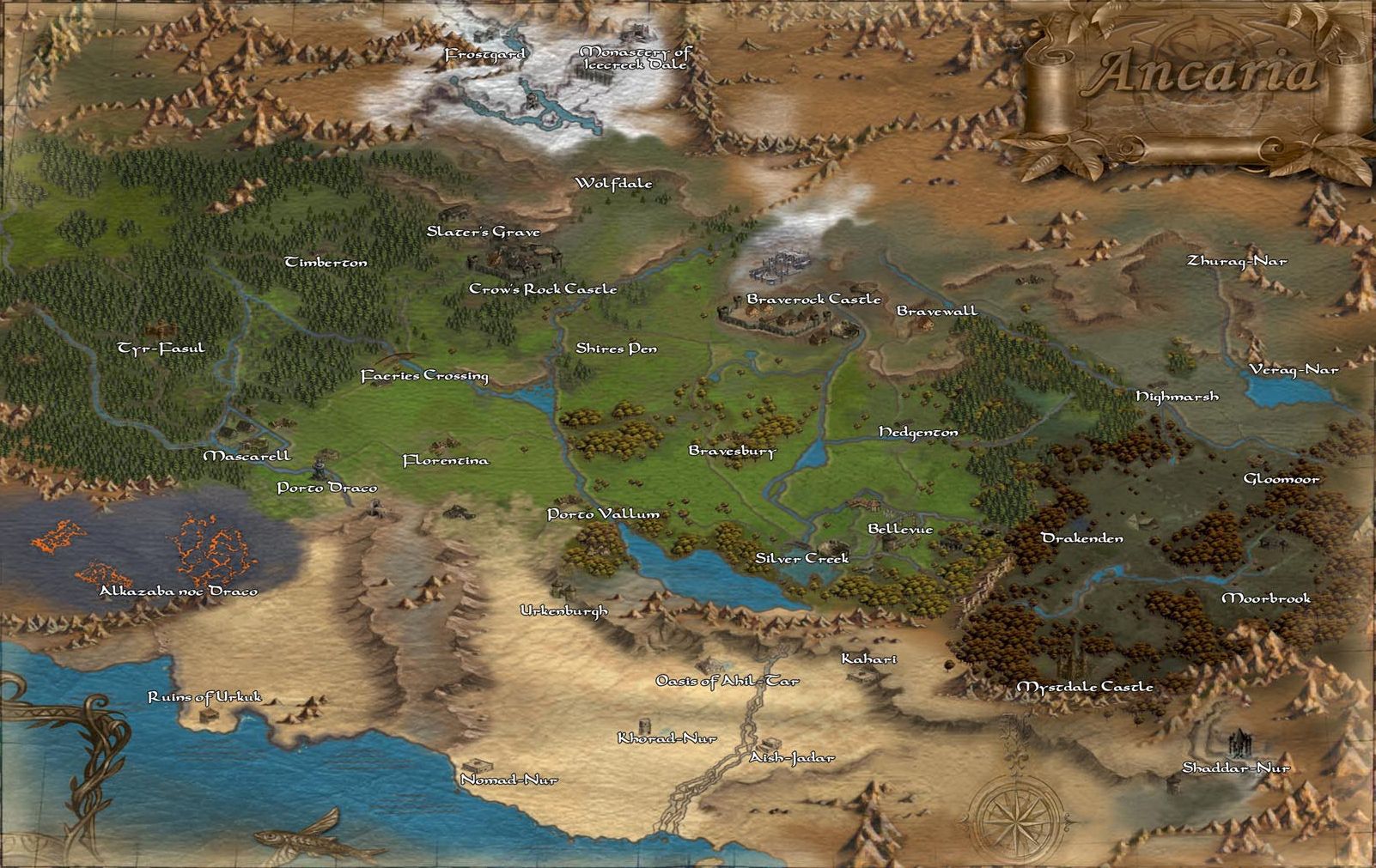
- Abandoned Mine: The Gnarlstat mines were populated by Dwarves before being massacred by the Dark Elves, who built their lair near the ruins and called it Zhurag-Nar.
- Absurdly High Level Cap: 216.
- Absurdly Spacious Sewer: The sewers under Braverock Castle. Bandits, monsters and even a secret vampire cult hide in multiple levels of tunnels. Have we mentioned that the castle is built over an ancient Dark Elven bastion called Mhurag-Nar whose basement is still intact?
- Action Girl: The Seraphim, the Wood Elf, the Vampiress, the Daemoness, the High Elf and the Dryad.
- Actor Allusion: In the German original, the Gladiator is voiced by Bruce Willis' dubbing actor. He even quotes a line from Die Hard.
- Aerith and Bob: You can find names like Victor next to more exotic ones like Vilya.
- After the End: The original game, since it takes place two thousand years after the sequel.
- All There in the Manual: the game's many lore books explain a lot of the background, including theories on the origins of the Seraphim, history, political details, how Anducar became lord of the Underworld, what is it you're actually fighting there, or the fact that the "Underworld" regions, despite having a day/night cycle, are supposed to all be underground.
- Alternate World Map: Underworld discovers unexplored lands
 .
. - Animate Dead: The Vampiress can rise corpses as her minions for a time.
- Apathetic Citizens: The player character is asked to do all sort of tasks in the town, ranging from bringing a chicken back to his owner, to killing a monster which lives near some ruins.
- Daemoness: What do you do when there isn't a hero around?
- The Atoner: The Vampiress, the Dark Elf and the Daemoness (considerably less than the others; the Vampiress and Dark Elf start the game in this mode. The Daemoness very much does not).
- Ax-Crazy: The Vampiress was one before biting a Seraphim, whose blood made her retrieve part of her humanity.
- Backpack Cannon: The Dwarf has one.
- Back-to-Back Badasses: Laurelinad and Maegalcarwen during their chase.
- Battle Couple: The Dark Elf and the Wood Elf.
- Beauty Is Never Tarnished: Subverted in some instances. The characters show blood and wounds if they are hit unarmored.
- BFG: A skill for the Seraphim (a summoned staff that fires lightning bolts).
- Big Bad: The game has two. First is the Sakkara Demon that was summoned in the intro, and then it's Shaddar, the Not Quite Dead evil wizard who summoned the Demon in the first place. Underworld has Anducar.
- Big Bad Wannabe: DeMordrey, who uses the chaos created by the real Big Bad to claim the throne of Ancaria.
- Big Creepy-Crawlies: Underworld adds several of these, including titanic flies, giant hornets, giant mire worms, giant insect larvae (that look more like millipedes), and monster resembling giant woodlice and giant quadruped locusts.
- Bittersweet Ending:
- First game: Shaddar is banished to Hell and his plan is foiled, but King Valor is dead.
- Underworld. Anducar and his demonic hordes are defeated, but Vilya dies tragically after being completely broken in every possible way. On the plus side, the ending cinematic shows her soul reuniting with the soul of her beloved Valor.
- Black Mage: The Battle Mage.
- Blatant Lies: During combar, several characters will shout: "Come back, I won't hurt you... Okay, I lied."
- Boisterous Bruiser: The Dwarf and slightly less the Gladiator.
- Bottomless Magazines: The Dwarf cannon never runs out of ammunition.
- Breaking the Fourth Wall: The player characters will sometimes complain to/about the player for letting the game idle. Also doubles as Continue Your Mission, Dammit!. Not to mention certain Enemy Chatter.
- Break the Cutie: Vilya in Underworld.
- Burn the Witch!: Baron DeMordrey and his inquisitors regularly burn witches and mages.
- Came Back Wrong: The Garema were a race of Japanese-style green-skinned pygmies who dwelled in the southern jungle and battled the Dryads before being anhiliated. The Dryads pitied on them and embalmed the fallen Garema, who would eventually return as the even more vicious undead Nuk-nuks.
- Crate Expectations
- Damage-Increasing Debuff: Many spells.
- Damage Over Time: Poison damage.
- Darker and Edgier: The whole story of the expansion. It is entirely set in the Underworld.
- Dark Is Not Evil: Vampiress, Daemonessnote and Dark Elf also qualify.
- Daywalking Vampire: The Vampiress can freely walk around in sunlight while in her human form. Even if she is in vampire form during day, she is just mildly damaged.
- Deadpan Snarker: The Battle Mage has some snarky dialogue.
- Degraded Boss: the Sakkara Demon is the ultimate threat in the Ancaria campaign, and becomes a regular mob in Underworld. A favourite target for farming, actually.
- Demon Slaying: There are demons among the enemies of this game. One of them is particularly big.
- Doing In the Wizard: In Sacred, some in-game books explain that Seraphim and dragons are genetically related and tell some religious legends about their origin, claiming Seraphim were created by the goddess Sofia to fight the Worganar demons. Later, in a special quest, a Seraphim is cornered in the desert by demons and cultists and dies muttering "it's all lies", leaving you a lightsaber and a book. The book contains a strange text about the origin of the Seraphim which uncannily fits the first source... replacing holy magic with sci-fi technology. Whether this book is canon or just Easter Egg material is open to debate.
- Driven to Madness: Vilya in Underworld.
- Dual Wielding: Some characters can have this ability.
- Dub Name Change: In the Spanish and Italian versions, the prince Valor becomes the prince Vorian, Alcalata becomes Angalydd and Anducar becomes Handukar.
- Easter Egg: For some reason, Ancaria has a Shadow Vessel, Camp Crystal Lake, Tristram and lightsabers.
- Eerie Pale-Skinned Brunette: The Vampiress in her vampire form.
- Enemy Mine: Averted by most orcs. They are fleeing from the undead, but instead of making an alliance with the humans, they try to get them out of the way. However, one orc tribe will help you against the Sakkara demon. Another small tribe will "help" you against the ice-elves (the real challenge here is to keep the orc warriors alive).
- Escort Mission: Many in all the games. They range from surprisingly easy to hair-tearingly difficult.
- Eternal Equinox
- Fantastic Racism: Commander Romata (the man who officially starts the main quest regardless of character) is openly leery and suspicious of the Dark Elf and Daemoness, and the Dwarf will occasionally scornfully remark how much of Ancaria's architecture pales in comparison to his people's. Most of the civilian populace, of course, hates orcs and makes no effort to understand their situation.
- Faux Action Girl: The Seraphim are an entire race of those. Having supposedly defeated the most dangerous demon prince, they were tasked with guarding the four elements of Ancaria, which they promptly lost to the Dark Elves. They launched a full-force war to get the elements back, which they lost, and would have been completely wiped out if an intervention of the Dwarf army hadn't saved them. Even then, they didn't recover all of the elements, and "only a handful" of the Seraphim survived. These survivors retreated to the Icecreek monastery, a giant fortress with enormous walls, and then the monastery was sacked by ice giants, killing everyone and destroying everything. Random pesants on the street will even remark on the Seraphim being useless, and the few individual Seraphim we meet or read about in lore books fare just as bad.
- The Fundamentalist: The ice-elves are descended from elves who helped the Seraphim against the forces of evil. Nowadays they consider everyone, even Seraphim, to be corrupted and in need of killing.
- Fireballs: The Battle Mage has a fireball spell.
- Get on the Boat: You need to get a boat in the southern pier to go to the Mal-Orc-A island.
- Giant Spider: Ranging from the Tarantula Gravis (about the size of a rabbit) to the Tarantula Mortis (about the size of a small house).
- Gratuitous German: The Goblins occasionally shout (hard to understand) German phrases. Mostly a side effect of sloppy localization, though — the game was developed in Germany.
- Goblin Shaman (untranslated): Schlagt ihm den Kopf ab, ich brauch 'nen neuen Aschenbecher. (Chop off his head, I need a new ashtray.)
- The name for the Orcish god Stampfa (Stompa) was not translated for some reason.
- Grave Humor: Oh yes. The game has literally hundreds of gravestones with famous quotes, pop culture references or just plain funny stuff.
- Grid Inventory: A Diablo-like version.
- Guide Dang It!: The method to get the best reward from Underworld's "Book of Wisdom" quest is never hinted at, and was in fact discovered by accident. It requires killing all three of the book's guardians at exactly the same moment.
- Guys Smash, Girls Shoot: Most of the female characters definitely avert this, but in the Dark Elf/Wood Elf team, he slices and she shoots.
- Hard Mode Perks: Like in Diablo, higher difficulty means better drop. Also, experience bonus.
- Heroic Fantasy: The game takes place in a world called Ancaria.
- Hit-and-Run Tactics: Running away is a recommendable tactic when the player finds gigantic melees. In some places, it's more than recommendable.
- Human Sacrifice: The Dark Elves commonly sacrifice whoever they can get their hands on. And they drink their blood as passage rite.
- I Hate You, Vampire Dad: The Vampiress towards the vampire queen who turned her into a monster.
- Imperfect Ritual: Shaddar attempts to summon a sakkara demon and bring it under his control, but one of his minions messes up while drawing the pentagram on the floor. As a result, the ritual summons a sakkara which is obviously not under Shaddar's control, and rather annoyed at being removed from its natural habitat...
- Impossible Item Drop: A little goblin dropping a giant axe isn't something you see every day.
- Inexplicable Treasure Chests: A quest comprise a drunken soldier named Avengarius giving you a treasure map which leads you to a cave with a well-filled treasure chest. The soldier mentions the treasure as the pay of his old legion, but neither he or you know how did it end in the cave.
- And you have the infamous quest to Azkabragh...
- In Love with the Mark: The Dark Elf (the killer) and the Wood Elf (the mark).
- In the Hood: The Battle Mage wears a robe with a hood.
- In-Universe Game Clock: Ancaria has a normal day/night cycle. It normally affects only visibility, although the sunlight causes damage to the Vampiress if she is in her vampire form.
- Invading Refugees: A horde of orcs invading the human kingdoms? Bad. A horde of undead heralding the arrival of a powerful demon to Ancaria, displacing the orcs from their homeland in the process? Worse.
- It Runs in the Family:
- According to 2, the DeMordrey line has been doing the "Smug Snake Evil Overlord" routine for over 2000 years.
- The first game has a sidequest given by two cousins of DeMordrey, who eventually turn to be traitors.
- Kleptomaniac Hero: You can steal a lot of items in chests and barrels located inside houses and even stores. Their dwellers won't react if you do so in front of them.
- Laser-Guided Amnesia: We never found where the Dwarf comes from, as he doesn't remember it. He seems to know Gnarlstat and the Dwarven Ruins, but his past isn't revealed.
- Last of His Kind: The Dwarf claims to be the last dwarf alive.
- Lava Adds Awesome: The Ascaron's Call tavern has a lava pit in its hall. Yes, a tavern. Don't ask.
- Left-Justified Fantasy Map: Somehow averted. Ancaria◊ has the ocean in the underside and not in the left, although the coast ascends to the left.
- Level Grinding: Not so much as in other Hack and Slash games, because most of the monsters are generated with a level relative to yours. However, that doesn't mean that you don't grind. Rune Grinding is important for your skills.
- Lost Technology: The Dwarven ruins in Underworld.
- Magic Knight: The Seraphim most prominently, but the Battle Mage also qualifies.
- Mind Rape: In Underworld, Anducar does this to Vilya throughout the game, ultimately driving her insane.
- Money Spider: All the enemies drop gold.
- My Species Doth Protest Too Much: The three heroes from Always Chaotic Evil races qualify - The Dark Elf assassin turns on his own people after falling in love with one of his targets, the Vampiress awakens to the cause of good after drinking Seraphim blood, and the Daemoness assists the forces of good while on her quest for revenge against Anducar. There's also a Dark Elf priestess who will help you until you finish the quest she gives you.
- Names to Run Away from Really Fast: The DeMordrey family name will inspire definite caution all by itself, even before you learn (from lorebooks) that the current baron is *Vladimir* DeMordrey and that his female relative who married into the royal family, was Moridya DeMordrey. This is in fact almost literally true, as the devs seem to have used the DeMordrey name as a shorthand for "the bad guys" in very many sidequests.
- No Good Deed Goes Unpunished: Before the story of the game, the Vampiress was a female human warrior who found a confined vampire queen in the Mhurag-Nar dungeons and spared her life out of mercy, but the vampire betrayed her and turned her into a one of her race. Later the Vampiress find her in the Braverock Castle sewers and takes the opportunity to retaliate.
- No Name Given: The heroes are only referred by their nature title. Laurelinad (the Dark Elf) and Maegalcarwen (the Wood Elf) are the exception. Also, a grave mentions a Gladiator named Hendrikus conversing with a Battle Mage.
- Non-Human Undead: Undead cows, undead horses, undead goblins, undead trolls, an undead dragon...
- Not Quite Dead: Shaddar.
- Not So Extinct: Played with the Dwarves. Although absent from 2, they appeared and laboured for Anducar to build his fortress in the Depths of Death, then he annihilated them. Some Dwarves eventually made it to the upper world where they came to rescue the Seraphim from the Dark Elven. But then the Dark Elven massacred the Dwarves... except one.
- No Woman's Land: Ancaria has strong overtones of this. While the player can take on the role of a badass womannote who joins the military, becomes a hero and is (eventually) treated seriously and praised for her deeds, the world in general is rife with sexual violence (numerous quests are based on abduction and abuse of various women, with only the protagonist meting out any kind of justicenote ) with most women, both noble and commoner, being more or less downtrodden housewives in need of rescue from male violence. One girl says that if the player hadn't helped her get her cows back, her master "would have sold her as a whore in town" (legal status of slavery in Ancaria is unclear) and there are several cages holding only scantily-clad women on a town square in the country capital. There are no women whatsoever in any military or police forces, no women town leaders, and no women giving out quests of political or non-personal importance except for Teleri, who is a rape victim of no official standing despite being "an agent of the king." The only woman in the entire game that is in any position of power is Vilya, but it's underlined very strongly that she's an exception. Interestingly, the game averts Monogender Monsters, giving the player hundreds of female mooks to kill, all of them bandits and criminals. Perhaps the world they live in drives them to a life of crime.
- Obviously Evil: Baron DeMordrey lives in a big castle always circled by crows and uses a red and black emblem with a sword and something that looks like two horns. His servants are usually soldiers who abduct and abuse young women or just murder the poor for fun, and inhabitants of the slums in his castle are legally prohibited from exiting their district, even to get medicine.
- One-Man Army: the hero has to slay loads and loads of enemies in their path.
- Our Angels Are Different: The Seraphim are a holy order formed by human-like female angels who wear revealing suits and kick ass aplenty. Following a sidequest about a Seraphim who was researching their history reveals a document detailing their creation. They are half-human, or half-elvennote hybrids, enhanced with cybernetics created by a space empire. The energy beam from the sky is, in fact, a Kill Sat still hanging in orbit fully functional after several thousand years.
- Our Elves Are Different: Just about all the common varieties of fantasy elves make an appearance in one game or another.
- Our Demons Are Different: The Daemon player class in the expansion. Could also be a case of My Species Doth Protest Too Much.
- Our Dwarves Are All the Same: An almost Steampunk technologically advanced but otherwise stereotypical version.
- Our Gargoyles Rock: Artificial monsters created by attaching evil spirits to stone statues.
- Our Ghosts Are Different: Sacred ghosts range from traditional human spirits to bizarre, ghoul-like entities.
- Our Giants Are Bigger: Ancaria has a race of gigantic, mostly blue-skinned humanoids that roam the snows. They are nastier enough to assault the Seraphim monastery. Interestingly, the trolls from 2 are identical to those giants, while the troll race in Sacred is a completely different one.
- Our Orcs Are Different: More like the Blizzard variation.
- Our Vampires Are Different: Although not very common in Ancaria. In three games, only two vampires have appeared in the story and the second one was responsible for the creation of the first one.
- Physical Hell: A quest leads you to the orcish underworld, which seems to be a deep cave system.
- Predator-Prey Friendship: A side quest requires you to play matchmaker for a dragon and a dragon hunter.
- Religion of Evil: The Sakkara Cult. The relions of the Dark Elves and Ice Elves also qualify.
- La Résistance: The Crown soldiers after the DeMordrey takeover.
- Sacrificial Lion: Wilbur and Reginald Treville.
- Saving the World: Of course.
- Science Fantasy: Blaster-armed alien Cyborgs masquerading as angels rubbing shoulders with the Standard Fantasy Races.
- Self-Deprecation: "It is forbidden to call the Gladiator Barbarian" - written on a gravestone (Sacred 's Gladiator is a knockoff of Diablo's Barbarian).
- Sequence Breaking: In the game, when starting a new game after finishing the single player campaign, the player has access to all the portals that were activated over the course of the previous playthrough, which gives premature access to various regions and occasional side effects. Areas can be accessed out of order through the teleportation and flying abilities of some character classes.
- Shout-Out: Has its own page.
- Smug Snake: Baron DeMordrey.
- The Sneaky Guy: Rocheford, in Gladiator's campaign.
- Star-Crossed Lovers: Laurelinad the Dark Elf and Maegalcarwen the Wood Elf. At the end of the game, the player-controlled dark elf can find Maegalcarwen set to being sacrificed again in Zhurag-Nar. Most of the time she dies before you can rescue her, but if you are skillful, you can kill the captors fast enough to save the wood elf. She has no dialogue box, however.
- Stripperiffic: The Seraphim wears a bikini-like underwear as her default attire, and while some types of armor cover it up, others leave her fighting in the bikini. And stockings. And high heels.
- Taken for Granite: One of the Battle Mage's spells.
- Take That, Audience!: When starting the game, the loading bar may read "Checking User IQ".
- Take Your Time: Played mostly straight aside from certain sidequests.
- The Team Benefactor: Commander Romata.
- Throwing Your Sword Always Works:
- The Gladiator can throw his weapon at the opponent. Naturally, he loses it.
- The Seraphim has a boomerang version of it, in which the weapon returns to her hands.
- Timed Mission: The game has some. Thankfully, the time limits are (mostly) fairly reasonable.
- Transformation Is a Free Action: Subverted with the Vampiress transformation. Your enemies can attack you while she is turning into a vampire.
- Universal Poison
- Unwitting Pawn: The hero to Shareefa a.k.a. Shaddar.
- Urban Segregation: The Crow's Rock Castle has a hideous slum district.
- Voluntary Shapeshifting: Part of the Vampiress and Daemon's power set.
- We Buy Anything: The shopkeepers buy you anything.
- What Does This Button Do?: Written on one of the funny gravestones (as part of the "Famous Last Words" series).
- Wide-Open Sandbox