
The good counterpart to the Treacherous Advisor and The Starscream.
A Sidekick who always sticks around The Hero, All-Loving Hero, The Captain, or any other lead role, doubting his orders, making sarcastic, often insulting comments about his actions (if the lead's ego is not strong enough, this may have complications) but never, ever actually betraying or leaving him in need. Deadpan Snarker, The Lancer, and sometimes The Smart Guy commonly fit this description, and a Psycho Supporter may have been this at the beginning. The nastier types of Hypercompetent Sidekick are often this as well. A reluctant Noble Demon may have this type of relationship with its Kid with the Leash. Can also overlap with Lovable Traitor or with Sour Supporter. If the snarker is the hero's second-in-command, he is The Creon.
According to the theory of Dramatica, two archetypal roles are "Sidekick" and "Skeptic". The Sidekick supports you no matter what and conveys positive feedback (you can do this, everything's gonna be okay). Conversely, the Skeptic (who may still support you) conveys mostly negative feedback (this'll never work, you've screwed it all up, we're all gonna die) and not so strictly balanced against a more positive role. Sometimes this pessimism can batter down and demoralize the hero; at other times, it keeps him grounded, helps him remember the stakes, and even strengthens his resolve for the long journey ahead.note The negative commentary may contain useful warnings against mistakes the hero would otherwise make; also, learning to put up with some booing from the home crowd can ensure that the Hero doesn't fold once the Big Bad starts his little mind games.
See also Servile Snarker, With Friends Like These..., and Teeth-Clenched Teamwork. If the Sarcastic Devotee tries to deny that he supports the hero, he may be a Stealth Mentor or Noble Demon. Prone to Hypocritical Heartwarming if he doesn't let others mock the object of his devotion.
Examples:
- Sebastian is this from Black Butler. Sebastian makes life difficult for his master Ciel at times supposedly to train or help him when it is just to get back at Ciel. Once when Sebastian was in disguise, he gave Ciel a slip of paper supposedly containing an explanation for him to read to his guests. It was blank so Ciel had to improvise.
- Hyuuga and Wakabayashi sometimes act like this in Captain Tsubasa. Hyuuga even more so, as Wakabayashi lays down the snark a little when he grows up.
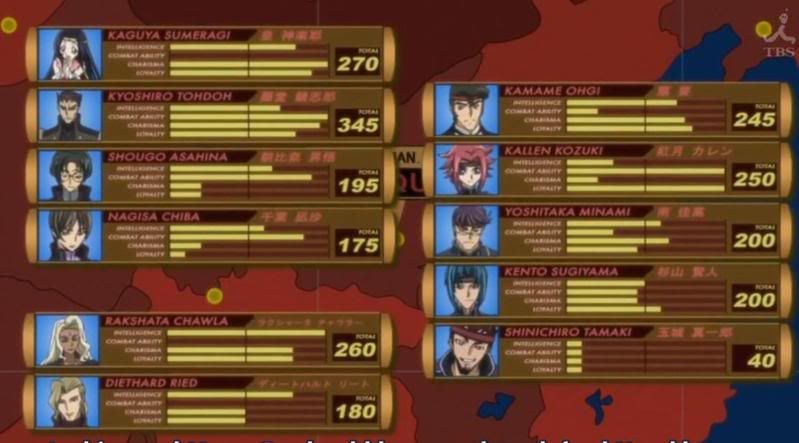
- Shinichirou Tamaki, one of Lelouch's lieutenants in the first season of Code Geass, who is nonetheless one of his most useless servants.
 ◊ After he gets over thinking he should be their leader instead of Zero, at least. A more benevolent variation is C.C., who often doubts or mocks Lelouch and his plans, but always goes along with them anyway.
- Hawkeye and Havoc both fill this role to Roy Mustang in Fullmetal Alchemist. As part of his hand-selected elite team, they are among the only people in the world from whom he would tolerate it, and they're the only ones in that group who actually do it. Hawkeye, in particular, is prone to it, being his bodyguard and personal assistant; Mustang is many things, but he is No Badass to His Valet. But she can be as snarky as she wants.
- Haruhi Suzumiya: Kyon would fit, only he's not so much loyal to Brigade Leader Haruhi Suzumiya as he is afraid of what will happen if he doesn't help her.
- (Modern) England from Hetalia: Axis Powers could be interpreted as one to America; the two countries have some of the strongest military ties in the world, and England is definitely sarcastic and critical enough to America to qualify on that aspect.
- Saruhiko Fushimi towards the Blue King, Reisi Munakata, in K. You don't see much of his loyal side in the anime until the end, but in the novels and manga, you can see why he's Munakata's favorite even though he acts like such a pain all the time.
- Tomoe from Kamisama Kiss is one-hundred percent loyal to Nanami while at the same time is extremely sarcastic towards her, highly critical of anything she does, and tends to fight her every step of the way. It doubles as a Hypocritical Heartwarming since he doesn't let anybody else behave like this towards her.
- Zenkichi from Medaka Box is always going on about how he's fed up with Medaka and her stupid plans, that this is the last time and he won't be helping her again, that he is tired of it all... but he always comes back to her and has vowed never to leave her side. His basic reason for living for the entirety of his life has been helping Medaka... Usually by keeping her in check because Medaka really has no clue how normal humans think or act and is constantly doing insane things.
- Shirin Bakhtiar, Princess Marina Ismail's advisor in Mobile Suit Gundam 00. Although we never really saw enough of that pair to see what her real deal was, some viewers got the impression that she was stringing Marina along for her own purposes. Plus, she leaves in episode 25 (leaving Marina looking rather upset) but not before the Celestial Being incident is resolved and Azadistan is apparently on its way to solar age.
- In Naruto, Shikamaru fits but also subverts it by taking the role of leader himself around the same time.
- One Piece:
- All the Straw Hats are this to Luffy at one point or another. They frequently insult their captain who has made some silly or strange decisions that they don't agree with but are all incredibly loyal to Luffy and wouldn't hesitate to fight or even die for him.
- Shanks may also have this dynamic with his crew, what with them laughing at him when he gets bullied by a mountain bandit early in the series. Of course, this is softened by the fact that Shanks himself is laughing too.
- Robotics;Notes: Kaito is constantly shooting down Akiho's ambitions and enthusiasm for building robots. He claims to only be in the Robotics Club to play video games. Nevertheless, he puts in his best effort to help her when she needs it.
- Joe, The Lancer of the Five-Man Band from Science Ninja Team Gatchaman.
- He's also this as Jason in Battle of the Planets. Mark definitely deserves sarcasm. Sometimes one wonders about the devotion.
- And Dirk from G-Force: Guardians of Space follows the traditions of his predecessors.
- Soul Eater:
- The eponymous character is like this to his Meister and Vitriolic Best Bud Maka.
- Liz Thompson is also this to her Meister, Death the Kid. Although she's quite vocal about the fact that his obsessive tendencies drive her up the wall, she genuinely admires him, not least because he saved her and her sister from homelessness and turned them away from a life of crime.
- Carl Hutter in Stellvia of the Universe, though he is actually a Sufficiently Advanced Alien.
- Suleyman in Trinity Blood is a complex case: he really rebelled against the Empress but at the crucial moment, refused to kill her, taking the shot himself.
- Atsuyu from The Twelve Kingdoms is the governor of En's biggest and richest province, and is rather cynical in regards to the new king Shoryuu. Horribly subverted when we learn that he's not a devotee, but a Smug Snake who wants to depose Shoryuu and become king.
- Yona of the Dawn: Hak is a textbook example of Tall, Dark, and Snarky, especially toward Yona, for whom he works as a bodyguard. However, he was willing to discard his entire life as he knew it for her sake and was completely willing to die for her. Ironically, this almost self-destructive brand of loyalty has led to Yona to convince herself he should be set free at some point, even though he doesn't want to be.
- Manjoume Jun (Chazz Princeton in the American dub) in Yu-Gi-Oh! GX insults Judai/Jaden's stupidity all the time, but follows him to other dimensions and listens to him.
- The Avengers:
- Hawkeye embodies this trope so thoroughly, that he's almost a better example of The Starscream. For years, he served under the leadership of Captain America and disputed every judgment call the wing-head made, no matter how trivial, and never failed to punctuate his complaints by claiming that he would make a much better leader. Even after Hawkeye got to lead his own team of Avengers, these arguments still cropped up every time he had to step back into a supporting role.
- Iron Man was a more laid-back form of this as well in the team's classic incarnations (as he tended to usually shrug and fall in line if he wasn't listened to), with his style of devotee sarcasm being more "dude, stop yelling at me I agree with you", "no, your problem is dumb and you're just whining", and "wait, wait, you forgot about X" when Cap got a little too caught up in the problem at hand, had crises of faith, or was too idealistic.
- Batman's trusted butler (and surrogate father) Alfred is perhaps one of the most (in)famous of such characters.
- Strongbow in ElfQuest. Spends a lot of time questioning Cutter's authority as chief, challenges him for leadership and loses, and later even walks out on him for a while. But when he's needed in a crisis...
- Guardians of the Galaxy (2008): While Gamora's initial impression is she has no faith in the team, she proves willing to let herself be set on fire to accomplish a mission and save the team. As she points out, it's pretty rude to question her devotion after that.
- Tintin: Captain Haddock often makes sarcastic remarks about Tintin's goody-twoshoesness (and the trouble it sometimes gets them into), but will never abandon him.
- In Ultimate Marvel, Tony Stark/Iron Man's butler, Jarvis. Until he, y'know, died.
- X-Men: Wolverine serves this role towards Cyclops. For a while in Wolverine's own book, Jubilee was his very own Sarcastic Devotee.
- Beelzea, one of Mirajane's demon souls in the Alternate Tail Series, who often criticizes some of Mira's more hot-blooded ideas. Beelzea began as a demon that Mira killed and unintentionally absorbed in her village, only to mutate her arm in retribution. However, in the R-System, she granted her power to help Mira fight against the cultists who tortured both of them.
- Arc Corp has Blake serve as this to Jaune, with them both being members of a The Men in Black-style organization. Despite her originally believing that he's totally incompetent, she still follows his lead and trusts his judgement even when skeptical, and they soon become close enough that Blake isn't shy about making it clear that her loyalties lie firmly with her best friend rather than the organization as a whole, fully willing to break company rules and etiquette when needed to defend and protect him.
- Varric both plays the trope straight and averts it in Beyond Heroes: Of Sunshine and Red Lyrium. He's still this to Hawke, just as he is in canon... but also just as in canon, he is never snarky with Bethany (unless she snarks first). Even though she's the Inquisitor and therefore technically the boss, “Sunshine” has snark immunity.
- In the Child of the Storm universe, this applies to all of Harry's closest friends (especially Carol, who essentially becomes his Number Two and in chapter 46 of the sequel, his girlfriend). They're all utterly loyal to him, through thick and thin, no matter what... but have no problem snarking his ear off, especially when it comes to undercutting his ego or pointing out flaws in his plans. Unlike some examples of this trope, it's always appreciated, given that Harry is a Humble Hero.
- In Frostbite:
- A moment of this between Athezra and Tess.
Athezra: Haven't [set up a tent] in a while, sir?
Tess: Shut it, Senior Chief.
Athezra: [grinning] Yes, sir. - Also a bit where Biri tells Zasrassi that Eleya may be crazy but she's not an idiot.
- A moment of this between Athezra and Tess.
- HERZ: Kensuke spends the whole time pressing Asuka’s Berserk Buttons and teasing her even though she is his commanding officer, but he is loyal to her just as he is to Shinji.
- Star Wars: Lineage: Obi-Wan to Qui-Gon, oh so much. It gets so bad that even when Qui-Gon and Obi-Wan are apart, the latter can still hear the former snarking in his head!
- Bianca in The Story of Apollo, Daphne and Luca: An Italian Tragedy is a sharp-tongued, quick-witted and honest young girl who is nonetheless a precious ally to Vincenzo in order to make him realize the crush he's developing on Luca.
- Voyages of the Wild Sea Horse: Ryoga Hibiki is hands down the most skeptical of the decisions made by Ranma Saotome as acting captain of the Kamikaze Pirates, as well as usually the most hostile towards Ranma's ideas, cynical about his latest scheme, defeatist about the odds, and quick to remind Ranma of his failures. But he still commits to doing his best to help out, and even turns down an offer to be simply put ashore to live a safe life whilst the rest of the crew brave the dangers of the Grand Line looking for the One Piece. He was even appointed First Mate because of his default attitude towards Ranma being best classed as "simmering resentment".
- In the We Must Be Killers series District 2's community is a Family of Choice where each older generation of victor/mentor is seen as a cross between an absolute authority figure and a parental figure to be respected and obeyed. That being said, there are those (like Lyme) not afraid to grumble a little, especially during the build-up to the Third Quarter Quell. After the interviews, there's this exchange.
Ronan: They've backed the president into a corner. If he recants now, it will be because he caved in to their demands, and anyone with a modicum of intelligence knows he cannot back down now. Our only hope was his magnanimity.
Lyme: You can't blame them for not holding their breath on that one.
- Zootopia: Nick to Judy, after a while. He starts out being blackmailed into helping her solve a missing mammals case but slowly warms up to her. By the end of the film, he's her partner on the ZPD. He still likes to make fun of her and annoy her, but there's no doubt Nick is the most loyal partner she could ask for.
- A good part of Cube is spent establishing Worth as a villainous character — and he is indeed eventually revealed to have some relation to their predicament — but in the end, he proves to be more heroic than de facto The Captain Quentin.
- The Iron Man franchise has this in the form of J.A.R.V.I.S., Tony Stark's AI he built, who constantly snarks at Tony's often poor choices, and in the third film made a safety protocol "for you to entirely ignore".
- Q from the James Bond franchise.
Bond: Have I ever let you down?
Q: Frequently... - Sir Robin's faithful minstrels in Monty Python and the Holy Grail. "Bravely taking to his feet — He beat a very brave retreat, — Bravest of the brave, Sir Robin!"
- Star Trek has Spock, very much like his Original Series counterpart, be this towards Kirk. Helps that the two really didn't like each other when they first met.
Spock: I would cite regulation, but I know you will simply ignore it.
- Mix with Sassy Secretary and this would be Janine from Ghostbusters. She takes a lot of snark (especially from Peter), and can dish it out with interest charges. She may grumble that she's quit better jobs than this, but her loyalty to the Busters (especially Egon) is completely unquestionable. In Ghostbusters: Afterlife, she was the only one who Egon trusted enough to handle his estate.
- Marco in Animorphs, though it's usually a coping mechanism rather than outright malicious. As team leader Jake's oldest friend, he gets dispensation to complain and make jokes about both Jake's decisions and the general insanity of their lives. It helps that he remembers all the dumb kid stuff they both did before Jake got stuck as team leader.
- Artemis Fowl:
- A truly odd example: Opal Koboi can apparently mind-control the doctor in The Time Paradox, but while it does make him follow her orders, he snarks and complains the whole time.
- A straighter example from the same series is Butler, who is absolutely devoted to Artemis, but never fails to point out the idiocy of his plans, especially in pre-Heel–Face Turn.
- Bartimaeus to Nathaniel, not that he has much choice in the matter.
- Eilonwy is this to Taran in The Chronicles of Prydain, both absolutely devoted to him (in every sense of the phrase) and also completely willing to snark his ear off when he does or says something stupid.
- Discworld: Angua is basically this (with benefits) to Carrot.
- Don Quixote: Sancho Panza, who is constantly picking up after Don Quixote's misadventures. Deconstructed by Sancho himself: What happens in Real Life to the employee that cannot say anything about his master without being sarcastic? Why, Sancho is beaten by Don Quixote at chapters XX and XXX of Part I and gives him a hurricane of insults at chapter XLVI.
On hearing this Sancho, who had been listening with great attention, cried out in a loud voice, "Is it possible there is anyone in the world who will dare to say and swear that this master of mine is a madman? Say, gentlemen shepherds, is there a village priest, be he ever so wise or learned, who could say what my master has said; or is there knight-errant, whatever renown he may have as a man of valour, that could offer what my master has offered now?"Don Quixote turned upon Sancho, and with a countenance glowing with anger said to him, "Is it possible, Sancho, there is anyone in the whole world who will say thou art not a fool, with a lining to match, and I know not what trimmings of impertinence and roguery? Who asked thee to meddle in my affairs, or to inquire whether I am a wise man or a blockhead? Hold thy peace; answer me not a word; saddle Rosinante if he be unsaddled; and let us go to put my offer into execution; for with the right that I have on my side thou mayest reckon as vanquished all who shall venture to question it;" and in a great rage, and showing his anger plainly, he rose from his seat
- Dragaera novels: Kragar to Vlad Taltos, back when he was a mob boss.
- Harry Potter:
- Ron Weasley is among the most loyal characters in the entire series, but it takes very little for him to complain or snark about whatever they're doing.
- Phineas Nigellus (or his portrait) serves this purpose too. He's on Dumbledore's side, but has to be cajoled into being helpful and frequently makes snide, sarcastic comments (sometimes with a valid point buried in them).
- Captain Hastings, Hercule Poirot's early Watson. Once, Poirot failed to solve a mystery involving a box of chocolates. After that affair, Poirot tells Hastings that if he ever acts too conceited, he should use the words "chocolate box" to bring him down a peg. Poirot isn't amused when Hastings uses the code words mere seconds later.
- Jeeves to Bertie in Jeeves and Wooster, though he always encases his sarcasm in polite language. Also a Servile Snarker.
- Biff, Josh's best friend, in Lamb
- Savitri in The Last Colony / Zoë's Tale is so snarkily devoted she changes planets for her boss.
- Grantaire of Les Misérables is about as cynical as they come, yet follows Enjolras to revolution despite his disparaging remarks.
- Archie Goodwin is actually hired by Nero Wolfe to do this. Wolfe is incredibly indolent and more inclined to cloister himself away in his house eating fine food and growing orchids, and so needs someone to goad and provoke him into accepting work despite his laziness. The fact that Goodwin clearly derives a lot of enjoyment from snarking at Wolfe only adds to the appeal.
- Nightfall (Series): Tristan is devoted to Vladimir in every way, but isn’t above snarking at his master.
- Sherlock Holmes: Doctor Watson, towards Sherlock Holmes, though usually only within the text of his own narrations, and normally about more minor things rather than major conflicts. He knows better than to question Holmes' judgment during cases but has few compunctions about taking potshots at Holmes's irritating habits and predilections.
- The Space Trilogy: in the third book, That Hideous Strength, MacPhee is a very downplayed example. He's the only one of Ransom's True Companions who doesn't share his Christian faith (instead being almost cartoonishly agnostic), but he's only occasionally sarcastic, and his role is in fact to question the others and keep them from GroupThink.
- Mat from The Wheel of Time. Oddly enough, he becomes this to several different people. Before the main plot begins, he, Rand, and Perrin are all sarcastic but loyal to each other pretty much equally. After Rand is recognized as The Chosen One, Mat fulfills this role completely whenever they're together. After Mat becomes a skilled general and emperor to the Seanchan, he becomes a Sarcastic Devotee of his Empress and wife.
- This is Avon from Blake's 7 to a T — even after Blake disappears, to the point of being an Exaggerated Trope. On numerous occasions he goes beyond sarcasm and into power games, trying to undermine the crew's support for Blake. He also takes the ship away to protect himself more than once, when Blake is counting on him to teleport them to safety. He seems to be tied to this trope by a piece of elastic; the farther he stretches (taking the Liberator away) the harder he comes back (and ends up rescuing everybody). It depends how seriously you take his intentions — it is worth noting that when his actions did have bad consequences for the others (and Blake), he actually felt guilty about them.
- Spike does this in Buffy the Vampire Slayer and Angel. Justified in that he started out as an outright villain before becoming Buffy's Token Evil Teammate. In the Angel post-series comics, he ends up in charge of some humans and wonders if Angel or Buffy had to deal with their kind of lip - "other than from me?"
- Dark Oracle: Simone is one of these to Vern, whom she may or may not have a crush on. No matter how moronic Vern's plans are, Simone sticks by him, mocking him the entire time. She finally leaves when he goes completely overboard and orders her to get lost.
- Doctor Who: Quite a few of the Doctor's companions will occasionally point out the flaws in his plans, and in extreme cases, question his competence. This seems especially prevalent in the new series, as basically all the companions have done snarking on the Doctor's behalf.
- Averted by Katarina in "The Daleks' Master Plan", and likely the reason why she was quickly bumped off. A Companion who views the Doctor as a god isn't any good for the series. Or the Doctor's ego, for that matter.
- Jo Grant and Ace saw the Third and Seventh Doctors as Parental Substitutes and as such downplayed the sarcasm, but they weren't afraid to call him out when he did something stupid or to snark at him when necessary.
- Sarah Jane, Captain Jack, and Jamie McCrimmon, (the latter of whom was arguably the longest-running companion ever) back in the Second Doctor's era, had two modes in respect to the Doctor: Undying Loyalty and Deadpan Snarker, and could switch between one and the other in an instant.
- Tegan Jovanka, a companion of the Fifth Doctor, never hesitated to tell the Doctor off.
- Two words: Donna Noble, with her habit of calling the Doctor "Spaceman".
- One-shot companion Lady Christina snarks a fair bit about the Doctor's competence.
- Amy Pond on the Doctor being a Time Lord: "That's just what they're called, it doesn't mean he knows what he's doing."
- Her husband, Rory Williams, is a better example. Constantly snarks at him (and gets some back), but he is quite loyal to the Time Lord.
- Firefly:
- Zoe, who is loyal to Mal but does have a tendency to point out the flaws in his plans. Jayne, on the other hand, takes that extra step into betrayal.
- Anyone who sticks around on Serenity becomes one sooner or later because, let's face it, Mal has it coming. Both the devotion and the sarcasm.
- The Inspector Lynley Mysteries: DS Barbara Havers to DI Thomas Lynley. She will follow him to the ends of the earth, snarking, and poking holes in his case theories all the while.
- As per canon, John Watson in Sherlock is both in awe of his friend and absolutely unafraid to snark at him when he gets to be (more than usual) an Insufferable Genius.
- Star Trek: The Original Series:
- Mr. Spock is very, very loyal to Captain Kirk, but he doesn't hesitate to point the more "questionable" aspects of Kirk's plans, sometimes with a well-placed Stealth Insult.
Spock: Captain, you are an excellent starship commander, but your driving leaves much to be desired.
- It would seem unflinching loyalty wrapped in deadpan snark is one of the Vulcans' many hats. T'Pol and Tuvok are both like this as well.
- Bones McCoy, who as Captain Kirk's chief medical officer and close friend is basically the only one on the ship with the license — and the chutzpah — to question Kirk's judgment openly. Spock is more polite and guarded.
- Mr. Spock is very, very loyal to Captain Kirk, but he doesn't hesitate to point the more "questionable" aspects of Kirk's plans, sometimes with a well-placed Stealth Insult.
- Future Castiel from Supernatural.
[Future Dean has just suggested a suicide attack, and objected to Cas's description of it as "reckless"]
Castiel: If you don't like "reckless", I could use "insouciant", maybe.
Dean: Are you coming?
Castiel: Of course. - The West Wing:
- Toby Ziegler, whose snarking and complaining are actually things that President Bartlet highly value.
- Leo McGarry, President Bartlet's chief of staff, while incredibly loyal to the President, and willing to give a verbal smackdown to anyone who crosses him or threatens him, can be like this as well.
President Bartlet: Zoey [Bartlet's daughter] just walked right up to him [Charlie, the President's aide] and asked him out.
Leo: She's a very outgoing girl.
President Bartlet: See, but a dungeon would have put an end to that.
Leo: We learn these lessons the hard way.
President Bartlet: I think you're trying to cover up the fact that you're enjoying this.
Leo: I'm not trying to cover it up at all.
President Bartlet: I'm a father in pain.
Leo: Well, really, you're just a pain.
- Horatio is Hamlet's oldest and closest friend, but he'll also lampshade some of his friend's crazier ideas.
- Dick the Butcher from Henry VI Part 2: During the speech when rebel leader Jack Cade claims he's the rightful heir to the throne, Dick gives scathing asides mocking the veracity of these claims. However, after the rebel uprising, he's singled out by Cade for being the man with the highest hit count. The Butcher indeed.
- Iago from Othello seemed to have had this relationship with the titular character until Cassio gets a promotion and he decides to kill everyone.
- AI: The Somnium Files: Aiba, Date's AI partner, will have a hard time not making some sarcastic remark to Date no matter what he happens to be doing, but nonetheless sticks through him through thick and thin, never once abandoning him.
- Anachronox: Being physically dead and reduced to a hologram leaves Fatima with limited options for entertainment, besides being snarky while assisting Boots.
- Guillo from Baten Kaitos Origins, especially the sarcastic part.
- Etna from Disgaea is the only one of the late king's vassals willing to serve Laharl, and she's quite sarcastic to him since he's a Royal Brat. Even though she uses him as bait to stop Maderas, she genuinely feels guilty about doing so, since she promised the king, the only person to ever show her kindness, that she'd protect his son.
- In the sequel, she leaves him after a fight, but she returns to him after Flonne gets them to make up and apologize.
- Pink in Dark Hero Days constantly makes thinly veiled insults towards Axel, but he's completely oblivious to them. Fenrich in Disgaea 4 also makes insulting remarks towards his master Valvatorez, but he doesn't seem to care, either.
- Dragon Age takes place in a Crapsack World of Snark.
- Alistair in Dragon Age: Origins is brimming with sarcastic remarks. Morrigan, Sten, Zevran, and Shale can also get pretty snarky given the situation. In fact, the only one who doesn't have strong shades of snark in this game is Dog the dog.
- Varric in Dragon Age II acts as a snarky lancer to Hawke throughout the game. Hawke him/herself can be played like this to authority figures like Aveline or the Viscount.
- Varric reprises this role in Dragon Age: Inquisition, alongside Dorian. They're both very loyal to the Inquisition as a whole and to the Inquisitor in particular, but it doesn't stop them from making snarky comments and side bets.
- The Elder Scrolls:
- Haskill in The Elder Scrolls IV: Oblivion's Shivering Isles expansion. He is undoubtedly loyal to Sheogorath, but that won't stop him from leveling some snark at the Prince of Madness. If the player has progressed far enough in the Shivering Isles questline before beginning Sheogorath's Daedric quest, Haskill will appear and snark at the player for, essentially, praying to himself, though he will acknowledge that such a thing is thoroughly in character for the Daedric Prince of Madness.
- Lydia is one of the strongest followers in The Elder Scrolls V: Skyrim, but sarcastically says "I am sworn to carry your burdens..." whenever you use her as a pack mule. She's given other lines of less snarky dialogue with the Dawnguard DLC, however.
- Lampshaded in Final Fantasy XII. Basch asks Balthier why he's still tagging along with the Princess for seemingly no reason, especially since he likes to snark at her and undercut her authority on occasion. He doesn't really give a straightforward answer, but by the end of the game, he's perfectly willing to pull a Heroic Sacrifice to save Ashe's kingdom.
- Fire Emblem: The Sacred Stones, has Rennac, a mercenary employed by L'Arachel, the Princess of Rausten. It's pointed out in the ending that he doesn't actually try very hard to escape her service despite his comments towards her actions.
- Inverted in Kid Icarus: Uprising. Palutena is among many who get a kick out of treating her loyal servant and captain of her army, Pit, as the butt of a joke. However, it’s still clear as day that she truly does care for him and values him as more than just a servant.
- Knights of the Old Republic: Atton, in the second game, starts as a subversion. He sticks around because Kreia's blackmailing him. He's pure snark, though.
- In Mass Effect, the ship's pilot, Joker, resembles this. There's no doubt he's snarky to his commanding officer, but he's always got their back and can always be counted to pull them out of the fire.
Joker Oh, another dangerous alien aboard, Commander. Thanks. Why can't you collect coins or commemorative plates or something?
- Garrus has stuck with Shepard through thick and thin, snarking all the while.
- In Persona 3, Shinjiro Aragaki is brusque and standoffish with the male protagonist, telling him not to try to tell him how to fight and snarking at him in combat when, for example, the protagonist heals him ("Tch. I don't need your help.") or gives him an order ("Who does he think he is?"). It's mostly a front (and he's noticeably less belligerent toward the female protagonist).
- In Ratchet & Clank, there's Dr. Nefarious' henchman Lawrence, who does this a lot, often making subtle insults about how stupid his boss can be. (And Nefarious never gets the hint.)
- Arthur is this way towards Dutch at the beginning of Red Dead Redemption II, especially if you're fond of the "Antagonize" option in the dialogue tree. He will gripe sarcastically but ultimately goes along with the plan. As the game progresses and Dutch goes off the deep end, he begins to be less and less sarcastic and as less willing to go along with whatever crazy scheme Dutch cooks up. He even goes so far as to start going behind his back to do major things like bust John out of prison.
- Tails has mild shades of this in later Sonic the Hedgehog games. He makes the odd bewildered or exasperated remark towards Sonic's wackiness, but otherwise is a devoted friend and right-hand man.
- Falco Lombardi in Star Fox.
- Although less so if the player is doing well. In that case, he saves his sarcasm for Slippy.
- A villainous example in The Witcher: Azar Javed's Dragon, The Professor, criticizes Azar in messages and openly berates him in combat, but is always there on command and follows orders, likening himself to a summoned genie. He stops short of being The Starscream in that he never considers betraying Azar, even when he's up against a wall with his life at stake.
- Archer from Fate/stay night, though he subverts it in Unlimited Blade Works. And on the villain-ish side, Assassin plays this role towards his master, Caster.
- Phi to Sigma in Virtue's Last Reward and Zero Time Dilemma. She is completely aware that he is the best hope humanity has at stopping a cult from releasing a biological weapon that will destroy 6 billion humans but that doesn't stop her from mocking and criticizing him throughout both games.
- The Adventures of Shan Shan: The backpack.
- Prince Paollo's guards in Archipelago and City of Somnus, especially Vamuro. They have a Psychic Link to him, they love him dearly, and they're very much aware of their role as both his bodyguards and anchors to reality. Since Paollo is an easily distracted, clumsy Dream Walker with (as of City of Somnus) a massive Power Incontinence that really worries him, the snark serves both as stress relief and friendly ribbing to get Paollo's mind off this.
Vamuro: This might be new record with you and stitches.
- Ellis from Errant Story is sarcastically snarking all the time. Yet when he's separated from Meji, he works to get back to her. Even if he doesn't like what he has to do.
- Every sidekick in Girl Genius strays into this territory now and then for comic relief.
- Moloch (a soldier and mechanic who's bitterly aware of the life expectancy of sidekicks in this world) and Violetta (a bodyguard who's convinced that her charge is suicidally stupid) are permanently unimpressed with what the main protagonists are doing.
- Gil Wulfenbach can be like this at times (especially in regards to his father's employee relations methods compared to his own), and he's one of the madmen people sidekick at.
- Zig-zagged for Agatha and Krosp; after sarcastically swearing fealty to him, Agatha is nominally the servant, but Krosp considers it a king's duty to care for and protect his subjects, of which Agatha is the only one, so in function he serves as her Snarky Non-Human Sidekick.
- Reynardine from Gunnerkrigg Court. A textbook example of reluctant Noble Demon needling the Kid with the Leash.
- The entire cast of The Last Days of FOXHOUND ends up serving this role to Liquid once he takes a level in badass.
- Nodwick:
- The title character, as well as the henchmen in general. Although nominally bound to his party due to his draconian labor union laws, Nodwick does actually care for them (mostly, anyway).
- Piffany, at least. If Artax and Yeagar were to let up on the abuse he probably wouldn't cry I want my jerks back anytime soon.
- Captain Tagon, of Schlock Mercenary, seems to get along better with this type of grunt; presumably, if they're comfortable enough to joke around, they won't be too afraid to tell him when he has a wrong idea about something.
[during a conversation Tagon has trouble following]
Ennesby: Maybe you should set syllable restriction to "two".
Tagon: I understood that. - Everyone in Something*Positive is like this: they'll snark each other to shreds, but are fiercely loyal to each other.
- Krep from Spacetrawler heaps abuse on his captain and crewmates, but he'd sooner be eaten by a Glathsrean Mihrrgoot than turn his back on any of them.
- Shane Madej of Buzz Feed Unsolved is the resident Agent Scully to Ryan Bergara's Agent Mulder, having little to no belief in the supernatural and frequently teasing Ryan's fear of ghosts and demons, with most of his participation in their ghost hunts being to dick around and taunt the supposed ghosts. It's still all in good fun, and he willingly follows Ryan around the country in the hopes of encountering something spooky.
- Resident Evil Abridged: Wesker gets virtually no respect from his subordinates, with Chris being the main offender. Mainly because Wesker is a smug, condescending douchebag. So nearly all of their scenes together results in Snark-to-Snark Combat.
Wesker: [during perimeter check] Alright team, I want updates from each of you.
Chris: [over comlink] Here's your update, Wesker: It's easier to see at night without sunglasses.
Wesker: [deadpan] Right then, so Chris's update is that he's an asshole. - In SMPLive, Connor is this to Schlatt. He's extremely loyal to him to the point of risking his own life for him, but will still shoot snarky comments his way any chance he can get.
- Avatar: The Last Airbender: Sokka starts out as this, spending the first two seasons constantly questioning both Aang's and Katara's judgments, making sarcastic quips concerning their Chronic Hero Syndrome and their reliance on Bending and anything mystical. There are even a number of episodes that highlight how Sokka's highly-critical nature is essential to the team, as his skepticism can lead him to making alternate plans that save them when everyone else has proven to be too trusting or optimistic about a given situation. He mostly grows out of this by the final season, however, trusting in Aang's abilities far more by that point.
- Beast Wars:
- Rattrap is very critical of Optimus Primal, questioning Primal's leadership skills and loyalty radar (particularly in relation to Dinobot and Blackarachnia) at various times. However, he would never in a million years betray Optimus or try to usurp command from him. His living quarters are fair game, though. His catchphrase is "We're all gonna die." Of course, since he was elected as Optimus' second should something happen, this makes his loyalty to Optimus as much self-preservation as anything.
- Surprisingly, given Rattrap's suspicion of him, Dinobot was also very loyal to Optimus Primal, while frequently criticizing him for being too diplomatic in dealing with the Predicons. In one episode, it starts out with Dinobot and Optimus getting into a debate about Primal's interest in a new plant species Optimus discovered while on patrol. In the end, when Optimus is recovering from a disease that caused him to become The Berserker, he wakes up to find Dinobot keeping vigil. Dinobot denies being there the whole time and that it was merely his shift, though he admits to being grateful Optimus is back to normal before leaving. Of course, Optimus notices that someone went to the trouble of leaving a potted specimen of the plant from the beginning of the episode by his bedside.
- Gwen was this to Ben in the original Ben 10 series: she constantly argues with him, insults him, criticizes his immaturity... but if he is in danger or in an actually messy situation, she will be there for him. Later installments in the franchise turn this down due to the kids maturing (the subsequent "classic" timeline shows) or simply having a much friendlier dynamic overall (the 2016 reboot series), though it still appears on occasion.
- Louise Belcher of Bob's Burgers is often the first of her siblings to make a snarky jab at the titular restaurant, she loves to troll her father, and she doesn't treat the rest of her family any better. In spite of this, she is genuinely loyal to her family and has a soft spot for her father. One episode reveals she even wants to take over the restaurant as an adult.
- Kiff of Futurama sticks behind Zapp Brannigan no matter what (probably because it's his place in the military), but makes it painfully obvious that he hates Brannigan for it. Oddly enough, Zapp is never fazed by Kiff's commentaries. It seems to go beyond his line of work, even when they were both fired from their ranks (almost entirely because of Zapp), Kif still acts like his usual submissive (but sarcastic) self towards Zapp despite no longer having any power around him.
- Shego of Kim Possible, who admittedly goes through periods of running off on her employer but inevitably, eventually, always goes back to working for him. To the point that she mentions this more or less the main reason she sticks with the failure of a villain that is Dr. Drakken is that he is pure mocking gold. Well, that and she likes him.
- Reuben (Experiment 625) is this towards Gantu in Lilo & Stitch: The Series.
- My Little Pony: Friendship Is Magic:
- Rainbow Dash represents the Element of Loyalty, and is always ready to defend Equestria or fight her friends' corner no matter what. This doesn't stop her from teasing and snarking at her friends any chance she gets.
- Spike is this to Twilight Sparkle. He is ruthless in his quips when Twilight's behaviour becomes too obsessive or she falls victim to slapstick; nevertheless, he adores helping her and will be at her side in a flash whenever she needs him.
- Noah from Total Drama to his allies, such as Izzy, Tyler, and Owen.
- Hawkbit from the TV series of Watership Down. Even at one point, Hazel finally (and calmly) tells him: "We can deal without the sarcasm, thanks."
