

Some people think that abstraction is enough to sell, because sometimes the best way to make something stand out is to make it not stand out. Amongst a shelf full of angry pink balls, floating heads, scantily clad women, and outright lies, some classy minimalism can work wonders.
At least one of the things below applies to such covers:
- Complete absence of everything sans the background: Self-Explanatory.
- Solid color, simple gradient or just generally unsophisticated backgrounds. Alternatively, a closeup of a material used as a background.
- Single Object Focus, considering the said object exists.
- Lots of empty space for the covers that have something besides the background. Alternatively, the cover would even have an action-packed part that cover only the - say - 5% of it.
- Minimal use (or complete lack) of text.
- Any form of literarist art will do as well.
In music, the first really popular record (or at least the earliest notable example) with such a sleeve was The Beatles' eponymous 1968 album (colloquially known today as The White Album for its almost completely blank white cover). However, the mainstreaming of the minimalist design style from the 1980s onward is mostly credited to Peter Saville's work for Factory Records in the 1970s and 1980s, which set the design tone for Post-Punk and much of the eighties (and aughties). He did sleeves for lots of mainstream bands (e.g. Wham!, Roxy Music, Peter Gabriel, Orchestral Manoeuvres in the Dark, Ultravox), but Factory let him do anything he wanted on international hit records by New Order.
Minimalism was the art style of the 2000s and especially The New '10s, that is, whenever people weren't abusing neoclassicism.
Compare to Face on the Cover, which is usually minimalistic in its approach, but only with faces. Contrast Detail-Hogging Cover and Design Student's Orgasm, which go for the opposite strategy.
Example subpages:
Other examples:
- Studio Ghibli's much-awaited Blu-ray releases all come in monochrome cases, a single colour background with the title and a silhouette of the main character in white.
- Neon Genesis Evangelion: The twentieth anniversary Blu-Ray and DVD releases of the original series are this, as well as the JP Blu-ray releases for Rebuild of Evangelion, which are a plain single colour, with the title on the front in black text.
- For the 2017 Doraemon film, Doraemon: Great Adventure in the Antarctic Kachi Kochi, one of the posters is just a shot of Carla's bracelet
 , taken from a scene in the opening.
- Funimation's covers for almost anything Dragon Ball just have the character standing there with a cool pose and a one color background.
- Assassination Classroom: The manga volume cover artworks◊ usually consist of nothing more than a few solid colors and Koro-sensei's face. Special mention goes to the Volume 5 cover, which shows Koro-sensei's poker face: blank white with the ._. emote. Generally speaking, the odd-numbered volumes will have simpler cover arts than their even-numbered counterparts.
- The Kurosagi Corpse Delivery Service has covers in brown and one other color, a dramatic difference from most manga covers.
- Drawn & Quarterly's translations of Yoshihiro Tatsumi's one-shot collections have fairly minimalistic cover art.
- Sailor Moon's 11th manga volume has just a picture of Chibi Chibi and the logo, with the author's name, plus 11 in the corner. Link.

- Some collected editions of Watchmen only have the smiley face on the cover.
- Some have an extreme close up on it that shows only part of one eye.
- Variation: In some versions of Final Crisis issues, anything that isn't text covers only a 1/3 of the front cover.
- The collected edition has a black-and-red cover of Superman holding Batman. While not as minimalist as other examples, it's certainly minimalist compared to other Crisis covers.
- The all-black cover of The Amazing Spider-Man #36 (#477), save for the Marvel Comics header and the logo. This issue is the 9/11 tribute issue.
- The all-white cover for Zero Hour: Crisis in Time! #0 (1994), which implies that the DC Universe was already erased at that point.
- Back in 1968, this◊ Steranko Nick Fury cover was considered almost too minimalist to publish— Stan Lee couldn't fathom publishing a cover that was black and white, and so insisted that Steranko color the title and Fury.
- Superman Vol 2, #100 had an almost entirely white cover, except for the title logo, the S-shield reflected in a broken pair of glasses and the legend "The Death of Clark Kent!" Action Comics #720 duplicated this, only the S-shield was reflected in an abandoned diamond ring, and the legend was "The Engagement Is Off!"
- Fantastic Four #371 from 1992 featured an embossed cardstock cover with the Human Torch, with his flames melting the logo and corner box. The cover was completely white◊, with the printed barcode only appearing on the newsstand edition. The second printing's cover was done in solid red◊, making the details stand out a little better.
- DC had a horror anthology title in the 80s called Wasteland. Due to one error or another, issue #5 was published with issue #6's cover. When the real #6◊ came out, it was numbered "the real number six," and the cover, apart from framing elements, was pure white. For a horror comic, it worked quite well.
- The new hardcover editions of some Sin City yarns went for this, with just close ups of their protagonists. However, given the Sin City art style and design, it fits perfectly.
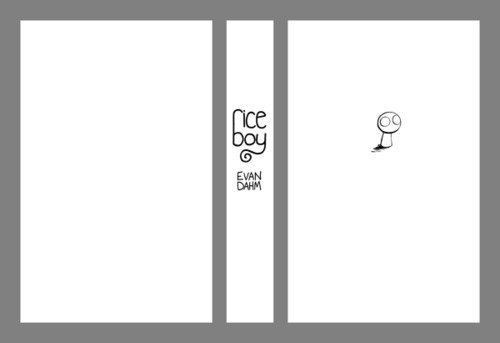
- The new Rice Boy hardcover edition is going to look like this◊, hiding the colorful surrealistic art inside.
- The Judge Dredd Case Files, a series of trade paperbacks collecting the entire thirty five plus year run of the series, have covers that are half solid colour, half black with a logo, plain text title and an image of the Judge himself. In the earlier editions, the image of Dredd was black and white which enhanced the effect. This style has since been carried over to other 2000 AD complete collections, including Strontium Dog and Nemesis the Warlock.
- MAD parodied this more than a few times.
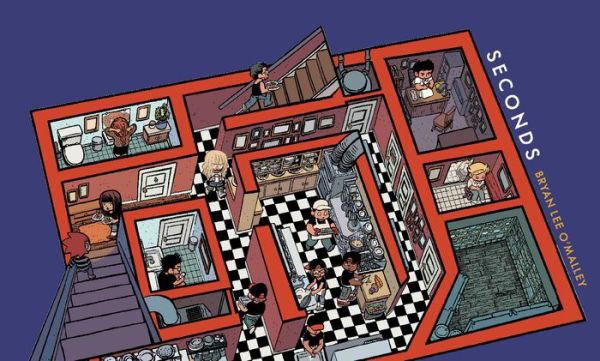
- The cover art for Seconds is simply a close up of Katie's face. Inverted in the Barnes and Noble exclusive cover, which is the basement floorplan of Seconds◊, and is actually quite detailed.
- The alternate covers for all the Convergence titles show a close-up of a DC character's face fading into a solid colour (the same colour for each week's titles) which takes up one half of the cover.


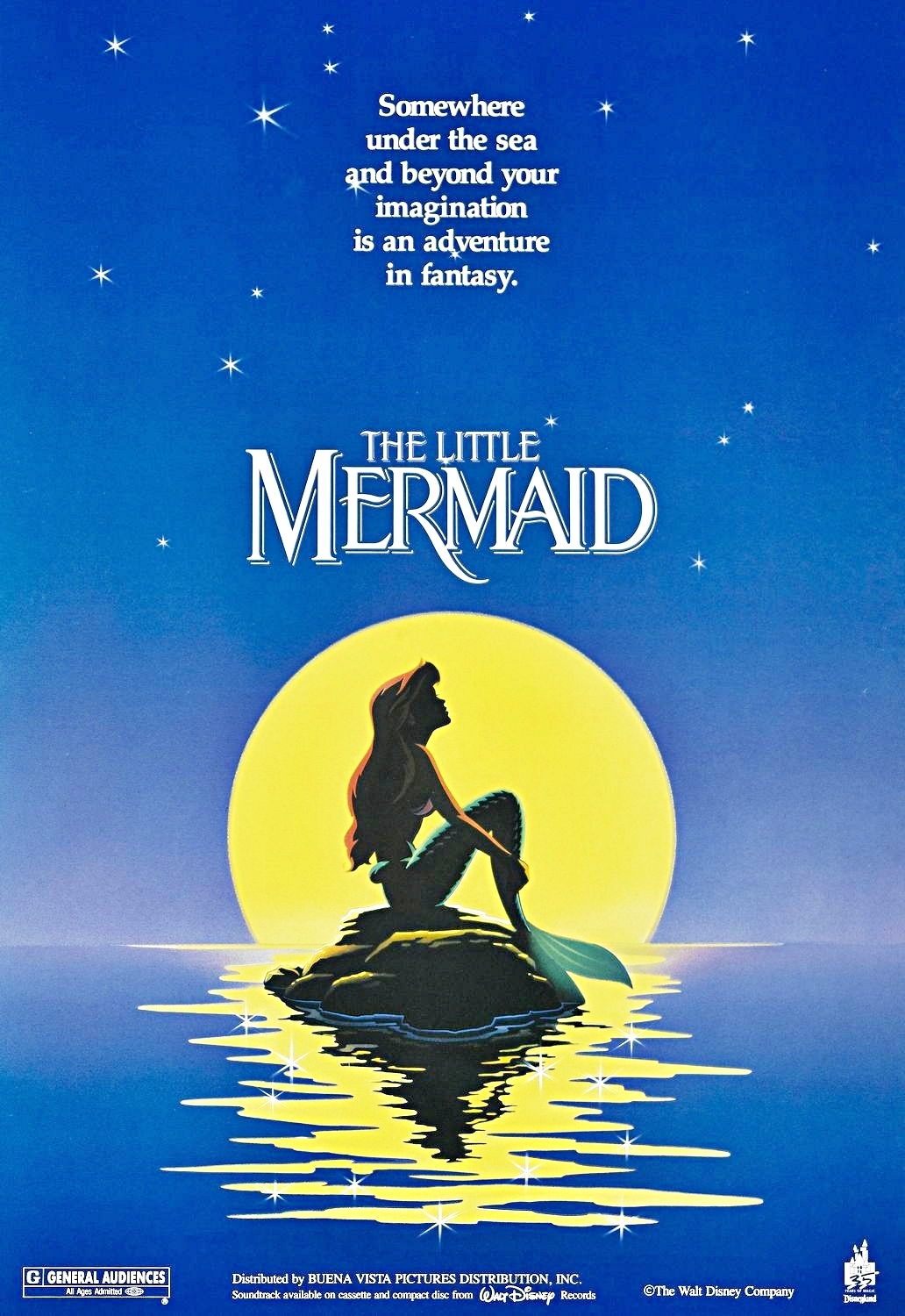
- During The Renaissance Age of Animation, Disney produced two kinds of posters for each movie: one that attracted children with brightly-colored pictures of cute characters, and one that enticed adults with silhouettes of the heroes and prestigious-sounding taglines. As one example, compare the page image of The Little Mermaid (1989) to this◊.
- The poster◊ of the Vincenzo Natali film Nothing only feature the two protagonists on a white background. And the said protagonists don't cover much space there. Besides the title, billing block and the company logos, that's it.
- Aside from all of that text, the poster of the Children of Men adaptation is all about the fetus.
- Some posters (and covers of a few DVD versions) of π are this. All they showed are the ratio's mathematical symbol.
- Some theatrical posters of the second, fourth and fifth Friday the 13th movies.
- The theatrical poster of Stanley Kubrick's adaptation of The Shining.
- Some DVD editions of 12 Monkeys were this.
- Oliver Stone's The Hand. Guess what the poster contains.
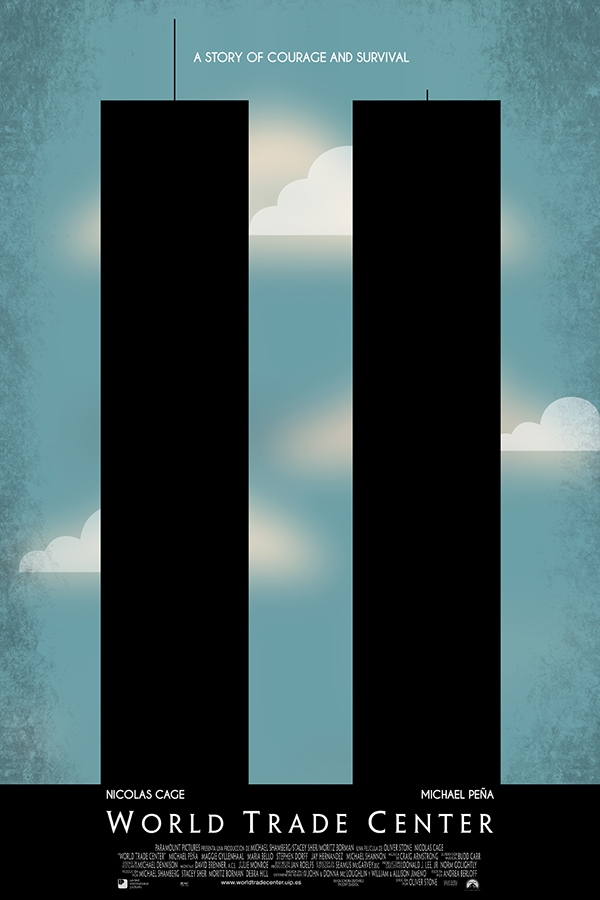
- Stone's◊ World Trade Center.
- The posters for◊ Poltergeist (1982) and◊ Poltergeist II: The Other Side.
- Batman Film Series:
- Batman (1989) only seemed to have one design for its main promotional material: the iconic Batman logo on a black background and nothing else. The teaser poster, the Prince soundtrack album, the Licensed Game by Ocean Software (who added only their own logo in the same colors), the original VHS release, and the original DVD cover don't even have a title.
- The Batman Returns teaser poster featured an extreme close up of the bat-ears-and-head from said logo, with "RETURNS" in very small print at the bottom. Batman Forever and Batman & Robin just have their movie's respective logos over a plain background with the release date at the bottom.
- The Batman movies' first Blu-Ray covers showed only the title, the stars' names, and a variation of Batman's emblem over a black background. Fox's Batman: The Movie and the boxset for The Dark Knight Trilogy also followed this pattern, albeit with a white background and no actors' names for the latter.
- Zelig
- On the subject of all things Woody Allen, a good number of his films had theatrical posters that were basically these.
- Helvetica, a documentary about an eponymous typeface.
- And from the same filmmaker, Objectified◊.
- And from the same filmmaker, Objectified
- Covers made for The Criterion Collection edition videosnote are generally very minimalist.
- Their packaging for the Dogme '95 film The Celebration in particular goes the Yeezus route of having not much of a cover at all, just a transparent case with a small sticker noting the title and length, plus the paper supplemental material inside.
- Their packaging for
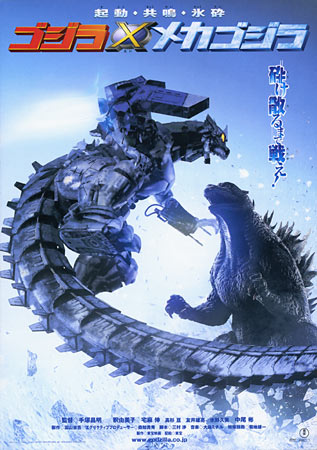
- The poster◊ for Godzilla Against Mechagodzilla just shows Mechagodzilla about to punch Godzilla, all in front of a mostly plain white-blue background. It's an unusual break from the tradition, followed by other Godzilla movies and Kaiju cinema in general, of using detailed, bombastic posters (compare this one to the other◊ posters◊ for this film's predecessors, Godzilla vs. Mechagodzilla and Godzilla vs. Mechagodzilla II, to get an idea of what an odd decision it was).
- Goodfellas has minimalistic opening titles. Saul Bass, who often designed Artistic Titles with intricately organized montages, here used only white and red text zooming on and off the screen.
- The teaser poster for Ant-Man is largely blank, only with the shrunken titular character in the center and the title and release date below. The sequel's poster did the same thing.
- The poster for The Man with One Red Shoe only shows a red shoe on a white background◊ with one of its laces lit like a fuse. Tom Hanks is nowhere to be seen, and the movie's title only appears in the billing block below.
- The American theatrical poster for Harold and Maude is nothing but the title and credits in plain text on a white background. The international poster is considerably more detailed.
- The first two teaser posters for Alien: Covenant revolved around subjects surrounded by darkness, acompanied by a single word tagline as well as a release date. Facing a snarling Xenomorph? Run. An egg? Hide.note
- It Comes at Night has a moody teaser poster depicting Stanley facing the darkness. The theatrical poster is also fitting.





- The UK/Aus/NZ editions of the Gone books give them a much more foreboding feel, with just a silhouette and the title on a black background. The author's name is only visible because of its gloss on an otherwise matte cover.
- The Twilight Saga:
- The covers of the second and third novels are black backgrounds with the title and some random object that may or may not relate to the plot. (A flower and a ribbon, respectively.)
- And given Twilight's success, every other YA fantasy novel cover these days has a similar design.
- The torn ribbon may be interpreted to symbolize the tear between Bella's vampire boyfriend and family and her "werewolf" friends, who are enemies. However, Meyer has stated she had no control over the flower cover, and it has no relevance.
- The first one's less minimalistic, since it shows its random object on a black background (an apple; we don't know what apples have to do with the plot, but Rule of Symbolism?) being held in a pair of disembodied hands. But it still probably counts.
- Faber & Faber's poetry books are often this (example).
- Thomas Pynchon's Mason & Dixon and Against the Day, released in 1997 and 2006, respectively. As well as the man's very first book, V.. Suits it pretty well if you come to think of it.
- The first edition of Richard Bachman's Thinner There's also the first edition◊ of Insomnia, as well as his Just After Sunset anthology.
- Not counting the mylar cover it was packaged in, Madonna's book Sex just has the title in tiny, raised letters on a blank cover.
- A few of Cormac McCarthy's books.
- The UK/Ireland editions of the The Wheel of Time books all have plain black (or white for the final book) covers bearing the author's name◊, title of the book,◊ and a line drawing of the Wheel and an ouroboros◊. These are considerably more popular than the horrid and nonsensical American covers.
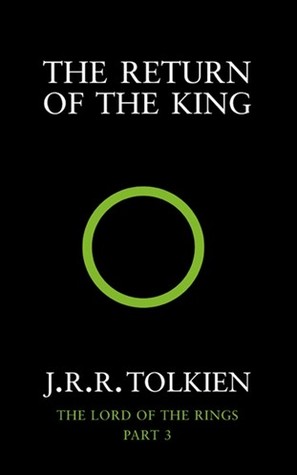
- Some UK editions of The Lord of the Rings. Such as this minimalist paperback cover;◊ each volume has a pure black background, the title set above one ring (each volume makes it a different color), the author's name and a subtitle stating which part of the trilogy it is.
- The English-language paperback editions of the Haruhi Suzumiya novels feature a plain red cover◊ with an understated title and a small, easily-overlooked silhouette of Haruhi. The hardcovers, however, bear the original Japanese art, probably on the grounds that anybody buying the hardcover is already a die-hard fan.
- Corgi's new, "classy" covers of Discworld novels, especially the early ones. A mostly black cover, with Terry Pratchett's name at the top, the title half-way down and a grey image with gold highlights in the lower half. Compare the two covers of◊ The Colour of Magic.
- Plentiful of Chuck Palahniuk's work had this on their first (and many later in some cases) editions, especially◊ Lullaby and Diary◊.
- The Catcher in the Rye. White cover, black text, flat rainbow-colored stripes in one corner.◊ Many of Salinger's books can be found with that same pattern.
- Some of France's publishing houses use minimalist covers for their most prestigious collections. See for instance the nrf◊ or les Editions de Minuit◊.
- The cover◊ for Push by Sapphire is just the title of the book on a red background.
- Incompetence and Fat by Rob Grant have similar covers: A black background with the book's title and a parody of a warning sign (Incompetence has a "no IQ" sign, while Fat has the symbol for men's and women's bathrooms with the man symbol depicted as overweight).
- The m/m crime thriller series Cut & Run by Abigail Roux is definitely an example of Single Object Focus; typically a single item (a balloon animal, a voodoo doll, a pair of handcuffs) and at most two items (a compass and anchor) are featured against a solid white background and simple black font for the writer's name.
- Similarly, the Spin-Off series, A Sidewinder Story, does much the same thing (featuring a four-leaf clover or a Celtic cross) with the exception that the background is a single textured/stylized color instead of white.
- The historical fiction story Arcadia by Tom Stoppard counts too.
- Plenty of books in recent years that feature the "exploding flower" motif are this: Lucie Whitehouse's Before We Met◊, and Liane Moriarty's The Husband's Secret being two examples.
- Wave by Sonali Deraniyagala.
- The Lovely Bones too. Blue cover, white title, no-fuss-no-muss author's name, and a single floating bracelet with a teeny tiny house pendant on it.
- The Penguin UK edition of The Man in the High Castle from 1999 is just white with the title, ISBN number, and a short quote running down the front cover. Amazon UK page. It's not clear from the picture but it also has a very low resolution image of the continents in white dots.
- Computer Crimes and Capers: The hardcover edition in 1983 came with a transparent dust jacket, the cover itself being solid black with writing only on the spine.
- Isaac Asimov Presents the Best Science Fiction of the 19th Century: The original cover background is a bright red, with "the Best Science Fiction of the 19th Century" in white, and the rest of the text in yellow. The only text is the title and credit to the editors.
- The Arbor House Treasury:
- The original front cover for each book is a plain background with the title and editors. There's a difference in colour between The Arbor House Treasury and whatever the theme/genre is for that book.
- Worlds Imagined: The original front cover featured a plain blue background, white text for The Arbor House Treasury and the editor names, and lime green for of Great Science Fiction Short Novels.
- Masters of Horror and the Supernatural: The Great Tales: The original front cover features a deep red background, grey text for The Arbor House Treasury, bright yellow text for of Horror and the Supernatural, and white text when listing the editor names.
- The Arbor House Treasury of Nobel Prize Winners: The front cover features a black background, white text for The Arbor House Treasury and "Compiled by Martin H. Greenberg and Charles G. Waugh," and a dull golden text for of Nobel Prize Winners.
- Great Tales of Science Fiction: The original front cover features a slate grey background, black text for The Arbor House Treasury and "Introduction by Robert Silverberg," and bright red text for of Science Fiction Masterpieces'' and the editor names.
- Isaac Asimov:
- Asimov's Book of Facts: The 1981 hardback edition is simply a black cover, with the title written along the spine in two lines.
- Asimov's Guide to Shakespeare: At least one cover forgoes even a dust jacket, merely having a tan-brown blank cover, with the title printed on the spine. Due to the size of the Omnibus, said title takes up three lines.
- The Bicentennial Man and Other Stories: The 1977 Gollancz cover has only the publisher's mark, the title, and the author's name on a yellow background.
- Casebook of the Black Widowers: The Doubleday cover has a black background, with the focus on a knife and fork framing a fancy dinner invitation that holds the title and author's name.
- Nine Tomorrows: The 1966 Pan Books cover restricts the art to the inside of a single cartoony sun.
- Science Fiction Favorites:
- The Audible cover has a plain blue background, with a "book" inside where the title and author's name are in the same blue as the larger background. The background of the "book" is a red and yellow gradient.
- The Penguin Random House cover is designed with black and white divisions, where the top half is white with the title in large blocky black outlines and the bottom half is black with Isaac Asimov in small flowing white script.
- The original UK cover of the finalnote Alex Rider book, Scorpia Rising, had the book's title and author's name translucent to the point of invisibility, leaving just the insignia of the titular Nebulous Evil Organisation on a black background.
- Some of the covers of the books written by Children's author Barbara Lehman are minimalistic like the Red book for example






- DVD Edition of Chris Morris' Jam had one.
- Buffy's return from the dead was advertised◊ with one.
- These posters for Orange Is the New Black.

- The Goons have once launched a photoshop contest on "classy" literature-influenced covers for various modern Video Games. Some of the entries kinda fit for this trope. Here's the now fourth edition of it.
- This VGBoxArt entry managed to spoof this.
- The Hero System 4th Edition cover was four-color comic book action with art done by notable comic-book artist George Perez. By fifth edition, Hero Games couldn't afford that sort of thing anymore. So fifth edition is black on black, with only the Hero Games logo on the cover.
- Cards Against Humanity has this not just on the cover, but on the cards as well. Everything is either black Helvetica on a white background or white Helvetica on a black background.
- Almost the entire North American and plenty of European covers from the Sega Master System library were this at the insistence of American distributor Tonka, who believed that if a game came from the arcades, people would immediately buy it regardless of the cover art. After a short while, Sega broke off their association with Tonka and opened an American division, which commissioned more traditionally lavish covers for later Master System games. Just look at the American cover of Teddy Boy, one the earliest games that was published on the console when it debuted in the US and Canada, and compare it to the cover of Sonic the Hedgehog, which was the last Sega Master System game to get a release there.
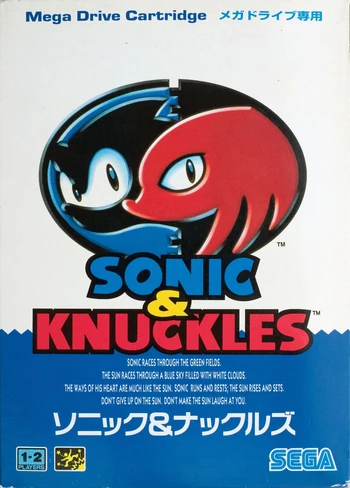
- The box art and marketing materials for Sonic & Knuckles primarily featured the game's rather simplistic insignia: silhouettes of the title characters inside an ellipse◊. While the international artwork sets the insignia against a pure black background, the Japanese box art was slightly more detailed, featuring a white-and-blue background and an inspirational quote. In both cases, they were a stark difference to the detailed / illustrated covers of other Sonic titles of the era.
- The Designers Republic were involved with earlier WipEout installments. It shows especially well in case of the third game and its Updated Re-release.
- Formula Fusion will feature this, as The Designers Republic was confirmed to be working on the game's design elements.
- The later The Elder Scrolls installments, starting with Morrowind. Each one just depicts a symbol with the title on it, placed on what looks like the cover of a leather-bound book.
- Nearly every Quake installment sans Quake Wars. The jewel cases for the first one sometimes go as far as to feature just a game's (and id software's) logo on a gritty background, withouth any text whatsoever.
- Half-Life (before the Game of the Year edition that has Gordon in it). This carried over to European releases of the expansion packs, as the North American releases do feature their protagonists.
- The Collector's Edition of Mass Effect 2 only has a shot of a bloodstained N7 logo set at an angle on the front cover. The Mass Effect 3 Collector's Edition is similar.
- Darker is an obscure PC game set in a planet that is pitch-black in one side. Appropriately enough, its cover art besides the title, logo and the stickers feature a black silhouette of the city with two power plants superimposed on a nearly black background.
- Metal Gear:
- The cover artwork of the Japanese and American releases of the first Metal Gear Solid for the PlayStation consisted of a simple white background with the game's logo. The European release on the other hand, featured an illustration of Solid Snake's face to it.
- While not quite as minimalistic, the American and European covers for MGS2, along with the European cover for MGS3, all feature a simple illustration of Snake.
- All the covers for MGS4 and ''MGSV'' have a simple close-up of the character (with the exception of the Japanese Ground Zeroes box, which also features Kaz next to him).
- As Portal shows, Valve is apparently very fond of this kind of stuff.
- The original version of the cover for The Orange Box was going to be just pure orange, with a list of the games. The final version got changed.
- If it's not for the detailed background its cover happens to have, Dead Space would otherwise count, with its focus on that severed hand.
- Dead Space 2, whose cover is mostly a shot of Isaac's helmet in a dark.
- The Divide: Enemies Within is a 3D Metroidvania where you pilot a bright orange Chicken Walker on a hostile alien planet brimming with monsters, across a number of unique, interesting environments. Bafflingly enough, the sole cover art◊ of the game is just the title slapped over a black background with some green light.
- Limited Editions of some games may be packaged with this kind of cover, notably Prince of Persia (2008).
- There's the Limited Edition cover of Halo 3. Helps that the "Halo" text isn't even anywhere to be seen, just the "3" enclosed on an "O."
- Most of the front cover of Blood is a hand-shaped splatter on a black background.
- The post apocalyptic cab driver game Quarantine (1994) certainly has an interesting one, which is all blood (emphasis on dripping blood) red except for the area cleaned off by the windscreen wiper.
- The cover art of Spiritual Assassin Taromaru depicts the game's title across a plain brown background. (Seen here◊) The game itself is far more colourful and insane, with assorted Yōkai enemies, gigantic skeletal monsters, and you're a ninja who can launch thunderbolts with your bare hands.
- Ultima VII: The Black Gate.◊ (Ultima VIII: Pagan and Ultima IX: Ascension were originally planned to do the same, in red and white respectively, but that didn't happen.) Also, the later North American releases of Pagan have the Pentagram removed from the cover for some reason, making the cover more qualifiable for this trope.
- 9 : The Last Resort (no connection to the certain webcomic or the 2009 CGI film) is an Adventure Game with Robert De Niro involved in its production. Its cover - company logos aside - features mostly a monkey holding a card with an "9" on it.
- The European versions of the first MDK, which feature a logo and Kurt doing the Superman pose on top of it on a silver background.
- The entirety of Mother series, sans the American version of the only entry in the series to be released outside Japan prior to 2015.
- The Legend of Zelda
- The original game had a shield with one section cut out to reveal the cartridge inside.
- The second game had just a picture of a sword on the cover.
- By The Legend of Zelda: A Link to the Past, the game's logo on a gold background was the only cover art these games had outside of Japan. This lasted until the Oracle series, which had rather crowded box art by the series' standards.
- The Legend of Zelda: The Wind Waker: The North American and European box art mostly returns to the gold background, although with a faint image of Link sailing on the King of Red Lions.
- The Legend of Zelda: Twilight Princess's North American boxart shows only a sketch of Link and Wolf Link's face separated diagonally.
- An obscure 1996 adventure game called Animal features this.
- "Vanilla" Neverwinter Nights and its sequel. Few of their expansion packs count to some extent as well.
- Internal Selection
- The North American cover art for Disgaea 3: Absence of Justice just has the main character Mao, and the game's title on it. Very minimalistic compared to the North American boxarts of the previous games, which at least feature most of the main characters, and extremely minimalistic compared to the Japanese boxart, which is a character montage featuring all of the main characters, plus most of the generic units, as well.
- The cover◊ of ZX Spectrum game Go to Hell, just a small title dripping blood on a white background, is pretty surprising since the actual game is as garish and crude as it gets.
- Final Fantasy:
- The Japanese and European/Australian releases of games from VII to XIV, originally had a cover with the game's logo on a white background. Examples 1◊, 2◊, 3◊, 4◊. This actually makes the more complex covers of the American releases look downright odd to people used to logo and white.
- Final Fantasy IV's SNES release also utilized a minimalist cover◊.
- The Japanese and European/Australian releases of games from VII to XIV, originally had a cover with the game's logo on a white background. Examples 1
- The cover for Heavy Rain is a simple focus on a piece of wet origami. The North American art, on the other hand, focuses on something else.
- Game covers re-imagined as old books.
- Dark Colony, in certain countries. A big logo "DC," the game's title, a brief tagline, and lots and lots of completely empty brown space. Just take a look.◊
- The cover for Hellsinker just consists of the game's logo on a white background, as does the loading screen. The opening screen is the logo against a background that starts out totally black and gradually gets filled in with dark blue designs.
- Edge magazine has done some incredibly minimalist covers for particularly massive hardware or software releases.
- Resistance 3's cover is just the white imprint of a chimera face - with a silhouette of New York shaping up its teeth - on an orange background. That's it.
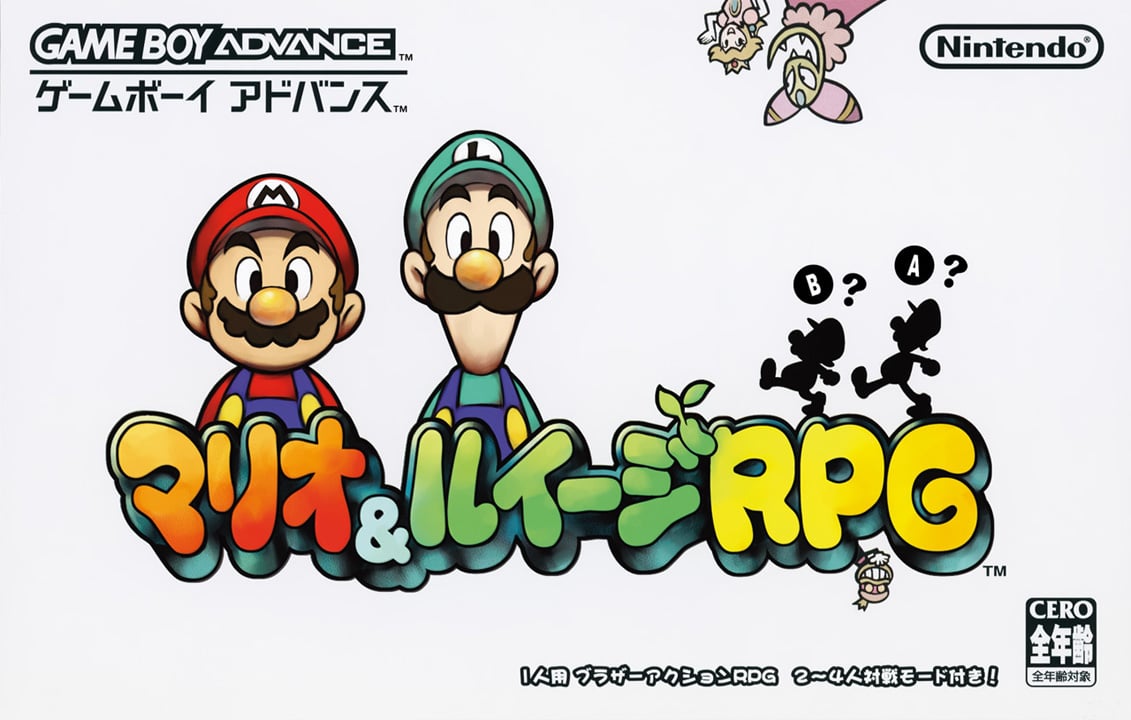
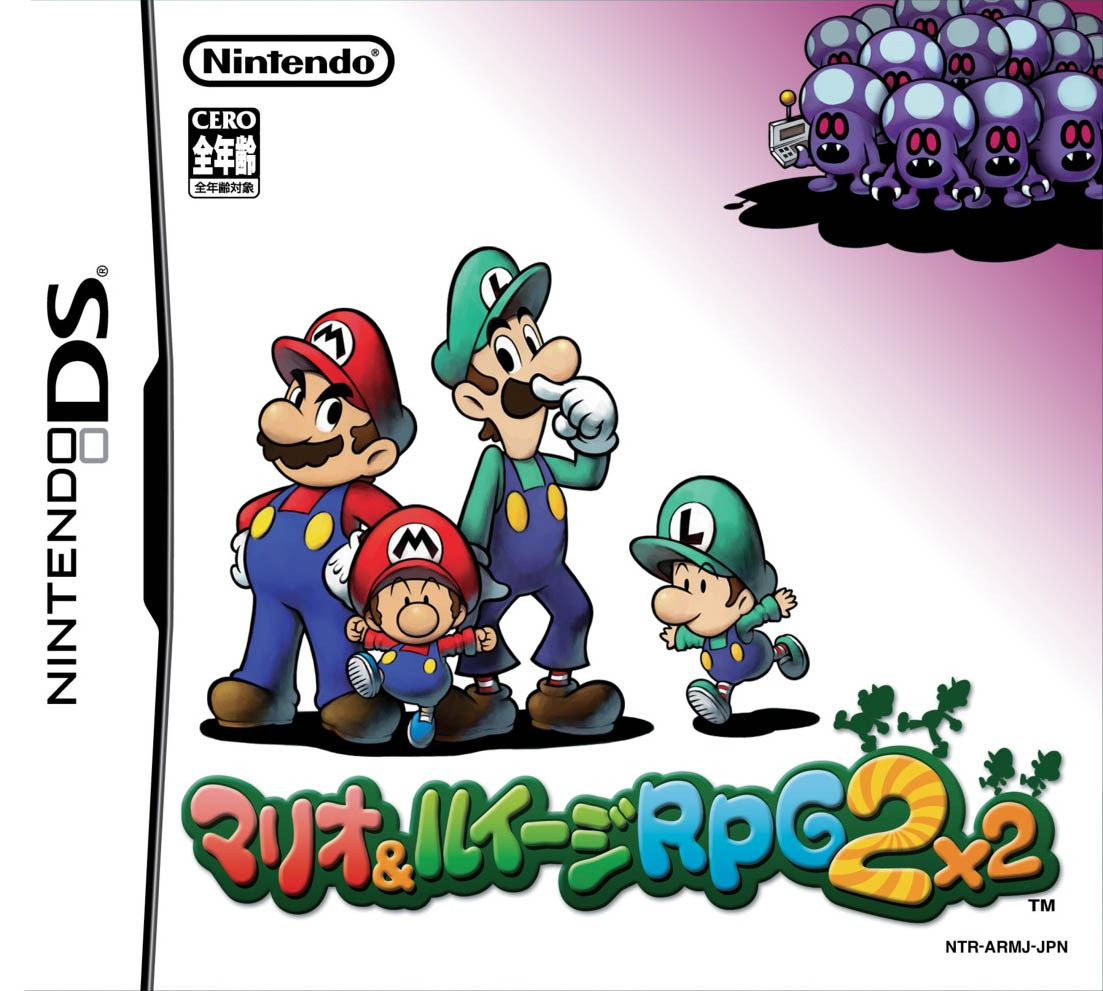
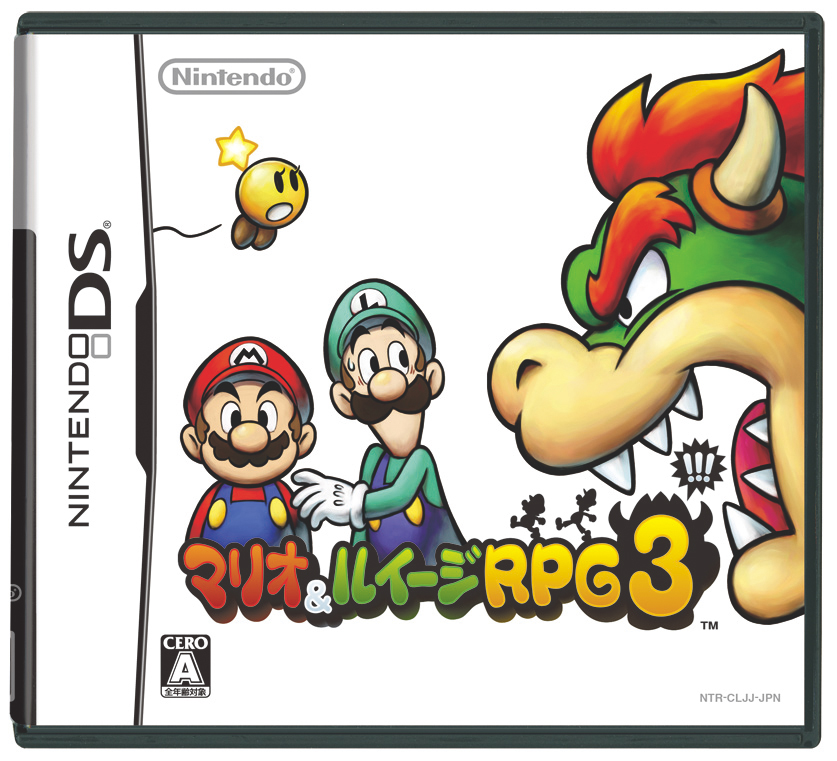
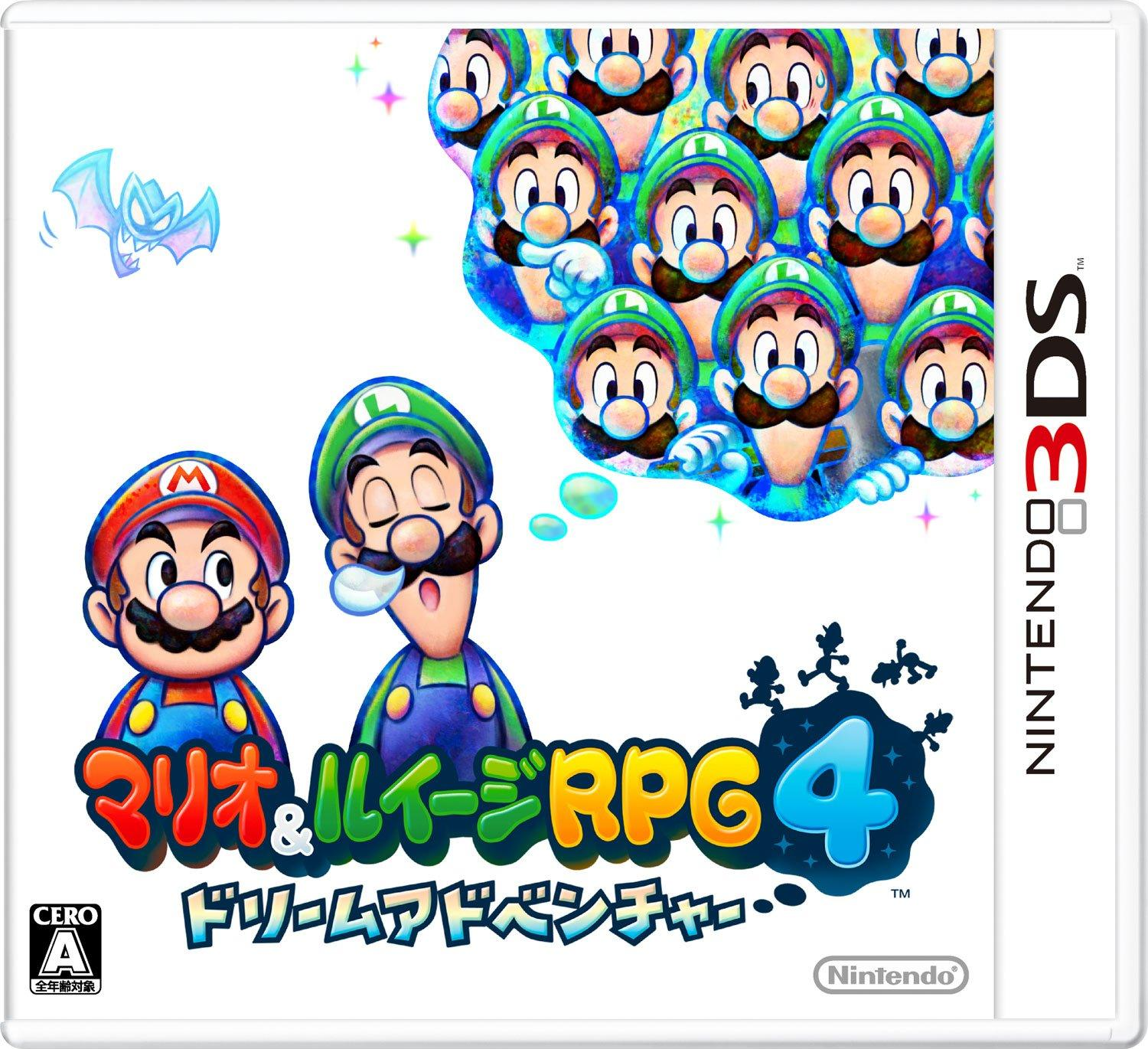
- The Mario & Luigi series always had minimalistic◊ cover◊ arts◊ in Japanese◊. The first two games' overseas releases were much more elaborate, but starting from the third game, the Japanese cover art was used everywhere.
- Saints Row: The Third's boxart consists of just the game's title and logo.
- The covers of most Ace Attorney games are very minimalistic, with the original games' GBA releases only featuring the game's logo on a single-color background. Come the games' DS re-releases, a more visual but still minimalistic approach was adopted as standard from then-on; portraits of four of the most important characters of that game, on a simple background. Only the first game's North American release got a more elaborate cover art featuring Phoenix, Maya, The Judge and Edgeworth (The European release instead went with another kind of minimalistic art: Phoenix on a white background with nothing else but the logo).
- Main series Pokémon games simply feature a single Pokemon on their cover, known in the fandom as the "Game Mascot":
- Pokémon Red and Blue had the fully evolved starters: Venusaur for Green and Leaf Green, Charizard for Red and Fire Red, Blastoise for Blue and Pikachu for Yellow.
- Pokémon Let's Go, Pikachu! and Let's Go, Eevee!, games based on Pokémon Yellow have, unsurprisingly, Pikachu for Let's Go Pikachu and Eevee for Let's Go Eevee.
- Later games feature Legendaries on their covers and they're also the focus of that particular version of the game.
- The only spin-off title to also have a "game mascot" is Pokémon XD, who had Shadow Lugia on its cover.
- Pokémon Legends: Arceus averts this despite being a mainline title by having the game's protagonists and several Pokemon staring into the background where Mt.Coronet looms.
- Dead or Alive:
- The third game has a much more simple cover than its predecessors, just featuring Ayane brandishing a kunai on a black background.
- Compared to the previous versions of Dead or Alive 5, Last Round is a lot simpler; Kasumi and Phase-4's faces on a mostly dark background, with a few wisps of energy on Phase-4's side.
- The box of the console versions of Undertale (the original PC version is downloadable-only) show the game's logo against a black background with the city of New Home below.
- Super Mario Bros. 2 has only Mario running with a veggie in hand against a blue background. Super Mario Bros. 3 has Raccoon Mario flying with a yellow background behind him. Super Mario World shows Mario flying with Yoshi against a blue background. In all cases, the cover intends to illustrate directly the most innovative or standout feature in each installment, making this a Justified Trope. Later games would start incorporating more detailed backgrounds in their box art.
- Outlast:
- The cover for The first game had Chris Walker leering at you from the darkness in night vision.
- The cover for The second game focuses on Martha's pickaxe, also in night vision.
- The cover for The first game had
- Japanese cover of the original Shadow Hearts is just the game's logo, with Judgement Ring (an intricate magic seal) as background. The Ring is also placed off-center, leaving plenty of empty space. Covenant goes further and has a completely black cover with logo in center.



- Designing minimalistic posters for popular works has become somewhat popular in recent years, thanks to increased access to graphic design tools, such as Photoshop. For example, this tumblr page collects minimalist movie posters.
- Dream High School's cover is just a colorful circle around the text "Dream High School" with the author and his company listed below.
- The DVD covers of Aqua Teen Hunger Force's second, fourth, fifth, and sixth volumes.
- The re-releases of (and extra additions to) Futurama's collection of home media sets feature this, combined with Face on the Cover.
- Peter Saville again: The gravestone of Tony Wilson from Factory Records. Possibly beaten by the gravestone of artist Patrick Caulfield.
- The infamous Is God Dead? Time Magazine cover◊. Also, Newsweek's The Decline and Fall of Christian America issue.
- Esquire magazine's October 1966 issue cover, and The New Yorker's issue following 9/11◊; voted #8 and #6, respectively, in ASME's top 40 magazine covers.
- News magazine The Economist:
- It once ran an article about zero inflation. Apart from the small red-and-white logo the cover just had a big white 0% on a black background.
- this spoof would be possibly the best minimalistic cover ever if it were true.
- This ad.
- A lot of flags, especially old ones, are minimalist, usually having two to four colours arranged in rather standard shapes. Notable examples include France (blue, white and red tricolour), Japan (red circle on a white field), Austria (red field with a white stripe in the middle) and similar designs.
- The flag of Libya was entirely and monochromatically green from 1977 to 2011. The Onion made fun of this in their Our Dumb World book: "The flag of Libya represents green."
- The white flag of truce, the red flag of communists and socialists, and the black flag of anarchists.
- From 1996 to 1997, the Taliban government of Afghanistan used an all-white flag.
- Covering the Hutton Inquiry, The Independent had a blank front page above the fold with just "WHITEWASH?" (in red) and "THE HUTTON REPORT" (in black).
- One issue of Icon magazine was this.
- The 200th issue of Game Informer had eight different possible covers, which were all white with images from iconic games on them. Some were more minimalistic than others.
- Polish magazine Przekroj had a couple of issues with minimalist covers, but the most fitting have to be the 65th anniversary issue◊ as well as the issue following the plane crash that took out the president.
- A daily Polish newspaper Metro had one too.
- The French writer and humorist Alphonse Allais (1854-1905) held a couple of "art shows" at the Galerie Vivienne in 1883 and 1884 that visually showcased his literal brand of wit. Here is his 1883 masterpiece "First Communion of Anemic Young Girls in the Snow."◊
- Doctor Who Magazine Issue 423◊ (released after The Pandorica Opens was broadcast) bore a black background with only the logo and The Crack in Time; the cover also wrapped round onto the back.
- The Cleveland Browns football team logo.
- The Sports Illustrated cover featuring the Miracle on Ice celebration is the only one in the history of the magazine to have no other words besides the title Sports Illustrated on it.
- After they were revived from bankruptcy, graphic design industry journal Grafik has had covers that have a large central image, large masthead and small selection of article titles and that's it.
- A trend in DVD and Blu-ray cover art as of The New '10s seems to be of studios reissuing their family films with the cover art consisting only of the film's title and a close-up of the main character's head over a solid color background.
- 20th Century Fox started this trend with its reissues of some acquired DreamWorks Animation titles and Blue Sky Studios films, among others.
- Disney got the hint to re-release some of its animated films and Pixar titles in this way.
- Universal followed suit with the Laika films, the Don Bluth films that they released, and a few live-action films in their catalog (including some not aimed towards children). In addition, Universal reissued the entire DreamWorks Animation library with new artwork following the same basic pattern as Fox's covers, but with two-three characters featured, in June 2018.
- For Halloween 2018, Universal reissued some productions in their archive with a Halloween theme (such as Casper and Harry and the Hendersons) with glow-in-the-dark cover art that somewhat follows this form.
- Sony and Warner Bros. also got the hint to do so with their catalogs, though the latter only used it for digital releases until going all in with their "Back To School Collection" DVD series. (In Canada and some other countries, WB has done a similar gimmick for the "[character's name] And Friends" budget DVD series.)
- Paramount got in on it in late 2017, mostly reissuing family catalog titles with the characters over a white background with a certain background asset a solid color.
- Warner Bros and Universal have both put out slipcovers consisting of a solid color background, the movie title at the top, a key artifact from the movie in question in the center, and a quote from the movie at the bottom. Here is a list of movies that have been issued with such.
- The Muppet Show box sets: Season 1 has a closeup of Kermit's body, so all you see is green felt and the tips of his collar. (Some markets, including the UK had a more conventional group shot against the curtain; the UK reissue had a closeup of Kermit's face to match the later releases.) Season 2 has an extreme closeup of Miss Piggy's face; Season 3 has Fozzie's; and Season Four ... well, a mockup at the 2009 D23 Expo had Gonzo, but we're still waiting.
- Private Eye mocked the coverage of the birth of Prince George of Cambridge by filling their cover with a huge headline reading "WOMAN HAS BABY."
- Similar to Prince's soundtrack for Batman (1989), the song albums for Black Panther (2018) and Spider-Man: Into the Spider-Verse use this approach, with Black Panther simply showing T'Challa's claw necklace◊ and Spider-Verse showing the eyes of Miles' mask◊. There's not even any relevant text or logos aside from the Parental Advisory sticker on BP's cover.
- Universal, in time for Halloween 2020, reissued some of the horror films in their catalog, such as Get Out (2017) and Happy Death Day with covers consisting of the film's title and the focal character's face against a dark background.
- With some exceptions, the box art for American Girl dolls tends to lean more towards the minimal side, with a solid swatch of burgundy, purple or pink on the front, the American Girl logo, and the doll's name if not a cameo of the character in small type.
- After Everything Everywhere All at Once won the Best Picture Oscar, distributor A24 took out a full-page ad in the New York Times, consisting of a blank page with a googly eye in the center and, on the bottom, the text "Academy Award winner, Best Picture" alongside the company logo.


