In animated works, pictures by definition have to move, which means that the more detailed a given frame is, the more time and effort it takes to produce, and the more visible any mistakes made in color shading or lighting will be. As a result, even in the most well-crafted animated works, frames of actual animation footage may intentionally leave out subtle details to make the end result animate more smoothly.
On the other hand, covers and other static art don't have that problem. They are just one picture, so the production company can afford to invest more effort in them. Take the page picture, for example: The top part is a frame taken during the actual movie, and the bottom is the exact same scene redrawn for its inclusion in The Merch. Colors are brightened, textures are defined, surfaces are given depth, and extras are drawn in everywhere. Bonus points if the box cover is sparkly or "metallic" in some way so that it shimmers in the light.
Disney defined this style for their home video releases of the Disney Animated Canon to such an extent that similarly detailed covers for other traditionally animated movies not from Disney end up falling into the All Animation Is Disney trap as a result.
This can also apply to comics when comparing the interior pages to the cover: The interior pages require the artist(s) to distribute their efforts across multiple panels, whereas the cover art is created separately, so the cover artist(s) can invest a greater amount of effort and detail.
For manga, the poster-like artwork between the chapters proper are called Splash Pages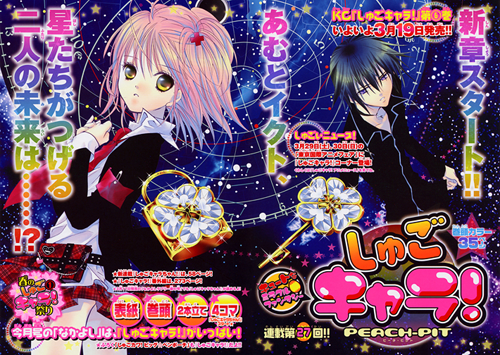 ◊, whereas the anime equivalent (just before and just after commercial breaks) are called Eye Catches, respectively. Bonus Material art is often more detailed as well. Most Mecha have 'mechanical designs' and 'animation models' where the latter is a simplified-for-animation version of the former.
This also applies to a lot of video game box art and advertising from the 1980s, especially before it became possible to capture high-quality gameplay images off a TV.
Remember Tropes Are Not Bad. This is a result of limitations with even the best animation.
Compare Action-Hogging Opening, Animation Bump, Limited Animation, Covers Always Lie.
Contrast Minimalistic Cover Art.
Examples
- See anything by Oh! Great (Air Gear, Tenjou Tenge, etc.)
- The DVD cover of animated film Space Thunder Kids contains rather high quality drawings of things that have nothing to do with the very sub-standard animation.
- Many comic book covers from the 1980s onward are basically ten years ahead of the interior in terms of color complexity.
- The covers of the Buffy the Vampire Slayer Season 8 comics are near-photorealistic renditions of the actors, while the actual comics are much less detailed and much more stylized. Though there are also variant covers drawn by the interior artist, which give a more realistic image of what's inside.
- The covers of newer Monica's Gang comics are more beautiful and well-detailed in terms of tracing and shading than anything you will find inside it.
- The covers of Mortadelo y Filemón are of special mention, since in at least a short story they become a plot point.
- The Warrior Cats comic covers, especially the Sasha and Scourge ones, tend to have much more fine details and shading (not to mention actual color) compared to the art inside.
- Basically all 2D-animated Disney works, including the page image provider of Beauty and the Beast, have this, but it especially applies with their low budget Direct to Video films.
- Alice in Wonderland did this with the opening credits, showing art that showed a lot of detail not apparent in the film proper. One included the overskirt on the queen's dress being trimmed with ermine (which is reflected in some of the merchandise and mascot costumes), when it looks like white piping in the movie.
- Happily Never After and Space Chimps have covers that are designed exactly as the films are. However, the sequels' covers have the exact same design style as the first film while the animation of the film itself is on par with Vídeo Brinquedo.
- Averting this was Sergio Pablos's intention with Klaus (2019). The animators used special technology to give the characters the same amount of shading and texturing you would see in concept or promotional art.
- The Autobots has posters that, for a Chinese knockoff of Cars, have genuinely impressive amounts of detail and look like actual Pixar movie posters. The film itself is not of the same quality, looking more like something Vídeo Brinquedo would produce.
- The Disney Princess merchandise combines this with outright Costume Porn.
- In general, a lot of old video game covers using original artwork succumb to this, as the games were incapable of such visuals. A few (notably early Nintendo Entertainment System games) did use art which closely imitated the games' graphics, or even use images taken directly from the game itself, but most chose this approach instead. It wouldn't be until the seventh generation of consoles that they started truly looking like the box art if they were using a realistic art style.
- The Mega Man box art for the NES and the cover of the PC version of The Secret of Monkey Island, both of which feature far more advanced graphics than the actual games do. Interestingly, as both series developed and graphics improved, Mega Man was made to look more like the in-game graphics and the Monkey Island characters were made to look more like the cover art.
- Noted regarding print comic-books In-Universe in this installment of
 Sequential Art. Although this may be more Covers Always Lie. The collected edition of the earlier strips could also be an example of this, due to the Art Evolution between the original strips and the more recent cover image.
- The 2003 Strawberry Shortcake series.
- Recess has this on some of the covers of their videos and DVDs.
- The 1994 VHS cases of Doug and Rugrats.
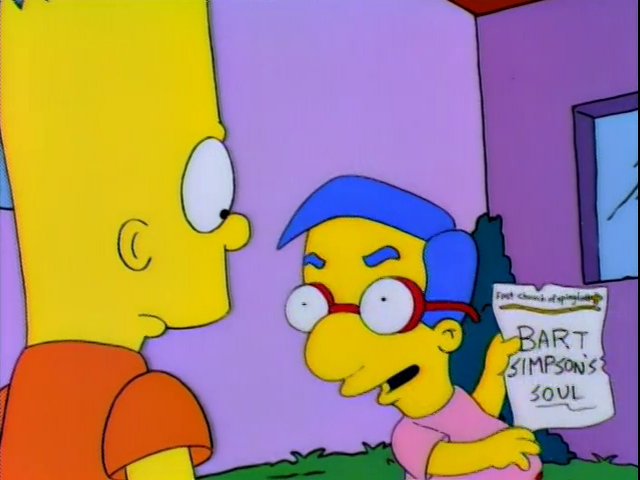
- This◊ is promotional art for an episode of The Simpsons titled "Bart Sells His Soul", and this◊ is what the episode actually looks like.
- Promotional art for Ben 10 has some of this, most notably on toy packaging and other merchandise, like puzzles and books. The aliens on the promotional art have more shading and realistic detailing compared to the actual series.
- Promotional art for My Little Pony: Pony Life invariably has additional shading not seen in the series itself and subtly tweaks the colors of the characters to be less intensely saturated.