
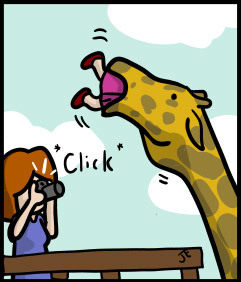
Nigel: Yeah. Reckon somebody oughta help the poor guy.
[all the pelicans murmur and nod, but none actually go to help]
Nigel: ...well, don't everybody fly off at once.
Somebody is begging for help — but no help is forthcoming. As far as bystanders are concerned, it's somebody else's problem: either a hero will swoop in and save the day, or a different bystander, one who is far more qualified, will step up and do the job.
It can be one of the reasons why the heroes are the only ones dealing with the matter, even if they don't have the adequate resources for it. It can also explain why they often grow to think that they must personally deal with everything. This can become a self-reinforcing pattern, as the presence of heroes leads average citizens to wait for them to solve problems.
In some cases, this may actually be the sensible solution if the bystander would do more harm than good trying to directly intervene. If Bob's house catches fire, Alice might call 911 and get the fire department but she won't go in to try and fight the fire or save anyone herself, since she'd probably just get in the way. The firefighters have the equipment and training to deal with the situation better than Alice ever could. They would consider any "help" she provided to be Unwanted Assistance and might just make things worse if she messes up somehow.
Compare Apathetic Citizens, Lethal Negligence and Callousness Towards Emergency. May overlap with Unusually Uninteresting Sight. When authorities are cursed with this, see Adults Are Useless, There Are No Therapists, and Police Are Useless. See also All-Powerful Bystander and Social Media Before Reason. Contrast Samaritan Syndrome, wherein people in authority aren't cursed with this and it drives them nuts, and Who Will Bell the Cat?, where they are deeply concerned until the onus is put on them. If someone with this view is pushing it onto others, it becomes Not Your Problem as well. If they get called out for this or are punished for this, then it's Accomplice by Inaction. If someone doesn't help out of spite, that's Refuse to Rescue the Disliked. If a hero who could easily solve the problem doesn't get involved for some reason, see Superman Stays Out of Gotham.
Sometimes this is used to demonstrate anviliciously that Humans Are Bastards. It can be Truth in Television, as shown in social psychology . Ironically, the famous case of the murder of Kitty Genovese that's still cited as the definitive example and that inspired research into the phenomenon didn't actually involve the trope; the story about dozens of people just watching her being murdered on a public street (in broad daylight, yet) is based on a newspaper article that was mostly false.note
Since the turn of the 21st Century, increased scrutiny has been given to the Bystander Effect by psychologists and it's increasingly viewed with scepticism. While the small-scale lab experiments conducted in the 20th Century did show a hesitancy for people to intervene when they were in groups, this was something that only happened when the subjects knew they were in a test and therefore that the "emergency" wasn't real. In actual emergency situations, people showed far less hesitancy to act when in groups. And when they did hesitate it tended to be for reasons like fear of getting hurt (as if someone's already in danger then it would also logically also be dangerous for a random person who lacks proper training or equipment to get involved). However, that research has yet to percolate into fiction so it's likely to be a long time before Bystander Syndrome becomes a Dead Horse Trope.
Contrast Badass Bystander, who breaks with this trope.
Examples:
- Anime & Manga
- Comic Books
- Fan Works
- Films — Live Action
- Literature
- Live-Action TV
- Video Games
- Western Animation
- There's one Mister Boffo comic where all of the passengers one one side of an airplane are panicking. The passengers on the other side of the plane sit quietly and confident, because, as one of them brags, "We've still got our wing!"
- The father in "Cinderella" does nothing to stand up for his daughter's abuse, nor does he seem to notice the memory of his late initial wife.
- In "Morozko", the old man does nothing to defend his daughter from his wife's cruel mistreatment, and when the old woman demands he abandons his daughter in the woods to die, he goes along with it, even if reluctantly.
- The groom of the princess in "The Six Swans"/The Twelve Brothers both gives into his mother's decision to burn her at the stake and does nothing at all to intervene in the situation. Same applies to the original siblings' mother that doesn't bother to directly oppose her husband's decision to execute his 12 sons.
- In the original "The Wolf and the Seven Young Kids" tale, the wolf goes to a miller in order to paint his hands and feet white to fool the young goats. The miller is argued to be in a position to outright refuse to give service, only he gives in to the wolf's threats of eating him with the quote "Yes indeed, that's the way people are".
- Best Friend: A sadly justified example. Arthur cries out for Cami as the crazy addict forcefully peels off the Best Friend device from his temple. Because she, and the other "best friends", are only virtual and are incapable of physical contact, they can only stand by and watch with hollow smiles on their faces.
- A very sad (and realistic) variant occurs in Encanto: when Alma harshly accuses Mirabel of causing the miracle to be ruined, Mirabel's older sisters Luisa and Isabela just stand cowed and silent while their grandmother rips into the young girl. This is behavior that can be expected from someone who's been the victim of abuse and/or dysfunction: being willing to stand by and let someone else, who was trying to help, take the brunt of the aggressor's anger, because otherwise it gets turned on you.
- Finding Nemo: Marlin and Dory find the ocean has as many helpful neighbors as it does folks who don't care about their quest and want nothing to do with it. The pelicans in the page quote are quite happy to gossip about others but only Nigel bothers to help their choking peer.
- In The Simpsons Movie when Homer and Family escapes Springfield via Sandbox, Wiggum says that they are China's problem now.
- In "Iron Man" by Black Sabbath this is implied to be the protagonist's Start of Darkness:
We'll just pass him there / Why should we even care?
- The Blue Öyster Cult song Screams In The Night was written by keyboards player Allen Lanier. On perhaps his third night in New York, a woman was stabbed to death in the street beneath his apartment window. Lanier was struck by how many people just watched and did nothing - or seemed to. This may well have been the notorious Genovese murder which helped to define "bystander syndrome".note
- The Clash's "Somebody Got Murdered" from Sandinista! is also about a murder nobody pays attention to.
- Daniel Amos:
- "My Room", from ¡Alarma!. The narrator knows that the outside world is on the path to destruction, so he deals with it by locking himself in his room. On the rare occasion that he feels really bad for everyone outside, he slips a note underneath his door.
- "Live and Let Live", from Vox Humana, also touches on this:
Oh no, I’ve got a broken heart
(“We’re so sorry but we gotta run”)
Oh no, I’m falling apart
While you keep on floating
Up, and up, and up, and up, and up - Five Iron Frenzy describes this in the song "Someone Else's Problem":
You want to close your eyes
you want to make believe
this tangled web you weave
is nowhere near the place you sleep
while other people’s lives are cheap
and all of this is someone else’s problem. - "All's Quiet on West 23rd" by the Jet Stream, a rather obscure '60s tune inspired by the Kitty Genovese case.
- Discussed in Martina McBride's "Independence Day," which calls out townsfolk for condemning an abusive husband's treatment of his wife, but doing nothing to help. And when "time ran out," the wife decides the only way to end the abuse for good is to burn down the family home with her and her abuser inside, leaving her children orphans.
Well, word gets around in a small, small town
They said he was a dangerous man
But mama was proud and she stood her ground
She knew she was on the losin' end
Some folks whispered, some folks talked
But everybody looked the other way
And when time ran out there was no one about
On Independence Day - The Oingo Boingo song "Nothing Bad Ever Happens to Me" is all about the singer describing terrible things and expressing how he fails to see why he should be concerned if none of these mishaps or disasters affect him.
A man broke into my neighborhood
He threatened the family with a loaded gun
He tied them all up and beat 'em real good
He took everything and he got away clean
And I can't believe that anyone would
Wanna do such a terrible thing
But why should I care? - Phil Ochs's song "Outside of a Small Circle of Friends" deals with the political ramifications of this trope.
- The Protomen's first album is a deconstruction of Holding Out for a Hero, with this as an accompanying theme. In the first song, Protoman is built to liberate an oppressed city from Dr. Wily and his robot army, but after a protracted battle through the streets, he's killed by Wily's robots while a crowd of citizens look on, none of them willing to risk themselves to save "their hero."
- "Molchi" by the Russian band Kis-Kis is about apathy towards domestic violence and other terrible things.
Молчи, когда бухой сосед на свою тёлку кричит*
Когда в подъезде снова кто-то мрачно торчит*
Когда в квартиру напротив приезжают врачи*
Эта песня звучит, моя песня звучит*
- At the end of the music video for Bubble Butt, the Giant Woman who started the dance party uses one of the tubes she can produce from her mouth to grab one of the dancers (portrayed by Krystal Ellsworth), yank her off the dance floor, and swallow her alive. This happens in plain view of the other women, but despite the her clear struggling and obvious distress, all the other women just continue dancing as if nothing is wrong.
- Earlier in the video, a woman dancing from aerial silks explodes butt-first into confetti that rains down on the dancers. None of them seem to be at all unnerved about her demise and are more than happy to dance in her glittery remains.
- Maurice Ogden's "The Hangman" is a poem about a hangman who comes to town to hang the one who "serves him the most faithfully", and proceeds to execute the town's citizens one by one, with everyone too afraid to object out of fear that they will be next. It doesn't end until the town is empty and there is no one left except the Hangman and the narrator, who is called out for his cowardice and his willingness to let others die to save himself, thus 'serving' the Hangman best of all. The narrator is then hanged himself, and by then there is no one left who will defend him.
- On Sesame Street, this happens during the song "Me Lost Me Cookie at the Disco". After Cookie Monster sings about his lost cookie and starts looking for it, he desperately cries out for help to find it, but everyone in the room just ignores him and keeps dancing.
- Dawn of a New Age: Oldport Blues:
- Simon struggles with this mentality, being an anti-social person who'd rather leave others to deal with their own problems. When he realises that his teacher is a government agent charged with detaining superpowered people, he initially tries to distance himself from the problem, then berates himself for doing nothing whilst the other kids could be put in the danger. Ultimately he subverts the trope by warning the others of Travers' presence.
- Jessica, the resident Jerkass, can't be trusted to help out in a situation even when she's expected to. When Zia gets involved with a fight and looks to Jessica for help, she ignores Zia and scurries away.
- Weaponized in Demon: The Descent, with the "Bystander Effect" Embed, which specifically prevents others from interfering.
- Exalted:
- The design philosophy of high level Stealth charms. Won't it be easier if people (supernaturally) ignore you doing your business of killing someone?
- The "Shards of the Exalted Dream" supplement adds the Sidereal Firearms charm "Wearing Red to a Wedding". When in use, this power prevents observers from noticing anything wrong with the user being covered in blood, injured, or otherwise showing signs of having just been involved in violence. They can see these things just fine, but it never crosses their mind that they're something to be concerned about.
- A major problem in Legend of the Five Rings. The general reaction of most of Rokugan to the Shadowlands is to stick their heads in the ground and pretend that they'll go away. Outside the Crab Clan (the people whose job it is to keep them out of Rokugan), it's considered dishonorable to even mention them when it's not absolutely necessary.
- A spell in Pathfinder called Aura of the Unremarkable can invoke an extra-strength version of this. Creatures affected by the spell have their minds manipulated to regard anything they witness as entirely innocuous. As a specific example, it describes someone aiming a crossbow at the queen from a balcony as a thing that affected onlookers would regard as "normal and unworthy of concern".
- In Universal Studios' Horror Make-Up Show, during the Overly Long Gag of one of the hosts' "death", they lament how no one in the audience seems to care about them dying a horrible death.
- This is Izuru Kamukura's problem in Danganronpa. He can do almost anything... but the process that made him a Master of All made him an Empty Shell who didn't care about doing anything. So he could easily foil the Big Bad and prevent all the subsequent tragedies, but he chooses not to go through with it (and in fact stops Nagito Komaeda from doing anything about it) because his only motivation is seeing if the despair caused by the villain would be of interest to him (though he doesn't actually help because he also wants to see if hope would be even more interesting).
- Fate/hollow ataraxia: Some characters tell a Ghost Story about a little girl who was being abused. She knocked on her apartment neighbor's door begging for help, but the neighbor ignored her even though she knew the girl was being abused. Eventually, the little girl got killed, and haunts the neighbor as a ghost out for revenge. The people listening to the story freak out before the ending can be told. In Fate/strange Fake, it turns out this story actually happened, as one of the protagonists, Ayaka Sajyou, was the neighbor. She regrets not doing anything to help the girl and wishes to atone, and lives in constant fear of the ghost, though it is ambiguous if the ghost really exists or is a figment of her imagination.
- This is Nicole's attitude to the cases of disappearances and kidnapping going on at her college. Yes, some girls are disappearing for a few days before popping up again, but she just doesn't care about it. Until the kidnapper tells her that she's next.
- Dreamscape: Vampire Lord's flashback in "Confrnoting the Dark" reveals his empire felt this way about a Fog of Doom affacting the Underworld...until it started affecting the vampires directly, but it was too late to do anything about it by that point.
- RWBY: In Volume 1, Teams RWBY and JNPR witness Velvet, a rabbit Faunus, being harassed by Cardin Winchester. Despite being disgusted by Cardin's behavior and sympathetic to Velvet's plight, not one of them actually do anything to help her. Volume 5 has a Call-Back to this when Ilia, Blake's Evil Former Friend, states her reasons why she believes the White Fang's violent acts of terrorism against humanity are justified and necessary; humans either actively hate Faunus or stand back and let the hate happen. This trope is reconstructed when Blake later turns it around by pointing out that the Faunus are just as guilty of enabling the cycle of hatred- the residents of Menagerie allowed the White Fang to become increasingly radicalized to the point where they attacked Blake's parents for not wanting to get their people killed for the sake of spiting humans. Blake is then able to spin this into a Rousing Speech encouraging the Menagerians to drop their neutrality and prevent the White Fang from destroying Haven Academy.
- Happens a few times over the course of 8-Bit Theater to various characters. One notable example is when Thief was being brutally mauled by Berserker just out of panel while the Light Warriors did nothing to help him because they were too busy watching the ordeal, listening to his cries for help and debating the merits of helping him. These are the good guys.note
- Clockwork protagonist Cog Kleinschmidt is very attached to this mentality. Despite increasingly tense circumstances between his country and the other main world power (up to and including repeated terrorist attacks in his home city), Cog does his best to ignore the problems in the world outside his door, unwilling to consider anything that might threaten his peaceful life. Instead, he convinces himself that those issues are way over his head and "nothing to do with me".
- Domain Tnemrot: Morris assaults an eight-year-old girl in the middle of a crowded ballroom. No one notices. Then Angel slams his head into a table hard enough to break his nose. Nobody notices that, either.
- In Drow Tales, a Sullisin'rune spy is stabbed by a Nidraa'chal agent and left to die in the street. There are plenty of bystanders, but not one of them comes to her aid. Eventually, two thieves attempt to loot her corpse. Word of God says that in the past, Chelians would have given her aid expecting a reward since she is clearly wealthy, but the already cutthroat city has been traumatized by a Mass Hypnosis event.
- Erika and the Princes in Distress : This is common among the citizens of the Kingdom of Brutes, who firmly believe that everyone must strive for themselves without outside assistance.
- Early in the comic, Queen Lagertha refuses to help out a woman who keeps getting her goods stolen, and berates her for not having the dignity to properly defend herself.
- Upon witnessing a young server getting assaulted by a buff, muscular woman, Pita asks Erika to help, but Erika declines on the grounds that it is not her problem and that he needs to get out of it by himself. She only gets involved after Pita stubbornly decides to help out anyway and gets severely beaten up as a result.
- Downplayed with Rose and Jake from Homestuck, who do this when Terezi is receiving an absolutely merciless and brutal beating from Gamzee. Rose initially does not interfere because, since the trolls in question were in a blackrom relationship, she's not sure if this is just some kind of highly-violent-but-normal kismesis courting ritual and is worried about interrupting it if that's the case, though she seems skeptical of this and eventually intervenes when it goes too far. Jake is the worse offender here, since he wakes up to see this beating happening right in front of him and watches without saying anything, apparently assuming that, because Terezi is wearing a scarf over her eyes, she's some kind of "masked bandit" who wronged Gamzee, and eventually only meekly asks Gamzee to stop without making any kind of move to actually help.
- This happens pretty often in Schlock Mercenary, since the main characters are generally only interested in 1: survival and 2: getting paid. Which has now been codified with a Challenge Coin available to fans of the comic, with a Polish idiom: "nie moj cyrk, nie moje małpy"note
- In Sluggy Freelance, Kent doesn't believe in vampires, so this leads him to believe his Vampire Hunter uncle Arminius is just killing people. (As a matter of fact, the way Arminius acts, he could well do that accidentally; he's only competent and well-adjusted as long as he's actually facing vampires.) Having minimal intelligence and little regard for anyone besides himself, he's not bothered about this as long as he doesn't have to be involved.
- A prevalent theme throughout Weak Hero is the reluctance of bystanders to get involved in any of the conflicts, too scared of being hurt themselves. This is a particularly sore point for Gray, whose best friend was hospitalised due to extensive bullying that their schoolmates turned a blind eye to. Eugene, who suffered at the hands of bullies before, gradually gains the courage to intervene even when he has no hopes of winning, which is one of the main reasons Gray accepts him as a friend.
- Zebra Girl: This is how Sam goes drinking in bars and nobody even notices he has white fur and rabbit ears.
Kent (cheerfully, as Arminius chases after two women who are actually just Goths): "Goodbye crazy mass-murdering uncle."
- As time has gone on in The Inexplicable Adventures of Bob!, it's becoming apparent that it isn't so much an active Weirdness Censor affecting the rest of Generictown as it is this trope. As in, "What, a flying saucer crashed into Smithson's house again? Sheesh, what's with that guy?"
- The attitude of the general population towards demons in Demonic Symphony, and oh boy does it backfire.
- Fine Structure weaponizes this with a weapon that causes a person to be ignored by anyone around them. You can scream and wave and punch people and people will care so little that they won't notice any of it. Or you. Ever again.
- SCP Foundation:
- There's an knife that lets people get away with murder by doing this, implied to be the murder weapon that killed Kitty Genovese. What's really bad is that knife's "bystander effects" extend to the person who is being attacked. That is, the person being attacked will be too listless and apathetic to even attempt to defend themselves or escape.
- There's a hat that functions as an SEP field — the effects of which are permanent if you wear it too much.
- There's an knife that lets people get away with murder by doing this, implied to be the murder weapon that killed Kitty Genovese
- SF Debris has repeatedly slammed various Star Trek episodes from TNG onward for using the Prime Directive as an excuse to pull this when entire civilizations were about to be wiped out.
- In this story from Not Always Right, a grocery store meat-slicer collapses from a heart attack. It's five minutes before the manager finds him, calls emergency services, and starts trying to resuscitate... but in those five minutes, three people walked right past him, and a fourth complained about the fat guy dying on the floor not getting her the ham she wanted.
- In Atop the Fourth Wall, in order to avoid the AI Is A Crap Shoot trope, Linkara installed a subroutine on Nimue which acknowledges that in the event Humans Are Bastards is taken too far, while she does name what she could do. She implies that the work in this Cyber Revolution would result in many unnecessary deaths and wear her down. Or in Linkara's words "Screw them it's not my problem."
- Discussed in BuzzFeed Unsolved, in the episode "The Strange Killing of Ken Rex McElroy," discussing the real case, where McElroy was shot in the street of his hometown with sixty witnesses present... and every single one of them told investigators they "didn't see" who shot him. However, as Ryan points out, it wasn't so much apathy as it was that McElroy was such a monster that pretty much everyone in town wanted him dead; while only one person pulled the trigger, everyone else was making a conscious choice to assist the killer by inaction. Not only did they all collectively refuse to rat out the murderer, no one even bothered to call an ambulance until McElroy was already dead. Both Ryan and Shane agree that they're actually okay with letting this mystery remain unsolved, and completely understand why no one cared to interfere.
