

Many 19th century and early 20th century science fiction and Planetary Romance stories used to give little consideration as to the technicalities of space travel. Thus, designs of the era usually converged into an Simple, yet Awesome Retro Rocket (often referred to as a “rocketship”): a cigar-shaped needle with several large fins on the base, either brightly coloured or chromed to make Shiny-Looking Spaceships.
As time passed, it became painfully apparent that the space program is unlikely to be significantly influenced by aesthetic sensibility. The two primary reasons for this are conservation of launch mass preventing spacecraft from bearing any components that serve form over function, and the fact that once you break out of atmosphere, just about any shape would do as long as thrusters are aligned correctly (naturally, a Space Plane would still require an aerodynamic shape).
Thus, as understanding of what it actually takes to get into space became more commonplace, the rocket ship gradually became a Discredited Trope due to Zeerust and is now usually found solely in parodies or homages to classic sci-fi.note
Its place was taken by the Standard Human Spaceship, featuring an aesthetic derived from linear extrapolation of today's space construction and design. As such, it is primarily driven by implied constraints of thrust, mass and budget (even though the very ability to construct and propel massive ships would imply that these constraints no longer apply as severely).
The guidelines in use by countless engineers in multiple fictional continuities seem to roughly converge on the following:
- Human spaceships should be grey. While some important parts may be coloured, the majority of the spaceship should be the colour of unpainted metal (Truth in Television, as a coat of paint is surprisingly heavy: a Boeing 747 takes about half a tonne). In saturated anime palettes, said color may be rendered as blue or green. In American works, military ships may also be painted olive-drab in utter defiance of common sense. More post-modern, Cyberpunk-influenced works can cover them in gratuitous, dazzling and obtrusive advertising and massive corporate logos instead; a Space Station is particularly prone to getting this "truck stop in space" visual treatment.
- While not required, visibly being constructed from riveted metal plates is encouraged, as are Borg cube-like details called greebles or nurnies.
 Bonus points for including actual space station equipment such as airlocks, solar batteries, and external manipulators. Note that fictional vessels tend to use enormous amounts of energy yet typically lack thermal radiators to shed waste heat (no air-cooling in space). Although that could explain all the so-called wings...
- Since Our Weapons Will Be Boxy in the Future, larger spaceships must be angular too; the standard human spaceship will be mostly rectangular with engines on one end and weapons on the other.
Space Fighters are a notable exception: they will frequently be built around a cockpit and wings to look like conventional airplanes, even if they're not actually a Space Plane and are not expected to descend into planetary atmospheres. (Not that all airplanes need wings, either.) Granted, wings are also often used as hardpoints to mount extra weapons and to store extra electronic equipment or fuel inside them, although housing those on or in the main hull makes more sense. note
This trope is also likely influenced by Real Life designs for military vehicles. From the turn of the 20th century, such designs have gradually evolved to be sleek and angular, replacing the multiple masts and rigging of earler warships with consolidated superstructures, the replacement of the numerous external guns with internally stored missiles, and the increased emphasis on stealth. Aircraft and armored land vehicles have seen similar design evolutions, and this and other modern-day cues often reflects in fictional designs, which is why many modern sci-fi works predict that Everything Is an iPod in the Future.
Since the Standard Sci Fi Setting usually postulates that Humans Are Average, The Aesthetics of Technology for other factions' ships usually puts humans square in the middle of the visual appeal spectrum. A Proud Warrior Race would probably have ships that are much more crude and sturdy with Spikes of Villainy as the only ornament, whereas a Higher-Tech Species is much more likely to use clean shapes and design indicating untold eons of refinement.
For typical classes of ships likely to be rendered this way, see Standard Sci-Fi Fleet. Contrast Standard Alien Spaceship.
Examples:
- Super Dimension Fortress Macross: While obvious with Zentran and Meltran warships, Earth ships eventually meet the standard. Even the iconic Macross was a rebuilt Meltran Gun Destroyer, of which thousands exist. After the war the Macross is upgraded to incorporate two ARMD-class Space Carriers (or retcon to always have them), and this modified version becomes the baseline for 12 additional Macross class warships (including the SDFN-1 Hayase and SDFN-4 Global). From that point forward hundreds of New Macross class warships become the government military standard, while the much smaller Macross Quarter class form the backbone of private military contractors.
- Robotech: Except for the Macross itself (which was, of course, alien in origin), most human vessels are pretty close to this. It should be noted that the Macross was in fact redesigned closer to those lines. Later subverted in subsequent Macross series with the later Macross-class ships which were more angular, and as well as by Robotech's SDF-3, which was originally designed/disguised with Zentraedi-like lines, but by the end of the Third Robotech War had the same Mospeada-style design.
- While all the different factions are usually human in Gundam, the ships used by most incarnations of The Federation tend to be more boxy and utilitarian looking, generally designed to resemble naval battleships and come in shades of grey, olive or white, while the the various space colony factions tend to use more exotic, organic looking designs.
- Blue Comet SPT Layzner is notable for the fact that the aliens have ships that look like this (though they may be descended from an ancient human civilization).
- In Legend of the Galactic Heroes the starships of the Free Planets Alliance are decidedly utilitarian and bulky in appearance, with their interiors reminiscent of modern-day aircraft carriers and battleships. This of course is in contrast to The Empire's decidedly sleeker, more streamlined vessels.
- Ginga Teikoku Kouboushi: A twitter post displays three concept sketches for Foundation battleships owned by the Trade Merchants. It’s thin, angular, and covered in details that might be sensors, shields, or weapons.
- A Crown of Stars: Avalon Empire's space-ships are pretty standard: they are shiny, grey and blocky. And some of them moon-sized.
- Interstellar zig-zags this trope.
- The main spaceship, Endurance, downplays it. It has somewhat blocky rectangular modules, but they are painted white (just like real space stations, to reflect excessive heat and sunlight) and arranged in a circular clock face-like pattern to enable Artificial Gravity.
- The Lander vehicle plays this trope straight, with a very blocky and angular silhouette (to create drag for slowing it down in an atmosphere), a generally utilitarian look, a very metallic texture, and painted a drab gray. Doesn’t mean it’s ugly, though.
- The Ranger Space Plane and its future successors seen near the ending averts this trope completely, with a very sleek aerodynamic wedge-like shape, reminiscent of a very flattened Space Shuttle, with a similar black-and white colour palette to boot. It still appears quite utilitarian, but in a very different way.
- Originally, the Discovery in 2001: A Space Odyssey was going to have large heat radiators to dissipate the heat from the nuclear reactor (and indeed did in the novelization). However, Stanley Kubric decided he didn't want to have to explain why a ship in space had what looked like wings. One of the very few instances in the movie they went with Rule of Cool over scientific accuracy. Meanwhile, the Leonov of 2010: The Year We Make Contact implies that Soviet engineers prefer to design blocky and dimly-lit flying bricks, unlike the brightly lit, sleek and shiny Discovery built by the Americans.
- Starship Troopers seems to follow this school of design, with big blocky ships which launch transports by extending them out the sides on davits and releasing them. Interestingly, several models were built in different sizes (smaller, less detailed ones for background shots), including two different designs (a transport and a carrier), in three different tones to show it was a fleet of different ships, rather than a bunch of identical ones.
- Star Wars:
- Spacecraft in the prequel trilogy appear more colorful and diverse before evolving into the gray, straight-lined, utilitarian war machines of the original trilogy. Naboo spacecraft in particular seem to eschew this trope entirely in favor of elegant Shiny-Looking Spaceships, whereas most ships that aren't explicitly from Naboo tend to have the blockier appearance expected of the series. Strangely, almost all the spacecraft in the SW universe, even thousands of years back, resemble in some way the ones from the original trilogy.
- In the original trilogy, the Empire universally adheres to the aforementioned "utilitarian war machine" aesthetic, while the Rebel Alliance ships are largely "flying tubes with guns" such as the CR90 Corvettenote and the Nebulon-B frigate. In Return of the Jedi, the aquatic Mon Calamari contribute appropriately aquatic-looking "warships" (really just transports and cruise liners with battleship guns bolted on) to the Rebellion, in contrast to the angular Imperial Star Destroyers and the rest of the Rebel fleet.
- The mile-long ISV Venture Star from Avatar is designed to be realistic from a presently envisaged engineering standpoint, as a pure starship, never intended to enter an atmosphere. It's optimized for minimal mass, and thus has a wiry hollow look focused around the pair of giant front-mounted antimatter annihilation engines, with huge radiator panels glowing visibly to dissipate the engines' heat produced, and massive spherical fuel tanks carrying fuel and reaction mass for the relativistic ship. The relatively tiny habitation and cargo modules, pair of Valkyrie shuttles and even tinier artificial-gravity crew compartments are all dragged along behind. The Valkyries themselves are SSTOs, designed for atmospheric flight, and are thus fairly sleek winged designs. The background material claims that the original non-unobtainium-powered ship was 3-4 times the size, which was necessary for its supercooled superconductors (unobtainium is a room temperature superconductor). These starships can accelerate to 70% of light speed, resulting in time dilation shortening the crew's perceived time to about 6-7 years, as opposed to over 14 for the rest of the universe.
- Deliberately averted, avoided, hell, run away from in Darren Aronofsky's The Fountain, where the Astronaut's spaceship —carrying only him and the Tree of Life within it— is a huge transparent bubble that moves easily across space in its long, long journey from Earth to the star Xibalba. Word of God says that they chose this simple, but appealing design because not all spaceships have to look like “trucks in space.”
- The Sulaco in Aliens is extremely boxy looking except for the spiky bits at the front of the vessel. Heck, the Nostromo from Alien was the hard, industrial equivalent of this... By the time we meet it, it's had some cobbled repairs done on it and been through the mill. Still very Wayland Industries Standard Issue, though. Most ships and shuttles from the franchise are, at heart, this.
- The human warships◊ in the film version of Ender's Game definitely have this look. The Little Doctor, in particular, doesn't look completely finished.
- The ship that gives the film Event Horizon its name is this. It's based on a modular design with clear, designated sections that make it look quite elegant from a distance; it has interchangeable, standardised components that can be easily switched for ones on the smaller and much more cheaply constructed Lewis and Clark; its colour-scheme is all in greys, some whites, a lot of bright lights (when they actually work) and stainless steel... it meets this trope to a tee. Even with its pseudo-Gothic touches like the "vault" ceilings and batch-produced Romanesque support pillars (stranger things have been done to lines of trains). Then... you get to the bridge, engine room and engine core and it starts to hit Meat Moss, Bizarrchitecture, Spikes of Villainy, Dark Is Evil and other, definitive Eldritch Starship tropes with a vengeance. Which is quite a feat.

- Lampshaded in Anne McCaffrey's Acorna Series, where the Linyaari are openly baffled as to why human spaceships only come in one color. Slightly subverted in that Linyaari ships are, to human eyes, painted in loud and garish colors.
- In David Weber's Honor Harrington series it's mentioned that all of the major powers use reactive pigments to give their ships a primary color to distinguish them in visual inspections, but it's also noted how easy it is to change the paint-scheme. As for the shapes, given the physics of the universe, they tend towards a generally cylindrical design, with all warships having “hammerheads” on both ends to allow room for chase armament (similar to those on old-fashioned sailing warships). Unfortunately, the creators of the comics and the mobile video game have opted to go for something more visually interesting and distinctive, so ships no longer have cylindrical shapes.
- Averted in David Drake's Reaches trilogy, where the main characters' ships have ceramic hulls to resist the corrosive atmosphere of their native Venus. Every other spacefaring culture uses metal hulls, and it's noted that when the stresses of Transit become too great, a ceramic ship falls apart all at once, with a total loss of life (one ship is seen to have come out of Transit looking like a cloud of gravel), while a metal ship's hull might hold together long enough for some of the crew to be rescued. Also, everybody's hulls tend to be rounded, usually more-or-less cigar-shaped, although they fly or land with the long axis parallel to the ground, unlike “rocketships.”
- In Charles Stross' Singularity Sky, most spacefaring civilizations use functional, cylindrical designs for their ships. The technologically backward New Republic wanted their flagship to look like a proper warship instead, and so gave it a more attractive shape. It promptly gets destroyed by more functional, if less stylish, enemy craft.
- The Ark Royal is noted repeatedly for its blocky, ugly appearance, presumably modern military starships are more streamlined or something. And there's a group dedicated to designing ships based on various sci-fi, most of which are just plain impractical.
- In The Nameless War, human ships are noted for their blocky appearance but given that they are neither designed for, nor capable of atmospheric flight, the additional difficulty of constructing rounded hull plates hardly seems worth the effort. Most human warships are equipped with 'wings' to provide additional radiating surfaces and mountings for maneuvering engines which gain from the additional leverage. The author has also produced a number of separate books detailing the design and service histories of ships within the setting.
- In The Expanse, large spaceships that are never intended to land are described as looking like "office buildings", since they don't have to worry about aerodynamics and inertia is the main source of artificial gravity.
- The Interdependency has ships designed as long needles with one or two spinning sections to provide rotational gravity. However, the rest of the ship isn't actually in zero-g, as push fields are employed to keep people secure against the "floor".
- Discussed in Aeon 14. 5th millennium Sol Space Federation ships, including the colony ship ISS Intrepid around which the first series revolves, actually avert this (even in military vessels), designed with aesthetics as a secondary concern to functionality but still considered. 9th millennium characters consider their own vessels ugly and utilitarian by comparison.
- Battlestar Galactica: Though the signature battlestars and most of the Refugee Fleet followed this aesthetic, a few like Cloud 9, the garden ships, the Zephyr (the ring-shaped ship with the rotating section) stood apart. Cylon ships also tended to be much more exotic, with surreal, biomechanical designs.
- Babylon 5:
- The primary Human warships seen fit squarely within this trope, with the minor exception of the Hyperion-class heavy cruisers, which resemble blue-and-white submarines with a starship drive mounted at the end of an exposed superstructure. However, those (as mentioned in the fluff) were designed by a different military contractor than the Novae and the Omegas.note Humorously lampshaded in “Legend of the Rangers” with the human design of the Valen looking like “a flying brick.” (No relation.) The later Valen class was made by the Minbari, further reinforcing the trope.
Ranger Dulann: If human military designers had their way, every color of the spectrum would be removed except for grey, green and black and we would all live in windowless boxes.
- Human civilian transports tend to either be large spheroid designs (allowing for a rotating section for the passengers) or spindly container ships, with a fair amount of modularity (which was an easy way for the designers to get in a wide variety of ship designs for the traffic around the station), or smaller blocky transports. Either way, expect gunmetal grey with patchwork paintjobs in various colors.
- The titular station also qualifies, with the animators coining the term "nurnies" given above for the various small features they added to the station's overall "spinning cylinder surrounded by a boxy superstructure" design. Notably; the station does have a prominent set of thermal radiator wings attached to the stationary superstructure (although how heat was transferred out to them was not explained).
- Averted with Crusade's Excalibur, although it must be said it was a joint human/Minbari project, which obviously has both design philosophies incorporated in it. You have the Minbari traditional triple-fin hull structure, but it's also dark grey similar to the Omega-class destroyers. For contrast, the same series also features the exclusively human designed Warlock destroyer, which is all matte black facets and aggressive angles.
- The primary Human warships seen fit squarely within this trope, with the minor exception of the Hyperion-class heavy cruisers, which resemble blue-and-white submarines with a starship drive mounted at the end of an exposed superstructure. However, those (as mentioned in the fluff) were designed by a different military contractor than the Novae and the Omegas.note Humorously lampshaded in “Legend of the Rangers” with the human design of the Valen
- Firefly mostly averts this trope, with the majority of ships seen having either a large cylindrical design or a smaller, more agile (but still not blocky) design, such as with Serenity herself. However, the ships do tend to have very metallic appearances, and several of the ships briefly shown do fit the trope better than the larger Alliance vesselsnote and Serenity.
- Red Dwarf:
- The eponymous ship is painted red, but that only serves to make it look more like a giant, flying brick. It was also stated at one point to be about 5 miles long and 3 miles wide — or 6 miles long, 4 miles wide and 3 miles high when reconstructed — and clearly had a roughly hexagonal cross-section. And apparently a crew of only 169 (or 1,169) — or possibly 11,169. It currently functions with a crew of four eclectic humanoids, a lackadaisical AI and a bunch of maintenance scutters.
- The Starbug shuttle averts this, with a much more streamlined design made almost entirely out of spheres, although it still feels very modular. The Blue Midget shuttle, on the other hand, seems like a compromise between the two designs, looking more like a flying brick with all the sharp edges sanded off and a pair of tank treads (or sometimes robotic legs) stuck on the bottom.
- Generally followed to a T in Space: 1999, with the show's signature Eagle Transporters being entirely utilitarian shuttles designed to function in the absence of an atmosphere, in lunar gravity. They were mostly grey, although some had orange details. The alien spaceships, on the other hand, were often brightly-coloured, in the style of contemporary sci-fi artists such as Chris Foss and Peter Elson.
- Stargate SG-1:
- The F-302◊ is essentially a forward-swept flying wing with jet and rocket engines. The X-303 class battlecruiser Prometheus◊ and the BC-304 class deep-space carriers◊ however, being built out of a naquadah/trinium alloy, fit this trope perfectly.
- Stargate Atlantis shows off several models of ships built by the Ancients (hominid Precursors who created modern humanity). Not including the City-Ship Atlantis itself, they're all pretty blocky: the Puddle Jumper is only cylindrical so it can fit through a stargate to travel between systems.
- Stargate Universe: The sublight evacuation ships◊ built by the Novus civilization (descended from alternate Destiny crew thrown back in time) also fit the trope. Destiny herself is very utilitarian and blockly too; having a blocky arrow-head shape with loads of greebles on it.
- The F-302
- Star Trek:
- Even from the first series, this show defies this trope. The original starship Enterprise was an unprecedented design when it first debuted, being neither a Retro Rocket, nor a true Flying Saucer, as most spaceships in fiction had been up until that point. The Enterprise DOES fit the first "guideline" of this trope, being made of grey metal. It also makes little sense from an engineering standpoint, but that is true of most spaceships in anything but diamond-hard sci-fi. Many (but not all) Starfleet ships involve a detachable flying saucer, connected to a larger non-saucer shaped hull, with large cylindrical propulsion nacelles. The saucers were there mostly because Roddenberry was a huge fan of Forbidden Planet.
- The Galaxy-class Enterprise-D in Star Trek: The Next Generation was as far from this trope as you can be: elegantly swept curved lines on the outside and luxurious fittings and furnishings on the inside. The outer hull is largely smooth and, despite presumably being unpainted metal, is even gleaming silvery-white rather than gunmetal grey, with a few brightly coloured highlights such as the warp coils, ramscoops, and deflector dish. Nothing about the ship suggests budgetary or physical constraints (even though, in a subversion, the sleek curves themselves are described in some works as providing greater efficiency through the constraints of warp field physics). If your human standard starship is a navy battleship IN SPACE!, the Enterprise-D looks more like a cruise liner.
- ST ships also tend to have smoother outlines in the later series. The Galaxy-class is the last class to have a highly distinct saucer and engineering section—later designs such as the Intrepid- (Voyager), Sovereign- (Enterprise-E) and Prometheus-classes have much more flowing lines where the join between the two sections is much less obvious, although most are still capable of separation, the Intrepid-class being the only proven exception.
- In the original series, the interior of the Enterprise inverts this trope when it comes to color. Though the walls were mostly gray, they were often lit with incredibly garish shades of green or purple! (Color TVs were a new and expensive thing back then, you see…)
- The USS Defiant and her sister ships from Star Trek: Deep Space Nine are significantly closer to this trope. There's two reasons for this: In-Universe, Defiant is the first purpose-built warship Starfleet has built in a long while (as opposed to a Jack of All Stats like the other series' lead starships), a heavy corvette designed for the sole purpose of attacking Borg ships, and is stripped down to a set of guns, an armored hull, and engines. Out-of-universe, the concept art wasn't originally for a Starfleet ship at all (the Defiant's original design became the Nova-class in Star Trek: Voyager), but rather concept art for the Maquis raider (flown by guerrillas revolting against the Federation and using any ship they could get).
- Many of Starfleet's smaller starships, at least from the movie era onward, combine this trope with Flying Saucer, with the ships having a variety of angular or boxy superstructure built around a saucer-shaped hull, in Starfleet's standard mix of greys and off-whites. In The Wrath of Khan, this began due to the necessity of designing the Reliant, a ship that could be identified at a glance as being from the same service as the Enterprise, but just as easily identified as being a different ship.
- Farscape plays around with this a bit.
- Crichton's module is actually a fairly practical lifting body design, which makes sense because it is a Space Plane designed to recover similarly to the Space Shuttle, and despite being vastly outclassed by Peacekeeper vessels in space, is actually superior when operating in an atmosphere.
- As Farscape One is the only human-built craft, the Sebacean Peacekeepers largely stand in instead, and often play with this. Everything is either black or very dark gray with red trim and highlights, and ships seldom have obvious means of eliminating waste heat. The black/dark gray/red color palette continues inside their ships as well, reflected not only in the interior decking and wall decorations, but the Peacekeeper flag. Which is everywhere. As for some craft-specific designs:
- Command Carriers are enormous tubes with engines on one end, and a large ring-shaped structure amidships mounting the craft's primary weapon batteries.
- Peacekeeper Prowlers have some elements in common with terrestrial fighters, built around a cockpit and with an aerodynamic forward hull, however the aft end differs significantly. There's no identifiable airfoils, and the "wings" are long, forward-facing pointed structures mounting the ship's weaponry. These even appear to be able to move, as well, suggesting the Prowler may be able to fire its weaponry off its centerline.
- Marauders are essentially a big box with three engines, which can rotate downward for landing
- Vigilantes consist of a small, oval-shaped structure at the stern with a couple boxes attached that house most everything on the ship. And a really big gun on the front taking up better than half its length.
- The USS Saratoga in Space: Above and Beyond (as well as her sister ships) is a big, square beast with a conning tower. Given that the series is about the US Marine aviators IN SPACE!, it's probably deliberately aping US Navy aircaft carriers.


- BattleTech's faster-than-light vessels follow this because they're physically built around their massive jump drive core, which is basically a giant "antenna" running from one end of the ship to the other and on regular "civilian" JumpShips indeed takes up over 90% of their mass. (The much rarer WarShips are built around special compact cores which take up a smaller fraction, allowing them to also have multi-G maneuvering drives and of course a lot more guns.) They never land; shuttling people, cargo, and invading forces to and from space is the job of DropShips that come in both spheroid and aerodyne flavors, each with its own benefits and drawbacks, and attach limpet-style to their carriers by means of special docking collars that both hold them in position and properly link them up with the jump drive system so they don't get left behind or mangled when the JumpShip takes off. Space Fighters also abound; these are more properly known as aerospace fighters because they're indeed meant to operate in both space and atmosphere (and would in fact be lost in deep space on their own due to their limited fuel reserves and poor long-term efficiency not giving them much of an operational range) and so have wings or at least some sort of halfway plausible aerodynamic outline. One model of DropShip in particular, the Leopard, was even called "the Brick" in the canon itself. Its slab-sided appearance, coupled with a small bridge, stubby wings and massive engines on what amounts to a nigh-rectangular chunk of steel means it falls squarely within this trope.
- d20 Future (Science Fiction expansion to d20 Modern) generally presents this as the "default" look for spaceships.
- Traveller:
- There is no standard for Traveller; it depends on function and aesthetic taste and there are myriads of possible ship designs (indeed some traveller fans mainly like designing ships). Ships made to actually land on and take off from a planet generally have a "needle/wedge" design which looks something like a space shuttle. However this requires sacrifice in payload and the heaviest ships are generally serviced in orbit.
- The Lightning-class ships a multipurpose merchant/scout/privateer built by the Terrans for viking like voyages into Vilani space is a handsome ship that looks like a long wedge with short stubby wings.
- One cool (but not unlikely in Real Life) gimmick on Traveller ships is a programmable surface that can be used to display a giant "screen-saver". These are available both inside and outside. Want your ship to have a different "paint job"? Just change the (enormous) image file. Another gimmick is the Shipboard Information System, which is sort of the ship's internet. This means that one can picture much of the dialogue of a given Traveller story taking place online from PCs and NPCs all over the ship, each talking into "thin air" in whatever room they happen to be, which can make for an interesting plot device and one not yet familiar to Space Opera.
- Warhammer 40,000:
- Subverted by the Imperium of Man: their smaller spacecraft may look utilitarian, but when it comes to their larger vessels, they discard any sense of practicality in exchange for being Baroque Gothic Cathedrals... IN SPAAAAAAAAAACE!!! Space Marine ships, on the other hand, fall somewhere in between. While they have elements of the regular Imperial design, they use more hard angles and less detailing. Also, while colour scheme varies by chapter, many of the promotional shots of the models are indeed rendered in mostly grey. The Imperium actually does have an in-universe standardization system (which happens to be the main Lost Technology of the setting). It's not an example of this trope, though (the STC land vehicles would be if they weren't land vehicles).
- The trope is inverted in that the ships of the Tau fit this trope. The Tau have "only just" started traveling between worlds, compared to other races, so their ships have that same early utilitarian feel that a lot of current space vehicles and those from 20 Minutes into the Future have. And due to unpopularity with the fans, the new Tau fleet follows a more graceful, anime-inspired design. The first Tau spaceship was a cruiser actually designed for cutscenes in the game Fire Warrior, and was extrapolated from the design of the Tau's then-only vehicle chassis, the Devilfish/Hammerhead. The 2nd-party modelers of Forge World then made a model of that for BFG, and followed up with full line of Tau ships based on that design. When Games Workshop finally released an official Tau fleet, gamers almost unanimously decided they preferred the Fire Warrior/Forge World fleet by a large margin.
- Played very straight in Firestorm Armada with the human faction the Terran Alliance, their ships are usually flat, and shaped in squares, and triangles, with most of their color being blue and grey. Really played doubly straight, since the other human faction, the Dindrenzi Federation, has ships that look a lot like the UNSC's from Halo.
- Hc Svnt Dracones: Humanity may be extinct, but MarsCo has been around since before the great war and their ships look like big grey hexagonal cylinders. Other Mega Corps have designs varying from IRPF's boxy armor with protruding weapons arrays, to Pulse's sharp blade-like edges, to the almost organic curves of Progenitus and ASR, and the actually organic monstrosities out of TTI's labs.
- The ships in Artemis: Spaceship Bridge Simulator, like those in the Star Trek series the game emulates in many ways, generally avert the boxy shape while playing the riveted look straight.
- Darkstar One
- EVE Online:
- Caldari ships are like this: Gunmetal gray, blinking signal lights, and angular shapes.
- Minmatar designs are even more utilitarian, containing only the bare minimum, many their smaller ships looking like they were welded together in a junkyard shop. Most hulls are painted in rust-red. Many Minmatar ships also have large 'sails' that look much like modern satellites' solar panels.
- Gallente ships however tend to have curvy organic-looking surfaces, are often asymmetrical, and even at times fall closer to Standard Alien Spaceship.
- Amarr ships are bright golden in colour and possibly most resemble the 'rocket ship' design in a few cases... on their front and upper sides. Their lower and aft sides often fall back to bare metal and exposed parts.
- Justified because each race's ships reflect their standardized personality.
Caldari: Corporate, efficient, with emphasis on shields and electronics. Designs keep out the unnecessary.
Amarr: 1st empire back into space. Large and powerful with ego to match. Gold and white to reflect their wealth and impress the natives.
Gallente: Freedom-loving, more artistic, thus more flowing and free designs in ships.
Minmatar: Freed slaves. Ships look like junk heaps because that's all they originally had to work with. - Incidentally this also plays in with how the ships are defended: the smooth and colorful Amarrian and Gallente ships are heavily armored, while the boxy and utilitarian Caldari and Minmatar ships are heavily shielded.
- Escape Velocity averts it by having ships with aerodynamic, rather anime-like shapes (in part due to the simple models). Later games (especially humans and Voinians in Override, Federation and Aurorans in Nova) conformed more and more closely to this. Hilariously, Voinian ships conforms closer to this than the human ships — the human ships tend to have more non-grey colours and smoother lines.
- Freespace does this with all Terran ships (and with the Colossus,◊ which was a combination Terran and Vasudan ship). For the Vasudan◊ and Shivan◊ ships, tendencies are to have more curved and smooth designs instead of blocky ones—the ships still tend to be paint free, but colored differently to give them a more alien look.
- In Halo, the UNSC ships are boxy in shape, in contrast to the curvy purple flowing aesthetics of the Covenant. Acts as a visual reference for both how far advanced the Covenant ships are compared to the clumsy human vessels, as well as their Scary Dogmatic Aliens status versus the more pragmatic human military.
- Homeworld: Every single Kushan craft with the exception of the Mothership and absolutely every single Taiidani ship, down to the grey-and-black paint job of the Taiidani High Guard. Less pronounced with Hiigaran vessels, but present for the Vaygr and Turanics. Utterly averted by the Progenitors, Bentusi and Kadeshi. Peter Elson of Terran Trade Authority fame is acknowledged as a major influence on the art design.
- Infinite Space: mostly averted, especially in Adis, where the ships are both extremely funky-looking and pink, but it does happen, primarily with Libertasian or Zenitonian designs. The Freedom and Nebula in particular are both grey, flying bricks.
- Mass Effect:
- The Normandy SR-1 and SR-2, the main ships in the series, are non-conventionally shaped, though vaguely reminiscent of rocket ship designs, and always brightly painted white. This is sort of justified, however, by the fact that visual recognition in space is almost impossible, so it doesn't really matter what color the ship is painted. The wings and sleekness are also justified by both Normandys being designed for atmospheric flight, with other human ships tending to look a lot less aerodynamic. Other ships featured in the series tend to follow the same philosophy, and the Destiny's Ascension is essentially a big flying cross◊ with an oval cut out of the middle.◊
- Turians have ship designs similar to humans, although they prefer more triangular/winged shapes (the shape of the Normandy is actually based on Turian design structures) and grey and orange-red to human white-and-blue. This might possibly be intentional to show that humans and turians are really very much alike. (Despite having started out with a rather violent war just a few decades ago, the two species seem to get along better than any others.)
- Other races' ships are shown to have their own standard shapes. Other Asari ships are shown to have the same Cross- or T-shape around an empty oval. The quarians, who claim to salvage any ship they come upon appear to have the exact same design (usually a ring, sphere or circle with extra bits trailing behind like straight lines) in the third game's cutscenes. The geth ships, for some reason, have an insectoid look, despite most geth platforms being humanoid in shape.
- Quarian vessels are mentioned as being a designed to resemble a stylised Mass Relay. Which is appropriate, considering that due to having lost their homeworld to the geth, the quarians have come to greatly rely on use of the Mass Relays to ensure their species survival, as their flotilla wanders throughout the galaxy.
- The Reapers themselves are massive ships which are almost uniformly of a cephalopod design, resembling squid or cuttlefish, and thus being very sleek and curved in their design. They're actually designed to resemble their creators, the Leviathans.
- The Normandy SR-1 and SR-2, the main ships in the series, are non-conventionally shaped, though vaguely reminiscent of rocket ship designs, and always brightly painted white. This is sort of justified, however, by the fact that visual recognition in space is almost impossible, so it doesn't really matter what color the ship is painted. The wings and sleekness are also justified by both Normandys being designed for atmospheric flight, with other human ships tending to look a lot less aerodynamic. Other ships featured in the series tend to follow the same philosophy, and the Destiny's Ascension is essentially a big flying cross
- Sins of a Solar Empire: Played straight with the TEC, who modified their ships from cargo and civilian vessels, but averted with the Advent(who are also humans, just psychic ones with a different culture). Advent ships are sleek, shiny, and definitely non-utilitarian in appearance.
- Terrans of Starcraft operate these kinds of spaceships and put very little effort, if any, into making them look pretty. This is in stark contrast to the whimsical Protoss designs which seem to feature no straight lines or right angles whatsoever, and to the Zerg Organic Technology.
- Sword of the Stars:
- Human ships are oblong and consists of blocks riveted to a central frame and are the most utilitarian-looking of all the species: The only off part is the very noticeable ring structure around the engines (it's their faster-than-light drive). Because of this engine, human ships also have poor turret coverage on the back and tend towards front-heavy ships with forward-and-side firing arcs. While paint schemes for different sides makes some of the colour variable, the default ship colour for humans tends towards the grey with some red and green mixed in (by contrast, Tarka's ships are mostly bright red and deep green, the Hivers use beige, the Liir use turquoise, the Zuul blood red and the Morrigi deep purple).
- Interestingly, the Zuul, while avoiding this trope, also avoid the Shiny-Looking Spaceships look. Their ships consist of haphazardly-welded parts of ships they find in floating battlefield graveyards (due to game engine limitations, all ships of the same class still look identical). They tend to put many turrets on their ships, but the haphazard designs with little or no structural thought behind them mean that they are, frequently Glass Cannons.
- In the Wing Commander games, the human ships have varied between the utilitarian, blocky gray designs of Wing Commander III and onwards, and more curvy designs of the earlier games. (Wing Commander III and IV used a primitive polygon Game Engine, as opposed to the first two installments' bitmap sprite graphics.) In all the games featuring the Kilrathi, most of the designs have a base tan color with various “warm” colors used for markings, but the manual notes that the color is the color of the metals used for their armor, and their designs almost universally are shaped to suggest bladed weapons or claws.
- X-Universe:
- The Argon and Terran ships all follow this. The Argon capital ships are flying gray boxes (albeit with very intricate, curved engine sections) with red stripes while their fighters are Star Wars-esque. The Terran capital ships are flying (blindly) white boxes with red stripes and blue windows while their fighters are futuristic Space Shuttles. In particular the Terran 'AGI Task Force', or ATF, seem to have taken this trope to heart with the Tyr Destroyer, and Odin Carrier, both gunmetal grey boxes with engines. Their capital ships also have distinctive command bridges and prow-like nose sections like on a modern battleship. However, the ATF ships are much more ornate than most Standard Human spaceships, as they all feature large, buttress-esque hull pieces and ornate engine sections, making them look vaguely like Gothic cathedrals.
- Played with in X: Rebirth; most combat and trading capital ships used in Albion follow the ISO standards for human spaceships, being gunmetal gray boxes. The Rahanas,◊ Sul, and Heavy Sul in particular take it to heart, being flying gray trapezoids with engines on one end and a hangar on the other. Omicron Lyrae ships on the other hand, have chrome hulls and very odd hull designs which mix circles and straight edges. And on the gripping hand, DeVries uses ships with that are either pieced together from a dozen other ships and/or rusting or relatively well-maintained Earth State equipment with ornate wings and nose sections, albeit still painted gunmetal gray.
- X-COM: UFO Defense: The enemy UFOs come with all sorts of amenities: automatic sliding doors, entertainment centers, cloning facilities, chairs with consoles, a bridge. With some tinkering, your engineers can build a gunship with space capability and elerium chambers. But everything gets squeezed into a single cargo hold. (Not even a chair!)
- X-COM Interceptor tends to avert this, with the human ships actually using functional, forward-swept-wing designs, or in the case of the second-tier ship, rounded wings. All ships are also painted, and in the case of the X-1A tier one ship, even whimsical, with shark teeth painted on the nose. However, the carrier MacArthur,◊ which you have to protect during the final 2-part mission partly plays this trope straight.
- X-COM Interceptor tends to avert this, with the human ships actually using functional, forward-swept-wing designs, or in the case of the second-tier ship, rounded wings. All ships are also painted, and in the case of the X-1A tier one ship, even whimsical, with shark teeth painted on the nose. However, the carrier MacArthur,
- Tachyon: The Fringe has this for the Bora, whose warships are hastily-converted cargo haulers and mining ships. Some of the designs aren't so functional, though, like the ''Battleaxe''-class fighters,◊ which prominently feature a sharpened blade on the top. Mostly averted with other ships, although freighters still have an elongated, blocky look. GalSpan, notably, has sleek-looking ships with wings (fighters) and the blue-and-white color scheme (one has noticeably more mass on the left side,◊ making one wonder why it doesn't constantly drift to the left, since the engines are still centrally-located). Star Patrol flies around in Starfury expies, although their sometimes-shown (but never used) capital ships are more like GalSpan than Bora.
- The Terrans in Galactic Civilizations by default have a ship aesthetic midway between Star Trek and Babylon 5, with mainly rectangular shapes and stuff taken from this trope's catalogue with bluntly triangular wings, chunky radar dishes, large and blocky externals. Unless you reset the colour scheme, Terran vehicles come painted white and blue. When building your own, you can use far weirder-looking alien components to make them less blocky.
- Civilization III, true to its fame of having everything dead realistic, lets you build an UN Unity spaceship that more or less looks like an extremely huge rocket. This has a practical reason though: the Unity requires an aerodynamic shape in order to cut through the Earth's atmosphere.
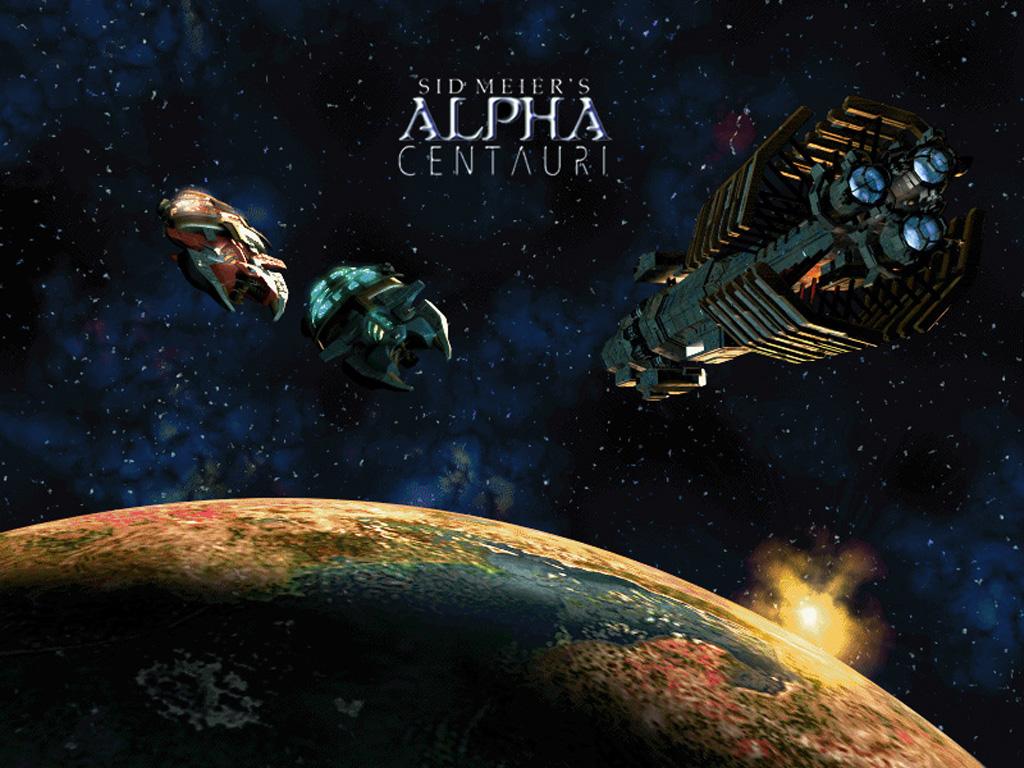
- Sid Meier's Alpha Centauri, the Spiritual Sequel to Civilization, has the Unity, Earth's first and only starship. It has your typical grey color scheme, rotating sections, massive engines in the rear, cooling panels around the engine compartment, and cryo-pods (which are also designed as autonomous landing craft). The ship is clearly not meant to land. Its sole goal is to cross the vast interstellar distance between the Sun and Alpha Centauri. Compare◊ with the much sleeker-looking Progenitor scoutships shown in the Alien Crossfire addon intro.
- The intro for the game's Spiritual Successor Civilization: Beyond Earth briefly shows the Sleeper Starship that brought your colonists to their new world. It looks like a sleeker, more modern Unity, with a shiny shield cap (probably to deflect micrometeorites) at the front, a rotating ring in the middle, cooling fins on the reactor section, and four large engines at the back. Landing modules (that turn into first cities) look like blocky, hexagonal things with six thrusters to slow down descent. The satellites and space stations shown in the orbital layer all have a blocky, utilitarian feel.
- Battlestar Galactica Online plays with this. Colonials have some blocky designs like the Jotunn or Gungnir, and the former is even greyish. However, there are also Colonial designs that don't conform; the Rhino is more or less a rotorless helicopter gunship, the Scythe has a giant ventral fin/leg, the Glaive and Halberd have diamond-shaped bodies with the latter being brownish and having fins, even the Gungnir subverts the trope by being magenta. Cylons, on the other hand, tend to use more sleek lines and curves. However, they also have some blocky dull designs like the Wraith and Jormung. It is lampshaded with the Wraith, which is a Mighty Glacier described In-Universe as resembling human design principles.
- Endless Space has the United Empire, harsh corporate empire with mostly blocky ships, though some have very sweet curved bows in the manner of naval ships. The Sheredyn, bodyguards to the Emperor of the UE in the Praetorian tradition, have ships with the same structure but massive bling for massive win. The Pilgrims, who've had lots of interactions with the Sophon, have ships that are a mishmash of blocky and shiny curves aesthetics. The other races have every kind of design imaginable, from mechanical monstrosities to armored bacteria to sculpture to birdlike vessels to robot octopi. It's a pretty exciting galaxy you live in.
- In the sequel, the Vaulters go this route, but going for a blue and yellow scheme where the Empire goes for red and black, and going wide where the United Empire goes for tall. Their ships are clad in thick armour plating, secured to the hull with girders, giving a sturdy and utilitarian appearance.
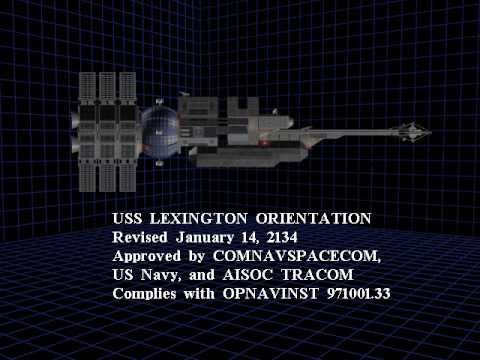
- The USS ''Lexington''◊ in Mission Critical plays this fairly straight. It has a boxy, utilitarian feel to it. It's mostly battleship grey in color, except for the habitation sphere which is blue. The reactor/engine section takes up about a quarter of the size with large cooling fins extending in four directions. The only odd thing is a large boom extending far in front of the ship, which is the Lexington's Tal-Seto drive. The crew spaces are oriented with the floor being towards the engines, as the ship is never meant to land on a planet. All combat is done using Attack Drones, and without them ships are virtually Point Defenseless (the short-range lasers have a very low accuracy). It can launch nukes at the enemy, but a single drone tasked with protecting its mothership can easily intercept them before they hit. Other ships of different configurations are shown during battle simulations, but they're all wireframe models, so it's difficult to tell if their designs fit this trope.
- The USS ''Jericho''◊ is a science ship not equipped for combat. She doesn't have any defensive or offensive weapons, which is why the Lexington was sent to escort her to Persephone.
- The UNS ''Dharma''◊ is even darker in shade than the Lexington but has a Star Destroyer feel to it, except for the large turret below and the Tal-Seto boom in front.
- The USS ''Jericho''
- Star Trek Online: The Avenger-class battlecruiser merges this trope with the usual Starfleet "flying spoon" saucer-hull-nacelle arrangement. It's a compact, blocky, beefy riff on a Sovereign-class or similar.
- The human ships shown in the Achron intro look mostly like cylinders with engines in the back and eight sections (possibly armor) around the core. The alien ships have winged designs.
- In Stellaris, mammalian (including human) and reptilian ships. Reptilian ships are heavily Homeworld influenced, with faction-colored stripes on tan, while the mammals get boxy, gunmetal gray ships with faction-colored lights, and lots of greebles and right angles. Note that while by default ship design follows species categorynote , nothing keeps you from changing the visuals when making custom empires, so you can have humans flying around in the smooth flowing lines, glowing blue markings and silver hulls of the Avian designs, or vice versa (or both, if you force previously made custom empires to appear in-game). The Humanoids DLC actually changes the 3 human factions (United Nations of Earth, Commonwealth of Man, and Earth Custodianship) to the DLC-introduced humanoid ship visuals, which are smoother, sleeker and brighter grey, similar to Star Trek.
- Ship artwork in Ogame plays almost always straight this trope. The best example is the old one◊ for the battleship, often known as the "Taser" for obvious reasons.
- The ships of The Federation in Elite Dangerous follow this aesthetic, with flat gray default paint and very angular shapes. The Empire, on the other hand, likes Everything Is An I Pod In The Future, and The Alliance takes a middle path.
- Hardspace: Shipbreaker: Mackarel-class and Gecko-class vessels qualify handily, being boxy, angular and mostly gray (aside from company paintjobs). Javelin-class vessels are a bit different, more comparable to near-future science fiction ships with rounder, rocket-like shapes; the data logs you find indicate they're highly modifiable.


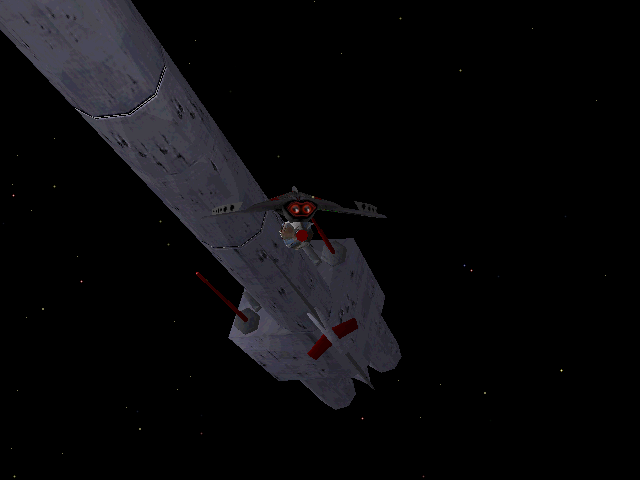
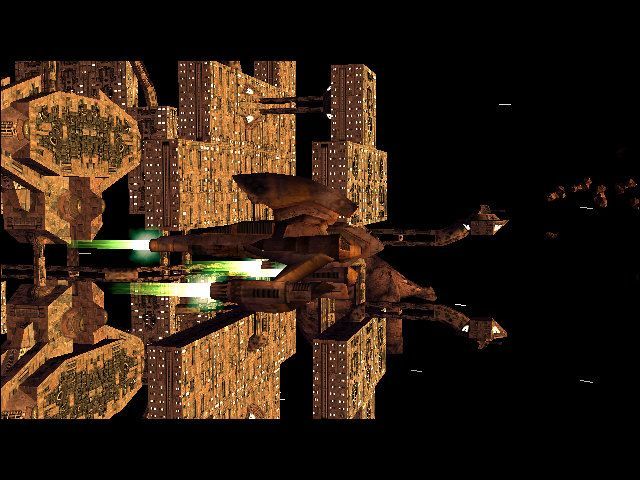
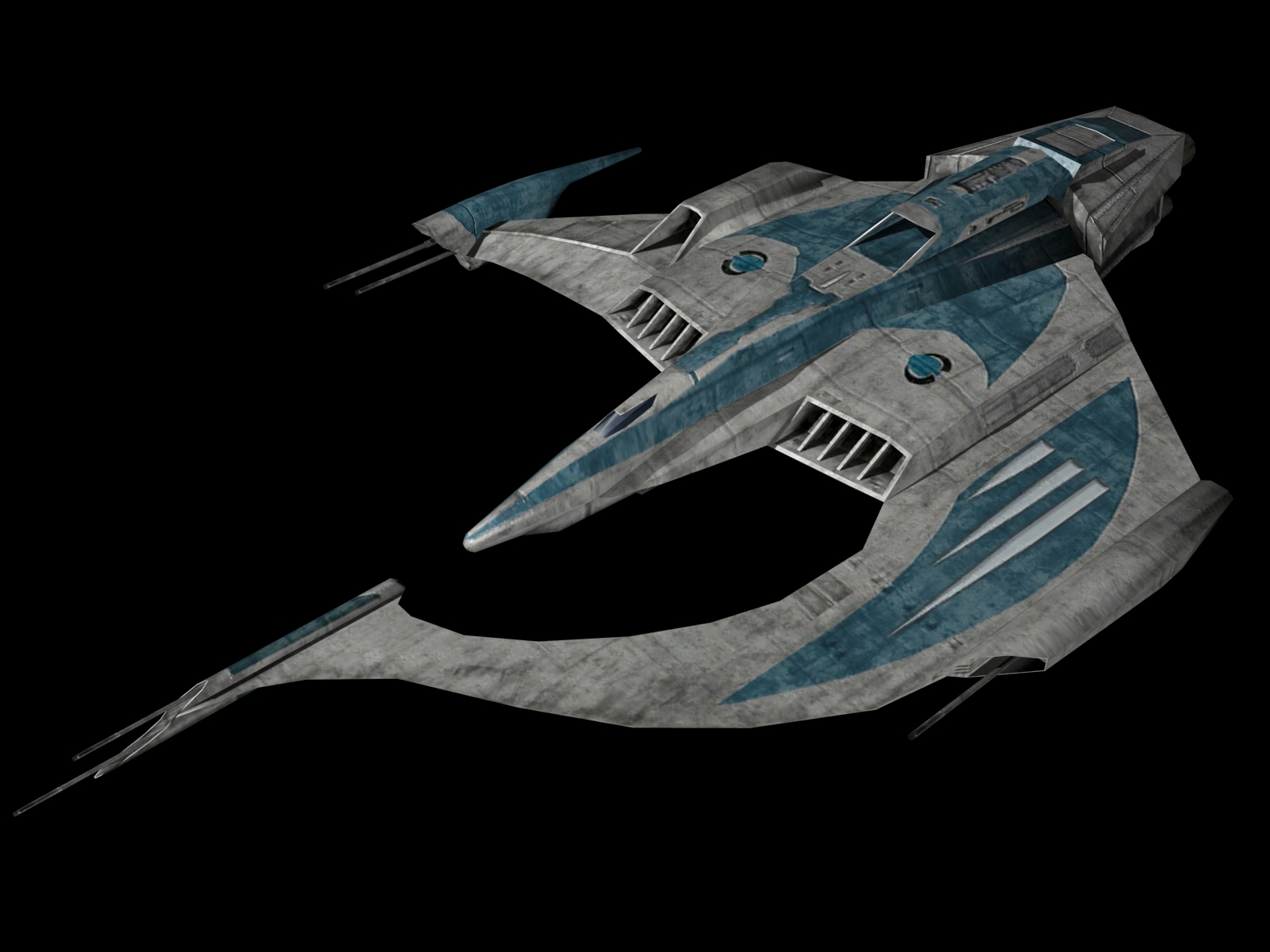


- Averted in Quentyn Quinn, Space Ranger. Despite having forcefields, integrity fields, antigravity, and all the usual phlebotinum props of space opera, Quinn's ship the Thunderbird is deliberately designed to be a sleek, airfoil wing in order to facilitate both atmospheric flight and glider-style emergency landings. Of course Quinn is hinted to be something of a traditionalist in this regard, still insisting on mechanical landing gear on his vessel rather than relying on repulsor beams.
- In Vexxarr, hu-mon ships are a lot greyer and blockier than the Bleen ships they reverse-engineered the technology from. They're lot bigger too.
- Noticeable in Futurama where military spaceships are indeed mostly gray-white, but civilian ones come in all colors, the one used by the main characters being lime green and basically a short, fat version of a Zeerust Retro Rocket (possibly justified in that the rocket shape is seen as a styling ideal but one that has been heavily compromised to maximize cargo space on a delivery vehicle).
- In Exo Squad the ExoFleet plays it straight, most of their ships are grey and boxy, the best example is the Resolute.
- Truth in Television to an extent. Real spacecraft are extremely utilitarian, for obvious reasons. Nearly all of them consist of bare grey pieces of metal riveted together (paint is extra weight and probably wouldn't survive the conditions anyway). The shape depends on the intended function, but most satellites and probes consist of either a cuboid or cylinder, with solar panels, radio dishes, and so on attached as required. There's not much reason to think this would change if interplanetary or interstellar travel became common. After all, ships and planes are still mainly designed to work first and look good a distant second.
On the other hand, larger structures such as Mir and the ISS tend to be a lot more intricate, albeit because they're made by bolting together a bunch of smaller cuboids and cylinders.
For thermal control reasons, real life spacecraft also feature shiny surfaces — the Apollo Lunar Modules were covered in gold foil — or thick quilted material, as with the Soyuz capsules and several of the ISS modules. In addition, the Space Shuttles were covered in white insulation to help reflect heat as well as details in black. Many spacecraft also have "wings" that are extensible solar panels or radiators. - Most large commercial-ocean going vessels hulls are essentially bricks with a point at the front and curves only where absolutely needed for structural reasons. Even though these ships do sail through water and air, the cost of shaping steel plates into non-flat shapes isn't worth the fuel savings. It stands to reason that if space travel became cheap enough to allow construction of ships in space, they would be either bricks with engines at the back, or polygons of some sort assembled from flat steel plates.
- Though unlike in fiction, a real-life spaceship welded together in space would probably avoid hard corners like the plague, especially for pressurized volumes. Squares crack at the corner due to stress being focused on single point where rounded corners distribute the forces over a much larger area. Many realistic future spacecraft designs tend to have cylindrical or spherical fuel tanks and habitats, possibly attached to a truss with heat radiators.
- Though unlike in fiction, a real-life spaceship welded together in space would probably avoid hard corners like the plague, especially for pressurized volumes. Squares crack at the corner due to stress being focused on single point where rounded corners distribute the forces over a much larger area. Many realistic future spacecraft designs
