Being beautiful has many benefits: respect, love, friendship, control, and ultimately power. It can be the power to improve one's life, the power to destroy others...when you're beautiful, the world is your oyster.
What exactly is beauty, anyway? Each person has a different concept of what beauty is, but that doesn't mean people won't agree on what or who is beautiful. Beauty is often in the eye of the beholder, but that doesn't mean it's not something some people would give anything to have. Likewise, those who are already beautiful typically want to stay that way.
This trope comes into play when a character's quest for beauty - either achieving it or maintaining it - becomes their primary motivation or defining characteristic. For when it's a villain(ess)'s goal, see Fairest of Them All. A fashion model may feel this because his/her job might genuinely be at risk otherwise. More fantastical works may have characters with this motivation do at least one Physical Attribute Swap for the aspects that would make them more beautiful, or even an outright "Freaky Friday" Flip and/or Grand Theft Me on a prettier person.
Contrast True Beauty Is on the Inside. See also Beautiful All Along.
Examples
- In Muhyo and Roji's Bureau of Supernatural Investigation, a ghost that is encountered is "Face-Ripper" Sophie, the ghost of a little girl that ripped off and wore other people's faces so that she would be considered beautiful.
- Sawako from Kimi ni Todoke. In the last episodes, her best friends Chizu and Yano make her as pretty as possible as a gift. She promptly starts crying, almost ruining her fresh make-up.
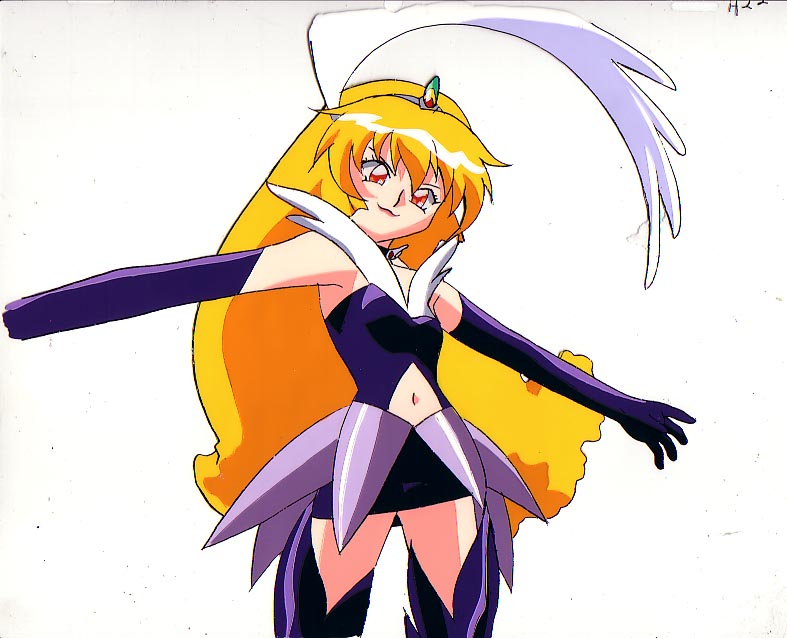
- Magical Project S: There is evidence Misao Amano
 ◊ was this. The other characters when they were transformed retained their same looks, but her transformed self◊, being a representation of her deeply repressed id, was blond and had a suit that is provocative to say the least.
- Eureka tried makeup in episode 36 of Eureka Seven upon realizing the importance of beauty (she was somewhat disfigured at the time, having sores on her cheek, chin and forehead). Too bad the result backfired.
- In the first chapter of Code Name Sailor V Minako expressed this wish. Cue Artemis offering her the powers to become Sailor V advertising the 'incarnation of the goddess of beauty' part of the package (she would have probably accepted them immediately had he not walked on her while she was naked).
- Queen Nehellenia of Sailor Moon was motivated out of preserving her youth and beauty, and that led to her consuming the dream mirrors of her loyal subjects. She explicitly admits that she'd prefer eternal isolation if it means she'll never be ugly.
- In Fushigi Yuugi, Miaka wants to be as beautiful and sought-after as her best friend Yui. She even considers using one of her Three Wishes for that, but ends up not doing so.
- This is the main motivation of Kasane's title character (who can steal people's faces with a magic lipstick). Not just to be pleasant to the eye, but because it makes social interaction infinitely easier for her, and also because there is no way she could achieve her dream of being a stage actress with her real face. She likes the thrill of being one of the "beautiful people" so much she's quite literally addicted to it.
- Nutcracker's. backstory (also her last words) in Tokyo Ghoul.
- Zekkyou Gakkyuu plays this for horror.
- The Land Of Mermaids follows Nana, a girl who used to be the most beautiful girl in her school, but has since become just average after another girl snatches this title. When the latter girl goes missing after the classmates talk about the legend that mermaids live in the swimming pool and take the most beautiful girl they can find to their underwater paradise, Nana becomes obsessed with becoming more beautiful to get there, and grows more insane as other girls from her class (including a friend she considered ugly) are taken before her. She eventually gets cosmetic treatments and even plastic surgery in order to become the most beautiful girl possible and lazes around in the pool until she attracts the mermaid, sadly, the mermaid turns out to be a connected string of the corpses of the girls it takes and just added her to the link.
- The Requirements Of A Belle follows Yuri, a girl who finds competition for the guy she likes when a Formerly Fat friend gets into class and is skinnier and prettier than her. Yuri becomes obsessed with dieting in order to get her title back. She eventually breaks down and cuts her own hair and mutilates her fingernails in order to keep chipping weight away, finally turning to cutting her own flesh to do so, but is stopped by a teacher. Her classmate then reveals that, to get so light, she couldn't lose weight on the outside anymore, so she went to a doctor and had multiple organs removed. Yuri takes up this tip and surgically removes her own organs.
- Kusano in Sekirei is absolutely adorable for her age, but she's fully aware that she's just a child and thus Minato is unable to think of her as a lover unlike the rest of the harem. At one point, she has a dream about herself and Minato where she's an adult woman like the other girls in the harem, where she's taller and her figure is just as endowed as the other girls with Minato being romantic towards her. The epilogue implies that she will grow to be a real beauty like the others when she does reach adulthood.

- In Jules Feiffer's Passionella, a chimney sweep wishes she could be a "beautiful, glamorous movie star." Then a friendly neighborhood godmother appears on her TV set and grants her wish—but only from The Mickey Mouse Club to the Late Late Show.
- In Shazam! stories, Dr. Sivana's homely daughter Georgia tends to get this trope, especially since she has an older sister, Beautia, who...well, look at the name.
- Wonder Woman Vol 1: Helen Alexandros's descent into villainy was formed out of a desire to be beautiful and praised after being driven to intense bitterness over being overlooked and cruelly treated because of her homely appearance. She ended up making a deal with Ares to become the Silver Swan, but when he was done with her he took back her powers and altered appearance, returning her to her mousy original state.
- Shrek: Princess Fiona is a very beautiful girl, however she is cursed to transform into an ogre by night. She describes her ogre self as very ugly. Shrek himself thinks otherwise. At the end she breaks the curse with a true love kiss, however not in the way she expected: she is now stuck in her ogre form and while she remarks "I don't understand. I'm supposed to be beautiful." Shrek responds with: "But you are beautiful." Although she seems less bothered by turning into an ogre and more upset by the fact that princesses aren't supposed to look like that. After Shrek confesses his love to her, she doesn't care and, indeed, freaks out upon turning back to her human self in the sequel.
- In Cinderella III: A Twist in Time, one of Cinderella's stepsisters Anastasia wants to be beautiful, thinking she will not be happy without beauty. Her mother uses the magic wand to make her become an exact copy of Cinderella. At the end, she learns to accept herself as she really is, and look for someone that will love her for what she is, and not be used as a tool by her mother.
- In Countess Dracula, Elisabeth's villainous motivation is to be young and beautiful again.
- Bonnie of The Craft was scarred in a fire at a young age, and has turned to witchcraft in the hopes of becoming beautiful. She gets her wish...and becomes a nastier person.
- In The Duff, Bianca recruits Wesley to help her not be seen as the D.U.F.F. (Designated Ugly Fat Friend) by her peers. By the end of the film, she realizes the superficiality of it all and becomes more self-confident.
- In Frankenstein Created Woman, Christina is badly disfigured down one side of her face, and her body is twisted. The desire she expresses to Hans is not even to look beautiful, but just 'to look normal'. After her death, she is reconstructed as an absolute stunner by Baron Frankenstein.
- In Precious: Precious Jones (an overweight African-American girl) has a horrible life in every aspect. Her life is so bad that her only way to bear her pain is escaping reality through fantasies. The poor girl's self-esteem is so down that when she looks at herself in the mirror (instead of seeing her true reflection) she fantasises that she is a beautiful white model pictured here◊. In the book, it's clear that she knows these slim white girls represent her true inner self, deserving of respect and love; toward the end she begins to see herself as she really is.
- In Narnia: The Voyage of the Dawn Treader: It is revealed that Lucy secretly isn't happy of her looks and she envies her sister Susan's beauty. She tries to use a spell found in a magic book to become the World's Most Beautiful Woman, but Aslan stops her. This is more so in the book as in the film, she believes that Susan's beauty is why she was chosen to go to America and why she gets the attention of so many boys. The spell gives Lucy a What If? moment where she is Susan but realises for that to be possible, she herself would never have existed.
- In When Evil Calls, the disfigured Victoria wishes she was beautiful again after her beauty was destroyed by acid in a lab accident. Her wish comes true, but at a terrible price. A homely girl wishes to be hot like Molly, the school beauty. Her face burns in an explosion after her friend lights up a cigarette. Another girl wishes she "looked good enough to eat", with predictable results.
- X-Men: First Class has Mystique resenting her natural blue form and she works with Hank in the hopes of creating a serum that will make her look like the form she takes most often. She gets over it by the end of the film.

- "The Ugly Duckling" of the Danish poet Hans Christian Andersen is about an ugly duckling that suffered Angst for his ugliness. Later he discovered he was abandoned from his true parents being revealed as a gorgeous swan all along.
- In The Stainless Steel Rat, Angelina began life as an extremely ugly child, and grew up hating the world around her. Too poor to afford the extensive surgery that could change her looks, and cursed with an extremely keen mind that allowed her to see the injustice of her life, the young girl turned to a life of murder and crime to get the funds she needed. Eventually the adult Angelina had surgery that transformed herself into a true beauty — on the outside; on the inside she had become as callous and psychotic as they come. After her capture by the Special Corps, the Corps' psychiatrists have attempted to remove her sociopathic tendencies. It mostly worked, although they sometimes show through, especially when her family is threatened or she thinks Jim is being unfaithful.
- In Bruce Coville's book Jennifer Murdley's Toad, the lead character is a truly unattractive young girl. At one point when she was younger she saw a commercial for Barbie on TV and started crying. Subverted at the end of the novel, when Jennifer is shown a magical image in a mirror of how the witch can make her beautiful. All she has to do is hand over the magic toad. She destroys all of the mirrors, knowing she can never be that girl.
- In The Dresden Files some vampires come off this way. Revealing their monstrous form results in a pretty big emotional hit for them.
- In The Picture of Dorian Gray, Dorian unwittingly makes a "pact" to remain forever young when he sees his portrait. He becomes immune to aging and body damage, and instead his portrait receives the damage (including emotional and spiritual changes). However, the story only covers about 20 years, and shouldn't account for the drastic aging the portrait undertakes, presumably the result of Dorians depravity.
- The main motivation of Pecola in Toni Morrison's The Bluest Eye. It leads to her going insane in an attempt to see it(namely, a white ideal of beauty), in herself, and trauma stemming from other horrifying reasons.
- In "Beauty and the Beast", this is the eponymous beast's desire after being transformed from a handsome prince into a hideous beast. Of course, he has to first learn that True Beauty Is on the Inside before he has any hope of breaking the spell.
- In Caroline B. Cooney's The Return of the Vampire, the plain female protagonist wants to be beautiful above all else because she knows it'll make her popular and loved by her classmates. The eponymous vampire grants her wish by draining the Alpha Bitch of her beauty and transferring it to her. She undoes it at the end when she realizes she doesn't need beauty and that the girl she stole the beauty from needs it more than she does.
- Aza of Fairest wants most of all to be beautiful, having been looked down on or shunned by others because of her odd looks. She wants it so badly, in fact, that she tries reciting a spell to make her beautiful and ends up with a solid marble toe for it and is enticed into drinking a beauty potion by a Magic Mirror. The potion wears off when she destroys the mirror (as it housed an evil spirit who was manipulating the Queen), and she learns to accept the way she looks.
- Agnes Nitt from the Discworld books has some bouts of this, wishing in Maskerade that she'd been born with good looks instead of great hair, a wonderful personality, and an ability to keep a cool head in a crisis. Other times you'd get the feeling she'd be satisfied with being respected even if she's not traditionally beautiful.
- Neal Shusterman's book Duckling Ugly is the story of an ugly girl, Cara, who finds a hidden society of beautiful people. The tale takes a dark turn after she leaves the society and and can't get back, as she discovers that without the society's special water she soaks up the beauty of others and leaves them looking uglier than before.
- The first book of Five Nights at Freddy's: Fazbear Frights has three short stories. The second is "To Be Beautiful". As you can probably guess from the title, Sarah wants to be beautiful so badly, she barely thinks of anything else. She's constantly focusing on her face and body flaws in fine detail, and idolizes a group of popular girls she calls "the Beautifuls". Even her best friend Abby is sick of hearing her blab on about looks, makeup and fashion. Then one day, she finds an old robot in the junkyard. When turned on, she comes to life, calling herself Eleanor, and asking to grant Sarah wishes. Of course, Sarah asks Eleanor to make her beautiful. Eleanor agrees, but the price turns out to be too high in the end...
- "Wishing Day" by Susan Goldsmith (American Girl January 1972) has Barbara, a decidedly unbeautiful 14-year-old, idolizing her effortlessly perfect friend Catherine. "Wishing day" is a school tradition where students transform themselves into another person — a real person around their same age — physically and mentally, but retaining their own consciousness as well. You can decide to stay that way or change back.note Barbara elects to be Catherine and is pleased with the way she looks, but Catherine has lousy grades in subjects Barbara's good in, and in Home Ec she finds out Miss Perfect can't cook — another of Barbara's skills — worth a damn. On top of everything else, she discovers that Catherine changed herself into Barbara. No wonder she decides to resume her true shape.
- In Yo soy Betty, la fea, the eponymous ugly character, Beatriz "Betty" Pinzon, is unlucky to be an ugly girl in the world of fashion. Despite being the most intelligent woman in the show, she was constantly mistreated by most people just because of her looks. Her ugliness was a daily hardship she had to face from the beginning. Not to mention nobody wanted to hire her because of being ugly. She wanted to be beautiful because she fell in love with her handsome boss, Armando, and because she had self esteem problems. She actually had a "makeover"; however, contrary to the typical makeovers in Hollywood, this makeover didn't make her Beautiful All Along... her new image reflected how more much more confident of herself she had become despite being as ugly as always.
- Candice in Heroes has the power of creating illusions and she frequently disguises herself as beautiful women. After Sylar kills her her true form is revealed to be that of an overweight woman.
- In Nip/Tuck, the main characters are two plastic surgeons, and all of their patients are shown living more fulfilling lives after their surgeries. Although it's not just purely minor imperfections that people gripe about, they also do pro bono procedures on severely disfigured individuals. But of course, it's also shown as an inherently obsessive pursuit.
- Kolchak: The Night Stalker: In "The Youth Killer", Helen of Troy is draining the youth out of physically perfect victims in an attempt to remain young and beautiful forever.
- The Serpent Queen: Diane de Poitiers is obsessed with appearing younger than she is and some of her rather unpleasant beauty rituals (e.g. being repeatedly doused in ice cold water "for the skin to contract" and drinking liquid gold) are seen on-screen.
- In The Apple Tree, Ella the chimney sweep wishes she could be a "beautiful, glamorous movie star". She's even the trope quote.
- In A Chorus Line, Bebe loved going to ballet class because it was the one place where she could feel pretty.
- Val yearned to be more buxom growing up, and eventually got lots of plastic surgery to improve her career prospects (though it didn't hurt her sex life either).
- In Wicked, Elphaba originally wished to meet the Wizard so he could undo her green skin and make her beautiful, among other things.
- Bendy and the Dark Revival has the main character kidnapped by "Twisted Alice", originally a human named Susie Campbell that strived to be as beautiful as the cartoon character Alice Angel, but after being dragged into the other world and came into contact with the ink like substance found throughout the game, she became a deformed version Alice Angel that will kill and harvest anyone to become beautiful.
- A major Cyclic Trope in Ai Ebihara's Character Development. Having been bullied due to being fat in the past, she started dieting and greatly improved her looks to try getting more respect and positive attention, but it didn't exactly work. As her S-Link advances, with the help of the MC she comes to realize that being beautiful is about more than just fashion and good looks.
- A variation of this is found in BioShock. The once-renowned plastic surgeon Dr. Steinman — who believes beauty is a "moral obligation" — slips gradually into insanity and embarks on a one-man quest to create "perfection" in order to appease his goddess, Aphrodite. Seeing as how, in his madness, Steinman considers asymmetry to be the path to true beauty and is the self-proclaimed "Picasso of surgery", you can imagine the gruesome implications this has for his unfortunate patients.
- Simone/Beauvoir/Mad Songstress from NieR: Automata, as revealed in the 9S playthrough. Her heartbreaking backstory that plays out when getting hacked show that she's obsessed with the idea of becoming beautiful so philosopher Jean-Paul will notice her, even going so far as to cannibalize other machine lifeforms and androids to absorb their 'beauty'. She knows it won't actually work, but if there's a chance...
- Daisy of Bittersweet Candy Bowl is jealous of the male attention that Tess and Lucy receive, and assumes it is because she isn't as physically attractive as her friends. When a boy finally pays attention to her, she is happy even though he is a jerk - and even after he (seemingly) tries to rape her, she still has feelings for him, though she is smart enough to stay away from him.
- Played for laughs in Oglaf where a woman uses the Wishing Dolly to become beautiful, only to find that she now looks so fancy that no one will agree to have sex with her because they all think she's too good for them.
- The Cry of Mann: Courtney is so obsessed with her own beauty that she goes so far as to cover her face in rhinestones and ask her callers if they think she's pretty or not.
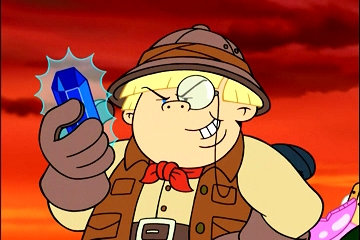
- Codename: Kids Next Door: In "Operation C.A.R.A.M.E.L", the reason Heinrich Von Marzipan◊ hates Numbuh 5 is finally revealed. He made a magic ritual and lost his most valued trait: "beauty". He thought he was cursed forever. However, thanks to Numbuh 5, the curse was broken. Instead of becoming a beautiful boy, it was revealed that his true form was that of a beautiful girl called Henrietta von Marzipan, pictured here.◊
- In Danny Phantom, the episode "My Brother's Keeper" has the villain feed off teenage depression in order to remain beautiful. She later does it again in another episode by trying to steal their best attributes to give herself a perfect human body.
- In Family Guy: Meg Griffin desires to be beautiful given that she is considered horribly ugly for no apparent reason. In the episode where she gets a makeover and becomes a hottie, they just draw her with blonde hair in a different style. She reverts to her normal appearance at the end of this episode, claiming "it's too much work being beautiful".
- Later episodes indicate that this appears to be a combination of poor hygiene, average looks inherited from her father (by which we mean she's a shorter, slightly chubbier brunette Lois), being out of shape, and the occasional body defect based on Rule of Funny. Unlike some of the mid-seasons (where two people set themselves on fire after seeing her), she is no longer considered to be horrifically ugly, just plain unattractive and unpopular, making her a target for bullying, which is unfortunately Truth in Television. Her brother Chris has started receiving similar characterization.
- In Phineas and Ferb, Candace Flynn gets this trying to become a model for "Flawless Girl" cosmetics in "Attack of the 50-Foot Sister". She was rejected as not being "beautiful enough" just because she wasn't tall enough, then she became gigantic and started thinking of herself as a "monster". At the end, she realizes that those fashion products only profit on the insecurities of people and realizes she isn't ugly at all.