
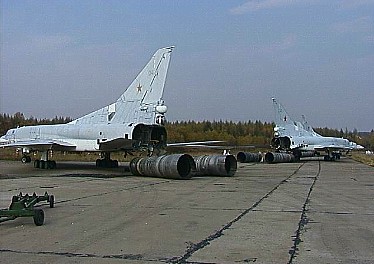
With the collapse of the Soviet Union, the Russian Federation found itself militarily rather short of cash. The USSR had spent a huge proportion of its budget, and by extension tied up huge shares of its GDP, in sustaining the largest peacetime military in world history (in absolute and proportional terms). Given that cuts in social benefits (in addition to the already reigning economical chaos) would've resulted in widespread riots and other nasty stuff, the government found that lavish Soviet-time military spending was something that new Russia could no longer afford to do.
This meant that a lot of stuff ended up rusting. This really isn't helpful when said stuff includes a nuclear submarine. It's been estimated by some analysts that only about 30 of 300 Russian ships could've been put to sea at any one time. This situation has been steadily improving since about 2005, with large scale rearmament programs in place (though invariably slipping in deadlines and costs, but that's another matter), and some cool new stuff in the pipeline, but it's a rather slow process. At least the old hardware gets to be properly maintained and modernized again at last.
The Reds with Rockets were broken up among the new states, with all their forces being withdrawn from East Germany, as well as the Central and Eastern European states that had been satellites. The nuclear forces ended up all in the hands of Russia or destroyed. Russia retained some foreign facilities in the new states, including the Garbala radar tracking station in Azerbaijan, the Sevastopol naval base in Ukraine's Crimean Peninsulanote and various posts in The Caucasus and Central Asia.
The Russians truly did have a big problem. The Soviet military had largely disintegrated. Officers were going without pay, so they were selling of stockpiles of weapons at incredibly low prices. This is happening in nearly all industries, everywhere, in fact. Most of said assets either ended up going overseas to any number of countries, or became concentrated into the hands of a few wealthy —and politically connected— Russians. The new Russian Federation still managed to absorb control of most of it, in one way or another, but significant stockpiles (of largely outdated or cheap equipment) went to the newly independent republics of the former USSR. All of this had kept them to reacting to the situation unfolding in Chechnya, where the people voted to form their own independent republic under Dzhokhar Dudayev, just as the SSRs had done to leave the Union. It was fair game, right? Well, Russia considered it an integral part of its territory, and internal troops (basically the gendarmerie) were sent in by Yeltsin to retake it, but the Chechens drove them out. Russia had to spend some time getting its shit together, and it had to handle a "civil war" in Georgia, or rather a war of secession by two minority groups who had originally been independent SSRs in the 1920s but were absorbed into Georgia by Stalin. Meanwhile, Chechnya fell into civil war, with Dudayev being a divisive figure. Dudayev ultimately "won" in a sense that he had seized the capital of Grozny and had de jure power over the Chechen Republic of Ichkeria. However, when it finally got its affairs in order, the Russian military was sent in to quell the rebellion.
And they did terribly. The war was incredibly unpopular; many army units refused to advance, officers and civil officials alike resigned, and the whole thing was seen as a declaration of war on the Russian people. But the Russian Air Force had no such reservations, and the Chechen Air Force was blown to smithereens sitting at its runways. Yeltsin figured this would be enough to compel Dudayev to surrender, but he did not, so the Russian forces were forced to assault Grozny. But they encountered significant problems before they ever reached the city: communication was terrible, especially between air and ground assets. There was little coordination in the advance or really in the entire operation, as Soviet Defense Minister Pavel Grachev was almost certainly drunk. Forces got confused and started shooting at each other. A Russian VDV team was dropped behind enemy lines and abandoned when their objective wasn't located. Russian military planning had changed very little since the Afghan War. There was very little operational flexibility, and the Russian Federation's military at this time was a lot more top heavy, a trait it inherited from the Soviet Armed Forces. Furthermore, the troops were incredibly undisciplined, looting and murdering their way through Chechnya, if not just running away. The Russian Army used conscription to fill its ranks, and like most conscripts armies, it lacked any will to fight and any real discipline. Dedovschina, a seniority-based systemic institution of bullying in the ranks, caused many new recruits to be completely demoralized before they even left training. Most Russian soldiers had no idea what their orders were other than "advance to Grozny," and they had no idea what to expect. As in Soviet times, the infantry were kept "out of the loop" about specific orders, as the Soviet military feared this would cause orders to be leaked. NCOs kept all the orders, but they were a class unto themselves, separated from the men by their career service.
As the Russians slowly advanced, Chechen guerrillas wore them down and left them confused and disoriented. Many had been soldiers in the Soviet military and knew to take out the officers, leaving the men without orders or a vague clue of what was going on. Russian helicopters met a similar fate to those in Afghanistan, but at the hands of their own 9K34-Strela. The terrified Russians resorted to what the Russian and Soviet militaries had resorted to for generations: massed artillery bombardment. Chechnya was leveled by a hailstorm of rockets, mortars, and cannons. Many civilians were killed, but the capital of Grozny was reached. And that's when things got worse.
Air strikes had already caused 5 friendly fire incidents by the time Russian forces even advanced into Grozny. The city had already been bombarded with rocket barrages from Russian MLRSs and the air force had been pounding the city. Russian ground forces began moving in, slowly and steadily. To try and summarize the battle would be beyond the scope of this page, but suffice it to say, they get butchered. For an example, nearly the entire 131st Motorized Rifle Brigade is slaughtered trying to hold their objective, the Central Railway Station. They take and hold it with little resistance, but as they awaited new orders, a message was heard on Russian radio: Welcome to Hell. The brigade was assaulted for hours by an endless barrage of small arms and anti-tank fire, with calls for artillery support going unanswered. This was common throughout the battle, as radio calls would just go ignored. To make matters worse, the Chechens were on their radio networks and could hear everything. They began giving false orders to confuse the Russians, causing the Russians to resort to radio blackouts. The 131st Motorized Rifle Brigade received no support, but confused Russian forces fired upon them for hours. They had to evacuate of their own accord, and almost all got killed in the process. The few who survived had been taken prisoner.
The battle demonstrated a bad need for better Command and Control equipment, better radio protocol, better coordination between the air force and the ground troops, more discipline in the ranks, and essentially a complete overhaul of tactical-level doctrine, and, hell, operational-level doctrine. The Battle of Grozny was humiliating for the Russians. Their scared conscripts hid in the BMPs to avoid Chechen small arms fire, only to burned alive in their vehicles by co-ordinated RPG teams. Hundreds of armored vehicles were destroyed and thousands of Russian soldiers were killed. However, after about two weeks, most of the large scale fighting had ended, with the Russians seizing their objectives atop a mountain of corpses. Sporadic fighting continued, but Dudayev had declared a ceasefire, meaning even he had now lost control of the situation. The Russians would keep control of Grozny for another year, but they were slowly pushed out of it —and the rest of Chechnya— by August of 1996. Yeltsin must admit that Russia has lost her first note war, and he signs a sort-of peace agreement with Chechnya in 1997. It allowed Chechnya to retain its independence de facto while still being a part of Russia.
When Vladimir Putin came to power, he was faced with another Chechen crisis. Chechen militants had infiltrated Dagestan and were now pushing it to secede as well. The Russians, and allied Chechens, re-invaded the Chechen Republic of Ichkeria. They had clearly learned from their past mistakes. The operation was slow and brutal, taking extreme measures to stop insurgent activities, resulting in horrific civilian casualties. Although little had changed about their overall tactics —bombard the hell out of their enemy then make an armoured assault on their position— they were much better coordinated this time. The Russians decided to avoid rolling into Grozny outright, instead besieging the city and subjecting it to a heavy bombardment. When it became clear the Chechens wouldn't give up, they were forced to start a block-by-block advance through the city, with predictably heavy casualties and many of the same problems of the First Battle of Grozny repeating themselves. However, Russian forces gradually put a stranglehold on the rebels, who launched a last desperate break out attempt that saw them wander into Russian prepared defenses and wind up utterly massacred. Sporadic fighting continued, but the battle was over.
The Chechen Wars demonstrated a real need for reform in the Russian military. The Russian military was designed for grand, sweeping offensives like those of World War II, but modern war is often smaller in scale and more reliant on the ability of small units to perform independently. The Soviet, and therefore Russian, lack of modern C2ISR equipment made them disorganized, and the conscript army would have to be replaced with a professional one. Russian military equipment also needed serious upgrades, with man-portable anti-tank weapons being more than capable of destroying BMPs and T-72s.
Interestingly, some of the most iconic Russian equipment comes from this time period, especially small arms. Pavel Grachev, the habitually drunk Defense Minister, spent a lot of time and money on trying to improve Russian small arms, and Russian weapons manufacturers had to make improvements to their weapons platforms to compete in a new, market-based economy. This resulted in a lot of wacky experiments that didn't quite pan out, with a lot of projects having funding pulled or getting lost from embezzlement. Others only saw limited adoption, for one reason or another. Some of these are:
- PP-19 "Bizon:" A lightweight 9x18mm Makarov submachine gun with a distinctive tube-shaped helical magazine that sits below the barrel, where the forestock would be. It proved to be quite rubbish, frankly, as although it had an impressive rate of fire and could hold 60 rounds of ammunition, it had chronic feed problems due to the weird magazine (although some say these were due to the poor quality of manufacturing), and it shared a common problem with other guns that are gripped by the magazine where it is often unintentionally pulled loose. It was redesigned into the PP-19 "Vityaz" variant, which is shaped like a more traditional submachine gun. The "Vityaz" has seen more widespread use than the "Bizon," and is chambered in the more internationally standard 9x19 Parabellum.
- AK-100 Series: An updated design of the AK-74 featuring a folding polymer stock and some improvements to the internal mechanisms. It wasn't a good enough improvement to adopt over simply upgrading the existing AK-74 stockpile into the AK-74M variant, so the many AK-100 variants never saw widespread use. They saw minor success on the export market.
- AN-94: An assault rifle with a distinctive off-center magazine. This was done to accommodate a unique feed mechanism for the gun's most distinctive feature, a two-round burst. It could be fired with just one pull of the trigger. The aim of this is increased accuracy and penetration, but the mechanisms needed to achieve this made the gun costly to manufacture, and the off-center magazine was unwieldy. It saw service in Chechnya, and remains in service in selective use by the Russian Armed Forces and internal security forces.
- AEK-971: Developed for the same "Abakan" trials as the AN-94, the AEK-971 was a Soviet design that offered greater stability, less recoil, and less tear on the receiver with its Balanced Automatics Recoil System. It saw limited adoption in the Russian Armed Forces throughout the 1990s and early 2000s, before being formally adopted alongside the AK-12 in 2018 in its modern form, the A-545.
- T-95: A project at Uralvagonzavod that got its funding pulled after some questionable bookkeeping by the firm. It was to be a new main battle tank, but there is little information on it and only a scant few pictures of a prototype. It was cancelled in 2010.
- Obyjekt 640 "Black Eagle: Another tank with a far more iconic and imposing visage than the T-95, it was modeled on the T-80 but featured significant upgrades to its armor, ERA, APS, and crew survivability measures, as well as a new autoloader. However, the T-80 performed very badly in the Chechen Wars, causing the design to be scrapped in favor of modernizing the T-72 and T-90 fleets.
- KA-50 "Alligator:" Designed and prototyped by the Soviets, but only formally adopted by the Russian military in 1995. The KA-50 is a single-seat scout/attack helicopter. It has a distinctive coaxial rotor system that gives it better maneuverability and speed than most helicopters. It's two-seat variant, the KA-52, has seen more widespread adoption by the Russian Armed Forces.
- Mil Mi-28: The main gunship of the Russian Armed Forces, it was originally developed by the Soviets, but the Union collapsed before it could be adopted. It discards the transport capabilities of the Mi-24 "Hind" for greater speed and a higher weapon capacity. It's design incorporates a lot of the same features of other modern gunships like the AH-64 "Apache."
- SU-47 "Berkut:" A fighter platform with a forward-swept wing. It was intended to be the USSR's "4.5 Generation" fighter, incorporating advanced avionics technologies. Its unique wing design gave it better maneuverability and agility, a trait that Russian aircraft were already known for. Only one was ever built, but elements of its design found their way into newer fighter.
A lot of ship names had to be changed because they were no longer politically correct, referring to places now in independent states, or in some cases to Communist figures who were considered rather less admirable under the new regime. They sometimes ended up being changed again when stuff was sold on.
This can cause some confusion.
A lot of planned aircraft and other military technology got cancelled. The other three aircraft carriers of that class that would join the Tbilisi (renamed to the Leonid Brehznev, then to its current name Admiral Kuznetsov) were canceled. Number two, later named Varyag ("Viking") was sold incomplete (the hull works were finished, but no outfitting, including the engines, took place before the sale) by Ukraine to the Chinese to be turned into a floating casino. However, it was secretly repaired, and officially launched again in 2011 as the Liaoning.
- The MiG-29K "Fulcrum-D", deemed surplus to requirements for Kuznetsov, was canceled, but has been revived for the INS Vikramaditya, the conversion of the Admiral Gorshkov (formerly the Baku) to a full-length carrier. China has also ordered some of them, apparently for flight testing on the Varyag and later use on whatever fully operational carriers China builds.
- Not anymore. Recent reports confirm that the Russian government will order 24 new MiG-29K to replace the more expensive to operate (and rather old) Su-33. The MiG-29K's lighter weight is also seen as advantageous for a ski-jump style flight deck.
- The Chinese had reverse-engineered and produced their own Su-27 sea variant, though they're still limited by the lack of reliable domestic engines and have to buy them from Russia.
- The Yak-141 "Freestyle", a planned supersonic VTOL aircraft, was scrapped at prototype stage. No Mach 1+ VTOL plane has yet entered service anywhere in the world - the F-35 Lightning II (the Joint Strike Fighter) has not entered full production yet.
- Yakovlev sold loads of its know-how to Lockheed in the Nineties, much of which ended in the F-35 project.
- A nuclear-powered carrier was canceled at 40% complete.
- The seventh Akula/"Typhoon" was scrapped incomplete.
With the arrival of Putin and Medvedev, major investment went into the Russian military, with new carriers and subs planned, stuff being upgraded (such as the Su-24 "Fencer" aircraft) and new missiles being tested. It may take a while to come to full effect — the Russian military has had a lot of problems getting things built on time. The low oil prices are certainly not helping with the monetary issues, as Russia is a major exporter of oil, producing an average of 10 million barrels of oil per day.
In recent years, the Russian Federation has engaged in a number of acts that could be termed sabre-rattling, using the excuse of in response to the American "Son of Star Wars" missile defense system after the American withdrawal from the Anti-Ballistic Missile Treaty and the continued expansion of NATO. These include restarting long-range bomber patrols, threatening to target Mnogo Nukes on Europe (nuclear missiles are currently de-targetednote ), threatening to leave the INF treaty, and a recent unconfirmed rumor that Tu-95 and Tu-160 bombers may be forward deployed to Latin America. While things have calmed down somewhat, tensions remain high, and there is still the possibility of selling S-300PMU/SA-20 "Gargoyle" anti-aircraft missiles to Iran (they've not been delivered) that gives Israel nightmares, since they understandably prefer to maintain air superiority.
There was of course the war against Georgia in summer 2008, which the Russians won. The war, however, demonstrated shortcomings in their communications and coordination systems, while their air force generally didn't do too well, mainly because of general lack of training. The current generation of pilots mostly came around during the worst time of the 90s, when there wasn't enough fuel to train. The series of the large-scale maneuvers undertaken in the closing years of the decade were mostly to address these problems.
The red star was planned to be dropped from their aircraft, with a new symbol being designed... only for it to look almost completely like the old one (the only difference being one narrow blue band around the star to match the colors of the flag) due to strong opposition against a radical change.
The latest (to date, 2011) chapter of Russian military history is the much-maligned reform conducted by the defense minister Anatoliy Serdyukov. Russia's first civilian minister of defense (not counting Leo Trotsky) is widely considered absolutely incompetent; servicemen awarded him the unflattering nickname "Field Marshal Taburetkin" (from taburet - stool), since his previous job was manager of a furniture mall. Some of his reforms are based on quite sound ideas; it's the execution of them that earned him the disdain.
Among his reforms are mass firings of officers (including a total disbanding of warrant officers), purchasing military hardware in the West instead of giving jobs to the domestic military-industrial complex, reformatting the entire armed forces to be more like American ones (Russia has a wholly different strategical situation, necessitating an old-style Soviet doctrine; the reforms included disbanding of regiments and divisions, and shifting focus on brigades and operative commands), and introducing new uniforms that are woefully inadequate to the severe Russian climate.
On the other hand, much of his reform (which is not actually his, but a concerted governmental effort) is, as noted above, based on the solid reasoning, however bad its execution, and the whole affair is a controversial thing, among both the serving soldiers and civilian military buffs alike. The reform proponents claim that a lot of what is perceived as dumb moves is actually a sort of bitter medicine that was sorely needed, but no one had the heart and means to administer. Whether that's really so is mostly a matter of personal opinion.
For example, the old Soviet doctrine envisioned a massed land war not unlike the World War II, which, frankly, isn't likely nowadays at all — cue the establishment of joint regional commands and a shift to the brigade structure as a way to improve coordination and control. After all, the Russian military was for the most part still structured around WWII expectations, just as the Soviet one was.
It assumed a mass mobilization of conscripts in time of war, and thus in peacetime its rank structure was incredibly top heavy — in the Russian Army, captains did tasks for which professional master sergeants would suffice, because NCOs were mostly conscripts and would leave after a year or two, creating a hole in the ranks, while officers were career soldiers and were expected to stay. Thus, the reform proponents claim that the creation of the professional NCO corps simply made a lot of officer positions obsolete, leading to the mass discharges — which, understandably, angered the people discharged.
The catch is, as of now there are still not that many professional NCOs around, and anyway, the military has a huge problem with the quality of its volunteers: These are mainly poor, badly educated, working-class young men with not much to do outside of the army, so their motivation and discipline leaves much to be desired. There are attempts to improve this situation, such as almost twofold increases in pay and much more stringent requirements and intensive training, but these measures have yet to bear fruit, if they ever will.
Another reason for resistance is plain graft (or, better put, the competition for graft opportunities). During the turmoil of the Nineties, a lot of the officers, especially senior ones, became corrupt and struck a lot of lucrative deals with the local businesses and even criminal gangs. So, for these officers, a chance of losing the ability to skim off the top — either because of administrative house-cleaning, as reform's proponents say, or because Serdyukov's cronies want to do the skimming instead, according to the reform's detractors — is understandably anathema either way. And then there's simple resistance to change. A lot of much needed reforms are refused at the ground level simply for the entirely justified reason of "That's not our way, that's how Americans do it".
Squabbles over equipment that intensified during Serdyukov's tenure are a bit more complex a story, but the core of the problem is rather simple: During the Nineties, most of the Soviet military industry simply died, or at least came close to it, because the nation just didn't have the money for new toys for its military. Very few companies (Sukhoi, for example, and that's why its CEO, Mikhail Pogosyan, now leads the United Aircraft Corporation) managed to stay afloat (mainly on export contracts), and any technological progress not linked to them simply stalled.
So when the money appeared again, it was the tough choice:
1. Invest in a mostly dead industry. This will give results some 20 years down the line, with the drawback of requiring soldiers to continue using rusting and obsolete equipment in the increasingly high-tech environments in the meantime, or 2. Buy equipment abroad. This will give soldiers better and more up-to-date equipment, but will also drive a nail into the industry's coffin.
Try as it might to find a Third Option, MoD does not always succeed, and industry complains. Loudly.
In the end, the current reform is a very fluid, ambivalent affair that could be viewed from several radically different angles, and it's simply too early to give it a conclusive overview. At least there's enough fuel for training again, and the ships, both old and new, get to chase some pirates off the coast of Africa. On the other hand, even Putin and Medvedev do acknowledge the reform as rather poorly executed and Serdukov himself as a failure, though he managed to keep his position in the recent government reshuffle, while Interior Minister Nurgaliev got the boot. On the other hand, Nurgaliev failed much more spectacularly. However, Serdyukov finally got the boot in late autumn 2012, with a huge scandal about his coruption.
As previously stated, the situation has been improving ever since the early Noughties, with actual visible improvements becoming apparent by the beginning of The New '10s. There has been a number of large-scale maneuvers (something that hasn't happened since the Soviet times), the long-range air patrols were instituted once more, and the Navy finally got a bit of love it's missed since Gorshkov's times. The Horn of Africa became a training ground for the Russian Navy, with rotating squadrons from different fleets staying there pretty much all the time.
New equipment finally has started to come down the pipeline. This initially started small, such as with the Project 22350 corvette, dubbed Stereguschy (Vigilant) class. Relatively small, just 2,500 tons of displacement, it is nevertheless extremely heavily armed for its size, as is Russian tradition, and is the smallest warship in the world to carry an integral helicopter. Three are commissioned, five are on the slips, and there are plans to eventually built 20 to 30 of them.
Its larger counterpart, the Project 20350 frigate of Admiral Gorshkov class (named after Soviet admirals) would be better designated a destroyer, had that moniker not been grabbed by the essentially light-cruiser sized vessels nowadays. 4,500 tons and bristling with the guns and missiles, the lead ship is undergoing testing, to be commissioned in late 2012. Two more are being built, with around ten projected overall. They are to be supplemented by six or nine projected Admiral Grigorovich class ships (named after Tsarist admirals this time), of the 11356 project (the same Russia build for India), a tried and true design, which would give the Navy a respected frigate force.
On the heavier side, there's the plan to repair and refit the three mothballed Kirov battlecruisers (probably cannibalizing one in the process, as a lot of parts aren't produced anymore), and there's a half-finished Slava-class cruiser that Ukraine has for sale (originally to Russia, but given the current state of Russia-Ukraine relations, that no longer seems likely). A new heavy destroyer project (12-14 kilotons) is also in the works, this time probably nuclear-driven, armed with 4x6" guns in addition to the loads and loads of missiles, and probably even armored, essentially a scaled down Kirov. A new aircraft carrier is also being considered, but probably won't be started until 2020. Two Mistral-class LAPDs have been ordered from France, mostly for their tech, with two more to be license-built in Russia. However, Russia's recent actions in Ukraine have caused France to suspend the sale of these ships indefinitely.
Two new classes of nuclear subs are entering service, the Project 955 Borey-class boomer, armed with the infamous, but (when all the kinks were finally ironed out) pretty capable Bulava("Mace") missile, and a multipurpose 885 Yasen ("Ash tree") boat, essentially a Sea Wolf counterpart (and similarly hellishly expensive). Two of the former and one of the latter are already commissioned, with plans to build around ten of each. Older boats are being repaired and modernized, and there's also a thriving diesel boat program, supported by the brisk export sales.
Things are also pretty bright on the Air Force front, with the new 4++ gen fighters like Su-35 and MiG-35, a major upgrades of the Su-27 and MiG-29 families entering serial production, and a new 5-gen fighter prototype, Sukhoi's T-50, undergoing testing (although western experts such as George Friedman consider it to be de facto 4th generation). The humongous An-124 transport is getting on the assembly line again, funded in part by the US military's inexhaustible airlift needs, and new Yak-130 advanced trainer helps young pilots to learn the ropes. Even the new bomber platform is deliberated, with some truly unbelievable rumors coming down the grapevine. And helicopters are being baked by the dozen, both utility and gunships as well, including the navalized Ka-52 Sea Alligator for Mistrals.
Land forces are also getting an overhaul, and receiving some new toys. The 2008 South Ossetia war showed the weakness the Russian Army has in C&C, with officers sometimes having to switch to civilian mobiles to direct the troops. Thus the whole slew of new communication and reconnaisance equipment, including UAVs, are being designed, tested, and adopted — sometimes with the mixed results. Then there's the infamous uniforms debacle, which is often used to showcase the reform's shortcomings.
You see, the MoD decided to introduce a new, modern synthetic uniform, rather closely modeled after the American ACU, with a new digital camo pattern (unofficially dubbed Tsifra, "Digit"), which theoretically was much better than the old natural fabric (mostly wool and cotton, with some sheep furs) one, but in fact the quality was a hit-and-miss, and, in a stellar example of Poor Communication Kills, the upper echelons failed to adequately inform and train the line officers, who in Russia decide the details of the wearing, such as issuing the hats and warmer coats in a cold weather, that it has the completely different wearing directions than the old one. This has lead to several high profile cases of the soldiers contracting pneumonia (with some deaths) due to improperly issued uniforms, which cemented the ill reputation of Yudashkin's uniform (after a famous fashion designer, even though he wasn't really involved in its designnote ) in the minds of many. Now there's a second iteration in the works, now basically a carbon copy of the ACU in cut and structure, that's being tested and deployed, with much more intensive training on its wearing.\\\
Another matter of note is the armor. A several major development programs were initiated to create three unified platforms for most armored vehicles: heavy, up to 60 tons, tracked — this will become new tanks, SPGs, etc, it was dubbed "Armata"; medium tracked one, up to 25 tons, mainly for the future IFVs, designated "Kurganets-25"; and two wheeled ones, medium, for the future APC, and light, as a mine-protected Humvee counterpart — current armored light truck, GAZ Tigr, has pretty limited mine resistance. For the meantime, the military decided to bide its time, refusing to buy new tanks and haggling incessantly with the industry. The plants (whose managers often tend to pad their prices) threaten the unrest of their unemployed workers, while the military threatens to buy abroad, and sometimes does, as it was with the Italian "Lynx" armored truck and "Centauro" wheeled tank destroyer, or a bung of Israeli UAVs.
In the end, everything is still rapidly changing, and only future will show whether the fresh paint on the rockets won't start to peel again.
Some of the new equipment:
- ARMATA Universal Combat Platform: A whole slew of new armored vehicles based on a unified design platform, referred to as Armata. These include the T-14, described as the first true 4th Generation MBTnote . It appears to be an updated version of the T-95 concept, as it is built by the same firm, Uralvagonzavod, and has a very similar overall shape. Visually it is distinctive for its large, boxy turret, and it deviates from previous Russians designs by being very large and very tall. It is very fast, outpacing even the T-80, and places far more emphasis on crew survivability than previous Russian tanks. It is complemented by the T-15 IFV and the Kurganets-25, which are both intended to replace the aging BMP-2, as well as the BTR Bumerang, which will replace the BTR-80. All the designs incorporate significant upgrades to armor, survivability, and countermeasures, drawing on experiences in Chechnya and Syria. The Armata series has yet to see use, with only its artillery component, the Koalitsya-SV, seeing actual deployment as of 2022. The new vehicles made annual showings at the Victory Day parade, and a T-14 actually broke down on its maiden unveiling during the 2015 Parade, as the Armata platform had just entered the prototyping phase and the Russian military rushed to show off their new toys before they were ready. The first T-14 tanks have allegedly entered service with the 2nd Guards Tamanskaya Motor Rifle Division, for trial purposes, but it is unclear if this information is accurate.
- AK-12: A new entry to the esteemed Kalashnikov family, the AK-12 is the first truly modern AK, featuring the international standard Picatinny Rails for mounting sights, and changes to the internal mechanisms to reduce recoil and improve accuracy. It has several variants: the AK-15 series, chambered in the old Soviet standard rifle round of 7.62x39mm, and an export version, the AK-19, chambered in 5.45x45mm NATO. A squad automatic weapon version, the RPK-16, was designed to replace the older RPK-74, and a shortened carbine version is being developed to replace the AKS-74U and derivatives. It has seen limited service so far, allegedly being sighted with Russian forces in Syria, but it is expected to replace the AK-74M as the main Russian service rifle throughout the 2020s.
- Ratnik: A new suite of C4ISTAR equipment, body armor, and the aforementioned uniforms. Visually it can be distinguished from older Russian kit by the use of the Digit camouflage pattern, popularly referred to as EMR. Ratnik is comparable to the other "future soldier" programs in the US, Germany, and the UK, with the focus being on better organization, especially for small units. Squad leaders are to be equipped with tablets hooked right into Russia's GLONASS (Global Navigation Satellite System), allowing for instant view of battlefield maps and unit locations. It also comes with new body armor to replace the woefully outdated 6B3, called the 6B45, and a new helmet. It also incorporates the 6m2-1 headset with integrated hearing protection.
- SU-57: A Russian 5th Generation stealth fighter, and the first Russian jet to incorporate stealth technology. It's design borrows considerably from the "Berkut" prototype, but lacks its distinctive forward swept wings. As with most modern Russian aircraft, it places a strong emphasis on maneuverability. It is considered comparable, if not outright superior, to the American F-22.
- Borei-class Subs: Designed to replace the fleet of Delta and Typhoon subs that were already almost 2 decades out of date when the first Borei launched in 2002. The Borei subs are much smaller than the gigantic Typhoon-class, and use a hydraulic pump-based movement system, which dramatically reduces their noise. Because they are smaller and cheaper than the Typhoons, they can only carry four missiles as opposed to a full complement of 12.
- As mentioned above, the Russian Navy has been working on new ship classes, with the largest being the Admiral Gorshkov-class Frigates. Most of the new additions are corvettes and littoral ships, with there currently being no plans to expand the Russian Navy into a true, blue water force. A new destroyer/missile cruiser, the Lider, and a new supercarrier were both designed by the Krylov State Research Center, but both projects are in limbo as the Lider has encountered funding issues, and the supercarrier design has yet to even be accepted due to concerns over its cost. As with the USSR, the naval strategy of Russian appears to mostly be concerned with defending its territorial waters and making limited excursions into the Black Sea and the Arctic Sea.
After the military reform was safely past, the embezzlers were fired (but not really punished), Russia started to exercise its military might seriously. The first test of it was the annexation (or reuniting with, depending on who you ask) of Crimea. Russian Special Forces were instrumental in thwarting any Ukrainian resistance groups in Crimea (rare and few in numbers as they were, Crimea being a territory populated with ethnic Russians and identifying itself with Russia) and assisting the Crimean referendum for joining the Russian Federation. These special forces received the nickname of "Polite People" from the locals, which quickly caught on as the moniker for all of the particularly modernized Russian forces.
During the Syrian conflict, the Russians used their Air Force and long-range missiles to decimate the Syrian insurgent forces like there is no tomorrow.
Concerning the Donbass Conflict, opinions differed... until the full-scale invasion of Ukraine in 2022 by Russia that is. From 2014 to 2022 Ukrainians claimed that the Russian Army attacked them. Russians claimed that no Russian soldier ever interfered in this conflict. The invasion later rendered this a moot point.
The Russian soldier is somewhat less of an antagonist than he or she was. They appear as good guys (though a bit angry at the US, mostly justified) in the Stargate-verse, for example. Villains are usually of the Renegade Russian variety. However, in the novel Plan of Attack, by Dale Brown, the Russians launch Mnogo Nukes at America, although their leader makes Putin look positively nice.
The modern Russia is seeing something of a climb in popularity as an antagonist in video games, possibly owing to the (extremely arguable) belief that their state military presents or will in the near future present the most believable threat to the United States in the area of symmetric warfare.
See also Yanks with Tanks, Reds with Rockets, Mnogo Nukes, Peace Through Superior Firepower.
Noted examples in fiction:
- EndWar : A rebuilt, vigorous, and thoroughly modern (by 2020 standards) Russian army is one of the playable sides in the game, though it is less high-tech focused than the American and European armies - for example, their command vehicle uses bodyguard soldiers rather than unmanned drones for defense.
- Battlefield: Bad Company puts the player in the role of an Army grunt during a war with Russia, though the plot doesn't concern itself much with the actual war. The sequel puts the war with Russia in the forefront, with Russia gaining ground at an alarming rate.
- The Battlefield 2 mod Project Reality includes the Russian Army as a playable faction.
- Battlefield Play4Free pits the US against the Russians as well.
- Ditto with Battlefield 3.
- Battlefield 4, too. Though this time they are also slugging it out with The People's Republic Of China.
- Now they're back again in Battlefield 2042, fighting even another Proxy War with the US, this time by using Non-Patriated soldiers as ground troops.
- The Spiritual Successor for Project Reality, Squad also features a realistic and well-reseached Russian Ground Forces.
- Modern Warfare 2 features the Russian Army, after some fancy electronic trickery, attempting to invade and occupy Washington DC. The Russians here have been tricked via a False Flag Operation into believing that America is responsible for a terrorist attack against civilians on Russian soil, to which they respond with a "one thousand of you for every one of us" mentality and are ultimately turned back.
- ...But not before blowing big, messy chunks out of Washington and basically wrecking all the government facilities not built into bunkers. If it weren't for Captain Price's improvised, rogue EMP strike and poor Ramirez doing bloody well EVERYTHING on the ground, they probably would have levelled the place before the US could put them down.
- If the Russians didn't, then it was implied the folks at NORAD were ready to use Superior Firepower.
- ...But not before blowing big, messy chunks out of Washington and basically wrecking all the government facilities not built into bunkers. If it weren't for Captain Price's improvised, rogue EMP strike and poor Ramirez doing bloody well EVERYTHING on the ground, they probably would have levelled the place before the US could put them down.
- Singularity puts the player in the role of Captain Nate Renko, a Marine in a recon team sent to investigate strange radiation readings on an island near Russia called Katorga-12. The Russian government is extremly tight-lipped about the island, and the fear is that some old and neglected nuclear material is about to cause a larger Chernobyl. It's actually leftover Soviet Superscience in the area of time travel, and when Renko unwittingly alters the past by saving a man from a burning building in 1955 before he realizes what's going on, the modern Russia no longer exists, replaced by a modern Soviet Union that's conquered the world and isn't in the habit of letting anything rust.
- Tom Clancy's The Bear and The Dragon nicely proves that he can, in fact, tear himself away from the old "US vs. USSR" mindset ... by making Red China, complete with nukes, the new villains. As a result, the USA becomes allied with Russia (complete with commentary about the old red stars being overwritten with Russian tricolors on vintage equipment) in a fight against those nasty ChiComms.
- ARMA II heavily subverts this by having a well modernized Russian military as one of the playable factions.
- ARMA III: Contact has a futuristic Russian Spetsnaz from 2035, using modern weapon and equipment prototypes such as AK-12 platform weapons. And in an unusual twist, they are actually ended up allied with the stranded US forces at the end of campaign against the Too Dumb Too Live Livonian Defense Forces.
- The Arma III mod RHS: Armed Forces of the Russian Federation features what might be one of the most incredible cases of Shown Their Work. The mod features a very accurate recreation of the various branches of the Russian armed forces down to small details; from the Ground Forces (itself divided between Motor Rifles, Rocket and Artillery, Air Defense, and Tank troops), the VDV, the Naval Infantry, Aerospace Forces, the Internal Troops (a.k.a Russian National Guard), and even the Strategic Missile Forces, which has the OTR-21 Tochka armed with a nuclear warhead.
- The Green Elephant is a very disturbing arthouse movie about deteriorating conditions within the Soviet army during The '80s. It has become an Internet meme due to its ridiculous content.
- Leroy Ivanoff from Hell Night.
- The protagonist of T-72: Balkans on Fire is a Russian volunteer in the Serbian forces during the civil war in Yugoslavia. The game lets the player to command three Soviet-built tanks: the titular T-72, an older T-55 and even an obsolete WWII-era T-34.
- A group of Russian pilots briefly appear in Independence Day, getting the Americans' signal to prepare for the global counterattack.
- In Girly Air Force, it was said that the Russian military is currently at the forefront of the research & development of Anima, giving them the edge in fighting against Zai invasion.
