

Iran (Persian: ایران), also known as Persia or the Islamic Republic of Iran (Persian: جمهوری اسلامی ایران or Jomhuri-ye Eslāmi-ye Irān), is a West Asian country, the 18th largest country of the world and the second most populous country in The Middle East after Egypt, currently holding about 80,000,000 people inside its 7,000,000 km perimeternote . Iran has a vast variety of flora and fauna, much like a more compact version of the United States. Iran has many ethnicities living within its borders, which causes confusion. There is an Arab minority in the south from Shatt al-Arab all along the coastlines overlooking the Persian Gulf, however, the majority of Iranians are not Arabs and they will be very insulted if you call them that.
History
Although Ancient Persia is generally seen as beginning with the rise of The Achaemenid Empire, the Persians have been attested since as early as the 9th century BCE. Their earlier history was linked to the Medes, a Northwestern Iranian people who did not leave written records behind, but did leave a mark on history when they embarked on a war of conquest throughout the Middle East and South Asia, notably destroying the Assyrian capital of Nineveh in 612 BCE and thus ending the 700-year-long Assyrian domination of the Middle East. According to Herodotus, Zoroastrian priests composed an influential tribe of the Medes, although the religion had existed in Iran for hundreds of years by this point (the prophet Zoroaster himself probably lived in the 10th century BCE). Cyaxares, the Median king who sacked Nineveh, was the maternal great-grandfather of Cyrus II, who assumed power by deposing his grandfather Astyages of Media, inheriting a vast empire that stretched from Cappadocia in the west to Bactria in the east. Cyrus resumed the works of his ancestors by conquering the Neo-Babylonian Empire in 539 BCE, making the Persians the undisputed superpower of the Middle East. The Cyrus Cylinder, proclaiming the benefits of Cyrus' rule, has been called the first human rights charter in history. Despite being an ancient propaganda piece, Cyrus was indeed known for his enlightened rule. He instituted a successful mode of administration that included an extensive construction of roads, an organized postal system, as well as a famously tolerant government that ensured stability within an extremely multiethnic state encompassing, among others, Medians, Babylonians, Assyrians, Lydians, Arameans, Hebrews, Arabs, and Bactrians. The Bible has a very favorable view of Cyrus because he was responsible for ending the Babylonian captivity of Jews; when he conquered Babylon, he allowed the Jews to return to Judah, which became the Achaemenid province of Yehud Medinata, and build the Second Temple. It is for this reason that he is the only Gentile to be dubbed the "Messiah" in the Bible. Cyrus also made Mesopotamia, and specifically Babylon, the main seat of his government, one that would become something of an Iranian tradition.
Cyrus II was succeeded by his son Cambyses II, who defeated Pharaoh Psamtik III and annexed Egypt, followed by Darius I, a cousin from a lesser branch of the family. Darius brought the Persian Empire to Europe when he conquered Thrace and Macedon, in the process instigating the long Greco-Persian Wars made famous by 300 (the Persian king depicted is Xerxes I, Darius' son with a daughter of Cyrus II he married to ensure his legitimacy). After 200 years, the Greeks, led by Alexander, turned the tables around by defeating the Persians bit by bit, culminating in the 331 BCE Battle of Gaugamela.
Upon Alexander's death, his empire was partitioned into four realms, and Persia became the holdings of the Seleucid Empire. Andragoras, the Seleucid governor of Parthia, rebelled against the Seleucids, only to be deposed in turn by Arsaces, an Eastern Iranian general of Central Asian origin. Arsaces' successors expanded the Parthian realm, competing with The Roman Empire in the west. Parthian cadet dynasties were established in the Caucasus, which outlived their parent branches. In 224 CE, Artabanus IV of Parthia was killed by Ardashir I of Persia, restoring Persian rule under his dynasty, the House of Sasan. The Sasanians inherited both the Parthian territories as well as Parthia's conflict with Rome. The Byzantine-Sasanian war, lasting nearly three centuries, was probably the ancient world's most intense rivalry, and one that arguably did not have a clear winner. During the reign of Khosrow II (590-628), widely seen as the last great Sasanian king, the Sasanians gained control over Anatolia, the Levant, and Egypt, reaching as far west as the gates of Constantinople, and had essentially replicated the Achaemenid rule over the Middle East and South Asia. However, Khosrow was deposed and executed by his son, Kavad II, and the empire subsequently fell into a civil war, which turned out to be the beginning of the end of the Sassanids, as it was invaded by the Arabs four years later.
For much of the Middle Ages, Iran was dominated by Turkic and Mongol empires. In the 11th century, the Seljuks defeated the Ghaznavids and based themselves from the Iranian Plateau, enabling the migration of Turkic peoples from Central Asia to the Middle East, a precursor to the eventual domination of Turks over Anatolia. The Seljuks ultimately tore themselves apart by succession wars and were succeeded by the Khwarezmians. The Seljuks and Khwarezmians were collectively a center of the Islamic Golden Age, producing numerous thinkers, philosophers, and writers such as Al-Ghazali, Rumi, Avicenna, and Omar Khayyam, the last of whom created a lunisolar calendar that Iranians still use to this day. However, the glory of the Golden Age came to a screeching halt with the Mongol invasions of the 13th century, which annihilated the Khwarezmians as hundreds of years of civilization was destroyed by the horde, followed by The Black Death in the following century, which claimed up to 30% of the population just as they were trying to recover. From the 13th to the 15th century, a revolving order of Mongols and Turks established petty states over Iran, coupled with an occasional superpower such as the Timurids, which, like the Mongols before them, were remembered mainly for their great atrocities to the Iranian people and their brief rule (they only ruled Iran for half a century or so before being trumped over by the Kara Qoyunlu).
After Abbas, however, Iran would be subject to defeat after defeat to the Ottomans and the Russians, the latter of whom started stirring trouble in the Caucasus in the early 18th century. Iran made one last gasp at superpower status under Nader Shah, a warlord from the Afsharid Turkic tribe who fancied himself to restore the glory of the medieval Turkic conquerors. Nader Shah got back Iran's territories lost to the Ottomans and Russians in the 1724 Treaty of Constantinople and marched to the east, ravaging through the Mughal Empire and sacking the Mughal capital of Delhi in 1739. However, Nader Shah suffered during the Persian campaigns in the Northern Caucasus, which he was never able to conquer, became a cruel despot in his insanity, and ended up assassinated, sparking a period of anarchy in Iran as the Afsharid Empire disintegrated. The later Zand and Qajar dynasties managed to restore the core Iranian realm, but Iran's dominance in the region was finished; Afghanistan became an independent kingdom under the Pashtun Durranis, Bahrain was captured by the British and turned into a buffer state, and the Caucasus was partitioned into vassal states that were the battleground of the last stretch of Persian-Russian conflicts, ultimately being absorbed by the Russian Empire following the Treaty of Turkmenchay. For most of the 19th century, Iran was subject to the Great Game between the British and Russians that was only ended in a 1907 treaty, dividing the country into a British and Russian sphere of influence. In 1906, revolutionaries forced Mozaffar ad-Din Shah Qajar to accept a new constitution that made Iran a constitutional monarchy, though this proved to be too late of a change for the Qajars. Iran declared itself neutral during World War I, but was unable to stop the British, Russians, and Ottomans from causing trouble to the country anyway (over 2 million Iranians died during the war, mostly as a result of Ottoman campaigns in Azerbaijan and Kurdistan). Discontent at the imperial authorities led Reza Khan, the last Qajar prime minister and a member of the Persian Cossack Brigade, to stage a coup d'etat against the shah in 1925, deposing the Qajars in favor of a brand new dynasty, the Pahlavis.
Following the coup, Mohammad Reza turned into an autocrat, suppressing dissent under the SAVAK (Sāzmān-e Ettelā'āt va Amniyat-e Keshvar, "Intelligence and Security Organization of the Country") secret police created in 1957. He instituted the so-called White Revolution in 1963, which included land reforms, improving the country's infrastructure, the enfranchisement of women, and others. It was, however, opposed by the Shah's enemies, including a bunch of radical Shia Muslims led by Ayatollah Ruhollah Khomeini, who instigated a revolt in the city of Qom. The Shah violently quashed the rebels, and Khomeini was forced to flee to Iraq. The Shah attempted to impress the West by organizing a party celebrating the 2,500th anniversary of Iran's monarchy in the ancient Persian capital of Persepolis in 1971, only to end up Digging Himself Deeper as it showed just how out of touch the Shah was with the common Iranian people, many of whom were living in poverty.
By 1978, protesters regularly staged rallies against the government. Their zeal was further ignited by the infamous Cinema Rex arson in Abadan in August that year, which killed up to 470 people, making it the world's deadliest terrorist attack at the time. The culprit for the arson remains unknown to this day, but the common Iranians widely placed the blame on the SAVAK. The tragedy turned the protests into a popular uprising that demanded the fall of the Shah. Eventually, the police and the army, unwilling to shoot at civilians, declared themselves neutral. Mohammad Reza and the royal family were forced to leave the country in January 1979. A month later, the monarchy was officially dismantled. The Islamists, buoyed by the return of Ayatollah Khomeini, sidelined the other revolutionaries (including secularists, communists, and nationalists) and organized an election to turn the country into an Islamic Republic, which was approved by 98% of the voters.
Ruhollah Khomeini died in 1989 and was succeeded by Ali Khamenei, a former President. Despite this, there was no major change in Iran's government and policy, as Khamenei kept everything as it was. Protests against the regime are rather common, and every so often, there is a major uprising that makes it seem as if the government will fall anytime soon (such as in 1999
 , 2009, 2017, and 2022). However, the government has persevered through all of these, as well as all of Western designs and plans in the Middle East since the late 20th century. Iran remains an authoritarian, restrictive theocracy, and so far there's no real signs of that changing any time soon.
Some other things to note
and its speakers. (The term "Iranic" for the language family avoids the dual meaning, but it's not as widely-used among linguists.) It is in turn a part of the Indo-European language family, having branched alongside the Indo-Aryan family (spoken in the Indo-Gangetic Plain) in the 3rd millennium BCE. Iranian and Indo-Aryan separated from each other not long afterward.note This has both a wider and narrower inclusion; it excludes certain nationals of Iran (specifically, the Arabic, Azerbaijani, and Turkmen speakers), but includes nationals of other countries including Afghanistan, Pakistan, and Tajikistan. Iranian split off to form a Western and Eastern branches sometime in the 2nd millennium BCE. Persian, the official language of Iran, is a member of the Western branch alongside several other languages such as Kurdish, Lurish, Baloch, and Mazandaran, all mainly concentrated in the Iranian Plateau. The Eastern branch formerly had a range that spanned Afghanistan, Central Asia, and Eastern Europe, but was rendered almost extinct sometime in the 1st millennium CE due to invasion, assimilation, and other reasons. It leaves only a few survivors (though one of them has speakers of upwards 60 million). Indo-European includes some languages of Europe (and by some we mean most of them ). As a result, Iranians (chiefly Persians) speak languages that's genetically closer to English, French, German, Greek, and Russian (all members of Indo-European) than Arabic, a member of the unrelated Afro-Asiatic family. Persian's similarity to Arabic is restricted to loanwords and script due to the Islamic influence; otherwise, the languages have few in common, as this video demonstrates. The relationship between Persian and Arabic can be likened to English and French. French loanwords in English mostly deal with technical and "high-class" issues, such as government (from gouvernment), while day-to-day words are of Germanic stock, like star, which is closer to the German Stern than French étoile, even if all three have the same root. Meanwhile, the Persian word for government is hokumet (from Arabic hukumah), while star is the obviously Indo-European setāre (the Arabic word is najm).
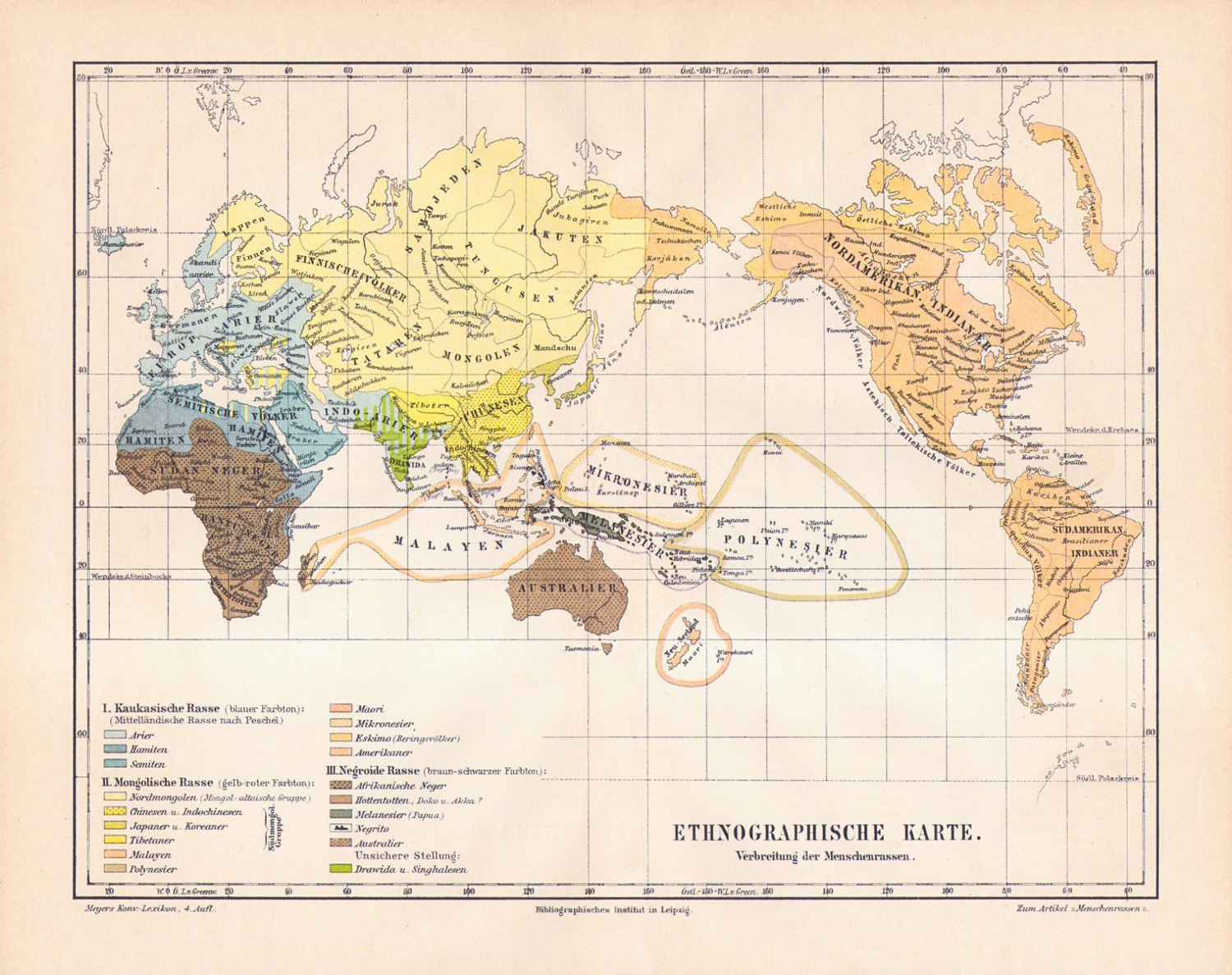
Iranians have called their country "Iran" since ancient times, the name being ultimately derived from Airyanem kshathra, or "land of the Aryans". The first Iranian empire had its origins in Fars province (Parsa in Old Persian), so the Greeks called the country "Persis," whence "Persia" is derived. That name was used in the West until 1935, when the Shah politely asked everyone to start using the name Iran. "Aryan", on the other hand, means "noble" in the Proto-Indo-Iranian language. For the Iranian peoples, the term is used to call themselves and their land; other than the Islamic Republic, Afghanistan was known during antiquity as "Ariana", while a part of the Northern Caucasus settled by the Eastern Iranian Ossetians is known as "Alania". In Sanskrit, it is used as a term of respect for kings, nobles, and enlightened teachers. During the Age of Exploration, the Europeans learned about Sanskrit's relation and supposed seniority to European languages, deciding that "Aryan" must be an endonym for the entire Indo-European nation. Then entire turned into oldest, and oldest turned into superior, and well, you know the rest. Scientific racists did regard Iranians as part of the "Aryan" race
 ◊. They also treated Gypsies (descendants of Indians and thus Aryans) like trash, so...
 ◊, while its climate closely resembles Denver. Earthquakes have therefore been a perennial problem in Iran since ancient times and are objectively more pressing than any threat of foreign invasion. The Bam earthquake of 2003, which killed more than 26,000 people and flattened the titular historic city, still gives many people nightmares today. There have been talks to move the capital to a less earthquake-prone area, but none so far has been agreed upon, as the candidates are all located within the peripheries (Tehran, for all its faults, is very strategically located). Mount Damavand, located to the east of Tehran, is the highest volcano in Asia and, after Elbrus (whose name is derived from Damavand's mountain range, Alborz), is the second-highest mountain in Eurasia west of the Hindu Kush. The mountain is sacred in Zoroastrianism and features a lot in Iranian folklore.
Aside from mountains, Iran also has lowlands. In the Caspian Sea coast, the land abruptly lowers until it hits below sea level. The coast and surrounding mountains are lush and green, with a climate reminiscent of the Southern United States. Historically, the region was known as Tabaristan and was the Last Stand of Zoroastrian Iranians, having resisted Islamization until well into the 9th century. The southwestern Khuzestan Province is a part of the Mesopotamian Marshes. It is geographically identical to Lower Iraq and contains just as much oil, gas, and arable land. As the heart of ancient Elam, it is also the oldest region of Iran. The province is extremely hot climate-wise; Ahvaz routinely exceeds 50°C (122°F) during summer. Finally, the southeastern Dasht-e-Lut desert is contending for the title of the hottest desert on Earth.
Since the 1979 Revolution, Iran adheres to an extreme interpretation of a theocratic political system known as the velayat-e faqih ("Protectorship of the Islamic Jurists"), in which Muslim jurists (faqih) have a big influence in all sectors of the country, including the military, legislative, executive, and judicial branches. There is a 12-member advisory board called the Guardian Council, composed of six members of the Majles and six faqih. The Guardian Council puts the "Islamic" in Islamic Republic of Iran. They are meant to interpret the law based on Muslim doctrine, they can veto bills from popularly-elected officials and they have authority to approve or disqualify parliamentary candidates. It repeatedly vetoes bills in favor of women's rights, electoral reform, the prohibition of torture and ratification of international human rights treaties.
Meanwhile, the Supreme Leader is held by a marja — better known in the West as "Grand Ayatollah" — the highest-ranking position in Usuli Twelver Shia Islam. Some Western media call him simply as "the Ayatollah", implying that the position is interchangeable with the Supreme Leader. In fact, there are over 80 living Maraji as of 2017 who are spread over many different countries, let alone ordinary Ayatollahs, who number in the hundreds. Since the 1979 Revolution, there have been two Supreme Leaders. The first, Ruhollah Khomeini, who served from 1979 until his death in 1989, was an architect of the Revolution and oversaw the early tumultuous events in the Islamic Republic's history, including the Iran-Iraq War. He was succeeded by fellow revolutionary and close confidant Ali Khamenei, who serves to this day. Legally, everyone in the Islamic Republic has to respect the Supreme Leader's decisions, which are binding. In practice, of course, not everyone does. Velayat-e faqih is actually a rather controversial mode of governance, as it is seen as vesting too much political power on the clergy, which, like Christian priests, has never been universally regarded as trustworthy. Shia Muslim leaders outside of Iran not affiliated with the Supreme Leader or the IRGC are especially distrustful; Iraq's highest-ranked Marja, Ayatollah Ali al-Sistani, who prefers a limited role for the jurists, has publicly voiced his disagreement with Iran's interpretation of the system.
The Supreme Leader of Iran commands the Islamic Revolutionary Guard Corps (IRGC), an armed forces created after the 1979 Revolution and separate from the Iranian Army, which exists since before. Its task is to protect the revolutionary establishment. The IRGC includes the Basij, a paramilitary force created during the Iran-Iraq War and made up of mostly young volunteers, as well as the Quds Force, an intelligence unit responsible for unconventional military operations. Since the new millennium, the Quds Force has gained notoriety in the world and especially the West, because it has built a wide network of political patronage in countries aligned with Iran and discreetly or publicly supports many insurgents/freedom fighters in others. Hezbollah of Lebanon, the Houthis of Yemen, the various Shia paramilitary groups in Iraq that arose after the fall of Saddam Hussein, and Hamas of Palestine all have deep connections with the IRGC. For this reason, Iran is designated a state sponsor of terrorism by the United States, and the IRGC itself is designated a terrorist group by the US, Canada, Bahrain, and Saudi Arabia.
The president from 2005 to 2013 was Mahmoud Ahmadinejad, widely noted for his antics and tongue-twister name. Widespread protests broke out over the results of his last election (2009), but were quickly put down. This was big news in the West, but then Michael Jackson died and they forgot about it. The President famously declared at Columbia University that Iran didn't have gay people like the United States did, and is an avowed Holocaust denier, as well as being anti-Israel in general. Internally, Ahmedinejad was noted as a populist and a leader of a movement of pietist laity: he was the first president not to be a cleric (he was a civil engineer and professor of engineering before going into politics full-time), and his faction was noted for mostly being made of hard-headed merchants and professionals, deeply religious and conservative but with a suspicion of clerics (he and Khamenei famously did not get along).
Ahmedinejad's successor as president is Hassan Rouhani, who surprisingly won the 2013 elections in one round. Rouhani is noted as a moderate cleric, from the same faction as former President Akbar Hashemi Rafsanjani, and a pragmatist engaged in serious diplomacy on the nuclear issue, of the same clout as former President Mohammad Khatami. Under Rouhani, Iran ironed out a diplomatic deal with the U.S. and European powers in 2015 in which the country promised to reduce its secretive nuclear weapons program in exchange for reduced sanctions, though this proved to be a short-lived win.
Along with the Celts, ancient Iran was one of the most egalitarian societies with regards to gender. Women served as warriors, generals, and civil administrators. Today, women face numerous restrictions on dress and behavior, enforced with varying degrees of zeal. For instance, it is mandatory for women to wear a head covering when out in public, and failing to do so may lead to heavy fines or worse. Despite this, there is a strong women's movement in Iran.
In addition to its poor track record with women's rights, Iran is also notorious for its government's strong opposition to gay rights. Being gay was quickly criminalized under penalty of death after Khomeini's rise to power, and Khomeini himself likened mass killings of gay people to peeling off dead skin. Conversely and paradoxically (given the intertwined nature of LGBT identities), the Iranian government is also one of the most openly supportive of transgender rights, and both gender-affirming healthcare and changing legal documents to match one's gender identity have been legal in the country since the 1980s. However, such support is still based in a conceptualization of being trans as a "sickness" only curable through sex reassignment surgery.
Iran has the second-highest execution rate in the world, just behind China. Alongside North Korea, Saudi Arabia, and Somalia, it is also one of the last countries in the world that still carries public executions.
The Iranian economy is very interesting to economists, as it has robust GDP growth, but both inflation and unemployment are high—and having all three together is supposed to be impossible. As it turns out, when you factor out oil, Iran's economic growth rate is rather small—in other words, Iran is facing stagflation. Although sanctions haven't exactly helped Iran's economic circumstances, it does mean that Iran's current economic policy—which is highly inflationary (to the point of near-hyperinflation in late 2012)—is exactly the opposite of what it should be doing from a purely economic standpoint. (Mainstream economics holds that when faced with stagflation, the first priority should be contractionary monetary policy to fight inflation, taking the hit to growth and employment while prices stabilize; for political reasons, Iran can't do this, as a hit to growth or employment might cause political instability, resulting in the whole complicated political system outlined above crashing down.)
The Iranian rial is notoriously the world's least-valued currency; a US dollar is (as of April 2024) worth around 41,000 rial in the official exchange rate, but even that is still undervalued compared to black market rates, where it fetches around ten times that value. The Iranian rial used to take turns with the Venezuelan bolívar and the Zimbabwean dollar as the poster child for modern-day "worthless foreign currency", until both are abandoned by their respective governments.
Since the inception of the Islamic Republic during the 1979 Revolution, Iran has garnered four different nations that qualify as their Arch-Enemy. Iraq was always a regional rival due to the oil issue, even under the Shah, but it wasn't until Saddam Hussein came into power that things really boiled over. Sensing the turmoil wrought from the Islamic Revolution, Saddam launched a military offensive in an attempt to gain control of Iranian oil, consequently instigating a war that lasted throughout the 1980s. Most countries supported Iraq, the largest contributors being the Soviet Union and France, with America even going so far as to ignore Saddam's use of chemical weapons, although Iran did receive foreign aid, most notably from China. It was only after the death toll reached a quarter of a million deaths that anybody was willing to negotiate a ceasefire. Ruhollah Khomeini, the orchestrator of the Revolution and the Supreme Leader of Iran, refused initially. It wasn't until Hashemi Rafsanjani, his deputy, persuaded him otherwise that he accepted the ceasefire. Tensions remained long after the war, and it wasn't until Saddam was dethroned that Iran and Iraq have started patching things up.
Meanwhile, Iran has long felt that Israel is an illegitimate state built upon unjust occupation of Palestinian inhabitants and a foreign "cancer" in the Middle East. Israel feels that its existence is threatened the prospect of Iran obtaining nukes (and vehemently maintains that Iran is looking to get nukes). Iran insists that their nuclear program is for peaceful, civilian purposes, pointing to their being a signatory of the Nuclear Non-Proliferation Treaty (something Israel has not signed due to their "nuclear ambiguity"). Khomeini prosecuted Jews (along with anyone he felt was insufficiently Muslim) by the thousands under his rule, although things have softened up somewhat since Ali Khamenei succeeded him, as Jews now have a member in the Iranian parliament. Nevertheless, Israel and Iran maintain their hostility. This has led to something of a proxy conflict between the two, as Iran funds Hezbollah in Lebanon (whose founders were followers of Khomeini) and Hamas.
Iran's bitter feud with the United States of America has a long, complicated story, beginning with conflicts over Britain's sphere of interest over Southern Iran in the Victorian Era and US backing of it, to an invasion in World War II, to ending a complicated standoff by overthrowing the popular, relatively liberal Prime Minister in 1953 (who wished to nationalize his country's oil when it was a hot strategic commodity, resulting in his group making cause with the Soviets even if he personally disliked Communism) and re-instituting the authoritarian but pro-Western monarchy of the Shah. When the Islamic Revolution came around, Iranians took the American Embassy diplomats hostage for 444 days (and as Argo told - with some licenses and ensuing protests from the Iranian government
- a few employees managed to hide in the Canadian embassy and were removed from the country with a Crazy Enough to Work plan). It should be noted America and Iran have tried to patch it up but, because of the inability to appease all factions within and outside them both and at least largely irreconcilable worldviews between the two, thus far it hasn't worked. Currently, Iran is under sanctions by United States, and the state has been under the US's state sponsors of terrorism list since 1984.However, just about the only country more reviled than even America is Saudi Arabia. Iran and Saud are so diametrically opposed to one another that it's a miracle war has not broken out. For starters, the Saudis are in the Arabian Peninsula, the homeland of both the Arab pan-ethnicity and the entire religion of Islam; Iran is in the Iranian Plateau and mostly Persian, and has been conquered by Islamic Caliphates at various points in time. Saud is a leading member of the Sunni version of Islam, whereas Iran became the largest Shia-leaning Muslim nation (the schism between Shia and Sunni Muslims is better-explained here). Modern Iran was founded on populism (it's not called Revolution for nothing), Saudi Arabia was founded through tribal dynasties playing power politics while Western empires destroyed the last Caliphate. Iran is something of a theocratic authoritarian oligarchy that often settles internal oligarchical differences by polling, while Saudi Arabia is an Egopolis absolute theocratic monarchy that has a solid division of power between the royal family and theocratic Sunni instructors who run domestic policy. Both are major producers and developers of oil, so they tend to butt heads over the right to regional hegemony. To that end, Saudi Arabia sabotages the countries that are allied with Iran, such as parts of Lebanon and Syria, and rallies fellow authoritarian monarchies to gang up on Iran. Meanwhile, Iran supports predominantly-Shi'ite resistance groups such as the Houthis in Yemen and the protesters in Bahrain. The Syrian Civil War is the highest this conflict has ever reached, where many would consider it to be less of a Civil War and more of a proxy war between Saudi Arabia (and its allies) and Iran. Since 2023, Iran and Saudi Arabia have been on a détente, with ambassadors (mutually recalled since the 2016 storming of the Saudi embassy in Tehran) being appointed again and leaders publicly stating that they have put the past behind them. Whether it will last remains to be seen; President Mohammad Khatami and King Fahd previously said the same thing in 1999, only for the relationship to go down the drain in the new millennium.
Iran has had a friendship with Armenia going back to ancient times, despite religious differences, though this strains Iran's relations with Azerbaijan as a result...which may seem strange at first, since more Azeris live in Iran than in Azerbaijan, and Tabriz, the capital of Azeri culture, is in Iran. Ayatollah Khamenei (the current Supreme Leader) himself is Azeri on his father's side. Iran's neutrality in the Nagorno-Karabakh War with Armenia was what really irked Azerbaijan. And Azeri nationalism being what it is, some of the more extreme nationalists believe northern Iran rightfully belongs to Azerbaijan (if anything, it's the other way around). When Azerbaijan first became independent in 1918 it took its name from the northern Iranian province (it was known as Caucasian Albania in antiquity; Azerbaijan was the name of the satrapy installed by the Sassanids, which did encompass both sides of the border. However, the Azerbaijan of the past was Iranian, not Turk. It's complicated); Iran suspected this naming as a ploy for the country to eventually annex the province at some point in the future. In response to this tension Israel has been grooming Azerbaijan as a possible ally, selling them weapons. Also, with the economic sanctions in place, Armenia is one of the only bordering countries that will still trade with Iran (not that it has much of a choice, since two out of the four countries that border with it have closed their borders). As a result, the two countries have a vested interest in keeping one another happy.
In 2015, the government of Iran and a coalition of several other governments, including the US, the UK, and Germany, came to an historic agreement that would involve lifting most of the sanctions in exchange for Iran discontinuing any plans for a nuclear weapon and submitting to random inspections to ensure they were not building one. Though lauded in some circles (notably, of course, Iran itself), conservatives in many coalition governments were mercilessly critical of the agreement; Prime Minister Benjamin Netanyahu of Israel called it a "stunning historic mistake," and American conservatives unfavorably compared it to Neville Chamberlain's infamous appeasement of Adolf Hitler. When one of those conservatives ended up with the office of president in 2016, he decided to pull the United States out of the deal and reinstate the sanctions. While other signatories are fighting hard to save the deal, it is effectively moot now.
It's important to note that most of Iran's allies are similarly geopolitical pariahs. It is one of the few countries that supports the Syrian government in its ongoing civil war. It also gets along well with Russia, Cuba, and North Korea.
During the time of the Sassanids, Persians were settled in the Caucasus to strengthen the empire's defenses against the Byzantine Empire. Their descendants, the Tats, still live there to the present. In the 8th century, Persians worked as administrators and traders of the Caliphate's conquered lands in Afghanistan and Central Asia, spreading their language to locals, not unlike the medieval Ostsiedlung of Germans into Eastern Europe. This is why Persian is spoken as a native and official language in Afghanistan and Tajikistan in large numbers (under the names Dari and Tajik, respectively).
Although Iran is an Islamic theocracy, it is not controlled by Shari'a Law. The country's judicial law is made-up on the spot. Iran's political system is supposed to be a mixture of "what's good and evil according to the subtext." This is mostly because Shari'a is chiefly a Sunni concept, and relies on an interpretation of the way the judiciary ought to work that fell out of fashion in Shi'a circles several centuries ago. Mainstream Shi'a jurisprudence is of the Usuli branch of the Ja'fari school, which grants (among other things) extensive power to judges to interpret and re-interpret Qur'anic law as they see fit in a process known as ijtihad; ijtihad is seen in most Sunni circles as more or less impossible in modern times, and its revival and application to modern times is a very controversial issue among Sunni legal scholars.
Though Iranians do not like to say they imitate Western culture per se, in reality the country is extremely multicultural and open to foreign influences. Not much
has changed in 2000 years.Despite having an Islamic government, the country has a relative tolerance for religious minorities.note Christians, Jews, and even a few Zoroastrians have had communities in Iran for centuries. This is surprising when compared to neighboring Turkey, which also has a Islamic majority but a secular government, and yet are far less welcoming to minorities.
Iran has a one-day weekend, one of the three countries to adopt it in the entire world, alongside Djibouti and Afghanistan. Friday is the sole day off of the week as mandated by the law. Friday is the equivalent of Sabbath in Islam, and, considering that Islam shapes up the society of modern Iran, the rule is strictly upheld. Setting up Friday as a holiday is actually quite common in countries that observe Islamic governance, but they also adopt a different day as a complementary weekend, while Iran, for some reason, doesn't.
Iranian cuisine is very interesting and tasty. Those unfamiliar with it should think of a blend of Pakistani/North Indian, Caucasian and Middle Eastern, with Middle Eastern more dominant, as well as some Mediterranean and Russian thrown in for good measure. Of course, it isn't so much a blend as a part of a larger spectrum of cuisines; many dishes considered characteristically North Indian, Caucasian or Middle Eastern have their origins (if not in their current forms) in Iran (e.g. kofta for the Middle East, piti for The Caucasus and naan for Pakistan/India), while Iran has itself imported, modified, and naturalized a large number of dishes from its neighbors. Naturally, the Iranian kitchen produces many delicious dishes, including chelo-kabab (Turkish kebab with rice cooked in the Iranian way. First rice is cooked with steam until it becomes soft and floppy like a marshmallow. Then it is dried and cooked again until it loses all the nutrients, but gains more flavour), khoresh-ghorme-sabzi (Biff, a special mix of vegetables and beans with spices. Eaten with rice), khoresh-gheime (Biff, split pea with whatever you want, eaten with rice), koofte (Meatballs. In Turkish parts of Iran, they're made with rice and vegetables. They're also called koofte-Tabrizi), and many, many more.
Stereotypical people in Iran are oft described with derogatory words. These include dash-mashti (chivalrous men who embody the javanmardi
), laat (douchebags who waste their time, rarely doing anything), bache-mosbat (young bookworms who have autistic-like behavior), jakesh (the world literally means pimp, but it's used to describe loud-mouthed assholes in general), tork (meaning Turk, this word is used to describe dumb people), and bache-sosol (hipsters, in general).The Bazaar of Tabriz
is famous as the world's largest covered bazaar and is a UNESCO World Heritage Site.Movies about dash-mashti (see above) were also popular at that time. These people had a promiscuous love interest, and even wives, but they preferred having sex with their favorite prostitute. They had master degrees in knife fighting, and they were all raised in poor neighborhoods by housemaid mothers. Although most of the above movies were extremely cheesy, there's one masterpiece, which is considered the best movie of early Iranian cinema, called Gheisar. In this movie, Gheisar, our dash-mashti, seeks revenge after death of his brother and sister. His sister committed suicide after being raped by her friend's brother, and his brother was murdered for going after that dude. Long story short, he spends most of the movie running from cops.
Another good movie from this era is an adaptation from a short story called Gaav (cow). Gaav is about a simple, rural man who, after his cow dies, goes crazy and thinks he's a cow. There's also The House Is Black, a memorable 1963 documentary short about life in an Iranian leper colony.
After the revolution, films changed to fit the law. Also many children's movies with cute puppets were made during the 80s and 90s, because producing animation was too expensive and time-consuming. In recent years the relatively thriving underground movie scene from before the revolution has seen a come back, with many anti-gov films being made either clandestinely in country or abroad by expats.
Iranian cinema has become popular in Europe. Some notable post-revolution Iranian movies are:
- Mother: A mother who has 5 children is dying, so she invites them to her house. The children have been apart for many years, and when they find each other living under the same roof again, instead of attending their soon-to-be dead mother, they spend their time conflicting with each other.
- Kamal-ol-molk: Biography of the famous titular painter, Mohammad Ghaffari.
- Storks Dream Without D: A surreal work from Hussein Yari.
- Puppet Thief: Sci-fi children's work, Exactly What It Says on the Tin.
- The White Balloon: A young girl wants to buy a balloon for Nowruz. A simple movie with a simple plot, it is nevertheless a well-crafted one. Directed by then-fledgling Jafar Panahi.
- School of Mice: Puppet movie mice who are escaping from a cat.
- Kolah-Ghermezi and Pesar-Khale: Possibly the most famous children's movie, about some boy who wants to be on TV (with more laughs). Two main characters (Ghermezi and his cousin) are played by puppets.
- Pari: A Mind Screw movie, but a well-done one.
- Dorna: A live-action children's movie.
- Dog Massacre: In the early days of the Shah's fall, a man has sent his wife to clean up his fraudulent history so he can start a new life in the new government.
- The Red: About a very, very dysfunctional couple.
- Mom's Guests
- Taste of Cherry: Probably the most famous movie of Iranian auteur Abbas Kiarostami, about a man seeking help with his suicide. Suprisingly un-depressing for some reason.
- At Five in the Afternoon
- A Separation: About the disintegration of a marriage, Iranian-style, which has won quite a few awards. First Iranian film to win the Oscar for Best Foreign Language Film.
- Children of Heaven: An inspiring movie about a brother and sister who live in relative poverty in Tehran.
- A Girl Walks Home Alone at Night: "the first Iranian vampire western", released in 2014. Actually made and financed in the USA, although the writer-director and many of the actors are Iranian, and all the dialogue is in Farsi.
- Cafe Setareh
- The Salesman: Husband-and-wife actors have to cope after an incident of shocking violence. Second Iranian film to win the Foreign Language Film Oscar.
As for TV, Iran produced good shows with original plots before they became soap opera-esque drama. Foreign shows have little to do with time slots; reruns are rarely found in Iranian TV. Some notable Iranian TV series are:
- Hezar Dastan: From the director of Mother and Kamal-ol-molk, this show had such a great location that it's still being used by other historical shows.
- Amir Kabir
- After the Rain: A TV series set in olden days, centering around a Jerkass land owner who has a dickhead brother in law. There's some Guy-love between the two, enough that after the feudal "Arbab" remarries another woman, the in-law kills him and burns his house.
- The Nights of Barrareh: A journalist is deported to a village called Barrareh, home to some completely dimwitted people who believe that Alexander the Great once set foot there and tripped, Victor Hugo was theirs and peas are the only food on the planet.
- The Magic Lamp: Probably the only Iranian show that's comparable to American shows.
See Persian Media for more info regarding Iranian/Persian media and personalities.
Pre-Revolution
- Lucy-May of the Southern Rainbow was so popular in Iran that it inspired many Iranians to move to Australia.
- The Story of Perrine was so popular in Iran that it won two animation contests.
Post-Revolution
- Alarm für Cobra 11: Very popular in Iran, although the censors have pushed most of the viewers away from the state-run tv. These days, watching the show in the original German is the mark of a true intellectual (who still feels the need to watch this kind of show) or a pretentious show-off, or both.
- Some Western Animation popular in Iran are Barnyard (Although it did not have an official dub, it was awesomely translated) and Spongebob Squarepants, that received a knock-off of its own.
The Iranian flag

Emblem of Iran

The Iranian national anthem
—
Government
- Unitary presidential constitutional republic
- Supreme Leader: Ali Khamenei
- President: Ebrahim Raisi
- Vice President: Mohammad Mokhber
- Parliament Speaker: Mohammad Bagher Ghalibaf
- Chief Justice: Gholam-Hossein Mohseni-Eje'i
Miscellaneous
- Capital and largest city: Tehran (تهران Tehrân)
- Population: 83,183,741
- Area: 1,648,195 sq km (636,372 sq mi) (17th)
- Currency: Iranian rial (ریال) (IRR)
- ISO-3166-1 Code: IR
- Country calling code: 98
- Highest point: Damavand (5610 m/18,406 ft) (21st)
- Lowest point: Caspian Sea (−28 m/−92 ft) (17thnote )
