
"To stop those monsters, one-two-three,
Here's a fresh new way that's trouble-free.
It's got Paul Anka's guarantee...
Guarantee void in Tennessee."
Here's a fresh new way that's trouble-free.
It's got Paul Anka's guarantee...
Guarantee void in Tennessee."
Hey! We've got a marvelous, fantastic deal for you, one that will make your wallet heavier, your life better, your teeth whiter and your significant other want to have sex with you every night. And the price is so damn low, we're CRAZY!
Except for you doofs in Nebraska. You're stuck out, and we're certainly not going to tell you why. Na na na-na na!
Often summed up quite simply with "Void where prohibited", a phrase which shifts the onus of learning about obscure laws away from the seller and onto the consumer.
Compare to No Export for You. If it's a limitation to something that is being exported, it's this trope crossing with Bad Export for You. For more information on why this trope happened, see the Analysis page.
Examples
open/close all folders
Advertising
- In the United States, many fast food discounts are void in Alaska and Hawaii.note There's good reason for this. Alaska and Hawaii are part of the US, but are not in the contiguous US, so it takes more money to get the product shipped out there. For the same reason, Amazon Prime specifies that the fastest free shipping options are only available in the contiguous US.
- An example of this played for comedy is in this
 Microsoft video made as a joke advertisement for Windows 1.0. Apparently this "advanced operating environment" was available everywhere, "except in Nebraska!" Explained here.
- An '80s Federated Dept. Store commercial starring Shadoe Stevens played this for laughs; the disclaimer portion of a faux infomercial ad included the phrase, "offer not available in Squid Valley, void where inflatable".
- Back in the 1980's, Augsburger Beer used to have their Brewmeister, Hans Kessler, do their radio commercials (he always pointed out that, in spite of its German-sounding name and German-accented Brewmeister, Augsburger was brewed "right hier in ze goot old U. S. ov A."). At one point, when they were holding a contest, he gave a brief summary of the rules, then added, "Just remember to drink Augsburger Beer, and void where prohibited." (beat) "Did I say zat right?"
- The infamous Westwood College "Tighten up the graphics" commercial was not intended for residents of Texas or Massachusetts.
- Nearly all Car insurance and similar things from the UK are not applicable in Northern Ireland despite being part of the United Kingdom.
- A jarring example for discounts and other goodies for Lasik Eye Surgery was played in California. Except towards the very end of the ad, it says "Offer void in California".
- Likewise, at least one As Seen On TV company won't ship to Wisconsin, but still advertises there.
- In television markets serving two or three states, ads for financial services such as title or payday loans might be useless in another state because of usury laws against them in one state, while another allows them; likewise some laws have been passed to disallow loan agreements with members of the military (some operations take advantage of them being overseas to charge insane amounts of interest).
- Wisconsin is the only state which bans "rent-to-own" stores that offer furniture or electronics on a week-to-week credit payment plan due to strict consumer laws passed against them in the 90s due to heavy complaints, meaning Rent-A-Center and Aaron's national or border-state advertising is a thirty second waste of money there. Rent-A-Center skirts the law with their "Get It Now" stores, which offers traditional department store/credit card-like financing and keeps them ready to switch back to the traditional Rent-A-Center model if the laws are pulled back.
- Many circulars advertising sales on American flags in the Midwest will mention in fine-print that the offer is void in Minnesota. That's because Minnesota has a law requiring all U.S. flags sold in the state be made domestically, and these on-sale flags typically come from China.
- Many chains in New Zealand decided not to offer some products or sale prices at their airport stores. Probably justified with Burger King when it had the promotional Bomb burger...
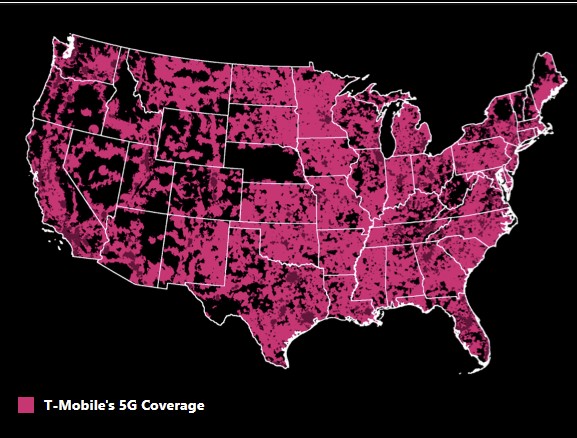
- T-Mobile's advertisements for 5G services notoriously have a giant Nebraska-shaped hole◊ on their coverage map (other states on the western half of the United States have sizable gaps as well, but Nebraska is almost completely untouched). Much of this is down to infrastructural issues (Nebraska being a very rural state, and thus lacking the networks needed for 5G), issues with legacy networks from other companies, and the state not being considered a major priority.
- The new crop of "Mechanic insurance" programs for cars play nationally, but if you're in California, don't bother trying, the fine print says the programs are not offered in California.
Alternate Reality Games
- Omega Mart: "Millk" is advertised as on sale for $4.75 (per gram), but only for every location save the Las Vegas Omega Mart.
Anime & Manga
- Several chapters of Sleepy Princess in the Demon Castle have Syalis wanting some item she saw on the shopping channel. However, the demon realm is outside the shopping channel's delivery network (presumably because they don't have postmen willing to fight their way through hordes of monsters just to deliver a package), so Syalis has to try to make something similar to the advertised item instead of buying it.
Live-Action TV
- Deal or No Deal's play-at-home Lucky Case Game cannot be played by residents of North Dakota, Tennessee, South Carolina, Nebraska, and Minnesota.
- When John Henson was host of what was then called Talk Soup on E!, he used to run fake offers with a long rolling list of disclaimers that always ended with "Valid in 49 states — sorry Tennessee!"
- Mystery Science Theater 3000 has made jokes about this.
- The comedy show Tush on Superstation WTBS in the early 80's would often have disclaimers on their fake ads stating 'Void where prohibited and, of course, in Wisconsin.'
- Parodied in The Daily Show skit "Freedom Packages," an imitation infomercial offering "packages" of US intervention. In the end, after a long list of possible "side effects," it says "Package not valid in West Bank and Gaza."
- Most Disney Channel contests have "Void where prohibited in Maine". Justified regarding the local law, which forbids advertising to children.
- Charter Communications has "Open to legal US residents of the 48 states (including DC)" except New York and Florida", though it has no coverage in Florida.
- Due to market eccentricities, The WB was unavailable directly in the Mobile, Alabama area for the first six years due to their station, WFGX being licensed to the beach community of Fort Walton Beach, Florida, which was ninety miles away (and much closer to Panama City than their home market) and actually only able to cover the Pensacola half of the market, and was unable to move closer. Cable providers refused to pick it up because of a terrible signal and schedule outside of network time. Eventually even The WB tired of this and took their affiliation to Gulf Shores-licensed WFNA in 2001, which actually covers the whole market. WFGX was thus stuck with their terrible schedule and Jewelry Television (and wasn't even considered for The CW at all) until MyNetworkTV came along, and even then was stuck with no cable coverage in Alabama. Only after the digital age when it was able to move its tower, and it was bundled in with their sister ABC station in Pensacola, was it able to finally get viewership in Mobile.
Magazines
- MAD once spoofed this trope with a coupon that was "Void where prohibited. Prohibited where void. Void and prohibited where not allowed."
- If a British comic, such as The Beano or The Dandy, has a cover mounted free gift, it would often be absent when sold in the Republic of Ireland. Probably also applies to Canada and New Zealand.
Video Games
- Parodied in World of Warcraft: One of the demons a warlock can summon, the voidwalker, a kind of shadow/nothingness elemental, sometimes says "I...am...void...where...prohibited." when summoned. There is also the many real-world competitions on the World of Warcraft website, as well as the launched Arena Tournaments. In Europe, many countries within the EU are prohibited from entering any such competition due to national laws that are beyond Blizzard's control. People in Quebec also cannot enter the tournaments.
- Happens frequently with contests in City of Heroes that have real-world prizes. Since European players were so often excluded there were eventually Europe-only contests held for those players that the Americans cannot enter. Also, one of the major locations in the gameworld is Paragon City, Rhode Island; and that US state is excluded from participating in real-world contests.
- Spore had an expansion pack which was announced available to all players in the US, except residents of Maine.
- Parodied in Super MNC where, during an in-universe ad, the announcer rattles off a long disclaimer for a product before ending with "{Product} is NOT void where prohibited! You hear that Quebec? Go Suck it!"
- Parodied in a Team Fortress 2 "Merasmission" completion notice:
"'Congratulations! The gift I give you... is death!'... is what Merasmus would be saying if Merasmsus' lawyers hadn't advised him that death is not an acceptable form of payment in New Mexico."
Web Animation
- Parodied on Homestar Runner in a commercial for the "Strong Bad Sings!" music collection: "Refunds not available in Maine or Arkansas."
Webcomics
- Parodied in El Goonish Shive with the commentary for this comic.
This comic now has my official RECAP SEAL OF APPROVAL! This seal is valid everywhere on Earth except Arizona. I don't know why it's not valid there, but it's beyond my control. My apologies if that inconveniences anyone.
Western Animation
- The Simpsons:
- Paul Anka's jingle for a monster-busting product he endorses in "Treehouse of Horror VI" ends with Lisa interrupting to state that his guarantee for the product is void in Tennessee. (Which, of course, raised some Wild Mass Guessing about Where the Hell Is Springfield?.)
- Lampshaded in the episode "Fear of Flying" where an official at Krazy Klown Airlines offers Homer and his family free tickets to anywhere in the U.S., "excluding Alaska and Hawaii, the freak states.".
- "Homer vs. Lisa and the 8th Commandment":
"You're watching Top Hat Entertainment. Adult programming all day, every day. Except in Florida and Utah."note
- Sheep in the Big City exaggerated this to absurd lengths in a cutaway gag, with a list of terms and conditions that ran for at least a minute. And the prize was a single can of Shrimp Cola.
- Two FOX affiliates (Birmingham and Greensboro) and one FOX owned-and-operated station (Austin) never broadcast Fox Box/4Kids TV in its Saturday morning time slot until it went defunct at the end of 2008.
Other
- Played humorously by OK Go during their OK Go Dances With You YouTube commercial, where people living in Antarctica were excluded from the contest, because they were too far away (sucks to be you).
- Parodied in The Capitol Steps's fake commercial to treat "electile dysfunction": offer not good in Florida.
- Inverted in hayleyghoover's Annoyances 11-15: the pilgrim figurines are available for 60 easy payments of 29.99, but only in Oregon (and you get a free spatula!)
Variations
Asia
- Inverted in the UAE: Over 100 anime featuring a girl as a protagonist, including Magical Girl anime, have been banned from or never released in Arabic-speaking countries because of promotion of Zionism due to prominent use of six-pointed stars, sexually suggestive scenes (including clothing) or any elements featuring within the series that are against the Islamic law such as depiction of magic and occult. Among those were Creamy Mami, the Magic Angel, Lyrical Nanoha, Puella Magi Madoka Magica, Sugar Sugar Rune, Ojamajo Doremi, Puni Puni Poemy and Cardcaptor Sakura. In The New '20s, both Sailor Moon and Cardcaptor Sakura became available in the UAE... but for expats only, this means that it excludes their citizens.
- Malaysia tends to get a lot of this since The New '10s with PayTV programs due to the ruling party moving towards extreme right conservative governance, despite there already being separate feeds of channels for Malaysia, Singapore and the rest of Asia. Sometimes, movie premieres advertised on HBO or Anime on Animax will bear the footnote "Not available in Malaysia and Brunei" when they could've chose to just omit advertising the premiere on the feed altogether. It's as if they advertise the show-that-you-will-not-get-to-see just to rub it in the face of the viewers...
- The inverse is also often true for other people in Asia- Filipinos and other Southeast Asians have complained that Disney often hold contests but excludes anyone from outside Malaysia or Singapore from participating. This despite Filipinos, Thais, Vietnamese and Indonesians getting a different feed of Disney Asia (as in the whole region feed) from Singapore and Malaysia- they could've just advertise it on the Malaysian and Singaporean feed instead of on all feeds Asia-wide. This also because both Malaysia and Singapore have full control of the feed itself- See Network Decay for the whole info about it.
- Malaysia has an equivalent of the US' "Price slightly higher west of the Rockies" disclaimer: Price slightly higher at the east coast of Peninsula Malaysia and the Borneo states of Malaysia, and Genting Highlands. The hike in the east coast and Borneo states are justified in that a lot of the goods are manufactured on the west coast of the Peninsula where a majority of the factories and thus economy is focused, and transportation to the east coast (especially to the Borneo States) are not cheap (especially since flight or sea freight is involved when it comes to getting products to the Borneo States). However, the price hike in Genting Highlands is because the area's a tourist trap and nothing else. A variation of the above (usually found on discount coupons) is "offer not valid at international airports, Genting Highlands, Labuan Island, Pangkor Island and Langkawi Island", again mostly because of the former two being tourist traps, but Labuan, Langkawi and Pangkor are special exemptions because the entirety of the islands are declared as duty-free trade zones. Meaning that the price of goods in those islands are completely tax-exempt, and the companies don't want the complexities of dealing with the customs when it comes to the offers.
Australia
- Competitions run by companies based in Australia which also market their product in New Zealand may only be open to residents of Australia.
- In Australia, it's South Australia, Western Australia and the Northern Territory, because only the east coast matters after all. SA has a very strict Trade Practices Act; NT may have inherited some of them, since it used to be ruled from SA.
- Similarly there's the rural (or "regional") areas: Any time any novel development occurs in Australia, Sydney, Melbourne, Brisbane, Adelaide and Perth will always get it first, and everywhere else will get it never. When Channel Ten launched ONE HD, it apparently neglected to mention that only the capital cities would get it, much to the chagrin of rural viewers.
- A subversion of this is that all offers in South Australia are usually extended to Broken Hill, which is in New South Wales. Among other things linking SA to Broken Hill is the time zone, because during the late 1800's so much of mining industry and SA were tied together. Even more to the point, when Australia adopted standard time in 1895, Broken Hill's only rail link to the outside world ran to Adelaide. (Broken Hill would not be connected to Sydney until 1927.)
- An inversion of this trope: Many cans and bottles are able to be returned to a recycling facility in South Australia for between 5 and 10 cents per item... If the item was originally bought in South Australia. They're available for sale country-wide. No other state offers any such cash incentives.
Canada
- The Canadian version is, "Offer not valid in Quebec." Quebec has its own gambling laws regarding sweepstakes, which differ widely from the rest of Canada, particularly the requirement that anything in English must also be present and accepted in French (which is the province's sole official language, infamous for being contrary to the Canadian government's official bilingual status). There are also separate laws that make certain contests found in advertisements void; in particular it is illegal to advertise to children in Quebec. Since some of those publicity campaigns for contests run throughout Canada, the contest they advertise is made unavailable in Quebec.
- A variation has appeared in an ad campaign with the disclaimer "offer not available in Manitoba"
- Throughout Canada in general, if it's not run by a non-profit, it must also have some form of skill-testing, even a simple math problem, excluding many US promotions.
- The city of Kelowna, British Columbia, Canada was apparently bribed to do this; EB Games (a chain bought out by GameStop) are prohibited from buying used games in city limits, because the pawn shops "complained" that the chain stores took away their business.
- Lampshaded by Tony Kornheiser on ESPN's Pardon The Interruption. After the standard half hour, he and Mike Wilbon "toss it up to Sports Center," but briefly interrupted (no pun intended) the latter show with an extra segment (for a period, this was the "Big Finish"), during which they truly close out their show. Initially, TSN didn't air this segment on its SportsCentre, so at the end of every show, Kornheiser waves a Canadian flag and says "Goodnight, Canada!" SportsCentre has since started airing the segment from time to time.
- The Canadian channel History Television and the U.S. History Channel used to be two completely separate networks with completely separate programming, thus ads for History Channel on A&E (which is available in Canada straight from the U.S.) always made sure to mention that it was not available in Canada. By the late-2000s, however, History Television had become a glorified History Channel Canada in all but name thanks to Network Decay (most of its lineup by then was now just imported History Channel programs), and the channel's owner ended up entering into a license agreement to re-brand it as History in 2012. (The French-language sister channel, Historia, followed suit in 2015, using the History logo but with the Historia name.)
Latin America
- Since several channels are broadcast all over Latin America as a single feed as a cost cutting measure (as opposed to several country-specific feeds), it's not rare to see adverts saying "Only applies to Argentina" or "Exclusively for Mexico."
- In Ecuador, there are 2 TV channels that have programming segmented by region: Ecuavisa and Teleamazonasnote . Because of this, people who live in Quito and neighboring provinces see different programming than those who live in Guayaquil. Teleamazonas raises the bet announces programming on social networks with the disclaimer "except Guayaquil."
Europe
- In the United Kingdom, this is "Not available in Northern Ireland", or more exotically, "Not available in the Republic of Ireland, Isle of Man, Channel Islands or Gibraltar." It may also say "offer only applies for residents of mainland Britain".
- Car insurance is more expensive in Northern Ireland than in the rest of the UK, presumably because there is a higher risk of accidents and/or car thefts. Many of the locals do certainly appear to have their own egregious driving style. More generally, insurance companies would sometimes sneak a clause into the fine print that specifically exempted them from any financial liability arising from terrorist attacks by the IRA, but since The Troubles are now largely a matter for the history books this is less common nowadays. This is played with in a TV advertisement for an insurance company that only operates in Northern Ireland, which includes the slogan "Excludes England, Scotland and Wales" as a "disclaimer".
- In the ITV Border TV region, which covers both sides of the England-Scotland border, "Only available in Carlisle" appears on commercials with perplexing frequency (Carlisle being a city on the English side). It's not particularly clear why Carlisle is such a hub for novel products like Pop Tarts.
- One particularly notable thing is that, despite that Northern Ireland and the Republic of Ireland being countries right next to each other, with a barely-existent border, and are so small that people occasionally refer to them as one; there are still loads of offers open to Northern Ireland but not the Republic of Ireland, simply because the former is a UK nation while the latter isn't.
- Averted in the Republic of Ireland where many offers are made available to "viewers in the North", despite Northern Ireland legally being a different country, largely for nationalistic reasons. Often a second phone line will be set up to cater for Northern Ireland. This tends to be reciprocated in offers that cater exclusively for Northern Ireland - for example, phone-in competitions held on UTV (the Northern Irish region of ITV) tend to have a second phone line for viewers in the Republic to use.
- Many British laws actually only apply to "England and Wales", with Scotland and Northern Ireland getting their own (usually but not always functionally identical) versions of the same Act of Parliament. This is due to the fact that both countries' status within the UK are unique. They were technically independent polities that entered into a kind of anschluss by mutual agreement partially in the 16th century, and more formally in the 18th and 19th centuries - although Northern Ireland originally did so as part of Ireland, essentially inheriting Ireland's status within the UK when the rest of Ireland became independent in 1921. This is the legal precedent that gave Northern Ireland its own Parliament on creation back in the The Roaring '20s (later abolished in The '70s, and replaced with the Northern Irish Assembly in The '90s), and also gave Scotland its own devolved Parliament in The '90s, and very nearly led to Scotland seceding in 2014. In practice, Northern Ireland tends to copy-paste most laws directly from the English and Welsh equivalents as the English/Welsh and Northern Irish legal systems are broadly similar in most important aspects; whereas Scotland tends to make a few more changes due to having a more diversified legal code.
- Inverted in Italy: It's "islands included", referring to Sicily and Sardinia. Sometimes the minor islands (Elba, Pantelleria, etc), however, will be excluded, or, more frequently, just have to pay a higher fee.
- Occurs quite frequently (likely due to legal differences) with contests in German media also issued in Austria. Usually accompanied by something in the vein of "unfortunately void for our Austrian viewers/readers." In teleshopping or quiz shows is usual to find different telephone numbers (charged at different rates) for Germany, Austria and (sometimes) Switzerland.
- In Denmark, all sorts of stuff is often "void in Greenland and the Faeroe Islands". Probably because the islands in question are so far away from Denmark itself. Greenland is a bit of an oddity, being part of Denmark and therefore Europe legally and economically, but much closer to North America geographically.
- Many lifetime warranties/guarantees are void in Germany, where the practice is illegal. For example, Eastpak backpacks' lifetime warranty are slashed to "only" 30 years in Germany, the maximum allowed by the civil code.
- In France it seems to be the départements/térritoires d'outre-mer (overseas departments and territories), abbreviated as DOM/TOM. If they're not excluded from offers, they'll often get higher prices. But considering that, while legally part of France, some of these are actually on the other side of the world, this makes a small amount of sense.
- Hungary had "Area 29" (referring to the phone area code), where phone and internet used to be mainly provided by UPC (later purchased by Vodafone), but using very old infrastructure, resulting in both higher prices for the same bandwidth compared to the rest of the country, and many offers void in Area 29. This was notorious because many places in this area didn't have other ISPs that would provide competition.
- Frequent in Spain, the phrase "valid in the Peninsula and the Balearic Islands" is stated in most ads, thus excluding the far from the mainland Canary Islands. And also excluding Ceuta and Melilla, the two north African cities that have special taxes (just like the Canary Islands). There's also an inversion. Sometimes these ads state that the offer is valid in "Spain, Andorra, and/or Gibraltar". The funnier ones are the contest ads on daytime TV which explain in a long paragraph that you can enter from everywhere but Gibraltar and el Hierro, listing all the islands separately, and then tagging on that you can't enter from Gibraltar or el Hierro — presumably because Gibraltar's part of the UK and el Hierro's a volcano in the middle of the Atlantic, just off the coast of Central Africa.
- BBC One Scotland is exactly the same as BBC One in the rest of the UK, except when it isn't. For a long time this meant the continuity announcer trailing an exciting new programme, and then hastily adding "except for viewers in Scotland". This has become a bit of a meme; for example when Scottish Nationalist leader Alex Salmond was on Have I Got News for You:
"And on Ian's team is a one-note politician with a chip on his shoulder about the English. Except for viewers in Scotland, who'll be seeing a much-loved elder statesman with intriguing views on devolution."
- Armando Ianucci's Shows had a sketch where Armando is so sick of hearing about things being unavailable in his native Scotland that he has a nightmare where he dies and goes to Scottish Heaven, which only has smug documentaries and reruns of Taggart and is very dull.
- Armando Ianucci's Shows had a sketch
- On a similar note, for most of the 1980s and 1990s, BBC Northern Ireland showed its local evening news magazine at an earlier time to the other BBC nations and regions. To do this, it would opt-out halfway through the final presenter link of Children's BBC. As part of this practice, the CBBC presenter would often say "Goodbye Northern Ireland!", a cue for master control to switch feeds from London to Belfast for the start of the news programme. Meanwhile, the presenter would be continuing for another minute or two for the rest of the viewers outside of Northern Ireland.
- Portugal has two variants: either "offer valid only in Continental Portugal" or "except Azores", which excludes one or both of the archipelagos that are a part of the country. Later advertisements mention "other conditional promotions" for the archipelagos instead.
- Many, many offers are unavailable in the Crimean Peninsula due to Ukrainian conflict and the resulting Russian takeover. Ukraine still considers Crimea part of their country, but with no control there whatsoever, all Ukrainian companies' offers are usually void in Crimea in fine print (and for that matter, in the uncontrolled parts of Donetsk and Lugansk regions as well). Russian companies, while having full rights to run business in Crimea according to Russian legislation, often opted not to do so because of possibility to become subject of American and European sanctions. But somewhat averted with proxy companies - no national Russian mobile operator works in Crimea officially, but very similar branded ones do, complete with similar pricing.
- Germany has "only available for people living in Schleswig-Holstein" for online gambling websites, since Schleswig-Holstein is the only German state where online gambling is legal.
- The famed Monte Carlo Casino operates a passport check at the entrance to its gaming rooms. The reason is that Monaco prohibits its own citizens from entry, whether as gamblers or even workers. Ordinary Monégasques have been barred since the casino opened in the 1860s; since 1987, not even the royal family can enter. (At least during gaming hours; it's unclear whether they're barred from entering during public tours.)
- Many driving insurances specifically exclude the Nürburgring in Germany. It's a race track that's open to the public as a toll road when there isn't a race. The fees for crashes and breakdowns are expensive.
United States and related
- Ads for certain stores that have unrelated sister chains in Canada or Mexico (particularly Home Depot) will mention in the fine print/ending blurb that ads run in the US apply to the US only, just in case someone in a border town sees or hears them.
- Alaska and Hawaii get excluded quite a bit as well, especially from travel offers. And long-distance calling or cell phone plans, though with how cutthroat competitive the industry is getting, this is steadily fading away.
- Another common phrase is "Open to residents of the 50 U.S. states and the District of Columbia."
- The Pacific territories – Guam, American Samoa, and the Northern Mariana Islands – are generally excluded from everything. So are the Atlantic territories – Puerto Rico and the United States Virgin Islands.
- "Price Slightly Higher West of the Rockies" used to be fairly common in U.S. advertisements, but improved transportation infrastructure and more facilities on the Pacific coast have rendered this a quaint reminder of the late 20th century. Red Lobster takes this to the hilt, reminding the viewer that not only are their prices higher in Alaska and Hawaii, they are also higher at the chain's Times Square location (which is more likely to take advantage of tourism than anything). Wendy's and KFC later promised that their meats will be fresh (refrigerated) and not frozen in the continental US.
- Hellmann's mayonnaise is advertised as "Best Foods west of the Rockies" as an artifact of The Great Depression, when Best Foods bought Hellmann's and didn't want to change their brand name in a large geographical area for an expensive amount during an inconvenient time; eventually it stuck. McCormick spices also did the same thing for Schilling in the west for years. In both cases though, little was different besides the label and a slight change in the jingle.
- Massachusetts, for a while, heavily regulated auto insurance and thus auto companies could not set their own rates. Despite this, advertisements claiming "safe driver discounts" and such are constantly being played on Boston TV with fine print at the bottom noting that you can't buy it in this state. This is also true in California.
- If you have a gift card, chances are the fine print will tell you that a monthly "service charge" will be applied to your credit starting a year from purchase, except where prohibited. California is one state that prohibits retailers from slowly eating away your unused credit. This particular aspect of the trope is also becoming discredited in a number of other states as well, as A.) more states have implemented laws against this sort of thing, B.) consumers have become more aware of this and C.) this market has become much more competitive.
- In Southern California, a Metrolink rail ticket can get you on every bus for free or at a discount - unless you happen to be going to or from Santa Monica.
- The Lifelock company, which basically promised to protect your identity from any theft, ever, but people still had it happen, including the founder of the company, who would demonstrate the products effectiveness by putting his Social Security number on billboards. Now, laws have been passed that make them unable to offer the anti-theft guarantee it still makes in some states. New York is the big one.
- Safeway offers to match any competitors best deals, but only in Oahu, Hawaii.
- Many contests can't be entered by people who live in Rhode Island because it has a specific law that requires the company to file a legal statement with the secretary of state before it can run a contest there and pay $150. Since Rhode Island is so small anyway, most companies just figure "why bother?" The same is true of Florida and New York (which also require security bonds!) but since they have large populations most people who run national-level sweepstakes just go ahead and pay the fees. And don't even get started thinking about New Jersey...
- If you live in Arizona, chances are you've felt the pain of seeing an awesome contest with tons of gear for the winner - but the fine print will say to the effect that the contest is not open to you, a resident of Arizona. The gaming magazine Tips & Tricks ran contests like this toward the end of its run, and the contest rules always said residents of Arizona could not participate. The editors actually addressed this when someone wrote in to complain; apparently it was just a matter of Arizona having restrictive laws when it came to contests, the most severe of all the states in the US.
- A lot of promotional giveaways in the 1970s or earlier would include in the fine print "Offer void in ..." followed by a laundry list of states. In most cases this was due to poorly-written laws that effectively prevented a company from giving something away for free if there was an element of chance involved, since that made it "gambling". Many of these states have revised their gaming ordinances since and will now allow, for example, McDonald's to run their "Monopoly" promotion, provided that the sponsor makes a way for people to get the game pieces without making a purchase. Wisconsin has an anti-gambling law that prohibits any events from occurring in-state if contestants must pay to enter, if there is a physical prize given out to the winners, and if there is any element of chance whatsoever. Due to this law, it's illegal in Wisconsin to have competitions for nearly all collectible card games, most video games, all pinball games, and a large number of popular board games, including Scrabble and Settlers of Catan unless entering is free, which would make the competitions financially impractical to run if they're giving out prizes.
- In November 2013, New Jersey legalized internet gambling, partly to try to reverse a long decline in gambling revenues for the state with the rise of casinos in New York and Pennsylvania drawing away would-be tourists to Atlantic City. Radio ads advertising this always add that would-be gamblers can only take advantage of this in the state of New Jersey - the law stipulates that you must be physically present in the state (enforced by GPS) in order to partake in addition to being 21; needed since said radio stations are located in New York and Philadelphia.
- Two states completely outlaw gambling in any form: Utah, mainly due to the strong presence of the Mormon church, and Hawaii.
- Green River, Wyoming, is noted as the birthplace of the Green River Ordinance enacted in 1931, which prohibits salespeople from selling door-to-door without the owner's express permission. Some variants of the G.R.O. prohibit all organizations, including non-profit charities, political, and religious groups from soliciting or canvassing any household that declares its express written intentions to be exempt from solicitors.
- Recycling is an interesting one. Many (but not all) states charge a small (and sometimes not-so-small) deposit when purchasing something in a can or bottle. The consumer can get this deposit back by presenting the empty container at an official redemption center. The problem is that a) not all states charge the deposit in the first place, b) the ones that do don't all charge the same amount, and c) the rules for redemption also vary from state to state (aluminum cans must be crushed vs. aluminum cans must not be crushed, for example). And then there are states (California for one) where the per-container redemption amount is only theoretical; in practice, recycling places don't count the containers, they weigh them, and pay a specified amount per pound.
- In the late 2000's, many states were implementing "safe haven" laws. These were laws that allowed parents to bring babies to hospitals, fire stations, police stations and (in some states) churches, without being charged with parental neglect or abandonment. The hospital/fire station/police station/church would then contact a social worker, who would find a suitable foster home for the baby, who would be cared for at the drop-off location in the meantime. This was all well and good, but one state, Nebraska, did not specify an age limit. (All other states did.) The result was that many parents were dropping off older children and teenagers, and some of these parents were driving in from out of state to do so. As this very quickly overwhelmed the foster care system, Nebraska had to suspend its "safe haven" laws until an age limit could be added on.
- Most wholesale clubs offer a premium tier level of membership that earn some money back on your purchases. But some states have stricter laws regarding alcohol, so you won't earn anything in these states.
The Internet
- Even the Internet falls victim to this. Because television shows are almost always licensed for viewing only in certain countries, online players will usually block users from foreign countries. Never mind asking why the networks prefer to limit their potential advertising base, but they do. YouTube offers the ability to do this as well because it offers content from television networks. It's probably easier to list sites that don't do this. Unauthorized uploads on Vimeo and the like obviously don't count. This leads to such absurdities like a Sony ad not being viewable in Germany because it contains music by... Sony Entertainment. So if you're trying to view an official clip from The Daily Show in Australia, the "not available in your location" message mentions, "but hey, at least you have kangaroos and boomerangs." If you want to get past these, just Google Proxy Mate, Hola Unblocker (both for Firefox and Chrome), or just learn how to do proxies. For YouTube, there is Youtube Unblocker.
- An inversion of the above happens with the Spanish branch of Italian media group Mediaset and its... odd... relationship with YouTube. Mediaset has the rights to produce and air the Spanish versions of Got Talent and The X Factor, and the videos of the YouTube channels of both formats are available everywhere but Spain, where you have no choice but to go look for them in Mediaset's websites.
- Unique case with Android devices—due to the fragmented Android forks out there, when an app is released for Android, there's a large possibility that it's only available on Google Play. While Amazon's App Store is the second most popular app store out there and can be installed on any Android device, it seems that not many Triple-A developers are bothering with Amazon's and only publish on Google's. One possible reason for this is that while both platforms are technically compatible with each other when it comes to standalone apps, some apps use special services that only exist on one platform but has a competing and incompatible equivalent on the other (ie Google Play Games vs. Amazon GameCircle, Google Wallet vs Amazon Payments, Google Drive vs. Amazon Cloud Drive), and many developers find forking the Android version to support both quite demanding on their budget and/or human resources.
- On the topic of Amazon App Store: Amazon has launched a new service called "Underground" whose aim is to discourage Allegedly Free Game sales on their store by paying for the game on the user's behalf, and the user gets a truly free game as a result. The catch is that this service is only available to the US and several other select countries, if you live somewhere else then you will still either get allegedly free games or have to now pay the full price for said game. The painful tease here is that the service is advertised on the App Store front page itself for all countries regardless of whether the service is available or not.
- Microsoft gave away a free copy of The Rolling Stones' "Start Me Up" as part of its Windows 95 20th Anniversary promotion. The catch is the offer is only valid in North America, West Europe including the UK, Japan, Australia and New Zealand. Live elsewhere? Clicking on the link on the blog site does launch the Windows store and takes you to the album's page... where you need to buy the song with your own money. Ouch. Even worse when it displays the album but claims that the album cannot be sold in your country, but searching for the song on the store does produce a result, except that it isn't free.
- After the EU promulgated the General Data Protection Regulation, which heavily regulates the management of personal digital data, some international websites began to block EU users entirely or redirect them to stripped-down versions. Such websites include United States regional newspapers such as the Los Angeles Times, which saw no reason to implement regulations for their few European readers.
