"Computer roleplaying games often have mimics... which are always disguised as chests. Chest chest chest. It makes you wish that digital orcs would stick their electrum pieces in a foot locker or some variety of credenza, just to break the ennui of another piratey-looking wooden chest suddenly sprouting limbs and beating you to within an inch of your save file. It would be refreshing like the breezes of summer to be able to say 'Hey! I just had my clavicle shattered by an aluminum tool shed!'"
Adventuring's hard enough — you've got Everything Trying to Kill You, brain-wracking puzzles, hazardous environments, and, if you're unlucky, the interface itself.
And now, the loot wants in on the action.
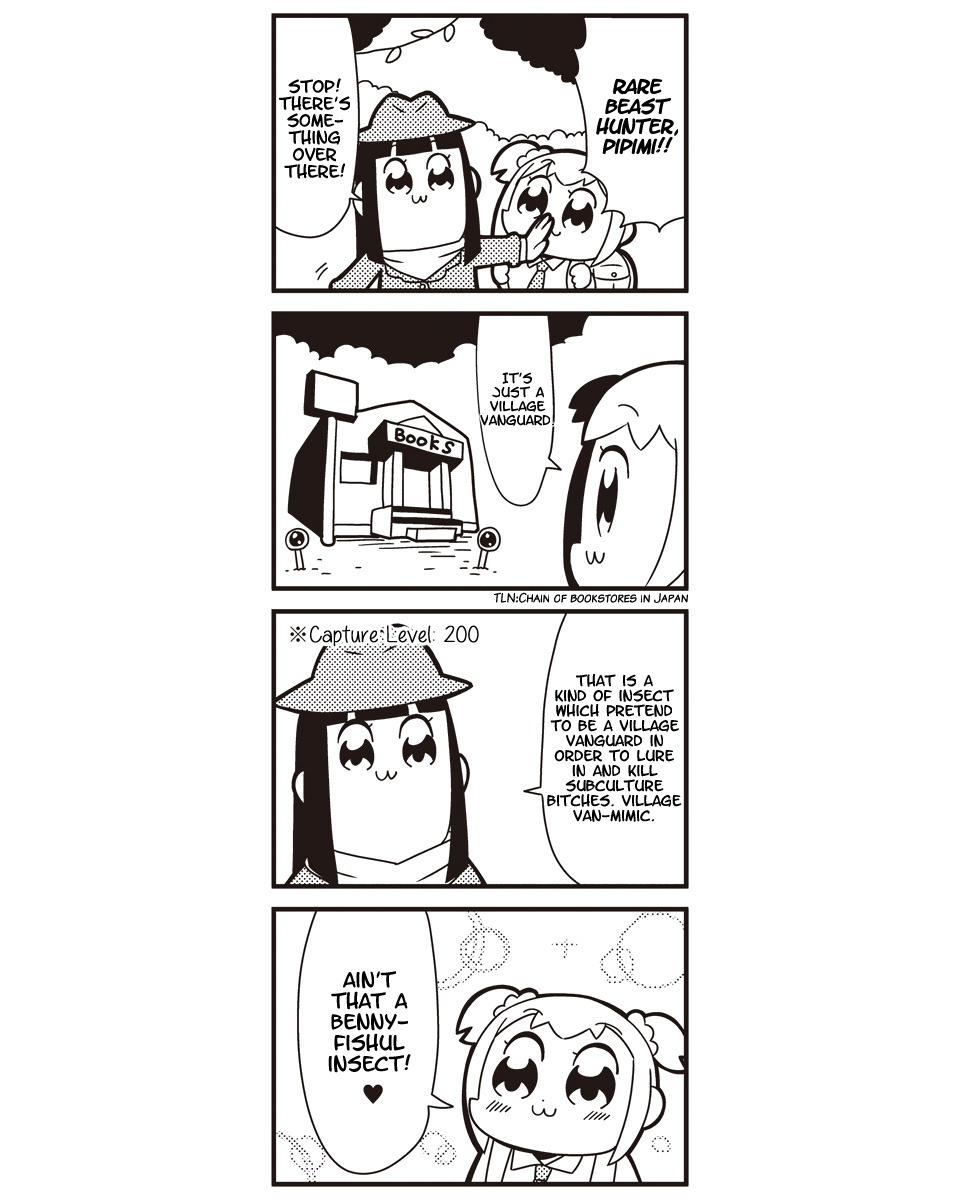
A Chest Monster is an enemy or hazard that has disguised itself to look like something positive: a power-up, an ally, a Save Point, or — in the archetypical example — a treasure chest. They are frequently called "mimics" for this reason, and are generally stronger (sometimes much stronger) in battle than the surrounding Mooks in the area. Sometimes they are ordinary chests with a monster locked inside. It may or may not be possible to escape from a Chest Monster once it's been disturbed — you either defeat it, or die trying.
Obviously, chest monsters aren't threatening at all if you can avoid triggering them in the first place, but in games that encourage you to always open every last treasure chest in sight, this is easier said than done. It may or may not be possible to identify a Chest Monster without opening it up and springing the trap — sometimes there may be a minor flaw or difference that allows you to tell them apart from the genuine article; sometimes you can use an item or ability to analyze it and tell if it's real. Other times the placement is a clue — if a power-up is right there in plain sight with no guards or obstacles protecting it, it might be a trap. Or not. If all else fails and there are no clues, you'll just have to find out the hard way and hope it doesn't bite back.
It makes you wonder; where did these things come from? Did a wizard make them, or have people in the D & D world been putting chests in dungeons so long mimics have had time to evolve to fill this niche?
Sometimes you will get something of value if you beat the Chest Monster. See also Inexplicable Treasure Chests, Inn Security, and Alluring Anglerfish.
Compare Poison Mushroom, which is a harmful item disguised as a beneficial one, and Wall Master, which is an enemy that hides in and/or disguises itself as the scenery.
Not to be confused with Chest Burster. Unrelated to a certain metaphor from the 6th Harry Potter novel. Has nothing to do with anyone's endowment.
Examples:
open/close all folders
Anime and Manga
An episode of Rune Soldier Louie has a short fight scene with the party attacked by a door mimic, as well as a traditional treasure chest mimic.
One Piece has this during and episode in the Thriller Bark arc where Nami opens a chest and a surprise zombie pops out.
Much, much earlier, Luffy and Nami encounter a little man who, twenty years before, had fallen into a treasure chest and couldn't get out. He tries to invoke this trope to scare people away from his island.
Card Games
The Yu-Gi-Oh! Card Game has a reference to this in the form of Dark Mimic LV1 and Dark Mimic LV3, who both look like chests and give the player an extra draw when activated.
They even act as a traditional Chest Monster in Yu-Gi-Oh World Championship Tournament 2008. In the Pyramid in the World of Sunlight, there is occasionally a treasure chest. it will give you GP, a card... or a challenge by Dark Mimic Lv1.
Other cards also allude to this, such as Yaranzo (classic demon in a treasure box) and Stuffed Animal (demon teddy bear), as well as the Man-Eating Treasure Chest.
Hungry Burger fits this trope as well.
Literature
The Harry Potter books have this with The Monster Book of Monsters, a Care of Magical Creatures textbook that is actually a furry, sharp-toothed monster itself, and will try to eat the reader if s/he doesn't open it the right way.
While not an enemy of the protagonist, the Luggage from the Discworld novels is still a ravenous chest monster. But it does its master's laundry. It is, however, quite harmful to everyone else. It can also be distinguished from, say, the sort of luggage to steal underwear from, by the feet underneath. And the fact that it will, without eyes, look at you in a very unfriendly manner.
It is, in fact, made of SapientPearwood and the inside is much, much bigger than the outside. It's also fiercely protective of its owner, as many a poor schmuck finds out, and will follow him anywhere in time or space, including the most grisly and esoteric of Eldritch Locations. Don't mess with the Luggage.
In Dougal Dixon's After Man, the oakleaf toad is this trope for smaller invertebrate-eating animals. Camouflaged by the leaf-like appearance of its body, it lures in prey such as shrews or small birds with its tongue, which resembles an earthworm.
Live Action TV
Parodied with the paedophile disguised as a school in Brass Eye.
Tabletop Games
The great-granddaddy of this trope is the mimic, a blobby monster in Dungeons & Dragons that could imitate any stone or wood item; the artwork in the first edition Monster Manual depicted one in the shape of a chest, setting the mold to be followed in its videogame descendants. Incidentally, it's capable of making anything it touches stick to it as if glued and thereby making sure whoever touches it first is out of the fight. The second edition compounded the problem by adding a variant that can grow to the size of a building, inflicting a Total Party Kill on any group unfortunate enough to enter the "dungeon." (It's common DM practice to have that type pose as a gazebo.)
There's also the "bag of devouring", a fake Bag of Holding that's actually the mouth of an extradimensional predator, which may or may not be asleep.
The 3rd edition Epic Level Handbook has the living vault which, in addition to containing valuables, is a powerful creature.
Not truly a member of this trope, but it is implied that Nimicri, a Genius Loci found in the Planescape campaign that is found in the Chamada layer of Gehenna, might actually be related to mimics, possibly one with divine blood.
Banjo-Tooie has fake Jinjos called Minjos. They look exactly like the Jinjos, but they will try to attack you if you get near. To add to the confusion, they are often hidden in out-of-the-way places like the regular Jinjos.
Tooie also has the boss Mingy Jongo, the robotic "Crafty Shaman Impersonator" who appears in one of the two identical homes of the friendly shaman Mumbo Jumbo in the last major world. Distinct from the original because he drops the genuine article's Hulk Speak. Must be seen to believed. The way you can tell the difference between the two is that A) Mingy's hut has a Jinjo in it, while Mumbo's has a Minjo, B) There is a fire going in Mumbo's, and, most importantly, C) When you entered Mumbo's hut in the first game, he was always asleep. Mingy has retained this trait, but Mumbo hasn't.
The old Namco game Baraduke had the blue "Octy" monsters release a treasure capsule which would randomly contain nothing, a gem for score, a friendly alien for the bonus games, a weapon upgrade and an angry Pacmanesque purple monster. Alas, it was require to touch the capsules to open them, always prompting you to run away after doing so!
The 2D Castlevanias have a variety of such monsters, often called mimics.
Vampire Killer had trap candles that released slimes when whipped.
Symphony of the Night had a fake Save Point. In one room is a real save point (which, in this game, are coffins) and, just across the hall, is another room that looks like a different-colored save point, but will in fact trigger a battle with a succubus.
Circle of the Moon featured trick candles that would leap out and attack after being whipped.
Aria of Sorrow featured bags of money that would damage you if you touched them, revealing a laughing skull.
Dawn of Sorrow featured a typical chest monster, along with normal chests full of coins early on.
Portrait of Ruin was somewhat odd in having chest mimics... but no chests.
Order of Ecclesia has fake chests that are even worse due to the abundance of chests in the game compared to other games. It's also difficult (if not impossible) to distinguish them by looks from actual wooden chests until one tries to open them.
They become hilarious when you play Albus Mode. In that mode, all treasure chests are removed except for two kinds: fancy chests, which hold life, magic and heart increasers... and Mimics, now the only wooden chests in the game. It's pretty easy to avoid them in this mode, needless to say.
Cave Story does it with a killer door in the first dungeon. Not fun to be killed by, but tons of more fun to see your friends not notice its evil red eyes and try to walk through it.
Cave Story also has unused data for a literal chest monster, as well as animate versions of jars and Save Points.
Saga Frontier featured evil chests that spawned monsters. However, a lot of them dropped awesome prizes when defeated, so if you knew which were booby-trapped, you could grind and then go kick the chest's butt for loot.
As for Chrono Trigger, aside from the actual save points that were monster, at least one other save point triggered a battle because the monsters nearby heard the "ding".
One of the most frustrating enemies in the PC game Dgeneration was the C/Generation, a shapeshifting monster that likes to disguise itself as everyday objects like chairs, power-ups, and the people that you're supposed to be rescuing. They're also immune to your primary weapon.
Both Dark Cloud and Dark Chronicle had Mimics, who would suddenly sprout arms, legs and a tongue when you tried to open them. There's also King Mimics, which are bigger and stronger.
In Doom 3 numbered lockers typically contain goodies. However, woe is you if you open locker #666.
The Donkey Kong Country games had enemies that hid in barrels. The most common type would just knock you around, but the ones that hid in TNT barrels were fatal.
It went further than that in Donkey Kong Country 2; yellow ones stole bananas from you with each bump, while the black ones with a Jolly Roger on them will rob you of extra lives.
In Dragon Slayer, treasure chests would sometimes contain Shinigami that followed you around and prevented spellcasting.
The Dragon Quest series, which, if not the Trope Maker, is at least the popularizer. It started the idea of always being a chest.
VII mixed things up a bit with monsters disguised as pots, books, and wine bottles. The only destroyable objects missing a monster were barrels.
Duke Nukem and Duke Nukem II had chests that, while not technically monsters, had bombs inside that exploded after the chest was shot. In Duke Nukem II, these could be distinguished from chests containing health items by walking: if you passed in front of the chest, it contained health; if you passed behind it, it was a bomb. Careful level design made this nearly impossible to notice until it was revealed in the hints file for the registered version.
Duke Nukem 3 D features a variation: the trashcans throughout the game can be broken and they will provide you with power-ups. But later in the game, some of the trashcans contain hidden monsters, and there's no way of telling which ones do and which ones don't until you smash them open...
Dungeon Siege 2 had Mimics that were nightmarish. They were uncommon but unbelievably dangerous. Luckily they did drop a bunch of good loot.
The Final Fantasy series. These are sometimes called "enemy ambush" or "monster in a box", and most of them do give you items upon their defeat, often very valuable ones or Potions.
While VI generally has its monsters hiding in boxes (even when its monsters are much too large to reasonably fit), one optional miniboss triggered by a chest is identified as an "angler welk," a gigantic snail-like creature with a chest attached to it like the glowing portion of an angler fish.
Final Fantasy Tactics A 2 has chests that sometimes are Mimics (White Gloves monsters) in disguise. They even get a surprise attack on the person that tried to open the chest. Afterwards, they act like a normal enemy and drop loot, which is usually more valuable than the potion or antidote commonly found in those chests (the more valuable chests look different and are never Mimics). They aren't much of a threat either, as they don't have a lot of health and are vulnerable to magic.
Mimics also make an appearance in Final Fantasy IX as 'monster-in-the-box' enemies (of course, this time the monster is the box).
Final Fantasy X 's Omega Ruins occasionally pits you in Random Encounters with Mimics, which if stolen from will reveal one of their four possible forms. Oh, and this happens, you can't escape from battle until you defeat it.
They do drop a lot of Gil though. You can safely Mug them though, if it's not a real treasure, it'll still die before becoming a Mimic.
Final Fantasy XII, in any area where the treasure chests looked like round pots with four metal legs, some of them would of course turn out to be actual mimics. The game's monster lore provided a long, creative backstory regarding their creation. And then there are the "Crystalbugs", three monsters disguised as Save Points, which were impervious to all elements and attacked using high-level spells, but fortunately left actual Save Points behind upon their defeat.
Final Fantasy XI has treasure chests and coffers that are normally opened with Interchangeable Antimatter Keys. Thieves have a special ability to open them without a key, but that creates a chance that the chest/coffer will turn out to be a mimic. There's also a boss battle where you're confronted with three chests. One is an actual chest while the other two are mimics. Choose the real chest and you get the loot without a fight. Try to open one of the mimics and you'll have to fight both of them (or give up on the treasure and beat feet).
This can only happen twice in Final Fantasy VII during a visit to the Temple of the Ancients' clock room, which has pathways to 12 other rooms. 2 of them (Rooms I and III) each contain a treasure chest with monsters in them. The downside is that neither of those battles give you any treasure.
The Flying Giftbox monster from zOMG looks identical to the Magical Giftboxes that have randomly rewarded Gaians with rare items for years. But get too close and they'll attempt to eat you. Flying Giftboxes can talk, and tend to travel in groups. The real threat comes from the Ring Box, which is the Metal Slime version of the Giftbox. It also looks identical to a Magical Giftbox, but travels alone and does not speak, making it easier to mistake for an actual giftbox if you aren't familiar with their weaker cousins. (Ironically, there actually are Chests, Baskets, and Boxes in the game, and they all are Animated as well, but the only hostile thing they do is refuse to open until all of other the Animated on the screen are dispatched. However, there are certain chests that have Animated pop out of them; you get the reward after they're defeated.)
Thanks to a recent update to the game, in Deadman's Shadow there are Animated chests that can and will attack players
Gauntlet has chests throughout the game that you open using keys you pick up along your way. Most of these chests contain food, money, or power-ups. But some of them have a ticking bomb inside them that cause damage to you if you are anywhere near it when it goes off. It also ruins any food or items that are in its range when it explodes, so if you set on off before you collect all the useful things around it you basically have two choices: Run around and collect the things and take the damage, or run away from the area and say goodbye to the items but take no damage. However, these chests are always in the same places, so if you have completed the level before and you remember which ones have bombs in them, you can avoid them or use them to your advantage to attack nearby monsters.
The original Diablo and its sequel had destructible barrels with a high chance of containing an enemy skeleton instead of loot. Diablo III carries on the tradition, as well as having skeletons hide under lootable floor tiles and who knows what else.
The Ghosts N Goblins series had many of these, including living treasure chests, beartraps, and magicians who turned Arthur into a frog other other creature.
Spiritual successor Maximo has mimics which look like treasure chests with giant teeth and wizards hiding in chests which will turn you into an old man or baby if they hit you with their spells.
In Golden Sun, the Mimics actually drop some good items, so it is worth it to in engage them even if you are aware they are traps.
When first encountered, their huge well of HP is rather annoying, as it takes forever to kill them. this tends to balance out later in the game, when you can kill them rather quickly and easily.
The original Half-Life had its own variation, a single first-aid station out of dozens throughout the game will explode if one tries to use it. It is conspicuous because it's sparking, but the temptation to heal up (or top off) after an intense battle just previously oft proves too great.
In the second Harry Potter video game, the occasional chest will turn out to contain Peeves the Poltergeist instead of useful items. This will not happen until the Skurge Challenge, though, where you're being tested on a spell that can be used to scare him off, so it could be considered part of the training. There's also a gnome in a chest in the Forbidden Forest level.
The freeware Platform Hell game I Wanna Be The Guy had a killer save point right before the final boss. It would turn into a regular save point upon being killed.
It still appears in Impossible mode, which is supposed to have no save points. The save monster disappears after being killed, but there's a 1 frame delay in which it's a normal save point that can actually be used. Good Bad Bugs, indeed.
Kingdom Hearts features this in the very last dungeon: You have to run from chest to chest to move on, because invisible walls are blocking every other path. Of course, every player has the great urge to open these chests, so a quarter of them are actually filled with The Heartless. To make matters worse this is the only part of the game where you CAN'T run from random encounters! On the other hand, each of these encounters does give you a good item when you beat it.
Kingdom Hearts: Chain of Memories had a better one- a treasure room called False Bounty. Three chests, but only one has treasure. Open either of the other two, you get a random fight.
In all three Kingdom Hearts games we have Barrel Spiders and Pot Spiders. Barrels and pots usually dispense health and magic orbs when hit, but come close to these guys and they'll sprout eyes and legs and start attacking you as well as blowing themselves up.
And Jafar can conjure up a Barrel Centipede! What an asshole!
Kingdom Hearts 358 Days Over 2 has the Cymbal Monkey and its stronger form, the Tricky Monkey, which hide in fake treasure chests where one would normally find items.
The Ruler Of The Sky is an extremely decorative treasure chest and a sword when dormant. When active, the sword becomes part of its wings, and the chest becomes its mouth.
The Jestabocky dream eaters in Kingdom Hearts 3 D disguise themselves as treasure chests at times, though they're distinguishable by their brighter colors. They also very unconvincingly disguise themselves as items mid-battle (Actual items don't move and bob up and down in the air).
Lampshaded in the browser-based MMO Kingdom Of Loathing, where smashing a barrel in the Barrel Full of Barrels will sometimes result in a combat encounter with a mimic. The narrator even exclaims before the fight "You're confused — you thought these things could only mimic chests!"
There's also a mimic you fight in the Dungeons of Doom who's disguised as "something that looks like a cloak" (for which you pay 5000 local currency units directly prior to engaging in combat); after combat, you use the dead mimic's body to get either a transformation wand or a set of potions and a ring.
In La-Mulana, the Twin Labyrinths has a fake Ankh Jewel that turns into a bunch of Goddamned Bats when approached. However, a similar bat explosion results when a necessary passage in the Temple of Moonlight is opened up.
In The Legend of Zelda: Ocarina of Time's Spirit Temple, you're conditioned for most of the dungeon to believe that "reflecting light onto sun switches = good". However, a handful of these switches release booby trapped chests that freeze Link upon being opened and invisible Floor Masters when tripped. The Fire Temple includes a few door monsters that fall down on top of you when you try to open them. Also appearing in several dungeons throughout the game are pots that, while not "fake" per se (they often contain the same minor items as normal pots), rise up off the ground and hurl themselves at you.
Earlier, in 1992, The Legend of Zelda: Link's Awakening features treasure chests that look normal but release Zols when opened. Thankfully, these are somewhat rare.
The Legend of Zelda: A Link to the Past do this with skulls (the Dark World's equivalent of rocks) and dungeon tiles coming to life. It also places mines and enemies under some bushes.
In The Legend of Zelda: Phantom Hourglass, you can occasionally come across rupees just sitting out in the open. These are attached to an antenna on a Like Like (monsters that look like a giant blancmange with a maw on top) that would pop out of the ground and try to suck you in if you get close enough. These were first introduced as Rupee Likes in the Oracle series.
In The Legend Of Zelda Twilight Princess there are giant worms which hid under floor tiles and jump up when you cross them. Luckily, they occasionally peek up to look around, and you can wait with the Gale Boomerang in tow.
Zelda II The Adventure Of Link also occasionally has townspeople who turn into monsters after you talk to them. These are fairly easy to avoid, though- just... don't talk to the random townspeople. They very rarely have anything interesting to say anyway.
The Legend of Zelda: Spirit Tracks takes the familiar Like-Like enemy and makes it infinitely more frustrating by including ones that hide inside pots and burst out to attack you when you get too close. Pots containing them will occasionally shake, tipping you off to the shield-eating menace's presence, but chances are that you'll be either too busy or too eager to get whatever's inside the pot to notice. And then there's the one hidden inside an actual treasure chest. Fortunately, this only happens once.
There are also the Armos statues throughout the series. Some attack, some don't.
In The Wind Waker, sometimes small enemies burst out of jars.
In Lufia II: Rise of the Sinistrals, red and blue chests are both mimicked, to annoying effect in the game's bonus dungeon. Both are distinguishable from the genuine article by their coloring being slightly off, but the blue mimics are much harder to pick out than the red ones, and if you get caught by one, unless you've really geared and leveled up well (read: went in with more than a few items from, well, blue chests and/or gotten really lucky), your ass is pretty much grass.
Mabinogi has monsters called Mimics, which look exactly like chests in the dungeon they appear in. Every room (or section of corridor) with more than one chest means that all but one is a mimic. And the fomor scrolls they commonly drop are quite lucrative. Unlike most examples on this page, these mimics are fun to encounter!
The Mario Kart series features Fake Item Boxes as a recurring item. They differ from regular item boxes only in that their signature "?" insignia is upside down. However, in the DS version, they also show up clearly different on the minimap, and after 64, are colored red.
They could however, be nasty surprises if well-camouflaged in a group of regular item boxes, even making racers other than the victim suffer as they would waste item boxes during the recovery time.
Mega Man ZX Advent has the Vitaful, which looks like one of those capsules you pick up to fully replenish your health, only purple in coloration. They also stop flashing before they reveal their true nature, which happens when you get too close.
A few One Ups in the later levels of Mega Man 9 are actually Metools in disguise. To make matters worse, it appears among a real one-up and some other goodies in an After Spike Gauntlet Recovery area. They're less likely to fool you when they appear in Endless Attack, since it's a mode where you only get 1 life.
Mega Man Legends had false treasure chests that would fire bombs at you when you opened them. Some even grew legs and started running! To add insult to injury one particular chest looked like it would be something you could money farm off of, it would stand up and generate a massive amount of refractor shards and dump them right in front of you...try to get them without the vacuum though and it would try to sucker shoot you with a single bomb!
In the Mega Man Battle Network games, there's a chance that a green mystery data will contain a virus inside of it instead of an item, though it'll simply be one you can find in the area normally. This can be circumvented by simply using the inexpensive Untrap item which lasts until you leave the net and will remove said viruses.
In Metroid Fusion, an X parasite mimics one of the Chozo statues that traditionally power Samus up. Two more X mimic missile and energy tank Power Ups.
In Super Metroid, several Chozo statues come to life and try to kill you after you take their power ups from them. It's not clear if this is a result of the Chozo's becoming more warlike as they were forced to fight the Space Pirates, or if it's a trap set up by the Space Pirates specifically to try to kill Samus.
Metroid II: Return of Samus has Arachnus, an optional boss disguising itself as an item held by a Chozo statue. It can only be harmed by bombs and yields the Spring Ball after killing it.
The Boost Ball power-up in Metroid Prime 3: Corruption leads you to a boss battle against the Defense Drone when you approach it. You do get it after the battle, though.
Mother 3 has just one chest monster in the Thunder Tower, which is slightly stronger than the random encounters.
A few boxes in a haunted castle don't contain enemies, but do contain ghosts that cause a specific status ailment.
Other boxes are even more pointless: some boxes set off fireworks, others cause little drum licks to play, and a few simply fart at you. To this, the game only responds: "...Ah." Also, "Lucas opened the present. Incredibly enough, there was a hot spring in the box!" Considering the fact that you have to get in a hot spring to be healed by it...
One random encounter in the sewers of New Pork City hides in a trash can.
In Nethack, mimics are most commonly found in shops, which makes a nasty trap for lower level characters. They rarely ever imitate the correct item type, making for a fun little minigame of "find the odd symbol out" with, say, an ! (potion) icon in a rare book shop full of + (spellbooks). Won't help in a general store, however.
Unless they mimic, say, the stairs up or down. Or the ] symbol ([ is armor, but ] is unused).
Neverwinter Nights had a funny one, either in one of the expansion packs or the official mods.
In the Xbox 360 game Ninja Gaiden II, boxes are scattered all over the place, which usually give you some kind of health boost or extra essence. But every so often, it contains zombie fish which can seriously hurt you if you're not careful. This is actually carried over from the first game in the series, back on the Xbox.
Such creatures are briefly encountered in the Ghost Ship portion of Ōkami. Fortunately, their coloration and a certain wind power can give away their disguise.
The Hurt Plants of Paper Mario look like Heart Plants. But while Heart Plants provide you with Heart Points, Hurt Plants initiate battles with you.
Perfect Dark featured the Dragon machine gun, which had a secondary mode that allowed you to turn it into a proximity mine. This was tons of fun in deathmatches. ("Hey, I think I'll stroll over here and grab this gun...What the...!?")
Persona 4 hides Bonus BossReaper in random treasure chests while playing through a New Game Plus. Thankfully, it's kind enough to give you an ambiguous warning when you try to open it.
However, on rare occasions a Shadow will jump out of a treasure chest without warning and initiate a battle complete with an Enemy Advantage. Given the nature of the game, this would likely result in a Game Over.
Phantasy Star II has a dead-end room in the final dungeon where a single treasure chest blocks your path. After navigating a maze dungeon with powerful monsters, one would imagine this implies the part where you get the final ultimate item you can use to reach or defeat the final boss; however, it turns out to be one doozy of a Chest Monster... The game series' recurring Big Bad, as well as the second-to-last boss of the game - Dark Force.
In the original Phantasy Star, the treasure chests dropped after Random Encounters were occasionally boobytrapped to explode or shoot an arrow when they were opened.
Pokémon. The field sprites used for item balls are identical to the mons Voltorb and Electrode. Said Pokémon have a nasty tendency to explode before you can KO them.
This completely stopped making sense in Generation III. Prior to that, the sprite for item balls and the Voltorb/Electrode were just balls with red and white hemispheres. From Gen. III onwards, the sprite is very clearly a Poké Ball shape with a button in the center, which both Voltorb and Electrode lack.
On the route just east of Fallarbor Town in Pokemon Ruby/Sapphire/Emerald, dimples in the layer of volcanic ash can mean one of two things; a hidden item, or a disguised Ninja Boy who will leap out, say something ridiculous, and proceed to poison all of your Pokémon with the inevitable Koffing.
Item Boxes in Colosseum and XD are square in shape, so Genius Sonority knew they couldn't use the old Fake Item Ball trick from the games. They still included their own brand of Paranoia Fuel with ceiling-mounted Cipher Peons, which were placed in otherwise empty hallways and love to drop in your path when you desperately needed to get to the healing machine they were most likely guarding.
Foongus and Amoongus - mushroom mons with Poké Ball designs on their caps - are these in Pokemon Black And White, as Voltorb and Electrode aren't native to the region. The worst part, their Ability (Effect Spore, a carryover from Gen III) can give negative status effects to any enemy who hits them! Their 'Dex entry suggests they evolved their cap design in an attempt to fool their prey; this is less likely to fool the Pokémon than it is to fool the trainer. At least they're slow, unlike Voltorb and Electrode, so if you want you can run away. Furthermore, since only their caps are disguised, their trick only works in tall grass.
In Pokémon Black 2 and White 2, the trickery continues, but now you can even come across one looking like an item in a Hidden Grotto. This doesn't even make sense anymore, since in the Hidden Grotto, the ball is shown in full and not just the cap.
Sudowoodo from Gen II pretends to be one of the trees that you're supposed to use Cut on. Instead, you have to water it because they're Rock-types. Used again in Emerald's Battle Frontier.
In Level 12 of Prince Of Persia 2, there's a sword lying on the ground at one point, which you may think is a weapon upgrade, but when you approach it, it bursts into flames and attacks you. Run!
outside of guild halls, but even those are 3D, not sprites like the monsters.
Although unlike the usual stereotype, these mimics don't even try to pretend to be those non-existent chests and lie in ambush - to the contrary the bastards are blindingly fast and attack on sight. Many a Squishy Wizard lies dead at their teeth...
These things are horrible in Rogue Galaxy; the first few you meet a liable to cause a Total Party Kill. Not only are they about five times as strong as any random monster, but they surprise your party, leaving you unable to fight back for several seconds at the start of the fight! On the plus side, killing them always gives you a Hunter Coin. The lock on the box appears a little different from a normal area chest and the box stops opening partway just before the fight.
One of the default enemies in RPG Maker XP is clearly meant to be used like this.
Rune Factory Frontier has the Monster Box (and it's higher-level cousin, the Gobble Box), the classic example of a treasure chest with sharp, pointy teeth. They're rather easy to pick out (you'll notice the lack of a command before you get close enough to set it off), aren't a threat save for their high defense, and, like all other monsters other than bosses, can be tamed to follow you around town and the dungeons and spit out free jewels and metals every three days.
The Monster Box also appears in Rune Factory 3, along with more higher-levelled versions.
An unusual case of of a monster disguised as a harmful item, the spike enemies in the Marble Garden Zone of Sonic 3 & Knuckles imitates the spikes you see in the level until you get near, after which they show themselves and start shooting. Interestingly, they're actually more useful, as their apparent spikes actually work like a spring.
A straight use from that same game is the boss of Flying Battery Zone Act 1, which looks like a normal animal capsule until you press the button on top of it, at which point it sprouts two spikeballs on chains and tries to kill you.
Shining The Holy Ark has a particularly nasty example in the form of a Chest Ghost that possessed Soul Steal, likely killing Basso (your party's tank) until you could resurrect him in a church. Not pleasant when you need his attacking prowess for the area's boss.
In Spelunky, pots may sometimes contain snakes or spiders.
Treasure chests may sometimes contain a bomb. Very annoying if you're carrying a damsel.
Pandorites*
Apparantly named for Pandora's Box
in Super Mario RPG are so brutal they're practically minibosses. They have high attack, defense, magic attack, can sometimes heal or summon, and are immune to just about all spells except for Mario's jump.
Super Paper Mario had Zombie Shrooms, which resemble normal restorative items, but come to life and attack the player after a brief delay.
In Super Mario 64, that Piano in Big Boo's Haunt can give the unsuspecting player a heart attack, as it suddenly becomes extremely loud when it wakes up.
In certain levels of Super Mario Bros 3 there are some mini-Goombas that hide underneath and look like normal blocks, until you get close, when they spring up and jump at you. In the NES version you can tell these blocks from the normal ones because they don't "shine". In All-Stars, however, they are indistinguishable until you get close.
Super Mario World 2: Yoshi's Island has both fake flowers and fake One Ups.
The Tales Series. Justified somewhat by the fact that they give you All Divides, which are one of the games' most powerful items.
Fakes in Tales Of Eternia get special mention. They take something like 10 times lessened damage from every attack you can make, including those with fixed damage like Distortion. They also start the battle Poisoned and lose a significant slice of their HP every few seconds. This makes every Fake battle more like a Hold the Line fight. (Distortion actually is helpful against Fakes, for a different reason - it holds the Fake immobile for several seconds while still allowing it to take Poison damage.)
In the Notre Dame level of Timesplitters 2, there are several enemy changelings chained to the wall, disguised as the maidens that you're supposed to rescue. They can be told apart from maidens by closely inspecting their faces, and by the fact that zombies attack maidens, but not changelings.
ToeJam & Earl has mailboxes you can use to purchase gift items. It also has really fast, really tough "mailbox monsters" that disguise themselves as ordinary mailboxes. It's possible, but somewhat difficult, to distinguish between the two by close observation: the eyes of a disguised mailbox monster may appear briefly if you remain idle.
Torchlight has the archtypical Mimics, but when they die they tend to drop much better loot than the usual not-trying-to-kill-you treasure chest. They can easily be spotted thanks to the fact they appear in places chests normally don't, amongst other things. If in doubt, fling a ranged attack at it.
Ultima V, although you can tell there's a chest monster around if the victory music doesn't play after defeating the monsters.
A few Ultimas had mimics, but the Ultima IX mimic actually had the body of a chest, on scaly ostrich legs. Tougher than most monsters in the same dungeons, but the rewards for beating them were usually better than what you could find in standard chests.
Ultima III had killer floors in Exodus' castle, which looked exactly the same as the regular floor, and so couldn't be distinguished from the background either before or after they engaged you in combat. They fortunately weren't very strong, and could easily be defeated after you'd already killed one batch of them, by standing on the treasure chest the defeated floors left. All Ultima III combat when you're standing on a treasure chest, regardless of what's meant to be under the chest, has the standard "woodland" map. Against which things that look like castle floor are somewhat conspicuous.
Spoony had some fun with this, depicting Exodus' lawn as the most powerful force in the game.
Vagrant Story puts an interesting twist on the Mimic: In this game, it's actually a giant hermit crab-like creature that uses an actual chest as its shell.
Vandal Hearts has Chest Monsters as well, also called mimics. In the game, a tactical RPG, chests are opened by striking them; naturally mimics are awakened in the same manner. They are indistinguishable from the normal chests until awakened. One Bonus Dungeon map takes this to the logical extreme, with a map filled with chests, only one of which is real.
Wario Land The Shake Dimension has man eating treasure chests in one of the Big Boo's Haunt type levels, which act like the man eating plants found earlier in the game. Strangely though, these treasure chests actually do contain the items needed in the level, and have to blasted open with a bomb to get the (real) treasure.
In addition to having mimics of varying strength scattered throughout, the Wild ARMs games have a recurring Chest Monstersuperboss called the Black Box that you can only fight after opening every other chest in the game.
Wolfenstein 3d had a variation on this concept with some of the exit elevators. You may be given more than one door to choose, and if you pick the "wrong" one, then you find an elevator filled with guards, usually of the most difficult variety. Sometimes, the phony elevator may contain a secret wall that reveals rewards for your effort.
Wonder Boy and Adventure Island featured a grim reaper or eggplant monster hidden in some of the eggs, which clung onto you and drained your vitality. At least it doesn't turn you into an eggplant like in Kid Icarus. In Wonder boy the eggs containing this were spotted, while in Adventure Island there was no way of telling them of apart.
Some Roguelike games take that to similar extremes, and feature monsters that look like empty space. One especially Interface Screw-y creature is found in Zangband, making itself hard to identify, not only by being invisible, not only by looking like a floor tile even if you can see invisible monsters, but by having the name "It," so that all of its attacks will look exactly like those of a monster you can't see ("It touches you"). It's Monster Chatter has lines like "It summons Greater Undead!", screwing with the player even more.
In the Bonk series, some of the Florets contain "Venus Bonk Traps". You can tell a fake one from the real ones because they don't breathe.
Luigis Mansion, as well as fake doors and ghosts attacking from various hiding places, has Jarvis, who's quite literally a jar monster. Approach the jar looking for treasure, cue mini game and mini boss battle.
Subverted in Mystic Ark, in which not only are most mimics friendly, but they'll apologize when mistaken for a chest.
Dungeon Keeper 2 has a trap called the jack-in-the-box. Disguised as a magical item, your imps will try to take it to your dungeon, when it explodes.
At least in Wild A Rms 3 and Wild Arms 4 the mimics were indistinguishable from regular boxes giving you some unexpected encounters. The payoff was decent enough to make it worthwhile.
Some chests in Casper: A Haunting 3D Challenge have Fatso hiding in them. You have to be ready to quickly get out of the way to avoid harm.
There are also fake vents Stinky hides in, waiting to give you a "Smell-o-gram!" These vents disappear along with him.
In the basement, Stretch's arm will reach out as you go past certain places. Usually where there's an item to pick up.
He's the hardest one to avoid, as well as the scariest, given the atmosphere.
Beyond Oasis features these. They're fortunately easy to detect due to them loudly snapping their mouths all the time.
Silver has animated chests that spring arms and legs (and swords) when you try to open them and attack you.
Dragon Age: Origins has a couple of these in the ruined temple during the Urn of Sacred Ashes quest. Glass phylacteries may also count, if the player has never encountered one before.
Forever Kingdom has two different variants. One sort where a monster comes out of the chest and tries to attach itself to you, causing some sort of status ailment, and another where after opening, the chest will explode, which not only damages the player, but also causes him (or her) to drop all the money that they had been carrying.
The second and third games of the World of Mana series can have the randomly dropped treasure chests from monsters turn out to be one of these. In both games, they have extremely high attack power compared to normal monsters, but are less dangerous in the former, due to only showing up later on, and can be disabled through use of the Analyzer spell. In the third game, they can potentially appear at any point in the game, and have a stronger variant that starts showing up later.
Legend of Mana has the Polter Box, which looks like one of the game's treasure chests with spikes, eyes, and feet. They do live up to the treasure chest disguise, though, since they tend to drop rare and valuable crystals used for tempering your armor and weapons at the forge.
It's also possible to get a Polter Box as a pet, and bringing him along increases your chances of getting rare items from monsters.
Shooting certain walls in Legendary Wings's Lucky Stages generates enemies.
The final dungeon of Contact for the DS contains chest monster that sprout limbs, pull out a sword from inside of them, and then proceed to inflict beatings.
Early in Dubloon, you get to a room where to get the key, you have to open 5 treasure chests in correct order. Opening in wrong order results in a battle with a skeleton. Also, the final boss is a literal Chest Monster.
The Breath of Fire series has a Chest Monster as a recurring enemy named "Mimic", which is a living, breathing mook chest. In a more straight example, the first two games has actual trap chests with a variety of effects (poison, damage or even reduce HP to 1) who are inflicted on whoever is at the head of the team.
Neverwinter Nights: Hordes of the Underdark has an odd example. Instead of attacking you, it steals all your gear. You have to destroy it to get your stuff back, and it's immune to all your attacks. It's basically a harmless but annoying Puzzle Boss.
The Fatal Frame series had items that could be picked up marked by a glimmering point of light. During the first three games, they turn out to be very helpful in finding useful items that would otherwise be hidden in the dark environment. And then in the fourth game for the Wii, Tecmo pulls one of these where a ghostly hand would grab the character's wrist and require the player to shake the Wiimote to get loose.
Some "mystery" balls in Bug! will contain enemies or hazards instead of Power Ups.
Parasite Eve had chest monsters only in the Bonus Dungeon, the Chrysler Building. They didn't appear in the boxes until around the 30th floor or so and once found, you couldn't escape. Unless your armor had super high defense, you may not survive the encounter.
The King Of Dragons has teethed monstrous chests posing as normal ones, awaiting to jump at you when in close proximity. Fortunately, they aren't really hard to deal with.
Magic Sword has several trap chests scattered on the stages, which either explodes in a wave of fire pillars, releases a group of monsters or summons a shower of rocks upon you; all of which do considerable damage.
Played literally in the Borderlands DLC Dr. Ned's Zombie Island with the Loot Goon, a Tankenstein with a red gun chest on his back. Killing him let you loot the chest. In a more straight example, in The Secret Armory of General Knoxx several lootable things (weapons chests, dumpsters, etc) had midgets hidden away inside them.
ADOM has traditional mimics. They don't look like chests because you don't generally find stuff in chests, just lying around; so they look like stuff lying around, ie. items on the floor. There are a few ways to recognise one. They used to appear on the map even if you hadn't explored that area again to find them, unlike real items, but that was fixed. They also appear as a random type of item symbol in a random colour, so they often seem quite colourful — most armour and weapons is light grey for metallic, though special attributes on items have made the variety of real items more colourful as well. Finally, even when they don't appear on the map where you can't see them, they appear seemingly out of nowhere when in an area you've already explored; that's not impossible for an item, something could have dropped it there while you were away, but it is unlikely. The best place for them to hide is among the wide variety of stuff in a shop.
Played with by the "Trashure" enemy from Mario & Luigi: Bowser's Inside Story. The enemy looks like a treasure chest on the overworld. However, the player is not fooled because 1. it has eyes and moves around 2. treasure in this game comes in blocks, not chests. It's a great enemy to fight as it opens up at low health and Bowser can use his vacuum to suck in a lot of money. However, it tends to run away often.
Minecraft's popular Aether Mod introduces Mimics to the game, chests in boss dungeons - mixed with "normal", loot-filled chests - coming to life and attempting to bite the player when opening is attempted.
Magicka has chest monsters in the Challenge mode, though their disguise is a bit illogical since the game has no real treasure chests. Like most things in the game, they were only added as a referential joke.
Dark Souls, as you would expect, has Mimics hiding throughout the world. If you try to open a Mimic, it'll pull you inside its mouth and chew on you, most likely killing you in the process. An awakened Mimic is a powerful but slow enemy, and looks like the Slender Man with a chest on his head. Unless you can find the extremely subtle tell◊, get into the habit of whacking every chest you see.
In Terraria, Mimics will show up in worlds once "hard mode" is unlocked. They're fairly tough, but drop loads of money and (possibly) a rare item when defeated. Like the Torchlight example above, they are easy to spot; this time, it's because they often aren't aligned to the furniture grid like normal chests. Also because they can appear in places you know never had a chest. Very noticeable in singleplayer worlds.
In Psycho Fox, eggs may contain enemies instead of useful items.
Baldur's Gate has a single mimic in the entire series. It showed up in the sequel with confusing attacks.
Stage 5 of the PC Engine shoot 'em up Rayxanber III begins with a bunch of powerups flying towards the player. They turn into monsters when approached.
Athena has annoying and hard-to-kill flying heads hidden in certain blocks.
Some boxes in Resident Evil 4 contain snakes instead of items.
Even though they are a Guide Dang It because nothing hints about them, certain butterflies in Super Mario 64 turn into 1UP mushrooms if you let them approach you and land on your head. Knowing this, you're tempted to do this on every single butterfly you come across. However, some of them are actually bombs that slowly chase you when revealed.
Ponpoko, a primitive single-screen platformer, had "?" pots that would release either bonus points or snakes.
One Bonus Dungeon in Last Scenario is filled with killer save points. While they're fairly tough, there's also so many of them that it's almost always easy to pick them out after you fall for it the first time. The trick instead is to figure out how to get through the dungeon while fighting as few of them as possible, since they act as respawning roadblocks, and one part forces you to backtrack through a section of the dungeon while on a time limit.
Brain Lord features quite a few Chest Monsters, but they almost always hang out next to actual treasure chests and have a slightly different palette, so if the player is paying attention they should be able to pick them out fairly easily.
The Dead Space games feature breakable loot containers which, on very rare occasions, contain several swarmers. This example is far less effective than most on this page, especially since the containers are opened via stomping.
The RPG Maker game Middens has a monster that disguises itself as the Love Bus. While it looks identical to the actual Bus, it's not in its usual stops and is facing the wrong way. It will show its true form and attack you if you try to enter.
Web Comics
Like every other RPG trope, the webcomic Adventurers!! makes fun of this, this time by having the monster be bigger than the box it was hiding in.
Rusty and Co. follows the adventures of a party of iconic D&D monsters, one of whom is a Mimic
One appears in the Adventure Time episode "Dungeon", vomiting treasure when awakened.
Real Life
The old snake-in-the-can-of-nuts prank is a popular real life example.
The mata-mata, a South American variety of snapping turtle, does a variation on this; it sits perfectly still on the riverbed, with its mouth open and its tongue wiggling. When a fish comes to check out what it thinks is a nice worm to eat, the turtle swallows the fish.
The Alligator Snapping Turtle of North America has such a tongue; the Mata Mata of South America is an ambush suction feeder and thus must keep its mouth closed until the prey gets close enough.
The monkfish a species of flat angler fish that hides in the sea floor buried in the sand, it waves a lure to attract unsuspecting fish, and when it gets close enough it jumps out of the sand and gobbles it down.